


Abstract
To explore a new approach to reducing the use of external carbon sources and phosphorus removal chemicals in conventional wastewater treatment, this study developed an anaerobic–oxic–anoxic sequencing batch reactor (AOA-SBR) system (Rf) with iron shavings addition (180 g, 60 g/L), using a blank reactor (R0) as the control. Synthetic wastewater with a C/N ratio of 7.5 was used as the influent. The operating cycle of the AOA-SBR reactor consisted of a 120 min anaerobic phase, a 120 min aerobic phase, and a 60 min anoxic phase, with a hydraulic retention time (HRT) of 12 h. Results showed that the SVI30 of Rf remained at approximately 35 mL/g. The average removal efficiencies of TN and TP in Rf reached 70% and 96%, respectively, which were higher than those of the control. The addition of waste iron shavings improved sludge settleability and nitrogen and phosphorus removal performance of the biochemical system. Fe-C microelectrolysis significantly enriched Candidatus_Competibacter and Candidatus_Nitrocosmicus while inhibiting nitrite-oxidizing bacteria (NOB). This triggered persistent low-level nitrite accumulation within the system, diversified nitrogen-removal pathways, and ultimately improved the total nitrogen-removal efficiency. The extended anaerobic period in the anaerobic–oxic–anoxic (AOA) mode enriched phosphate-accumulating organisms, achieving synergistic chemical and biological phosphorus removal. This study provides a novel strategy for advanced wastewater treatment without external carbon sources or phosphorus additives.
1. Introduction
Excessive discharge of nitrogen and phosphorus is a major cause of water quality deterioration and eutrophication [1,2]. As the mainstream process in wastewater treatment plants (WWTPs), traditional activated sludge technology has advantages such as low cost and simple operation, but faces difficulties in total nitrogen (TN) and total phosphorus (TP) removal, often requiring additional carbon sources and phosphorus-removing reagents, which increases operational costs [3,4].
Iron–carbon microelectrolysis technology uses wastewater as the electrolyte and forms numerous micro-galvanic cells on the filler surface via a 1.2 V redox potential difference between iron and carbon, thereby efficiently removing pollutants through electrochemical effects [5,6]. It is commonly used as a pretreatment process for industrial wastewater with iron–carbon fillers as filter media [7,8]. In recent years, adding iron–carbon fillers directly to biochemical treatment systems has exhibited excellent performance in simultaneous TN and TP removal [9,10]. Pan et al. achieved aerobic sludge granulation in an SBR with waste iron shavings, with TN and TP removal rates of 91.3% and 75.0%, respectively; similar high performance was observed at pilot scale (removal rates of chemical oxygen demand (COD), TP, and TN reached 95.2%, 99.2%, and 82.9%, respectively) [11,12]. Liang et al. added polyurethane sponge cubes wrapped with iron shavings into the anoxic zone of a continuous-flow system, achieving TN and TP removal rates of 87.4% and 86.0%, respectively [13]. Cheng et al. applied a biofilter combining iron shavings and plastic waste, reducing monthly average TN from 8.87 mg/L to 2.52 mg/L and TP from 0.607 mg/L to 0.299 mg/L [14]. This process offers numerous advantages, including simple operation, environmental friendliness, carbon and energy savings, reduced land occupation, and no need for additional structures or process modifications, showing broad application prospects [5,9,10].
In a biochemical system with iron–carbon fillers, fluid flow exerts two major effects. On one hand, microelectrolysis products and by-products act directly on pollutants. Ferrous ion (Fe(II)), hydrogen radical ([H]), hydroxyl radical (OH), and other reactive oxygen species (ROS) generated by iron–carbon microelectrolysis possess strong chemical activity, breaking chains and opening rings of refractory pollutants such as heterocyclic and aromatic compounds to improve wastewater biodegradability [5,6]. Fe(II) can be oxidized to ferric ion (Fe(III)), which further hydrolyzes into Fe(OH)3 with excellent flocculation ability, adsorbing and precipitating suspended solids (fine particles and organic macromolecular colloids) [15]. The strong reducibility of zero-valent iron (Fe(0)) and Fe(II) under microelectrolysis reduces highly toxic nitrobenzene, halogenated phenols, and hexavalent chromium (Cr(VI)) to less toxic products; studies have shown that nitrate can also be effectively reduced [7]. Fe(II) and Fe(III) react with phosphate to form sparingly soluble Fe3(PO4)2 and FePO4, precipitating phosphate from water [16,17]. On the other hand, microelectrolysis products affect sludge. Activated sludge carries negative surface charges, and extracellular polymeric substances (EPSs) secreted by sludge microorganisms contain abundant negatively charged functional groups, leading to poor flocculation and settling performance due to electrostatic repulsion. Positively charged iron ions (Fe(II), Fe(III)) from microelectrolysis intercalate into sludge, reducing repulsion, compressing the electric double layer, destabilizing sludge colloids, and improving settleability. Coexistence of microelectrolysis and activated sludge enhances contact between highly unstable active substances (Fe(II), [H], OH) and microbial cells, strengthening impacts on sludge microbes. ROS such as [H] and ·OH, toxic to microbial cells, may trigger stress responses including increased EPS secretion and aggregation [18]. Fe(II) acts as a coenzyme for multiple key enzymes [18,19]; appropriate concentrations enhance microbial metabolic activity and may improve biological removal of nitrogen and phosphorus [20]. Long-term exposure to microelectrolysis products may cause directional succession of the sludge microbial community [10,21]. Physicochemical properties of sludge and microbial metabolic activity significantly affect treatment efficiency and stability of biochemical systems. However, most existing studies on iron–carbon-amended biochemical systems focus on enhanced pollutant removal, with few reports on impacts on sludge in the biochemical system.
Accordingly, this study investigated the response of an AOA-SBR biochemical system to iron–carbon microelectrolysis by adding waste iron shavings, a low-cost and readily available iron–carbon filler. The specific objectives were to (1) examine changes in physicochemical characteristics of activated sludge; (2) compare variations in relative abundance of functional flora related to pollutant removal; (3) investigate changes in activities of enzymes related to nitrogen metabolism; (4) analyze shifts in microbial community structure; (5) construct a potential model for simultaneous removal of carbon, nitrogen, and phosphorus. This work aims to reveal the effects and mechanisms of iron–carbon microelectrolysis on activated sludge in iron–carbon-embedded biochemical systems and provide theoretical support for industrial scale-up of this process.
2. Materials and Methods
2.1. Reactor Setup and Operation
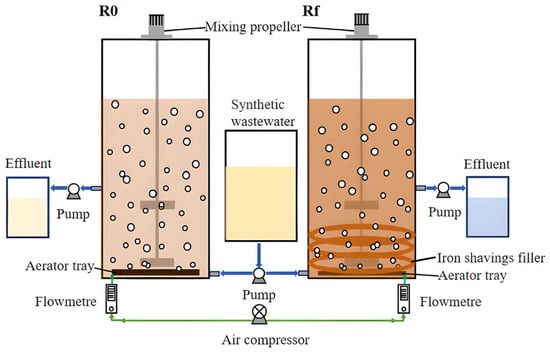
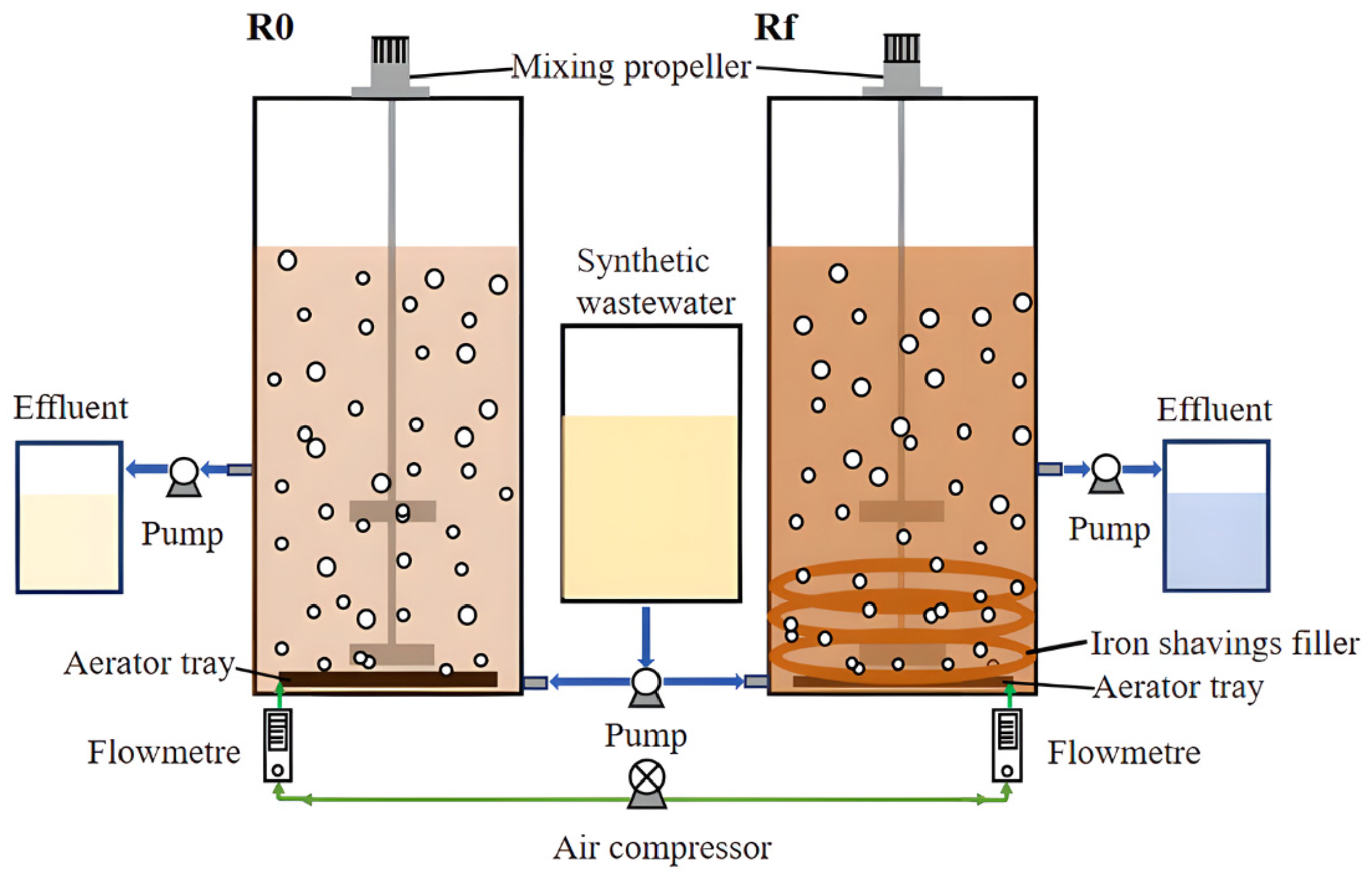
Two identical plexiglass cylindrical SBR reactors, Rf and R0, were constructed for this experiment, with a schematic diagram shown in Figure 1. The reactors were 40 cm in height, 6 cm in radius, with a total volume of 4.5 L and effective volume of 3 L, and a volume exchange ratio of 50%. Temperature was controlled at 25 ± 5 °C. Each SBR operating cycle lasted 360 min under an anaerobic–aerobic–anoxic (AOA) alternating mode: 5 min influent, 120 min anaerobic stirring, 120 min aeration, 60 min anoxic stirring, 20 min settling, and 5 min effluent, with a hydraulic retention time (HRT) of 12 h. A total of 180 g of spiral iron shavings, washed and dried, were coiled into rings and placed at the bottom of Rf to avoid collision with the stirrer blades. Iron shavings were production waste from a steel plant in Hangzhou with an iron content exceeding 95%. The iron–carbon filler dosage ratio was 60 g/L.
Figure 1.
Schematic diagrams of R0 and Rf.
2.2. Wastewater and Inoculated Sludge
Inoculated sludge was taken from the aeration tank of a WWTP in Hangzhou, with an initial mixed liquor suspended solids (MLSS) concentration of approximately 2500 mg/L in both reactors. Synthetic domestic wastewater was prepared using CH3COONa as the carbon source, NH4Cl as the nitrogen source, and a 1:1 molar mixture of KH2PO4 and K2HPO4 as the phosphorus source. Components were dosed to achieve COD of 300 ± 50 mg/L, ammonium nitrogen (NH4+-N) of 30.0–40.0 mg/L, and TP of 5.5–7.0 mg/L. In total, 0.3 mL/L trace element solution was added, containing 1.50 g of FeCl3·6H2O, 0.03 g of CuSO4·5H2O, 0.12 g of MnCl2·4H2O, 0.12 g of ZnSO4·7H2O, 0.15 g of CoCl2·6H2O, 0.06 g of Na2MoO4·2H2O, 0.15 g of H3BO3, 0.18 g of KI, and 5 g/L of ethylenediaminetetraacetic acid (EDTA). All of the above reagents are manufactured by Sinopharm Chemical Reagent Co., Ltd. (Shanghai, China) with analytical purity.
2.3. Physical and Chemical Analysis Methods
Influent and effluent samples were periodically collected and filtered through 0.45 μm membranes. Concentrations of COD, NH4+-N, nitrate nitrogen (NO3−-N), nitrite nitrogen (NO2−-N), and TP were determined by UV-Vis spectrophotometry (DR6000, Hach, Loveland, CO, USA), and total iron (TFe) by flame atomic absorption spectrophotometry, all following standard methods [22]. Sludge samples from the aerobic stage were periodically collected for sludge characteristic analysis; MLSS, mixed liquor volatile suspended solids (MLVSS), and sludge volume index (SVI) were measured using standard methods [22]. Sludge morphology was observed and photographed using an optical microscope (SZ61, Olympus, Dongjing, Japan). Extracellular polymeric substances (EPSs) were extracted using the thermal extraction method [23]. Polysaccharide (PS) content was determined by the anthrone-sulfuric acid method [24], and protein (PN) content in EPSs was determined using a protein assay kit (Sangon Biotech, Shanghai, China) [25].
2.4. Microbial Activity Analysis
Activities of key enzymes in nitrification and denitrification pathways were measured, including ammonia monooxygenase (AMO), hydroxylamine oxidoreductase (HAO), nitrite oxidoreductase (NXR), periplasmic nitrate reductase (NAP), membrane-bound nitrate reductase (NAR), nitrite reductase (NIR), nitric oxide reductase (NOR), and nitrous oxide reductase (NOS). Sludge samples from both reactors after the experiment were labeled S1 and S2. Sample pretreatment was performed as follows: 500 mg of freeze-dried sample was mixed with a 0.01 mol/L PBS solution (pH 7.2–7.4) at a weight-to-volume ratio of 1:10, vortexed for 30 s, and sonicated (20 kHz) for 5 min to disrupt cells, followed by centrifugation at 4000 rpm for 15 min. Enzyme activities were determined using an ELISA kit (mlbio, Shanghai, China) via the double-antibody sandwich method.
2.5. Mineral Analysis Methods
X-ray diffraction (XRD) patterns were recorded using a PANalytical X’Pert PRO powder diffractometer with Cu Kα radiation (λ = 0.1541 nm), operating at 40 kV and 40 mA. Relative elemental contents of sludge samples were analyzed by X-ray fluorescence (XRF) spectrometry (Thermo Fisher Scientific, Waltham, MA, USA, ADVANT’X 4200). Sludge samples for XRD and XRF were dried and calcined at 500 °C for 2 h to remove organic components. Data analysis was performed using MDI Jade 6.0 software.
2.6. Microbial Community Analysis
During the aeration stage, inoculated sludge and sludge samples from the experimental and control groups on day 50 (three uniform samples from different depths of each reactor, fully mixed) were collected and labeled Seed, Rf, and R0 for DNA extraction and high-throughput sequencing. Total genomic DNA was extracted using an E.Z.N.A. Soil DNA Kit (Omega Bio-Tek, Norcross, GA, USA). DNA extracts were verified on 1% agarose gels, and DNA concentration and purity were measured using a NanoDrop 2000 UV-Vis spectrophotometer (Thermo Scientific, Waltham, MA, USA). The 16S rRNA gene fragment was amplified by PCR with bacterial universal primers 338F (5′-ACTCCTACGGGAGGCAGCAG-3′) and 806R (5′-GGACTACHVGGGTWT-CTAAT-3′), covering the V3–V4 hypervariable region. Archaeal primers 524F10extF (5′-TGYCAGCCGCCGCGGTAA-3′) and Arch958RmodR (5′-YCCG-GCGTTGAVTCCAATT-3′) were used to amplify the V4–V5 hypervariable region. Purified amplicons were pooled in equimolar amounts and paired-end sequenced on the Illumina MiSeq PE300 platform (Illumina, SanDiego, CA, USA) following standard protocols of Major Bio-Pharm Technology Co., Ltd. (Shanghai, China). Paired-end raw reads were merged using FLASH and quality-filtered to obtain clean tags. Operational taxonomic units (OTUs) were clustered at a 97% similarity cutoff using UPARSE, and chimeric sequences were identified and removed.
3. Results and Discussion
3.1. Sludge Physicochemical Properties
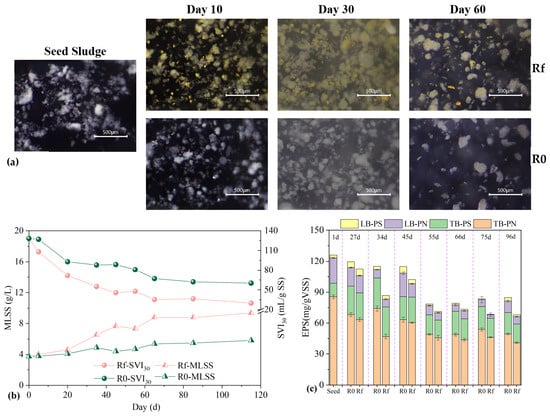
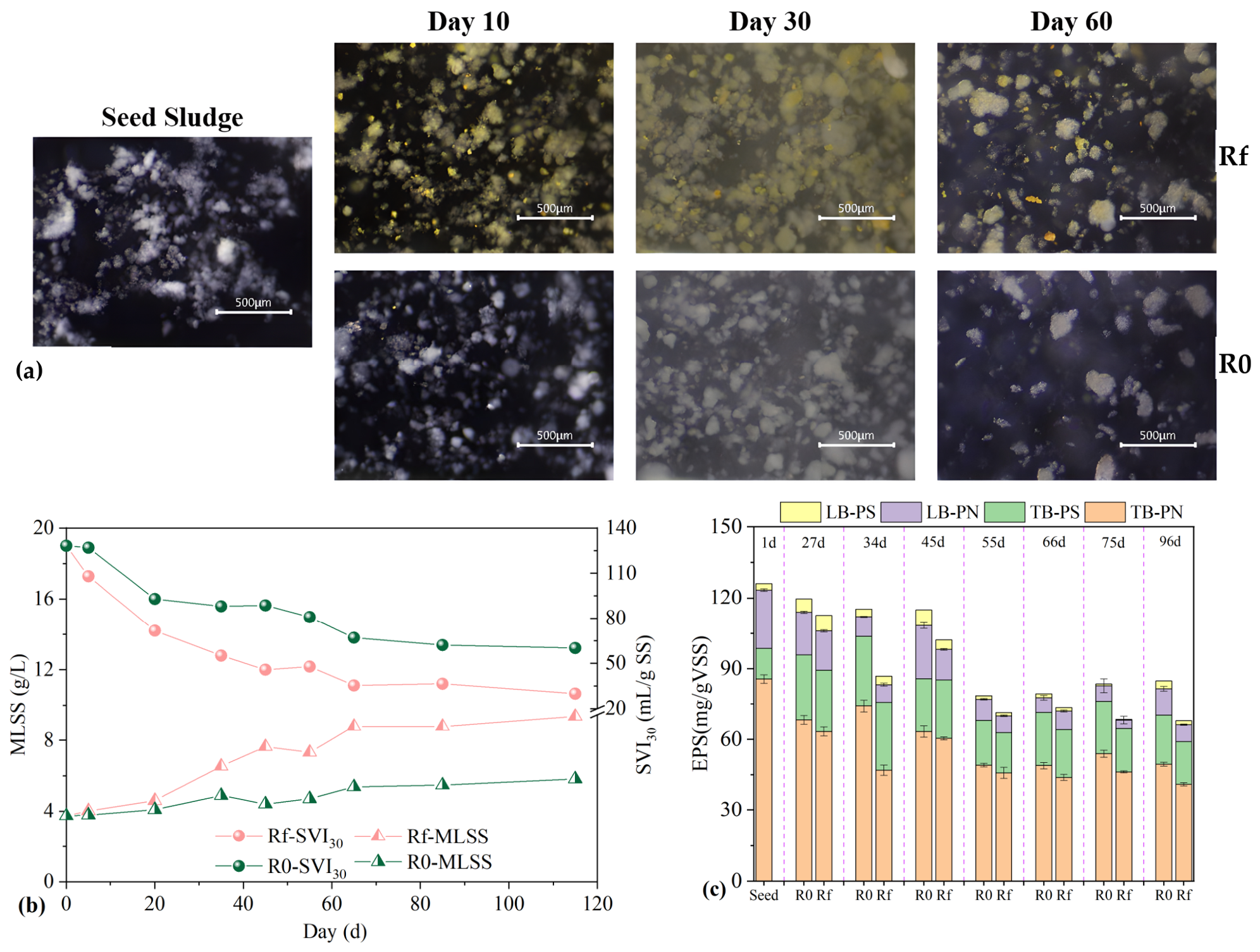
The morphological differences between experimental and control sludge were mainly reflected in color (Figure 2a). On day 10 of dosing, sludge flocs in Rf appeared golden yellow, distinctly different from the grayish white of the control and inoculated sludge. With prolonged operation, white flocs gradually appeared in Rf, but were larger, denser, and had clearer, smoother edges than those in R0. This indicates that ionic iron integrated into activated sludge flocs, neutralizes negative charges on EPSs and microbial cells and promotes flocculation and settling [26]. The SVI30 results confirmed this. As shown in Figure 2b, SVI30 in Rf decreased much faster than in R0. After stable operation, the measured SVI30 value of Rf was approximately 35 mL/g, while the measured value of R0 was 60 mL/g, further verifying improved sludge settleability. Sludge mineral analysis via XRD and XRF showed significantly higher iron and iron oxide contents in Rf than in R0, demonstrating that iron entered sludge as oxides, increasing sludge density and favoring settling [27]. Additionally, scattered yellow particles (exfoliated iron oxides) were observed between Rf flocs (Figure 2a). Rf also exhibited higher MLSS and a lower VSS/SS ratio (Figure 2b), indicating increased sludge density and accelerated floc settling due to iron shavings addition.
Figure 2.
(a) The digital picture (scale bar: 0.5 mm), and variations in (b) biomass concentration and settleability (c) of EPSs.
EPS contents in both Rf and R0 were lower than in inoculated sludge and showed an overall decreasing trend with operation (Figure 2c), with a larger drop in Rf. This suggests that the AOA process may reduce EPS accumulation. Meanwhile, the long post-anoxic phase may enable anaerobic microbial hydrolysis of EPSs, further lowering EPS content [28]. Microbial community composition supported this inference: the relative abundance of Saprospiraceae in Rf (12.61%) and R0 (7.24%) was higher than in Seed (3.88%), with further enrichment in Rf. Saprospiraceae are known to secrete extracellular enzymes and decompose macromolecular organics such as proteins, likely contributing to reduced EPSs in Rf [29,30].
3.2. Pollutant Removal Efficiency
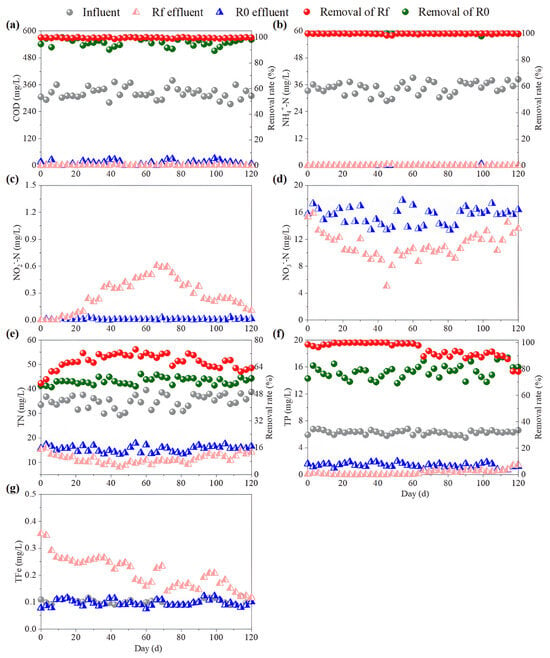
Over the 120-day monitoring period, COD removal rates in both Rf and R0 remained above 95% (Figure 3a), and NH4+ removal rates exceeded 99% (Figure 3b). Both reactors performed well in COD and NH4+ removal, with Rf’s main advantages lying in TN and TP removal.
Figure 3.
Variations in (a) COD, (b) NH4+-N, (c) NO2−-N, (d) NO3−-N, (e) TN, (f) TP, and (g) TFe.
TN removal in Rf gradually increased after startup and stabilized at an average of 70% from day 30 to day 90 (60 stable days). Only a slight drop to 67% was observed at the end of the 120-day operation. The mild decline is attributed to gradual biofilm coverage on iron shavings that weakens Fe-C microelectrolysis intensity. TN removal in R0 remained stable at 55%, which was significantly lower than Rf (Figure 3e). Effective TN removal in Rf was reflected in NO2− and NO3− dynamics. Starting from the 20th day of operation, we surprisingly observed spontaneous accumulation of NO2− at low concentrations (≤0.6 mg/L) in reactor Rf, whereas the effluent NO2− concentration of reactor R0 remained nearly zero. This distinct difference persisted until the end of the 120-day experimental period (Figure 3c). Although sustained low-level nitrite accumulation in the system exerted inhibitory impacts on ammonia-oxidizing bacteria (AOB), ammonia-oxidizing archaea (Candidatus_Nitrocosmicus) with superior nitrite tolerance were significantly enriched, offsetting the deficiency in ammonia oxidation capacity and thereby exerting no adverse effects on the overall pollutant removal performance of the reactor. On the contrary, it created favorable conditions for shortcut nitrification–denitrification, reducing the carbon demand for endogenous denitrification [18]. Notably, the continuous low-concentration nitrite accumulation in Rf stemmed from the selective inhibition of nitrite-oxidizing bacteria (NOB) induced by iron–carbon microelectrolysis, rather than detrimental system malfunction. The detailed underlying mechanisms are elaborated in the following three aspects.
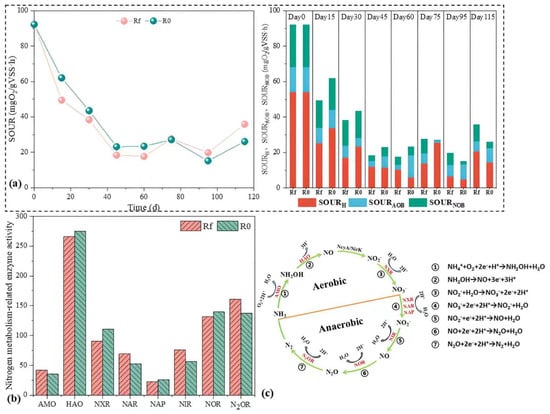
NO2−-N accumulation in Rf resulted from multiple mechanisms. Nitrite oxidoreductase (NXR) catalyzes nitrite oxidation to nitrate and exists in NOB, comammox, and ANAMMOX bacteria, with multiple iron–sulfur clusters forming an efficient electron transport network [18]. Iron ion concentrations generally correlate positively with NXR activity [31]. However, NXR activity in Rf was lower than in R0 (Figure 4a–c); one possible reason for the decreased NXR activity in Rf is that Fe(III) generated by Fe-C microelectrolysis hydrolyzes to form ferric hydroxide precipitates under neutral pH conditions, which may attach to the surface of NOB cells or NXR molecules and potentially hinder the contact between substrates and enzyme active sites, inhibiting NXR and causing nitrite accumulation. Nevertheless, this speculation lacks direct evidence from independent batch tests with gradient Fe(III) concentrations, and further targeted experiments are required to verify this mechanism in future work.
Figure 4.
Variations in (a) SOUR and (b) denitrification-related enzyme activities; (c) denitrification pathway.
Notably, nitrite accumulation occurred after day 40 rather than immediately after iron–carbon addition (Figure 3e), a delayed response linked to microbial community structure (Figure 5): the typical NOB Nitrospira was less abundant in Rf than in Seed and R0 [32,33]. NXR of Nitrospira is membrane-bound and directly exposed to the periplasm, making it more sensitive to pH changes than that of ANAMMOX bacteria. Neutral to weakly alkaline conditions in Rf suppressed Nitrospira metabolism and growth, reducing its abundance and delaying nitrite accumulation [18,34,35]. The specific oxygen uptake rate of NOB (SOUR_NOB) (Figure 4a) showed that NOB activity in Rf became lower than in R0 from day 45 and recovered around day 75, possibly due to iron–carbon filler compaction over time, weakening microelectrolysis and NOB inhibition and restoring nitrite oxidation.
Figure 5.
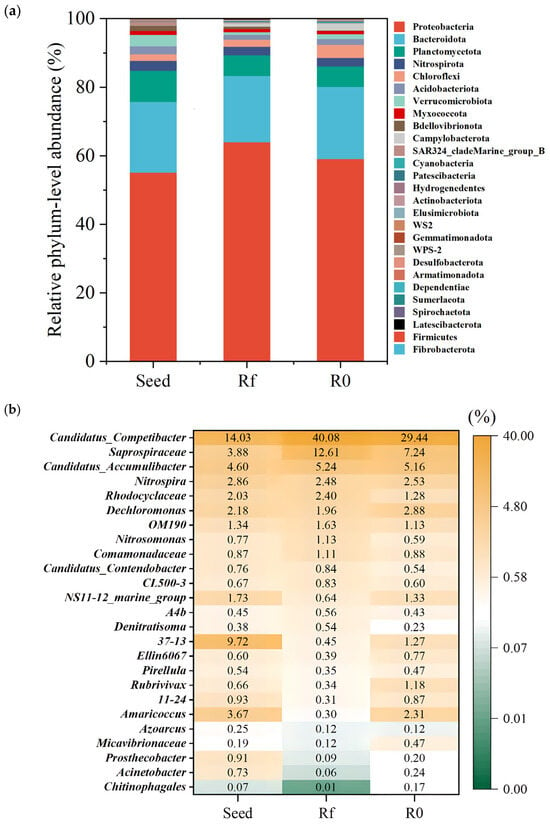
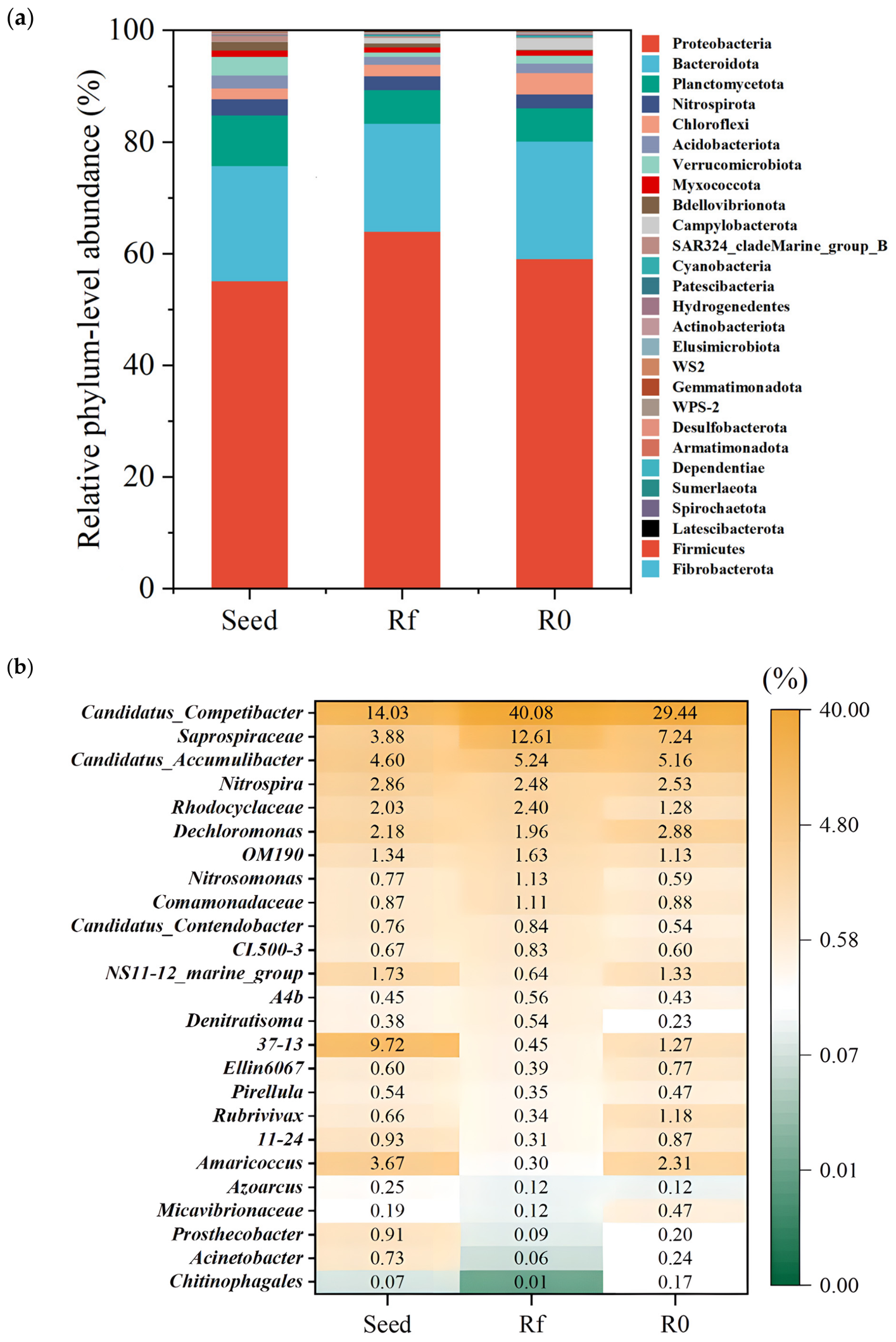
Microbial community composition in R0 and Rf (a) at the phylum level and (b) at genus level.
The effluent NO3−-N concentration of Rf exhibited a declining trend from the onset of the experiment, fluctuating slightly around 12 mg/L throughout the whole operation period, and was consistently lower than the 15.1 mg/L measured in the control reactor (Figure 3d). In the post-anoxic stage, external carbon sources were insufficient for heterotrophic denitrification. Microbial community analysis (Figure 5b) revealed that the AOA mode enriched Candidatus_Competibacter, which conducted denitrification using intracellular polyhydroxyalkanoates (PHAs) as carbon sources, reducing NO3−-N generated during aerobic nitrification and lowering effluent nitrate [29,36,37].
Studies show that endogenous denitrification via nitrite saves 50% more PHA than the nitrate pathway [18], granting partial nitrification higher denitrification efficiency. Additionally, microelectrolysis released nascent Fe(II) as an alternative electron donor, reducing carbon source demand for denitrification [8,38]. Thus, Rf achieved higher endogenous denitrification efficiency and lower effluent nitrate than R0. Moreover, enhanced chemical phosphorus removal in Rf inhibited polyphosphate-accumulating organisms (PAOs), favoring enrichment of their carbon competitors, DGAOs, and further improving nitrate removal [37].
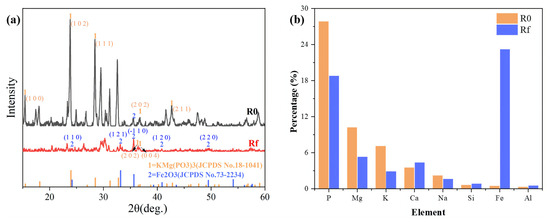
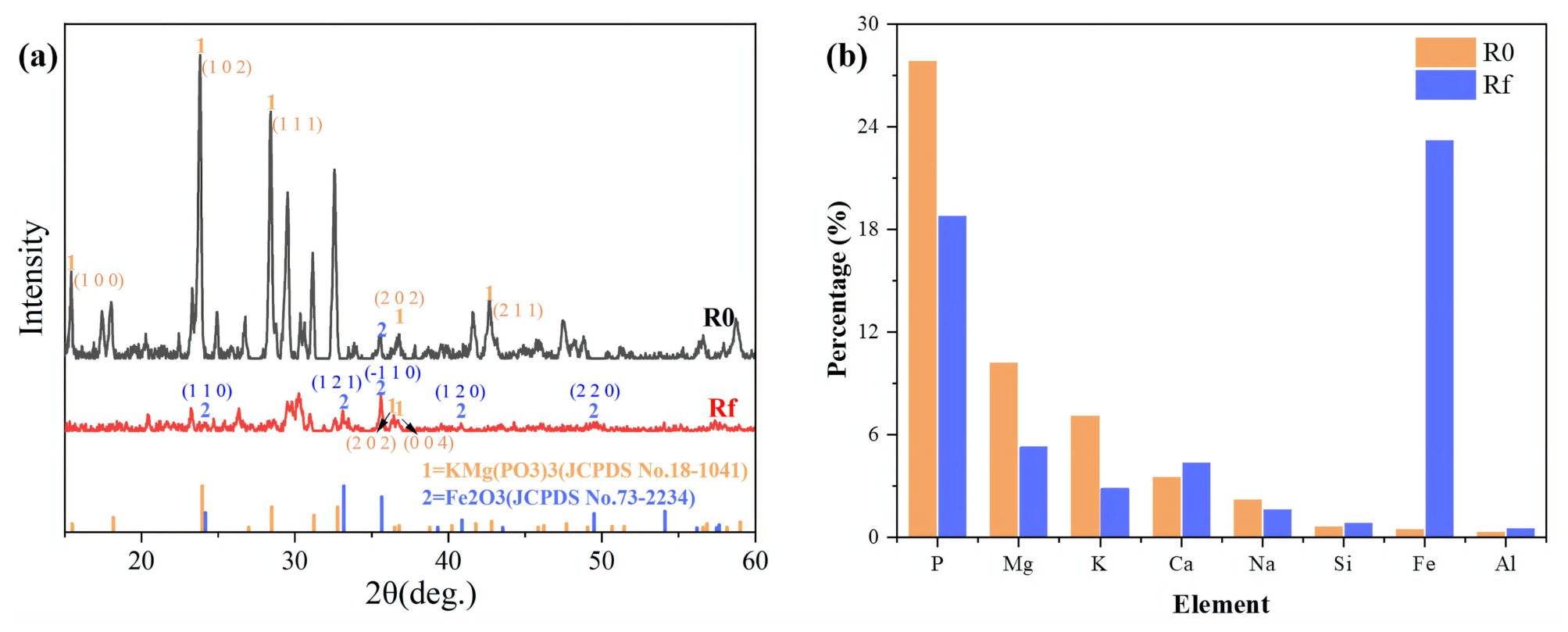
Upon the addition of iron shavings to reactor Rf, the total phosphorus (TP) removal efficiency immediately reached 97% on the first operational day and remained above this level for over 60 days, with a long-term average TP removal rate of 95%, in sharp contrast to merely 73% recorded in the control reactor R0 (Figure 3f). After day 60, the effluent TP concentration of Rf increased, accompanied by a decline in effluent total iron (TFe) concentration (Figure 3g), indicating that iron ion-induced phosphate precipitation dominated TP removal in the early operational stage of Rf. This conclusion was further validated by XRD and XRF mineral characterization, which identified abundant FePO4 precipitates accumulated in the sludge of Rf (Figure 6). The TP removal performance of Rf gradually deteriorated after 60 days and fell to 80% by the end of the experiment. This phenomenon can be attributed to the gradual coverage and encapsulation of iron shavings by biofilm and other sludge deposits over prolonged operation [39], which suppressed iron–carbon microelectrolysis and limited the release of ferric/ferrous ions. Microbial community analysis revealed an elevated relative abundance of phosphate-accumulating organisms affiliated with Chloroflexi in Rf (Figure 5a), demonstrating that biological phosphorus removal also contributed substantially to overall TP elimination.
Figure 6.
Mineral analysis for the sludge in R0 and Rf. (a) X-ray diffraction (XRD) analysis; (b) X-ray fluorescence (XRF) analysis.
3.3. Microbial Community
To comprehensively understand the microbial composition and differences, high-throughput sequencing was conducted on three sludge samples (Seed, Rf, and R0) over the course of 50 days. The coverage rate for all four samples exceeded 99.9%, indicating that the sequence library effectively captured microbial diversity.
At the phylum level (Figure 5a), the three samples shared similar compositions. Proteobacteria dominated all samples, accounting for 55.29% (Seed), 63.88% (Rf), and 57% (R0), with stronger dominance in Rf. This phylum is closely associated with denitrification and harbors most nitrogen-removal functional flora [40], directly explaining higher TN removal in Rf and indicating that iron–carbon addition under AOA mode favors Proteobacteria enrichment [41,42]. Bacteroidota, the second most abundant phylum (about 20% in all samples), is related to ammonia oxidation. Planctomycetota, the third major phylum, was less abundant in Rf and R0 than in Seed; it includes ANAMMOX bacteria that oxidize NH4+ with NO2− to produce N2 [43,44]. Nitrospirota, responsible for nitrite oxidation, was less abundant in Rf (2.48%) than in Seed (2.86%) and R0 (2.53%), consistent with SOUR_NOB data and confirming NOB inhibition by iron shavings under AOA [32]. Chloroflexi, linked to biological phosphorus removal, was more abundant in Rf (2.02%) and R0 (3.76%) than in Seed (1.92%), with weaker enrichment in Rf due to phosphorus competition from chemical precipitation [45].
At the genus level (Figure 5b), key functional bacteria differed significantly. Candidatus_Competibacter was greatly enriched in both Rf and R0 compared with Seed, demonstrating AOA-facilitated enrichment. Its relative abundance in Rf reached 40.08%, making it the most dominant genus, indicating further promotion by iron shavings. Other DGAOs such as Amaricoccus were inhibited, as Candidatus_Competibacter’s faster growth outcompeted them.
Candidatus_Competibacter uptakes excess carbon in the anaerobic stage to synthesize PHA and uses it as an electron donor for denitrification in the anoxic stage (Figure 6). Unlike PAOs, its PHA is dedicated to denitrification, maximizing carbon utilization. Recent research enriched DGAOs using NO2− as an electron acceptor in an AOA-SBR under low organic loading [46,47], consistent with our findings and supporting partial nitrification–denitrification. Higher abundance in Rf was attributed to: (1) microelectrolysis consuming oxygen in the aerobic zone and slowing PHA consumption [14,48]; (2) Fe(II) acting as an extra electron donor for denitrification [10,49]; (3) nitrite accumulation favoring energy-efficient nitrite-driven endogenous denitrification, all enhancing DGAO enrichment [9,50].
An unclassified genus of Saprospiraceae was the second most abundant in Rf. Its enrichment may be stimulated by applied voltage from microelectrolysis. As a core activated sludge genus, Saprospiraceae degrades refractory organics aerobically and secretes extracellular enzymes to break down proteins, supplying available carbon for denitrification and phosphorus removal [29,30,51].
Archaeal 16S rRNA sequencing showed that Candidatus_Nitrocosmicus, an ammonia-oxidizing archaeon (AOA) with broad adaptability (salt and cold tolerance), dominated Rf at 98.6% relative abundance. Unlike most AOAs, it tolerates high ammonia concentrations (active at 3600 mg/L NH4+-N) and is more resistant to NO2−-N and nitrification inhibitors (ATU, DCD, DMPP) than ammonia-oxidizing bacteria (AOB) [52,53].
Its higher abundance in Rf (98%) than in R0 (82.8%) confirms growth promotion by microelectrolysis. SOUR data showed reduced bacterial ammonia oxidation and heterotrophic metabolism in Rf, but Candidatus_Nitrocosmicus’s wide pH and nitrite tolerance maintained high ammonia oxidation efficiency, compensating for AOB inhibition, suppressing NOB, causing nitrite accumulation, and enabling partial nitrification–denitrification and ANAMMOX.
3.4. Mineral Analysis
XRF and XRD characterized elemental and mineral composition of Rf and R0 sludge. XRF showed Fe, P, Mg, K, Ca, and Na as major elements (Figure 6b). Fe accounted for 23.2% in Rf (vs. 0.4% in R0), confirming microelectrolysis as the iron source. P contents were 18.77% (Rf) and 27.83% (R0). XRD (Figure 6a) verified that FePO4 and MgPO4 dominated phosphorus precipitates in Rf, while MgPO4 and CaPO4 prevailed in R0. Abundant ionic Fe in Rf drove rapid phosphate precipitation as FePO4, making chemical removal the key to high TP removal, consistent with previous studies [19].
3.5. Conception of Enhanced Nitrogen and Phosphorus Removal Mechanism of AOA-SBR with Iron Shavings Added
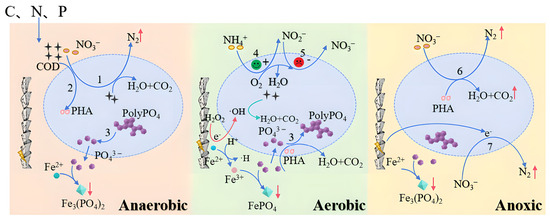
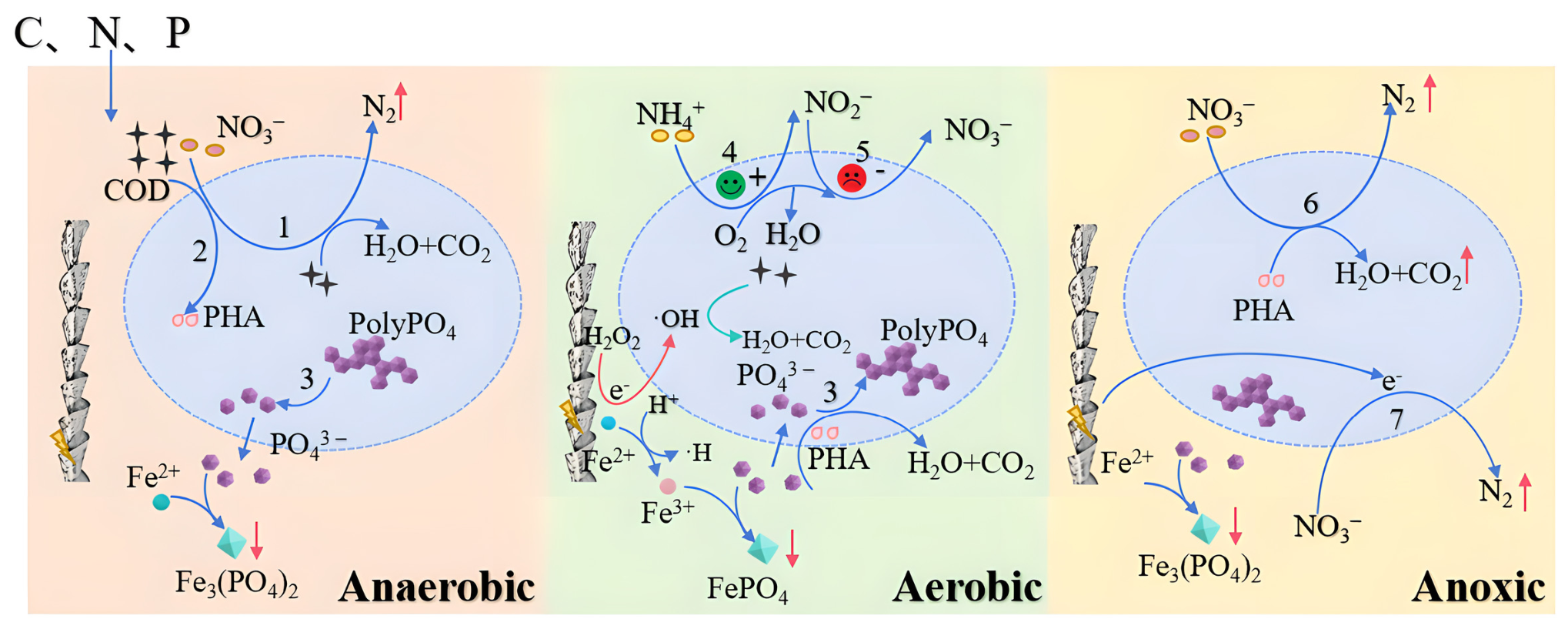
To propose an innovative technical strategy to cut the input of external carbon substrates and phosphorus precipitants in conventional wastewater treatment, this study established an anaerobic–oxic–anoxic sequencing batch reactor (AOA-SBR) system (denoted as Rf) amended with waste iron shavings at a loading rate of 60 g/L (total addition: 180 g), alongside a blank control reactor (R0). Synthetic wastewater with a C/N ratio of 7.5 served as the feeding influent. A full operational cycle of the AOA-SBR covered a 120 min anaerobic stage, a 120 min aerobic stage, and a 60 min post-anoxic stage, corresponding to a hydraulic retention time (HRT) of 12 h. Relative to R0, the Rf system delivered rapid and efficient total phosphorus (TP) elimination and remarkably enhanced total nitrogen (TN) removal, with steady average TP and TN removal efficiencies of 96% and 70%, respectively. The cyclic transformation pathways of nitrogen and phosphorus within Rf are schematically summarized in Figure 7, with detailed mechanisms elaborated below:
Figure 7.
Mechanism of AOA technology for denitrification and phosphorus removal.
3.5.1. Anaerobic Stage
Nitrogen conversion: Glycogen-accumulating organisms (GAOs, Candidatus_Competibacter) compete with phosphate-accumulating organisms (PAOs) for influent volatile fatty acids (VFAs), which are subsequently polymerized into intracellular PHB/PHA. Under the AOA operational regime, GAOs gain a predominant competitive edge over PAOs. Meanwhile, denitrifying microbes directly consume influent organic carbon to reduce residual nitrate into N2, which is ultimately stripped from the reactor.
Phosphorus conversion: PAOs hydrolyze intracellular polyphosphate to yield energy for VFA assimilation, thereby releasing abundant orthophosphate into the bulk liquid. The liberated phosphate species are rapidly precipitated and immobilized by ferrous and ferric ions generated from Fe-C microelectrolysis.
3.5.2. Aerobic Stage
Nitrogen conversion: iron species leached from Fe-C microelectrolysis suppress the activity of nitrite oxidoreductase (NXR) and nitrite-oxidizing bacteria (NOB), triggering sustained low-level nitrite accumulation (<0.6 mg/L) and inhibiting ammonia-oxidizing bacteria (AOB). However, ammonia-oxidizing archaea (Candidatus_Nitrocosmicus) with superior nitrite resistance are substantially enriched to substitute AOB, achieving over 99% elimination of influent NH4+-N, most of which is transformed into nitrite. Suppressed NOB only partially oxidize nitrite to nitrate, maintaining persistently low nitrite levels throughout the aerobic phase. Such a niche environment facilitates shortcut nitrification–denitrification and elevates carbon utilization efficiency for endogenous denitrification in the subsequent anoxic stage.
Phosphorus conversion: PAOs uptake dissolved phosphate to synthesize intracellular polyphosphate, realizing biological phosphorus removal. Concurrently, iron ion-mediated chemical phosphate precipitation occurs simultaneously to synergistically remove phosphorus.
3.5.3. Post-Anoxic Stage
Nitrogen conversion: the dominant genus Candidatus_Competibacter catabolizes intracellular PHA stored during the anaerobic phase and utilizes accumulated NO2−/NO3− as electron acceptors to drive endogenous denitrification in the post-anoxic period. Ferrous ions released via microelectrolysis function as supplementary electron donors to reinforce mixotrophic denitrification, converting nitrite and nitrate into nitrogen gas and further elevating overall TN removal performance.
Phosphorus conversion: limited exogenous carbon substrates under post-anoxic conditions restrain massive phosphate release from PAOs. Furthermore, the iron-mediated chemical phosphorus removal pathway remains effective, which contributes to a further reduction in effluent TP concentrations.
4. Conclusions
Two parallel AOA-SBR reactors were operated continuously for 120 days in this study. Waste iron shavings were added to reactor Rf at a dosage of 60 g/L (total mass: 180 g), while R0 served as the blank control, to comprehensively investigate the effects of Fe-C microelectrolysis on the biochemical system. Key findings are summarized below:
- Iron shavings addition improved sludge settleability, with a stable SVI30 of 35 mL/g in Rf (42% lower than R0’s 60 mL/g). Fe ions neutralized sludge surface negative charges and formed iron oxides to increase sludge density, while enriched Saprospiraceae (12.61% vs. 7.24%) degraded EPSs and compacted flocs.
- Under the AOA mode (120 min anaerobic/120 min aerobic/60 min post-anoxic, HRT = 12 h), 60 g/L iron shavings raised TN removal by 25% (55%→70%) and TP removal by 24% (73%→96%). Sustained low nitrite (<0.6 mg/L) emerged in Rf without performance deterioration: Fe-C microelectrolysis inhibited NOB (Nitrospira) and NXR activity, yet highly nitrite-resistant Candidatus_Nitrocosmicus (98.6% abundance) offset suppressed AOB and maintained >99% NH4+ oxidation, enabling carbon-saving shortcut endogenous denitrification.
- The AOA long anaerobic phase enriched Candidatus_Competibacter (40.08%), which utilized stored PHA for post-anoxic endogenous denitrification; Fe2+ further boosted mixotrophic denitrification and reduced effluent nitrate. TP was removed via combined biological uptake by PAOs and chemical precipitation of FePO4/Fe3(PO4)2. Chemical precipitation dominated the first 60 days, but biofilm coverage on iron shavings weakened microelectrolysis afterward, dropping final TP efficiency to 80%.
- Sequencing confirmed that Fe-C microelectrolysis restructured microbial communities: nitrogen-removing Proteobacteria were enriched while Nitrospirota declined. XRD/XRF validated abundant iron phosphate precipitates in Rf sludge, verifying chemical phosphate removal.
- In summary, 60 g/L iron shavings in AOA-SBR simultaneously optimized sludge settling, lifted TN/TP removal by 25%/24%, and cut demand for external carbon and phosphorus chemicals.
This study delivers novel insights into low-carbon, chemical-free advanced wastewater treatment and lays a theoretical foundation for its practical engineering deployment. Nevertheless, this research is constrained by a single fixed iron dosage and the exclusive use of synthetic wastewater. Long-term operation inevitably causes progressive passivation of iron shavings via biofilm encapsulation and mineral sediment accumulation. Future pilot-scale investigations using real municipal wastewater are therefore required to evaluate long-term sludge performance stability and economic operating costs, which will advance the industrial translation of Fe-C microelectrolysis-integrated AOA bioprocesses.
Author Contributions
Conceptualization, J.L. and H.W.; methodology, A.Y.; software, L.C.; validation, A.Y., Z.P. and J.W.; formal analysis, L.C.; investigation, A.Y.; resources, J.L.; data curation, A.Y.; writing—original draft preparation, H.W.; writing—review and editing, A.Y.; visualization, L.C.; supervision, H.W.; project ad-ministration, A.Y.; funding acquisition, J.L. All authors have read and agreed to the published version of the manuscript.
Funding
The work was supported by the National Natural Science Foundation of China (No. 52570055) and the Zhejiang Key Research and Development Program, China (No. 2023C03151).
Data Availability Statement
The original contributions presented in this study are included in this article. Further inquiries can be directed to the corresponding authors.
Conflicts of Interest
Authors Hanjiang Wu and Anqi Yan were employed by the company Zhejiang Fuchun Ziguang Environmental Protection Co., Ltd.; Author Lei Cai was employed by the company Hangzhou Hangshui Water Quality Testing Co., Ltd. (Hangzhou Monitoring Station of National Water Supply Water Quality Monitoring Network). The remaining authors declare that the research was conducted in the absence of any commercial or financial relationships that could be construed as potential conflicts of interest.
Abbreviations
The following abbreviations are used in this manuscript:
| AOA-SBR | Anaerobic–oxic–anoxic sequencing batch reactor |
| AOB | Ammonia-oxidizing bacteria |
| NOB | Nitrite-oxidizing bacteria |
| AOA | Ammonia-oxidizing archaea |
| GAOs | Glycogen-Accumulating Organisms |
| PAOs | Phosphate accumulating organisms |
References
- Ortega-Blas, F.M.; Ramos-Saravia, J.C.; Cossio-Rodriguez, P.L. Removal of Nitrogen and Phosphorus from Municipal Wastewater Through Cultivation of Microalgae Chlorella sp. in Consortium. Water 2025, 17, 1160. [Google Scholar] [CrossRef] [Scilit]
- Goncu, S.; Uygun, B.S.; Atakan, S. Nıtrogen and phosphorus removal from wastewater usıng Chlorella vulgarıs and Scenedesmus quadrıcauda mıcroalgae wıth a batch bıoreactor. Int. J. Environ. Sci. Technol. 2025, 22, 11877–11892. [Google Scholar] [CrossRef] [Scilit]
- Mishra, S.; Singh, V.; Cheng, L.; Hussain, A.; Ormeci, B. Nitrogen removal from wastewater: A comprehensive review of biological nitrogen removal processes, critical operation parameters and bioreactor design. J. Environ. Chem. Eng. 2022, 10, 107387. [Google Scholar] [CrossRef] [Scilit]
- Jia, Y.; Zeng, W.; Fan, Z.; Meng, Q.; Liu, H.; Peng, Y. An effective titanium salt dosing strategy for phosphorus removal from wastewater: Synergistic enhancement of chemical and biological treatment. Sci. Total Environ. 2022, 842, 156960. [Google Scholar] [CrossRef] [Scilit] [PubMed]
- Sun, X.; Xu, J.; Kang, X.; Li, B.; Zhang, Y. Experimental Study on the Treatment of Printing and Dyeing Wastewater by Iron-Carbon Micro-Electrolysis and Combined Processes. Processes 2025, 13, 2147. [Google Scholar] [CrossRef] [Scilit]
- Yan, Z.; Xie, S.; Yang, M. Effect and mechanism of iron-carbon micro-electrolysis pretreatment of organic peroxide production wastewater. Environ. Sci. Pollut. Res. 2024, 31, 12094–12111. [Google Scholar] [CrossRef] [Scilit] [PubMed]
- Xiang, Z.; Chen, X.; Li, H.; Zhu, B.; Bai, J.; Huang, X. Iron-carbon micro-electrolysis coupled to heterotrophic nitrification aerobic denitrification treating low carbon/nitrogen mariculture wastewater. Environ. Res. 2025, 269, 120796. [Google Scholar] [CrossRef] [Scilit] [PubMed]
- Wu, R.; Jeyakumar, P.; Bolan, N.; Zhai, X.; Wang, H.; Pan, M.; Lian, J.; Cheng, L.; Li, J.; Hou, M.; et al. Enhanced denitrification driven by a novel iron-carbon coupled primary cell: Chemical and mixotrophic denitrification. Biochar 2024, 6, 5. [Google Scholar] [CrossRef] [Scilit]
- Chen, H.; Zhao, X.; Cheng, Y.; Jiang, M.; Li, X.; Xue, G. Iron Robustly Stimulates Simultaneous Nitrification and Denitrification Under Aerobic Conditions. Environ. Sci. Technol. 2018, 52, 1404–1412. [Google Scholar] [CrossRef] [Scilit] [PubMed]
- Guo, Y.; Shi, W.; Zhang, B.; Li, W.; Lens, P.N.L. Effect of voltage intensity on the nutrient removal performance and microbial community in the iron electrolysis-integrated aerobic granular sludge system. Environ. Pollut. 2021, 274, 116604. [Google Scholar] [CrossRef] [Scilit] [PubMed]
- Pan, Z.; Wei, H.; Qiu, C.; Yang, Q.; Liang, Y.; Huang, Z.; Li, J. Two-stage sequencing batch reactors with added iron shavings for nutrient removal and aerobic sludge granulation treating real wastewater with low carbon to nitrogen ratios. Bioresour. Technol. 2024, 396, 130380. [Google Scholar] [CrossRef] [Scilit] [PubMed]
- Pan, Z.; Qiu, C.; Yang, Q.; Wei, H.; Pan, J.; Sheng, J.; Li, J. Adding waste iron shavings in a pilot-scale two-stage SBRs to develop aerobic granular sludge treating real wastewater. J. Water Process Eng. 2022, 47, 102811. [Google Scholar] [CrossRef] [Scilit]
- Liang, Y.; Pan, Z.; Sheng, J.; Ni, Y.; Li, J. Fe-C wrapped in polyurethane sponge cubes tied in anoxic zones to enrich multiple denitrifying bacteria enhancing wastewater nitrogen removal. J. Water Process Eng. 2023, 51, 103384. [Google Scholar] [CrossRef] [Scilit]
- Cheng, X.; Feng, H.; Liang, Y.; Li, L.; Yao, Y.; Jin, M.; Li, J. Filtration columns containing waste iron shavings, loofah, and plastic shavings for further removal of nitrate and phosphate from wastewater effluent. Sci. Total Environ. 2023, 876, 162799. [Google Scholar] [CrossRef] [Scilit] [PubMed]
- Feng, H.; Pan, Z.; Sheng, J.; Li, J. Reuse of Waste Iron Shavings for Phosphorus Removal from Sewage. China Water Wastewater 2022, 38, 86–89. [Google Scholar] [CrossRef]
- Feng, H.; Jin, L.; Yao, Y.; Yu, X.; Li, L.; Rousseau, D.P.L.; Li, J. Porous polymers embedded with iron carbon enhanced densified activated sludge formation and wastewater treatment. Bioresour. Technol. 2025, 418, 131924. [Google Scholar] [CrossRef] [Scilit] [PubMed]
- Pan, K.; Qian, Z.; Chen, Y.; Cheng, X.; Li, F.; Ding, M.; Tian, Y.; Li, J. Two-way role of iron-carbon in biochemical reactions: Microelectrolysis and enhanced activity of aerobic granular sludge for efficient refractory wastewater treatment. Water Res. 2024, 264, 122222. [Google Scholar] [CrossRef] [Scilit] [PubMed]
- Chicano, T.M.; Dietrich, L.; de Almeida, N.M.; Akram, M.; Hartmann, E.; Leidreiter, F.; Leopoldus, D.; Mueller, M.; Sánchez, R.; Nuijten, G.H.L.; et al. Structural and functional characterization of the intracellular filament-forming nitrite oxidoreductase multiprotein complex. Nat. Microbiol. 2021, 6, 1129–1139. [Google Scholar] [CrossRef] [Scilit] [PubMed]
- Pan, Z.; Guo, T.; Sheng, J.; Feng, H.; Yan, A.; Li, J. Adding waste iron shavings in reactor to develop aerobic granular sludge and enhance removal of nitrogen and phosphorus. J. Environ. Chem. Eng. 2021, 9, 106620. [Google Scholar] [CrossRef] [Scilit]
- Simon, J.; Klotz, M.G. Diversity and evolution of bioenergetic systems involved in microbial nitrogen compound transformations. Biochim. Biophys. Acta (BBA)-Bioenerg. 2013, 1827, 114–135. [Google Scholar] [CrossRef] [Scilit] [PubMed]
- Guo, T.; Ji, Y.; Zhao, J.; Horn, H.; Li, J. Coupling of Fe-C and aerobic granular sludge to treat refractory wastewater from a membrane manufacturer in a pilot-scale system. Water Res. 2020, 186, 116331. [Google Scholar] [CrossRef] [Scilit] [PubMed]
- APHA. 2005: Standard Methods for the Examination of Water and Wastewater, 21st ed.; American Public Health Association: Washington, DC, USA, 2005. [Google Scholar]
- Wang, X.; Zhang, B.; Shen, Z.; Qiu, Z.; Chen, Z.; Jin, M.; Li, J.; Wang, J. The EPS characteristics of sludge in an aerobic granule membrane bioreactor. Bioresour. Technol. 2010, 101, 8046–8050. [Google Scholar] [CrossRef] [Scilit] [PubMed]
- Wu, C.-Y.; Peng, Y.-Z.; Wang, S.-Y.; Ma, Y. Enhanced biological phosphorus removal by granular sludge: From macro- to micro-scale. Water Res. 2010, 44, 807–814. [Google Scholar] [CrossRef] [Scilit] [PubMed]
- Smith, P.K.; Krohn, R.I.; Hermanson, G.T.; Mallia, A.K.; Gartner, F.H.; Provenzano, M.D.; Fujimoto, E.K.; Goeke, N.M.; Olson, B.J.; Klenk, D.C. Measurement of protein using bicinchoninic acid. Anal. Biochem. 1985, 150, 76–85. [Google Scholar] [CrossRef] [Scilit] [PubMed]
- Chen, X.; Kong, F.; Fu, Y.; Si, C.; Fatehi, P. Improvements on activated sludge settling and flocculation using biomass-based fly ash as activator. Sci. Rep. 2019, 9, 14590. [Google Scholar] [CrossRef] [Scilit] [PubMed]
- Gan, W.Y.; Selomulya, C.; Tapsell, G.; Amal, R. Densification of iron(III) sludge in neutralization. Int. J. Miner. Process. 2005, 76, 149–162. [Google Scholar] [CrossRef] [Scilit]
- Gao, X.; Zhang, L.; Liu, J.; Zhang, Y.; Peng, Y. First application of the novel anaerobic/aerobic/anoxic (AOA) process for advanced nutrient removal in a wastewater treatment plant. Water Res. 2024, 252, 121234. [Google Scholar] [CrossRef] [Scilit] [PubMed]
- Gong, L.; Yao, L.; Gu, L.; Qu, Y.; Gao, X.; Wang, W.; Huang, W.; Peng, Y. Beyond traditional biological nutrient removal limits: Achieving ultra-low effluent nitrogen via an anaerobic/Oxic/Anoxic (AOA) process in a pilot-scale system treating municipal wastewater. Water Res. 2026, 290, 125123. [Google Scholar] [CrossRef] [Scilit] [PubMed]
- Li, S.Y.; Wang LPWu, J.F.; Liu, B.; Wang, L.; Zhao, Q.P.; Li, G.Q.; Huang, S.; Fei, X. Microbial community characteristics and their quorum sensing regulation in municipal wastewater treatment plants. Chin. J. Environ. Eng. 2022, 16, 3705–3715. [Google Scholar] [CrossRef]
- Zhang, Q.-Q.; Feng, Z.-T.; Zhou, J.-M.; Ma, X.; Sun, Y.-J.; Liu, J.-Z.; Zhao, J.-Q.; Jin, R.-C. Roles of Fe(II), Fe(III) and Fe(0) in denitrification and anammox process: Mechanisms, advances and perspectives. J. Water Process Eng. 2023, 53, 103746. [Google Scholar] [CrossRef] [Scilit]
- Ge, S.; Wang, S.; Yang, X.; Qiu, S.; Li, B.; Peng, Y. Detection of nitrifiers and evaluation of partial nitrification for wastewater treatment: A review. Chemosphere 2015, 140, 85–98. [Google Scholar] [CrossRef] [Scilit] [PubMed]
- Fu, K.; Zhang, X.; Fan, Y.; Bian, Y.; Qiu, F.; Cao, X. The enrichment characterisation of Nitrospira under high DO conditions. Environ. Technol. 2024, 45, 2156–2170. [Google Scholar] [CrossRef] [Scilit] [PubMed]
- Sun, H.; Zhang, H.; Zhang, F.; Yang, H.; Lu, J.; Shijian, G.; Ding, J.; Liu, Y. Response of substrate kinetics and biological mechanisms to various pH constrains for cultured Nitrobacter and Nitrospira in nitrifying bioreactor. J. Environ. Manag. 2022, 307, 114499. [Google Scholar] [CrossRef] [Scilit] [PubMed]
- Liu, S.; Jung, M. Effect of pH on the activity and N2O production of comammox Nitrospira inopinata. Jeju J. Isl. Sci. 2025, 2, 43–49. [Google Scholar] [CrossRef]
- Chu, G.; Yu, D.; Wang, X.; Wang, Q.; He, T.; Zhao, J. Comparison of nitrite accumulation performance and microbial community structure in endogenous partial denitrification process with acetate and glucose served as carbon source. Bioresour. Technol. 2021, 320, 124405. [Google Scholar] [CrossRef] [Scilit] [PubMed]
- McIlroy, S.J.; Albertsen, M.; Andresen, E.K.; Saunders, A.M.; Kristiansen, R.; Stokholm-Bjerregaard, M.; Nielsen, K.L.; Nielsen, P.H. Candidatus Competibacter’-lineage genomes retrieved from metagenomes reveal functional metabolic diversity. Isme J. 2014, 8, 613–624. [Google Scholar] [CrossRef] [Scilit] [PubMed]
- Xu, G.; Zhao, H.; Zhang, Z.; Zhao, C.; Yang, L. Research Progress of Iron-Carbon Micro-electrolysis and Its Coupling Biological Denitrification. China Water Wastewater 2024, 40, 29–39. [Google Scholar] [CrossRef]
- Ruzhitskaya, O. Efficient phosphate removal by biological corrosion method. E3S Web Conf. 2020, 180, 04009. [Google Scholar] [CrossRef] [Scilit]
- Yin, W.; Wang, K.; Wu, D.; Xu, J.; Gao, X.; Cheng, X.; Luo, C.; Zhao, C. Variation in bacterial communities during landfill leachate treatment by a modified sequencing batch reactor (SBR). Desalin. Water Treat. 2019, 140, 365–372. [Google Scholar] [CrossRef] [Scilit]
- Liu, X.; Xu, J.; Huang, J.; Huang, M.; Wang, T.; Bao, S.; Tang, W.; Fang, T. Bacteria-supported iron scraps for the removal of nitrate from low carbon-to-nitrogen ratio wastewater. RSC Adv. 2019, 9, 3285–3293. [Google Scholar] [CrossRef] [Scilit] [PubMed]
- Wang, Y.; Wang, H.; Jin, H.; Chen, H. Performance and mechanisms of enhanced hydrolysis acidification by adding different iron scraps: Microbial characteristics and fate of iron scraps. Front. Microbiol. 2022, 13, 980396. [Google Scholar] [CrossRef] [Scilit] [PubMed]
- Kuendgen, M.; Jogler, C.; Kallscheuer, N. Substrate utilization and secondary metabolite biosynthesis in the phylum Planctomycetota. Appl. Microbiol. Biotechnol. 2025, 109, 123. [Google Scholar] [CrossRef] [Scilit] [PubMed]
- Pan, M.; Jiang, T.; Wang, Z.; Liu, S.; Huang, X. Enhanced nitrogen removal via simultaneous nitrification-denitrification (SND) and Feammox in a magnetic zeolite modified intermittently aerated sequential biological reactor. Front. Environ. Sci. Eng. 2025, 19, 115. [Google Scholar] [CrossRef] [Scilit]
- Brown, P.; Ikuma, K.; Ong, S.K. Biological phosphorus removal and its microbial community in a modified full-scale activated sludge system under dry and wet weather dynamics. Water Res. 2022, 217, 118338. [Google Scholar] [CrossRef] [Scilit] [PubMed]
- Wang, W.; Wang, Q.; Wang, L.; Su, Y.; Zhang, L.; Li, J.; Li, D. Performance of a simultaneous nitrification, denitrification, anaerobic ammonium oxidation, and phosphorus removal (AOA-SNDAPR) system dominated by Candidatus_Competibacter and Defluviicoccus for advanced nutrient removal. J. Environ. Chem. Eng. 2025, 13, 120227. [Google Scholar] [CrossRef] [Scilit]
- Rubio-Rincón, F.J.; Lopez-Vazquez, C.M.; Welles, L.; van Loosdrecht, M.C.M.; Brdjanovic, D. Cooperation between Candidatus Competibacter and Candidatus Accumulibacter clade I, in denitrification and phosphate removal processes. Water Res. 2017, 120, 156–164. [Google Scholar] [CrossRef] [Scilit] [PubMed]
- Duan, C.; Huang, X.; Gao, J.; Zhou, Y.; Chen, N.; Zhu, J. Iron-carbon (Fe-C) micro-electrolysis coupling with anaerobic-anoxic-oxic (A2/O) process: Nitrogen and phosphorus removal performance and microbial characteristics. J. Environ. Chem. Eng. 2022, 10, 107235. [Google Scholar] [CrossRef] [Scilit]
- Pan, Y.; Fu, Y.Y.; Zhou, K.; Tian, T.; Li, Y.S.; Yu, H.Q. Microbial mixotrophic denitrification using iron(II) as an assisted electron donor. Water Res. X 2023, 19, 100176. [Google Scholar] [CrossRef] [Scilit] [PubMed]
- Zhao, L.; Chen, Z.; Zhang, X.; Chen, A. Achieving endogenous partial denitrification by cultivating denitrifying glycogen-accumulating organisms. Environ. Technol. 2025, 46, 1693–1703. [Google Scholar] [CrossRef] [Scilit] [PubMed]
- Kondrotaite, Z.; Valk, L.C.; Petriglieri, F.; Singleton, C.; Nierychlo, M.; Dueholm, M.K.D.; Nielsen, P.H. Diversity and Ecophysiology of the Genus OLB8 and Other Abundant Uncultured Saprospiraceae Genera in Global Wastewater Treatment Systems. Front. Microbiol. 2022, 13, 917553. [Google Scholar] [CrossRef] [Scilit] [PubMed]
- Han, S.; Kim, S.; Sedlacek, C.J.; Farooq, A.; Song, C.; Lee, S.; Liu, S.; Brüggemann, N.; Rohe, L.; Kwon, M.; et al. Adaptive traits of Nitrosocosmicus clade ammonia-oxidizing archaea. mBio 2024, 15, e02169-24. [Google Scholar] [CrossRef] [Scilit] [PubMed]
- Kits, K.D.; Sedlacek, C.J.; Lebedeva, E.V.; Han, P.; Bulaev, A.; Pjevac, P.; Daebeler, A.; Romano, S.; Albertsen, M.; Stein, L.Y.; et al. Kinetic analysis of a complete nitrifier reveals an oligotrophic lifestyle. Nature 2017, 549, 269–272. [Google Scholar] [CrossRef] [Scilit] [PubMed]
Disclaimer/Publisher’s Note: The statements, opinions and data contained in all publications are solely those of the individual author(s) and contributor(s) and not of MDPI and/or the editor(s). MDPI and/or the editor(s) disclaim responsibility for any injury to people or property resulting from any ideas, methods, instructions or products referred to in the content. |
© 2026 by the authors. Licensee MDPI, Basel, Switzerland. This article is an open access article distributed under the terms and conditions of the Creative Commons Attribution (CC BY) license.