


Abstract
Spain is among the European countries facing the highest water stress, notably along the Mediterranean arc. Despite this, it possesses unique capabilities in water management; it leads Europe in water reuse and desalination technologies, and has the continent’s highest number of dams per capita, securing most of its urban water supply. Nonetheless, the investment gap in the urban water cycle challenges Spain’s ability to meet European Union environmental targets and ensure the sustainability of public health and economic activities. Therefore, this study analyzes the causes of Spain’s urban water investment deficit, arguing that these challenges stem from institutional factors rather than a lack of resources or technological development. The research identifies three primary governance failures: the lack of a national governing body to harmonize water policies, a fragmented pricing system that drives the infrastructure gap, and a regulatory framework that restricts private sector involvement in managing non-conventional water resources. Consequently, this study highlights the urgent need for adaptive governance to deploy all available tools to respond to the specific needs of each territory in scenarios of uncertainty and climate change.
Keywords:
water services; governance; pricing; investment gap; non-conventional resources; environment; Spain 1. Introduction
Today, societies face significant challenges related to water resource management. Water stress, exacerbated by climate change, and growing urban populations are factors that are having a significant impact on the environment, the economy, and people’s well-being. The United Nations General Assembly [1] recognized the right to safe drinking water and sanitation as a human right essential for the full enjoyment of life and all human rights. Similarly, the World Economic Forum [2] identified the water crisis as the world’s top risk.
For its part, the Water Framework Directive (WFD) [3] conceived water as a resource that must be protected, with its quality and quantity guaranteed for the population and the environment. To make this possible, this directive established the principle of cost recovery for water-related services as a safeguard.
Water is vital for food and energy production, public health, ecosystems, and socio-political stability. Despite its importance, 2.2 billion people still lack safe drinking water, and 3.5 billion lack safely managed sanitation [4]. Thus, water pollution imposes severe costs, including expensive treatment, lost economic competitiveness, increased public health risks, and social tensions in vulnerable areas [5].
Projections by the United Nations [6] show rapid growth in the world’s population by 2050. It is projected that 70% will live in cities or large urban areas. This demographic shift will have a significant impact on Spain, which is the European Union country most vulnerable to climate change and water stress due to high pressure on natural resources [7].
Persistent droughts, heat waves, and altered hydrological regimes form compound risks that disrupt regional economies, supply chains, and the financial system [8]. Projected 25% water resource reductions by the end of the century will intensify scarcity through declining precipitation and overexploitation, with the European Central Bank reporting that 72% of Euro area companies rely on at least one of these ecosystem services heavily concentrated on water [9,10].
Models developed by the Eurosystem [11] suggest that shocks resulting from water scarcity generate greater economic losses than those caused by isolated climate events, due to their multisectoral impact and the speed at which they spread. Water scarcity is increasingly driving credit risk. Approximately 20% of bank loans are linked to activities sensitive to deteriorating water ecosystem services. This issue significantly affects Spain, particularly within the agri-food sector.
In Spain, the entire urban water cycle—comprising primary supply, secondary supply, and sanitation—suffers from insufficient renewal. This results in aging infrastructure that often exceeds its optimal 50-year lifespan. This deterioration is driven by a deeply fragmented system, heterogeneous tariff structures that fail to reflect water scarcity, and atomized governance models [12]. Fragmented local governance can induce destructive competition and a lack of participation that can hamper effective water resource management, although the value of local autonomy and stakeholder participation should not be underestimated [13]. Traditionally, environmental governance and water resource management have not adequately incorporated institutional, social, and sustainability dimensions [14]. This has created difficulties in addressing the scenarios and events caused by climate change. Thus, adaptive governance and social learning have been identified as essential elements for governing socio-ecological systems during periods of abrupt change [15,16]. Similarly, user participation in the creation and implementation of rules is fundamental for the effective and sustainable governance of shared resources, clearly upholding the characteristics and virtues of polycentric governance [17,18].
Without infrastructure such as dams and reservoirs, Spain could only utilize 8% of its water resources. However, over a century of sustained water policy investments allows the country to use more than 40% of these resources. Despite this progress, continued investment is essential to improve both physical and institutional infrastructure [19].
In a country characterized by spatial and temporal irregularities in precipitation and an uneven distribution of water resources, water governance and infrastructure take on a strategic role in ensuring water security and socioeconomic development. In this context, water pricing is a tool that can contribute significantly to the improved management of water resources, achieving economic, environmental, and social challenges [20]. In view of the need to establish an optimal pricing system for water, other studies have proposed a theoretical framework to value the resource cost, determined as the economic value of the actions that should be taken to keep water shortage probability at levels low enough for environmental sustainability to be achieved [21]. To complement this background, the integration of private initiatives in the water sector offers solutions for governments seeking to achieve better value for money and fund the investments needed to provide infrastructure, reduce operating costs of public services or increase work productivity [22].
This study assumes that failing to meet environmental and socioeconomic objectives stems from an investment deficit. Based on this hypothesis, we propose three lines of action. First, Spain must strengthen its governance model by creating a national regulatory body. Second, the country needs to harmonize water tariffs and sanitation fees, ensuring transparency and alignment with the European Union’s cost-recovery principle. Finally, the regulatory framework must be adapted to guarantee a competitive regime and fully integrate private initiatives into non-conventional water resource management.
Numerous studies have focused on the physical scarcity of resources, but this research delves into the scarcity of governance and institutional or regulatory weaknesses.
2. Materials and Methods
The methodological framework follows an integrative, mixed-methods approach that balances institutional qualitative analysis with descriptive quantitative assessment and links data synthesis with theory-building. Given the complex nature of the urban water cycle, this descriptive design systematizes multi-source data to evaluate the structural relationships between water governance, investment trends, and environmental goals. This involves a rigorous screening process where institutional and societal dynamics play a key role in driving local socioeconomic outcomes and financial shifts.
2.1. Document Selection and Qualitative Assessment Criteria
To establish the regulatory and institutional background, a systematic review of strategic, legal and academic documents was conducted.
Material selection adhered to the following inclusion criteria: documents explicitly covering the Spanish urban water cycle, hydrological planning, and EU directive compliance. Inclusion was restricted to official government publications, institutional databases, planning documents from River Basin Authorities, and formal industry assessments by recognized water management associations.
2.2. Quantitative Data Compilation and Variables
Quantitative assessment relies on a dataset compiled from complementary public and private statistical databases. The variables are classified into three pillars: capital stock and investment; water tariffs and pricing; and socioeconomic and operational indicators.
The primary public–private dataset was obtained from the BBVA Foundation (FBBVA) and the Valencian Institute of Economic Research (IVIE), specifically utilizing their database on capital stock in Spain [23].
Additionally, a specialized private dataset regarding water service prices in Spain and Europe was incorporated from an entity called DAQUAS (Spanish Association of Urban Water) [24].
Public data was gathered from the National Statistics Institute of Spain (INE) [25], and relevant information was extracted from other official public sources, such as the ministries responsible for water, agriculture, or the environment, as well as various regulations whose references are published in the Spanish Official State Gazette (Boletín Oficial del Estado, in Spanish), which have been included in the reference list, as well as in the paper, where the data is used.
Complementary databases from the National Commission on Markets and Competition (CNMC) [26] and PricewaterhouseCoopers (PwC) [27,28] were also exploited. Assuming they contain the most precise data regarding the urban water cycle at the national scale, these comprehensive documents and datasets enable a robust, strategic, and holistic analysis.
2.3. Analytical Approach and Data Limitations
Although this study employs a descriptive and comparative research design rather than inferential statistical modeling, cross-variable relationships are systematically structured using an institutional analysis: financial time-series and pricing metrics were cross-referenced chronologically to detect historical trends and structural shifts, and the comparison between Spain and other EU countries utilizes a benchmark framework.
Relationships between governance levels, financial investments, and environmental goals are mapped out by superimposing institutional milestones against capital stock trajectories. The official records of European Union sanctions against Spain are used as a proxy to measure environmental compliance indicators.
Regarding intrinsic barriers of this work, data collection for water pricing and operational performance is limited to private datasets, due to statistics from official sources not being sufficiently complete.
Eventually, because this investigation is strictly descriptive and qualitative-driven, identified relationships indicate structural trends and co-movements rather than mathematical causality.
3. Results
Spanish water policy faces significant challenges due to multilevel institutional fragmentation—encompassing European, central, regional, and local authorities—intensifying climate pressures, and a lack of political consensus, hindering efforts to address a €5 billion investment deficit [24]. This complex, fragmented landscape, coupled with regulatory uncertainty, jeopardizes compliance with new EU directives, including Directive 2024/3019 on urban wastewater treatment [29]. Consequently, the following subsections analyze these issues, including the fragmented jurisdictional and regulatory framework, the role of non-conventional resources in the urban water cycle, the infrastructure investment gap, and the cost and pricing structure of urban water services.
3.1. A Fragmented Jurisdictional and Regulatory Framework for Water
The jurisdictional framework for water in Spain features highly complex, multilevel regulations. This structure leads to legislative gaps and significant dispersion among regions. Similarly, unequal tariff regimes worsen the investment deficit and hinder compliance with the EU cost-recovery principle.
Its regulatory framework has historical roots dating back to the late 19th century [30]. However, it was during the democratic era that more modern legislation was established with Law 29/1985 of 2 August on Water. The legal framework, therefore, is based on the Consolidated Text of the Water Act [31], which establishes the foundations regarding water supply, sanitation, public ownership of aquifers, desalination, and reuse, considering the watershed and the river basin district as the axes around which water planning is structured.
The WFD establishes the cost-recovery principle as an essential element for system sustainability [3]. The treatment and management of urban wastewater are addressed, also, by Directive 2000/60/EC [3] and Directive 2024/3019 [29], but the latter is pending transposition in Spain. At a national scale, Royal Legislative Decree 1/2001 [31] regulates the regulatory framework for desalination within the general regime of public water resources and, through Royal Decree 1085/2024 [32], the production, supply, and uses of reclaimed water, which has given a significant boost to the circular water economy.
Law 7/1985 of 2 April, Regulating the Foundations of the Local Government System [33] establishes the powers of local authorities. This law assigns them functions regarding the urban environment, household drinking water supply, and wastewater collection and treatment. Therefore, local governments are responsible for planning, constructing, and maintaining municipal sewer systems, setting service rate structures, and controlling discharges into municipal networks. Municipalities also manage wastewater treatment plants. However, this jurisdictional authority does not require direct management by city councils. In practice, many autonomous communities manage wastewater treatment either directly, through public companies, or via supra-municipal entities like consortia and associations of municipalities.
Moreover, autonomous regional governments plan and develop regional sanitation and wastewater treatment policies. They also draft basic legislation, approve plans, execute construction projects, and provide technical and financial support to municipalities.
The central government creates basic legislation, manages national water resource planning, and coordinates inter-administrative efforts to comply with European directives. It also executes public works projects.
Spanish urban wastewater regulations are based primarily on Directive 91/271/EEC [34] regarding urban wastewater treatment. This directive was transposed into Spanish law through Royal Decree-Law 11/1995 [35] and Royal Decree 509/1996 [36], which establish treatment standards. Equally, Royal Decree 1620/2007 [37] sets the legal framework for water reuse.
Directive 2024/3019 [29] reinforces the need for universal sanitation access, transparency, and water services governance. It incorporates climate change objectives and places public health protection at the center of sanitation policy. In line with the WHO One Health principle, this directive integrates human, animal, and ecosystem health [38]. It also introduces new financing mechanisms and expands producer responsibility through collective systems based on the polluter-pays principle. Consequently, industries generating specific pollutants must partially cover treatment costs. This approach improves financial sustainability and funds advanced purification processes, effectively internalizing previously unaddressed pollution costs.
The European Commission [39], through the 2025 European Water Resilience Strategy, prioritizes nature-based solutions over traditional water infrastructure. However, this approach fails to address the needs of arid and semi-arid Mediterranean regions. These areas suffer from a significant deficit in water infrastructure, especially structures designed to protect the population from extreme hydrological events.
3.2. The Urban Water Cycle and the Role of Non-Conventional Resources
Integrated urban water cycle management involves a complex set of activities far beyond simple drinking water supply. This process ranges from water abstraction to final treatment, including transportation, purification, household supply, drainage, and discharge. The entire system requires institutional infrastructure—such as River Basin Authorities, consortia, and public administrations—along with physical infrastructure, including dams, wastewater treatment or desalination plants, distribution networks, technologies, energy, and financial resources [40].
In Spain, approximately 98% of water consumption comes from conventional sources. However, these resources have declined considerably since 2006 due to rainfall levels below the historical average. This shortage highlights the growing importance of infrastructure for non-conventional water supplies [27].
In Spanish urban areas, rivers and reservoirs supply 65–70% of the water, while groundwater and springs provide 25–30%. Desalination contributes around 9%, which is a critical source for Mediterranean regions. These data highlight the potential of non-conventional water sources within the urban water cycle. They serve not only during scarcity or drought but also as a complement to ensure water security and environmental balance across regions [24,25,41].
Both desalination and water reuse are activities that the EC aligns with the European Green Taxonomy and that contribute to improving environmental sustainability standards [42]. In countries such as Spain, which are experiencing increasingly frequent droughts, these activities represent a fundamental pillar of water resource planning and minimize the use of conventional water supplies [43].
At the European level, regulation on water reuse [44] proposes substantial changes to its role. This shift marks a new paradigm: reclaimed water is no longer considered a waste product but rather a key structural tool to combat climate change, promote water circularity, and enhance the resilience of regions and cities.
Spain leads Europe in the production of reclaimed water, accounting for around 11% of all treated water, compared to the European average of 2.4% [27]. This leadership is concentrated in regions such as the Region of Murcia and certain districts in southern Alicante (Valencian Community) or the province of Almería (Andalusia), which serve as innovation hubs for the reuse of reclaimed water, particularly in agriculture [45,46]. In some cities of these regions, on average, more than 75% of the volume of treated water is reused. The Spanish Confederation of Business Organizations (CEOE) [47] analyzes the technical and operational potential of this resource when an adequate governance and investment framework is in place. However, other regions underutilize this resource. For instance, coastal communities in Andalusian basins could increase their use of reclaimed water for activities like agriculture. This practice would help maintain the water balance in a region already showing signs of scarcity [48].
According to data from the Ministry of Agriculture, Food, and the Environment [49], Spain failed to meet its target of reusing 1200 hm3 of the 3500 hm3 treated annually. In 2015, only 350 hm3 were reused, and this stagnant trend continued with AEAS [50] projecting just 400 hm3 by 2024, highlighting a clear lack of progress.
Analogously to water reuse, Spain is a pioneer and global leader in desalination technology. In the worldwide ranking of companies with the highest installed desalination capacity, six Spanish firms rank among the top 20 [51].
Currently, Spain produces approximately 5 million m3/day of desalinated water for domestic supply, irrigation, and industrial use. However, third-cycle water management plans show that this supply has barely grown in recent years. While the second planning cycle (2015–2021) estimated a desalination supply of 390 hm3, third-cycle plans (2022–2027) project around 640 hm3 [52]. Similar to reclaimed water, desalinated water offers significant opportunities for expansion and private sector participation.
Despite its competitive advantages and overall resource availability, Spain’s urban water sector faces significant climate-related hurdles. These challenges can be grouped into three interrelated areas: environmental commitments associated with EU regulations, economic constraints due to an investment deficit, and the incorporation of private initiative into management.
3.3. The Investment Gap in Water Infrastructure
Investment in Spain’s urban water cycle has been uneven and insufficient, as the chronology of events demonstrates. To provide context, the National Water Quality Plan: Sanitation and Wastewater Treatment 2007–2015 [53], whose objective was to comply with both Directive 91/271/EEC and the WFD [3,34], addresses future challenges in the field of sanitation and wastewater treatment.
Regarding the planned investment, the Ministry of the Environment [53] and AEAS [54] both agree that, while the estimated investment amounted to 6233 million euros—of which 3046 million corresponded to actions carried over from the previous plan—, a significant portion of these investments was never executed. This shortfall was primarily due to the Great Recession, which impacted global economies starting in 2008.
Public investment in Spain’s strategic infrastructure exhibits two distinct phases in Figure 1 [23]. The first expansionary phase lasted through 2009. During this period, European funds significantly drove development, particularly in roads and high-speed rail transport. Consequently, these actions raised investment-to-GDP ratios well above the European Union average and increased the infrastructure capital stock.
Figure 1.
Evolution of total public investment in infrastructure in Spain, by all levels of public administration (hydraulic infrastructure, road transport, rail, port and airport infrastructure and urban infrastructure, plus educational, health and social facilities, among others), 1964–2025. Source: author’s own elaboration based on capital stock database compiled by FBBVA and IVIE [23].
Subsequently, the financial crisis significantly altered the situation. The priority placed on reducing the public deficit led to a noticeable decline in investment, including infrastructure spending. Despite this decline, the stock of capital continued to grow, although its growth slowed sharply. Infrastructure investment remained subdued between 2013 and 2022, despite the economic recovery that began in 2014. This spending was insufficient to offset inflation or rising prices, which ultimately decreased the capital stock. Investment regained momentum in 2023 due to the arrival of European NextGenerationEU funds. Consequently, funding reached nearly 13 billion euros in 2024. However, these amounts remain 62.7% lower than the 2009 peaks and are significantly below the levels recorded in the first decade of the period [23].
This trend in public infrastructure investment is particularly significant for water-related infrastructure (Figure 2). At constant prices, water infrastructure investment fell by 61.7% between 2009 and 2025. River Basin Authorities manage a significant portion of this infrastructure, which is dedicated to flood prevention and other water cycle operations [54]. As shown in Figure 3, the investment share for water infrastructure dropped from a 2% average during the 2000–2015 period to a 1.2% average during the 2016–2025 period. This reduction reflects a parallel decline in total investment during the second period.
Figure 2.
Evolution of public investment in Spain in hydraulic and hydrological infrastructure for water supply, sanitation, waste management, and decontamination, 1964–2025. Source: author’s own elaboration based on capital stock database compiled by FBBVA and IVIE [23].
Figure 3.
Evolution of the percentage of investment in hydraulic and hydrological infrastructure relative to total public infrastructure investment in Spain, 1964–2025. Source: author’s own elaboration based on capital stock database compiled by FBBVA and IVIE [23].
European institutions have highlighted Spain’s repeated non-compliance with water regulation. In 2025, the country led the European ranking with nine active water-related proceedings [55]. Pérez Zabaleta and Ballesteros Olza point out a growing concern regarding the aging infrastructure of the urban water cycle. This deterioration poses high environmental and public health risks stemming from causes such as water losses or untreated discharges, in addition to the social costs and reputational damage associated with drinking water service outages [56]. To transition from a conceptual analysis of governance and investment gap to a measurable, evidence-based assessment, this study incorporates the main European Union infringement procedures as a proxy for institutional performance (Table 1). The most critical empirical evidence of underinvestment is found in the enforcement of the Urban Wastewater Treatment Directive (91/271/EEC) [34]. Due to chronic delays in infrastructure deployment, dating back to 2003–2004, the European Commission proposed a €46.5 million lump-sum fine alongside a daily penalty of €171,217. This multi-million-euro penalty framework represents a direct and quantifiable indicator of how financing deficits cause tangible environmental detriment.
Table 1.
European Union infringement procedures against Spain. Source: author’s own elaboration from [3,34,55,57,58,59].
3.4. Costs and Prices of Urban Water Services
Drinking water supply tariffs and sewerage fees fall under the jurisdiction of Spain’s more than 8000 municipalities. In contrast, the sanitation tax is managed at the autonomous community level. Because these charges vary from one region to another, the society of the country experiences a high degree of economic dispersion and fragmentation.
A PwC study [28] has highlighted the urgent need to boost investment in water infrastructure in Spain. The new Directive on urban wastewater treatment [29] demands higher spending levels than those shown in Figure 4. This increase is primarily driven by strict requirements for treating emerging pollutants, including perfluoroalkyl and polyfluoroalkyl substances, microplastics, or cosmetic and pharmaceutical waste, among others.
Figure 4.
Evolution of investment in hydraulic and hydrological water infrastructure by stakeholders involved in the urban water cycle in Spain (regional and local authorities, operators and state), 2003–2022. Annual average investments have been calculated for specific periods. Source: author’s own elaboration based on data compiled by PwC [28].
This investment shortfall underscores Spain’s inability to address its water challenges. This failure occurs despite the country being highly vulnerable to climate change impacts and experiencing some of the highest water stress levels in Europe.
Spain’s unequal tariff model is one of the main Achilles’ heels when it comes to addressing basic issues such as signaling scarcity or incentivizing conservation [60]. The national average for domestic water rates is among the lowest in the European Union, at €2.23 per cubic meter in 2024, 43% below the European average [24]. Spain has a lower water price than countries such as Germany (€5.1/m3) or Denmark (€9.3/m3), a comparison that confirms the structural fragility of the pricing system in Spain (Figure 5) and the absence of scarcity signals, when the actual cost of the full urban water cycle ranges between €4.1 and 4.7/m3.
Figure 5.
Urban water prices in Europe (in United States dollars per cubic meter), differentiating between water supply, wastewater treatment, and stormwater management. Figures for Spain and the European average are highlighted in green shades to facilitate comparison. Source: author’s own elaboration based on data compiled by DAQUAS [24].
Water pricing structures vary widely across Europe. However, the binomial tariff model predominates, establishing a fixed component and a variable component linked to consumption [61]. This serves as the target model in the event that a harmonization of the tariff structure in Spain is implemented [26].
The Portuguese system is presented as a dynamic tariff model with fixed and variable components, including a fixed rate, independent of consumption, that covers structural costs; a variable rate linked to consumption; sanitation and waste management fees; as well as social or family discounts for vulnerable households or families in situations of social vulnerability [62]. This model has been established and promoted by the national regulatory body for water and waste services in Portugal [63].
Denmark, on the other hand, has the highest urban rates in Europe, with an average of around €9/m3. Pricing is based on the break-even financial equilibrium principle, which aims to ensure that revenues fully cover the costs of operation, investment, and infrastructure renewal—including environmental costs—without allowing for the generation of distributable profits [62]. The Danish Water Regulatory Authority acts as the sector’s economic regulator, setting revenue caps and implementing a mandatory benchmarking system that links permitted revenues to operators’ performance and efficiency [26].
Other countries, such as the United Kingdom and France, have taken steps to address the investment gap. In the United Kingdom, the regulator Ofwat has authorized a tariff review with average increases of 26% for the 2025–2026 period. In France, municipalities such as Toulouse have introduced additional surcharges [62].
Spain features more than 2500 different tariff models. Following years of price restraint, numerous municipalities have approved revisions that have resulted in an average increase of nearly 12% in 2025 compared to 2023. Despite this increase, the market continues to be characterized by low prices and regional heterogeneity (Figure 6). The Spanish Organization of Consumers and Users (OCU) [64] highlights that differences between autonomous communities can reach up to 200%. At the local level, this disparity intensifies to as much as 300%.
Figure 6.
Urban water prices in Spain (in euros per cubic meter) by autonomous community, differentiating between water supply and wastewater treatment. Source: author’s own elaboration based on data compiled by DAQUAS [24].
Calculating the actual costs of water treatment and reuse is complex. This process depends on various factors, including water type, its intended use, energy costs and the specific treatment method. This cost increases considerably when reverse osmosis treatment must be incorporated to reduce conductivity. In coastal municipalities, seawater intrusion into aging or poorly maintained sewer systems exacerbates this issue [65]. Apart from that, other costs associated with transmission and distribution networks must be factored in. To date, no adequate formula addresses the financing or regulatory framework for these urban water cycle costs, which remain characterized by significant legislative fragmentation [41].
In Spain, there are significant differences in the design of the sanitation fee—or a similar tax based on its underlying basis—which goes by different names depending on the autonomous community being analyzed and exhibits significant contrasts in its cost structure, both in the parameters used and in the calculation of its rates (Table 2). Regarding the main similarities identified among Spanish regions, in all cases the tax is levied based on the consumption, use, or supply of water, through billing by the drinking water supplier or distributor, and social discounts or exemptions are always considered in the application of the tax. Some exceptions to this general trend include the case of Navarre, where the administration bills a specific number of companies directly for discharging wastewater directly into the environment; or the cases of Asturias, Cantabria, and Catalonia, where direct collection by the managing entity is also possible for users with their own water sources or industrial uses under a special regime. Another similarity is equity, as intermunicipal differences in rates are not considered in almost all cases, except for Catalonia (where municipalities that do not yet have a public sanitation service are subject to a reduction in the domestic use fee, which is progressive based on the municipality’s population) and the Valencian Community (where the variable rate is progressive based on the municipality’s population).
This erratic structure of the sanitation fee in Spain partly explains the investment deficit in sanitation and wastewater treatment. This fee averages to about €0.6–0.7/m3, except for Madrid and the Basque Country, where it stands at around €0.8/m3 [50,66].
Table 2.
Descriptive elements of the different sanitation fees in Spain (or related taxes with respect to their taxable event). Source: compiled by authors, based on the sources listed in the last column [67,68,69,70,71,72,73,74,75,76,77,78,79,80,81].
The results of the SOS-Agua-XXI project [82] demonstrate the massive investment required for advanced treatment processes in Spain. To comply with the new EU regulation, costs range from €877,101,367 (for activated carbon quaternary treatments) to €906,856,925 (for ozone quaternary treatments). Although large-scale commercial systems linked to wastewater treatment to remove emerging contaminants are not yet available, these estimated figures serve as a reference point. They reflect the high costs of Directive (EU) 2024/3019, which member states must impose by 31 July 2027 [29]. Initial studies show that ozone and activated carbon treatments are effective based on removal rates [83]. However, these methods require investments that public administrations cannot undertake alone, nor can they be passed on directly to user rates.
4. Discussion: Towards a Harmonized Regulation
Spain exhibits a unique paradox: despite being a global leader in water management technology, the country struggles to translate these technical advantages into reliable water availability. While Spain’s system is theoretically polycentric, it suffers in practice from unstructured governance rather than a lack of physical resources. The primary institutional barriers preventing Spain from converting its technical expertise into practical supply capacity include [15,20,84,85,86,87]:
- (a)
- Regulatory and administrative fragmentation: Over 8000 municipalities independently manage the urban water cycle, creating extreme normative dispersion. There are political problems stemming from territorial tensions in Spain: conflicts could arise from this municipal autonomy or from the powers of the Autonomous Communities.
- (b)
- Small-municipality vulnerability: Smaller municipalities rely on Provincial Councils to finance their infrastructure needs, requiring higher, often unachieved, levels of inter-administrative coordination.
- (c)
- Flawed stakeholder engagement: Decision-making often occurs behind closed doors, leading to failed participatory processes.
- (d)
- Investment gaps: Financial deficits compromise the principle of full cost recovery, underscoring the need for legislative reforms to integrate private initiatives into smaller municipalities.
- (e)
- Lack of a central regulator: The absence of a unified regulatory framework and an independent entity limits systemic efficiency. Independent regulators are crucial for ensuring stability, predictability, and transparency, which ultimately builds investor and consumer confidence.
All these factors are interrelated and, in essence, Spain has been unable to address its water challenges holistically due to the lack of a national regulatory body. Instead of having a centralized entity to harmonize water pricing structures, this power remains in the hands of regional decision-makers and their specific political agendas. Thus, legislative dispersion and multilevel coordination failures remain primary challenges in Spanish water governance [86]. Spain’s decentralized administrative model constitutes a major barrier to unifying water pricing structures nationwide, along with a systemic factor: divergent infrastructure costs, as real service costs vary drastically based on urban density. Water distribution is significantly more capital-intensive in sprawling municipalities than in compact cities [85].
A complex regulatory framework further hinders the harmonization of water prices. This complexity results from the distribution of powers among state, regional, and local administrative levels. Ultimately, European directives, national legislation, and subnational regulations converge within this heterogeneous, multilevel framework. Spain currently faces the complex task of integrating major European Union water quality reforms into its domestic legal framework (wastewater treatment, environmental quality standards, groundwater, and drinking water). The stringent technical requirements and substantial capital expenditure demanded by these directives conflict directly with the real financial capabilities of local governments. This discrepancy is particularly severe in low-population municipalities, which struggle to attract private capital due to low commercial volume and insufficient business viability. Concurrently, the EU’s cost-recovery principle demands tariff structures that guarantee stable, long-term financing.
Given the above, the results of this study show that Spain’s water crisis does not stem exclusively from physical scarcity, despite structural deficits in some water systems. Instead, the severity of the situation arises from systemic failures. These include institutional fragmentation, lack of investment, and a regulatory framework that limits private participation. Together, these factors compromise water security, climate change adaptation, environmental health, and compliance with EU regulations. This vulnerability is primarily driven by the inability of fragmented structures to respond effectively to complex and uncertain environmental challenges [86]. Currently, Spain lacks the capacity to comply with the principle of cost recovery from both environmental and resource management standpoints.
Analyzed data show that, over the past decade, Spain has faced a significant investment shortfall in the urban water cycle. The country struggled to secure adequate funding to address critical challenges. These difficulties include managing aging infrastructure, upgrading networks, implementing advanced technologies, and digitalization. Similarly, there is a clear need to harmonize the pricing structure for services and strengthen governance mechanisms that serve the public interest and foster better inter-agency coordination.
From a governance perspective, countries such as Portugal and Denmark have, through regulatory bodies, adapted decisions to the needs of each specific context. However, in Spain today, there is no body that comprehensively manages the full range of public policies related to water, despite the existence of a General Directorate of Water under the Ministry with relevant responsibilities. Institutions such as the River Basin Authorities are influenced by political decision-makers. And bodies such as the National Water Council assume merely advisory and institutional participation functions, with no body performing coordination functions and overcoming governance failures.
At the European level, numerous countries with needs similar to Spain’s have established regulatory bodies with powers related to oversight, planning, and regulation (Table 3).
Table 3.
Regulatory bodies for the urban water sector in Europe. Source: author’s own elaboration based on data compiled by CNMC [26].
The comparative analysis reveals an urgent need to establish a National Water Authority in Spain. This entity must act as an independent technical arbitrator to address governance failures through dialogue. Furthermore, it should facilitate cooperation among institutions, regions, economic sectors, and users to enable greater inter-administrative interoperability and national regulatory harmonization.
The National Water Authority would oversee state-regulated water resources, including infrastructure. In the same way, the entity would implement planning and investments established for each hydrological cycle. Finally, it would coordinate the various departments of the General State Administration that handle water management.
This regulatory and supervisory model has been analyzed and developed in countries within our socioeconomic and cultural context. The current absence of a centralized regulatory body in Spain hinders inter-administrative coordination, the establishment of a common framework, progressive tariff convergence, and the monitoring of the cost-recovery principle. This study does not advocate for recentralization, which remains unfeasible given Spain’s political-territorial reality. Instead, it examines how countries with comparable decentralized structures have adapted. In addition, Australia or Brazil, both highly decentralized federal systems, successfully utilized a regulatory authority to enhance interoperability among different administrative levels. Portugal offers an even more mirror-like case for Spain due to its decentralized administrative model and significant municipal heterogeneity. By establishing the Water and Waste Services Regulation Authority (ERSAR), Portugal effectively addressed these governance gaps through economic regulation, service auditing, benchmarking indicators, and water quality control. This aligns with OECD guidelines [87], which emphasize that regulatory bodies are essential to correct asymmetries in decentralized systems. Conversely, centralized models with heavy private-sector participation, such as England and Wales, concentrate extensive economic and price-setting powers within a dominant regulator, reflecting a different socio-political adaptation where the agency holds authority over other administrative tiers [85]. There is no single solution to water challenges. Instead, different approaches to water governance exist [26,87,88].
5. Conclusions and Proposals for Action
The proposals put forward in this study address, through an integrative approach, structural challenges related to how the urban water cycle is managed: institutional, regulatory, socioeconomic, and environmental.
Based on a comparative analysis of the current situation, this study proposes governance improvements and legislative reforms. These measures aim to ensure water security and the sustainability of the urban water cycle. The strategy relies on a commitment to the circular economy, innovation, and public–private partnerships to manage non-conventional resources like desalination and reuse. Ultimately, these actions address increasing water stress and rising climate adaptation demands. Continuous climate change imposes severe, localized disruptions on the urban water cycle, manifesting through recurrent structural droughts and episodic flooding. Historically, rapid urban expansion has largely ignored these climatic shocks, resulting in extensive soil sealing. This impermeable urban infrastructure creates a hazardous runoff effect during extreme rainfall while simultaneously blocking natural aquifer recharge. Consequently, these dynamics compromise both groundwater availability and overall supply quality. To mitigate these long-term threats, future urban water governance must transcend traditional management boundaries by integrating institutional, private, and ecological strategies, as detailed in the following lines.
First, this study proposes creating a National Water Authority (Figure 7). This entity would establish uniform criteria, oversee operations, and support all administrations involved in water management. Besides that, the authority would enforce the rules, criteria, standards, or requirements adopted through policy, law, or contract [89].
Figure 7.
Conceptual diagram of the proposed action plan in Spain. Source: author’s own elaboration.
Second, this study proposes reforming the tariff structure for urban water services, including supply, sewerage, and sanitation. This reform aims to promote efficient water use under the polluter-pays principle while ensuring financial sustainability, facilitating equitable access. In parallel, it establishes scarcity signals in pricing and resolves cost recovery issues. Currently, urban water prices in Spain fail to cover infrastructure investment and renewal costs. Navarro Caballero [90] notes that Spain’s regulatory design for cost recovery decisively causes flawed implementations when calculating scarcity costs. Consequently, this flaw compromises the country’s ability to meet EU requirements.
Presently, as a general rule, each municipality sets its own water service rates annually, which explains the wide diversity and fragmentation across the country. Similarly, although this falls under municipal jurisdiction, most autonomous communities set the sanitation fee. As an alternative, this study proposes harmonizing both water rates and sanitation fees through a common national framework. This nationwide approach would establish a two-part pricing model. The fixed component would be earmarked for specific purposes and adapt to each municipality’s circumstances. Meanwhile, the variable component would scale progressively with consumption to promote water conservation and efficient use. Finally, this model would incorporate necessary social discounts.
In a highly fragmented institutional context, this study proposes a roadmap for creating a National Water Authority, according to stages established in Table 4, where the implementation timeline for each proposal is shown, evaluating potential risks and barriers during the process. Multilevel water management has addressed challenges by adapting them to regional characteristics [86]. For a market economy to function properly, laws and regulations must ensure fair competition and environmental protection [91]. If urban water supply is recognized as a general interest service that must be accessible and high-quality, the institutional fragmentation in Spain justifies creating a sectoral authority.
Table 4.
Stages, barriers and mitigation measures of proposals for action in the Spanish water sector. Source: author’s own elaboration.
During the first and second stages outlined in Table 4, the mandatory public information and consultation periods must be launched. Dedicated public dissemination periods ensure social disclosure and broad civic alignment. In relation to the harmonization of the structure of tariffs for urban water services, this consultation procedure focuses on the traceability of the urban water cycle pricing, ensuring that consumers clearly understand the real costs and value associated with water management.
To safeguard the principles of good water governance, the proposed National Water Authority should oversee this harmonized national tariff structure. Likewise, this implementation must help address the investment deficit in urban water cycle infrastructure. Specifically, these funds should target the renewal, maintenance, and modernization of associated technologies. In this vein, further research should explore the differentiated impacts of the investment gap on diverse geographical regions of Spain, which would require the availability of disaggregated data by official sources, together with a more rigorous examination, which is beyond the scope of this study.
Lastly, this study proposes addressing regulatory reforms in the areas of desalination and reuse, aimed at integrating the contribution of the private sector into the system. Under this proposal, reclaimed water is no longer considered a waste product. Instead, it serves as a valuable resource that provides environmental, social, and economic benefits. Furthermore, desalinated water must be fully integrated into water planning as a strategic resource rather than a mere supplement.
Spain must adapt to the new European regulations and address current non-compliance issues. Out of more than 2000 wastewater treatment plants in Spain, a significant portion lacks the advanced tertiary or quaternary treatment systems necessary to meet new European Union standards. Consequently, future investment requirements will far exceed current levels, but public administrations cannot shoulder these implementation costs alone [28,92].
Thus, private sector involvement in reclaimed water management is highly important, given that regulations separate water production from its use. Specifically, the reclamation activity requires only an administrative authorization, whereas water use demands an exclusive concession. Under this framework, facility operators can sign agreements to transfer the recovered volumes to other public or private users. However, they must respect the established priority order. Operators do not acquire effective control over the reclaimed resource, and this limitation creates uncertainty and restricts reclaimed water use. As a result, reclaimed water remains underutilized across most of the country.
On the other hand, Spain’s legal framework primarily promotes desalination through public initiatives. Recent Supreme Court case law (Judgment No. 350/2024, dated 29 February) highlights that the desalination regulations contained in the Consolidated Text of the Water Law [31] are limited and confusing [93]. In particular, the framework requires two separate permits: one to abstract seawater and another for private use, with neither precluding the other. Furthermore, abstracted seawater, after being fed into a desalination plant, becomes part of the public water domain. According to recent rulings, the resulting desalinated water retains this public status under current legislation. This status creates legal uncertainty for private uses and potential water markets.
This context highlights the need to revise Spain’s legal framework for seawater desalination. Introducing clearer and more predictable regulations would promote private projects to complement the existing public supply. Specifically, amending the Consolidated Text of the Water Law [31] would allow desalination development through a special administrative authorization. This change eliminates the need for a public concession for production, giving the activity a clear economic dimension. Consequently, infrastructure owners could establish water provision conditions, simplify investment amortization, and generate a legitimate industrial profit.
This approach aligns with the cost recovery principle established in the WFD [3]. Thus, by substituting conventional water sources with these alternative supplies, municipalities can alleviate pressure on stressed aquifers, allowing for natural groundwater recovery and long-term supply security, while facing climate change constraints. Complementarily, technical and institutional frameworks must actively incorporate decentralized green infrastructure, such as urban wetlands, flooding parks, and permeable green spaces. When managed through coordinated multilevel governance, these nature-based solutions mitigate stormwater runoff, enhance localized resilience, and directly protect the urban water cycle against climate-driven vulnerabilities.
Water availability in Spain shows signs of structural scarcity, making the Mediterranean an extremely vulnerable region [92]. Growing demographics and increasing demand already jeopardize the water supply. These pressures threaten traditional economic activities like tourism, industry, and the agri-food sector [94]. The investment deficit is a key factor in explaining both the challenges and the proposals presented in this paper. Therefore, these factors underscore the need for structural changes. Initiating discussions on water resilience and policy reforms is essential to secure a resource that we can no longer take for granted.
Author Contributions
Conceptualization, methodology, investigation and resources, C.S.-P. and P.F.-A.; formal analysis, supervision, and project administration, M.-I.L.-O.; writing—original draft preparation, and writing—review and editing, C.S.-P. and P.F.-A. All authors have read and agreed to the published version of the manuscript.
Funding
This research was funded by the Centre for Technological Development and Innovation of the Ministry of Science and Innovation through the project called Sustainability, Water and Agriculture in the 21st century, SOS-AGUA-XXI (grant number MIG-20211026), which is coordinated by the company Sacyr Agua, with the participation of companies such as Valoriza Servicios Medioambientales, Bosonit, Tepro, Regnera, Aeromedia, Föra and Aqua Advise. This research was also funded by the Cátedra del Agua of the University of Alicante and the Diputación Provincial de Alicante (https://catedradelaguaua.org/), grant number CATEDRADELAGUAUA2026.
Data Availability Statement
The original contributions presented in this study are included in the article. Further inquiries can be directed to the corresponding author.
Acknowledgments
This work was supported by the University Institute of Water and Environmental Sciences of the University of Alicante. The authors also acknowledge the editor and anonymous reviewers, whose assistance and comments contributed significantly to improving this work.
Conflicts of Interest
The authors declare that this study received funding from the company Sacyr Agua, with the participation of companies such as Valoriza Servicios Medioambientales, Bosonit, Tepro, Regnera, Aeromedia, Föra, and Aqua Advise. The funders had no role in the design of the study; in the collection, analyses, or interpretation of data; in the writing of the manuscript; or in the decision to publish the results.
Abbreviations
The following abbreviations are used in this manuscript:
| ACA | Catalan Water Agency (Agencia Catalana del Agua, in Spanish) |
| AEAS | Spanish Association of Water Supply and Sanitation (Asociación Española de Abastecimientos de Agua y Saneamiento, in Spanish) |
| AITB | Balearic Islands Tax Agency (Agencia Tributaria Islas Baleares, in Spanish) |
| CEDEX | Center for Public Works Studies and Experimentation (Centro de Estudios y Experimentación de Obras Públicas, in Spanish) |
| CEOE | Spanish Confederation of Business Organizations (Confederación Española de Organizaciones Empresariales, in Spanish) |
| CJEU | Court of Justice of the European Union |
| CNMC | National Commission on Markets and Competition (Comisión Nacional de los Mercados y la Competencia, in Spanish) |
| DAQUAS | Spanish Association of Urban Water (Asociación Española del Agua Urbana, in Spanish) |
| EC | European Commission |
| EEA | European Environment Agency |
| EPSAR | Public Entity for Wastewater Sanitation of the Valencian Community (Entidad Pública de Saneamiento de Aguas Residuales de la Comunidad Valenciana, in Spanish) |
| ERSAR | Regulatory Authority for Water and Waste Services (Entidade Reguladora dos Serviços de Águas e Resíduos, in Portuguese) |
| ESAMUR | Regional Wastewater Sanitation and Treatment Agency of the Region of Murcia (Entidad Regional de Saneamiento y Depuración de Aguas Residuales de la Región de Murcia, in Spanish) |
| EU | European Union |
| FBBVA | Fundación Banco Bilbao Vizcaya Argentaria |
| IDRA | International Desalination and Reuse Association |
| INE | National Institute of Statistics of Spain (Instituto Nacional de Estadística, in Spanish) |
| IVIE | Valencian Institute of Economic Research (Instituto Valenciano de Investigaciones Económicas, in Spanish) |
| MITECO | Ministry for Ecological Transition and Demographic Challenge (Ministerio para la Transición Ecológica y el Reto Demográfico, in Spanish) |
| NILSA | Navarra de Infraestructuras Locales, S.A. |
| OCU | Organization of Consumers and Users (Organización de Consumidores y Usuarios, in Spanish) |
| OECD | Organization for Economic Cooperation and Development |
| PwC | PricewaterhouseCoopers |
| TFEU | Treaty of the Functioning of the European Union |
| UN | United Nations |
| WAREG | European Water Regulators |
| WHO | World Health Organization |
| WFD | Water Framework Directive |
References
- United Nations. The Human Right to Water and Sanitation (Resolution A/RES/64/292); United Nations: New York, NY, USA, 2010. Available online: https://undocs.org/A/RES/64/292 (accessed on 16 February 2026).
- World Economic Forum. The Global Risks Report 2015, 10th ed.; World Economic Forum: Davos, Switzerland, 2015; Available online: https://www3.weforum.org/docs/WEF_Global_Risks_2015_Report15.pdf (accessed on 16 February 2026).
- European Commission. Directive 2000/60/EC of the European Parliament and of the Council of 23 October 2000 establishing a framework for Community action in the field of water policy. Off. J. Eur. Commun. 2000, L327, 1–73. Available online: https://eur-lex.europa.eu/legal-content/EN/TXT/?uri=CELEX:32000L0060 (accessed on 16 February 2026).
- Madani, K. Global Water Bankruptcy: Living Beyond Our Hydrological Means in the Post-Crisis Era; United Nations University Institute for Water, Environment and Health: Richmond Hill, ON, Canada, 2026. [Google Scholar] [CrossRef] [Scilit]
- García López, M. La financiación del sector del agua y el coste de no actuar. In Paisaje, Patrimonio y Medio Ambiente; Melgarejo, J., López-Ortiz, M.I., Fernández-Aracil, P., Eds.; University of Alicante: Alicante, Spain, 2025; pp. 477–496. Available online: http://hdl.handle.net/10045/159202 (accessed on 27 April 2026).
- United Nations. World Urbanization Prospects 2025; United Nations: New York, NY, USA, 2025. Available online: https://population.un.org/wup/ (accessed on 23 February 2026).
- European Environment Agency. Climate Change, Impacts and Vulnerability in Europe 2016: An Indicator-Based Report; Publications Office of the European Union: Luxembourg, 2017. Available online: https://www.eea.europa.eu/en/analysis/publications/climate-change-impacts-and-vulnerability-2016 (accessed on 20 March 2026).
- Broto, C.; Hubert, P. Climate Change, Compound Risks and Financial Stability; Banco de España: Madrid, Spain, 2025. [Google Scholar]
- Centro de Estudios y Experimentación de Obras Públicas. Evaluación del Impacto del Cambio Climático en los Recursos Hídricos y Sequías en España; Ministerio de Agricultura y Pesca, Alimentación y Medio Ambiente: Madrid, Spain, 2017.
- European Central Bank. The European Economy Is Not Drought-Proof; European Central Bank: Frankfurt, Germany, 2025; Available online: https://www.ecb.europa.eu/press/blog/date/2025/html/ecb.blog20250523~d39e3a7933.en.html (accessed on 16 February 2026).
- European Central Bank. Climate-Related Risks and the Financial System: A Compendium of Analytical Approaches; European Central Bank: Frankfurt, Germany, 2024; Available online: https://www.ecb.europa.eu/ecb/climate/html/index.en.html (accessed on 20 March 2026).
- López Oliete, J.L. Agua 2050: Los cuatro escenarios en medio de un déficit de 5.000 millones. Agua Medio Ambiente 2026, 138, 28–29. Available online: https://s03.s3c.es/pdf/7/9/790b775f48861338448c66220ed9da6d_agua.pdf (accessed on 20 April 2026).
- Kim, J.H.; Keane, T.D.; Bernard, E.A. Fragmented local governance and water resource management outcomes. J. Environ. Manag. 2015, 150, 378–386. [Google Scholar] [CrossRef] [Scilit] [PubMed]
- Gleick, P.H. The changing water paradigm: A look at twenty-first century water resources development. Water Int. 2000, 25, 127–138. [Google Scholar] [CrossRef] [Scilit]
- Folke, C.; Hahn, T.; Olsson, P.; Norberg, J. Adaptive governance of social-ecological systems. Annu. Rev. Environ. Resour. 2005, 30, 441–473. [Google Scholar] [CrossRef] [Scilit]
- Pahl-Wostl, C. Transitions towards adaptive management of water facing climate and global change. Water Resour. Manag. 2006, 21, 49–62. [Google Scholar] [CrossRef] [Scilit]
- Ostrom, E. Beyond markets and states: Polycentric governance of complex economic systems. Am. Econ. Rev. 2009, 100, 641–672. [Google Scholar] [CrossRef] [Scilit]
- Sánchez-Pérez, C.; López-Ortiz, M.-I. Integrated management, circular economy and reclaimed water: Keys to restoring the long-term water balance in La Marina Alta (Alicante, Spain). Sustainability 2025, 17, 5512. [Google Scholar] [CrossRef] [Scilit]
- Ministerio de Medio Ambiente. Libro Blanco del Agua en España; Ministerio de Medio Ambiente: Madrid, Spain, 2000. Available online: http://www.cedex.es/CEDEX/LANG_CASTELLANO/ORGANISMO/CENTYLAB/CEH/Documentos_Descargas/LB_LibroBlancoAgua.htm (accessed on 17 October 2025).
- García-Rubio, M.A.; Ruiz-Villaverde, A.; González-Gómez, F. Urban Water Tariffs in Spain: What Needs to Be Done? Water 2015, 7, 1456–1479. [Google Scholar] [CrossRef] [Scilit]
- Sanabria, S.; Torres, J. Water Price: Environment Sustainability and Resource Cost. Water 2020, 12, 3176. [Google Scholar] [CrossRef] [Scilit]
- Lima, S.; Brochado, A.; Marques, R.C. Public-private partnerships in the water sector: A review. Util. Policy 2021, 69, 101182. [Google Scholar] [CrossRef] [Scilit]
- Fundación BBVA; Instituto Valenciano de Investigaciones Económicas. Base de Datos Sobre Stock de Capital en España; FBBVA: Bilbao, Spain; IVIE: Valencia, Spain, 2026; Available online: https://www.fbbva.es/bd/el-stock-y-los-servicios-del-capital-en-espana/ (accessed on 17 March 2026).
- Asociación Española del Agua Urbana. XVIII Estudio Nacional de Suministro de Agua Potable y Saneamiento en España; DAQUAS: Madrid, Spain, 2025; Available online: https://www.daquas.es/component/content/article/52-estudios/estudios-suministro/393-xviii-estudio-nacional-daquas?Itemid=101 (accessed on 23 February 2026).
- Estadística Sobre el Suministro y Saneamiento del Agua, Instituto Nacional de Estadística, INE. Available online: https://www.ine.es/dyngs/INEbase/es/operacion.htm?c=Estadistica_C&cid=1254736176834&menu=ultiDatos&idp=1254735976602 (accessed on 23 February 2026).
- Comisión Nacional de los Mercados y la Competencia, CNMC. Estudio Sobre los Servicios de Abastecimiento y Saneamiento de Agua Urbana (E/CNMC/007/19); CNMC: Madrid, Spain, 2020; Available online: https://www.cnmc.es/expedientes/ecnmc00719 (accessed on 23 February 2026).
- PricewaterhouseCoopers. Análisis del Agua en Alta en España: Diagnóstico y Propuestas de Mejora; PwC: Madrid, Spain, 2023. [Google Scholar]
- PricewaterhouseCoopers. Estimación del Déficit de Inversiones en el Ciclo Urbano del Agua en España; PwC: Madrid, Spain, 2024; Available online: https://asociacionagua.com/wp-content/uploads/2024/06/Analisis-del-deficit-de-agua-urbano.pdf (accessed on 10 November 2025).
- European Parliament and Council of the European Union. Directive (EU) 2024/3019 of the European Parliament and of the Council of 27 November 2024 concerning urban wastewater treatment. Off. J. Eur. Commun. 2024, L, 1–59. Available online: http://data.europa.eu/eli/dir/2024/3019/oj (accessed on 10 November 2025).
- Abellán Contreras, F.J. Exégesis Histórico Jurídica de la Evolución Normativa de las Aguas Continentales; Tirant lo Blanch: Valencia, Spain, 2025; Available online: https://hdl.handle.net/10045/160415 (accessed on 12 May 2026).
- Ministerio de Medio Ambiente. Real Decreto Legislativo 1/2001, de 20 de julio, por el que se aprueba el texto refundido de la Ley de Aguas. Boletín Oficial del Estado. 2001. No. 176, pp. 1–68. Available online: https://www.boe.es/eli/es/rdlg/2001/07/20/1/con (accessed on 17 October 2025).
- Ministerio de la Presidencia; Justicia y Relaciones con las Cortes. Real Decreto 1085/2024, de 22 de octubre, por el que se aprueba el Reglamento de reutilización del agua y se modifican diversos reales decretos que regulan la gestión del agua. Boletín Oficial del Estado. 2024. No. 256, pp. 1–48. Available online: https://www.boe.es/eli/es/rd/2024/10/22/1085/con (accessed on 12 May 2026).
- Jefatura del Estado. Ley 7/1985, de 2 de abril, Reguladora de las Bases del Régimen Local. Boletín Oficial del Estado. 1985. No. 80, pp. 1–87. Available online: https://www.boe.es/eli/es/l/1985/04/02/7/con (accessed on 15 December 2025).
- European Commission. Council Directive 91/271/EEC of 21 May 1991 concerning urban waste-water treatment. Off. J. Eur. Commun. 1991, L135, 40–52. Available online: https://eur-lex.europa.eu/legal-content/EN/TXT/?uri=CELEX:31991L0271 (accessed on 17 October 2025).
- Jefatura del Estado. Real Decreto-ley 11/1995, de 28 de diciembre, por el que se establecen las normas aplicables al tratamiento de las aguas residuales urbanas. Boletín Oficial del Estado. 1995. No. 312, pp. 37517–37519. Available online: https://www.boe.es/eli/es/rdl/1995/12/28/11 (accessed on 17 October 2025).
- Ministerio de Obras Públicas, Transportes y Medio Ambiente. Real Decreto 509/1996, de 15 de marzo, de desarrollo del Real Decreto-ley 11/1995, de 28 de diciembre, por el que se establecen las normas aplicables al tratamiento de las aguas residuales urbanas. Boletín Oficial del Estado. 1996. No. 77, pp. 12038–12041. Available online: https://www.boe.es/eli/es/rd/1996/03/15/509 (accessed on 20 October 2025).
- Ministerio de la Presidencia. Real Decreto 1620/2007, de 7 de diciembre, por el que se establece el régimen jurídico de la reutilización de las aguas depuradas. BOE. 2007. No. 294, pp. 50639–50661. Available online: https://www.boe.es/eli/es/rd/2007/12/07/1620 (accessed on 20 October 2025).
- World Health Organization. One Health Joint Plan of Action (2022–2026): Working Together for the Health of Humans, Animals, Plants and the Environment; WHO: Geneva, Switzerland, 2022. Available online: https://www.who.int/publications/i/item/9789240059139 (accessed on 17 October 2025).
- European Commission. European Water Resilience Strategy; European Commission: Brussels, Belgium, 2025; Available online: https://commission.europa.eu/topics/environment/water-resilience-strategy_en (accessed on 17 April 2026).
- Calvo Miranda, J.L. Abastecimiento de agua potable y saneamiento de las aguas residuales urbanas en España. Rev. Aragonesa Adm. Pública 2010, 36, 295–312. [Google Scholar] [CrossRef] [Scilit]
- Ministerio para la Transición Ecológica y el Reto Demográfico. Informe Sobre la Gestión del Agua en España y Costes del Ciclo Urbano del Agua; MITECO: Madrid, Spain, 2022.
- European Commission. Commission Delegated Regulation (EU) 2021/2139 of 4 June 2021 supplementing Regulation (EU) 2020/852 of the European Parliament and of the Council by establishing the technical screening criteria for determining the conditions under which an economic activity qualifies as contributing substantially to climate change mitigation or climate change adaptation. Off. J. Eur. Commun. 2021, L442, 1–349. Available online: https://eur-lex.europa.eu/legal-content/EN/TXT/?uri=CELEX:32021R2139 (accessed on 20 October 2025).
- Zarzo, D. La Desalación del Agua en España-2020/22. Estudios de Economía Española. Available online: https://documentos.fedea.net/pubs/eee/eee2020-22.pdf (accessed on 17 April 2026).
- European Parliament and Council of the European Union. Regulation (EU) 2020/741 of the European Parliament and of the Council of 25 May 2020 on minimum requirements for water reuse. Off. J. Eur. Commun. 2020, L177, 32–55. Available online: https://eur-lex.europa.eu/eli/reg/2020/741/oj (accessed on 10 November 2025).
- Maestre-Valero, J.F.; González-Ortega, M.J.; Martínez-Álvarez, V.; Martin-Gorriz, B. The role of reclaimed water for crop irrigation in southeast Spain. Water Supply 2019, 19, 1555–1562. [Google Scholar] [CrossRef] [Scilit]
- Sánchez Pérez, C.; Lopez Ortiz, M.-I.; Fernández Aracil, P. La Marina Baja Water Consortium (1950–1978): Hydro-economic model of water governance behind tourism development in Benidorm (Spain). Water 2024, 16, 1832. [Google Scholar] [CrossRef] [Scilit]
- Confederación Española de Organizaciones Empresariales. Informe Sobre el Agua en España: Situación Actual, Retos y Oportunidades; CEOE: Madrid, Spain, 2023; Available online: https://www.ceoe.es/es/publicaciones/sostenibilidad/informe-sobre-el-agua-en-espana-situacion-actual-retos-y-oportunidades (accessed on 24 November 2025).
- Macián-Sorribes, H.; Pulido-Velázquez, M.; Escrivá-Bou, A. Balance hídrico actual y futuro en las cuencas en España: Retos y estrategias de adaptación. In Inundaciones y Sequías. Análisis Multidisciplinar Para Mitigar el Impacto de los Fenómenos Climáticos Extremos; Melgarejo, J., López-Ortiz, M.I., Fernández-Aracil, P., Eds.; University of Alicante: Alicante, Spain, 2021; pp. 55–75. Available online: http://hdl.handle.net/10045/118411 (accessed on 27 March 2026).
- Ministerio de Agricultura, Alimentación y Medio Ambiente. Informe Sobre Reutilización de Aguas en España; Ministerio de Agricultura, Alimentación y Medio Ambiente: Madrid, Spain, 2016.
- Asociación Española de Abastecimientos de Agua y Saneamiento. XVII Estudio Nacional de Suministro de Agua Potable y Saneamiento en España; AEAS: Madrid, Spain, 2022; Available online: https://www.daquas.es/component/content/article/52-estudios/estudios-suministro/301-xvii-estudio-nacional-aeas-aga?Itemid=101 (accessed on 27 February 2026).
- International Desalination and Reuse Association. Desalination & Reuse Handbook 2024–2025; IDRA: Danvers, MA, USA, 2024; Available online: https://www.desalination.com/publications/catalogue/idra-handbook (accessed on 24 November 2025).
- Ministerio para la Transición Ecológica y el Reto Demográfico. Informe de Seguimiento de los Planes Hidrológicos de Cuenca y de los Recursos Hídricos en España; MITECO: Madrid, Spain, 2023. Available online: https://www.miteco.gob.es/es/agua/temas/planificacion-hidrologica/planificacion-hidrologica/seguimientoplanes.html (accessed on 24 April 2026).
- Ministerio de Medio Ambiente. Plan Nacional de Calidad de las Aguas: Saneamiento y Depuración 2007–2015; Ministerio de Medio Ambiente: Madrid, Spain, 2007. Available online: https://www.miteco.gob.es/content/dam/miteco/es/agua/planes-y-estrategias/PlanNacionalCalidadAguas_tcm30-279844.pdf (accessed on 24 November 2025).
- Asociación Española de Abastecimientos de Agua y Saneamiento. XVI Estudio Nacional Sobre el Suministro de Agua Potable y Saneamiento en España; AEAS: Madrid, Spain, 2020; Available online: https://www.daquas.es/component/content/article/52-estudios/estudios-suministro/185-xvi-estudio-nacional-aeas-aga?Itemid=101 (accessed on 23 February 2026).
- European Commission. Commission Decides to Refer Spain to the Court of Justice of the European Union for Failing to Comply with the Urban Wastewater Directive; European Commission: Brussels, Belgium, 2026; Available online: https://ec.europa.eu/commission/presscorner/detail/en/ip_26_838 (accessed on 15 May 2026).
- Pérez Zabaleta, A.; Ballesteros Olza, M. La inversión necesaria en renovar las infraestructuras del ciclo urbano del agua. Presup. Gasto Público 2020, 101, 153–168. Available online: https://www.ief.es/docs/destacados/publicaciones/revistas/pgp/101.pdf (accessed on 23 March 2026).
- European Union. Consolidated versions of the Treaty on European Union and the Treaty on the Functioning of the European Union Consolidated version of the Treaty on European Union Consolidated version of the Treaty on the Functioning of the European Union Protocols Annexes to the Treaty on the Functioning of the European Union Declarations annexed to the Final Act of the Intergovernmental Conference which adopted the Treaty of Lisbon, signed on 13 December 2007 Tables of equivalences. Off. J. Eur. Union 2016, C202, 1–388. Available online: https://eur-lex.europa.eu/legal-content/EN/TXT/?uri=OJ:C:2016:202:TOC (accessed on 10 November 2025).
- The Council of the European Communities. Council Directive 91/676/EEC of 12 December 1991 concerning the protection of waters against pollution caused by nitrates from agricultural sources. Off. J. Eur. Commun. 1991, L375, 1–8. Available online: http://data.europa.eu/eli/dir/1991/676/oj (accessed on 14 November 2025).
- European Commission. Directive 2006/118/EC of the European Parliament and of the Council of 12 December 2006 on the protection of groundwater against pollution and deterioration. Off. J. Eur. Union 2006, L372, 19–31. Available online: http://data.europa.eu/eli/dir/2006/118/oj (accessed on 14 November 2025).
- Timoner, T.; Quiroga, L. El Ecologista de Derechas: Soluciones Azules Para un Planeta Verde; Deusto: Barcelona, Spain, 2026. [Google Scholar]
- European Water Regulators. Tariff Regulatory Frameworks in WAREG Member Countries; WAREG: Milan, Italy, 2019; Available online: https://www.wareg.org/documents/water-tariffs-frameworks-in-europe/ (accessed on 15 May 2026).
- Tirado Sarti, S.; Lázaro Touza, L.; González Enríquez, C.; Gijón Torres, F.; López Gunn, E. El Agua en España: Opiniones, Actitudes y Prioridades de los Ciudadanos; Real Instituto Elcano: Madrid, Spain, 2025; Available online: https://media.realinstitutoelcano.org/wp-content/uploads/2025/07/policy-paper-el-agua-en-espana.pdf (accessed on 15 May 2026).
- Entidade Reguladora dos Serviços de Águas e Resíduos. Relatório Anual dos Serviços de Águas e Resíduos em Portugal (RASARP); ERSAR: Lisbon, Portugal, 2023; Available online: https://www.ersar.pt/ (accessed on 14 November 2025).
- Organización de Consumidores y Usuarios. Precios del Agua en 54 Ciudades: Grandes Diferencias y Tarifas Sociales Ausentes; OCU: Madrid, Spain, 2025. [Google Scholar]
- Entidad Pública de Saneamiento de Aguas Residuales de la Comunidad Valenciana. Memoria de Gestión del Sistema de Saneamiento y Depuración de la Comunitat Valenciana; EPSAR: Valencia, Spain, 2015. [Google Scholar]
- Deloitte. Estudio Sobre la Financiación del Ciclo Urbano del Agua en España; Deloitte: Madrid, Spain, 2023. [Google Scholar]
- Canon de Mejora de Infraestructuras Hidráulicas de Interés de la Comunidad Autónoma, Junta de Andalucía. Available online: https://www.juntadeandalucia.es/organismos/economiahaciendayfondoseuropeos/areas/tributos-juego/tributos/paginas/impuestos-propios-canon2.html (accessed on 20 May 2026).
- ¿Qué es el Impuesto Medioambiental Sobre las Aguas Residuales (IMAR)? Gobierno de Aragón. Available online: https://www.aragon.es/-/-que-es-el-impuesto-medioambiental-sobre-las-aguas-residuales-imar- (accessed on 18 May 2026).
- Impuesto Sobre las Afecciones Ambientales del Uso del Agua, Servicios Tributarios del Principado de Asturias. Available online: https://sede.tributasenasturias.es/sites/sede/default/es_ES/Que-quieres-hacer/Afecciones-Ambientales-del-Uso-del-Agua (accessed on 20 May 2026).
- Canon del Agua Residual, Agencia Cántabra de Administración Tributaria del Gobierno de Cantabria. Available online: https://www.agenciacantabratributaria.es/tributos/canon-de-aguas-residuales (accessed on 18 May 2026).
- Comunidad Autónoma de Castilla-La Mancha. Ley 2/2022, de 18 de febrero, de Aguas de la Comunidad Autónoma de Castilla-La Mancha. Boletín Oficial del Estado. 2022. No. 75, pp. 40837–40907. Available online: https://www.boe.es/eli/es-cm/l/2022/02/18/2 (accessed on 19 May 2026).
- Canon del Agua, Agencia Catalana del AGUA (ACA) de la Generalitat de Catalunya. Available online: https://aca.gencat.cat/es/laca/canon-i-altres-tributs/canon-de-laigua/index.html (accessed on 18 May 2026).
- Canon de Saneamiento, Portal Tributario de la Junta de Extremadura. Available online: https://portaltributario.juntaex.es/PortalTributario/web/guest/canon-de-saneamiento2 (accessed on 20 May 2026).
- El Canon del Agua y el Canon de Gestión de las Depuradoras, Augas de Galicia. Available online: https://canondaauga.xunta.gal/es (accessed on 19 May 2026).
- Canon de Saneamiento de Aguas, Agencia Tributaria Illes Balears, ATIB. Available online: https://www.atib.es/TA/contenido.aspx?Id=9858&lang=es (accessed on 18 May 2026).
- Comunidad Autónoma de La Rioja. Ley 5/2000, de 25 de octubre, de Saneamiento y Depuración de Aguas Residuales de La Rioja. Boletín Oficial del Estado. 2000. No. 273, pp. 1–34. Available online: https://www.boe.es/eli/es-ri/l/2000/10/25/5/con (accessed on 18 May 2026).
- Factura del Agua en Madrid: Qué Pagas y Cómo Pagar Menos, Canal de Isabel II. Available online: https://www.canaldeisabelsegunda.es/blog/-/blogs/factura-agua-madrid-que-pagas-y-como-pagar-menos (accessed on 19 May 2026).
- Canon de Saneamiento, Entidad Regional de Saneamiento y Depuración de Aguas Residuales de la Región de Murcia, ESAMUR. Available online: https://www.esamur.com/canon-de-saneamiento (accessed on 20 May 2026).
- Canon de Saneamiento, Navarra de Infraestructuras Locales, S.A., NILSA. Available online: https://www.nilsa.com/es/que-hacemos/saneamiento-y-depuracion/canon-de-saneamiento/ (accessed on 18 May 2026).
- Canon del Agua, Gobierno Vasco. Available online: https://www.euskadi.eus/canon_tasa_tributo/canon-del-agua/web01-ejeduki/es/ (accessed on 18 May 2026).
- Canon de Saneamiento, Entidad Pública de Saneamiento de Aguas Residuales de la Comunidad Valenciana, EPSAR. Available online: https://www.epsar.gva.es/areas/canon-de-saneamiento (accessed on 18 May 2026).
- Del Villar, A.; Fernández Aracil, P.; García López, M.; Melgarejo, J.; Montaño, B.; López Ortiz, M.I. Evaluación Económico Ambiental de las Soluciones Planteadas Sobre Calidad de las Aguas y uso de los Recursos Hídricos para la línea de Investigación Sobre Contaminantes Emergentes; Proyecto Sostenibilidad, Agua y Agricultura en el Siglo XXI (SOS-AGUA-XXI) del Programa Misiones Ciencia e Innovación 2021; internal deliverable; AGUA-XXI Project: Alicante, Spain, 2025. [Google Scholar]
- Ferre, M.; Moya-Llamas, M.J.; Dominguez, E.; Ortuño, N.; Prats, D. Advanced Oxidation Processes and Adsorption Technologies for the Removal of Organic Azo Compounds: UV, H2O2, and GAC. Water 2025, 17, 212. [Google Scholar] [CrossRef] [Scilit]
- Hernández-Mora, N.; Cabello, V.; De Stefano, L.; Del Moral, L. Networked Water Citizen Organisations in Spain: Potential for Transformation of Existing Power Structures in Water Management. Water Altern. 2015, 8, 99–124. Available online: https://www.water-alternatives.org/index.php/alldoc/articles/vol8/v8issue2/283-a8-2-6/file (accessed on 17 April 2026).
- García-Martínez, F.J.; Osorio, F.; González-Gómez, F. Challenges of Urban Water Cycle Management in Small Spanish Municipalities: The Case of the Province of Granada. Water 2025, 17, 1750. [Google Scholar] [CrossRef] [Scilit]
- Pahl-Wostl, C. A conceptual framework for analysing adaptive capacity and multi-level learning processes in resource governance regimes. Glob. Environ. Change 2009, 19, 354–365. [Google Scholar] [CrossRef] [Scilit]
- Organization for Economic Cooperation and Development. The Governance of Water Regulators; OECD Publishing: Paris, France, 2015; Available online: https://www.oecd.org/gov/regulatory-policy/the-governance-of-water-regulators.htm (accessed on 10 November 2025).
- Rodríguez Florido, I. Los Servicios Urbanos del Agua y su Organización Administrativa: El Debate Sobre Una Autoridad Reguladora del Servicio. Ph.D. Thesis, University of Barcelona, Barcelona, Spain, 2021. [Google Scholar]
- Ministerio para la Transición Ecológica y el Reto Demográfico. Libro Verde de la Gobernanza del Agua en España; MITECO: Madrid, Spain, 2020. Available online: https://www.miteco.gob.es/content/dam/miteco/es/agua/temas/sistema-espaniol-gestion-agua/libro-verde-gobernanza/libro-verde-gobernanza-agua_tcm30-517206.pdf (accessed on 17 October 2025).
- Navarro Caballero, T.M. Desafíos del Derecho de Aguas: Variables Jurídicas, Económicas, Ambientales y de Derecho Comparado; Thomson Reuters Aranzadi: Cizur Menor, Spain, 2023. [Google Scholar]
- Sosa Wagner, F. Servicio Público y Papel de la Nueva Administración y sus Entes Reguladores. Rev. Derecho Unión Eur. 2004, 1, 125–150. Available online: https://revistas.uned.es/index.php/REDUE/article/view/12436 (accessed on 19 June 2026).
- European Environment Agency. Europe’s State of Water 2024: The Need for Improved Water Resilience; Publications Office of the European Union: Luxembourg, 2024. [CrossRef]
- Sentencia núm. 350/2024, de 29 de Febrero de 2024 (Recurso 373/2023), Tribunal Supremo (Sala de lo Contencioso-Administrativo, Sección Quinta). Available online: https://www.poderjudicial.es/search/TS/openDocument/7f6724da696f94b5a0a8778d75e36f0d/20240314 (accessed on 11 March 2026).
- United Nations. 68% of the World Population Projected to Live in Urban Areas by 2050, Says UN; United Nations: New York, NY, USA, 2018. Available online: https://www.un.org/development/desa/en/news/population/2018-revision-of-world-urbanization-prospects.html (accessed on 23 February 2026).
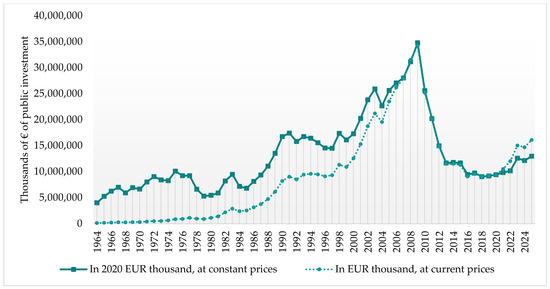
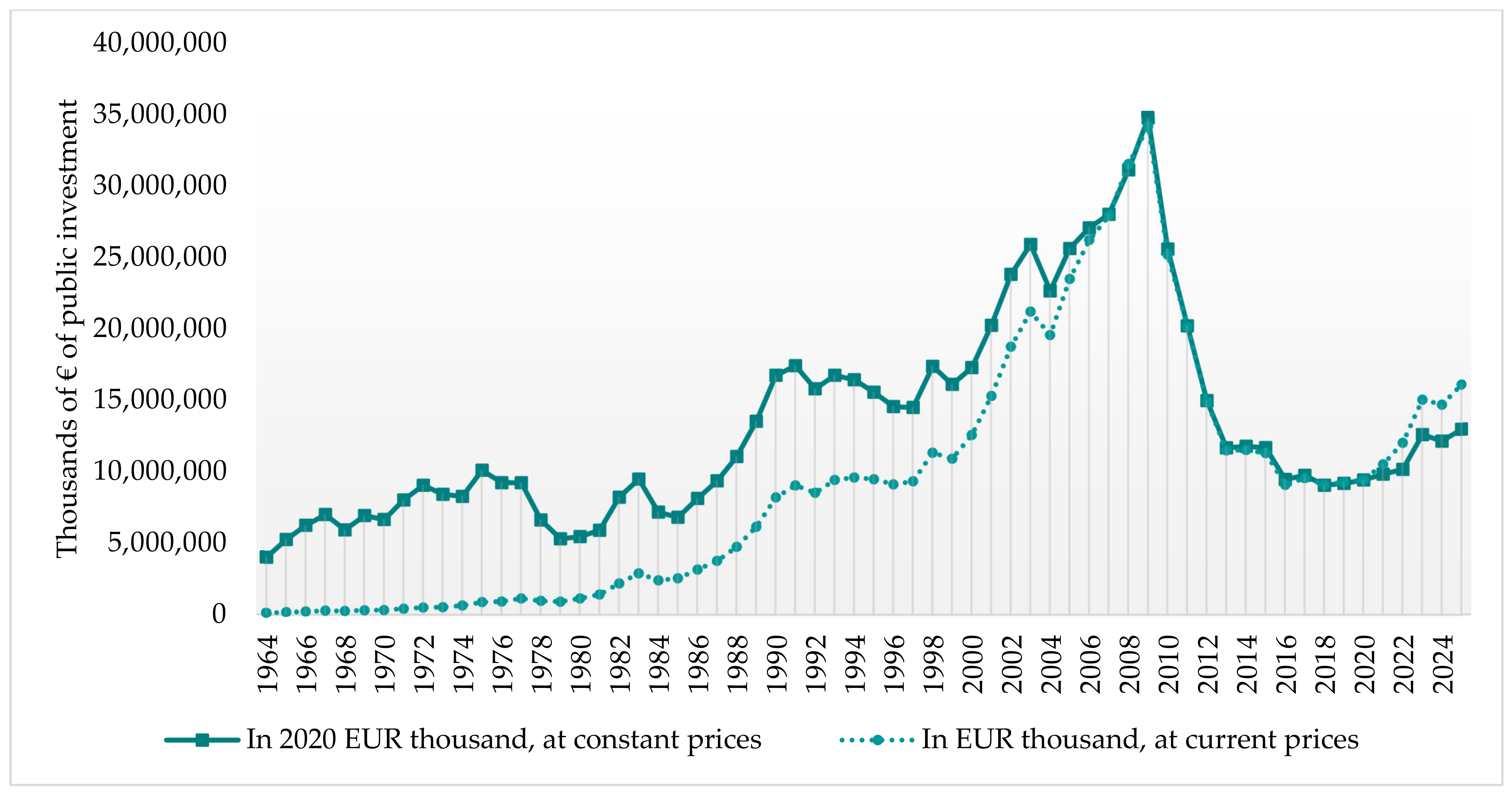
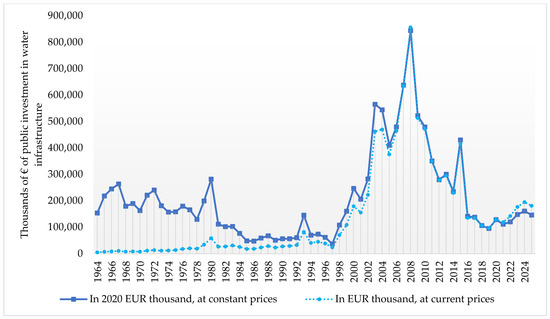
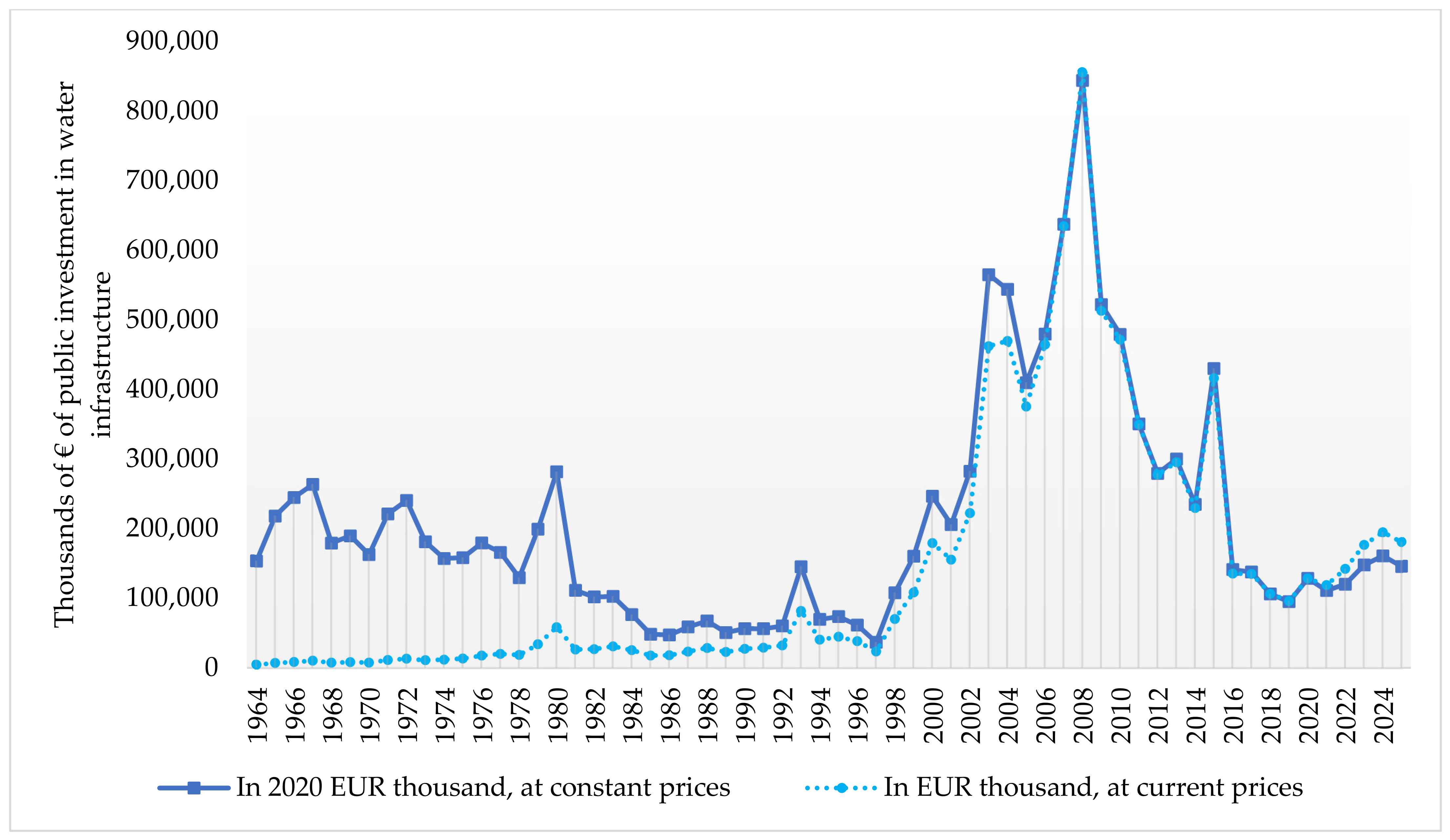
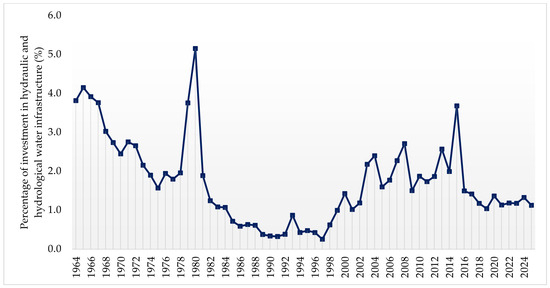
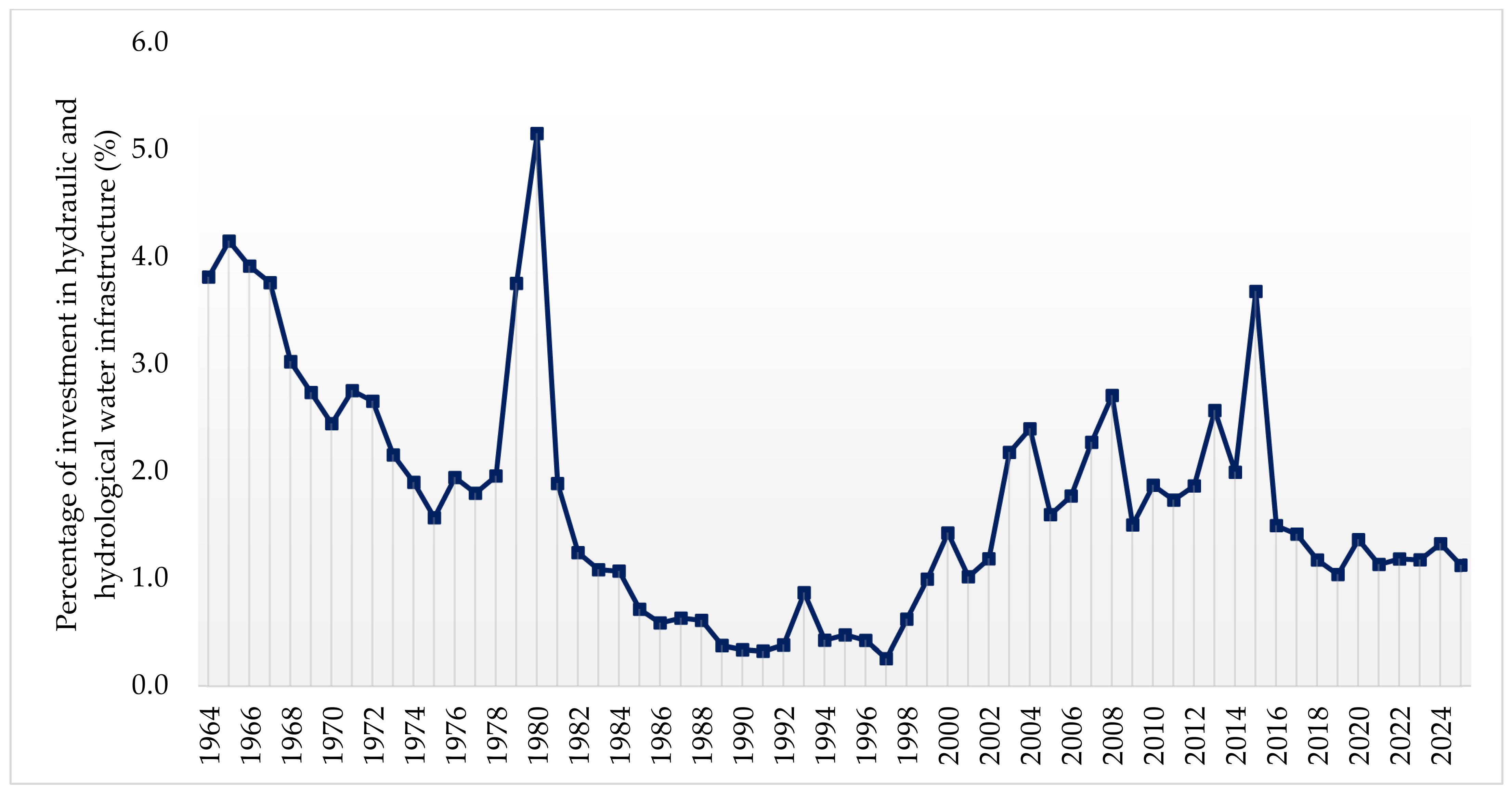
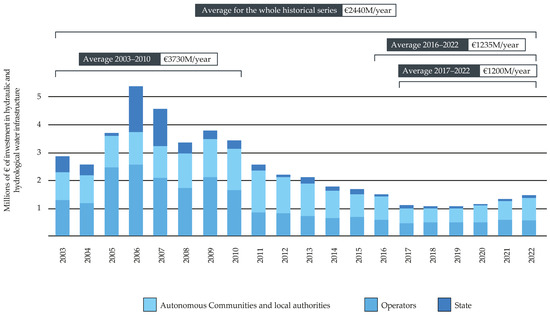
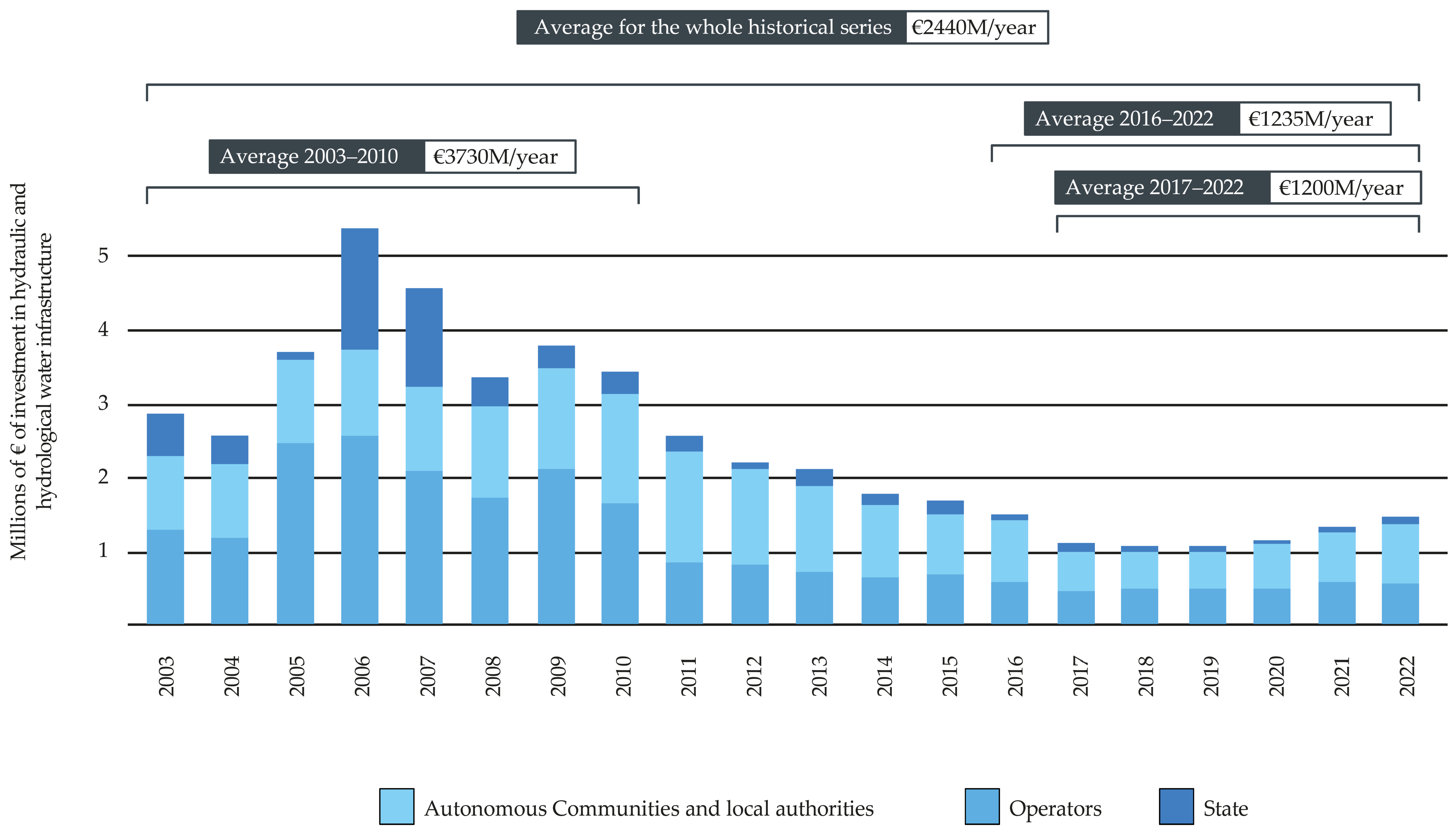
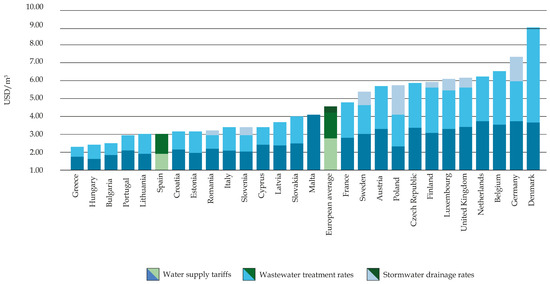
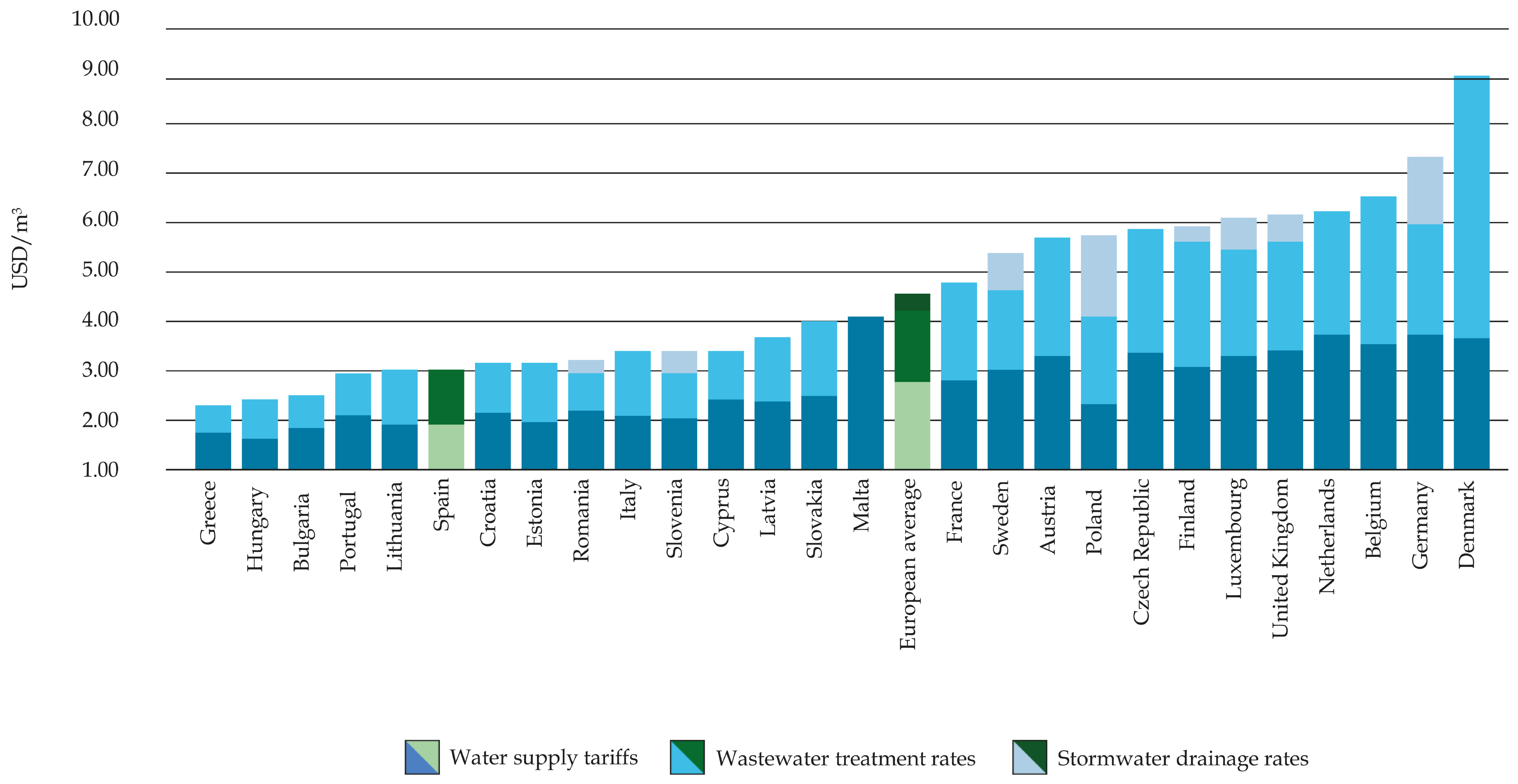
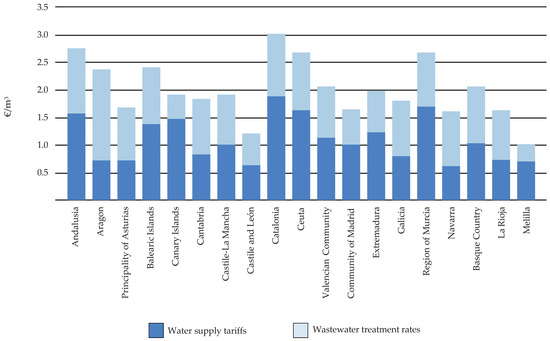
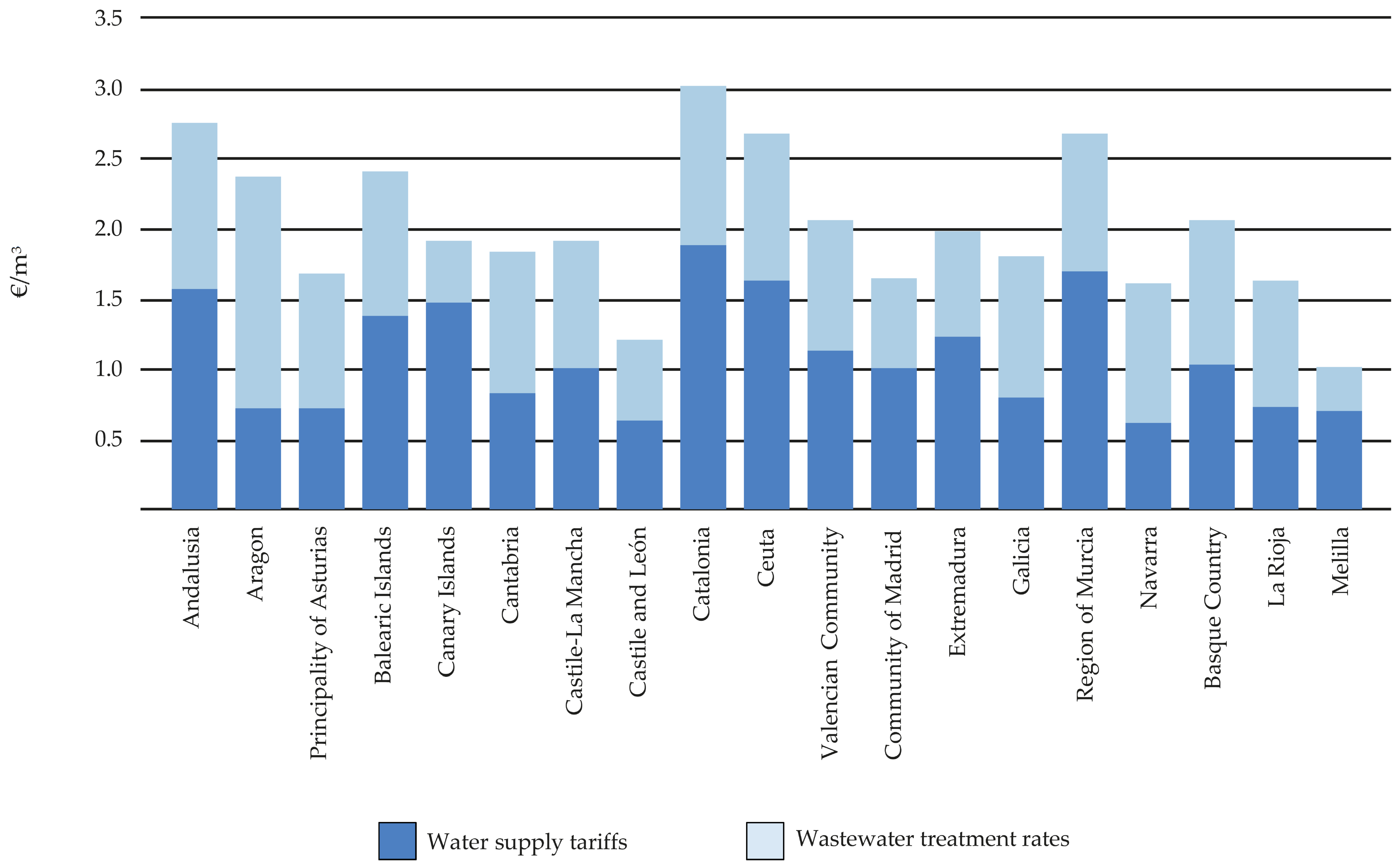
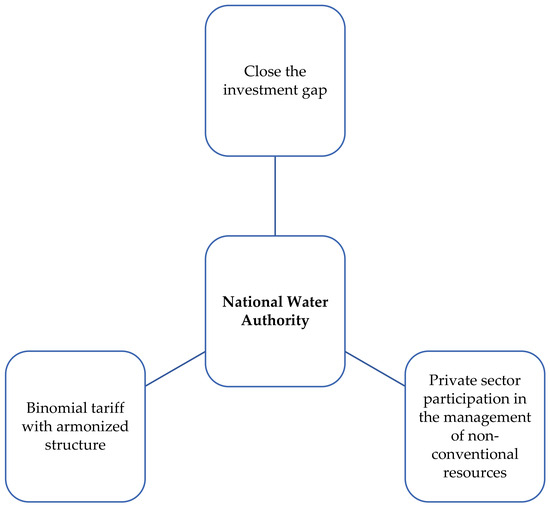
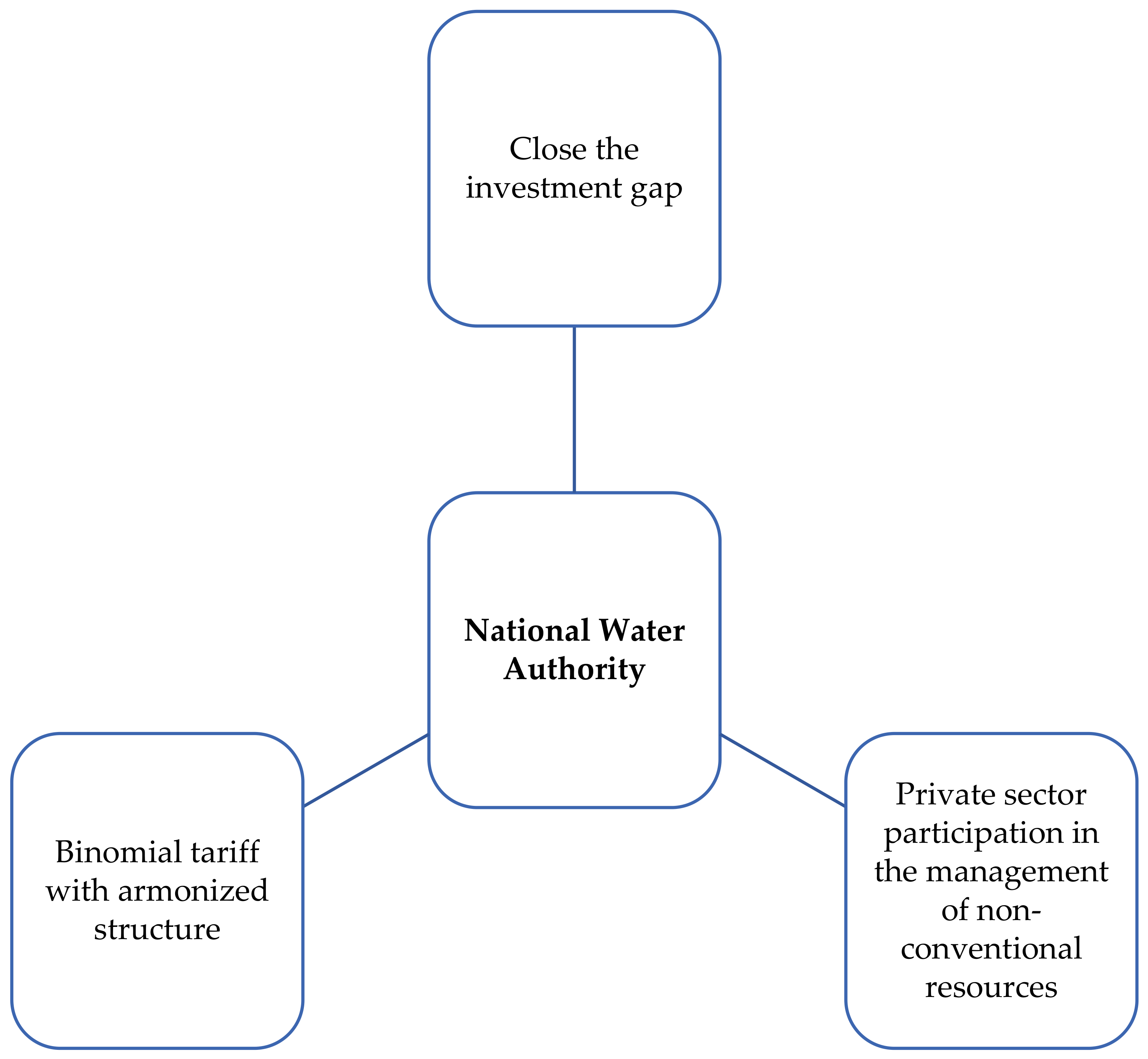

Disclaimer/Publisher’s Note: The statements, opinions and data contained in all publications are solely those of the individual author(s) and contributor(s) and not of MDPI and/or the editor(s). MDPI and/or the editor(s) disclaim responsibility for any injury to people or property resulting from any ideas, methods, instructions or products referred to in the content. |
© 2026 by the authors. Licensee MDPI, Basel, Switzerland. This article is an open access article distributed under the terms and conditions of the Creative Commons Attribution (CC BY) license.