Article

Hydrogeochemical Characteristics of Karst Areas: A Case Study of Dongzhuang Reservoir Area in Jinghe River


1
Yellow River Engineering Consulting Co., Ltd., Zhengzhou 450003, China
2
Key Laboratory of Water Management and Water Security for Yellow River Basin, Ministry of Water Resources (under construction), Zhengzhou 450003, China
*
Authors to whom correspondence should be addressed.
Water 2022, 14(24), 4111; https://doi.org/10.3390/w14244111
Submission received: 10 November 2022 / Revised: 4 December 2022 / Accepted: 5 December 2022 / Published: 16 December 2022
(This article belongs to the Special Issue Hydrogeology and Geochemistry of Karst Aquifers)

Abstract

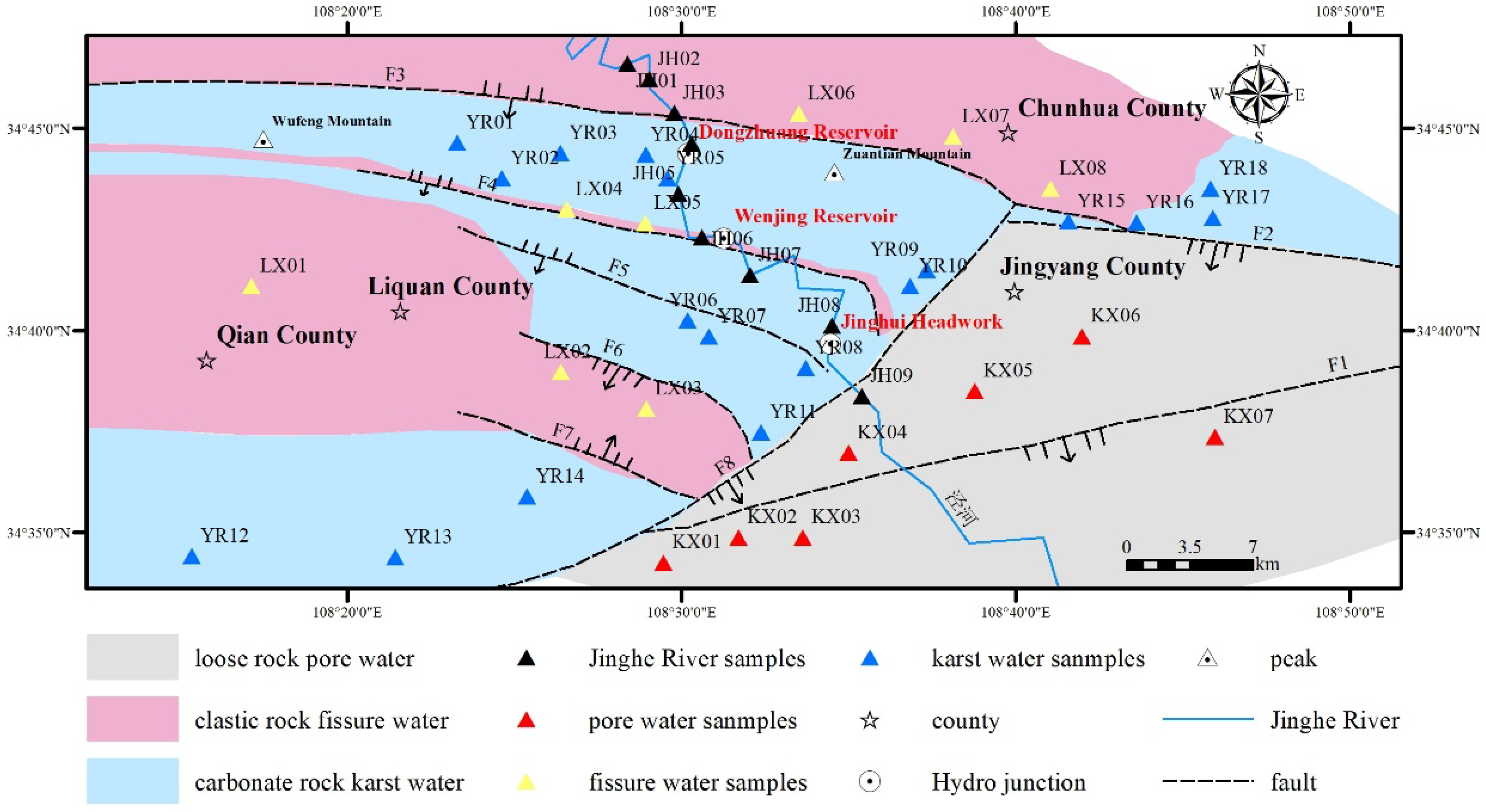
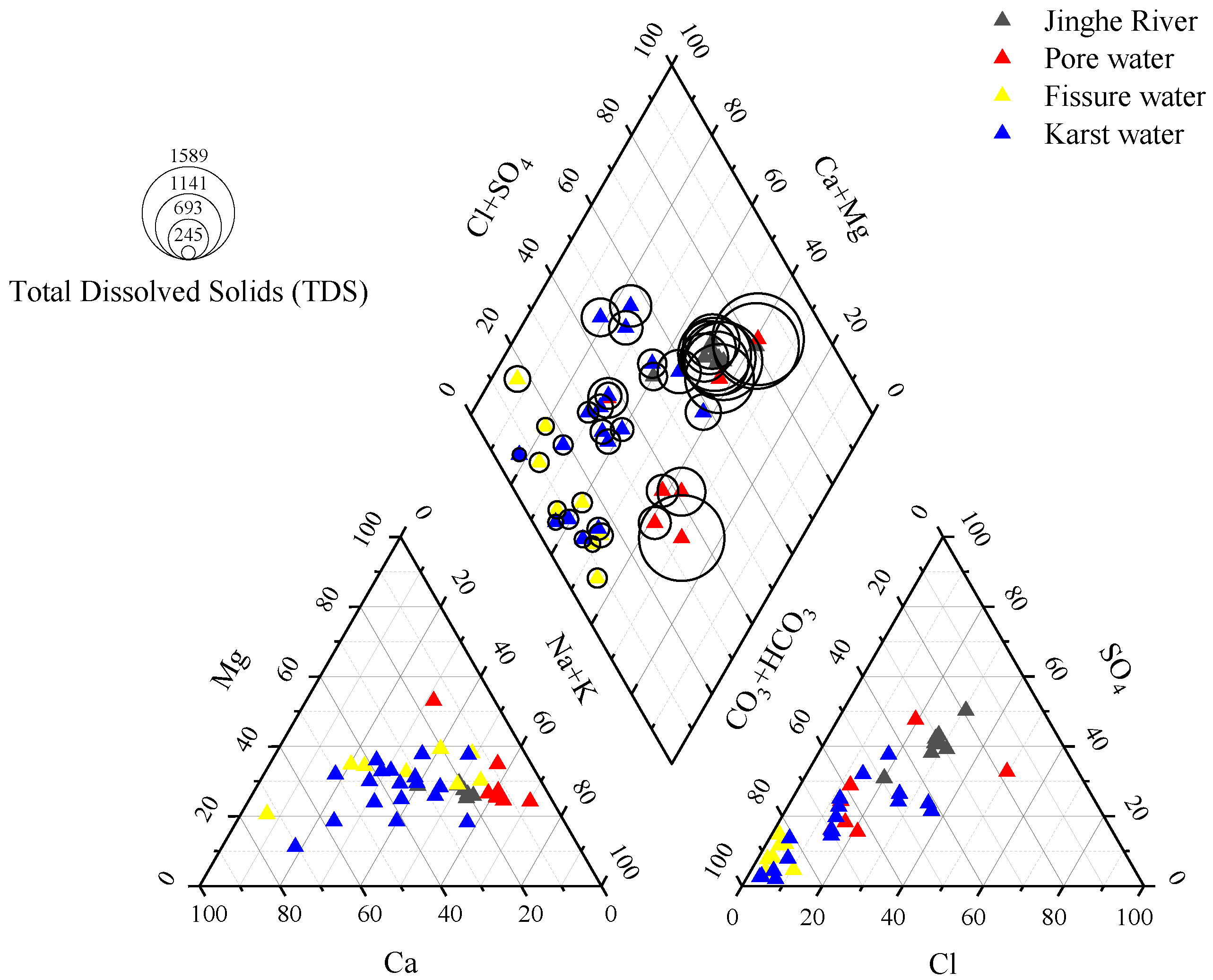
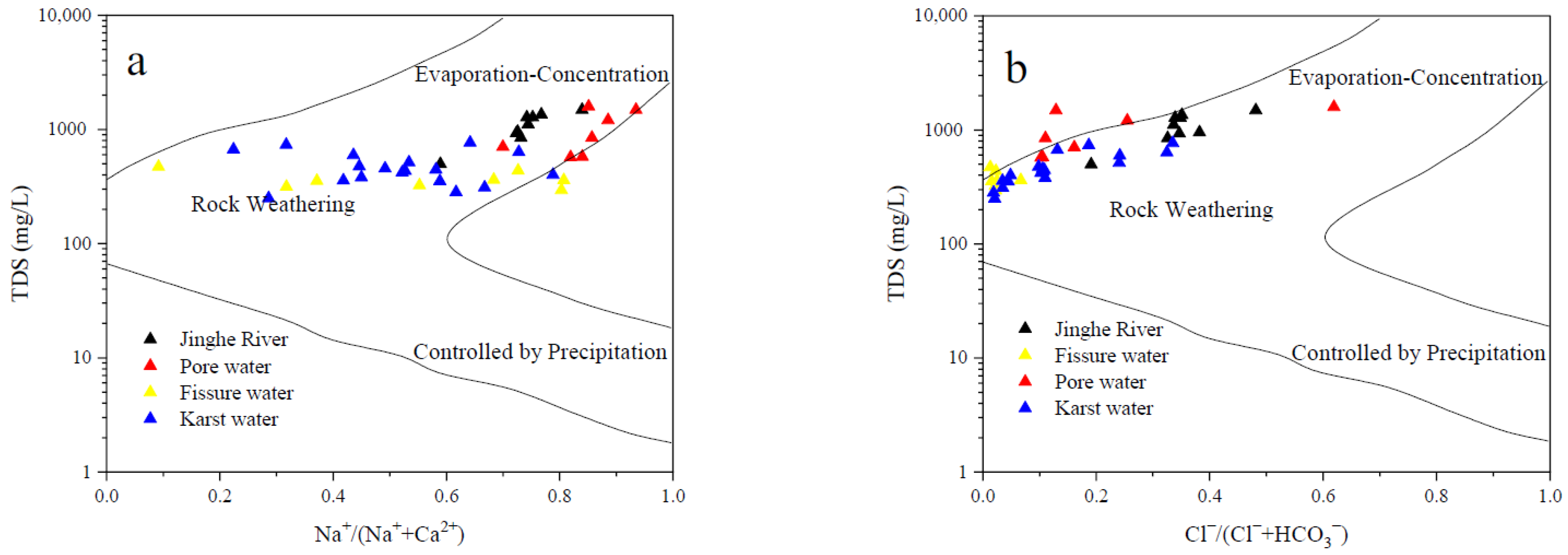
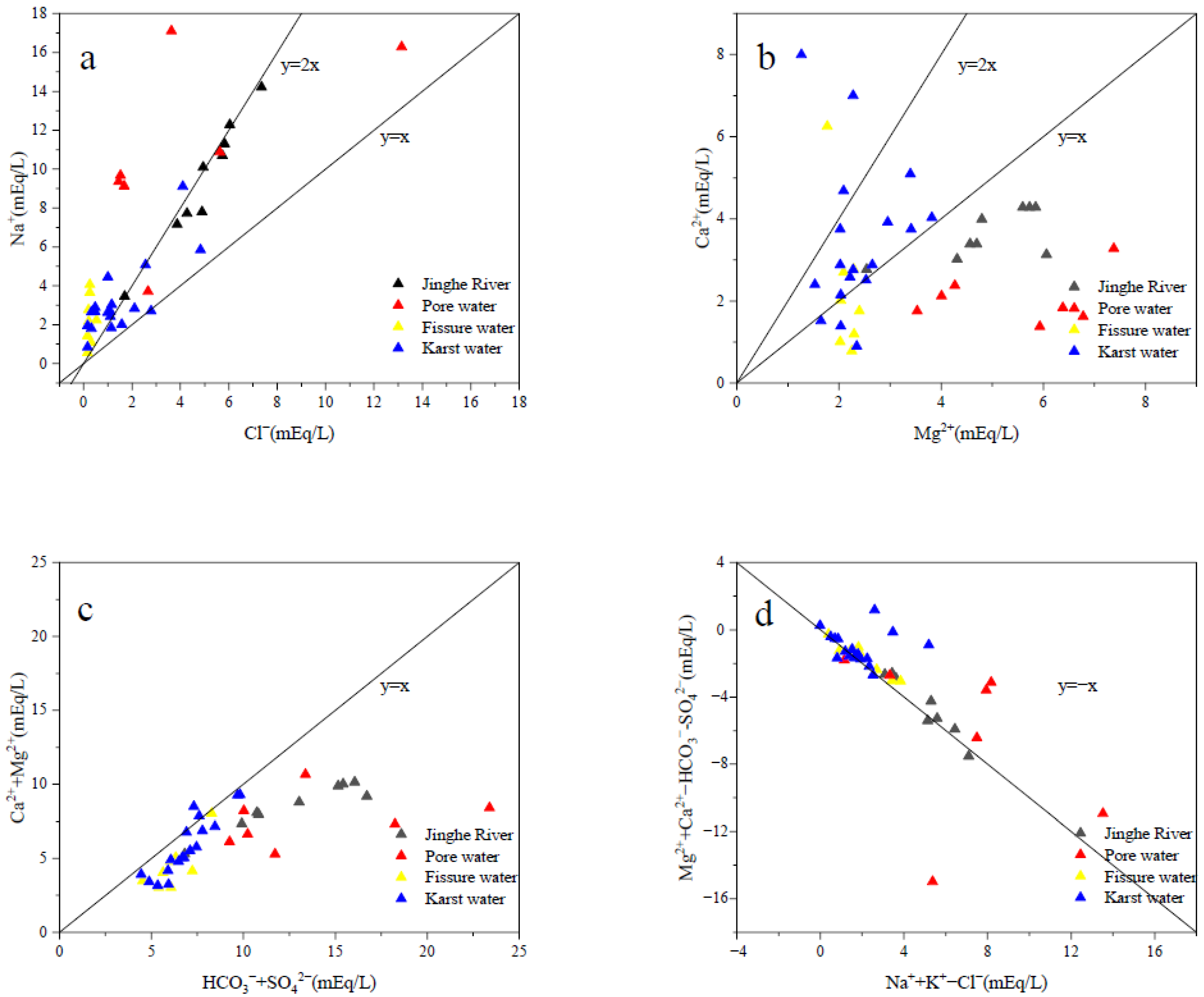
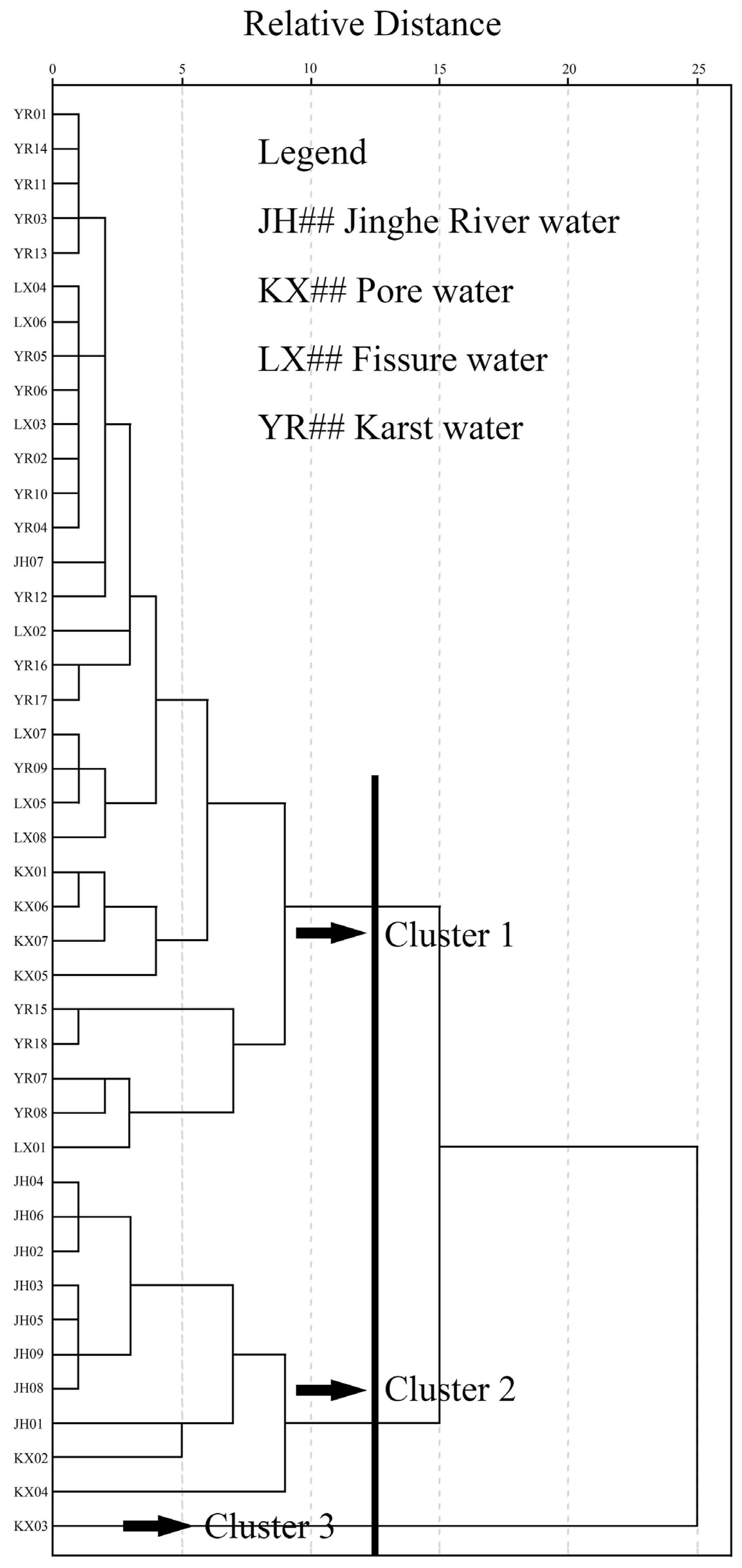
Karst leakage is the key problem that restricts the construction of reservoir areas. In this article, the hydrogeochemical origin and hydraulic connection of the river water, pore water, fissure water, and karst water in Jinghe Dongzhuang Reservoir, which is located in a karst area, are analyzed to determine the possibility of karst leakage in the reservoir area. Piper diagram, Gibbs diagram, ion proportion coefficient, and cluster analysis were comprehensively used to systematically study the hydrogeochemical characteristics and formation mechanism of the study area. The research results show that the water in the study area is weakly alkaline, with complex hydrogeochemical types, including SO4−Na, HCO3·SO4−Na, and HCO3·SO4−Na·Mg. Affected by evaporation and concentration, Jinghe River and shallow pore water have high TDS content, and the content of Na+(including K+), Cl and SO42− is significantly higher than that of fissure water and karst water. Fissure water and karst water are significantly weathered by rocks, and their Ca2+ and Mg2+ mainly come from carbonate rock dissolution. In the process of groundwater evolution, cation exchange occurs more or less in the three groundwater bodies, resulting in different cation contents in different water bodies. In general, Jinghe River is similar to most of the pore water, but its hydrogeochemical characteristics are obviously different from those of fissure water and karst water, so it has little hydraulic connection with fissure water and karst water, indicating that the leakage in the reservoir area is not significant.
Keywords: Dongzhuang reservoir; Jinghe River; karst water; hydrogeochemical characteristics; cluster analysis; hydraulic connection Dongzhuang reservoir; Jinghe River; karst water; hydrogeochemical characteristics; cluster analysis; hydraulic connection