Article

Characteristics of Strong Cooling Events in Winter of Northeast China and Their Association with 10–20 d Atmosphere Low-Frequency Oscillation

by
Qianhao Wang
and
Liping Li
*
Key Laboratory of Meteorological Disaster of Ministry of Education (KLME), Collaborative Innovation Center on Forecast and Evaluation of Meteorological Disasters (CIC-FEMD), Nanjing University of Information Science and Technology, Nanjing 210044, China
*
Author to whom correspondence should be addressed.
Atmosphere 2024, 15(12), 1486; https://doi.org/10.3390/atmos15121486
Submission received: 14 November 2024 / Revised: 6 December 2024 / Accepted: 10 December 2024 / Published: 12 December 2024

Abstract

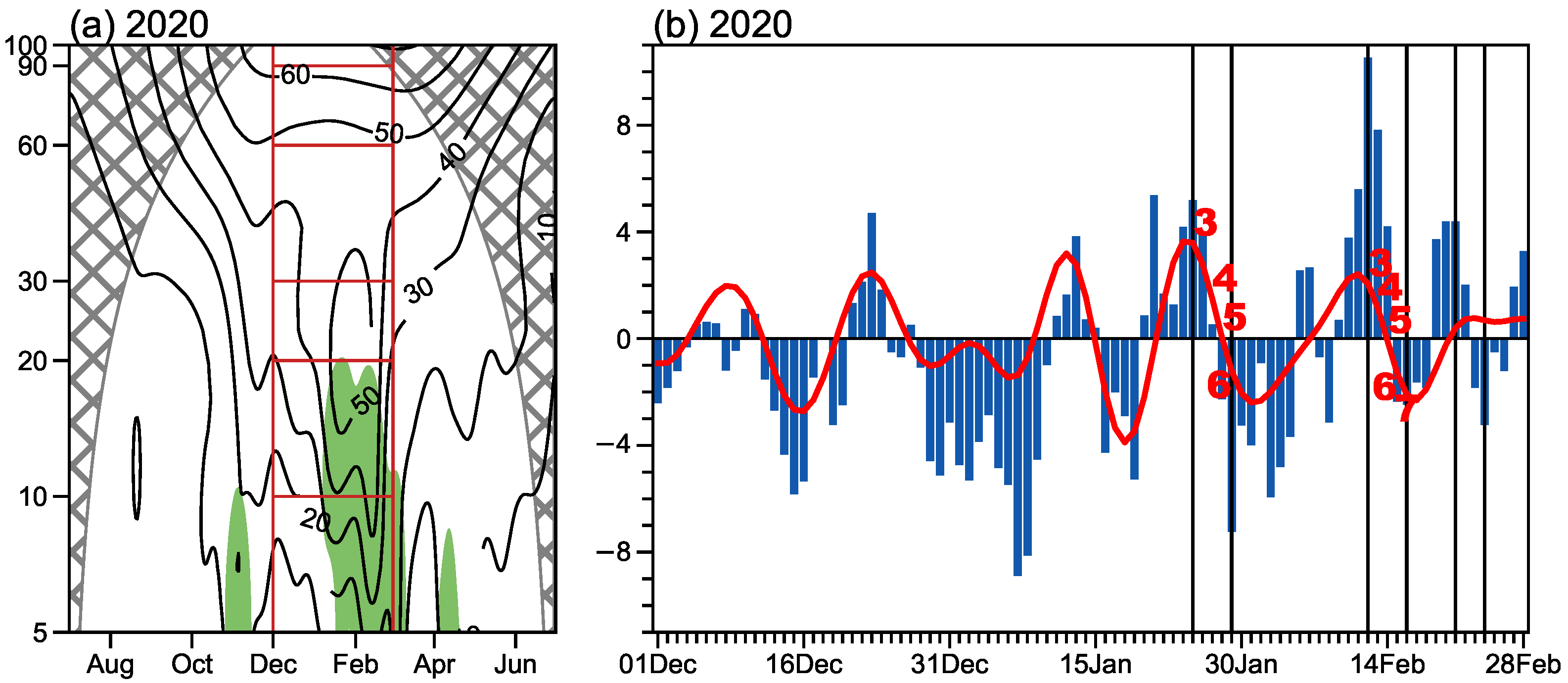
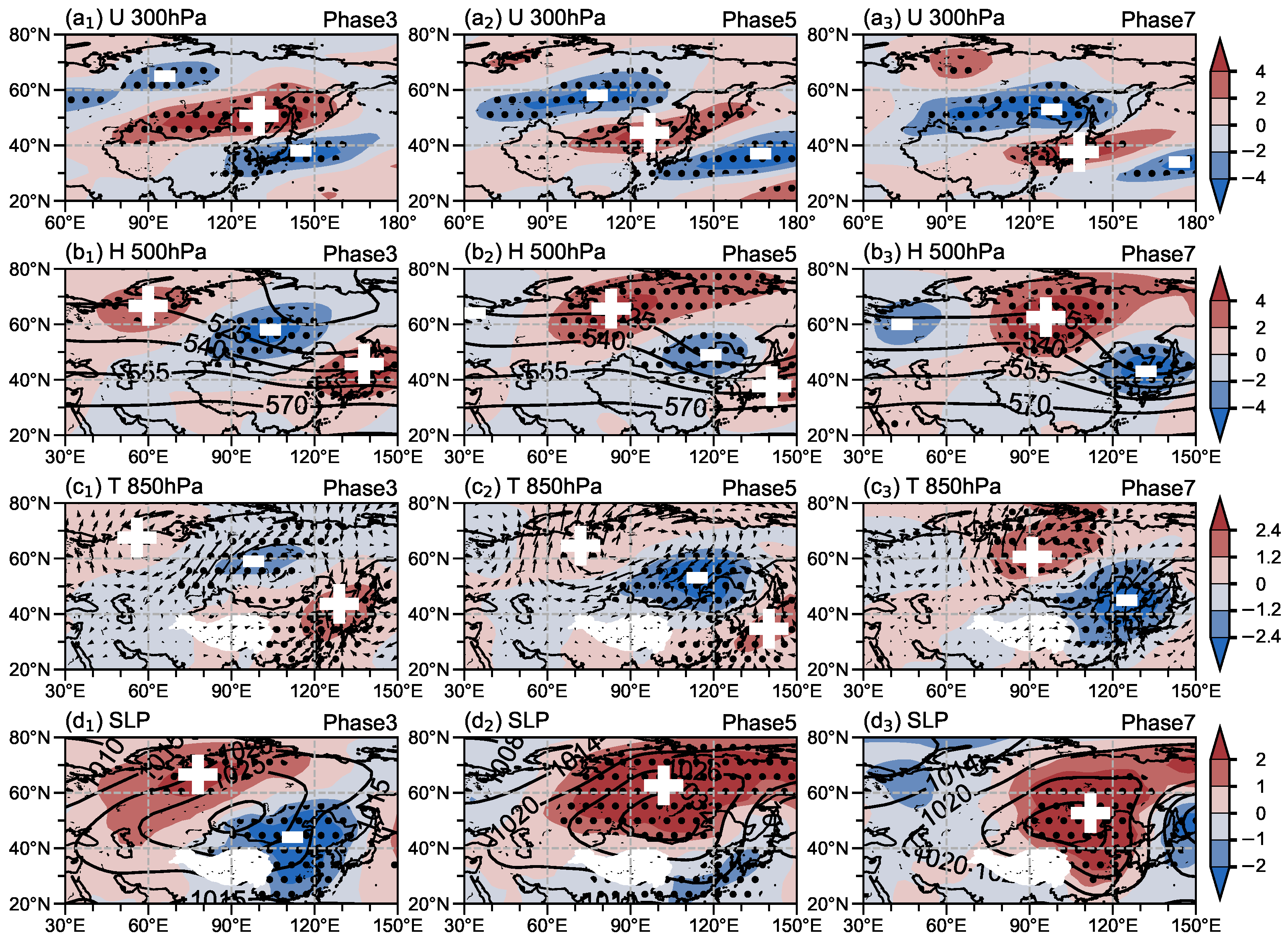
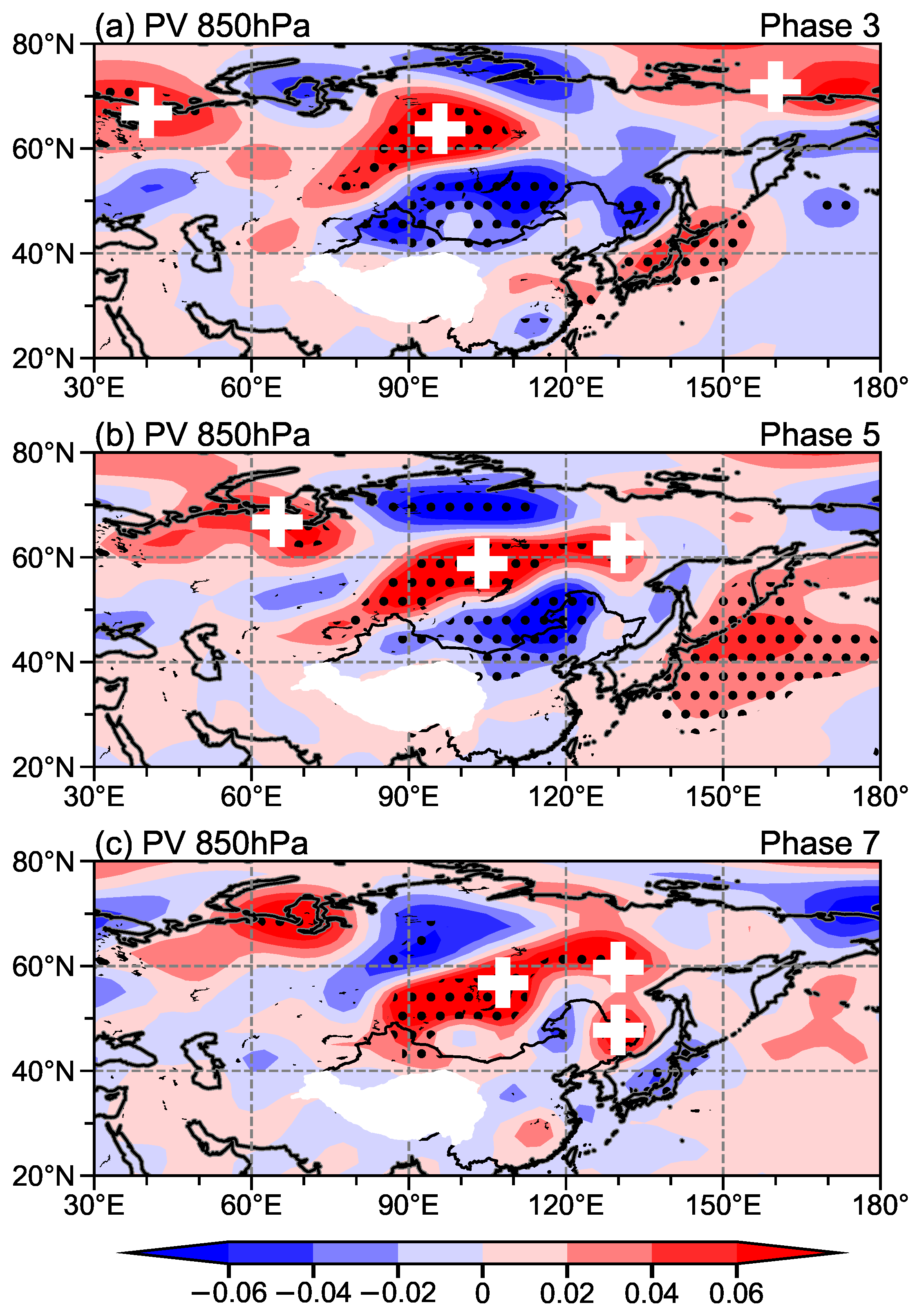
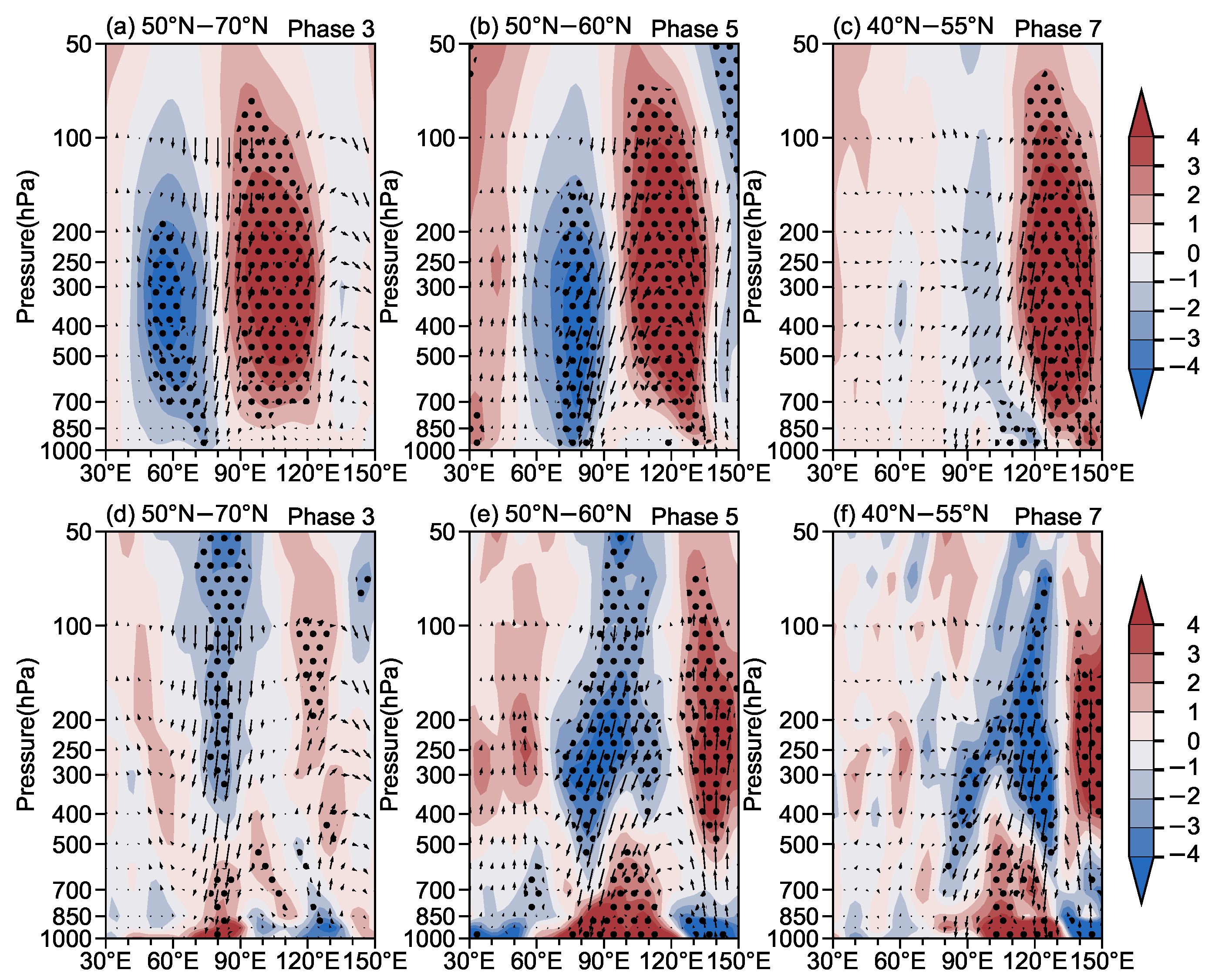
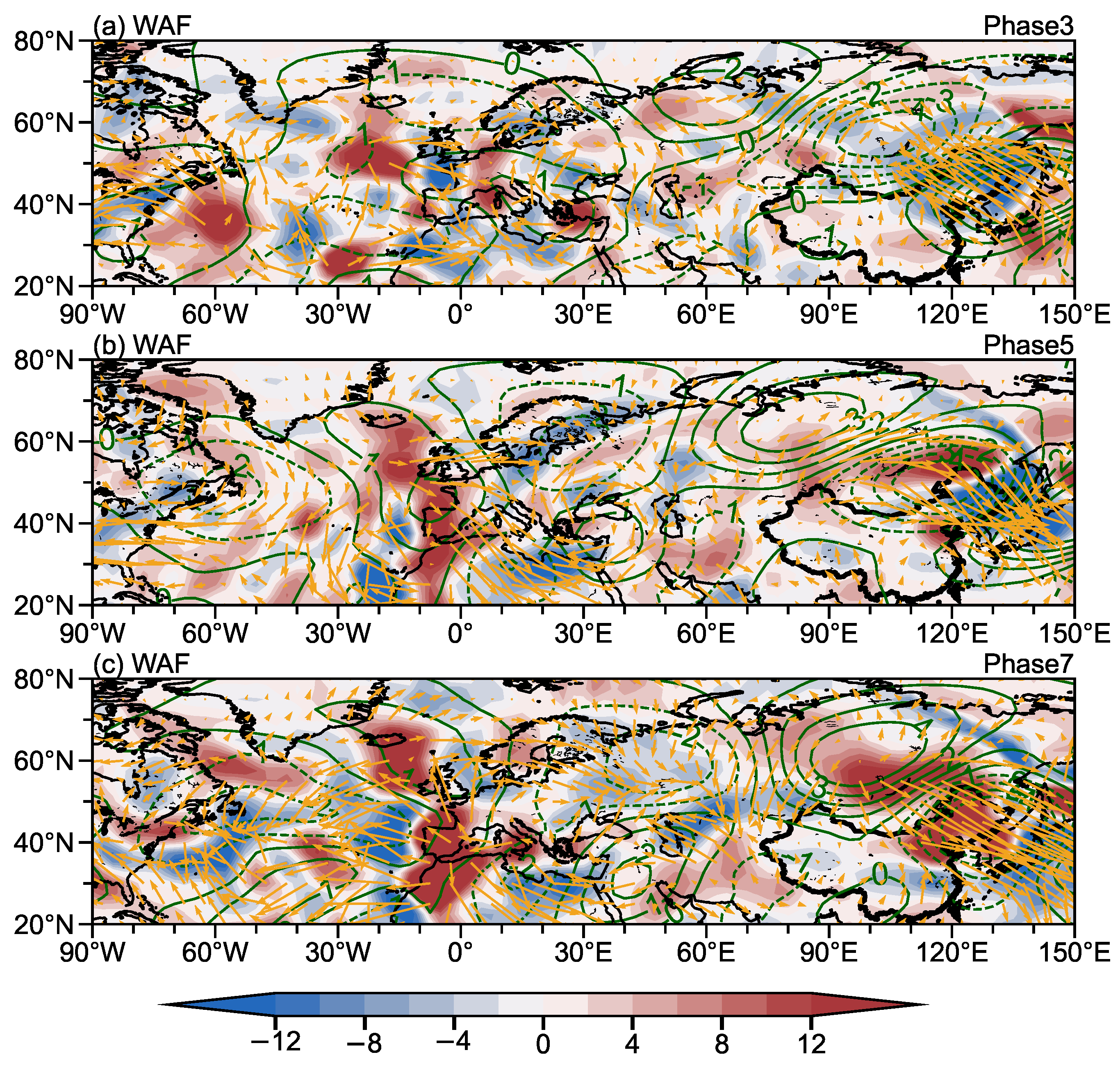
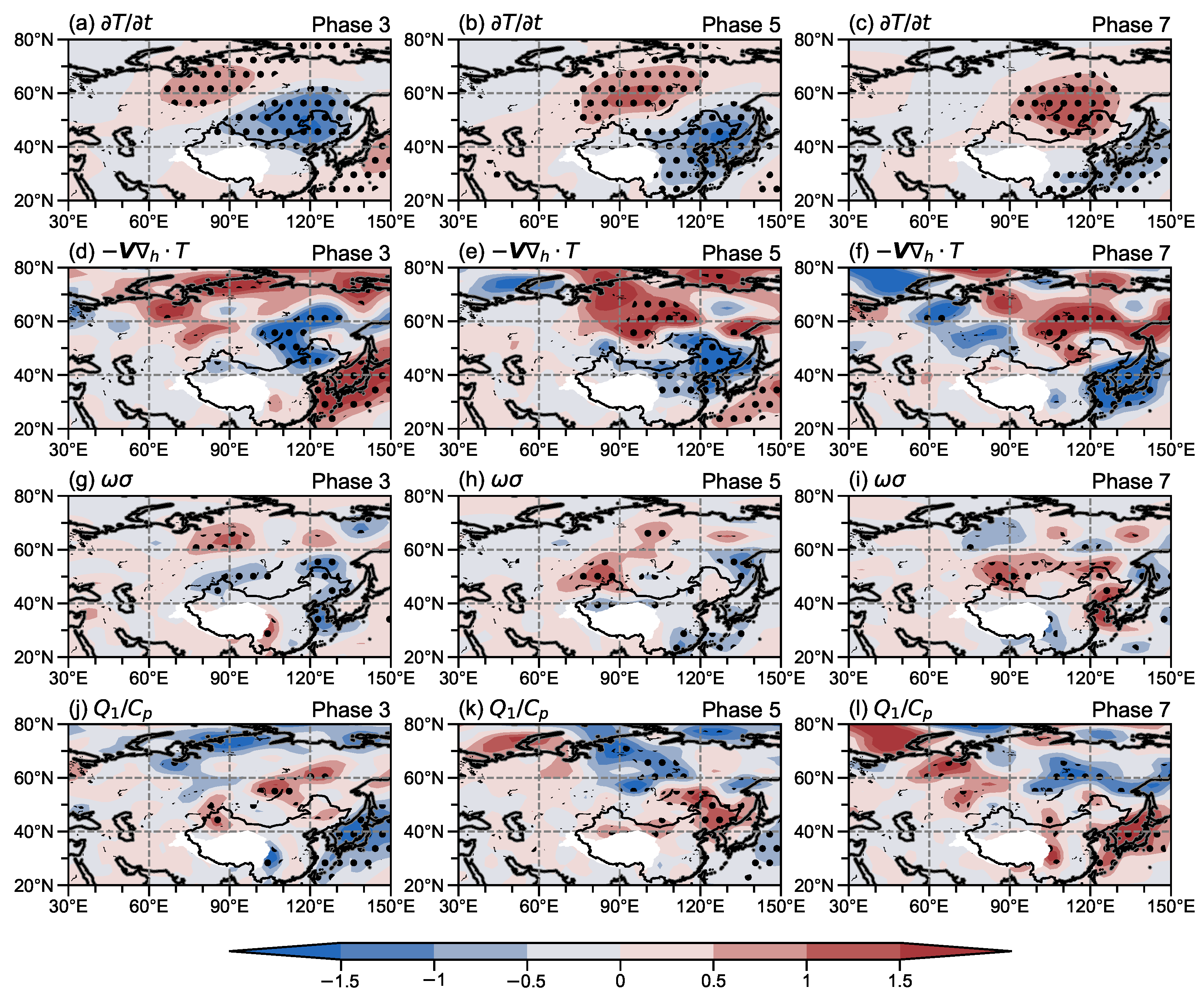
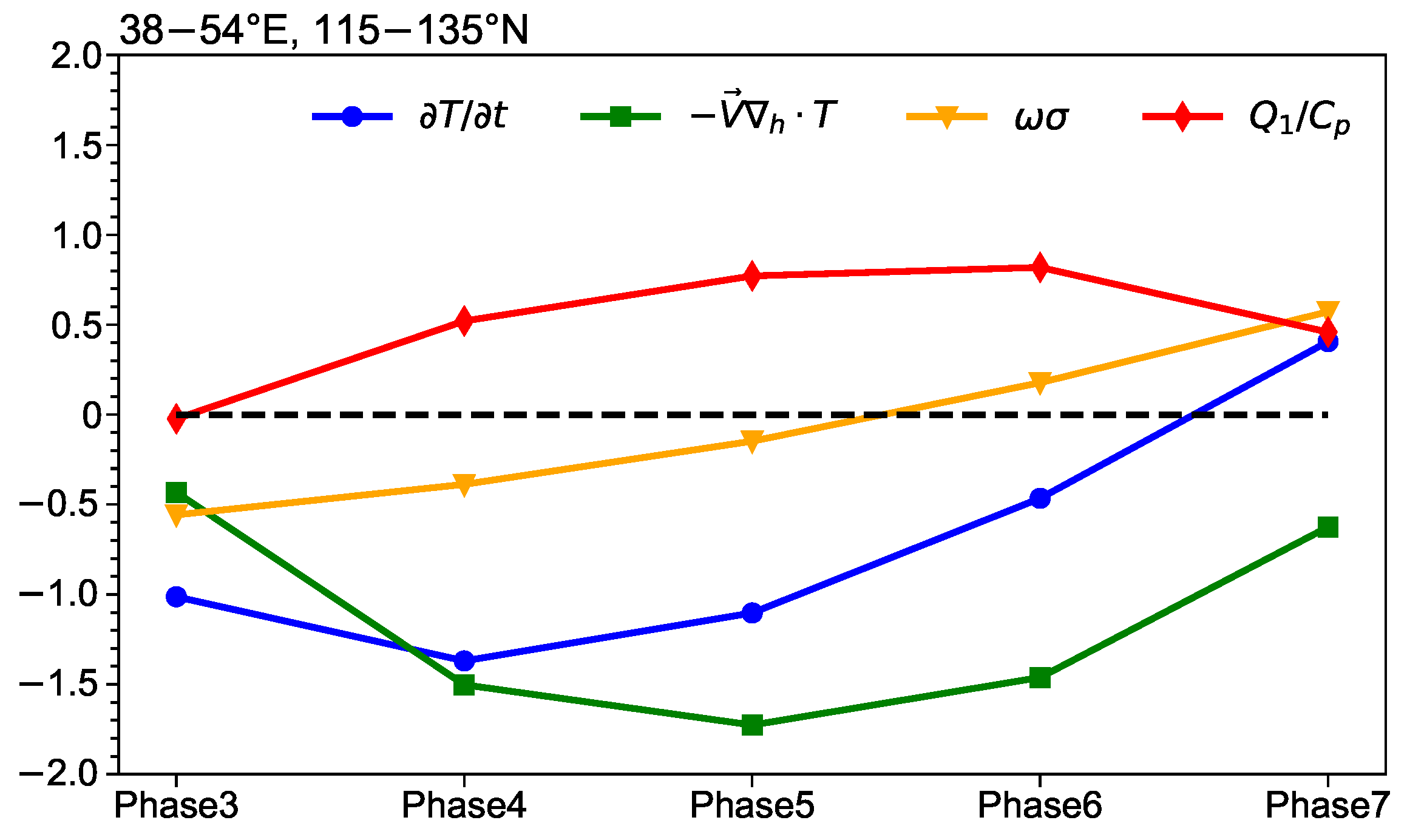
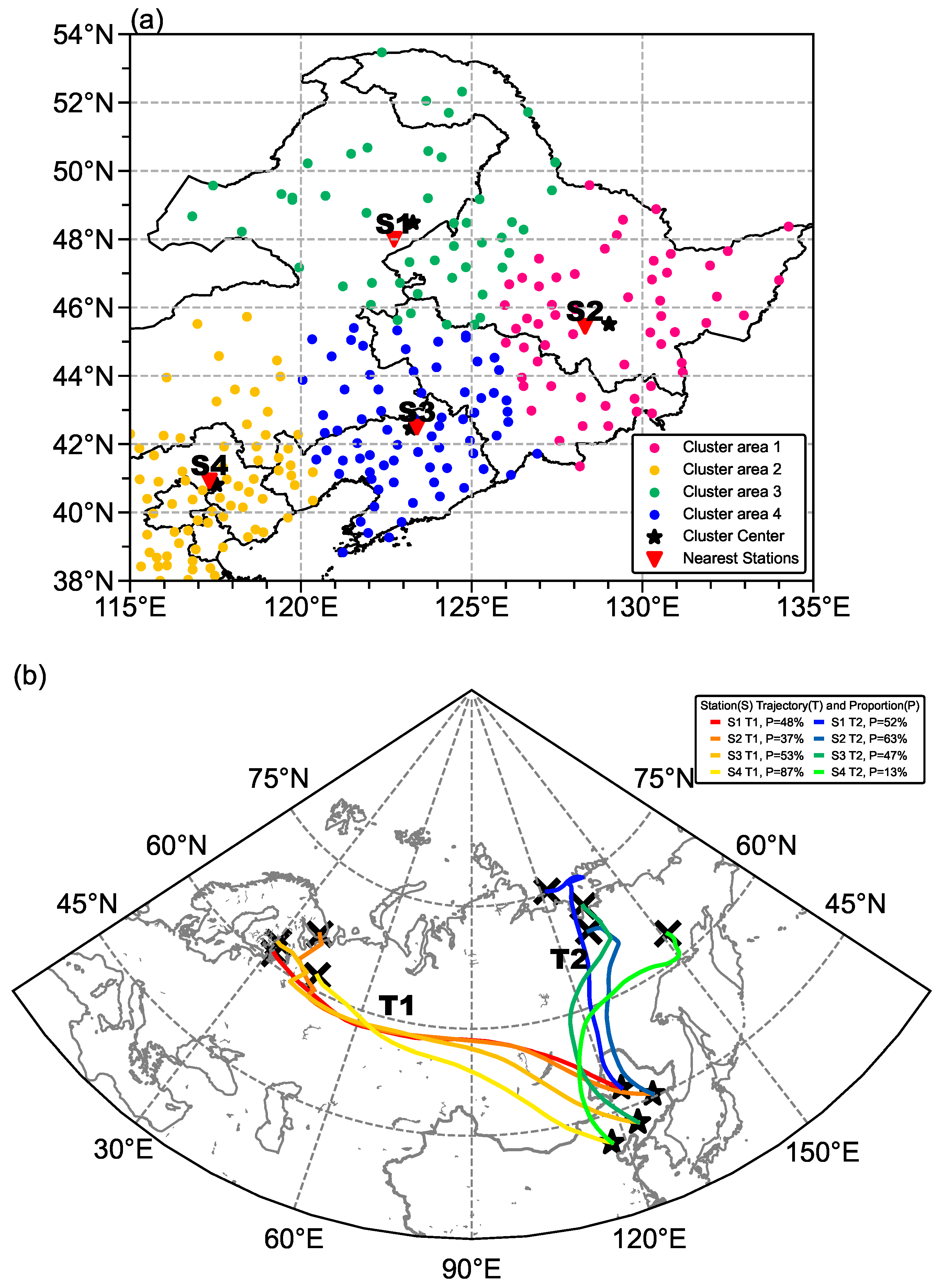
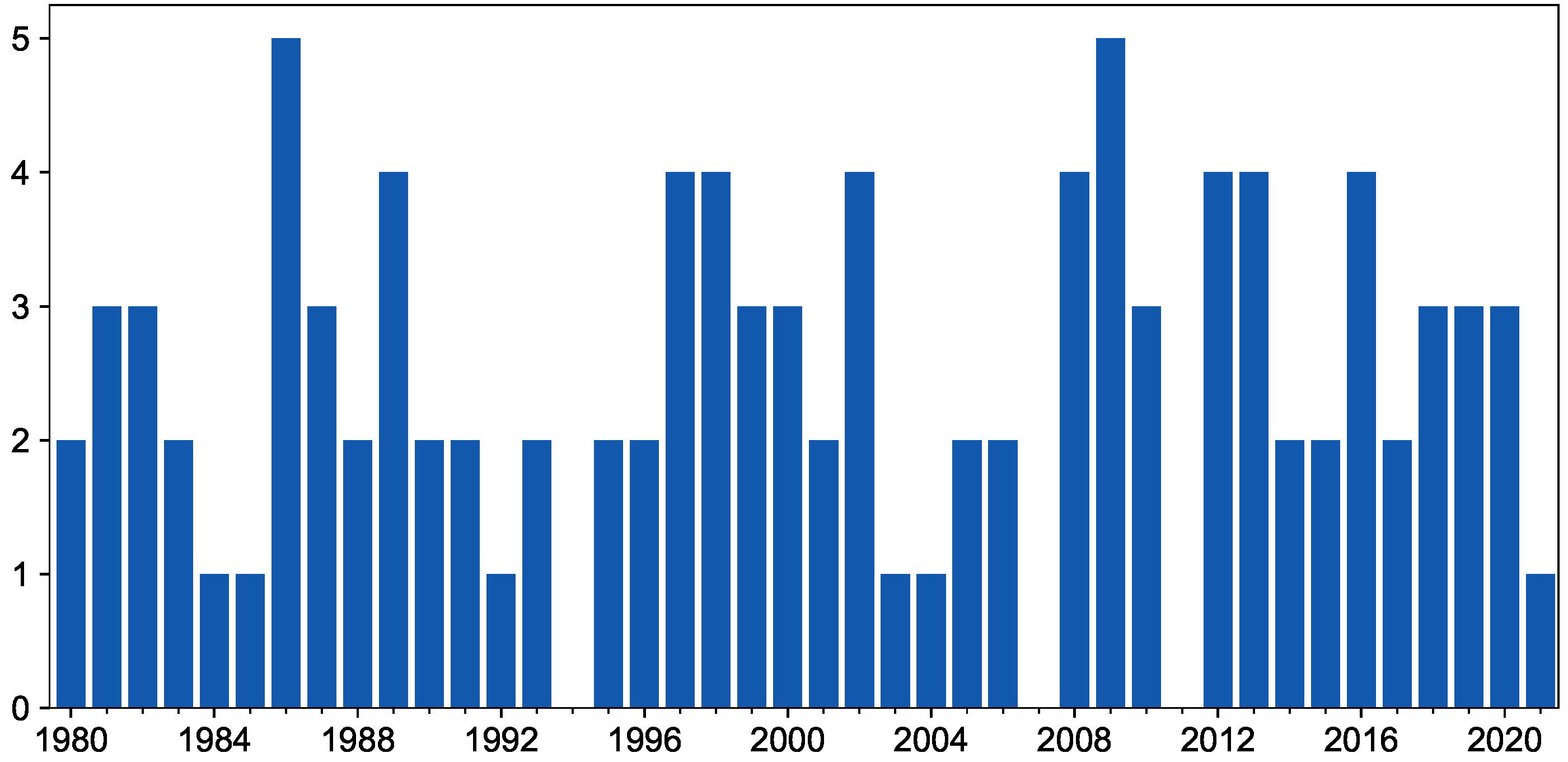
In the past 42 years from 1980 to 2021, 103 regional strong cooling events (RSCEs) occurred in winter in Northeast China, and the frequency has increased significantly in the past 10 years, averaging 2.45 per year. The longest (shortest) duration is 10 (2) days. The minimum temperature series in 60 events exists in 10–20 d of significant low-frequency (LF) periods. The key LF circulation systems affecting RSCEs include the Lake Balkhash–Baikal ridge, the East Asian trough (EAT), the robust Siberian high (SH) and the weaker (stronger) East Asian temperate (subtropical) jet, with the related anomaly centers moving from northwest to southeast and developing into a nearly north–south orientation. The LF wave energy of the northern branch from the Atlantic Ocean disperses to Northeast China, which excites the downstream disturbance wave train. The corresponding LF positive vorticity enhances and moves eastward, leading to the formation of deep EAT. The enhanced subsidence motion behind the EAT leads to SH strengthening. The cold advection related to the northeast cold vortex is the main thermal factor causing the local temperature to decrease. The Scandinavian Peninsula is the primary cold air source, and the Laptev Sea is the secondary one, with cold air from the former along northwest path via the West Siberian Plain and Lake Baikal, and from the latter along the northern path via the Central Siberian Plateau, both converging towards Northeast China.
Keywords: the winter of Northeast China; regional strong cooling events; 10–20 d low-frequency oscillation; sources and paths of cold air; dynamic and thermodynamical causes the winter of Northeast China; regional strong cooling events; 10–20 d low-frequency oscillation; sources and paths of cold air; dynamic and thermodynamical causes