


Abstract
Objective: TNFSF13B, which encodes B-cell-activating factor (BAFF) and peptidylarginine deiminase 4 (PADI4), plays crucial roles in the pathogenesis of ANCA-associated vasculitis (AAV). This study investigated the associations of single-nucleotide polymorphisms (SNPs) in TNFSF13B/BAFF and PADI4 genes with AAV susceptibility, clinical phenotypes, and disease activity in a Guangxi Chinese population. Methods: A case–control study included 324 AAV patients and 324 healthy controls. After propensity score matching (201 pairs), genomic DNA was genotyped for TNFSF13B/BAFF rs3759467 (formerly rs386492354) and rs1041569, and PADI4 rs11203366 and rs874881 using multiplex PCR and high-throughput sequencing. Genetic associations were analyzed via logistic regression, subgroup, haplotype, and clinical correlation analyses. For each of the four SNPs separately, machine learning models (logistic regression, SVM, Random Forest, XGBoost) were built and evaluated via 5-fold cross-validation. No formal adjustment for multiple comparisons was applied due to the exploratory nature of this study. Results: For TNFSF13B/BAFF, the rs3759467 C allele was protective (dominant model OR = 0.60, p = 0.011; log-additive OR = 0.71, p = 0.020; CA haplotype OR = 0.71, p = 0.019), while the rs1041569 T allele was a risk factor (dominant model OR = 1.70, p = 0.016). Subgroup analysis revealed stronger protective effects of rs3759467 in females, Han ethnicity, and MPA patients, and stronger risk effects of rs1041569 in Han ethnicity and MPA patients. Haplotype CA was protective (OR = 0.71, p = 0.019), and TT was risk-associated (OR = 1.55, p = 0.017). Both TNFSF13B/BAFF SNPs were associated with rash and hemoptysis incidence (p < 0.05). rs1041569 was also associated with RBC (red blood cell) count and HB (hemoglobin) levels (p < 0.05). For PADI4, rs11203366 and rs874881 showed no association with AAV susceptibility (all p > 0.05). However, their genotypes were associated with disease activity (BVAS, Birmingham Vasculitis Activity Score), RBC count, and HB levels (p < 0.05). Although machine learning was applied to explore predictive patterns, its performance was suboptimal (AUC < 0.6), indicating limited clinical applicability. Accordingly, the primary findings rely on the genetic model analysis, and the machine learning results should not be overinterpreted as clinically actionable. SHAP analysis indicated that risk-associated genotypes contributed most to model predictions. Conclusions: TNFSF13B/BAFF gene polymorphisms rs3759467 and rs1041569 were associated with AAV susceptibility in this Guangxi cohort, influencing clinical manifestations like rash, hemoptysis, and anemia severity. PADI4 polymorphisms rs11203366 and rs874881 are not associated with susceptibility but may correlate with disease activity and hematological parameters. These findings highlight the ethnic and clinical subtype specificity of genetic influences in AAV. Due to the lack of external validation, these findings are exploratory and require replication.
1. Introduction
ANCA-associated vasculitis (AAV) is a group of severe autoimmune diseases characterized by necrotizing small-vessel inflammation, leading to high mortality and morbidity [1]. Genetic factors are believed to contribute significantly to its pathogenesis [2,3]. TNFSF13B/BAFF, a key cytokine for B-cell survival and antibody production, is overexpressed in active AAV and correlates with ANCA titers [4]. Moreover, B-cell-targeted therapy with rituximab (anti-CD20 monoclonal antibody) induces remission and improves renal function in AAV, confirming the central role of B cells in AAV pathogenesis. As a key regulator of B-cell survival and differentiation, TNFSF13B/BAFF may contribute to B-cell dysregulation and autoantibody production in AAV [5,6]. Peptidylarginine deiminase 4 (PADI4) catalyzes protein citrullination, essential for neutrophil extracellular trap (NET) formation, a core process in AAV vascular injury [7]. In lupus nephritis, PADI4 is involved in the production of autoantibodies and deposition of immune complexes, exacerbating renal inflammation [8]. While polymorphisms in these genes are linked to other autoimmune diseases like rheumatoid arthritis and Sjögren’s syndrome [9], their role in AAV, particularly in Chinese populations, remains unclear. This study aimed to explore the associations of specific single-nucleotide polymorphisms (SNPs) in the TNFSF13B/BAFF and PADI4 genes with disease susceptibility, clinical phenotypes and disease activity of AAV among the population in Guangxi, using conventional statistical approaches, genetic model analysis and machine learning algorithms.
2. Materials and Methods
2.1. Study Population
This case–control study enrolled 324 AAV patients and 324 healthy controls. AAV patients were recruited from the Department of Nephrology, The Second Affiliated Hospital of Guangxi Medical University (formerly the West Branch of the First Affiliated Hospital), between January 2006 and June 2025. Healthy controls were volunteers undergoing routine health examinations at the same hospital during the same period (2006–2025) as the AAV patients. Inclusion criteria were: (1) diagnosis of AAV according to the 2012 revised Chapel Hill Consensus Conference criteria; (2) registered residence in Guangxi; (3) age ≥18 years at enrollment; and (4) no blood relationship with other participants. Exclusion criteria included secondary vasculitis (e.g., associated with rheumatoid arthritis, systemic lupus erythematosus, undifferentiated connective tissue disease, infections, Henoch–Schönlein purpura, or malignancy), coexisting malignancy, severe multiple organ failure, serious hereditary diseases, or refusal to participate. Healthy controls were volunteers undergoing routine health examinations at the same hospital during the same period. Inclusion criteria were: no evidence of AAV or related conditions, Guangxi registered residence, age- and sex-matched to the AAV group, and no blood relationship with other participants. Individuals with autoimmune diseases, hereditary disorders, or major medical history were excluded. The study was approved by the Ethics Committee of the Second Affiliated Hospital of Guangxi Medical University. Written informed consent was obtained from all participants.
2.2. Clinical Data Collection
Clinical data were collected using a standardized case report form from the hospital’s electronic medical record and laboratory information systems. All clinical and laboratory variables were collected at the time of AAV diagnosis, prior to any immunosuppressive treatment. Collected information included: (1) baseline demographic data (sex, age, ethnicity, and medical history) for both groups; and (2) AAV-specific data, including clinical manifestations (e.g., rash, hemoptysis), laboratory parameters (blood routine, urinary albumin, Scr (serum creatinine), CRP (C-reactive protein), renal pathologic classification, and disease activity assessed by the BVAS (Birmingham Vasculitis Activity Score, BVAS).
2.3. SNP Selection
SNP selection was based on sequencing data from the 1000 Genomes Project (GRCh37, https://grch37.ensembl.org/, accessed on 13 May 2026) analyzed with Haploview 4.2 software. Selection criteria included: minor allele frequency (MAF) ≥ 0.05, Hardy–Weinberg equilibrium (HWE) p > 0.05 in controls, and prior reported associations with autoimmune diseases. SNP functional annotations were obtained from NCBI dbSNP (https://www.ncbi.nlm.nih.gov/snp/, accessed on 13 May 2026). Ultimately, two TNFSF13B/BAFF SNPs (rs3759467 and rs1041569) and two PADI4 SNPs (rs11203366 and rs874881) were selected. This study used a candidate-gene and candidate-SNP strategy rather than comprehensive gene-wide tag-SNP mapping. TNFSF13B/BAFF and PADI4 were selected because of their biological relevance to B-cell activation, autoantibody production, citrullination, and NETosis in AAV. The four SNPs were prioritized according to East Asian allele frequency, previous evidence in autoimmune diseases, and potential biological or functional relevance.
2.4. Genotyping
Peripheral venous blood (5 mL) was collected into EDTA tubes. Genomic DNA was extracted using a Blood DNA Kit (Tiangen Biotech, Beijing, China). DNA samples with an A260/A280 ratio of 1.7–1.9 and a concentration >25 ng/μL were included and stored at −80 °C. Genotyping was performed by Shanghai Sangon Biotech Co., Ltd. (Shanghai, China) using multiplex polymerase chain reaction (PCR) combined with high-throughput sequencing. All samples were anonymized and assigned random identification numbers before genotyping. Laboratory personnel were blinded to case/control status and clinical data.
2.5. Statistical Analysis
Statistical analyses were conducted using SPSS 27.0, SNPstats online tool, and Haploview software. All tests were two-sided, with p < 0.05 considered statistically significant.
2.5.1. Propensity Score Matching and Baseline Comparison
To minimize baseline confounding, propensity score matching (PSM) was performed. A logistic regression model was constructed with AAV status as the dependent variable and age, sex, and ethnicity as covariates. One-to-one nearest-neighbor matching with a caliper of 0.02 yielded 201 matched pairs. Matching quality was assessed by standardized mean differences < 10% for all covariates. Continuous variables were expressed as mean ± standard deviation or median (interquartile range) and compared using an independent t-test or the Mann–Whitney U test. Categorical variables were presented as n (%) and compared using chi-square or Fisher’s exact test.
2.5.2. Association Analysis of Genetic Variants
Genotype distributions in controls were tested for HWE using chi-square tests (p > 0.05). Associations between SNPs and AAV risk were evaluated using unconditional logistic regression to calculate odds ratios (ORs) and 95% confidence intervals (CIs) under multiple genetic models (codominant, dominant, recessive, overdominant, and log-additive) via SNPstats. Genotype encoding: SNPs were encoded additively as 0, 1, or 2 minor alleles. Data splitting: five-fold cross-validation with a fixed random seed, no separate test set. Hyperparameter tuning: Default algorithm parameters were used (no extensive tuning). Nested cross-validation: Not performed because no hyperparameter tuning was conducted. Haplotype analysis and linkage disequilibrium (LD) were performed with Haploview. Subgroup analyses were conducted by sex, ethnicity, and clinical subtype.
2.5.3. Missing Data Handling
Missing clinical data were handled by multiple imputations using the fully conditional specification method in SPSS, generating five imputed datasets that included all analysis variables. The dataset with the highest Cronbach’s alpha score (excluding the original) was used for subsequent clinical parameter analyses.
2.6. Machine Learning–Based Analysis
Four machine learning algorithms were employed to explore the relationship between SNP genotypes and disease status and to build predictive models (Separate models were built for each SNP individually, using only that SNP’s genotype as the input feature): logistic regression (LR), Support Vector Machine (SVM with radial basis function kernel), Random Forest (RF), and Extreme Gradient Boosting (XGBoost). Model performance was evaluated using 5-fold cross-validation with a fixed random seed for reproducibility. In each fold, four subsets served as the training set and one as the validation set. Performance metrics included Accuracy (ACC), Precision (PRE), Recall (REC), F1-Score, and Area Under the Receiver Operating Characteristic Curve (AUC). The average values across five folds were reported. Model interpretability was assessed using SHAP (SHapley Additive exPlanations) values to quantify the contribution and direction of each genotype feature to predictions. Models were built primarily on the matched cohort (201 pairs) and additionally explored using the full dataset (324 AAV cases and 324 controls) for TNFSF13B/BAFF rs3759467, PADI4 rs11203366, and rs874881 genotypes.
3. Results
3.1. Baseline Characteristics
After matching, the 201 AAV patients and 201 controls were balanced for age, sex, and ethnicity (all p > 0.05), Table 1. Functional annotation and selection rationale of candidate SNPs in TNFSF13B/BAFF and PADI4, Table S1.
Table 1.
Demographic characteristics before and after matching.
3.2. Genetic Association Analysis
TNFSF13B/BAFF SNPs: rs3759467 genotype and allele distributions differed significantly between groups (p = 0.038, 0.024), Table 2. The C allele was protective (dominant model OR = 0.60; log-additive OR = 0.71), Table 2. rs1041569 allele frequency differed significantly (p = 0.021), Table 2, with the T allele being a risk factor (dominant model OR = 1.70; log-additive OR = 1.59), Table 3. Subgroup analysis showed the protective effect of rs3759467 was more pronounced in females (dominant OR = 0.52, p = 0.014), Han ethnicity (OR = 0.58, p = 0.029), and MPA patients (OR = 0.56, p = 0.0075), Table 4. The risk effect of rs1041569 was stronger in Han ethnicity (OR = 1.76, p = 0.035) and MPA patients (OR = 1.75, p = 0.015), Table 4. Haplotype analysis revealed CA as protective (OR = 0.71, p = 0.019) and TT as risk-associated (OR = 1.55, p = 0.017), Table 5. PADI4 SNPs: rs11203366 and rs874881 showed no significant differences in genotype or allele frequencies between groups (all p > 0.05), Table 6. No significant associations were found in any genetic model or subgroup analysis. Strong linkage disequilibrium existed between them, but the formed haplotypes were not associated with AAV risk.
Table 2.
The allelic and genotypic distributions of two SNP loci in the TNFSF13B/BAFF gene between the AAV group and the control group.
Table 3.
Association of TNFSF13B/BAFF gene polymorphism with AAV susceptibility under different genetic models.
Table 4.
Subgroup analysis of the association between TNFSF13B/BAFF rs3759467 polymorphisms and AAV susceptibility.
Table 5.
Analysis of TNFSF13B/BAFF gene haplotype and the risk of AAV pathogenesis.
Table 6.
Association of PADI4 gene polymorphisms with AAV susceptibility under different genetic models.
3.3. Association with Clinical Parameters
TNFSF13B/BAFF SNPs: Genotypes of both rs3759467 and rs1041569 were associated with the incidence of rash and hemoptysis (p < 0.05). rs1041569 genotypes were also associated with RBC count and hemoglobin levels (p < 0.05), with the TT genotype showing the most severe anemia. No significant associations were found with BVAS, WBC, PLT, CRP, urinary albumin, or creatinine. Table 7. PADI4 SNPs: rs11203366 and rs874881 genotypes were associated with BVAS (p = 0.029, 0.032), RBC count, and hemoglobin levels (both p < 0.001), Table 8.
Table 7.
Comparison of clinical indicators among different genotypes of TNFSF13B/BAFF gene rs3759467 and rs1041569.
Table 8.
Association of PADI4 gene rs11203366 and rs874881 genotypes with laboratory examination parameters.
3.4. Machine Learning Analysis
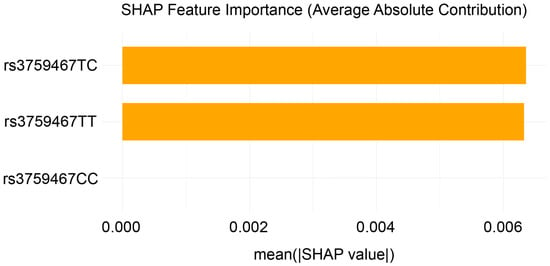
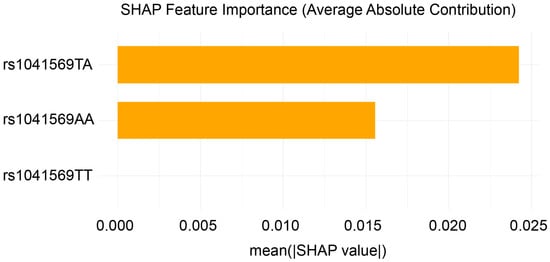
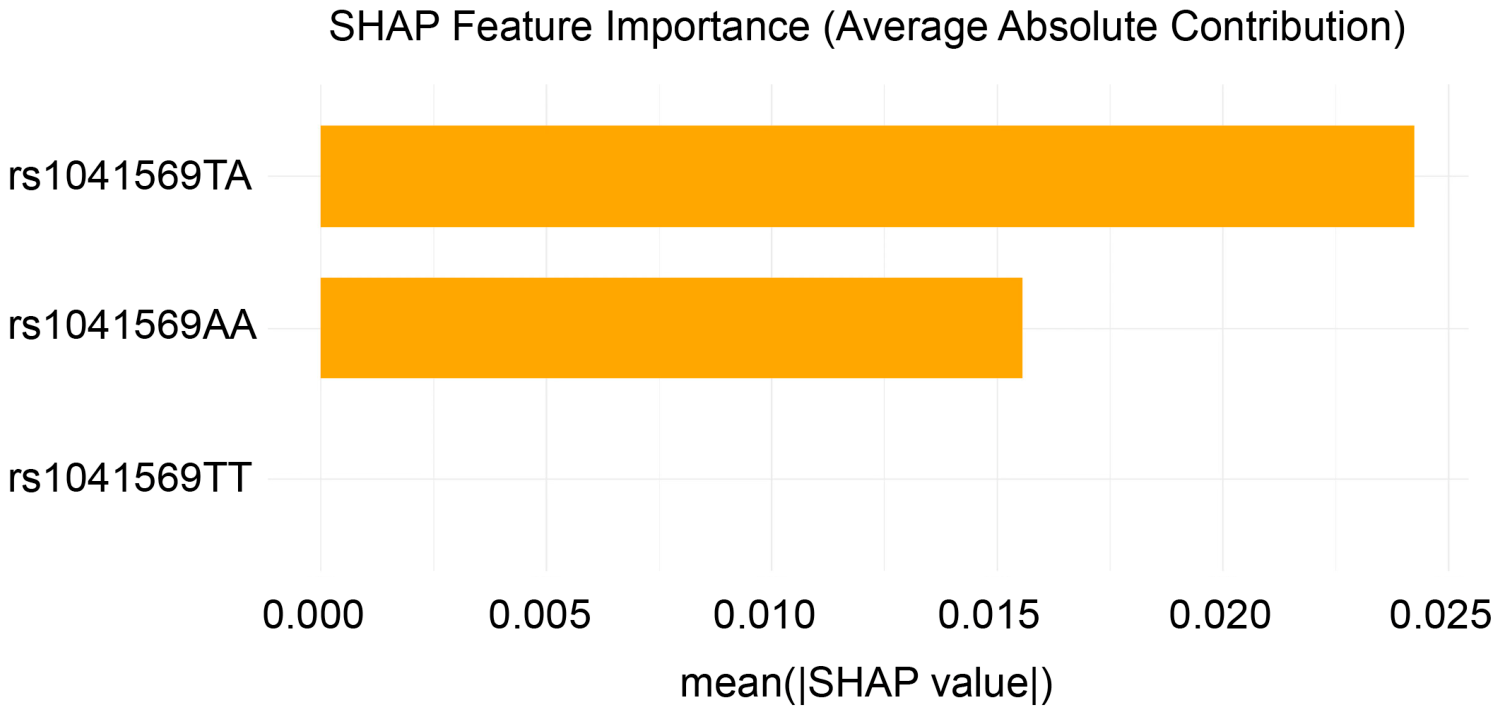
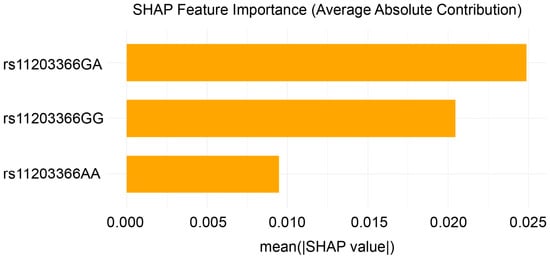
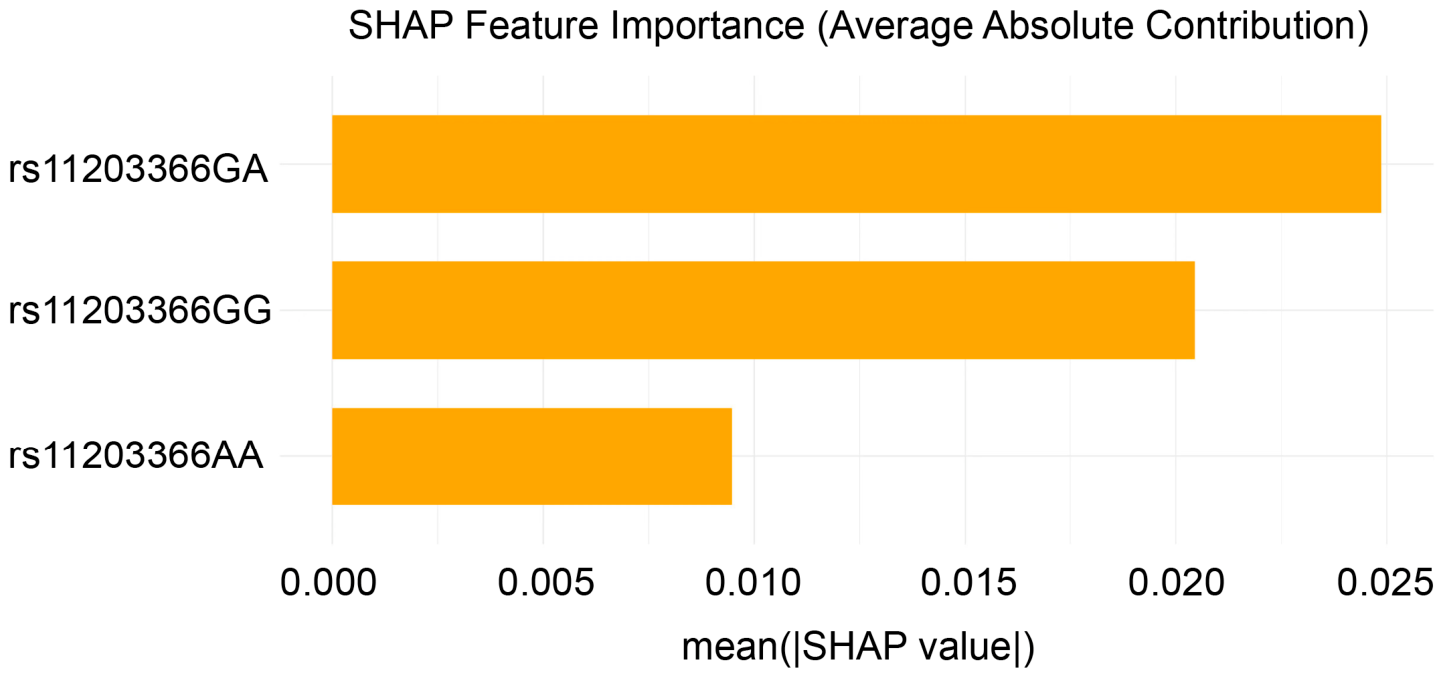
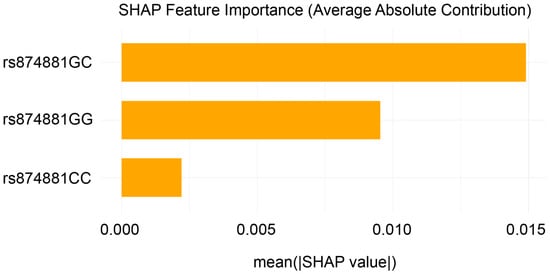
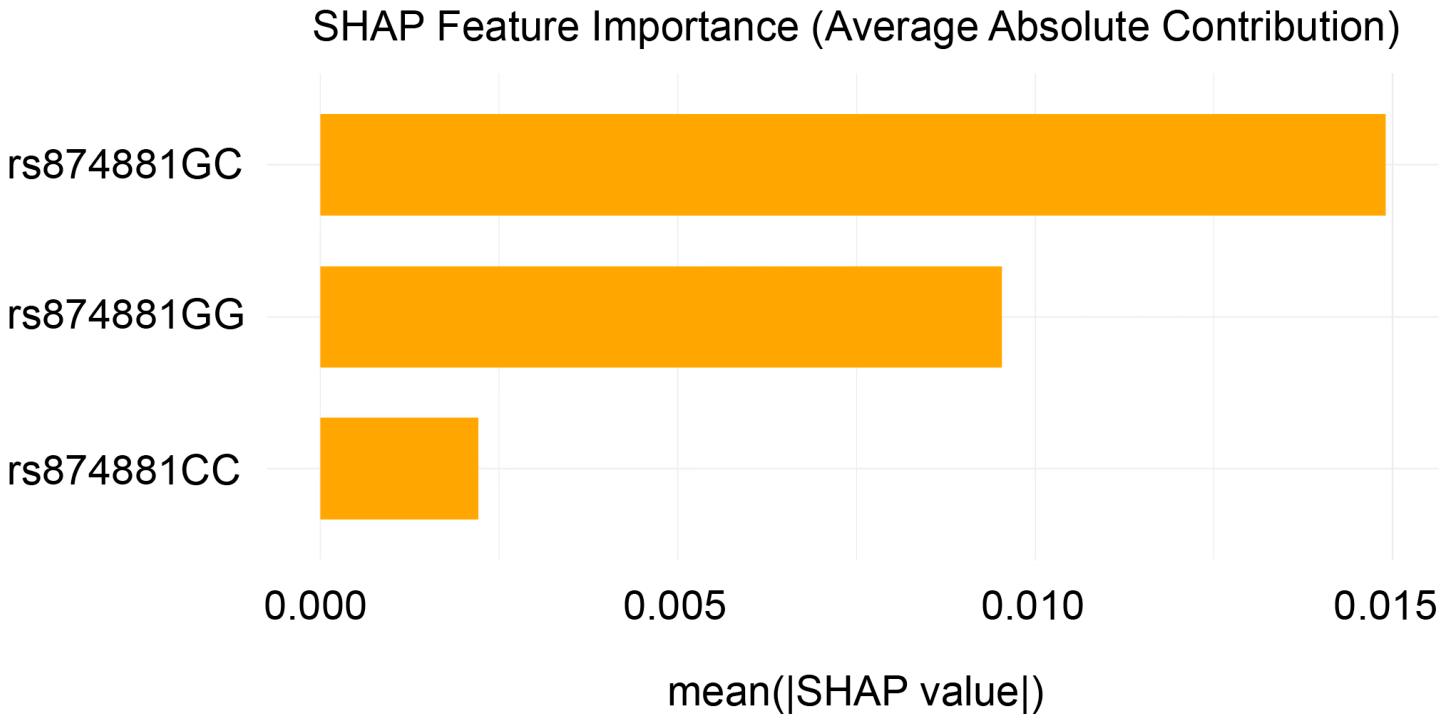
For all SNPs, the machine learning models demonstrated limited discriminative ability. The highest average AUCs were 0.5362 (XGBoost for TNFSF13B/BAFF rs3759467), 0.5349 (XGBoost for TNFSF13B/BAFF rs1041569), 0.5225 (XGBoost for PADI4 rs11203366), and 0.5395 (XGBoost for PADI4 rs874881), all below 0.6, Table 9a–d. SHAP analysis indicated that genotypes carrying the T allele (TT and TC for rs3759467) contributed most to model predictions. However, given the near-random performance of the models (AUC < 0.6), these SHAP values should not be interpreted as biologically meaningful, Figure 1, Figure 2, Figure 3 and Figure 4.
Table 9.
(a) Performance averages of various models for TNFSF13B/BAFF rs3759467. (b) Average performance values of each model for the TNFSF13B/BAFF genotype rs1041569. (c) Average performance of various models for the PADI4 gene rs11203366. (d) Average performance of each model for the PADI4 gene rs874881.
Figure 1.
SHAP values for rs3759467 (formerly rs386492354). Genotypes carrying the T allele (TT and TC) showed higher contribution scores, consistent with the protective effect of the C allele.
Figure 2.
SHAP values of the XGBoost model in the rs1041569 group.
Figure 3.
SHAP values of the XGBoost model in the rs11203366 group.
Figure 4.
SHAP values of the XGBoost model for rs874881 subgroups.
4. Discussion
As a member of the tumor necrosis factor (TNF) superfamily, TNFSF13B/BAFF serves as an essential survival factor for transitional and mature B cells [10]. TNFSF13B/BAFF overexpression expands autoreactive B-cell compartments and induces systemic autoimmunity in murine models [11], mirroring the disease-promoting effect of the rs1041569-T risk allele identified in our cohort, Table 3. Autoantibody levels and synovitis in early rheumatoid arthritis have been associated with increased BAFF concentrations in a subset of patients [12]. Chronic inflammation is the core pathological foundation of anemia of chronic disease. It induces anemia through multiple mechanisms, including disrupting iron homeostasis, suppressing erythropoietin activity, and reducing erythrocyte survival time [13]. As shown in Table 7, carriers of the rs1041569-TT genotype presented with more severe anemia, accompanied by decreased hemoglobin-to-red blood cell ratio (p < 0.05), which was consistent with findings reported in the previous literature. However, given the small number of TT homozygotes (n = 11), this finding is preliminary and requires validation in an independent cohort with a larger sample size. In primary Sjögren’s syndrome (pSS), one of the autoimmune disorders, Zheng A et al. confirmed that the SNP rs12583006 in the TNFSF13B/BAFF gene is significantly associated with disease risk in patients with pSS. [14]. Further subgroup analysis of this study indicated that the TNFSF13B/BAFF gene rs3759467 variants conferred a more remarkable protective effect in female Han patients diagnosed with an MPA subtype. Meanwhile, the rs1041569 polymorphism showed an enhanced risk effect among Guangxi Han patients with MPA. The subgroup analysis based on AAV clinical subtype (MPA vs. non-MPA) is limited by the very small sample size of the non-MPA subgroup (n = 15). Consequently, comparisons between MPA and non-MPA are underpowered, and the observed differences (or lack thereof) should be considered exploratory. Independent replication in larger cohorts with balanced subtype representation is required. AAV is regarded as a complex disorder, and its onset is attributable to the interaction between numerous weak-effect genetic variations and environmental factors. This study provides novel evidence that TNFSF13B/BAFF gene polymorphisms are associated with AAV susceptibility in a Guangxi Chinese population, with effects modulated by sex, ethnicity, and clinical subtype (MPA). The contrasting roles of the C allele (protective) and T allele (risk) underscore the complexity of TNFSF13B/BAFF pathway regulation in AAV. Their associations with specific clinical manifestations (rash, hemoptysis, anemia) suggest that genetic background may shape disease phenotype, possibly via influencing inflammation severity or B-cell/antibody activity. However, the associations with rash and hemoptysis are based on relatively small event numbers; therefore, these findings should be considered exploratory and hypothesis-generating. Independent replication in larger cohorts using methods appropriate for sparse data (e.g., exact logistic regression) is warranted.
Conversely, PADI4 polymorphisms rs11203366 and rs874881 did not confer susceptibility, distinguishing AAV from diseases like RA where PADI4 is a strong genetic factor. Clinical studies provide direct evidence for this: serum PADI4 levels are significantly elevated in patients with active AAV disease and positively correlated with disease activity, suggesting that PADI4 plays a role in the pathogenesis of AAV [15]. Certain PADI4 haplotypes improve mRNA stability and subsequently facilitate protein citrullination. This cascade is critical for the generation of anti-citrullinated protein antibodies and represents a central immunopathological mechanism in RA development [16,17]. Massarenti et al. reported that carriers of rs11203366, rs874881 and other polymorphisms have a higher prevalence of lupus nephritis and hypertension [18]. The primary function of PADI4 is to modulate neutrophil extracellular trap formation in inflammation via catalysis of protein citrullination [19,20]. Sustained inflammation inhibits bone marrow hematopoiesis, resulting in decreased red blood cell production and impaired hemoglobin synthesis [21,22]. The observed associations between PADI4 genotypes and hemoglobin/erythrocyte levels are consistent with a potential role of chronic inflammation, but this interpretation is hypothesis-generating and lacks direct evidence from our data. This mechanistic implication is further corroborated by the significant correlational observations presented in Table 8. Further analysis indicated that the homozygous genotypes AA/GG at rs11203366 and GG/CC at rs874881 were significantly correlated with elevated BVAS scores and increased disease activity. This is mechanistically consistent with our finding that rs11203366 and rs874881 are associated with disease activity and anemia in AAV, suggesting that PADI4 may predominantly influence disease severity rather than disease susceptibility after disease onset. Given the aforementioned correlations and molecular mechanisms, their association with disease activity and anemia indicators implies a role in modulating disease severity or inflammation after onset, potentially through NETosis regulation. Considering that anemia of chronic disease is highly prevalent among patients with AAV, its central pathogenesis is driven by inflammatory cytokines such as IL-6, which induce disordered iron metabolism and erythropoietin resistance [23]. The results of the present study suggest that the GA genotype of rs11203366 and the GC genotype of rs874881 are associated with higher red blood cell count and hemoglobin level.
The limited predictive power of machine learning models using these SNPs alone highlights that AAV is a complex disease influenced by numerous genetic and environmental factors. SHAP values were calculated for exploratory feature importance description, but due to low model performance, no causal or biological claims are drawn. A limitation of this study is the lack of an a priori sample size calculation, which was not feasible given the exploratory nature of the analyses using an existing dataset.
In conclusion, TNFSF13B/BAFF rs3759467 and rs1041569 polymorphisms showed associations with AAV susceptibility in this Guangxi cohort, but external validation is needed. PADI4 rs11203366 and rs874881 were not susceptibility factors for AAV in this cohort, but they were associated with disease activity and anemia parameters, suggesting a potential role in disease severity. These findings emphasize the importance of population-specific and subtype-stratified genetic studies in AAV. Because only two candidate SNPs per gene were included, this study does not represent comprehensive genetic coverage of TNFSF13B/BAFF or PADI4. The findings should therefore be interpreted as exploratory candidate-SNP associations and require replication in larger cohorts and functional validation. A major limitation is the lack of an independent replication cohort. Multiple comparisons may have inflated type I error; therefore, these findings should be interpreted as hypothesis-generating and need validation in future studies. The long recruitment period (2006–2025, nearly 20 years) is a limitation of this study, highlighting the need for future prospective studies with shorter, well-defined recruitment windows to validate the observed associations.
Supplementary Materials
The following supporting information can be downloaded at: https://www.mdpi.com/article/10.3390/genes17060710/s1, Table S1. Functional annotation and selection rationale of candidate SNPs in TNFSF13B/BAFF and PADI4. Supplementary Table S2. PADI4 rs11203366 Subgroup analysis of the relationship between polymorphism and AAV disease risk Supplementary Table S3. PADI4 rs874881 Subgroup analysis of the relationship between polymorphism and AAV disease risk.
Author Contributions
Conceptualization, J.L.; methodology, J.L.; validation, J.L.; investigation, C.X.; formal analysis, S.H. and S.W.; writing—original draft preparation, C.X.; writing—review and editing, C.X.; visualization, J.L.; supervision, C.X.; project administration, J.L.; funding acquisition, C.X. All authors have read and agreed to the published version of the manuscript.
Funding
This research was funded by the Guangxi Natural Science Foundation Project, Grant Number 2024GXNSFAA010095, and the Task Book of Guangxi Science and Technology Plan Project, Grant Number Gui Ke AB25069056.
Institutional Review Board Statement
The study was conducted in accordance with the Declaration of Helsinki and approved by the Ethics Committee of the Second Affiliated Hospital of Guangxi Medical University (protocol code 2023 KY-0383 and date of approval 26 July 2023).
Informed Consent Statement
Informed consent was obtained from all subjects involved in the study.
Data Availability Statement
The data supporting the findings of this study are available from the corresponding author upon reasonable request. Due to ethical and privacy restrictions (participant consent did not include public deposition of individual-level genetic and clinical data), the genotype and phenotype data are not deposited in a public repository but can be shared with qualified researchers after approval from the institutional ethics committee.
Conflicts of Interest
We declare that we have no financial or personal relationships with other people or organizations that could interfere with our study.
Abbreviations
The following abbreviations are used in this manuscript:
| BAFF | B-cell-activating factor |
| PADI4 | Peptidylarginine deiminase 4 |
| AAV | ANCA-associated vasculitis |
| SNPs | Single-nucleotide polymorphisms |
| NET | Neutrophil extracellular trap |
| CRP | C-reactive protein |
| PCR | Polymerase chain reaction |
| PSM | Propensity score matching |
| ORs | Odds ratios |
| LD | Linkage disequilibrium |
| PLT | Platelet |
| UALB | Urinary albumin, UALB |
| HB | Hemoglobin |
| RBC | Red blood cell |
| BVAS | Birmingham Vasculitis Activity Score |
References
- Jennette, J.C.; Falk, R.J.; Bacon, P.A.; Basu, N.; Cid, M.C.; Ferrario, F.; Flores-Suarez, L.F.; Gross, W.L.; Guillevin, L.; Hagen, E.C.; et al. 2012 revised International Chapel Hill Consensus Conference nomenclature of vasculitides. Arthritis Rheum. 2013, 65, 1–11. [Google Scholar] [PubMed]
- Lyons, P.A.; Rayner, T.F.; Trivedi, S.; Holle, J.U.; Watts, R.A.; Jayne, D.R.; Baslund, B.; Brenchley, P.; Bruchfeld, A.; Chaudhry, A.N.; et al. Genetically distinct subsets within ANCA-associated vasculitis. N. Engl. J. Med. 2012, 367, 214–223. [Google Scholar] [CrossRef] [Scilit]
- Cid, M.C. The search for genetic links in ANCA-associated vasculitis and its variants. N. Engl. J. Med. 2012, 367, 271–273. [Google Scholar] [CrossRef] [Scilit] [PubMed]
- Nagai, M.; Hirayama, K.; Ebihara, I.; Shimohata, H.; Kobayashi, M.; Koyama, A. Serum levels of BAFF and APRIL in myeloperoxidase anti-neutrophil cytoplasmic autoantibody-associated renal vasculitis: Association with disease activity. Nephron Clin. Pract. 2011, 118, c339–c345. [Google Scholar] [CrossRef] [Scilit] [PubMed]
- Wijetilleka, S.; Jayne, D.; Mukhtyar, C.; Karim, M.Y. Iatrogenic antibody deficiency from B-cell targeted therapies in autoimmune rheumatic diseases. Lupus Sci. Med. 2019, 6, e000337. [Google Scholar] [CrossRef] [Scilit] [PubMed]
- Isenberg, D.A. B cell targeted therapies in autoimmune diseases. J. Rheumatol. Suppl. 2006, 77, 24–28. [Google Scholar] [PubMed]
- Söderberg, D.; Segelmark, M. Neutrophil Extracellular Traps in ANCA-Associated Vasculitis. Front. Immunol. 2016, 7, 256. [Google Scholar] [CrossRef] [Scilit] [PubMed]
- Wang, S.; Song, Y.; Wang, Z.; Chang, X.; Wu, H.; Yan, Z.; Wu, J.; He, Z.; Kang, L.; Hu, W.; et al. Neutrophil-derived PAD4 induces citrullination of CKMT1 exacerbates mucosal inflammation in inflammatory bowel disease. Cell. Mol. Immunol. 2024, 21, 620–633. [Google Scholar] [CrossRef] [Scilit] [PubMed]
- Seri, Y.; Shoda, H.; Matsumoto, I.; Sumida, T.; Fujio, K.; Yamamoto, K. Peptidylarginine deiminase type4 (PADI4) role in immune system. Nihon Rinsho Meneki Gakkai Kaishi 2014, 37, 154–159. [Google Scholar] [CrossRef] [Scilit] [PubMed]
- Zhang, Y.; Tian, J.; Xiao, F.; Zheng, L.; Zhu, X.; Wu, L.; Zhao, C.; Wang, S.; Rui, K.; Zou, H.; et al. B cell-activating factor and its targeted therapy in autoimmune diseases. Cytokine Growth Factor Rev. 2022, 64, 57–70. [Google Scholar] [CrossRef] [Scilit] [PubMed]
- Mackay, F.; Schneider, P.; Rennert, P.; Browning, J. BAFF and APRIL: A tutorial on B cell survival. Annu. Rev. Immunol. 2003, 21, 231–264. [Google Scholar] [CrossRef] [Scilit] [PubMed]
- Bosello, S.; Youinou, P.; Daridon, C.; Tolusso, B.; Bendaoud, B.; Pietrapertosa, D.; Morelli, A.; Ferraccioli, G. Concentrations of BAFF correlate with autoantibody levels, clinical disease activity, and response to treatment in early rheumatoid arthritis. J. Rheumatol. 2008, 35, 1256–1264. [Google Scholar] [PubMed]
- Weiss, G.; Ganz, T.; Goodnough, L.T. Anemia of inflammation. Blood 2019, 133, 40–50. [Google Scholar] [CrossRef] [Scilit] [PubMed]
- Zheng, A.; Hu, N.; Xu, J.; Yuan, Y.; Zhang, S.; Chen, W.; Bai, Y.; Sun, H. Associations between TNFSF13B polymorphisms and primary Sjögren’s syndrome susceptibility in primary Sjögren’s syndrome patients: A meta-analysis. Immun. Inflamm. Dis. 2023, 11, e1103. [Google Scholar] [CrossRef] [Scilit] [PubMed]
- Wang, Z.L.; Shang, J.C.; Li, C.M.; Li, M.; Xing, G.Q. Significance of serum peptidylarginine deiminase type 4 in ANCA-associated vasculitis. Beijing Da Xue Xue Bao Yi Xue Ban 2014, 46, 200–206. [Google Scholar] [PubMed]
- Suzuki, A.; Yamada, R.; Chang, X.; Tokuhiro, S.; Sawada, T.; Suzuki, M.; Nagasaki, M.; Nakayama-Hamada, M.; Kawaida, R.; Ono, M.; et al. Functional haplotypes of PADI4, encoding citrullinating enzyme peptidylarginine deiminase 4, are associated with rheumatoid arthritis. Nat. Genet. 2003, 34, 395–402. [Google Scholar] [CrossRef] [Scilit] [PubMed]
- Lu, C.; Xu, K.; Guo, H.; Peng, K.; Yang, Z.; Hao, Y.Q.; Xu, P. The relationship of PADI4_94 polymorphisms with the morbidity of rheumatoid arthritis in Caucasian and Asian populations: A meta-analysis and system review. Int. J. Immunogenet. 2018, 45, 36–44. [Google Scholar]
- Massarenti, L.; Enevold, C.; Damgaard, D.; Ødum, N.; Nielsen, C.; Jacobsen, S. Peptidylarginine deiminase-4 gene polymorphisms are associated with systemic lupus erythematosus and lupus nephritis. Lupus 2018, 27, 2227–2234. [Google Scholar]
- Wang, Y.; Li, M.; Stadler, S.; Correll, S.; Li, P.; Wang, D.; Hayama, R.; Leonelli, L.; Han, H.; Grigoryev, S.A.; et al. Histone hypercitrullination mediates chromatin decondensation and neutrophil extracellular trap formation. J. Cell Biol. 2009, 184, 205–213. [Google Scholar] [CrossRef] [Scilit] [PubMed]
- Schauer, C.; Janko, C.; Munoz, L.E.; Zhao, Y.; Kienhöfer, D.; Frey, B.; Lell, M.; Manger, B.; Rech, J.; Naschberger, E.; et al. Aggregated neutrophil extracellular traps limit inflammation by degrading cytokines and chemokines. Nat. Med. 2014, 20, 511–517. [Google Scholar] [CrossRef] [Scilit] [PubMed]
- Kawabata, H. The pathogenesis of anemia in inflammation. Rinsho Ketsueki 2020, 61, 1105–1111. [Google Scholar] [PubMed]
- Fuchs, D.; Hausen, A.; Reibnegger, G.; Werner, E.R.; Werner-Felmayer, G.; Dierich, M.P.; Wachter, H. Immune activation and the anaemia associated with chronic inflammatory disorders. Eur. J. Haematol. 1991, 46, 65–70. [Google Scholar] [CrossRef] [Scilit] [PubMed]
- Christophorou, M.A. The virtues and vices of protein citrullination. R. Soc. Open Sci. 2022, 9, 220125. [Google Scholar] [CrossRef] [Scilit] [PubMed]

Disclaimer/Publisher’s Note: The statements, opinions and data contained in all publications are solely those of the individual author(s) and contributor(s) and not of MDPI and/or the editor(s). MDPI and/or the editor(s) disclaim responsibility for any injury to people or property resulting from any ideas, methods, instructions or products referred to in the content. |
© 2026 by the authors. Licensee MDPI, Basel, Switzerland. This article is an open access article distributed under the terms and conditions of the Creative Commons Attribution (CC BY) license.