


Abstract
Background: The JinEr mushroom results from the heterogeneous symbiosis of Naematelia aurantialba and Stereum hirsutum, with low-temperature storage being key for postharvest quality preservation. However, the species-specific low-temperature response patterns remain unclear. Methods: An integrated approach combining metabolomics, transcriptomics (dual-genome alignment), and spatially resolved enzyme assays was used to dissect responses at 0 °C and 4 °C. Results: The two fungi displayed distinct stress response tendencies under the studied conditions. N. aurantialba showed enhanced stress defense (DNA repair, antioxidant pathways) with defense-related enzyme activities concentrated in its apical/middle enrichment regions. S. hirsutum was observed to maintain overall metabolic activity at the pathway level, and its metabolic enzyme activities were predominant in the basal region. The symbiotic system exhibited temperature-dependent plasticity stress responses. Storage at 0 °C induced a survival-oriented response with slower crude polysaccharide degradation. In contrast, storage at 4 °C supported active metabolic defense coordination but more pronounced polysaccharide loss. Conclusions: These observed defense- and metabolism-biased differential responses suggest a cold stress-specific coordination working model within the symbiotic system under postharvest cold stress. A temperature of 0 °C is more suitable for enabling JinEr mushroom postharvest storage to retain polysaccharides. This study advances our understanding of heterogeneous symbiotic fungi’s postharvest biology and provides a temperature-targeted theoretical basis for storage optimization.
1. Introduction
Edible fungi are globally consumed for their nutritional, sensory, and medicinal value [1]. Among them, the JinEr mushroom (Golden Ear) holds high economic and functional value in Asian markets, especially China, owing to its unique texture and bioactive components, including polysaccharides [2,3]. A defining feature that distinguishes JinEr from most cultivated mushrooms is that it is not a homogeneous fruiting body derived from a single fungus, but a heterologous symbiotic complex formed by Naematelia aurantialba and Stereum hirsutum [4]. This symbiosis is essential for the development of commercially valuable fruiting bodies: pure cultures of N. aurantialba fail to form fruiting bodies, while S. hirsutum alone produces morphologically distinct, non-commercial structures [5]. Recent work has revealed spatial partitioning within the fruiting body, with a balanced S. hirsutum:N. aurantialba ratio in the apical region and strong dominance by S. hirsutum in the basal part and substrate [4]. This spatial separation raises the hypothesis of functional differentiation between the two symbionts. However, the underlying molecular basis for such potential differentiation, especially under environmental stress, remains largely unknown.
As with most horticultural products valued for freshness, JinEr mushrooms face severe postharvest preservation challenges. A distinctive feature that complicates its postharvest biology is that the commercially harvested fruiting body is not a homogeneous fungal tissue, but a heterogeneous symbiotic complex of N. aurantialba and S. hirsutum. Low-temperature storage is among the most widely applied and effective approaches to retarding senescence and maintaining nutritional and sensory quality in perishable edible fungi [6,7]. The biological response to low temperatures is complex and temperature-dependent. Studies on homogeneous, single-species cultivated mushrooms have demonstrated that even small temperature differences within the low-temperature range can strongly influence postharvest shelf life and quality [5]. A sound, mechanistic understanding of the underlying molecular pathways is therefore critical for optimizing storage protocols. Extensive research has investigated low-temperature storage physiology in numerous fruits and vegetables, as well as in several homogeneous cultivated mushrooms [8,9,10]. However, the molecular response mechanisms of the heterogeneous, symbiotic JinEr mushroom system remain largely uncharacterized. Critically, it remains poorly understood how the two fungal partners—N. aurantialba and S. hirsutum—that together form the JinEr fruiting body coordinate their responses to postharvest cold stress, despite their distinct spatial distribution and presumptive functional roles. Addressing this knowledge gap is essential for advancing the postharvest biology of this one-of-a-kind symbiotic edible fungus.
Therefore, this study employs an integrated systems biology approach, combining untargeted metabolomics and transcriptomics, to investigate the dynamic physiological changes in JinEr fruiting body during storage under two low-temperature conditions (0 °C and 4 °C). The novel objective is to move beyond viewing JinEr mushroom as a single entity. Instead, the focus is to explore the respective transcriptional and metabolic adjustments of N. aurantialba and S. hirsutum under low-temperature stress, and to propose a context-specific response model to examine how these changes may relate to the overall preservation outcome of the JinEr mushroom complex.
2. Materials and Methods
2.1. Biological Material, Storage Treatments, and Sampling
The fresh fruiting bodies of JinEr mushroom, a heterogeneous complex formed by N. aurantialba and S. hirsutum, were procured from a single cultivation batch from Anhui Fengyuan Agricultural Development Co., Ltd. (Bengbu, Anhui, China) to minimize biological variation. Upon arrival, we selected fruiting bodies displaying uniform size, color, and maturity without physical damage. Samples were divided into five groups (3 biological replicates per group, 15 total): OS (Day 0 control, no cold storage, direct analysis); LS1/LS2 (0 °C storage for 4/8 days); HS1/HS2 (4 °C storage for 4/8 days). Immediately after selection, samples were directly placed into climate chambers at the target temperatures. These two temperatures were selected for practical and biological relevance: 4 °C is the standard industrial storage temperature for edible fungi, while 0 °C represents a near-freezing non-frozen condition to compare mild and severe cold stress. Both avoid ice crystal damage to fruiting body tissues. All treatments were conducted in climate-controlled chambers (85–90% relative humidity). Fruiting bodies were placed directly in open trays without packaging, ensuring the gas composition within the chamber remained consistent with that in ambient air. Refrigerated groups were sampled at respective time points. Post-storage, entire fruiting bodies were ground to fine powder in liquid nitrogen, homogenized, and aliquoted for metabolomic and transcriptomic analyses. Samples were labeled with “M” (non-targeted metabolomics, e.g., LSM1) or “T” (transcriptomics, e.g., LST1) for distinction.
2.2. Non-Targeted Metabolomic Analysis
Briefly, 100 mg of JinEr powder was homogenized in 1 mL ice-cold 80% methanol, incubated on ice for 5 min, and centrifuged at 15,000× g for 20 min at 4 °C. The supernatant was diluted with LC-MS grade water to 53% methanol and recentrifuged similarly. UHPLC-MS/MS analysis was conducted by Novogene Co., Ltd. (Beijing, China) using a Thermo Hypersil GOLD™ C18 column (100 × 2.1 mm, 1.9 μm) at 40 °C. The mobile phase consisted of water (0.1% formic acid, A) and methanol (0.1% formic acid, B) at 0.2 mL/min with the following gradient: 0–1.5 min (2% B), 1.5–4.5 min (linear increase to 85% B), 4.5–14.5 min (100% B), 14.5–14.6 min (return to 2% B), 14.6–16 min (re-equilibration). Mass spectrometry was performed on a Q-Exactive HF-X (Thermo Fisher Scientific, Waltham, MA, USA) in polarity-switching mode, with full-scan at m/z 100–1500 (resolution 120,000), spray voltage at ±3.5 kV, capillary temperature at 320 °C, sheath gas at 35 arb, and auxiliary gas at 10 L/min (350 °C).
Raw data were processed with XCMS (v3.12.0) for peak detection, alignment, and quantification. Metabolites were identified by matching experimental MS/MS spectra to theoretical spectra in HMDB, LIPIDMAPS, and KEGG databases (mass tolerance ± 10 ppm). After blank subtraction and normalization, compounds with a coefficient of variation (CV) > 30% in quality control (QC) samples were excluded. Multivariate (principal component analysis, PCA) and univariate (t-test) analyses were performed with metaX (v1.4.20). Differentially accumulated metabolites (DAMs) were defined as compounds satisfying all criteria: a variable importance in projection (VIP) score from OPLS-DA model > 1, a padj (t-test) < 0.05, and a fold change > 1.5 or <0.67. Significantly enriched KEGG pathways were identified via a hypergeometric test (padi < 0.05). The differential abundance score (DAS) is a metric (−1 to 1) that quantifies KEGG pathway trends based on DAM regulation, with extremes indicating full activation or inhibition and intermediate values suggesting partial or no net change. DAS = (increased metabolites − decreased metabolites)/total measured metabolites in the pathway [11].
2.3. RNA-Seq Analysis and Dual-Genome Alignment Strategy
Total RNA was extracted from approximately 100 mg of ground JinEr powder using the RNAprep Pure Total RNA Kit (Tiangen, Beijing, China). RNA quality was assessed with a NanoDrop spectrophotometer (Thermo Fisher Scientific, Waltham, MA, USA) and an Agilent 2100 Bioanalyzer (Agilent Technologies, Santa Clara, CA, USA), confirming an RNA Integrity Number (RIN) > 8.0 for all samples. Sequencing libraries were prepared with the NEBNext® Ultra™ RNA Library Prep Kit (New England Biolabs, Ipswich, MA, USA) for Illumina® and sequenced on an Illumina HiSeq 4000 platform (150 bp paired-end, PE150) (Illumina, San Diego, CA, USA). Raw reads were processed with cutadapt (v1.18) to remove adapters and low-quality reads, yielding high-quality clean data without residual contamination.
To accurately quantify species-specific transcripts in this dual-fungal symbiotic complex and resolve ambiguous cross-species read mapping, a species-specific decoy-aware quantification strategy was implemented using Salmon (v1.10.0), a quasi-mapping-based tool for transcript abundance estimation. The mRNA sequences of N. aurantialba and S. hirsutum were extracted from their respective NCBI-derived genome annotation files using gffread, with corresponding genome assemblies used as templates for accurate transcript extraction. A combined decoy-aware index was constructed by integrating transcript sequences from both fungal species. Transcripts derived from each species were designated as target sequences for that species, while transcripts from the partner species were defined as decoy sequences via the decoy parameter, allowing the probabilistic resolution of cross-species multi-mapping reads. Clean reads from each sample were quantified against the combined index with the validateMappings flag enabled, and transcript-level abundance estimates (TPM and counts) were generated for each species. Sequences with high homology between the two fungi were identified by reciprocal BLAST+ v2.14.0 and excluded from subsequent differential expression analysis to reduce assignment ambiguity.
The transcript abundance matrices were imported into R (v 4.3.1) using the tximport package (v1.28.0; Bioconductor) based on a transcript-to-gene mapping table extracted from the genome annotation files. Low-expression genes were filtered out to reduce noise, and we only retained those with counts ≥ 10 in at least 3 samples. Differential expression analysis between experimental groups was performed separately for each fungal species using DESeq2 (v1.40.0), with genes satisfying |log2 (fold change)| ≥ 1.0 and an adjusted p-value (FDR) < 0.05 defined as differentially expressed genes (DEGs). Cross-species homologous DEGs (identified via BLAST alignment with E-value < 1 × 10⁻¹⁰) were excluded to eliminate potential cross-contamination. KEGG pathway enrichment analysis of DEGs was conducted using clusterProfiler (v4.8.0), with an FDR < 0.05 considered significant.
2.4. Determination of Enzyme Activities and Crude Polysaccharide Content
To provide biochemical validation for key inferred pathways, the activities of five key enzymes were measured—specifically, superoxide dismutase (SOD) and glutathione reductase (GR) for antioxidant defense, 8-oxoguanine DNA glycosylase 1 (OGG1) for DNA damage repair, and citrate synthase (CS) and phosphofructokinase (PFK) for energy metabolism. Each of the five storage treatment groups included three biological replicates (i.e., three independent fruiting bodies) and the apical (T), middle (M) and basal (B) regions were sampled separately from each fruiting body for analysis. This sampling strategy was based on the known species-specific spatial distribution of the two fungi in JinEr fruiting bodies [4], where N. aurantialba is relatively enriched in the apical and middle regions, and S. hirsutum dominates the basal region. All enzymatic assays were conducted using commercial spectrophotometric kits (Soleibao Biotechnology Co., Ltd., Wuhan, China), following the manufacturer’s instructions.
Additionally, the content of crude polysaccharides in JinEr was determined using entire fruiting bodies, with three biological replicates consistent with those in the enzyme activity assays. The determination was performed by spectrophotometry, following the national standard of the Ministry of Agriculture and Rural Affairs of the People’s Republic of China (NY/T 1676-2023), entitled “Determination of crude polysaccharides in edible fungi—Spectrophotometry”.
2.5. Key Gene Selection and Expression Analysis
Key DEGs were selected based on the functional emphases of the two symbiotic fungi: N. aurantialba in stress defense and S. hirsutum in metabolic processes. The selection adhered to three criteria: significant enrichment in KEGG pathways (FDR < 0.05), significant differential expression (|log2FC| ≥ 1.0, FDR < 0.05), and functional consistency with the core biological role of each fungus. This resulted in the identification of glutathione S-transferase gene (Gst), mutL homolog 1 gene (Mlh1), and Ogg1 from N. aurantialba, and Cs, malate dehydrogenase gene (Mdh), and cysteine synthase gene (Cysk) from S. hirsutum. To facilitate the direct comparison of expression and abundance patterns across different genes, the quantified levels (FPKM: Fragments Per Kilobase of transcript per Million mapped fragments) were normalized using Z-score standardization.
2.6. Gene–Metabolite Correlation Analysis
Potential regulatory interactions between key DEGs and DAMs were investigated using Spearman’s rank correlation analysis. Antioxidant metabolites (L-ascorbic acid, NADPH) were paired with stress-related genes from N. aurantialba, while energy and amino acid metabolites (α-ketoglutarate, L-homocysteine) were correlated with metabolic genes from S. hirsutum. The analysis was conducted separately for the two temperature regimes (HS: 4 °C; LS: 0 °C). Benjamini–Hochberg (BH) correction was applied to control false positives, with correlations deemed significant at padj < 0.05. Correlation strength was categorized by |r|: weak (0.3–0.5), moderate (0.5–0.8), strong (>0.8).
2.7. Data Analysis and Integration
All statistical analyses and data visualizations for enzyme activity and crude polysaccharide content were conducted using R (version 4.3.1). We primarily used the ggplot2 (v3.4.0), dplyr (v1.1.0), rstatix, and ggpubr packages. For each index, the mean value of technical replicates for each biological sample was calculated. Mann–Whitney U tests were applied for targeted pairwise comparisons among the groups. p-values from multiple comparison procedures were adjusted using the Benjamini–Hochberg method to control the false discovery rate. All statistical analyses were performed using SPSS software version 24 (IBM, Armonk, NY, USA).
2.8. Nucleic Acid Sequence Accession Numbers
The raw sequence data reported in this paper have been deposited in the Genome Sequence Archive in National Genomics Data Center (Nucleic Acids Res 2025), China National Center for Bioinformation/Beijing Institute of Genomics, Chinese Academy of Sciences (GSA: CRA038650). These are publicly accessible at https://ngdc.cncb.ac.cn/gsa (accessed on 13 February 2026).
3. Results
3.1. Changes in Crude Polysaccharide Content Under Low-Temperature Storage
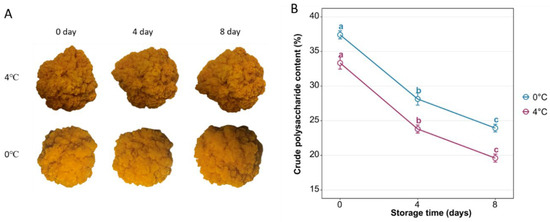
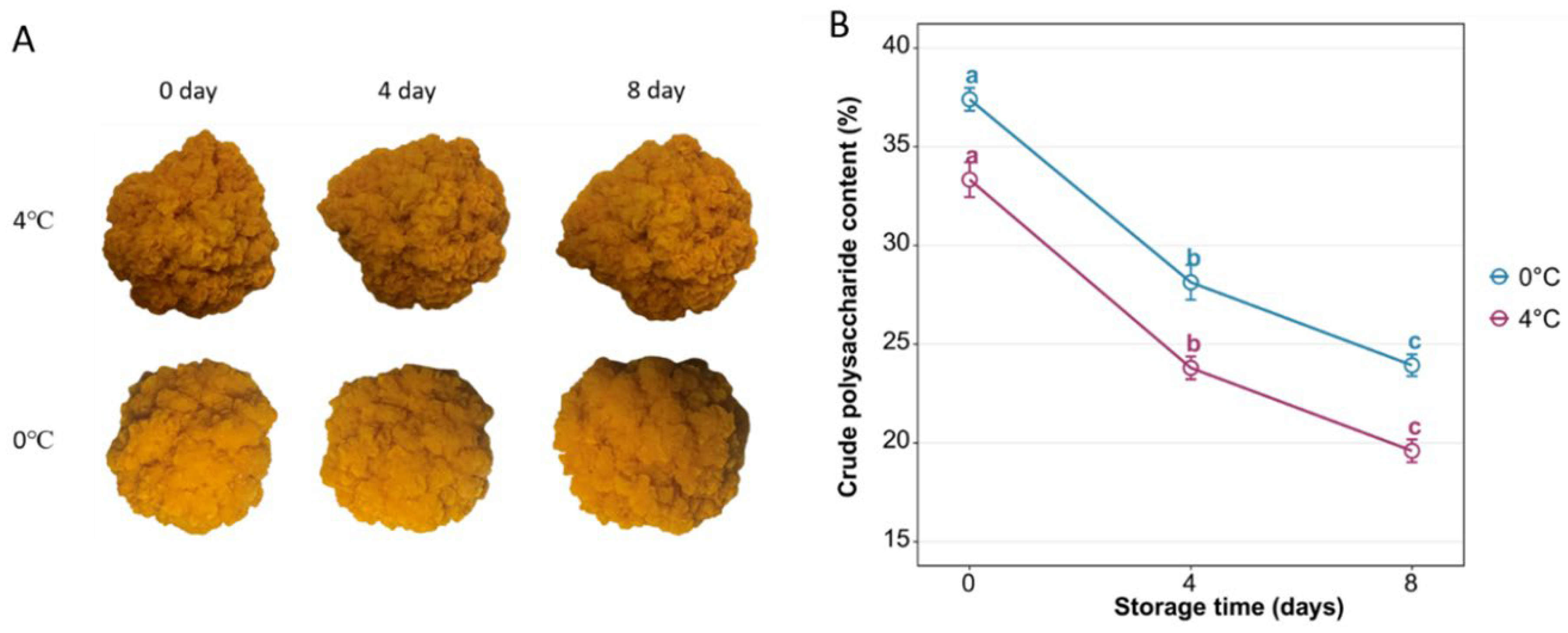
During the entire storage period, the fruiting bodies of JinEr mushroom exhibited relatively slight phenotypic variations (Figure 1A). Notably, no visible freezing injury or tissue necrosis was observed in any sample throughout storage, confirming that 0 °C constitutes moderate, non-injurious cold stress rather than freezing damage for the JinEr symbiotic complex. Storage temperature and storage duration significantly affected the crude polysaccharide content of JinEr mushroom (Figure 1B). Under both 0 °C and 4 °C conditions, the crude polysaccharide content showed a marked decreasing trend with prolonged storage—starting from an average of 37.40% (0 °C) and 33.33% (4 °C) in the OS group (Day 0), it declined to 28.13% (0 °C) vs. 23.80% (4 °C) at 4 days and 23.93% (0 °C) vs. 19.60% (4 °C) at 8 days—and the content at 0 °C was consistently higher than that at 4 °C at the same storage stage. There were significant differences in crude polysaccharide content among different storage days under the same temperature (p < 0.05), with the highest content in the OS group and the lowest seen at 8 days in both groups. Notably, the reduction was more pronounced in the 4 °C group (total reduction of ~41.2% vs. ~36.0% at 0 °C), suggesting more severe crude polysaccharide degradation at this temperature.
Figure 1.
Morphology (A) and crude polysaccharide content (B) of JinEr mushroom fruiting bodies under different temperature and storage day treatments. Different letters (a–c) indicate significant differences at p < 0.05.
3.2. Global Metabolomic Shifts Reveal Temperature-Dependent Metabolic Variation
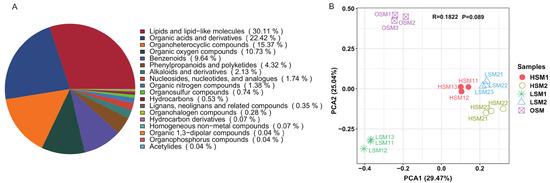
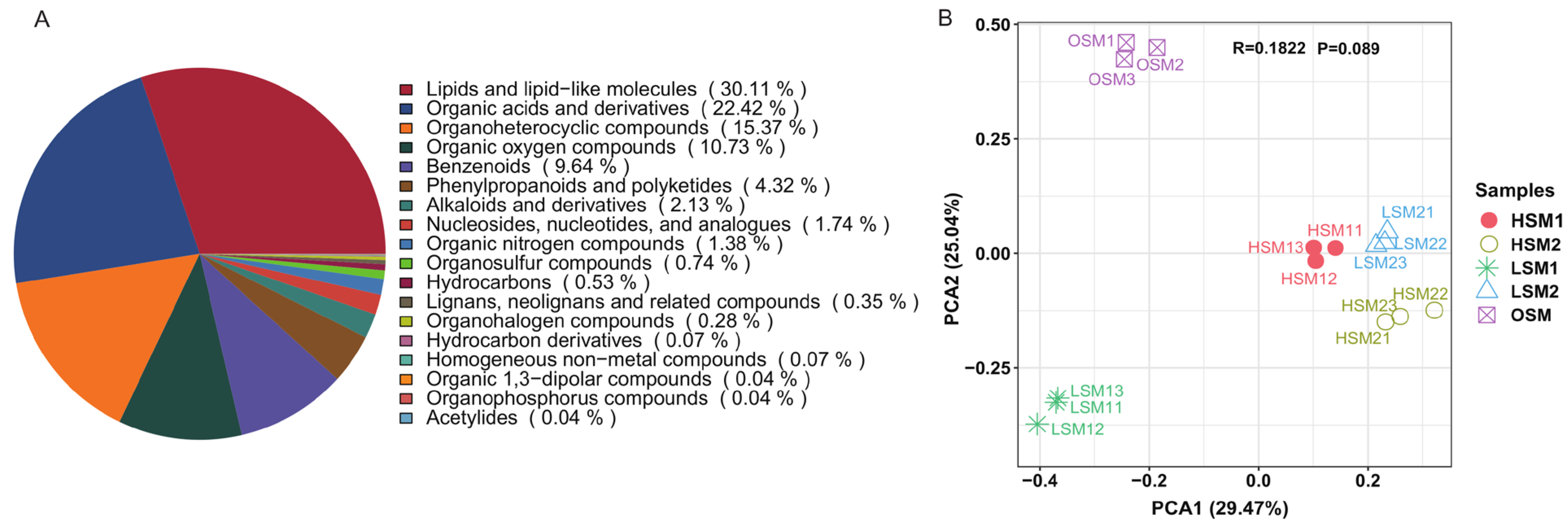
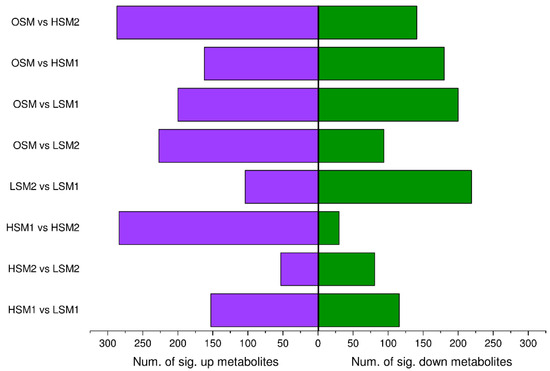
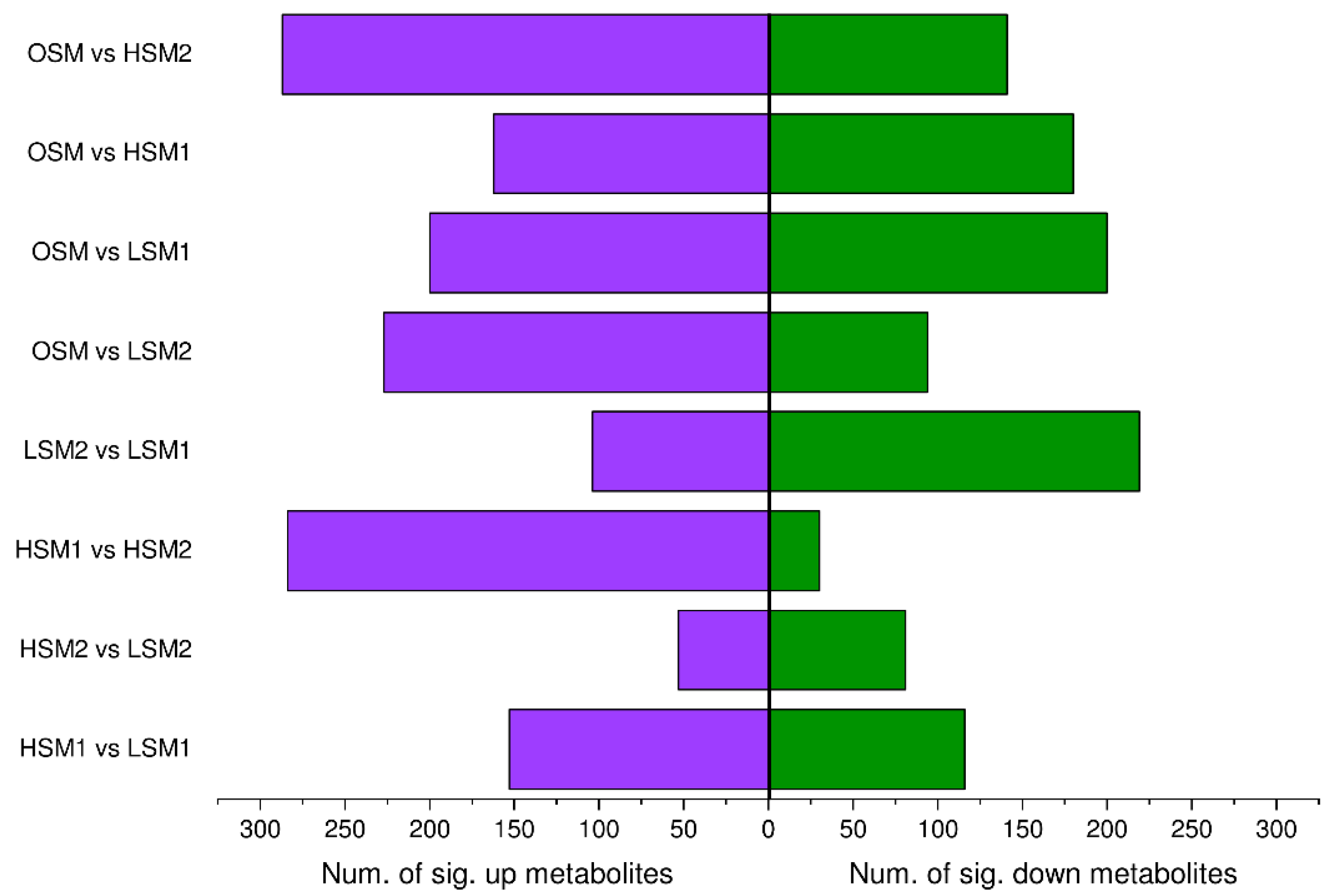
Non-targeted metabolomic profiling identified 2852 metabolites in JinEr fruiting bodies, with lipids and lipid-like molecules representing the most abundant class (Figure 2A). PCA of the metabolome revealed a clear separation of samples, driven primarily by storage duration and, to a lesser extent, by temperature (Figure 2B). This indicates that the metabolic state of the JinEr mushroom complex undergoes dynamic adjustment in response to postharvest storage conditions. Metabolomic analysis revealed that storage temperature critically shaped the metabolic adjustment of JinEr mushrooms over time (Figure 3, Table S1).
Figure 2.
Non-targeted metabolomic analysis of JinEr mushroom. (A) Classification of all identified metabolites. (B) Principal component analysis (PCA) of the non-targeted metabolomics profiles from JinEr mushroom under different storage conditions.
Figure 3.
Comparison of the number of upregulated and downregulated differentially accumulated metabolites (DAMs) among all pairwise comparisons of five JinEr mushroom groups under low-temperature stress. Fold change (FC) = Group A/Group B. FC > 1.5 for upregulation. FC < 0.67 for downregulation. VIP > 1. padj < 0.05.
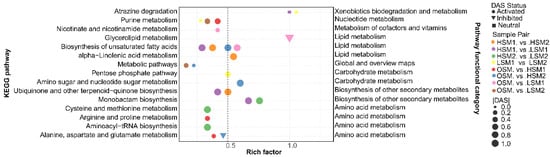
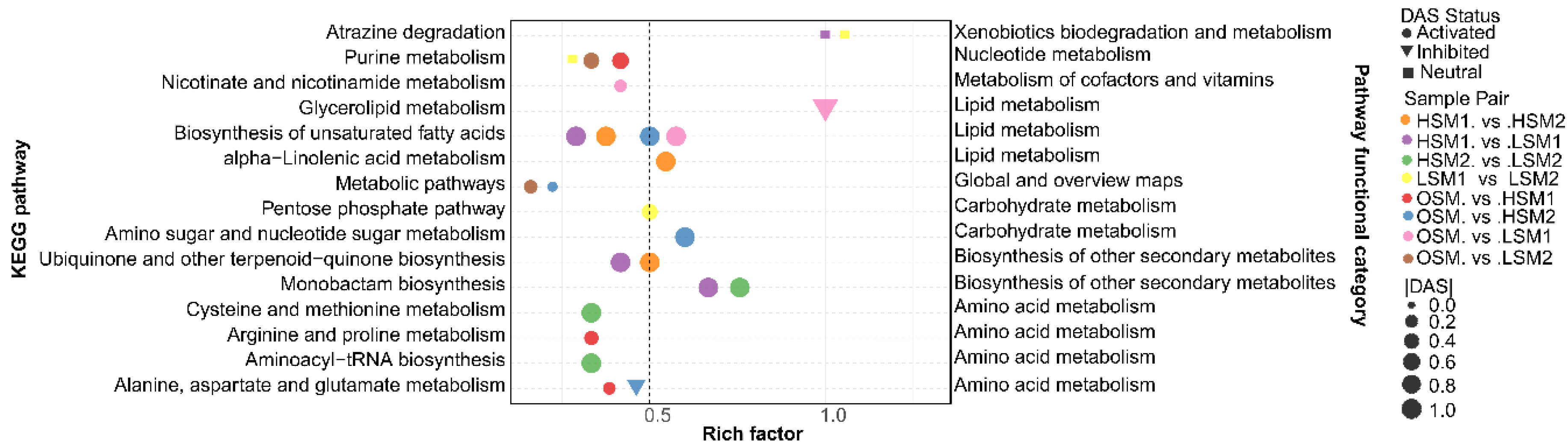
Metabolic adjustments under different low temperatures showed divergent tendencies. At 0 °C, the metabolic response was dominated by pathways related to survival-essential functions. Membrane lipid remodeling-related pathways were prominently activated, exemplified by the biosynthesis of unsaturated fatty acids (OSM vs. LSM1, DAS = 1), while non-core metabolic pathways were inhibited—glycerolipid metabolism was specifically downregulated in short-term 0 °C storage (OSM vs. LSM1, DAS = −1) (Figure 4, Table S1). Additionally, the pentose phosphate pathway underwent notable remodeling in late-stage 0 °C storage (LSM1 vs. LSM2, DAS = 0.5), potentially supporting cellular redox homeostasis. At 4 °C, the metabolic pattern was more inclined to the maintenance of metabolic homeostasis. Basic metabolic pathways remained continuously activated, such as amino sugar and nucleotide sugar metabolism (OSM vs. HSM2, DAS = 1) and alanine, aspartate and glutamate metabolism (OSM vs. HSM1, DAS = 0.2) (Figure 4, Table S1). Alpha-linolenic acid metabolism (a lipid metabolism branch) was highly significantly enriched in short-term vs. long-term 4 °C storage (HSM1 vs. HSM2, DAS = 1). Secondary metabolism-related pathways were also enriched, including ubiquinone and other terpenoid-quinone biosynthesis (HSM1 vs. HSM2, DAS = 1) and monobactam biosynthesis (HSM2 vs. LSM2, DAS = 1), which complemented basic metabolic functions.
Figure 4.
Metabolomic KEGG pathway enrichment analysis of intergroup differentially accumulated metabolites (DAMs) in JinEr mushroom under low-temperature stress. Only the significantly enriched pathways (padj < 0.05) are displayed.
Across all low-temperature treatments, significantly activated pathways were concentrated in basic metabolism (amino acid, lipid, carbohydrate metabolism)—e.g., cysteine and methionine metabolism (HSM2 vs. LSM2, DAS = 1) and aminoacyl-tRNA biosynthesis (HSM2 vs. LSM2, DAS = 1) in cross-temperature comparisons, and biosynthesis of unsaturated fatty acids (consistently enriched, padj < 0.05) in lipid metabolism. Carbohydrate metabolism pathways (pentose phosphate pathway, amino sugar and nucleotide sugar metabolism) were also significantly regulated under specific conditions. In contrast, inhibited pathways were mainly non-core (e.g., glycerolipid metabolism, OSM vs. LSM1, DAS = −1). This pattern reflects a potential tendency of energy allocation adjustment under low-temperature stress (Figure 4, Table S1).
3.3. Transcriptomic Analysis of Low-Temperature Response
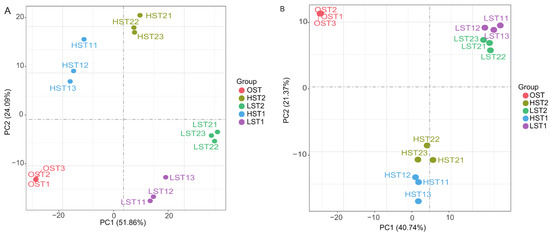
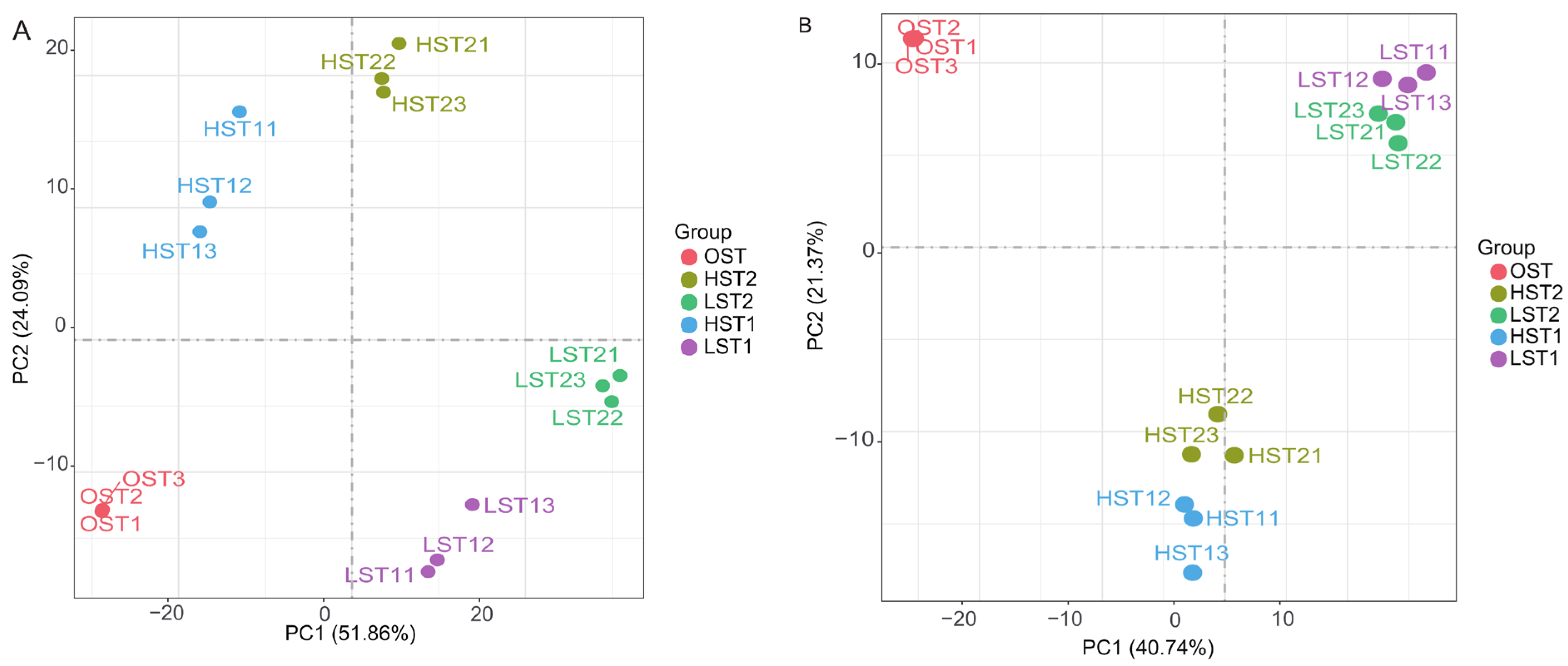
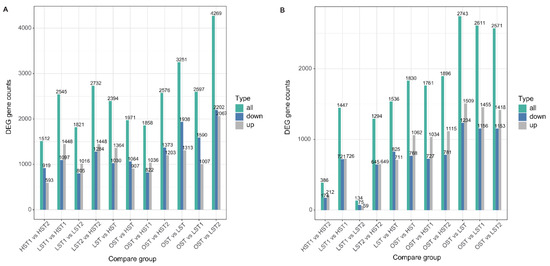
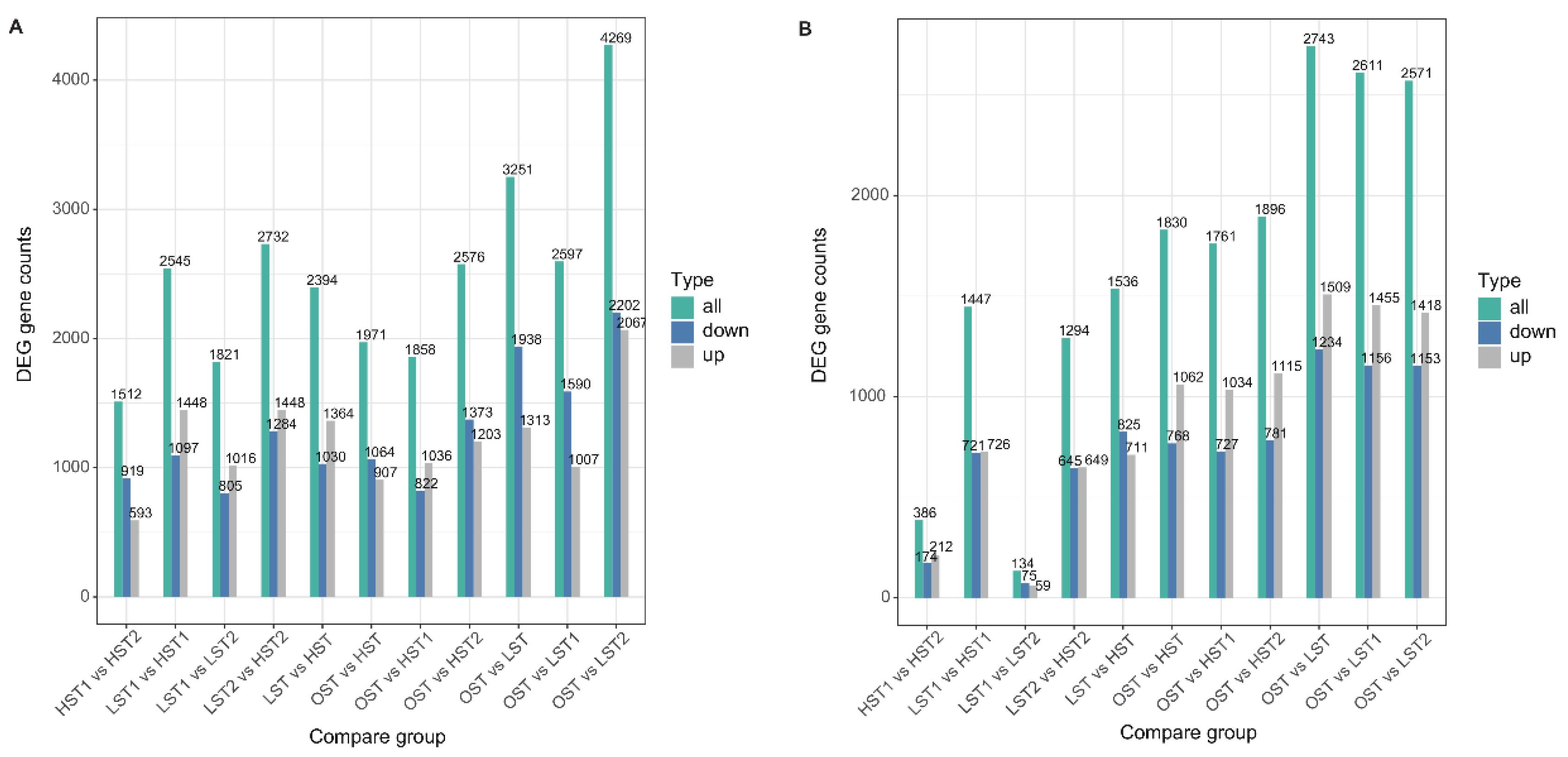
Transcriptomic PCA showed that temperature was the primary driver of sample separation. This pattern was more distinct when aligned with the S. hirsutum genome, indicating a more temperature-specific transcriptional response in this fungus (Figure 5). While this reference yielded a higher number of constitutively expressed genes (Figure 6), alignment with the N. aurantialba genome identified a substantially larger pool of DEGs under stress. This response was most extreme in the LST2 vs. OST comparison (2743 DEGs) and least extreme in the HST1 vs. OST comparison (896 DEGs).
Figure 5.
Principal component analysis (PCA) of JinEr mushroom transcriptomes under different storage conditions, aligned with the N. aurantialba (A) and S. hirsutum (B) transcriptome annotation.
Figure 6.
Number of shared and unique differentially expressed genes (DEGs) among sample groups in transcriptome analysis. (A) DEGs identified with N. aurantialba transcriptome annotation as a reference. (B) DEGs identified with S. hirsutum transcriptome annotation as a reference. DEGs were screened using the following criteria: |log2FC| > 1 and padj < 0.05.
3.3.1. N. aurantialba: Predominance of Stress Defense-Related Pathways
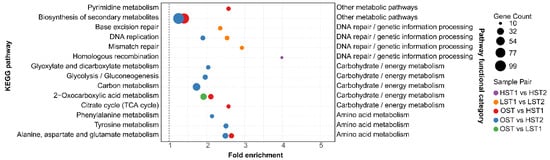
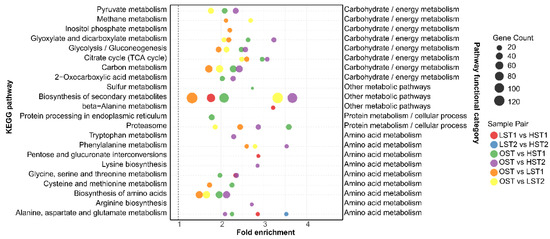
KEGG enrichment analysis of the N. aurantialba transcriptome revealed that its transcriptional response is distinctly characterized by the predominance of genetic information maintenance (Figure 7). Pathways involved in DNA repair and genetic information homeostasis maintenance constitute the transcriptional core of the low-temperature response in N. aurantialba. These pathways exhibit high enrichment significance and show coordinated functional features and distributions. They cover key processes such as DNA damage repair and replication fidelity regulation, forming a functionally linked network related to genomic stability. Representative pathways include homologous recombination (which is responsible for repairing DNA double-strand breaks), mismatch repair (which corrects base mismatches), and DNA replication (which regulates genomic replication processes) (Figure 7, Table S2). In terms of group distribution, these pathways display clear enrichment specificity. Homologous recombination is significantly enriched in comparisons of short-term storage at 4 °C vs. long-term storage (HSM1 vs. HSM2). Mismatch repair and DNA replication are significantly enriched in comparisons of short-term storage at 0 °C vs. long-term storage (LSM1 vs. LSM2). Certain pathways (e.g., DNA replication) also appear in comparisons of ambient temperature vs. long-term storage at 4 °C (OST vs. HSM2) (Figure 7, Table S2).
Figure 7.
KEGG pathway enrichment analysis of differentially expressed genes (DEGs) between sample groups, using the N. aurantialba transcriptome annotation as a reference. Only the significantly enriched pathways (padj < 0.05) are displayed.
By contrast, metabolism-related pathways in N. aurantialba lack core transcriptional response characteristics and instead only show condition-specific transcriptional regulation patterns with limited coverage across the experimental treatments. In terms of coverage, their significant enrichment does not span the full range of experimental comparisons, encompassing 0 °C vs. 4 °C temperature gradients and short-term vs. long-term storage stages. This results in an absence of both a unified response network and functional consistency across different treatments. For example, amino acid metabolism pathways (e.g., alanine, aspartate and glutamate metabolism; tyrosine metabolism) are only enriched in 4 °C-related comparisons (OST vs. HSM1 and OST vs. HSM2), with no significant signals detected in any 0 °C-related comparisons. Meanwhile, carbohydrate metabolism pathways (e.g., the tricarboxylic acid cycle and 2-oxocarboxylic acid metabolism) are primarily restricted to ambient temperature versus short-term low-temperature comparisons (OST versus HSM1 and OST versus LSM1), with no enrichment observed in short-term versus long-term low-temperature comparisons. These metabolism-related pathways only exhibit transcriptional adjustments under specific local conditions, forming a sharp contrast with the systematic core response of genetic information maintenance pathways (Figure 7, Table S2).
3.3.2. S. hirsutum: Predominance of Basal Metabolic Pathways
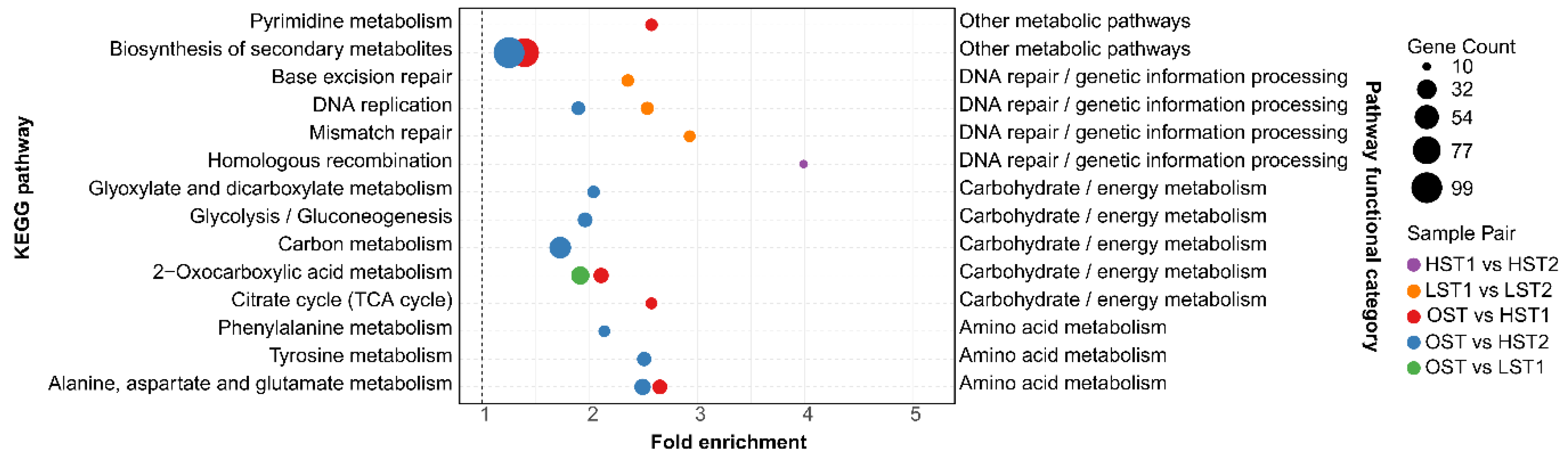
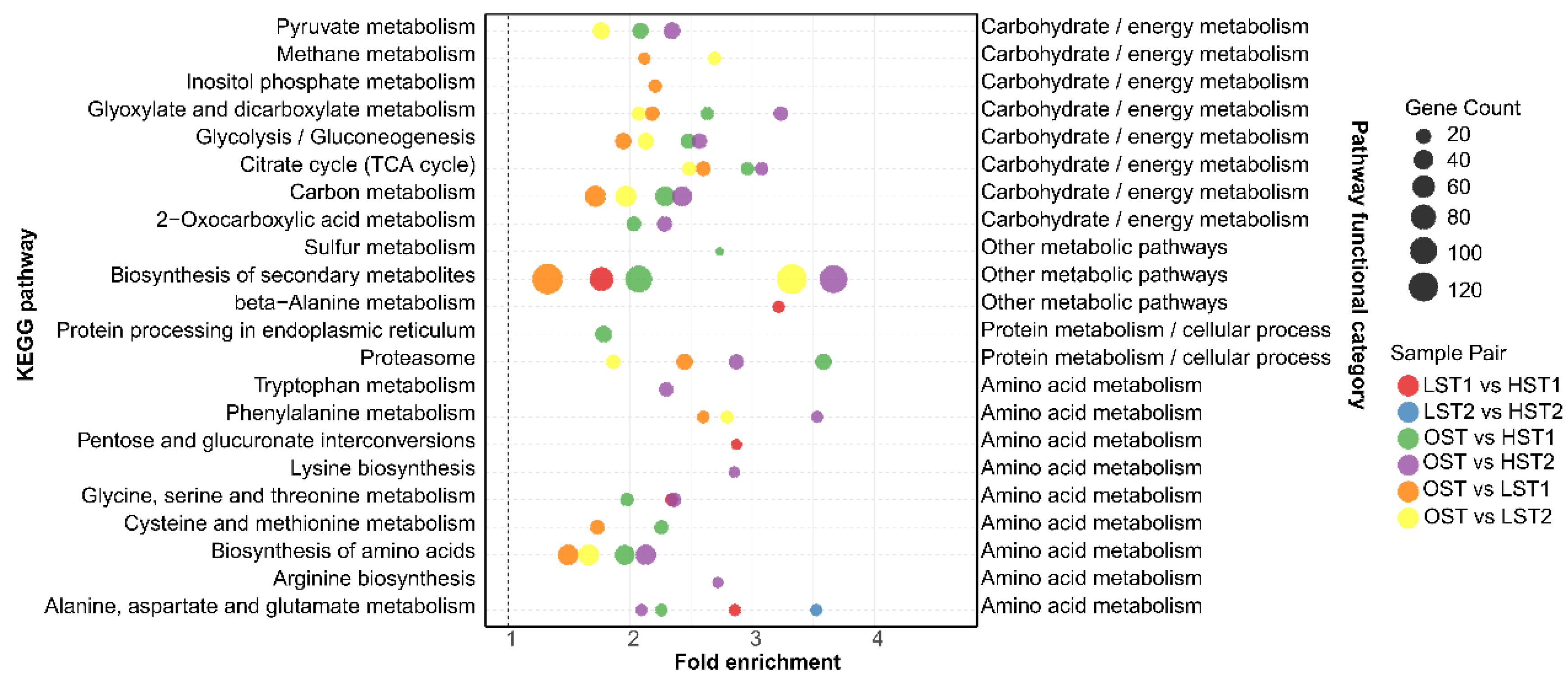
Transcriptomic KEGG pathway enrichment analysis (padj < 0.05) revealed that the transcriptional response of S. hirsutum to low temperatures is primarily driven by basal metabolic maintenance and protein homeostasis. There was no significant enrichment of stress defense-related pathways (e.g., DNA repair). This suggests that the low-temperature response of S. hirsutum showed a feature of an emphasis on metabolic maintenance and protein functional stability. Pathway enrichment exhibits global consistency and comprehensive coverage across all low-temperature conditions (Figure 8, Table S3). Basal metabolic pathways were significantly enriched in all comparative groups, including ‘control vs. low temperature’ (OST vs. HST1, OST vs. HST2, OST vs. LST1 and OST vs. LST2) and ‘short-term vs. long-term low temperature’ (HST1 vs. HST2 and LST1 vs. LST2). These pathways cover core metabolic branches, such as carbohydrate and amino acid metabolism. This reflects the core role and universality of basal metabolism in the low-temperature response of S. hirsutum. Concurrently, protein metabolism and homeostasis-related pathways exhibited highly significant enrichment in each key comparative group: ‘control vs. 4 °C’ (OST vs. HST1, OST vs. HST2), ‘control vs. 0 °C’ (OST vs. LST1, OST vs. LST2) and ‘short-term vs. long-term low temperature’ (HST1 vs. HST2, LST1 vs. LST2). These pathways emerged amongst the most representative features of the low-temperature transcriptional response in S. hirsutum (Figure 8, Table S3).
Figure 8.
KEGG pathway enrichment analysis of differentially expressed genes (DEGs) between sample groups, using the S. hirsutum transcriptome annotation as a reference. Only the significantly enriched pathways (padj < 0.05) are displayed.
3.3.3. Integrated Analysis of Gene Expression and Metabolic Changes in Key Pathways of N. aurantialba and S. hirsutum
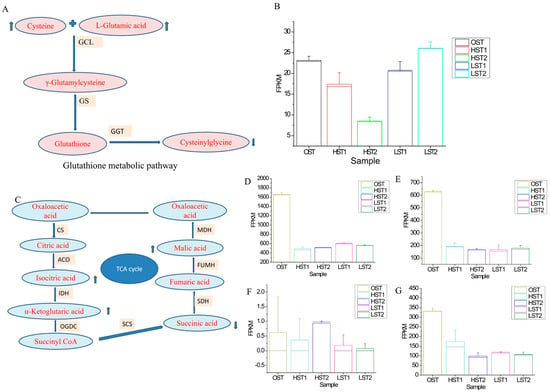
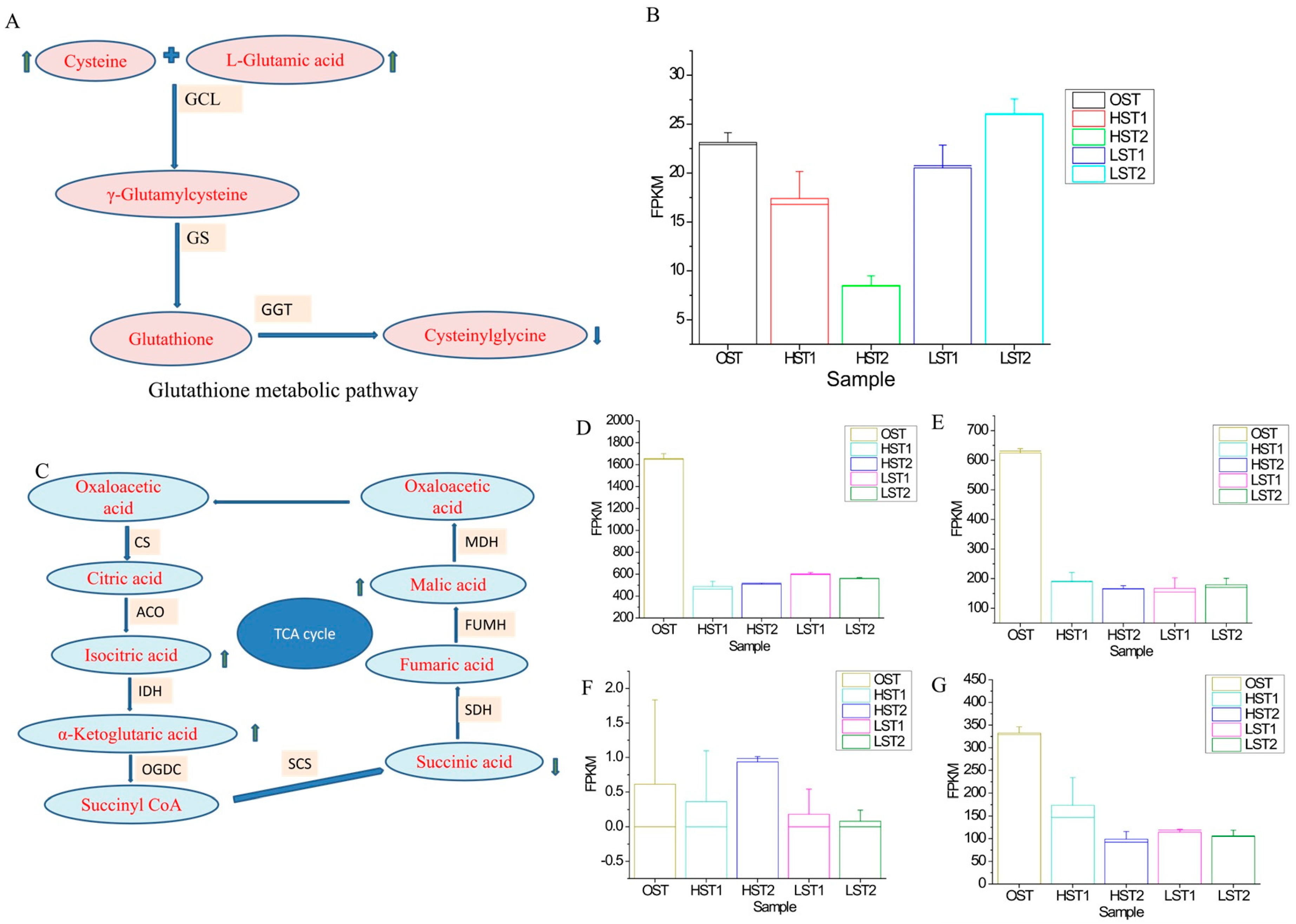
Analysis of annotated metabolic pathways revealed that in the TCA cycle based on S. hirsutum annotation, isocitric acid, α-ketoglutaric acid, and malic acid were upregulated relative to the OST control, whereas succinic acid was downregulated. However, the expression of key TCA cycle genes, such as aconitase gene (Aco), isocitrate dehydrogenase gene (Idh) and succinate dehydrogenase gene (Sdh), was found to be lower than that in the OST control (Figure 9). In the glutathione pathway based on N. aurantialba annotation, cysteine and L-glutamic acid were found to be upregulated relative to the OST control, while cysteinylglycine was found to be downregulated. At the gene level, glutathione synthase gene (Gss) was upregulated in the LST2 group but downregulated in other sample groups compared to the OST control (Figure 9).
Figure 9.
Integrated analysis of glutathione and TCA cycle pathways under low-temperature storage. (A) Glutathione metabolic pathway. (B) Expression profile of the glutathione synthase gene (Gss). Panels (A,B) are based on N. aurantialba transcriptome annotation. (C) TCA cycle. (D) Aconitase gene (Aco). (E) Isocitrate dehydrogenase gene (Idh). (F) Succinate dehydrogenase gene (Sdh). (G) Malate dehydrogenase gene (Mdh). Panels (C–G) are based on S. hirsutum transcriptome annotation. The upward blue arrow indicates upregulation (relative to the OSM sample group), and the downward blue arrow indicates downregulation.
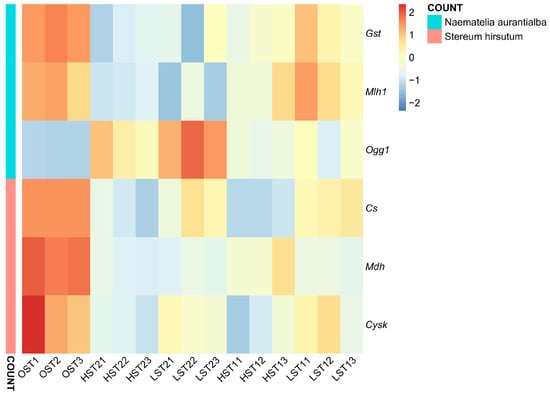
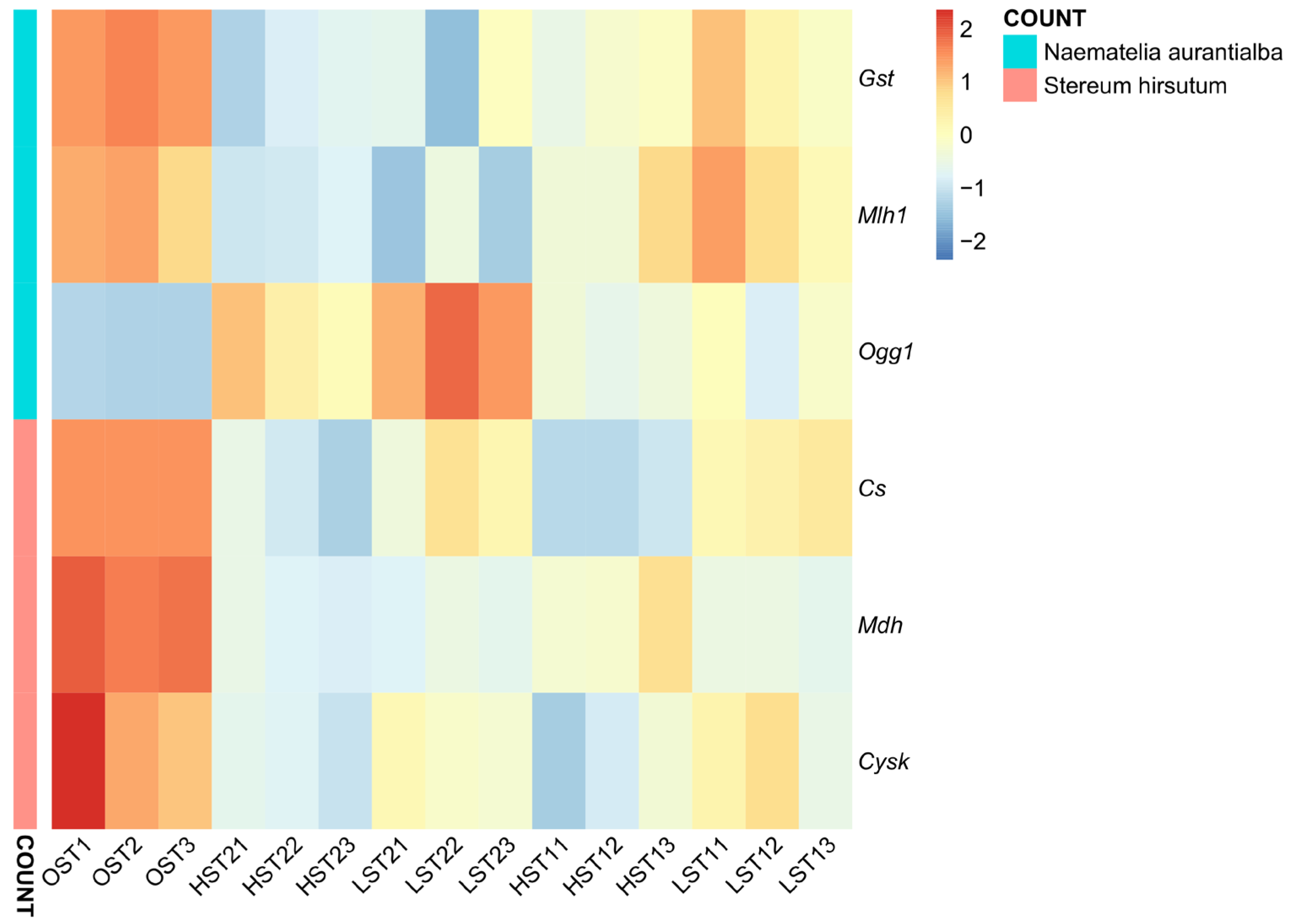
Reflecting the differential response patterns described above, the expression patterns of key genes (quantified as FPKM) obviously differed between N. aurantialba and S. hirsutum under different storage conditions. For N. aurantialba, stress defense-related genes (Gst, Mlh1 and Ogg1) exhibited divergent trends in response to low temperatures. Gst and Mlh1 were relatively highly expressed in the OST control and LST1 (0 °C, 4 days) groups compared to the long-term cold storage groups (HST2: 4 °C, 8 days; LST2: 0 °C, 8 days) (Figure 10, Table S4). In contrast, Ogg1 (a core gene for base excision repair) exhibited dramatically elevated expression in all cold-stressed groups relative to the OST group, consistent with its known role in base excision repair under cold stress (Table S4). For S. hirsutum, primary metabolism-related genes (Cs, Mdh and Cysk) displayed the highest expression in the OST control (Figure 10). Their expression was uniformly downregulated under low-temperature storage (with the lowest expression in HST2 and moderate reductions in LST1 and HST1).
Figure 10.
Gene expression heatmap of selected genes in sample groups based on fragments per kilobase of transcript per million mapped reads (FPKM) values (with FPKM transformation) in sample. Gst: glutathione S-transferase gene; Mlh1: MutL homolog 1 gene; Ogg1: 8-oxoguanine DNA glycosylase gene; Cs: citrate synthase gene; Mdh: malate dehydrogenase gene; Cysk: cysteine synthase gene.
3.4. Integrated Transcriptome-Metabolome Correlation Analysis
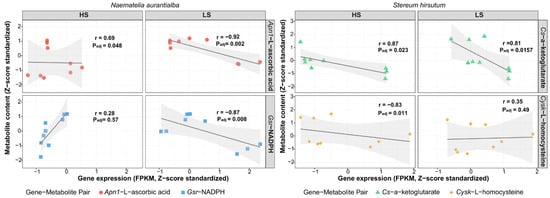
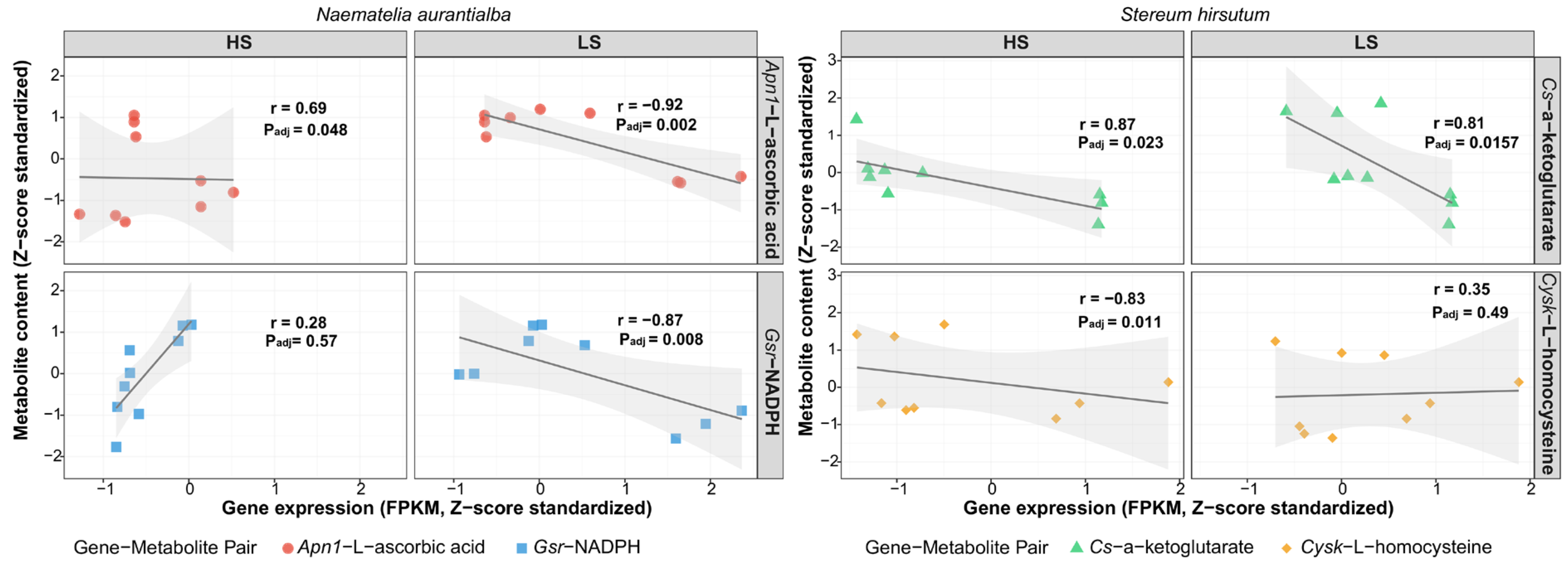
Analysis based on the N. aurantialba transcriptome revealed a positive correlation between the base excision repair gene aminopeptidase N1 (Apn1) and L-ascorbic acid. This correlation strengthened from moderate at HS (4 °C storage; r = 0.69, padj = 0.048) to strong at LS (0 °C storage; r = 0.92, padj = 0.002) (Figure 11). Similarly, the glutathione metabolism gene glutathione reductase (Gsr) developed a strong negative correlation with NADPH specifically under LS conditions (r = −0.87, padj = 0.008). In contrast, analysis based on the S. hirsutum transcriptome showed a different pattern. The TCA cycle gene Cs maintained a stable positive correlation with α-ketoglutarate across both temperature conditions (HS: r = 0.78, padj = 0.023; LS: r = 0.81, padj = 0.015). The cysteine synthesis gene Cysk showed a strong negative correlation with L-homocysteine at HS (r = −0.83, padj = 0.011), a correlation which disappeared at LS (r = 0.35, padj = 0.49).
Figure 11.
Spearman correlation map of key DEGs and DAMs in JinEr mushroom under different temperature regimes (HS: 4 °C; LS: 0 °C) with correlation coefficients displayed. Apn1: Aminopeptidase N1 gene. Gsr: Glutathione reductase gene.
3.5. Enzyme Activity Validation
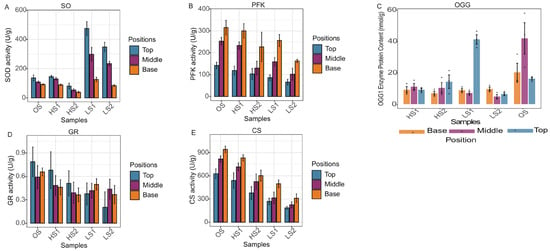
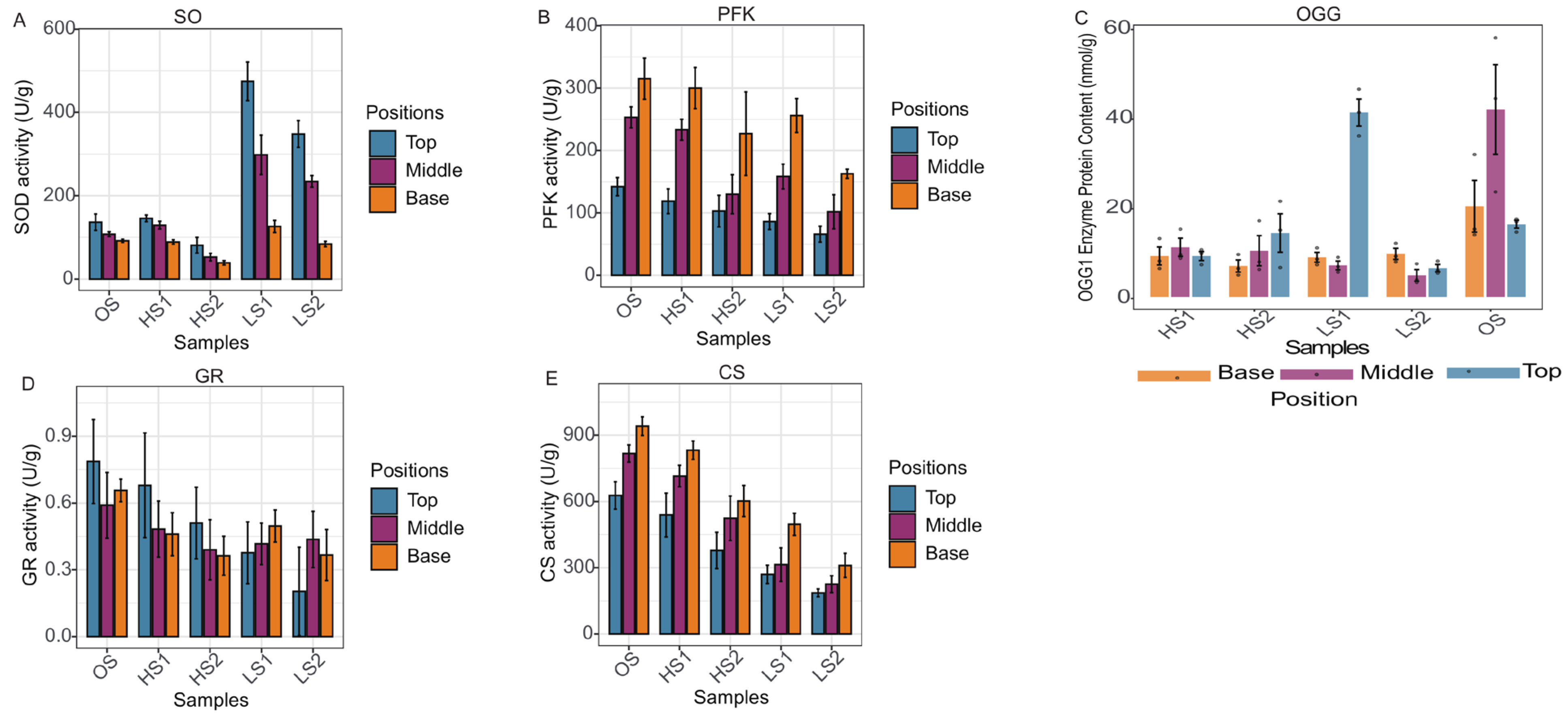
Enzyme activity assays in JinEr mushroom fruiting bodies revealed distinct spatial gradients. SOD activity followed a “T > M > B” pattern. In the LS1 group, apical SOD activity (152.1 U/g) was significantly higher than in the middle (112.3 U/g, padj = 0.028) and basal (89.5 U/g, padj = 0.016) regions, while apical SOD in HS1 was notably lower than in LS1 (padj = 0.016) (Figure 12). GR activity was also highest in apical regions, with LS1 apical GR significantly exceeding basal levels (padj = 0.048), and HS2 apical GR activity was significantly higher than LS2 apical activity (padj = 0.028).
Figure 12.
Result of activities of five key enzymes in different storage treatment groups of JinEr mushroom with analysis of apical/middle/basal regions. (A) Superoxide dismutase (SOD); (B) phosphofructokinase (PFK); (C) 8-oxoguanine DNA glycosylase 1 (OGG1); (D) glutathione reductase (GR); (E) citrate synthase (CS).
CS exhibited a “B > M > T” gradient. In HS1, basal CS activity (886.5 U/g) was significantly higher than in middle (672.3, padj = 0.042) and apical regions (518.2, padj = 0.028). Similarly, basal CS in the OS group exceeded all other regions (all padj < 0.05) (Figure 12). PFK activity was elevated basally, with LS1 basal PFK being significantly higher than apical (padj = 0.028), and HS1 basal PFK surpassing LS1 basal levels (padj = 0.028). OGG1 content showed spatial and treatment-related variations (padj < 0.05). The OS group had the highest OGG1 in the middle region (41.8 nmol/g), significantly above its own top (16.2 nmol/g) and base (20.2 nmol/g) regions and middle regions of other groups. LS1 showed the highest OGG1 in the top region, significantly exceeding top regions of other groups. No significant differences were found in the basal region across groups.
4. Discussion
This study integrated transcriptomics, spatially resolved enzymatic analysis, and metabolomics to reveal distinct low-temperature stress response patterns between the two symbiotic fungi comprising the JinEr mushroom fruiting body. These differential responses, observed through correlative multi-omics and biochemical assays, align with previously reported species-specific spatial distributions within the fruiting body [4]. Based on these findings, we propose a working model in which the two symbionts exhibit context-dependent stress response tendencies under the studied conditions. This model, while consistent with our multi-omics and enzymatic data, requires direct functional validation (e.g., gene knockout or complementary culture experiments) to be conclusively established.
Transcriptome analysis of the N. aurantialba genome in this study has demonstrated that this fungus exhibits a pronounced response oriented towards stress defense at the transcriptional and enzymatic levels. The DEGs were significantly enriched in pathways such as DNA damage repair and glutathione metabolism, and key genes such as Ogg1 and Gst were significantly upregulated. Correspondingly, the SOD and GR enzyme activities in the top region of the fruiting body (enriched in N. aurantialba) were significantly higher. This spatial gradient of enzyme activity is consistent with the species-specific distribution pattern reported by Lan et al. [4]: the apical region of the JinEr fruiting body has the most balanced ratio of S. hirsutum to N. aurantialba (1.51:1), with N. aurantialba accounting for a relatively higher proportion compared to the middle (3.97:1) and basal (6.52:1) regions. Conversely, N. aurantialba has been reported as a key species driving the formation of special gelatinous fruiting bodies in the JinEr mushroom, with an ecological niche that is more inclined to obtain nutrients from symbiotic partners to complete morphological construction [12,13,14]. Our multi-omics and biochemical data indicate that N. aurantialba showed a pronounced response bias toward stress defense pathways during postharvest cold storage, which likely helps preserve cellular and structural integrity of the symbiotic complex.
In contrast, the transcriptomic response of S. hirsutum was dominated by fundamental metabolic pathways, including carbon metabolism, the TCA cycle, and amino acid biosynthesis, with little enrichment of canonical stress defense pathways. Concurrently, the basal region, where S. hirsutum is predominantly distributed, exhibited relatively high activities of metabolic enzymes such as CS and PFK. These patterns align with the findings of Lan et al. [4], who reported that S. hirsutum dominates the basal region and substrate (representing 77.12% of the total genotype content in the fruiting body) and acts as a major contributor to substrate decomposition and nutrient acquisition within the symbiotic system. Previous studies have confirmed that S. hirsutum is the only functional fungus in the JinEr mushroom cultivation system that can effectively colonize and degrade lignocellulosic substrates, playing a “cornerstone” role in terms of providing initial nutrition to symbiotic organisms [14,15]. The present study suggests that, in response to postharvest low-temperature stress, S. hirsutum exhibited a sustained transcriptional and enzymatic orientation toward basal metabolic homeostasis and potentially contributed to the overall stability of the symbiotic system. Although transcript levels and enzyme activities generally followed consistent functional trends, some divergence may arise from post-transcriptional regulation or protein stability, rather than a direct one-to-one relationship between gene expression and enzyme activity.
This study observed an apparent contradiction in both S. hirsutum and N. aurantialba under postharvest low-temperature stress: the downregulation of partial core genes coexisted with the preservation of the pathways’ primary biological functions. For S. hirsutum although several core TCA cycle genes were downregulated at the transcriptional level, the activities of key metabolic enzymes including CS and PFK remained consistently high in the basal region where this fungus was predominantly distributed (Figure 12), and critical metabolites in the TCA pathway such as isocitric acid and α-ketoglutaric acid were significantly upregulated (Figure 9). These lines of evidence directly confirm the maintenance of TCA pathway function despite the downregulation of individual core genes. Similar phenomena have been reported in other edible fungi, attributed to post-transcriptional regulation, compensatory enzyme activity, metabolic flux redistribution, and pathway redundancy [16,17]. In the JinEr mushroom symbiosis, KEGG enrichment analysis confirmed that central metabolic pathways in S. hirsutum and stress defense pathways in N. aurantialba were consistently enriched under cold stress (Figure 7 and Figure 8). Moreover, most genes within these core pathways were predominantly upregulated across all cold stress groups (Tables S2 and S3). In both fungi, individual gene downregulation likely represents fine regulatory tuning that does not block overall pathway flux, which may be sustained via post-transcriptional regulation and isoenzyme compensation [16,17]. Thus, the observed divergent responses are context-specific adaptations to postharvest cold stress, with the two fungi maintaining the activity of their respective core functional pathways at the systemic level. However, this study lacks direct experimental evidence to verify these potential regulatory mechanisms, which remain to be further elucidated in future research.
A well-known example of fungal symbiosis in edible mushrooms is the YinEr mushroom (Tremella fuciformis), whose fruiting body formation depends on its interaction with the companion fungus Annulohypoxylon stygium [16,17,18]. The YinEr fruiting body is homogeneous, being formed exclusively by T. fuciformis [19,20,21]. In this system, functional partitioning between the two fungi occurs during the cultivation stage. T. fuciformis lacks the enzymes required for lignocellulose degradation and thus relies on A. stygium to break down wood substrates and provide accessible carbon sources, enabling its own fruiting body morphogenesis [19]. However, the fruiting body of the JinEr mushroom is composed of N. aurantialba and S. hirsutum. These two symbionts exhibited differential stress response patterns in the postharvest cold stress conditions investigated in this study. This different response may highlight a context-dependent divergence in stress responses between the two symbionts, distinct from the morphology–nutrition partitioning described in the YinEr system during cultivation. Further studies are needed to compare the symbiotic response mechanisms of these two systems across a broader range of environmental conditions.
This study found that the response of the JinEr mushroom complex differed markedly depending on storage temperature. At 0 °C, the metabolic and transcriptional profiles jointly pointed to a basic survival mode—characterized by the significant upregulation of unsaturated fatty acid biosynthesis (to maintain membrane fluidity) and accompanied by the inhibition of energy metabolism. This strategy is consistent with the common acute cold stress response mechanism in the biological world [22,23,24], and its core function is to ensure the basic structural integrity of cells [25,26,27]. At 4 °C, the system shifted to a more proactive maintenance and defense mode. Its characteristic was the activation of high-fidelity homologous recombination repair pathways and the biosynthesis of specific defense metabolites (e.g., ubiquinone). This distinction resembles the shift from rapid stress tolerance to a more regulated stress response state observed in many postharvest commodities [28,29], reflecting the graded cold stress response characteristics of the JinEr symbiotic complex to different levels of postharvest cold stress intensity [30,31].
It is important to note that the differential responses observed in this study are based on correlative multi-omics and spatial enzyme assays. While consistent with a possible functional bias under cold stress, these patterns do not yet establish a fixed division of labor. Instead, we present them as a context-specific response model that requires validation through targeted experiments, such as mono-culture stress tests or genetic interference studies.
5. Conclusions
This study revealed temperature-dependent differential response tendencies in the symbiotic fungi N. aurantialba and S. hirsutum under postharvest cold storage. Under the studied conditions, N. aurantialba showed enhanced stress defense responses (e.g., DNA repair, antioxidant systems), whereas S. hirsutum exhibited sustained basal metabolic homeostasis. This differential response pattern was associated with a slower polysaccharide loss at 0 °C and more pronounced polysaccharide loss at 4 °C. However, these findings are based on correlative multi-omics data with limited replicates and without direct functional validation, and therefore should be interpreted as a working model that requires further confirmation. From a practical perspective, 0 °C is recommended for long-term preservation and 4 °C is recommended for the short-term storage of JinEr mushrooms.
Supplementary Materials
The following supporting information can be downloaded at: https://www.mdpi.com/article/10.3390/genes17030296/s1, Table S1: Enrichment analysis of KEGG pathway in non-target metabolome. DAS: differential abundance score; Table S2: Enrichment analysis of KEGG pathway using Naematelia aurantialba transcriptome annotation; Table S3: Enrichment analysis of KEGG pathway using Stereum hirsutum transcriptome annotation; Table S4: log2FC and padj Values of Key DEGs annotated against Naematelia aurantialba and Stereum hirsutum Reference Genomes (Low-Temperature vs. Control).
Author Contributions
Y.L.: Writing—review & editing, Writing—original draft, Methodology, Investigation, Formal analysis, Conceptualization, Funding acquisition. H.T.: Investigation. F.W.: Investigation. H.L.: Project administration, Visualization. C.L.: Data curation. B.Z.: Supervision. All authors have read and agreed to the published version of the manuscript.
Funding
This work was supported by the Natural Science Research Project of the Anhui Provincial Department of Education (2022AH051916), the Talent Introduction Project of Bengbu University (2024YYX09QD), the Special Fund for the Industrial Technology System of Agricultural Products Processing in Anhui Province, and the Project of “Dual Characteristics” Modern Industrial Colleges in Colleges and Universities of Anhui Province.
Institutional Review Board Statement
Not applicable.
Informed Consent Statement
Not applicable.
Data Availability Statement
Data will be made available on request.
Conflicts of Interest
The authors confirm no competing financial interests or personal relationships influenced this research.
References
- Li, C.; Xu, S. Edible mushroom industry in China: Current state and perspectives. Appl. Microbiol. Biotechnol. 2022, 106, 3949–3955. [Google Scholar] [CrossRef] [Scilit]
- Li, D.-M.; Zhang, S.-W.; Sun, J.-Y.; Li, Y.-J.; Li, W.-P. Analysis of amino acid content and nutritional value evaluation in Golden Ear from different origins. J. Food Saf. Food Qual. 2024, 15, 237. [Google Scholar]
- Wu, R.-N.; Zhu, Y.-Y.; Ma, R.-H.; Ni, Z.-J.; Deng, X.-J.; Thakur, K.; Wei, Z.-J. Purification, structural characteristics, bioactive properties, and applications of Naematelia aurantialba polysaccharides: A comprehensive review. Molecules 2025, 30, 4073. [Google Scholar] [CrossRef] [Scilit]
- Lan, J.; Zhang, Y.; Cai, Y.; Shi, X.; Zhang, K.; Huang, J.; Yang, C.; He, X.; Yu, F.; Liu, W. Spatial ratio of two fungal genotypes content of Naematelia aurantialba and Stereum hirsutum in nutritional growth substrate and fruiting bodies reveals their potential parasitic life cycle characteristics. J. Agr. Food Res. 2025, 22, 102101. [Google Scholar] [CrossRef] [Scilit]
- Yang, Y.; Dong, C. Fruiting body heterogeneity, eimorphism and haustorium-like structure of Naematelia aurantialba (JinEr Mushroom). J. Fungi 2024, 10, 557. [Google Scholar] [CrossRef] [Scilit] [PubMed]
- Suárez, M.; Sáez-Casado, M.; Martínez, T.; Rincόn-Cervera, M. The effect of low temperature storage on the lipid quality of fish, either alone or combined with alternative preservation technologies. Foods 2024, 13, 1097. [Google Scholar] [CrossRef] [Scilit]
- Yuan, Q.; Jiang, Y.; Yang, Q.; Li, W.; Gan, G.; Cai, L.; Li, W.; Qin, C.; Yu, C.; Wang, Y. Mechanisms and control measures of low temperature storage-induced chilling injury to solanaceous vegetables and fruits. Front. Plant Sci. 2024, 15, 1488666. [Google Scholar] [CrossRef] [Scilit]
- Zha, L.; Chen, M.; Yu, C.; Guo, Q.; Zhao, X.; Li, Z.; Zhao, Y.; Li, C.; Yang, Y. Differential proteomics study of postharvest Volvariella volvacea during storage at 4 °C. Sci. Rep. 2020, 10, 13134. [Google Scholar] [CrossRef] [Scilit]
- Farcuh, M. Understanding chilling injury and sugar metabolism-related genes and metabolites in ‘Red Haven’ peaches. Plants 2025, 14, 2133. [Google Scholar] [CrossRef] [Scilit] [PubMed]
- Wang, R.; Hirabayashi, M.; Furuta, A.; Okazaki, T.; Tanimoto, S. Changes in extractive components and bacterial flora in live mussels Mytilus galloprovincialis during storage at different temperatures. J. Food Sci. 2023, 88, 1654–1671. [Google Scholar] [CrossRef] [Scilit]
- Hakimi, A.A.; Reznik, E.; Lee, C.-H.; Creighton, C.J.; Brannon, A.R.; Luna, A.; Aksoy, B.A.; Liu, E.M.; Shen, R.; Lee, W.; et al. An integrated metabolic atlas of clear cell renal cell carcinoma. Cancer Cell 2016, 29, 104–116. [Google Scholar] [CrossRef] [Scilit]
- Cao, Y.; Yang, L.-L.; Li, R.-C.; Feng, F.-J.; Li, M.-J.; Luo, X.-Y.; Shen, Z.-H.; Lu, Q.-Q. A preliminary study on composition of fungal species and nutrient transportation in Naematelia aurantialba culture. Acta Edul. Fungi 2022, 38, 48–53. [Google Scholar]
- Cao, Y.; Shen, Z.-H.; Yang, L.-L.; Li, M.-G.; Luo, X.-Y.; Yang, X.-J.; Lu, Q.-Q.; Li, R.-C. Determination of polarity of Naematelia aurantialba by single spore hybridization. Acta Edul. Fungi 2024, 31, 38–44. [Google Scholar]
- Yang, Y.; Lu, J.; Dong, C. Pheromone MAPK pathway regulates the yeast-to-hypha transition in the parasitic mushroom Naematelia sinensis in a cell fusion-independent manner. Microbiol. Res. 2025, 303, 128374. [Google Scholar] [CrossRef] [Scilit]
- Mišković, J.; Rašeta, M.; Čapelja, E.; Krsmanović, N.; Novaković, A.; Karaman, M. Mushroom species Stereum hirsutum as natural source of phenolics and fatty acids as antioxidants and acetylcholinesterase inhibitors. Chem. Biodiver. 2021, 18, e2100409. [Google Scholar] [CrossRef] [Scilit] [PubMed]
- Li, D.; Wang, D.; Fang, Y.; Li, L.; Lin, X.; Xu, Y.; Chen, H.; Zhu, M.; Luo, Z. A novel phase change coolant promoted quality attributes and glutamate accumulation in postharvest shiitake mushrooms involved in energy metabolism. Food Chem. 2021, 351, 129227. [Google Scholar] [CrossRef] [Scilit] [PubMed]
- Cai, Z.; Zeng, Z.; Chen, W.; Guo, Z.; Zheng, H.; Lu, Y.; Zeng, H.; Chen, M. Comprehensive metabolomic and transcriptomic analysis revealed the molecular basis of the effects of different refrigeration durations on the metabolism of Agaricus bisporus cultivation spawn. Curr. Tradit. Med. 2025, 11, 415. [Google Scholar] [CrossRef] [Scilit] [PubMed]
- Deng, Y.; van Peer, A.F.; Lan, F.-S.; Wang, Q.-F.; Jiang, Y.; Lian, L.-D.; Lu, D.-M.; Xie, B. Morphological and molecular analysis identifies the associated fungus (“Xianghui”) of the medicinal white jelly mushroom, Tremella fuciformis, as Annulohypoxylon stygium. Int. J. Med. Mushrooms 2016, 18, 253–260. [Google Scholar] [CrossRef] [Scilit]
- Liu, D.; Pujiana, D.; Wang, Y.; Zhang, Z.; Zheng, L.; Chen, L.; Ma, A. Comparative transcriptomic analysis identified differentially expressed genes and pathways involved in the interaction between Tremella fuciformis and Annulohypoxylon stygium. Antonie Leeuwenh. 2019, 112, 1675–1689. [Google Scholar] [CrossRef] [Scilit]
- Liu, D.; Sun, X.; Yan, B.; Ma, A. Alternative oxidase is involved in oxidative stress resistance and melanin synthesis in Annulohypoxylon stygium, a companion fungus of Tremella fuciformis. Antonie Leeuwenh. 2022, 115, 365–374. [Google Scholar] [CrossRef] [Scilit]
- Li, Y.; Cao, J.; Zhan, G.; Jia, J.; Fan, J.; Shen, Z.; Chen, L.; Sun, S. Time-course proteomics analysis and gene function validation of promoting dimorphic transition of Tremella fuciformis by Annulohypoxylon stygium Extract. Food Biosci. 2025, 71, 107188. [Google Scholar] [CrossRef] [Scilit]
- Khakhar, A. A roadmap for the creation of synthetic lichen. Biochem. Biophys. Res. Commun. 2023, 654, 87–93. [Google Scholar] [CrossRef] [Scilit]
- Osyczka, P.; Lenart-Boroń, A.; Boroń, P.; Rola, K. Lichen-forming fungi in postindustrial habitats involve alternative photobionts. Mycologia 2021, 113, 43–55. [Google Scholar] [CrossRef] [Scilit]
- Gao, H.; Ye, S.; Liu, Y.; Fan, X.; Yin, C.; Liu, Y.; Liu, J.; Qiao, Y.; Chen, X.; Yao, F.; et al. Transcriptome analysis provides insight into gamma irradiation delaying quality deterioration of postharvest Lentinula edodes during cold storage. Food Chem. 2023, 6, 100172. [Google Scholar] [CrossRef] [Scilit]
- Liu, Q.; Cui, X.; Song, Z.; Kong, W.; Kang, Y.; Kong, W.; Ng, T.B. Coating shiitake mushrooms (Lentinus edodes) with a polysaccharide from Oudemansiella radicata improves product quality and flavor during postharvest storage. Food Chem. 2021, 352, 129357. [Google Scholar] [CrossRef] [Scilit] [PubMed]
- Yang, Y.; Nian, S.; Yu, J.; Jing, S.; Zhu, B.; Wang, K.; Shi, Y.; Bai, J.; Xu, H.; Kou, L. Exploring the possible mechanisms of X-Rays treatment for retention aroma volatiles in shiitake mushrooms during low temperature storage. Food Chem. 2025, 464, 141595. [Google Scholar] [CrossRef] [Scilit]
- Jiang, W.; Gu, Y.; Liu, Y.; Han, T.; Song, Z.; Zhu, D.; Li, J.; Cheng, F. Effect of storage temperature on quality of Oudemansiella raphanipies and prediction model of shelf life. Shandong Agric. Sci. 2024, 56, 145–153. [Google Scholar]
- Ren, Y.; Ma, Q.; Li, D.; Chen, Y.; Cheng, Q.; Luo, Z. Autophagy-mediated energy charge sustainability alleviated postharvest quality deterioration of strawberry (Fragaria × Ananassa). Food Chem. 2025, 469, 142539. [Google Scholar] [CrossRef] [Scilit]
- Zhang, J.; Wang, C.; Chen, C.; Zhang, S.; Zhao, X.; Wu, C.; Kou, X.; Xue, Z. Glycine betaine inhibits postharvest softening and quality decline of winter jujube fruit by regulating energy and antioxidant metabolism. Food Chem. 2023, 410, 135445. [Google Scholar] [CrossRef] [Scilit]
- Sugita, K.; Takahashi, S.; Uemura, M.; Kawamura, Y. Freezing treatment under light conditions leads to a dramatic enhancement of freezing tolerance in cold-acclimated Arabidopsis. Plant Cell Environ. 2024, 47, 2971–2985. [Google Scholar] [CrossRef] [Scilit]
- Yang, H.; Qiao, K.-W.; Teng, J.-J.; Chen, J.-B.; Zhong, Y.-L.; Rao, L.-Q.; Xiong, X.-Y.; Li, H. Protease inhibitor ASP enhances freezing tolerance by inhibiting protein degradation in kumquat. Hortic. Res. 2023, 10, uhad023. [Google Scholar] [CrossRef] [Scilit] [PubMed]
Disclaimer/Publisher’s Note: The statements, opinions and data contained in all publications are solely those of the individual author(s) and contributor(s) and not of MDPI and/or the editor(s). MDPI and/or the editor(s) disclaim responsibility for any injury to people or property resulting from any ideas, methods, instructions or products referred to in the content. |
© 2026 by the authors. Licensee MDPI, Basel, Switzerland. This article is an open access article distributed under the terms and conditions of the Creative Commons Attribution (CC BY) license.