Article

Parent and Caregiver Perspectives towards Cannabidiol as a Treatment for Fragile X Syndrome

1
Department of Genetics and Genomic Sciences, Icahn School of Medicine at Mount Sinai, New York, NY 10029, USA
2
Department of Counseling and Clinical Psychology, Teachers College, Columbia University, New York, NY 10027, USA
3
National Fragile X Foundation, McLean, VA 22102, USA
4
Department of Pediatrics, Icahn School of Medicine at Mount Sinai, New York, NY 10029, USA
*
Author to whom correspondence should be addressed.
Genes 2022, 13(9), 1594; https://doi.org/10.3390/genes13091594
Submission received: 2 August 2022 / Revised: 30 August 2022 / Accepted: 31 August 2022 / Published: 6 September 2022
(This article belongs to the Special Issue Epigenetics of Fragile X and Other Neurodevelopmental Disorders)

Abstract

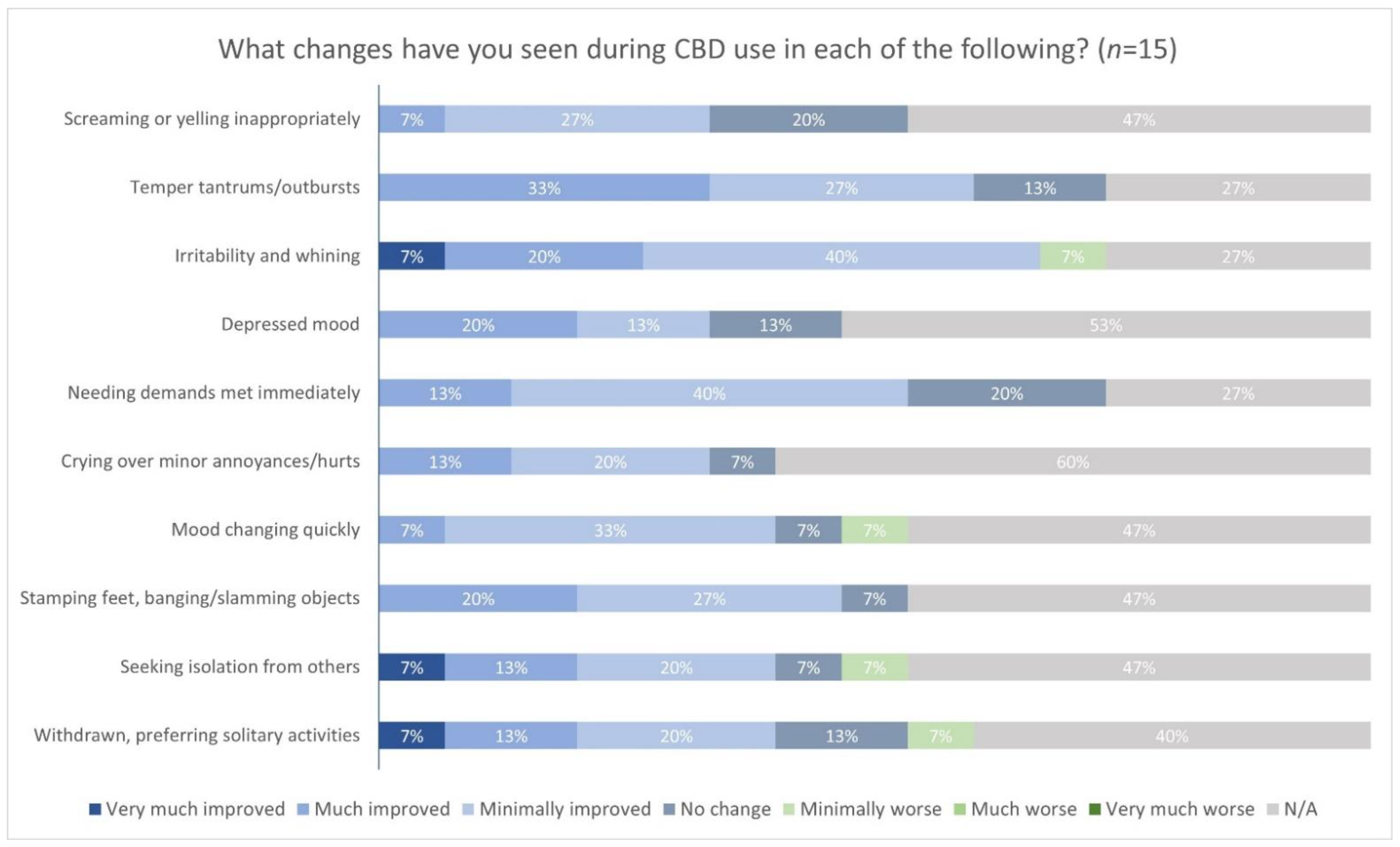
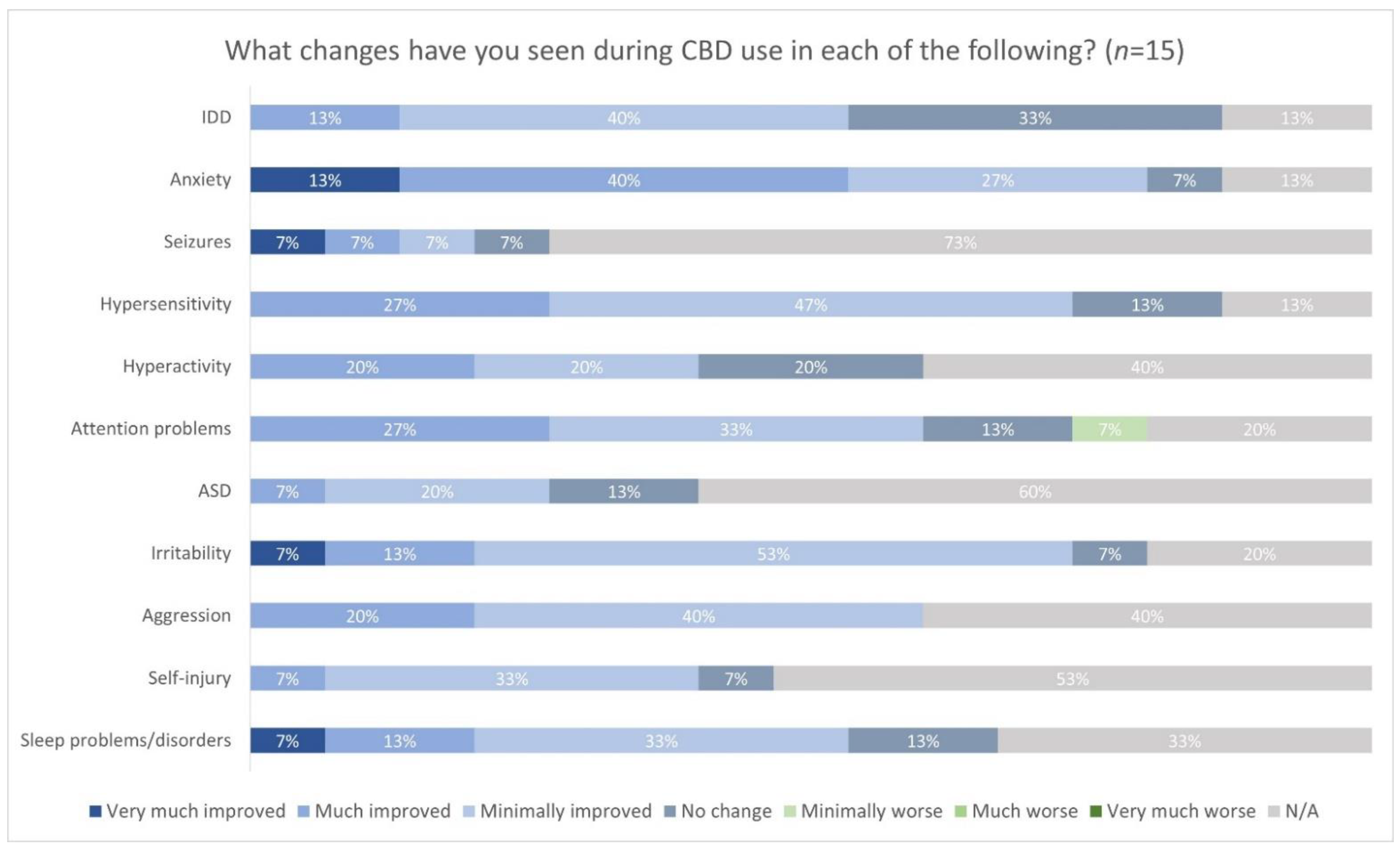
Cannabidiol (CBD) is a non-intoxicating chemical in cannabis plants that is being investigated as a candidate for treatment in Fragile X Syndrome (FXS), a leading known cause of inherited intellectual developmental disability. Studies have shown that CBD can reduce symptoms such as anxiety, social avoidance, hyperactivity, aggression, and sleep problems. This is a qualitative study that utilized a voluntary-anonymous survey that consisted of questions regarding demographics, medical information, the form, type, brand, dose, and frequency of CBD use, the rationale for use, the perception of effects, side effects, and costs. The full survey contained a total of 34 questions, including multiple-choice, Likert-scale, and optional free-response questions. This research revealed that there are a wide range of types, brands, and doses of CBD being administered to individuals with FXS by their parents and caregivers. There were many reasons why CBD was chosen, the most common ones being that respondents had heard positive things about CBD from members of the community, the perception that CBD had fewer side effects than other medications, and because respondents felt that CBD was a more natural substance. Most of the parents and caregivers who responded agreed that CBD improved some of the symptoms of FXS and made a positive difference overall. CBD has the therapeutic potential to help relieve some FXS symptoms. Future research is necessary to understand the benefits of CBD in FXS.
Keywords: Cannabidiol; CBD; Fragile X Syndrome; caregiver perspectives; CBD treatment Cannabidiol; CBD; Fragile X Syndrome; caregiver perspectives; CBD treatment