Harnessing Gut Endocrine Cell Plasticity to Restore Insulin Production


Abstract
1. Introduction
2. Materials and Methods
2.1. Animal Manipulations
2.2. Isolation of Murine Pancreatic Islets of Langerhans
2.3. Immunohistochemistry
2.4. Gene Expression Analysis
2.5. Glucose Tolerance Tests and Blood Glucose Measurement
2.6. Biochemical Analyses
2.7. Colonoid Generation, Maintenance, and 4-Hydroxytamoxifen Treatment
2.8. Glucose-Stimulated Insulin Secretion (GSIS) Assay
2.9. Data Analysis
3. Results
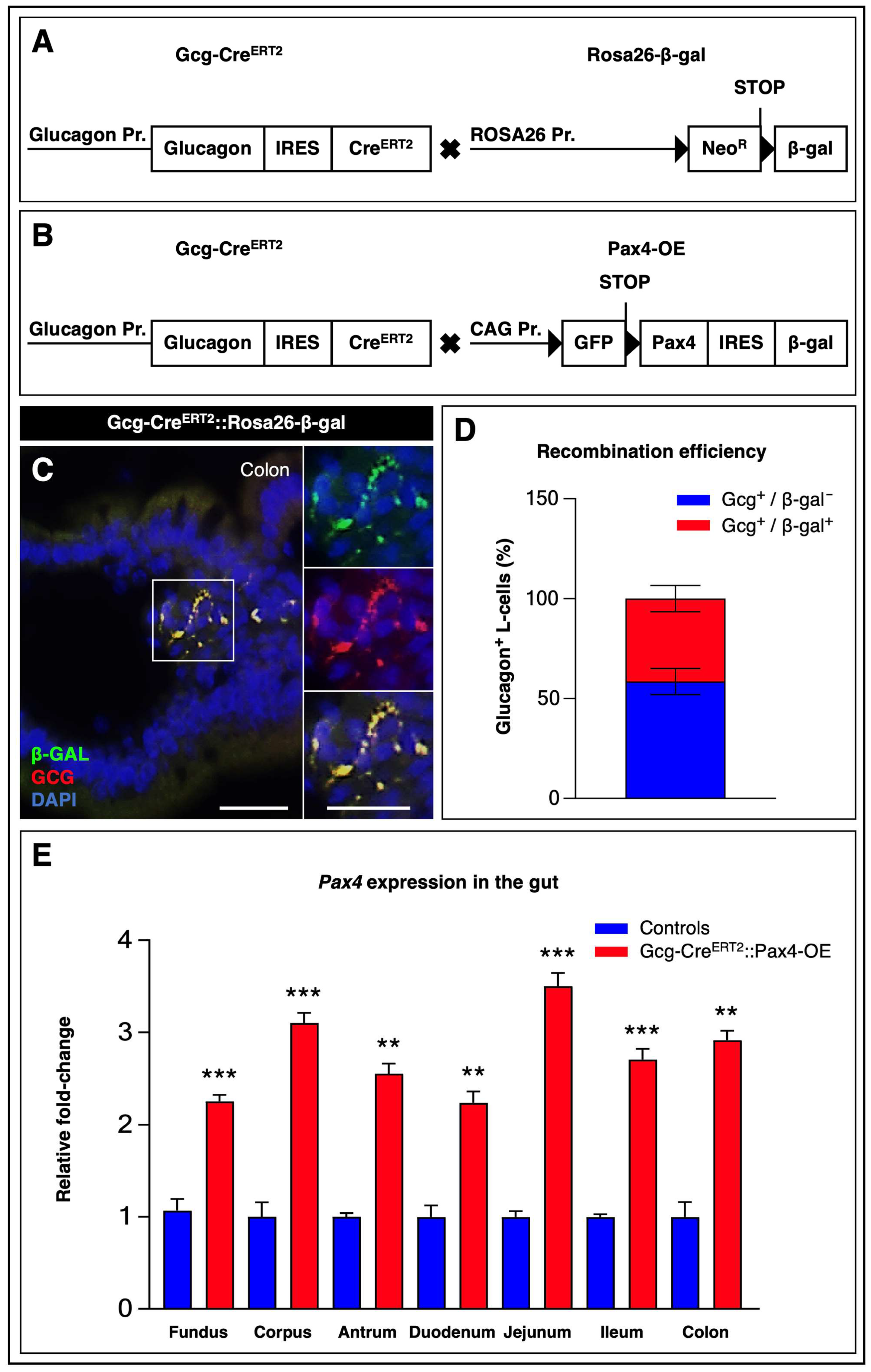
3.1. Generation and Characterization of Gcg-CreERT2::Pax4-OE Animals
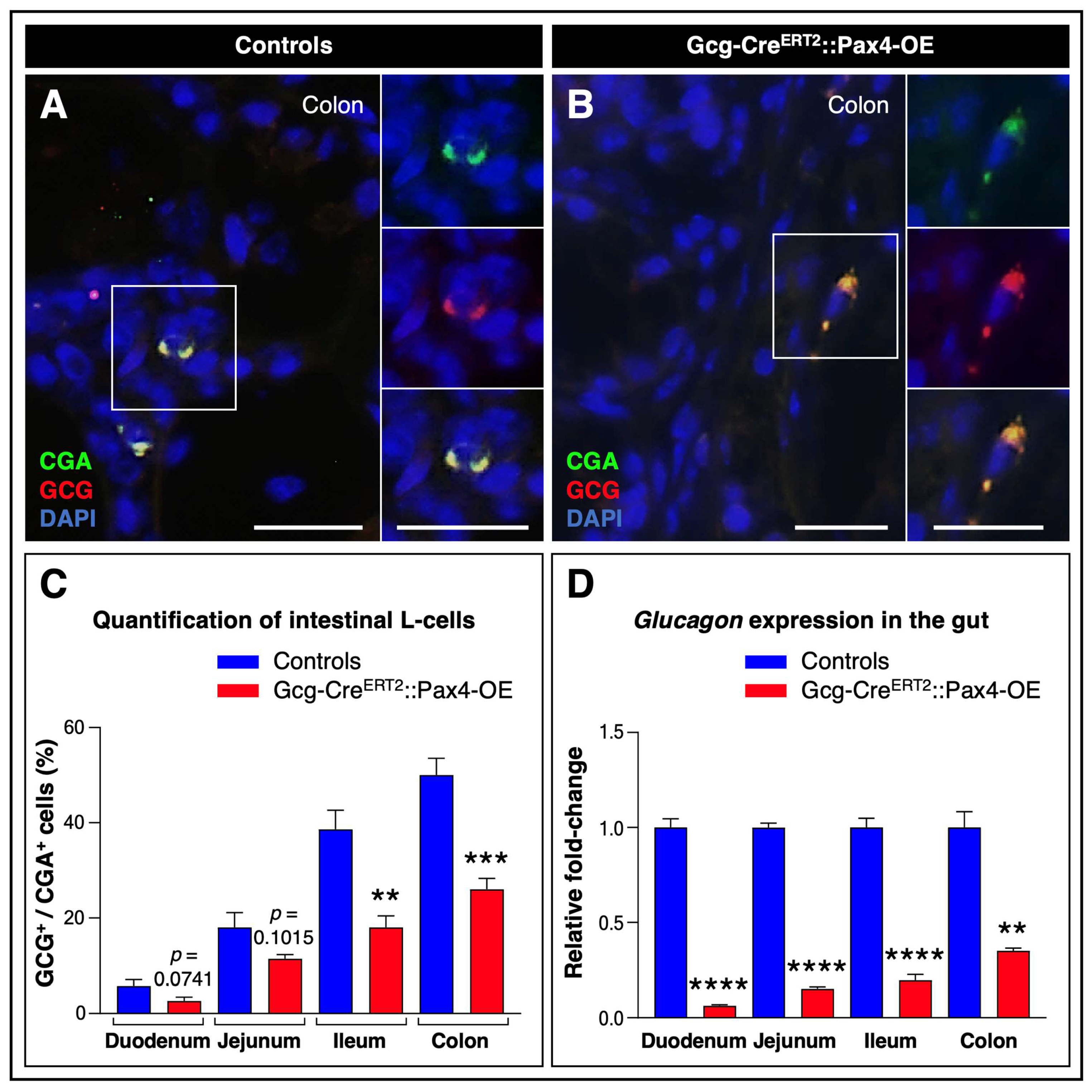
3.2. Pax4 Misexpression in L-Cells Promotes Their Loss in the Gut
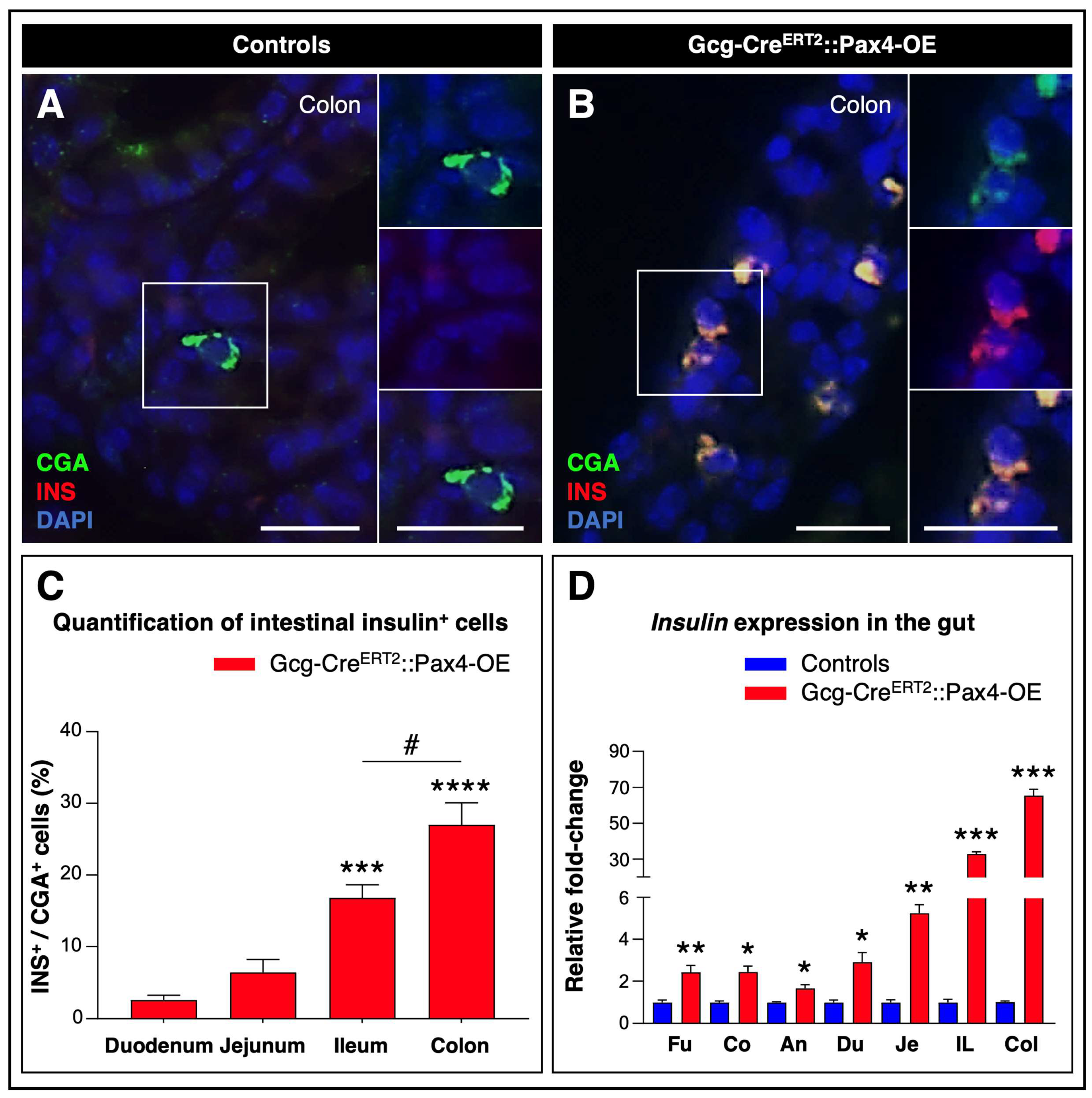
3.3. Pax4 Ectopic Expression Drives the Conversion of Gut L-Cells into Insulin+ Cells
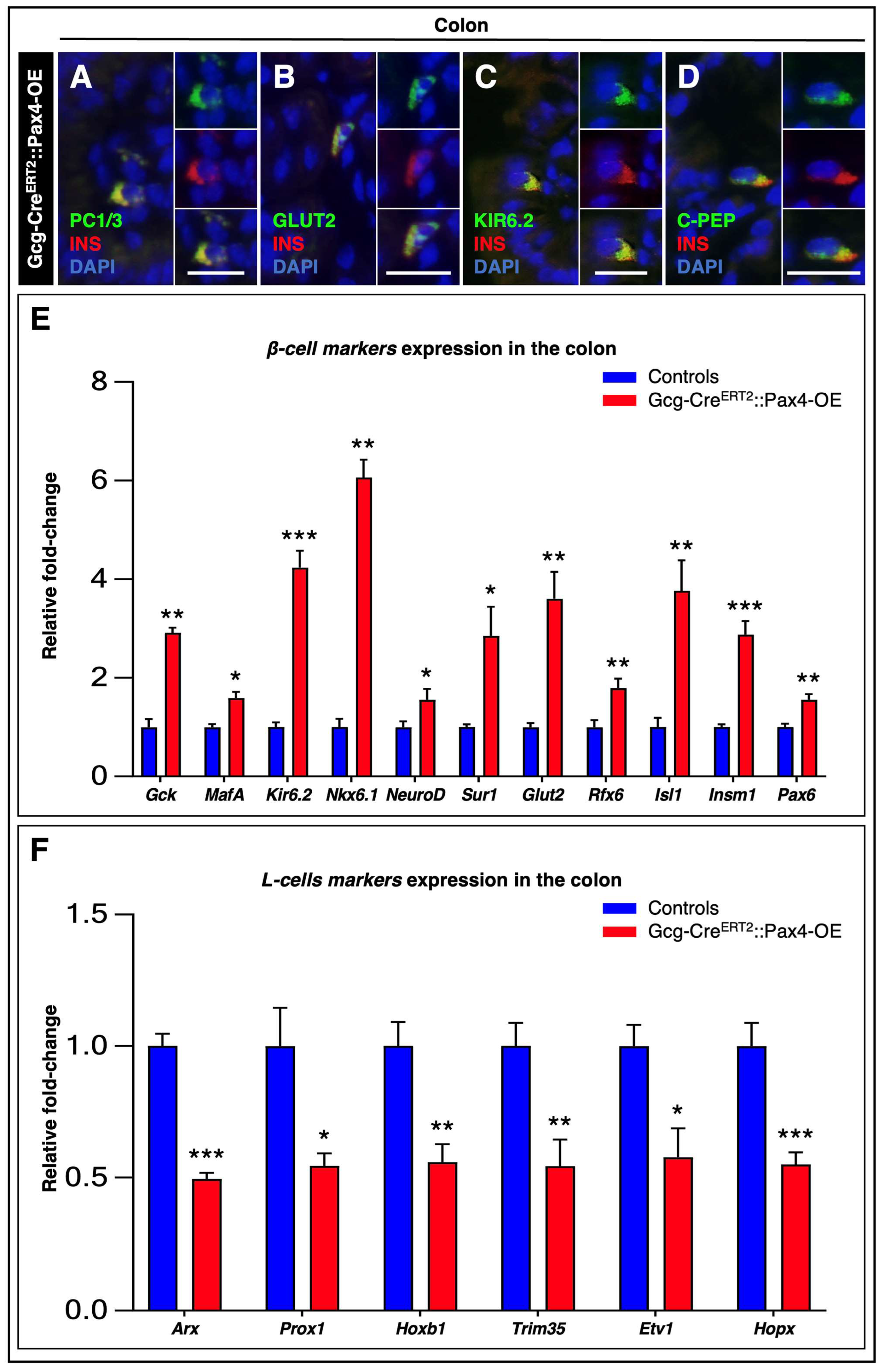
3.4. Gut-Derived Insulin+ Cells Display a β-like Cell Phenotype
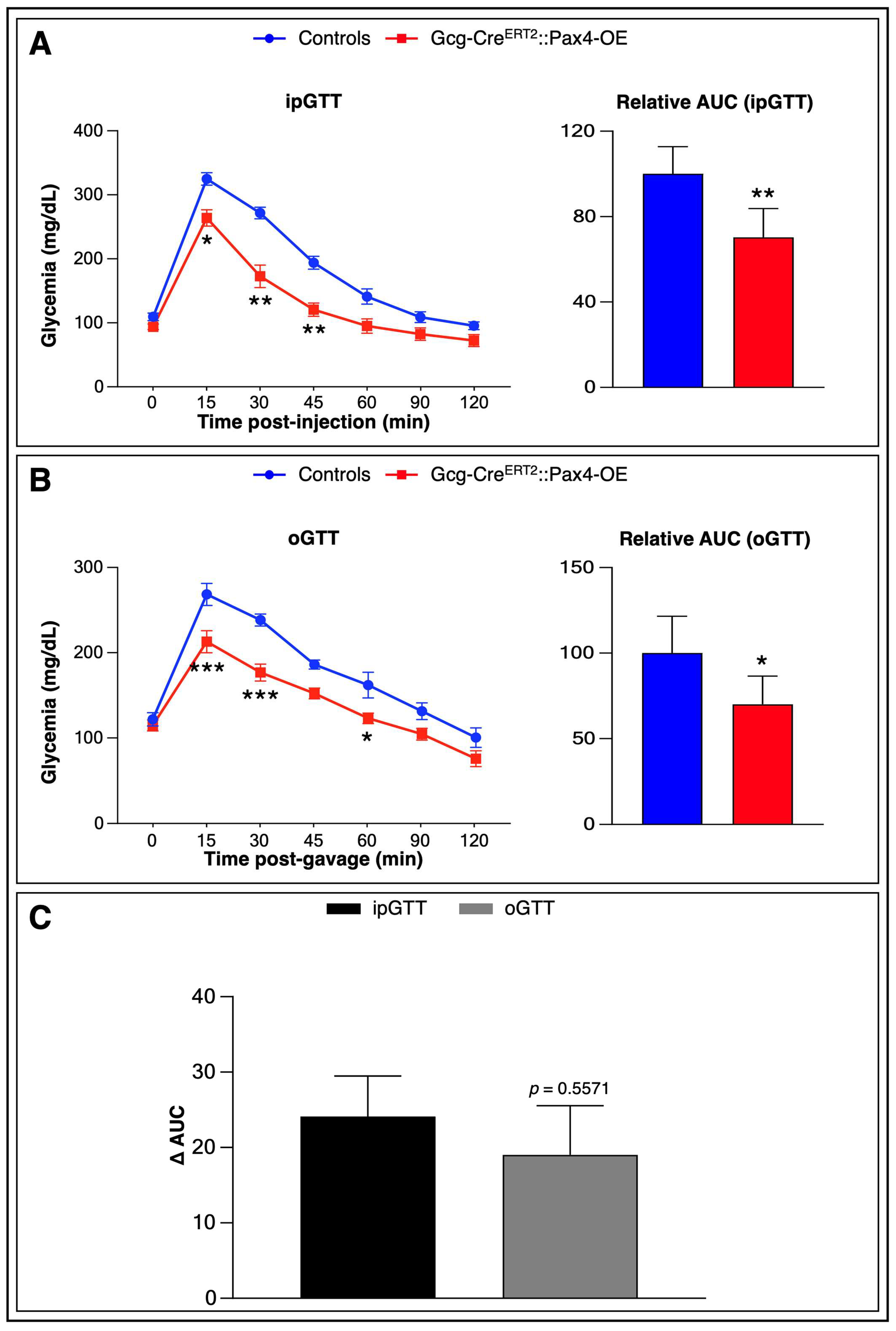
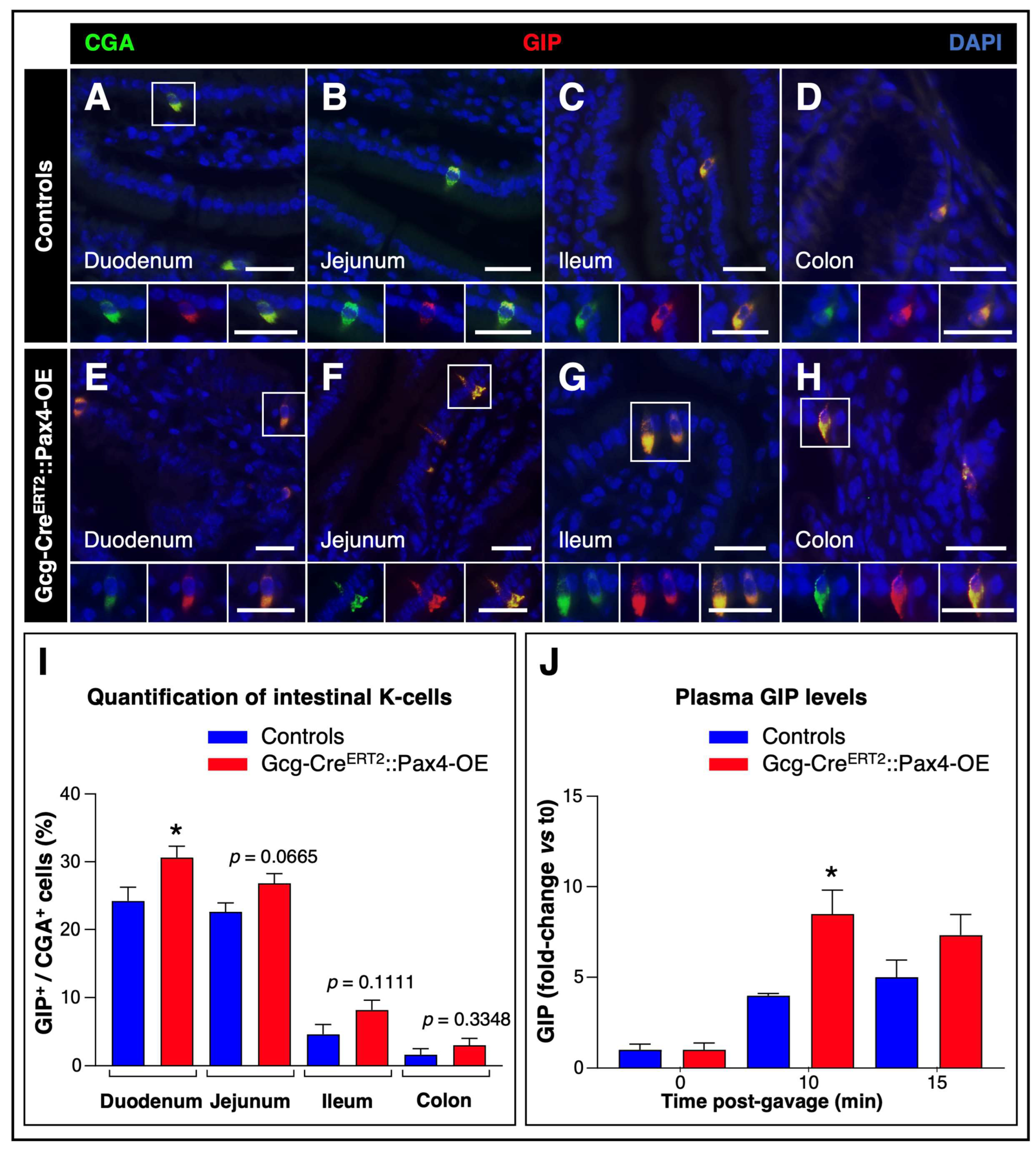
3.5. Improved Glucose Tolerance in Pax4-Misexpressing Mice Is Associated with Functional Gut Insulin+ Cells and Compensatory K-Cell Expansion
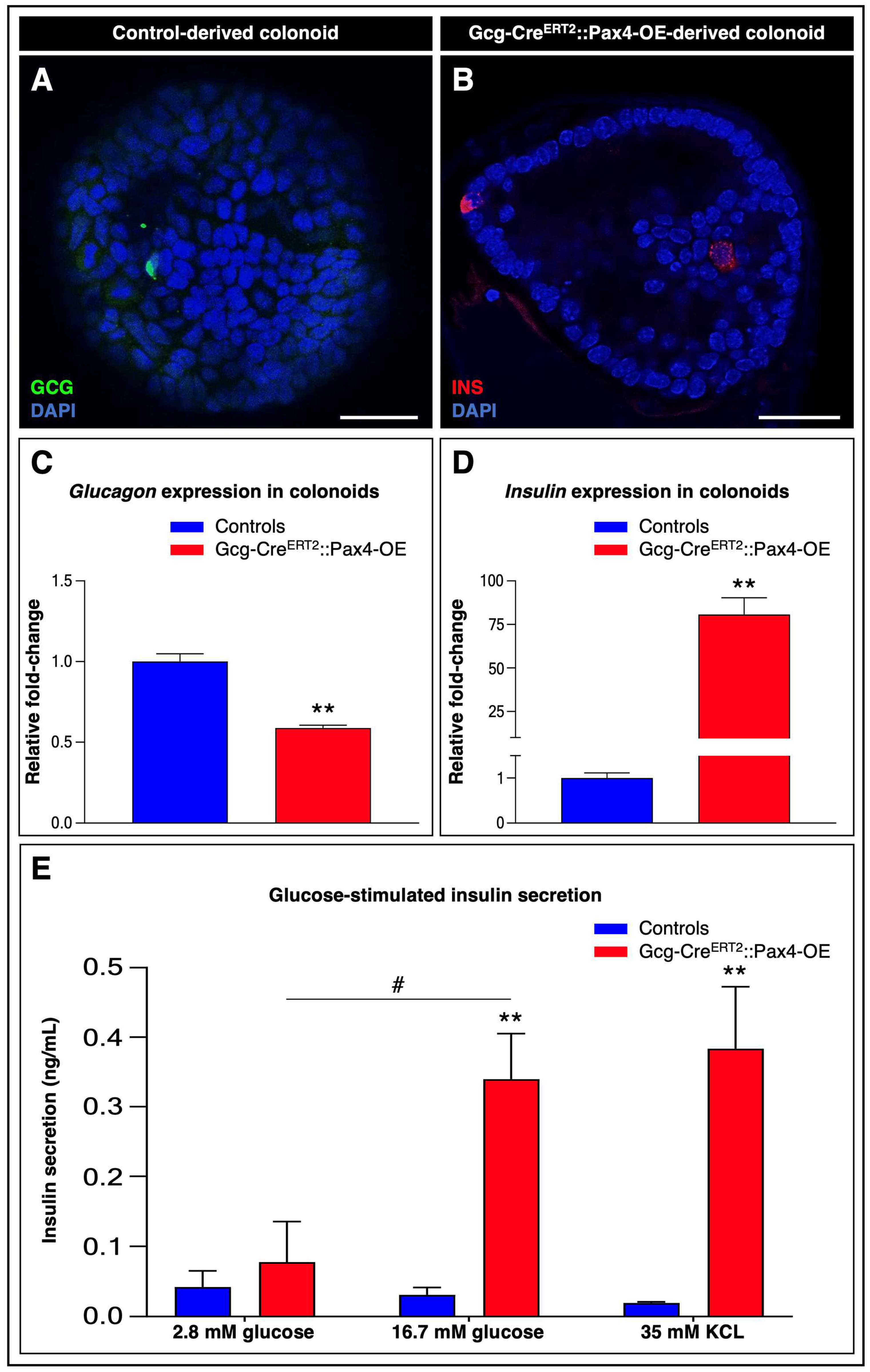
3.6. Bioengineered Pax4-Misexpressing Mini-Guts Release Insulin upon Glucose Stimulation
4. Discussion
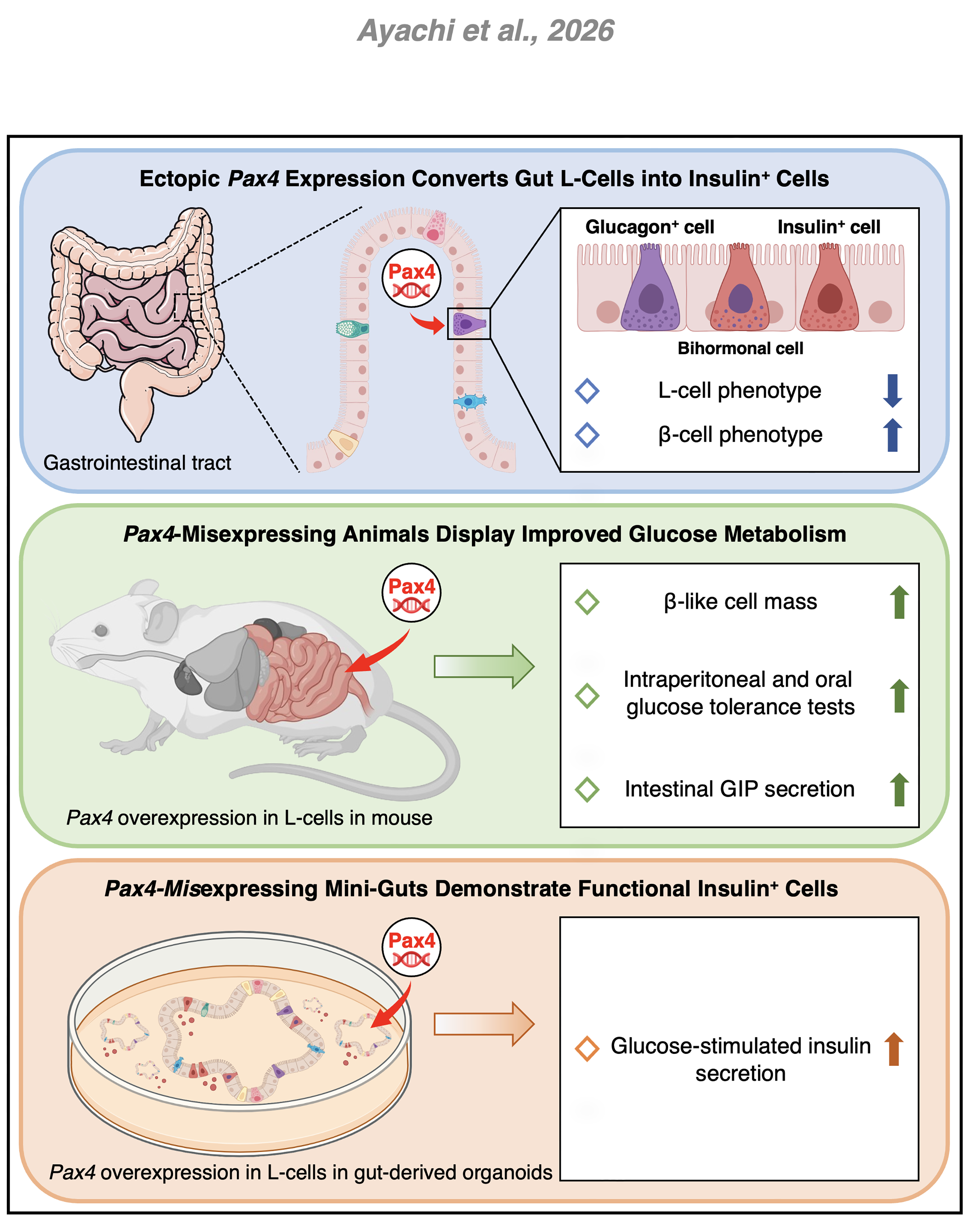
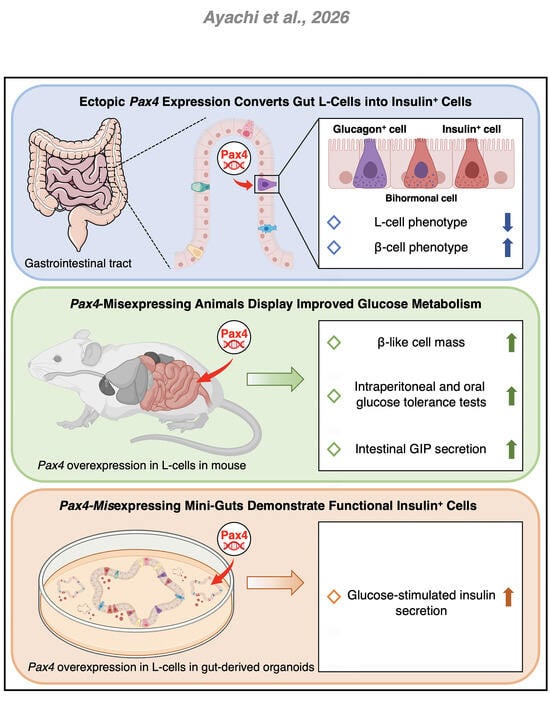
4.1. Ectopic Pax4 Expression Converts Gut L-Cells into Insulin+ Cells
4.2. Pax4-Misexpressing Animals Display Improved Glucose Metabolism
4.3. Pax4-Misexpressing Mini-Guts Demonstrate Functional Insulin+ Cells
4.4. Conclusions and Perspectives
Supplementary Materials
Author Contributions
Funding
Institutional Review Board Statement
Informed Consent Statement
Data Availability Statement
Acknowledgments
Conflicts of Interest
Abbreviations
| 4-OHT | 4-Hydroxytamoxifen |
| CGA | Chromogranin A |
| GFP | Green fluorescent protein |
| GI | Gastrointestinal |
| GIP | Glucose-dependent insulinotropic polypeptide |
| GLP-1 | Glucagon-like peptide 1 |
| GSIS | Glucose-stimulated insulin secretion |
| ipGTT | Intraperitoneal glucose tolerance test |
| NEOR | Neomycin resistance |
| oGTT | Oral glucose tolerance test |
| PAX4 | Paired Box 4 |
| PMN | Pdx1, MafA, and Ngn3 |
| PYY | Peptide YY |
| SST | Somatostatin |
| TAM | Tamoxifen |
References
- Kalo, E.; Read, S.; Ahlenstiel, G. Reprogramming—Evolving Path to Functional Surrogate beta-Cells. Cells 2022, 11, 2813. [Google Scholar] [CrossRef] [PubMed]
- Wei, R.; Hong, T. Lineage Reprogramming: A Promising Road for Pancreatic beta Cell Regeneration. Trends Endocrinol. Metab. 2016, 27, 163–176. [Google Scholar] [CrossRef] [PubMed]
- McKimpson, W.M.; Accili, D. Reprogramming Cells to Make Insulin. J. Endocr. Soc. 2019, 3, 1214–1226. [Google Scholar] [CrossRef] [PubMed]
- Basile, G.; Qadir, M.M.F.; Mauvais-Jarvis, F.; Vetere, A.; Shoba, V.; Modell, A.E.; Pastori, R.L.; Russ, H.A.; Wagner, B.K.; Dominguez-Bendala, J. Emerging diabetes therapies: Bringing back the beta-cells. Mol. Metab. 2022, 60, 101477. [Google Scholar] [CrossRef]
- Baafi, K.; March, J.C. Harnessing gut cells for functional insulin production: Strategies and challenges. Biotechnol. Notes 2023, 4, 7–13. [Google Scholar] [CrossRef]
- Helander, H.F.; Fandriks, L. Surface area of the digestive tract-revisited. Scand. J. Gastroenterol. 2014, 49, 681–689. [Google Scholar] [CrossRef]
- Chen, Y.J.; Finkbeiner, S.R.; Weinblatt, D.; Emmett, M.J.; Tameire, F.; Yousefi, M.; Yang, C.; Maehr, R.; Zhou, Q.; Shemer, R.; et al. De novo formation of insulin-producing “neo-beta cell islets” from intestinal crypts. Cell Rep. 2014, 6, 1046–1058. [Google Scholar] [CrossRef]
- Ariyachet, C.; Tovaglieri, A.; Xiang, G.; Lu, J.; Shah, M.S.; Richmond, C.A.; Verbeke, C.; Melton, D.A.; Stanger, B.Z.; Mooney, D.; et al. Reprogrammed Stomach Tissue as a Renewable Source of Functional beta Cells for Blood Glucose Regulation. Cell Stem Cell 2016, 18, 410–421. [Google Scholar] [CrossRef]
- Bouchi, R.; Foo, K.S.; Hua, H.; Tsuchiya, K.; Ohmura, Y.; Sandoval, P.R.; Ratner, L.E.; Egli, D.; Leibel, R.L.; Accili, D. FOXO1 inhibition yields functional insulin-producing cells in human gut organoid cultures. Nat. Commun. 2014, 5, 4242. [Google Scholar] [CrossRef]
- Talchai, C.; Xuan, S.; Kitamura, T.; DePinho, R.A.; Accili, D. Generation of functional insulin-producing cells in the gut by Foxo1 ablation. Nat. Genet. 2012, 44, 406–412. [Google Scholar] [CrossRef]
- Yadav, R.K.; Chauhan, A.S.; Zhuang, L.; Gan, B. FoxO transcription factors in cancer metabolism. Semin. Cancer Biol. 2018, 50, 65–76. [Google Scholar] [CrossRef]
- Napolitano, T.; Avolio, F.; Courtney, M.; Vieira, A.; Druelle, N.; Ben-Othman, N.; Hadzic, B.; Navarro, S.; Collombat, P. Pax4 acts as a key player in pancreas development and plasticity. Semin. Cell Dev. Biol. 2015, 44, 107–114. [Google Scholar] [CrossRef] [PubMed]
- Schonhoff, S.E.; Giel-Moloney, M.; Leiter, A.B. Minireview: Development and differentiation of gut endocrine cells. Endocrinology 2004, 145, 2639–2644. [Google Scholar] [CrossRef] [PubMed]
- Beucher, A.; Gjernes, E.; Collin, C.; Courtney, M.; Meunier, A.; Collombat, P.; Gradwohl, G. The homeodomain-containing transcription factors Arx and Pax4 control enteroendocrine subtype specification in mice. PLoS ONE 2012, 7, e36449. [Google Scholar] [CrossRef] [PubMed]
- Liew, C.G.; Shah, N.N.; Briston, S.J.; Shepherd, R.M.; Khoo, C.P.; Dunne, M.J.; Moore, H.D.; Cosgrove, K.E.; Andrews, P.W. PAX4 enhances beta-cell differentiation of human embryonic stem cells. PLoS ONE 2008, 3, e1783. [Google Scholar] [CrossRef]
- Druelle, N.; Vieira, A.; Shabro, A.; Courtney, M.; Mondin, M.; Rekima, S.; Napolitano, T.; Silvano, S.; Navarro-Sanz, S.; Hadzic, B.; et al. Ectopic expression of Pax4 in pancreatic delta cells results in beta-like cell neogenesis. J. Cell Biol. 2017, 216, 4299–4311. [Google Scholar] [CrossRef]
- Collombat, P.; Xu, X.; Ravassard, P.; Sosa-Pineda, B.; Dussaud, S.; Billestrup, N.; Madsen, O.D.; Serup, P.; Heimberg, H.; Mansouri, A. The ectopic expression of Pax4 in the mouse pancreas converts progenitor cells into alpha and subsequently beta cells. Cell 2009, 138, 449–462. [Google Scholar] [CrossRef]
- Al-Hasani, K.; Pfeifer, A.; Courtney, M.; Ben-Othman, N.; Gjernes, E.; Vieira, A.; Druelle, N.; Avolio, F.; Ravassard, P.; Leuckx, G.; et al. Adult duct-lining cells can reprogram into beta-like cells able to counter repeated cycles of toxin-induced diabetes. Dev. Cell 2013, 26, 86–100. [Google Scholar] [CrossRef]
- Kuhre, R.E.; Deacon, C.F.; Holst, J.J.; Petersen, N. What Is an L-Cell and How Do We Study the Secretory Mechanisms of the L-Cell? Front. Endocrinol. 2021, 12, 694284. [Google Scholar] [CrossRef]
- Reimann, F.; Habib, A.M.; Tolhurst, G.; Parker, H.E.; Rogers, G.J.; Gribble, F.M. Glucose sensing in L cells: A primary cell study. Cell Metab. 2008, 8, 532–539. [Google Scholar] [CrossRef]
- Jenny, M.; Uhl, C.; Roche, C.; Duluc, I.; Guillermin, V.; Guillemot, F.; Jensen, J.; Kedinger, M.; Gradwohl, G. Neurogenin3 is differentially required for endocrine cell fate specification in the intestinal and gastric epithelium. EMBO J. 2002, 21, 6338–6347. [Google Scholar] [CrossRef]
- Gehart, H.; van Es, J.H.; Hamer, K.; Beumer, J.; Kretzschmar, K.; Dekkers, J.F.; Rios, A.; Clevers, H. Identification of Enteroendocrine Regulators by Real-Time Single-Cell Differentiation Mapping. Cell 2019, 176, 1158–1173.e16. [Google Scholar] [CrossRef]
- Ackermann, A.M.; Zhang, J.; Heller, A.; Briker, A.; Kaestner, K.H. High-fidelity Glucagon-CreER mouse line generated by CRISPR-Cas9 assisted gene targeting. Mol. Metab. 2017, 6, 236–244. [Google Scholar] [CrossRef]
- Soriano, P. Generalized lacZ expression with the ROSA26 Cre reporter strain. Nat. Genet. 1999, 21, 70–71. [Google Scholar] [CrossRef] [PubMed]
- Collombat, P.; Mansouri, A.; Hecksher-Sorensen, J.; Serup, P.; Krull, J.; Gradwohl, G.; Gruss, P. Opposing actions of Arx and Pax4 in endocrine pancreas development. Genes Dev. 2003, 17, 2591–2603. [Google Scholar] [CrossRef] [PubMed]
- O’Rourke, K.P.; Dow, L.E.; Lowe, S.W. Immunofluorescent Staining of Mouse Intestinal Stem Cells. Bio Protoc. 2016, 6. [Google Scholar] [CrossRef]
- Sato, T.; Vries, R.G.; Snippert, H.J.; van de Wetering, M.; Barker, N.; Stange, D.E.; van Es, J.H.; Abo, A.; Kujala, P.; Peters, P.J.; et al. Single Lgr5 stem cells build crypt-villus structures in vitro without a mesenchymal niche. Nature 2009, 459, 262–265. [Google Scholar] [CrossRef]
- Eissele, R.; Goke, R.; Willemer, S.; Harthus, H.P.; Vermeer, H.; Arnold, R.; Goke, B. Glucagon-like peptide-1 cells in the gastrointestinal tract and pancreas of rat, pig and man. Eur. J. Clin. Investig. 1992, 22, 283–291. [Google Scholar] [CrossRef]
- Moolenbeek, C.; Ruitenberg, E.J. The “Swiss roll”: A simple technique for histological studies of the rodent intestine. Lab. Anim. 1981, 15, 57–59. [Google Scholar] [CrossRef]
- Habib, A.M.; Richards, P.; Cairns, L.S.; Rogers, G.J.; Bannon, C.A.; Parker, H.E.; Morley, T.C.; Yeo, G.S.; Reimann, F.; Gribble, F.M. Overlap of endocrine hormone expression in the mouse intestine revealed by transcriptional profiling and flow cytometry. Endocrinology 2012, 153, 3054–3065. [Google Scholar] [CrossRef]
- Grodsky, G.M.; Bennett, L.L. Cation requirements for insulin secretion in the isolated perfused pancreas. Diabetes 1966, 15, 910–913. [Google Scholar] [CrossRef] [PubMed]
- Belz, M.; Willenborg, M.; Gorgler, N.; Hamada, A.; Schumacher, K.; Rustenbeck, I. Insulinotropic effect of high potassium concentration beyond plasma membrane depolarization. Am. J. Physiol. Endocrinol. Metab. 2014, 306, E697–E706. [Google Scholar] [CrossRef] [PubMed]
- Mellitzer, G.; Beucher, A.; Lobstein, V.; Michel, P.; Robine, S.; Kedinger, M.; Gradwohl, G. Loss of enteroendocrine cells in mice alters lipid absorption and glucose homeostasis and impairs postnatal survival. J. Clin. Investig. 2010, 120, 1708–1721. [Google Scholar] [CrossRef] [PubMed]
- Thompson, E.M.; Price, Y.E.; Wright, N.A. Kinetics of enteroendocrine cells with implications for their origin: A study of the cholecystokinin and gastrin subpopulations combining tritiated thymidine labelling with immunocytochemistry in the mouse. Gut 1990, 31, 406–411. [Google Scholar] [CrossRef]
- Cheng, H.; Leblond, C.P. Origin, differentiation and renewal of the four main epithelial cell types in the mouse small intestine. V. Unitarian Theory of the origin of the four epithelial cell types. Am. J. Anat. 1974, 141, 537–561. [Google Scholar] [CrossRef]
- Garrido-Utrilla, A.; Ayachi, C.; Friano, M.E.; Atlija, J.; Balaji, S.; Napolitano, T.; Silvano, S.; Druelle, N.; Collombat, P. Conversion of Gastrointestinal Somatostatin-Expressing D Cells Into Insulin-Producing Beta-Like Cells Upon Pax4 Misexpression. Front. Endocrinol. 2022, 13, 861922. [Google Scholar] [CrossRef]
- Gao, N.; White, P.; Kaestner, K.H. Establishment of intestinal identity and epithelial-mesenchymal signaling by Cdx2. Dev. Cell 2009, 16, 588–599. [Google Scholar] [CrossRef]
- Bonis, V.; Rossell, C.; Gehart, H. The Intestinal Epithelium—Fluid Fate and Rigid Structure From Crypt Bottom to Villus Tip. Front. Cell Dev. Biol. 2021, 9, 661931. [Google Scholar] [CrossRef]
- Pederson, R.A.; Satkunarajah, M.; McIntosh, C.H.; Scrocchi, L.A.; Flamez, D.; Schuit, F.; Drucker, D.J.; Wheeler, M.B. Enhanced glucose-dependent insulinotropic polypeptide secretion and insulinotropic action in glucagon-like peptide 1 receptor -/- mice. Diabetes 1998, 47, 1046–1052. [Google Scholar] [CrossRef]
- Song, Y.; Koehler, J.A.; Baggio, L.L.; Powers, A.C.; Sandoval, D.A.; Drucker, D.J. Gut-Proglucagon-Derived Peptides Are Essential for Regulating Glucose Homeostasis in Mice. Cell Metab. 2019, 30, 976–986 e973. [Google Scholar] [CrossRef]
- Capozzi, M.E.; Svendsen, B.; Encisco, S.E.; Lewandowski, S.L.; Martin, M.D.; Lin, H.; Jaffe, J.L.; Coch, R.W.; Haldeman, J.M.; MacDonald, P.E.; et al. beta Cell tone is defined by proglucagon peptides through cAMP signaling. JCI Insight 2019, 4. [Google Scholar] [CrossRef] [PubMed]
- Svendsen, B.; Larsen, O.; Gabe, M.B.N.; Christiansen, C.B.; Rosenkilde, M.M.; Drucker, D.J.; Holst, J.J. Insulin Secretion Depends on Intra-islet Glucagon Signaling. Cell Rep. 2018, 25, 1127–1134 e1122. [Google Scholar] [CrossRef]
- May, C.L.; Kaestner, K.H. Gut endocrine cell development. Mol. Cell. Endocrinol. 2010, 323, 70–75. [Google Scholar] [CrossRef] [PubMed]
- Barthel, E.R.; Speer, A.L.; Levin, D.E.; Sala, F.G.; Hou, X.; Torashima, Y.; Wigfall, C.M.; Grikscheit, T.C. Tissue engineering of the intestine in a murine model. J. Vis. Exp. 2012, 70, e4279. [Google Scholar] [CrossRef] [PubMed]
- Liu, Y.; Wang, Y.; Chakroff, J.; Johnson, J.; Farrell, A.; Besner, G.E. Production of Tissue-Engineered Small Intestine in Rats with Different Ages of Cell Donors. Tissue Eng. Part A 2019, 25, 878–886. [Google Scholar] [CrossRef]
- Kitamura, Y.I.; Kitamura, T.; Kruse, J.P.; Raum, J.C.; Stein, R.; Gu, W.; Accili, D. FoxO1 protects against pancreatic beta cell failure through NeuroD and MafA induction. Cell Metab. 2005, 2, 153–163. [Google Scholar] [CrossRef]
- Talchai, C.; Xuan, S.; Lin, H.V.; Sussel, L.; Accili, D. Pancreatic beta cell dedifferentiation as a mechanism of diabetic beta cell failure. Cell 2012, 150, 1223–1234. [Google Scholar] [CrossRef]
- Link, W.; Fernandez-Marcos, P.J. FOXO transcription factors at the interface of metabolism and cancer. Int. J. Cancer 2017, 141, 2379–2391. [Google Scholar] [CrossRef]
- Farhan, M.; Silva, M.; Xingan, X.; Huang, Y.; Zheng, W. Role of FOXO Transcription Factors in Cancer Metabolism and Angiogenesis. Cells 2020, 9, 1586. [Google Scholar] [CrossRef]


Disclaimer/Publisher’s Note: The statements, opinions and data contained in all publications are solely those of the individual author(s) and contributor(s) and not of MDPI and/or the editor(s). MDPI and/or the editor(s) disclaim responsibility for any injury to people or property resulting from any ideas, methods, instructions or products referred to in the content. |
© 2026 by the authors. Licensee MDPI, Basel, Switzerland. This article is an open access article distributed under the terms and conditions of the Creative Commons Attribution (CC BY) license.
Share and Cite
Ayachi, C.; Napolitano, T.; Silvano, S.; Giorgetti-Peraldi, S.; Mansouri, A.; Rapetti-Mauss, R.; Fofo, H.; Lepage, V.; Etasse, L.; Treins, C.; et al. Harnessing Gut Endocrine Cell Plasticity to Restore Insulin Production. Cells 2026, 15, 544. https://doi.org/10.3390/cells15060544
Ayachi C, Napolitano T, Silvano S, Giorgetti-Peraldi S, Mansouri A, Rapetti-Mauss R, Fofo H, Lepage V, Etasse L, Treins C, et al. Harnessing Gut Endocrine Cell Plasticity to Restore Insulin Production. Cells. 2026; 15(6):544. https://doi.org/10.3390/cells15060544
Chicago/Turabian StyleAyachi, Chaïma, Tiziana Napolitano, Serena Silvano, Sophie Giorgetti-Peraldi, Ahmed Mansouri, Raphaël Rapetti-Mauss, Hugo Fofo, Valentin Lepage, Laura Etasse, Caroline Treins, and et al. 2026. "Harnessing Gut Endocrine Cell Plasticity to Restore Insulin Production" Cells 15, no. 6: 544. https://doi.org/10.3390/cells15060544
APA StyleAyachi, C., Napolitano, T., Silvano, S., Giorgetti-Peraldi, S., Mansouri, A., Rapetti-Mauss, R., Fofo, H., Lepage, V., Etasse, L., Treins, C., Tran, L., & Collombat, P. (2026). Harnessing Gut Endocrine Cell Plasticity to Restore Insulin Production. Cells, 15(6), 544. https://doi.org/10.3390/cells15060544