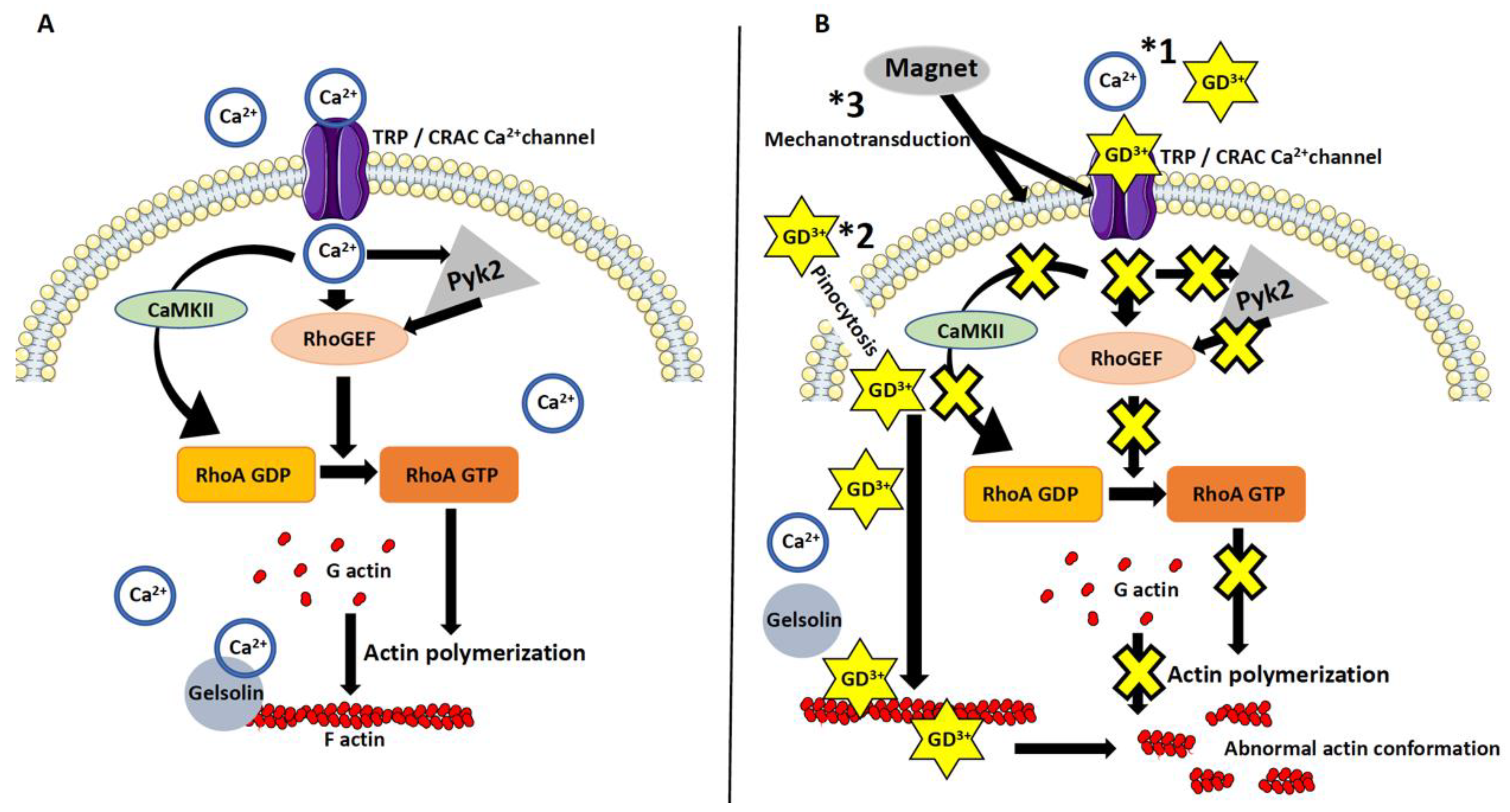
The Effect of Magnetic Field Gradient and Gadolinium-Based MRI Contrast Agent Dotarem on Mouse Macrophages
 ,
,  and
and Abstract
Share and Cite
Chanana, P.; Uosef, A.; Vaughn, N.; Suarez-Villagran, M.; Ghobrial, R.M.; Kloc, M.; Wosik, J. The Effect of Magnetic Field Gradient and Gadolinium-Based MRI Contrast Agent Dotarem on Mouse Macrophages. Cells 2022, 11, 757. https://doi.org/10.3390/cells11050757
Chanana P, Uosef A, Vaughn N, Suarez-Villagran M, Ghobrial RM, Kloc M, Wosik J. The Effect of Magnetic Field Gradient and Gadolinium-Based MRI Contrast Agent Dotarem on Mouse Macrophages. Cells. 2022; 11(5):757. https://doi.org/10.3390/cells11050757
Chicago/Turabian StyleChanana, Priyanka, Ahmed Uosef, Nicole Vaughn, Martha Suarez-Villagran, Rafik M. Ghobrial, Malgorzata Kloc, and Jarek Wosik. 2022. "The Effect of Magnetic Field Gradient and Gadolinium-Based MRI Contrast Agent Dotarem on Mouse Macrophages" Cells 11, no. 5: 757. https://doi.org/10.3390/cells11050757
APA StyleChanana, P., Uosef, A., Vaughn, N., Suarez-Villagran, M., Ghobrial, R. M., Kloc, M., & Wosik, J. (2022). The Effect of Magnetic Field Gradient and Gadolinium-Based MRI Contrast Agent Dotarem on Mouse Macrophages. Cells, 11(5), 757. https://doi.org/10.3390/cells11050757