


Abstract
Future global warming is expected to increase carbon (C) losses from terrestrial ecosystems to the atmosphere through soil respiration (SR). However, the underlying mechanisms involving microbial communities and enzymatic responses remain unclear. A long-term field experiment was started in October 2009 to assess intensively cultivated soil in the North China Plain with an infrared-heated warming system. Soil physic–chemical and microbial properties and absolute and specific activities of enzymes were measured in 2019 (the ninth year). Compared to the control, nine years of warming increased the annual average soil temperature at a 5 cm depth by approximately 1.5 °C, with soil water contents decreasing by about 3%. Long-term warming decreased the total contents of phospholipid fatty acid (PLFA) biomarkers by up to 40%. Microbial communities utilizing recalcitrant C were more sensitive to long-term warming compared to those targeting labile C, as indicated by the increased ratio of Gram-positive to Gram-negative bacteria in May and the increased ratio of fungi to bacteria in August. Long-term warming caused similar absolute activity of oxidase but higher absolute and specific activities of C-, nitrogen-, and phosphorus-acquiring hydrolase, reflecting high microbial nitrogen, phosphorus, and energy demands. We conclude that a nine-year warming period relatively enriched the oligotrophic communities and raised the nitrogen, phosphorus and energy requirements. Co-limitation of multiple nutrients and water inhibits the biomass of microbial communities, which may finally promote microbial acclimation to long-term warming.
1. Introduction
The rise in the global air temperature to 1.5 °C above pre-industrial levels and the associated phenomenon of global warming are largely attributed to the carbon dioxide (CO2) emissions from the earth’s terrestrial ecosystems, which are projected to increase in the future [1,2]. Even a small loss of carbon (C) stored in the soil could have a large impact on global warming [3]. Carbon is emitted to the atmosphere through soil respiration (SR), a series of decomposition reactions of organic C originating from microbes, fauna, and plant roots, catalyzed by extracellular enzymes [4,5]. Soil respiration responds to changes in environmental factors such as soil and air temperature and moisture [6,7]. The study of Carey and Tang [8] synthetized almost 30 experimental warming studies globally and found that respiration rates follow a Gaussian response, increasing with soil temperature up to a threshold of about 25 °C. Soil respiration rates decrease above this temperature, leading to an overestimation of soil carbon loss in future global warming [9]. Those rates relate to either shifts in microbial physiological response or composition [10]. Hence, the soil microbial communities and the enzyme activity in response to long-term warming periods must be evaluated to improve the current understanding of the size and dynamics of soil organic C under the current climate and to predict SR in the future [11,12].
On a longer time scale, SR gradually increases in response to warming over the years, and an increasing number of studies reported that SR is returning to pre-warming levels [13,14,15]. The exact processes of SR remain unclear, but several mechanisms involving limitations of water and C have been proposed. First, studies showed that warming depletes soil water, which in turn reduces SR, but those results appear ecosystem-dependent and rather inconsistent [8,13]. For temperate forest soils, SR has been reported to acclimate to warming after 10 [16] or 15 years [14], partly due to depleted soil water [13,14,17,18,19]. In contrast, a recent meta-analysis showed that warming had a significant effect of warming on SR in global grasslands, though this effect disappeared on a longer (>3 years) timescale in the semi-arid region, implying that water limitation promotes decreases in SR [20]. Additionally, long-term warming preferentially depletes labile C [21], leading to the relative accumulation of complex carbon and, thus, decreases in SR [13,15,16,22]. Studies using C estimation models show a decrease in dissolved organic C (DOC) over time in response to long-term warming [23], although DOC can increase through input of litter, which postpones the decreases in SR [24,25]. Either way, these investigations point to C and water availability as critical factors in regulating SR [19].
Some studies reported a gradual increase in microbial biomass in the first few years of warming, as indicated by the measured microbial biomass C and the total liquid phosphorus fatty acid (PLFA) contents, partly due to C input from litter compensating for the C loss [24,25]. This was followed by a decrease in later years [16,26,27]. However, a meta-analysis reported a similar microbial biomass over the warming period compared to a control without warming and pointed to high variation among studies [15]. Furthermore, fungi appear to increase their biomass and thrive better under warming conditions compared to bacteria [28], though these observations are not consistent [15]. Warming can decrease the C-to-nitrogen (C/N) ratio of the microbes by up to 20% [27]. Since fungi contain more C than bacteria, the latter would be more sensitive to long-term warming than the former, which, however, might be contradictory to the assumed shift in microbial communities to utilize recalcitrant C.
These difficulties in clarifying the response of SR to long-term warming are largely due to the enzymatic nature of the soil organic matter (SOM) decomposition; different extracellular enzymes target different compounds and directly regulate nutrient contents and SOM pool sizes. Oxidase enzymes such as peroxidase (PER) and phenol oxidase (PPO) depolymerize lignin and polyphenol compounds [5], whereas C-acquiring hydrolases, including β-1,4-xylosidase (βX), cellobiohydrolase (CBH), α-1,4-glucosidase (αGlu) and β-1,4-glucosidase (βGlu) decompose xylose, hemicellulose, cellulose, and starch [4]. It remains largely unclear how warming affects enzymatic activity, i.e., whether absolute oxidase activities influence those of C-acquiring hydrolase when microbes capture nutrients from the recalcitrant C. Some studies show that long-term warming increases the absolute activities of PPO and PER without affecting the C-acquiring hydrolase [29], whereas others show lower [11,26] or similar oxidase and hydrolase absolute activities [26] or no effect of long-term warming [30].
The aim of this study was to investigate how the biomass of microbial communities and enzyme activities respond to a nine-year warming period in semi-arid farmland in the North China Plain, China, where the soil is alkaline- and C-depleted due to continuous intensive cropping. We test the hypotheses that (1) water depletion or nutrient limitation would decrease microbial biomass, with the decrease in fungi being higher than in bacteria, and (2) they increase oxidase activities to meet microbial energy and nutrient demands.
2. Materials and Methods
2.1. Study Site and Experimental Design
We conducted a field warming experiment starting in October 2009 at Luancheng Agro-Ecological Station in Hebei Province, China (37°53′ N, 114°41′ E, 50 m.a.s.l.). The station is part of the agroecosystem research network of the Chinese Academy of Sciences. The site is in the North China Plain, a major agricultural region in the world with a semi-arid and monsoon-influenced climate and mean annual temperature and precipitation of 12 °C and 460 mm, respectively. The soil is silty loam (54% sand, 34% silt and 12% clay) and is classified as the Hapli-Ustic Inceptisols according to the US soil taxonomy system. Soils had a bulk density of 1.3 g cm−3, a pH of about 8, an organic matter content of 15 g kg−1 and a total nitrogen (TN) content of 1 g kg−1 in the top 20 cm layer.
The experiment consisted of three 4 × 8 m plots, each randomly divided into two equal sub-plots assigned to either a warming treatment or control treatment without warming (CTRL). In each sub-plot, three infrared heaters (2 m length) with 1000 W power were equidistantly installed within the center (2 × 2 m) at a 1.5 m height above the soil surface. The warming and the CTRL sub-plots were managed equally, except that no power was supplied to the CTRL. For all plots and years, winter wheat was planted in October after applying phosphate Ca(H2PO4)2 at a rate of 65 kg P ha−1 year−1 without other fertilizer additions, which was equivalent to the local fertilization rate. The crop was harvested in June of the following year; in the first two years, i.e., from 2009 to 2011, soybean was planted after winter wheat [31,32], whereas, from 2012 onwards, the soil was kept fallow between June and October. The plots were irrigated with 60 mm of tap water at sowing in November and in March, April, and May to ensure wheat growth [31,32]. Hourly soil temperature at 5 cm was measured automatically using T-type thermocouples connected to a datalogger (CR10X, Campbell Scientific, Logan, UT, USA), and the volumetric soil water content (SWC) was measured weekly using time-domain reflectometry (TDR 100 system, Campbell Scientific, Logan, UT, USA).
2.2. Soil Sampling and Extraction of Phospholipid Fatty Acid
A field campaign was conducted in the ninth year of the experiment, i.e., in December 2018 and May and August 2019, when soil samples were collected from each sub-plot at a depth of 5 cm. Five sub-samples were mixed evenly to form one sample per plot, which was stored at 4 °C after sieving through a 2 mm mesh, and then used to measure soil properties, extract PLFAs and construct an enzymatic assay. Gravimetric SWC was measured by drying at 105 °C for 24 h. Soil pH was measured using a digital pH meter (10 g dry soil: 25 mL CO2-free distilled water, PHS-3E, Leizi, Shanghai, China). Soil nitrate (NO3−) was measured at 220 nm (UV-2450, Shimadzu, Kyoto, Japan), and ammonium (NH4+) was measured with a flow analyzer (SMARTCHEM 140, AMS Alliance, Rome, Italy) after shaking a mixture of 10 g of fresh soil with 50 mL of 1 mol L−1 KCl for 2 h. Dissolved organic carbon was extracted by shaking 10 g of fresh soil and 50 mL of CO2-free distilled water and measured using a flow analyzer (Vario TOC select, Elementar, Hanau, Germany). The SOC and TN contents were measured using an elemental analyzer (Vario MACRO cube, Elementar, Hanau, Germany), and inorganic C in the air-dried soil was removed by soaking with 50 mL of 1 mol L−1 HCl four times within a week.
The PLFA biomarkers were also measured at the three occasions according to Bossio and Scow (1998) [33]. Lipids were extracted using a buffer of potassium phosphate, chloroform and methanol from fresh soil, equal to 8 g of dry soil. Afterwards, fatty acid methyl esters were formed through mild alkaline metanalysis and were dissolved in hexane mixed with fatty acid at a 19:0 ratio as an internal standard, followed by extractions of PLFA and measurements obtained by gas chromatography (Agilent 7890B, Agilent Technologies, Santa Clara, CA, USA), carried out with MIDI peak identification software (version 4.5; MIDI Inc., Newark, DE, USA) and a DB-5 column. The abundances of the PLFA biomarkers were calculated in nmol PLFA g−1 dry soil. Biomarkers for total amounts of PLFA were used to identify the microbial biomass at functional-group level as follows: Gram-positive bacteria (GP) by i14:0, i15:0, a15:0, i16:0, i17:0 and a17:0; Gram-negative bacteria (GN) by 16:1ω7c, cy17:0, 18:1ω7c and cy19:0, arbuscular mycorrhizal fungi (AMF) [34] by 16:1ω5, saprophytic fungi (SAP) [35] by 18:1ω9c, 18:2ω6c, 18:2ω9c and 18:3ω6c and actinomycetes by 10Me16:0, 10Me17:0 and 10Me18:0 [36,37,38]. Bacterial biomass was the sum of GP and GN, and fungal biomass was the sum of AMF and SAP. The total microbial biomass was the sum of biomass for bacteria, fungi and actinomycetes.
2.3. Assaying Enzyme Activity
The hydrolase absolute activities of αGlu, βGlu, CBH, βX, β-1,4-N-acetylglucosaminidase (NAG) and alkaline phosphatase (Phos) were measured at the same time as PLFA following the method of Saiya-Cork et al. [36], which relates to C (αGlu, βGlu, CBH, and βX), N (NAG) and P (Phos) acquisition. In brief, 1 g of fresh soil was homogenized in 50 mmol L−1 of sodium acetate (125 mL) at a pH of 8.3 (mean pH value of the field soil) and incubated with 200 μL of homogenate and 50 μL of the substrate in black 96-well black microplates for 4 h at 20 °C under dark conditions. Each soil sample was replicated eight times. The reactions were terminated by adding 10 μL of 1 mol L−1 NaOH to each well before reading the fluorescence values after approximately 1 min on a microplate fluorometer (Synergy H4, BioTek, Winooski, VT, USA) at a 365 nm excitation wavelength and 450 nm emission wavelength. Hydrolase absolute activities were calculated in nmol g−1 h−1.
The oxidase absolute activities of PPO and PER were also measured using spectrophotometry. In total, 600 μL of homogenate and 150 μL of substrate were added to deep microplates with 96 wells, and an additional 10 μL of 0.3% H2O2 was added to the mixture to measure the PER activities. The mixture was incubated at 20 °C for five hours in the dark, and after centrifuging at 3000 r for three minutes, 250 μL of the liquid supernatant was transferred to a 96-well transparent microplate, and the absorbance value was measured using a microplate spectrophotometer (Synergy H4, BioTek) at 460 nm. The oxidase absolute activities were calculated in μmol g−1 h−1. The C-, N-, and P-acquiring hydrolase and oxidase absolute activities were normalized by the total PLFA contents to calculate their specific activity [38].
2.4. Statistical Analyses
A two-factor analysis of variance (ANOVA), followed by Duncan’s post hoc test, was conducted via IBM SPSS 25 to examine the effects of treatment (warming vs. control), sampling time (December, May, and August), and their interaction with the measured soil variables. Redundancy analysis (RDA) was performed with CANOCO 4.5 to determine the relationships between soil properties, microbial community biomass, and enzyme activities. Figures were drawn using Origin Lab 2018. The values in the figures represent the means (n = 3) ± standard error. To test whether oxidase products provide substrates for hydrolases under long-term warming, a structural equation modeling (SEM) pathway analysis was conducted to examine the relationship between oxidase and hydrolase activities. The SEM was performed with IBM SPSS Amos 22.
3. Results
3.1. Soil Physic–Chemical Properties Under Long-Term Warming
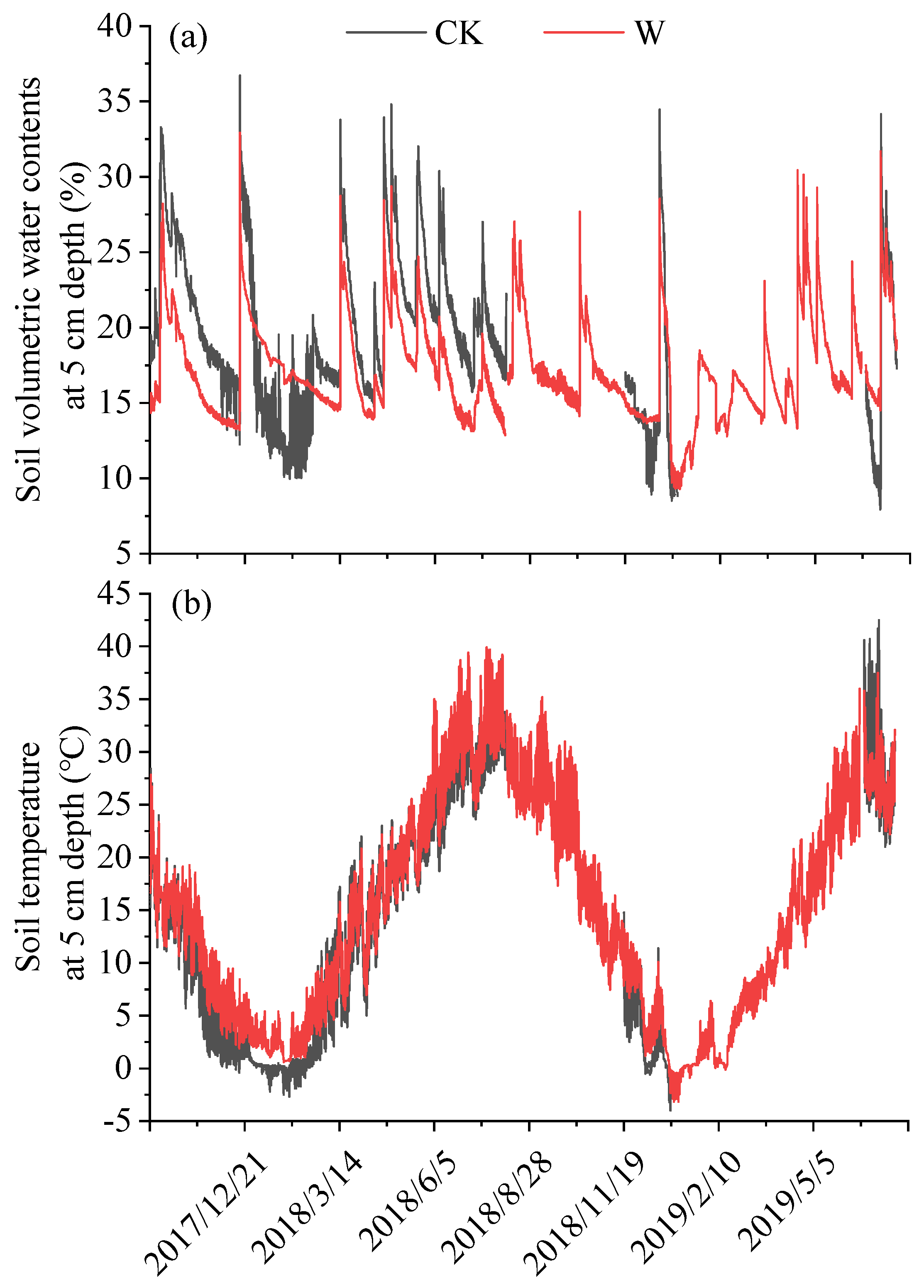
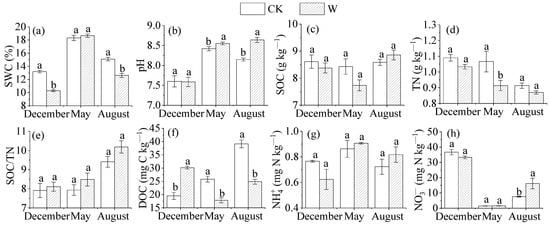
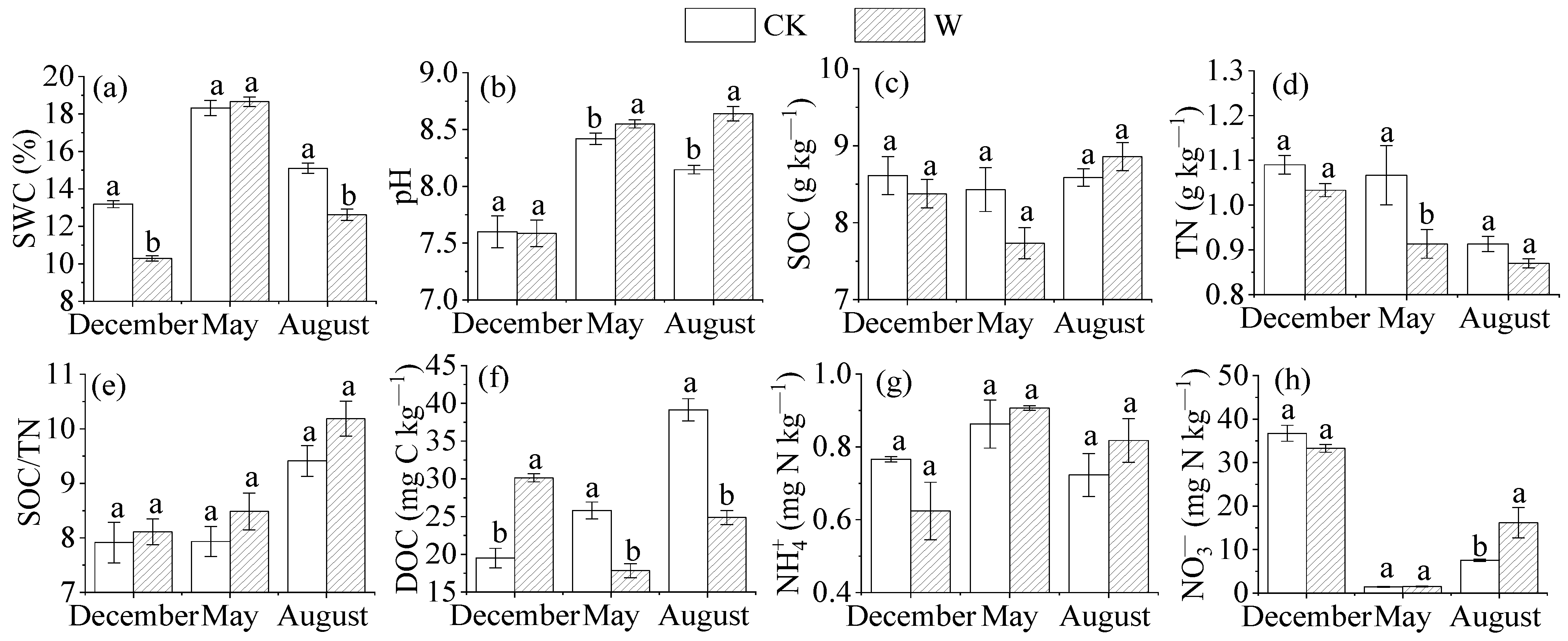
Long-term warming increased the annual average soil T by about 1.5 °C between 2017 and 2019 (Figure 1). The SWCs significantly decreased by approximately 1–3% compared to the CTRL (Figure 1 and Figure 2a). In May 2019, the soil pH slightly but significantly increased (Figure 2b), whereas TN significantly decreased by almost 20% (Figure 2d). Compared to the CTRL, the soil DOC in the warming plots was significantly lower by 23 and 43% in May and August 2019, respectively, but it was about 50% higher in December in 2018 (Figure 2f). Warming doubled the NO3− contents in August 2018 compared to the CTRL (Figure 2g,h).
Figure 1.
Effect of long-term warming on (a) soil volumetric water contents and (b) temperature at 5 cm depth between 2017 and 2019.
Figure 2.
Seasonal dynamics of soil properties in response to long-term warming. (a) SWC is soil water content, (b) pH denotes soil acidity, (c) SOC is soil organic carbon, (d) TN is total soil nitrogen, (e) SOC/TN is the ratio of SOC to TN, (f) DOC is soil dissolved carbon, and (g) NH4+ and (h) NO3− are, respectively, soil ammonium and nitrate. Bars with different letters per sampling time are significantly different of each other (p < 0.05).
3.2. Response of Microbial Communities and Enzymes Activities on Long-Term Warming
The contents of bacteria, fungi and total PLFA for the warming treatment decreased up to 41% in December 2018 and August 2019, but they increased from 50 to 113% in May 2019, compared to the CTRL. The mean ratios of GP to GN and of bacteria to fungi under warming were also significantly higher in December 2018 and May 2019, but they were significantly lower in August 2019, compared to the CTRL (Figure 3).
In the ninth year of the experiment, warming decreased the absolute activities of all enzymes except βX and NAG by about 8–25% in December compared to the CTRL, whereas, in May and August, warming significantly increased the absolute activities of αGlu, βGlu, CBH, βX and Phos by 6–53%. The absolute activities of NAG were significantly decreased in August 2019 (Figure 4). Warming significantly decreased the specific activities of C-acquiring hydrolase, oxidase, and N- and P-acquiring enzymes in May and significantly increased them in December and August (Figure 5).
3.3. Redundancy Analysis and Structural Equation Modeling
According to the RDA, the first axis (RDA1) explained 80.6% of the variance in the microbial community and 76.1% of the variance in the absolute enzyme activities. Moreover, RDA1 of both variables was correlated with DOC, NO3−, T, and SWC (Figure 6a,b). However, only RDA1 for the absolute enzyme activities was correlated with soil pH. The PLFA contents of bacteria and fungi; the total PLFAs, GP, GN, AMF, SAP, actinomycetes; the bacteria-to-fungi ratio; and the absolute activities of αGlu, βGlu, CBH, βX, PPO, and PER were all negatively correlated with SOC, TN, DOC and NO3− but were positively correlated with SWC, T, and NH4+. The absolute activities of Phos and NAG were negatively correlated with SOC, SOC/TN, and DOC but were positively correlated with TN.
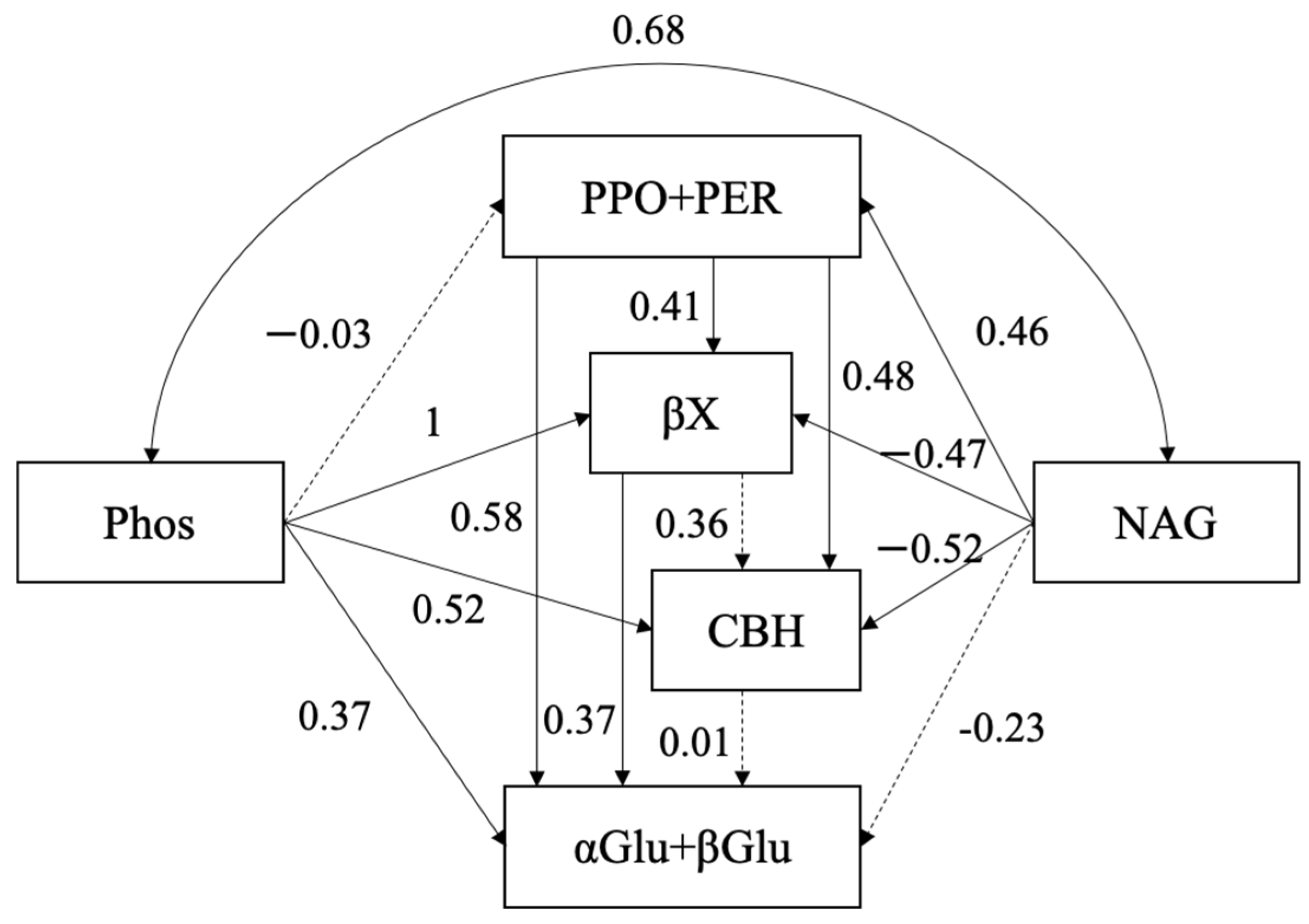
The SEM pathway showed that the oxidase absolute activities (the sum of PPO and PER) directly and positively influenced C-decomposed hydrolase, i.e., βX, CBH and glucolase (sum of αGlu and βGlu, p < 0.01), and the βX absolute activities directly and positively influenced glucolase (p = 0.02; Figure 7). In SEM, the variability explained by SEM was 94.0% for glucolase, 88.9% for CBH and 82.4% for βX. These results indicate that the enzymes targeting relatively complex C compounds provided the substrate for the enzymes targeting decomposable C compounds.
Figure 3.
Seasonal dynamics of (a) bacteria, (b) the ratio of GP to GN, (c) fungi, (d) the ratio of bacteria to fungi, and (e) total biomass in response to long-term warming. GP and GN indicate Gram-positive and Gram-negative bacteria, respectively; AMF and SAP are, respectively, arbuscular mycorrhizal and saprophytic fungi. Bars with different small letters per variable (GP, GN, AMF, SAP, and actinomycetes) and sampling time are significantly different from each other (p < 0.05); Stacked bars with different capital letters per sampling time are significantly different (p < 0.05).
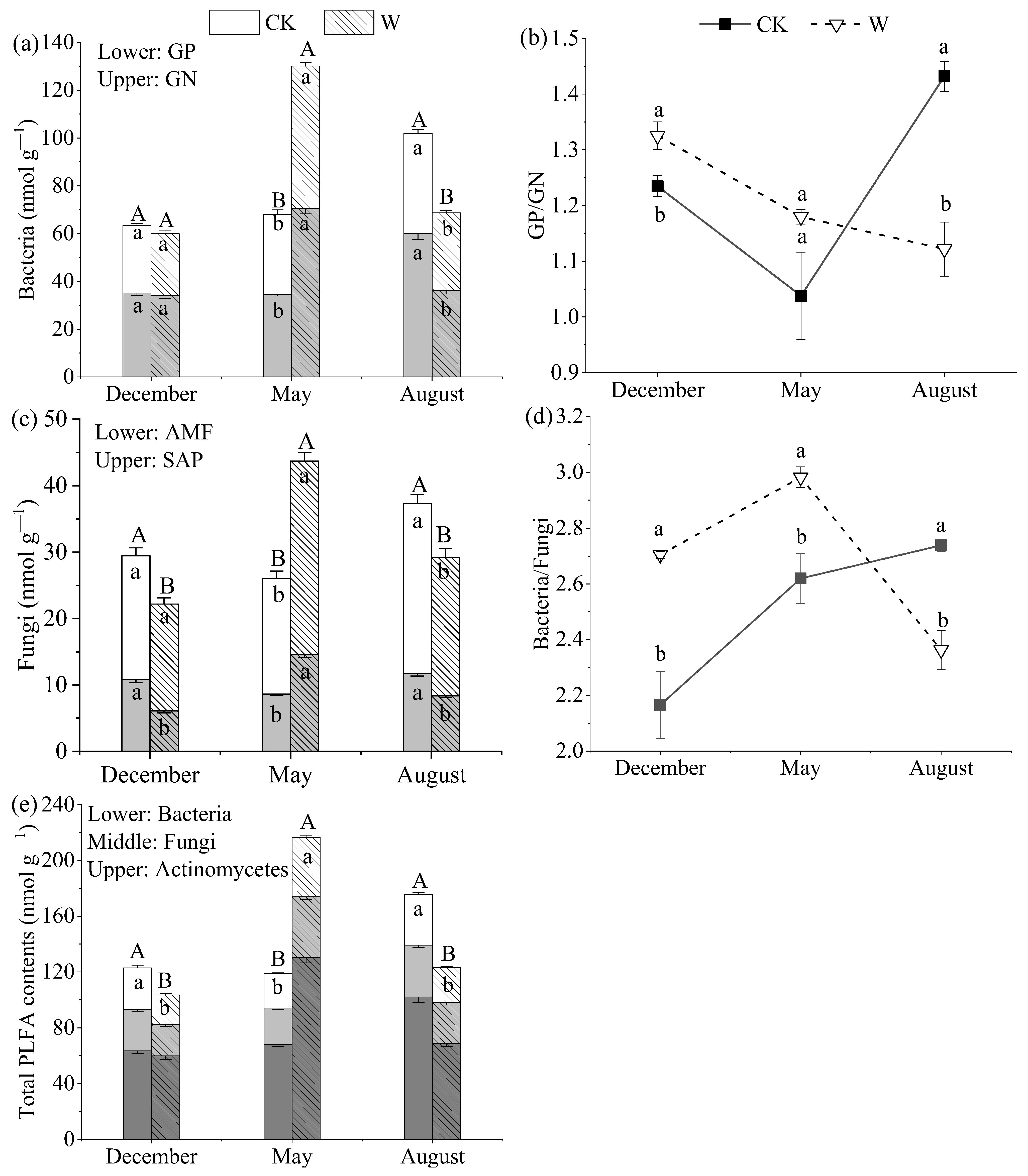
Figure 4.
Seasonal dynamics of soil enzyme absolute activities in response to long-term warming. (a) αGlu is α-1,4-glucosidase, (b) βGlu is β-1,4-glucosidase, (c) CBH is cellobiohydrolase, (d) βX is β-1,4-xylosidase, (e) NAG is β-1,4-N-acetylglucosaminidase, (f) Phos is alkaline phosphatase, (g) PPO is phenol oxidase, and (h) PER is peroxidase. Bars with different letters per sampling time are significantly different (p < 0.05).
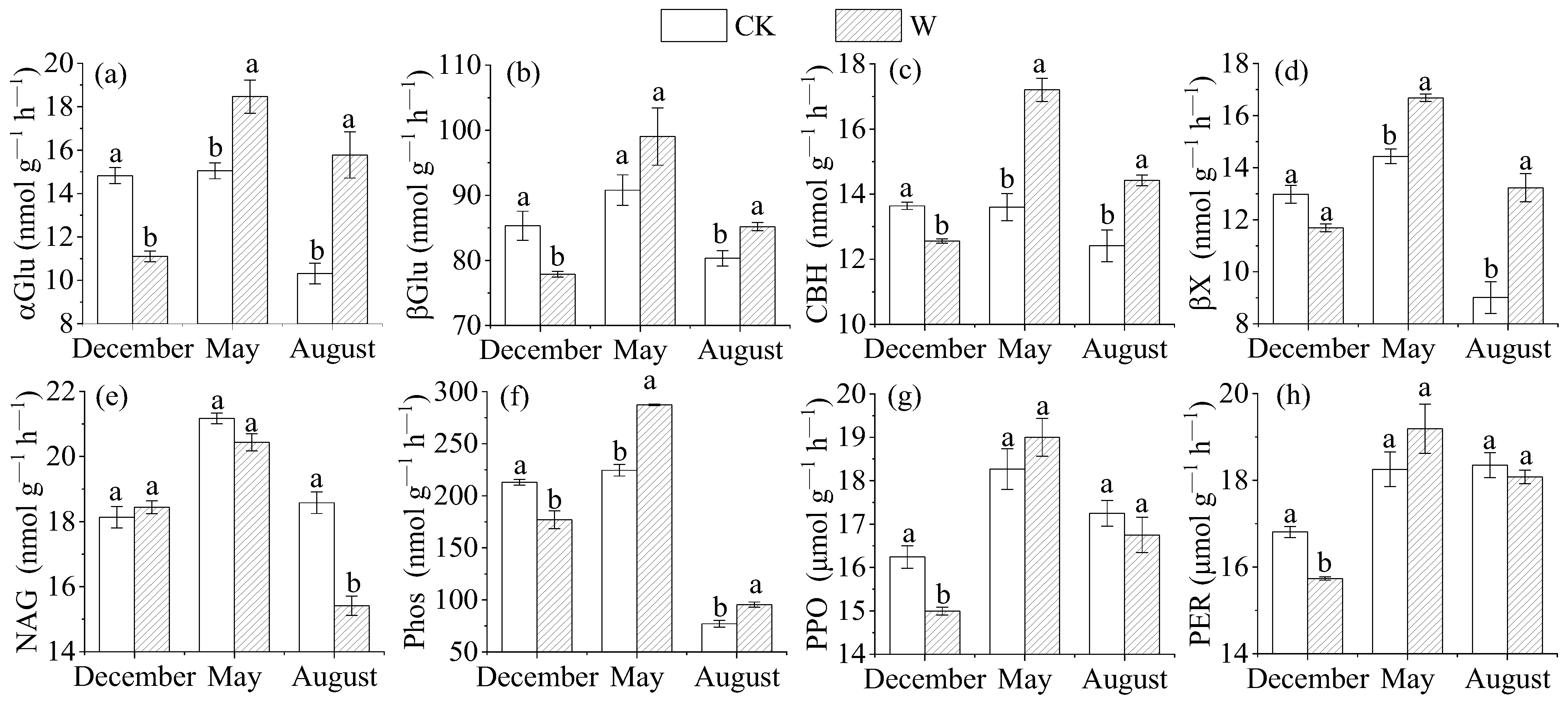
Figure 5.
Seasonal dynamics of soil-specific activities of (a) C-, (c) N-, and (d) P-hydrolase and (b) oxidase in response to long-term warming. Bars with different letters per sampling time are significantly different (p < 0.05).
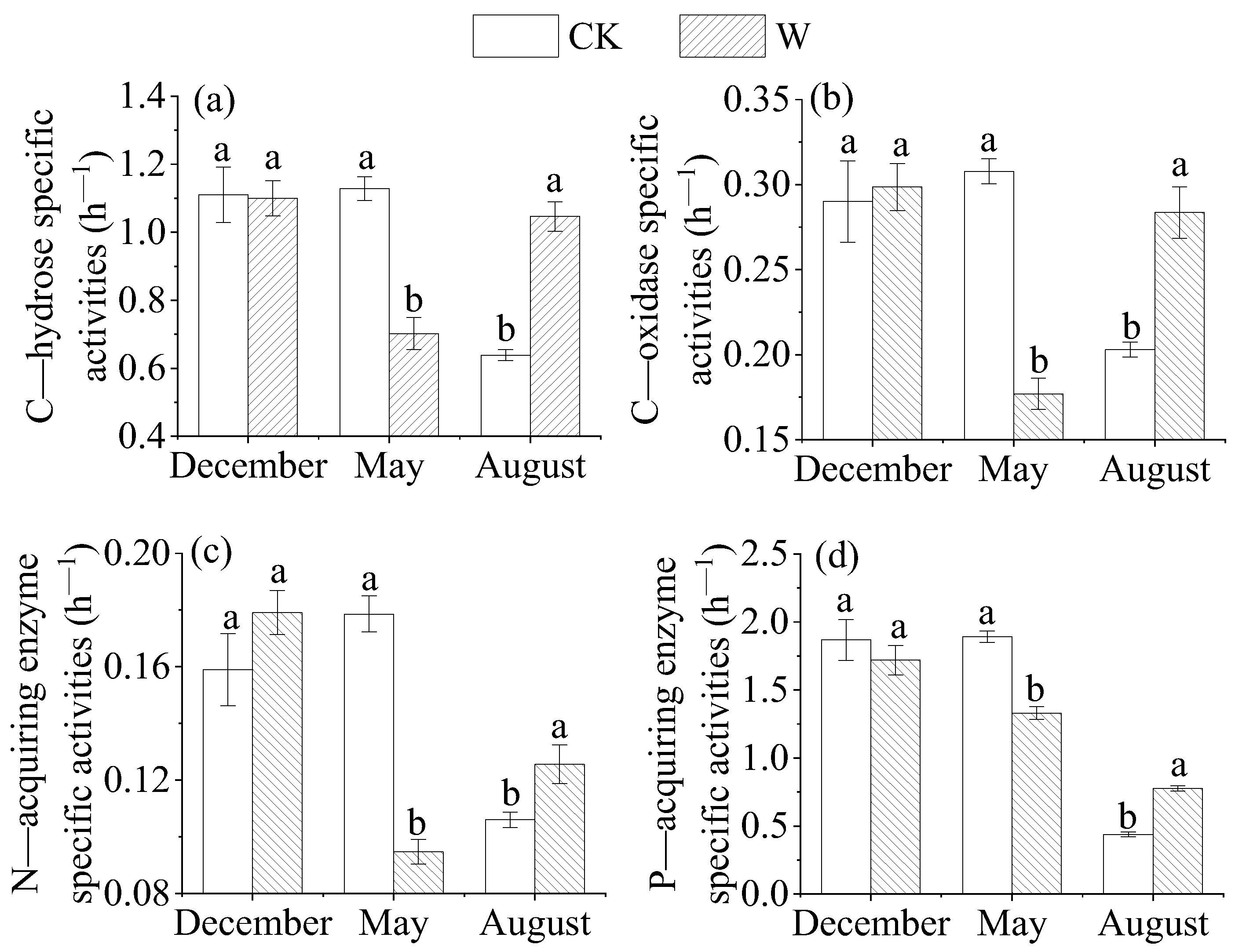
Figure 6.
Redundancy analysis among soil physico-chemical and microbial properties (a) and enzyme absolute activities (b). T is soil temperature at a 5 cm depth; SR is soil respiration; TC is soil total carbon; C hydrolase is the sum of αGlu, βGlu, CBH and βX; and oxidase is the sum of PPO and PER. The other abbreviations are the same as those in Figure 2, Figure 3 and Figure 4.
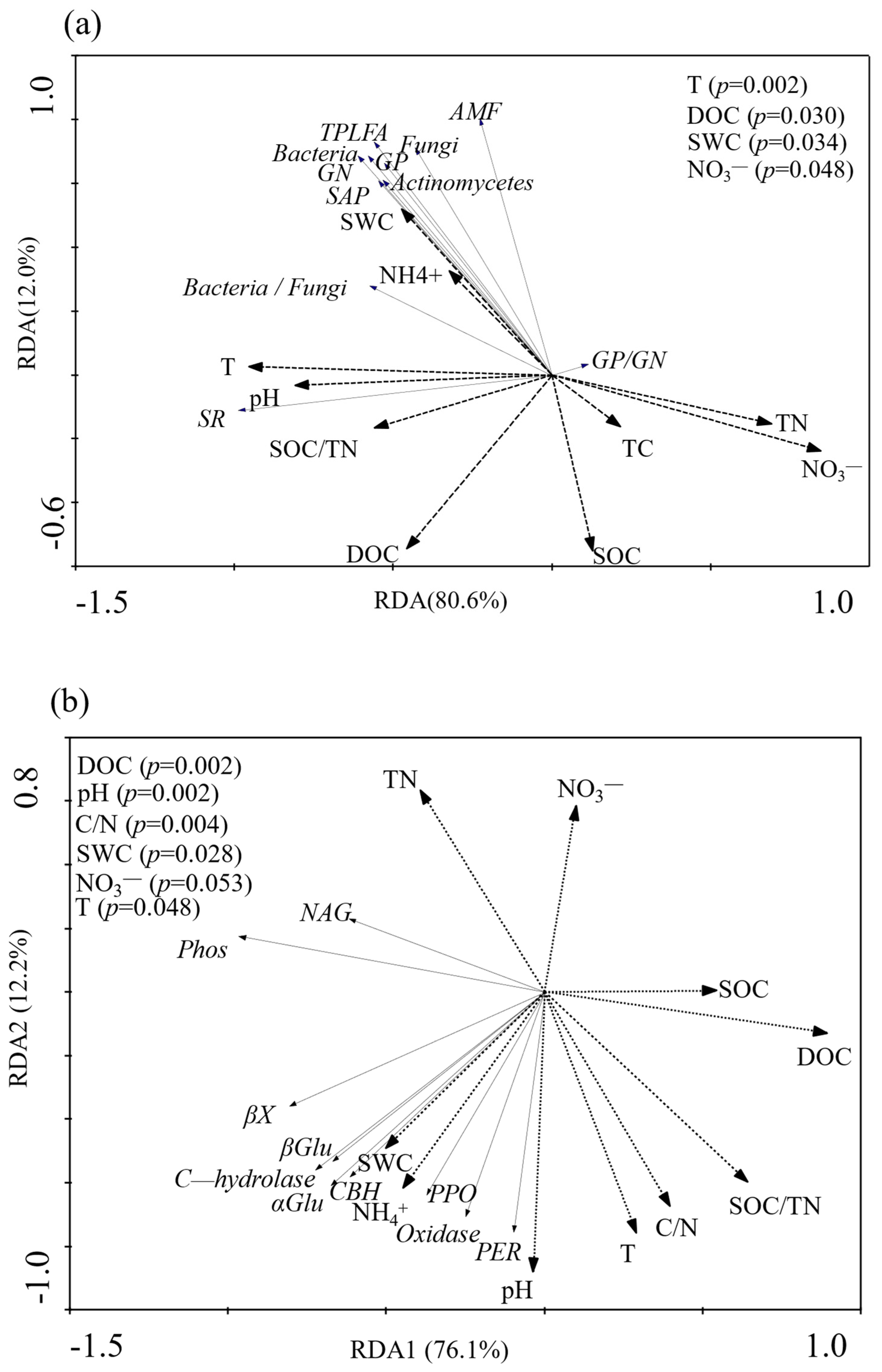
Figure 7.
Structural equation model of the influence of NAG, Phos and oxidase absolute activities on C-hydrolases targeting different organic C compounds. Values close to the arrows are standardized path coefficients. Solid lines represent significant correlations (p < 0.05), the dashed lines represent insignificant correlations (p > 0.05). Abbreviations are the same as those in Figure 4.
4. Discussion
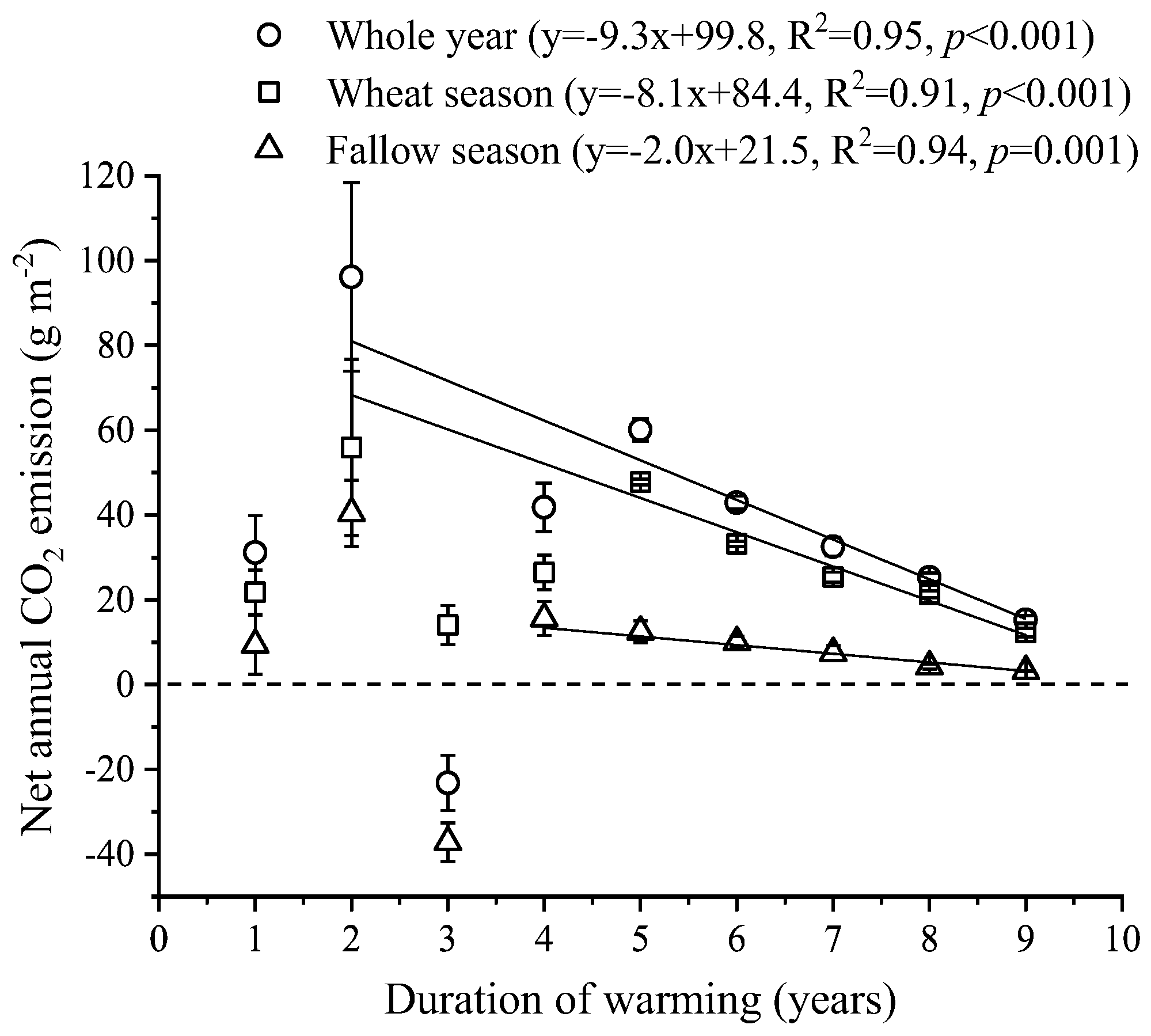
Long-term warming decreased soil microbial biomass, as indicated by the lower contents of total PLFA in December 2018 and August 2019 for warming compared to the CTRL (Figure 3). A previous study in the same system and site found a 10–40% increase of microbial biomass early in the warming period, i.e., the second year [31]. The concomitant decrease in the SWC and DOC for the warming treatment (Figure 1 and Figure 2a) [31] partly supports the first hypothesis, which states that the reduced availability of water and energy does contribute to that decrease. The RDA also showed a positive correlation between PLFA contents of the biomarkers and enzyme absolute activities with the SWC but a negative correlation with the DOC and SOC after nine years of warming (Figure 6). Decreases in the microbial biomass, at least partly, contribute to the gradual decrease in soil respiration after the second warming year (Figure A1).
In agreement with the first hypothesis, long-term warming decreased the biomass ratio of bacteria to fungi but increased the ratio of GP to GN in August (Figure 3). Fungi and GP generally utilize relatively complex compounds [5,37]; hence, long-term warming caused a shift of the microbial communities to utilize complex C compounds, which is consistent with the results obtained in previous research on temperate grassland and forest [13,16,38]. This indicates that long-term warming enriches oligotrophic communities. Moreover, these shifts are also accompanied by associated changes in enzymatic functions [11,39].
The absolute activities of C- (i.e., αGlu, βGlu, CBH, and βX) and P-hydrolase (Phos) were significantly increased under long-term warming, as seen from the comparison between the warming and CTRL treatments in May and August 2018 (Figure 4). This result is inconsistent with the second hypothesis that long-term warming increases C demand from the recalcitrant C pool and therefore increases oxidase absolute activities. Warming can directly increase enzyme absolute activity by increasing activation energy or indirectly decrease it by limiting the Brownian diffusion of enzymes due to decreased water availability [40]. In the ninth year of warming, the absolute activities of C-acquiring hydrolase and oxidase enzymes (αGlu, βGlu, CBH, βX, PPO and PER) were positively correlated with the SWC and T but negatively correlated with the SOC (Figure 7). Enzyme absolute activities are also controlled by pH, microbial biomass, and substrate contents [4,5], and according to the multidimensional regression analysis, the SWC, TN, and SOC explained 32–90% of the C-acquiring hydrolase and oxidase absolute activities, according to the multidimensional regression analysis, while the total PLFA contents, SWC, pH, soil T, SOC, and TN explained 73–90% (see Table A1).
Long-term warming significantly decreased the oxidase (PPO and PER) absolute activities in December 2018, but there were no effects in May and August 2019 (Figure 4). The increase of microbial biomass in May caused a decrease in the oxidase-specific activities (Figure 5b), while the decreases in the microbial biomass in August resulted in higher oxidase-specific activities in August (Figure 5b). These findings partly agree with the results of Chen, Luo [29], who suggested that soil microorganisms thrive well under long-term warming due to the gradual utilization of recalcitrant C. A possible reason might be that fine root exudation in May was utilized to produce microbial biomass [41]. The SEM showed that oxidase absolute activities explained 80–90% of the variability in C-acquiring hydrolase (Figure 7). This indicates that the degradation of complex C supplies substrate for hydrolases, and microbes captured nutrients by decomposing complex carbon in the ninth year of warming [13,14,16].
Relative to C, the TN decreased more (Figure 2d), and the ratio of SOC to TN increased due to long-term warming (Figure 2e). The absolute activities of NAG decreased with the TN (Figure 6b) and significantly decreased due to warming in August (Figure 4e). However, the specific activities of NAG significantly increased in August and decreased in May 2018 in response to long-term warming (Figure 5). The NO3− contents for the warming plots also increased in August (Figure 2), indicating accelerated N mineralization and agreeing with previous results [42]. According to the SEM analysis, NAG absolute activities positively and directly influenced oxidase (Figure 7), which shows that accelerated N mineralization due to long-term warming stimulated the decomposition of complex C compounds [14,16].
Notably, phosphorus limitation for the microbes was minimized by the fertilization of the plots before sowing, but warming increased the activities of Phos activities in May and August (Figure 4). A possible reason might be a constrained phosphorus availability in alkaline soil [43] and consequent utilization of organic phosphorus by microbes to meet their C and energy demands. As phosphorus is essential for proliferation and ATP synthesis [44], higher energy limitation caused by long-term warming probably resulted in higher microbial P demands from organic compounds. The Phos absolute activities directly and positively affected CBH and Glucoses (αGlu and βGlu; Figure 7), supporting the assumption that an increase in P-acquiring enzyme absolute activities meet the microbial demand of energy. Additionally, multiple elements are assimilated to meet the microbial C demands when C and energy are limited [14,45,46]. High energy and multiple-nutrient co-limitation lowers the biomass of microbial communities, which might finally decrease soil respiration over the second warming year (Figure A1).
5. Conclusions
This study investigated the underlying effects of nine-year warming on soil physic–chemical and microbial properties and enzyme activities. The results showed that (1) long-term warming decreased the total PLFA contents, with a higher biomass ratio of GP to GN and a lower ratio of bacteria to fungi compared to the CTRL, suggesting that long-term warming relatively enriched microbial communities that utilized complex C substrates. (2) Long-term warming raised the absolute and specific activities of C-, N- and P-acquiring hydrolases compared to CRTL, indicating higher energy and multiple nutrient co-limitation. (3) Water depletion and multiple nutrient co-limitation may explain the shift of microbial communities and the higher enzymatic response. Future studies should investigate the functional genes related to C-degrading enzymes and the mechanisms behind the preferential utilization of C compounds under long-term warming.
Author Contributions
Conceptualization and methodology: C.Z., W.D. and C.H.; formal analysis and investigation: C.Z. and J.W.; writing—review and editing: C.Z., K.M., A.T., W.D. and C.H.; supervision, project administration and funding acquisition: C.Z., W.D. and C.H. All authors have read and agreed to the published version of the manuscript.
Funding
This research was funded by Science and Technology Project of Henan Academy of Sciences (No. 241801042), the Key project of Henan Province Science and Technology R&D Program Joint Fund (No. 225200810008) and Science and Technology Think Tank Research Program of Henan Academy of Sciences (No. 20260701003).
Data Availability Statement
The original contributions presented in this study are included in the article. Further inquiries can be directed to the corresponding author(s).
Acknowledgments
Authors would like to thank the technical staff at Luancheng Agro-Ecological Station and the Henan Remote Sensing Field Scientific Observatory for Aquatic Ecology of Luhun Lake in the Yellow River Basin, China, for their technical assistance and precious efforts in maintaining the field experiments.
Conflicts of Interest
The authors declare no conflicts of interest.
Appendix A
Table A1.
Main factors explaining the enzyme variables according to multidimensional regression analysis (R2), including microbial (total PLFAs), physical (SWC, soil T, and pH), and chemical (SOC and TN) factors. Total PLFAs: total phosphorus liquid fatty acid contents; SWC: soil gravimetric water contents; soil T: soil temperature at depths of 5 c; pH: soil acidity; SOC: soil organic carbon; TN: soil total nitrogen contents.
Figure A1.
Response of net annual CO2 emissions (ΔCO2; difference between treatment with and without warming) to long-term experimental warming at Luancheng Ecological Station, China. Year 0 is 2009, and it was excluded from the analysis as the establishment year.
References
- Millar, R.J.; Fuglestvedt, J.S.; Friedlingstein, P.; Rogelj, J.; Grubb, M.J.; Matthews, H.D.; Skeie, R.B.; Forster, P.M.; Frame, D.J.; Allen, M.R. Emission budgets and pathways consistent with limiting warming to 1.5 °C. Nat. Geosci. 2017, 10, 741–747. [Google Scholar] [CrossRef] [Scilit]
- Raftery, A.E.; Zimmer, A.; Frierson, D.M.W.; Startz, R.; Liu, P. Less than 2 °C warming by 2100 unlikely. Nat. Clim. Change 2017, 7, 637–641. [Google Scholar] [CrossRef] [Scilit]
- Intergovernmental Panel on Climate Change (Ed.) Global Carbon and Other Biogeochemical Cycles and Feedbacks. In Climate Change 2021—The Physical Science Basis: Working Group I Contribution to the Sixth Assessment Report of the Intergovernmental Panel on Climate Change; Cambridge University Press: Cambridge, UK, 2023; pp. 673–816. [Google Scholar]
- Burns, R.G.; DeForest, J.L.; Marxsen, J.; Sinsabaugh, R.L.; Stromberger, M.E.; Wallenstein, M.D.; Weintraub, M.N.; Zoppini, A. Soil enzymes in a changing environment: Current knowledge and future directions. Soil Biol. Biochem. 2013, 58, 216–234. [Google Scholar] [CrossRef] [Scilit]
- Sinsabaugh, R.L. Phenol oxidase, peroxidase and organic matter dynamics of soil. Soil Biol. Biochem. 2010, 42, 391–404. [Google Scholar] [CrossRef] [Scilit]
- Protti-Sánchez, F.; Avila, L.M.; Meeran, K.; Ingrisch, J.; Sigurðsson, P.; Larsen, K.S.; Sigurdsson, B.D.; Janssens, I.; Bahn, M. Soil Respiration Responses to Prolonged Warming Vary Seasonally in a Subarctic Grassland. Glob. Change Biol. 2025, 31, e70388. [Google Scholar] [CrossRef] [Scilit] [PubMed]
- De Feudis, M.; Massaccesi, L.; Poesio, C.; Antisari, L.V.; Bol, R.; Agnelli, A. Seasonal effects of altitude and vegetation on litter and organic carbon in deciduous and coniferous forest soils. Geoderma 2025, 459, 117382. [Google Scholar] [CrossRef] [Scilit]
- Carey, J.C.; Tang, J.; Templer, P.H.; Kroeger, K.D.; Crowther, T.W.; Burton, A.J.; Dukes, J.S.; Emmett, B.; Frey, S.D.; Heskel, M.A.; et al. Temperature response of soil respiration largely unaltered with experimental warming. Proc. Natl. Acad. Sci. USA 2017, 113, 13797–13802. [Google Scholar] [CrossRef] [Scilit]
- Abs, E.; Saleska, S.R.; Allison, S.D.; Ciais, P.; Song, Y.; Weintraub, M.N.; Ferriere, R. Microbiome Adaptation Could Amplify Modeled Projections of Global Soil Carbon Loss With Climate Warming. Glob. Change Biol. 2025, 31, e70301. [Google Scholar] [CrossRef] [Scilit]
- Tian, J.; Dungait, J.A.J.; Hou, R.; Deng, Y.; Hartley, I.P.; Yang, Y.; Kuzyakov, Y.; Zhang, F.; Cotrufo, M.F.; Zhou, J. Microbially mediated mechanisms underlie soil carbon accrual by conservation agriculture under decade-long warming. Nat. Commun. 2024, 15, 377. [Google Scholar] [CrossRef] [Scilit]
- Zhou, J.Z.; Xue, K.; Xie, J.; Deng, Y.; Luo, Y.Q. Microbial mediation of carbon-cycle feedbacks to climate warming. Nat. Clim. Change 2011, 2, 106–110. [Google Scholar] [CrossRef] [Scilit]
- Zhao, X.; Li, F.; Zhang, W.; Ai, Z.; Shen, H.; Liu, X.; Cao, J.; Manevski, K. Soil Respiration at Different Stand Ages (5, 10, and 20/30 Years) in Coniferous (Pinus tabulaeformis Carrière) and Deciduous (Populus davidiana Dode) Plantations in a Sandstorm Source Area. Forests 2016, 7, 153. [Google Scholar] [CrossRef] [Scilit]
- Wang, X.; Liu, L.; Piao, S.; Janssens, I.A.; Tang, J.; Liu, W.; Chi, Y.; Wang, J.; Xu, S. Soil respiration under climate warming: Differential response of heterotrophic and autotrophic respiration. Glob. Change Biol. 2015, 20, 3229. [Google Scholar] [CrossRef] [Scilit] [PubMed]
- Bradford, M.A. Thermal adaptation of decomposer communities in warming soils. Front. Microbiol. 2013, 4, 333. [Google Scholar] [CrossRef] [Scilit]
- Romero-Olivares, A.L.; Allison, S.; Treseder, K. Soil microbes and their response to experimental warming over time: A meta-analysis of field studies. Soil Biol. Biochem. 2017, 107, 32–40. [Google Scholar] [CrossRef] [Scilit]
- Melillo, J.M.; Frey, S.D.; DeAngelis, K.M.; Werner, W.J.; Bernard, M.J.; Bowles, F.P.; Pold, G.; Knorr, M.A.; Grandy, A.S. Long-term pattern and magnitude of soil carbon feedback to the climate system in a warming world. Science 2017, 358, 101–105. [Google Scholar] [CrossRef] [Scilit]
- Niu, S.; Wu, M.; Han, Y.; Xia, J.; Li, L.; Wan, S. Water-mediated responses of ecosystem carbon fluxes to climatic change in a temperate steppe. New Phytol. 2010, 177, 209–219. [Google Scholar] [CrossRef] [Scilit]
- Liu, Y.; Liu, S.; Wan, S.; Wang, J.; Luan, J.; Wang, H. Differential responses of soil respiration to soil warming and experimental throughfall reduction in a transitional oak forest in central China. Agric. For. Meteorol. 2016, 226–227, 186–198. [Google Scholar] [CrossRef] [Scilit]
- Canarini, A.; Kir, L.P.; Dijkstra, F.A. Soil carbon loss regulated by drought intensity and available substrate: A meta-analysis. Soil Biol. Biochem. 2017, 112, 90–99. [Google Scholar] [CrossRef] [Scilit]
- Wang, N.; Quesada, B.; Xia, L.; Butterbach-Bahl, K.; Goodale, C.L.; Kiese, R. Effects of climate warming on carbon fluxes in grasslands—A global meta-nalysis. Glob. Change Biol. 2019, 25, 1839–1851. [Google Scholar] [CrossRef] [Scilit]
- Crowther, T.W.; Todd-Brown, K.E.O.; Rowe, C.W.; Wieder, W.R.; Bradford, M.A. Quantifying global soil carbon losses in response to warming. Nature 2016, 540, 104–108. [Google Scholar] [CrossRef] [Scilit]
- Laine, A.M.; Mäkiranta, P.; Laiho, R.; Mehtätalo, L.; Penttilä, T.; Korrensalo, A.; Minkkinen, K.; Fritze, H.; Tuittila, E. Warming impacts on boreal fen CO2 exchange under wet and dry conditions. Glob. Change Biol. 2019, 25, 1995–2008. [Google Scholar] [CrossRef] [Scilit]
- Allison, S.D.; Wallenstein, M.D.; Bradford, M.A. Soil-carbon response to warming dependent on microbial physiology. Nat. Geosci. 2010, 3, 336–340. [Google Scholar] [CrossRef] [Scilit]
- Lu, M.; Zhou, X.; Yang, Q.; Li, H.; Luo, Y.; Fang, C.; Chen, J.; Yang, X.; Li, B. Responses of ecosystem carbon cycle to experimental warming: A meta-analysis. Ecology 2013, 94, 726–738. [Google Scholar] [CrossRef] [Scilit] [PubMed]
- Zhang, X.-Z.; Shen, Z.-X.; Fu, G. A meta-analysis of the effects of experimental warming on soil carbon and nitrogen dynamics on the Tibetan Plateau. Appl. Soil Ecol. 2015, 87, 32–38. [Google Scholar] [CrossRef] [Scilit]
- Pold, G.; Grandy, A.S.; Melillo, J.M.; DeAngelis, K.M. Changes in substrate availability drive carbon cycle response to chronic warming. Soil Biol. Biochem. 2017, 110, 68–78. [Google Scholar] [CrossRef] [Scilit]
- Xu, W.; Yuan, W. Responses of microbial biomass carbon and nitrogen to experimental warming: A meta-analysis. Soil Biol. Biochem. 2017, 15, 265–274. [Google Scholar] [CrossRef] [Scilit]
- García-Palacios, P.; Vandegehuchte, M.L.; Shaw, E.A.; Dam, M.; Post, K.H.; Ramirez, K.S.; Sylvain, Z.A.; de Tomasel, C.M.; Wall, D.H. Are there links between responses of soil microbes and ecosystem functioning to elevated CO2, N deposition and warming? A global perspective. Glob. Change Biol. 2015, 21, 1590–1600. [Google Scholar] [CrossRef] [Scilit]
- Ji, C.; Yiqi, L.; Pablo, G.-P.; Junji, C.; Marina, D.; Xuhui, Z.; Jianwei, L.; Jianyang, X.; Shuli, N.; Huiyi, Y. Differential responses of carbon-degrading enzymes activities to warming: Implications for soil respiration. Glob. Change Biol. 2018, 24, 4816–4826. [Google Scholar]
- Xiao, W.; Chen, X.; Jing, X.; Zhu, B. A meta-analysis of soil extracellular enzyme activities in response to global change. Soil Biol. Biochem. 2018, 123, 21–32. [Google Scholar] [CrossRef] [Scilit]
- Liu, L.; Hu, C.; Yang, P.; Ju, Z.; Olesen, J.E.; Tang, J. Effects of experimental warming and nitrogen addition on soil respiration and CH4 fluxes from crop rotations of winter wheat-soybean/fallow. Agric. For. Meteorol. 2015, 207, 38–47. [Google Scholar] [CrossRef] [Scilit]
- Liu, L.; Hu, C.; Olesen, J.E.; Ju, Z.; Yang, P.; Zhang, Y. Warming and nitrogen fertilization effects on winter wheat yields in northern China varied between four years. Field Crops Res. 2013, 151, 56–64. [Google Scholar] [CrossRef] [Scilit]
- Bossio, D.A.; Scow, K.M. Impacts of Carbon and Flooding on Soil Microbial Communities: Phospholipid Fatty Acid Profiles and Substrate Utilization Patterns. Microb. Ecol. 1998, 35, 265–278. [Google Scholar] [CrossRef] [Scilit] [PubMed]
- Hooper, D.U.; Adair, E.C.; Cardinale, B.J.; Byrnes, J.E.K.; Hungate, B.A.; Matulich, K.L.; Gonzalez, A.; Duffy, J.E.; Gamfeldt, L.; O’connor, M.I. A global synthesis reveals biodiversity loss as a major driver of ecosystem change. Nature 2012, 486, jzs016-804. [Google Scholar] [CrossRef] [Scilit] [PubMed]
- Tian, D.; Jiang, L.; Ma, S.; Fang, W.; Schmid, B.; Xu, L.; Zhu, J.; Li, P.; Losapio, G.; Jing, X. Effects of nitrogen deposition on soil microbial communities in temperate and subtropical forests in China. Sci. Total Environ. 2017, 607–608, 1367–1375. [Google Scholar] [CrossRef] [Scilit]
- Saiya-Cork, K.R.; Sinsabaugh, R.L.; Zak, D.R. The effects of long term nitrogen deposition on extracellular enzyme activity in an Acer saccharum forest soil. Soil Biol. Biochem. 2002, 34, 1309–1315. [Google Scholar] [CrossRef] [Scilit]
- Fanin, N.; Kardol, P.; Farrell, M.; Nilsson, M.-C.; Gundale, M.J.; Wardle, D.A. The ratio of Gram-positive to Gram-negative bacterial PLFA markers as an indicator of carbon availability in organic soils. Soil Biol. Biochem. 2019, 128, 111–114. [Google Scholar] [CrossRef] [Scilit]
- Metcalfe, D.B. Microbial change in warming soils. Science 2017, 358, 41–42. [Google Scholar] [CrossRef] [Scilit]
- Cheng, L.; Zhang, N.; Yuan, M.; Xiao, J.; Qin, Y.; Deng, Y.; Tu, Q.; Xue, K.; Van Nostrand, J.D.; Wu, L. Warming enhances old organic carbon decomposition through altering functional microbial communities. ISME J. 2017, 11, 1825–1835. [Google Scholar] [CrossRef] [Scilit]
- Conant, R.T.; Ryan, M.G.; Gren, G.R.I.; Birge, H.E.; Davidson, E.A.; Eliasson, P.E.; Evans, S.E.; Frey, S.D.; Giardina, C.P.; Hopkins, F.M. Temperature and soil organic matter decomposition rates—Synthesis of current knowledge and a way forward. Glob. Change Biol. 2011, 17, 3392–3404. [Google Scholar] [CrossRef] [Scilit]
- Kwatcho Kengdo, S.; McCormack, M.L.; Ostonen, I.; Torn, M.S. Fine-root dynamics in deeper soils: A critical but overlooked component of ecosystem responses to climate warming. New Phytol. 2025, 247, 2507–2513. [Google Scholar] [CrossRef] [Scilit]
- Bai, E.; Li, S.; Xu, W.; Li, W.; Dai, W.; Jiang, P. A meta-analysis of experimental warming effects on terrestrial nitrogen pools and dynamics. New Phytol. 2013, 199, 441–451. [Google Scholar] [CrossRef] [Scilit] [PubMed]
- Vitousek, P.M.; Porder, S.; Houlton, B.Z.; Chadwick, O.A. Terrestrial phosphorus limitation: Mechanisms, implications, and nitrogen–phosphorus interactions. Ecol. Appl. 2010, 20, 5–15. [Google Scholar] [CrossRef] [Scilit] [PubMed]
- Ingle, K.P.; Padole, D.A. Phosphate Solubilizing Microbes: An Overview. Int. J. Curr. Microbiol. Appl. Sci. 2017, 6, 844–852. [Google Scholar] [CrossRef] [Scilit]
- Hobbie, J.E.; Hobbie, E.A. Microbes in nature are limited by carbon and energy: The starving-survival lifestyle in soil and consequences for estimating microbial rates. Front. Microbiol. 2013, 4, 324. [Google Scholar] [CrossRef] [Scilit]
- Spohn, M.; Kuzyakov, Y. Phosphorus mineralization can be driven by microbial need for carbon. Soil Biol. Biochem. 2013, 61, 69–75. [Google Scholar] [CrossRef] [Scilit]
Disclaimer/Publisher’s Note: The statements, opinions and data contained in all publications are solely those of the individual author(s) and contributor(s) and not of MDPI and/or the editor(s). MDPI and/or the editor(s) disclaim responsibility for any injury to people or property resulting from any ideas, methods, instructions or products referred to in the content. |
© 2026 by the authors. Licensee MDPI, Basel, Switzerland. This article is an open access article distributed under the terms and conditions of the Creative Commons Attribution (CC BY) license.