


Abstract
Biodegradable film (BM) presents a promising replacement for plastic film (PM). However, the ability of BM to substitute PM across different crops and regions remains unclear. This study compared the effects of BM and PM on cotton, maize, potato, and wheat by conducting a meta-analysis of yield responses and employing a random forest model to identify key drivers under film mulching. Furthermore, an XGBoost model was applied to simulate spatial yield changes under current and future climate conditions across China’s agro-regions. The meta-analysis indicated that the overall yield enhancement under PM (30.0%) was significantly higher than under BM (26.5%), with a relatively small difference between the two films. The Northern Arid and Semi-Arid Region showed a significant difference, with yield increases of 37.8% under PM and 28.5% under BM. BM resulted in an 18.7% increase in economic return, whereas PM led to a 32% increase. Both BM and PM enhanced the yield of all four crops, but PM had a greater effect on maize (31.8% vs. 28.0%). Random forest identified mean annual temperature (MAT), precipitation (MAP) and nitrogen application rate (N) as the main drivers influencing yield responses under film mulching. Under conditions of MAT < 10 °C, MAP < 450 mm and N ≥ 200 kg ha−1, PM outperformed BM. However, the yield benefits associated with BM will strengthen over time under future climate scenarios. Future scenarios simulations suggested that BM’s relative advantage may increase, particularly for maize, across certain regions. These findings offer region-specific mulching strategies that promote a sustainable agricultural environment.
1. Introduction
A substantial increase in the demand for food security has been driven by the rising global population. Ensuring food security has been recognized as an imperative responsibility of every nation. In China, dryland agriculture accounts for roughly one-third of the total cultivated land area [1]. However, the development of dryland agriculture is constrained by the uneven distribution of water and thermal resources. Under future climate change, this issue may become even more severe.
The impact of limited water availability and low temperature can be mitigated by film mulching technology, thereby enhancing water use efficiency and agricultural productivity [2]. Plastic mulch (PM) consumption is dominated by China, which is estimated to represent 60–80% of the global total [3]. In addition to improving water use efficiency, PM helps maintain soil temperature, control weeds, and enhance effective radiation, all of which contribute to increased crop yields [4,5,6]. Consequently, PM has been widely adopted across China, particularly in the northwestern region. The primary material used for mulching film is polyethylene, which is characterized by a stable structure and resistance to natural degradation [7]. Residual PM in the field, resulting from inadequate recovery efforts, may adversely affect soil health and impede crop growth [8]. Moreover, improper post-treatment methods, such as landfilling or incineration, can lead to environmental pollution [9]. Therefore, while PM offers significant benefits for agricultural production, the environmental burden it imposes must be considered. Biodegradable film (BM) is currently regarded as a viable alternative to PM because it delivers comparable benefits [10,11]. BM does not require field recovery and ultimately degrades into CO2 and H2O. This characteristic not only reduces the costs associated with field recovery and post-treatment but also minimizes the negative impacts on soil quality and crop growth [12]. As a result, BM is considered a more ecologically sustainable option than PM [13,14]. However, BM still falls short of PM in terms of cost-effectiveness and mechanical performance, which limit its large-scale adoption [15,16]. Therefore, a comparative evaluation of BM and PM is vital for ensuring the sustainable development of mulching film technology.
Yield serves as a critical indicator for agricultural producers. The potential of BM to replace PM in enhancing crop yield has been a topic of concern among researchers. However, research findings on the yield performance of PM and BM have been inconsistent [10,17,18]. Overall, PM has been found to enhance yield more than BM. A meta-analysis conducted by Gu et al. showed that the yield increase associated with BM was 2.8% lower than that associated with PM [19]. Agricultural production is influenced by climatic factors. It was revealed by a long-term experiment on the Loess Plateau that PM outperformed BM [17]. Similarly, Yin et al. observed that the yield-enhancing effect of BM was less pronounced than that of PM in semi-arid regions [18]. In regions with adequate moisture, yields achieved with BM were comparable to those obtained with PM [10,20]. Field management practices can also influence the effectiveness of film mulching. Under conditions of 173 kg ha−1 nitrogen application and ridge tillage, BM was found to effectively replace PM [21]. Chen et al. recommended the use of BM in combination with 22.5 mm of irrigation and 280 kg ha−1 of nitrogen fertilizer for maize cultivation in arid regions [22]. In addition, yield performance under film mulching was found to vary among different crop types [19,23]. The influence of climatic conditions, soil characteristics, and agronomic practices on the efficacy of film mulching has gained growing attention, frequently employing meta-analysis method [2,24]. A large number of meta-analyses about the effects of film mulching, but existing studies have largely concentrated on PM. In addition, the comparison between PM and BM is still limited, especially across different levels of subgroup analyses. Therefore, systematically evaluating the impacts of both PM and BM on yield, with consideration of key factors including climate, soil characteristics, and agronomic practices, will contribute to a deeper understanding of their differential applications.
Film mulching is particularly important in regions limited by low temperatures and water scarcity. However, under future climate scenarios, increases in temperature and precipitation are expected, which may crop yield responses to film mulching [25]. Currently, most simulation studies of film mulching under future climate change have focused on PM, particularly in dry and semi-arid locations such as the Loess Plateau [25,26,27]. However, the environmental impacts and agronomic performance of different mulch types vary widely, making it essential to explore and assess the adaptability of various mulching materials under future climatic conditions. Process-based models are frequently applied to simulate the impacts of film mulching in future scenarios, including DeNitrification-DeComposition model [25,27,28,29], the Decision Support System for Agrotechnology Transfer model [30], and the Soil–Plant–Atmosphere Continuum System model [31,32]. In recent years, machine learning has been increasingly applied in agricultural prediction. Machine learning effectively addresses nonlinear, multivariable functions and has been shown to provide better predictive accuracy [33,34]. Under extreme climate scenarios, machine learning models require fewer parameters and more effectively represent the intricate, nonlinear links between climate change and crop yield, demonstrating substantial potential for application [35,36]. By synergistically integrating meta-analysis with machine learning, existing data can be consolidated and key influencing factors uncovered, thus providing a robust data foundation for machine learning models. In turn, machine learning can explore complex nonlinear relationships and interaction effects among these factors to generate accurate predictions [37].
By combining meta-analysis with machine learning to systematically synthesize multi-source data, we quantified the differential yield changes in BM versus PM under current and future climate scenarios. Therefore, this study: (1) utilized meta-analysis to assess the influence of BM and PM on yield in different crops and regions; (2) analyzed the factors influencing BM and PM use; and (3) utilized machine learning for spatial prediction of yield changes under BM and PM, further incorporating future climate scenarios to predict long-term effects.
2. Materials and Methods
2.1. Data Source
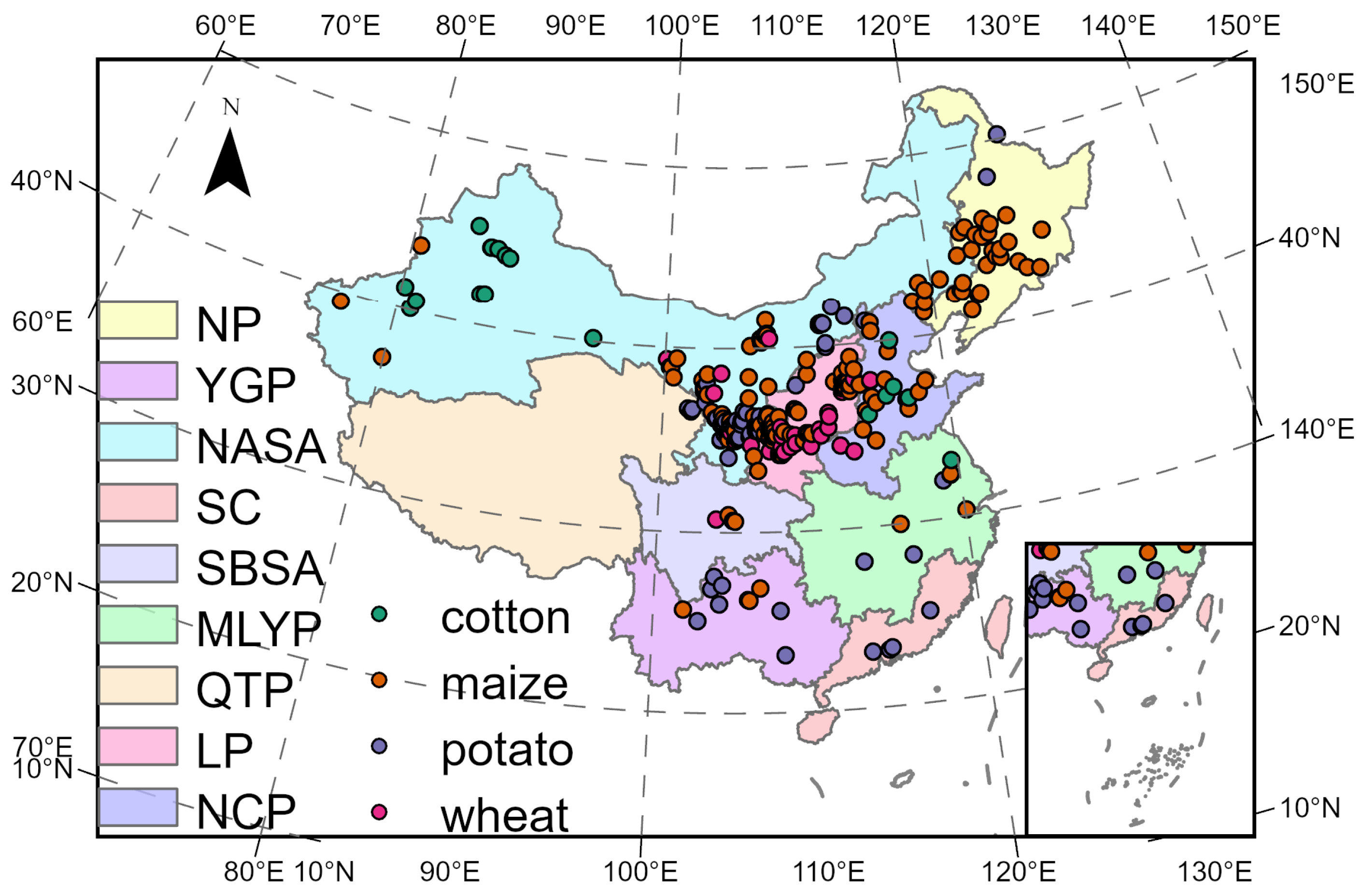
A systematic search was conducted of the Web of Science (https://www.webofscience.com/) and China National Knowledge Infrastructure (CNKI) databases (http://www.cnki.net/) for peer-reviewed articles published up to July 2024. The following keywords were used: TS = ((‘polyethylene film’ OR ‘agricultural mulching’ OR ‘film mulching’ OR ‘plastic mulching’ OR ‘plastic mulch’ OR ‘plastic film mulching’ OR ‘biodegradable film mulching’) AND (‘yield’)). Articles were included if they met the following criteria: (1) experimental designs that compared PM treatments with non-mulching treatments (NM); (2) field experiments conducted in China; (3) reports with clearly defined test sites; (4) crops limited to cotton, maize, potato, and wheat; (5) exclusion of duplicate test data. Ultimately, 503 articles comprising 2521 data pairs were retained for analysis. The references for the included studies can be found in the Supplementary Material. The sampling points are shown in Figure 1. Based on major agricultural regions in China, the study area was divided into nine regions: (1) Northern Arid and Semi-Arid (NASA): Xinjiang, Gansu, Ningxia, and Inner Mongolia; (2) Northeast Plain (NP): Liaoning, Jilin, Heilongjiang; (3) South China (SC): Fujian, Guangdong, Hainan; (4) North China Plain (NCP): Beijing, Tianjin, Hebei, Shandong, Henan; (5) Loess Plateau (LP): Shanxi, Shaanxi; (6) Qinghai–Tibet Plateau (QTP): Tibet and Qinghai; (7) Sichuan Basin and Surrounding Areas (SBSA): Sichuan, Chongqing; (8) Yunnan-Guizhou Plateau (YGP): Guizhou, Yunnan, Guangxi; (9) Middle and Lower Reaches of the Yangtze River (MLYP): Shanghai, Jiangsu, Zhejiang, Anhui, Hubei, Hunan, and Jiangxi. Additionally, the following factors were considered: (1) climatic factors, including mean annual precipitation (MAP) and mean annual temperature (MAT); (2) soil factors, including initial pH, bulk density (BD), soil organic matter (SOM), and total nitrogen (TN); and (3) agronomic practices, including nitrogen fertilization (N), irrigation (I), and cultivation method (CM), categorized as ridge (R) or flat (F). The detailed subgroups for each factor are presented in Table 1.
Figure 1.
Sample points map. Note: abbreviations: NP, Northeast Plain; YGP, Yunnan-Guizhou Plateau; NASA, Northern Arid and Semi-Arid Region; SC, South China; SBSA, Sichuan Basin and Surrounding Areas; MLYP, Middle and Lower Reaches of the Yangtze River; QTP, Qinghai–Tibet Plateau; LP, Loess Plateau; NCP, North China Plain.
Table 1.
Subgroups.
2.2. Data Analysis
2.2.1. Meta-Analysis
This study utilized the natural logarithmic response ratio (lnRR) to assess yield variation resulting from the application of film mulching [38],
where XFM denotes the mean yield of the BM or PM treatment, and XNM denotes the mean yield of the no mulching.
The variance (V) and weighting (W) are calculated using the following formulas:
where SDFM and SDNM represent the standard deviations (SD) of the mulching and the no mulching treatments, respectively, while nFM and nNM indicate the number of replications for the mulching and the no mulching treatments, respectively. To include additional data, the missing SD is supplemented by the formula , where X is the mean of the studies with missing SD, and CV is the coefficient of variation. When only standard errors (SE) were reported, SD was calculated as . In total, SD was imputed for 1614 data pairs, accounting for 64.0% of the dataset. The Fail-Safe Numbers for the film mulching, PM, and BM datasets were 272,278,773, 232,192,072, and 1,594,898, respectively, all of which far exceeded the critical threshold of 5n + 10. Figure S1 presents the funnel plots for the three datasets. Egger’s regression tests for film mulching and PM indicated no significant publication bias (p > 0.05). Although the test for BM was significant (p < 0.05), the adjusted effect size obtained using the trim-and-fill method showed a negligible difference from the original estimate. Therefore, the Fail-Safe Numbers and funnel plot analyses demonstrate the reliability of results.
The weighted response ratio (RR++) is computed as follows:
where the weighted factor is represented by wij, k and m denote the number of studies and the number of experimental replications within the subgroup, respectively. For easier understanding, the results were expressed as the percentage change . If the confidence interval includes zero, the effect is not statistically significant; if entirely above zero, the effect is significantly positive; if entirely below zero, the effect is significantly negative. To address the lack of independence in data arising from multiple data points coming from the same study, a hierarchical nested model (random = ~ID|Reference) was used in this study. The model was implemented in R (v2024) using the “rma.mv” function [39]. In addition, we used “anova” to statistically analyze the significant differences in BM and PM levels among different subgroups.
Linear regression was employed to analyze relationships between numerical variables (MAP, MAT, pH, BD, SOM, TN, N, I) and crop yield. Finally, variable importance was ranked using “metaforest” package in R (v2024) based on random forest analysis [40].
2.2.2. Economic Benefit Analysis
This study further assessed the economic benefits associated with BM and PM. The percentage change in economic benefit (EBC%) resulting from film mulching was calculated using the following formula:
where EBFM (CNY ha−1) is the economic benefit under either BM or PM. EBNM (CNY ha−1) is the economic benefit without mulching. The data were extracted from the peer-reviewed literature included in our meta-analysis.
2.2.3. Spatial Prediction of Yield Change Under BM and PM in Current and Future Climate
As future climate may affect BM and PM performance, this study employed XGBoost to spatially predict yield changes under both current and future climate. XGBoost is an optimized model based on traditional Gradient Boosting [41]. The optimization of XGBoost enhanced model training speed and helped prevent overfitting. Detailed methodology regarding the modeling framework is presented in Supplementary Text S1. In addition, the selected hyperparameters are listed in Table S2, and the model performance on the test set is shown in Table S3. The XGBoost model was implemented using Python 3.12 (v2023) with the libraries “xgboost,” “pandas,” “sklearn,” and “numpy.” The input variables of the model included MAP, MAT, pH, BD, SOM, TN, N, I, and CM, while the dependent variable was yield change (YC%). The calculation formula was as follows:
where YFM represents the yield of BM or PM (kg ha−1), and YNM represents the yield without film mulching (kg ha−1).
The Coupled Model Intercomparison Project 6 (CMIP6) provides crucial data for future climate simulations. We evaluated two future scenarios from 2041 to 2060. The combination of Shared Socioeconomic Pathway 2 (SSP2) and Representative Concentration Pathway 4.5 (RCP4.5), referred to as SSP2-4.5, represents a medium future scenario. The combination of SSP5 and RCP 8.5 represents a pessimistic future scenario [42]. These scenarios are among the most extensively studied to date [31,43,44]. The source of simulated climatic and soil data are listed in Table S1, while the agronomic practices simulated data are the mode of the meta-analysis database.
3. Results
3.1. Effects of BM and PM on Yield and Economic Benefit
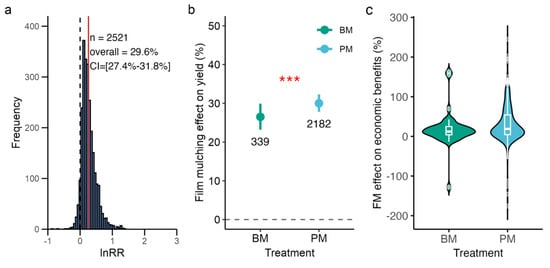
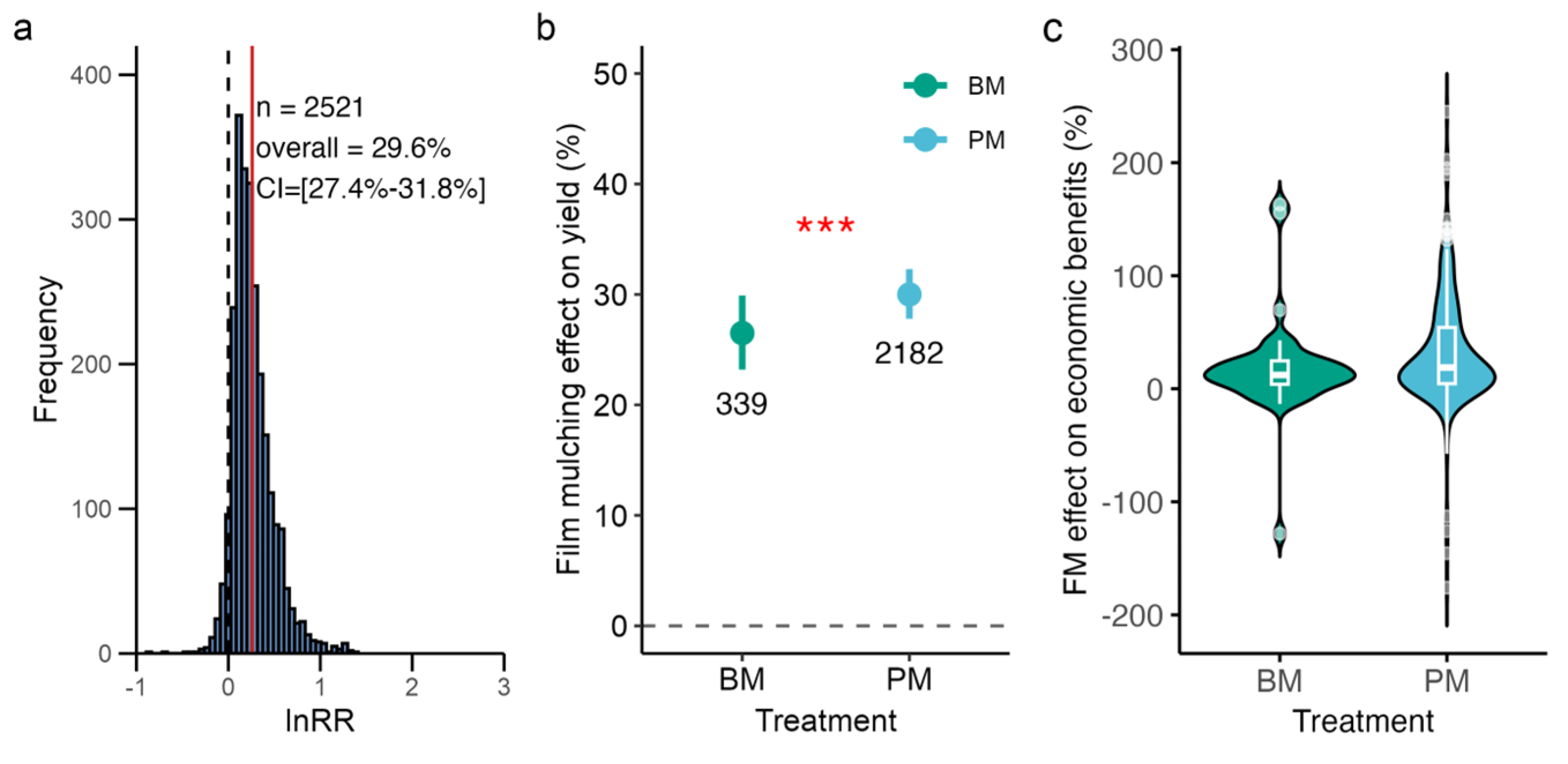
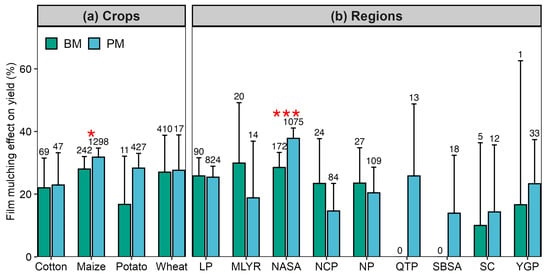
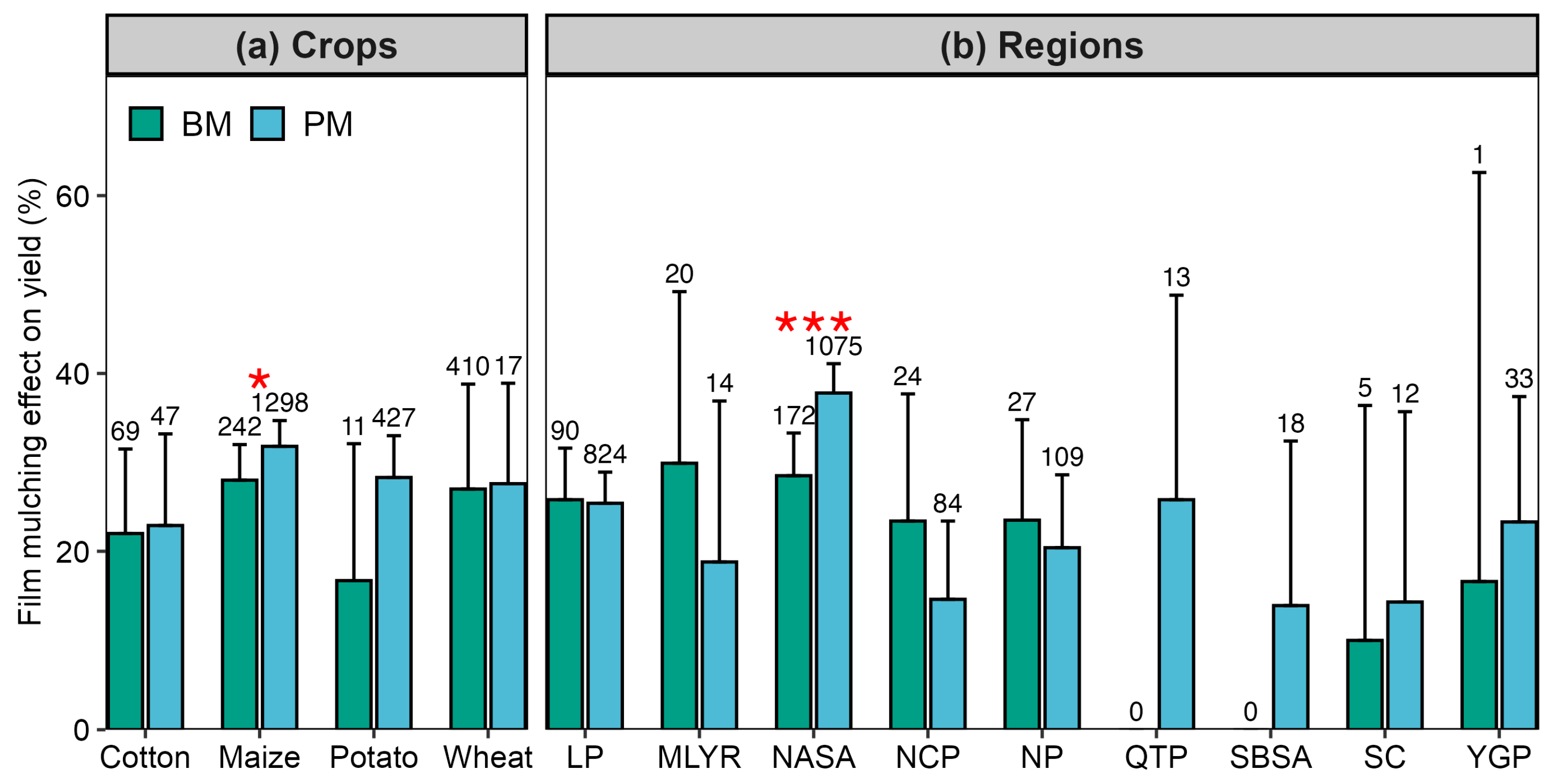
Film mulching significantly enhanced crop yield, with an overall increase of 29.6% (Figure 2a). Both BM and PM led to significant yield increases of 26.5% and 30.0%, respectively (Figure 2b). While PM showed a statistically higher effect than BM (p < 0.0001), BM still achieved a substantial yield improvement comparable to that of PM. The economic benefit analysis revealed that BM increased economic return by 18.7%, whereas PM resulted in a 32.0% increase (Figure 2c). When crop-specific effects were examined, BM significantly boosted the yields of cotton (22.0%), maize (28.0%), potato (16.7%), and wheat (27.0%) (Figure 3a). Similarly, PM significantly enhanced yields of these four crops: cotton (22.0%), maize (31.8%), potato (28.3%), and wheat (27.6%) (Figure 3a). In maize, the yield improvement under PM was significantly greater than that under BM (p < 0.01). Regionally, BM significantly enhanced yields in only five areas—LP, MLYP, NASA, NCP, and NP—by 25.8%, 29.9%, 28.5%, 23.4%, and 23.5%, respectively (Figure 3b). No data were available for BM in QTP and SBSA. PM had no notable effect on yield enhancement in SBSA and SC, but demonstrated significant increases in the other seven regions, reaching a maximum of 37.8% in NASA. In NASA, the yield enhancement potential of PM was significantly greater than that of BM (p < 0.0001) (Figure 3b).
Figure 2.
Overall effect of film mulching on yield: (a) overall mulching effect and (b) effects of different film types; (c) effects of BM and PM on economic benefits. Note: “n” and displayed values denote the sample size, and “CI” denotes the confidence intervals. The red “*” denotes the significant levels for differences between BM and PM within each subgroup. “***”: p < 0.0001. Abbreviations: BM, biodegradable film; PM, plastic film.
Figure 3.
Effects of BM and PM on yield in (a) different crops and (b) regions. Note: Displayed values denote the sample size. The red “*” denotes the significant levels for differences between BM and PM within each subgroup. “***”: p < 0.0001, “*”: p < 0.01. Abbreviations: BM, biodegradable film; PM, plastic film; LP, Loess Plateau; MLYP, Middle and Lower Reaches of the Yangtze River; NASA, Northern Arid and Semi-Arid Region; NCP, North China Plain; NP, Northeast Plain; QTP, Qinghai–Tibet Plateau; SBSA, Sichuan Basin and Surrounding areas; SC, South China; YGP, Yunnan-Guizhou Plateau.
3.2. Effects of BM and PM on Yield Under Different Climatic Factors
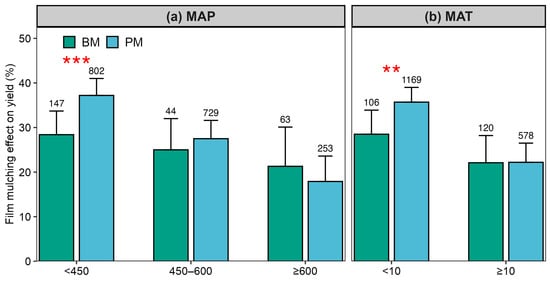
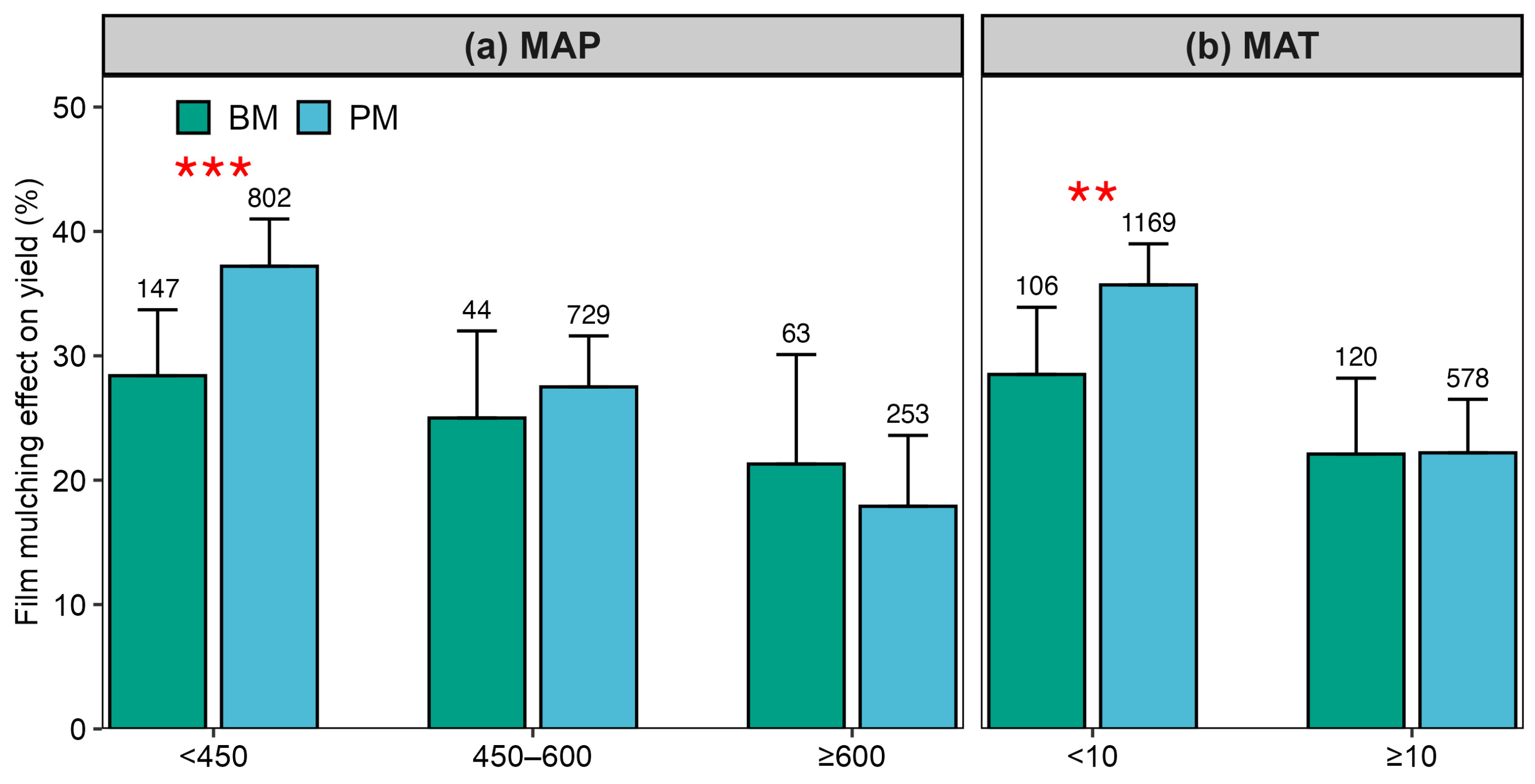
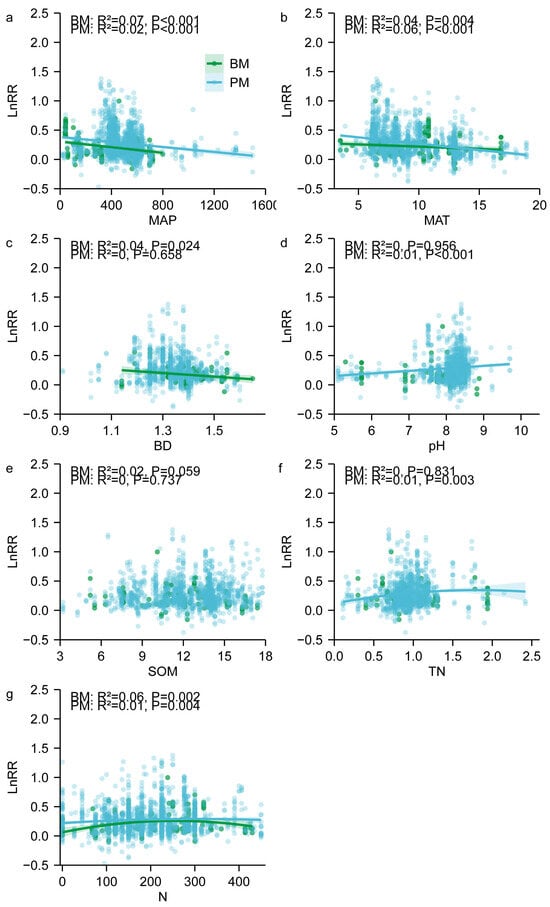
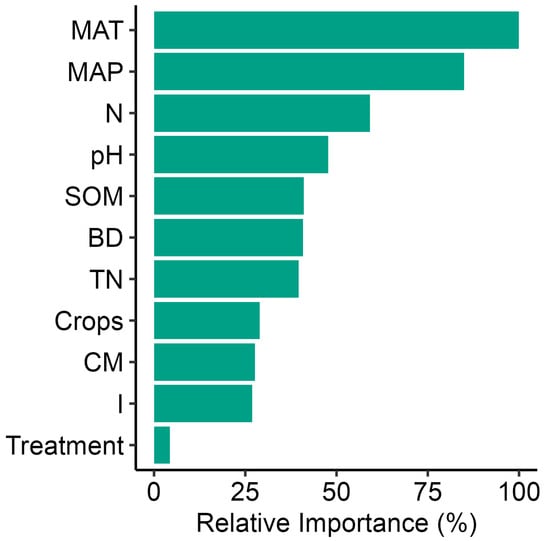
Notable differences across categories of MAP and MAT were observed between BM and PM. In regions with less than 450 mm of precipitation, the yield increase under BM (28.4%) was significantly lower than that under PM (37.2%) (p < 0.0001) (Figure 4a). However, in areas with precipitation levels of 450–600 mm and ≥600 mm, no significant differences between BM and PM were detected. Specifically, at 450–600 mm, yield increases were 25.0% with BM and 27.5% with PM; at MAP ≥ 600 mm, the increases were 21.3% and 17.9%, respectively. When MAT is below 10 °C, the yield increase under BM (28.5%) was significantly lower than that under PM (35.7%) (p < 0.001) (Figure 4b). However, at MAT ≥ 10 °C, no significant difference was observed between the two mulching films, with yield increases of 22.1% and 22.2%, respectively. Under both BM and PM treatments, MAP and MAT exhibited significant negative correlations with yield increases (p < 0.001) (Figure 5a,b). In the ranking of importance, MAT and MAP were ranked first and second, respectively, indicating that climatic factors predominantly influenced the efficacy of film mulching (Figure 6).
Figure 4.
Effects of BM and PM on yield in different (a) MAP and (b) MAT. Note: Displayed values denote the sample size. The red “*” denotes the significant levels for differences between BM and PM within each subgroup. “***”: p < 0.0001, “**”: p < 0.001. Abbreviations: BM, biodegradable film; PM, plastic film; MAP, mean annual precipitation; MAT, mean annual temperature.
Figure 5.
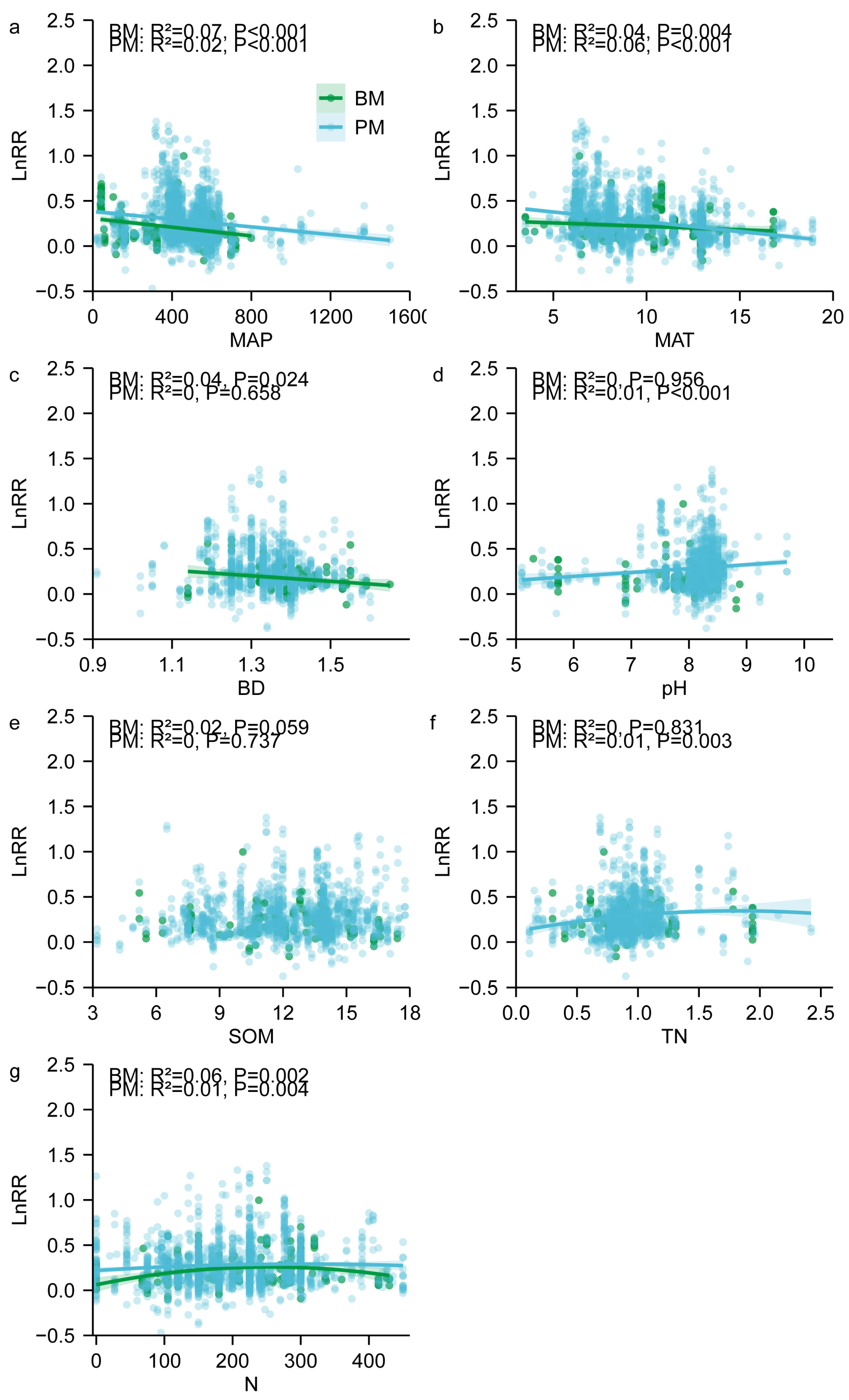
The relationships of (a) MAP, (b) MAT, (c) BD, (d) pH, (e) SOM, (f) TN, and (g) N with LnRR under BM and PM. Note: Abbreviations: MAP, mean annual precipitation; MAT, mean annual temperature; BD, bulk density; SOM, soil organic matter; TN, total nitrogen; N, nitrogen fertilization.
Figure 6.
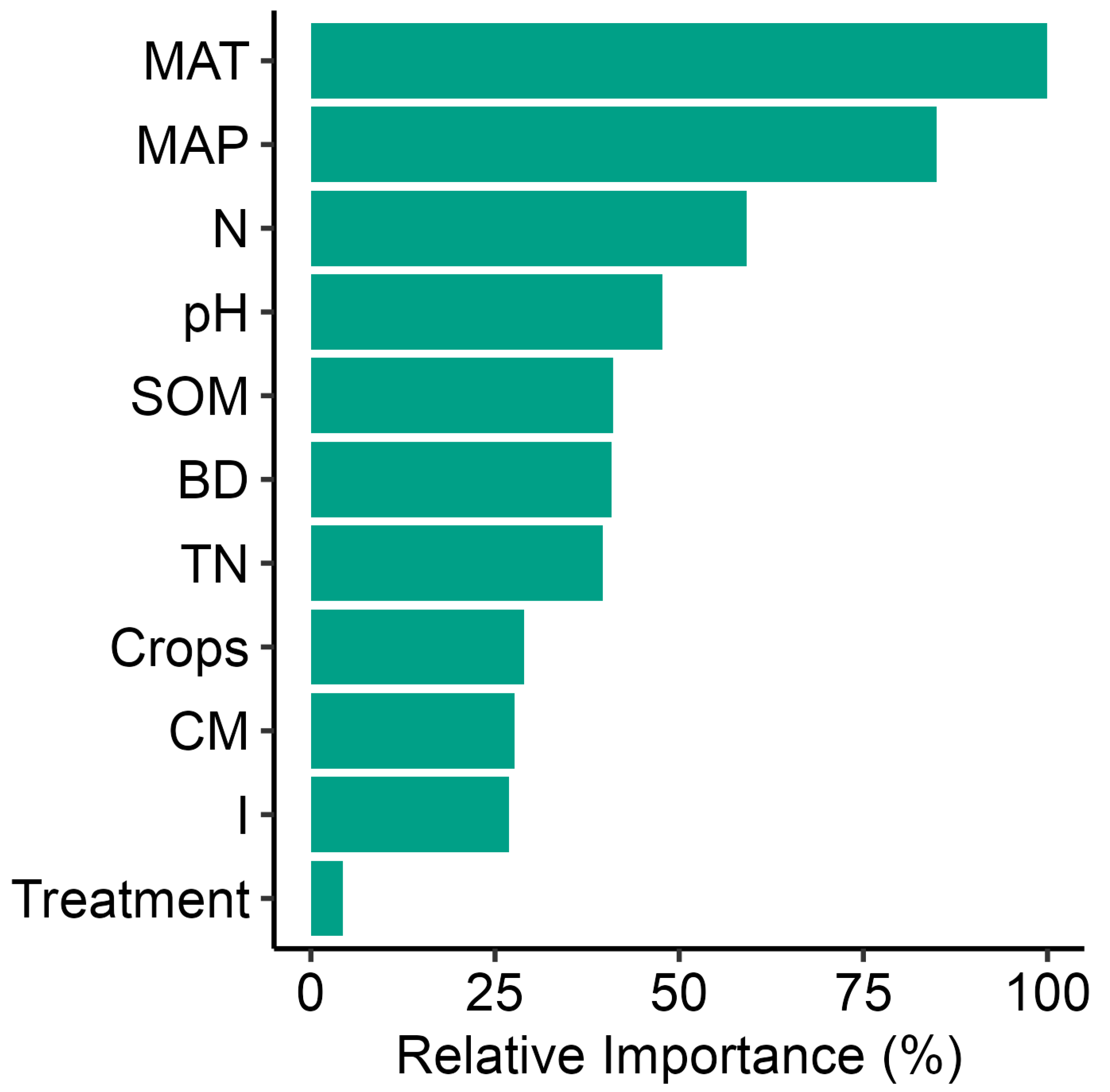
The ranking of relative importance of factors. Note: Abbreviations: MAP, mean annual precipitation; MAT, mean annual temperature; BD, bulk density; SOM, soil organic matter; TN, total nitrogen; CM, cultivation method; I, irrigation; N, nitrogen fertilization.
3.3. Effects of BM and PM on Yield Under Different Soil Factors
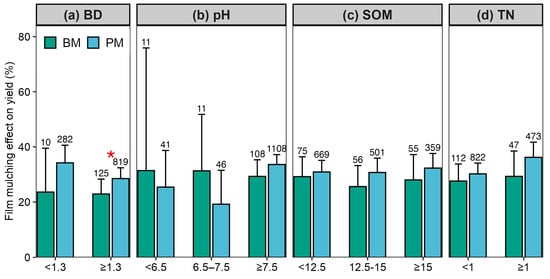
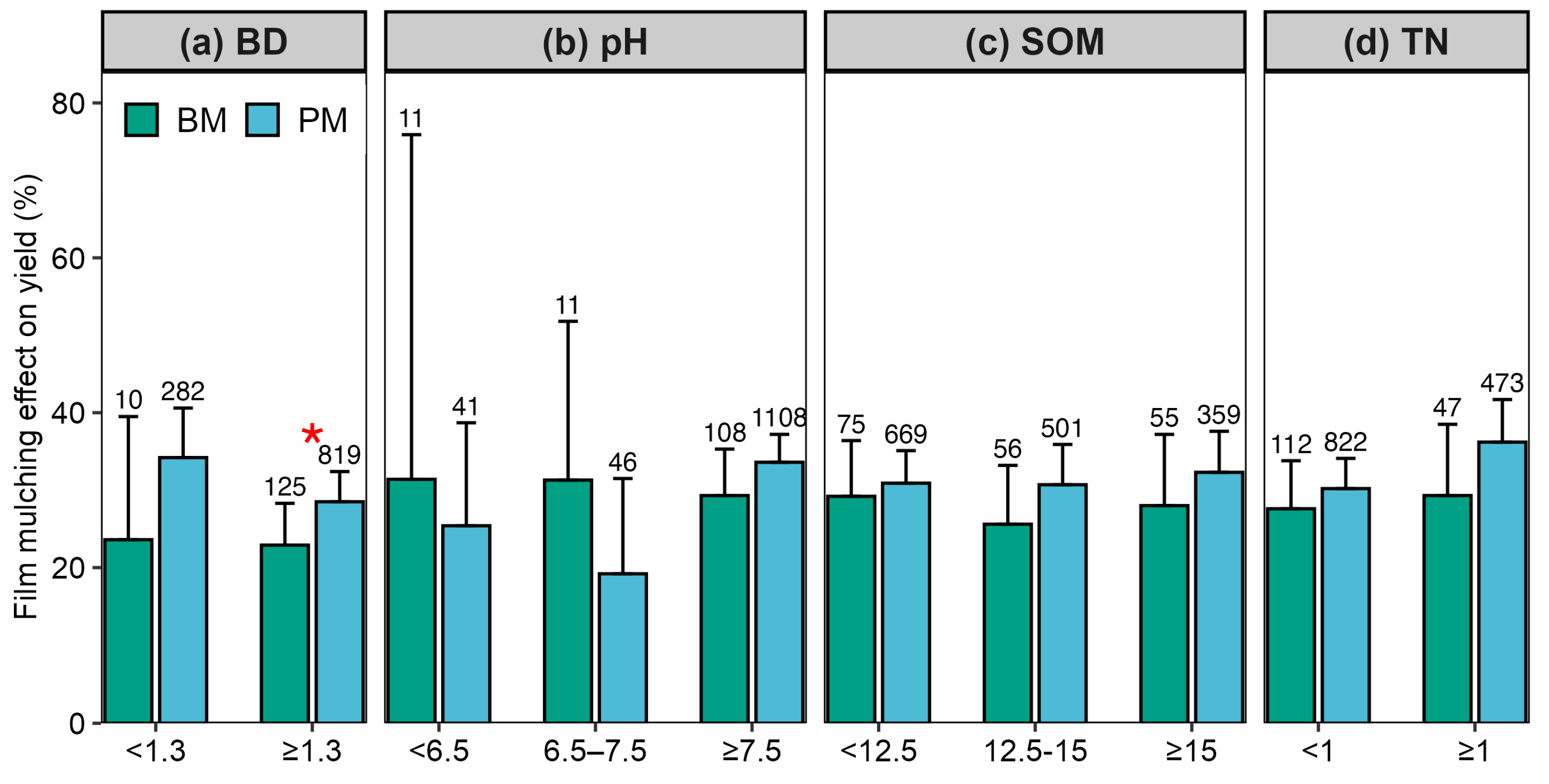
Among the soil factors evaluated, significant differences between the effects of BM and PM on yield were observed only for BD. Specifically, in soil with BD ≥ 1.3 g cm−3, the yield increases associated with BM and PM were 22.9% and 28.5%, respectively, and this difference was statistically significant (p < 0.01) (Figure 7a). For the BM treatment, BD showed a significant negative correlation with yield increases (p < 0.05) (Figure 5c). In terms of pH, BM significantly enhanced yield under pH 6.5–7.5 and ≥7.5, with respective increases of 31.3% and 29.3% (Figure 7b). Conversely, PM led to a significant yield increase across all three pH levels, with respective values of 25.4%, 19.2%, and 33.6%, respectively. Furthermore, under PM, soil pH was observed to be significantly and positively correlated with the yield increases (p < 0.001) (Figure 5d). Across all levels of SOM and TN, both BM and PM resulted in significant yield increases. For PM, TN content was significantly correlated with yield increases (p < 0.05) (Figure 5f). The relative importance of these soil factors in influencing yield was ranked as follows: pH, SOM, BD, and TN (Figure 6).
Figure 7.
Effects of BM and PM on yield in different (a) BD, (b) pH, (c) SOM and (d) TN. Note: Displayed values denote the sample size. The red “*” denotes the significant levels for differences between BM and PM within each subgroup. “*”: p < 0.01. Abbreviations: BM, biodegradable film; PM, plastic film; BD, bulk density; SOM, soil organic matter; TN, total nitrogen.
3.4. Effects of BM and PM on Yield Under Different Agronomic Practices
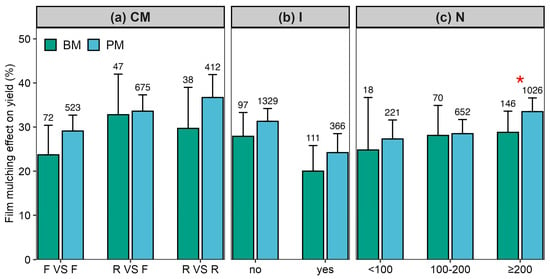
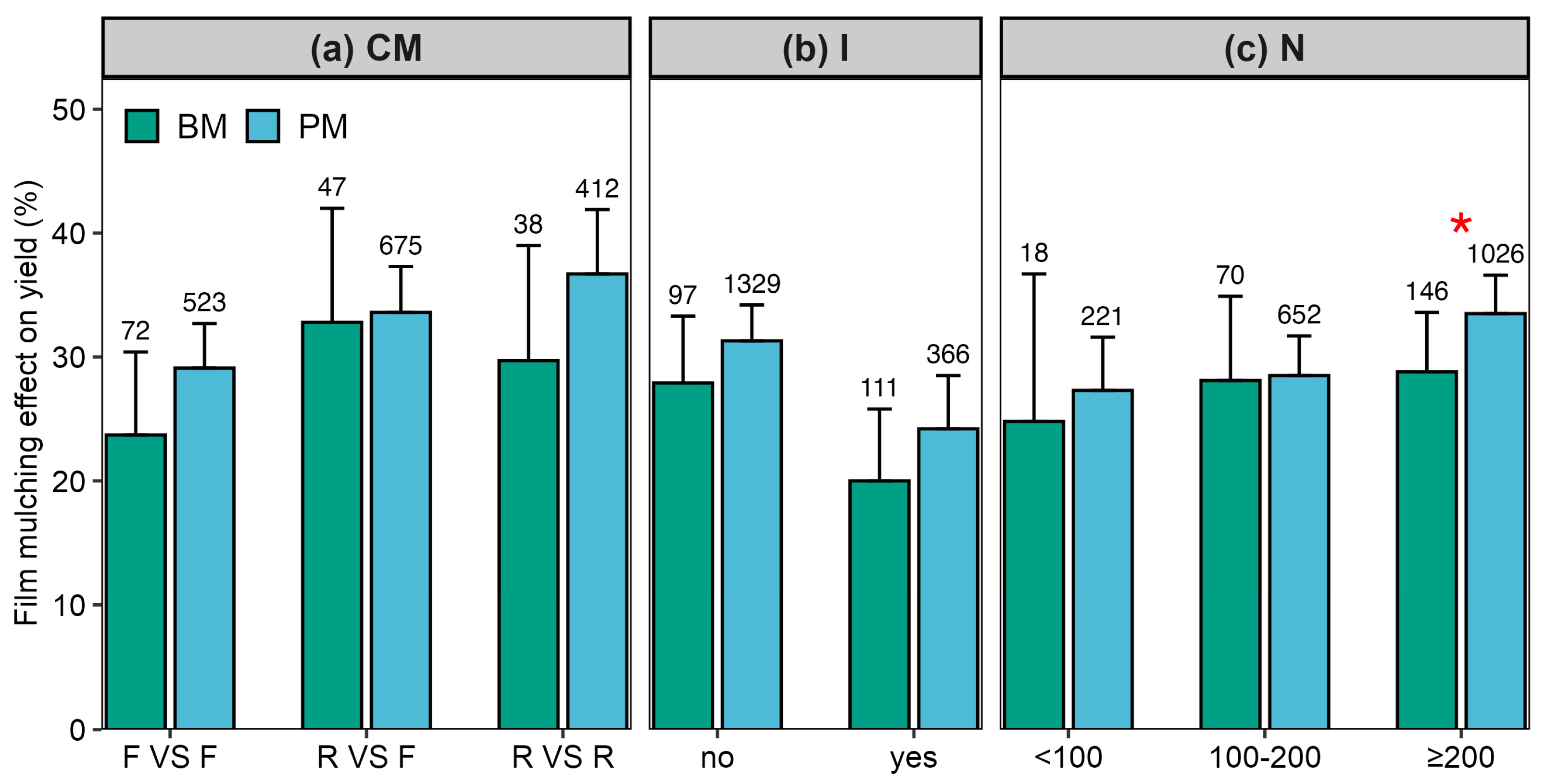
Regarding the agronomic practices evaluated, a significant difference in yield enhancement between BM and PM was observed only in relation to N. This analysis combined the results for CM, where R was compared with F. The combination of PM with R was found to be more effective in enhancing crop yield. BM performed in the R vs. F with a yield increase of 32.8%. PM performed best in R vs. R, with a yield increase of 36.7%. Under non-irrigation conditions, both BM and PM resulted in greater yield increases compared to irrigated conditions (Figure 8b). Specifically, under non-irrigated conditions, PM resulted in a yield increase of 31.3%, while BM achieved a 26.0% increase (Figure 8b). BM and PM exhibited consistent performance across varying levels of nitrogen application. At N ≥ 200 kg·ha−1, the yield increase for PM (33.5%) was significantly higher than that for BM (27.2%) (p < 0.01) (Figure 8c). For both treatments, the rate of N application was significantly correlated with yield increases (p < 0.05) (Figure 5g). In the importance ranking, while cultivation management practices had less influence than climatic and soil conditions, nitrogen fertilization ranked immediately after MAP, indicating its considerable impact on crop yield (Figure 6).
Figure 8.
Effects of BM and PM on yield in different (a) CM, (b) I and (c) N. Note: Displayed values denote the sample size. The red “*” denotes the significant levels for differences between BM and PM within each subgroup. “*”: p < 0.01. Abbreviations: BM, biodegradable film; PM, plastic film; CM, cultivation method; I, irrigation; N, nitrogen fertilization; R, ridge; F, flat.
3.5. Spatial Prediction of Crop Yield Change Under BM and PM
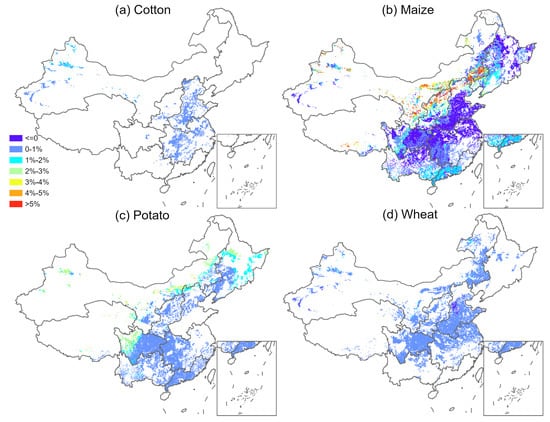
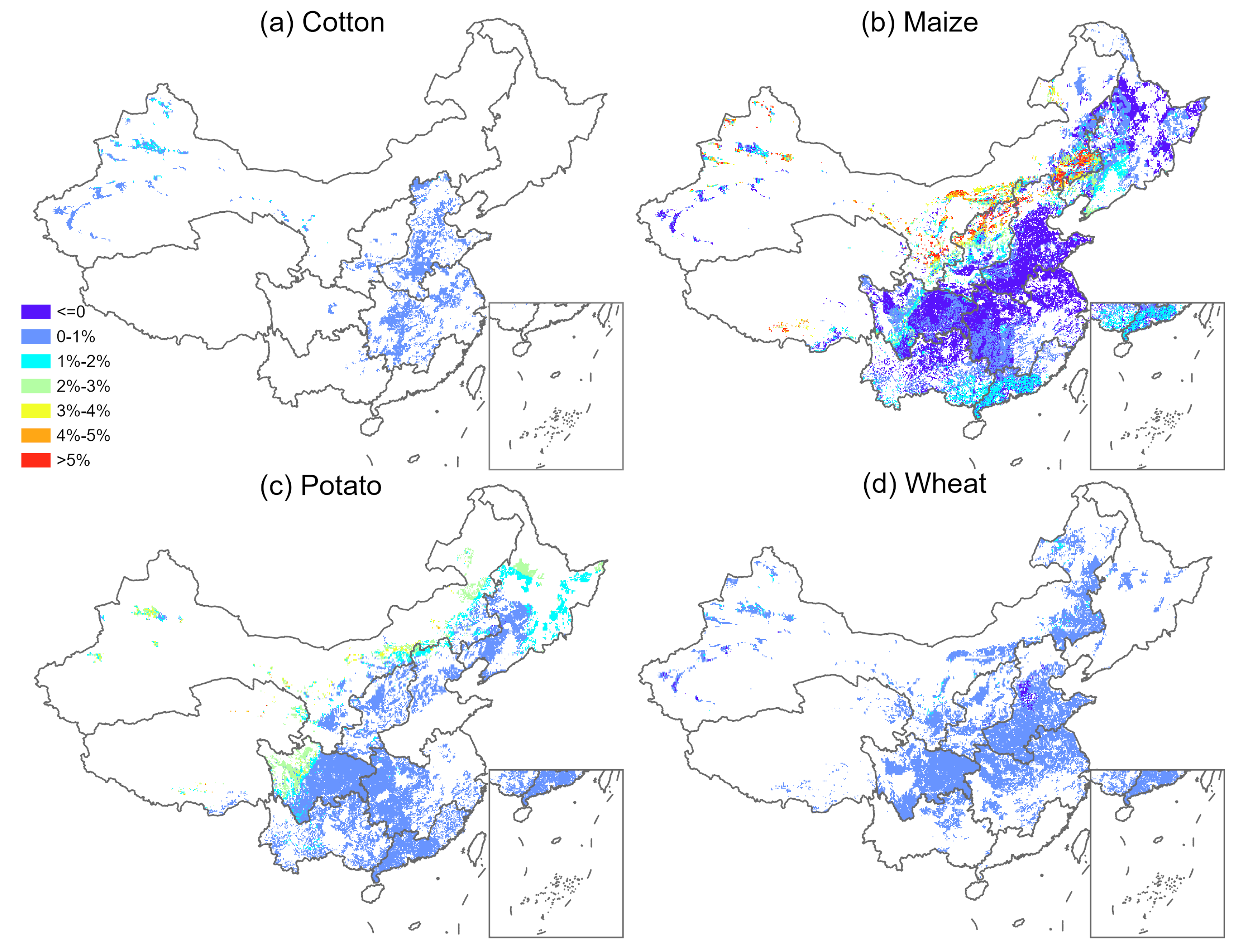
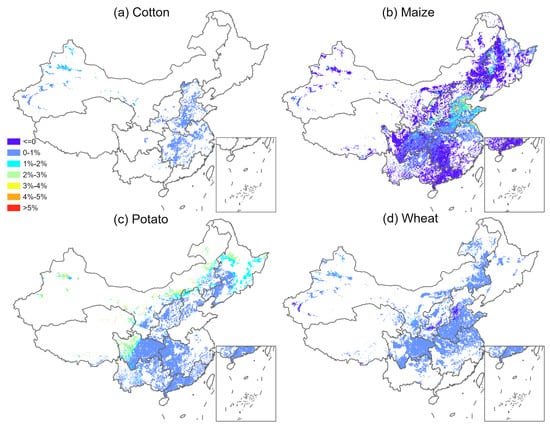
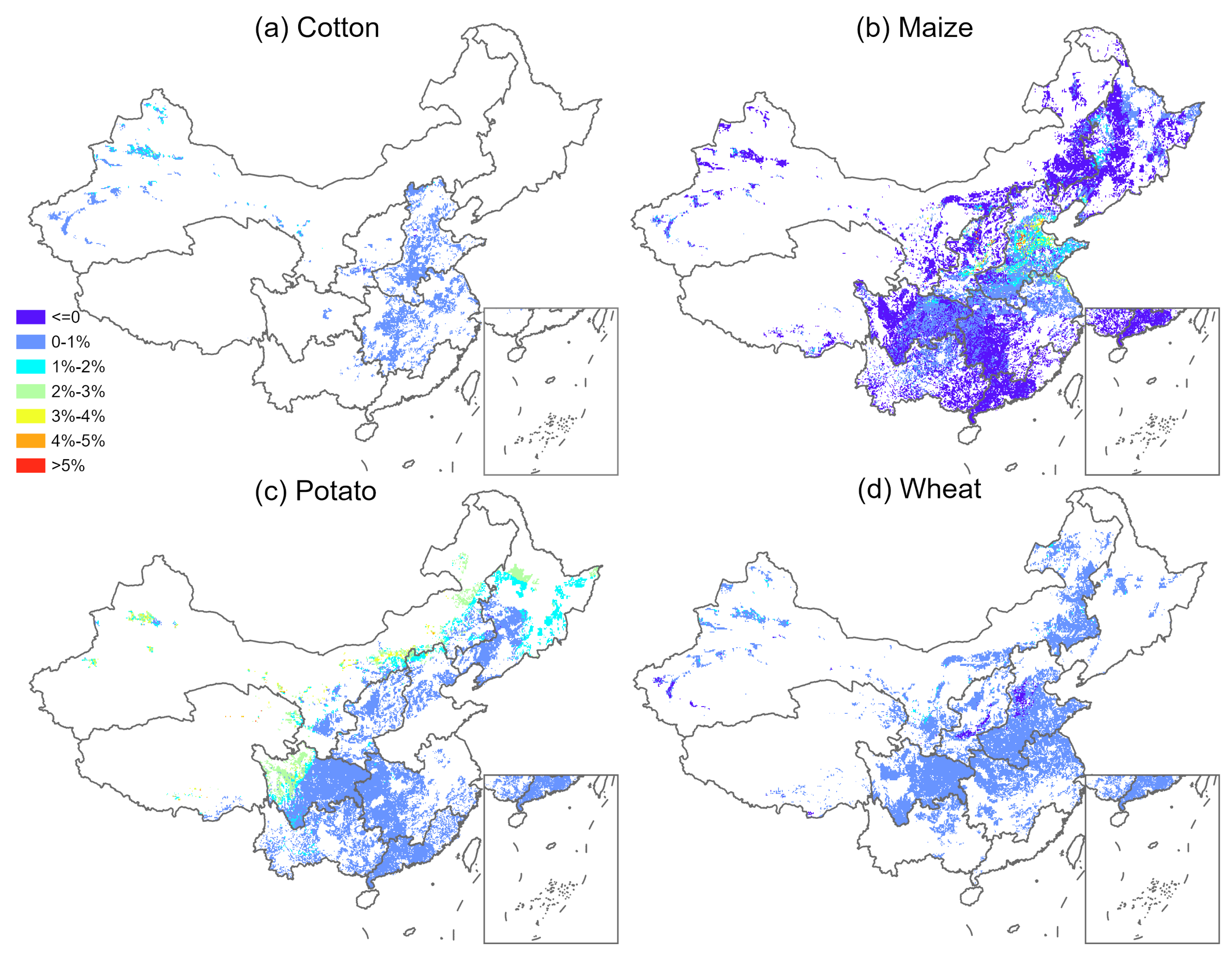
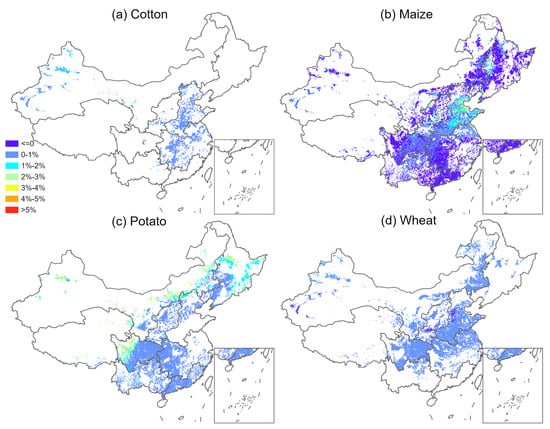
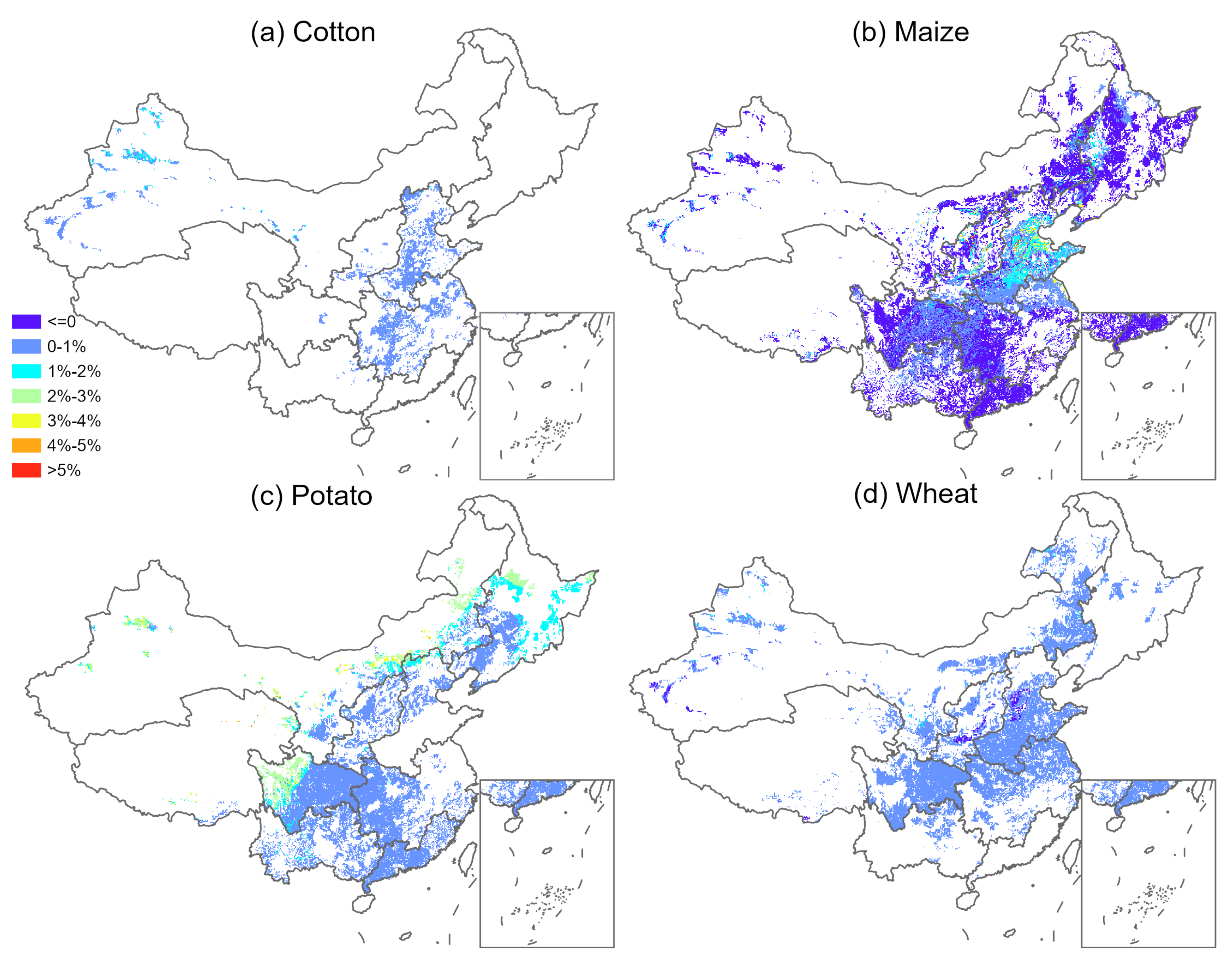
The findings revealed substantial differences in BM and PM performance across spatial scales (Figure S3). Overall, both films showed improvement effects in NASA (Figure 9). Significant variances were observed between the two film mulching types in this region. YC under PM exceeded that under BM by 0.6%, 2.3%, 1.5%, and 0.4% for cotton, maize, potato, and wheat, respectively. Crop performances also varied across regions. In addition to NASA, maize performance was particularly pronounced in LP. Potato showed a favorable result in NCP, while wheat performed most effectively in QTP (Figure S2). Under future scenarios, the differences between BM and PM varied among crops relative to current conditions (Figure 10 and Figure 11). Overall, except for maize, the spatial distribution of YC differences between BM and PM in the other three crops exhibited limited variation, with PM generally outperforming BM. An increasing trend in cotton was observed in LP and QTP (Figures S4a and S6a). Potato (Figures S4c and S6c) and wheat (Figures S4d and S6d) generally exhibited a downward trend in YC. For maize under both future scenarios, YC under BM exceeded that under PM in all regions except NCP (Figure 10b and Figure 11b). Except for maize, YC variation between BM and PM across most regions ranged from 0% to 1%.
Figure 9.
Spatial distribution of the percentage difference in yield for major crops in China under current conditions: (a) cotton, (b) maize, (c) potato, and (d) wheat.
Figure 10.
Spatial visualization of the difference in YC between BM and PM under SSP2-4.5: (a) cotton, (b) maize, (c) potato, and (d) wheat.
Figure 11.
Spatial visualization of the difference in YC between BM and PM under SSP5-8.5: (a) cotton, (b) maize, (c) potato, and (d) wheat.
4. Discussion
4.1. Analysis of Influencing Factors of Film Mulching
The yield effects of film mulching were comprehensively affected by climate, soil, and agronomic practices. In the random forest importance ranking, climatic factors such as MAT and MAP emerged as the most significant influencing variables (Figure 8). Meta-analysis results indicated that film mulching achieved optimal performance when MAP was below 450 mm (Figure 4a) and MAT was below 10 °C (Figure 4b). These findings suggested that the effectiveness of film mulching technology was strongly influenced by climatic factors. It also implied that in areas with a humid climate or high temperature, film mulching usage could be reduced and yield could be improved through other measures. In addition to climatic, soil factors also ranked high overall. Previous studies have also emphasized that soil factors could significantly affect the effectiveness of film mulching [24]. The application efficacy of film mulching in China exhibited notable regional variation owing to uneven climate and soil distributions. Spatial simulations based on machine learning demonstrated that PM and BM both exhibited spatial variation and performed well in NASA. Chen et al. employed an enhanced crop growth model to simulate BM’s impact on production in Inner Mongolia, revealing significant spatial variability in yield [45]. Cultivation management measures investigated in this study included N, I, and CM. Among these practices, N ranked immediately after MAT and MAP in the importance ranking, indicating its substantial impact on film mulching effectiveness. Ma et al. concluded that the yield improvement under PM at 200–300 kg ha−1 was most effective in the northwest region [1]. Furthermore, PM can enhance nitrogen fertilizer utilization rate. A meta-analysis further indicated that PM could increase nitrogen partial factor productivity by 26% [23]. However, increased N application may not only constrain further yield gains but also exacerbate greenhouse gas emissions [46]. Under non-irrigation conditions, film mulching significantly boosted yield, further demonstrating its potential under water-scarce environments. Moreover, combining irrigation with PM could further increase irrigation use efficiency [47]. Our results align with Zhang et al. [48], who found that ridge-furrow planting with film mulching outperformed both ridge-furrow planting without film mulching and flat planting in terms of yield, due to its superior heat and water retention capacity [49,50]. However, Liu et al. suggested that furrow planting with mulching planting may not be advisable under future climate scenarios [26].
4.2. Comparison Between BM and PM
While PM achieved a significantly higher yield increase (30.0%) compared to BM (26.5%), the overall performance gap between the two mulches was relatively narrow (Figure 2b). In low MAT and MAP, a significant difference was found between BM and PM (Figure 4). At the regional scale, a significant difference was observed in NASA, a region characterized by low temperature and low precipitation, where PM outperformed BM (Figure 3b and Figure 4). The effect of both PM and BM on soil was similar during the initial phases of crop growth. However, as BM began to degrade, its impact on soil moisture and temperature declined [10,11,51]. Moreover, the degradation process caused fluctuations in soil moisture, which reduced water use efficiency [18]. A continuous nine-year experiment of film mulching clearly indicated that PM provided greater yield increases and enhanced stability over an extended period [17]. Despite PM’s overall advantage, evidence also suggests that BM can match or even surpass PM under specific environmental and management conditions. For example, Huang et al. found that BM outperformed PM in areas with 600–800 mm of precipitation [16]. The spatial modeling results revealed that the yield enhancement under PM exceeded that under BM in most regions (Figure 10). Yang et al. noted that BM could replace PM for short-season crops [52]. Even if the water retention capacity of BM decreases in the later stage, its water-preserving effect during the critical growth period is still significant. Management practices can also narrow the yield enhancement gap. Fang et al. estimated using machine learning that under 180 kg·ha−1 of N fertilizer, BM could replace PM [53]. In semi-humid and semi-arid areas, the preferred degradation rate of BM applied to summer maize was 60 days, resulting in enhanced production [54]. In dry and semi-arid environments, appropriate irrigation combined with BM that had a longer degradation period could effectively replace PM [55]. Although BM’s primary benefit lies in its ability to mitigate agricultural “white pollution” from residual conventional film and microplastic accumulation, it still confronts various economic and environmental challenges. The higher cost of BM than PM may limit its adoption, as farmers tend to choose PM to maximize short-term economic benefits [56]. Although BM can reduce the environmental impact at the disposal, its production may have a greater environmental burden due to more complicated manufacturing processes. Life-cycle assessment studies have shown that BM may have a higher global warming potential than PM [57,58]. In addition, BM can break down into microplastic particles in soil, which may adversely affect soil ecosystems [59]. To truly promote the sustainable development of BM in agricultural production, it is essential to integrate it with effective field management practices, increase subsidies, and further develop biodegradable film manufacturing technology.
4.3. The Effect of Film Mulching on Crop Yields in Future Climate
Climatic conditions exert a major influence on agricultural production, and the increasing threat of future climate change will undoubtedly introduce more uncertainties and severe challenges to the stability and sustainability of agricultural systems [60]. Future climate warming combined with increased precipitation is expected to accelerate phenological events and reduce evapotranspiration [61]. As an important strategy for enhancing agricultural production, the adaptability and effectiveness of film mulching technology in future climate scenarios have become central topics of academic research. Yu et al. studied the yield increase in Xinjiang lint under PM in future climate scenarios [28]. Zhang et al. discovered that future climatic change exerted minimal influence on the yield variation in crops protected by PM [27]. However, under future climate scenarios characterized by higher temperatures and precipitation, the advantage of PM was reduced [43]. In addition, Liu et al. noted that crop yields were projected to increase both with and without PM in future scenarios [26]. Research by Zhang et al. indicated that when the temperature rose by 2.85 °C, the output increase from PM would decrease [62]. Quan et al. concluded that rising temperatures shortened the reproductive growth stages of crops, resulting in a decline in maize production [31]. Nevertheless, Quan et al. offered solutions for addressing climate change, suggesting that PM combined with 400 mm of irrigation could effectively mitigate the decrease in maize yield caused by climate change [30]. This study focused on comparing the performance of BM and PM in China under different future climate scenarios. Regarding the response of different film mulching for maize under future climate scenarios, our findings indicated that BM outperformed PM in all regions except for the NCP (Figure 10b and Figure 11b). The findings of Wang et al. demonstrated that BM had a greater advantage, especially in terms of water use efficiency under future climate scenarios [43]. The primary explanation for this is that BM does not significantly elevate soil temperature during the later growth phases, thus reducing the impact of high temperature on maize.
4.4. Limitations and Uncertainties
While this study tried to enhance analytical rigor and reliability through careful data selection and methodological design, certain limitations remain. Firstly, with respect to data sources, our reliance on peer-reviewed publications, while ensuring data quality, introduced reporting inconsistencies among studies, resulting in potential data gaps. Furthermore, the number of studies on BM is substantially lower than that on PM. These factors may have impacted the meta-analysis and model-training processes, thereby influencing the results. Secondly, with regard to methodological design, although meta-analysis and machine learning were utilized for spatial prediction, the interactive effects among climatic conditions, soil properties, and agronomic practices were not fully examined. Additionally, data for spatial modeling were integrated from multiple databases that vary in update frequency, spatial resolution, and variable definitions, potentially reducing model training efficacy. Moreover, a growing body of research has focused on the effects of microplastics in agricultural fields on crop growth. Future studies should incorporate the influence of microplastics to enable a more comprehensive comparison of BM and PM impacts on crop productivity.
5. Conclusions
This study systematically evaluated the effects of BM and PM on the yields of major crops (cotton, maize, potato, and wheat) in China by integrating meta-analysis with machine learning, and further investigated their spatial variability under present and future climate scenarios. The meta-analysis revealed that film mulching markedly enhanced crop yields (29.6%), with PM showing a slightly higher average yield increase (30.0%) compared to BM (26.5%). In terms of economic benefits, PM (32.0%) also outperformed BM (18.7%). A pronounced difference between PM and BM was observed in the NASA region and for maize. Climatic factors, including MAT and MAP, were identified as primary drivers of mulching effects, followed by N. Both BM and PM were strongly negatively correlated with MAT and MAP, and strongly correlated with N. Under conditions of MAT < 10 °C, MAP < 450 mm, and N ≥ 200 kg ha−1, PM significantly outperformed BM in yield enhancement. Soil conditions also significantly influenced these responses. Spatial predictions revealed regional and crop-specific variations in YC for both mulch types, with PM generally performing better under current conditions, particularly in the NASA. Except for maize, the YC difference between BM and PM was minimal. Under future climate change scenarios (SSP2-4.5, SSP5-8.5), results suggested that for crops such as maize, BM might outperform PM in certain regions (excluding the NCP). These findings enhance scientific understanding of the regional impacts of PM and BM applications, offering theoretical insights and practical guidance for formulating targeted regional management strategies and advancing sustainable agriculture.
Supplementary Materials
The following supporting information can be downloaded at: https://www.mdpi.com/article/10.3390/agronomy16050534/s1, Figure S1: Funnel plots for (a) film mulching, (b) plastic film, and (c) biodegradable film; Figure S2: The effects of BM and PM on YC of different crops yield in different regions under current circumstances: (a) cotton, (b) maize, (c) potato, and (d) wheat; Figure S3: Spatial visualization of YC for (a,b) cotton, (c,d) maize, (e,f) potato, and (g,h) wheat by BM and PM under current circumstances; Figure S4: The effects of BM and PM on YC of different crops yield in different regions under SSP2-4.5: (a) cotton, (b) maize, (c) potato, and (d) wheat; Figure S5: Spatial visualization of YC for (a,b) cotton, (c,d) maize, (e,f) potato, and (g,h) wheat by BM and PM under SSP2-4.5; Figure S6: The effects of BM and PM on YC of different crops yield in different regions under SSP5-8.5: (a) cotton, (b) maize, (c) potato, and (d) wheat; Figure S7: Spatial visualization of YC for (a,b) cotton, (c,d) maize, (e,f) potato, and (g,h) wheat by BM and PM under SSP5-8.5; Table S1: Data sources; Table S2: Optimized hyperparameters for crop yield prediction; Table S3: Model performance metrics for crop yield prediction; Text S1.
Author Contributions
Conceptualization, J.C. and J.X.; validation, J.X. and B.D.; formal analysis, J.X. and B.D.; investigation, J.X.; resources, H.G. and Q.L.; data curation, J.X. and B.D.; writing—original draft preparation, J.X.; writing—review and editing, J.C., Y.C. and J.X.; visualization, J.X. and B.D.; supervision, Y.C. and W.G.; project administration, J.C. and W.H.; funding acquisition, W.H. All authors have read and agreed to the published version of the manuscript.
Funding
This research was funded by National Key Research and Development Program of China (Grant number: 2023YFD1701902), Key Research and Development Task Project of Xinjiang Uygur Autonomous Region (Grant number: 2022B02033), Central Public-interest Scientific Institution Basal Research Fund (Grant number: BSRF202505), the Agricultural Science and Technology Innovation Program (ASTIP), and the Inner Mongolia Research and Development Program of China (Grant number: 2023YFHH0099).
Data Availability Statement
The original contributions presented in this study are included in the article/Supplementary Material. Further inquiries can be directed to the corresponding authors.
Conflicts of Interest
The authors declare that they have no known competing financial interests or personal relationships that could have appeared to influence the work reported in this paper.
References
- Ma, D.D.; Chen, L.; Qu, H.C.; Wang, Y.L.; Misselbrook, T.; Jiang, R. Impacts of plastic film mulching on crop yields, soil water, nitrate, and organic carbon in Northwestern China: A meta-analysis. Agric. Water Manag. 2018, 202, 166–173. [Google Scholar] [CrossRef] [Scilit]
- Gao, H.H.; Yan, C.R.; Liu, Q.; Li, Z.; Yang, X.; Qi, R.M. Exploring optimal soil mulching to enhance yield and water use efficiency in maize cropping in China: A meta-analysis. Agric. Water Manag. 2019, 225, 105741. [Google Scholar] [CrossRef] [Scilit]
- Fu, F.; Long, B.B.; Huang, Q.; Li, J.J.; Zhou, W.J.; Yang, C. Integrated effects of residual plastic films on soil-rhizosphere microbe-plant ecosystem. J. Hazard. Mater. 2023, 445, 130420. [Google Scholar] [CrossRef] [Scilit]
- Sintim, H.Y.; Flury, M. Is Biodegradable Plastic Mulch the Solution to Agriculture’s Plastic Problem? Environ. Sci. Technol. 2017, 51, 1068–1069. [Google Scholar] [CrossRef] [Scilit] [PubMed]
- Han, X.Y.; Feng, Y.; Zhao, J.; Ren, A.X.; Lin, W.; Sun, M.; Gao, Z.Q. Hydrothermal conditions impact yield, yield gap and water use efficiency of dryland wheat under different mulching practice in the Loess Plateau. Agric. Water Manag. 2022, 264, 107422. [Google Scholar] [CrossRef] [Scilit]
- Zhang, X.D.; Yang, L.C.; Xue, X.K.; Kamran, M.; Ahmad, I.; Dong, Z.Y.; Liu, T.N.; Jia, Z.K.; Zhang, P.; Han, Q.F. Plastic film mulching stimulates soil wet-dry alternation and stomatal behavior to improve maize yield and resource use efficiency in a semi-arid region. Field Crops Res. 2019, 233, 101–113. [Google Scholar] [CrossRef] [Scilit]
- Somanathan, H.; Sathasivam, R.; Sivaram, S.; Kumaresan, S.M.; Muthuraman, M.S.; Park, S.U. An update on polyethylene and biodegradable plastic mulch films and their impact on the environment. Chemosphere 2022, 307, 135839. [Google Scholar] [CrossRef] [Scilit] [PubMed]
- Zhang, G.; Zhang, S.; Xia, Z.; Bai, J.; Wu, M.; Lu, H. Integrated effects of polyethylene/biodegradable residual film on soil hydrothermal conditions and spring maize growth in rain-fed dryland. Agric. Water Manag. 2024, 305, 109103. [Google Scholar] [CrossRef] [Scilit]
- Serrano-Ruiz, H.; Martin-Closas, L.; Pelacho, A.M. Biodegradable plastic mulches: Impact on the agricultural biotic environment. Sci. Total Environ. 2021, 750, 141228. [Google Scholar] [CrossRef] [Scilit]
- Huang, F.; Wang, B.; Li, Z.; Liu, Z.; Wu, P.; Wang, J.; Ye, X.; Zhang, P.; Jia, Z. Continuous years of biodegradable film mulching enhances the soil environment and maize yield sustainability in the dryland of northwest China. Field Crops Res. 2022, 288, 108698. [Google Scholar] [CrossRef] [Scilit]
- Zhang, H.; Chen, M.; Qiao, R.; Ding, F.; Feng, H.; Jiang, R. Agronomic performances of biodegradable and non-biodegradable plastic film mulching on a maize cropping system in the semi-arid Loess Plateau, China. Pedosphere 2024, 34, 88–96. [Google Scholar] [CrossRef] [Scilit]
- Zhao, Z.Y.; Wang, P.Y.; Wang, Y.B.; Zhou, R.; Koskei, K.; Munyasya, A.N.; Liu, S.T.; Wang, W.; Su, Y.Z.; Xiong, Y.C. Fate of plastic film residues in agro-ecosystem and its effects on aggregate-associated soil carbon and nitrogen stocks. J. Hazard. Mater. 2021, 416, 125954. [Google Scholar] [CrossRef] [Scilit]
- Cucina, M. The lesser of two evils: Enhancing biodegradable bioplastics use to fight plastic pollution requires policy makers interventions in Europe. Environ. Impact Assess. Rev. 2023, 103, 107230. [Google Scholar] [CrossRef] [Scilit]
- Dong, H.; Yang, G.; Zhang, Y.; Yang, Y.; Wang, D.; Zhou, C. Recycling, disposal, or biodegradable-alternative of polyethylene plastic film for agricultural mulching? A life cycle analysis of their environmental impacts. J. Clean. Prod. 2022, 380, 134950. [Google Scholar] [CrossRef] [Scilit]
- Ryu, Y.; Bouharras, F.E.; Cha, M.; Mudondo, J.; Kim, Y.; Ramakrishnan, S.R.; Shin, S.; Yu, Y.; Lee, W.; Park, J.; et al. Recent advancements in the evolution, production, and degradation of biodegradable mulch films: A review. Environ. Res. 2025, 277, 121629. [Google Scholar] [CrossRef] [Scilit]
- Huang, F.Y.; Liu, Z.H.; Li, Z.Y.; Wang, B.F.; Zhang, P.; Jia, Z.K. Is biodegradable film an alternative to polyethylene plastic film for improving maize productivity in rainfed agricultural areas?—Evidence from field experiments. Agric. Water Manag. 2022, 272, 107868. [Google Scholar] [CrossRef] [Scilit]
- Liu, Z.H.; Zhao, C.X.; Zhang, P.; Jia, Z.K. Long-term effects of plastic mulching on soil structure, organic carbon and yield of rainfed maize. Agric. Water Manag. 2023, 287, 108447. [Google Scholar] [CrossRef] [Scilit]
- Yin, T.; Yao, Z.; Yan, C.; Liu, Q.; Ding, X.; He, W. Maize yield reduction is more strongly related to soil moisture fluctuation than soil temperature change under biodegradable film vs plastic film mulching in a semi-arid region of northern China. Agric. Water Manag. 2023, 287, 108351. [Google Scholar] [CrossRef] [Scilit]
- Gu, X.B.; Cai, H.J.; Fang, H.; Li, Y.P.; Chen, P.P.; Li, Y.N. Effects of degradable film mulching on crop yield and water use efficiency in China: A meta-analysis. Soil Tillage Res. 2020, 202, 104676. [Google Scholar] [CrossRef] [Scilit]
- Wang, Z.; Li, M.; Flury, M.; Schaeffer, S.M.; Chang, Y.; Tao, Z.; Jia, Z.; Li, S.; Ding, F.; Wang, J. Agronomic performance of polyethylene and biodegradable plastic film mulches in a maize cropping system in a humid continental climate. Sci. Total Environ. 2021, 786, 147460. [Google Scholar] [CrossRef] [Scilit]
- Fang, H.; Li, Y.; Gu, X.; Yu, M.; Chen, P.; Li, Y.; Liu, F. Optimizing the impact of film mulching pattern and nitrogen application rate on maize production, gaseous N emissions, and utilization of water and nitrogen in northwest China. Agric. Water Manag. 2022, 261, 107350. [Google Scholar] [CrossRef] [Scilit]
- Chen, N.; Li, X.; Shi, H.; Hu, Q.; Zhang, Y.; Leng, X. Effect of biodegradable film mulching on crop yield, soil microbial and enzymatic activities, and optimal levels of irrigation and nitrogen fertilizer for the Zea mays crops in arid region. Sci. Total Environ. 2021, 776, 145970. [Google Scholar] [CrossRef] [Scilit] [PubMed]
- Huang, T.T.; Wu, Q.X.; Yuan, Y.Y.; Zhang, X.T.; Sun, R.Q.; Hao, R.; Yang, X.H.; Li, C.F.; Qin, X.L.; Song, F.Q.; et al. Effects of plastic film mulching on yield, water use efficiency, and nitrogen use efficiency of different crops in China: A meta-analysis. Field Crops Res. 2024, 312, 109407. [Google Scholar] [CrossRef] [Scilit]
- Wang, N.; Ding, D.; Malone, R.W.; Chen, H.; Wei, Y.; Zhang, T.; Luo, X.; Li, C.; Chu, X.; Feng, H. When does plastic-film mulching yield more for dryland maize in the Loess Plateau of China? A meta-analysis. Agric. Water Manag. 2020, 240, 106290. [Google Scholar] [CrossRef] [Scilit]
- Chen, H.X.; Li, L.C.; Luo, X.Q.; Li, Y.; Liu, D.L.; Zhao, Y.; Feng, H.; Deng, J. Modeling impacts of mulching and climate change on crop production and N2O emission in the Loess Plateau of China. Agric. For. Meteorol. 2019, 268, 86–97. [Google Scholar] [CrossRef] [Scilit]
- Liu, Z.; Huang, F.; Wang, B.; Li, Z.; Zhang, P.; Jia, Z. Impacts of mulching measures on crop production and soil organic carbon storage in a rainfed farmland area under future climate. Field Crops Res. 2021, 273, 108303. [Google Scholar] [CrossRef] [Scilit]
- Zhang, L.; Wei, H.H.; Zhang, K.P.; Li, Z.S.; Li, F.M.; Zhang, F. Plastic film mulching increases crop yields and reduces global warming potential under future climate change. Agric. For. Meteorol. 2024, 349, 109963. [Google Scholar] [CrossRef] [Scilit]
- Yu, Y.; Tao, H.; Jia, H.; Zhao, C. Impact of plastic mulching on nitrous oxide emissions in China’s arid agricultural region under climate change conditions. Atmos. Environ. 2017, 158, 76–84. [Google Scholar] [CrossRef] [Scilit]
- Yang, J.J.; Qin, R.Z.; Shi, X.P.; Wei, H.H.; Sun, G.J.; Li, F.M.; Zhang, F. The effects of plastic film mulching and straw mulching on licorice root yield and soil organic carbon content in a dryland farming. Sci. Total Environ. 2022, 826, 154113. [Google Scholar] [CrossRef] [Scilit]
- Quan, H.; Ding, D.; Wu, L.; Qiao, R.; Dong, Q.g.; Zhang, T.; Feng, H.; Wu, L.; Siddique, K.H.M. Future climate change impacts on mulched maize production in an arid irrigation area. Agric. Water Manag. 2022, 266, 107550. [Google Scholar] [CrossRef] [Scilit]
- Quan, H.; Wang, B.; Wu, L.; Feng, H.; Wu, L.; Wu, L.; Liu, D.L.; Siddique, K.H.M. Impact of plastic mulching and residue return on maize yield and soil organic carbon storage in irrigated dryland areas under climate change. Agric. Ecosyst. Environ. 2024, 362, 108838. [Google Scholar] [CrossRef] [Scilit]
- Wu, L.H.; Wang, B.; Quan, H.; Liu, D.L.; Feng, H.; Chen, F.Z.; Wu, L.H.; Yu, Q. Optimizing stubble returning rate in mulched farmland to balance trade-offs between greenhouse gas emission and maize yield under climate change. Field Crops Res. 2025, 328, 109964. [Google Scholar] [CrossRef] [Scilit]
- Zhu, X.Z.; Li, Y.N.; Wang, X.N. Machine learning prediction of biochar yield and carbon contents in biochar based on biomass characteristics and pyrolysis conditions. Bioresour. Technol. 2019, 288, 121527. [Google Scholar] [CrossRef] [Scilit]
- Hu, T.; Zhang, X.; Bohrer, G.; Liu, Y.; Zhou, Y.; Martin, J.; Li, Y.; Zhao, K. Crop yield prediction via explainable AI and interpretable machine learning: Dangers of black box models for evaluating climate change impacts on crop yield. Agric. For. Meteorol. 2023, 336, 109458. [Google Scholar] [CrossRef] [Scilit]
- Li, L.C.; Wang, B.; Feng, P.Y.; Liu, D.L.; He, Q.S.; Zhang, Y.J.; Wang, Y.K.; Li, S.Y.; Lu, X.L.; Yue, C.; et al. Developing machine learning models with multi-source environmental data to predict wheat yield in China. Comput. Electron. Agric. 2022, 194, 106790. [Google Scholar] [CrossRef] [Scilit]
- Bai, H.Z.; Xiao, D.P.; Tang, J.Z.; Liu, D.L. Evaluation of wheat yield in North China Plain under extreme climate by coupling crop model with machine learning. Comput. Electron. Agric. 2024, 217, 108651. [Google Scholar] [CrossRef] [Scilit]
- Xu, J.Z.; Duan, B.W.; Wang, Y.B.; Liu, X.W.; He, W.Q.; Gao, W.S.; Chen, Y.Q.; Cui, J.X. Suitability assessment of film mulching on maize production in Northwest China: Integrating meta-analysis with machine learning. Field Crops Res. 2025, 328, 109919. [Google Scholar] [CrossRef] [Scilit]
- Hedges, L.V.; Gurevitch, J.; Curtis, P.S. The meta-analysis of response ratios in experimental ecology. Ecology 1999, 80, 1150–1156. [Google Scholar] [CrossRef]
- Yan, L.; Li, Y.; Wang, L.; Zhang, X.D.; Wang, J.Z.; Wu, H.D.; Yan, Z.Q.; Zhang, K.R.; Kang, X.M. Grazing significantly increases root shoot ratio but decreases soil organic carbon in Qinghai-Tibetan Plateau grasslands: A hierarchical meta-analysis. Land Degrad. Dev. 2020, 31, 2369–2378. [Google Scholar] [CrossRef] [Scilit]
- Zeng, J.; Wang, X.; Li, Y.; Xing, L.; Li, X.; Zhang, Q.; Liu, H.; Liu, Y.; Liu, W.; Feng, Y.; et al. Optimizing fertilization rate can maintain the greenhouse gas mitigation effect of no-tillage: A global-scale meta-analysis. Field Crops Res. 2025, 322, 109720. [Google Scholar] [CrossRef] [Scilit]
- Chen, T.; Guestrin, C. Xgboost: A scalable tree boosting system. In Proceedings of the 22nd ACM SIGKDD International Conference on Knowledge Discovery and Data Mining, San Francisco, CA, USA, 13–17 August 2016; Volume 2016, pp. 785–794. [Google Scholar]
- Hu, X.; Shi, S.; Zhou, B.; Ni, J. A 1 km monthly dataset of historical and future climate changes over China. Sci. Data 2025, 12, 436. [Google Scholar] [CrossRef] [Scilit] [PubMed]
- Wang, B.; Li, Z.; Liu, Z.; Pang, J.; Zhang, P.; Jia, Z. Effects of Future Climate Change on Spring Maize Yield and Water Use Efficiency under Film Mulching with Different Materials in the LOESS Plateau Region of China. Agriculture 2023, 13, 1252. [Google Scholar] [CrossRef] [Scilit]
- Lin, B.J.; Cheng, J.; Duan, H.X.; Liu, W.X.; Dang, Y.P.; Zhao, X.; Zhang, H.L. Optimizing straw and nitrogen fertilizer resources for low-carbon sustainable agriculture. Resour. Conserv. Recycl. 2024, 209, 107743. [Google Scholar] [CrossRef] [Scilit]
- Chen, N.; Li, X.; Shi, H.; Zhang, Y.; Hu, Q.; Sun, Y.n. Modeling effects of biodegradable film mulching on evapotranspiration and crop yields in Inner Mongolia. Agric. Water Manag. 2023, 275, 107996. [Google Scholar] [CrossRef] [Scilit]
- Zhang, L.; Qin, R.Z.; Chai, N.; Wei, H.H.; Yang, Y.; Wang, Y.C.; Li, F.M.; Zhang, F. Optimum fertilizer application rate to ensure yield and decrease greenhouse gas emissions in rain-fed agriculture system of the Loess Plateau. Sci. Total Environ. 2022, 823, 153762. [Google Scholar] [CrossRef] [Scilit]
- Quan, H.; Feng, H.; Zhang, T.B.; Wu, L.H.; Dong, Q.G.; Siddique, K.H.M. Response of soil water, temperature, and maize productivity to different irrigation practices in an arid region. Soil Tillage Res. 2024, 237, 105962. [Google Scholar] [CrossRef] [Scilit]
- Zhang, S.; Wang, H.; Sun, X.; Fan, J.; Zhang, F.; Zheng, J.; Li, Y. Effects of farming practices on yield and crop water productivity of wheat, maize and potato in China: A meta-analysis. Agric. Water Manag. 2021, 243, 106444. [Google Scholar] [CrossRef] [Scilit]
- Li, Y.Z.; Song, D.P.; Dang, P.F.; Wei, L.N.; Qin, X.L.; Siddique, K.H.M. The effect of tillage on nitrogen use efficiency in maize (Zea mays L.) in a ridge-furrow plastic film mulch system. Soil Tillage Res. 2019, 195, 104409. [Google Scholar] [CrossRef] [Scilit]
- Sun, M.; Chen, W.; Lapen, D.R.; Ma, B.; Lu, P.; Liu, J. Effects of ridge-furrow with plastic film mulching combining with various urea types on water productivity and yield of potato in a dryland farming system. Agric. Water Manag. 2023, 283, 108318. [Google Scholar] [CrossRef] [Scilit]
- Gu, X.-B.; Li, Y.-N.; Du, Y.-D. Biodegradable film mulching improves soil temperature, moisture and seed yield of winter oilseed rape (Brassica napus L.). Soil Tillage Res. 2017, 171, 42–50. [Google Scholar] [CrossRef] [Scilit]
- Yang, W.; Yan, N.; Zhang, J.; Yan, J.; Ma, D.; Wang, S.; Yin, L. The applicability of water-permeable plastic film and biodegradable film as alternatives to polyethylene film in crops on the Loess Plateau. Agric. Water Manag. 2022, 274, 107952. [Google Scholar] [CrossRef] [Scilit]
- Fang, H.; Li, Y.; Gu, X.; Du, Y.; Chen, P.; Hu, H. Evapotranspiration, water use efficiency, and yield for film mulched maize under different nitrogen-fertilization rates and climate conditions. Agric. Water Manag. 2024, 301, 108935. [Google Scholar] [CrossRef] [Scilit]
- Yin, M.; Li, Y.; Fang, H.; Chen, P. Biodegradable mulching film with an optimum degradation rate improves soil environment and enhances maize growth. Agric. Water Manag. 2019, 216, 127–137. [Google Scholar] [CrossRef] [Scilit]
- Liang, Y.; Wen, Y.; Meng, Y.; Li, H.; Song, L.; Zhang, J.; Ma, Z.; Han, Y.; Wang, Z. Effects of biodegradable film types and drip irrigation amounts on maize growth and field carbon sequestration in arid northwest China. Agric. Water Manag. 2024, 299, 108894. [Google Scholar] [CrossRef] [Scilit]
- Yang, C.; Gao, X.H.; Huang, Y.Z.; Xie, D. An alternative to polyethylene film mulch: Field evaluation of biodegradable film mulch on winter potato in the south of China. Agron. J. 2020, 112, 4752–4764. [Google Scholar] [CrossRef] [Scilit]
- Tan, Q.Y.; Yang, L.Y.; Wei, F.; Chen, Y.; Li, J.H. Comparative life cycle assessment of polyethylene agricultural mulching film and alternative options including different end-of-life routes. Renew. Sustain. Energy Rev. 2023, 178, 113239. [Google Scholar] [CrossRef] [Scilit]
- Xiong, L.; Li, Z.J.; Shah, F.R.; Wang, P.; Yuan, Q.H.; Wu, W. Biodegradable mulch film enhances the environmental sustainability compared with traditional polyethylene film from multidimensional perspectives. Chem. Eng. J. 2024, 492, 152219. [Google Scholar] [CrossRef] [Scilit]
- Qin, M.; Chen, C.; Song, B.; Shen, M.; Cao, W.; Yang, H.; Zeng, G.; Gong, J. A review of biodegradable plastics to biodegradable microplastics: Another ecological threat to soil environments? J. Clean. Prod. 2021, 312, 127816. [Google Scholar] [CrossRef] [Scilit]
- Liang, S.; Li, Y.; Zhang, X.; Sun, Z.; Sun, N.; Duan, Y.; Xu, M.; Wu, L. Response of crop yield and nitrogen use efficiency for wheat-maize cropping system to future climate change in northern China. Agric. For. Meteorol. 2018, 262, 310–321. [Google Scholar] [CrossRef] [Scilit]
- Xiao, D.P.; Liu, D.L.; Wang, B.; Feng, P.Y.; Bai, H.Z.; Tang, J.Z. Climate change impact on yields and water use of wheat and maize in the North China Plain under future climate change scenarios. Agric. Water Manag. 2020, 238, 106238. [Google Scholar] [CrossRef] [Scilit]
- Zhang, F.; Zhang, W.; Li, M.; Zhang, Y.; Li, F.; Li, C. Is crop biomass and soil carbon storage sustainable with long-term application of full plastic film mulching under future climate change? Agric. Syst. 2017, 150, 67–77. [Google Scholar] [CrossRef] [Scilit]

Disclaimer/Publisher’s Note: The statements, opinions and data contained in all publications are solely those of the individual author(s) and contributor(s) and not of MDPI and/or the editor(s). MDPI and/or the editor(s) disclaim responsibility for any injury to people or property resulting from any ideas, methods, instructions or products referred to in the content. |
© 2026 by the authors. Licensee MDPI, Basel, Switzerland. This article is an open access article distributed under the terms and conditions of the Creative Commons Attribution (CC BY) license.