


Abstract
Optimizing planting density and nitrogen (N) application is essential for sustaining maize yield while reducing water use and N inputs. However, their interactive effects on belowground root development and the soil N environment remain poorly understood. A two-year field experiment was conducted using the maize hybrid Xianyu 335. The experiment included three N application rates, namely 198, 264, and 330 kg·ha−1, designated as N1, N2, and N3, respectively, Among them, 264 kg·ha−1 represents the conventional N application rate practiced by local farmers in the Hexi Corridor, and three planting densities, namely 75,000, 90,000, and 105,000 plants·ha−1, designated as D1, D2, and D3, respectively. The study systematically evaluated the interactive effects of planting density and N rate on maize root architecture, soil N pools, key enzymes involved in soil N transformation, and water and N use efficiencies. Planting density and N rate significantly affected root length, root volume, root surface area, soil ammonium N, nitrate N, total N stocks, and the activities of nitrate reductase (NR), glutamine synthetase (GS), and glutamate synthase (GOGAT). Their interactive effects varied markedly between growth stages and years. Root traits and NR activity generally increased from N1 to N2 but declined or plateaued at N3, with the highest values observed under N2. By contrast, GS and GOGAT activities increased continuously with increasing N application and showed no clear inhibitory response at the highest N rate. Root traits, soil N-transforming enzyme activities, water use efficiency (WUE), and nitrogen use efficiency (NUE) showed different responses to increasing planting density. WUE increased with increasing planting density, although the magnitude of increase decreased from D2 to D3, whereas NUE showed a unimodal response, with D2 exhibiting the most favorable performance. The effects of density–N interactions became more pronounced during the middle and late growth stages. A comprehensive assessment of root morphology, soil N pools, N-transforming enzyme activities, WUE, and NUE identified D2N2 as the optimal treatment combination. The D2N2 treatment produced a mean grain yield of 14.1 t·ha−1, with WUE of 0.86–12.22 kg m−3 and NUE of 31.04–61.93 kg kg−1. D2N2 promoted favorable root morphological development and enhanced N-transforming enzyme activities in the bulk soil adjacent to maize roots. It also maintained relatively high WUE and NUE and may help reduce the potential risk of nitrate leaching from cropland. Overall, a planting density of 90,000 plants·ha−1 combined with a N application rate of 264 kg·ha−1 effectively coordinated root growth with soil N transformation, balanced water and nutrient use, and supported the combined goals of high yield, water conservation, and reduced N input. These findings provide a scientific basis for developing resource-efficient and environmentally sustainable maize production systems in irrigated regions.
1. Introduction
Maize is a major grain and cash crop in the oasis irrigation districts of northwestern China, where it plays a central role in regional agricultural development and stable grain production [1,2]. The Hexi Corridor has abundant solar and thermal resources and well-developed irrigation infrastructure. It is also one of the main production areas for high-quality maize in Gansu Province. Large-scale maize cultivation has therefore contributed substantially to the regional agricultural economy [3,4]. However, maize production in this region still faces serious imbalances in crop management. Excessive increases in planting density and nitrogen (N) input are common in current production systems. These practices do not continuously improve resource-use efficiency. Instead, they can increase residual soil N, nitrate-leaching-related non-point-source pollution, and deterioration of the soil environment associated with plant roots. These problems constrain the sustainable development of maize production in oasis irrigation districts [5,6,7]. Optimizing the combination of planting density and N rate, improving nitrogen cycling-related processes in the bulk soil adjacent to plant roots, and increasing water and nutrient use efficiency are therefore essential for high-quality and resource-efficient maize production in northwestern oasis regions [8,9].
Planting density is a key management factor that regulates maize root growth, the rhizosphere soil environment, and resource-use efficiency [10,11]. An appropriate planting density can improve belowground root architecture, enlarge the root–soil contact area, and extend the range over which roots acquire water and nutrients. It can also improve the rhizosphere microenvironment and thereby support soil N transformation and crop nutrient uptake [12,13]. A suitable density may further regulate the flux of root exudates, stimulate the activity of microorganisms involved in soil N metabolism, and promote N mineralization and transformation. However, planting density has a clear threshold effect. At low density, the crop population cannot fully exploit available soil water and N resources. At high density, stronger belowground intraspecific competition restricts root growth and development, weakens N-metabolic processes in root-associated bulk soil, reduces soil N acquisition, and increases unproductive water consumption. These effects ultimately lead to a marked decline in resource-use efficiency [14,15,16,17]. Therefore, changes in planting density may alter not only root spatial distribution and soil N availability, but also the demand for and capacity of plant N acquisition and assimilation [18]. In addition to planting density and N supply, irrigation management plays an important role in regulating belowground resource distribution in oasis maize systems. Plastic-film mulching combined with drip fertigation has been widely adopted in arid regions because it reduces soil evaporation and improves water and nutrient use efficiency compared with traditional flood irrigation [19,20,21]. Unlike uniform water application under conventional irrigation, drip fertigation supplies water and dissolved nutrients through localized wetting zones, resulting in spatially heterogeneous distributions of soil moisture and mineral N within the soil profile. These resource gradients can influence root proliferation, root system spatial arrangement, and the efficiency of water and nutrient acquisition [22]. Meanwhile, plastic-film mulching modifies soil temperature and moisture conditions, which may affect microbial activity and soil N transformation processes [23,24]. Therefore, under plastic-film mulching and drip fertigation systems, the responses of root architecture, soil N cycling, and resource-use efficiency to planting density and N input may differ from those observed under conventional irrigation conditions.
The interaction between planting density and N supply may be particularly important for regulating N-cycling processes in root-zone soil. Changes in plant spatial arrangement can modify root distribution and overlap, thereby altering the intensity of competition among neighboring plants for soil water and mineral N. Changes in root growth and distribution may also affect the quantity and spatial distribution of root-derived carbon inputs, which can influence the soil microenvironment and the activity of microorganisms involved in N transformation. Consequently, planting density may indirectly regulate N-cycling-related enzyme activities in root-zone soil. Nitrate reductase (NR), glutamine synthetase (GS), and glutamate synthase (GOGAT) are involved in important steps of soil N transformation and N metabolism. Their activities may respond to changes in mineral N availability, soil moisture, carbon substrates, and microbial activity associated with different planting densities. Under an appropriate planting density, relatively balanced root distribution and resource competition may maintain favorable conditions for microbial N transformation. In contrast, excessive planting density may intensify belowground competition for water and mineral N and alter root-derived carbon inputs, potentially affecting microbial activity and N transformation processes. The magnitude of these responses may further depend on N supply, providing a biological basis for the interaction between planting density and N rate in regulating soil N cycling and resource-use efficiency.
Nitrogen is a central nutrient that regulates soil N availability, root system development, and microbial enzyme-mediated processes in root-zone soil [25]. Nitrate reductase (NR), glutamine synthetase (GS), and glutamate synthase (GOGAT) are important enzymes associated with nitrate reduction and N assimilation-related processes and can serve as indicators of the intensity of N transformation and metabolism in soil [26,27,28,29]. The N application rate can exert contrasting effects on soil N availability and N-cycling-related enzyme activities. Moderate N input can replenish available soil N substrates, stimulate microbial N transformation processes, and better match N supply with maize root growth and nutrient demand [30,31,32,33]. Insufficient N input can deplete the soil N pool, constrain enzyme activity, suppress root growth, and reduce both water and N use efficiencies [34]. By contrast, excessive N input can disrupt the carbon–N balance in root-zone soil and cause substantial accumulation of inorganic N. It may also alter microbial N transformation processes through changes in substrate availability and soil chemical conditions, increasing the risk of N loss from farmland [30,31,32,33,34,35].
Previous studies have mainly focused on maize-producing regions in northern and northeastern China. Most of these studies examined how planting density and N rate jointly affect canopy structure, photosynthetic performance, and grain yield. Their findings generally showed that an appropriate density–N combination can maintain yield and improve production efficiency, whereas an imbalance between dense planting and N supply intensifies competition within the crop population and reduces resource-use efficiency [36,37,38,39]. However, existing studies have largely emphasized aboveground yield formation and plant physiological traits. Few studies have integrated root architecture, soil N pools, soil N transformation, N-cycling-related enzyme activities, and water and N use efficiencies to explain how changes in plant spatial arrangement interact with N availability to regulate belowground resource acquisition and N cycling [40,41]. In particular, the biological pathway linking planting density-induced changes in root spatial distribution, soil water and N availability, root-derived carbon inputs, and the activities of soil NR, GS, and GOGAT remains insufficiently understood. This knowledge gap limits our understanding of how density–N combinations regulate belowground N cycling and resource-use efficiency in oasis-irrigated maize.
In this study, three nitrogen application rates (198, 264, and 330 kg N·ha−1) were set according to local farming practices for maize production in the Hexi Corridor [42]. The intermediate rate of 264 kg N·ha−1 was used as the reference N level, while 198 and 330 kg N·ha−1 represented reduced and increased N inputs, respectively. This gradient allowed us to examine whether the effects of planting density on root development and N-cycling-related enzyme activities varied with the level of N availability.
To address these knowledge gaps, this study quantified maize root architecture, soil ammonium N, nitrate N, total N accumulation, and the activities of NR, GS, and GOGAT at the seedling, jointing, tasseling, and grain-filling stages. The study also determined population-level water use efficiency (WUE) and nitrogen use efficiency (NUE). We hypothesized that: (1) moderate increases in planting density would promote root spatial exploration and resource acquisition, whereas excessive density would intensify belowground competition for water and N; (2) increasing N availability from a deficient level to an appropriate level would enhance root development, soil N availability, and N-cycling-related enzyme activities, whereas excessive N input would provide diminishing benefits; and (3) planting density and N rate would interactively regulate root spatial distribution, soil N availability, and soil N-cycling-related enzyme activities, with an appropriate density–N combination coordinating root resource acquisition and soil N cycling and consequently improving water and N use efficiencies. The objectives were to identify an appropriate combination of planting density and N rate for maize production in the arid oasis irrigation districts of northwestern China and to clarify how this combination regulates WUE and NUE through coordinated changes in root architecture, soil N availability, and N assimilation-related processes.
2. Materials and Methods
2.1. Study Area
The field experiment was conducted from April to October in 2023 and 2024 at the Yimin Irrigation Experimental Station in Minle County, Zhangye City, Gansu Province, China (100°43′ E, 38°39′ N) (Figure 1). The experimental site has a typical continental desert steppe climate, characterized by low precipitation, large diurnal temperature variation, long sunshine duration, and high surface evaporation. The region has a long-term average annual sunshine duration exceeding 2966 h, a mean annual temperature of 7.6 °C, an annual effective accumulated temperature of 3053.6 °C, an average annual precipitation of approximately 200 mm, a frost-free period of 150 d, and an annual evaporation of approximately 1625.2 mm. Meteorological data were obtained from a DZZ6 automatic weather station installed at the experimental field. Precipitation and air temperature during the maize growing seasons are shown in Figure 2. The soil at the experimental site was classified as light loam. The bulk density of the 0–60 cm soil layer was approximately 1.44 g·cm−3, and the field water-holding capacity was 22% on a gravimetric basis (g g−1). The groundwater table was deeper than 20 m, and no groundwater recharge or soil salinization was observed. Before maize sowing, soil samples were collected from the 0–20 cm topsoil layer to determine the initial soil properties. The soil pH was 8.09, and the contents of soil organic matter and total nitrogen were 12.11 and 0.82 g·kg–1, respectively. The contents of nitrate nitrogen, available phosphorus, and available potassium were 30.84, 27.83, and 127.52 mg·kg–1, respectively.
Figure 1.
Study area location map.
Figure 2.
Meteorological data during the maize growing season.
2.2. Experimental Design
The maize hybrid Xianyu 335 was used in the experiment. The experiment followed a two-factor factorial design with three nitrogen (N) application rates and three planting densities. The N application rates were 198, 264, and 330 kg·zha−1, designated as N1, N2, and N3, respectively. The planting densities were 75,000, 90,000, and 105,000 plants·ha−1 [42], designated as D1, D2, and D3, respectively. The full factorial combination produced nine treatments. The treatments were arranged in a randomized complete block design with three replicates. Each plot covered 20 m2 (4 m × 5 m), and a 0.5 m buffer row was established between adjacent plots. Maize was planted at a uniform row spacing of 40 cm, and planting density was adjusted by changing the within-row plant spacing. The plant spacings under D1, D2, and D3 were 33, 28, and 24 cm, respectively. Manual hill sowing was used to ensure precise control of planting density. In 2023, maize was sown on 15 April and harvested on 7 October. In 2024, maize was sown on 17 April and harvested on 7 October. During the experimental period, the total irrigation amounts were 270 mm in 2023 and 200 mm in 2024, with 8 and 7 irrigation events, respectively. The drip irrigation schedule was implemented according to local maize production practices in the Hexi Corridor oasis region, and irrigation was applied based on crop water requirements and field management conditions. The seasonal evapotranspiration (ET) values were 402.2 mm in 2023 and 396.6 mm in 2024. The corresponding grain yields were 14.2 and 14.0 t·ha−1, respectively. The crop was grown under plastic-film-mulched drip irrigation, with one dripline installed between every two maize rows. Before sowing, all plots received 120 kg·ha−1 of calcium superphosphate (P2O5 ≥ 16%) and 80 kg·ha−1 of potassium sulfate (K2O ≥ 51%). In addition, 30% of the total N fertilizer assigned to each treatment was applied as basal fertilizer. The remaining N fertilizer was applied through fertigation at the jointing stage (30%) and grain-filling stage (40%). All other field management practices followed those commonly used by local farmers. The detailed experimental design is presented in Table 1.
Table 1.
Experimental design and treatment combinations.
2.3. Measurements and Methods
2.3.1. Root Morphological Traits
Three maize plants were selected from each plot as root-sampling plants. Root samples were collected at the seedling, jointing, tasseling, and grain-filling stages using the soil-excavation method. Each sampled plant was placed at the center of the sampling area, and destructive excavation was conducted around the plant. The sampling area was 50 cm × 40 cm, and the sampling depth was 50 cm. The collected roots were carefully washed, sealed in bags, and transported to the laboratory. Root images were obtained using an EPSON Perfection V700 root scanner. Win-RHIZO 2021 software was used to determine root length, root volume, and root surface area [43,44].
2.3.2. Accumulation of Soil Nitrogen Fractions
Soil samples were collected from the locations corresponding to the root-sampling points in each plot. Samples were collected from the 0–20 cm, 20–40 cm, and 40–60 cm soil layers at the seedling, jointing, tasseling, and grain-filling stages using a soil auger. Soil samples collected by auger in this study correspond to root-adjacent bulk soil, rather than strictly isolated rhizosphere soil. Stones, crop residues, and other visible impurities were removed. The samples were then divided, sealed in bags, and transported to the laboratory. Fresh soil was extracted with 2 mol·L−1 KCl solution. Air-dried soil was ground and passed through a 0.15 mm sieve. Soil ammonium nitrogen (-N) and nitrate nitrogen (-N) concentrations were measured using a continuous-flow analyzer (AA3, SEAL Analytical GmbH, Norderstedt, Germany). Soil total nitrogen was determined using the Kjeldahl method [33]. The accumulation of each soil nitrogen fraction in each soil layer was calculated from its measured concentration, soil bulk density, and soil-layer thickness.
2.3.3. Key Enzymes Involved in Soil Nitrogen Metabolism
Soil enzyme samples were collected at the same growth stages as the root and soil nitrogen samples, including the seedling, jointing, tasseling, and grain-filling stages. Representative sampling locations were selected within each treatment plot. Fresh rhizosphere soil was collected from the 0~20 cm soil layer. Plant residues, stones, and other impurities were removed, and the soil was passed through a 2 mm sieve. The samples were stored at 4 °C in the dark. The activities of soil nitrate reductase (NR), glutamine synthetase (GS), and glutamate synthase (GOGAT) were determined using commercial enzyme activity assay kits (Suzhou Keming Biotechnology Co., Ltd., Suzhou, China) according to the manufacturer’s instructions. Fresh soil samples were used for enzyme extraction and activity determination within 72 h after sampling.
2.3.4. Water and Nitrogen Use Efficiency
Starting at the maize seedling stage, soil moisture was determined every 10–12 days at 20-cm depth intervals to a soil depth of 100 cm. Crop evapotranspiration (ET) was calculated via the soil water balance equation [45] as follows:
where ET denotes crop evapotranspiration (mm), P denotes precipitation (mm), I denotes irrigation volume (mm), and W denotes groundwater recharge (mm). Given the groundwater depth exceeding 20 m at the test site, W was taken as 0. D is deep drainage (mm), which can be neglected. ΔW represents the change in soil water storage across the 0–100 cm soil profile (mm), and R is surface runoff (mm). R equaled 0 as no runoff occurred throughout the experiment.
Water use efficiency was calculated as follows:
where WUE denotes water use efficiency (kg·m−3), B denotes dry matter mass of aboveground parts of corn (kg·ha−1), and ET denotes evapotranspiration (mm).
Grain moisture content was measured using a SYS-PM-8188 grain moisture meter (Saiyasi Co., Ltd., Liaoning, China), and grain weight was adjusted to a standard moisture content of 14%. Finally, grain yield per hectare was calculated based on the standardized grain weight of the twenty sampled plants and the actual plant population density of the corresponding treatment.
Partial factor productivity of nitrogen [46] was calculated as follows:
where NUE denotes Nitrogen Uptake Efficiency (kg·kg−1), PE denotes physiological efficiency (kg·kg−1), and ARE denotes apparent recovery efficiency (kg·kg−1).
2.4. Data Analysis
Microsoft Excel 2019 (Microsoft Corporation, Redmond, Washington, DC, USA) was used for data organization and calculation. Three-way analysis of variance (ANOVA) was performed to test the effects of planting density, nitrogen rate and their interactions. Multiple comparisons were carried out using Duncan’s multiple-range test at p < 0.05 significance level. All statistical analyses were completed using SPSS 26.0 (IBM, Inc., New York, NY, USA) software. Origin 2024 (Origin Lab, Corp., Hampton, MA, USA) was used to generate the figures.
3. Results
3.1. Interactive Effects of Planting Density and Nitrogen Rate on Maize Root Architecture
3.1.1. Root Length
Root length represents the total extent of root growth through the soil profile. Maize root length increased progressively across the growing season (Figure 3). Root proliferation accelerated markedly after the jointing stage, resulting in a substantial increase in root length relative to the seedling stage. Roots continued to expand after tasseling to support water and nutrient uptake, and root length reached its maximum at the grain-filling stage. Results from both 2023 and 2024 showed that planting density and nitrogen (N) rate had highly significant effects on maize root length (p < 0.01), whereas their interaction varied among growth stages.
Figure 3.
Interactive effects of planting density and nitrogen rate on maize root length. Panels (a–d) and (e–h) show per-plant root length at the seedling (a,e), jointing (b,f), tasseling (c,g), and grain-filling (d,h) stages in 2023 and 2024, respectively. In the figure, D denotes planting density, N denotes nitrogen application rate, and D×N denotes the interaction between planting density and nitrogen rate. * indicates significance at p < 0.05, ** indicates significance at p < 0.01, and ns indicates no significant difference at p > 0.05. Different lowercase letters within the same growth stage indicate significant differences among treatments.
At a given planting density, root length initially increased sharply with increasing N rate and then increased only slightly or declined. The overall treatment ranking was reported as N2 > N3 > N1. Averaged across the two years, root length under N2 was 23.90%, 35.54%, 33.71%, and 37.49% greater than that under N1 at the seedling, jointing, tasseling, and grain-filling stages, respectively. The response from N2 to N3 was much smaller. Root length increased by 3.56%, 2.50%, and 0.49% at the seedling, jointing, and tasseling stages, respectively, but decreased by 1.19% at the grain-filling stage. These results indicate that N application promoted root growth, whereas the marginal benefit of additional N became weaker, particularly under high planting density. At a given N rate, root length showed a unimodal response to increasing planting density. Compared with D1, D2 increased root length by an average of 21.48%, 29.87%, 26.33%, and 24.55% at the seedling, jointing, tasseling, and grain-filling stages, respectively. In contrast, D3 reduced root length by 6.22%, 3.86%, 10.35%, and 8.87% relative to D2 at the corresponding stages. This pattern suggests that a moderate increase in planting density promoted root development, whereas excessive density intensified competition for soil space, water, and N, thereby restricting root growth. The interaction between planting density and N rate was significant at the jointing and tasseling stages (p < 0.05) but was not significant at the seedling and grain-filling stages. These results indicate that the effects of nitrogen availability on maize root development were modified by planting density mainly during the middle growth stages.
3.1.2. Root Volume
Root volume provides an integrated measure of root system size and the volume of soil occupied by roots. Maize root volume increased rapidly from the seedling stage to the tasseling stage (Figure 4), whereas the rate of increase slowed at the grain-filling stage. Planting density and nitrogen (N) rate both had highly significant effects on root volume (p < 0.01), although the significance of their interaction varied among growth stages.
Figure 4.
Interactive effects of planting density and nitrogen rate on maize root volume. Panels (a–d) and (e–h) show per-plant root length at the seedling (a,e), jointing (b,f), tasseling (c,g), and grain-filling (d,h) stages in 2023 and 2024, respectively. In the figure, D denotes planting density, N denotes nitrogen application rate, and D×N denotes the interaction between planting density and nitrogen rate. * indicates significance at p < 0.05, ** indicates significance at p < 0.01, and ns indicates no significant difference at p > 0.05. Different lowercase letters within the same growth stage indicate significant differences among treatments.
Nitrogen application had a highly significant effect on root volume at all growth stages. Under D1, root volume increased continuously with increasing N rate. Under D2 and D3, root volume increased markedly from N1 to N2 and then tended to stabilize. At a given planting density, the two-year mean root volume under N2 was 39.52%, 43.89%, 41.18%, and 38.55% greater than that under N1 at the seedling, jointing, tasseling, and grain-filling stages, respectively. The corresponding changes from N2 to N3 were much smaller, with increases of 3.43%, 3.67%, and 0.25% at the seedling, jointing, and tasseling stages, respectively, and a decrease of 0.58% at the grain-filling stage. Under the highest planting density, root volume under N3 was slightly lower than that under N2 but remained higher than that under N1. These results indicate that N application promoted root system development, whereas excessive N tended to suppress further root branching under high-density planting. Planting density also had a highly significant effect on root volume. At a given N rate, root volume first increased and then decreased as planting density increased. Averaged across the two years, D2 increased root volume by 32.67%, 32.45%, 31.09%, and 27.67% relative to D1 at the seedling, jointing, tasseling, and grain-filling stages, respectively. Compared with D1, D3 increased root volume by 28.38%, 27.00%, 15.70%, and 17.05% at the corresponding stages. These results show that an appropriate increase in planting density substantially enhanced maize root volume, whereas further densification weakened this positive response. The interaction between planting density and N rate was highly significant at the tasseling stage in both years (p < 0.01). Across all growth stages, D2N2 and D2N3 produced the greatest root volumes.
3.1.3. Root Surface Area
Root surface area represents the effective root–soil contact area for water and nutrient uptake and is a key indicator of the potential capacity of maize roots to acquire water and nitrogen. Maize root surface area increased rapidly as growth progressed and reached its maximum at the grain-filling stage (Figure 5). The analysis of variance showed that both planting density and nitrogen rate had highly significant effects on root surface area (p < 0.01). Their interaction was also highly significant at the tasseling stage in both years (p < 0.01).
Figure 5.
Interactive effects of planting density and nitrogen rate on maize root surface area. Panels (a–d) and (e–h) show per-plant root length at the seedling (a,e), jointing (b,f), tasseling (c,g), and grain-filling (d,h) stages in 2023 and 2024, respectively. In the figure, D denotes planting density, N denotes nitrogen application rate, and D×N denotes the interaction between planting density and nitrogen rate. * indicates significance at p < 0.05, ** indicates significance at p < 0.01, and ns indicates no significant difference at p > 0.05. Different lowercase letters within the same growth stage indicate significant differences among treatments.
At a given planting density, root surface area increased with increasing nitrogen rate, although the magnitude of the response first increased and then declined. Averaged across the two years, N2 increased root surface area by 34.02%, 38.90%, 36.19%, and 32.42% relative to N1 at the seedling, jointing, tasseling, and grain-filling stages, respectively. The corresponding increases under N3 relative to N1 were 40.53%, 42.40%, 36.26%, and 34.30%. These results showed that nitrogen application promoted root surface expansion, although the positive effect of excessive nitrogen weakened under high planting density. Nitrogen rate was also a key factor affecting root surface area. At a given nitrogen rate, root surface area first increased significantly and then gradually decreased as planting density increased. Compared with D1, D2 and D3 increased root surface area by 28.13% and 22.96% at the seedling stage, 28.97% and 28.57% at the jointing stage, 31.62% and 16.35% at the tasseling stage, and 20.97% and 14.42% at the grain-filling stage, respectively. The decline from D2 to D3 became more pronounced as growth progressed, particularly after tasseling, indicating that excessive planting density imposed a stronger constraint on root surface area during the later growth stages than during the earlier stages. The interaction between planting density and nitrogen rate was highly significant at the tasseling stage (p < 0.01). Across the entire growing season in both years, D2N2 and D2N3 consistently produced significantly greater root surface areas than the other treatments, indicating that both N2 and N3 substantially increased the effective root absorption area under an appropriate planting density.
3.2. Interactive Effects of Planting Density and Nitrogen Rate on the Accumulation of Soil Nitrogen Fractions
3.2.1. Soil Ammonium Nitrogen
The accumulation of soil ammonium nitrogen reflects both the soil nitrogen supply and the intensity of crop nitrogen uptake. Figure 6 shows soil ammonium nitrogen accumulation at four key maize growth stages in 2023 and 2024, including the seedling (a), jointing (b), tasseling (c), and grain-filling (d) stages. The two-year analysis of variance showed that planting density had a highly significant effect on soil ammonium nitrogen accumulation at all growth stages (p < 0.01). The effect of nitrogen rate varied among growth stages. Nitrogen rate had a significant effect at the seedling and grain-filling stages (p < 0.05), but no significant effect at the jointing or tasseling stages. The interaction between planting density and nitrogen rate was highly significant at all growth stages (p < 0.01).
Figure 6.
Interactive effects of planting density and nitrogen rate on soil ammonium nitrogen accumulation in maize fields. Panels (a–d) display maize performances at the seedling stage (a), jointing stage (b), tasseling stage (c), and grain-filling stage (d) across 2023 and 2024. In the figure, D denotes planting density, N denotes nitrogen application rate, and D×N denotes the interaction between planting density and nitrogen application rate. * indicates significance at p < 0.05, ** indicates highly significant difference at p < 0.01, and ns indicates no significant difference at p > 0.05. Different lowercase letters within the same growth stage indicate significant differences among treatments.
At a given planting density, soil ammonium nitrogen accumulation decreased as the nitrogen rate declined. N3 produced the highest residual ammonium nitrogen. Compared with N2 and N1, N3 increased ammonium nitrogen accumulation by 31.65% and 61.29% at the seedling stage, 25.02% and 55.75% at the jointing stage, 26.10% and 66.20% at the tasseling stage, and 25.17% and 56.47% at the grain-filling stage, respectively. The significant effects of nitrogen rate at the seedling and grain-filling stages may be related to the limited nitrogen uptake capacity of small plants during early growth, which allowed more nitrogen to remain in the soil as a nutrient reserve for later growth. At a given nitrogen rate, soil ammonium nitrogen accumulation gradually decreased with increasing planting density. Compared with D1, D2 and D3 reduced ammonium nitrogen accumulation by 11.21% and 18.63% at the seedling stage, 10.04% and 18.21% at the jointing stage, 11.24% and 20.03% at the tasseling stage, and 10.68% and 15.60% at the grain-filling stage, respectively. D1N3 consistently produced the highest ammonium nitrogen accumulation at all growth stages. Under low planting density, the limited total absorptive area of the root system likely resulted in greater nitrogen accumulation under high nitrogen input. In contrast, high planting density increased the total root absorption area, reduced residual soil nitrogen, and resulted in the lowest ammonium nitrogen accumulation under D3N1.
3.2.2. Soil Nitrate Nitrogen
Nitrate nitrogen is a readily available form of nitrogen that is preferentially absorbed and utilized by maize roots. It is highly mobile in soil, and its accumulation reflects both the soil nitrogen-supplying capacity and the extent of crop nitrogen uptake. Across the two years, soil nitrate nitrogen accumulation was generally highest at the seedling stage and gradually decreased as crop growth progressed. In Figure 7, which presents the seedling (a), jointing (b), tasseling (c), and grain-filling (d) stages, both planting density and nitrogen rate had highly significant effects on soil nitrate nitrogen accumulation (p < 0.01). However, no significant interaction was detected between planting density and nitrogen rate.
Figure 7.
Interactive effects of planting density and nitrogen rate on soil nitrate nitrogen accumulation in maize fields. Panels (a–d) display maize performances at the seedling stage (a), jointing stage (b), tasseling stage (c), and grain-filling stage (d) across 2023 and 2024. In the figure, D denotes planting density, N denotes nitrogen application rate, and D×N denotes the interaction between planting density and nitrogen application rate. * indicates significance at p < 0.05, ** indicates highly significant difference at p < 0.01, and ns indicates no significant difference at p > 0.05. Different lowercase letters within the same growth stage indicate significant differences among treatments.
At a fixed planting density, soil nitrate nitrogen accumulation decreased significantly as the nitrogen rate declined. Under N3, the high external nitrogen input supplied abundant substrate for soil nitrification, resulting in the greatest residual nitrate nitrogen accumulation in the soil profile. Under N1, the limited nitrogen supply produced less nitrate through nitrification, while maize plants continuously absorbed and utilized the available nitrogen. Therefore, N1 consistently produced the lowest nitrate nitrogen accumulation throughout the growing season. Compared with N3, N1 and N2 reduced nitrate nitrogen accumulation by 47.51% and 29.50% at the seedling stage, 43.37% and 27.01% at the jointing stage, 48.81% and 29.28% at the tasseling stage, and 44.95% and 26.31% at the grain-filling stage, respectively. The effect of nitrogen rate was highly significant throughout the growing season, indicating that nitrogen fertilizer input was the primary factor determining the baseline soil nitrate nitrogen reserve. At a given nitrogen rate, soil nitrate nitrogen accumulation gradually decreased with increasing planting density. Compared with D1, D3 and D2 reduced nitrate nitrogen accumulation by 24.33% and 16.29% at the seedling stage, 24.26% and 22.11% at the jointing stage, 24.28% and 7.15% at the tasseling stage, and 25.71% and 13.62% at the grain-filling stage, respectively. This pattern may be explained by the smaller plant population under D1, which had a lower total root absorption area and therefore removed less nitrate nitrogen from the soil. In contrast, the larger plant population under D3 had significantly greater total root length and root surface area, which increased nitrate nitrogen uptake and reduced the residual amount in the soil. D3N1 consistently produced the lowest soil nitrate nitrogen accumulation throughout the growing season.
3.2.3. Soil Total Nitrogen
Soil total nitrogen represents the combined reserve of organic and inorganic nitrogen in the soil. It reflects the long-term balance between nitrogen inputs and outputs and is an important indicator of the capacity of farmland soils to maintain their nitrogen pool. Soil total nitrogen consists mainly of relatively stable organic nitrogen and is only weakly affected by short-term crop nitrogen uptake. In contrast, inorganic nitrogen fractions change substantially during crop growth, while the overall soil nitrogen pool remains relatively stable. Soil total nitrogen accumulation was relatively high at the seedling stage. It decreased slightly as maize growth consumed a small amount of readily available nitrogen and then increased slightly at the grain-filling stage (Figure 8), which presents the seedling (a), jointing (b), tasseling (c), and grain-filling (d) stages. Planting density had no significant effect throughout the growing season. Nitrogen rate had a highly significant effect on soil total nitrogen accumulation (p < 0.01). The interaction between planting density and nitrogen rate was also highly significant at all growth stages (p < 0.01).
Figure 8.
Interactive effects of planting density and nitrogen rate on soil total nitrogen accumulation in maize fields. Panels (a–d) display maize performances at the seedling stage (a), jointing stage (b), tasseling stage (c), and grain-filling stage (d) across 2023 and 2024. In the figure, D denotes planting density, N denotes nitrogen application rate, and D×N denotes the interaction between planting density and nitrogen application rate. * indicates significance at p < 0.05, ** indicates highly significant difference at p < 0.01, and ns indicates no significant difference at p > 0.05. Different lowercase letters within the same growth stage indicate significant differences among treatments.
At a given planting density, soil total nitrogen accumulation increased with increasing nitrogen rate. Compared with N1, N3 and N2 significantly increased soil total nitrogen accumulation by 6.93% and 7.07% at the seedling stage, 6.14% and 5.63% at the jointing stage, 4.82% and 4.51% at the tasseling stage, and 4.64% and 4.80% at the grain-filling stage, respectively. These results indicate that increasing nitrogen application effectively enhanced soil total nitrogen accumulation. At a given nitrogen rate, the two-year mean soil total nitrogen accumulation under D2 was 6.84%, 3.04%, 4.26%, and 4.48% greater than that under D1 at the seedling, jointing, tasseling, and grain-filling stages, respectively. From D2 to D3, soil total nitrogen accumulation increased by 2.05% at the seedling stage but decreased by 0.39%, 3.18%, and 1.16% at the jointing, tasseling, and grain-filling stages, respectively. This pattern suggests that crop nitrogen uptake was limited under D1, whereas the larger root surface area under D3 increased nitrogen uptake and short-term nitrogen consumption, resulting in a slight reduction in the soil total nitrogen reserve. Planting density and nitrogen rate showed a highly significant interaction throughout the growing season. Matching moderate-to-high nitrogen rates with moderate-to-high planting densities resulted in greater soil total nitrogen accumulation.
3.3. Interactive Effects of Planting Density and Nitrogen Rate on Key Soil Enzymes Involved in Nitrogen Metabolism
3.3.1. Nitrate Reductase
Nitrate reductase is a key rate-limiting enzyme in the denitrification pathway of the soil nitrogen cycle. Its synthesis is jointly induced by rhizosphere microorganisms and crop roots. This enzyme catalyzes the reduction of nitrate nitrogen to nitrite nitrogen, and its activity directly reflects the intensity of soil nitrate transformation and the nitrogen metabolic activity of rhizosphere microorganisms. In Figure 9, panels (a), (b), (c), and (d) show soil nitrate reductase activity at the seedling, jointing, tasseling, and grain-filling stages in 2023, respectively. Panels (e), (f), (g), and (h) show the corresponding measurements at the same growth stages in 2024. The analysis of variance showed that both planting density and nitrogen rate had highly significant effects on soil nitrate reductase activity (p < 0.01). However, the interaction between planting density and nitrogen rate varied significantly among growth stages.
Figure 9.
Interactive effects of planting density and nitrogen rate on soil nitrate reductase activity in maize fields. Panels (a–d) and (e–h) correspond to the seedling (a,e), jointing (b,f), tasseling (c,g), and grain-filling (d,h) stages of maize in 2023 and 2024, respectively. D denotes maize planting density, N denotes nitrogen application rate, and D×N denotes the interaction between planting density and nitrogen application rate. * indicates significance at p < 0.05, ** indicates highly significant difference at p < 0.01, and ns denotes no significant difference (p > 0.05). Different lowercase letters within the same growth stage represent significant differences among treatments.
At a given planting density, soil nitrate reductase activity generally increased first and then declined slightly as the nitrogen rate increased. Averaged across the two years, nitrate reductase activity increased by 18.56%, 19.92%, 14.17%, and 28.41% from N1 to N2 at the seedling, jointing, tasseling, and grain-filling stages, respectively. From N2 to N3, enzyme activity increased by an average of 11.12% at the seedling stage but decreased by 0.82%, 2.36%, and 2.89% at the jointing, tasseling, and grain-filling stages, respectively. At every growth stage, N1 produced the lowest enzyme activity under the same planting density. The seedling and jointing stages corresponded to rapid vegetative growth, when maize roots showed strong proliferation and expansion. At a given nitrogen rate, increasing planting density from D1 to D2 increased enzyme activity by 20.19%, 16.58%, and 15.07% at the seedling, jointing, and grain-filling stages, respectively, but reduced it by 2.32% at the tasseling stage. Increasing planting density from D2 to D3 reduced the two-year mean enzyme activity by 5.06%, 5.67%, and 9.50% at the seedling, jointing, and tasseling stages, respectively, while no significant change was observed at the grain-filling stage. This response may be related to limited water and nitrate substrate availability in the root zone under high planting density. In particular, when crop nitrogen uptake reached its stage-specific peak, a large amount of soil nitrate substrate was consumed, which simultaneously reduced the substrate concentration available for rhizosphere enzymatic reactions. Under the combined effects of these factors, nitrate reductase activity gradually declined as planting density continued to increase. At the tasseling stage, nitrate reductase activity was significantly affected by the interaction between planting density and nitrogen rate (p < 0.05), and the highest activities were observed under D1N2 and D2N2.
3.3.2. Glutamine Synthetase
Glutamine synthetase is a key functional enzyme involved in the assimilation of soil ammonium nitrogen. It mediates the conversion of inorganic ammonium into organic amide nitrogen, and its activity directly reflects the intensity of soil ammonium immobilization and organic nitrogen synthesis. In Figure 10, planting density and nitrogen rate had highly significant effects on soil GS activity at all growth stages in both years (p < 0.01). However, the significance of the interaction between planting density and nitrogen rate varied among growth stages and between years. At a given planting density, glutamine synthetase activity increased significantly with increasing nitrogen rate. Averaged across the two years, GS activity increased by 35.02%, 27.84%, 55.87%, and 35.99% from N1 to N2 at the seedling, jointing, tasseling, and grain-filling stages, respectively. From N2 to N3, the corresponding increases were 39.09%, 24.27%, 12.35%, and 16.73%, respectively. These results indicate that increasing the nitrogen rate significantly enhanced glutamine synthetase activity. At a given nitrogen rate, soil GS activity gradually increased as planting density decreased. Compared with D2 and D3, D1 increased GS activity by 11.51% and 33.62% at the seedling stage, 3.90% and 22.66% at the jointing stage, and 8.57% and 23.49% at the tasseling stage, respectively. At the grain-filling stage, GS activity under D1 was 24.68% higher than that under D3. These results indicate that lower planting density was associated with higher soil glutamine synthetase activity. This response may be related to the expansion of root length and root surface area belowground, which promoted the release of carbon substrates from roots into the rhizosphere and supplied sufficient energy for glutamine synthetase activity.
Figure 10.
Interactive effects of planting density and nitrogen rate on soil glutamine synthetase activity in maize fields. Panels (a–d) and (e–h) correspond to the seedling (a,e), jointing (b,f), tasseling (c,g), and grain-filling (d,h) stages of maize in 2023 and 2024, respectively. D denotes maize planting density, N denotes nitrogen application rate, and D×N denotes the interaction between planting density and nitrogen application rate. * indicates significance at p < 0.05, ** indicates highly significant difference at p < 0.01, and ns denotes no significant difference (p > 0.05). Different lowercase letters within the same growth stage represent significant differences among treatments.
3.3.3. Glutamate Synthase
Glutamate synthase and glutamine synthetase jointly form the nitrogen assimilation cycle. Glutamate synthase is a key coupling enzyme involved in the conversion of soil ammonium nitrogen into organic nitrogen, and its activity reflects the capacity of soil microorganisms to assimilate and utilize ammonium nitrogen. As maize growth progressed, glutamate synthase activity increased from the seedling stage to the tasseling stage and then decreased after tasseling. Both planting density and nitrogen rate had highly significant effects on glutamate synthase activity (p < 0.01), whereas their interaction varied among growth stages. At a given planting density, soil glutamate synthase activity generally increased with increasing nitrogen rate. Averaged across the two years, glutamate synthase activity increased by 37.50%, 41.85%, 41.84%, and 34.95% from N1 to N2 at the seedling, jointing, tasseling, and grain-filling stages, respectively. The corresponding increases from N2 to N3 were 9.38%, 4.18%, 8.00%, and 17.12%, respectively. These results indicate that the increase in glutamate synthase activity from N1 to N2 was substantially greater than that from N2 to N3. At a given nitrogen rate, glutamate synthase activity first increased and then decreased markedly as planting density increased. Averaged across the two years, glutamate synthase activity increased by 22.85%, 24.36%, 21.84%, and 21.87% from D1 to D2 at the seedling, jointing, tasseling, and grain-filling stages, respectively. It then decreased by 24.30%, 26.27%, 24.22%, and 25.93% from D2 to D3 at the corresponding stages. These results clearly indicate that an appropriate planting density significantly enhanced glutamate synthase activity, whereas excessive planting density reduced its activity. The interaction between planting density and nitrogen rate was significant at the jointing stage in both years (p < 0.05). D2N2 and D2N3 produced the highest glutamate synthase activities, with no significant difference between the two treatments (Figure 11).
Figure 11.
Interactive effects of planting density and nitrogen rate on soil glutamate synthase activity in maize fields. Panels (a–d) and (e–h) correspond to the seedling (a,e), jointing (b,f), tasseling (c,g), and grain-filling (d,h) stages of maize in 2023 and 2024, respectively. D denotes maize planting density, N denotes nitrogen application rate, and D×N denotes the interaction between planting density and nitrogen application rate. * indicates significance at p < 0.05, ** indicates highly significant difference at p < 0.01, and ns denotes no significant difference (p > 0.05). Different lowercase letters within the same growth stage represent significant differences among treatments.
3.4. Interactive Effects of Planting Density and Nitrogen Rate on Water and Nitrogen Use Efficiencies in Maize
3.4.1. Water Use Efficiency
Nitrogen rate and planting density both had highly significant effects on maize water use efficiency (p < 0.01). The interaction between planting density and nitrogen rate varied across growth stages (Figure 12). In both years, the interaction effect was not significant at the seedling stage, whereas significant interactions were observed at the jointing, tasseling, and grain-filling stages (p < 0.05), with highly significant effects detected at certain growth stages (p < 0.01).
Figure 12.
Interactive effects of planting density and nitrogen rate on water use efficiency in maize. Panel (a) represents the seedling stage, panel (b) the jointing stage, panel (c) the tasseling stage, and panel (d) the grain-filling stage. Different lowercase letters within the same growth stage indicate significant differences among treatments.
Under the same planting density, water use efficiency (WUE) showed an increasing trend followed by a slight decline with increasing nitrogen application rates. Compared with N1, the N2 treatment increased WUE by 13.08%, 14.92%, 12.96%, and 12.91% at the seedling, jointing, tasseling, and grain-filling stages, respectively. Compared with N2, the N3 treatment further increased WUE by 2.36% and 0.77% at the seedling and jointing stages, respectively, but decreased WUE by 1.55% and 3.95% at the tasseling and grain-filling stages, respectively. These results indicate that nitrogen application improved maize WUE, whereas the positive effect gradually weakened under excessive nitrogen input. Under the same nitrogen application level, maize WUE increased significantly with increasing planting density. Compared with D1, the D2 treatment increased WUE by 27.80%, 31.20%, 20.28%, and 23.32% at the four growth stages, respectively, while D3 further increased WUE by 18.83%, 17.59%, 13.98%, and 10.65% compared with D2. These results suggest that increasing planting density enhanced maize WUE, but the magnitude of improvement gradually declined with further increases in density.
Across both years, the interaction between planting density and nitrogen rate significantly affected WUE from the jointing to grain-filling stages (p < 0.05), indicating that the synergistic regulation of WUE by planting density and nitrogen application mainly occurred during the middle and late growth stages of maize (Table 2).
Table 2.
Variance analysis of water use efficiency.
3.4.2. Nitrogen Use Efficiency
Nitrogen use efficiency (NUE) characterizes the capacity of plants to absorb, assimilate, translocate and redistribute exogenous soil nitrogen. Nitrogen application rate exerted an extremely significant effect on maize NUE (p < 0.01) across all growth stages. Planting density showed no significant effect (ns) on NUE at the seedling stage in both years, while significant effects were detected from the jointing stage onwards (p < 0.05).
At the same planting density, NUE decreased with increasing nitrogen application rate. From N1 to N2, the two-year average NUE decreased by 6.49%, 6.97%, 8.17% and 8.48% at the seedling, jointing, tasseling and grain-filling stages, respectively. From N2 to N3, the two-year average NUE decreased by 6.02%, 9.07%, 11.87% and 11.64% at the corresponding stages, indicating that increased nitrogen input reduces NUE. Under the same nitrogen application rate, NUE first increased and then decreased with rising planting density, peaking at D2. From D1 to D2, the two-year average NUE increased by 2.01%, 5.49%, 5.50% and 7.80% at the seedling, jointing, tasseling and grain-filling stages, respectively. From D2 to D3, the two-year average NUE decreased by 1.67%, 3.28%, 4.64% and 5.53% at these stages. Excessively high planting density induces interplant competition for water and nitrogen, thereby lowering water and nitrogen use efficiencies. The D×N interaction was not significant at the seedling stage in either year, but became significant from the jointing stage onward, with the strength of the interaction varying among growth stages and years. Overall, D2N1 generally exhibited the highest NUE, whereas D2N2 maintained relatively high NUE and provided a more favorable balance between nitrogen input and crop productivity (Figure 13 and Table 3).
Figure 13.
Interactive effects of planting density and nitrogen rate on nitrogen use efficiency in maize. Panel (a) represents the seedling stage, panel (b) the jointing stage, panel (c) the tasseling stage, and panel (d) the grain-filling stage. Different lowercase letters within the same growth stage indicate significant differences among treatments.
Table 3.
Variance analysis of nitrogen utilization efficiency.
4. Discussion
4.1. Interactive Effects of Planting Density and Nitrogen Rate on Maize Root Architectural Traits
The root system is the primary belowground organ through which maize acquires soil water and nitrogen. Root length, root volume, and root surface area jointly determine the spatial expansion capacity, biomass, and water- and nutrient-absorbing interface of the root system [13,18,43]. Planting density regulates the intensity of belowground competition among neighboring plants by altering crop population structure [10,11]. In this study, root length, root volume, and root surface area first increased and then decreased with increasing planting density. Under low planting density, the small number of plants resulted in incomplete utilization of water and nutrient resources [14,15]. At an appropriate planting density, the crop population was more coordinated and competition among plants was moderate. This provided sufficient space for lateral root expansion and deeper vertical penetration, thereby promoting root growth. The increase in root volume further expanded the capacity and surface area available for water and nutrient uptake [12,13]. Under high planting density, intense competition for soil space, water, and nutrients restricted lateral root expansion. Meanwhile, the dense aboveground canopy reduced light interception, and photosynthates were preferentially allocated to aboveground organs. This limited the nutrient supply to the roots and inhibited root meristematic growth [16,17,44]. An appropriate nitrogen rate supplied additional nutrients, alleviated competition among root systems, and improved root traits. The greater availability of nitrogen also stimulated root meristematic activity and branching, thereby enhancing the spatial expansion of the root system [30,31]. However, further increases in nitrogen input provided only limited benefits to root growth and could inhibit cell elongation, disrupt the balance of carbon and nitrogen allocation, and constrain root architecture [34,35,47]. This response was consistent with the previously reported pattern of stimulation at moderate nitrogen input and inhibition at excessive input [5]. In both experimental years, D2 produced the most favorable root traits. Matching an appropriate planting density with a moderate-to-high nitrogen rate generated a significant synergistic effect, alleviated competition stress, improved the spatial distribution and morphological architecture of the root system, and maximized its capacity to absorb water and nutrients. These responses provide an important belowground basis for achieving high maize yield [34,35,48,49]. Existing studies have mainly focused on macroscopic root morphological traits. Future research should integrate physiological, biochemical, and molecular omics approaches to clarify the hormonal signals and molecular pathways through which planting density and nitrogen rate interact to regulate root development [10,11].
4.2. Interactive Effects of Planting Density and Nitrogen Rate on Soil Nitrogen Dynamics
Soil nitrogen fractions constitute the direct nutrient pool available for plant nitrogen utilization. Inorganic nitrogen can be absorbed directly by plants, whereas organic nitrogen serves as a long-term soil nitrogen reserve. The accumulation of soil nitrogen is jointly influenced by external nitrogen inputs and the nitrogen uptake intensity of the crop root system, and these processes also affect the distribution balance among different nitrogen fractions [7]. Nitrogen rate was the primary influencing factor. As the nitrogen rate increased, soil available nitrogen also increased. When the total nitrogen input exceeded crop demand, the unabsorbed nitrogen remained in the soil, mainly in the forms of inorganic nitrogen and low-molecular-weight organic nitrogen [32,33]. Under the low-nitrogen N1 treatment, nitrogen supply was insufficient, and maize roots continuously depleted available nitrogen in the root zone. Therefore, the accumulation of all nitrogen fractions was lowest under N1 at a given planting density [26,27]. Planting density also affected soil nitrogen retention. Under low planting density, the small plant population had limited total root length and root surface area. Its overall nitrogen uptake capacity was therefore weaker than that under higher planting densities. Consequently, when the same amount of nitrogen was applied, crop nitrogen consumption was lower and more nitrogen remained in the soil [14,15]. At a given nitrogen rate, increasing planting density enlarged the crop population and enhanced its overall nitrogen uptake capacity. However, intense competition among neighboring root systems also restricted root growth and limited nitrogen acquisition. As a result, the increase under D3 relative to D2 became smaller or even shifted to a slight decrease [10,11]. When D2 was combined with N2 or N3, soil inorganic nitrogen supply was sufficient, and the root system could absorb and utilize more nutrients while maintaining adequate spatial expansion. This interaction maximized the combined benefits of planting density and nitrogen application [30,31]. Under low planting density, excessive soil nitrate nitrogen accumulation indicated inefficient resource use and a greater risk of nitrate-related non-point-source pollution [5,6]. As crop growth progressed, maize roots rapidly proliferated and expanded from the seedling stage to the tasseling stage, continuously consuming soil available nitrogen and gradually reducing the accumulation of soil nitrogen fractions. At the grain-filling stage, nitrogen uptake slowed and the amounts of soil nitrogen fractions increased slightly. This pattern was similar to the changes in root architecture across growth stages, indicating that a larger total root absorption area accelerated soil nitrogen depletion.
4.3. Mechanisms Regulating Key Soil Enzymes Involved in Nitrogen Metabolism
Soil nitrate reductase, glutamine synthetase, and glutamate synthase are key functional enzymes that drive inorganic nitrogen transformation and assimilation in soil. Their activities directly determine the rate of soil nitrogen transformation and the capacity of the soil to supply available nitrogen. These activities are jointly regulated by root exudates, soil nitrogen substrate concentrations, and the rhizosphere environment of the crop population [26,27,28]. As crop growth progressed, the activities of all three enzymes first increased, reached their maximum at the tasseling stage, and then declined slightly at the grain-filling stage. The tasseling stage is a critical period when vegetative and reproductive growth occur simultaneously. Ear differentiation and silk development require large amounts of nitrogen, and the uptake rates of soil ammonium nitrogen and nitrate nitrogen by maize roots reach their seasonal maxima during this period [30,31]. Soil mineralization continuously releases inorganic nitrogen, maintaining relatively high concentrations of ammonium nitrogen and nitrate nitrogen. As signaling molecules, these inorganic nitrogen forms induce the upregulated expression of microbial genes encoding NR, GS, and GOGAT, thereby significantly enhancing the synthesis of nitrogen-metabolizing enzymes [26,27]. At the grain-filling stage, plant nitrogen uptake slows and the depletion of soil available nitrogen decreases. Meanwhile, large amounts of photosynthates are transported to the developing grains, sharply reducing carbohydrate allocation to the roots. The resulting shortage of root-derived carbon weakens substrate-induced stimulation and reduces enzyme activity [34,35]. Increasing planting density also decreases canopy light interception and reduces the translocation of photosynthetically fixed carbon to the roots. This carbon limitation suppresses the activities of nitrogen-metabolizing enzymes [16,17]. Accordingly, planting density had highly significant effects on all three enzymes in this study. With increasing nitrogen rate, NR activity first increased and then declined slightly, whereas GS and GOGAT activities continued to increase. These contrasting responses to the nitrogen gradient were related to differences in their catalytic substrates and regulatory mechanisms. Nitrate nitrogen is the substrate of NR. From N1 to N2, the increase in nitrogen input raised the substrate concentration, upregulated enzyme-encoding genes, and significantly enhanced NR activity. Under N3, however, a large amount of NH4+ accumulated in the soil. Ammonium ions may competitively inhibit electron-transfer cofactors involved in nitrate reduction, thereby directly suppressing the NR-catalyzed reaction [30,31,34]. GS and GOGAT jointly form the ammonium assimilation cycle. Ammonium nitrogen serves not only as their catalytic substrate but also as a positive signal that induces the expression of genes encoding both enzymes. Ammonium can be adsorbed and retained by soil colloids, and the continued synthesis of GS and GOGAT by microorganisms helps alleviate the toxicity of free ammonium [28,29]. Therefore, the activities of both enzymes continued to increase with increasing nitrogen input. Overall, an appropriate planting density combined with a moderate-to-high nitrogen rate balanced maize root architecture and nitrogen availability, optimized the supply ratio of carbon and nitrogen substrates in the rhizosphere, maximized soil nitrate reduction and ammonium assimilation, and reduced the risk of non-point-source pollution caused by excessive inorganic nitrogen accumulation [5,7]. Future studies should integrate in situ rhizosphere sampling, microbiome sequencing, and nitrogen isotope tracing to quantify the relationships among root carbon exudation, soil nitrogen mineralization, and nitrogen-transforming enzyme activities under different combinations of planting density and nitrogen rate.
4.4. Mechanisms Regulating Water and Nitrogen Use Efficiencies in Maize
Water use efficiency (WUE) and nitrogen use efficiency (NUE) reflect the capacity of maize to produce dry matter per unit of water and nitrogen fertilizer, respectively, and are key indicators for evaluating the resource-use efficiency of maize production systems [4,7]. Both efficiencies are regulated by the coordinated effects of root water and nutrient acquisition, soil nitrogen availability and transformation, and aboveground carbon assimilation. Planting density and nitrogen rate can jointly influence these processes by modifying root development, soil nitrogen supply, and canopy structure [11,38,39]. In the present study, nitrogen rate had highly significant effects on both WUE and NUE, but the two efficiencies exhibited different response patterns. WUE increased as the nitrogen rate increased from N1 to N2 and then slightly decreased under N3, whereas NUE decreased continuously with increasing nitrogen rate. The increase in WUE from N1 to N2 indicates that an appropriate nitrogen supply can improve the coordination between soil nitrogen availability and crop water use. Adequate nitrogen supply can promote root development and maintain leaf photosynthetic activity, thereby increasing biomass or grain production per unit of evapotranspiration [8,33,40]. When the nitrogen rate was further increased from N2 to N3, WUE did not increase accordingly and even decreased at the tasseling and grain-filling stages. This suggests that when nitrogen supply exceeds crop demand, the beneficial effects of additional nitrogen on crop productivity and water use gradually become limited. In addition, excessive nitrogen application may promote vegetative growth and canopy development, thereby increasing water consumption without a corresponding increase in productivity [4,36].
In contrast to WUE, NUE decreased from N1 to N3 with increasing nitrogen rate. This result indicates that increasing nitrogen input did not proportionally increase the efficiency with which the applied nitrogen was utilized by the crop. Under high nitrogen supply, additional nitrogen inputs may exceed the capacity of crop uptake and assimilation, thereby reducing nitrogen use efficiency. Moreover, excessive accumulation of soil inorganic nitrogen may increase the risk of nitrogen losses through leaching or other transformation pathways, further reducing the efficiency of applied nitrogen utilization [4,5,33]. Therefore, the different responses of WUE and NUE indicate that increasing nitrogen application can improve crop water-use performance within an appropriate range, whereas nitrogen use efficiency may continue to decline as nitrogen input increases. Planting density also showed stage-dependent effects on WUE and NUE. WUE increased with increasing planting density, but the magnitude of the increase gradually decreased from D2 to D3. Compared with D1, D2 significantly increased WUE, whereas the further increase from D2 to D3 resulted in a relatively smaller increment in WUE. This pattern indicates that a moderate increase in planting density can improve the ability of the crop population to utilize water and radiation at the field scale. Under low planting density, the smaller crop population may not fully utilize available soil water and nutrient resources. Increasing planting density to an appropriate level can enhance resource acquisition per unit land area by expanding root occupancy and improving canopy development [14,34,44]. However, the reduced increase in WUE from D2 to D3 indicates that the benefits of further increasing planting density gradually diminished, which may be associated with intensified competition among plants. NUE exhibited a different density response from WUE, showing a unimodal pattern with increasing planting density, with D2 generally exhibiting the highest values. NUE increased from D1 to D2 but decreased from D2 to D3. An appropriate planting density may promote coordination between root development and nitrogen supply, enabling the crop population to capture and utilize soil nitrogen more effectively. In contrast, excessive planting density may intensify competition among plants for soil nitrogen and water, thereby potentially limiting nitrogen acquisition by individual plants and reducing nitrogen use efficiency. Therefore, the decline in NUE under D3 was consistent with the intensified belowground resource competition associated with excessive planting density [34]. The significant interaction between planting density and nitrogen rate, particularly during the middle and late growth stages, further indicates that the effects of nitrogen application on resource-use efficiency were regulated by planting density [11,40]. The D×N interaction was not significant at the seedling stage, which may be related to the relatively low resource demand of the crop population and the early developmental stage of the plants. From the jointing stage onward, however, the interaction between the two factors gradually increased as root growth, canopy development, and crop demand for water and nitrogen increased. During this process, the coupling between root spatial distribution and soil nitrogen supply became increasingly important, resulting in stronger interactions between planting density and nitrogen rate.
Overall, the results of this study indicate that WUE and NUE did not respond identically to nitrogen rate and planting density. An appropriate nitrogen rate was beneficial for improving WUE, whereas NUE decreased continuously with increasing nitrogen rate. Meanwhile, D2 provided a more favorable balance between water and nitrogen utilization than D1 and D3. Therefore, under the experimental conditions, the D2N2 treatment represented a relatively appropriate combination for coordinating crop water use and nitrogen utilization.
5. Conclusions
Moderately increasing nitrogen application significantly increased root length, root volume, and root surface area, improved the root interface for water and nutrient uptake, increased the accumulation of soil ammonium nitrogen, nitrate nitrogen, and total nitrogen, and enhanced the activities of nitrate reductase, glutamine synthetase, and glutamate synthase. An appropriate planting density expanded the total water- and nutrient-absorbing capacity of the crop root system and improved soil nitrogen transformation intensity and water and nitrogen use efficiencies. In contrast, excessive planting density intensified competition for soil water and nutrients and increased canopy shading, thereby restricting root development and the activities of nitrogen-metabolizing enzymes while reducing water and nitrogen use efficiencies. Based on a comprehensive evaluation of root morphology, soil nitrogen reserves, nitrogen-metabolizing enzyme activities, water use efficiency, and nitrogen use efficiency, D2N2 was identified as the optimal combination of planting density and nitrogen rate. Therefore, the management practice combining 90,000 plants·ha−1 with 264 kg·ha−1 coordinated root spatial expansion with soil nitrogen cycling, enhanced nitrogen-transformation-related processes in root-adjacent bulk soil, reduced the potential risk of nitrogen loss from farmland, and achieved a favorable balance between water and nitrogen use efficiencies in maize.
Author Contributions
Conceptualization, W.H., F.L., J.Y., H.D., Y.W., W.P., H.G., and Q.L.; methodology, W.H.; software, W.H.; validation, W.H., F.L., J.Y., H.D., Y.W., W.P., H.G., and Q.L.; formal analysis, F.L., and H.D.; data curation, W.H., H.D., and W.P.; writing—original draft preparation, W.H.; writing—review and editing, W.H., F.L., and H.D.; funding acquisition, F.L., and H.D. All authors have read and agreed to the published version of the manuscript.
Funding
This research was funded by the Research Start-up Fund for Gansu Agricultural University (GAU-KYQD-2022-19), Gansu Provincial University Innovation Fund, Gansu Provincial Department of Education (2023B-086), Research Program Sponsored by State Key Laboratory of Aridland Crop Science, Gansu Agricultural University (GSCS-2023-15), Research Program Sponsored by State Key Laboratory of Aridland Crop Science, Gansu Youth Science and Technology Fund Project (24JRRA666), Science and Technology Special Correspondent Special Project of Gansu Province (No.24CXNG007).
Data Availability Statement
The original contributions presented in this study are included in the article. Further inquiries can be directed to the corresponding author.
Acknowledgments
We thank everyone who helped during the field trials. We also thank the reviewers for their useful comments and suggestions.
Conflicts of Interest
The authors declare that they have no known competing financial interests or personal relationships that could have appeared to influence the work reported in this paper.
References
- Jiao, Z.H.; Chen, G.P.; Fan, H.; Zhang, J.D.; Yin, W.; Li, H.T.; Wang, Q.M.; Hu, F.L.; Chai, Q. Water use characteristics of increased plant density and reduced nitrogen application maize in oasis irrigated area. Sci. Agric. Sin. 2023, 56, 1499–1512. [Google Scholar] [CrossRef]
- Chai, Q.; Gan, Y.; Turner, N.C.; Zhang, R.Z.; Yang, C.; Niu, Y.N.; Siddique, K.H.M. Water-saving innovations in Chinese agriculture. Adv. Agron. 2014, 126, 149–202. [Google Scholar] [CrossRef] [Scilit]
- Yin, W.; Feng, F.X.; Zhao, C.; Yu, A.Z.; Hu, F.L.; Chai, Q.; Gan, Y.T.; Guo, Y. Integrated double mulching practices optimizes soil temperature and improves soil water utilization in arid environments. Int. J. Biometeorol. 2015, 59, 1423–1437. [Google Scholar] [CrossRef] [Scilit] [PubMed]
- Ogola, J.B.O.; Wheeler, T.R.; Harris, P.M. Effects of nitrogen and irrigation on water use of maize crops. Field Crops Res. 2002, 78, 105–117. [Google Scholar] [CrossRef] [Scilit]
- Ju, X.T.; Xing, G.X.; Chen, X.P.; Zhang, S.L.; Zhang, L.J.; Liu, X.J.; Cui, Z.L.; Yin, B.; Christie, P.; Zhu, Z.L.; et al. Reducing environmental risk by improving N management in intensive Chinese agricultural systems. Proc. Natl. Acad. Sci. USA 2009, 106, 3041–3046. [Google Scholar] [CrossRef] [Scilit] [PubMed]
- Wang, Y.; He, J.; Gao, Z.; Zhang, C.; Li, Y.; Zhao, H. Effects of nitrogen application strategies on yield, nitrogen uptake and leaching in spring maize fields in Northwest China. Plants 2025, 14, 1067. [Google Scholar] [CrossRef] [Scilit] [PubMed]
- Wang, J.Y.; Lü, G.H.; Guo, X.W.; Wang, X.R.; Liu, H.B. Conservation tillage and optimized fertilization reduce winter wheat runoff losses of nitrogen and phosphorus. Agric. Ecosyst. Environ. 2018, 265, 317–327. [Google Scholar] [CrossRef] [Scilit]
- Li, W.; Wang, X.; Zhang, J.; Wang, F.X.; Li, Z. Optimized planting density and nitrogen rate increased grain yield and water-nitrogen use efficiency of two maize cultivars under mulched drip fertigation by improving population photosynthesis and grain-filling characteristics. Water 2023, 15, 163. [Google Scholar] [CrossRef] [Scilit]
- Guo, B.Y.; Gao, H.; Tang, C.; Li, Y.; Wang, J. Response of water coupling with N supply on maize nitrogen uptake, water and N use efficiency, and yield in drip irrigation condition. Chin. J. Appl. Ecol. 2015, 26, 3679–3686. [Google Scholar]
- Xu, C.L.; Huang, S.B.; Liu, Y.; Wang, J.; Zhang, J.W. Manipulating planting density and nitrogen fertilizer application to improve yield and reduce environmental impact in Chinese maize production. Front. Plant Sci. 2017, 8, 1234. [Google Scholar] [CrossRef] [Scilit] [PubMed]
- Xu, C.L.; Huang, S.B.; Liu, Y.; Wang, J.; Zhang, J.W. Interactive effects of plant density and nitrogen rate on grain yield, economic benefit, water productivity and nitrogen use efficiency of drip-fertigated maize in Northwest China. Agric. Water Manag. 2022, 263, 107453. [Google Scholar] [CrossRef] [Scilit]
- Jiang, L.; Zhang, J.; Chen, D. Relationship between yield and lodging traits of maize under different planting densities. Agron. J. 2022, 114, 7. [Google Scholar] [CrossRef] [Scilit]
- York, L.M.; Galindo-Castañeda, T.; Schussler, J.R.; Lynch, J.P. Evolution of US maize (Zea mays L.) root architectural and anatomical phenes over the past 100 years corresponds to increased tolerance of nitrogen stress. J. Exp. Bot. 2015, 66, 2347–2358. [Google Scholar] [CrossRef] [Scilit] [PubMed]
- Hammer, G.L.; Dong, Z.; McLean, G.; Doherty, A.; Messina, C.; Schussler, J.; Zinselmeier, C.; Paszkiewicz, S.; Cooper, M. Can changes in canopy and/or root system architecture explain historical maize yield trends in the U.S. Corn Belt? Crop Sci. 2009, 49, 299–312. [Google Scholar] [CrossRef] [Scilit]
- Grassini, P.; Yang, H.S.; Cassman, K.G. Limits to maize productivity in Western Corn Belt: A simulation analysis for fully irrigated and rainfed conditions. Agric. For. Meteorol. 2009, 149, 1254–1265. [Google Scholar] [CrossRef] [Scilit]
- Hu, F.L.; Chai, Q.; Yu, A.Z.; Gan, Y.T.; Zhao, C.; Feng, F.X.; Yin, W. Less carbon emissions of wheat-maize intercropping under reduced tillage in arid areas. Agron. Sustain. Dev. 2014, 35, 701–711. [Google Scholar] [CrossRef] [Scilit]
- Tuure, J.; Mganga, K.Z.; Mäkelä, P.S.A.; Räsänen, M.; Pellikka, P.; Wachiye, S.; Alakukku, L. Maize (Zea mays L.) yields and water productivity as affected by cowpea (Vigna unguiculata (L.) Walp.) intercropping over five consecutive growing seasons in a semi-arid environment in Kenya. Agric. Water Manag. 2025, 319, 109779. [Google Scholar] [CrossRef] [Scilit]
- Garnett, T.; Conn, V.; Kaiser, B.N. Root based approaches to improving nitrogen use efficiency in plants. Plant Cell Environ. 2010, 32, 1272–1283. [Google Scholar] [CrossRef] [Scilit] [PubMed]
- Wu, D.; Xu, X.; Chen, Y.; Shao, H.; Sokolowski, E.; Mi, G. Effect of different drip fertigation methods on maize yield, nutrient and water productivity in two-soils in Northeast China. Agric. Water Manag. 2019, 213, 200–211. [Google Scholar] [CrossRef] [Scilit]
- Zhou, L.; He, J.; Qi, Z.; Rudnick, D.R.; Irmak, S.; Djaman, K. Effects of lateral spacing for drip irrigation and mulching on the distributions of soil water and nitrate, maize yield, and water use efficiency. Agric. Water Manag. 2018, 199, 190–200. [Google Scholar] [CrossRef] [Scilit]
- Zhang, Y.; Wang, J.; Gong, S.; Xu, D.; Sui, J.; Wu, Z.; Yan, Y. Effects of film mulching on evapotranspiration, yield and water use efficiency of a maize field with drip irrigation in Northeastern China. Agric. Water Manag. 2018, 205, 90–99. [Google Scholar] [CrossRef] [Scilit]
- Li, Y.; Zhang, R.; Yin, W.; Fan, H.; Zhang, J.; Chai, Q. Effects of interaction between planting density and nitrogen application rate on maize canopy structure, photosynthetic characteristics, and water–nitrogen productivity. Agronomy 2026, 16, 1410. [Google Scholar] [CrossRef] [Scilit]
- Wang, X.; Xing, Y. Effects of Mulching and Nitrogen on Soil Nitrate-N Distribution, Leaching and Nitrogen Use Efficiency of Maize (Zea mays L.). PLoS ONE 2016, 11, e0161612. [Google Scholar] [CrossRef] [Scilit] [PubMed]
- Hossain, M.E.; Zhang, Z.; Dong, W.; Wang, S.; Liu, M.; Liu, E.; Mei, X. Plastic Film Mulching Improved Maize Yield, Water Use Efficiency, and N Use Efficiency under Dryland Farming System in Northeast China. Plants 2022, 11, 1710. [Google Scholar] [CrossRef] [Scilit] [PubMed]
- Li, S.X.; Wang, Z.H.; Stewart, B.A. Responses of crop plants to ammonium and nitrate N. Adv. Agron. 2013, 118, 205–397. [Google Scholar] [CrossRef] [Scilit]
- Biernath, C.; Fischer, H.; Kuzyakov, Y. Root uptake of N-containing and N-free low molecular weight organic substances by maize: A 14C/15N tracer study. Soil Biol. Biochem. 2008, 40, 2237–2245. [Google Scholar] [CrossRef] [Scilit]
- Wang, L.; Zhang, Y.; Liu, P. Root morphological, anatomical and physiological traits confer drought tolerance in maize: A review. Plant Physiol. Biochem. 2023, 191, 107892. [Google Scholar]
- Qin, L.; Walk, T.C.; Han, P.; Wang, J.; Shen, Q.; Liu, J. Adaption of roots to nitrogen deficiency revealed by 3D quantification and proteomic analysis. Plant Physiol. 2018, 179, 329–347. [Google Scholar] [CrossRef] [Scilit] [PubMed]
- Cruz, C.; Bio, A.F.M.; Domínguez-Valdivia, M.D.; Aparicio-Tejo, P.M.; Lamsfus, C.; Martins-Loução, M.A. How does glutamine synthetase activity determine plant tolerance to ammonium? Planta 2006, 223, 1068–1080. [Google Scholar] [CrossRef] [Scilit] [PubMed]
- Fang, Q.X.; Yu, Q.; Wang, E.L.; Chen, Y.H.; Zhang, G.L.; Li, L.H. Soil nitrate accumulation, leaching and crop nitrogen use as influenced by fertilization and irrigation in an intensive wheat-maize double cropping system in the North China Plain. Plant Soil 2006, 284, 335–350. [Google Scholar] [CrossRef] [Scilit]
- Tabata, R.; Sumida, K.; Yuki, T.; Uchida, N.; Okamoto, Y. Perception of root-derived peptides by shoot LRR-RKs mediates systemic N-demand signaling. Science 2014, 346, 343–346. [Google Scholar] [CrossRef] [Scilit] [PubMed]
- Zhu, N.; Wang, J.; Ma, W.; Zhang, Y.; Li, C.; He, W.; Li, G. Water and nitrogen management drive soil nutrient dynamics and microbial-enzyme activity in silage maize systems in Northwest China. Agronomy 2025, 15, 2405. [Google Scholar] [CrossRef] [Scilit]
- Nie, L.J.; Zhang, Y.C. Effects of nitrogen application rate on nitrogen absorption and utilization in summer maize and soil NO3−-N content under drip fertigation. Chin. J. Eco-Agric. 2018, 26, 668–676. [Google Scholar] [CrossRef]
- Gao, Y.; Chen, J.S.; Wang, G.S.; Liu, P.; Zhang, J.W. Different responses in root water uptake of summer maize to planting density and nitrogen fertilization. Front. Plant Sci. 2022, 13, 918043. [Google Scholar] [CrossRef] [Scilit] [PubMed]
- Liu, Q.; Dai, H.; Cheng, H.; Shao, G.; Wang, L.; Zhang, H.; Gao, Y.; Liu, K.; Xie, X.; Gong, J.; et al. Rhizosphere-associated bacterial and fungal communities of two maize hybrids under increased nitrogen fertilization. Front. Plant Sci. 2025, 16, 1549995. [Google Scholar] [CrossRef] [Scilit] [PubMed]
- Ciampitti, I.A.; Vyn, T.J. Physiological perspectives of changes over time in maize yield dependency on nitrogen uptake and associated nitrogen efficiencies: A review. Field Crops Res. 2012, 133, 48–67. [Google Scholar] [CrossRef] [Scilit]
- Wang, Z.Q.; Zhang, W.Y.; Beebout, S.S.; Zhang, Y.; Liu, L. Grain yield, water and nitrogen use efficiencies of rice as influenced by irrigation regimes and their interaction with nitrogen rates. Field Crops Res. 2016, 193, 54–69. [Google Scholar] [CrossRef] [Scilit]
- Li, J.; Lyu, S.Q.; Yang, Z.Y.; Wang, H.; Zhao, J. Comprehensive effects of nitrogen fertilizer management on yield, economic performance and nitrogen use efficiency of spring maize in Loess Plateau, China. J. Plant Nutr. Fertil. 2020, 26, 32–41. [Google Scholar]
- Fan, T.L.; Stewart, B.A.; Yong, W.Y.; Wang, Y.; Li, S. Long-term fertilization effects on grain yield, water-use efficiency and soil fertility in the dryland of Loess Plateau in China. Agric. Ecosyst. Environ. 2005, 106, 313–329. [Google Scholar] [CrossRef] [Scilit]
- Guo, Y.; Yin, W.; Fan, H.; Fan, Z.; Hu, F.; Yu, A.; Zhao, C.; Chai, Q.; Aziiba, E.A.; Zhang, X. Photosynthetic physiological characteristics of water and nitrogen coupling for enhanced high-density tolerance and increased yield of maize in arid irrigation regions. Front. Plant Sci. 2021, 12, 726568. [Google Scholar] [CrossRef] [Scilit] [PubMed]
- An, J.X.; Bi, H.H.; An, T.N.; Li, Y.; Zhang, Y. Long-term effects of tillage and straw management on soil organic carbon, crop yield, and yield stability in a wheat-maize system. Field Crops Res. 2019, 233, 33–40. [Google Scholar] [CrossRef] [Scilit]
- Shao, M.; Liu, H.; Ju, W. Closing the yield gap of spring maize by synergizing drip nitrogen-fertigation with plant density in the arid region of Northwest China. Agric. Water Manag. 2026, 325, 110175. [Google Scholar] [CrossRef] [Scilit]
- Duddek, P.; Ahmed, M.A.; Javaux, M.; Vanderborght, J.; Lovric, G.; King, A.; Carminati, A. The effect of root hairs on root water uptake is determined by root-soil contact and root hair shrinkage. New Phytol. 2023, 240, 2484–2497. [Google Scholar] [CrossRef] [Scilit] [PubMed]
- Yu, P.; Liu, Z.; Liu, J.; Li, X.; Zhang, Y. Root system architecture and grain yield under different planting densities in maize. Field Crops Res. 2020, 247, 107703. [Google Scholar]
- Xie, L.; Wang, X. Effects of Equivalent Substitution of Chemical Nitrogen Fertilizer with Straw-Derived Nitrogen on Water Consumption Characteristics of Maize Stages. Agronomy 2025, 15, 527. [Google Scholar] [CrossRef] [Scilit]
- Fageria, N.; Baligar, V. Enhancing Nitrogen Use Efficiency in Crop Plants. Adv. Agron. 2005, 88, 97–185. [Google Scholar] [CrossRef] [Scilit]
- Vazquez-Carrasquer, V.; Laperche, A.; Bissuel-Bélaygue, C.; Chelle, M.; Richard-Molard, C. Nitrogen Uptake Efficiency, Mediated by Fine Root Growth, Early Determines Temporal and Genotypic Variations in Nitrogen Use Efficiency of Winter Oilseed Rape. Front. Plant Sci. 2021, 12, 641459. [Google Scholar] [CrossRef] [Scilit] [PubMed]
- Hodge, A.; Berta, G.; Doussan, C.; Merchan, F. Plant root growth, architecture and function. Plant Soil 2009, 321, 153–187. [Google Scholar] [CrossRef] [Scilit]
- Lynch, J.P. Root phenes that reduce the metabolic costs of soil exploration: Opportunities for 21st century agriculture. Plant Cell Environ. 2015, 38, 1775–1784. [Google Scholar] [CrossRef] [Scilit] [PubMed]
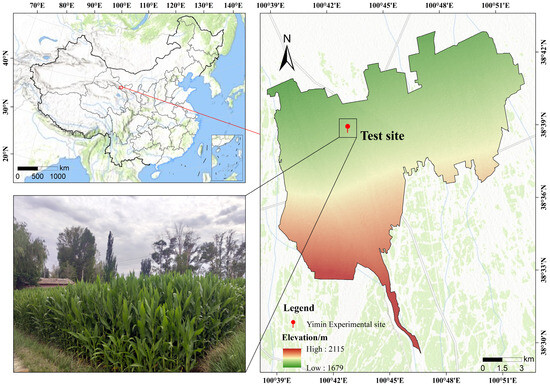
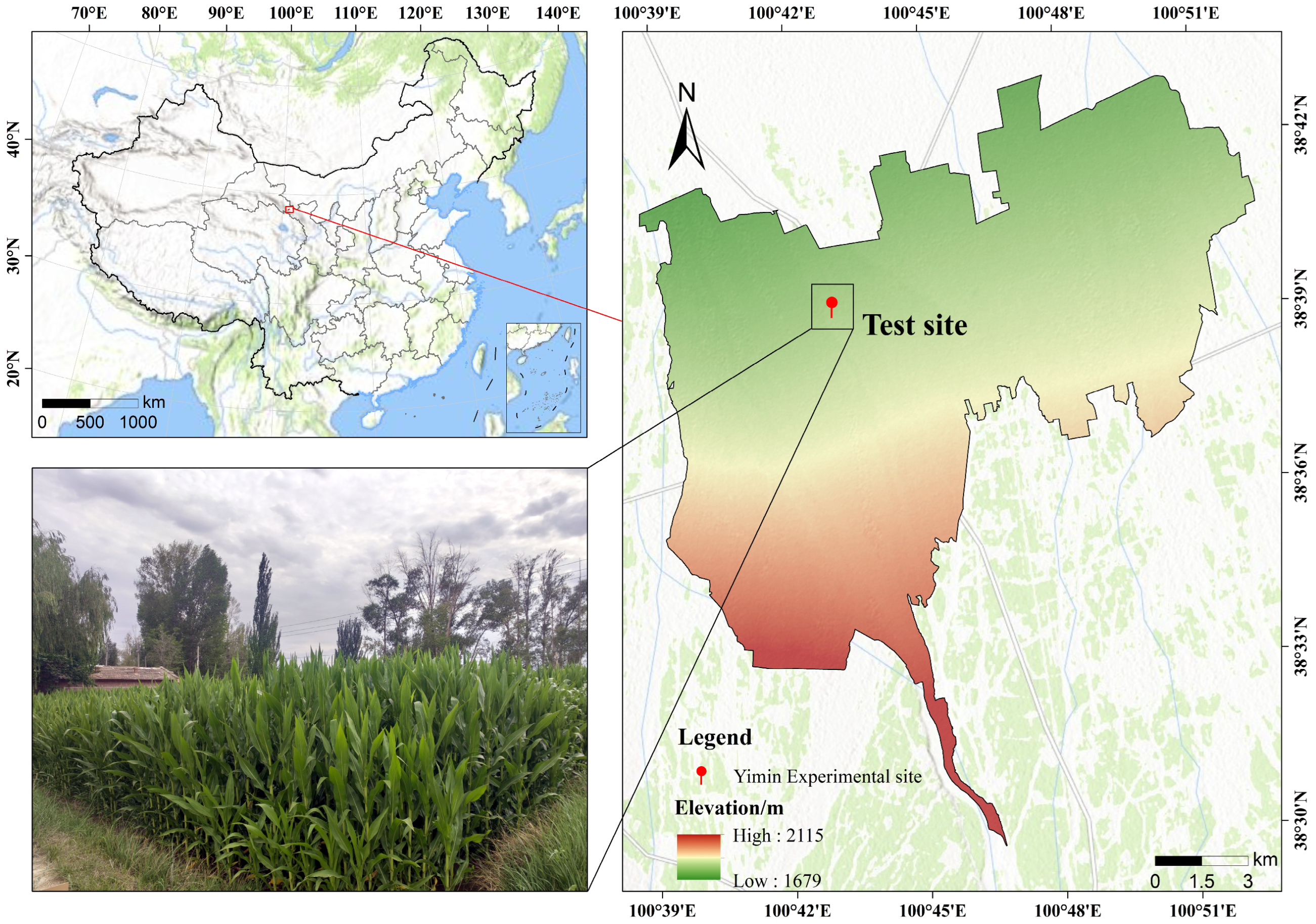
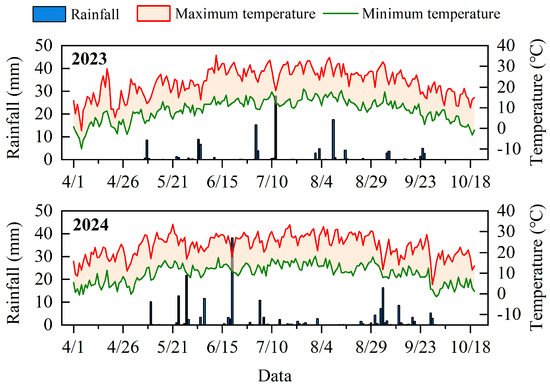
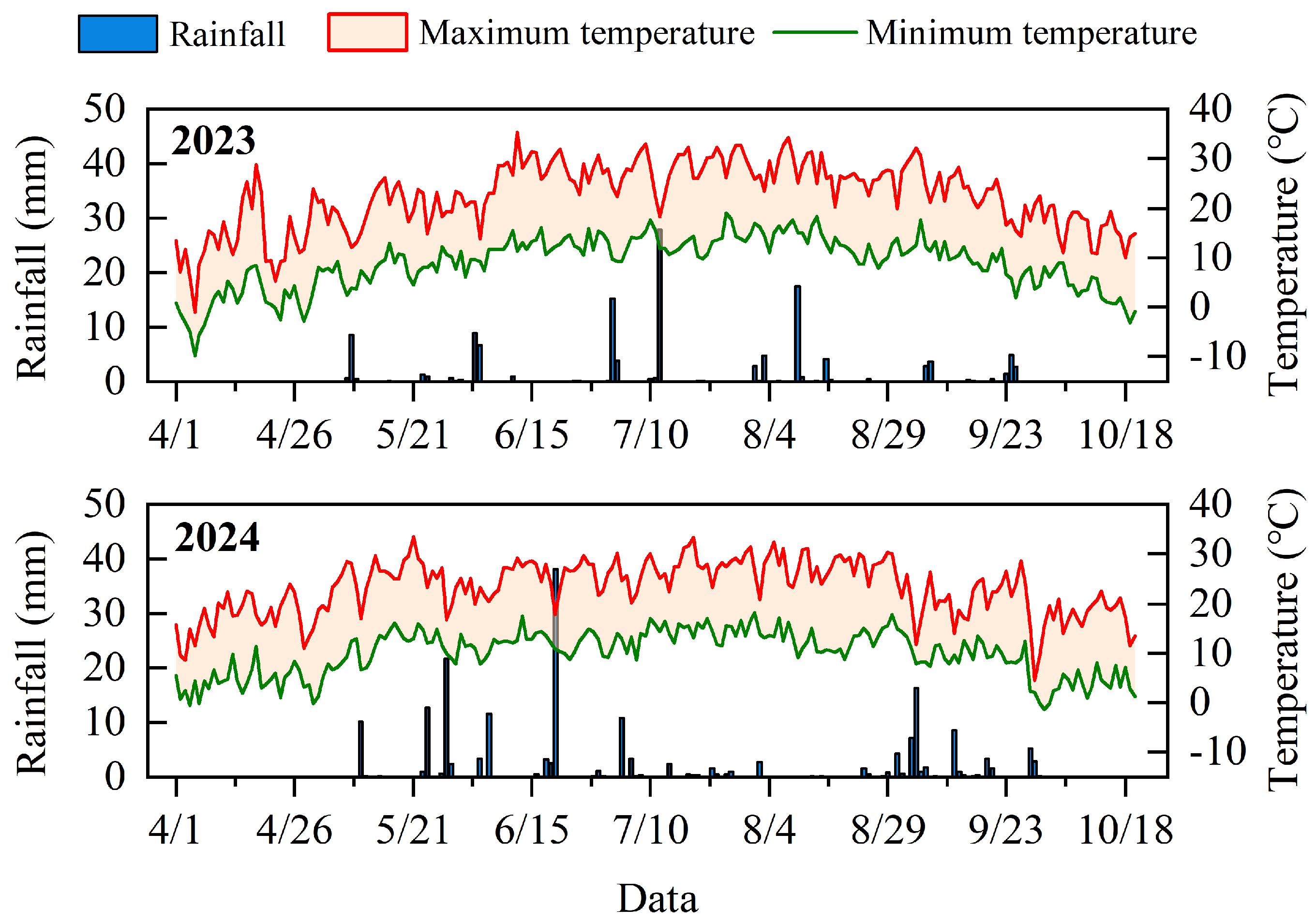
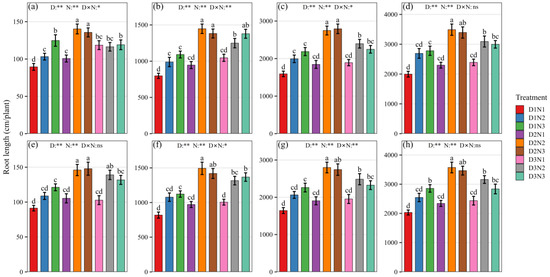
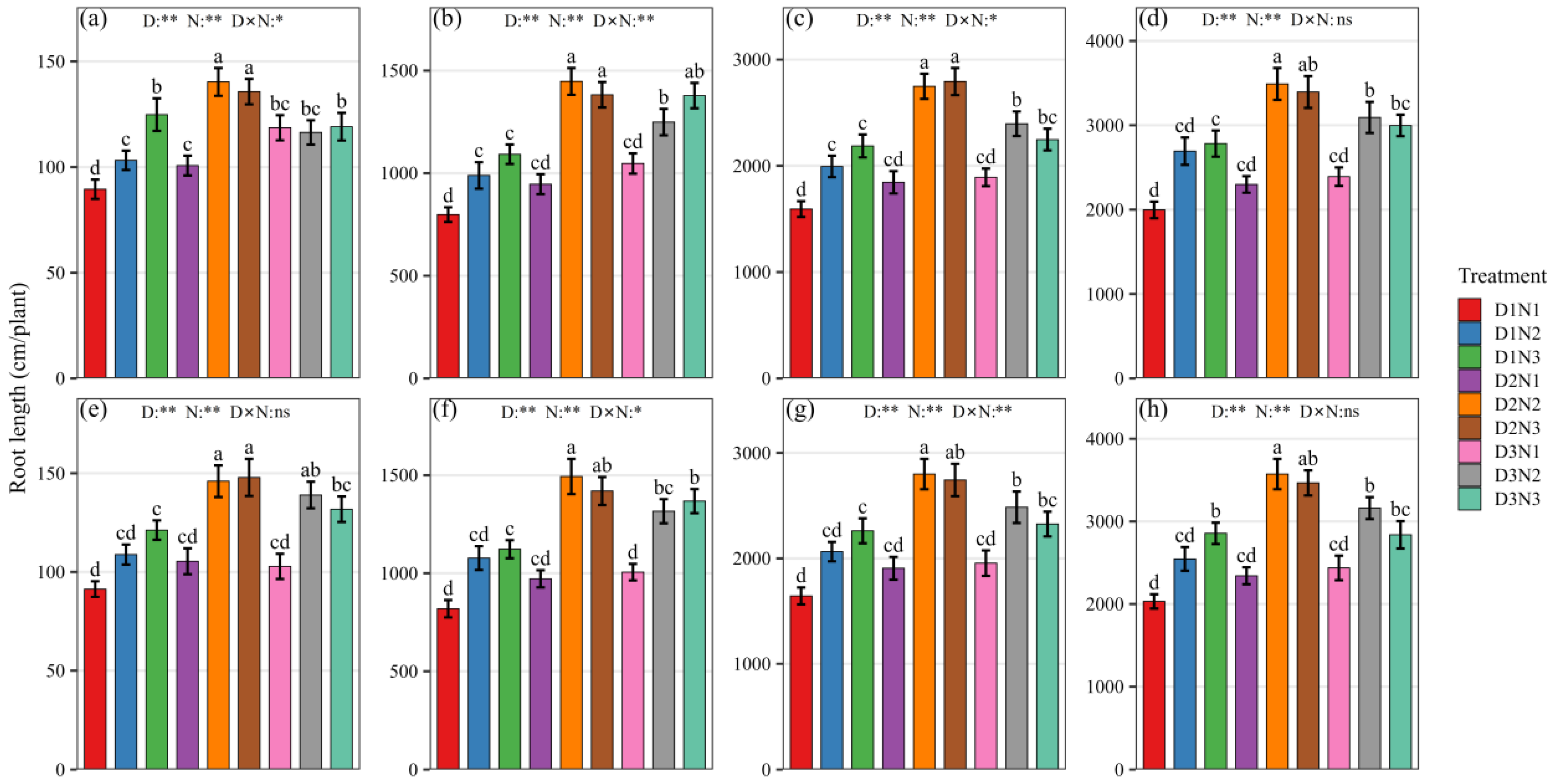
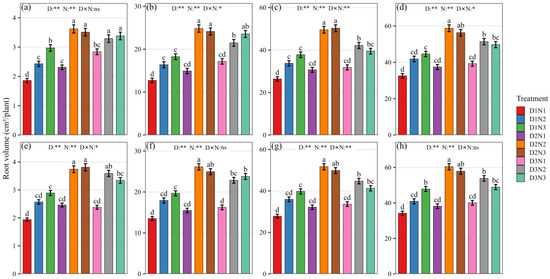
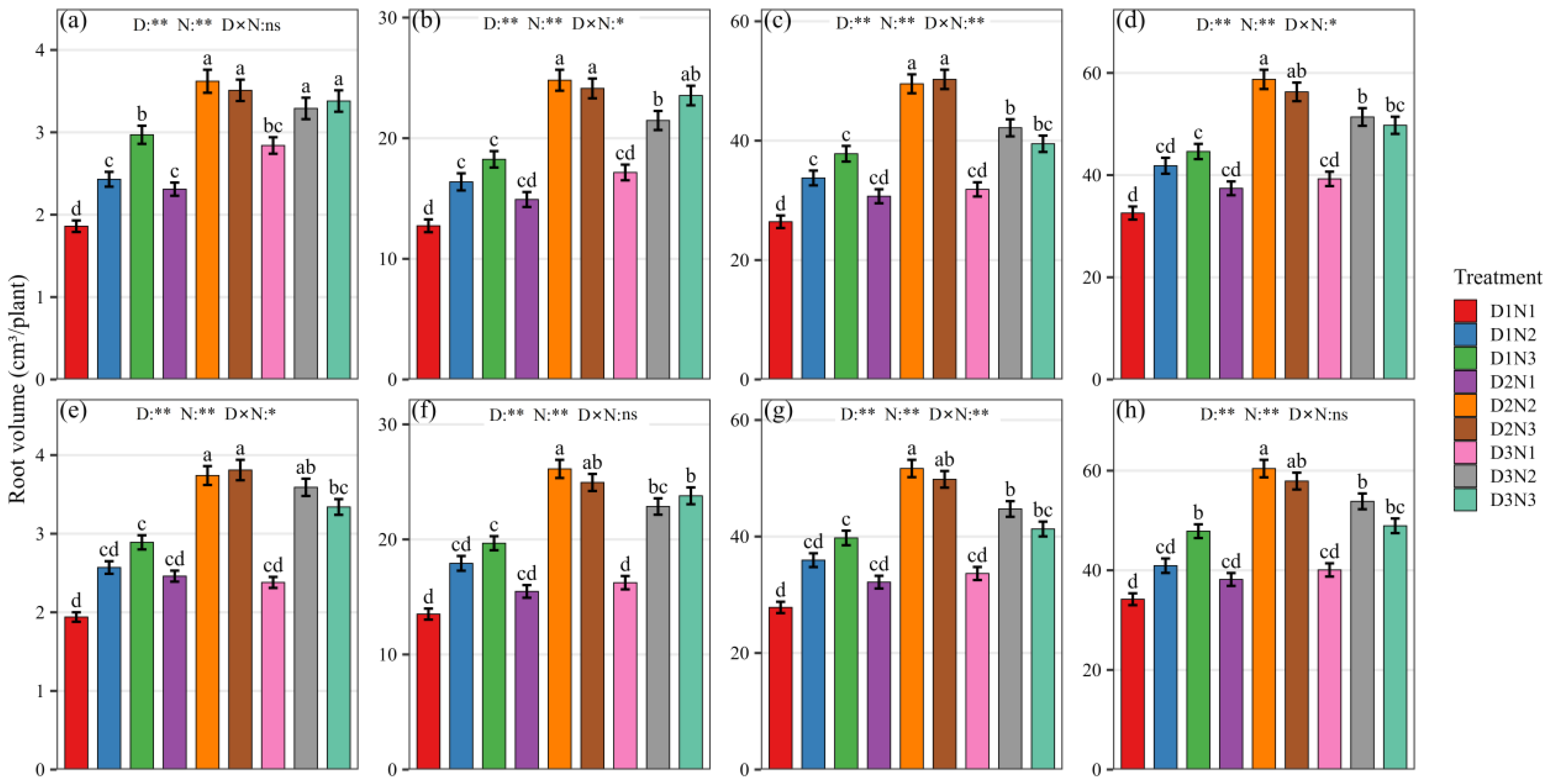
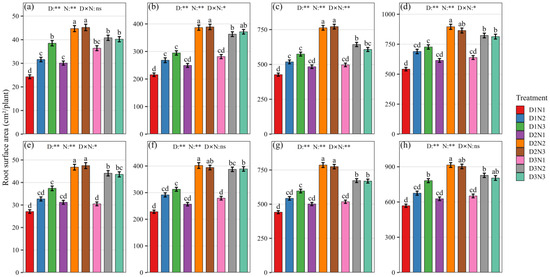
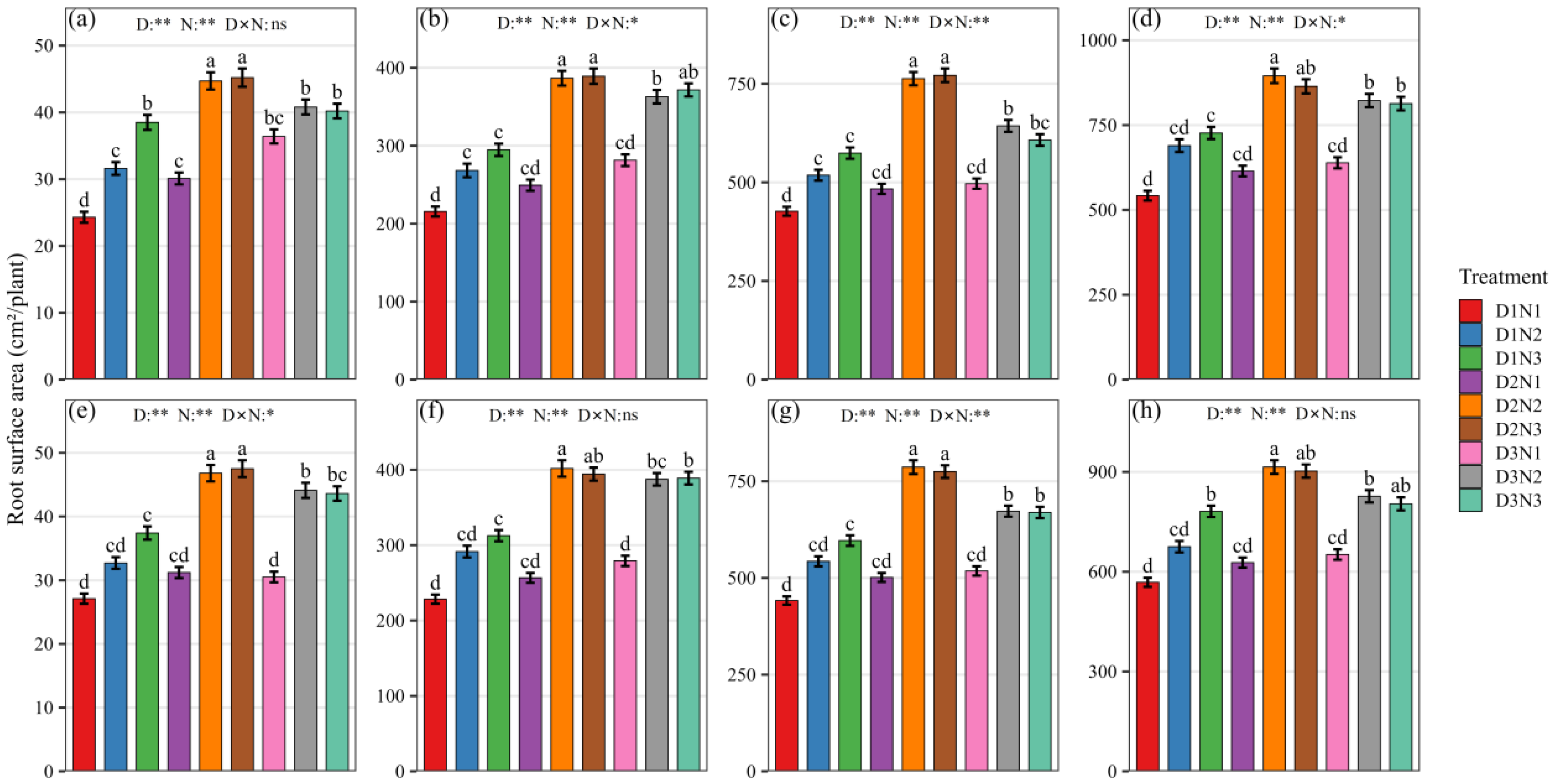
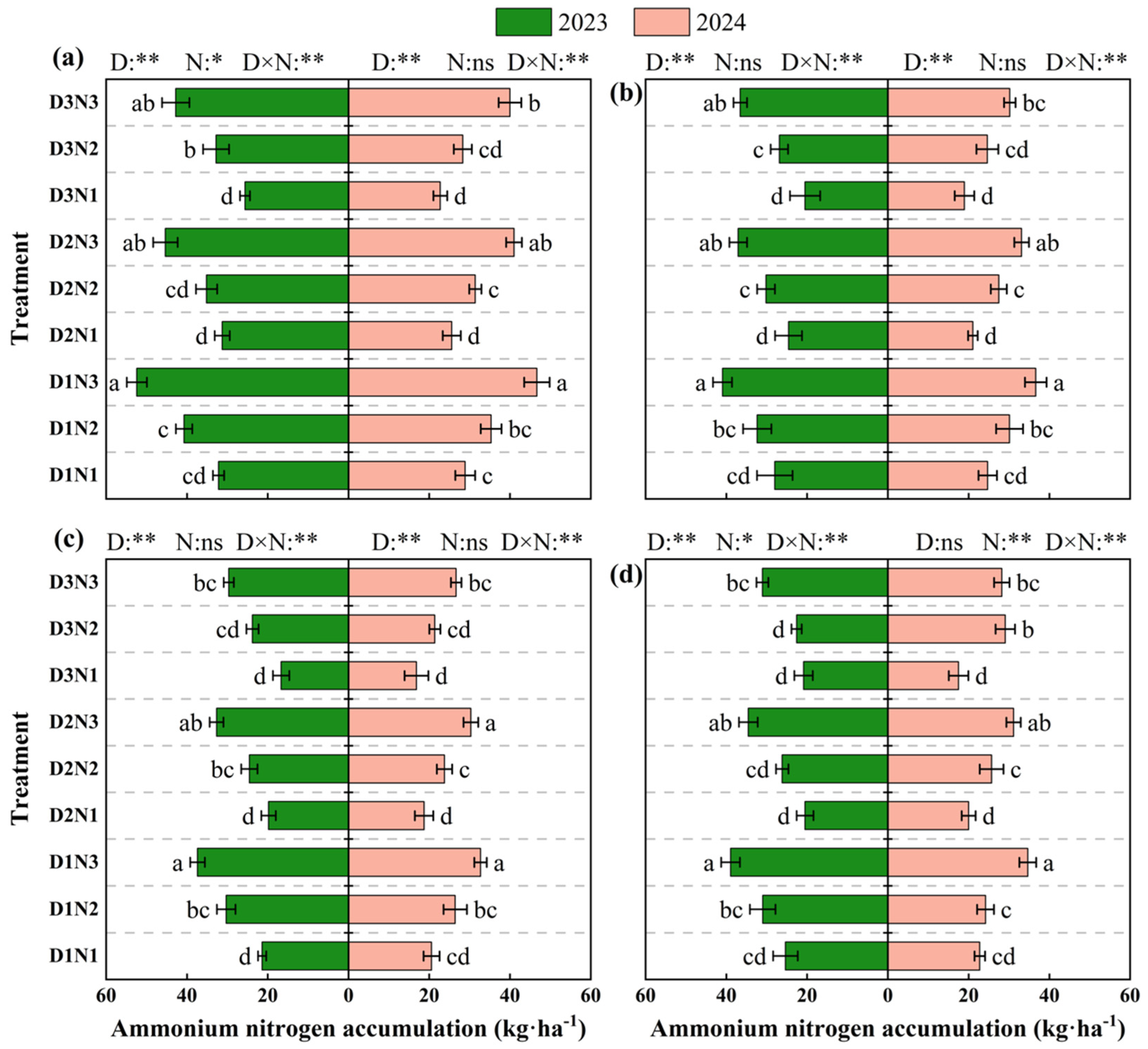
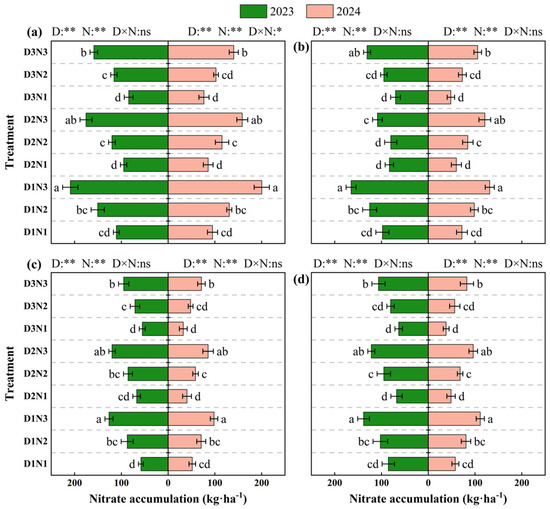
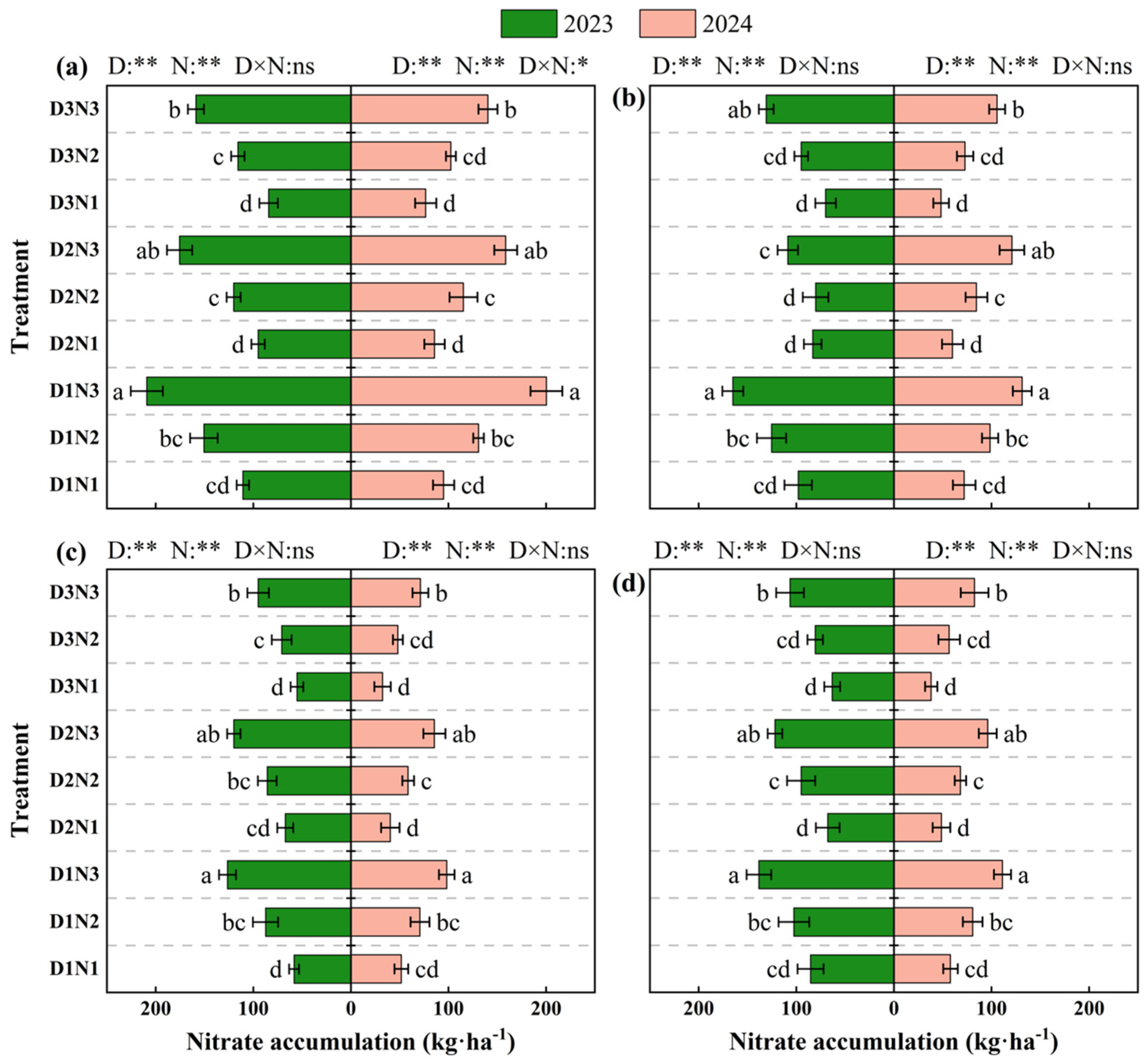
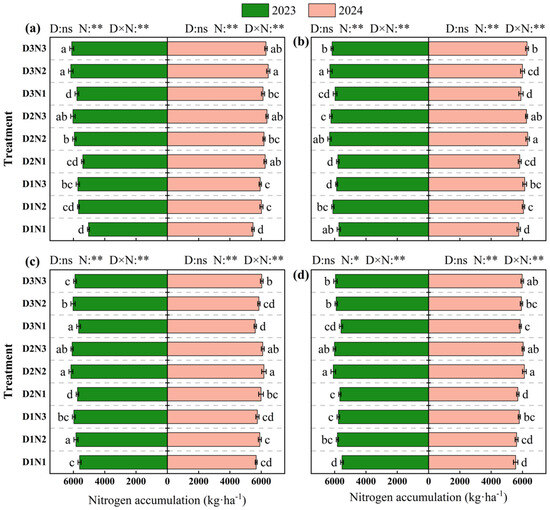
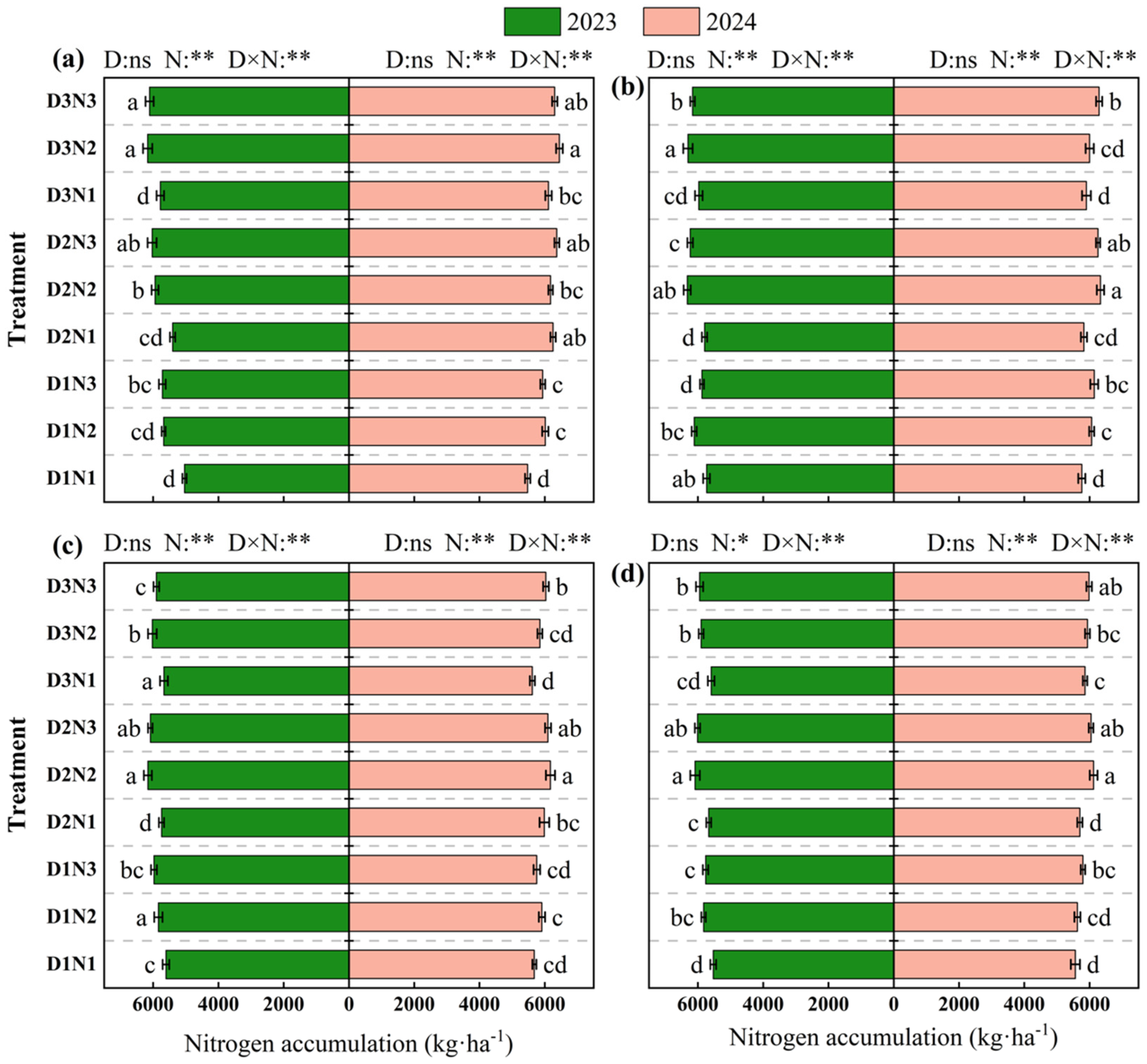
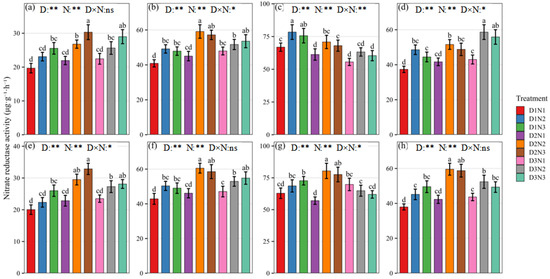
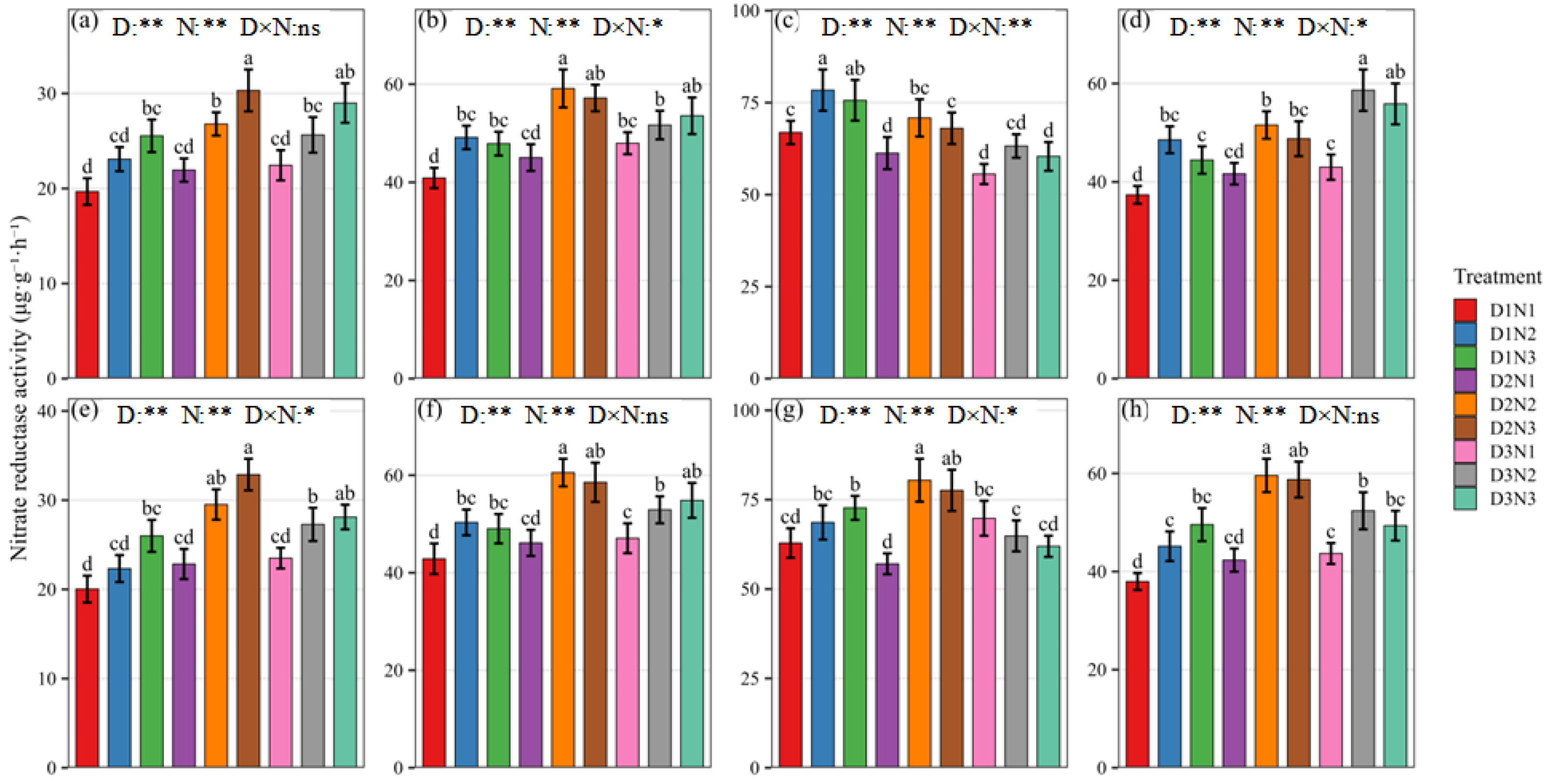
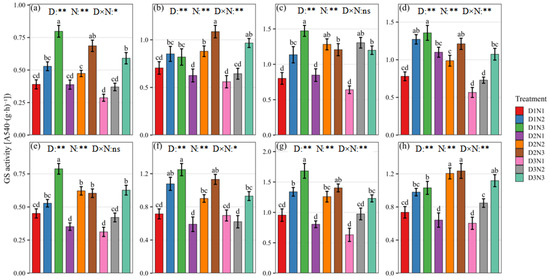
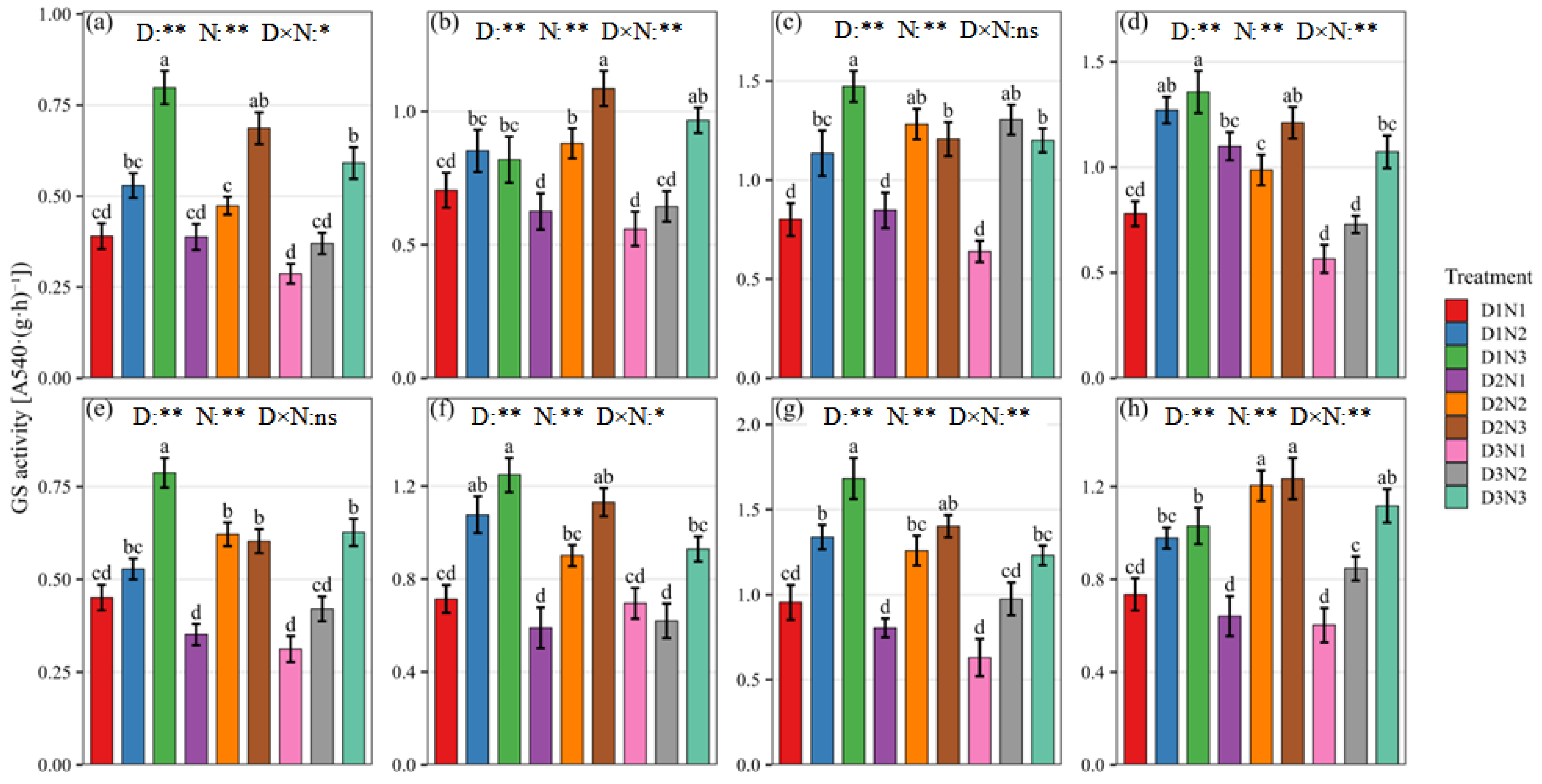
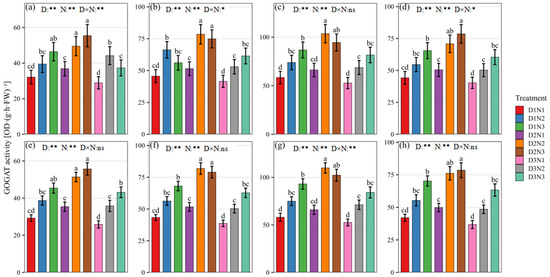
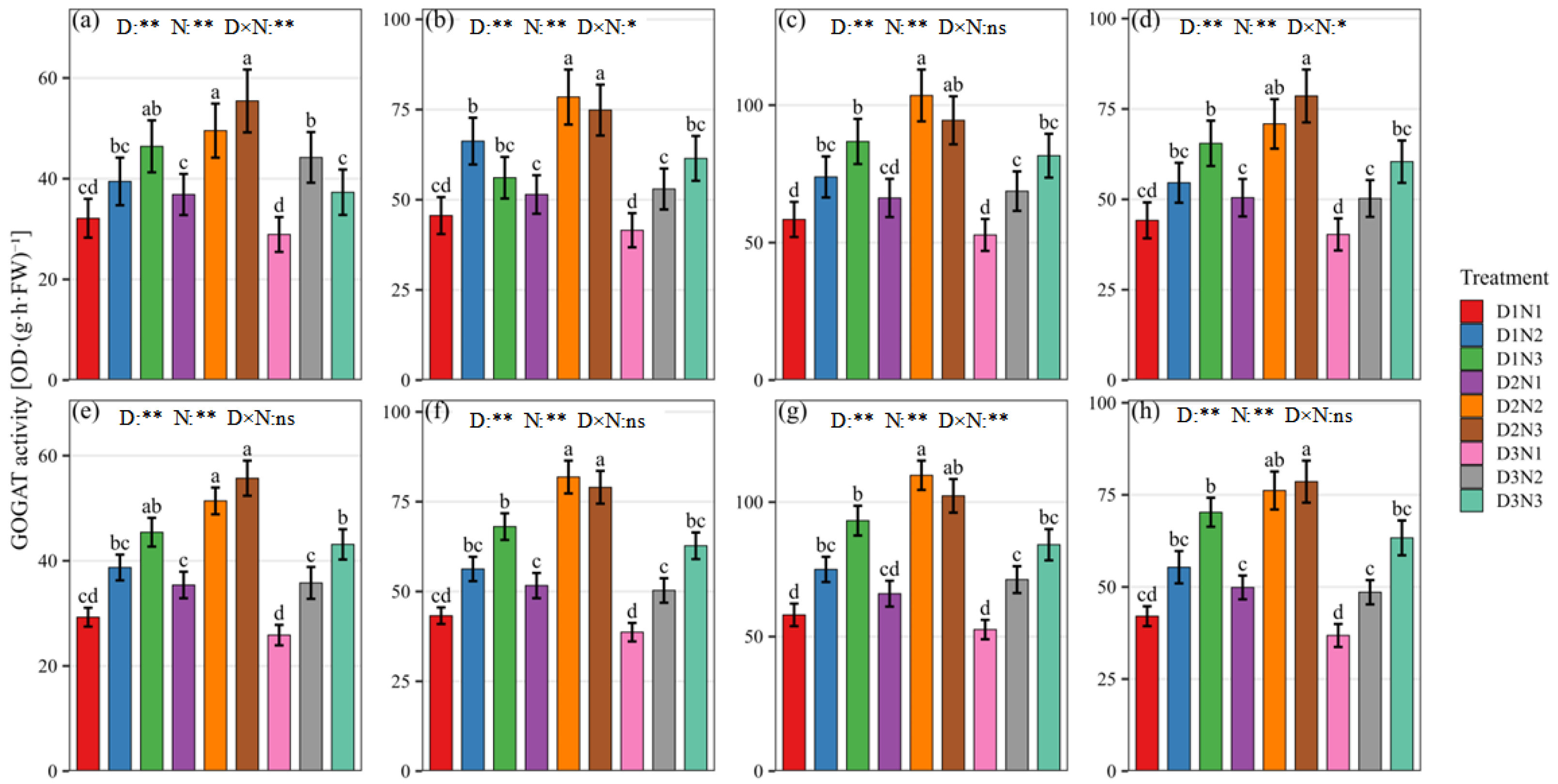
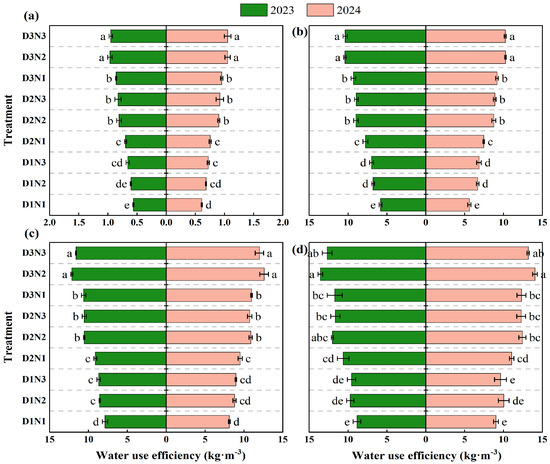
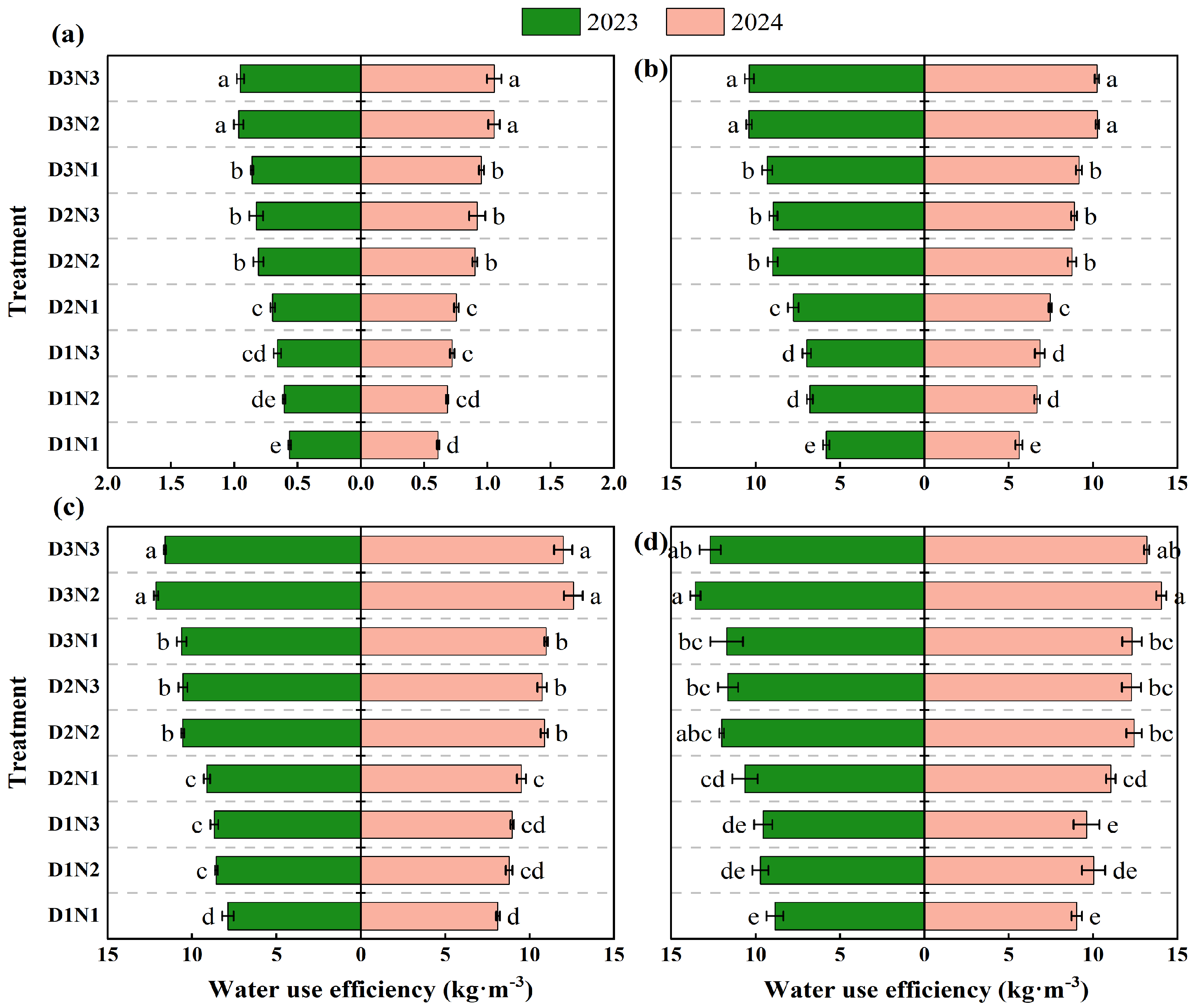
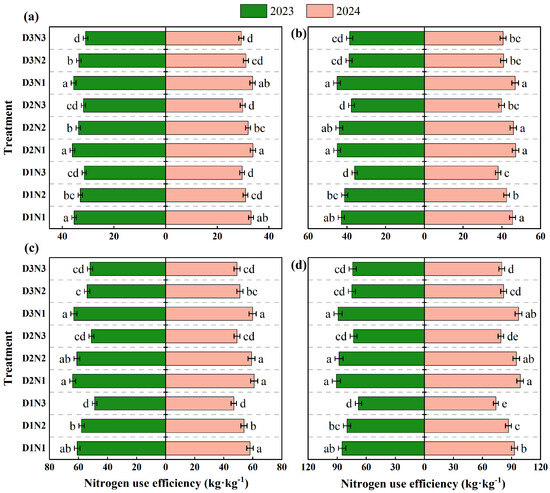
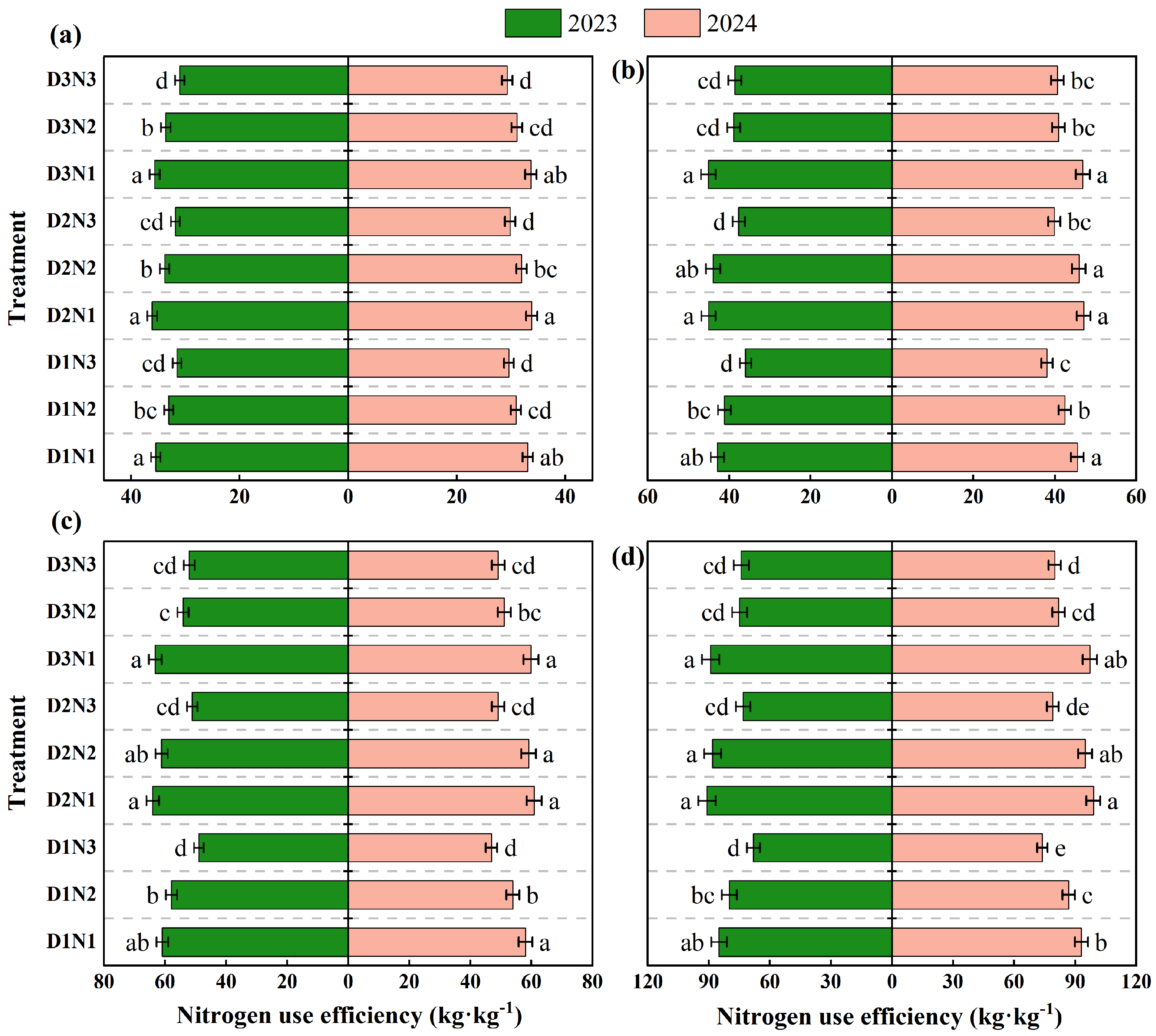

Disclaimer/Publisher’s Note: The statements, opinions and data contained in all publications are solely those of the individual author(s) and contributor(s) and not of MDPI and/or the editor(s). MDPI and/or the editor(s) disclaim responsibility for any injury to people or property resulting from any ideas, methods, instructions or products referred to in the content. |
© 2026 by the authors. Licensee MDPI, Basel, Switzerland. This article is an open access article distributed under the terms and conditions of the Creative Commons Attribution (CC BY) license.