


Abstract
Vegetable mechanized transplanting is a key link bridging industrial seedling raising and field cultivation, whose technical level directly determines operating efficiency and planting standardization. Despite its importance, current transplanting systems still struggle with instability and limited coordination between modules. This review adopts a systematic literature analysis methodology, covering core databases including Web of Science, Scopus, CNKI, and CAB Abstracts. In response to prominent issues in current transplanting equipment, such as continuous seedling supply, low-damage seedling picking, synchronization of conveying and planting actions, and adaptability to high-speed operation, this paper systematically reviews and evaluates the latest research progress in related key technologies worldwide. From the perspective of kinematic chain coupling, the transplanting process is deconstructed into four core stages: “seedling supply—seedling picking—seedling delivery—seedling planting,” with a focus on analyzing the temporal coordination, spatial constraints, state transitions, and their dynamic coupling relationships within the machine-seedling-soil system. Research indicates that vegetable transplanting technology is evolving from localized mechanism optimization toward whole-process collaborative design and system stability control, with typical high-speed operation efficiency reaching 60–140 plants per minute per row. However, significant challenges remain in low-damage seedling picking and planting at high speeds, adaptability to diverse varieties and seedling states, online perception and real-time error correction, as well as engineering reliability. The seedling damage rate under high-speed operation exceeds 8% in most existing equipment, and the planting upright rate drops by more than 5% when the operating speed increases from 60 plants/min to 120 plants/min. Future research should prioritize multi-stage collaborative optimization design, in-depth investigation of machine-seedling-soil interaction mechanisms, innovation in intelligent perception and precise control strategies, and the development of modular, low-cost, and high-performance transplanting equipment. These efforts will drive vegetable mechanized transplanting technology toward greater intelligence, efficiency, and versatility.
1. Introduction
The vegetable sector supports the supply of fresh produce for urban and rural populations and is typical of protected and intensive agriculture systems. With the rapid advancement of agricultural mechanization and protection system upgrading, production efficiency, operational quality, and standardization are central to achieving high-quality agriculture development. Unlike grain crops, vegetable production has short growth cycles, intensive rotation, and high labor dependency. Consequently, seedling quality, transplanting time, and field management are more important factors. Thus, modernization of vegetable production is limited by the mechanization level of key operations, namely transplanting.
It is also known that transplanting, compared to direct seeding, can mitigate the impact of adverse environmental conditions, increase land use efficiency, crop yield and quality, and overall production stability. One of the most popular methods is plug seedling transplanting. Plug trays promote robust and uniform seedlings, which are then transplanted mechanically and have become the dominant cultivation method in modern vegetable production [1,2,3,4]. Vegetable transplanting connects industrialized seedling production and field establishment and remains a weak link for full process mechanization. It remains a limiting stage due to coordination challenges and sensitivity to seedling variability. Different from traditional tillage and sowing operations, transplanting is a highly coordinated continuous process, including seedling picking, posture adjustment, transportation, and planting. Multiple performance indicators, such as seedling integrity, planting verticality, uniform row spacing, and operational continuity, need to be satisfied simultaneously. The closely coupled working procedures cannot be easily separated, and the operation performance is more sensitive to time errors [5,6,7,8]. These performance demands compete mechanically, particularly under variable seedling morphology.
With the development of protected agriculture, industrialized nurseries, and rising labor costs, manual transplanting is increasingly unable to meet production needs due to low efficiency and poor consistency. The efficiency of manual transplanting is only 10–15 plants per minute, which is far lower than the 60 plants per minute required for large-scale production. Therefore, it is urgent to develop transplanting equipment with high efficiency, stability, and adaptability [9,10]. Vegetable transplanters have evolved from semiautomatic to fully automatic systems. Semiautomatic machines feature simple structures and low cost, and because manual feeding compensates for seedling variability that automated systems cannot handle, they still have certain applications due to their tolerance to non-uniform seedlings, but they rely on manual seedling feeding and placement.
Fully automatic transplanters are the only ones that combine seedling supply, picking, delivery, and planting into a continuous process. In addition, it reduces labor costs while increasing efficiency and consistency. In fact, these systems reduce labor costs while improving consistency. Recent studies indicate that this has become a major development trend. Control, sensing, and robotic technologies have shifted the system architecture from mechanical linkage to electromechanical–informational linkage in terms of PLC control, multi-sensor fusion, machine vision, and seedling compensation strategies. The system has initially realized the “perception–decision–execution” closed-loop operation mode, laying a foundation for intelligent transplanting [11,12,13,14,15]. At present, the main constraint is not the ability of individual mechanisms, but the stability of the entire system in cyclic operation. In high-speed work, errors in seedling supply, pick posture deviation, transfer instability, and mismatches in plant timing interact and accumulate, resulting in missed planting, damage, and poor consistency [16,17,18,19]. These errors accumulate due to timing-sensitive coupling and insufficient damping. Differences in cavity size, substrate cohesion, and moisture add additional uncertainty, affecting not only kinematic matching but also stability by seedling mechanics, dynamic response, and external disturbances [20,21].
Thus, vegetable transplanters are essentially typical multi-link motion chain systems. Their overall operational performance is determined not by the performance of individual mechanisms, but dominantly by the synergistic coupling of multi-dimensional factors, including temporal synchronization, spatial alignment, real-time state transition, and dynamic load transfer across sequential functional modules [22,23,24]. In this paper, a systematic review of the core technologies of vegetable transplanters is conducted based on a clear motion-chain coupling methodological framework. In this study, existing domestic and overseas literature is categorized and compared according to three classified technical dimensions: single-mechanism optimization, local interface coordination, and full-system dynamic coupling. All cited studies are grouped by research objects (seedling feeding, picking, conveying, and planting modules) and evaluated in terms of coupling stability, anti-disturbance capability, and operational adaptability, so as to clarify the technical iteration logic and differentiated technical routes of different studies. In this work, motion-chain coupling is formally defined as the temporal correlation and mechanical interaction mechanism among sequential transplanting modules, focusing on interface constraint characteristics, cross-module state transition rules, and multi-unit collaborative coordination principles. Targeting the core research gap that uncoordinated interactive behaviors of discrete functional modules severely restrict the overall dynamic stability and working consistency of transplanting systems, this paper systematically summarizes the state-of-the-art progress of domestic and international research, deeply analyzes the prevailing technical bottlenecks limiting high-speed and high-quality transplanting, and further prospects key development trends in this field. The research outcomes can provide effective theoretical references and technical guidance for the structural optimization, control strategy formulation, and field engineering application of high-performance intelligent vegetable transplanting equipment.
2. Research Progress on Key Technologies of Vegetable Transplanters
Globally, vegetable transplanting equipment has evolved from early semi-mechanized systems relying on manual assistance to integrated systems characterized by continuity, automation, and intelligence. While differences exist in crop types, seedling specifications, and agronomic conditions across regions, research trends have shown a gradual shift rather than being uniformly “clear and coherent.” Recent studies increasingly emphasize chain-level stability rather than isolated mechanism performance. For instance, early work focused primarily on the functional feasibility of single mechanisms (e.g., seedling picking or planting units); however, contemporary research addresses inter-link coordination, rhythm synchronization, interface compatibility, and whole-machine collaboration across the seedling supply–picking–delivery–planting motion chain. Recent designs demonstrate that chain-level stability overtakes individual mechanism performance as the limiting factor, with the research focus shifting from single-mechanism performance to the stability of the entire motion chain during continuous operation.
2.1. Current Research Status of International Studies
Vegetable transplanters were initially developed in developed countries. Benefiting from sophisticated industrial foundations and standardized agronomic environments, relevant studies are generally carried out under steady seedling and field conditions, with priorities placed on whole-machine integration, parameter matching, and platform optimization. Most studies do not explicitly frame their findings through a chain-coupling perspective, even though operational velocity, motion trajectory, and component matching reflect correlated interaction among functional units.
Extensive investigations have explored how forward travel speed affects transplanting quality. Paudel verified that elevated working speed and operating frequency cause variations in planting depth, seedling erectness, and plant spacing uniformity [25]. These effects result from inertial delays and phase mismatches at higher speeds. System performance is determined by the combined interaction of operational rhythm, travel speed, and field environment instead of a single factor. Accordingly, travel speed transforms from a basic working parameter into a core constraint restricting motion chain stability, which highlights the necessity of temporal coordination across seedling feeding, picking, conveying, and planting procedures.
Robotics, machine vision, and intelligent control technologies have been widely applied to modern transplanting equipment, covering Cartesian robots, multi-degree-of-freedom manipulators, control-driven ordered motion, and multi-actuator collaborative trajectory planning, as well as on-run seedling replenishment [26].
Advanced technologies further integrate visual detection, seedling status evaluation, transplanting implementation, and seedling supplement into a unified recognition–execution–compensation process, defined as real-time perception, action execution, and corrective feedback. Such integrated systems deliver better stability and operational uniformity during continuous work compared with single-function devices. Deep learning algorithms raise the identification accuracy of empty seedling trays and weak seedlings above 95%, enabling feedback-based picking adjustment, lowering the seedling missing rate, and upgrading overall working quality. However, these systems remain sensitive to seedling morphology and timing deviations. Globally, research development has shifted from independent mechanism automation toward multi-factor collaborative systems integrating perception, decision-making, and execution modules.
2.1.1. Current Research Status of International Studies Seedling Supply
Research on seedling supply systems emerged earlier than that on seedling picking mechanisms. Currently, such systems have evolved beyond basic stable feeding devices into continuously regulated input units serving subsequent working procedures. Benefiting from highly standardized seedling cultivation overseas, the supply module has developed from plain conveying equipment into a front-end unit responsible for rhythm arrangement and state regulation. The state regulation is defined as the control of seedling posture, conveying timing, and tray cavity alignment for seedling pickup.
Technically, seedling supply systems in international research fall into two mainstream categories, whose structural features directly govern the dynamic coupling and timing stability of the entire transplanting motion chain. The first category is plug tray feeding systems adopting belt, chain, or stepwise mechanisms for continuous and stable seedling delivery. As a typical case, belt-driven systems provide smooth linear feeding and steady seedling states, and achieve precise rhythm synchronization with downstream picking and planting via sensor feedback and program control [27]. Such synchronous regulation mitigates inter-module timing mismatch and motion interference, thus enhancing the dynamic coupling stability of the whole motion chain.
The second category improves system performance by innovating seedling carriers to reduce interface complexity, reflecting the agronomy–machinery integration design principle. Ishizaki developed a cuttable seedling carpet system that transforms discrete seedling handling into continuous feeding and cutting operations (Figure 1) [28]. Unlike intermittent plug tray feeding, this continuous mode eliminates positioning-induced timing gaps, enables upstream rhythm pre-regulation, and reduces the dynamic coupling difficulty of downstream operations. It effectively suppresses motion chain fluctuations derived from discontinuous seedling supply.
Figure 1.
Ishizaki’s transplanting system for cuttable seedling blankets: (A) Conceptual drawing of the vegetable transplanter proposed in this study. (B) structure of the transplanting rotor arm; (C) noncircular planetary gear mechanism to generate the required locus of the top of the transplanting tine. The arm was primarily composed of a noncircular planetary gear set (1), rotor case (2), cam (3), push cam (4), spring (5), and follower (6) to eliminate backlash between the rotor case and end-effector; (D) parts of the end-effector, push cam follower (7), push channel rod (8), spring to move the rod stroke (9), transplanting tine (10), retainer (11), and push plate (12); (E–I) conceptual functioning of the transplanting rotor; (J) rigged plate retainer; (K) leaf spring retainer, long guide (13), soil covering wheels (14), and furrow opener (15). The seedling tray with belt equipping bars (16).
Overall, international optimization of seedling supply systems avoids mechanical complexity and reduces coupling errors and structural redundancy through carrier and feeding mode restructuring. Belt-driven systems feature high stability and low cost but poor adaptability to non-standard trays, which easily triggers alignment deviation and degrades coupling stability under variable conditions. In comparison, the cuttable seedling carpet system delivers superior feeding continuity and chain coordination, yet it depends on specialized nursery agronomy, requiring high upfront investment and lacking maturity for large-scale field application.
In regard to miniaturized and low-cost equipment, international studies focus more on practical seedling supply systems. Sharma and Kharb developed semi-automatic transplanters (Figure 2) for small farmers and showed that although manual feeding limits automation, it still works under cost constraints. The operation performance is affected by many factors, such as the feeding mechanism and soil covering device [9].
Figure 2.
Sharma’s semi-automatic transplanting machine.
Based on these results, Magar proposed an embedded control-based automatic transplanter (Figure 3) to show that low-cost electromechanical solutions can provide coordinated seedling supply and execution by parameter optimization, such as crank speed, substrate moisture, and picking depth. These results suggest that international studies research in this area has opted for scenario-oriented design rather than high complexity, and aims to provide technical solutions to scales, operating conditions, and economic constraints [10].
Figure 3.
Magar’s automatic transplanting device.
With the advancement of transplanting automation, international research on seedling supply has shifted its focus from simple uniform conveying to high-stability seedling input control. The essential paradigm transition lies in functional upgrading of the seedling supply system: it no longer merely undertakes material transportation but provides a repeatable and reliable operating window with consistent timing accuracy, spatial position, and seedling posture for subsequent picking operations. Thus, seedling supply is no longer merely a conveying operation, but a front-end process that organizes the timing, position, and posture of seedlings for the subsequent picking stage. Although existing studies mostly optimize conveying structures, seedling carriers, and operating rhythm regulation, their essential core is to improve dynamic coordination at the supply–picking coupling interface. The ultimate goal is to deliver seedlings with precise positioning, strict timing synchronization, and stable morphological states, so as to create qualified and consistent preconditions for high-reliability automatic seedling picking.
2.1.2. Current Research Status of Seedling Picking Abroad
We have explored the seedling extraction process further by reducing the damage and improving the adaptability. Islam optimized the separation path of extraction and tray boundary, which can be used for a clamp-type mechanism of an automatic pepper transplanter (Figure 4). Rahul K developed a 5R-2DOF parallel robotic arm (Figure 5) capable of handling potted seeds up to 80 g without damage by sensor control, and more compatible with paper pots [29]. To connect the process to downstream processes, robotic systems, vision, and intelligent control have been added. Khadatkar uses a Cartesian robot to grasp automatic seeds and release, which shows a control-oriented system structure (Figure 6) [25]. Overall, international research on seedling extraction has evolved from basic feasibility verification to low-damage and highly stable extraction with smooth linkage. Relevant targets are quantified as a cutting seedling damage rate below 3% and a lifting successful picking rate over 97%. Clamp-type picking has a simple structure and high reliability but high damage risk for fragile seedlings; parallel robotic picking offers high precision and low damage but high cost and complex control, suitable for high-value crops; Cartesian robot picking balances efficiency and cost but has limited working space and adaptability to uneven seedling states.
Figure 4.
The device optimized by Lislam.
Figure 5.
An image of the mechanical arm installed on the walking thruster.
Figure 6.
Khadatkar’s Cartesian coordinate robot: (a) Manipulator, (b) end-effector. (1—Main frame; 2—manipulator; 3—belt; 4—control unit for seedling pick-up; 5—seedling tray; 6—photoelectric sensor; 7—delivery tube; 8—control unit for robot; 9—battery; 10—dc motor; 11—furrow opener; 12—wheels).
In general, international studies research on seedling picking has gone from trajectory design and parameter optimization to low-damage performance adaptability and downstream compatibility, evaluating more than picking success rate, pot integrity, substrate retention, and output stability [30,31]. This indicates that seedling picking is no longer regarded as an independent executing unit, but a critical node governing state transmission of the entire motion chain. It has developed into a multidimensional evaluation system with quantified indicators: picking success rate, seedling damage rate below 3%, and seedling posture deviation within five degrees for subsequent matching.
2.1.3. Current Research Status of International Seedling Delivery
In international studies of transplanters, seedling feeding is the intermediate link between picking and planting, separating seedlings and placing them in the final position. Seedling feeding has evolved from simple conveying to control seedling position, timing, and delivery position. Since seedlings are very standardized abroad, this process is seldom viewed as an isolated problem but rather as part of a continuous chain involving feeding speed, transfer speed, and plant reception window.
Technically, seedling feeding is usually gravity fed via tubes or slides, synchronous belt transport, and rotation distribution systems. Gravity-fed systems are simple structurally, but pose control and placement accuracy are limited under high-frequency operation, where instability and dispersion may occur. Ahmad I developed a rack-and-pinion-based system using digital twin modeling (Adams 2020/MATLAB 2016) that reduced positioning errors and improved coordination between picking, feeding, and planting (Figure 7) [32]. Rotating cups and disc-type distributors buffer seedlings and can adjust the rhythm for multi-row or continuous operation [33,34,35]. Gravity delivery has the lowest cost and simplest structure, but poor posture stability at high speed; rack-and-pinion delivery achieves high precision and good coupling with planting, but high mechanical processing requirements; rotating cup distribution supports multi-row operation but increases volume and inertia, reducing dynamic response speed.
Figure 7.
Overall mechanical structure of rack and pinion-based vegetable seedling transmission device: 1: supporting frame; 2: rack and pinion mechanism; 3: opening and closing mechanism; 4: seedling carrying cups mechanism.
As operating speeds rise, international research on seedling feeding has shifted from path feasibility to phase controllability. This term is defined as limiting the phase offset between feeding and planting windows to less than 10% of one working cycle. Paudel designed a compact automatic transplanter via joint optimization of motion trajectory and running speed (Figure 8). Field tests demonstrate that increased operating speed and frequency trigger prominent planting quality fluctuation, which demands coordinated feeding timing, delivery velocity, and planting interval [16]. Hwang verified that final planting quality is determined not only by planting mechanisms, but also by qualified seedling feeding status, especially under zero-speed soil penetration conditions [36]. Therefore, seedling feeding acts beyond simple material conveyance and provides core input parameters for subsequent planting, including seedling posture angle, delivery speed, and tray cavity alignment.
Figure 8.
Paudel’s fully automatic small transplanting machine: (a) the developed automated vegetable transplanter that requires speed optimization. The transplanter is battery-powered with direct current motors to control its movements. (b) (1) Overall view of the fully automated vegetable transplanter with seedling plug-tray cutting mechanism in the field; (2) plug-tray carrying tool; (3) holding pepper seedling plug trays; (4) placing cabbage seedling plug trays on the holding rail of the transplanter during a field test.
2.1.4. Current Research Status of Seedling Planting Abroad
The seedling planting mechanism is the final unit determining the planting quality. Much attention has been given to the soil-entry trajectory, seedling posture, and agronomy, gradually changing from basic kinematic design to integrated analysis with trajectory control, soil interaction, and quality maintenance. Zero-speed soil entry is also a central issue. Aytem H compares disc, rotary, and dibble transplanters (Figure 9) in different tillage conditions to demonstrate that suitable matching between equipment and soil is needed for planting quality and sustainability, and provides a theoretical basis for zero-speed soil entry design [37], simulation, and reliability analysis. Markumningsih tested stress characteristics of a four-bar planter under high-frequency motion (Figure 10) and showed its mechanical performance limits [38]. Overall, research has moved away from planting to dynamic speed matching and stable planting quality at soil entry.
Figure 9.
Transplanters evaluated in this study for potted seedling transplantation under different tillage conditions: (a) disc-type transplanter with elastic discs to minimize seedling damage and markings for spacing adjustment, (b) carousel-type transplanter with automated seedling placement and press wheels for compression, and (c) dibble-type transplanter with a funnel mechanism for precise seedling deposition.
Figure 10.
Shape of stress measurement system.
With more recent work, international studies on seedling planting have expanded beyond trajectory optimization to machine–soil interaction and planting quality control. Ankit S proposed a semi-automatic plug-seedling transplanter based on a machine–soil–seeding coupling model with five bars and auxiliary devices (Figure 11). Field results for tomatoes and eggplant showed upright planting rates exceeding 89% and improved transplant quality [39]. This suggests that the design of seeds has moved from trajectory optimization towards performance optimization. Evaluation criteria have evolved from simple trajectory realization to zero-speed soil entry, posture stability, and planting consistency. Disc-type planting adapts to loose soil but is poor in clay soil; rotary planting achieves high efficiency but large vibration; and dibble-type planting ensures high upright rate but low operating speed. Zero-speed entry design effectively reduces seedling damage, but its performance relies heavily on stable seedling input from the delivery link.
Figure 11.
Fabricated view of hopping dibber.
2.2. Current Research Status of Research Conducted in China
Compared with international studies, Chinese studies of vegetable transplanters started later but progressed fast, becoming problem-oriented, adapting to local agronomic conditions and system integration under multiple constraints [40]. Research conducted in China focuses on practical conditions such as variability in plug tray, seedling inconsistency, limited space in the facility, and different planting modes.
In this context, integrated organization of the operation chain has become a key area. Through PLC or embedded control systems, seedling supply, picking, separation, and planting operations can be coordinated in order to maintain stability at different working frequencies. In addition, multiple functional modules (feeding, picking, planting, and tray recovery) can be integrated, thus enabling continuous multi-row operation and achieving better yield. In general, research conducted in China is moving from partial automation to full process continuous systems, with more emphasis on system coordination and integration.
Distinctions in coupling strategies and technical routes exist between domestic and international research. Backed by sophisticated industrial infrastructure, overseas systems mostly adopt modular and standardized design, although high-end robotic equipment still fails to achieve standardization. Domestic studies emphasize complex mechanisms and kinematic trajectory design to build continuous paths for seedling picking, conveying, and planting. These divergent development approaches bring disparities in structural precision and trajectory complexity.
Mechanisms based on non-circular gears and planetary gear trains can be used for multi-link integrated motion with good trajectory continuity and position matching advantages over rigid mechanical coupling design, while crop-oriented designs are increasingly explored, in which tailored trajectories (such as zero-speed soil entry) help to reduce seedling damage and reflect agronomy-driven equipment development [41]. Overall, research conducted in China has made progress in adapting to complex conditions, mechanism innovations, and system integration, but there are still problems in multi-link coordination, matching, and stability between subsystems. The seedling supply stage is the first link, as rhythm stability and supply consistency directly influence subsequent picking and planting performance and need further study.
2.2.1. Current Research Status of Research Conducted in China on Seedling Supply
Different from overseas research targeting standardized seedlings, domestic studies prioritize adaptability to complex working conditions, including diverse tray types, variable substrate cohesion, and irregular seedling morphology, as well as varied carriers and regional agronomic limitations. Affected by inconsistent tray materials, seedling varieties, and planting patterns, domestic seedling supply systems integrate conveying, sorting, separation, and rhythm regulation with subsequent procedures, featuring strong engineering practicability and agronomic compatibility [42].
Such systems adapt well to non-standard trays and uneven seedlings, yet deliver lower operational consistency than standardized overseas counterparts. Stepwise feeding achieves precise positioning but limits working speed; continuous linear feeding boosts efficiency at the cost of positioning stability.
Research conducted in China consists mostly of stepwise tray feeding, continuous linear supply, pneumatic separation, and specific systems for specific seedlings. For example, Long Xinhua proposed zigzag step-feeding using horizontal screw and vertical ratchet, allowing precise tray positioning suitable for 128 cell trays and stable conditions for automatic picking (Figure 12) [43], Zhang Yongzheng proposed linear supply system for sweet potato seedlings, integrating feeding and oblique planting for spacing uniformity and reduced missed planting (Figure 13) [44], Wang Haiyang proposed a supply device for corn paper-pot seedlings, optimizing linkage parameters by simulation, and adapting design to specific substrate characteristics [45].
Figure 12.
Structural diagram of the cave feeding device: 1. power transmission device; 2. longitudinal feed drive mechanism; 3. transverse feed drive mechanism; 4. seedling tray rack; 5. machine frame; 6. seedling tray.
Figure 13.
The fully automatic linear seedling supply system developed by Zhang Yongzheng was tested in the field.
In recent years, research conducted in China on seedling supply has moved from simple mechanical feeding to coordinated control between supply rhythm and execution timing. Chen Liang developed a pneumatic supply control system (Figure 14) based on interval clamping and sequential transplanting with high picking and dropping success rates at 60 plants/min [46], showing that pneumatic feeding and rhythm control improve stability in continuous operation. The role of the seedling supply system is shifting from simple transport to ordered, position-specific, and stable inputs for subsequent picking in variable conditions. Research conducted in China emphasizes object-adaptive design and front-end organization, from individual mechanism design to coordinated matching between supply rhythm, supply state, and picking.
Figure 14.
Experiment on the pneumatic seedling feeding device developed by Chen Liang.
Overall, research conducted in China on seedling supply emphasizes engineering adaptability to changing seedling conditions and different carriers, and has moved from simple conveying to front-end rhythm organization and supply stability. In present systems, the seedling supply unit acts as a transport component and also as a front-end regulator, linking variability in seedling conditions with downstream automated processes. Its main function is to provide inputs with correct positioning, ordered sequencing, and stable states for reliable seedling picking.
2.2.2. Current Research Status of Seedling Picking in China
Research conducted in China on seedling picking mechanisms ranges from complex mechanism design to multi-method collaborative approaches [47,48,49,50], cam-linked mechanisms for improved motion control, and pneumatic reciprocating devices with high frequency operation [51]. Dual-row picking devices meet high-speed requirements [52].
In addition, adaptive designs such as retractable whole-row picking allow variable-spacing release after extraction, thus reducing the intermediate distribution burden [53], and recently, innovations such as the “top loosening–stem clamping” method and multi-needle end-effectors optimized by EDEM–MFBD simulation have made advances from macroscopic trajectory design to microscopic contact mechanisms [54,55]. The specific advantages and disadvantages, as well as a schematic diagram of the device, are shown in Table 1. These studies collectively show that seedling picking is no longer an isolated operation, but an important condition in the upstream conditions of subsequent delivery and planting. Non-circular gear picking has an ideal trajectory but complex processing; pneumatic picking supports high speed but poor consistency under unstable air pressure; “top loosening–stem clamping” significantly reduces substrate damage but requires precise action coordination, with lower engineering reliability at present.
Table 1.
Comprehensive chart of research technologies from research conducted in China’s seedling picking institutions.
2.2.3. Current Research Progress on Seedling Delivery Systems in China
Compared to international studies research based on standard conditions, research conducted in China emphasizes stable transition and rhythm coordination under variable seedlings, limited space, and high-frequency operation. Under these constraints, the seedling feeding system is no longer just a transfer unit but a receiving, buffering, and distribution function as well as planting in time and space. Hence, it exhibits strong chain link characteristics and high engineering adaptability requirements. Seedling delivery in China focuses on anti-disturbance and posture retention under complex conditions, but control accuracy is lower than international systems; chain-row delivery has strong field adaptability but large motion inertia, limiting high-speed operation performance.
In research conducted in China on seedling feeding development, pickling and feeding are integrated through a drive mechanism, and spatio-temporal coordination with planting is improved through motion control. Long Xinhua designed a cam-linkage driven picking–feeding mechanism at 80 plants/min that was successful (Figure 15). Wu Long developed a PLC-based picking–feeding control system with stable performance at 60–120 plants/min, showing that flexibility and rhythm coordination improve [56].
Figure 15.
Design and experiment of the driving mechanism for the seedling feeding device: (a) the seedling picking process, (b) the seedling delivery process.
Chain-row feeding has become a key direction for the delivery–planting interface. Li Xiang studied the throwing of plug seedlings and found that stroke speed, basket angle, and throwing parameter influence landing position and thus plant stability (Figure 16) [57]. Jin Xu optimized feeding parameters matching the machine forward speed by finding suitable ranges of feeding height and horizontal distance to increase the success rate [58]. Zhang Yuquan introduced control techniques using non-singular fast terminal sliding mode strategy with disturbance (Figure 17) observers to decrease trajectory errors and system robustness in high speed [59]. These studies show that research conducted in China on seedling feeding has evolved from basic kinematic matching to integrated optimization with dynamic behavior and control strategies.
Figure 16.
Experimental device of Li’s chain-type transplanting machine: 1. seedling feeding cup; 2. seedling feeding mechanism; 3. planting mechanism; 4. frame; 5. gear motor; 6. hanging cup.
Figure 17.
Schematic diagram of Zhang’s seedling picking and delivering mechanism: 1. seedling pickup and delivery manipulator; 2. seedling pickup and delivery robotic arm; 3. flip mechanism; 4. crank rocker mechanism; 5. pitch changing mechanism.
Overall, research conducted in China on seedling feeding has moved from simple conveying devices to chain units with drive, rhythm, spatio-temporal matching, and control. From simple transfer, seedlings are delivered to seeds with precise position, timing, and stable state, providing reliable input for later planting through improved receiving, transition, and distribution.
2.2.4. Current Research Status of Seedling Planting in China
In the seedling planting stage, research conducted in China is capable of designing mechanism innovations based on agronomic requirements. Yu proposed planetary gear transplantation using non-circular and eccentric gears, developed for rice, but applied to vegetable transplanting. Such a concept of variable transmission is used in rice transplanting. We have studied soil-entry trajectory and posture control. Wang combined non-circular gears with multi-link mechanisms (Figure 18) [60]; Zhao developed a differential gear-based mechanism (Figure 19), which adjusts the plant trajectory to varying plant spacing; and Bao Lixu designed a planting system for high-density vegetable production (Figure 20), integrating the agronomy and machine structure [61]. These results indicate that research conducted in China has moved beyond basic planting realization to coordinate optimization of trajectory design, soil-entry performance, and operation rhythm under complex conditions. Planting mechanisms in China have strong agronomy adaptability and low cost, but system integration and stability control lag behind international studies; non-circular gear multi-link planting achieves ideal zero-speed entry but high processing difficulty, limiting large-scale promotion.
Figure 18.
Wang proposed the Adams model and physical diagram of a seedling planting mechanism combining a non-circular gear system and multi-linkages [60]: (a) ADAMS modeling diagram; (b) physical object image.
Figure 19.
The differential planetary gear train seedling transplanting mechanism designed by Zhao was tested.
Figure 20.
Structure diagram of densely planted vegetables, automatic transplanter. 1. Seedling collection and sowing mechanism; 2. Nursery tray conveying mechanism; 3. Variable distance spreading mechanism; 4. Planting mechanism; 5. Soil covering mechanism; 6. Air compressor; 7. Chassis; 8. Generator; 9. Seedling tray recovery mechanism; 10. Nursery tray storage rack.
Overall, domestic research prioritizes engineering realization amid complex agronomic environments and non-standard seedling states. It focuses on seamless interface connection across seedling feeding, picking, conveying, and planting, alongside mechanism design, trajectory optimization, and mechatronic control. Shortcomings include insufficient long-term reliability assessment and standardized verification. Its high-speed coupling stability is constrained, with accumulated inter-module phase errors exceeding 5% when operating above 60 cycles per minute, and the overall popularization capacity remains limited. Backed by complete industrial systems and standardized cultivation conditions, international research lays stress on parameter matching, modular integration, and closed-loop control on mature operating platforms.
In contrast, major technologies in vegetable transplanters have moved from single mechanism realization to whole machine motion chain optimization. The problem is not individual mechanism functionality, but how the supply, picking, delivery, and planting maintain stable coupling in terms of timing, space, and state consistency under high-frequency conditions. Future research should focus on interface constraints, error propagation, and system coordination, as discussed below.
3. Progress in Whole-Machine Transplanting Chains and Their Coupling Technologies
3.1. Coupling Technology of Seedling Supply and Retrieval
Under the motion chain coupling framework, seedling supply and picking constitute the front-end coupling interface, whose stability determines the error input level of the whole chain. This stage is not a simple sequence linkage, but a multi-factor coupling between supply positioning accuracy, target window stability, picking trajectory, seedling mechanical properties, and operating rhythm [62]. Therefore, rather than merely focusing on positioning and extraction, more attention should be paid to the process itself.
To address this problem, Yao treated supply and picking as a single system (Figure 21). Given the deformation of plug trays and unstable positioning references, they proposed multisensor fusion and a finite state machine to separate continuous actions. Experiments showed a maximum positioning error of 1.35 mm and a picking success rate of 95% at 800 Hz. These results show that under flexible trays and high-frequency conditions, mechanical constraints alone are not sufficient. Stable operation requires coordinated sensing, control compensation, and mechanism design to maintain a reliable target window.
Figure 21.
Yao’s multi-sensor model: 1. seedling picking device; 2. seedling conveying device; 3. seedling tray; 4. guiding tube; 5. picking claws.
Seedling supply at the supply–picking interface is primary to target positioning, while picking is primarily to action organization and execution. Picking is dynamically driven by multiple parameters. Han showed that jacking height, insertion depth, and gripper closing timing are closely coupled; deviations in timing affect seedling stress conditions and clamping performance [63]. With increasing concern over seedling damage, research has extended beyond trajectory design to coordinated optimization of motion and force characteristics. Wang Xiu demonstrated that stem-clamping devices are better suited to thicker seedlings such as peppers, while Hu Jianping proposed a top-clamping–pulling mechanism (Figure 22) that reduces substrate damage by coordinating multiple actions [64,65]. Optimizing the supply–picking interface has evolved from simple positioning accuracy to stable target generation and low-damage picking performance.
Figure 22.
Research on the combined seedling-taking device by Hu Jianping and Wang Xiu. (a) Structure diagram of the whole row of the stem-clamping seedling picking device: 1. seedling taking and fixing frame; 2. shifting cylinder; 3. seedling separating mechanism; 4. seedling cup; 5. seedling cup detection sensor; 6. planter; 7. variable-frequency motor; 8. plug tray positioning rod; 9. seedling pushing rod; 10. seedling tray positioning sensor; 11. seedling claw positioning sensor; 12. seedling clamping device; 13. lifting cylinder; 14. shifting fixing plate. (b) Top clamping and pulling combined seedling picking device: 1. seedling tray conveying mechanism; 2. seedling tray pressing rod mechanism; 3. seedling picking mechanism; 4. support; 5. seedling ejecting mechanism.
The complexity of supply picking is due to the fact that seedlings are not rigid bodies but flexible systems consisting of roots, substrate, moisture, and tray constraints [66]. This interface is akin to the coupling between kinematics and mechanical properties. Han Lühua [22] showed that seedling age, substrate moisture, and root development are important factors in pots and extractability. A good root–substrate consolidation improves structural stability and provides a basis for selecting clamping mode, force, and picking depth.
Therefore, the supply system outputs variable biological objects rather than uniform targets. Fixed parameters in picking operations cannot ensure stable performance under changing seedling conditions.
To explain damage mechanisms, recently DEM, multi-body dynamics, and machine–soil–seedling coupling simulations have been applied to microscale interactions. Tian showed that claw geometry, such as bending radius and surface roughness, reduces substrate breakage [67]. Hu Jianping measured clamping force and damage rate using EDEM–RecurDyn simulations [68].
As a result, seedling picking actuators are increasingly focused on flexible contact and low damage extraction. Zhang developed a multi-finger bionic manipulator (Figure 23) and demonstrated, using RecurDyn–EDEM simulation, that clamping depth and angle control can lead to high picking success and low damage [69]. Cheng Yin optimized a specially designed mechanism for broccoli plug seedlings from trajectory design and experimental validation [70].
Figure 23.
Introduction to a low-damage specific seedling extraction device: (a) Zhang’s flexible seedling picking device; (b) schematic diagram of the field test of Cheng Yin’s broccoli seedling picking device.
Overall, optimization of the supply–picking interface has moved beyond positional accuracy toward maintaining structural integrity and appropriate force application during extraction. Thus, coupling quality at the front end depends not only on spatial matching but also on the compatibility between contact mode and seedling mechanical properties.
Since then, the role of the seedling supply system has expanded from simple feeding to flexible control and multi-link coordination. Chen Liang developed a pneumatic system (Figure 24) using whole row clamping with a picking and dropping success rate above 95% at 60 plants/min, and showed that coordinated design of supply mode and operation rhythm improves front-end stability [46]. Functions also differ depending on crops and carrier form. Wang Haiyang showed that for maize paper-pot seedlings, the supply process may involve transport, separation, cutting, and guided delivery [45].
Figure 24.
Schematic diagram of a typical device in the seedling supply system: (a) schematic diagram of the structure of a fully automatic seedling supply device: 1. Seedling separation mechanism; 2. seedling picking and placing mechanism; 3. individual seedling; 4. tray feeding mechanism; 5. machine frame. (b) The whole machine structure: 1. serrated disc cutter; 2. pot-grown seedlings; 3. seedling feeding track; 4. frame; 5. transmission sprocket; 6. transmission chain.
This indicates that the coupling between seedling supply and picking is not limited to plug seedling systems, but represents a general “target generation–extraction” problem at the front end, fundamentally affecting overall system stability.
Overall, the coupling between seedling supply and picking has evolved from separate optimization to a coordinated front-end process focusing on stable window generation and reliable interaction. In general, supply positioning accuracy, seedling mechanical properties, and picking parameters are strongly coupled: supply units must deliver consistently placed targets, picking units must provide reliable grasping, and picking units must generate acceptable initial states for downstream processes.
Thus, the supply–picking interface has transformed from simple geometric alignment into a critical front-end node integrating mechanics, sensing, and control. It is also the most sensitive stage in the system, highly affected by seedling variability and timing disturbances. Future improvements should focus on enhancing the integrated capability of “target generation–stable acquisition” rather than optimizing individual links in isolation.
3.2. Coupling Technology for Seedling Picking and Delivery
Guided by the motion chain coupling framework, picking and delivery form the state transition coupling node, focusing on seedling posture, velocity, and disturbance matching. Stability is not dependent on the action sequence but only on whether the picking output state can be received by the delivery system. Released seedlings are dynamic objects with velocity, posture, and contact history; thus, picking does not guarantee smooth transfer. Stability often arises during the handover of seedlings entering the delivery channel. Motion matching between the release state and receiving path is the key. Yu Bo showed that the release angle directly affects entry stability: alignment with feeding path coordinates the initial velocity, and reduces rolling, deviation, and collision [71]. However, separating grippers leads to disturbances such as dragging or residual motion. To mitigate this issue, Xie Tian proposed a general feeding interface to allow adaptability to different seedling forms, reduce disturbances, and transfer reliability [72].
Some studies aim to shorten the pick–delivery path by structural optimization. Zhang developed a closed multi-channel air-assisted picking device (Figure 25) where compressed air reduces friction and adhesion, thereby reducing posture disturbance during transfer [73]. Multi-row operations also depend on spatial constraints. Hu improved process continuity by integrating picking and planting [74].
Figure 25.
Typical mechanisms for shortening the pick-and-deliver link: (a) Zhang’s enclosed multi-channel blowing seedling picking device. (b) Schematic diagram of the integrated structure for extraction and implantation of Hu.
Thus, the picking–delivery interface has evolved from a simple transfer stage into a critical control node governing system continuity and stability.
Overall, picking–delivery coupling has evolved from simple path connection to state-oriented regulation centered on stable handover. The release state of seedlings (posture, velocity, disturbance) directly interacts with the delivery state, and the quality of this transition determines the stability of delivery and planting. Thus, this interface has evolved into a control node integrating reception, guidance, buffering, and state adjustment. Its focus is not action continuity, but smooth transfer and reconstruction of dynamic states. Future improvements should focus on system tolerance and correction capability, allowing low-impact controllable transitions rather than the transfer speed increase.
3.3. Coupling Technology of Seedling Feeding and Planting
Based on the motion chain coupling framework, conveying and planting constitute the terminal coupling interface, with zero-speed soil penetration and spatiotemporal window matching as core coupling goals. Distinct from upstream target positioning and conveying procedures, this stage prioritizes spatiotemporal coordination and planting quality control. Quantitatively, seedlings require posture deviation below 10° and timing offset less than 5% of one working cycle when entering the planting area, alongside matched moving velocity. Low-impact insertion, small positional deviation, and upright seedling posture shall be maintained amid diverse field and dynamic conditions. Fundamentally, this interface poses a terminal coupling issue covering timing synchronization, spatial alignment, kinematic characteristics, and seedling–soil interaction.
Early research mainly concentrated on planting trajectory design, presuming rational penetration paths could guarantee collaborative operation. Nevertheless, planting quality becomes highly susceptible to incoming seedling instantaneous status under high-speed operation, caused by phase-delay amplification during high-frequency cycles. Even well-calibrated planting mechanisms fail to yield steady performance without proper matching between conveying output and planting input [75].
Accordingly, research trends evolve from separate trajectory optimization to integrated analysis of dynamic seedling reception, velocity coordination, and agronomic restrictions.
Zero-speed soil entry is the critical coupling link between seedling conveying and planting. It is defined as nearly zero relative horizontal velocity between the planting end and ground upon soil contact, which reduces seedling disturbance and dragging displacement. Hwang adopted a genetic algorithm to optimize four-bar linkage structures.
Relevant studies prove that qualified zero-speed penetration relies on the combined effects of structural geometric parameters, velocity distribution, and posture regulation, rather than trajectory design solely. Key influencing factors include link length ratio, velocity phase, and plug tilt angle. Ideal planting performance cannot be achieved merely by conforming to theoretical trajectories without qualified seedling input from the conveying unit.
This paper compares typical conveying and planting end-effector mechanisms (Table 2) against explicit criteria, including operational stability, environmental adaptability, and timing tolerance, to assess their performance in zero-speed penetration and agronomic suitability. Current designs fall into two mainstream categories. Four-bar linkage mechanisms realize near-zero-speed soil penetration via geometric parameter tuning. Such structures feature a simple configuration yet suffer from restricted adaptability, showing obvious sensitivity to variable soil resistance and high-frequency working scenarios. By contrast, planetary and differential gear systems adjust motion trajectory and running speed through variable transmission ratios and multi-degree-of-freedom coupling, gaining superior adaptability to complicated farmland conditions [76].
Further comparison reveals divergent implementation principles. Geometry-dependent mechanisms adopt instantaneous motion compensation, while gear-driven structures achieve continuous velocity reconstruction, delivering better performance in dense planting and complex environments. Gear-based schemes possess stronger environmental adaptability yet bring higher control difficulty.
Driven by dense transplanting and intelligent upgrading, trajectory optimization expands from spatial constraint control to quality assurance targets. Detection and compensation technologies are applied to stabilize trajectory convergence and planting effect. Growing structural complexity raises stricter requirements on consistent seedling input state, specifically posture angle, plug velocity, and alignment tolerance.
In conclusion, zero-speed soil penetration serves as a vital design target. Its practical effect depends not only on planting mechanism performance, but also on upstream conveying conditions, including seedling posture, movement velocity, and arrival timing. Hence, conveying and planting modules should adopt collaborative design instead of independent development, exemplified by joint optimization of feeding timing and soil-entry trajectory. For example, Zhu optimized the seedling pick-up depth and seedling-pushing angle by adjusting the local trajectory of the pick-up and pushing sections, and then verified the redesigned mechanism through virtual simulation, high-speed photographic tests, and seedling pick-up experiments. This case shows that trajectory optimization should not be limited to an isolated end-effector path, but should be coordinated with seedling state transfer, release posture, and subsequent planting requirements, thereby providing a typical example of co-design across adjacent stages of the transplanting process [77].
Table 2.
Display diagram of the characteristics of the seedling planting mechanism.
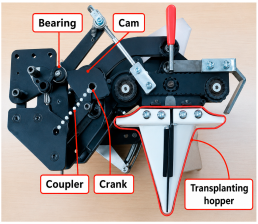
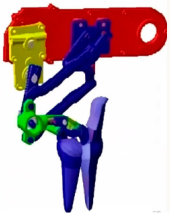
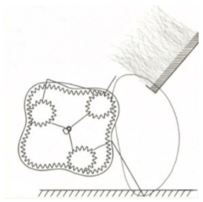
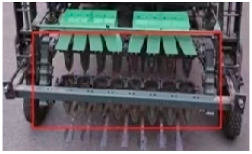
Comparative analysis indicates that seedling delivery layout dominates the final input state. Li Pengbin reported that hanging-cup structures preserve seedling posture and offer guiding and buffering effects. Their operational stability hinges on strict delivery positioning and rhythm synchronization, with permissible delivery timing tolerance limited below 5% of a working cycle; minor upstream deviations will induce terminal planting errors.
By comparison, Liu Niancong developed a single-pendulum integrated mechanism integrating picking, conveying, and seedling reception (Figure 26). It cuts transfer distance and lowers handover uncertainty remarkably [79].
Figure 26.
Structural diagram of the single-pendulum type vegetable plug seedling picking and feeding system: 1. seedling tray toggling mechanism; 2. seedling tray; 3. stepper motor; 4. a type frame; 5. step shaft; 6. reciprocating mechanism cylinder; 7. rotating mechanism cylinder; 8. linear guide mechanism; 9. seedling clamping mechanism; 10. seedling tray delivery mechanism; 11. installation panel of seedling clamping mechanism; 12. seedling guide canal; 13. fixed frame.
The results demonstrate that delivery-planting interface stability is jointly decided by planting trajectory, receiving geometry, transfer path length, and timing compensation capacity, embodying synergistic effects of multiple interconnected functional links.
The delivery–planting interface extends to machine–soil–seedling multi-field coupling. Li Xiang, using EDEM–RecurDyn co-simulation, showed that soil resistance not only affects seedlings but also feeds back to change mechanism motion and trajectory stability, thus affecting soil entry quality, suggesting coupling persists beyond initial contact and continues throughout soil entry and stabilization. Chen Long improved planting stability in a self-propelled transplanter by optimizing key parameters (Figure 27), showing that fixed structural settings alone cannot maintain the same depth and posture in field variability, and coordination of structure and operation is required [80].
Figure 27.
Chen Long’s transplanting device.
Thus, the coupling of seedling delivery and planting has evolved from simple motion matching to a dynamic process requiring adaptive regulation under environmental disturbances.
Overall, seedling feeding and planting coupling have evolved from a single trajectory and soil entry design to an integrated terminal system driven by spatio-temporal window matching and multi-field interactions between machine, soil, and seedlings. Studies show a strong dependence between feeding release state, planting reception window, and zero-speed soil entry. Planting quality is therefore not controlled by one mechanism but is driven by feeding state, timing coordination, speed adjustment, and constraints. Thus, the feeding–planting interface is the most critical link in the system. Future improvements should prioritize stable state transfer, window matching, and reliable planting performance, rather than just increasing soil entry speed.
3.4. System Collaboration and Support Technology for the Coupling of the Whole Machine Chain
Adopting the unified motion chain coupling analysis framework, whole-machine coupling has advanced from rigid mechanical synchronization to electromechanical coordination and perception-based closed-loop adaptation, targeting unified operating rhythm and error restraint.
Early whole-machine synchronization was realized via fixed kinematic shaft ratios in mechanical transmission chains. Gear sets, linkages, and planetary structures establish shared cycle frequency, defined as common rhythm with phase tolerance below 5%, to align picking, feeding, and planting motions. Non-circular gear planetary mechanisms achieve speed matching through variable pitch movement [81]. Wen’s double-row transplanter attained steady operation at 80 plants per minute per row, validating the flexibility of rigid mechanical linkage. Nevertheless, fixed cyclic rhythms fail to accommodate plug-height variation and soil-resistance fluctuations, lacking adaptability to diverse seedling traits and external interference.
Higher operating speed and working complexity expose the inherent drawbacks of rigid coupling. Mechanical vibration, assembly backlash, and inertial effect disrupt preset timing relations. Backlash induces timing errors exceeding 8 ms at 120 plants/min. Fixed structures cannot adapt to changing tray dimensions, substrate status, and field resistance. Progressive error accumulation across the motion chain triggers missed planting and tilted seedling posture, driving research focus from basic action sequencing to robust stability under variable working scenarios.
To address such defects, whole-machine design transitions to electromechanical coupling. Mechanical components deliver fundamental motion output, while control systems implement rhythm coordination, error compensation, and logical scheduling, enabling feedback-based phase correction and dynamic matching between mechanical movement and data flow. Most relevant studies separately assess timing offset and spatial posture mismatch. Wu Long proposed a picking–feeding control system (Figure 28a), stable within 60–120 plants/min. Electric regulation cuts timing jitter effectively, reducing fluctuation from 11 ms to 4 ms and boosting coordination among functional units.
Figure 28.
(a) Wulong’s fully automatic seedling picking and feeding control system. (b) Chen’s small-scale, pure-electrically driven plug seedling transplanter.
Driving mode renovation reshapes overall coupling logic. Chen designed a compact all-electric plug seedling transplanter (Figure 28b) that maintains a high planting success rate at 120 plants/min. Equipped with layered seedling trays and fan-type picking units, the device features a compact layout, multi-row arrangement, and independent unit control. When speed rises to 140 plants/min, intensified impact on seedling cups and positioning deviation of direct-drive motors emerge. This indicates that electric drive enhances operational flexibility yet demands stricter dynamic performance: braking time must stay under 6 ms to sustain precise multi-axis phase alignment.
With sensing, vision, and real-time compensation, whole-machine coupling is now closed-loop adaptive control. The system is no longer fixed-time dependent, but the execution rhythm and trajectory change according to operating states. Stability relies more on vibration isolation, structural adaptation, and feedback compensation. In field conditions, disturbances such as terrain variation, uneven soil resistance, and chassis vibration propagate through the frame and transmission system, disrupting spatiotemporal coordination. Li improved system stability (Figure 29) by optimizing the vibration-damping frame of the picking unit, reducing disturbance transmission, promoting stability of trajectory and rhythm consistency [17].
Figure 29.
Li’s seedling picking device with an optimized shock-absorbing structure. 1. Device supporting horizontal movement of the seedling tray; 2. slide rail base for supporting the swinging device for picking seedlings; 3. baffle for the swinging device for picking seedlings; 4. base of the device for horizontally moving the seedling tray; 5. lower crossbeam of the seedling picking manipulator; 6. cylinder for opening and closing; 7. cylinder for pushing seedlings; 8. mechanism for pushing seedlings; 9. cylinder for horizontal movement; 10. plate for loading seedlings; 11. conveyor chain for the seedling tray; 12. mechanical hand device for picking seedlings; 13. Seedling-Picking Manipulator.
To address variability in seedling properties, studies further propose adaptive adjustment of gripper force based on substrate conditions, enabling mechanical input to match seedling state changes. This reflects a shift in whole-machine coupling from simple synchronization toward deeper mechanical-level coordination.
Benefiting from the integration of intelligent sensing technology, whole-machine transplanting systems are evolving from traditional action-oriented automation to result-driven closed-loop control, which targets real-time monitoring and dynamic correction of core planting results, including seedling posture, planting depth, and planting success rate. This system corrects abnormal planting posture and missing seedling faults through real-time visual feedback. Sun optimized the particle swarm optimization algorithm to refine path planning for seedling supplementation [82]. Jin adopted deep learning technology to identify empty tray cells and weak seedlings, and fed the detection results back to the machine execution logic for real-time operational adjustment (Figure 30).
Figure 30.
Schematic diagrams of different coupling directions of the seedling picking mechanism. (a) Jin’s visual recognition seedling picking device: 1. cylinder; 2. linear guide; 3. cylinder; 4. camera; 5. rotating motor; 6. guide chute; 7. seedling needle. (b) flexible composite actuator developed.: 1. cylinder; 2. cylinder base; 3. screw; 4. push plate; 5. steel needle; 6. spring; 7. conduit; 8. fixed plate.
Beyond sensing and control, system performance increasingly depends on architecture and platform capability. Yu Gaohong found that the lack of standard interfaces limits module interchangeability and system scalability. In the case of fixed matching, they shifted to reconfigurable modular integration [83,84]. From an engineering viewpoint, stability is further improved by control strategies and material design. Magar proposed a low-cost multi-axis synchronization scheme using Arduino control; Tian applied flexible composite actuators to absorb inertial impacts to reduce seed damage and improve picking success [67]. These results highlight the role of control optimization and structural compliance in chain stability.
Overall, whole-machine coupling of vegetable transplanters has undergone a clear three-stage evolution: from rigid mechanical synchronization relying on fixed gear and linkage kinematic ratios, to flexible electromechanical coordination via program rhythm scheduling, and further to perception-driven closed-loop adaptation enabled by real-time sensor-based phase correction. The research focus has correspondingly shifted from merely optimizing the performance of individual mechanisms to achieving continuous, smooth, and error-correctable collaborative operation of multiple functional units under a unified system rhythm. For fully automatic vegetable transplanters, superior system performance relies not only on forming a complete and closed transplanting motion chain, but also on stably maintaining, dynamically adjusting, and expanding such closed-loop operational capabilities under complex agronomic conditions, high-frequency cyclic operation, and multi-source mechanical and environmental disturbances.
4. Discussion
4.1. Core Challenges of Motion Chain Coupling
High-frequency operation induces inertial amplification and phase compression, driving the system into strong dynamic fluctuation. The phase drift exceeds 6%, seedling posture deviation surpasses 8°, and local errors propagate across the motion chain, resulting in seedling damage and missed planting. Most existing devices adopt fixed operating rhythms that cannot adapt to fluctuating traveling speed and uneven soil resistance in fields. Meanwhile, the coupled effects of tray rigidity, soil resistance, and frame vibration, together with variable seedling root status and substrate moisture, bring random disturbances, which degrade the performance of fixed parameters. Current equipment also has limited universality for diverse crops and seedling trays, and lacks sufficient long-term field verification, leading to poor engineering reliability.
4.2. Future Research Directions
Future work needs to build full-chain dynamic models with phase coupling variables to trace error sources and conduct multi-objective optimization. Perception-based closed-loop control systems should be developed to realize real-time posture correction, slip compensation, and adjustable seedling release timing. Optimized vibration isolation and compliant structures will support dynamic rhythm reconstruction for stable operation under variable speed and load. Additionally, an agronomy-oriented modular design is required to reset operating phases adaptively. Developing flexible end-effectors based on machine–seedling–soil interaction is also essential to reduce seedling damage and raise working frequency.
5. Conclusions
Vegetable transplanting technology has shifted from single-mechanism optimization to whole-machine motion chain coupling design, with the coordination of seedling supply–picking–delivery–planting as the core to improve system stability. International studies focus on standardized modular integration and closed-loop control, while research conducted in China highlights adaptability to complex agronomic conditions and low-cost mechanism innovation. However, the industry still faces prominent challenges in high-speed dynamic stability, field condition adaptability, and long-term engineering reliability.
Author Contributions
Conceptualization, J.H., X.L., Z.L., Y.Z. (Yue Zhang) and M.Z.; investigation, J.H., Y.Z. (Yue Zhang) and Z.L.; resources, J.H., Y.Z. (Yue Zhang) and Z.L.; document organization, J.H., Y.Z. (Yue Zhang) and Z.L.; writing—original draft preparation, J.H.; writing—review and editing, X.L., M.Z. and J.H.; visualization, J.H., Y.Z. (Yue Zhang), Z.L. and M.Z. supervision, M.Z., Z.W., W.Y., Y.Z. (Ying Zang), J.L. and X.L.; project administration, X.L. and M.Z.; funding acquisition, X.L. and M.Z. All authors have read and agreed to the published version of the manuscript.
Funding
This research was funded by the Guangdong Provincial Basic and Applied Basic Research Fund Project (Grant No. 2024A1515010463).
Data Availability Statement
No new data were created or analyzed in this study.
Acknowledgments
We would like to express our gratitude to the faculty members of the Key Laboratory of Key Technologies for Agricultural Machinery and Equipment (South China Agricultural University) for their guidance and support.
Conflicts of Interest
The authors declare no conflicts of interest.
References
- Cheng, B.; Wu, H.; Zhu, H.; Liang, J.; Miao, Y.; Cui, Y.; Song, W. Current status and analysis of key technologies in automatic transplanters for vegetables in China. Agriculture 2024, 14, 2168. [Google Scholar] [CrossRef] [Scilit]
- Liu, W.; Tian, S.; Wang, Q.; Jiang, H. Key technologies of plug tray seedling transplanters in protected agriculture: A review. Agriculture 2023, 13, 1488. [Google Scholar] [CrossRef] [Scilit]
- Hu, X.; Han, C. Research status and development suggestions of automatic transplanters at home and abroad. China South. Agric. Mach. 2020, 51, 79. [Google Scholar]
- Cui, Z.; Guan, C.; Yang, Y.; Gao, Q.; Chen, Y.; Xiao, T. Research status of vegetable mechanical transplanting technology and equipment. J. Chin. Agric. Mech. 2020, 41, 85–92. [Google Scholar]
- Islam, M.N.; Iqbal, M.Z.; Ali, M.; Chowdhury, M.; Kabir, M.S.N.; Park, T.; Kim, Y.J.; Chung, S.O. Kinematic analysis of a clamp-type picking device for an automatic pepper transplanter. Agriculture 2020, 10, 627. [Google Scholar] [CrossRef] [Scilit]
- Feng, S.; Wu, M.; Yan, B.; Quan, W. Research status and prospect of seedling pick-up device of pot seedling transplanter. J. Agric. Mech. Res. 2020, 42, 1–9. [Google Scholar]
- Ren, Z.; Yan, W.; Ji, Y.; Li, K.; Zhou, X.; Zhang, W.; Hu, M. Optimized design and experiment of the seedling picking mechanism for stem-clipping for pepper hole tray seedlings. Trans. Chin. Soc. Agric. Eng. 2025, 41, 55–64. [Google Scholar]
- Ren, Z.; Hu, M.; Yan, W.; Li, K. Research status on seedling picking up mechanism of dryland hole tray seedling transplanting machine. J. Chin. Agric. Mech. 2025, 46, 41. [Google Scholar]
- Sharma, A.; Khar, S. Conceptualization and development of a semi-automatic vegetable transplanter prototype for small landholdings. Heliyon 2024, 10, e31540. [Google Scholar] [CrossRef] [Scilit] [PubMed]
- Magar, A.P.; Nalawade, S.M.; Walunj, A.A.; Shelke, G.N.; Khadatkar, A.; Sawant, C.P.; Modi, R.U. Development and optimization of an automatic transplanting device for plug tray vegetable seedlings using embedded system. Sci. Rep. 2025, 15, 22483. [Google Scholar] [CrossRef] [Scilit] [PubMed]
- Yang, Q.; Huang, G.; Shi, X.; He, M.; Ahmad, I.; Zhao, X.; Addy, M. Design of a control system for a mini-automatic transplanting machine of plug seedling. Comput. Electron. Agric. 2020, 169, 105226. [Google Scholar] [CrossRef] [Scilit]
- Yao, M.; Lv, J.; Wang, L.; Yue, R.; Hu, J. Cooperative operation method of seedling conveying and picking by full-automatic transplanter based on multi-sensor combination. Comput. Electron. Agric. 2024, 225, 109311. [Google Scholar] [CrossRef] [Scilit]
- Zhao, S.; Liu, J.; Jin, Y.; Bai, Z.; Liu, J.; Zhou, X. Design and testing of an intelligent multifunctional seedling transplanting system. Agronomy 2022, 12, 2683. [Google Scholar] [CrossRef] [Scilit]
- Jin, X.; Zhang, B.; Suo, H.; Lin, C.; Ji, J.; Xie, X. Design and mechanical analysis of a cam-linked planetary gear system seedling picking mechanism. Agriculture 2023, 13, 810. [Google Scholar] [CrossRef] [Scilit]
- Jin, X.; Chen, S.; Zhao, L.; Li, R.; Li, Q.; Gu, S.; Liu, G.; Ji, J. Low-damage fetching method for pepper seedlings based on Res-UNet. Comput. Electron. Agric. 2024, 221, 108919. [Google Scholar] [CrossRef] [Scilit]
- Paudel, B.; Basak, J.K.; Jeon, S.W.; Deb, N.C.; Karki, S.; Kim, H.T. Development and field testing of biodegradable seedling plug-tray cutting mechanism for automated vegetable transplanter. J. Agric. Eng. 2024, 55, 1566. [Google Scholar] [CrossRef] [Scilit]
- Li, K. Optimization of Seedling Picking Driving Device and Structural Vibration Reduction of Vegetable Transplanter. Master’s Thesis, Henan University of Science and Technology, Luoyang, China, 2022. [Google Scholar]
- Wen, Y.; Zhang, J.; Tian, J.; Duan, D.; Zhang, Y. Design of a traction double-row fully automatic transplanter for vegetable plug seedlings. Comput. Electron. Agric. 2021, 182, 106017. [Google Scholar] [CrossRef] [Scilit]
- Chen, M.; Xu, Y.; Han, C.; Li, D.; Yang, B.; Qiu, S.; Luo, Y.; Mao, H.; Ma, X. Design and testing of miniaturized electrically driven plug seedling transplanter. Agriculture 2025, 15, 1589. [Google Scholar] [CrossRef] [Scilit]
- Han, L.; Mao, H.; Miao, X.; Hu, J.; Yang, X. Design of automatic picking up seedling end-effector based on mechanical properties of plug seedlings. Trans. Chin. Soc. Agric. Mach. 2013, 44, 260–265. [Google Scholar]
- Han, L.; Mao, H.; Hu, J.; Miao, X.; Tian, K.; Yang, X. Experiment on mechanical property of seedling pot for automatic transplanter. Trans. Chin. Soc. Agric. Eng. 2013, 29, 24–28. [Google Scholar]
- Han, L. Mechanical Analysis of the Root Lumps and Development of a Robotic Transplanter for Vegetable Plug Seedlings. Ph.D. Thesis, Jiangsu University, Zhenjiang, China, 2014. [Google Scholar]
- Liu, M.; Jiang, K.; Wang, X.; Zhai, C.; Yang, S.; Gao, Y. Research status and prospect of automatic vegetable transplanter. J. Agric. Mech. Res. 2024, 46, 1–8. [Google Scholar]
- Yu, G.; Wang, L.; Sun, L.; Zhao, X.; Ye, B. Advancement of mechanized transplanting technology and equipments for field crops. Trans. Chin. Soc. Agric. Mach. 2022, 53, 1–20. [Google Scholar]
- Khadatkar, A.; Pandirwar, A.P.; Paradkar, V. Design, development and application of a compact robotic transplanter with automatic seedling picking mechanism for plug-type seedlings. Sci. Rep. 2023, 13, 1883. [Google Scholar] [CrossRef] [Scilit] [PubMed]
- Tong, J.; Qiu, Z.; Zhou, H.; Muhammad, K.B.; Yu, G.; Wu, C.; Du, X. Optimizing the path of seedling transplanting with multi-end effectors by using an improved greedy annealing algorithm. Comput. Electron. Agric. 2022, 201, 107276. [Google Scholar] [CrossRef] [Scilit]
- Yang, Q.; Ahmad, I.; Faheem, M.; Siddique, B.; Xu, H.; Addy, M. Development and assessment of belt-drive seedlings transmission device for fully-automatic vegetable transplanter. Comput. Electron. Agric. 2021, 182, 105958. [Google Scholar] [CrossRef] [Scilit]
- Ishizaki, S.; Hirai, H.; Sakagaito, T.; Takeyama, T.; Oido, N.; Tamura, T.; Mizutani, M.; Watanabe, Y.; Umeda, M. Development of a transplanter for vegetable seedlings cultured in a cuttable nursery mat. J. Agric. Eng. 2024, 55. [Google Scholar] [CrossRef] [Scilit]
- Rahul, K.; Raheman, H.; Paradkar, V. Design and development of a 5R 2DOF parallel robot arm for handling paper pot seedlings in a vegetable transplanter. Comput. Electron. Agric. 2019, 166, 105014. [Google Scholar] [CrossRef] [Scilit]
- Ren, L.; Wang, N.; Cao, W.; Li, J.; Ye, X. Trajectory planning and motion control of full-row seedling pick-up arm. Int. J. Agric. Biol. Eng. 2020, 13, 41–51. [Google Scholar] [CrossRef] [Scilit]
- Liu, W.; Wang, Q.; Jiang, H. Design and optimisation of end effector for loose substrate grasping based on discrete element method. Biosyst. Eng. 2024, 241, 43–55. [Google Scholar] [CrossRef] [Scilit]
- Ahmad, I.; Siddique, B.; Islam, M.A.; Haq, Z.U.; Niu, Z.; Waqas, M.M.; Yang, Q.; Qiu, Z. Development and evaluation of digital twin model for rack and pinion drive vegetable seedling transmission device using Adams/MATLAB co-simulation. Simul. Model. Pract. Theory 2025, 142, 103132. [Google Scholar] [CrossRef] [Scilit]
- Ye, B.; Yi, W.; Yu, G.; Gao, Y.; Zhao, X. Optimization design and test of rice plug seedling transplanting mechanism of planetary gear train with incomplete eccentric circular gear and non-circular gears. Int. J. Agric. Biol. Eng. 2017, 10, 43–55. [Google Scholar] [CrossRef] [Scilit]
- Zhao, X.; Liao, H.; Ma, X.; Dai, L.; Yu, G.; Chen, J. Double planet carrier planetary gear flower transplanting mechanism. Int. J. Agric. Biol. Eng. 2021, 14, 55–61. [Google Scholar] [CrossRef] [Scilit]
- Zhao, X.; Liu, Z.; Jia, Y.; Ma, X.; Zhang, P.; Chen, J. Optimization design of the variable differential gear train planting mechanism. Int. J. Agric. Biol. Eng. 2024, 17, 85–93. [Google Scholar] [CrossRef] [Scilit]
- Hwang, S.J.; Park, J.H.; Lee, J.Y.; Shim, S.B.; Nam, J.S. Optimization of main link lengths of transplanting device of semi-automatic vegetable transplanter. Agronomy 2020, 10, 1938. [Google Scholar] [CrossRef] [Scilit]
- Aytem, H.; Karayel, D.; Šarauskis, E. Influence of tillage methods on transplanter performance with different transplanting mechanisms. Sci. Rep. 2025, 15, 13081. [Google Scholar] [CrossRef] [Scilit] [PubMed]
- Markumningsih, S.; Hwang, S.J.; Kim, J.H.; Jang, M.K.; Nam, J.S. Stress simulation on four-bar link-type transplanting device of semi-automatic vegetable transplanter. Agriculture 2024, 14, 42. [Google Scholar]
- Ankit, S.; Sanjay, K. Design and development of a vegetable plug seedling transplanting mechanism for a semi-automatic transplanter. Sci. Hortic. 2024, 326, 112773. [Google Scholar] [CrossRef] [Scilit]
- Ran, Q. Design of Vegetable Transplanting Machine for Hilly Area. Master’s Thesis, Chengdu University, Chengdu, China, 2021. [Google Scholar]
- Yang, J.; Zhou, M.; Yin, D.; Yin, J. Design and development of rice pot-seedling transplanting machinery based on a non-circular gear mechanism. Appl. Sci. 2024, 14, 1027. [Google Scholar] [CrossRef] [Scilit]
- Ye, B.; Ye, Y.; Zhou, H.; Yu, G.; Zhao, X.; Deng, B. Design and experimental research on the sweet potato seedling transplanting mechanism of the planetary gear train with deformed elliptical gear transmission. Int. J. Agric. Biol. Eng. 2024, 17, 91–99. [Google Scholar] [CrossRef] [Scilit]
- Long, X.; Han, C.; Zhang, J.; You, J. Design and test of the feeding device of the automatic transfer machine of the cave seedling. J. Agric. Mech. Res. 2022, 44, 103–107. [Google Scholar]
- Zhang, Y.; Cao, C.; Qin, K.; Zhu, C.; Li, G.; Ge, J.; Fang, L.; Zhou, Q. Design and experiment of automatic sweet potato transplanter with linear seedling supplying. J. Intell. Agric. Mech. 2022, 3, 28–36. [Google Scholar]
- Wang, H.; Zhang, W.; Hou, Y. The design and motion simulation of the corn pot seedling machines. J. Agric. Mech. Res. 2016, 38, 143–148. [Google Scholar]
- Chen, L.; Pan, R.; Zhou, D.; Xiang, P.; Sun, C.; Xiao, M. Design and experimental study of control system for automatic pneumatic seedling feeder. J. Chin. Agric. Mech. 2025, 46, 50–57. [Google Scholar]
- Zhou, B.; Miao, H.; Guan, C.; Ji, X.; Wang, X. Design and test of seedling-picking mechanism of fully automatic transplanting machine. Appl. Sci. 2024, 14, 9235. [Google Scholar] [CrossRef] [Scilit]
- Ma, Y. Wang Design and Test of Seedling Extraction Mechanism of the Cave Plate Seedling Transfer Machine. Master’s Thesis, Shihezi University, Shihezi, China, 2020. [Google Scholar]
- Yu, Y.; Liu, J.; Ye, B.; Yu, G.; Jin, X.; Sun, L.; Tong, J. Design and experimental research on seedling pick-up mechanism of planetary gear train with combined non-circular gear transmission. Chin. J. Mech. Eng. 2019, 32, 49. [Google Scholar] [CrossRef] [Scilit]
- Peng, Z.; Yang, F.; Zhao, S. Research Progress on Seedling Picking Mechanism of Automatic Plug Seedling Transplanter. J. Chin. Agric. Mech. 2025, 46, 22–28. [Google Scholar]
- Yue, R.; Hu, J.; Liu, Y.; Yao, M.; Zhang, T.; Shi, J. Design and working parameter optimization of pneumatic reciprocating seedling-picking device of automatic transplanter. Agriculture 2022, 12, 1989. [Google Scholar] [CrossRef] [Scilit]
- Yue, R.; Yao, M.; Zhang, T.; Shi, J.; Zhou, J.; Hu, J. Design and experiment of dual-row seedling pick-up device for high-speed automatic transplanting machine. Agriculture 2024, 14, 942. [Google Scholar] [CrossRef] [Scilit]
- Ren, L.; Zhao, B.; Cao, W.; Song, W.; Zhao, M. Design of stretchable style pick-up device for tomato seedling transplanters. Agriculture 2022, 12, 707. [Google Scholar] [CrossRef] [Scilit]
- Peng, Z.; Yang, F.; Li, Y.; Li, X.; Li, B.; Xu, G. Design and testing of a whole-row top-loosening stem-clamping seedling extraction device for hole tray seedlings. Agriculture 2025, 15, 165. [Google Scholar] [CrossRef] [Scilit]
- Shi, J.; Hu, J.; Liu, W.; Yao, M.; Zhou, J.; Zhang, P. Simulation and parameter optimization of inserting–extracting–transporting process of a seedling picking end effector. Plants 2026, 15, 291. [Google Scholar] [CrossRef] [Scilit] [PubMed]
- Wu, L.; Liu, N.; Wang, Y.; Xia, H.; Zhang, Y.; Huang, H. Design of the control system for picking up and feeding seedlings of automatic transplanter based on PLC. J. Chin. Agric. Mech. 2021, 42, 87–91. [Google Scholar]
- Li, X.; Li, X.; Zeng, F.; Zhao, Z.; Zhang, Y. Analysis and test of the movement of cast-in-hole seedling in chain row feeding mechanism. J. Agric. Mech. Res. 2021, 43, 171–176. [Google Scholar]
- Jin, X.; Li, X.; Zeng, F.; Li, X.; Zhang, Y.; Guo, W. Study on the matching relationship between time-space matching of chain-row feeding mechanism and planter. J. Agric. Mech. Res. 2021, 43, 125–130. [Google Scholar]
- Zhang, Y.; Ren, L.; Yang, M.; Cui, J.; Zhang, C. Motion control of seedling pick-and-place mechanism of transplanter based on non-singular fast terminal sliding mode. Trans. Chin. Soc. Agric. Eng. 2025, 41, 22–31. [Google Scholar]
- Wang, L.; Lin, Z.; Zhou, Z.; Yu, G.; Yang, Z.; Yu, X.; Ye, B. Design and experiment of a vegetable plug seedling planting mechanism combining non-circular gear system and multi-link. Int. J. Agric. Biol. Eng. 2025, 18, 124–134. [Google Scholar] [CrossRef] [Scilit]
- Bao, L.; Yu, G.; Zhao, X.; Wang, L. Design and experiment of a planting mechanism of high-density transplanters for Brassica chinensis. J. Zhejiang Sci.-Tech Univ. (Nat. Sci.) 2024, 51, 100–111. [Google Scholar]
- Shi, J.; Hu, J.; Liu, W.; Lv, J.; Jin, Y.; Yao, M.; Wang, C. Motion control system for the whole-row reciprocating seedling picking mechanism of an automatic transplanter. Agriculture 2025, 15, 1423. [Google Scholar] [CrossRef] [Scilit]
- Han, L.; Ma, H.; Mo, M.; Kumi, F.; Hu, J.; Mao, H. Design and test of an efficient seedling pick-up device with a combination of air jet ejection and mechanical action. J. Agric. Eng. 2024, 55. [Google Scholar]
- Wang, X.; Liu, M.; Zhai, C.; Han, C.; Yang, S.; Gao, Y. Design and experiment of vegetable transplanting clip stem seedling device. Trans. Chin. Soc. Agric. Mach. 2023, 54, 122–132. [Google Scholar]
- Hu, J.; Liu, Y.; Liu, W.; Zhang, S.; Han, L.; Zeng, T. Experiment on combined seedling picking device with top clamping and pulling. Trans. Chin. Soc. Agric. Mach. 2022, 53, 110–117. [Google Scholar]
- Xin, L.; Wang, M.; Sun, G.; Zhang, H.; Sun, M.; Wang, H. Design and experiment of extensible type of picking seedling pot mechanism for tomato pot seedling transplanting. Trans. Chin. Soc. Agric. Mach. 2024, 55, 96–105. [Google Scholar]
- Tian, Z.; Ma, W.; Yang, Q.; Yao, S.; Guo, X.; Duan, F. Design and experiment of gripper for greenhouse plug seedling transplanting based on EDM. Agronomy 2022, 12, 1487. [Google Scholar] [CrossRef] [Scilit]
- Hu, J.; Pan, J.; Chen, F.; Yue, R.; Yao, M.; Li, J. Simulation optimization and experiment of finger-clamping seedling picking claw based on EDEM-RecurDyn. Trans. Chin. Soc. Agric. Mach. 2022, 53, 75–85. [Google Scholar]
- Zhang, N.; Zhang, G.; Liu, H.; Liu, W.; Wei, J.; Tang, N. Open-and-close seedling pick-up manipulator with four fingers. Agriculture 2022, 12, 1776. [Google Scholar] [CrossRef] [Scilit]
- Cheng, Y.; Xue, X.; Zheng, H.; Ye, Y.; Yu, G.; Lu, S. Optimized design and test of seedling picking mechanism of automatic broccoli transplanter. J. Chin. Agric. Mech. 2025, 46, 36–43. [Google Scholar] [CrossRef] [Scilit]
- Yu, B. Design and Experiment of Seedling-Clamping Device for Vegetable Transplanter. Master’s Thesis, Shenyang Agricultural University, Shenyang, China, 2023. [Google Scholar]
- Xie, T. Design and Experimental Study on Automatic Feeding-Seedling Device of Vegetable Transplanter. Master’s Thesis, Shenyang Agricultural University, Shenyang, China, 2022. [Google Scholar]
- Zhang, B.; Wen, X.; Wen, Y.; Wang, X.; Zhu, H.; Pan, Z.; Yang, Z. Closed multi-channel air-blowing seedling pick-up device for an automatic vegetable transplanter. Agriculture 2024, 14, 1688. [Google Scholar] [CrossRef] [Scilit]
- Hu, S.; Hu, M.; Yan, W.; Zhang, W. Design and experiment of an integrated automatic transplanting mechanism for picking and planting pepper hole tray seedlings. Agriculture 2022, 12, 557. [Google Scholar] [CrossRef] [Scilit]
- Li, P.B. Design and Test of Hanging Cup Planting Device of Vegetable Transplanter. Master’s Thesis, Chinese Academy of Agricultural Mechanization Sciences, Beijing, China, 2022. [Google Scholar]
- Ma, X.; Yu, C.; Wang, L.; Zhang, X.; Chen, J.; Zhao, X. Optimization design of a double planet carrier planetary gear train transplanting mechanism based on an MBD–DEM simulation of potted plant movement. Comput. Electron. Agric. 2025, 233, 110141. [Google Scholar] [CrossRef] [Scilit]
- Zhu, Z.F.; Wu, G.H.; Ye, B.L.; Zhang, Y.C. Reverse design and tests of vegetable plug seedling pick-up mechanism of planetary gear train with non-circular gears. Int. J. Agric. Biol. Eng. 2023, 16, 96–102. [Google Scholar] [CrossRef] [Scilit]
- Liu, J.; Cao, W.; Tian, D.; Tang, H.; Zhao, H. Kinematic analysis and experiment of planetary five-bar planting mechanism for zero-speed transplanting on mulch film. Int. J. Agric. Biol. Eng. 2016, 9, 84–91. [Google Scholar]
- Liu, N.C.; Yang, C.W.; Liu, B.L.; Jiang, H.; Wu, S.H.; Huang, H. Development of automatic single pendulum vegetable pot seedling picking and feeding system. Trans. Chin. Soc. Agric. Eng. 2020, 36, 87–95. [Google Scholar] [CrossRef] [Scilit]
- Chen, L. Optimization Design and Experiment of Self-Propelled Vegetable Transplanting Machine Planting Device. Master’s Thesis, Shandong Agricultural University, Tai’an, China, 2024. [Google Scholar]
- Yu, G.H.; Li, X.Q.; Xu, Y.P.; Ao, M.; Wang, Z.T.; Wang, L. Design and experiment of integrated transplanting mechanism for taking and planting vegetable pot seedlings. Trans. Chin. Soc. Agric. Mach. 2025, 56, 341–350. [Google Scholar]
- Sun, E.; Xiao, Z.; Tan, Y. Fast path planning method of seedling tray replanting based on improved particle swarm optimization. Agronomy 2023, 13, 853. [Google Scholar] [CrossRef] [Scilit]
- Yu, G.H.; Li, C.H.; Wang, Y.P.; Zhao, X.; Wang, L.; Zheng, J. Design and experiment of transplanting mechanism for high density vegetables with small plant spacing. Trans. Chin. Soc. Agric. Mach. 2023, 54, 96–105. [Google Scholar]
- Yu, G.H.; Wang, X.L.; Liu, J.G.; Ye, B.L.; Li, X.; Zhao, X. Design and experiment of multi-row seedling taking mechanism for dense planting and transplanting of vegetable pot seedlings. Trans. Chin. Soc. Agric. Mach. 2023, 54, 94–103. [Google Scholar]
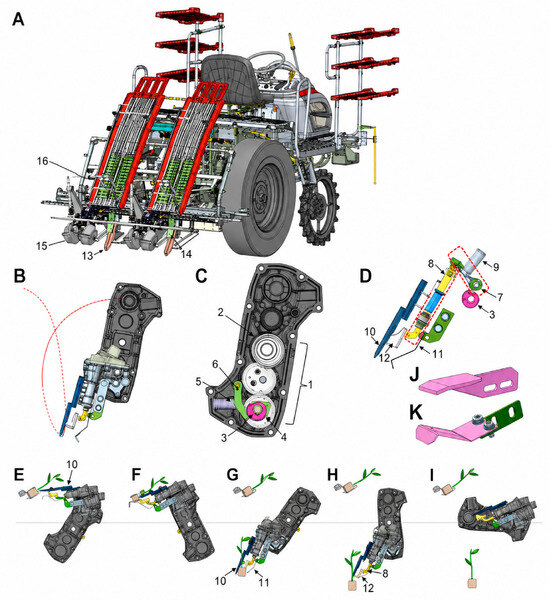
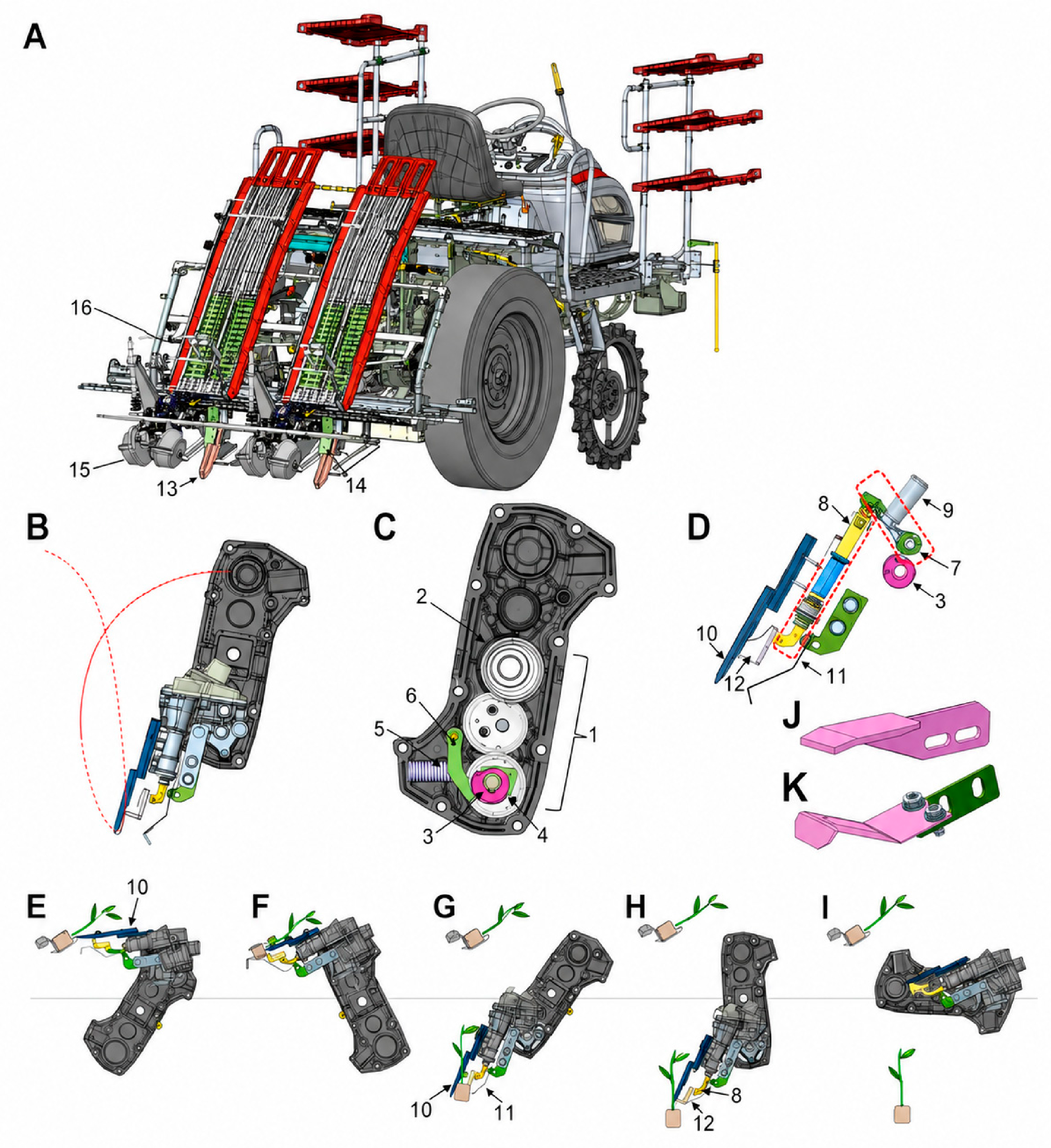
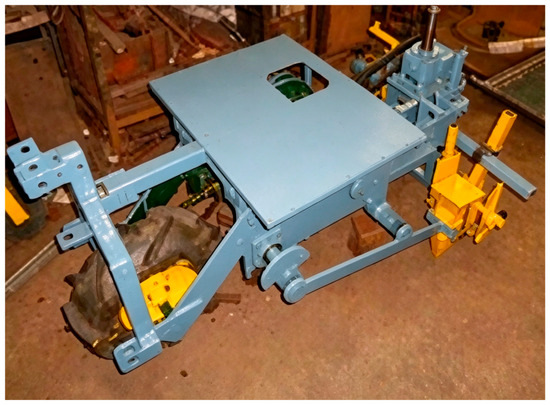
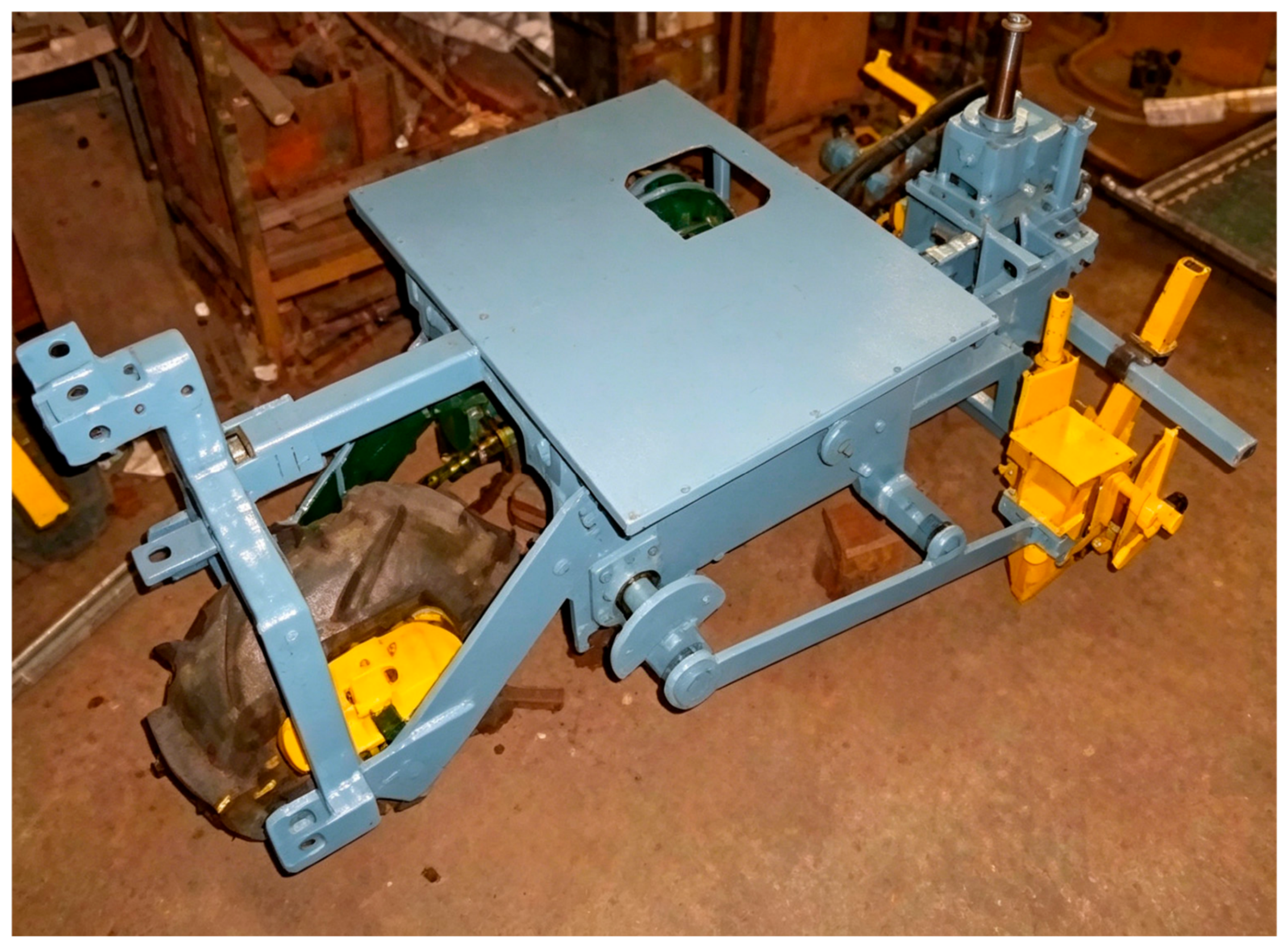
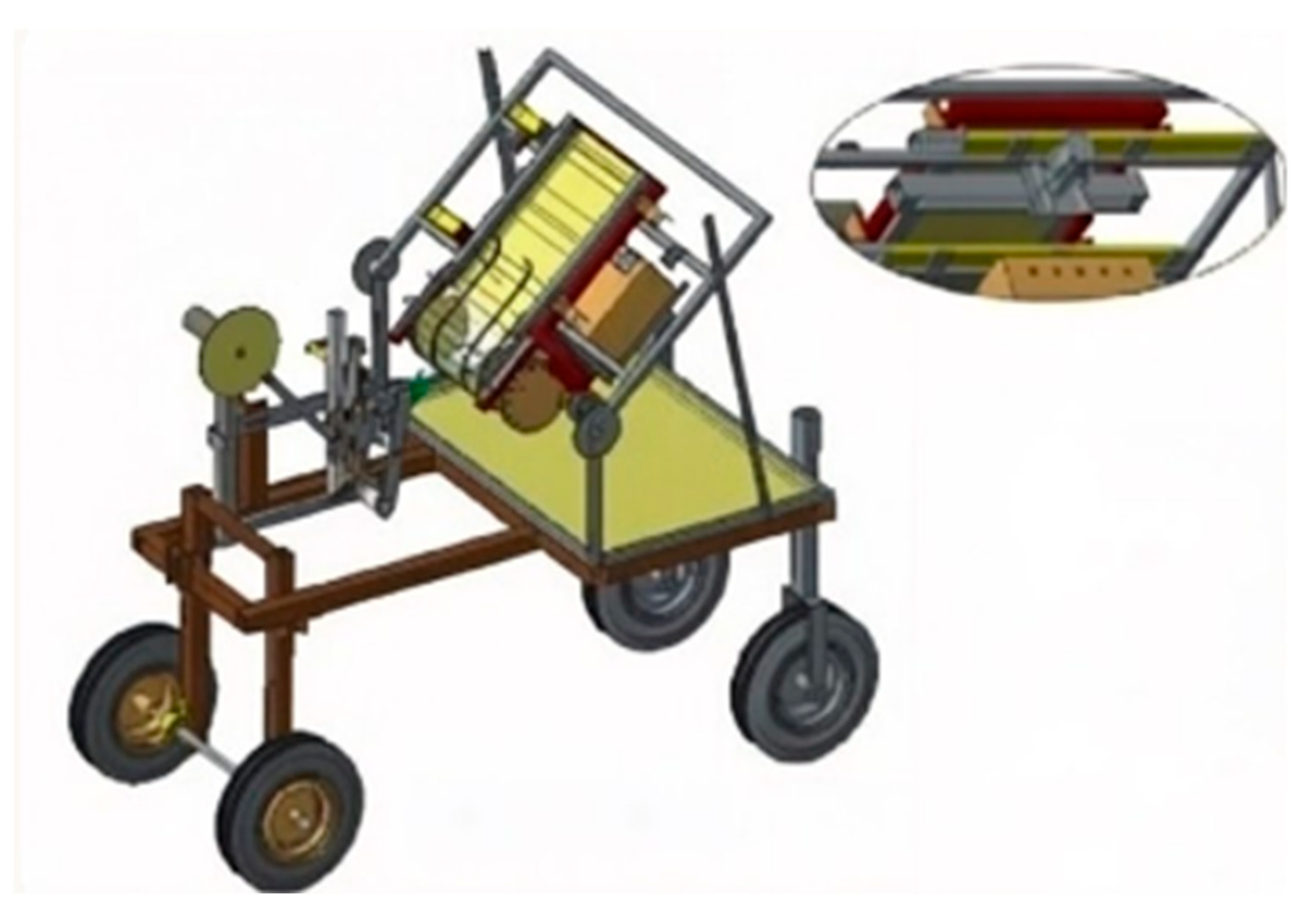
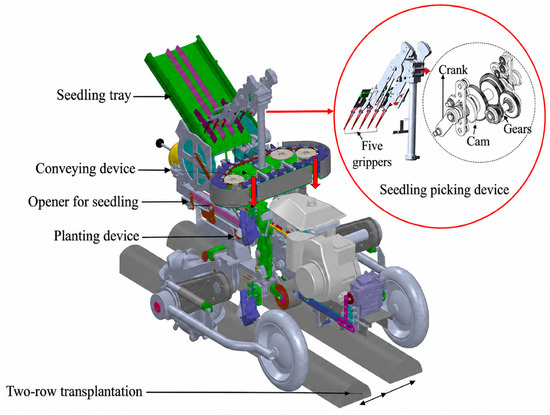
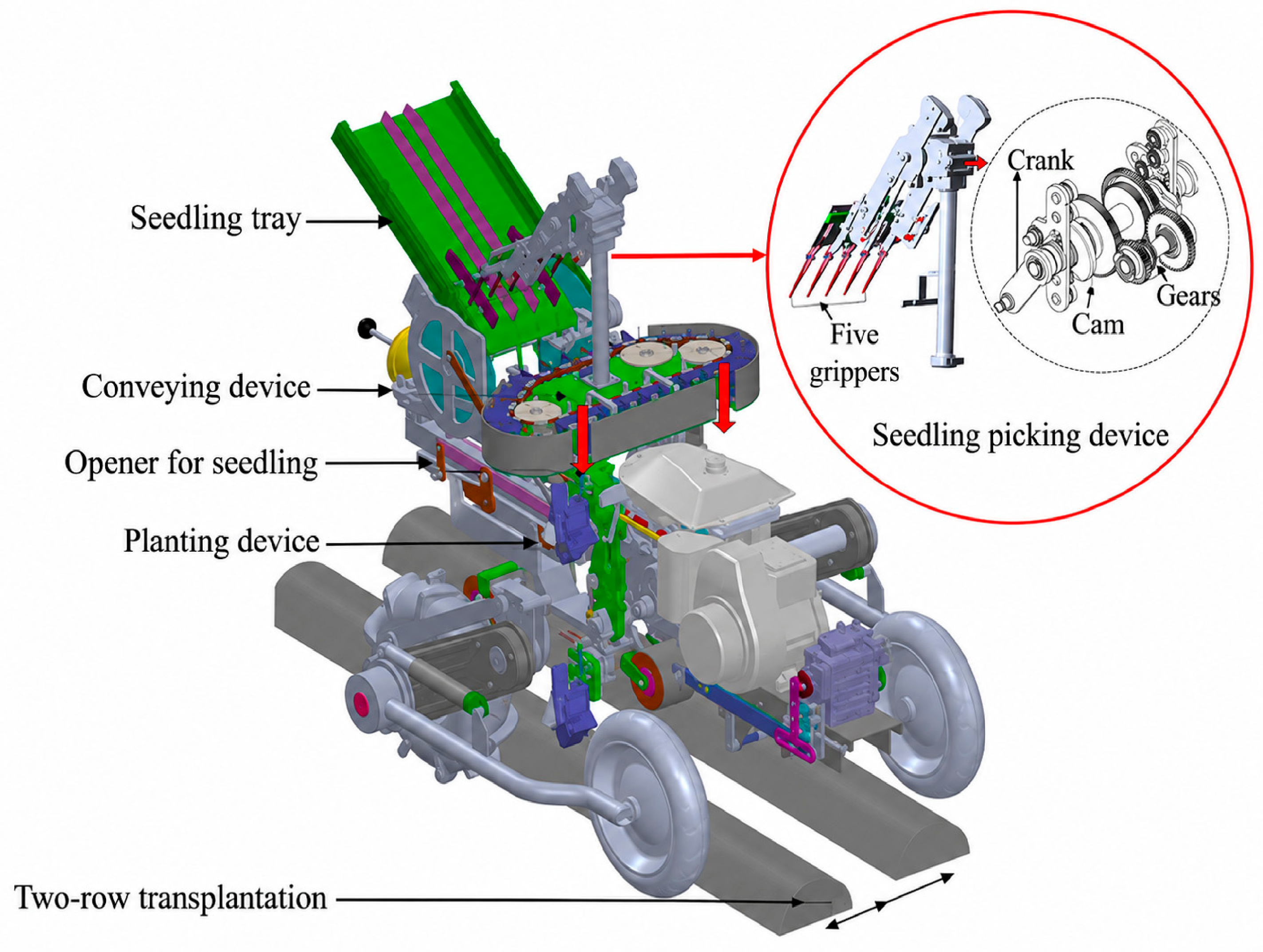
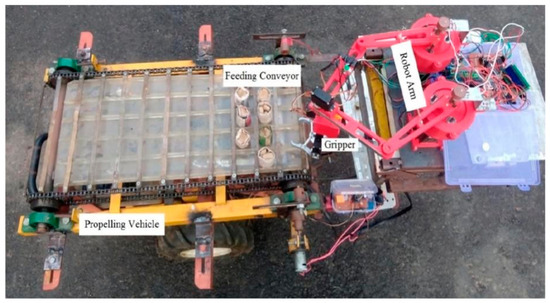
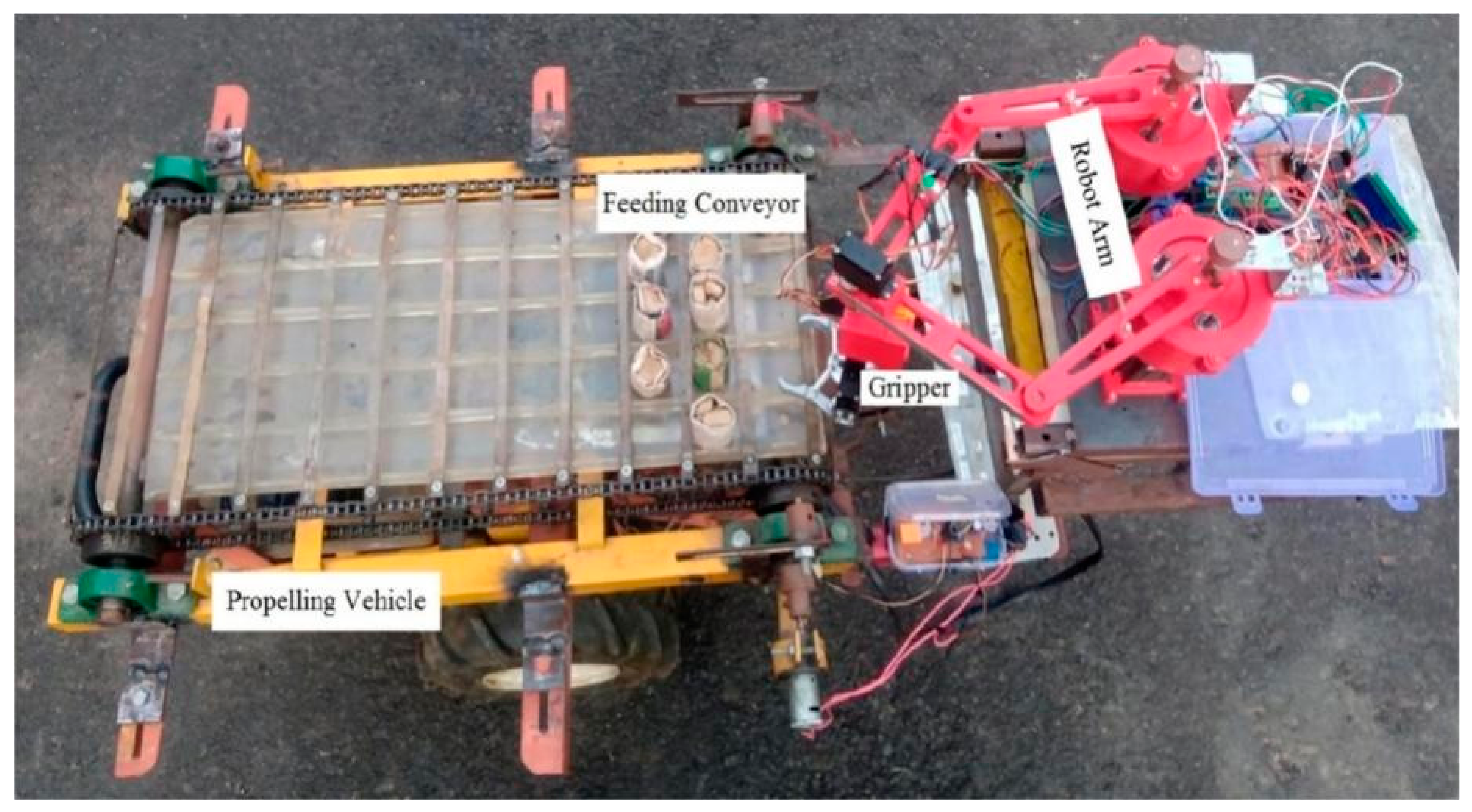
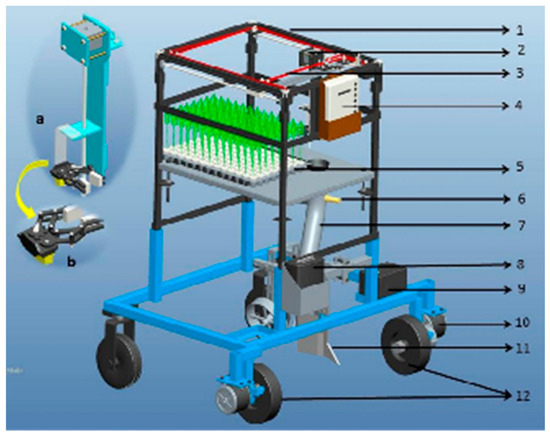
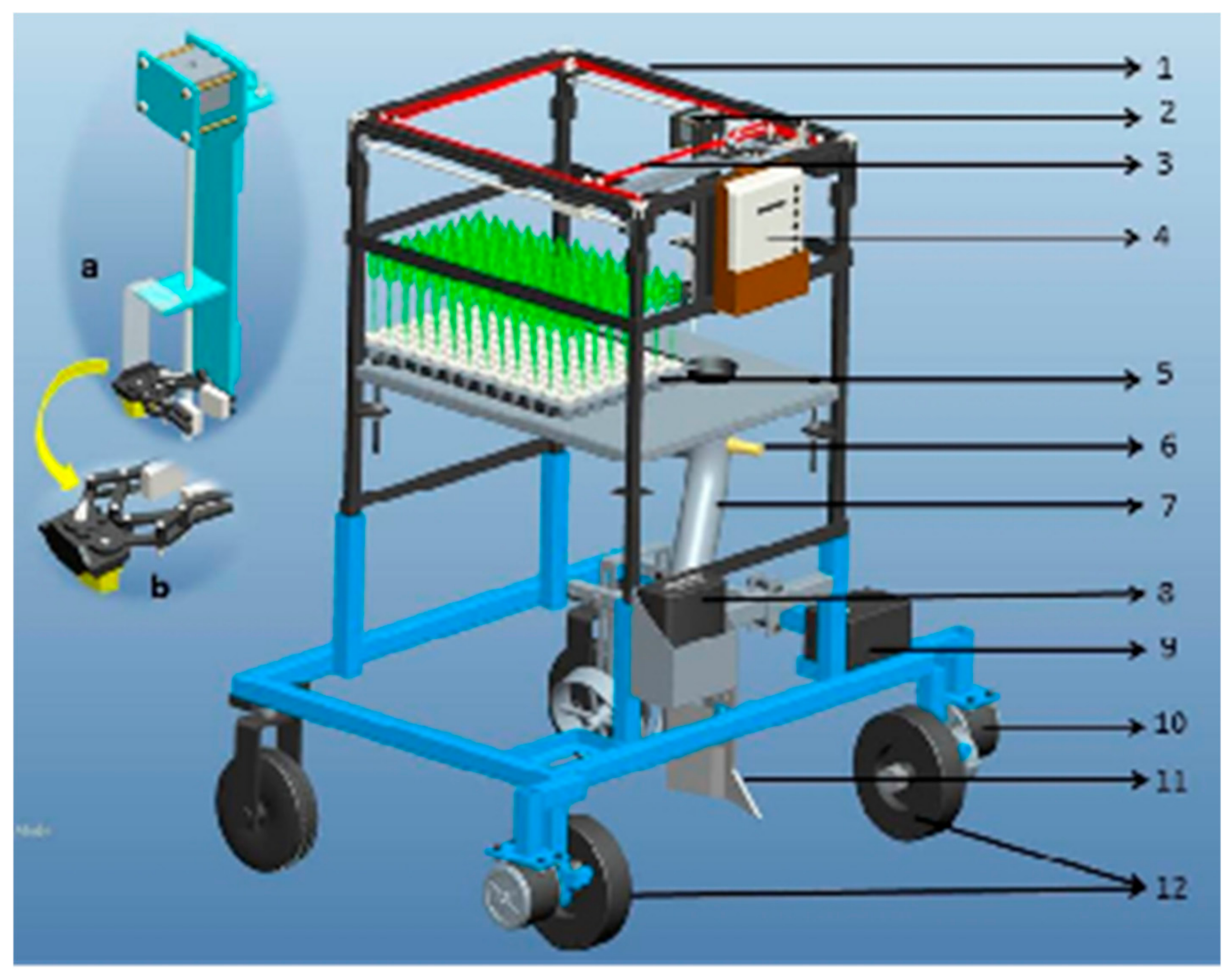
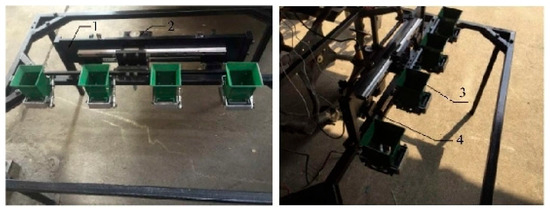
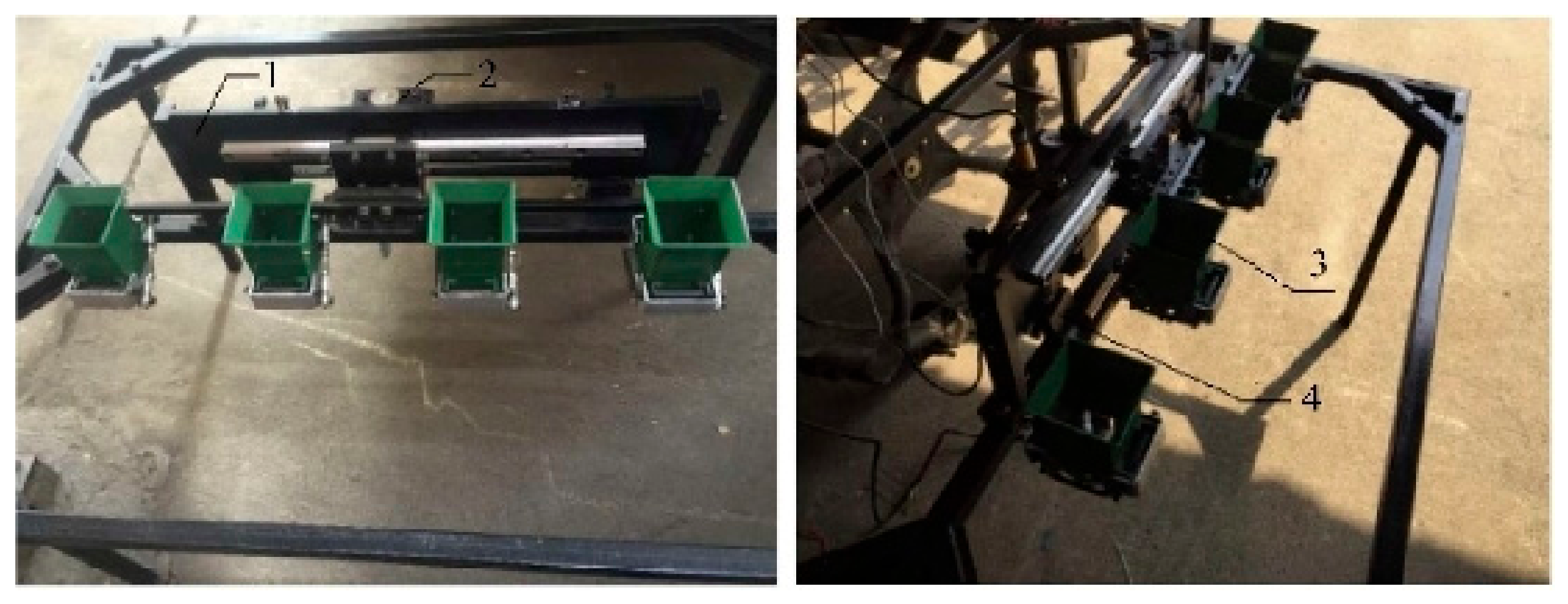
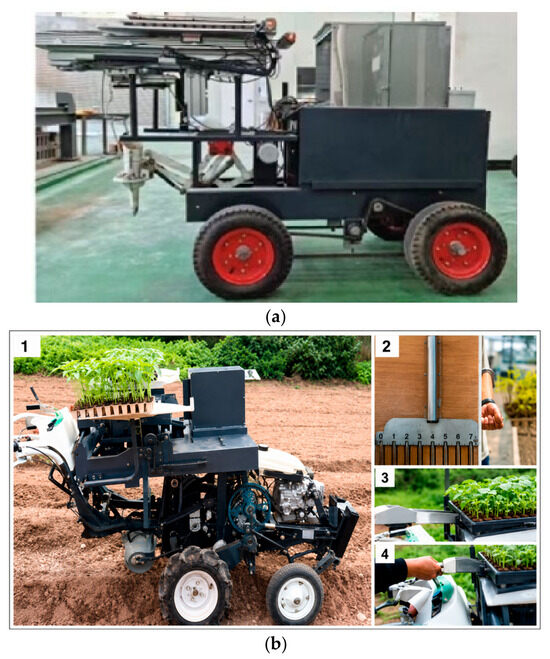
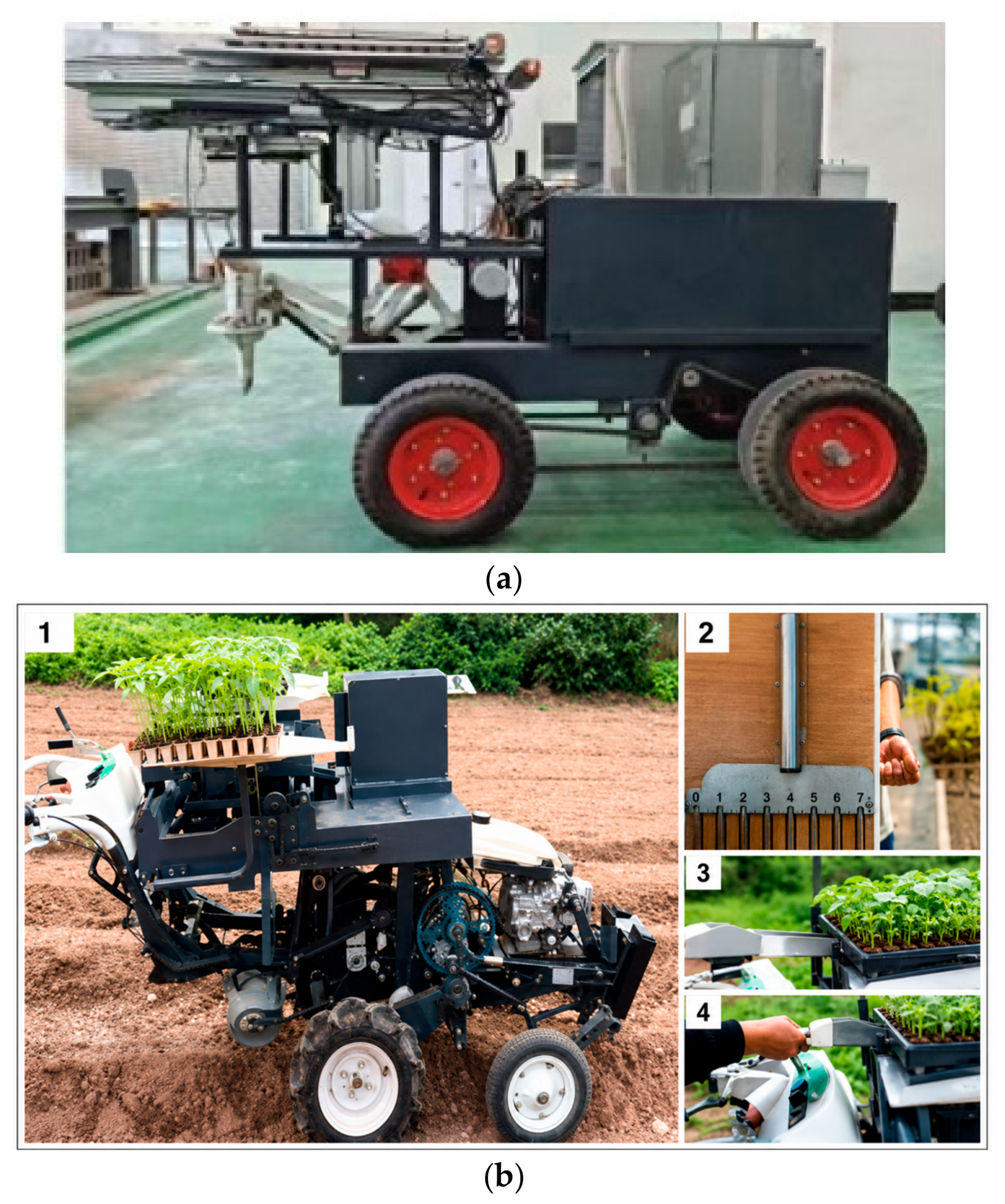
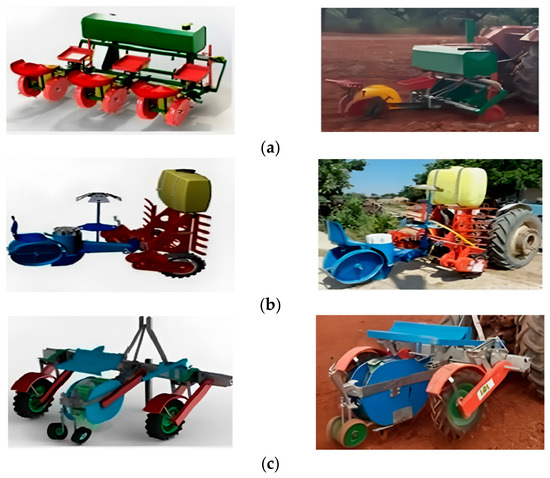
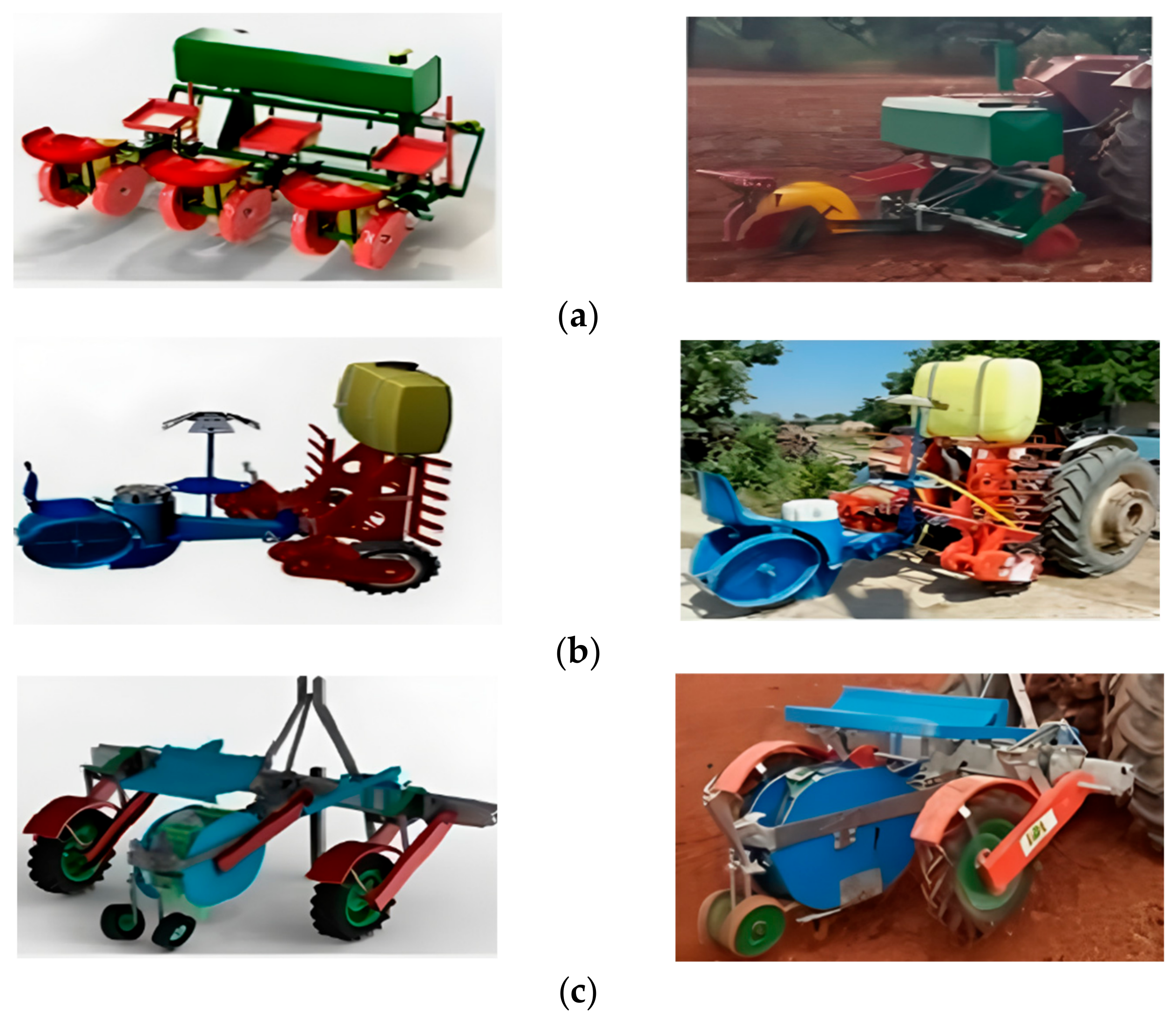
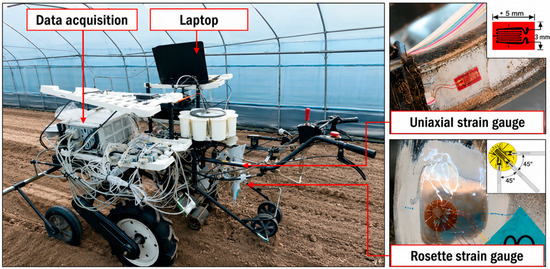
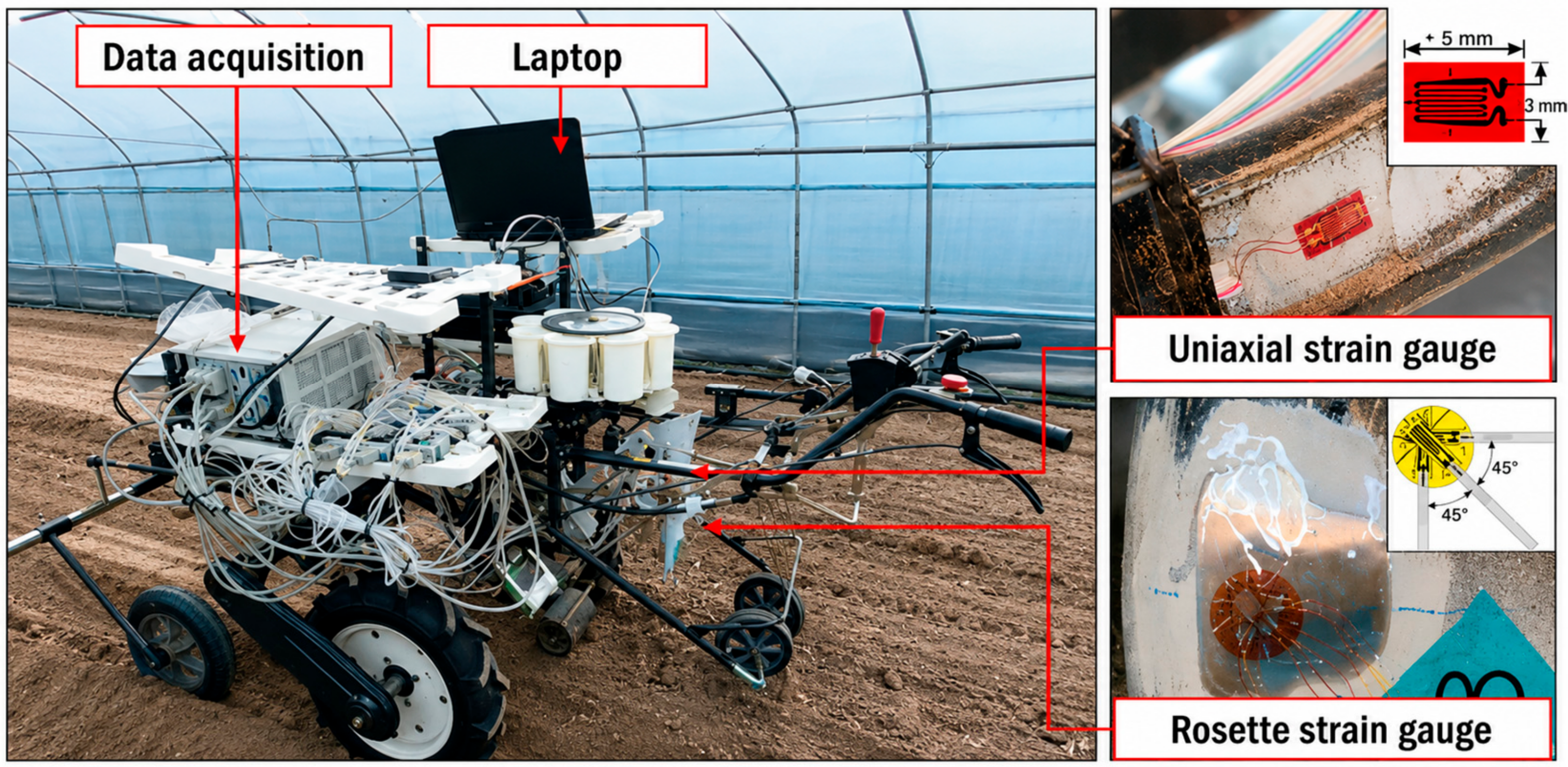
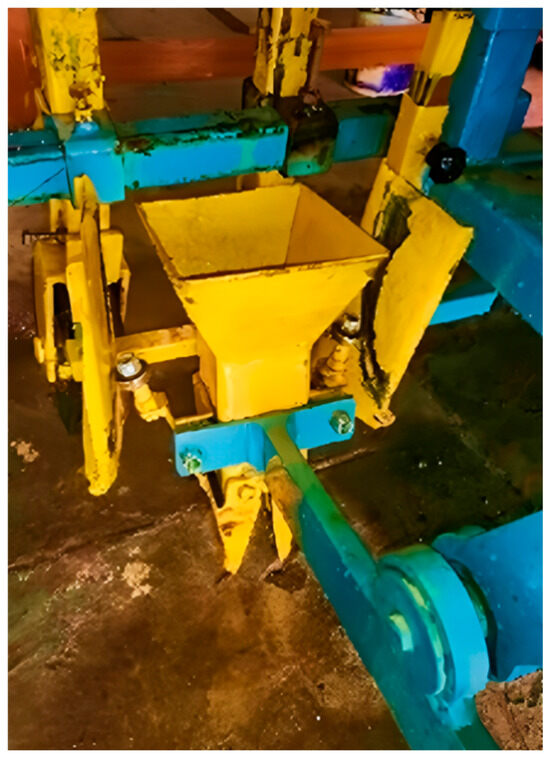
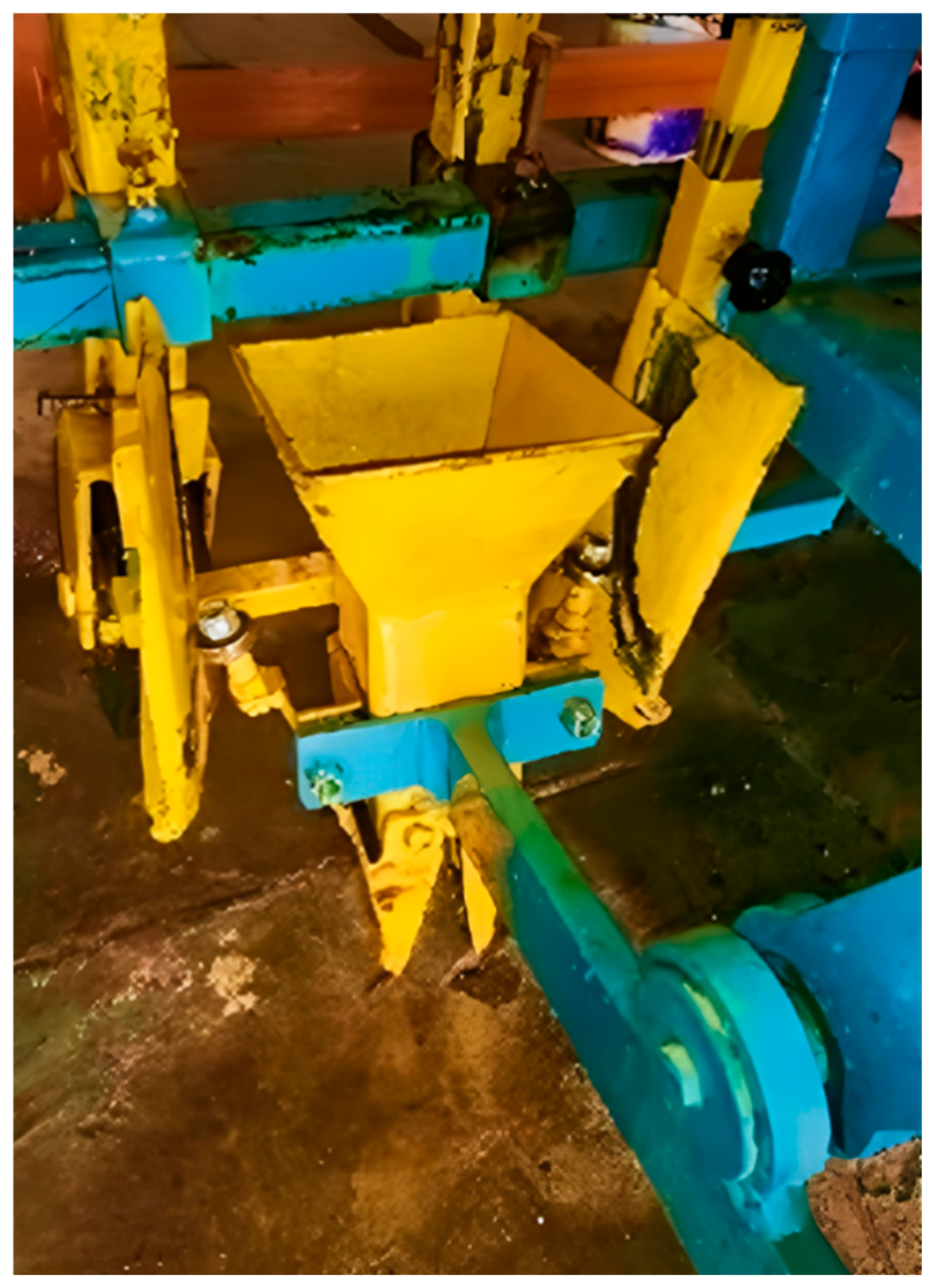
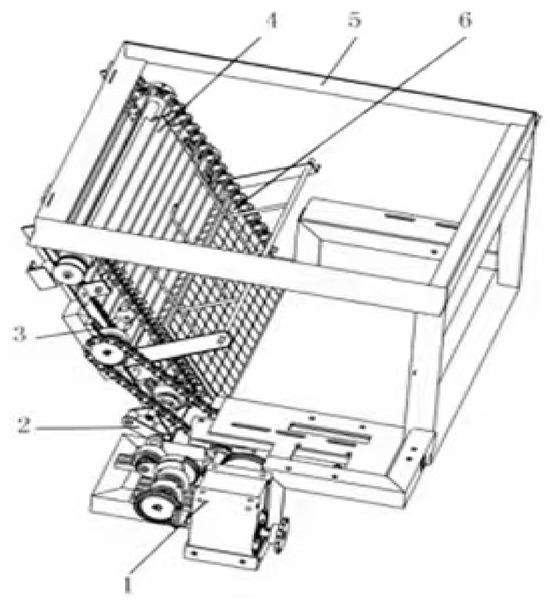
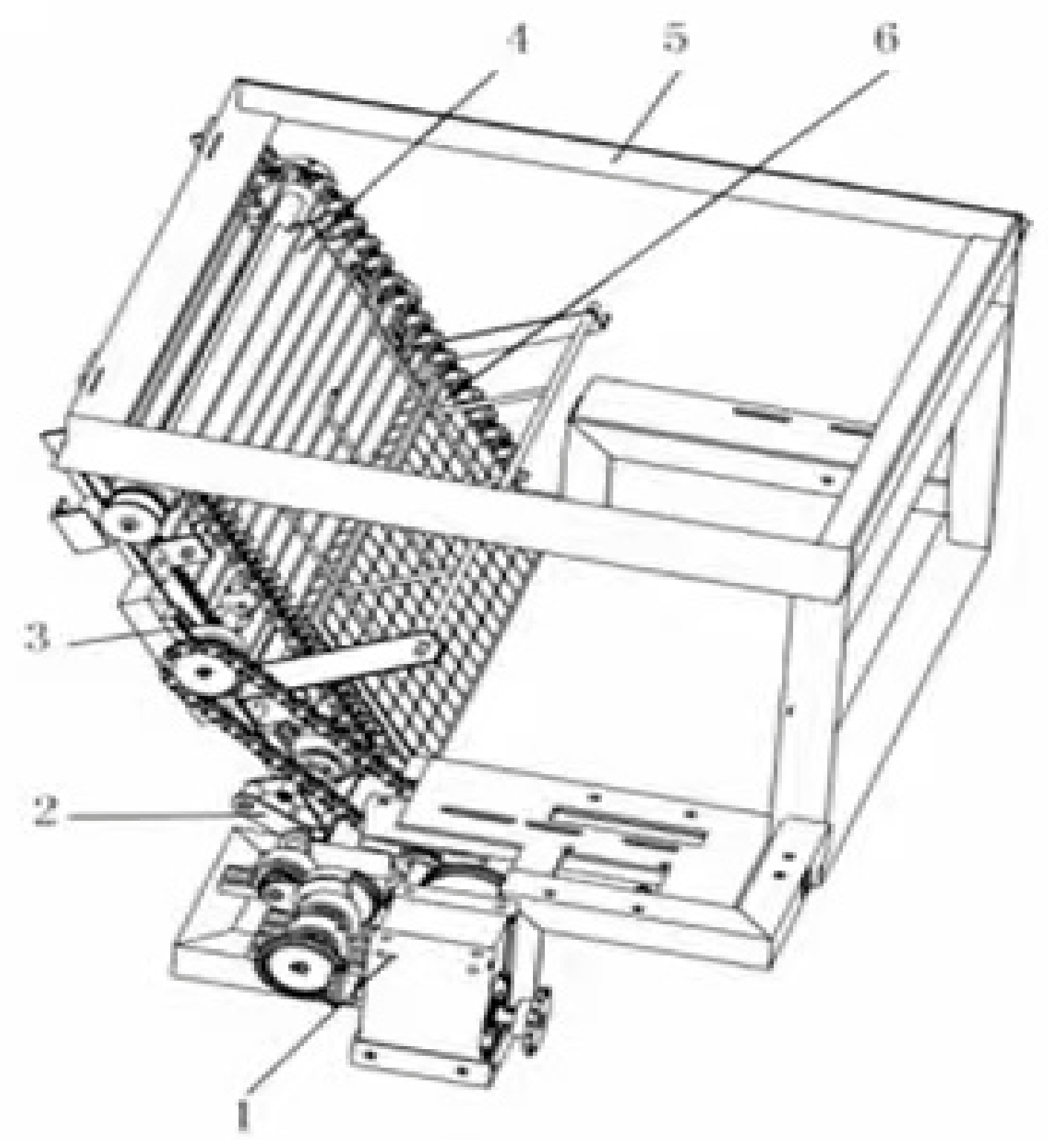
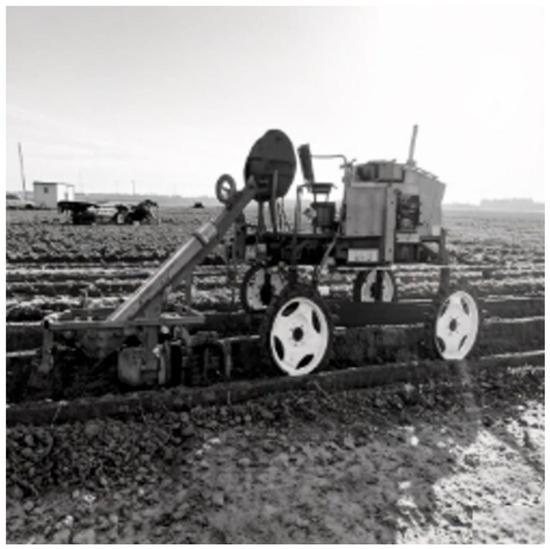
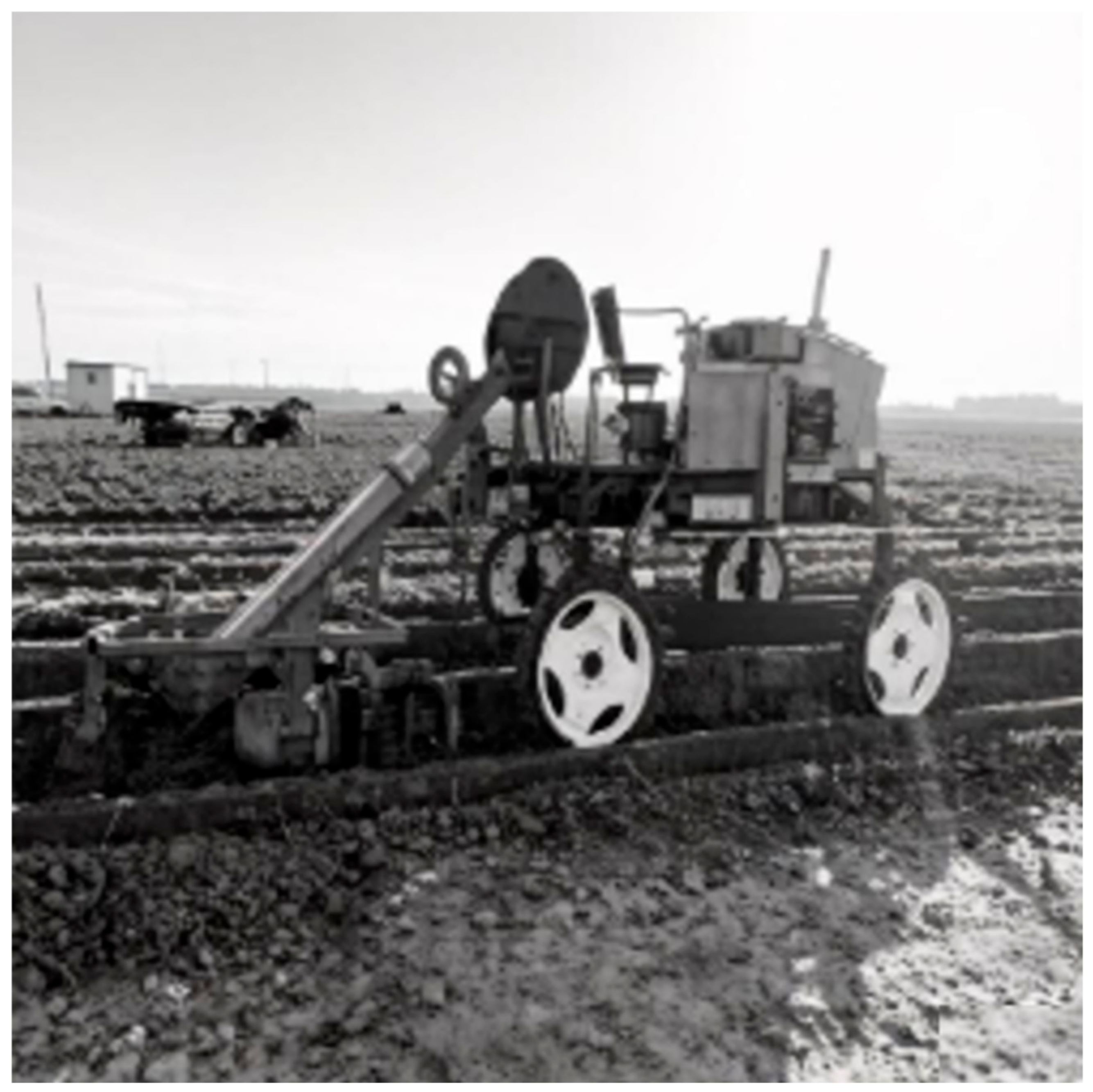
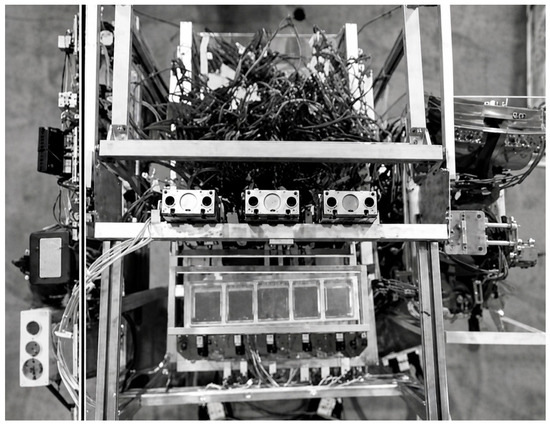
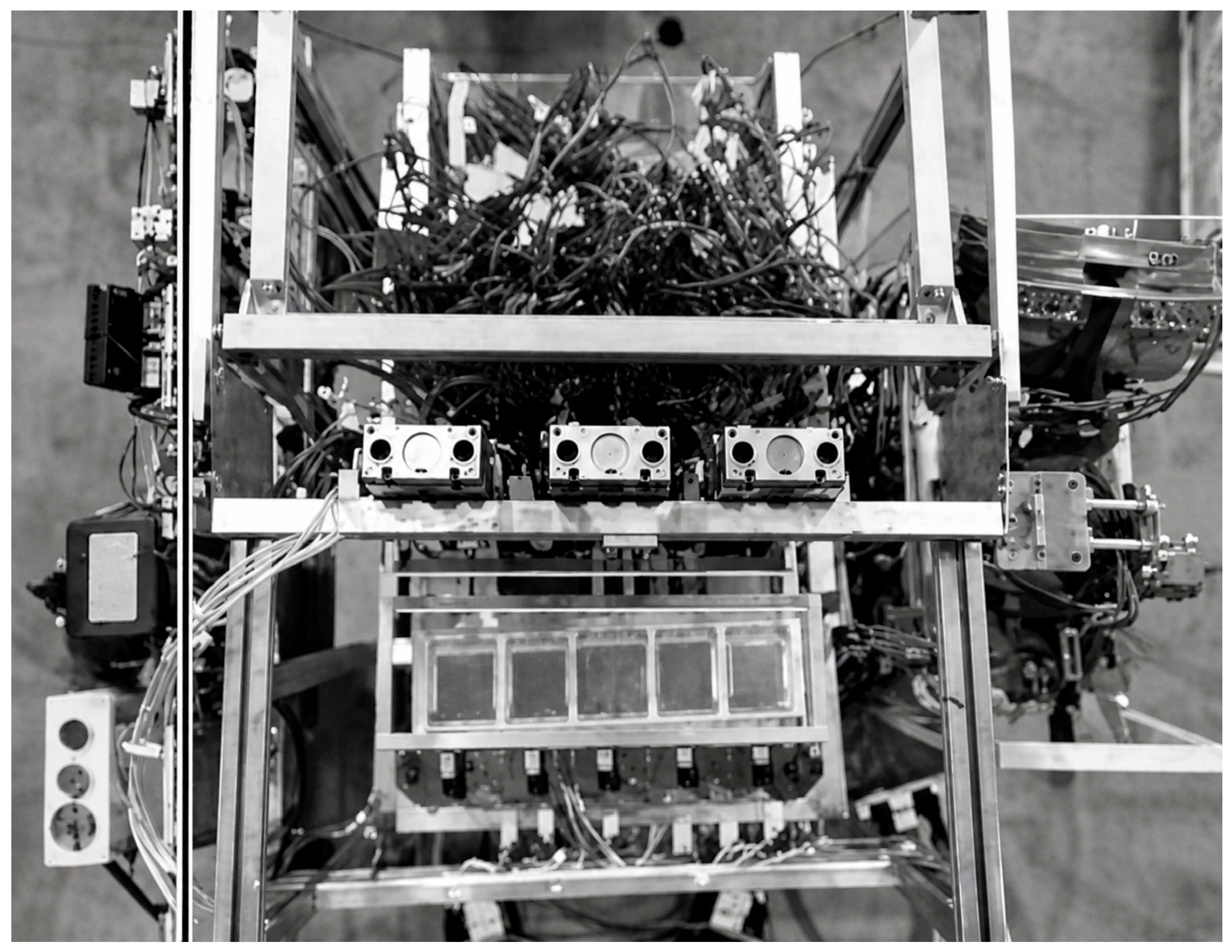
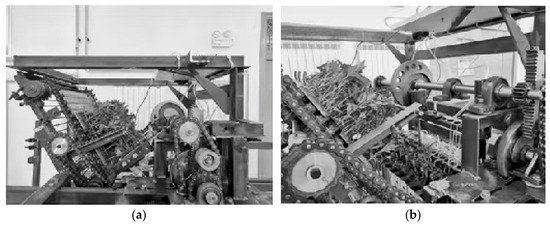
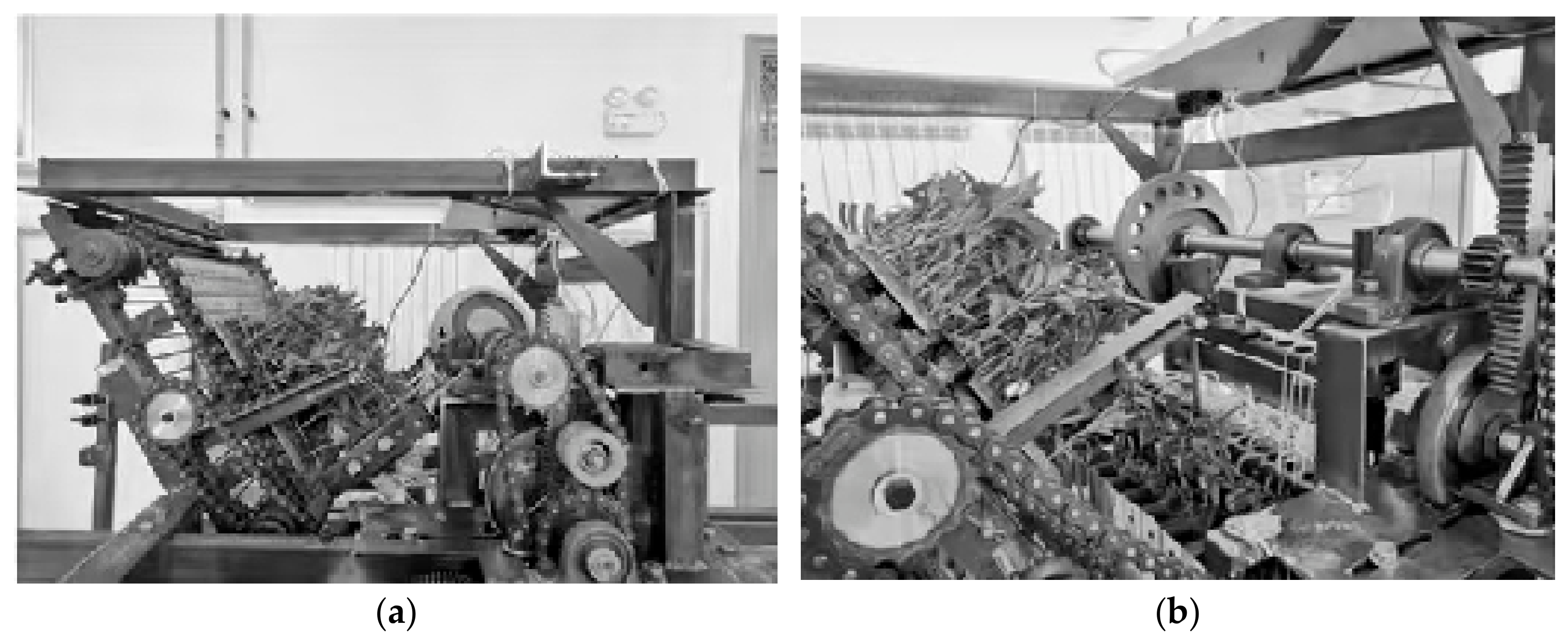
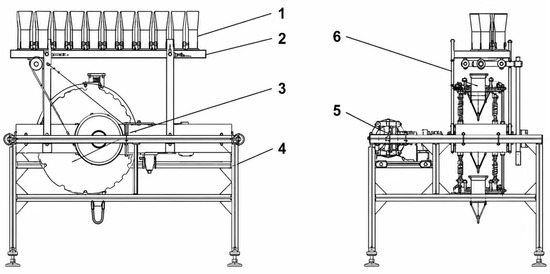
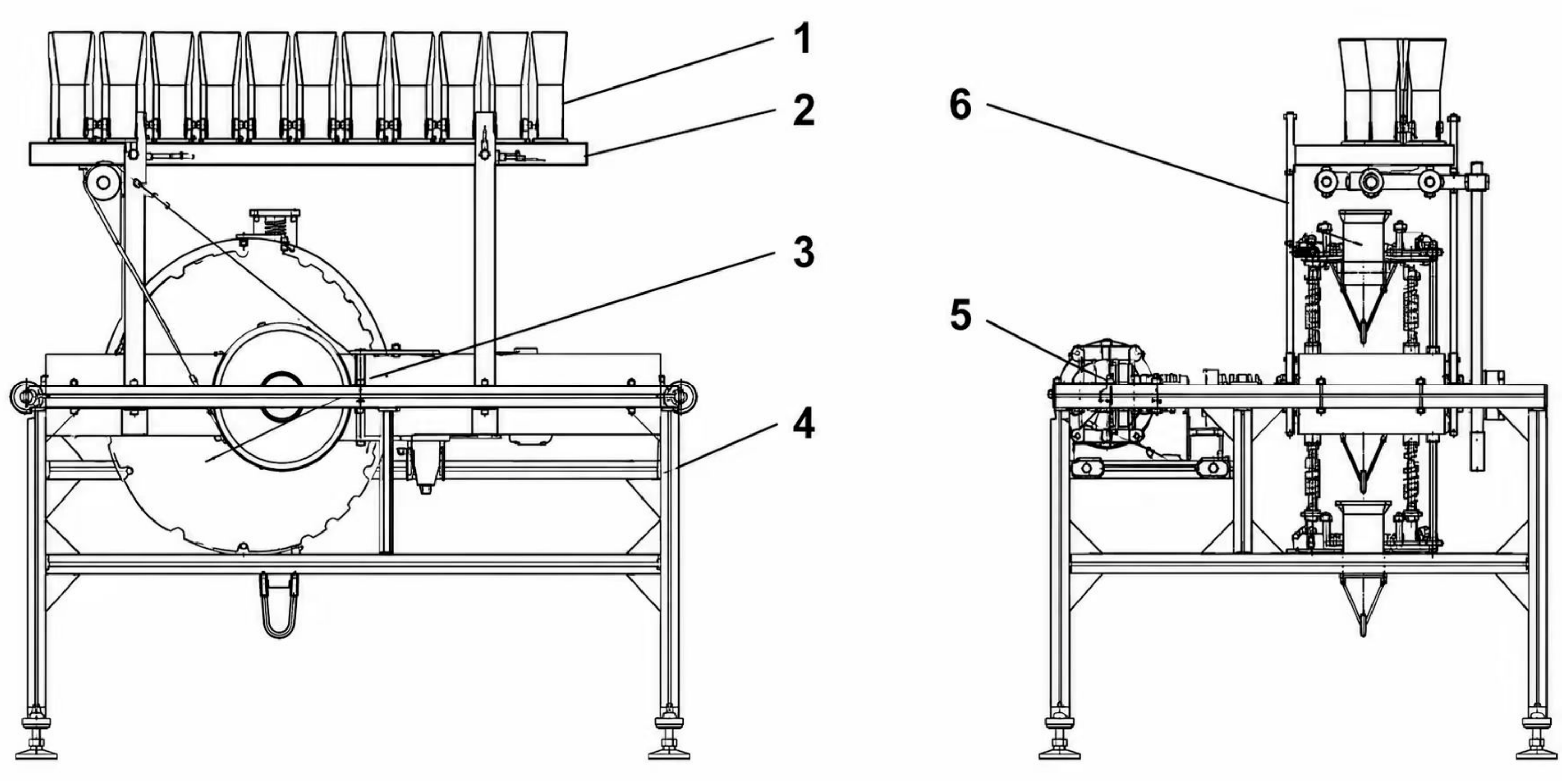
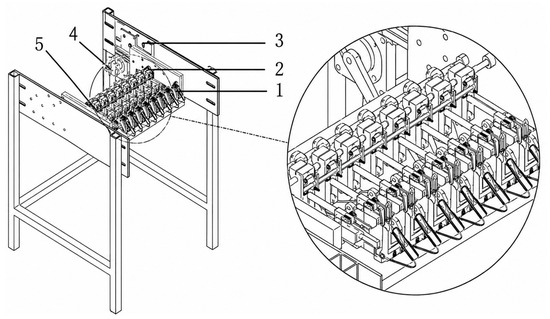
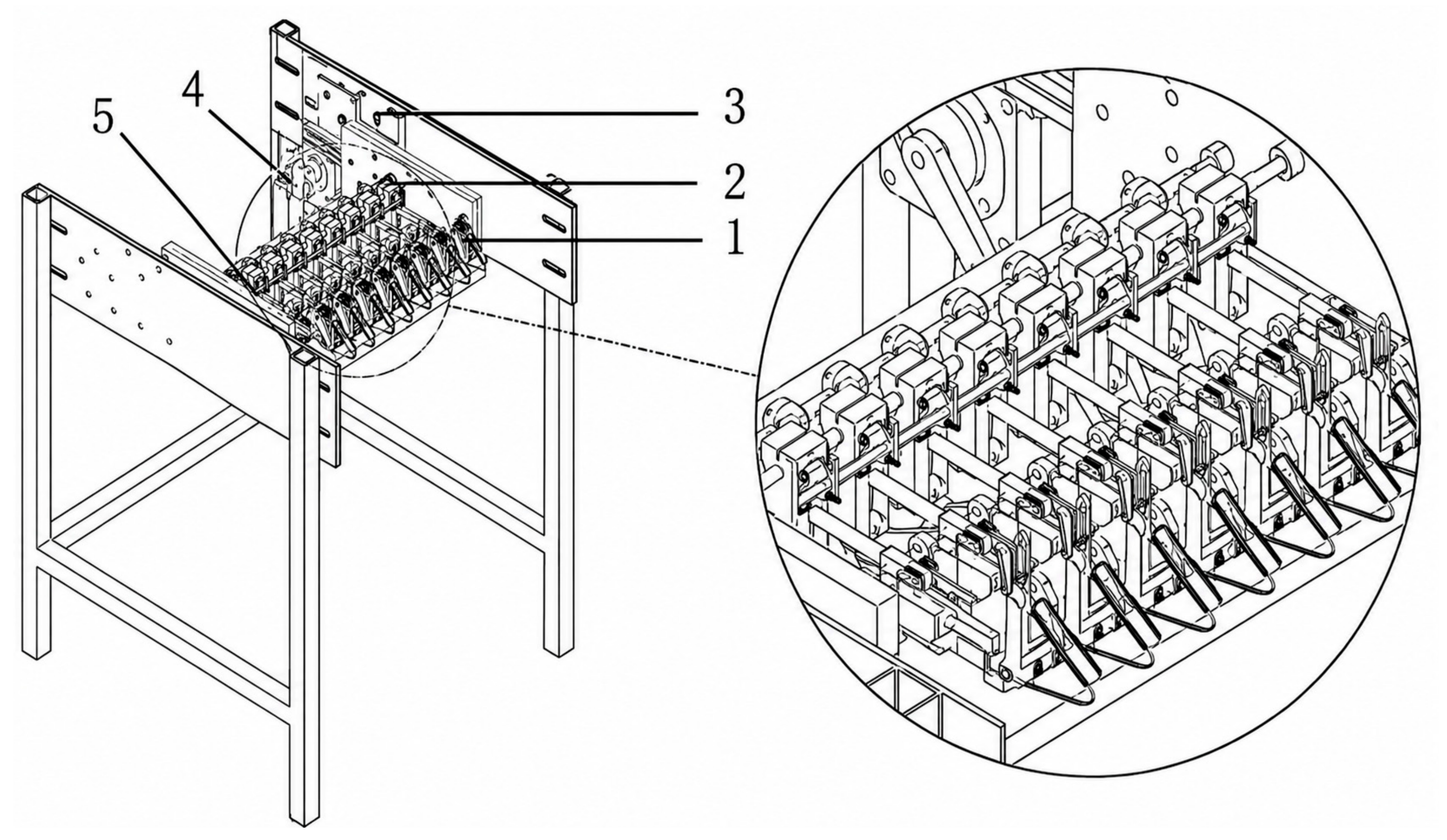
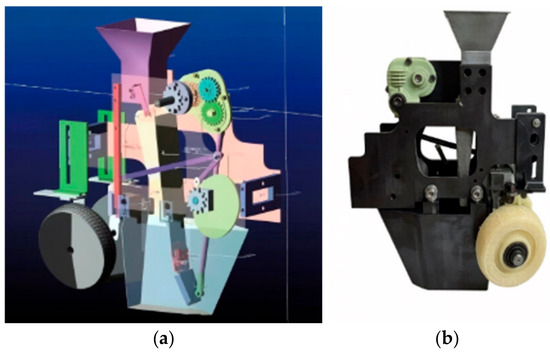
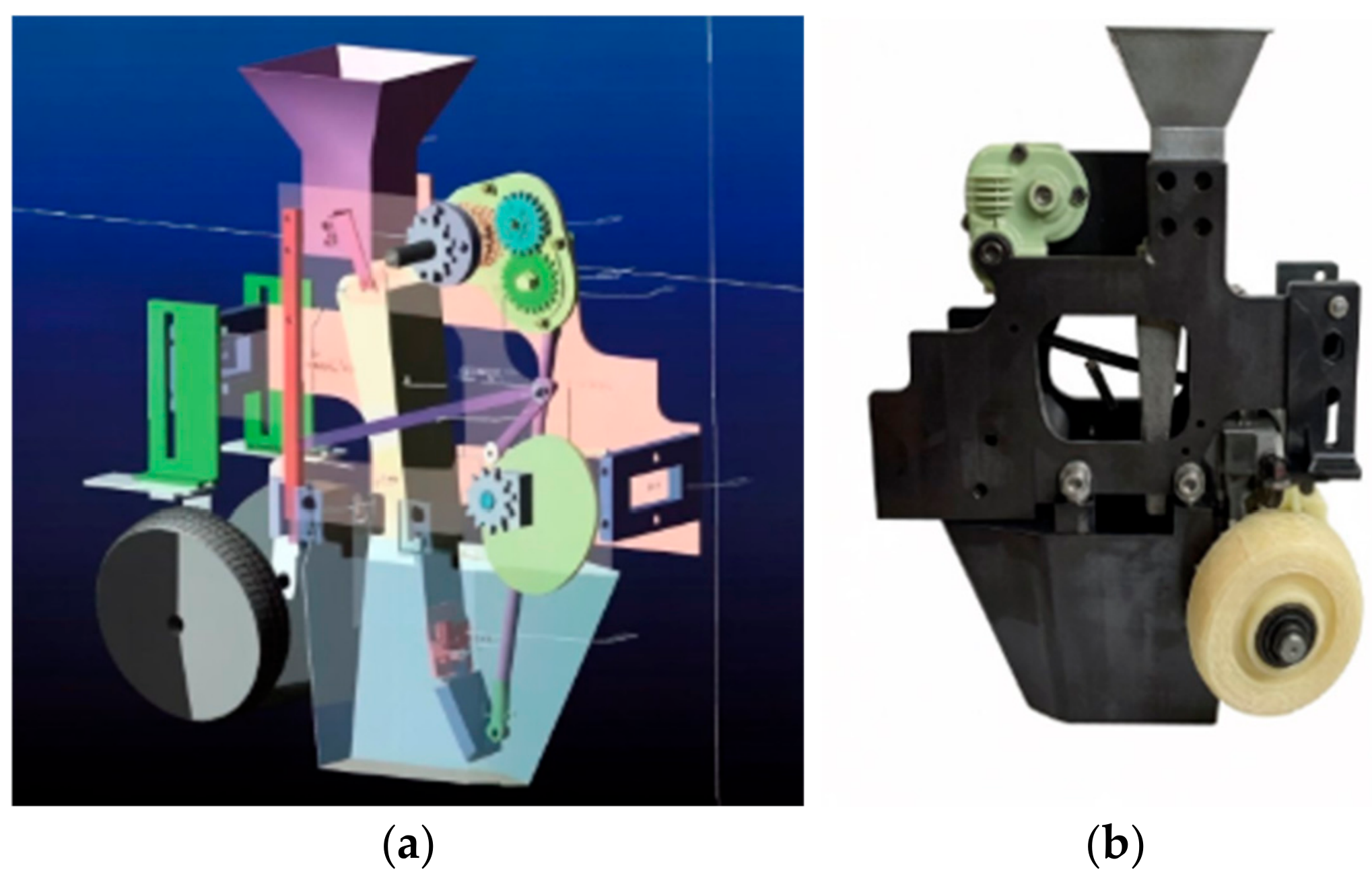
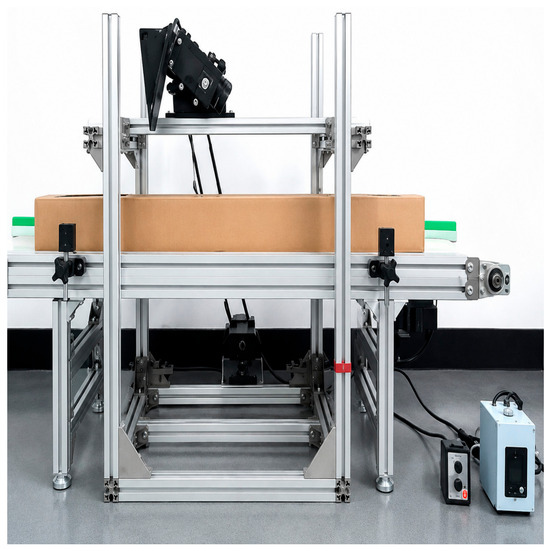
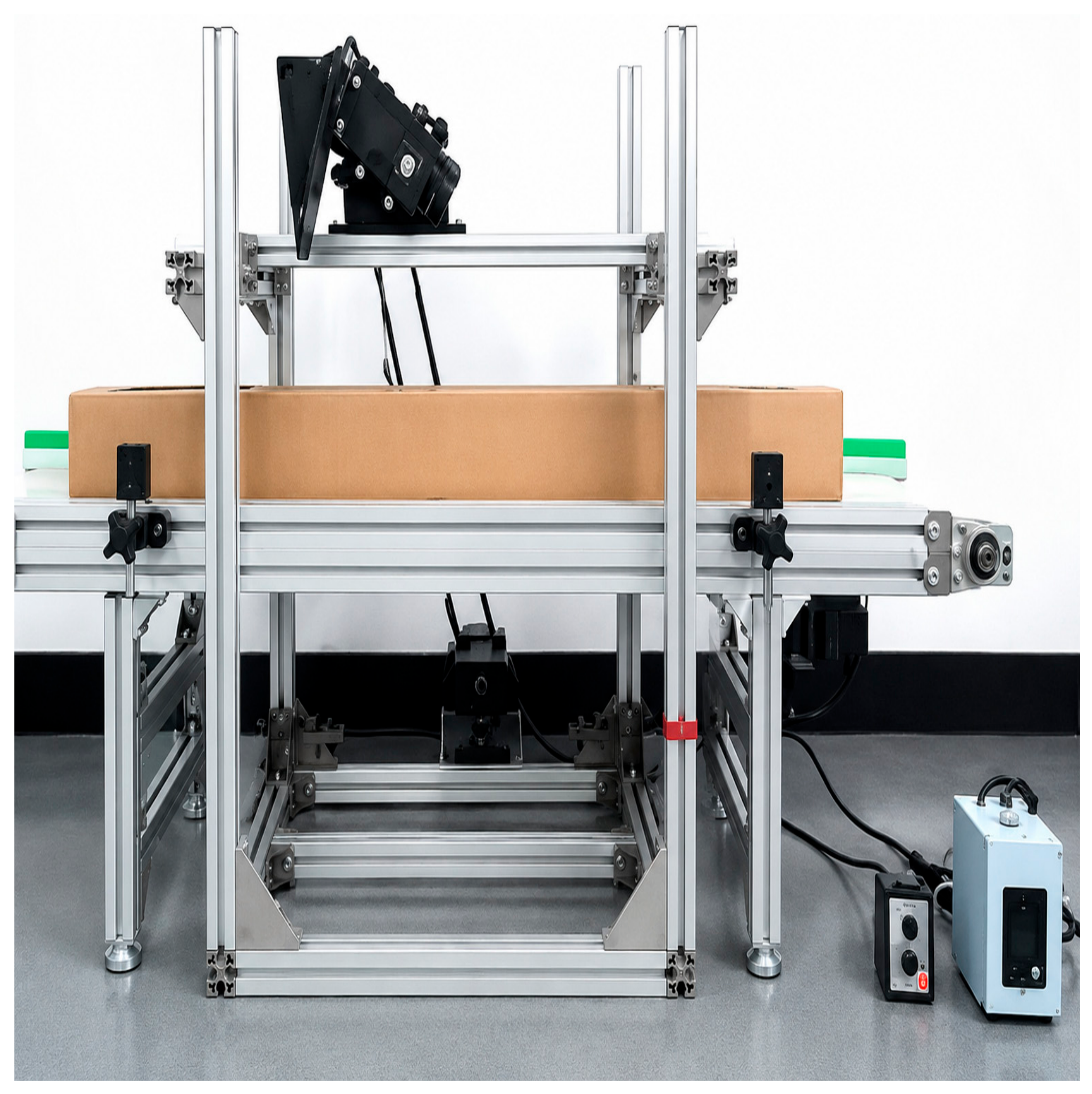
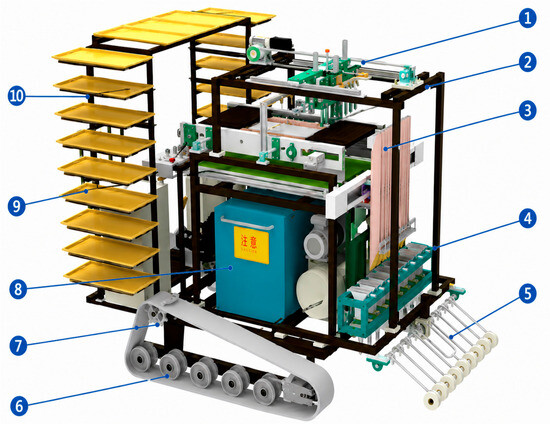
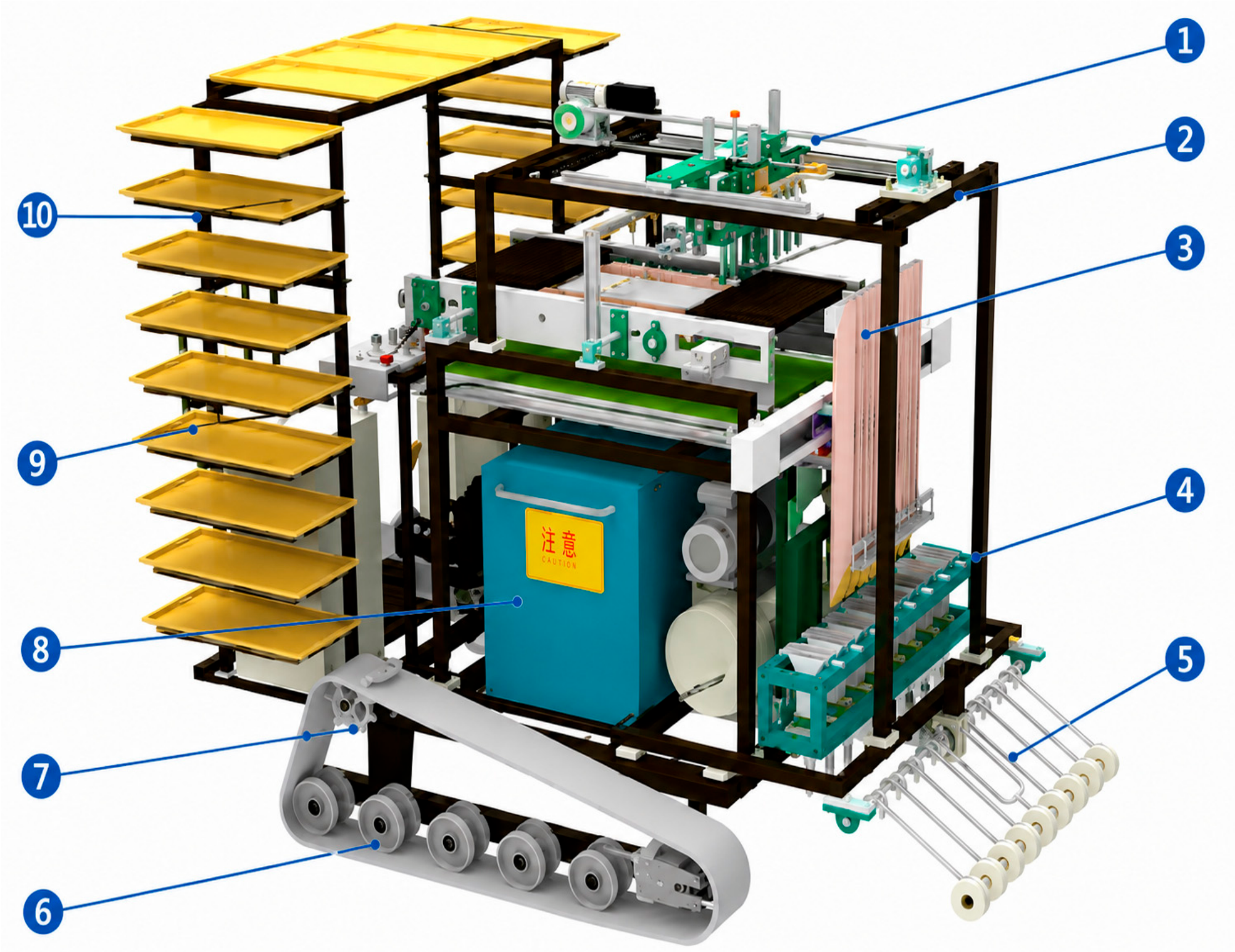
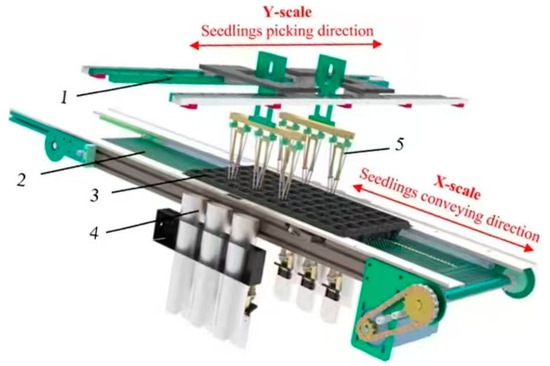
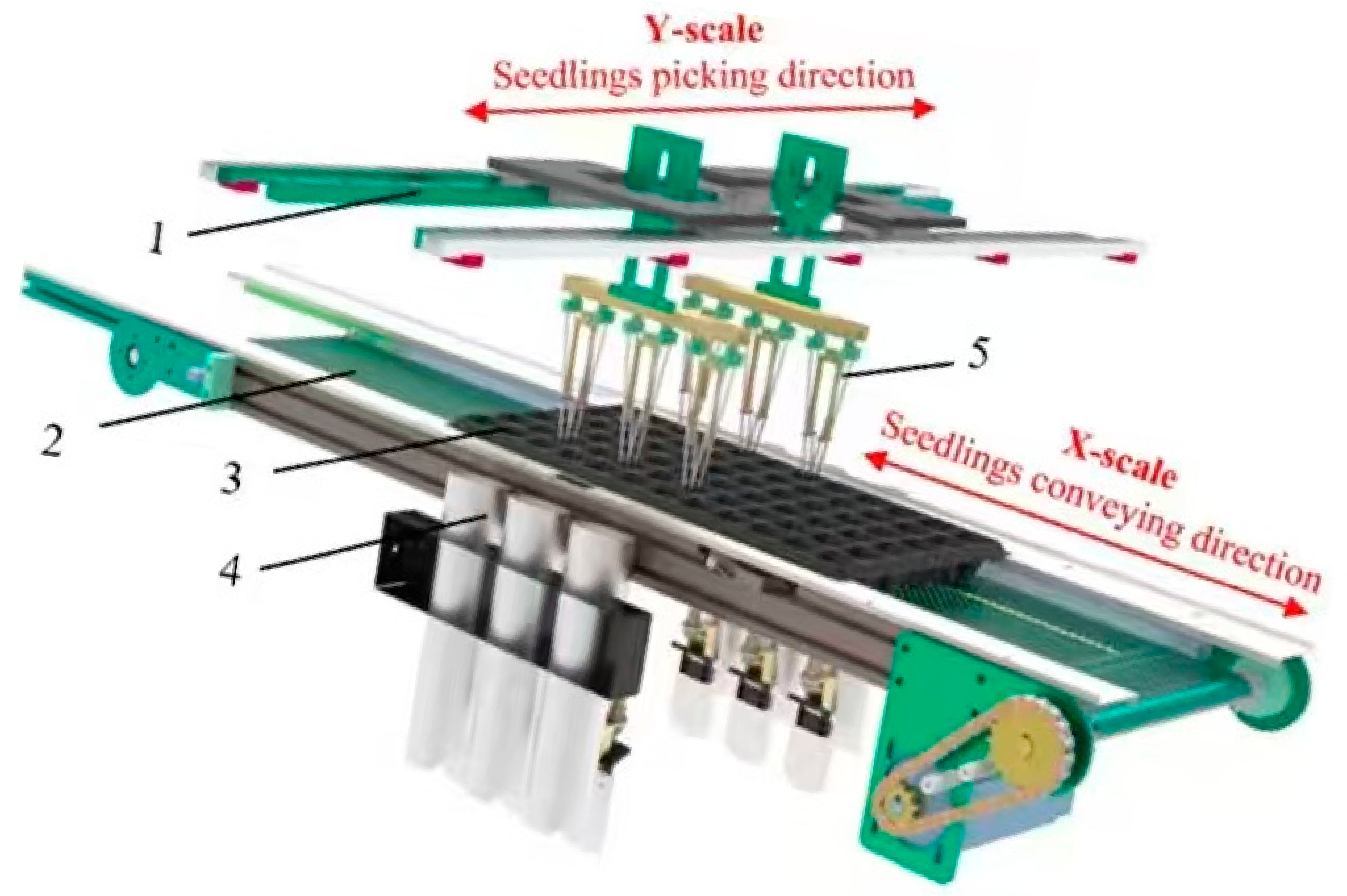
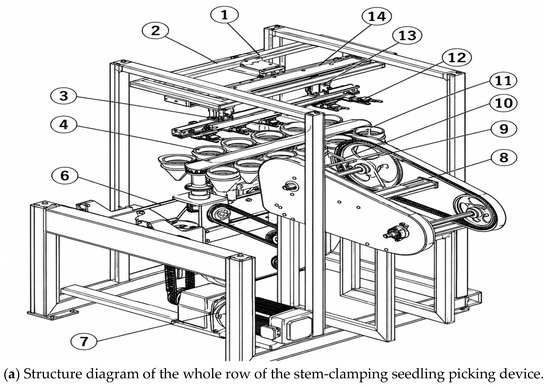
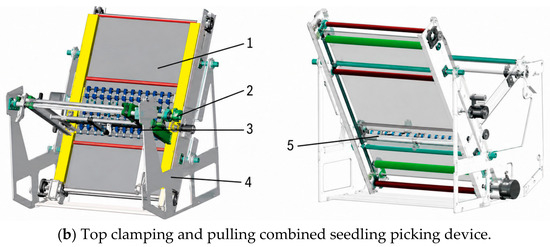
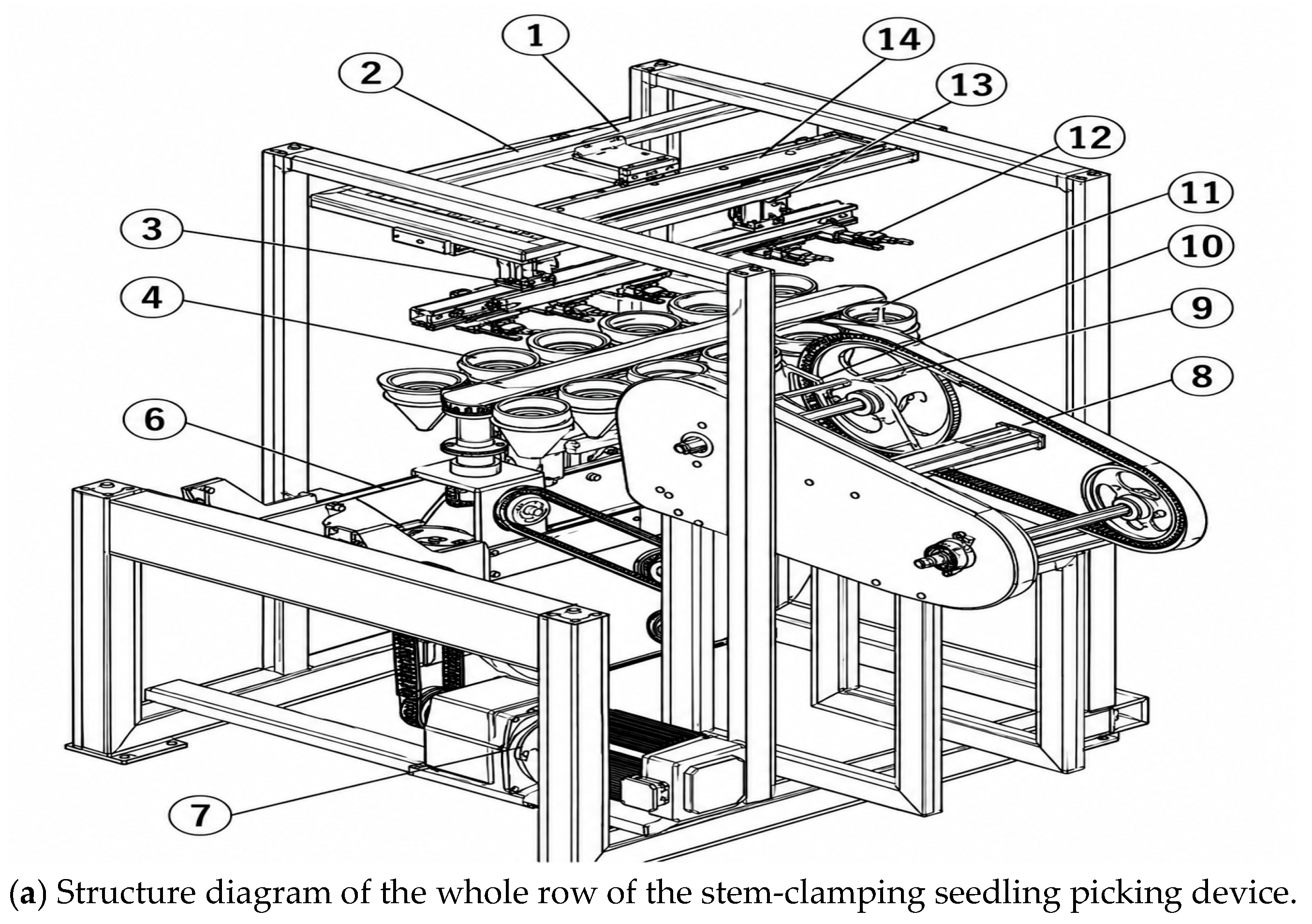
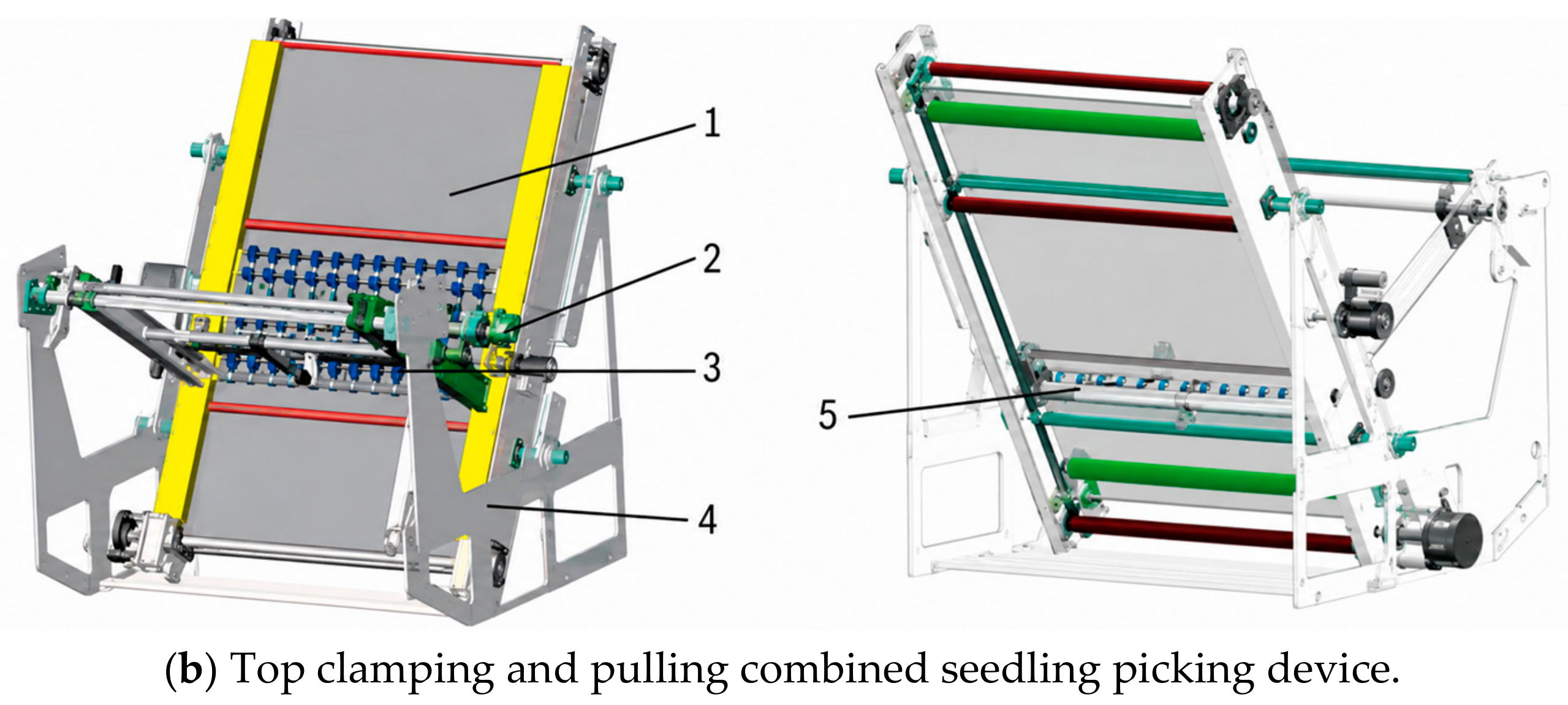
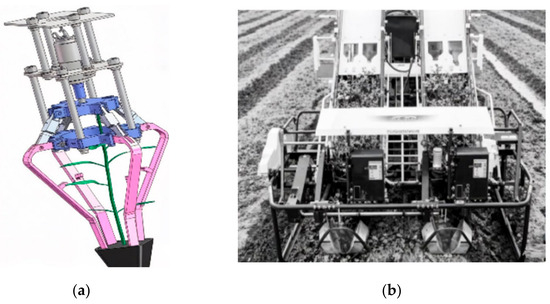
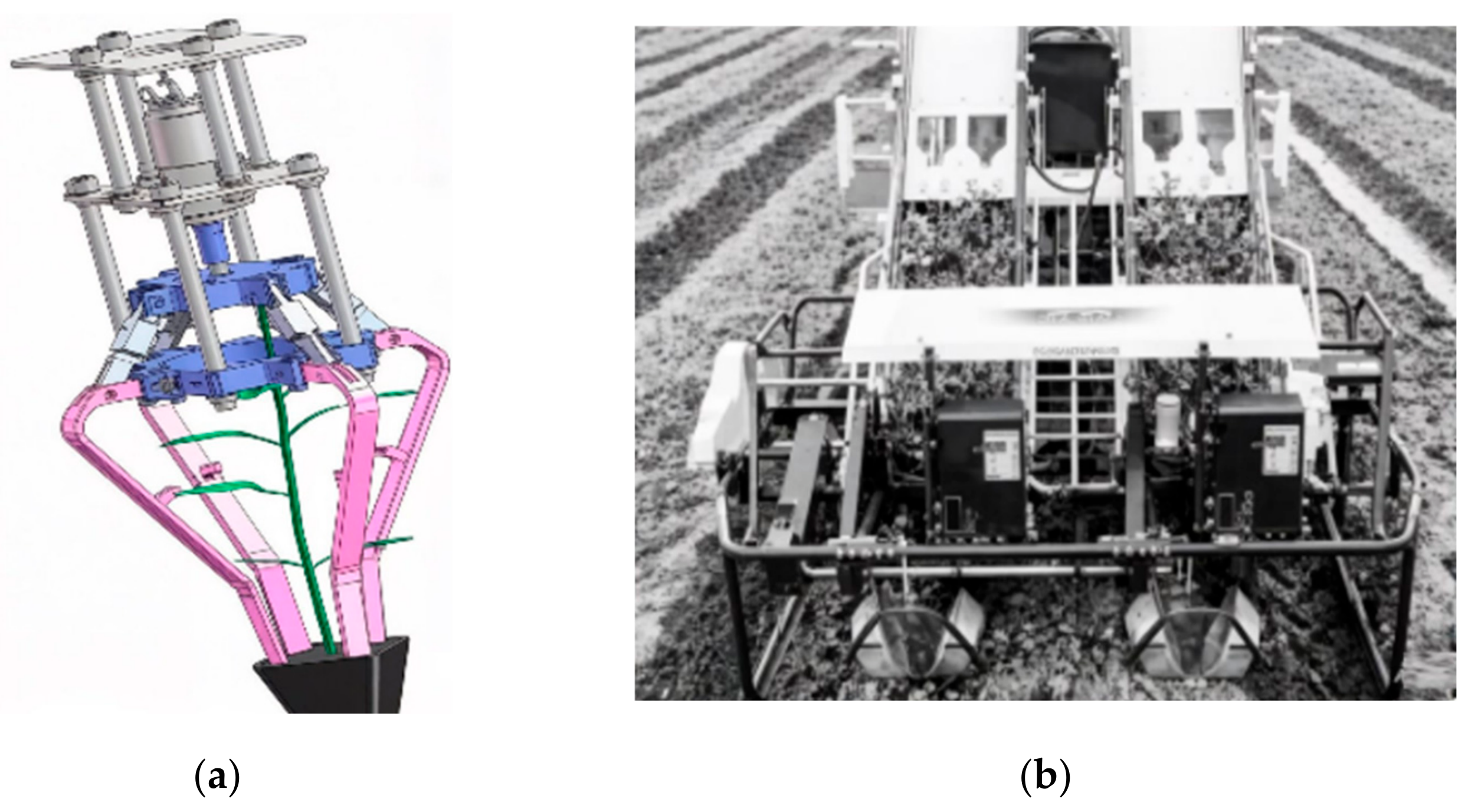
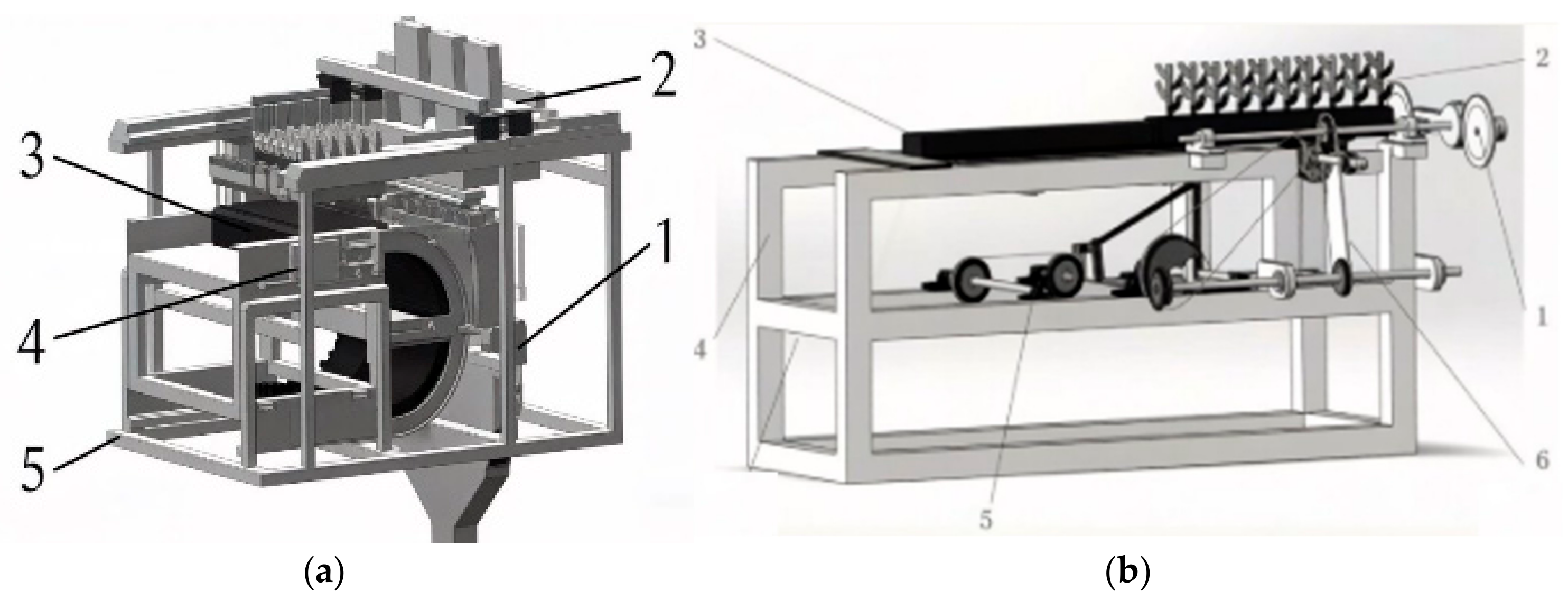
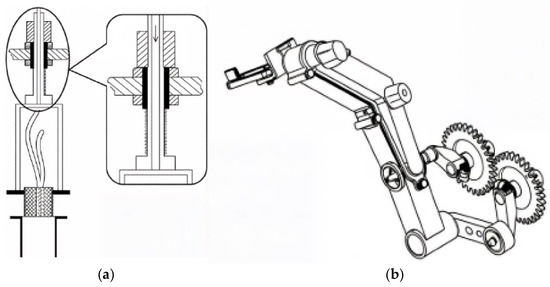
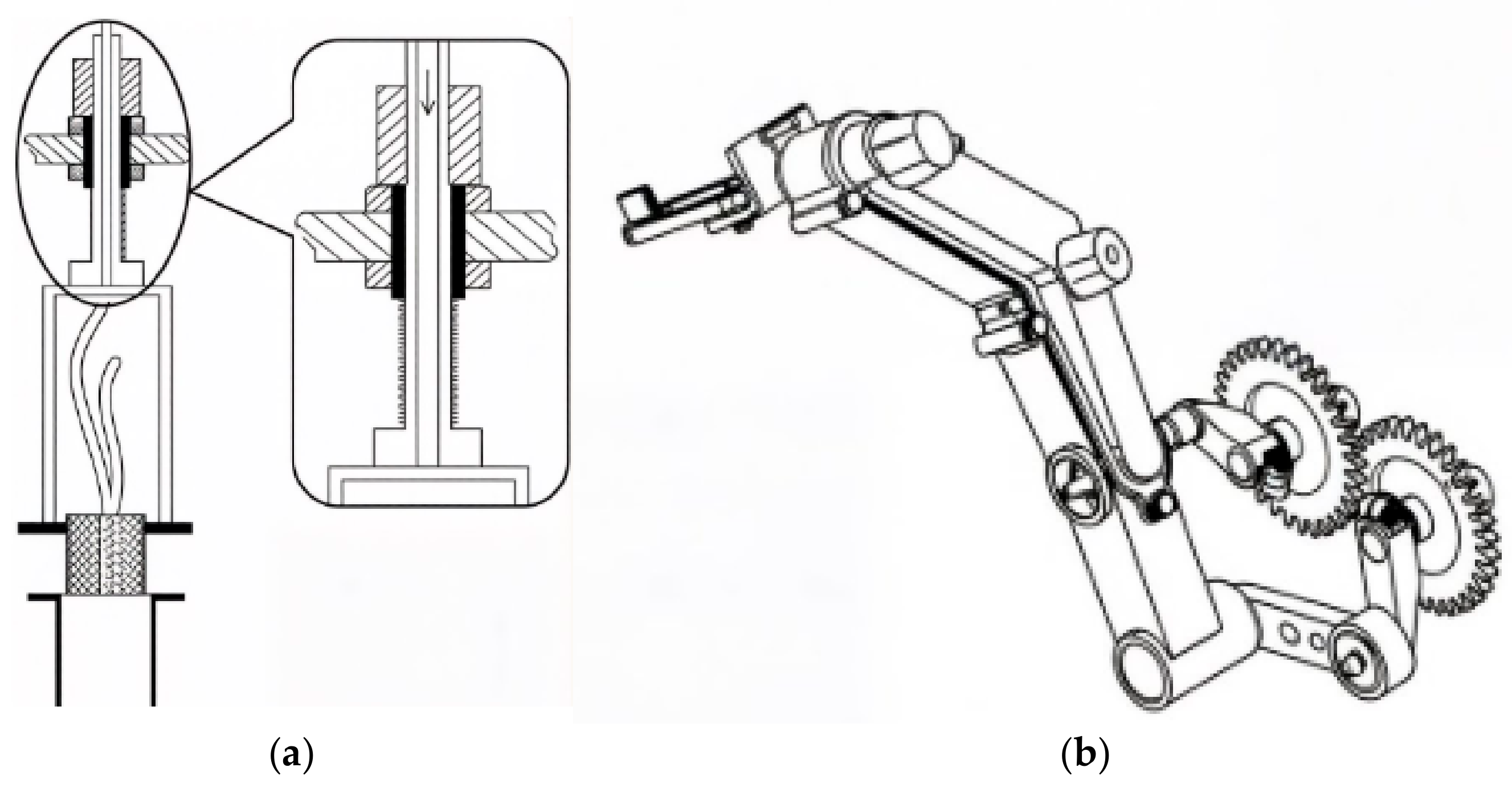
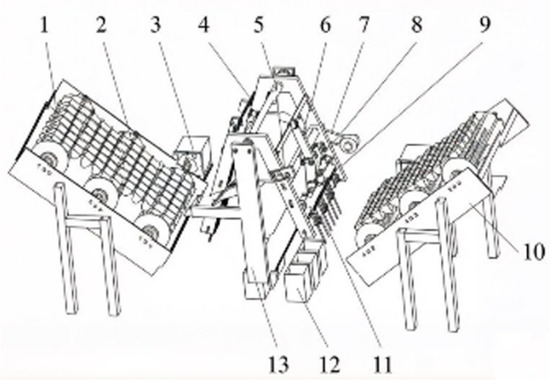
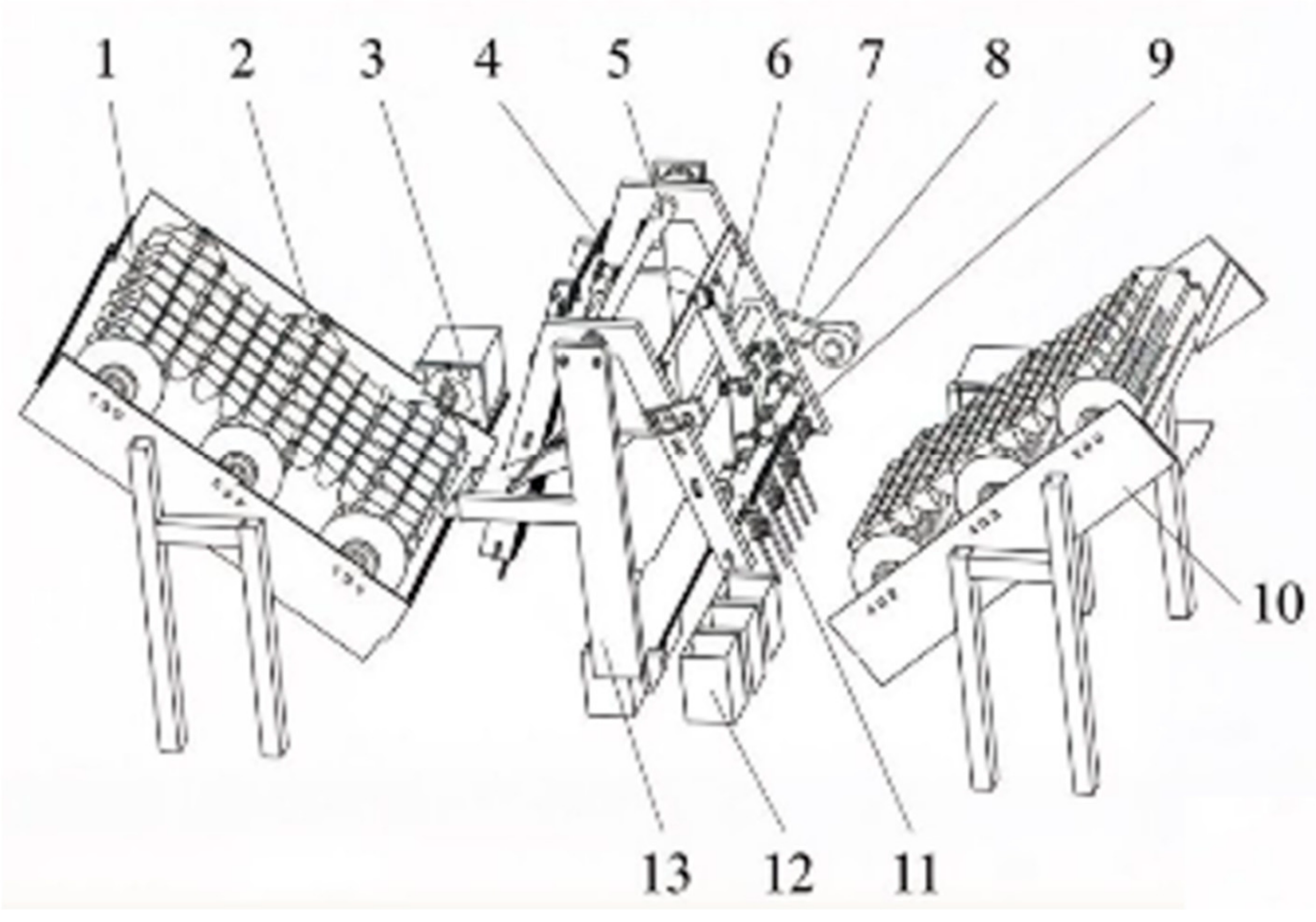
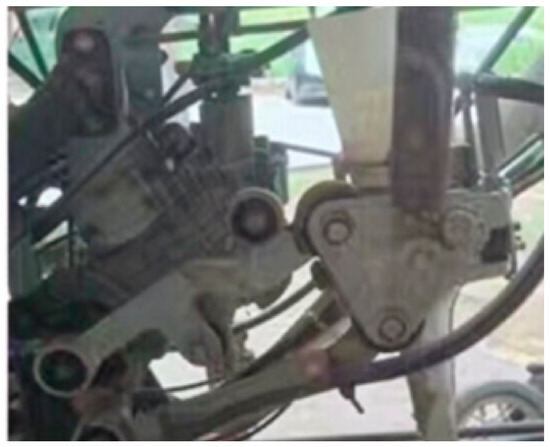
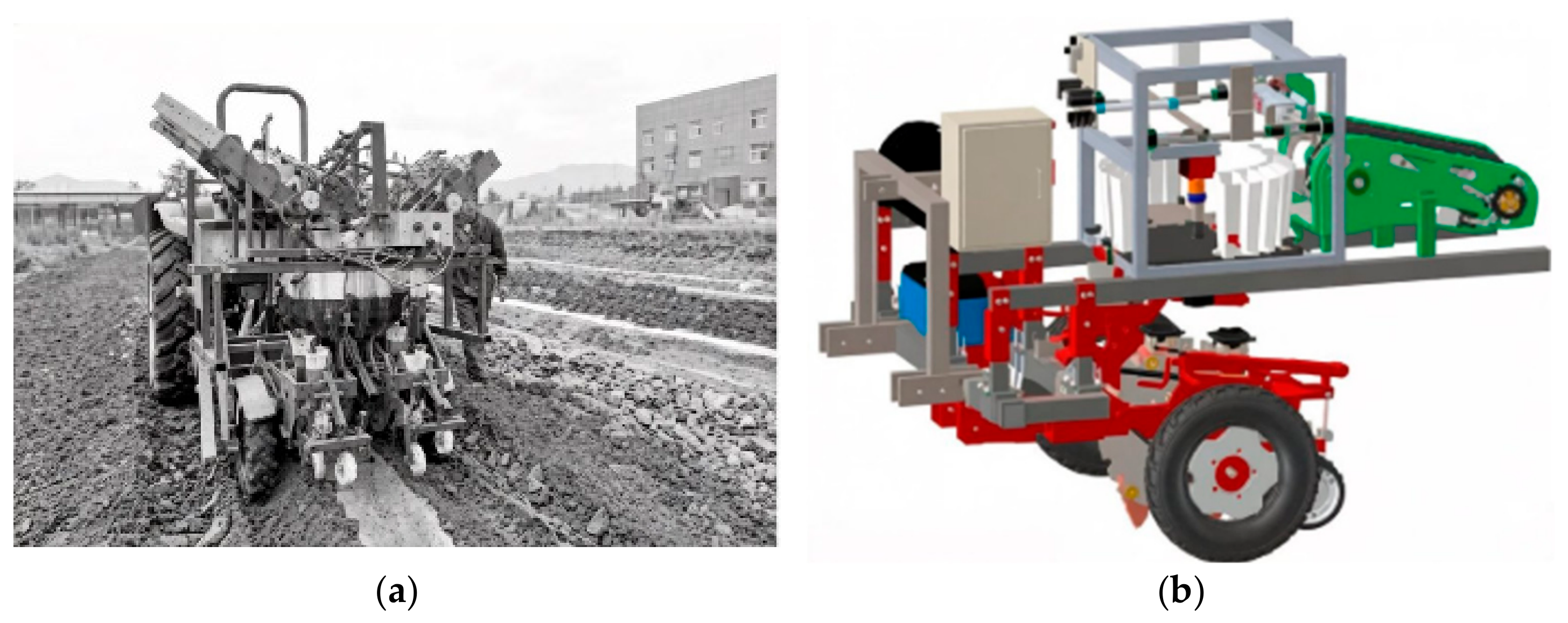
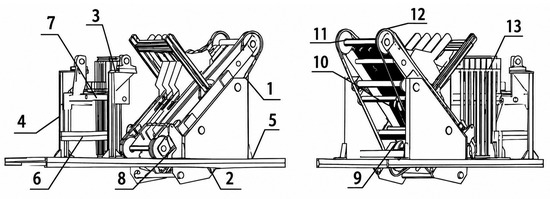
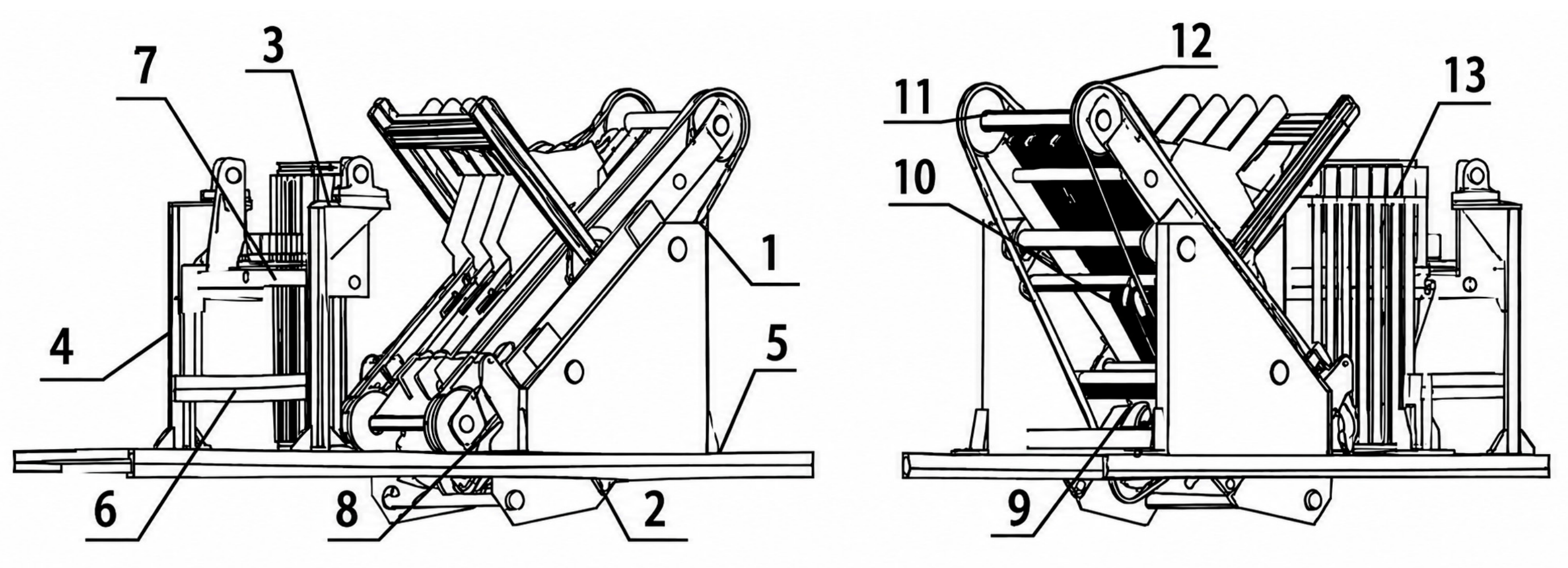
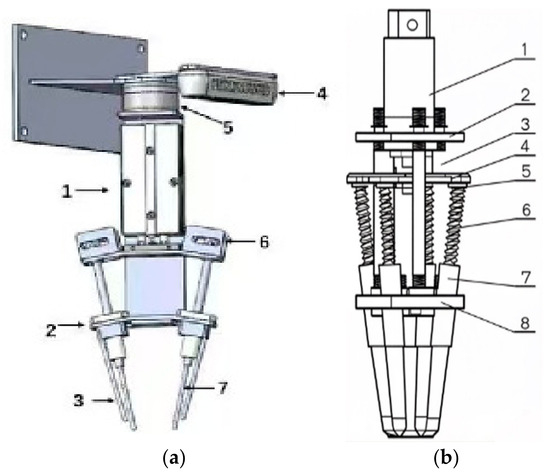
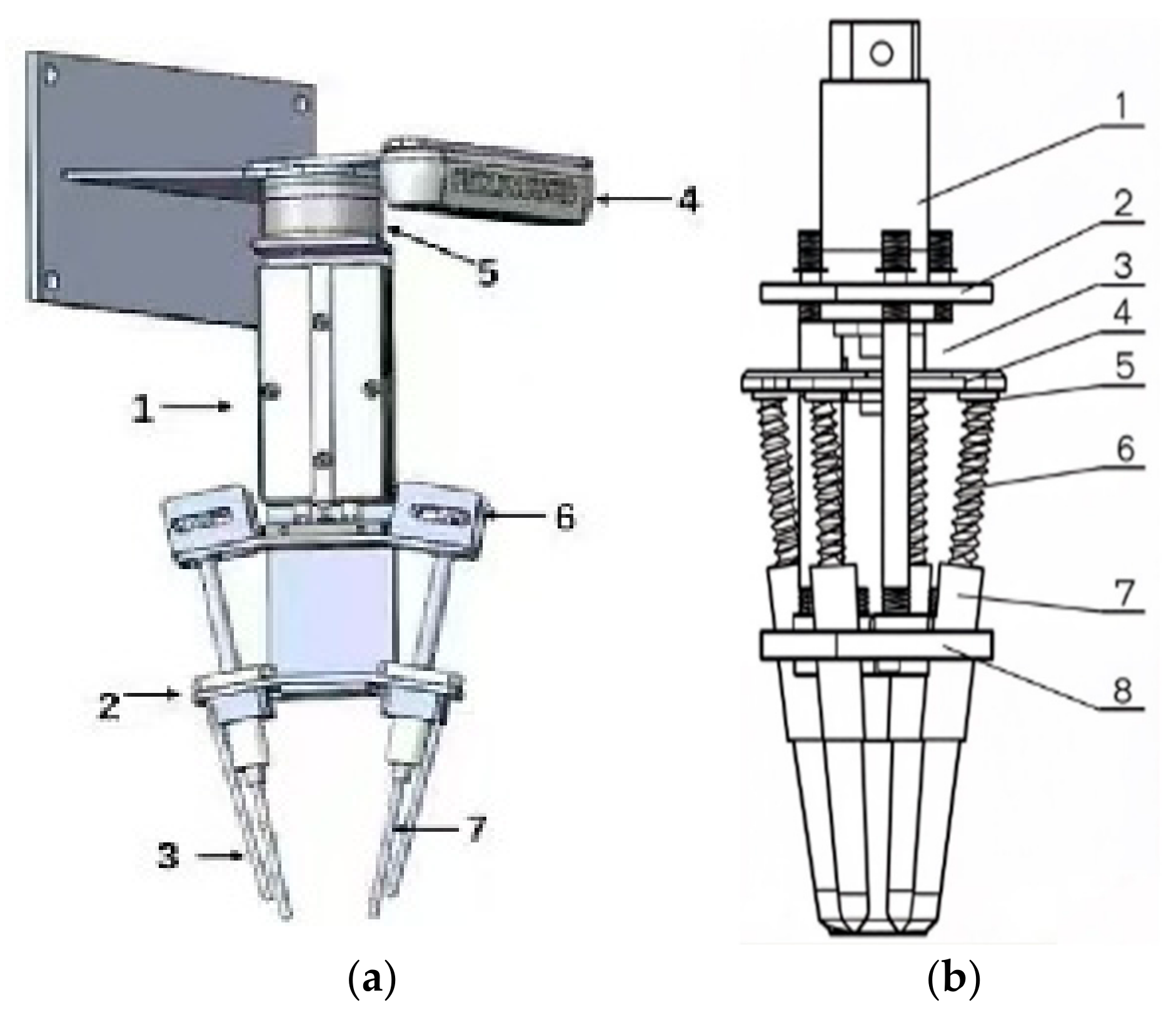

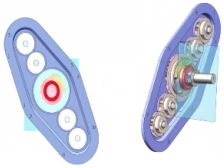
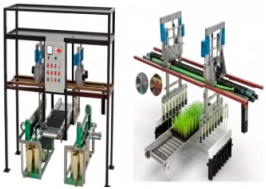
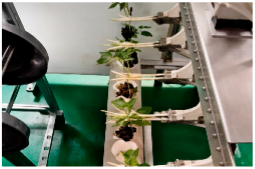
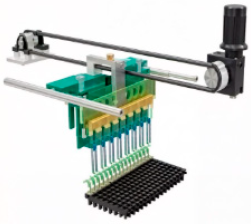
Disclaimer/Publisher’s Note: The statements, opinions and data contained in all publications are solely those of the individual author(s) and contributor(s) and not of MDPI and/or the editor(s). MDPI and/or the editor(s) disclaim responsibility for any injury to people or property resulting from any ideas, methods, instructions or products referred to in the content. |
© 2026 by the authors. Licensee MDPI, Basel, Switzerland. This article is an open access article distributed under the terms and conditions of the Creative Commons Attribution (CC BY) license.