Article

Ascorbic Acid Mitigates Salt Stress in Tomato Seedlings by Enhancing Chlorophyll Synthesis Pathways


1
Key Laboratory of Molecular Breeding and Variety Creation of Horticultural Plants for Mountain Features in Guizhou Province, School of Life and Health Science, Kaili University, Kaili 556011, China
2
Key Laboratory of Special Fruits and Vegetables Cultivation Physiology and Germplasm Resources Utilization of Xinjiang Production and Contruction Crops, Department of Horticulture, Agricultural College, Shihezi University, Shihezi 832003, China
*
Author to whom correspondence should be addressed.
These authors contributed equally to this work.
Agronomy 2024, 14(8), 1810; https://doi.org/10.3390/agronomy14081810

Submission received: 15 July 2024 / Revised: 9 August 2024 / Accepted: 14 August 2024 / Published: 16 August 2024
(This article belongs to the Section Plant-Crop Biology and Biochemistry)

Abstract

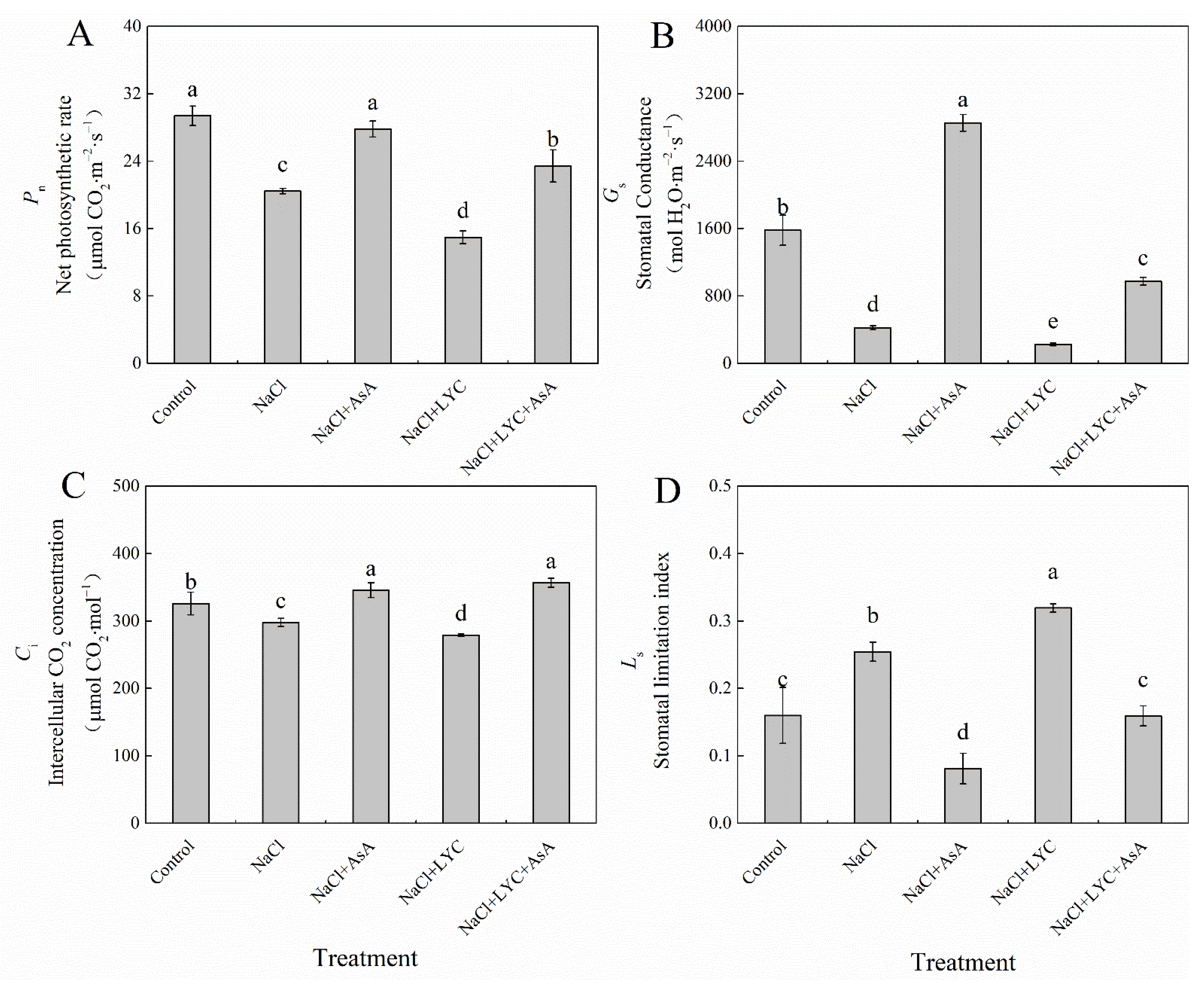
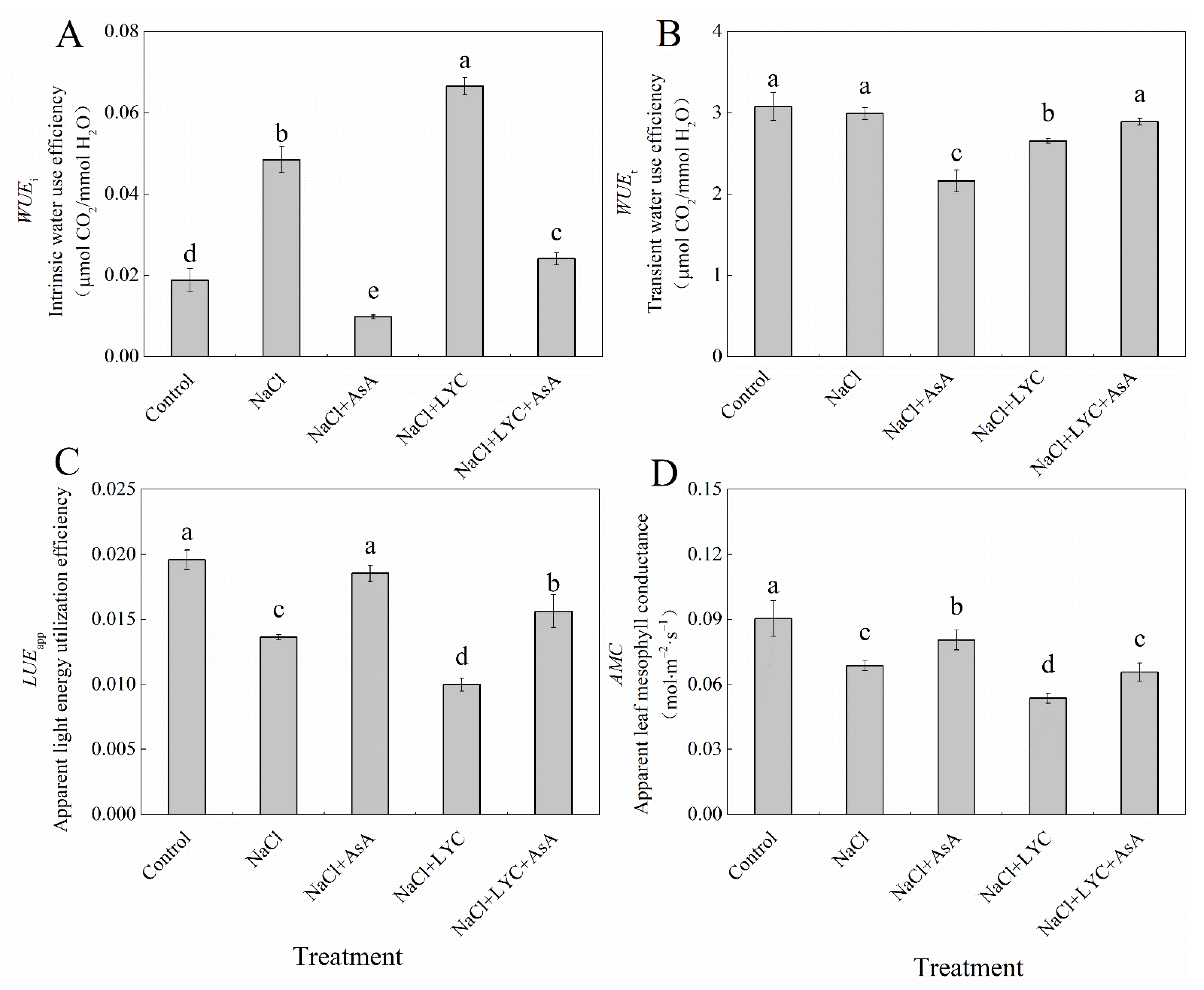
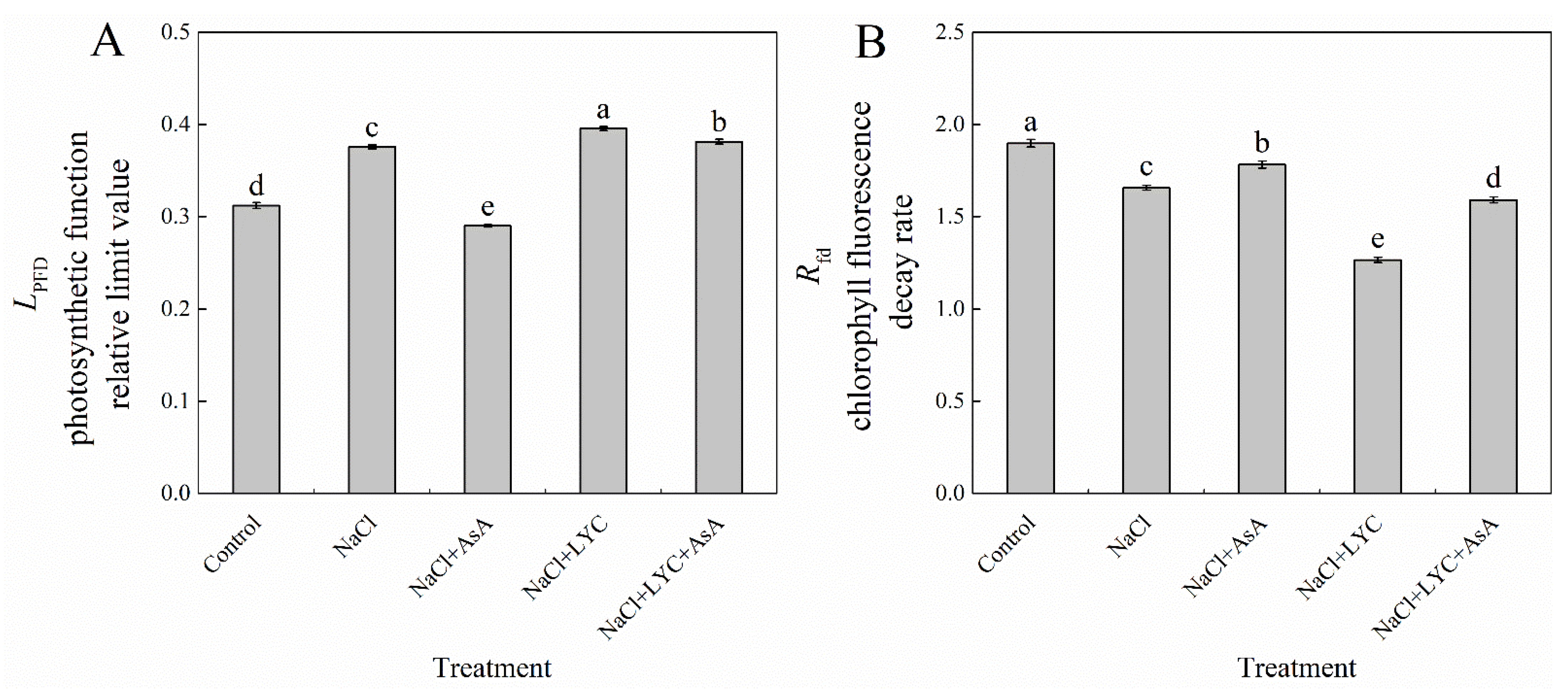
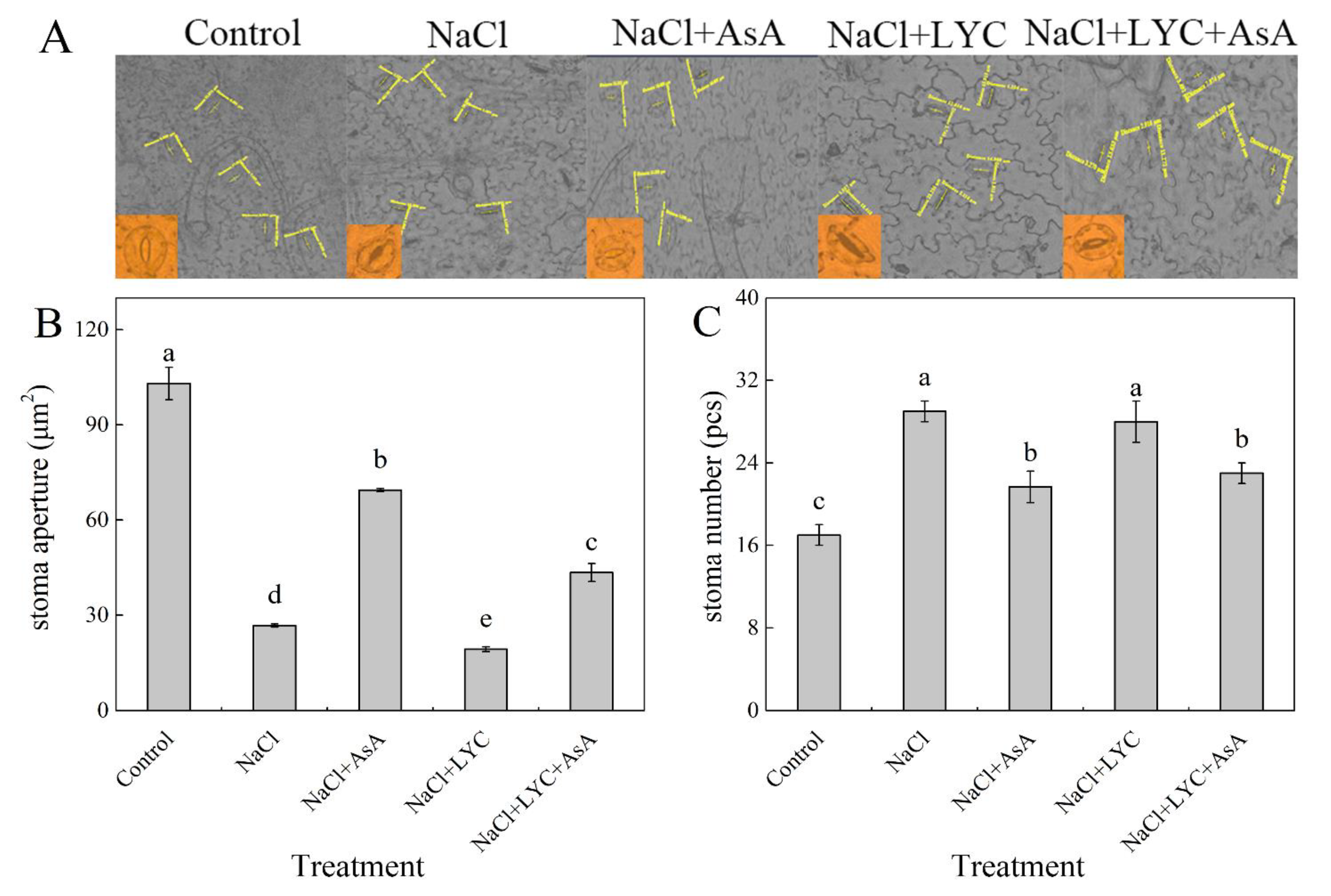
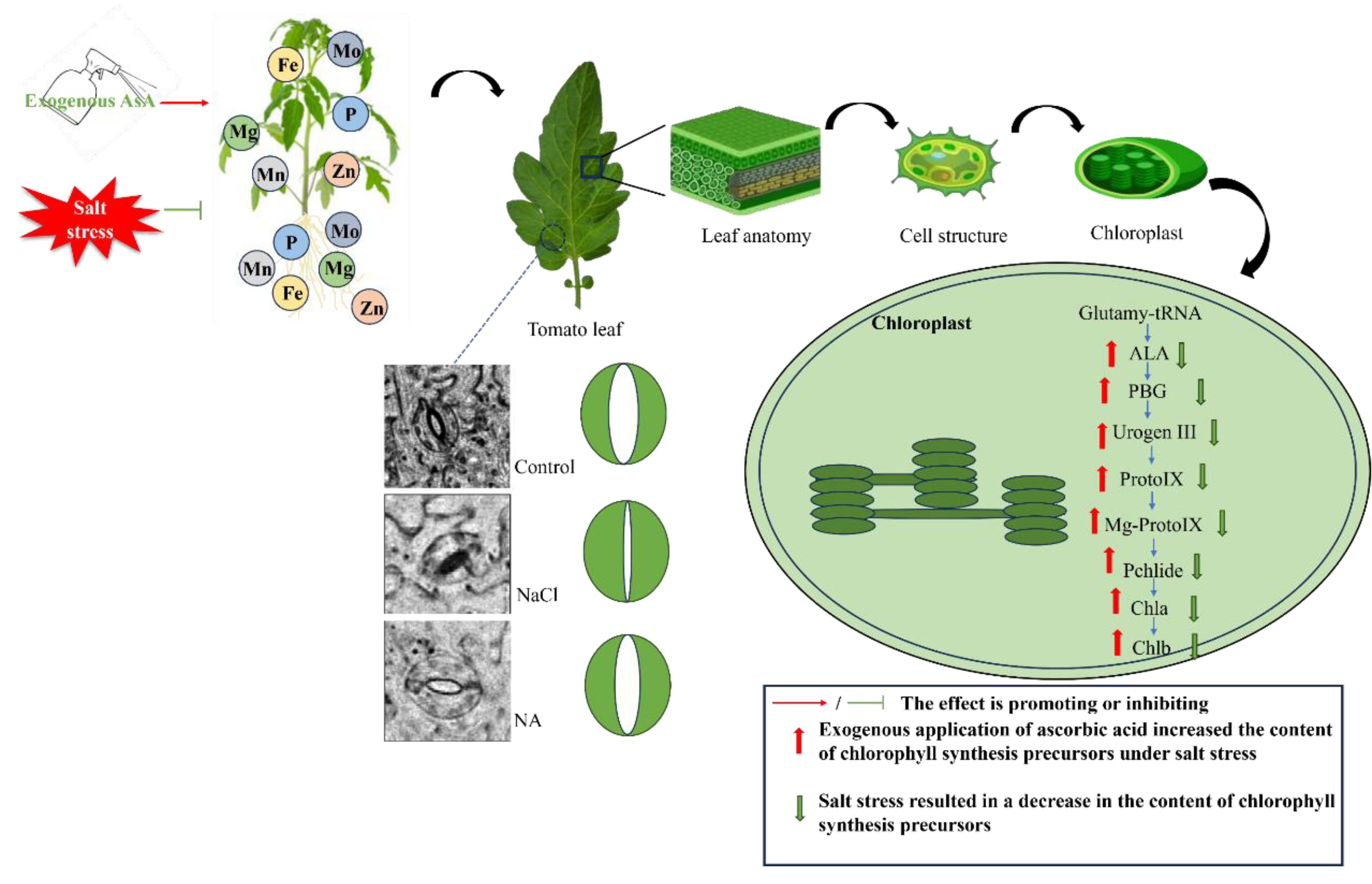
Salt stress is a critical abiotic factor that adversely affects plant growth and productivity by impairing photosynthesis. This study explores the impact of exogenous ascorbic acid (AsA) on the photosynthetic performance of tomato seedlings (Solanum lycopersicum L. cv. Ligeer 87-5) under salt stress. Hydroponic experiments were conducted in a solar greenhouse, where tomato seedlings were subjected to the following five treatments: Control, NaCl, NaCl + AsA, NaCl + lycorine (LYC), and NaCl + LYC + AsA. Our findings demonstrate that salt stress significantly reduced chlorophyll and carotenoid contents, levels of chlorophyll synthesis precursors (5-aminolevulinic acid (ALA), porphobilinogen (PBG), uroporphyrinogen III (Urogen III), protoporphyrin IX (Proto IX), magnesium protoporphyrin IX (Mg-Proto IX), protochlorophyllide (Pchl)), and essential elements (Mg, Fe, Mn, Zn, Mo, and P) in both roots and leaves. These reductions led to a substantial decline in net photosynthetic rate (Pn) and compromised photosystem II (PSII). In contrast, exogenous AsA application significantly enhanced the content of photosynthetic pigment precursors and essential elements, improved stomatal aperture and gas exchange efficiency, and boosted the photosynthetic performance of tomato seedlings under salt stress. Furthermore, AsA treatment mitigated the negative effects of salt stress by protecting PSII, increased light energy utilization efficiency, and alleviated both stomatal and non-stomatal limitations. The application of the AsA synthesis inhibitor LYC exacerbated the detrimental effects of salt stress, further reducing chlorophyll content and photosynthetic efficiency. In conclusion, exogenous AsA plays a vital role in enhancing the photosynthetic performance and stress tolerance of tomato seedlings under salt stress by stabilizing chlorophyll biosynthesis, facilitating essential element absorption, and optimizing stomatal function. This study provides a new approach and feasible measures for improving tomato resistance and yield, which is significant for enhancing crop productivity, managing saline soils, and promoting sustainable agricultural practices.
Keywords: salt stress; ascorbic acid (AsA); tomato; chlorophyll synthesis precursors; photosynthesis salt stress; ascorbic acid (AsA); tomato; chlorophyll synthesis precursors; photosynthesis