


Abstract
Farmland ecosystems represent a vital carbon source and sink within terrestrial ecosystems. The investigation into the characteristics of carbon emissions and their influencing factors within farmland ecosystems is crucial for the realization of carbon reduction and the promotion of low-carbon development. This study leveraged the analytical prowess of CiteSpace software (version 6.1.5) to examine a comprehensive body of 2805 scholarly works related to carbon emissions within agricultural ecosystems, as documented in the Web of Science Core Database from 1991 through to 2023. Through a visual dissection of data based on national, institutional, and thematic dimensions, the study elucidated emergent focal points and evolving trajectories within this scholarly domain. The findings revealed that current scholarly discussions on carbon emissions from agricultural lands have primarily focused on three key areas: the factors that influence these emissions, the possibilities for their reduction, and the subsequent environmental impacts. Focal points of research have predominantly centered on four key themes: “greenhouse gas emissions from farmland ecosystems”, “carbon emission models for farmland ecosystems”, ”carbon sequestration in farmland ecosystems”, and ”sustainable development in agricultural ecosystems”. The academic perspective has gradually shifted from a broad overview of carbon emissions towards a detailed examination of the determinants of emissions and the efficiency of agricultural resource utilization. Looking forward, it is crucial to explore the mechanisms behind high-carbon agricultural practices and to establish their optimal operational thresholds. The focus of research is shifting from macro carbon emissions to the analysis of emission factors and the efficiency of agricultural input use. Future efforts should emphasize exploring the mechanisms of the environmental impacts caused by high-carbon agricultural inputs and the optimal input levels, refining emission reduction methods in agricultural ecosystems, and promoting collaboration and exchange among researchers worldwide.
1. Introduction
Global warming and climate change have garnered significant attention in recent decades, with human activities contributing to greenhouse gas emissions, including CO2, N2O, and CH4, which are key drivers of climate change. CO2 plays a substantial role in this context, and reducing its emissions can significantly contribute to mitigating global warming. Agricultural ecosystems are among the most dynamic carbon pools in terrestrial ecosystems and are significant sources of global greenhouse gas emissions, possessing capabilities for both carbon emission and sequestration. They play a crucial role in achieving carbon reduction targets and addressing climate issues. Specifically, agricultural activities account for 20% of atmospheric CO2, 70% of CH4, and 90% of N2O emissions. Conversely, the carbon sequestration potential of agricultural soils can absorb 23.90% of the carbon emissions from energy activities in China [1,2,3]. In agricultural production activities, the input of production materials and the soil’s respiration within the agroecosystem directly or indirectly generate carbon emissions, significantly impacting global climate change. Consequently, agroecosystems have become one of the major sources of greenhouse gas emissions [4,5,6,7,8]. Through photosynthesis, crops absorb carbon dioxide, making agroecosystems have a strong carbon sequestration effect and become important carbon sinks. The carbon stored in these systems accounts for 8% to 10% of the global soil carbon pool [9]. The soil carbon pool within agroecosystems is the most dynamic component of terrestrial ecosystems’ carbon pools. Even minor fluctuations in soil carbon can influence the concentration of CO2 in the atmosphere, thereby affecting the global carbon cycle [10,11]. Estimates suggest that over the next 50 to 100 years, the global agroecosystems’ carbon sequestration capacity will range between 20 to 30 petagrams (Pg) [12]. Therefore, studying carbon emissions from agroecosystems is crucial for reducing emissions and mitigating global warming. Countries around the world have initiated a series of research efforts on carbon sequestration and emission reduction to achieve low-carbon development and fulfill the objectives of “carbon peak and carbon neutrality [13]”.
Over the past few years, researchers have undertaken systematic studies on the carbon source–sink dynamics of agroecosystems across different spatial scales, with a primary focus on the quantitative assessment of carbon sources and sinks [14,15,16,17], the dynamic changes in carbon footprints [18,19,20], and the spatiotemporal variations and influencing factors [21,22,23]. In the quantification of carbon sources and sinks, commonly accepted accounting coefficients are often used for estimation. Some researchers obtained relevant coefficient values through on-site measurements using instruments, leading to the development of various calculation systems. Studies on the carbon footprint of agroecosystems have primarily focused on carbon footprint accounting, evaluation models, and the influencing factors. Research on the spatiotemporal variations and influencing factors of carbon sinks/sources in agroecosystems often centers on the analysis of differences in natural endowment, socio-economic policies, and field management practices to elucidate the mechanisms affecting carbon source–sink dynamics and pathways for reducing emissions. Additionally, a few scholars have explored the differences in net carbon sequestration under different farming practices and irrigation methods [24,25].
Bibliometrics can utilize CiteSpace visualization software to conduct visual analyses of articles included in the Web of Science (WoS) core database. This algorithm-driven approach allows for the intuitive representation of research trends and knowledge structures, offering dynamic, structured, and in-depth analyses that traditional literature reviews typically lack. Through visual analysis, we observed a shift in the focus of research from the greenhouse gas emissions of agricultural ecosystems to the factors influencing carbon emissions within these systems and their subsequent environmental impacts. Additionally, the greenhouse effect caused by agricultural practices in these ecosystems has encouraged the exploration of low-carbon agricultural development pathways. This has emerged as a current hot topic and direction for international research, providing valuable insights for researchers in related fields.
2. Research Methods and Literature Statistics
2.1. Research Methods
The analytical tool utilized in this study was the software tool for visual analysis of literature CiteSpace (version 6.1.5), the software was created by Professor Chaomei Chen [26]. As one of the mainstream tools in academia for creating knowledge maps, CiteSpace can identify the critical paths and turning points of knowledge in the evolution of a research field by generating knowledge maps. This tool integrates cluster analysis, keyword analysis, and other methods to analyze the dynamic underlying mechanisms of disciplinary evolution and to detect the frontiers of disciplinary development. It has been widely applied in fields such as ecology, soil science, and environmental science.
Through a bibliometric statistical analysis, this study conducted a visual analysis from three different dimensions, namely national and institutional collaboration, keyword clustering, and research frontiers, with the aim of deepening readers’ understanding of agricultural ecological carbon emissions and research into low-carbon development.
2.2. Statistics of the Literature
The study’s analytical framework was based on the prestigious Web of Science (WoS) database. For the purposes of this research, the core collection of WoS was meticulously chosen as the data repository, utilizing the sophisticated advanced search capabilities offered by the platform. The database search was refined using the following selection criteria: (TS = (greenhouse gas emission OR CO2 emission OR GHG emission OR carbon emission) AND TS = (agricultural OR cropland OR farmland) AND TS = (ecosystem OR ecosystems OR ecological system)). In this study, “TS” refers to the topic of the published articles, with the search’s temporal scope concluding on 31 December 2023. After these parameters had been set, the search was initiated, yielding a refined subset of scholarly articles. The refinement process was carried out by selecting for “article” as the document type. In total, the search culminated in the retrieval of 2805 articles. These documents were then exported with the following specifications: the chosen file format was “plain text”, and the record content included the complete document along with reference citations. We aligned and deduplicated the exported bibliographic data. Data alignment involved correcting misaligned or swapped values in the original data table, primarily focusing on fields such as English author names and English journal names. Deduplication involved filtering and removing duplicate entries based on fields such as the article’s title, author, and publication year.
3. Results and Analysis
3.1. Annual Publication Statistics
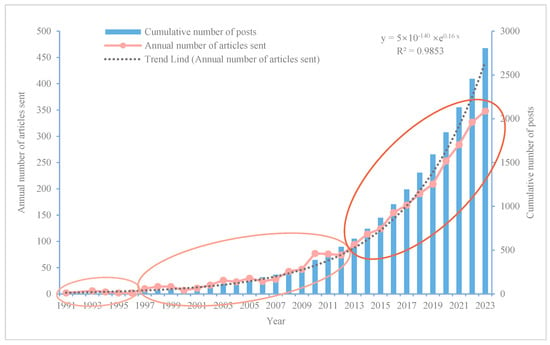
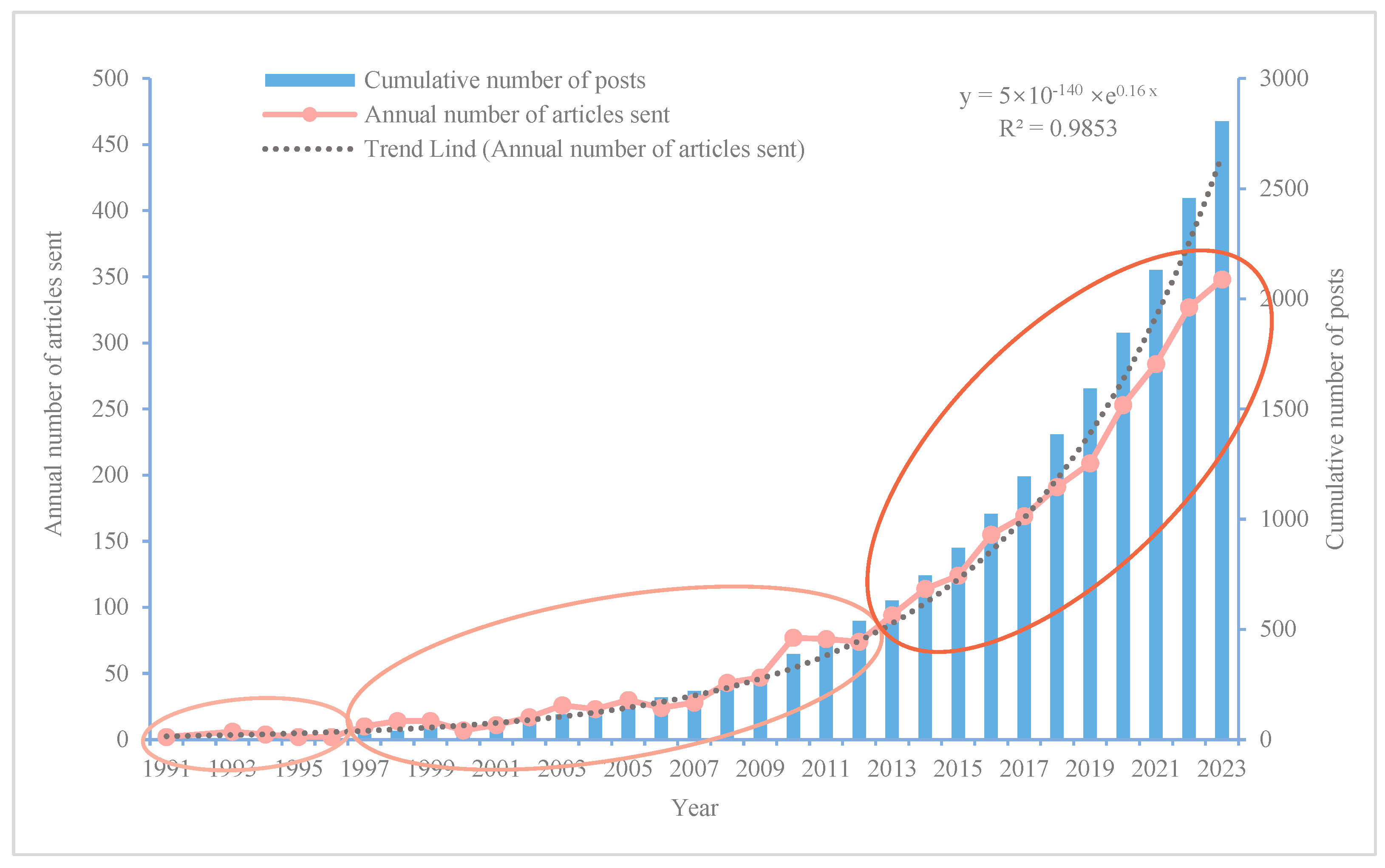
The annual distribution of publications (Figure 1) reflects the research trends and speed of development in the field during a specific timeframe. Annual analysis of the retrieved literature revealed that publications on carbon emissions from farmland ecosystems indexed by WoS were all published within the last 30 years, highlighting the relatively novel aspect of this research area. The data was processed using Excel for statistical analysis, and the exponential growth trend was calculated using the built-in exponential function. We discovered that the volume of publications on carbon emissions from farmland ecosystems has shown an exponential growth trend, represented by the function y = 5 × 10−140 × e0.16x with a correlation coefficient of R2 = 0.9853, and has drawn the attention of scholars from various countries. The exploration and development of farmland ecosystems have experienced three phases. (1) Infancy stage (1991–1996): Research was in its initial stages with relatively few journal articles, typically 10 or fewer, focusing primarily on carbon emissions from agricultural lands. (2) Formative exploration (1997–2012): despite slow growth in the annual volume of publications, the context of global warming prompted many countries to actively develop regulations for reducing carbon emissions, leading to initial research into the management of greenhouse gas emissions, soil carbon storage, and carbon sequestration in agriculture. (3) Fast development stage (2013–present): since 2012, there has been a steady and rapid increase in the annual volume of publications, with more than 300 articles published in 2022 and 2023, focusing on the mechanisms, factors influencing carbon emissions, carbon reduction strategies, and carbon sinks in farmland ecosystems. The rapid development in this research area can be attributed to three main factors. Firstly, the increasing severity of global warming and the heightened focus on greenhouse gas emissions have led countries to develop low-carbon economies, with low-carbon agriculture as a focal point, including legislative and policy initiatives such as Germany’s Federal Climate Protection Act and China’s carbon neutrality goals. Secondly, enhanced data collection, calculation, and publications on carbon emissions by various organizations and countries have provided substantial data and technical support for further research. Thirdly, the broad application of carbon emission accounting and simulation tools, alongside comparative experiments on farmland carbon emissions, have facilitated the understanding of the impact mechanisms of agricultural inputs on carbon emissions and enhancement of crop yields.
Figure 1.
Annual distribution of articles on carbon emissions from agricultural ecosystems in WOS from 1991 to 2023.
3.2. Major Country Analysis
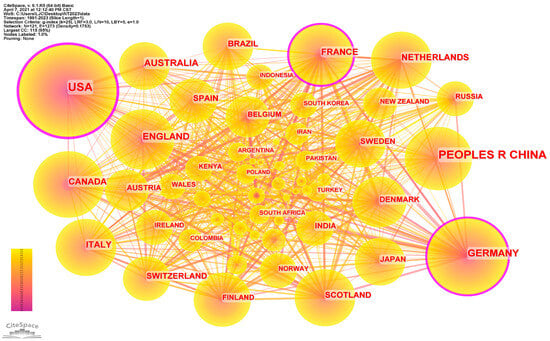
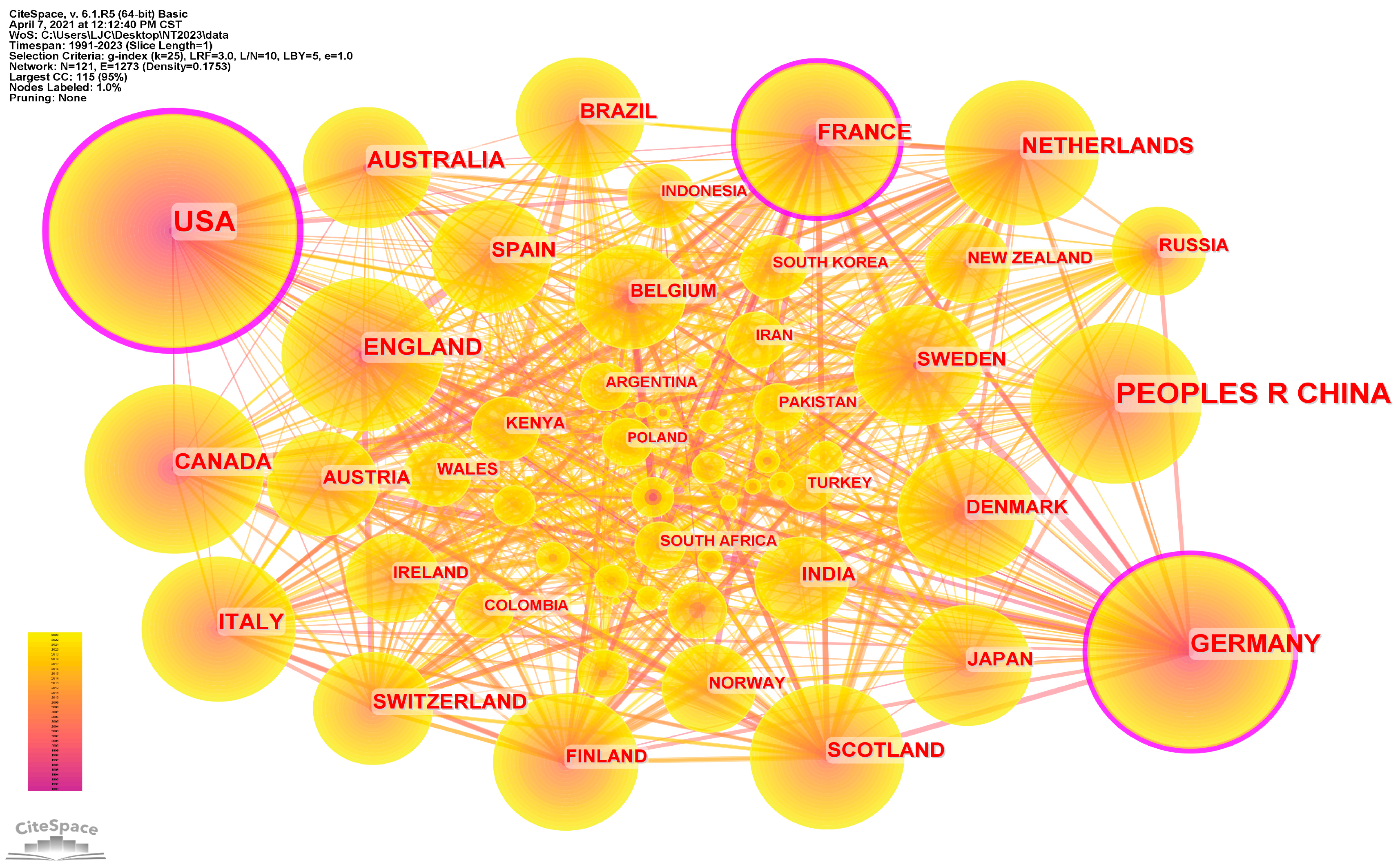
A macroscopic network map of national collaboration based on English literature on carbon emissions from farmland ecosystems was constructed (Figure 2), along with a table of the top 10 countries by publication volume (Table 1). Among the 2805 articles analyzed, authored by individuals from 121 countries, countries with fewer than five publications were omitted from the map to ensure clarity. The top three publishing countries, represented in Table 1 and spanning Asia, North America, and Europe, were the United States (814 publications), China (805 publications), and Germany (306 publications). According to data from the UK-based risk assessment firm Maplecroft, these countries, which are among the top 20 global carbon emitters, have significant carbon emissions. The high publication volumes from these countries indicate active research on carbon emissions from farmland ecosystems and a strong commitment to addressing the adverse effects of high carbon emissions and exploring effective carbon reduction strategies, particularly in China and the United States, where there is a focused effort on the sustainable development of farmland ecosystems.
Figure 2.
Collaboration network map of countries/regions.
Table 1.
Top 10 countries/regions by number of publications.
In the context of carbon emissions from farmland ecosystems, countries have engaged in extensive exchanges and collaborations. As illustrated in Figure 2, the national and regional collaboration network map indicates that countries with purple circles (≥0.1), including the United States, Germany, and France, exhibit high betweenness centrality in international collaborations on research into carbon emissions from farmland ecosystems. This suggests that these countries have participated in a considerable number of collaborative research projects with others, playing a crucial role in driving international exchanges and cooperation. The United States ranked first globally in terms of both publication volume and betweenness centrality in the field of farmland carbon emissions research, signifying its leading position in both research and international exchanges. Although Germany, the United Kingdom, and France had lower publication volumes, their betweenness centrality exceeded 0.01, demonstrating that these three countries have also played an important role in promoting international exchanges and cooperation. China ranked second globally in publication volume but had a lower betweenness centrality, as it has focused on exploring solutions tailored to its national conditions and agricultural development that contribute to carbon emissions.
3.3. Cooperative Network of Scientific Research Institutions
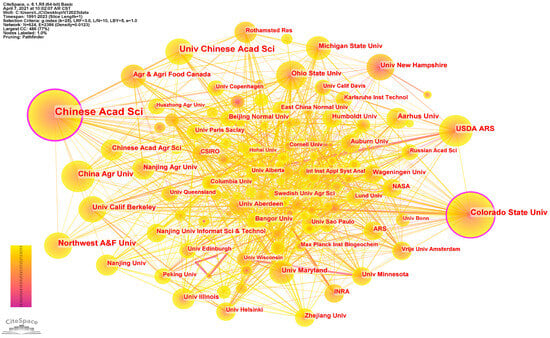
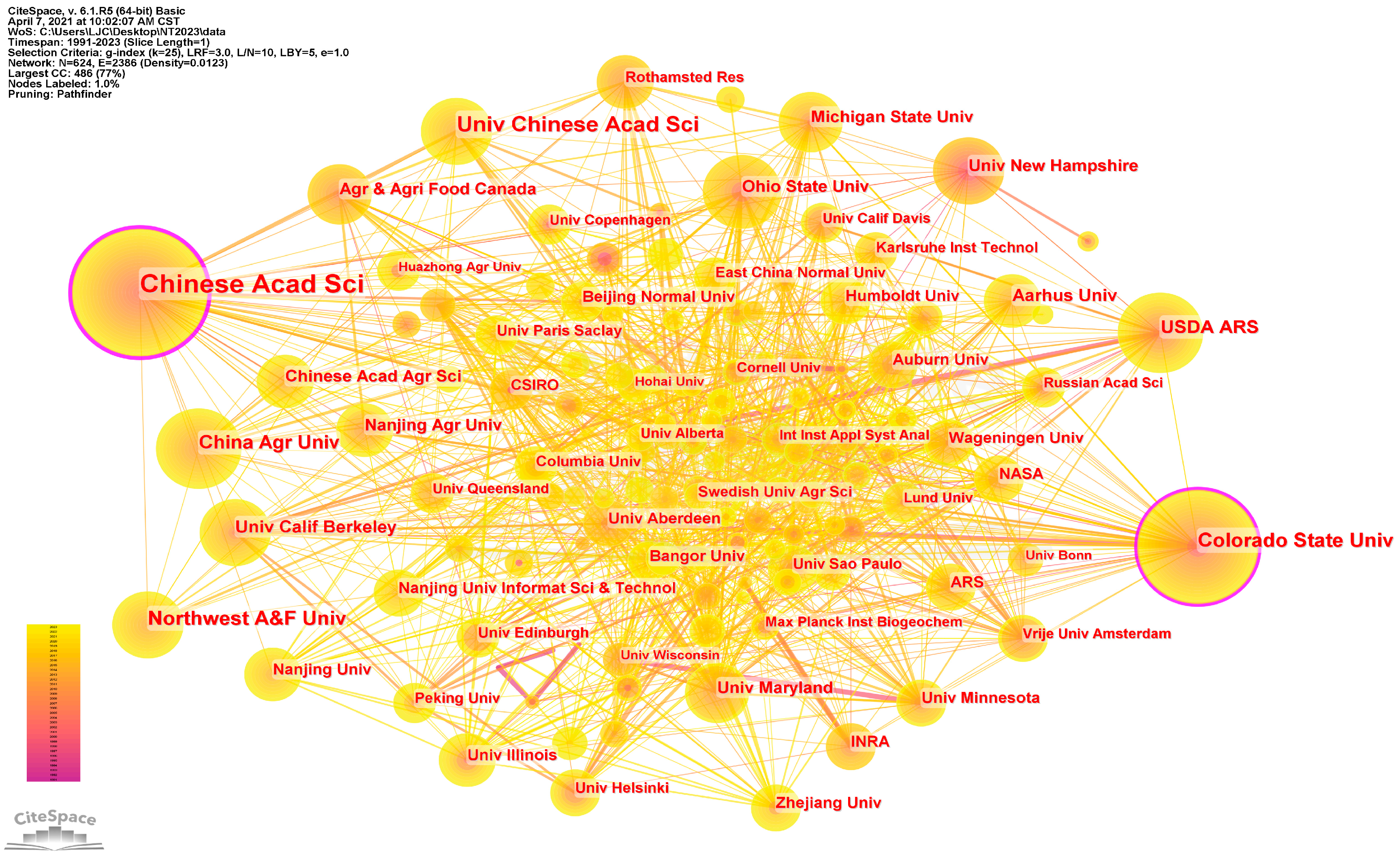
Through the analysis of collaboration among research institutions based on 2805 English-language articles focused on carbon emissions from farmland ecosystems, a macroscopic network map of collaboration among research institutions was constructed (Figure 3), and a table of the top 15 research institutions by publication volume was compiled (Table 2). Among the 2805 analyzed articles, a total of 624 research institutions published articles on the topic of carbon emissions from farmland ecosystems. To ensure the clarity of the network map, institutions with fewer than five publications were omitted. As indicated by Table 2, the majority of the top 15 institutions in the field of farmland ecosystem carbon emissions were universities and research institutes. The top five institutions in terms of publication volume were the Chinese Academy of Sciences (277 articles), the University of Chinese Academy of Sciences (95 articles), Northwest A&F University (72 articles), Colorado State University in the United States (65 articles), and China Agricultural University (59 articles). Notably, four of these institutions are from China, with the Chinese Academy of Sciences standing out in terms of publication volume, indicating that China is at the forefront of research on carbon emissions from farmland ecosystems worldwide.
Figure 3.
Collaboration network map of institutions.
Table 2.
Top 15 institutions in terms of the number of published articles.
As depicted in Figure 3, the collaboration network map of institutions shows that there are 624 nodes (N = 624) and 2386 edges (E = 2386), with a network density 0.0123. The analysis revealed that 624 institutions worldwide have engaged in research on carbon emissions from agricultural ecosystems, and the number of connections between nodes far exceeds the number of nodes, indicating active exchanges and collaborations among institutions. The high network density also reflects the close cooperative relationships between institutions. Through the visual analysis, we can observe that the Chinese Academy of Sciences not only had a high volume of publications but also the highest betweenness centrality. Its collaborative relationships with other research institutions exhibit a radiating pattern, particularly with those in China. Although Colorado State University (Colorado State Univ) had a lower publication volume, it demonstrated good betweenness centrality. These findings suggest that the Chinese Academy of Sciences has achieved the most significant results in research on carbon emissions from farmland ecosystems and, together with Colorado State University, has become a central hub for institutional collaboration in this field, actively engaging in academic exchanges and cooperation with institutions worldwide.
4. Research Hotspots and Development Trends Regarding Carbon Emissions in Farmland Ecosystems
4.1. Keywords Cluster Analysis
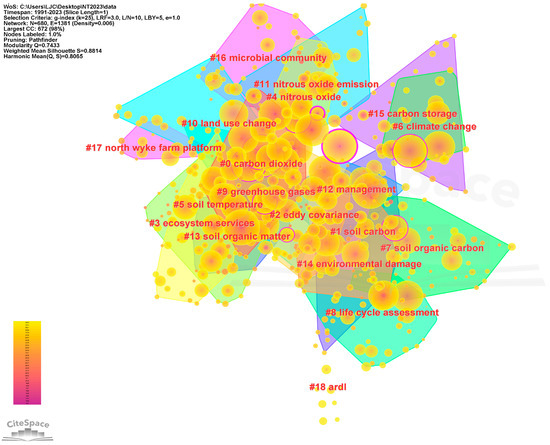
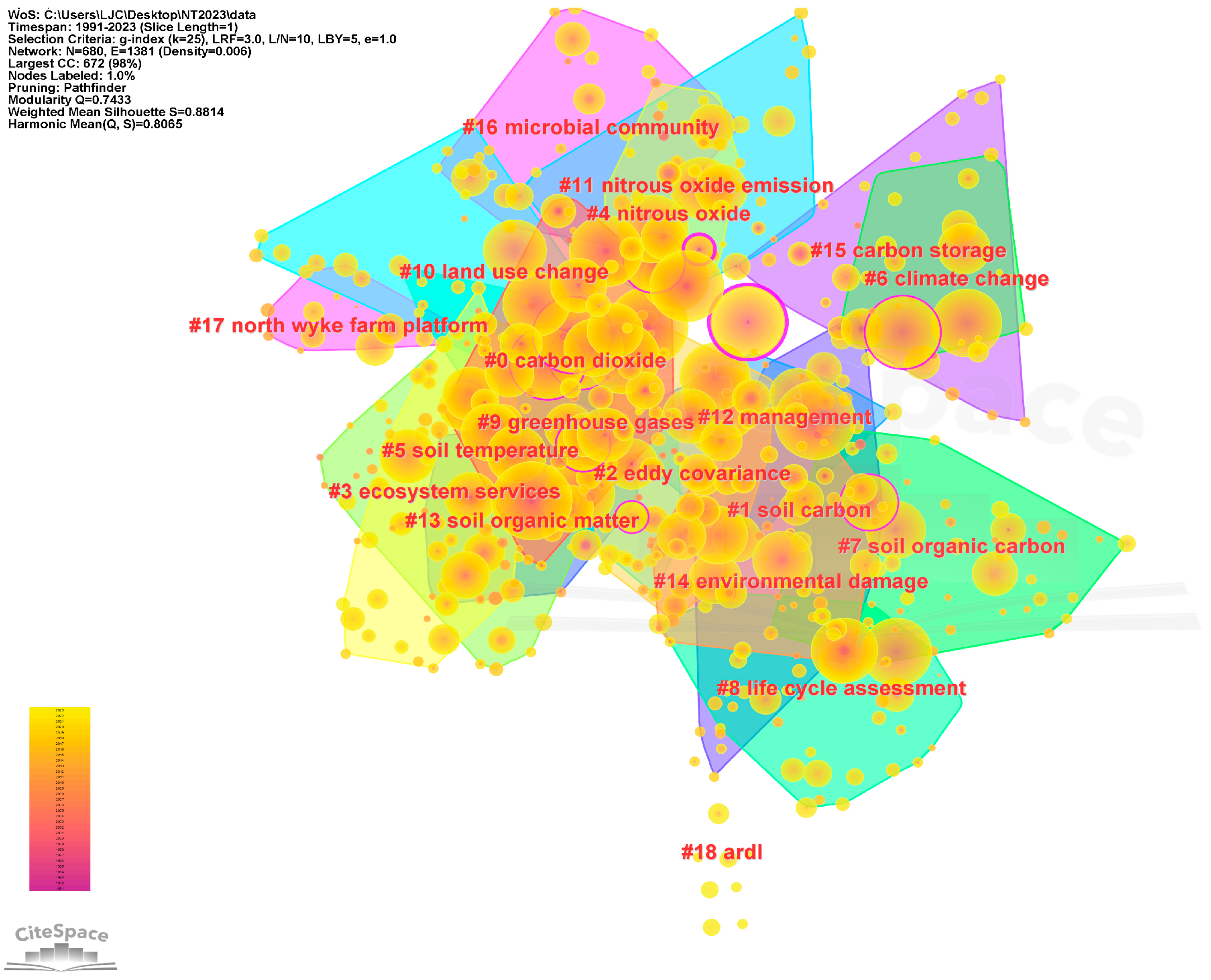
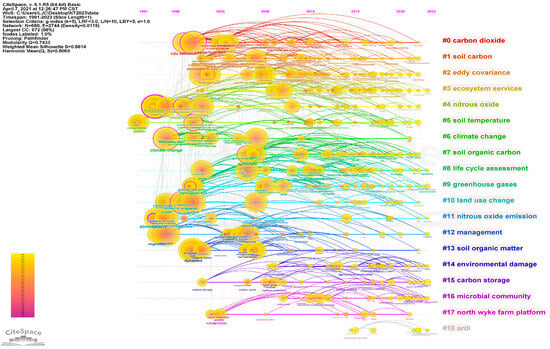
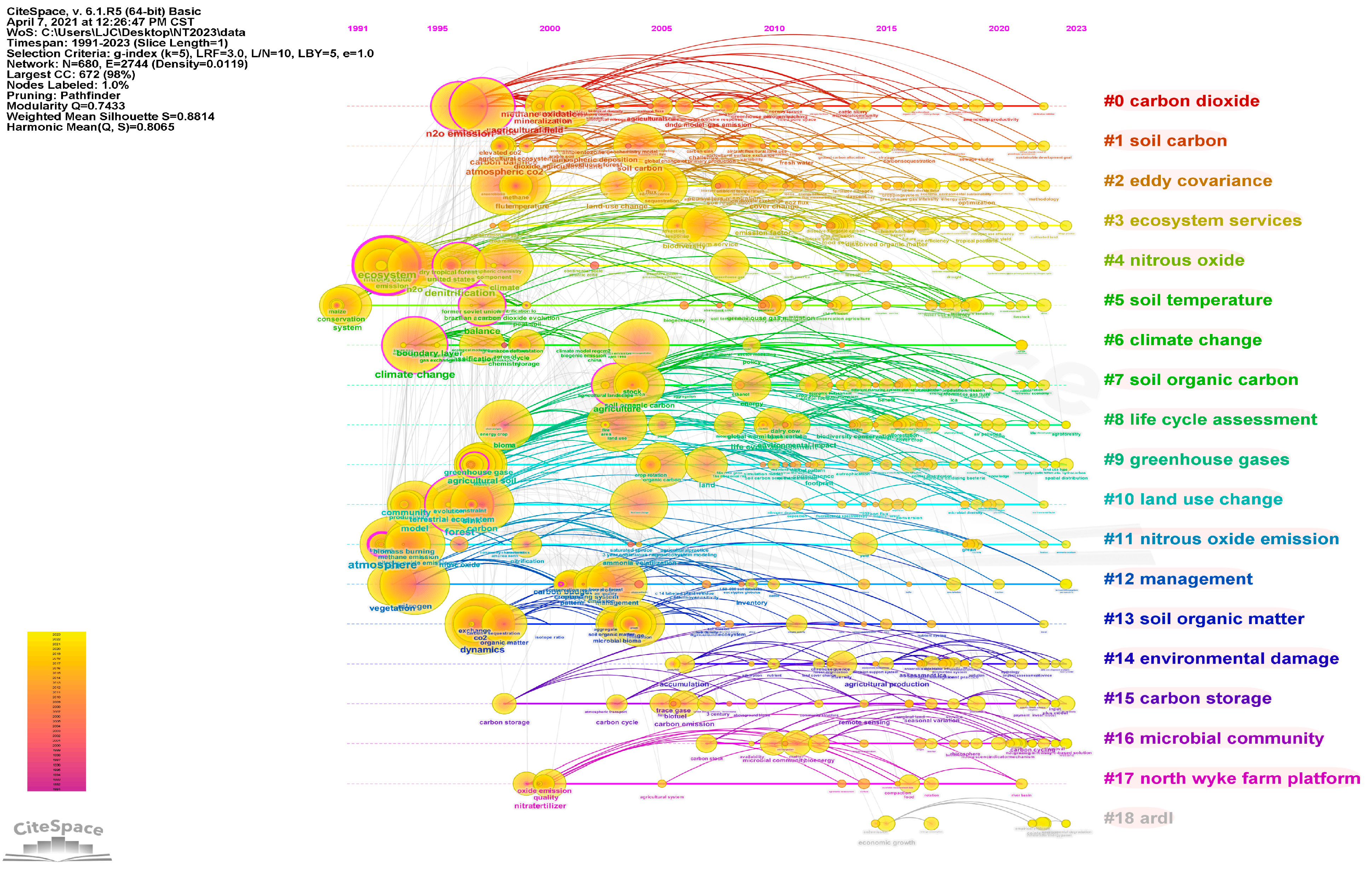
The identification of research hotspots in the topic of carbon emissions from farmland ecosystems can be achieved through the analysis of keyword clustering maps and timeline maps. By utilizing the keyword clustering function in CiteSpace, setting the time span from 1991 to 2023 with a time slice of “1”, selecting “keyword” as the node type, and keeping other parameters at their defaults, the keyword co-occurrence network was clustered into 20 irregular areas using the log-likelihood ratio (LLR) method. The modularity value of the clustering was 0.7433, which is greater than 0.3, indicating a significant clustering structure. The average silhouette value was 0.8814, exceeding 0.7, suggesting that the clustering results are convincing. To present the keyword clustering more clearly, this study also tabulated the member count, silhouette value, and average year for 18 clusters. Each cluster consisted of multiple closely related keywords, arranged sequentially from #0 to #18, with smaller numbers representing clusters that contain a larger number of keywords.
By integrating the keyword clustering (Table 3), co-occurrence map (Figure 4), and timeline map (Figure 5) related to carbon emissions from farmland ecosystems, a further summary and analysis of research hotspots over the past three decades revealed that studies have revolved around four main themes: “greenhouse gas emissions from farmland ecosystems” (#0 carbon dioxide, #4 nitrous oxide, #5 soil temperature, #9 greenhouse gas, #11 nitrous oxide emissions, #16 nitrous oxide), “carbon emission models for farmland ecosystems” (#2 eddy covariance, #8 life cycle assessment, #10 land use change, #18 ARDL), “carbon sequestration in farmland ecosystems” (#1 soil carbon, #6 climate change, #7 soil organic carbon, #13 soil organic matter, #15 carbon storage), and “sustainable development in agricultural ecosystems” (#3 ecosystem services, #12 management, #14 environmental damage, #17 North Wyke farm platform).
Table 3.
Data table of keyword clustering tags.
Figure 4.
Research on carbon emissions from farmland ecosystems: keyword clustering atlas.
Figure 5.
Research on carbon emissions from farmland ecosystems: timeline map of keyword clustering.
The first theme was greenhouse gas emissions from farmland ecosystems (#0 carbon dioxide, #4 nitrous oxide, #5 soil temperature, #9 greenhouse gas, #11 nitrous oxide emission, #16 nitrous oxide). Agricultural lands are significant contributors to greenhouse gas (GHG) emissions, including CO2, CH4, and N2O, accounting for approximately 13.5% of global GHG emissions. Soil respiration, which releases CO2 through autotrophic plant respiration and heterotrophic microbial respiration, is a critical process that makes agricultural lands a source of CO2. The intensity of soil respiration is influenced by the strength of the soil’s biotic respiration, the amount of organic matter in the soil, and the quantity and activity of soil microorganisms [27]. Methane (CH4) emissions from the atmosphere primarily originate from the soil’s biogenic processes and are affected by the soil’s moisture, organic matter content, pH, and other physicochemical properties of soil. Agricultural soils act as a source of CH4 under anaerobic conditions and as a sink when CH4 is oxidized by methanotrophic bacteria under aerobic conditions. Nitrous oxide (N2O), although present in lower concentrations in the atmosphere, has a long residence time and has potent global warming potential, estimated to be 298 times that of CO2 [28]. N2O is primarily produced through nitrification and denitrification processes. Nitrification involves the oxidation of NH4+ (or NH3) to NO2− by ammonia monooxygenase and hydroxylamine oxidoreductase, followed by the further oxidation of NO2− to NO3− by nitrite oxidoreductase [29]. Denitrification, occurring under anaerobic conditions, involves the microbial reduction of NO3− or NO2− to molecular nitrogen, playing a crucial role in maintaining the atmospheric nitrogen balance and regulating the active nitrogen pool in ecosystems.
The second theme was carbon emission models for farmland ecosystems (#2 eddy covariance, #8 life cycle assessment, #10 land use change, #18 ARDL). Agricultural carbon emission models can be categorized into empirical, semi-empirical, and mechanistic types. (1) Empirical models estimate greenhouse gas (GHG) emissions by determining the emission factors for a given area on the basis of the climate, soil properties, and vegetation conditions, then multiplying these factors by the area of the ecosystem’s soil to provide a broad estimate of GHG emissions. These models rely primarily on observational data and overlook the internal ecosystem processes and interactions. The most widely used empirical model is the method of the Intergovernmental Panel on Climate Change (IPCC), which provides specific categorizations for CO2, N2O, and CH4 emissions and suggests that CO2 emission calculations should include carbon emissions from agricultural inputs. (2) Semi-empirical models derive quantitative empirical equations relating GHG fluxes to one or more controlling factors using extensive field observations, remote sensing, satellite systems, and geographic information systems (GIS). These models are suitable for simulating and extrapolating GHG emissions at a macro level, enabling the exploration of linear or nonlinear relationships among factors such as soil temperature, applications of fertilizer, soil moisture, and GHG emissions. (3) Mechanistic models are built upon the principles of generation, consumption, and transport processes of GHG, as well as the quantitative relationships of various controlling factors. They can parameterize both micro and macro controlling factors in the process of GHG emissions, offering deeper insights and a better understanding and prediction of a system’s behavior. However, they require extensive data inputs and a thorough understanding of the system’s internal structure. The denitrification–decomposition model (DNDC model) is one of the most successful biogeochemical models recognized by the international ecological community for simulating CO2, CH4, and N2O emissions [30,31,32]. The DNDC model has been applied and validated in various contexts, including simulations of GHG emissions and optimization of mitigation strategies for agricultural, grassland, and forest ecosystems; simulations of soil carbon dynamics and sequestration under different conditions; and assessments of crop yield [33,34,35].
The third theme was carbon sequestration in farmland ecosystems (#1 soil carbon, #6 climate change, #7 soil organic carbon, #13 soil organic matter, #15 carbon storage). Terrestrial ecosystem carbon pools consist of soil carbon pools, vegetation carbon pools, and litter carbon pools, with the soil carbon pool being the largest [36]. Even minor fluctuations in the soil carbon pool can lead to significant changes in atmospheric CO2 concentrations and potentially exacerbate global climate change [37,38]. As the soil is a crucial agricultural carbon pool, researchers aim to enhance carbon sequestration, reduce external inputs, and thus decrease greenhouse gas emissions. In agricultural ecosystems, the soil can regulate atmospheric CO2 concentrations through positive or negative feedback mechanisms. Positive feedback involves the release of CO2 from the soil carbon pool through mineralization, intensifying the greenhouse effect and accelerating global warming; negative feedback occurs when crops increase soil carbon stocks through photosynthesis and litter return, reducing atmospheric CO2 concentrations, diminishing the greenhouse effect, and slowing climate warming [39]. When soil carbon emissions to the atmosphere exceed carbon uptake, it acts as a carbon source; conversely, it acts as a carbon sink. Agricultural soil carbon stocks are highly susceptible to anthropogenic disturbances, and studies suggest that altering the balance of the ecosystem’s patterns, processes, and functions can change soil’s carbon density, the soil’s carbon budget processes, and the soil’s carbon sequestration potential [40,41,42]. Soil carbon stocks are influenced by land use/vegetation changes, the soil’s physicochemical properties, the thickness of the soil layer, the soil microenvironment, and the soil’s microbial community structure and activity, which can shift the carbon source–sink functions of the original ecosystem to regulate carbon emissions in agricultural ecosystems [43,44,45,46].
The fourth theme was sustainable development in agricultural ecosystems (#3 ecosystem services, #12 management, #14 environmental damage, #17 North Wyke farm platform). In the 1960s and 1970s, countries pursued economic growth through high-input, high-output production methods, neglecting the severe ecological and environmental issues that ensued. It was not until the 1980s that the concept of “sustainable agriculture” emerged, advocating for a balance among the economic, social, and ecological aspects to achieve sustainable development [47], encompassing economic, social, and ecological sustainability. Currently, forest and agricultural lands are the primary forms of global land use. However, to meet the global population’s food demands, humans have had to clear forests for agricultural production. This land use transition has led to numerous problems, with deforestation-related greenhouse gas emissions accounting for approximately 15% of total emissions, exacerbating climate change and hindering global sustainability. Consequently, researchers have focused on the impact of climate change on sustainable crop production and its limiting factors, emphasizing the energy–water–food nexus [48,49,50]. Duan et al. [51] analyzed the relationships among water, climate, and food under different socioeconomic scenarios. The vulnerability of arid regions’ agricultural systems, climate resilience, and sustainable agricultural practices have also become the focal points of research [52,53]. Developing bioenergy and optimizing land use are considered ways to mitigate climate change and ensure food security, making them crucial research areas for harmonizing sustainable development goals [54,55,56].
4.2. Analysis of Research Hotspots and Progress
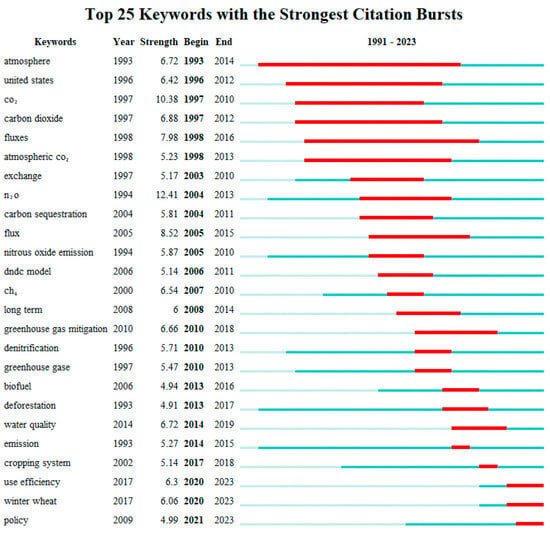
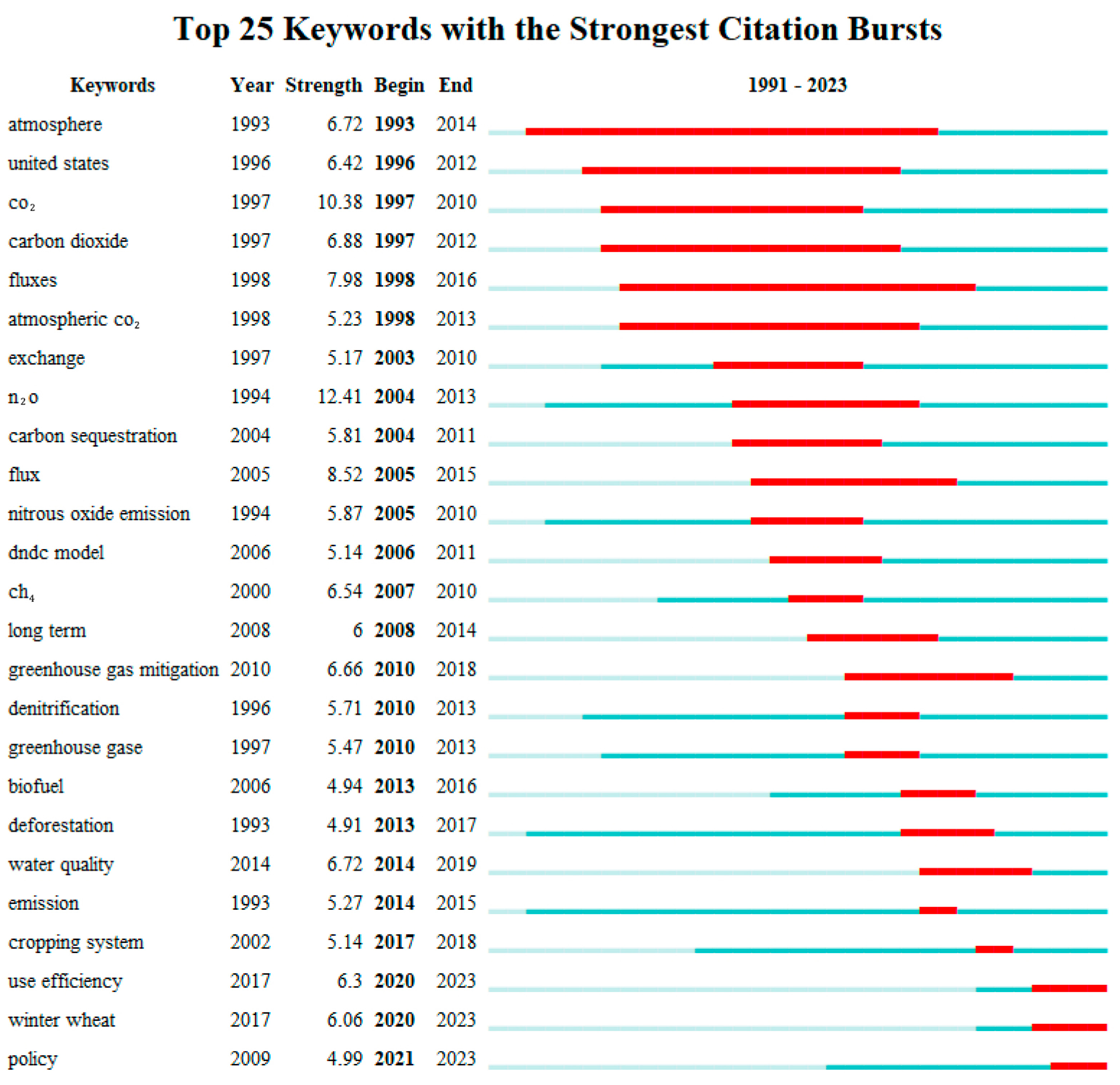
Emerging keyword research involves tracking sudden increases in the frequency of specific keywords within a given timeframe. If the prominence of certain keywords in a field spikes significantly over a short period, it indicates a sudden surge in research on a particular topic within that field during that time. This can be used to identify research hotspots in the study of carbon emissions from agricultural ecosystems across different years. CiteSpace software offers a technique for detecting such emergent terms by identifying nodes with a sudden increase in their frequency of citation or co-occurrence within a specific timeframe, thereby predicting research frontiers in the field. We used CiteSpace software to conduct an analysis of emergent keywords, resulting in the following visualizations. In these diagrams, “strength” represents the intensity of research on a particular topic, with greater intensity indicating a more concentrated focus on the corresponding keywords (Figure 6).
Figure 6.
The strongest citation bursts of carbon emission keywords in farmland ecosystem.
From the visualizations, it is evident that through the analysis of emergent keywords, we can identify “use efficiency”, ”winter wheat”, and “policy” as the primary hotspots of interest among researchers. Currently, countries worldwide are under pressure to reduce carbon emissions. Huang et al. suggest that governmental subsidy mechanisms can be used to incentivize farmers to convert farmland back to forest, thereby enhancing the soil’s carbon sequestration capability and achieving reductions in agricultural carbon [57]. On a global scale, the management of a significant volume of agricultural inputs is required annually to prevent severe impacts on farmland ecosystems and even threaten the sustainability of agriculture [58]. Consequently, scholars have begun to focus on improving the efficiency of agricultural carbon emissions. Enhancing the efficiency of agricultural carbon emissions can lead to the efficient use of resources and energy. Ramlow et al. [59] proposed that the use of biochar soil amendments can improve soil fertility and the efficiency of irrigation and fertilizer use, while the carbon sequestration effects of biochar can suppress CH4 emissions by nearly 100% [60,61], thereby reducing greenhouse gas emissions from the application of fertilizer and production processes, and slowing the trend of global warming [62,63,64]. Brentrup and colleagues [65] have established a framework system for life cycle assessments for the production of winter wheat, exploring the environmental impacts of different nitrogen fertilizer inputs throughout the life cycle of winter wheat. As an integral part of terrestrial ecosystems, farmland ecosystems are frequently disturbed by human activities. Agricultural production activities account for 12% of the total carbon emissions from human activities of production, exerting a profound impact on global carbon emissions. By implementing appropriate farmland management measures, it is possible to effectively reduce carbon emissions during agricultural production and enhance the carbon sequestration capacity of farmland ecosystems, ultimately achieving the goal of reducing the sources and increasing the sinks [66,67]. Given the high carbon cost of agricultural activities, Ahmad and colleagues [68] introduced the concept of precision agriculture (PE), aiming to achieve maximum output with minimal resources/inputs. In summary, as our understanding deepens regarding global warming, reduced carbon emissions, and maintaining ecological sustainability, we have gained a more comprehensive understanding of the factors influencing carbon emissions from farmland ecosystems, their potential for reducing emissions, and their environmental impacts.
5. Research Conclusions and Prospects
5.1. Research Conclusions
A visual analysis of the scholarly corpus on farmland ecosystems’ carbon emissions within the Web of Science’s core collection from 1991 to 2023 has elucidated several key insights into national collaboration, institutional cooperation, research hotspots, and the emerging frontiers. The key findings are summarized as follows.
- (1)
- The research level is single, the research scope and object are relatively limited, and there is a lack of comprehensive, extensive and diversified research. As the most critical agroecosystem, farmland has great potential for carbon sequestration and is the main source of food in the world. Although the current research on the carbon emissions of farmland ecosystems is large, the cooperation among countries and research institutions is not close enough, mainly limited to the domestic scope.
- (2)
- The evolution of scholarly literature on carbon emissions from farmland ecosystems can be categorized into three distinct phases: an incipient phase (1991–1996), a phase of elementary exploration (1997–2012), and stage of fast development (2013 to the present). Analyzing research themes over different periods, we observed that the focal area has shifted from initial investigations into carbon emissions from agricultural cropland ecosystems to the early exploration and study of managing greenhouse gas emissions, management of soil carbon stocks, and the role of the soil in carbon sequestration. In the most recent decade, this interest has progressively deepened into a comprehensive examination of the mechanisms of carbon emissions in farmlands, the factors that influence them, and strategies for reducing carbon, as well as an advanced understanding of carbon sources and sinks within the agricultural ecosystem.
- (3)
- Current research on carbon emissions from farmland ecosystems is centered around four main themes: greenhouse gas emissions from farmland ecosystems, the modeling of carbon emissions, carbon sequestration and the role of sinks, and the sustainable development of agricultural ecology. There has been a noticeable shift in the primary focus of research from developed to developing nations, accompanied by a refinement in the emphasis from general carbon emissions to the specific mechanisms and determinants influencing the soil carbon reservoir in farmlands.
- (4)
- Researchers are now concentrating on the impact of agricultural inputs on carbon emissions from farmland ecosystems. The aim is to understand the influence of these inputs on the dynamics of soil carbon. At the same time, greater attention should be paid to the research on impact mechanisms, utilization efficiency, reducing emissions, and enhancing foreign exchange.
5.2. Prospects
This study used visualization analysis of the publication statistics, countries, institutions, and keywords to highlight research hotspots and trends in the field, yet there is room for improvement in future research. Initially, the focus was on the growth trend of literature concerning carbon emissions from farmland ecosystems. Future studies could refine the analysis of the relative proportion of this literature within the entire body of scientific research for a holistic understanding of the field’s dynamics and significance. Moreover, the current research on national publication characteristics serves to illustrate global publishing trends and the geographical distribution. Subsequent research could delve into the specific contributions and impacts of different countries within this field, revealing more about international collaboration and the distribution of scientific resources.
In light of the current focus of research and the identified academic gaps, future research on carbon emissions and low-carbon development in agricultural landscapes should consider the following key points and accordingly propose relevant recommendations for policies and strategies.
- (1)
- The current research has often used a single method, necessitating an expansion to a more comprehensive, inclusive, and diverse research agenda. Farmlands are not only a critical component of agricultural ecosystems with significant potential for carbon sequestration but are also the cornerstone of global food security. Although research on carbon emissions is extensive, there is a clear need for enhanced international collaboration. To fully understand the underlying dynamics, establishing a more integrated and collaborative global effort is crucial. Governments and international organizations should promote the establishment of cross-border research collaboration networks on farmland carbon emissions and low-carbon development.
- (2)
- A global research network focused on carbon emissions in agricultural landscapes is crucial for creating and disseminating broader assessment tools for carbon emissions. Researchers must keep abreast of the latest scientific developments and establish strong international partnerships to effectively identify key drivers of carbon emissions and develop mitigation strategies.
- (3)
- In order to ensure the applicability and relevance of research, researchers must consider a wide range of global environmental conditions and national contexts. Simultaneously, adjusting agricultural practices to maintain crop yields while minimizing carbon emissions is essential, balancing agricultural productivity with environmental sustainability. We need to encourage the adoption of precision agriculture and sustainable farming practices, such as crop rotation, organic farming, and improved soil management, to reduce the carbon footprint and enhance the ecosystem’s capabilities for carbon sequestration.
Author Contributions
Conceptualization, L.W., H.M. and T.L.; validation, L.W. and H.M.; formal analysis, L.W.; resources, T.L.; data curation, L.W. and H.M.; writing—original draft preparation, L.W.; writing—review and editing, L.W. and H.M.; supervision, T.L.; project administration, T.L.; funding acquisition, T.L. All authors have read and agreed to the published version of the manuscript.
Funding
This work was supported through financial support from the National Natural Science Foundation of China (Grant No. 42167067), the Department of Education of Guizhou Province (No. QianJiaoJi [2023]034), the Key Program for Science and Technology of CNTC (No. 110202202030), and the Scientific Research Platform of Guizhou Minzu University (GZMUGCZX [2021]02).
Data Availability Statement
Data are contained within the article.
Conflicts of Interest
The authors declare no conflict of interest.
References
- Guan, Y.R.; Shan, Y.L.; Huang, Q.; Chen, H.L.; Wang, D.; Hubacek, K. Assessment to China’s Recent Emission Pattern Shifts. Earths Future 2021, 9, e2021EF002241. [Google Scholar] [CrossRef] [Scilit]
- Abel, S.; Peters, A.; Trinks, S.; Schonsky, H.; Facklam, M.; Wessolek, G. Impact of biochar and hydrochar addition on water retention and water repellency of sandy soil. Geoderma 2013, 202, 183–191. [Google Scholar] [CrossRef] [Scilit]
- Lal, R. Soils and the greenhouse effect. In Proceedings of the Symposium on Soil Carbon Sequestration and the Greenhouse Effect held at the 90th Annual Meeting of the Soil-Science-Society-of-America, Baltimore, MD, USA, 18–22 October 1998; pp. 1–8. [Google Scholar]
- O’Neill, B.C.; Oppenheimer, M.; Warren, R.; Hallegatte, S.; Kopp, R.E.; Pörtner, H.O.; Scholes, R.; Birkmann, J.; Foden, W.; Licker, R.; et al. IPCC reasons for concern regarding climate change risks. Nat. Clim. Chang. 2017, 7, 28–37. [Google Scholar] [CrossRef] [Scilit]
- Bradford, M.A.; Wieder, W.R.; Bonan, G.B.; Fierer, N.; Raymond, P.A.; Crowther, T.W. Managing uncertainty in soil carbon feedbacks to climate change. Nat. Clim. Chang. 2016, 6, 751–758. [Google Scholar] [CrossRef] [Scilit]
- Nelson, D.N. Dangerous assumptions. Bull. At. Sci. 2000, 56, 24–27. [Google Scholar] [CrossRef]
- Solomon, S.; Plattner, G.K.; Knutti, R.; Friedlingstein, P. Irreversible climate change due to carbon dioxide emissions. Proc. Natl. Acad. Sci. USA 2009, 106, 1704–1709. [Google Scholar] [CrossRef] [Scilit] [PubMed]
- Raich, J.W.; Tufekcioglu, A. Vegetation and soil respiration: Correlations and controls. Biogeochemistry 2000, 48, 71–90. [Google Scholar] [CrossRef] [Scilit]
- Zhao, M.; Liu, Y.; Zhang, X. A review of research advances on carbon sinks in farmland ecosystems. Acta Ecol. Sin. 2022, 42, 9405–9416. [Google Scholar]
- Yang, X.; Meng, J.; Lan, Y.; Chen, W.; Yang, T.; Yuan, J.; Liu, S.; Han, J. Effects of maize stover and its biochar on soil CO2 emissions and labile organic carbon fractions in Northeast China. Agric. Ecosyst. Environ. 2017, 240, 24–31. [Google Scholar] [CrossRef] [Scilit]
- Batjes, N.H. Total carbon and nitrogen in the soils of the world. Eur. J. Soil Sci. 2014, 65, 10–21. [Google Scholar] [CrossRef] [Scilit]
- Jacobs, J.D. Climate Change 1995-Impacts, adaptations and mitigation of Climate Change: Scientific-technical analyses: Contribution of Working Group II to the second assessment report of the intergovernmental Panel on Climate Change. Can. Geogr.-Geogr. Can. 1998, 42, 105–106. [Google Scholar]
- Lu, F.; Wang, X.K.; Han, B.; Ouyang, Z.Y.; Duan, X.N.; Zheng, H.; Miao, H. Soil carbon sequestrations by nitrogen fertilizer application, straw return and no-tillage in China’s cropland. Glob. Chang. Biol. 2009, 15, 281–305. [Google Scholar] [CrossRef] [Scilit]
- Xie, T.; Zhang, H.; Miao, J.; Song, M.W.; Zeng, Y.Q. Greenhouse gas emission characteristics and source/sink analysis of farmland ecosystem in Hubei Province. J. Agric. Resour. Environ. 2021, 38, 839–848. [Google Scholar]
- Tan, M.Q.; Cui, Y.P.; Ma, X.Z.; Liu, P.; Fan, L.; Lu, Y.Y.; Wen, W.; Chen, Z. Study on Carbon Sink Estimation of Cropland Ecosystem in Henan Province. J. Ecol. Rural. Environ. 2022, 38, 1129–1137. [Google Scholar]
- Sun, X.; Zhang, H.; Yu, Y. Spatial and temporal dynamics in carbon source/sink and equity of the farmland ecosystem in jiangsu coastal area, china. Chin. J. Agric. Resour. Reg. Plan. 2021, 42, 56–64. [Google Scholar]
- Tian, Z.; Liu, R. Study on the Internatianal Variability of Carbon Sink and Oxygen Release Function of Farmland Ecosystem in Beijing. Ecol. Econ. 2016, 32, 68–71. [Google Scholar]
- Xu, P.; Zhao, Y.; Chen, H.; Duan, X.; Chen, F.; Wang, C. Dynamic Change of Carbon Source/Sink and Carbon Footprint of Farmland Ecosystem in Jiangsu Province. Bull. Soil Water Conserv. 2018, 38, 238–243. [Google Scholar]
- Wang, L.; Zhao, J.; Chen, S.Y. Analysis of ecosystem carbon sources/sinks and carbon footprint in farmland ecosystem of Shandong Province. J. China Agric. Univ. 2016, 21, 133–141. [Google Scholar]
- Zhang, J.; Fang, Y.; Wei, J.; Lin, J.; Chen, P.; Zhu, C. Carbon Footprint-based Temporal and Spatial Analysis on Carbon Sources/Sinks at Farmlands in Anhui Province. Fujian J. Agric. Sci. 2021, 36, 78–90. [Google Scholar]
- Wang, L.; Liu, Y.; Zhang, Y.; Dong, S. Spatial and temporal distribution of carbon source/sink and decomposition of influencing factors in farmland ecosystem in Henan Province. Acta Sci. Circumstantiae 2022, 42, 410–422. [Google Scholar]
- Lin, X.; Ge, Y. Temporal-spatial variation of carbon source-sink of farmland ecosystem in the Southwestern China. Jiangsu. J. Agric. Sci. 2016, 32, 1088–1093. [Google Scholar]
- Wang, L.; Zhao, J.; Qin, L.; Guo, N.; An, J.; Jiang, Y. Spatial-temporal Variation and lmpact Factors of Carbon Source and Sink of Farmland Ecosystem in Linyi. J. Soil Water Conserv. 2015, 29, 183–187+237. [Google Scholar]
- Tang, H.; Li, C.; Xiao, X.; Pan, X.; Cheng, K.; Dong, C.; Shi, L.; Lou, Z. Influences of Different Tillage on Net Carbon Sink and Economic Benefit of Paddy Ecosystem under Double-cropping Rice Field. Ecol. Environ. 2020, 29, 215–222. [Google Scholar]
- Liu, J.J.; Zhang, A.F.; Feng, H.; Zou, X.Y.; Chen, H.X. Influences of different irrigation amounts on carbon sequestration in wheat-maize rotation system. J. Appl. Ecol. 2017, 28, 169–179. [Google Scholar]
- Chen, C.; Chen, Y.; Hou, J.; Liang, Y. CiteSpace I: Detecting and visualizing emerging trends and transient patterns in scientific literature. J. China Soc. Sci. Technol. Inf. 2009, 28, 401–421. [Google Scholar] [CrossRef] [Scilit]
- Singh, J.S.; Gupta, S.R. Plant decomposition and soil respiration in terrestrial ecosystems. Bot. Rev. 1977, 43, 499–528. [Google Scholar] [CrossRef] [Scilit]
- Bouwman, A.F. Exchange of greenhouse gases between terrestrial ecosystems and the atmosphere. In Proceedings of the International Conf on Soils and the Greenhouse Effect, Wageningen, The Netherlands, 14–18 August 1989; pp. 61–127. [Google Scholar]
- Kowalchuk, G.A.; Stephen, J.R. Ammonia-oxidizing bacteria: A model for molecular microbial ecology. Annu. Rev. Microbiol. 2001, 55, 485–529. [Google Scholar] [CrossRef] [Scilit] [PubMed]
- Abdalla, M.; Kumar, S.; Jones, M.; Burke, J.; Williams, M. Testing DNDC model for simulating soil respiration and assessing the effects of climate change on the CO2 gas flux from Irish agriculture. Glob. Planet. Chang. 2011, 78, 106–115. [Google Scholar] [CrossRef] [Scilit]
- Hutchinson, J.J.; Grant, B.B.; Smith, W.N.; Desjardins, R.L.; Campbell, C.A.; Worth, D.E.; Vergé, X.R. Estimates of direct nitrous oxide emissions from Canadian agroecosystems and their uncertainties. Can. J. Soil Sci. 2007, 87, 141–152. [Google Scholar] [CrossRef] [Scilit]
- Li, C.S.; Zhuang, Y.H.; Cao, M.Q.; Crill, P.; Dai, Z.H.; Frolking, S.; Moore, B., III; Salas, W.; Song, W.Z.; Wang, X.K. Comparing a process-based agro-ecosystem model to the IPCC methodology for developing a national inventory of N2O emissions from arable lands in China. Nutr. Cycl. Agroecosyst. 2001, 60, 159–175. [Google Scholar] [CrossRef] [Scilit]
- Li, C.S. Modeling trace gas emissions from agricultural ecosystems. Nutr. Cycl. Agroecosyst. 2000, 58, 259–276. [Google Scholar] [CrossRef] [Scilit]
- van Amstel, A.R.; Kroeze, C.; van Aardenne, J.; Mosier, A.R. Good practice in greenhouse gas emission inventories Agricultural emissions of methane and nitrous oxide. In Proceedings of the 2nd International Symposium on Non-CO2 Greenhouse Gases-Scientific Understanding, Control and Implementation, Noordwijkerhout, The Netherlands, 8–10 September 1999; pp. 507–514. [Google Scholar]
- Smith, W.N.; Grant, B.B.; Desjardins, R.L.; Worth, D.; Li, C.; Boles, S.H.; Huffman, E.C. A tool to link agricultural activity data with the DNDC model to estimate GHG emission factors in Canada. Agric. Ecosyst. Environ. 2010, 136, 301–309. [Google Scholar] [CrossRef] [Scilit]
- Liu, Y.; Wen, X.F.; Zhang, Y.H.; Tian, J.; Gao, Y.; Ostle, A.J.; Niu, S.L.; Chen, S.P.; Sun, X.M.; He, N.P. Widespread asymmetric response of soil heterotrophic respiration to warming and cooling. Sci. Total Environ. 2018, 635, 423–431. [Google Scholar] [CrossRef] [Scilit] [PubMed]
- Jenkinson, D.S.; Adams, D.E.; Wild, A. Model estimates of CO2 emissions from soil in response to global warming. Nature 1991, 351, 304–306. [Google Scholar] [CrossRef] [Scilit]
- Smith, P.; Powlson, D.S.; Smith, J.U.; Falloon, P.; Coleman, K. Meeting the UK’s climate change commitments: Options for carbon mitigation on agricultural land. Soil Use Manag. 2000, 16, 1–11. [Google Scholar] [CrossRef] [Scilit]
- Qian, J.; Zhang, L.P.; Wang, W.Y.; Liu, Q. Organic carbon losses by eroded sediments from sloping vegetable fields in South China. J. Mt. Sci. 2017, 14, 539–548. [Google Scholar] [CrossRef] [Scilit]
- Jia, B.; Jia, L.; Mou, X.M.; Chen, J.; Li, F.C.; Ma, Q.J.; Li, X.G. Shrubification decreases soil organic carbon mineralization and its temperature sensitivity in alpine meadow soils. Soil Biol. Biochem. 2022, 168, 108651. [Google Scholar] [CrossRef] [Scilit]
- Littke, K.M.; Harrington, T.B.; Slesak, R.A.; Holub, S.M.; Hatten, J.A.; Gallo, A.C.; Littke, W.R.; Harrison, R.B.; Turnblom, E.C. Impacts of organic matter removal and vegetation control on nutrition and growth of Douglas-fir at three Pacific Northwestern Long-Term Soil Productivity sites. For. Ecol. Manag. 2020, 468, 118176. [Google Scholar] [CrossRef] [Scilit]
- Yamada, N.; Katoh, M. Feature of lead complexed with dissolved organic matter on lead immobilization by hydroxyapatite in aqueous solutions and soils. Chemosphere 2020, 249, 126122. [Google Scholar] [CrossRef] [Scilit]
- Mehmood, I.; Qiao, L.; Chen, H.Q.; Tang, Q.Y.; Woolf, D.; Fan, M.S. Biochar addition leads to more soil organic carbon sequestration under a maize-rice cropping system than continuous flooded rice. Agric. Ecosyst. Environ. 2020, 298, 106965. [Google Scholar] [CrossRef] [Scilit]
- Di, S.; Zong, M.M.; Li, S.Y.; Li, H.X.; Duan, C.Q.; Peng, C.H.; Zhao, Y.G.; Bai, J.Y.; Lin, C.; Feng, Y.; et al. The effects of the soil environment on soil organic carbon in tea plantations in Xishuangbanna, southwestern China. Agric. Ecosyst. Environ. 2020, 297, 106951. [Google Scholar] [CrossRef] [Scilit]
- Yan, S.; Niu, Z.Y.; Yan, H.T.; Zhang, A.G.; Liu, G.S. Influence of Soil Organic Carbon on the Aroma of Tobacco Leaves and the Structure of Microbial Communities. Curr. Microbiol. 2020, 77, 931–942. [Google Scholar] [CrossRef] [Scilit] [PubMed]
- Lange, M.; Eisenhauer, N.; Sierra, C.A.; Bessler, H.; Engels, C.; Griffiths, R.I.; Mellado-Vázquez, P.G.; Malik, A.A.; Roy, J.; Scheu, S.; et al. Plant diversity increases soil microbial activity and soil carbon storage. Nat. Commun. 2015, 6, 6707. [Google Scholar] [CrossRef] [Scilit] [PubMed]
- Giampietro, M.; Mayumi, K.; Ramos-Martin, J. Multi-scale integrated analysis of societal and ecosystem metabolism (MuSIASEM): Theoretical concepts and basic rationale. Energy 2009, 34, 313–322. [Google Scholar] [CrossRef] [Scilit]
- Keairns, D.L.; Darton, R.C.; Irabien, A. The Energy-Water-Food Nexus. Annu. Rev. Chem. Biomol. Eng. 2016, 7, 239–262. [Google Scholar] [CrossRef] [Scilit]
- Pastor, A.V.; Palazzo, A.; Havlik, P.; Biemans, H.; Wada, Y.; Obersteiner, M.; Kabat, P.; Ludwig, F. The global nexus of food-trade-water sustaining environmental flows by 2050. Nat. Sustain. 2019, 2, 499–507. [Google Scholar] [CrossRef] [Scilit]
- Liu, J.G.; Hull, V.; Godfray, H.C.J.; Tilman, D.; Gleick, P.; Hoff, H.; Pahl-Wostl, C.; Xu, Z.C.; Chung, M.G.; Sun, J.; et al. Nexus approaches to global sustainable development. Nat. Sustain. 2018, 1, 466–476. [Google Scholar] [CrossRef] [Scilit]
- Duan, W.L.; Chen, Y.N.; Zou, S.; Nover, D. Managing the water-climate- food nexus for sustainable development in Turkmenistan. J. Clean. Prod. 2019, 220, 212–224. [Google Scholar] [CrossRef] [Scilit]
- Williams, P.A.; Crespo, O.; Abu, M.; Simpson, N.P. A systematic review of how vulnerability of smallholder agricultural systems to changing climate is assessed in Africa. Environ. Res. Lett. 2018, 13, 103004. [Google Scholar] [CrossRef] [Scilit]
- Sieber, S.; Jha, S.; Tharayil Shereef, A.B.; Bringe, F.; Crewett, W.; Uckert, G.; Polreich, S.; Ndah, T.; Graef, F.; Mueller, K. Integrated assessment of sustainable agricultural practices to enhance climate resilience in Morogoro, Tanzania. Reg. Environ. Chang. 2015, 15, 1281–1292. [Google Scholar] [CrossRef] [Scilit]
- Creutzig, F.; Ravindranath, N.H.; Berndes, G.; Bolwig, S.; Bright, R.; Cherubini, F.; Chum, H.; Corbera, E.; Delucchi, M.; Faaij, A.; et al. Bioenergy and climate change mitigation: An assessment. Glob. Chang. Biol. Bioenergy 2015, 7, 916–944. [Google Scholar] [CrossRef] [Scilit]
- Heck, V.; Hoff, H.; Wirsenius, S.; Meyer, C.; Kreft, H. Land use options for staying within the Planetary Boundaries-Synergies and trade-offs between global and local sustainability goals. Glob. Environ. Chang.-Hum. Policy Dimens. 2018, 49, 73–84. [Google Scholar] [CrossRef] [Scilit]
- Doelman, J.C.; Stehfest, E.; Tabeau, A.; van Meijl, H. Making the Paris agreement climate targets consistent with food security objectives. Glob. Food Secur.-Agric. Policy Econ. Environ. 2019, 23, 93–103. [Google Scholar] [CrossRef] [Scilit]
- Huang, F.; Kang, M.; Zhang, X. The Economic Compensation Strategy in the Process of Turning Cultivated Land Back Into Forests and Grasslands (TCFG). Acta Ecol. Sin. 2002, 22, 471–478. [Google Scholar]
- van der Gon, H.; Kropff, M.J.; van Breemen, N.; Wassmann, R.; Lantin, R.S.; Aduna, E.; Corton, T.M.; van Laar, H.H. Optimizing grain yields reduces CH4 emissions from rice paddy fields. Proc. Natl. Acad. Sci. USA 2002, 99, 12021–12024. [Google Scholar] [CrossRef] [Scilit]
- Ramlow, M.; Foster, E.J.; Del Grosso, S.J.; Cotrufo, M.F. Broadcast woody biochar provides limited benefits to deficit irrigation maize in Colorado. Agric. Ecosyst. Environ. 2019, 269, 71–81. [Google Scholar] [CrossRef] [Scilit]
- Renner, R. Rethinking biochar. Environ. Sci. Technol. 2007, 41, 5932–5933. [Google Scholar] [CrossRef] [Scilit]
- Zhang, L.H.; Chen, Y.N.; Zhao, R.F.; Li, W.H. Significance of temperature and soil water content on soil respiration in three desert ecosystems in Northwest China. J. Arid. Environ. 2010, 74, 1200–1211. [Google Scholar] [CrossRef] [Scilit]
- De Tender, C.A.; Debode, J.; Vandecasteele, B.; D’Hose, T.; Cremelie, P.; Haegeman, A.; Ruttink, T.; Dawyndt, P.; Maes, M. Biological, physicochemical and plant health responses in lettuce and strawberry in soil or peat amended with biochar. Appl. Soil Ecol. 2016, 107, 1–12. [Google Scholar] [CrossRef] [Scilit]
- Zhao, X.; Wang, J.W.; Wang, S.Q.; Xing, G.X. Successive straw biochar application as a strategy to sequester carbon and improve fertility: A pot experiment with two rice/wheat rotations in paddy soil. Plant Soil 2014, 378, 279–294. [Google Scholar] [CrossRef] [Scilit]
- Lehmann, J. A handful of carbon. Nature 2007, 447, 143–144. [Google Scholar] [CrossRef] [Scilit]
- Brentrup, F.; Küsters, J.; Lammel, J.; Barraclough, P.; Kuhlmann, H. Environmental impact assessment of agricultural production systems using the life cycle assessment (LCA) methodology-: II.: The application to N fertilizer use in winter wheat production systems. Eur. J. Agron. 2004, 20, 265–279. [Google Scholar] [CrossRef] [Scilit]
- Walling, E.; Vaneeckhaute, C. Greenhouse gas emissions from inorganic and organic fertilizer production and use: A review of emission factors and their variability. J. Environ. Manag. 2020, 276, 111211. [Google Scholar] [CrossRef] [Scilit] [PubMed]
- Chen, J.; Luo, Y.Q.; Li, J.W.; Zhou, X.H.; Cao, J.J.; Wang, R.W.; Wang, Y.Q.; Shelton, S.; Jin, Z.; Walker, L.M.; et al. Costimulation of soil glycosidase activity and soil respiration by nitrogen addition. Glob. Chang. Biol. 2017, 23, 1328–1337. [Google Scholar] [CrossRef] [Scilit]
- Onyango, C.M.; Nyaga, J.M.; Wetterlind, J.; Söderström, M.; Piikki, K. Precision Agriculture for Resource Use Efficiency in Smallholder Farming Systems in Sub-Saharan Africa: A Systematic Review. Sustainability 2021, 13, 1158. [Google Scholar] [CrossRef] [Scilit]

Disclaimer/Publisher’s Note: The statements, opinions and data contained in all publications are solely those of the individual author(s) and contributor(s) and not of MDPI and/or the editor(s). MDPI and/or the editor(s) disclaim responsibility for any injury to people or property resulting from any ideas, methods, instructions or products referred to in the content. |
© 2024 by the authors. Licensee MDPI, Basel, Switzerland. This article is an open access article distributed under the terms and conditions of the Creative Commons Attribution (CC BY) license (https://creativecommons.org/licenses/by/4.0/).