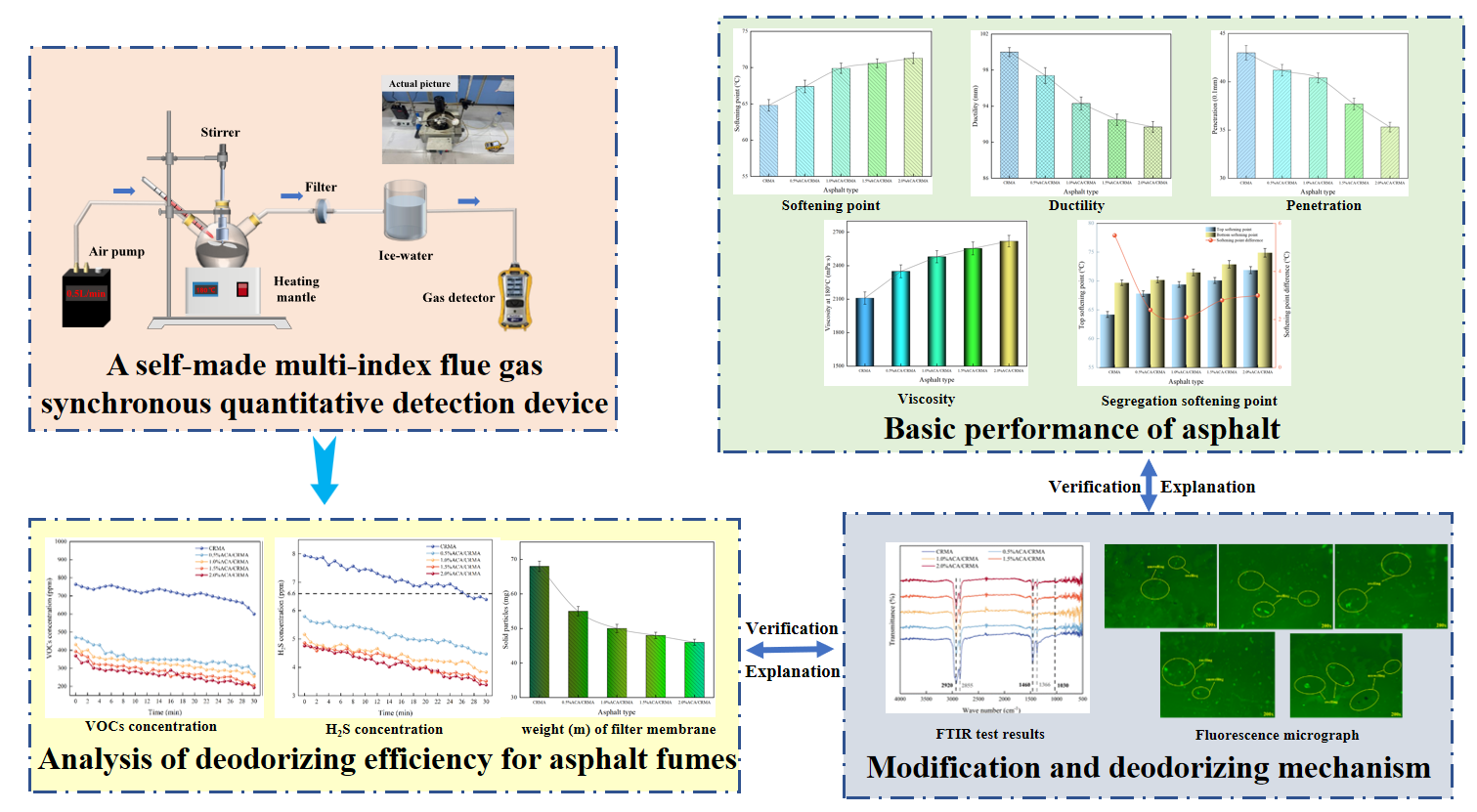
Influence of Aldehyde-Based Modifiers on Rubber Asphalt: Properties, Deodorization Effect, and Mechanistic Analysis

 , ,
, ,
Abstract
1. Introduction
2. Materials and Methods
2.1. Raw Materials
2.1.1. Asphalt
2.1.2. Crumb Rubber
2.1.3. Deodorant
2.2. Preparation of DCRMA
- (1)
- The CR was dried in an oven at 85 °C for 2 h.
- (2)
- The base asphalt was melted by heating it to 135 °C in an oven. A specified mass of the base asphalt was then weighed and further heated to 180 °C. Once the temperature stabilized after adding CR, it was sheared at 2000 rpm for 30 min.
- (3)
- Afterward, the deodorant was added at varying dosages, manually stirred with a glass rod for 5 min, and then sheared in a shear mixer at 5000 r/min for 1 h. The mixture was subsequently placed in an oven at 180 °C for 1 h to guarantee the complete swelling of CR within the asphalt. The final product, DCRMA, was obtained.
2.3. Conventional Performance Testing of Asphalt
2.4. Analysis of Deodorization Effect of Asphalt Fumes
2.4.1. Detection Method for VOC Concentration in Asphalt Fumes
2.4.2. Detection Method for H2S Concentration in Asphalt Fumes
2.4.3. Analysis of Solid Particle Content in Asphalt Fumes
2.5. FM Test
2.6. FTIR Test
3. Results and Discussion
3.1. Analysis of Conventional Performance Test Results of DCRMA
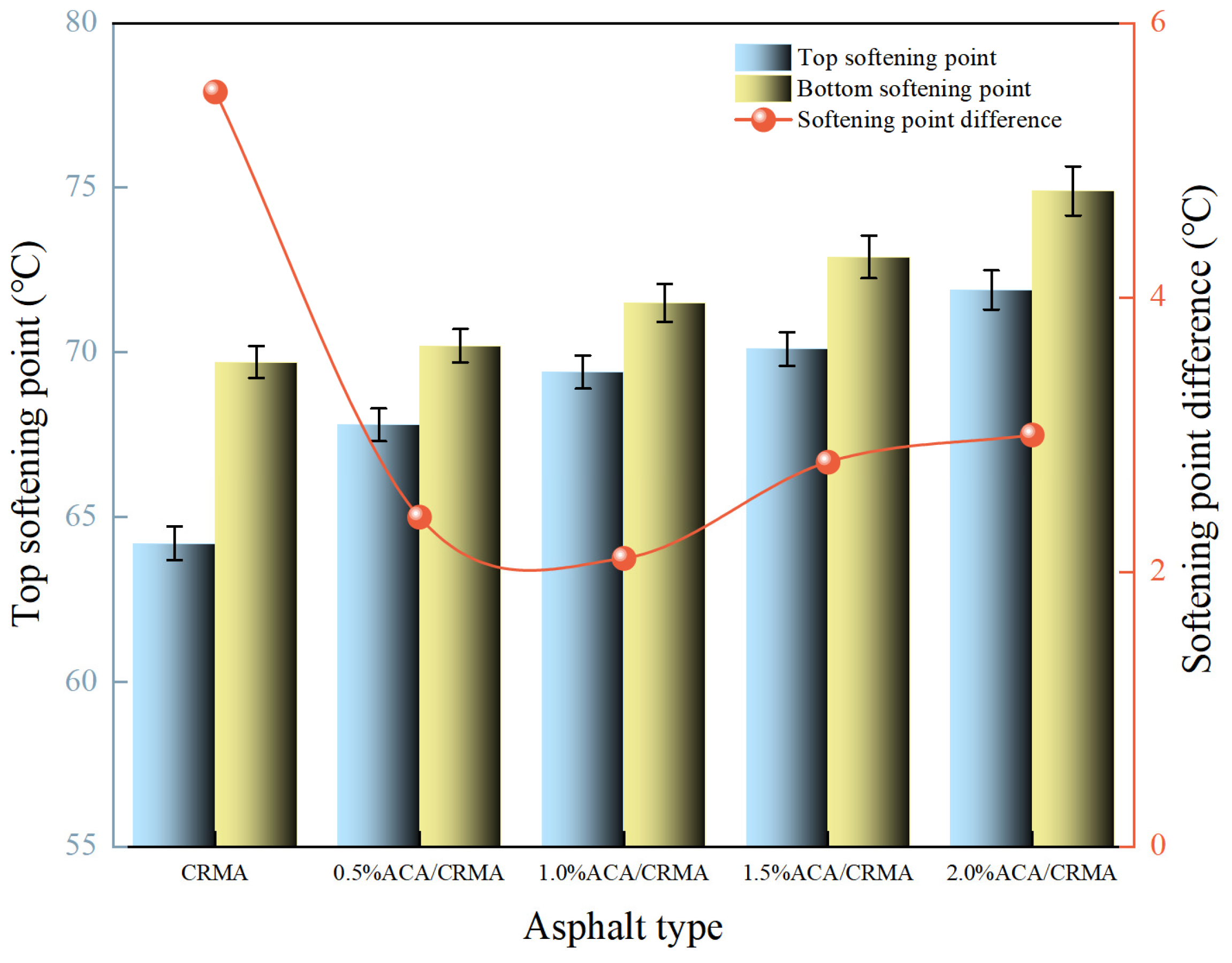
3.1.1. Softening Point
3.1.2. Ductility
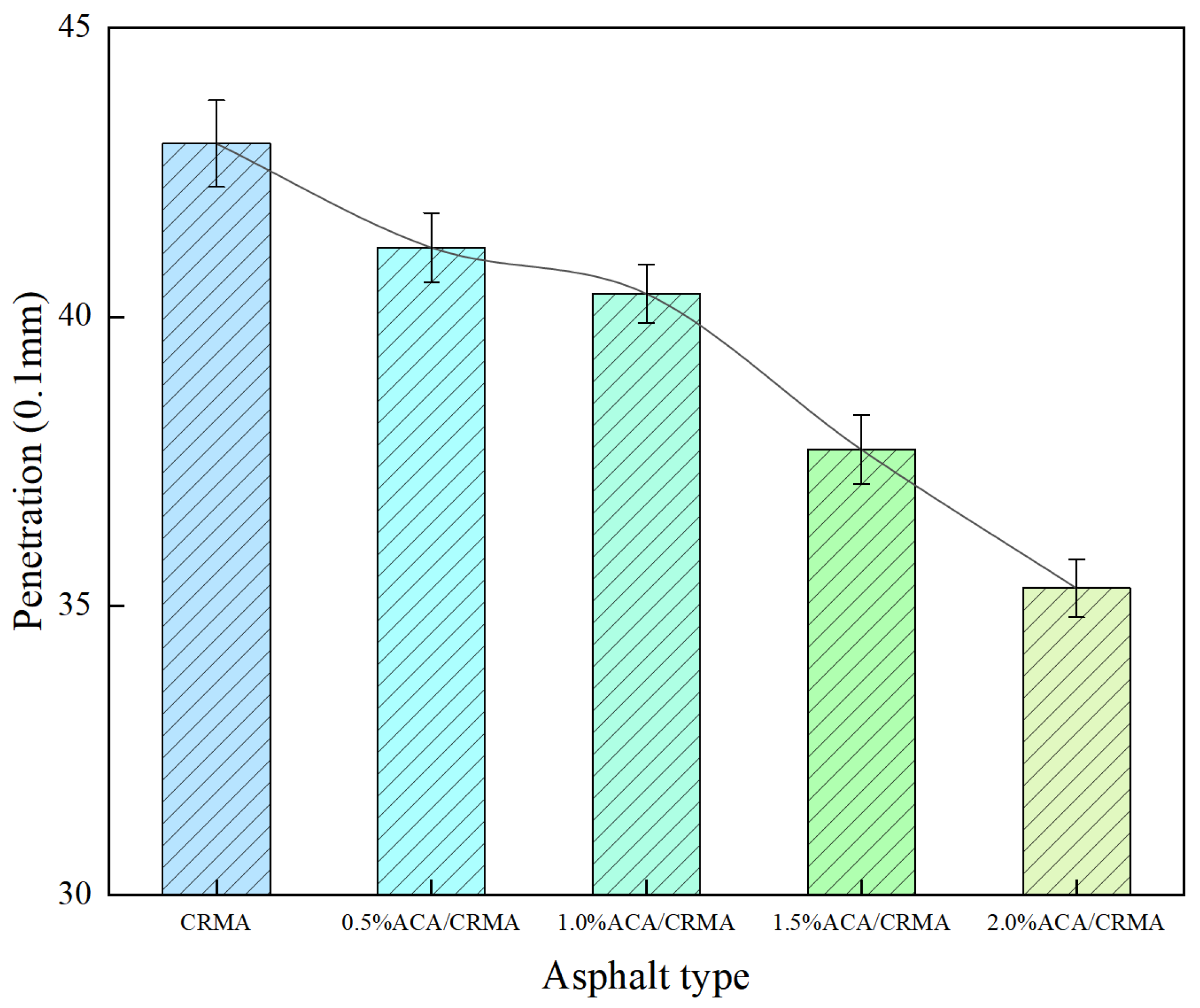
3.1.3. Penetration
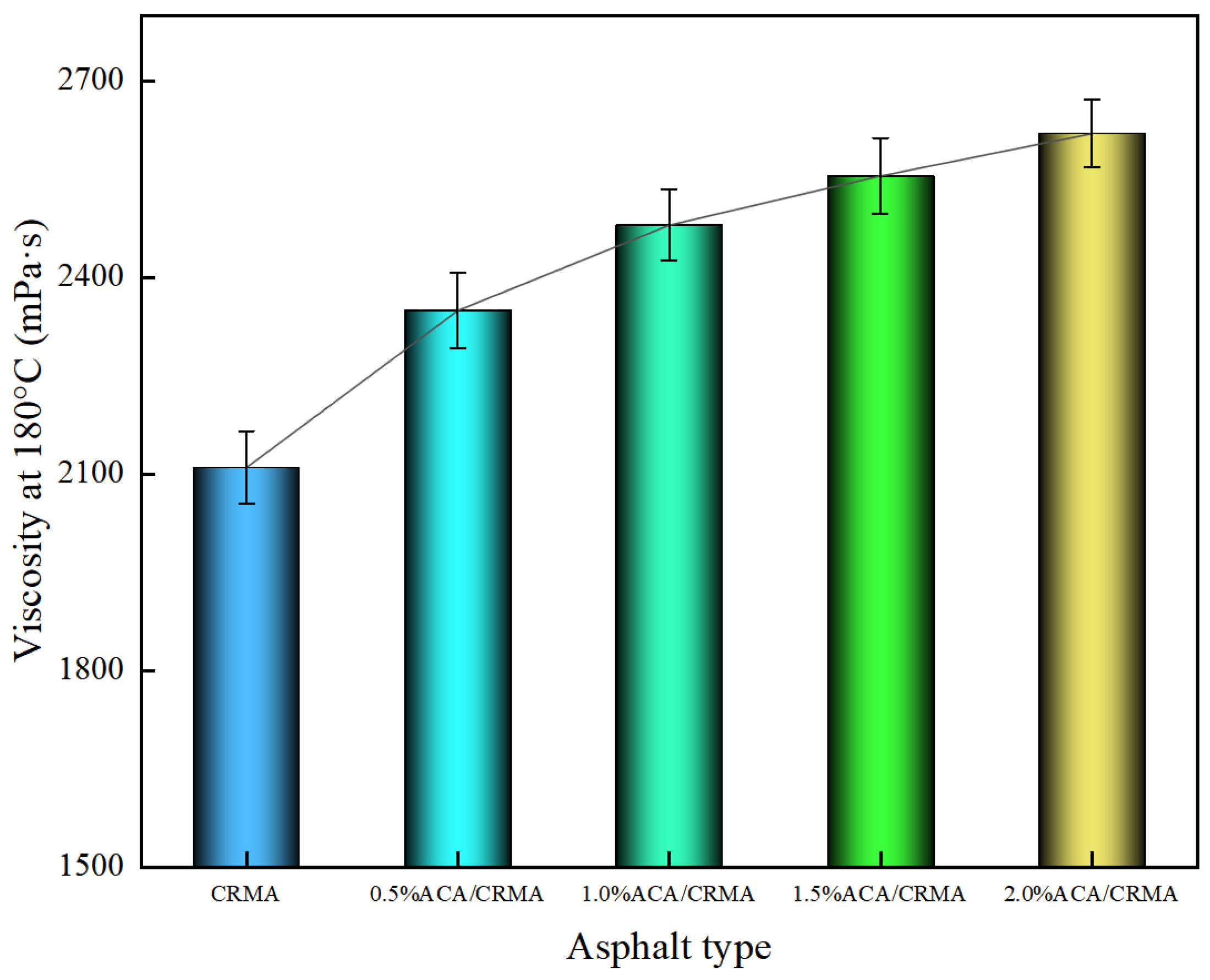
3.1.4. Brookfield Viscosity at 180 °C
3.1.5. Storage Stability
3.2. Analysis of Deodorization Effect of Asphalt Fumes
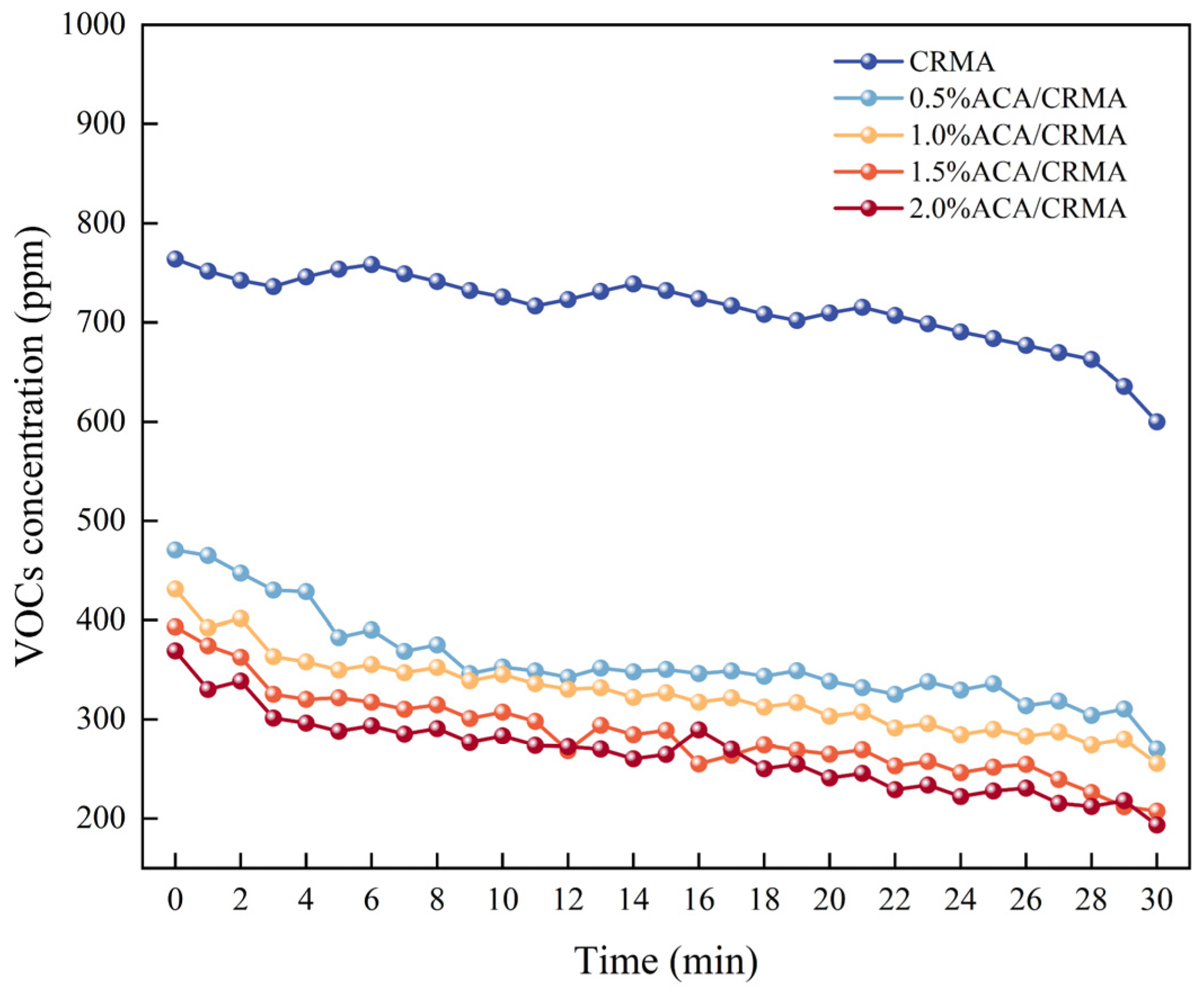
3.2.1. Analysis of VOC Concentration Detection Results
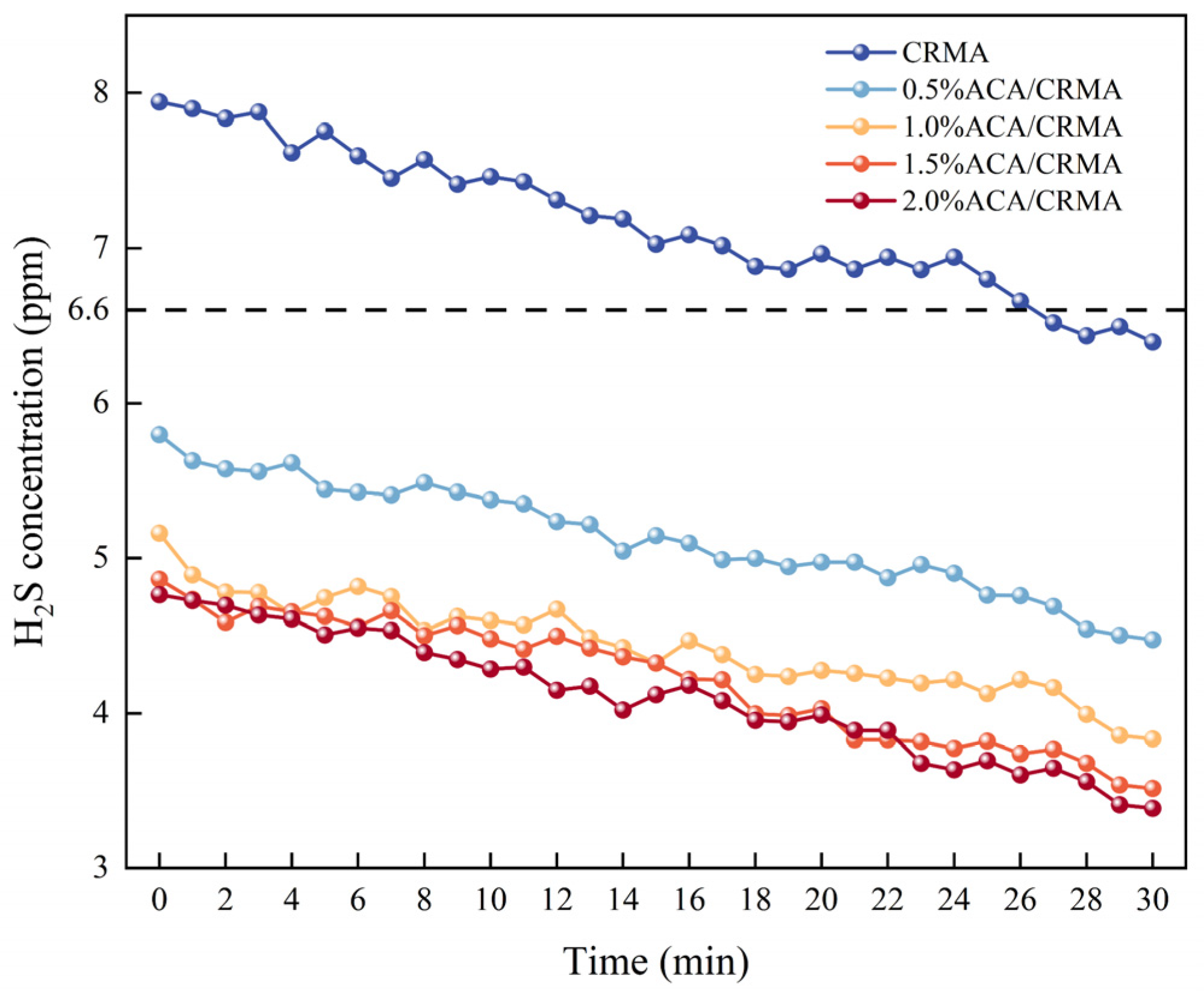
3.2.2. Analysis of H2S Concentration Detection Results
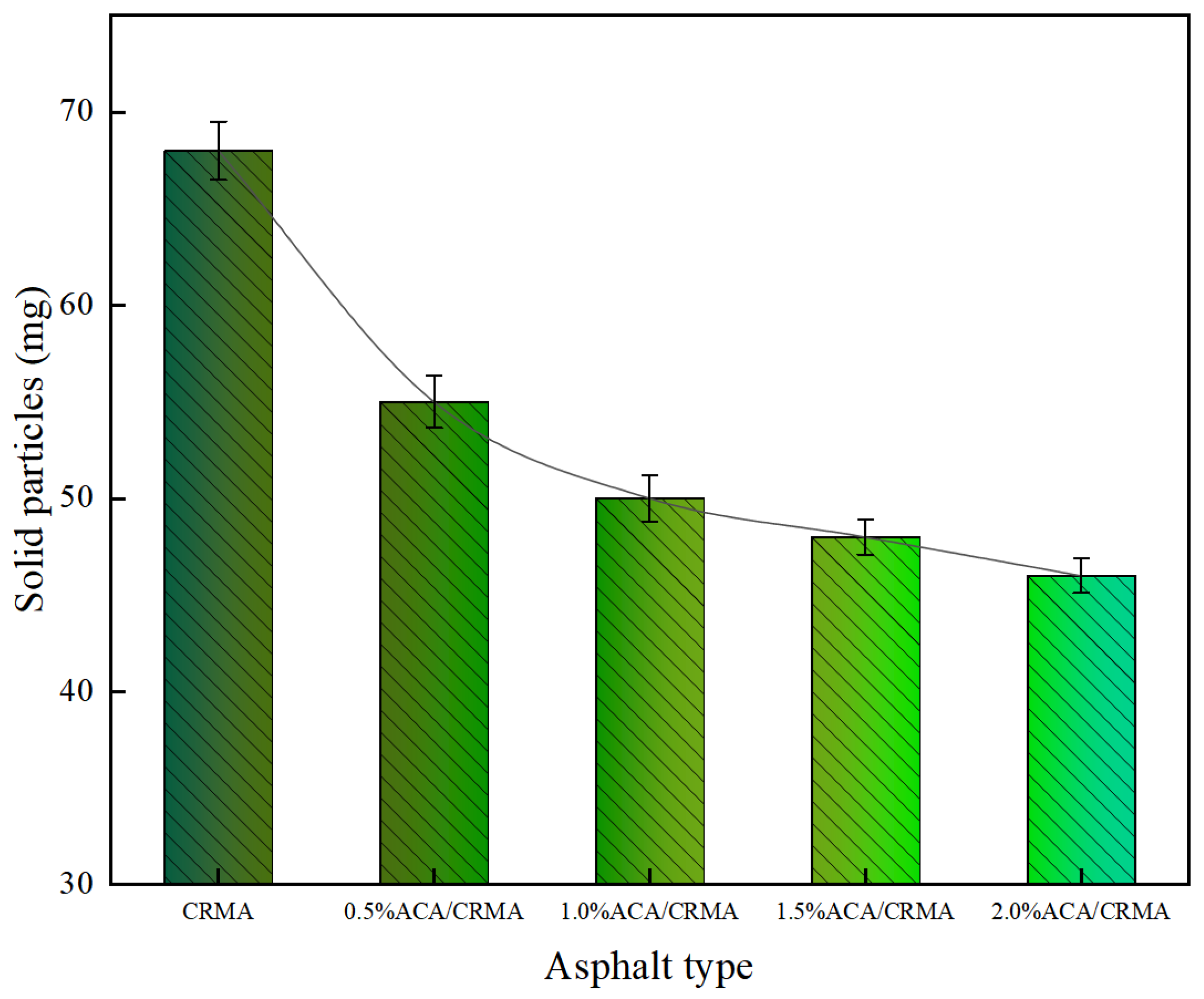
3.2.3. Analysis of Solid Particle Content Results
3.3. Analysis of Deodorization Mechanism
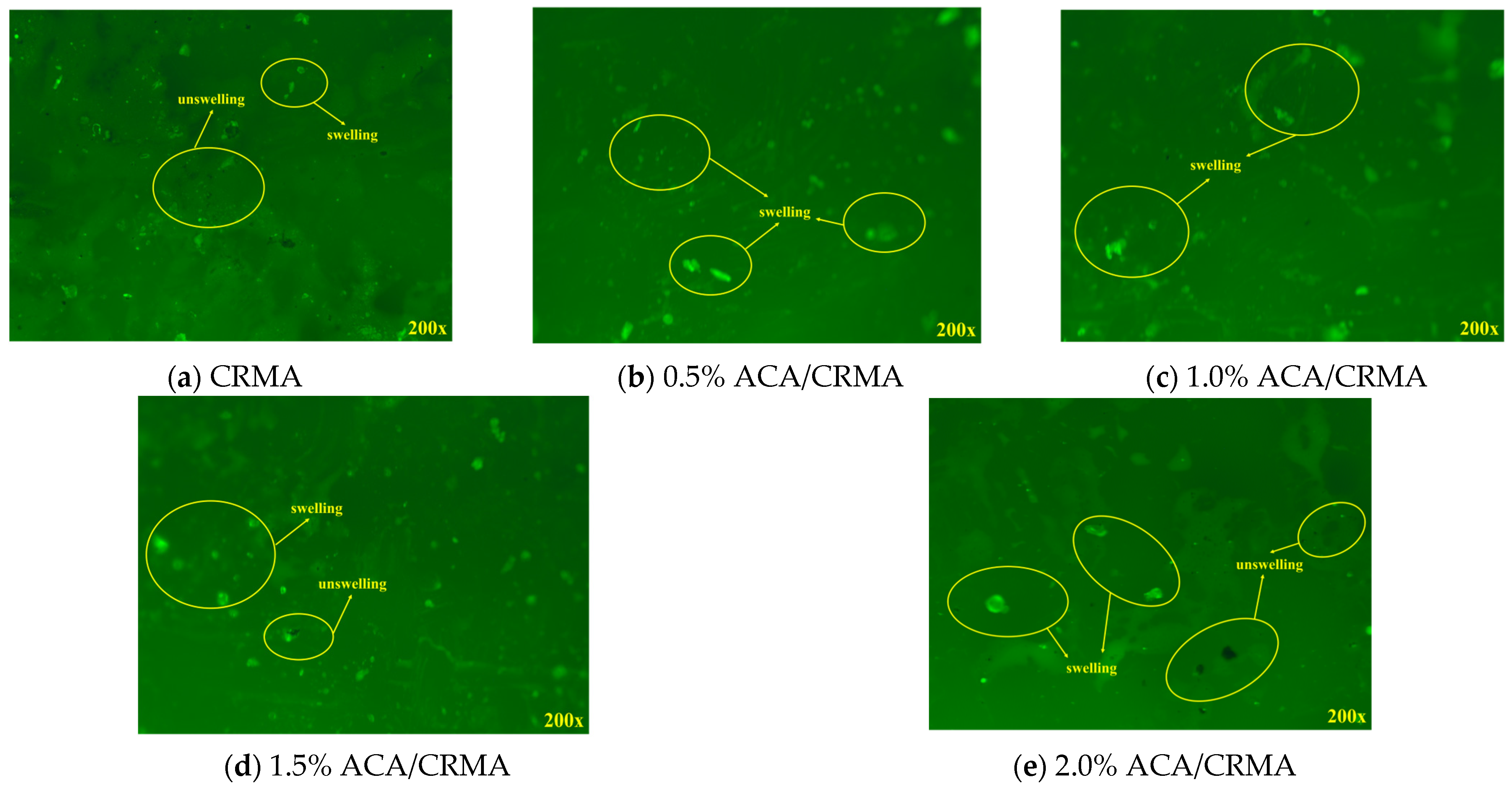
3.3.1. Phase Analysis of DCRMA Based on FM
3.3.2. Chemical Functional Group Analysis of DCRMA Based on FTIR
4. Conclusions and Future Work
- (1)
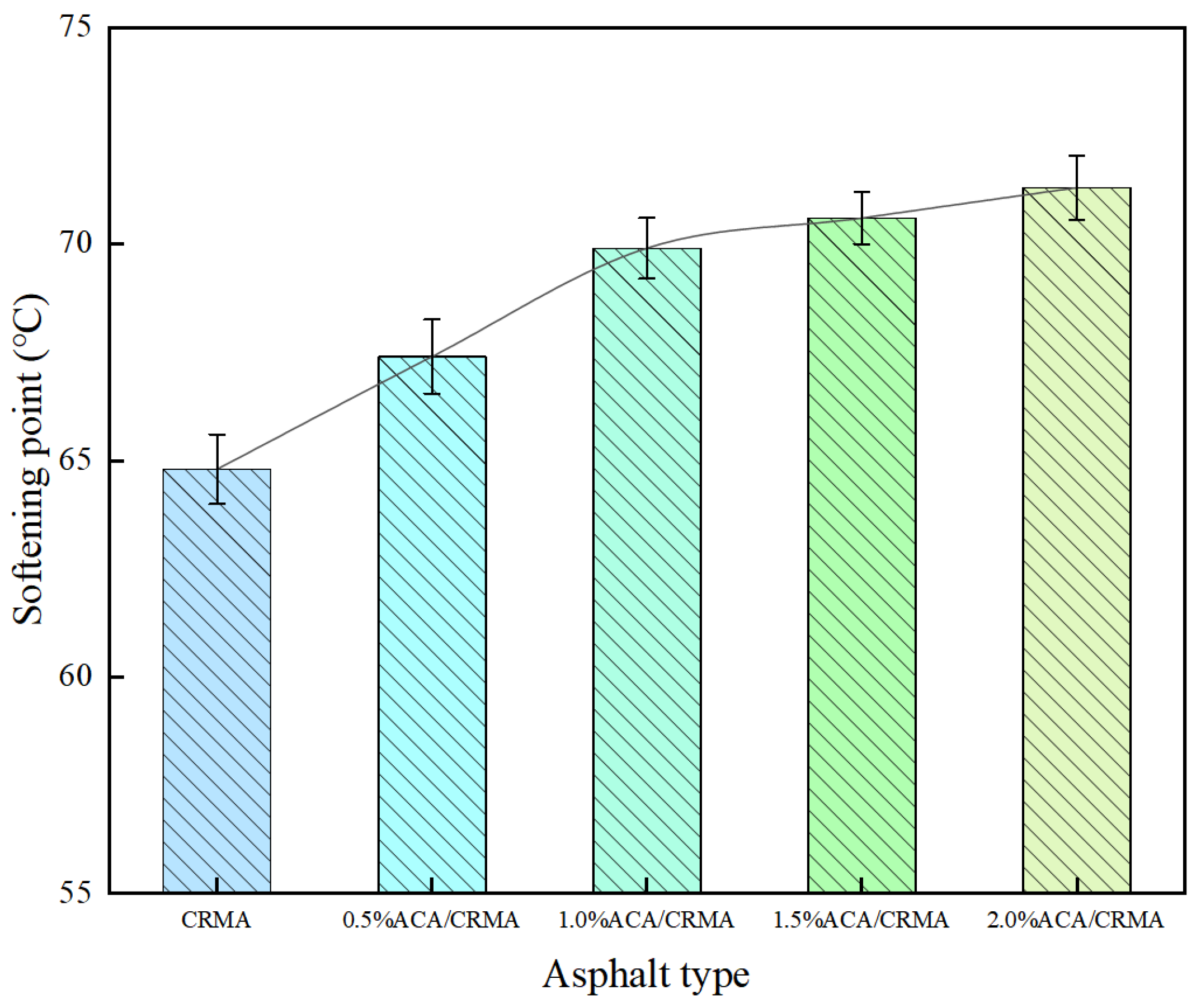
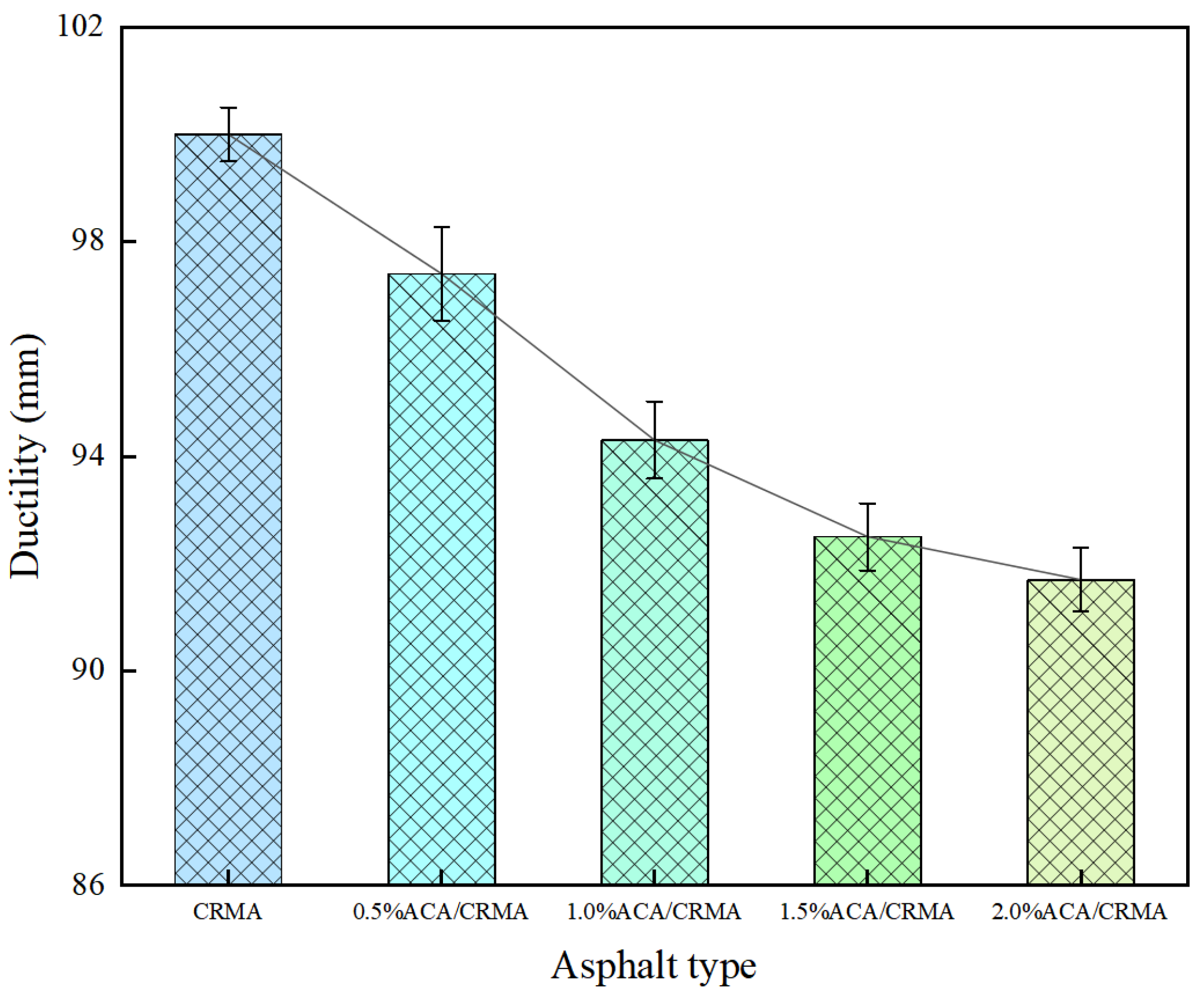
- ACA exerts a biphasic regulatory effect on the performance of CRMA. An appropriate dosage of ACA significantly enhances the softening point and viscosity of CRMA, improving its high-temperature deformation resistance, while slightly reducing its low-temperature ductility. When the ACA content exceeds 1.0%, self-aggregation of ACA occurs within the asphalt, disrupting the compatibility of the CR-asphalt system and leading to rubber reagglomeration and reduced storage stability. Therefore, 1.0% is identified as the optimal dosage for balancing performance and stability.
- (2)
- ACA significantly inhibits the emission of hazardous gases from CRMA. With increasing ACA content, the average concentration of VOCs in asphalt fumes (reduced by 49.9–62.9%), the instantaneous maximum concentration of H2S (reduced by 26.6–39.2%), and the content of solid particulate matter (reduced by 19.4–32.6%) all exhibited continuous decreases. By promoting rubber swelling and stabilizing the system, ACA effectively mitigates occupational health risks during construction.
- (3)
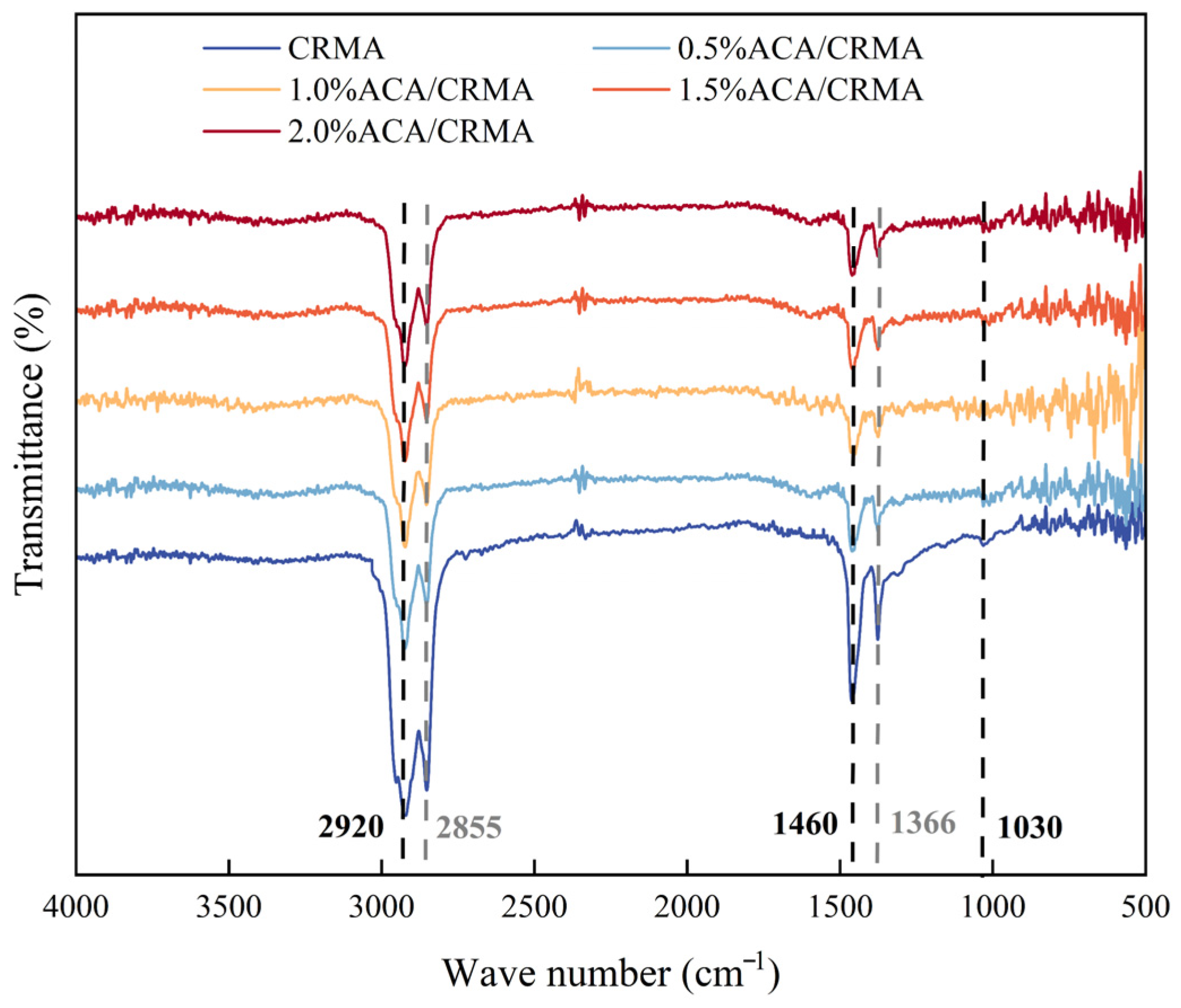
- The mechanism of ACA is primarily governed by physical modulation. Fluorescence microscopy revealed that an appropriate ACA dosage facilitates the swelling and uniform dispersion of rubber in asphalt, whereas excessive ACA induces rubber reagglomeration due to interfacial saturation and self-aggregation effects. Fourier transform infrared spectroscopy detected no significant formation of new chemical bonds, indicating that ACA primarily functions through physical means such as interfacial modification and system stabilization, rather than altering the chemical structure of the asphalt.
- (4)
- Future research can further analyze the specific elements of VOCs in asphalt emissions and explore the synergistic effects of ACA with other deodorants to promote its large-scale application in practical engineering.
Author Contributions
Funding
Institutional Review Board Statement
Data Availability Statement
Conflicts of Interest
References
- Li, F.; Zhang, X.; Wang, L.; Zhai, R. The preparation process, service performances and interaction mechanisms of crumb rubber modified asphalt (CRMA) by wet process: A comprehensive review. Constr. Build. Mater. 2022, 354, 129168. [Google Scholar] [CrossRef] [Scilit]
- Zhao, Z.; Wu, S.; Xie, J.; Yang, C.; Yang, X.; Wang, F.; Liu, Q. Utilization of high contents desulfurized crumb rubber in developing an asphalt rubber pellets modified asphalt. Constr. Build. Mater. 2023, 402, 133043. [Google Scholar] [CrossRef] [Scilit]
- Duan, K.; Wang, C.; Liu, J.; Song, L.; Chen, Q.; Chen, Y. Research progress and performance evaluation of crumb-rubber-modified asphalts and their mixtures. Constr. Build. Mater. 2022, 361, 129687. [Google Scholar] [CrossRef] [Scilit]
- Chlebnikovas, A.; Marčiulaitienė, E.; Šernas, O.; Škulteckė, J.; Januševičius, T. Research on air pollutants and odour emissions from paving hot-mix asphalt with end-of-life tyre rubber. Environ. Int. 2023, 181, 108281. [Google Scholar] [CrossRef] [Scilit]
- Zhang, J.; Chen, M.; Leng, B.; Wu, S.; Chen, D.; Zhao, Z. Investigation on storage stability, H2S emission and rheological properties of modified asphalt with different pretreated waste rubber powder. J. Clean. Prod. 2024, 456, 142469. [Google Scholar] [CrossRef] [Scilit]
- Cao, L.; Yang, C.; Li, A.; Wang, P.; Zhang, Y.; Dong, Z. Flue gas composition of waste rubber modified asphalt (WRMA) and effect of deodorants on hazardous constituents and WRMA. J. Hazard. Mater. 2021, 403, 123814. [Google Scholar] [CrossRef] [Scilit]
- Wang, G.; Yang, X.; Yang, D.; Rong, H.; Meng, Y.; Liu, G. Effect of heating history on the emission of volatile organic compounds from asphalt materials. Sci. Total Environ. 2023, 900, 165692. [Google Scholar] [CrossRef] [Scilit] [PubMed]
- Meng, Y.; Fang, G.; Hu, Y.; Qin, Y.; Xu, R.; Yang, F.; Lei, J.; Zhang, C. Study on the effect of different aldehyde modifiers on the fume suppression effect, mechanism and road performance of SBS modified asphalt. Sci. Total Environ. 2024, 912, 169162. [Google Scholar] [CrossRef] [Scilit]
- Zhao, W.; Niu, Y.; Geng, J.; Li, X.; He, Z. Inhibitory effect and mechanism of zinc stearate on the sulfidation gases from crumb rubber modified asphalt. Constr. Build. Mater. 2025, 460, 139867. [Google Scholar] [CrossRef] [Scilit]
- Ortíz-Magán, A.B.; Pastor-Blas, M.M. Influence of Rubber Formulation on Surface Modifications Produced by RF Plasma. Plasma Chem. Plasma Process. 2010, 30, 311–332. [Google Scholar] [CrossRef] [Scilit]
- Niu, Y.; Zhao, W.; Li, X.; He, Z.; Ma, X.; Geng, J.; Shao, J. Inhibition effect of composite deodorants on the sulfidation gases from crumb rubber modified asphalt. Constr. Build. Mater. 2025, 469, 140461. [Google Scholar] [CrossRef] [Scilit]
- Li, L.; Wang, P.; Zhou, T.; Cao, L.; Ding, X.; Zhang, B.; Wei, L. Performance evaluation and multiscale investigation of deodorant on mechanism of rubber modified asphalt. J. Clean. Prod. 2023, 425, 138954. [Google Scholar] [CrossRef] [Scilit]
- Li, L.; Zhou, T.; Cao, L.; Zhou, J.; Liu, Z.; Dong, Z. Characterization of emissions from rubber modified asphalt and their impact on environmental burden: Insights into composition variability and hazard assessment. J. Hazard. Mater. 2024, 477, 135336. [Google Scholar] [CrossRef] [Scilit]
- Lv, Y.; Wu, S.; Li, N.; Liu, Q.; Yang, C.; Zou, Y.; Amirkhanian, S. Flue gas suppression and environmental evaluation of deodorizer-modified rubber asphalt based on radar method. Constr. Build. Mater. 2024, 411, 134526. [Google Scholar] [CrossRef] [Scilit]
- Liu, J.; Qi, C.; Liu, Q.; Wang, H.; Wang, C.; Zhang, Y.; Wu, S.; Li, N. Study on the effects of organic-inorganic composite inhibitor on fume emissions of rubber modified asphalt. Constr. Build. Mater. 2024, 455, 139206. [Google Scholar] [CrossRef] [Scilit]
- Meng, Y.; Lin, C.; Hu, Y.; Wei, L. Research on the deodorization effect, mechanism and high-temperature rheological properties of SBS-modified asphalt by plant extract aldehyde modifier. Int. J. Pavement Eng. 2024, 25, 2376217. [Google Scholar] [CrossRef] [Scilit]
- JTG 3410-2025; Standard Test Methods of Asphalt and Asphalt Mixture for Highway Engineering. Ministry of Transport of the People’s Republic of China: Beijing, China, 2025.
- CJJ/T 273-2019; Technical Standard for Rubberized Asphalt Pavement. Ministry of Housing and Urban Rural Development of the People’s Republic of China: Beijing, China, 2019.
- Yang, X.; Wang, G.; Rong, H.; Meng, Y.; Liu, X.; Liu, Y.; Peng, C. Review of fume-generation mechanism, test methods, and fume suppressants of asphalt materials. J. Clean. Prod. 2022, 347, 131240. [Google Scholar] [CrossRef] [Scilit]
- Jin, Y.; Yu, X.; Dong, F.; Wang, S.; Jiang, Y.; Lu, J. The improvement of various polyethylene on the high-temperature performance of degraded ground tire rubber modified asphalt and the compatibility enhancement mechanism of compatibilizer for composite modified asphalt. Constr. Build. Mater. 2024, 427, 136255. [Google Scholar] [CrossRef] [Scilit]
- Wang, T.; Weng, Y.; Cai, X.; Li, J.; Xiao, F.; Sun, G.; Zhang, F. Statistical modeling of low-temperature properties and FTIR spectra of crumb rubber modified asphalts considering SARA fractions. J. Clean. Prod. 2022, 374, 134016. [Google Scholar] [CrossRef] [Scilit]
- Saberi, F.; Fakhri, M.; Azami, A. Evaluation of warm mix asphalt mixtures containing reclaimed asphalt pavement and crumb rubber. J. Clean. Prod. 2017, 165, 1125–1132. [Google Scholar] [CrossRef] [Scilit]
- Ma, J.; Sun, G.; Sun, D.; Zhang, Y.; Falchetto, A.C.; Lu, T.; Hu, M.; Yuan, Y. Rubber asphalt modified with waste cooking oil residue: Optimized preparation, rheological property, storage stability and aging characteristic. Constr. Build. Mater. 2020, 258, 120372. [Google Scholar] [CrossRef] [Scilit]
- Wen, Y.; Liu, Q.; Chen, L.; Pei, J.; Zhang, J.; Li, R. Review and comparison of methods to assess the storage stability of terminal blend rubberized asphalt binders. Constr. Build. Mater. 2020, 258, 119586. [Google Scholar] [CrossRef] [Scilit]
- Liang, H.; Song, S.; Liu, X.; Sun, F.; Cao, Z.; Liu, Y.; Ren, Y.; Li, X. Study on the inhibition effect and mechanism of basic zinc carbonate composite asphalt fumes suppressant. Constr. Build. Mater. 2024, 416, 135220. [Google Scholar] [CrossRef] [Scilit]
- Gao, Y.; Jin, J.; Liu, S.; Chen, H.; Chen, B.; Qian, G. Evaluation of the Interaction and Aging Behavior for Asphalt Binders with Epoxy Resin and Phase Change Materials. J. Mater. Civ. Eng. 2023, 35, 4023130. [Google Scholar] [CrossRef] [Scilit]
- Zhao, Z.; Wu, S.; Xie, J.; Yang, C.; Yang, X.; Chen, S.; Liu, Q. Recycle of waste tire rubber powder in a novel asphalt rubber pellets for asphalt performance enhancement. Constr. Build. Mater. 2023, 399, 132572. [Google Scholar] [CrossRef] [Scilit]







| Technical Index | Unit | Test Results | Standard | |
|---|---|---|---|---|
| Penetration (25 °C) | 0.1 mm | 65.0 | 60~80 | |
| Ductility (10 °C) | cm | 32.4 | — | |
| Softening point (TR&B) | °C | 47.5 | ≥46 | |
| Viscosity (135 °C) | mPa·s | 366 | <3000 | |
| RTFOT | Mass loss | % | −0.56 | ≤±0.8 |
| Residual penetration ratio (25 °C) | % | 82.0 | ≥61 | |
| Test Items | Moisture Content/% | Metal Content/% | Fiber Content/% | Ash Content/% | Rubber Hydrocarbon Content/% |
|---|---|---|---|---|---|
| Technical index | <1 | <0.03 | <1 | ≤8 | ≥42 |
| Test results | 0 | 0.02 | 0.38 | 6 | 48 |
| Items | Physical Form | Boiling Point (°C) | Solubility | Chemical Structure |
|---|---|---|---|---|
| Results | Yellow oily liquid | 288 | Soluble in acetone |  |
Disclaimer/Publisher’s Note: The statements, opinions and data contained in all publications are solely those of the individual author(s) and contributor(s) and not of MDPI and/or the editor(s). MDPI and/or the editor(s) disclaim responsibility for any injury to people or property resulting from any ideas, methods, instructions or products referred to in the content. |
© 2026 by the authors. Licensee MDPI, Basel, Switzerland. This article is an open access article distributed under the terms and conditions of the Creative Commons Attribution (CC BY) license.
Share and Cite
Zhang, H.; Lei, J.; Huang, H.; Wang, X.; Meng, Y.; Shao, P.; Zeng, L. Influence of Aldehyde-Based Modifiers on Rubber Asphalt: Properties, Deodorization Effect, and Mechanistic Analysis. Polymers 2026, 18, 799. https://doi.org/10.3390/polym18070799
Zhang H, Lei J, Huang H, Wang X, Meng Y, Shao P, Zeng L. Influence of Aldehyde-Based Modifiers on Rubber Asphalt: Properties, Deodorization Effect, and Mechanistic Analysis. Polymers. 2026; 18(7):799. https://doi.org/10.3390/polym18070799
Chicago/Turabian StyleZhang, Honggang, Jiechao Lei, Hui Huang, Xiaowen Wang, Yongjun Meng, Pengkun Shao, and Lihao Zeng. 2026. "Influence of Aldehyde-Based Modifiers on Rubber Asphalt: Properties, Deodorization Effect, and Mechanistic Analysis" Polymers 18, no. 7: 799. https://doi.org/10.3390/polym18070799
APA StyleZhang, H., Lei, J., Huang, H., Wang, X., Meng, Y., Shao, P., & Zeng, L. (2026). Influence of Aldehyde-Based Modifiers on Rubber Asphalt: Properties, Deodorization Effect, and Mechanistic Analysis. Polymers, 18(7), 799. https://doi.org/10.3390/polym18070799