Article

Automated Parallel Dialysis for Purification of Polymers

by
İpek Terzioğlu
1,†,
Carolina Ventura-Hunter
1,2,
Jens Ulbrich
1,
Enrique Saldívar-Guerra
2,
Ulrich S. Schubert
1 and
Carlos Guerrero-Sánchez
1,*
1
Laboratory of Organic and Macromolecular Chemistry (IOMC), Friedrich Schiller University Jena, Humboldtstrasse 10, 07743 Jena, Germany
2
Polymerization Processes Department, Centro de Investigación en Química Aplicada (CIQA), Blvd. Enrique Reyna No. 140, Saltillo 25294, Coahuila, Mexico
*
Author to whom correspondence should be addressed.
Current address: Department of Polymer Science and Technology, Middle East Technical University, Çankaya, Ankara 06800, Turkey.
Polymers 2022, 14(22), 4835; https://doi.org/10.3390/polym14224835
Submission received: 13 October 2022 / Revised: 4 November 2022 / Accepted: 6 November 2022 / Published: 10 November 2022

Abstract

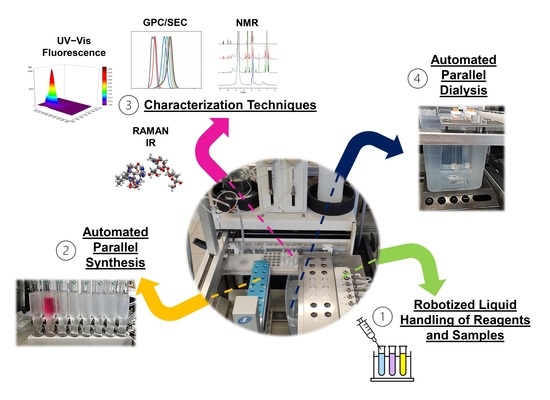
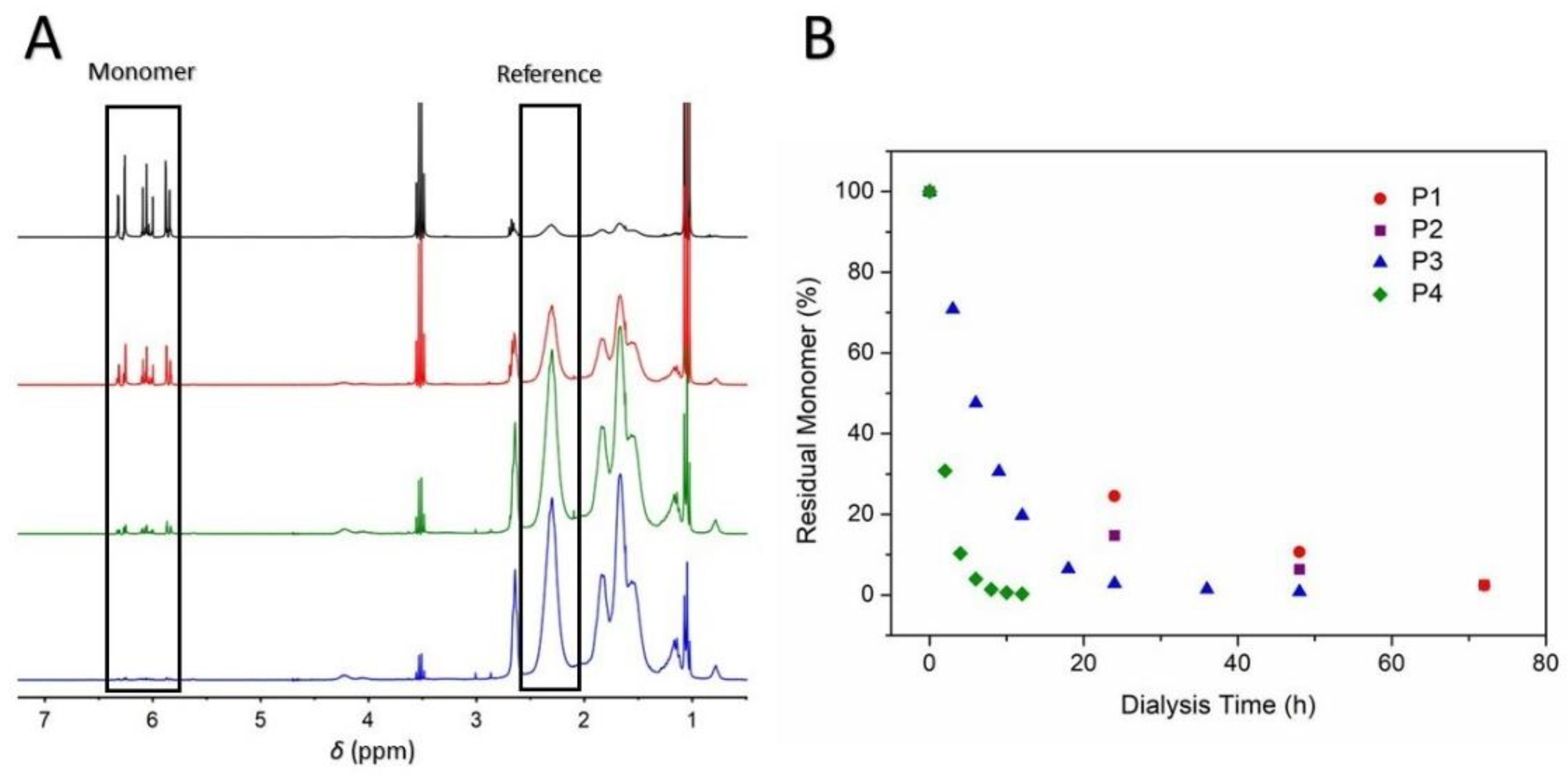
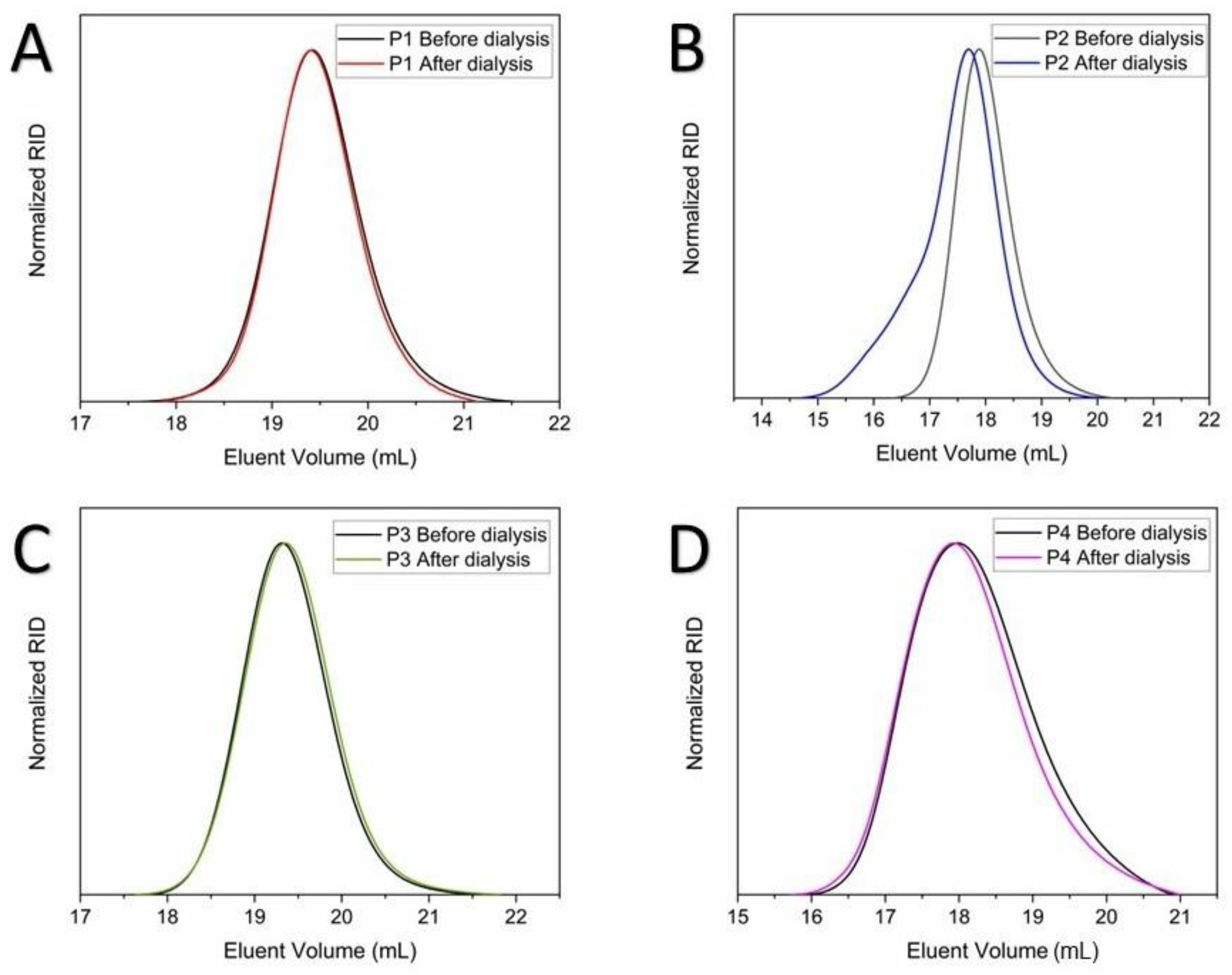
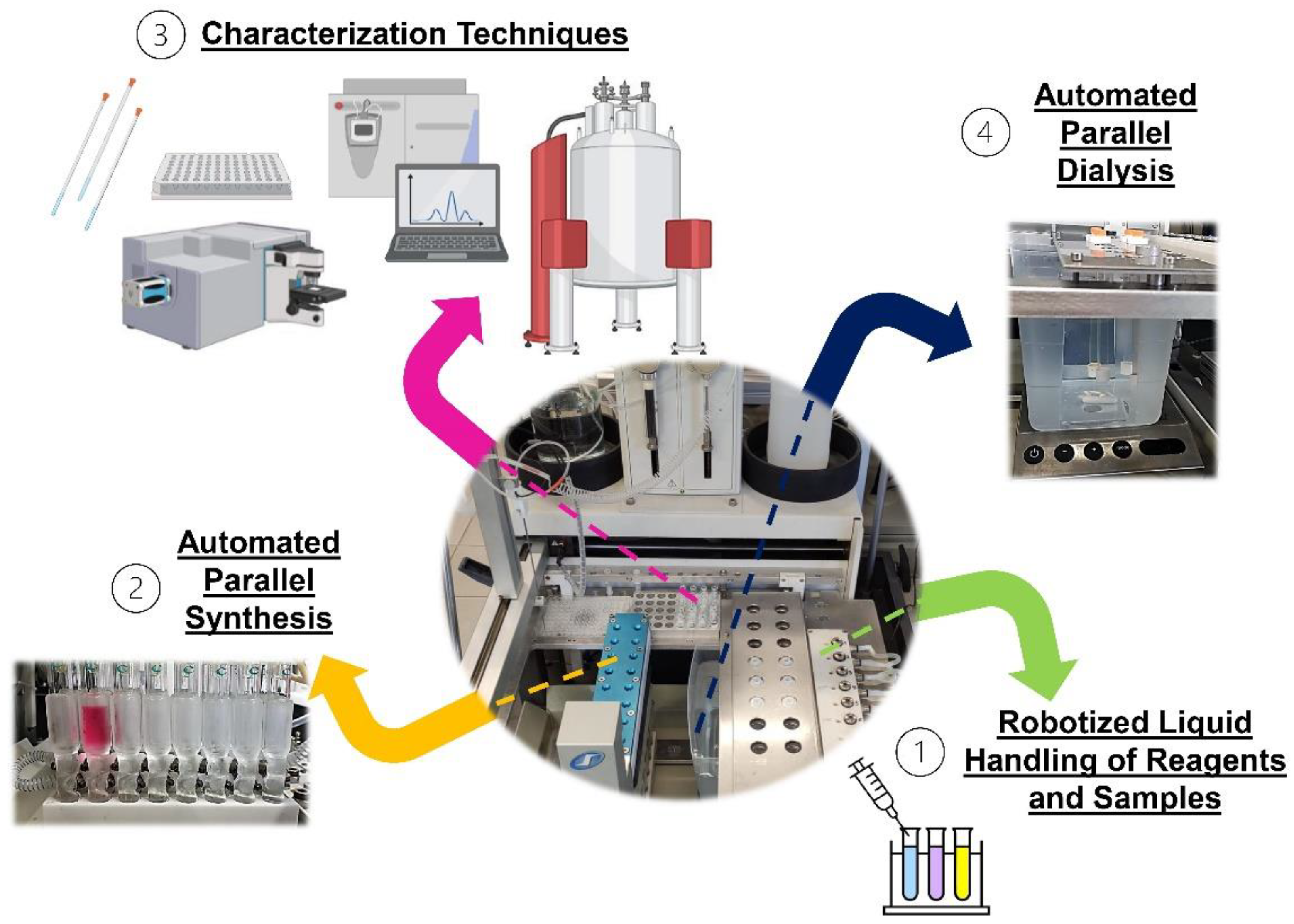
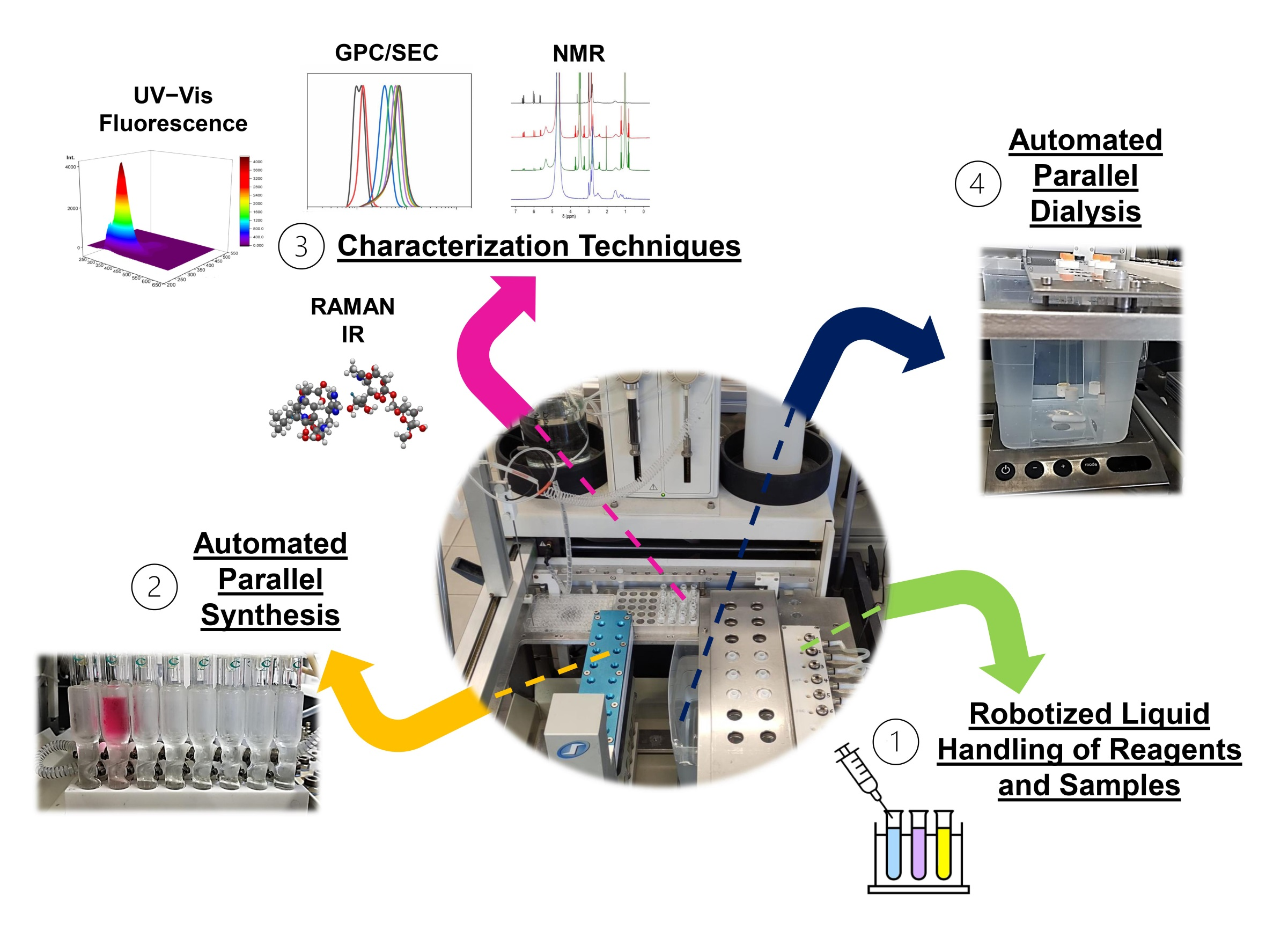
The implementation of a dialysis method for the simultaneous purification of different polymer materials in a commercially available automated parallel synthesizer (APS) is discussed. The efficiency of this “unattended” automated parallel dialysis (APD) method was investigated by means of proton nuclear magnetic resonance (1H-NMR) measurements, which confirmed that the method enables the removal of up to 99% of the unreacted monomer derived from the synthesis of the corresponding polymers in the APS. Size-exclusion chromatography (SEC) revealed that the molar mass and molar mass distribution of the investigated polymers did not undergo significant changes after the application of the APD method. The method discussed herein can be regarded as a good alternative to the “unattended” and reliable purification of polymer libraries prepared in APS. This method may be useful for overcoming current limitations of high-throughput/-output (HT/O) synthesis of polymer libraries, where purification of the generated materials currently represents a significant constraint for establishing fully automated experimental workflows necessary to advance towards a full digitalization of research and development of new polymers for diverse applications.
Keywords: polymer libraries; purification; automation; dialysis; high-throughput/-output experimentation polymer libraries; purification; automation; dialysis; high-throughput/-output experimentation
Graphical Abstract