Article

Nafion/Surface Modified Ceria Hybrid Membranes for Fuel Cell Application
by
Polina A. Yurova
1,
Viktoria R. Malakhova
1,2,
Ekaterina V. Gerasimova
3,
Irina A. Stenina
1 and
Andrey B. Yaroslavtsev
1,*
1
Kurnakov Institute of General and Inorganic Chemistry of the Russian Academy of Sciences, Leninsky Prospect 31, 119991 Moscow, Russia
2
Basic Department of Inorganic Chemistry and Materials Science, National Research University Higher School of Economics, ul. Myasnitskaya 20, 101000 Moscow, Russia
3
Institute of Problems of Chemical Physics of the Russian Academy of Sciences, prospect Academician Semenov 1, 142432 Chernogolovka, Moscow region, Russia
*
Author to whom correspondence should be addressed.
Polymers 2021, 13(15), 2513; https://doi.org/10.3390/polym13152513
Submission received: 10 June 2021 / Revised: 16 July 2021 / Accepted: 27 July 2021 / Published: 30 July 2021
(This article belongs to the Special Issue Advanced Polymers for Electrochemical Applications)

Abstract

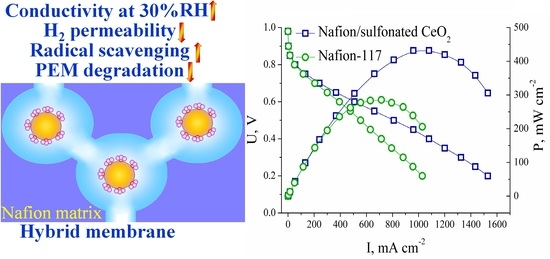
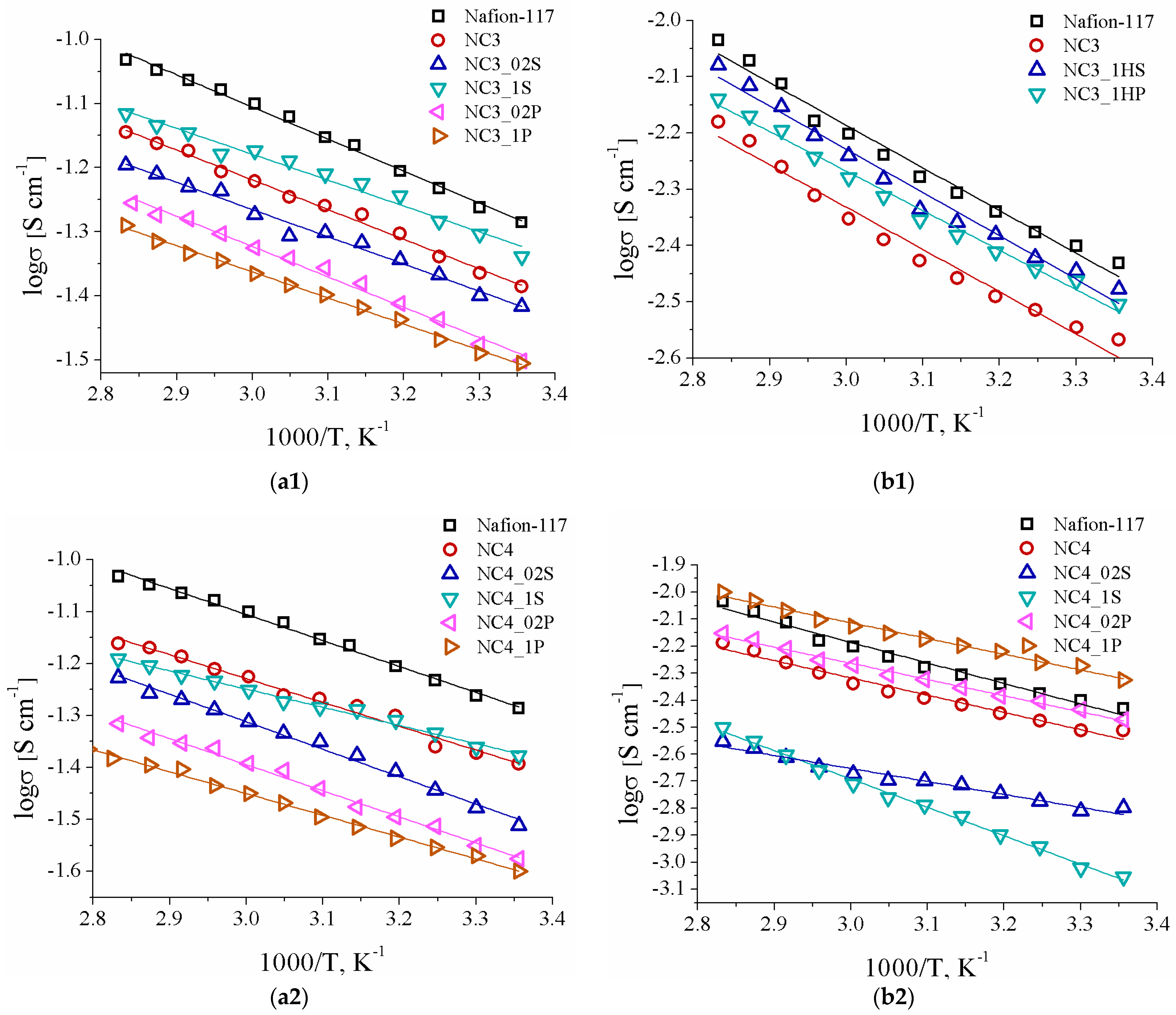
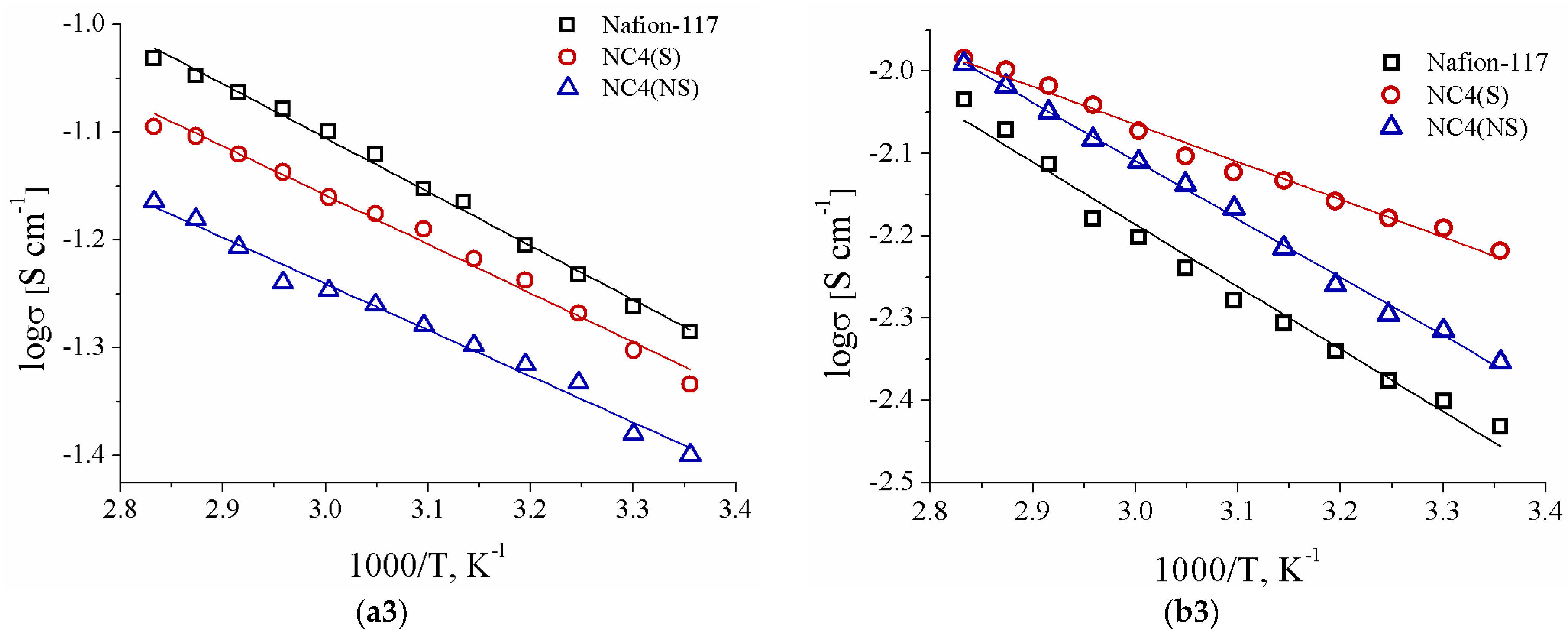
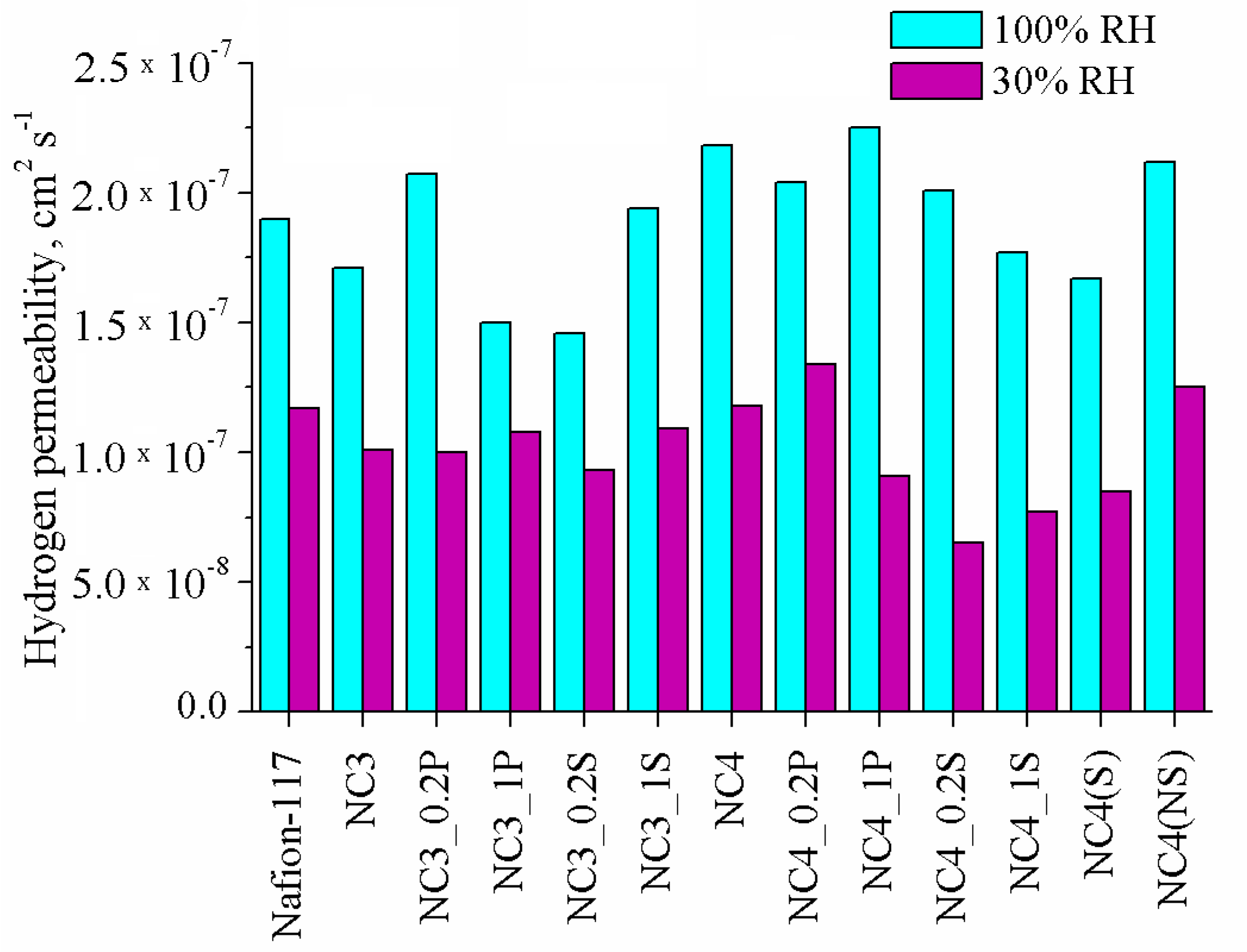
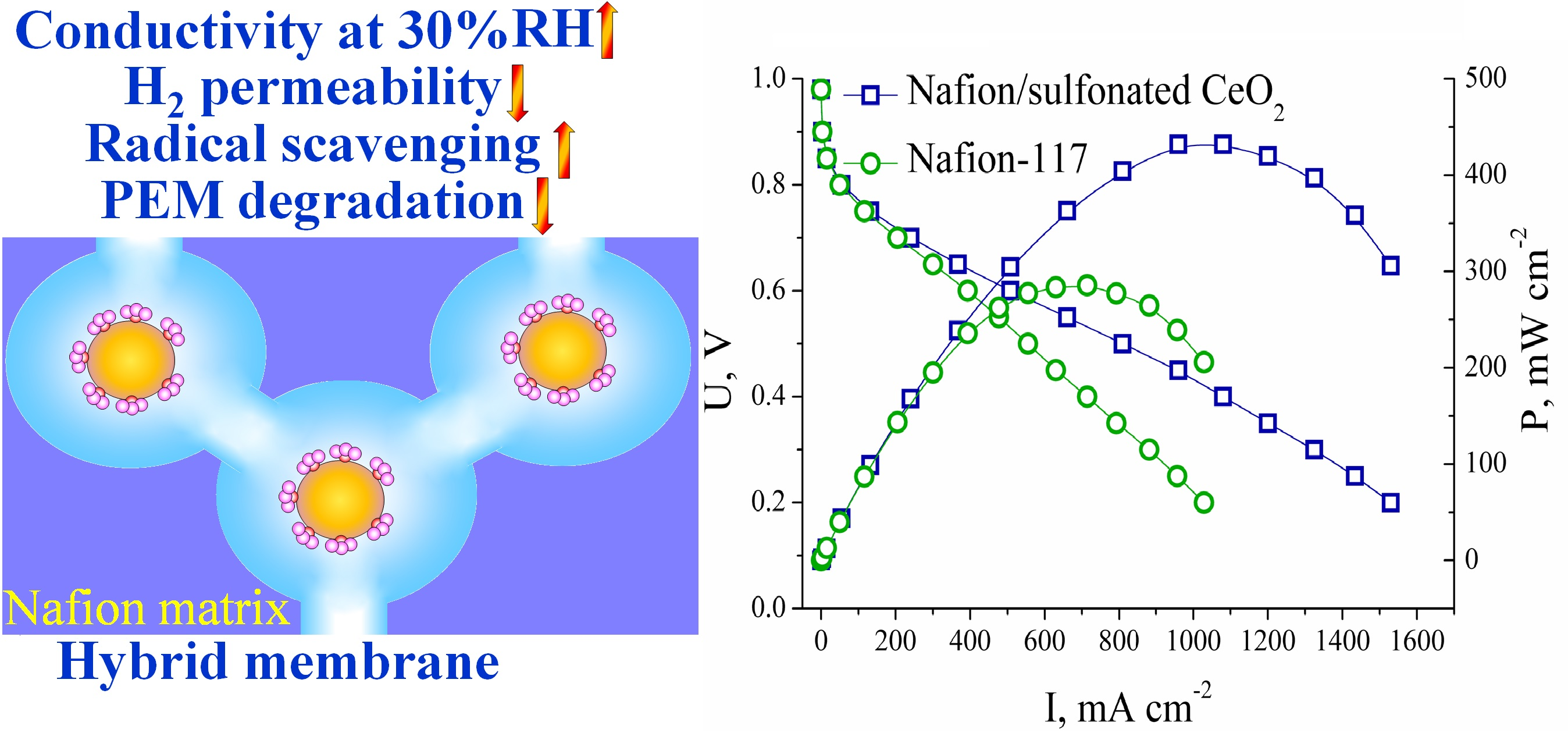
Low chemical durability of proton exchange membranes is one the main factors limiting their lifetime in fuel cells. Ceria nanoparticles are the most common free radical scavengers. In this work, hybrid membranes based on Nafion-117 membrane and sulfonic or phosphoric acid functionalized ceria synthesized from various precursors were prepared by the in situ method for the first time. Ceria introduction led to a slight decrease in conductivity of hybrid membranes in contact with water. At the same time, conductivity of membranes containing sulfonic acid modified ceria exceeded that of the pristine Nafion-117 membrane at 30% relative humidity (RH). Hydrogen permeability decreased for composite membranes with ceria synthesized from cerium (III) nitrate, which correlates with their water uptake. In hydrogen-air fuel cells, membrane electrode assembly fabricated with the hybrid membrane containing ceria synthesized from cerium (IV) sulfate exhibited a peak power density of 433 mW/cm2 at a current density of 1080 mA/cm2, while operating at 60 °C and 70% RH. It was 1.5 times higher than for the pristine Nafion-117 membrane (287 mW/cm2 at a current density of 714 mA/cm2).
Keywords: Nafion; hybrid membranes; surface modification; ceria; ionic conductivity; fuel cell Nafion; hybrid membranes; surface modification; ceria; ionic conductivity; fuel cell
Graphical Abstract