


Abstract
The rapid development of wearable electronics has created a demand for flexible, lightweight, and sustainable power-supply technologies. The persistent temperature difference between the human body and the environment provides a low-grade thermal source for thermoelectric energy harvesting. However, traditional flexible thermoelectric devices still face limited self-supporting capabilities and difficulties in maintaining sufficiently low cold-side temperatures. Here, we designed a passively radiative-cooled thermoelectric film (PRT film) by integrating a PAM/PEDOT:PSS self-supporting thermoelectric composite layer with a polymer metamaterial radiative cooling (PMRC) film. The PAM/PEDOT:PSS layer serves as a self-supporting thermoelectric conversion component for harvesting low-grade heat, while the PMRC film layer acts as a passive cold-side regulator without energy input to lower the cold-side temperature and enhance the temperature gradient. By optimizing the PAM content, the PAM/PEDOT:PSS composite material with 85 wt% PAM achieved the highest power factor of 72.3 μW m−1 K−2. Under a temperature difference of 39 °C, the optimized PAM/PEDOT:PSS sample provided an open-circuit voltage of 0.47 V, a maximum output power of 1.1 μW, and a power density of 11.2 μW cm−2. According to the temperature-difference enhancement measured in experiments and the independently obtained load characteristics, the integration of PMRC films is expected to increase the maximum output power from 1.1 to 1.4 μW, with the corresponding power density rising from 11.2 to 14.25 μW cm−2, representing a 27.2% enhancement. This work demonstrates the feasibility of passive radiative cold-side regulation in enhancing low-level thermoelectric energy harvesting for wearable applications.
1. Introduction
With the rapid development of smartwatches, health-monitoring patches, flexible sensors, and human–machine interaction systems, wearable electronics are evolving toward lightweight, flexible, and miniaturized designs [1,2,3,4,5,6]. Unlike traditional portable electronics, wearable devices typically require prolonged contact with human skin and must operate reliably under bending, stretching, and other dynamic mechanical deformations. Therefore, their power-supply units must not only provide sufficient electrical output but also meet the requirements for flexibility, comfort, and long-term stability [2,3,7,8]. Thus, developing flexible energy-harvesting technologies that can continuously collect energy from the human body or the surrounding environment is crucial for the long-term operation of next-generation wearable systems.
During daily activities, the human body continuously dissipates heat to the surrounding environment, and there is usually a temperature difference between the skin surface and the surroundings [1,3,4,5,9]. Although this temperature difference is a low-grade heat source, its continuity, stability, and wide spatial availability make it an attractive driving force for wearable energy harvesting. Thermoelectric conversion can directly convert temperature gradients into electrical energy through the Seebeck effect, with advantages such as no moving parts, silent operation, compact structure, and ease of integration [10,11,12]. Therefore, it has attracted increasing attention in the field of body-heat harvesting and power supply for low-power wearable electronic devices [3,4,5,13]. In this context, the flexibility, processability, and thermoelectric performance of materials are key factors determining practical applications. Traditional inorganic thermoelectric materials often exhibit high thermoelectric performance, but their rigidity, high cost, and complex processing make them unsuitable for close contact with the skin and flexible integration [10,11,14]. In contrast, organic thermoelectric materials are lightweight, mechanically flexible, solution-processable, and have low thermal conductivity, making them more suitable for flexible wearable thermoelectric devices [11,12,14,15,16]. Among them, PEDOT:PSS is one of the most widely studied conductive polymers in organic thermoelectric materials due to its good film-forming ability, environmental stability, and electrical conductivity [17,18,19,20,21]. However, the pristine PEDOT:PSS films still have limited self-supporting capability and poor processing robustness without a supporting substrate, and their thermoelectric output is restricted in practical applications, which hinders their use in complex wearable scenarios.
However, for practical thermoelectric generators, the intrinsic thermoelectric performance of materials is not the sole determinant of device output, which also relies heavily on the sustainable temperature difference between the device’s hot and cold sides [1,3,4,5,10]. In wearable applications, the hot side can continuously be heated by human skin, while the cold side is usually exposed to the environment, strongly influenced by environmental temperature, air convection, and body heat dissipation [1,3,4,7,8]. Therefore, maintaining a sufficiently low cold-side temperature for an extended period is challenging. An elevated cold-side temperature directly reduces the temperature gradient of the device, thereby limiting the thermovoltage and output power. Thus, improving cold-side heat dissipation without additional energy consumption or complex cooling structures is a core challenge for boosting the practical output performance of flexible wearable thermoelectric devices.
To enhance the wearable adaptability of flexible thermoelectric materials, the combination of polyacrylamide (PAM) hydrogel with PEDOT:PSS provides an effective way to construct self-supporting thermoelectric composite films [22,23,24,25,26,27]. PAM hydrogel offers a compliant, water-rich network that can support ionic transport and improve the independent film-forming capability of the composite, while PEDOT:PSS provides conductive pathways and thermoelectric conversion capability [26,27,28,29]. The ionic thermal diffusion response of the PAM-containing network, combined with the transport pathways provided by PEDOT:PSS, makes it possible to adjust the Seebeck coefficient and electrical conductivity by varying the PAM content. Meanwhile, radiative cooling provides a promising strategy for maintaining the temperature difference between the hot side and the cold side [30,31,32,33,34,35,36,37]. Suitable radiative cooling materials can release heat to outer space through the atmospheric window, achieving passive cooling without external energy input [38]. For daytime operation, effective radiative cooling materials typically need to have low solar absorptance in the wavelength range of approximately 0.3–2.5 μm and high thermal emissivity within the 8–13 μm atmospheric transparency window. Micro/nano-structured metasurfaces can customize the spectral reflection, absorption, and emission of the surface by regulating their constituent materials and geometric structures, such as the period, width, and depth of the structural units [33,35,39]. Polymer metasurfaces are particularly suitable for wearable thermal-management applications due to their lightweight, mechanical compliance, and compatibility with large-area film fabrication. When integrated on the cold side of thermoelectric devices, radiative cooling can lower the cold-side temperature and increase the temperature gradient, thereby enhancing thermoelectric output. Previous studies have investigated radiative-cooling-assisted thermoelectric generators, demonstrating that passive thermal radiation can improve or sustain the temperature difference required for thermoelectric power generation [40]. However, the use of lightweight polymer radiative cooling films as a spatially regulating cold-side layer for a self-supporting PAM/PEDOT:PSS thermoelectric film, as well as the analysis of the cooling-layer coverage and sky-facing radiative contributions, remains under-researched.
Based on these considerations, we designed a PRT film by integrating a self-supporting PAM/PEDOT:PSS thermoelectric composite layer with a polymer metasurface radiative cooling (PMRC) film. In this structure, PAM/PEDOT:PSS serves as the thermoelectric conversion layer to collect the temperature difference between the human body or another low-grade heat source and the environment, while the PMRC film acts as an energy-free cold-side regulation layer to lower the cold-side temperature and enhance the temperature gradient. The PAM content was first optimized to determine the most suitable composition for self-supporting ionic thermoelectric conversion. The PMRC film was then introduced to construct the PRT film, and its effects on cold-side temperature regulation and output enhancement were systematically studied. By combining the self-supporting ionic thermoelectric film with passive radiative cooling, this design provides a device-level thermal-management strategy to enhance low-grade thermoelectric energy harvesting in potential wearable applications.
2. Materials and Methods
2.1. Materials
Acrylamide (AM, Shanghai Macklin Biochemical Co., Ltd., Shanghai, China), ammonium persulfate (APS, Guangzhou Howei Pharmaceutical Technology Co., Ltd., Guangzhou, China), N,N′-methylenebisacrylamide (MBA, Shanghai Macklin Biochemical Co., Ltd., Shanghai, China), and PEDOT:PSS aqueous dispersion (Shanghai Macklin Biochemical Co., Ltd., Shanghai, China) were used to prepare PAM/PEDOT:PSS self-supporting thermoelectric composites. AM served as the monomer for PAM hydrogel formation, MBA as the crosslinking agent, APS as the initiator, and PEDOT:PSS as the conductive thermoelectric component. The PMRC film was used as a passive cold-side regulation layer. The PMRC film was derived from our previous work [33], exhibiting a low solar absorption rate of 4.8% and a high average emissivity of 96.1% in the atmospheric window. Unless otherwise specified, all chemicals were used directly without further purification.
2.2. Preparation of PAM/PEDOT:PSS Self-Supporting Thermoelectric Composite Films
Before the preparation of the composite materials, the PEDOT:PSS aqueous dispersion was first vacuum-filtered to remove large particle aggregates, and then degassed under vacuum for 10 min to remove trapped bubbles. AM, MBA, and APS were then added sequentially in predetermined proportions, and the mixture was magnetically stirred for 30 min to obtain a homogeneous PAM/PEDOT:PSS precursor solution. Subsequently, the resulting precursor solution was deoxygenated for 0.5 h at 0 °C.
Preliminary film-forming trials indicated that PAM/PEDOT:PSS samples with 20–60 wt% PAM failed to form intact self-supporting films peelable from molds under the experimental conditions. Therefore, PAM/PEDOT:PSS precursor solutions containing 10, 70, 80, 85, 90, and 100 wt% PAM were selected for subsequent film preparation and performance evaluation.
The deoxidized precursor solution was cast into precleaned polytetrafluoroethylene molds and dried at 80 °C for 30–120 min, with the specific time depending on the sample composition. After film formation, the PAM/PEDOT:PSS composite film was peeled off from the mold and used for subsequent structural characterization, thermoelectric property measurement, and electrical output testing.
2.3. Fabrication of PRT Films
The PRT film was constructed by combining the optimized PAM/PEDOT:PSS self-supporting thermoelectric composite layer with the PMRC film passive radiative cooling layer. In this integrated structure, PAM/PEDOT:PSS served as the thermoelectric conversion layer, which generates thermovoltage under a temperature difference, while the PMRC film attached to the cold side reduces the cold-side temperature and amplifies the temperature gradient. To evaluate the cold-side regulation effect of the PMRC film, PAM/PEDOT:PSS samples without the PMRC film were also prepared as a control and compared for their temperature difference formation and electrical output performance under the same testing conditions.
2.4. Structural Characteristics and Thermoelectric Property Measurement
The morphology and structure of the PAM/PEDOT:PSS composites were characterized using scanning electron microscopy (SEM, ZEISS GeminiSEM, Jena, Germany) and X-ray diffraction (XRD, D8 ADVANCE, Bruker, Karlsruhe, Germany). The thermoelectric properties were evaluated in terms of the Seebeck coefficient, ionic conductivity, and power factor. The ionic conductivity of the PAM-enriched composite film was measured using an electrochemical workstation. The ionic resistance was obtained by fitting the impedance spectrum with an equivalent circuit, and the ionic conductivity was calculated according to Equation (1):
where L is the sample thickness, Ri is the fitted ionic resistance, and A is the electrode–sample contact area.
The Seebeck coefficient was obtained through the relationship between the open-circuit voltage and the temperature difference under an in-plane temperature gradient; specifically, it was determined by the slope of the linear fit of the voltage–temperature difference curve:
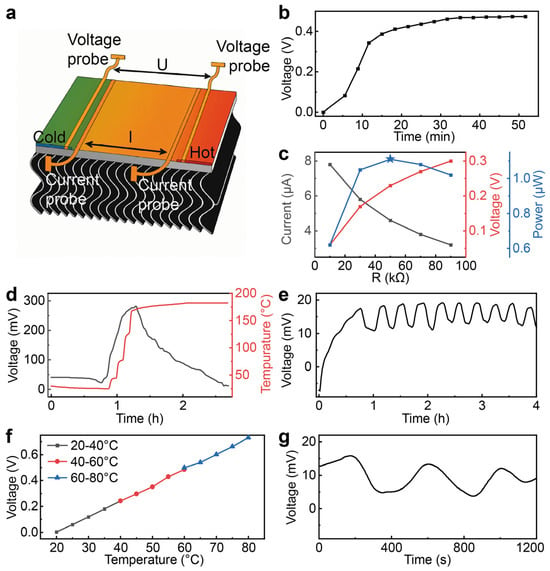
The conductivity of the composite film was measured using electrical testing equipment suitable for flexible film samples (Figure 1a). The power factor was calculated using Equation (3):
where S is the Seebeck coefficient and σ is the conductivity.
Figure 1.
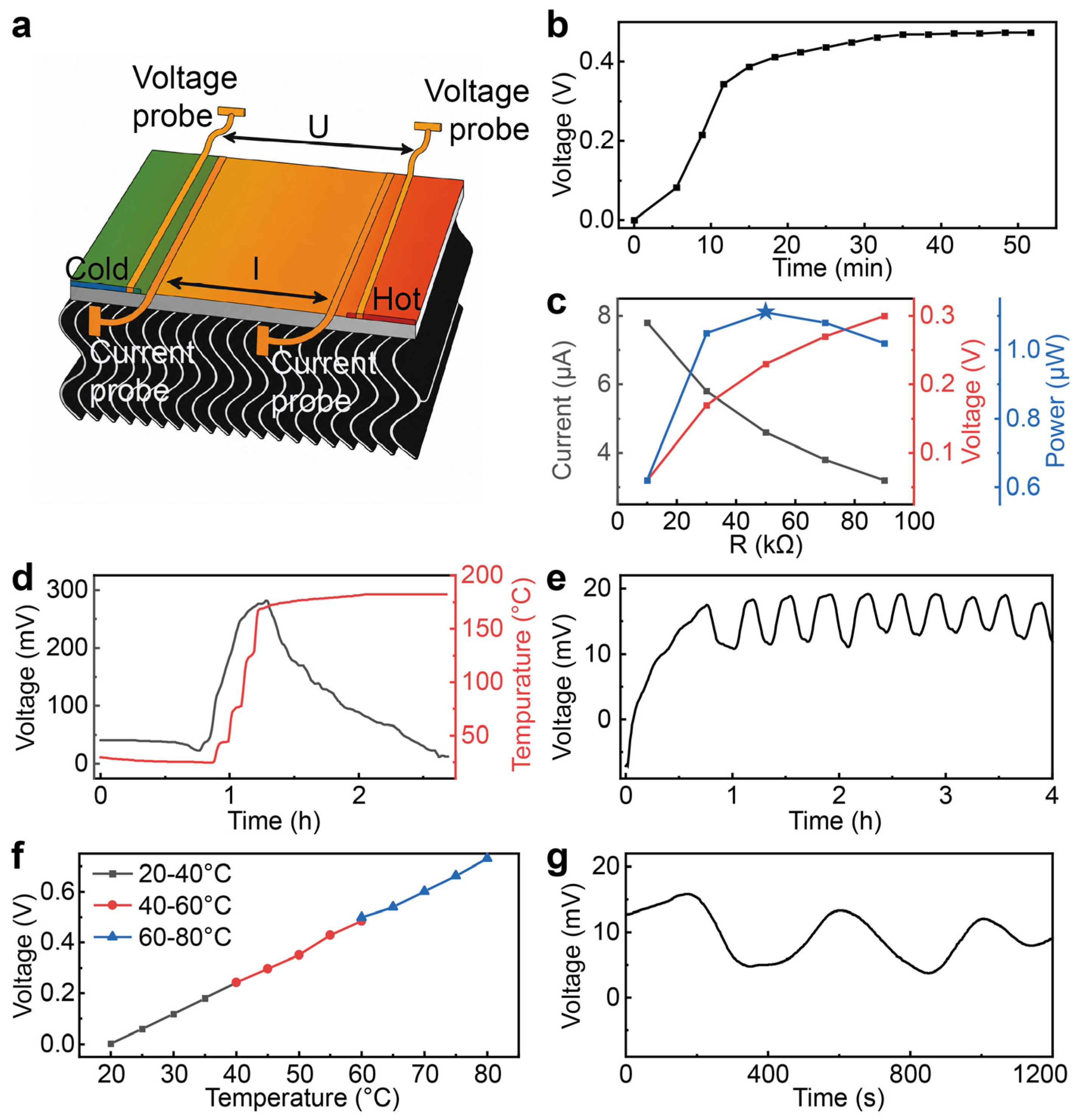
(a) Schematic illustration of the experimental platform for thermoelectric performance measurements. (b) Open-circuit voltage of PAM/PEDOT:PSS under a temperature difference of 39 °C. (c) Output voltage, output current, and output power of PAM/PEDOT:PSS connected to external resistors with different resistances under a temperature difference of 39 °C. (d) Open-circuit voltage of PAM/PEDOT:PSS during continuous heating. (e) Open-circuit voltage of PAM/PEDOT:PSS over 4 h under a temperature difference of 10 °C. (f) Open-circuit voltage of PAM/PEDOT:PSS under the same temperature difference but different hot- and cold-side temperatures. (g) Thermosensitive performance of PAM/PEDOT:PSS under rapidly changing temperature differences.
2.5. Output Performance Measurement
The electrical output performance of PAM/PEDOT:PSS composite films and PRT films was measured under controlled temperature differences. The two ends of the sample were defined as the hot side and the cold side, respectively. A K-type thermocouple (KAIPUSEN) was connected to a multi-channel data acquisition unit (Fluke 2638A) to monitor the temperatures at both ends in real time, thereby recording the temperature difference during the operation of the device. The open-circuit voltage was recorded simultaneously using the Fluke 2638A. The open-circuit voltage was measured at different temperature differences to evaluate the thermoelectric response of the samples (Figure 1a). Further, external load resistors with different resistances were connected to the device to measure the output voltage and current under load conditions. The output power was calculated using Equation (4):
where I is the output current and R is the external load resistance. The power density was obtained by dividing the maximum output power by the effective working area of the device.
2.6. Dynamic Thermal-Response, Stability, and Temperature-Range Testing
Four complementary tests were conducted to evaluate the thermal response of PAM/PEDOT:PSS devices, with results corresponding to those shown in Figure 1d–g.
In the continuous-heating test shown in Figure 1d, the cold-side temperature of the PAM/PEDOT:PSS device was maintained at approximately 20 °C. The hot-side temperature started at room temperature and was heated at a rate of 2.5 °C min−1 using a heating plate. The hot-side temperature, cold-side temperature, and open-circuit voltage were recorded simultaneously using a Fluke 2638A data acquisition system until a significant drop in thermovoltage was observed.
In the cyclic thermal-response test shown in Figure 1e, the cold side was maintained at 20 °C, while the hot side reached approximately 30 °C during each heating-on stage, corresponding to a nominal temperature difference of 10 °C. The heating plate was switched on and off at 10 min intervals, and the open-circuit voltage was continuously recorded for 4 h using a Fluke 2638A.
To investigate the effect of absolute operating temperature, the cold- and hot-side temperatures were set to 20 and 40 °C, 40 and 60 °C, and 60 and 80 °C, respectively. A constant temperature difference of 20 °C was maintained across all three temperature ranges, and the corresponding open-circuit voltage was recorded after the temperatures reached a stable state (Figure 1f).
In the dynamic temperature-response test shown in Figure 1g, the temperature difference across the PAM/PEDOT:PSS device was controlled at approximately 10 °C during the heating stage. The heating plate was switched on every 2 min, while the time-dependent open-circuit voltage was recorded using a Fluke 2638A.
2.7. PMRC Film Cold-Side Regulation Test and Thermal Simulation
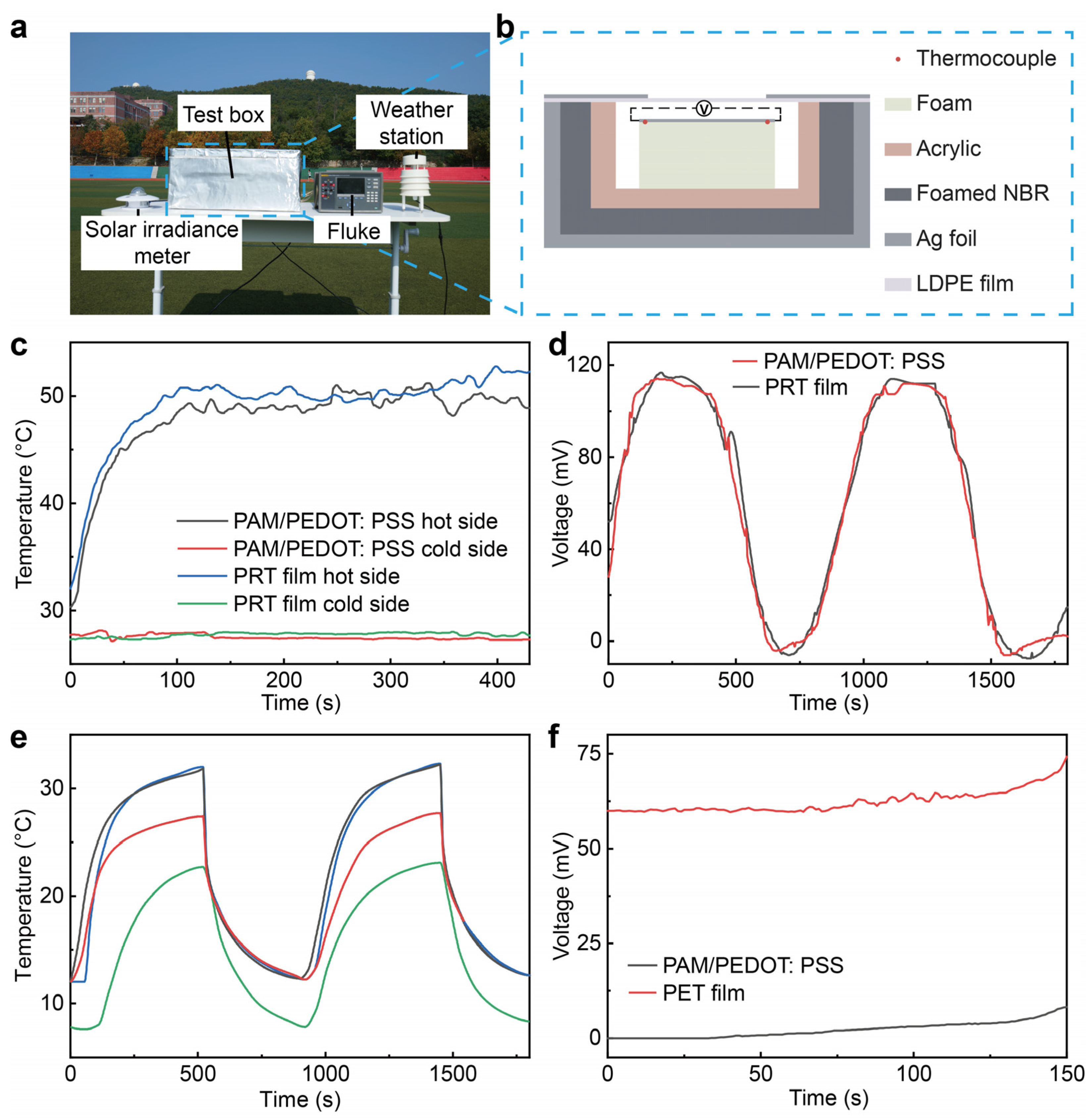
To evaluate the cold-side regulation effect of the PMRC film on flexible thermoelectric devices, comparative tests were conducted on PAM/PEDOT:PSS samples with and without the PMRC film. The temperature measurement system consisted of an acrylic chamber, a foam holder, and a layer of PE film. The PE film exhibited high transparency in the atmospheric transmission window. The acrylic chamber was sealed with PE film and nitrile rubber on the surface and wrapped with aluminum foil except for the PE film-covered area to reflect most incident sunlight. In the cooling performance test, the PRT film was fixed in place by foam to minimize thermal transfer. The K-type thermocouple was placed below the hot- and cold-side areas to simultaneously record their temperatures. Meanwhile, the open-circuit voltage of the PRT film was recorded simultaneously using the Fluke 2638A. In the outdoor experiments, the environmental temperature, relative humidity, and solar radiation during the test period were recorded using a weather station and a solar radiometer.
3. Results
3.1. Design of the PRT Film
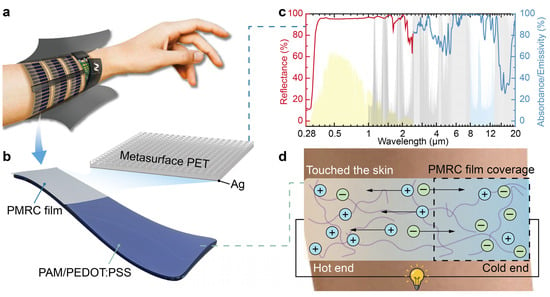
Figure 2a illustrates the conceptual application of the PRT film in collecting low-grade heat in wearable scenarios. In this configuration, multiple PRT films are connected in series, with their cold sides passively cooled by PMRC films and hot sides in direct contact with human skin. To achieve continuous thermal energy harvesting for smart wearable devices, two key requirements must be met. First, the material system with abundant conductive pathways integrates PEDOT:PSS to maximize thermoelectric conversion capability while maintaining self-supporting capability and ease of handling. Second, the coverage of the PMRC film should be appropriately controlled to enhance cold-side cooling without significantly lowering the hot-side temperature.
Figure 2.
(a) Schematic illustration of a flexible thermoelectric device integrated with radiative cooling technology for wearable electronics. (b) Schematic structure of the PRT film. (c) Reflectance and absorptance spectra of the PMRC film used in the PRT film. (d) Schematic illustration of the working principle of the PRT film.
Based on these considerations, the structural design of the PRT film proposed in this study is shown in Figure 2b. The device consists of a PAM/PEDOT:PSS self-supporting thermoelectric composite layer and a PMRC film serving as the passive radiative cooling layer. The PAM/PEDOT:PSS layer acts as the main thermoelectric conversion component, where the PAM hydrogel network provides a water-rich medium for ionic transport and enables the formation of a self-supporting composite film, while PEDOT:PSS provides conductive transport pathways. The PMRC film is attached to the cold-side region of the device, reducing the cold-side temperature through radiative cooling without the need for active cooling systems or complex heat dissipation structures. The function of the PMRC film as a cold-side regulation layer arises from its selective spectral response in the solar and mid-infrared wavelength ranges. As shown in Figure 2c, the PMRC film used in this study exhibits low solar absorbance, effectively suppressing the thermal input caused by solar irradiation during the day. At the same time, it has a high emissivity in the atmospheric transparent window, allowing heat to be released into the cold outer space in the form of thermal radiation. The combination of low solar absorption and high mid-infrared emission enables the PMRC film to support passive cooling when exposed to an appropriately sky-facing radiative channel, providing an energy-consumption-free strategy for maintaining a relatively low cold-side temperature of the thermoelectric device. Compared with conventional heat sinks or active cooling methods, this film-based cold-side design is more suitable for integration with lightweight, film-based thermoelectric devices, making it applicable for potential wearable applications.
The working mechanism of the PRT film is illustrated in Figure 2d. When the device is attached to the human body or another low-grade heat source, the side close to the heat source acts as the hot side, while the side integrated with the PMRC film serves as the cold side. The PMRC film reduces the cold-side temperature through radiative cooling, thereby helping to establish a larger temperature gradient in the PAM/PEDOT:PSS composite layer. Under this temperature gradient, ionic thermal diffusion and charge redistribution occur within the composite layer, generating a thermovoltage between the two electrodes. At the same time, the phase containing PEDOT:PSS provides a conductive pathway for charge transport and enables electrical output through an external circuit. Therefore, the PRT film integrates low-grade heat input, ionic thermoelectric conversion, and passive cold-side regulation into a single device architecture.
3.2. Preparation and Characterization of PAM/PEDOT:PSS
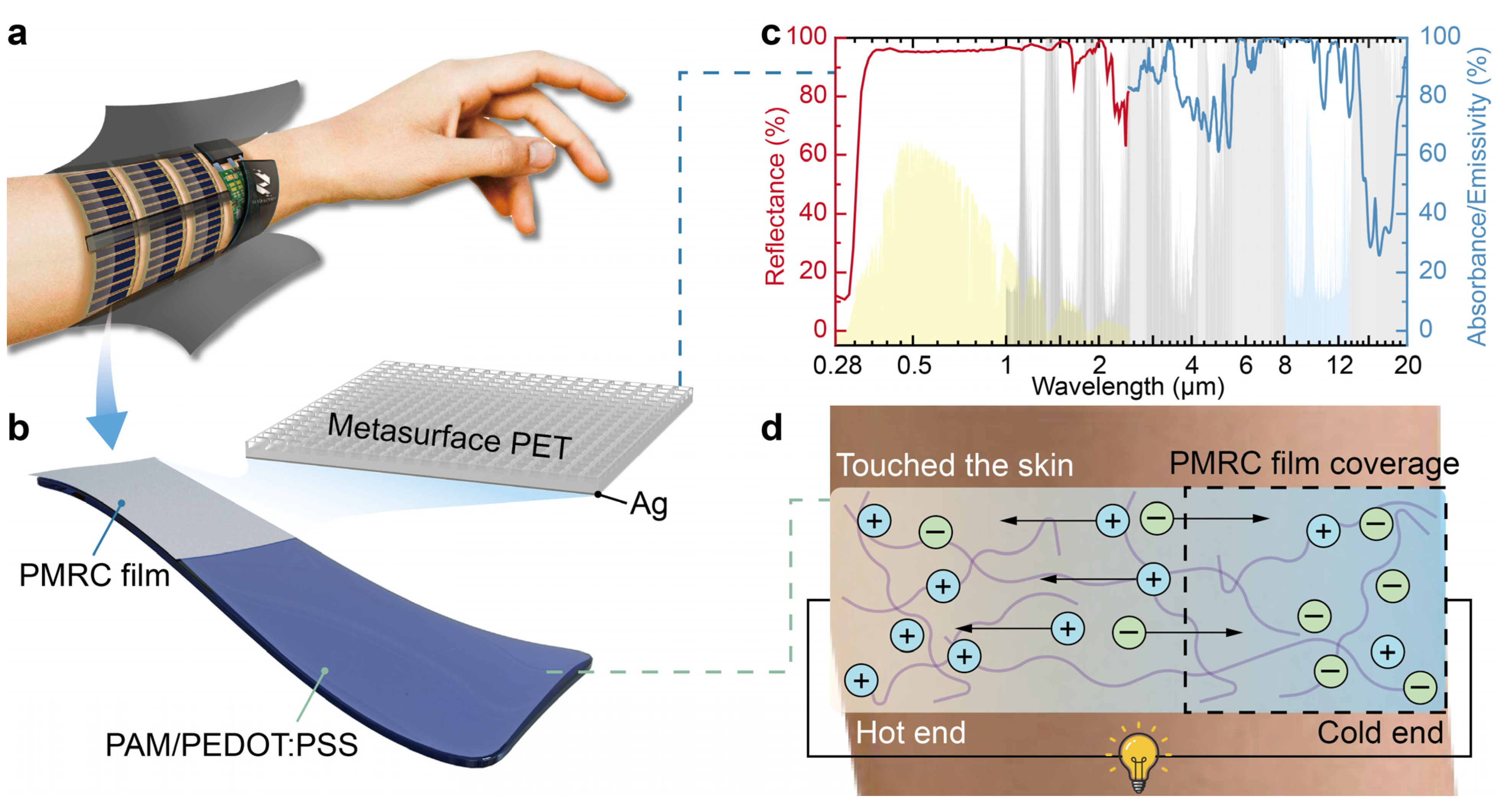
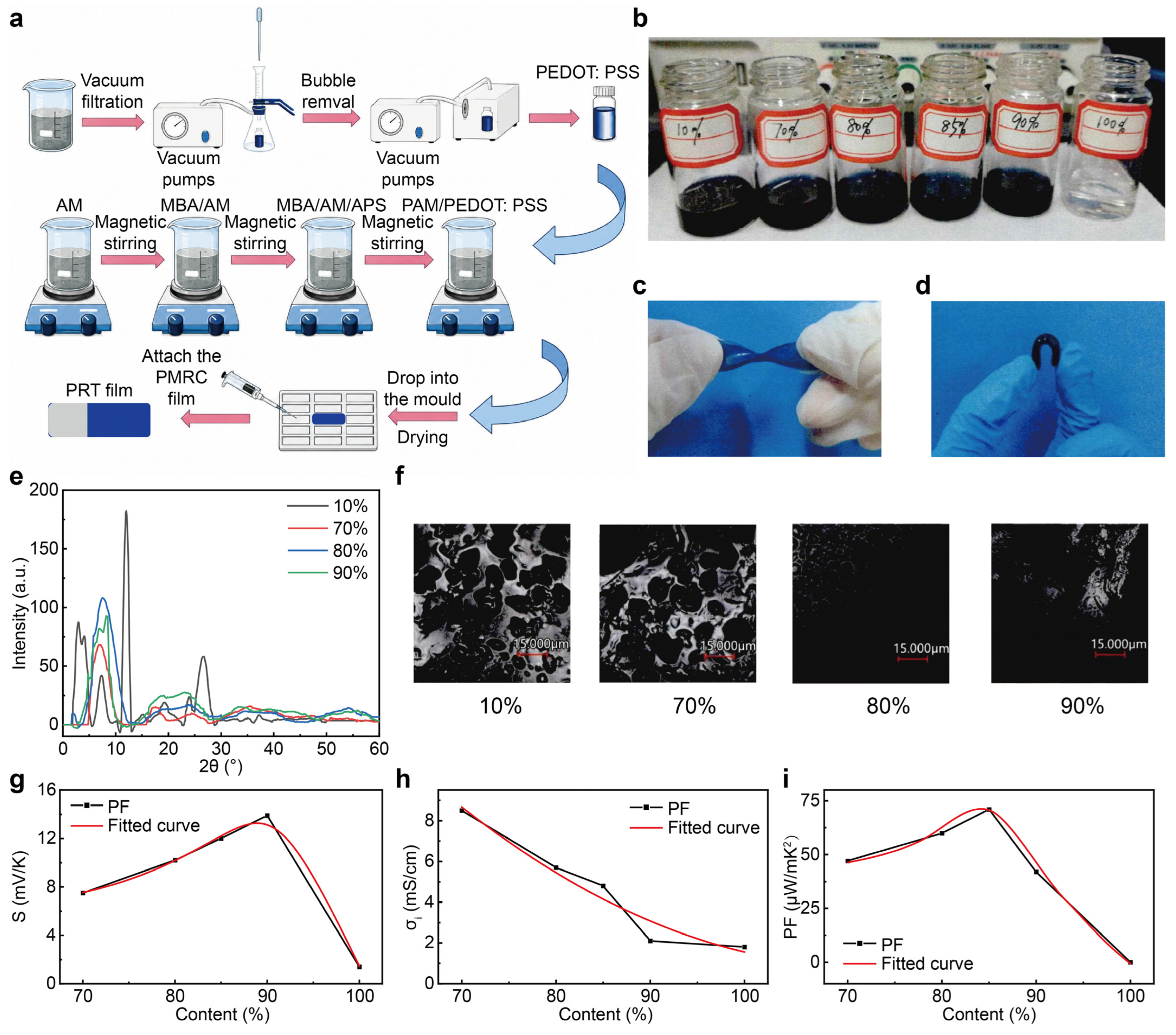
In the overall structure of the PRT film, the PAM/PEDOT:PSS composite film serves as a self-supporting thermoelectric conversion layer, and its performance directly determines the film-forming capability of the self-supporting film and the effectiveness of thermoelectric conversion driven by temperature differences. Therefore, in this section, PAM/PEDOT:PSS self-supporting thermoelectric composite films were first fabricated and optimized to obtain the thermoelectric components suitable for subsequent PMRC film integration. The fabrication process is shown in Figure 3a. After filtration and degassing, the PEDOT:PSS dispersion was mixed with AM, MBA, and APS to form a precursor solution, which was then cast into molds and dried to obtain self-supporting PAM/PEDOT:PSS composite films. In addition, the PAM hydrogel network provides a rich aqueous environment for ionic transport and enables the formation of self-supporting composite films, while the PEDOT:PSS component provides conductive transport pathways. These characteristics together provide a material basis for subsequent thermoelectric conversion and device integration.
Figure 3.
(a) Schematic illustration of the fabrication process of the PRT film. (b) Optical images of PAM/PEDOT:PSS solutions with different PAM contents. (c,d) Optical images of PAM/PEDOT:PSS under twisting and bending deformation. (e) XRD patterns of PAM/PEDOT:PSS with different PAM contents. (f) SEM images of PAM/PEDOT:PSS with different PAM contents. (g) Seebeck coefficient, (h) ionic conductivity, and (i) ionic power factor of PAM/PEDOT:PSS with different PAM contents.
By adjusting the PAM content, the ratio of the hydrogel network in the composite system and the distribution of the PEDOT:PSS phase can be altered. Figure 3b shows the optical images of the PAM/PEDOT:PSS precursor solutions with nominal PAM contents of 10, 70, 80, 85, 90, and 100 wt%. Preliminary film formation tests indicated that samples containing 20–60 wt% PAM could not form complete self-supporting films under the preparation conditions used in this study and could not be peeled from the molds. Therefore, these compositions were not subjected to thermoelectric measurements under the same geometric conditions. No significant macroscopic phase separation was observed in the precursor solutions shown in Figure 3b, which is beneficial for the subsequent preparation of relatively uniform self-supporting composite films. Furthermore, the obtained PAM/PEDOT:PSS films can be manually twisted and bent under the shown conditions without significant macroscopic fractures, as illustrated in Figure 3c,d, qualitatively demonstrating their self-supporting and manually bendable characteristics. Since no minimum-bending-radius and cyclic-bending tests were conducted, these images serve only as qualitative evidence of mechanical flexibility or durability, rather than quantitative evidence.
To further analyze the effect of PAM content on the structure of the composite films, XRD and SEM were used to characterize PAM/PEDOT:PSS samples with different compositions. The XRD results in Figure 3e show changes in the diffraction characteristics of composite films with different PAM contents. The differences in peak positions and relative intensities indicate that changing the PAM content affects the structural organization of the composite films. However, since the diffraction intensity may also be influenced by sample thickness, orientation, hydration state, and phase fraction, the XRD results are discussed qualitatively rather than used to quantify the PEDOT:PSS or PAM content. SEM images in Figure 3f further show that the PAM/PEDOT:PSS composite films exhibit a heterogeneous polymer-network structure, with surface morphology changing with varying PAM content. These morphological changes may affect ionic transport through the water-rich PAM network and charge transport through the PEDOT:PSS-containing phase.
The effect of PAM content on the thermoelectric properties of the composite films is shown in Figure 3g–i. Due to the different dominant transport characteristics exhibited by low-PAM samples and rich PAM samples, pure PEDOT:PSS and PAM10/PEDOT:PSS are discussed separately in the text as reference samples, rather than being included in the fitted curves of the rich PAM ionic thermoelectric composites. The conductivity of pure PEDOT:PSS is 0.22 S cm−1, the Seebeck coefficient is 12 μV K−1, and the power factor is 0.003 μW m−1 K−2. The corresponding values for PAM10/PEDOT:PSS are 30 S cm−1, 7.7 μV K−1, and 0.18 μW m−1 K−2, respectively. Since these low-PAM-content samples are evaluated based on electronic conductivity, while the PAM-rich composites are evaluated based on ionic conductivity, their data are not included in the fitted curves of Figure 3g–i. For PAM-rich samples containing 70–100 wt% PAM, the ionic conductivity decreases from 8.588 mS cm−1 at 70 wt% PAM to 1.778 mS cm−1 at pure PAM. The Seebeck coefficient increases from 7.5 mV K−1 at 70 wt% PAM to 14.0 mV K−1 at 90 wt% PAM, but then decreases to 1.0 mV K−1 at pure PAM. Therefore, the Seebeck coefficient does not monotonically increase across the entire composition range. This change indicates that the thermoelectric response depends on the relative contributions of the PAM-containing ionic network and the PEDOT:PSS-containing transport phase. Therefore, the thermoelectric performance of PAM/PEDOT:PSS is not determined by a single parameter, but relies on the balance between the Seebeck coefficient and ionic conductivity. According to the power factor results, PAM85/PEDOT:PSS exhibits the best overall thermoelectric performance at 85 wt% PAM content, with a power factor of 72.3 μW m−1 K−2, ionic conductivity of 4.911 mS cm−1, and Seebeck coefficient of 12.1 mV K−1. In contrast, pure PAM has an ionic conductivity of 1.778 mS cm−1, a Seebeck coefficient of 1.0 mV K−1, and a significantly lower power factor of only 0.18 μW m−1 K−2, indicating that the optimized thermoelectric performance of PAM85/PEDOT:PSS is not solely derived from PAM. These results indicate that the 85 wt% PAM composition achieves an optimized balance between the Seebeck coefficient and ionic conductivity, and thus is selected as the thermoelectric conversion layer for subsequent PRT film fabrication and thermoelectric output testing.
3.3. Thermoelectric Performance Measurement of PAM/PEDOT:PSS
After determining that 85 wt% PAM was the optimal composite ratio, the thermoelectric output performance of the PAM/PEDOT:PSS self-supporting composite film was further systematically evaluated. The testing platform is shown in Figure 1a. The two ends of the sample were defined as the hot side and cold side, and a stable in-plane temperature gradient was established by controlling the temperatures at both ends. The open-circuit voltage and the temperatures at both ends were recorded simultaneously, as described in Section 2.5 and Section 2.6.
Figure 1b shows the variation in open-circuit voltage of the PAM/PEDOT:PSS sample under a temperature difference of 39 °C. When the temperature difference was established, a significant thermovoltage was generated at both ends of the sample, eventually reaching a stable state. At this temperature difference, the maximum open-circuit voltage reached 0.47 V, demonstrating an excellent thermoelectric response. To further assess the output capability of the device under external load conditions, external resistors with different resistance values were connected to the PAM/PEDOT:PSS sample. As shown in Figure 1c, the output voltage increased while the output current decreased as the external load resistance rose, showing opposite variation trends, from which the corresponding output power curve was obtained. The maximum output power was achieved when the external load resistance was approximately equal to the internal resistance of the device. Under a temperature difference of 39 °C, the PAM/PEDOT:PSS sample delivered a maximum output power of 1.1 μW, corresponding to a power density of 11.2 μW cm−2. A temperature difference of 39 °C was used to characterize the output capability of the material, which was higher than the temperature difference typically available between human skin and the ambient environment. Therefore, these results represent controlled performance-characterization conditions rather than typical wearable operating conditions.
In addition to steady-state output, the response of the composite film to continuous and cyclic thermal inputs was further evaluated. Figure 1d shows that during continuous heating, the open-circuit voltage of the PAM/PEDOT:PSS sample initially increased with the rise in the hot-side temperature, and then decreased after reaching a maximum value. The decrease in thermovoltage at high temperatures indicates the onset of performance degradation, which may be related to moisture loss or structural changes in the hydrogel-containing composite. Therefore, Figure 1d is interpreted as a thermal-limit response rather than evidence of stable operation at maximum temperature. Figure 1e further demonstrates the changes in open-circuit voltage of the sample during a 4-h cyclic heating test. In each heating-on stage, the hot-side temperature was approximately 30 °C while the cold side was maintained at about 20 °C, corresponding to a nominal temperature difference of approximately 10 °C. The thermovoltage repeatedly increased and decreased under the periodic switching of the heating plate, indicating that the composite film maintained a repeatable thermoelectric response throughout the tested cycle. Since the temperature difference varies periodically rather than being continuously maintained, this result is described as cyclic thermal-response stability rather than long-term stability at constant temperature. Meanwhile, as shown in Figure 1f, the cold- and hot-side temperatures were controlled at 20 and 40 °C, 40 and 60 °C, and 60 and 80 °C, respectively, while the temperature difference was maintained at 20 °C. Similar voltage–temperature slopes were observed within these three temperature ranges, indicating that the composite retained a similar Seebeck response across the absolute-temperature range tested. The thermal response tests under periodically varying thermal conditions in Figure 1g further indicate that when the heating plate switches every 2 min, the PAM/PEDOT:PSS composite film generated a repeatable thermovoltage response. Since the response and recovery times were not quantitatively extracted, this result is used to demonstrate a repeatable dynamic thermal response rather than a quantitatively rapid response.
3.4. Integration of PMRC Film with PAM/PEDOT:PSS
The working mechanism of the PMRC film is shown in Figure 4a. This film maintains low solar absorptance, thereby reducing thermal input from external irradiation. Meanwhile, it exhibits a high thermal emissivity in the atmospheric transparent window, allowing heat to be released into the cold outer space in the form of mid-infrared radiation through the atmospheric window. Since this cooling process does not require external energy input, the PMRC film is suitable as a passive cold-side regulation layer for film-based thermoelectric devices. Compared to traditional radiators or active cooling modules, the lightweight and film-based form of PMRC allows it to be integrated with the self-supporting PAM/PEDOT:PSS thermoelectric layer without the need for an active cooling system.
Figure 4.
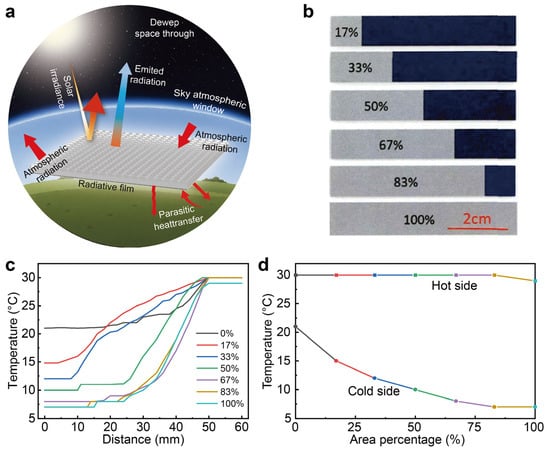
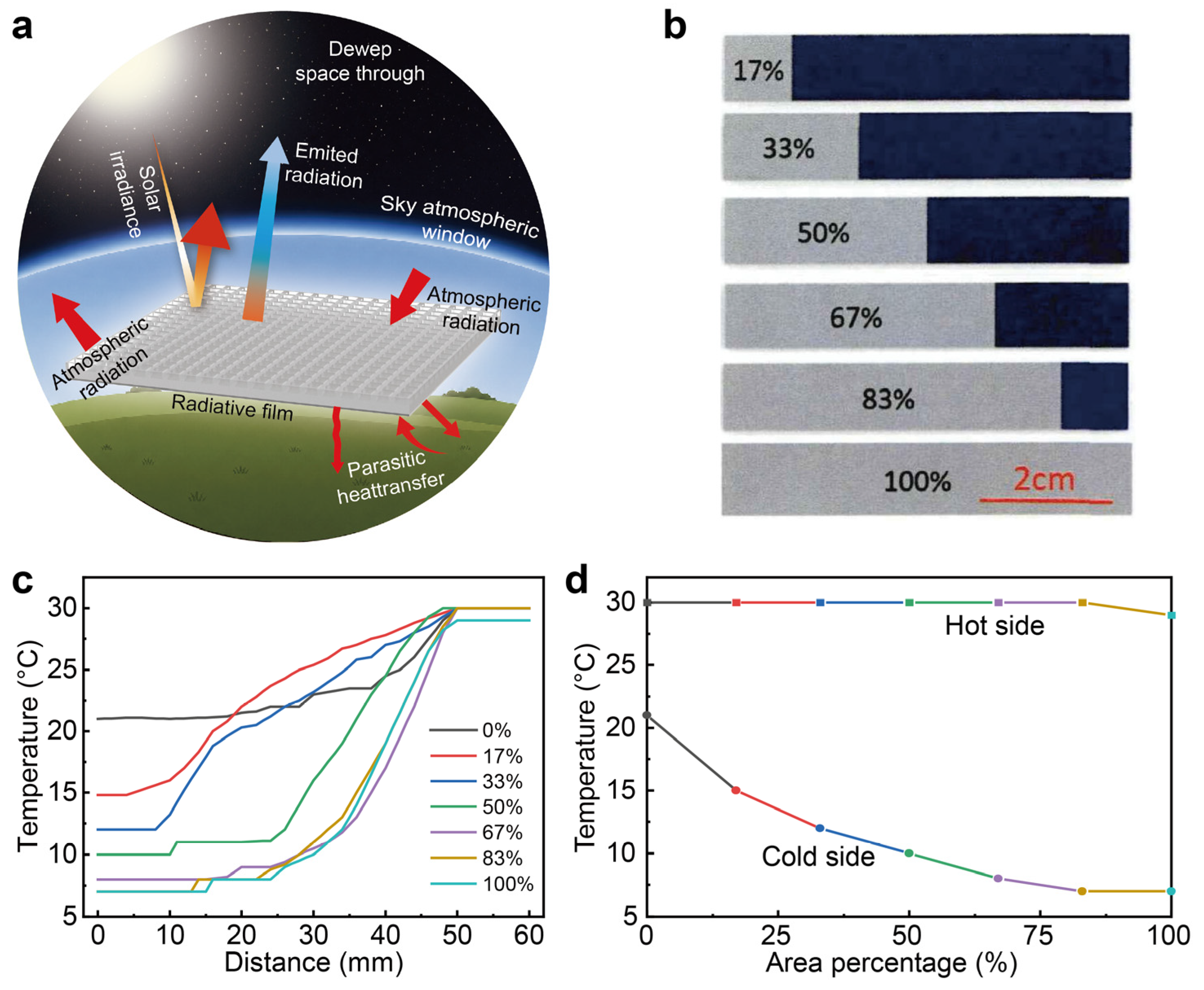
(a) Schematic illustration of the working principle of the PMRC film. (b) Optical images of PRT films attached to different areas of PMRC film. (c) Upper-surface temperature of PRT films attached to different areas of PMRC film at a hot-side temperature of 30 °C. (d) Average cold-side and hot-side temperatures of PRT films attached to different areas of PMRC film at a hot-side temperature of 30 °C, for the correspondence between line colors and coverage area, refer to the legend of (c).
To determine the appropriate attachment configuration of the PMRC film in the PRT film, further studies were conducted on the effect of PMRC coverage on the temperature distribution of the device. As shown in Figure 4b, different PMRC coverage ratios of 17%, 33%, 50%, 67%, 83%, and 100% were considered to compare the hot-side and cold-side temperature variations under different cooling areas. When the PMRC film coverage is too low, the radiative cooling area is limited, making it difficult to sufficiently lower the cold-side temperature. Conversely, when the coverage is too high, the PMRC film extends closer to the hot-side area, which may also lower the hot-side temperature and alter the temperature gradient distribution within the device. At an ambient temperature of 20 °C and a hot-side temperature of 30 °C, as the PMRC film coverage increased, the surface temperature distribution of the device changed significantly, with the temperature in the cold-side area gradually decreasing, indicating that the PMRC film can effectively enhance cold-side heat dissipation. The average temperatures of the cold and hot sides were further analyzed, as shown in Figure 4d. The PMRC film coverage ratio affected the establishment of the temperature difference at both ends of the device. At low coverage, the cold-side cooling capability was insufficient. As the coverage ratio continued to increase, the cold-side temperature further decreased, and the temperature difference increased. However, when the PMRC film coverage area was excessively high, its impact on the overall temperature field was no longer limited to the cold side and may also suppress the hot-side temperature to some extent, thereby limiting further improvement of the effective temperature difference. By comprehensively comparing the temperature distribution and average hot- and cold-side temperatures at different coverage ratios, an 83% coverage rate achieved a good balance between cold-side cooling and hot-side temperature retention, and was therefore selected as the structural parameter for subsequent PRT film experiments.
3.5. Indoor and Outdoor Self-Generation Performance of the PRT Film
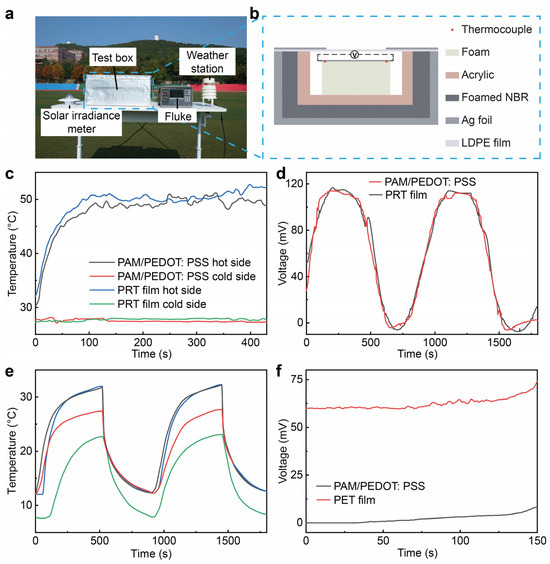
To further evaluate the cold-side regulation effect of the PMRC film under different environmental conditions, indoor and outdoor comparative tests were conducted using the PRT film and a control device without the PMRC film, consisting of PAM/PEDOT:PSS. The testing platform is shown in Figure 5a,b, where the PRT film was fixed in a testing device composed of an acrylic cavity, foam support structure, and PE film. The foam support structure was used to reduce thermal transfer between the sample and the surrounding support. The PE film has high transmittance in the atmospheric transparent window, ensuring that the radiative cooling process of the PMRC film is not significantly weakened. The remaining area of the cavity was wrapped in aluminum foil to minimize the impact of solar irradiation and environmental thermal interference on the test results. This device can simultaneously record the hot-side and cold-side temperatures as well as the open-circuit voltage under relatively stable environmental conditions, thereby assessing the cold-side regulation and thermoelectric response of the PRT film under the tested indoor and outdoor conditions.
Figure 5.
(a) Outdoor testing platform for evaluating the self-generation performance of the PRT film and (b) setup of the test box. (c) Hot-side and cold-side temperatures and (d) open-circuit voltage of the PRT film and PAM/PEDOT:PSS under indoor conditions. (e) Hot-side and cold-side temperatures and (f) open-circuit voltage of the PRT film and PAM/PEDOT:PSS under outdoor conditions.
First, the temperature variation and electrical output behavior of the PAM/PEDOT:PSS device with and without PRT films were compared under indoor conditions. As shown in Figure 5c,d, under the same hot-side conditions, the cold-side temperature and open-circuit voltage of the PRT film were similar to those of the control device. This indicates that no significant enhancement was achieved when the PMRC film was not connected to an effective sky-facing radiative channel. It also suggests that merely covering the thermoelectric film with an additional polymer layer was insufficient to produce the cooling enhancement observed outdoors. The outdoor cold-side regulation test of the PRT film is further illustrated in Figure 5e. During the outdoor test, the ambient temperature was approximately 27.5 °C, while the hot-side temperature was maintained at around 32 °C. Under these conditions, the temperature difference in the PRT film was about 5 °C greater than that of the PAM/PEDOT:PSS control device. Due to the low solar absorption rate and high mid-infrared emissivity of the PMRC film, the film can reduce additional heat input under solar irradiation while promoting radiative heat dissipation, thereby helping to lower the cold-side temperature of the device.
Corresponding to the temperature variation, Figure 5f shows the variation in open-circuit voltage of the PRT film and PAM/PEDOT:PSS control device under outdoor conditions. The results indicate that the open-circuit voltage of the PRT film is approximately 60 mV higher than that of the control device, suggesting that the PMRC film can increase the effective temperature difference and corresponding thermoelectric response under the tested outdoor conditions. By comparing the experimental results indoors and outdoors, it can be seen that the introduction of the PMRC film did not show significant enhancement indoors, but produced measurable cold-side cooling and voltage enhancement when the device was exposed to the outdoor sky-facing radiative environment.
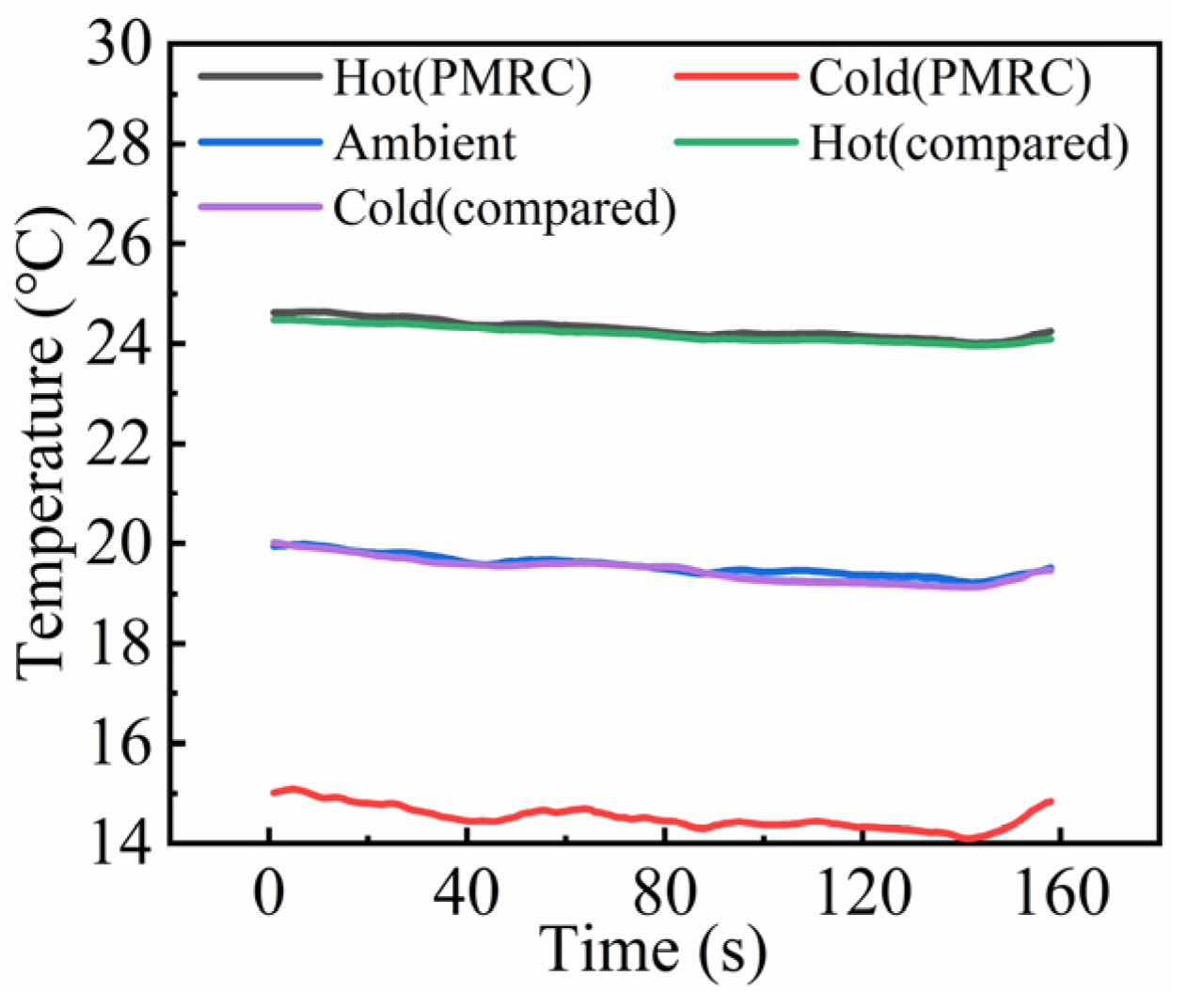
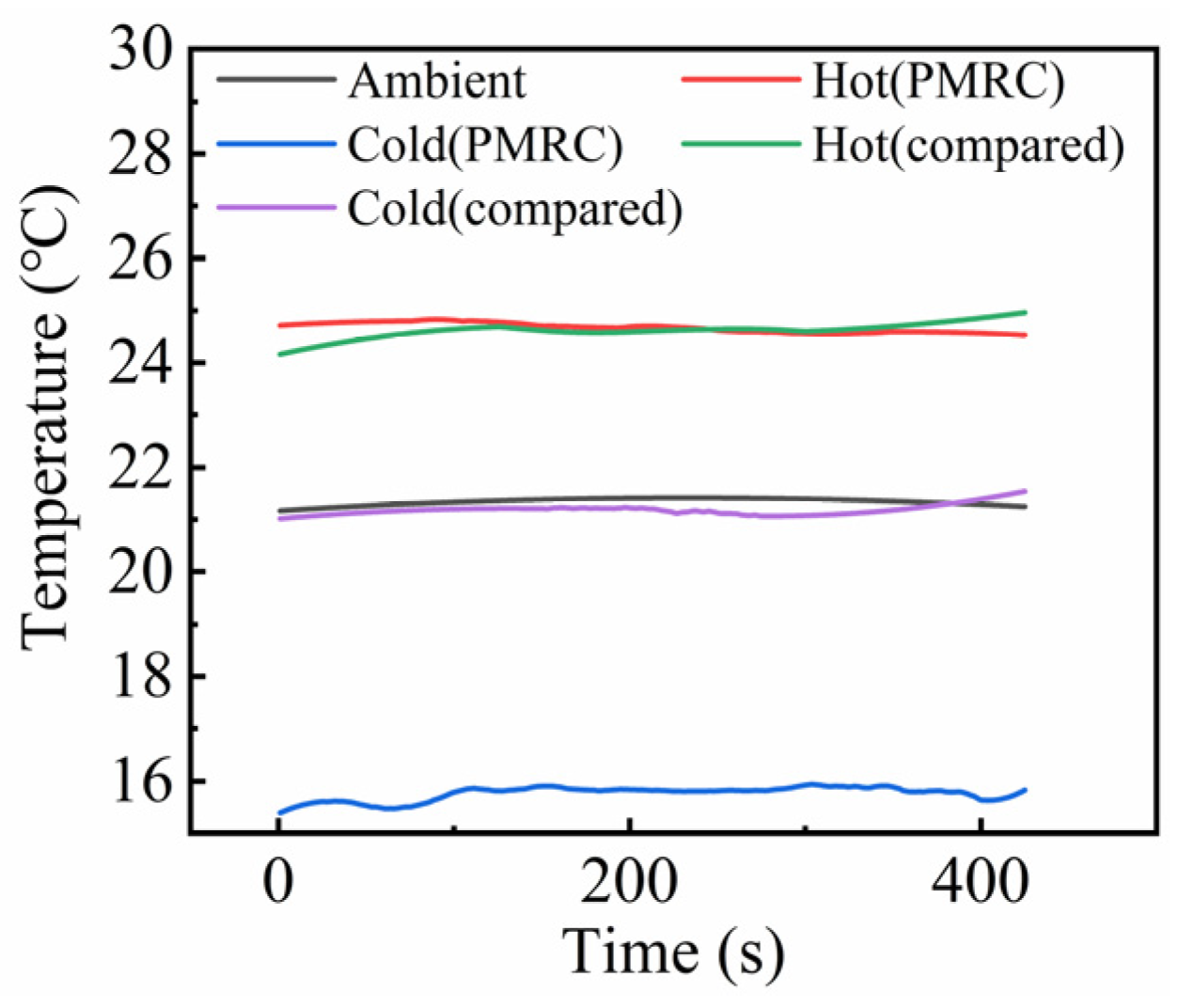
To further distinguish the contribution of radiative heat exchange from the effect of reduced solar absorption, supplementary nighttime tests were considered (Figure A2 and Figure A3). During the nighttime tests, the absence of solar irradiation eliminated reduced solar absorption as a cause of the observed temperature drop. These results confirm that sky-facing radiative heat exchange contributes to the observed reduction in cold-side temperature.
Overall, by combining the self-supporting thermoelectric conversion layer of PAM/PEDOT:PSS with the passive radiative cooling layer of the PMRC film, the PRT film achieved an increase in effective temperature difference and enhanced thermoelectric response under the tested outdoor conditions. Compared with the PAM/PEDOT:PSS device without the PMRC film, the maximum output power of the PRT film increased from 1.1 μW to 1.4 μW, and the power density increased from 11.2 μW cm−2 to 14.25 μW cm−2, an enhancement of 27.2%. These results indicate that the PMRC film can serve as an effective energy-free cold-side regulation strategy to improve the temperature-difference formation and output potential of film-based thermoelectric devices, providing a potential device-level thermal-management route for low-grade heat harvesting in wearable applications.
4. Conclusions
In this work, we designed and experimentally evaluated a PRT film composed of a self-supporting thermoelectric composite layer of PAM/PEDOT:PSS and a PMRC film, with the PMRC film serving as a passive radiative cold-side regulation layer for low-grade heat harvesting, which has potential wearable applications. By combining self-supporting ionic thermoelectric conversion materials with passive cold-side regulation strategies, the PRT film can generate thermoelectric output under applied temperature differences, while the PMRC film layer reduces the cold-side temperature through radiative cooling, thereby increasing the effective temperature difference in the device and improving its thermoelectric response. Experimental results show that by adjusting the PAM content, PAM85/PEDOT:PSS exhibits the best thermoelectric performance, with a power factor of 72.3 μW m−1 K−2, ionic conductivity of 4.911 mS cm−1, and Seebeck coefficient of 12.1 mV K−1. At a temperature difference of 39 °C, the optimized PAM/PEDOT:PSS sample provided an open-circuit voltage of 0.47 V, a maximum output power of 1.1 μW, and a power density of 11.2 μW cm−2. After further integration with the PMRC film, the maximum output power of the PRT film increased to 1.4 μW, with a power density reaching 14.25 μW cm−2, representing an enhancement of 27.2% compared to the PAM/PEDOT:PSS device without the PMRC film.
The significance of the proposed PRT film can be understood from three aspects. First, the PAM/PEDOT:PSS composite layer combines self-supporting capability and thermoelectric conversion function, providing a film-based material platform for low-grade thermoelectric energy harvesting. Second, the PMRC film, as a passive cold-side regulation layer without energy consumption, offers a potential method to alleviate the difficulty of maintaining a low cold-side temperature in film-based thermoelectric devices. Therefore, thermoelectric output can be improved not only through the intrinsic properties of the materials but also through device-level thermal management. Finally, the combination of PAM/PEDOT:PSS with the PMRC film is film-based, structurally simple, and has the potential to be integrated into low-power wearable energy-harvesting systems. This work demonstrates that combining self-supporting ion thermoelectric films with passive radiative cooling is a feasible approach to improving the effective temperature difference and output potential of thermoelectric devices. Future work should focus on quantitative mechanical reliability, moisture-retaining encapsulation, output characteristics under smaller wearable-related temperature differences, and long-term operation under real environmental conditions.
Author Contributions
Conceptualization, Y.L. (Yujia Liu) and Z.L.; methodology, Y.L. (Yujia Liu) and Y.Y.; validation, X.L., Z.Z. and Y.L. (Yang Liu); formal analysis, Y.Y.; investigation, Y.L. (Yujia Liu); resources, Z.L., X.L., Z.Z. and Y.L. (Yang Liu); data curation, Y.L. (Yujia Liu); writing—original draft preparation, Y.L. (Yujia Liu); writing—review and editing, X.N.; visualization, Y.Y.; supervision, C.G. and X.N.; project administration, X.L., X.N. and C.G.; funding acquisition, C.G. All authors have read and agreed to the published version of the manuscript.
Funding
This research was funded by Shenzhen Science and Technology Program (International Cooperation Research) (No. GJHZ20240218113407015), Shenzhen Fundamental Research Program (Natural Science Foundation) (No. JCYJ20240813175900001).
Data Availability Statement
The original contributions presented in this study are included in the article. Further inquiries can be directed to the corresponding authors.
Acknowledgments
We gratefully acknowledge the funding support from the Shenzhen Science and Technology Program (International Cooperation Research) (Grant No. GJHZ20240218113407015) and the Shenzhen Fundamental Research Program (Natural Science Foundation) (Grant No. JCYJ20240813175900001).
Conflicts of Interest
Author Yujia Liu was employed by the company Goertek Inc. Author Zheng Li was employed by the company SEDIN Engineering Co. Authors Xinli Liu, Zitong Zang and Yang Liu were employed by the company State Nuclear Power Demonstration Plant Co. The remaining authors declare that the research was conducted in the absence of any commercial or financial relationships that could be construed as a potential conflict of interest.
Appendix A
Appendix A.1
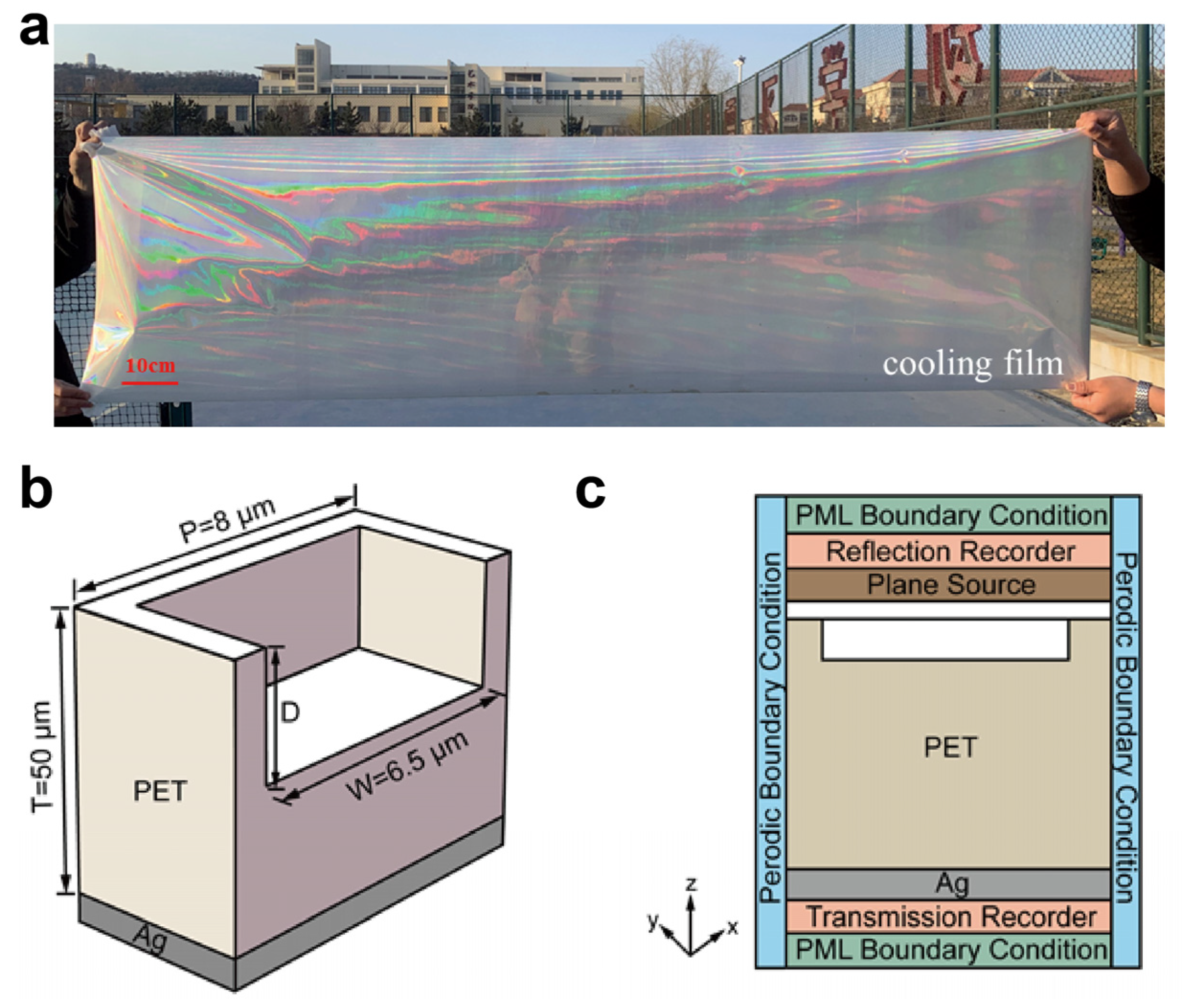
The PMRC film adopted a periodic trench-like PET metasurface with a period of 8 μm, a trench width of 6.5 μm, a trench depth of 2.5 μm, and a 100 nm Ag back reflector. Its optical response was calculated using three-dimensional FDTD simulations with incident wavelengths ranging from 0.28 to 25 μm. The reflectance R and transmittance T were recorded by two monitors, and the absorptance/emissivity was calculated as A = 1 – R − T. The optical constants of PET and Ag were obtained from the literature, and the response to unpolarized light was determined by averaging the TE- and TM-polarized results. The detailed structure and simulation model are shown in Figure A1.
Figure A1.
(a) Photograph of the PMRC film. (b) Schematic of the PMRC film structure. (c) Schematic of the FDTD simulation structure for PMRC design.
Appendix A.2
Figure A2.
Cold-end and hot-end temperatures of the PRT film during nighttime measurement.
Appendix A.3
Figure A3.
Cold-end and hot-end temperatures of the PRT film during daytime measurement.
References
- Zhu, S.; Fan, Z.; Feng, B.; Shi, R.; Jiang, Z.; Peng, Y.; Gao, J.; Miao, L.; Koumoto, K. Review on Wearable Thermoelectric Generators: From Devices to Applications. Energies 2022, 15, 3375. [Google Scholar] [CrossRef] [Scilit]
- Yang, Y.; Li, H.; Xu, Z.; Luo, S.; Chen, L. Wearable self-powered devices based on polymer thermoelectric materials. Moore More 2025, 2, 4. [Google Scholar] [CrossRef] [Scilit]
- Yang, S.; Li, Y.; Deng, L.; Tian, S.; Yao, Y.; Yang, F.; Feng, C.; Dai, J.; Wang, P.; Gao, M. Flexible thermoelectric generator and energy management electronics powered by body heat. Microsyst. Nanoeng. 2023, 9, 106. [Google Scholar] [CrossRef] [Scilit] [PubMed]
- Miao, L.; Zhu, S.; Liu, C.; Gao, J.; Zhang, Z.; Peng, Y.; Chen, J.L.; Gao, Y.; Liang, J.; Mori, T. Comfortable wearable thermoelectric generator with high output power. Nat. Commun. 2024, 15, 8516. [Google Scholar] [CrossRef] [Scilit] [PubMed]
- He, X.; Shi, X.L.; Wu, X.; Li, C.; Liu, W.D.; Zhang, H.; Yu, X.; Wang, L.; Qin, X.; Chen, Z.G. Three-dimensional flexible thermoelectric fabrics for smart wearables. Nat. Commun. 2025, 16, 2523. [Google Scholar] [CrossRef] [Scilit] [PubMed]
- Yuan, Y.; Ma, J.; Li, B.; Liu, S.; Li, Y.; Zhang, Y.; Nian, X.; Lin, K.T.; Guo, C.; Lin, H.; et al. Self-Sustained Moisture Energy Harvesting Using Carbon Black-Cellulose Galvanic Paper. Small 2025, 21, e09673. [Google Scholar] [CrossRef] [Scilit] [PubMed]
- Li, S.; Zhang, W.; Zhao, L.-D.; Lu, Y. Multifunctional flexible thermoelectric devices for next-generation wearable and integrated systems. Sci. China Mater. 2026, 69, 636–650. [Google Scholar] [CrossRef] [Scilit]
- Zhu, J.; Zhou, J.; Yang, H.; Feng, H.; Xu, M.; Chen, J.; Zhou, P.; Zheng, C.; You, M.; Weng, M.; et al. Flexible thermoelectric generators for wearable energy harvesting and applications. Microstructures 2026, 6, 2026076. [Google Scholar] [CrossRef] [Scilit]
- Hou, C.; Zhu, M. Semiconductors flex thermoelectric power. Science 2022, 377, 815–816. [Google Scholar] [CrossRef] [Scilit] [PubMed]
- Snyder, G.J.; Toberer, E.S. Complex thermoelectric materials. Nat. Mater. 2008, 7, 105–114. [Google Scholar] [CrossRef] [Scilit] [PubMed]
- Russ, B.; Glaudell, A.; Urban, J.J.; Chabinyc, M.L.; Segalman, R.A. Organic thermoelectric materials for energy harvesting and temperature control. Nat. Rev. Mater. 2016, 1, 16050. [Google Scholar] [CrossRef] [Scilit]
- Wang, D.; Di, C.-a. Next steps for organic thermoelectrics. Nat. Rev. Mater. 2025, 11, 5–6. [Google Scholar] [CrossRef] [Scilit]
- Baysal, H.E.; Yu, T.Y.; Naenen, V.; De Smedt, S.; Hiz, D.; Zhang, B.; Xia, H.; Florenciano, I.; Rosenthal, M.; Cardinaels, R.; et al. Omnidirectional 3D Printing of PEDOT: PSS Aerogels with Tunable Electromechanical Performance: A Playground for Unconventional Stretchable Interconnects and Thermoelectrics. Adv. Sci. 2025, 12, e2412491. [Google Scholar] [CrossRef] [Scilit] [PubMed]
- Xiong, W.; Wang, J.; Li, B.; Wang, Y.; Cui, Y.; Huang, L.; He, X. Flexible organic thermoelectric materials and devices. Smart Mater. Devices 2026, 2, 202606. [Google Scholar] [CrossRef] [Scilit]
- Petsagkourakis, I.; Tybrandt, K.; Crispin, X.; Ohkubo, I.; Satoh, N.; Mori, T. Thermoelectric materials and applications for energy harvesting power generation. Sci. Technol. Adv. Mater. 2018, 19, 836–862. [Google Scholar] [CrossRef] [Scilit] [PubMed]
- Bubnova, O.; Crispin, X. Towards polymer-based organic thermoelectric generators. Energy Environ. Sci. 2012, 5, 9345–9362. [Google Scholar] [CrossRef] [Scilit]
- Fan, X.; Stott, N.E.; Zeng, J.; Li, Y.; Ouyang, J.; Chu, L.; Song, W. PEDOT:PSS materials for optoelectronics, thermoelectrics, and flexible and stretchable electronics. J. Mater. Chem. A 2023, 11, 18561–18591. [Google Scholar] [CrossRef] [Scilit]
- Kim, D. PEDOT:PSS-based high-performance thermoelectrics. Macromol. Res. 2024, 32, 1187–1198. [Google Scholar] [CrossRef] [Scilit]
- Mulla, R. What’s new in PEDOT:PSS thermoelectrics? Chem. Commun. 2025, 61, 10878–10897. [Google Scholar] [CrossRef] [Scilit] [PubMed]
- Du, F.P.; Cao, N.N.; Zhang, Y.F.; Fu, P.; Wu, Y.G.; Lin, Z.D.; Shi, R.; Amini, A.; Cheng, C. PEDOT:PSS/graphene quantum dots films with enhanced thermoelectric properties via strong interfacial interaction and phase separation. Sci. Rep. 2018, 8, 6441. [Google Scholar] [CrossRef] [Scilit] [PubMed]
- Kim, Y.H.; Sachse, C.; Machala, M.L.; May, C.; Müller-Meskamp, L.; Leo, K. Highly Conductive PEDOT:PSS Electrode with Optimized Solvent and Thermal Post-Treatment for ITO-Free Organic Solar Cells. Adv. Funct. Mater. 2011, 21, 1076–1081. [Google Scholar] [CrossRef] [Scilit]
- Han, C.-G.; Qian, X.; Li, Q.; Deng, B.; Zhu, Y.; Han, Z.; Zhang, W.; Wang, W.; Feng, S.-P.; Chen, G.; et al. Giant thermopower of ionic gelatin near room temperature. Science 2020, 368, 1091–1098. [Google Scholar] [CrossRef] [Scilit] [PubMed]
- Liu, S.; Yang, Y.; Huang, H.; Zheng, J.; Liu, G.; To, T.H.; Huang, B. Giant and bidirectionally tunable thermopower in nonaqueous ionogels enabled by selective ion doping. Sci. Adv. 2022, 8, eabj3019. [Google Scholar] [CrossRef] [Scilit] [PubMed]
- Shen, J.; Huang, X.; Dai, Y.; Zhang, X.; Xia, F. N-type and P-type series integrated hydrogel thermoelectric cells for low-grade heat harvesting. Nat. Commun. 2024, 15, 9305. [Google Scholar] [CrossRef] [Scilit] [PubMed]
- Shi, X.; Li, Y.; Shi, N.; Ji, C.; Hou, L.; Shi, Y.; Xu, J.; Lan, Y.; Wei, Q.; Ma, G.; et al. Phase transition driven tough hydrogel ionic thermoelectric cell with giant thermopower. Nat. Commun. 2025, 16, 9002. [Google Scholar] [CrossRef] [Scilit] [PubMed]
- Wu, R.; Liu, B.; Qin, H.; Yu, D.; Yang, J.; Liu, H.; Gao, G. Thermoelectric Ionic Hydrogel Based on PEDOT:PSS/PAAm for Low-Grade Thermal-Energy Harvesting. ACS Appl. Electron. Mater. 2025, 7, 3461–3468. [Google Scholar] [CrossRef] [Scilit]
- Choi, Y.; Kim, J.Y.; Kang, B.-C.; Kim, H. Perspectives on hydrogel-based ionic thermoelectrics: From mechanistic insights to wearable applications of thermo-diffusive ionic materials. Energy Mater. 2025, 5, 500106. [Google Scholar] [CrossRef] [Scilit]
- Jia, M.; Zhang, J. Thermoresponsive PEDOT: PSS/PNIPAM conductive hydrogels as wearable resistive sensors for breathing pattern detection. Polym. J. 2022, 54, 793–801. [Google Scholar] [CrossRef] [Scilit]
- Yang, J.; Fan, Y.; Xiong, X.; Jiang, Q.; Li, P.; Jian, J.; Chen, L. Highly conductive and adhesive wearable sensors based on PVA/PAM/SF/PEDOT:PSS double network hydrogels. Appl. Phys. A 2024, 130, 157. [Google Scholar] [CrossRef] [Scilit]
- Mandal, J.; Fu, Y.; Overvig, A.C.; Jia, M.; Sun, K.; Shi, N.N.; Zhou, H.; Xiao, X.; Yu, N.; Yang, Y. Hierarchically porous polymer coatings for highly efficient passive daytime radiative cooling. Science 2018, 362, 315–319. [Google Scholar] [CrossRef] [Scilit] [PubMed]
- Zhai, Y.; Ma, Y.; David, S.N.; Zhao, D.; Lou, R.; Tan, G.; Yang, R.; Yin, X. Scalable-manufactured randomized glass-polymer hybrid metamaterial for daytime radiative cooling. Science 2017, 355, 1062–1066. [Google Scholar] [CrossRef] [Scilit] [PubMed]
- Nian, X.; Lin, K.-T.; Li, K.; Hei, J.; Han, J.; Li, Y.; Guo, C.; Lin, H.; Zheng, J.; Jia, B. A High-Power, Flexible, and Magnetically Attachable Radiative Cooling Film. Engineering 2025, 49, 122–133. [Google Scholar] [CrossRef] [Scilit]
- Lin, K.-T.; Nian, X.; Li, K.; Han, J.; Zheng, N.; Lu, X.; Guo, C.; Lin, H.; Jia, B. Highly efficient flexible structured metasurface by roll-to-roll printing for diurnal radiative cooling. eLight 2023, 3, 22. [Google Scholar] [CrossRef] [Scilit]
- Wang, T.; Wu, Y.; Shi, L.; Hu, X.; Chen, M.; Wu, L. A structural polymer for highly efficient all-day passive radiative cooling. Nat. Commun. 2021, 12, 365. [Google Scholar] [CrossRef] [Scilit] [PubMed]
- Halterman, K.; Elson, J.M. Near-perfect absorption in epsilon-near-zero structures with hyperbolic dispersion. Opt. Express 2014, 22, 7337–7348. [Google Scholar] [CrossRef] [Scilit] [PubMed]
- He, H.; Lin, K.-T.; Lin, H.; Jia, B. Iridescent radiative coolers: Fundamentals, materials design, and emerging applications. Nano Energy 2025, 144, 111392. [Google Scholar] [CrossRef] [Scilit]
- He, H.; Lin, K.-T.; Chen, H.; Lin, H.; Jia, B. Transparent radiative coolers: Material strategies, optical design, emerging applications and beyond. Nano Energy 2026, 153, 111974. [Google Scholar] [CrossRef] [Scilit]
- Raman, A.P.; Anoma, M.A.; Zhu, L.; Rephaeli, E.; Fan, S. Passive radiative cooling below ambient air temperature under direct sunlight. Nature 2014, 515, 540–544. [Google Scholar] [CrossRef] [Scilit] [PubMed]
- Kowerdziej, R.; Wrobel, J.; Kula, P. Ultrafast electrical switching of nanostructured metadevice with dual-frequency liquid crystal. Sci. Rep. 2019, 9, 20367. [Google Scholar] [CrossRef] [Scilit] [PubMed]
- Hei, J.; Lin, H.; Nian, X.; Li, K.; Li, W.; Ma, J.; Li, Z.; Guo, C.; Lin, K.-T.; Jia, B. High-power radiatively cooled thermoelectric generator for diurnal waste heat harvesting. Mater. Rep. Energy 2026, 6, 100398. [Google Scholar] [CrossRef] [Scilit]
Disclaimer/Publisher’s Note: The statements, opinions and data contained in all publications are solely those of the individual author(s) and contributor(s) and not of MDPI and/or the editor(s). MDPI and/or the editor(s) disclaim responsibility for any injury to people or property resulting from any ideas, methods, instructions or products referred to in the content. |
© 2026 by the authors. Licensee MDPI, Basel, Switzerland. This article is an open access article distributed under the terms and conditions of the Creative Commons Attribution (CC BY) license.