


Abstract
Achieving stable dispersion and sustained antibacterial activity of natural bioactive compounds in bio-based packaging remains challenging. In this study, chitosan (CS) films incorporating a β-cyclodextrin–curcumin inclusion complex (Cur/β-CD) were developed to improve film properties and the refrigerated preservation of sea bass. The CS/Cur/β-CD films were prepared by one-step solution casting without intermediate isolation or purification. The inclusion conditions were optimized, and the resulting films were evaluated in terms of tensile strength (TS), elongation at break (EAB), and water vapor permeability (WVP). Among the tested formulations, the film prepared at a Cur:β-CD ratio of 1:1, 40 °C, and 1 h (1:1 40 °C 1 h) showed the best overall performance in TS, EAB, and WVP. It was therefore selected for subsequent structural characterization, antibacterial evaluation, and preservation testing. The 1:1 40 °C 1 h film exhibited a 156% increase in tensile strength and a 28.5% decrease in water vapor permeability compared with the neat CS film. The composite film exhibited measurable diffusion-based antibacterial activity against Escherichia coli (E. coli) and Staphylococcus aureus (S. aureus). During the 8 d refrigerated storage period, the film suppressed total viable counts (TVC), slowed the increase in pH, and retarded total volatile basic nitrogen (TVB-N) accumulation, thereby maintaining acceptable microbiological quality throughout the observation period. Compared with the unwrapped, PE, and CS-film control groups, the treated samples showed better preservation performance over the tested storage period. Overall, the incorporation of Cur/β-CD provides a simple strategy for improving the mechanical strength, moisture barrier properties, antibacterial activity, and preservation performance of CS films during refrigerated storage, highlighting their potential for active packaging of chilled aquatic products.
1. Introduction
In recent years, increasing concerns about food safety, health-conscious consumption, and environmental sustainability have driven a transition in food packaging materials from high-barrier, low-cost options to green, low-carbon, and functionally integrated alternatives. Although conventional petroleum-based plastic packaging offers good processability and barrier properties, its dependence on fossil resources, limited biodegradability, and long-term accumulation in the environment have become major concerns. Consequently, many countries and regions are tightening restrictions on single-use plastics and accelerating the development and adoption of alternative materials [1]. Against this background, the development of naturally derived, functional green packaging materials has emerged as a major research direction in the field of food packaging [2,3].
Chitosan (CS) is a naturally derived cationic polysaccharide with good biocompatibility, film-forming ability, and intrinsic antibacterial activity, making it a promising candidate for edible films and active packaging [4]. However, neat chitosan films often exhibit insufficient mechanical strength and poor moisture-barrier properties, which limit their practical applications in food packaging [5]. Recent studies have shown that the incorporation of functional components, such as polysaccharides and polyphenols, or the construction of cross-linked networks and multilayer structures can improve the mechanical and barrier properties of chitosan films while also providing antioxidant and antibacterial functions [6]. Therefore, the development of chitosan-based composites for practical applications is of considerable scientific interest and practical value, particularly because it enables the synergistic optimization of mechanical performance, barrier properties, and functional activity retention.
Curcumin (Cur) is a naturally occurring polyphenolic pigment that exhibits antioxidant and antibacterial activities, as well as a reversible and visually detectable color response to pH changes, making it a promising candidate for freshness-indicating intelligent food packaging [7]. Curcumin not only inhibits the growth of pathogenic microorganisms, such as S. aureus, E. coli, and Listeria monocytogenes, but also retards the oxidative deterioration of food [8,9]. As an active component, curcumin can improve the preservative performance of packaging materials. In addition, its pH-responsive property enables packaging materials to indicate food freshness and spoilage in real time, which is beneficial for intelligent monitoring [10]. In recent years, curcumin has been widely used in packaging for perishable foods, especially meat and seafood, to extend shelf life and improve food safety. It is also frequently combined with other natural antimicrobial agents to further enhance the functional properties of packaging films [11,12].
However, curcumin has poor aqueous solubility and limited stability under exposure to light, heat, and oxygen, which makes it prone to degradation. These limitations restrict its dispersion and sustained performance in film matrices, thereby compromising the reliability and long-term effectiveness of smart indicators [13]. To overcome these challenges, recent studies have widely employed carrier-based encapsulation, nanodelivery systems, and structural hybridization strategies to improve curcumin stability and achieve controlled release [13,14].
β-Cyclodextrin (β-CD) is a naturally derived cyclic oligosaccharide with a hydrophobic cavity and a hydrophilic exterior. Through host–guest inclusion, β-CD can encapsulate hydrophobic small molecules, thereby markedly improving their aqueous dispersibility and environmental stability [15,16]. Previous studies have shown that Cur/β-CD inclusion complexes enhance the solubility of curcumin and enable its sustained release in various film matrices, thereby improving antioxidant and antibacterial performance and promoting food preservation [17,18,19]. Therefore, combining the inclusion-complexation-mediated stabilization provided by β-cyclodextrin with the film-forming and antimicrobial properties of chitosan provides a feasible approach for developing chitosan-based packaging systems with improved structural stability and active preservation functionality.
Most Cur/β-CD-containing composite films reported to date have been prepared using stepwise or multistep fabrication routes [14,18,19,20]. Although such approaches facilitate the characterization and quantitative control of the inclusion complex, they usually require additional pretreatment, separation, and purification steps, thereby increasing process complexity as well as solvent and energy consumption. From a practical perspective, these additional operations may reduce process efficiency and hinder subsequent applications. Therefore, simplifying the fabrication process while maintaining stable curcumin dispersion and sustained functionality remains an important objective. In this context, the present study explored a more direct fabrication route for Cur/β-CD-containing chitosan films. Chitosan was used as the film-forming matrix, and β-CD was combined with curcumin to form a host–guest inclusion complex. The resulting Cur/β-CD system was then introduced directly into the chitosan casting solution through a one-step film-casting process, without separate isolation or purification of the inclusion complex. Compared with the conventional stepwise routes reported in previous studies, this strategy reduced intermediate processing steps and simplified the overall preparation procedure. Such a simplified route may help maintain curcumin dispersion within the film matrix and support its controlled release behavior.
Based on this preparation strategy, this study focused on optimizing the inclusion conditions and evaluating the properties of the resulting films. The optimal formulation was determined through a comprehensive analysis of TS, EAB, and WVP. The obtained films were then subjected to structural characterization, antibacterial evaluation, and refrigerated preservation testing. This study aimed to elucidate the effects of the inclusion process on the structure and properties of the films and to provide an experimental basis for the design and development of functional food-packaging materials.
2. Materials and Methods
2.1. Materials and Reagents
Fresh sea bass was purchased from a local supermarket in Hefei, China. Chitosan and curcumin were purchased from Macklin (Shanghai, China), β-cyclodextrin (β-CD) from Aladdin (Shanghai, China), and glycerol from Titan Technology Co., Ltd. (Shanghai, China). E. coli (DH5α) was maintained in our laboratory, and S. aureus (CMCC 26003) was obtained from Qingdao Haibo (Qingdao, China).
2.2. Preparation of CS/Cur/β-CD Composite Films
CS/Cur/β-CD composite films were prepared using the solution-casting method. CS was dissolved in 100 mL of 1% (v/v) aqueous acetic acid under magnetic stirring in a 40 °C water bath for 1 h to obtain a 2% (w/v) CS solution. β-CD was dissolved in deionized water with heating and stirring in a water bath until fully dissolved and then reserved for subsequent use. Cur was accurately weighed, dissolved in anhydrous ethanol, and diluted to volume in an amber volumetric flask to obtain a curcumin–ethanol stock solution. Under all experimental conditions, the concentration of curcumin in the chitosan/β-cyclodextrin/curcumin composite film-forming solution was kept constant at 0.8 mg mL−1, while the amount of β-CD was calculated according to the amount of curcumin and the predefined nCur:nβ-CD ratio. An aliquot of the curcumin–ethanol stock solution was added dropwise to the β-CD solution at the prescribed ratio. After addition, the mixture was further stirred under the predefined inclusion conditions (Cur/β-CD molar ratio, temperature, and stirring time; Table 1) to facilitate complexation and yield a Cur/β-CD dispersion. The Cur/β-CD dispersion was then added slowly to the 2% (w/v) CS solution under magnetic stirring. Glycerol was added as a plasticizer at 30% (w/w) of the CS mass, and stirring was continued until a uniform film-forming solution was obtained. The resulting film-forming solution was degassed in an ultrasonic bath, cast onto Petri dishes, and then dried in an oven for 24 h to form films. The prepared films were designated according to the nCur:nβ-CD ratio, reaction temperature, and inclusion time (h), for example, 1:1 40 °C 1 h. After complete drying, the films were conditioned and stored in an amber desiccator at 25 °C and 50% relative humidity until further characterization.
Table 1.
Preparation conditions for the Cur/β-CD inclusion system.
The neat CS control film was prepared as follows: glycerol was added to the 2% (w/v) CS solution as a plasticizer at 30% (w/w) of the CS mass, and the mixture was stirred until homogeneous. The solution was then degassed in an ultrasonic bath, cast onto Petri dishes, and dried in an oven for 24 h to form films. After drying, the films were conditioned and stored at 25 °C and 50% relative humidity until further use.
2.3. Tensile Strength and Elongation at Break
The mechanical properties of the films were measured using a TA.XT plus-c texture analyzer (Stable Micro Systems, Godalming, UK) fitted with A/TG tensile grips. The maximum recommended tensile load of the grips was 50.00 kg, and the trigger force was 5.0 g. Film samples were cut into dumbbell shapes (outer dimension 20 × 60 mm, inner dimension 10 × 40 mm). The initial grip separation was 40 mm, and the tensile speed was 1 mm/s.
2.4. Water Vapor Permeability Measurement
Water vapor permeability (WVP) was determined according to the method of Du et al. [21]. Each film was sealed over the mouth of an Erlenmeyer flask containing 50 mL of distilled water using a rubber band, and the initial mass was recorded as m1 (g). The flask was then placed in a desiccator and kept at 25 °C for 18 h, after which the final mass was recorded as m2 (g). The WVP was calculated from the mass loss during this fixed period according to the following equation:
where water vapor permeability (WVP) is expressed in g·m/(m2·s·Pa), H is the film thickness (m). The film thickness was measured using a digital thickness gauge. Five random locations on the film surface were selected for measurement, and the average value of these measurements was taken as the overall thickness of the film. S is the effective area of the flask mouth covered by the film (m2), and t is the time interval (s). ΔP denotes the water vapor partial-pressure difference across the film (Pa). The desiccator was assumed to provide 0% relative humidity; thus, the relative humidity gradient across the film was 100%, and ΔP was set to 3170 Pa.
2.5. Color Measurement
The surface color of the films was measured using a color difference meter (ZE7700; Nippon Denshoku, Tokyo, Japan) in reflectance mode. The instrument was calibrated using a white standard plate, and three measurements were taken at different positions on each film. Color was expressed in the CIE L*a*b* color space, where L* represents lightness, a* represents the red–green coordinate, and b* represents the yellow–blue coordinate. The total color difference (ΔE) was calculated according to the following equation:
2.6. Fourier Transform Infrared (FTIR) Spectroscopy
FTIR spectra of the films were recorded using a spectrometer (Nicolet iS10; Thermo Fisher Scientific, Waltham, MA, USA) over the range of 4000–400 cm−1 at a resolution of 4 cm−1.
2.7. Scanning Electron Microscopy (SEM)
The surface and cross-sectional morphologies of the films were examined using scanning electron microscopy (SU8600; Hitachi, Tokyo, Japan). The specimens were cut to the required size, sputter-coated with gold, and imaged at 4000× magnification to observe the film surfaces. The cross-sections were prepared by fracturing the films in liquid nitrogen and were then imaged at 5000× magnification.
2.8. Thermogravimetric Analysis
The thermal stability of the films was evaluated using a thermogravimetric analyzer (TGA55; TA Instruments, New Castle, DE, USA). Thermogravimetric analysis was conducted under a nitrogen atmosphere from 30 °C to 800 °C at a heating rate of 10 °C min−1. Mass loss as a function of temperature was recorded to obtain thermogravimetric (TG) and derivative thermogravimetric (DTG) curves.
2.9. Antibacterial Activity Assay
The antibacterial activity of the films was evaluated using the agar diffusion method. The bacterial suspensions of E. coli and S. aureus were adjusted to an OD600 of 0.005 and uniformly spread onto the surface of the culture medium. Subsequently, the films were cut into circular discs with a diameter of 6 mm using a sterile punch and placed on the surface of the inoculated medium. The plates were incubated at 37 °C for 24 h, after which the diameters of the inhibition zones were measured and photographed.
2.10. Evaluation of Preservation Performance
Sea bass were descaled, and the head, tail, and viscera were removed. The fillets were rinsed with sterile water to remove residual blood and impurities and then drained. Under aseptic conditions, the pretreated sea bass flesh was portioned into 20 g for each treatment group, and each portion was further subdivided into four 5 g subsamples. Four treatment groups were established: (A) unpackaged control; (B) polyethylene (PE) film-directly wrapped group; (C) CS film-directly wrapped group; and (D) 1:1 40 °C 1 h film-directly wrapped group. After being directly wrapped with the corresponding film materials, all samples were placed in Petri dishes and stored at 4 °C for 8 days. The four subsamples in each group were used for sampling and analysis on days 2, 4, 6, and 8 of storage, respectively, while the initial quality indices were determined on day 0. At each sampling point, pH and TVC were measured. pH was measured using a calibrated pH meter, and TVC was determined in accordance with GB 4789.2-2022 [22]. The TVB-N was determined according to the method described in GB 5009.228–2016 [23] with slight modifications. Briefly, 5.00 g of sample was mixed with 50 mL of distilled water and homogenized thoroughly. The homogenate was then extracted for 30 min at room temperature and filtered. After filtration, 30 mL of the supernatant was collected for subsequent analysis. An aliquot of 10 mL of the supernatant was immediately mixed with 10 mL of magnesium oxide suspension, and the TVB-N value was determined using a Kjeldahl nitrogen analyzer (Jinan, China).
2.11. Statistical Analysis
Statistical analysis was performed using IBM SPSS Statistics 27. Mechanical properties, barrier properties, and other related quantitative measurements were conducted in triplicate, and the results are presented as mean ± standard deviation. Differences among samples were analyzed using the Waller–Duncan multiple range test. Differences were considered statistically significant at p < 0.05, and different letters indicate significant differences.
3. Results and Discussion
3.1. Mechanical Properties
The mechanical properties of the films were evaluated in terms of tensile strength (TS) and elongation at break (EAB), which reflect load-bearing capacity and flexibility, respectively. The mechanical properties of the films are summarized in Table 2. The neat chitosan film exhibited a TS of 14.90 MPa and an EAB of 33.00%. The CS/Cur/β-CD composite films prepared under different inclusion conditions showed marked variability, with TS ranging from 3.55 to 38.09 MPa and EAB ranging from 13.69% to 34.15%. Under most conditions, both TS and EAB were lower than those of neat CS, suggesting that suboptimal inclusion conditions disrupted matrix continuity and weakened the mechanical integrity of the films. By contrast, the 1:1 40 °C 1 h film exhibited the highest TS (38.09 MPa, 156% higher than that of neat CS) while maintaining a comparable EAB (34.15%). Therefore, a Cur:β-CD ratio of 1:1, an inclusion temperature of 40 °C, and an inclusion time of 1 h were identified as the optimal inclusion conditions.
Table 2.
Tensile strength and elongation at break of the films.
3.2. Water Vapor Barrier Properties
Water vapor permeability (WVP) is a key indicator of the moisture-barrier performance of films, with lower values reflecting greater resistance to water vapor transmission. As presented in Table 3, the WVP of the films was markedly influenced by the preparation conditions. The 1:1 40 °C 1 h film exhibited the lowest WVP, which was 28.5% lower than that of the neat CS film, whereas the 1:3 60 °C 2 h film showed the highest WVP, indicating the weakest moisture-barrier capacity. These findings demonstrate that an appropriate Cur/β-CD ratio combined with suitable preparation conditions can effectively enhance the water vapor barrier performance of chitosan films. Such an improvement may be ascribed to the homogeneous distribution of the Cur/β-CD inclusion complex in the chitosan matrix and the strengthened intermolecular interactions, which together promote the formation of a denser network structure, thereby reducing the available pathways for water vapor diffusion and increasing the tortuosity of the transport path [20,24].
Table 3.
Water vapor permeability of film samples.
3.3. Color Difference
Table 4 shows that the neat CS film had a relatively low L* value, while its a* and b* values were close to zero, indicating a nearly neutral hue but a relatively dark appearance. After incorporation of the Cur/β-CD inclusion complex, all composite films exhibited markedly higher L* values, a shift in a* from negative to positive values, and a pronounced increase in b*, indicating a transition from a nearly neutral tone to a brighter yellow-red region, consistent with the intrinsic color characteristics of curcumin [25]. In addition, all composite films showed lower ΔE values than the neat CS film, suggesting that the increase in lightness brought their appearance closer to the white reference and thereby reduced the overall color difference. Among them, the film prepared at a Cur:β-CD ratio of 1:1, 40 °C, and 1 h exhibited relatively high lightness, good visual clarity, and a more pronounced yellow-red hue. Variations in the color coordinates and ΔE under different inclusion conditions further suggest that the inclusion parameters influenced encapsulation efficiency, particle size, and aggregation behavior. These effects, in turn, affected the dispersion and retention of the complex in the film matrix and ultimately the visual appearance of the films [20,26]. Combined with the mechanical and barrier results, the color analysis further indicates that the inclusion conditions significantly affected the overall properties of the films. However, the optimal formulation was determined based on the comprehensive evaluation of TS, EAB, and WVP.
Table 4.
L*, a*, b*, and ΔE Values of films.
3.4. FTIR Spectra Analysis
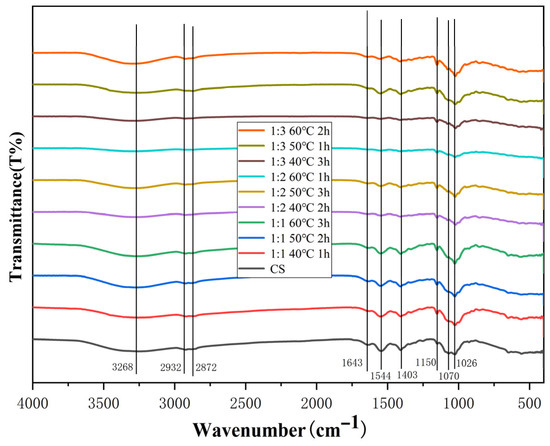
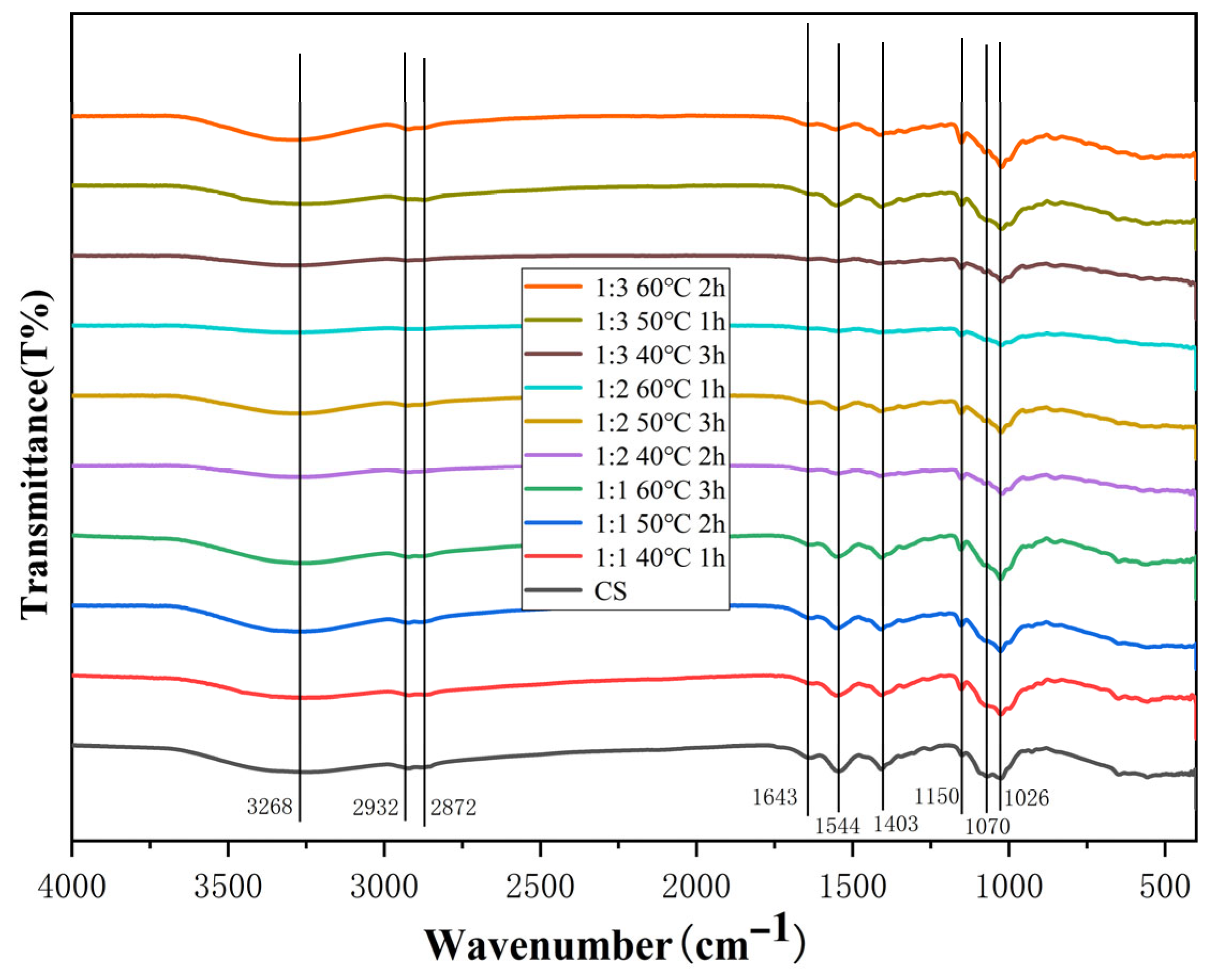
As shown in Figure 1, Fourier transform infrared (FTIR) analysis revealed that the composite film generally retained the main characteristic absorption bands of CS, with only slight shifts in peak position and changes in peak intensity. This result indicates that the chitosan framework remained the main structural backbone of the composite system. In the spectrum of the neat CS film, the characteristic absorption band at 3268 cm−1 was attributed to the stretching vibrations of O–H and N–H. The bands at 2932 and 2872 cm−1 corresponded to the C–H stretching vibrations of –CH2 and –CH3. The bands at 1643 and 1544 cm−1 were assigned to amide I (C=O stretching vibration) and amide II (N–H bending vibration/C–N stretching vibration), respectively. The band at 1403 cm−1 was attributed to –CH bending vibration, and the bands at 1150–1026 cm−1 were associated with the stretching vibrations of C–O–C and C–O in glycosidic bonds. These characteristic absorption bands were generally consistent with the reported infrared features of chitosan [27].
Figure 1.
FTIR spectra of CS film and CS/Cur/β-CD films prepared under different inclusion conditions.
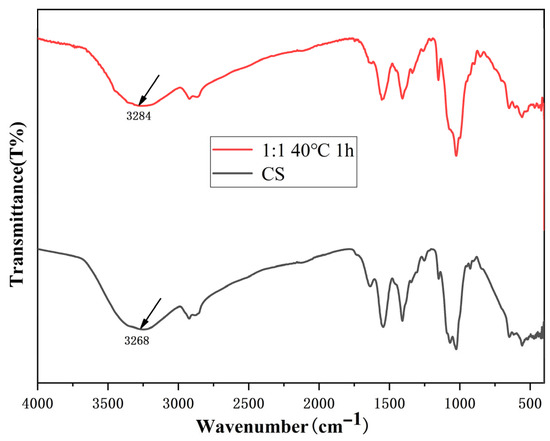
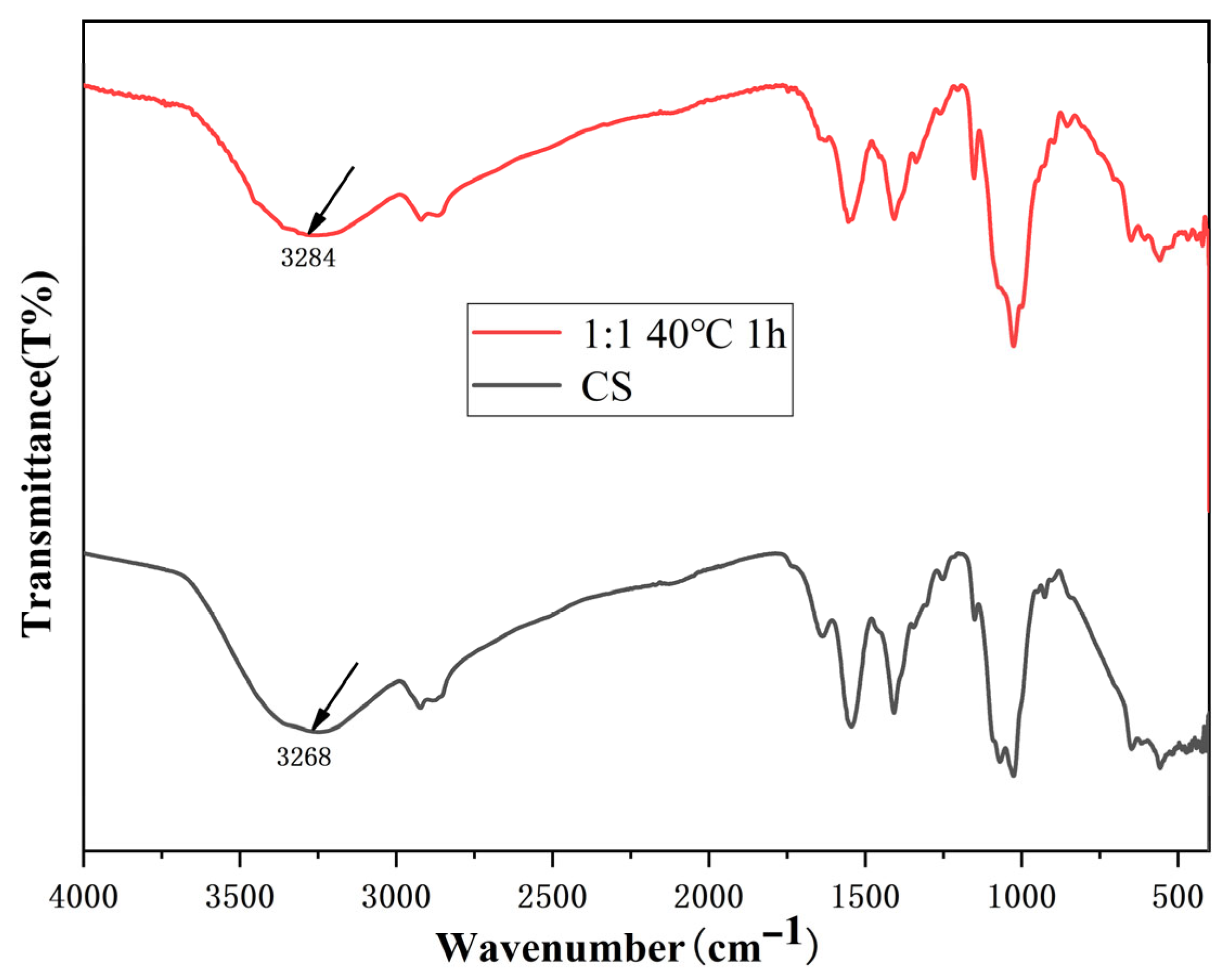
Compared with the neat CS film, the characteristic absorption band at 3268 cm−1 shifted to 3284 cm−1 after the introduction of Cur/β-CD, indicating the formation of hydrogen-bonding interactions between CS and Cur/β-CD. The slight shift of the O–H/N–H absorption band further suggested that, although active components were introduced into the composite system, the chitosan skeleton remained dominant and the components were mainly assembled through non-covalent physical interactions. This observation is consistent with the findings reported by Lin et al. [19].
In addition, the composite film showed changes in peak intensity at 1643 and 1544 cm−1, accompanied by broadening of the absorption band at 3268 cm−1 and changes in peak shape and intensity in the fingerprint region (1150–1026 cm−1). These results indicate that incorporation of the Cur/β-CD inclusion complex altered the hydrogen-bonding interactions and local microenvironment within the film, thereby strengthening intermolecular interactions and potentially improving structural compactness. Ristić et al. [28] similarly found in an alginate/chitosan system that the addition of curcumin led to broadening of the O–H absorption band, suggesting the formation of hydrogen bonds with the matrix. Moreover, compared with free curcumin, the curcumin–cyclodextrin inclusion complex caused more pronounced changes in peak position and intensity, indicating that inclusion complexation strengthened the interaction between the active component and the matrix. Variations in peak position and intensity under different matrix ratio conditions further suggest that the preparation conditions affected the dispersion and retention of the active components within the film matrix, which was ultimately reflected in the observed differences in the FTIR spectra.
3.5. SEM Morphology
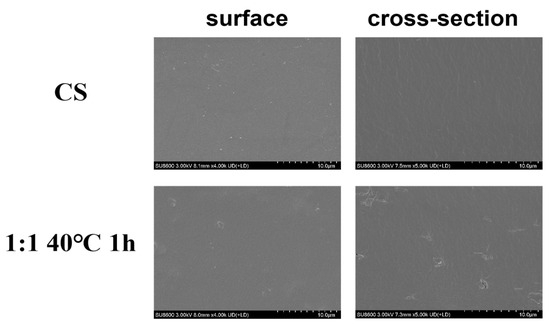
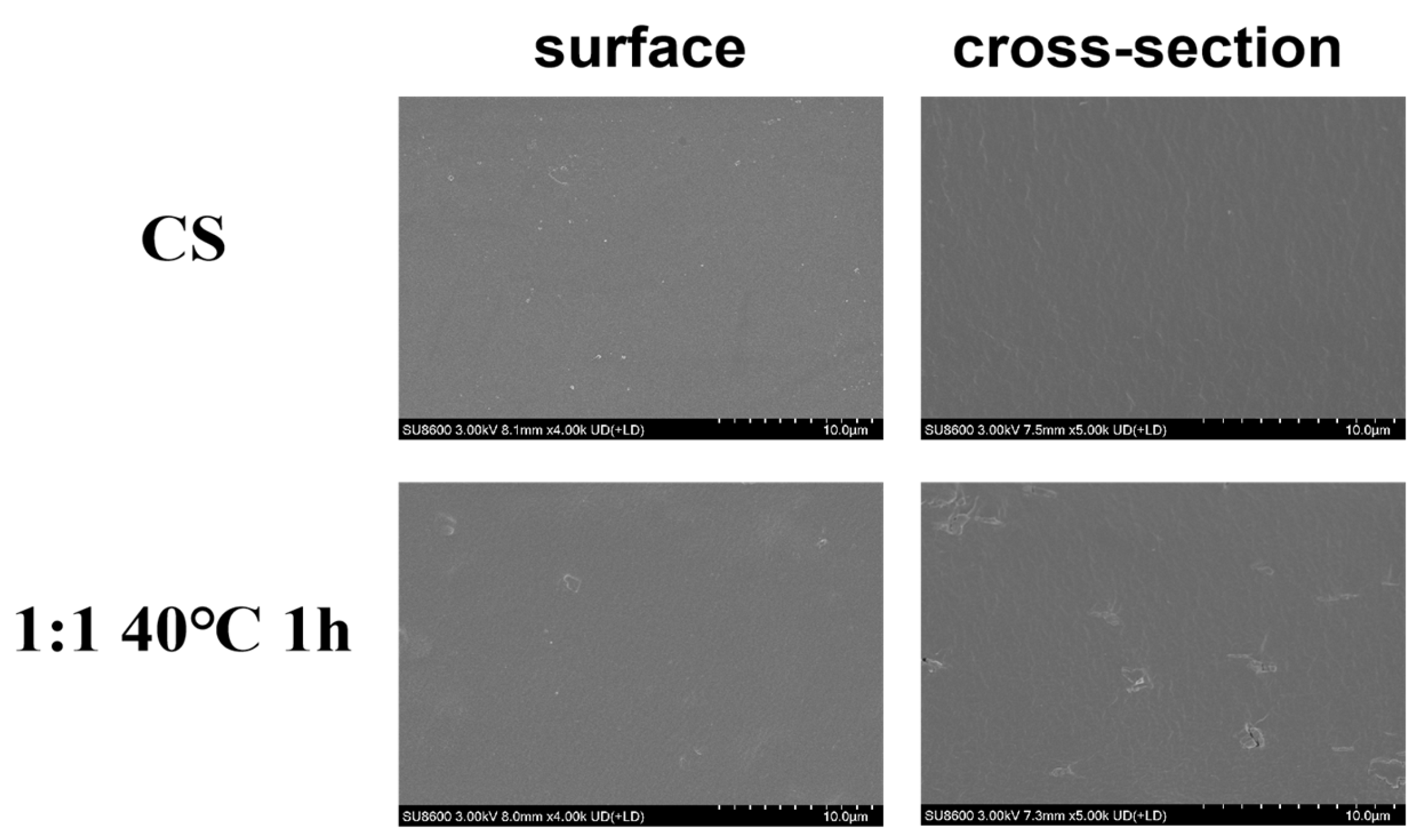
As shown in Figure 2, the neat CS film exhibited a smooth and compact surface without visible pores or cracks, and its cross-section was continuous and relatively uniform, indicating the good film-forming ability of the chitosan matrix. After the incorporation of Cur/β-CD, the surface morphology of the composite films remained generally similar to that of the neat CS film and was still continuous and compact [19], suggesting that the addition of Cur/β-CD did not markedly alter the surface morphology of the films. In contrast, the cross-sections of the CS/Cur/β-CD films showed localized protrusion-like features and slightly greater roughness than the neat CS film, indicating reduced cross-sectional uniformity after the incorporation of Cur/β-CD. These morphological changes may be associated with the distribution of Cur/β-CD within the chitosan matrix and the resulting local microstructural heterogeneity. To further characterize the film structure, the XRD patterns of the films are provided in the Supplementary Materials (Figure S1).
Figure 2.
SEM micrographs of CS film and 1:1 40 °C 1 h film.
3.6. Thermal Stability
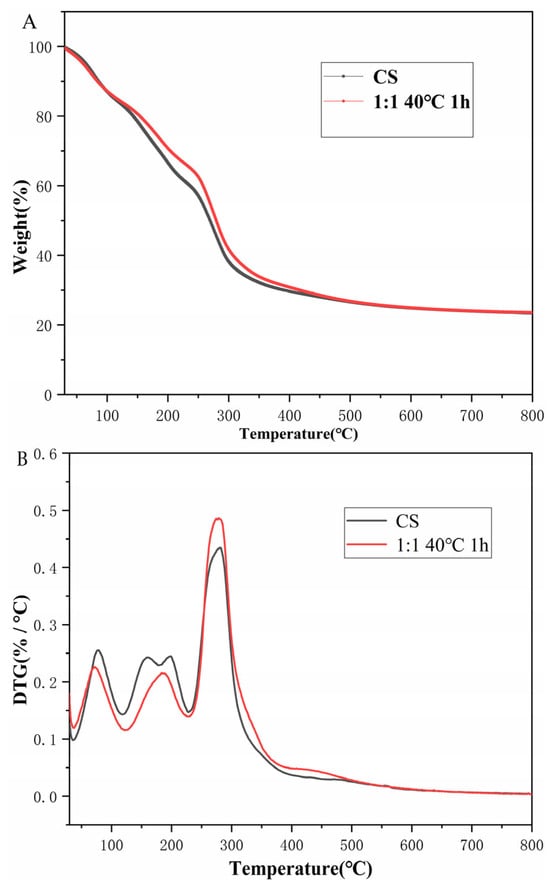
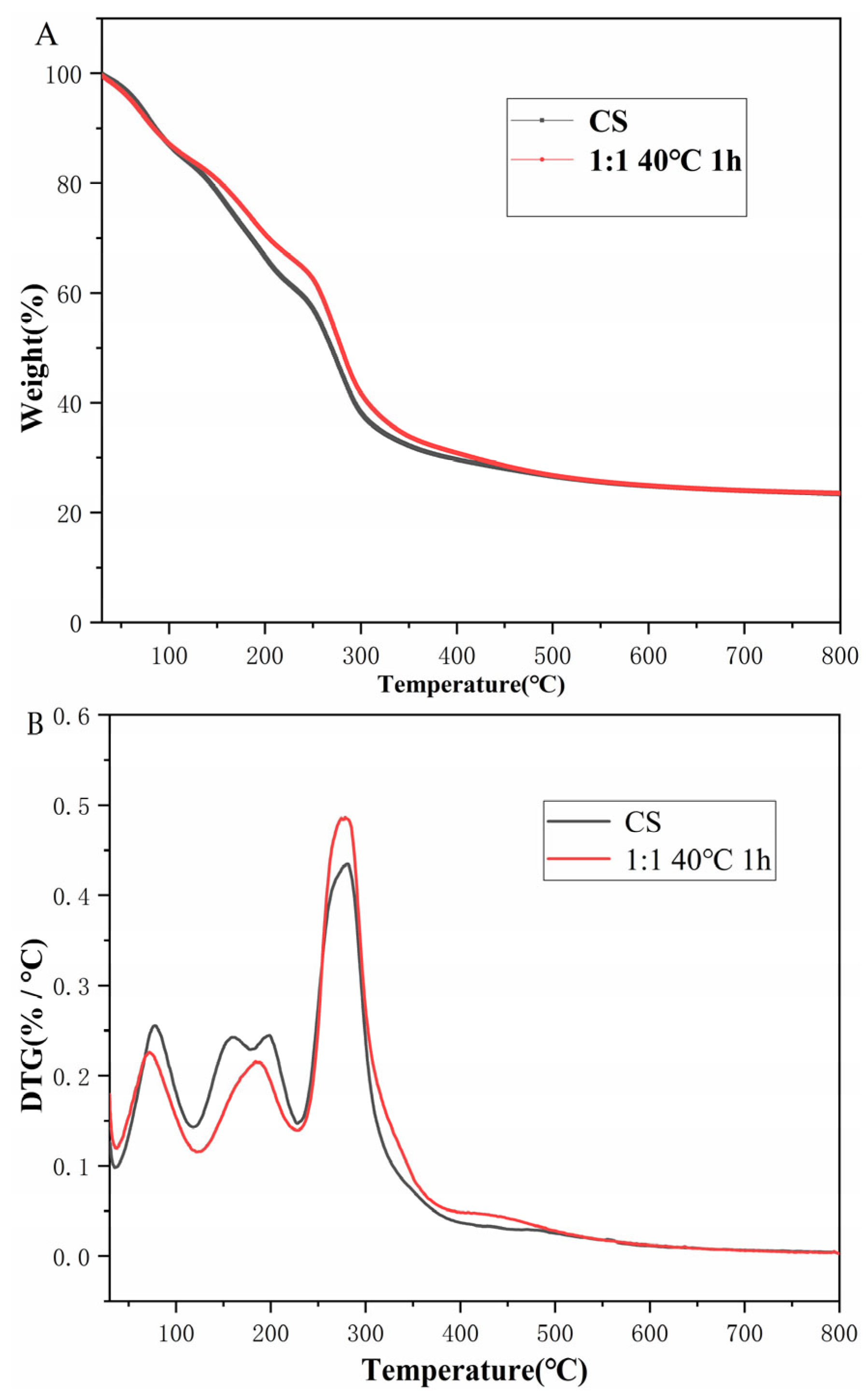
As shown in Figure 3A,B, TG-DTG analysis showed that both the neat CS film and the 1:1 40 °C 1 h film exhibited a typical multi-stage thermal decomposition pattern. The first weight-loss stage occurred at 50–120 °C and was mainly attributed to the evaporation of absorbed water and part of the bound water. The corresponding DTG peak temperatures were 78 °C for the neat CS film and 71 °C for the composite film. The second weight-loss stage was observed at 130–220 °C and was generally associated with the initial degradation of deacetylated structures and side groups in chitosan. In this temperature range, the neat CS film exhibited two secondary DTG peaks at 159 °C and 198 °C, whereas the composite film showed a single, relatively concentrated peak at around 185 °C. These results suggest that the incorporation of Cur/β-CD altered the thermal degradation pathway in the intermediate-temperature region. This multi-stage decomposition pattern is consistent with previous reports, in which chitosan films typically undergo three stages: low-temperature water loss, transitional degradation at 130–220 °C, and main pyrolysis at 220–400 °C. The latter two stages are mainly attributed to the degradation of deacetylated structures and the cleavage of glycosidic bonds, respectively [29]. The main thermal decomposition stage of both samples occurred at 220–350 °C. The main DTG peak temperature was approximately 280 °C for the neat CS film and 277 °C for the composite film. Although the main degradation peak of the composite film shifted slightly to a lower temperature, its residual masses at 300 °C, 400 °C, and 800 °C were approximately 41%, 31%, and 24%, respectively, all of which were higher than those of the neat CS film (38%, 29%, and 23%, respectively). These results indicate that the incorporation of Cur/β-CD improved the mass retention capacity of the film system during the main thermal degradation stage and enhanced char retention at high temperatures. This phenomenon may be associated with the filling or confinement effect of the inclusion complex, as well as enhanced hydrogen-bonding interactions. These effects may restrict the mobility of chitosan molecular chains and thereby increase resistance to thermal decomposition. Similar improvements in thermal stability have also been reported in other Cur/β-CD-based biopolymer film systems [30].
Figure 3.
TG (A) and DTG (B) curves of CS film and 1:1 40 °C 1 h film.
3.7. Antibacterial Activity of Composite Films
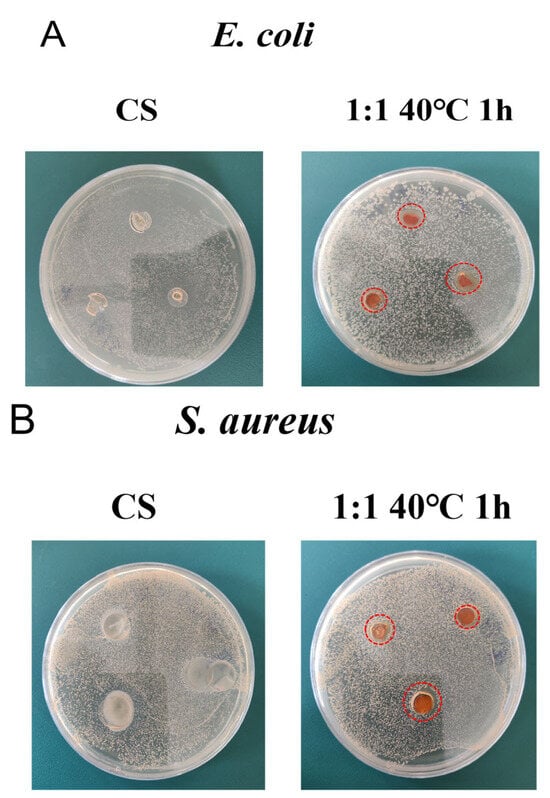
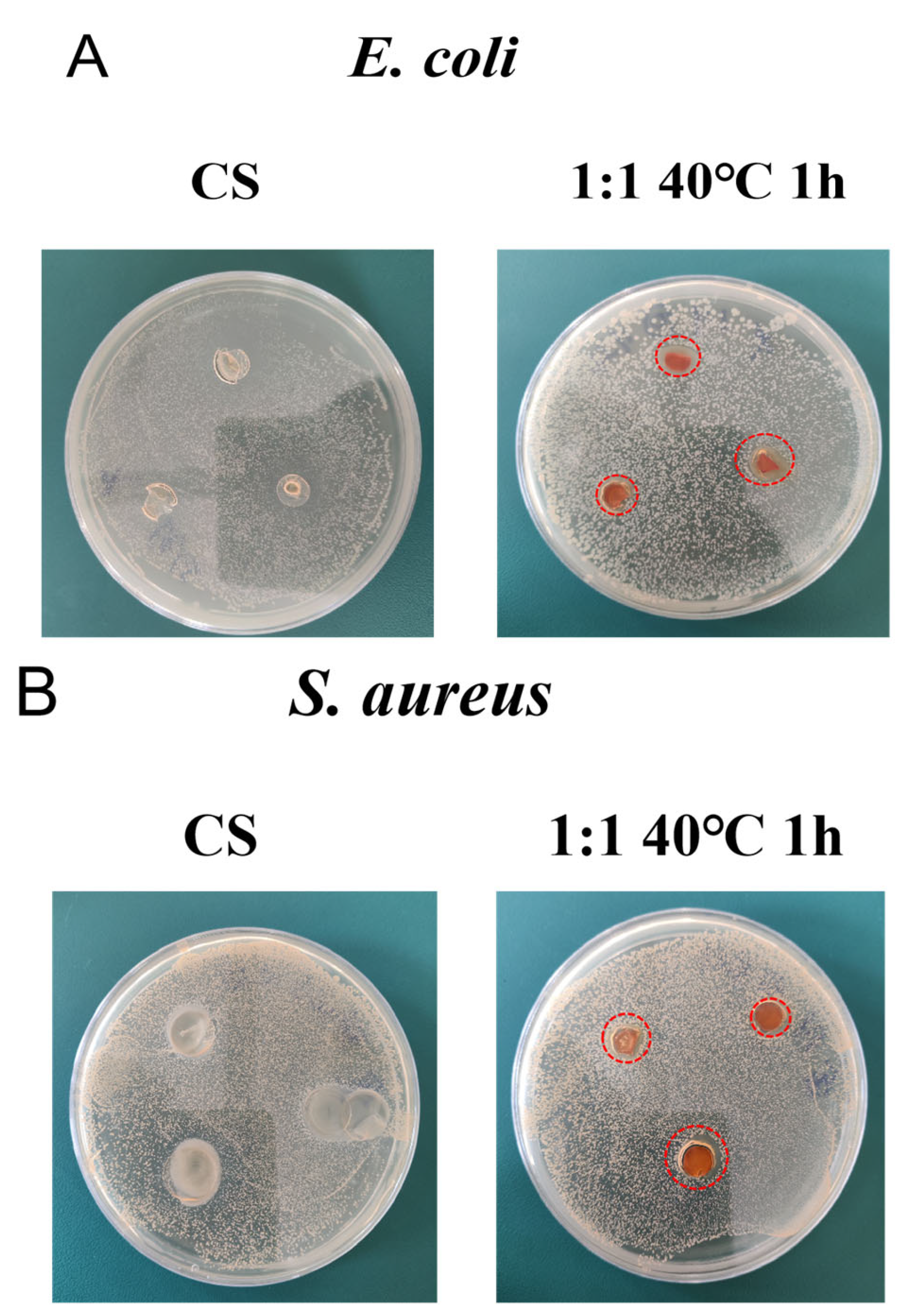
As shown in Figure 4A,B and Table 5, No visible inhibition zone was observed for the neat CS film against E. coli or S. aureus, which is consistent with previous reports showing that the limited diffusion of chitosan or film-entrapped actives in agar may hinder the formation of a detectable halo [31]. In contrast, the 1:1 40 °C 1 h film produced inhibition zones of 3.7 ± 0.346 mm for E. coli and 3.3 ± 0.322 mm for S. aureus, indicating that Cur/β-CD incorporation enabled detectable diffusible antibacterial activity under the present conditions. These inhibition zones were modest and should be interpreted cautiously. Agar disc diffusion is a qualitative or semi-quantitative assay, and halo size is strongly affected by the diffusion, solubility, release behavior, and matrix interactions of the active compounds in agar [32]. Therefore, inhibition-zone diameter alone is insufficient to represent the overall antibacterial performance of chitosan-based controlled-release films. This interpretation is supported by related chitosan–cyclodextrin–curcumin systems, in which antibacterial performance was often reflected by antibacterial efficiency and preservation outcomes rather than halo diameter alone [19,20]. In addition, markedly larger inhibition zones have been reported for structurally related systems [33], further indicating that halo size can vary substantially with film composition and release behavior. Accordingly, the present results are more appropriately interpreted as evidence of measurable diffusible antibacterial activity of the CS/Cur/β-CD film, rather than high absolute antibacterial potency.
Figure 4.
Images of inhibition zones of CS and 1:1 40 °C 1 h films against E. coli (A) and S. aureus (B). The red dashed circles indicate the inhibition zones formed around the film samples.
Table 5.
The average diameters of inhibition zone of the CS/Cur/β-CD film.
3.8. Analysis of the Freshness-Preservation Performance of the Composite Film on Sea Bass
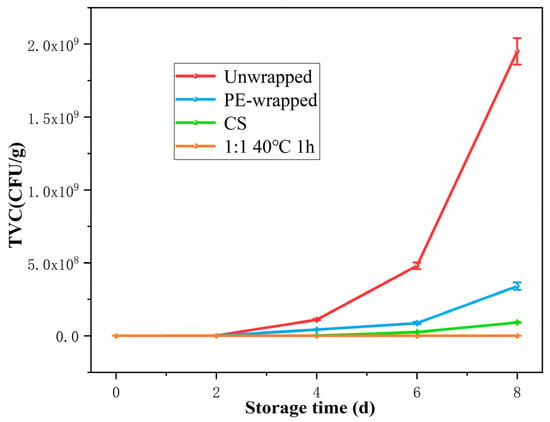
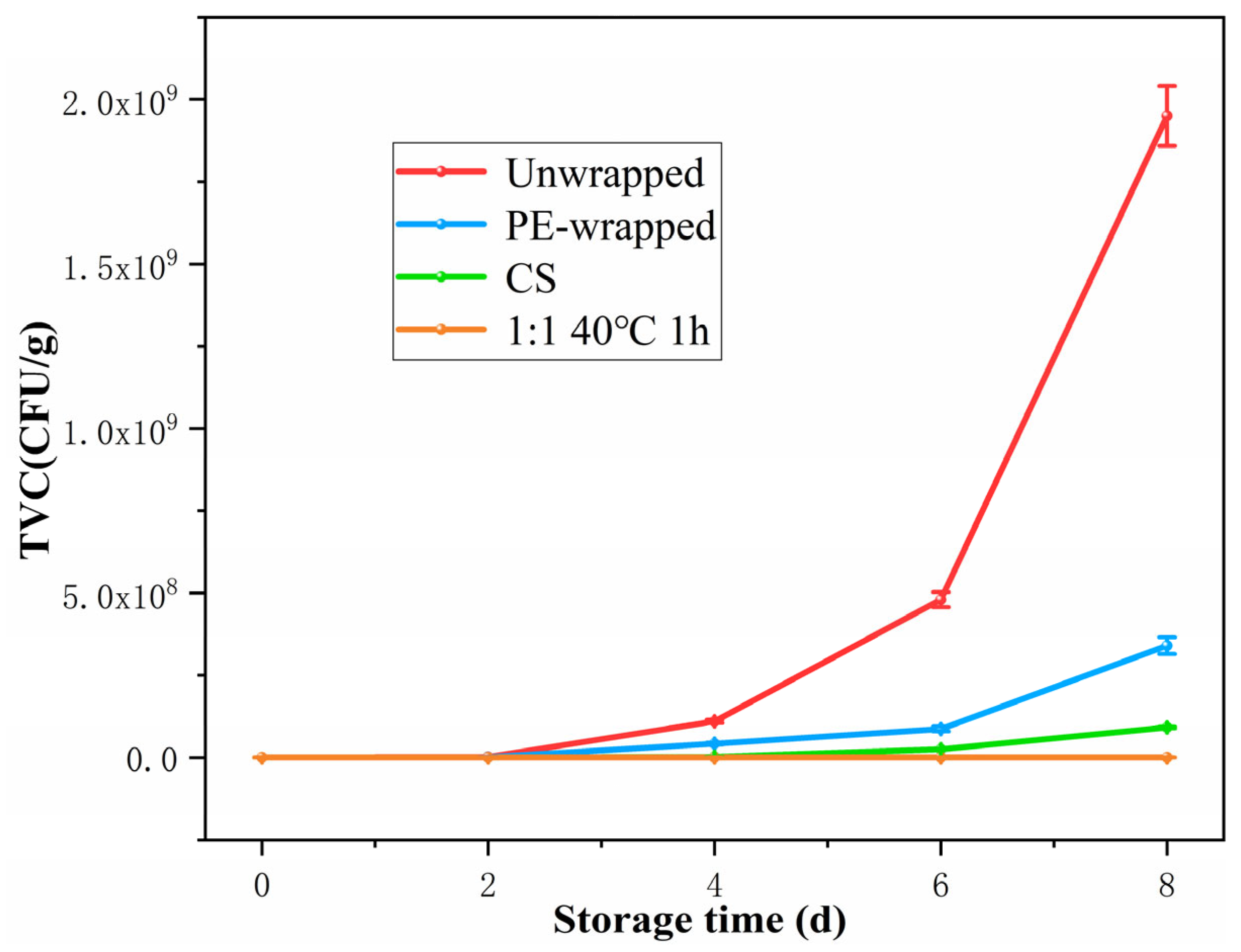
The effects of different packaging methods on the freshness of sea bass are shown in Figure S2. Figure 5 shows the changes in the TVC of sea bass during refrigerated storage. The TVC values of the film samples are provided in Table S1. Using 106 CFU·g−1 as the acceptable TVC limit [34], both the unwrapped and PE-packaged groups exceeded this threshold after approximately 2 d. This result indicates that PE packaging alone provided only limited preservation and mainly acted as a passive physical barrier without active antibacterial activity [35]. In contrast, the CS film more effectively delayed microbial growth and maintained the TVC below the acceptable limit for approximately 4 d. This effect may be attributed to the electrostatic interactions between the protonated amino groups of chitosan and negatively charged microbial cell surfaces under acidic conditions, which can disrupt cell membrane integrity [36].
Figure 5.
Effect of composite films on the TVC of sea bass during refrigerated storage.
Among all treatments, the 1:1 40 °C 1 h film showed the strongest and most sustained antibacterial effect. Its TVC remained below the acceptable limit throughout storage and was significantly lower than that of the other groups in the later stage of storage (p < 0.05), indicating superior microbiological stability. This advantage may be associated with the inclusion effect of β-CD, which can improve the dispersion of hydrophobic active compounds and support their sustained release [37]. In addition, curcumin may inhibit microorganisms through multiple mechanisms [38,39]. Previous studies have also shown that chitosan–curcumin composite systems outperform the corresponding single-component systems, supporting the possibility of additive or synergistic effects between the two components [40,41].
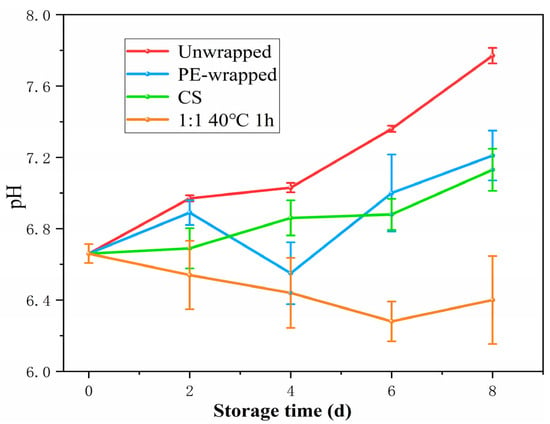
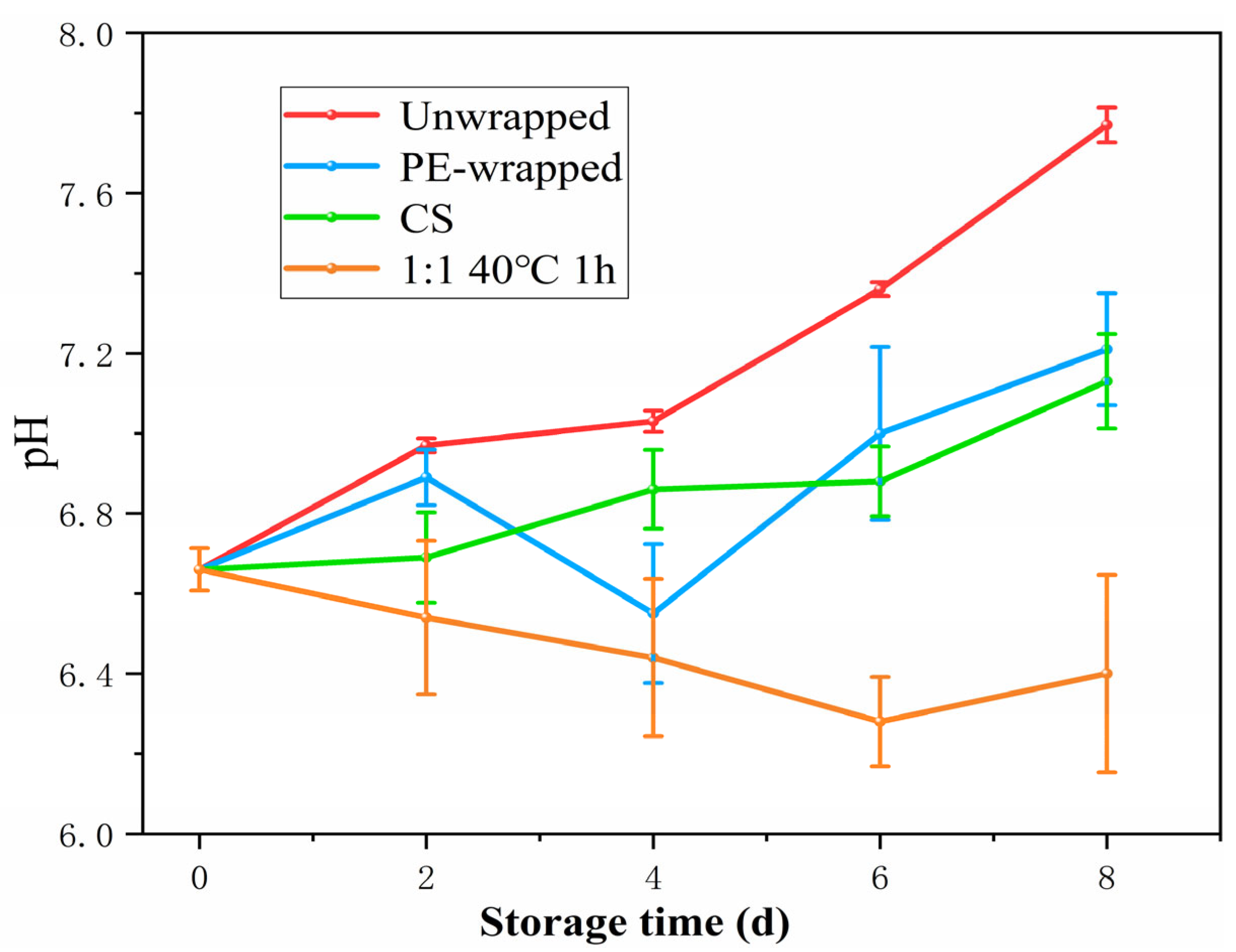
Figure 6 shows the pH changes of sea bass during refrigerated storage. The pH values of the film samples are listed in Table S2. The 1:1 40 °C 1 h film showed an initial decrease in pH followed by a slow increase and maintained the lowest pH throughout storage. Its pH was significantly lower than that of the other groups in the later stage of storage (p < 0.05), indicating an effective delay in alkalization. In contrast, the unwrapped group showed a continuous increase in pH and had the highest values in the later stage (p < 0.05), indicating the greatest accumulation of alkaline metabolites. The PE group showed only limited inhibition of quality deterioration, whereas the CS group delayed the pH increase to some extent, although less effectively than the composite film. The pH of fish muscle typically decreases initially and then increases during refrigerated storage. The initial decrease is mainly attributed to lactic acid formation from glycogen glycolysis, whereas the later increase is associated with microbial growth and endogenous enzyme activity, which promote the formation of alkaline metabolites such as ammonia and amines [42]. Compared with the control groups, the composite film maintained a lower pH and a slower rate of increase throughout storage. This finding suggests that the composite film may delay spoilage by inhibiting microbial growth and reducing the accumulation of alkaline metabolites. This result is consistent with previous reports on active films used for preserving refrigerated fish fillets [43].
Figure 6.
Effect of composite films on the pH of sea bass during refrigerated storage.
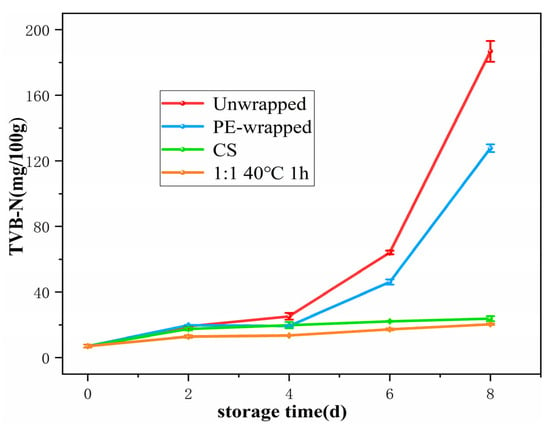
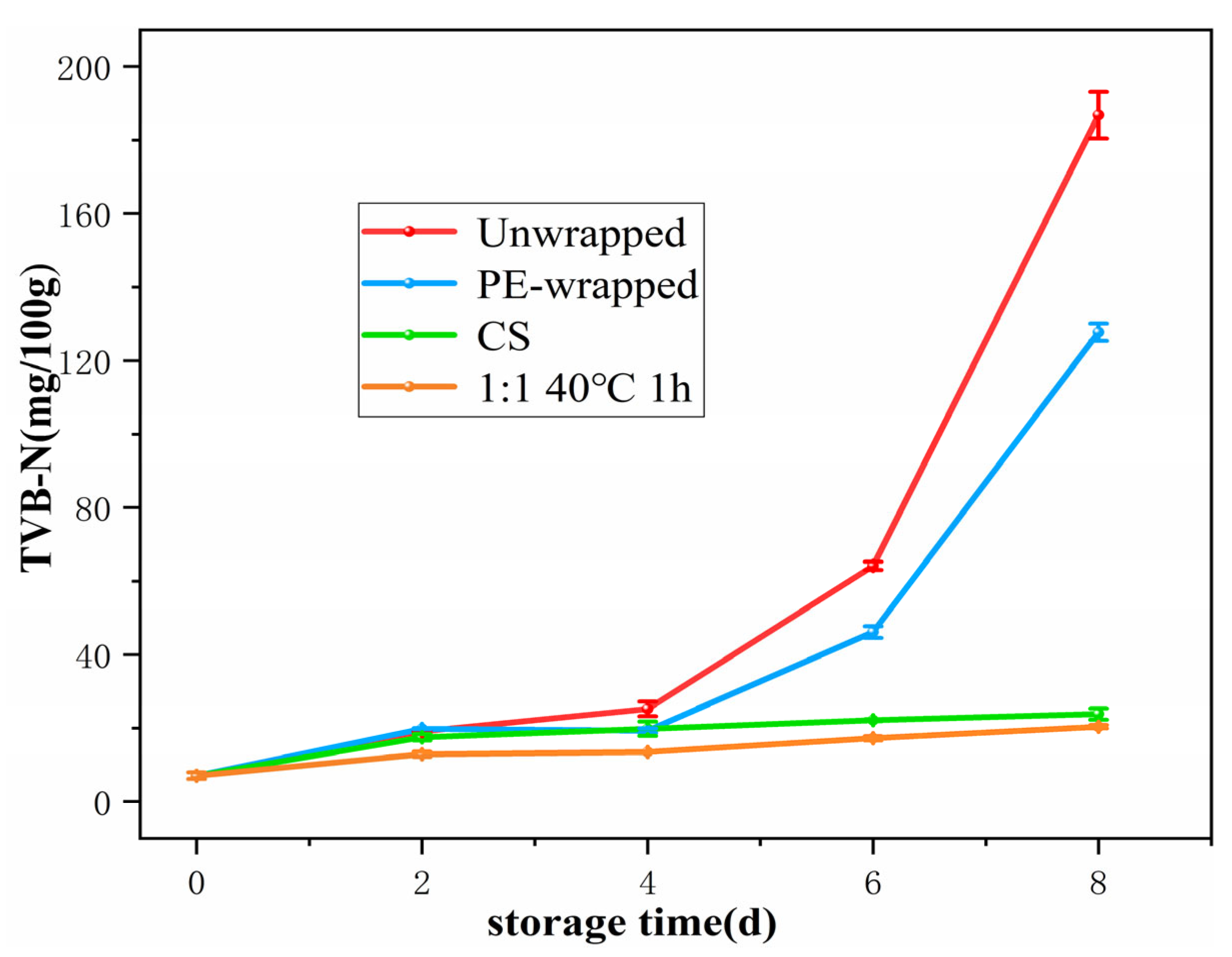
TVB-N is an important indicator of fish freshness and protein spoilage, and its increase is closely associated with the growth of spoilage microorganisms and the degradation of nitrogen-containing compounds during storage [44]. As shown in Figure 7, TVB-N increased in all groups during storage, and significant differences were observed among treatments, indicating that the packaging methods markedly affected quality deterioration under refrigeration. The TVB-N values of the film samples are listed in Table S3. The unwrapped group showed the fastest increase in TVB-N and had significantly higher values than the other groups during the middle and late stages of storage (p < 0.05), indicating the most severe spoilage. The PE-wrapped group delayed the increase in TVB-N to some extent, but the value still rose markedly at the later stage of storage. In contrast, both the CS group and the 1:1 40 °C 1 h group effectively suppressed TVB-N accumulation. Among them, the 1:1 40 °C 1 h group maintained the lowest TVB-N level throughout storage, indicating the strongest inhibitory effect on the accumulation of volatile basic nitrogen. For freshwater fish, a TVB-N value of approximately 20 mg/100 g is generally considered the acceptability limit for freshness [45]. In the present study, the unwrapped group exceeded this limit on day 4, whereas the PE-wrapped group did so at approximately day 6. The CS group approached or slightly exceeded this limit at the end of storage, whereas the 1:1 40 °C 1 h group remained close to the critical level even on day 8. These results indicate that this treatment effectively delayed TVB-N accumulation, retarded protein spoilage, and better preserved freshness during refrigerated storage.
Figure 7.
Effect of composite films on the TVB-N of sea bass during refrigerated storage.
In the later stage of storage, the unwrapped group showed higher TVC, TVB-N, and pH values, suggesting more active microbial growth, greater degradation of proteins and other nitrogen-containing compounds, and more rapid spoilage. The PE-wrapped group showed only limited preservative effects, whereas the CS group delayed spoilage to a certain extent. By contrast, the 1:1 40 °C 1 h group maintained lower TVC and TVB-N values and showed a slower increase in pH. This finding suggests that the treatment could simultaneously inhibit microbial growth, delay the degradation of nitrogen-containing compounds, and reduce the accumulation of alkaline metabolites, thereby resulting in better overall preservation performance. Because pH increase and TVB-N accumulation usually follow similar trends during spoilage, the lower pH observed in this group was also consistent with its lower TVB-N level [46].
4. Conclusions
A functionalized chitosan composite film incorporating a β-cyclodextrin–curcumin inclusion complex (CS/Cur/β-CD) was developed. The optimal inclusion conditions were identified as a Cur/β-CD molar ratio of 1:1 at 40 °C for 1 h, based on a comprehensive evaluation of tensile strength, elongation at break and water vapor permeability. The optimized composite film was fabricated via a one-step casting strategy by directly incorporating the prepared Cur/β-CD inclusion system into the chitosan solution without isolation or purification. Under the optimal conditions, the tensile strength of the composite film increased by approximately 156% compared with that of the neat CS film, while the water vapor permeability decreased by 28.5%, indicating simultaneous improvements in mechanical performance and moisture-barrier properties. The optimized film also produced distinct inhibition zones against E. coli and S. aureus, demonstrating that the incorporation of Cur/β-CD conferred diffusible antibacterial activity.
When applied to sea bass stored at 4 °C, the optimized composite film effectively suppressed microbial growth, with total viable counts remaining below the commonly accepted limit of 106 CFU·g−1 throughout the 8-day storage period. In addition, the composite film markedly retarded the increase in TVB-N during refrigerated storage. The treated samples remained close to the acceptable freshness threshold even on day 8, indicating delayed protein degradation and improved freshness retention. In parallel, pH first decreased and then gradually increased during storage. Samples wrapped with the composite film maintained the lowest pH values and showed a slower increase at the later stage, suggesting delayed alkalization and improved pH stability. This trend was consistent with the lower TVB-N levels observed in this treatment group. Overall, these results indicate that the optimized composite film could simultaneously inhibit microbial proliferation, retard nitrogenous compound degradation, and delay alkalization, thereby providing the best overall preservation effect for sea bass during refrigerated storage.
Future studies should further elucidate the release kinetics of Cur/β-CD within the film matrix and clarify its underlying antibacterial and antioxidant mechanisms. These investigations should be complemented by systematic evaluations of TVB-N, volatile amines, protein and lipid oxidation indices, and microbial community dynamics. In addition, the applicability of the film should be validated under distribution-relevant conditions, together with safety and scale-up assessments addressing active compound migration, sensory impact, cost, and biodegradability. Process-level analyses and life-cycle assessments are also needed to evaluate the scalability and environmental implications of this fabrication strategy and to determine its potential advantages in reducing processing burden during practical translation.
Supplementary Materials
The following supporting information can be downloaded at: https://www.mdpi.com/article/10.3390/cryst16050287/s1, Figure S1: XRD patterns of the CS film and CS/Cur/β-CD (1:1, 40 °C, 1 h) film [47]; Figure S2: Effects of different packaging on the freshness of sea bass; Table S1: TVC Values of film samples; Table S2: pH Values of film samples; Table S3: TVB-N Values of film samples.
Author Contributions
Data curation, investigation, and writing—original draft preparation, A.W.; methodology, H.L.; formal analysis, Q.Z.; investigation, Y.Z., Y.W. and D.Y.; writing—review and editing, X.F.; supervision and writing—review and editing, G.Y. All authors have read and agreed to the published version of the manuscript.
Funding
This research was funded by Domestic Visiting Scholar Research and Training Funding Program for Young Key Teachers (JNFX2024137); Educational Research Planning Projects of the Anhui Vocational and Adult Education Association (AZCJ2025236); National Research Projects on Food Industry Vocational Education (SPGY2025-YB049); Scientific Research Project of Universities in Anhui Province (2024AH050872; 2023AH051429; 2024AH050876); Chemical and Life Science Innovation Center of Anhui Vocational and Technical College (2024xjpt03).
Institutional Review Board Statement
This study did not involve human participants, human data, or human tissues. No animals were used in this research. Therefore, ethical approval and informed consent were not required.
Data Availability Statement
The data supporting the findings of this study are available within the article. Further information can be provided by the corresponding authors upon reasonable request.
Acknowledgments
The authors gratefully acknowledge the technical assistance support provided during sample preparation, antibacterial testing, and refrigerated storage experiments. We also thank the laboratory staff for their support with instrument operation and maintenance.
Conflicts of Interest
The authors declare no conflicts of interest. The funders had no role in the design of the study; in the collection, analyses, or interpretation of data; in the writing of the manuscript; or in the decision to publish the results.
Abbreviations
The following abbreviations are used in this manuscript:
| CS | Chitosan |
| Cur | Curcumin |
| β-CD | β-Cyclodextrin |
| E. coli | Escherichia coli |
| S. aureus | Staphylococcus aureus |
| WVP | Water vapour permeability |
| TS | Tensile strength |
| EAB | Elongation at break |
| TG | Thermogravimetric |
| DTG | Derivative thermogravimetric |
| TVC | Total viable counts |
| TVB-N | Total Volatile Basic Nitrogen |
References
- Yin, Y.; Woo, M.W. Transitioning of petroleum-based plastic food packaging to sustainable bio-based alternatives. Sustain. Food Technol. 2024, 2, 548–566. [Google Scholar] [CrossRef] [Scilit]
- Nahar, L.; Habibi, E.; Gavril, G.L.; Abdelfattah, G.M.M.; Wrona, M.; Nerín, C.; Guo, M.; Sarker, S.D. Towards sustainable food packaging using natural compounds: A review of current research update. Food Bioprod. Process. 2025, 150, 260–274. [Google Scholar] [CrossRef] [Scilit]
- Cazón, P.; Mateus, A.R.; Silva, A.S. Advances in active packaging using natural biopolymers and fruit by-products for enhanced food preservation. Food Res. Int. 2025, 213, 116439. [Google Scholar] [CrossRef] [Scilit] [PubMed]
- Seyrekoğlu, F.; Efdal, E. Chitosan-Based Edible Films as Innovative Preservation Tools for Fermented and Dairy Products. Fermentation 2025, 11, 542. [Google Scholar] [CrossRef] [Scilit]
- Khan, S.; Hashim, S.B.H.; Arslan, M.; Zhang, K.; Bilal, M.; Zhiyang, C.; Zhihua, L.; Tahir, H.E.; Zhai, X.; Shishir, M.R.I.; et al. Berry wax improves the physico-mechanical, thermal, water barrier properties and biodegradable potential of chitosan food packaging film. Int. J. Biol. Macromol. 2024, 261, 129821. [Google Scholar] [CrossRef] [Scilit]
- Bhowmik, S.; Agyei, D.; Ali, A. Enhancement of mechanical, barrier, and functional properties of chitosan film reinforced with glycerol, COS, and gallic acid for active food packaging. Sustain. Mater. Technol. 2024, 41, e01092. [Google Scholar] [CrossRef] [Scilit]
- Demirtas, B.; Keser, B.; Tural, S.; Gül, L.B.; Yilmaz, I.; Parlak, M.E.; Dündar, A.N.; D’elia, M.; Rastrelli, L.; Saricaoglu, F.T. Zein–Curcumin Composite Edible Films for Intelligent Packaging: A Natural pH-Sensing Indicator to Monitor Sea Bream Freshness. Foods 2025, 14, 3846. [Google Scholar] [CrossRef] [Scilit]
- Qu, X.; Wang, X.; Guan, W.; Zhao, Y.; Li, J. Progress of curcumin in food packaging: A review. Food Bioprocess Technol. 2024, 17, 2973–2997. [Google Scholar] [CrossRef] [Scilit]
- Luo, L.; Wang, M.; Su, W.; Zhuo, J.; Zhang, L.; Zhu, W.; Zhang, W.; Wang, R.; Wang, J. Thermal-driven curcumin release film with dual-mode synergistic antibacterial behavior for efficient tangerine preservation. J. Agric. Food Chem. 2024, 72, 1756–1767. [Google Scholar] [CrossRef] [Scilit]
- Wang, D.; Zhou, S.; Li, N.; Lin, D. Curcumin: A magical small molecule with a large role in active-intelligent degradable food packaging. Int. J. Mol. Sci. 2025, 26, 3917. [Google Scholar] [CrossRef] [Scilit]
- Ibeogu, I.H.; Bako, H.K.; Yar, M.S.; Zhao, Q.; Zhu, J.; Zhao, D.; Zhang, M.; Ke, W.; Shan, K.; Zhou, G.; et al. Gelatin-serum plasma film incorporated with curcumin for improvement of antioxidant and antibacterial properties for fresh pork packaging application. Food Hydrocoll. 2024, 149, 109617. [Google Scholar] [CrossRef] [Scilit]
- Ren, J.; Fan, Y.; Chen, R.; Cao, Y.; Xiao, X.; Liu, F. A novel starch-based film integrated with Nisin-A and curcumin nanoemulsion for real-time monitoring of salmon freshness. Food Chem. 2025, 489, 145041. [Google Scholar] [CrossRef] [Scilit] [PubMed]
- Devi, L.S.; Krishnan, R.; Begum, S.; Nath, D.; Mohanty, A.; Misra, M.; Kumar, S. Curcumin as Bioactive Agent in Active and Intelligent Food Packaging Systems: A Comprehensive Review. Compr. Rev. Food Sci. Food Saf. 2025, 24, e70228. [Google Scholar] [CrossRef] [Scilit] [PubMed]
- Cao, S.; Liu, H.; Qin, M.; Xu, N.; Liu, F.; Liu, Y.; Gao, C. Development and characterization of polyvinyl alcohol/chitosan crosslinked malic acid composite films with curcumin encapsulated in β-cyclodextrin for food packaging application. Int. J. Biol. Macromol. 2024, 278, 134749. [Google Scholar] [CrossRef] [Scilit]
- Cid-Samamed, A.; Rakmai, J.; Mejuto, J.C.; Simal-Gandara, J.; Astray, G. Cyclodextrins inclusion complex: Preparation methods, analytical techniques and food industry applications. Food Chem. 2022, 384, 132467. [Google Scholar] [CrossRef] [Scilit]
- Zhang, Z.; Niu, J.; Wang, J.; Zheng, Q.; Miao, W.; Lin, Q.; Li, X.; Jin, Z.; Qiu, C.; Sang, S.; et al. Advances in the preparation and application of cyclodextrin derivatives in food and the related fields. Food Res. Int. 2024, 195, 114952. [Google Scholar] [CrossRef] [Scilit]
- Huang, X.; Li, J.; He, J.; Luo, J.; Cai, J.; Wei, J.; Li, P.; Zhong, H. Preparation of curcumin-loaded chitosan/polyvinyl alcohol intelligent active films for food packaging and freshness monitoring. Int. J. Biol. Macromol. 2024, 276, 133807. [Google Scholar] [CrossRef] [Scilit]
- Khan, S.; Wang, H.; Shu, Y.; Zhang, Z.; Liang, T. Characterization of a novel bioactive film based on Artemisia sphaerocephala Krasch. Gum (ASKG) complexed with β-cyclodextrin/curcumin (Cur/β-CD) inclusion complex and its application in meat preservation. Food Hydrocoll. 2023, 136, 108296. [Google Scholar] [CrossRef] [Scilit]
- Lin, W.; Zhang, Y.; Huang, J.; Li, Z. pH-responsive double-layer film based on chitosan/curcumin-β-cyclodextrin complex/cinnamaldehyde and zein/alizarin for pork freshness monitoring and maintaining. Food Res. Int. 2023, 173, 113460. [Google Scholar] [CrossRef] [Scilit]
- Lin, W.; Hong, W.; Sun, Y.; Huang, J.; Li, Z. Triple-function chitosan-based film for pork and shrimp packaging. Food Chem. 2023, 417, 135903. [Google Scholar] [CrossRef] [Scilit]
- Du, L.; Ren, G.; Zhao, B.; Shi, Y.; Cheng, X. Preparation of chitosan-gelatin sustained-release films loaded with resveratrol emulsion and their preservation effect on prepared steak. Food Sci. 2025, 46, 240–248. [Google Scholar] [CrossRef]
- GB 4789.2-2022; National Food Safety Standard—Food Microbiological Examination—Determination of Total Colony Count. Standards Press of China: Beijing, China, 2022.
- GB 5009.228-2016; National Food Safety Standard—Determination of Volatile Basic Nitrogen in Foods. Standards Press of China: Beijing, China, 2016.
- Li, H.; Yang, M.; Liu, G.; Gao, Z. Composite Sustained-Release Antibacterial Films Formed by Hydrogen-Bonding Cross-Linking of Sulfobutylether-β-cyclodextrin@ curcumin Inclusion Complexes with Gelatin for Grape Preservation. J. Agric. Food Chem. 2025, 73, 14592–14607. [Google Scholar] [CrossRef] [Scilit] [PubMed]
- Rachtanapun, P.; Klunklin, W.; Jantrawut, P.; Jantanasakulwong, K.; Phimolsiripol, Y.; Seesuriyachan, P.; Leksawasdi, N.; Chaiyaso, T.; Ruksiriwanich, W.; Phongthai, S.; et al. Characterization of chitosan film incorporated with curcumin extract. Polymers 2021, 13, 963. [Google Scholar] [CrossRef] [Scilit] [PubMed]
- Jiang, L.; Xia, N.; Wang, F.; Xie, C.; Ye, R.; Tang, H.; Zhang, H.; Liu, Y. Preparation and characterization of curcumin/β-cyclodextrin nanoparticles by nanoprecipitation to improve the stability and bioavailability of curcumin. LWT 2022, 171, 114149. [Google Scholar] [CrossRef] [Scilit]
- Zhang, Q.; Luo, H.; Cui, L.; Liu, Y. Preparation and properties of fish scale gelatin/chitosan/lavender essential oil antibacterial composite film. Fine Chem. 2022, 39, 2259–2267. [Google Scholar] [CrossRef]
- Ristić, I.; Nikolić, L.; Cakić, S.; Nikolić, V.; Tanasić, J.; Zvezdanović, J.; Krstić, M. Eco-Friendly Microwave Synthesis of Sodium Alginate-Chitosan Hydrogels for Effective Curcumin Delivery and Controlled Release. Gels 2024, 10, 637. [Google Scholar] [CrossRef] [Scilit]
- Tanpichai, S.; Yuwawech, K.; Wimolmala, E.; Srimarut, Y.; Woraprayote, W.; Malila, Y. Enhanced physical, mechanical and barrier properties of chitosan films via tannic acid cross-linking. RSC Adv. 2025, 15, 30742–30757. [Google Scholar] [CrossRef] [Scilit]
- Lai, D.; Zhou, F.; Zhou, A.; Hamzah, S.S.; Zhang, Y.; Hu, J.; Lin, S. Comprehensive properties of photodynamic antibacterial film based on κ-Carrageenan and curcumin-β-cyclodextrin complex. Carbohydr. Polym. 2022, 282, 119112. [Google Scholar] [CrossRef] [Scilit]
- Reis, R.A.; de Freitas, C.C.; da Silva, L.L.; Monteiro, L.P.; Nakazato, G.; Champeau, M.; da Silva, R.A.G.; Seabra, A.B. Selective antimicrobial chitosan films incorporating green-synthesized silver and copper oxide nanoparticles for acne treatment. Antibiotics 2025, 14, 891. [Google Scholar] [CrossRef] [Scilit]
- Hossain, T.J. Methods for screening and evaluation of antimicrobial activity: A review of protocols, advantages, and limitations. Eur. J. Microbiol. Immunol. 2024, 14, 97–115. [Google Scholar] [CrossRef] [Scilit]
- Zhou, Y.; Liu, R.; Zhou, C.; Gao, Z.; Gu, Y.; Chen, S.; Yang, Q.; Yan, B. Dynamically crosslinked chitosan/cellulose nanofiber-based films integrated with γ-cyclodextrin/curcumin inclusion complex as multifunctional packaging materials for perishable fruit. Food Hydrocoll. 2023, 144, 108996. [Google Scholar] [CrossRef] [Scilit]
- Chen, H.; Zhang, M.; Bhandari, B.; Yang, C.-H. Novel pH-sensitive films containing curcumin and anthocyanins to monitor fish freshness. Food Hydrocoll. 2020, 100, 105438. [Google Scholar] [CrossRef] [Scilit]
- Wong, L.W.; Hou, C.Y.; Hsieh, C.C.; Chang, C.-K.; Wu, Y.-S.; Hsieh, C.-W. Preparation of antimicrobial active packaging film by capacitively coupled plasma treatment. LWT 2020, 117, 108612. [Google Scholar] [CrossRef] [Scilit]
- Nasaj, M.; Chehelgerdi, M.; Asghari, B.; Ahmadieh-Yazdi, A.; Asgari, M.; Kabiri-Samani, S.; Sharifi, E.; Arabestani, M. Factors influencing the antimicrobial mechanism of chitosan action and its derivatives: A review. Int. J. Biol. Macromol. 2024, 277, 134321. [Google Scholar] [CrossRef] [Scilit]
- Velázquez-Contreras, F.; Zamora-Ledezma, C.; López-González, I.; Meseguer-Olmo, L.; Núñez-Delicado, E.; Gabaldón, J.A. Cyclodextrins in polymer-based active food packaging: A fresh look at nontoxic, biodegradable, and sustainable technology trends. Polymers 2021, 14, 104. [Google Scholar] [CrossRef] [Scilit]
- Dai, C.; Lin, J.; Li, H.; Shen, Z.; Wang, Y.; Velkov, T.; Shen, J. The natural product curcumin as an antibacterial agent: Current achievements and problems. Antioxidants 2022, 11, 459. [Google Scholar] [CrossRef] [Scilit]
- Zheng, D.; Huang, C.; Huang, H.; Zhao, Y.; Khan, M.R.U.; Zhao, H.; Huang, L. Antibacterial mechanism of curcumin: A review. Chem. Biodivers. 2020, 17, e2000171. [Google Scholar] [CrossRef] [Scilit]
- Ejaz, S.; Shahid, R.; Noor, T.; Shabbir, S.; Imran, M. Chitosan-curcumin complexation to develop functionalized nanosystems with enhanced antimicrobial activity against hetero-resistant gastric pathogen. Int. J. Biol. Macromol. 2022, 204, 540–554. [Google Scholar] [CrossRef] [Scilit]
- Montoya-Hinojosa, E.I.; Salazar-Sesatty, H.A.; Alvizo-Baez, C.A.; Terrazas-Armendariz, L.D.; Luna-Cruz, I.E.; Alcocer-González, J.M.; Villarreal-Treviño, L.; Flores-Treviño, S. Antibiofilm and antimicrobial activity of curcumin-chitosan nanocomplexes and trimethoprim-sulfamethoxazole on Achromobacter, Burkholderia, and Stenotrophomonas isolates. Expert Rev. Anti-Infect. Ther. 2023, 21, 213–223. [Google Scholar] [CrossRef] [Scilit]
- Zhang, C.; Wang, J.; Xie, J. Effect on the quality of larimichthys crocea pretreated with dual-frequency orthogonal ultrasonic-assisted immersion with different powers during refrigerated storage at 4 °C. Foods 2023, 12, 3259. [Google Scholar] [CrossRef] [Scilit]
- Zhang, L.; Yu, D.; Xu, Y.; Jiang, Q.; Xia, W.; Yu, D. Changes in quality and microbial diversity of refrigerated carp fillets treated by chitosan/zein bilayer film with curcumin/nisin-loaded pectin nanoparticles. Food Biosci. 2023, 54, 102941. [Google Scholar] [CrossRef] [Scilit]
- Tian, Y.; Xiong, Z.; Yuan, L.; Lu, C.; Zhang, X.; Chen, K.; Liu, Y.; Xue, J.; Gao, R. Evaluate the freshness and shelf life of refrigerated salted perch (Perca fluviatilis) focusing on the flavor change. Food Control 2025, 176, 111394. [Google Scholar] [CrossRef] [Scilit]
- Wang, L.; Yan, W.; Li, A.; Zhang, H.; Xu, Q. Visual Colorimetric Sensing of the Animal-Derived Food Freshness by Juglone-Loaded Agarose Hydrogel. Foods 2025, 14, 2505. [Google Scholar] [CrossRef] [Scilit]
- Bekhit, A.E.D.A.; Holman, B.W.B.; Giteru, S.G.; Hopkins, D.L. Total volatile basic nitrogen (TVB-N) and its role in meat spoilage: A review. Trends Food Sci. Technol. 2021, 109, 280–302. [Google Scholar] [CrossRef] [Scilit]
- Dong, W.; Su, J.; Chen, Y.; Xu, D.; Cheng, L.; Mao, L.; Gao, Y.; Yuan, F. Characterization and antioxidant properties of chitosan film incorporated with modified silica nanoparticles as an active food packaging. Food Chem. 2022, 373, 131414. [Google Scholar] [CrossRef] [Scilit]

Disclaimer/Publisher’s Note: The statements, opinions and data contained in all publications are solely those of the individual author(s) and contributor(s) and not of MDPI and/or the editor(s). MDPI and/or the editor(s) disclaim responsibility for any injury to people or property resulting from any ideas, methods, instructions or products referred to in the content. |
© 2026 by the authors. Licensee MDPI, Basel, Switzerland. This article is an open access article distributed under the terms and conditions of the Creative Commons Attribution (CC BY) license.