


Abstract
Maintaining a consistent quality of TiAl4822 blades used in jet engines is crucial, even when compositional variations occur during production. This study investigates the optimal Al and O concentration ranges that yield favorable practical properties. Additionally, the feasibility of reusing machining chips as a low-cost melting feedstock is explored. The results indicate that both impact resistance at 25 °C and machinability remain unaffected or even improve at O concentrations up to at least 0.13 wt%. Moreover, materials containing 0.13 wt% O exhibit the widest optimal range of Al concentrations (46.8–47.4 at%), but was narrower at lower or higher Al concentrations. The influence of the α2-phase ratio on impact resistance is substantially greater than that of O concentration, with the optimal range being 0.2–0.3. Furthermore, a new pre-treatment method is developed to reuse machining chips containing large amounts of water-soluble cutting oil. This method involves removing C through atmospheric heating after ultrasonic cleaning using acetone. Furthermore, TiAl4822 castings including these preprocessed chips exhibit superior properties compared with those of chip-free low-O materials, despite the higher O concentration. These findings demonstrate that moderate O enrichment is tolerable, and even beneficial, enabling cost-effective recycling in TiAl4822 blade production.
1. Introduction
Ti–Al intermetallic compound-based alloys are expected to be used as lightweight, heat-resistant materials in a variety of current and future engines to improve efficiency. One such alloy, TiAl4822 (Ti-48Al-2Nb-2Cr (at%) [1,2]) produced via melting and casting is widely used in large quantities for manufacturing last-stage turbine blades in jet engines [3,4]. For mass-produced components, maintaining a stable quality is essential, requiring minimal variations in both the microstructure and material properties. However, TiAl4822, produced to achieve the nominal composition, exhibits diverse microstructures, including a fully lamellar structure [5], near-γ single phase [6], and significant β-phase presence [7]. The properties of these microstructures are expected to differ significantly.
This microstructural diversity likely originates from marginal compositional variations, and the potential contributing factors may include elements other than Ti (Al, Nb, and Cr) and impurities (O, N, C, Fe, Si, etc.) in the alloy. Although heat treatment conditions generally exert a significant impact on the microstructure of TiAl alloys, TiAl4822 blades are typically processed under consistent conditions, such as hot isostatic pressing (HIP) at approximately 1200 °C [8,9], sometimes supplemented by an additional low-temperature heat treatment [10], causing few heat-treatment-related variables to remain. Currently, TiAl4822 for blade applications is primarily produced employing melting and casting methods. Vacuum melting processes, such as vacuum arc remelting (VAR) [11,12,13], are the mainstream melting methods. These methods result in minimal variation in Nb and Cr contents; however, Al concentration varies owing to evaporation and other factors. From a manufacturability perspective, the permissible concentration range for Al is generally set at approximately 1.2 wt% [14], corresponding to 1.4 at%. However, this range is significantly broad, and distinct microstructures appear near the upper and lower limits. Therefore, to ensure microstructural and property homogeneity, a narrower range must be defined.
In the current manufacturing process, impurity levels are extremely low and the O concentration is ≤0.08 wt% [11,12,14], posing no significant issues. However, to reduce production costs, the reuse of scrap materials is considered as a potential alternative; however, this is expected to increase the O concentration, necessitating an assessment of its impact. In general, an increase in O concentration stabilizes the α2 phase in TiAl alloys [15,16], inducing microstructural changes such as an increase in the proportion of lamellar structures. Currently, relatively clean scraps, such as runners from castings, are reused as raw materials [11]; however, the available quantity is limited, which constrains its utilization.
Conversely, the current blade manufacturing process involves machining oversized cast blocks with excess material, resulting in a large volume of machining chips. Currently, these chips are entirely discarded; however, their reuse can substantially lower production costs. As these machining chips are mixed with water and water-soluble cutting oils for lubrication, cleaning, and cooling [17], they contain a significantly high O concentration. Reusing them as melting feedstock would inevitably increase the O concentration in the final product.
Therefore, to ensure consistent material properties and reduce future costs, it is critical to evaluate the effects of changes in Al and O concentrations. In this study, we first examined the effects of varying Al and O concentrations in TiAl4822 cast materials on the microstructure and practical properties required for jet engine blades. The practical properties examined are impact resistance, machinability, and creep strength. Among these, impact resistance is the most critical factor governing product viability, as evidenced by the suboptimal performance of the TNM alloy (Ti-43.5Al-4Nb-1Mo-0.1B (at%) [18,19,20]), which, despite being the second TiAl-based alloy after TiAl4822 employed in jet engine blades, was discontinued because of frequent impact failures caused by collisions with debris [21]. Owing to the aforementioned blade manufacturing method (machining from large cast blocks), machinability is also a critical factor influencing cost reduction in mass-produced items. Although creep strength is not a significant factor under current jet engine operating conditions, it will be critical when designing engines expected to operate at higher temperatures.
Next, this study focused on impact resistance and examined whether microstructural changes or O concentration variations exerted a greater influence. Finally, the potential for reusing machining chips as melting feedstock was investigated. Specifically, we developed a pre-treatment method and evaluated the practical properties of TiAl4822 castings produced using the pre-treated machining chips as melting feedstocks.
In summary, the objectives of this study are to determine the optimal range of Al and O concentrations that will consistently yield favorable practical properties for TiAl4822 used in jet engine blades and to evaluate the feasibility of reusing machining chips as a low-cost strategy when increased O concentrations are permissible.
2. Materials and Methods
2.1. Evaluation of the Effects of Al and O Concentrations on the Practical Properties of TiAl4822
2.1.1. Materials
To investigate the effect of Al concentration, compositions of Ti-46.2-48.0Al-2Nb-2Cr (at%) were examined, as the currently used TiAl4822 blades typically have a tolerance range skewed toward the low-Al side, with 48 at% as the upper limit. This corresponds to an Al concentration range of approximately 1.5 wt%, which is slightly broader than the current standard tolerance of 1.2 wt%. To alter the O concentration, one approach involves using the current clean, water-cooled copper crucible-melted material as a low-O reference and increasing the O concentration by adding TiO2 [22]. However, melting in a water-cooled copper crucible results in low superheating temperatures of the molten metal. Additionally, factors such as skull formation may prevent the complete dissolution of TiO2, resulting in inhomogeneous composition. Therefore, in this study, CaO crucible melting was adopted [23,24], as it exhibits excellent compositional homogeneity. When the alloy composition including impurities is the same, we have confirmed that the properties are equivalent to those of conventional VAR melt materials (confidential data).
During CaO crucible melting, Ca and O are introduced from the crucible surface, and their amounts increase with higher melting power (i.e., higher molten metal temperature). Both Ca and O are expelled from the molten metal surface as Ca and CaO fumes. Although most of the Ca is removed, some O remains in the molten metal. Additionally, when Ca is added separately, it reacts with O to form CaO fumes that are expelled from the melt, thereby reducing the O concentration. In this study, samples with different O contents were prepared by varying both the melting power and amount of Ca added using this method.
Sponge Ti, Al pellets, Nb flakes, and Cr granules were used as raw materials, with each charge weighing approximately 500 g. After initial vacuum evacuation, the atmosphere was replaced with Ar, and the raw materials were induction-melted in a CaO crucible. During this process, both the melting power and amount of Ca added were varied, as described earlier. Ca was added in the form of an Al-10 wt% Ca alloy. After all raw materials were fully melted, the molten metal was held at a constant output for 4 min before being cast into a metal mold. The resulting cast material was a flat plate with a test piece sampling section measuring 60 mm × 90 mm × 16 mm, topped by a riser section. The cast material subsequently underwent HIP treatment at 1200 °C for 4 h at 186 MPa to eliminate internal casting defects.
Table 1 lists the four melting conditions used in this study, as well as the results of chemical analyses. All samples were fabricated with a nominal composition of Ti-46.6Al-2Nb-2Cr (at%). Under all conditions, the amount of major elements in the sample was close to the nominal composition, and the impurity levels of C and N were extremely low. Condition A operated at a high output of 5.5 kV without Ca addition, resulting in a substantially high O concentration of 0.18 wt%. Conditions B, C, and D operated at a lower output of 4.0 kV with Ca addition levels of 0, 0.11, and 0.22 wt%, respectively. As expected, the O concentration decreased with increasing Ca content.
Table 1.
Melting conditions and chemical analysis results.
Owing to equipment limitations, direct measurement of the molten metal temperature could not be performed under the conditions listed in Table 1. Therefore, to estimate the molten metal temperature, 5 kg of TiAl4822 was melted in CaO crucible using a different furnace equipped with temperature measurement capability, with 0.12 wt% Ca added. In this case, the O concentration in the casting was 0.095 wt% at a molten metal temperature of 1610 °C. This result is nearly identical to that for condition C in Table 1, indicating that the molten metal temperature under conditions B–D was approximately 1610 °C.
In general, even when samples are prepared under identical melting conditions, the O concentration is not constant, and some degree of variation is unavoidable. However, because performing an O concentration analysis for every sample used for the evaluation is impractical, the O amounts presented in Table 1 are regarded as representative for each melting condition. Consequently, the conditions are hereafter denoted as A-0.18O, B-0.13O, C-0.10O, and D-0.08O.
2.1.2. Evaluation Methods
- Impact resistance
The impact resistance was evaluated via Charpy impact testing, which provides the simplest and most industrially relevant assessment. The Charpy test results [25] were confirmed to be similar to those obtained from the standard foreign object damage (FOD) test used for jet engine blades, which involves colliding a sample with a small iron ball propelled by gas pressure [26]. Both of the above references indicate that, with an Al concentration of around 47 at% or with V addition, the absorbed energy in the Charpy impact test and the fracture critical velocity in the FOD test improve.
Details of the Charpy testing method are described in a previous study [27]. The HIP-treated flat-cast material was machined on both faces and both sides to produce a flat plate measuring 55 mm in width and 10 mm in thickness. Test specimens sized approximately 10 mm × 10 mm × 55 mm were then cut using a low-load diamond grinding wheel, ensuring that the cut surface was close to a polished finish. The Charpy impact tests were conducted at 25 °C. Because of the extremely low impact resistance of the TiAl alloys, notches were not applied to the test specimens to clearly distinguish differences between the alloys. The tests were conducted using a small hammer with a capacity of 15 J. For each condition, approximately ten tests were performed, using specimens with their cut surface corresponding to the impact and back surfaces. The impact resistances of the alloys were compared based on the average absorbed energy.
- Machinability
Machinability was evaluated based on the extent of tool damage, as alloys that cause less tool damage enable higher machining speeds and lower production costs. Details of the machining tests are described in a previous study [27]. Although actual blade machining is generally performed using a wet process with a mixture of water and water-soluble cutting oil as the coolant, machinability in such processes is influenced by numerous factors beyond material properties. Therefore, to isolate the influence of material properties, dry machining tests were performed in this study. Test specimens were prepared by completely removing the surface-altered layer formed by HIP treatment. Square K10 cemented carbide inserts were mounted on an eight-blade cutter with the insert tips arranged circumferentially to form a diameter of 80 mm. Face milling tests were performed at a cutter rotation speed of 195 rpm (corresponding to a peripheral speed at the insert tip of 0.816 m/s), feed rate of 4.97 mm/s, and single-cut depth of 0.2 mm. Approximately 25 cm3 of material was removed by repeating this cutting process in each test, and two machining trials were conducted per alloy. The total weight change of the eight inserts before and after testing was measured using a high-resolution analytical balance with a resolution of 0.00001 g. The average of the two tests was used to evaluate tool wear and machinability.
- Other properties
The microstructure of each alloy was observed utilizing a JSM-6060 scanning electron microscope (SEM; JEOL Ltd., Akishima, Japan) in the compositional mode of backscattered electron imaging at an accelerating voltage of 20 kV. The area fraction of each phase was determined by image processing five backscattered electron images per alloy. Additionally, creep tests were conducted on selected alloys at 750 °C under a stress of 200 MPa using test specimens with a gauge section diameter of 4 mm.
2.2. Evaluation of the Effects of Microstructure and O Concentration on Impact Resistance
To determine whether changes in the microstructure or O concentration had a greater influence on the impact resistance, tests were conducted using Ti-xAl-2Nb (at%) alloys without Cr, which is a strong β-stabilizing element. Because the β phase is known to significantly degrade impact resistance [28], it was excluded from this evaluation. To obtain a broad spectrum of α2 and γ phase ratios, including each single-phase state, the Al concentration was varied over a broad range of 38.5–51.0 at%. The O concentration was varied by melting the samples under three conditions, B, C, and D in Table 1. Sample preparation and evaluation procedures were identical to those described in Section 2.1.
2.3. Evaluation of Feasibility of Reusing Machining Chips as Melting Feedstock
The machining chips used were collected from the machining center during the actual production process of the TiAl4822 blade. During machining, a mixture of water and water-soluble cutting oil was sprayed on the tool–workpiece interface for lubrication, cleaning, and cooling. Therefore, the machining chips contained significant amounts of moisture and oil, resulting in extremely high impurity concentrations. The main component of cutting oil is mineral oil, which is primarily composed of hydrocarbons. Because of the high impurity content, direct reuse of machining chips as melting feedstock is challenging. Therefore, this study focused on impurity removal and developed a two-step pre-treatment method: (i) ultrasonic cleaning with organic solvents to reduce impurity levels and (ii) atmospheric heating to burn off C contaminants. Although atmospheric heating inevitably increases O content owing to oxidation, reuse remains viable if the permissible O concentration in TiAl4822 materials is raised above the current level. Furthermore, as mentioned earlier, adding Ca during melting can partially reduce the O concentration.
The effects of ultrasonic cleaning conditions (using acetone) and atmospheric heating conditions on the O and C concentrations of machining chips were examined to determine appropriate pre-treatment conditions. Next, machining chips treated under these optimal conditions were used as melting feedstock to prepare TiAl4822 castings by varying both the amount of machining chips added and the amount of Ca added during melting under conditions similar to those described in Section 2.1. Subsequently, the microstructure and practical properties of these castings were evaluated.
3. Results and Discussion
3.1. Effects of Al and O Concentrations on the Practical Properties of TiAl4822
3.1.1. Microstructure
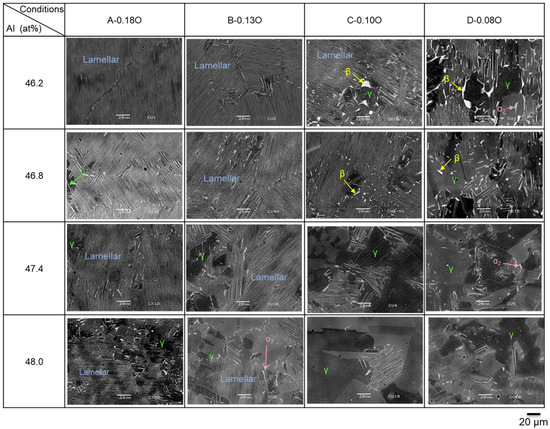
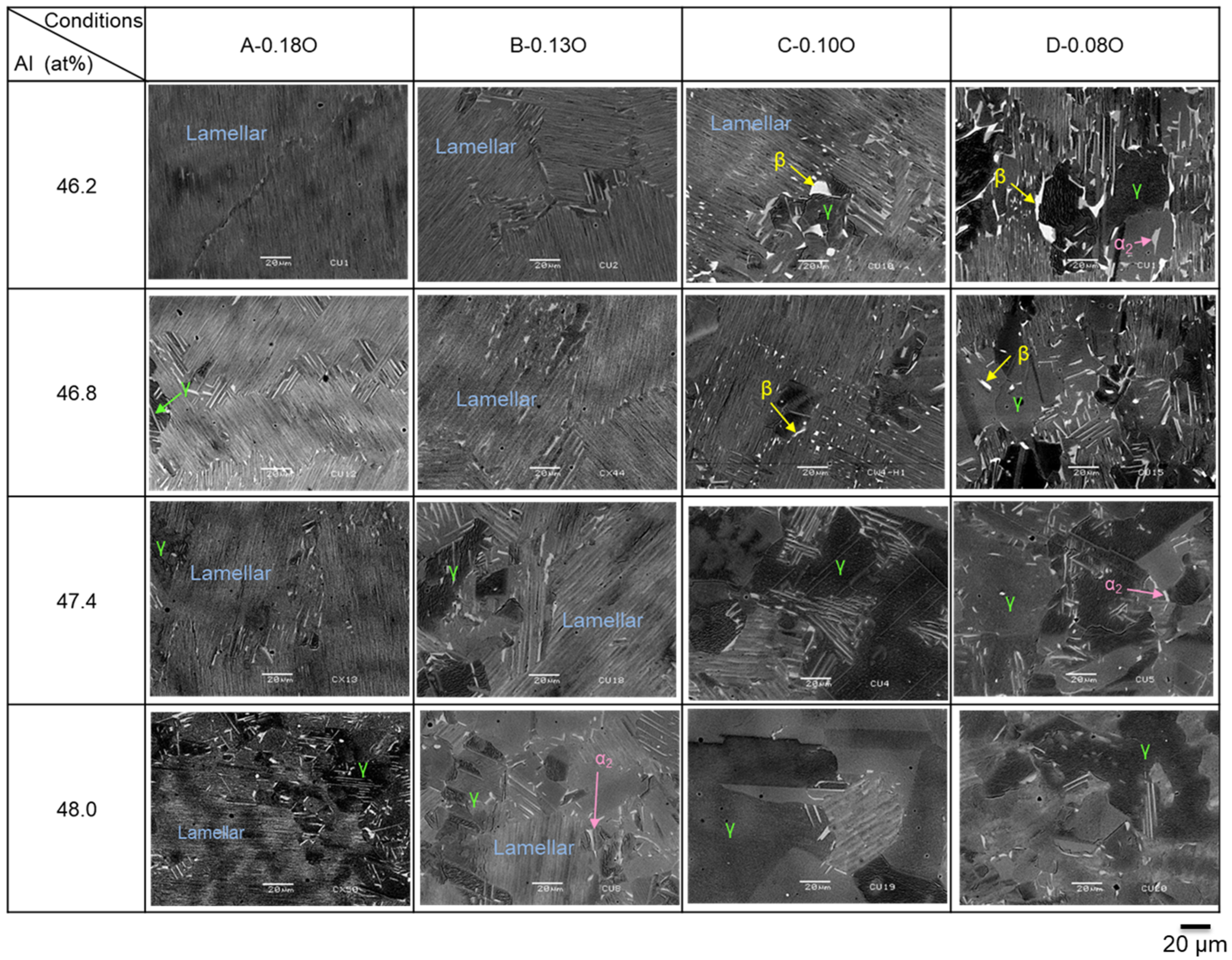
Figure 1 shows the representative microstructures obtained under the four melting conditions listed in Table 1, at Al concentrations of 46.2, 46.8, 47.4, and 48.0 at%. Under Condition A-0.18O, the sample with 46.2 at% Al exhibited a fully lamellar structure. Although the γ-phase ratio increased marginally with increasing Al concentration, the lamellar structure remained predominant even at 48.0 at% Al. This clearly demonstrates the stabilizing effect of a higher O concentration on the α2 phase. The microstructure under Condition B-0.13O was similar to that under Condition A-0.18O. However, the γ-phase fraction increased more significantly with Al concentration. At 48.0 at% Al, the γ-phase ratio was substantially high, indicating that the α2-phase stabilizing effect of O in B-0.13O is reduced compared with that in A-0.18O. Under Condition C-0.10O, the microstructure of 46.2 at% Al consisted of a mixture of lamellar structure, γ, and β phases. A similar trend was observed at 46.8 at% Al, but the β-phase fraction was reduced. At 47.4 and 48.0 at% Al, the β phase disappeared, and the γ phase became predominant. This suggests that reducing the O concentration suppresses the formation of α2 phase and stabilizes the β phase at lower Al levels. Experimental confirmation [29,30] has shown that the β phase ratio decreases as the concentration of oxygen increases. Condition D-0.08O exhibited a microstructure similar to that of C-0.10O but with a higher β-phase fraction and a lower fraction of lamellar structures, suggesting that the effect of O concentration was reduced.
Figure 1.
Backscattered electron images showing the microstructure of representative Ti-xAl-2Nb-2Cr (at%) alloys with different Al concentrations melted under different conditions.
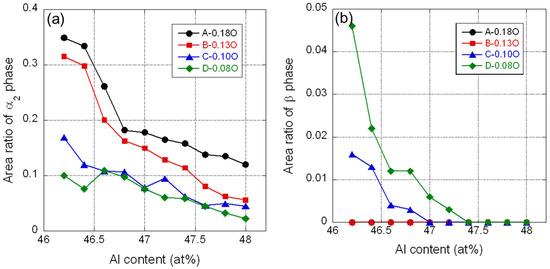
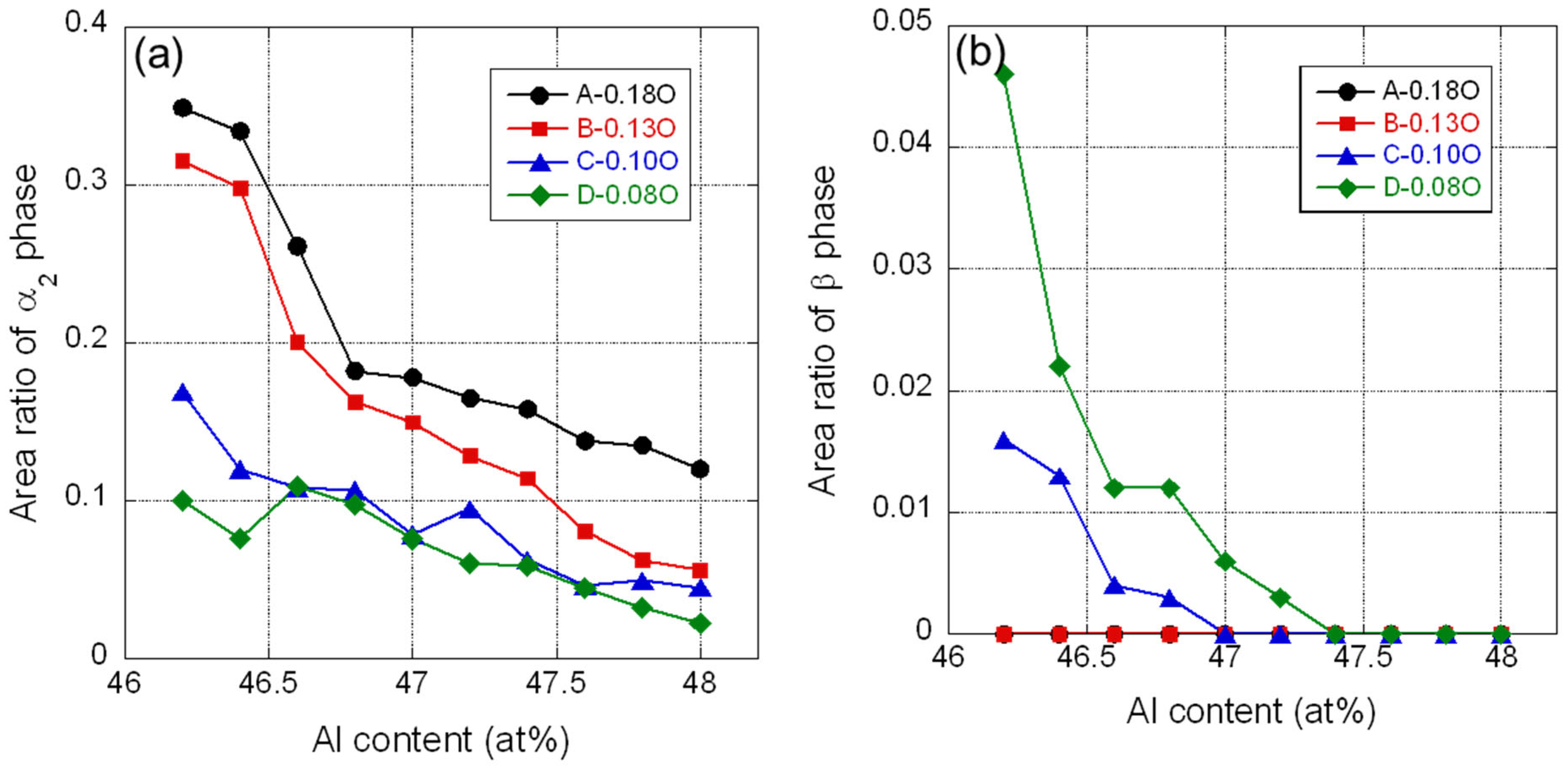
Figure 2 shows the measured area ratios of the α2 and β phases in alloys with different Al concentrations, including those not shown in Figure 1. As the Al concentration increases, the α2-phase ratio decreases: this behavior is commonly observed in TiAl alloys [31]. Furthermore, as the O concentration increases, the α2 ratio increases, which clearly demonstrates the stabilizing effect of O on the α2 phase. By contrast, the β phase does not form under high-O conditions (A-0.18O and B-0.13O) at any Al concentration. Nevertheless, it forms up to 46.8 at% Al in C-0.10O and up to 47.2 at% Al in D-0.08O. Additionally, the β-phase ratio is higher at lower O concentrations (D-0.08O). These results suggest that the O concentration significantly influences the extent of β-phase formation, in addition to Al concentration.
Figure 2.
Relationship between Al concentration and the area ratio of each phase for Ti-xAl-2Nb-2Cr (at%) alloys melted under different conditions: (a) α2 phase, (b) β phase.
In typical TiAl alloys, represented by binary systems, a fully lamellar structure forms at low Al concentrations and gradually transitions to a γ-dominant structure as the Al content increases. However, in TiAl4822 containing 2 at% Cr, which is a strong β-stabilizing element, the formation of the harmful β phase must also be considered. A previous study [7] indicated only the nominal composition, whereas the β phase was distinctly observed in TiAl4822. This suggests that the actual Al concentration may have been lower than the nominal composition in low-O materials. The results of the current study indicate that β-phase formation cannot be prevented in low-O TiAl4822 at low Al concentrations, and a lamellae-dominant microstructure cannot be obtained at any Al level. By contrast, in high-O TiAl4822, harmful β-phase formation can be prevented at low Al concentrations, and the lamellar structure can be stabilized to some extent even at higher Al concentrations.
3.1.2. Various Practical Properties
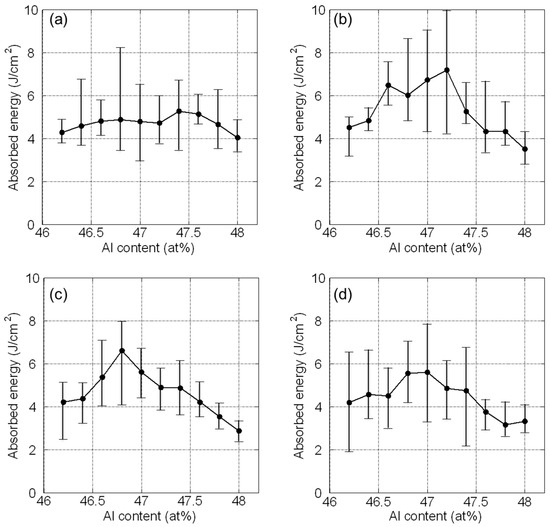
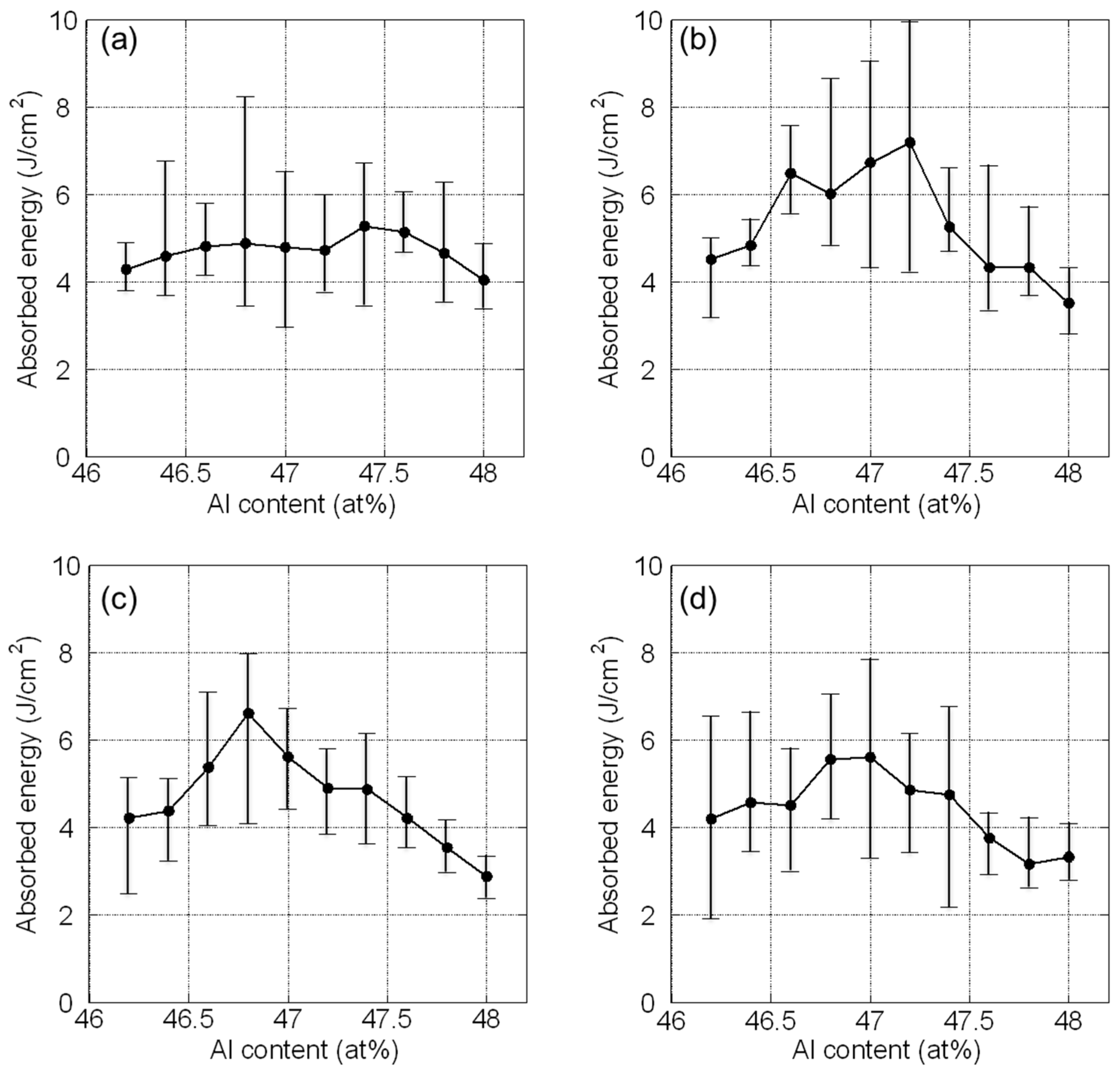
Figure 3 shows the relationship between Al concentration and Charpy absorbed energy at 25 °C for alloys produced under each melting condition. For all conditions, the absorbed energy peaks appeared near 47 at% Al. Comparing the melting conditions, B-0.13O exhibited the highest absorbed energy, indicating that a moderate increase in O concentration does not degrade impact resistance; rather, it appears to have a beneficial effect.
Figure 3.
Relationship between Al concentration and Charpy absorbed energy at 25 °C for Ti-xAl-2Nb-2Cr (at%) alloys melted under different conditions: (a) A-0.18O, (b) B-0.13O, (c) C-0.10O, (d) D-0.08O.
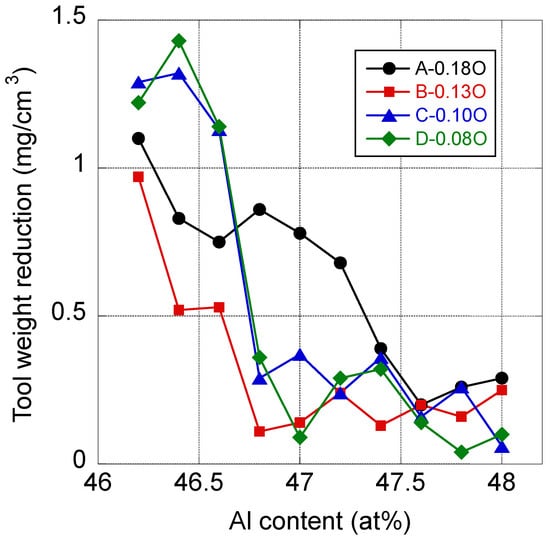
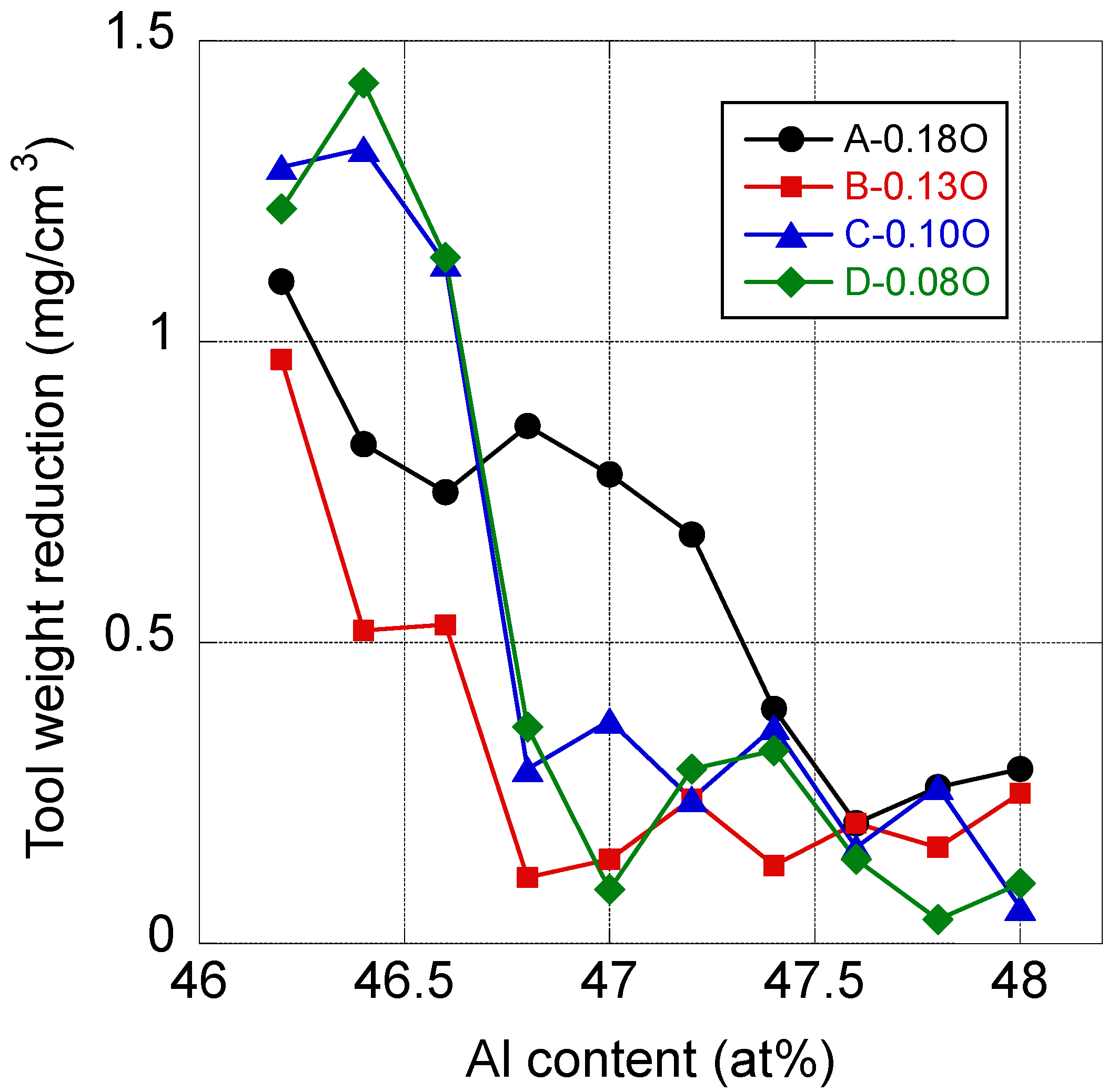
Figure 4 illustrates the correlation between Al concentration and tool wear weight under different melting conditions, which serves as an indicator of machinability. The tool wear values were normalized by the corresponding cutting volumes. Under all melting conditions, tool wear increased with decreasing Al concentration, with a particularly pronounced rise observed at Al concentrations of 46.4 at% or lower. As indicated by Figure 1 and Figure 2, this trend can be attributed to the formation of the β phase in low-O alloys and an increased amount of α2 phase in high-O alloys. Because both the β and α2 phases are harder than the γ phase, an increase in their proportion reduces the machinability [27]. For Al contents of 46.2–46.6 at%, comparing Conditions A-0.18O and B-0.13O with C-0.10O and D-0.08O reveals that the C-0.10O and D-0.08O exhibit greater tool wear. As shown in Figure 2b, only the latter conditions produced β phase. This suggests that, in TiAl4822, the adverse effect of the β phase, which is harder than the α2 phase [27], significantly degrades machinability. Furthermore, tool wear decreased significantly at Al concentrations of 47 at% or higher, except for Condition A-0.18O, which contains a high proportion of α2 phase and a predominantly lamellar structure. This behavior is likely attributed to an increase in the proportion of the softer, more machinable γ phase under other conditions.
Figure 4.
Relationship between Al concentration and tool wear weight for Ti-xAl-2Nb-2Cr (at%) alloys melted under different conditions.
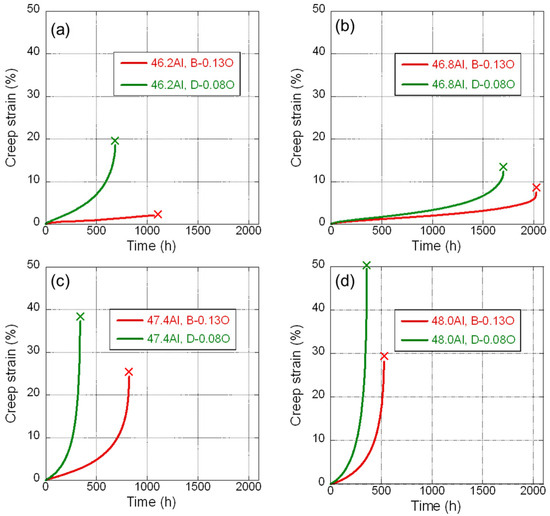
Figure 5 shows the creep curves at 750 °C and 200 MPa for Conditions B-0.13O and D-0.08O, at Al concentrations of 46.2, 46.8, 47.4, and 48.0 at%. Among all Al concentrations, the alloys with 46.8 at% Al exhibited the longest creep life. The curve characteristics differed between low-Al materials (46.2, 46.8 at%) and high-Al materials (47.4, 48.0 at%) and in high-Al materials, primary and secondary creep ceased earlier than in low-Al materials. For all Al concentrations, B-0.13O exhibited a longer creep life than D-0.08O. This indicates that increasing the O concentration results in a longer creep life at the same Al concentration.
Figure 5.
Creep curves at 750 °C and 200 MPa for Ti-xAl-2Nb-2Cr (at%) alloys with different Al concentrations melted under Conditions B-0.13O and D-0.08O. (a) 46.2 at% Al, (b) 46.8 at% Al, (c) 47.4 at% Al, and (d) 48.0 at% Al.
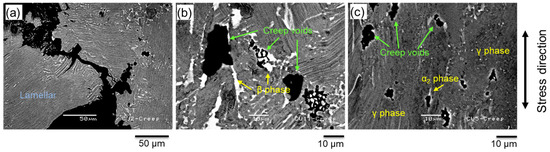
Figure 6 shows the microstructures near the creep fracture zone in representative alloys. Figure 6a depicts 46.2 at% Al under Condition B-0.13O, where fracture propagation is observed in the boundaries of coarse lamellar colonies. This indicates that the relatively low-strength γ phase present at the lamellar colony boundaries underwent preferential deformation. Figure 6b depicts 46.2 at% Al under Condition D-0.08O, where creep voids have formed within the β phase, indicating that the β phase—with its inherently low high-temperature strength—deformed preferentially, ultimately leading to short-term failure. Figure 6c shows 47.4 at% Al under Condition D-0.08O, where numerous fine creep voids have formed throughout the matrix. These voids correspond to the locations of the α2 phase. Because this alloy exhibits almost no lamellar structure (Figure 1), the low-strength γ-phase matrix is believed to be uniformly deformed, causing the voids to concentrate at the sparsely distributed α2 phase.
Figure 6.
Microstructure near the creep fracture zone in representative alloys: (a) Ti-46.2Al-2Nb-2Cr (at%) melted under Condition B-0.13O, (b) Ti-46.2Al-2Nb-2Cr (at%) melted under Condition D-0.08O, (c) Ti-47.4Al-2Nb-2Cr (at%) melted under Condition D-0.08O.
These results indicate that an increase in O concentration induces microstructural changes—specifically, suppression of β-phase formation and an increase in the α2-phase (i.e., lamellar structure) ratio—resulting in improved creep strength. However, in a fully lamellar structure with coarse lamellar colonies at 46.2 at% Al, the slight decrease in creep life is believed to result from localized deformation of the weak γ phase at the boundaries of the lamellar colonies.
3.1.3. Range of Al and O Concentrations with Favorable Practical Properties
To identify the range of Al and O concentrations yielding favorable practical properties, the average values obtained from Figure 3, Figure 4 and Figure 5 are summarized in Table 2. In this table, the combinations of Al concentrations and melting conditions exhibiting a Charpy absorbed energy of ≥5 J/cm2 at 25 °C, tool wear weight of ≤0.5 mg/cm3, and a creep life of ≥1500 h at 750 °C and 200 MPa are considered alloys with optimal properties (highlighted in yellow). Both the low- and high-Al compositions exhibited low impact resistance. The low-Al alloys showed low impact resistance owing to the excessive α2-phase ratio in high-O alloys and high β-phase content in low-O alloys. By contrast, the high-Al alloys showed low impact resistance irrespective of the O concentration, likely owing to the predominance of the γ phase. This observation is consistent with previous reports [27], which indicated that γ-phase-dominant alloys exhibit suboptimal impact resistance.
Table 2.
Summary of practical properties of Ti-xAl-2Nb-2Cr (at%) alloys with different Al concentrations melted under different conditions (favorable properties are highlighted in bold and conditions enclosed in thick black borders indicate both excellent impact resistance and machinability).
Machinability was significantly influenced by Al concentration. All alloys with an Al content of 46.8 at% or higher, except for Condition A-0.18O, exhibited good machinability. This improvement is likely attributed to the reduced presence of the hard α2 and β phases, which adversely affect machinability. By contrast, Condition A-0.18O exhibited poor machinability even at Al levels of up to 47.2 at%, likely owing to the higher α2-phase content caused by high O concentration. Although the number of alloys evaluated for creep life was limited, the alloy with 46.8 at% Al exhibited the best performance. The results indicate that an increased O concentration leads to a longer creep life, primarily through increased α2-phase ratio and suppression of the β phase.
From a practical standpoint, it is preferable to have a broader Al concentration range that yields favorable results for all three properties to ensure stable product quality. Table 2 summarizes the Al concentration ranges where both impact resistance and machinability are favorable, as indicated by a thick black border. Condition B-0.13O has the broadest Al concentration range, spanning 46.8–47.4 at%. Furthermore, alloys with 47.0 and 47.2 at% Al under Condition B-0.13O exhibit the most favorable impact resistance compared with other conditions. By contrast, under other conditions, alloys with both good impact resistance and machinability are obtained only within narrow Al concentration ranges. These results suggest that increasing the O concentration to at least 0.13 wt% effectively expands the Al concentration range over which favorable practical properties can be achieved.
3.2. Comparison of the Effects of Microstructure and O Concentration on Impact Resistance
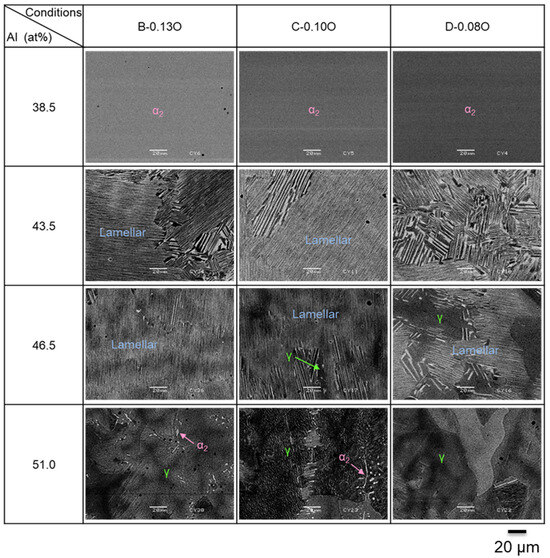
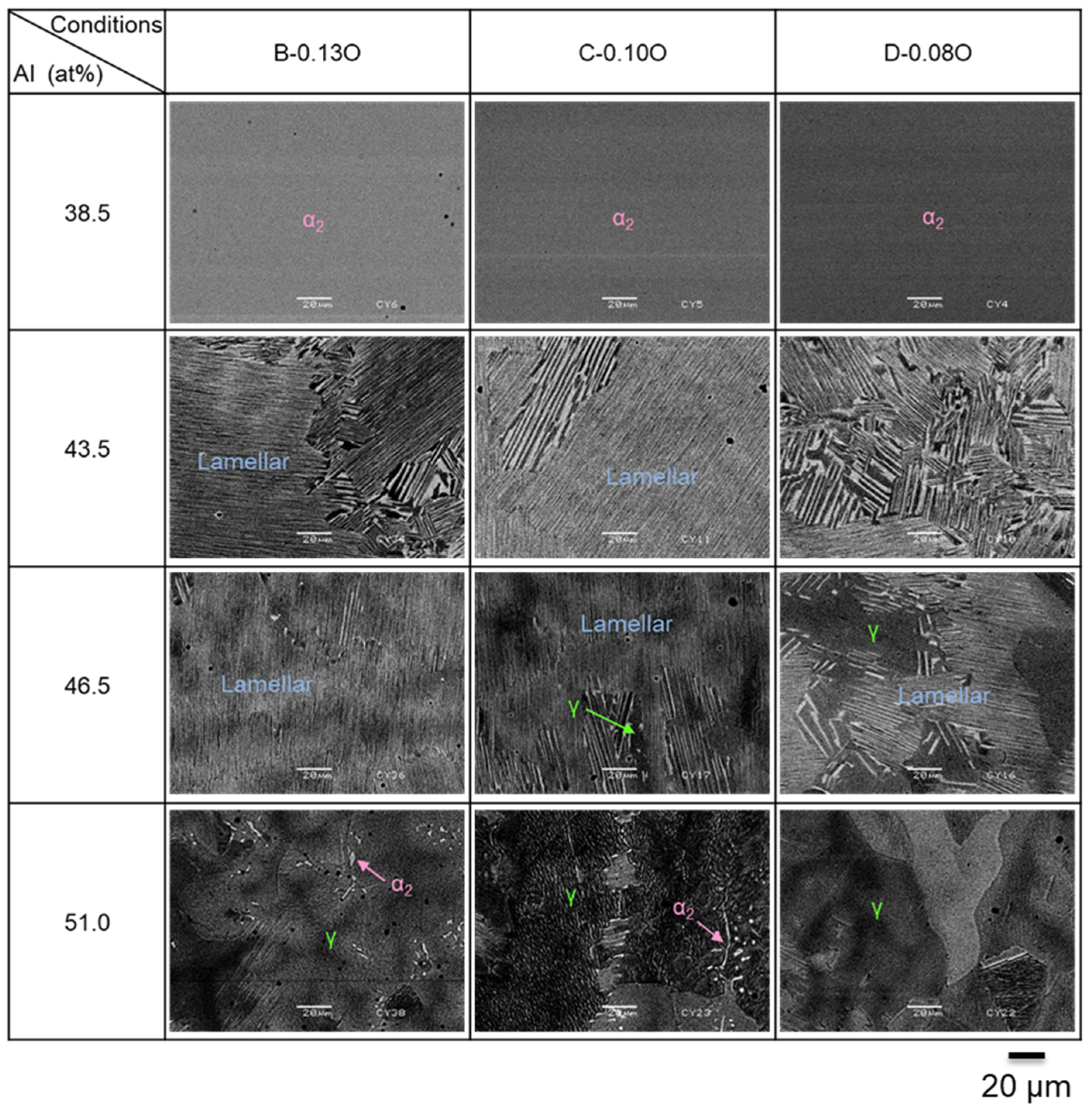
To determine whether microstructural changes or variations in O concentration exert a greater influence on impact resistance, we investigated a two-phase (γ and α2) Ti-xAl-2Nb (at%) alloys, thereby excluding the adverse effects of the β phase. Figure 7 shows the representative microstructures. As designed, no β phase was present. Under Condition B-0.13O, the microstructure was an α2 single phase at 38.5 at% Al and fully lamellar structure at 43.5 and 46.5 at% Al. At 51.0 at% Al, the microstructure is predominantly a single γ phase, with a small amount of α2 grains present. Condition C-0.10O had a similar microstructure; however, it contained a greater amount of the γ phase at 46.5 at% Al. Condition D-0.08O exhibited an α2 single-phase structure at 38.5 at% Al, a fully lamellar structure at 43.5 at% Al, a lamella + γ structure at 46.5 at% Al, and a γ single-phase structure at 51 at% Al. Thus, an increase in the γ-phase ratio is observed with increasing Al concentration and decreasing O concentration.
Figure 7.
Backscattered electron images showing the microstructure of representative Ti-xAl-2Nb (at%) alloys with different Al concentrations melted under different conditions.
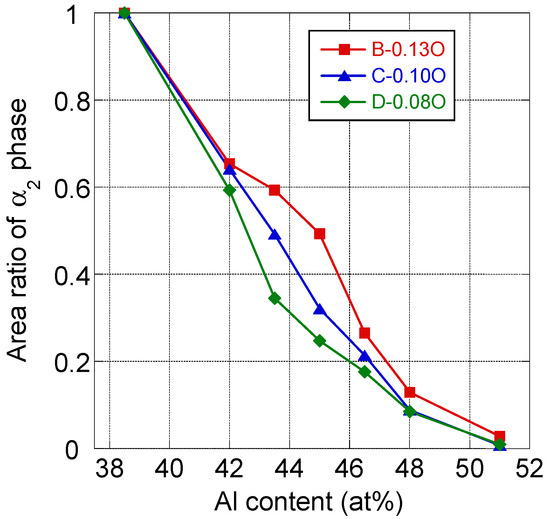
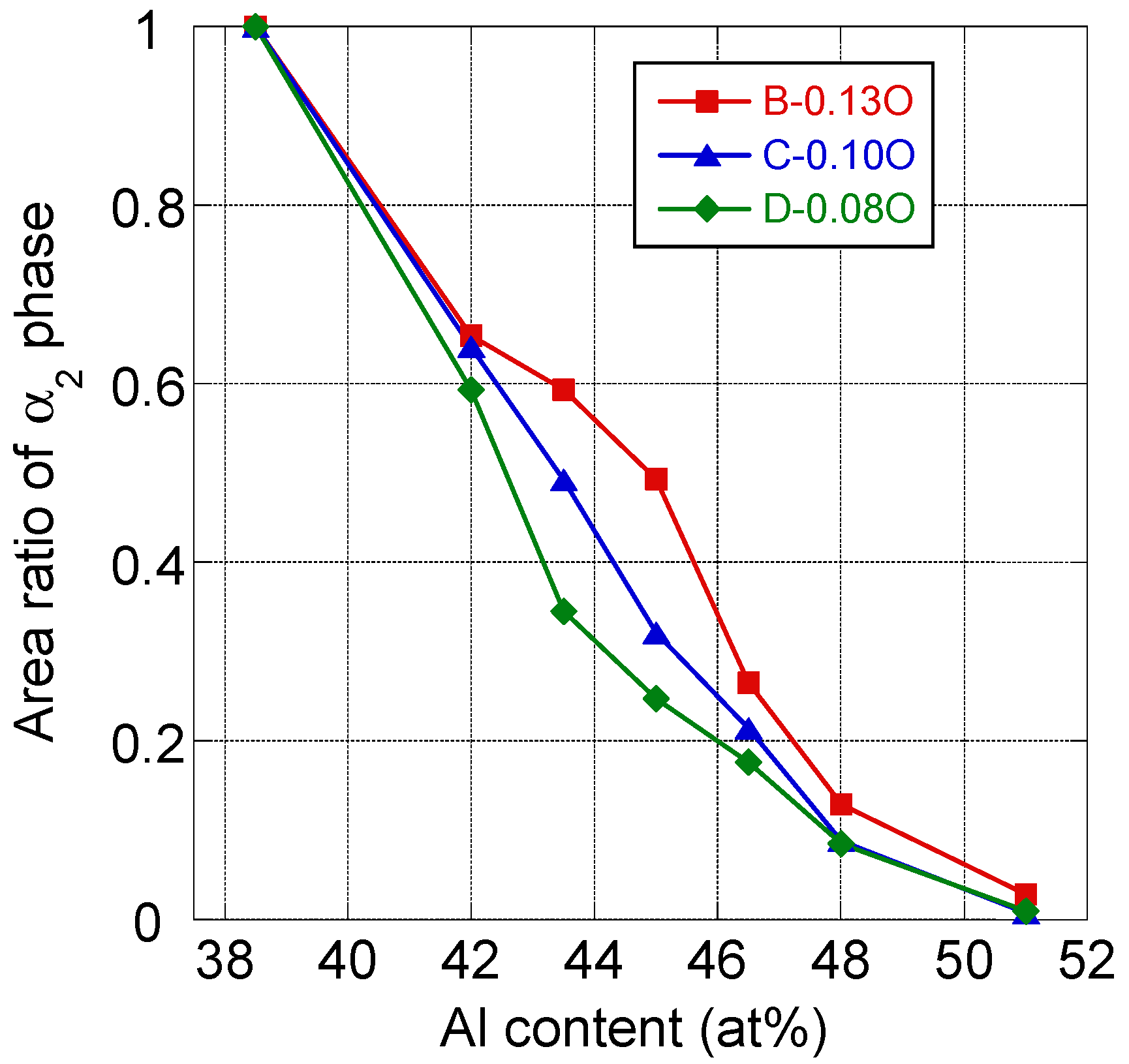
Figure 8 illustrates the relationship between Al concentration and the area ratio of the α2 phase, including alloys with Al content other than those shown in Figure 7. The α2-phase ratio decreased with an increase in Al content, which corresponded directly to an increase in the γ-phase fraction. At both lower and higher Al contents, the effect of O concentration on the α2-phase ratio was minimal. However, at intermediate Al contents, the influence of O concentration was clearly observed, with a greater increase in the α2-phase ratio observed at higher O levels.
Figure 8.
Relationship between Al concentration and the area ratio of α2 phase for Ti-xAl-2Nb (at%) alloys melted under different conditions.
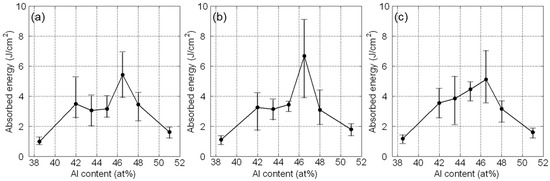
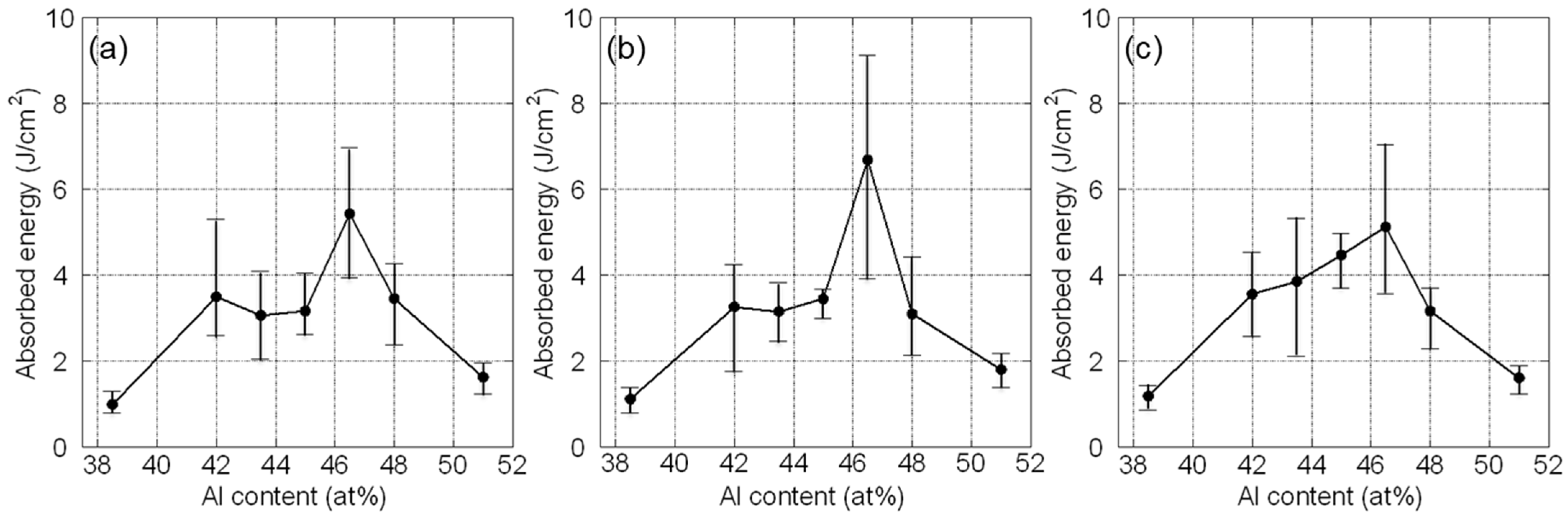
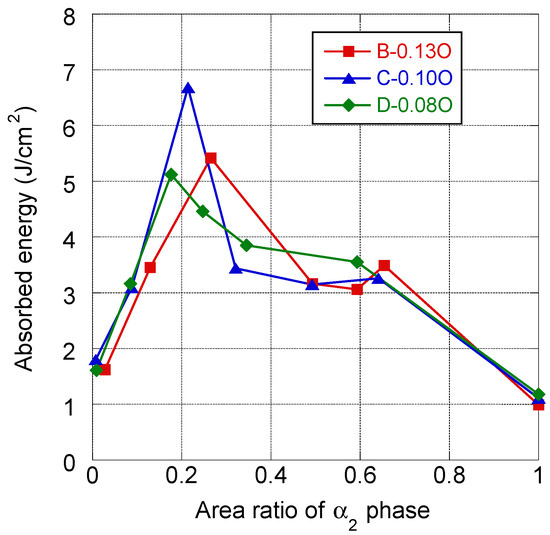
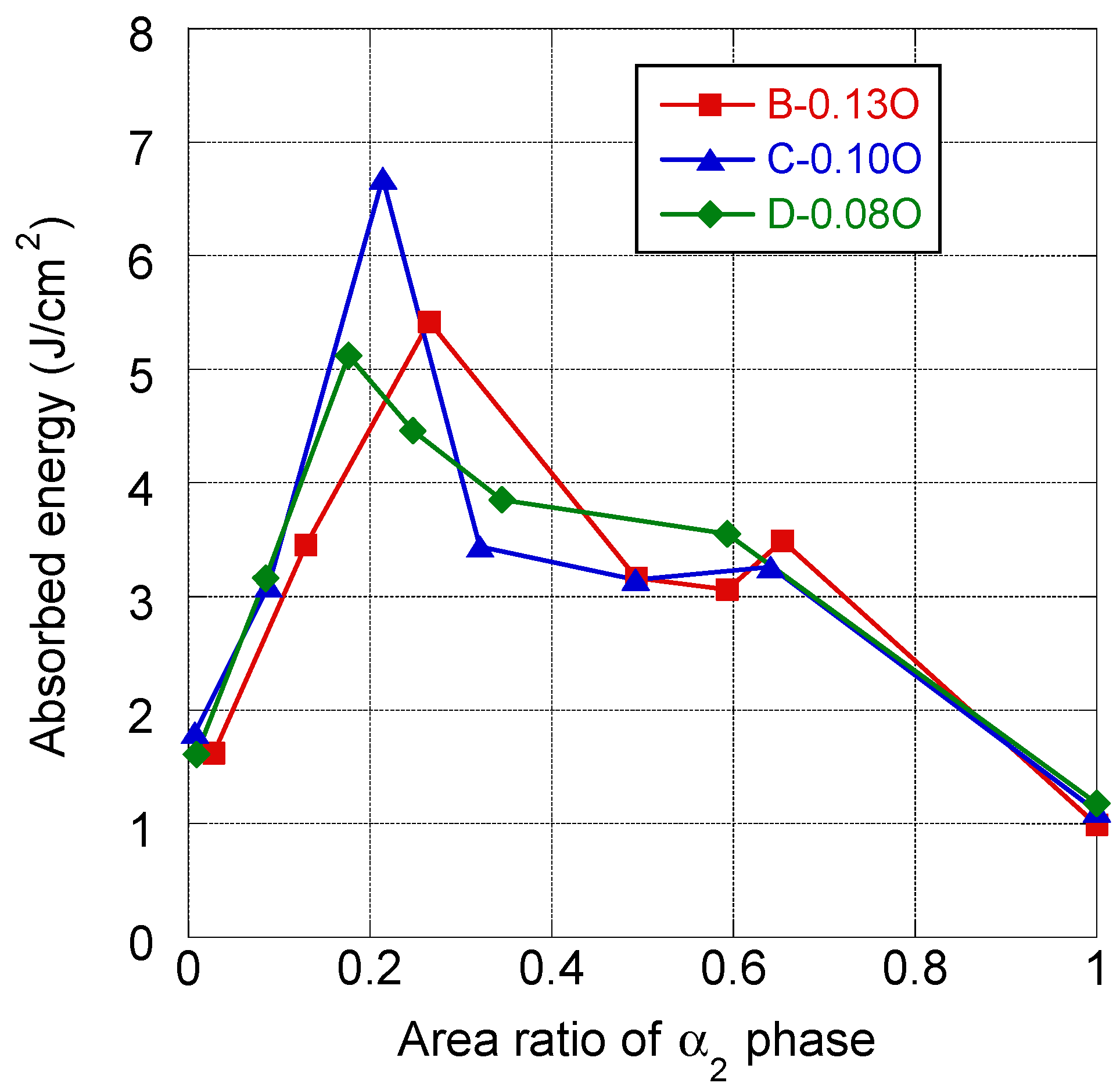
Figure 9 shows the relationship between Al concentration and Charpy absorbed energy at 25 °C under each melting condition. The absorbed energy of 46.5 at% Al was the highest for all conditions and decreased as the Al concentration was higher or lower. As shown in Figure 8, the α2 ratio varies with the O concentration even at the same Al content. Therefore, the relationship between the α2 ratio and the average absorbed energy was evaluated, and the results are presented in Figure 10. The impact resistance of 38.5 at% Al (α2) and 51 at% Al (γ), corresponding to each single-phase alloy, was significantly lower than that of the others, irrespective of O concentration. This indicates that the impact resistance of the γ and α2 phases—the two phases found naturally in TiAl alloys—is extremely low when they exist as single phases. However, when these two phases were combined to form a lamellar structure, the impact resistance significantly improved. Furthermore, the impact resistance strongly depends on the α2-phase ratio, exhibiting the best performance at ratios between 0.2 and 0.3. Conversely, the effect of O concentration is minimal; for comparable α2 phase ratios, the absorbed energy remains nearly the same.
Figure 9.
Relationship between Al concentration and Charpy absorbed energy at 25 °C for Ti-xAl-2Nb (at%) alloys melted under different conditions: (a) B-0.13O, (b) C-0.10O, (c) D-0.08O.
Figure 10.
Relationship between the area ratio of α2 phase and Charpy absorbed energy at 25 °C for Ti-xAl-2Nb (at%) alloys melted under different conditions.
These results suggest that microstructure factors, such as the α2 phase ratio, exert a substantially greater impact on the impact resistance of TiAl4822 than the O concentration. Furthermore, they indicate that impact resistance can be retained even at higher O concentrations by appropriately controlling the microstructure by varying the Al concentration. This finding is highly beneficial from a cost perspective.
3.3. Feasibility of Reusing Machining Chips as Melting Feedstock
3.3.1. Investigation of Pre-Treatment Conditions for Machining Chips
Table 3 shows the conditions examined in the pre-treatment test for machining chips, as well as the chemical analysis results for O and C concentrations in the chips. The untreated (as-received) chips exhibited substantially higher O and C levels. Notably, the C content (derived from the water-soluble cutting oil) exceeded the target allowable value for TiAl4822 blade material (undisclosed) by several hundred times. As mentioned previously, the effect of O on the practical properties was relatively minor and O can be partially removed by adding Ca during melting. Therefore, the primary objective of the pre-treatment process was set to significantly reduce the C content.
Table 3.
Conditions examined in the pre-treatment test for machining chips, along with chemical analysis results of O and C concentrations in the chips after treatment.
Conditions 1 and 2 involved only ultrasonic cleaning using acetone as the solvent, while varying output and temperature. Both conditions led to a reduction in the O and C concentrations, with Condition 2 exhibiting a greater reduction. These results suggest that increasing the output and temperature during ultrasonic cleaning effectively removes these impurities. However, the C concentration remained significantly higher than the target level.
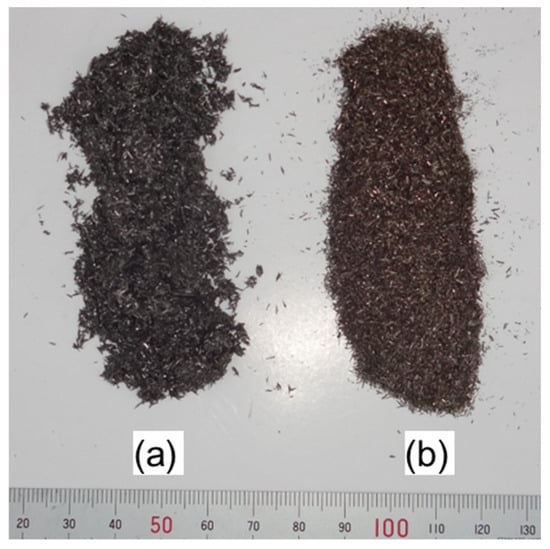
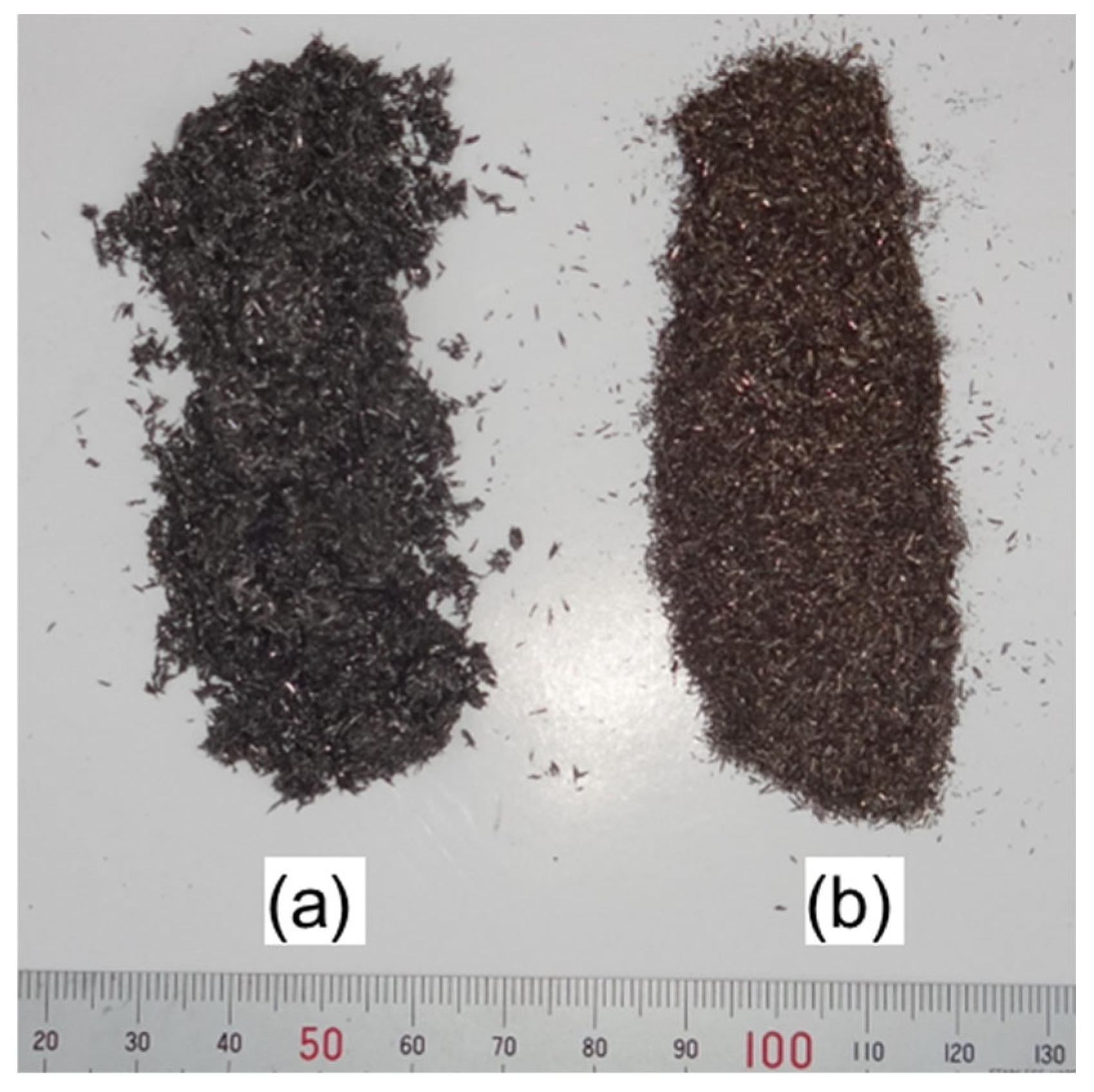
Conditions 3–7 were based on the same ultrasonic cleaning conditions as Condition 2, and heating in air at varying temperatures for 30 min. As the heating temperature increased, the O concentration increased, exceeding 1 wt% at 800 °C, likely owing to oxidation. However, atmospheric heating significantly reduced the C concentration. Conditions 8–10 were conducted using ultrasonic cleaning frequency of 28 kHz (enhanced cleaning power) and an increased output of 300 W, followed by optimized heating conditions were investigated to minimize O uptake while promoting C reduction. Under Condition 9, the O concentration remained relatively low, and the C concentration was significantly reduced. Based on these results, Condition 9 was selected as the pre-treatment condition for machining chips. Figure 11 shows the appearance of machining chips before and after treatment under Condition 9. Before treatment, the chips were sticky and gooey, making it challenging to handle them as melting feedstock owing to the massive presence of water and water-soluble cutting oil. After treatment, although the chips were marginally discolored from oxidation, they exhibited a clean, smooth surface, making them suitable for use as melting feedstock.
Figure 11.
Photographs of machining chips of TiAl4822; (a) as received, (b) after pre-treatment under Condition 9 in Table 3.
3.3.2. Properties of TiAl4822 Castings with Added Machining Chips
Table 4 shows the melting conditions and chemical analysis results for TiAl4822 castings produced using the processed machining chips as melting feedstock. The output power and holding time were set to 4.0 kW for 4.0 min, respectively, the same as for Conditions B–D in Table 1. Condition E involved the addition of 10 wt% machining chips without Ca addition for deoxidation. Considering the increased O concentration, the Al content was set to 47.4 at%. At this Al content, the α2-phase ratio slightly decreases in low-O materials; however, it is expected to recover in high-O materials. Condition F was similar to Condition E, except that it contained 20 wt% machining chips. Condition G contained 30 wt% machining chips and 0.45 wt% Ca for deoxidation, which counteracts the significant increase in O concentration by the higher proportion of machining chips. The Al content of Condition G was set to 46.8 at% to account for this deoxidation effect.
Table 4.
Melting conditions and chemical analysis results for Ti-xAl-2Nb-2Cr (at%) alloys produced using pre-treated machining chips.
The results of the chemical analysis indicated that the primary components, Nb and Cr, exhibited minimal deviations from the nominal composition (Table 1), confirming that the addition of machining chips did not compromise the homogeneity of composition. During melting, the machining chips were added directly to the molten metal without any issues in melting process, such as poor melting. Regarding impurities, the contents of all elements except O remained extremely low, demonstrating that contamination by other impurities from the water-soluble cutting oils was effectively prevented. Although C was present in large quantities in the as-received machining chips (Table 3), its concentration in the castings was extremely low, confirming the pre-treatment’s effectiveness in removing C through combustion.
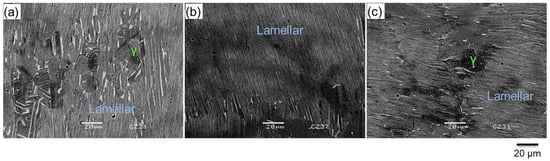
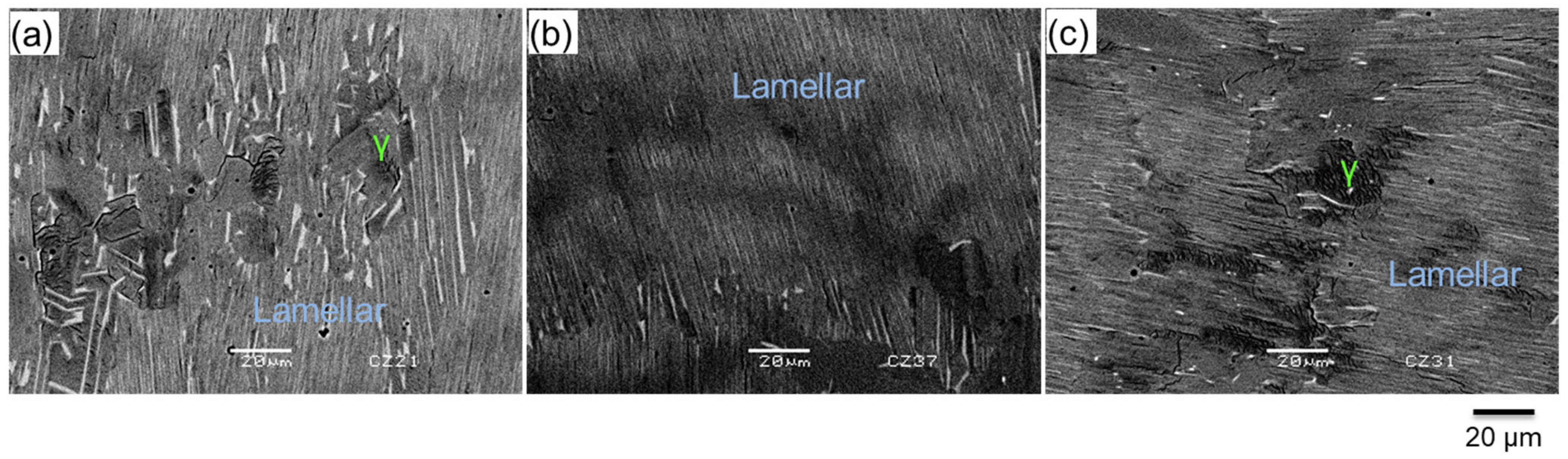
Figure 12 shows the microstructures of the alloys with varying amounts of machined chip additives. Condition E, with 10 wt% machining chips, had a high O concentration of 0.157 wt% and exhibited a lamella + γ structure even at 47.4 at% Al. Condition F, with 20 wt% machining chips, exhibited an increased O concentration of 0.172 wt%, resulting in a higher lamellae fraction approaching a fully lamellar structure. Condition G, with 30 wt% machining chips and 0.45 wt% Ca as a deoxidizer, had the lowest O concentration (0.116 wt%) owing to deoxidation. Consequently, it formed a lamella + γ structure at 46.8 at% Al. Additionally, an increase in O concentration prevented the formation of the harmful β phase in all cases.
Figure 12.
Backscattered electron images showing the microstructure of Ti-xAl-2Nb-2Cr (at%) alloys with varying amounts of machining chips and Ca added for deoxidation; (a) Condition E, (b) Condition F, (c) Condition G. (All conditions listed in Table 4).
Table 5 lists the average Charpy absorbed energy at 25 °C and tool wear weight for each alloy with machining chip additives. Compared with the results in Table 2 (no machining chips added), the impact resistance and machinability under Condition E fell within the favorable property range (highlighted in yellow in Table 2). This indicates that despite the increased O concentration owing to the machining chip addition, no deterioration in properties occurred. Condition F exhibited optimal impact resistance; however, its machinability was marginally reduced. This is likely attributed to an increase in the hard α2 phase caused by a further rise in O concentration. Condition G yielded favorable results for both properties, demonstrating that the addition of a large amount of machining chips (30 wt%) does not adversely affect impact resistance or machinability when the deoxidation treatment is performed.
Table 5.
Average Charpy absorbed energy at 25 °C and tool wear weight for Ti-xAl-2Nb-2Cr (at%) alloys with machining chip addition.
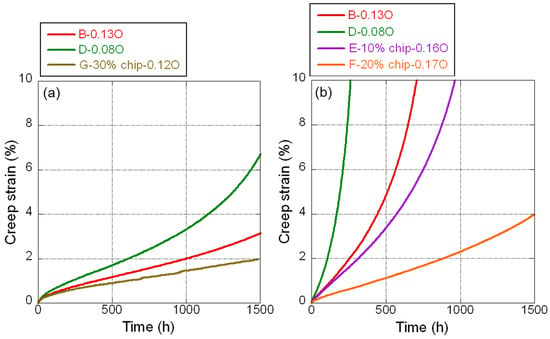
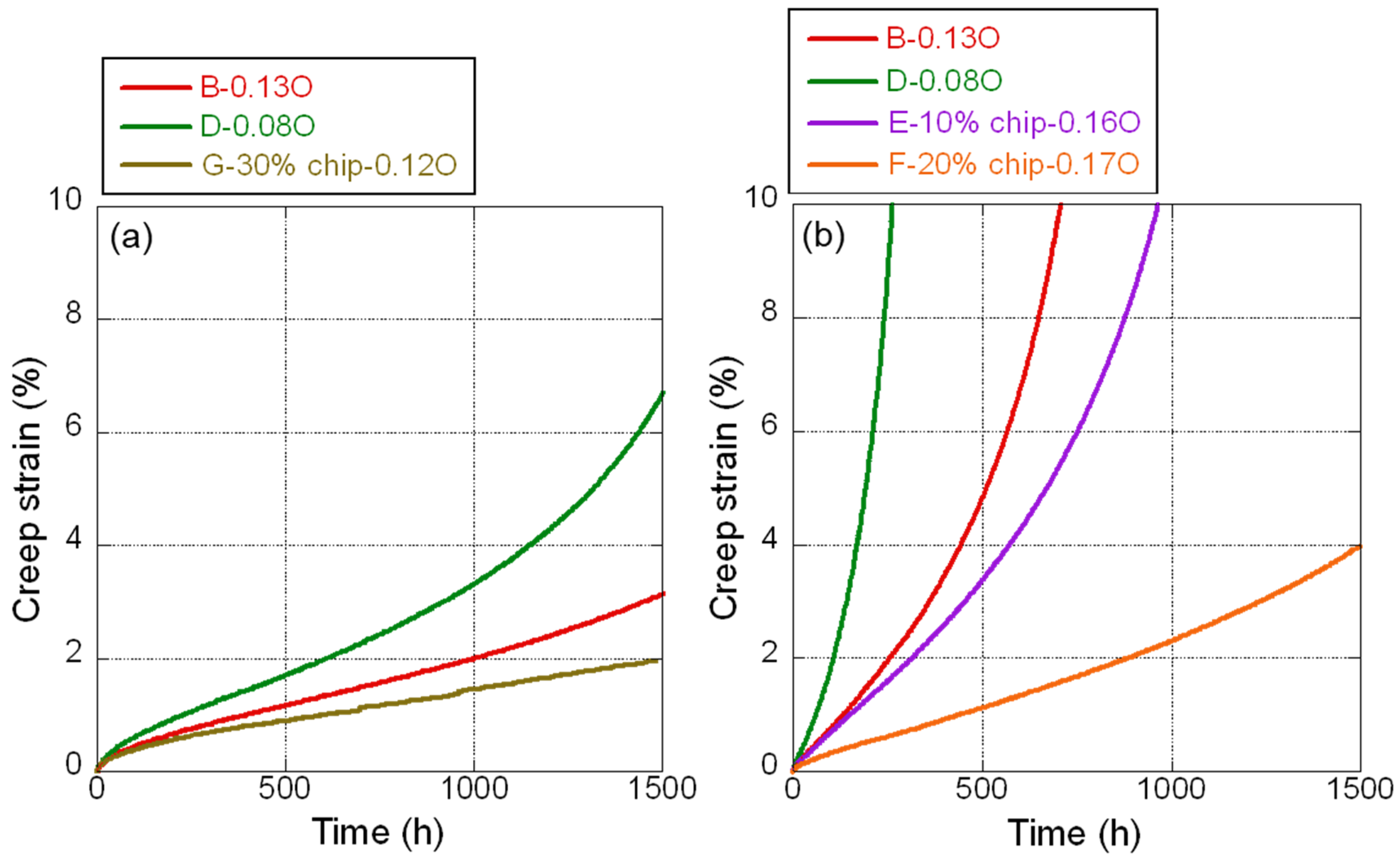
Figure 13 shows the creep curves of the alloys with machining chip addition, compared with those of alloys of the same Al concentration but without machining chip additions. The experiments are still ongoing, as some tests have not been completed. For 46.8 at% Al alloys, Condition G (with 30 wt% machining chips) exhibited the highest creep strength. For the 47.4 at% Al alloys, Condition F, with 20 wt% machining chips, exhibited the highest creep strength, followed by Condition E, with 10 wt% machining chips. These results suggest that the addition of machining chips can significantly enhance the creep strength compared with that of conventional low-O materials currently used in TiAl4822 blades. This improvement is likely attributed to the increased lamellar structure ratio and solid solution strengthening effects resulting from the higher O concentration.
Figure 13.
Creep curves at 750 °C and 200 MPa for Ti-xAl-2Nb-2Cr (at%) alloys with different Al concentrations melted under different conditions: (a) 46.8 at% Al, (b) 47.4 at% Al.
The results presented above demonstrate that the practical properties of TiAl4822 with added machining chips are comparable to, and in some cases even superior to, those of low-O material without added machining chips. In other words, incorporating properly processed machining chips as melting feedstock for TiAl4822 blades increases the O concentration; nevertheless, this increase is beneficial in improving the material properties. In conclusion, this study demonstrates that TiAl4822 can tolerate increased concentrations of O, enabling the reuse of machining chips as melting feedstock and offering a highly effective strategy for reducing the cost of future TiAl4822 blade production.
4. Conclusions
This study focused on the production of TiAl4822 blades used in jet engines, identifying optimal Al and O concentration ranges that consistently deliver favorable practical characteristics. Additionally, the feasibility of reusing machining chips as a low-cost countermeasure when higher O concentrations are permissible was evaluated. The key conclusions are as follows:
- The impact resistance at 25 °C and machinability were maintained up to an O concentration of at least 0.13 wt%. Notably, these properties were superior to those of materials with a low O content owing to the suppression of harmful β-phase formation and an appropriate increase in the ratio of the lamellar structure attributed to the increased O concentration.
- The broadest range of Al concentrations yielding favorable properties occurs at 0.13 wt% O, spanning 46.8–47.4 at%.
- The creep strength was the most favorable at approximately 46.8 at% Al, and high-O materials consistently outperformed low-O materials across all examined Al concentrations.
- The microstructure (α2-phase ratio) exerted a significantly greater influence on impact resistance at 25 °C than the O concentration. The best impact resistance was observed at α2-phase ratios between 0.2 and 0.3. Extremely low impact resistance in γ and α2 single-phase alloys suggests that the lamellar combination of these phases improved impact resistance.
- A certain increase in O concentration (at least 0.13 wt%) was not only tolerable but also beneficial for TiAl4822 used in jet engine blades.
- The pre-treatment of machining chips—via ultrasonic cleaning using acetone and atmospheric heating—effectively removed C contained in water-soluble cutting oil.
- TiAl4822 castings produced using postprocessed machining chips as melting feedstock exhibited improved properties compared with low-O materials, despite the increased O concentration. This demonstrates the feasibility of reusing machining chips as a low-cost strategy.
Author Contributions
Conceptualization, T.T.; validation, T.T. and K.M.; investigation, T.T.; resources, T.T. and K.M.; data curation, T.T.; writing—original draft preparation, T.T.; writing—review and editing, K.M.; visualization, T.T.; supervision, T.T. and K.M.; project administration, T.T. and K.M.; funding acquisition, T.T. and K.M. All authors have read and agreed to the published version of the manuscript.
Funding
This research was funded by THE JAPAN SCIENCE AND TECHNOLOGY AGENCY, grant number AS0216001.
Data Availability Statement
The original contributions presented in this study are included in the article. Further inquiries can be directed to the corresponding author.
Conflicts of Interest
Author Kazuhiro Mizuta is employed by the company AeroEdge Co., Ltd. The remaining authors declare that the research was conducted in the absence of any commercial or financial relationships that could be construed as a potential conflict of interest.
Abbreviations
The following abbreviations are used in this manuscript:
| HIP | Hot Isostatic Pressing |
| FOD | Foreign Object Damage |
| SEM | Scanning Electron Microscope |
References
- Xia, Z.; Liu, R.; Shen, Y.; Mohammed, A.; Jia, Q.; Cui, Y.; Yang, R. Creep properties of Ti–48Al–2Cr–2Nb alloy having similarly oriented lamellae with fine lamellar spacing. Mat. Sci. Eng. A 2022, 861, 144362. [Google Scholar] [CrossRef] [Scilit]
- Chai, C.; Wang, Y.; Peng, L.; Zhao, S.; Zhang, Y.; Fang, F.; Zhang, X. Evolution of oriented lamellar microstructure and tensile properties of Ti-48Al-2Cr-2Nb alloy fabricated by vacuum twin-roll strip casting. Intermetallics 2026, 189, 109130. [Google Scholar] [CrossRef] [Scilit]
- Bewlay, B.P.; Nag, S.; Suzuki, A.; Weimer, M.J. TiAl alloys in commercial aircraft engines. Mater. High Temp. 2016, 33, 549–559. [Google Scholar] [CrossRef] [Scilit]
- AeroEdge Was Invited to the Ceremony for Celebrating the Delivery of One Million TiAl Blades. Available online: https://aeroedge.co.jp/en/news/newsrelease/857/2023 (accessed on 14 January 2026).
- Peters, S.; Andreu, A.; Perez, M.; Blackwell, P. Improving forging outcomes of cast titanium aluminide alloy via cyclic induction heat treatment. Metals 2023, 13, 1420. [Google Scholar] [CrossRef] [Scilit]
- Sallot, P.; Monchoux, J.P.; Joulie, S.; Couret, A.; Thomas, M. Impact of β-phase in TiAl alloys on mechanical properties after high temperature air exposure. Intermetallics 2020, 119, 106729. [Google Scholar] [CrossRef] [Scilit]
- Mengis, L.; Ulrich, A.S.; Watermeyer, P.; Liebscher, C.H.; Galetz, M.C. Oxidation behaviour and related microstructural changes of two βo–phase containing TiAl alloys between 600 °C and 900 °C. Corros. Sci. 2020, 178, 109085. [Google Scholar] [CrossRef] [Scilit]
- Mizuta, K.; Hijikata, Y.; Fujii, T.; Gokan, K.; Kakehi, K. Characterization of Ti-48Al-2Cr-2Nb built by selective laser melting. Scr. Mater. 2021, 203, 114107. [Google Scholar] [CrossRef] [Scilit]
- Cao, J.; Guo, Z.; Sun, T.; Guo, Y.; Liang, Y.; Lin, J. Microstructure evolution and mechanical properties of a high Nb–TiAl alloy via HIP and heat treatment. Mat. Sci. Eng. A 2023, 884, 145517. [Google Scholar] [CrossRef] [Scilit]
- Kim, Y.W.; Kim, S.L. Advances in gammalloy materials–processes–application technology: Successes, dilemmas, and future. JOM 2018, 70, 553–560. [Google Scholar] [CrossRef] [Scilit]
- Güther, V.; Allen, M.; Klose, J.; Clemens, H. Metallurgical processing of titanium aluminides on industrial scale. Intermetallics 2018, 103, 12–22. [Google Scholar] [CrossRef] [Scilit]
- Ding, X.; Zhao, Y.; Zuo, J.; Feng, X.; Nan, H.; Liang, Y.; Su, Y. Chemical composition analysis on industrial scale ingots and castings of TiAl alloys. China Foundry 2020, 17, 441–446. [Google Scholar] [CrossRef] [Scilit]
- Kochetkov, A.S.; Panin, P.V.; Nochovnaya, N.A.; Makushina, M.A. Study of chemical inhomogeneity in beta-solidifying TiAl alloys of various composition. Metallurgist 2021, 64, 9–10. [Google Scholar] [CrossRef] [Scilit]
- Titanium Aluminides Product Overview. Available online: https://www.gfe.com/en/products-and-solutions/titanium-aluminides/product-overview (accessed on 14 January 2026).
- Zhong, H.; Yang, Y.; Li, J.; Wang, J.; Zhang, T.; Li, S.; Zhang, J. Influence of oxygen on microstructure and phase transformation in high Nb containing TiAl alloys. Mater. Lett. 2012, 83, 198–201. [Google Scholar] [CrossRef] [Scilit]
- Kuris, M.; Tsoutsouva, M.; Thomas, M.; Vaubois, T.; Sallot, P.; Habiyaremye, F.; Monchoux, J.-P. Effect of oxygen and zirconium on oxidation and mechanical behavior of fully γ Ti52AlxZr alloys. Metals 2025, 15, 745. [Google Scholar] [CrossRef] [Scilit]
- Wang, X.; Zhang, X.; Pan, D.; Niu, J.; Fu, X.; Qiao, Y. Tool wear and surface integrity of γ-TiAl cryogenic coolant machining at various cutting speed levels. Lubricants 2023, 11, 238. [Google Scholar] [CrossRef] [Scilit]
- Clemens, H.; Mayer, S. Design, processing, microstructure, properties, and applications of advanced intermetallic TiAl alloys. Adv. Eng. Mater. 2013, 15, 191–215. [Google Scholar] [CrossRef] [Scilit]
- Imayev, V.M.; Trofimov, D.M.; Imayev, R.M. Microstructure, mechanical properties and oxidation resistance of β-solidifying γ-TiAl based alloys. Intermetallics 2025, 176, 108556. [Google Scholar] [CrossRef] [Scilit]
- Zhang, Z.; Yang, L.; Tian, J.; Xiao, S.; Xu, L.; Han, F.; Chen, Y.; Dong, Z.; Wang, L.; Liu, Y. Impressive improvement of high-temperature creep resistance of a β-solidifying γ-TiAl alloy. Mat. Sci. Eng. A 2025, 942, 148667. [Google Scholar] [CrossRef] [Scilit]
- FAA Orders PW1100G Low-Pressure Turbine Blade Replacement. Available online: https://www.flightglobal.com/engines/faa-orders-pw1100g-low-pressure-turbine-bladereplacement/135575.article (accessed on 14 January 2026).
- Shaaban, A.; Nakashima, H.; Ueda, M.; Takeyama, M. Effects of oxygen addition on the microstructure, phase transformations, and oxidation resistance of TiAl alloys. J. Alloys Compd. 2022, 918, 165716. [Google Scholar] [CrossRef] [Scilit]
- Ma, Y.; Jiang, Z.; Chen, B.; Zhao, X.; Gao, M.; Liu, K.; Li, Y. Effects of oxygen on the microstructure of Ti47Al0.7B alloys. J. Mater. Sci. Tech. 2010, 2, 131–135. [Google Scholar] [CrossRef] [Scilit]
- Gomes, F.; Barbosa, J.; Silva Ribeiro, C. Induction melting of γ-TiAl in CaO crucibles. Intermetallics 2018, 16, 1292–1297. [Google Scholar] [CrossRef] [Scilit]
- Tetsui, T. Selection of additive elements focusing on impact resistance in practical TiAl cast alloys. Metals 2022, 12, 544. [Google Scholar] [CrossRef] [Scilit]
- Kawaura, H.; Nishino, K.; Saito, T. Effects of alloying elements on foreign object impact resistance of cast-TiAl-based alloys. J. Japan Inst. Metals 2002, 66, 451–458. [Google Scholar] [CrossRef] [Scilit]
- Tetsui, T. Effect of microstructure on impact resistance and machinability of TiAl alloys for jet engine turbine blade applications. Metals 2023, 13, 1235. [Google Scholar] [CrossRef] [Scilit]
- Tetsui, T.; Mizuta, K. Detrimental effects of βo-phase on practical properties of TiAl alloys. Metals 2024, 14, 908. [Google Scholar] [CrossRef] [Scilit]
- Nishikiori, S.; Matsuda, K.; Nakagawa, Y. Effects of dissolved oxygen content on microstructure and room temperature tensile properties of cast TiAl-Fe-V-B alloy. Tetsu Hagane 1997, 83, 647–652. [Google Scholar] [CrossRef] [Scilit]
- Zollinger, J.; Lapin, J.; Daloz, D.; Combeau, H. Influence of oxygen on solidification behaviour of cast TiAl-based alloys. Intermetallics 2007, 15, 1343–1350. [Google Scholar] [CrossRef] [Scilit]
- Liu, Z.C.; Lin, J.P.; Li, S.J.; Chen, G.L. Effects of Nb and Al on the microstructures and mechanical properties of high Nb containing TiAl base alloys. Intermetallics 2002, 10, 653–659. [Google Scholar] [CrossRef] [Scilit]

Disclaimer/Publisher’s Note: The statements, opinions and data contained in all publications are solely those of the individual author(s) and contributor(s) and not of MDPI and/or the editor(s). MDPI and/or the editor(s) disclaim responsibility for any injury to people or property resulting from any ideas, methods, instructions or products referred to in the content. |
© 2026 by the authors. Licensee MDPI, Basel, Switzerland. This article is an open access article distributed under the terms and conditions of the Creative Commons Attribution (CC BY) license.