


Abstract
Aqueous zinc-ion batteries are promising candidates for large-scale energy storage as high-safety, low-cost, and abundant zinc resources. Compared with conventional zinc foil, zinc powder (Zn-P) anodes display controllable capacity by regulating zinc powder loading, electrode thickness and pore structure, providing opportunities to improve zinc utilization, reduce costs and enhance manufacturing compatibility. However, Zn-P anodes are dynamic particle-composite electrodes in which reaction interfaces, pore channels, particle contacts, and electronic networks continuously evolve during cycling and storage. Their electrochemical behavior therefore reflects coupled effects of Zn2+ plating/stripping, hydrogen evolution, corrosion, by-product-induced pore blockage, stress evolution, contact loss, and calendar aging. This review focuses on the structural characteristics, failure mechanisms, interfacial reaction regulation, electrode engineering, and practical evaluation of zinc powder anodes. It subsequently analyzes the application boundaries of zincophilic metals, carbon materials, MXene, Meta–Organic Frameworks/Covalent Organic Frameworks (MOFs/COFs), artificial interphases, electrolyte additives, slurry engineering, current collectors, and manufacturing strategies. Then, it points out their mechanisms for regulating reaction selectivity, ion/electron transport, and structural stability. Further, the practical evaluation criteria are given, including Zn loading, the negative/positive capacity ratio (N/P ratio), Zn utilization, electrolyte dosage, calendar life and pouches/large-scale cells under limited zinc conditions. Overall, Zn-P anode development should focus on interfacial reaction selectivity, powder structure, electrode manufacturing and limited-zinc evaluation.
1. Introduction
Growing demand for safe, low-cost, and long-life energy-storage technologies has accelerated the development of aqueous batteries. Aqueous zinc-ion batteries (AZIBs) use nonflammable electrolytes and offer a high theoretical specific capacity (820 mAh g−1), a redox potential of −0.76 V (vs. SHE), abundant Zn resources, and a relatively mature zinc industrial base. They have broad application prospects in scenarios such as large-scale energy storage, home energy storage, and high-security backup power [1,2,3,4]. However, repeated deposition/stripping of Zn2+ is jointly affected by the solvation structure, interfacial energy, local electric field, ion transport and reaction kinetics, which can lead to uneven deposition, hydrogen evolution, corrosion and the generation of by-products such as ZnO and basic zinc sulfate, ultimately increasing interfacial impedance, consuming active Zn, and causing cell failure [5,6,7,8,9,10,11]. Many current studies still rely on thick Zn foil (Zn-F) and excess electrolytes to obtain longer cycle life. For example, 100 μm-thick Zn-F has a theoretical areal capacity of approximately 58.5 mAh cm−2, while the areal capacity of commonly used cathodes in experiments is mostly 1–5 mAh cm−2, and the corresponding zinc utilization rate is usually less than 10%. Excess zinc can temporarily compensate for irreversible losses, but it also results in an excessively high N/P ratio, which may not reflect practically relevant cell conditions. Therefore, research on zinc anodes should not only focus on the cycling lifetime of symmetric cells, but should also report Coulombic efficiency (CE), zinc utilization rate, capacity matching between cathodes and anodes, electrolyte dosage, depth of discharge (DoD), and calendar-aging conditions [12,13,14,15,16,17,18,19,20,21,22,23,24,25,26,27].
In this context, Zn powder (Zn-P) anodes have attracted much attention due to their designable capacity and process adaptability. Zn-P can be produced as a composite electrode by combining it with conductive additives and binders and depositing it on a current collector. The corresponding anode capacity can be directly adjusted by the Zn-P loading, active-Zn fraction and electrode thickness. At the same time, electrode preparation is compatible with manufacturing routes such as wet coating, semi-solid molding, 3D printing, and powder metallurgy [28,29,30,31,32,33,34,35,36,37,38]. However, Zn-P is not simply a granular form of Zn-F; its particulate nature introduces additional challenges. Although a high specific surface area will increase the number of reactive sites, it will also intensify corrosion and hydrogen evolution. The porous particle-packed structure can retain bubbles and by-products, and interparticle electronic transport relies on limited contact points and external conductive networks, thereby readily causing nonuniform reactions within the electrode and the formation of dead zinc [31,32,33,34,35,39,40,41,42,43,44,45,46,47,48,49,50,51,52,53,54]. In recent years, numerous studies and reviews have examined modification strategies for Zn-F anodes or Zn-P anodes based on morphology control, surface coating, construction of zincophilic sites, and the classification of electrolyte additives [5,6,28,29,30,55,56,57,58,59,60,61,62,63,64,65,66,67]. These contributions provide an important basis for interfacial chemistry, material design and electrochemical behavior [28], structure and process engineering [29] and broader optimization and industrial feasibility [30]. But they are largely organized around modification strategies, material classes, electrode architectures, or manufacturing routes. Comparatively less emphasis has been placed on how interfacial reactions couple with pore transport, contact-network evolution, manufacturing history, and practical evaluation in a particulate composite electrode. Therefore, this review regards the Zn-P anode as a dynamic particle-composite electrode composed of active Zn particles, a conductive network, a binder, a pore-filling electrolyte, and a current collector, and the analytical framework follows the sequence “structure and transport–coupled failure–multiparticle regulation–manufacturing–practical evaluation” (Figure 1). First, this review re-examines the differences in reaction interfaces and failure modes between Zn-P anodes and continuous Zn-F anodes from the perspective of particle composite electrodes, emphasizing the importance of multi-particle, multi-channel and multi-interface coupling behaviors for Zn deposition/stripping, hydrogen evolution, corrosion, pore blockage, particle rearrangement, and electronic isolation in the Zn-P system. It then discusses how different material strategies can cooperatively regulate reaction selectivity, transport uniformity and structural stability in a multi-particle, multi-channel environment, thereby affecting actual battery performance. Furthermore, powder engineering, current collector design, advanced electrode-manufacturing methods, and evaluation indicators such as zinc utilization rate, N/P ratio, electrolyte dosage, large-format cell and calendar life are incorporated into the discussion of practical zinc-ion batteries. This review aims to expand Zn-P anode research from traditional “material modification” to “particle composite electrode engineering” for practical battery design and to provide a new analytical perspective for developing aqueous zinc batteries with high Zn utilization and long cycle life.
Figure 1.
Detailed summary diagram of structure, challenges, key issues, mechanisms, modification strategies, manufacturing and particalization of Zn-P anode.
2. Structural Basis and Reaction Characteristics
2.1. Composition, Transport Pathways and Effective Reaction Interface
As a continuous metal, Zn-F allows electrons to be transported rapidly through the metallic phase. The electrochemical reaction is mainly concentrated on the outer surface in contact with the electrolyte. The Zn-P composite anode has a multi-component structure, including Zn-P particles to provide electrode capacity, conductive additives that connect particles into a percolating network, a binder to maintain electrode integrity, a current collector for macroscopic current collection, and electrolyte to transport Zn2+ in the tortuous channels. Therefore, whether a Zn-P electrode can work well depends not only on whether the surface of a single particle is zincophilic but also on whether the electronic network is connected, whether the pores are unobstructed, and whether low-resistance contact is maintained between the particles and the current collector [31,32,33,34,35,43,44,45,68]. These structural differences lead to distinct ion-transport and reaction environments in Zn-F and Zn-P electrodes (Figure 2a). These architectural differences are also reflected in the post-cycling electrode morphology: Zn foil exhibits a relatively dense and coarse surface morphology, whereas the ZCN721 Zn-P electrode retains a particulate composite structure with distinct surface and cross-sectional features after cycling (Figure 2b–g) [38]. The first change brought about by this structure is that the effective reaction area is dynamic. In the initial state, many particle surfaces can participate in the reaction, but an electrochemically active area must have simultaneous access to electrons and Zn2+. In Zn-F, the reaction is primarily dominated by the outer Zn/electrolyte interface, whereas Zn-P contains multiple particle/electrolyte interfaces connected through conductive contacts and electrolyte-filled pores. Particles close to the separator, with large pores and good conductive connections, are often activated first; particles located inside the electrode, covered by a binder, or with high contact resistance may be in a low utilization state for a long time. Accordingly, Zn2+ transport in Zn-F is mainly directed toward the external surface, while Zn2+ in Zn-P must pass through tortuous pores to reach particles at different depths. As Zn deposits fill pores, particle size changes, and contact points migrate, the effective reaction interface will continue to shift in the thickness direction. This migration of the reaction front is an important feature that distinguishes Zn-P electrodes from Zn-F (Figure 2a) [7,28,32,36,37,41,42,45,53,69].
Figure 2.
Structural, interfacial, and morphological comparison of Zn-F and Zn-P anodes. (a) Schematic comparison of the reaction evolution of Zn-F and Zn-P from the pristine state to Zn plating and subsequent cycling, highlighting Zn2+ transport to the outer surface of Zn-F, pore-mediated Zn2+ transport and multiple particle interfaces in Zn-P, as well as their distinct deposition and side-reaction behaviors. (b–g) Representative post-cycling scanning electron microscope (SEM) images of Zn foil and the ZCN721 Zn-powder composite electrode, including top-view (b,c,e,f) and cross-sectional morphologies (d,g), reproduced/adapted from Ref. [38] under the CC BY 4.0 license.
The distinct reaction environments also lead to different deposition and side-reaction behaviors. In Zn-F, localized deposition at the external surface can promote dendrite growth and facilitate hydrogen evolution and by-product accumulation during cycling. In Zn-P, the presence of multiple particle interfaces and pore-mediated Zn2+ transport can distribute Zn deposition across different particles, although the actual reaction distribution remains dependent on local electronic connectivity, pore accessibility, and particle–collector contact. From the perspective of porous electrode theory, the Zn-P electrode can be regarded as a bicontinuous system in which the electronic phase, ionic phase and reaction interface coexist. The electronic pathway is formed by the current collector, conductive additives, and particle contacts, whereas Zn2+ transport proceeds through electrolyte-filled pores. These pathways respond to the structure of the electrode. The increase in electrode thickness could lengthen ionic transport distances and amplify through-thickness polarization; greater compaction generally improves particle contact while reducing oppositely effective ionic diffusivity and impeding gas removal. Therefore, electrode optimization should balance electronic connectivity and ionic transport rather than maximizing either property independently, so as to avoid simply shifting the dominant limitation from one transport process to another.
2.2. Mutual Constraints Between Particles, Pores and Conductive Network
The high surface area of Zn-P is beneficial for homogenizing current density, but this advantage only holds true when the ion flux and electron flux are distributed simultaneously. Decreasing particle size or increasing compaction generally increases the number of particle contacts, but it can also increase the tortuosity, the reactive surface area, and the susceptibility to side reactions. Conversely, coarse particles or low compaction may preserve larger pores but reduce interparticle contact density and increase local stripping heterogeneity. Therefore, particle size, gradation, porosity and compaction density are not independent parameters, but jointly determine the electronic percolation threshold, ion transport distance and local reaction current per unit active area [28,29,30,33,34,35,44,45,46,47,70,71,72,73]. Li et al. used Ti3C2Tx MXene to connect Zn-P particles and redistribute electronic and ionic fluxes simultaneously. The approximately 10% lattice mismatch between deposited Zn and MXene is conducive to the formation of a low-barrier heterointerface. As a result, the cycle life of bare Zn-P exhibited rapidly increasing polarization and failed within less than 10 h at 1 mAh cm−2, whereas MXene@Zn maintained stable Zn stripping/plating for approximately 200 h with a low overpotential of about 30 mV at 1 mA cm−2. In the FeHCF full cell, the Zn-P anode led to rapid degradation and failure after approximately 120 cycles, whereas the FeHCF//MXene@Zn cell operated for more than 1000 cycles with approximately 77% capacity retention and ~99% CE [32]. MXene bridges the Zn particles and improves both electronic and ionic transport, thereby promoting more homogeneous Zn deposition. The resulting stable interparticle network suppresses dendritic growth and contact degradation, leading to lower polarization and improved cycling stability, which shows that a conductive additive can influence not only ohmic resistance but also which particles become electrochemically active and where Zn nucleates. And Wang et al. synthesized a flexible and self-standing composite film anode (denoted ZCN) by combining Zn powder, nanocellulose, and carbon fiber to serve as a high-performance alternative to conventional Zn foil. These three constituents play the roles of enhancing the active area, improving mechanical properties and electrolyte affinity, and establishing a conductive network, respectively. The Zn foil displays a rough surface adorned with large and irregular zinc protuberances indicative of severe dendrite growth after 1000 cycles (Figure 2b–d). On the contrary, the ZCN721 electrode retains a significantly flatter surface after prolonged cycling, and only minor surface roughness is observed, with no apparent dendritic structures, which suggests uniform and horizontal zinc deposition (Figure 2e–g). And the Zn//Zn cell with ZCN electrodes exhibits ultralong cycling durability, maintaining stable voltage profiles for 2000 h. When paired with a MnO2 cathode, the ZCN-based battery achieves 139.1 mAh g−1 after 1000 cycles at 1 A g−1 [38]. Moreover, the self-supporting Zn–graphene electrode achieved symmetric-cell cycling for more than 550 h at 1 mA cm−2, and still maintained a capacity retention rate of 74.5% after 1000 cycles in a full cell with an N/P ratio of 3, indicating that a combination of framework and appropriate capacity matching can simultaneously enhance zinc utilization and electrode structural stability (Figure 2c) [43].
In addition, particle contacts also exhibit a network-level source of heterogeneity. Electronic current is unlikely to be distributed uniformly through a disordered particle network; highly coordinated particles and low-resistance contact chains may carry a disproportionate fraction of the current. After cycling, the stripping-induced morphology change, corrosion, and binder fatigue progressively cause local regions to fall below the electronic percolation threshold. And the electrochemical islands have already formed within it even though the macroscopic electrode remains visually intact. This is followed by a failure mode gradually produced by the resulting electronically isolated domains, which cannot be confirmed reliably by top-view SEM alone. Therefore, cross-sectional imaging, impedance analysis, spatially resolved potential measurements, and three-dimensional reconstruction are needed to determine whether electrochemically active regions contract toward selected pathways or electrode surfaces during the cycle processes.
2.3. Boundaries Between Zn-P, Zinc Foam and Monolithic Three-Dimensional Zinc
Three-dimensional zinc foam and monolithic porous zinc strategies are often used to reduce local current density and provide space for zinc deposition [33,34,35,39,74]. These electrodes possess a continuous metallic framework similar to Zn-F, and electronic transport mainly proceeds through the continuous Zn framework. For the slurry-type Zn-P anode, the electron pathway is established through contacts among particles, conductive additives, and the current collector, and contact breakage could occur more easily during cycling. Therefore, both types of electrodes involve pore structures and multi-interface reactions, but the key issues are different. Monolithic three-dimensional Zn focuses more on the deposition position and pore utilization inside the skeleton, while the Zn-P composite electrode must also consider binder effects, slurry rheology, particle rearrangement and current collector corrosion. Thus, treating research on monolithic three-dimensional Zn as equivalent to Zn-P research may underestimate the manufacturing and contact issues in composite electrodes (Figure 3) [9,10,11,43,52,53,54,68,75,76,77,78,79]. Specifically, Chen et al. constructed a Zn@Sn-P electrode by in situ anchoring Sn nanoparticles onto Zn powder through a spontaneous displacement reaction. Structural characterization in the original study showed metallic Zn and Sn diffraction peaks without detectable impurity phases, while SEM/EDS confirmed the distribution of discrete Sn nanoparticles on the Zn-particle surfaces [74]. The anchored Sn provides zincophilic nucleation sites that reduce the Zn nucleation barrier and promote more homogeneous deposition, while the Zn–Sn heterogeneous interface reduces direct Zn/water contact and suppresses HER and corrosion. And the Zn@Sn-P symmetric cell operated stably for over 300 h at 1 mA cm−2 and exhibited a voltage hysteresis of approximately 16 mV, whereas bare Zn-P failed earlier with pronounced voltage fluctuations. In the Zn–I2 full cell, the Zn@Sn-P-based cell maintained approximately 150 mAh g−1 for more than 350 cycles at 0.2 A g−1 and remained stable for more than 400 cycles at 1 A g−1 [74].
Figure 3.
Three-dimensional zinc foam and monolithic porous zinc strategies of (a) schematic illustration of the structural evolution of the EGaIn-skinned Zn (LSZ) powders electrode and comparison of the relative X-Ray Diffraction (XRD) peak intensities of Zn(002), Zn(100), and Zn(101) for Zn foil and LSZ powder anodes after Zn deposition at 0.2 mA cm−2 −2 mAh cm−2 [39], (b) zinc powders mixed in with CNT (ZCN) film anode [68], (c) schematic illustration of the synthesis of Zn@Sn-P [74], (d) schematic diagram of the fabrication processes of 3D-Zn@C Matrix of Zn powder wrapped with amorphous carbon after pyrolysis [79]. These images are schematics redrawn based on the mechanisms and structures reported in Refs. [39,68,74,79].
Taken together, the value of Zn-P lies in its tunable Zn inventory and manufacturing flexibility, whereas its central vulnerability is the co-evolution of reaction interfaces, pore pathways, and electronic contacts. The Subsequent mechanistic analysis should focus on: which particles participate in the reaction, how the reaction front migrates during the early stages, and why particles become inactive, rather than relying solely on failure characterization based on surface dendrites (Table 1). Table 1 compares the fundamental structural and failure characteristics of continuous Zn-F and particulate Zn-P electrodes. Where quantitative transport descriptors are available, representative values are included to complement the qualitative comparison. It should be noted that electronic and ionic transport in Zn-P electrodes has been characterized using different parameters and measurement configurations across the literature; therefore, these values should not be interpreted as directly equivalent metrics. The lack of standardized quantitative transport characterization itself remains an important limitation in the current evaluation of Zn-P electrodes.
Table 1.
Structure and failure differences between continuous Zn-F and Zn-P composite anodes.
3. Coupled Interfacial Reactions and Failure Mechanisms Under Practical Conditions
3.1. Spatially Nonuniform Deposition/Stripping
Zn deposition usually involves Zn2+ transport, desolvation, electron transfer, nucleation, and crystal growth, whereas stripping requires the deposited Zn to redissolve while maintaining electronic connectivity [7,21,81,82,83,84,85,86,87,88,89]. In Zn-P electrodes, these steps occur across tens of thousands of particle surfaces and particle contact areas. If Zn2+ is preferentially supplied to the outer pores, or a few particles have a lower nucleation energy barrier, zinc deposition will be concentrated on the electrode surface and local zincophilic sites, forming particle bridging and pore constriction; during the stripping process, excessive dissolution in a localized area will weaken the contact between the particles and expose new active surfaces. These coupled processes imply that simply increasing the number of nucleation sites is not necessarily sufficient for a powder electrode. The more relevant design objective is to coordinate nucleation propensity with ionic and electronic access through the electrode thickness so that no single region is persistently overactivated [32,36,37,44,45,53,69,81,87,88,90,91,92,93,94]. The morphological evolution of bare Zn powder provides direct evidence for such nonuniform reaction behavior. As shown in Figure 4, the bare Zn powder electrode (P_Zn) develops visible dendritic deposits and zinc hydroxysulfate (ZHS) after only five cycles, followed by more pronounced dendrite growth after 20 cycles. In contrast, the graphene-coated Zn powder electrode (Gr_Zn) maintains a much more stable particle morphology, with no obvious dendrites or ZHS even after 20 cycles (Figure 4a) [81]. This comparison demonstrates that uncontrolled local interfacial reactions on Zn-P can rapidly evolve into heterogeneous deposition and by-product accumulation, whereas appropriate interfacial regulation can substantially homogenize the deposition behavior. And P_Zn exhibited cell degradation before 44 h at 1 mA cm−2 and 1 mAh cm−2, whereas Gr_Zn maintained stable cycling for more than 640 h with a lower voltage hysteresis of 16.1 mV (Figure 4b) [81].
Figure 4.
(a) Representative ex situ SEM images of Zn−foil (top), bare Zn powder (middle) and graphene-coated Zn powder (Gr_Zn, bottom) before and after cycling, showing the evolution from severe dendritic/by−product−covered morphology in P_Zn to a more stable particulate morphology after interfacial regulation, (b) the electrochemical performances of them at 1 mA cm−2 −1 mAh cm−2, reproduced from Ref. [81] under the CC BY license.
The above morphological evolution also highlights that controlling deposition at the surface of individual Zn particles is important but is not sufficient to guarantee spatially uniform reaction throughout a thick Zn-P electrode. Crystal-facet engineering strategies can change the deposition orientation on individual particles but cannot independently resolve flux gradients in thick electrodes. Xu et al. improved the reversibility of deposition by regulating the crystallographic facet of Zn-P [36]; Qiu et al. and Chen et al. used coordination effects and a PVA layer, respectively, to induce preferential Zn(002) orientation [82,83]. In addition, other studies have used facet-selective adsorption, dispersed Bi sites and artificial protruding structures to adjust the nucleation position of powder or metallic zinc [84,85,86,89,90,91,92,93,94]. These studies collectively show that for Zn-P, the effectiveness of crystallographic control and zincophilic sites must be evaluated in the context of their spatial distribution within the electrode. If the functional sites are mainly located in the outer layer, even if the local nucleation overpotential is reduced, the preferential deposition of the surface layer may be further enhanced. Under high areal capacity or high current density, the supply rate of Zn2+ in the pores may be slower than the consumption rate at the interface, and thus a concentration gradient is established in the electrode thickness direction. For Zn-F, concentration polarization mainly develops along the normal direction. For Zn-P electrodes, differences in local pore size, particle packing and nonuniform wettability will result in pronounced lateral heterogeneity in the concentration gradient. As a result, the open channels sustain continuously high ionic flux, while adjacent blocked areas gradually deactivate. And the Zn deposits grow along the high-flux pathways, which can further alter the electric field distribution and pore structure, and forming a reaction hotspot controlled by both geometry and mass transfer.
3.2. Positive Feedback Among Hydrogen Evolution, Corrosion, and Pore-Blocking By-Products
There is always a competitive relationship between the reduction in Zn2+ and hydrogen evolution in the aqueous environment, and this competition becomes particularly consequential in the high-surface-area environment of Zn-P electrodes. Hydrogen evolution also simultaneously increases the local pH, promoting the generation of by-products such as ZnO and basic zinc sulfate. Corrosion and by-product layers can alter the surface energy and increase charge-transfer resistance, thereby concentrating the current in locally unpassivated regions [8,9,10,11,39,55,56,74,95,96,97]. In Zn-F electrodes, these products mainly cover the outer surface of the Zn-F; in Zn-P electrodes, bubbles and solid products can remain in the pores between particles, reducing the wetted area and increasing the tortuosity of the pore channels, ultimately converting interfacial side reactions into a mass-transport limitation. This process exhibits obvious self-reinforcing behavior. After the outer particles react preferentially, Zn2+ supply to the electrode interior becomes insufficient; after hydrogen evolution bubbles occupy the pores, the electrolyte infiltration and heat transfer gradually deteriorate; after the by-products fill the pores, local concentration polarization and current concentration continue to intensify. Therefore, these coupled effects should be evaluated by gas evolution, pH changes, impedance growth, and three-dimensional pore-structure evolution (Figure 5a) [8,9,10,11,31,39,46,47,48,49,74,95,96,97]. Kang et al. used a liquid metal skin layer to coat Zn-P with a nanoscale EGaIn liquid-metal skin and reported 2000 full-cell cycles at 1 A g−1 with a per-cycle capacity retention of 99.99% [39]. Sun et al. designed a thin (20 nm), dense, conformal and robust passivation layer on the surface of Zn-P via the strong oxidative chemicals method to enhance the stability and reversibility by suppressing the HER and mitigating corrosion (Figure 4b) [40]. Other than corrosion suppression, this result also indicates the potential value of a remaining conformal interface in particle deformation processes, although the relative contributions of chemical passivation and mechanical adaptability require evaluation separately.
Figure 5.
(a) Coupled evolution of hydrogen evolution, corrosion, pore blockage, contact loss and mechanical reconstruction in Zn powder composite anodes; (b) SEM of cycled untreated Zn powder anode and treated Zn powder anode, reproduced from Ref. [40] under the CC BY license.
At the same time, the impact of by-products should not be attributed simply to surface passivation. In powder electrodes, solid products may appear on the particle surface, contact necks or pore throats. Surface products can increase charge transfer impedance, products at contact necks can weaken electronic connectivity, and pore throat products directly reduce the effective diffusion coefficient. The three positions correspond to different macroscopic manifestations, but they may show the same crystal phase in the conventional XRD test of the cycled electrodes. Therefore, it is necessary for future research to combine phase identification with spatial positioning, using in situ gas quantification, X-ray CT, FIB-SEM and synchrotron radiation imaging to distinguish between how much product forms and where it forms, and establish a direct correlation between hydrogen evolution, channel blockage and deposition failure.
3.3. Contact Loss, Dead Zn and Mechanical Reconstruction
Dead Zn is an important source of irreversible capacity loss in zinc anodes, but its formation mechanism in Zn-P anodes is different from that of Zn-F anodes. In Zn-F, inactive Zn is commonly associated with dendritic or mossy deposits that lose contact during stripping. Zn-P introduces an additional pathway: metallic particles or particle fragments may remain physically present yet become electrochemically inaccessible after losing contact with the conductive network or current collector. Local inactivation will reduce the effective reaction area, causing subsequent current to concentrate on the remaining pathways, further inducing uneven deposition, stress concentration and more isolated particles [31,32,41,42,43,45,50,51,52,53,54,68,98,99,100]. Contact loss arises from the combined effect of electrochemistry and mechanics, and continuous deposition/stripping leads to changes in particle size and morphology. The binder undergoes periodic deformation, the conductive-additive network continuously rearranges, and by-products and bubbles form insulating or low-wetting areas at the contact interface. Cao et al. used an oligomer network to construct a soft-solid-like viscoelastic Zn-P anode, and the resulting NH4V4O10||ss-ZnP full cell delivered 510 and 300 mAh g−1 at 0.1 and 1 A g−1, respectively, and cycled stably for 500 cycles at 1 A g−1 [41]. Liu et al. developed a semi-liquid electrode that enables plating/stripping to proceed within the electrode through a bicontinuous ionic/electronic medium, and the full cell paired with a vanadium-based cathode cycled for more than 5000 cycles [42]. These results indicate that the mechanical adaptability and transport continuity of powder anodes are often more crucial than a single hard protective layer.
Mechanical stability in Zn-P electrodes is governed by more than the volume change associated with Zn deposition/stripping. Capillary forces, residual drying stress, compaction stress, gas pressure, and repeated contact rearrangement can all contribute to local mechanical loading. The binder with excessively high modulus is beneficial to restrict the adaptive rearrangement of particles and induce interface debonding, while an excessively low modulus may fail to maintain conductive contact after compaction. Thus, the binder design strategy should balance stiffness, adhesion, and energy dissipation under the relevant electrolyte and cycling conditions instead of optimizing a single modulus value. Measurements such as compression recovery, peel strength, and dynamic mechanical response before and after cycling may consequently be more informative for diagnosing contact-related Zn loss than initial tensile strength alone.
3.4. Calendar Aging and Current Collector-Induced Failure
Failure risks in Zn-P anodes are not confined to charge–discharge cycling. During open-circuit storage, the larger solid–liquid interfacial area, heterogeneous metal current collectors and residual moisture will spontaneously drive side reactions such as corrosion and hydrogen evolution. Li et al. investigated Zn-P anodes coated on Cu-foil current collectors and found that the hydrogen evolution reaction (HER), zinc powder dissolution and battery expansion on the surface of the copper current collector during the aging process were directly related to the Cu/Zn galvanic corrosion; after depositing Sn on the surface of the copper current collector, the hydrogen evolution phenomenon was alleviated, and better storage and cycling performance were achieved at an anode/cathode mass ratio of 10:7 [31]. These observations highlight that current-collector chemistry can strongly influence the chemical stability of Zn-P electrodes during storage. More generally, the evaluation of Zn-P electrodes should correlate structural evolution with electrochemical response rather than relying on cycling time alone. As illustrated in Figure 6, changes in electrode morphology and interfacial impedance can be accompanied by changes in polarization and cycling stability, providing complementary indicators for identifying progressive degradation [40].
Figure 6.
Representative electrochemical and morphological evidence for diagnosing the evolution and stability of zinc−powder−based anodes. (a) Voltage profiles of untreated Zn powder, untreated Zn foil, and treated Zn powder for 5 days and then cycled; (b,c) representative morphological observations of the corresponding electrodes after resting for 5 days and cycling; (d) electrochemical response as a function of areal capacity on Ti foil under 0.1 mA cm−2; (e) electrochemical impedance spectroscopy (EIS) plots of three type anodes at the initial state and the 20th cycle; and (f) quantification of hydrogen from HER by immersing un−/treated Zn powders. Reproduced from Ref. [40] under the CC BY license.
3.5. Failure Diagnosis Across Spatial and Temporal Scales
Many critical failure processes in Zn-P electrodes develop below the external surface, so post-mortem top-view SEM can conflate mechanistically distinct phenomena, such as localized deposition, pore blockage, and contact-network failure, under the generic description of “dendrites”. Therefore, failure analysis should not only compare the surface morphology changes before and after cycling but should also consider several other issues: where the failure first occurs, at which cycling stage it starts, and how failure correlates with changes in electrochemical performance. Spatially, the separator-facing region, electrode interior, and current-collector interface should be examined separately to identify surface-biased deposition, underutilized internal Zn, or collector-side corrosion. Temporally, characterization should distinguish between initial wetting and interphase formation, quasi-steady cycling, and the period preceding rapid capacity decay. These observations should then be correlated with CE, impedance, gas generation, and electrode-thickness evolution rather than interpreted in isolation [13,15,25,31,32]. Among them, the Zn-P dissolution, hydrogen evolution, and cell swelling observed in the study of Zn-P electrodes coated on Cu-foil current collectors indicate that failure during calendar aging may first occur at the current collector interface, rather than necessarily being reflected at the outer surface of the electrode [31].
Multiple characterization methods should be employed simultaneously for the analysis and evaluation of ZIBs. X-ray CT can be applied to confirm the overall changes in pores, cracks and electrode density. FIB-SEM is more suitable for analyzing particle contact positions and the distribution of by-products in pore throats. In situ optical observation and pressure monitoring can help assess gas-bubble generation and pole piece expansion. Spatially resolved XRD or synchrotron-based techniques can help identify crystal orientation and reaction fronts in different areas. For electrically isolated dead Zn, a capacity recovery experiment after controlled re-compaction or restoration of a conductive pathway can also be designed: if the capacity is partially restored, this would suggest that some metallic zinc may still exist, although it has become inactive due to being electronically isolated; if the capacity cannot be restored and the residual metallic zinc content decreases significantly, it is more likely to reflect corrosion-induced Zn loss or irreversible stripping. Previous studies on Zn-P electrodes have shown that nonuniform electronic/ionic fluxes, particle rearrangement, and conductive network changes will jointly affect the utilization of active zinc. Therefore, three-dimensional structural characterization should be interpreted alongside the cycling stage and electrochemical data rather than used only as an isolated endpoint observation [32,41,42,43,44,45,53,100].
Therefore, the failure of Zn-P can be conceptualized as a coupled feedback network rather than a sequence of independent events: uneven spatial reactions cause local deposition and peeling; hydrogen evolution, corrosion and by-products alter the pore channels and interfaces; particle rearrangement and bonding network fatigue weaken electronic contact; deactivated particles and blocked pore channels in turn exacerbate current localization. Therefore, when evaluating or designing any individual material strategy, it is necessary to demonstrate which link in the failure chain it primarily interrupts and whether it introduces new mass-transport limitations or manufacturing penalties.
4. Coordinated Regulation Across Particle, Interfaces and Electrode Scales
4.1. From Nucleation Energetics to Spatial Reaction Control
Zincophilic metals, alloy phases and crystal plane control are common methods to improve zinc deposition. Components such as Sn, Bi, In, Ag and Cu can provide low-barrier nucleation sites, and coordination molecules and polymer layers can regulate Zn2+ desolvation and crystal-growth orientation [21,37,66,69,82,83,84,85,86,87,88,89,90,91,92,93,94,101,102,103,104,105]. For Zn-P, the key issue is whether the functional sites are evenly distributed throughout the electrode, and whether they are connected to the conductive network and accessible ionic pathways. Yang et al. dispersed Sn particles in a semi-solid conductive electrorheological network, allowing Zn to be deposited on dispersed sites rather than concentrated on a few zinc particles [37]; while Zn@Sn, Zn–In, Cu-Zn and in situ Bi-based studies have been respectively associated with higher hydrogen evolution overpotential, lower local corrosion, and increased nucleation density [48,49,69,74,90,101,102,103,104]. Beyond the intrinsic nucleation activity of these zincophilic components, their spatial distribution within the Zn-P electrode is also critical because localized functional sites may preferentially activate specific regions rather than redistribute the reaction throughout the electrode. Recent simulations of dynamically modified Zn-powder electrodes showed that the spatially adaptive conductive structure can redistribute the local electric field and current density, thereby promoting a more distributed Zn deposition behavior (Figure 7a1–c1,a2–c2) [70]. A complementary surface-engineering example is provided by Cu-coated Zn powder. SEM and EDS mapping confirmed the formation and distribution of Cu on the Zn-particle surface, while the Cu-coated electrode exhibited reduced polarization and improved cycling stability compared with uncoated Zn powder (Figure 7d) [67]. This example illustrates that the spatial distribution of a metallic modifier can simultaneously affect the local reaction environment and the interfacial stability of Zn-P. Meanwhile, zincophilic components also introduce some problems. These non-Zn components reduce the Zn content, heterogeneous metals introduce new galvanic couples, and excessive functional-site loading can alter slurry rheology or pore structure. Consequently, nucleation overpotential should be treated as one parameter; the mass fraction and spatial distribution of the modifier, whole-electrode Zn utilization, and static corrosion behavior are equally important for judging whether a zincophilic strategy remains advantageous at practical loading.
Figure 7.
Spatial reaction regulation and conductive-network engineering in Zn−P electrodes. Simulated electric−field of (a1) bare Zn−powder electrodes, (b1) Zn−powder electrodes with Ag and (c1) a dynamically shape−variant liquid metal network into the flexible Zn-P film electrode (Zn film with LM), the current−density distributions of (a2) bare Zn−powder electrodes, (b2) Zn−powder electrodes with Ag and (c2) Zn film with LM, illustrating the effect of spatially adaptive conductive networks on Zn deposition, reproduced from Ref. [70] under the CC BY 4.0 license. (d) SEM and EDS mapping of Cu−coated Zn powder, demonstrating the spatial distribution of the Cu coating on Zn particles, reproduced from Ref. [67] under the CC BY 4.0 license. (e–h) SEM and X−ray tomography images showing the spatial distribution of Zn particles and carbon black in a three−dimensional Zn−P composite electrode, and the comparison of the electrical conductivity of zinc structures at different concentrations of carbon black before (left column chart of each carbon content) and after acid treatment (right column chart of each carbon content), showing the formation of a percolating conductive network, reproduced from Ref. [80] under the CC BY 4.0 license.
To determine the effectiveness of zincophilic sites, the analysis can be conducted at three scales. At the molecular scale, relevant descriptors include Zn2+ adsorption and desolvation energetics; at the particle scale, nucleation density and crystallographic orientation become important; and at the electrode scale, the key question is whether those sites remain accessible throughout the thickness. Many studies have only demonstrated that the materials exhibit a lower nucleation overpotential on a flat substrate, while the sites may be masked by the binder, agglomerated, or concentrated in the outer layer when dispersed into high-solids Zn-P slurries. Thus, the relevant question is not simply whether a modifier lowers the local nucleation barrier but whether its spatial distribution enables that benefit to be translated into a more uniform reaction field at the electrode scale. Therefore, the evaluations of powder systems should include the three-dimensional elemental distribution, the retention of functional sites after cycling, and the performance gain per unit mass of non-Zn components.
4.2. Conductive Frameworks and Electron/Ion Flux Redistribution
The value of carbon nanotubes, graphene and MXene in the Zn-P system is primarily manifested in enhanced interparticle connectivity. High-aspect-ratio CNTs can bridge particles at relatively low loading, graphene sheets can form overlapping conductive networks, and MXene possesses high conductivity, hydrophilic terminal groups and Zn2+ adsorption capacity [32,43,44,45,47,50,51,54,68,75,76,77,84]. The functions of these materials should be expanded from “conductive additive” to “reaction-distribution regulator”, mainly because they not only determine which particles can obtain electrons but also affect electrolyte penetration and the local migration of Zn2+. The conductive-network design also presents a clear trade-off: insufficient connectivity could promote particle isolation, whereas excessive additive loading or sheet stacking lowers the active-Zn fraction, increases slurry viscosity, and constricts ionic pathways. A representative 3D-printed Zn-P/carbon-black electrode provides direct experimental evidence for the coupling between conductive-network morphology and electronic transport. SEM observations showed the evolution of the Zn-particle/carbon-black architecture with increasing carbon-black content, while X-ray tomography revealed the spatial distribution of the particles and conductive phase within the three-dimensional electrode (Figure 7e–g) [80]. With increasing carbon-black content, a continuous percolating conductive network was established, and the optimized electrode reached an electrical conductivity of approximately 23 S m−1 (Figure 7h) [80]. The improved electronic connectivity was accompanied by lower Zn deposition overpotential, demonstrating that the spatial organization and connectivity of the conductive phase directly influence electron transport and electrochemical kinetics. Moreover, Lin et al. applied commercial Zn-P and graphene oxide to construct a binder-free three-dimensional Zn–graphene skeleton, which could cycle stably for more than 550 h at 1 mA cm−2 and a depth of discharge of 7.4%, with a voltage hysteresis of about 20 mV; the Zn||MnO2 full cell with an N/P ratio reduced to 3 still delivered 126 mAh g−1 after 1000 cycles with 74.5% capacity retention [43]. Unlike conductivity measurements of isolated films, this result further demonstrates the practical importance of maintaining a continuous conductive framework inside the Zn-P electrode during repeated deposition/stripping and under reduced Zn inventory. This example shows that the continuous graphene framework can not only maintain the electronic connections between particles but also retain the necessary channel space under high zinc utilization, which is more practically significant than simply pursuing a lower initial sheet resistance.
In addition, the long-term aqueous stability of MXene, surface side reactions of carbon materials, and their dispersion in high-solids slurries should also be included in the corresponding evaluation. Morphological characterization should therefore be coupled with conductivity or resistance measurements because particle bridging, sheet overlap, pore blockage, and network discontinuity can determine whether the nominal conductivity of a conductive additive is effectively translated into electronic connectivity throughout a Zn-P electrode. Rather than striving for the lowest initial resistance, a more reasonable goal would be to maintain electron percolation after cycling while retaining open pores and a high proportion of active zinc. The modification strategies of the surface chemistry in carbon materials should also be carefully controlled. Oxygen-containing groups could improve electrolyte wetting but can also increase water accumulation near Zn; the heteroatom sites can promote Zn2+ adsorption yet alter local hydrogen evolution reaction (HER) kinetics. For MXene, the proportion of -O, -OH, and -F surface terminations, interlayer spacing and oxidation degree will simultaneously change the conductivity, wettability and ion adsorption. As a result, nominally similar carbon or MXene additives may produce different outcomes depending on synthesis, storage, and slurry-processing history. Relevant studies should not only report the initial resistance but also describe the conductive-additive content, surface composition, dispersion state, electronic network integrity after cycling and storage stability in an aqueous environment.
4.3. Artificial Interfaces and Electrolytes: Regulating Reaction Selectivity
Artificial interfaces and electrolyte formulation regulate the same competitive chemistry from opposite sides of the Zn/electrolyte boundary. Inorganic layers can reduce direct contact with water and provide ion-transport channels; polymer layers can improve adhesion and stress buffering; and the ordered channels and coordination sites of MOF/COF are expected to regulate desolvation, ion screening, and nucleation simultaneously (Figure 8a) [18,23,27,57,58,59,89,93,95,96,97,106,107,108,109,110,111,112]. For Zn-P, the interface layer must conform to particle surfaces of varying curvature and withstand continuous reconstruction; an excessively thick or brittle surface layer will increase the particle contact resistance, and an excessively swollen layer may lose ion selectivity. Electrolyte additives can change the solvation structure, water activity, and interfacial adsorption from the solution side [18,23,27,60,61,62,63,96,97,113,114,115,116]. However, the high surface area of powder electrodes means that additives may be adsorbed or consumed in large quantities in the early stages, and thick electrodes may also form concentration gradients. Consequently, cycle life alone is insufficient to establish the mechanism or scalability of an additive. Concentration changes, gas evolution, and depth-resolved interfacial chemistry should be measured where possible. The gel and high-viscosity electrolyte systems can inhibit water activity but could also reduce the Zn2+ diffusion rate in thick electrodes; such trade-offs are often not noticeable in thin-layer Zn-F tests.
Figure 8.
(a) Mechanism comparison of the Zn deposition processes on bare 3D Zn and 3D Zn@ZAP anodes [52], (b) the poly(ethylene glycol) diacrylate (PEGDA) modified Zn powder (Zn-PD) anode regulates Zn2+ solvation through hydrogen bonding, suppressing interfacial water activity, Zn corrosion, and hydrogen evolution [48], (c) schematic illustrations of morphology evolution of SLA and Zn foil/Zn powder anodes [42], and (d) schematic illustration of the electrochemistry process of Zn plating/stripping with a conventional binder and current collector [117]. These images are schematics redrawn based on the mechanisms and structures reported in Refs. [42,48,52,117].
In addition, the artificial interface layer must also be able to withstand multiple processes such as mixing, shearing, drying and compaction in the scale-up manufacture. The uniform thin layer formed by soaking or in situ reaction in the laboratory may cause uneven coating thickness distribution, particle agglomeration and dust problems when processing large quantities of powder. The ideal process should achieve continuous uniform coverage at low addition levels and preserve powder redispersibility in the slurry while avoiding the dissolution of the interface layer or adverse reactions with the binder. Therefore, the evaluation of interface materials should include yield, powder flowability, slurry stability and integrity after compaction.
4.4. Adaptive Interfaces and Multiscale Coupling
Zn-P anodes undergo deposition, peeling, slipping and contact reconstruction, so the ideal interface should simultaneously provide ionic conduction, maintenance of electronic contact, selective wetting, and deformation adaptability. Liquid metal skin layers, viscoelastic networks, semi-liquid electrodes, and multifunctional binders exemplify this direction (Figure 8b–d) [39,41,42,46,47,48,49,50,51,52,117,118]. These systems successfully adjust ionic transport, electronic contact retention, controlled wetting, and mechanical accommodation to different degrees. Their broader significance is transforming from static passivation to adaptive interfacial architectures, which can redistribute stress or re-establish contact as the particulate electrode evolves. Whether such adaptability is essential, however, should be tested under matched Zn loading and cycling conditions, because improved performance may also arise from changes in porosity, electrolyte distribution, or active-material fraction.
The quantitative results from representative studies also demonstrate that Zn-P strategies must be interpreted in conjunction with test conditions. The 3D-printed Ag-anchored porous Zn-P electrode cycled for more than 330 h at 1 mA cm−2, 1 mAh cm−2, with a polarization of about 35 mV [78]; the Zn-P electrode with a MOF/MXene functional layer fabricated by microfluidic printing delivered stable cycling for 1800 h at 2 mA cm−2, 1 mAh cm−2 [75]. These results demonstrate that multiple architectures can achieve long cycling, but they do not establish a direct performance hierarchy because current density, cycled areal capacity, electrode thickness, DoD, electrolyte amount, and even cell chemistry differ among the studies. For the practicality comparison, these boundary conditions are as important as the reported lifetime itself.
4.5. Match Regulation Strategies to the Dominant Limiting Process
The apparent effectiveness of a regulation strategy is determined by the main limitation of the electrode. Zincophilic sites could reduce initial nucleation heterogeneity; a conductive framework mitigates electronic-percolation loss and particle isolation; artificial interfaces directly influence water contact and side reactions; and rheological networks accommodate particle rearrangement during cycling. In practical Zn-P electrodes, these limitations always coexist and shift with loading, current density, electrolyte amount, and storage time. The high-current test focuses on ion supply and nucleation, while long-term storage conditions emphasize corrosion, galvanic coupling, and additive consumption. It is therefore more meaningful to distinguish which process limits performance under a defined operating window rather than to report which material class is universally “best”. Comparisons in both primary studies and reviews should identify the relevant limiting process before attributing performance gains to a particular modification (Table 2 and Table 3).
Table 2.
The role, advantages and applicable boundaries of typical regulatory strategies.
Table 3.
Quantitative results of some representative studies on Zn-P composite anodes.
Based on this, a more appropriate design framework for Zn-P anodes can be proposed: an interfacial strategy should satisfy at least four criteria simultaneously. Including these: improve the selectivity of Zn deposition relative to HER, enable particles at different electrode depths to participate uniformly, maintain electronic contact after volume changes, and remain compatible with the manufacture of high-loading electrodes. These criteria are not independent. A strategy that improves one dimension while degrading another may simply shift the dominant limitation—for example, from nucleation to ion transport, or from corrosion to contact loss. The most useful design framework is, therefore, one that evaluates interfacial chemistry, transport, mechanics, and manufacturability within the same electrode and under the same Zn-inventory constraint.
5. Electrode Engineering, Manufacturing and Practical Evaluation
5.1. Particle Engineering: Particle-Size Grading, Loading, and Pore Structure
Zn-P particles are both active materials and structural units that constitute pore channels and contact networks. Reducing the particle size increases nucleation sites and contact sites, but the corrosion-active surface area will also increase; increasing particle size is beneficial for reducing side reactions and improving storage stability but may lead to insufficient utilization. Therefore, the actual design should not merely rely on the simple judgment of “micron-scale particles are better than nanoscale particles” or “spherical particles are better than irregular particles”, but rather should determine the particle-size grading, tap density and connected pores after compaction based on the target areal capacity (Figure 9a,b) [28,29,30,44,45,46,47,48,49,64,66,70,71,72,73]. Coarse particles can provide a mechanically stable framework, while finer particles can improve packing and contact, but an excessive fine-particle fraction may obstruct ionic pathways. Similarly, stronger compaction can reduce electronic contact resistance, while it may increase pore tortuosity and impede gas release. The optimum distribution is therefore application-dependent rather than universal. A representative gradient Zn-P electrode provides a direct example of how spatial particle-size and porosity distributions can be used to regulate Zn2+ transport and deposition behavior. The gradient electrode contains deliberately varied particle sizes and pore structures across the electrode thickness, producing different local transport environments between the upper and lower regions. The reported morphological characterization showed distinct structural features across these regions, while the accompanying Zn2+ concentration analysis indicated that the gradient architecture altered the temporal evolution of Zn2+ distribution and deposition locations compared with electrodes composed of a single particle-size population [64]. This result highlights that particle-size engineering should be considered together with the resulting pore connectivity and spatial ion-flux distribution rather than particle size alone.
Figure 9.
Representative structural and fabrication strategies for Zn-P composite anodes. (a) Schematic illustration of multifunctional pristine graphene (PG) to construct a zinc powder anode and (b) schematic illustration of the deposition process of zinc ions on Zn powder/PG [44], (c) schematic illustration of the fabrication process of the gradient electrode [64], (d) Schematic diagram for the preparation process of the NDs-SA@ZnP anode [118]. These images are schematics redrawn based on the mechanisms and structures reported in Refs. [44,64,118].
In addition, the native oxide layer outside of Zn-P also introduce a further coupled variable. A thin and uniform ZnO layer may reduce the direct contact between fresh metal and water, while an excessively thick or uneven insulating layer will increase the contact resistance between particles and cause different particles to display different nucleation barriers. For large-scale production, particle size distribution, oxygen content, specific surface area, tap density and storage time should be regarded as raw material quality indicators rather than merely reporting the average particle size. Different particle-size distributions will also affect the gas evolution and transport within the electrode. After fine particles fill the small gaps, the generated H2 escapes less readily, and local bubbles may promote delamination of the coating from the current collector; although excessively large connected macropores facilitate gas release, they will reduce the volumetric energy density and increase the local deposition space. Therefore, a reasonable design of particle-size grading should distinguish the main pores responsible for electrolyte transport and interparticle micropores and report the pore-size distribution using mercury intrusion porosimetry, gas adsorption, or three-dimensional imaging, rather than simply reporting total porosity alone.
5.2. Slurries, Binders and Rheological Windows
Among the current preparation routes, the wet coating process remains the most commonly used manufacturing method for battery electrodes, but Zn-P slurries need unusual rheological demands because of the high density of metallic Zn. A practical high-solids slurry should resist sedimentation during storage, shear-thin during doctor-blade or roll coating and recover sufficient structure after coating to prevent component segregation. The solid content, mixing sequence, shear history and drying rate will influence binder migration, conductive-additive agglomeration, and pore shrinkage, thus affecting the contact stability after cycling [37,41,42,117,118,119,120,121,122]. For this reason, a single viscosity value is not an adequate descriptor; flow curves, yield stress, solid content, and storage stability should be reported together. Moreover, binders are not merely inert film-forming agents. Aqueous binders such as carboxymethyl cellulose (CMC), polyacrylic acid (PAA) and sodium alginate can improve dispersion and adhesion through carboxyl or hydroxyl groups, and the ionically cross-linked network can also provide stress buffering; however, excessive binders will coat the zinc surface and increase transport resistance (Figure 9c) [117,118,119,120,121]. A reported current-collector-free Zn-P anode used a multifunctional binder to simultaneously maintain mechanical integrity and interfacial stability, demonstrating that the binder can further facilitate ion transport, inhibit side reactions, and reconnect particles [117]. Therefore, future binder studies should, therefore, couple electrochemical data with binder fraction, swelling, adhesion, and post-cycling mechanical integrity. A representative NDs-SA@ZnP system further illustrates how a composite binder/interfacial structure can regulate both mechanical stability and interfacial electrochemistry. In this system, nanodiamonds were incorporated into a sodium-alginate matrix and applied to Zn powder to form a composite interfacial structure (Figure 9d) [118]. The reported characterization showed that the nanodiamonds were incorporated within the sodium-alginate framework, providing a reinforced composite network around the Zn-P surface. This architecture was designed to improve coating integrity while regulating interfacial water and Zn2+ transport, thereby reducing the susceptibility of the Zn-P electrode to parasitic reactions during repeated deposition/stripping. The electrochemical results further demonstrate the benefit of this composite structure under demanding current conditions. The NDs-SA@ZnP electrode maintained stable Zn plating/stripping for approximately 3780 h at 5 mA cm−2, while the corresponding ZnP||Cu asymmetric cell achieved an average Coulombic efficiency of approximately 99.8% over 1200 cycles at 5 mA cm−2 [118]. These results suggest that maintaining the integrity and transport functionality of the composite interfacial structure becomes particularly important under high-current operation.
Additionally, scaling up slurry processing can introduce problems that are not apparent in small-scale laboratory experiments. For example, high-density Zn-P is prone to sedimentation during long-term storage and transportation; high shear can improve dispersion, but it may damage high-aspect-ratio conductive additives or degrade the binder chain; during continuous drying, the solvent evaporation rates on the upper and lower surfaces are different, which may cause the binder to migrate to the surface. Therefore, achieving reproducibility requires not only the composition of the electrodes but also the equipment type, mixing energy, slurry pot life, coating residence time, and drying window. These parameters are necessary to determine whether a reported electrode structure is transferable beyond a small batch.
5.3. Current Collector and Manufacturing Route
The current collector selection should be combined simultaneously with a consideration of conductivity, zincophilicity, corrosion resistance, and mechanical anchoring. Commercial Cu-foil current collectors are the most commonly used as have high conductivity and low cost, but Cu/Zn galvanic corrosion can reduce calendar life; Ni foam and metal mesh can provide three-dimensional space, but preferential deposition may occur near the separator-facing side; stainless steel exhibits a low cost and good corrosion resistance, but it requires zincophilic surface modification; carbon cloth and CNT films are lightweight and corrosion-resistant, while their pristine surface exhibits insufficient wettability and poor Zn nucleation (Figure 10) [31,76,77,123,124,125,126,127,128,129,130]. Therefore, an evaluation of current collectors should not rely solely on Zn||current-collector half-cells but should also take into account the Zn-P coating, calendar aging and gas evolution.
Figure 10.
(a) Homogeneous deposition of zinc on three-dimensional porous copper foam and (b) the schematic illustration of Zn@Cu foam vs. β−MnO2 full cells [125], (c) schematic diagram for Zn deposition on triple-gradient electrodes [127], (d) the schematic diagram of Zn electrode synthesis in the seawater-based electrolyte via in-system method [129]. These images are schematics redrawn based on the mechanisms and structures reported in Refs. [125,127,129].
Different manufacturing routes correspond to different structural designs. Wet coating offers continuity and scalability but requires control of sedimentation, drying shrinkage, and pore retention after compaction; semi-solid and semi-liquid approaches use rheological networks to accommodate particle rearrangement [37,41,42]; 3D printing can directly design macropores and stress relief spaces [52,75,78,131]; freeze-casting is suitable for constructing directional channels [132,133]; powder metallurgy can strengthen the interparticle connectivity and overall conductivity [79]; dry electrodes may reduce solvent and drying energy consumption, but current formulations and systematic studies of dry Zn-P electrodes remain limited [134,135,136]. Therefore, the suitability of a manufacturing route should not be judged solely by small-area cell cycling but should also be evaluated using areal loading, yield, thickness consistency, bendability, and storage stability. For roll-to-roll scale-up manufacturing, compaction must balance thickness consistency with pore-channel retention. Lower rolling pressure will cause high contact resistance and electrode cracking or pulverization, while excessive rolling pressure may crush the surface coating, extrude the binder, and block ionic pathways. To address this problem, it is recommended to determine the process window through the correlation among compaction density, area-specific resistance, and electrolyte uptake, rather than using a single pressure parameter.
5.4. Moving from Material Properties to Comparable Practical Indicators
The practical rationale for Zn-P is its ability to reduce excess Zn; evaluation should therefore quantify the Zn inventory rather than rely primarily on symmetric-cell operating time. However, long cycling stability and high Zn utilization should not be considered equivalent performance criteria. A Zn-P electrode may exhibit an extended symmetric-cell lifetime when the total Zn inventory is much larger than the amount of Zn cycled in each cycle. Under such conditions, a low depth of discharge (DoD) can mask the gradual accumulation of irreversible Zn loss, and the reported lifetime mainly reflects interfacial stability under a large Zn reservoir rather than efficient utilization of the available Zn. Therefore, cycling time alone should not be regarded as a sufficient indicator of practical Zn-P performance. At minimum, studies should report Zn-P mass, non-Zn component fraction, theoretical anode areal capacity, cathode areal capacity, N/P ratio, Zn utilization or DoD, electrolyte/capacity ratio, current-collector areal mass, electrode thickness, and compaction density (Figure 11) [12,13,14,15,16,17,18,19,20,21,22,23,24,25,26,27,65,137]. If only the operating time of a symmetric cell is reported, it is impossible to determine whether the battery relies on a very low depth of discharge to maintain stability. For Zn-limited cells, CE becomes increasingly important because even a small irreversible Zn loss per cycle can accumulate over prolonged cycling. The cumulative irreversible Zn loss may arise from incomplete Zn plating/stripping, corrosion, hydrogen-evolution-related side reactions, electronically isolated Zn, and inactive Zn-containing by-products. Consequently, a nominally high CE does not by itself guarantee long practical lifetime when the available Zn inventory is limited. The practical lifetime should, therefore, be interpreted by considering CE together with the initial Zn inventory, Zn utilization/DoD, and the amount of Zn cycled per cycle.
Figure 11.
Equi−energy curves of a ZIB as a function of the specific charge capacity of a generic cathode. Each graph represents a different extent of utilization of a metallic zinc anode, namely: 100%, 50%, 25%, and 12.5%. Shaded in red is the region in which water splitting occurs, an inaccessible operating regime for ZIBs, reproduced from Ref. [13] under the CC BY 4.0 license.
When designing full cells, priority should be given to higher-areal-capacity cathodes and limited electrolyte, with test protocols alternating storage periods and cycling. In addition to recording the capacity retention rate and CE in detail, the internal resistance, thickness expansion, gas volume and morphology changes after storage should also be recorded. Therefore, the evaluation of Zn-P anodes for practical use can be organized at three scales: material-level descriptors such as particle size, Zn loading, active-Zn fraction, and modifier content; electrode-level descriptors such as thickness, compaction density, porosity, collector type, and electrolyte uptake; and cell-level descriptors such as cathode areal capacity, N/P, E/C, DoD, storage time, calendar life, and gas or swelling behavior. Only when these levels are reported together can material-level improvements be assessed for translation into cell-level advantage.
In addition, the edge areas, electrode alignment, and stacking pressure also change local current distribution when scaling up to pouch or stacked cells. The uniform spring pressure in coin cells may mask contact instability in Zn-P electrodes, whereas pouch cells, along with pressure redistribution after gas generation. Therefore, engineering verification should record the applied pressure, packaging method and gas headspace, and set up multiple replicate cells to assess reproducibility and consistency (Table 4).
Table 4.
Recommended reporting parameters for practical Zn-P anodes.
5.5. Scale-Up Manufacturing and Quality Control
From gram-scale powder studies to batch-produced electrodes, it is also necessary to establish quantifiable quality control. Particle-size distribution, surface composition, and free-metal impurities should be characterized for each powder batch; for the slurry, the density, viscosity drift and sedimentation height should be monitored; for the coatings, the areal density, thickness, pinholes, edge stacking and peel strength should also be tested; and the porosity, surface resistance and liquid absorption should be checked after compaction. For the systems containing Cu, Sn, In or other heterogeneous metals, storage corrosion tests at different temperatures and humidity levels should also be carried out. Only by establishing statistical correlations between these manufacturing parameters and cycling life can it be determined whether performance fluctuations result from material mechanisms or process deviations.
Several studies have reported encouraging performance under conditions approaching practical operation. For example, the sustainable electrolyte and superacid interfacial chemistry achieved an average CE of nearly 100% at 4 mA cm−2 and 4 mAh cm−2, and maintained approximately 83% capacity after 1000 cycles in a full cell with N/P = 2.5 [27]; the powder-metallurgy Zn composite achieved a utilization rate of 84.9% in a zinc–air system [79]. Together, these examples indicate that high Zn utilization and long lifetime are not necessarily mutually exclusive. They also show why apparently similar claims cannot be compared without disclosing the full boundary conditions, including Zn inventory, cycled areal capacity, electrolyte amount, pressure, and cell configuration.
6. Conclusions and Outlook
Zn-P composite anodes provide a feasible solution for aqueous zinc batteries to move beyond thick Zn-F and excess-Zn anodes. Their advantages, including designable capacity, low material cost, and diverse manufacturing methods, have clear engineering significance. However, the characteristics of Zn-P anodes, such as a highly specific surface area and a porous composite structure, also introduce challenges, such as unstable particle contacts, electronic-transport limitations, pore evolution, slurry rheology, and calendar corrosion that are absent or less prominent in continuous Zn-F. Therefore, the stabilization of Zn-P anodes cannot rely solely on protection strategies such as dendrite suppression, lowering nucleation barriers, or building a single protective layer. Nor is it appropriate to simply list the control strategies according to material categories. Instead, it is necessary to reconsider the coupling among interfacial reactions, transport through pores, particle rearrangement, conductive network evolution, and manufacturing processes from the perspective of particle composite electrodes. In the future, the development of Zn-P composite anodes can focus on the following aspects. First, a raw material and structural parameter system for high-load composite electrodes should be established to systematically clarify the effects of particle size, particle-size grading, morphology, surface oxidation state, compaction density, porosity and pore size distribution on electrolyte infiltration, electronic transport and zinc utilization, and establish standardized parameters for cross-study comparisons. Second, multi-particle interfaces that take into account reaction selectivity, transport continuity and deformation adaptability should be developed. The interface material should not only reduce the Zn2+ nucleation energy barrier, but also be evenly distributed throughout the electrode thickness, inhibit hydrogen evolution and corrosion, and maintain electronic and ionic pathways after particle size changes and contact point migration. Third, manufacturing factors such as slurry dispersion, binder selection, drying shrinkage, compaction pressure, current collector matching and large-scale coating should be considered simultaneously during the early stages of material design. In terms of performance evaluation, future studies should gradually reduce the reliance on long cycle results under conditions of low areal capacity, excess electrolyte, and thick Zn anodes, and adopt testing conditions that are closer to practical applications such as limited zinc, a low N/P ratio, limited electrolyte, high-areal-capacity cathodes, and open-circuit storage. In addition to symmetric-cell cycling life, zinc utilization, CE, electrolyte/capacity ratio, electrode-thickness changes, gas generation, capacity retention after storage, and failure locations should also be reported together. In particular, it is necessary to distinguish between two different sources of capacity loss: corrosion/dissolution of metallic Zn and electronic isolation of particles that remain physically present. To this end, X-ray CT, FIB-SEM, in situ optical imaging, gas and pressure monitoring, spatially resolved phase analysis and other methods can be combined with electrochemical testing to establish a multiscale failure-diagnosis framework spanning interfacial reactions and three-dimensional structural evolution.
In the future, the development of Zn-P anodes is more likely to depend on demonstrating that a given strategy remains effective throughout a high-loading composite electrode, preserves contact during both cycling and storage, and can be manufactured reproducibly at practical Zn and electrolyte inventories rather than identifying an isolated best modifier. The most convincing future studies should connect molecular or interfacial descriptors to particle-scale deposition, electrode-scale transport and contact evolution, and finally to cell-level metrics within the same system. Establishing this continuity across scales would turn Zn-P from a promising laboratory alternative to thick Zn foil into a quantitatively testable platform for high-utilization, long-calendar-life aqueous Zn batteries.
Author Contributions
L.Y.: conceptualization, methodology, literature survey, data curation, writing—original draft preparation, visualization, and manuscript revision. M.W.: literature collection, data analysis, review and editing. R.Z.: investigation, literature collection, preparation of figures and tables, writing and editing. J.F.: conceptualization, preparation of figures and tables, critical review, and editing of the manuscript. W.L.: data interpretation, validation, review and editing of the manuscript. X.C.: literature collection, conceptual guidance, critical review, and editing. W.Y.: literature survey, data curation, validation, and manuscript review. K.H.K.: conceptual guidance, review and editing. O.L.L.: conceptual guidance, critical review and editing. L.L.: conceptualization, critical review and editing. All authors have read and agreed to the published version of the manuscript.
Funding
This research was funded by the Training Program for Young Backbone Teachers in Higher Education Institutions of Henan Province (Grant No. 2025GGJS108), the Scientific and Technological Project of Henan Province (Grant No. 262102521016 and 262102320190), the Henan College Key Research Project (Grant No. 26B430001), and the Scientific and Technological Project of Anyang City (Grant No. 2025C01GX020 and 2025C01GX026). This work was also supported by the Key Laboratory of New Electronic Information Devices of Anyang City.
Data Availability Statement
No new data were created or analyzed in this study. Data sharing is not applicable to this article.
Conflicts of Interest
The authors declare no conflicts of interest.
References
- Liu, J.; Xu, C.; Chen, Z.; Ni, S.; Shen, Z.X. Progress in aqueous rechargeable batteries. Green Energy Environ. 2018, 3, 20–41. [Google Scholar] [CrossRef] [Scilit]
- Tang, B.; Shan, L.; Liang, S.; Zhou, J. Issues and opportunities facing aqueous zinc-ion batteries. Energy Environ. Sci. 2019, 12, 3288–3304. [Google Scholar] [CrossRef] [Scilit]
- Pan, H.; Shao, Y.; Yan, P.; Cheng, Y.; Han, K.S.; Nie, Z.; Wang, C.; Yang, J.; Li, X.; Bhattacharya, P.; et al. Reversible aqueous zinc/manganese oxide energy storage from conversion reactions. Nat. Energy 2016, 1, 16039. [Google Scholar] [CrossRef] [Scilit]
- Kundu, D.; Adams, B.D.; Duffort, V.; Vajargah, S.H.; Nazar, L.F. A high-capacity and long-life aqueous rechargeable zinc battery using a metal oxide intercalation cathode. Nat. Energy 2016, 1, 3067–3073. [Google Scholar] [CrossRef] [Scilit]
- Nie, C.; Wang, G.; Wang, D.; Wang, M.; Gao, X.; Bai, Z.; Wang, N.; Yang, J.; Xing, Z.; Dou, S. Recent progress on Zn anodes for advanced aqueous zinc-ion batteries. Adv. Energy Mater. 2023, 13, 2300606. [Google Scholar] [CrossRef] [Scilit]
- Yang, J.; Xiong, P.; Zheng, C.; Qiu, H.; Wei, M. Zinc anode for mild aqueous zinc-ion batteries: Challenges, strategies, and perspectives. Nano-Micro Lett. 2022, 14, 42. [Google Scholar] [CrossRef] [Scilit] [PubMed]
- Wang, F.; Borodin, O.; Gao, T.; Fan, X.; Sun, W.; Han, F.; Faraone, A.; Dura, J.A.; Xu, K.; Wang, C. Highly reversible zinc metal anode for aqueous batteries. Nat. Mater. 2018, 17, 543–549. [Google Scholar] [CrossRef] [Scilit] [PubMed]
- Cai, Z.; Ou, Y.; Wang, J.; Xiao, R.; Fu, L.; Yuan, Z.; Zhan, R.; Sun, Y. Anode corrosion in aqueous Zn metal batteries. eScience 2023, 3, 100093. [Google Scholar] [CrossRef] [Scilit]
- Chen, J.; Zhao, W.; Jiang, J.; Zhao, X.; Zheng, S.; Pan, Z.; Yang, X. Challenges and perspectives of hydrogen evolution-free aqueous zinc-ion batteries. Energy Storage Mater. 2023, 59, 102767. [Google Scholar] [CrossRef] [Scilit]
- Wang, Z.; Zhang, H.; Cao, B.; Zhao, X.; Liu, H.; Li, X.; Han, C.; Cheng, H.-M. Inhibition strategies of the hydrogen evolution reaction on zinc anodes for aqueous zinc-ion batteries. J. Mater. Sci. Technol. 2025, 265, 283–302. [Google Scholar] [CrossRef] [Scilit]
- Hao, J.; Li, X.; Zeng, X.; Li, D.; Mao, J.; Guo, Z. An in-depth study of Zn metal surface chemistry for advanced aqueous Zn-ion batteries. Adv. Mater. 2020, 32, 2003021. [Google Scholar] [CrossRef] [Scilit] [PubMed]
- Li, C.; Jin, S.; Archer, L.A.; Nazar, L.F. Toward practical aqueous zinc-ion batteries for electrochemical energy storage. Joule 2022, 6, 1733–1738. [Google Scholar] [CrossRef] [Scilit]
- Zampardi, G.; Mantia, F.L. Open challenges and good experimental practices in the research field of aqueous Zn-ion batteries. Nat. Commun. 2022, 13, 687. [Google Scholar] [CrossRef] [Scilit] [PubMed]
- Zhang, X.; Yang, L.; Jia, X.; Song, W.; Liu, Y. Design strategies for aqueous zinc metal batteries with high zinc utilization: From metal anodes to anode-free structures. Nano-Micro Lett. 2024, 16, 75. [Google Scholar] [CrossRef] [Scilit] [PubMed]
- Wu, Z.; Li, Y.; Liu, J. Coulombic efficiency for practical zinc metal batteries: Critical analysis and perspectives. Small Methods 2023, 8, 2300660. [Google Scholar] [CrossRef] [Scilit] [PubMed]
- Mainar, A.R.; Colmenares, L.C.; Blazquez, J.A.; Urdampilleta, I. A brief overview of secondary zinc anode development: The key of improving zinc-based energy storage systems. Int. J. Energy Res. 2018, 42, 903–918. [Google Scholar] [CrossRef] [Scilit]
- Li, M.; Liang, S.; Fang, G. Several concerns about aqueous zinc metal batteries: From components to unit cells. EES Batter. 2026, 2, 60–79. [Google Scholar] [CrossRef] [Scilit]
- Ma, L.; Schroeder, M.A.; Borodin, O.; Pollard, T.P.; Ding, M.S.; Wang, C.; Xu, K. Realizing high zinc reversibility in rechargeable batteries. Nat. Energy 2020, 5, 743–749. [Google Scholar] [CrossRef] [Scilit]
- Blanc, L.E.; Kundu, D.; Nazar, L.F. Scientific challenges for the implementation of Zn-ion batteries. Joule 2020, 4, 771–799. [Google Scholar] [CrossRef] [Scilit]
- Parker, J.F.; Ko, J.S.; Rolison, D.R.; Long, J.W. Translating materials-level performance into device-relevant metrics for zinc-based batteries. Joule 2018, 2, 2519–2527. [Google Scholar] [CrossRef] [Scilit]
- Zheng, J.; Zhao, Q.; Archer, L.A. Reversible epitaxial electrodeposition of metals in battery anodes. Science 2019, 366, 645–648. [Google Scholar] [CrossRef] [Scilit] [PubMed]
- Zhong, C.; Liu, B.; Ding, J.; Liu, X.; Zhong, Y.; Li, Y.; Sun, C.; Han, X.; Deng, Y.; Zhao, N.; et al. Decoupling electrolytes towards stable and high-energy rechargeable aqueous zinc-manganese dioxide batteries. Nat. Energy 2020, 5, 440–449. [Google Scholar] [CrossRef] [Scilit]
- Wang, S.B.; Ran, Q.; Yao, R.Q.; Shi, H.; Wen, Z.; Zhao, M.; Lang, X.Y.; Jiang, Q. Lamella-nanostructured eutectic zinc-aluminum alloys as reversible and dendrite-free anodes for aqueous rechargeable batteries. Nat. Commun. 2020, 11, 1634–1642. [Google Scholar] [CrossRef] [Scilit] [PubMed]
- Shang, Y.; Kundu, D. A path forward for the translational development of aqueous zinc-ion batteries. Joule 2023, 7, 244–250. [Google Scholar] [CrossRef] [Scilit]
- Wu, Z.; Wang, Y.; Zhi, C. Zinc-anode reversibility and capacity inflection as an evaluation criterion. Joule 2024, 8, 2442–2448. [Google Scholar] [CrossRef] [Scilit]
- Wang, J.H.; Chen, L.F.; Dong, W.X.; Zhang, K.; Qu, Y.F.; Qian, J.W.; Yu, S.H. Three-dimensional zinc-seeded carbon nanofiber architectures as lightweight and flexible hosts for a highly reversible zinc metal anode. ACS Nano 2023, 17, 19087–19097. [Google Scholar] [CrossRef] [Scilit] [PubMed]
- Li, C.; Shyamsunder, A.; Hoane, A.G.; Long, D.M.; Kwok, C.Y.; Kotula, P.G.; Zavadil, K.R.; Gewirth, A.A.; Nazar, L.F. Highly reversible Zn anode with a practical areal capacity enabled by a sustainable electrolyte and superacid interfacial chemistry. Joule 2022, 6, 1103–1120. [Google Scholar] [CrossRef] [Scilit]
- Fu, B.; Liu, G.; Zhang, Y.; Liu, Z.; Xie, X.; Fang, G.; Liang, S. Zn powder-based anodes for aqueous Zn metal batteries: Strategies, structures, and perspectives. ACS Energy Lett. 2024, 9, 3292–3307. [Google Scholar] [CrossRef] [Scilit]
- Huang, J.; Feng, R.; Wu, J.; Lin, W.; Du, W.; Li, C.C. Structural design strategies of zinc powder anode towards rechargeable zinc-based batteries. Energy Storage Mater. 2025, 74, 103934. [Google Scholar] [CrossRef] [Scilit]
- Qin, L.; Zhou, J.; Sun, M.; Yang, X.; Shen, X.; Yan, C.; Qian, T. Comprehensive review for zinc powder anodes: Significance, optimizing design, and industrial feasibility in zinc-ion batteries. Energy Storage Mater. 2025, 74, 103917. [Google Scholar] [CrossRef] [Scilit]
- Li, Q.; Wang, Y.; Mo, F.; Wang, D.; Liang, G.; Zhao, Y.; Yang, Q.; Huang, Z.; Zhi, C. Calendar life of Zn batteries based on Zn anode with Zn powder/current collector structure. Adv. Energy Mater. 2021, 11, 2003931. [Google Scholar] [CrossRef] [Scilit]
- Li, X.; Li, Q.; Hou, Y.; Yang, Q.; Chen, Z.; Huang, Z.; Liang, G.; Zhao, Y.; Ma, L.; Li, M.; et al. Toward a practical Zn powder anode: Ti3C2Tx MXene as a lattice-match electrons/ions redistributor. ACS Nano 2021, 15, 14631–14642. [Google Scholar] [CrossRef] [Scilit] [PubMed]
- Chamoun, M.; Hertzberg, B.J.; Gupta, T.; Davies, D.; Bhadra, S.; Van Tassell, B.; Erdonmez, C.; Steingart, D.A. Hyper-dendritic nanoporous zinc foam anodes. NPG Asia Mater. 2015, 7, e178. [Google Scholar] [CrossRef] [Scilit]
- Parker, J.F.; Chervin, C.N.; Nelson, E.S.; Rolison, D.R.; Long, J.W. Wiring zinc in three dimensions re-writes battery performance—Dendrite-free cycling. Energy Environ. Sci. 2014, 7, 1117–1124. [Google Scholar] [CrossRef] [Scilit]
- Parker, J.F.; Chervin, C.N.; Pala, I.R.; Machler, M.; Burz, M.F.; Long, J.W.; Rolison, D.R. Rechargeable nickel-3D zinc batteries: An energy-dense, safer alternative to lithium-ion. Science 2017, 356, 415–418. [Google Scholar] [CrossRef] [Scilit] [PubMed]
- Xu, Z.; Li, Y.; Li, G.; Zhang, H.; Wang, X. Reversible Zn-P anode via crystal facet engineering. Matter 2023, 6, 3075–3086. [Google Scholar] [CrossRef] [Scilit]
- Yang, Z.; Zhang, Q.; Li, W.; Xie, C.; Wu, T.; Hu, C.; Tang, Y.; Wang, H. A Semi-solid Zinc Powder-based Slurry Anode for Advanced Aqueous Zinc-ion Batteries. Angew. Chem. Int. Ed. 2022, 62, e202215306. [Google Scholar] [CrossRef] [Scilit] [PubMed]
- Wang, G.; Chen, M.; Chen, J. Free-Standing Composite Film Based on Zinc Powder and Nanocellulose Achieving Dendrite-Free Anode of Aqueous Zinc–Ion Batteries. Materials 2025, 18, 2696. [Google Scholar] [CrossRef] [Scilit] [PubMed]
- Kang, H.; Kim, S.H.; Ahn, D.B.; Lee, S.Y. Liquid metal-skinned Zn powder anodes enabled by capillary suspension. ACS Energy Lett. 2024, 9, 2816–2825. [Google Scholar] [CrossRef] [Scilit]
- Sun, Y.; Jin, Y.; Huang, J. Passivated Zn Powders as Metal Anode. Adv. Mater. Interfaces 2025, 12, 2400643. [Google Scholar] [CrossRef] [Scilit]
- Cao, C.; Zhou, K.; Du, W.; Li, C.C.; Ye, M.; Zhang, Y.; Tang, Y.; Liu, X. Designing soft solid-like viscoelastic Zn-P anode toward high-performance aqueous zinc-ion batteries. Adv. Energy Mater. 2023, 13, 2301835. [Google Scholar] [CrossRef] [Scilit]
- Liu, Q.; Yu, Z.; Zhou, R.; Zhang, B. A semi-liquid electrode toward stable Zn powder anode. Adv. Funct. Mater. 2023, 33, 2210290. [Google Scholar] [CrossRef] [Scilit]
- Lin, Y.H.; Hu, H.Y.; Zhang, S. Binder-free freestanding 3D Zn-graphene anode induced from commercial Zn-Ps and graphene oxide for zinc ion battery with high utilization rate, ACS Applied. Energy Mater. 2022, 5, 15222–15232. [Google Scholar] [CrossRef] [Scilit]
- Du, W.; Huang, S.; Zhang, Y.; Ye, M.; Li, C.C. Enable commercial Zn-Ps for dendrite-free zinc anode with improved utilization rate by pristine graphene hybridization. Energy Storage Mater. 2022, 45, 465–473. [Google Scholar] [CrossRef] [Scilit]
- Zhang, M.; Yu, P.; Xiong, K.; Wang, Y.; Liu, Y.; Liang, Y. Construction of mixed ionic-electronic conducting scaffolds in Zn powder: A scalable route to dendrite-free and flexible Zn anodes. Adv. Mater. 2022, 34, 2200860. [Google Scholar] [CrossRef] [Scilit] [PubMed]
- Huyan, X.; Yi, Z.; Sang, Z.; Tan, S.; Liu, J.; Chen, R.; Si, W.; Liang, J.; Hou, F. Polyethylene glycol coating on Zn-P surface: Applications in dendrite-free zinc anodes with enhanced utilization rate. Appl. Surf. Sci. 2023, 614, 156209. [Google Scholar] [CrossRef] [Scilit]
- Lin, Y.; Zhang, M.; Hu, Y.; Zhang, S.; Xu, Z.; Feng, T.; Zhou, H.; Wu, M. Nitrogen-doped carbon coated zinc as powder-based anode with PVA-gel electrolyte enhancing cycling performance for zinc-ion batteries. Chem. Eng. J. 2023, 472, 145136. [Google Scholar] [CrossRef] [Scilit]
- Li, Q.; Tang, S.; Luo, R.; Wei, P.; Chen, P.; Cong, J.; Liu, G.; Liu, Z.; Gou, Y.; Wu, H.; et al. Regulating the local chemical environment of Zn powder surface by multi-site anchoring effect to achieve highly-stable Zn anode. Energy Storage Mater. 2024, 66, 103229. [Google Scholar] [CrossRef] [Scilit]
- Cai, Z.; Zhang, F.; Zhou, M.; Sun, W.; Pan, H. Self-mixing anti-corrosive Zn-In powder composite anode with ultra-long lifespan for aqueous zinc-ion battery. J. Power Sources 2024, 603, 234402. [Google Scholar] [CrossRef] [Scilit]
- Jin, Y.; Jin, K.; Ji, W.; Zhang, Z.; Gan, L.; Han, P.; Yuan, X.; Fu, L.; Wu, Y. Fabrication of a robust Zn-P anode via facile integration of copper nanopowder as a functional conductive medium. Adv. Funct. Mater. 2025, 35, 2418503. [Google Scholar] [CrossRef] [Scilit]
- Yang, Z.; Wang, Z.; Cao, J.; Wang, S.; Lei, W.; Wang, X.; Liu, D. Stabilizing Zn-P anodes via bifunctional MXene towards flexible zinc-ion batteries. J. Colloid Interface Sci. 2025, 680, 657–664. [Google Scholar] [CrossRef] [Scilit] [PubMed]
- Yang, J.; Xu, X.; Gao, Y.; Wang, Y.; Cao, Q.; Pu, J.; Bu, F.; Meng, T.; Guan, C. Ultra-stable 3D-printed Zn powder-based anode coated with a conformal ion-conductive layer. Adv. Energy Mater. 2023, 13, 2301997. [Google Scholar] [CrossRef] [Scilit]
- Chen, H.; Zhang, W.; Yi, S.; Su, Z.; Zhao, Z.; Zhang, Y.; Niu, B.; Long, D. Zinc iso-plating/stripping: Toward a practical Zn powder anode with ultra-long life over 5600 h. Energy Environ. Sci. 2024, 17, 3146–3156. [Google Scholar] [CrossRef] [Scilit]
- Sha, L.; Sui, B.B.; Wang, P.F. 3D network of Zn-P woven into fibre filaments for dendrite-free zinc battery anodes. Chem. Eng. J. 2024, 481, 148393. [Google Scholar] [CrossRef] [Scilit]
- Mo, F.; He, N.; Chen, L.; Li, M.; Yu, S.; Zhang, J.; Wang, W.; Wei, J. Strategies for stabilization of Zn anodes for aqueous Zn-based batteries: A mini review. Front. Chem. 2022, 9, 822624. [Google Scholar] [CrossRef] [Scilit] [PubMed]
- Huang, J.; Qiu, X.; Wang, N.; Wang, Y. Aqueous rechargeable zinc batteries: Challenges and opportunities. Curr. Opin. Electrochem. 2021, 30, 100801. [Google Scholar] [CrossRef] [Scilit]
- Shinde, P.A.; Chodankar, N.R.; Shrestha, L.K.; Ghaferi, A.A.; Alhajri, E.; Ariga, K. Stable and Dendrite-Free Zinc Metal Anodes Via Interface Nanoarchitectonics for Aqueous Zinc-Ion Batteries. Adv. Funct. Mater. 2025, 35, e2424242. [Google Scholar] [CrossRef] [Scilit]
- Lu, X.; Wang, G.; Xu, B.; Wang, J.; Wang, Y.; Yang, W.; Liu, Q.; Shi, Q. Surface engineering of zinc anodes toward durable aqueous zinc-ion batteries. Adv. Funct. Mater. 2025, 36, e75763. [Google Scholar] [CrossRef] [Scilit]
- Fan, C.; Meng, M.; Ye, J. Towards advanced zinc anodes by interfacial modification strategies for efficient aqueous zinc metal batteries. J. Energy Chem. 2024, 93, 79–110. [Google Scholar] [CrossRef] [Scilit]
- Zheng, Z.; Li, J.; Pan, Y.; Yu, Y.; Zhu, D.; Prabowo, J.; Wei, L.; Chen, Y. Electrolyte additives toward practical aqueous zinc-ion batteries: Recent advances and future challenges. Next Energy 2023, 1, 100073. [Google Scholar] [CrossRef] [Scilit]
- Zhou, Y.; Ni, X.; Hao, B.; Zhou, X.; Yan, C.; Zhou, J.; Qian, T. A mini review: How to select electrolyte additives for better Zn anode electrochemistry? Energy Storage Mater. 2024, 66, 103227. [Google Scholar] [CrossRef] [Scilit]
- Wu, Z.; Huang, Z.; Zhang, R.; Hou, Y.; Zhi, C. Aqueous electrolyte additives for zinc-ion batteries. Int. J. Extrem. Manuf. 2024, 6, 062002. [Google Scholar] [CrossRef] [Scilit]
- Yang, S.; Zhao, Y.; Zhi, C. Insights into the role of electrolyte additives for stable Zn anodes. Energy Mater. 2025, 5, 500021. [Google Scholar] [CrossRef] [Scilit]
- Zhao, X.; Gao, Y.; Cao, Q.; Bu, F.; Pu, J.; Wang, Y.; Guan, C. A High-Capacity Gradient Zn Powder Anode for Flexible Zn-Ion Batteries. Adv. Energy Mater. 2023, 13, 2301741. [Google Scholar] [CrossRef] [Scilit]
- Al-Abbasi, M.; Zhao, Y.; He, H.; Liu, H.; Xia, H.; Zhu, T.; Wang, K.; Xu, Z.; Wang, H.; Zhang, W.; et al. Challenges and protective strategies on zinc anode toward practical aqueous zinc-ion batteries. Carbon Neutraliz. 2024, 3, 108–141. [Google Scholar] [CrossRef] [Scilit]
- Liu, D.; Xu, X.; Meng, S.; Li, J.; Feng, J.; Chen, Y.; Liu, W.; Wu, F.; Shi, W.; Cao, X. Harnessing the potential of Zn powder anodes: Innovations and future directions in aqueous zinc-ion batteries. Batter. Supercaps 2024, 7, e202400071. [Google Scholar] [CrossRef] [Scilit]
- Zhang, Y.; Liu, W. Development of copper-coated zinc powder anodes for improved stability and cycle life in zinc-based batteries. J. Phys. Conf. Ser. 2025, 3080, 012003. [Google Scholar] [CrossRef] [Scilit]
- Wang, A.R.; Zhou, W.J.; Chen, M.F.; Huang, A.X.; Tian, Q.H.; Xu, X.W.; Chen, J.Z. Integrated design of aqueous zinc-ion batteries based on dendrite-free zinc microspheres/carbon nanotubes/nanocellulose composite film anode. J. Colloid Interface Sci. 2021, 594, 389–399. [Google Scholar] [CrossRef] [Scilit] [PubMed]
- Li, A.; Chen, M.; Tian, Q.; Han, X.; Chen, J. Conquering poor reversibility of Zn-P electrode through in situ surface engineering towards long-life zinc-ion batteries. J. Alloys Compd. 2023, 965, 171337. [Google Scholar] [CrossRef] [Scilit]
- Wang, Y.; Li, C.; Zhao, W.; Gao, Y.; Liu, Y.; Li, Y.; Zhang, Y.; Yao, Y.; Elshahawy, A.M.; Guan, C. Dynamically Modified Flexible Zn Powder Anodes with Stable Performance at High Rate and High Zn Utilization. Adv. Sci. 2026, 13, e75967. [Google Scholar] [CrossRef] [Scilit] [PubMed]
- Ouyang, L.A.; Zhu, Y.; He, Y.; Xu, T.; Huang, H.; Guo, Z. Development and design strategies of Zn powder anodes for aqueous zinc-ion batteries. J. Alloys Compd. 2026, 1060, 187286. [Google Scholar] [CrossRef] [Scilit]
- Ding, Y.; Ling, B.; Zhao, X.; Yang, X.; Wang, Y.; Zhou, D.; Wang, G. Porous zinc metal anodes for aqueous zinc-ion batteries: Advances and prospectives. Energy Mater. Devices 2024, 2, 9370040. [Google Scholar] [CrossRef] [Scilit]
- Ito, Y.; Wei, X.; Desai, D.; Steingart, D.; Banerjee, S. An indicator of zinc morphology transition in flowing alkaline electrolyte. J. Power Sources 2012, 211, 119–128. [Google Scholar] [CrossRef] [Scilit]
- Chen, F.; Han, C.; Lu, H.; Hu, Z.; Gao, Y.; Zheng, Q.; Qi, Y.; Wang, J.; Li, W. A Zn@Sn powder anode for side reaction-resistant and stable aqueous zinc-ion batteries. Chem. Commun. 2025, 61, 13715–13718. [Google Scholar] [CrossRef] [Scilit] [PubMed]
- Lu, H.; Hu, J.; Zhang, K.; Zhao, J.; Deng, S.; Li, Y.; Xu, B.; Pang, H. Microfluidic-assisted 3D printing Zn-P anode with 2D conductive MOF/MXene heterostructures for high-stable zinc-organic battery. Adv. Mater. 2024, 36, 2309753. [Google Scholar] [CrossRef] [Scilit] [PubMed]
- Zhang, X.; Jin, S.; Seo, M.H.; Shang, C.; Zhou, G.; Wang, X.; Li, G. Hierarchical porous structure construction for highly stable self-supporting lithium metal anode. Nano Energy 2022, 93, 106905. [Google Scholar] [CrossRef] [Scilit]
- Levi, N.; Bergman, G.; Nimkar, A.; Borenstein, A.; Adronov, A.; Aurbach, D.; Sharon, D.; Nessim, G.D.; Shpigel, N. Carbon nanotubes as efficient current collectors for stationary aqueous Zn-Br2 batteries. Carbon 2024, 228, 119407. [Google Scholar] [CrossRef] [Scilit]
- Zeng, L.; He, J.; Yang, C.; Luo, D.; Yu, H.; He, H.; Zhang, C. Direct 3D printing of stress-released Zn powder anodes toward flexible dendrite-free Zn batteries. Energy Storage Mater. 2023, 54, 469–477. [Google Scholar] [CrossRef] [Scilit]
- Wang, J.; Zhang, H.; Yang, L.; Zhang, S.; Han, X.; Wu, H. In situ implanting 3D carbon network reinforced zinc composite by powder metallurgy for highly reversible Zn-based battery anodes. Angew. Chem. Int. Ed. 2024, 63, e202318149. [Google Scholar] [CrossRef] [Scilit] [PubMed]
- Tagliaferri, S.; Goli, N.; Sokolikova, M.S.; Bai, H.; Liang, C.; Stephens, I.E.L.; Mattevi, C. A Reversible Zinc-Ion Microbattery from a Printed Gel-Electrolyte and a Carbon–Zinc Formulation. ACS Appl. Mater. Interfaces 2025, 17, 38215–38224. [Google Scholar] [CrossRef] [Scilit] [PubMed]
- Kim, D.; Jeong, D.; Kim, K.; Ho, V.C.; Kim, J.; Jung, H.G.; Kim, J.H.; Jeong, G.; Mun, J. Basal Plane Graphene Coated Zn Powder for High Performance Aqueous Zn Metal Batteries. Adv. Sci. 2026, e77287. [Google Scholar] [CrossRef] [Scilit] [PubMed]
- Qiu, M.; Sun, P.; Qin, A.; Cui, G.; Mai, W. Metal-coordination chemistry guiding preferred crystallographic orientation for reversible zinc anode. Energy Storage Mater. 2022, 49, 463–470. [Google Scholar] [CrossRef] [Scilit]
- Chen, X.; Li, W.; Hu, S.; Akhmedov, N.G.; Reed, D.; Li, X.; Liu, X. Polyvinyl alcohol coating induced preferred crystallographic orientation in aqueous zinc battery anodes. Nano Energy 2022, 98, 107269. [Google Scholar] [CrossRef] [Scilit]
- Yang, J.; Qiu, M.; Ji, Z.; Sun, P.; Hekmat, F.; Shahrokhian, S.; Pu, X.; Xu, M.; Pan, L.; Li, J. Anionic corrosion inhibitors facilitate preferential Zn(002) deposition in aqueous zinc-ion batteries. Nano Res. 2025, 18, 94907746. [Google Scholar] [CrossRef] [Scilit]
- Chen, X.; Zhai, Z.; Yu, T.; Liang, X.; Huang, R.; Wang, F.; Yin, S. Constructing a 3D Zinc Anode Exposing the Zn(002) Plane for Ultralong Life Zinc-Ion Batteries. Small 2024, 20, 2401386. [Google Scholar] [CrossRef] [Scilit] [PubMed]
- Xin, Y.; Qi, J.; Ge, Y.; He, B.; Zhang, F.; Wang, S.; Tian, H. Effective Orientation Control of the Zinc Anode for High-Performance Aqueous Zinc-Ion Batteries: A Key Approach To Address Dendrite Growth and Side Reactions. Energy Fuels 2024, 38, 10275–10286. [Google Scholar] [CrossRef] [Scilit]
- Liu, H.; Zhang, Y.; Wang, C.; Glazer, J.N.; Shan, Z.; Liu, N. Understanding and controlling the nucleation and growth of Zn electrodeposits for aqueous zinc-ion batteries. ACS Appl. Mater. Interfaces 2021, 13, 32930–32936. [Google Scholar] [CrossRef] [Scilit] [PubMed]
- Cao, P.; Tang, J.; Wei, A.; Bai, Q.; Meng, Q.; Fan, S.; Ye, H.; Zhou, Y.; Zhou, X.; Yang, J. Manipulating uniform nucleation to achieve dendrite-free Zn anodes for aqueous Zn-ion batteries. ACS Appl. Mater. Interfaces 2021, 13, 48855–48864. [Google Scholar] [CrossRef] [Scilit] [PubMed]
- Zhang, Q.; Luan, J.; Huang, X.; Wang, Q.; Sun, D.; Tang, Y.; Ji, X.; Wang, H. Revealing the role of crystal orientation of protective layers for stable zinc anode. Nat. Commun. 2020, 11, 3961. [Google Scholar] [CrossRef] [Scilit] [PubMed]
- Fu, B.; Liu, Z.; Qin, M.; Fang, G.; Liang, S. In Situ Bi2O3 Reduction-Derived Zincophilic Sites Facilitate Highly Reversible Zinc Powder Anode. ACS Appl. Energy Mater. 2025, 8, 7744–7752. [Google Scholar] [CrossRef] [Scilit]
- Kim, Y.W.; Kim, D.; Kim, G.; Das, P.; Kim, D.I.; Jeong, H.S.; Kim, B.G.; Kwon, Y.; Choi, Y.; Pak, S.; et al. Trifluoroacetic acid-driven (002) facet engineering of Zn metal powder anodes for high-performance aqueous zinc-ion batteries. Adv. Energy Mater. 2025, 15, e04922. [Google Scholar] [CrossRef] [Scilit]
- Shao, S.; Lin, X.; Li, D.; Zhou, Y.; Wu, Y.; Cai, D.; Wang, Z. Zn powder anodes with stabilized interfacial chemistry via facet-selective ZnTCPP adsorption for aqueous Zn-ion batteries. Small 2026, 22, e74183. [Google Scholar] [CrossRef] [Scilit] [PubMed]
- Xu, Y.; Zheng, X.; Sun, J.; Wang, W.; Wang, M.; Yuan, Y.; Chuai, M.; Chen, N.; Hu, H.; Chen, W. Nucleophilic interfacial layer enables stable Zn anodes for aqueous Zn batteries. Nano Lett. 2022, 22, 3298–3306. [Google Scholar] [CrossRef] [Scilit] [PubMed]
- Xiao, Z.; Liu, Z.; Wu, X.; Xiao, X.; Liu, Y.; Liu, J.; Zheng, Z.; Yao, W.; Li, J.C.; Zhou, G. Artificial protrusion architectures enabling horizontal-diffusion nucleation for stable zinc-based batteries. J. Am. Chem. Soc. 2025, 147, 32216–32224. [Google Scholar] [CrossRef] [Scilit] [PubMed]
- Glatz, H.; Tervoort, E.; Kundu, D. Unveiling critical insight into the Zn metal anode cyclability in mildly acidic aqueous electrolytes: Implications for aqueous zinc batteries. ACS Appl. Mater. Interfaces 2020, 12, 3522–3530. [Google Scholar] [CrossRef] [Scilit] [PubMed]
- Feng, W.; Liang, Z.; Zhou, W.; Li, X.; Wang, W.; Chi, Y.; Liu, W.; Gengzang, D.; Zhang, G.; Chen, Q.; et al. Dendrite-free zinc metal anodes enabled by electrolyte additive for high-performing aqueous zinc-ion batteries. Dalton Trans. 2023, 52, 7457–7463. [Google Scholar] [CrossRef] [Scilit] [PubMed]
- Tang, Y.; Liu, C.; Zhu, H.; Xie, X.; Gao, J.; Deng, C.; Han, M.; Liang, S.; Zhou, J. Ion-confinement effect enabled by gel electrolyte for highly reversible dendrite-free zinc metal anode. Energy Storage Mater. 2020, 27, 109–116. [Google Scholar] [CrossRef] [Scilit]
- Galib, M.; Xu, J.; Amardeep, A.; Liu, J.; Ponga, M. Dendrite Suppression in Zn Batteries through a Heteroepitaxial Residual Stress Shield. ACS Appl. Mater. Interfaces 2025, 17, 49387–49399. [Google Scholar] [CrossRef] [Scilit] [PubMed]
- Hu, X.; Dangwal, S.; Wang, X.; Zhang, F.; Kong, H.; Li, J.; Edalati, K. Superior electrochemical performance of zinc-ion batteries with fine-grained and textured zinc anode produced by high-pressure torsion. Mater. Sci. Eng. B 2025, 317, 118252. [Google Scholar] [CrossRef] [Scilit]
- Yi, Z.; Li, L.; Chan, C.K.; Tang, Y.; Lu, Z.; Zhi, C.; Chen, Q.; Luo, G. Decoding the Mechanisms of Reversibility Loss in Rechargeable Zinc-Air Batteries. Nano Lett. 2023, 23, 7642–7649. [Google Scholar] [CrossRef] [Scilit] [PubMed]
- Xin, Y.; Ge, Y.; Lei, M.; Cai, S.; Zhao, C.; Zhang, H.; Tian, H. Zn–Sn interface layer design strategy towards high-stability Zn powder anode. Nanoscale 2025, 17, 15289–15300. [Google Scholar] [CrossRef] [Scilit] [PubMed]
- Jian, Q.; Guo, Z.; Zhang, L.; Wu, M.; Zhao, T. A hierarchical porous tin host for dendrite-free, highly reversible zinc anodes. Chem. Eng. J. 2021, 425, 130643. [Google Scholar] [CrossRef] [Scilit]
- Li, C.; Shao, Q.; Luo, K.; Gao, Y.; Zhao, W.; Cao, N.; Du, S.; Jin, X.; Zou, P.; Zang, X. A lean-zinc and zincophilic anode for highly reversible zinc metal batteries. Adv. Funct. Mater. 2023, 33, 2305204. [Google Scholar] [CrossRef] [Scilit]
- He, X.; Kong, X.Y.; Wen, L. A promising solution for highly reversible zinc metal anode chemistry: Functional gradient interphase. Nano Res. Energy 2024, 2, e9120100. [Google Scholar] [CrossRef] [Scilit]
- Yoon, J.; Kim, J.; Lee, K.; Chae, J.; Song, C.; Jo, H.; Lim, H.D.; Bansal, N.; Salunkhe, R.R.; Ahn, H. Dual-protection strategy for superior stability and performance of zinc powder-based anodes in aqueous zinc-ion batteries. J. Mater. Chem. A 2025, 13, 28920–28933. [Google Scholar] [CrossRef] [Scilit]
- Wu, G.; Yang, W.; Yang, Y.; Choe, Y.K.; Yoo, E. Zinc-Ion Conductive Metal-Organic Framework Interfaces for Comprehensive Anode Protection in High-Performance Aqueous Zinc-Ion Batteries. ACS Nano 2025, 19, 18244–18255. [Google Scholar] [CrossRef] [Scilit] [PubMed]
- He, H.; Tong, H.; Song, X.; Song, X.; Liu, J. Highly stable Zn metal anodes enabled by atomic layer deposited Al2O3 coating for aqueous zinc-ion batteries. J. Mater. Chem. A 2020, 8, 7836–7846. [Google Scholar] [CrossRef] [Scilit]
- Cao, L.; Li, D.; Pollard, T.; Deng, T.; Zhang, B.; Yang, C.; Chen, L.; Vatamanu, J.; Hu, E.; Hourwitz, M.J.; et al. Fluorinated interphase enables reversible aqueous zinc battery chemistries. Nat. Nanotechnol. 2021, 16, 902–910. [Google Scholar] [CrossRef] [Scilit] [PubMed]
- Wang, H.; Zhao, G.; Li, W.; Watanabe, S.; Wang, X. Fluoride-based artificial interface for a highly reversible Zn metal anode. ACS Sustain. Chem. Eng. 2023, 12, 355–364. [Google Scholar] [CrossRef] [Scilit]
- Tang, M.; Liu, Q.; Liu, G.; Zou, X.; Zhang, K.; Yu, Z.; Zhang, B.; An, L. Creation of an Artificial Layer for Boosting Zn2+ Mass Transfer and Anode Stability in Aqueous Zinc Metal Batteries. Nano-Micro Lett. 2026, 18, 467–486. [Google Scholar] [CrossRef] [Scilit] [PubMed]
- Ma, D.; Li, F.; Ouyang, K.; Chen, Q.; Zhao, J.; Chen, M.; Yang, M.; Wang, Y.; Chen, J.; Mi, H.; et al. An electrochemically driven hybrid interphase enabling stable versatile zinc metal electrodes for aqueous zinc batteries. Nat. Commun. 2025, 16, 4817. [Google Scholar] [CrossRef] [Scilit] [PubMed]
- Li, F.; Zhang, H.; Liu, X.; Xu, B.; Wang, C. Dendrite-free Zn anode modified by organic coating for aqueous zinc-ion batteries. Batteries 2024, 10, 420. [Google Scholar] [CrossRef] [Scilit]
- Xiao, F.; Wang, X.; Sun, K.; Zhao, Q.; Han, C.; Li, H.F. Zincophilic armor: Phytate ammonium as a multifunctional additive for enhanced performance in aqueous zinc-ion batteries. Chem. Eng. J. 2024, 489, 151111. [Google Scholar] [CrossRef] [Scilit]
- Fan, C.; Meng, W.; Li, D.; Jiang, L. Stratified adsorption strategy facilitates highly stable dendrite free zinc metal anode. Energy Storage Mater. 2023, 56, 468–477. [Google Scholar] [CrossRef] [Scilit]
- Rajabi, R.; Sun, S.; Wu, B.; Khan, J.; Huang, K. Towards Sustainable Energy Storage: Evaluating the Performance of Three Polymer Electrolytes for Zinc-Ion Batteries. Batteries 2026, 12, 93. [Google Scholar] [CrossRef] [Scilit]
- Liu, S.; Wei, W.; Zhao, D.; Zhang, X.; Tang, Z.; Ju, L.; Kou, L. Polarization-Driven Control of Dynamically Tunable Solar-to-Hydrogen Conversion and On-Demand Water Splitting in 2D Janus-Ferroelectric Heterojunctions. Inorg. Chem. 2025, 64, 11119–11129. [Google Scholar] [CrossRef] [Scilit] [PubMed]
- Wang, Y.; Ma, X.; Yang, X.; Zhang, R.; Hong, H.; Wang, S.; Li, Q.; Chen, Z.; Huang, Z.; Lv, H.; et al. A multifunctional binder for current-collector-free Zn powder anodes. Adv. Mater. 2025, 37, 2419702. [Google Scholar] [CrossRef] [Scilit] [PubMed]
- Ma, Z.; Zhang, Q.; Zhu, J.; Qian, S.; Sun, X.; Cheng, S.; Gao, N.; Li, H.; Li, D. Nanodiamond-sodium alginate composite coating on Zn-P anode enables ultralong stable cycling for aqueous zinc ion batteries. J. Energy Storage 2025, 135, 118392. [Google Scholar] [CrossRef] [Scilit]
- Ding, Y.; Zhong, X.; Yuan, C.; Duan, L.; Zhang, L.; Wang, Z.; Wang, C.; Shi, F. Sodium alginate binders for bivalency aqueous batteries. ACS Appl. Mater. Interfaces 2021, 13, 20681–20688. [Google Scholar] [CrossRef] [Scilit] [PubMed]
- Chang, H.J.; Rodriguez-Perez, I.A.; Fayette, M.; Canfield, N.L.; Pan, H.; Choi, D.; Li, X.; Reed, D. Effects of water-based binders on electrochemical performance of manganese dioxide cathode in mild aqueous zinc batteries. Carbon Energy 2021, 3, 473–481. [Google Scholar] [CrossRef] [Scilit]
- Salsabila, A.; Prajatelistia, E.; Putro, D.Y.; Fahri, A.N.; Alfaruqi, M.H.; Kim, J. Exploring the feasibility of sodium alginate as a binder in aqueous zinc-ion batteries incorporating alpha-MnO2 nanorod cathodes. J. Phys. Chem. Solids 2024, 188, 111880. [Google Scholar] [CrossRef] [Scilit]
- Zhou, H.; Wang, H.; Wu, J.C.; Gao, H.; Zhou, H.; Shi, Y.; Gu, J. Boosting the mechanical and electrochemical performance of MnO2 dry electrode with bentonite for ampere-hour aqueous Zn-ion batteries. Batter. Supercaps 2025, 8, e202400757. [Google Scholar] [CrossRef] [Scilit]
- Gong, Y.; Wang, B.; Ren, H.; Li, D.; Wang, D.; Liu, H.; Dou, S. Recent advances in structural optimization and surface modification on current collectors for high-performance zinc anode: Principles, strategies, and challenges. Nano-Micro Lett. 2023, 15, 208. [Google Scholar] [CrossRef] [Scilit] [PubMed]
- Pinnock, I.P.; Fan, Y.; Parkin, I.P.; Boruah, B.D. Influence of current collector materials on the electrochemical performance of aqueous zinc-ion batteries. J. Mater. Chem. A 2026, 14, 22509–22520. [Google Scholar] [CrossRef] [Scilit]
- Shi, X.; Xu, G.; Liang, S.; Li, C.; Guo, S.; Xie, X.; Ma, X.; Zhou, J. Homogeneous deposition of zinc on three-dimensional porous copper foam as a superior zinc metal anode. ACS Sustain. Chem. Eng. 2019, 7, 17737–17746. [Google Scholar] [CrossRef] [Scilit]
- Çamurcu, T.; Demirbaş, E.; Ateş, M.N. Achieving Long Cycle Life of Zn-Ion Batteries through Three-Dimensional Copper Foam. ACS Appl. Mater. Interfaces 2024, 16, 23209–23219. [Google Scholar] [CrossRef] [Scilit] [PubMed]
- Gao, Y.; Cao, Q.; Pu, J.; Zhao, X.; Fu, G.; Chen, J.; Wang, Y.; Guan, C. Stable Zn anodes with triple gradients. Adv. Mater. 2023, 35, 2207573. [Google Scholar] [CrossRef] [Scilit] [PubMed]
- Zhang, G.; Zhou, W.; Chen, M.; Wang, Q.; Li, A.; Xu, J.; Chen, J. Stainless steel foil: A more appropriate current collector than titanium foil for the cathodes of aqueous zinc ion batteries. Electrochim. Acta 2023, 437, 141519. [Google Scholar] [CrossRef] [Scilit]
- Li, N.; Wang, M.; Yuan, C.; Ma, X.; Zhao, W.; Zhang, X.; Meng, Y.; Fan, Y.; Yu, S. Achieving in-system modification of Zn anode on stainless steel mesh for seawater-based energy storage with advanced dendrite-free self-regulation mechanism. Appl. Surf. Sci. 2023, 635, 157704. [Google Scholar] [CrossRef] [Scilit]
- Ju, L.; Ma, Y.; Tan, X.; Kou, L. Controllable Electrocatalytic to Photocatalytic Conversion in Ferroelectric Heterostructures. J. Am. Chem. Soc. 2023, 145, 26393–26402. [Google Scholar] [CrossRef] [Scilit] [PubMed]
- Zeng, L.; Fang, Y.; Luo, D.; Du, D.; Hu, S.; He, H.; Zhang, C. 3D-printing of patterned Zn anodes toward dendrite-free zinc ion batteries. Mater. Lab 2024, 3, 240007. [Google Scholar] [CrossRef] [Scilit]
- Zhang, Y.; Wang, Q.; Bi, S.; Yao, M.; Wan, F.; Niu, Z. Flexible all-in-one zinc-ion batteries. Nanoscale 2019, 11, 17630–17636. [Google Scholar] [CrossRef] [Scilit] [PubMed]
- Franke-Lang, R.; Bansemer, J.; Fleck, C.; Kowal, J. Enhanced zinc-air batteries through the fabrication of structured zinc electrodes using freeze-casting. Adv. Eng. Mater. 2024, 26, 2400148. [Google Scholar] [CrossRef] [Scilit]
- Wu, H.; Zhang, S.-J.; Vongsvivut, J.; Jaroniec, M.; Hao, J.; Qiao, S.-Z. Aqueous zinc-iodine batteries with ultra-high loading and advanced performance. Joule 2025, 9, 102000. [Google Scholar] [CrossRef] [Scilit]
- Yin, L.; Scharf, J.; Ma, J.; Doux, J.M.; Redquest, C.; Le, V.L.; Yin, Y.; Ortega, J.; Wei, X.; Wang, J.; et al. High performance printed AgO-Zn rechargeable battery for flexible electronics. Joule 2021, 5, 228–248. [Google Scholar] [CrossRef] [Scilit]
- Zhao, Z.; Ye, Q.; Liu, Y.; Lu, B.; Liang, S.; Zhou, J. Advanced Ah-level zinc metal batteries. Chem. Soc. Rev. 2026, 55, 1271–1292. [Google Scholar] [CrossRef] [Scilit] [PubMed]
- Li, G.; Sun, L.; Zhang, S.; Zhang, C.; Jin, H.; Davey, K.; Liang, G.; Liu, S.; Mao, J.; Guo, Z. Developing cathode materials for aqueous zinc ion batteries: Challenges and practical prospects. Adv. Funct. Mater. 2024, 34, 2301291. [Google Scholar] [CrossRef] [Scilit]
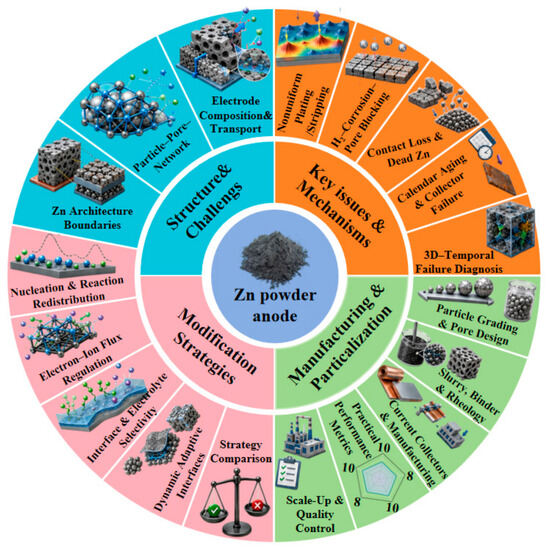
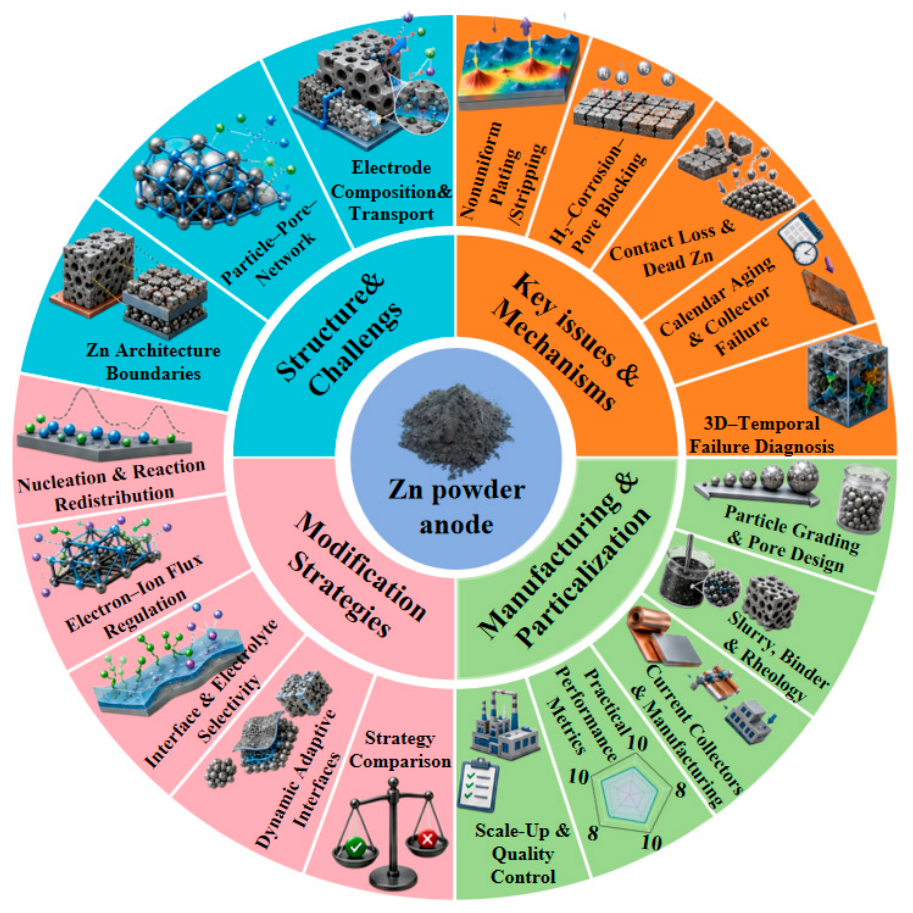
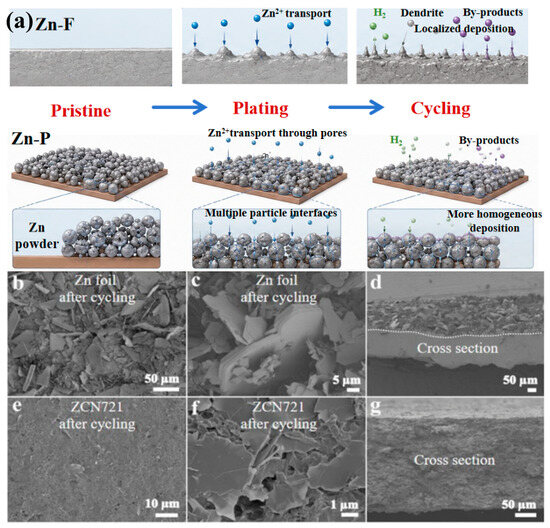
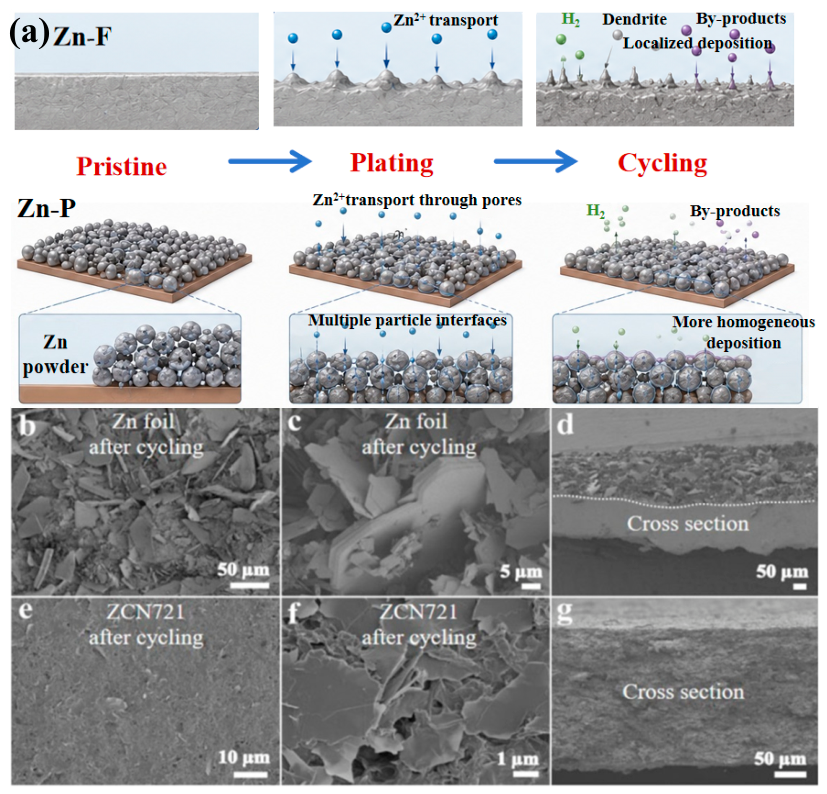
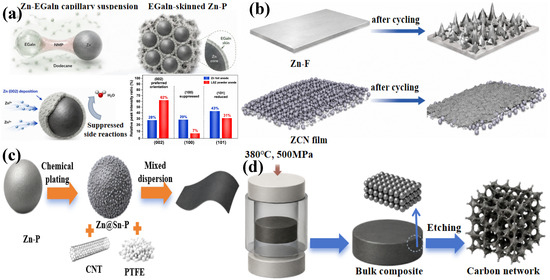
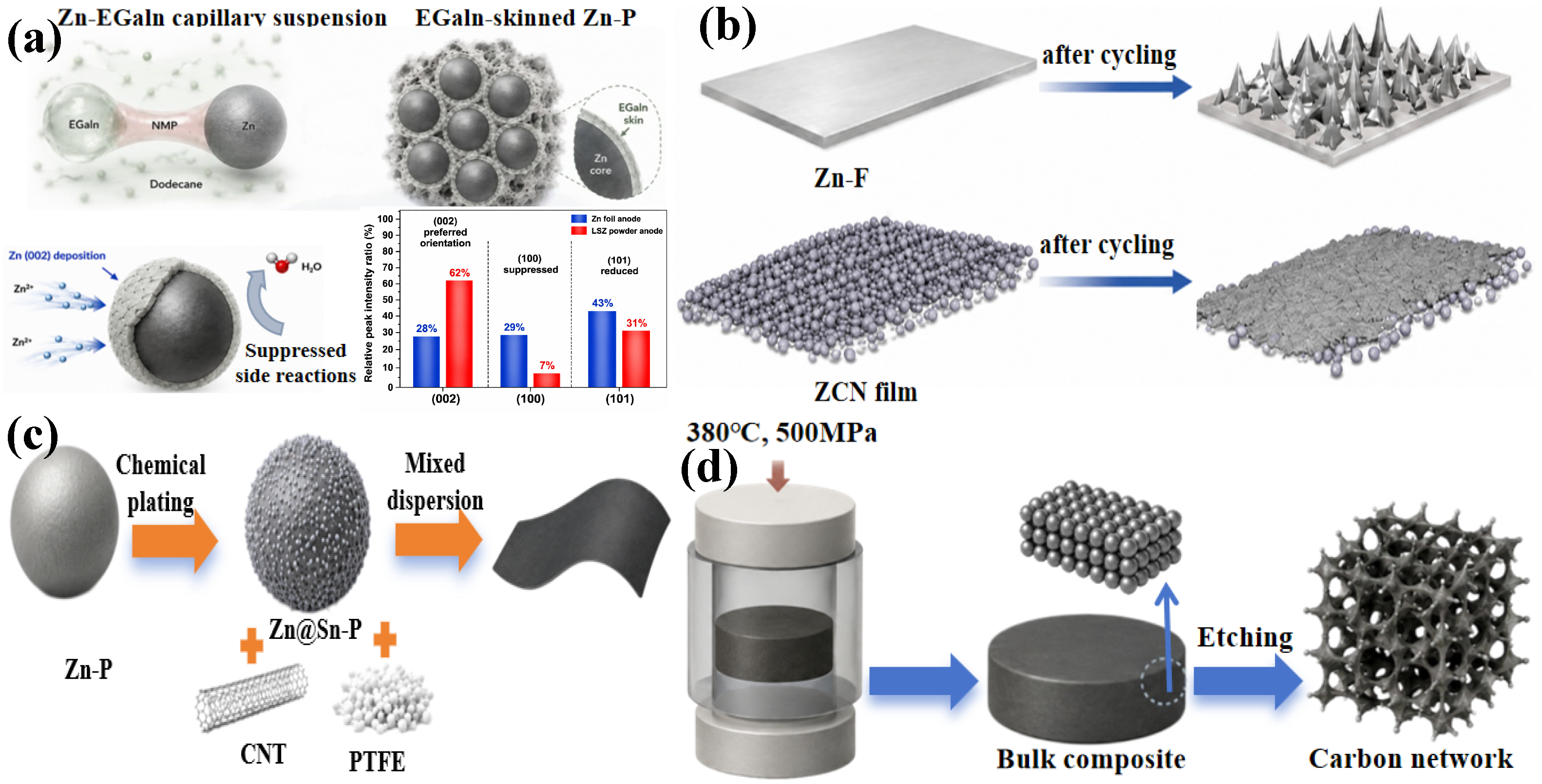
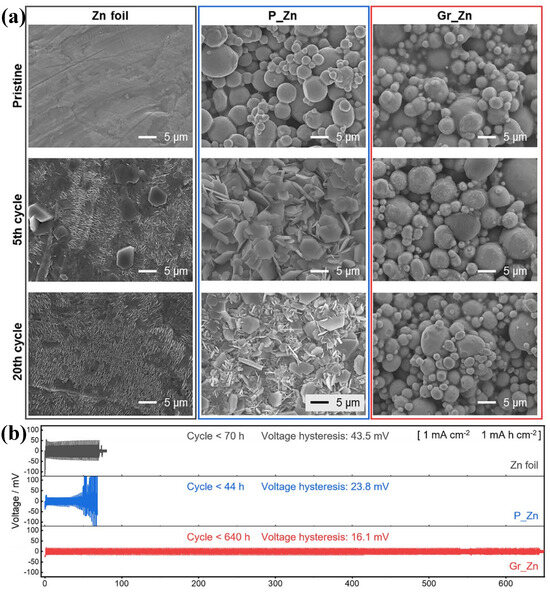
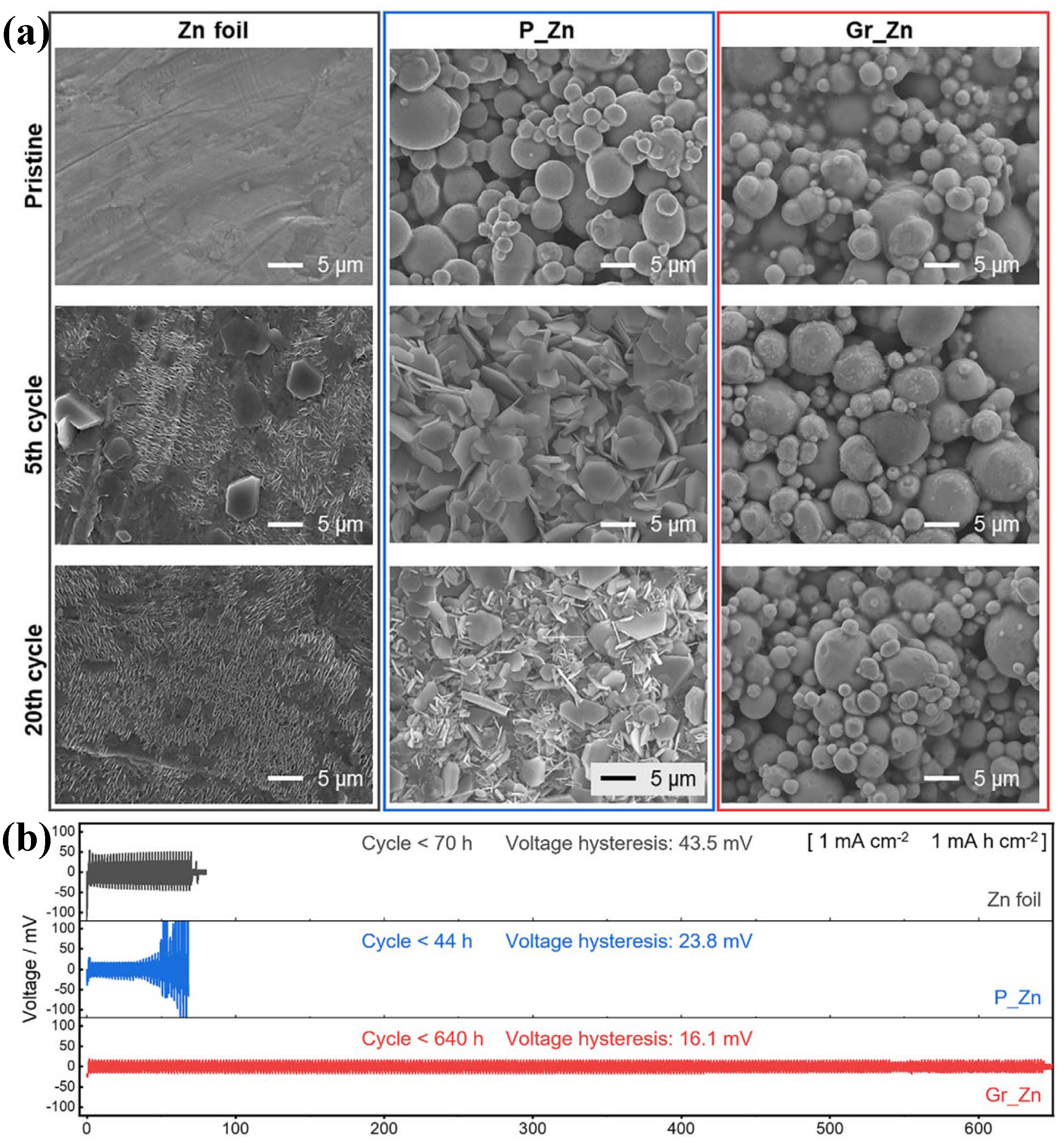
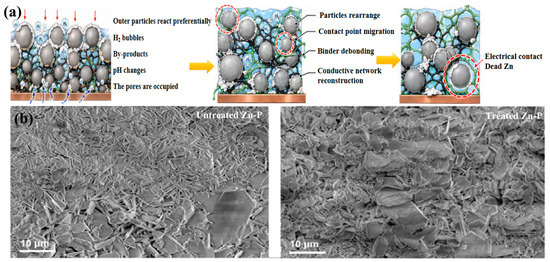
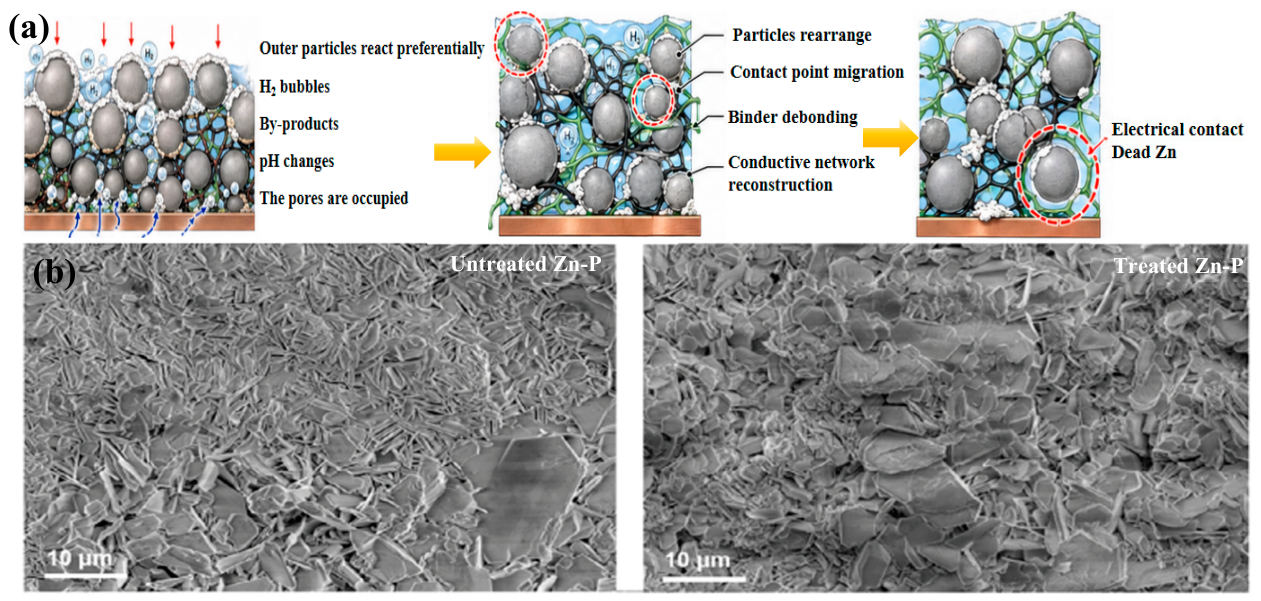
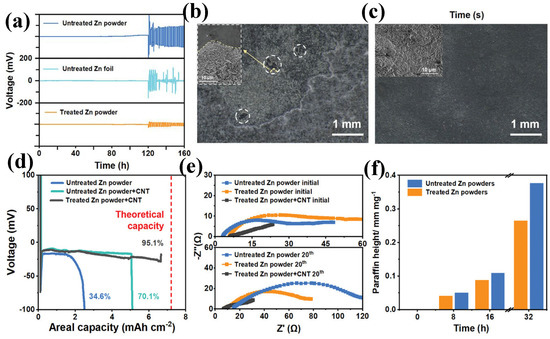
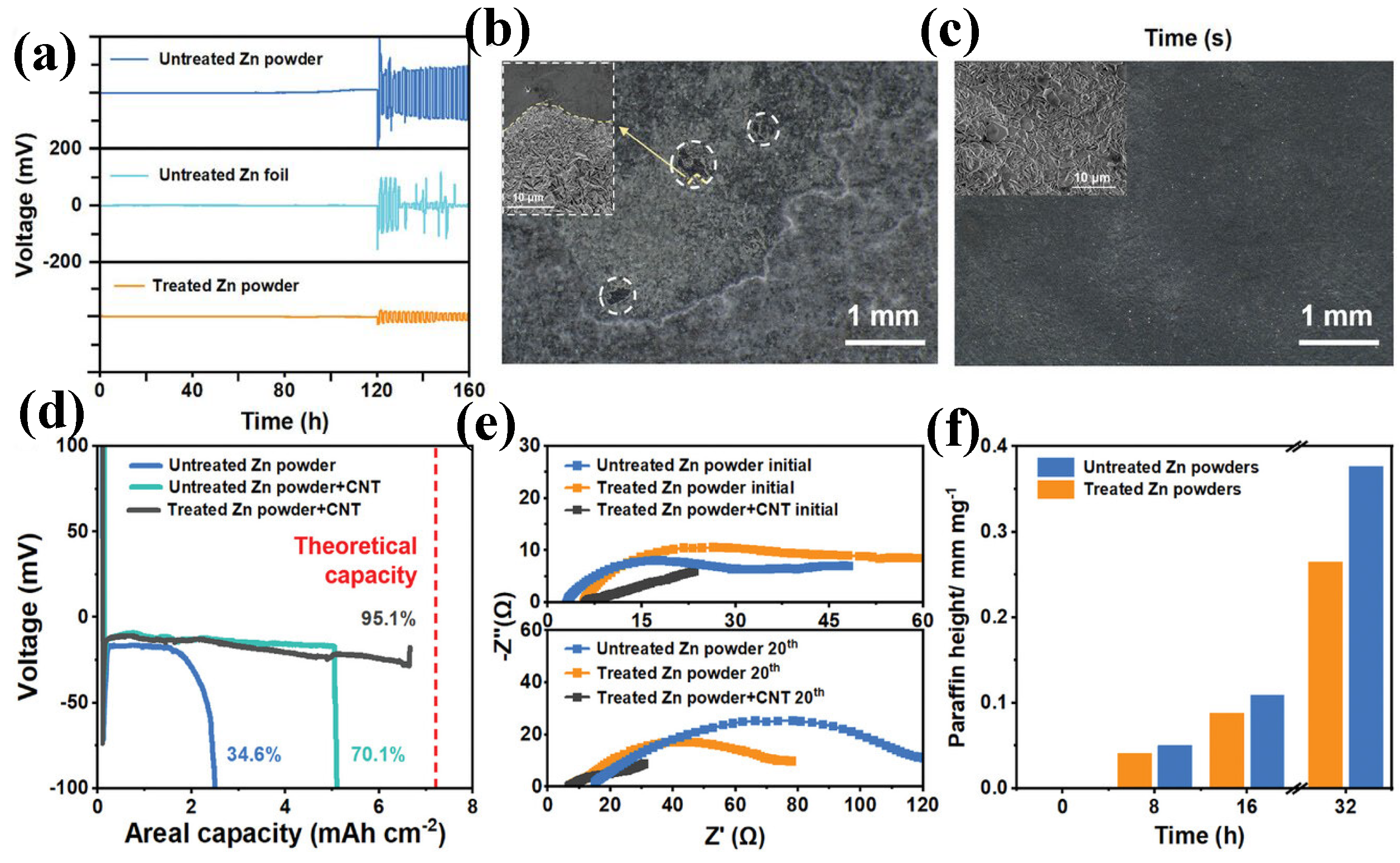
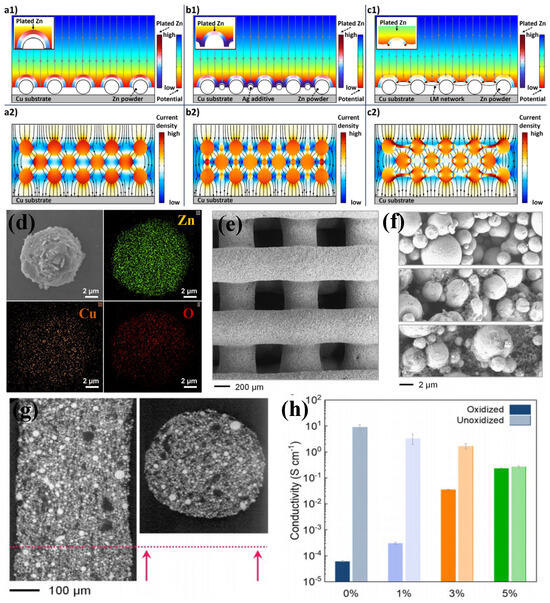
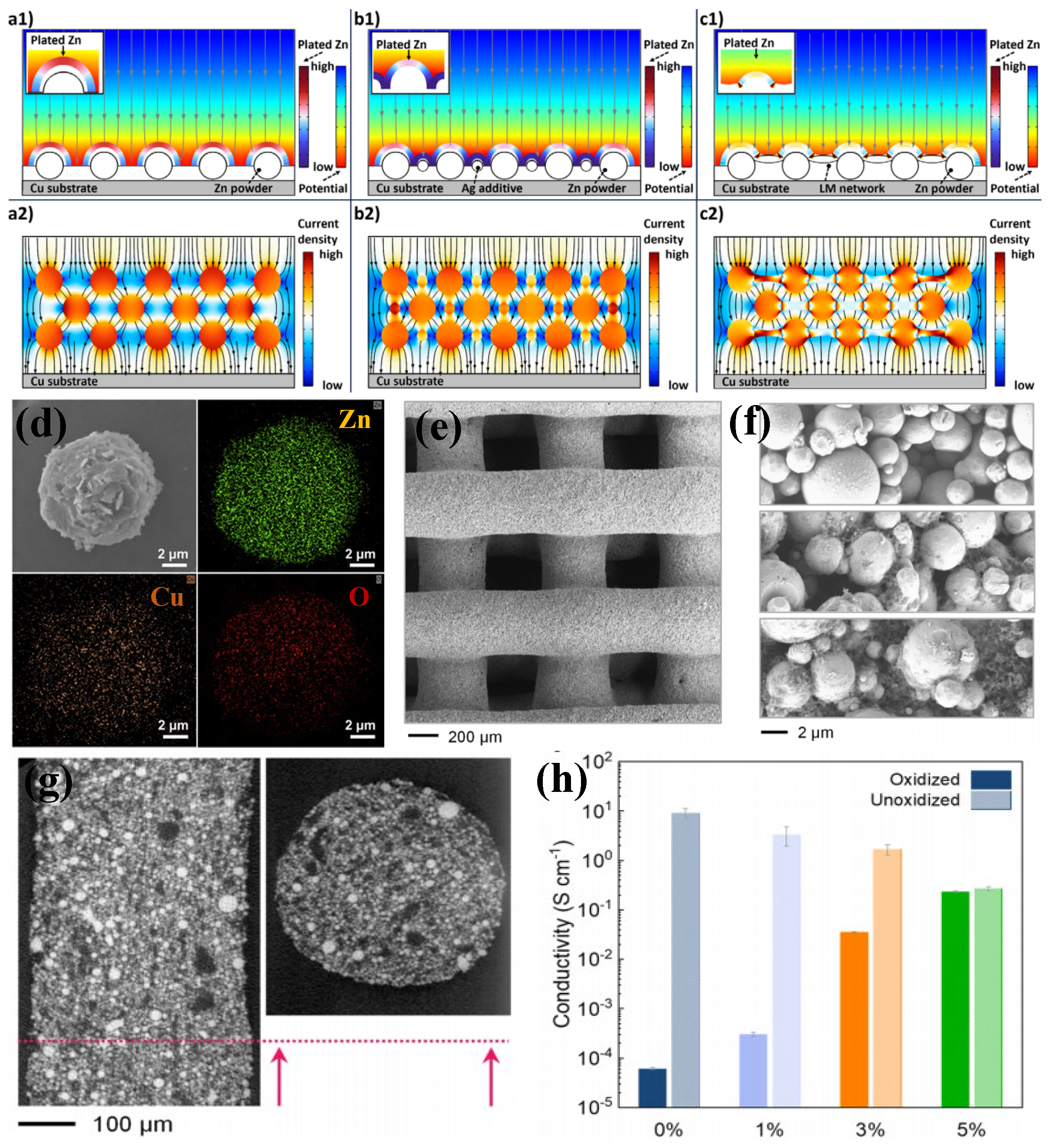
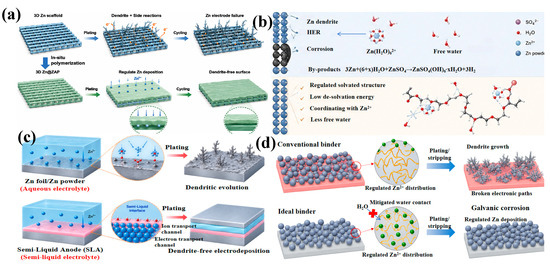
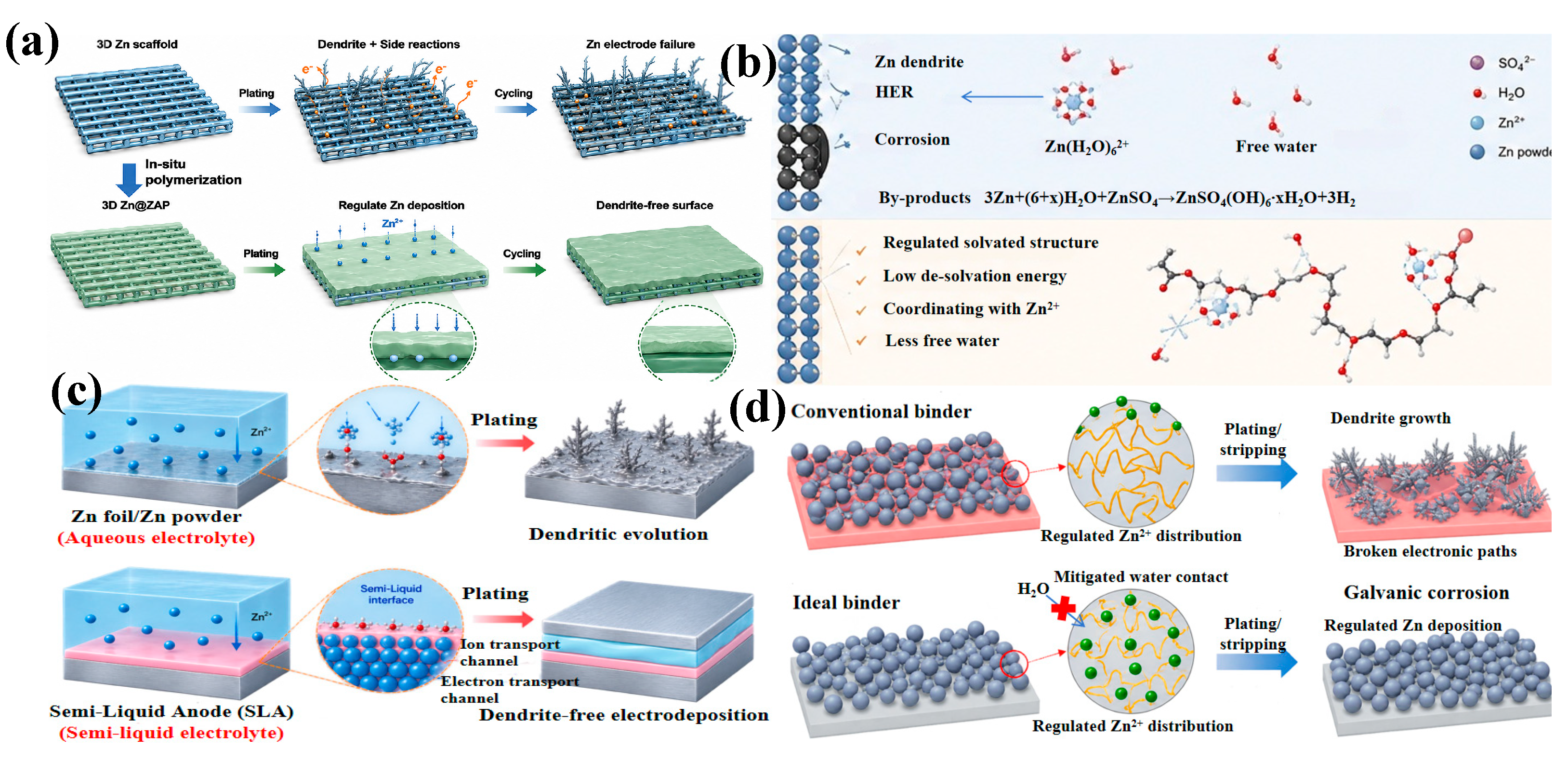
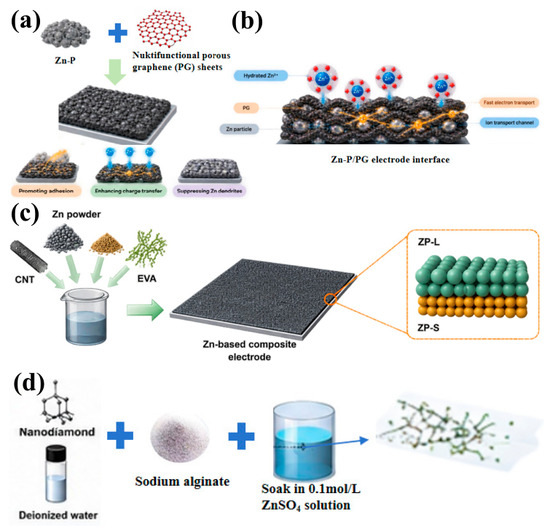
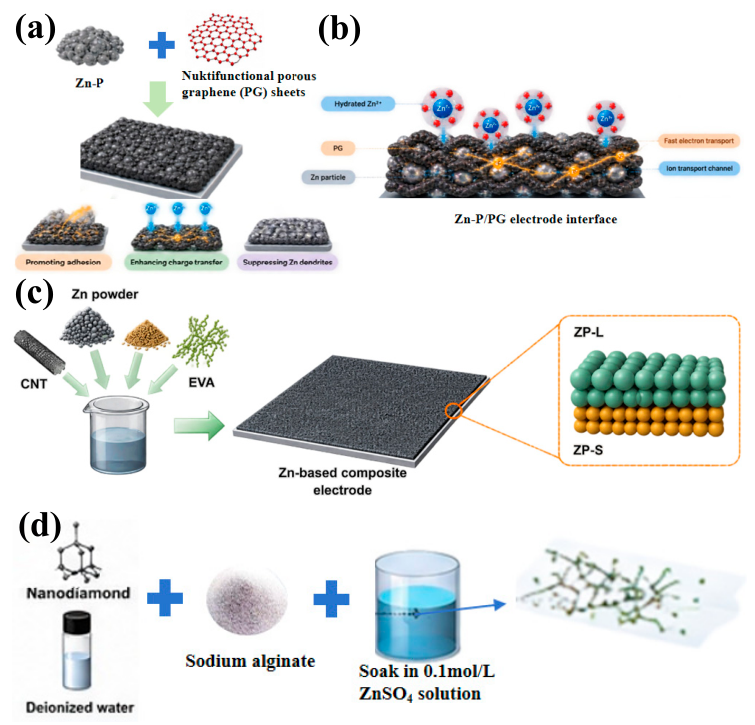
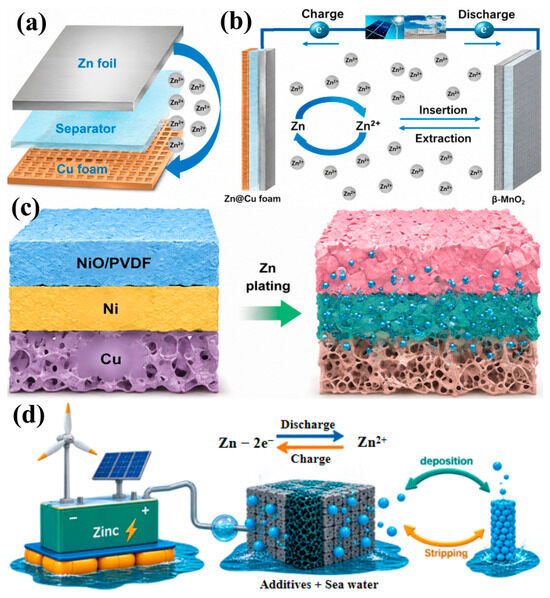
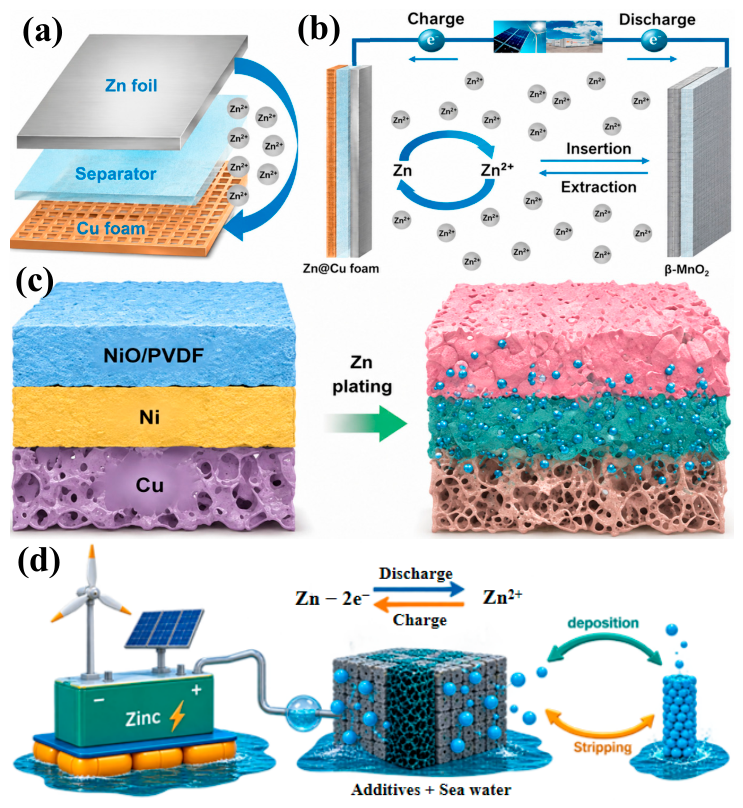
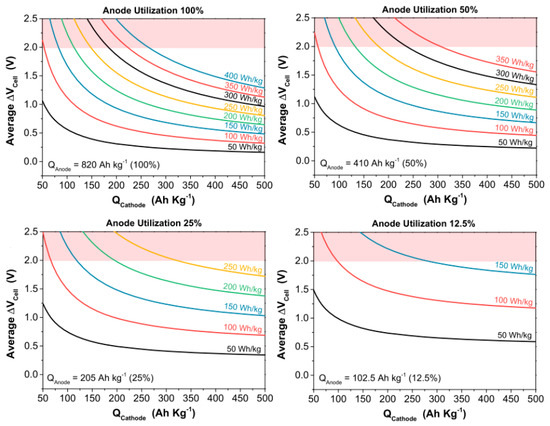
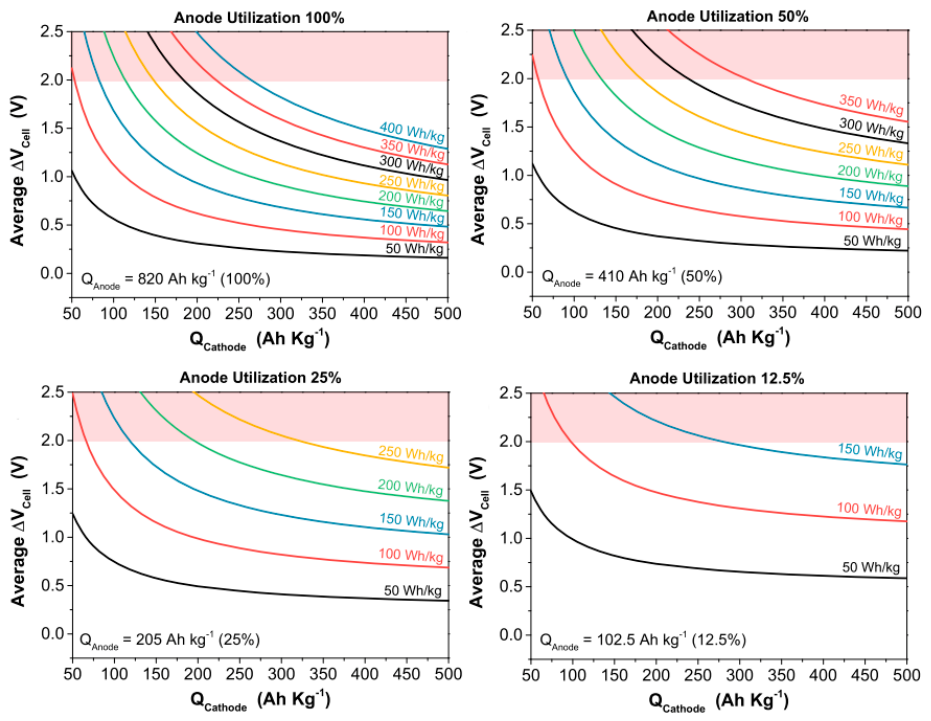

Disclaimer/Publisher’s Note: The statements, opinions and data contained in all publications are solely those of the individual author(s) and contributor(s) and not of MDPI and/or the editor(s). MDPI and/or the editor(s) disclaim responsibility for any injury to people or property resulting from any ideas, methods, instructions or products referred to in the content. |
© 2026 by the authors. Licensee MDPI, Basel, Switzerland. This article is an open access article distributed under the terms and conditions of the Creative Commons Attribution (CC BY) license.