


Abstract
The development of highly efficient and durable electrocatalysts for water electrolysis is fundamentally constrained by sluggish reaction kinetics, limited active-site regulation, and structural degradation under harsh operating conditions. High-entropy materials (HEMs), featuring maximized compositional diversity and configurational entropy, have emerged as versatile platforms for catalytic optimization. However, the rational incorporation of rare-earth (RE) elements into high-entropy systems and their intrinsic roles in regulating catalytic behavior remain largely unexplored. Owing to their unique electronic configurations, large atomic size mismatch, variable oxidation states, and strong affinity toward oxygen species, RE elements provides additional opportunities to manipulate electronic structures, lattice distortion, defect chemistry, and surface reconstruction behaviors within high-entropy frameworks. Rather than cataloguing individual catalyst systems, this review critically organizes RE-regulated HEMs along a structure-activity chain linking the high-entropy host and RE incorporation to local coordination/electronic effects, catalytic pathways, operando reconstruction, and long-term stability. The fundamental design principles and various modulation strategies, along with their catalytic applications toward the hydrogen evolution reaction (HER), oxygen evolution reaction (OER), and overall/seawater electrolysis are discussed, along with emphasis on the structure-activity relationships revealed by advanced characterization techniques and theoretical calculations. Finally, the remaining challenges and perspectives associated with RE incorporation regarding the activity-stability trade-off, long-term structural evolution, resource efficiency, and practical scalability are analyzed, aiming to offer guidelines for the rational design of RE-engineered high-entropy electrocatalysts with optimized activity, stability, and practical applicability for sustainable energy conversion technologies.
1. Introduction
Hydrogen is widely regarded as an important secondary energy carrier for achieving carbon neutrality, and water electrolysis provides a sustainable pathway for converting renewable electricity into green hydrogen [1,2]. Although electrolytic hydrogen production is well established, its large-scale deployment remains limited by the sluggish kinetics of the hydrogen evolution reaction (HER) and the oxygen evolution reaction (OER). Even the state-of-the-art noble-metal-based catalysts, including Pt, Ir, and Ru systems, still face challenges in terms of simultaneously achieving low overpotentials, high mass activity, and long-term durability under practical operating conditions [1,2,3]. Substantial efforts have, therefore, been devoted to developing advanced catalytic strategies, including electronic-structure engineering [4,5], lattice oxygen regulation [6,7,8,9], surface reconstruction [10,11], and device-level optimization [12,13,14]. These advances have been further validated in anion exchange membrane water electrolysis (AEMWE), proton exchange membrane water electrolysis (PEMWE), and seawater electrolysis [15,16,17,18], highlighting the continuous evolution from fundamental catalyst design toward practical hydrogen-production technologies. However, conventional catalyst-design strategies based on isolated compositional tuning often suffer from limited active-site diversity and restricted electronic flexibility, motivating the exploration of new material paradigms capable of simultaneously regulating multiple catalytic descriptors.
High-entropy materials (HEMs) have attracted extensive research interest owing to their composition-structure designability. Typically comprising five or more principal elements within a compositionally complex solid-solution framework, HEMs exhibit high configurational entropy, whereas lattice distortion, sluggish diffusion, and cocktail effects are system-dependent phenomena whose presence and magnitude require independent verification [19,20]. Initially developed in the field of high-entropy alloys, this high-entropy concept has, subsequently, been extended to a variety of material families, including high-entropy oxides, borides, phosphides, sulfides, and chalcogenides, enabling the construction of versatile catalytic platforms ranging from metallic and ceramic phases to porous and framework-based architectures for electrocatalytic water splitting [21,22,23,24]. The broad compositional space of HEMs allows continuous modulation of electronic structures, adsorption energies and defect formation behavior, whereas sluggish diffusion may contribute to enhanced structural stability by mitigating elemental segregation and phase separation under harsh electrochemical conditions. Consequently, a wide range of high-performance HEM-based electrocatalysts have been developed for HER and OER, overall water splitting, and seawater electrolysis under both alkaline and acidic conditions [15,16,25,26,27,28,29,30]. Meanwhile, machine learning and high-throughput methods have been applied to accelerate the prediction of phase stability, composition-structure relationships and catalytic descriptors in HEMs, facilitating a transition from empirical exploration toward rational and data-driven design of HEMs [31,32,33].
Despite these advances, rational regulation of HEMs remains challenging because the vast compositional space makes precise control over active-site configurations and electronic structures highly complex. In this context, elemental selection represents a critical dimension beyond conventional compositional engineering as different constituent elements provide distinct electronic and structural functionalities. Among various elements, rare-earth (RE) species, including the lanthanide series, as well as Sc and Y, provide an additional dimension for regulating the physicochemical properties of catalytic materials. Owing to their unique electronic configurations, large ionic radii, and diverse valence states (e.g., Ce3+/Ce4+ and Eu2+/Eu3+), RE elements can induce profound electronic and structural perturbations within host lattices. Moreover, the lanthanide contraction enables gradual variation in ionic radii across the RE series while maintaining similar chemical properties [34,35], providing a rational basis for systematic structural modulation. Coupling between RE 5d/6s states (and, in specific cases, 4f states), transition-metal 3d orbitals, and O 2p orbitals has been demonstrated in specific non-high-entropy oxide systems, including oxygen-vacancy-rich CeO2, atomically RE-modified MnO2, and spinel structures containing specific [Eu-O-Co] coordination motifs based on element-specific spectroscopy and DFT calculations [36,37,38,39,40,41]. Owing to the localization and 5s/5p shielding of 4f orbitals, however, direct 4f participation is element- and host-dependent, and in many RE-containing systems, including most high-entropy hosts, such coupling remains a proposed mechanism rather than a directly measured property. Meanwhile, the incorporation of large-radius RE species also induces lattice strain and defect-rich environments, thereby improving surface accessibility and facilitating the formation of catalytically active sites [35,42]. In particular, variable-valence RE oxides, such as CeO2, can act as oxygen reservoirs through reversible redox transitions, enabling dynamic regulation of oxygen-related intermediates during electrocatalytic processes [37,38]. These unique characteristics have been demonstrated across diverse RE-modified catalytic systems [39,43,44,45,46], highlighting RE elements as a powerful regulatory component for tailoring the electronic structure, defect chemistry and phase stability of high-entropy electrocatalysts.
When RE elements are introduced into high-entropy lattices, the intrinsic compositional complexity of HEMs and the unique electronic characteristics of RE species are coupled, and this is proposed as a means to generate synergistic effects beyond those achievable by either strategy alone. The high-entropy matrix provides a chemically flexible solid-solution framework capable of accommodating RE ions with large ionic radius, while RE incorporation further modifies the local lattice environment through RE-derived electronic interactions, lattice distortion, and defect regulation [19,25,47]. Consequently, RE-engineered HEMs have recently emerged as a rapidly growing family of electrocatalysts for water splitting. Representative examples include a pyrochlore high-entropy oxide (Y0.2Ho0.2Dy0.2Gd0.2Pr0.2)2Ru2O7, in which five RE elements occupy the A sites and deliver an overpotential of 200 mV with high mass activity toward acidic OER [47]. A RE-containing high-entropy perovskite (RE-HEPN), consisting of La, Sc, Y, and Eu at the A site and Fe, Co, Ni, and Mn at the B site, maintains a single-phase perovskite framework with abundant oxygen vacancies and low-valence active centers, enabling stable operation in PEMWE for 1000 h [16]. Beyond oxide systems, RE incorporation has also been extended to non-oxide HEMs. A Pt-anchored seven-element high-entropy RE oxide exhibits HER overpotentials of 12–77 mV over the full pH range [48], while Ce-containing high-entropy phosphide FeCoNiMoCeP/C achieves efficient overall water splitting at only 1.53 V [49]. Furthermore, Ce-modulated high-entropy layered hydroxide/sulfide heterostructure delivers enhanced seawater electrolysis activity with improved chloride resistance [26]. These representative systems also reveal the distinct roles of RE incorporation across different material families. Pyrochlores and perovskites provide favorable crystal frameworks for incorporating multiple RE species into stable solid solutions, whereas non-oxide systems more readily exploit RE-induced interfacial modulation and electrochemical reconstruction. Therefore, in the systems discussed in this review, high-entropy design and RE regulation should not be regarded simply as two independent strategies. Rather, their integration provides an expanded compositional and structural space in which RE species can further regulate local coordination, electronic structures and oxygen-related defect chemistry through system-dependent mechanisms [25,27,42,50].
Several recent reviews have summarized the roles of RE elements in transition-metal electrocatalysts [10,34,45] and water electrolysis [51], whereas others have discussed HEMs for electrocatalytic water splitting [19,21,52]. However, these two research directions were reviewed independently, leaving their intersection insufficiently addressed. In particular, RE site occupancy within high-entropy lattices, quantitative RE-high-entropy (RE-HE) compatibility including solubility limits, phase-stability windows and composition-structure descriptors, operando RE redistribution during reconstruction, and device-level translation of RE-regulated HEMs remain poorly resolved. Currently, RE-HE compatibility is commonly evidenced by single-phase identification via X-ray diffraction (XRD) together with surface valence states determined from X-ray photoelectron spectroscopy (XPS), whereas atomic-level insights into RE site occupancy, coordination environments, and structural evolution under operating conditions remain insufficient [19,53]. Moreover, phase-stability windows, solubility limits, and composition–structure descriptors have yet to be established [32,54]. Although advanced techniques, including lanthanide L-edge Extended X-ray Absorption Fine Structure (EXAFS) [55], phase-derivative EXAFS analysis [56], High-Angle Annular Dark-Field Scanning Transmission Electron Microscopy (HAADF-STEM) and neutron pair distribution function (PDF), have significantly improved structural characterization capabilities, standard methodologies are still required to enable reliable comparison across different RE-HE systems [6,10].
This article is, therefore, presented as a critical narrative review of RE-regulated HEMs for electrocatalytic water splitting. The relevant literature was identified primarily through the Web of Science and Scopus using combinations of keywords including “high-entropy”, “rare earth”, “water electrolysis”, “electrocatalysis”, “oxygen evolution reaction”, and “hydrogen evolution reaction”, with the search updated through July 2026. The core literature comprises RE-containing high-entropy materials applied to water electrolysis or its relevant half-reactions, with high-entropy systems operationally defined according to the configurational-entropy criterion described in Section 2.3. Most of this directly relevant literature has emerged since 2020, reflecting the recent and rapidly developing nature of this research direction. Representative studies were selected to cover different material classes, RE incorporation modes, regulation strategies, catalytic reactions, and levels of mechanistic or device-level evidence. Selected non-high-entropy RE-containing systems are included only where they provide relevant comparative or mechanistic context and are explicitly distinguished from the core RE-HE literature. Rather than cataloguing individual catalyst systems, this review organizes the available evidence along a structure-activity chain linking the high-entropy host and RE regulation to local coordination/electronic effects, catalytic pathways, operando reconstruction, and long-term stability (Figure 1), which constitutes the principal conceptual contribution of this review. Within this framework, we examine major strategies for RE regulation in HEMs and their applications in HER, OER, overall water splitting, and seawater electrolysis, while distinguishing experimentally supported structure-activity relationships from mechanistic extrapolations. By identifying the missing links along this structure-activity chain—from RE site occupancy and compatibility to reconstruction and device-level durability—this review aims to provide an evidence-based framework for understanding RE–high-entropy interactions and to guide the rational design of RE-regulated HEMs for water electrolysis.
Figure 1.
Schematic illustration of the construction and application of RE-regulated HEMs.
2. Fundamental Principles of RE-Engineered High-Entropy Materials
2.1. Reaction Mechanism of Water Splitting
Water splitting consists of two coupled half-reactions: the HER at the cathode and the OER at the anode. In acidic media, HER generally proceeds through the Volmer–Heyrovsky or Volmer–Tafel pathways, with the hydrogen adsorption free energy (ΔG*H) serving as a key descriptor of catalytic activity. In alkaline media, however, the limited availability of protons requires an additional water-dissociation step (H2O + e− → *H + OH−), introducing an additional kinetic barrier. Therefore, efficient alkaline HER depends not only on an optimal ΔG*H but also on interfacial water affinity, water-dissociation kinetics, and proton/hydroxide transport at the catalyst-electrolyte interface [2,19].
Compared with HER, OER involves more complex multistep proton-coupled electron-transfer processes and generally imposes a larger kinetic penalty on water electrolysis. In the conventional adsorbate evolution mechanism (AEM), OER proceeds through sequentially adsorbed *OH, *O, and *OOH intermediates. The approximately linear scaling relationship between the adsorption energies of *OH, *O, and *OOH restricts their independent optimization, imposing a theoretical minimum overpotential of approximately 0.3–0.4 V on conventional single-site catalysts [4,9]. Electronic-structure descriptors such as eg orbital occupancy have, therefore, been introduced to correlate transition-metal electronic configurations with oxygen-intermediate binding and guide the rational design of oxide electrocatalysts [5]. Beyond the conventional AEM, alternative reaction pathways have attracted increasing attention. The lattice oxygen mechanism (LOM) involves redox-active lattice oxygen in O–O bond formation, whereas the oxide path mechanism (OPM) enables direct coupling between adjacent metal–oxygen species, both of which provide potential routes to relax the adsorption-energy constraints associated with conventional AEM chemistry [6,57].
Beyond surface adsorption energetics, OER kinetics are also governed by bulk and subsurface structural dynamics. Studies on cation-deficient oxides have demonstrated that bulk oxygen diffusivity is closely correlated with intrinsic OER activity [7], while isotope-labelling experiments further demonstrate the involvement and transport of lattice oxygen during catalysis [8]. More recently, the oxygen-vacancy-site mechanism (LOM-OVSM) has further highlighted the role of vacancy configurations in determining oxygen activation and reaction pathways [9]. These findings collectively shift the design paradigm of OER catalysts from static optimization of surface adsorption energies toward multidimensional regulation of electronic structure, defect chemistry, oxygen-migration capability, and dynamic surface reconstruction behavior. Such coupled descriptors are particularly relevant to high-entropy systems, in which local lattice distortion and compositional complexity can generate heterogeneous coordination environments, and to RE regulation, which provides additional control over oxygen vacancies, metal–oxygen covalency, and lattice-oxygen dynamics.
2.2. Electronic Structure and Modulation Mechanism of RE Elements
RE elements comprise the 15 lanthanides together with Sc and Y, constituting a family of 17 elements (Figure 2). The lanthanides are characterized by the progressive filling of the 4f subshell, with electronic configurations generally described as [Xe]4fn (or 4f(n−1)5d16s2) [34,35]. Their partially filled 4f states, relatively large ionic radii, and accessible oxidation states endow RE elements with distinctive electronic and structural characteristics. Moreover, the progressive contraction of the 4f shell across the lanthanide series leads to a gradual decrease in ionic radii with increasing atomic number. This so-called lanthanide contraction provides finely tunable geometric parameters while maintaining similar chemical properties, offering a unique basis for regulating local coordination environments and lattice strain [34]. Owing to their limited spatial extension and shielding by the outer 5s/5p orbitals, 4f orbitals cannot readily hybridize directly with the O 2p orbitals of ligands. Nevertheless, in systems where RE electronic states are sufficiently delocalized or coupled through defect states, the more spatially extended 5d/6s orbitals of RE ions can participate in bonding, forming multi-center coupling with the transition-metal 3d and oxygen 2p orbitals. Such coupling has been experimentally and theoretically verified in specific non-high-entropy systems, including oxygen-vacancy-rich CeO2, atomic-RE-modified MnO2, and [Eu-O-Co] spinel oxides, through element-specific X-ray absorption spectroscopy (XAS), XPS, and DFT calculations [36,37,38,39,40,41], and can establish an f-d electronic ladder that modulates the d-band center position, metal–oxygen covalency, and the adsorption free energies of *OH, *O, and *OOH intermediates. Meanwhile, variable-valence states such as Ce3+/Ce4+ can generate and vanish oxygen vacancies through reversible redox cycles, thereby serving as dynamic oxygen reservoirs while simultaneously regulating the electronic states of adjacent transition-metal sites [34,37,38]. In addition, Ce, La, Y, Sc, Eu, and other RE elements differ considerably in terms of ionic radius, accessible oxidation states, and 4f electron configurations. The catalytic effects of RE incorporation, therefore, rarely originate from a single mechanism, but rather from the interplay of structural distortion, electronic coupling and defect chemistry. The incorporation of RE ions with substantial size mismatch can perturb local coordination environments and generate lattice strain or defect-rich structures [35,42], while interactions between RE-derived 4f/5d states and transition-metal 3d-O 2p networks has been shown to be able to redistribute the electronic structure around active centers and alter the energetics of elementary reaction steps [37,38]. Meanwhile, RE-associated oxygen vacancies and defect networks can regulate oxygen-migration pathways and promote LOM reaction pathways in certain oxide systems [37]. For example, the f-d electronic ladder at the CeO2/hydroxide interface markedly accelerates electron transfer [38], while oxygen vacancies in CeO2 generate a 3d-Vo-4f channel near the Fermi level [37]. In addition, single RE atoms can form asymmetric [RE-O-Mn] units on MnO2 surfaces, altering the local electronic environment and promoting direct O–O coupling involving lattice oxygen [41]. Accordingly, RE elements often function not directly as conventional catalytic active centers but as structural and electronic regulators that influence local electronic structure, defect states, oxygen dynamics and interfacial reaction environments. The specific regulatory role depends strongly on the intrinsic physicochemical characteristics of the RE element. For example, Ce can facilitate redox-coupled oxygen-vacancy regulation, while La and Y can serve as size-compatible lattice constituents or electronic modulators. Sc can minimize local lattice mismatch, whereas Eu may promote lattice-oxygen activation through spin–orbit-related electronic effects. Thus, RE selection should be tailored to the desired regulatory mechanism and the structural characteristics of the host lattice [34,58,59]. These characteristics are particularly complementary to high-entropy design.
Figure 2.
Elements and RE elements used in electrocatalysis [60].
2.3. High-Entropy Effect and Compatibility of RE Elements with High-Entropy Systems
The distinctive electronic and structural characteristics of RE elements discussed above provide additional elemental degrees of freedom for catalyst regulation, while the high-entropy matrices offer a compositionally flexible platform in which these characteristics can be integrated and amplified. In this review, HEMs are operationally classified according to the configurational entropy of the compositionally mixed sublattice, calculated as ΔSconf = −RΣxilnxi, where xi is the molar fraction of component i on the relevant sublattice. Materials with ΔSconf ≥ 1.5R are classified as high-entropy systems, whereas those with 1.0R ≤ ΔSconf < 1.5R are considered medium-entropy systems. Multicomponent materials that do not satisfy these criteria are not regarded as HEMs solely on the basis of the number of constituent elements. Moreover, “entropy-stabilized” is reserved for systems in which configurational entropy has been experimentally or thermodynamically demonstrated to contribute critically to stabilization of the single-phase state. For HEMs, the high configurational entropy, lattice distortion, sluggish diffusion, and multielement interactions collectively generate structural and chemical environments distinct from those of conventional single- or few-component materials [19,20]. These effects should be regarded as conceptual characteristics rather than universally operative mechanisms, and their relative importance varies substantially with composition, structure, temperature, and reaction environment [61]. Among them, the cocktail effect has been experimentally supported in specific systems. For example, the FeNiCoCuMo high-entropy alloy exhibited synergistic electrocatalytic behavior relative to its monometallic counterparts, as supported by combined electrochemical characterization, spectroscopic and theoretical analysis [61]. In many other systems, however, these effects remain inferred or proposed rather than directly demonstrated. Sluggish diffusion has been directly demonstrated by diffusion-couple measurements in Co-Cr-Fe-Mn-Ni high-entropy alloys [62] and further supported in high-entropy ceramics [63], and has been proposed to contribute to the structural stability of high-entropy alloy electrocatalysts [64]. However, direct kinetic evidence linking sluggish diffusion to suppressed elemental segregation or phase separation under electrocatalytic operating conditions remains limited. Such characteristics make HEMs particularly attractive hosts for RE incorporation. The compatibility between RE species and high-entropy matrices can be understood from three aspects. First, the broad compositional space can increase the thermodynamic accessibility of multicomponent solid solutions, providing opportunities to accommodate RE species through interstitial or substitutional incorporation or, in appropriate structures with other lattice configurations, despite substantial differences in ionic size and bonding characteristics [19,47]. Second, sluggish atomic diffusion and complex local bonding environments may retard elemental redistribution or phase segregation [19,20,22]. Third, the multi-metal synergistic environment provides a greater diversity of local coordination and redox states through which RE-derived electronic and defect regulation can be coupled with the host lattice [25,52]. To date, RE species have been incorporated into a variety of high-entropy matrices ranging from crystalline oxides such as pyrochlores, fluorites and perovskites, to high-entropy alloys, borides and metal–organic frameworks (MOFs). Representative systems include the A-site-engineered HE-YRO pyrochlores [47], fluorite-type (LaPrNdTbDy)2Ce2O7 [65], RE-containing RE-HEPN perovskite [16], Ce-containing high-entropy metallic systems [15,25], WMoVNbCeB high-entropy borides [22], and RE containing high-entropy MOFs [52]. These examples demonstrate the broad structural diversity available for coupling RE chemistry with high-entropy design.
Throughout this review, RE-regulated HEMs are used as an inclusive functional term to describe HEMs whose structure or catalytic behavior is intentionally modified by RE species. It does not necessarily imply that the RE species directly participates in the high-entropy configurational state. According to their structural roles, RE species are classified into four categories: (i) lattice constituents, which occupy the compositionally mixed principal sublattice and contribute directly to the configurational entropy; (ii) substitutional or dopant species, which are incorporated into a high-entropy host at relatively low concentrations but do not necessarily constitute principal components of the high-entropy state; (iii) interfacial or atomically dispersed species, which regulate a pre-existing high-entropy host from surface, interface, or isolated-site environments; and (iv) reconstruction-associated species, whose coordination or spatial distribution evolves substantially during electrochemical reconstruction. Only systems in which RE species are intentionally introduced and play an identifiable structural, electronic, interfacial, or reconstruction-related role are included as core RE-regulated HEMs, and the specific RE role of each representative system is explicitly identified in Section 3.
Nevertheless, quantitative analysis of RE-HE compatibility remains lacking. Existing studies mostly rely on XRD to confirm single-phase formation and on XPS to determine surface valence states. However, neither observation alone establishes the atomic-scale location of RE species within a high-entropy matrix. Critical questions remain regarding whether RE atoms are truly incorporated, occupy interstitial or defect-associated sites, segregate at surfaces or grain boundaries, or dynamically redistribute during electrochemical operation [19,53,65]. Equally important, quantitative criteria governing RE solubility limits, phase-stability windows, local coordination preferences, and electronic compatibility have yet to be established. Resolving these issues requires complementary characterization across multiple length scales, as discussed in Section 2.4, and provides an essential foundation for understanding the structure-activity relationships developed in subsequent sections.
From a thermodynamic perspective, RE-HE compatibility should ultimately be considered in terms of the competition between entropy-driven stabilization and the energetic penalties associated with chemical and structural mismatch. For a multicomponent system, phase formation is governed by the Gibbs free energy of mixing formula (ΔGmix = ΔHmix − TΔSmix), where an increased configurational entropy (ΔSmix) can reduce the free-energy penalty for forming compositionally complex phases, but cannot independently guarantee single-phase stability when unfavorable mixing enthalpies, substantial ionic-size mismatch, or competing phases dominate [66]. Accordingly, RE incorporation into high-entropy lattices should be viewed within the broader context of phase stability, which reflects the balance between entropy-driven mixing and the structural and chemical penalties introduced by compositional complexity. For example, in multicomponent rare-earth zirconates, a configurational entropy above 1.5R favors entropy-stabilized solid-solution formation only when accompanied by sufficiently low cation-size disorder. A size disorder below approximately 5% was associated with single-phase pyrochlore or defective-fluorite structures, whereas larger size mismatch led to phase separation despite comparable configurational entropy; the pyrochlore-to-defective-fluorite transition was further correlated with the average cation-radius ratio [67]. Similar size-compatibility constraints have also been reported for rare-earth high-entropy intermetallic compounds [68]. These observations indicate that RE-HE compatibility cannot be assessed from configurational entropy alone, but should instead be considered together with size mismatch, mixing energetics and structure-specific geometric constraints. Furthermore, computational and data-driven approaches are being introduced to quantify this balance. For example, machine-learning approaches have been applied to phase prediction in high-entropy borides, providing a pathway from empirical composition screening toward predictive assessment of phase formation [33]. Moreover, the concept of entropy stabilization has been extended from high-temperature oxides to near-ambient/low-temperature systems. Multicomponent RE carbonates can be obtained as five-component single-phase solid solutions via hydrothermal treatment at 140 °C for 8 h [69], while finite-temperature calculations combined with experimental validation in RE oxide-phosphate systems further demonstrate that entropic contributions can alter the relative stability of compositionally complex structures [70]. The relevance of configurational complexity also extends beyond long-range-ordered crystals. High-entropy chalcogenide glasses and amorphous high-entropy MOFs retain chemically diverse local environments despite the absence of translational periodicity [71,72], shifting the structural question from conventional phase identification toward short-range ordering and element-specific coordination. In such systems, total-scattering and PDF analyses, together with element-specific spectroscopies, become particularly important for determining whether nominal compositional homogeneity corresponds to genuine atomic-scale mixing. Thus, RE-HE compatibility should be evaluated not simply by whether a nominally single phase can be obtained, but by the combined thermodynamic, kinetic, and local-structural factors governing the spatial distribution and electronic interaction of RE species within compositionally complex matrices.
2.4. Structural Characterization and Phase Stability Criteria
The establishment of RE-HE compatibility characterization requires rigorous structural evidence that extends beyond nominal composition and conventional phase identification. For crystalline RE-containing HEMs, characterizations should focus on three fundamental questions: phase purity, RE site occupancy, and defect evolution. Conventional XRD provides essential information on long-range crystallographic order and phase purity, but a nominally single-phase diffraction pattern does not necessarily demonstrate homogeneous RE incorporation at the atomic scale. The local disorder, short-range order, and site preferences induced by RE incorporation, therefore, require complementary local probes such as PDF and XAS [55,56]. Combined XRD/Rietveld refinement and PDF analysis can confirm long-range order and local structure [65], whereas element-specific EXAFS provides direct access to the coordination number, bond distance, and local disorder surrounding RE sites. For lanthanides, dedicated L-edge EXAFS methodologies are particularly important because the accessible k-range and multi-electron excitations enable quantitative determination of the RE coordination environment [55]. Phase-derivative EXAFS provides an additional approach for extracting local structural parameters when conventional fitting becomes unstable or strongly correlated [56]. Atom probe tomography (APT) can visualize local elemental distributions, segregation, and interfacial heterogeneity, while in situ/operando transmission electron microscopy (TEM) can track elemental distribution and surface/subsurface reconstruction under reaction-relevant conditions [73]. In situ/operando XAS can track changes in RE oxidation state and local coordination during electrocatalysis [37,56,74], while operando Raman spectroscopy can monitor phase transformation and surface reconstruction [75,76] but does not generally provide direct element-specific information on RE redistribution. Together, these complementary techniques establish a hierarchical characterization framework spanning average crystal structure, element-specific local coordination, spatially resolved atomic distributions, and structural evolution under operating conditions. As summarized in Table 1, different techniques provide complementary evidence for distinguishing among lattice substitution, surface segregation, grain-boundary enrichment, and operando redistribution, although unambiguous assignment generally requires the convergence of multiple characterization methods. These scenarios have distinct mechanistic implications. Substitutional RE incorporation supports lattice-mediated electronic and defect regulation within the high-entropy host, whereas surface or grain-boundary enrichment points to a potentially greater contribution from interfacial coordination and local electronic effects. Operando redistribution further indicates that the as-synthesized material may function as a pre-catalyst, such that the catalytically relevant RE environment must be evaluated in the reconstructed state rather than inferred solely from the initial structure.
Table 1.
Common crystallographic characterization techniques and the crystallographic questions.
Structural identification alone, however, does not explain why a particular combination of RE species can or cannot be accommodated within a high-entropy matrix. Quantitative descriptors such as normalized configurational entropy, relative cation volume, and average atomic-size mismatch have been explored to predict single-phase or multiphase formation [31,33,66]. Compositional regulation, such as Ta substitution, can further modify the thermodynamic landscape and improve the high-temperature phase stability of RE-containing high-entropy oxides [77]. Nevertheless, configurational entropy should not be regarded as an independent or universal criterion for phase stability. Elemental concentration, valence state, ionic radius, coordination preferences, and mixing enthalpies can all compete with the entropic contribution, and the stability of even some typical entropy-stabilized oxides remains debated [54]. Moreover, the host crystal structure itself imposes an additional level of constraint: fluorite, pyrochlore, bixbyite, and related frameworks possess distinct coordination geometries and site-size requirements, thereby defining different compositional windows for accommodating RE combinations [78,79]. Such structure-dependent phase constraints are particularly important for RE-containing systems because the continuous variation in ionic radius across the lanthanide series can alter lattice strain and site preference. Therefore, the high-entropy nature and RE-HE compatibility of a material cannot be judged simply by the number of components alone. A rigorous assessment requires the integration of thermodynamic and structural descriptors, computational or data-driven phase prediction, and multi-scale experimental characterization, as summarized in Table 1. Such an integrated framework not only distinguishes genuine atomic-scale mixing from apparent phase homogeneity, but also provides the structural basis for correlating RE site occupancy, local distortion, and defect evolution with electrocatalytic performance.
The rational design of RE-containing HEMs relies on the complementary roles of the compositional complexity and RE-specific chemistry. A high-entropy matrix provides a broad compositional space in which configurational entropy can promote thermodynamic phase accessibility, while sluggish diffusion may retard phase segregation. Meanwhile, RE incorporation introduces additional degrees of freedom for regulating the local coordination, defect chemistry, and reaction pathways through ionic-radius mismatch, RE-derived-electron-mediated interactions, and variable valence states. Importantly, the RE-HE compatibility cannot be judged by XRD single-phase identification alone. Complementary local and atomic-scale probes including PDF analysis, EXAFS, HAADF-STEM, and neutron diffraction are required to confirm RE site occupancy, local disorder, elemental homogeneity and defect organization. Beyond experimental verification, descriptors such as normalized configurational entropy, relative cationic volume, and average atomic-size or ionic-size mismatch, together with the geometric constraints imposed by specific structure types such as fluorite and pyrochlore, provide a basis for evaluating phase-forming tendencies. Integrating these thermodynamic, kinetic, structural, and electronic considerations is, therefore, essential for moving RE-containing HEMs from empirical compositional exploration toward predictive and rational design.
3. Construction Strategies of RE-Regulated High-Entropy Materials
The rational design of RE-regulated HEMs extends beyond simple compositional selection, requiring coordinated control across multiple structural dimensions, from lattice sites and electronic states to surfaces, interfaces, and defects. Toward this overall objective, existing regulatory approaches can be grouped into five categories of strategies according to their primary regulatory dimensions: component substitution and lattice incorporation, interstitial/electronic regulation, surface reconstruction and modification, heterointerface engineering, and defect engineering. Component substitution incorporates RE species directly into crystallographic sites to regulate local coordination, lattice strain, and metal–oxygen bonding, whereas interstitial or near-surface incorporation primarily perturbs local electronic states and charge distributions [16,47,65]. Surface reconstruction exploits the dynamic evolution of high-entropy pre-catalysts under electrochemical conditions, with RE species regulating the formation and stabilization of catalytically active surface phases [11,28]. Heterointerface engineering spatially couples RE-containing components with high-entropy matrices to induce interfacial charge redistribution and complementary adsorption environments [26,50], while defect engineering directly utilizes RE-induced variations in vacancy formation, defect ordering, and lattice-oxygen dynamics to regulate reaction pathways [40,41,47,65]. These strategies are highly interconnected rather than mutually exclusive, and their effectiveness depends critically on the structural characteristics of the host material. Accordingly, the following sections discuss representative RE-containing HEMs according to their material classes, highlighting how these regulatory strategies manifest differently across distinct structural frameworks.
3.1. RE-Containing High-Entropy Alloys
RE incorporation into high-entropy alloys, whether as a principal lattice constituent or a minor alloying element, is intrinsically challenging because the substantial differences in atomic radius, electronic configuration, and chemical affinity between RE and transition-metal elements can readily induce segregation or secondary-phase formation. Therefore, the successful accommodation of RE species within the multicomponent alloy lattice requires effective control over compositional homogeneity and phase formation during synthesis. Among the available synthetic approaches, the precursor-level complexation provides an effective route to minimize compositional heterogeneity before alloy formation. Zhang et al. used citric acid as a complexing agent to coordinate Fe, Co, Ni, Mo, and Ce precursors, followed by pyrolysis to obtain a carbon-supported FeCoNiMoCe high-entropy alloy (FeCoNiMoCe HEA/C) with an apparently single-phase face-centered cubic structure [15]. The resulting catalyst requires an OER overpotential of only 260 mV at 10 mA cm−2 in 1 M KOH, which is 40 mV lower than that of commercial RuO2, together with a Tafel slope of 63.4 mV dec−1. It also exhibits an HER overpotential of 130 mV and enables overall water-splitting at a cell voltage of 1.59 V. These favorable properties arise from Ce-mediated modulation of the electronic structures of Fe, Co, Ni, and Mo combined with an enlarged lattice spacing, which bring the adsorption energies of intermediates into a moderate range. Meanwhile, the compositionally disordered alloy environment generates diverse local coordination configurations, providing a broad distribution of adsorption environments for multistep HER and OER processes. Thus, Ce incorporation acts cooperatively with the multielement HEA matrix to couple lattice perturbation with electronic-structure regulation. However, because a Ce-free high-entropy alloy control was not included in the original study, the specific contribution of Ce cannot be quantitatively distinguished from that of the high-entropy matrix. Electrodeposition provides a complementary strategy for constructing RE-containing HEAs directly on conductive substrates, integrating multielement co-deposition with binder-free electrode architecture. Fu et al. directly prepared the single-phase RE high-entropy alloy FeCoNiLaPd on carbon cloth [80]. XRD reveals only the (111), (200), and (220) diffraction peaks of the alloy phase, while elemental analysis reveals a uniform distribution of Fe, Co, Ni, La, and Pd without obvious La-rich segregation at the investigated length scale. These observations support macroscopically homogeneous multielement integration, although element-specific local structural characterization would be required to unambiguously determine the crystallographic occupancy of La. Electronic-structure analysis suggested that owing to the strong electron-donating ability of La, electrons are transferred to Fe, Co, Ni, and Pd and the d-band center is shifted negatively, lowering the energy barrier of the *O→*OOH rate-determining step. Consequently, OER and HER overpotentials at 100 mA cm−2 are only 279 and 278 mV, respectively, with an OER Tafel slope of 73.67 mV dec−1. Benefiting from the uniform active sites and the stable self-supported architecture, the catalyst operates continuously for more than 900 h at 1 A cm−2, and the two-electrode electrolyzer requires only 1.49 V at 10 mA cm−2. However, given the intrinsic HER activity of Pd, the observed HER performance cannot be unambiguously attributed to La-induced electronic modulation or high-entropy effects. Moreover, without information on catalyst loading, Pd content, or Pd-normalized activity, whether RE incorporation or high-entropy engineering enhances noble-metal utilization cannot be quantitatively assessed. The molten-salt method provides another pathway for preparing RE-containing multicomponent alloys. The high ionic conductivity and broad electrochemical window of molten salts facilitate rapid ion transport and enable direct formation of La-containing alloy layers on conductive substrates such as nickel mesh [81]. Early co-deposition studies further provided a foundation for understanding the phase-transition behavior of RE-transition-metal alloys [82].
Beyond conventional equilibrium or solution-based routes, ultrafast nonequilibrium synthesis provides an effective means of accessing metastable RE-containing HEAs that are otherwise susceptible to elemental segregation. Transient high-temperature shock and Joule-heating strategies combine rapid multielement mixing with extremely short thermal exposure and subsequent quenching, thereby kinetically suppressing phase separation and preserving highly distorted metastable structures. Wang et al. prepared LaFeCoNiMnMo by a transient high-temperature shock process in which the pronounced atomic-size mismatch introduced by La generated substantial lattice distortion and local strain [83]. Through strain-spin-electronic-structure coupling, the adsorption of oxygen-containing intermediates was optimized. Consequently, the catalyst achieved an OER overpotential of only 190 mV at 10 mA cm−2 and a Tafel slope of just 79.14 mV dec−1, while exhibiting an overpotential increase of only 6 mV after 2000 cycles. Related rapid heating–quenching processes have also been widely applied to the synthesis of metal nanoparticles, single atoms, and metastable nanomaterials [84]. All of these synthetic routes require control over elemental segregation and compositional uniformity during scale-up, indicating that component substitution in alloy systems depends not only on site chemistry but also on the process by which the material is realized. Nevertheless, translating ultrafast synthesis to large-scale production requires precise control over thermal histories and compositional uniformity across substantially larger material volumes.
Once incorporated, RE species can further regulate the catalytic properties of HEAs through local lattice perturbation and RE-mediated electronic interactions. In the PtRuFeCoNiZn-Ce/C catalyst designed by Jiang et al., Ce is introduced via a solvothermal method and induces local lattice distortion [25]. Through the delocalization of 4f electrons, electron exchange between the RE and active sites is enhanced, while the electronegativity difference gives rise to surface dipoles that optimize the adsorption strength of intermediates such as *H and *OH. As a result, the HER overpotentials are as low as 4 and 7 mV in 0.5 M H2SO4 and 1 M KOH, respectively, and the OER overpotentials reach 156 and 132 mV, respectively, realizing the desired performance enhancement. Wang et al. incorporated La into FeCoNiMnRu/CNT; the large ionic radius of La disrupts lattice ordering, intensifies lattice distortion, and increases active-site exposure [42]. The distortion simultaneously modifies the d-orbital electronic configuration, enabling Fe and Ni to govern the adsorption of *OH and *H2O while Ru, Co, and Mn facilitate the desorption of oxygen-containing intermediates, thereby accelerating the transformation of singlet-state intermediates into triplet-state oxygen. The catalyst exhibits a HER overpotential of only 50 mV at 10 mA cm−2 in 1 M KOH and an OER overpotential of only 327 mV at 100 mA cm−2, while maintaining stable operation for 200 h. Nevertheless, these low overpotentials often originate from the participation of noble metals or activated surface states, and the testing conditions, iR compensation, and catalyst loadings are not consistent across studies. Direct comparison of numerical values may, therefore, lead to misleading conclusions, and the long-term stability and degradation mechanisms under ampere-level operating conditions still require thorough evaluation. Nonetheless, the above materials convincingly demonstrate that, in high-entropy alloys, RE species primarily regulate metal sites through local distortion and 4f-electron delocalization, with the enhanced performance largely attributed to modulation of the d-band center and spin states [42].
In addition to the above considerations, it should be noted that high-entropy alloys undergo surface reconstruction under electrolytic conditions, forming (oxy)hydroxide phases that serve as the true active phases. Bian et al. used an electrodeposited Ni-Fe-Cu-Co-Ce high-entropy alloy as a pre-catalyst and generated an M-OOH surface layer in situ through ultrafast electrochemical self-reconstruction, yielding HEA-NCFCC/NF@EA [28]. The introduction of Ce stabilizes high-valence metal species and suppresses dissolution, enabling OER overpotentials as low as 219, 220, and 236 mV in alkaline solution, alkaline simulated seawater, and alkaline seawater, respectively, while simultaneously conferring corrosion resistance and structural integrity. These results demonstrate that surface reconstruction and compositional regulation can act synergistically in high-entropy alloys to enhance both activity and durability under seawater-operating conditions.
Taken together, RE-containing HEAs illustrate a multistage regulation mechanism extending from synthesis-controlled incorporation to lattice/electronic perturbation and, ultimately, operando surface evolution. Nonequilibrium synthesis expands the accessible compositional and metastable phase space, RE-induced local strain and electronic coupling regulate the intrinsic properties of neighboring metal sites, and electrochemical reconstruction can transform these effects into dynamically stabilized catalytic surfaces. Understanding how RE species redistribute and function across these different stages is, therefore, essential for establishing reliable structure-activity-stability relationships in HEAs electrocatalysts.
3.2. RE-Containing High-Entropy Oxides
Compared with metallic alloys, oxide lattices provide crystallographically defined cation sublattices and flexible metal–oxygen coordination environments, making component substitution a particularly effective strategy for integrating compositional complexity with local electronic and defect regulation. Within these frameworks, RE species can be incorporated as major lattice constituents or lower-concentration substituents at crystallographically defined cation sites, with their specific site occupancy depending on the host structure and ionic compatibility. Such incorporation introduces additional degrees of freedom through ionic-size mismatch, variable coordination, and oxygen-defect chemistry. A representative example is the high-entropy pyrochlore reported by Zhang et al., who employed a citric-acid-assisted sol–gel method to incorporate equimolar amounts of Ho, Dy, Gd, Pr, and Y into the A site of Y2Ru2O7, obtaining the high-entropy pyrochlore (Y0.2Ho0.2Dy0.2Gd0.2Pr0.2)2Ru2O7 (HE-YRO) [47]. XRD with Rietveld refinement, HAADF-STEM, and SAED (Figure 3a–c) confirm the single-phase pyrochlore structure and the homogeneous incorporation of the five RE cations. Compared with the parent Y2Ru2O7, the multi-RE solid solution at the A site shifts the Ru valence toward lower-valent Ru3+, as evidenced by the reduced oxidation state determined from Ru K-edge XANES (Figure 3d), and simultaneously introduces additional oxygen vacancies. The accompanying lattice distortion suppresses grain coarsening and increases the surface area, with the BET surface area of HE-YRO nearly three times that of Y2Ru2O7, providing more accessible OER active sites. Furthermore, the extended Ru 4d band enhances the electrical conductivity and strengthens O 2p-Ru 4d hybridization, thereby improving the OER reaction kinetics. Consequently, HE-YRO achieves an acidic OER overpotential of only 200 mV at 10 mA cm−2 with a Tafel slope of 42.6 mV dec−1 (versus 66.4 mV dec−1 for Y2Ru2O7) and an inherent mass activity of 797.1 Ag−1Ru at an overpotential of 270 mV (Figure 3e–g). The catalyst also maintains long-term stability, with only a slight increase in overpotential after 2000 cycles and negligible Ru dissolution (<2 ppb) after the stability test (Figure 3h,i). These results demonstrate that RE incorporation at the A site can simultaneously tailor the Ru redox state, oxygen-vacancy population, surface area, and metal–oxygen hybridization within a high-entropy oxide framework.
Figure 3.
(a) XRD pattern of HE-YRO together with the Rietveld refinement results; (b) HAADF image; (c) SAED pattern of HE-YRO; (d) normalized Ru K-edge XANES spectra; and (e–i) OER LSV curves, corresponding Tafel slopes, mass activities, OER polarization curves before and after 2000 cycles, and chronopotentiometry curves for the stability test of HE-YRO at 10 mA cm−2 [47].
Fluorite and pyrochlore structures are equally well suited when it comes to discussion of site-substitution effects and defect-chemistry behavior, owing to their inherent diversity of cation sites and tunability of oxygen vacancies. The key difference between the two lies in cation ordering: the fluorite structure exhibits disordered cation arrangements, whereas the pyrochlore structure displays ordered cation and vacancy distributions. This order–disorder transition is itself a core issue in defect chemistry, making them suitable model systems for correlating RE site occupation, local disorder, and oxygen-related catalytic processes. Paladugu et al. prepared a high-surface-area fluorite-type RE2Ce2O7, namely (La0.2Pr0.2Nd0.2Tb0.2Dy0.2)2Ce2O7, by evaporation-induced self-assembly [65]. The incorporation of five RE elements perturbs the local cation-oxygen coordination environment and promotes oxygen Frenkel disorder together with partial reduction of the oxide lattice. Importantly, PDF analysis reveals that the defect concentration increases with compositional complexity, accompanied by a corresponding enhancement of OER activity. The catalyst, consequently, achieves an OER overpotential of only 210 mV at 10 mA cm−2 in 1 M KOH, with a Tafel slope of 43.1 mV dec−1 and excellent cycling stability. Correspondingly, A-site RE substitution in HE-YRO also synergistically optimizes acidic OER by lowering the Ru valence state and increasing the oxygen-vacancy concentration [47]. These observations highlight a common feature of fluorite- and pyrochlore-derived systems: RE-induced compositional disorder can be transferred into oxygen-sublattice disorder and local electronic perturbation, thereby coupling cation-site engineering with defect chemistry. Such defect regulation is particularly relevant to OER because oxygen vacancies can modify metal–oxygen covalency, oxygen mobility and, under appropriate electronic and structural conditions, the accessibility of LOM pathways. However, oxygen vacancies are not beneficial in unlimited amounts, and excessive vacancy concentrations may drive the structure toward instability. The balance between defect concentration and reaction pathways, therefore, needs to be quantitatively constrained through in situ characterization [9,13,65].
Perovskites provide a complementary platform in which the crystallographically distinct A and B sublattices enable more explicit separation between structural regulation and catalytic functionality. The A site can accommodate chemically diverse RE species within the geometric constraints imposed by ionic radius, coordination environment, and lattice tolerance, whereas transition metals at the B site primarily construct the catalytically relevant B-O network. This site differentiation provides a direct pathway for translating RE compositional complexity into changes in lattice distortion, oxygen vacancies, B-site valence states, and metal–oxygen covalency. Zhao et al. prepared porous RE-based high-entropy perovskite nanosheets (RE-HEPN) through anchoring–fusion synthesis combined with high-temperature calcination, using graphene oxide as a sacrificial template [16]. Multi-RE A-site solid solution introduces abundant oxygen vacancies and low-valence active sites while preserving the perovskite framework, and the entropy-stabilization effect suppresses metal dissolution in acidic media. In 0.5 M H2SO4, the OER overpotential is only 183 mV at 10 mA cm−2 with a Tafel slope of 104.3 mV dec−1, and the HER overpotential is only 49 mV. Moreover, a RE-HEPN‖RE-HEPN electrolyzer maintains stable at 1 A cm−2 for 1000 h, with a voltage-rise rate of only 0.18 mV h−1, demonstrating the potential of RE-containing high-entropy perovskites under practically relevant current densities. The compositional capacity of the perovskite framework can be extended even further. Mesoporous architectures increase the accessibility of RE-regulated metal–oxygen networks and can facilitate oxygen exchange and lattice-oxygen-related processes [85], while solution-combustion synthesis has enabled the formation of an ultrahigh-compositional-complexity orthorhombic ferrite, containing 16 RE elements together with Fe [53]. Although extreme compositional diversity does not by itself guarantee superior catalytic performance, such systems demonstrate the remarkable chemical flexibility of oxide lattices and provide valuable model platforms for determining how far RE compositional space can be expanded before local strain, site preference, or secondary-phase formation become dominant. Related studies on high-entropy perovskites and their composites further demonstrate that cation dispersion, interfacial regulation, and oxygen-redox chemistry can be jointly exploited to tune OER activity and stability [86,87,88,89].
Beyond direct regulation of lattice-active sites, multicomponent RE oxides can also function as electronically active supports for noble-metal catalysts. Jiang et al. anchored Pt nanoparticles onto a seven-element high-entropy RE oxide, (LaCeSmYErGdYb)O, which is rich in oxygen vacancies, yielding Pt-(LaCeSmYErGdYb)O [48]. The surface defects introduced by the coexistence of multiple RE elements stabilize the Pt nanoparticles and, through d/f orbital coupling, shift the d-band center of Pt downward, bringing the hydrogen adsorption free energy close to its optimal value. Consequently, the catalyst requires HER overpotentials of only 12, 57, and 77 mV at 100 mA cm−2 in 0.5 M H2SO4, 1 M KOH, and 1 M Phosphate Buffer Solution (PBS), respectively, and maintains operation for 100 h at 400 mA cm−2 and 60 °C. This example highlights an alternative construction mode in which the compositional and defect complexity of RE-containing high-entropy oxides is exploited to create electronically coupled metal-support interfaces. Related RE containing systems that do not strictly meet the high-entropy criterion provide complementary evidence for the feasibility of such interfacial regulation [90,91]. In addition, Ru single atoms anchored on high-entropy spinel maintain acidic OER activity by enhancing Ru 4d-O 2p hybridization and defect self-healing [92], with the relevant LOM mechanism discussed in Section 4.2. Overall, RE-containing high-entropy oxides reveal a clear structure-dependent hierarchy of regulation. The accommodating capacity of the A site and cation sites in perovskites and fluorites, together with the lattice tolerance factor, defines the geometric boundaries for RE solid solution, with the unit-cell volume and defect concentration varying regularly with compositional complexity. Establishing quantitative relationships among these structural constraints, RE occupancy, defect concentration, and catalytic response, therefore, represents a central challenge for the predictive design of RE-containing high-entropy oxides.
3.3. RE-Containing High-Entropy Non-Oxides
In addition to oxide frameworks, non-oxide HEMs such as borides, phosphides, sulfides and chalcogenides, provide alternative chemical environments for integrating RE regulation with multicomponent lattice design. Compared with oxides, their more diverse bonding characteristics, including metal–boron, metal–phosphorus, and metal–sulfur interactions, offer greater flexibility in the structural incorporation and local coordination of RE species. Depending on the host structure and synthetic route, RE elements can be incorporated as lattice constituents or lower-concentration dopants, or introduced at surfaces and interfaces, making control over site occupancy, compositional homogeneity, and phase evolution particularly important during synthesis.
RE-containing high-entropy borides represent one of the earliest examples of extending RE chemistry into non-oxide lattices. Dong et al. prepared the single-phase RE high-entropy boride WMoVNbCeB by molten-salt-assisted borothermal reduction at 1000 °C [22]. The incorporation of Ce introduces additional structural distortion and electronic interactions within the transition-metal–boride framework, thereby promoting the dissociation of adsorbed species and lowering the energy barrier for hydrogen evolution. Consequently, the catalyst exhibits a HER overpotential of only 117 mV at 10 mA cm−2 in 1 M KOH, with a Tafel slope of 111 mV dec−1, together with a large active area. This example demonstrates that RE incorporation can extend the electronic tunability of high-entropy borides while maintaining the structural advantages of multicomponent solid solutions, and design concepts established for phosphide heterostructures, pre-catalyst activity trends, carbides, mixed-metal sulfides, and chalcogenide frameworks can, likewise, be transferred to high-entropy rare-earth non-oxide systems [93,94,95,96,97].
More recently, RE regulation has been introduced into high-entropy phosphide and sulfide systems. Zhang et al. prepared the carbon-supported high-entropy phosphide FeCoNiMoCeP/C by a low-temperature sol–gel method followed by pyrolysis, using metal chlorides, citric acid as the complexing agent, and ammonium dihydrogen phosphate as the phosphorus source [49]. XPS (Figure 4a–f) revealed the coexistence of Ce3+ and Ce4+ together with metallic Fe0 and metal-phosphide P 2p signals, indicating that Ce enters the single-phase phosphide lattice as a RE component and modulates the electronic structures of Fe, Co, Ni, and Mo, bringing the adsorption energies of intermediates into a moderate range. The catalyst exhibits HER and OER overpotentials of 119 and 240 mV, respectively, at 10 mA cm−2 in 1 M KOH, with a higher double-layer capacitance (24.1 mF cm−2 versus 6.9 mF cm−2 for RuO2) and the highest ECSA-normalized activity among the FeP/C, FeCoP/C, FeCoNiP/C, FeCoNiMoP/C, and FeCoNiMoCeP/C series. Overall water splitting using FeCoNiMoCeP/C as both anode and cathode requires only 1.53 V at 10 mA cm−2, about 160 mV lower than Pt/C‖RuO2 (1.69 V), and stable operation is maintained for 12 h at 1.55 V (Figure 4g–k). In addition, the catalyst shows only a slight potential change during 72 h of OER chronoamperometry (Figure 4l), with post-test characterization revealing a reconstructed surface containing a polymetallic oxide while the phosphide framework and uniform elemental distribution are retained. These results highlight the potential of RE incorporation for simultaneously regulating hydrogen- and oxygen-involved reaction processes in high-entropy phosphides. High-entropy metal sulfides/phosphides have already achieved single-phase solid solutions containing at least five metals [23], and the entropy-stabilization mechanisms and synthetic routes for high-entropy chalcogenides have also been established [24], providing transferable synthetic foundations for the further incorporation of RE elements into non-oxide lattices. The feasibility of RE incorporation into non-oxide frameworks is further supported by advances in RE-free high-entropy sulfides and chalcogenides, where multicomponent solid solutions, entropy-assisted phase stabilization, and diverse synthetic approaches including molecular precursor conversion, electrodeposition, eutectic synthesis, and low-temperature chemical transformation, have been established [72,98,99,100,101]. Nevertheless, RE-regulated high-entropy non-oxides still face key challenges, including limited phase-diagram data, uncertain RE solubility windows, possible segregation during high-temperature processing, and insufficient understanding of anion-framework stability under prolonged electrochemical operation.
Figure 4.
(a–f) XPS spectra of FeCoNiMoCeP/C and (g–l) OER and HER performance, double-layer capacitance (Cdl) curves, overall water splitting, time–current (I-t) curves of FeCoNiMoCeP/C catalyst [49].
Beyond lattice incorporation, RE species can also regulate high-entropy non-oxides through isolated atomic or interfacial configurations. Wan et al. modified the high-entropy sulfide (FeCoNiCrCuAl)S with La single atoms on a hollow carbon sphere (HCS) support [102] (Figure 5a). XRD (Figure 5b) verified that the FCC high-entropy sulfide and the homogeneous distribution of Fe, Co, Ni, Cr, Cu, Al, La, and S are preserved (Figure 5c). The La species promote electron accumulation at the adjacent Fe, Co, Ni, Cr, and Cu sites and electron dissipation at the Al site, shifting the d-band center away from the Fermi level and lowering the adsorption energies of oxygen-containing intermediates, showing a reduced rate-determining-step barrier on La-modified metal sites. As a result, the OER overpotential is only 246 mV at 10 mA cm−2 and 297 mV at 100 mA cm−2, with a Tafel slope of 51.75 mV dec−1, markedly outperforming the La-free sample (324 mV) and commercial RuO2 (419 mV) (Figure 5d,e). The catalyst also exhibits a higher electrochemically active surface area, lower charge-transfer resistance, and negligible activity loss after long-term chronoamperometric operation (Figure 5f), with the FCC structure retained after the stability test. Direct comparison with the La-free high-entropy sulfide counterpart distinguishes the contribution of atomically dispersed La from that of the high-entropy host, confirming that La incorporation provides an additional promotional effect beyond that of the multicomponent framework itself. Notably, the low La loading (0.33 wt%) further demonstrates that substantial catalytic regulation can be achieved with minimal RE usage (Figure 5g). This example, therefore, represents an alternative construction and regulation mode in which RE species are introduced as atomically dispersed promoters rather than as bulk lattice constituents. Overall, RE regulation in high-entropy non-oxides currently occurs through two major pathways: lattice incorporation, where RE elements modify local bonding, electronic structures, and defect environments within multicomponent frameworks; and interfacial/atomic regulation, where isolated RE species tune charge distribution and reaction energetics at catalytic interfaces. Compared with RE-containing oxides, however, the atomic-scale role of RE elements in stabilizing anion frameworks, regulating reconstruction processes, and maintaining long-term structural integrity remains insufficiently understood.
Figure 5.
(a) Schematic diagram of high-entropy sulfide synthesis and the corresponding support effect of (FeCoNiCrCuAl)S@La-HCS; (b–f) XRD patterns, HAADF-STEM image and EDS mappings, OER LSV curves, Tafel slopes, and chronoamperometry measurement of (FeCoNiCrCuAl)S@La-HCS material; and (g) Schematic diagram of La-doping induced enhanced support effect [102].
3.4. Other RE-Containing High-Entropy Framework and Derived Materials
Beyond conventional alloy, oxide, and non-oxide lattices, other high-entropy frameworks provide additional structural flexibility through hierarchical architectures, heterointerfaces, and electrochemically adaptive reconstruction. These systems generally possess hierarchical structures, abundant interfaces, and dynamic transformation capabilities, enabling RE elements to regulate catalytic behavior through interfacial electronic coupling, defect modulation, and reconstruction processes. Unlike bulk lattice substitution, RE regulation in these frameworks is often realized through spatially heterogeneous architectures, where stable high-entropy components serve as structural platforms while RE species modify local electronic environments and reaction pathways. Accordingly, RE species in these systems are more commonly associated with interfacial sites or undergo spatial redistribution during reconstruction, rather than being uniformly incorporated as bulk lattice constituents.
Heterostructure engineering represents one of the most effective strategies for exploiting the complementary functions of different high-entropy components. Hu et al. synthesized a Ce-modulated high-entropy layered hydroxide/sulfide heterostructure HELH/HEMS-6h via a two-step hydrothermal method [26]. Ce incorporation induces valence modulation and charge redistribution, while the epitaxial growth of sulfide nanosheets on the hydroxide core increases active-site exposure and suppresses chloride-ion adsorption through sulfate-anion repulsion, thereby enhancing resistance to chlorine-induced degradation. The catalyst exhibits OER and HER overpotentials of 239 and 71 mV, respectively, at 10 mA cm−2 in alkaline seawater, and requires only 1.55 V for overall water splitting. Furthermore, it maintains stable operation for 40 h at 100 mA cm−2 in both simulated and natural seawater, with Faradaic efficiencies of 96.5% for O2 and 99.3% for H2. This example highlights that RE incorporation can simultaneously regulate electronic structures and environmental stability through high-entropy interfacial architectures.
Core–shell structures provide another route to decouple structural stabilization from catalytic activation. Wang et al. prepared the lanthanide-based high-entropy perovskite La-HEO by coprecipitation and subsequently deposited an amorphous NiFeOOH shell of approximately 2–5 nm via chemical bath deposition, forming an atomically coupled core–shell architecture [50]. The electronic interaction at the interface accelerates charge transfer and optimizes the adsorption of oxygen-containing intermediates. Consequently, the OER overpotential is only 262 mV at 10 mA cm−2 in 1 M KOH, with a Tafel slope of 38 mV dec−1. When assembled into an electrolyzer as La-HEO@NiFeOOH‖Pt/C, a voltage of only 1.574 V is required at 10 mA cm−2, and stable operation is maintained for 30 h at 10 mA cm−2. Such core–shell designs demonstrate that high-entropy frameworks can serve as electronically active supports, while surface-derived phases provide highly accessible catalytic sites.
High-entropy metal–organic frameworks (HE–MOFs) further expand this concept by combining atomic-level compositional regulation with hierarchical porosity. The high-entropy framework can act as a protective “structural armor” to stabilize catalytic centers while maintaining mass transport pathways and accessible active sites [52]. Building on this concept, amorphous HE–MOFs further incorporate atomic-level active-site design into the same class of systems by stabilizing O-bridged Ru/Mo dual-atom sites [71], demonstrating that interface and framework engineering can be combined with atomic-level site design. Similar interface-regulation principles have also been observed in non-high-entropy layered RE-containing compounds. Interfacial studies of layered compounds such as RE oxychlorides show that RE layers and anion layers can establish dual-channel charge transport, enhancing interfacial charge transfer [103]. In addition, mild liquid-phase routes can uniformly construct multicomponent layered precursors in high-entropy layered RE hydroxychlorides, providing a synthetic foundation for the layered design of RE–transition-metal composite systems [104].
A unique feature of high-entropy framework-derived catalysts is their ability to undergo controlled structural evolution under electrochemical conditions. For many high-entropy hydroxide and framework-derived materials, the as-prepared structure does not necessarily represent the final catalytic phase. Instead, electrochemical reconstruction involving dissolution–reprecipitation, oxidation, and multi-metal hydroxylation generates catalytically active (oxy)hydroxide surfaces [11]. The high-entropy environment can regulate metal–oxygen bonding, oxygen-vacancy formation, and lattice-oxygen participation during this dynamic transformation, while maintaining multi-metal synergistic effects. In addition, Ce-containing oxide/hydroxide interfaces provide a representative example of RE-mediated surface regulation, where Ce-associated electronic coupling and oxygen-buffering behavior contribute to interfacial charge transfer and structural stabilization [38].
Overall, the RE-containing high-entropy frameworks and derived catalysts discussed in this review illustrate a transition from static lattice engineering toward adaptive catalytic architecture design. In these systems (Table 2), the high-entropy framework provides compositional flexibility, structural integrity, corrosion resistance, and reconstruction pathways, whereas RE elements introduce additional regulatory degrees of freedom through ionic-radius mismatch, f-derived electronic interactions, and variable valence chemistry. Therefore, for the RE species considered, the catalytic contribution is realized not simply through direct participation as active centers, but through their ability to reshape local electronic structures, defect environments, interfacial charge transfer, and dynamically generated active phases. These characteristics distinguish high-entropy framework-derived catalysts from conventional bulk high-entropy materials and provide new opportunities for designing durable electrocatalysts under practical water-electrolysis conditions.
Table 2.
Summary of representative high-entropy RE catalysts and their key performances.
4. Mechanistic Understanding and Structure-Activity Relationships
The structure-activity relationships of RE-regulated high-entropy catalytic systems are discussed below, from three interconnected perspectives: electronic-structure regulation, reaction-pathway modulation, and dynamic surface reconstruction.
4.1. Electronic-Structure Descriptors
Electronic-structure descriptors provide a quantitative bridge between compositional complexity and catalytic performance, and are, therefore, essential for rationalizing and, ultimately, predicting the behavior of RE-containing high-entropy systems. Conventional descriptors, such as eg occupancy, the d-band center, and metal–oxygen covalency, have been widely used to correlate the electronic configuration of transition-metal sites with intermediate adsorption and catalytic activity [5]. However, descriptors developed primarily within conventional transition-metal adsorption frameworks may not fully capture the multidimensional electronic and defect interactions introduced by RE incorporation. This limitation is particularly relevant to OER, where the approximately linear correlation between *OH and *OOH adsorption energies imposes a theoretical overpotential limit of ~0.4 V within the conventional adsorbate evolution mechanism [4,9]. RE incorporation introduces additional electronic degrees of freedom beyond the conventional 3d-2p framework. Interactions among localized RE 4f states, more spatially extended RE 5d states, transition-metal 3d orbitals, and O 2p states can redistribute charge, modify the d-band center and metal–oxygen covalency, and alter defect-formation energetics. Such effects have been experimentally and theoretically demonstrated in specific RE-containing oxide systems [36,37,38,39,40,41], although their generality in high-entropy matrices remains to be established. Consequently, RE species with distinct electronic configurations can generate markedly different catalytic responses even within the same host lattice [34,36,37,38,44]. For example, oxygen vacancies associated with CeO2 can shift the relevant d/f electronic states toward the Fermi level and facilitate interfacial electron transfer [37], whereas Eu incorporation has been reported to activate lattice oxygen through 4f-related spin–orbit coupling [40]. Nd-induced electronic modulation can further balance the energetics of oxygen intermediates, enabling improved reversible OER/ORR electrocatalysis [105]. Such observations highlight that the role of RE elements cannot be fully captured by a single conventional descriptor. RE electronic configuration, metal–oxygen covalency, and defect energetics should be considered collectively.
For high-entropy systems, this multidimensional descriptor framework becomes particularly important because local coordination, lattice distortion, and charge redistribution generate a distribution rather than a single value of adsorption and electronic states. Atomic-scale techniques such as EXAFS can resolve RE coordination and neighboring environments, while advanced phase-sensitive analysis provides additional information on local site configurations [55,56]. Integrating such experimentally resolved local structures with theoretical descriptors offers a route to establish more reliable composition-structure-activity relationships. Nevertheless, most existing descriptors remain essentially static, whereas the active surface of electrocatalysts continuously evolves under operating potentials. Changes in oxidation state, coordination environment, oxygen-vacancy concentration, and surface composition can substantially alter the electronic structure of the actual active sites [6,9,10]. A key future direction is, therefore, to move from static, composition-based descriptors toward operando-informed dynamic descriptors that incorporate potential-dependent electronic and structural evolution. Such a framework would provide a more realistic basis for understanding and predicting catalytic behavior in RE-regulated HEMs.
4.2. Reaction Pathway Modulation: AEM, LOM, and OPM
The activity of OER electrocatalysis is fundamentally governed by the competition among the AEM, LOM, and OPM. The AEM proceeds through conventional surface intermediates (*OH, *O, and *OOH) and is, therefore, restricted by intrinsic adsorption-energy scaling relationships. In contrast, the LOM enables direct oxygen–oxygen coupling through lattice-oxygen participation, offering a potential route to overcome scaling limitations but introducing risks associated with oxygen loss and structural instability. The OPM is defined by direct O–O coupling between adjacent surface oxygen/oxo species that bypasses the conventional *OOH intermediate, rather than by the mere presence of oxygen vacancies. Vacancy formation and replenishment are more closely associated with lattice-oxygen participation in LOM (Figure 6). Understanding the competition and switching among these pathways is, therefore, essential for establishing structure-activity relationships in advanced high-entropy catalysts.
Figure 6.
Schematic comparison of the AEM, LOM, and OPM pathways for OER.
RE incorporation can provides an effective strategy for regulating this pathway competition by modifying oxygen electronic states, defect chemistry, and local interfacial environments. Isotope-labeling experiments and defect-engineering studies have demonstrated that lattice-oxygen participation and oxygen-vacancy-mediated processes can significantly influence OER kinetics [8,9]. In RE-containing oxides, the coupling between RE electronic states and transition-metal–oxygen networks can regulate metal–oxygen covalency, oxygen-vacancy formation, and oxygen redox activity. For example, RE-induced electronic modulation can spatially balance AEM and LOM contributions, enabling enhanced activity while maintaining structural stability under harsh conditions [27]. Specific RE-associated local configurations have also been proposed to facilitate O–O coupling and lattice-oxygen activation through electronic interactions involving RE 4f states [40,41]. Nevertheless, such mechanistic assignments should be interpreted cautiously, because RE incorporation is often accompanied by simultaneous changes in composition, morphology, defect concentration, surface area, and electrochemical reconstruction. Consequently, the intrinsic contribution of RE regulation, and particularly its synergy with the high-entropy matrix, cannot always be unambiguously isolated from these concurrent effects. The element- and system-specific comparison of RE structural roles, proposed effects, and available evidence is summarized in Table 3.
Table 3.
Comparison of rare-earth elements according to their structural roles, proposed effects, and available evidence for rare-earth-high-entropy synergy.
The integration of high-entropy design further expands the capability of RE regulation by providing chemically diverse local environments and multiple neighboring configurations. Such multi-metal environments can optimize the electronic interaction between active centers and oxygen ligands, stabilize reactive oxygen species, and mitigate excessive lattice-oxygen depletion. For instance, Ru single atoms anchored on high-entropy oxide supports exhibit enhanced Ru–O hybridization and reduced lattice-oxygen activation barriers, enabling an LOM-dominated pathway with suppressed irreversible oxygen loss through rapid vacancy replenishment at the hydrated interface [92]. Similar LOM contributions have been identified in nitrogen-doped high-entropy oxides and RE-modified spinel oxides through combined electrochemical analysis and theoretical calculations [39,74]. These studies suggest that RE elements and high-entropy architectures can jointly transform LOM from a degradation-associated process into a controllable catalytic pathway.
Beyond intrinsic lattice regulation, RE elements also influence interfacial reaction environments. In alkaline and seawater systems, oxophilic RE species can enhance OH−/*OH adsorption and accelerate water activation, while simultaneously suppressing Cl− adsorption and oxidation through interfacial charge regulation and anion-shielding effects [18,26,106]. Similar principles apply to HER, where RE species act as Lewis acidic centers to promote water adsorption and O–H bond cleavage, while simultaneously tuning hydrogen adsorption energetics through electronic interaction with transition-metal sites [107]. Recent studies have shown that RE-modified oxides and sulfides accelerate alkaline HER by coupling 4f orbital effects with defect sites or chalcogen centers, demonstrating that RE regulation extends beyond intermediate adsorption optimization toward the direct activation of water dissociation [90,108,109]. Although these studies were conducted primarily on non-high-entropy systems, they provide useful mechanistic references for understanding analogous interfacial effects in RE-containing HEMs, where direct experimental evidence remains limited. More broadly, the quantitative boundary between beneficial lattice-oxygen activation and irreversible oxygen loss remains unclear. Future studies combining operando spectroscopy, isotope tracing, and dynamic theoretical modeling will be essential for establishing robust descriptors that connect RE coordination and electronic structure with pathway selection under operating conditions.
4.3. Surface Reconstruction and the Actual Active Phase
For many oxygen electrocatalysts, the catalytically active phase is not inherited from the original catalyst lattice but generated dynamically through electrochemical reconstruction under operating conditions. Transition-metal-based precursors commonly evolve into (oxy)hydroxide species during OER, and RE incorporation has been shown in specific systems to influence this reconstruction process by modifying local electronic structures, defect chemistry, and phase stability. For example, in situ Raman studies have shown that RE/transition-metal co-doped spinels undergo earlier formation of active (oxy)hydroxides and alter the rate-determining step during OER [75]. Similarly, RE-containing sulfides and hydroxide-based composites can undergo controlled surface oxidation and reconstruction into catalytically active phases while maintaining structural integrity [76,110]. Although these examples are primarily derived from non-high-entropy RE-containing systems, they provide mechanistic references for understanding how RE species may influence reconstruction in compositionally complex high-entropy frameworks. From this perspective, RE species should not be regarded solely as static structural or electronic modifiers but actively regulate the pathway toward active configurations.
The high-entropy framework may further influence this dynamic process by providing chemically diverse local metal environments that can accommodate compositional and structural evolution during reconstruction. Multi-metal (oxy)hydroxides generated after reconstruction have been shown to facilitate interfacial charge redistribution through surface anion interactions, offering a mechanistic reference for understanding analogous behavior at reconstructed high-entropy surfaces, although these phases do not necessarily meet strict high-entropy criteria [111]. In RE-containing systems, reconstruction may further generate RE-modulated (oxy)hydroxide layers that function not only as catalytically active surfaces but also as protective interfaces under demanding operating conditions. In seawater electrolysis, RE species maintain a locally alkaline microenvironment and suppress Cl− adsorption and oxidation, enabling enhanced OER activity without compromising corrosion resistance [18,26,106]. These observations highlight that reconstruction should no longer be regarded as catalyst degradation alone but as a controllable process for generating stable active phases.
To understand the reconstruction mechanism, the integration of in situ XAS, Raman spectroscopy, DEMS, EQCM, and 18O isotope labeling is essential to directly monitor RE coordination evolution, oxygen-vacancy dynamics, elemental dissolution, and lattice-oxygen participation, thereby clarifying the relationship among precursor structure, reconstructed active phase, and long-term stability [6,7,9]. Meanwhile, techniques such as in situ XRD, PDF, and EXAFS are essential for resolving the crystallographic and local coordination structures of reconstructed phases, which often differ substantially from those of the original precursors [11,65,73]. Taken together, an as-synthesized RE-containing high-entropy material may evolve through surface reconstruction into the operando active phase, accompanied by the retention, redistribution, or dissolution of RE species. These dynamic processes require stage-specific characterization to distinguish the precursor structure from the true catalytic state (Figure 7). Establishing a precise correlation between RE-regulated reconstruction pathways, true active-site structures, and catalytic performance represents a critical direction for future high-entropy electrocatalyst design.
Figure 7.
Operando evolution and characterization of RE-regulated high-entropy electrocatalysts.
5. Challenges and Perspectives
Despite recent progress, the practical development of RE-regulated high-entropy electrocatalysts remains limited by four closely related challenges: balancing activity and stability, understanding RE-HE compatibility, translating catalyst-level performance into durable device operation, and evaluating resource efficiency and practical scalability. Future research should, therefore, move beyond activity-centered evaluation toward an integrated framework that connects structural evolution and degradation under realistic operating conditions with device-level performance, material utilization, and scalable implementation (Figure 8).
Figure 8.
Schematic overview of the four interlinked challenges and measurable criteria for RE-regulated high-entropy electrocatalysts.
5.1. Trade-Off Between Activity and Stability
RE incorporation can enhance catalytic activity by regulating electronic structures, defect chemistry, and lattice-oxygen activity, but excessive reconstruction or lattice-oxygen participation may accelerate oxygen loss, cation dissolution, and phase degradation. Therefore, catalyst evaluation should extend beyond η10 and correlate activity with structural evolution and degradation under industrially relevant current densities. Operando spectroscopy combined with 18O isotope labeling and DEMS could distinguish reversible lattice-oxygen participation from irreversible structural damage. Establishing descriptors that integrate defect formation, lattice-oxygen reversibility, and degradation rates may ultimately enable predictive optimization of the activity-stability balance.
5.2. Understanding of RE-HE Compatibility
The catalytic role of RE elements depends strongly on their actual location, coordination environment, and dynamic evolution within high-entropy matrices. However, it often remains unclear whether RE species are incorporated into the lattice, segregated at surfaces or interfaces, or redistributed during electrolysis. Combining atomic-scale characterization with DFT and computational phase-diagram methods (CALPHAD) could establish RE site occupancy, solubility limits, and phase-stability windows [55,56,73,112]. Importantly, catalytic enhancement may also originate from surface segregation, amorphous RE-containing layers, or dissolution–redeposition rather than lattice incorporation. Future studies should, therefore, correlate the true RE configuration with catalytic activity, elemental loss, and structural evolution, thereby establishing a more rigorous structure-stability relationship.
5.3. Device-Level Evaluation and Practical Operating Conditions
High activity in half-cell measurements does not necessarily translate into durable electrolyzer performance. Future evaluation should, therefore, emphasize industrially relevant conditions, including high current densities, low catalyst loading, >1000 h operation, elevated temperatures, dynamic loads, and realistic electrolyte impurities, while fully reporting catalyst loading, membrane-electrode parameters, temperature, iR compensation, and flow conditions [113,114]. For PEMWE, AEMWE, and seawater electrolysis, particular attention should be paid to catalyst degradation, chlorine competition, corrosion, and scaling under practical operation. Although RE-based corrosion-protection strategies have demonstrated promising device-level performance, long-term operation in realistic environments and the coupled degradation of catalysts, membranes, and cell components remain insufficiently understood. Bridging atomic-scale degradation mechanisms with device-level failure analysis will, therefore, be essential for translating RE high-entropy catalysts from laboratory studies toward practical water electrolysis.
5.4. Resource Efficiency and Practical Scalability
Although the combination of high-entropy and RE regulation can substantially improve catalytic performance, practical viability should be evaluated beyond geometric-current-density overpotentials and from both resource-efficiency and life-cycle perspectives [14,115]. This consideration is particularly important for systems containing Pt, Ru, Ir, or Pd, for which exceptionally low overpotentials may partly originate from the intrinsic activity of the noble-metal components rather than from RE or high-entropy effects alone. Catalyst loading, mass-normalized activity, electrochemically active surface area, and, where possible, activity normalized to noble-metal or RE content should, therefore, be reported to determine whether compositional engineering genuinely improves the utilization efficiency of critical elements [116]. Equally important, long-term durability should be assessed under device-relevant conditions, including high current densities, dynamic loads, elevated temperatures, and realistic impurities. Because electrochemical reconstruction may be accompanied by RE redistribution or dissolution, performance retention alone is insufficient to establish material stability; long-term testing should be coupled with post-operation compositional analysis and quantitative monitoring of RE leaching into the electrolyte [11,73].
Resource availability and supply-chain constraints provide an additional dimension for evaluating scalability. RE elements differ substantially in terms of abundance, production concentration, separation difficulty, purification cost, and critical-material status, and these factors cannot be inferred solely from the conventional light- versus heavy-RE classification [115,117]. Widely produced light RE elements such as La and Ce generally offer greater resource availability, whereas several less abundant or supply-sensitive RE elements may impose greater constraints on large-scale deployment. Moreover, extraction and separation of individual RE elements can be energy- and chemical-intensive because of their closely related chemical properties [115,118]. Accordingly, the technological value of RE incorporation should ultimately be assessed by the incremental gain in activity, stability, or critical-metal utilization relative to the amount and resource burden of the RE employed. Strategies that minimize RE loading, preferentially employ more abundant elements where comparable functionality can be achieved, or extend catalyst/device lifetime are, therefore, particularly attractive. At the end of service life, recovery of RE and other valuable components from spent electrodes, together with the energy and chemical inputs, separation efficiency, and secondary waste associated with recycling, should be incorporated into life-cycle assessment [14,118]. Establishing RE-content-normalized performance metrics, quantitative elemental-retention measurements, scalable multielement synthesis routes, and closed-loop recovery strategies will, therefore, be essential for determining whether the catalytic advantages of RE-regulated HEMs can translate into genuine technological and resource-level benefits.
6. Conclusions
This review highlights that high-entropy effects and RE regulation can act complementarily in electrocatalytic water splitting, although such synergy should not be regarded as an intrinsic feature of all RE-containing high-entropy materials. High-entropy hosts provide an expanded compositional and structural space for accommodating RE species, while RE incorporation can further regulate local coordination, electronic structure, defect chemistry, and interfacial environments. These effects depend strongly on RE identity and content, host structure, compositional compatibility, and operating conditions. Unfavorable combinations may instead induce segregation, secondary-phase formation, or structural instability. Mechanistic studies further suggest that RE incorporation can influence intermediate adsorption, oxygen redox, and the relative accessibility of AEM, LOM, and O–O coupling pathways. However, these effects remain system-dependent and require direct operando and theoretical verification. RE-regulated HEMs have demonstrated promising performance across HER, OER, overall water splitting, seawater electrolysis, and device-level electrolysis, but translating compositional complexity into predictable structure-activity relationships remains a central challenge. Future development should prioritize controlled RE incorporation and evolution under operating conditions, normalized catalytic performance, long-term device stability, and resource-efficient synthesis. Ultimately, RE-high-entropy engineering should be judged not simply by lower geometric-area overpotentials, but by whether it delivers a measurable, durable, and resource-efficient catalytic advantage under realistic operating conditions.
Author Contributions
Conceptualization, K.Z.; methodology, H.Z.; resources, K.Z. and H.Z.; data curation, J.Z., S.W. and X.Y.; writing—original draft preparation, J.Z.; writing—review, and editing, K.Z.; supervision, K.Z. and H.Z.; and funding acquisition, K.Z. All authors have read and agreed to the published version of the manuscript.
Funding
This research was funded by Bolian Research Funds of Dalian Maritime University (Grant number 3132025604).
Data Availability Statement
No new data were created or analyzed in this study. Data sharing is not applicable to this article.
Conflicts of Interest
The authors declare no conflicts of interest.
References
- Exeler, J.; Jüstel, T. Advances in Functional Ceramics for Water Splitting: A Comprehensive Review. Photochem 2024, 4, 271–284. [Google Scholar] [CrossRef] [Scilit]
- Li, L.; Wang, P.; Shao, Q.; Huang, X. Metallic nanostructures with low dimensionality for electrochemical water splitting. Chem. Soc. Rev. 2020, 49, 3072–3106. [Google Scholar] [CrossRef] [Scilit] [PubMed]
- Kim, J.; Kim, B.; Kim, H.; Kang, K. Recent Progress on Multimetal Oxide Catalysts for the Oxygen Evolution Reaction. Adv. Energy Mater. 2018, 8, 1702774. [Google Scholar] [CrossRef] [Scilit]
- Song, F.; Bai, L.; Moysiadou, A.; Lee, S.; Hu, C.; Liardet, L.; Hu, X. Transition Metal Oxides as Electrocatalysts for the Oxygen Evolution Reaction in Alkaline Solutions: An Application-Inspired Renaissance. J. Am. Chem. Soc. 2018, 140, 7748–7759. [Google Scholar] [CrossRef] [Scilit] [PubMed]
- Suntivich, J.; May, K.; Gasteiger, H.; Goodenough, J.; Shao-Horn, Y. A Perovskite Oxide Optimized for Oxygen Evolution Catalysis from Molecular Orbital Principles. Science 2011, 334, 1383–1385. [Google Scholar] [CrossRef] [Scilit] [PubMed]
- Ren, X.; Zhai, Y.; Yang, N.; Wang, B.; Liu, S. Lattice Oxygen Redox Mechanisms in the Alkaline Oxygen Evolution Reaction. Adv. Funct. Mater. 2024, 34, 2401610. [Google Scholar] [CrossRef] [Scilit]
- Xu, X.; Pan, Y.; Zhong, J.; Shi, C.; Guan, D.; Ge, L.; Hu, Z.; Chin, Y.; Lin, H.; Chen, C.; et al. New Undisputed Evidence and Strategy for Enhanced Lattice-Oxygen Participation of Perovskite Electrocatalyst through Cation Deficiency Manipulation. Adv. Sci. 2022, 9, 2200530. [Google Scholar] [CrossRef] [Scilit] [PubMed]
- Pan, Y.; Xu, X.; Zhong, Y.; Ge, L.; Chen, Y.; Veder, J.; Guan, D.; O’Hayre, R.; Li, M.; Wang, G.; et al. Direct evidence of boosted oxygen evolution over perovskite by enhanced lattice oxygen participation. Nat. Commun. 2020, 11, 2002. [Google Scholar] [CrossRef] [Scilit] [PubMed]
- Lei, X.; Jiang, C.; Han, Q.; Zhang, X.; Zhao, K.; Yan, N.; Guo, H.; Tang, B.; Li, Y.; Cui, Y.; et al. Unraveling the Oxygen Vacancy Site Mechanism of a Self-Assembly Hybrid Catalyst for Efficient Alkaline Water Oxidation. ACS Catal. 2024, 14, 4523–4535. [Google Scholar] [CrossRef] [Scilit]
- Gao, L.; Wei, Y.; Zhang, J.; Ou, Y.; Chen, L. A review of rare earth-modified transition metal-based electrocatalysts for oxygen evolution reaction. Coord. Chem. Rev. 2026, 553, 217569. [Google Scholar] [CrossRef] [Scilit]
- Shen, W.; Du, Y.; Liu, H.; Tsang, C.; Chen, X.; Liang, C. In Situ Synthesis of High-Entropy (Oxy)Hydroxides Via Electrochemical Reconfiguration As Catalysts For Efficient Water Oxidation. Small 2024, 20, 2404379. [Google Scholar] [CrossRef] [Scilit] [PubMed]
- Tang, J.; Xu, X.; Tang, T.; Zhong, Y.; Shao, Z. Perovskite-Based Electrocatalysts for Cost-Effective Ultrahigh-Current-Density Water Splitting in Anion Exchange Membrane Electrolyzer Cell. Small Methods 2022, 6, 2201099. [Google Scholar] [CrossRef] [Scilit] [PubMed]
- Han, Y.; Wang, J.; Liu, Y.; Li, T.; Wang, T.; Li, X.; Ye, X.; Li, G.; Li, J.; Hu, W.; et al. Stability challenges and opportunities of NiFe-based electrocatalysts for oxygen evolution reaction in alkaline media. Carbon Neutraliz. 2024, 3, 172–198. [Google Scholar] [CrossRef] [Scilit]
- Hurtado, L.; Leonide, A.; Ulmer, U. Efficiency, Cost and Sustainability: Electrocatalysts for State-of-the-Art and Emerging Electrolysis Technologies. Sustainability 2026, 18, 2866. [Google Scholar] [CrossRef] [Scilit]
- Zhang, W.; Guo, R.; Yue, Q.; Huang, Y.; Zhang, G.; Guan, L. Preparation of high-entropy alloy bifunctional catalysts with rare earth Ce coordination and Efficient water splitting research. Ionics 2024, 30, 3403–3416. [Google Scholar] [CrossRef] [Scilit]
- Zhao, Y.; Meng, S.; Wang, P.; Yang, C.; Tan, R.; Hou, Y.; Zhang, X.; Hou, Y.; Li, Z. Porous rare earth-based high-entropy perovskite oxide nanosheet for stable acidic water splitting at ampere-level current density. J. Energy Chem. 2026, 117, 578–590. [Google Scholar] [CrossRef] [Scilit]
- Wang, X.; Pi, W.; Hu, S.; Bao, H.; Yao, N.; Luo, W. Boosting Oxygen Evolution Reaction Performance on NiFe-Based Catalysts Through d-Orbital Hybridization. Nano-Micro Lett. 2025, 17, 11. [Google Scholar] [CrossRef] [Scilit] [PubMed]
- Shen, W.; Ye, Y.; Hu, Y.; Wu, H.; Xia, Q.; Xie, H.; Li, Z.; Zhang, N.; An, L.; Si, R.; et al. Corrosion Protection of Rare Earth for Kilowatt-Level Alkaline Seawater Electrolyzer. J. Am. Chem. Soc. 2025, 147, 17190–17200. [Google Scholar] [CrossRef] [Scilit] [PubMed]
- Li, X.; Song, J.; Ma, J.; Wang, J. High-Entropy Electrocatalysts for Water Splitting: A Review on Structures, Synthesis, Scale-Up Challenges and Rational Designs. Adv. Funct. Mater. 2026, 36, e22273. [Google Scholar] [CrossRef] [Scilit]
- Ipadeola, A.; Lebechi, A.; Gaolatlhe, L.; Haruna, A.; Chitt, M.; Eid, K.; Abdullah, A.; Ozoemena, K. Porous high-entropy alloys as efficient electrocatalysts for water-splitting reactions. Electrochem. Commun. 2022, 136, 107207. [Google Scholar] [CrossRef] [Scilit]
- Zhang, H.; Zhang, S.; Zuo, L.; Li, J.; Guo, J.; Wang, P.; Sun, J.; Dai, L. Recent advances of high-entropy electrocatalysts for water electrolysis by electrodeposition technology: A short review. Rare Met. 2024, 43, 2371–2390. [Google Scholar] [CrossRef] [Scilit]
- Dong, S.; Li, Q.; Hu, H.; Zhang, X.; Li, Y.; Ye, K.; Hou, W.; He, J.; Zhao, H. Application of rare-earth high entropy boride in electrocatalytic hydrogen evolution reaction. Appl. Surf. Sci. 2023, 615, 156413. [Google Scholar] [CrossRef] [Scilit]
- Mohili, R.; Hemanth, N.; Jin, H.; Lee, K.; Chaudhari, N. Emerging high entropy metal sulphides and phosphides for electrochemical water splitting. J. Mater. Chem. A 2023, 11, 10463–10472. [Google Scholar] [CrossRef] [Scilit]
- Buckingham, M.; Ward-O’Brien, B.; Xiao, W.; Li, Y.; Qu, J.; Lewis, D. High entropy metal chalcogenides: Synthesis, properties, applications and future directions. Chem. Commun. 2022, 58, 8025–8037. [Google Scholar] [CrossRef] [Scilit] [PubMed]
- Jiang, Y.; Liang, Z.; Liu, J.; Fu, H.; Yan, C.; Du, Y. Stimulating Electron Delocalization of Lanthanide Elements through High-Entropy Confinement to Promote Electrocatalytic Water Splitting. ACS Nano 2024, 18, 19137–19149. [Google Scholar] [CrossRef] [Scilit] [PubMed]
- Hu, Z.; Li, F.; Wu, H.; Wang, C.; Wang, B.; Bian, H.; Zhou, Q.; Xue, G.; Jia, S.; Gu, J.; et al. Ultrastable Bifunctional Electrocatalyst Based on High-Entropy Layered Hydroxide/Sulfide Heterostructure Enabled by Cerium Modulation for Water/Seawater Splitting. Langmuir 2025, 41, 18872–18883. [Google Scholar] [CrossRef] [Scilit] [PubMed]
- Ma, L.-L.; Cao, H.; Yan, Z.; Hao, Y.-R.; Sun, J.; Chen, Y.; Li, C.; Liu, J.; Xue, H.; Sun, J.; et al. Breaking the activity-stability trade-off via dual-mechanism induced by rare earths for lasting seawater electrolysis. Nat. Commun. 2026, 17, 9196. [Google Scholar] [CrossRef] [Scilit] [PubMed]
- Bian, H.; Qi, P.; Xie, G.; Liu, X.; Zhang, D.; Wang, P. HEA-NiFeCuCoCe/NF through ultra-fast electrochemical self-reconstruction with high catalytic activity and corrosion resistance for seawater electrolysis. Chem. Eng. J. 2023, 477, 147286. [Google Scholar] [CrossRef] [Scilit]
- Dai, Y.; Tu, X.; Yue, K.; Wan, Y.; Zhao, P.; Shi, X.; Huang, F.; Yan, Y. Anti-dissolving High Entropy Phosphorus Sulfide for Efficient and Durable Seawater Electrolysis. Adv. Funct. Mater. 2025, 35, 2417211. [Google Scholar] [CrossRef] [Scilit]
- Feng, C.; Zhou, Y.; Li, S.; Jin, Y.; Chen, M.; Yang, R.; Zhou, W.; Xie, Z.; Li, X.; Chen, X.; et al. An activity-selectivity-stability-balanced bifunctional high-entropy phosphide for overall seawater splitting at industrial-level current density. Green Chem. 2025, 27, 12785–12797. [Google Scholar] [CrossRef] [Scilit]
- Manchón-Gordón, A.; Panadero-Medianero, P.; Blázquez, J. Descriptors for Predicting Single- and Multi-Phase Formation in High-Entropy Oxides: A Unified Framework Approach. Materials 2025, 18, 3862. [Google Scholar] [CrossRef] [Scilit] [PubMed]
- Spiridigliozzi, L.; Ferone, C.; Cioffi, R.; Dell’Agli, G. Compositional design of single-phase rare-earth based high-entropy oxides (HEOs) by using the cluster-plus-glue atom model. Ceram. Int. 2023, 49, 7662–7669. [Google Scholar] [CrossRef] [Scilit]
- Mitra, R.; Bajpai, A.; Biswas, K. Machine learning based approach for phase prediction in high entropy borides. Ceram. Int. 2022, 48, 16695–16706. [Google Scholar] [CrossRef] [Scilit]
- Jiang, Y.; Fu, H.; Liang, Z.; Zhang, Q.; Du, Y. Rare earth oxide based electrocatalysts: Synthesis, properties and applications. Chem. Soc. Rev. 2024, 53, 714–763. [Google Scholar] [CrossRef] [Scilit] [PubMed]
- Zheng, B.; Fan, J.; Chen, B.; Qin, X.; Wang, J.; Wang, F.; Deng, R.; Liu, X. Rare-Earth Doping in Nanostructured Inorganic Materials. Chem. Rev. 2022, 122, 5519–5603. [Google Scholar] [CrossRef] [Scilit] [PubMed]
- Wang, X.; Wang, J.; Wang, P.; Li, L.; Zhang, X.; Sun, D.; Li, Y.; Tang, Y.; Wang, Y.; Fu, G. Engineering 3d-2p-4f Gradient Orbital Coupling to Enhance Electrocatalytic Oxygen Reduction. Adv. Mater. 2022, 34, 2206540. [Google Scholar] [CrossRef] [Scilit] [PubMed]
- Jiang, Y.; Liang, Z.; Fu, H.; Hai, G.; Du, Y. Utilizing oxygen vacancies in cerium oxide to narrow the gap between d and f band centers for efficient alkaline water oxidation. Nano Today 2025, 62, 102705. [Google Scholar] [CrossRef] [Scilit]
- Xia, J.; Zhao, H.; Huang, B.; Xu, L.; Luo, M.; Wang, J.; Luo, F.; Du, Y.; Yan, C. Efficient Optimization of Electron/Oxygen Pathway by Constructing Ceria/Hydroxide Interface for Highly Active Oxygen Evolution Reaction. Adv. Funct. Mater. 2020, 30, 1908367. [Google Scholar] [CrossRef] [Scilit]
- Wang, X.; Hu, J.; Lu, T.; Wang, H.; Sun, D.; Tang, Y.; Li, H.; Fu, G. Importing Atomic Rare-Earth Sites to Activate Lattice Oxygen of Spinel Oxides for Electrocatalytic Oxygen Evolution. Angew. Chem. Int. Ed. 2025, 64, e202415306. [Google Scholar] [CrossRef] [Scilit] [PubMed]
- Li, M.; Dong, W.; Zhang, X.; Xu, L.; Gao, X.; Yang, Y.; Tang, Y.; Wang, Y.; Chen, L.; Fu, G. Tuning Metal/Oxygen Redox Sequence through Constructing Eu-O-Co Unit for Enhancing Oxygen Evolution. Adv. Funct. Mater. 2025, 35, 2507578. [Google Scholar] [CrossRef] [Scilit]
- Li, M.; Wang, X.; Zhang, D.; Huang, Y.; Shen, Y.; Pan, F.; Lin, J.; Yan, W.; Sun, D.; Huang, K.; et al. Atomic rare earths activate direct O-O coupling in manganese oxide towards electrocatalytic oxygen evolution. Nano Energy 2024, 128, 109868. [Google Scholar] [CrossRef] [Scilit]
- Wang, Z.; Huang, G.; Zhu, G.; Hu, H.; Li, C.; Guan, X.; Zhu, H. La-exacerbated lattice distortion of high entropy alloys for enhanced electrocatalytic water splitting. Appl. Catal. B-Environ. Energy 2025, 361, 124585. [Google Scholar] [CrossRef] [Scilit]
- Zhang, N.; Yan, H.; Li, L.; Wu, R.; Song, L.; Zhang, G.; Liang, W.; He, H. Use of rare earth elements in single-atom site catalysis: A critical review-Commemorating the 100th anniversary of the birth of Academician Guangxian Xu. J. Rare Earths 2021, 39, 233–242. [Google Scholar] [CrossRef] [Scilit]
- Muhammad, S.; Wang, L.; Huang, Z.; Zhou, A.; Bilal, H.; Isimjan, T.; Yang, X. Recent advances in lanthanide-based materials for oxygen evolution reaction: Challenges and future prospects. Coord. Chem. Rev. 2025, 534, 216573. [Google Scholar] [CrossRef] [Scilit]
- Gao, W.; Wen, D.; Ho, J.; Qu, Y. Incorporation of rare earth elements with transition metal-based materials for electrocatalysis: A review for recent progress. Mater. Today Chem. 2019, 12, 266–281. [Google Scholar] [CrossRef] [Scilit]
- Zhang, G.; Wang, B.; Bi, J.; Fang, D.; Yang, S. Constructing ultrathin CoP nanomeshes by Er-doping for highly efficient bifunctional electrocatalysts for overall water splitting. J. Mater. Chem. A 2019, 7, 5769–5778. [Google Scholar] [CrossRef] [Scilit]
- Zhang, J.; Shi, L.; Miao, X.; Yang, L.; Zhou, S. A new-type high-entropy electrocatalyst with a pyrochlore structure for acid-water oxidation. J. Mater. Chem. A 2024, 12, 12785–12794. [Google Scholar] [CrossRef] [Scilit]
- Jiang, Y.; Liang, Z.; Fu, H.; Sun, M.; Wang, S.; Huang, B.; Du, Y. Pt-Modified High Entropy Rare Earth Oxide for Efficient Hydrogen Evolution in pH-Universal Environments. J. Am. Chem. Soc. 2024, 146, 9012–9025. [Google Scholar] [CrossRef] [Scilit] [PubMed]
- Zhang, W.; Guo, R.; Yue, Q.; Huang, Y.; Zhang, G.; Guan, L. High-entropy Phosphide Bifunctional Catalyst: Preparation and Performance of Efficient Water Splitting. J. Inorg. Mater. 2024, 39, 1265–1274. [Google Scholar] [CrossRef] [Scilit]
- Wang, Z.; Han, S.; Zhang, Y.; Wang, Y. Decorated NiFeOOH on high entropy perovskite oxide by interface engineering for efficient oxygen evolution and overall water splitting. Fuel 2024, 357, 129946. [Google Scholar] [CrossRef] [Scilit]
- Zhu, Y.; Hu, J.; Zhou, Y.; Wang, Y.; Chen, M.; Tang, Y.; Fu, G. Rare-earth-based materials for exchange membrane water electrolysis: From rational design to device applications. Coord. Chem. Rev. 2026, 554, 217608. [Google Scholar] [CrossRef] [Scilit]
- Lin, Z.; Li, T. High-Entropy Metal-Organic Framework-Based Armor Catalysts for Electrocatalytic Water Splitting: A Comprehensive Review. ChemCatChem 2026, 18, e70900. [Google Scholar] [CrossRef] [Scilit]
- Bui, L.; Cam, S.; Buryanenko, I.; Semenov, V.; Nazarov, D.; Kazin, P.; Nevedomskiy, V.; Gerasimov, E.; Popkov, V. An ultra-high-entropy rare earth orthoferrite (UHE REO): Solution combustion synthesis, structural features and ferrimagnetic behavior. Dalton Trans. 2023, 52, 4779–4786. [Google Scholar] [CrossRef] [Scilit] [PubMed]
- Fracchia, M.; Coduri, M.; Ghigna, P.; Anselmi-Tamburini, U. Phase stability of high entropy oxides: A critical review. J. Eur. Ceram. Soc. 2024, 44, 585–594. [Google Scholar] [CrossRef] [Scilit]
- Smerigan, A.; Hoffman, A.; Ostervold, L.; Hong, J.; Perez-Aguillar, J.; Caine, A.; Greenlee, L.; Bare, S. Advanced EXAFS analysis techniques applied to the L-edges of the lanthanide oxides. J. Appl. Crystallogr. 2024, 57, 1913–1923. [Google Scholar] [CrossRef] [Scilit] [PubMed]
- Piamonteze, C.; Tolentino, H.; Ramos, A. The phase-derivative method in EXAFS applied to the study of rare earth nickel perovskites. Nucl. Instrum. Methods Phys. Res. Sect. B-Beam Interact. Mater. Atoms 2006, 246, 151–157. [Google Scholar] [CrossRef] [Scilit]
- Fabbri, E.; Schmidt, T. Oxygen Evolution Reaction-The Enigma in Water Electrolysis. ACS Catal. 2018, 8, 9765–9774. [Google Scholar] [CrossRef] [Scilit]
- Xu, J.; Chen, X.; Xu, Y.; Du, Y.; Yan, C. Ultrathin 2D Rare-Earth Nanomaterials: Compositions, Syntheses, and Applications. Adv. Mater. 2020, 32, 1806461. [Google Scholar] [CrossRef] [Scilit] [PubMed]
- Wang, X.; Tang, Y.; Lee, J.-M.; Fu, G. Recent advances in rare-earth-based materials for electrocatalysis. Chem Catal. 2022, 2, 967–1008. [Google Scholar] [CrossRef] [Scilit]
- Behrsing, T.; Blair, V.; Jaroschik, F.; Deacon, G.; Junk, P. Rare Earths-The Answer to Everything. Molecules 2024, 29, 688. [Google Scholar] [CrossRef] [Scilit] [PubMed]
- Jiménez-Arévalo, V.; Martin, P.; Zamora, P.; Zhou, X.; Wang, Y.; Ramirez, G.; Zagal, J.; Madrid, F.; Paez, M. From elemental metals to synergistic electrocatalysis: Comparative theoretical and experimental insights into FeNiCoCuMo high-entropy alloy for alkaline oxygen evolution reaction. Int. J. Miner. Metall. Mater. 2026, 33, 1279–1296. [Google Scholar] [CrossRef] [Scilit]
- Tsai, K.; Tsai, M.; Yeh, J. Sluggish diffusion in Co-Cr-Fe-Mn-Ni high-entropy alloys. Acta Mater. 2013, 61, 4887–4897. [Google Scholar] [CrossRef] [Scilit]
- Li, Z.; Yang, H.; Li, E. Investigation of the Sluggish Diffusion and Dielectric Properties of Single-Phase High-Entropy (Sr0.2Ca0.2Ba0.2Bi0.2Na0.2)MoO4 Ceramics. ACS Appl. Mater. Interfaces 2025, 17, 40650–40661. [Google Scholar] [CrossRef] [Scilit] [PubMed]
- Ren, J.; Chen, L.; Wang, H.; Yuan, Z. High-entropy alloys in electrocatalysis: From fundamentals to applications. Chem. Soc. Rev. 2023, 52, 8319–8373. [Google Scholar] [CrossRef] [Scilit] [PubMed]
- Paladugu, S.; Abdullahi, I.; Jothi, P.; Jiang, B.; Nath, M.; Page, K. Tailored (La0.2Pr0.2Nd0.2Tb0.2Dy0.2)2Ce2O7 as a HighlyActive and Stable Nanocatalyst for the Oxygen Evolution Reaction. Small 2024, 20, 2305789. [Google Scholar] [CrossRef] [Scilit] [PubMed]
- McCormack, S.; Navrotsky, A. Thermodynamics of high entropy oxides. Acta Mater. 2021, 202, 1–21. [Google Scholar] [CrossRef] [Scilit]
- Wang, Y.; Jin, Y.; Wei, T.; Wang, Z.; Cao, G.; Ding, Z.; Liu, Z.; Ouyang, J.; Wang, Y.; Wang, Y. Size disorder: A descriptor for predicting the single- or dual-phase formation in multi-component rare earth zirconates. J. Alloys Compd. 2022, 918, 165636. [Google Scholar] [CrossRef] [Scilit]
- Yin, L.; Guo, Y.; Guo, X. Cocktail effect on RT5-type (R = rare earth, T=3d transition metal) high entropy intermetallic compounds. J. Magn. Magn. Mater. 2022, 563, 169883. [Google Scholar] [CrossRef] [Scilit]
- Spiridigliozzi, L.; Bortolotti, M.; Monfreda, V.; Dell’Agli, G. A newly synthesized high-entropy tengerite (HET): Towards a novel class of low/intermediate-temperature entropy-stabilized systems (LITESS)? J. Alloys Compd. 2025, 1040, 183683. [Google Scholar] [CrossRef] [Scilit]
- Hong, Q.; Ushakov, S.; Wang, L.; Burkmann, K.; Matteucci, J.; Wu, J.; Fitch, A.; Witharamage, C.; Xu, H.; Opila, E.; et al. Ab initio molecular dynamics prediction and experimental validation of the 14:4 rare-earth oxide-phosphate structure. Proc. Natl. Acad. Sci. USA 2026, 123, e2604858123. [Google Scholar] [CrossRef] [Scilit] [PubMed]
- Mu, X.; Yu, M.; Liu, X.; Liao, Y.; Chen, F.; Pan, H.; Chen, Z.; Liu, S.; Wang, D.; Mu, S. High-Entropy Ultrathin Amorphous Metal-Organic Framework-Stabilized Ru(Mo) Dual-Atom Sites for Water Oxidation. ACS Energy Lett. 2024, 9, 5763–5770. [Google Scholar] [CrossRef] [Scilit]
- Jo, S.; Kim, M.; Lee, K.; Choi, H.; Zhang, L.; Sohn, J. Nonprecious High-Entropy Chalcogenide Glasses-Based Electrocatalysts for Efficient and Stable Acidic Oxygen Evolution Reaction in Proton Exchange Membrane Water Electrolysis. Adv. Energy Mater. 2023, 13, 2301420. [Google Scholar] [CrossRef] [Scilit]
- Luan, C.; Escalera-López, D.; Hagemann, U.; Kostka, A.; Laplanche, G.; Wu, D.; Cherevko, S.; Li, T. Revealing Dynamic Surface and Subsurface Reconstruction of High-Entropy Alloy Electrocatalysts during the Oxygen Evolution Reaction at the Atomic Scale. ACS Catal. 2024, 14, 12704–12716. [Google Scholar] [CrossRef] [Scilit]
- Guan, S.; Xu, B.; Yu, X.; Ye, Y.; Liu, Y.; Guan, T.; Yang, Y.; Gao, J.; Li, K.; Wang, J. Activation of Lattice Oxygen in Nitrogen-Doped High-Entropy Oxide Nanosheets for Highly Efficient Oxygen Evolution Reaction. ACS Catal. 2024, 14, 17806–17817. [Google Scholar] [CrossRef] [Scilit]
- Li, T.; Wang, Z.; Wang, L.; Wang, M.; Liu, Y. Nd and Ni Co-doped spinel Co3O4 nanosheet as an effective electrocatalyst for oxygen evolution reaction. Appl. Catal. B-Environ. Energy 2024, 352, 123990. [Google Scholar] [CrossRef] [Scilit]
- Cao, J.; Zhao, R.; Bai, L.; Wang, Y.; Zhang, Z.; Wu, L.; Du, X.; Li, J. Heterogeneous engineering of nickel-iron sulfide with cerium-promoted reconstruction for enhanced oxygen evolution. Appl. Surf. Sci. 2023, 627, 157287. [Google Scholar] [CrossRef] [Scilit]
- Gan, M.; Lai, L.; Wang, J.; Wang, J.; Chen, L.; He, J.; Feng, J.; Chong, X. Suppressing the oxygen-ionic conductivity and promoting the phase stability of the high-entropy rare earth niobates via Ta substitution. J. Mater. Sci. Technol. 2025, 209, 79–94. [Google Scholar] [CrossRef] [Scilit]
- Trofimov, E.; Moghaddam, A.; Litvinyuk, K.; Anandkumar, M.; Efimova, M.; Mikhailov, D.; Zaitseva, O. Synthesis and characterization of the RE2A2O7 oxides with an ultrahigh-entropy sublattice occupied by rare-earth elements. Mater. Lett. 2025, 379, 137668. [Google Scholar] [CrossRef] [Scilit]
- Tseng, K.; Yang, Q.; McCormack, S.; Kriven, W. High-entropy, phase-constrained, lanthanide sesquioxide. J. Am. Ceram. Soc. 2020, 103, 569–576. [Google Scholar] [CrossRef] [Scilit]
- Fu, Y.; Pan, Y.; Luo, R.; Wu, Y.; Zeng, H.; Song, Y.; Hao, W.; Fan, J.; Li, G.; Bi, Q. Rare-Earth-Metal-Tuned Local Electronic Structure of High-Entropy Alloys for Ampere-Level Electrochemical Overall Water Splitting. ACS Catal. 2025, 15, 15509–15518. [Google Scholar] [CrossRef] [Scilit]
- Wu, Y.; Liu, Y.; Liu, K.; Wang, L.; Zhang, L.; Wang, D.; Chai, Z.; Shi, W. Hierarchical and self-supporting honeycomb LaNi5 alloy on nickel foam for overall water splitting in alkaline media. Green Energy Environ. 2022, 7, 799–806. [Google Scholar] [CrossRef] [Scilit]
- Li, G.; Ke, Q.; Liu, G.; Tong, Y. Studies on the electrodeposition of Ce-Co rare earth alloy thin films in urea-DMSO systems. J. Electrochem. Soc. 2006, 153, C411–C416. [Google Scholar] [CrossRef] [Scilit]
- Wang, F.; Zhou, H.; He, Y.; Zheng, W. Enhanced oxygen evolution of metastable LaFeCoNiMnMo high-entropy alloys produced by La-induced intense lattice distortion. Appl. Surf. Sci. 2026, 736, 166777. [Google Scholar] [CrossRef] [Scilit]
- Qin, X.; Yu, C.; Zhou, W.; Xu, Z.; Chang, J.; Wang, X. Joule heating: A versatile and sustainable heating strategy with diverse applications in materials science and waste management. J. Mater. Chem. A 2025, 13, 12828–12854. [Google Scholar] [CrossRef] [Scilit]
- Wang, B.; Wu, X.; Jia, S.; Tang, J.; Wu, H.; Wang, X.; Gao, S.; Li, H.; Lu, H.; Fu, G.; et al. Ultrahigh specific surface area mesoporous perovskite oxide nanosheets with rare-earth-enhanced lattice oxygen participation for superior water oxidation. J. Mater. Sci. Technol. 2025, 227, 255–261. [Google Scholar] [CrossRef] [Scilit]
- Liang, X.; Shi, L.; Cao, R.; Wan, G.; Yan, W.; Chen, H.; Liu, Y.; Zou, X. Perovskite-Type Solid Solution Nano-Electrocatalysts Enable Simultaneously Enhanced Activity and Stability for Oxygen Evolution. Adv. Mater. 2020, 32, 2001430. [Google Scholar] [CrossRef] [Scilit] [PubMed]
- Xu, X.; Pan, Y.; Ge, L.; Chen, Y.; Mao, X.; Guan, D.; Li, M.; Zhong, Y.; Hu, Z.; Peterson, V.; et al. High-Performance Perovskite Composite Electrocatalysts Enabled by Controllable Interface Engineering. Small 2021, 17, 2101573. [Google Scholar] [CrossRef] [Scilit] [PubMed]
- Chatterjee, A.; Ganguly, D.; Sundara, R.; Bhattacharya, S. Noble Metal-Free High Entropy Perovskite Oxide with High Cationic Dispersion Enhanced Oxygen Redox Reactivity. ChemistrySelect 2024, 9, e202401836. [Google Scholar] [CrossRef] [Scilit]
- Wang, Y.; Wang, L.; Zhang, K.; Xu, J.; Wu, Q.; Xie, Z.; An, W.; Liang, X.; Zou, X. Electrocatalytic water splitting over perovskite oxide catalysts. Chin. J. Catal. 2023, 50, 109–125. [Google Scholar] [CrossRef] [Scilit]
- Liu, X.; Wei, S.; Cao, S.; Zhang, Y.; Xue, W.; Wang, Y.; Liu, G.; Li, J. Lattice Strain with Stabilized Oxygen Vacancies Boosts Ceria for Robust Alkaline Hydrogen Evolution Outperforming Benchmark Pt. Adv. Mater. 2024, 36, 2405970. [Google Scholar] [CrossRef] [Scilit] [PubMed]
- Cao, X.; Le, F.; Yang, X.; Wei, L.; Yang, L.; Jia, W.; Jia, D. Entropy-Modified Ceria Regulate Oxygen Vacancy and Manipulate the Electronic Structure of Ruthenium Toward Efficient Hydrogen Evolution. Adv. Funct. Mater. 2026, 36, e77054. [Google Scholar] [CrossRef] [Scilit]
- Wang, L.; Hao, Y.; Bi, S.; Hung, S.; Peng, K.; Chen, H.; Chen, T.; Zhang, Y.; Xing, G.; Li, L.; et al. Stabilizing Lattice Oxygen Mechanism on Ru Single Atoms via a High-Entropy Support for Acidic Oxygen Evolution. J. Am. Chem. Soc. 2026, 148, 20731–20741. [Google Scholar] [CrossRef] [Scilit] [PubMed]
- Shahroudi, A.; Keivanimehr, F.; Habibzadeh, S. Cerium-doped nickel phosphide (Ni2P): Highly efficient electrocatalyst for hydrogen evolution reaction. Int. J. Hydrogen Energy 2023, 48, 39885–39899. [Google Scholar] [CrossRef] [Scilit]
- Wu, W.; Luo, S.; Huang, Y.; He, H.; Shen, P.; Zhu, J. Recent advances in transition metal phosphide-based heterostructure electrocatalysts for the oxygen evolution reaction. Mater. Chem. Front. 2024, 8, 1064–1083. [Google Scholar] [CrossRef] [Scilit]
- Xu, J.; Li, J.; Xiong, D.; Zhang, B.; Liu, Y.; Wu, K.; Amorim, I.; Li, W.; Liu, L. Trends in activity for the oxygen evolution reaction on transition metal (M = Fe, Co, Ni) phosphide precatalysts. Chem. Sci. 2018, 9, 3470–3476. [Google Scholar] [CrossRef] [Scilit] [PubMed]
- Shah, M.S.A.S.; Jang, G.Y.; Zhang, K.; Park, J.H. Transition metal carbide-based nanostructures for electrochemical hydrogen and oxygen evolution reactions. EcoEnergy 2023, 1, 344–374. [Google Scholar] [CrossRef] [Scilit]
- Yu, X.; Lou, X. Mixed Metal Sulfides for Electrochemical Energy Storage and Conversion. Adv. Energy Mater. 2018, 8, 1701592. [Google Scholar] [CrossRef] [Scilit]
- Lei, Y.; Zhang, L.; Xu, W.; Xiong, C.; Chen, W.; Xiang, X.; Zhang, B.; Shang, H. Carbon-supported high-entropy Co-Zn-Cd-Cu-Mn sulfide nanoarrays promise high-performance overall water splitting. Nano Res. 2022, 15, 6054–6061. [Google Scholar] [CrossRef] [Scilit]
- Xiao, W.; Li, Y.; Elgendy, A.; Duran, E.; Buckingham, M.; Spencer, B.; Han, B.; Alam, F.; Zhong, X.; Cartmell, S.; et al. Synthesis of High Entropy and Entropy-Stabilized Metal Sulfides and Their Evaluation as Hydrogen Evolution Electrocatalysts. Chem. Mater. 2023, 35, 7904–7914. [Google Scholar] [CrossRef] [Scilit] [PubMed]
- Zhao, X.; Xue, Z.; Chen, W.; Wang, Y.; Mu, T. Eutectic Synthesis of High-Entropy Metal Phosphides for Electrocatalytic Water Splitting. ChemSusChem 2020, 13, 2038–2042. [Google Scholar] [CrossRef] [Scilit] [PubMed]
- Lai, D.; Kang, Q.; Gao, F.; Lu, Q. High-entropy effect of a metal phosphide on enhanced overall water splitting performance. J. Mater. Chem. A 2021, 9, 17913–17922. [Google Scholar] [CrossRef] [Scilit]
- Wan, Y.; Wei, W.; Li, L.; Wu, L.; Qin, H.; Yuan, X. Modulating Support Effect in High-Entropy Sulfide via La Single-Atom for Boosted Oxygen Evolution. Small 2025, 21, 2502039. [Google Scholar] [CrossRef] [Scilit] [PubMed]
- Liu, T.; Chen, Y.; Wang, X.; Di, Y.; Muellen, K.; Zhang, Z.; Wang, F. Rare-Earth Oxychlorides as Promoters of Ruthenium Toward High-Performance Hydrogen Evolution Electrocatalysts for Alkaline Electrolyzers. Adv. Mater. 2025, 37, 2417621. [Google Scholar] [CrossRef] [Scilit] [PubMed]
- Teplonogova, M.; Kozlova, A.; Yapryntsev, A.; Baranchikov, A.; Ivanov, V. Synthesis and Thermal Decomposition of High-Entropy Layered Rare Earth Hydroxychlorides. Molecules 2024, 29, 1634. [Google Scholar] [CrossRef] [Scilit] [PubMed]
- Fan, C.; Wang, X.; Wu, X.; Chen, Y.; Wang, Z.; Li, M.; Sun, D.; Tang, Y.; Fu, G. Neodymium-Evoked Valence Electronic Modulation to Balance Reversible Oxygen Electrocatalysis. Adv. Energy Mater. 2023, 13, 2203244. [Google Scholar] [CrossRef] [Scilit]
- Wang, H.; Jiang, P.; Jiang, N.; Zhang, W.; Huang, B.; Liu, X.; Jin, H.; Guan, L. Synergistic electronic modulation and Cl− shielding of Fe sites for robust seawater electrolysis. Inorg. Chem. Front. 2026, 13, 2016–2025. [Google Scholar] [CrossRef] [Scilit]
- Li, L.; Yuan, W.; Du, B.; Chu, X. Rare earth-modified catalysts for enhanced hydrogen evolution reaction. Int. J. Hydrogen Energy 2026, 215, 153839. [Google Scholar] [CrossRef] [Scilit]
- Zhu, Y.; Wu, X.; Wu, Z.; Wang, X.; Wang, X.; Wang, C.; Zhu, X.; Li, M.; Sun, D.; Li, H.; et al. Europium Oxide Evoked Multisite Synergism to Facilitate Water Dissociation for Alkaline Hydrogen Evolution. Adv. Funct. Mater. 2024, 34, 2409324. [Google Scholar] [CrossRef] [Scilit]
- Li, M.; Wang, X.; Du, H.; Dong, W.; Ye, S.; Liu, H.; Sun, H.; Huang, K.; Li, H.; Tang, Y.; et al. Oxophilic Tm-Sites in MoS2 Trigger Thermodynamic Spontaneous Water Dissociation for Enhanced Hydrogen Evolution. Adv. Energy Mater. 2024, 14, 2401716. [Google Scholar] [CrossRef] [Scilit]
- Yu, J.; Zhang, H.; Zhou, Q.; Wu, J.; Fu, Y.; Zhang, J. Surface reconstruction in LaOOH/Fe3O4 heterostructure for boosting alkaline oxygen evolution reaction at high current density. Sep. Purif. Technol. 2025, 371, 133340. [Google Scholar] [CrossRef] [Scilit]
- Bai, S.; Dai, W.; Chen, X.; Zhang, F.; Chen, W.; Wu, B.; Zhao, C.; Guo, J.; Huang, S. Surface-reconstructed nanoporous (CoNiFe)OOH modulated by Zn(OH)42− anions: A synergistic strategy for enhanced oxygen evolution reaction electrocatalysis. Nano Res. 2025, 18, 94907809. [Google Scholar] [CrossRef] [Scilit]
- Ushakov, S.; Hayun, S.; Gong, W.; Navrotsky, A. Thermal Analysis of High Entropy Rare Earth Oxides. Materials 2020, 13, 3141. [Google Scholar] [CrossRef] [Scilit] [PubMed]
- Jiang, T.; Jiang, X.; Kyriakou, V.; Bouzek, K.; Liao, H. Deep reconstruction of Ni-Al-based pre-catalysts for a highly efficient and durable anion-exchange membrane (AEM) electrolyzer. J. Mater. Chem. A 2023, 11, 26011–26022. [Google Scholar] [CrossRef] [Scilit]
- Abdelghafar, F.; Xu, X.; Jiang, S.; Shao, Z. Perovskite for Electrocatalytic Oxygen Evolution at Elevated Temperatures. ChemSusChem 2024, 17, e202301534. [Google Scholar] [CrossRef] [Scilit] [PubMed]
- Balaram, V. Rare earth elements: A review of applications, occurrence, exploration, analysis, recycling, and environmental impact. Geosci. Front. 2019, 10, 1285–1303. [Google Scholar] [CrossRef] [Scilit]
- Wei, C.; Xu, Z. The Comprehensive Understanding of 10 mA cm−2geo as an Evaluation Parameter for Electrochemical Water Splitting. Small Methods 2018, 2, 1800168. [Google Scholar]
- Shandarr, R.; Trudewind, C.; Zapp, P. Life cycle assessment of hydrogen production via electrolysis-a review. J. Clean. Prod. 2014, 85, 151–163. [Google Scholar] [CrossRef] [Scilit]
- Swain, N.; Mishra, S. A review on the recovery and separation of rare earths and transition metals from secondary resources. J. Clean. Prod. 2019, 220, 884–898. [Google Scholar] [CrossRef] [Scilit]
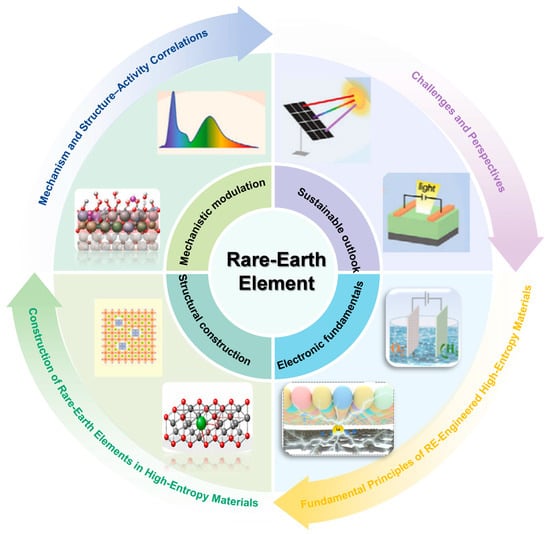
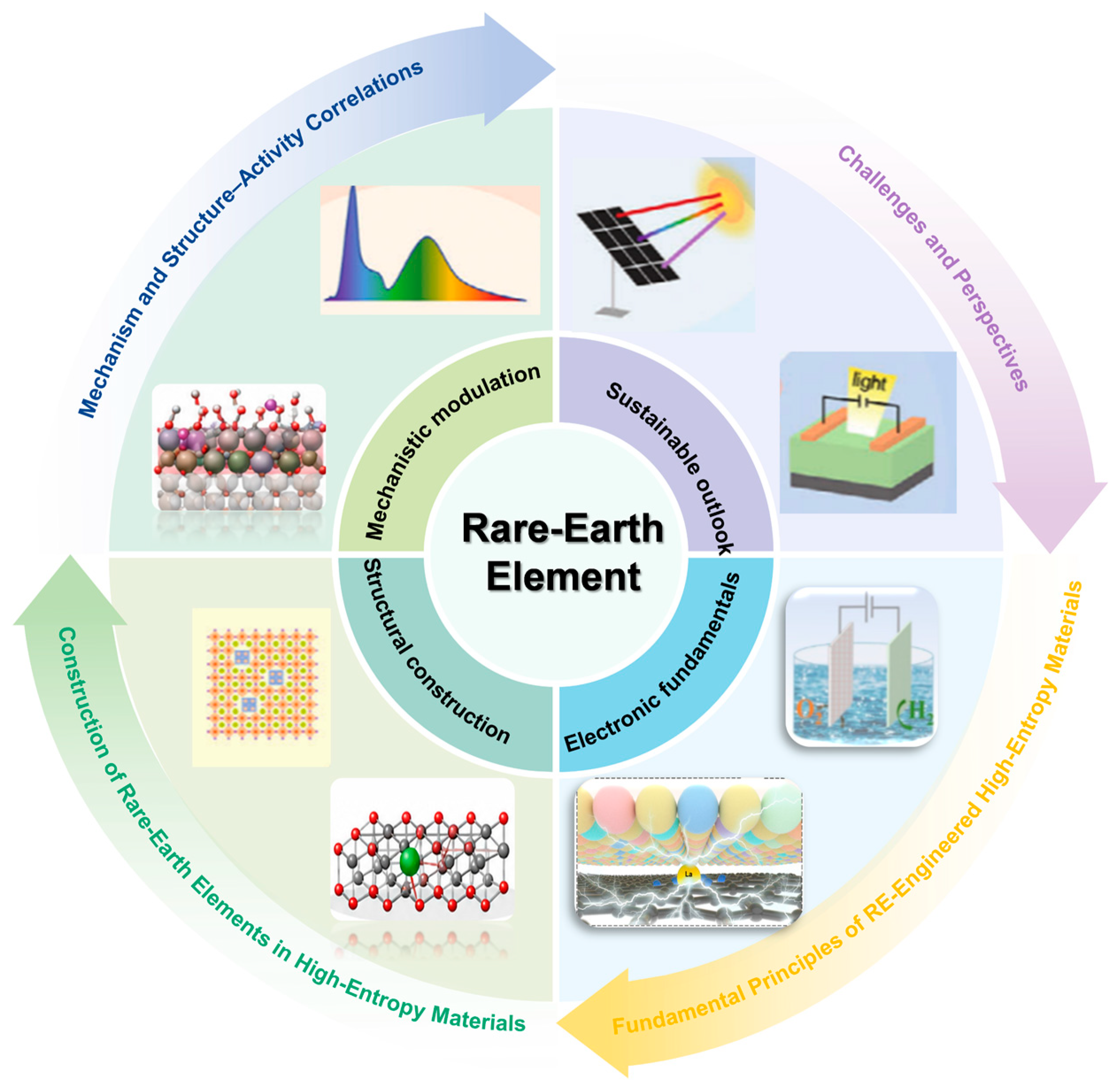
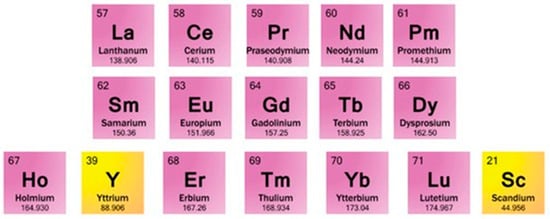
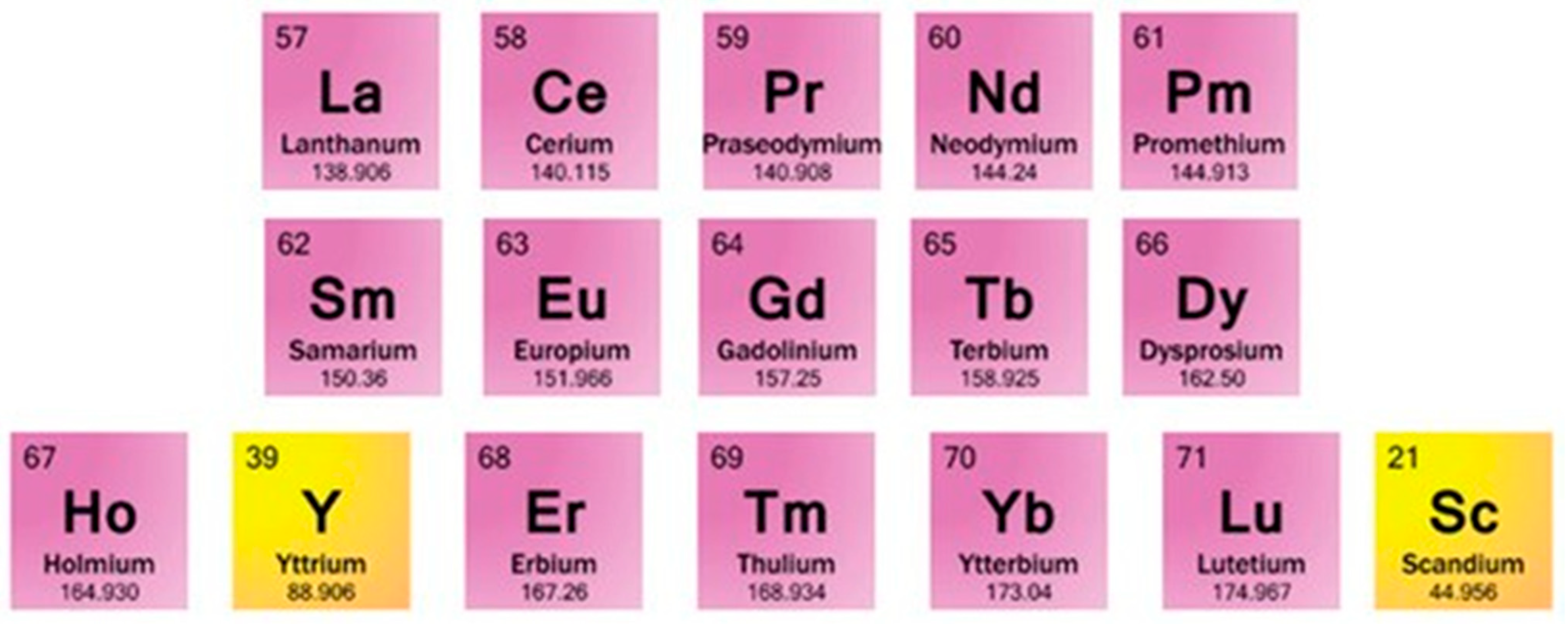
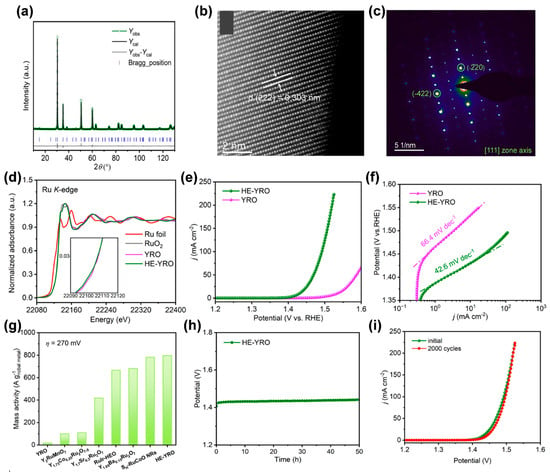
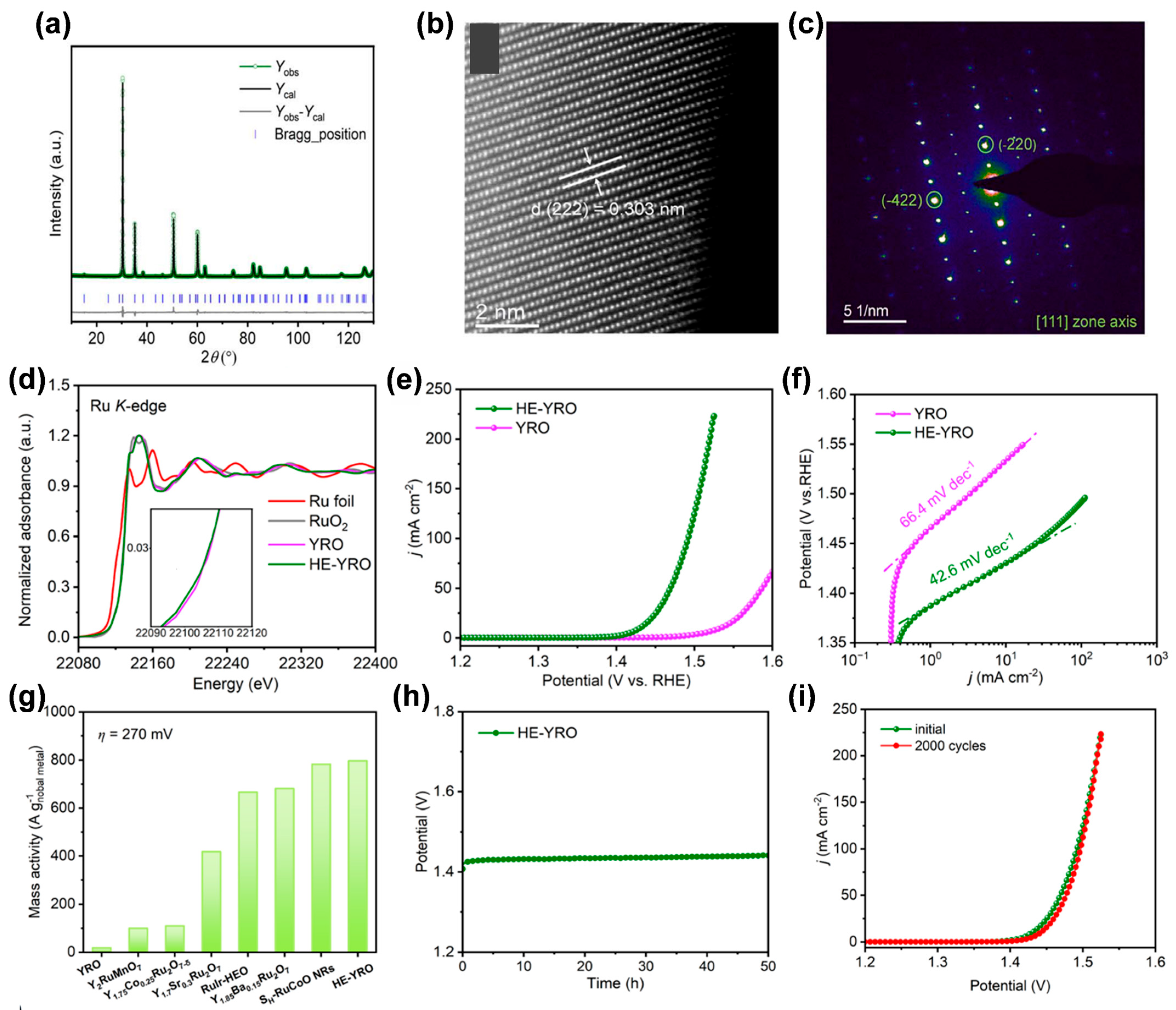
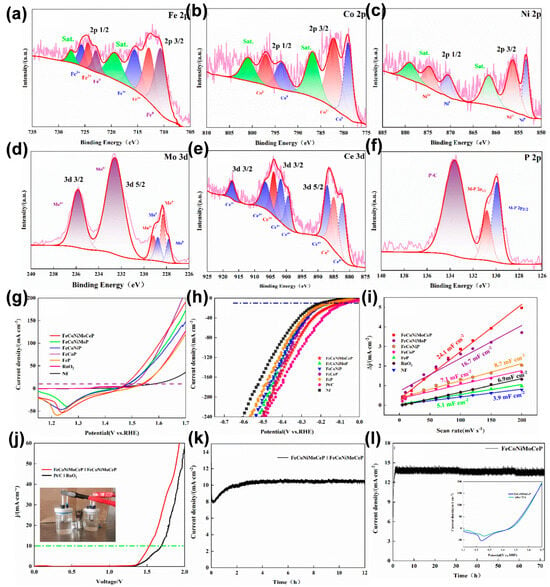
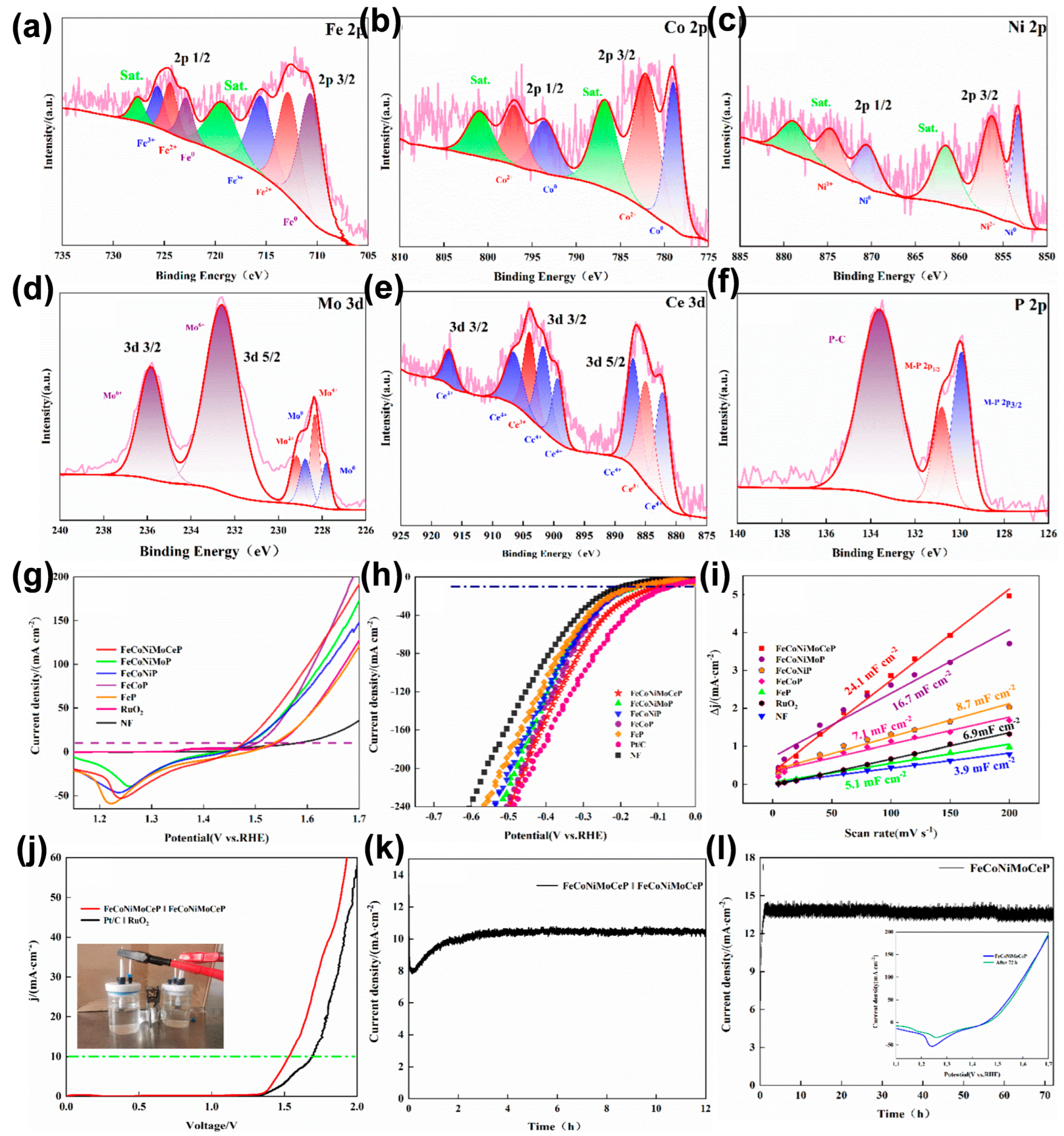
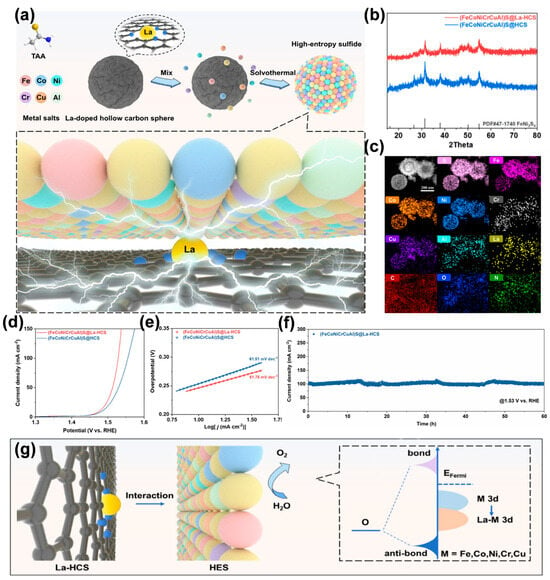
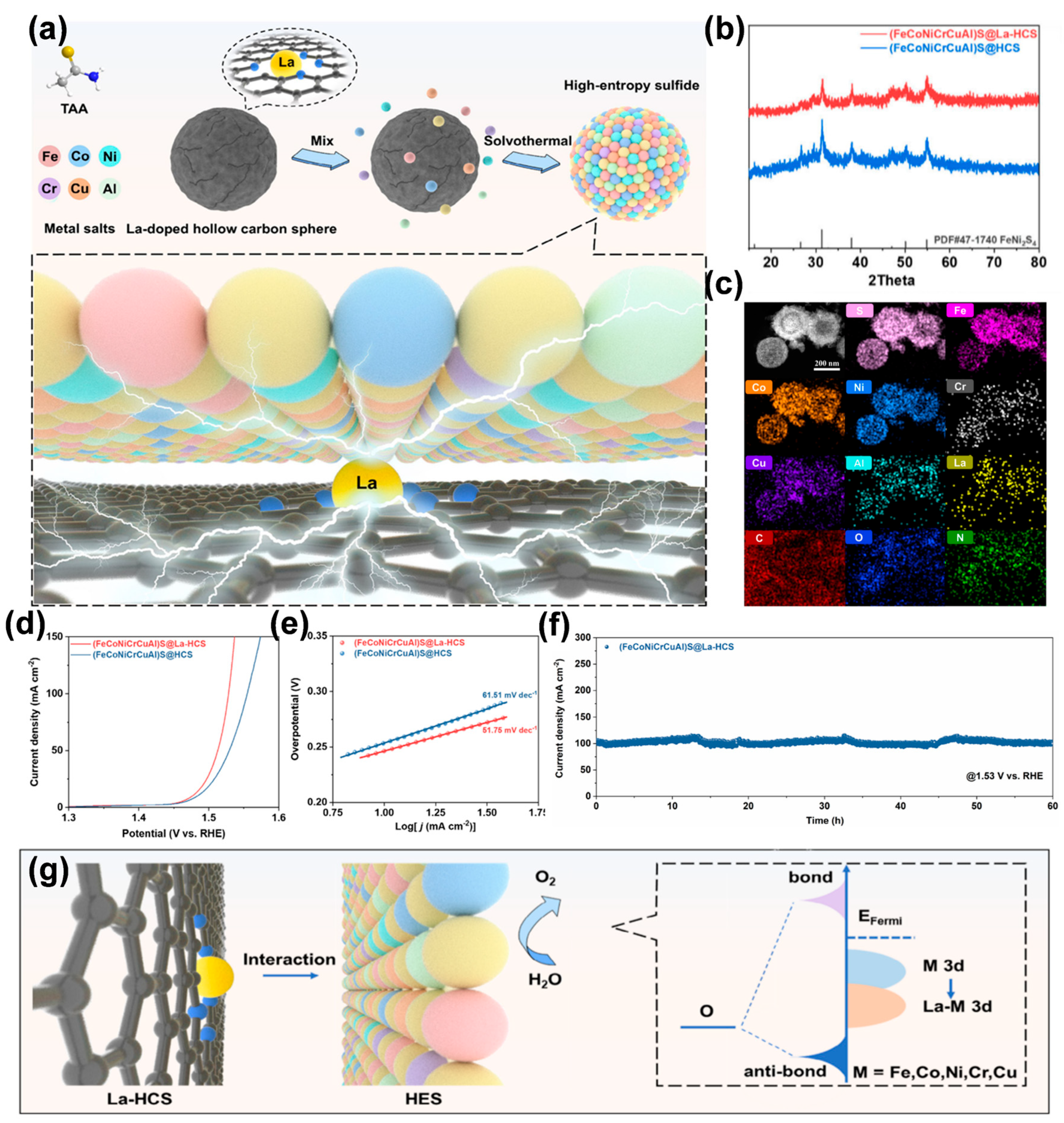
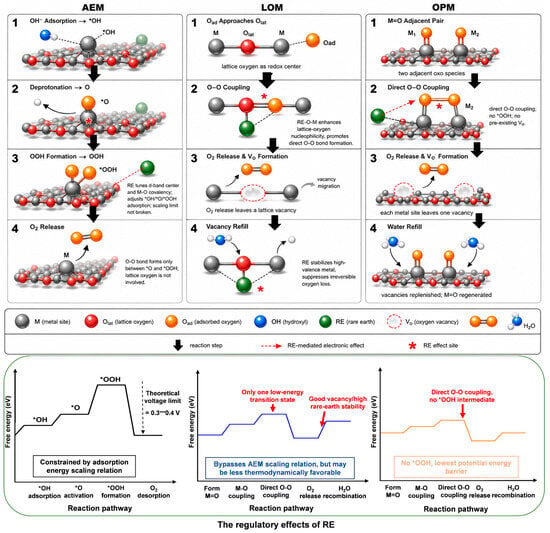
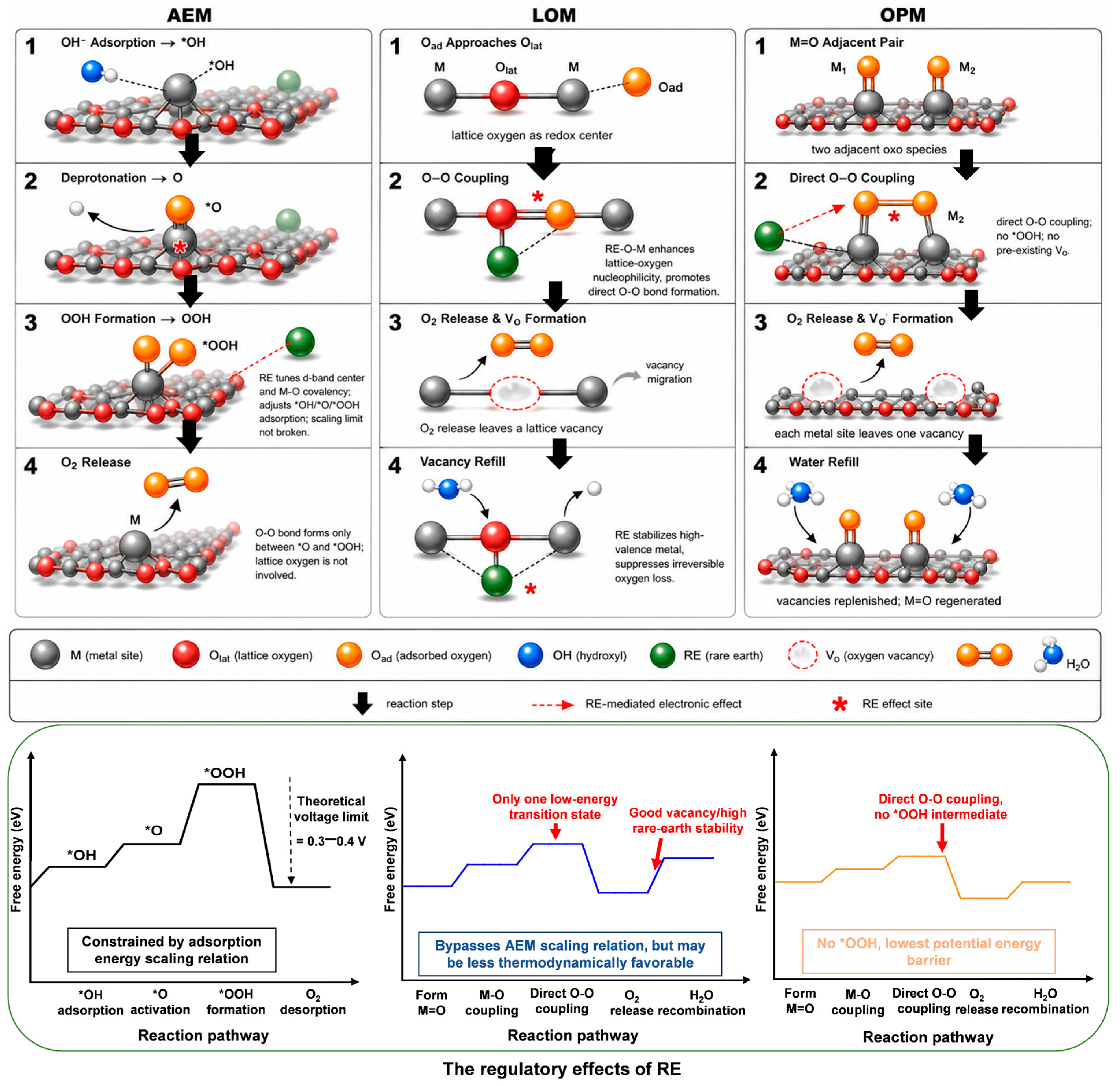
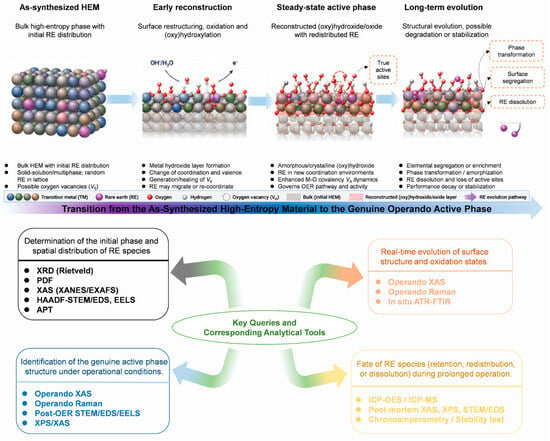
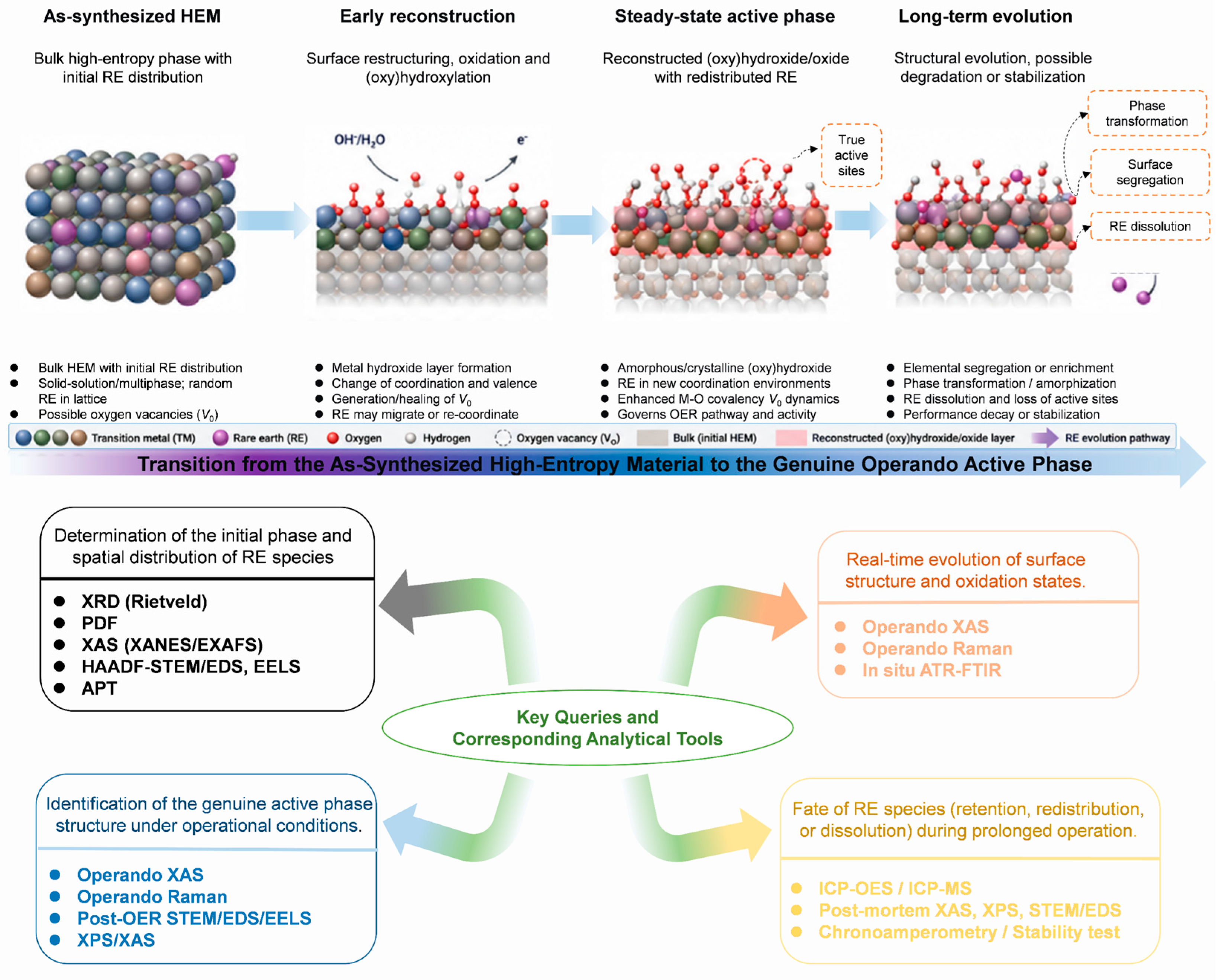
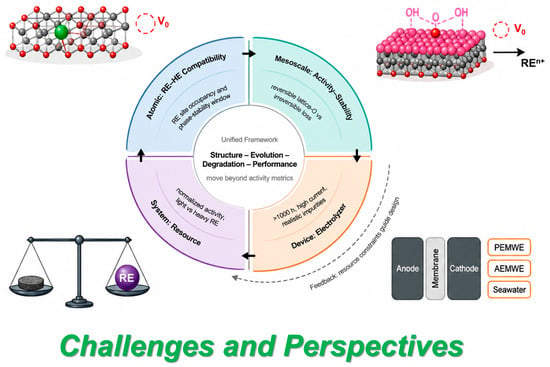
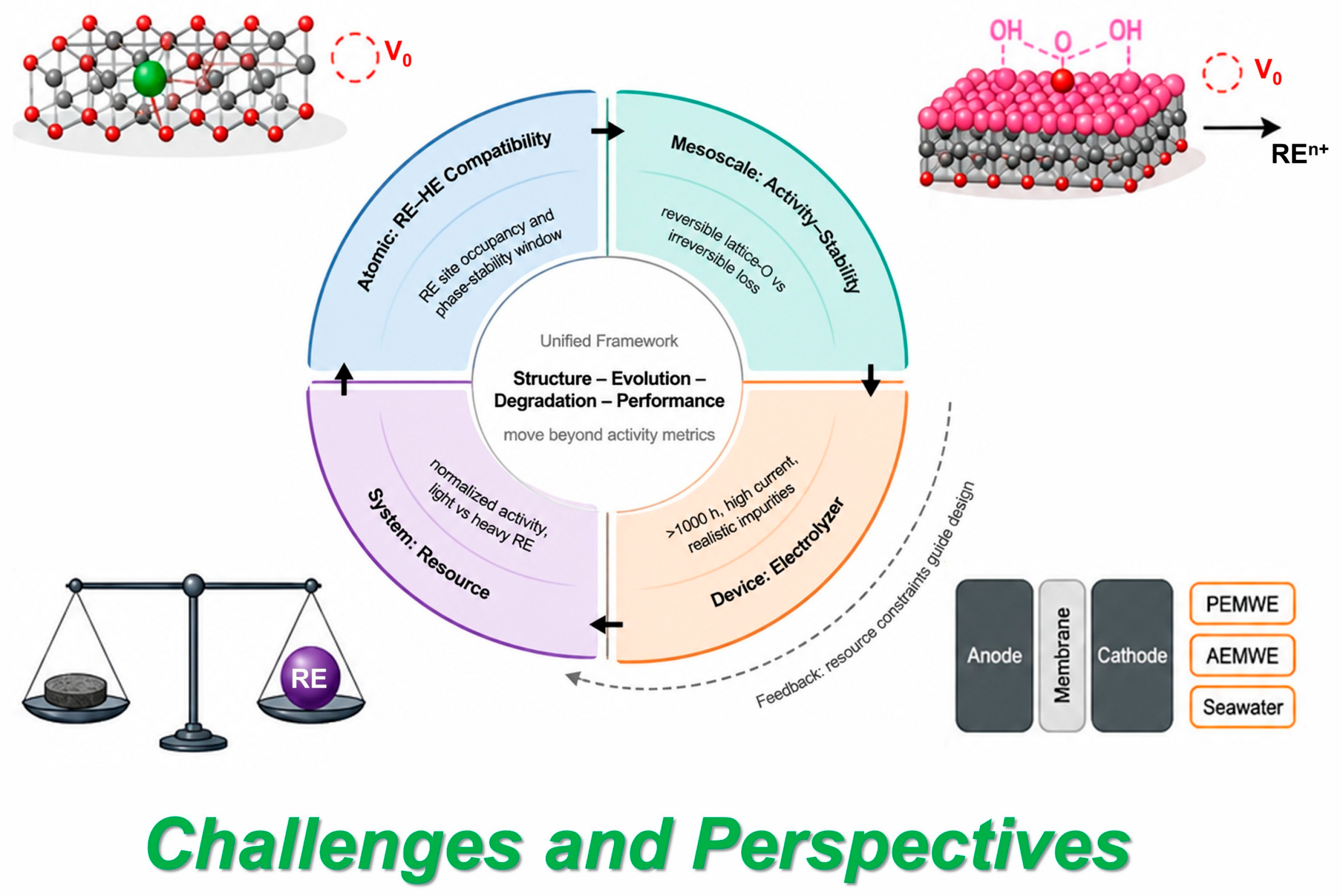

Disclaimer/Publisher’s Note: The statements, opinions and data contained in all publications are solely those of the individual author(s) and contributor(s) and not of MDPI and/or the editor(s). MDPI and/or the editor(s) disclaim responsibility for any injury to people or property resulting from any ideas, methods, instructions or products referred to in the content. |
© 2026 by the authors. Licensee MDPI, Basel, Switzerland. This article is an open access article distributed under the terms and conditions of the Creative Commons Attribution (CC BY) license.