


Abstract
To address the dual dilemmas of energy shortage and environmental pollution caused by excessive consumption of fossil fuels, semiconductor photocatalysis has been regarded as a promising sustainable technical route. As a novel metal-free polymeric semiconductor, graphitic carbon nitride (g-C3N4) has become a benchmark material in photocatalysis due to its suitable visible light response, excellent band structure, high stability, and low-cost raw materials. This review systematically elaborates the structural characteristics, photocatalytic mechanism and mainstream synthetic methods of g-C3N4, summarizes the performance optimization strategies, sorts out its application progress in environmental remediation and energy conversion, analyzes the core bottlenecks of current research and prospects the future directions, providing a systematic reference for the fundamental research and industrial application of g-C3N4-based photocatalysts.
1. Introduction
With the acceleration of global industrialization and the continuous rise in energy demand, the energy shortage crisis caused by the excessive consumption of fossil fuels, coupled with the deterioration of the ecological environment induced by the emission of pollutants including industrial wastewater, volatile organic compounds (VOCs) and greenhouse gases, have become the core challenges restricting the sustainable development of human society. According to statistics from the International Energy Agency (IEA), the average annual growth rate of global total energy consumption remains above 2%, while traditional fossil fuels still account for over 80% of the global energy mix, making the transformation of the energy structure extremely urgent. Meanwhile, the compliance rate of water and air pollution treatment is less than 60%, creating an urgent need for the development of efficient, low-consumption and environment-friendly remediation technologies [1,2,3].
Semiconductor photocatalysis, with its unique advantage of direct conversion of light energy into chemical energy, can realize energy conversion processes such as photocatalytic water splitting for hydrogen production and CO2 reduction to high value-added fuels under mild conditions, while efficiently degrading various pollutants without the addition of extra chemical reagents [4,5]. It is therefore regarded as a highly promising sustainable technical route to address the dual dilemmas of energy shortage and environmental degradation. The performance of an ideal photocatalyst needs to meet comprehensive multi-dimensional requirements: first, it should have a wide visible light response capability to fully utilize the visible light band, which accounts for 45–50% of the total energy of sunlight (ultraviolet light only accounts for 4–5%); second, it must possess a suitable band structure, with a conduction band (CB) potential more negative than the energy level of the target reduction reaction, a valence band (VB) potential more positive than the energy level of the target oxidation reaction, and a band gap width matching the light absorption range; third, it should exhibit excellent chemical and thermal stability, maintain structural integrity during long-term photocatalytic cycles, and avoid photocorrosion or activity decay; and fourth, it requires readily available raw materials, a simple preparation process, low cost and good environmental compatibility, laying a foundation for large-scale industrial applications [6,7,8].
However, traditional classic photocatalytic materials (such as TiO2, ZnO, CdS, etc.) have inherent defects that are difficult to circumvent [9]. TiO2 has a band gap of approximately 3.2 eV, which only responds to ultraviolet light, and has a fast recombination rate of photo-generated electron-hole pairs, with a quantum efficiency usually lower than 5%. Although ZnO has a slightly narrower band gap (about 3.37 eV), it is also limited to ultraviolet light response and has insufficient stability due to easy dissolution in aqueous solutions. CdS has a visible light response capability (band gap of about 2.4 eV), but suffers from severe photocorrosion, and the presence of heavy metal cadmium poses potential environmental safety hazards. These defects severely restrict the solar energy conversion efficiency and large-scale practical application of traditional photocatalytic materials. Developing novel semiconductor materials with high efficiency, stability and full utilization of visible light has become the core research focus and long-term key challenge in the field of photocatalysis. Compared to other polymeric photocatalysts such as P-doped g-C3N4, C3N5, or C3N4-based copolymers, g-C3N4 stands out due to its optimal band gap (≈2.7 eV), high physicochemical stability (stable up to 600 °C in air), easy scalability from low-cost precursors (urea, melamine), and strong resistance to photocorrosion. These features make it a benchmark material for sustainable photocatalysis.
In this research context, graphitic carbon nitride (g-C3N4), as a novel metal-free polymeric semiconductor, has rapidly stood out with its unique physicochemical properties since Wang et al. [10,11] first reported its ability to stably drive photocatalytic water splitting for hydrogen production under visible light irradiation in 2009. It has become a research hotspot in the photocatalysis field and attracted extensive attention from the global scientific community [12,13,14].
Compared with traditional metal-based semiconductor materials, g-C3N4 exhibits numerous irreplaceable advantages: first, it has a unique crystal structure with a graphite-like two-dimensional (2D) layered structure. The layers are connected by van der Waals interactions, while the in-plane structure consists of a conjugated system formed by triazine or melamine rings linked via C-N covalent bonds, and its large specific surface area can provide abundant active sites for photocatalytic reactions; second, its electronic band properties can be precisely regulated [15,16,17]. The intrinsic g-C3N4 has a band gap of approximately 2.7 eV, which exactly covers the visible light region (400–460 nm), and the positions of the CB and VB can be flexibly adjusted through modification methods such as doping and composite construction to adapt to the requirements of different photocatalytic reactions; third, it has outstanding stability, with good thermal stability (maintaining structural stability in air atmosphere below 600 °C) and chemical stability, acid and alkali resistance, and low susceptibility to photocorrosion, enabling long-term recycling in complex reaction systems; and fourth, it has significant preparation advantages [18,19,20,21]. It can be synthesized from cheap nitrogen-rich precursors such as urea, melamine, dicyandiamide and thiourea via simple thermal polymerization, solvothermal, microwave-assisted methods, etc., with wide raw material sources, low preparation cost, no emission of toxic and harmful substances during the entire preparation process, and excellent environmental compatibility [22,23].
With the above prominent advantages, g-C3N4 exhibits tremendous application potential in the fields of photocatalytic energy conversion (photocatalytic water splitting for H2/O2 production, photocatalytic CO2 reduction, photocatalytic nitrogen fixation) and environmental remediation (degradation of organic pollutants, reduction of heavy metal ions, VOCs purification) and has gradually become a benchmark research material in this field [24,25,26].
In recent years, researchers have developed various strategies to optimize the performance of g-C3N4, including elemental doping (non-metal doping, metal doping), heterostructure construction (Type-II, Z-scheme, S-scheme heterojunctions), morphology regulation (nanosheets, nanotubes, porous structures), and defect engineering (nitrogen vacancies, carbon vacancies). These strategies have effectively improved its light absorption range, photo-generated carrier separation efficiency and the number of surface active sites [27,28].
Despite this, g-C3N4-based photocatalysts still face many bottleneck problems to be solved urgently: the intrinsic specific surface area is small (usually less than 100 m2/g), the recombination efficiency of photo-generated electron-hole pairs still needs to be further reduced, the catalytic activity of a single system is limited, the uniformity of the product is difficult to control during large-scale preparation, and its application research in actual complex water and atmospheric environments is still in the initial stage [29].
This review aims to systematically summarize the research progress of g-C3N4-based photocatalysts (Figure 1). First, it elaborates on the basic crystal structure and electronic band properties of g-C3N4 and clarifies the microscopic mechanism of the photocatalytic reaction. Subsequently, it sorts out the mainstream preparation methods and the influence rules of process parameters on the structure and performance of the products. It focuses on summarizing the performance optimization strategies of g-C3N4 in recent years and compares the advantages and limitations of different modification methods. Furthermore, it comprehensively introduces the application status and performance in the two major fields of energy conversion and environmental remediation [30]. Finally, it deeply analyzes the core bottlenecks and technical problems faced by current research and prospects the future research directions of g-C3N4-based photocatalysts (such as precise modification, mechanism exploration, large-scale application) combined with the interdisciplinary development trend of materials science, catalytic chemistry and environmental engineering. By integrating existing research results and refining core scientific issues, this review is expected to provide a systematic reference for the subsequent basic research and industrial application exploration of g-C3N4-based photocatalysts and promote the practical implementation of photocatalytic technology in the energy and environmental fields [31].
Figure 1.
Schematic of semiconductor photocatalysis for addressing fossil energy shortages and environmental pollution. It highlights three core applications—photocatalytic H2 production, CO2 reduction, and pollutant degradation—along with key bottlenecks (poor visible light response, high carrier recombination, instability, scalable-synthesis challenges), mainstream modification strategies (doping, heterojunctions, defect engineering), and future directions (precise modification, mechanism elucidation, and large-scale application).
2. Structure, Fundamental Properties and Photocatalytic Mechanism of g-C3N4
2.1. Crystal and Electronic Structure
g-C3N4 as a typical polymeric semiconductor material has a thermodynamically most stable crystal form with a graphite-like 2D layered structure, which originates from its unique molecular assembly mode (Figure 2). Its basic structural units are mainly divided into two types: triazine rings (C3N3) and tri-s-triazine rings (also known as heptazine rings, C6N7). These two ring structures are connected by covalent bonds to form a planar network monolayer structure, which is then stacked vertically via weak van der Waals forces (mainly dispersion forces and dipole–dipole interactions) between layers to form a three-dimensional crystal structure [32,33,34].
Figure 2.
Schematic illustration of the microstructure, electronic band characteristics, and photocatalytic reaction mechanism of graphitic carbon nitride (g-C3N4). (a) Graphite-like 2D layered structure: the in-plane framework is built from covalently linked triazine (C3N3) or heptazine (C6N7) units, with interlayers bound by van der Waals forces. (b) Delocalized π-conjugated system arising from C/N 2pz orbital overlap, featuring an intrinsic band gap of ~2.7 eV; the VB is dominated by N 2p orbitals with minor C 2p contribution, while the CB is primarily C 2p orbitals. (c) Photo-generated charge separation and photocatalytic reactions: VB holes trigger oxidation of OH− to ·OH (1.99 V vs. NHE), while CB electrons drive reduction of H+ to H2 (0 V vs. NHE), enabling versatile applications in H2 evolution, pollutant degradation, and CO2 reduction.
A highly delocalized π-conjugated system exists inside the layers, which is formed by the overlap of the 2pz orbitals of C atoms and N atoms. This conjugated property not only endows it with good electron transport capability, but also essentially determines its semiconductor properties, giving it a specific band gap (usually about 2.7 eV) and providing a structural basis for the separation and migration of photo-generated carriers in photocatalytic reactions [35]. From the perspective of electronic structure, the valence band (VB) and conduction band (CB) of g-C3N4 have clear orbital composition characteristics: the top of the valence band (VBM) is mainly contributed by the 2p orbitals of N atoms, accompanied by a small amount of hybrid participation from the 2p orbitals of C atoms, which endows the valence band with strong oxidation properties; while the bottom of the conduction band (CBM) is mainly derived from the 2p orbitals of C atoms, with only a trace contribution from the 2p orbitals of N atoms, resulting in a significant reducibility of the conduction band position [36].
This unique orbital composition mode endows g-C3N4 with excellent thermodynamic potential for photocatalysis. The CBM potential is sufficiently negative (usually lower than the H+/H2 reduction potential of 0 V vs. normal hydrogen electrode, NHE), which can efficiently drive the reduction of protons to hydrogen (H2), and simultaneously reduce oxygen (O2) adsorbed on the surface to reactive oxygen species (ROS) such as superoxide radicals (·O2−). Meanwhile, the VBM potential is sufficiently positive (usually higher than the OH−/OH oxidation potential of 1.99 V vs. NHE), with strong oxidation ability, which can effectively oxidize and decompose organic pollutants, water and other reducing substances, providing core electronic structure support for its applications in photocatalytic hydrogen production, pollutant degradation, CO2 reduction and other fields [37].
2.2. Photocatalytic Process Mechanism
Based on the above electronic structure characteristics, the photocatalytic reaction process of g-C3N4 follows the typical photo-generated carrier conversion path of semiconductors. When the energy of incident photons is equal to or higher than its band gap (about 2.7 eV), the electrons (e−) in the valence band absorb the photon energy and transition across the band gap to the conduction band, leaving an equal number of holes (h+) in the valence band, forming electron-hole carrier pairs. The efficiency of this process is directly regulated by the separation and recombination behavior of carriers. If e− and h+ recombine rapidly, the energy will be dissipated in the form of heat, reducing the photocatalytic activity [38]. The effectively separated carriers need to migrate rapidly to the surface active sites of g-C3N4 and undergo redox reactions with the adsorbed reactants, which is the core factor determining the photocatalytic performance.
The photocatalytic reaction consists of two independent and synergistic processes: the oxidation half-reaction and the reduction half-reaction. At the oxidation end, the valence band holes have extremely strong oxidation capacity (corresponding to the high positive potential of the VBM). On one hand, they can directly capture electrons from organic pollutant molecules adsorbed on the catalyst surface, mineralizing and decomposing them into inorganic small molecules such as CO2 and H2O. On the other hand, the holes can react with H2O molecules or OH− adsorbed on the surface to generate hydroxyl radicals (·OH). The redox potential of ·OH is as high as 2.8 V vs. NHE, which has the ability to degrade most organic pollutants non-selectively, thus enhancing the oxidation reaction efficiency [39,40].
Modern photocatalysis research relies heavily on operando and time-resolved techniques. For instance, transient absorption spectroscopy (TAS) can reveal ultrafast electron transfer across heterojunctions, while in situ EPR provides direct evidence of ·O2− and ·OH generation. These techniques have been applied to g-C3N4-based systems to distinguish Type-II from Z-scheme charge transfer.
3. Synthetic Methods of g-C3N4
The synthetic method of g-C3N4 has a decisive influence on its microstructure (such as specific surface area, layer thickness, defect density) and macroscopic performance (optical absorption, carrier migration efficiency, photocatalytic activity). A variety of synthetic strategies have been developed, among which thermal polymerization, templating method, chemical exfoliation and liquid-phase synthesis are the most mature and widely used. The principles, characteristics and regulation mechanisms of each method are as follows (Figure 3):
Figure 3.
Schematic illustration of mainstream synthesis methods for graphitic carbon nitride (g-C3N4). (a) Thermal polymerization: melamine, urea, thiourea, or dicyandiamide precursors are heated at 500–600 °C (ramp rate 2–5 °C/min, holding 2–4 h), releasing NH3 and H2O that concurrently regulate the porous structure. (b) Template method: hard templates (e.g., SiO2 nanospheres, MCM-41) or soft templates (e.g., CTAB, PEG) are used, followed by removal via HF etching or calcination, enabling precise control over morphology and pore structure. (c) Chemical exfoliation and liquid-phase synthesis: bulk g-C3N4 is exfoliated into few-layer (2–5 layers) nanosheets through thermal oxidation (200–300 °C, air) and strong acid treatment (H2SO4, HNO3).
3.1. Thermal Polymerization
Thermal polymerization is the most classic, simple method for preparing g-C3N4 with the broadest prospect for large-scale application. Its core principle is that nitrogen-rich precursors undergo gradual polymerization and cyclization reactions under high temperature and form a graphite-like layered structure after removing small molecule impurities (such as NH3, H2O) [41].
Common precursors for this method include melamine, urea, thiourea, dicyandiamide, etc., which have high nitrogen content, stable structure and easy availability. Among them, urea has become the most popular precursor at present because of its low price, wide sources, and the fact that a large amount of gas (NH3, CO2) released during the pyrolysis process can form a porous structure in the product, significantly increasing the specific surface area and the number of surface active sites [42].
The process parameters of thermal polymerization (calcination rate, final temperature and holding time) are crucial for the regulation of the structure and performance of g-C3N4. An excessively fast heating rate easily leads to uneven decomposition of the precursor, forming an amorphous product with excessive defects, while slow heating (e.g., 2–5 °C/min) can promote the ordered polymerization of the precursor and improve the crystal integrity [43].
The calcination temperature is usually controlled at 500–600 °C. Too low a temperature results in incomplete polymerization, low crystallinity and poor photocatalytic activity of the product, while excessively high temperature (over 650 °C) will cause thermal decomposition and interlayer sintering of g-C3N4, destroying the layered structure and reducing the specific surface area. In addition, the holding time needs to be adjusted according to the amount of precursor and the target structure (usually 2–4 h) to ensure the full progress of the polymerization reaction, while avoiding structural collapse caused by excessive polymerization [44,45]. The reaction atmosphere can be air or inert gas (N2, Ar). Slight oxidation is prone to occur in an air atmosphere, introducing oxygen-containing defects to regulate the band gap structure, while an inert atmosphere can inhibit oxidative decomposition and obtain pure phase g-C3N4 with high crystallinity.
3.2. Templating Method
The templating method aims to regulate the morphology and pore structure of g-C3N4 by introducing a template with a specific structure. Its main advantage is that it can precisely construct products with mesopores, macropores and specific morphologies (such as nanospheres, nanorods), significantly increasing the specific surface area and surface active sites, while optimizing the light absorption and carrier migration efficiency. According to the properties of the template, it can be divided into the hard templating method and the soft templating method [46,47,48].
For the hard templating method, commonly used templates are inorganic materials with fixed morphology and pore structure, such as SiO2 nanospheres, MCM-41 mesoporous molecular sieves, anodic aluminum oxide, etc. [49,50]. In the preparation process, the precursor is first uniformly mixed with the template or impregnated into the pore channels of the template, then polymerized at high temperature to form a composite structure, and finally the template is removed by acid etching (e.g., HF solution etching of SiO2) or alkali treatment to obtain g-C3N4 with a structure complementary to the template.
This method can precisely control the pore size (2–50 nm) and morphology of the product, but the template removal process is cumbersome, it is easy to retain impurities, and the cost is relatively high. The soft templating method uses surfactants (such as cetyltrimethylammonium bromide, polyethylene glycol) as templates and uses ordered aggregates such as micelles and vesicles formed by surfactants in solution as the reaction site to guide the polymerization of the precursor on its surface or inside. Finally, the template is removed by high-temperature calcination to form g-C3N4 with a mesoporous or layered structure. The soft templating method is easy to operate and the template is easy to remove, but the uniformity of the product morphology and pore structure is slightly worse than that of the hard templating method [51,52].
3.3. Chemical Exfoliation and Liquid-Phase Synthesis
The core goal of chemical exfoliation and liquid-phase synthesis is to exfoliate bulk g-C3N4 into few-layer (2–5 layers) or monolayer nanosheets and regulate the electronic structure by using the quantum confinement effect of 2D nanomaterials to improve the light absorption range and carrier separation efficiency. Weak van der Waals forces exist between the layers of bulk g-C3N4, which can be destroyed by external force or chemical modification to achieve exfoliation [53,54,55].
Chemical exfoliation methods mainly include thermal oxidation exfoliation and acid treatment exfoliation. Thermal oxidation exfoliation is to calcine bulk g-C3N4 at low temperature (200–300 °C) in air atmosphere, so that oxygen atoms are inserted between the layers to form oxygen-containing groups, weakening the interlayer force, and partial oxidation leads to layer fracture, forming few-layer nanosheets. Acid treatment exfoliation uses the protonation effect of strong acids (such as H2SO3, HNO4) to make H+ insert between the layers, increasing the interlayer spacing and then exfoliated nanosheets can be obtained through ultrasonic dispersion [56,57,58]. This method operates under mild conditions and can effectively retain the integrity of the layered structure. The liquid-phase synthesis method directly prepares few-layer/monolayer g-C3N4 in a liquid-phase environment. For example, using melamine as the precursor, under hydrothermal or solvothermal conditions, by adjusting the reaction temperature, solvent type and additives, the precursor can directly form a thin layered structure during the polymerization process without subsequent exfoliation treatment.
The g-C3N4 nanosheets prepared by these methods have the advantages of uniform thickness, large specific surface area and significant quantum confinement effect. Their light absorption edge can be red-shifted to the visible light region, while the carrier recombination probability is greatly reduced, and the photocatalytic activity is significantly improved compared with the bulk material. However, the nanosheets are prone to agglomeration during large-scale preparation, which needs to be improved by surface modification or additive regulation.
4. Performance Optimization Strategies of g-C3N4
Although pure phase g-C3N4 has a unique electronic structure and photocatalytic potential, it still faces inherent bottlenecks in practical applications, such as high recombination rate of photo-generated carriers, small specific surface area, and narrow visible light absorption edge (about 460 nm, only covering the short-wave region of visible light), which severely restrict its photocatalytic efficiency [59,60,61]. To break through the above limitations, researchers have developed a variety of modification and optimization strategies to broaden the light absorption range, improve the carrier separation efficiency and increase the number of active sites by regulating its morphology, electronic structure, interface characteristics, etc. The strategies are mainly divided into four categories (Table 1): morphology and structure engineering, band structure regulation, heterostructure construction, and organic copolymerization and molecular modification. The specific mechanisms and characteristics are as follows:
Table 1.
Summary of modification strategies for g-C3N4 and corresponding photocatalytic performance.
4.1. Morphology and Structure Engineering
Morphology and structure engineering is a basic means to improve photocatalytic performance by precisely regulating the microstructure and crystal defects of g-C3N4 to optimize its charge transport path and surface reaction environment. Among them, nanostructure design is one of the core directions [62] (Figure 4). By preparing specific morphologies such as nanosheets, nanotubes, quantum dots and porous sponges, a dual optimization effect can be achieved: first, the nanostructure can significantly shorten the migration path of photo-generated carriers from the bulk to the surface active sites, reducing the recombination probability during migration; second, the unique morphology can greatly increase the specific surface area, expose more edge active sites (such as unsaturated C/N atomic sites), and enhance the adsorption and activation capacity of reactants. For example, the porous sponge structure not only has a high specific surface area, but also can form a light scattering effect, prolong the residence time of photons inside the material, and improve the light absorption efficiency [63].
Figure 4.
Schematic illustration of mainstream modification strategies and corresponding mechanisms for boosting the photocatalytic performance of g-C3N4. (a) Morphology and structure engineering: nitrogen/carbon vacancies introduce defect energy levels and tune band positions, optimizing carrier migration paths while increasing specific surface area; (b) band structure regulation: non-metal doping (P, S, B, O) forms hybrid orbitals to narrow the band gap, while metal ion doping (K, Fe, Co, Cu) creates electron traps; both promote charge separation and broaden light response; (c) heterojunction construction: Z-scheme heterojunctions (e.g., g-C3N4/BiVO4, g-C3N4/Bi2WO8) enable spatial charge separation mimicking natural photosynthesis, and Schottky junctions (e.g., g-C3N4/Ag) form Schottky barriers for electron trapping, greatly suppressing carrier recombination; (d) organic copolymerization and molecular modification: electron-withdrawing groups lower the conduction band and tune π-electron delocalization, while conjugated aromatic rings narrow the band gap and optimize the π-conjugated system, simultaneously enhancing reactant adsorption for multi-dimensional performance improvement.
Defect engineering regulates the electronic structure and surface properties of g-C3N4 by introducing controllable defects (mainly nitrogen vacancies and carbon vacancies). Nitrogen vacancies, the most common type of defects, are formed by the removal of part of N atoms from the crystal lattice, which can introduce defect energy levels in the band gap, acting as electron capture centers to effectively inhibit the recombination of e−-h+ pairs. At the same time, nitrogen vacancies can change the local electron cloud density, enhance the adsorption strength of the material to reactants such as O2, reduce the activation energy of the O2 reduction reaction, and promote the generation of reactive oxygen species (·O2−, H2O2). Carbon vacancies can adjust the positions of the valence band and conduction band, broaden the visible light absorption range, and improve the charge migration rate. The synergistic regulation of the two can achieve precise optimization of photocatalytic performance [64,65].
4.2. Band Structure Regulation
The core goal of band structure regulation is to adjust the band gap width and energy level position of g-C3N4 through modification, so as to broaden the visible light response range and balance the redox capacity, which is mainly realized through elemental doping strategies. According to the type of doping elements, it can be divided into non-metal doping and metal doping [66].
Non-metal doping (P, S, B, O, etc.) is the most commonly used band regulation method. Its mechanism is that the doping atoms replace the C or N atoms in the crystal lattice. Due to the difference in atomic electronegativity and valence electron number from C/N, the uniform distribution of the lattice electron cloud is broken, and new impurity energy levels are formed in the band gap, thus effectively narrowing the band gap width and broadening the visible light response range to the long-wave region (e.g., 480–550 nm). For example, when P atoms are doped, their 3p orbitals form hybrid orbitals with the 2p orbitals of C/N, and the impurity energy level is close to the CBM, which not only shortens the electron transition energy barrier, but also improves the reducibility of conduction band electrons; O doping regulates the valence band position by forming C-O-C bonds and enhances the oxidation capacity of holes [67,68].
Metal doping (K, Fe, Co, Cu, etc.) regulates the band structure by introducing metal ions. Metal ions can act as electron traps to capture conduction band electrons and inhibit carrier recombination. At the same time, the d orbital energy levels of some metal ions (such as Fe3+, Co2+) can form intermediate energy levels in the band gap of g-C3N4, acting as a “springboard” for electron transition and promoting charge separation. In addition, metal ions can also act as surface active sites to directly participate in redox reactions (e.g., Fe3+ can catalyze the generation of ·OH from H2O2), further improving the photocatalytic efficiency. However, the doping amount needs to be controlled to avoid excessive metal ions becoming carrier recombination centers [69,70].
Although doping narrows the band gap and extends visible light absorption, it often introduces mid-gap trap states that act as recombination centers. For example, excessive P doping can reduce carrier lifetime despite improved light harvesting.
4.3. Heterostructure Construction
Heterostructure construction is the most effective core strategy to solve the carrier recombination problem by coupling g-C3N4 with other semiconductor materials or conductive materials and using the interface interaction to construct a built-in electric field to realize the spatial separation of photo-generated carriers [71]. According to the interface charge migration mechanism and the energy level matching relationship of materials, common heterojunction types include Type-II heterojunctions, Z-scheme heterojunctions and Schottky junctions (noble metal deposition). The mechanism of each structure is as follows:
A Type-II heterojunction is constructed by the staggered energy level matching of two semiconductor materials (such as g-C3N4/BiVO4, g-C3N4/WO3), in which the CBM potential of g-C3N4 is more negative than that of the other semiconductor, and the VBM potential is more positive than that of the other semiconductor [72,73]. After illumination, the conduction band electrons of g-C3N4 migrate to the conduction band of the other semiconductor, while the valence band holes of the other semiconductor migrate to the valence band of g-C3N4, realizing the spatial separation of e− and h+. Meanwhile, it retains the strong oxidation capacity of the g-C3N4 valence band and the reduction capacity of the other semiconductor conduction band, which is suitable for reactions such as pollutant degradation and photocatalytic hydrogen production [74].
A Z-scheme heterojunction (such as g-C3N4/Bi2WO6, g-C3N4/Ag3PO4) simulates the charge transfer path of natural photosynthesis. By introducing an electron mediator or forming interface chemical bonds, the photo-generated carriers of the two semiconductors migrate along the “Z” path. This structure can retain the respective strong oxidation and strong reduction capabilities of the two semiconductors (conduction band electrons of g-C3N4 reduce O2, and valence band holes in the other semiconductor oxidize reactants), while achieving efficient charge separation, solving the problem of weakened redox capacity of Type-II heterojunction, and showing better performance in complex photocatalytic reactions (such as CO2 reduction, water splitting) [75].
A Schottky junction is constructed by depositing noble metal nanoparticles such as Ag, Au and Pt on the surface of g-C3N4. A Schottky barrier is formed at the metal–semiconductor interface. After illumination, the conduction band electrons of g-C3N4 are rapidly transferred to the noble metal surface (because the Fermi level of the noble metal is lower than the CBM of g-C3N4) and captured by the Schottky barrier, effectively inhibiting carrier recombination. At the same time, noble metal nanoparticles have a surface plasmon resonance (SPR) effect, which can enhance visible light absorption and accelerate the kinetic process of surface redox reactions. Among them, noble metals such as Pt and Pd can also act as hydrogen production active sites to improve the efficiency of photocatalytic hydrogen production [76,77].
The S-scheme (step-scheme) heterojunction has recently emerged as a more accurate model for many g-C3N4-based composites, as it preserves strong redox potentials while enabling spatial separation. Evidence from KPFM and DFT should be provided to support S-scheme assignment.
Distinguishing between Type-II, Z-scheme, and S-scheme mechanisms requires more than just band alignment. Experimental evidence such as in situ XPS, femtosecond transient absorption spectroscopy (fs-TAS), and Kelvin probe force microscopy (KPFM) is necessary to confirm charge-transfer pathways.
4.4. Organic Copolymerization and Molecular Modification
Organic copolymerization and molecular modification regulate the π-conjugated system and electron cloud distribution of g-C3N4 at the molecular level, which is an effective means to finely adjust its optical and electrical properties. This strategy introduces functional copolymer monomers (such as barbituric acid, benzene ring derivatives, cyanuric acid) during the thermal polymerization process, which undergo copolymerization with traditional precursors (urea, melamine) to form doped or modified g-C3N4. The structure and functional groups of the copolymer monomers directly affect the product performance: monomers with strong electron-withdrawing groups (such as carbonyl and cyano groups, e.g., barbituric acid) can pull the electron cloud density, reduce the CBM potential and enhance the reducibility; monomers with conjugated aromatic rings (such as benzene and naphthalene derivatives) can extend the π-conjugated system, narrow the band gap and broaden the visible light absorption range; while monomers such as cyanuric acid can regulate the degree of polymerization and form porous or thin layered structures [78,79].
In addition, molecular modification (such as surface grafting of organic ligands, loading of organic photosensitizers) can further enhance the adsorption capacity for specific reactants, or broaden the light response range through the sensitization effect of photosensitizers, realizing the precise customization of photocatalytic performance (Table 2) [80,81].
Table 2.
Structural strategies, physicochemical features and photocatalytic performance of g-C3N4-based materials.
5. Applications of g-C3N4 in Environmental and Energy Fields
Based on its unique electronic structure, tunable modification characteristics and environmental friendliness, g-C3N4 exhibits broad application prospects in the two core fields of environmental remediation and energy conversion [82,83,84,85]. The g-C3N4-based materials after structural optimization and performance regulation have been efficiently applied in scenarios such as pollutant degradation, green chemical synthesis, and renewable energy preparation, as detailed below.
5.1. Degradation of Organic Pollutants
g-C3N4 and its composite materials are ideal systems for the photocatalytic degradation of organic pollutants, which can efficiently mineralize a variety of refractory pollutants such as dyes, antibiotics, phenols and pesticides and are applied in both water and gas phase pollution remediation. The core degradation mechanism relies on the strong oxidation capacity of valence band holes and reactive oxygen species (·OH, ·O2−, H2O2, etc.) generated by the reduction of O2 by photo-generated electrons. These active species can non-selectively break the covalent bonds in pollutant molecules and gradually decompose them into CO2, H2O and inorganic ions, realizing the complete mineralization of pollutants [86,87] (Figure 5).
Figure 5.
Schematic illustration of core photocatalytic reaction mechanisms, typical application scenarios, and modification-enhanced performance of graphitic carbon nitride (g-C3N4); (a) pollutant degradation: photo-generated valence band holes drive direct oxidation, while electrons reduce O2 to reactive oxygen species (·OH, ·O2−, H2O2), mineralizing organics into CO2, H2O, and inorganic ions; a g-C3N4/BiOBr Z-scheme heterojunction enhances BPA degradation rate by 3–5 times; (b) photocatalytic H2O2 synthesis via two-step single-electron O2 reduction: O2 is reduced through ·O2− intermediate to H2O2, coupled with H2O oxidation by holes; nitrogen vacancies enhance O2 adsorption, boosting H2O2 yield several-fold; (c) photocatalytic H2 evolution: conduction band electrons reduce H+ to H2; co-catalysts (Pt, Pd, CoP, MoS2) improve efficiency, and a g-C3N4/CdS type-II heterojunction achieves >20% quantum efficiency; Cu single atoms significantly enhance CO2 activation; (d) CO2 reduction via multi-electron/proton transfer: co-catalysts lower activation energy, and MOF modification (e.g., g-C3N4/ZIF-8) achieves >80% CO selectivity.
In practical applications, the degradation performance can be significantly improved through the strategies such as heterostructure construction and defect engineering described above. For example, when constructing a g-C3N4/BiOBr Z-scheme heterojunction, the built-in electric field at the interface drives the charge to migrate along the Z-scheme path, which not only realizes the efficient separation of photo-generated carriers, but also retains the strong reducibility of the conduction band electrons of g-C3N4 and the strong oxidizability of the valence band holes of [86]. The degradation rate of bisphenol A (BPA) is 3–5 times higher than that of pure phase g-C3N4, and the degradation efficiency remains above 85% after five cycles of use, showing good stability. In addition, for dye pollutants such as rhodamine B and methylene blue, g-C3N4 doped with non-metallic elements such as P and S can broaden the visible light response range by narrowing the band gap and realize rapid decolorization and mineralization of dyes under natural light [88,89].
Most reported studies focus on degradation efficiency under idealized conditions (e.g., deionized water, low pollutant concentration, controlled pH). However, real wastewater contains inorganic anions (Cl−, HCO3−, SO42−), natural organic matter (NOM), and suspended solids, which can scavenge reactive species, block active sites, or reduce light penetration. Moreover, total organic carbon (TOC) removal and intermediate toxicity are rarely reported. Future studies should adopt real water matrices and evaluate detoxification rather than merely decolorization [90,91,92].
5.2. Photocatalytic Synthesis of Hydrogen Peroxide (H2O2)
H2O2 is a green oxidant and energy carrier. The traditional anthraquinone method has problems such as high energy consumption and heavy pollution, while the photocatalytic synthesis of H2O2 by g-C3N4 provides a new direction for the green preparation route. This process relies on a two-step single-electron reduction reaction of conduction band electrons of g-C3N4: first, the electrons reduce O2 adsorbed on the surface to ·O2−, then ·O2− is converted into H2O2 through a protonation reaction, and the valence band holes can oxidize H2O to generate H+, providing a proton source for the reduction reaction [93,94,95].
To improve the yield and selectivity of H2O2, the reaction path can be optimized through modification strategies: the introduction of nitrogen vacancies can adjust the surface electron cloud density of g-C3N4, enhance the adsorption and activation capacity of O2, and inhibit the further decomposition of H2O2; when compounded with oxygen-rich carbon materials (such as graphene oxide, porous carbon), the carbon material can act as an electron transfer medium, promote the two-electron reduction path (O2 + 2H+ + 2e− → H2O2), reduce single-electron reduction side reactions, and make the H2O2 yield several times higher than that of pure phase g-C3N4. The yield of some systems can reach mmol·L−1·h−1 level under visible light [96,97].
5.3. Photocatalytic Water Splitting for Hydrogen Production
Photocatalytic water splitting for hydrogen production is an important way to convert solar energy into chemical energy. g-C3N4 has a CBM potential (about −1.2 V vs. NHE) sufficiently more negative than the H+/H2 reduction potential (0 V vs. NHE) and has the thermodynamic potential to drive proton reduction for hydrogen production, making it one of the foundational metal-free photocatalysts in this field. However, pure phase g-C3N4 has problems such as high carrier recombination rate and few surface hydrogen production active sites, resulting in low hydrogen production efficiency (quantum efficiency usually lower than 5%) [98].
The above bottlenecks can be significantly broken through loading co-catalysts and constructing heterojunctions. When loading noble metal co-catalysts such as Pt and Pd, the noble metal nanoparticles can act as hydrogen production active sites, reduce the activation energy of proton reduction, and capture electrons through the Schottky barrier to inhibit carrier recombination. Non-noble metal co-catalysts such as have gradually replaced noble metals due to their low cost and excellent performance, and their synergistic effect with g-C3N4 can increase the hydrogen production rate by an order of magnitude. In addition, when g-C3N4 constructs a Type-II heterojunction with CdS, MoS2, etc., the realization of spatial separation of charges further promotes the migration of electrons to hydrogen production sites and inhibits the reverse reaction (recombination of H2 and O2). The visible light quantum efficiency of some optimized systems can exceed 20%, which has the potential for large-scale application [99,100].
5.4. Photocatalytic Carbon Dioxide (CO2) Reduction
Photocatalytic CO2 reduction to hydrocarbon fuels such as CH4, CO and CH3OH is a key technical route to achieve “carbon neutrality” and complete the carbon cycle. g-C3N4 has been widely studied in this field by virtue of its suitable reduction potential and tunable surface properties. This process involves multi-electron and multi-proton transfer reactions, with slow kinetics and poor product selectivity, and g-C3N4 can achieve efficient activation and directional conversion of CO2 through modification and optimization [101].
Among the specific modification strategies, single-atom engineering and composite material construction have significant effects. When Cu single atoms are introduced, Cu atoms can act as exclusive active sites, form a synergistic effect with g-C3N4, enhance the adsorption and activation of CO2 (reduce the bond energy of CO2 molecules), and regulate the electron transfer path, promote the progress of multi-electron reactions, and significantly improve the selectivity of CH4.
When compounded with metal–organic frameworks (MOFs), the high specific surface area and porous structure of MOFs can enhance CO2 adsorption, and the electron transfer between the metal nodes of MOFs and the g-C3N4 interface can optimize the charge distribution and improve the yield and product purity of CO2 reduction. For example, the g-C3N4/ZIF-8 (MOF material) composite material can achieve a CO selectivity of more than 80%, which is 4 times higher than that of pure phase g-C3N4, providing an effective scheme for the resource utilization of CO2 [102].
6. Challenges and Future Perspectives
Although g-C3N4-based photocatalysts have made remarkable progress in structural regulation, performance optimization and application expansion, from laboratory research to large-scale practical application, they still face core challenges in many aspects, including charge separation efficiency, light absorption range, surface kinetics, large-scale preparation and mechanism cognition. In the future, breakthroughs need to be achieved through interdisciplinary integration (materials science, chemistry, engineering, computational science) [103]. The specific challenges and research directions are as follows:
First, the photo-generated charge separation efficiency still needs to be broken through. Although existing strategies such as heterojunction and defect engineering can inhibit carrier recombination, the problems of bulk recombination and interface recombination have not been completely solved, resulting in low charge utilization. In the future, it is necessary to focus on atomic-level precise design, construct S-scheme (step-scheme) heterojunctions, crystal facet junctions or heteroatom doping interfaces, realize directional and efficient separation of charges by regulating the interface electronic structure and built-in electric field strength, and reduce the formation of interface charge trap states. Despite extensive research, the photocurrent density of most g-C3N4-based photocatalysts remains in the microampere range, which is significantly lower than that of metal oxide counterparts such as TiO2 or BiVO4 (milliampere range). This low photocurrent directly reflects inefficient charge separation and collection. Moreover, large-scale production still suffers from batch-to-batch irreproducibility, high cost of exfoliation, and poor long-term stability under real-world conditions (e.g., wastewater, flue gas). Addressing these challenges requires integrated efforts in scalable synthesis, reactor design, and in situ stability assessment.
Second, the visible light utilization rate needs to be further broadened. Current modification strategies can red-shift the light absorption edge of g-C3N4 to around 550 nm, but the response to long-wave visible light with wavelength > 550 nm (accounting for more than 40% of the total solar energy) is still weak, which limits the solar energy capture efficiency. Developing novel narrow-band gap g-C3N4-based copolymers, constructing efficient up-conversion material/g-C3N4 composite systems, or enhancing long-wave visible light absorption through the surface plasmon resonance (SPR) effect are important research directions in the future.
Third, the surface reaction kinetics are slow. Especially for multi-electron reactions such as CO2 reduction and N2 fixation, the reaction steps are complex and the activation energy is high, resulting in limited catalytic efficiency and product selectivity. In the future, it is necessary to rationally construct multi-functional active sites on the surface of g-C3N4 through single-atom engineering, molecular modification and other means, precisely regulate the electronic structure and coordination environment of the active sites, synergistically catalyze the key steps in the reaction path, reduce the reaction activation energy and improve the product selectivity.
Fourth, the large-scale production and long-term stability are insufficient. Most of the existing high-performance g-C3N4-based composite materials rely on complex laboratory synthesis processes (such as precision templating method, liquid-phase exfoliation method), which have high costs and are difficult to prepare in large quantities. At the same time, in actual complex environments (such as wastewater, high-humidity air flow), the materials are prone to photocorrosion, agglomeration and active site deactivation, and the long-term stability has not been fully verified. Developing a simple and scalable macro-preparation process (such as large-scale thermal polymerization-exfoliation integrated technology) and strengthening the long-term stability test and modification in actual working conditions (such as surface coating, interface bonding) are the core prerequisites for promoting its industrial application.
Fifth, the atomic-level understanding of the reaction mechanism is lacking. Most of the existing mechanism studies rely on indirect characterization, and the understanding of key processes such as the migration path of photo-generated carriers, the formation and transformation of intermediate products, and the dynamic evolution of active sites is still unclear. In the future, it is necessary to combine advanced in situ characterization techniques (in situ XPS, in situ FTIR, in situ EPR, in situ TEM) with DFT theoretical calculations to track the whole reaction process in real time at the atomic and molecular levels, establish the structure–performance–mechanism and structure–activity relationships, and provide theoretical guidance for the precise design of materials.
7. Conclusions
g-C3N4 as a metal-free polymeric semiconductor with excellent performance, low cost and environmental friendliness has become the benchmark and core material in the field of photocatalysis over the past decade. This review systematically elaborates the crystal and electronic structure characteristics of g-C3N4 and clarifies the decisive role of its layered π-conjugated system and orbital composition on the semiconductor properties and photocatalytic potential. On this basis, it summarizes the mainstream synthesis technologies such as thermal polymerization, templating method and chemical exfoliation method, as well as the performance optimization strategies including morphology and structure engineering, band regulation, heterostructure construction, and organic copolymerization modification. These methods effectively break through the inherent bottlenecks of pure phase materials by precisely regulating the microstructure and electronic properties of g-C3N4 (Figure 6).
Figure 6.
Schematic overview of the crystal structure, synthetic technologies, performance optimization strategies, application scenarios, and development prospects of g-C3N4. Illustrated are its intrinsic layered crystal structure; three mainstream synthetic approaches (thermal polymerization, solvothermal method, template method); core optimization strategies (element doping, defect engineering, composite construction); and diverse applications in photocatalysis, energy storage, and sensors. Key bottlenecks—low photocatalytic efficiency and poor stability—are highlighted, along with future directions emphasizing bandgap engineering and scalable controllable preparation.
The modified and optimized g-C3N4-based materials have been successfully applied in environmental and energy fields such as organic pollutant degradation, photocatalytic H2O2 synthesis, water splitting for hydrogen production and CO2 reduction, showing great application value. However, its photocatalytic performance is still limited by the high recombination efficiency of photo-generated carriers, weak long-wave visible light response, slow surface reaction kinetics, and the large-scale preparation and long-term stability still need to be broken through.
In the future, the research on g-C3N4-based photocatalysts should focus on interdisciplinary integration and optimize the structure and interface characteristics of materials through atomic-scale precise design and controllable preparation technology. At the same time, it is necessary to strengthen the combination of in situ characterization and theoretical calculation to deepen the understanding of the reaction mechanism. In addition, it is necessary to strengthen engineering exploration, develop low-cost macro-preparation processes and verify the stability under actual working conditions. Through the above efforts, it is expected to promote the g-C3N4-based photocatalysts from laboratory to industrial application, provide core technical support for sustainable energy development and ecological environment remediation, and contribute to the realization of the “dual carbon” goal and green development strategy.
Author Contributions
Y.Z. designed the study, collected and analyzed the data, and wrote the manuscript. K.W. assisted in collecting relevant materials and preparing the figures. J.Y. reviewed the initial draft and provided editing guidance. All authors have read and agreed to the published version of the manuscript.
Funding
Fundamental Research Funds for Heilongjiang Provincial Undergraduate Universities: Design and Performance Investigation of Graphene-like Inorganic Nanomaterials (Grant No.: YWF10236220101).
Data Availability Statement
No new data were created or analyzed in this study. Data sharing is not applicable to this article.
Conflicts of Interest
The authors declare that they have no competing interests.
References
- Hu, M.; Ghorbany, S. Beyond Operational Energy Efficiency: The Urgent Need for Embodied Carbon Regulation in the U.S. ACS Energy Lett. 2025, 10, 3586–3590. [Google Scholar] [CrossRef] [Scilit]
- Zheng, Q.; Shen, H.; Shuai, D. Emerging investigators series: Advances and challenges of graphitic carbon nitride as a visible-light-responsive photocatalyst for sustainable water purification. Environ. Sci. Water Res. Technol. 2017, 3, 982–1001. [Google Scholar] [CrossRef] [Scilit]
- Smith, S.J.; Lauria, M.; Higgins, C.P.; Pennell, K.D.; Blotevogel, J.; Arp, H.P.H. The Need to Include a Fluorine Mass Balance in the Development of Effective Technologies for PFAS Destruction. Environ. Sci. Technol. 2024, 58, 2587–2590. [Google Scholar] [CrossRef] [Scilit]
- Khan, A.A.; Tahir, M.; Khan, N. Layered double hydroxide for photocatalytic application toward CO2 reduction and water splitting: Recent advances, synthesis, heterojunction formation, challenges, and future directions. Appl. Phys. Rev. 2025, 12, 011313. [Google Scholar] [CrossRef] [Scilit]
- Wen, D.; Wang, N.; Peng, J.; Majima, T.; Jiang, J. Collaborative photocatalytic C–C coupling with Cu and P dual sites to produce C2H4 over Cu P/g-C3N4 heterojunction. Chin. J. Catal. 2025, 69, 58–74. [Google Scholar] [CrossRef] [Scilit]
- Sikiru, S.; Busari, Y.O.; Olutoki, J.O.; Kumar, N.; Giri, J.; Rotimi, B.I.; Kanan, M. Polymer Photocatalysts for Green Energy and Environmental Remediation: Recent Progress, Challenges, and Future Directions. Results Eng. 2026, 29, 108976. [Google Scholar] [CrossRef] [Scilit]
- Shah, M.A.; Shibiru, A.L.; Kumar, V.; Srivastava, V.C. Carbon dioxide conversion to value-added products and fuels: Opportunities and challenges: A critical review. Int. J. Green Energy 2023, 22, 1532–1551. [Google Scholar] [CrossRef] [Scilit]
- Bratovčić, A.; Tomašić, V. Hydrogen Production Through Newly Developed Photocatalytic Nanostructures and Composite Materials. Processes 2025, 13, 1813. [Google Scholar] [CrossRef] [Scilit]
- Zhu, C.; Wang, X. Nanomaterial ZnO Synthesis and Its Photocatalytic Applications: A Review. Nanomaterials 2025, 15, 682. [Google Scholar] [CrossRef] [Scilit]
- Zheng, M.; Li, W.; Ma, F.; Liang, M. Graphitic carbon nitride-based materials: Applications in medical diagnostics, therapeutics, and combined cancer therapies. J. Mater. Chem. C 2025, 13, 17483–17536. [Google Scholar] [CrossRef] [Scilit]
- Perez, D.; Chea, J.D.; Abichou, T.; Smith, R.L.; Ruiz-Mercado, G.J. Tracking chemical releases in wastewater systems: An integrated plant-wide model for publicly owned treatment works. J. Environ. Manag. 2025, 393, 126862. [Google Scholar] [CrossRef] [Scilit]
- Farooq, N.; Qureshi, N.; Hussain, S.; Qureshi, A.M.; Sattar, Z.; Manavalan, R.K.; Ullah, N.; Aslam, M.K. Recent advances, synthetic and adaptive approaches of graphitic carbon nitride based nanocomposites towards sustainable applications: A review. Int. J. Hydrogen Energy 2025, 180, 151763. [Google Scholar] [CrossRef] [Scilit]
- Zhang, Y.; Sun, S.; Wu, Y.; Chen, F. Emerging Roles of Graphitic Carbon Nitride-based Materials in Biomedical Applications. ACS Biomater. Sci. Eng. 2024, 10, 4645–4661. [Google Scholar] [CrossRef] [Scilit]
- Murugesan, P.; Moses, J.A.; Anandharamakrishnan, C. Photocatalytic disinfection efficiency of 2D structure graphitic carbon nitride-based nanocomposites: A review. J. Mater. Sci. 2019, 54, 12206–12235. [Google Scholar] [CrossRef] [Scilit]
- Wan, W.; Sun, J.-Y.; Ye, S.; Zhang, Q.-Y. Confining the polymerization degree of graphitic carbon nitride in porous zeolite-Y and its luminescence. RSC Adv. 2018, 8, 25057–25064. [Google Scholar] [CrossRef] [Scilit]
- Mamba, G.; Mishra, A.K. Graphitic carbon nitride (g-C3N4) nanocomposites: A new and exciting generation of visible light driven photocatalysts for environmental pollution remediation. Appl. Catal. B Environ. 2016, 198, 347–377. [Google Scholar] [CrossRef] [Scilit]
- Ye, L.; Wu, D.; Chu, K.H.; Wang, B.; Xie, H.; Yip, H.Y.; Wong, P.K. Phosphorylation of g-C3N4 for enhanced photocatalytic CO2 reduction. Chem. Eng. J. 2016, 304, 376–383. [Google Scholar] [CrossRef] [Scilit]
- Wang, R.-C.; Lin, Y.-C.; Chen, H.-C.; Lin, W.-Y. Energy harvesting from g-C3N4 piezoelectric nanogenerators. Nano Energy 2021, 83, 105743. [Google Scholar] [CrossRef] [Scilit]
- Li, R.; Huang, W.; Jia, Y.; Yang, H.; Xu, Z.; Huang, M.; Wei, Q.; Zhou, Y. Visible-light-active high-surface-area g-C3N4 for efficient photocatalytic CO2 conversion. Appl. Surf. Sci. 2025, 713, 164238. [Google Scholar] [CrossRef] [Scilit]
- Chen, L.; Kong, X.; Xue, S.; Xu, X.; Wang, Z.; Zhao, K.; Wang, C.; Wang, W. Dual enhancement design of charge separation and CO2 adsorption by Na and amination treatment in g-C3N4 for efficient CO2 photoreduction. Sep. Purif. Technol. 2025, 367, 132876. [Google Scholar] [CrossRef] [Scilit]
- Xiong, T.; Cen, W.; Zhang, Y.; Dong, F. Bridging the g-C3N4 Interlayers for Enhanced Photocatalysis. ACS Catal. 2016, 6, 2462–2472. [Google Scholar] [CrossRef] [Scilit]
- Chen, J.; Yang, M.; Zhang, H.; Chen, Y.; Ji, Y.; Yu, R.; Liu, Z. Boosting the Activation of Molecular Oxygen and the Degradation of Rhodamine B in Polar-Functional-Group-Modified g-C3N4. Molecules 2024, 29, 3836. [Google Scholar] [CrossRef] [Scilit]
- Zhu, Q.; Xu, Z.; Qiu, B.; Xing, M.; Zhang, J. Emerging Cocatalysts on g-C3N4 for Photocatalytic Hydrogen Evolution. Small 2021, 17, e2101070. [Google Scholar] [CrossRef] [Scilit]
- Xia, P.; Cheng, B.; Jiang, J.; Tang, H. Localized π-conjugated structure and EPR investigation of g-C3N4 photocatalyst. Appl. Surf. Sci. 2019, 487, 335–342. [Google Scholar] [CrossRef] [Scilit]
- Vaněčková, E.; Dahmane, M.; Forté, J.; Cherraben, S.; Pham, X.Q.; Sokolová, R.; Brémond, É.; Hromadová, M.; Lainé, P.P. Are Redox-Active Centers Bridged by Saturated Flexible Linkers Systematically Electrochemically Independent? Angew. Chem. Int. Ed. 2024, 63, e202406299. [Google Scholar] [CrossRef] [Scilit]
- Mantela, M.; Simserides, C.; Di Felice, R. LCAO Electronic Structure of Nucleic Acid Bases and Other Heterocycles and Transfer Integrals in B-DNA, Including Structural Variability. Materials 2021, 14, 4930. [Google Scholar] [CrossRef] [Scilit]
- Parasar, D.; Jayaratna, N.B.; Munoz-Castro, A.; Conway, A.E.; Mykhailiuk, P.K.; Dias, H.V.R. Carbonyl complexes of copper(i) stabilized by bridging fluorinated pyrazolates and halide ions. Dalton Trans. 2019, 48, 6358–6371. [Google Scholar] [CrossRef] [Scilit]
- Zhang, D.; Yang, J.; Zeng, X.; Liu, S.; Zhong, J.; Chen, J. Ionic liquid-assisted treatment of g-C3N4 with enhanced photocatalytic activity. Inorg. Chem. Commun. 2025, 182, 115489. [Google Scholar] [CrossRef] [Scilit]
- Brangi, P.N.; Martini, F.; Cudazzo, P.; Calandra, M. Interplay of Superconductivity, Ferromagnetism, and Half-Metallicity in Gated Single-Layer g-C3N4. J. Phys. Chem. Lett. 2025, 16, 5739–5744. [Google Scholar] [CrossRef] [Scilit] [PubMed]
- Ai, L.; Zhao, Z.; Song, X.; Tang, Y.; Feng, K.; Wang, X.; Zhang, B.; Bi, H.; Qiu, J. Curved-Slit Effect Induced Nucleation for g-C3N4 Nanorings with Double Concaves and Enhanced Photocatalysis. Adv. Funct. Mater. 2025, 35, 2506395. [Google Scholar] [CrossRef] [Scilit]
- Yu, Y.; Huang, H. Coupled adsorption and photocatalysis of g-C3N4 based composites: Material synthesis, mechanism, and environmental applications. Chem. Eng. J. 2023, 453, 139755. [Google Scholar] [CrossRef] [Scilit]
- Zhang, S.Q.; Ruan, C.L.; Chen, M.Y.; Li, C.X.; Dai, M.; Yin, Z.H.; Meng, C.Z.; Situ, F.M.; Wu, Y.W.; Hu, C.; et al. A promoted charge separation and transfer system from Fe single atoms and g-C3N4 for efficient photocatalysis. Rare Met. 2025, 44, 6343–6353. [Google Scholar] [CrossRef] [Scilit]
- Haider, Z.; Archana, R.; Ju, H. Recent Advancements in Photocatalytic Synthesis of Five Membered Nitrogen Heterocycles and Their Derivatives. Molecules 2025, 30, 3490. [Google Scholar] [CrossRef] [Scilit]
- Haider, Z.; Imran, M.; Muhmood, T. Photoelectrochemical Production of Peroxydisulfate (PDS), a Clean Oxidant: Recent Development and Challenges. Int. J. Mol. Sci. 2026, 27, 3066. [Google Scholar] [CrossRef] [Scilit]
- Wang, N.; Zhang, Y.; Meng, Z.; Song, M.; Zhao, H.; Wang, Y.; Bai, S.; Hu, J.; Shi, F.; Yang, X. Synthesis of carboxyl-functionalized g-C3N4 supported Cu-MOFs photocatalyst and its efficient photocatalytic hydrogen production. Int. J. Hydrogen Energy 2025, 171, 151243. [Google Scholar] [CrossRef] [Scilit]
- Chen, X.; Wang, M.; Fu, Z.; Deng, Y. Donor-acceptor structured boron-doped g-C3N4 photocatalysts for enhanced tetracycline degradation and H2O2 production. J. Clean. Prod. 2025, 537, 147228. [Google Scholar] [CrossRef] [Scilit]
- Ismail, A.; Zahid, M.; Ahmad, B.; Hayat, S.; Ali, S.; Bakhtiar, S.u.H.; Alodhayb, A.N.; Wu, X.; Alam, Q.; Ali, S.; et al. Tailoring g-C3N4 properties through P and K co-doping: Advancing photocatalytic CO2 reduction to CH4. Chem. Eng. J. 2025, 513, 163023. [Google Scholar] [CrossRef] [Scilit]
- Suh, J.H.; Shin, H.R.; Kim, T.; Kim, D.K.; Kim, K.J.; Lee, J.-W.; Park, M.-S. Mitigating the fast-charging limitations of graphite anodes via g-C3N4 surface engineering. Energy Storage Mater. 2025, 82, 104596. [Google Scholar] [CrossRef] [Scilit]
- Ali, M.; Inam, A.; Alshehri, S.M.; Bando, Y.; Ahamad, T. Plasmonic metal-modified g-C3N4 photocatalysts for hydrogen evolution: Recent advances, mechanisms, and challenges. J. Saudi Chem. Soc. 2025, 29, 41. [Google Scholar] [CrossRef] [Scilit]
- Duan, Y.; Wang, H.; Fei, G.; Wang, Y.; Sun, L. Construction of hierarchical 2D/2D few-layered MoS2/S-doped g-C3N4 heterojunctions for enhanced photocatalytic formaldehyde removal. Mater. Horiz. 2025, 13, 2294–2309. [Google Scholar] [CrossRef] [Scilit]
- Chen, W.T.; Shiu, H.W.; Chen, Y.X.; Batsaikhan, E.; Lai, Y.L.; Cheng, S.L.; Araki, T.; Lee, J.F.; Hayashi, M.; Hsu, Y.J. Highly Selective Toward HER or CO2RR by Regulating Cu Single and Dual Atoms on g-C3N4. Adv. Funct. Mater. 2025, 36, 2514183. [Google Scholar] [CrossRef] [Scilit]
- Zhao, B.; Xu, J.; Chen, F.; Wang, X.; Yu, H. Metal-single-atom anchored highly crystalline graphitic carbon nitride in photocatalysis. J. Mater. Sci. Technol. 2025, 232, 14–27. [Google Scholar] [CrossRef] [Scilit]
- He, S.-L.; Wen, Y.-K.; Gao, S.-L.; Hu, S.-J. Delocalized electron-enhanced photo-regeneration based on nanosheet g-C3N4 enables reusable electrochemical antibiotic sensing. Rare Met. 2025, 44, 10356–10367. [Google Scholar] [CrossRef] [Scilit]
- Nabeel, M.I.; Hussain, D.; Ahmad, N.; Xiao, H.-M.; Ahmad, W.; Musharraf, S.G. Facile one-pot synthesis of metal and non-metal doped g-C3N4 photocatalyst for rapid acetaminophen remediation. Carbon 2025, 243, 120472. [Google Scholar] [CrossRef] [Scilit]
- Zeng, D.; Wang, X.; Yu, Y.; Qi, M.; Li, S.; Wang, H.; Cui, Y.; Tian, F.; Yang, K.; Yu, C.; et al. Photoelectric and photothermal effect for efficient CH4 production. Appl. Catal. B Environ. Energy 2026, 385, 126349. [Google Scholar] [CrossRef] [Scilit]
- Ma, C.; Hu, Z.; Zhao, T.; Gu, Z.; Yuan, Q.; Chen, B. Structural engineering of g-C3N4 for enhanced antibacterial efficacy. J. Mater. Chem. B 2025, 13, 7528–7553. [Google Scholar] [CrossRef] [Scilit]
- Liu, L.; Li, D.; Huang, T.; Li, J.; Zhuang, Y.; Jin, X.; Shan, L.; Sun, H.; Dong, L.; Yao, J. Water-assisted thermal polymerization synthesis of cobalt-doped porous g-C3N4/Ni2P composites for enhanced photocatalytic hydrogen evolution. Fuel 2026, 405, 136632. [Google Scholar] [CrossRef] [Scilit]
- Guo, Z.; Sun, K.; Zou, S.; Xiong, B.; Wang, L.; Shi, W.; Sun, Y.; Guo, F. Construction of surface pit-structured g-C3N4 by induced SiO2 hard template for boosted piezoelectric-assisted photocatalytic H2O2 production. J. Colloid Interface Sci. 2025, 699, 138118. [Google Scholar] [CrossRef] [Scilit]
- Higazy, S.A.; Selim, M.S.; El-Segaey, A.A.; El-Azabawy, O.E. Super-protective graphitic carbon nitride nanocomposites as durable surface coatings. Prog. Org. Coat. 2025, 205, 109283. [Google Scholar] [CrossRef] [Scilit]
- Yu, W.; You, X.; Wu, Y.; Li, C.; Wang, Q.; Yang, X.; Bian, X.; Lu, Y. Achieving highly efficient and selective CO2 photoreduction to CO over g-C3N4 via micro-environment optimization mediated by HZSM-5 zeolite integration. J. Environ. Chem. Eng. 2025, 13, 116271. [Google Scholar] [CrossRef] [Scilit]
- Zhao, X.; Yang, C.; Wang, J.; Arshad, H.; Li, W.; Liu, X.; Guan, Q.; Wang, L.; Wu, R.; Zhao, Y. Dual molecule-mediated polymerization for g-C3N4 photocatalysts toward efficient pollutant degradation and hydrogen evolution. Environ. Res. 2025, 278, 121660. [Google Scholar] [CrossRef] [Scilit]
- Huang, Y.; Huang, W.; Dou, L.; Li, L.; Liu, C.; Lai, B.; Li, N. Single-atom Ag confined with nitrogen coordination in porous tubular g-C3N4 as fenton-like photocatalyst for solar-powered water purification. J. Clean. Prod. 2025, 493, 144934. [Google Scholar] [CrossRef] [Scilit]
- Lin, Y.-S.; Wang, C.-J.; Zhan, B.-J.; Liang, J.-T.; Wang, Y.-T. Construction of g-C3N4/MoS2 heterojunctions for efficient visible-light-driven photocatalytic sterilization. Mater. Chem. Phys. 2026, 348, 131634. [Google Scholar] [CrossRef] [Scilit]
- Wang, M.-M.; Li, Q.-Y.; Liu, J.-G.; Wei, Q.; Chen, W.-J. Dual templates synthesis of C-doped mesoporous g-C3N4 nanosheets with efficiently photocatalytic activity. Opt. Mater. 2025, 159, 116618. [Google Scholar] [CrossRef] [Scilit]
- Xie, J.; Wang, J.; Lin, C.; Zhou, Z.; Wang, G.; Bao, M.; Cong, S.; Zhang, R.; Lv, W.; Pan, Q.; et al. Efficient detection of NO2 using ZIF-67-derived NiCo-LDHs hollow nanocages/g-C3N4 composites. Sens. Actuators B Chem. 2025, 443, 138189. [Google Scholar] [CrossRef] [Scilit]
- Ramesh, A.; Da, C.T.; Manigandan, R.; Bhargav, P.B.; Nguyen-Le, M.-T. Selectivity oxidation of benzyl alcohol using mesoporous g-C3N4 catalysts prepared by hard template method. Colloid Interface Sci. Commun. 2022, 48, 100608. [Google Scholar] [CrossRef] [Scilit]
- Qi, Y.L.; Zhou, H.Y.; Han, G.Z. A novel photo-regulated self-healing hydrogel based on hollow SiO2@g-C3N4@TiO2 and PVA. RSC Adv. 2025, 15, 21300–21310. [Google Scholar] [CrossRef] [Scilit]
- Karczmarska, A.; Laskowska, W.; Stroz, D.; Pawlik, K. Inside the Framework: Structural Exploration of Mesoporous Silicas MCM-41, SBA-15, and SBA-16. Materials 2025, 18, 3597. [Google Scholar] [CrossRef] [Scilit] [PubMed]
- Wu, W.; Xu, J.; Tang, X.; Xie, P.; Liu, X.; Xu, J.; Zhou, H.; Zhang, D.; Fan, T. Two-Dimensional Nanosheets by Rapid and Efficient Microwave Exfoliation of Layered Materials. Chem. Mater. 2018, 30, 5932–5940. [Google Scholar] [CrossRef] [Scilit]
- Wang, R.; Wang, X.; Li, X.; Pei, L.; Gu, X.; Zheng, Z. Facile one-step synthesis of porous graphene-like g-C3N4 rich in nitrogen vacancies for enhanced H2 production from photocatalytic aqueous-phase reforming of methanol. Int. J. Hydrogen Energy 2021, 46, 197–208. [Google Scholar] [CrossRef] [Scilit]
- Shahini, E.; Chaulagain, N.; Shankar, K.; Tang, T. Predicting Free Energies of Exfoliation and Solvation for Graphitic Carbon Nitrides Using Machine Learning. ACS Appl. Mater. Interfaces 2023, 15, 53786–53801. [Google Scholar] [CrossRef] [Scilit]
- Wu, X.; Gao, D.; Wang, P.; Yu, H.; Yu, J. NH4Cl-induced low-temperature formation of nitrogen-rich g-C3N4 nanosheets with improved photocatalytic hydrogen evolution. Carbon 2019, 153, 757–766. [Google Scholar] [CrossRef] [Scilit]
- Kamal Hussien, M.; Sabbah, A.; Qorbani, M.; Hammad Elsayed, M.; Raghunath, P.; Lin, T.-Y.; Quadir, S.; Wang, H.-Y.; Wu, H.-L.; Tzou, D.-L.M.; et al. Metal-free four-in-one modification of g-C3N4 for superior photocatalytic CO2 reduction and H2 evolution. Chem. Eng. J. 2022, 430, 132853. [Google Scholar] [CrossRef] [Scilit]
- Yan, J.; Liu, J.; Sun, Y.; Ding, D.; Wang, C.; Sun, L.; Li, X. Exfoliation-induced O-doped g-C3N4 nanosheets with improved photoreactivity towards RhB degradation and H2 evolution. Inorg. Chem. Front. 2022, 9, 1423–1433. [Google Scholar] [CrossRef] [Scilit]
- Qian, Q.; Kong, D.; Zhao, S.; Li, G.; Cheng, X.; Wang, N.; Li, T.; Li, D.; Yang, K.; Zang, J. Promotion impact of thermal oxidation etching to saturable absorption performance of g-C3N4. Opt. Laser Technol. 2019, 111, 597–603. [Google Scholar] [CrossRef] [Scilit]
- Gong, C.; Lin, Y.; Zhou, Y.; Wu, Y. Aromatic compound-regulated g-C3N4 with D-A structure for the photocatalytic oxidation of 5-hydroxymethylfurfural. Diam. Relat. Mater. 2025, 158, 112676. [Google Scholar] [CrossRef] [Scilit]
- Bi, L.; Zhan, J.; Zhang, W.; Wu, Z.; Xu, W.; Liang, X.; Zhang, L.; Yan, B.; Xu, C. An efficient strategy to boost photoelectrochemical water oxidation of g-C3N4 films modified with NiO as cocatalyst. Sci. Rep. 2025, 15, 4632. [Google Scholar] [CrossRef] [Scilit] [PubMed]
- Wang, Y.; Cai, C. Composites of Fe2O3 quantum dots/2D g-C3N4 for heterogeneous photocatalytic oxidative trifluoromethylation of alkenes. J. Catal. 2025, 451, 116385. [Google Scholar] [CrossRef] [Scilit]
- Jassi, J.; Deepa, S.; Chitra Lekha, C.S.; Paul, N.M. Influence of g-C3N4 on the structural, optical, and morphological features of g-C3N4/ZnO nanocomposites. Results Surf. Interfaces 2025, 20, 100608. [Google Scholar] [CrossRef] [Scilit]
- Xiong, Y.; Xu, T.; Chen, B.; Du, J.; Tan, L.; Zhong, Y.; Bao, J. Enhanced sunlight-driven photocatalytic removal of tetracycline via C=O-functionalized g-C3N4: Band structure tuning and active site regulation. Environ. Res. 2026, 290, 123445. [Google Scholar] [CrossRef] [Scilit]
- Yan, Y.; Meng, Q.; Tian, L.; Cai, Y.; Zhang, Y.; Chen, Y. Engineering of g-C3N4 for Photocatalytic Hydrogen Production: A Review. Int. J. Mol. Sci. 2024, 25, 8842. [Google Scholar] [CrossRef] [Scilit] [PubMed]
- Hu, J.; Wu, L.; Liu, H.; Sun, C.; Hussain, S.A.; Jiao, F.-P.; Liu, Y. Strengthened H2O adsorption and photogenerated carrier separation: Surface C-coupled hydroxylation of g-C3N4 photocatalysts for efficient H2 production. J. Mater. Chem. A 2024, 12, 4854–4865. [Google Scholar] [CrossRef] [Scilit]
- Sanei, S.A.; Baimbetov, D.; Syrlybekkyzy, S.; Akhmetov, B.B.; Darband, G.B.; Abbas, Q. Morphological, structural, and binder-free engineering for enhanced water electrolyzers. Int. J. Hydrogen Energy 2026, 203, 153102. [Google Scholar] [CrossRef] [Scilit]
- Beyranvand, H.P.; Tavangar, Z. Electrochemical reduction of CO2 on S-triazine-based g-C3N4 surface modified with metal and nonmetal atoms: A DFT study. J. CO2 Util. 2025, 97, 103123. [Google Scholar] [CrossRef] [Scilit]
- Kumbhar, S.G.; De, M. Non-metal (B/N/P) doped green carbon dots modified g-C3N4 for visible light-driven glycerol photo-oxidation. Mater. Today Chem. 2025, 47, 102833. [Google Scholar] [CrossRef] [Scilit]
- Xiong, J.; Xiong, B.; Shang, Y.; Chen, S.; Zhao, X.; Xu, X.; Li, X.A. The effects of Mn/O doping on electronic structure and adsorption properties of g-C3N4: First-principles investigation. Comput. Mater. Sci. 2025, 250, 113696. [Google Scholar] [CrossRef] [Scilit]
- Kumar, S.; Siddique, M.N.; Islam, M.M.; Basu, S. Exploring enhanced visible light driven photocatalytic performance of metal free phosphorus doped g-C3N4 photocatalyst: A comparative study. Mater. Chem. Phys. 2025, 333, 130398. [Google Scholar] [CrossRef] [Scilit]
- Firoozbakhtian, A.; Salah, B.; Eid, K.; Hosseini, M.; Xu, G. Unmasking the Electrochemiluminescence Properties of Ternary Mn/Fe/Co Metals Doped Porous g-C3N4 Fiber-like Nanostructure. Langmuir 2024, 40, 3260–3267. [Google Scholar] [CrossRef] [Scilit]
- Tang, T.; Cai, X.; Guo, C.; Ni, Y.; Chen, Y.; Luo, J.; Wang, H. Transition metal (Fe, Co, Ni, Cu) doped p-C4N3 for airborne toxic gas sensing: A first-principles investigation. Appl. Surf. Sci. 2025, 713, 164316. [Google Scholar] [CrossRef] [Scilit]
- Liu, D.; Liu, J.; Wu, L.; Zhou, Z.; Su, Z.; Yang, B.; Feng, L. Enhanced PEC water splitting efficiency by type II heterojunction CdIn2S4/g-C3N4 photoanode construction. New J. Chem. 2024, 48, 14624–14630. [Google Scholar] [CrossRef] [Scilit]
- Wang, L.; Wang, X.; Xu, X.; Wu, F.; Ge, Y. Construction of ZnO quantum dots anchored in oxygen-doped g-C3N4: A novel Z-type heterojunction with boosting photocatalytic performance for tetracycline degradation. J. Mol. Struct. 2025, 1328, 141382. [Google Scholar] [CrossRef] [Scilit]
- Wang, G.; Huang, T.; Tan, Y.; Liu, S.; Wu, R.; Fang, Z.; Yang, B.; Wei, S. Effect of Photodeposited Noble Metal Nanoparticles on the Sacrificial-Agent-Free H2O2 Photosynthesis Performance of g-C3N4. ACS Appl. Nano Mater. 2025, 8, 6125–6132. [Google Scholar] [CrossRef] [Scilit]
- Li, Y.-Y.; Qin, T.; Chen, W.; Huang, M.; Xu, J.; Lv, J. Construction of a Switchable g-C3N4/BiVO4 Heterojunction from the Z-Scheme to the Type II by Incorporation of Pyromellitic Diimide. Cryst. Growth Des. 2022, 22, 1645–1653. [Google Scholar] [CrossRef] [Scilit]
- Lu, Y.; Gao, S.; Ma, T.; Zhang, J.; Liu, H.; Zhou, W. A Z-Scheme Heterojunction g-C3N4/WO3 for Efficient Photodegradation of Tetracycline Hydrochloride and Rhodamine B. Nanomaterials 2025, 15, 410. [Google Scholar] [CrossRef] [Scilit] [PubMed]
- Duan, Y.; Wang, C.; Yang, S.; Liu, L. Critical roles of Co-doped g-C3N4/Bi2WO6 in photocatalytic removal of organic pollutants and treating oil field wastewater in electrocatalysis-microbial fuel cells. J. Chem. Technol. Biotechnol. 2023, 98, 2554–2567. [Google Scholar] [CrossRef] [Scilit]
- Chen, R.; Ding, S.; Fu, N.; Ren, X. Preparation of a g-C3N4/Ag3PO4 composite Z-type photocatalyst and photocatalytic degradation of Ofloxacin: Degradation performance, reaction mechanism, degradation pathway and toxicity evaluation. J. Environ. Chem. Eng. 2023, 11, 109440. [Google Scholar] [CrossRef] [Scilit]
- Yang, R.; Li, Q.; Ma, Z.; Liu, S.; Tian, D.; Li, D.; Jiang, D. Improving charge separation in poly(heptazine imide) via synergy of covalent S-scheme heterojunction and Schottky junction for efficient photocatalytic CO2 reduction. Chem. Eng. J. 2025, 506, 160043. [Google Scholar] [CrossRef] [Scilit]
- Bao, T.; Li, X.; Li, S.; Rao, H.; Men, X.; She, P.; Qin, J. Recent advances of graphitic carbon nitride (g-C3N4) based materials for photocatalytic applications: A review. Nano Mater. Sci. 2025, 7, 145–168. [Google Scholar] [CrossRef] [Scilit]
- Cao, X.; Liu, G.; Zheng, J.; Sui, Z.; Zheng, S.; Zhang, Q. Ultra-thin g-C3N4-Modified Co3V2O8 hollow spheres for enhanced photocatalytic degradation of MB. Solid State Sci. 2025, 160, 107796. [Google Scholar] [CrossRef] [Scilit]
- Cuadra, J.G.; Gonçalves, N.P.F.; Tayeb, K.B.; Venâncio, C.; Costa, S.; Lopes, I.; Trindade, T.; Labrincha, J.A.; Novais, R.M. Surface-functionalized g-C3N4/3D-printed alkali-activated materials for the removal of emerging water pollutants. Chem. Eng. J. 2026, 529, 172457. [Google Scholar] [CrossRef] [Scilit]
- Wang, D.; Li, X.; Ji, D.; Yang, W.; Mohamed, S.; Palmisano, G.; Zheng, L. Site-selective formation of nitrogen vacancy in g-C3N4 for enhanced photocatalytic performance. Chem. Eng. J. 2026, 534, 175006. [Google Scholar] [CrossRef] [Scilit]
- Huang, C.; Chen, Q.; Chen, Y.; Wang, L.; Wu, M.; Shi, Y.; Zhang, W.; Wang, Z.; Wu, L.; Song, Y. Regulating interfacial molecule activation and carrier dynamics by engineering Fe single-atoms modified g-C3N4 for efficient photocatalytic oxidation. Chem. Eng. J. 2025, 525, 170570. [Google Scholar] [CrossRef] [Scilit]
- Du, H.; Li, C.; Liang, Y.; Wu, Z.-S. Key strategies and challenging perspectives of carbon-based electrocatalysts for sustainable H2O2 production. J. Energy Chem. 2025, 106, 864–879. [Google Scholar] [CrossRef] [Scilit]
- Tu, H.; Zhao, Z.; Chen, S.; Wang, Y.; Chen, S.; Zhang, J.; Wu, J. Unveiling the Impact of Microstructure Alterations on Photocatalytic Hydrogen Peroxide Preparation via DFT Prediction and Analysis. Energy Environ. Mater. 2025, 8, e12700. [Google Scholar] [CrossRef] [Scilit]
- Tu, H.; Tian, B.; Chen, S.; Xu, J.; Yang, J.; Zhao, Z.; Chen, S.; Wu, J. Enhancing photocatalytic efficiency through surface modification to manipulate internal electron-hole distribution. npj Clean Water 2025, 8, 48. [Google Scholar] [CrossRef] [Scilit]
- Tu, H.; Xu, Y.; Chen, S.S.; Wang, Y.; Guo, S.X.; Wu, J. Screening of Ultra-Efficient Visible Light Catalysts via Material Modification to Activate Electron Polarization Inside the Material. Adv. Energy Sustain. Res. 2024, 5, 2400175. [Google Scholar] [CrossRef] [Scilit]
- Sun, S.; Lu, B.; Hao, H.; Xing, J.; Zhou, Z.; Bai, X.; Tabassum, K.; Wang, N.; Wang, T.; Huang, X. O-Regulated N-Terminal Achieves Efficient Photocatalysis through Electronegativity-Induced Band Engineering. Ind. Eng. Chem. Res. 2025, 64, 10749–10760. [Google Scholar] [CrossRef] [Scilit]
- Tu, H.; Tian, B.; Zhao, Z.; Guo, R.; Wang, Y.; Chen, S.; Wu, J. Research on the influence of g-C3N4 microstructure changes on the efficiency of visible light photocatalytic degradation. Water Res. X 2025, 28, 100315. [Google Scholar] [CrossRef] [Scilit]
- Rahman, M.U.; Nadeem, F.; Ramzan, H.; Shen, F.; Usman, M.; Shahzaib, M.; Afzal, W.; Liu, S.; Tao, H.; Zhang, Z.; et al. Synergy of the heterojunction and defects engineering in Zr-doped TbFeO3@g-C3N4 photo-nanocatalyst towards enhanced visible-light-driven antibiotics degradation and H2 production. Compos. Part B Eng. 2024, 287, 111865. [Google Scholar] [CrossRef] [Scilit]
- Zhang, S.; An, Z.; Wen, B.; Liu, J.; Guo, X.; Liu, Y.; Jin, Z. Defect engineering and functional group modification synergize to promote photocatalytic hydrogen evolution. Sep. Purif. Technol. 2026, 382, 135715. [Google Scholar] [CrossRef] [Scilit]
- Zhou, Z.; Guo, W.; Yang, T.; Zheng, D.; Fang, Y.; Lin, X.; Hou, Y.; Zhang, G.; Wang, S. Defect and nanostructure engineering of polymeric carbon nitride for visible-light-driven CO2 reduction. Chin. J. Struct. Chem. 2024, 43, 100245. [Google Scholar] [CrossRef] [Scilit]
- Gupta, S.V.; Kulkarni, V.V.; Ahmaruzzaman, M. ZIF-8 incorporated CeO2-CdS quantum dots @ 2D g-C3N4 nanosheets as a staggered type II heterojunction for decolouration of a set of dyes. J. Environ. Chem. Eng. 2024, 12, 111642. [Google Scholar] [CrossRef] [Scilit]
- Hemmati-Eslamlu, P.; Habibi-Yangjeh, A. A review on impressive Z- and S-scheme photocatalysts composed of g-C3N4 for detoxification of antibiotics. FlatChem 2024, 43, 100597. [Google Scholar] [CrossRef] [Scilit]
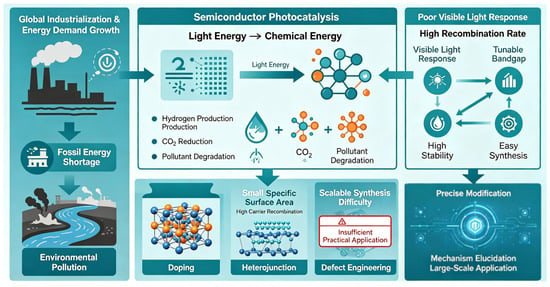
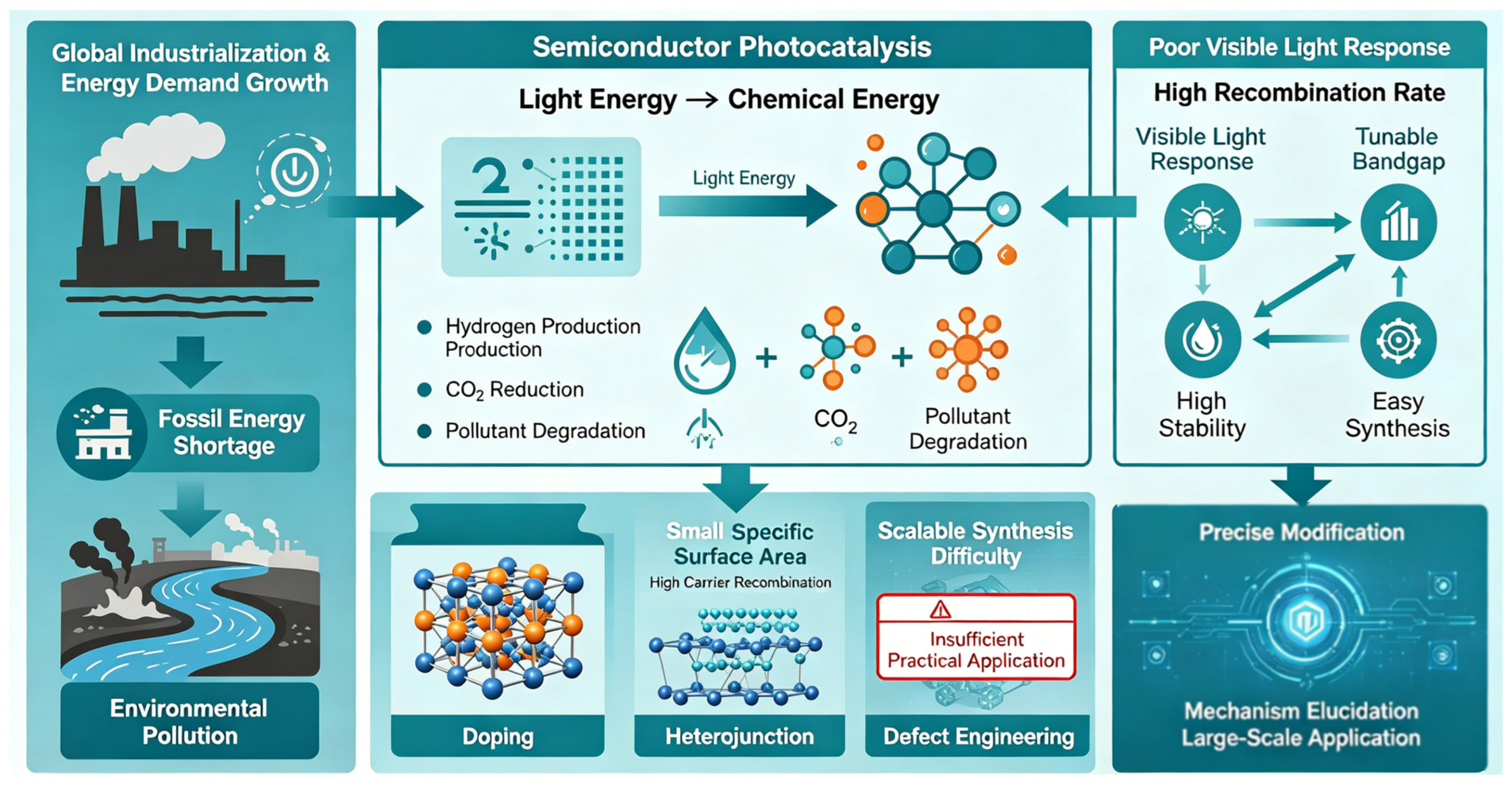
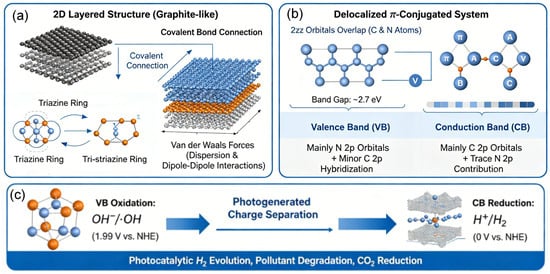
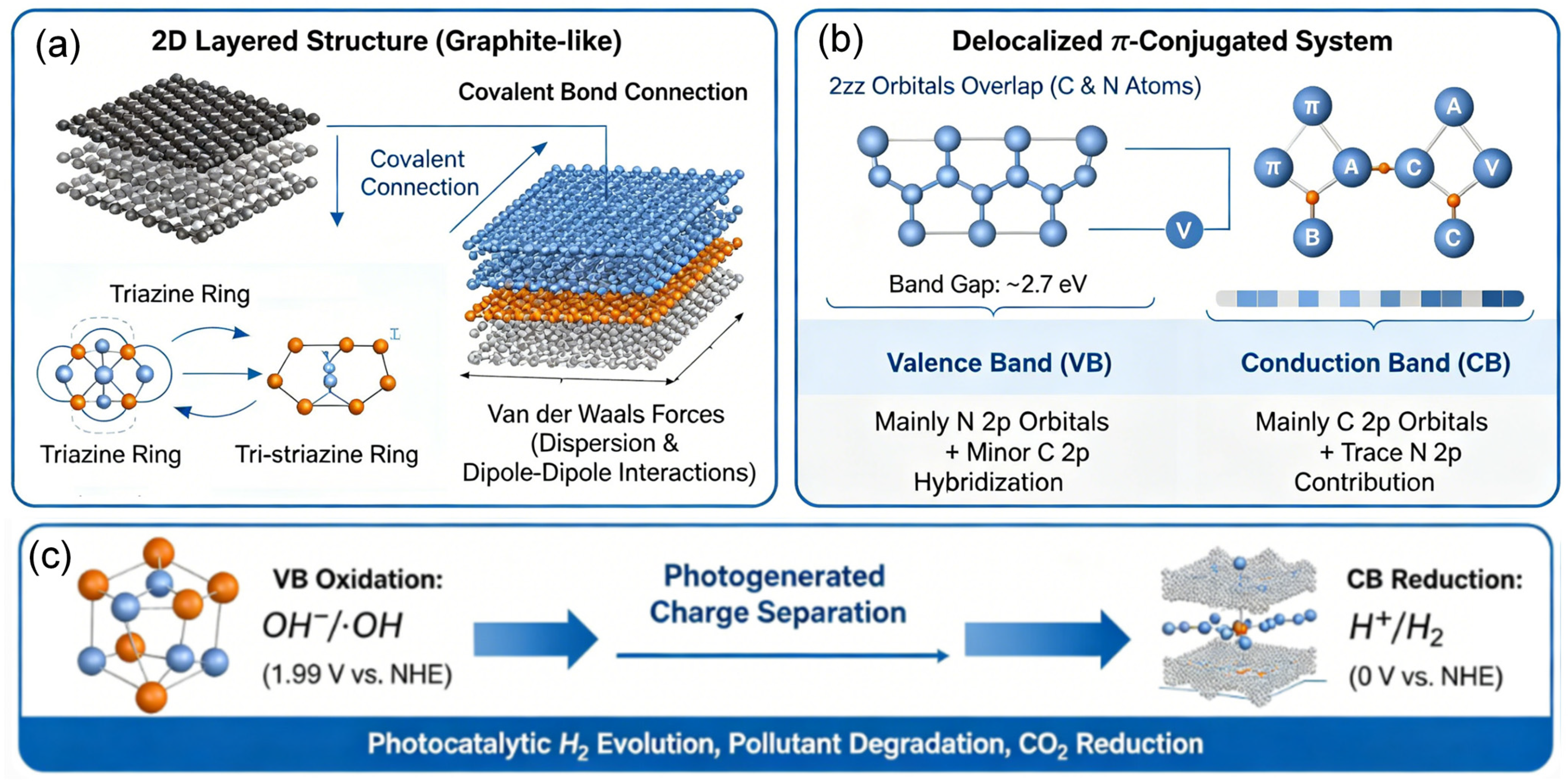
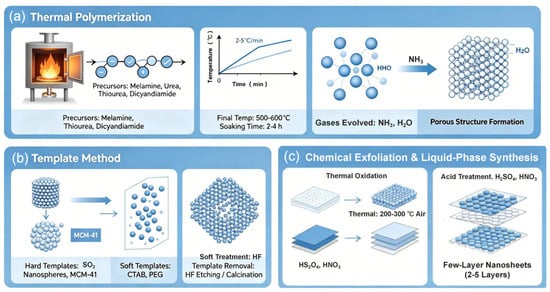
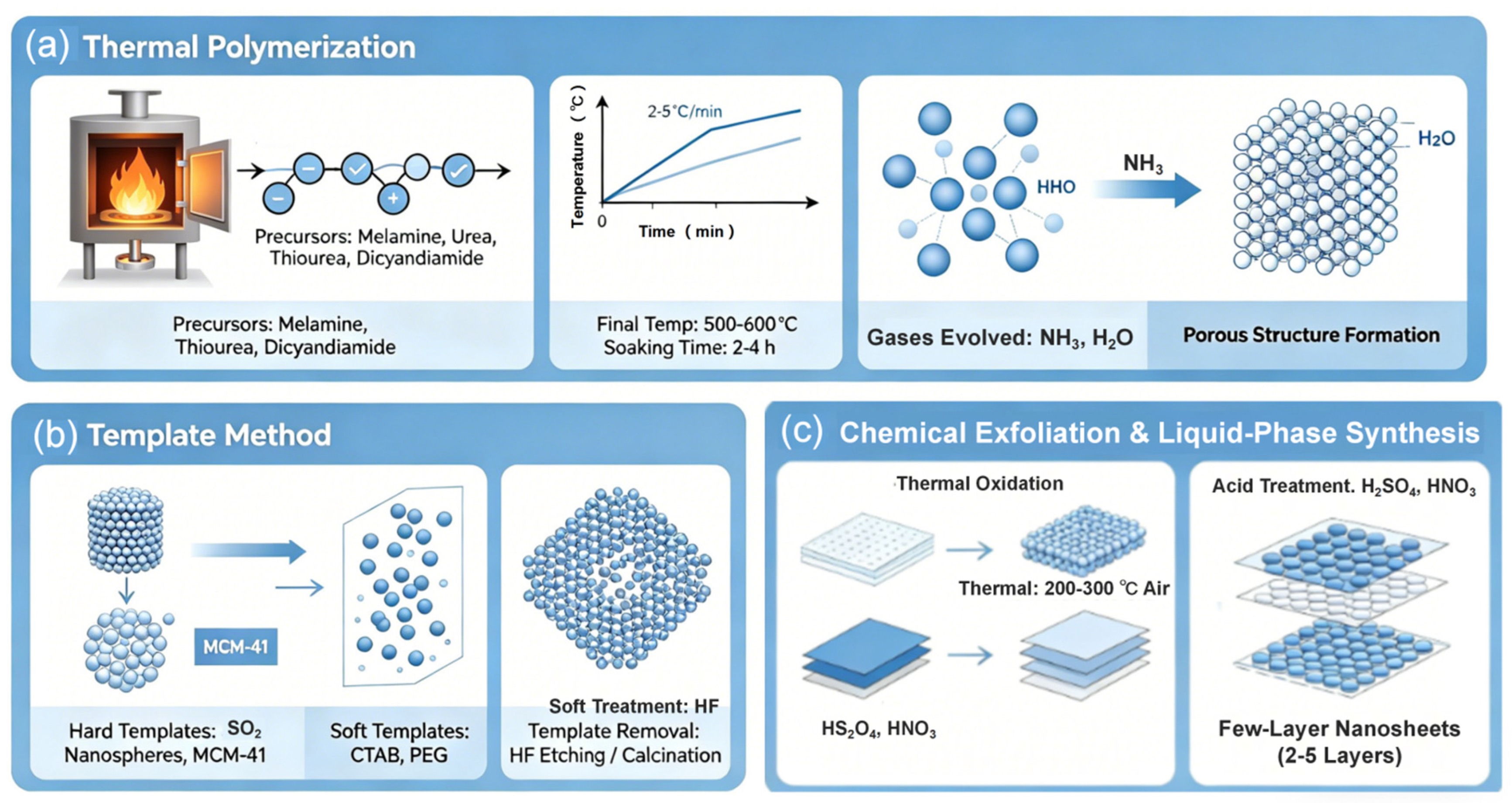
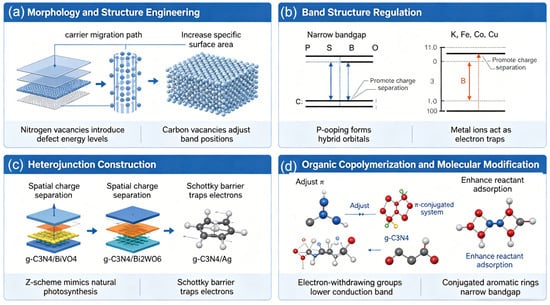
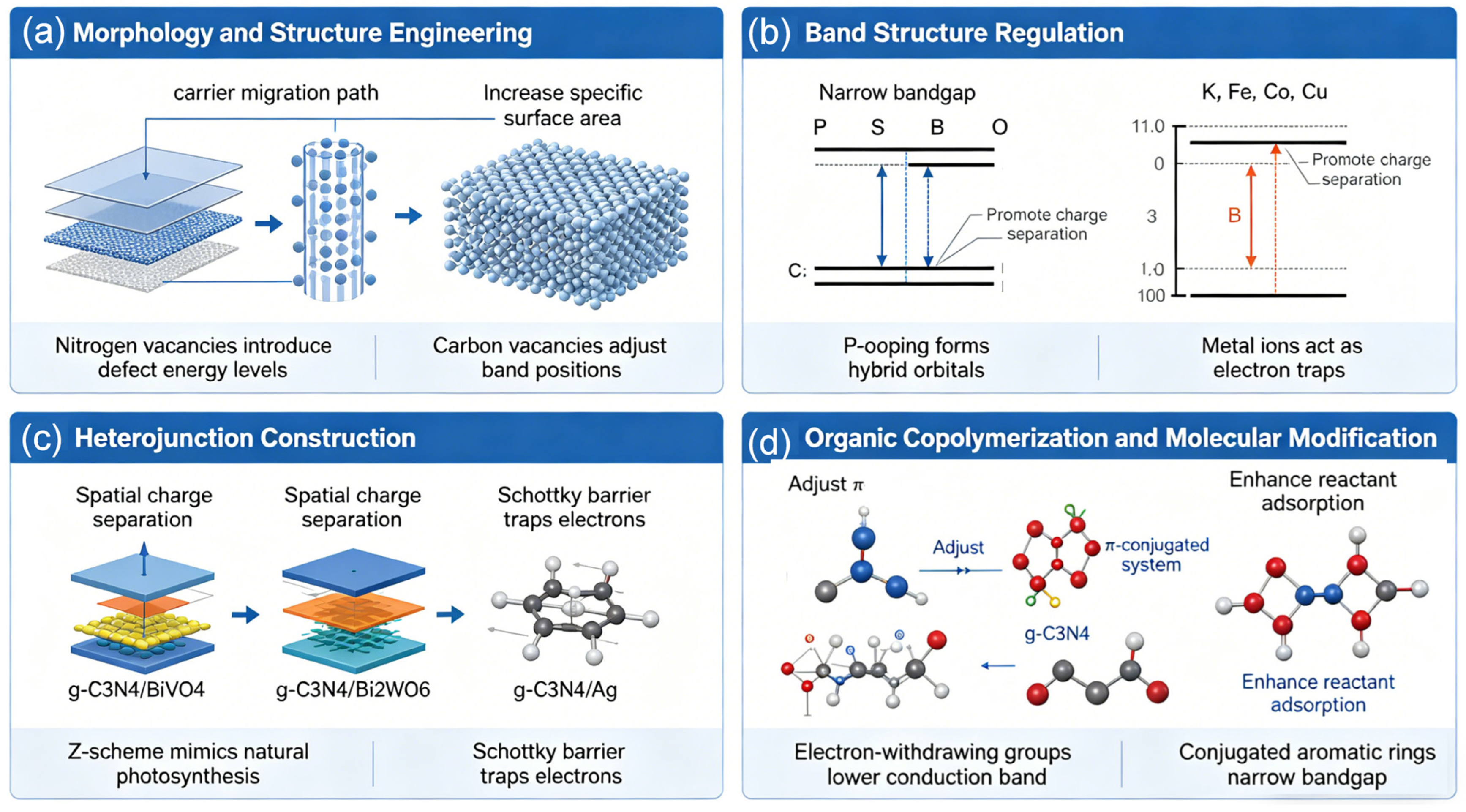
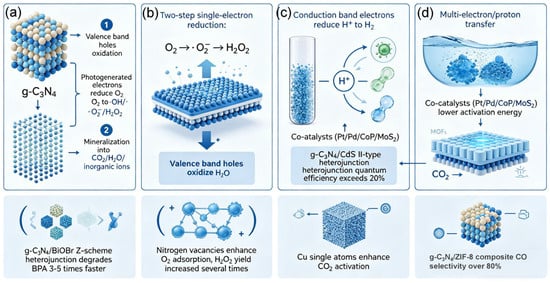
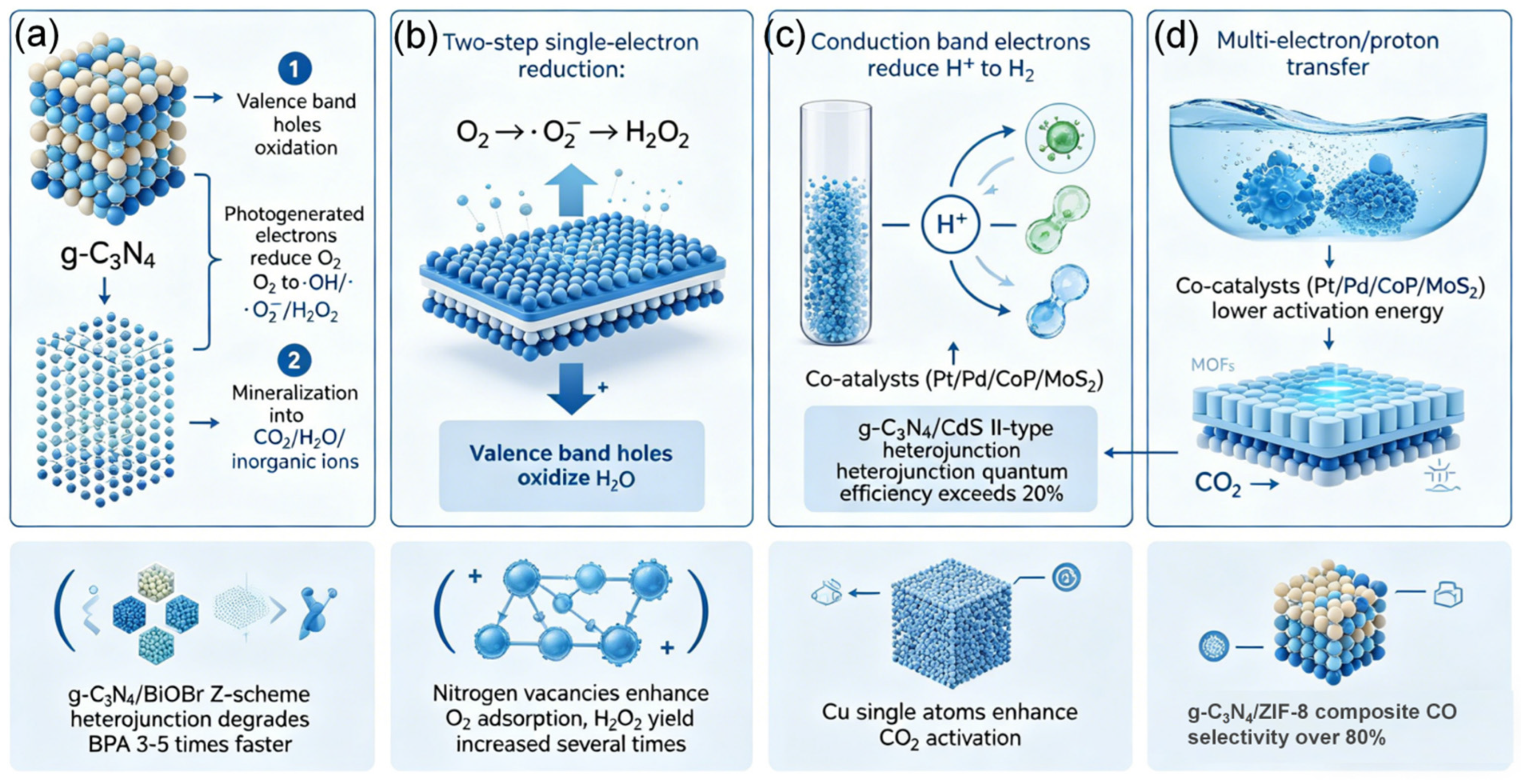
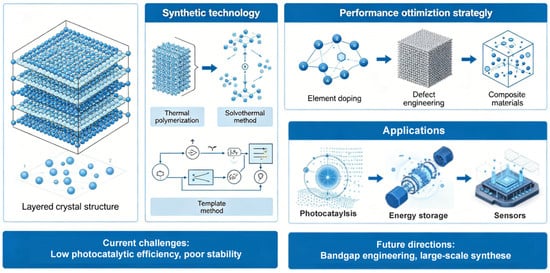
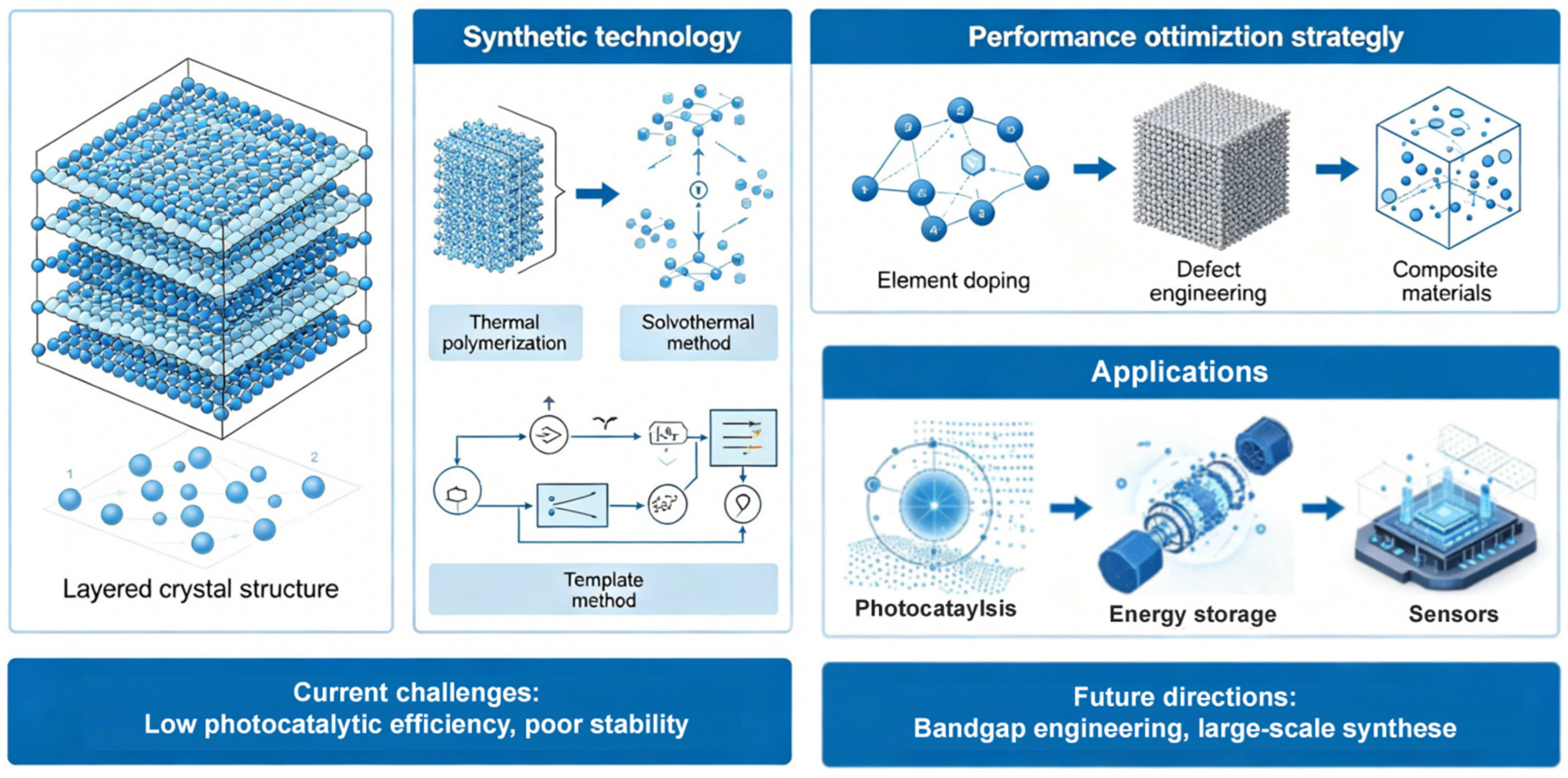

Disclaimer/Publisher’s Note: The statements, opinions and data contained in all publications are solely those of the individual author(s) and contributor(s) and not of MDPI and/or the editor(s). MDPI and/or the editor(s) disclaim responsibility for any injury to people or property resulting from any ideas, methods, instructions or products referred to in the content. |
© 2026 by the authors. Licensee MDPI, Basel, Switzerland. This article is an open access article distributed under the terms and conditions of the Creative Commons Attribution (CC BY) license.