


Abstract
The present work establishes a sustainable and environmentally benign biocatalytic strategy for the construction of multisubstituted cyanopyrazoles via [3+2] cycloaddition, employing lipase as a highly efficient and practical catalyst. Under the optimized mild reaction conditions, this protocol enables the preparation of structurally diverse cyanopyrazole derivatives with high to excellent isolated yields. The substrate used in this method is the in situ-generated diazoacetonitrile. The corresponding conversion was carried out under mild aqueous conditions, avoiding the flammable and explosive characteristics of diazoacetonitrile. The established protocol exhibits a representative substrate scope and good functional group compatibility. Molecular docking was employed to investigate the reaction, highlighting the significant impact of the active-site architecture of the lipase on this reaction. This biocatalytic approach not only enriches the synthetic toolbox for the preparation of valuable cyanopyrazole scaffolds but also highlights the potential of lipase-catalyzed promiscuous reactions in the green synthesis of pharmaceutically relevant heterocyclic compounds.
1. Introduction
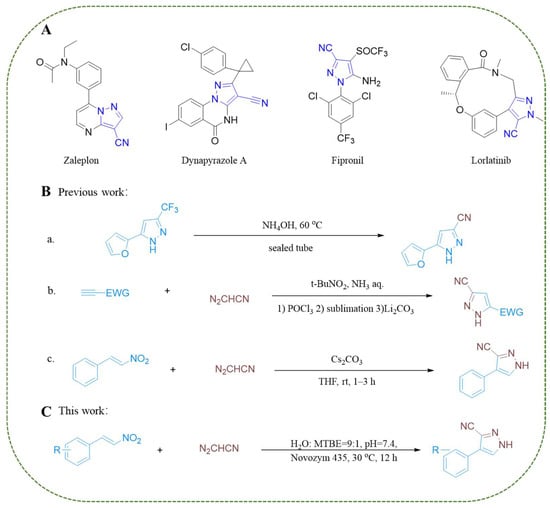
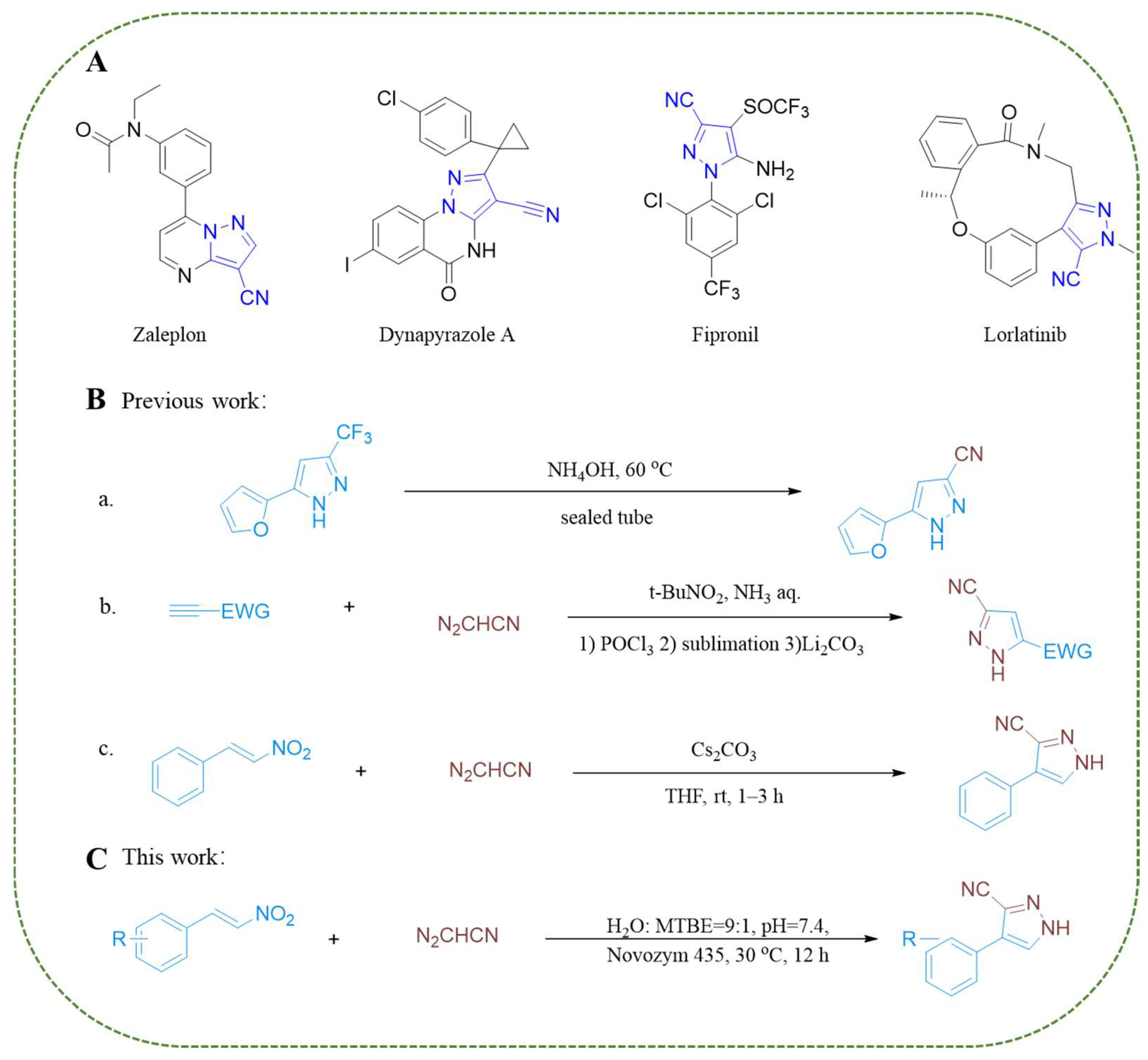
Multisubstituted cyanopyrazoles represent privileged structural motifs widely found in pharmaceutical and agrochemical molecules, including zaleplon, dynapyrazole A, fipronil, and lorlatinib (Scheme 1A) [1]. Furthermore, the cyano group represents a highly versatile synthetic intermediate, enabling facile elaboration into various functionalized derivatives such as carboxylic acids, ketones, aldehydes, and amines [2,3]. Consequently, multisubstituted cyanopyrazoles hold significant practical value, and the efficient construction of these important scaffolds has attracted sustained interest in the fields of synthetic and medicinal chemistry. Traditional synthetic strategies toward cyanopyrazoles mainly rely on the direct cyanation of preformed pyrazole derivatives (Scheme 1B(a)) [4]. However, these methods often suffer from inherent drawbacks, including tedious preparation of starting materials and a narrow substrate scope. In recent decades, cycloaddition reactions involving small and highly reactive diazo compounds with alkenes or alkynes have emerged as a powerful platform for the construction of diverse pyrazole derivatives [5,6,7]. For example, Mykhailiuk and co-workers described the cycloaddition of N2CHCN with electron-deficient alkynes to furnish 5-substituted 3-cyanopyrazoles (Scheme 1B(b)) [8]. Similarly, Ma and colleagues developed a cycloaddition between nitroalkenes and N2CHCN, enabling the assembly of structurally diverse cyanopyrazole architectures (Scheme 1B(c)) [9]. Despite the high efficiency of these methods and their ability to overcome the limitations associated with stepwise routes, most still rely on environmentally hazardous organic solvents. Therefore, the development of greener, milder, and more efficient synthetic methodologies remains highly desirable.
Scheme 1.
Compounds Containing Multisubstituted Cyanopyrazoles and Studies on the Synthesis of Multisubstituted Cyanopyrazoles. (A) Compounds containing multi-substituted cyano-pyrazole structures. (B) Some of the existing synthetic methods. (C) The synthesis method studied in this article.
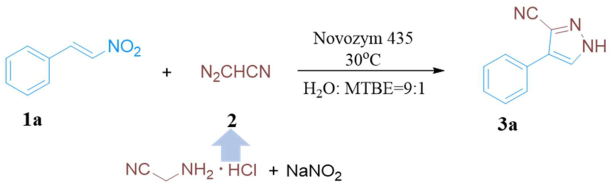
Biocatalysis has emerged as a highly efficient and promising strategy for the synthesis of organic molecules [10,11,12,13,14,15,16,17,18]. Enzymes capable of mediating diverse chemical transformations have proven instrumental in addressing long-standing synthetic challenges in organic chemistry [19,20,21,22,23,24,25]. Consequently, biocatalysis has been widely incorporated into chemical processes that are traditionally associated with environmentally detrimental conditions or necessitate harsh reaction parameters. In this context, lipases represent particularly attractive biocatalysts by virtue of their outstanding stability and high catalytic activity, and have been successfully applied in a wide array of transformations, including the catalytic coupling of salicylaldehyde with β-amino ketosulfonamides and the construction of spiroindole frameworks [26,27]. In such reactions, lipases offer operational stability, broad solvent tolerance, and catalytic promiscuity, which represent inherent advantages of biocatalytic systems. Against this background, we herein report an efficient and mild enzymatic cycloaddition protocol for the synthesis of multisubstituted cyanopyrazoles employing a lipase as the catalyst (Scheme 1C). To the best of our knowledge, this study is the first to demonstrate an instance of the synthesis of multisubstituted cyanopyrazoles through the lipase-mediated denitrative [3+2] cycloaddition reaction.
2. Results and Discussion
A biocatalytic synthetic strategy was developed to establish a green pathway for the construction of valuable heterocyclic frameworks. β-nitrostyrene (1) and in situ-generated diazoacetonitrile (2), prepared from aminoacetonitrile hydrochloride and sodium nitrite, were employed as model substrates for the synthesis of multisubstituted cyanopyrazoles (3). The catalytic performance of a series of lipases was systematically investigated [28]. As summarized in Table 1, the control reaction performed in the absence of any enzyme catalyst afforded no detectable target cyanopyrazole product (entry 2), verifying that a catalyst is indispensable for this [3+2] cycloaddition process. Among all lipases screened, Novozym 435 displayed the highest catalytic activity, furnishing the desired product in 92% yield under mild reaction conditions (entry 1). In comparison, other lipases exhibited markedly lower catalytic efficiencies: porcine pancreatic lipase (PPL) gave a moderate yield of 66%, whereas lipases from Pseudomonas cepacia Lipase (PCL), Candida rugosa Lipase (CRL), and Rhizomucor miehei Lipase (RML) provided yields ranging from 23% to 47% (entries 4–6). To validate the essential role of the native enzymatic conformation in catalysis, a control experiment was performed using heat-denatured Novozym 435 (pretreated at 100 °C for 24 h in water), which led to almost complete loss of catalytic activity, affording only trace product (2%, entry 7). This result strongly demonstrates that the intact and active three-dimensional structure of the lipase is indispensable for driving this cycloaddition reaction toward the construction of multisubstituted cyanopyrazole derivatives, further confirming the enzymatic nature of the catalysis.
Table 1.
Lipase-catalyzed synthesis of multisubstituted cyanopyrazoles (3a) a.
The reaction solvent plays a critical role in enzymatic transformations by modulating enzyme conformation and substrate solubility [29,30]. As illustrated in the solvent screening results, a series of pure solvents was systematically evaluated to investigate their effects on the catalytic performance of Novozym 435 in the synthesis of multisubstituted cyanopyrazoles. Among the single solvents tested, MTBE provided the highest yield of 56%, followed by pure water at 47%, whereas acetonitrile, ethyl acetate, and DMSO afforded lower yields of 35%, 31%, and 21%, respectively (Table 2, entry 1–5). These observations suggest that no monophasic solvent system delivers satisfactory catalytic efficiency, as neither purely aqueous nor purely organic media can simultaneously preserve the active conformation of Novozym 435 and ensure adequate solubility of the organic substrates β-nitrostyrene and in situ-generated diazoacetonitrile. In accordance with green chemistry principles, aqueous mixtures of MTBE at various volume ratios were further examined; the binary solvent system markedly improved reaction efficiency, with the yield reaching 92% at a H2O:MTBE ratio of 9:1 (v/v), significantly superior to all single solvents (Table 2, entry 7). As the MTBE proportion increased (H2O:MTBE = 4:1 and 1:1, v/v), the yields gradually decreased to 81% and 77%, respectively, while further elevation of the MTBE content to a ratio of 1:4 (v/v) led to a continued drop in yield to 63% (Table 2, entry 8–10). Even when water constituted the dominant phase of the solvent system (H2O/MTBE = 19:1, v/v), the yield reached only 69% (Table 2, entry 6). This trend can be attributed to the balance between maintaining the active conformation of Novozym 435, which is favored by the aqueous phase, and ensuring sufficient solubility of the organic substrates, which is facilitated by the organic phase. Excessively high water content reduces substrate solubility, whereas an excess of MTBE may disrupt the active three-dimensional structure of the enzyme, both leading to diminished catalytic performance. Based on these results, the mixed solvent system of H2O and MTBE (9:1, v/v) was confirmed as optimal.
Table 2.
Effect of solvents on the lipase-catalyzed synthesis of multisubstituted cyanopyrazoles.
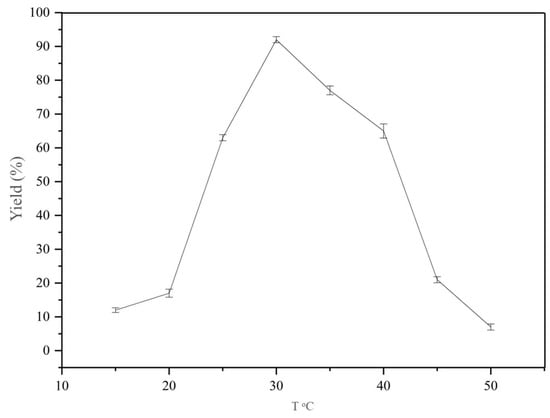
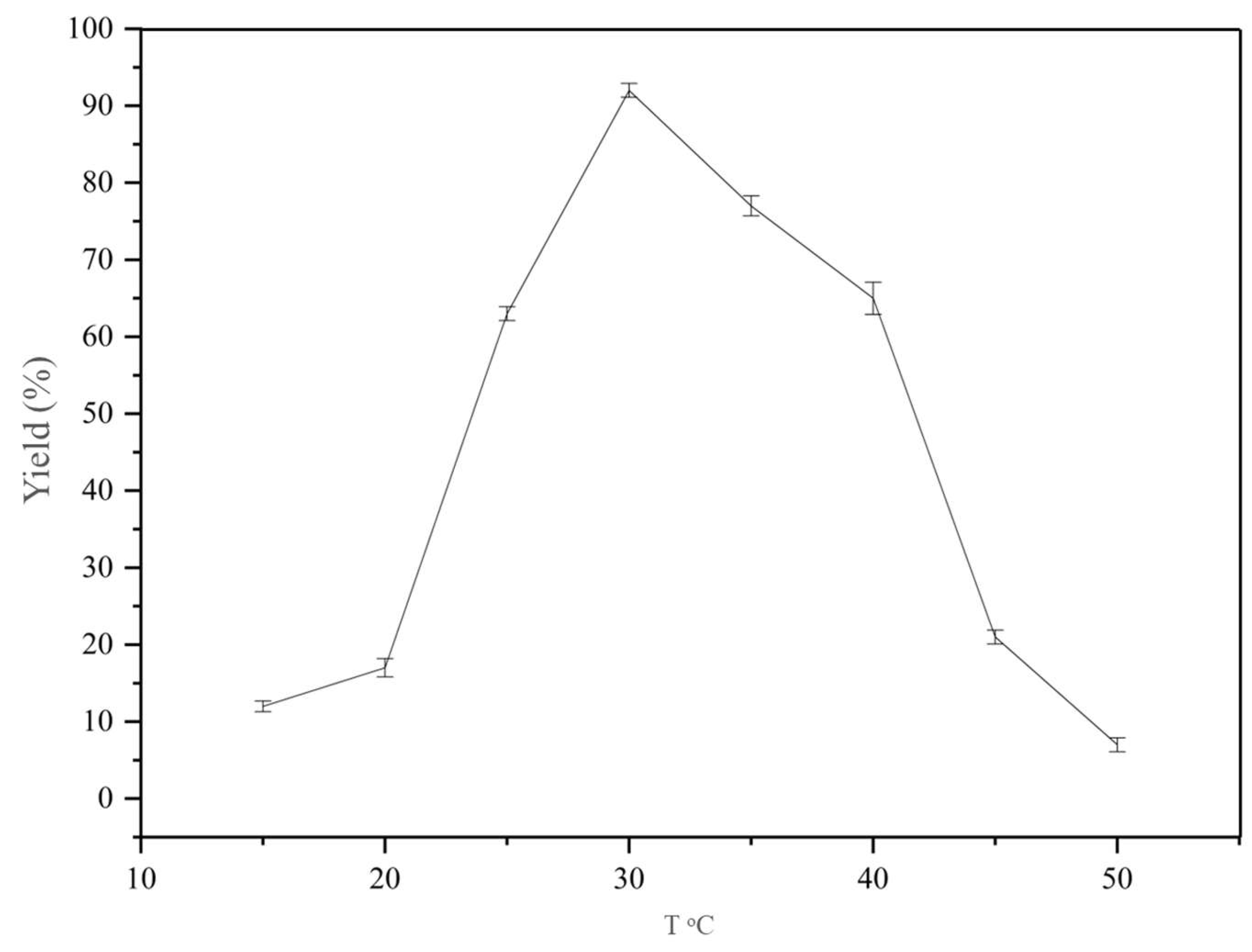
Temperature is a critical factor governing the progression of enzymatic reactions. To determine the optimal temperature for the Novozym 435-catalyzed synthesis of multisubstituted cyanopyrazoles, a range of temperatures from 15 °C to 50 °C was systematically evaluated (Scheme 2). As illustrated in the figure, the reaction yield increased substantially with rising temperature from 15 °C to 30 °C, reaching a maximum of 92% at 30 °C. This enhancement can be attributed to the accelerated thermal motion of substrate molecules and the increased frequency of effective molecular collisions, which facilitate the catalytic reaction. However, when the temperature exceeded 30 °C, the yield gradually decreased, dropping to 77%, 65%, 21% and 7% at 35 °C, 40 °C, 45 °C, and 50 °C, respectively. This decline is ascribed to the irreversible denaturation of the enzyme’s active three-dimensional structure at elevated temperatures, resulting in loss of catalytic activity. Based on these results, 30 °C was identified as the optimal reaction temperature for this biocatalytic transformation.
Scheme 2.
Effect of temperature on the lipase-catalyzed synthesis of multisubstituted cyanopyrazoles. Reaction 1: a (0.1 mmol), 2 (0.2 mmol aminoacetonitrile hydrochloride and 0.3 mmol sodium nitrite, in situ reaction), H2O:MTBE = 9:1 (1 mL), pH = 7.4, Novozym 435 (200 U), 12 h. The error represents the standard deviation (n = 3).
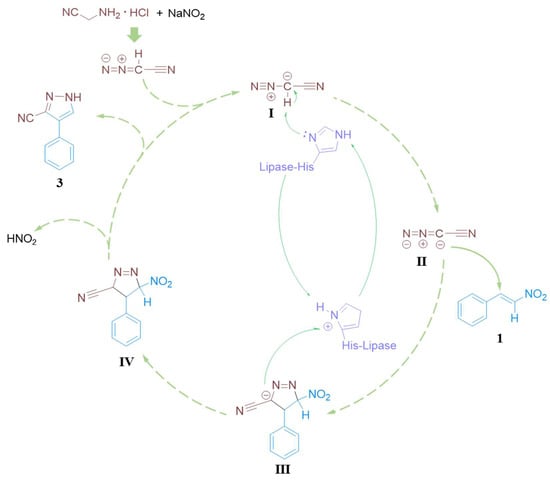
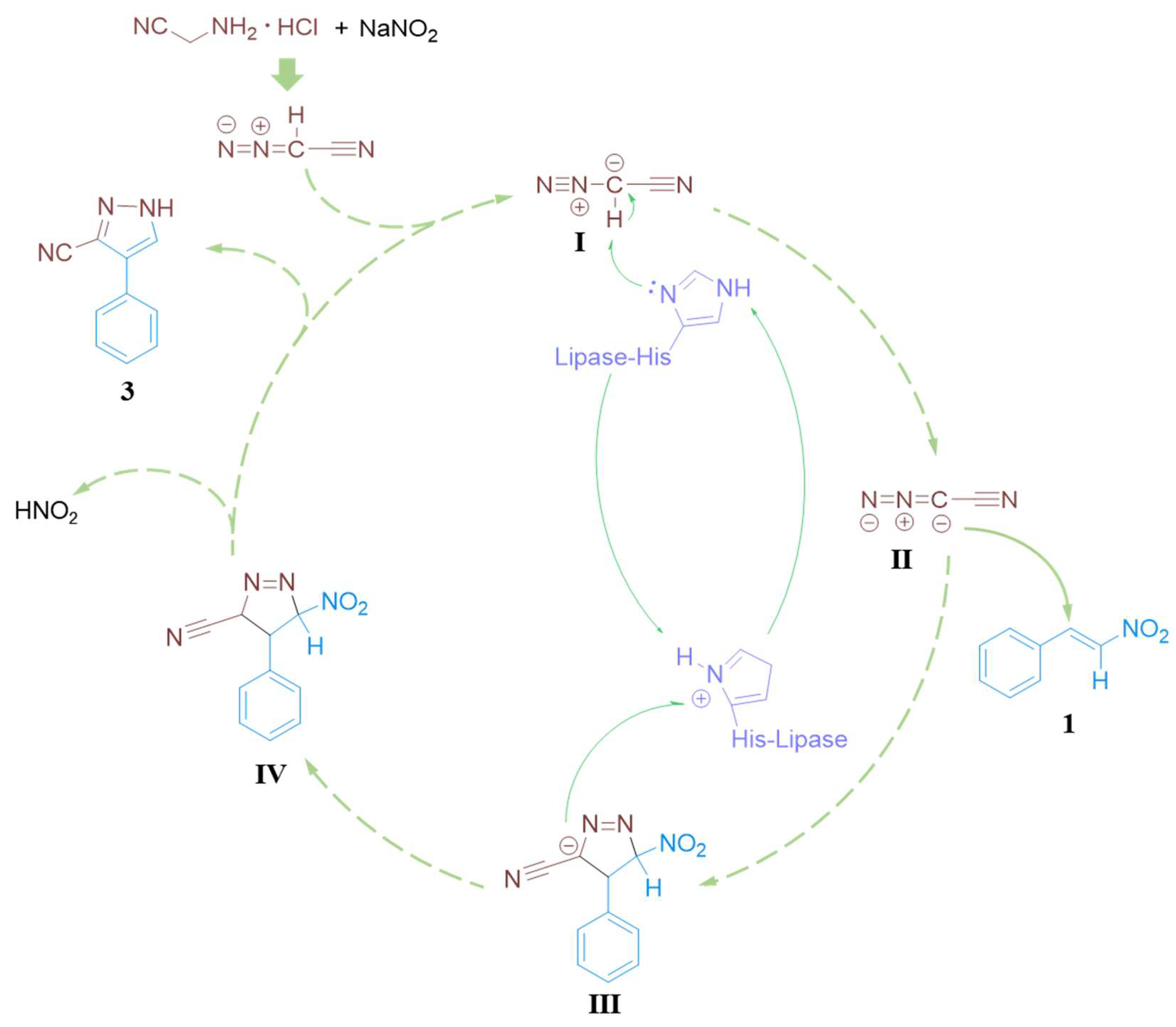
Based on our experimental results and previous studies, a reasonable mechanism for this cycloaddition is proposed (Scheme 3) [31]. First, following the rearrangement of the in situ-generated diazoacetonitrile (2), a proton is abstracted by a histidine residue, yielding a resonance-stabilized diazo-carbon anion intermediate II, while the histidine residue is protonated. Concurrently, the β-nitrostyrenic substrate (1) undergoes a [3+2] cycloaddition reaction with the activated azo anion to form the key intermediate III. This intermediate subsequently undergoes proton transfer and HNO2 elimination, a process facilitated by a protonated histidine residue, thereby restoring the enzyme to its neutral catalytic state and ultimately yielding the target 3-cyano-4-phenylpyrazole product. Throughout the catalytic cycle, lipase acts as a proton carrier, utilizing the acid-catalyzed properties of the active-site histidine to promote the cycloaddition reaction between diazoacetonitrile and β-nitrostyrene. At the end of the cycle, the enzyme is fully regenerated, enabling it to participate in subsequent catalytic cycles.
Scheme 3.
Proposed mechanism for lipase synthesis of multisubstituted cyanopyrazoles.
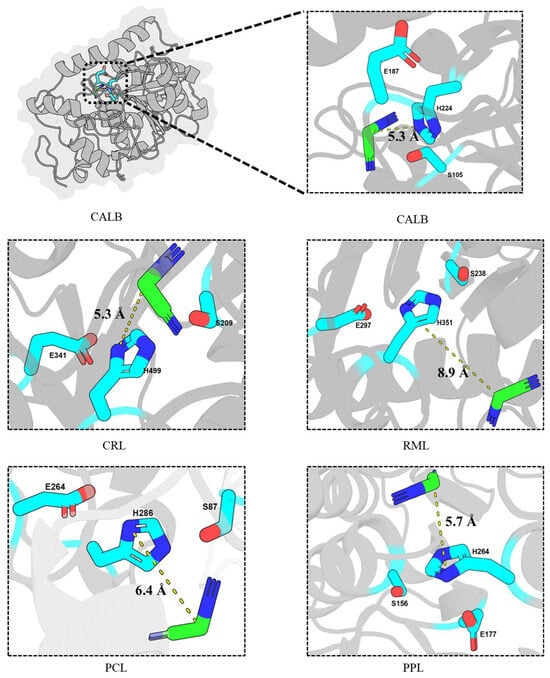
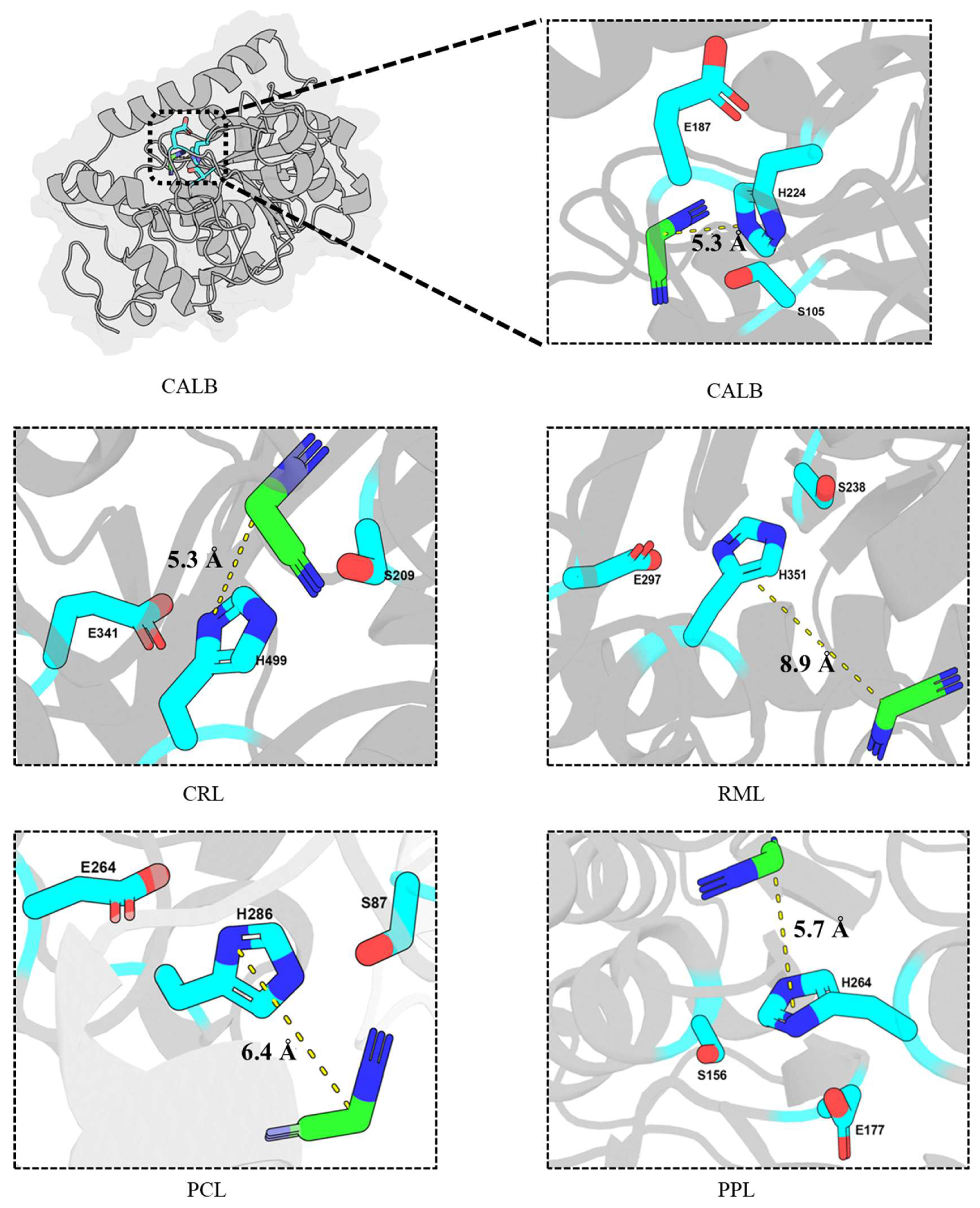
To further elucidate the binding mechanism between the substrate and the enzyme, as well as the stability and interaction patterns of the resulting enzyme–substrate complex, molecular docking simulations were performed (Scheme 4). The docking results suggest that the active-site architecture of the immobilized CALB component of Novozym 435 may provide a more favorable binding environment for diazoacetonitrile than that of the other lipases examined. Within the CALB structure, the histidine residue of the catalytic triad forms a close interaction with the substrate diazoacetonitrile at a distance of 3.9 Å, resulting in a more favorable binding environment and higher reactivity. In contrast, the distances between the corresponding histidine residues in the catalytic triads of CRL, RML, PCL, and PPL and diazoacetonitrile are all greater than 3.9 Å. We hypothesize that this increased spatial separation impedes the abstraction of a proton by the histidine residue, thereby preventing the formation of a resonance-stabilized diazo-carbon anion intermediate, which accounts for the lower catalytic activity of these lipases relative to CALB.
Scheme 4.
Molecular docking modes of diazoacetonitrile in the active sites of different lipases.
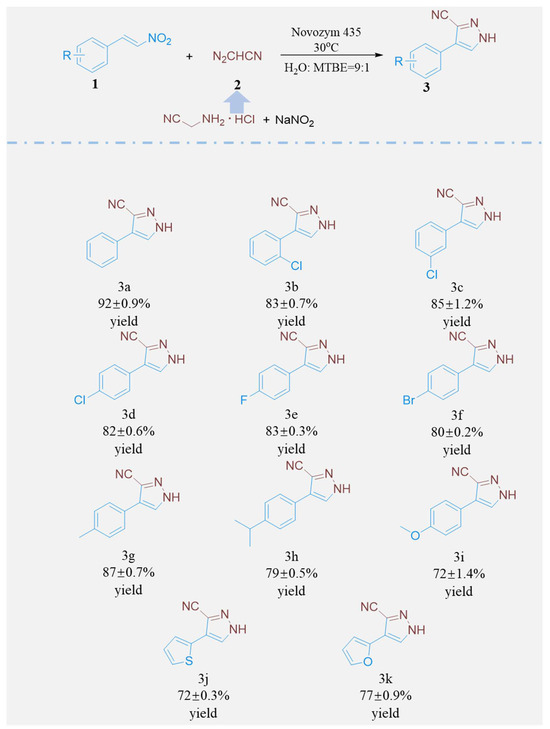
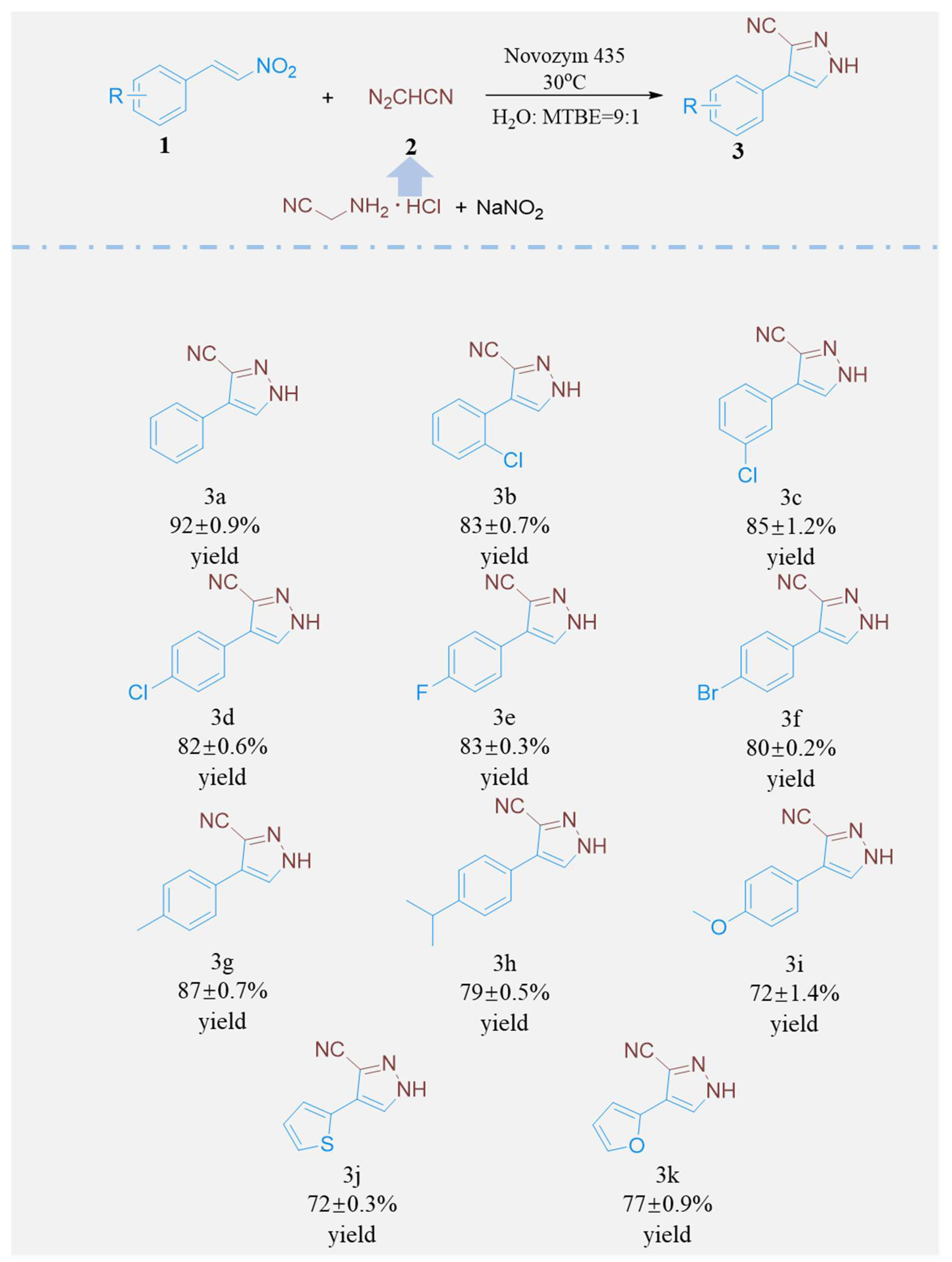
With the optimal reaction conditions established (Novozym 435 as catalyst, reaction temperature 30 °C, H2O/MTBE = 9:1, v/v), the substrate scope of this enzymatic [3+2] cycloaddition transformation was further investigated to evaluate its generality (Scheme 5). As summarized in the figure, a diverse range of substituted β-nitrostyrene substrates were subjected to the optimized reaction conditions. The unsubstituted phenyl derivative afforded the corresponding product 3a in 92% yield. The reaction was then extended to chloro-substituted β-nitrostyrenes, and irrespective of whether the chloro substituent was located at the ortho, meta, or para position, the corresponding products 3b–3d were obtained in good yields ranging from 82% to 85%. Replacement of the para substituent with other halogens also proved feasible, delivering products 3e and 3f in yields of 83% and 80%, respectively. Further variation of the para substituent to methyl, isopropyl, and methoxy groups resulted in slightly decreased but still satisfactory yields, affording products 3g, 3h, and 3i in 87%, 79%, and 72% yields, respectively. Finally, we extended the substrate to include heterocyclic structures and still obtained the corresponding products in reasonably good yields (3j–3k, 72–77% yield). These results indicate that this enzymatic approach exhibits good substrate compatibility for this transformation.
Scheme 5.
Synthesis of multisubstituted cyanopyrazoles catalyzed by lipase. Reaction conditions: 1a (0.1 mmol), 2 (0.2 mmol aminoacetonitrile hydrochloride and 0.3 mmol sodium nitrite, in situ reaction), H2O:MTBE = 9:1 (1 mL), pH = 7.4, Novozym 435 (200 U), 30 °C, 12 h. The error represents the standard deviation (n = 3).
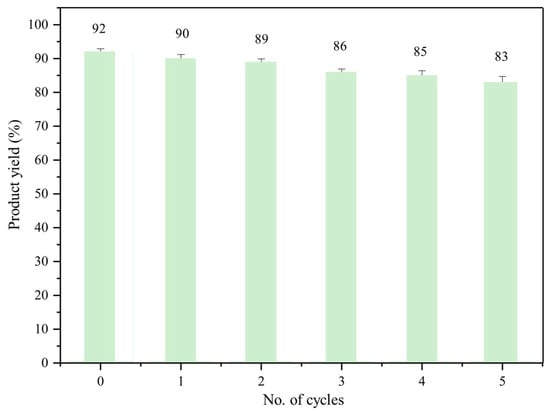
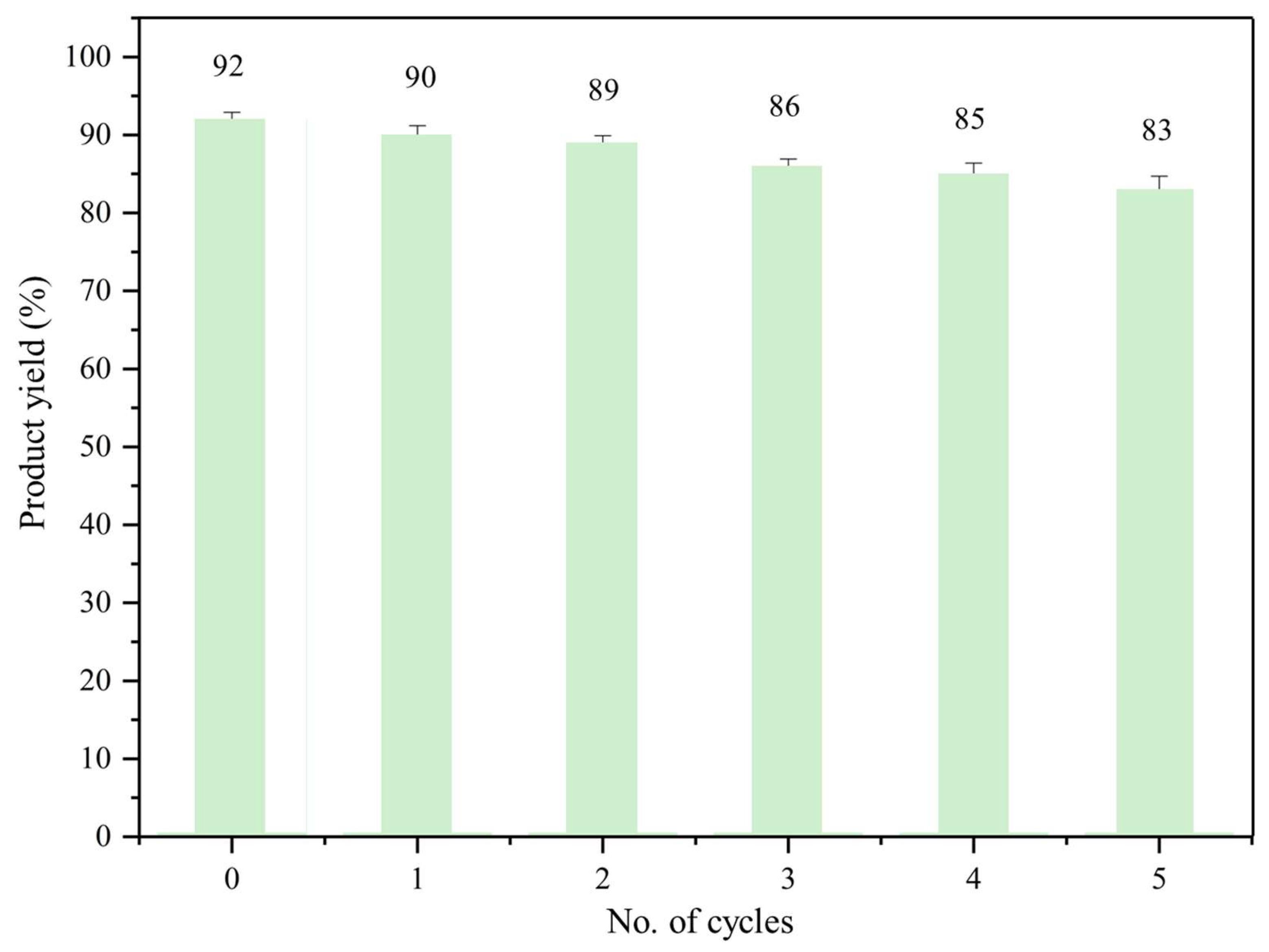
Under the optimized conditions, the model reaction was employed to further evaluate the reusability of Novozym 435. As shown in Scheme 6, the yield of 3a gradually decreased from 90% in the first cycle to 83% after five consecutive cycles, indicating that Novozym 435 retained good operational stability under the optimized reaction conditions. This observation indicates that the catalytic activity of Novozym 435 did not undergo any significant decline throughout the process. Consequently, the favorable reusability of Novozym 435 enhances the practical attractiveness of the proposed method. We also compared PMI, E factor, and Solvent Intensity, demonstrating the environmental friendliness of our proposed method (Scheme S1, Table S3).
Scheme 6.
Reusability of Novozym 435 under the optimized conditions. The error represents the standard deviation (n = 3).
3. Materials and Methods
3.1. General Information
Novozym 435 (15,000 U g−1) was purchased from Sigma-Aldrich China Co. (Beijing, China). PPL (Porcine pancreas lipase, 5600 U g−1), PCL (Pseudomonas cepacia Lipase, 8500 U g−1), RML (Rhizomucor miehei Lipase, 7300 U g−1), and CRL (Candida rugosa Lipase, 6400 U g−1) were purchased from Shanghai Yuan Ye Biological Technology Company (Shanghai, China). One unit of the enzyme activity was defined as the amount of enzyme required to hydrolyze 1 μmol of p-nitrophenyl acetate per minute at 30 °C. All the other chemical reagents were purchased from commercial suppliers [Bide Pharmatech (Shanghai, China), Aladdin (Shanghai, China), Energy Chemical (Shanghai, China)]. All the commercially available reagents and solvents were used without further purification. The NMR spectrometer was purchased from Bruker (Karlsruhe, Germany). Proton nuclear magnetic resonance (1H NMR) spectra were recorded on a 400 MHz spectrometer in DMSO-d6. Chemical shifts for 1H are reported in parts per million downfield from tetramethyl silane (TMS) and are referenced to residual protium in the NMR solvent (DMSO-d6 = δ 2.50 ppm). NMR data are presented as follows: chemical shift (δ ppm), multiplicity (s = singlet, d = doublet, t = triplet, q = quartet, m = multiplet, br = broad), coupling constant in Hertz (Hz), and integration. The experiments were performed in triplicate, and all data were obtained based on the average values.
All the compounds obtained were known compounds.
3.2. General Procedure
Aminoacetonitrile hydrochloride (0.2 mmol) and sodium nitrite (0.3 mmol) were added to water (0.1 mL), and the mixture was stirred for 1–2 min. The resulting mixture was used directly in the next step without further purification. To a stirred solution of β-nitrostyrene 1 (0.1 mmol), the system for the in situ generation of diazoacetonitrile in H2O:MTBE = 9:1 (1 mL) at 30 °C, was added Novozym 435 (200 U) in one portion and stirred for 12 h. The progress of the reaction was monitored by TLC (petroleum ether: ethyl acetate = 1:1–8:1). Upon completion of the reaction, the reaction mixture was extracted using ethyl acetate. The combined organic extracts were then concentrated in vacuo and purified by flash column chromatography (cyclohexane/EA = 5/1) on silica gel to afford the desired product.
3.3. Molecular Docking Analysis
The initial structure of CALB was taken from the PDB code of 4ZV7. The initial structure of PPL was taken from the PDB code of 1ETH. The initial structure of PCL was taken from the PDB code of 1OIL. The initial structure of CRL was taken from the PDB code of 1TRH. The initial structure of RML was taken from the PDB code of 6QPP. Diazoacetonitrile was docked to the active sites of lipase, respectively, using the AutoDock Vina tool (version 1.5.6 Sep_17_14).
3.4. Novozym 435 Recovery Procedure
At the end of each reaction cycle, Novozym 435 is recovered from the reaction mixture by filtration. The recovered enzyme is washed with n-hexane to remove residual substrates, products, and byproducts, and then dried at room temperature under reduced pressure. The resulting enzyme is reused directly in the next cycle without further processing.
4. Conclusions
In conclusion, a novel biocatalytic protocol mediated by Novozym 435 has been established for the efficient construction of multisubstituted cyanopyrazoles. This methodology features notable merits, including mild reaction conditions, environmental benignity, and broad substrate compatibility. A series of eleven cyanopyrazole derivatives was smoothly obtained with yields ranging from moderate to excellent. Molecular docking techniques were employed to study this reaction, which highlighted the significant influence of the type of lipase on the reaction. Furthermore, Novozym 435 exhibited excellent catalytic performance toward this cycloaddition transformation, highlighting its great potential as a versatile and efficient biocatalyst in modern organic synthesis.
Supplementary Materials
The following supporting information can be downloaded at: https://www.mdpi.com/article/10.3390/catal16060511/s1, Tables S1 and S2: Synthesis of Multisubstituted Cyanopyrazoles (3a) at different times and pH; Data of products and Spectra of Products; Scheme S1: Green chemistry metrics for lipase catalytic system and chemical catalytic system; Table S3: Comparison of Green Performance Indicators Between Lipase-Catalyzed and Chemically Catalyzed Systems.
Author Contributions
Conceptualization, F.Z.; methodology, Z.W., X.Z., and L.L.; writing—review and editing, F.Z. and Z.W. All authors have read and agreed to the published version of the manuscript.
Funding
This research received no external funding.
Data Availability Statement
The data presented in this study are available on request from the corresponding author.
Conflicts of Interest
The authors declare no conflicts of interest.
References
- Caboni, P.; Sammelson, R.; Casida, J. Phenylpyrazole Insecticide Photochemistry, Metabolism, and GABAergic Action: Ethiprole Compared with Fipronil. J. Agric. Food Chem. 2003, 51, 7055–7061. [Google Scholar] [CrossRef] [Scilit]
- Hyland, C.J.; O’Connor, C.J. The acid-catalysed hydrolysis of benzonitrile. J. Chem. Soc. Perkin Trans. 1973, 2, 223–227. [Google Scholar] [CrossRef] [Scilit]
- Das, B.; Reddy, C.R.; Kumar, D.N.; Krishnaiah, M.; Narender, R. A Simple, Advantageous Synthesis of 5-Substituted 1H-Tetrazoles. Synlett 2010, 2010, 391–394. [Google Scholar] [CrossRef] [Scilit]
- Yan, T.; Chen, Y.; Wang, J.; Xie, Y.; Yang, C. Synthesis of 3-Cyanopyrazoles from 3-Trifluoromethylpyrazoles via Direct Ammonolysis Reaction. Heterocycles 2012, 85, 431. [Google Scholar]
- Muruganantham, R.; Mobin, S.M.; Namboothiri, I.N.N. Base-Mediated Reaction of the Bestmann–Ohira Reagent with Nitroalkenes for the Regioselective Synthesis of Phosphonylpyrazoles. Org. Lett. 2007, 9, 1125–1128. [Google Scholar] [CrossRef] [Scilit] [PubMed]
- Muruganantham, R.; Namboothiri, I. Phosphonylpyrazoles from Bestmann–Ohira Reagent and Nitroalkenes: Synthesis and Dynamic NMR Studies. J. Org. Chem. 2010, 75, 2197–2205. [Google Scholar] [CrossRef] [Scilit]
- Li, T.-R.; Duan, S.-W.; Ding, W.; Liu, Y.-Y.; Chen, J.-R.; Lu, L.-Q.; Xiao, W.-J. Synthesis of CF3-Containing 3,3′-Cyclopropyl Spirooxindoles by Sequential [3+2] Cycloaddition/Ring Contraction of Ylideneoxindoles with 2,2,2-Trifluorodiazoethane. J. Org. Chem. 2014, 79, 2296–2302. [Google Scholar] [CrossRef] [Scilit] [PubMed]
- Mykhailiuk, P.K. New Life for Diazoacetonitrile (N2CHCN): In situ Generation and Practical Synthesis of CN-Pyrazoles. Eur. J. Org. Chem. 2015, 2015, 7235–7239. [Google Scholar] [CrossRef] [Scilit]
- Chen, Z.; Zhang, Y.; Nie, J.; Ma, J.-A. Transition-Metal-Free [3+2] Cycloaddition of Nitroolefins and Diazoacetonitrile: A Facile Access to Multisubstituted Cyanopyrazoles. Org. Lett. 2018, 20, 2120–2124. [Google Scholar] [CrossRef] [Scilit]
- Paul, C.; Hanefeld, U.; Hollmann, F.; Qu, G.; Yuan, B.; Sun, Z. Enzyme engineering for biocatalysis. Mol. Catal. 2024, 555, 113874. [Google Scholar] [CrossRef] [Scilit]
- Wohlgemuth, R. Biocatalysis—Key to sustainable industrial chemistry. Curr. Opin. Biotechnol. 2010, 21, 713–724. [Google Scholar] [CrossRef] [Scilit] [PubMed]
- Hanefeld, U.; Hollmann, F.; Paul, C.E. Biocatalysis making waves in organic chemistry. Chem. Soc. Rev. 2022, 51, 594–627. [Google Scholar] [CrossRef] [Scilit] [PubMed]
- Kamboj, P.; Bhardwaj, M.; Sahu, P.; Bajaj, P.; Tyagi, V. Enzymatic Synthesis of 3-Hydroxy Bisindoles and Further C-3 Sulfenylation via Combining a Carbocatalytic Approach in the Same Pot. ChemSelect 2024, 9, e202304826. [Google Scholar] [CrossRef] [Scilit]
- Romero, E.O.; Saucedo, A.T.; Hernández-Meléndez, J.R.; Yang, D.; Chakrabarty, S.; Narayan, A.R.H. Enabling Broader Adoption of Biocatalysis in Organic Chemistry. JACS Au 2023, 3, 2073–2085. [Google Scholar] [CrossRef] [Scilit]
- Zhao, S.; Lin, Y.; Wang, J.; Li, D.; Wang, F.; Shoji, O.; Xu, J. Regioselective aromatic O-demethylation with an artificial P450BM3/sugar alcohol oxidase peroxygenase system. Int. J. Biol. Macromol. 2025, 309, 142768. [Google Scholar] [CrossRef] [Scilit]
- Liu, Y.; Ma, T.; Guo, Z.; Zhou, L.; Liu, G.; He, Y.; Ma, L.; Gao, J.; Bai, J.; Hollmann, F.; et al. Asymmetric α-benzylation of cyclic ketones enabled by concurrent chemical aldol condensation and biocatalytic reduction. Nat. Commun. 2024, 15, 71. [Google Scholar] [CrossRef] [Scilit] [PubMed]
- Bell, E.L.; Finnigan, W.; France, S.P.; Green, A.P.; Hayes, M.A.; Hepworth, L.J.; Lovelock, S.L.; Niikura, H.; Osuna, S.; Romero, E.; et al. Biocatalysis. Nat. Rev. Methods Primers 2021, 1, 46. [Google Scholar] [CrossRef] [Scilit]
- Wu, Y.; Xu, W.; Jiao, L.; Gu, W.; Du, D.; Hu, L.; Lin, Y.; Zhu, C. Nanobiocatalysis: A materials science road to biocatalysis. Chem. Soc. Rev. 2022, 51, 6948–6964. [Google Scholar] [CrossRef] [Scilit]
- Xie, H.; Li, F.; Xu, Y.; Wang, C.; Xu, Y.; Wu, J.; Li, Z.; Wang, Z.; Wang, L. Vitreoscilla hemoglobin: A natural carbene transfer catalyst for diastereo- and enantioselective synthesis of nitrile-substituted cyclopropanes. Green Chem. 2023, 25, 6853–6858. [Google Scholar] [CrossRef] [Scilit]
- Li, F.; Xu, Y.; Xu, Y.; Ma, J.; Xie, H.; Yang, H.; Han, W.; Wang, C.; Li, Z.; Wang, L. Novel dual-enzyme system for synthesis of 2-alkyl and 2-arylbenzoxazoles via aerobic oxidation. Org. Chem. Front. 2023, 10, 3509–3514. [Google Scholar] [CrossRef] [Scilit]
- Li, F.; Xu, Y.; Xu, Y.; Wang, C.; Ma, J.; Chen, P.; Wang, L. Hemin-catalyzed controlled oxidative cyanation of secondary amine for the synthesis of α-aminonitriles and α-iminonitriles. Mol. Catal. 2022, 529, 112576. [Google Scholar] [CrossRef] [Scilit]
- Osman, A.I.; Elgarahy, A.M.; Eltaweil, A.S.; Abd El-Monaem, E.M.; El-Aqapa, H.G.; Park, Y.; Hwang, Y.; Ayati, A.; Farghali, M.; Ihara, I.; et al. Biofuel production, hydrogen production and water remediation by photocatalysis, biocatalysis and electrocatalysis. Environ. Chem. Lett. 2023, 21, 1315–1379. [Google Scholar] [CrossRef] [Scilit]
- Song, X.; Yu, L.; Chen, L.; Chen, Y. Catalytic Biomaterials. Acc. Mater. Res. 2024, 5, 271–285. [Google Scholar] [CrossRef] [Scilit]
- Bilal, M.; Rashid, E.U.; Zdarta, J.; dos Santos, J.C.S.; Fernandes, P.C.B.; Cheng, H.; Jesionowski, T. Engineering magnetic nanobiocatalytic systems with multipurpose functionalities for biocatalysis, biotechnology and bioprocess applications. Sustain. Chem. Pharm. 2022, 30, 100866. [Google Scholar] [CrossRef] [Scilit]
- Lee, Y.S.; Lim, K.; Minteer, S.D. Cascaded Biocatalysis and Bioelectrocatalysis: Overview and Recent Advances. Annu. Rev. Phys. Chem. 2021, 72, 467–488. [Google Scholar] [CrossRef] [Scilit]
- Ma, J.; Li, F.; Xu, Y.; Wang, C.; Du, C.; Wang, Z.; Wang, L. A Practical Synthesis of 2-Arylimino-2H-Chromenes via Biocatalytic System in Water. ChemSelect 2023, 8, e202300851. [Google Scholar] [CrossRef] [Scilit]
- Tang, Y.; Wang, C.; Xie, H.; Xu, Y.; Wang, C.; Du, C.; Wang, Z.; Wang, L. Green Synthesis of Spirooxindoles via Lipase-Catalyzed One-Pot Tandem Reaction in Aqueous Media. Catalysts 2023, 13, 143. [Google Scholar] [CrossRef] [Scilit]
- Eremeev, N.; Zaitsev, S. Porcine Pancreatic Lipase as a Catalyst in Organic Synthesis. Mini-Rev. Org. Chem. 2016, 13, 78–85. [Google Scholar] [CrossRef] [Scilit]
- Kumar, A.; Dhar, K.; Kanwar, S.S.; Arora, P.K. Lipase catalysis in organic solvents: Advantages and applications. Biol. Proced. Online 2016, 18, 2. [Google Scholar] [CrossRef] [Scilit]
- Ingenbosch, K.N.; Vieyto-Nuñez, J.C.; Ruiz-Blanco, Y.B.; Mayer, C.; Hoffmann-Jacobsen, K.; Sanchez-Garcia, E. Effect of Organic Solvents on the Structure and Activity of a Minimal Lipase. J. Org. Chem. 2022, 87, 1669–1678. [Google Scholar] [CrossRef] [Scilit] [PubMed]
- Li, F.; Xu, Y.; Wang, C.; Wang, C.; Xie, H.; Xu, Y.; Chen, P.; Wang, L. Efficient synthesis of substituted pyrazoles Via [3+2] cycloaddition catalyzed by lipase in ionic liquid. Process Biochem. 2023, 124, 253–258. [Google Scholar] [CrossRef] [Scilit]

Disclaimer/Publisher’s Note: The statements, opinions and data contained in all publications are solely those of the individual author(s) and contributor(s) and not of MDPI and/or the editor(s). MDPI and/or the editor(s) disclaim responsibility for any injury to people or property resulting from any ideas, methods, instructions or products referred to in the content. |
© 2026 by the authors. Licensee MDPI, Basel, Switzerland. This article is an open access article distributed under the terms and conditions of the Creative Commons Attribution (CC BY) license.