


Abstract
The existence of continually increasing refractory organic pollutants in water has always been a serious potential threat to human and environmental health due to their toxicity and persistence. Conventional water treatment technologies suffer from inherent limitations, including low degradation efficiency, secondary pollution issues, and high operational costs. Recently, molecular oxygen (O2)-based advanced oxidation processes (O2-AOPs) have attracted increasing attention as sustainable and efficient wastewater treatment technologies, as the abundant and environmentally benign oxidant in nature can be activated into reactive oxygen species (ROS), such as superoxide anions (), hydroxyl radicals (·OH), and singlet oxygen (1O2), enabling the effective mineralization of refractory organic pollutants. This review presents a comprehensive summary of O2-AOPs for water purification, specifically focusing on photocatalytic, electrocatalytic, thermocatalytic, and mechanocatalytic systems. Furthermore, we conduct a comprehensive analysis of the intrinsic reaction mechanisms associated with both free radical pathways and non-free radical pathways, which include processes involving singlet oxygen and high-valent metal-oxygen intermediates. Finally, we discuss the challenges and prospects associated with the degradation of typical organic pollutants, such as phenolic compounds, pharmaceuticals and personal care products (PPCPs), and organic dyes. Despite significant advancements in O2-AOPs, several core challenges persist, including low efficiency in utilizing dissolved oxygen, insufficient catalyst stability, and unclear mechanisms of interfacial electron transfer. Future research should prioritize the precise regulation of material structures, a thorough analysis of reaction mechanisms, and the tailored development of reactors to facilitate the industrial application of this technology in water treatment. Overall, this review systematically outlines the current progress in technologies for removing organic pollutants using molecular oxygen, offering novel insights for mitigating organic pollution in water.
1. Introduction
With the global population expansion, rapid industrialization, and overlapping effects of climate change, the issue of water scarcity has become increasingly severe. Recently, approximately 90% of the world’s freshwater resources are contaminated to varying degrees due to a convergence of industrial wastewater, domestic sewage, and agricultural non-point source pollution [1,2,3]. Traditional pollution control technologies have demonstrated considerable limitations in effectively addressing the complexity of modern water contamination, emphasizing an urgent need for innovative solutions rooted in technological advancement and systemic integration. The composition of wastewater has expanded from traditional organic pollutants (e.g., tetracyclines, ciprofloxacin) to emerging contaminants (e.g., acetaminophen, perfluorooctanoic acid, polybrominated diphenyl ethers). This expansion has further exacerbated the challenges of wastewater treatment, as conventional technologies are often plagued by low treatment efficiency and high operational costs when confronted with such a diverse and complex spectrum of pollutants [4,5,6].
Molecular oxygen, constituting approximately 21% of the atmosphere, presents a promising, low-cost, and environmentally benign oxidant for the mineralization of organic pollutants in wastewater [7,8]. Despite this potential, the electrode potential of molecular oxygen is relatively low, which limits its ability to completely mineralize refractory organic pollutants in wastewater [9]. Fortunately, there are ways to activate molecular oxygen into reactive oxygen species (ROS) through various physical, chemical, or biological methods. These ROS include superoxide anion (), singlet oxygen (1O2), hydrogen peroxide (H2O2), and hydroxyl radicals (·OH) [10,11,12,13], which have a rapid and effective capacity for attacking organic macromolecules, facilitating their degradation and eventual mineralization. For instance, 2H-phase MoS2 can aid in the activation of molecular oxygen into ROS [14]. Notably, phosphorus-doped MoS2 can undergo a transient 2H → 1T phase transition on mechanical stimulation, which not only enhances ·OH generation but also promotes selective adsorption of refractory organic pollutants like perfluorooctanoic acid (PFOA), maintaining high degradation efficiency even in complex aqueous matrices. Compared to conventional AOPs, such as the Fenton method, molecular oxygen activation operates under mild reaction conditions, avoiding the generation of secondary by-products such as iron sludge, and offering notable systemic benefits [15,16]. Consequently, it is emerging as a leading example of environmentally benign water treatment technology.
Recently, molecular oxygen activation technology has achieved remarkable progress in the field of environmental pollution control. Several efficient molecular oxygen activation strategies, such as photocatalysis, electrocatalysis, and tribocatalysis, have been developed and applied to processes in order to degrade organic pollutants and inactivate pathogenic microorganisms [17,18,19,20]. However, it is noteworthy that most existing studies have predominantly focused on atmospheric or soil remediation, while systematic research targeting wastewater treatment remains insufficient. Key scientific questions, such as the optimization of activation strategies, the structure-activity relationships of catalytic materials, and the microscopic mechanisms of pollutant degradation, remain inadequately explored.
Among these molecular oxygen activation strategies, photocatalysis has reached a higher level of development maturity compared with other energy-driven oxygen activation technologies. Benefiting from long-term in-depth research, its reaction principles, catalyst design systems, and practical application scenarios have been relatively improved and refined, showing more stable application performance in pollutant degradation compared with emerging activation technologies such as electrocatalysis and tribocatalysis [21,22,23].
This review seeks to focus on analyzing the activation mechanisms and strategies of systems, including photocatalysis, electrocatalysis, thermocatalysis, and mechanocatalysis, according to distinct energy input modes of molecular oxygen activation. Free radical reaction pathways and non-radical reaction mechanisms will also be elaborated. Finally, this review aims to summarize recent applications of molecular oxygen activation in wastewater treatment, evaluate its feasibility, and provide both theoretical support and technical guidance for the development of efficient organic wastewater treatment.
2. Activation Strategies
2.1. Photocatalytic Activation
The mechanisms involved in photocatalytic activation of molecular oxygen primarily include energy transfer and the electron transfer processes. During the energy transfer process, a photocatalyst illuminated with light of a specific frequency generates excitons, which are photoinduced electron-hole (e−-h+) pairs. These excitons (A) can transform into long-lived strong excitons (AS) through intersystem crossing (ISC), thereby transferring their energy to inert triplet oxygen to promote the activation of molecular oxygen (Figure 1a) [24]. In contrast, the electron transfer process involves the excitation of the semiconductor catalyst by light under specific conditions, leading to the separation of photoinduced electrons (e−) in the conduction band (CB) and holes (h+) in the valence band (VB). The electrons can be directly transferred to O2, promoting the activation of O2 to generate highly reactive oxidative species such as , and H2O2 (Figure 1b) [25]. These reactive species are capable of completely mineralizing organic pollutants through AOPs, effectively achieving water purification.
Figure 1.
(a) Schematic diagram of the oxygen activation mechanism via the energy transfer pathway on the facet of BiOBr0.7-001; exciton-induced energy transfer selectively activates molecular oxygen to form 1O2. Reproduced with permission from Ref. [24]. Copyright 2025, ACS. (b) Schematic illustration of the mechanism for Bi2O4/BiO2−x composite activating oxygen to generate ROS and degrading pollutants via the electron transfer process. Reproduced with permission from Ref. [25]. Copyright 2019, ACS. (c) Schematic illustration of the competitive relationship between molecular oxygen activation via electron transfer and energy transfer [26].
It is important to note that the energy transfer mechanism and electron transfer mechanism do not operate independently during O2 activation; instead, they exhibit a competitive and synergistic relationship (Figure 1c) [26]. When the lifetime of semiconductor excitons is too short, energy transfer becomes challenging, and electron transfer tends to dominate [27]. Moreover, the synergistic effect of both energy transfer and electron transfer pathways can be strategically designed to enhance activation efficiency. For instance, Geng et al. [28] synthesized a perylene diimide (PDI) polymer with a supramolecular stacking mode, which facilitates the synergistic activation of molecular oxygen through both energy and electron transfer pathways. Their findings indicate a negative correlation between the wavelength difference (Δλ) between the polymer assembly and its monomers and the activation rate. Similarly, Kou et al. [29] constructed a BiOBr0.5I0.5/BiOI heterojunction photocatalyst with solid solution structures, which promotes enhanced molecular oxygen activation through the synergistic effect of excitons and carriers. Compared with BiOBr0.5I0.5, the generation yields of superoxide anions and singlet oxygen are improved by 28% and 27%, respectively. The energy transfer and electron transfer pathway for photocatalytic activation of molecular oxygen are illustrated in Figure 2.
Figure 2.
Mechanism diagram of energy and electron transfer processes in photoactivated oxygen. A, AS, AT are expressed as the ground state, singlet excited state, and triplet excited state of the catalyst, respectively. M denotes the metal.
2.1.1. Semiconductor-Based Photocatalysis
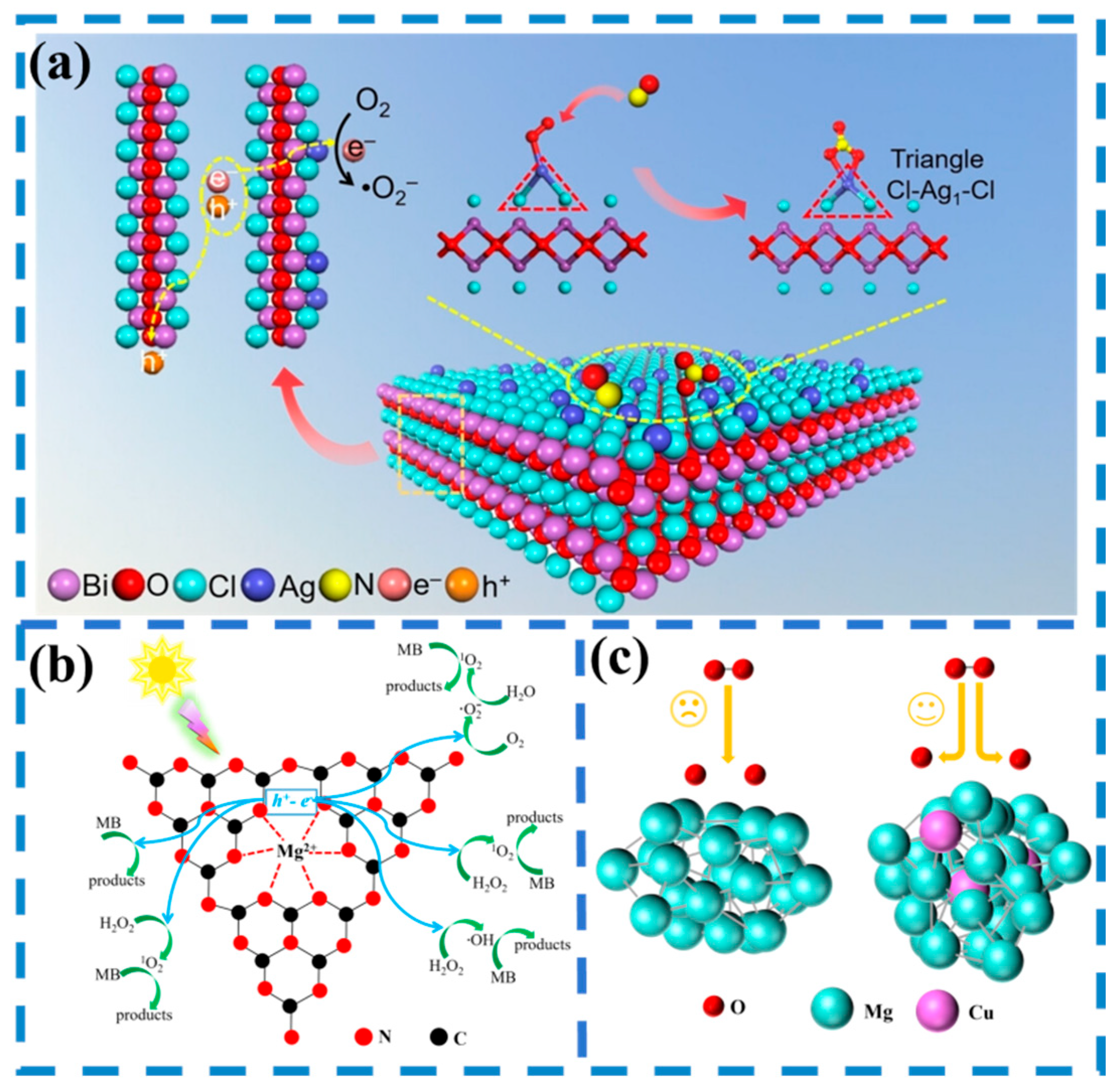
The generation efficiency of ROS is significantly influenced by the performance characteristics of semiconductor materials with photocatalytic activity. Their underlying principle involves the absorption of light energy, such as typically visible-light or ultraviolet light, which excites electron transitions and generates highly reactive e–h pairs that drive redox reactions. The band structure of semiconductors is crucial in determining the efficiency of photoinduced carrier generation, while the crystal morphology affects the distribution of active sites on the surface. Additionally, the design of heterojunctions can effectively enhance exciton separation, and the wavelength and intensity of the light source are directly linked to light energy utilization efficiency. Guo et al. [30] constructed triangular silver atomic sites on the surface of layered BiOCl (Figure 3a). The introduction of silver influenced the projected density of states (PDOS), narrowing the band gap of BiOCl and substantially increasing charge carriers within the system. This successful integration of silver atoms effectively promotes the separation of photoinduced e–h, providing a mechanism for loading metal atoms as cocatalysts to activate molecular oxygen in photocatalysis processes. While both energy transfer and electron transfer pathways can activate molecular oxygen in photocatalysis, the former mainly generates 1O2. The short lifetime of 1O2 restricts its diffusion and reaction time, making it more suitable for biomedical applications than for the degradation of complex pollutants in wastewater. Conversely, the electron transfer pathway can generate various ROS, which can attack diverse chemical bonds to degrade complex pollutants, thereby exhibiting broader applicability in wastewater treatment. However, the electron transfer process still has limitations. For instance, during wastewater treatment, the effective charges in the photoinduced e–h pairs of TiO2 may be captured and combined by pollutants or their intermediates [31], leading to a significant decrease in photocatalytic efficiency. Additionally, the reliance on external light sources for enhanced efficiency results in high energy consumption and poses challenges for the utilization of natural light, which impedes industrialization.
As previously discussed, the performance characteristics of semiconductor-based materials affect the efficiency of photoactivated molecular oxygen. The practical application of semiconductors such as TiO2 [32], ZnO [33], and CdS [34] is severely limited by inherent drawbacks, primarily their narrow light-absorption spectrum and rapid recombination of photogenerated charge carriers, which collectively suppress photocatalytic activity. Accordingly, in recent years, researchers have, on the one hand, addressed these critical challenges as the core design principle for novel semiconductor materials, and on the other hand, tailored such materials via strategies including elemental doping and defect engineering (e.g., the introduction of oxygen vacancies), thereby enhancing their photocatalytic activity.
Novel semiconductor materials overcome the intrinsic drawback of a wide band gap in traditional TiO2 and ZnO, achieve visible-light response by virtue of their intrinsic crystal or electronic structural characteristics, and simultaneously exhibit the merit of low carrier recombination rate, thus emerging as a research hotspot in the field of photocatalytic materials. Typical representatives thereof include bismuth-based semiconductors [35,36], sulfide semiconductors [37], and novel framework semiconductors [38,39]. Bismuth-based semiconductors feature excellent chemical stability, unique layered structures, and superior visible-light absorption performance, yet suffer from the shortcoming of rapid recombination of photogenerated electron-hole pairs, and their photocatalytic performance can be optimized via modification strategies such as morphology regulation. Zhang et al. [40] synthesized two-dimensional bismuth molybdate (BMO) nanosheets with tailorable morphology and size via a surfactant-assisted hydrothermal method. Under the irradiation of visible-light with energy higher than its narrow band gap (2.65 eV), the valence band electrons of the material are excited to jump to the conduction band, generating photogenerated e–h. Its layered structure, self-assembled by nanocrystals, can effectively inhibit carrier recombination, enhance the charge separation efficiency, and thus facilitate the reduction of O2 adsorbed on the material surface to ). Lv et al. [41] synthesized the TpMA covalent organic framework (COF) via a modified Schiff base condensation reaction using 1,3,5-triformylphloroglucinol (Tp) and melamine (MA) as the reaction monomers. Under visible-light irradiation, the valence band electrons of the material are photoexcited to jump to the conduction band, producing photogenerated electron-hole pairs. The photogenerated electrons migrate to the material surface and react with dissolved oxygen in the solution to generate , which further oxidizes water molecules to ·OH through protonation and electron transfer processes. These two reactive oxygen species synergistically oxidize and decompose organic pollutants such as phenol and methyl orange. Among them, the exfoliated thin ribbon-like TpMA (3 mL) is more easily excited by visible-light due to its narrower band gap, and it exhibits higher separation efficiency and lower recombination rate of photogenerated electron-hole pairs, as well as smaller interfacial charge transfer resistance, thus generating more reactive oxygen species and consequently showing more excellent photocatalytic degradation performance.
Doping modification can be categorized into non-metal doping, metal doping, co-doping, and defect engineering doping. Non-metal doping predominantly involves elements like C [42], N [43], S [44], and P [45] to optimize the band structure and extend the light response range, thereby enhancing the activation of molecular oxygen. Chen et al. [46] introduced nitrogen-doped graphene quantum dots (N-GQDs) into the BiO2−x system to form a more efficient nanoscale heterojunction of photocatalysts, which enhances light harvesting ability and improves the redox ability of photoinduced holes and electrons, effectively addressing the issues of slow charge mobility and low utilization efficiency of reactive species in bismuth oxide semiconductor materials. Recent studies have explored metal doping with elements such as Fe [47], Mn [48], and Cu [49] to enhance molecular oxygen activation by modulating carrier behavior. For example, research indicates that incorporating atomically dispersed Mg into g-C3N4 can induce the formation of a built-in electric field, thereby improving the separation of photoinduced charge carriers (Figure 3b) [50]. Doping of metal atoms can enhance the adsorption and dissociation rates of O2 on the catalyst surface, thereby accelerating the generation rate of ROS (Figure 3c) [51,52].
Figure 3.
(a) Mechanism of molecular oxygen activation by triangular Cl–Ag1–Cl sites on BiOCl. Ag atoms facilitate the separation of e–h. Reproduced with permission from Ref. [30]. Copyright 2023, Wiley. (b) Mechanism diagram of oxygen activation and MB degradation over Mg-doped graphitic carbon nitride nanosheets (MgCNNs). Mg doping inhibits the recombination of photogenerated charge carriers and facilitates the generation of ROS [50]. (c) Schematic diagram of O2 dissociation over Mg/Cu bimetallic nanoalloy. Introduction of Cu atoms enhances O2 dissociation on the catalyst surface [52].
Defect engineering improves catalyst performance by regulating their intrinsic structures (e.g., lattice vacancies, doping sites) and can directly activate molecular oxygen without requiring additional energy input. While innovative research focusing on the construction of oxygen vacancy (Ov) has made significant progress, a systematic exploration of the precise regulation mechanism of Ov concentration is still necessary. To address this challenge, Wang et al. [53] developed a strategy to control Ov concentration by adjusting the I content doped into Bi2WO6. The results show that the Ov concentration initially increased and subsequently decreased with increasing I doping, with peak photocatalytic activity achieved at a doping ratio of 0.081%, leading to over 90% degradation of sodium pentachlorophenate (NaPCP) within 120 min. This research confirms that constructing oxygen vacancy of surface (OvS) with controllable concentrations in semiconductors through defect engineering can significantly increase the number of active sites available for oxygen adsorption, thereby efficiently improving the molecular oxygen activation efficiency in the photocatalytic system.
2.1.2. Heterojunction Photocatalysis
Heterojunction photocatalysis technology presents significant advantages in activating molecular oxygen. The fundamental principle hinges on interfacial band engineering, which effectively suppresses charge recombination and directs the flow of photogenerated carriers to kinetically favor specific ROS formation pathways. Based on their distinct charge transfer mechanisms, the relevant heterojunctions are classified into Type II, Z-scheme, and S-scheme configurations.
Type II heterojunctions feature staggered energy bands (e.g., g-C3N4/BiVO4), which enable electrons in the higher conduction band (CB) to migrate to the lower CB, while holes in the lower valence band (VB) move to the higher VB, facilitating spatial charge separation (Figure 4). Although Type II heterojunctions can effectively separate photoinduced carriers through stepped band alignment, they often suffer from defects such as extreme band positions, rapid interfacial charge recombination, and limited molecular oxygen adsorption, which severely restrict the molecular oxygen activation efficiency. Deeksha Shakya et al. [54] introduced graphene oxide (GO) into the ZnO/CuO Type II heterojunction, thereby enhancing the physical adsorption of O2 on the catalyst surface, and decreasing the e–h pair recombination rate, which promotes the photocatalytic degradation of ciprofloxacin.
Figure 4.
Mechanism diagram of molecular oxygen activation by Type II heterojunction photocatalysts.
The Z-scheme heterojunction has evolved from traditional configurations to the all-solid-state heterojunction, and now to the mainstream direct Z-scheme heterojunction, eliminating the need for any additional liquid or solid mediators (Figure 5). The Z-scheme heterojunction exhibits exceptional charge carrier separation efficiency and superior molecular oxygen activation capability. Employing an “e–h recombination bridge,” facilitates the distinct spatial accumulation of highly reductive electrons and strongly oxidative holes in the respective semiconductors, thereby circumventing the redox potential loss typically encountered in conventional Type II heterojunctions. The BiOBr/CuI heterojunction synthesized by Liu et al. [55] exhibits excellent photocatalytic activity, with 98.4% of phenol removed upon 150 min of visible-light irradiation; its degradation efficiency is 4.35 and 8.63 times that of pure BiOBr and pure CuI, respectively. XPS measurements confirm the presence of the target elements in the BiOBr/CuI heterojunction, and the Bi 4f orbital peaks shift toward the lower energy region while the Cu 2p orbital peaks shift toward the higher energy region. This phenomenon indicates the interfacial electron transfer from CuI to BiOBr, verifying that the BiOBr/CuI heterojunction is not a Type II heterojunction but conforms to the charge migration characteristics of a direct Z-scheme heterojunction. Furthermore, the introduction of metal nanoparticles (e.g., silver) into the Bi4V2O11/AgCl composite modulates the interfacial charge transfer pathway, which not only enhances charge transfer kinetics but also mitigates the semiconductor interface mismatch [56].
Figure 5.
Evolution process and action mechanism of Z-scheme heterojunction photocatalysts.
As an emerging heterojunction, the S-scheme heterojunction can achieve efficient spatial separation of photogenerated charge carriers through the selective charge transfer process driven by the built-in electric field (IEF) [57]. Meanwhile, it can maximize the retention of the strongest redox capabilities of each semiconductor on both sides of the heterojunction, resolving the inherent contradiction between charge separation and redox capability in traditional heterojunctions, thus serving as an important strategy for the efficient degradation of organic pollutants. In the S-scheme heterojunction system, the oxidative photocatalyst (OP) possesses a lower Fermi level and is coupled with the reductive photocatalyst (RP) that has a higher Fermi level. The significant Fermi level difference between OP and RP lays a solid thermodynamic foundation for interfacial charge migration. Owing to the energy difference in the Fermi levels of the two components, photogenerated electrons in RP tend to migrate toward OP under dark conditions. Driven by the tendency of RP and OP to reach the Fermi level equilibrium, interfacial charge redistribution occurs: OP becomes negatively charged, while RP becomes positively charged. This charge redistribution further induces upward or downward band bending at the RP-OP interface, thereby facilitating the formation of a built-in electric field (IEF) directed from RP to OP [58]. Under light irradiation, the built-in electric field (IEF) drives the directional migration of photogenerated electrons and holes, enabling their separate accumulation on RP and OP, respectively (Figure 6a) [59]. More importantly, the coexistence of band bending and the built-in electric field inhibits the migration of electrons from the conduction band (CB) of RP to the CB of OP, thereby achieving efficient spatial separation of photogenerated electron-hole pairs. In the Cu2O/WO3 composite, a built-in electric field directed from Cu2O to WO3 is formed at the interface due to the significant differences in Fermi levels and work functions between the two components [60]. XPS valence state data demonstrate that the Cu+ characteristic peak of Cu2O shifts to lower binding energy, while the W6+ characteristic peak of WO3 shifts to higher binding energy. This indicates that the interfacial electrons transferred from Cu2O to WO3 are consistent with the direction of the built-in electric field, which is a distinctive feature of the S-scheme heterojunction. Moreover, their interfacial interaction induces lattice oxygen loss in WO3 and generates W5+ active sites. These sites coordinate selectively with functional groups of target pollutants, such as the C–N bonds in piperazine rings and C=O bonds in carboxylic acids, forming electron transfer bridges that activate pollutant molecules and substantially accelerate their photocatalytic degradation.
Figure 6.
Mechanism of (a) S-scheme heterojunction photocatalysts; (b) p-n heterojunction photocatalysts.
P-n heterojunctions have drawn attention due to their capability to achieve efficient charge separation and precise directional migration through built-in electric fields (Figure 6b). Liang et al. [61] prepared a plasmonic WO3/Ag2O heterojunction with a p-n structure, which effectively suppresses the undesired recombination of photoinduced hot carriers and provides new insight for designing efficient semiconductor catalysts for molecular oxygen activation. Additionally, Lu et al. [62] enhanced molecular oxygen activation efficiency by introducing Ov into a polyimide/Bi2MoO6 p-n type aerogel catalyst. The presence of Ov not only effectively inhibits the recombination of photoinduced e–h pairs but also broadens the spectral response range of the catalyst. Meanwhile, the 3D porous structure of the aerogel increases the specific surface area, enhancing the adsorption and activation efficiency of molecular oxygen, and providing a rich reaction interface for pollutants. This dual-functional regulation strategy significantly enhances the catalyst’s versatility in wastewater purification.
Besides the binary heterojunctions discussed above, a large number of ternary heterojunction photocatalytic systems have been reported in relevant recent studies. Ternary heterojunctions are constructed from three semiconductors or functional components with matched band structures, and they can overcome the core bottlenecks of fast carrier recombination rate and insufficient redox capability in traditional binary heterojunctions by constructing cascaded band alignments or double Z/S-scheme charge transfer pathways, thus emerging as a cutting-edge research direction in the design of photocatalytic materials. Yang et al. [63] successfully prepared a ZnO/Ag2CO3/Ag2O (Z/AC/A) n-p-p-type ternary heterojunction photocatalyst, whose charge transfer behavior follows a double Z-scheme pathway. Under light excitation, the photogenerated electrons in the CB of ZnO and Ag2O recombine with the photogenerated holes in the VB of Ag2CO3; this recombination process itself is not an effective reaction involved in pollutant degradation, yet it actively suppresses the bulk non-radiative recombination of each individual single component and the random interfacial recombination among the three components, avoiding the meaningless consumption of photogenerated charges and thereby enabling the directional recombination and efficient accumulation of charges. Consequently, this charge transfer pathway ultimately leads to the enrichment of electrons in the CB of Ag2CO3 and holes in the VB of ZnO and Ag2O. Electrons and holes achieve spatially separated enrichment at distinct active sites, which significantly improves their efficiency in participating in redox reactions.
In general, the limiting factors for molecular oxygen activation by heterojunctions mainly include lattice and band mismatch, rapid interfacial charge recombination, and low light utilization efficiency. Therefore, designing band structure gradients, optimizing interface structures, and expanding the light response range of materials are essential strategies for enhancing molecular oxygen activation efficiency. Employing amorphous Al2O3 doping into g-C3N4 and ZnO heterojunctions can help adjust the interfacial stress between crystals, making up for crystal mismatch [64]. The Bi2O4/BiO2x core–shell structure significantly improves the molecular oxygen activation efficiency by enhancing the interface effect, especially under near-infrared light irradiation, which can generate a large amount of . Moreover, taking advantage of the intrinsic two-dimensional structure of Bi2MoO6, the construction of novel 2D/2D Schottky heterojunctions (e.g., Ti3C2 MXene/monolayer Bi2MoO6) can provide an extensive interfacial contact area. This configuration effectively suppresses the recombination of photogenerated carriers and thus enhances photocatalytic performance [65]. Meanwhile, the localized surface plasmon resonance (LSPR) effect, originating from the collective oscillation of free charges associated with oxygen vacancies, enables efficient light harvesting across the ultraviolet to near-infrared spectrum. Building on these principles, a composite system integrating W18O49 (which exhibits the LSPR effect) with CdIn2S4 achieves substantial spectral broadening. This enhancement results from the synergy between the localized LSPR and the Z-scheme heterojunction charge transfer mechanism, offering an innovative strategy for full-spectrum driven, efficient photoactivation of molecular oxygen [66].
In the field of wastewater treatment via molecular oxygen activation, despite their high charge-separation efficiency, rapid pollutant degradation, and superior mineralization performance, Z-scheme and S-scheme heterojunctions typically require precisely controlled interfacial engineering for synthesis, leading to complex fabrication procedures and elevated costs. Currently, such systems are largely confined to laboratory-scale research and cannot meet the requirements of large-scale water treatment. In contrast, although Type II heterojunctions exhibit lower efficiency in molecular oxygen activation and less complete pollutant mineralization compared to Z- and S-scheme systems, they offer distinct practical advantages, including simpler structural design, well-established synthesis protocols, lower cost, and greater potential for scalable production. These features position Type II heterojunctions as a leading choice for industrial wastewater treatment, demonstrating strong practical viability and operational stability in engineering systems such as continuous-flow reactors and fixed-bed catalytic units.
2.1.3. Single-Atom Photocatalysis
Single-atom catalysts (SACs) for photocatalytic activation of O2 represent a frontier in the fields of environmental remediation and energy conversion. Their mechanism primarily undergoes through two pathways: promoting charge transfer and electron-hole separation, and enhancing the adsorption and activation of molecular oxygen. The introduction of single atoms increases charge delocalization, creating localized electron-rich regions. The resulting potential difference generates a local built-in electric field, which can be further enhanced to direct photoinduced e–h separation and accelerate directional charge migration, ultimately improving photocatalytic efficiency. For example, ZnO modified with Cu single atoms promotes carrier separation and migration due to an enhanced built-in electric field, which significantly improves the generation efficiency of H2O2 (Figure 7a) [67]. Similarly, the Z-scheme heterojunction composed of Ag-PCN and SnO2−x significantly accelerates the activation of O2 through a cascaded electron transfer mechanism [68]. In addition, the unique coordination environment of single atoms can alter the mode of adsorption and activation energy of molecular oxygen, effectively lowering the activation energy barrier. In the case of SAC, Ag-g-C3N4 prepared by Zhou et al. [69], the single-atom Ag active sites not only facilitate the adsorption of 1O2 but also can acquire electrons from N atoms, promoting electron transfer and facilitating molecular oxygen activation.
Although single-atom photocatalysis enables atomically precise design of active sites and ultra-high selectivity toward reactive oxygen species (ROS), its practical implementation still faces several engineering challenges. From the perspective of material preparation, the current mainstream methods, such as the high-temperature solid-phase method, atomic layer deposition (ALD), and wet chemical reduction method, often involve lengthy processes and stringent equipment requirements. More importantly, the enhanced atomic mobility under high-temperature synthesis readily triggers the agglomeration of single-atom sites into nanoparticles, compromising catalytic stability. Therefore, current applications of single-atom catalysts are primarily confined to high-value-added fine synthesis and trace pollutant purification, while significant breakthroughs in both long-term stability and cost-effectiveness remain imperative for their scalable implementation in environmental remediation.
2.1.4. Organic Photocatalysis
Compared with traditional inorganic photocatalysts, the conjugated electronic backbones of organic materials can flexibly tailor the band structure and electron transport properties, enabling easier visible-light harvesting and rational design of active sites. Among them, the most mature organic materials with great application potential mainly include covalent triazine frameworks (CTFs), covalent organic frameworks (COFs), conjugated microporous polymers (CMPs), and perylene diimide (PDIs)-based small-molecule organic semiconductors [70,71,72,73]. The π-π conjugated backbones of these materials serve as the structural basis for light absorption and charge delocalization. Upon absorption of photons with energy higher than their band gaps, valence band electrons are excited to the conduction band, forming photogenerated electron-hole pairs. After carrier separation, the photogenerated electrons migrate to O2 adsorbed on the material surface, thereby generating different types of ROS [74]. Organic semiconductor photocatalysts can regulate the band gap width and band position via strategies such as introducing functional groups into the conjugated backbone or heteroatom doping (N, S, P), making the conduction band potential more negative than the O2/·O2− reduction potential and the valence band potential more positive than the OH−/·OH oxidation potential, thus achieving precise potential matching between the redox capacity of carriers and the molecular oxygen activation process. In the research on COFs materials, Bai et al. [75] further constructed an asymmetric p-π conjugated COF material (TAPT-TFPA) through a hybridization strategy of introducing electron-rich N atoms into the triazine ring. This material utilizes the hybridization between the lone pair electrons of N atoms and the π orbitals of adjacent benzene rings to enhance the p-π conjugation effect, breaking the electron distribution symmetry of traditional π-π conjugated COFs (TAPB-TFPA) and realizing asymmetric spatial delocalization and accelerated transport of photogenerated electrons. Furthermore, this N-hybridized p-π conjugated structure significantly reduces the interfacial charge transfer resistance of the material, improves carrier mobility, effectively suppresses the recombination of photogenerated electron-hole pairs, and ensures that photogenerated electrons efficiently migrate to the active sites on the material surface, achieving efficient activation of molecular oxygen. Yu et al. [76] successfully prepared conjugated microporous polymer hollow spheres (CMPs-HSs) via the Sonogashira–Hagihara cross-coupling reaction combined with a hard-templating method. This material greatly increases the specific surface area and pollutant adsorption capacity, promoting effective contact between pollutants in water and active sites.
2.1.5. Organic–Inorganic Composite Photocatalysis
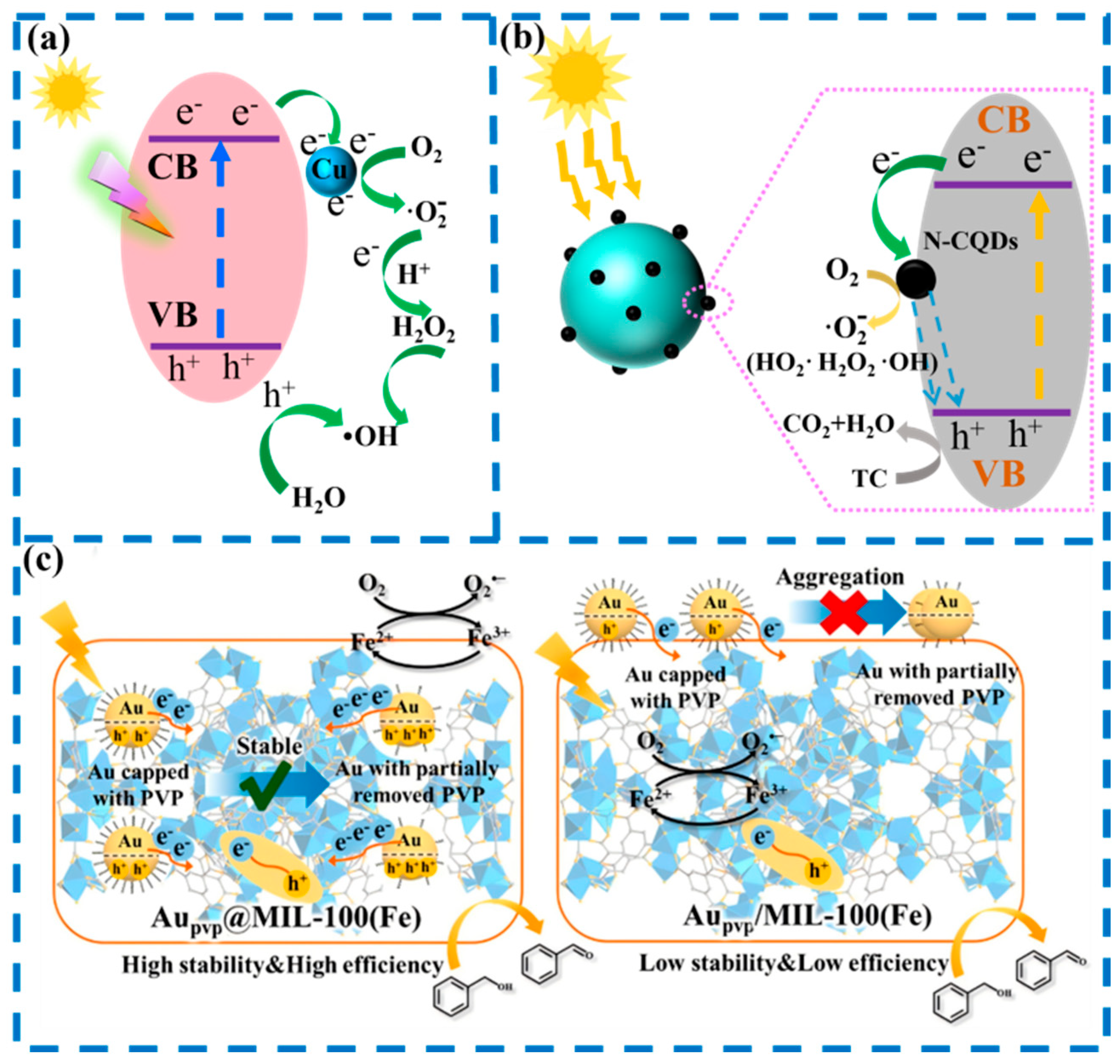
Organic–inorganic composites exhibit unique synergistic advantages in the realm of photocatalytic activation of molecular oxygen. Combining the advantages of organic and inorganic components, these composites possess tunable structures and functional attributes. Their fundamental mechanism lies in improving the separation efficiency of photoinduced charges and optimizing the oxygen activation pathway through interface regulation between organic and inorganic components. Zhang et al. [77] designed a bismuth tungstate composite material coupling nitrogen-doped carbon quantum dots (N-CQDs), thereby achieving simultaneous enhancements in light harvesting and oxygen activation capabilities. In this system, N-CQDs initially act as a photosensitive center to effectively absorb visible-light. Under visible-light excitation, electrons in Bi2WO6 transition from the valence band to the conduction band, subsequently being transferred through the superior electron transfer and capture capacities of N-CQDs, leading to spatial separation of photoinduced carriers. During this process, N-CQDs serve as charge separation centers. Ultimately, the electrons migrated to N-CQDs drive the single electron reduction in dissolved O2, generating (Figure 7b). This trimodal activation mechanism achieves a degradation rate twice that of pure Bi2WO6, mineralizing over 85% of tetracycline (TC) within 90 min.
Organic–inorganic composites enhance the activation of molecular oxygen to produce ROS through efficient separation and transfer of photoinduced carriers. Xu et al. developed a cyano/sodium-comodified carbon nitride material, where cyano groups act as hole-trapping sites while sodium species act as electron capture centers [78]. This synergistic configuration considerably improved the selectivity toward O2, achieving a remarkable value of up to 97.6%. Moreover, the material CN-Cy-Na exhibited a high kinetic constant (k) of 6.8 × 10⁻² min−1 during the photocatalytic degradation of TC. This selective regulation mechanism originates from the strong electron-withdrawing effect of cyano groups and the electron storage capacity of sodium, wherein the empty orbital of Na+ stabilizes photogenerated electrons. Their synergy improves the separation efficiency of photoinduced charges by 40%, thereby effectively inhibiting electron-hole recombination.
In terms of preparation processes, the plasma enhancement effect is widely used in the preparation of organic–inorganic composites. Combining plasma gold nanoparticles (Au-NPs) with MOFs to form a core–shell structured Au@MIL-100(Fe) composite can excite hot electrons through the surface plasmon resonance (SPR) effect, promoting the generation of ROS (Figure 7c) [79]. Additionally, surface defects play a critical role in the photocatalytic activation of molecular oxygen. By introducing inorganic clusters such as iron(III) phosphotungstic peroxide clusters on the surface of g-C3N4, the photocatalytic activity of the material can be significantly improved. These defects not only provide active sites but also promote the generation of hydroxyl radicals [80].
Figure 7.
(a) The formation mechanism of ROS in the Cu/ZnO system [67]. (b) Mechanism of oxygen activation by N-CQDs/Bi2WO6 photocatalyst [77]. (c) Mechanism of oxygen activation by the Au@MIL-100(Fe) photocatalyst. Reproduced with permission from Ref. [79]. Copyright 2021, American Chemical Society.
In summary, through various advanced techniques and strategies, the field of semiconductor photocatalysis is pushing the boundaries of efficiency and efficacy in activating molecular oxygen, further underlining the potential of these materials in addressing complex environmental challenges and wastewater treatment applications. Table 1 summarizes representative examples for the photocatalytic activation of O2.
Table 1.
Representative examples for the photocatalytic activation of O2.
2.2. Electrocatalytic Activation
The electrocatalytic activation of molecular oxygen for organic pollutants degradation in water represents a current research hotspot. On the electrode surface, O2 can undergo either a 4-electron oxygen reduction reaction (4e− ORR) pathway on the electrode to generate water or a 2-electron oxygen reduction reaction (2e− ORR) pathway to generate hydrogen peroxide (Figure 8). The resulting H2O2 can be further converted into various ROS to degrade organic pollutants. However, the 4e− pathway consumes O2 in a non-productive manner, thereby lowering the overall activation efficiency. Therefore, enhancing the selectivity of the 2e− ORR is crucial. Meanwhile, traditional electrocatalysis relying solely on electric field-driven reactions suffers from high energy consumption and limited ROS generation. To overcome these limitations, coupling strategies such as photoelectrocatalysis (PEC) or electro-Fenton (EF) processes are often employed, which can markedly reduce energy demand and accelerate radical generation kinetics.
Figure 8.
(a) Mechanism of electrocatalytic activation of molecular oxygen for ROS generation. (b) Mechanism of photoelectrocatalytic activation of molecular oxygen for ROS generation. (c) Mechanism of Electro-Fenton activation of molecular oxygen for ROS generation.
2.2.1. Photoelectrocatalysis
Photoelectrocatalysis (PEC) technology combines the key features of photocatalysis and electrocatalysis, substantially improving O2 activation efficiency. In a typical PEC process, a semiconductor photoanode absorbs light energy and generates photoinduced e−-h+ pairs. Driven by an externally applied bias, the electric field greatly accelerates charge separation and transport. This not only effectively inhibits e−-h+ recombination but also preserves the strong oxidizing power of h+, which can directly oxidize pollutants or generate ·OH. Meanwhile, photoinduced e− migrate through an external circuit to the cathode, where they participate in the single-electron O2 reduction to generate or drive H2O reduction to produce H2.
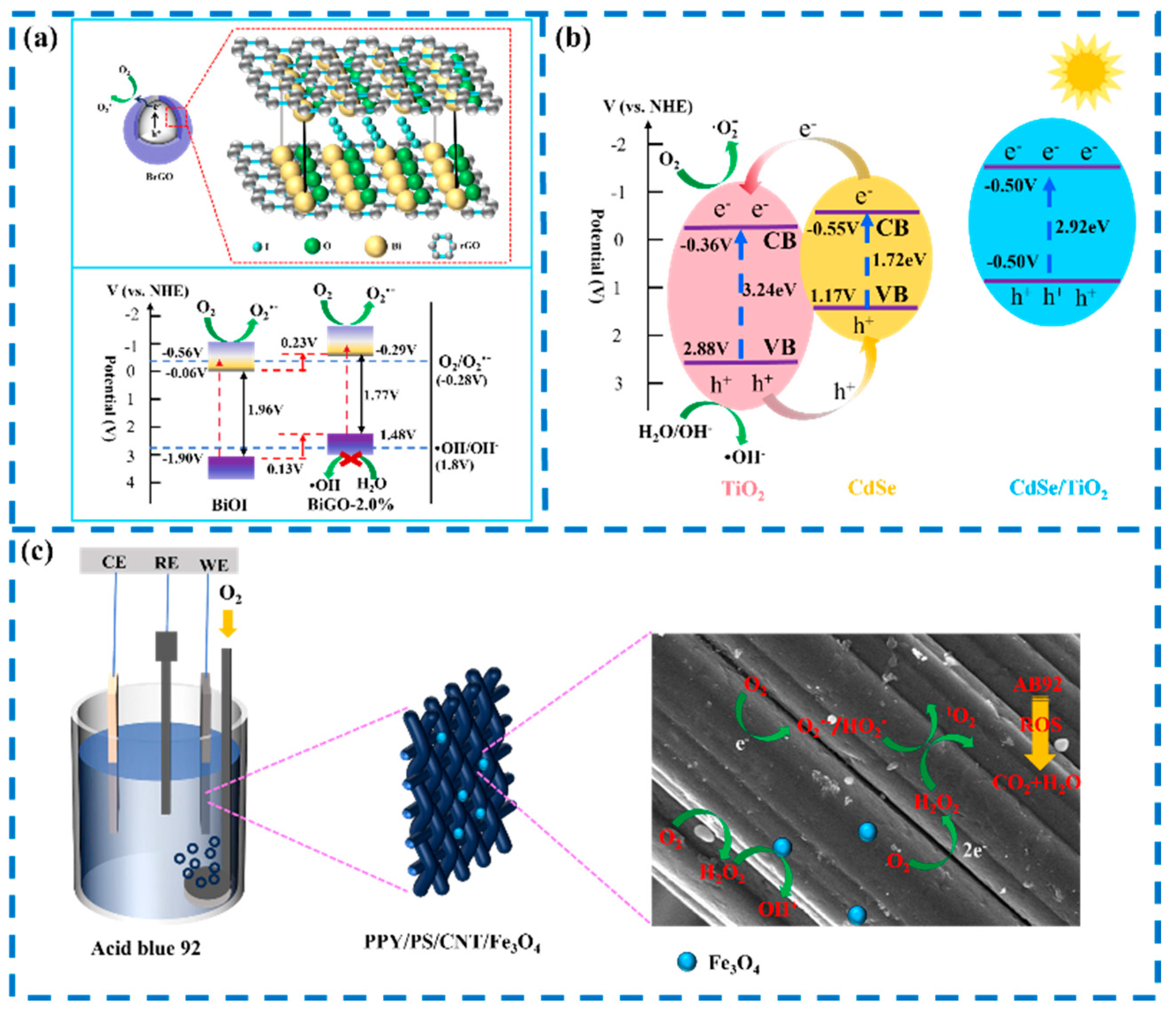
The efficiency of O2 activation in PEC depends strongly on the structure and electronic properties of photoelectrode materials. Wang et al. [84] designed a core@shell structured BiOI@rGO hybrid photoelectrode, in which graphene (rGO) not only enhances the visible-light range but also establishes an extended conjugated electron transport network through C-Bi covalent bonding with BiOI (Figure 9a). Theoretical calculations confirm that this strong chemical interaction significantly reduces the carrier migration barrier, greatly improving charge separation and transport, thereby boosting overall PEC performance.
During the O2 activation process, traditional PEC systems encounter two major barriers, such as a narrow spectral response due to wide semiconductor band gaps and low utilization efficiency of photogenerated carriers. Heterojunction engineering provides an effective strategy to address these issues. For instance, a self-driven PEC system based on a CdSe/titanate nanowire arrays (TNWAs) Type II heterojunction reduces the overall band gap from 3.24 eV to 2.92 eV, successfully extending the light response to the visible-light region (Figure 9b) [85]. Meanwhile, the built-in electric field at the heterojunction interface accelerates the e−-h+ separation, increasing the transient photocurrent by nearly 45% and significantly reducing charge transfer resistance. Coupled with a triboelectric nanogenerator (TENG), this system operates without external power, enabling efficient O2 activation to generate ROS and rapid degradation of organic pollutants.
Single-atom catalysts offer an effective route to enhance the selectivity and efficiency of PEC-mediated O2 activation through precise electronic-structure modulation. For example, Jin et al. [86] developed a Janus photoelectrocatalytic filter, Sb-Fe/MXene. In this system, Sb single atoms with a d10 electronic configuration create a high-electron-density region on the carbon nitride surface, steering the O2 reduction pathway selectively toward the 2e− route to produce H2O2, and effectively avoiding the 4e− pathway to generate H2O. Furthermore, holes accumulated at Ti vacancies drive the 4e− water oxidation reaction to produce O2, which is subsequently reduced by adjacent Sb single atoms to form H2O2. On the electrocatalytic side, Fe nanoclusters activate H2O2 to generate ·OH, while electrons supplied electrochemically accelerate the ≡Fe(III)/≡Fe(II) cycle. This dual-sided synergistic mechanism effectively prevents iron sludge accumulation and achieves more than 90% removal of micro pollutants under neutral conditions.
2.2.2. Electro-Fenton
The electro-Fenton (EF) technology generates H2O2 in situ via electrochemistry, which then reacts with Fenton reagent to produce ROS such as ·OH for efficient degradation of pollutants in water. Dong et al. [87] developed a single-atom NiCo alloy embedded in graphene aerogel as a sustainable cathode material in an EF system. DFT analysis shows that Co sites preferentially adsorb O2 to generate H2O2, while Ni sites activate H2O2 to generate ·OH, synergistically improving 2e− ORR. With this cathode, the removal of 2 mg/L ibuprofen (IBU) reached 92% within 10 min, demonstrating the high degradation efficiency of the electro-Fenton process.
Currently, the main limitations of EF systems are the slow rates of H2O2 generation and Fe3+ reduction. To address H2O2 production efficiency, researchers have focused on increasing active-site density and improving selectivity for the 2e− ORR. For example, an Fe-P-doped hard-carbon composite cathode HAC@FeP provides a high surface area and abundant active sites [88]. FeP facilitates O2 activation, while HAC enhances electron transfer, together promoting H2O2 generation and its subsequent free radical-mediated decomposition. Kiarash et al. [89] fabricated a porous PPY/PS/CNT/Fe3O4 nanofiber cathode via electrospinning technology. Surface -COOH groups on CNTs enrich H+, lowering 2e− ORR energy barrier. Meanwhile, the C=N conjugated structure in polypyrrole acts as a “peroxidation guiding layer” that inhibits H2O2 reduction to water through the 4e− pathway, achieving an H2O2 yield of up to 301 mg/L, and high 2e− ORR selectivity (Figure 9c). Moreover, heteroatom doping such as pyridinic N can tune active sites to favor 2e− ORR by optimizing *OOH adsorption energy and weakening O–O cleavage, thereby directing O2 toward H2O2 formation [90].
Figure 9.
(a) Schematic diagram of the charge separation mechanism of BiOI@rGO-2.0% composite [84]. (b) Schematic diagram of energy level transition and charge transfer in CdSe/TNWAs heterojunction [85]. (c) Schematic of the mechanism for ROS generation via oxygen activation by porous PPY/PS/CNT/Fe3O4 [89].
Slow Fe3+ reduction lowers free radical generation, promotes iron sludge deposition, and deactivation catalyst, thereby significantly inhibiting pollutant degradation efficiency in EF systems. Introducing Cu to construct a bimetallic synergistic system effectively accelerates Fe3+ reduction kinetics. The potential difference between the Cu+/Cu2+ (E0 = 0.17 V) and Fe3+/Fe2+ (E0 = 0.77 V) redox couples drives Cu+ to spontaneously reduce Fe3+ as an electron donor ((Equation (1)) [91]. Additionally, other transition metals such as Co [92], Ni [93], Mn [94], and Ce [95] can also promote Fe-active sites formation through electron transfer and synergistic catalysis. Notably, Liang et al. [96] found that the optimal cathode potential for 2e− ORR is considerably higher than that required for Fe3+ reduction. This mismatch not only inhibits the Fe3+/Fe2+ cycle but also promotes the crystallization and deposition of excess Fe3+ on the cathode surface, increasing interfacial resistance and lowering the EF reaction rate. To solve this conflict, a potential regulation strategy, Fe3+ Reduction-Regulated EF (FRR-EF) was proposed. In this approach, a gas diffusion electrode (GDE) replaces a traditional electrolytic cell (CD), which is operated at the optimal Fe3+ reduction potential (−0.1 V). This design maintains efficient pollutant degradation while synergistically optimizing the 2e− ORR and Fe3+ reduction reaction pathways, thereby significantly improving the overall efficiency of the EF system.
2.2.3. Plasma-Catalytic
Plasma-catalytic oxygen activation technology is an advanced frontier technology that combines non-thermal plasma with catalytic materials to efficiently activate O2 under mild conditions, generating various highly reactive oxygen species. It also serves as an efficient approach for the oxidative degradation of organic pollutants.
The essence of plasma is “ionized gaseous matter”. In this technology, the core of non-thermal plasma generation lies in inputting electrical energy into the system through a high-voltage electric field, which converts electrical energy into the kinetic energy of high-energy electrons [97]. These high-energy electrons directly dissociate and excite O2 through collisions, producing primary reactive oxygen species such as oxygen atoms (O) and . Meanwhile, electrical energy can also activate the active sites on the catalyst surface, laying a foundation for the subsequent adsorption and secondary activation of oxygen. However, single plasma catalysis has obvious limitations: ROS have a short lifetime and are prone to rapid conversion, which further leads to poor reaction controllability and low substrate collision probability. In contrast, the synergistic coupling of plasma and catalysis technologies can effectively solve this problem. According to relevant reports, the current core technical routes in this field mainly include photo-plasma coupled catalysis, dielectric barrier discharge (DBD) coupled with various types of catalysis, and electric field-regulated mass transfer enhancement [98,99,100,101]. Jin et al. [102] constructed a photo-plasma relay catalytic system using anatase–rutile mixed-phase TiO2 as the medium: on the surface of rutile TiO2, plasma significantly improved the yield of ; while anatase TiO2 accelerated the conversion of to 1O2. The heterojunction interface served as a key relay region, greatly enhancing MOA efficiency. Experimental data show that the degradation rate of BPA in this system was increased by 11.3 times compared with single photocatalysis and 5.6 times compared with single plasma. The energy efficiency reached 5.25 mg/kJ, the total organic carbon (TOC) removal rate was 4.34 times that of single photocatalysis, and the toxicity of intermediate products was significantly reduced. Furthermore, when DBD plasma is coupled with technologies such as photocatalysis, Fenton oxidation, and persulfate oxidation, it can efficiently activate molecular oxygen to generate various reactive oxygen species, with degradation rates of 89.6–99.9% for typical pollutants such as 2,4-dichlorophenol and norfloxacin [103,104]. Meanwhile, composite catalysts possess both adsorption and catalytic properties, and their mineralization efficiency is more than 20% higher than that of single technologies.
2.3. Thermo-Catalytic Activation
In thermo-catalytic systems, molecular oxygen activation proceeds without external energy input, such as light or electric current, relying solely on the catalyst’s intrinsic chemical properties, such as electronic structure and active sites, to drive the reaction under thermal conditions. Based on the catalytic material involved, activation approaches can be classified into transition metal, carbon material, single atom, and metal–nonmetal composite systems. Compared with photo-catalysis or electro-catalysis, thermo-catalysis exhibits distinct and irreplaceable advantages in the field of organic wastewater degradation, notably low operating cost, eco-benign, and readily scalable for industrial applications.
2.3.1. Atomic Catalytic Activation
Atomic catalytic activation of molecular oxygen has emerged as a prominent research focus in the field of environmental remediation, energy conversion, and organic synthesis. Through the rational design of single-atom catalysts (SACs) and dual-atom catalysts (DACs), efficient activation of O2 can be achieved to generate highly ROS, thereby driving various oxidation reactions.
The principal mechanism of SACs activating O2 involves atomically dispersed metal sites that first enable precise control over O2 adsorption, followed by electron transfer to generate ROS, which subsequently participates in organic compounds degradation. The catalytic performance strongly depends on the local coordination environment of the metal center and its interaction with the support. For example, Pt SACs Pt1/MgO nanosheets promote dissociative adsorbed O2 to form ·OH, exhibiting outstanding performance in toluene oxidation reaction [105]. This performance is attributed to the strong metal-support interaction (SMSI) between Pt single atoms and the MgO support, which optimizes the adsorption and activation energy barriers of O2. Furthermore, the coordination environment of active sites in SACs can be finely regulated through ligand engineering. For instance, the Mo/NC catalyst was fabricated by confining single-atom Mo sites to an N-doped carbon support via a spatial confinement strategy. The highly dispersed Mo–N4 sites are embedded within an N-rich porous carbon framework [106]. This catalyst not only efficiently adsorbs bisphenol A (BPA) pollutant molecules by the electron donor-acceptor mechanism but also generates 1O2 in situ at the Mo-N4 sites, which can effectively attack the adsorbed BPA at an extremely short migration distance, ultimately achieving efficient mineralization of pollutants into H2O and CO2. In addition, SACs can also accelerate electron transfer and enhance O2 adsorption, which facilitates the formation of Ov even under high O2 conditions. Fang et al. [107] prepared a Cu1/TiO2 catalyst via a co-precipitation method, in which atomically dispersed Cu+ species are stably anchored at Ti vacancies on the TiO2 surface. Density functional theory calculations reveal that the resulting Cu–O–Ti hybrid structure can simultaneously activate chemisorbed O2 molecules and adjacent surface lattice oxygen species, and their synergy significantly enhances the overall catalytic oxidation performance.
However, SACs still face several challenges in activating molecular oxygen, including limited catalytic sites and the competitive adsorption of reactants and intermediates. DACs are anticipated to address these issues through synergistic effects between two adjacent atomic sites [108]. The key to O2 activation by DACs lies in the synergistic effect of dual-atom sites. Zhang et al. [109] fabricated a Mn-Co dual-single-atom catalyst (Mn3Co2/N-C) wherein atomically dispersed Co-N4 and Mn-NxOy sites exert a synergistic effect by tailoring the local coordination environment. Specifically, the Mn-NxOy sites activate O2 via the reversible consumption and replenishment of surface-coordinated oxygen, while the Co-N4 sites convert O2 into . These two types of active sites synergistically generate distinct reactive oxygen species (ROS), thereby enhancing the efficiency of O2 activation.
2.3.2. Transition Metal-Based Catalytic Activation
Transition metal-based catalysts efficiently activate O2 through a surface electron transfer–oxygen dissociation mechanism, generating various ROS and exhibiting significant potential in environmental remediation and water treatment fields. The d-orbital electrons of transition metals such as Fe, Cu, Co, Zn, etc., are injected into the π* antibonding orbital of O2, weakening the O–O bond and converting it into or H2O2.
Zero-Valent Transition Metal Activation of Molecular Oxygen
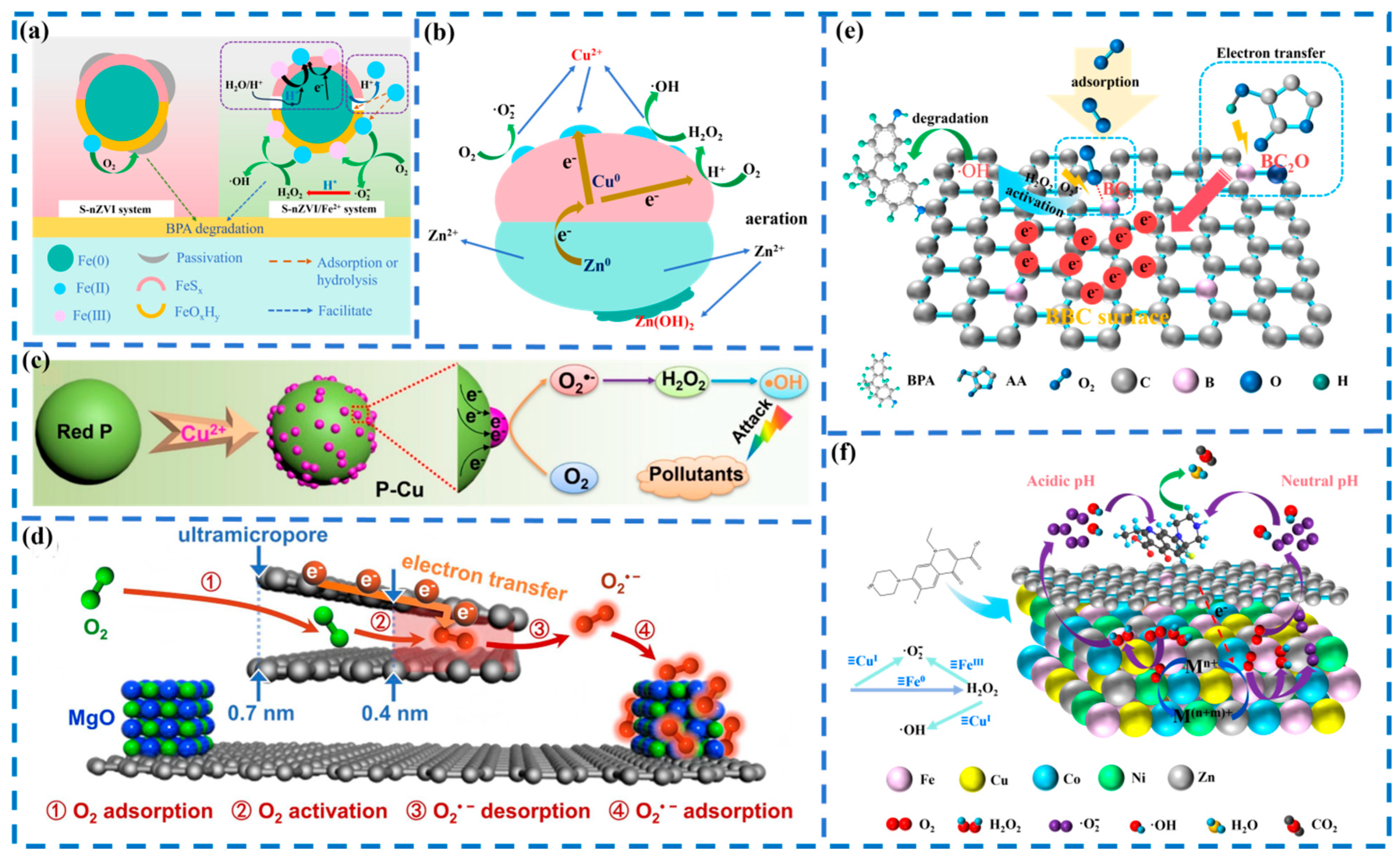
Zero-valent transition metals (M0) exhibit distinct advantages in the O2 activation owing to their unique electronic structure and surface properties. Taking zero-valent iron (Fe0) as an example, a Fe0-O-Fe2+ structure forms spontaneously on its surface. Studies have shown that pH significantly influences the efficiency of Fe activation of O2. In detail, adsorption dominates under neutral conditions; oxidative dissolution prevails in acidic media, while alkaline environments suppress the ability of Fe0/Fe2+ to activate O2 into ·OH, leading to limited oxidation efficiency and incomplete pollutant degradation. To overcome this issue, Chen found that the introduction of Fe2+ into an S ZVI system to form an S ZVI/Fe2+ catalyst enables efficient O2 activation over a broad pH range (pH 3–9) and achieves effective BPA removal [110]. The underlying mechanism involves Fe2+ promoting continuous ·OH generation under weakly acidic conditions while sustaining a high BPA removal rate in alkaline environments (Figure 10a).
In contrast, Cu0 can still effectively activate O2 under neutral pH conditions via a dual mechanism; it can directly react with O2 to generate , which subsequently, further reactions lead to the generation of H2O2 and ·OH. The Cu0/NC3-600 catalyst [111] successfully achieves efficient degradation of norfloxacin (NOR) over a wide pH range, in which NC3-600 support plays a synergistic role such as enhancing the molecular oxygen adsorption ability by regulating the electronic structure, and effectively inhibiting Cu leaching, significantly improving the material stability. This work provides an innovative strategy for the design of “transition metal active site-high specific surface area support” synergistic catalytic systems.
The zero-valent bimetallic systems form corrosion micro-cells through direct contact, which can significantly improve the O2 activation efficiency. Zn0 accelerates electron transfer to O2, promoting H2O2 generation, while facilitating the reduction of Cu2+ to Cu0/Cu+, which in turn catalyzes H2O2 decomposition to ROS such as and ·OH (Figure 10b) [112]. This system achieves efficient degradation of sulfamethoxazole (SMX) over a pH range of 3–9. It should be noted, however, that bimetallic catalysts may undergo structural reconstruction due to consumption during the reaction, affecting their long-term stability and cycling performance.
Compared with other M0, Al3+/Al0 has a lower redox potential of −1.662 V and an excellent electron-donating ability, making it more facile to activate O2 under acidic conditions. Liu et al. [113] substantially enhanced both electronic and ligand effects through the co-doping of FeSO4 and ethylenediaminetetraacetic acid (EDTA) into an Al0 to constructed Al0-FeSO4-EDTA catalyst, which can directly activate O2 and achieve efficient degradation of phenol over an extremely wide pH range from 2 to 11.
Transition Metal Oxide Activation of Molecular Oxygen
Transition metal oxides (TMO) exhibit excellent catalytic performance in molecular oxygen activation through precise regulation of OV concentration, component distribution, and interface properties. As key electronic modulation sites, OV dominates the charge-transfer process on the catalyst surface. Zhan et al. [114] constructed controllable oxygen vacancies in wurtzite ZnO through cobalt doping, which effectively generates electron-rich and electron-deficient reactive sites on the surface, enabling efficient H2O2 activation and simultaneous pollutant degradation. The local electronic structure of OV in metal oxides can be directionally regulated by doping heteroatoms with the modulation of d-electron densities. Mei et al. [115] doped MnO2 with high-electronegativity metals (Fe, Co, Ni) and demonstrated that the doped catalysts display markedly enhanced O2 adsorption energy and a substantially lowered O2 activation barrier. This improvement originates from the replacement of lattice Mn sites by doped atoms, which breaks the charge balance of the α-MnO2 crystal structure, induces the formation of high-density OV, thereby optimizing O2 migration pathway and reducing the activation energy barrier.
Low-Valent Transition Metal Activation of Molecular Oxygen
Low-valent transition metals can achieve efficient activation of O2 under mild conditions through electron transfer, coordination environment regulation, and multi-component synergistic effects. Fe2+ generated by the environmental corrosion of Fe0 activates O2 through a single-electron transfer pathway to generate ROS such as , yet the process exhibits low efficiency (rate constant < 1 M−1s−1) and is highly susceptible to environmental constraints. To improve reaction kinetics, the ligand engineering strategy has been employed to significantly enhance O2 activation performance by tuning the Fe2+/Fe3+ redox properties. Chelating Fe2+ with tripolyphosphate (TPP) to form Fe2+–TPP complexes increases the activation rate to 23 M−1s−1 [116]. Further introducing Mg2+/Ca2+ to construct a ternary complex Fe2+-TPP-M2+ alters the electronic properties of the iron center and reduces its redox potential, resulting in a rate 28.2 times higher than that of the Fe2+-TPP/O2 system [117]. However, this strategy faces some key limitations, such as the requirement of high-concentration O2 to maintain the reaction, and secondary pollution caused by the accumulation of Fe2+/Fe3+. To address the above bottlenecks, heterogeneous systems exhibit significant advantages. For instance, the FeP/TTP system can degrade more than 85% IBU within 120 min only by aeration, and the Fe2+ leaching amount is only 1.6% after cyclic use [118]. The β-FeC2O4·2H2O activates O2 to generate ROS for efficient degradation of microcystin LR (MC-LR), achieving an electron utilization efficiency of 87.7% toward ·OH production [119], and the oxalic acid ligand can be naturally mineralized, entirely avoiding secondary pollution.
Cu+ also exhibits more excellent kinetic activity (k = 3.1 × 10⁴ M−1 s−1) for O2 activation, highlighting its great potential. However, the inherent instability of Cu+ in aqueous solution makes it necessary to develop strategies for its continuous generation. Molybdenum (Mo) is a promising reducing agent. The Cu(II)-Mo system can selectively generate 1O2 only by aeration to degrade most organic pollutants in water, representing an economical, efficient, and environmentally friendly activation strategy [120]. In addition, suitable support can effectively solve Cu0/Cu+ stability and low activation efficiency. For example, red phosphorus (RP) serves as an efficient support, which can simultaneously reduce Cu2+ to Cu0/Cu+ and anchor them by Cu–P bonds [121]. Its strong electron-donating capacity can continuously supply electrons to low-valent copper, stabilizing its electron-rich state (Figure 10c). This strategy overcomes the key bottlenecks of difficult generation and poor stability of low valent copper, enabling efficient, spontaneous activation of molecular oxygen to produce ·OH. The resulting ·OH yield substantially surpasses that of conventional systems and outperforms classical nano zero-valent copper catalysts.
2.3.3. Carbon-Based Catalytic Activation
Carbon-based materials (CBM) exhibit promising applications in the wastewater treatment field due to their excellent adsorption performance, high stability, and eco-friendliness. CBMs can efficiently activate O2 at room temperature; its activation mechanism initiates with selective adsorption of O2 onto the carbon surface, where the high adsorption energy triggers single-electron transfer, converting O2 into . Subsequently, these radicals undergo organic pollutant degradation (Figure 10d) [122]. Moreover, an increase in local electron density of CBMs can also enhance the O2 activation rate [123]. In line with this, Dai teams constructed a synergistic O2 activation system BBC/AA using boron-doped biochar (BBC) and ascorbic acid (AA) [124], which act as both an electron donor and an O2 adsorption site to activate O2 to generate ·OH (Figure 10e). The BBC/AA system exhibits an OH yield 5 times higher than that of nitrogen-doped biochar/AA and about 9 times greater than a Fe0 system. Importantly, ·OH predominantly accumulates on the BBC surface, enhancing degradation of adsorbed organic pollutants. Although the BBC/AA system is highly effective in activating O2 to remove various organic contaminants, it suffers from a slow ·OH scavenging rate and requires continuous addition of exogenous electron donors such as AA, which limits its practical applicability. To address these shortcomings, Liu et al. [125] developed a defect-engineered porous carbon material capable of efficiently activating dissolved oxygen (DO) without any external auxiliary conditions like reductants or light. This material achieves a removal efficiency exceeding 98% for antibiotics within 60 min. This study provides a new perspective for overcoming key bottlenecks in the practical application of carbon-based materials for molecular oxygen activation.
2.3.4. Metal–Nonmetal Composite Catalytic Activation
As mentioned previously, metal-based catalysts often suffer from limited active sites, slow charge transfer rate, and easy metal leaching in liquid-phase O2 activation. Constructing a metal–nonmetal coupling system represents an effective strategy to overcome these issues. For example, Fe–C composites can lower electron transfer impedance through their unique surface structure, promoting electron supply for the Fe2+/Fe3+ redox cycle, which accelerates O2 activation and improves metal atom utilization [126]. The O2 activation performance of metal catalysts significantly depends on their coupled matrix. Sun et al. [127] introduced a sulfur-containing matrix with strong affinity for Fe–Cu to modify the bimetallic catalyst. This incorporation not only promoted the formation of more electron-rich active sites but also increased the catalyst’s specific surface area, thereby significantly enhancing oxygen adsorption and activation.
Compared with dual-metal catalysts, multi-metal alloys exhibit unique advantages due to their high chemical heterogeneity. The inherent electronegativity difference between alloy components promotes electron redistribution, forming rich and diverse active sites, which makes them more potent in O2 activation [128]. The FeCoNiCuZn@CN composite material was constructed by embedding a high-entropy alloy FeCoNiCuZn into a nitrogen-doped carbon framework (CN) [129]. In this structure, CN serves as an electron-deficient center, while alloy metals serve as electron-rich centers. (Figure 10f) This configuration not only significantly reduces the O2 activation energy barrier, facilitating effective electron transfer to O2, but also effectively inhibits the oxidative metal leaching through the strong metal-support interaction (SMSI). As a result, the catalyst exhibits substantially enhanced stability and reactivity. However, the complexity of multimetallic systems often leads to ambiguous reaction mechanisms [130]. Simultaneously, the influence of alloy structure on O2 adsorption behavior remains difficult to quantify precisely. Additionally, the preparation of multimetallic alloy nanomaterials with precisely defined composition, phase structure, and uniform size typically requires stringent synthetic conditions and reproducibility across batches is often challenging to achieve. Thus, precise control over the density and type of active sites continues to pose a significant challenge in synthetic chemistry.
Figure 10.
(a) Schematic diagram of O2 activation and BPA removal over the S-nZVI/Fe2+ system. O2 is activated to generate ROS, which subsequently degrades BPA [110]. (b) Mechanism diagram of oxygen activation for ROS generation in the Cu0/Zn0 air system [112]. (c) Mechanism diagram of ROS generation via oxygen activation by P–Cu complex. Reproduced with permission from Ref. [121]. Copyright 2023, American Chemical Society; (d) Mechanism diagram of oxygen activation for generation in the PC/MgO system. O2 is activated to in the micropores of PC and then dissociates onto the surface of MgO. Reproduced with permission from Ref. [122]. Copyright 2021, American Chemical Society. (e) Schematic diagram of BPA degradation via ·OH generation from oxygen activation in the BBC/AA system [124]. (f) Schematic diagram of ROS generation via oxygen activation over FeCoNiCuZn@CN6–800 catalyst under acidic and neutral conditions [129].
2.4. Mechanocatalytic Activation
Mechanocatalytic activation of molecular oxygen refers to the conversion of mechanical energy into chemical energy or interfacial charges/local energy through mechanical actions such as vibration, friction, extrusion, ultrasound, and stirring. This process enables inert ground-state oxygen molecules (3O2) to convert into highly ROS. According to the difference in mechanical energy conversion mechanisms, the mechanocatalytic O2 activation can be mainly divided into piezoelectric catalysis and contact electrocatalysis.
The piezoelectric catalytic molecular O2 activation primarily relies on the piezoelectric effect exhibited by piezoelectric materials. When subjected to external mechanical energy, the crystal lattice of the material deforms, resulting in the relative displacement of positive and negative charge centers. This process generates mobile polarized charges on the material surface. Through charge transfer or energy excitation, these surface charges can make chemically inert ground state 3O2 convert into highly ROS (Figure 11a) (Equations (2)–(5)) [131].
or
Enhancing the charge separation efficiency and an increase in active sites of piezoelectric materials represent effective strategies for generating ROS. Long et al. [132] synthesized an I/BiFeO3 catalyst by grafting iodine onto hollow-structured BiFeO3 nanospheres, which significantly enhanced charge transfer and the generation of ROS. Exposing both inner and outer surfaces offers abundant active sites and improves contact efficiency between the pollutant and the catalyst, thereby achieving synergistic enhancement in catalytic activity. Iodine combines with the surface Fe3+ by its high electronegativity, inducing an asymmetric local charge distribution that effectively suppresses charge-carrier recombination. Construction of heterojunctions represents an effective strategy to facilitate the separation and migration of Piezoelectric charge. Wang et al. [133] developed a Cu2O@MoS2/PVDF composite piezoelectric catalyst pipeline (Figure 11b). Under the external force of water flow impact, PVDF undergoes mechanical deformation via the piezoelectric effect to form a built-in electric field, which drives the separation and migration of positive and negative charges on the material surface. The synergistic effect between the Cu2O@MoS2 heterojunction and the PVDF-induced built-in field significantly suppresses e−-λ+ recombination, enhancing the piezoelectric current response, and thereby promotes the generation of and ·OH. Recent studies have demonstrated that some piezocatalytic materials suffer from inherent limitations, including weak piezoelectric response, low charge carrier separation and transfer efficiency, poor electrical conductivity, and constrained phase structure and lattice symmetry. Transition metal doping modification has been proven to remarkably enhance piezocatalytic activity, as exemplified by iron (Fe) [134], cobalt (Co) [135], and tungsten (W) [136] doped molybdenum disulfide (MoS2). Specifically, Co doping not only induces the 2H → 1T phase transition in MoS2, increasing the 1T-phase content from 42.9% to 61.3% and thereby improving the material’s electrical conductivity, but also breaks the local centrosymmetry of MoS2 to enhance the piezoelectric polarization effect—after doping, the piezoelectric coefficient (d33) reaches 15.2 pm/V, which is substantially higher than that of pure MoS2 (8.9 pm/V), leading to a significant improvement in mechanical-to-electrical energy conversion efficiency [135]. Furthermore, W-doped MoS2 can achieve a 90.4% degradation rate of RhB within 10 min, whereas pure MoS2 requires 1.5 h to attain a comparable effect. This advantage originates from the W atoms with high electron density acting as active sites, which not only increase the electron concentration but also reduce the charge carrier transfer resistance, thereby facilitating the generation of ROS [136].
Coupling photocatalysis with piezoelectric catalysis offers an effective strategy for addressing the problems of low photogenerated carrier recombination efficiency and insufficient piezoelectric catalytic activity in piezoelectric materials. During the piezoelectric catalysis process, the piezoelectric field intensity is usually limited, and carrier generation relies heavily on mechanical energy input, often leading to rapid carrier recombination and thus reduced catalytic performance. Introduction photoexcitation can inject photoinduced electrons into the conduction band of piezoelectric materials, increasing electron density and promoting excess electrons to preferentially participate in the reduction of O2, thereby significantly improving molecular oxygen activation efficiency. Wang et al. [137] constructed a type I p-n heterojunction CoOx/Bi4Ti3O12 to promote charge separation. where CoOx was utilized to capture holes and inhibit recombination. Under the combined effect of ultrasound and light, the electrons reacted with O2 to form , and the holes directly participated in oxidation. The combined action of these two achieved efficient degradations of methyl orange. Moreover, in the BiFeO3/CdS/Ti3C2 (BCT) ternary composite [138], monolayer Ti3C2 was introduced as a cocatalyst for the first time, which significantly enhanced the piezophotocatalytic performance of BiFeO3 (BFO) (Figure 11c). Under visible-light excitation, BFO and CdS form a type II heterojunction, generating a built-in electric field. Simultaneously, ultrasonic vibration induces piezoelectric polarization in both BFO and CdS, creating an additional piezoelectric field. The synergistic action of these two fields drives the directional migration of photogenerated electrons from the conduction band of BFO to CdS, while holes transfer from the valence band of CdS to that of BFO, thereby effectively suppressing bulk and interfacial recombination of e–h pairs. Acting as a dual functional cocatalyst, monolayer Ti3C2 not only accelerates electron transport on the CdS surface owing to its high conductivity, further inhibiting recombination, but also enhances pollutant adsorption via its large specific surface area and provides active sites through its inherent surface defects, promoting the reaction of electrons with O2 to generate various ROS such as , 1O2, and ·OH. Hao et al. [139] constructed a phosphorus-doped bismuth oxychloride (P-BiOCl) system, where P doping increased the piezoelectric constant of the catalyst from 24.1 pm/V (pure BiOCl) to 37.5 pm/V. The enhanced piezoelectric effect induces a higher-intensity built-in piezoelectric field, which not only enables efficient separation of piezo-induced charges but also significantly promotes the separation efficiency of photo-generated charges—specifically, the transient current density of P-BiOCl in the piezo-photocatalytic coupling system is much higher than that in single piezocatalytic or photocatalytic systems. More surface electrons react with dissolved oxygen to form ·O2−, while holes interact with OH−/H2O to generate ·OH; EPR measurements further confirm that the characteristic signals of DMPO-·OH and DMPO-·O2− for P-BiOCl in the coupling system are significantly stronger than those in single catalytic systems. In terms of the modification of bismuth-based materials, Moharana et al. [140] synthesized a Bi4Ti2Nb0.5Fe0.5O12 (BTNF) catalyst via Nb/Fe co-doping of bismuth titanate. This design is based on the characteristics that Nb doping enhances the piezoelectric performance of the material and Fe doping narrows its band gap, endowing BTNF with both excellent piezoelectric properties and optical response. In the piezo-photocatalytic coupling system, the piezoelectric potential generated by the piezoelectric effect serves as an additional driving force for photo-generated charge separation, which effectively addresses the bottleneck of rapid electron-hole pair recombination in single photocatalysis and thereby promotes more charges to participate in the generation of ROS. Performance tests show that BTNF achieves an 87% degradation rate of methylene blue (MB) within 3 h, and the reaction rate constant for methyl violet (MV) degradation via piezo-photocatalytic synergy reaches 0.0154 min−1, which is significantly higher than that of single piezocatalysis or photocatalysis.
Contact electrocatalysis (CEC) technology is an emerging AOP that utilizes mechanical energy to drive chemical reactions, demonstrating unique potential in activating O2 activity. In contrast to conventional thermal and piezoelectric catalysis, the core mechanism of CEC originates from chemical reactions induced by the contact electrification (CE) effect at the solid–liquid interface. Under ultrasound, the formation and collapse of cavitation bubbles drive electron transfer from H2O molecules to the dielectric catalyst, thereby generating ROS for efficient degradation of organic pollutants. This mechanism [141] involves water oxidation reaction (WOR) and oxygen reduction reaction (ORR). When H2O first comes into contact with the catalyst, electron transfer occurs, and H2O is oxidized to H2O+, which are rapidly protonated to produce H3O+ and ∙OH, while the catalyst surface becomes negatively charged. Subsequently, O2 comes into contact with the negatively charged catalyst, it accepts electrons, and undergoes a reduction reaction to form , while the catalyst returns to a neutral state (Equations (6)–(8), Figure 12a). Density functional theory (DFT) calculations show that the energy barrier of the ORR is approximately 1 eV higher than that of WOR. Therefore, ORR is the rate-determining step in the process of CEC of O2. The composite catalyst polymer/metal leverages its built-in electric field, along with the metal’s work function and conductivity, to co-regulate the reaction kinetics of both the WOR and ORR. This approach not only markedly enhances the overall CEC efficiency but also allows controllable tuning of the WOR or ORR pathway, thereby overcoming the limitation caused by the dominance of a single reaction in traditional polymer catalysts [142].
Figure 11.
(a) Schematic diagram of band theory for piezoelectric catalytic mechanism [131]. (b) Schematic diagram of ROS generation and NOR degradation over Cu2O@MoS2/PVDF composite piezoelectric catalytic pipeline under water pressure [133]. (c) Schematic diagram of ROS generation via oxygen activation and subsequent rhodamine B (RhB) degradation over BCT ternary composite. The BiFeO3 (BFO)/CdS heterojunction generates a built-in electric field, and Ti3C2 acts as a cocatalyst to enhance its photo-piezoelectric catalytic performance [138].
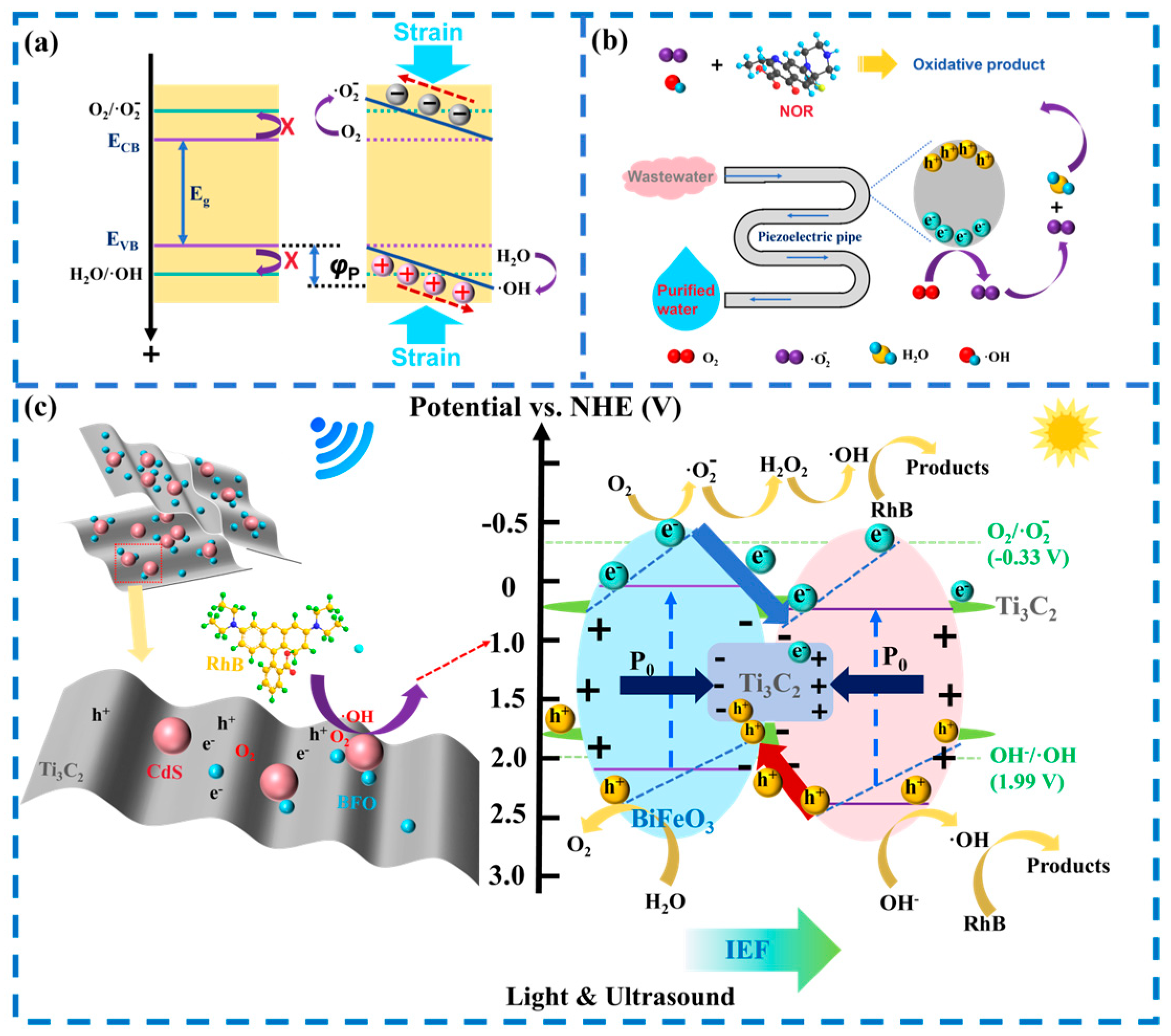
The activation efficiency of CEC is closely related to the electron affinity of the catalyst. Li et al. [143] investigated pentachlorophenol (PCP) degradation performance in an ultrasound-driven CEC system using FEP, PTFE, PVDF, and PA66 four organic polymers with different electronegativities. Results demonstrated that FEP achieved markedly higher PCP degradation efficiency than the others, owing to the highest fluorine content and strongest electron-withdrawing capability, which facilitates more efficient electron extraction from water molecules, thereby promoting ROS generation (Figure 12b). Similarly, the influence of catalysts Fe3O4@SiO2 modified by different electronegative functional groups, such as R–F, R–CH3, R–NH2, on methyl orange (MO) degradation performance was investigated. The results showed that the MO degradation efficiency was positively correlated with the electronegativity of the functional groups, which follows R–F > R–CH3 > R–NH2 [144].
Furthermore, CEC also needs to address the challenge of extremely short ROS lifetime (10−6–10−9 s) during molecular oxygen activation. The short existence time of ROS causes them to be easily quenched before diffusing to pollutants [145]. Ye et al. [146] employed a nano confinement strategy to prepare fluorine functionalized magnetic mesoporous attapulgite (Fluorine AFS), significantly shortening the ROS transport distance (Figure 12c). DFT calculations reveal that when the catalyst channel spacing is below 10 Å, the adsorption energy of the target pollutant potassium butyl xanthate (PBX) shifts from positive to negative, indicating an energy-assisted enrichment effect. Concurrently, the C–O bond in PBX elongates while the S–C bond shortens, facilitating bond cleavage and thereby enhancing degradation efficiency.
Figure 12.
(a) The mechanism of ROS generation by PTFE in the CEC system [141]. (b) Mechanism of pentachlorophenol (PCP) degradation by FEP in the US/FEP system. Reproduced with permission from Ref. [143]. Copyright 2024, American Chemical Society. (c) Degradation mechanism of PBX by BCT composite materials with Nano-confinement effect [146].
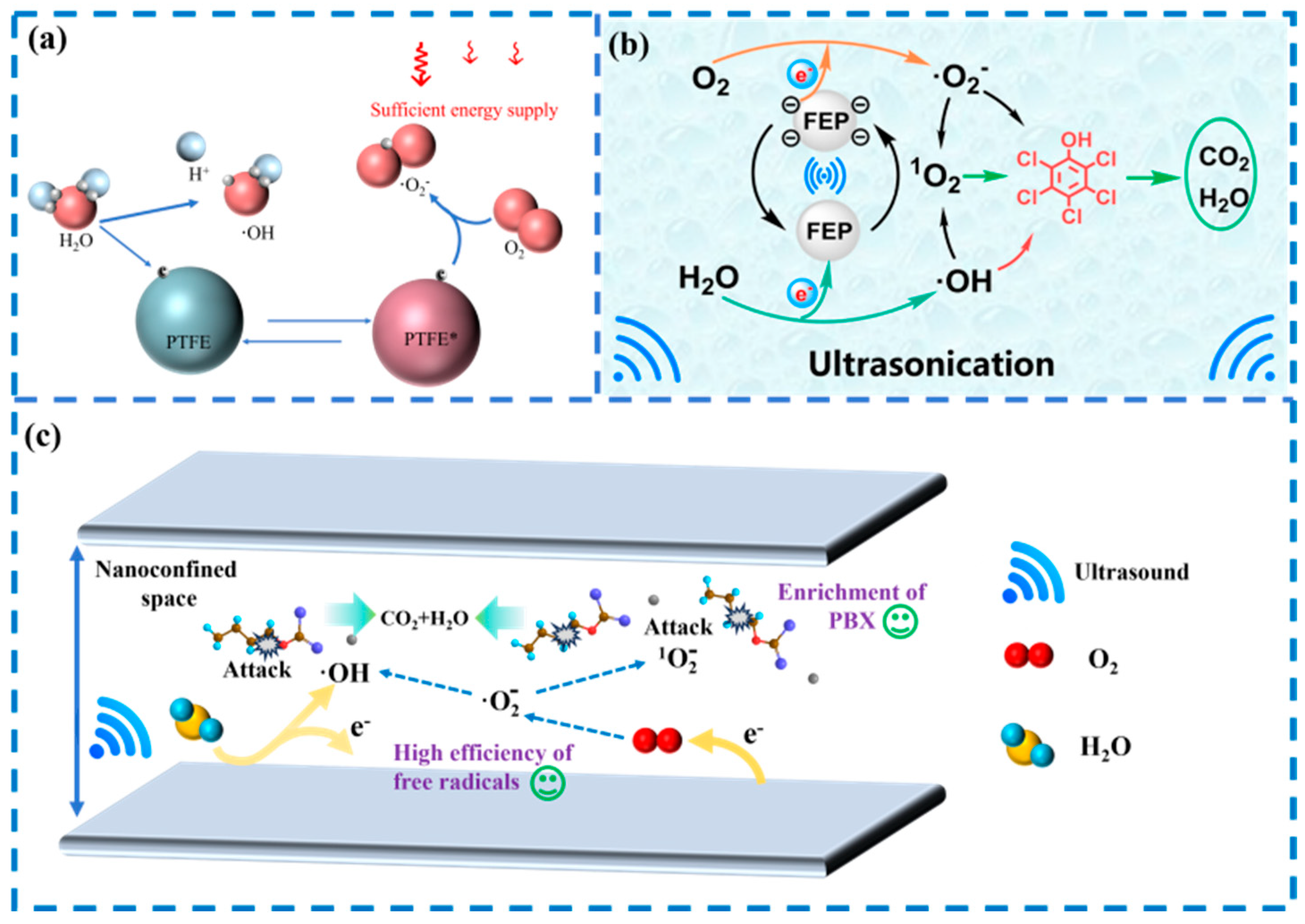
3. Mechanisms
3.1. Free Radical Mechanism
The radical reaction pathway is characterized by the generation of ROS such as and ·OH during O2 activation, which drives subsequent reactions via electron transfer.
is produced via the reduction in O2 with one electron (Equation (9)). It acts as a relatively weak oxidant (oxidation potential∼−0.33 V vs. NHE) but a strong reducing agent (reduction potential∼+0.94 V). plays a key role in subsequent chain reactions and serves as a precursor for generating ROS with stronger oxidants such as H2O2, ·OH. Typically, is usually generated through a single-electron transfer process, mainly through reduction by metal ion catalysis, photocatalysis, electrochemical catalysis, etc. For example, transition metal ions Mn+ (e.g., Fe2+, Cu+) act as electron donors and transfer electrons to O2 through redox reactions (Equation (10)). Semiconductor photocatalysts are excited by light to generate photoinduced e−, which are transferred to the O2 surface to generate . Although possesses moderate oxidizing capacity, it acts as the primary oxidant in certain photocatalytic systems, thereby degrading antibiotics [147] and organic dye pollutants [148] (Equation (11)). The chemical properties of are extremely unstable and are closely related to the pH of their environment. Under acidic conditions, is easily protonated to form hydroperoxyl radicals (HO2·, pKa ≈ 4.8) (Equation (12)). HO2· has higher reaction activity than and can generate H2O2 and O2 through a disproportionation reaction or further accept electrons to generate H2O2 (Equation (13), Figure 13).
Figure 13.
Mechanism of free radical action in molecular oxygen activation.
H2O2 is relatively stable and exhibits moderate oxidizing ability (standard oxidation potential 1.78 V), often serving as a precursor for generating highly oxidative radicals such as ·OH. O2 can capture electrons from photoinduced electrons, electrocatalytic currents, and metal ions to generate H2O2. For instance, under visible-light excitation, electrons accumulate at Sb sites, and adjacent N-concentrated holes oxidize water to O2. The Sb sites adsorb O2 in an end-on configuration, which avoids O–O bond cleavage and forms an Sb-OOH intermediate that finally converts to H2O2, thereby inhibiting the 4e− ORR [149]. Therefore, O2 can be efficiently converted into H2O2 through the 4e− ORR.
As the most reactive species in the molecular oxygen activation, ·OH possesses a high standard redox potential of approximately 2.8 V and a rate constant usually in the range from 108 to 1010 M−1s−1. It can universally oxidize most organic pollutants at a near diffusion rate and ultimately completely mineralize them into CO2 and H2O. The generation of ·OH mainly relies on the further activation of H2O2, and the Fenton-like reaction is one of the typical pathways. In this reaction, transition metals such as Fe and Cu can catalyze H2O2 decomposition to generate ·OH. Alternatively, H2O2 can be indirectly obtained through electrochemical or photoinduced electron reduction by O2 and further converted into ·OH through a single-electron reduction step. Recently, Wang et al. [150] integrated in situ N-doping with molecular imprinting to construct a CSF MIP 800 single carbon electrode. This configuration effectively promotes H2O2 generation via 2e− ORR during electrocatalysis. Subsequently, the produced H2O2 further decomposes to produce ·OH at the pyridinic N sites on the electrode surface, which exhibits excellent performance in degrading organic pollutants.
3.2. Non-Free Radical Mechanism
In non-radical pathways, O2 activation does not produce radical intermediates; instead, reactions are driven by the formation of excited state oxygen species, high-valent metal-oxo intermediates (HVMSs), or coordination activation complexes.
As the excited state of ground state oxygen (3O2), 1O2 possesses paired electron spins and no unpaired electrons, leading to distinct reactivity compared to 3O2. 1O2 is relatively insensitive to environmental factors such as pH, coexisting ions, and organic compounds, exhibits a longer lifetime, and shows good reaction selectivity. Its generation primarily involves energy transfer (Figure 14a) [151], Fenton-like reactions (Figure 14b) [152], and electrocatalytic processes (Figure 14c) [153]. O2 can be reduced via a single-electron transfer to form , which subsequently disproportionate to yield 1O2 (Equations (14)–(16)). In the degradation of organic pollutants, 1O2 more effectively suppresses the formation of toxic intermediates compared with traditional radical pathways, demonstrating significant potential for wastewater remediation. Jiang et al. [153] constructed an electrocatalytic filtration CoFeCNT using carbon nanotubes modified with CoFe alloy. During reaction, adsorbed O2 is first converted to H2O2 through a two-step single-electron transfer process, which then rapidly produces 1O2 at Co* sites via single-electron reduction, and reached 90% of a pollutant removal even after 48 h of continuous operation in a flow reactor.
In conventional electroreduction, a strong interaction between the unoccupied d-orbitals of metals and the 2p orbitals of /·OOH intermediates often lead to hindered /·OOH desorption, slow reaction kinetics, and poor 1O2 selectivity. To address this issue, Wang et al. [154] proposed a catalytic strategy based on Fe1–Ov–Ti dual active sites. DFT calculations revealed that the rate-determining step (PDS) of this system involves the dual O2 adsorption, where intermediates can directly recombine on the catalyst surface to form 1O2. This strategy achieves a high 1O2 generation rate of 54.5 μmol·L−1·min−1 with 97.6% selectivity, providing a new approach for green electrochemical water treatment technologies.
Beyond radical pathways in transition metal activation strategies, HVMSs such as Fe(IV)/Fe(V), Co(IV), Mn(V)/Mn(VI) have been confirmed to dominate or participate in organic pollutants degradation [155,156,157]. These species exhibit distinct advantages, including a long lifetime, high steady-state concentration, and a broad operable pH range. Over the past decade, HVMSs have emerged as a research frontier in environmental catalysis. Their reactivity in the degradation of diverse organic pollutants typically far exceeds that of the corresponding stable metal oxidants. For example, in the CuO/ascorbic acid (AA) system [158], the dominant active oxidizing species was surface-bound high-valent copper species (≡Cu(III)) rather than ·OH. The generation mechanism of ≡Cu (III) (Equations (17)–(21)) involves the coordination of -OH of AA and surface ≡Cu(II) to form a monodentate mononuclear inner sphere complex (≡Cu(II)–AA). In the CuO/AA system, AA reduces ≡Cu(II) to produce surface-bound monovalent copper (≡Cu(I)) via transferring electrons, while itself is oxidized to the ascorbyl radical (·Asc). The resulting ≡Cu(I) can spontaneously activate molecular oxygen (O2) under mild conditions to generate H2O2 via 2e− ORR. Unlike the traditional Fenton-type pathway that generates ·OH through single-electron transfer, the generated H2O2 undergoes a 2e− ORR with residual ≡Cu(I) on the surface to produce ≡Cu (III). Ultimately, surface-bound Cu (III) acts as the dominant active species to efficiently degrade organic pollutants (Figure 14d).
Figure 14.
(a) Mechanism diagram of 1O2 generation via oxygen activation through energy transfer. Reproduced with permission from Ref. [151]. Copyright 2024, Journal of Materials Chemistry A. (b) Mechanism diagram of 1O2 generation via Fenton-like reaction. Reproduced with permission from Ref. [152]. Copyright 2024, American Chemical Society. (c) Mechanism diagram of 1O2 generation via electrocatalytic process [153]. (d) Mechanism diagram of ROS generation by activated oxygen in the CuO/AA system [156].
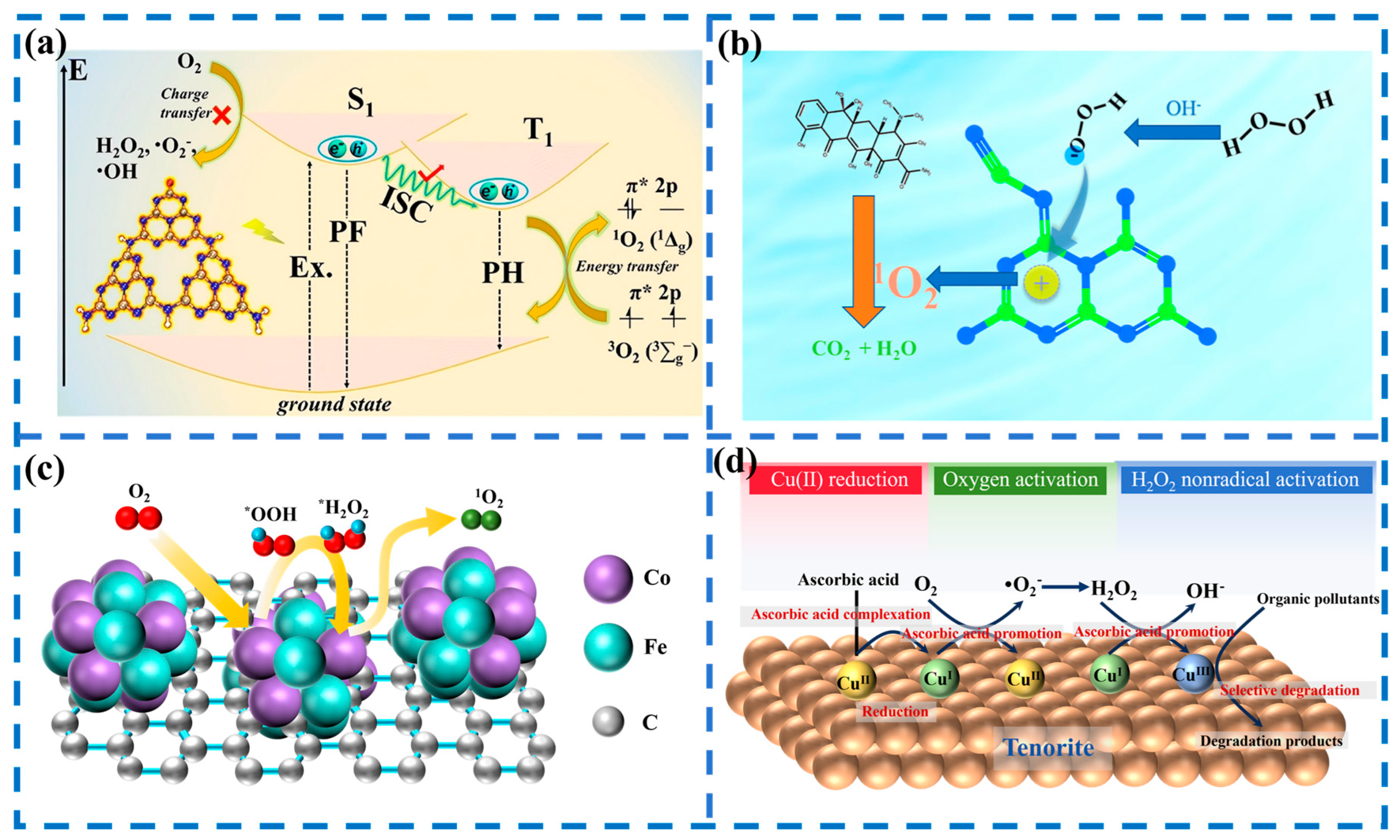
3.3. Correlation Mechanism of Catalyst Structure—Interfacial Adsorption—ROS Pathway
Catalyst structure determines the adsorption strength, coordination mode, and electron transfer efficiency of O2 on the catalyst surface by regulating the surface electron distribution, type, and spatial configuration of active sites. The adsorption state of molecular oxygen directly determines its activation pathway: strong electron transfer drives the radical generation pathway, while energy transfer or surface coordination drives the non-radical pathway, ultimately forming a specific type of dominant ROS [159,160].
The first step of MOA is the adsorption of O2 on the active sites of the catalyst. The structural configuration of the catalytic material and the rational design of active sites can enhance the affinity of the material for molecular oxygen [161,162,163]. Catalytic materials with a centrosymmetric structure and low surface electron density usually form a terminal adsorption mode with molecular oxygen; under this adsorption mode, the adsorption strength is low, leading to low electron transfer efficiency. Therefore, O2 tends to undergo an energy transfer process on the surface of such materials to generate 1O2. For catalytic materials with an acentric structure (e.g., piezoelectric materials), or those containing high-activity defect sites and multimetallic sites, O2 can bind to two active sites on their surface through a bridge adsorption mode; this adsorption mode has high adsorption strength, and O2 easily acquires electrons from the catalyst surface to generate ·O2−, thus preferring the radical activation pathway (Figure 15) [164,165]. In addition, regulating the dominant reactive oxygen pathway by modulating the exciton effect of photocatalytic materials is one of the important strategies for molecular oxygen activation regulation. Zhang et al. [166] induced lattice contraction of the [Bi2O2] layers in BiOCl by introducing periodic nanopipe structures into BiOCl, enhancing the degree of charge localization in the valence band and conduction band, and significantly strengthening the exciton effect. This regulation transformed the molecular oxygen activation mode from charge transfer-dominated to energy transfer-dominated, thereby promoting the activation of O2 through the non-radical pathway.
Figure 15.
Correlation mechanism diagram of interfacial adsorption—ROS pathway.
4. Molecular Oxygen Activated Species Detection
4.1. Quenching Experiments
Quenching experiments are the core methods to verify the detection specificity of different ROS. Due to their unique chemical properties, each type of ROS corresponds to a specific quencher that can rapidly undergo a specific chemical reaction with the target ROS, converting it into an inactive and stable product; meanwhile, the specific quencher does not interact with other ROS or detection reagents in the system, avoiding interference with the detection results. After quenching, the concentration of the target ROS decreases significantly, and its corresponding detection signal attenuates synchronously. Researchers can quantitatively determine the specificity of the target ROS detection signal by the magnitude of the change in the detection signal.
·O2− possesses both reducibility and weak oxidizability, and they are key intermediates in the process of molecular oxygen activation, which can be further converted into ·OH, 1O2, and H2O2. Currently, benzoquinone (BQ) [167], 2,2,6,6-tetramethylpiperidine oxide (TEMPOL) [168], ascorbic acid [169], and superoxide dismutase (SOD) [170] have been widely used as specific quenchers for ·O2−. 1O2 is a non-radical ROS formed by the activation of ground-state oxygen (3O2) through energy transfer or electron transfer pathways, exhibiting strong oxidizability and high reaction selectivity. It can be specifically quenched by sodium azide (NaN3) [171], 1,4-diazabicyclo[2.2.2]octane (DABCO) [172], carotene [173], coumarin-3-carboxylic acid (CCA) [174], 2,2,6,6-tetramethylpiperidine [175], and L-histidine [176], etc. As the most oxidizing ROS, ·OH can be quenched by isopropanol (IPA) [177], mannitol [178], tert-butanol (TBA) [179], methanol [180], and TEMPOL [181], etc. Notably, as a novel quencher for ·OH, TEMPOL can achieve the same quenching effect as the traditional quencher mannitol (0.5 mol/L) at a final concentration of only 10~50 μmol/L, which can greatly reduce the interference of the quencher itself on the catalytic system. For H2O2, specific quenching (i.e., catalytic decomposition of H2O2) can be achieved by adding catalase (CAT) [182].
4.2. ESR/EPR Analysis
Electron Spin Resonance (ESR), also known as Electron Paramagnetic Resonance (EPR), is one of the gold standard techniques for detecting paramagnetic substances and the core method for the qualitative detection of ROS. During detection, ·OH and ·O2− among ROS can undergo specific addition reactions with the spin trap 5,5-Dimethyl-1-pyrroline N-oxide (DMPO), forming stable paramagnetic adducts DMPO-·OH and DMPO-·O2−, respectively. Specifically, DMPO-·OH exhibits four characteristic resonance peaks in the ESR spectrum with a peak intensity ratio of 1:2:2:1, which can serve as direct spectral evidence for the presence of ·OH [183]. DMPO-·O2− shows six characteristic resonance peaks in the ESR spectrum with a peak intensity ratio of 1:1:1:1:1:1, directly confirming the existence of ·O2− [184]. For 1O2, the spin trap 2,2,6,6-Tetramethylpiperidine (TEMP) needs to be added. 1O2 reacts with TEMP to generate stable paramagnetic 2,2,6,6-Tetramethylpiperidin-1-oxyl (TEMPO), which exhibits three characteristic resonance peaks in the ESR spectrum with a peak intensity ratio of 1:1:1, enabling the qualitative confirmation of 1O2 generation [185].
4.3. Quantitative Detection
A common quantitative method for ROS is to add specific scavengers for different ROS into the reaction system, allow the scavengers to react specifically with the target ROS to form stable products, and then quantitatively analyze the stable products by high-performance liquid chromatography (HPLC). Specifically, ·OH can undergo hydroxylation reactions with specific scavengers such as benzoic acid and salicylic acid to generate stable hydroxylated products, and the quantitative detection of ·OH can be achieved by quantitatively analyzing the content of these hydroxylated products via HPLC [186]. 1O2 can react specifically with 9,10-anthracenediylbis (methylmalonic acid) (ABDA) [187]. ·O2− can react with hydroxylamine through redox reactions to generate nitrite (NO2−), which further undergoes a derivatization reaction with sulfanilic acid and N-1-naphthylethylenediamine to form azo dyes [188]. The quantitative analysis of ·O2− can be completed by determining the absorbance of the azo dyes via HPLC. In addition, quantitative detection of ROS can also be achieved by methods such as the fluorescence probe method and the chemiluminescence method [189,190]. Notably, although the chemiluminescence method has the advantage of real-time monitoring of the generation and change in ROS, the detection results are easily affected by the pH value of the system, and the pH of the reaction system needs to be strictly controlled during the experiment.
5. Applications of Oxygen Activated in Degrading Organic Pollutants in Water
5.1. Degradation of Phenolic Pollutants
Phenolic pollutants are a class of widely existing weak acidic organic pollutants, primarily originating from industrial wastewater in petrochemicals, plastics, synthetic fibers, coking, pharmaceuticals, pesticides, and papermaking. Some highly halogenated phenolic compounds exhibit characteristics including high toxicity, refractoriness, and bioaccumulation, and are thus categorized as persistent organic pollutants (POPs). These pollutants pose significant ecological risks and demonstrate potential carcinogenicity. Notably, some phenolics such as BPA, nonylphenol, and 2,4-dichlorophenol exhibit endocrine-disrupting effects even at trace concentrations, which may deteriorate aquatic ecosystems and pose long-term threats to human health. In terms of phenolic pollutants degradation, ·OH has been widely demonstrated to effectively degrade phenolic pollutants, while their degradation efficiency is significantly influenced by substituent groups of Phenolics [191]. Phenolics with electron-donating groups (e.g., phenol, hydroquinone) readily react with ·OH, whereas those with electron-withdrawing groups (e.g., p-nitrophenol) generally exhibit lower degradation efficiency due to the strong electron-withdrawing effect of nitro groups and more complex reaction pathways, requiring higher activation energy. To address these challenges, researchers have developed various efficient degradation strategies. For instance, Zhou et al. [192] employed vanadium-equivalent doped strontium titanate nanofibers (V-STO NFs) to activate the generation of radicals via ultrasonic mechanical energy in the absence of light, achieving low-concentration BPA efficient degradation in water. Meanwhile, Wang et al. [193] developed a nanoflower-like Ti/Sb-SnO2 anode with a high specific surface area and abundant active sites, which facilitates multiple ROS generation. Quenching experiments indicate that indirect oxidation pathways account for 82.76% of the total reaction, with ·OH and contributing 43.19% and 24.57%, respectively, while non-radical direct oxidation contributes 17.24%. This multi-path synergetic mechanism facilitates degradation and ring opening of PNP, its toxic intermediates, suppressing the formation of persistent toxic by-products. Table 2 lists selected examples of molecular oxygen activation for phenolic wastewater degradation, demonstrating that molecular oxygen activation enables effective treatment of phenolic-containing wastewater.
Table 2.
Representative studies on degradation of phenolic pollutants via molecular oxygen activation technologies.
5.2. Degradation of Pharmaceutical and Personal Care Products (PPCPs)
As emerging pollutants, PPCPs have raised growing concerns due to their ecological risks in aquatic environments. This class of pollutants encompasses a wide range of compounds, including human and veterinary drugs, antibiotics, anti-inflammatory drugs, hormones, synthetic musks, sunscreens, and preservatives. PPCPs are continuously introduced into water systems primarily through incomplete removal in domestic and medical wastewater discharges, effluents from aquaculture and livestock farming, and surface runoff. Owing to their chemical stability and bioaccumulation in aquatic environments, PPCPs pose potential threats to aquatic ecosystems.
Traditional wastewater treatment processes face significant challenges in addressing PPCPs pollution. On one hand, complex matrix components such as natural organic matter and anions in water compete with PPCPs for active sites or oxidants, thereby suppressing degradation efficiency. On the other hand, the transformation of PPCPs may generate intermediates with higher toxicity or unknown ecological risks, leading to incomplete removal and secondary contamination. These factors collectively hinder conventional approaches from achieving efficient purification of these refractory organic contaminants. On the other hand, PPCPs may generate intermediates with higher toxicity or unknown ecological risks during degradation, leading to incomplete removal or secondary contamination, which makes conventional treatment methods inadequate for the efficient purification of such refractory organic compounds.
MOA technology, as an emerging form of advanced oxidation processes, shows promising prospects in PPCPs degradation (Table 3). Currently, antibiotic degradation technologies based on molecular oxygen activation primarily involve electrocatalytic and photocatalytic pathways. In electrocatalysis, ·OH generated via water oxidation at the anode surface directly attacks antibiotic molecules. Concurrently, dissolved O2 at the cathode is reduced through electron transfer to form reactive species such as and H2O2, thereby enabling indirect pollutant oxidation. Leveraging this dual-path synergetic mechanism, electrocatalytic systems exhibit advantages such as fast reaction rates and strong process controllability, making them particularly suitable for treating high-concentration PPCPs wastewater. For low-concentration or large-volume environmental water bodies, photocatalytic technology is more applicable due to its ability to directly utilize solar energy and low operating costs. Moreover, photoelectro-synergetic catalytic systems further enhance degradation performance by applying bias voltages to promote photoinduced carrier separation. For example, Li et al. [200] constructed a Bi4Ti3O12/TiO12 (BTO/TiO2) Z-scheme heterojunction in situ via flame spray pyrolysis technology, achieving high dispersion of Bi elements in TiO2. Under simulated sunlight irradiation for 75 min, the removal rate of TC reached up to 99.7%.
In photoelectrocatalysis, anode modification represents a key strategy for optimizing molecular oxygen activation. Gd-BiVO4 significantly enhanced its photoelectrochemical performance. Under simulated light irradiation for 20 min, it achieved complete degradation of ciprofloxacin (CIP) and SMX, and maintained excellent CIP removal performance in various actual water bodies [201]. For the elimination of trace antibiotics in water, Cao et al. [202] developed a reusable contact electrocatalytic (CEC) system using polytetrafluoroethylene (PTFE) particles as contact media. At a PTFE dosage of 0.8 g/L and 90 min of ultrasonication, removal rates reached 50%, 80%, and 90% for SMX, CIP, and tetracycline (TET), respectively. This approach offers a promising new technique for controlling low-concentration antibiotic pollution.
Table 3.
Representative studies on degradation of PPCPs via molecular oxygen activation technologies.
5.3. Degradation of Organic Dye Pollutants
Organic dye contaminants in water are highly chromatic organic compounds with complex aromatic structures, posing severe threats to aquatic ecosystems and human health. Even at trace concentrations, these pollutants cause intense water coloration, severely diminishing light penetration, suppressing aquatic photosynthetic activity, and ultimately destabilizing aquatic ecosystem equilibrium. Moreover, most dye molecules exhibit high chemical stability and resistance to natural degradation. Aromatic amine intermediates generated during the degradation of organic dyes have been confirmed to be carcinogenic, teratogenic, and mutagenic, posing potential risks to human health through pathways such as drinking water or contaminated aquatic products.
Conventional methods such as filtration, coagulation, adsorption, and ozonation are widely used for dye removal, but they face limitations including high cost, low efficiency, and potential secondary pollution. In recent years, degradation strategies based on molecular oxygen activation, particularly photocatalysis, have attracted considerable attention due to their high efficiency and environmental friendliness (Table 4). For example, Zhuang et al. [211] synthesized a donor–acceptor covalent triazine framework (DA CTF) photocatalyst, which acts as an n-type semiconductor and effectively promotes generation. The synergistic action of and photogenerated holes attack the conjugated structures and functional groups of Rhodamine B (RhB) and Methylene Blue (MB), gradually oxidizing them into small molecules and ultimately mineralizing them to CO2 and H2O. Experiments showed that within 60 min, the system achieved degradation rates of 92.3% for RhB and 99.2% for MB. To further enhance catalytic performance, researchers have explored various coupled catalytic systems. For instance, Wang et al. [212] developed a photo-piezoelectric-coupled catalyst, SbSI NWs, in which the synergy between photoexcitation and mechanically induced piezoelectric effects promotes the separation and reaction of photogenerated electrons and holes, significantly boosting ROS production such as and ·OH. This system degraded 97.1% of MO within 2 min, demonstrating excellent performance. Such coupling strategies provide a new direction for developing highly efficient and versatile catalytic technologies.
Table 4.
Representative studies on degradation of organic dye pollutants via molecular oxygen activation technologies.
5.4. Degradation of Practical Wastewater
Practical wastewater comprises complex components, including refractory organic pollutants, background ions, and natural organic matter (NOM), presenting significant challenges to water treatment technologies. Nevertheless, MOA catalysts still exhibit excellent pollutant degradation performance and broad application potential even in such complex aqueous matrices.
The Fe-N4 dual-site catalyst fabricated by Wang et al. [219] can selectively activate molecular oxygen to generate 1O2, achieving over 99% removal efficiency of pharmaceutical pollutants and 100% bactericidal rate in real hospital wastewater. After continuous operation in a continuous-flow system for 120 h, the metal leaching concentration of the catalyst was below 0.01 mg/L, verifying its long-term application feasibility. Its performance advantage stems from the precise design of active sites—effectively reducing active site blocking caused by intermediate adsorption and inhibiting metal leaching, thereby significantly enhancing the catalyst’s stability and service life. In municipal secondary effluent containing various background ions, the O-doped FeS2 catalyst displayed excellent anti-interference capability, attributed to the precise regulation of its surface electronic structure, which prioritizes molecular oxygen adsorption and activation over background ions [220]. By optimizing the molecular oxygen activation pathway via defect engineering, this catalyst achieved over 95% removal efficiency for various antibiotics and 64% TOC removal efficiency in practical wastewater treatment, while maintaining stable activity over a wide pH range (3–9). Furthermore, the adjacent atomic bimetallic catalytic site system constructed by Chen et al. [221] realized energy-neutral molecular oxygen activation without the need for external energy or chemical oxidants. It achieved over 90% pollutant removal efficiency in various practical water samples, reducing operating costs by 1–2 orders of magnitude compared with traditional technologies and demonstrating broad adaptability for practical applications.
Crucially, the design of dedicated reactors is a key engineering step to promote the industrialization and cost-effectiveness of molecular oxygen activation technology for wastewater treatment. Li et al. [222] developed a 0.45 L continuous-flow fixed-bed reactor and applied Fe-doped Bi4O5Br2 (FBOB) to the continuous treatment of practical wastewater. Compared with reported traditional Fenton-like catalysts, FBOB exhibited a significantly higher degradation rate constant (0.106 min−1) in the continuous-flow reactor, with more prominent performance advantages at low H2O2 dosages. In addition, Chen et al. [221] designed a custom dead-end filtration system for the Ti-doped Mn3O4/Fe3O4-based self-sustaining catalytic membrane (TMF-CM) and integrated an aeration module to construct a “catalysis-filtration integrated” reactor system. This system enhances molecular oxygen activation efficiency by increasing DO concentration, requiring no additional chemical oxidants or external energy and relying solely on aeration or inherent DO in water to drive the reaction. Compared with UV- or electrochemically driven traditional catalytic systems, TMF-CM reduces energy consumption by 70–98% and avoids the risks associated with oxidant transportation and storage, significantly lowering the operating costs of practical engineering applications.
6. Conclusions and Outlook
Catalytic activation of molecular oxygen to generate ROS for mineralizing organic pollutants represents a highly attractive green water treatment technology. This review summarizes recent advances in the mechanisms and application performance of diverse O2 activation strategies, including photocatalytic, electrocatalytic, thermal catalytic, piezocatalytic, and contact electrocatalytic approaches. Although existing studies have demonstrated the feasibility of these technologies, their overall development remains immature, and several fundamental and practical challenges still need to be addressed. Therefore, further systematic research on mechanisms and technology optimization is essential for advancing practical implementation.
First, the primary source of ROS originates from the activation of dissolved oxygen (DO) in water. The inherently low DO concentration in natural and engineered water systems limits the rate of ROS generation. Although external aeration can increase oxygen supply, its efficiency is often constrained by temperature, bubble size, and mass transfer limitations. Moreover, DO must undergo diffusion and adsorption onto catalytically active sites before participating in electron transfer processes to form ROS. Therefore, a deeper understanding of the interfacial processes, including oxygen dissolution, diffusion, adsorption, and activation on functional materials, is crucial for improving the overall efficiency of O2-based systems.
Second, the rational design of functional catalytic materials is key to enhancing performance. Structural optimization and active site engineering can improve the affinity of materials toward both DO and target pollutants, shorten the diffusion distance between ROS and pollutants, and accelerate reaction kinetics. Tailored material architectures that promote confined or localized ROS generation near adsorption sites are particularly desirable for increasing selectivity and reducing undesired side reactions.
Third, elucidating how electrons transfer efficiently and directionally at the material interface is crucial for controlling ROS formation and movement. A clear theoretical model connecting interfacial electronic structure, charge carrier behavior, and ROS generation can improve electron use efficiency, enable precise ROS control, and ultimately support selective pollutant degradation and direct transformation.
Finally, designing tailored reactors for different activation strategies is crucial for improving pollutant degradation efficiency in wastewater treatment. Such advances will lay the foundation for scaling up O2 activation technologies in water pollution control.
In summary, while O2 activation routes offer a sustainable pathway for water purification, their success hinges on interdisciplinary efforts that combine fundamental mechanistic insights, advanced material design, and innovative reactor engineering. Addressing these challenges will accelerate the development of efficient, selective, and scalable oxidation technologies for combating water pollution.
Author Contributions
Conceptualization, J.Z., J.L., T.M. and C.D.; methodology, X.Y. and X.L.; validation, J.Z.; formal analysis, W.W.; investigation, X.Y. and T.M.; resources and funding acquisition, J.Z.; data curation, X.Y. and T.M.; writing—original draft preparation, W.W. and T.M.; writing—review and editing, J.L.; supervision, J.Z.; project administration, X.Y. All authors have read and agreed to the published version of the manuscript.
Funding
This research received no external funding.
Data Availability Statement
No new data were created or analyzed in this study. Data sharing is not applicable to this article.
Conflicts of Interest
The authors declare no conflicts of interest.
References
- Tripathy, S.; Kar, O.P.; Pradhan, A. Challenges and Innovations in Industrial Wastewater Treatment: Safeguarding Water Resources and Promoting Sustainable Practices. Water Air Soil Pollut. 2025, 236, 92. [Google Scholar] [CrossRef] [Scilit]
- Natarajan, P.; Karmegam, P.M.; Madasamy, J.; Somasundaram, S.; Ganesan, S. Effective treatment of domestic sewage to reuse in textile dyeing and catalytic treatment of generated dye wastewater. Int. J. Environ. Sci. 2023, 20, 6209–6220. [Google Scholar] [CrossRef] [Scilit]
- Kajitvichyanukul, P.; Nguyen, V.H.; Boonupara, T.; Boonupara, T.; Thi, L.-A.P.; Watcharenwong, A.; Sumitsawan, S.; Udomkun, P. Challenges and effectiveness of nanotechnology-based photocatalysis for pesticides-contaminated water: A review. Environ. Res. 2022, 212, 113336. [Google Scholar] [CrossRef] [Scilit] [PubMed]
- Zhang, Y.; Zhang, X.; Wang, S. Recent advances in the removal of emerging contaminants from water by novel molecularly imprinted materials in advanced oxidation processes—A review. Sci. Total Environ. 2023, 883, 163702. [Google Scholar] [CrossRef] [Scilit] [PubMed]
- Da Silva, P.M.M.; Malvestiti, J.A.; Camparotto, N.G.; Pinto, J.C.; Mastelaro, V.R.; Dantas, R.F.; Prediger, P. Novel polymeric membranes based on green reduced graphene oxide for the nanofiltration of emerging contaminants from water in a ternary system. Sep. Purif. Technol. 2025, 359, 130351. [Google Scholar] [CrossRef] [Scilit]
- Naskar, J.; Boatemaa, M.A.; Rumjit, N.P.; Thomas, G.; George, P.J.; Lai, C.W.; Mousavi, S.M.; Wong, Y.H. Recent Advances of Nanotechnology in Mitigating Emerging Pollutants in Water and Wastewater: Status, Challenges, and Opportunities. Water Air Soil Pollut. 2022, 233, 156. [Google Scholar] [CrossRef] [Scilit]
- Chen, Y.; Lin, Z.; Zhang, J.; Liu, Y.; Liang, D.; Li, D.; Zhang, Y.; Liu, H.; Chen, P.; Lv, W.; et al. Strategy for improvement of molecular oxygen activation capacity of PPECu by chlorine doping for water decontamination. J. Hazard. Mater. 2023, 460, 132421. [Google Scholar] [CrossRef] [Scilit]
- Zhang, S.; Bi, G.; Li, W.; Wang, Y.; Shi, X. Activated energy transfer pathway in carbon nitride nanosheets promotes molecular oxygen activation for robust and efficient water decontamination. Chin. Chem. Lett. 2025, 37, 111463. [Google Scholar] [CrossRef] [Scilit]
- Lu, C.; Hu, C.; Lyu, L. Nonexpendable H2O2 induces rapid molecular oxygen activation over micropotential Cu-modulated zinc oxide. Cell Rep. Phys. Sci. 2025, 6, 102431. [Google Scholar] [CrossRef] [Scilit]
- Anglada, J.M.; Martins-Costa, M.; Francisco, J.S.; Ruiz-López, M.F. Interconnection of Reactive Oxygen Species Chemistry across the Interfaces of Atmospheric, Environmental, and Biological Processes. Acc. Chem. Res. 2015, 48, 575−583. [Google Scholar] [CrossRef] [Scilit] [PubMed]
- Chai, X.; Gao, R.-T.; Wang, L. Electron transport kinetics via ZnO with ultralow Fe dopant for stable oxygen reduction to H2O2. Chem. Eng. J. 2024, 484, 149527. [Google Scholar] [CrossRef] [Scilit]
- Zhang, J.; Liu, J. Light-activated nanozymes: Catalytic mechanisms and applications. Nanoscale 2020, 12, 2914–2923. [Google Scholar] [CrossRef] [Scilit] [PubMed]
- Zhou, L.; Liu, Y.; Shi, H.; Qing, Y.; Chen, C.; Shen, L.; Zhou, M.; Li, B.; Lin, H. Molecular oxygen activation: Innovative techniques for environmental remediation. Water Res. 2024, 250, 121075. [Google Scholar] [CrossRef] [Scilit]
- Zhong, J.; Wang, R.; Li, Y.; Li, D.; Ma, X.; Shao, T.; Meng, J.; Feng, J.; Guo, W.; Yu, J.C.; et al. Piezoelectric-induced transient phase transition in phosphorus-doped MoS2 for efficient catalytic degradation of perfluorooctanoic acid. Chem. Eng. J. 2025, 520, 166343. [Google Scholar] [CrossRef] [Scilit]
- Ma, J.; Wang, K.; Wang, C.; Chen, X.; Zhu, W.; Zhu, G.; Yao, W.; Zhu, Y. Photocatalysis-self-Fenton system with high-fluent degradation and high mineralization ability. Appl. Catal. B Environ. 2020, 276, 119150. [Google Scholar] [CrossRef] [Scilit]
- Liu, X.; Ma, H.; Zhang, M.; Che, P.; Luo, Y.; Zhang, S.; Xu, J. Catalytic Activation of Molecular Oxygen Toward Producing Hydroxyl Radicals Controllably for Highly Selective Oxidation of Hydroxyl Compounds under Mild Conditions. ACS Catal. 2023, 13, 11104–11116. [Google Scholar] [CrossRef] [Scilit]
- Bian, Z.; Lu, B.; Yang, Y.; Zhang, Q. Bi/BiVO4 tailoring molecular oxygen activation for SPR-promoted photocatalytic contaminant removal. Surf. Interfaces 2024, 47, 104210. [Google Scholar] [CrossRef] [Scilit]
- Fu, H.; Liu, X.; Wang, J.; Hu, X.; Zhao, Y.; Chen, S.; Sun, H.; Li, Y.; Fan, X.; Peng, W. Sea urchin-like nickel nanoparticles encapsulated in nitrogen-doped carbon nanotubes for improved hydrogen peroxide electrosynthesis. Sep. Purif. Technol. 2025, 360, 131216. [Google Scholar] [CrossRef] [Scilit]
- Liu, J.; Qi, W.; Xu, M.; Thomas, T.; Liu, S.; Yang, M. Piezocatalytic Techniques in Environmental Remediation. Angew. Chem. Int. Ed. 2023, 62, e202213927. [Google Scholar] [CrossRef] [Scilit] [PubMed]
- Wang, Z.; Dong, X.; Li, X.; Feng, Y.; Li, S.; Tang, W.; Wang, Z. A contact-electro-catalysis process for producing reactive oxygen species by ball milling of triboelectric materials. Nat. Commun. 2024, 15, 757. [Google Scholar] [CrossRef] [Scilit]
- Ya, Z.; Zhang, S.; Xu, D.; Wang, H.; Li, M. Coupling Plastic Upgrading and Photocatalysis: Catalytic Mechanisms and Design Principles. ACS Catal. 2025, 15, 5339–5369. [Google Scholar] [CrossRef] [Scilit]
- Luo, Y.; Wang, X.; Gao, F.; Jiang, L.; Wang, D.; Pan, H. From Single Atom Photocatalysts to Synergistic Photocatalysts: Design Principles and Applications. Adv. Funct. Mater. 2025, 35, 2418427. [Google Scholar] [CrossRef] [Scilit]
- Li, X.; Sun, H.; Xie, Y.; Liang, Y.; Gong, X.; Qin, P.; Jiang, L.; Guo, Y.; Liu, C.; Wu, Z. Principles, synthesis and applications of dual Z-scheme photocatalysts. Coord. Chem. Rev. 2022, 467, 214596. [Google Scholar] [CrossRef] [Scilit]
- Xue, W.; Liu, Y.; Ma, X.; Ye, J.; Bai, X.; Zhao, J.; Liu, B. Tuning the Equilibrium of Excitons and Carriers in the (001) Plane-Exposed Bismuth Oxyhalide Enables Efficient Selective Photocatalytic Oxidation of 5-Hydroxymethylfurfural. ACS Catal. 2025, 15, 9621–9632. [Google Scholar] [CrossRef] [Scilit]
- Li, J.; Li, Y.; Zhang, G.; Huang, H.; Wu, X. One-Dimensional/Two-Dimensional Core–Shell-Structured Bi2O4/BiO2–x Heterojunction for Highly Efficient Broad Spectrum Light-Driven Photocatalysis: Faster Interfacial Charge Transfer and Enhanced Molecular Oxygen Activation Mechanism. ACS Appl. Mater. Interfaces 2019, 11, 7112–7122. [Google Scholar] [CrossRef] [Scilit] [PubMed]
- Zha, R.; Shi, T.; He, L.; Zhang, M. Synergetic excitonic and defective effects in confined SnO2/α-Fe2O3 nanoheterojunctions for efficient photocatalytic molecular oxygen activation. Chem. Eng. J. 2021, 421, 129883. [Google Scholar] [CrossRef] [Scilit]
- Shen, Z.; Lou, Z.; Chen, J.; Li, Y. Oxygen Vacancy-Mediated Exciton Effect in Hierarchical BiOBr Enables Dichotomy of Energy Transfer and Electron Transfer in Photocatalysis. Adv. Funct. Mater. 2023, 33, 2213935. [Google Scholar] [CrossRef] [Scilit]
- Geng, L.; Li, H.; Liu, J.; Yang, Z.; Wei, J. Molecular Stacking Dependent Molecular Oxygen Activation in Supramolecular Polymeric Photocatalysts. J. Phys. Chem. Lett. 2024, 15, 3127–3134. [Google Scholar] [CrossRef] [Scilit] [PubMed]
- Kou, M.; Deng, Y.; Zhang, R.; Li, W.; Wang, L.; Wong, P.; Su, F.; Ye, L. Molecular oxygen activation enhancement by BiOBr0.5I0.5/BiOI utilizing the synergistic effect of solid solution and heterojunctions for photocatalytic NO removal. Chin. J. Catal. 2020, 41, 1480–1487. [Google Scholar] [CrossRef] [Scilit]
- Guo, F.; Mao, C.; Liang, C.; Xing, P.; Yu, L.; Shi, Y.; Cao, S.; Wang, F.; Liu, X.; Ai, Z.; et al. Triangle Cl−Ag1−Cl Sites for Superior Photocatalytic Molecular Oxygen Activation and NO Oxidation of BiOCl. Angew. Chem. Int. Ed. 2023, 62, e202314243. [Google Scholar] [CrossRef] [Scilit]
- Chen, D.; Cheng, Y.; Zhou, N.; Chen, P.; Wang, Y.; Li, K.; Huo, S.; Cheng, P.; Peng, P.; Zhang, R.; et al. Photocatalytic degradation of organic pollutants using TiO2-based photocatalysts: A review. J. Clean. Prod. 2020, 268, 121725. [Google Scholar] [CrossRef] [Scilit]
- Zhang, B.; He, X.; Ma, X.; Chen, Q.; Liu, G.; Zhou, Y.; Ma, D.; Cui, C.; Ma, J.; Xin, Y. In situ synthesis of ultrafine TiO2 nanoparticles modified g-C3N4 heterojunction photocatalyst with enhanced photocatalytic activity. Sep. Purif. Technol. 2020, 247, 116932. [Google Scholar] [CrossRef] [Scilit]
- Jung, H.J.; Koutavarapu, R.; Lee, S.; Kim, J.H.; Choi, H.C.; Choi, M.Y. Enhanced photocatalytic degradation of lindane using metal-semiconductor Zn@ZnO and ZnO/Ag nanostructures. J. Environ. Sci. 2018, 74, 107–115. [Google Scholar] [CrossRef] [Scilit]
- Wang, Z.; Mei, B.; Chen, J. Removing semiconductor-cocatalyst interfacial electron transfer induced bottleneck for efficient photocatalysis: A case study on Pt/CdS photocatalyst. J. Catal. 2022, 408, 270–278. [Google Scholar] [CrossRef] [Scilit]
- Wang, X.; Chen, L.; Zhang, J.; Xing, B.; Xu, B.; Mi, G.; Liu, B.; Wu, Y.; Chen, L. Construction of ZnO/oxygen-deficient Bi2WO6 photocatalyst for highly efficient degradation of TCH. J. Phys. D Appl. Phys. 2025, 58, 155103. [Google Scholar] [CrossRef] [Scilit]
- Tong, Y.; Shen, J.; Zhao, S.; Chen, Z.; Kang, J.; Wang, B.; Sun, L.; Bi, L. Comparative study of BiVO4 and BiVO4/Ag2O regarding their properties and photocatalytic degradation mechanism. New J. Chem. 2022, 46, 11608–11616. [Google Scholar] [CrossRef] [Scilit]
- Chachvalvutikul, A.; Pudkon, W.; Luangwanta, T.; Thongtem, T.; Thongtem, S.; Kittiwachana, S.; Kaowphong, S. Enhanced photocatalytic degradation of methylene blue by a direct Z-scheme Bi2S3/ZnIn2S4 photocatalyst. Mater. Res. Bull. 2019, 111, 53–60. [Google Scholar] [CrossRef] [Scilit]
- Pan, J.; Chen, Z.; Zhou, J.; Luo, Q. Mof-derived MOF(Fe)/FeSx photocatalyst with enhanced photocatalytic activity for tetracycline degradation. Inorg. Chem. Commun. 2024, 159, 111754. [Google Scholar] [CrossRef] [Scilit]
- Wu, X.; Sayed, M.; Wang, G.; Yu, W.; Zhu, B. COF-Based S-Scheme Heterojunction Photocatalyst. Adv. Mater. 2026, 38, e11322. [Google Scholar] [CrossRef] [Scilit]
- Zhang, J.; Wang, Y.; Wang, Y.; Shuai, X.; Zhao, R.; Yasin, U.A.A.; Guo, T.; Du, J.; Li, J. Modulation and self-assembly of nanoparticles into bismuth molybdate nanosheets as highly efficient photocatalysts for ciprofloxacin degradation. Environ. Sci. Nano 2022, 9, 2979–2989. [Google Scholar] [CrossRef] [Scilit]
- Lv, H.; Zhao, X.; Niu, H.; He, S.; Tang, Z.; Wu, F.; Giesy, J.P. Ball milling synthesis of covalent organic framework as a highly active photocatalyst for degradation of organic contaminants. J. Hazard. Mater. 2019, 369, 494–502. [Google Scholar] [CrossRef] [Scilit]
- Sun, X.; Pan, Y.; Song, Y.; Liu, W.; Nghiem, L.D.; Wang, Q.; Cai, Z. Ceftriaxone sodium degradation by carbon quantum dots (CQDs)-decorated C-doped α-Bi2O3 nanorods. Environ. Sci. Ecotechnol. 2023, 13, 100219. [Google Scholar] [CrossRef] [Scilit]
- Yuan, X.; Zhang, J.; Yan, M.; Si, M.; Jiang, L.; Li, Y.; Yu, H.; Zhang, J.; Zeng, G. Nitrogen doped carbon quantum dots promoted the construction of Z-scheme system with enhanced molecular oxygen activation ability. J. Colloid Interface Sci. 2019, 541, 123–132. [Google Scholar] [CrossRef] [Scilit]
- Zhang, C.; Deng, Y.; Wan, Q.; Zeng, H.; Wang, H.; Yu, H.; Pang, H.; Zhang, W.; Yuan, X.; Huang, J. Built-in electric field boosted exciton dissociation in sulfur doped BiOCl with abundant oxygen vacancies for transforming the pathway of molecular oxygen activation. Appl. Catal. B Environ. 2024, 343, 123557. [Google Scholar] [CrossRef] [Scilit]
- Feng, Y.; Tao, Y.; Qu, J.; Zhang, Y. S-scheme P-doped g-C3N4/BiOBr heterojunction with oxygen vacancy for efficient photocatalytic degradation of phenanthrene: Enhance molecular oxygen activation and mechanism insights. Chem. Eng. J. 2023, 472, 145053. [Google Scholar] [CrossRef] [Scilit]
- Chen, F.; Liu, L.; Zhang, Y.; Wu, J.; Huang, G.; Yang, Q.; Chen, J.; Yu, H. Enhanced full solar spectrum photocatalysis by nitrogen-doped graphene quantum dots decorated BiO2−x nanosheets: Ultrafast charge transfer and molecular oxygen activation. Appl. Catal. B Environ. 2020, 277, 119218. [Google Scholar] [CrossRef] [Scilit]
- Jia, T.; Wu, J.; Ji, Z.; Peng, C.; Liu, Q.; Shi, M.; Zhu, J.; Wang, H.; Liu, D.; Zhou, M. Surface defect engineering of Fe-doped Bi7O9I3 microflowers for ameliorating charge-carrier separation and molecular oxygen activation. Appl. Catal. B Environ. 2021, 284, 119727. [Google Scholar] [CrossRef] [Scilit]
- He, Z.; Fareed, H.; Yang, H.; Xia, Y.; Su, J.; Wang, L.; Kang, L.; Wu, M.; Huang, Z. Mechanistic insight into the charge carrier separation and molecular oxygen activation of manganese doping BiOBr hollow microspheres. J. Colloid Interface Sci. 2023, 629, 355–367. [Google Scholar] [CrossRef] [Scilit] [PubMed]
- Zheng, X.; Han, T.; Shi, H. Cu-doped Bi2WO6−x photocatalyst with efficient charge separation ability for enhanced peroxymonosulfate activation. J. Mol. Liq. 2023, 391, 123273. [Google Scholar] [CrossRef] [Scilit]
- Duan, Y.; Li, J.; Jia, D.; Yao, H.; Shang, X.; Li, C. One-step synthesis of Mg-doped g-C3N4 nanosheets for efficient photo-Fenton-like catalysis. Diam. Relat. Mater. 2022, 129, 109313. [Google Scholar] [CrossRef] [Scilit]
- Liang, J.; Qi, B.; Lu, M.; Zhou, Y.; Ren, F.; Shen, Y.; Li, G.; Pang, S.; Wang, Y.; Su, Q. Investigation on Be, Mg, Ca, B, Ga, C, Si, and Ge atoms doped on Al (111) surface and their effect on oxygen adsorption: A first-principle calculation. Surf. Interfaces 2024, 53, 105075. [Google Scholar]
- Mohajeri, A. Mg/Cu bimetallic nanoalloys: Morphologies, electronic structures, and catalysis of O2 dissociation. J. Alloys Compd. 2018, 735, 1962–1970. [Google Scholar] [CrossRef] [Scilit]
- Wang, S.; Xiong, Z.; Yang, N.; Ding, X.; Chen, H. Iodine-doping-assisted tunable introduction of oxygen vacancies on bismuth tungstate photocatalysts for highly efficient molecular oxygen activation and pentachlorophenol mineralization. Chin. J. Catal. 2020, 41, 1544–1553. [Google Scholar] [CrossRef] [Scilit]
- Shakya, D.; Shukla, R.K.; Kumar, S.; Purohit, L.P. CuO/ZnO Type-II heterojunction modified by rGO nanosheets for improved photocatalytic mineralization of antibiotics. J. Ind. Eng. Chem. 2024, 132, 304–317. [Google Scholar] [CrossRef] [Scilit]
- Liu, B.; Hu, X.; Yang, J.; Chen, Y.; Yao, H. Construction of direct Z-scheme BiOBr/CuI heterojunction for boosting photocatalytic degradation of phenol. Catal. Sci. Technol. 2023, 13, 504–515. [Google Scholar] [CrossRef] [Scilit]
- Hu, J.; Chen, F.; Mao, J.; Ni, L.; Lu, J. Direction regulation of interface carrier transfer and enhanced photocatalytic oxygen activation over Z-scheme Bi4V2O11/Ag/AgCl for water purification. J. Colloid Interface Sci. 2023, 641, 695–706. [Google Scholar] [CrossRef] [Scilit] [PubMed]
- Xu, Q.; Zhang, L.; Cheng, B.; Fan, J.; Yu, J. S-Scheme Heterojunction Photocatalyst. Chem 2020, 6, 1543–1559. [Google Scholar] [CrossRef] [Scilit]
- Li, F.; Zhu, G.; Jiang, J.; Yang, L.; Deng, F.; Arramel; Li, X. A review of updated S-scheme heterojunction photocatalysts. J. Mater. Sci. Technol. 2024, 177, 142–180. [Google Scholar] [CrossRef] [Scilit]
- Wang, C.; Zhao, Y.; Cheng, C.; Li, Q.; Guo, C.; Hu, Y. S-scheme heterojunction photocatalysts: Mechanism, challenges and opportunities. Coord. Chem. Rev. 2024, 521, 216177. [Google Scholar] [CrossRef] [Scilit]
- Chen, Q.; Hu, L.; Shi, Y.; Liu, C.; Hou, Y.; Bi, J.; Yu, J.C.; Wu, L. Cu2O/WO3 S-scheme heterojunctions for photocatalytic degradation of levofloxacin based on coordination activation. Chemosphere 2024, 352, 141446. [Google Scholar] [CrossRef] [Scilit]
- Liang, C.; Guo, H.; Zhang, L.; Ruan, M.; Niu, C.; Feng, H.; Wen, X.; Tang, N.; Liu, H.; Zeng, G. Boosting molecular oxygen activation ability in self-assembled plasmonic p-n semiconductor photocatalytic heterojunction of WO3/Ag@Ag2O. Chem. Eng. J. 2019, 372, 12–25. [Google Scholar] [CrossRef] [Scilit]
- Xue, L.; Li, M.; Liu, L.; Hu, Y.; Cui, B.; Du, Y. Construction of the novel polyimide/Bi2MoO6-OVs p-n type heterojunction aerogel photocatalysts to enhance the photodegradation on organic pollutants driven by the internal electric field. J. Alloys Compd. 2022, 919, 165848. [Google Scholar] [CrossRef] [Scilit]
- Yang, S.; Li, K.; Feng, W.; Huang, P.; Liu, K.; Zhuo, Y.; Li, W.; Yang, Z.; Han, D. Engineering a ZnO/Ag2CO3/Ag2O Ternary Heterojunction: Dual Z-Scheme Photocatalytic Pathway for Enhanced Pollutants Degradation. Langmuir 2025, 41, 9618–9630. [Google Scholar] [CrossRef] [Scilit]
- Zhou, T.; Dong, G.; Geng, J.; Han, K.; Xiao, C. Z-type composite type II ternary CNFeOS heterojunction composite photocatalyst for enhancing the photocatalytic degradation of tetracycline. Appl. Surf. Sci. 2024, 655, 159592. [Google Scholar] [CrossRef] [Scilit]
- Liu, S.; Li, F.; Li, Y.; Hao, Y.; Wang, X.; Li, B.; Liu, R. Fabrication of ternary g-C3N4/Al2O3/ZnO heterojunctions based on cascade electron transfer toward molecular oxygen activation. Appl. Catal. B Environ. 2017, 212, 115–128. [Google Scholar] [CrossRef] [Scilit]
- Li, B.; Liu, S.; Lai, C.; Zeng, G.; Zhang, M.; Zhou, M.; Huang, D.; Qin, L.; Liu, X.; Li, Z.; et al. Unravelling the interfacial charge migration pathway at atomic level in 2D/2D interfacial Schottky heterojunction for visible-light-driven molecular oxygen activation. Appl. Catal. B Environ. 2020, 266, 118650. [Google Scholar] [CrossRef] [Scilit]
- Yang, Y.; Zhang, X.; Niu, C.; Feng, H.; Qin, P.; Guo, H.; Liang, C.; Zhang, L.; Liu, H.; Li, L. Dual-channel charges transfer strategy with synergistic effect of Z-scheme heterojunction and LSPR effect for enhanced quasi-full-spectrum photocatalytic bacterial inactivation: New insight into interfacial charge transfer and molecular oxygen activation. Appl. Catal. B Environ. 2020, 264, 118465. [Google Scholar] [CrossRef] [Scilit]
- Zhang, T.; Song, Z.; Sun, Z.; Li, H.; Xie, Z.; Kuang, Q. Enhanced photocatalytic H2O2 production via a facile atomic diffusion strategy near tammann temperature for single atom photocatalysts. J. Colloid Interface Sci. 2025, 686, 1114–1124. [Google Scholar] [CrossRef] [Scilit]
- Jiang, W.; Zhu, H.; Yang, J.; Low, B.Q.L.; Wu, W.; Chen, M.; Ma, J.; Long, R.; Low, J.; Zhu, H.; et al. Integration of Single-Atom Catalyst with Z-Scheme Heterojunction for Cascade Charge Transfer Enabling Highly Efficient Piezo-Photocatalysis. Adv. Sci. 2023, 10, 2303448. [Google Scholar] [CrossRef] [Scilit]
- Zhou, Z.; Shen, Z.; Song, C.; Li, M.; Li, H.; Zhan, S. Boosting the activation of molecular oxygen and the degradation of tetracycline over high loading Ag single atomic catalyst. Water Res. 2021, 201, 117314. [Google Scholar] [CrossRef] [Scilit]
- Li, S.; Mao, Y.; Yang, J.; Li, Y.; Dong, J.; Wang, Z.; Jiang, L.; He, S. Efficient integration of covalent triazine frameworks (CTFs) for augmented photocatalytic efficacy: A review of synthesis, strategies, and applications. Heliyon 2024, 10, e32202. [Google Scholar] [CrossRef] [Scilit]
- Feng, K.; Zhang, L.; Gong, J.; Qu, J.; Niu, R. Visible light triggered exfoliation of COF micro/nanomotors for efficient photocatalysis. Green Energy Environ. 2023, 8, 567–578. [Google Scholar] [CrossRef] [Scilit]
- Feng, G.; Sun, Y.; Yuan, J.; Qian, J.; Siam, N.; Fa, D.; Ji, W.; Zhang, E.; Shen, Y.; Yan, J.; et al. A CMP-based [FeFe]-hydrogenase dual-functional biomimetic system for photocatalytic hydrogen evolution coupled with degradation of tetracycline. Appl. Catal. B Environ. 2024, 340, 123200. [Google Scholar] [CrossRef] [Scilit]
- Che, W.; Sun, C.; Wu, Z.; Sun, Y.; Shang, Q. Efficient separation of photo-generated carriers for in-situ induction of PDI cation radicals to enhance the photocatalytic performance of PDI supramolecules. J. Clean. Prod. 2024, 453, 142235. [Google Scholar] [CrossRef] [Scilit]
- Chen, Y.; Yan, C.; Dong, J.; Zhou, W.; Rosei, F.; Feng, Y.; Wang, L. Structure/Property Control in Photocatalytic Organic Semiconductor Nanocrystals. Adv. Funct. Mater. 2021, 31, 2104099. [Google Scholar] [CrossRef] [Scilit]
- Bai, X.; Liu, R.; Wei, Z.; Liu, M. N-heterocyclic COFs regulate p-π conjugation to realize electron acceleration effect and achieve self-Fenton degradation of chloramphenicol. Appl. Catal. B Environ. 2025, 378, 125564. [Google Scholar] [CrossRef] [Scilit]
- Zhang, J.; Yuan, X.; Jiang, L.; Wu, Z.; Chen, X.; Wang, H.; Wang, H.; Zeng, G. Highly efficient photocatalysis toward tetracycline of nitrogen doped carbon quantum dots sensitized bismuth tungstate based on interfacial charge transfer. J. Colloid Interface Sci. 2018, 511, 296–306. [Google Scholar] [CrossRef] [Scilit]
- Xu, M.; Wang, R.; Fu, H.; Shi, Y.; Ling, L. Harmonizing the cyano-group and Na to enhance selective photocatalytic O2 activation on carbon nitride for refractory pollutant degradation. Proc. Natl. Acad. Sci. USA 2024, 121, e2318787121. [Google Scholar] [CrossRef] [Scilit] [PubMed]
- Qin, Y.; Hao, M.; Wang, J.; Yuan, R.; Li, Z. Rational Design of a Core–Shell Structured Plasmonic Au@MIL-100(Fe) Nanocomposite for Efficient Photocatalysis. ACS Appl. Mater. Interfaces 2022, 14, 56930–56937. [Google Scholar] [CrossRef] [Scilit]
- Liu, J.; Xie, S.; Geng, Z.; Huang, K.; Fan, L.; Zhou, W.; Qiu, L.; Gao, D.; Ji, L.; Duan, L.; et al. Carbon Nitride Supramolecular Hybrid Material Enabled High-Efficiency Photocatalytic Water Treatments. Nano Lett. 2016, 16, 6568–6575. [Google Scholar] [CrossRef] [Scilit] [PubMed]
- Ma, Q.; Cui, Y.; Sun, J.; Li, Y.; Zhan, S.; Hu, W.; Li, Y. Efficient photocatalytic molecular oxygen activation by TTF-based heterojunction for water purification. Sep. Purif. Technol. 2024, 349, 127834. [Google Scholar] [CrossRef] [Scilit]
- Yang, C.; Yang, J.; Zhu, J.; Liu, R.; Duan, X.; Liu, L.; Ding, C.; Liu, W.; Li, J.; Ren, S.; et al. Tailoring local electron density and molecular oxygen activation behavior via potassium/halogen co-tuned graphitic carbon nitride for enhanced photocatalytic activity. J. Colloid Interface Sci. 2024, 676, 89–100. [Google Scholar] [CrossRef] [Scilit]
- Yu, J.L.; Hasi, Q.M.; Guo, Y.; Yin, M.; Song, L.; Xiao, C.; Zhang, Y.; Chen, L. Hollow Nanospheres of Conjugated Microporous Polymers for the Degradation of Organic Pollutants in Water. ACS Appl. Nano Mater. 2024, 7, 16679–16692. [Google Scholar] [CrossRef] [Scilit]
- Wang, H.; Liang, Y.; Liu, L.; Hu, J.; Wu, P.; Cui, W. Enriched photoelectrocatalytic degradation and photoelectric performance of BiOI photoelectrode by coupling rGO. Appl. Catal. B Environ. 2017, 208, 22–34. [Google Scholar] [CrossRef] [Scilit]
- Zhang, Y.; Hao, X.; Lu, M.; Zhang, L.; Guo, B.; Zhang, K.; Qin, A. CdSe/TiO2 nanowire arrays heterojunction enhanced self-driven photoelectrocatalytic degradation of mixed organic pollutants. Nano Energy 2025, 136, 110762. [Google Scholar] [CrossRef] [Scilit]
- Jin, L.; Sun, M.; Yang, J.; Huang, Y.; Liu, Y. Janus photoelectrocatalytic filter for sustainable water decontamination. Appl. Catal. B Environ. 2023, 339, 123150. [Google Scholar] [CrossRef] [Scilit]
- Dong, C.; Chen, Y.; Yang, C.; Li, P.; Zhang, Y.; Wang, P.; Wang, Y.; Fang, W.; Lin, L.; Li, X. Pinning-effect single-atom NiCo alloy embedded graphene-aerogel in electro-fenton process for rapid degradation of emerging contaminants. Appl. Catal. B Environ. 2024, 357, 124286. [Google Scholar] [CrossRef] [Scilit]
- Yang, L.; Lin, J.; Mo, J.; Wang, Y.; Liang, C.; Chen, Y.; Huang, Q.; Hu, D.; Li, X. Hierarchical iron phosphides@hard carbon composite cathodes for phenol degradation by highly efficient heterogeneous electro-Fenton. J. Clean. Prod. 2025, 521, 146301. [Google Scholar] [CrossRef] [Scilit]
- Mahdavihezaveh, K.; Nankali, M.; Gholami Akerdi, A.; Noor, N.; Bahrami, H. Fabrication of a novel porous PPY/PS/CNT/Fe3O4 nanofiber cathode for efficient Electro-Fenton degradation of Acid Blue 92 dye. Electrochim. Acta 2025, 519, 145788. [Google Scholar] [CrossRef] [Scilit]
- Luo, R.; Yang, Z.; Wang, Y.; Yang, Y.; Qi, L.; Qi, J.; Zhu, Z.; Zhou, Y.; Li, J. Fe-loaded hollow fiber carbon microfiltration membrane and its BPA removal performance based on electro-Fenton. J. Environ. Chem. Eng. 2025, 13, 116098. [Google Scholar] [CrossRef] [Scilit]
- Fan, R.; Zhang, Y.; Shao, C.; Ren, S.; Tian, X.; Wang, A. Fabrication of a dual-functional trilayer bimetallic (Fe/Cu) metal-organic framework cathode for boosting ciprofloxacin degradation via the heterogeneous electro-Fenton process over a wide pH range. Chem. Eng. J. 2025, 521, 166283. [Google Scholar] [CrossRef] [Scilit]
- Chen, X.; Teng, W.; Fan, J.; Chen, Y.; Ma, Q.; Xue, Y.; Zhang, C.; Zhang, W. Enhanced degradation of micropollutants over iron-based electro-Fenton catalyst: Cobalt as an electron modulator in mesochannels and mechanism insight. J. Hazard. Mater. 2022, 427, 127896. [Google Scholar] [CrossRef] [Scilit]
- Raj, R.; Sathe, S.M.; Das, S.; Ghangrekar, M.M. Nickel–iron-driven heterogenous bio-electro-fenton process for the degradation of methylparaben. Chemosphere 2023, 341, 139989. [Google Scholar] [CrossRef] [Scilit] [PubMed]
- Zheng, Y.; Du, X.; Song, G.; Gu, J.; Guo, J.; Zhou, M. Degradation of carbamazepine over MOFs derived FeMn@C bimetallic heterogeneous electro-Fenton catalyst. Chemosphere 2023, 312, 137353. [Google Scholar] [CrossRef] [Scilit] [PubMed]
- Xue, C.; Wang, H.; Liu, H.; Liu, D.; Huang, W. Ce/Fe bimetallic MOF derivatives in situ modified bulk carbon aerogel composite cathode for efficient heterogeneous electro-fenton degradation of chloramphenicol. J. Clean. Prod. 2024, 448, 141550. [Google Scholar] [CrossRef] [Scilit]
- Liang, J.; Xiang, Q.; Lei, W.; Zhang, Y.; Sun, J.; Zhu, H.; Wang, S. Ferric iron reduction reaction electro-Fenton with gas diffusion device: A novel strategy for improvement of comprehensive efficiency in electro-Fenton. J. Hazard. Mater. 2021, 412, 125195. [Google Scholar] [CrossRef] [Scilit]
- Xiang, L.; Yang, S.; Guo, H. Plasma-Activated Homogeneous Catalysis for Water Decontamination: Mechanisms, Synergies, and Future Perspectives. Catalysts 2025, 15, 1138. [Google Scholar] [CrossRef] [Scilit]
- Guo, H.; Su, Y.; Yang, X.; Wang, Y.; Zhen, L.; Wu, Y.; Ren, J. Dielectric Barrier Discharge Plasma Coupled with Catalysis for Organic Wastewater Treatment: A Review. Catalysts 2022, 13, 10. [Google Scholar] [CrossRef] [Scilit]
- Thapa, A.; Gohain, R.-B.; Talukdar, P.; Kundu, S.; Manna, P.; Biswas, S. DBD plasma induced degradation of anionic and cationic dyes: An insight into the fragmentation pathway of dye degradation. Chem. Eng. J. Adv. 2025, 24, 100869. [Google Scholar] [CrossRef] [Scilit]
- Jain, V.; Kashyap, R.-K.; Pillai, P.-P. Plasmonic Photocatalysis: Activating Chemical Bonds through Light and Plasmon. Adv. Opt. Mater. 2022, 10, 2200463. [Google Scholar] [CrossRef] [Scilit]
- Ahmed, N.; Luo, W.; Zhao, R.; Zhang, Q.; Wu, D.; Zheng, X.; Wang, H.; Cui, C. Role of Plasma in Catalyst Preparation and Modification for Oxygen Evolution Reaction. Precis. Chem. 2025, 3, 110–127. [Google Scholar] [CrossRef] [Scilit]
- Jin, D.; Wang, C.; Liang, S.; Li, Y.; Liu, Y.; Zhang, X. Photo-plasma relay catalysis for molecular oxygen activation. J. Catal. 2025, 450, 116292. [Google Scholar] [CrossRef] [Scilit]
- Permata, Y.E.; Cahyani, R.A.; Karamah, E.F.; Bismo, S. Characteristic of phenol and 2,4-dichlorophenol synthetic wastewater degradation in a DBD (dielectric barrier discharge) reactor. J. Phys. Conf. Ser. 2019, 1349, 012073. [Google Scholar] [CrossRef] [Scilit]
- Lou, J.; Chen, H.; Lu, P.; An, J.; Wang, X. Trace MoS2-modified CoFe2O4 nanoparticles enhance the degradation of enrofloxacin by dielectric barrier discharge plasma: Crucial effect of MoS2 and dominant roles of O2‧– and 1O2. Sep. Purif. Technol. 2025, 378, 134724. [Google Scholar] [CrossRef] [Scilit]
- Zhao, S.; Wen, Y.; Liu, X.; Pen, X.; Lv, F.; Gao, F.; Xie, X.; Du, C.; Yi, H.; Kang, D.; et al. Formation of active oxygen species on single-atom Pt catalyst and promoted catalytic oxidation of toluene. Nano Res. 2020, 13, 1544–1551. [Google Scholar] [CrossRef] [Scilit]
- Guo, Y.; Ma, C.; Gao, Z.; Wu, M.; Shen, C.; Xu, Z. Insights into mechanism of peroxymonosufate activation by Mo single-atom catalysts: Singlet oxygen evolution and role of Mo–N coordination. J. Environ. Manag. 2024, 358, 120856. [Google Scholar] [CrossRef] [Scilit]
- Fang, Y.; Zhang, Q.; Zhang, H.; Li, X.; Chen, W.; Xu, J.; Shen, H.; Yang, J.; Pan, C.; Zhu, Y.; et al. Dual Activation of Molecular Oxygen and Surface Lattice Oxygen in Single Atom Cu1/TiO2 Catalyst for CO Oxidation. Angew. Chem. Int. Ed. 2022, 61, e202212273. [Google Scholar] [CrossRef] [Scilit] [PubMed]
- Yao, D.; Tang, C.; Zhi, X.; Johannessen, B.; Slattery, A.; Chern, S.; Qiao, S. Inter-Metal Interaction with a Threshold Effect in NiCu Dual-Atom Catalysts for CO2 Electroreduction. Adv. Mater. 2023, 35, 2209386. [Google Scholar] [CrossRef] [Scilit]
- Zhang, M.; Ma, H.; Liu, X.; Zhang, S.; Luo, Y.; Gao, J.; Xu, J. Control in Local Coordination Environment Boosting Activating Molecular Oxygen with an Atomically Dispersed Binary Mn–Co Catalyst. ACS Appl. Mater. Interfaces 2022, 14, 18539–18549. [Google Scholar] [CrossRef] [Scilit]
- Chen, J.; Zhou, G.; Ding, R.; Li, Q.; Zhao, H.; Mu, Y. Ferrous ion enhanced Fenton-like degradation of emerging contaminants by sulfidated nanosized zero-valent iron with pH insensitivity. J. Hazard. Mater. 2023, 459, 132229. [Google Scholar] [CrossRef] [Scilit]
- Liu, Y.; Wang, R.; Liu, S.; Xu, Y.; Zhang, Z.; Song, Y.; Yao, Z. Nitrogen-doped carbon-coated Cu0 activates molecular oxygen for norfloxacin degradation over a wide pH range. J. Colloid Interface Sci. 2024, 665, 945–957. [Google Scholar] [CrossRef] [Scilit]
- Liu, Y.; Yang, Z.; Wang, J. Fenton-like degradation of sulfamethoxazole in Cu0/Zn0-air system over a broad pH range: Performance, kinetics and mechanism. Chem. Eng. J. 2021, 403, 126320. [Google Scholar] [CrossRef] [Scilit]
- Wang, J.; Zhang, W.; Yang, S. Efficient activation of molecular oxygen across a broad pH range (2.5 to 11) utilizing an aluminum-based solid-phase Fenton reagent. Sep. Purif. Technol. 2025, 354, 128780. [Google Scholar] [CrossRef] [Scilit]
- Zhan, S.; Zhang, H.; Mi, X.; Zhao, Y.; Hu, Y.; Lyu, L. Efficient Fenton-like Process for Pollutant Removal in Electron-Rich/Poor Reaction Sites Induced by Surface Oxygen Vacancy over Cobalt-Zinc Oxides. Environ. Sci. Technol. 2020, 54, 8333–8343. [Google Scholar] [CrossRef] [Scilit]
- Mei, J.; Wu, Y.; Zhang, R.; Sun, Y.; Dong, F. Isovalent metal doping tuning electronic structure to boost molecular oxygen adsorption and lattice oxygen activation for efficient o-xylene oxidation. Appl. Catal. B Environ. 2025, 365, 124963. [Google Scholar] [CrossRef] [Scilit]
- Zhang, C.; Li, T.; Zhang, J.; Yan, S.; Qin, C. Degradation of p-nitrophenol using a ferrous-tripolyphosphate complex in the presence of oxygen: The key role of superoxide radicals. Appl. Catal. B Environ. 2019, 259, 118030. [Google Scholar] [CrossRef] [Scilit]
- Kim, M.S.; Lee, K.M.; Kim, H.H.; Lee, H.; Kim, D.W.; Kim, J.; Lee, C. Accelerated oxidation of microcystin-LR by Fe(II)-tetrapolyphosphate/oxygen in the presence of magnesium and calcium ions. Water Res. 2020, 184, 116172. [Google Scholar] [CrossRef] [Scilit] [PubMed]
- Zheng, N.; He, X.; Hu, R.; Wang, R.; Zhou, Q.; Lian, Y.; Hu, Z. In-situ production of singlet oxygen by dioxygen activation on iron phosphide for advanced oxidation processes. Appl. Catal. B Environ. 2022, 307, 121157. [Google Scholar] [CrossRef] [Scilit]
- Fu, Q.; Mu, Y.; Yang, L.; Mei, Y.; Wu, M.; Zou, J.; Dionysiou, D.D.; Luo, S. Hydroxyl radical streaming from molecular oxygen activation by β-FeC2O4·2H2O for efficiently degrading Microcystin-LR. Appl. Catal. B Environ. 2023, 321, 121970. [Google Scholar] [CrossRef] [Scilit]
- Zheng, N.; Tang, X.; Lian, Y.; Ou, Z.; Zhou, Q.; Wang, R.; Hu, Z. Low-valent copper on molybdenum triggers molecular oxygen activation to selectively generate singlet oxygen for advanced oxidation processes. J. Hazard. Mater. 2023, 452, 131210. [Google Scholar] [CrossRef] [Scilit]
- Zheng, N.; Li, L.; Tang, X.; Xie, W.; Zhu, Q.; Wang, X.; Lian, Y.; Yu, J.C.; Hu, Z. Spontaneous Formation of Low Valence Copper on Red Phosphorus to Effectively Activate Molecular Oxygen for Advanced Oxidation Process. Environ. Sci. Technol. 2023, 57, 5024–5033. [Google Scholar] [CrossRef] [Scilit]
- Pan, Y.; Xu, H.; Chen, M.; Wu, K.; Zhang, Y.; Long, D. Unveiling the Nature of Room-Temperature O2 Activation and O2•– Enrichment on MgO-Loaded Porous Carbons with Efficient H2S Oxidation. ACS Catal. 2021, 11, 5974–5983. [Google Scholar] [CrossRef] [Scilit]
- Pan, Y.; Xu, H.; Cui, L.; Zhao, Z.; Du, W.; Ye, J.; Niu, B.; Zhang, Y.; Long, D. Increasing the local electron density of carbons for enhanced O2 activation at room temperature. Phys. Chem. Chem. Phys. 2025, 27, 6593–6603. [Google Scholar] [CrossRef] [Scilit]
- Dai, Q.; Zhu, K.; Xu, Y.; Liu, Y.; Jiang, Y.; Yan, C.; Zhang, C.; Jia, H. Boosting molecular oxygen activation through synergistic interaction of boron-doped biochar and ascorbic acid: Key role of BC2O and BC3. Chem. Eng. J. 2025, 506, 159827. [Google Scholar] [CrossRef] [Scilit]
- Liu, J.; Yao, Z.; Qiu, G.; Wan, Y.; Song, W.; Zeng, H.; Yang, F.; Zhao, D.; Yuan, W.; Ju, P.; et al. Generation of reactive oxygen species through dissolved oxygen activation on defected porous carbon for efficient degradation of antibiotics. Chem. Eng. J. 2023, 455, 140602. [Google Scholar] [CrossRef] [Scilit]
- Li, Z.; Liang, L.; Tan, W.; Liu, Y.; Pan, H.; Shi, Q.; Zhao, C.; Huang, S.; Liu, X. Insight into in-situ Fenton-like catalysis by iron-rich sludge-derived iron-carbon composites: Molecular oxygen activation driven by electron transfer in Fe-C structure. J. Environ. Chem. Eng. 2025, 13, 116683. [Google Scholar] [CrossRef] [Scilit]
- Sun, Y.; Wang, Z.; Wu, X.; Oh, W.D.; Huang, M.; Zhou, T. Boosting oxygen storage capacity of Fe-Cu bimetallic catalysts through sulfide modification for efficient and selective molecular oxygen activation. Chem. Eng. J. 2024, 500, 156880. [Google Scholar] [CrossRef] [Scilit]
- He, L.; Li, M.; Qiu, L.; Geng, S.; Liu, Y.; Tian, F.; Luo, M.; Liu, H.; Yu, Y.; Yang, W.; et al. Single-atom Mo-tailored high-entropy-alloy ultrathin nanosheets with intrinsic tensile strain enhance electrocatalysis. Nat. Commun. 2024, 15, 2290. [Google Scholar] [CrossRef] [Scilit] [PubMed]
- Liu, S.; Wang, J.; Yao, Z.; Xia, Q.; Xu, H.; Guo, W.; Wu, X. Enhanced oxygen activation in antibiotic degradation using N-doped carbon skeleton encapsulated high-entropy alloy catalysts. Chem. Eng. J. 2025, 518, 164832. [Google Scholar] [CrossRef] [Scilit]
- Yolsal, U.; Shaw, P.J.; Lowy, P.A.; Chambenahalli, R.; Garden, J.A. Exploiting Multimetallic Cooperativity in the Ring-Opening Polymerization of Cyclic Esters and Ethers. ACS Catal. 2024, 14, 1050–1074. [Google Scholar] [CrossRef] [Scilit]
- Meng, N.; Liu, W.; Jiang, R.; Zhang, Y.; Dunn, S.; Wu, J.; Yan, H. Fundamentals, advances and perspectives of piezocatalysis: A marriage of solid-state physics and catalytic chemistry. Prog. Mater. Sci. 2023, 138, 101161. [Google Scholar] [CrossRef] [Scilit]
- Long, J.; Qian, Y.; Tian, W.; Li, N.; Chen, D.; Xu, Q.; Li, H.; Lu, J. Enhanced piezocatalytic activity of BiFeO3 hollow spheres with surface iodine-grafting. Chem. Eng. Sci. 2023, 278, 118936. [Google Scholar] [CrossRef] [Scilit]
- Wang, J.; Liang, Y.; Wang, Z.; Huo, B.; Liu, C.; Chen, X.; Xu, H.; Li, D.; Zhu, Z.; Wang, Y.; et al. High efficiently degradation of organic pollutants via low-speed water flow activation of Cu2O@MoS2/PVDF modified pipeline with piezocatalysis performance. Chem. Eng. J. 2023, 458, 141409. [Google Scholar] [CrossRef] [Scilit]
- Du, R.; Sun, S.; Yu, S.; Zhang, J.; Kang, C. Improvement of piezocatalytic performance of MoS2 using Fe doping for efficient degradation of ciprofloxacin in water. Sep. Purif. Technol. 2025, 368, 132940. [Google Scholar] [CrossRef] [Scilit]
- Wang, Z.; Chang, J.; Zhong, H.; Zhang, H.; Qiu, Y.; Yin, D.; Zhu, Z. Cobalt-doping induced lattice distortion and 1T phase transition in MoS2 for boosted piezocatalytic methotrexate degradation. Sep. Purif. Technol. 2025, 378, 134759. [Google Scholar] [CrossRef] [Scilit]
- Yue, J.; Wu, R.; Chen, Y.; Kong, D.; Wei, S. Preparation and free radical pathway analysis of W-doped MoS2 piezoelectric catalysts for efficient organic pollutant degradation. J. Mol. Struct. 2025, 1337, 142169. [Google Scholar] [CrossRef] [Scilit]
- Wang, K.; Guan, Z.; Liang, X.; Song, S.; Lu, P.; Zhao, C.; Yue, L.; Zeng, Z.; Wu, Y.; He, Y. Remarkably enhanced catalytic performance in CoOx/Bi4Ti3O12 heterostructures for methyl orange degradation via piezocatalysis and piezo-photocatalysis. Ultrason. Sonochem. 2023, 100, 106616. [Google Scholar] [CrossRef] [Scilit]
- Lin, J.; Li, H.; Shao, J.; Wang, D.; Xu, Q. Optimization of BiFeO3/CdS composite structure with monolayer Ti3C2 cocatalyst for enhanced piezo-photocatalytic removing RhB. J. Mol. Struct. 2025, 1342, 142784. [Google Scholar] [CrossRef] [Scilit]
- Hao, A.; Ning, X.; Liu, X.; Zhan, L.; Qiu, X. Phosphorus heteroatom doped BiOCl as efficient catalyst for photo-piezocatalytic degradation of organic pollutant and unveiling the mechanism: Experiment and DFT calculation. Chem. Eng. J. 2024, 499, 155823. [Google Scholar] [CrossRef] [Scilit]
- Moharana, A.K.; Kumar, P.; Vaish, R.; Boukhris, I.; Alomayrah, N.; Buriahi, M.S.A. Synergetic photocatalysis and piezocatalysis of Bi4Ti2Nb0.5Fe0.5O12 for degradation of organic pollutants. Appl. Water Sci. 2025, 15, 295. [Google Scholar] [CrossRef] [Scilit]
- Wang, Z.; Dong, X.; Tang, W.; Wang, Z. Contact-electro-catalysis (CEC). Chem. Soc. Rev. 2024, 53, 4349–4373. [Google Scholar] [CrossRef] [Scilit]
- Dong, X.; Wang, Z.; Hou, Y.; Feng, Y.; Berbille, A.; Li, H.; Wang, Z.; Tang, W. Regulating Contact-Electro-Catalysis Using Polymer/Metal Janus Composite Catalysts. J. Am. Chem. Soc. 2024, 146, 28110–28118. [Google Scholar] [CrossRef] [Scilit]
- Li, K.; Lai, Y.; Lin, S.; Zhou, L.; He, M.; Lin, H.; Yuan, Y. Contact-Electro-Catalysis for the Degradation of Pentachlorophenol Using Inert Fluorinated Ethylene Propylene Powders. ACS ES&T Eng. 2024, 4, 2485–2494. [Google Scholar]
- Chen, Z.; Lu, Y.; Liu, X.; Li, J.; Liu, Q. Novel magnetic catalysts for organic pollutant degradation via contact electro-catalysis. Nano Energy 2023, 108, 108198. [Google Scholar] [CrossRef] [Scilit]
- Li, X.; Tong, W.; Shi, J.; Zhang, X.; Chen, Y.; Liu, X.; Zhang, Y. Contact-Electro-Catalysis Through Electret Behavior to Facilitate Electron Transfer. ACS Appl. Mater. Interfaces 2024, 16, 42293–42304. [Google Scholar] [CrossRef] [Scilit]
- Ye, S.; Xiang, B.; Chen, Z.; Wang, H.; Wen, L.; Luo, Y.; Chen, Z.; Lu, Y.; Liu, Y.; Chen, Z. Boosting contact electro-catalysis efficiency via nano-confinement effect in organic wastewater degradation. Nano Energy 2025, 136, 110702. [Google Scholar] [CrossRef] [Scilit]
- Wang, M.; Lu, G.; Jiang, R.; Dang, T.; Liu, J. Degradation and detoxification of broad-spectrum antibiotics by small molecular intercalated BiOCl under visible light. J. Colloid Interface Sci. 2022, 622, 995–1007. [Google Scholar] [CrossRef] [Scilit]
- Ehsan, M.F.; Fazal, A.; Hamid, S.; Arfan, M.; Khan, I.; Muhammad, U.; Shafiee, A.; Ashiq, M.N. CoFe2O4 decorated g-C3N4 nanosheets: New insights into superoxide anion mediated photomineralization of methylene blue. J. Environ. Chem. Eng. 2020, 8, 104556. [Google Scholar] [CrossRef] [Scilit]
- Teng, Z.; Zhang, Q.; Yang, H.; Kato, K.; Yang, W.; Lu, Y.; Liu, S.; Wang, C.; Yamakata, A.; Su, C.; et al. Atomically dispersed antimony on carbon nitride for the artificial photosynthesis of hydrogen peroxide. Nat. Catal. 2021, 4, 374–384. [Google Scholar] [CrossRef] [Scilit]
- Wang, Y.; Li, H.; Chen, Y.; Zhou, L.; Liu, G.; Feng, C.; Zhang, T.; Zhu, H.; Xiang, Q.; Yin, M.; et al. Electro-Fenton degradation of PFOA in nano-confined spaces: The new degradation mechanism that only cathode involved. Appl. Catal. B Environ. 2025, 374, 125388. [Google Scholar] [CrossRef] [Scilit]
- Liu, W.; Che, H.; Liu, B.; Ao, Y. Unveiling the mechanism on photocatalytic singlet oxygen generation over rationally designed carbonylated carbon nitride. J. Mater. Chem. A 2024, 12, 13427–13434. [Google Scholar] [CrossRef] [Scilit]
- Jiang, X.; Meng, S.; Nan, Z. Singlet Oxygen Formation Mechanism for the H2O2-Based Fenton-like Reaction Catalyzed by the Carbon Nitride Homojunction. Inorg. Chem. 2024, 63, 6701–6713. [Google Scholar] [CrossRef] [Scilit]
- Jiang, S.; Xie, M.; Jin, L.; Ren, Y.; Zheng, W.; Ji, S.; Liu, Y. New insights into electrocatalytic singlet oxygen generation for effective and selective water decontamination. Chin. Chem. Lett. 2025, 36, 110293. [Google Scholar] [CrossRef] [Scilit]
- Wang, K.; Dai, J.; Zhan, G.; Zhao, L.; Wang, R.; Zou, X.; Wang, J.; Zheng, Q.; Zhou, B.; Zhao, R.; et al. Superior Singlet Oxygen Electrosynthesis via Neighboring Dual Molecular Oxygen Coactivation for Selective Tetracycline Detoxification. Angew. Chem. Int. Ed. 2024, 63, e202412209. [Google Scholar] [CrossRef] [Scilit] [PubMed]
- Park, E.J.; Kim, M.S.; Lee, C. Aqueous Fe(IV) and Cu(III) species from Fenton (-like) reactions: Chemistry and environmental applications. Water Res. 2025, 287, 124169. [Google Scholar] [CrossRef] [Scilit]
- Zhang, L.; Qi, J.; Chen, W.; Yang, X.; Fang, Z.; Li, J.; Li, X.; Lu, S.; Wang, L. Constructing Hollow Multishelled Microreactors with a Nanoconfined Microenvironment for Ofloxacin Degradation through Peroxymonosulfate Activation: Evolution of High-Valence Cobalt-Oxo Species. Environ. Sci. Technol. 2023, 57, 16141–16151. [Google Scholar] [CrossRef] [Scilit]
- Yang, X.; Yu, H.; Hong, L.; Huang, Z.; Zeng, Q.; Yao, X.; Qiu, Y. Enhanced Oxidation of Carbamazepine Using Mn(II)-Activated Peracetic Acid: A Novel Advanced Oxidation Process Involving the Significant Role of Ligand Effects. Molecules 2025, 30, 2690. [Google Scholar] [CrossRef] [Scilit] [PubMed]
- Chen, N.; Lee, D.; Kim, M.S.; Shang, H.; Cao, S.; Park, E.J.; Li, M.; Zhang, L.; Lee, C. Activation of molecular oxygen by tenorite and ascorbic acid: Generation of high-valent copper species for organic compound oxidation. J. Hazard. Mater. 2022, 440, 129839. [Google Scholar] [CrossRef] [Scilit]
- Wang, Y.; Qiu, C.; Cheng, P.; Li, Y.; Ma, Y.; Tao, X.; Weng, B.; Mailhot, G. Enhanced Orange II Removal Using Fe/Mn/Mg2-LDH Activated Peroxymonosulfate: Synergistic Radical Oxidation and Adsorption. Catalysts 2024, 14, 380. [Google Scholar] [CrossRef] [Scilit]
- Hong, Y.H.; Lee, Y.M.; Nam, W.; Fukuzumi, S. Reaction Intermediates in Artificial Photosynthesis with Molecular Catalysts. ACS Catal. 2023, 13, 308–341. [Google Scholar] [CrossRef] [Scilit]
- Liu, J.; Xiao, H.; Zhao, X.; Zhang, N.; Liu, Y.; Xing, D.; Yu, X.; Hu, H.; Li, J. Computational Prediction of Graphdiyne-Supported Three-Atom Single-Cluster Catalysts. CCS Chem. 2023, 5, 152–163. [Google Scholar] [CrossRef] [Scilit]
- Malko, D.; Kucernak, A.; Lopes, T. In situ electrochemical quantification of active sites in Fe-N/C non-precious metal catalysts. Nat. Commun. 2016, 7, 13285. [Google Scholar] [CrossRef] [Scilit]
- Xiao, J.; Kuang, Q.; Yang, S.; Xiao, F.; Wang, S.; Guo, L. Surface structure dependent electrocatalytic activity of Co3O4 anchored on graphene sheets toward oxygen reduction reaction. Sci. Rep. 2013, 3, 2300. [Google Scholar] [CrossRef] [Scilit] [PubMed]
- Wang, Z.; Cheng, M.; Liu, Y.; Wu, Z.; Gu, H.; Huang, Y.; Zhang, L.; Liu, X. Dual-Atomic-Site Catalysts for Molecular Oxygen Activation in Heterogeneous Thermo-/Electro-catalysis. Angew. Chem. Int. Ed. 2023, 62, e202301483. [Google Scholar] [CrossRef] [Scilit] [PubMed]
- Lian, Q.; Hu, L.; Ma, D.; Jiao, Y.; Xia, D.; Huang, Y.; Tang, Z.; Qu, W.; Zhao, H.; He, C.; et al. Interstitial Atomic Bi Charge-Alternating Processor Boosts Twofold Molecular Oxygen Activation Enabling Rapid Catalytic Oxidation Reactions at Room Temperature. Adv. Funct. Mater. 2022, 32, 2205054. [Google Scholar] [CrossRef] [Scilit]
- Zhang, B.; Zhang, J.; Duan, R.; Wan, Q.; Tan, X.; Su, Z.; Han, B.; Zheng, L.; Mo, G. BiOCl nanosheets with periodic nanochannels for high-efficiency photooxidation. Nano Energy 2020, 78, 105340. [Google Scholar] [CrossRef] [Scilit]
- Zeng, Q.; Xie, X.; Wang, X.; Lu, G.; Li, H.; Lee, S.C.; Sun, J. New insights into the synergistic effect of active radicals and adsorptive ability on the photodegradation of gaseous acetaldehyde over reduced graphene Oxide/P25 composite. J. Hazard. Mater. 2019, 380, 120814. [Google Scholar] [CrossRef] [Scilit]
- Guo, F.; Zhang, H.; Li, H.; Shen, Z. Modulating the oxidative active species by regulating the valence of palladium cocatalyst in photocatalytic degradation of ciprofloxacin. Appl. Catal. B Environ. 2022, 306, 121092. [Google Scholar] [CrossRef] [Scilit]
- Hu, L.; Liao, Y.; Xia, D.; Peng, F.; Tan, L.; Hu, S.; Zheng, C.; Lu, X.; He, C.; Shu, D. Engineered photocatalytic fuel cell with oxygen vacancies-rich rGO/BiO1−xI as photoanode and biomass-derived N-doped carbon as cathode: Promotion of reactive oxygen species production via Fe2+/Fe3+ redox. Chem. Eng. J. 2020, 385, 123824. [Google Scholar] [CrossRef] [Scilit]
- Guo, H.; Niu, C.; Feng, C.; Liang, C.; Zhang, L.; Wen, X.; Yang, Y.; Liu, H.; Li, L.; Lin, L. Steering exciton dissociation and charge migration in green synthetic oxygen-substituted ultrathin porous graphitic carbon nitride for boosted photocatalytic reactive oxygen species generation. Chem. Eng. J. 2020, 385, 123919. [Google Scholar] [CrossRef] [Scilit]
- Liu, Y.; Liu, X.; Zhao, Y.; Dionysiou, D.D. Aligned α-FeOOH nanorods anchored on a graphene oxide-carbon nanotubes aerogel can serve as an effective Fenton-like oxidation catalyst. Appl. Catal. B Environ. 2017, 213, 74–86. [Google Scholar] [CrossRef] [Scilit]
- Wei, H.; Guo, Z.; Liang, X.; Chen, P.; Liu, H.; Xing, H. Selective Photooxidation of Amines and Sulfides Triggered by a Superoxide Radical Using a Novel Visible-Light-Responsive Metal–Organic Framework. ACS Appl. Mater. Interfaces 2019, 11, 3016–3023. [Google Scholar] [CrossRef] [Scilit]
- Chen, Q.; Wang, H.; Wang, C.; Guan, R.; Duan, R.; Fang, Y.; Hu, X. Activation of molecular oxygen in selectively photocatalytic organic conversion upon defective TiO2 nanosheets with boosted separation of charge carriers. Appl. Catal. B Environ. 2020, 262, 118258. [Google Scholar] [CrossRef] [Scilit]
- Guerrero, T.; Vázquez-Ortega, F.; Lagunes, I.; Ortiz-Blanco, E.; Sosa-Ortiz, G.; Tovar-Miranda, R.; Medina, M.E.; Trigos, A. Antagonistic activity of hydroxycoumarin-based antioxidants as possible singlet oxygen precursor photosensitizers. Dye. Pigment. 2021, 192, 109447. [Google Scholar] [CrossRef] [Scilit]
- Nikitas, N.F.; Tzaras, D.I.; Triandafillidi, I.; Kokotos, C.G. Photochemical oxidation of benzylic primary and secondary alcohols utilizing air as the oxidant. Green Chem. 2020, 22, 471–477. [Google Scholar] [CrossRef] [Scilit]
- Wu, Y.; Fang, X.; Shen, X.; Yu, X.; Xia, C.; Xu, L.; Zhang, Y.; Gan, L. Synergetic effect of photocatalytic oxidation plus catalytic oxidation on the performance of coconut shell fiber biochar decorated α-MnO2 under visible light towards BPA degradation. J. Environ. Manag. 2023, 345, 118911. [Google Scholar] [CrossRef] [Scilit]
- Di, J.; Xia, J.; Ji, M.; Wang, B.; Li, X.; Zhang, Q.; Chen, Z.; Li, H. Nitrogen-Doped Carbon Quantum Dots/BiOBr Ultrathin Nanosheets: In Situ Strong Coupling and Improved Molecular Oxygen Activation Ability under Visible Light Irradiation. ACS Sustain. Chem. Eng. 2016, 4, 136–146. [Google Scholar] [CrossRef] [Scilit]
- Liang, C.; Feng, H.; Niu, H.; Wang, B.; Li, X.; Zhang, Q.; Chen, Z.; Li, H. A Dual Transfer Strategy for Boosting Reactive Oxygen Species Generation in Ultrathin Z-Scheme Heterojunction Driven by Electronic Field. Chem. Eng. J. 2020, 384, 123236. [Google Scholar] [CrossRef] [Scilit]
- Kusutaki, T.; Katsumata, H.; Tateishi, I.; Furukawa, M.; Kaneco, S. Ternary dual Z-scheme graphitic carbon nitride/ultrathin metal–organic framework nanosheet/Ag3PO4 photocatalysts for boosted photocatalytic performance under visible light†. RSC Adv. 2019, 9, 39843–39853. [Google Scholar] [CrossRef] [Scilit]
- Kang, S.; Zhang, L.; Yin, C.; Li, Y.; Cui, L.; Wang, Y. Fast flash frozen synthesis of holey few-layer g-C3N4 with high enhancement of photocatalytic reactive oxygen species evolution under visible light irradiation. Appl. Catal. B Environ. 2017, 211, 266–274. [Google Scholar] [CrossRef] [Scilit]
- Jung, S.; Jang, Y.; Jung, H.; Kim, Y.; Son, E.; Jeong, S.; Zhang, Y.; Kang, J.; Baik, J.M.; Lu, J.; et al. Radical scavenger-driven oxidation prevention and structural stabilization for efficient and stable tin-based perovskite solar cells. Energy Environ. Sci. 2025, 18, 6076–6084. [Google Scholar] [CrossRef] [Scilit]
- Torres-Pinto, A.; Sampaio, M.J.; Silva, C.G.; Faria, J.L.; Silva, A.M.T. Metal-free carbon nitride photocatalysis with in situ hydrogen peroxide generation for the degradation of aromatic compounds. Appl. Catal. B Environ. 2019, 252, 128–137. [Google Scholar] [CrossRef] [Scilit]
- Shen, J.H.; Chiang, T.H.; Tsai, C.K.; Jiang, Z.; Horng, J. Mechanistic insights into hydroxyl radical formation of Cu-doped ZnO/g-C3N4 composite photocatalysis for enhanced degradation of ciprofloxacin under visible light: Efficiency, kinetics, products identification and toxicity evaluation. J. Environ. Chem. Eng. 2022, 10, 107352. [Google Scholar] [CrossRef] [Scilit]
- Ko, M.; Pham, L.T.M.; Sa, Y.J.; Woo, J.; Nguyen, T.V.T.; Kim, J.H.; Oh, D.; Sharma, P.; Ryu, J.; Shin, T.J.; et al. Unassisted solar lignin valorisation using a compartmented photo-electro-biochemical cell. Nat. Commun. 2019, 10, 5123. [Google Scholar] [CrossRef] [Scilit]
- Ma, Z.; Li, P.; Ye, L.; Zhou, Y.; Su, F.; Ding, C.; Xie, H.; Bai, Y.; Wong, P.K. Oxygen vacancies induced exciton dissociation of flexible BiOCl nanosheets for effective photocatalytic CO2 conversion. J. Mater. Chem. A 2017, 5, 24995–25004. [Google Scholar] [CrossRef] [Scilit]
- Zupanc, M.; Petkovšek, M.; Zevnik, J.; Kozmus, G.; Šmid, A.; Dular, M. Anomalies detected during hydrodynamic cavitation when using salicylic acid dosimetry to measure radical production. Chem. Eng. J. 2020, 396, 125389. [Google Scholar] [CrossRef] [Scilit]
- Entradas, T.; Waldron, S.; Volk, M. The detection sensitivity of commonly used singlet oxygen probes in aqueous environments. J. Photochem. Photobiol. B Biol. 2020, 204, 111787. [Google Scholar] [CrossRef] [Scilit]
- Yang, J.; Cao, Y.; Zhang, N. Spectrophotometric method for superoxide anion radical detection in a visible light (400–780 nm) system. Spectrochim. Acta A 2020, 239, 118556. [Google Scholar] [CrossRef] [Scilit] [PubMed]
- Zhang, L.; Yv, Z.; Yin, C.; Kang, R.; Xu, X. Research progress in the design and synthesis of hydrogen peroxide fluorescent probe. Dye. Pigment. 2026, 244, 113125. [Google Scholar] [CrossRef] [Scilit]
- Gao, H.; Sun, T.; Wang, W.; Li, J.; Zhang, M.; Hou, Y.; Bai, G. Self-Illuminating Copper-Luminol Coordination Polymers for Bioluminescence Imaging of Oxidative Damage. Anal. Chem. 2024, 96, 16434–16442. [Google Scholar] [CrossRef] [Scilit]
- Cao, T.; Xu, T.; Deng, F.; Qiao, W.; Cui, C. Reactivity and mechanism between ·OH and phenolic pollutants: Efficiency and DFT calculation. J. Photochem. Photobiol. A 2021, 407, 113025. [Google Scholar] [CrossRef] [Scilit]
- Zhou, Q.; Li, N.; Chen, D.; Xu, Q.; Li, H.; He, J.; Lu, J. Efficient removal of Bisphenol A in water via piezocatalytic degradation by equivalent-vanadium-doped SrTiO3 nanofibers. Chem. Eng. Sci. 2022, 247, 116707. [Google Scholar] [CrossRef] [Scilit]
- Wang, H.; Sui, X.; Geng, S.; Zhao, X.; Duan, X. A novel Sb-doped SnO2 nanoflower anode for the efficient degradation of p-nitrophenol. J. Water Process Eng. 2025, 77, 108334. [Google Scholar] [CrossRef] [Scilit]
- Peng, Y.; Bian, Z.; Wang, F.; Li, S.; Xu, S.; Wang, H. Electrocatalytic Degradation of p-Nitrophenol on Metal-free Cathode: Superoxide Radical (O2•−) Production via Molecular Oxygen Activation. J. Hazard. Mater. 2024, 462, 132797. [Google Scholar] [CrossRef] [Scilit]
- Yin, C.; He, X.; Yang, X.; Zeng, C.; Feng, Y.; Xu, B.; Tang, Y. Enhanced electrocatalytic removal of bisphenol a by introducing Co/N into precursor formed from phenolic resin waste. Chemosphere 2024, 358, 142204. [Google Scholar] [CrossRef] [Scilit]
- Chen, C.; Jia, Y.; Liu, J.; Zhang, C.; Huang, Z.; Xia, J.; Liu, Y.; Wong, W.; Li, H. Two-dimensional conducting MOF electrode activates molecular oxygen to generate singlet oxygen for non-free radical dominated water purification. Chem. Eng. J. 2025, 507, 160865. [Google Scholar] [CrossRef] [Scilit]
- Chen, Y.; Li, H.; Su, Y.; Dong, X.; Tang, W. Contact-electro-catalysis for the degradation of 4-chlorophenol using pristine dielectric powders. Sep. Purif. Technol. 2025, 360, 131112. [Google Scholar] [CrossRef] [Scilit]
- Ye, F.; Qian, J.; Xia, J.; Li, L.; Wang, S.; Zeng, Z.; Mao, J.; Ahamad, M.; Xiao, Z.; Zhang, Q. Efficient photoelectrocatalytic degradation of pollutants over hydrophobic carbon felt loaded with Fe-doped porous carbon nitride via direct activation of molecular oxygen. Environ. Res. 2024, 249, 118497. [Google Scholar] [CrossRef] [Scilit]
- Yang, Z.; Chang, Q.; Jiang, G.; Cai, E.; Wang, Y.; Lin, J.; Wang, X. Highly efficient activation of peroxides by Fe-BDC-NH2 encapsulated nano zero-valent iron composite catalyst for the degradation of chlorophenols. Sep. Purif. Technol. 2025, 362, 131639. [Google Scholar] [CrossRef] [Scilit]
- Li, C.; Lei, J.; Gu, X.; Ju, J.; Jiang, H.; Li, C.; Hu, Y. Preparation of Bi4Ti3O12/TiO2 by flame spray pyrolysis for photoelectrocatalytic degradation of tetracycline. J. Clean. Prod. 2024, 460, 142557. [Google Scholar] [CrossRef] [Scilit]
- Guardiano, M.G.; Gonzaga, I.M.D.; Ribeiro, L.K.; Almeida, C.V.S.; Mascaro, L.H. Gd-BiVO4: An efficient photoanode for pharmaceuticals degradation in contaminated waters via solar photoelectrocatalysis. Chem. Eng. J. 2025, 503, 158463. [Google Scholar] [CrossRef] [Scilit]
- Cao, D.; Fang, R.; Song, Y.; Ma, M.; Li, H.; Hao, X.; Wu, R.; Chen, X. Contact-electro-catalysis for degradation of trace antibiotics in wastewater. Chem. Eng. J. 2024, 487, 150531. [Google Scholar] [CrossRef] [Scilit]
- Wei, D.; Wu, J.; Wang, Y.; Zhong, J.; Li, D.; Jin, X.; Wu, Y.; Chen, P.; Liu, H.; Lv, W.; et al. Dual defect sites of nitrogen vacancy and cyano group synergistically boost the activation of oxygen molecules for efficient photocatalytic decontamination. Chem. Eng. J. 2023, 462, 142291. [Google Scholar] [CrossRef] [Scilit]
- Meng, J.; Zhang, X.; Liu, Y.; Ren, M.; Guo, Y.; Yang, X.; Yang, Y. Engineering of graphitic carbon nitride with simultaneous potassium doping sites and nitrogen defects for notably enhanced photocatalytic oxidation performance. Sci. Total Environ. 2021, 796, 148946. [Google Scholar] [CrossRef] [Scilit] [PubMed]
- Shi, X.; Yan, Z.; Zhu, T.; Sun, Z. Enhanced activation of molecular oxygen for efficient chloroquine phosphate degradation with CuO@Co3O4/GF heterostructure: Promoting mechanisms of oxygen vacancy and interfacial electronic engineering. Sep. Purif. Technol. 2025, 362, 131745. [Google Scholar] [CrossRef] [Scilit]
- Guo, Y.; Zhang, X.; Zhang, D.; Li, S.; Wang, H.; Peng, Y.; Bian, Z. Catalysts containing Fe and Mn from dewatered sludge showing enhanced electrocatalytic degradation of triclosan. Environ. Res. 2022, 214, 114065. [Google Scholar] [CrossRef] [Scilit]
- Hou, X.; Wang, H.; Jia, L.; Li, M.; Yu, W.; Bian, Z. Nitrogen-doped carbon bilayer flow-through electrocatalytic membrane based on transition metal single atoms: Simultaneous generation and activation of H2O2 for ibuprofen degradation. Chem. Eng. J. 2025, 513, 162950. [Google Scholar] [CrossRef] [Scilit]
- Niu, H.; Lv, H.; Mao, L.; Cai, Y.; Zhao, X.; Wu, F. Highly efficient and continuous activation of O2 by a novel FexP-FeCu composite for water purification and insights into the activation mechanisms through DFT calculation. J. Hazard. Mater. 2023, 459, 132267. [Google Scholar] [CrossRef] [Scilit]
- Meng, D.; Xiang, Y.; Yang, Z.; Yuan, H.; Tang, L.; Li, S. The Piezocatalytic Degradation of Sulfadiazine by Lanthanum-Doped Barium Titanate. Molecules 2024, 29, 1719. [Google Scholar] [CrossRef] [Scilit] [PubMed]
- Chen, X.; Liu, G.; Xu, X.; Wang, B.; Sun, S.; Xia, J.; Li, H. Oxygen vacancies mediated Bi12O17Cl2 ultrathin nanobelts: Boosting molecular oxygen activation for efficient organic pollutants degradation. J. Colloid Interface Sci. 2022, 609, 23–32. [Google Scholar] [CrossRef] [Scilit]
- Zhuang, Y.; Zhu, Q.; Li, G.; Wang, Z.; Zhan, P.; Ren, C.; Si, Z.; Li, S.; Cai, D.; Qin, P. Photocatalytic degradation of organic dyes using covalent triazine-based framework. Mater. Res. Bull. 2022, 146, 111619. [Google Scholar] [CrossRef] [Scilit]
- Wang, R.; Wang, Y.; Zhang, N.; Lin, S.; He, Y.; Yan, Y.; Hu, K.; Sun, H.; Liu, X. Synergetic piezo-photocatalytic effect in SbSI for highly efficient degradation of methyl orange. Ceram. Int. 2022, 48, 31818–31826. [Google Scholar] [CrossRef] [Scilit]
- Zhan, H.; Zhou, Q.; Li, M.; Zhou, R.; Mao, Y.; Wang, P. Photocatalytic O2 activation and reactive oxygen species evolution by surface B-N bond for organic pollutants degradation. Appl. Catal. B Environ. 2022, 310, 121329. [Google Scholar] [CrossRef] [Scilit]
- Zheng, Y.; Yu, Z.; Ou, H.; Asiri, A.M.; Chen, Y.; Wang, X. Black Phosphorus and Polymeric Carbon Nitride Heterostructure for Photoinduced Molecular Oxygen Activation. Adv. Funct. Mater. 2018, 28, 1705407. [Google Scholar] [CrossRef] [Scilit]
- Wu, S.; Deng, D.; Wu, J.; Zhu, L.; Yan, C.; Xu, L.; Li, H. Lewis Acid Site Al-Promoted CoAl2O4/CoO Electrocatalyst for Efficient Electrochemical Production of H2O2 toward On-Site Pollutant Degradation. ACS Sustain. Chem. Eng. 2024, 12, 216–225. [Google Scholar] [CrossRef] [Scilit]
- Zhu, H.; Chen, D.; Li, N.; Xu, Q.; Li, H.; He, J.; Lu, J. Cyclodextrin-functionalized Ag/AgCl foam with enhanced photocatalytic performance for water purification. J. Colloid Interface Sci. 2018, 531, 11–17. [Google Scholar] [CrossRef] [Scilit]
- Qian, W.; Zhao, K.; Zhang, D.; Bowen, C.R.; Wang, Y.; Yang, Y. Piezoelectric Material-Polymer Composite Porous Foam for Efficient Dye Degradation via the Piezo-Catalytic Effect. ACS Appl. Mater. Interfaces 2019, 11, 27862–27869. [Google Scholar] [CrossRef] [Scilit]
- Zhao, X.; Su, Y.; Berbille, A.; Wang, Z.; Tang, W. Degradation of methyl orange by dielectric films based on contact-electro-catalysis. Nanoscale 2023, 15, 6243–6251. [Google Scholar] [CrossRef] [Scilit]
- Wang, X.; Xiong, Z.; Yang, S.; Zhou, H.; Shi, Y.; Wu, Z.; Huang, B.; Yang, L.; He, C.; Duan, X.; et al. Proximity Engineering of Fe-N4 Twins for Oriented Generation of Singlet Oxygen for Hospital Wastewater Treatment. Angew. Chem. Int. Ed. 2026, e6249880. [Google Scholar]
- Xu, J.; Tan, X.; Huang, Y. Oriented Singlet Oxygen Generation via Molecular Oxygen Activation on O-Doped FeS2 for the Robust Antibiotics Remediation. ACS ES&T Eng. 2025, 5, 1588–1595. [Google Scholar]
- Chen, X.; Fu, W.; Luo, H.; Xu, H.; Yang, Y.; Zhang, X.; Pan, B. Pollutant-Powered Oxygen Activation by Enzyme-Inspired Self-Sustaining Catalytic Membranes for Water Purification. Angew. Chem. Int. Ed. 2025, 65, e21747. [Google Scholar] [CrossRef] [Scilit] [PubMed]
- Li, Y.; Zhang, D.; Wang, P.; Qu, J.; Zhan, S. Superoxide radicals mediated by high-spin Fe catalysis for organic wastewater treatment. Proc. Natl. Acad. Sci. USA 2024, 121, e2407012121. [Google Scholar] [CrossRef] [Scilit] [PubMed]
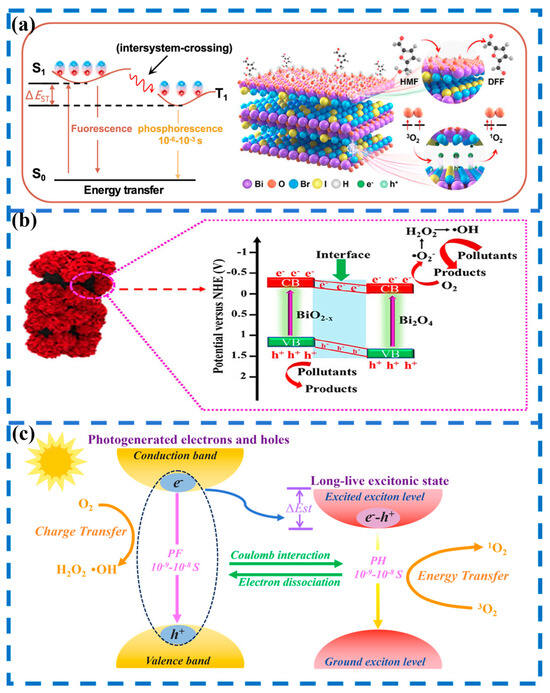
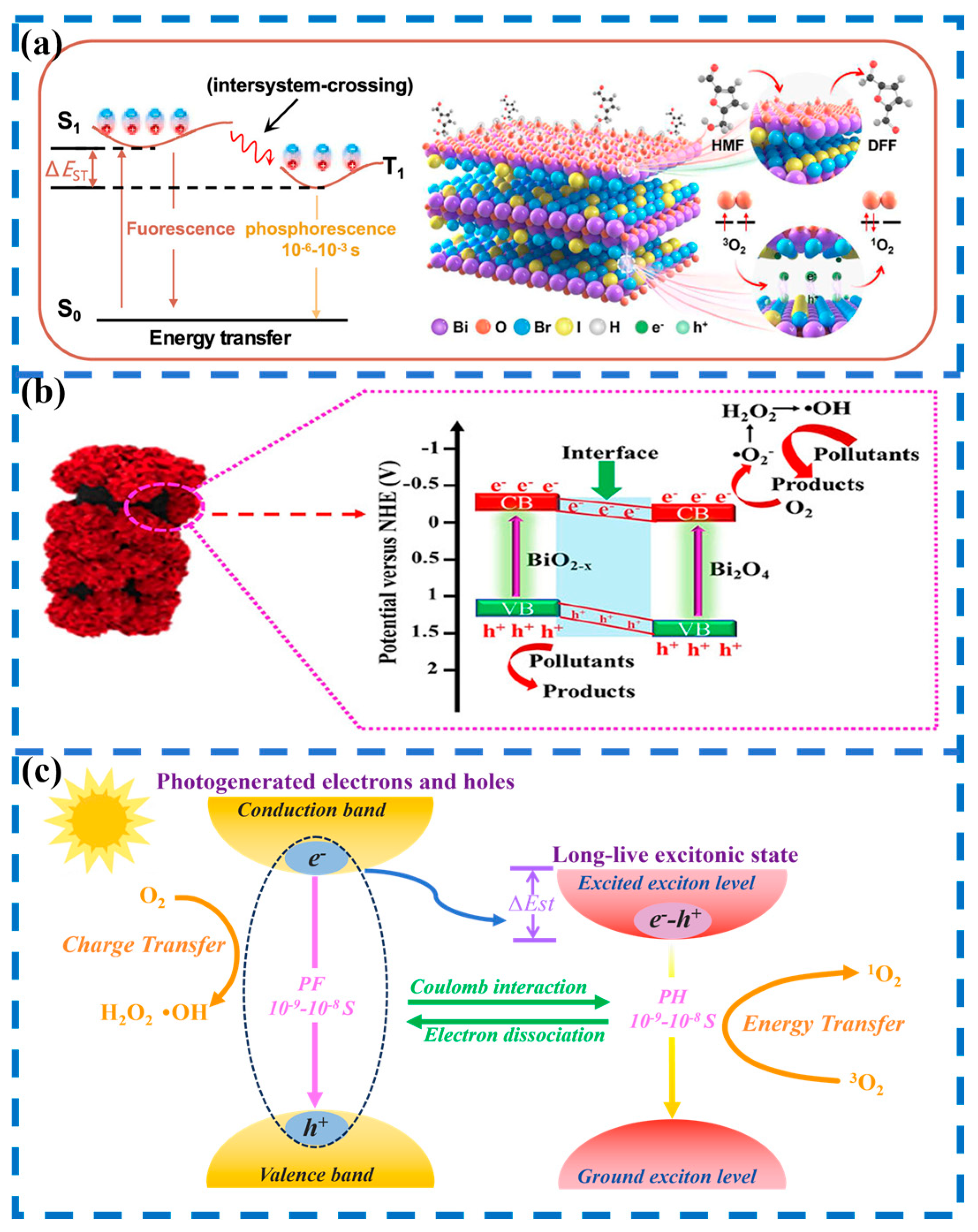
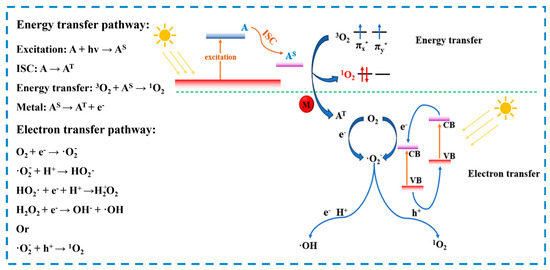
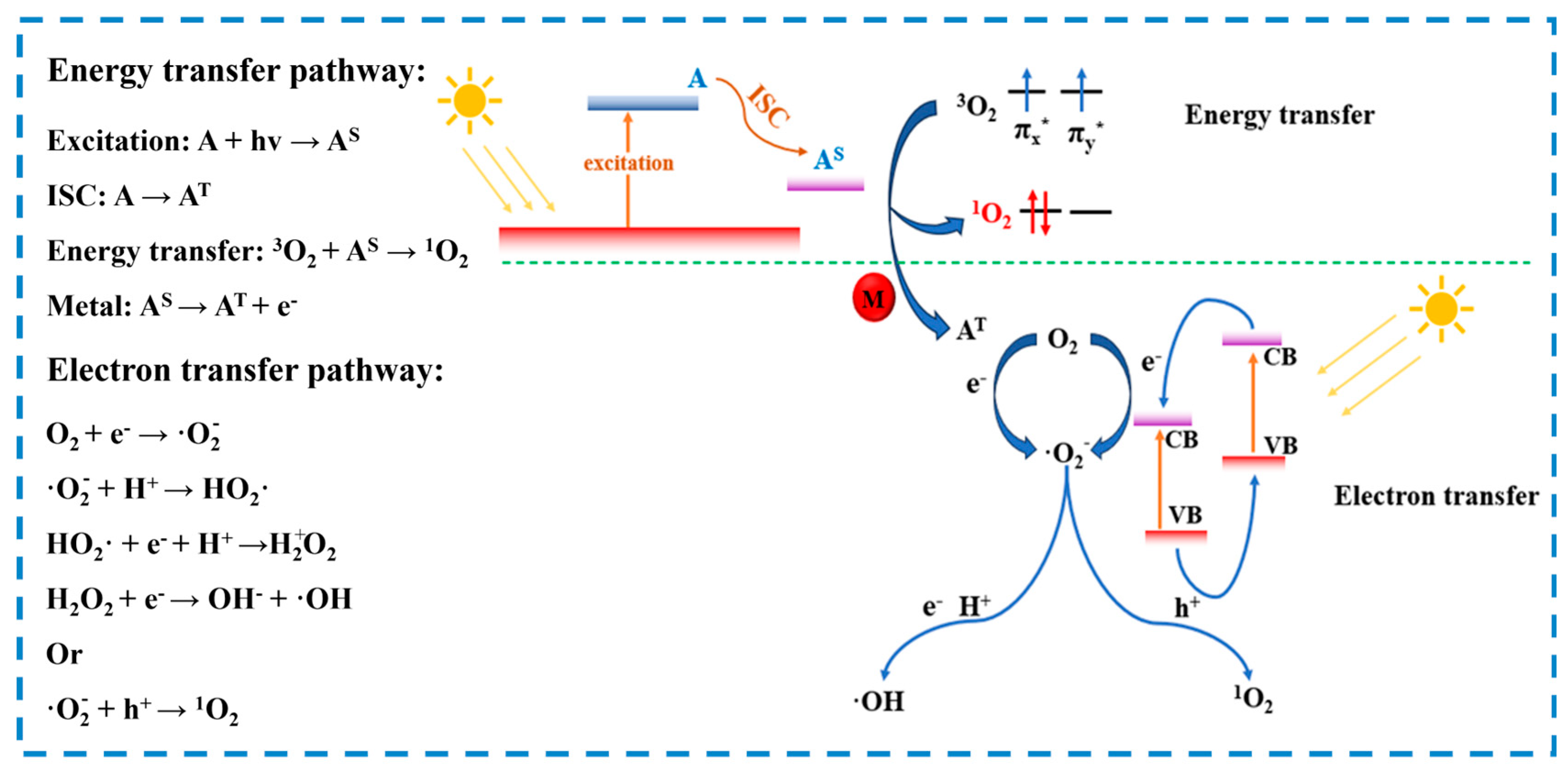
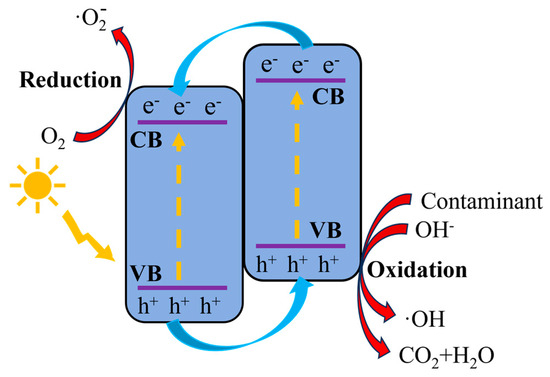
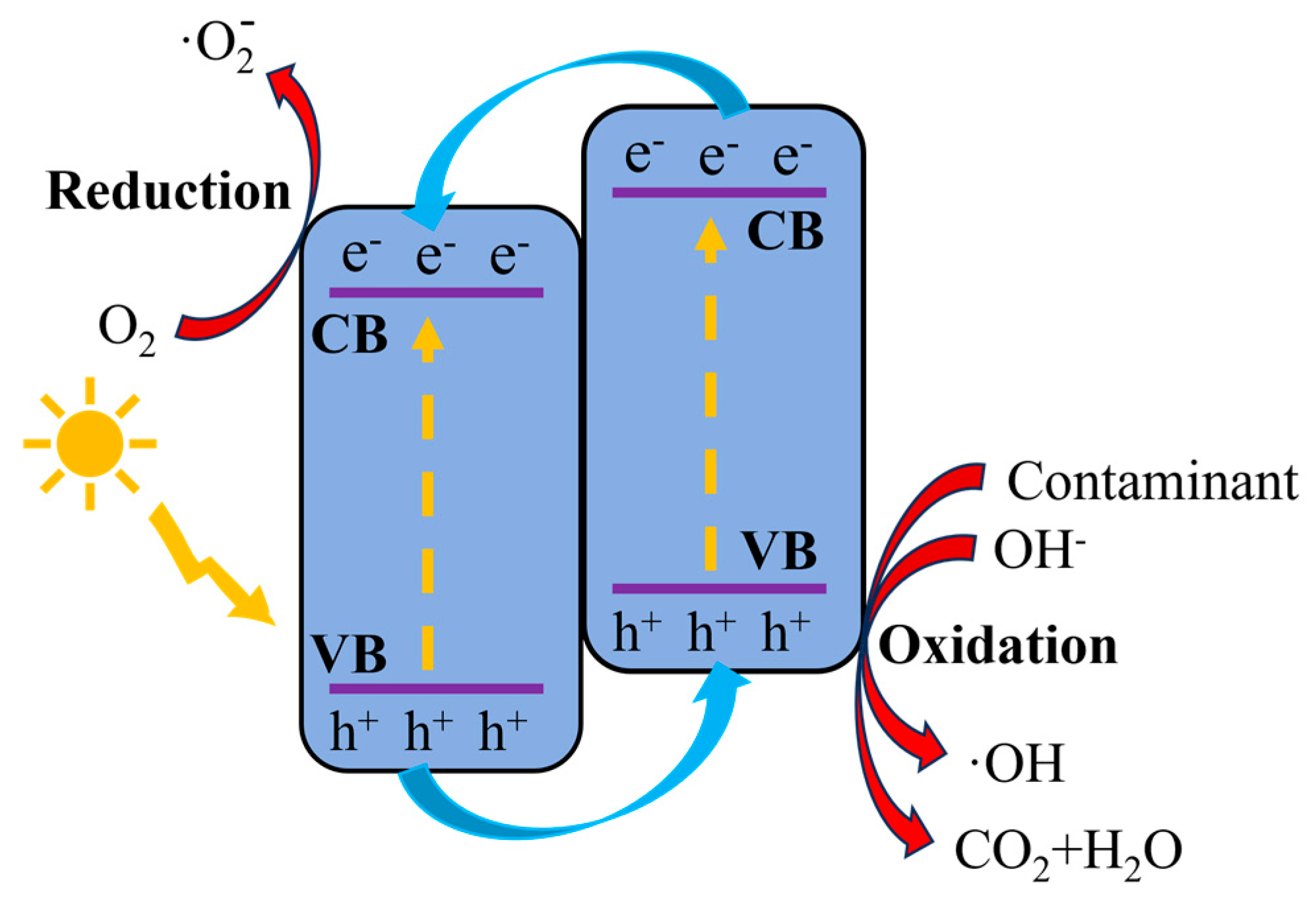
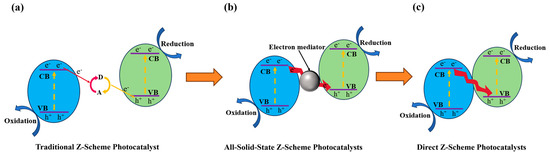
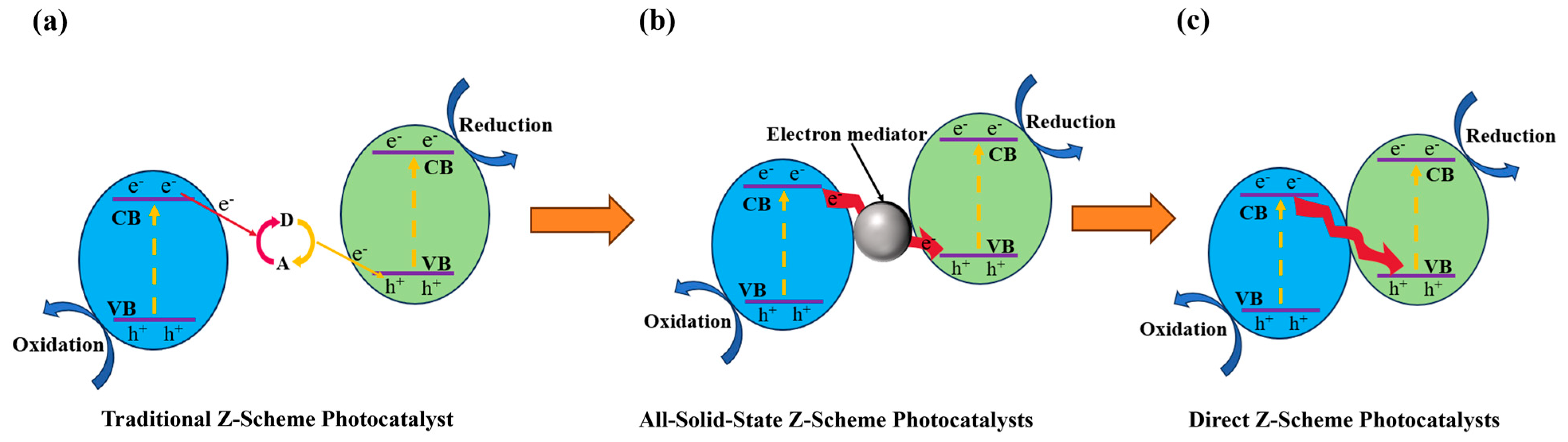
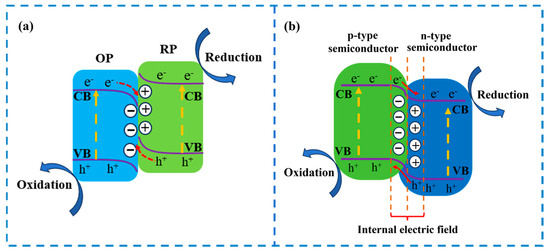
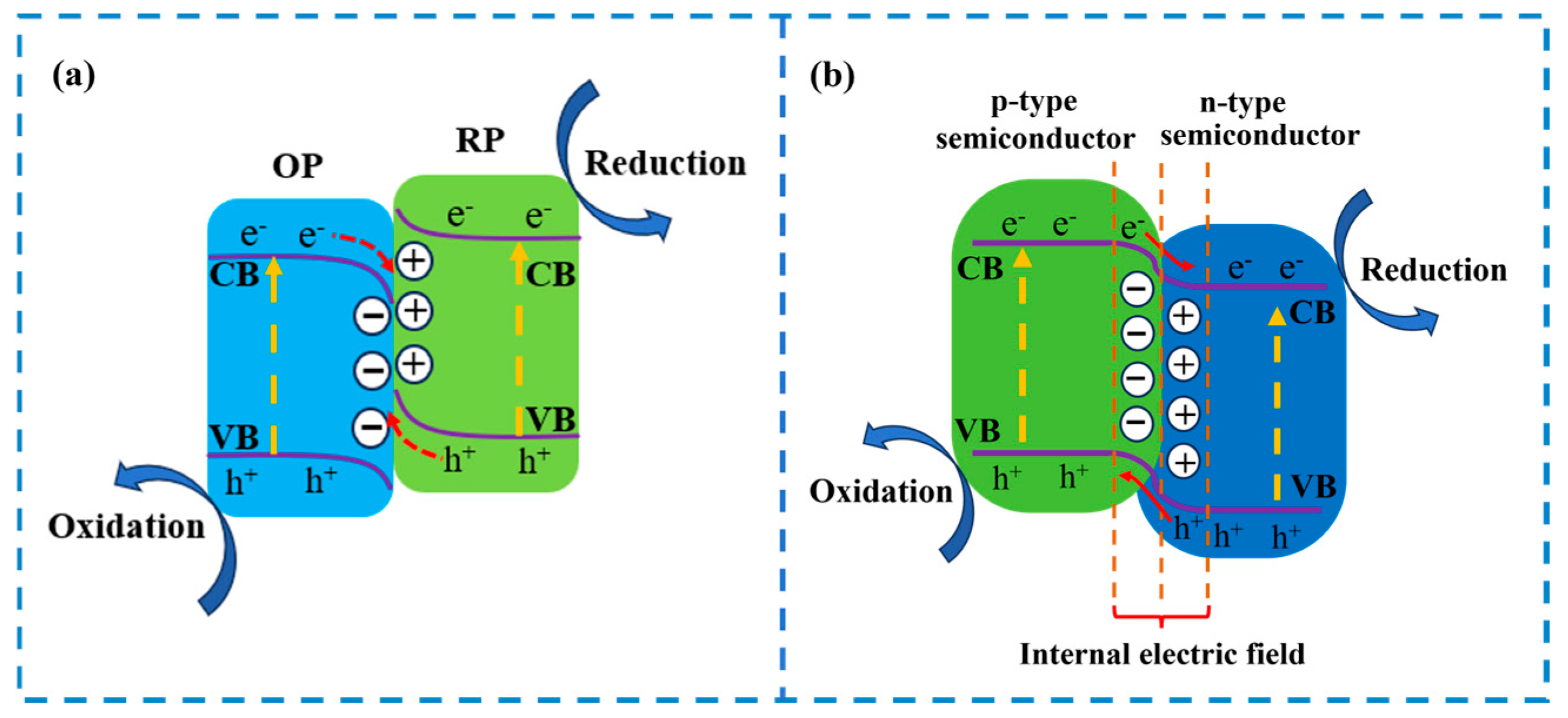
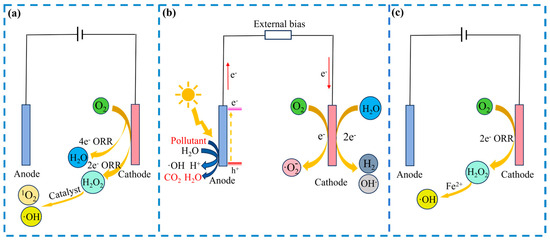
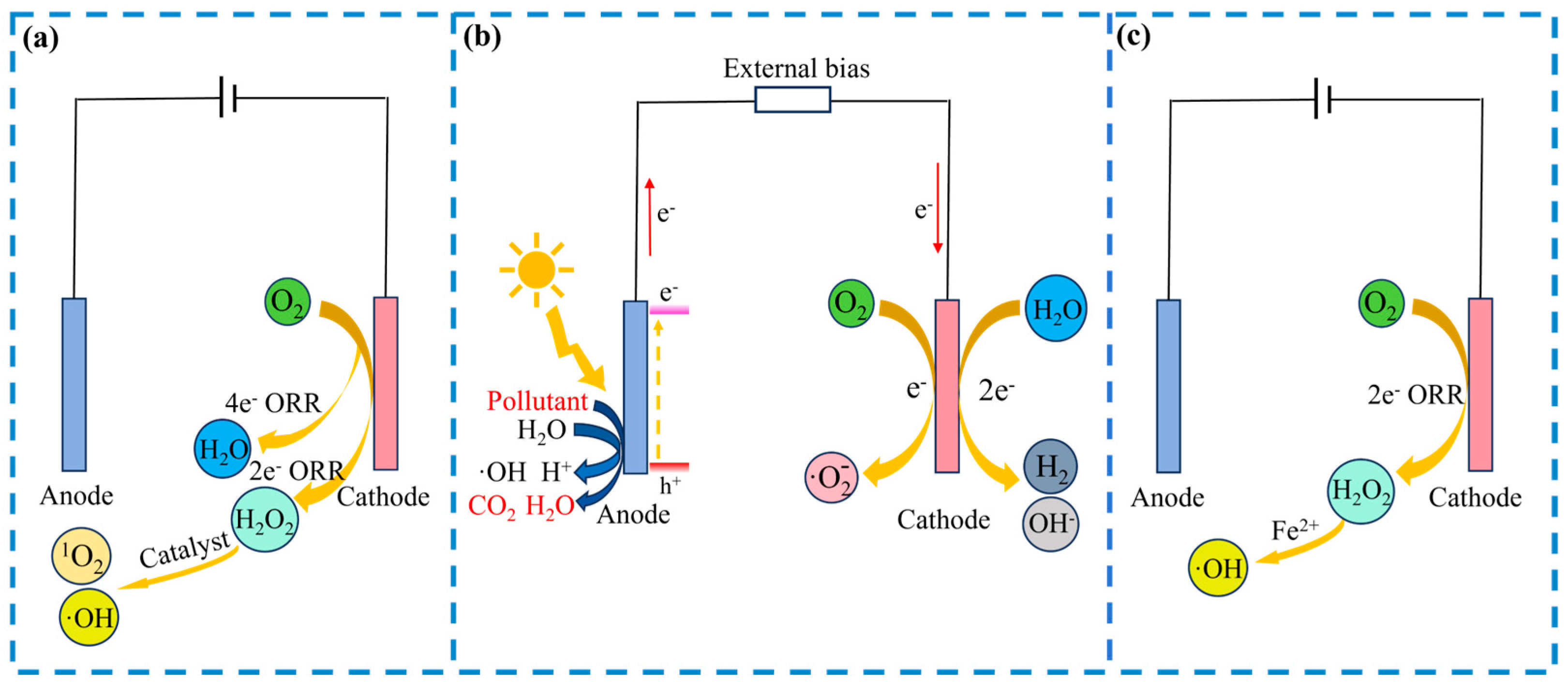
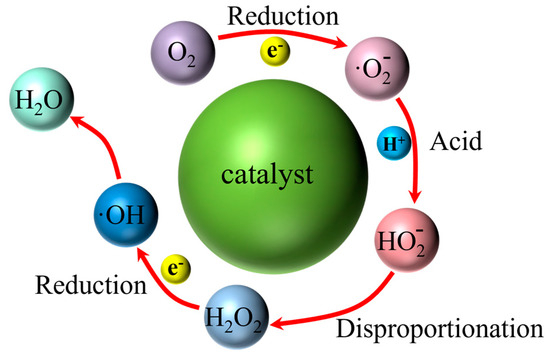
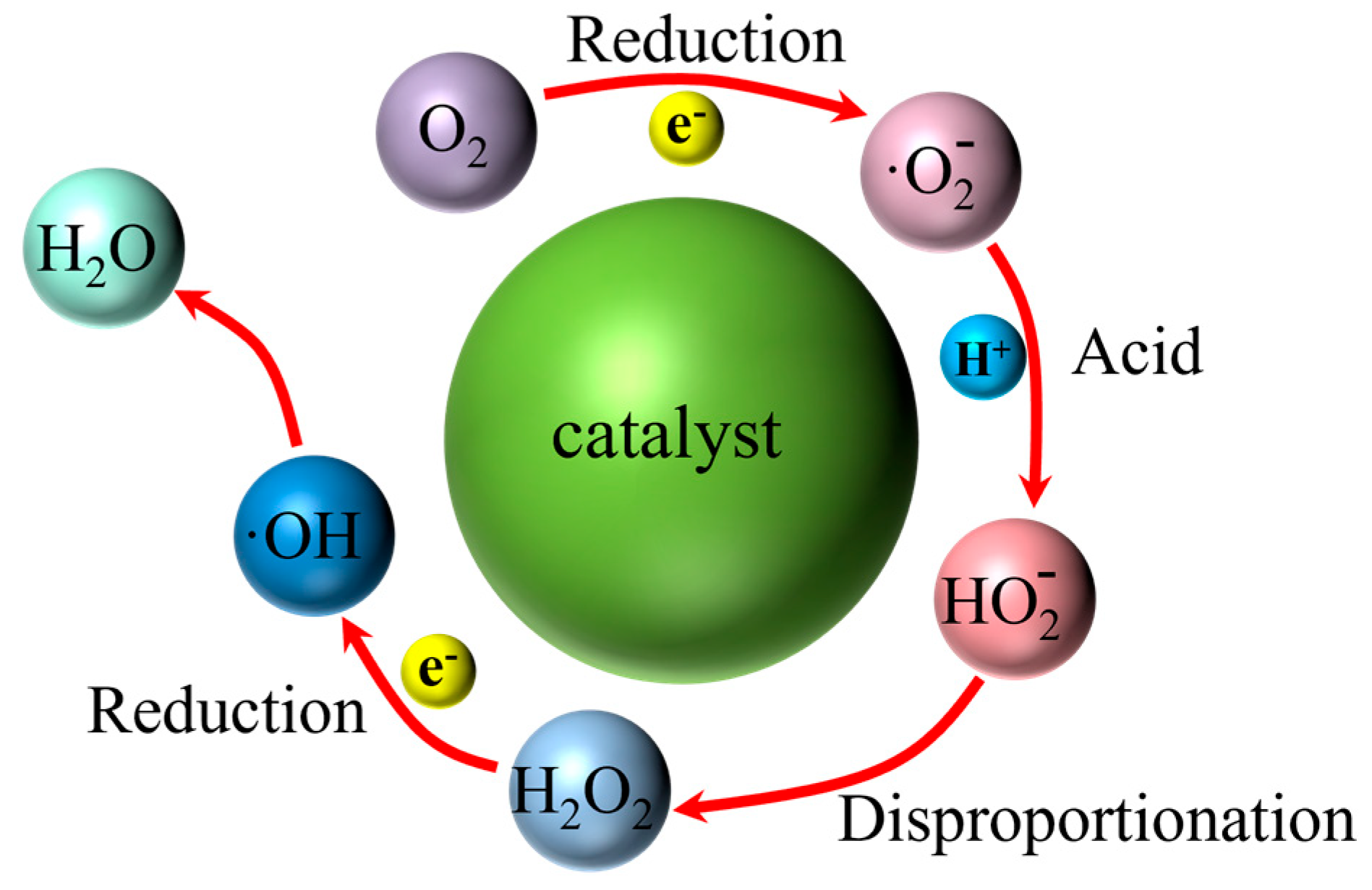
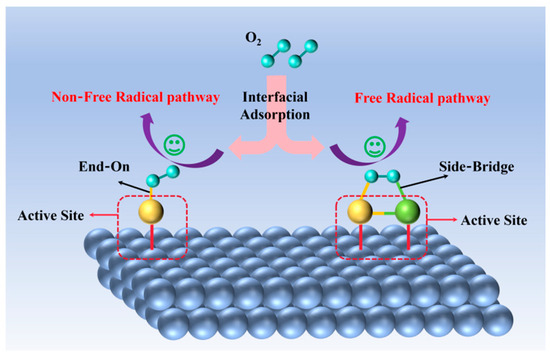
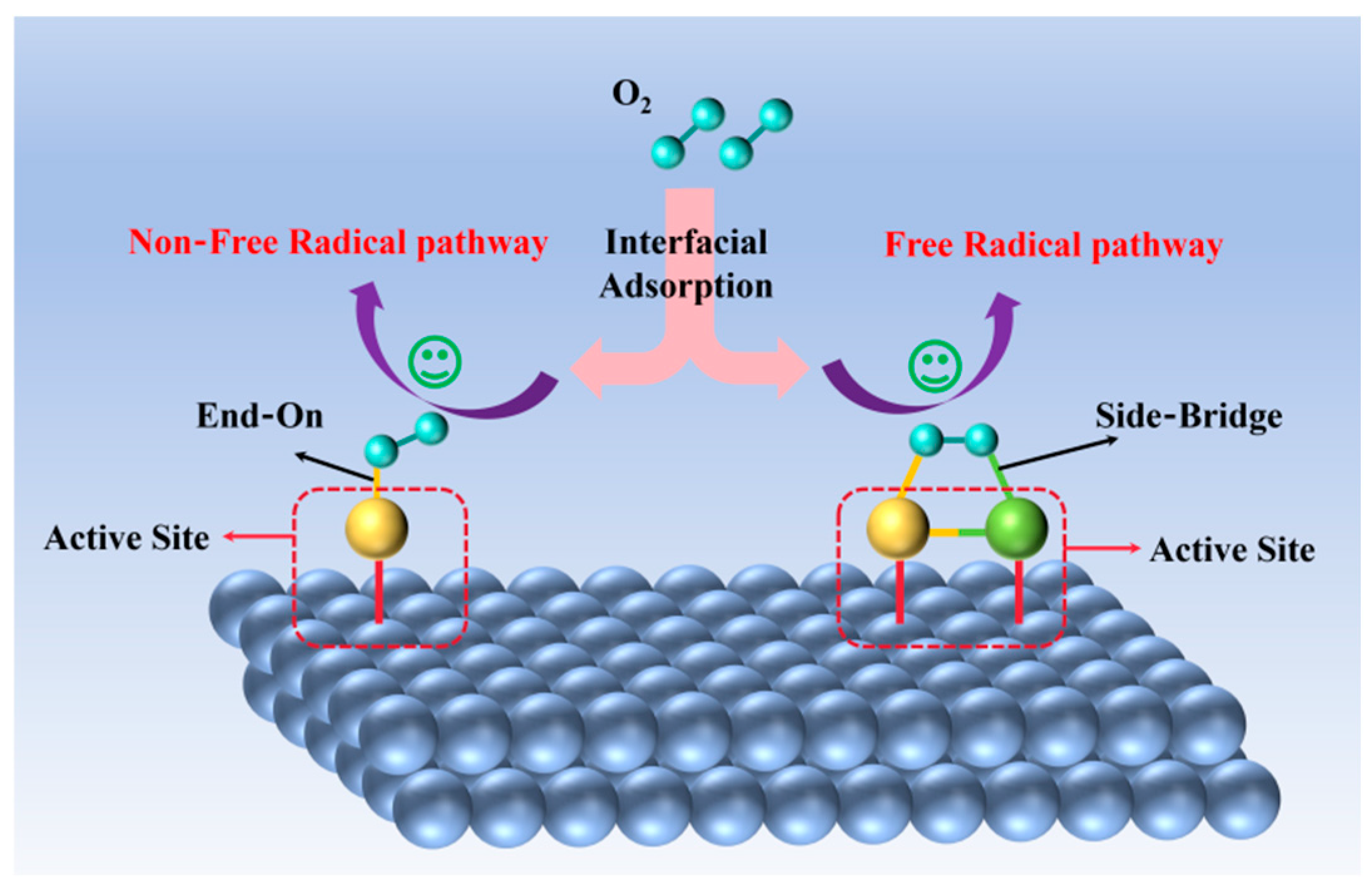

Disclaimer/Publisher’s Note: The statements, opinions and data contained in all publications are solely those of the individual author(s) and contributor(s) and not of MDPI and/or the editor(s). MDPI and/or the editor(s) disclaim responsibility for any injury to people or property resulting from any ideas, methods, instructions or products referred to in the content. |
© 2026 by the authors. Licensee MDPI, Basel, Switzerland. This article is an open access article distributed under the terms and conditions of the Creative Commons Attribution (CC BY) license.