


Abstract
Advanced oxidation processes (AOPs) have emerged as technologies for the removal of pollutants in water systems due to their ability to generate hydroxyl radical (•OH). However, the catalytic behavior and synergistic interactions of hybrid nanomaterials in different AOPs remain insufficiently quantified. In this study, TiO2-Fe3O4 hybrid nanoparticles (HNPs) were synthesized through a hydrothermal method and evaluated in Fenton, photocatalysis, and photo-Fenton processes. Three formulations (TiO2 to Fe3O4 1:1, 1:0.5, and 1:0.25) were prepared to investigate the influence of content on catalytic activity by indirectly quantifying •OH generation through 7-hydroxycoumarin formation. Physicochemical, structural and magnetic characterization shows a possible formation of core–satellite like and Janus-like HNPs with superparamagnetic behavior. Among the evaluated catalysts, the HNP-0.25 formulation exhibited the highest catalytic activity under photo-Fenton conditions, achieving a •OH generation rate of 0.11052 µmol min−1 g−1 and a synergy index of 11.26, which indicates a cooperative interaction between photocatalytic and Fenton pathways. Furthermore, the optimized HNPs demonstrated high degradation efficiency toward pollutants, achieving 99% degradation of methylene blue (k = 0.1528 min−1) and 97% removal of ciprofloxacin (k = 0.0699 min−1) after 50 min under photo-Fenton conditions. These findings demonstrate that the composition and hybrid nature of TiO2-Fe3O4 nanoparticles play a critical role in promoting synergistic AOP interactions, enhancing •OH generation and pollutant degradation efficiency.
1. Introduction
Emerging contaminants (ECs) are chemicals or materials found in the environment that were previously unrecognized or are newly detected at levels that could potentially pose risks to ecological or human health [1]. Examples include pharmaceuticals, personal care products, pesticides, industrial chemicals, and microplastics [2]. Growing awareness of the rising presence of ECs at trace levels in water systems, particularly in densely populated regions, has highlighted a significant threat to both the environment and human health [1]. Among these pollutants, ciprofloxacin (CIP), a widely used fluoroquinolone antibiotic and methylene blue (MB), a synthetic dye commonly employed in textile and medical industries, are particularly problematic due to their persistence, toxicity, and resistance to conventional water treatment methods [3,4]. Wastewater treatment plants (WWTPs) are designed to remove a broad range of pollutants; however, they are not specifically optimized for eliminating ECs [5]. The removal efficiency of ECs depends on their persistence, physicochemical properties, the treatment technologies employed, and the operating/environmental conditions. Throughout primary treatment, ECs are mainly removed by sorption [6]. In secondary treatment, ECs are subjected to processes like biodegradation, photodegradation, volatilization, etc. [7]. Tertiary treatments can also remove ECs, especially ozonation, conventional oxidation or adsorption processses [8]. Primary treatment typically achieves 20–50% EC removal, secondary treatment achieves 30–70% removal [9], and tertiary treatments can achieve removal efficiencies of up to 70–90% for certain ECs [8]. However, it has been demonstrated that conventional WWTPs remain ineffective for the complete removal of different ECs [5]. Therefore, the development of innovative wastewater treatment strategies has become increasingly necessary. In this context, advanced oxidation processes (AOPs) represent promising alternatives for tertiary treatment due to their high potential for the degradation and elimination of ECs [10].
AOPs are technologies designed to generate hydroxyl radicals (•OH), which are powerful oxidizing agents used to degrade recalcitrant pollutants in water and wastewater [10]. These processes can be categorized based on the phase involved (homogeneous or heterogeneous), the energy source employed, and whether the oxidation mechanism is catalytic or photocatalytic. Among them, the Fenton process operates through the catalytic decomposition of hydrogen peroxide (H2O2) in the presence of ferrous ions (Fe2+), producing highly reactive •OH capable of breaking down a wide range of organic pollutants. This reaction is typically most efficient under acidic conditions and is favored for its simplicity and strong oxidative potential [11]. On the other hand, photocatalysis involves the excitation of semiconductor materials, such as titanium dioxide (TiO2), by ultraviolet or visible light. The resulting electron-hole pairs initiate redox reactions at the material’s surface, generating •OH and other reactive oxygen species [12]. Both methods are particularly effective in the treatment of persistent organic contaminants in water [13].
Despite their advantages, these processes also face significant limitations. The Fenton reaction is constrained by its need for a low pH environment, the continuous addition of iron salts, and the production of iron-rich sludge [14]. Photocatalysis often suffers from limited light absorption, low quantum efficiency, and difficulties in recovering the photocatalyst after treatment [15]. Although AOPs benefit from operating under ambient temperature and pressure with relatively low energy consumption [16], the high cost of catalysts and challenges in their recovery and reuse can significantly raise operational expenses [17]. To address these issues, the development of low-cost, efficient, and magnetically separable catalysts with recyclable capabilities is essential [18]. In this context, nanotechnology presents a promising strategy, enabling the design of advanced nanomaterials with enhanced surface area, improved light-harvesting capacity, and superior catalytic performance, ultimately contributing to more sustainable and effective water treatment solutions [19,20].
For instance, in Fenton-like reactions, NPs based on nano-zero valent iron (nZVI) [21] and elements with variable valences, such as Cu, Cr, Ce, Co, V, Au, and Ni, can catalytically decompose H2O2 to produce •OH [22]. To enhance catalyst recovery, NPs are supported on various materials, including activated carbon, mesoporous carbon, and biochar, among others [23]. Additionally, magnetite (Fe3O4) NPs are especially promising due to their magnetic properties, chemical stability, low toxicity, and cost-effectiveness. These environmentally friendly materials demonstrate strong catalytic performance in heterogeneous Fenton-like systems and exhibit superparamagnetism, a property that enables easy magnetic separation and reuse of the catalyst [24]. When exposed to H2O2, both Fe2+ and Fe3+ species present in magnetite contribute to the generation of •OH and facilitate the regeneration of Fe2+ through the reduction of Fe3+, as illustrated in Figure 1. On the other hand, photocatalysis using TiO2, zinc oxide (ZnO), and other oxide and non-oxide NPs has been extensively explored at the nanoscale to enhance the photodegradation of pollutants [25]. Under UV irradiation, TiO2 NPs generate electron–hole pairs; the photogenerated holes oxidize water molecules to form hydroxyl radicals, while the electrons reduce dissolved oxygen to produce superoxide or hydroperoxyl radicals, both of which contribute to contaminant degradation such as emerging contaminants (EC) (Figure 1). These photocatalysts are also commonly supported on various substrates to improve recovery and reuse [26].
Figure 1.
Reactions involved in the Fenton process using Fe3O4 and photocatalysis process with TiO2, as well as oxidation of emerging contaminants (EC) by •OH. Adapted from [11,12,15].
Although the use of NPs in AOPs has been extensively investigated, the development of hybrid nanoparticles (HNPs), which combine two or more distinct nanomaterials, has attracted increasing attention due to the synergistic integration of their physicochemical and catalytic properties, enabling enhanced performance and optimization of AOPs [27]. Among them, bimetallic NPs have demonstrated superior efficiency in the degradation of organic pollutants compared with their single-component counterparts, highlighting their potential as efficient and environmentally friendly materials for wastewater treatment applications [28]. For instance, Jing Wang et al. synthesized Cu-Co bimetallic nanoparticles (NPs) embedded in carbon nanocubes through direct carbonization. These NPs exhibited effective Fenton catalytic activity in the degradation of Acid Orange II, demonstrating both good stability and reusability as a catalyst [29].
Several approaches have been employed for the synthesis of Fe3O4/TiO2 hybrid nanomaterials, including sol–gel methods [30], reverse micelle microemulsions [31], and hydrothermal synthesis [32,33,34]. Among these approaches, hydrothermal synthesis offers controlled conditions for the formation of crystalline nanostructures and, depending on the synthesis strategy, may eliminate the need for subsequent high-temperature calcination. Furthermore, it can facilitate the preparation of materials with tailored structural and morphological characteristics. Previous studies have demonstrated the potential of hydrothermally synthesized Fe3O4/TiO2 nanocomposites for environmental remediation [32,33]. For example, Madima et al. [32] prepared magnetic Fe3O4/TiO2 nanocomposites with different Fe3O4 loadings by combining separately synthesized oxide nanoparticles through hydrothermal treatment at 150 °C for 10 h. The optimized formulation achieved 91% removal of rhodamine B after 120 min under simulated solar irradiation. Similarly, Vinosel et al. [33] synthesized Fe3O4/TiO2 nanocomposites by introducing a titanium precursor into a suspension of preformed Fe3O4 nanoparticles, followed by hydrothermal treatment at 180 °C for 11 h and subsequent calcination at 400 °C. Their materials exhibited enhanced photo-Fenton activity toward crystal violet degradation. In another study, Morais et al. [35] investigated manganese ferrite-based catalysts obtained using manganese recovered from spent Zn–MnO2 batteries for the heterogeneous photo-Fenton degradation of methylene blue, achieving 92% decolorization within 120 min. Collectively, these investigations highlight the potential of metal oxide-based nanocatalysts to improve pollutant removal through photocatalytic and Fenton-related oxidation pathways.
Despite these advances, previous investigations of Fe3O4, TiO2, and Fe3O4/TiO2 nanocomposites have predominantly focused on synthesis optimization, physicochemical characterization, and pollutant degradation efficiency. Although the involvement of hydroxyl radicals (•OH) has been investigated in some studies through radical scavenging experiments [32], systematic quantitative comparisons of their apparent generation under different AOPs remain relatively limited. In particular, the influence of hybrid nanoparticle composition on •OH generation under Fenton, photocatalytic, and photo-Fenton conditions has not been sufficiently explored through a unified experimental approach. Coumarin hydroxylation provides a useful indirect method for investigating •OH formation through fluorescence detection of 7-hydroxycoumarin (7-HC), allowing the estimation of apparent radical-generation rates based on the formation of this fluorescent product [36,37]. Furthermore, although enhanced photo-Fenton performance has been widely associated with synergistic interactions between semiconductor photocatalysis and iron-mediated Fenton reactions, distinguishing genuine synergistic effects from the additive contributions of individual processes requires quantitative evaluation [33,38,39]. However, systematic assessments of such interactions based on initial hydroxyl radical generation rates remain relatively limited. Consequently, establishing relationships among hybrid nanoparticle composition, apparent •OH generation rates, and catalytic synergy is essential for gaining a deeper understanding of the catalytic behavior of Fe3O4/TiO2 nanomaterials beyond conventional pollutant degradation efficiency measurements.
To address these research gaps, the present study investigates TiO2–Fe3O4 HNPs prepared through a hydrothermal strategy involving the precipitation of iron-containing species in the presence of preformed TiO2 nanoparticles. Unlike previously reported approaches based on the formation of TiO2 around pre-existing Fe3O4 nanoparticles [33] or the hydrothermal combination of separately synthesized oxides [32], the proposed procedure employs an aqueous alkaline medium followed by a comparatively short hydrothermal treatment at 200 °C for 1 h, without subsequent calcination. By maintaining a constant amount of TiO2 and systematically varying the iron precursor content, three hybrid formulations (HNP-1, HNP-0.5, and HNP-0.25) were prepared to investigate the influence of composition on their physicochemical characteristics and catalytic performance. The capacity of the synthesized HNPs to generate •OH was evaluated under Fenton, photocatalytic, and photo-Fenton conditions through fluorescence monitoring of 7-HC formation. Apparent radical-generation rates were normalized to catalyst mass, enabling comparisons of mass-normalized catalytic activity among the different materials and AOP configurations. Furthermore, an initial-rate-based synergy index was calculated to evaluate the combined effects of Fenton and photocatalytic processes and to identify potential supra-additive behavior under photo-Fenton conditions. This integrated approach provides a quantitative framework for assessing composition-dependent catalytic performance beyond conventional pollutant degradation efficiency measurements. In addition, the HNP formulation exhibiting the highest apparent •OH generation rate was evaluated for the removal of MB and CIP under near-neutral pH conditions. Thus, the principal contribution of this study lies in combining a distinct hydrothermal hybrid formation strategy with a systematic evaluation of apparent hydroxyl radical generation and catalytic synergy across three AOP configurations, providing additional insight into the relationship between nanoparticle composition and oxidative performance.
2. Results
2.1. Characterization of TiO2–Fe3O4 Hybrid Nanoparticles
Figure 2 illustrates the X-ray diffraction profiles of the hybrid nanoparticles (HNP-1, HNP-0.5 and HNP-0.25), referenced against standard JCPDS files for cubic Fe3O4 (JCPDS no. 19-0629), tetragonal anatase TiO2 (JCPDS no. 21-1272) and tetragonal rutile TiO2 (JCPDS no. 21-1276). All major diffraction peaks were fully indexed. The characteristic peaks centered at 2θ of 31.1°, 35.4°, 43.1°, 56.9° and 62.5° correspond to the (220), (311), (400), (511) and (440) crystallographic planes of Fe3O4, respectively. On the other side, peaks at 2θ of 25.3°, 37.8°, 48.0° and 53.9° belong to the (101), (004), (200) and (211) planes of anatase TiO2, while the peak at 2θ of 27.5° is assigned to the (110) plane of rutile TiO2. Comparing the diffraction profiles of the HNPs, all ratios exhibit the characteristic XRD patterns of TiO2 with Fe3O4, confirming co-existence of both nanostructured components within the nanoparticle [40]. Notably, as the quantity of Fe3O4 precursors decreases, the signal intensities of the pattern systematically decrease. Conversely, the signals corresponding to TiO2 increase progressively as the magnetite precursor ratio is reduced. This demonstrates that the composition of HNPs directly reflects the initial ratios with higher presences of Fe3O4 in HNP-1 compared to HNP-0.5 and HNP-0.25, while HNP-0.25 possesses a higher presence of TiO2 relative to HNP-0.5 and HNP-1. Furthermore, no unassigned diffraction peaks corresponding to unreacted precursors or secondary iron impurities (such as hematite, α-Fe2O3, or goethite, α-FeOOH) were observed.
Figure 2.
TiO2-Fe3O4 HNP XRD diffractograms. Bottom reference lines correspond to Fe3O4 (JCPDS no. 19-0629), anatase TiO2 (JCPDS no. 21-1272) and rutile TiO2 (JCPDS no. 21-1276). Symbols indicate: (*) Fe3O4, (◊) anatase TiO2, and rutile TiO2 (Δ).
The average crystallite domain size (D) for TiO2 and Fe3O4 phases presented in Table 1 were calculated using the Debye-Scherrer equation [41] applied to their primary reflection planes, (101) for anatase TiO2 and (311) for Fe3O4. The calculated crystallite size ranged from 3.97 nm to 5.42 nm, whereas for Fe3O4 they varied between 4.02 nm and 4.97 nm. A decreasing trend in crystallite size is noted as magnetite proportion decreased.
Table 1.
Average crystallite size (D) of TiO2 and Fe3O4 phases in HNP by Debye-Scherrer equation.
The magnetic behavior of Fe3O4 and TiO2 NPs with the hybrid nanoparticles (HNPs) were investigated using a vibrating sample magnetometer (VSM) at room temperature. The magnetic hysteresis loops obtained are presented in Figure 3 and magnetic parameters of all NPs are summarized in Table 2. Fe3O4 NPs exhibited the highest saturation magnetization (Ms = 71.653 emu/g), remanent magnetization (Mr = 5.907 emu/g), and a low coercivity (Hc = 41.1 Oe), reflecting a superparamagnetic behavior with minor remanent corecivity with a remanence ratio (Mr/Ms = 0.082) below 0.1. In contrast, TiO2 NPs exhibited a weak magnetization (Ms = 0.002 emu/g and Mr = 0.0007 emu/g) accompanied by a higher coercivity (Hc = 76.0657 Oe) and a squareness ratio of 0.350. For the hybrid nanocomposites, Ms systematically decreased from 38.466 emu/g (HNP-1) to 24.873 emu/g (HNP-0.5) and 7.758 emu/g (HNP-0.25), demonstrating the mass ratio effect caused by th non-magnetic TiO2 fraction. For the coercivity values, a slight upward trend across the hybrid nanoparticles, increasing from 42.5 Oe in HNP-1 to 65.3 Oe in HNP-0.25, which can be attributed to the spatial separation of Fe3O4 domains within the matrix that reduces interparticle magnetostatic dipolar interactions. Notably, all hybrids nanoparticles maintained low squareness ratios (Mr/Ms < 0.1), confirming that quasi-superparamagnetic properties are preserved, ensuring fast magnetic response and high colloidal redispersibility upon magnetic field removal.
Figure 3.
Vibrating sample magnetometry (VSM) curves of Fe3O4 NPs, TiO2 NPs and TiO2-Fe3O4 HNP.
Table 2.
Room-temperature magnetic parameters of NPs employed.
The hydrodynamic diameter distributions of Fe3O4, TiO2, and HNPs are presented in Figure 4 as number-based hydrodynamic size plots, which provide a more accurate representation of particle population. The corresponding values of hydrodynamic diameter, polydispersity index (PDI), and ζ potential are summarized in Table 3. All nanoparticles exhibit moderate polydispersity. Magnetite nanoparticles have the smallest hydrodynamic diameter (62 nm) but have a zeta potential value of −13 mV, indicating relative stability with a tendency toward agglomeration, in agreement with previously reported data [42,43,44]. TiO2 nanoparticles show a hydrodynamic diameter of 87 nm and a zeta potential of +34 mV, suggesting high stability and good dispersion, consistent with literature reports [45,46]. For HNPs, the hydrodynamic diameters are 243 nm, 121 nm, and 68 nm for HNP-1, HNP-0.5, and HNP-0.25, respectively. These results reveal that as the magnetic fraction decreases, the hydrodynamic diameter also decreases. The ζ potential values of −21 mV, −25 mV, and −27 mV for HNP-1, HNP-0.5, and HNP-0.25, respectively, indicate that as the magnetic fraction decreases, the hybrid nanoparticles tend to be highly stable and more dispersed.
Figure 4.
TiO2-Fe3O4 HNP, TiO2 and Fe3O4 nanoparticles size distribution.
Table 3.
Hydrodynamic diameter, PDI and zeta potential values of NPs employed.
SEM micrographs of Fe3O4 and TiO2 nanoparticles for comparation are provided in Figure S1, revealing a predominantly spherical morphology, with average diameters of approximately 15 nm and 30 nm, respectively. FESEM-EDS micrographs of the HNPs are presented in Figure 5. HNPs micrographs indicate a heterogeneous association between both types of nanoparticles. The average particle sizes for HNP-1, HNP-0.5, and HNP-0.25 are approximately 100 nm, 55 nm, and 45 nm, respectively. This trend indicates that decreasing the amount of Fe3O4 precursor leads to smaller HNP sizes. Regarding the possible configurations, HNP-1 nanoparticles exhibit a possible core-satellite like arrangement (Figure 5A), with TiO2 nanoparticles as potential core, and Fe3O4 nanoparticles as satellites [47,48]. In contrast, HNP-0.5 nanoparticles display a combination of a possible Janus-like and core-satellite like morphologies (Figure 5B), whereas HNP-0.25 nanoparticles predominantly show a possible Janus-like configurations (Figure 5C) [49,50]. Furthermore, the elemental composition analysis obtained from EDS reveals that as the proportion of Fe3O4 precursor decreases in the synthesis, the Fe content in the HNPs also decreases, while the Ti content correspondingly increases.
Figure 5.
TiO2-Fe3O4 HNP FESEM-EDS micrographs with histograms of (A) HNP-1, (B) HNP-0.5 and (C) HNP-0.25.
2.2. Apparent Hydroxyl Radical Generation
2.2.1. Calibration Curve and Control Experiments
Before 7-HC quantification, a calibration curve of 7-HC vs. fluorescence relative units (FRU) was constructed using nine points by triplicate, yielding a determination coefficient of 0.9947 (Figure S2b). To validate the reliability of 7-HC measurements and the subsequent estimation of apparent •OH concentrations, additional control experiments were performed. A mixture of coumarin and H2O2 exposed to visible light under ambient conditions confirmed the suitability of coumarin as scavenger and photodecomposition of H2O2 (Figure S2a). In this case, a slight •OH generation was observed after minute 45, reaching 1.52 µM at 180 min of reaction.
2.2.2. Fenton
During the Fenton process with Fe3O4 NPs, the •OH generation was preliminarily evaluated at pH between 6.0–7.0 as a function of reaction time and hydrogen peroxide (15, 50, 150 and 250 µL) to choose the adequate hydrogen peroxide volume for posterior experiments. As shown in Figure 6a, •OH generation increased progressively with reaction time in all cases. Moreover, •OH concentration was further enhanced by the addition of higher volumes of H2O2. The addition of 15 and 50 µL of H2O2 yielded maximum •OH concentrations of 1.22 ± 0.21 and 3.08 ± 0.33 µM after 180 min, respectively. In contrast, the addition of 150 and 250 µL of H2O2 resulted in maximum concentrations of 6.42 ± 0.19 and 7.5 ± 0.45 µM •OH, respectively. Although statistically significant differences were observed among treatments, 150 µL of H2O2 was selected for subsequent experiments since 250 µL represents a 67% increase in reagent volume but yielded only 17% of •OH production.
Figure 6.
(a) Apparent •OH generation of Fe3O4 in preliminary Fenton reaction in function of hydrogen peroxide and (b) apparent •OH generation of all evaluated NPs.
The HNP and TiO2 were also exposed to the Fenton reaction by adding 150 µL H2O2. TiO2 showed the lowest apparent •OH generation, with 2.32 ± 0.66 µM at the end of reaction (Figure 6b); regarding the three evaluated proportions of HNP, they showed a clear difference in the generation of apparent •OH after 180 min. The HNP with a 1:1 proportion generated the lowest •OH concentration, reaching 5.15 ± 0.14 µM. In contrast, HNP-0.5 and HNP-0.25 generated 7.4 ± 0.73 and 9.04 ± 0.42 µM •OH, respectively, after 180 min. These results indicate that HNP-0.25, with the lowest fraction of magnetite, is the most effective HNP formulation, surpassing even Fe3O4 with 150 µL of H2O2.
2.2.3. Photocatalysis
The experimental results from photocatalysis (pH ≈ 6.0–7.0) indicated that upon UV irradiation of the coumarin sample mixed with NPs, there was an observable increase in apparent •OH generation over time, mainly with TiO2 (Figure 7), achieving 11.04 ± 0.04 µM •OH. This NPs demonstrate the best performance in this experiment, followed by HNP-0.5, with 8.9 ± 0.4 µM •OH. HNP-1, HNP-0.25 and Fe3O4 generated similar •OH concentrations, despite Fe3O4 did not contain TiO2.
Figure 7.
Apparent •OH generation of Fe3O4, TiO2 and HNP as function of reaction time during photocatalysis reactions.
2.2.4. Photo-Fenton
To better understand the results of •OH generated during the photo-Fenton process (Figure 8), it is important to mention that the Jenway 6280 fluorimeter has a maximum fluorescence detection limit of 150 RFU, corresponding to 1.13 µM 7-HC. In this study, the emphasis is placed on relative efficiency and radical formation comparation, rather than absolute concentration generation beyond the detectors upper limit. Dilution was not performed, as it would not provide additional information relevant to the objectives of this work. Maintaining original conditions ensures that they accurately reflect the intrinsic capacity of each nanomaterial. Notably, all tested nanomaterials in this process reached this maximum detectable concentration of •OH. TiO2 achieved the maximum •OH concentration at 45 min, Fe3O4 at 75 min, and among the HNPs, HNP-0.25 reached it fastest, at 30 min, followed by HNP-1 at 60 min and HNP-0.5 at 75 min. These findings highlight the superior efficiency of HNP-0.25 in generating •OH under the studied conditions. Thus, these quantitative 7-HC probing results establish TiO2 and Fe3O4 as single-phase control baselines, demonstrating that while both individual components possess radical generation capacity, their integration into hybrid heterostructure, specifically at HNP-0.25, substantially accelerates production of •OH.
Figure 8.
Apparent •OH generation of Fe3O4, TiO2 and HNP as function of reaction time during photo-Fenton reactions.
2.2.5. Statistical Analysis
Different ANOVA tests with α = 0.05 (Table 4) were performed for Fenton, photocatalysis and photo-Fenton reactions to give statistical support to data. For preliminary Fenton, multifactorial ANOVA was applied to evaluate whether H2O2 and reaction time influence the apparent •OH generation. As a result, both parameters demonstrated to be statistically significant over the •OH generation (Pvalue < α), all experimental conditions showed to be different from each other, and to increase the •OH production, 150 µL H2O2 is recommended.
Table 4.
Analysis of variance for apparent •OH generation for the three catalyst processes.
For Fenton reaction, considering the three HNP, the statistical analysis corroborated their behavior. The multifactorial ANOVA showed that both reaction time and HNP proportion exerted statistically significant effects on •OH generation. No significant differences were observed between the 1:0.5 and 1:0.25 TiO2-Fe3O4 ratios. Therefore, extended reaction times combined with the 1:0.25 HNP proportion can be considered the most effective treatment for enhancing •OH concentration. Regarding photocatalysis, both reaction time and HNP proportion were statistically significant. TiO2 demonstrated to be more effective than magnetite to generate •OH through time. Among the three HNP, HNP-0.5 showed to be more effective in photocatalysis, followed by HNP-0.25 and then HNP-1. Finally, the ANOVA of photo-Fenton data confirmed that reaction time and HNP significantly influence •OH generation. The optimal conditions were identified as HNP-0.25 with 30 min of reaction.
2.2.6. Synergy Index
Considering that the photo-Fenton process includes the Fenton and photocatalysis processes, the Synergy Index (SI) was estimated, which allows quantifying and validating the contribution of the photo-Fenton process with respect to the individual contribution of the other two processes (Equation (1)) as a function of 7-HC generation and the use of different NPs, where r0 corresponds to the respective initial generation rates (µM/min), using a linear regression with the 7-HC concentration vs. time data. The SI was estimated considering common nanoparticles employed in the three AOP systems and when SI is higher than 1 the process is considered synergistic.
Table 5 shows SI for different catalytic scenarios and nanoparticles employed. In all cases, SI is higher than 1, confirming that under these conditions the photo-Fenton process is strongly synergistic (supra-additive) and more effective than either Fenton or photocatalysis alone. Among all formulations evaluated against individual TiO2 and Fe3O4, HNP-0.25 exhibited a high catalytic synergy index (SI = 11.26) and the maximum specific 7-HC formation rate (0.11052 µmol/min gcatalist). This quantitative superiority in radical generation provide the rational selection of HNP-0.25 as the optimal catalyst candidate for subsequent model pollutant degradation studies.
Table 5.
7-HC generation rates and synergy indexes for different NPs and AOP systems.
2.3. Degradation of Emerging Contaminants
Based on its radical generation capacity and catalytic synergy, HNP-0.25 was subjected to degradation experiments with ciprofloxacin (CIP) and methylene blue (MB) to corroborate their photo-Fenton capacity. As shown in Figure 9A, HNP-0.25 achieves 97% degradation for CIP and 99% for MB after 50 min for reaction. Degradation process progressed rapidly during the first 20 min, reaching 80% and 97% degradation for CIP and MB, respectively, before plateauing as the pollutant concentration diminished. Degradation kinetics were evaluated by fitting to zero-order, pseudo-first-order and pseudo-second-order kinetic models. Table 6 shows that pseudo-first-order model provide the best fit for both contaminants, yielding the highest correlation coefficients (R2 = 0.9936 for CIP and R2 = 0.9812 for MB). The apparent rate constant (k) for MB degradation (0.1528 min−1) was approximately 2.2 times higher than that observed for CIP (0.0699 min−1). This Kinetic behavior is visually confirmed by the linear plot in Figure 9B. Zero-order and pseudo-second-order kinetic model plots are presented in Figure S3.
Figure 9.
(A) Photo-Fenton degradation percentage of CIP and MB with HNP-0.25, pH 7 and initial concentrations 15 ppm. (B) Linear fitting of the pseudo-first-order kinetic model for both contaminants.
Table 6.
Degradation kinetics parameters of CIP and MB with HNP-0.25.
To confirm high degradation rates driven by a synergistic photo-Fenton process rather individual secondary pathways, control experiments were conducted under identical conditions detailed in Figure S4. Direct photolysis achieved low degradation of only 8% for CIP and 10% for MB in 50 min. H2O2 in the dark resulted in negligible degradation (1% for CIP and 2% for MB in 50 min). Photolysis with H2O2 showed moderate degradation efficiency, reaching 49% for CIP and 69% for MB, attributed to the photolytic cleavage of H2O2 under irradiation (H2O2 + hv → 2 •OH). However, the performance remained significantly lower than the complete photo-Fenton process.
3. Discussion
3.1. Structural and Colloidal Properties
The progressive decrease in magnetization is primarily attributed to the reduced proportion of Fe3O4 precursor in relation to TiO2 during synthesis. The narrow hysteresis loops, along with the low coercivity and remanent magnetization values, indicate a superparamagnetic behavior in the HNPs. Despite the reduced Ms values, the magnetic response remains sufficient to allow efficient recovery of the nanocomposites from solution using an external magnetic field [51]. Compared with literature data [47], HNP-1 and HNP-0.5 exhibit relatively larger hydrodynamic diameters, although their ζ potential values remain within a favorable range for stability. In The case of HNP-0.25, both hydrodynamic size and ζ potential are comparable to reported values, supporting its enhanced stability and dispersion behavior.
A comparative analysis of XRD, SEM, FESEM, and DLS data reveals a clear hierarchical progression in particle dimensions. Individual pristine nanoparticles measured by SEM exhibited average diameters of 15 nm for Fe3O4 and 30 nm for TiO2, whereas FESEM revealed overall particle size of 100 nm (HNP-1), 55 nm (HNP-0.5) and 45 nm (HNP-0.25). The progressive size increase from a XRD crystallite size to SEM, FESEM and ultimately DEL hydrodynamic diameter, confirms that the primary particles are polycrystalline, composed of monocrystalline subdomains (~4–5 nm) formed during a rapid nucleation stage of the hydrothermal process. These primary domains cluster into larger secondary hybrid architectures, while the further size increase observed in DLS is attributed to the formation of a solvation/hydration shell surrounding the nanoparticles in aqueous suspension.
3.2. Radical Generation in the Fenton and Photocatalytic Processes
During the calibration curve processing, it was validated 7-HC reliability with control experiments (coumarin and H2O2 exposed to visible light under ambient conditions); the slight generation of •OH from H2O2 in aqueous solution is attributed to the photolytic cleavage of the O-O bond under solar UV irradiation [52]. In contrast, when coumarin with H2O2 was kept in darkness, minimal 7-HC concentration was detected, corresponding to 0.16 µM of apparent •OH at 180 min). The generation of •OH by Fe3O4 nanoparticles in the Fenton process is well documented and occurs via the reaction of Fe2+ with H2O2 [24,47,53]. Furthermore, previous studies have demonstrated TiO2-Fe3O4 nanostructure could exhibit superior degradation efficiency in Fenton process compared to isolated Fe3O4 nanoparticles [54]. For HNP-0.5 and HNP-0.25, this enhanced performance can be explained by the hybrid nature of the HNPs. Higher magnetite content promotes surface charge-mediated particle agglomeration, thereby reducing the accessible surface required for H2O2 activation. Conversely, lower magnetite proportion minimizes agglomeration, leaving a higher density of active surface sites available for hydrogen peroxide decomposition. The proportion of TiO2 remained constant, so this catalyst did not interfere with the generation of hydroxyl radicals in the Fenton reaction. This hypothesis is supported by Z-potential value of −27.36 mV, which is higher in magnitude (more negative) than those of HNP-1 and HNP-0.5 (Table 3).
Regarding photocatalysis, TiO2 is also a semiconductor with a band gap between 3.0 and 3.4 eV [55,56]. When irradiated by UV light, TiO2 generates electrons and holes; the electrons react with dissolved oxygen in water, and the holes react with water molecules to produce •OH [57]. Fe3O4 NPs are semiconductors [58] with reported direct band gap values ranging from 1.95 to 2.35 eV [59]. Although these values are slightly lower than the ideal range for UV photocatalysis (typically 3.0 eV to 3.5 eV [60]), Fe3O4 can still be effective [61]. When exposed to light, electrons in the valence band are excited to the conduction band, leaving holes in the valence band. These photo-induced electrons participate in reduction processes by reacting with adsorbed or dissolved oxygen to produce •O2−, which then bind with surface-adsorbed water molecules to form •OH. The holes can directly interact with water molecules to produce •OH [61].
Previous studies have demonstrated that coupling TiO2 with Fe3O4 can modify the apparent optical band-gap energy and extend light absorption into the visible region, potentially improving the photocatalytic degradation of organic pollutants [32,33]. For instance, Vinosel et al. reported band-gap energies of 2.5, 1.8, and 2.2 eV for Fe3O4/TiO2 nanocomposites with different compositions (4:1, 1:4 and 1:1, respectively), with the highest crystal violet degradation efficiency obtained for the formulation exhibiting a band gap of 2.5 eV [33]. Similarly, Madima et al. observed a progressive decrease in optical band-gap energy with increasing Fe3O4 content, although the highest rhodamine B removal efficiency (91%) was achieved with the 20 wt% Fe3O4 composite (3.01 eV), rather than the formulation with the lowest band gap [32]. These findings indicate that reducing the optical band-gap energy does not necessarily lead to improved photocatalytic performance, as charge-carrier recombination, interfacial interactions, and catalyst composition also play important roles. Accordingly, although determining the optical band-gap energies of the hybrid nanoparticles synthesized in the present study would provide valuable information regarding their light-absorption properties, this parameter alone would not fully explain their composition-dependent catalytic performance under UV irradiation. As documented in the literature, pure TiO2 generally exhibits higher photocatalytic activity than its hybrid counterparts in photodegradation processes involving hydrothermally synthesized TiO2–Fe3O4 nanostructures. Nevertheless, the incorporation of small amounts of Fe3O4 can significantly influence photocatalytic performance [51,62].
The experimental results revealed that HNP-0.5, containing an intermediate Fe3O4 fraction, exhibited the highest apparent •OH generation among the hybrid formulations, outperforming both HNP-1 and HNP-0.25. This enhancement could be attributed to several factors related to their structural and compositional characteristics. First, in the possible core-satellite like and Janus-like configuration of HNPs, a significant portion of the TiO2 surface may be physically covered or obstructed by Fe3O4 NPs, thereby reducing the active photocatalytic sites available for UV-induced •OH production. Since photocatalysis primarily occurs on the TiO2 surface, where photon absorption and charge separation take place, any reduction in accessible surface area directly impacts radical generation efficiency. Furthermore, although Fe3O4 exhibits some photoactivity, its lower band gap and less photocatalytic activity under UV light limit its contribution compared to TiO2. Additionally, TiO2 NPs display the highest zeta potential value among all samples, which contributes to better dispersion in aqueous media and further enhances photocatalytic efficiency.
The higher generation of •OH observed in the photocatalytic process compared to the Fenton process can be explained by the continuous and sustained production of reactive species under UV irradiation. In photocatalysis, the excitation of semiconductor NPs like TiO2 by UV light leads to the formation of electron-hole (e−/h+) pairs [57]. These photo-induced charge carriers actively participate in redox reactions: the holes (h+) oxidize water or hydroxide ions to form •OH, while the electrons (e−) reduce oxygen to form superoxide radicals (•O2−), which can also contribute to secondary •OH production. This simultaneous generation of multiple reactive oxygen species (ROS) under continuous light exposure enhances the radical yield over time. In contrast, the classical Fenton process relies solely on the chemical reaction between Fe2+ and H2O2, which is limited by the availability and regeneration of Fe2+ and can be affected by pH and iron precipitation. As a result, photocatalysis tends to provide a more efficient and sustained •OH production mechanism compared to the chemically driven Fenton reaction.
3.3. Photo-Fenton Performance and Synergy
As reported before, TiO2–Fe3O4 nanoparticles have good degradation of organic compound in photo-Fenton reactions even with natural sunlight [63]. The superior performance of HNP-0.25 can be attributed to their optimized structural and physicochemical properties. Compared to HNP-1 and HNP-0.5, HNP-0.25 contains a lower proportion of Fe3O4, which results in smaller particle sizes and a more uniform possible core-satellite like and Janus-like configuration (Figure 10). These morphological characteristics can favor nanoparticle dispersion in aqueous media and improve the accessibility of reactive sites for catalytic reactions. In particular, the lower Fe3O4 content in HNP-0.25 can reduce agglomeration tendencies, potentially increasing the exposure of catalytically active sites to H2O2 and other reactants under UV irradiation. It has been reported that particle size, morphology, and specific surface area are relevant physicochemical parameters influencing catalytic performance [64]. However, the formation of hybrid structures does not necessarily increase specific surface area, since interparticle aggregation and partial coverage of the constituent oxide surfaces may also affect their textural properties. Although specific surface area measurements were not performed in the present study, the observed differences in apparent •OH generation rates among the hybrid formulations suggest that their photo-Fenton performance can depend on multiple physicochemical factors rather than on surface area alone.
Figure 10.
Hybrid TiO2- Fe3O4 nanoparticle proposal structure and •OH generation.
Recent advances in advanced oxidation processes (AOPs) have highlighted that tailored interfacial engineering—such as host-guest encapsulation in anionic frameworks, interfacial electron bridges, and S-scheme nanosheet heterostructures—plays a critical role in accelerating charge-carrier separation and boosting catalytic activity [65,66,67]. Building upon these concepts, the coupling of dual-phase TiO2 with Fe3O4 creates a multifunctional heterojunction that promotes efficient spatial charge separation and drives synergistic photo-Fenton radical generation.
In this regard, previous studies have highlighted the importance of interfacial interactions, photogenerated charge-carrier separation, and Fe(III)/Fe(II) redox cycling in the catalytic activity of iron oxide-based hybrid nanomaterials [34,64,65,66,67]. In TiO2–Fe3O4 systems, TiO2 fraction absorbs light to produce photogenerated electron-hole pairs (e−/h+). The photogenerated electrons from TiO2 transfer to iron-containing sites can facilitate the reduction of Fe(III) to Fe(II) on the surface of Fe3O4 fraction, thereby promoting H2O2 activation and •OH generation [33,68]. Simultaneously, photogenerated holes (h+) actively react with H2O to produce •OH radicals through photo-Fenton reactions (Figure 10). This mechanism could contribute to the enhanced catalytic performance of HNP-0.25, together with its morphological characteristics and the accessibility of reactive sites. Nevertheless, the relative contributions of surface properties and interfacial electron-transfer processes remain to be experimentally established. Consistent with these possible contributions, HNP-0.25 reached its maximum apparent •OH concentration more rapidly than the individual TiO2 and Fe3O4 nanoparticles and the other hybrid formulations.
Under these conditions, HNP shows superior performance compared to TiO2 and Fe3O4, likely due to a synergistic effect between UV irradiation and the presence of H2O2, which promotes a decomposition of hydrogen peroxide and subsequent generation of •OH. However, SI values can increase sharply when rFenton or rphotocatalysis are minimal or zero, which may give a misleading impression of excellent performance if SI is considered in isolation. To address this limitation, the specific 7-HC generation rate (r0,esp), expressed in µmol min−1 gcatalist−1, was used as an additional parameter for photo-Fenton process. This metric reflects the intrinsic catalytic productivity of the material (mass-normalized catalytic productivity), is independent of catalyst loading, and allows direct comparison among different AOP configurations. This parameter indicates that HNP-0.25, with 0.11052 µmol/min gcatalist in photo-Fenton, and a SI value of 11.26 resulted in a strongly synergistic process characterized by a high 7-HC yield.
3.4. Degradation of Organic Contaminants
The superior performance of HNP-0.25 in photo-Fenton proces (97% CIP and 99% MB) is derived from the synergistic interaction within the two processes. In a photo-Fenton catalytic efficiency evaluation of HNP-0.25, its apparent kinetic rate constants (k) were compared with values reported in literature for other nanocatalysts. For MB degradation, HNP-0.25 demonstrates a k value of 0.1528 min−1, which is superior to those reported for FeNi3 nanoparticles (0.125 min−1) [68], magnetic Fe3O4 nanoparticles (0.0446 min−1) [69] and bare Fe3O4 nanoparticles (0.0026 min−1) [70]. Regarding CIP degradation, HNP-0.25 achieved a k value of 0.0699 min−1, demonstrating a highly competitive activity that surpasses quantum dots/α − FeOOH (0.0566 min−1) [71] and remains comparable to complex bimetallic systems such as CuCoFe2O4@AC (0.083 min−1) [72] and CuFe2O4 (0.102 min−1) [73]. Overall, these comparations confirm HNP-0.25 as an effective photo-Fenton catalyst for rapid degradation of organic contaminants.
Table 7 compares the catalytic performance of previously reported nanomaterials used in photo-Fenton processes for the degradation of MB and CIP. As shown, hybrid nanostructures based on iron oxides combined with semiconductors or carbonaceous materials generally exhibit high catalytic activity due to improved charge separation, enhanced surface area, and increased availability of active Fe sites for H2O2 activation.
Table 7.
Performance Comparison of Various Nanocatalysts in Photo-Fenton Degradation of Organic Pollutants.
Several iron-based nanostructured catalysts have demonstrated high degradation efficiencies for organic dyes, with removal efficiencies reaching up to 100% within reaction times between 40 and 75 min. The improved catalytic performance observed in these systems is commonly attributed to the efficient redox cycling between Fe2+ and Fe3+ species, which facilitates continuous hydroxyl radical generation during the photo-Fenton reaction.
Overall, the comparison presented in Table 7 indicates that hybrid nanostructured catalysts combining iron oxides with semiconductors or carbon-based materials generally outperform single-component systems in terms of degradation efficiency and catalytic performance. Within this context, the catalyst evaluated in the present work was investigated under comparable photo-Fenton conditions, allowing its catalytic performance to be positioned relative to previously reported nanocatalysts. Moreover, its intrinsic magnetic property enables facile separation and recovery from the reaction medium, which not only simplifiers handing but also enhances sustainability by allowing it possible reuse in multiple catalytic cycles, highlighting its potential for extended application.
The operational stability and facile recovery of heterogeneously structured catalyst are essential requisites in AOPs. Synthesized HNPs integrated with magnetite phase achieve strong magnetic responsiveness, could enable rapid solid-liquid separation from treated aqueous media upon application of an external magnetic field. This property may effectively be a solution to separation of conventional TiO2 slurry systems. Furthermore, the structural integrity of the magnetite phase minimizes iron leaching under oxidative conditions, thereby preserving catalytic functionality and preventing secondary sludge pollution. Consequently, the combination of facile magnetic recovery, phase stability and reduce secondary contamination, demonstrates the prospective reusability and technical viability of these HNP.
4. Materials and Methods
4.1. Experimental Strategy
The experimental strategy was organized into four stages: (1) hybrid nanoparticles synthesis; (2) characterization to validate their size and structural properties; (3) quantification of hydroxyl radicals, in which several parameters were evaluated, including reaction time, nanoparticles mass and composition, and hydrogen peroxide volume; and (4) evaluation of emerging contaminant degradation, specifically addressing the degradation of ciprofloxacin (CIP) and methylene blue (MB).
4.2. Materials
TiCl4, FeSO4, FeCl3, coumarin, ciprofloxacin and methylene blue were obtained from Merck (Darmstadt, Germany). NH4OH 28 wt%, HCl, H2O2 35% were supplied by J.T. Baker (Phillipsburg, NJ, USA).
4.3. Synthesis of TiO2-Fe3O4 HNPs
The TiO2 nanoparticles (NPs) were synthesized using a hydrothermal method [77]. Briefly, under a nitrogen atmosphere and a cooling bath, 7.2 mL of NH4OH solution (28 wt%) was added dropwise to 4 mL of TiCl4, with constant stirring for 2 h. The resulting white precipitate (Ti(OH)4) was then dispersed in distilled water and washed by centrifugation five times with water and three times with ethanol. The washed precipitate was dried completely at 80 °C. Subsequently, the dried product was redispersed in 50 mL of distilled water and stirred for 15 min. The suspension was transferred to a 100 mL Teflon-lined autoclave and heated at 190° C for 8 h. After cooling, the obtained product was washed again by centrifugation five times with water and three times with ethanol, followed by drying at 80 °C.
Fe3O4 NPs were synthesized by dissolving 0.1 g of FeSO4 and 0.2 g of FeCl3 (with a molar ratio of Fe2+:Fe3+ at 1:1) in 50 mL of 0.01 M HCl. Under a nitrogen atmosphere, NH4OH was added dropwise until the pH reached 10. The resulting dark-brown precipitate was separated using a magnet, and the supernatant was discarded. The precipitate was redispersed in 50 mL of distilled water and transferred to a 100 mL Teflon-lined autoclave, which was heated at 200 °C for 1 h. After cooling, the obtained product was washed with the aid of a magnet five times with water and three times with ethanol, followed by drying at 80 °C [78].
To synthesize TiO2-Fe3O4 hybrid nanoparticles, three different ratios of TiO2 to Fe3O4 (1:1, 1:0.5, and 1:0.25) were prepared, designated as HNP-1, HNP-0.5, and HNP-0.25, respectively. This involved the hydrothermal synthesis of Fe3O4 on TiO2 NPs. For HNP-1, a solution was prepared by dissolving 0.1 g of FeSO4 and 0.2 g of FeCl3 (with a molar ratio of Fe2+:Fe3+ at 1:1) in 50 mL of 0.01 M HCl. Then, 70 mg of TiO2 was dispersed in this solution. Under a nitrogen atmosphere, NH4OH was added dropwise until the pH reached 10. The resulting brown precipitate was separated using a magnet, and the supernatant was discarded. The precipitate was redispersed in 50 mL of distilled water and transferred to a 100 mL Teflon-lined autoclave, which was heated at 200 °C for 1 h. After cooling, the obtained product was washed with the aid of a magnet five times with water and three times with ethanol, followed by drying at 80 °C. For HNP-0.5 and HNP-0.25, half and a quarter of the Fe3O4 precursor amounts were used, respectively, following the same procedure as described for HNP-1.
4.4. Characterization
Nanoparticles were characterized by X-ray Diffraction (XRD), Vibrating Sample Magnetometry (VSM), Scanning Electron Microscopy (SEM), Field Emission Scanning Electron Microscopy (FESEM), Energy-dispersive X-ray spectroscopy (EDS) and Dynamic Light Scattering (DLS). In XRD measurements, Empyrean X-ray Diffractometer from Malvern Panalytical (Malvern, UK) with Cu Kα (λ = 1.5406 °A) radiation was used to investigate the composition of HNP powder in the range of 2θ from 20° to 80°. Magnetic hysteresis loops of HNPs were recorded by sweeping the applied magnetic field from −15,000 Oe to +15,000 Oe. This range ensures complete magnetization and demagnetization of the sample, allowing the determination of saturation magnetization (Ms), using a 736 vibrating sample magnetometer from Lake Shore Cryotronics (Westerville, OH, USA) operating at 298 K. The samples vibrated at a frequency of 85 Hz to shear the magnetic flux created and any signal generated from the samples was recorded by the VSM detection system. To determine hydrodynamic diameter and ζ-potential of NPs, DLS measurements were performed using a Liteziser 500 particle analyzer from Anton Paar (Graz, Austria). A JEOL JSM-6610LV microscope (JEOL Ltd., Tokyo, Japan) for SEM, and a JEOL JSM-IT800 microscope for FESEM, coupled with an X-Max energy-dispersive X-ray spectrometer from Oxford Instruments (Abingdon, UK), were used to determine HNP size, morphology and composition. For FESEM microscopy, samples were prepared by adding nanoparticles suspension drops to lacey carbon-coated copper grids and allowed to dry at room temperature. Lacey-carbon coated 300 mesh copper grids and were purchased from Ted Pella, Inc. (Redding, CA, USA).
4.5. Hydroxyl Radical Generation by TiO2–Fe3O4 Hybrid Nanoparticles Under Different AOP Configurations
Synthesized TiO2, magnetite and HNP were evaluated under photocatalytic, Fenton, and photo-Fenton conditions to estimate •OH generation through fluorescence detection of 7-hydroxycoumarin (7-HC), formed by the reaction of coumarin with •OH [37]. Due to the limited solubility of coumarin in water, a 16 mM coumarin solution was prepared under continuous stirring for 24 h. Fenton experiments were initially performed using 5 mg of Fe3O4 NPs dispersed in 14 mL of water. The suspension was sonicated to ensure homogeneous dispersion, followed by the addition of 1 mL of 16 mM coumarin with the pH maintained in the range of 6.0–7.0. The mixture was continuously stirred at 100 rpm using an orbital agitator. At this stage, the effect of hydrogen peroxide (H2O2) volume was evaluated (15, 50, 150 and 250 µL). Once the optimal H2O2 volume was determined, Fenton experiments were repeated with 5 mg of the TiO2 NPs and the three different ratios TiO2-Fe3O4 HNP, under the same experimental conditions.
Photocatalysis experiments were conducted with the HNP and compared against pure TiO2 NPs. In these experiments, 5 mg of nanoparticles were suspended in 14 mL of water, sonicated, and combined with 1 mL of 16 mM coumarin (pH ~6.0–7.0). The suspension was continuously stirred at 100 rpm and irradiated with a 257 nm UV lamp (25 W) positioned 20 cm above the sample. For the photo-Fenton reaction, Fe3O4 NPs, TiO2 NPs, and the three HNP were evaluated under identical experimental conditions described above. To evaluate the •OH generation, 5 mL aliquots were collected at different time intervals and centrifuged at 5000 rpm for 5 min to minimize turbidity interference during fluorescence measurements using a 6280 fluorimeter (Jenway, Stone, UK).
In the reaction between coumarin and •OH, 7-hydroxycoumarin (7-HC) is not the only product formed, although it is the only strongly fluorescent derivative. Several positional isomers, including 3-, 4-, 5-, 6-, and 8-hydroxycoumarin, are also generated. In addition, coumarin may react with other reactive species present in advanced oxidation processes. Therefore, it is not appropriate to assume that the measured 7-HC represents the total amount of hydroxyl radicals produced. Instead, it is more accurate to consider that one mole of 7-HC corresponds to one mole of hydroxyl radicals that effectively reacted to form this specific product [37]. Consequently, 7-HC quantification should be interpreted as an indicator of the apparent hydroxyl radicals captured by coumarin rather than the absolute •OH generated in the system. To estimate the apparent concentration of hydroxyl radicals, a yield correction (δ) of 6.1% was applied [79], expressing the results as apparent •OH captured as 7-HC (Equation (2)). 7-HC quantification was performed by using a previously established calibration curve, with all measurements conducted in triplicate.
4.6. Degradation of Emerging Contaminants by the Photo-Fenton Process
Methylene blue (MB, a cation dye) and ciprofloxacin (CIP, a fluoroquinolone antibiotic) were selected as model emerging contaminants from distinct chemical classes. This selection aimed to evaluated whether the apparent hydroxyl radical generation of the optimal HNP previously identified via 7-HC fluorescence probing, translates into efficient photo-Fenton degradation of structurally diverse pollutants. These degradation testes were conducted as an exploratory evaluation of practical environmental applicability, verifying whether the enhanced •OH generation identified via 7-HC probing translate into effective degradation across distinct classes of organic pollutants. For the degradation experiments, individual solutions of each contaminant were prepared at 15 ppm at pH 7, to work at standard conditions. Each solution was mixed with 5 mg of NPs catalyst, dispersed by ultrasonication and maintained under continuous stirring at 100 rpm using an orbital agitator. H2O2 was then added and the suspension was immediately irradiated with UV light. Control experiments including direct photolysis (UV light only), H2O2 in darkness and homogeneous photolysis (UV/H2O2), were performed under identical conditions to evaluate the relative contributions of non-catalytic pathways.
Aliquots were withdrawn every 10 min, and the NPs were separated from the solution using a magnet to avoid interferences during absorbance measurement. A V-770 UV-vis spectrophotometer spectroscopy (JASCO, Tokyu, Japan) was employed to monitor contaminant degradation, recording absorbance at 316 nm for CIP and at 665 nm for MB. Degradation concentrations were determined from calibration curves previously established for each contaminant using UV-vis analysis.
To evaluate the degradation kinetics for CIP and MB, degradation percentage was calculated using Equation (3):
where C0 and Ct represent the initial concentration and the concentration at time t, respectively. To determine the reaction rate constants (k), the experimental data were fitted to zero-order (Ct/C0 vs. t), pseudo-first-order (ln (C0/Ct) vs. t), and pseudo-second-order (1/(Ct/C0) vs. t) kinetic models. The optimal kinetic model was selected based on the highest coefficient of determination (R2).
5. Conclusions
This study evaluated the hydrothermal synthesis and catalytic performance of TiO2–Fe3O4 hybrid nanoparticles (HNPs) in Fenton, photocatalysis, and photo-Fenton, compared to magnetite and titanium dioxide. Hydrothermal synthesis successfully yielded hybrid nanostructures with magnetic properties. Structural characterization confirmed the formation of TiO2-Fe3O4 HNPs exhibiting a possible core-satellite like and Janus-like morphologies with tunable compositions. Among the evaluated processes, photo-Fenton demonstrated the highest radical generation efficiency, highlighting the synergistic interaction between photocatalytic and Fenton reactions. The hybrid nanoparticle with the lowest Fe3O4 fraction (HNP-0.25) demonstrated the best catalytic performance, achieving the highest apparent hydroxyl radical generation rate (0.11052 µmol/min gcat) and a synergy index (11.26). These results indicate that the optimized hybrid structure enhances catalytic activity by improving dispersion, increasing active surface sites, and facilitating efficient electron-hole transfer during irradiation. Furthermore, the hybrid catalyst showed high efficiency in the degradation of organic pollutants, achieving 99% degradation of methylene blue (k = 0.1528 min−1) and 97% degradation of ciprofloxacin (k = 0.0699 min−1) after 50 min under photo-Fenton conditions. Additionally, the magnetic responsiveness of the HNP enabled magnetic harvesting from water, while structural integrity of the spinel matrix minimized secondary iron leaching, could demonstrat high stability and prospective reusability for practical environmental remediation. These results are competitive with previously reported nanocatalysts and demonstrate the potential of the synthesized hybrid nanoparticles for advanced water treatment applications. Overall, this work highlights the relevance of hybrid catalyst design and the use of quantitative radical analysis as a diagnostic tool to probe reactive pathways in advanced oxidation process. The methodology proposed here, combining radical quantification, intrinsic catalytic rate normalization, and synergy index evaluation, provides a robust framework for comparing catalytic materials in heterogeneous AOP systems and contributes to the development of more efficient nanocatalysts for environmental remediation. To further elucidate the origin of supra-additive behavior in hybrid nanoparticles, integrate advanced characterization (e.g., XPS, EPR, UV-Vis DRS) and systematic radical-scavenging experiments could be essential to map interfacial charge-transfer kinetics, oxidation states and dominant reactive species pathways.
Supplementary Materials
The following supporting information can be downloaded at https://www.mdpi.com/article/10.3390/catal16110982/s1, Figure S1. SEM micrographs with histograms of A) Fe3O4 and B) TiO2 nanoparticles; Figure S2. Extra experiments of apparent •OH generation in darkness and indoor light conditions (a) and calibration curve of 7-HC (b); Figure S3. Linear fitting of (A) zero-order kinetic model and (B) for pseudo-second-order kinetic model of both contaminants; Figure S4. Control degradation profiles for CIP and MB as a function of time: (A) direct photolysis (UV light only), (B) H2O2 in the dark, and (C) photolysis combined with H2O2 (UV/H2O2).
Author Contributions
D.R.O.-L.: Conceptualization, investigation, formal analysis, writing original draft. N.A.V.-C.: Methodology and investigation. E.D.M.-M.: Conceptualization, writing and edition original draft, resources. M.E.C.-G.: Investigation. E.R.M.-B.: Resources. V.O.-C.: Conceptualization and investigation. M.G.P.-G.: Writing and edition original draft, resources, supervision. F.E.-P.: Conceptualization, methodology, visualization, writing original draft, resources, supervision, project administration. All authors have read and agreed to the published version of the manuscript.
Funding
This research was funded by the Universidad de Guadalajara (PROSNII-UdeG grant number 282819). The authors also acknowledge the financial support for the Article Processing Charge (APC) provided by Universidad de Guadalajara, Centro Universitario de Ciencias Exactas e Ingenierías, Instituto Transdisciplinar de Investigación y Servicios (ITRANS).
Data Availability Statement
The data presented in this study are available on request from the corresponding author due to (specify the reason for the restriction).
Acknowledgments
During the preparation of this manuscript, the author used ChatGPT (OpenAI, GPT-5.6) for English-language translation and linguistic editing. The authors have reviewed and edited the output and take full responsibility for the content of this publication.
Conflicts of Interest
The authors declare no conflicts of interest.
Abbreviations
The following abbreviations are used in this manuscript:
| AOPs | Advanced oxidation processes |
| ECs | Emerging contaminants |
| WWTPs | Wastewater treatment plants |
| NPs | Nanoparticles |
| HNPs | Hybrid nanoparticles |
| nZVI | Nanoscale zero-valent iron |
| CIP | Ciprofloxacin |
| MB | Methylene blue |
| 7-HC | 7-Hydroxycoumarin |
| XRD | X-ray diffraction |
| VSM | Vibrating sample magnetometry |
| SEM | Scanning electron microscopy |
| FESEM | Field-emission scanning electron microscopy |
| EDS | Energy-dispersive X-ray spectroscopy |
| DLS | Dynamic light scattering |
| PDI | Polydispersity index |
| ANOVA | Analysis of variance |
| SI | Synergy index |
| ROS | Reactive oxygen species |
| UV | Ultraviolet |
| UV–Vis | Ultraviolet–visible spectroscopy |
| RFU | Relative fluorescence units |
| JCPDS | Joint Committee on Powder Diffraction Standards |
References
- Parida, V.K.; Saidulu, D.; Majumder, A.; Srivastava, A.; Gupta, B.; Gupta, A.K. Emerging contaminants in wastewater: A critical review on occurrence, existing legislations, risk assessment, and sustainable treatment alternatives. J. Environ. Chem. Eng. 2021, 9, 105966. [Google Scholar] [CrossRef] [Scilit]
- Agarwal, A.K. New Trends in Emerging Environmental Contaminants; Springer: Cham, Switzerland, 2022; Available online: https://link.springer.com/10.1007/978-981-16-8367-1 (accessed on 15 March 2024).
- Al-Buriahi, A.K.; Al-shaibani, M.M.; Mohamed, R.M.S.R.; Al-Gheethi, A.A.; Sharma, A.; Ismail, N. Ciprofloxacin removal from non-clinical environment: A critical review of current methods and future trend prospects. J. Water Process Eng. 2022, 47, 102725. [Google Scholar] [CrossRef] [Scilit]
- Oladoye, P.O.; Ajiboye, T.O.; Omotola, O.J.; Oyewola, O.J. Methylene blue dye: Toxicity and potential elimination technology from wastewater. Results Eng. 2022, 16, 100678. [Google Scholar] [CrossRef] [Scilit]
- Sá, M.F.T.; Castro, V.; Gomes, A.I.; Morais, D.F.S.; Silva Braga, R.V.P.S.; Saraiva, I.; Souza-Chaves, B.M.; Park, M.; Fernández-Fernández, V.; Rodil, R.; et al. Tracking pollutants in a municipal sewage network impairing the operation of a wastewater treatment plant. Sci. Total Environ. 2022, 817, 152518. [Google Scholar] [CrossRef] [Scilit] [PubMed]
- Rout, P.R.; Zhang, T.C.; Bhunia, P.; Surampalli, R.Y. Treatment technologies for emerging contaminants in wastewater treatment plants: A review. Sci. Total Environ. 2021, 753, 141990. [Google Scholar] [CrossRef] [Scilit] [PubMed]
- Quiñones, D.H.; Álvarez, P.M.; Rey, A.; Beltrán, F.J. Removal of emerging contaminants from municipal WWTP secondary effluents by solar photocatalytic ozonation. A pilot-scale study. Sep. Purif. Technol. 2015, 149, 132–139. [Google Scholar] [CrossRef] [Scilit]
- Arvaniti, O.S.; Dasenaki, M.E.; Asimakopoulos, A.G.; Maragou, N.C.; Samaras, V.G.; Antoniou, K.; Gatidou, G.; Mamais, D.; Noutsopoulos, C.; Frontistis, Z.; et al. Effectiveness of tertiary treatment processes in removing different classes of emerging contaminants from domestic wastewater. Front. Environ. Sci. Eng. 2022, 16, 119. [Google Scholar] [CrossRef] [Scilit]
- Tiwari, B.; Sellamuthu, B.; Ouarda, Y.; Drogui, P.; Tyagi, R.D.; Buelna, G. Review on fate and mechanism of removal of pharmaceutical pollutants from wastewater using biological approach. Bioresour. Technol. 2017, 224, 1–12. [Google Scholar] [CrossRef] [Scilit] [PubMed]
- Jeong, Y.; Gong, G.; Lee, H.J.; Seong, J.; Hong, S.W.; Lee, C. Transformation of microplastics by oxidative water and wastewater treatment processes: A critical review. J. Hazard. Mater. 2023, 443, 130313. [Google Scholar] [CrossRef] [Scilit] [PubMed]
- Zhang, M.; Dong, H.; Zhao, L.; Wang, D.X.; Meng, D. A review on Fenton process for organic wastewater treatment based on optimization perspective. Sci. Total Environ. 2019, 670, 110–121. [Google Scholar] [CrossRef] [Scilit] [PubMed]
- Gopinath, K.P.; Madhav, N.V.; Krishnan, A.; Malolan, R.; Rangarajan, G. Present applications of titanium dioxide for the photocatalytic removal of pollutants from water: A review. J. Environ. Manag. 2020, 270, 110906. [Google Scholar] [CrossRef] [Scilit] [PubMed]
- Yusuf, A.; Giwa, A.; Eniola, J.O.; Amusa, H.K.; Bilad, M.R. Recent advances in catalytic sulfate radical-based approach for removal of emerging contaminants. J. Hazard. Mater. Adv. 2022, 7, 100108. [Google Scholar] [CrossRef] [Scilit]
- Ziembowicz, S.; Kida, M. Limitations and future directions of application of the Fenton-like process in micropollutants degradation in water and wastewater treatment: A critical review. Chemosphere 2022, 296, 134041. [Google Scholar] [CrossRef] [Scilit] [PubMed]
- Rengifo-Herrera, J.A.; Pulgarin, C. Why five decades of massive research on heterogeneous photocatalysis, especially on TiO2, has not yet driven to water disinfection and detoxification applications? Critical review of drawbacks and challenges. Chem. Eng. J. 2023, 477, 146875. [Google Scholar] [CrossRef] [Scilit]
- Babuponnusami, A.; Muthukumar, K. A review on Fenton and improvements to the Fenton process for wastewater treatment. J. Environ. Chem. Eng. 2014, 2, 557–572. [Google Scholar] [CrossRef] [Scilit]
- Gopalakrishnan, G.; Jeyakumar, R.B.; Somanathan, A. Challenges and emerging trends in advanced oxidation technologies and integration of advanced oxidation processes with biological processes for wastewater treatment. Sustainability 2023, 15, 4235. [Google Scholar] [CrossRef] [Scilit]
- Ede, J.D.; Lobaskin, V.; Vogel, U.; Lynch, I.; Halappanavar, S.; Doak, S.H.; Roberts, M.G.; Shatkin, J.A. Translating scientific advances in the AOP framework to decision making for nanomaterials. Nanomaterials 2020, 10, 1229. [Google Scholar] [CrossRef] [Scilit] [PubMed]
- Kurian, M. Advanced oxidation processes and nanomaterials—A review. Clean. Eng. Technol. 2021, 2, 100090. [Google Scholar] [CrossRef] [Scilit]
- Asghar, N.; Hussain, A.; Nguyen, D.A.; Ali, S.; Hussain, I.; Junejo, A.; Ali, A. Advancement in nanomaterials for environmental pollutants remediation: A systematic review on bibliometrics analysis, material types, synthesis pathways, and related mechanisms. J. Nanobiotechnol. 2024, 22, 33. [Google Scholar] [CrossRef] [Scilit] [PubMed]
- Li, X.; Liu, L. Recent advances in nanoscale zero-valent iron/oxidant system as a treatment for contaminated water and soil. J. Environ. Chem. Eng. 2021, 9, 106276. [Google Scholar] [CrossRef] [Scilit]
- Bokare, A.D.; Choi, W. Review of iron-free Fenton-like systems for activating H2O2 in advanced oxidation processes. J. Hazard. Mater. 2014, 275, 121–135. [Google Scholar] [CrossRef] [Scilit] [PubMed]
- Xin, L.; Hu, J.; Xiang, Y.; Li, C.; Fu, L.; Li, Q.; Wei, X. Carbon-based nanocomposites as fenton-like catalysts in wastewater treatment applications: A review. Materials 2021, 14, 2643. [Google Scholar] [CrossRef] [Scilit] [PubMed]
- Liu, M.; Ye, Y.; Ye, J.; Gao, T.; Wang, D.; Chen, G.; Song, Z. Recent advances of magnetite (Fe3O4)-based magnetic materials in catalytic applications. Magnetochemistry 2023, 9, 110. [Google Scholar] [CrossRef] [Scilit]
- Bodzek, M.; Konieczny, K.; Kwiecińska-Mydlak, A. Nano-photocatalysis in water and wastewater treatment. Desalin. Water Treat. 2021, 243, 51–74. [Google Scholar] [CrossRef] [Scilit]
- Ullah, S.; Ferreira-Neto, E.P.; Khan, A.A.; Medeiros, I.P.M.; Wender, H. Supported nanostructured photocatalysts: The role of support-photocatalyst interactions. Photochem. Photobiol. Sci. 2023, 22, 219–240. [Google Scholar] [CrossRef] [Scilit] [PubMed]
- Thabet, R.H.; Fouad, M.K.; Ali, I.A.; El Sherbiney, S.A.; Tony, M.A. Magnetite-based nanoparticles as an efficient hybrid heterogeneous adsorption/oxidation process for reactive textile dye removal from wastewater matrix. Int. J. Environ. Anal. Chem. 2023, 103, 2636–2658. [Google Scholar] [CrossRef] [Scilit]
- Xu, W.; Yang, T.; Liu, S.; Du, L.; Chen, Q.; Li, X.; Dong, J.; Zhang, Z.; Lu, S.; Gong, Y.; et al. Insights into the synthesis, types and application of iron nanoparticles: The overlooked significance of environmental effects. Environ. Int. 2022, 158, 106980. [Google Scholar] [CrossRef] [Scilit]
- Wang, J.; Liu, C.; Feng, J.; Cheng, D.; Zhang, C.; Yao, Y.; Gu, Z.; Hu, W.; Wan, J.; Yu, C. MOFs derived Co/Cu bimetallic nanoparticles embedded in graphitized carbon nanocubes as efficient Fenton catalysts. J. Hazard. Mater. 2020, 394, 122567. [Google Scholar] [CrossRef] [Scilit] [PubMed]
- Xin, T.; Ma, M.; Zhang, H.; Gu, J.; Wang, S.; Liu, M.; Zhang, Q. A facile approach for the synthesis of magnetic separable Fe3O4@TiO2 core–shell nanocomposites as highly recyclable photocatalysts. Appl. Surf. Sci. 2014, 288, 51–59. [Google Scholar] [CrossRef] [Scilit]
- Song, H.M.; Ko, J.M.; Park, J.H. Hybrid photoreactive magnet obtained from Fe3O4/TiO2 composite nanoparticles. Chem. Lett. 2009, 38, 612–613. [Google Scholar] [CrossRef] [Scilit]
- Madima, N.; Kefeni, K.K.; Mishra, S.B.; Mishra, A.K.; Kuvarega, A.T. Fabrication of magnetic recoverable Fe3O4/TiO2 heterostructure for photocatalytic degradation of rhodamine B dye. Inorg. Chem. Commun. 2022, 145, 109966. [Google Scholar] [CrossRef] [Scilit]
- Vinosel, V.M.; Anand, S.; Janifer, M.A.; Pauline, S.; Dhanavel, S.; Praveena, P.; Stephen, A. Preparation and performance of Fe3O4/TiO2 nanocomposite with enhanced photo-Fenton activity for photocatalysis by facile hydrothermal method. Appl. Phys. A 2019, 125, 319. [Google Scholar] [CrossRef] [Scilit]
- Shi, L.; Wang, X.; Hu, Y.; He, Y. Investigation of photocatalytic activity through photo-thermal heating enabled by Fe3O4/TiO2 composite under magnetic field. Sol. Energy 2020, 196, 505–512. [Google Scholar] [CrossRef] [Scilit]
- Morais, V.S.; Barrada, R.V.; Moura, M.N.; Almeida, J.R.; Moreira, T.F.M.; Gonçalves, G.R.; Ferreira, S.A.D.; Lelis, M.F.F.; Freitas, M.B.J.G. Synthesis of manganese ferrite from spent Zn-MnO2 batteries and its application as a catalyst in heterogeneous photo-Fenton processes. J. Environ. Chem. Eng. 2020, 8, 103716. [Google Scholar] [CrossRef] [Scilit]
- Ducrozet, F.; Sebastian, A.; Villavicencio, C.J.G.; Ptasinska, S.; Sicard-Roselli, C. Quantifying hydroxyl radicals generated by a low-temperature plasma using coumarin: Methodology and precautions. Phys. Chem. Chem. Phys. 2024, 26, 8651–8657. [Google Scholar] [CrossRef] [Scilit] [PubMed]
- Louit, G.; Foley, S.; Cabillic, J.; Coffigny, H.; Taran, F.; Valleix, A.; Renault, J.P.; Pin, S. The reaction of coumarin with the OH radical revisited: Hydroxylation product analysis determined by fluorescence and chromatography. Radiat. Phys. Chem. 2005, 72, 119–124. [Google Scholar] [CrossRef] [Scilit]
- Belghit, A.; Merouani, S.; Hamdaoui, O.; Alghyamah, A.; Bouhelassa, M. Influence of processing conditions on the synergism between UV irradiation and chlorine toward the degradation of refractory organic pollutants in UV/chlorine advanced oxidation system. Sci. Total Environ. 2020, 736, 139623. [Google Scholar] [CrossRef] [Scilit] [PubMed]
- Fedorov, K.; Dinesh, K.; Sun, X.; Soltani, R.D.C.; Wang, Z.; Sonawane, S.; Boczkaj, G. Synergistic effects of hybrid advanced oxidation processes (AOPs) based on hydrodynamic cavitation phenomenon—A review. Chem. Eng. J. 2022, 432, 134191. [Google Scholar] [CrossRef] [Scilit]
- Sundararajan, M.; John Kennedy, L.; Judith Vijaya, J. Synthesis and characterization of cobalt substituted zinc ferrite nanoparticles by microwave combustion method. J. Nanosci. Nanotechnol. 2015, 15, 6719–6728. [Google Scholar] [CrossRef] [Scilit] [PubMed]
- Antony Lilly Grace, M.; Veerabhadra Rao, K.; Anuradha, K.; Judith Jayarani, A.; Arun Kumar, A.; Rathika, A. X-ray analysis and size-strain plot of zinc oxide nanoparticles by Williamson-Hall. Mater. Today Proc. 2023, 92, 1334–1339. [Google Scholar] [CrossRef] [Scilit]
- Amaya, J.; Saavedra Gaona, I.M.; Parra Vargas, C.A.; Rincón, R.J.; Martínez, L.; Huttel, Y.; Llamosa Pérez, D. Synthesis of magnetite nanoparticles (Fe3O4) through an ultra-sonically assisted coprecipitation method. Solid State Commun. 2025, 406, 116219. [Google Scholar] [CrossRef] [Scilit]
- Zhang, J.; Lin, S.; Han, M.; Su, Q.; Xia, L.; Hui, Z. Adsorption properties of magnetic magnetite nanoparticle for coexistent Cr(VI) and Cu(II) in mixed solution. Water 2020, 12, 446. [Google Scholar] [CrossRef] [Scilit]
- Atrei, A.; Mahdizadeh, F.F.; Baratto, M.C.; Scala, A. Effect of citrate on the size and the magnetic properties of primary Fe3O4 nanoparticles and their aggregates. Appl. Sci. 2021, 11, 6974. [Google Scholar] [CrossRef] [Scilit]
- Zhou, C.; Xu, S.; Yang, Y.; Yang, Y.; Yang, B.; Hu, H.; Quan, Z.; Sebo, B.; Chen, B.; Tai, Q.; et al. Titanium dioxide sols synthesized by hydrothermal methods using tetrabutyl titanate as starting material and the application in dye sensitized solar cells. Electrochim. Acta 2011, 56, 4308–4314. [Google Scholar] [CrossRef] [Scilit]
- Falk, G.S.; Borlaf, M.; López-Muñoz, M.J.; Fariñas, J.C.; Rodrigues Neto, J.B.; Moreno, R. Microwave-assisted synthesis of TiO2 nanoparticles: Photocatalytic activity of powders and thin films. J. Nanopart. Res. 2018, 20, 23. [Google Scholar] [CrossRef] [Scilit]
- Khashan, S.; Dagher, S.; Tit, N.; Alazzam, A.; Obaidat, I. Novel method for synthesis of Fe3O4@TiO2 core/shell nanoparticles. Surf. Coat. Technol. 2017, 322, 92–98. [Google Scholar] [CrossRef] [Scilit]
- Salamat, S.; Younesi, H.; Bahramifar, N. Synthesis of magnetic core–shell Fe3O4@TiO2 nanoparticles from electric arc furnace dust for photocatalytic degradation of steel mill wastewater. RSC Adv. 2017, 7, 19391–19405. [Google Scholar] [CrossRef] [Scilit]
- Faramawy, A.M.; Sattar, A.A.; El-Sayed, H.M. Detailed study of enhancing the electrical, optical, and photodegradation properties of MnZn/CdZn spinel ferrite core/shell nanostructures. J. Mater. Sci. 2026, 61, 21070–21092. [Google Scholar] [CrossRef] [Scilit]
- Shpakova, K.; Skribitsky, V.; Finogenova, Y.; Kasianov, A.; Lipengolts, A.; Skribitskaya, A.; Smirnova, A.; Laktionov, A.; Popov, A.; Kozlov, A.; et al. Long-term biodistribution of Fe3O4@Au core-satellite nanoparticles assessed by CT and MRI in vivo. Int. J. Mol. Sci. 2026, 27, 6147. [Google Scholar] [CrossRef] [Scilit] [PubMed]
- Kubiak, A. Comparative study of TiO2–Fe3O4 photocatalysts synthesized by conventional and microwave methods for metronidazole removal. Sci. Rep. 2023, 13, 12075. [Google Scholar] [CrossRef] [Scilit] [PubMed]
- Zeng, P.; Chu, L. Effective species in UV/H2O2 advanced oxidation process: A case of degradation of 3,3′-diethylthiadicarbocyanine iodide (DTDCI). ACS ES&T Water 2025, 5, 7445–7455. [Google Scholar] [CrossRef] [Scilit]
- Thomas, N.; Dionysiou, D.D.; Pillai, S.C. Heterogeneous Fenton catalysts: A review of recent advances. J. Hazard. Mater. 2021, 404, 124082. [Google Scholar] [CrossRef] [Scilit] [PubMed]
- Wang, B.; Song, Z.; Liu, F.; Yang, W.; Wan, Q.; Du, Y.; Sun, L. Novel Fe3O4@TiO2 core–shell nanostructure catalyst for NO removal through heterogeneous Fenton processes. J. Clean. Prod. 2024, 434, 140100. [Google Scholar] [CrossRef] [Scilit]
- Liu, Z.; Wang, T.; Yu, X.; Geng, Z.; Sang, Y.; Liu, H. In situ alternative switching between Ti4+ and Ti3+ driven by H2O2 in TiO2 nanostructures: Mechanism of pseudo-Fenton reaction. Mater. Chem. Front. 2017, 1, 1989–1994. [Google Scholar] [CrossRef] [Scilit]
- Schneider, J.; Matsuoka, M.; Takeuchi, M.; Zhang, J.; Horiuchi, Y.; Anpo, M.; Bahnemann, D.W. Understanding TiO2 photocatalysis mechanisms and materials. Chem. Rev. 2014, 114, 9919–9986. [Google Scholar] [CrossRef] [Scilit] [PubMed]
- Armaković, S.J.; Savanović, M.M.; Armaković, S. Titanium dioxide as the most used photocatalyst for water purification: An overview. Catalysts 2023, 13, 26. [Google Scholar] [CrossRef] [Scilit]
- Rehman, A.U.; Atif, M.; Younas, M.; Rafique, T.; Wahab, H.; Ul-Hamid, A.; Iqbal, N.; Ali, Z.; Khalid, W.; Nadeem, M. Unusual semiconductor-metal-semiconductor transitions in magnetite Fe3O4 nanoparticles. RSC Adv. 2022, 12, 12344–12354. [Google Scholar] [CrossRef] [Scilit] [PubMed]
- Deotale, A.J.; Nandedkar, R.V. Correlation between particle size, strain and band gap of iron oxide nanoparticles. Mater. Today Proc. 2016, 3, 2069–2076. [Google Scholar] [CrossRef] [Scilit]
- Marcelino, R.B.P.; Amorim, C.C. Towards visible-light photocatalysis for environmental applications: Band-gap engineering versus photons absorption—A review. Environ. Sci. Pollut. Res. 2019, 26, 4155–4170. [Google Scholar] [CrossRef] [Scilit] [PubMed]
- Boruah, P.K.; Sharma, B.; Karbhal, I.; Shelke, M.V.; Das, M.R. Ammonia-modified graphene sheets decorated with magnetic Fe3O4 nanoparticles for the photocatalytic and photo-Fenton degradation of phenolic compounds under sunlight irradiation. J. Hazard. Mater. 2017, 325, 90–100. [Google Scholar] [CrossRef] [Scilit] [PubMed]
- Zhang, Q.; Yu, L.; Xu, C.; Zhang, W.; Chen, M.; Xu, Q.; Diao, G. A novel method for facile preparation of recoverable Fe3O4@TiO2 core–shell nanospheres and their advanced photocatalytic application. Chem. Phys. Lett. 2020, 761, 138073. [Google Scholar] [CrossRef] [Scilit]
- Halfadji, A.; Naous, M.; Kharroubi, K.N.; Belmehdi, F.E.Z.; Rajendrachari, S. An ultrasonic-assisted synthesis, characterization, and application of nano-Fe3O4/TiO2 as nano-catalyst for the removal of organic dye by like-Photo-Fenton reactions. Inorg. Chem. Commun. 2023, 158, 111686. [Google Scholar] [CrossRef] [Scilit]
- Wu, Y.; Wang, C.; Wang, L.; Hou, C. Recent advances in iron oxide-based heterojunction photo-Fenton catalysts for the elimination of organic pollutants. Catalysts 2025, 15, 391. [Google Scholar] [CrossRef] [Scilit]
- Zhang, L.-L.; Liu, X.-Y.; Wang, Y.-L.; Li, Y.; Zhu, X.-G.; Cao, R.-H.; Zhang, H.-J.; Dong, X.-Y.; Qin, J.-H. Host-guest engineering in a two-dimensional anionic porphyrinic metal-organic framework via cationic bodipy encapsulation for boosting photocatalytic H2 evolution. J. Colloid Interface Sci. 2026, 724, 141035. [Google Scholar] [CrossRef] [Scilit] [PubMed]
- Zhang, Q.-X.; Zhang, Y.-T.; He, Z.-C.; Zhang, J.; Chen, W.; Song, Z.; Wang, T.; Huang, G.-B. Engineering Zn-O-W interfacial electron bridge and vacancy-mediated modulation in WO3−x quantum dot-decorated ZnCdS heterojunction enabling enhanced activity toward hydrogen peroxide photosynthesis. J. Mater. Sci. Technol. 2026, 277, 76–84. [Google Scholar] [CrossRef] [Scilit]
- Li, S.; Huang, Y.; Chen, T.; He, Z.-C.; Wang, T.; Wang, M.; Liu, G.; Huang, G.-B.; Chen, W. S-scheme Zn2In2S5/CdS nanosheet-on-nanosheet heterostructures with tight interfacial contacts promote efficient H2O2 photoproduction from pure water. J. Mater. Chem. A 2026, 14, 23221–23230. [Google Scholar] [CrossRef] [Scilit]
- Ghaly, H.A.; Souaya, E.R.; Allam, N.K.; El-Deen, A.G. Constructing of FeNi3 nano-necklaces intercalated 3D graphene as an efficient and robust heterogeneous catalyst for photo-Fenton degradation of hazardous organic pollutants. Colloids Surf. A Physicochem. Eng. Asp. 2024, 681, 132704. [Google Scholar] [CrossRef] [Scilit]
- Chavan, R.; Bhat, N.; Parit, S.; Narasimharao, K.; Devan, R.S.; Patil, R.B.; Karade, V.C.; Pawar, N.V.; Kim, J.H.; Jadhav, J.P.; et al. Development of magnetically recyclable nanocatalyst for enhanced Fenton and photo-Fenton degradation of MB and Cr(VI) photo-reduction. Mater. Chem. Phys. 2023, 293, 126964. [Google Scholar] [CrossRef] [Scilit]
- Halfadji, H.A.A.; Naous, M.; Kharroubi, K.N.; Belmehdi, F.E.Z. Facile prepared Fe3O4 nanoparticles as a nano-catalyst on photo-Fenton process to remediation of methylene blue dye from water: Characterisation and optimization. Glob. NEST J. 2023, 25, 1–6. [Google Scholar] [CrossRef] [Scilit]
- Babaei, S.; Rokhbakhsh-Zamin, F.; Ahmadian, M.; Kalantar-Neyestanaki, D.; Kazemipour, N. Photo-Fenton like catalyst system with CuCOFe2O4@AC nanoparticles for ciprofloxacin removal from aqueous solutions and effluent toxicity assessment by Escherichia coli and Enterococcus faecalis bacteria. Appl. Water Sci. 2024, 14, 188. [Google Scholar] [CrossRef] [Scilit]
- Alqassem, B.; Torad, N.L.; Palmisano, G.; Banat, F.; Abu Haija, M. Green synthesis of CuFe2O4 nanoparticles using plant waste for photocatalytic degradation of ciprofloxacin. Sep. Purif. Technol. 2025, 368, 132903. [Google Scholar] [CrossRef] [Scilit]
- Pervez, M.N.; Ma, S.; Huang, S.; Naddeo, V.; Zhao, Y. Photo-Fenton degradation of ciprofloxacin by novel graphene quantum dots/α-FeOOH nanocomposites for the production of safe drinking water from surface water. Water 2022, 14, 2260. [Google Scholar] [CrossRef] [Scilit]
- Xu, H.; Wang, J.; Hui, X.; Zhang, R. The synthesis of Fe3O4@SiO2 superparamagnetic materials and mechanism of catalysis. J. Phys. Conf. Ser. 2024, 2783, 012045. [Google Scholar] [CrossRef] [Scilit]
- Xu, J.; Hu, D.; Wang, Y.; Zhang, Z. α-(Fe, Cu)OOH/RGO nanocomposites for heterogeneous photo-Fenton-like degradation of ciprofloxacin under visible light irradiation. Environ. Sci. Pollut. Res. 2022, 29, 78874–78886. [Google Scholar] [CrossRef] [Scilit] [PubMed]
- He, Z.; Shi, T.; Chen, D.; Wang, Y.; Feng, Y.; Zhou, F.; Li, Y. Ultrathin CuZnCr-LDH nanosheets for photo-Fenton synergistic degradation of ciprofloxacin and methylene blue. J. Alloys Compd. 2025, 1010, 177302. [Google Scholar] [CrossRef] [Scilit]
- Yao, J.; Zhang, Y.; Wang, Y.; Chen, M.; Huang, Y.; Cao, J.; Ho, W.; Lee, S.C. Enhanced photocatalytic removal of NO over titania/hydroxyapatite (TiO2/HAp) composites with improved adsorption and charge mobility ability. RSC Adv. 2017, 7, 24683–24689. [Google Scholar] [CrossRef] [Scilit]
- Haw, C.Y.; Mohamed, F.; Chia, C.H.; Radiman, S.; Zakaria, S.; Huang, N.M.; Lim, H.N. Hydrothermal synthesis of magnetite nanoparticles as MRI contrast agents. Ceram. Int. 2010, 36, 1417–1422. [Google Scholar] [CrossRef] [Scilit]
- De-Nasri, S.J.; Nagarajan, S.; Robertson, P.K.J.; Ranade, V.V. Quantification of hydroxyl radicals in photocatalysis and acoustic cavitation: Utility of coumarin as a chemical probe. Chem. Eng. J. 2021, 420, 127560. [Google Scholar] [CrossRef] [Scilit]
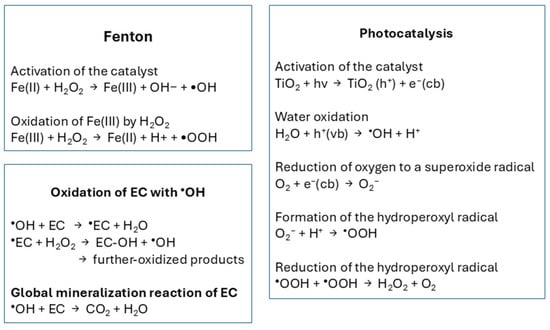
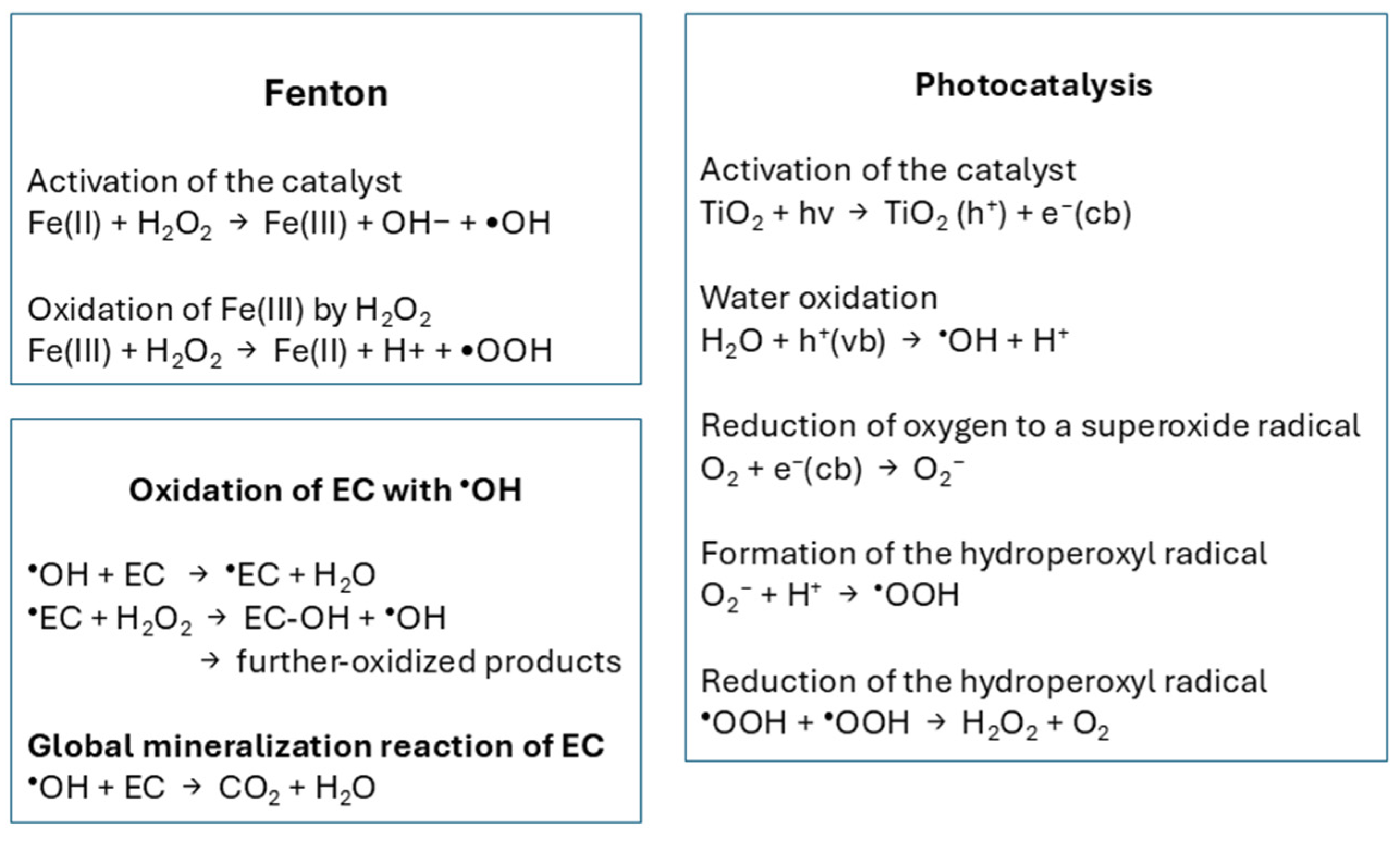
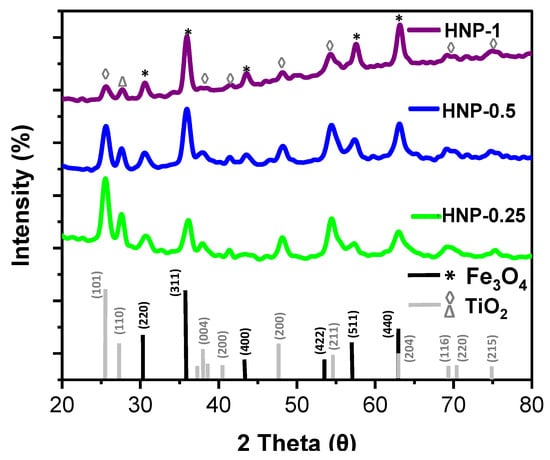
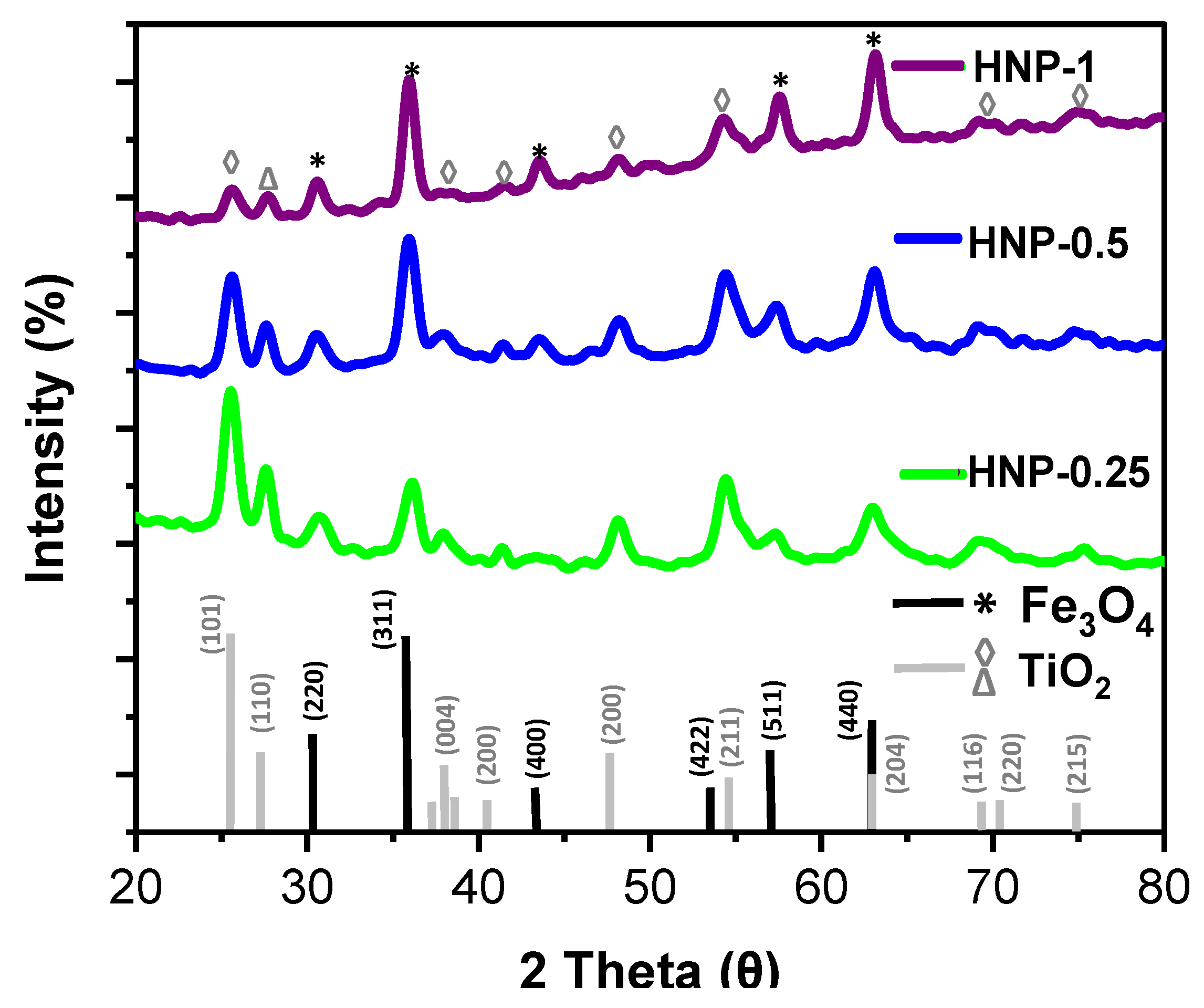
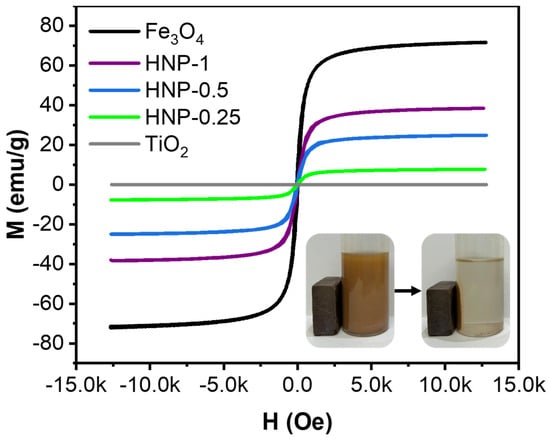
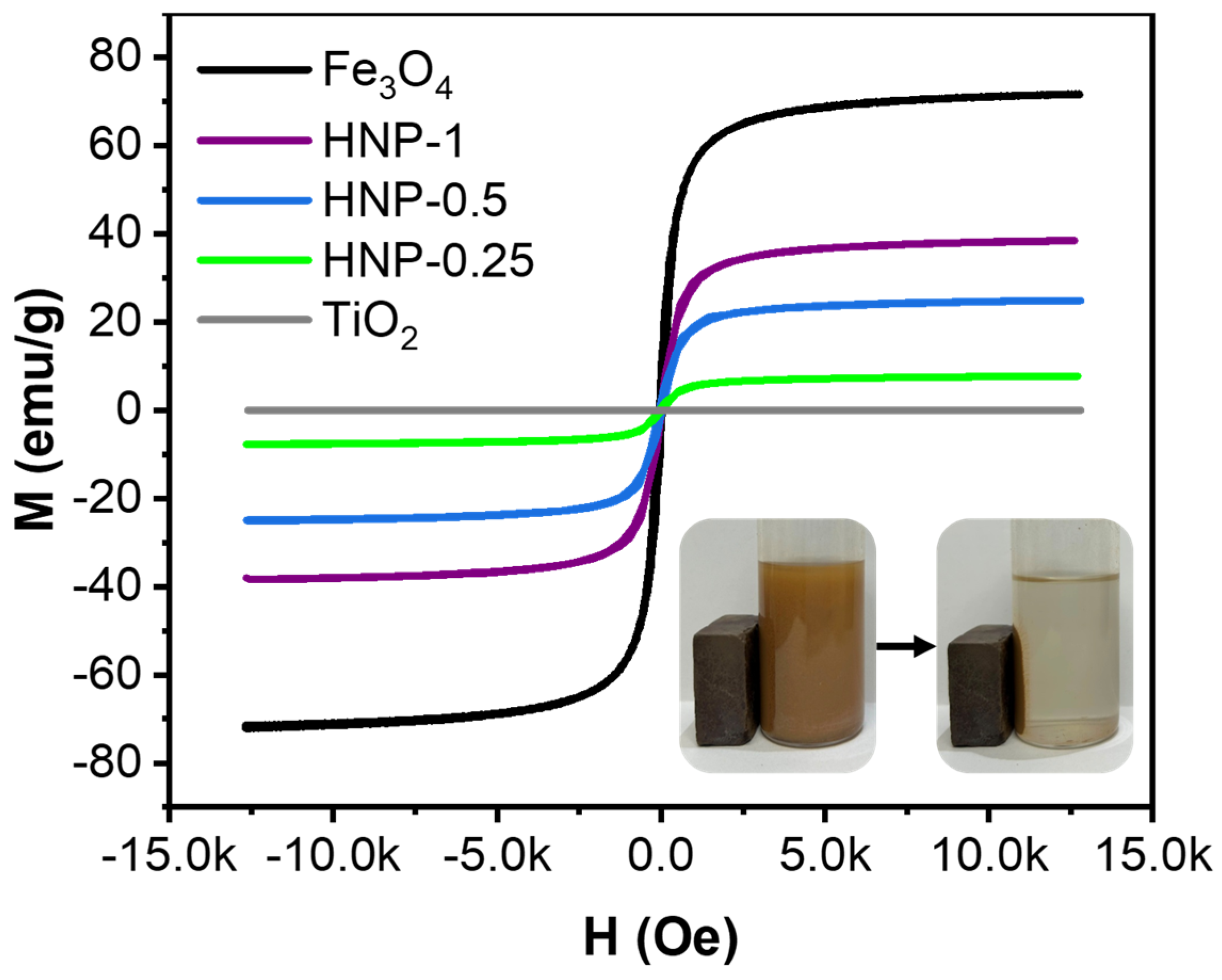
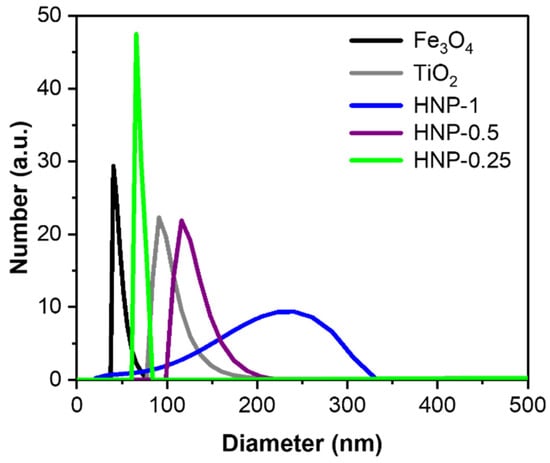
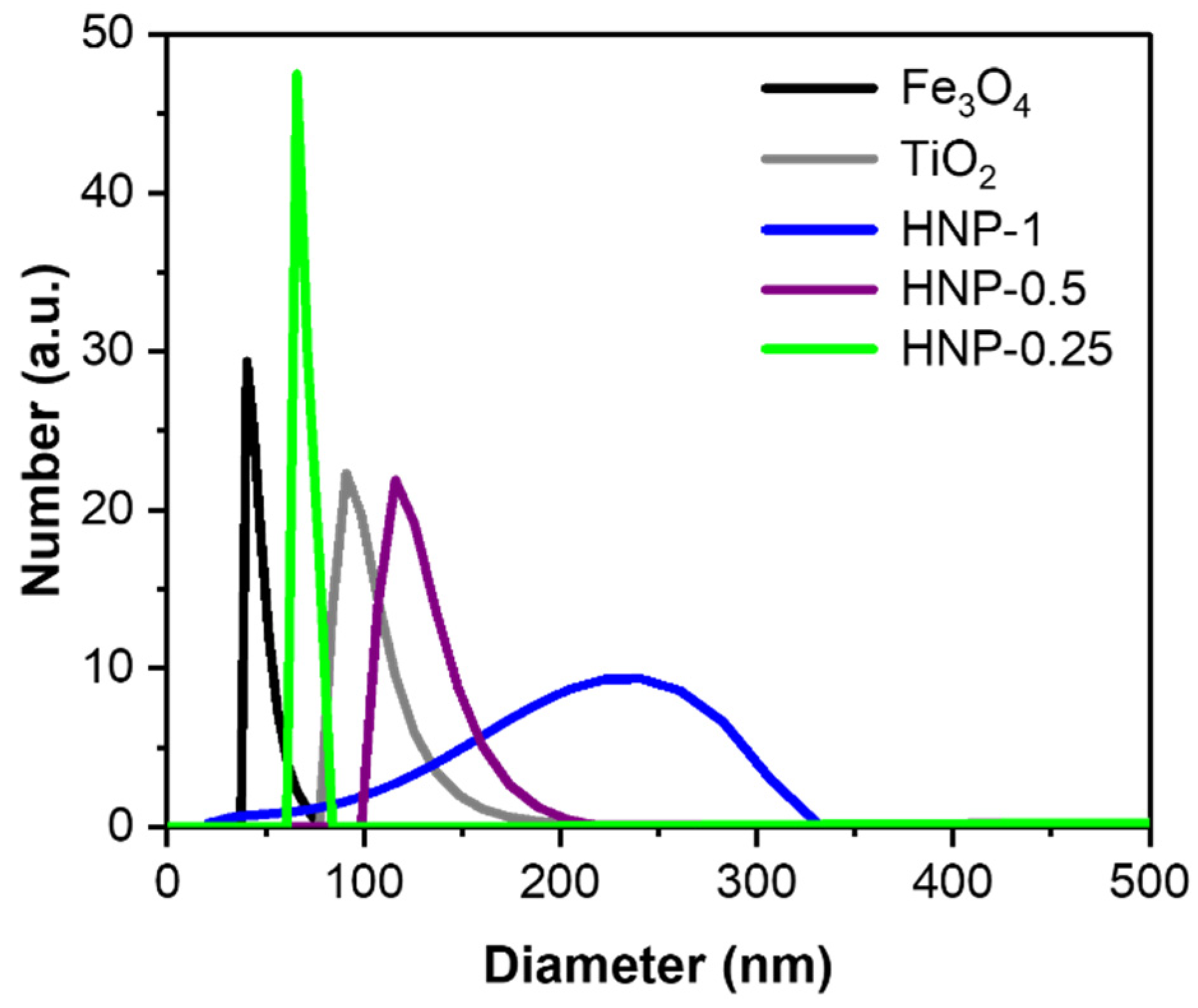
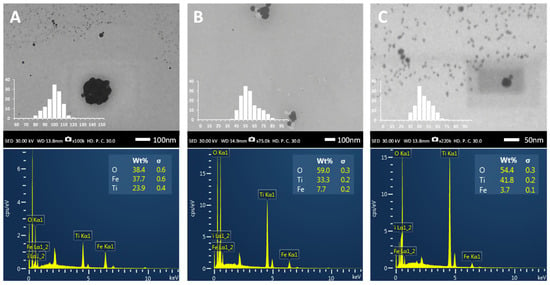
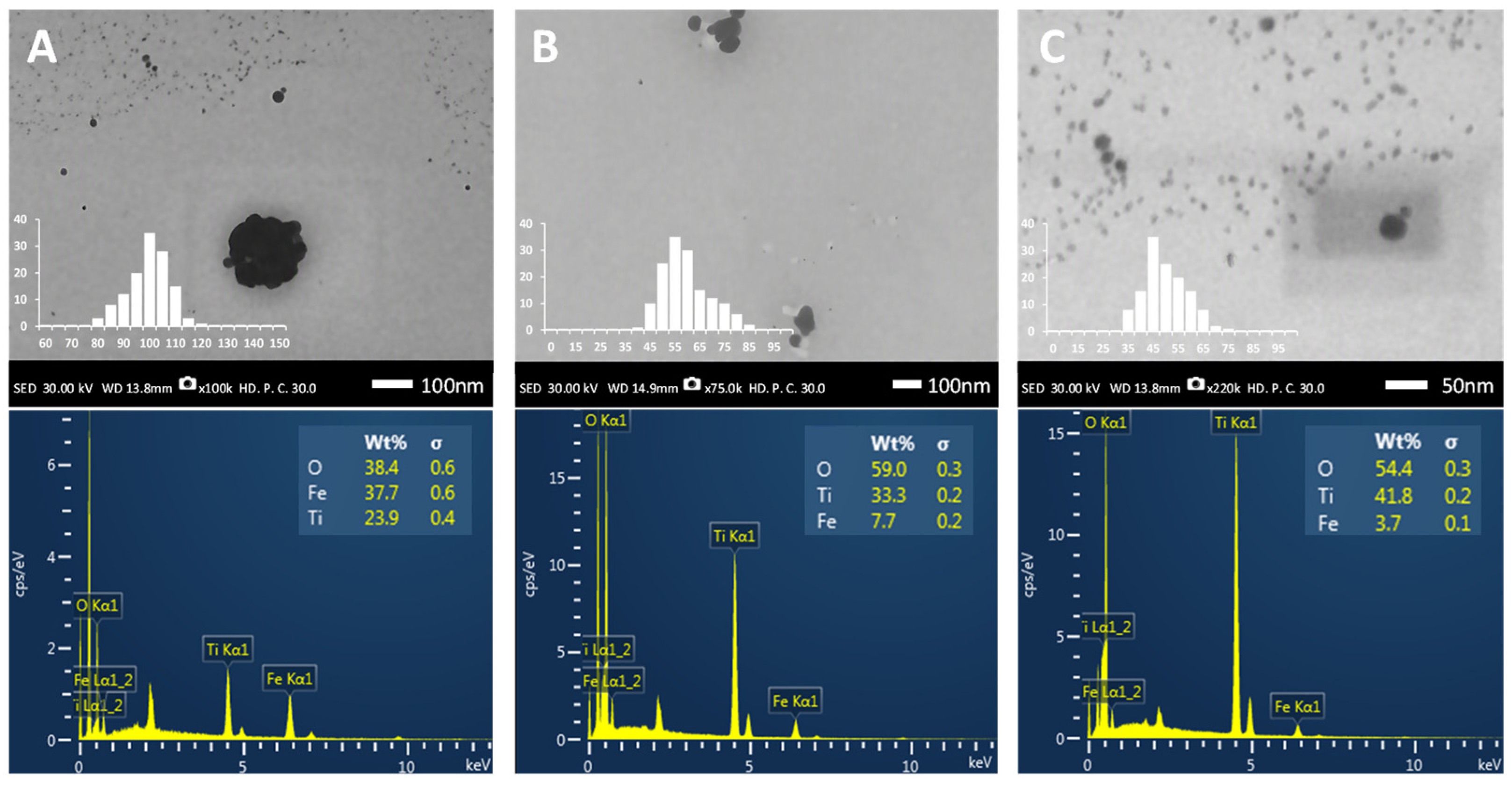
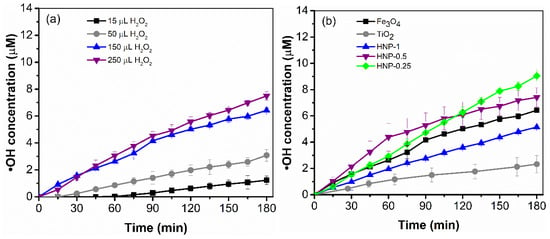
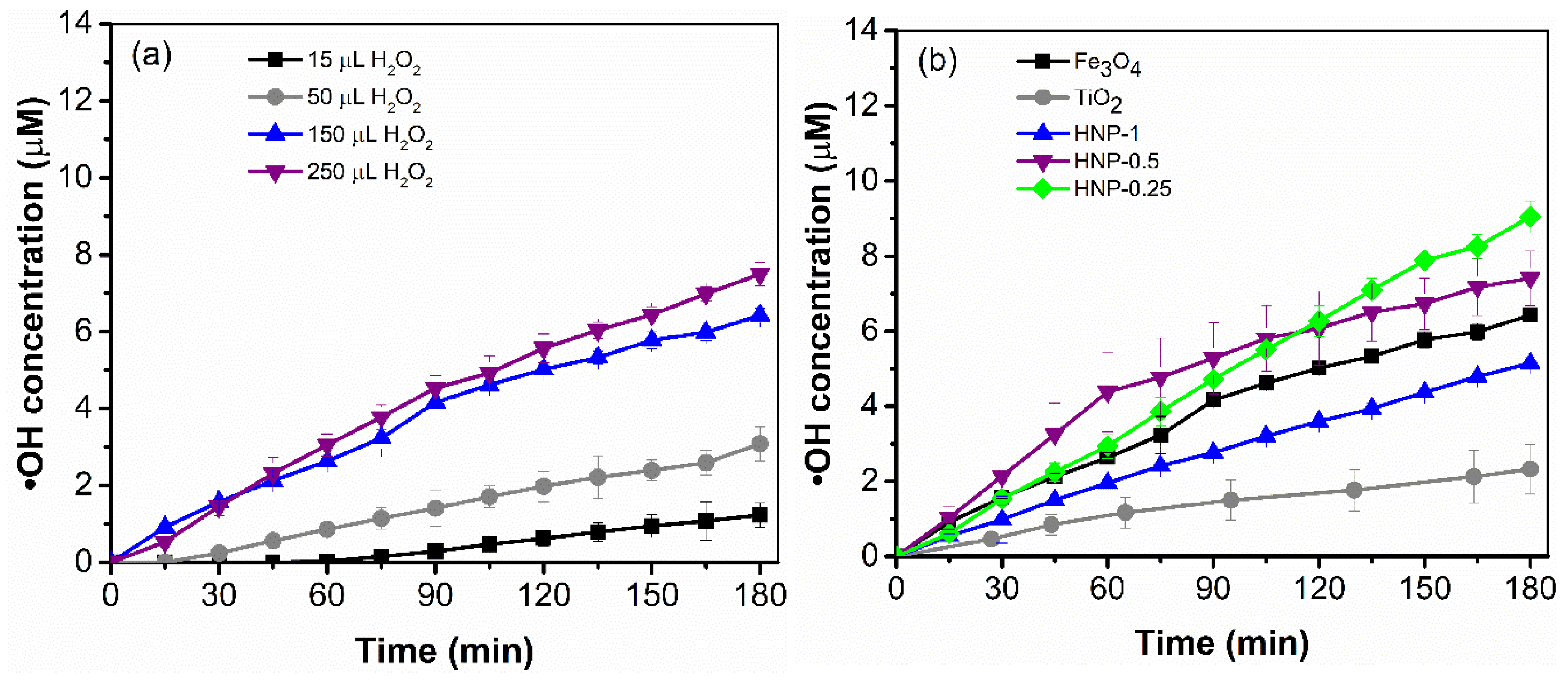
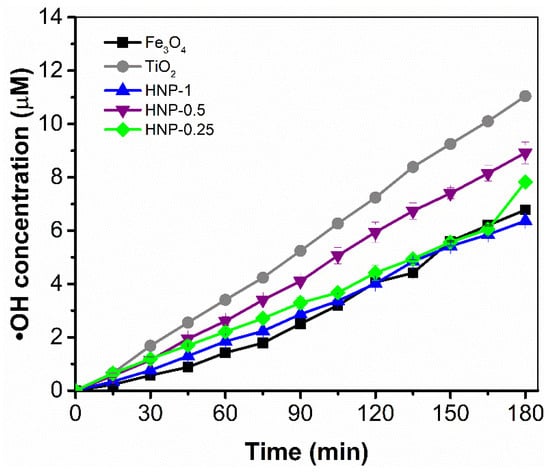
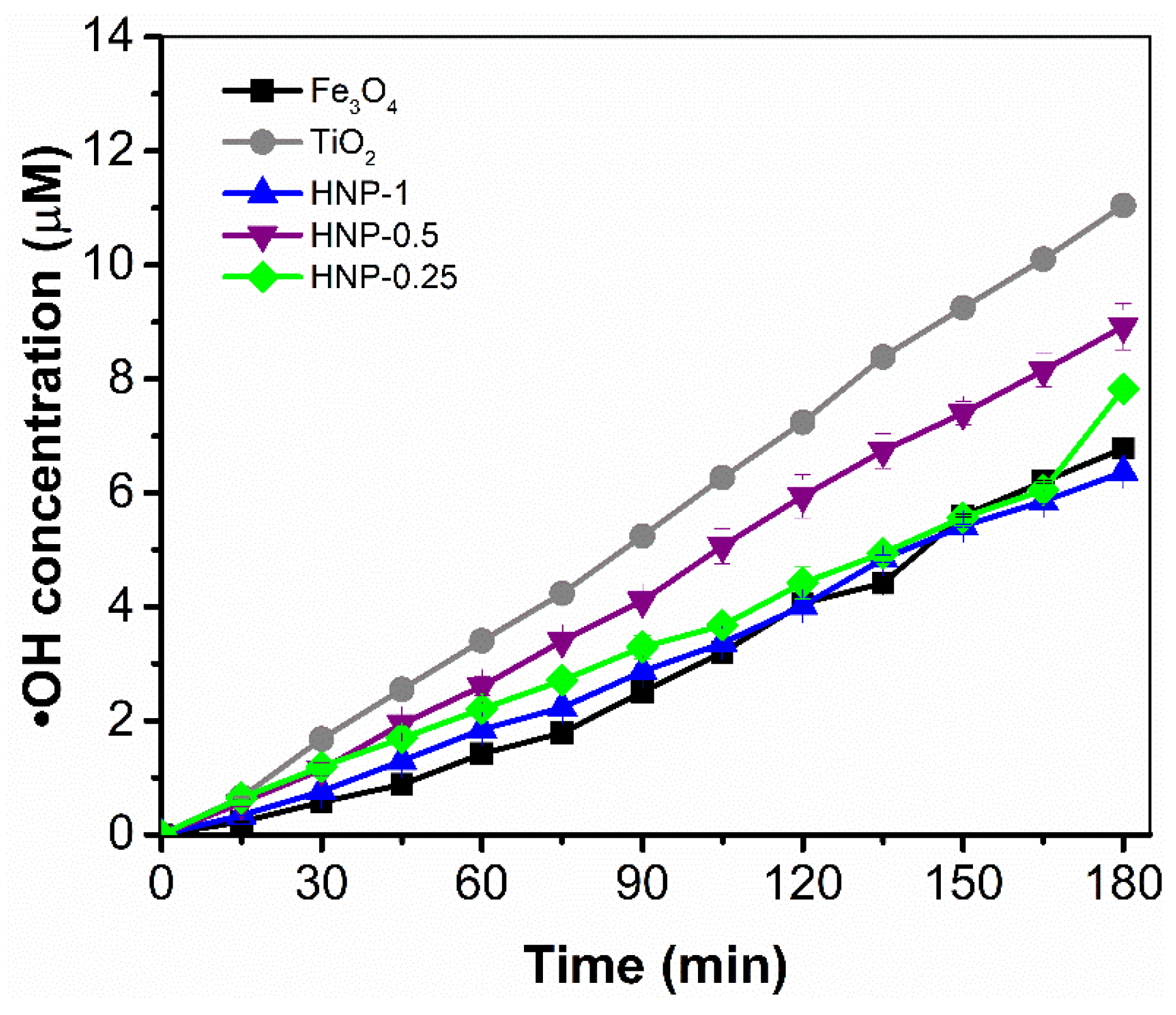
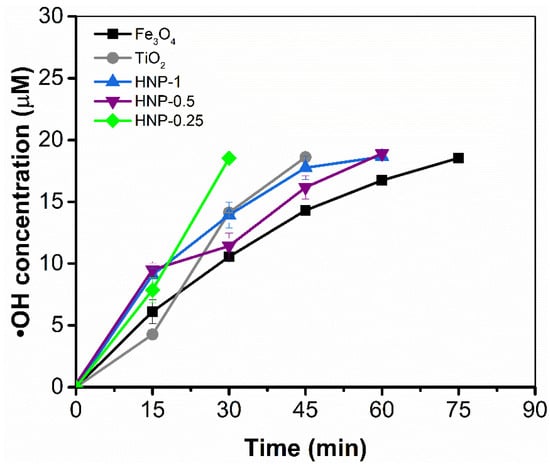
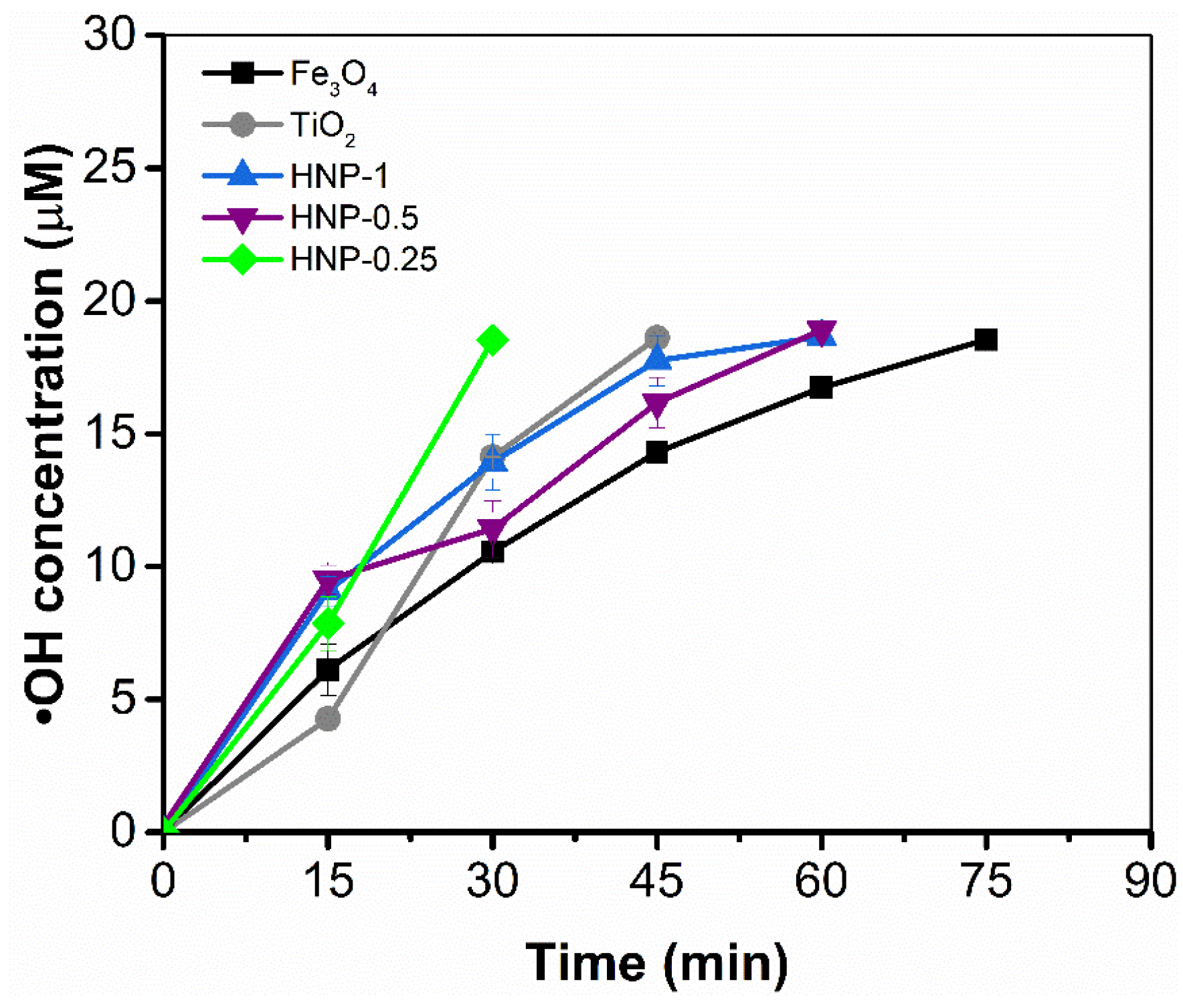
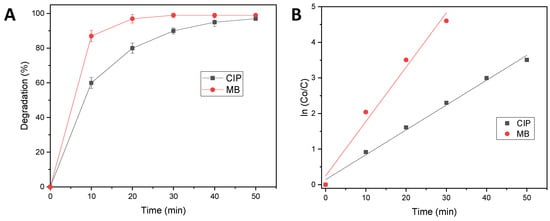
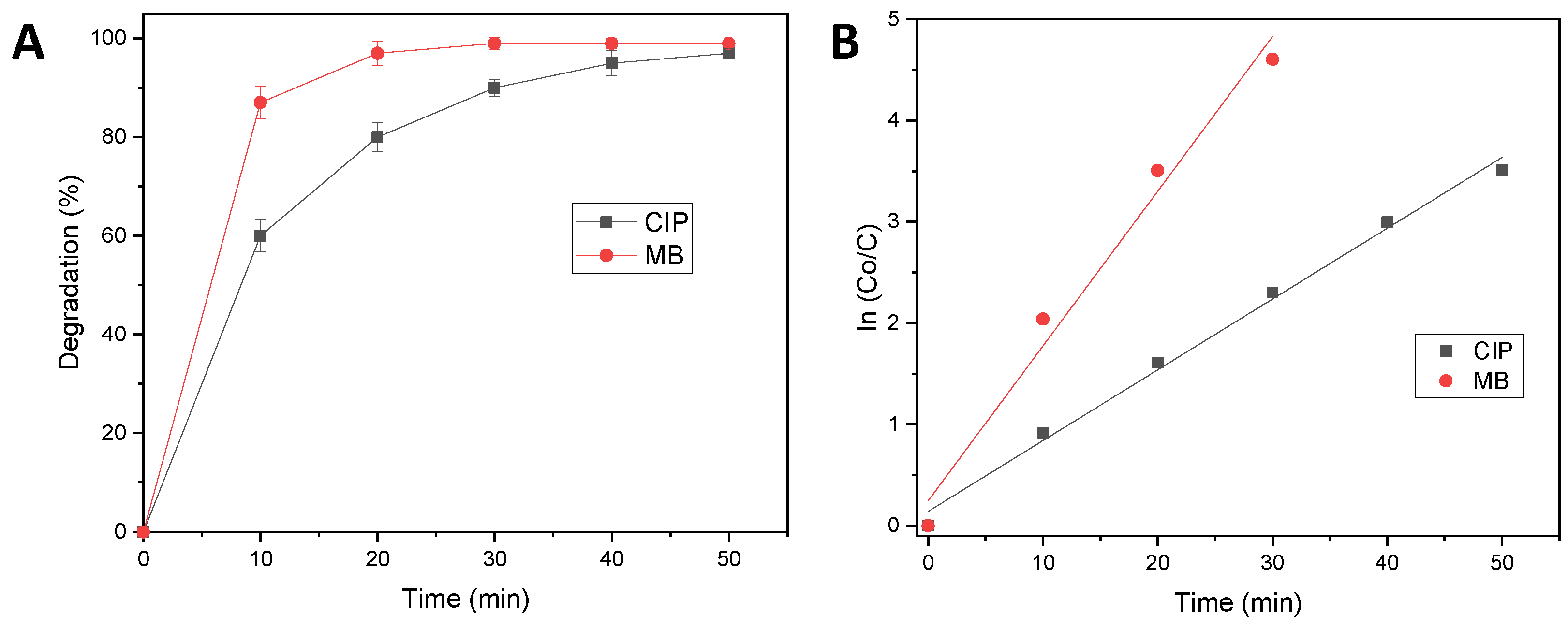
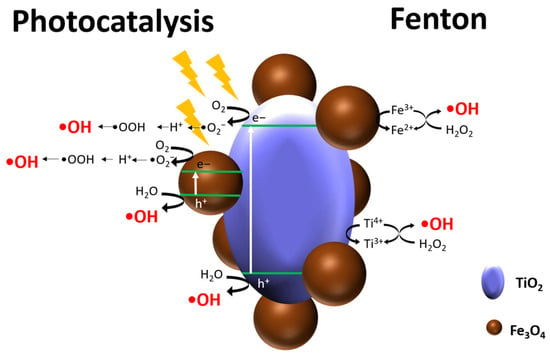
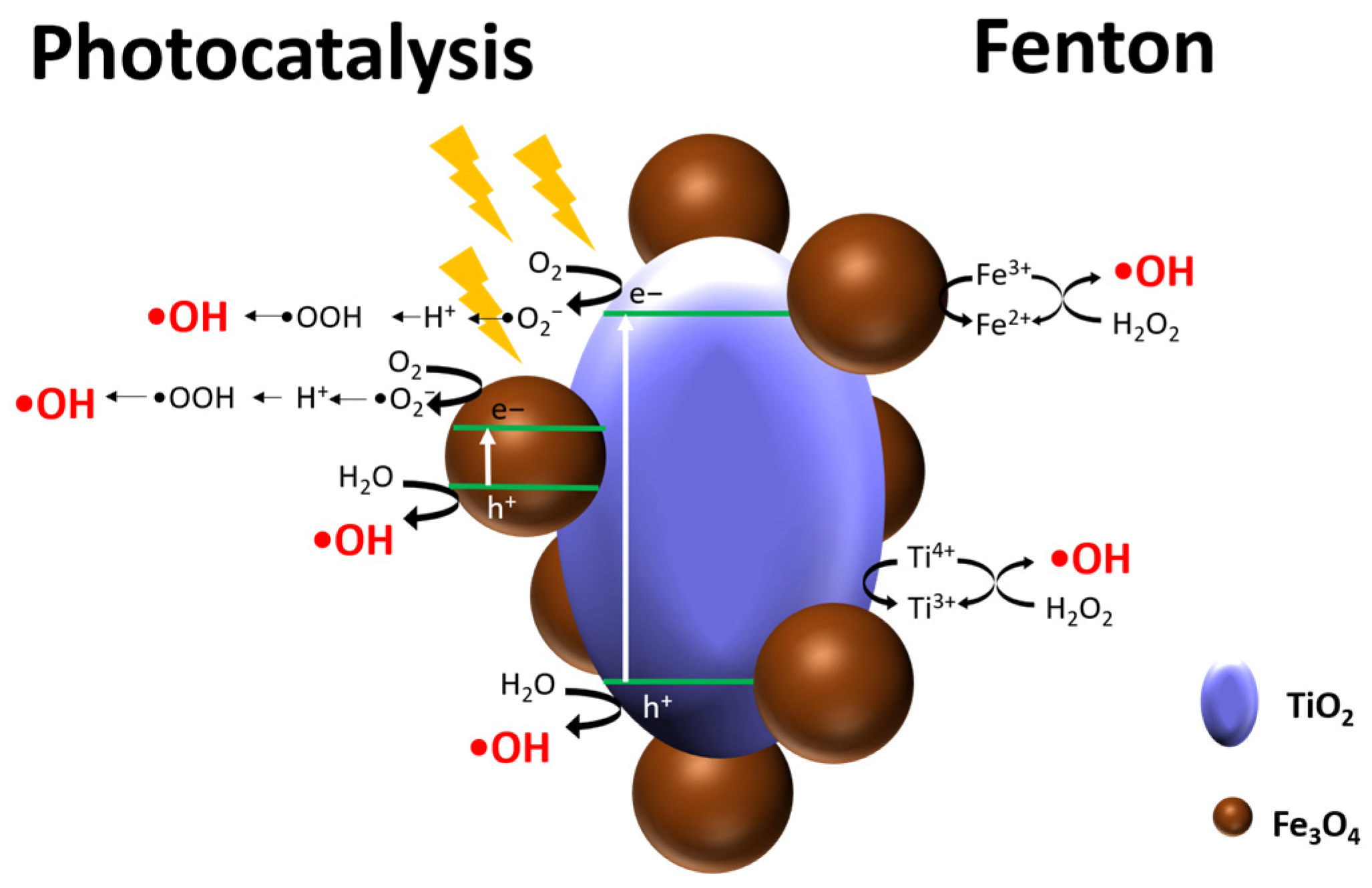

Disclaimer/Publisher’s Note: The statements, opinions and data contained in all publications are solely those of the individual author(s) and contributor(s) and not of MDPI and/or the editor(s). MDPI and/or the editor(s) disclaim responsibility for any injury to people or property resulting from any ideas, methods, instructions or products referred to in the content. |
© 2026 by the authors. Licensee MDPI, Basel, Switzerland. This article is an open access article distributed under the terms and conditions of the Creative Commons Attribution (CC BY) license.