Article

Photocatalytic H2 Production from Naphthalene by Various TiO2 Photocatalysts: Impact of Pt Loading and Formation of Intermediates


by
Osama Al-Madanat
1,2,*,
Yamen AlSalka
1,3,
Ralf Dillert
1,3 and
Detlef W. Bahnemann
1,3,4,*
1
Institut für Technische Chemie, Gottfried Wilhelm Leibniz Universität Hannover, Callinstr. 3, D-30167 Hannover, Germany
2
Chemistry Department, Mutah University, Mutah, Al-Karak 61710, Jordan
3
Laboratorium für Nano- und Quantenengineering, Gottfried Wilhelm Leibniz Universität Hannover, Schneiderberg 39, D-30167 Hannover, Germany
4
Laboratory “Photoactive Nanocomposite Materials”, Saint-Petersburg State University, Ulyanovskaya str. 1, Peterhof, 198504 Saint-Petersburg, Russia
*
Authors to whom correspondence should be addressed.
Catalysts 2021, 11(1), 107; https://doi.org/10.3390/catal11010107
Submission received: 30 November 2020 / Revised: 5 January 2021 / Accepted: 10 January 2021 / Published: 13 January 2021
(This article belongs to the Special Issue Progression in Photocatalytic Materials for Efficient Performance)

Abstract

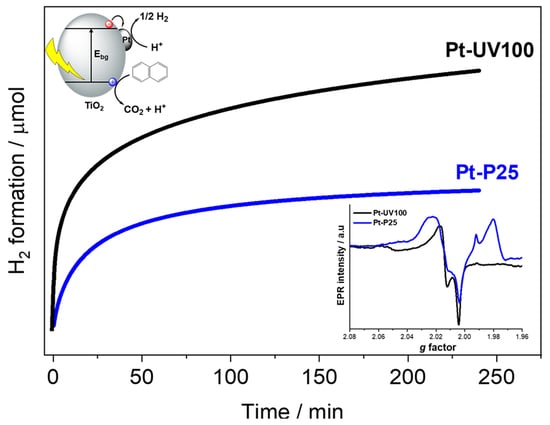
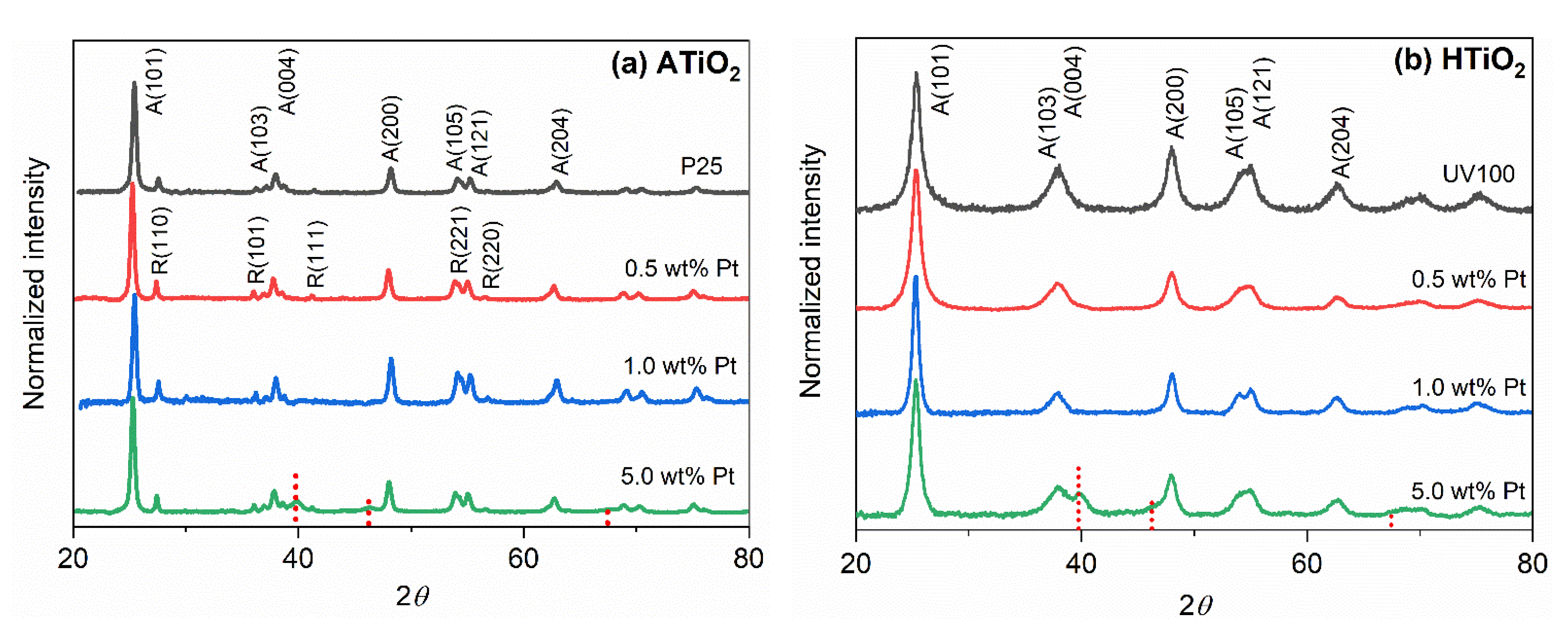
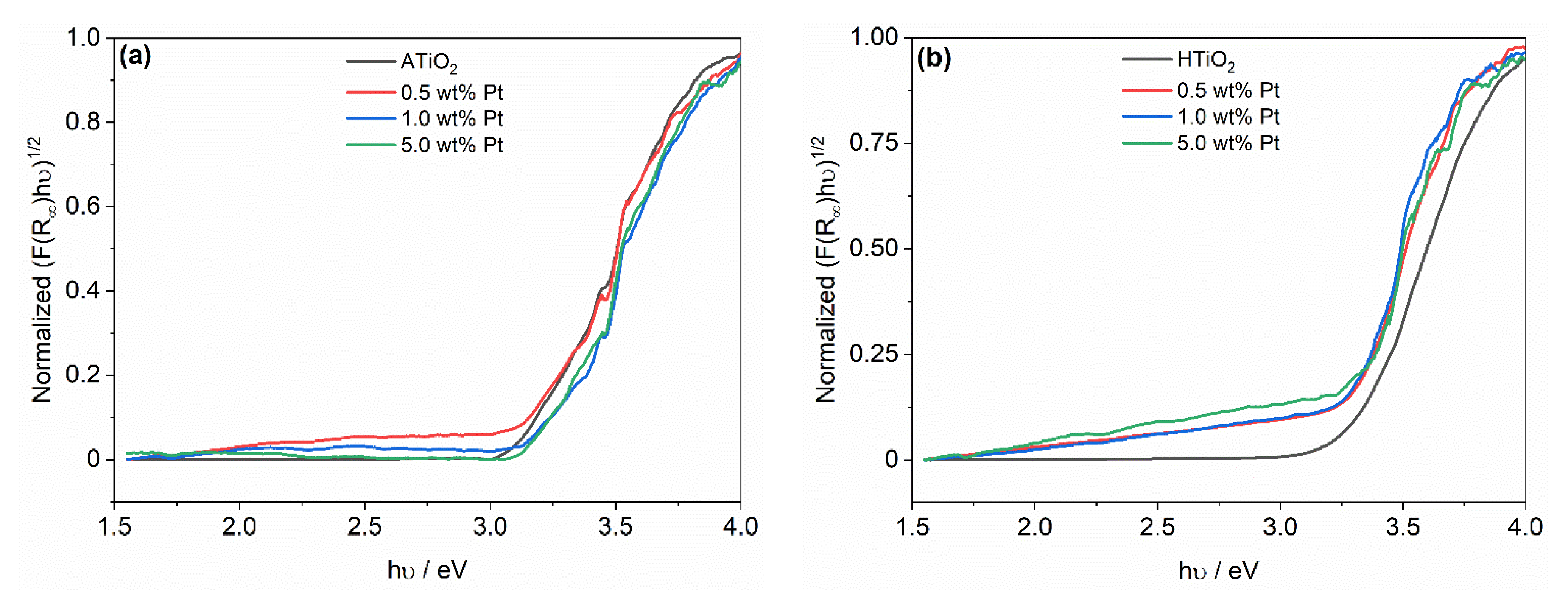
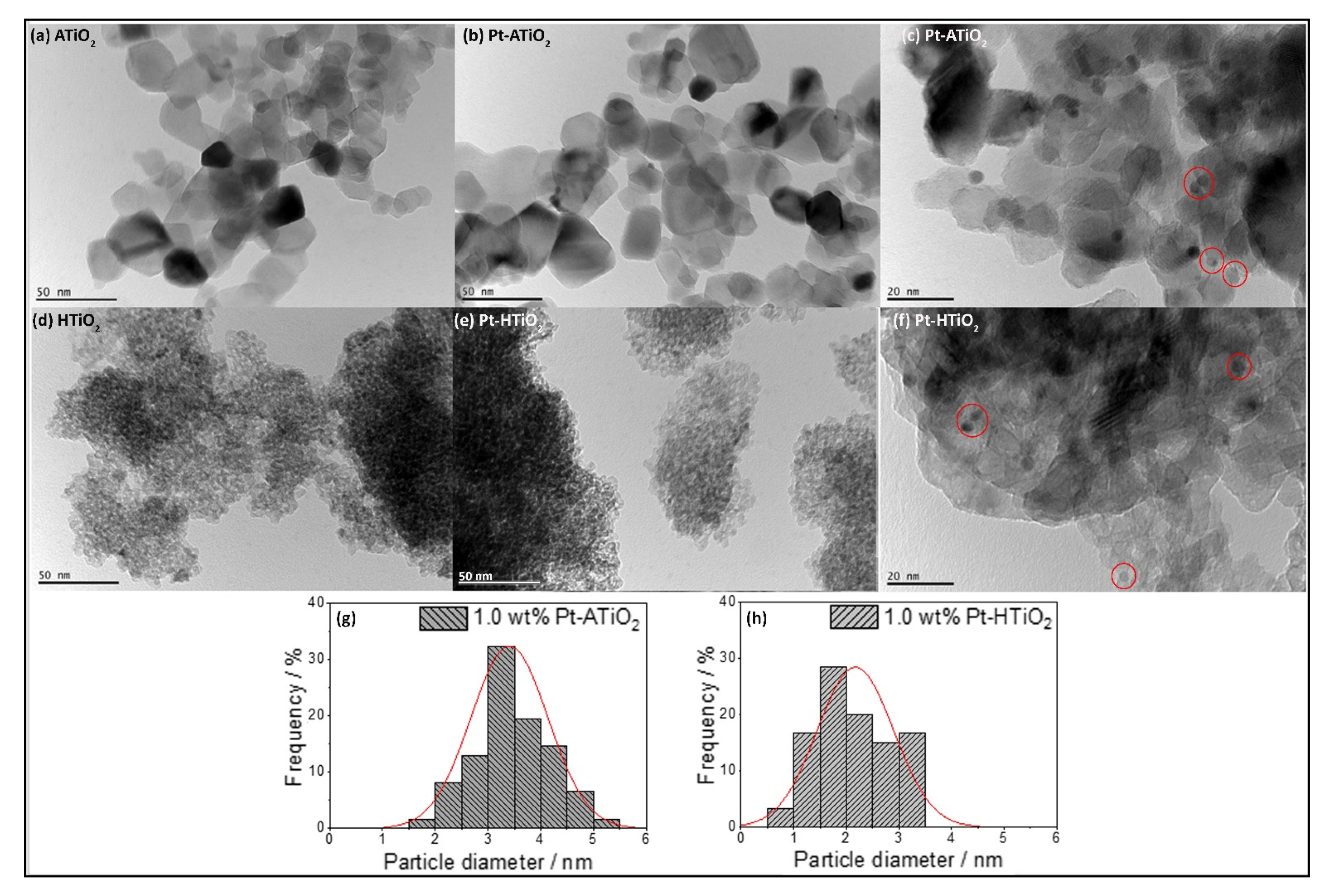
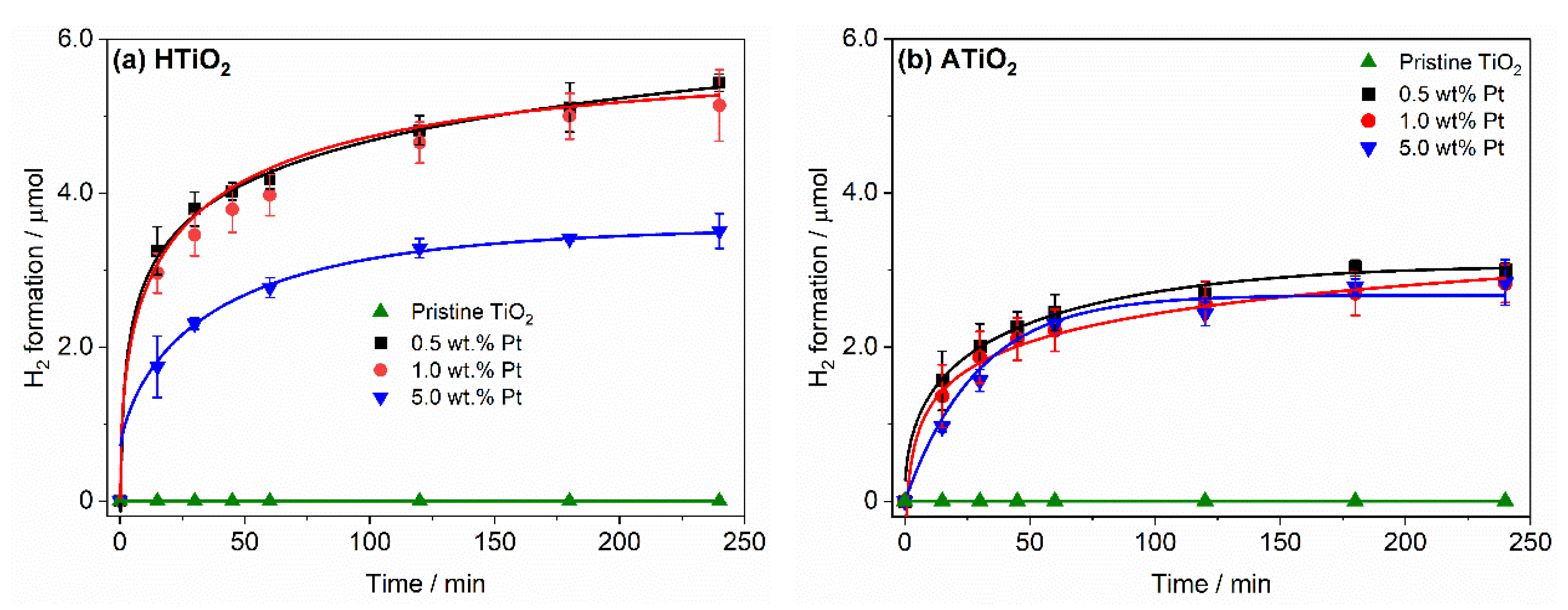
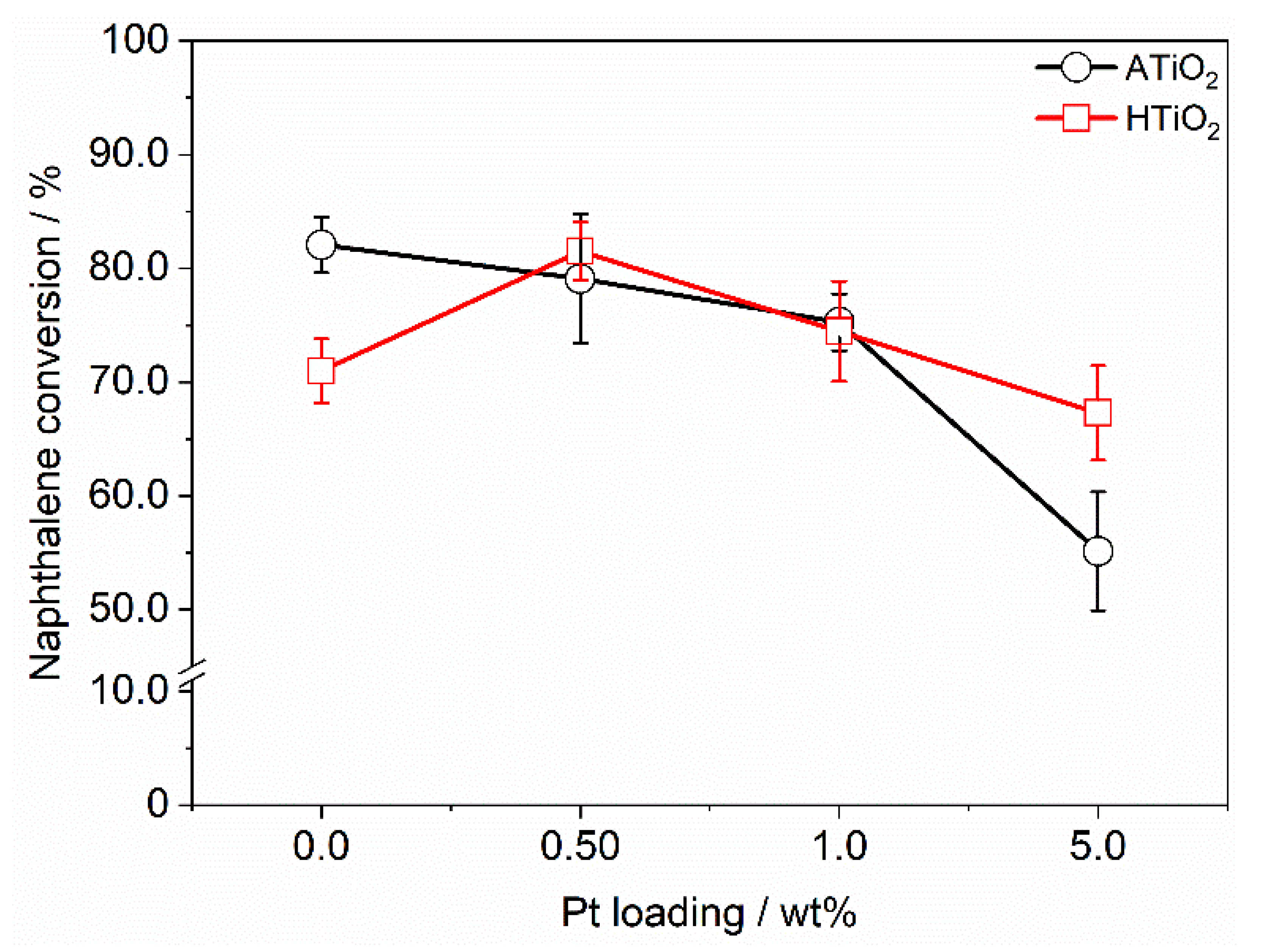
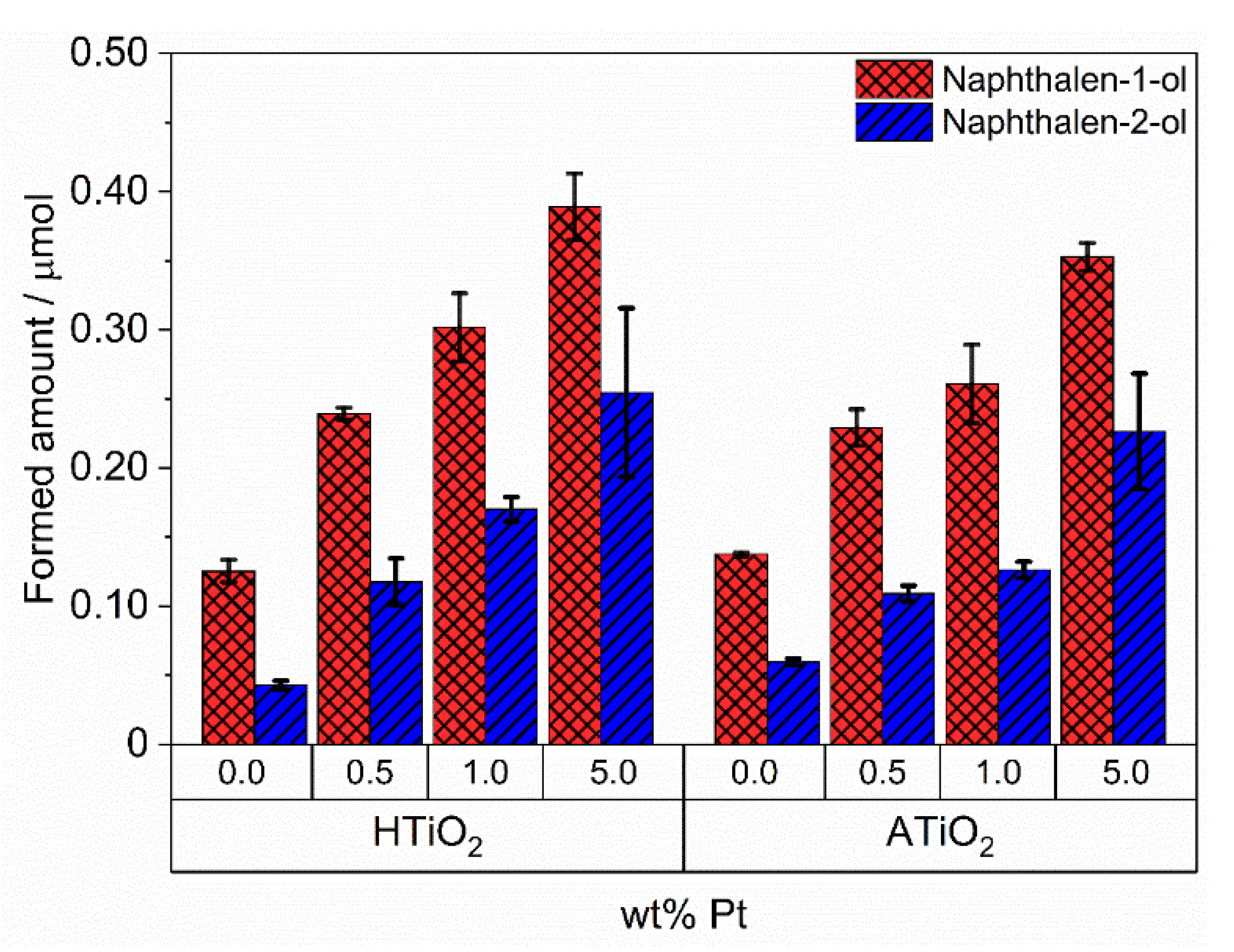
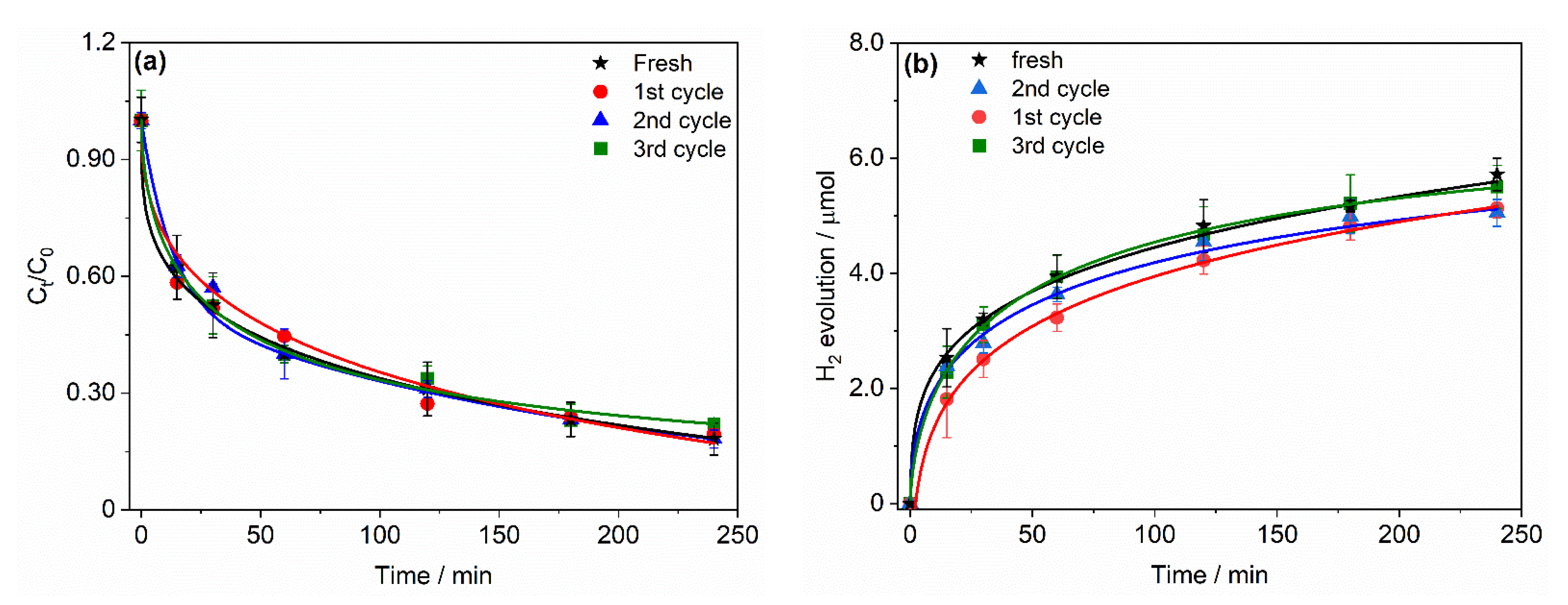
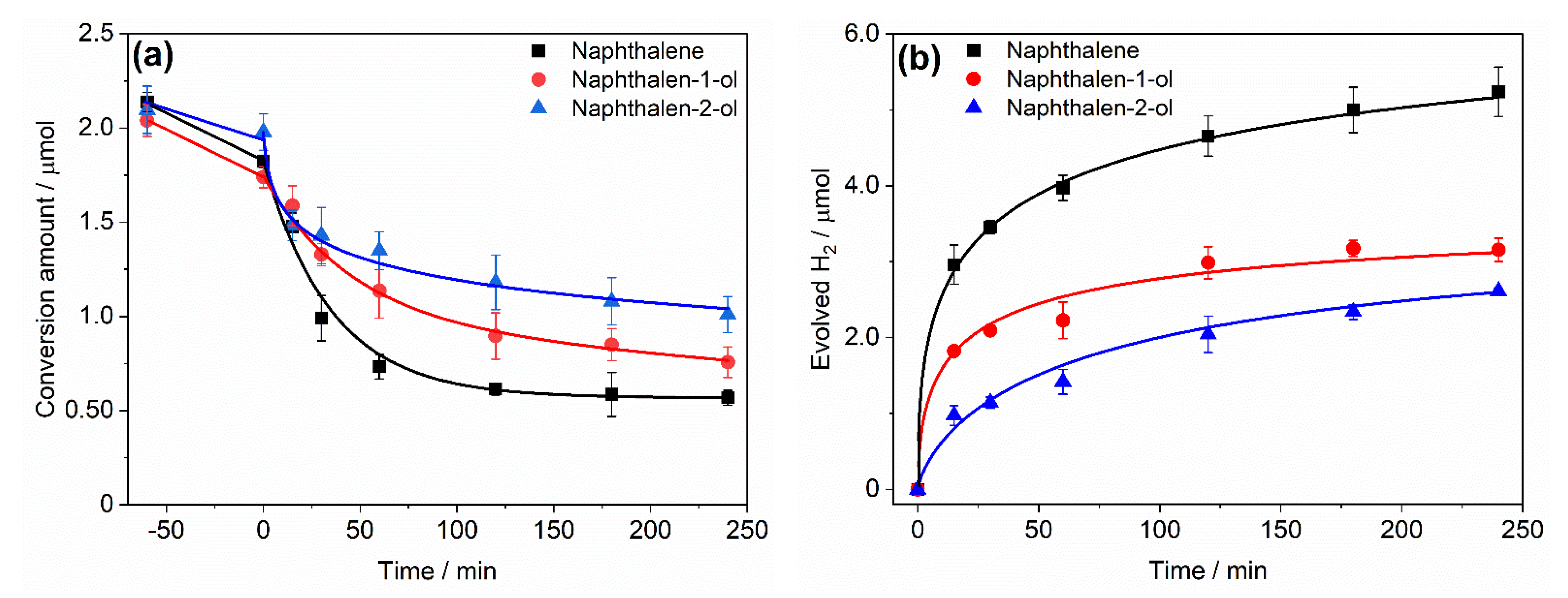
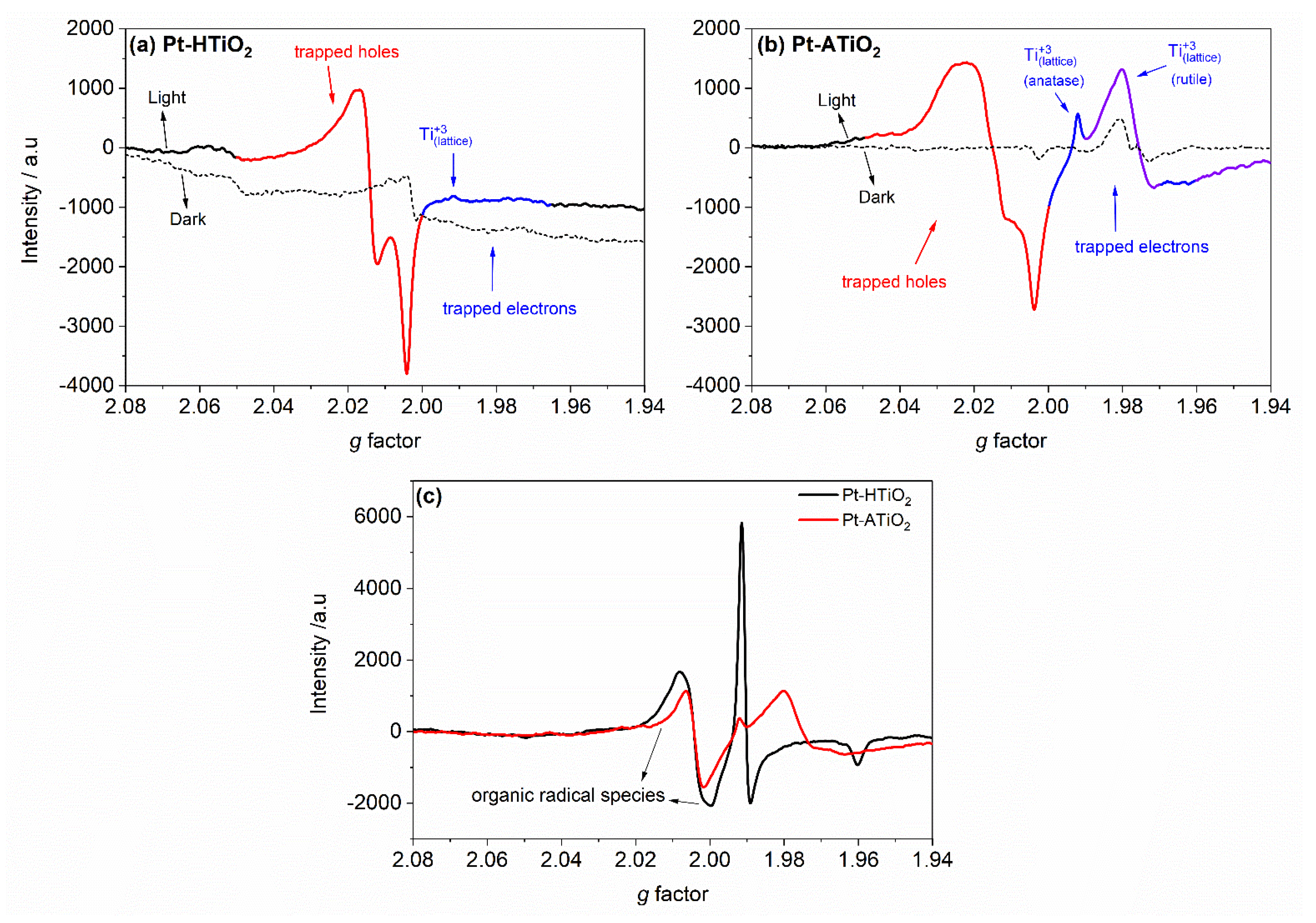
This work presents a comparative study of the efficiency of two commercial TiO2 photocatalysts, Aeroxide P25 (ATiO2) and Sachtleben Hombikat UV100 (HTiO2), in H2 production from an aqueous solution of naphthalene. The TiO2 photocatalysts were platinized by the photodeposition method varying the platinum content of the suspension to 0.5, 1.0, and 5.0 wt%. A full physicochemical characterization for these materials was performed, showing no structural effects from the deposition method, and confirming a well dispersion of nanosized-Pt0 particles on the surface of both photocatalysts. Pristine ATiO2 shows around 14% higher photocatalytic fractional conversion of naphthalene than pristine HTiO2 after 240 min of irradiation, while both materials exhibit negligible activity for H2 formation. The 0.5 wt% Pt- HTiO2 increases the photocatalytic fractional conversion of naphthalene from 71% to 82% and produces 6 µmol of H2. However, using a higher Pt content than the optimal platinization ratio of 0.5 wt% dramatically inhibits both processes. On the other hand, regardless of the fractional ratio of Pt, the platinization of ATiO2 results in a decrease in the fractional conversion of naphthalene by 4% to 33% of the pristine value. Although the presence of Pt islands on the surface of the ATiO2 is essential for the H2 evolution, no dependency between the Pt ratio and the H2 formation rate was observed since all the platinized materials show a similar H2 formation of around 3 µmol. Based on the EPR results, the higher photocatalytic activity of the Pt-HTiO2 is attributed to the efficient charge carrier separation and its larger surface area. The recyclability test confirms that the inhibition of the photocatalytic process is related to the deactivation of the photocatalyst surface by the adsorption of the photoformed intermediates. A strong relationship between the photocatalytic activity and the kind of the aromatic compounds was observed. The H2 evolution and the photooxidation of the aromatic hydrocarbons exhibit higher photonic efficiencies than that of their corresponding hydroxylated compounds over the Pt-HTiO2.
Keywords: naphthalene; photoreforming; Hombikat UV100; Aeroxide P25; H2 production; EPR; charge carrier; Pt-TiO2 naphthalene; photoreforming; Hombikat UV100; Aeroxide P25; H2 production; EPR; charge carrier; Pt-TiO2
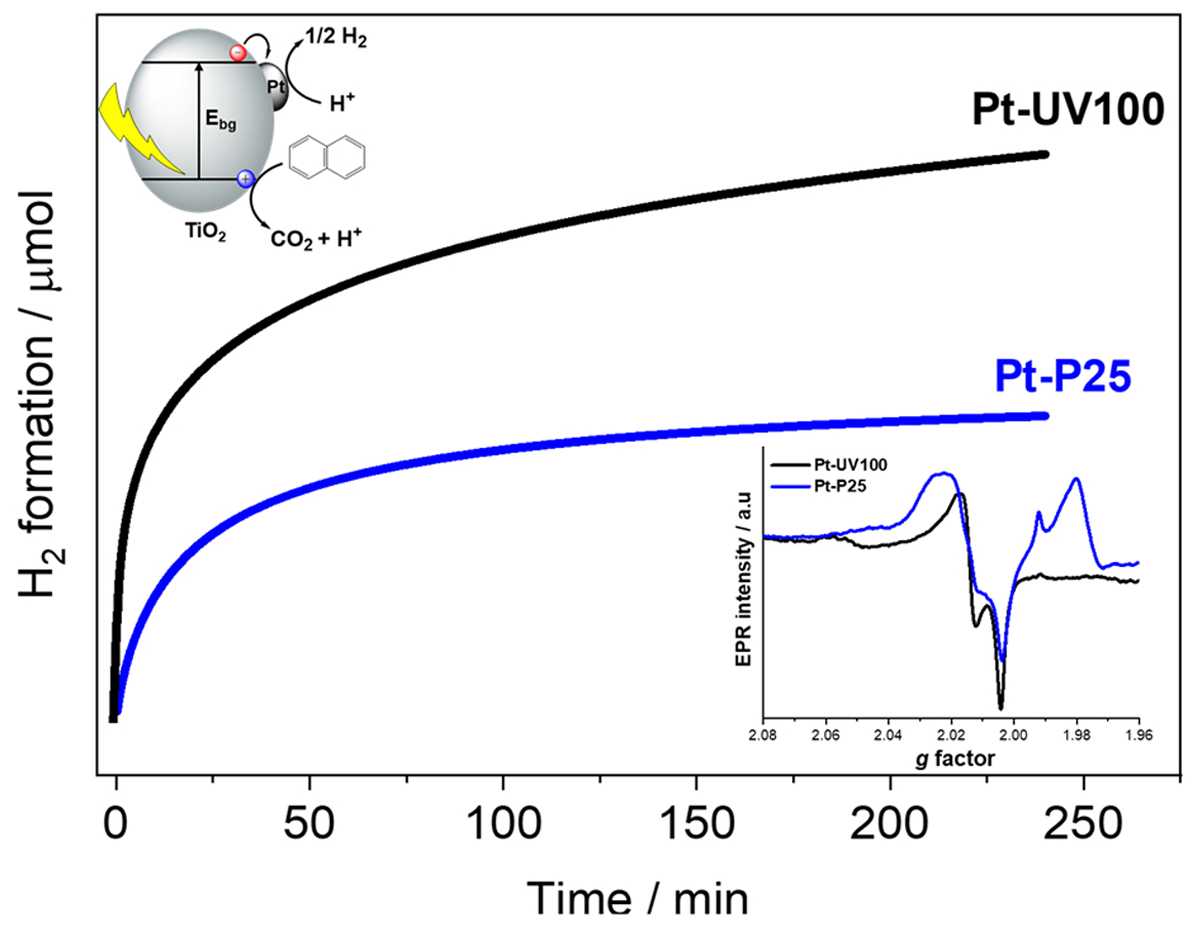
Graphical Abstract