


Abstract
City-scale augmented reality (AR) learning paths are outdoor, multi-stop educational routes delivered through mobile devices in public space. This paper examines the Art Nouveau Path, a mobile AR game (MARG) route in Aveiro, Portugal, as a deployable learning service. The focus is on implementation requirements and traceability rather than learning outcomes. The analysis combined profiling of eight points of interest (POIs) and 36 tasks, group-session logs from 118 sessions, and teacher-facing evidence from a validation workshop (T1-VAL, N = 30) and on-site observation (T2-OBS, N = 24). Open-text responses were segmented into meaning units and coded with an eight-determinant taxonomy, with good intercoder reliability (Krippendorff’s alpha = 0.83). Logs and the post-path questionnaire (S2-POST, N = 439) were used only to describe enactment feasibility and data integrity. The strongest determinants concerned onboarding and legibility, marker robustness and recovery, and curriculum alignment, together with safety and fallback needs. These signals were translated into 18 testable requirements linked to six transfer artefacts for enactment, maintenance, incident handling, and fallback. Overall, the study provides an implementation-oriented specification to support auditability, replication, and transfer in city-scale AR learning services.
1. Introduction
Outdoor mobile augmented reality (AR) learning paths are educational routes completed across several real-world stops in public space, using a phone or tablet to access location-based and marker-based tasks. They are difficult to implement consistently because they depend on changing environmental, technical, and organizational conditions. In practice, a route that works well in one session may fail in another because of marker recognition problems, lighting conditions, device differences, interruptions, or public-space safety constraints [1,2,3,4]. For this reason, the engineering problem is not only whether an application runs, but whether the whole activity can be enacted safely, reliably, and repeatedly in real conditions.
The empirical case examined in this paper is the Art Nouveau Path, a heritage-based mobile AR game (MARG) implemented in Aveiro, Portugal. In practice, student groups move through eight public route stops in the city, use the EduCITY mobile application (v 1.3), which is the platform used to deliver the route, scan markers when required, and complete 36 short tasks. In this paper, points of interest (POIs) are the route stops where tasks are anchored. In this study, city-scale refers to one learning path distributed across multiple stops in public space within a single city, under realistic mobility, supervision, and device constraints. The focus is therefore not the city in a metropolitan sense, but the operational challenge of delivering a multi-stop AR learning route in real public-space conditions.
This study treats the Art Nouveau Path not only as a learning activity, but as a deployable learning service. Here, service means the full arrangement required for field operation, not only the app. It includes the mobile client, the route content, and the practical routines that keep the activity running in real conditions, such as onboarding, supervision, marker maintenance, interruption recovery, incident handling, and version control [5,6,7,8]. This perspective is consistent with human–computer interaction (HCI) work on in-the-wild systems, which shows that real-world deployment depends on technical performance together with the human and organizational conditions that support use, repair, and continuation in context [1,4].
This distinction matters because learning interventions are often discussed mainly in terms of feasibility, fidelity, or effectiveness during a defined implementation period [6,7]. That perspective is useful for outcome-oriented evaluation, but it can leave under-specified the engineering and governance work needed to enact the same activity repeatedly under unstable outdoor conditions. In public-space AR learning, usability and quality are not only interface properties. They are outcomes of use in context, which is consistent with the International Organization for Standardization (ISO) definition of usability as effectiveness, efficiency, and satisfaction in a specified context of use [5]. From this perspective, the challenge is to specify the requirements, trace links, and operational routines that make deployment inspectable, repeatable, and maintainable across cohorts and implementation teams.
Although previous AR and mobile learning studies have reported field experiences, user responses, and learning-related outcomes, the implementation specification needed for repeatable city-scale deployment remains less explicit. A related gap concerns auditability. When a deployment succeeds or fails, it should be possible to trace that outcome back to the practical conditions, requirements, and implementation artefacts involved.
Accordingly, the aim of this paper is to specify the implementation requirements and traceability logic needed to support the safe, reliable, and auditable enactment of a city-scale, in-the-wild AR learning service. The empirical case is the implemented Art Nouveau Path, but the evaluated object is the deployed service instance and its implementation requirements, not the EduCITY platform as a whole and not student learning outcomes in isolation. The scope is intentionally implementation-centered: the purpose is to identify what must be in place for this type of AR learning service to be enacted, audited, and replicated under real public-space conditions [1,5,7,8,9,10,11,12,13,14,15,16,17].
To address this aim, the study provides four implementation-oriented outputs grounded in established frameworks. First, it uses an eight-code determinant taxonomy (D1–D8) to translate field evidence into implementation constraints. Second, it derives a verifiable requirements catalogue (REQ-01 to REQ-18) expressed as testable “shall” statements. Third, it structures bidirectional traceability links across determinants, requirements, transfer artefacts, and supporting evidence to support auditability. Fourth, it defines an operations-ready transfer kit covering roles, routines, maintenance, incident response, and Bring Your Own Device (BYOD) fallback. Here, BYOD means that learners use their own phones rather than a standardized school device.
The empirical data come from two participant groups: teachers (T1-VAL, N = 30 and T2-OBS, N = 24), whose records provide the main evidence for determinant coding and requirement derivation, and school students, whose collaborative gameplay logs and post-path questionnaire (S2-POST, N = 439) are used only to describe feasibility and administration quality.
To operationalize this service framing and its audit requirements, this study is guided by three Research Questions (RQs):
RQ1. Which implementation determinants concentrate in teacher-facing evidence when a city-scale, in-the-wild mobile AR learning service is enacted?
RQ2. How can determinant signals be systematically translated into a coherent requirements set specifying functional, non-functional, and operational properties needed for safe and repeatable deployment?
RQ3. How can evidence-to-requirement-to-artefact traceability be structured to support auditability, replication, and responsible operations, including privacy-aware and BYOD-constrained enactment?
2. Background and Related Work
This section reviews four main strands of prior work: in-the-wild AR reliability, requirements engineering for socio-technical mobile services, traceability for auditability, and reproducibility-oriented transfer packaging. It then identifies domain constraints in heritage, curriculum, and governance as boundary conditions for deployment and briefly positions the present study against selected in-the-wild AR learning studies relevant by setting, scale, or heritage focus. The review is intentionally selective and includes only the literature needed to justify the study’s implementation, requirements engineering, traceability, and transfer focus. The aim is not to present a broad survey, but to identify what remains under-specified for repeatable public-space AR deployment.
2.1. Reliability, Interruptions, and Recovery in In-the-Wild Mobile AR
Outdoor mobile AR is affected by changing environmental conditions, social interaction, and device variability. In HCI, in-the-wild research has highlighted the difference between testing interaction in controlled settings and understanding how systems perform in real use, where breakdowns, repair, adaptation, and contextual constraints are part of normal operation rather than exceptions [1,18]. This perspective is especially relevant for outdoor AR, where failures often emerge in context.
From a technical perspective, tracking and anchoring remain major sources of fragility. Illumination changes, glare, occlusion, and unstable viewpoints can disrupt both marker-based recognition and broader tracking processes, creating failure modes that must be anticipated in deployment design [2]. In marker-based experiences, degradation of the physical marker itself can also affect performance. As a result, recognition problems may arise not only from software limitations, but also from material and environmental conditions.
Interruptions are also common in public-space mobile use. Studies of mobile interaction show that cognitively demanding interruptions increase completion time and are experienced as disruptive, which supports the need for recovery and resumption mechanisms rather than assumptions of uninterrupted task flow [19]. Related work in mobile learning likewise suggests that resumption cues can help users return to the task after interruptions [20]. In outdoor AR, these issues are compounded by public-space dynamics such as bystanders, social norms, and coordination demands within groups [21]. Recent in-the-wild AR work has shown that awkwardness and social friction can affect sustained use in practice [4]. Taken together, this literature suggests that reliability in city-scale AR services should be understood broadly as a property that includes tracking robustness, recovery, social operability, and supervision. However, prior studies have only rarely translated these recurring issues into explicit deployment requirements for repeatable educational use.
2.2. Requirements Engineering for Deployable Mobile AR Services
Requirements engineering provides the methodological basis for translating operational evidence into verifiable system properties. ISO/International Electrotechnical Commission (IEC)/Institute of Electrical and Electronics Engineers (IEEE) 29148 formalizes requirements engineering as a life-cycle process and specifies the information items expected for systems and software products, explicitly including services [5]. For city-scale mobile AR services, this framing is important because the system boundary includes socio-technical operations such as briefing, supervision, path pacing, fallback routines, and maintenance of physical assets.
For city-scale mobile AR, this broader system includes practical elements such as briefing, supervision, pacing, fallback routines, and maintenance of physical assets. A robust specification therefore needs to combine functional requirements with non-functional requirements and operational constraints. ISO/IEC 25010 is relevant here because it frames product quality in terms of characteristics such as reliability, usability, security, maintainability, and portability [10]. Likewise, ISO 9241-11 defines usability in relation to context of use, which is especially relevant for in-the-wild deployment because performance cannot be separated from the conditions in which the system is used [5].
BYOD settings make this issue more acute. Mobile AR services deployed across heterogeneous personal devices must account for differences in hardware, operating conditions, permissions, battery state, and connectivity [21,22,23]. Public-space enactment adds further constraints, particularly safety and supervision. In this context, a requirement such as task completion is insufficient on its own if it is not accompanied by practical conditions for safe pacing, stopping, regrouping, and recovery. For this reason, requirements engineering for city-scale AR should be treated as deployment-oriented and operations-aware, rather than as a purely software-functional exercise. What remains less explicit in prior work is how these practical constraints are converted into auditable requirements for repeatable field use.
2.3. Traceability for Auditability
Traceability is central for auditability and replication. The classical formulation of the requirements traceability problem emphasizes that requirements must remain linked to their origins and to downstream artefacts to support change management and accountability [12]. In a city-scale AR learning service, this need is amplified because determinants arise from multiple evidence streams. These include teacher-facing operational records, field observations, and log-derived feasibility descriptors.
A useful distinction exists between pre-requirements and post-requirements traceability. Pre-requirements traceability links requirements back to stakeholder and contextual sources, while post-requirements traceability links them forward to design, implementation, and testing artefacts [24]. For this study, the first of these is particularly important because implementation determinants are treated as signals that inform requirement derivation. Each requirement should therefore remain linked to the evidence that supports it.
At the same time, the literature shows that traceability remains difficult to sustain in practice because it is often perceived as costly, cumbersome, or of unclear immediate value, even when its benefits for accountability and maintenance are recognized [13,15]. This is one reason why compact and usable traceability structures are needed. The present study responds to this issue by organizing traceability through a concise matrix linking determinants, requirements, artefacts, and supporting evidence. The goal is to make the derivation pathway clearer and easier to inspect.
2.4. Reproducibility and Transfer Packaging
In applied computing, reproducibility depends not only on reporting results, but also on providing the artefacts and supporting materials needed to understand, inspect, and reuse a system. In systems research, this often includes code, scripts, data schemas, configuration details, and procedural documentation. Association for Computing Machinery (ACM)’s Artifact Review and Badging framework reflects this broader view by distinguishing different levels of artefact availability and evaluation [25,26,27].
Within the present study’s context, a transfer kit can be defined as an operations-ready artefact package that supports enactment and maintenance under real-world constraints. For city-scale AR services, packaging must extend beyond code-level assets. It must also include deployment artefacts such as marker production specifications, placement and maintenance procedures, onboarding scripts, incident-response routines, and device readiness checklists. This framing aligns with the broader reproducibility principle that what is reproduced is system behavior under specified conditions, requiring both technical artefacts and the operational procedures that stabilize those conditions.
For this reason, the transfer kit is important in this study. It refers to an operations-ready package that supports enactment, maintenance, and re-enactment by teams other than the originating one. When requirements are linked to operational artefacts, inspection becomes more feasible because each requirement can be connected to a concrete checklist, script, or maintenance procedure. Prior work has rarely made this link between reproducibility, requirements, and operational artefacts explicit in an auditable way [28,29]. That gap is central to the present contribution.
2.5. Heritage, Curriculum, and Governance Constraints
City-scale AR learning services implemented in cultural heritage settings are shaped not only by technical factors, but also by heritage, curriculum, and governance constraints [30,31]. Heritage governance affects how points of interest are selected, how interpretive materials are managed, and how public engagement is organized. At the European level, cultural heritage has been framed as a strategic resource for sustainable development, including in educational and participatory contexts [32].
Curriculum alignment is also important because school uptake depends in part on whether an activity can be legitimately connected to learning objectives and classroom practice. In this respect, GreenComp provides a useful reference for framing sustainability-related educational aims [33,34,35,36,37,38]. In the present study, this matters because curriculum fit is treated as a practical condition for adoption rather than only as a pedagogical aspiration.
Governance and privacy constraints also shape system design. In European school contexts, General Data Protection Regulation (GDPR) places limits on what data can be collected and how data flows must be justified and managed [39]. These conditions support choices such as group-level logging, explicit data-retention rules, and purpose limitation. For that reason, heritage, curriculum, and governance are treated here as deployment conditions that influence specification and transfer.
2.6. Contextual Comparison with Selected In-the-Wild AR Learning Studies
Because the present contribution concerns a deployable heritage learning service rather than learning effectiveness alone, Table 1 positions the study against selected in-the-wild AR learning studies that are relevant in terms of setting, scale, and heritage focus. The selected studies are not intended to form a systematic review. Rather, they provide a focused comparison with work that is close to the present case in outdoor enactment, heritage relevance, or empirical evaluation.
Table 1.
Selected in-the-wild AR learning studies used for contextual comparison.
As Table 1 shows, previous AR learning studies offer useful precedents for outdoor learning, heritage interpretation, and educational evaluation. However, they rarely address a multi-POI urban heritage route as a deployable mobile AR service whose requirements, traceability structure, operational routines, and transfer artefacts can be examined together under real public-space conditions. Overall, the literature reviewed in this section suggests that deployment constraints are widely recognized, but their translation into a compact and auditable requirements and traceability specification remains less developed. The next section addresses this gap by defining the service boundary, evidence sources, and analytical procedures used in the study.
3. Materials and Methods
3.1. System Overview and Service Boundary
This study examines the Art Nouveau Path as a deployable mobile AR learning service implemented in Aveiro, Portugal. In this paper, service means the full arrangement required for field use: the app, the route content, and the operational routines that allow the activity to run in public space. In this context, city-scale refers to a learning path distributed across several route stops within one city. The focus is therefore on how the service operates in real public-space conditions rather than on the city as a large urban system.
The service examined in this paper includes four main components: (i) the mobile client used during field enactment, (ii) the authored content package associated with the eight POIs and 36 tasks, (iii) the web-based workflow used to manage and deploy content, and (iv) the practical routines needed to support enactment in the field, such as briefing, supervision, safety procedures, device checks, and maintenance. This service perspective was adopted to analyze enactment feasibility and implementation requirements rather than student learning outcomes.
To support replication and audit, the study uses a simple identifier system linking determinants (D1 to D8), requirements (REQ-01 to REQ-18), artefacts (A1 to A6), and supporting evidence (E_ID). In this paper, the evidence base comprises teacher validation records from T1-VAL (N = 30), teacher observation records from T2-OBS (N = 24), and group-session log records, corresponding to 172 evidence entries in total. The full inventory is available in the repository record cited in the Data Availability Statement (https://doi.org/10.5281/zenodo.19233821).
The service boundary and operations context are summarized in Figure 1, and the traceability chain is summarized in Figure 2, which presents an illustrative example of the ID-driven traceability mechanism, showing representative trace links and evidence anchor types rather than enumerating the complete set of instantiated anchors. Both figures are high-level overviews intended to clarify the service logic and the traceability structure; the full operational and repository-backed inventories are not reproduced in the manuscript body.
Figure 1.
Service boundary of the Art Nouveau Path as a deployable mobile AR service, including the field mobile client, versioned content package, web-based authoring and management workflow, and an operations layer stabilizing enactment under public-space constraints, variability across students’ own devices, and governance constraints.
Figure 2.
High-level ID-driven traceability chain linking Determinants (D1 to D8) to derived Requirements (REQ-01 to REQ-18), transfer Artefact packs (A1 to A6), and instantiated Evidence anchors (E_ID, n = 172). The example anchor labels shown in the figure are demonstrative and do not enumerate the full instantiated anchor set, which is deposited in the dedicated repository record for this paper.
The full determinant-to-transfer kit traceability matrix, the operational templates referenced in the requirements catalogue, the logging schema, a redacted example record, and the instantiated evidence-anchor inventory are deposited in the dedicated repository record for this paper (DOI: 10.5281/zenodo.19233821), as described in the Data Availability Statement. This repository package supports audit, re-enactment, and transfer without overloading the manuscript body. Detailed operational templates and inventories are therefore referenced rather than reproduced in full in the main text. The repository materials include briefing and supervision checklists, marker inspection and maintenance logs, incident report forms, BYOD readiness checks, fallback protocols, a machine-readable logging schema, and a redacted example record for inspection under governance constraints. Together, these materials support audit and re-enactment by non-originating teams that can produce and maintain physical markers and have basic familiarity with marker-based AR deployment; they are intended to support sustainment and transfer of this service instance, not ex novo creation of a new AR path [25,44,45].
To keep this paper analytically distinct from outcome-oriented work within the broader research program, the scope is intentionally restricted. Learning outcomes, psychometric modeling, and performance inference based on correctness are outside the scope of the present study. Logs and questionnaire data are used only to describe feasibility conditions and data integrity relevant to deployment and operations [5,46].
3.2. Architecture and Instrumentation
The EduCITY mobile application (v1.3) is the mobile platform used to deliver the Art Nouveau Path and related location-based learning routes. It is an offline-first client for Android and iOS. The app combines location awareness through Global Positioning System (GPS) and compass data with image-based AR triggering via the Vuforia Software Development Kit (SDK) (version 10.10.2). During enactment, student groups move between a 2D map view, used for navigation and route-stop discovery, and an AR camera view, used for marker scanning and stage activation.
Two marker-based access modes were used in the path and recorded in the profiling logs: ARBook and AR marker (Figure 3). These labels refer to how a stage is opened through marker recognition; they do not indicate whether authored AR overlays are present. Figure 4 shows the in-app map and a representative task screen.
Figure 3.
Marker-mediated stage entry modalities used in the Art Nouveau Path client and represented in the logs (ARBook and AR marker). Both labels denote marker-triggered access to a stage, not the presence of authored AR overlays.
Figure 4.
The Art Nouveau Path 2D map interface and task screen.
Offline-first operation is important in this context because enactment must remain possible even when connectivity is unstable. Core task flow therefore remains usable without continuous connection, while data upload can occur after the session.
The content workflow supports updates to POIs, tasks, media assets, and marker descriptors through the management system. These materials are treated as versioned artefacts so that deployments can be reproduced, inspected, and, where necessary, rolled back after failure or revision [5,10].
Operational procedures are treated as first-class system artefacts because city-scale enactment involves predictable failures and recoveries. The operational stack includes briefing and supervision routines, marker inspection and replacement cycles, device readiness checks under BYOD heterogeneity, and incident handling for interruptions. In this study, interruptions include app switching, tracking failure, safety pauses, and connectivity loss, in line with service reliability practice in production systems [9]. The concrete runbook structure and template set used to operationalize these procedures are deposited in the repository record described in the Data Availability Statement, making transfer conditions inspectable and helping reduce adoption variance across non-originating teams.
Gameplay traces are recorded at the group-session level because the activity is collaborative and typically uses one device per student group. Logs are stored locally on the device during the route and retrieved after the session for upload to a secure university server [47,48]. The records are group-based and contain no direct personal identifiers, in line with data-minimization requirements for school activities in public space [17,39]. Although the logging schema includes fields that could support performance analysis, this paper uses the logs only for feasibility-related descriptors, namely response presence, POI-level completion traces, and session duration.
Two principles guided instrumentation in this study: support for audit and traceability, and data minimization consistent with the study’s transfer-oriented purpose. Where materials cannot be fully shared due to governance constraints, the study provides structured inventories and metadata aligned with Findable, Accessible, Interoperable, Reusable (FAIR) principles to support inspection and reuse as far as possible [49,50].
3.3. Task Model and POI Profiling
The Art Nouveau Path is implemented across eight geolocated POIs in Aveiro, Portugal, and includes 36 quiz-based tasks. Each POI functions as a small challenge block in which teams answer multiple-choice questions supported by multimodal resources such as AR overlays, historical images, short video, audio, and text.
To understand where enactment depends most strongly on marker-based interaction, a POI profiling procedure was applied. For each POI, and for the path as a whole, tasks were classified according to three features: (i) whether an authored AR overlay was present, (ii) whether access to the question stage required marker recognition, and (iii) whether the answer could still be obtained through low-tech means, such as direct observation or prior knowledge, even when marker-based access was required.
This profiling was used to identify where the path is most dependent on marker recognition and where lower-tech alternatives may provide resilience under variable outdoor conditions [46,51].
4. Study Design and Analysis
4.1. Data Sources and Study Design
The study combines several data sources, each with a distinct analytical role. Teacher-facing records from T1-VAL and T2-OBS provide the main evidence for identifying and quantifying implementation determinants. Group-session logs from student teams are used only to describe feasibility, namely completion traces and session duration. The immediate post-path questionnaire (S2-POST), completed by students after the route, is used only for feasibility and administration-related checks. Its binary items are simple Yes/No items about feasibility and perceived acceptability. The specialist teacher reflection forms (T1-R, N = 3) are short written reflections produced by three specialist teachers during curriculum review; they are used only for contextual support and to check requirement wording, and they are not included in determinant coding or in the main traceability matrix.
Table 2 summarizes the data sources, their units of analysis, and their role in the present study. The key analytical boundary is straightforward: teacher-facing records are used to derive implementation signals, whereas logs and S2-POST are used only to describe enactment feasibility and administration integrity. No learning-outcome inference is made in this paper.
Table 2.
Data sources, units of analysis, and role in the study.
Field enactment followed a standardized routine consisting of safety and interface briefing, path execution in student groups, and administration of the post-path questionnaire. The field cohort comprised 439 students aged 13 to 18 from 19 classes. The logs contained 118 valid collaborative group sessions. The ratio 439/118 = 3.72 is reported only as a rough enactment descriptor and not as a precise estimate of group size.
4.2. Determinant Taxonomy
An eight-code determinant taxonomy (D1 to D8) was used to translate teacher-facing evidence into implementation-relevant constraints and enabling conditions for deployment and transfer. The taxonomy was informed by prior literature and then refined through iterative coding so that it would fit the empirical material more closely [42,43,44,45,46,47,48,49,50,51,52,53,54,55,56,57].
The final set of eight determinants was chosen as a balance between detail and manageability. It is detailed enough to distinguish practically different implementation issues, but compact enough to support consistent coding and later requirement derivation. The focus of the taxonomy is operational rather than pedagogical. In other words, the codes capture implementation-relevant issues rather than judgments about educational quality.
Each meaning unit was assigned to one primary determinant only. This rule was adopted to support quantification and traceability. Table 3 defines the determinant codes (D1 to D8) and the operational cues used for single-label assignment. Table 3 reports only the top-level determinant categories used for single-label assignment in this study; extended coding guidance is handled through the repository-backed materials referenced in the manuscript.
Table 3.
Top-level implementation determinant taxonomy (D1–D8) with operational coding cues.
4.3. Qualitative Coding and Reliability
Open-text material from T1-VAL (N = 30) and T2-OBS (N = 24) formed the qualitative corpus. Analysis proceeded by segmenting the material into meaning units and assigning each unit to one primary determinant code (D1 to D8).
When a passage could reasonably fit more than one determinant, predefined precedence rules were used. These rules favored the most implementation-critical interpretation. For example, if a passage referred to usability difficulties caused by device limitations, it was coded under D8 rather than D3. Likewise, if a passage referred to usability issues in a situation involving public-space risk, safety and supervision took precedence.
Across the 54 teacher records, 131 meaning units were extracted. These counts are treated as descriptive signals rather than independent observations. To avoid giving too much weight to more verbose respondents, the analysis reports both meaning-unit totals and teacher-record coverage.
Intercoder agreement was assessed on a stratified subset of 40 meaning units. Here, stratified means that the subset was deliberately assembled to include material from both teacher corpora and examples of lower-frequency determinants, rather than taking a purely random sample. Reliability for the multi-category coding task was estimated using Krippendorff’s alpha, which reached α = 0.83 (95% bootstrap confidence interval (CI) [0.72, 0.92]). Exact agreement across the three coders was 77.50% [52,53]. Coding decisions, sampling parameters, and summary records were retained as an internal audit trail. Overall, the coding process followed an iterative and memo-supported approach consistent with applied qualitative analysis [54,55].
4.4. Feasibility Descriptors from Logs and S2-POST
The log data were used to describe the operational feasibility of enactment under field conditions. Three indicators were prioritized: (i) response presence, that is, whether a task recorded a response event regardless of correctness; (ii) full path completion, defined as a session containing recorded responses for all 36 tasks; and (iii) session duration, calculated from logged interaction timestamps. These indicators are reported descriptively only. No inferential claims are based on the log data.
An immediate post-path questionnaire (S2-POST) [58] was administered after path completion. It included (i) binary acceptability and feasibility items, (ii) optional open-text items, and (iii) the 25-item GreenComp-Based Questionnaire (GCQuest) block (Q1–Q25). In this manuscript, the six binary S2-POST items used were interest in learning about sustainability through Art Nouveau heritage; interest in learning more about Aveiro’s Art Nouveau heritage; self-reported ability to name sustainability competences; perception that the game addresses sustainability competences; perceived importance of sustainability competences; and interest in learning more about sustainability competences. In this manuscript, S2-POST is used only to (a) bound post-path acceptability constraints via the binary items, and (b) verify administration integrity via item-level completion and missingness in the GCQuest block. Missingness is summarized as complete-case records for the binary acceptability and feasibility items, complete-case records for Q1–Q25, and total missing cells across Q1–Q25. No outcome interpretation is drawn from these questionnaire data in the present analysis.
4.5. From Determinants to Requirements
Requirements were derived from the determinant-coded teacher evidence. The coded meaning units were reviewed and translated into candidate requirements using a standardized template aligned with ISO guidance for requirements specification [5].
Each requirement (REQ-01 to REQ-18) was defined by five elements: (i) a clear and testable “shall” statement, (ii) requirement type, whether functional, non-functional, or operational, (iii) the determinant from which it was derived, (iv) the supporting evidence, and (v) observable acceptance criteria for field deployment. In the manuscript, the catalogue emphasizes the requirement statement, its type, its verification cues, and its artefact mapping. A more detailed rationale and prioritization are provided in the derivation record deposited in the repository.
4.6. Traceability Structure
To support auditability and replication, the study uses a four-level traceability structure linking: (i) determinants (D1 to D8), (ii) requirements (REQ-01 to REQ-18), (iii) artefacts (A1 to A6), and (iv) evidence (E_ID). In practice, each requirement can be traced back to coded implementation evidence and forward to the operational artefacts intended to address it [12,59].
The matrix presented in the manuscript is intentionally compact. It provides a readable overview, while the repository preserves the more detailed trace links needed for audit and transfer. This approach supports reproducibility by making the derivation pathway and the role of each transfer artefact visible without overloading the main text [45,60].
4.7. Ethics and Data Minimization
The deployment involved minors participating in school-organized activities and therefore required explicit privacy-aware implementation. The logging strategy follows data-minimization principles: group-level session identifiers are used, no direct personal identifiers are included in the dataset analyzed in this paper, and telemetry is limited to information needed for feasibility and traceability.
Accordingly, data handling in this study was shaped by GDPR principles, especially purpose limitation and data minimization [39]. Privacy risk management also followed a proportional, risk-based approach consistent with the National Institute of Standards and Technology (NIST) Privacy Framework and related privacy information management guidance [17,61]. These choices reinforce the analytical boundary of the paper: the results are interpreted as evidence about service feasibility and implementation requirements, not as evidence of learning effectiveness.
5. Results
This section presents the results in five parts: the task and POI profile of the path, log-based feasibility indicators, teacher-facing implementation signals, the derived requirements set, and the resulting traceability structure.
5.1. Task and POI Profile
The eight-POI path, comprising 36 tasks, was first profiled to identify where enactment depends on marker-based access and where lower-technology solution paths remain available. Table 4 summarizes three features for each POI: the presence of authored AR overlays, marker-triggered access to the question stage, and low-tech solvability. These indicators are not mutually exclusive.
Table 4.
POI-level task profile across the eight-POI path (N = 36 tasks).
Two findings are especially clear. First, authored AR overlays are relatively limited (11/36 tasks; 30.56%), whereas marker-triggered access to the question stage is much more common (26/36; 72.22%). This indicates that reliable stage access is more critical to enactment than the sheer number of AR overlays. Second, 21 of the 36 tasks (58.33%) remain solvable through observation or prior knowledge, which provides a practical fallback when marker-based interaction fails. Table 5 refines this profile by showing the dominant modality used at each task stage. In this table, ARBook and AR marker refer to marker-based access modes and not to the presence of authored AR overlays.
Table 5.
Primary modality by task stage (N = 36 tasks per stage).
As shown in Table 5, marker-based access is concentrated in the question stage, where ARBook and AR marker together account for 26 of the 36 stages (72.22%). By contrast, correct and incorrect feedback are mostly text-based. In practical terms, this means that the most technically sensitive point of the path is reaching the question stage, whereas feedback delivery is less dependent on AR access. At the same time, the prevalence of text in the feedback stages keeps readability and outdoor legibility as relevant implementation concerns.
5.2. Log-Derived Feasibility and Post-Path Administration
The group-session logs were used only to describe whether the path could be completed in field conditions. All 118 valid sessions met the full-path completion criterion, with recorded responses for all 36 tasks. Session duration ranged from 26.00 to 55.00 min (MDN = 42.00; M = 42.38; IQR = 38.00 to 45.80), as shown in Table 6.
Table 6.
Session-level feasibility indicators from group-session logs (N = 118).
Overall, these values show that the full path was completed in all valid logged sessions and that completion time remained within a relatively stable range under field conditions.
The immediate post-path questionnaire (S2-POST) was used here only to describe feasibility and administration quality, not learning effectiveness. Table 7 reports the main binary indicators.
Table 7.
Student feasibility and acceptability indicators from S2-POST (N = 439).
The responses in Table 7 show very high levels of perceived relevance and interest. For example, most students reported interest in learning about sustainability through Art Nouveau heritage, and most also considered sustainability competences important. However, the proportion reporting that they could name sustainability competences was lower (60.36%), suggesting a difference between general perceived relevance and more specific conceptual articulation. Table 8 shows the completeness of the GCQuest block in S2-POST.
Table 8.
Completeness of the GCQuest block in S2-POST.
Item-level missingness was negligible and limited to a single respondent, with seven missing cells across Q11 to Q17. This indicates that immediate post-path administration was feasible at cohort scale and yielded near-complete questionnaire data.
5.3. Teacher-Facing Implementation Signals
Teacher-facing evidence provides the clearest implementation signals for readiness, adoption, and transfer. In T1-VAL, teachers reported high levels of recommendation, perceived feasibility for curricular use, task understandability without prior AR training, and intention to use the resource again (Table 9).
Table 9.
Teacher validation indicators from T1-VAL (N = 30).
Taken together, these responses point to strong perceived feasibility and adoption potential.
Table 10 shows the curricular and subject areas represented in T1-VAL.
Table 10.
Teacher curricular and subject areas in T1-VAL (N = 30).
The distribution across civic education, arts, geography, mathematics, and multidisciplinary contexts suggests that the path is not being framed as relevant to only one school subject.
The observation data from T2-OBS provide a second teacher-facing view, now under field conditions. Table 11 reports selected feasibility-related Likert indicators.
Table 11.
Selected feasibility-related Likert indicators from T2-OBS (N = 24).
These results show consistently high endorsement for future participation, integration in school practice, and perceived innovativeness. Instruction clarity was also rated positively, but it showed more variation than the other items, which is consistent with the importance of onboarding and legibility already suggested elsewhere in the study.
Observed enactment indicators are summarized in Table 12.
Table 12.
Observed enactment indicators from T2-OBS (N = 24).
These observations indicate strong support for collaboration, problem solving, and care for public space, while transfer beyond the planned route, measured here through exploration of other places or paths, appears less consistent.
Teachers’ open-field suggestions provide a more practical picture of what still needs improvement. As shown in Table 13, the most frequent suggestions concerned device-related robustness and fallback planning.
Table 13.
Open-field improvement themes from T2-OBS (N = 24).
The strongest concentration is in technical robustness and device-related constraints, especially BYOD preparation, connectivity planning, and low-tech alternatives. Secondary concerns relate to orchestration, teacher-facing guidance, and differentiation.
To consolidate the teacher-facing evidence, open-field content from T1-VAL and T2-OBS was coded into meaning units using the determinant taxonomy (D1 to D8). Table 14 summarizes the results.
Table 14.
Determinant frequencies and teacher-record coverage (meaning unit (MU) N = 131; teacher records N = 54).
Three determinants stand out clearly: D3 Usability, legibility, and onboarding, D2 Marker robustness and recovery, and D1 Curriculum alignment and framing. These appear most often both in meaning-unit frequency and in teacher-record coverage. By contrast, D6 to D8 occur less often, but they remain important because they are closely linked to public-space risk, device fragility, and fallback needs.
5.4. Derived Requirements Set
The determinant evidence was then translated into a set of auditable “shall” requirements linked to transfer artefacts. Table 15 presents the resulting requirements catalogue (REQ-01 to REQ-18), together with requirement type, verification cues, and artefact mapping.
Table 15.
Determinant-driven requirements catalogue (REQ-01 to REQ-18).
Overall, Table 15 shows that the resulting set is mainly operational in character. Most requirements concern procedures, guidance, checks, and recovery mechanisms rather than the addition of new software features. This is consistent with the service boundary adopted in the paper and with the central role of onboarding, robustness, and field operability in the evidence.
5.5. Traceability and Transfer Structure
The final result is a compact traceability structure linking determinants, requirements, and transfer artefacts. It shows why each artefact is included and which implementation issue it addresses. The full matrix is available in the repository record described in the Data Availability Statement. Table 16 presents the compact version used in the manuscript.
Table 16.
Compact determinant-to-requirement-to-artefact traceability.
Table 16 shows that the transfer package is organized around a small set of clearly linked components. Together with the repository materials, this structure specifies what a replication team needs to prepare, enact, and maintain: onboarding materials, safety and supervision procedures, BYOD checks, marker inspection and maintenance routines, incident handling, and fallback options. Data handling remains proportionate and privacy-aware, as only group-level traces are processed and no direct personal identifiers are required [3,17,39].
6. Discussion
6.1. Main Implementation Determinants in City-Scale AR Services
Three findings stand out most clearly in this study: usability, legibility, and onboarding (D3), marker robustness and recovery (D2), and curriculum alignment and framing (D1). Together, these findings suggest that successful enactment in city-scale AR learning services depends less on adding new features and more on ensuring that the activity can start smoothly, recover from disruption, and remain manageable under variable outdoor and BYOD conditions [1,4].
From a software quality perspective, D2 and D3 relate most directly to reliability, recoverability, usability, and learnability, while D1 affects whether the activity is seen as legitimate and usable in school practice [2,5,42]. The prominence of D3 is particularly important because it shows that first-use clarity is not a minor interface issue. In public-space settings, where interruptions and coordination demands are common, unclear instructions or weak onboarding can become direct barriers to enactment [1,20].
Taken together, these results indicate that the main determinants identified in this study should be understood primarily as implementation conditions rather than as educational outcomes. D2 and D3 concern the practical quality of use. D1 concerns school uptake and curricular legitimacy. D6 to D8 appear less often, but they remain important because they reflect constraints related to supervision, collaborative use, and device heterogeneity. For this reason, the findings are best interpreted as signals for specification and operational preparation rather than as evidence of learning effects.
6.2. Relation to Prior Work on In-the-Wild AR, Requirements, and Traceability
The main contribution of this study is not a new AR technique, but a clearer specification of what is needed to deploy, inspect, and transfer a city-scale AR learning service. The strongest teacher-facing signals concerned onboarding, marker robustness, and curriculum framing, while safety, collaboration, and BYOD issues appeared less often but remained practically important. This pattern helps explain why successful implementation depends on operational conditions as well as software functionality.
In relation to previous work, the present study extends in-the-wild AR research by showing how practical deployment issues can be translated into requirements and linked to concrete transfer artefacts. Breakdowns, awkwardness, interruptions, and contextual friction are therefore treated not as incidental problems, but as implementation evidence that can inform specification and deployment planning [1,4]. This aligns with HCI work on real-world system use and connects that discussion more directly to requirements engineering and auditability [1,5,12,13,15].
From a requirements-engineering perspective, the study also shows that teacher-facing and operational evidence can inform requirement derivation. The determinant-to-requirement-to-artefact-to-evidence structure offers a compact way of organizing pre-requirements traceability while keeping each requirement linked to its supporting evidence [13,15,59]. The contribution is therefore a transferable specification logic rather than a new AR feature set or a claim about educational effectiveness. In this way, the paper complements earlier design, validation, and logging studies on the Art Nouveau Path by focusing on deployment readiness, auditability, and transfer [62,63,64,65].
6.3. Scope of Generalization and Contextual Limits
The conclusions of this study are intentionally limited to implementation feasibility and operational conditions. Stable enactment is a necessary precondition for interpreting learning outcomes in city-scale mobile AR activities, because breakdowns, interruptions, and uneven delivery can blur the distinction between pedagogical effects and service failure. For that reason, this study focuses on specification, traceability, and transfer materials rather than on claims about competence development or learning gain [66,67,68,69,70,71].
The results support analytic generalization rather than statistical generalization. In other words, the study does not claim that the observed frequencies should be generalized numerically to all AR learning services. Instead, it identifies recurring types of implementation issues that are likely to matter in comparable outdoor AR contexts, including marker fragility, glare and lighting effects, interruption recovery, and device heterogeneity [2,4].
At the same time, transfer depends on local conditions. Four are especially important: the physical layout of the route and its POIs, which affects safety and regrouping; the local capacity to install and maintain markers; school policies governing devices and BYOD use; and local curriculum or institutional framing, which affects adoption and may require remapping of alignment materials. In this study, GreenComp [33] is used as an alignment reference and contextual framework, not as evidence of outcomes, which is consistent with the analytical boundary set out earlier in the paper.
6.4. Practical Implications for Adoption, Replication, and Responsible Use
A key practical implication of the study is that transfer should not be treated only as a matter of sharing content or software. It is equally a matter of sharing the practical materials and routines that allow the service to function in the field. In this case, the transfer kit translates the strongest implementation signals into concrete support materials such as quick-start guides, safety procedures, BYOD checks, marker maintenance routines, and fallback options.
These materials help reduce first-use difficulty, support recovery from disruption, and make re-enactment more consistent across teams and contexts. They also align with broader expectations around reproducibility, privacy-aware data handling, and the need to document operational conditions alongside technical components [7,25,26,39,44,45,50]. In this sense, the study suggests that city-scale AR learning services become more transferable when implementation knowledge is packaged explicitly rather than left implicit in the originating team’s practice.
7. Conclusions, Limitations, and Future Work
7.1. Conclusions and Summary of Contributions
This paper examined the Art Nouveau Path as a deployable city-scale mobile AR learning service. Using task profiling, group-session logs, and teacher-facing evidence, it developed an implementation-oriented specification focused on feasibility, operational conditions, and transfer rather than on learning outcomes [1,4]. Four main contributions emerge from the study:
C1. An eight-code determinant taxonomy (D1 to D8) was used to organize field evidence into a stable set of implementation-relevant constraints and enabling conditions.
C2. These determinant signals were translated into a minimal and verifiable requirements catalogue (REQ-01 to REQ-18) expressed as testable “shall” statements [5,42].
C3. A compact traceability structure was used to link evidence, determinants, requirements, and artefacts so that the derivation process could be inspected and audited [12,13,15].
C4. An operations-oriented transfer kit was specified to support replication, maintenance, incident response, and BYOD fallback in public-space conditions [45,60].
Taken together, these contributions show how implementation evidence can be translated into a structured specification and transfer package for a city-scale AR learning service. The study therefore contributes to deployment readiness and auditability in real school contexts, while leaving questions about learning effectiveness to future work.
7.2. Limitations
This study has several limitations that should be considered when interpreting the findings:
First, the study addresses feasibility, traceability, and operational conditions rather than learning effectiveness. Teacher and student indicators are therefore interpreted as implementation-relevant signals and not as evidence of competence development [7,72].
Second, the use of single-label coding improves consistency and supports quantification, but it may underrepresent cases where multiple determinants interact, such as device limitations combined with onboarding difficulties [57].
Third, the requirements were derived from the same evidence base that was used to identify determinant patterns. Although the derivation process is documented and traceable, analyst judgment still plays a role in deciding how specific signals are translated into “shall” requirements [5,12].
Fourth, the evidence comes from a single city-scale deployment with fixed POIs and tasks. Differences in urban setting, maintenance capacity, governance conditions, and school device policies may alter which determinants are most important and how easily they can be addressed [4].
Fifth, the implemented path remains structurally dependent on marker-triggered access at key stages. Alternative tracking or anchoring approaches were not tested in this study [2].
Sixth, telemetry in this paper is limited to feasibility-related descriptors, and the main unit of analysis is the group session rather than the individual learner. This limits user-level interpretation of behavior and performance.
Seventh, the study does not measure the ongoing cost of maintaining trace links across later updates and releases, even though this is recognized in the literature as a practical challenge for traceability work [15].
Eighth, GDPR-aligned data minimization limits the degree to which some operational artefacts and telemetry can be openly shared [17,39].
7.3. Future Work
Several directions for future work follow from these findings.
First, cross-city replication studies should examine how the transfer kit performs when it is used by teams other than the originating one, including questions of adoption time, breakdown frequency, and operational workload [1,13].
Second, future telemetry design should capture recovery processes more directly while remaining privacy-aware, for example, by recording recognition failure, rescan attempts, fallback activation, and regrouping interruptions through aggregated or short-retention logging strategies [17,39].
Third, different onboarding and legibility variants should be compared experimentally to assess first-use errors, time to successful task access, and recovery after interruption [5].
Fourth, marker robustness should be addressed both operationally and technically through placement audits, replacement schedules, monitoring routines, and the exploration of less fragile progression mechanisms where marker deployment is difficult [3,46].
Fifth, lightweight tool support would be useful for maintaining determinant-to-requirement-to-artefact trace links as content and releases evolve over time [15,59].
Author Contributions
Conceptualization, J.F.-S.; methodology, J.F.-S.; validation, J.F.-S. and L.P.; formal analysis, J.F.-S.; investigation, J.F.-S.; resources, J.F.-S.; data curation, J.F.-S.; Writing—original draft, J.F.-S.; Writing—review and editing, J.F.-S. and L.P.; visualization, J.F.-S.; supervision, L.P.; project administration, J.F.-S. and L.P. All authors have read and agreed to the published version of the manuscript.
Funding
This work was funded by National Funds through the FCT—Fundação para a Ciência e a Tecnologia, I.P., under Grant Number 2023.00257.BD., with the following DOI: https://doi.org/10.54499/2023.00257.BD. The EduCITY project is funded by National Funds through the FCT—Fundação para a Ciência e a Tecnologia, I.P., under the project PTDC/CED-EDG/0197/2021.
Institutional Review Board Statement
This study was conducted in accordance with the Declaration of Helsinki, in compliance with GDPR requirements (27 November 2024), and approved by the Ethics Committee of University of Aveiro (protocol code 1-CE/2025 on 5 February 2025).
Informed Consent Statement
Informed consent was obtained from all participants involved in the study.
Data Availability Statement
The datasets supporting the findings of this study were generated during the implementation of the Art Nouveau Path MARG in Aveiro, Portugal. The raw research datasets directly supporting the determinant coding, feasibility descriptors, and traceability outputs reported in this article, namely the teacher validation records (T1-VAL), teacher observation records (T2-OBS), group-session logs, and the post-path questionnaire (S2-POST), are not publicly available due to GDPR and ethical restrictions. The specialist teacher reflection forms (T1-R), used only to contextualize transfer framing and to sanity-check requirement wording, are also not publicly available under the same conditions. Versions of these datasets may be made available by the corresponding authors upon reasonable request, subject to institutional approval and applicable data-sharing conditions. To support transparency, the non-sensitive materials needed to inspect the implementation, traceability, and transfer logic reported in this article are openly available in the dedicated repository record for this paper (DOI: 10.5281/zenodo.19233821). This record contains the full traceability matrix, the operational templates and runbook, the logging schema, a redacted example log record, and the evidence inventory referenced in the manuscript. Additional non-sensitive resources are openly available in the project’s Zenodo community “Art Nouveau Path”, including the complete Art Nouveau Path MARG and its mapping to the GreenComp framework (DOI: 10.5281/zenodo.16981236) and the automated gameplay logs summary (DOI: 10.5281/zenodo.17507328). All publicly shared files omit sensitive fields, and full item-level gameplay logs remain available upon reasonable request under the same ethical and institutional conditions.
Acknowledgments
The authors acknowledge the support of the research team of the EduCITY project. The authors also appreciate the willingness of the participants to contribute to this study. During the preparation of this manuscript, the authors used Microsoft Word, Excel and PowerPoint (Microsoft 365). DeepL (DeepL Free Translator) was used to translate selected passages from Portuguese to English, ChatGPT (GPT-5, released 7 August 2025), R (version 4.4.1) and Julius.AI (version released 29 May 2025) were used for the respective purposes of writing and editing text, cleaning and organizing data, designing schemes and tables, translation and language improvement, statistical analysis and data visualization, and cross checking descriptive statistics, clustering procedures and wording consistency. The second and third review rounds were based on the manuscript revised after the first review round and were also supported by ChatGPT under human supervision. All outputs were treated as suggestions. Quantitative data were initially cleaned and preprocessed in Excel and subsequently analyzed and visualized in R (version 4.4.1) using the tidyverse ecosystem and ggplot2 to generate publication-quality figures. All outputs were reviewed and edited by the authors, who take full responsibility for the content of this publication.
Conflicts of Interest
The authors declare no conflicts of interest. The funders had no role in the design of the study; in the collection, analyses, or interpretation of data; in the writing of the manuscript; or in the decision to publish the results.
Abbreviations
The following abbreviations are used in this manuscript:
| AR | Augmented Reality |
| MARG | Mobile Augmented Reality Game |
| POI | Point of Interest |
| T1-VAL | Teachers’ Validation Questionnaire (Workshop) |
| T2-OBS | Teachers’ Observation Questionnaire |
| S2-POST | Student’s Post Questionnaire |
| HCI | Human-Computer Interaction |
| ISO | International Organization for Standardization |
| D1-D8 | Determinant |
| REQ-01–REQ-18 | Requirement |
| BYOD | Bring Your Own Device |
| RQ | Research Question |
| IEC | International Electrotechnical Commission |
| IEEE | Institute of Electrical and Electronics Engineers |
| ACM | Association for Computing Machinery |
| GDPR | General Data Protection Regulation |
| UX | User Experience |
| A1–A6 | Artefacts |
| E_ID | Evidence Identifier |
| GPS | Global Positioning System |
| SDK | Software Development Kit |
| FAIR | Findable, Accessible, Interoperable, Reusable |
| T1-R | Specialist Teachers’ Review |
| CI | Confidence Interval |
| GCQuest | GreenComp-Based Questionnaire |
| NIST | National Institute of Standards and Technology |
| OBS | Observation |
| KNOW | Knowledge |
| IQR | Interquartile Range |
| M | Mean |
| MDN | Median |
| SD | Standard Deviation |
| MU | Meaning Unit |
| OP | Operational Requirement |
| NFR | Non-Functional Requirement |
| FR | Functional Requirement |
| C1–C4 | Contribution |
References
- Rogers, Y. Interaction Design Gone Wild. Interactions 2011, 18, 58–62. [Google Scholar] [CrossRef] [Scilit]
- Syed, T.A.; Siddiqui, M.S.; Abdullah, H.B.; Jan, S.; Namoun, A.; Alzahrani, A.; Nadeem, A.; Alkhodre, A.B. In-Depth Review of Augmented Reality: Tracking Technologies, Development Tools, AR Displays, Collaborative AR, and Security Concerns. Sensors 2022, 23, 146. [Google Scholar] [CrossRef] [Scilit]
- Howell, G.; Franklin, J.M.; Sritapan, V.; Souppaya, M.; Scarfone, K. Guidelines for Managing the Security of 34 Mobile Devices in the Enterprise; NIST Special Publication: Gaithersburg, MD, USA, 2023.
- Stefanidi, H.; Sünderkamp, J.-H.; Tatzgern, M.; Itzlinger, A.; Meschtscherjakov, A. You’re Making Things AR-Kward: Exploring Augmented Reality In-the-Wild MHCI041. Proc. ACM Hum.-Comput. Interact. 2025, 9, 1–24. [Google Scholar] [CrossRef] [Scilit]
- ISO/IEC/IEEE 29148:2018; Systems and Software Engineering Life Cycle Processes Requirements Engineering. International Organization for Standardization: Geneva, Switzerland, 2018. Available online: https://www.iso.org/standard/72089.html (accessed on 24 February 2026).
- Kim, J.S. Making Every Study Count: Learning From Replication Failure to Improve Intervention Research. Educ. Res. 2019, 48, 599–607. [Google Scholar] [CrossRef] [Scilit]
- Proctor, E.; Silmere, H.; Raghavan, R.; Hovmand, P.; Aarons, G.; Bunger, A.; Griffey, R.; Hensley, M. Outcomes for Implementation Research: Conceptual Distinctions, Measurement Challenges, and Research Agenda. Adm. Policy Ment. Health 2011, 38, 65–76. [Google Scholar] [CrossRef] [Scilit]
- Liang, L.; Zhang, Z.; Guo, J. The Effectiveness of Augmented Reality in Physical Sustainable Education on Learning Behaviour and Motivation. Sustainability 2023, 15, 5062. [Google Scholar] [CrossRef] [Scilit]
- Beyer, B.; Jones, C.; Petoff, J.; Murphy, N.R. Site Reliability Engineering: How Google Runs Production Systems; Beyer, B., Jones, C., Petoff, J., Murphy, N.R., Eds.; O’Reilly Media, Inc.: Sebastopol, CA, USA, 2016; ISBN 978-1-491-92912-4. [Google Scholar]
- ISO/IEC 25010:2023; Systems and Software Engineering Systems and Software Quality Requirements and Evaluation (SQuaRE) Product Quality Model. International Organization for Standardization: Geneva, Switzerland, 2023. Available online: https://www.iso.org/standard/78176.html (accessed on 24 February 2026).
- Krause, J.; Kaufmann, A.; Riehle, D. The Code System of a Systematic Literature Review on Pre-Requirements Specification Traceability; Friedrich-Alexander-Universität Erlangen-Nürnberg (FAU): Erlangen, Germany, 2020. [Google Scholar]
- Gotel, O.C.Z.; Finkelstein, C.W. An Analysis of the Requirements Traceability Problem. In Proceedings of the IEEE International Conference on Requirements Engineering, Colorado Springs, CO, USA, 18–22 April 1994; The IEEE Computer Society Press: Los Alamitos, CA, USA, 1994; pp. 94–101. [Google Scholar]
- Mucha, J.; Kaufmann, A.; Riehle, D. A Systematic Literature Review of Pre-Requirements Specification Traceability. Requir. Eng. 2024, 29, 119–141. [Google Scholar] [CrossRef] [Scilit]
- Moran, K.; Palacio, D.N.; Bernal-Cárdenas, C.; McCrystal, D.; Poshyvanyk, D.; Shenefiel, C.; Johnson, J. Improving the Effectiveness of Traceability Link Recovery Using Hierarchical Bayesian Networks. In Proceedings of the ACM/IEEE 42nd International Conference on Software Engineering, Seoul, Republic of Korea, 27 June–19 July 2020; ACM: New York, NY, USA, 2020; pp. 873–885. [Google Scholar]
- Ruiz, M.; Hu, J.Y.; Dalpiaz, F. Why Don’t We Trace? A Study on the Barriers to Software Traceability in Practice. Requir. Eng. 2023, 28, 619–637. [Google Scholar] [CrossRef] [Scilit]
- Lundmark, R.; Hasson, H.; Richter, A.; Khachatryan, E.; Åkesson, A.; Eriksson, L. Alignment in Implementation of Evidence-Based Interventions: A Scoping Review. Implement. Sci. 2021, 16, 93. [Google Scholar] [CrossRef] [Scilit]
- Boeckl, K.R.; Lefkovitz, N.B. NIST Privacy Framework: A Tool for Improving Privacy Through Enterprise Risk Management, Version 1.0; National Institute of Standards and Technology: Gaithersburg, MD, USA, 2020.
- Houben, S.; Marquardt, N.; Vermeulen, J.; Schöning, J.; Klokmose, C.; Reiterer, H.; Korsgaard, H.; Schreiner, M. Cross-Surface: Challenges and Opportunities for “bring Your Own Device” in the Wild. In Proceedings of the 2016 CHI Conference Extended Abstracts on Human Factors in Computing Systems, San Jose, CA, USA, 7–12 May 2016; ACM: New York, NY, USA, 2016; pp. 3366–3372. [Google Scholar]
- Hoeber, O.; Harvey, M.; Dewan Sagar, S.A.; Pointon, M. The Effects of Simulated Interruptions on Mobile Search Tasks. J. Assoc. Inf. Sci. Technol. 2022, 73, 777–796. [Google Scholar] [CrossRef] [Scilit]
- Schneegass, C.; Füseschi, V.; Konevych, V.; Draxler, F. Investigating the Use of Task Resumption Cues to Support Learning in Interruption-Prone Environments. Multimodal Technol. Interact. 2021, 6, 2. [Google Scholar] [CrossRef] [Scilit]
- ISO 9241-11:2018; Ergonomics of Human-System Interaction Part 11: Usability: Definitions and Concepts. International Organization for Standardization: Geneva, Switzerland, 2018. Available online: https://www.iso.org/standard/63500.html (accessed on 24 February 2026).
- Weiser, M. The Computer for the 21st Century. Sci. Am. 1991, 265, 94–104. [Google Scholar] [CrossRef] [Scilit]
- Yoon, H.; Shin, C. Cross-Device Computation Coordination for Mobile Collocated Interactions with Wearables. Sensors 2019, 19, 796. [Google Scholar] [CrossRef] [Scilit]
- Gotel, O.; Cleland-Huang, J.; Hayes, J.H.; Zisman, A.; Egyed, A.; Grünbacher, P.; Dekhtyar, A.; Antoniol, G.; Maletic, J.; Mäder, P. Traceability Fundamentals. In Software and Systems Traceability; Springer: London, UK, 2012; pp. 3–22. [Google Scholar]
- Association for Computing Machinery. Artifact Review and Badging, Current; Version 1.1. 24 August 2020. Available online: https://www.acm.org/publications/policies/artifact-review-and-badging-current (accessed on 24 February 2026).
- Association for Computing Machinery. New Changes to Badging Terminology; Document Last Revised 24 August 2020. Available online: https://www.acm.org/publications/badging-terms (accessed on 24 February 2026).
- Piccolo, S.R.; Frampton, M.B. Tools and Techniques for Computational Reproducibility. Gigascience 2016, 5, 30. [Google Scholar] [CrossRef] [Scilit]
- Pham, Q.; Ton That, D.H.; Malik, T.; Youngdahl, A. Improving Reproducibility of Distributed Computational Experiments. In Proceedings of the 1st International Workshop on Practical Reproducible Evaluation of Computer Systems, P-RECS 2018, Tempe, AZ, USA, 11 June 2018. [Google Scholar]
- Pauzi, Z.; Thind, R.; Capiluppi, A. Artifact Traceability in DevOps: An Industrial Experience Report. In Proceedings of the 27th International Conference on Evaluation and Assessment in Software Engineering, Oulu, Finland, 14–16 June 2023; ACM: New York, NY, USA, 2023; pp. 180–183. [Google Scholar]
- Blanco-Pons, S.; Carrión-Ruiz, B.; Duong, M.; Chartrand, J.; Fai, S.; Lerma, J.L. Augmented Reality Markerless Multi-Image Outdoor Tracking System for the Historical Buildings on Parliament Hill. Sustainability 2019, 11, 4268. [Google Scholar] [CrossRef] [Scilit]
- Panou, C.; Ragia, L.; Dimelli, D.; Mania, K. An Architecture for Mobile Outdoors Augmented Reality for Cultural Heritage. ISPRS Int. J. Geo-Inf. 2018, 7, 463. [Google Scholar] [CrossRef] [Scilit]
- Council of Europe. Council Conclusions of 21 May 2014 on Cultural Heritage as a Strategic Resource for a Sustainable Europe. Off. J. Eur. Union 2014, 57, 36–38. [Google Scholar]
- Bianchi, G.; Pisiotis, U.; Cabrera, M.; Punie, Y.; Bacigalupo, M. The European Sustainability Competence Framework; European Commission: Brussels, Belgium, 2022; ISBN 9789276464853. [Google Scholar]
- European Commision. Key Competences for Lifelong Learning; Publications Office of the European Union: Luxembourg, 2019; ISBN 9789276004752. [Google Scholar]
- European Commission. Communication from the Commission to the European Parliament, the Council, the European Economic and Social Committee and the Committee of the Regions: Digital Education Action Plan 2021–2027: Resetting Education and Training for the Digital Age; COM(2020) 624 Final; European Commission: Brussels, Belgium, 30 September 2020; Available online: https://eur-lex.europa.eu/legal-content/EN/TXT/?uri=CELEX:52020DC0624 (accessed on 24 February 2026).
- Redecker, C.; Punie, Y. European Framework for the Digital Competence of Educators—DigCompEdu; European Commission: Luxemburg, 2017. [Google Scholar]
- UNESCO. UNESCO Policy Guidelines for Mobile Learning; Kraut, R., Ed.; UNESCO: Paris, France, 2013; ISBN 9789230011437. [Google Scholar]
- Vuorikari, R.; Kluzer, S.; Punie, Y. DigComp 2.2, the Digital Competence Framework for Citizens—With New Examples of Knowledge, Skills and Attitudes; Publications Office of the European Union: Luxemburg, 2022; ISBN 9789276488828. [Google Scholar]
- European Parliament; Council of Europe. Regulation (EU) 2016/679 of the European Parliament and of the Council of 27 April 2016 on the Protection of Natural Persons with Regard to the Processing of Personal Data and on the Free Movement of Such Data, and Repealing Directive 95/46/EC (General Data Protection Regulation); European Parliament and Council of Europe: Brussels, Belgium, 2016. [Google Scholar]
- Chiang, K.-C.; Weng, C.; Rathinasabapathi, A.; Chen, H.; Su, J.-H. Augmented Reality Supported Learning for Cultural Heritage of Taiwan in On-Site and Off-Site Environments: The Case of a Daxi Old Street. J. Comput. Cult. Herit. 2023, 16, 50. [Google Scholar] [CrossRef] [Scilit]
- Kleftodimos, A.; Evagelou, A.; Triantafyllidou, A.; Grigoriou, M.; Lappas, G. Location-Based Augmented Reality for Cultural Heritage Communication and Education: The Doltso District Application. Sensors 2023, 23, 4963. [Google Scholar] [CrossRef] [Scilit]
- Pombo, L.; Marques, M.M. The Potential Educational Value of Mobile Augmented Reality Games: The Case of EduPARK App. Educ. Sci. 2020, 10, 287. [Google Scholar] [CrossRef] [Scilit]
- Kamarainen, A.M.; Metcalf, S.; Grotzer, T.; Browne, A.; Mazzuca, D.; Tutwiler, M.S.; Dede, C. EcoMOBILE: Integrating Augmented Reality and Probeware with Environmental Education Field Trips. Comput. Educ. 2013, 68, 545–556. [Google Scholar] [CrossRef] [Scilit]
- Peng, R.D. Reproducible Research in Computational Science. Science 2011, 334, 1226–1227. [Google Scholar] [CrossRef] [Scilit]
- Sandve, G.K.; Nekrutenko, A.; Taylor, J.; Hovig, E. Ten Simple Rules for Reproducible Computational Research. PLoS Comput. Biol. 2013, 9, e1003285. [Google Scholar] [CrossRef] [Scilit]
- ISO/IEC 25010:2011; Systems and Software Engineering: Systems and Software Quality Requirements and Evaluation (SQuaRE): System and Software Quality Models. International Organization for Standardization: Geneva, Switzerland, 2011. Available online: https://www.iso.org/standard/35733.html (accessed on 24 February 2026).
- ISO/IEC 27001:2022; Information Security Management Systems: Requirements. International Organization for Standardization: Geneva, Switzerland, 2022. Available online: https://www.iso.org/standard/27001 (accessed on 24 February 2026).
- ISO/IEC 27002:2022; Information Security, Cybersecurity and Privacy Protection: Information Security Controls. International Organization for Standardization: Geneva, Switzerland, 2022. Available online: https://www.iso.org/standard/75652.html (accessed on 24 February 2026).
- UNESCO. UNESCO Strategy in Technological Innovation in Education (2022–2025); UNESCO: Paris, France, 2021. [Google Scholar]
- Wilkinson, M.D.; Dumontier, M.; Aalbersberg, I.J.; Appleton, G.; Axton, M.; Baak, A.; Blomberg, N.; Boiten, J.-W.; da Silva Santos, L.B.; Bourne, P.E.; et al. The FAIR Guiding Principles for Scientific Data Management and Stewardship. Sci. Data 2016, 3, 160018. [Google Scholar] [CrossRef] [Scilit] [PubMed]
- ISO 31000:2018; Risk Management: Guidelines. International Organization for Standardization: Geneva, Switzerland, 2018. Available online: https://www.iso.org/standard/65694.html (accessed on 24 February 2026).
- Hsieh, H.-F.; Shannon, S.E. Three Approaches to Qualitative Content Analysis. Qual. Health Res. 2005, 15, 1277–1288. [Google Scholar] [CrossRef] [Scilit] [PubMed]
- Fereday, J.; Muir-Cochrane, E. Demonstrating Rigor Using Thematic Analysis: A Hybrid Approach of Inductive and Deductive Coding and Theme Development. Int. J. Qual. Methods 2006, 5, 80–92. [Google Scholar] [CrossRef] [Scilit]
- Miles, M.B.; Huberman, A.M.; Saldaña, J. Qualitative Data Analysis: A Methods Sourcebook, 4th ed.; SAGE Publications, Inc.: Los Angeles, CA, USA, 2020; ISBN 9781506353074. [Google Scholar]
- Saldaña, J. The Coding Manual for Qualitative Researchers, 4th ed.; SAGE Publications Ltd.: Los Angeles, CA, USA, 2021; ISBN 978-1529731743. [Google Scholar]
- Hayes, A.F.; Krippendorff, K. Answering the Call for a Standard Reliability Measure for Coding Data. Commun. Methods Meas. 2007, 1, 77–89. [Google Scholar] [CrossRef] [Scilit]
- Krippendorff, K. Content Analysis: An Introduction to Its Methodology; SAGE Publications, Inc.: Thousand Oaks, CA, USA, 2019; ISBN 9781506395661. [Google Scholar]
- GreenComp-Based Questionnaire (GCQuest)—ENG. Available online: https://zenodo.org/records/14524933 (accessed on 24 February 2026).
- Cleland-Huang, J.; Gotel, O.C.Z.; Huffman Hayes, J.; Mäder, P.; Zisman, A. Software Traceability: Trends and Future Directions. In Proceedings of the Future of Software Engineering Proceedings, Hyderabad, India, 31 May–7 June 2014; ACM: New York, NY, USA, 2014; pp. 55–69. [Google Scholar]
- Nuseibeh, B.; Easterbrook, S. Requirements Engineering. In Proceedings of the Conference on The Future of Software Engineering, Limerick, Ireland, 4–11 June 2000; ACM: New York, NY, USA, 2000; pp. 35–46. [Google Scholar]
- ISO/IEC 27701:2019; Security Techniques: Extension to ISO/IEC 27001 and ISO/IEC 27002 for Privacy Information Management: Requirements and Guidelines. International Organization for Standardization: Geneva, Switzerland, 2019. Available online: https://www.iso.org/standard/71670.html (accessed on 24 February 2026).
- Pombo, L.; Marques, M.M. EduCITY as a Smart Learning City Environment towards Education for Sustainability—Work in Progress. In Proceedings of the EdMedia + Innovate Learning, Vienna, Austria, 10 July 2023; pp. 133–139. [Google Scholar]
- Ferreira-Santos, J.; Pombo, L. The Art Nouveau Path: Promoting Sustainability Competences Through a Mobile Augmented Reality Game. Multimodal Technol. Interact. 2025, 9, 77. [Google Scholar] [CrossRef] [Scilit]
- Ferreira-Santos, J.; Pombo, L. The Art Nouveau Path: Integrating Cultural Heritage into a Mobile Augmented Reality Game to Promote Sustainability Competences Within a Digital Learning Ecosystem. Sustainability 2025, 17, 8150. [Google Scholar] [CrossRef] [Scilit]
- Ferreira-Santos, J.; Pombo, L. The Art Nouveau Path: From Gameplay Logs to Learning Analytics in a Mobile Augmented Reality Game for Sustainability Education. Information 2026, 17, 87. [Google Scholar] [CrossRef] [Scilit]
- An, M.; Dusing, S.C.; Harbourne, R.T.; Sheridan, S.M. What Really Works in Intervention? Using Fidelity Measures to Support Optimal Outcomes. Phys. Ther. 2020, 100, 757–765. [Google Scholar] [CrossRef] [Scilit] [PubMed]
- Moore, G.F.; Audrey, S.; Barker, M.; Bond, L.; Bonell, C.; Hardeman, W.; Moore, L.; O’Cathain, A.; Tinati, T.; Wight, D.; et al. Process Evaluation of Complex Interventions: Medical Research Council Guidance. BMJ 2015, 350, h1258. [Google Scholar] [CrossRef] [Scilit]
- Rojas-Andrade, R.; Bahamondes, L.L. Is Implementation Fidelity Important? A Systematic Review on School-Based Mental Health Programs. Contemp. Sch. Psychol. 2019, 23, 339–350. [Google Scholar] [CrossRef] [Scilit]
- Skivington, K.; Matthews, L.; Simpson, S.A.; Craig, P.; Baird, J.; Blazeby, J.M.; Boyd, K.A.; Craig, N.; French, D.P.; McIntosh, E.; et al. A New Framework for Developing and Evaluating Complex Interventions: Update of Medical Research Council Guidance. BMJ 2021, 374, n2061. [Google Scholar] [CrossRef] [Scilit] [PubMed]
- Pérez, D.; Van der Stuyft, P.; Zabala, M.d.C.; Castro, M.; Lefèvre, P. A Modified Theoretical Framework to Assess Implementation Fidelity of Adaptive Public Health Interventions. Implement. Sci. 2015, 11, 91. [Google Scholar] [CrossRef] [Scilit]
- Wiltsey Stirman, S.; Baumann, A.A.; Miller, C.J. The FRAME: An Expanded Framework for Reporting Adaptations and Modifications to Evidence-Based Interventions. Implement. Sci. 2019, 14, 58. [Google Scholar] [CrossRef] [Scilit]
- Akçayır, M.; Akçayır, G. Advantages and Challenges Associated with Augmented Reality for Education: A Systematic Review of the Literature. Educ. Res. Rev. 2017, 20, 1–11. [Google Scholar] [CrossRef] [Scilit]
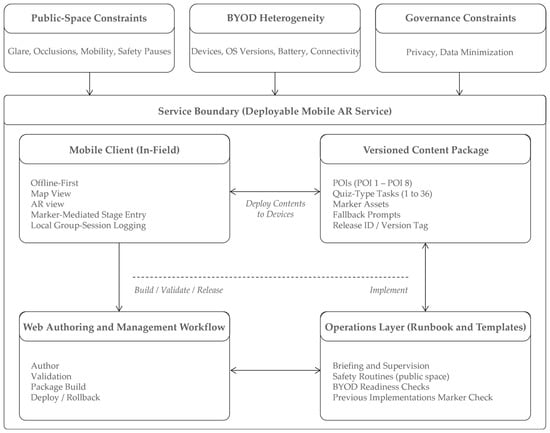
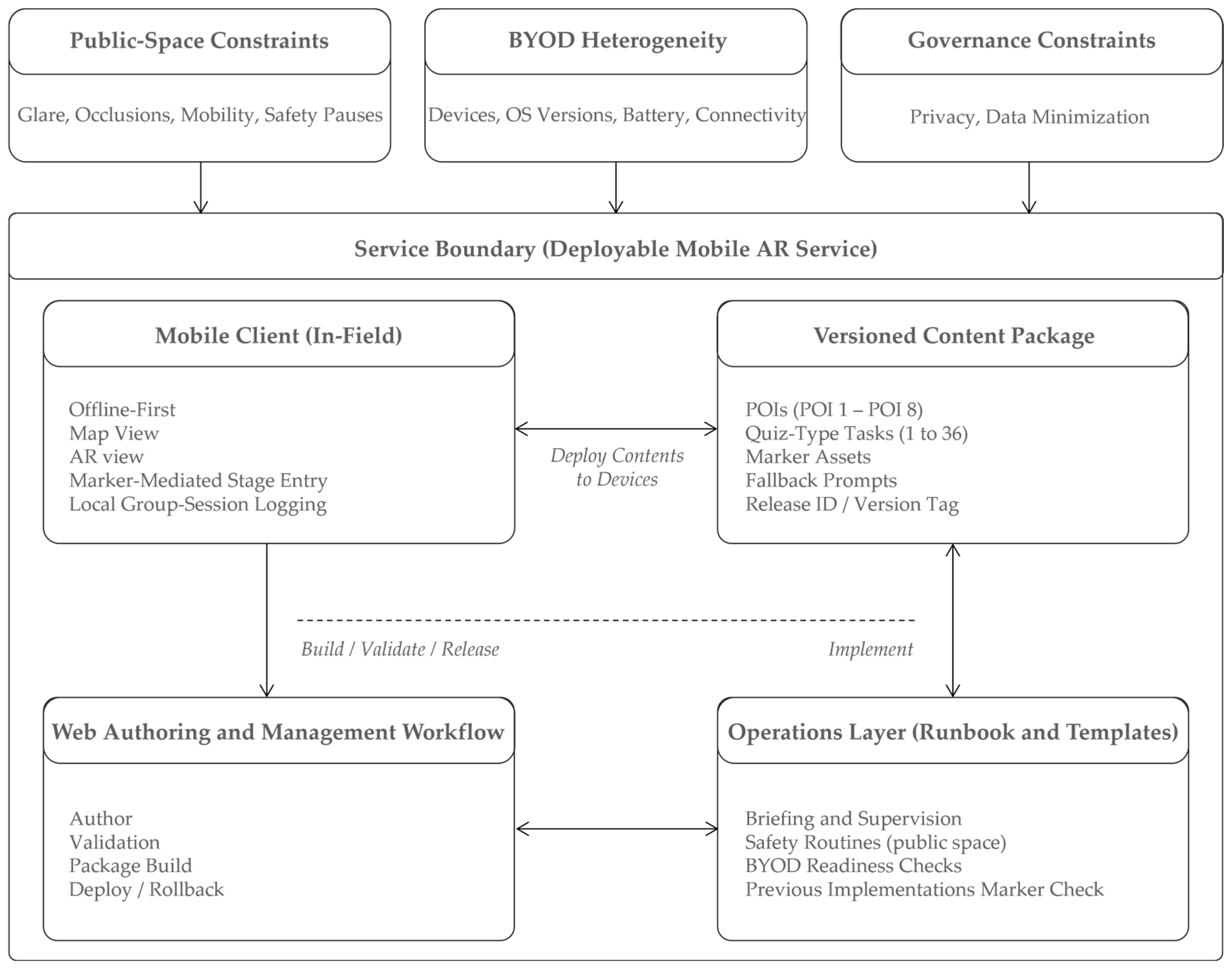
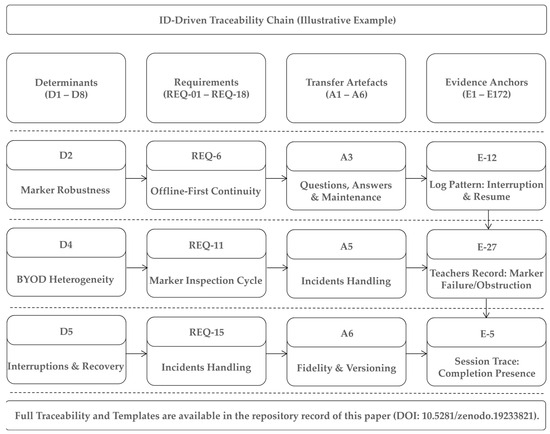
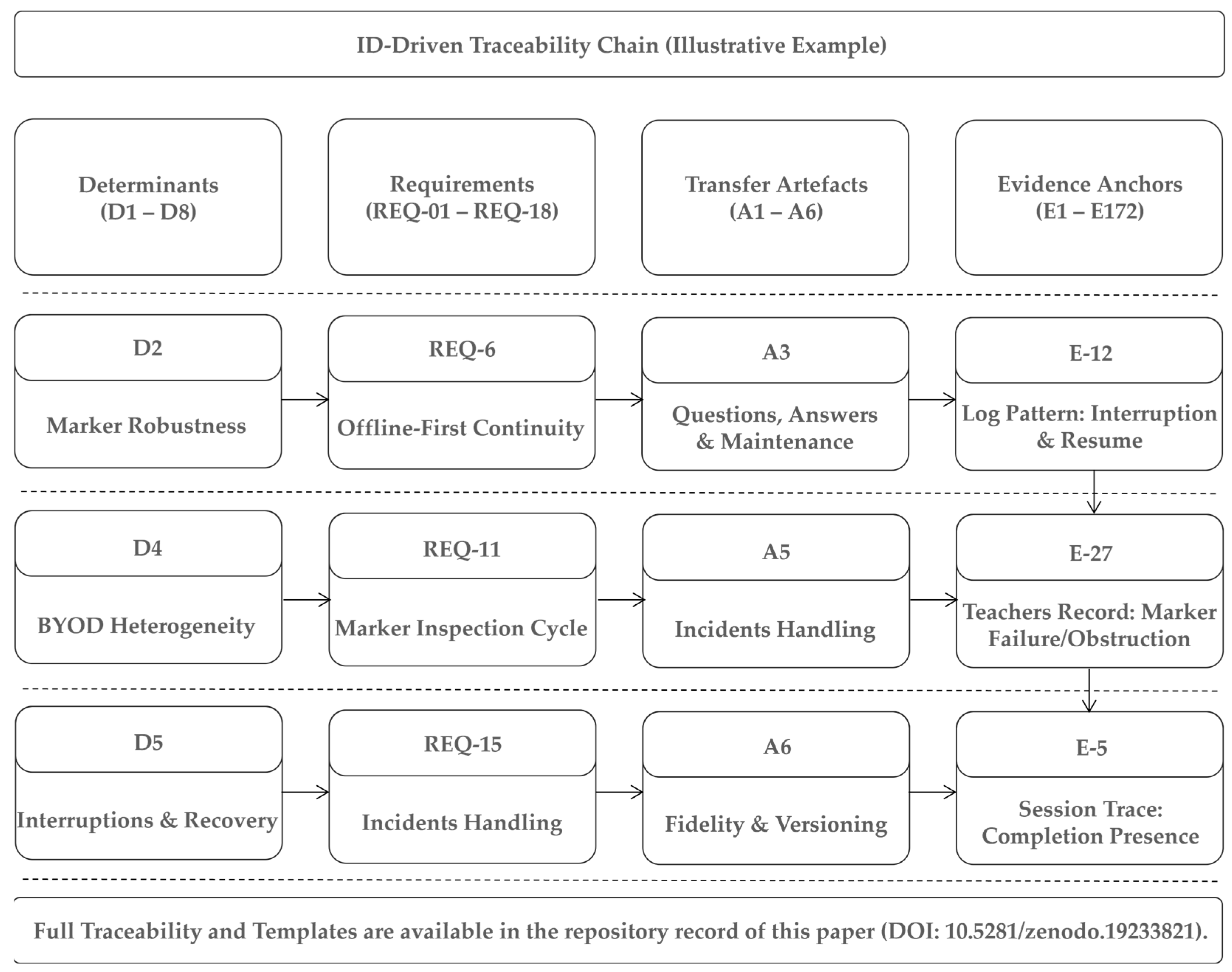
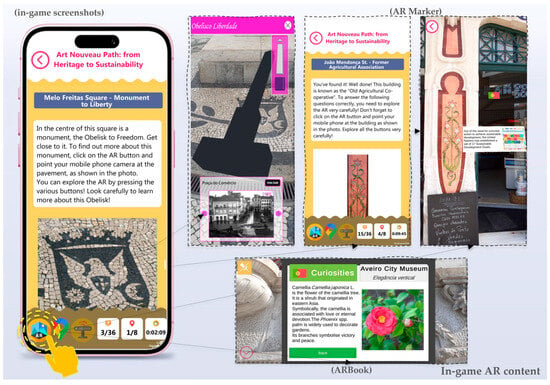
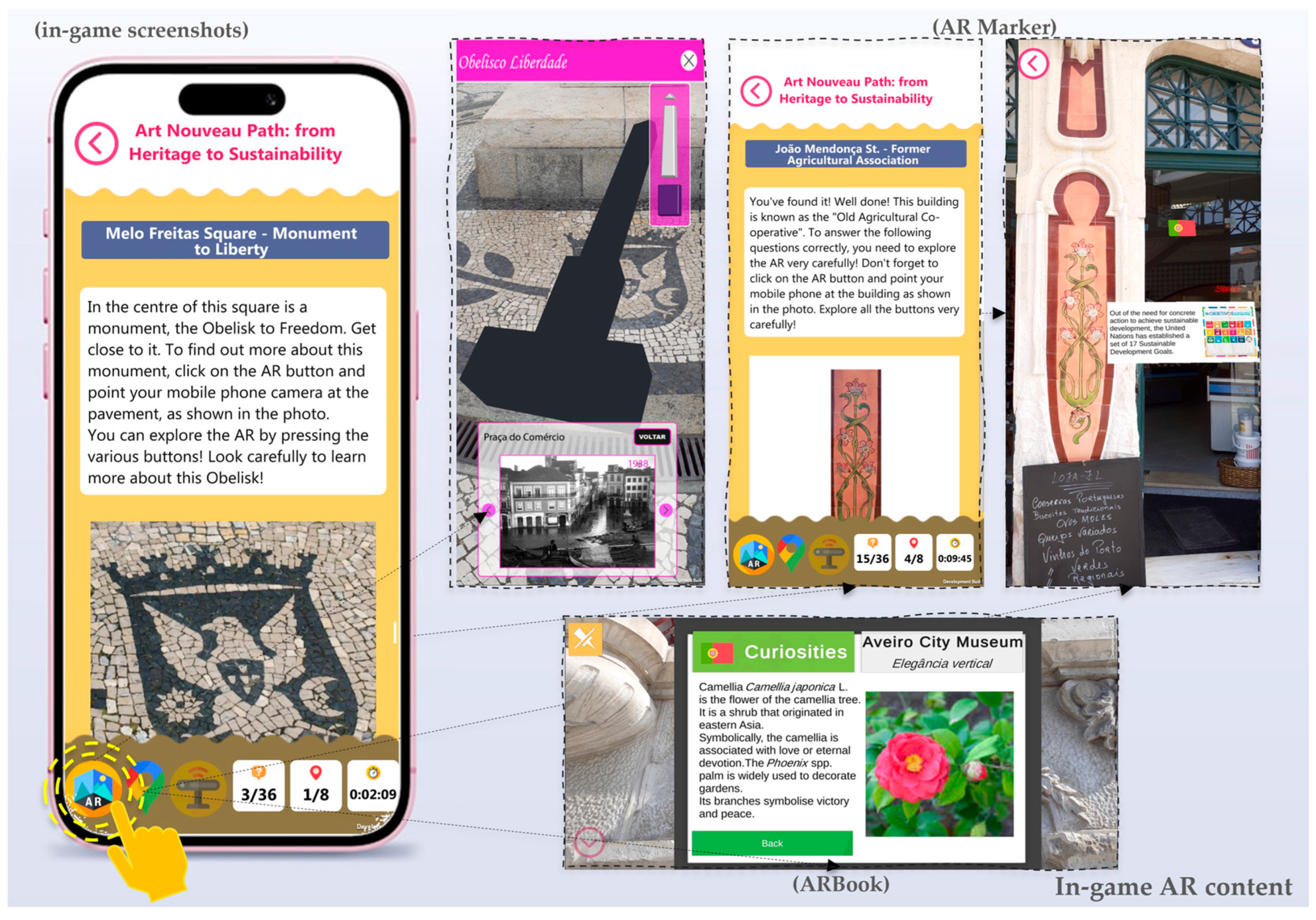
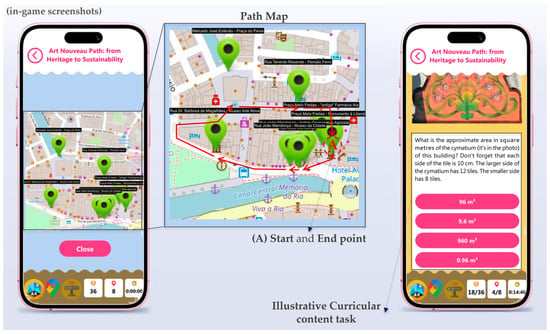
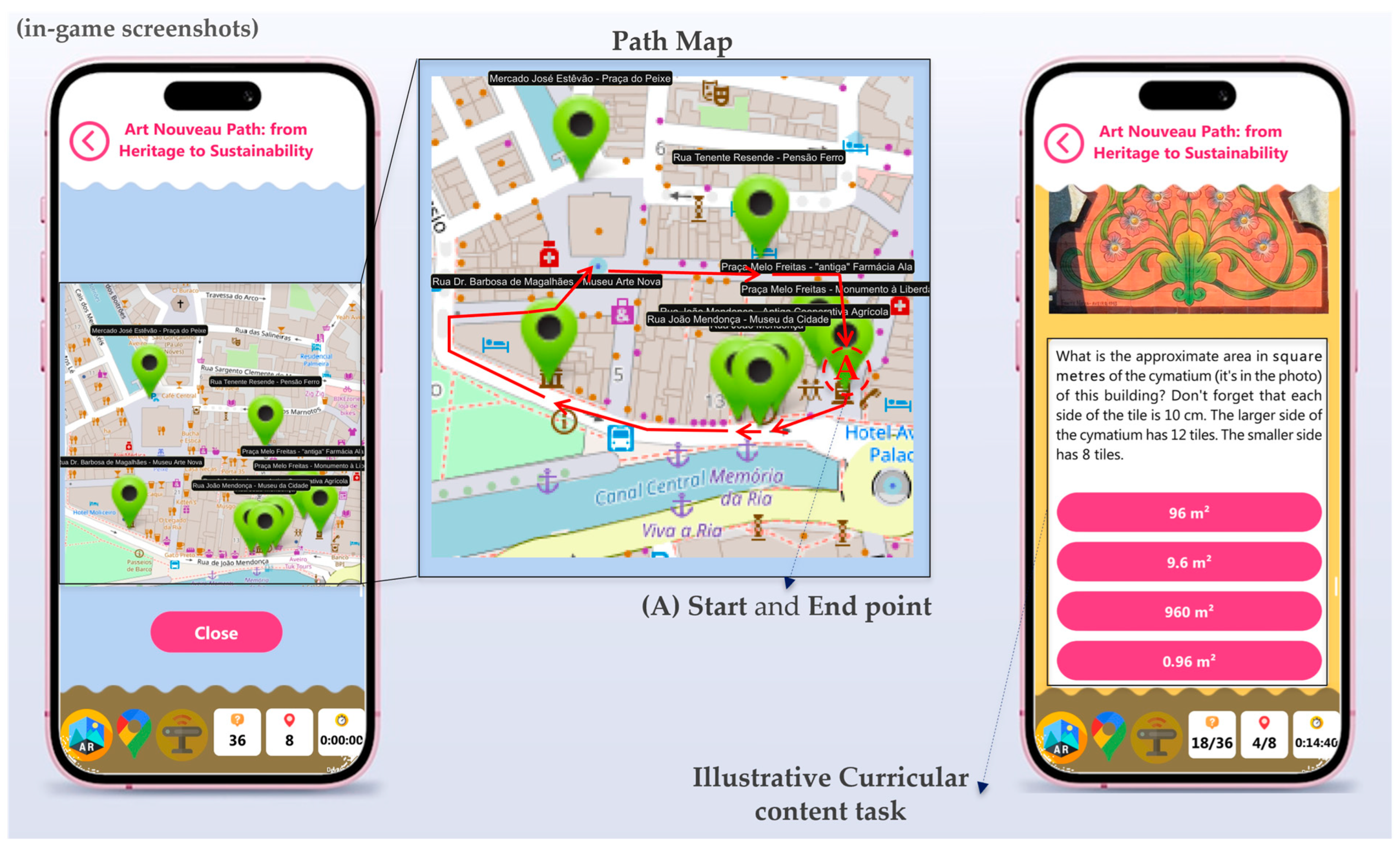

Disclaimer/Publisher’s Note: The statements, opinions and data contained in all publications are solely those of the individual author(s) and contributor(s) and not of MDPI and/or the editor(s). MDPI and/or the editor(s) disclaim responsibility for any injury to people or property resulting from any ideas, methods, instructions or products referred to in the content. |
© 2026 by the authors. Licensee MDPI, Basel, Switzerland. This article is an open access article distributed under the terms and conditions of the Creative Commons Attribution (CC BY) license.