


Abstract
Because textured contact lenses obscure the iris’s natural texture, they pose a serious threat to the accuracy of iris recognition systems and may make identity theft possible. Therefore, this work proposes a reliable method for textured contact lens detection that uses efficient global texture descriptors and effective feature selection with classification techniques. Run-Length and Zernike Moments are effective global texture descriptors that have been extracted from preprocessed iris images that were acquired from the IIIT-D CLI dataset. To improve classification performance, Ant Colony Optimization (ACO) was used to decrease the dimensionality of the feature vectors. Support Vector Machine (SVM) and Logistic Regression (LOG), two classifiers, have been evaluated with different descriptor pairings. According to findings from experiments, Zernike features optimized by ACO and paired with LOG produced the greatest accuracy of 98.04%, greatly surpassing previous methods. The efficacy of the presented approach for safe and dependable iris-based biometric systems is demonstrated by its exceptional results with regard to accuracy, recall, precision, and F1-score.
1. Introduction
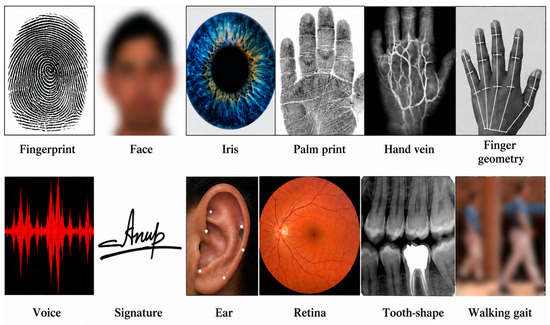
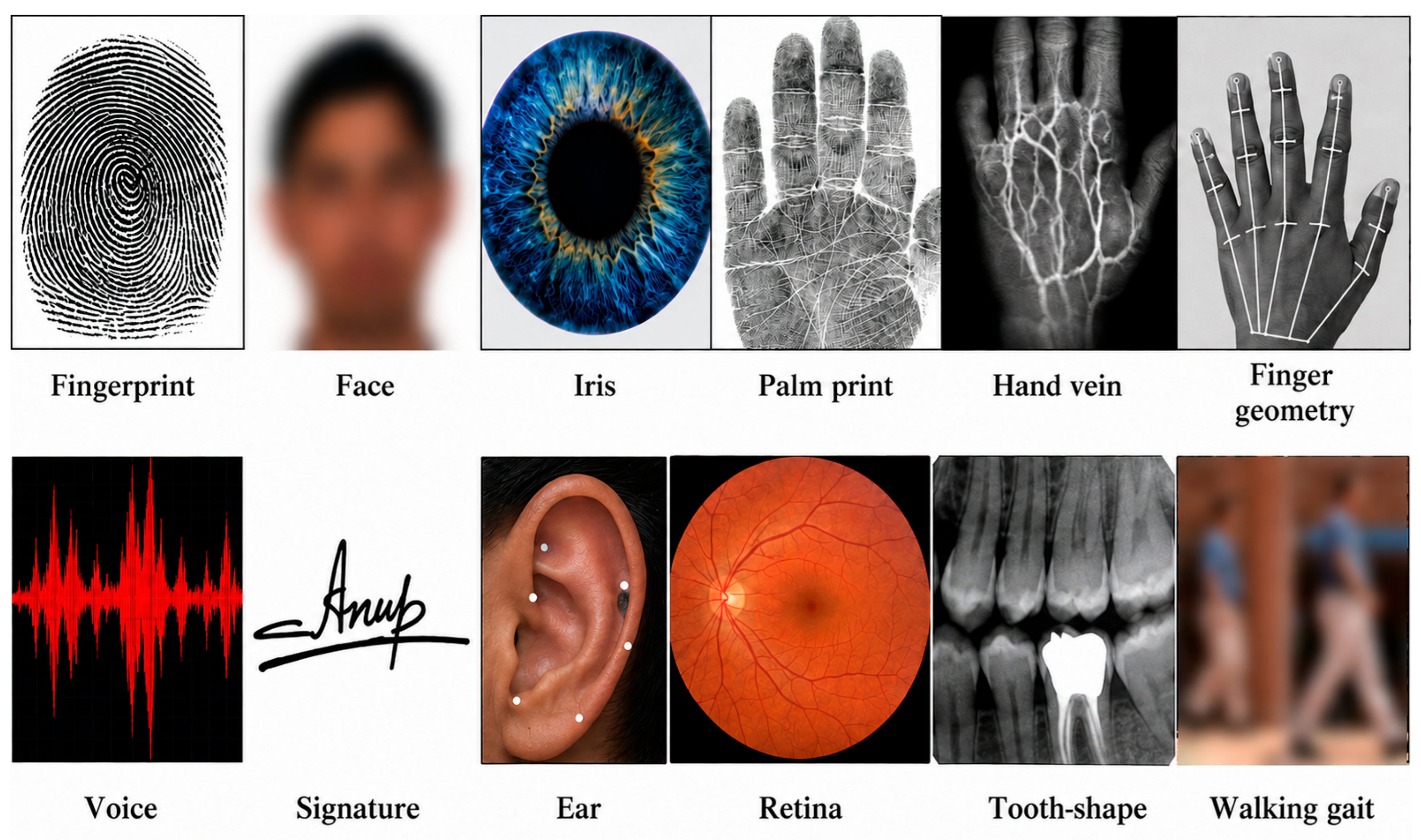
Biometric verification is becoming more and more common in every aspect of our lives. Unique features even distinguish twins who are identical from each other. A person’s distinct biometric identification can be used to substitute or improve passwords on computers, phones, and limited-access sites. Biometric security has been previously successfully integrated into the operations of several industries [1]. As illustrated in Figure 1, popular biometric traits consist of the fingerprint, face, hand vein, and iris. Iris detection is a widely used biometric verification technique that identifies individuals only by their physical attributes. The distinctive characteristics of each person remain constant throughout their lives, making the iris a reliable biometric identifier. According to various other biometric traits, iris recognition has grown in importance for reasons of safety. Its precision, consistency, and usability are the reasons behind this [2]. There are further uses for iris recognition, like incorporating security checks at various locations, such as airports, hospitals, schools, and shopping malls.
Figure 1.
Some instances of common biometric traits [3].
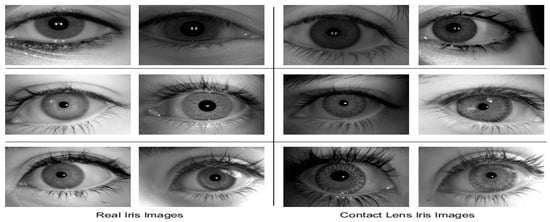
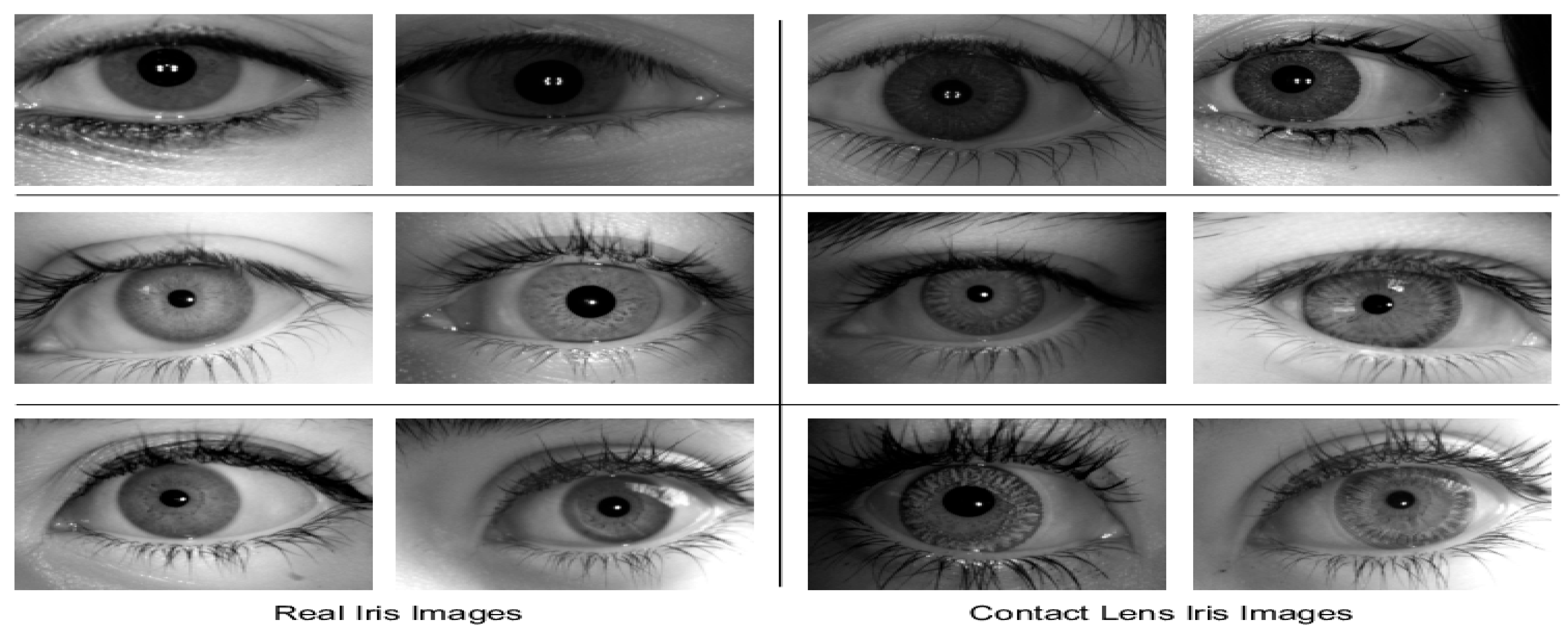
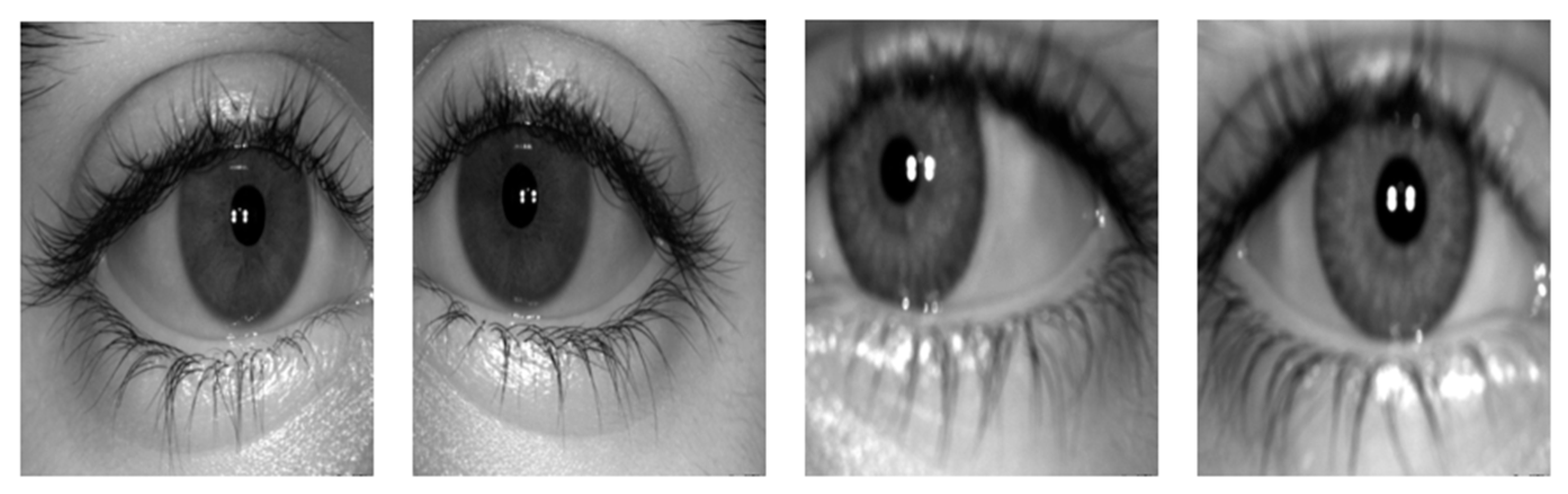
Presentation attack detection (PAD) techniques show that it is feasible to accurately identify when the iris image is authentic or was digitally manipulated or by physically mimicking the iris, particularly if particular kinds of attacks are identified. One particular kind of presenting tool for a concealer attack is textured contact lenses. The uneven texture of these textured cosmetic contact lenses successfully covers the wearer’s actual iris patterns with colored patterns, preventing the iris recognition system from identifying them [4,5]. Look at Figure 2 to view the images of a real iris and contact lens iris. Because there are so many different manufacturers, each with unique patterns, colors, and designs, it can be challenging to distinguish these concealer attacks from genuine irises.
Figure 2.
Real iris and contact lens iris images [6].
Consequently, accurate iris identification may be hampered by the existence of contact lenses. These difficulties include the following: (1) fluctuations in illumination affect the accuracy of iris recognition, resulting in false positives or negatives; (2) natural iris patterns can be mimicked by high-quality lenses, making detection difficult; and (3) problems with image quality, such as noise, blurriness, and low resolution, also affect accuracy, especially in surveillance or mobile applications. Thus, the main goal of the research is to develop an effective and accurate detection method for textured contact lenses using texture feature extraction techniques. Initially, we used a preprocessed database and global texture feature extraction methods, as well as two classifiers: SVM and LOG. Additionally, a number of performance measures were calculated to evaluate the efficacy of the recommended strategy.
Our research contributions can be illustrated by the following points:
- Enhanced the detection of textured contact lenses by proposing an entire structure that used global (Run-Length and Zernike Moments) texture descriptors for capturing a variety of textural patterns in iris images.
- Created a strong prepossessing workflow that improved the quality of input images for feature extraction by incorporating iris segmentation, noise elimination (median filtering), and greyscale transformation.
- Presented the Ant Colony Optimization (ACO) algorithm feature selection, which, by removing superfluous features and keeping the strongest discriminative ones, greatly enhanced classification performance. Therefore, the integrated structure with ACO consistently outperforms different individualized feature sets and their non-optimized combinations, demonstrating that the contribution is not simply method development but instead the efficient integration and optimization of current methods for a particular biometric challenge.
- Showed how well SVM and Logistic Regression classifiers work together with feature sets that have been optimized, attaining higher accuracy (up to 98.04%) than previous techniques.
- Highlighted that the work is an integrated feature optimization structure for detecting iris presentation attacks; instead of an algorithmic innovation, the uniqueness is found in the design decision, feature interaction modeling, and validation by empirical methods.
- Gave a flexible and effective option for biometric security systems, especially in places like airports, hospitals, and guarded facilities where a high degree of precision is needed to discriminate between textured contact lenses and natural irises.
2. Related Works
To ensure accurate identification, a sophisticated biometric system such as iris recognition heavily relies on state-of-the-art techniques. A thorough evaluation of the existing literature is necessary to identify areas for development and address new issues because the industry is always changing, even with the use of conventional handcrafted processes. We will go over a few of these research investigations in the following section. Evair et al. (2018) [7] proposed textured contact lens detection based on conventional methods (HOG) and deep learning (YOLO). They classified using SVM methods. To evaluate this method, the IIIT-Delhi Contact Lens Iris (IIIT-D) was employed. The results of the experiments showed that the accuracy of the suggested HOG-SVM technique was 96.43. They performed worse under changeable settings and needed more time for computation. Meenakshi et al. (2019) [8] proposed textured contact lens detection based on integrating a customized DenseNet with a Support Vector Machine (SVM) in order to improve the accuracy of identifying and classifying iris contact lenses. The authors evaluated their methods using conventional datasets, including the well-known IIIT-Delhi Contact Lens Iris (IIIT-D). The evaluation results show that the SVM classifier achieves an accuracy of 98.67%. Guang et al. (2019) [9] proposed textured contact lens detection using a combination of Uniform Local Binary Pattern (ULBP) transcoding and Gabor filters. Gabor filters successfully emphasize different iris textures by capturing multi-orientation imaginary (MOI) features in several directions, whereas ULBP encoding transforms these features into histograms, improving intraclass similarity and differentiation between classes. The Bhattacha_ryya distance was used to compare the ULBP histograms for classification. The authors evaluated their methods using common datasets, including the well-known CASIA V1 and JLU V3.0 datasets. Zhaoyuan et al. (2020) [10] proposed iris presentation attack detection (PAD) based on a combination of 2D texture and 3D shape features. The authors evaluated their approach using the widely used NDCLD’15 and NDIris3D datasets, among other conventional datasets. Several machine learning classifiers, including Random Forest, Support Vector Machine (SVM), MLP, and Naïve Bayes Regression, have been successfully trained and assessed for optimal outcomes. In challenging open-set circumstances, they achieve more than 90 percent accuracy when evaluated on datasets like NDIris3D and NDCLD’15. Gino and Ceronmani, 2020 [11] proposed textured contact lens detection based on an enhanced neighboring binary pattern (NBP). The features are contained in two-dimensional binary tables that were trained using an adaptive neural fuzzy inference system (ANFIS). This approach increases the accuracy of distinguishing between eyes wearing and not wearing contact lenses by using a range of classifiers, including SVM and KNN, to categorize the features. Dian et al. (2021) [12] proposed textured contact lens detection using a variety of texture features. It gathers the general patterns of texture, which are crucial for differentiating between real and synthetic irises. Additionally, local fine-texture features are extracted using the Gray-Level Co-Occurrence Matrix (GLCM). Several machine learning classifiers, including Random Forest (RF), Decision Tree (J48), and Support Vector Machine (SVM), have been successfully trained and assessed for optimal outcomes. Experiments on four common benchmark datasets showed that the fusion strategy produced good accuracy, particularly with the classifier ensemble of RF + J48 + MLP. Lucas and Adam (2022) [13] proposed textured contact lens detection based on a convolutional neural network (CNN). The Notre Dame Photometric Stereo Iris Dataset (NDPSID) was used during the experiments. By matching two sets of iris images—one with a textured contact lens and the other without—the efficacy of the suggested approach was assessed. With an Equal Error Rate (EER) of 10.6% as opposed to 33.6% with conventional iris code-based recognition techniques, the findings showed a significant rise in accuracy. Khayyat et al. (2024) [14] proposed textured contact lens detection that combines deep learning, hazy networks (Fuzzy-CNN), and local binary pattern (LBP) features. A total of four general datasets, including IITD CASIA-Iris-V1, CASIA-Iris-thousand, and CASIA-Iris-V3 Interval, are being used in a number of experiments. The proposed approach performance has been examined in comparison to a number of alternative deep learning and automatic learning models. Based on findings from the evaluation, the Fuzzy-CNN proposal model has the highest accuracy of 97.31%. Lim et al. (2025) [15] proposed employing AI-based methods to enhance the colored contact lens inspection and flaw detection procedure. Defects including inconsistent color, odd patterns, and surface faults are automatically detected. In addition to increasing inspection speed and uniformity, this automation lowers manufacturing costs and boosts total product reliability, guaranteeing end users greater safety and visual quality. A brief overview of each of these works of literature is shown in Table 1. Computational complexity, sensitivity to environmental changes, dataset biases, and resilience towards textured contact lens influence are among the primary challenges in these studies.
Table 1.
Brief description of famous works of literature.
3. Global Texture Features Descriptors (GTDs)
Texture descriptors, which offer information on surface characteristics including patterns, granularity, smoothness, and roughness, are essential in image processing and computer vision. They are very helpful in differentiating between irises with and without textured lenses, as well as detecting textured contact lenses [16].
The overall texture properties of an image or a particular area within it can be captured by global texture descriptors (GTDs), which are strong depictions of features. These descriptors offer a comprehensive overview of texture patterns, facilitating accurate evaluation for tasks including object detection, segmentation, classification, and image retrieval. Since GTDs can identify repeating patterns and extremely fine surface variations typical of many lenses, they are very useful in the detection of textured contact lenses. Run-Length Feature Extraction (RLE) and Zernike Moment are two of the more popular and successful techniques for textured contact lens detection among the different kinds of global texture descriptors. Because they capture both the repeated patterns (RLE) and the structural integrity of textures (Zernike Moments), which are properties of textured contact lenses, these descriptions work well.
3.1. Run-Length Feature Extraction (RLE)
A global texture descriptor called Run-Length Feature Extraction (RLE) can be employed to gather the frequency and length of successive pixels (runs) in a certain direction (usually 0°, 45°, 90°, or 135°) that have the same gray-level intensity. A neighboring set of pixels with exactly the same intensity is called a run. It works especially well for examining repeating patterns and hard surfaces. As a result, it can be helpful in recognizing the repeated texture patterns found in contact lenses. In addition, it works well for simulating the delicate iris texture, including any repeating or smooth patterns that might be typical of particular iris components. Each of the components of the Run-Length Matrix (RLM) indicate how many times a grey level happens throughout a run of a given length. The total number of runs with grey level i and run length j is represented by each entry (i, j)(i, j)(i, j)(i, j) in the RLM. A collection of statistical features that define the image’s texture has been extracted from this matrix. RLE is widely utilized in applications such as object extraction, texture analysis, pattern recognition, and defect identification due to its being able to accurately describe texture by analyzing pixel intensity runs [17]. The run length is determined using each pixel value along the row’s length. The run lengths for each pixel value are added to a feature vector once each row in the image has been scanned.
3.2. Zernike Moment
Zernike Moments (ZMs) are a class of orthogonal moments that use a collection of complex polynomials to describe an image’s overall texture and shape. The input image is then projected onto a complex orthogonal Zernike polynomial in order to calculate the Zernike Moments. Zernike Moments are very useful for global texture analysis because of certain characteristics they can accomplish, including (1) compactness (capturing the overall shape and structure of the iris), (2) rotation-invariant representation of an image’s shape and texture information, (3) orthogonality, which guarantees that features are not redundant, and (4) noise resilience, performing well with iris images that are noisy or of poor quality. In case of the orientation of the object could change, Zernike Moments are ideal since their magnitude remains constant if the image is rotated [18,19].
4. Proposed Methods
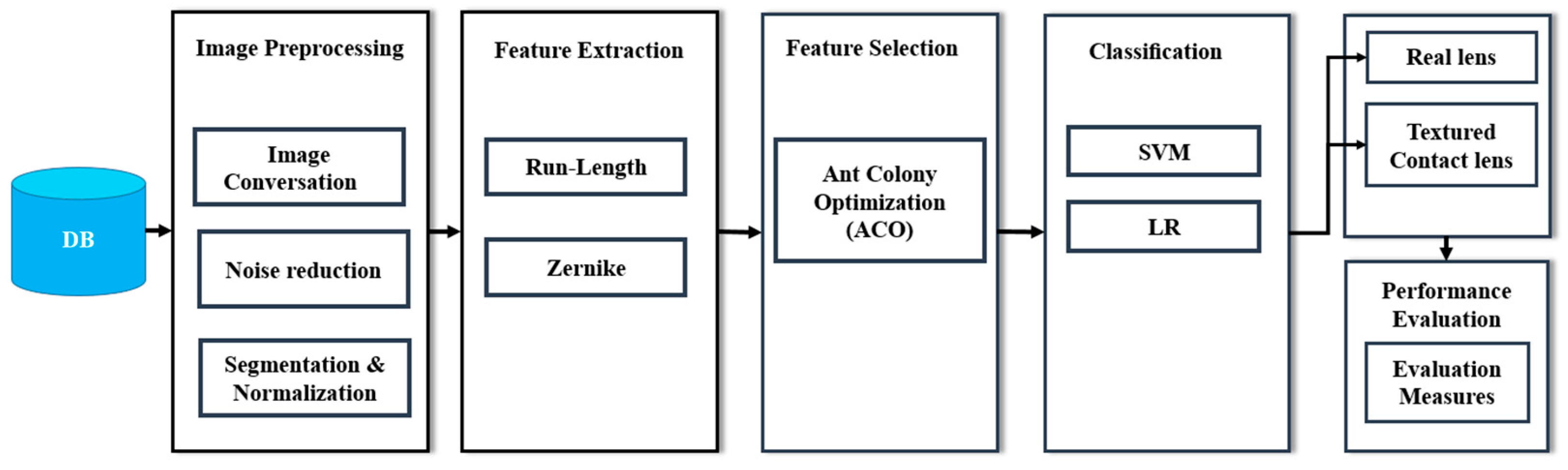
The proposed method for detecting textured contact lenses by employing powerful texture feature extraction methods is covered in this section. The four primary steps of the proposed approach are image preprocessing, feature extraction methods, feature selection, and two classification algorithms that reliably differentiate between textured and real eyes. Performance metrics are evaluated for efficacy and robustness. The block structure for the proposed method is shown in Figure 3.
Figure 3.
Proposed textured contact lens Detection Block Diagram.
4.1. Image Preprocessing Phase
Preprocessing is the initial stage, which involves a number of important procedures that can enhance the method of detection performance. Following the acquisition of the dataset, the images undergo a number of preprocessing procedures to get them ready for analysis. The preparation procedures utilized for the datasets employed in the present article are described in depth in the following sections.
4.1.1. Image Conversion
Transforming an image to greyscale is an essential preparatory step in the analysis of images, particularly for texture feature extraction. Red, green, and blue are the three color channels that make up the image data; these are reduced to just one channel that represents the values of intensity, where Ired, Igreen, Iblue, and Igray represent the original RGB image’s red, green, and blue channels, respectively, and the greyscale image. The transformation is done by using Equation (1), which is based on a weighted combination of RGB channels [20].
Igray = 0.2989 × Ired + 0.587 × Igreen + 0.114 × Iblue
The info reduces to a single channel when the image is converted to a grey gradient. This makes computations and processing easier and concentrates on the image’s contrast instead of its color distribution.
4.1.2. Noise Reduction
The elimination of noise is a crucial preprocessing step in the analysis of images, particularly when it involves enhancing image quality before texture feature extraction. Because it removes unwanted artefacts that could obstruct accurate iris texture analysis, noise reduction is helpful in the identification of textured contact lenses. This stage guarantees that the recovered features are true depictions of the texture patterns rather than noise-induced distortions. A nonlinear digital filtering method that is frequently employed in the majority of image processing applications is median filtering.
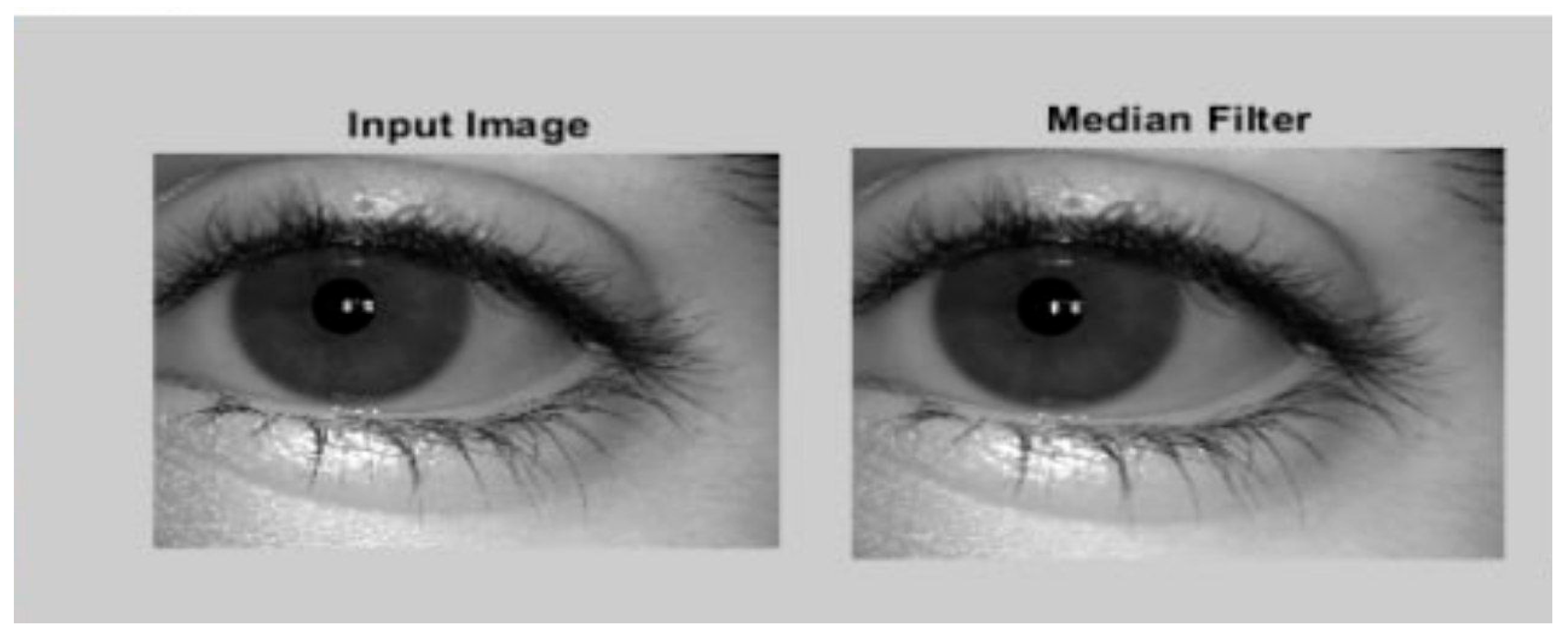
The median of the pixels immediately surrounding it within a predefined window, say 3 × 3, is used to substitute the original value of each pixel. This technique effectively eliminates individual noise locations without appreciably altering the image. The median filtering technique has been used in image processing to create cleaner, more analysis-appealing photos, as illustrated in Figure 4, since it effectively removes noise while maintaining important information, including edges.
Figure 4.
Noise reduction using median filtering technique.
4.1.3. Segmentation
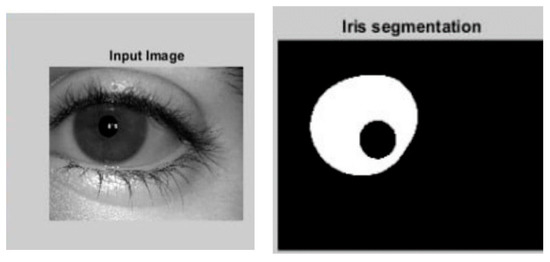
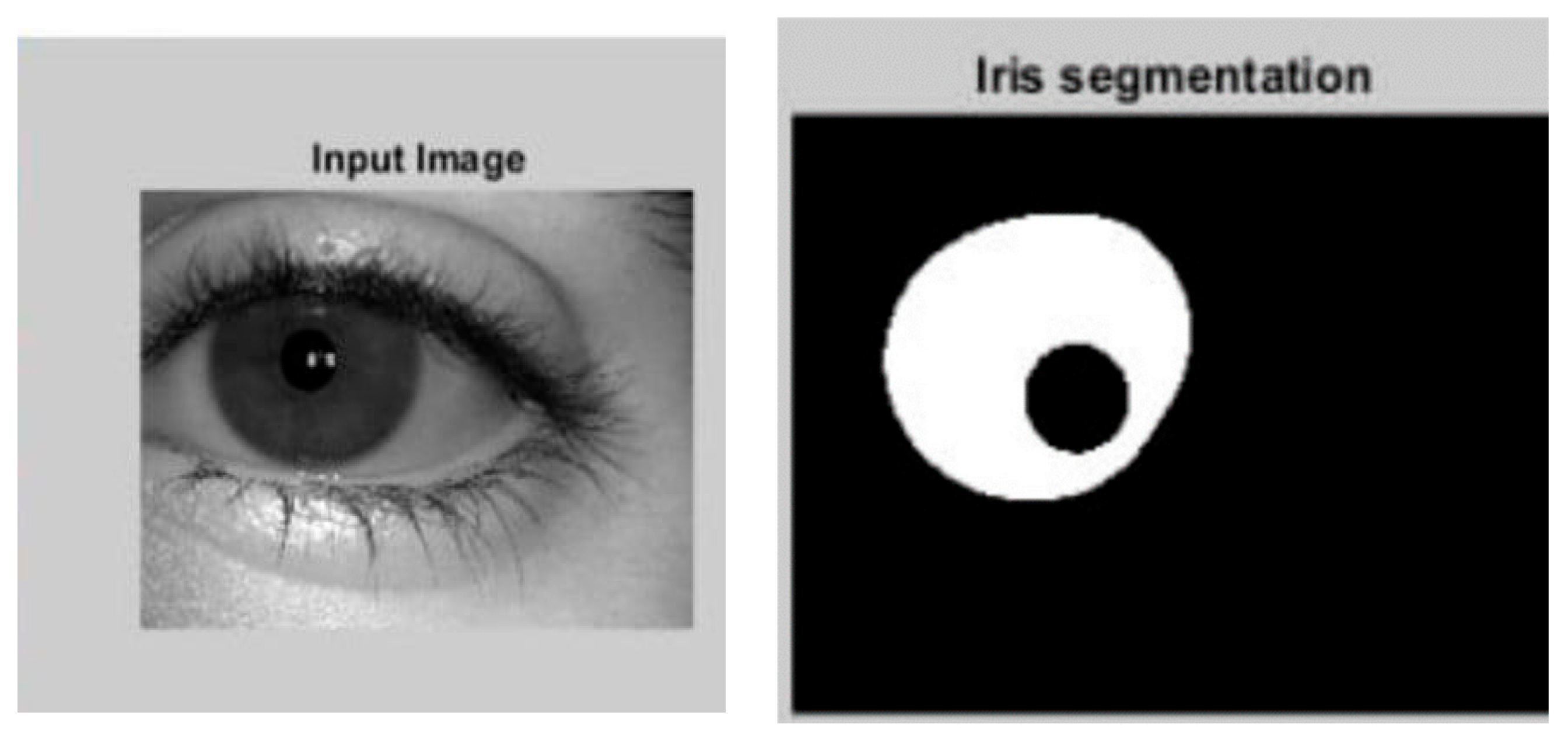
Segmentation constitutes one of the many crucial preprocessing stages for textured contact lens detection. The technique of segmentation was applied in accordance with the methodology recommended by the current work [21]. Figure 5 illustrates the segmentation procedure applied on the contact lens image.
Figure 5.
Iris segmentation on contact lens image.
Iris normalization must be done in order to transform a segmented iris from the polar coordinates to coordinates in Cartesian format. This procedure involves continuous feature extraction, converting the iris area from circular (polar) coordinates to a normalized rectangular form (Cartesian).
4.2. Feature Extraction Phase
Because texture features are essential for differentiating between contact lenses and natural iris patterns, they are used to identify textured contact lenses. Since texture features capture the surface properties and tiny details of the iris, they are ideal for studying differences caused by contact lenses. Therefore, two global texture feature extraction methods, Run-Length and Zernike Moments, are obtained from the preprocessed image. They collect the unique patterns of contact lens texture. A detailed description of every feature is provided in the subsection that follows.
Global Texture Descriptors for Contact Lens Detection
The overall texture properties of an image or a particular area within it can be captured by global texture descriptors (GTDs), which are strong depictions of features. Global texture descriptors analyze the texture across the entire image to provide a more comprehensive view. Global texture descriptors are crucial instruments in capturing the patterns that are particular to each person and are necessary for efficiently identifying and categorizing iris patterns.
- A.
- Run-Length Feature Extraction
One important technique for determining the textural qualities of an image is the Run-Length (RLE) method, which is especially useful for texture analysis. The reason is because it provides information on the distribution of runs of pixels with identical intensities, which is essential for distinguishing between an actual iris and textured contact lenses. A complete structure for Run-Length (RLE) feature extraction is given through Algorithm 1.
| Algorithm 1: Run-Length Feature Extraction Process |
| Input: Preprocessed IIIT-D CLI dataset |
| Output: Run-Length features vector. |
| Begin |
For
End for End |
- B.
- Zernike Moment Feature Extraction
A collection of complicated polynomials across a given circle that constitutes an orthogonal basis is known as Zernike Moments. They are particularly useful in image analysis since they can describe a picture using the concept of rotation-invariant features. Due to the fact that the eye’s orientation can differ between samples, this feature is essential when working with iris images. A complete structure for Zernike Moment feature extraction is given through Algorithm 2.
| Algorithm 2: Zernike Moments Feature Extraction Process |
| Input: Preprocessed IIIT-D CLI dataset |
| Output: Zernike Moments features vector. |
| Begin |
For
End for End |
4.3. Feature Selection Phase
The goal of feature selection is to eliminate any duplicate or less valuable features while keeping those that are most relevant features from the retrieved ones. This improves the classification algorithms’ performance and efficiency. Although there are different varieties, Ant Colony Optimization (ACO) has the capacity to effectively discover the research space since it relies on numerous “ants” that collaborate to investigate numerous possibilities. Based on the foraging habits of actual ants, ACO is a nature-inspired optimization method. The basic idea is that ants drop pheromones on the paths they travel, and other ants use these pheromones to guide their decision-making. The colony is guided towards the optimal solutions by shortened pathways, which progressively accumulate more pheromones. A complete structure for the ACO algorithm is given through Algorithm 3.
| Algorithm 3: Ant Colony Optimization (ACO) for Feature Selection |
| Input: Feature vector F = {f1, f2, …, fn} |
| Output: Optimal feature subset S* Best cost (fitness) value E* |
| Begin |
For
End for End |
4.4. Classification Phase
A review of the literature found that numerous tests using various classifiers yielded higher-accuracy results. In the current research, we employed SVM and Logistic Regression as efficient methods for textured contact lens detection with the aim to distinguish between real irises and textured lenses. Below is a summary of some popular and useful classification methods.
4.4.1. Support Vector Machine (SVM) Classifier
A linear Support Vector Machine (SVM) is a binary classifier that uses a straight line (or hyperplane) with the greatest possible margin between classes for separating data. It achieves an acceptable balance between error during classification and the complexity of models and thus works well in high-dimensional domains [22]. Finding the appropriate hyperplane to divide two classes is the goal of SVM, which was first created for binary classification [23]. Subsequently, kernel functions were added to improve its ability to deal with nonlinear issues. SVM serves as the primary binary format, but it can also be used for multiclass classification.
4.4.2. Logistic Classifier
Ordinary regression serves as the foundation for the statistical regression model, also referred to as Logistic Regression. A straightforward and understandable classification technique for differentiating between textured contact lenses and actual irises is Logistic Regression. It generates probabilities between 0 and 1 using the sigmoid function and a linear decision boundary. Textured lenses are defined as samples with probabilities greater than 0.5, whereas genuine irises are defined as samples with probabilities less than 0.5. Logistic Regression is more appropriate for binary classification problems than linear regression, which forecasts values that are continuous [24].
5. Experimental Results and Analysis
The following four main elements of the findings from experiments will be thoroughly covered in the following section: the experimental environment, which describes the datasets employed, the evaluation parameters, a thorough analysis of the outcomes, and a comparison with other current methodologies. As shown in Table 2, a number of specific instructions have to be closely adhered to in order to carry out the experiment.
Table 2.
Description of experimentation properties [25].
5.1. Dataset
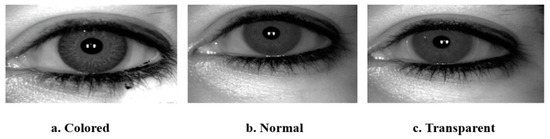
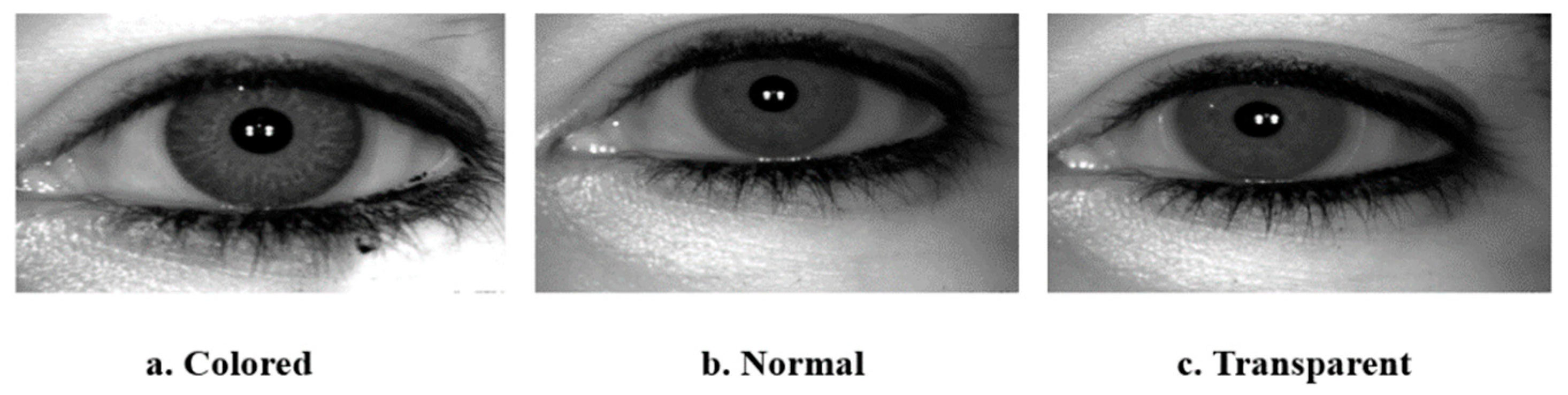
The present research employs the use of the Indraprastha Institute of Information Technology- Delhi Contact Lens Iris (IIIT-D CLI) dataset, which offers a variety of images with textured contact lenses and normal eyes. It has 202 iris categories based on 6570 iris photos from 101 people, each of whom had both left and right iris captures taken. Figure 6 illustrates how the dataset classifies lens kinds (normal, transparent and colored) and includes photos captured both with and without contact lenses. For the experiments, a total of 2323 iris images from the IIITD CLI Database were employed. The 2323 photos that were chosen from the 6570 total were not chosen at random or for practical reasons. We discarded the use of transparent sample photos. Sample photos obtained from the IIITD CLI Database [26] are displayed in Figure 7.
Figure 6.
IIIT-Delhi Contact Lens Iris (CLI) dataset categories.
Figure 7.
Examples of the IIIT-D CLI Dataset.
5.2. Evaluation Parameters
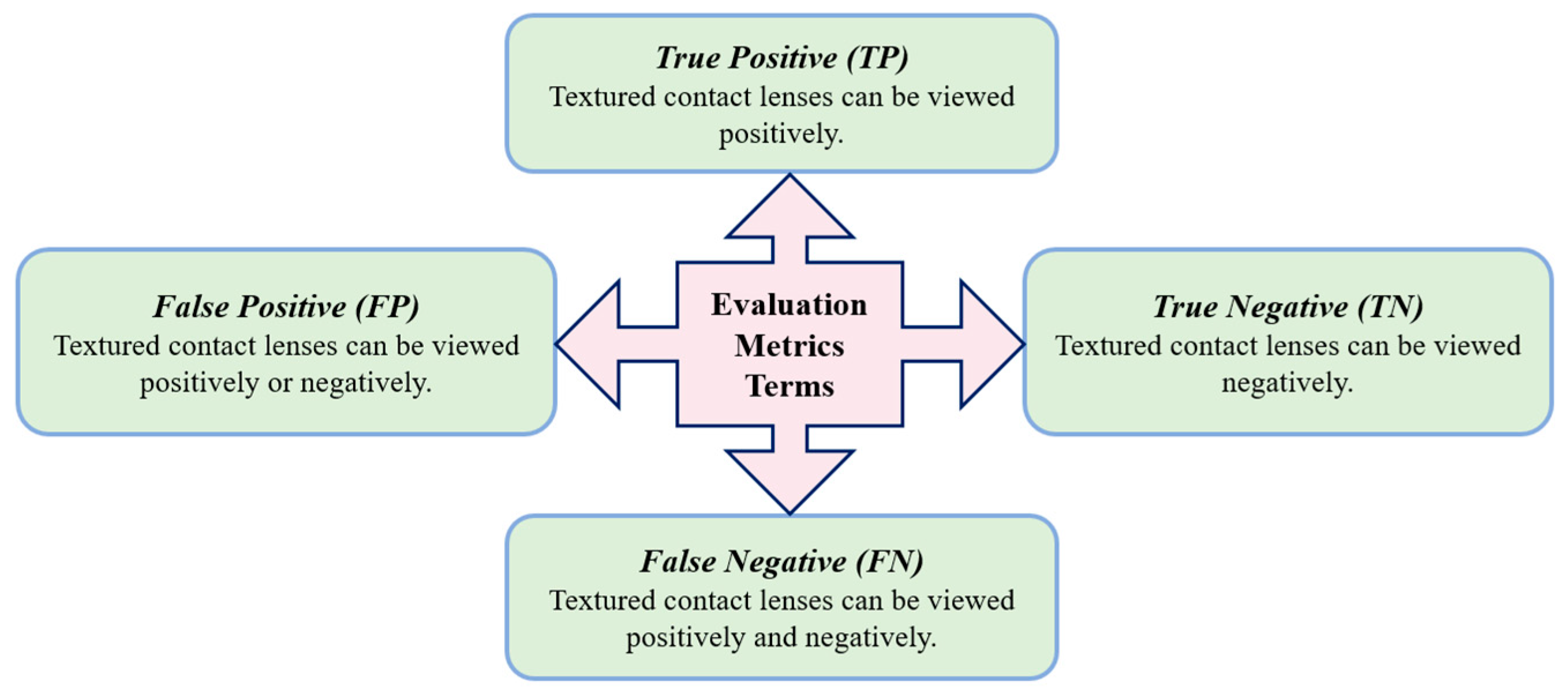
To guarantee the trustworthiness of the results, the recommended technique is evaluated using a range of assessment parameters, such as accuracy, precision, recall, false alarm, and F1-score methods [27]. Table 3 displays the mathematical equations and explanations for the aforementioned measurements. All of the terms that can be located using the previously given equations are described in Figure 8. In the experimental setup, the dataset is divided into subsets of 20% for testing and 80% for training. The training set is further assessed using k-fold cross-validation, in which a subset of the training data is used as a validation set for each fold to guarantee objective hyperparameter tuning. The test set is used exclusively for final performance evaluation.
Table 3.
An overview of the assessment metrics.
Figure 8.
A detailed description of every term.
5.3. Evaluation Results Analysis
This section discusses the application of the proposed approach and evaluates its performance with the IIIT-D Contact Lens Iris dataset. Two machine learning algorithms, which include SVM and Logistic Regression, are employed in addition to global feature extraction techniques. Comparing different feature extraction techniques is essential to determining which one performs best when paired with machine learning. The efficacy of the approach is assessed using performance metrics techniques such as precision, F1-score, accuracy, recall, and false alarm. Each proposal’s outcomes are shown both with and without the feature selection techniques. A thorough explanation of the findings and their ramifications is provided below.
Global Texture Descriptor Evaluation
Here, both without and with the feature selection procedures, the proposal’s results based on global texture descriptors are displayed.
- A.
- Without Using Feature Selection
Run-Length and Zernike are examples of global texture descriptors that are used as features. Table 4 displays the outcomes for each global descriptor across SVM and Log classifiers without feature selection. The outcomes are explained by the successful performance of specific texture descriptors and classifiers in precisely identifying and differentiating the distinctive textural patterns connected to textured contact lenses.
Table 4.
Results for each global descriptors across SVM and Log classifier without using feature selection.
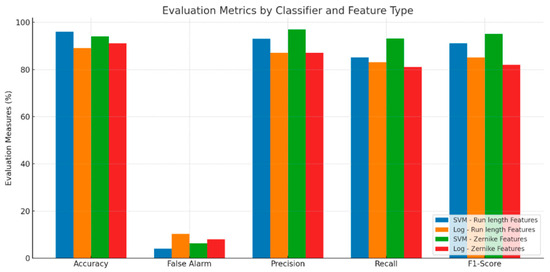
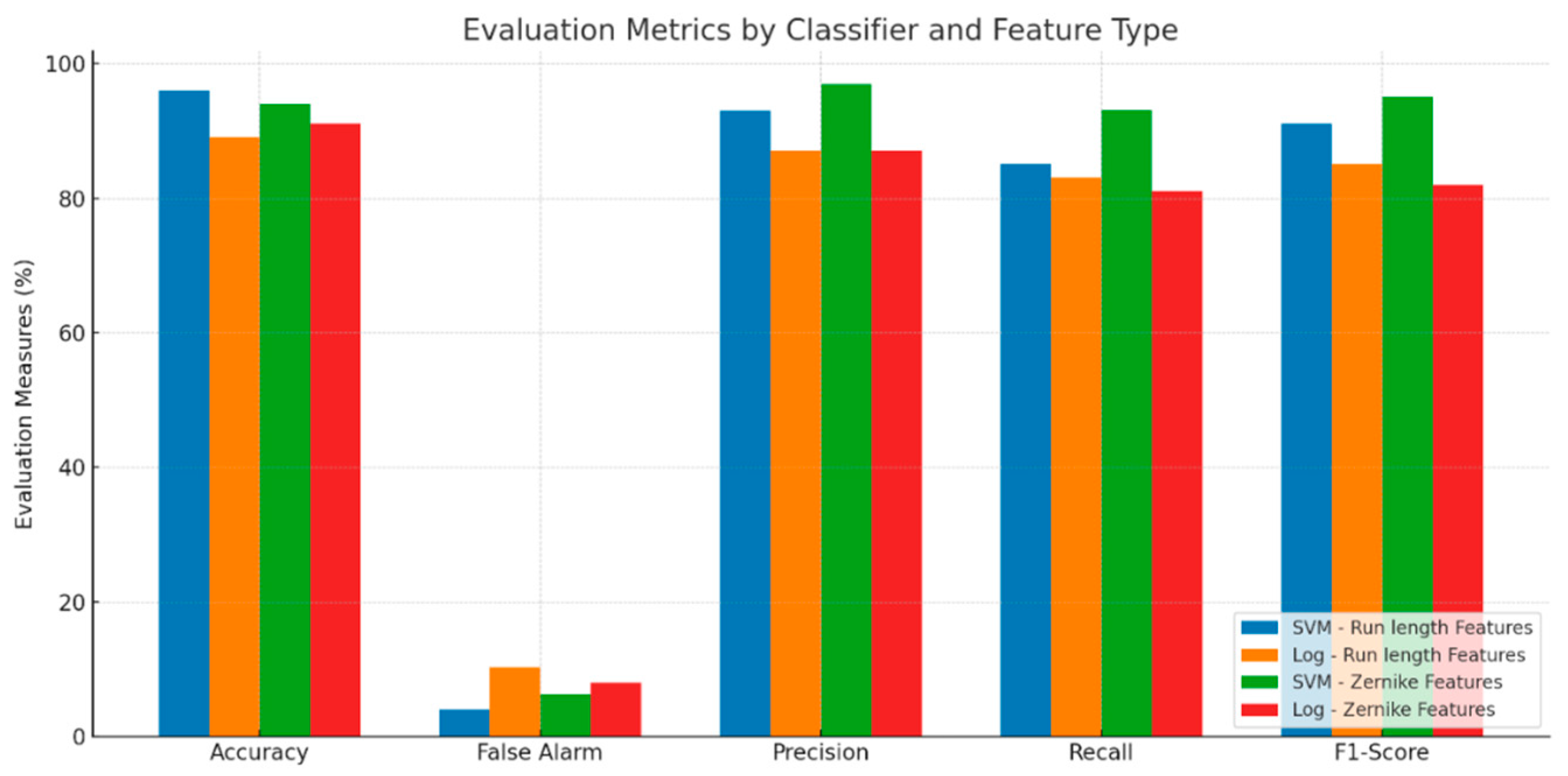
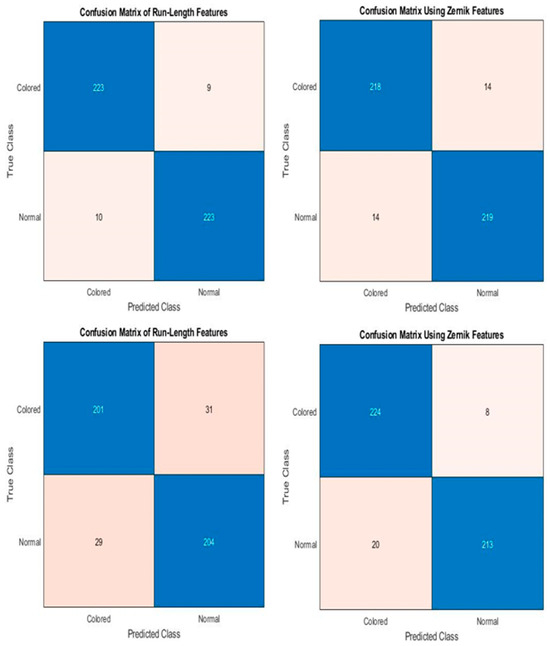
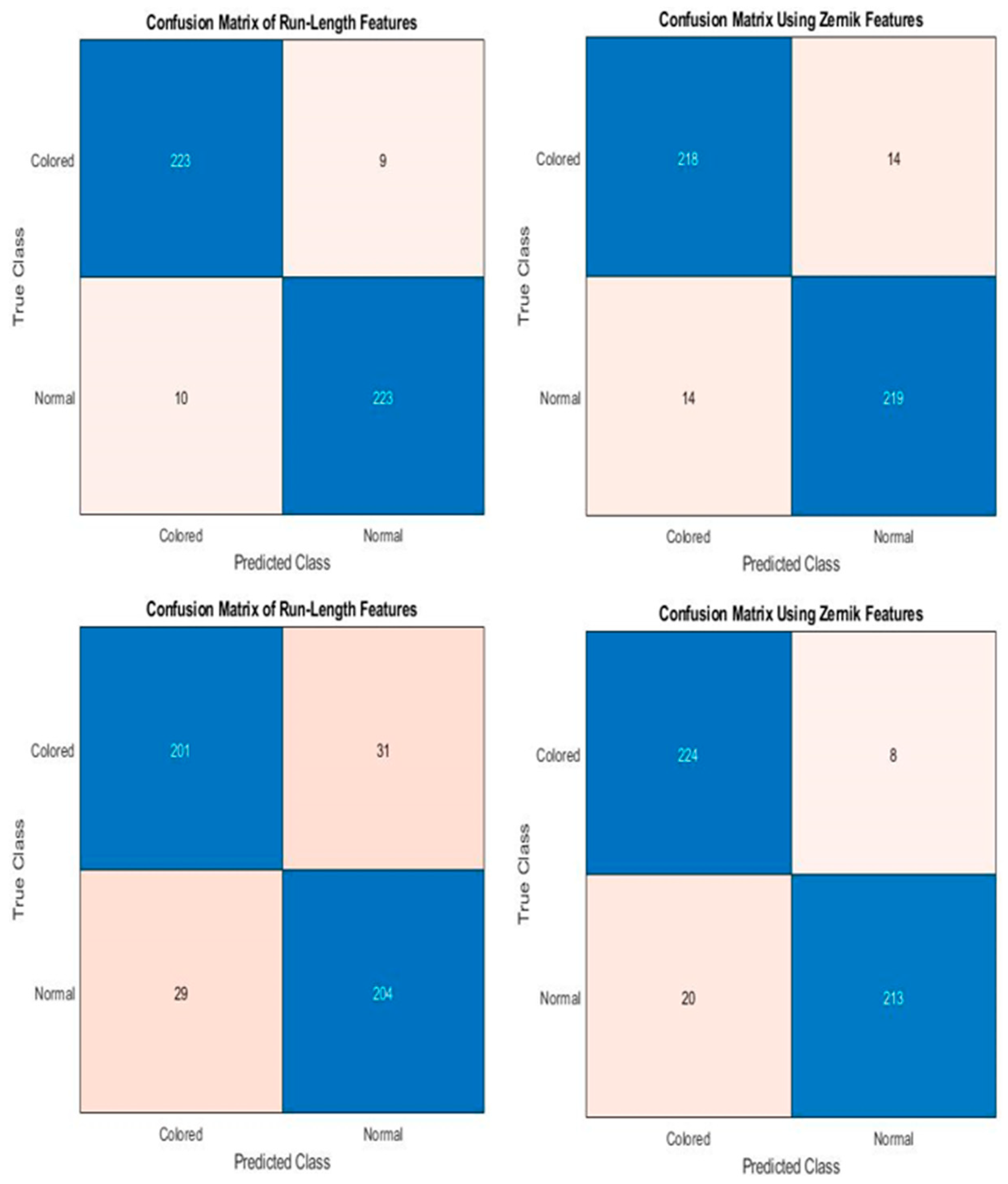
The detection of textured contact lenses is improved by integrating SVM and Log classifiers with texture feature extraction techniques, as shown in Table 4. According to performance criteria, a comparison investigation aids in identifying the best feature–classifier combination. According to the results, the SVM with the Run-Length descriptor achieves a low precision, recall, and F1-score while a high accuracy (96.01%). The best accuracy and false alarm rates are obtained when SVM and the Zernike descriptor are combined, indicating that they are appropriate for high-dimensional data. The LOG with Run-Length descriptor achieved an 89.06% accuracy and a low false alarm rate, making it a good option for classification dependability. Unfortunately, it additionally had a poor F1-Score, precision, and recall. Although the LOG with Zernike descriptor produced a low false alarm rate and an accuracy of 91.01%, it also had a low F1-Score, precision, and recall. Without the use of feature selection algorithms, Figure 9 shows the assessment metrics for the SVM and Logistic Regression classifiers utilizing Run-Length and Zernike descriptor features. Furthermore, Figure 10 displays the confusion matrices for global texture descriptors for both the SVM and Logistic Regression classifiers.
Figure 9.
Evaluation metrics results for each global descriptor across SVM and Log classifiers without feature selection.
Figure 10.
Confusion matrix values for global texture descriptors: first row for the SVM and second row for the LOG without using feature selection.
It can be concluded that SVM is superior to Logistic Regression across all evaluation metrics for both feature sets. However, there is still potential for improvement. It may be possible to lower the false alarm rates, improve the accuracy of textured contact lens recognition, and remove features that are redundant through incorporating feature selection techniques to each classifier–descriptor pair.
- B.
- Using Feature Selection
The goal of feature selection is to eliminate any duplicate or less valuable features while keeping those that are most relevant features from the retrieved ones. The performance and efficiency of the classification algorithms are enhanced by the feature selection approach. For this reason, the Ant Colony Optimization (ACO) approach was employed. Table 5 displays the outcomes for each global descriptor across SVM and Log classifiers with ACO feature selection. Table 6 shows the Improvement Ratio (%) for each global descriptor across SVM and Log classifiers after ACO feature selection is used. The Improvement Ratio (%) is calculated as the difference between the performance obtained with ACO and the performance without ACO, divided by the performance without ACO, and then multiplied by 100. This formulation expresses the relative percentage improvement achieved by incorporating ACO into the proposed method.
Table 5.
Results for each global descriptor across SVM and Log classifier using ACO feature selection.
Table 6.
Improvement Ratio (%) after using ACO feature selection.
According to the improvement ratios following the application of ACO feature selection, the Logistic Regression (LOG) classifier with the Zernike descriptor performs most effective in general, exhibiting the greatest gains in accuracy (7.71%), recall (19.97%), and F1-score (19.50%)—all of which are essential for reliable classification. Moderate gains are seen using SVM with Zernike, and LOG with Run-Length provides substantial precision improvements. However, the LOG–Zernike combo shines by greatly improving all important metrics. Excellent results are shown by Zernike with SVM and Logistic Regression, indicating that its global shape information is helpful for capturing the lens’ overall structure. Furthermore, it is evident that ACO considerably improves the overall outcome.
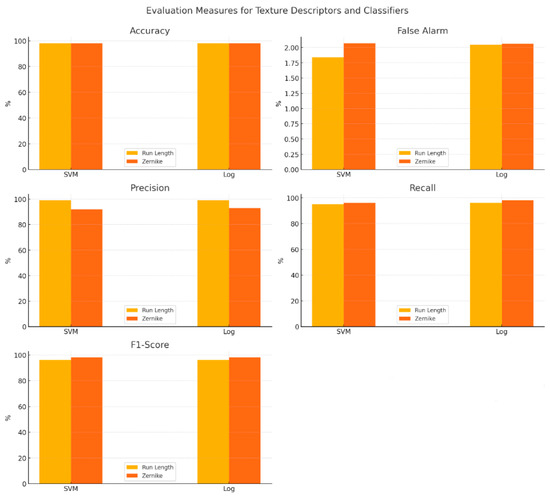
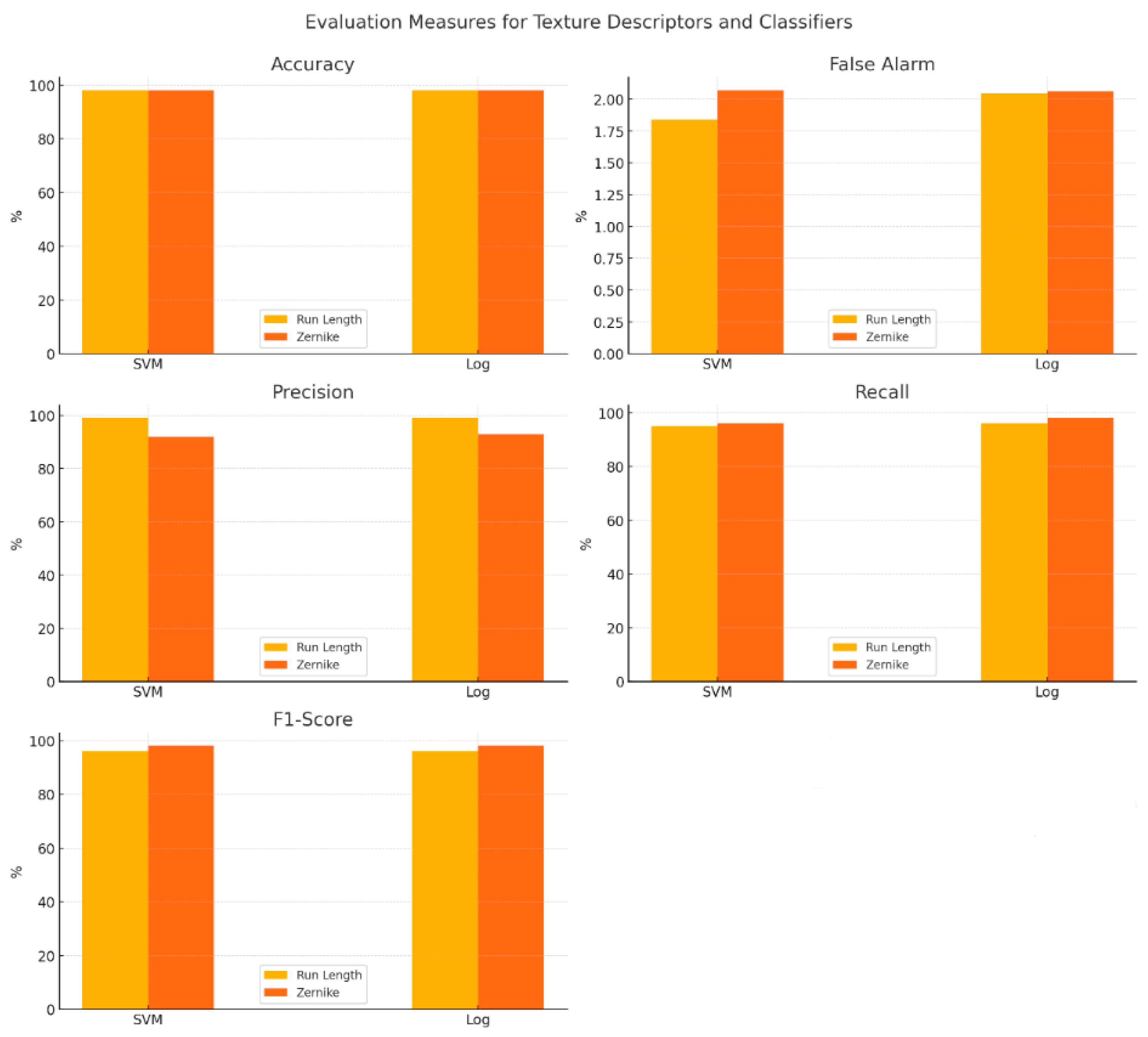
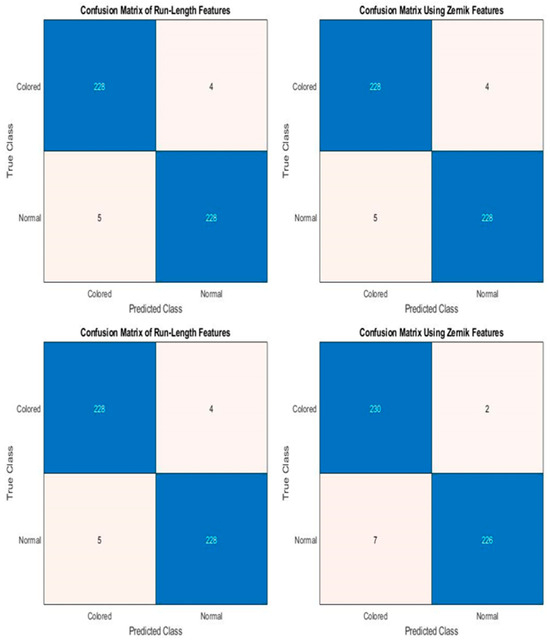
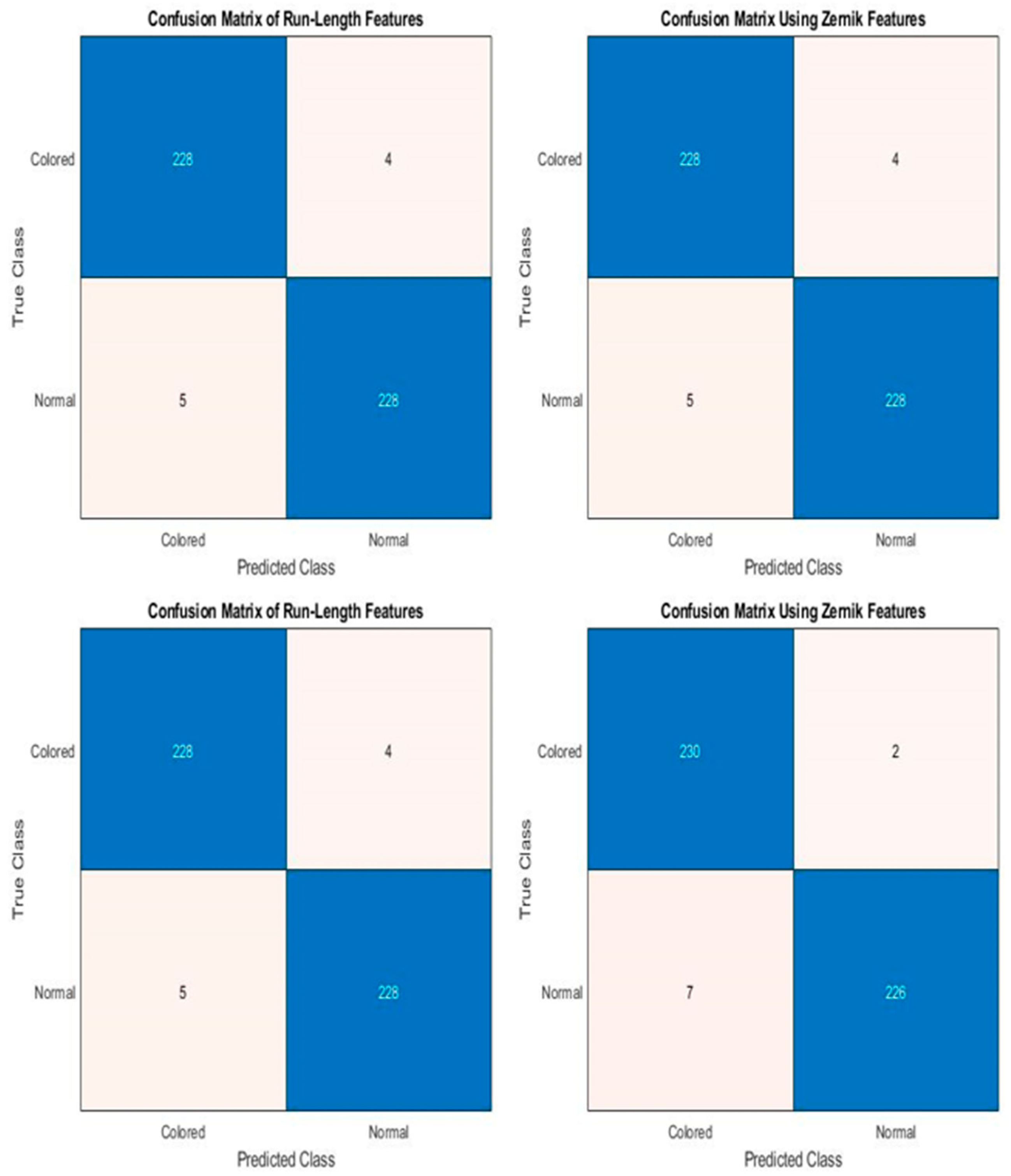
With the use of feature selection algorithms, Figure 11 shows the assessment metrics for the SVM and Logistic Regression classifiers utilizing Run-Length and Zernike descriptor features with ACO feature selection. Furthermore, Figure 12 displays the confusion matrices for global texture descriptors for both the SVM and Logistic Regression classifiers with using ACO feature selection.
Figure 11.
Evaluation metrics results for each global descriptor across SVM and Log classifiers using feature selection.
Figure 12.
Confusion matrix values for global texture descriptors: first row for the SVM and second row for the LOG with using ACO feature selection.
5.4. Comparison with Previous Works
This section compares the suggested strategy with a number of alternative approaches in order to assess its efficacy. For a fair comparison, a greater number of methods that use both SIFT and Zernike feature extraction approaches are selected, together with the IIITD-CLI dataset used for testing. Table 7 displays the results of the several textured contact lens detection methods that will be examined. It is possible that most previous studies kept the extracted features since they did not employ a feature selection technique. However, the recommended method uses ACO, which most likely helps reduce dimensionality, improving processing efficiency and the effectiveness of classification.
Table 7.
Comparing performance with previous methods of detecting contact lenses.
The SVM classifier in the proposed method outperforms the SVM in [29,31] (65% and 92% versus 98%), showing that the design that incorporates Zernike and ACO significantly enhances LOG performance. The proposed methods are considered computationally efficient because the feature selection method used surpassed most of the previous methods with the highest accuracy of 98.04%. On the ITTD v1 dataset, Mohammed et al. (2022) [30] obtained the second-best accuracy of 96.4% using SIFT and Euclidean Distance, while [12] (2021) used GLCM features with a variety of classifiers to get a 95.57% accuracy. In order to improve textured contact lens detection performance, it is essential to integrate optimized feature selection with discriminative descriptors and an effective classifier. This is demonstrated by the significantly lower performance (65.74%) of traditional methods, such as those by SMITA et al. (2021) [29], who used CT and Haar transforms with SVM. Although the transforms can capture some texture features, their accuracy may be diminished when handling complex texture variations in contact lenses, as demonstrated by the work’s poor accuracy [29]. The accuracy rate of the work [14] that used LBP and CNN was 97.31%. However, this resulted in high implementation cost and complexity in large databases as well as depended on a wide variety of datasets. The accuracy rate of the work [28] that used Zernike Moments was 90.2%. Zernike may not be as effective as other techniques at capturing minute texture variations, but they are helpful for identifying contact lenses. The presented method (Zernike–LOG with ACO) performs better than all other related methods, attaining the highest accuracy of 98.04% on the IIITD-CLI dataset. The capacity of both Zernike and ACO to enhance the most relevant features is the primary factor contributing to the effectiveness of these methods. Additionally, these lead to more accurate classification when combined with LOG, which excels at handling complex feature spaces.
6. Conclusions
The present research established an effective approach for identifying textured contact lenses by using global texture feature descriptors, and the approach was further improved by feature selection and machine learning classifiers. The method employed used two classifiers, Support Vector Machine (SVM) and Logistic Regression (LOG), together with two global texture descriptors: Run-Length and Zernike Moments. Ant Colony Optimization (ACO) was used for feature selection in order to enhance classification performance and reduce the feature set. The better performance of the proposed method was shown by numerous experiments on the IIITD-CLI dataset. Logistic regression continuously performed better than SVM throughout all sets of features. All evaluation metrics were considerably enhanced by adding ACO, though especially the Zernike descriptions. The maximum accuracy of 98.04% was attained by combining Zernike features, ACO selection, and LOG classification, surpassing current state-of-the-art techniques. The findings demonstrate that extremely dependable textured contact lens detection is achieved by integrating dependable texture descriptors with strong classifiers and efficient feature selection. For further enhancement of detection efficiency and accuracy in a variety of settings, future research may investigate deep learning-based combination models and real-time deployment. Furthermore, broadening the assessment to encompass a wider range of datasets and environmental circumstances would confirm the recommended method’s generalizability. This work aligns with United Nations Sustainable Development Goal 9 (Industry, Innovation, and Infrastructure) by advancing innovation in biometric authentication and strengthening secure digital infrastructure. Specifically, it contributes to presentation attack detection in iris recognition systems by focusing on textured contact lens analysis using robust feature extraction techniques.
Author Contributions
Conceptualization, I.T.A.; writing—original draft preparation, I.T.A. and R.S.M.; review and editing, I.T.A.; validation, I.T.A.; software, I.T.A. and M.A.H.; validation, M.A.H.; funding acquisition, M.A.H. All authors have read and agreed to the published version of the manuscript.
Funding
This work was funded by the Department of Civil Engineering, FEQS, INTI-IU University, Malaysia, research grant INTI-IU—2025: INTI-FEQS-01-03-2025. This support was crucial to the publication of this study.
Institutional Review Board Statement
Not applicable.
Informed Consent Statement
Not applicable.
Data Availability Statement
The original data presented in the study are openly available in [26]. The data are openly available in a public repository.
Acknowledgments
The authors are grateful to the Department of Civil Engineering, FEQS, INTI-IU University, Malaysia, for their generous support through the research grant INTI-IU—2025: INTI-FEQS-01-03-2025. This support was crucial to the publication of this study.
Conflicts of Interest
The authors declare no conflicts of interest.
References
- Veeraiah, V.; Kumar, K.R.; Kumari, P.L.; Ahamad, S.; Bansal, R.; Gupta, A. Application of biometric system to enhance the security in virtual world. In 2022 2nd International Conference on Advance Computing and Innovative Technologies in Engineering (ICACITE); IEEE: Piscataway, NJ, USA, 2022; pp. 719–723. [Google Scholar]
- Ibrahim, Y.I.; Sultan, E.A.-J. Iris recognition based on 2D Gabor filter. Int. J. Electr. Comput. Eng. 2023, 13, 325–334. [Google Scholar] [CrossRef] [Scilit]
- Jain, A.; Hong, L.; Pankanti, S. Biometric identification. Commun. ACM 2000, 43, 90–98. [Google Scholar] [CrossRef] [Scilit]
- Cayabyab, G. Contact Lens Detection for Security. Int. J. Res. Appl. Sci. Eng. Technol. 2019, 7, 1673–1691. [Google Scholar] [CrossRef] [Scilit]
- Hammad, B.T.; Jamil, N.; Rusli, M.E.; Z’aba, M.R.; Ahmed, I.T. Implementation of Lightweight Cryptographic Primitives. J. Theor. Appl. Inf. Technol. 2017, 95, 5571–5586. [Google Scholar]
- Gupta, M.; Singh, V.; Agarwal, A.; Vatsa, M.; Singh, R. Generalized iris presentation attack detection algorithm under cross-database settings. In 2020 25th International Conference on Pattern Recognition (ICPR); IEEE: Piscataway, NJ, USA, 2021; pp. 5318–5325. [Google Scholar]
- Severo, E.; Laroca, R.; Bezerra, C.S.; Zanlorensi, L.A.; Weingaertner, D.; Moreira, G.; Menotti, D. A Benchmark for Iris Location and a Deep Learning Detector Evaluation. In Proceedings of the 2018 International Joint Conference on Neural Networks, Rio de Janeiro, Brazil, 8–13 July 2018. [Google Scholar] [CrossRef] [Scilit]
- Choudhary, M.; Tiwari, V.; Venkanna, U. An approach for iris contact lens detection and classification using ensemble of customized DenseNet and SVM. Futur. Gener. Comput. Syst. 2019, 101, 1259–1270. [Google Scholar] [CrossRef] [Scilit]
- Huo, G.; Guo, H.; Zhang, Y.; Zhang, Q.; Li, W.; Li, B. An Effective Feature Descriptor with Gabor Filter and Uniform Local Binary Pattern Transcoding for Iris Recognition. Pattern Recognit. Image Anal. 2019, 29, 688–694. [Google Scholar] [CrossRef] [Scilit]
- Fang, Z.; Czajka, A.; Bowyer, K.W. Robust iris presentation attack detection fusing 2d and 3d information. IEEE Trans. Inf. Forensics Secur. 2020, 16, 510–520. [Google Scholar] [CrossRef] [Scilit]
- Gino Sophia, S.G.; Ceronmani Sharmila, V. Computer vision algorithms for dominant contact lens feature extraction using fuzzy-logic-based classifications. Soft Comput. 2020, 24, 14235–14249. [Google Scholar] [CrossRef] [Scilit]
- Li, D.; Wu, C.; Wang, Y. A novel iris texture extraction scheme for iris presentation attack detection. J. Image Graph. 2021, 9, 95–102. [Google Scholar] [CrossRef] [Scilit]
- Parzianello, L.; Czajka, A. Saliency-guided textured contact lens-aware iris recognition. In Proceedings of the IEEE/CVF Winter Conference on Applications of Computer Vision; IEEE: Piscataway, NJ, USA, 2022; pp. 330–337. [Google Scholar]
- Khayyat, M.M.; Zamzami, N.; Zhang, L.; Nappi, M.; Umer, M. Fuzzy-CNN: Improving personal human identification based on IRIS recognition using LBP features. J. Inf. Secur. Appl. 2024, 83, 103761. [Google Scholar] [CrossRef] [Scilit]
- Lim, C.C.; Fook, C.Y.; Vijean, V.; Mohd Azli, S.N.A.; Chee, L.S.; Ali, Y.M.; Jian, T.X. Enhanced quality control in colored contact lens manufacturing using artificial intelligence. In AIP Conference Proceedings; AIP Publishing LLC: Melville, NY, USA, 2025; Volume 3349, p. 30008. [Google Scholar]
- Taha, M.A.; Ahmed, H.M. Iris features extraction and recognition based on the local binary pattern technique. In 2021 International Conference on Advanced Computer Applications (ACA); IEEE: Piscataway, NJ, USA, 2021; pp. 16–21. [Google Scholar]
- Tang, X. Texture information in run-length matrices. IEEE Trans. Image Process. 1998, 7, 1602–1609. [Google Scholar] [CrossRef] [Scilit] [PubMed]
- Nugroho, H.; Widodo, W.; Hapsari, R.K.; Hermanto, L.A. Feature Extraction Shape Kawi Numbers and Java Images Using The Zernike Moment. In IOP Conference Series: Materials Science and Engineering; IOP Publishing: Bristol, UK, 2019; Volume 462, p. 12017. [Google Scholar]
- Das, P.; Neelima, A. A robust feature descriptor for biomedical image retrieval. Irbm 2021, 42, 245–257. [Google Scholar] [CrossRef] [Scilit]
- Ahmed, I.T.; Der, C.S.; Hammad, B.T.; Jamil, N. Contrast-distorted image quality assessment based on curvelet domain features. Int. J. Electr. Comput. Eng. 2021, 11, 2595–2603. [Google Scholar] [CrossRef] [Scilit]
- Ng, R.Y.F.; Tay, Y.H.; Mok, K.M. An effective segmentation method for iris recognition system. In 5th International Conference on Visual Information Engineering (VIE 2008); IET: Hertfordshire, UK, 2008; pp. 548–553. [Google Scholar]
- Kumar, S.; Singh, J.; Singh, P.; Diwakar, M.; Gupta, I.; Ravi, V.; Maidin, S.S. Enhancing brain tumor segmentation using Berkeley wavelet transformation and improved SVM. Open Bioinform. J. 2025, 18, e18750362358232. [Google Scholar] [CrossRef] [Scilit]
- El-Sayed, M.A.; Abdel-Latif, M.A. Iris recognition approach for identity verification with DWT and multiclass SVM. PeerJ Comput. Sci. 2022, 8, e919. [Google Scholar] [CrossRef] [Scilit] [PubMed]
- Subramanian, D.; Ajitha, A.; Maidin, S.S. Unveiling hybrid model with naive bayes, deep learning, logistic regression for predicting customer churn and boost retention. J. Appl. Data Sci. 2025, 6, 1379–1391. [Google Scholar] [CrossRef] [Scilit]
- Ahmed, I.T.; Jamil, N.; Din, M.M.; Hammad, B.T. Binary and Multi-Class Malware Threads Classification. Appl. Sci. 2022, 12, 12528. [Google Scholar] [CrossRef] [Scilit]
- Yadav, D.; Kohli, N.; Doyle, J.S.; Singh, R.; Vatsa, M.; Bowyer, K.W. Unraveling the effect of textured contact lenses on iris recognition. IEEE Trans. Inf. Forensics Secur. 2014, 9, 851–862. [Google Scholar] [CrossRef] [Scilit]
- Ahmed, I.T.; Gwad, W.H.; Hammad, B.T.; Alkayal, E. Enhancing hand gesture image recognition by integrating various feature groups. Technologies 2025, 13, 164. [Google Scholar] [CrossRef] [Scilit]
- Kaur, B.; Singh, S.; Kumar, J. Iris Recognition Using Zernike Moments and Polar Harmonic Transforms. Arab. J. Sci. Eng. 2018, 43, 7209–7218. [Google Scholar] [CrossRef] [Scilit]
- Khade, S.; Gite, S.; Thepade, S.D.; Pradhan, B.; Alamri, A. Detection of Iris Presentation Attacks Using Hybridization of Discrete Cosine Transform and Haar Transform with Machine Learning Classifiers and Ensembles. IEEE Access 2021, 9, 169231–169249. [Google Scholar] [CrossRef] [Scilit]
- Taha, M.A.; Ahmed, H.M.; Husain, S.O. Iris Features Extraction and Recognition based on the Scale Invariant Feature Transform (SIFT). Webology 2022, 19, 171–184. [Google Scholar] [CrossRef] [Scilit]
- Divya, C.D.; Rajendra, A.B. Performance Analysis of Feature Extraction Approach: Local Binary Pattern and Principal Component Analysis for Iris Recognition system. Int. J. Electr. Electron. Res. 2022, 10, 57–61. [Google Scholar] [CrossRef] [Scilit]

Disclaimer/Publisher’s Note: The statements, opinions and data contained in all publications are solely those of the individual author(s) and contributor(s) and not of MDPI and/or the editor(s). MDPI and/or the editor(s) disclaim responsibility for any injury to people or property resulting from any ideas, methods, instructions or products referred to in the content. |
© 2026 by the authors. Licensee MDPI, Basel, Switzerland. This article is an open access article distributed under the terms and conditions of the Creative Commons Attribution (CC BY) license.