


Abstract
Public-sector information and communication technology (ICT) procurement must balance the coordination benefits of central governance with the need for operational responsiveness. Existing approaches, however, often frame this challenge as a choice between centralisation and decentralisation. This study explores issues in ICT procurement governance and attempts to reconcile competing interests within the context of SITA. Analysis of a multivocal literature review produced an overall picture of evidence from 19 sources, comprising 9 peer-reviewed studies and 10 grey literature articles, through descriptive thematic synthesis and theory-informed analysis. The tension implies an interrelation between coordination and dependency, where the coordinated process generates value through standardisation, interoperability, cybersecurity coordination, demand pooling, and common infrastructure, while also creating implementation dependencies, lags, and capabilities. The results of the procurement process were determined not only by institutional arrangements but also by the distribution of power, information, capacity, and regulation. The research contributes to the development of Regulated Contestability as a new theory-driven and synthesised model of governance. This model retains the essential aspects of central technical governance and accountability while making the authority to execute transactions contingent on certain conditions. Therefore, the new model makes the ICT procurement process in the public sector a governance problem of the distribution of responsibilities, rather than a problem of either centralisation or decentralisation.
1. Introduction
The acquisition of ICT in the public sector has evolved from a procedural activity into a critical component of digital governance. Modern-day state organisations require digital infrastructure, enterprise software, cloud computing, and cybersecurity solutions to deliver their public services and accomplish various other administrative tasks. The procurement and management of ICT resources in the public sector are of high importance to state capacity, operational continuity, fiscal efficiency, and public value creation [1]. To prevent administrative fragmentation and optimise public spending, governments routinely centralise ICT procurement. The centralisation goal is to centralise purchasing power, achieve economies of scale, avoid duplicated buildings, implement cyber security across the government sector, professionalise the procurement sector, and create technological interoperability between state actors [2,3]. Centralised procurement bodies may also specialise in specific areas of procurement and technical expertise, offering the government a more structured approach to managing suppliers than individual government departments might. ICT governance, however, is more than the distribution of purchasing authority; it also involves the distribution of authority and responsibility for making ICT-related decisions. Ref. [4] conceptualises IT governance in terms of decision rights and accountability for the effective use of information technology, while Ref. [5] suggests that such rights may be organised through centralised, decentralised, or federal configurations, depending on organisational contingencies. These perspectives are important because they show that technical standard-setting, procurement execution and accountability do not necessarily have to be located within the same institutional actor. The governance of ICT procurement goes beyond the question of whether decision-making is centralised; rather, it concerns which decisions are centralised, by whom they should be exercised, and under what conditions authority may be redistributed.
International evidence demonstrates that centralised procurement can generate important benefits when demand can be meaningfully aggregated. Ref. [6] which examined Finnish public-sector framework agreements, found that purchasing centralisation could generate volume discounts and reduce procurement process costs. Similarly, Ref. [7] reported a positive relationship between procurement centralisation and performance when centralisation was accompanied by organisational standardisation and digitalisation. The results confirm the old theory that economies of scale and coordination benefits can result from the pooling of demand, the creation of specialised purchasing power and the use of common procurement processes. Centralisation can also enable common technical standards, oversight of the suppliers, and information to inform strategic purchasing. The benefits of centralisation are conditional, rather than universal. As a result of an experimental study conducted in Danish government procurement, Ref. [8] showed that centralisation could not reduce procurement costs if all other conditions were equal. Similarly, Ref. [9] demonstrated that both centralised and decentralised public-procurement arrangements present advantages and disadvantages and should therefore be evaluated in relation to their institutional context. This evidence suggests that the performance of a procurement structure depends on transaction characteristics, organisational capability, information distribution, regulatory requirements and the nature of the coordination benefits being sought. The key governance dilemma, however, does not lie in the decision of whether procurement should be centralised, but rather in how procurement authority is distributed across different institutional settings. Experience in international public procurement suggests that centralisation can coexist with differentiation. An OECD assessment of Chile’s procurement system highlights how centrally managed framework agreements can pool demand without losing flexibility in different procurement environments [10]. In the Republic of Korea, the Public Procurement Service combines government-wide procurement coordination with extensive electronic procurement and allows purchasing approaches to vary based on procurement complexity [11]. Even if these two procurement models differ from South Africa’s, they demonstrate that complementarities can exist between procurement coordination and implementation flexibility. Public procurement can be both standardised and flexible in its implementation, depending on the transaction involved.
The problem of coordination and responsiveness is especially relevant in ICT procurement, because organisational technical requirements tend to be diverse, complex, and highly dynamic. In such circumstances, institutional checks aimed at ensuring accountability might coexist with substantial implementation costs. Ref. [12], in its analysis of the Canadian procurement process, argues that inefficiencies can arise from layering of regulations, process complexity, and a fear of bureaucratic risks. Consequently, Ref. [13] contends that public officials have a rational incentive to become increasingly procedural and defensible in contracting activities, given the need for greater transparency and accountability in making contracting decisions. In keeping with this notion, Ref. [14] asserts that opportunistic behaviour is not the only culprit behind deviations from centralised procurement options, but that incompetence, information shortcomings, and insufficient instructions are also at play. Collectively, these studies show that obstacles to procurement may stem from a combination of regulatory controls, institutional capacity, information asymmetry, and the urgency of operational needs within the system, rather than being solely dependent on organisational structure. In South Africa, this coordinating logic was formalised through the establishment of the State Information Technology Agency (SITA) in accordance with Section 217 of the South African Constitution and the Public Procurement Act 28 of 2024 under the State Information Technology Agency Act 88 of 1998 [15]. SITA was established to aggregate state ICT demand, streamline procurement workflows, reduce duplication, and promote a common enterprise architecture across all spheres of government. As South Africa has advanced its digital transformation agenda, public service delivery has become increasingly dependent on technology-enabled systems and services. As a result, ICT procurement based on SITA has become of strategic importance, as it is the main channel through which government departments acquire the technology needed to fulfil their constitutional mandate.
1.1. The SITA Centralisation Paradox
The difficulties of implementation and the benefits of coordination can simultaneously be present in, and overlap with, the ICT procurement frameworks based on SITA, as conceptualised by Latchu and Singh [16] in the SITA Centralisation Paradox. Centralised procurement may generate benefits through standardisation, interoperability, cybersecurity coordination, aggregated demand, and technical services. However, such systems could also contribute to increased dependence on a sole execution route. Research into the SITA environment shows that the weaknesses in organisational capabilities, leadership sustainability, procurement management, and technical capabilities may reduce the efficacy of centralised execution, which, in turn, could have a ripple effect in other units that use the same procurement route [16,17,18]. The paradox arises from the concentration of transaction-execution authority within a centralised procurement arrangement, while a group of departments carries out transaction execution. In such cases, a significant number of transactions, administrative complexity, and capacity constraints could affect several dependent institutions collectively within the central execution pathway. Therefore, procurement challenges should not be understood solely as organisational problems within SITA but as outcomes of broader interdependencies among coordination, departmental readiness, accountability, and implementation capability [16]. Accordingly, inefficiencies in central implementation may expose vulnerable organisations to risks in implementation and service delivery. At the same time, weaknesses in capacity, planning, financing, or compliance may persist even when the organisation responsible for implementation is involved in the procurement process [19,20].
1.2. The South African Legislative and Institutional Architecture of ICT Procurement
The governance structure that regulates ICT purchasing in South Africa is hierarchical and comprises both information technology-based and legal regulatory mechanisms. This includes the SITA Act, No. 88 of 1998 (as revised by the SITA Amendment Act, No. 38 of 2002), as well as the SITA General Regulations. The State Information Technology Agency (SITA) is empowered by law to procure ICT goods and services for national and provincial departments, to set interoperability standards, and to ensure state IT security. At the same time, the PFMA 1 of 1999, which serves as the principal instrument of public financial governance in South Africa, makes heads of departments, as Accounting Officers, non-delegable fiduciaries responsible for the implementation of financial management [15]. Sections 38 and 41 of the PFMA hold heads of departments personally responsible for ensuring the efficient, transparent, economical, and effective execution of financial and supply chain management (SCM) functions. The arrangement creates an institutional contradiction, since the SITA Act, on the one hand, requires the centralisation of procurement while, on the other hand, accounting officers need to avoid inefficiencies, delays, and waste in accordance with the requirements of the PFMA. In addition to this principal legislation governing the SITA mandate and PFMA, the National Treasury regulations and prescripts establish threshold values, competitive bidding processes, and deviations in conjunction with the Preferential Procurement Policy Framework Act 5 of 2000 (PPPFA) and the Public Administration Management Act 11 of 2014, which address integrity, transformation and administration in relation to the Public Service Act 103 of 1994 (as amended by Act 30 of 2007). From an operational perspective, SITA is also subject to the Companies Act of 2008, the Electronic Communications Act of 2005, and the Electronic Communications and Transactions Act of 2002, which governs corporate and electronic transactions, respectively. Furthermore, the IT infrastructure is secured in accordance with the National Key Points Act of 1980 (as amended by Act 47 of 1985). In addition, GITOC supports interdepartmental coordination among CIOs for SITA operations.
1.3. The 2025 Regulatory Shift: From Mandatory Centralisation to Conditional Alternative Execution
Regulation 17.8, referred to as “Efficiency of Procurement”, has been introduced to address the existing procurement backlog and associated rigidity. The Regulation supplements the General Regulations issued under the SITA Act, which came into force on 1 June 2025 [21]. Where a government department believes that the Agency is unable to meet its ICT needs, or that the department can meet its ICT needs faster or more cost-effectively using other departments’ general procurement processes, it can issue a formal notice to SITA stating its business case, user requirements, and desired delivery dates. SITA has 10 working days to respond, identify whether it can meet the requirement, and submit a procurement programme and budget estimate. When SITA does not respond within the prescribed 10-working-day period, it means it cannot adhere to the timeframe specified by the department, or if it considers it can obtain the required ICT goods or services sooner or cheaper than the department considers, it must notify SITA and the relevant treasury of that effect, and the department may proceed under the relevant general procurement prescripts [21]. This procurement should adhere to the statutory requirements of Sections 7 and 20 of the SITA Act 88 of 1998 and the Public Procurement Act 28 of 2024 [15].
Regulation 17.8, in relation to this research, is viewed as defining the conditional process for route selection rather than as a right to decentralised procurement. Thus, four distinct actions need to be separated in this context: the submission of a sufficiently complete departmental notice; SITA’s response to it or the absence of such a response; the assessment of capacity, scheduling and cost comparisons in relation to the requirement; and, if another route is chosen, the filing of relevant notification. It should be noted, however, that Regulation 17.8 does not entail complete decentralisation or the renunciation of centralised ICT management by SITA. Rather, the Regulation defines the conditions for changing the procurement execution mode, with SITA’s standards remaining applicable to the resulting procurement activity. In this study, enterprise architecture, interoperability, cybersecurity and related technical controls are treated as components of that continuing governance layer only to the extent that they are embodied in applicable SITA standards or other binding public-sector requirements. Regulation 17.8 establishes a condition-based procedure for alternative procurement that does not place SITA in the central position in providing the relevant technical and regulatory standards. This Regulation specifies the conditions under which procurement can be undertaken via alternative methods, all within the government’s ICT governance frameworks. Regulation 17.8 must be seen as an enabling regulation, not as a measure indicating the effectiveness of procurement. This regulation specifies the cases in which the government department may consider a different implementation approach while still meeting all relevant standards for technology governance and procurement. The ten working days provided in the regulation apply to SITA’s obligation to respond to a notification from the government department, but do not constitute a warranty that the procurement process will be completed within this period. While the amendment to the regulation opens the possibility of making the process more responsive, the evidence used in this paper does not show whether the implementation of the amendment improves the procurement process.
1.4. Literature Review and Contextual Synthesis
1.4.1. Public Sector ICT Procurement Governance: Global and African Perspectives
Global Perspectives on Centralised ICT Procurement
Global public procurement literature generally distinguishes among centralised, decentralised, and hybrid governance arrangements [3,9]. Centralised procurement consolidates purchasing authority and demand within a specialised structure to strengthen bargaining power, generate economies of scale, standardise specifications, concentrate procurement expertise and improve supplier oversight [2,6]. Decentralised arrangements, by contrast, give individual organisations greater discretion to respond to local requirements, while hybrid systems combine elements of both approaches. Centrally established framework agreements with decentralised call-off arrangements are a common example of such hybridisation [10,11].
According to the literature, centralisation should not be regarded as a uniform institutional arrangement. The centralised purchasing approach demonstrates considerable diversity in the extent of compulsory participation, the circumstances under which the procurement organisation may use alternatives, and the sharing of responsibility between the central purchasing organisation and individual authorities. OECD comparative experience shows that the government uses obligatory, voluntary, and quasi-obligatory forms of centralisation to balance the benefits of aggregation with the heterogeneous needs of organisational units. One of the early examples of such adaptation was provided by Sweden. In the Swedish case, the state-level centralisation system involved centralised procurement agreements for ICT products and services. Although state organisations were expected to operate within the centralised frameworks, they could procure products outside those frameworks when they were not suitable for their requirements [22]. Similarly, in Portugal, there is a combination of mandatory centralisation and an exception procedure. Under the eSPap framework, central administration contracting authorities must use the applicable framework agreements, including the agreements mentioned above, and the exception procedure may be authorised either by eSPap or by the Ministry of Finance, provided that the contracting authority submits an official application. The case of Italy is an example of a more formally benchmarked process. Under Consip’s “meet or beat” requirement, authorities not required to utilise the Consip frameworks can do so provided that better prices or price-quality ratios can be demonstrated [23].
The Republic of Korea is an example of a system with differentiated procurement authority. The Public Procurement Service (PPS) serves as the central procurement body, and legislative thresholds determine when central government entities must procure through the PPS. Simultaneously, local governments have become increasingly autonomous and can adopt different procurement methods. This example shows how procurement authority can vary with the value of procurement transactions, organisational levels, and types of procurement, and need not be permanently assigned to a central body [11,24]. Collectively, the international cases demonstrate that flexibility within centralised procurement is not unique to South Africa. Sweden allows justifiable deviation from central framework agreements; Portugal requires framework agreements to be made with an exception that can be sanctioned officially; Italy allows procurement of services by competent authorities out of the central framework agreement when the price-quality ratio is better; and Korea makes differentiation in procurement based on the number of transactions and organisational level. For example, in Korea, centralised procurement through the Public Procurement Service goes hand in hand with financial cutoffs and significant procurement discretion at the local government level. Such examples show how centralised coordination and discretionary autonomy can coexist, thereby challenging the simplistic dichotomy of centralisation and decentralisation. The key difference centres on the reason for autonomy: organisational need in Sweden, administrative authorisation in Portugal, comparative economics in Italy, and size and organisational level of transactions in Korea.
The conditionally differentiated procurement process is established in Regulation 17.8 of the South African ICT procurement model [21]. The conditionality of Regulation 17.8 emphasises the importance of separating transaction execution from technical governance and provides an alternative for transaction execution under certain conditions by following the SITA technical standard. In contrast to the international procurement case studies mentioned above, South Africa presents a distinctive case in which the conditionally contestable nature of transaction execution could be examined.
1.4.2. African Public Sector ICT Procurement Context
The process of ICT procurement in the Sub-Saharan African public sector occurs in environments characterised by low technological capacity, resource constraints, and governance issues [25,26]. To increase cooperation and scale efficiencies, various African countries have created institutions for ICT governance, regulation, and procurement. In East Africa, for instance, Rwanda’s Information Society Authority (RISA) manages the mandatory annual hardware framework contract and software clearance services. At the same time, Uganda’s NITA-U Act of 2009 and Kenya’s ICTA centrally manage government ICT standards and procurement. However, for West Africa, the Ghana National Information Technology Agency (NITA Act 771, 2008), which sets the country’s ICT Architecture Standards, is one such example. Similarly, the Nigerian National Information Technology Development Agency, under the NITDA Act, 2007, has its mandatory ICT project clearance requirements [27,28,29,30,31]. Case studies from Africa show efforts by governments to centralise ICT standards, ICT project implementation, ICT infrastructure sharing, and most importantly ICT procurement. Despite this, the available evidence is insufficiently consistent to confirm the assumption that similar ICT procurement monopolies operate.
Comparatively, the main benefit of the studied examples is that they demonstrate that centralised control over ICTs is a common trait of many African government organisations. At the same time, the right to perform transactions varies across organisational contexts. The analysed body of literature has not identified any other example from Africa that combines the traits discussed in this research: performance-based transaction execution and compliance with centrally set technical standards. On the other hand, control over the transaction execution process varies across institutions. No other case from the reviewed literature in Africa was found in which such specific features have been combined as performance-based alternative transaction execution mechanisms, along with continuous adherence to the centrally established technical standards. Because the review was designed around the SITA-centred research problem rather than as an exhaustive survey of all African procurement regimes, this absence should not be interpreted as proof of regional uniqueness.
1.5. Theoretical Foundations
This research draws on Institutional Theory, Principal–Agent Theory, Transaction Cost Economics, and Contestability Theory to explain the shift from compulsory centralised procurement to regulated contestability. All four theories provide insight into different but related dimensions of the research question. Institutional Theory provides a macro-structural explanation of how regulatory mandates, legitimacy pressures, and historically embedded governance arrangements influence organisational behaviour. Transaction Cost Economics provides a microeconomic explanation of how problems of internal coordination, queuing, and governance may lead to higher transaction costs for the central procurement activity than the costs of using an available alternative method. Principal–Agent Theory provides an inter-organisational approach to understanding the allocation of decision-making power, information, incentives, capability, and accountability among the participants involved in procurement activities. Contestability Theory provides a design-based framework for examining how the presence of an alternative supplier can lead to contestability of the authority to perform the transaction.
1.5.1. Institutional Theory
Institutional theory explains how organisations seek legitimacy by adhering to statutory provisions and responding to coercive and normative pressures [32,33,34]. Institutional Theory helps explain why centralised procurement arrangements may persist despite operational inefficiencies, particularly when historically embedded rules, regulatory obligations, and expectations of institutional legitimacy reinforce established administrative practices. Further, Institutional Theory helps explain path dependence and rule accumulation as they relate to self-reinforcing administrative control mechanisms [12,35].
1.5.2. Principal–Agent Theory
The Principal–Agent Theory examines the delegation of authority, differences in interests, information imbalances, and the costs that arise from these in agency settings [36,37]. In the procurement domain, delegation occurs within a multi-actor governance arrangement, in which the department acts as the principal and relies on a central procurement agency as the agent [38,39]. The information imbalance is mutual: the departments have information about the environment, while SITA has centralised information about the suppliers.
1.5.3. Contestability Theory
According to Contestability Theory, market efficiency and discipline may be possible in markets characterised by low numbers of competing firms. This is because the threat of entry by firms may prevent inefficiencies from developing in concentrated markets without necessarily widespread competition [40,41]. In the field of public administration, the idea of the contestability of administration holds that a centrally controlled administrative monopoly can be efficient when client departments have access to an authorised alternative implementation channel. Contestability refers to the role played by accountability in securing administratively defensible mechanisms, procedurally speaking [13]. This definition should be taken in analogy rather than in its literal sense. First, the public agencies cannot claim to be new firms competing in the market with SITA for commercial gain; second, Regulation 17.8 does not create a contestable market in the sense proposed by Baumol. The contestable mechanism is much narrower in scope, allowing performance concentration to be regulated provided that an alternative firm is authorised under certain criteria. In that respect, the contestable party is not the market itself but the administrative authority implementing the procurement transaction. In contrast to the market-based version of Baumol’s theory, administrative contestability operates against the backdrop of statutory procurement requirements, fiduciary duties, public accountability systems, auditing, and the appropriate technical governance framework. Hence, contestability in this case is about “the contingent and authorised transfer of transaction execution power, as opposed to market entry and exit”. The proper target of contestation here, as seen from the above definition, is the administrative power to execute a procurement transaction.
1.5.4. Transaction Cost Economics (TCE)
Transaction Cost Economics (TCE) evaluates the costs involved in planning, adjustment, and oversight of activities in various governance modes [42]. In relation to the procurement of ICT in the public sector, TCE theory suggests that centralisation will lower search and contracting costs. However, it might increase the costs of governance, queuing, coordination, and administration. If the cost of administration under centralisation exceeds that of a legally permissible alternative, then switching between the two is justified under the Regulated Contestability paradigm.
The four theoretical perspectives collectively provide an explanatory framework for understanding the transition from mandatory centralisation to regulated contestability. First, Institutional Theory provides the structural basis of the theory and explains why centralised governance systems persist and how coercive pressures for compliance result in the cumulative buildup of regulations. In this context, Transaction Cost Economics explains the principle of relative efficiency of governance systems. It demonstrates that centralisation is relatively inefficient when the transaction costs associated with the central channel exceed those of an alternative legal execution channel. Together with the micro-economic approach, Principal–Agent Theory explains meso-level friction in operations, differences in objectives, and agency costs arising from the concentration of the right to execute transactions within a single node. Additionally, the critical knowledge necessary for operations is dispersed among client departments. Finally, Contestability Theory provides the institutional design logic through which these relational and transactional frictions may be addressed, offering a logical way for departments to conditionally challenge the right to execute transactions without undermining the SITA enterprise architecture.
1.6. Problem Statement
Public sector information and communication technology (ICT) management in South Africa faces a dilemma in preserving the coordination advantages of centralised procurement while ensuring the necessary responsiveness to departments’ diverse needs. Although the SITA-centred procurement model was established to promote coordination, standardisation, interoperability, cybersecurity, and accountability, the reviewed evidence also identifies implementation dependencies, procurement delays, and organisational capability constraints that may limit its operational responsiveness.
This conflict raises questions about when the centralisation of ICT creates value, when it creates barriers to implementation, and when necessary, adaptations are made due to a lack of responsiveness in the existing execution environment. The long-lasting nature of these constraints provides evidence that the results of the procurement process are not just explained by institutional structure. Instead, they seem to have been created through the interplay of various governance elements: the centralisation of execution power, the spread of know-how, the differences in capabilities within the organisation, and the levels of accountability and regulatory responsibilities. Although the SITA Centralisation Paradox as proposed in Ref. [16] identifies that, while coordination advantages exist, implementation pressures are also present, it does not clarify how such outcomes manifest in, and are maintained through, the institutional processes of the various interdependent public-sector actors.
1.7. Theoretical and Knowledge Gaps
Existing IT-governance scholarship explains the allocation of decision rights primarily through centralised, decentralised, and federal governance structures [4,5]. Studies of public procurement show that centralisation is not an absolute requirement in all cases; exceptions can be made depending on the features of the particular case [3,11,22,23,43]. OECD evidence, for example, shows substantial variation in whether central purchasing arrangements are mandatory, voluntary or semi-compulsory. Conditional flexibility in the context of centralised purchasing is therefore evident in the literature, and the remaining problem is how to manage this flexibility with respect to ICT decision rights. In the context of this study, the starting point is the proposition that central technical governance and transaction execution represent two distinct governance rights. In accordance with Regulation 17.8, a model emerges in which transactional rights may be challenged only on a provisional basis. In contrast, enterprise architecture rights, interoperability rights, cybersecurity rights, and accountability rights have become entrenched. It is this distinction that makes it possible to conceptualise regulated contestability as a process through which a specific governance right may be reallocated under defined conditions.
The first gap concerns the selective and processual redistribution of governance decision rights within ICT governance arrangements. While current models emphasise the assignment of decision rights, they do not shed much light on the conditional transfer of execution rights. In contrast, all other forms of governance rights retain their centrality. The problem becomes more relevant when execution rights are conditionally transferred contingent on the central ICT agency’s fulfilment of a specific condition. Regulation 17.8 provides an empirical setting in which to examine this phenomenon because it establishes circumstances under which a department may procure through the general procurement prescripts, including SITA’s non-response within ten working days, inability to meet the required period, or circumstances in which the department remains of the opinion that it can procure faster or at lower cost. However, the SITA normative rules still apply to the procurement process [21]. In that regard, the theoretical question is not whether the governance of ICT should be centralised or decentralised, but how one could make it conditionally disputable.
Secondly, there is a gap related to the governance of conditional autonomy. Although the literature on pro recognises that there may be exceptions, hybrid models, and different execution modes, it provides little direction on the conditions that must be met for an organisation to be eligible for differentiation. There is literature on how flexibility could coexist with coordination at the centre, but little on how organisational capacity and performance conditions should be the key to eligibility for execution. This gap is important in the case of South Africa because, even though Regulation 17.8 creates an alternative method of execution in compliance with the appropriate SITA requirements, it cannot, on its own, establish a proper governance structure that demonstrates how broader aspects of capability and accountability have been taken into consideration. The challenge of institutional design, however, is not limited to creating an alternative path for execution but also includes considerations of capacity, accountability, and governance requirements to ensure differential execution.
Third, there is an empirical and governance-design gap concerning how informal adaptation within SITA-centred procurement can be understood and subsequently institutionalised. According to Ref. [16], some of the issues include bureaucracy, misalignment, workarounds, and legitimacy. In their study, a Governance-Implementation Feedback Model was proposed to explain how centralisation may generate adaptive behaviour. The remaining problem is translating this adaptive behaviour into a rule-based mechanism for the conditional reallocation of transaction execution rights. The research attempts to address this gap by analysing Regulation 17.8 and the Regulated Contestability Framework, shifting the focus from analysing informal workarounds to developing a governance framework that clarifies how bounded autonomy operates in the context of procurement. This results in a shift in focus from the organisation to the governance right being claimed, how that right can be modified, and the governance rights that cannot be modified. Across the synthesis, these gaps indicate that the unresolved problem is not simply whether public-sector ICT procurement should be centralised, decentralised, or hybridised. The distinctive contribution of this study is the conceptualisation of transaction execution as a separately allocable governance right. Current IT governance approaches have tended to classify decision rights within the organisation, but SITA research in previous years has described how hardwired centralisation creates resistance and triggers adaptation. The Regulated Contestability Model builds on this work by clarifying the conditions under which transaction-execution authority may be reallocated in a conditional and reversible manner. Moreover, governance rights relating to enterprise architecture, interoperability, cybersecurity, statutory obligations, and technical assurance remain constant. This study’s theoretical contribution, therefore, lies in moving from a static to a dynamic understanding of governance-right allocation. This study addresses that gap through an analysis of Regulation 17.8 and the development of the Regulated Contestability Model. Instead of focusing entirely on the informal approach, the model reveals that the rights to transact can be reversibly assigned, whereas the responsibility for governance related to enterprise architecture, interoperability, cybersecurity, technical assurance, and accountability is formally institutionalised. In doing so, the study extends previous SITA-centred research from explaining adaptive behaviour to specifying the governance conditions under which adaptation can be formalised, governed, and evaluated within centrally coordinated ICT procurement systems. The theoretical contribution, therefore, lies in shifting from a static approach to the allocation of governance rights, in which the assumption is that authority will always belong to the institution, to a dynamic approach in which the authority to conduct transactions may become conditionally contestable. Meanwhile, the technical requirements of governance and accountability remain the same.
This study undertakes a multivocal review of academic and authoritative grey literature on SITA-centred ICT procurement to develop a theory-informed Regulated Contestability Model. Drawing on Institutional Theory, Principal–Agent Theory, Transaction Cost Economics, and Contestability Theory, the study seeks to explain the governance conditions under which transaction-execution authority may become conditionally contestable while central technical governance and accountability obligations remain institutionally anchored. To address this objective, the study is guided by the following three research questions:
RQ1: What does the synthesised evidence reveal regarding the coordination benefits, implementation constraints, and informal coping mechanisms associated with mandatory SITA-centred ICT procurement in South Africa?
RQ2: Through what institutional mechanisms do decision-right concentration, regulatory prescripts, capability asymmetries, and adaptive behaviours interact to shape public sector ICT procurement outcomes?
RQ3: What theoretical design propositions define a Regulated Contestability Model capable of balancing central enterprise-architecture standards, departmental execution responsiveness, and public accountability?
The remainder of the review is organised into the following sections. Section 2 describes the review protocol and analytical approach. Section 3 reports the findings of the multivocal synthesis. Section 4 interprets these findings and examines their theoretical, governance, practical and policy implications. The article concludes by summarising the whole review.
2. Materials and Methods
2.1. Review Design and Methodological Framework
The current study adopts a multivocal literature review (MLR) to synthesise peer-reviewed and grey literature on SITA-centred ICT procurement governance in the South African public sector. The use of MLR is justified, as the governance of procurement at SITA is evident in both academic studies and in laws, regulations, parliamentary committee reports, audit reports, strategies, spending review documents, and administrative documents. Excluding sources other than academic journals may result in the omission of important sources that define SITA’s mandate, the results of its activities, and the environment in which centralised ICT procurement takes place. The study has been carried out in accordance with the principles of MLR outlined in Ref. [44]. The multivocal review was conducted in three main stages, namely planning, implementation, and reporting. To ensure methodological transparency, the identification, screening, eligibility, and inclusion processes were guided by PRISMA 2020, while the documentation of information sources, database searches, and supplementary searches followed PRISMA-S [45,46]. PRISMA and PRISMA-S were used as reporting frameworks to support transparent documentation of the review process rather than as review methodologies.
The planning stage defined the review scope, research questions, inclusion and exclusion criteria, and search strategy. This stage guided the systematic process for identifying and selecting sources from the academic and grey literature evidence base. Following quality appraisal, a standardised data-extraction instrument was developed and applied to all included sources. The extracted data were subsequently synthesised to produce a transparent and replicable account of the findings. Rather than evaluating post-2025 procurement outcomes empirically, the review sought to develop a theory-informed conceptual framework grounded in the synthesis of available evidence.
2.2. Phase I: Planning the Multivocal Literature Review
2.2.1. Review Scope and Research Questions
The planning stage helped establish the need for the MLR, define its scope, and develop the research questions that served as the basis for searching, selecting, data extraction, and synthesis. This approach is consistent with what is described in Ref. [44] as the planning rationale, in which the justification for including multivocal evidence and research questions is defined before the retrieval process. Additionally, identifying the need for an MLR and its objectives is among the essential planning activities highlighted in Ref. [47]. The MLR framework comprises three research questions, each with a distinct role. RQ1, for example, is mostly descriptive and synthetic, since it deals with observable evidence. By contrast, RQ2 is explanatory and focuses on the mechanisms through which those patterns are generated and interconnected. The third RQ is a design-oriented question concerned with translating the mechanisms identified through the preceding research questions into bounded design propositions. This strategy helps prevent a direct transition from observable procurement issues to normative propositions.
Table 1 summarises the methodological function of each research question, along with the primary analytical output generated at each stage of synthesis. The table also illustrates the transition from descriptive evidence and mechanism-based explanation to the formulation of the Regulated Contestability design propositions.
Table 1.
Research questions, methodological functions and analytical outputs.
2.2.2. Review Protocol and Eligibility Criteria
In planning the review, a review plan was developed to guide the implementation of the MLR. The review plan described the timeframe, information sources, inclusion criteria, procedures for selection and quality assessment, and the data extraction items and analysis techniques to be employed. The audit trail process was undertaken by systematically documenting the searches conducted, screening processes, exclusion criteria, evaluation tools, data sources, data extraction templates, evidence clusters, and the emergence of themes. The evidence examined falls in the period between January 2010 and May 2026. This particular period has been selected to provide sufficient contemporary background on ICT governance in the South African public sector and sufficient historical information about SITA-focused procurement. Academic publications were eligible where they: (a) were available in full text and in English; (b) comprised peer-reviewed journal articles, full conference papers or scholarly book chapters; (c) examined SITA, South African public sector ICT procurement, ICT governance, digital government, ICT leadership, digital transformation or a directly relevant institutional mechanism; and (d) contained substantive evidence capable of informing at least one research question.
Academic articles that dealt only with non-ICT purchasing procedures, private sector procurement systems not related to South African public sector institutions, or jurisdictions that do not seem to have any bearing on ICT governance in the South African public sector, other than SITA, were ruled out. Grey literature was eligible where it constituted an authoritative and substantive source relevant to SITA-centred procurement or its wider institutional environment. Eligible sources included legislation and regulations, Auditor-General material, parliamentary evidence, National Treasury and Government Technical Advisory Centre (GTAC) reports, Public Service Commission material, procurement assessments, SITA annual and strategic reports and other authoritative government records. Marketing material, unsupported commentary, social-media material, generic web opinion and documents lacking substantive relevance or identifiable provenance were excluded. Eligibility was therefore determined according to relevance and evidentiary function, rather than publication status alone. For example, legislation could provide authoritative evidence of the formal regulatory regime without constituting empirical evidence of implementation outcomes. At the same time, a strategic plan could demonstrate organisational priorities without establishing that the intended outcomes had been achieved.
2.3. Phase II: Conducting the Multivocal Literature Review
This phase followed the methodological guidelines set out in phase one and consisted of five subsequent stages of MLR as follows, namely (1) selection of studies; (2) quality assessment of the studies; (3) creation of the data extraction table; (4) data extraction; and (5) data synthesis. The above-stated phases follow the MLR methodology introduced in Ref. [44] and adopted in Ref. [47].
2.3.1. Search and Study Selection
Academic Literature Search
Academic evidence was identified through Google Scholar, EBSCOhost Academic Search Complete and Web of Science Core Collection. Database-specific search strategies were used because the platforms differ in indexing structures, Boolean syntax, and field search functionality. Exact search expressions, dates, filters and retrieval counts were recorded in the search audit trail in accordance with PRISMA-S. An exploratory search was initially conducted to identify terminology used in the literature concerning SITA, Government Information Technology Officers (GITOs), public-sector ICT governance, digital transformation, and e-government.
The exploratory stage demonstrated that relevant research was not consistently indexed under the term ICT procurement. Search concepts were therefore organised around institutional/actor terminology, geographical context and ICT-governance phenomena.
For Google Scholar, the principal query was as follows:
- (SITA OR GITO OR “work systems”)(“South Africa” OR “developing countries”)
- (“ICT governance” OR “ICT leadership” OR “digital transformation” OR “e-government”)
Google Scholar was selected to support broad multidisciplinary retrieval across the fields of information systems, public administration, digital government, and related governance research. The search returned 4240 records.
For EBSCOhost Academic Search Complete, the following fielded search was used:
- TX (“State Information Technology Agency” OR SITA OR GITO
- OR “Government Information Technology Officer*”) AND TX (“South Africa”
- OR “South African”) AND TX (“ICT procurement” OR “IT procurement”
- OR “information technology procurement” OR “ICT governance” OR “IT governance”
- OR “ICT leadership” OR “digital transformation” OR “digital government”
- OR “e-government” OR “public sector ICT”)
The EBSCOhost search returned 687 records.
For Web of Science Core Collection, the principal Topic-field query was as follows:
- TS((SITA OR GITO OR “work systems”) AND (“South Africa” OR “developing countries”) AND (“ICT governance” OR “ICT leadership” OR “digital transformation” OR “e-government”))
The query returned a single record. Because this yield was substantially lower than that obtained from the other databases, sensitivity checks were conducted using the following simplified topic searches:
1. TS=((“State Information Technology Agency” OR SITA)
AND (“South Africa” OR “South African”))
2. TS=((GITO OR “Government Information Technology Officer*”)
AND (“South Africa” OR “South African”))
3. TS=((“South Africa” OR “South African”)
AND (“ICT governance” OR “ICT leadership”
OR “ICT procurement” OR “IT procurement”
OR “digital transformation” OR “e-government”))
The sensitivity searches were conducted using an expanded set of South African digital governance literature, which suggested that only a small proportion of these indexed resources related to the SITA organisation. Consequently, the academic article identified through the original search was retained in the Web of Science yield, whereas the sensitivity searches were documented in the search audit trail. In total, the search produced 4928 records, comprising 4240 from Google Scholar, 687 from EBSCOhost, and 1 from Web of Science. Three duplicate records were excluded, leaving 4925 references for title and abstract screening. Citation tracking was undertaken for potentially relevant studies, and additional sources were identified and evaluated in the same way using the same inclusion and assessment procedures.
Grey-Literature Search
Grey literature was sought independently because information regarding the SITA approach to ICT procurement is distributed throughout a variety of sources. The sources included laws, guidelines, parliamentary debates, audits, budgets, evaluations of procurement processes, and strategy documents, which are not separately indexed in conventional bibliographic databases. In addition, database searches were supplemented by targeted web searches because official government publications are not consistently retrieved through general search engines such as Google. The search process was conducted in the main institutional repositories of South Africa, such as the State Information Technology Agency (SITA), Auditor-General South Africa, National Treasury, Government Technical Advisory Centre (GTAC), Parliament of South Africa, Department of Communication & Digital Technologies, Public Service Commission, and related procurement repositories. Search terms were customised, where necessary, to accommodate the search interfaces of individual institutions, while maintaining consistency with the core search concepts of SITA, ICT procurement, governance, institutional performance, expenditure, accountability, and regulation.
The principal Google query was as follows:
- (“State Information Technology Agency” OR SITA OR “Regulation 17.8” OR “Government Gazette 52720”) “South Africa” (ICT OR procurement OR governance OR audit
- OR expenditure OR spending OR “service delivery”)
There was a stopping rule set for the wide web-search strategy: Screening would continue until there were 20 consecutive documents that did not provide any additional potential sources, after which the search was stopped. On the other hand, there was no stopping rule for the targeted institutional search strategy to ensure that evidence on regulation, auditing, and policies was not reliant on general web searches. The grey literature search yielded 19 sources that met the inclusion criteria. Since sources in the grey literature do not always have structured abstracts or bibliographic data, all 19 sources went straight into the full-text review stage.
Screening, Eligibility and PRISMA Reporting
Academic and grey literature sources were identified using parallel procedures for each of the two categories. In the case of academic literature, deduplication, title/abstract review, and, finally, full document review were conducted. However, for grey literature sources, a full document review was conducted immediately based on the eligibility criteria. An eligibility assessment was carried out separately by each reviewer, whereby any source that met the eligibility criteria according to one reviewer progressed to the next stage. Disagreements among the reviewers on articles to include were resolved through discussion and consultation with the pre-established inclusion criteria. Academic literature searching produced 4928 hits. After three duplicates were deducted, 4925 distinct sources were subjected to title and abstract screening. The grey literature search produced another 19 papers, all of which were taken forward for full-text review. Out of these, 4903 papers were rejected, leaving 22 academic papers for full-text review. In total, 41 papers were screened against the inclusion criteria, comprising 22 academic papers and 19 grey literature references, from a pool of 4944 papers.
During the final full-text screening stage, 22 records were excluded, comprising 12 academic articles and 10 grey literature sources. The principal reasons for exclusion included a lack of relevance to SITA or ICT acquisition, an infeasible or non-transferable context, and a lack of evidential veracity or provenance. A single major reason for exclusion was provided for each excluded entry. Consequently, the final multivocal corpus includes 19 sources: 9 academic studies and 10 grey literature entries. Corpus sufficiency was evaluated in relation to the bounded review question rather than by a priori numerical threshold. The review concerned a specialised institutional phenomenon, SITA-centred ICT procurement governance, rather than public procurement generally. The ultimate corpus included a variety of evidential roles necessary for analysing the phenomenon, such as peer-reviewed stakeholder and organisational research, laws and regulations, auditing evidence, parliamentary scrutiny, expenditure analysis, and agency performance data. Sufficiency was assessed by the range of institutional evidence represented and the degree of convergence across evidence types, rather than by publication counts alone. The corpus, however, is better characterised as concise rather than comprehensive. It is sufficient for bounded qualitative synthesis and theory-informed institutional design, but not for estimating population effects, causal effect sizes or universal policy effectiveness. The complete process of identification, screening, eligibility assessment, and inclusion is presented in the PRISMA 2020-adapted dual-stream flow chart in Figure 1. PRISMA was used to enhance the transparency and replicability of the review process without replacing the underlying MLR methodology.
Figure 1.
PRISMA 2020-adapted dual-stream flow diagram for the multivocal literature review.
2.3.2. Quality Assessment and Evidence Provenance
The second phase in the implementation stage was quality assessment. Peer-reviewed research, legislation, audit reports, parliamentary materials, and organisational documents were evaluated separately because different source types possess distinct methodological characteristics and evidentiary functions. Rather than applying statistical weighting to sources, each source was assessed for its credibility, limitations, and the confidence that could reasonably be placed in its contribution to the synthesis.
Academic-Literature Appraisal
Academic publications were assessed using a structured descriptive quality-appraisal approach adapted from Ref. [48]. The appraisal retained the emphasis on clarity of purpose, methodological adequacy, evidential support and relevance, while allowing consistent assessment of the qualitative and governance-oriented studies included in this review. The five criteria included clarity of the research objectives and questions; the appropriateness and clarity of the methodology; the alignment between the evidence presented and the conclusions drawn; recognition of methodological or contextual limitations; and the overall clarity of the research contribution. The criteria were graded on a scale of 3: 0 indicated the criterion was not met, 1 indicated the criterion was partially met, and 2 indicated the criterion was satisfactorily met. To be included in the academic review, studies had to have a quality score of 7/10 or higher.
The threshold was used only as a minimum methodological-quality requirement. For studies meeting the threshold, higher scores were not treated as statistical weights and did not automatically result in greater evidential weight. Interpretation also considered the directness of the evidence to the research questions, methodological transparency, the specificity of the reported findings and the independence of the underlying evidence base. Quality scores were determined independently of source independence. In cases where several studies were based on the same or very similar empirical data, they remained eligible for inclusion but counted as a single evidence family for evidentiary purposes. Thus, the frequency of publications was not regarded as independent empirical evidence. A complete quality assessment of each academic study is provided in Supplementary Table S1. To make the quality assessment fully traceable, the table reports the score for each criterion, the total score, inclusion status, the basis for inclusion, and the associated evidence family.
Grey-Literature Appraisal
The grey literature was assessed using the AACODS model, which stands for Authority, Accuracy, Coverage, Objectivity, Date and Significance [49]. The assessment was intended to evaluate the authority and expertise of the body producing the report, the accuracy of the information provided, the depth and relevance of the coverage, the possibility of institutional bias, the currency of the evidence, and the evidence’s significance in answering the review questions. The following three-point scale was used to evaluate each AACODS criterion: 0 (not achieved or significantly hindered), 1 (somewhat achieved or hindered by an identifiable barrier), and 2 (fully achieved), yielding a maximum total score of 12. A score of 10 out of 12 was used as the inclusion threshold for the grey-literature synthesis. The scores were used for descriptive appraisal purposes only and did not carry statistical weight; therefore, a source with a higher score does not necessarily possess greater evidentiary value than a source with a lower score. Appraisal also accounted for the documentary function, as different grey literature sources contribute different forms of evidence. Legislation and regulations were treated as primary evidence of the formal legal and regulatory framework, but not as evidence of implementation effectiveness. Audit and oversight documents were treated as independent assessments of institutional processes, controls and observed weaknesses. Annual reports were treated as agency-reported evidence of performance and organisational activity. Expenditure and spending reviews were used to examine procurement patterns and utilisation. At the same time, strategic plans were interpreted as statements of organisational priorities and intended direction rather than as evidence of realised outcomes.
Where a document contained evaluative or performance claims, those claims were interpreted considering the producing institution’s role, purpose, and potential interests. This source-sensitive approach prevented formal policy requirements from being treated as evidence of implementation and organisational self-reporting from being interpreted as independently verified performance. This approach aligns with the main assumptions of multivocal literature reviews, recognising that academic and grey literature sources have different purposes of evidence and therefore should be appraised separately before synthesis. Evidence generated through grey literature sources is used based on its credibility and documentary purpose. To maintain a strict analytical approach during synthesis, legal authority, audit evidence, self-reporting, and strategic intent are treated as separate constructs. The complete AACODS appraisal is provided in Supplementary Table S2.
Provenance and Evidence Families
Sources were maintained with respect to their provenance during the review process to ensure that dissimilar evidence is not conflated into epistemic parity. An evidence matrix was used to classify sources as scholarly, regulatory/legal, audit/expenses, or institutional. Also, the distinction between publication independence and evidence independence was made clear. Where several publications drew on the same underlying empirical programme or documentary exercise, they were grouped as an evidence family rather than treated as independent replications. Specifically, six articles were treated as one Latchu–Singh evidence family because they drew on the same or overlapping 55-GITO research programme. Two articles were treated as a single Komna–Mpungose evidence family because they were closely overlapping SITA studies based on the same, or substantially overlapping, interview evidence. However, two grey literature sources were grouped in one GTAC evidence family because both were derived from the same programme for a spending review. Hence, the process of integration involved analysing convergence across different families of evidence and sources, rather than treating each document as corroboration. Thus, this method reduced the probability of overestimating corroboration across multiple documents from a single source.
2.3.3. Design of the Data-Extraction Form
The third implementation-stage activity involved developing a structured data-extraction form before full extraction commenced. This step was treated as a distinct activity in accordance with the Garousi-oriented MLR process, in which standardised extraction forms support consistent coding, comparison, and subsequent synthesis. The data-extraction form included the following components: identification number of the source; bibliographic information; nature of document or its source; setting for the study or institution; nature of method or document; subjects or source of data; findings of the quality appraisal; results; specific page or quotation citations; limitations; and relationship to research questions. For grey literature, additional fields identified whether the extracted material represented law or regulation, audit evidence, expenditure analysis, parliamentary evidence, agency-reported performance, institutional strategy or stakeholder testimony. The extraction tool was tested on a small sample of sources before being applied to all included sources. This ensured that potential inconsistencies within the extraction fields could be identified and resolved before full extraction commenced.
2.3.4. Data Extraction and Research-Question Mapping
The formal data extraction process was the fourth step of the implementation phase. The calibrated extraction tool was applied to all sources included in the final evidence base. To maintain methodological transparency, each extraction was explicitly linked to the source code, source type, appraisal results, and evidence family. This process established a transparent evidence trail from source identification through coding and synthesis. Each source was systematically mapped to RQ1, RQ2, and/or RQ3 based on the function of the evidence it provided. The mapping process did not assume that each source would contribute to all three research questions. For instance, a source could contribute evidence relevant to RQ1 without providing evidence relevant to RQ2 or RQ3. This distinction was particularly important for Regulation 17.8. The regulation was extracted as primary evidence of the existence and formal structure of conditional alternative procurement. It was not treated as evidence that the regulatory change had already improved procurement speed, cost, compliance, accountability, or service-delivery performance.
2.3.5. Data Synthesis and Multivocal Integration
The fifth and final activity of the implementation phase was data synthesis. The extracted evidence was analysed using the three-stage thematic synthesis approach prescribed by Thomas and Harden [50]. This approach provides transparent progression from line-by-line coding to descriptive themes and subsequently to higher-order analytical interpretations. This approach was suitable for the heterogeneous, multivocal evidence base because it allowed empirical studies, institutional reports, audit material, legal documents, and policy evidence to be analysed within a common yet traceable interpretive process.
Stage 1: Line-by-Line Coding
Relevant material from findings, results, documentary evidence, recommendations and substantive analytical sections was coded line by line. Initial coding remained close to the explicit meaning of each source and did not begin with predetermined theoretical categories. Confirming, disconfirming and contradictory evidence were retained. Each code remained linked to its source identifier, provenance category, quality information and evidence-family designation. Initial coding generated source-near concepts concerning, among other issues, central coordination, procurement turnaround, organisational capability, consolidation, technical–procurement interfaces, exemption-seeking, deviations, and other adaptive responses. This stage provided the empirical foundation for RQ1.
Stage 2: Development of Descriptive Themes
Codes expressing related meanings were compared across sources and organised into descriptive themes. Constant comparison was used to examine whether evidence converged, complemented, diverged from or contradicted evidence from other sources and evidence families. Emerging themes were compared with the original extracts to maintain internal consistency and evidential adequacy. Most importantly, a theme was retained based on its relevance and the adequacy of the evidence, not merely on how frequently it occurred. This stage generated the descriptive thematic architecture required for RQ1, including patterns concerning selective coordination benefits, transaction dependency and delay, organisational capability, incomplete consolidation and adaptive coping behaviour.
Stage 3: Analytical Themes and Institutional Mechanisms
The descriptive themes were subsequently interrogated to explain how and why the observed patterns could coexist within the same procurement-governance architecture. This stage generated the institutional mechanisms addressed under RQ2, including decision-right concentration, regulatory layering, distributed decision-relevant knowledge, capability asymmetries, accountability relationships and adaptive redistribution of discretion. The theoretical constructs were applied only after the descriptive themes had already been established. In other words, the Institutional Theory, Transaction Cost Economics, and Principal–Agent Theory did not act as preset codes; they served as sensitising tools for understanding the processes identified by the evidence. For instance, the Institutional Theory helped focus on formal directives, legitimacy, institutional endurance, and regulatory stacking. Transaction Cost Economics emphasised the administrative conflict within the organisation, waiting costs, and governance problems. Subsequently, the Contestability Theory was used in the design synthesis process to evaluate how an officially authorised alternative transaction-execution route could render transaction execution rights conditionally contestable [13]. However, the political contestability theory served only as a secondary tool for understanding why scrutiny may encourage procedural defensibility and rigidity. It was not to be confused with Ref. [41]’s Contestability Theory.
From Analytical Mechanisms to Regulated Contestability Propositions
Academic and grey literature evidence were combined through comparison rather than through simple aggregation at two levels: description and analysis. The evidence went through a systematic analysis that sought to identify convergence (where independent sources provide substantially similar evidence), complementarity (where different sources explain different dimensions of the same phenomenon), divergence (where evidence is inconsistent depending on the institutional positioning, documentary purpose, time frame, or context), and contradiction (where sources provide substantially conflicting evidence). Crucially, contradictory evidence was retained and analysed rather than inappropriately harmonised. The synthesis did not assume epistemic equality between different sources. The empirical literature mostly contained evidence on the experiences of the stakeholders and organisations involved, as well as their implementation contexts. Sources from audit and financial reviews contained documentation on institutional processes and their outcomes. The sources of law included formal rules and regulations, whereas the parliamentary sources included formal oversight and institutional responses. The annual reports contained evidence regarding agency performance, and strategic plans were institutional objectives. Interpretive confidence was therefore calibrated according to source provenance, source quality and evidence independence, rather than publication frequency. Findings supported across different source types and independent evidence families were treated as more strongly corroborated than findings dependent on a single programme, an institutional source, or a cluster of overlapping publications. For consistency in analysis, the following set of calibration standards was used during synthesis: Measures made by an organisation were attributed only to the organisation, participant experiences were not extrapolated or generalised, multiple research papers on the same topic were considered one evidence family, conflicting evidence was recognised, regulation and efficacy of regulation were separated, and cosynthesised effects were separated during synthesis.
The answer to Research Question 3 (RQ3) constituted the final stage of the design-synthesis process. The institutional mechanisms identified under RQ2 were analysed to identify the bounded governance propositions that logically emerge from the evidence. To maintain a solid empirical basis, only those propositions that could be clearly traced back through analytical mechanisms and descriptive themes to evidence were retained. Within this perspective, Contestability Theory provided a design-based view of transaction execution rights being contestable in certain conditions while maintaining the technical governance structure. Hence, the propositions developed in this setting are relevant to differentiated transaction processing, discretion based on competence, contestability based on performance, enterprise architecture needs, and route-independent accountability. Methodologically, the review followed an organised and orderly approach. After identifying relevant articles, the selected literature underwent quality appraisal. The next step involved constructing and utilising the data extraction tool, after which the coded data were organised into themes. The resulting themes were analysed to identify analytical mechanisms that informed the integration of evidence from academic and grey literature. The final stage entailed translating the synthesis into design propositions, resulting in the Regulated Contestability Model. The Regulated Contestability Model is therefore advanced as a theory-informed, synthesis-derived conceptual framework that generates propositions for future empirical testing, rather than as a validated intervention whose effectiveness has already been demonstrated. Given the relatively compact final corpus, the resulting propositions remain bounded and subject to prospective empirical verification.
2.4. Phase III: Reporting the Multivocal Literature Review
The final phase concerned reporting the results of the MLR. Consistent with the preceding analytical sequence, academic and grey evidence were not reported as two distinct bodies of literature. Instead, the integrated evidence was organised around the research questions and resulting themes. RQ1 addresses the coordination benefits, implementation constraints, and adaptation responses. Building on these findings, RQ2 explains the higher-order institutional mechanisms that emerge from the synthesis. RQ3 outlines the bounded design principles that result from the institutional mechanisms. This structure follows the reporting logic used in Ref. [47], whereby synthesised evidence is first organised into dominant themes before further thematic development. Source Provenance and Evidential Status were carefully considered in reporting the research results. Thus, regulatory measures, audits, performance data from the agency, individual experiences, and interpretative conclusions were regarded as distinct epistemic forms of evidence. Likewise, conclusions regarding the post-2025 implementation of Regulation 17.8 were not extrapolated from the pre-existing evidence base because insufficient implementation evidence was available. The PRISMA 2020 principles were used to provide a transparent description of the procedures for source identification and selection. In addition, PRISMA-S supported comprehensive reporting of the search strategies. Accordingly, the Section 3 reports the outcomes of the multivocal literature review rather than generating new evidence.
2.5. Methodological Rigour, Bias Mitigation and Audit Trail
Methodological rigour was considered throughout the three stages of the multivocal literature review process, rather than being an additional procedure. To maintain analytical consistency, the reviewers calibrated the eligibility criteria and data extraction processes before proceeding. Most importantly, confirmatory and disconfirmatory evidence were retained throughout the synthesis process. The problems relating to source eligibility were resolved through discussion with reference to the predefined criteria. Coding was not conducted as a fully independent dual-coder exercise. One reviewer undertook the primary source-level coding across the full included corpus, including the development and application of initial codes, code definitions, source-to-code mappings, descriptive themes, analytical themes and source-to-theme mappings. The second reviewer subsequently audited the entire coded corpus against the underlying source material, checking the initial codes, code definitions, source-to-code assignments, descriptive-theme development, analytical-theme development and source-to-theme mappings. Moreover, the second reviewer conducted an analytical evaluation of the developed themes in relation to the research questions and the resulting model propositions. Any differences that emerged during coding and theme development were resolved through discussion. Because separate pre-consensus coding decisions were not preserved, a valid retrospective chance-corrected inter-coder reliability statistic could not be calculated; consequently, Cohen’s κ is not reported. Future replications should preserve separate pre-consensus coding decisions so that an appropriate chance-corrected agreement statistic can be reported where independent dual coding is used.
To address potential biases associated with conducting a multivocal literature review, certain methodological approaches were employed. These approaches included the use of separate search streams for academic and grey literature, quality appraisal, the maintenance of provenance and appraisal information during synthesis, the distinction between evidence families and independent corroboration, the documentation of exclusion rationales, and the separation of reported evidence from its interpretation. The audit trail links database and website searches to the corresponding dates, exclusion criteria, rationale, inclusion criteria, quality assessment results, evidence table, sources, family of evidence, coding, descriptive themes, analytical themes, and design propositions. To ensure source-level auditability, Supplementary Table S3 provides a traceability matrix for all included sources. The matrix relates each piece of evidence directly to the corresponding source identification number, source family, page or section, extract, source-near code, RQ1 descriptive theme, RQ2 institutional mechanism, RQ3 design proposition, convergence or divergence status, and appraisal notes. In cases where evidence did not directly support the next stage of analysis, no forced link was created. Such an approach maintains the crucial distinction among the three levels of evidence use without excluding the possibility of auditing the analysis process.
Validity of the analysis was determined through an extensive literature review that included both supportive and opposing evidence and confirmed the themes that emerged from the literature. A critique was conducted to assess whether the main findings were supported by independent family literature or only by the number of available studies. This was especially crucial because several of the papers under review came from similar research programs. Traceability became an important aspect of the audit process; it involved tracing from the source extract to the related source code, theme description, mechanism, research question, and design proposal, where applicable. It was not the intention to exclude researcher discretion in the qualitative synthesis, but rather to ensure that all interpretations could be clearly seen and critically analysed by scholars. The interdependencies among publication families were specifically considered during the synthesis process. The same research team authored some of the academic studies included in the review and drew on the same 55-GITO dataset. They have been deliberately selected since they analysed different facets of ICT procurement governance. However, these publications were not treated as independent confirmations when assessing thematic robustness. In this case, the sensitivity analysis focused on testing the robustness of the evidence base, author independence, and corroboration across different sources of the literature. The same procedure was applied systematically to all other evidence families with the potential for overlap. The ultimate objective of this process was to ensure that publication frequency was not equated to independent confirmation of evidence.
2.6. Protocol Registration
This review was not prospectively registered, and no predetermined review protocol was prepared. PRISMA 2020 and PRISMA-S were used as reporting frameworks to support transparent documentation of the review process. The PRISMA checklist used in this review is shown in Appendix A, Table A1.
3. Results
3.1. Descriptive Profile of the Included Evidence
The final synthesis comprised 19 sources, including nine academic publications and ten grey literature documents. The academic evidence was predominantly qualitative and governance-oriented, including interview-based studies, case studies and analyses of public-sector information and communication technology governance. The grey literature comprised parliamentary material, audit and oversight reports, expenditure reviews, procurement system assessments, agency reports, strategic planning documents, and regulatory evidence. Collectively, the corpus provided experiential, institutional, financial, accountability and legal perspectives on State Information Technology Agency-centred procurement governance.
3.1.1. Academic Articles
There was notable diversity in methodology, empirical issues, and perspectives within the academic literature. Collectively, it provided strong evidence about organisational experience, implementation, governance, and adaptability. These differences in evidentiary function and source independence were retained during synthesis rather than treating all nine publications as equivalent or as independently corroborating evidence. Figure 2 shows the publication trend of the nine academic sources included in the review. The academic evidence spans 2010–2026 but is strongly concentrated in the most recent period: one source was published in 2011, two in 2024, four in 2025 and two in 2026. The nine sources were methodologically and substantively diverse. Four papers were based on interviews and qualitative research involving Government Information Technology Officers. Two additional papers examining the SITA case used interviews and documentary evidence. One paper provided a comparative analysis of ICT governance across provincial governments, while another examined ICT and e-government through a documentary and literature review. The final paper presented an independent case study of work systems, information, and ICT-related organisational capabilities in the public sector.
Figure 2.
Publication trend of academic articles.
The publication trend should, however, not be interpreted as a corresponding increase in the number of independent empirical evidence bases. Six of the included publications by Latchu and Singh drew on the same or closely related Government Information Technology Officer research programme, including a common or related 55-GITO evidence base. They were therefore treated as a single evidence family for corroboration. Similarly, the two Komna and Mpungose publications were treated as a related evidence family because of probable overlap in their SITA case material. The Twinomurinzi and Ghartey-Tagoe study provided a distinct academic evidence base. Accordingly, publication frequency was used to describe the temporal profile of the literature, but not as a measure of independent evidential strength.
3.1.2. Grey Literature
The grey literature collection comprised 10 documents from organisations that play distinct roles in the governance and procurement processes for information and communications technology in South Africa. This included reports on strategic planning, parliamentary documents, public-sector consultations, audit and oversight documents, evaluations of the procurement system, expenditure analysis, and regulatory evidence. Due to the substantial functional variation across the documents, distinct organisational perspectives were intentionally maintained during synthesis to ensure that divergent grey literature sources were not treated as equally epistemic. Three documents primarily provided evidence of procurement and expenditure. The national procurement-system assessment provided system-level evidence on procurement capability, institutional arrangements and governance, while the two GTAC reviews examined ICT expenditure, SITA utilisation, consolidation and the extent to which centralised procurement generated economies of scale. SITA itself produced two further documents. The 2024–2025 Annual Report was treated as agency-reported evidence of organisational performance and procurement activity, whereas the 2026–2030 Strategic Plan was interpreted as evidence of organisational priorities and intended direction rather than as confirmation that the proposed outcomes had already been achieved.
Audits, oversight, and consultation documents provided external perspectives for the analysis. In particular, the audit findings from the Auditor-General and parliamentary oversight provided important evidence regarding the procurement processes, capacity, control mechanisms, and accountability mechanisms. The Public Service Commission Roundtable Report provided cross-government insight into ICT governance, service delivery issues, and the intricate relationships between SITA and its client agencies. Moreover, Parliamentary Question 479 provided historical evidence on procurement dependency, resource constraints, and approval processes for the Integrated Justice System. Collectively, these sources helped triangulate the information provided by the organisations with the data collected through scrutiny. Regarding the regulatory component, the 2025 amendment to Regulation 17.8 illustrates this change; it is the key source of information on the change to the formal legal framework for ICT procurement. It established the conditions under which a department may pursue an alternative procurement route, the ten-working-day response requirement placed on SITA, and the continuing applicability of SITA technical standards. Because the regulation is recent, it was not treated as evidence that the revised arrangement had already improved procurement performance or service-delivery outcomes. The raw count of documents was not treated as equivalent to the number of independent sources of evidence.
This is because the GTAC documents originated from closely related expenditure-review processes and were therefore treated as a single evidence family for corroboration purposes. Similarly, although the same organisation created the SITA Annual Report and Strategic Plan, both were retained because of their distinct functions. Consequently, thematic convergence within the grey literature was assessed in terms of source independence and evidentiary function rather than publication frequency alone. Taken together, the descriptive profile indicates that the review integrates two distinct yet complementary evidence streams. The academic literature is primarily qualitative, theoretically informed and focused on organisational actors and governance processes, whereas the grey literature contributes administrative, audit, expenditure, strategic and regulatory evidence. Preserving this distinction enables the subsequent analysis to show where scholarly and institutional sources corroborate one another, provide complementary insights, or differ in their interpretation of centralised ICT procurement.
3.2. Themes to Research Questions
This section synthesises empirical, documentary, and policy-based evidence on the centralisation of ICT procurement at SITA. Evidence is structured around the three research questions and in accordance with the three-stage thematic synthesis method advocated in Ref. [50]. That is, descriptive evidence is first presented in relation to its source evidence, then used to form analytical mechanisms, and finally developed into bounded propositions. The audit trail and traceability matrix ensure that the provenance of the source evidence and evidence families is maintained, while author-date referencing is used throughout.
3.2.1. Research Question 1: What Does the Synthesised Evidence Reveal Regarding the Coordination Benefits, Implementation Constraints, and Informal Coping Mechanisms Associated with Mandatory SITA-Centred ICT Procurement in South Africa?
Selective Strategic Coordination and Economies of Scale
Centralised coordination was effective in cases where demands could be aggregated or where certain infrastructure and security capacities were needed. For example, SITA registered a 99.87% availability for its core network, beating the target of 98%. The corporation was also able to register the procurement management of SMMEs and designated groups at 59%, beating the target of 43%. Moreover, SITA saved 70% on costs compared to the listed OEM costs [51]. However, these measures are indicators of agency performance and do not, on their own, indicate that centralised directives were a cause of success. The results of the expenditure analysis challenge the general assumption that the use of mandatory channels guarantees economies of scale. From 2016/17 to 2020/21, SITA accounted for only 25% of all government ICT expenditure. More specifically, SITA covered 60% of the costs for mandatory services, compared to 18.1% for non-mandatory services [52]. In addition, there was significant variance within categories of mandatory services. For instance, while 99% of mainframe costs went through SITA, 59% of data telecommunications, 50% of web hosting, and 29% of ICT security services did so as well. Meanwhile, several other categories of mandatory services were apparently unused [52]. Clearly, the importance of coordination is related to the nature of services and transactions rather than automatic in the centralised approach.
Mandatory Dependency and Extended Procurement Turnaround
The most noted negative trend in the literature under analysis is overly long procurement timeframes. According to evidence gathered from the Latchu-Singh GITO family, one respondent said that procurement through the SITA process might take 1.5 to 3 years to complete. In addition, there were instances in which delays exceeded one year [16]. Within the scope of the analysis method used, the qualitative data were not considered as statistics for the entire system. The Komna-Mpungose SITA evidence family attributes part of this inefficiency to delayed digitalisation [17,53]. Official oversight evidence points to the systemic nature of delays across different stages of the procurement lifecycle. According to the Auditor-General of South Africa (AGSA), the average turnaround time for procurement requests is 123 days. Long turnaround time is due to SCM capabilities and capacity inefficiencies, a lack of a formal purchasing process, understaffing in the required roles, and restricted organisational capability [54]. In the same breath, the Public Service Commission (PSC) observes that there are complicated procedures, such as cancellation and re-advertisement, if the procurement process takes longer than one year [55]. However, despite the PSC providing an example of LAN cabling that took more than four years, there is inconsistency in whether this problem is linked to the SAPS in one part of the report and to the DHA in another [55]. Consequently, in accordance with the review’s evidentiary criteria, the LAN cabling example is treated solely as evidence of exceptionally lengthy procurement processes. Most significantly, however, the synthesised literature does not suggest that any institutional level can be held responsible for the above-mentioned delays. According to provincial research, a compliance culture, along with strict financial regulations, works as a compound restraint [56]. Furthermore, unclear processes, information silos, and the diversion of resources intended for ICT initiatives are among the obstacles encountered in implementing technology solutions [19]. Additionally, there is no evidence of a distribution analysis at the time of procurement or of any empirical comparison of the SITA procurement process with any similar process. The available evidence indicates, therefore, that delay is an inherent aspect of the SITA-based procurement process, although it is not clear how much each of those factors contributes to that delay.
Organisational Capacity and the Technical-Procurement Interface
The reviewed evidence identifies recurring associations between procurement delays and organisational capability constraints within the SITA-centred procurement environment. The MAPS assessment highlights persistent institutional challenges, including frequent leadership turnover, partial automation of supply-chain management processes, personnel shortages, and instability in key organisational positions. Specifically, the MAPS findings indicate that only 55 of SITA’s 3236 employees (1.7%) were involved in the procurement programme [57]. This is reinforced by independent evidence from the Auditor-General’s Oversight (AGSA), which states that organisational factors such as instability in organisational leadership, procurement management challenges, poor SCM capability, and vacant key positions contribute to delays in the processing of procurement requests for departments [54]. Qualitative research [17,53] has found that organisational technology capability, HR capability, organisational leadership effectiveness, digital readiness, and inter-organisational coordination are relevant dimensions affecting SITA’s performance. In addition to these organisational constraints, the available evidence indicates structural inconsistency between technical ICT knowledge and SCM purchasing authority. It has been shown in research [16] that problems emerge whenever technically challenging procurement decisions have to pass through the SCM structure, but ICT professionals do not possess any purchasing authority. The evidence for this structural inconsistency is also provided by the Public Service Commission (PSC), which points out coordination weaknesses between SCM and ICT functions within public sector organisations [55]. Collectively, the findings from the MAPS framework, AGSA report, and qualitative organisational literature show that ICT procurement challenges in the SITA-oriented setting are not solely a function of the centralisation of procurement power in formal terms. Rather, the analysed evidence suggests recurring organisational capability issues, leadership problems, technical-procurement alignment issues, and mismatches between decision-making power and specialisation. This evidence suggests that procurement effectiveness is contingent on the institution’s ability to translate centralised technical and procurement needs into action. However, there is no empirical evidence for the independent causal effect of each capability challenge on procurement delays.
Incomplete Consolidation and Uneven Procurement Value
Moreover, findings from spending review research have shown that simply setting up the central procurement route does not guarantee full consolidation of government demand. There were significant differences in how government institutions utilised the route between 2016/17 and 2020/21. At the provincial level, the percentage of compulsory ICT expenditure through SITA varied widely from 90% in the Eastern Cape to 26% in Gauteng Province. The percentage of ICT expenditure through SITA of the total expenditure level was considerably lower. It is worth noting that the spending review highlighted cases in which various programs/departments purchased similar needs through SITA without aggregating their needs [52,58]. Overall, these findings cast doubt on unconditional support for or opposition to centralised procurement.
It is important to note that, despite relatively low levels of SITA utilisation, the evidence does not demonstrate that decentralised procurement processes are more efficient, and the reviewed literature contains no studies providing controlled comparative evaluations of the two procurement approaches. This study shows that the benefits of centralisation depend on factors such as aggregate demand, service attributes, procurement planning, and pricing [52,58]. Therefore, the crucial aspect of analysis would be to differentiate between procurement processes which gain considerable value from centralisation and transactional procurement processes.
Adaptive Coping, Exemption and Formalised Conditional Exit
The 2025 amendment to the regulatory framework formally institutionalises a part of the adaptive space. More specifically, Regulation 17.8 allows a department to notify SITA when it considers that the Agency is unable to satisfy its requirements, or when procurement can be undertaken more quickly or at a lower cost under the applicable general procurement prescripts. In accordance with Regulation 17.8.2(b), the department is permitted to act in accordance with the applicable general procurement prescripts in case SITA does not reply to the communication within ten working days or when SITA is unable to deliver in accordance with the set timeline, or the department feels that the procurement process can be done faster or cheaper. In such an instance, it is the department’s responsibility to notify both SITA and the relevant treasury. It is important to note that the SITA regulations will remain relevant [21]. Although Regulation 17.8 took effect on 1 June 2025, the evidence collected for this review does not demonstrate the regulation’s post-adoption effectiveness. In particular, the reviewed material does not contain any longitudinal or comparative data to demonstrate whether Regulation 17.8 has reduced the procurement cycle time, improved implementation quality or value for money, or guaranteed interoperability, cybersecurity, and accountability for other execution paths. Therefore, Regulation 17.8 is viewed as evidence of institutional and legal adaptation but not of superior procurement performance.
Collectively, these five themes point to a coordination-dependency tension rather than a simple centralisation-decentralisation dichotomy. The benefits of central coordination were most evident in common, transversal, and infrastructure-related procurement arrangements. However, utilisation of the central procurement route and the extent of demand consolidation varied substantially across service categories. The findings relating to RQ1 therefore support a bounded conclusion: SITA-centred governance may generate selective coordination benefits. At the same time, increased transaction dependency may simultaneously amplify the effects of capacity limitations and process weaknesses within participating institutions. Table 2 captures the five themes of RQ1 by summarising the key evidentiary patterns related to each theme, as well as the key limiting factors that affect their interpretation.
Table 2.
RQ1 theme summary and evidential boundaries.
3.2.2. Research Question 2: Through What Institutional Mechanisms Do Decision-Right Concentration, Regulatory Requirements, Organisational Capacity and Adaptive Behaviour Shape Implementation of SITA-Centred ICT Procurement
In the second research question, five institutional mechanisms explain how the observable RQ1 constraints were generated or mediated.
Decision-Right Concentration and Distributed Accountability
This governance institutional structure, which is built around the organisation called SITA, brings together considerable transaction-execution authority to the process of ICT procurement while keeping the program management, financing, and service delivery aspects of the same process dispersed among client departments and accounting officers of those departments [52,57]. The mapping of ICT governance in the public sector in South Africa, conducted by the AGSA, demonstrates a high degree of institutional differentiation across the ICT governance system. Strategic oversight and direction are done within an interministerial model; intergovernmental alignment is done using an interdepartmental model; the Digital Services Unit handles innovations, enablement, and standardisation under the Presidency in consultation with GITOC; the DPSA handles ICT governance and compliance standards; and ICT procurement and provision are done by SITA [60]. This difference in institutions shows that standardisation, monitoring, technical implementation, and procurement are carried out by different institutions, not by a single institution.
Regulatory Layering and Sequential Approval Dependencies
Procurement was done under a regime of governance that included particular instructions on how to go about the process in SITA, principles of finance and SCM, SCM systems incorporated in departmental operations, supervision from the National Treasury, and exemption procedures [16,55,57]. These various levels of governance are important in ensuring legality and integrity in the procurement process, but together they can contribute to red tape.
More importantly, the empirical evidence collected in this research does not show that statutory regulation per se, or its implementation, always results in procurement delays. On the contrary, the body of findings shows that regulatory layering becomes a significant constraint only where there is misalignment among decision-making rights, approval processes, and organisational capacity. Viewed through this analytical lens, Regulation 17.8, recently implemented, introduces a new approach to route selection that incorporates operational capacity, delivery time, and cost-effectiveness [21].
Dual-Sided Organisational Capability and Process Readiness
In the central coordinating body, there were organisational and supply chain management issues, such as capacity and leadership problems. The Auditor-General of South Africa highlighted issues in the procurement process, including personnel and leadership problems [54]. Further supporting this, Refs. [17,53] point out that technical capability, adequate human resources, leadership stability, organisational alignment, and institutional capability are important preconditions for effective operations. To provide an important client-department perspective on the matter, Ref. [19] examined a SITA-mediated e-government scenario. They found poorly developed internal workflows, fragmented organisational structures that hampered information sharing, and the premature diversion of project funds before system implementation was complete. Participant accounts in the study suggested that poorly defined workflow processes represented a major barrier to implementation, alongside the continuing vulnerability of ICT budgets to reallocation. These findings challenge any single-factor explanation of procurement and implementation difficulties. The synthesised evidence indicates that successful procurement and system implementation depend on complementary capabilities across organisational boundaries rather than on SITA’s internal capabilities alone.
Authority-Expertise Misalignment
A further structural issue concerned the separation of technical expertise from formal procurement authority in engagements with suppliers. Evidence from the GITO case revealed instances in which ICT personnel possessed sufficient technical expertise to develop and assess complex procurement requirements. In contrast, SCM professionals were often the only actors with formal authority to engage with suppliers [16]. The PSC similarly identified tensions between these functions within public sector organisations [55]. Although this finding is relevant, it suggests being more context-dependent than the broader corpus-wide patterns relating to delays and capacity constraints.
Adaptive Redistribution and Formalisation of Discretion
Centralisation has not removed discretion from the administrative process; it has merely shifted its location. In cases where the existing procurement process was found to be too rigid, discretion was exercised through mechanisms such as exemptions, deviations, escalations, alternative procurement pathways and others [16,55,59]. The adoption of Regulation 17.8 later served to institutionalise part of this discretion by outlining the special circumstances under which transaction-execution authority could be transferred from SITA to the client department. More importantly, though, any such transition will always be fraught with severe limitations regarding purchasing regulations, mandatory notification policies, and technical standards for SITA [21]. Consequently, while the data collected during the research process clearly indicate the adoption of the conditional discretion model, it remains unclear how effective it is.
All results related to Research Question 2 show that procurement performance is contingent on the degree of fit among decision rights, responsibilities, procedural timing, organisational ability to coordinate centrally, organisational preparedness, skill sets, and administrative discretion. Thus, the underlying mechanisms are relational and involve multiple actors. SITA does not possess sole responsibility for implementation outcomes, and any assessment of procurement performance must therefore consider both central institutional performance and departmental preparedness. Table 3 consolidates the five institutional mechanisms identified under RQ2, summarising how each operates within the broader procurement environment while specifying its principal evidential basis and associated interpretive boundary. In doing so, the table provides a mechanism-level explanation of how the descriptive patterns identified under RQ1 translate into institutional implementation outcomes.
Table 3.
Institutional mechanisms.
3.2.3. Research Question 3: What Design Propositions Can Be Derived to Form a Regulated Contestability Model Balancing Central Enterprise-Architecture Standards, Departmental Responsiveness and Public Accountability
Research question three (RQ3) concerns translating the empirical findings from RQ1 and the institutional mechanisms from RQ2 into governance design principles.
The design principles are not predetermined but emerge from the analysis of the evidence. The literature shows that design-based research is characterised by its iterative nature, as the formulation of solutions relies heavily on an understanding of the problem. They therefore represent synthesis-derived institutional-design propositions rather than assumptions imposed on the evidence or claims that the proposed model has already been empirically validated. As a result, these propositions can be considered theoretical methods for delegating responsibility for procurement and implementation under central management. The significance of the propositions will become evident during further empirical evaluation. The five design pillars should not be interpreted as a priori dimensions imposed on the corpus of evidence. The governance function of each pillar emerges from a distinct institutional friction identified through the synthesis conducted in response to research questions 1 and 2. Governance of enterprise architecture is critical to sustaining shared technological standards. Strategic selective centralisation derives from the coordination benefits identified in the evidence. Performance-contingent contestability addresses the challenge of execution effectiveness by linking execution authority to observable performance conditions. Capability-tiered autonomy reflects variations in organisational readiness across departments. Route-invariant accountability seeks to prevent the erosion of accountability under differentiated execution arrangements. Accordingly, the design pillars differ because each responds to a distinct governance problem identified in the synthesis.
Pillar 1: Enterprise-Architecture Custodianship and Transaction Decoupling
The research findings indicate a difference between central technical governance and individual procurement actions. Unlike the GTAC literature, which examines architecture, interoperability, and standardisation as part of the central ICT infrastructure [52], Ref. [60] separates innovation, technical capabilities, and standards from conventional ICT procurement and delivery. Furthermore, the stipulation in Regulation 17.8 that SITA standards be maintained regardless of other procurement methods adopted by the departments clearly emphasises the difference. This is because Regulation 17.8 stipulates that SITA standards must be maintained even when other procurement methods are adopted [21].
Pillar 2: Strategic Selective Centralisation
There is no empirical evidence supporting the total elimination of centralised purchasing. SITA’s performance in network availability, security operations, and OEM negotiations demonstrates that centralisation can be beneficial for certain transversal, standardisable, and security-critical tasks [61]. On the other hand, the expenditure reviews have also shown that the value of centralisation is not uniform across all service types and that centralised routing does not necessarily lead to demand pooling [52,58]. In a similar vein, Ref. [16] also suggests that central functions such as bulk licensing and security standards be maintained, while procurement is flexible for capable departments.
Pillar 3: Performance-Contingent Contestability
Regulation 17.8 sets out the statutory grounds upon which the centrally executed procurement process may be contestable on conditional terms. In response to a departmental notice meeting all the prescribed criteria, SITA must reply within ten working days. Pursuant to the notification and procedures set out in the Regulation, the department has the option to choose an alternate path for procurement if SITA does not respond within the stipulated time, if it cannot deliver within the stipulated period, or if the department feels that its requirements are better met via another statutory route [21]. These are the legal foundations of differentiated execution, not evidence supporting the claim that alternative execution is more efficient. The Regulated Contestability Model further builds on this concept by suggesting that transparent performance assessment, proven organisational capabilities, and technical and fiduciary safeguards are the guiding principles for responsible, differentiated execution. Such safeguards are governance design proposals and not the requirements of Regulation 17.8.
Pillar 4: Capability-Tiered Departmental Autonomy
The evidence does not support decentralisation in its entirety. According to Ref. [16], some levels need to be created in which competent departments are given greater procurement authority while SITA maintains its core operations. As pointed out in Ref. [19], undefined work processes, information silos, and uncertain funding may restrict departmental execution on their own. At the same time, Refs. [17,53] identify organisational capability, leadership, infrastructure and human resources as relevant conditions. The capability concept is therefore extended to cover procurement, technical, governance, process, contractual, and implementation capabilities. The weightings and thresholds are not specified in the literature. Therefore, the capability evaluation framework is purely conceptual and requires piloting and validation.
Pillar 5: Route-Invariant Accountability and Performance Governance
Changes in the implementation process will not exempt it from public scrutiny. This is because the procurement practices, communications, and use of SITA routes will remain consistent with Regulation 17.8 [21]. The expenditure review reports also demonstrate that the reporting process continues despite the absence of SITA routes [52]. The contextual information in the Auditor-General’s consolidated report is of particular importance: During the audit cycle 2024–25, the Auditor-General of South Africa audited 325 clients, and 222 of these audited clients (68%) were not compliant with provisions of the procurement and contract legislation. Of the 325 audit clients examined during the 2024–25 audit cycle, 222 (68%) were found non-compliant with the provisions of the procurement and contract legislation [60]. To be clear, these are not SITA failure rates but rather problems that are systemic across the South African public sector. In addition, Ref. [16] suggests that specific turnaround objectives be included in service-level agreements. This also emphasises the concept of route-invariance of accountability since compliance with the statutory obligations would be ensured irrespective of the route.
In contrast, transactional accountability is ensured through procurement, specification, decision-making, contractual liability, and audits performed using authorised routes. Thus, the evidence is a proposition about institutions and not an empirical performance solution. The most compelling evidence for this argument is the distinction between technical governance and transaction execution, which suggests a relationship between execution discretion and organisational capability, while maintaining the requirement for capability in all authorised forms of execution.
Table 4 outlines the five design propositions that emerged from the synthesis and identifies the principal evidential and theoretical bases for each. In addition, boundary conditions that constrain the applicability of the propositions are identified. The table thus illustrates how the institutional mechanisms identified under RQ2 are translated into the proposed Regulated Contestability Model.
Table 4.
RQ3 design propositions and evidential grounding.
3.3. Integrated Synthesis Across the Three Research Questions
The sequence of research questions provides a way of analysing the information. Research Question 1 is the empirical question: Centralisation through SITA can offer coordination advantages while also creating dependency, delays, and inconsistencies. Research Question 2 explains these outcomes through a combination of transactional rights concentration, distributed accountability, regulatory layering, capabilities at the central and departmental levels, the interface between authority and expertise, and discretionary adaptation. The third research question combines the aspects discussed above in the context of design constraints. Though standards and selected transversal functions still play an important role, transaction execution is problematic under certain circumstances. Thus, the presented model may be conceptualised as a structured approach to procurement-route selection. Table 5 captures the three phases of analysis by summarising the process that begins with the key empirical results from Research Question 1 (RQ1), continues with the institutional strategies developed under Research Question 2 (RQ2), and concludes with the resulting design propositions generated under Research Question 3 (RQ3). It summarises the principal cross-RQ relationships at the analytical level and makes explicit how the Regulated Contestability Model is derived from the synthesis. The full traceability matrix, which shows the analytical relationships between the successive stages of synthesis, from source extract and source-near code to descriptive theme, institutional mechanism and design proposition, is provided in Supplementary Table S3.
Table 5.
Cross-RQ traceability from empirical finding to design response.
3.4. Cross-Source Convergence, Complementarity and Divergence
Comparisons of the types of evidence show that there is a considerable degree of consensus on implementation frictions, but less on institutional performance. Problems that recur, according to academic and independent sources, include extended procurement turnaround times, constraints on the organisation’s ability, and a lack of organisational alignment between procurement processes and the department’s requirements. These perspectives complement each other, as the academic emphasis is on organisational actors and governance arrangements, while the audit/oversight emphasis is on process conditions, capacity constraints, and institutional delivery. A second pattern is the disparity in the focus of the evaluation of the evidence across the sources. SITA’s institutional reporting, on the other hand, focuses on performance measures such as the availability of the core network, transversal security services, and framework-agreement cost savings. By contrast, expenditure reviews provide evidence of an asymmetric use of SITA across different ICT buying categories. Such results are not mutually exclusive; on the contrary, they indicate that central coordination can add value in some or all transversal and common procurement activities and can have disparaging results in both service categories.
Another distinction will be set out in Regulation 17.8. Sources for the regulation make it clear what the alternative is, what it is, and how it is to be used. However, no post-implementation evidence was found indicating its impact on procurement timelines, costs, compliance, or service delivery outcomes. The regulatory evidence is therefore limited to implications for institutional design and does not provide any conclusions on institutional effectiveness. Collectively, the multivocal synthesis results in a differentiated, rather than a majority, interpretation of what the evidence means. When the results from the various sources converge, the level of confidence in the process and capability constraints identified increases, whilst when the results diverge, the level of generalisation decreases. This lack of post-implementation evidence, in the absence of data for Regulation 17.8, thus establishes an important evidential boundary for interpreting the findings in this review.
4. Discussion
This research synthesised academic literature and grey literature to analyse the enablers and barriers to the successful implementation of SITA-oriented ICT procurement, as well as the adaptive responses and governance considerations in South Africa. The results indicate that the key policy question is not centralisation versus decentralisation of ICT procurement, nor how to allocate execution authority between central and decentral units based on their performance capabilities or performance conditions, but how to differentiate between these components while maintaining the following requirements: enterprise architecture, interoperability, cybersecurity and accountability.
As for RQ1, which investigated the coordination benefits that can result from SITA-centred ICT procurement, implementation constraints, and adaptive responses, it was found that the value of centralisation is not inherent. Centralised procurement seems most effective when opportunities for demand aggregation, standardisation, and/or purchasing converge to promote interoperability and cybersecurity programmes across government. This result supports previous studies, which have found that economies of scale, standardisation, and coordination gained from procurement centralisation [6,7,62] are supported. However, the evidence also contradicts the notion that centralisation brings benefits to all procurement areas. In line with Ref. [8], the results indicate that transaction characteristics, rather than the centralisation of procurement per se, influence procurement performance. The SITA case is thus an extension of the previous literature showing how coordination benefits and implementation constraints can coexist within the same governance arrangement.
The second finding concerns procurement delays and dependence on implementation. Therefore, evidence indicates that the interaction among capacity constraints, sequential approvals, transaction complexity, and the organisation’s readiness is more likely than centralisation to affect procurement turnaround time. This is in line with Ref. [12], in which regulatory layering and administrative complexity contribute to inefficiencies in the procurement process, and accountability demands result in more procedural approaches to decision-making [13]. The results do not align with those of studies showing positive effects of centralised procurement in supportive institutions, as reported in Ref. [7]. Thus, delays in procurement must be conceptualised as a multi-causal phenomenon arising from the interaction among institutional capacity, transaction complexity, and the institutional mechanisms established for them. More importantly, the results show a tension between coordination-dependency and implementation-dependency when execution power is concentrated, leading to implementation-dependency across several institutions due to local processing conditions.
Results also indicate that the ability and knowledge of both SITA and the requesting department influence procurement performance. Weak requirements definition, insufficient information, uncertain funding, and limited technical experience can affect the outcome of the procurement process, regardless of how it is executed. The results are in accordance with Refs. [14,39] and underscore the significance of competence/information asymmetry in public procurement. These are extended in the synthesis, where information asymmetries are not only between the government and suppliers but also among public-sector institutions. That centralisation of procurement authority is no automatic guarantee of the centralisation of the knowledge required to exercise that authority effectively. The results also show the importance of adaptive behaviour. Departments took variations, appeals, escalations, and other contracting methods to address execution pressures. The finding is consistent with the view in Ref. [14] that deviations from pre-arranged procurement contracts typically stem from competence constraints rather than opportunism. In a similar vein, Ref. [13] argues that being procedure-rigid can lead to higher adaptation costs. The importance of Regulation 17.8 is that it provides a lawful basis for differentiated execution, albeit under certain circumstances, formalising part of this adaptive space. These findings suggest a balance between coordination dependency: on the one hand, coordination benefits can be large from centralisation, while, on the other hand, the timing and pace of execution power can exacerbate limitations on dependent capacities and processes. The findings from these enable researchers to address RQ1, as they show that there is no one-size-fits-all solution for SITA-centred ICT procurement, but that it depends on factors specific to the procurement context. Centralisation may lead to value creation when the coordination and standardisation of competitiveness, aggregation, or common technical governance come into play, resulting in dependency effects that increase deficiencies in capacity, procedural, and organisational readiness. The evidence also indicates that adaptive responses are not lost during centralisation but are instead channelled into formal structures, such as exemptions, deviations, escalations, and other approaches to execution. The overall effect is a coordination-dependency tension that can simultaneously work to the benefit of coordination and to the detriment of implementation. It is present within the same governance system.
In relation to RQ2, which looked at the institutional mechanisms by which concentration of decision-rights, institutional prescripts, capability differences and adaptive behaviour drive procurement outcomes, the result suggests that it is not only the institutional factors but also the interaction of the institutional factors and the presence of differences in authority, knowledge, capability and adaptive behaviour that drive procurement performance. The first mechanism concerns the very separation between procurement power and operational knowledge. The procurement authority is centralised in SITA, and departments have a more granular understanding of what is needed for services, how they need to be done, and what is organizationally important. A similar conclusion, that is, an effective procurement, is derived from Refs. [14,39], for which the effectiveness of procurement hinges on coordination between the decision-making power and the context-specific knowledge. The second mechanism is known as regulatory layering. Good governance, compliance, and accountability controls are legitimate public-sector duties. However, an overlapping series of checks and balances within an institution may lead to a proliferation of checks and balances and a longer procurement process. The results presented herein are consistent with the findings of Refs. [12,13]. Implementation success depends not only on the organisation’s capabilities but also on the performance of procedural control mechanisms and accountability systems. The findings do not imply that accountability mechanisms are necessarily negative; rather, they point to interactions among regulatory controls, organisational capabilities, and transaction complexity. The third mechanism is uniformity of asymmetries in the procurement process.
The quality of procurement is related to the competencies of central and departmental institutions. The interpretation is consistent with Ref. [14] competence-based model of procurement performance. Also, it supports the results of Ref. [9], which found that centralisation/decentralisation is not inherently better. The results imply that in the presence of capability constraints that remain unaddressed, the execution mode may shift the problems in procurement around. This is the fourth mechanism: authority-expertise misalignment. The units that have specialist technical knowledge and formal procurement authority may not be the same. Complex ICT needs, then, necessitate applying technical know-how to translate needs into procurement basket statements and assess criteria across a variety of organisational interfaces. The result corroborates Ref. [62], which states that communication between the procurement and user departments is an important factor in the effectiveness of procurement. The results indicate that, without an effective link between expertise and authoritarian responsibility, the link is insufficient. The fifth concerns formalising discretion. Discretion has not been eliminated by centralisation, as the evidence reveals, but has been more heavily redirected into formal government processes. This is reflected in the establishment of a structured, formal process for the execution of flexibilities under Regulation 17.8 in certain circumstances. It is thus not necessary that authority alone be concentrated to influence procurement outcomes, and outcomes seem to be affected by the combination of authority, knowledge, capability, and regulation. The findings outline how the interaction of five mechanisms, separation of authority and operational knowledge, regulatory layering, capability asymmetries, authority-expertise misalignment, and formalisation of discretion, will drive effective procurement outcomes. Institutional structure alone cannot fully explain procurement performance, as the coordination of authority, knowledge, capabilities, and regulations among and within the institutions involved also influences performance.
The findings relating to RQ3, which examined the design implications of a Regulated Contestability approach to ICT procurement governance, indicated a need to treat central technical governance and central transaction execution as separate governance functions. While there is potential for continued central oversight of enterprise architecture, cybersecurity, interoperability, and transversal arrangements, the rationale for central transaction execution will differ depending on the procurement context. The findings suggest that central execution is most suitable when demand is general, uniform, and/or of strategic value. This observation is consistent with the overall findings of Refs. [6,7,62]. The findings of Ref. [8], indicate that this benefit is not guaranteed for all procurement categories. The results thus confirm the argument of Ref. [9] regarding the need to adapt the procurement governance system by taking context into account. The results also show that differentiated execution might be warranted if proven capabilities or performance constraints affect procurement outcomes. However, the available evidence, while supportive of the institutional rationale for differentiated execution, does not suggest that execution is best achieved via an alternative path. Regulation 17.8 should not be taken as proof that differentiated execution provides better procurement results. Rather, it describes the procedure for carrying out differentiated execution through legal means in certain circumstances. It is uncertain whether this procedure will indeed lead to more effective procurement practices, including reducing the time required to complete procurement cycles, delivering value for money, increasing departmental responsiveness, and upholding technical standards and accountability. As such, the proposed RCM should be viewed as a theoretical model for differentiated execution rather than an empirical solution.
The results also indicate that differentiated execution should continue to depend on organisational capacity, since other forms of execution would not provide a sufficient counterbalance to a lack of experience in procurement, technical evaluation, contract management, and implementation. Meanwhile, there is no way around the need for accountability requirements regardless of the manner of implementation. The question of differentiated execution is who is eligible to undertake a procurement transaction. In contrast, the question of accountability is the obligations that remain in place to govern the procurement transaction, irrespective of the institution that executes it.
These results answer Research Question 3, suggesting that Regulated Contestability must be differentiated between the central technical governance and execution of the transaction. While the value of the coordination function remains high, differentiating execution is possible where there is the ability and performance to execute differently, while retaining accountability commitments in both modes of execution. Regulated Contestability thus poses an alternative governance model one in which authority to execute could vary, but technical governance and accountability are entrenched.
In each of the three research questions, the same institutional pattern arises. RQ1 describes a coordination-dependency relationship in which centralisation brings benefits but also imposes constraints on coordination. The tension is discussed in RQ2 as an interaction between authority, knowledge, capability and regulation. RQ3 also maps such reflections, in which the authority to carry out transactions can change. At the same time, the technical aspects of governance and accountability remain the same and are carried out within a differentiated governance model. Taken together, these results highlight that the key issue in public-sector ICT procurement is not about centralising or decentralising, but rather about how governance rights should be distributed to enable coordination, responsiveness, capability, and accountability. These findings must nevertheless be interpreted within the evidentiary and methodological limitations of the multivocal synthesis.
The synthesis does not allow for unambiguous conclusions about the effect of any one of SITA, departmental ability, transaction complexity, regulations, or supplier-market conditions. However, there is a consistent body of evidence in favour of the institutional logic of differentiated execution, and no evidence that any single execution arrangement is superior. The key interpretation to make of Regulation 17.8 is therefore that it grants flexibility in its implementation, not evidence of better procurement performance.
4.1. Theoretical Contribution
The principal theoretical contribution of this study is the reconceptualisation of public-sector ICT procurement as an allocation of differentiated governance rights rather than a binary choice between centralisation and decentralisation. Descriptions of public sector ICT governance as both centralised and decentralised miss the important contrasts in the establishment of technical standards, transaction authority, capabilities, and the governance regime’s accountability. This research attempts to develop a definition of governance based on the idea that these variables are conceptually distinct but operationally interdependent. It is an important point from a theoretical perspective, as the location where the transaction execution authority exists need not dictate either the technical governance duties or ongoing accountability of that governance structure. This explains the importance of Regulated Contestability and its dynamic governance-rights approach.
The proposed research, however, conceives each of them as an independent yet interlinked governance dimension. Central technical governance does not presuppose universal central execution of transactions, whereas differentiated execution does not imply a transfer of the entire governance structure. Three contributions follow from this reconceptualisation. First, the study makes a conceptual contribution by distinguishing transaction-execution rights from continuing responsibilities relating to enterprise architecture, interoperability, cybersecurity, technical standards, and public accountability. The second is a theoretical contribution that explains the relationship among institutional legitimacy, transaction costs, knowledge distribution for decision-making, organisational capability, and authorised alternatives in the assignment of authority to execute. Third, it is a governance design contribution as it conceptualises Regulated Contestability as a governance logic through which transaction-execution authority could be conditional and reversible without making governance and accountability contestable.
Regulated Contestability is advanced as a theory-informed, synthesis-derived conceptual model rather than an empirically validated theory. The value it adds is that it shifts the focus from where the purchasing authority should be located to which governance rights should remain firmly centralised and which could be conditionally reallocated.
Contribution to Institutional Theory: Legitimacy, Responsiveness, and Adaptation
Institutional Theory is applied to show a trade-off between legitimacy and responsiveness in public ICT procurement [32,33,34]. Legitimacy stems from formal control as it turns the decision-making process into a standardised, auditable, and defensible procedure. However, the study results reveal that although controls may be legitimate individually, they may become constraining when combined. This is captured in the concept of Sedimentary Compliance, which describes the accumulated cost of legitimate processes, procedures, permissions, and monitoring requirements that, when combined, have an implementation cost greater than that of implementing a single control. The concept of Sedimentary Compliance does not in any way displace theories about institutional legitimacy. Rather, it complements such theories by accounting for transactional dependencies in inter-organisational procurement systems. Building on Ref. [63]’s research, the theory further defines Bounded Adaptive Discretion. Centralised systems do not have to restrict discretionary actions; instead, they can channel them into legitimate exceptions, deviations, escalations, and recognised alternative processes. Thus, adaptation and legitimacy need not necessarily be antagonistic positions if adaptation remains legally bounded, reviewable, and auditable. The Institutional Theory, therefore, provides insights into the continued use of centralised procurement systems and the development of adaptations to such systems. The theory does not propose that the use of formal controls always leads to inefficiency; rather, it suggests that legitimacy-seeking controls may entail response costs.
Contribution to Principal–Agent Theory: Distributed Knowledge and Capability
The research contributes to the Principal–Agent Theory by viewing the issue of information as a matter of Distributed Decision-Relevant Knowledge involving several public entities. Agency theory approaches consider such issues as delegation, monitoring, and information asymmetry between principal and agent [36,37]. While Ref. [39] argues that information asymmetry in public procurement can be two-sided, the current study relocates the position of the agency problem. In the case of SITA-focused public procurement, enterprise architecture knowledge, cybersecurity knowledge, operational demands, and accountability may be held in several organisations. Hence, the concentration of transaction-execution authority is not synonymous with the centralisation of the information required for that execution. The study conceptualises this phenomenon as Distributed Decision-Relevant Knowledge. The theory shifts the agency problem from the principal’s control of the informationally advantaged agent to how governance systems ought to work in contexts where authority, information, implementation, and accountability are distributed among different public entities. The study also introduces Capability-Contingent Agency, in which the validity of the assignment of transaction-execution authority is based not only on relevant knowledge but also on the entity’s ability to translate that knowledge into actionable procurement. The assignment of authority thus becomes capability contingent in addition to being informationally contingent. The Principal–Agent Theory is therefore extended beyond a traditional monitoring framework to a multi-actor governance model to a governance model involving multiple actors with distributed authorities, capabilities, knowledge and accountability.
Contribution to Transaction Cost Economics: Comparative Route Efficiency
Transaction Cost Economics provides the comparative governance logic underpinning Regulated Contestability [42]. Its contribution lies not in assuming that either centralised or differentiated execution is inherently preferable, but in asking which governance arrangement carries the lower combination of coordination, adaptation, monitoring, and execution costs for a particular procurement transaction. The study contributes by emphasising administrative transaction costs within public procurement. Centralised execution may generate benefits through aggregation, standardisation, and coordination; however, it may also create costs through queueing, repeated hand-offs, delayed adaptation, information processing, and sequential approval requirements. The theoretical relationship is therefore conditional. Central execution remains comparatively attractive where the coordination and aggregation benefits associated with a central route exceed the administrative costs created by dependence on that route. These costs may become particularly significant where capacity constraints, processing delays, or administrative bottlenecks are present.
An important qualification is that differentiated execution cannot eliminate transaction costs that are route-invariant. Constraints such as poorly defined requirements, unstable funding, weak organisational processes, inadequate technical capability, or statutory obligations that apply regardless of the executing institution are likely to persist irrespective of the execution arrangement adopted. Consequently, alternative execution is unlikely to improve procurement performance where the principal source of friction lies outside the execution route itself. Transaction Cost Economics therefore supports differentiated execution only where the dominant costs are sensitive to the governance arrangement selected. The relevant comparison is not between government procurement and an unregulated market, but between the comparative administrative transaction costs associated with alternative legally authorised execution routes. Under Regulated Contestability, execution authority should therefore be aligned with the procurement arrangement that offers the most favourable balance between coordination benefits and administrative transaction costs for the specific transaction under consideration.
Contribution to Contestability Theory: Conditional Execution Rights
Contestability Theory provides the theoretical basis for examining the conditions under which concentrated transaction-execution authority may become contestable. In its conventional economic formulation, contestability suggests that the potential entry and exit of alternative providers may exert competitive discipline on concentrated market arrangements [40,41]. This study, however, does not seek to apply market assumptions to public administration. On the other hand, the central idea of contestability is expanded from the market assumption to the conditional assignment of administrative governance rights. The contested object, therefore, is not necessarily the ICT market itself, but the power to undertake the procurement process. The mechanism involved in the study can be referred to as Administrative Contestability because the power to undertake a transaction is neither permanently centralised nor decentralised. It is conditionally contestable. This gives rise to Conditional Execution Rights, under which the authority to execute procurement transactions may be reassigned subject to defined institutional and regulatory conditions. Unlike economic-market contestability, Administrative Contestability occurs in the context of statutory procurement processes, fiduciary duty, treasuries’ prescriptions, audits, interoperability, cybersecurity, and the accountability regime in the public sector. Thus, the use of alternative execution power is regulated, taking flexibility into account but not allowing free access, withdrawal, or management. The statutory triggers define the legitimacy of alternative execution under the Regulated Contestability Model. In contrast, transaction attributes, organisational capacity, and performance comparisons contribute additional suggestions for the governance design framework. Here, the theoretical contribution lies in the application of contestability theory to transaction execution rights, which are contingent and limited by law yet maintain institutional responsibility in the governance process.
Political Contestability as a Boundary Condition
Ref. [13] proposes the notion of political contestability as a complementary boundary concept in the theory. Public procurement decisions are exposed to challenge by suppliers, courts, oversight institutions, political actors, and other stakeholders. This means that alternative designs cannot utilise unfettered managerial discretion. Administrative contestability ensures flexibility in implementation, while political contestability stresses the importance of transparency in that flexibility. The two terms altogether explain the circumstances under which flexible implementation is possible alongside accountability.
Regulated Contestability as a Theory-Informed Governance Logic
The principal theoretical contribution of this study emerges from the integration of the theoretical perspectives discussed above. Institutional Theory explains the legitimacy and persistence of centralised governance arrangements and the emergence of legitimacy-responsiveness tensions. Principal–Agent Theory explains the distribution of authority, knowledge, capability, and accountability across multiple public actors. Transaction Cost Economics explains comparative differences in administrative route efficiency. Contestability Theory provides the mechanism through which execution authority becomes conditionally contestable, while political contestability establishes the requirement that such flexibility remains bounded, transparent, and auditable. Their integration produces Regulated Contestability as a contingent governance logic in which central technical governance and accountability arrangements remain stable while transaction-execution authority becomes selectively and reversibly differentiated. The resulting theoretical shift is from viewing centralisation as a single organisational form to understanding it as a bundle of governance rights. Regulated Contestability therefore proposes that standard-setting authority, transaction-execution authority, organisational capability, and accountability obligations should be treated as analytically distinct governance dimensions. Central technical governance and accountability obligations may remain institutionally anchored, while transaction-execution authority becomes conditional upon transaction characteristics, organisational capability, legal requirements, and observable performance conditions. This perspective reconceptualises procurement governance as the allocation of differentiated governance rights rather than as a binary choice between centralisation and decentralisation. It further suggests that governance arrangements can preserve the benefits of central technical coordination while allowing transaction-execution authority to vary according to contextual requirements. Regulated Contestability is therefore advanced as a contingent governance logic through which execution authority may become conditionally and reversibly differentiated without requiring equivalent differentiation of technical governance or accountability obligations.
Theoretical Propositions
The integrated conceptual framework produces six propositions that can be tested empirically in the future. These propositions represent analytic expectations generated by the integration framework, rather than causal conclusions drawn from the present study.
TP1–Functional Decoupling
Where enterprise architecture, interoperability, cybersecurity, and technical requirements can be specified and verified independently of transaction execution, central technical governance does not necessarily require central execution of every ICT procurement transaction.
TP2–Legitimacy-Responsiveness and Administrative Transaction Cost Escalation
It is expected that administrative friction will escalate when legitimacy-driven control mechanisms and central-route processing exceed processing capabilities, thereby increasing administrative transaction costs associated with centralised processing.
TP3–Distributed Decision-Relevant Knowledge
Where central and departmental actors possess complementary forms of decision-relevant knowledge, procurement effectiveness is expected to improve when governance arrangements enable both system-level and transaction-specific knowledge to inform procurement decisions.
TP4–Conditional Contestability
A legally authorised alternative execution route is expected to provide a credible alternative to unconditional transaction dependency where route-selection criteria are explicit, performance conditions are observable, and the proposed executor possesses sufficient capability.
TP5–Capability-Contingent Delegation
Greater execution discretion is expected to be more defensible when linked to demonstrated capabilities in procurement, technical, contract management, governance, and implementation, rather than being granted uniformly.
TP6–Route-Invariant Accountability
Differentiated transaction execution is expected to remain compatible with public accountability, where statutory, reporting, technical, documentation, and audit requirements continue to apply across authorised execution routes.
Boundary Conditions and Theoretical Significance
Regulated contestability is characterised as a contingent governance logic rather than a prescriptive one. The appropriateness of its explanation is contingent upon certain conditions. The technical specifications need to be clear enough to ensure enforceability even through different pathways of execution; organisational capacity should be assessable; transaction classes should be distinguishable through factors like commonality, complexity, security sensitivity, interoperability dependence, and aggregation capacity; there should be a legal basis for alternative execution; performance of the execution should be measurable; and the markets and oversight agencies should continue functioning. The model has low explanatory power when the major constraints have no route dependency. Problems such as vague requirements, inconsistent financing, weak departmental processes, a lack of technological skills, or legislative obligations that are independent of the executing institution are unlikely to be overcome through route substitution alone. In such situations, the use of differentiated execution might only shift procurement risks.
The theoretical implications can be stated succinctly. Institutional theory is enhanced by incorporating the principles of Legitimacy-Responsiveness Tension, Sedimentary Compliance, and Bounded Adaptive Discretion. Principal–Agent theory is enhanced by incorporating the principles of Distributed Decision-Relevant Knowledge and Capability-Contingent Agency. The theory of Transaction Cost Economics is used to compare the costs involved in administering the execution routes. Contestability Theory is modified from entry-into-market considerations to the contingent contestability of transaction execution in public administration. Political contestability adds to these theories by explaining why executive discretion needs to be open to scrutiny and defence. The combination of these leads to Regulated Contestability as a theoretical framework for synthesis, representing an innovative conceptual approach to differentiated governance rights. This contribution cannot be considered a theory of decentralisation, nor can it be taken to imply that the alternative approach is necessarily better. Rather, it offers a new conceptual link whereby centralised technical governance and stable public accountability may exist alongside conditionally reversible transaction execution.
Figure 3 synthesises the theoretical development of Regulated Contestability by illustrating how the coordination-dependency tension identified in the findings is translated through Institutional Theory, Principal–Agent Theory, Transaction Cost Economics, Contestability Theory, and Political Contestability into a differentiated allocation of governance rights. The model begins with the coordination-dependency tension identified in the findings: centralised ICT procurement generates important coordination benefits through standardisation, aggregation, interoperability, cybersecurity oversight, and technical governance, while simultaneously creating dependencies associated with concentrated transaction execution. Institutional theory helps explain the endurance and legitimacy of systems of centralised governance and describes how the build-up of procedural controls can result in a legitimacy-responsiveness dilemma. Institutional theory helps explain how operational flexibility can emerge in procurement environments that have become highly institutionalised using Sedimentary Compliance and Bounded Adaptive Discretion. Transaction Cost Economics introduces a comparative-governance perspective by explaining how different authorised execution arrangements may generate different combinations of coordination, adaptation, monitoring, and administrative costs. The model therefore focuses not on whether centralisation is inherently efficient or inefficient, but on whether the administrative transaction costs associated with a particular execution route remain justified for a specific procurement requirement. The Principal–Agent Theory explains how the attributes of authority, decision-relevant information, capability, responsibility for implementation, and accountability can be shared among various public actors. Through the application of Distributed Decision-Relevant Knowledge and Capability-Contingent Agency, the model recognises that the presence of transaction-execution authority within a system does not necessarily imply the consolidation of information and capabilities to utilise such authority.
Figure 3.
Regulated Contestability Model.
The Contestability Theory helps to explain how execution rights become conditionally contestable. The concept of Administrative Contestability explains how the availability of an authorised alternative channel may change the governance landscape without requiring any full-fledged decentralised approach. In such cases, execution rights will be conditional, not absolute. Political contestability is an additional boundary condition that requires any alternative route for transaction execution to be auditable and justifiable
The combination of the theories outlined above gives rise to Regulated Contestability as a contingent governance logic. According to this theory, governance rights should not necessarily be treated as a single institutional package. The model identifies four analytically distinct but interdependent governance dimensions:
- Standard-setting authority;
- Transaction-execution authority;
- Organisational capability;
- Accountability obligations.
The model therefore represents a shift from institutional form to governance-right allocation. Rather than treating centralisation and decentralisation as mutually exclusive organisational states, Regulated Contestability proposes that these governance dimensions may be allocated differently under specified conditions. Standard-setting authority may remain centrally anchored to preserve enterprise architecture, interoperability, cybersecurity, and technical coherence; transaction-execution authority may vary according to transaction characteristics, legal triggers, performance conditions, and organisational capability; organisational capability influences whether differentiated execution is defensible; and accountability obligations remain applicable irrespective of the selected execution route. The theoretical contribution lies in demonstrating that these governance dimensions may remain interdependent without being institutionally co-located. Central technical governance and public accountability can therefore remain stable while transaction-execution authority becomes selectively and reversibly differentiated. The resulting theoretical move is from institutional entitlement to conditional transaction rights, whereby execution authority is allocated according to transaction characteristics, organisational capability, observable performance conditions, and legally prescribed requirements rather than being permanently attached to a single institution.
4.2. Practical Contribution
The practical contribution of this study lies in the formulation of a framework for evidence-based governance of ICT procurement in the public sector, which seeks to balance the benefits of coordination under centralised governance with the need for flexibility among diverse public organisations. The results do not support adopting either absolute centralisation or absolute decentralisation in ICT procurement governance; rather, the research shows that differentiating governance rights based on transaction and organisation-specific factors is essential. The practical problem addressed by the study is not centralisation per se, but the absence of an explicit governance mechanism for determining when procurement transactions should remain under a Central ICT Procurement Authority (CIPA), herein referred to as SITA, when alternative execution may be justified, whether the requesting institution possesses sufficient capability to assume execution responsibility, and how technical governance and accountability can be maintained across execution arrangements.
Retaining Central Technical Governance
This finding suggests that execution arrangements that differ from one another will be sustainable only when they operate within a common approach encompassing enterprise architecture, interoperability, cybersecurity, certification, and standardisation. As such, responsibilities related to these processes are better placed with a Central Technical Authority (CTA), regardless of which entity ultimately carries out the procurement. This proposition is consistent with existing theories of ICT governance that recognise the importance of standardisation and architectural integration in fostering interoperability, avoiding fragmentation, and implementing digital transformation within the government [4,5]. In light of the above, the theory implies that transaction execution and technical governance are distinct governance activities. As a result, differentiated transaction execution does not require differentiated technical standards, since alternative transaction execution options still fall under enterprise architecture, security, and interoperability requirements.
Applying Strategic Selective Centralisation
The evidence indicates that the benefits associated with central execution are not uniform across all categories of ICT procurement. Rather, such benefits appear strongest where government demand is common, standardisable, aggregable, security sensitive, or highly dependent on technical interoperability. Under these conditions, central execution may generate advantages through economies of scale, demand aggregation, coordination, and standardisation [6,7,62]. The findings suggest that centralisation should not be applied uniformly across all ICT procurement categories, but rather selectively based on transaction characteristics and coordination requirements. The attributes of transactions, such as demand similarity, aggregatability, asset specificity, security implications, interoperability, transaction rate, and level of local customisation, provide a better basis for deciding on the execution strategy than the procurement category. Strategic selective centralisation, therefore, concentrates execution authority in procurement categories where aggregation, standardisation, and coordination generate the greatest public value.
Introducing Performance-Contingent Contestability
One central implication of the results is that the continued reliance on the centralised route for execution needs to be measured against established standards and criteria, rather than on an ad hoc basis driven by issues that may emerge during implementation. Regulated Contestability addresses this issue by establishing a governance mechanism that makes transaction-execution authority conditionally contestable when specified legal, capability, and performance conditions are satisfied. Within this model, route-choice decisions become governance decisions that require justification documentation rather than being viewed as exceptions to administrative rules. Comparative analysis goes beyond the cost of acquisition to include factors such as expected delivery timelines, implementation feasibility, contract dependencies, and life cycles. The practical implication is replacing informal route substitution with a transparent, auditable process for assessing differentiated execution arrangements.
Implementing Capability-Tiered Autonomy
The findings demonstrate that procurement constraints may originate within both central institutions and requesting organisations. This suggests that differentiated execution cannot be justified solely by limitations within a central procurement authority. Instead, the allocation of execution authority appears most defensible where organisational capability can be demonstrated. To enable differentiation, the research proposes a Capability Gateway to evaluate organisational readiness. The pertinent factors include procurement governance, financial controls, technical capacity, contracting capability, readiness for implementation, and compliance history. The Capability Gateway is not seen as an indicator of maturity level alone, but as a governance tool to ensure differentiation is consistent with proven organisational readiness. This principle recognises that execution flexibility should be aligned with demonstrated organisational capability. Organisations that are better prepared in terms of governance and implementation capacity can be granted greater discretion in execution. In contrast, others with weaknesses in these areas can still benefit from centralised or assisted execution models.
Establishing Route-Invariant Accountability
These results indicate that different forms of execution and accountability address distinct governance problems and therefore cannot be considered alternatives to one another. Differentiation in execution concerns the delegation of authority to execute the transaction, whereas accountability pertains to responsibilities associated with the procurement process, regardless of the executing body. Therefore, route differentiation does not mean any reduction in accountability responsibilities. Procurement law, financial management, technical specifications, accounting, records management, and auditing are relevant regardless of how the process is implemented. To operationalise this principle, the study introduces the concept of an accountability envelope through which route-selection decisions, approvals, technical requirements, contractual responsibilities, and audit evidence remain visible across authorised execution arrangements.
Formalising Legitimate Adaptive Discretion
The findings suggest that repeated exemptions, deviations, escalation requests, and applications for alternative execution represent potentially valuable governance information. This is not just seen as a matter of compliance but as an indication of possible misalignment between the transaction conditions and the existing execution arrangements. This approach distinguishes legitimate adaptive behaviour from unauthorised circumvention. Repeated and reasonable adaptations can indicate a need for adjustments within the governance process, while evasion remains within the existing accountability framework. In practice, this means that adaptive behaviour can facilitate institutional learning when it is observed, studied, and incorporated into the governance reform process.
Establishing a Closed Performance and Learning Loop
A further practical implication of the findings is that differentiated execution should not be implemented as a static governance reform. Instead, procurement governance should remain responsive to performance evidence generated through its operation. Accordingly, the governance arrangement incorporates a closed performance and learning loop through which procurement outcomes, technical-conformance results, compliance findings, and implementation experiences inform future governance decisions. This allows the criteria for route selection, capability classification, support arrangements, and governance rules to develop from experience rather than be permanently set. The utility of such a process lies in its ability to change governance rules while continually maintaining accountability and technical integrity.
Taken together, the foregoing practical contribution principles constitute an integrated governance arrangement through which technical governance, execution authority, organisational capability, accountability obligations, and performance learning may be systematically considered when determining appropriate procurement arrangements. Within this arrangement, the Central Technical Authority retains responsibility for enterprise architecture, interoperability, cybersecurity, and technical standards; the Central ICT Procurement Authority concentrates execution where coordination value is demonstrably high; requesting institutions assume differentiated execution where capability requirements are satisfied; finance and procurement authorities provide legal and procedural oversight; and audit and assurance bodies maintain accountability across authorised routes. Regulated Contestability, therefore, provides a structured mechanism for differentiating transaction-execution authority while preserving the coordination, interoperability, cybersecurity, and accountability functions associated with central governance.
Policy Contribution
Apart from being relevant to the practice of procurement management, the research is also relevant to public policy by offering an enabling governance structure for jurisdictions seeking to address coordination and execution flexibility in ICT procurement settings. From a policy perspective, the governance arrangement provides a basis for operationalising differentiated ICT procurement governance in environments characterised by central technical coordination. It offers policymakers a structured mechanism for allocating transaction-execution authority while preserving interoperability, cybersecurity, standardisation, and accountability requirements. In the policy contribution, the discussion extends beyond the traditional dichotomy of centralisation and decentralisation, adopting a governance-and-rights approach. In the governance and rights approach, power delegation is determined by the nature of the transactions, organisational capabilities, performance requirements, and accountability requirements. The above approach reflects the current literature, which indicates that neither centralisation nor decentralisation is inherently better than the other, and that procurement performance is context- and capability-dependent [64]. The governance arrangement, therefore, provides a transferable policy logic that enables governments to balance coordination, interoperability, cybersecurity, and organisational responsiveness within ICT procurement systems.
Implementation Safeguards
The Regulated Contestability model remains a governance structure based on synthesis rather than empirical validation. Its implementation should therefore be approached cautiously and incrementally. This is because there is an identified risk of recursive bureaucratisation, in which capability testing, route approval, and technical assurance become additional sources of delay. Effective implementation would require governance arrangements that are proportionate, risk-based, and administratively efficient. The capability assessment should be an enabling governance structure rather than just an additional level of clearance. At the same time, technical assurance should focus on ensuring compliance with the relevant standards, without handling transactional execution. Likewise, differentiated execution needs to maintain the integrity of the route-selection process. The substitution of routes should be based on evidence, legal authority, and readiness to do so, not on incomplete needs, a false sense of urgency, and unsubstantiated performance. This is why the execution of a differentiated nature may provide a real transition tool for organisations that have some ability but not total, thus without imposing a false choice between total dependency and independence.
The practical contribution of the study does not lie in advocating decentralisation or diminishing the importance of central governance organisations. Instead, the research develops a governance model where central coordination and public accountability go hand in hand with execution discretion that is constrained, capability-based, and conditionally differentiated. By linking transaction-execution authority to transaction characteristics, organisational capability, performance conditions, and continuing accountability obligations, Regulated Contestability provides a governance logic through which public-sector ICT procurement can reconcile coordination and responsiveness without compromising technical coherence or public accountability.
4.3. Limitations and Future Research Directions
Notwithstanding its theoretical and practical contributions, this study has several limitations. First, the Regulated Contestability Model is derived from a multivocal synthesis and remains a prospective governance model rather than an empirically validated arrangement. Most of the evidence predates or coincides with the introduction of differentiated execution mechanisms and therefore explains the governance challenges that motivated reform rather than its effects. Second, the evidence base is concentrated within a single national context and a relatively small body of related scholarship. More than half of the academic studies included in the synthesis originated from a closely related stream of research examining SITA-centred ICT procurement, particularly publications authored by Latchu and Singh. Although these studies were triangulated with statutory, audit, policy, and oversight evidence, the prominence of themes may partly reflect recurring interpretations within a specific research programme. Consequently, the transferability of the model and its underlying mechanisms should not be assumed and requires validation across different institutional settings. Third, the model assumes the existence of functioning accountability arrangements, enforceable technical standards, credible capability-assessment processes, and sufficiently competitive supplier markets. In addition, key components of the model, including the Capability Gateway, capability classifications, route-selection criteria, and legal response triggers, remain synthesis-derived constructs that have not yet been prospectively tested.
An additional limitation is the relative novelty of Regulation 17.8, given the evidence used in the current review. Even though the regulation became effective on 1 June 2025, the evidence in this case does not offer a long-term view of its implications. The review, therefore, cannot tell whether the ten working days required by SITA reduce overall procurement time, whether different execution paths make the departments responsive and value for money, or whether differential execution ensures proper technical governance and accountability. It is crucial to note that the ten working days are required only for one part of the process and should not be confused with the entire procurement process. This means that regulated contestability remains a theory-based governance framework, the truthfulness of which needs further empirical examination. Future research should prioritise longitudinal, transaction-level evaluation of procurement processes initiated following the implementation of Regulation 17.8. Such studies should distinguish the time required for departmental notification, SITA’s response, procurement-route determination, contract award, and final delivery or implementation. A comparative analysis of SITA- and otherwise performed transactions may need to consider overall transaction time, transaction costs, implementation quality, system compatibility, cybersecurity measures, audit results, and the delivery of services. With the availability of comparative data, a longitudinal or quasi-experimental design may be used to investigate whether any observed performance difference is attributable to the regulatory shift rather than to other variables such as transaction complexity, departmental capabilities, procurement value, or institutional conditions. This research would be useful for investigating the effectiveness of conditional flexibility.
Further research is needed to empirically test Regulated Contestability and its hypotheses through transaction-level studies of procurements launched after Regulation 17.8. Such studies should distinguish the time required for departmental notification, SITA’s response, procurement-route determination, contract award, and final delivery or implementation. Comparisons between SITA-based transactions and other approaches to transaction processing should consider the following criteria: time of procurement, transaction cost, implementation quality, compliance with interoperability requirements, cybersecurity assurance, audit results, and delivery service performance. Where comparable data are available, longitudinal studies or quasi-experiments can be conducted to determine whether performance differences are due to regulation or to other variables, such as transaction difficulty or organisational abilities. In addition to examining procurement performance, future research needs to study the feasibility and impact of the proposed Capability Gateway, the transferability of the model to other institutional and jurisdictional settings, and the governance risks associated with beneficial ownership, conflicts of interest, supplier concentration, cybersecurity, and fragmented administration. Specifically, the issue of implementing differentiation to improve responsiveness without adding any extra burden on administration and without compromising technical and fiduciary governance safeguards should be investigated. Overall, addressing these research issues will provide an empirical basis for testing the practical validity and relevance of the Regulated Contestability theory. Until that time, this model can be considered a theoretically driven and synthesised governance framework.
5. Conclusions
The study sought to explore the governance issues inherent in South Africa’s ICT procurement process, particularly within SITA, and to balance the benefits of centralised governance with departmental responsiveness. Drawing on a multivocal synthesis of peer-reviewed academic literature and authoritative grey literature, the study identified an inherent tension between coordination and institutional dependency. Centralised procurement can offer many advantages in terms of standardisation, demand aggregation, interoperability, cybersecurity collaboration, and monitoring. Nevertheless, centralised procurement can also involve some dependencies for its implementation. Centralised procurement, however, might bring certain disadvantages due to the interplay among concentrated decision-making power, the distribution of institutional knowledge, asymmetric organisational capabilities, and regulatory requirements. Therefore, the findings of the synthesis do not confirm the superiority of any one type of procurement process, as there is no evidence to that effect. Instead, the comparative advantages of centralised or differentiated implementation depend on the nature of transactions and the organisation’s competencies. Thus, the key finding in this study is that public-sector ICT procurement processes cannot be attributed solely to organisational structure but must be explained in terms of the distribution and interactions of governance rights. This allows one to build governance-design propositions as the basis of analysis of public-sector ICT procurement.
The key theoretical contribution of this study is the development of the Regulated Contestability Model, which reinterprets the procurement governance of public-sector ICTs through the conditional distribution of differentiated governance rights. These rights span four interconnected governance domains: technical governance; transaction execution authority; organisational capability; and accountability. Using the theoretical frameworks of Institutional Theory, Principal–Agent Theory, Transaction Cost Economics, and Contestability Theory, with political contestability being an additional interpretive framework, the model derives from these institutional mechanisms the five governance design pillars of Enterprise-Architecture Custodianship and Transaction Decoupling; Strategic Selective Centralisation; Performance-Contingent Contestability; Capability-Based Departmental Autonomy; and Route-Invariant Accountability. These principles combine to differentiate the right to engage in execution from the responsibilities involved with technical and legal requirements, fiduciary obligations, and public accountabilities. It should be noted that the study does not in any way prove that differentiation is always superior to centralisation, nor does it support unlimited departmental autonomy. The fact of the matter is that Regulation 17.8 is merely an enactment process for the contingent implementation of alternative procurement, while Regulated Contestability becomes that institution. It turns it into a theoretical framework for governance rather than an evidence-based intervention for performance. What makes the framework unique is that it shifts the focus of ICT procurement governance away from the institution that holds procurement powers and toward the conditions under which execution rights can be exercised.
Therefore, the core value of this research does not lie in making a case for decentralising ICT procurement but in creating a new governance framework, which implies that transaction-execution authority will become contestable in some cases, provided that technical standards and public accountability remain enforceable in any authorised procurement procedure. As a result of shifting the analysis from who governs the process to the conditions for exercising certain governance powers, Regulated Contestability provides a unique theoretical basis for reconciling coordination and responsiveness in public-sector ICT procurement governance.
Supplementary Materials
The following supporting information can be downloaded at https://www.mdpi.com/article/10.3390/computers15110776/s1, Table S1: Traceable Quality Appraisal of Included Academic Studies; Table S2: The complete AACODS appraisal; Table S3: Source to Synthesis Traceability Matrix.
Author Contributions
Conceptualisation, S.S.F. and M.P.; methodology, S.S.F.; software, S.S.F.; formal analysis, S.S.F. and M.P.; investigation, S.S.F.; resources, M.P.; data curation, S.S.F. and M.P.; writing—original draft, S.S.F. and M.P.; writing—review and editing, S.S.F. and M.P.; visualisation, S.S.F.; supervision, M.P.; project administration, S.S.F. and M.P.; funding acquisition, M.P. All authors have read and agreed to the published version of the manuscript.
Funding
This research received no external funding, and the APC was funded by the University of South Africa.
Data Availability Statement
All data analysed in this study are derived from publicly available academic sources, and no primary data were collected. The dataset supporting the conclusions of this article comprises the included studies identified through the systematic review and can be made available upon reasonable request.
Acknowledgments
During preparation of the manuscript, the author(s) used Grammarly for language editing. The authors have reviewed and edited the output and take full responsibility for the content of this publication, the collection, analyses, or interpretation of data; in the writing of the manuscript; or in the decision to publish the results.
Conflicts of Interest
The authors declare no conflicts of interest.
Abbreviations
The following abbreviations are used in this manuscript:
| SITA | State Information Technology Agency |
| RQ | Research Question |
| SCM | Supply Chain Management |
Appendix A
Table A1.
PRISMA checklist
References
- Cordella, A.; Tempini, N. E-Government and Organizational Change: Reappraising the Role of ICT and Bureaucracy in Public Service Delivery. Gov. Inf. Q. 2015, 32, 279–286. [Google Scholar] [CrossRef] [Scilit]
- Dimitri, N.; Piga, G.; Spagnolo, G. Handbook of Procurement; Cambridge University Press: Cambridge, UK, 2006. [Google Scholar]
- Albano, G.L.; Sparro, M. Flexible Strategies for Centralized Public Procurement. Rev. Econ. Inst. 2010, 1, 1–32. [Google Scholar] [CrossRef] [Scilit]
- Weill, P.; Ross, J.W. IT Governance: How Top Performers Manage IT Decision Rights for Superior Results; Harvard Business Press: Boston, MA, USA, 2004. [Google Scholar]
- Sambamurthy, V.; Zmud, R.W. Arrangements for Information Technology Governance: A Theory of Multiple Contingencies1. MIS Q. 1999, 23, 261–289. [Google Scholar] [CrossRef] [Scilit]
- Karjalainen, K. Estimating the Cost Effects of Purchasing Centralization-Empirical Evidence from Framework Agreements in the Public Sector. J. Purch. Supply Manag. 2011, 17, 87–97. [Google Scholar] [CrossRef] [Scilit]
- Patrucco, A.S.; Agasisti, T.; Glas, A.H. Structuring Public Procurement in Local Governments: The Effect of Centralization, Standardization and Digitalization on Performance. Public Perform. Manag. Rev. 2021, 44, 630–656. [Google Scholar] [CrossRef] [Scilit]
- Petersen, O.H.; Jensen, M.D.; Bhatti, Y. The Effect of Procurement Centralization on Government Purchasing Prices: Evidence from a Field Experiment. Int. Public Manag. J. 2022, 25, 24–42. [Google Scholar] [CrossRef] [Scilit]
- Aboelazm, K.S.; Afandy, A. Centralization and Decentralization of Public Procurement: Analysis for the Role of General Authority for Governmental Services (GAGS) in Egypt. J. Adv. Manag. Res. 2019, 16, 262–276. [Google Scholar] [CrossRef] [Scilit]
- OECD. Public Procurement in Chile: Policy Options for Efficient and Inclusive Framework Agreements OECD Public Governance Reviews; OECD Publishing: Paris, France, 2017. [Google Scholar]
- OECD. The Korean Public Procurement Service; OECD Publishing: Paris, France, 2016. [Google Scholar]
- Howlett, M.; Migone, A. The Problems of Public Procurement in Canada: Rule Layering, Strategic Purchasing, and Risk Aversion as a Toxic Stew. Can. Public Adm. 2024, 67, 517–532. [Google Scholar] [CrossRef] [Scilit]
- Moszoro, M.W.; Spiller, P.T. Political Contestability and Public Contracting. J. Public Econ. Theory 2019, 21, 945–966. [Google Scholar] [CrossRef] [Scilit]
- Kauppi, K.; Van Raaij, E.M. Opportunism and Honest Incompetence—Seeking Explanations for Noncompliance in Public Procurement. J. Public Adm. Res. Theory 2015, 25, 953–979. [Google Scholar] [CrossRef] [Scilit]
- Republic of South Africa. State Information Technology Agency Act; Government Printer: Pretoria, South Africa, 1998.
- Latchu, A.; Singh, S. State Information Technology Agency (SITA) and the Paradox of Centralized ICT Procurement: Reform or Redundancy in South Africa’s Public Sector. Afr. J. Inf. Syst. 2026, 18, 1. [Google Scholar]
- Komna, L.; Mpungose, S. Investigating the Impact of Digital Transformation in the Public Sector: A Case Study of the State Information Technology Agency (SITA), South Africa. Int. J. Bus. Ecosyst. Strateg. 2024, 6, 218–234. [Google Scholar] [CrossRef] [Scilit]
- Parliament of the Republic of South Africa. Media Statement: SITA Governance and Performance Failures Put State IT Infrastructure at Risk; Parliament of the Republic of South Africa: Cape Town, South Africa, 2025.
- Twinomurinzi, H.; Ghartey-Tagoe, K. Corruption in Developing Countries and ICT: The Urgent Need for Work Systems to Precede E-Government. In Proceedings of the 11th International Conference: Partners for Development-ICT Actors and Actions, Kathmandu, Nepal, 22–25 May 2011; pp. 1–15. [Google Scholar]
- Mawela, T.; Ochara, N.M.; Twinomurinzi, H. E-Government Implementation: A Reflection on South African Municipalities. S. Afr. Comput. J. 2017, 29, 147–171. [Google Scholar] [CrossRef] [Scilit]
- Department of Communications and Digital Technologies. Regulation in Terms of Section 23 of the State Information Technology Agency Act, 1998, as Amended: Insertion of Regulation 17.8, Efficiency of Procurement (Proclamation Notice 261 of 2025, Government Gazette No. 52720, pp. 3–4); Department of Communications and Digital Technologies: Pretoria, South Africa, 2025.
- OECD. Centralised Purchasing Systems in the European Union; OECD Publishing: Paris, France, 2011. [Google Scholar]
- OECD. Public Procurement in the State of Mexico: Enhancing Efficiency and Competition; OECD Publishing: Paris, France, 2021. [Google Scholar]
- Campbell, J.W. Public Procurement Policy in South Korea: Approaches to Sustainable Development and Anti-Corruption. In The Experience of Democracy and Bureaucracy in South Korea; Emerald Publishing Limited: Dubai, United Arab Emirates, 2017. [Google Scholar] [CrossRef] [Scilit]
- Williams-Elegbe, S. A Comparative Analysis of Public Procurement Reforms in Africa: Challenges and Prospects. Procure. Law J. 2015, 1, 11–32. [Google Scholar]
- La Cascia, H.; Valentine, J.; Mells, T.; Surapaneni, V.; Flanagan, K.; Alcaide, M.D.; Kramer, M.; La Cascia, J.H. ICT Procurement in Africa; The World Bank: Washington, DC, USA, 2023. [Google Scholar]
- ICT Authority. Tenders Kenya And Kenya’s Information and Communications Technology Authority (ICTA) Centrally Coordinates Government ICT Standards, Shared Digital Infrastructure, and Public-Sector Procurement Tender Opportunities.
- National Infromation Tecchnology Development Agency. National Information Technology Development Agency Act; Federal Republic of Nigeria Official Gazette: Lagos, Nigeria, 2007.
- Parliament of the Republic of Ghana. National Information Technology Agency Act; Parliament of Ghana: Accra, Ghana, 2008.
- National Information Technology Authority. National Information Technology Act. Available online: https://ulii.org/sw/akn/ug/act/2009/4/eng@2027-12-23 (accessed on 11 August 2026).
- Rwanda Information Society Authority. RISA Guidelines. Available online: https://guidelines.risa.gov.rw/books/ict-implementation-guidelines-in-government-institutions/page/ict-centralized-procurement (accessed on 1 September 2026).
- Meyer, J.W.; Rowan, B. Institutionalized Organizations: Formal Structure as Myth and Ceremony. Am. J. Sociol. 1977, 83, 340–363. [Google Scholar] [CrossRef] [Scilit]
- DiMaggio, P.J.; Powell, W.W. The Iron Cage Revisited: Institutional Isomorphism and Collective Rationality in Organizational Fields. Am. Sociol. Rev. 1983, 48, 147–160. [Google Scholar] [CrossRef] [Scilit]
- Scott, W.R. Institutions and Organizations: Ideas, Interests, and Identities; Sage Publications: Thousand Oaks, CA, USA, 2013. [Google Scholar]
- Krasner, S.D. Approaches to the State: Alternative Conceptions and Historical Dynamics; The City University of New York: New York, NY, USA, 1984. [Google Scholar]
- Eisenhardt, K.M. Agency Theory: An Assessment and Review. Acad. Manag. Rev. 1989, 14, 57–74. [Google Scholar] [CrossRef] [Scilit]
- Jensen, M.C.; Meckling, W.H. Theory of the Firm: Managerial Behavior, Agency Costs and Ownership Structure. In Corporate Governance; Gower: Wales, UK, 1976; pp. 77–132. [Google Scholar]
- Waterman, R.W.; Meier, K.J. Principal-Agent Models: An Expansion? J. Public Adm. Res. Theory 1998, 8, 173–202. [Google Scholar] [CrossRef] [Scilit]
- Chrisidu-Budnik, A.; Przedańska, J. The Agency Theory Approach to the Public Procurement System. Wroc. Rev. Law Adm. Econ. 2017, 7, 154–165. [Google Scholar] [CrossRef] [Scilit][Green Version]
- Baumol, W.J.; Panzar, J.C.; Willig, R.D. Contestable Markets: An Uprising in the Theory of Industry Structure: Reply. Am. Econ. Rev. 1983, 73, 491–496. [Google Scholar]
- Baumol, W.J. Contestable Markets: An Uprising in the Theory of Industry Structure. J. Repr. Antitrust L. Econ. 1984, 14, 455. [Google Scholar]
- Williamson, O.E. The Economic Institutions of Capitalism. Firms, Markets, Relational Contracting; Free Press: New York, NY, USA, 1985. [Google Scholar]
- OECD. Reforming Public Procurement: Progress in Implementing the 2015 OECD Recommendation. In OECD Public Governance Reviews; OECD Publishing: Paris, France, 2019. [Google Scholar]
- Garousi, V.; Felderer, M.; Mäntylä, M.V. Guidelines for Including Grey Literature and Conducting Multivocal Literature Reviews in Software Engineering. Inf. Softw. Technol. 2019, 106, 101–121. [Google Scholar] [CrossRef] [Scilit]
- Page, M.J.; McKenzie, J.E.; Bossuyt, P.M.; Boutron, I.; Hoffmann, T.C.; Mulrow, C.D.; Shamseer, L.; Tetzlaff, J.M.; Akl, E.A.; Brennan, S.E. The PRISMA 2020 Statement: An Updated Guideline for Reporting Systematic Reviews. BMJ 2021, 372, n71. [Google Scholar] [CrossRef] [Scilit]
- Rethlefsen, M.L.; Kirtley, S.; Waffenschmidt, S.; Ayala, A.P.; Moher, D.; Page, M.J.; Koffel, J.B. PRISMA-S: An Extension to the PRISMA Statement for Reporting Literature Searches in Systematic Reviews. Syst. Rev. 2021, 10, 39. [Google Scholar] [CrossRef] [Scilit]
- Perdigão, P.A.; Coelho, N.M.; Brás, J.C. AI-Driven Threats in Social Learning Environments-A Multivocal Literature Review. ARIS2-Advanced Res. Inf. Syst. Secur. 2025, 5, 4–37. [Google Scholar] [CrossRef] [Scilit]
- Kitchenham, B.; Charters, S. Guidelines for Performing Systematic Literature Reviews in Software Engineering; School of Computer Science and Mathematics, Keele University: Keele, UK; Department of Computer Science, University of Durham: Durham, UK, 2007. [Google Scholar]
- Tyndall, J. AACODS Checklist; Flinders University: Adelaide, Australia, 2010. [Google Scholar]
- Thomas, J.; Harden, A. Methods for the Thematic Synthesis of Qualitative Research in Systematic Reviews. BMC Med. Res. Methodol. 2008, 8, 45. [Google Scholar] [CrossRef] [Scilit]
- SITA. Annual Report 2024; SITA: Geneva, Switzerland, 2025. [Google Scholar]
- Makoni, D.; Mpofu, M. 2022 ICT Expenditure Review with a Focus on SITA Services Assessing the Effectiveness of a Centralised ICT Procurement System; Government Technical Advisory Centre: Pretoria, South Africa, 2022.
- Komna, L.; Mpungose, S. Evaluating the Role of Digital Transformation in the Public Sector—A Case Study of Sita, South Africa. Seybold Rep. 2026, 19, 69–96. [Google Scholar] [CrossRef]
- Auditor-General South Africa. Standing Committee on Public Accounts (SCOPA): State Information Technology Agency (SITA) and South African Broadcasting Corporation (SABC), 22 April 2025; Parliamentary Monitoring Group: Cape Town, South Africa, 2025. [Google Scholar]
- Public Service Commission. ROUNDTABLE REPORT Information and Communication Technologies (ICT) for Service Delivery Held 30 November 2022 Boksburg, Gauteng Province; Public Service Commission (PSC) of South Africa: Pretoria, South Africa, 2022.
- Latchu, A.; Singh, S. Navigating Ict Governance in South Africa’s Provincial Administrations—Insights from the GITO at the Offices of the Premier. Syst. Anal. Appl. Inf. Sci. 2025, 3, 17–28. [Google Scholar] [CrossRef] [Scilit]
- Department of National Treasury. Assessment of South Africa Public Procurement System; Department of National Treasury: Kowloon, Hong Kong, 2024.
- Department of National Treasury. Sita and Ict Spending Review; Department of National Treasury: Kowloon, Hong Kong, 2022.
- Latchu, A. Strategic ICT Leadership in Constrained Environments: GITO Agency in South Africa’s Public Sector—Insights for Developing Nations. Res. World–J. Arts Sci. Commer. 2025, 16, 1–14. [Google Scholar] [CrossRef] [Scilit]
- Auditor General South Africa. Consolidated General Report on National and Provincial Outcomes 2024–25; Auditor-General of South Africa: Pretoria, South Africa, 2026. [Google Scholar]
- SITA. Strategic Plan 2026–2030; SITA: Geneva, Switzerland, 2026. [Google Scholar]
- Sorte, W.F. Assessing the Efficiency of Centralised Public Procurement in the Brazilian ICT Sector. Int. J. Procure. Manag. 2013, 6, 58–75. [Google Scholar] [CrossRef] [Scilit]
- Oliver, C. Strategic Responses to Institutional Processes. Acad. Manag. Rev. 1991, 16, 145–179. [Google Scholar] [CrossRef] [Scilit]
- Al-Hatmi, A.A. Public IT Investment: The Success of IT Projects; Partridge Publishing: Singapore, 2013. [Google Scholar]
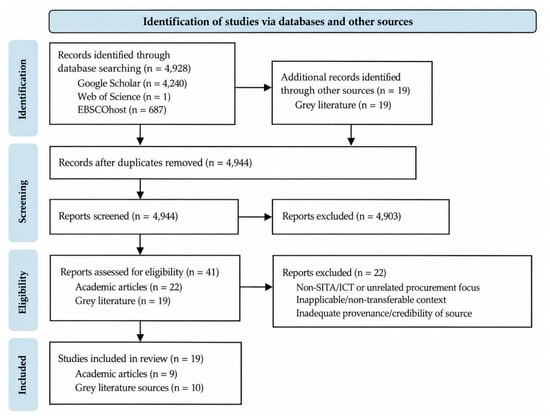
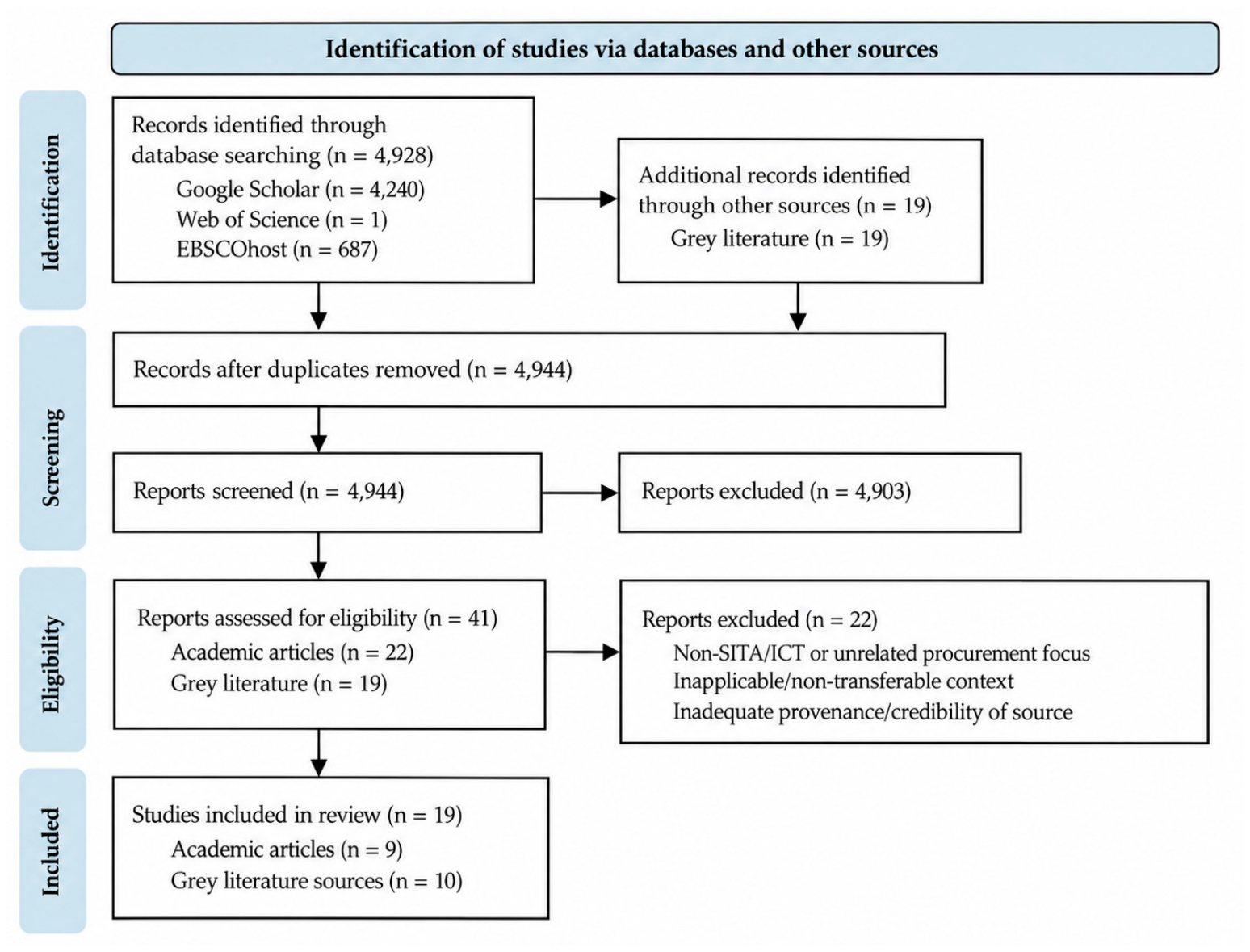

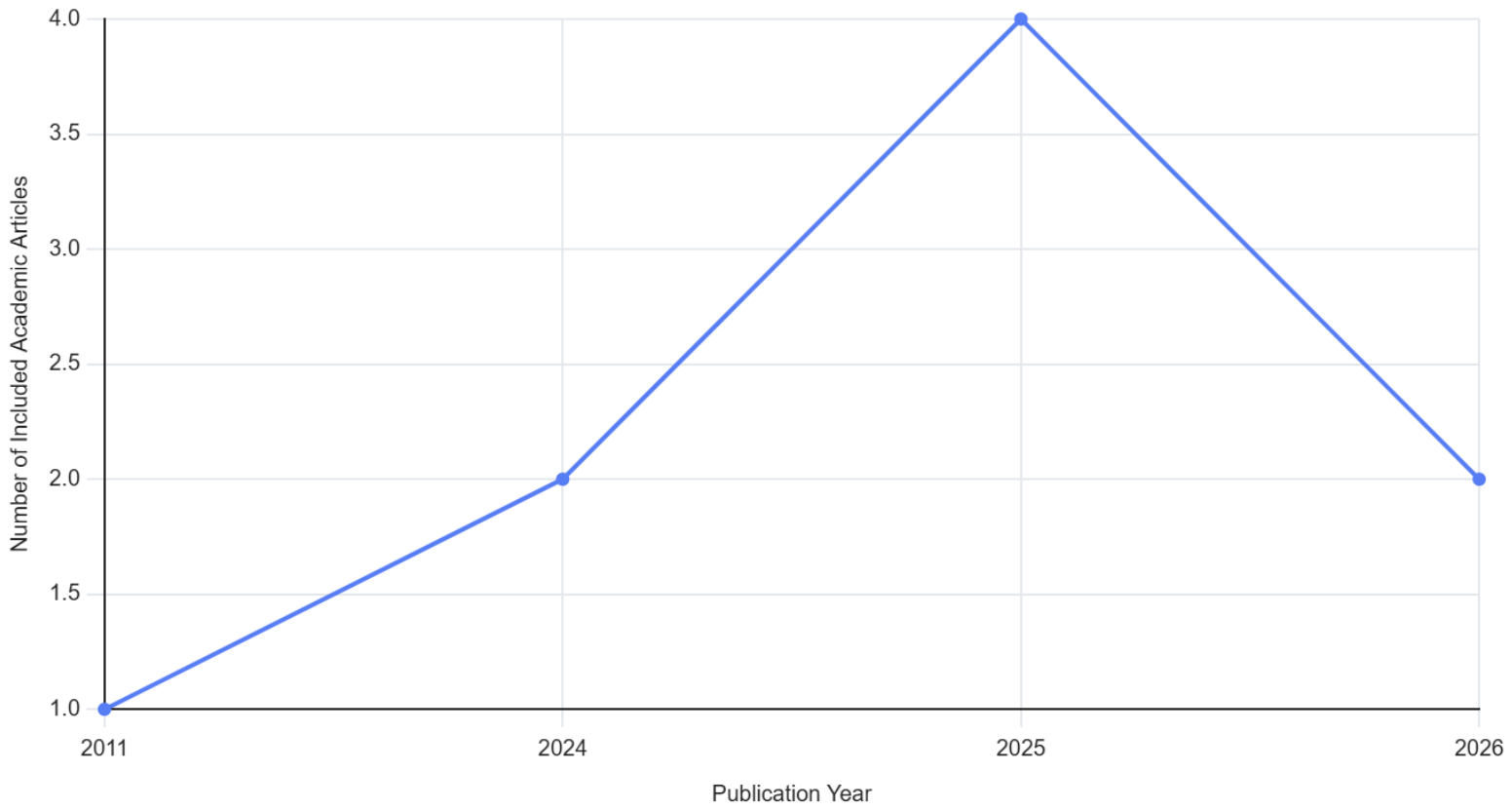
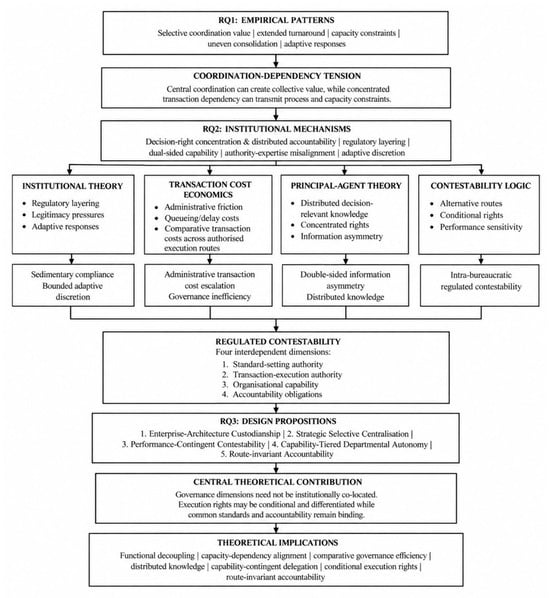
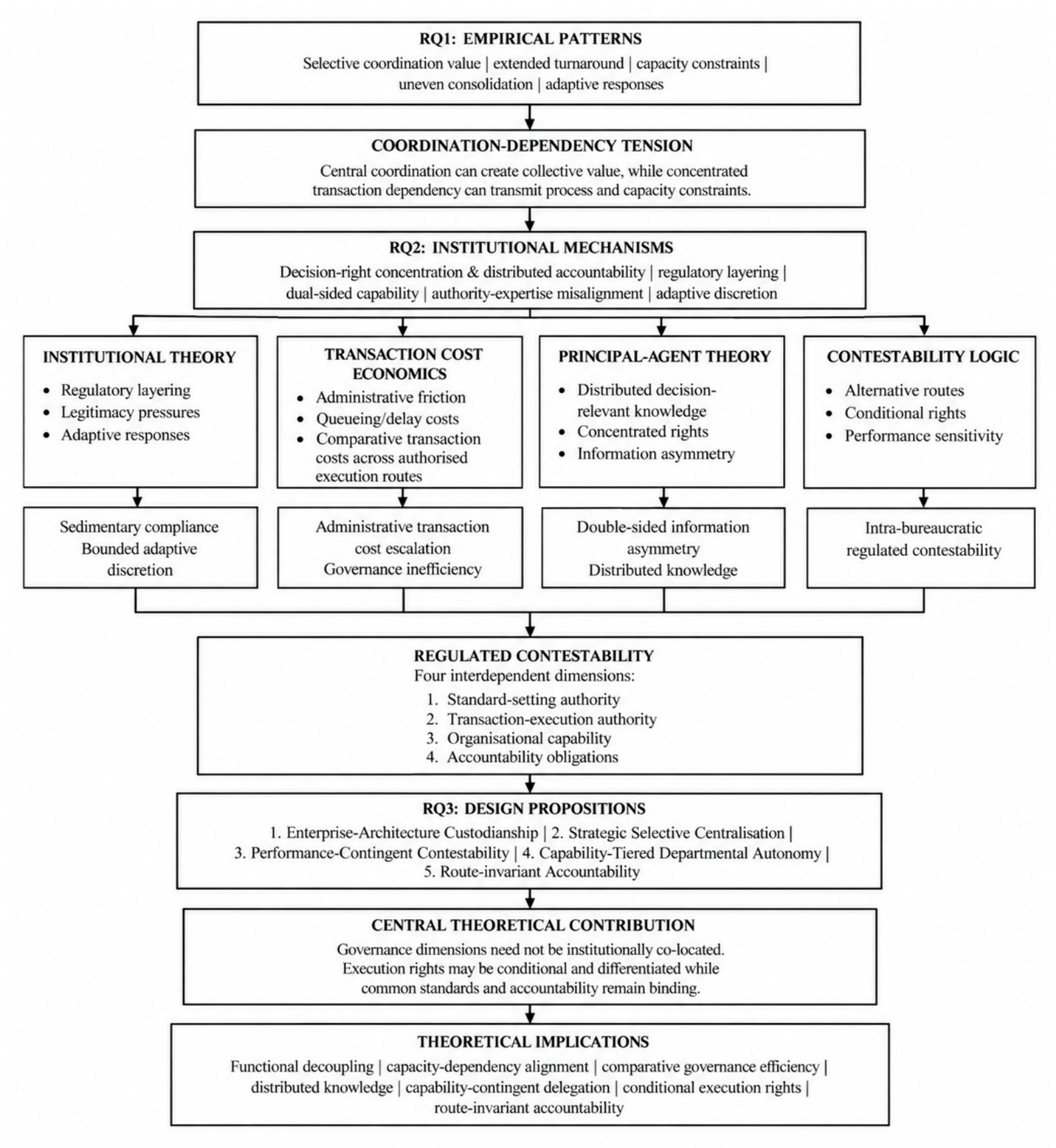

Disclaimer/Publisher’s Note: The statements, opinions and data contained in all publications are solely those of the individual author(s) and contributor(s) and not of MDPI and/or the editor(s). MDPI and/or the editor(s) disclaim responsibility for any injury to people or property resulting from any ideas, methods, instructions or products referred to in the content. |
© 2026 by the authors. Licensee MDPI, Basel, Switzerland. This article is an open access article distributed under the terms and conditions of the Creative Commons Attribution (CC BY) license.