


Abstract
Modern network communication systems require reliable data transmission while maintaining high performance and low latency. This study proposes a retransmission-aware Set-Associative Memory Management (SAMM) architecture integrating adaptive replacement, priority-aware retention, admission control, and heuristic prefetching. Emergency-department WLAN characteristics observed using CommView at Charlotte Maxeke Johannesburg Academic Hospital provided representative network and workload context for the simulation; SAMM itself was not deployed or evaluated in the hospital network. Cache-management performance was evaluated using a reproducible ns-3.42 simulation framework. The implemented retransmission-likelihood estimator was deterministic and ACK/NACK-driven; no trained machine-learning model was experimentally evaluated. Across five independent ns-3.42 runs, SAMM achieved a higher aggregate cache hit rate than set-associative LRU (18.25% versus 14.76%), reduced mean access latency from 43.97 to 42.17 ms, and increased throughput from 219.66 to 229.96 Mbps. Values were evaluated with 95% confidence intervals across the five runs. A complementary five-seed trace-driven sensitivity analysis provided paired statistical support for improvements in cache hit rate, access latency, and throughput relative to SA-LRU (all p < 0.001). However, SAMM showed lower modelled memory efficiency (94.56% versus 98.94%) and slightly higher modelled CPU overhead (0.69% versus 0.66%), while the network-optimised cache achieved a higher retransmission-specific hit rate. These findings indicate a performance–complexity trade-off rather than uniform superiority across all evaluated metrics.
1. Introduction
The demand for network bandwidth, increasing traffic volumes, and the growing complexity of distributed systems have intensified the need for reliable, secure, and high-performance data transmission. In conventional network architectures, retransmission mechanisms are essential for limiting data loss; however, inefficient cache utilisation and suboptimal memory management can create performance bottlenecks. Automatic Repeat reQuest (ARQ) and its variants rely on buffering and retransmission procedures that may increase delay and reduce goodput when packets are lost. Stop-and-Wait ARQ provides a simple implementation, but it has poor bandwidth utilisation because transmissions proceed sequentially. Go-Back-N ARQ improves utilisation by allowing multiple outstanding frames, but a single loss can require retransmission of that frame and subsequent frames. Selective Repeat ARQ retransmits only the lost frames, although it requires more complex buffer management and sequence-number handling. Adaptive transport mechanisms, including TCP congestion-control algorithms, demonstrate the value of adapting retransmission behaviour to network conditions. Data-driven intelligence has similarly shown potential for adaptive decision-making in dynamic wireless-network environments [1]. Together, these approaches illustrate how protocol-level adaptation and data-driven decision-making can respond to changing network conditions. In IEEE 802.11 distributed coordination function networks, contention and retransmission behaviour directly influence throughput and delay, which makes retransmission-aware buffering and cache management relevant for performance optimisation [2,3,4].
To address these limitations, the literature increasingly examines innovative approaches to cache utilisation and memory management optimisation. Existing systems frequently rely on relatively simple caching methods that do not explicitly account for retransmission behaviour, network structure, or traffic patterns. Machine-learning techniques can enhance adaptive behaviour and prediction accuracy in cache management, and recent work has applied deep learning and reinforcement learning to cache replacement and prefetching with the aim of improving performance relative to fixed heuristics. In addition to improving prediction and replacement decisions, intelligent cache management must also account for resource and energy efficiency. Power and energy consumption are also important considerations, particularly for mobile and embedded systems. The cache system can apply dynamic power-management techniques that adjust cache activity according to energy constraints and performance requirements. During periods of low activity, selected cache portions may be powered down, while access patterns can be organised to minimise energy consumption and dynamic voltage and frequency scaling can further adapt energy use to workload characteristics [5].
Recent ML-based cache-management studies indicate that predictive models can support adaptive caching decisions when workload characteristics vary over time. CNN-LSTM models have been proposed for spatiotemporal cache prediction in complex storage systems, while deep neural networks can be trained on historical network data to predict retransmission patterns from features such as packet or frame characteristics, temporal patterns, destinations, and network conditions. Adaptive cache-replacement studies have also examined variable-way and workload-responsive strategies [6,7]. These developments reflect a broader shift toward systems that can learn from observed behaviour and autonomously adjust cache policies.
Cache memory is commonly organised as direct-mapped, fully associative, or set-associative memory. Cache hierarchies have evolved to address the widening performance gap between processors and main memory. Direct-mapped caches offer simple and fast access but are vulnerable to conflict misses. Fully associative caches minimise these conflicts but require more complex hardware and longer lookup times. Set-associative caches provide a practical compromise by reducing conflict misses while maintaining manageable hardware complexity. Modern processors use multilevel cache hierarchies (L1, L2, and L3) with different latency and capacity objectives. Replacement policies determine which cache line is evicted when new data are stored. Common associativity levels, such as 2-way, 4-way, 8-way, and 16-way, involve trade-offs among hit rate, miss rate, latency, and hardware cost. Least Recently Used (LRU) replacement exploits temporal locality but can incur substantial metadata and update overhead at high associativity [8].
A set-associative cache combines properties of direct-mapped and fully associative designs. It provides flexible cache organisation while reducing access latency through efficient writing and reading schemes [9]. The associativity level, denoted by N, determines the number of blocks within each set. Set-Associative Cache Memory (SACM) reduces conflicts by organising data into indexed sets and allowing each network-data identifier to map to a block within the corresponding set. Pseudo-LRU reduces replacement-management overhead, while random and First-In-First-Out (FIFO) replacement provide simpler but less workload-sensitive alternatives [10].
Adaptive replacement policies modify their behaviour according to workload characteristics. The Adaptive Replacement Cache (ARC) maintains both recency and frequency information to guide replacement decisions [11]. Re-reference Interval Prediction (RRIP) improves resistance to scan-intensive workloads by predicting the interval before a cache line is likely to be referenced again [12]. Prefetching techniques attempt to load data before it is explicitly requested. Hardware prefetchers typically identify stride or sequential patterns, whereas software prefetching can apply more sophisticated prediction logic. Stride prefetching detects regular access intervals, stream prefetching targets sequential access, and correlation-based prefetching uses historical relationships among accesses. Reinforcement-learning approaches update cache decisions according to observed performance outcomes. Learning-based policies such as LeCaR and CACHEUS extend this adaptive principle by combining multiple replacement experts and updating their influence online as workload behaviour changes; LeCaR learns between LRU and LFU experts, whereas CACHEUS extends this approach by using a broader set of adaptive experts and avoiding statically selected hyperparameters [13,14]. Although ARC, RRIP, LeCaR, CACHEUS, and other adaptive policies provide important state-of-the-art reference points, they were not implemented as experimental baselines in the present reproducible evaluation. The evaluated comparison set was restricted to the direct-mapped, set-associative LRU, and network-optimised policies. Consequently, the results should not be interpreted as demonstrating superiority over all contemporary adaptive cache-replacement algorithms.
Intelligent cache management advanced substantially between 2020 and 2025 through the integration of machine learning. These approaches seek to overcome the limitations of static replacement policies and conventional prefetching. The Random Adaptive Cache approach combines random allocation with variable-way cache organisation and reports cache hit rates of up to 80.82% across benchmark traces [15]. Distributed cache-management studies evaluating policies such as LRU, LFU, ARC, and time-aware variants indicate that adaptive and learning-based approaches can improve performance in dynamic environments [16]. Reviews of information-centric and edge caching also emphasise that strategies are tailored to the relevant network domains, including vehicular, Internet of Things, and mobile-edge scenarios [17].
The relevance of adaptive and learning-based caching extends to dynamic edge-computing environments, where traffic and resource conditions can vary substantially. Deep reinforcement learning research in multi-access edge computing further demonstrates the potential of learning-based resource scheduling and cache placement under changing network conditions [18,19]. Recent studies have increasingly extended adaptive caching beyond isolated cache-placement decisions towards joint network optimisation. Multi-agent reinforcement learning has been applied to coordinate caching and routing in heterogeneous networks [20], while hierarchical deep reinforcement learning has been used to jointly optimise service caching, workload offloading, and load balancing among cooperative MEC servers [21]. Related work has integrated deep-reinforcement-learning-based computation offloading with distributed edge-service caching and resource allocation in MEC environments [22]. More recently, an integrated CDN architecture has combined edge caching, MEC offloading, and Q-learning-based adaptive routing to coordinate service delivery according to network conditions and available edge resources [23]. These studies demonstrate the increasing importance of network-aware cache management in which caching decisions are coordinated with routing, computation offloading, and edge-resource allocation rather than optimised independently.
Machine-learning-based cache-miss prediction can provide useful performance estimates while reducing the computational cost of detailed simulation [24]. Ensemble methods can similarly combine several predictors and weight them according to their historical performance. Hybrid approaches that combine learning-based replacement with temporal prediction, including LSTM-based models, have also reported improved hit ratios relative to traditional policies. This supports the view that traditional replacement policies may be inadequate when retransmission workloads do not conform to conventional assumptions of spatial and temporal locality [25].
Beyond cache-replacement and prediction methods, information from multiple network layers can support more informed caching decisions [26]. Signal-quality information from the physical layer and data-link layer can assist in estimating frame-drop probability and adjusting caching policies. A weak signal may trigger more aggressive retention or prefetching. Transport-layer context, such as the TCP congestion window and Round-Trip Time (RTT), can further inform cache-management decisions. Application requirements can then be used to prioritise cache allocation and replacement so that critical data receives preferential treatment.
Alongside performance optimisation, network-cache security becomes particularly important when storing sensitive or prioritised data. Sensitive cached data can be protected through encryption, secure key management, and regular key rotation. Access-control mechanisms restrict cached data to authorised users and verified processes, including role-based access control where appropriate [27]. Data integrity can be checked using checksums and digital signatures. Detected corruption or tampering can trigger cache invalidation and refresh procedures. In retransmission systems, checksum failures identify transmission errors and can initiate a retransmission request.
The relevance of retransmission-aware caching also varies across network environments. Three network contexts are particularly important: loss-prone wireless links, high-latency satellite links, and low-latency data-centre networks. These contexts impose different trade-offs among cache-retention time, prefetch distance, access latency, and management overhead. In high-loss wireless networks, variable signal quality, intermittent connectivity, and repeated delivery failures increase the likelihood that recently transmitted frames will be requested again. Retransmission-aware retention and selective prefetching can therefore be useful when the workload contains repeated accesses. In satellite communication links, long propagation delays and variable link conditions increase the cost of each retransmission cycle. A cache configuration for this environment therefore favours longer retention periods and cautious adjustment of prefetch distance, while limiting cache pollution when the predicted retransmission does not occur [28]. In data-centre networks, low-latency, high-throughput environments place greater emphasis on rapid lookup, limited control overhead, and efficient use of memory bandwidth [29]. Adaptive cache management in this context balances additional prediction and policy-management costs against potential reductions in repeated data access.
The reviewed literature identifies several research gaps that motivate the present work. Conventional cache implementations are not optimised for the distinctive characteristics and access patterns of retransmission traffic in communication networks [30]. Retransmission workloads may create repeated access to recently transmitted frames or packets; however, the extent of this reuse varies according to packet loss, traffic characteristics, and protocol behaviour [31]. Adaptive cache-management strategies are therefore needed to respond to changing network conditions while maintaining coordinated allocation across multiple cache levels and diverse retransmission scenarios [32].
This paper addresses the identified challenges by combining adaptive set-associative cache management with feedback-based retransmission-likelihood estimation for data-retransmission optimisation. The evaluated Set-Associative Memory Management (SAMM) implementation integrates retransmission-aware replacement, priority-weighted retention, heuristic sequential prefetching, dynamic cache partitioning, and low-value admission bypass. Retransmission likelihood is estimated from ACK/NACK feedback rather than from a trained machine-learning model. The resulting architecture is evaluated comparatively against conventional cache implementations using reproducible simulation experiments. Machine-learning approaches discussed elsewhere in the manuscript, including HMM, DNN, CNN-LSTM, reinforcement learning, and ensemble methods, are therefore treated as literature context and potential future extensions rather than as experimentally validated components of SAMM.
Beyond the present contribution, future development can investigate more advanced machine-learning methods for cache optimisation. Reinforcement-learning policies may improve adaptation to changing network requirements, while transfer learning could help the system adjust to new environments by reusing knowledge acquired in related settings. This may be valuable across mesh, vehicular, Internet of Things, and edge-computing networks. Federated-learning approaches could also enable distributed cache tiers to share model knowledge while preserving data locality and privacy.
2. Materials and Methods
2.1. Caching-System Architecture
The proposed Set-Associative Memory Management (SAMM)(USA)(Version2) framework conceptually comprises four functional components: the Predictive Prefetch Engine (PPE), Dynamic Partitioning Controller (DPC), Adaptive Set-Associative Cache (ASAC), and Retransmission Pattern Analyser (RPA). In the reproducible ns-3.42 (USA)(Version 3.42) implementation, these functions are realised within an abstract frame-level software retransmission cache located in the sender/network path between the modelled origin-fetch process and the lossy communication link. The evaluated SAMM implementation is therefore not a physical processor L1/L2/L3 cache, NIC hardware cache, access-point packet buffer, or hardware memory hierarchy.
Each transmitted or retransmitted 1500-byte frame is represented as one cache line. A cache hit allows the requested frame to be served from the retransmission cache, whereas a miss causes the frame to be obtained through the modelled origin-fetch path. Set associativity, replacement, retransmission-likelihood estimation, QoS-aware retention, admission bypass, and prefetching are implemented as software-level cache-management operations within ns-3. The architectural diagrams presented in this section illustrate the conceptual mapping and management principles underlying SAMM rather than a physically implemented cache hierarchy.
The set-associative organisation is represented logically through cache keys, set indices, ways, and per-line metadata. These constructs correspond conceptually to the tag and set-selection operations commonly used in set-associative cache architectures (Figure 1).
Figure 1.
Conceptual set-associative mapping underlying the SAMM frame-level retransmission cache. Hardware elements illustrate the mapping principle and are not physically instantiated in the ns-3 implementation. NACK = Negative Acknowledgement; LSB = Least Significant Bit; XNOR = Exclusive-NOR; MUX = Multiplexer; ARQ = Automatic Repeat reQuest.
However, the ns-3 implementation does not simulate physical tag comparators, XNOR gates, multiplexers, SRAM banks, or processor-cache circuitry. Instead, equivalent lookup and replacement operations are performed by the software cache data structures. ACK/NACK state and retransmission metadata are associated with each cached frame and are used by the implemented retention and replacement procedures.
2.1.1. Implemented Retransmission-Likelihood and Cache-Scoring Algorithm
The reproducible SAMM implementation evaluated in this study does not employ a trained HMM, DNN, CNN-LSTM, reinforcement-learning model, or ensemble predictor. Instead, retransmission likelihood is estimated deterministically from observed ACK/NACK feedback using an Exponentially Weighted Moving Average (EWMA). Separate loss estimates are maintained for each connection together with a global loss estimate. For each feedback event, the loss estimate is updated as:
where xt = 1 for a NACK/loss event and xt = 0 for an ACK/successful-delivery event. The smoothing factor was fixed at α = 0.05. A global loss estimate of 0.03 (3%) was used as the threshold for high-loss operation.
Lt = (1 − α)Lt − 1 + αxt,
For an unacknowledged cache line i, the retransmission component was calculated as Ri = min(1, Li/0.03), where Li is the EWMA loss estimate for the corresponding connection. For an acknowledged line, Ri = 0. When the global EWMA loss estimate reached or exceeded 0.03, the retransmission component was multiplied by a high-loss retention factor of 2.0 to favour retention of potentially retransmitted data. Each cache line was then assigned a composite retention score:
where Qi represents normalised QoS priority, Fi represents normalised access frequency, and Reci represents recency within the corresponding set. QoS priority was encoded as AC_VO = 3, AC_VI = 2, AC_BE = 1, and AC_BK = 0 and normalised by division by 3. Access frequency was capped using Fi = min(1, frequency/8). Recency was normalised relative to the oldest line in the set. Speculatively prefetched lines received one-half of the resulting score until demonstrated useful.
Si = 1.0Ri + 0.5Qi + 0.5Fi + 0.5Reci,
When a set was full, the line with the lowest retention score was selected as the replacement candidate, subject to reservation of one way per set for high-priority AC_VO/AC_VI traffic. If the calculated score of a newly arriving line was lower than that of the selected victim, the new line bypassed the cache rather than displacing a higher-value resident line.
Sequential accesses triggered heuristic prefetching rather than ML-based prediction. The initial prefetch distance was 2 segments, with a maximum of 8 segments. Prefetch accuracy was evaluated over windows of 200 issued prefetches. The distance was reduced when accuracy fell below 0.40 and increased when accuracy exceeded 0.70. Under high-loss conditions, the active prefetch distance was halved. Prefetched entries could occupy at most one-half of the ways in a set under normal conditions and one-quarter under high-loss conditions. The complete retransmission-likelihood estimation, cache-retention, admission/bypass, and adaptive-prefetching procedure is summarised below (Algorithm 1).
| Algorithm 1. SAMM retransmission-likelihood and cache-retention procedure. |
|
To complement the executable-style pseudocode (Algorithm 1), the decision sequence of the implemented adaptive replacement procedure is illustrated in the flowchart (Figure 2a). The flowchart follows the same ACK/NACK-driven EWMA update, retransmission-likelihood calculation, retention scoring, victim selection, admission/bypass decision, and adaptive-prefetching logic specified in the pseudocode (Algorithm 1) and does not introduce additional algorithmic steps.
Figure 2.
SAMM adaptive replacement and retransmission-state logic. (a) Flowchart of the implemented adaptive replacement procedure, including ACK/NACK-driven EWMA updating, retransmission-likelihood estimation, retention scoring, victim selection, admission/bypass control, and adaptive prefetching. (b) Conceptual retransmission-state flow between the MAC-frame and cache-memory components. Panel (b) illustrates possible state relationships and does not represent the numerical predictor implemented in the ns-3 evaluation. M = MAC frame; C = cache memory; NRRx = no retransmission received; RRRx = retransmission received; MAC = Medium Access Control; Rx = reception/received event.
The retransmission-related state transitions between the MAC-frame and cache-memory components are shown separately as a conceptual representation (Figure 2b). The diagram does not represent a trained HMM or other machine-learning predictor, and its transition paths are not used to calculate the retransmission-likelihood variable in the evaluated ns-3 implementation. In the reproducible evaluation, retransmission likelihood is calculated from ACK/NACK feedback using the EWMA procedure described in Section 2.1.1. The figure is therefore retained only as a conceptual illustration of the relationship between transmission outcomes and cache-management states.
The operational sequence begins when the Retransmission Pattern Analyser (RPA) records transmission and link observations. The Predictive Prefetch Engine (PPE) then assigns a retransmission-likelihood score to recently transmitted frames. Using this score together with the priority of the data, the Dynamic Partitioning Controller (DPC) determines the appropriate retention period and cache allocation. The Adaptive Set-Associative Cache (ASAC) subsequently applies the selected replacement policy within the assigned set. Finally, acknowledgements, timeouts, or successful-delivery events are used to update or invalidate the relevant cache entry.
The prefetch distance is adjusted according to network traffic, available bandwidth, and cache performance. During high congestion, the prefetch distance can be reduced to limit cache pollution; during unstable network conditions, it can be increased to improve coverage of likely retransmissions. The DPC manages cache-space allocation among network and application data so that retransmission entries do not displace other essential uses. During heavy retransmission activity, a larger share of cache space is assigned to retransmission buffers.
The reproducible ns-3.42 (USA) evaluation uses a sender–receiver point-to-point topology rather than the LAC, SRBP, RLP, F-PDCH, and R-PDCH radio-protocol architecture presented in the earlier conceptual design. The sender incorporates the software retransmission-cache logic and communicates with a modelled origin-fetch process. Frames are transmitted across the lossy point-to-point link to the receiver, which returns ACK/NACK feedback. This feedback updates the retransmission state, loss estimates, and subsequent cache-retention decisions (Figure 3a).
Figure 3.
Architecture and retransmission sequence of the reproducible ns-3.42 (USA) SAMM evaluation. (a) Sender–receiver architecture showing the origin-fetch process, sender-side SAMM retransmission cache, lossy point-to-point link, receiver, and ACK/NACK feedback path. (b) Sequence of cache lookup, origin fetch, frame transmission, ACK/NACK processing, cache-assisted retransmission, and cache-state updating during the evaluated retransmission process.
The temporal interaction between frame retrieval, cache lookup, transmission, acknowledgement, loss detection, and retransmission is presented separately (Figure 3b). For each requested frame, the sender-side SAMM cache is queried before transmission. A cache hit allows the frame to be served directly from the retransmission cache, whereas a cache miss invokes the modelled origin-fetch process. Following transmission, successful delivery generates an ACK that updates acknowledgement state and the ACK/NACK-driven EWMA loss estimate. When loss is detected, a NACK initiates a retransmission-cache lookup. If the requested frame remains cached, it is retransmitted directly; otherwise, it is retrieved through the origin-fetch process before retransmission. The resulting feedback subsequently updates retransmission state, retention scoring, admission or eviction decisions, and prefetch control.
The system integrates with Quality of Service (QoS) mechanisms to prioritise cache allocation for high-priority traffic. Critical data streams receive reserved cache capacity irrespective of changes in the overall workload. Cache partitions are resized dynamically according to real-time performance metrics, enabling adaptation to changing network conditions without manual intervention.
2.1.2. Cache Techniques and Optimisation
Conventional cache-replacement policies may be inadequate for variable retransmission workloads because they do not explicitly consider network-specific factors. The proposed system combines replacement policies designed for retransmission scenarios. It extends LRU by incorporating application priority and retransmission probability into replacement decisions. Cache lines with a high retransmission probability receive longer retention even when they have not been accessed recently. During periods of high packet loss, the policy becomes more conservative and retains data for longer; during stable periods, it increases turnover to release capacity.
- Priority-Weighted Replacement: Cache lines are assigned weights based on data priority, network urgency, and estimated retransmission likelihood. Replacement decisions consider these weights together with temporal-access information so that critical data receive preferential retention;
- Set-Allocation Strategies: The system applies several allocation strategies to improve the utilisation of indexed sets within the set-associative cache;
- Adaptive Set Sizing: Cache sets are resized according to access frequency and retransmission demand. Frequently accessed sets are expanded to reduce conflict misses, while underused sets are reduced to release capacity. The redistribution operates within the adjustable set-associative mapping;
- Load Balancing: The system monitors set utilisation and redistributes application and network data across available sets. This limits overutilised and underutilised regions and promotes more efficient use of cache resources.
- Conflict Minimisation: Allocation is arranged to reduce conflicts among data items that are likely to be accessed at the same time. Frames or packets belonging to the same connection or related streams can therefore be distributed across different sets;
- Prefetching Optimisation: Retransmission prefetching accounts for network characteristics and access patterns that differ from conventional processor-memory workloads.
- Selective Prefetching Algorithm: The selective prefetching mechanism considers historical retransmission patterns for specific connections, available capacity, data criticality and priority, and current congestion levels.
The system uses two principal prefetching mechanisms, throttling and cross-layer optimisation. Throttling adjusts the volume of prefetched data according to cache utilisation and system-performance metrics, while excessive prefetching that causes cache pollution is detected and reduced. Cross-layer optimisation uses information about data drops at OSI-layer interfaces to support more informed decisions, allowing prefetching to respond to changes in topology, routing paths, routing tables, and congestion. The exact simulation parameters defining the evaluated cache size, bandwidth, packet loss, latency, connection count, and test duration are reported (Table 1).
Table 1.
Exact configuration parameters used in the reproducible ns-3.42 evaluation.
The values are the exact settings used for the reproducible ns-3.42 evaluation rather than ranges of possible simulation settings. Unless explicitly varied in the loss-sensitivity or ablation analyses, these parameters were held constant across cache policies to permit direct comparison (Table 1).
Cache consistency in the implemented retransmission-cache model is maintained using frame identifiers, sequence numbers, acknowledgement state, and cache-entry metadata. ACK and NACK feedback updates the state of cached frames and informs subsequent retention or replacement decisions. Conventional processor-cache coherency protocols such as MESI were not implemented because the evaluated ns-3 model does not represent a shared-memory multiprocessor hierarchy.
The conceptual relationship among cache keys, indexed sets, ways, and stored entries is illustrated using conventional set-associative cache principles (Figure 4). In the implemented ns-3 model, this organisation is realised through software data structures rather than physical memory-address partitioning. Each frame identifier is mapped to a logical cache set, after which the cache policy determines whether an existing entry constitutes a hit and, when required, which resident frame should be replaced. The tag, set-index, and block-offset elements shown in the figure therefore illustrate the conventional set-associative principle that motivated the design; they are not physical processor-address fields instantiated by the ns-3 simulation (Figure 4).
Figure 4.
Conceptual set-associative memory-mapping principles informing the SAMM design. Tag, set-index, block-offset, CPU, SRAM, and DRAM elements illustrate conventional cache organisation and are not physically instantiated in the ns-3 retransmission-cache implementation.
2.2. Emerging Network Technologies
The architecture is intended to adapt to emerging network technologies and protocols, including 5G, prospective 6G, and distributed systems. These environments create both opportunities and challenges for cache optimisation, particularly under ultra-reliable and low-latency conditions. Software-defined networking controllers can provide centralised visibility and control, while edge-computing deployments require policies that account for resource constraints and heterogeneous traffic. Recent QoS-aware, multi-tier cache-replacement research reinforces the importance of balancing hit rate, latency, and service priority in dynamic network environments.
2.3. Hardware Evolution
The following hardware directions are proposed as future extensions of the SAMM architecture and were not implemented or tested in the present study. Future hardware developments may enable additional cache-optimisation approaches through emerging memory technologies, new hierarchical designs, and Processing-in-Memory (PIM). Non-volatile memory can preserve selected cache data across power cycles, while PIM reduces movement between processor and memory by performing operations closer to stored data. These developments may reduce energy consumption and alleviate the von Neumann data-movement bottleneck. Machine-learning-assisted memory optimisation and, in the longer term, quantum optimisation methods may provide further opportunities for network prediction and cache management.
2.4. Simulation Framework and Network Monitoring Setup
2.4.1. Simulated Cache Architecture
The evaluated SAMM implementation represents an abstract frame-level retransmission cache within the ns-3 sender/network path. It is implemented as a software cache model rather than as a physical CPU-cache hierarchy, NIC cache, access-point hardware buffer, or SRAM-based cache device. Each 1500-byte transmitted frame corresponds to one logical cache line, and cache-management operations are performed on software data structures representing sets, ways, cached-frame identifiers, acknowledgement state, retransmission state, priority, recency, and access frequency.
The primary SAMM configuration contains 8192 frame lines organised as an eight-way set-associative cache with 1024 logical sets. A lookup is performed before transmission or retransmission: a hit serves the frame from the modelled retransmission cache, whereas a miss invokes the modelled origin-fetch path. The cache therefore represents a software retransmission-retention mechanism positioned between the origin-fetch process and the lossy communication link.
Processor-cache concepts such as set associativity, replacement, tags, recency, and frequency are used as design abstractions to organise the retransmission cache. Physical L1, L2, and L3 cache levels, multibank hardware, parallel hardware tag comparators, a modified MESI coherency protocol, and physical cache circuitry were not instantiated in the reproducible ns-3.42 implementation. Consequently, hardware-oriented diagrams elsewhere in the manuscript should be interpreted as conceptual design illustrations rather than descriptions of the implemented simulation layer.
2.4.2. Software Components
The software layer comprises traffic observation, cache-policy management, retransmission-feedback processing, and performance monitoring. The evaluated SAMM implementation uses the deterministic ACK/NACK-driven EWMA estimator and weighted cache-retention algorithm described in Section 2.1.1. No HMM, DNN, CNN-LSTM, reinforcement-learning, or ensemble model was trained or executed as part of the reported experiments. Accordingly, no ML training set, train/test split, learned hyperparameters, classification threshold, or ML validation procedure applies to the reported results. These learning-based approaches are included only as conceptual alternatives identified from the literature and as possible directions for future development.
The experimental network-device arrangement connects the access point, transceiver, and supporting network enclosure as part of the traffic-observation environment. The access point provides the wireless-network connection, while the transceiver supports communication between the network components. The NEDB and PoE arrangement provides the supporting network connection and power-delivery infrastructure required for the installed devices. The physical linkage among these components establishes the network path used for traffic monitoring and data collection during the experimental setup (Figure 5).
Figure 5.
Preconfigured network-device linkage used in the experimental setup. AP = Access Point; NEDB = Network Electrical Distribution Box; PoE = Power over Ethernet.
2.4.3. Cache-System Integration Framework
The Electronic Bus Unit (EBU) provides the physical and interface link between the monitoring components and the network devices. Protocol-stack integration connects the cache-control logic to the TCP/IP path through application programming interfaces. In the reported setup, CommView supplies packet-level observations and monitoring data; it does not itself implement the ASAC. The adaptive cache logic is represented in the NS-3 custom module implementing the proposed control architecture. Performance-critical control functions are positioned near the network interface, while policy management and monitoring remain in user space. The experimental workflow was organised into four sequential stages. First, the environment was configured by preparing the network-monitoring and simulation components required for the evaluation. Second, representative workloads were generated to reproduce the selected traffic and retransmission conditions. Third, the configured tests were executed while the relevant performance data were collected. Finally, the resulting measurements were analysed to evaluate cache behaviour, retransmission performance, latency, throughput, and related system-performance indicators. This staged procedure ensured a consistent progression from experimental preparation to performance assessment (Figure 6).
Figure 6.
Experimental workflow for SAMM performance evaluation.
2.4.4. Emergency-Department WLAN Monitoring Setup
WLAN traffic monitoring was conducted in the emergency-department environment at Charlotte Maxeke Johannesburg Academic Hospital (CMJAH), Johannesburg, South Africa, over the reported 100-day observation period. CommView was used to observe representative WLAN traffic characteristics associated with secured TCP- and UDP-based communication. The monitoring workstation included a dual-core laptop with 16 GB RAM, 1 TB storage, Intel Iris Xe/UHD graphics, and an NVIDIA GeForce RTX 40-series graphics processor.
Importantly, the hospital component of the study was limited to WLAN traffic monitoring and network characterisation. SAMM was not installed, executed, or evaluated as physical cache hardware within the CMJAH network. Instead, the observed network characteristics provided representative context for the subsequent simulation-based evaluation. Performance evaluation of the SAMM cache-management architecture was conducted separately within the ns-3 simulation environment (Figure 7).
Figure 7.
Emergency-department WLAN network-monitoring setting at CMJAH. CMJAH = Charlotte Maxeke Johannesburg Academic Hospital; AP = Access Point.
2.4.5. Simulation Environment
SAMM performance evaluation was conducted within the ns-3 simulation environment using custom cache-management logic representing the proposed architecture. The emergency-department WLAN was not used as a deployment platform for SAMM. Rather, the hospital monitoring component provided representative network context for the simulation-based assessment.
Synthetic traffic and workloads representing web requests, file transfers, multimedia streaming, and other evaluated traffic conditions were used to compare SAMM with the implemented baseline cache policies. Consequently, the cache hit rate, retransmission, latency, throughput, memory-efficiency, and CPU-overhead results reported in this study are simulation outputs and should not be interpreted as measurements obtained from a physically deployed SAMM system within the hospital network (Figure 8).
Figure 8.
Separation of the ns-3 SAMM simulation environment from the emergency-department WLAN monitoring environment. WLAN observations provided representative network context for the simulation; SAMM itself was evaluated within ns-3. LAN = Local Area Network; WAN = Wide Area Network; NS-3 = Network Simulator 3.
2.4.6. Reproducible ns-3 Simulation Configuration
All quantitative results reported in the manuscript were generated using the reproducible ns-3.42 implementation described in this section and, where explicitly identified, the accompanying trace-driven sensitivity-analysis implementation. The primary packet-level evaluation was implemented in ns-3.42 using a custom SAMM module together with the ns-3 point-to-point and Internet-stack modules. The simulation topology comprised two ns-3 nodes: a sender node incorporating the retransmission-cache logic and an abstract origin-fetch process, and a receiver node connected through a lossy point-to-point link. The link capacity was fixed at 10 Gbps with a one-way propagation delay of 1 ms. The point-to-point device used an ns3::DropTailQueue with a maximum capacity of 10,000 packets.
The reproducible implementation does not instantiate an IEEE 802.11 PHY/MAC radio channel. Consequently, WLAN-specific PHY/MAC parameters such as modulation and coding scheme, channel width, transmit power, propagation-loss model, and contention-window configuration are not applicable to the packet-level ns-3 evaluation. Instead, the emergency-department WLAN observations were used to provide representative network and workload context, while the reproducible simulation abstracted transmission through the point-to-point packet-level model.
Data were transmitted as 1500-byte frames, including the modelled IP/UDP overhead, with one complete frame corresponding to one cache line. The sender maintained 100 concurrent logical connections. Sender pacing was based on the 10 Gbps bottleneck link, corresponding to a nominal aggregate pacing capacity of 10 Gbps and approximately 100 Mbps per logical connection. Realised traffic generation was additionally constrained by the origin-fetch process and a maximum window of eight outstanding origin fetches per connection. A cache hit incurred a modelled retrieval delay of 0.05 ms, whereas a cache miss required an origin fetch with a median round-trip time of 50 ms and lognormal variability with σ = 0.25.
Packet loss was introduced on the receiver side using the ns-3 BurstErrorModel to represent bursty loss. Mean workload-specific packet-loss probabilities were 1% for web traffic, 1% for file-transfer traffic, 2% for streaming traffic, and 2% for the synthetic workload. Additional loss-sensitivity experiments evaluated loss rates of 0%, 0.5%, 1%, 2%, and 5%. Retransmission behaviour was implemented using sequence-numbered data frames, per-frame ACK feedback, gap-triggered NACK generation, and re-NACK timers. The retransmission cache was therefore queried both for newly transmitted frames and for frames requested again following unsuccessful delivery.
The packet-loss percentages represent configured loss probabilities applied by the ns-3 BurstErrorModel rather than measured retransmission rates. Retransmission events were generated through sequence-numbered data frames, ACK feedback, gap-triggered NACK generation, and re-NACK timers. The present primary ns-3 outputs did not retain a separate aggregate count of retransmitted frames relative to all transmitted frames; therefore, a numerical network retransmission rate is not reported. Instead, retransmission-related cache performance is characterised using the retransmission-specific cache hit rate, defined as the proportion of retransmission requests that could be satisfied directly from the retransmission cache.
The cache contained 8192 frame lines, with each line storing one 1500-byte frame, corresponding to a nominal data capacity of 12,288,000 bytes (approximately 12.29 MB). The direct-mapped baseline used one way per set and therefore 8192 sets. The set-associative LRU, network-optimised, and SAMM configurations used eight ways per set, corresponding to 1024 sets. The SA-LRU baseline used conventional least-recently-used replacement. The network-optimised policy preferentially evicted acknowledged cache lines before unacknowledged lines. All policies were evaluated using the same cache-line count and frame size.
For SAMM, retransmission likelihood was updated using the ACK/NACK-driven EWMA described in Section 2.1.1, with α = 0.05 and a high-loss threshold of 0.03. Cache-line retention used weights of 1.0 for retransmission likelihood and 0.5 each for QoS priority, access frequency, and recency. One way per set was reserved for high-priority traffic. Sequential prefetching started with a distance of two frames and was permitted to increase to a maximum of eight frames. Prefetch accuracy was evaluated over windows of 200 issued prefetches; the distance was reduced below an accuracy of 0.40 and increased above 0.70. Under high-loss conditions, the prefetch distance was halved. Prefetched entries were limited to one-half of the ways per set under normal conditions and one-quarter under high-loss conditions.
Each primary ns-3 experiment used RngSeedManager seed 1 and independent replication through run numbers 1–5. Random-number streams were assigned explicitly, including a dedicated stream for the error model. The receiver application started at 0.00 s and the sender at 0.01 s. No separate warm-up interval was applied. Traffic generation stopped at 8.0 s, and the simulator terminated at 8.5 s to permit outstanding events to complete. The performance results were calculated from the five independent 8-s experimental runs and are reported with 95% confidence intervals.
Aggregate data-delivery throughput was measured at the receiver. For each simulation run, the total number of unique data bytes successfully received was accumulated, such that duplicate copies of an already successfully received frame were not counted as additional useful delivered data. Throughput was calculated over the interval between the first and last successfully received data events as
where Brx is the total number of unique data bytes successfully received, tfirst is the simulation time of the first successfully received data event, and tlast is the simulation time of the last successfully received data event. Multiplication by eight converts bytes to bits, and the factor 10−6 converts bits per second to Mbps. This measure therefore represents aggregate useful data-delivery throughput within the ns-3.42 point-to-point simulation rather than the configured 10 Gbps link capacity or throughput measured from the emergency-department WLAN.
Throughput = [8 × Brx]/[tlast − tfirst] × 10−6 Mbps,
2.4.7. Repeated Runs and Statistical Analysis
The repeated-run evaluation comprised two complementary analyses. The primary analysis used the fixed ns-3.42 configuration reported above (Table 1). Five independent simulation replications were conducted using RngSeedManager seed 1 and run numbers 1–5, with explicit random-stream assignment to provide reproducible but statistically independent simulation realisations. The same network topology, workload definitions, cache capacities, and policy-specific settings were used across the five runs, and the cache state was reinitialised before each replication. No separate warm-up interval was applied. The receiver application started at 0.00 s and the sender at 0.01 s; traffic generation continued until 8.0 s, after which the simulator was allowed to run until 8.5 s to permit outstanding events to complete. Primary ns-3 results are reported as the arithmetic mean ± 95% confidence interval.
A separate trace-driven sensitivity analysis was conducted using five independent random seeds and a conservative prefetch lag of 2000 accesses to approximate the delay associated with an origin round trip. Matched policy outcomes in this sensitivity analysis were compared using paired t-tests. Mean differences, 95% confidence intervals, and p-values from this analysis are reported separately from the primary ns-3 results to avoid combining statistical outcomes derived from different simulation implementations.
An additional ablation analysis was conducted within the ns-3.42 implementation to examine the contribution of selected SAMM mechanisms. Four one-component-at-a-time variants were evaluated using the same workloads, simulation settings, and five-run structure as the full SAMM configuration: SAMM without prefetching, SAMM without priority/QoS handling, SAMM without loss-adaptive behaviour, and SAMM without admission bypass. All other SAMM mechanisms and simulation parameters were retained unchanged for each ablation. Results are reported as the arithmetic mean ± 95% confidence interval across the five independent ns-3 runs.
3. Results
3.1. Performance Evaluation and Analysis
A comprehensive evaluation was conducted using NS-3 simulation studies informed by real-world network-monitoring observations to compare the implemented cache techniques, policies, and strategies. The evaluation covered diverse network scenarios and caching conditions to assess the effectiveness of the proposed SAMM approach. All cache-performance results reported in this section were generated within the simulation framework and should not be interpreted as measurements obtained from a SAMM deployment in the hospital WLAN.
3.2. Workload Characteristics
Four workload types represented the diverse traffic-access patterns that the SAMM Medium Access Control (MAC) caching system was required to handle, each presenting different caching challenges and optimisation opportunities (Figure 9). Web traffic comprised frequent, small HTTP/HTTPS requests in which content popularity followed a Zipf distribution, meaning that a small proportion of the content received most requests. This pattern produced cache hit rate ranges of approximately 60–80%, providing favourable conditions for SAMM caching efficiency and optimisation.
Figure 9.
Workload characteristics used in the cache-performance evaluation.
File-transfer workloads involved sequential access patterns and large data volumes, resulting in lower cache hit rate ranges of approximately 30–50%, which reduced the effectiveness of conventional caching strategies. For Bulk File Transfers (BFT), the SAMM frame-level adaptive policy supported retransmission efficiency by retaining commonly transferred file segments. Multimedia Streaming Workloads (MSWs) required continuous, time-sensitive delivery of variable-sized segments. Repeated access to popular content produced reported cache hit rate ranges of 70–90%, while SAMM’s low-latency Negative Acknowledgement (NACK) mechanism was used to limit rebuffering and delivery delays. Synthetic Pattern Workloads (SPWs) were generated for controlled benchmarking and enabled the evaluation of SAMM under random, Zipf, and sequential access distributions with configurable parameters. The evaluation focused on performance measures directly related to retransmission behaviour and overall system efficiency.
Cache hit rate represents the percentage of retransmission requests satisfied from the cache without accessing the main memory or initiating another network retransmission. Average access latency is the mean time required to retrieve data for retransmission, including cache hits and misses. Retransmission-specific cache hit rate represents the proportion of retransmission requests that are satisfied directly from the retransmission cache rather than requiring retrieval through the modelled origin-fetch path. This metric characterises cache effectiveness for retransmission events and should not be interpreted as the overall network retransmission rate. Memory-bandwidth utilisation reflects the proportion of useful data transfers relative to total memory bandwidth, while throughput represents the aggregate rate of unique successfully received data at the receiver and was calculated from the total unique received bytes over the interval between the first and last successfully received data events (Equation (3)). Throughput differences between cache policies therefore represent differences in useful simulated data delivery rather than changes in the configured physical-link capacity.
3.3. Comparative Analysis
- Cache Hit Rate Performance: Across the five independent ns-3.42 simulation runs, SAMM achieved higher mean cache hit rates than the set-associative LRU baseline for all four evaluated workloads. The improvement was most evident for web and streaming traffic, whereas the difference was small for file-transfer and synthetic workloads. Compared with the network-optimised cache, SAMM achieved higher hit rates for web, streaming, and synthetic traffic, while the network-optimised cache produced a slightly higher hit rate for file-transfer traffic. These results indicate that the relative benefit of SAMM depends on workload characteristics rather than being uniform across all traffic types (Table 2).
- Workload-Specific Latency: The repeated ns-3.42 simulations also showed that the magnitude of the latency benefit varied across workload types. Compared with SA-LRU, SAMM reduced the mean access latency across all four evaluated workloads. The largest reduction occurred for streaming traffic, whereas file-transfer latency was almost unchanged. This workload dependence indicates that SAMM’s latency advantage is more pronounced when repeated or cacheable access patterns allow its adaptive mechanisms to reduce retrieval delay (Table 3).
- Memory-Efficiency Trade-Off: Across the five independent ns-3.42 simulation runs, SAMM achieved a mean memory efficiency of 94.56 ± 0.14%, compared with 98.94 ± 0.00% for the set-associative LRU baseline. SAMM, therefore, did not improve memory efficiency relative to SA-LRU in the reproducible packet-level evaluation. The difference indicates that the adaptive cache-management mechanisms introduce additional memory-management costs. Accordingly, the memory-efficiency result should be interpreted as part of the performance–complexity trade-off associated with the proposed architecture rather than as an efficiency improvement (Table 4).
- Cache-Data Throughput Improvement: Mean aggregate throughput was 229.96 ± 2.58 Mbps for SAMM and 219.66 ± 0.89 Mbps for the set-associative LRU baseline across the five independent ns-3.42 runs. This represents an absolute increase of 10.30 Mbps and an approximate relative improvement of 4.7%. SAMM also achieved higher mean throughput than the direct-mapped cache (206.56 ± 0.77 Mbps) and the network-optimised cache (221.98 ± 1.53 Mbps). These throughput values were calculated from unique successfully received data bytes using the receiver-side measurement procedure defined in Section 2 (Equation (3)); retransmitted duplicates of frames already successfully received were not counted as additional useful delivered data. The reported throughput values represent aggregate data-delivery rates generated within the ns-3.42 point-to-point simulation environment and should not be interpreted as measurements of throughput on the emergency-department WLAN at CMJAH (Table 4).
- Central Processing Unit (CPU) Overhead Trade-off: The mean CPU-overhead proxy was 0.69 ± 0.00% for SAMM, compared with 0.66 ± 0.00% for the set-associative LRU and network-optimised caches and 0.65 ± 0.00% for the direct-mapped cache. SAMM therefore did not reduce CPU overhead in absolute terms. Instead, its higher cache hit rate, lower access latency, and greater throughput were achieved with a small increase in modelled cache-management overhead. This finding further supports the interpretation of SAMM as a performance–complexity trade-off rather than as a cache architecture that improves every performance metric simultaneously (Table 4).
Table 2.
Workload-specific cache hit rates across five independent ns-3.42 simulation runs. Values are reported as mean ± 95% confidence interval.
Table 3.
Workload-specific access latency across five independent ns-3.42 simulation runs. Values are reported as mean ± 95% confidence interval; differences are calculated as SAMM latency minus SA-LRU latency.
Table 4.
Aggregate performance of the four cache implementations across five independent ns-3.42 simulation runs. Values are reported as mean ± 95% confidence interval. All results are simulation outputs; no physical cache hardware was tested.
3.4. Sensitivity and Statistical Robustness Analysis
A complementary trace-driven sensitivity analysis was conducted to determine whether the direction of the observed performance differences was robust to an alternative implementation and a more conservative prefetch-timing assumption. This analysis used five independent random seeds and a prefetch lag of 2000 accesses, selected to approximate the delay associated with an origin round trip. The sensitivity analysis was conducted separately from the primary ns-3.42 packet-level evaluation and is therefore reported independently rather than combined with the ns-3 results.
Relative to SA-LRU, SAMM increased the aggregate cache hit rate by 1.551 percentage points (95% CI ± 0.256 percentage points; paired t-test, p = 7.3 × 10⁻⁵). The retransmission-specific hit rate increased by 5.552 percentage points (95% CI ± 0.568; p = 1.1 × 10⁻⁵), average access latency decreased by 0.800 ms (95% CI ± 0.131 ms; p = 7.1 × 10⁻⁵), and throughput increased by 5.350 Mbps (95% CI ± 0.529 Mbps; p = 9.5 × 10⁻⁶). These results provide complementary statistical evidence that the improvements in cache hit rate, retransmission hit rate, latency and throughput were reproducible under the conservative trace-driven sensitivity configuration (Table 5).
Table 5.
Paired statistical comparison of SAMM and SA-LRU in the conservative trace-driven sensitivity analysis.
However, the same analysis showed a reduction in the modelled memory-efficiency metric and a small increase in the CPU-overhead proxy for SAMM relative to SA-LRU. These findings demonstrate that the performance improvements were accompanied by additional cache-management costs and should therefore be interpreted as a performance–complexity trade-off rather than a uniform improvement across all metrics.
3.5. Ablation Analysis
A one-component-at-a-time ablation analysis was performed to determine the contribution of selected mechanisms within the implemented SAMM configuration. The full SAMM architecture was compared with variants in which prefetching, priority/QoS handling, loss adaptation, or admission bypass was individually disabled while the remaining configuration was held constant (Table 6).
Table 6.
One-component-at-a-time ablation analysis of the implemented SAMM mechanisms across five independent ns-3.42 simulation runs. Values are reported as mean ± 95% confidence interval.
The ablation results show that the individual SAMM mechanisms do not contribute uniformly across all performance measures. Removing prefetching produced only small changes in aggregate hit rate, latency, and throughput, indicating that prefetching was not the principal source of the full system’s performance under the packet-level ns-3 timing assumptions. Removing priority/QoS handling reduced the overall cache hit rate and throughput but increased the retransmission-specific hit rate, demonstrating a trade-off between priority-aware allocation and retransmission retention.
Disabling loss adaptation resulted in a slightly higher aggregate hit rate and throughput but reduced retransmission hit rate and substantially lowered the modelled memory-efficiency metric. The admission-bypass mechanism showed the clearest broad contribution among the evaluated components: disabling it reduced hit rate and throughput, increased latency and CPU-overhead proxy, and markedly reduced modelled memory efficiency. Overall, the results indicate that SAMM’s behaviour arises from interactions among its mechanisms rather than from a single component producing uniform improvements across all metrics.
3.6. Packet-Loss Sensitivity Analysis
The sensitivity analysis examined the behaviour of the evaluated cache-management policies across packet-loss rates of 0%, 0.5%, 1%, 2%, and 5%. These percentages represent the configured packet-loss probabilities applied within the simulation. Retransmission behaviour was assessed through retransmission-specific cache-hit outcomes and ACK/NACK processing; however, the primary simulation outputs did not provide a separate aggregate retransmission-rate measure. Accordingly, no numerical claim regarding the proportion of all transmitted frames that required retransmission is made in the present study. Cache hit rate, retransmission behaviour, average access latency, throughput, and modelled CPU overhead were considered under progressively less reliable transmission conditions.
The results showed that SAMM’s overall cache-hit rate decreased as packet loss increased, while its retransmission-related advantage over the network-optimised cache narrowed at the highest loss level. These findings indicate that SAMM responds to changing packet-loss conditions, but its performance is not invariant as transmission reliability deteriorates.
The present sensitivity analysis was restricted to packet-loss probability and should not be interpreted as an evaluation of scalability with respect to network size or resource capacity. The number of concurrent connections, cache capacity, and offered traffic load were held constant at the baseline values specified for the reproducible ns-3.42 configuration (Table 1). Consequently, the results presented in this section support conclusions only regarding the response of the evaluated cache-management policies to increasing packet loss within the tested configuration. No empirical claim is made regarding scalability with increasing connection count, cache capacity, or offered traffic load.
3.7. Modelled Resource Overhead
The additional overhead associated with the adaptive SAMM mechanisms was estimated from the computational and control-logic requirements represented within the simulation model. Across five independent ns-3.42 runs, SAMM produced a modelled CPU-overhead proxy of 0.69 ± 0.00%, compared with 0.66 ± 0.00% for the set-associative LRU baseline, 0.66 ± 0.00% for the network-optimised cache, and 0.65 ± 0.00% for the direct-mapped cache (Table 4). The slightly higher value for SAMM reflects the additional processing associated with retransmission-aware retention, priority handling, adaptive replacement, admission control, and prefetch management.
These values do not constitute physical measurements of processor utilisation, chip area, power consumption, memory-controller complexity, or implementation cost. Accordingly, no quantitative claim regarding physical hardware overhead can be made from the present simulation results. Physical validation on representative hardware would be required to determine actual chip-area overhead, energy consumption, control-logic complexity, memory-bandwidth requirements, and deployment feasibility.
4. Discussion
The repeated-run evaluation indicates that the proposed Set-Associative Memory Management (SAMM) architecture provides performance benefits relative to the set-associative LRU baseline, but does not outperform every comparison policy across all metrics. Across five independent ns-3.42 runs, SAMM achieved a higher aggregate cache hit rate (18.25 ± 1.06% versus 14.76 ± 0.46%), lower mean access latency (42.17 ± 0.54 ms versus 43.97 ± 0.23 ms), and higher throughput (229.96 ± 2.58 Mbps versus 219.66 ± 0.89 Mbps) than SA-LRU (Table 4). However, SAMM had lower modelled memory efficiency (94.56 ± 0.14% versus 98.94 ± 0.00%) and slightly higher modelled CPU overhead (0.69 ± 0.00% versus 0.66 ± 0.00%). In addition, the network-optimised cache achieved a higher retransmission-specific hit rate than SAMM (94.30 ± 0.25% versus 84.27 ± 0.25%). These percentages represent the proportion of retransmission requests served from cache and do not represent the proportion of transmitted frames that required retransmission. The findings should therefore be interpreted as evidence of a performance–complexity trade-off rather than uniform superiority of SAMM across all performance measures. This interpretation is consistent with established IEEE 802.11 performance research showing that contention and retransmission behaviour directly influence throughput and delay [2].
The increase of 3.49 percentage points in the cache hit rate is central to the overall performance improvement. A higher hit rate indicates that more retransmission requests were satisfied from the cache without repeated access to the main memory or the initiation of another network transmission. The result supports the use of adaptive cache management rather than a single fixed replacement policy. Earlier approaches such as ARC combine recency and frequency information, while RRIP predicts the likelihood that a cache line will be referenced again [11,12]. Learning-based approaches, such as LeCaR and CACHEUS, similarly adapt the relative influence of different replacement strategies as workload behaviour changes [13,14]. The SAMM architecture extends this adaptive principle by incorporating retransmission likelihood, data priority, packet-loss indicators, congestion, and network conditions into cache-retention and allocation decisions. The smaller difference between SAMM and the network-optimised cache, compared with the difference between SAMM and LRU, further suggests that part of the performance advantage is associated with network-aware caching, while the remaining improvement may be linked to dynamic set allocation, selective prefetching, and priority-based retention.
The traffic characteristics influenced the magnitude of the latency benefit observed for SAMM. Relative to SA-LRU, mean access latency was reduced by approximately 4.1% for web traffic, 0.1% for file-transfer traffic, 10.9% for streaming traffic, and 1.7% for the synthetic workload (Table 3). The largest latency reduction occurred for streaming traffic, whereas file-transfer latency was essentially unchanged. These results indicate that the latency benefit of SAMM is workload-dependent and is more pronounced under traffic conditions in which repeated or cacheable access patterns allow retransmission-aware retention to reduce retrieval delay. This workload-dependent behaviour is consistent with previous studies showing that adaptive and predictive cache-management performance can vary according to access patterns and workload characteristics [6,25].
The throughput advantage observed for SAMM was accompanied by additional resource-management costs. Relative to SA-LRU, SAMM increased mean throughput by 10.30 Mbps, corresponding to an approximate 4.7% increase, while reducing mean access latency by 1.80 ms. However, the modelled memory-efficiency metric was lower for SAMM than for SA-LRU, and the modelled CPU-overhead proxy was slightly higher (Table 4). These findings indicate that adaptive retransmission-aware cache management can improve selected network-performance measures without necessarily reducing resource-management overhead. This interpretation is consistent with broader literature on adaptive caching strategies in modern and content-centric communication networks [17,26].
The ablation analysis provides additional insight into the contribution of selected SAMM mechanisms (Table 6). No single mechanism produced a uniform improvement across all evaluated performance measures. Prefetching provided only a modest contribution under the packet-level ns-3 timing assumptions, while priority/QoS handling involved a trade-off between overall cache performance and retransmission-specific retention. Loss adaptation affected retransmission behaviour and modelled memory efficiency more strongly than aggregate hit rate or throughput. Admission bypass produced the most consistently favourable pattern among the tested mechanisms, as its removal was associated with lower hit rate and throughput, higher latency and modelled CPU overhead, and substantially lower modelled memory efficiency. These findings indicate that SAMM performance results from interactions among its cache-management mechanisms rather than from a single universally dominant component.
The CPU-overhead results further illustrate this performance–complexity trade-off. SAMM recorded a modelled CPU-overhead value of 0.69 ± 0.00%, compared with 0.66 ± 0.00% for SA-LRU and the network-optimised cache and 0.65 ± 0.00% for the direct-mapped cache (Table 4). Thus, SAMM did not minimise modelled CPU overhead in absolute terms. Rather, its higher cache hit rate, lower latency, and greater throughput relative to SA-LRU were obtained at the cost of additional cache-management activity. This is consistent with established cache-design principles in which greater associativity and adaptive control can reduce selected performance bottlenecks while requiring additional metadata and decision logic [8]. The reported CPU-overhead values are simulation-derived proxies and do not constitute measurements of physical hardware overhead. Evaluation on representative hardware, including measurements of processor utilisation, chip area, power consumption, memory-bandwidth requirements, and control-logic complexity, would be required before conclusions regarding hardware feasibility can be drawn.
The scenario-specific findings suggest that the value of retransmission-aware caching may be greatest where each failed delivery carries a high delay or resource cost. The loss-sensitivity analysis indicates that the behaviour of SAMM changes as packet-loss conditions increase; however, the effect is not uniform across all performance measures. These results should therefore be interpreted as evidence of loss-responsive cache behaviour rather than as demonstrating a fixed or generalised peak-throughput improvement across network conditions. These scenario-specific values should not, however, be interpreted as general average improvements because they were obtained under particular network conditions. The broader literature likewise indicates that caching policies must be adapted to the requirements of wireless, satellite, vehicular, Internet of Things, and edge-computing environments rather than applied uniformly across all network contexts [17,18,19].
The emergency-department WLAN provided an operational context for network monitoring and characterisation rather than a deployment environment for the SAMM architecture. CommView-based monitoring at CMJAH provided representative network characteristics for the simulation context, whereas SAMM performance itself was evaluated within ns-3. The relevance of low-latency and QoS-aware network management in healthcare environments is supported by previous research on mobile edge computing and QoS optimisation for medical applications [33]. Consequently, the findings demonstrate the behaviour of the proposed cache-management approach under simulated network conditions and should not be interpreted as performance measurements from a physically deployed SAMM implementation within the hospital network. The evaluation focused on network- and cache-performance outcomes. Accordingly, the findings support conclusions concerning simulated retransmission behaviour, cache hit rate, latency, throughput, and resource-management trade-offs, but they do not demonstrate improvements in diagnosis, triage accuracy, patient safety, treatment outcomes, or other clinical outcomes.
The implementation layer should also be considered when interpreting the results. SAMM was evaluated as an abstract frame-level software retransmission cache within ns-3 rather than as a physical CPU cache, NIC cache, access-point packet buffer, or multilevel L1/L2/L3 memory hierarchy. Processor-cache concepts such as associativity, set organisation, recency, and replacement were used as design abstractions, while physical cache circuitry, hardware tag comparison, and MESI coherency were outside the scope of the implementation. Accordingly, the reported results characterise the behaviour of the simulated retransmission-cache policy rather than the performance of a fabricated processor- or network-interface cache.
The findings should also be interpreted in light of the statistical scope of the evaluation. The primary ns-3.42 analysis comprised five independent simulation replications, and the reported performance measures are presented as arithmetic means with 95% confidence intervals to characterise between-run variability. In addition, a complementary trace-driven sensitivity analysis using five independent random seeds compared matched SAMM and SA-LRU outcomes using paired t-tests, with mean differences, 95% confidence intervals, and p-values reported for the major performance metrics. Because the primary ns-3.42 evaluation and the trace-driven sensitivity analysis were implemented separately, the inferential statistics from the sensitivity analysis should be interpreted as complementary evidence of robustness rather than as hypothesis tests derived directly from the primary ns-3.42 runs.
The present evaluation examined sensitivity to packet-loss probability rather than scalability. The number of concurrent connections, cache capacity, and offered traffic load were not systematically varied. Accordingly, no conclusions regarding scalability with increasing network size, resource capacity, or traffic demand can be drawn from the present results. Dedicated controlled scaling experiments would be required to evaluate these aspects.
A further interpretive consideration concerns the distinction between the implemented retransmission-likelihood estimator and the machine-learning approaches discussed as conceptual extensions. The evaluated SAMM configuration did not train or execute an HMM, DNN, CNN-LSTM, reinforcement-learning, or ensemble predictor. Instead, retransmission likelihood was derived from ACK/NACK feedback using a deterministic EWMA estimator and incorporated into a weighted cache-retention score. Consequently, the reported results provide evidence for this heuristic retransmission-aware cache-management implementation and should not be interpreted as validating the performance of any machine-learning model. Evaluation of trained learning-based predictors, including specification of datasets, hyperparameters, training procedures, validation strategies, and prediction thresholds, remains an area for future work.
Overall, the results provide descriptive support for the study’s main contribution: integrating adaptive replacement, selective predictive prefetching, priority-based retention, and dynamic cache partitioning within a simulated retransmission-aware set-associative architecture. The consistent direction of the observed improvements across different workloads and performance measures suggests that SAMM is a promising approach relative to the evaluated cache-policy baselines under retransmission-intensive and low-latency conditions. At the same time, the findings indicate that the architecture should be viewed as a performance-oriented trade-off rather than a universally superior cache design. Its practical value is likely to be greatest in retransmission-intensive environments where improvements in cache hit rate, access latency, and throughput justify the additional cache-management complexity and the associated reductions in modelled memory efficiency and increases in modelled CPU overhead.
5. Limitations
Several limitations should be considered when interpreting the findings of this study. First, SAMM was evaluated in a simulation environment rather than through a physical deployment. The emergency-department WLAN observations provided representative network context, but SAMM itself was not deployed or experimentally tested within the hospital network. Consequently, the reported performance values represent outputs from the reproducible ns-3.42 simulation and should not be interpreted as measurements of operational hospital-network performance.
Second, the evaluated SAMM implementation represents a software-level retransmission cache rather than a physical processor-cache hierarchy. Physical L1, L2, or L3 cache behaviour, modified cache-coherence mechanisms, memory-controller circuitry, chip area, power consumption, and hardware implementation costs were not experimentally measured. Conclusions regarding physical hardware efficiency or implementation overhead therefore remain outside the scope of the present evaluation.
Third, although the conceptual architecture discusses intelligent and predictive cache management, the reproducible implementation did not include a trained HMM, DNN, CNN-LSTM, reinforcement-learning model, or ensemble predictor. Retransmission likelihood was instead estimated deterministically from ACK/NACK feedback using the EWMA procedure described previously (Section 2.1.1). The results therefore demonstrate the behaviour of the implemented retransmission-aware cache-management mechanisms rather than the performance of a validated machine-learning model.
Fourth, the primary ns-3.42 evaluation used five independent simulation replications, with results reported as arithmetic means and 95% confidence intervals. Complementary paired statistical testing was conducted separately using the conservative trace-driven sensitivity implementation. Because the primary ns-3.42 and trace-driven analyses were implemented in different experimental environments, the paired inferential tests should not be interpreted as statistical tests performed directly on the primary ns-3.42 outcomes. The two analyses therefore provide complementary, rather than identical, forms of evidence regarding the robustness of the observed performance differences.
Fifth, the experimental comparison was limited to the direct-mapped, set-associative LRU, network-optimised, and SAMM cache policies. Contemporary adaptive policies such as ARC, RRIP, LeCaR, and CACHEUS were discussed as relevant reference approaches but were not implemented as experimental baselines. The present findings therefore should not be interpreted as establishing superiority over all contemporary adaptive cache-replacement methods.
A further limitation is that a comprehensive scalability analysis was not performed. Although packet-loss sensitivity was evaluated across several loss conditions, the number of concurrent connections, cache capacity, and offered traffic load were not systematically varied. Accordingly, the present results do not establish how cache hit rate, retransmission rate, access latency, throughput, or modelled CPU overhead change as network scale or traffic demand increases. The findings should therefore not be interpreted as evidence of large-scale scalability beyond the fixed configuration evaluated in this study.
In addition, a separate aggregate network retransmission rate was not retained in the primary ns-3 outputs. The reported retransmission-specific cache hit rate therefore quantifies cache service of retransmission requests rather than the frequency of retransmission events among all transmitted frames. Future evaluations should explicitly log total transmitted frames, retransmitted frames, and retransmission attempts so that network retransmission rate can be reported directly.
Finally, the reported memory-efficiency and CPU-overhead measures are modelling proxies rather than physical measurements. The CPU-overhead metric represents the computational activity incorporated into the simulation model and does not directly quantify processor utilisation, energy consumption, or hardware cost. Similarly, the memory-efficiency measure is influenced by cache occupancy, prefetch behaviour, and admission decisions within the simulated cache. Physical hardware evaluation and broader network-scale testing will therefore be necessary before deployment-level conclusions can be drawn.
6. Future Work
Future work and existing case studies will explore specific network applications to improve optimisation. With strict latency requirements, specialised cache optimisation for real-time applications could provide significant processing and threading benefits in specific scenarios. A significant imperative concern is multimedia streaming optimisation, whereby streaming applications could benefit from specialised cache optimisation approaches due to having unique characteristics, especially when using the UDP protocol. Another issue is network optimisation that emanates due to their diversity and wide scale. IoT networks present unique challenges and opportunities for network cache scalability and optimisation.
7. Conclusions
This study proposed a retransmission-aware Set-Associative Memory Management (SAMM) architecture and evaluated its performance using a reproducible ns-3.42 simulation framework. Emergency-department WLAN monitoring at Charlotte Maxeke Johannesburg Academic Hospital provided representative network context for the simulation; however, SAMM itself was not physically deployed or evaluated within the hospital network. The implemented architecture used a deterministic ACK/NACK-driven retransmission-likelihood estimator rather than a trained machine-learning model.
Across five independent ns-3.42 runs, SAMM achieved a higher aggregate cache hit rate, lower mean access latency, and higher throughput than the set-associative LRU baseline (Table 4). However, these improvements were accompanied by lower modelled memory efficiency and slightly higher modelled CPU overhead. In addition, the network-optimised cache achieved a higher retransmission-specific hit rate than SAMM. The ablation analysis further demonstrated that the individual SAMM mechanisms did not contribute uniformly across all evaluated performance measures (Table 6).
The findings therefore indicate that SAMM should be interpreted as a performance–complexity trade-off relative to the evaluated baselines and should not be interpreted as evidence of superiority over adaptive cache-replacement methods that were not experimentally evaluated. Its principal benefit lies in improving selected performance measures, particularly aggregate cache hit rate, access latency, and throughput, while accepting additional cache-management and resource overhead. Further evaluation using broader workloads, larger-scale network configurations, physical or representative hardware implementations, and independently validated learning-based predictors is required before conclusions can be drawn regarding deployment-level performance and hardware efficiency.
Author Contributions
Conceptualisation, E.R., V.R., and G.S.; methodology, E.R.; software, E.R.; validation, E.R.; formal analysis, E.R.; investigation, E.R.; resources, E.R.; writing—original draft preparation, E.R., and V.R.; writing—review and editing, E.R., V.R., and G.S.; supervision, V.R. and G.S. All authors have read and agreed to the published version of the manuscript.
Funding
This research has received no external funding.
Data Availability Statement
A reproducibility package accompanying this study contains the post-hoc SAMM reimplementation and trace-driven sensitivity-analysis implementation used to generate the quantitative results reported in the manuscript. The package includes the custom ns-3.42 SAMM module, simulation example, batch-run scripts, configuration files, random-seed settings, workload-generation code, unit tests, simulation outputs, model documentation, and the trace-driven sensitivity-analysis implementation. The original simulation artefacts and original CommView-derived packet traces could not be recovered and are therefore not included. Accordingly, the accompanying code should be interpreted as a transparent reimplementation of the architecture described in the manuscript rather than as the original software used to generate the earlier results. The workload generators and configuration files supplied with the package provide the event streams and parameter settings used for the reproducible analyses reported in the manuscript.
Conflicts of Interest
The authors declare no conflicts of interest.
Abbreviations
AC, Access Category; AC_BE, Best-Effort Access Category; AC_BK, Background Access Category; AC_VI, Video Access Category; AC_VO, Voice Access Category; ACK, Acknowledgement; AP, Access Point; ARC, Adaptive Replacement Cache; ASAC, Adaptive Set-Associative Cache; BSSID, Basic Service Set Identifier; CPU, Central Processing Unit; DPC, Dynamic Partitioning Controller; EBU, Electronic Bus Unit; EDCA, Enhanced Distributed Channel Access; EDCF, Enhanced Distributed Coordination Function; HC, Health Centre or Cache Memory; HMM, Hidden Markov Model; IEEE, Institute of Electrical and Electronics Engineers; IoT, Internet of Things; IRM, Intelligent Retransmission Manager; LFU, Least Frequently Used; LRU, Least Recently Used; MAC, Medium Access Control; ML, Machine Learning; NACK, Negative Acknowledgement; NEDB, Network Electrical Distribution Box; NRRx, No Retransmission Received; NS-3, Network Simulator 3; OSI, Open Systems Interconnection; PIM, Processing-in-Memory; PoE, Power over Ethernet; PPE, Predictive Prefetch Engine; QoE, Quality of Experience; QoS, Quality of Service; R0, Non-delivery Observation; R1, Successful-delivery Observation; RPA, Retransmission Pattern Analyser; RRx, Retransmission Received; SAMM, Set-Associative Memory Management; SDN, Software-Defined Networking; SR, Selective Retransmission; TCP, Transmission Control Protocol; TLRU, Time-Aware Least Recently Used; Tx, Transmitted Data; Rx, Received Data; UDP, User Datagram Protocol; USM, User-Space Management; WLAN, Wireless Local-Area Network; Wi-Fi, Wireless Fidelity.
References
- Afzal, M.K.; Ateeq, M.; Kim, S.W. Data-Driven Intelligence in Wireless Networks; CRC Press: Boca Raton, FL, USA, 2023. [Google Scholar] [CrossRef] [Scilit]
- Bianchi, G. Performance analysis of the IEEE 802.11 distributed coordination function. IEEE J. Sel. Areas Commun. 2000, 18, 535–547. [Google Scholar] [CrossRef] [Scilit]
- IEEE Std 802.11-2020; IEEE Standard for Information Technology—Telecommunications and Information Exchange Between Systems—Local and Metropolitan Area Networks—Specific Requirements—Part 11: Wireless LAN Medium Access Control (MAC) and Physical Layer (PHY) Specifications. Revision of IEEE Std 802.11-2016; IEEE: Piscataway, NJ, USA, 2021; pp. 1–4379. [Google Scholar] [CrossRef] [Scilit]
- IEEE 802.11-2024; IEEE Standard for Information Technology-Telecommunications and Information Exchange between Systems Local and Metropolitan Area Networks—Specific Requirements Part 11: Wireless LAN Medium Access Control (MAC) and Physical Layer (PHY) Specifications. IEEE SA Standards Association: Piscataway, NJ, USA, 2024. Available online: https://standards.ieee.org/ieee/802.11/10548/ (accessed on 15 September 2026).
- Krishna, K. Advancements in cache management: A review of machine learning innovations for enhanced performance and security. Front. Artif. Intell. 2025, 8, 1441250. [Google Scholar] [CrossRef] [Scilit] [PubMed]
- Wang, X.; Li, X.; Wang, L.; Ruan, T.; Li, P. Adaptive cache management for complex storage systems using CNN-LSTM-based spatiotemporal prediction. In Proceedings of the 2024 International Conference on Image Processing, Computer Vision and Machine Learning, Shenzhen, China, 22–24 November 2024. [Google Scholar]
- Yang, C. Research on optimization of adaptive cache replacement algorithm strategy. In Proceedings of the International Conference on Image Processing, Machine Learning and Pattern Recognition, Guangzhou, China, 13–15 September 2024; pp. 22–27. [Google Scholar]
- Hennessy, J.L.; Patterson, D.A. Computer Architecture: A Quantitative Approach, 6th ed.; Elsevier: Amsterdam, The Netherlands, 2019; pp. 1–1527. [Google Scholar]
- Sun, G.; Shen, J.; Veidenbaum, A.V. Combining prefetch control and cache partitioning to improve multicore performance. In Proceedings of the 2019 IEEE International Parallel and Distributed Processing Symposium, Rio de Janeiro, Brazil, 20–24 May 2019; pp. 953–962. [Google Scholar]
- Inoue, H. Multi-step LRU: SIMD-based cache replacement for lower overhead and higher precision. In Proceedings of the 2021 IEEE International Conference on Big Data, Orlando, FL, USA, 15–19 December 2021; pp. 174–180. [Google Scholar]
- Megiddo, N.; Modha, D.S. ARC: A self-tuning, low-overhead replacement cache. In Proceedings of the 2nd USENIX Conference on File and Storage Technologies, San Francisco, CA, USA, 31 March–2 April 2003; pp. 115–130. [Google Scholar]
- Jaleel, A.; Theobald, K.B.; Steely, S.C., Jr.; Emer, J. High performance cache replacement using re-reference interval prediction (RRIP). ACM SIGARCH comput. archit. News 2021, 38, 60–71. [Google Scholar]
- Rodriguez, L.V.; Yusuf, F.; Lyons, S.; Paz, E.; Rangaswami, R.; Liu, J.; Zhao, M.; Narasimhan, G. Learning cache replacement with CACHEUS. In Proceedings of the 19th USENIX Conference on File and Storage Technologies, Online, 23–25 February 2021; pp. 341–354. [Google Scholar]
- Vietri, G.; Rodriguez, L.V.; Martinez, W.A.; Lyons, S.; Liu, J.; Rangaswami, R.; Zhao, M.; Narasimhan, G. Driving cache replacement with ML-based LeCaR. In Proceedings of the 10th USENIX Workshop on Hot Topics in Storage and File Systems, Boston, MA, USA, 9–10 July 2018; pp. 1–6. [Google Scholar]
- Ahire, V.; Menon, P.; Muley, A.; Prasad, A.S. Random adaptive cache placement policy. arXiv 2025, arXiv:2502.02349. [Google Scholar] [CrossRef] [Scilit]
- Sun, Z.; Nakhai, M.R. Distributed learning-based cache replacement in collaborative edge networks. IEEE Commun. Lett. 2021, 25, 2669–2672. [Google Scholar] [CrossRef] [Scilit]
- Qaiser, F.; Al Harthy, K.S.; Hussain, M.; Frnda, J.; Amin, R.; Gantassi, R.; Zakaria, M.D. Classifications and analysis of caching strategies in information-centric networking for modern communication systems. Eng. Rep. 2025, 7, e70005. [Google Scholar] [CrossRef] [Scilit]
- Fan, Q.; Li, X.; Li, J.; He, Q.; Wang, K.; Wen, J. PA-Cache: Evolving learning-based popularity-aware content caching in edge networks. IEEE Trans. Netw. Serv. Manag. 2021, 18, 1746–1757. [Google Scholar] [CrossRef] [Scilit]
- Ismail, A.A.; Khalifa, N.E.; El-Khoribi, R.A. A survey on resource scheduling approaches in multi-access edge computing environment: A deep reinforcement learning study. Clust. Comput. 2025, 28, 184. [Google Scholar] [CrossRef] [Scilit]
- Yang, M.; Gao, D.; Foh, C.H.; Quan, W.; Leung, V.C.M. Multi-agent reinforcement learning-based joint caching and routing in heterogeneous networks. IEEE Trans. Cogn. Commun. Netw. 2024, 10, 1959–1974. [Google Scholar] [CrossRef] [Scilit]
- Zhang, W.; Zhang, G.; Mao, S. Deep-reinforcement-learning-based joint caching and resources allocation for cooperative MEC. IEEE Internet Things J. 2024, 11, 12203–12215. [Google Scholar] [CrossRef] [Scilit]
- Xie, M.; Ye, J.; Zhang, G.; Ni, X. Deep reinforcement learning-based computation offloading and distributed edge service caching for mobile edge computing. Comput. Netw. 2024, 250, 110564. [Google Scholar] [CrossRef] [Scilit]
- Salman, A.D.; Zeyad, A.T.; Al-karkhi, A.A.S.; Raafat, S.M.; Humaidi, A.J. Hybrid CDN architecture integrating edge caching, mec offloading, and Q-learning-based adaptive routing. Computers 2025, 14, 433. [Google Scholar] [CrossRef] [Scilit]
- Jelačić, E.; Seceleanu, C.; Xiong, N.; Backeman, P.; Yaghoobi, S.; Seceleanu, T. Machine learning-based cache miss prediction. Int. J. Softw. Tools Technol. Transf. 2025, 27, 53–80. [Google Scholar] [CrossRef] [Scilit]
- Yang, H.J.; Fang, J.; Cai, M.; Cai, Z. A prefetch-adaptive intelligent cache replacement policy based on machine learning. J. Comput. Sci. Technol. 2023, 38, 391–404. [Google Scholar] [CrossRef] [Scilit]
- Kumar, S.; Tiwari, R. Optimized content-centric networking for future internet: Dynamic popularity window-based caching scheme. Comput. Netw. 2020, 179, 107434. [Google Scholar] [CrossRef] [Scilit]
- Nour, B.; Khelifi, H.; Hussain, R.; Mastorakis, S.; Moungla, H. Access control mechanisms in named data networks: A comprehensive survey. ACM Comput. Surv. 2021, 54, 1–35. [Google Scholar] [CrossRef] [Scilit]
- Liu, Z.; Liu, Z.; Wang, L.; Jin, X. The satellite network cache placement strategy based on content popularity and node collaboration. PLoS ONE 2024, 19, e0307280. [Google Scholar] [CrossRef] [Scilit] [PubMed]
- Ito, S.; Kanaya, T.; Nakao, A.; Oguchi, M.; Yamaguchi, S. Deeply programmable application switch for performance improvement of KVS in data center. IEICE Trans. Info. Syst. 2024, 107, 659–673. [Google Scholar] [CrossRef] [Scilit]
- Chen, J.; Yan, S.; Ye, Q.; Quan, W.; Do, P.T.; Zhuang, W.; Shen, X.S.; Li, X.; Rao, J. An SDN-based transmission protocol with in-path packet caching and retransmission. In Proceedings of the ICC 2019–2019 IEEE International Conference on Communications (ICC), Shanghai, China, 20–24 May 2019; pp. 1–6. [Google Scholar]
- Zheng, Z.; Sinha, P. Buffer coding for reliable transmissions over wireless networks. Comput. Commun. 2009, 32, 111–123. [Google Scholar] [CrossRef] [Scilit]
- Shahtouri, S.M.; Ma, R.T. Selection policy: Fighting against filter effect in network of caches. arXiv 2013, arXiv:1310.3584. [Google Scholar] [CrossRef] [Scilit]
- Sodhro, A.H.; Luo, Z.; Sangaiah, A.K.; Baik, S.W. Mobile edge computing based QoS optimization in medical healthcare applications. Int. J. Inf. Manag. 2019, 45, 308–318. [Google Scholar] [CrossRef] [Scilit]
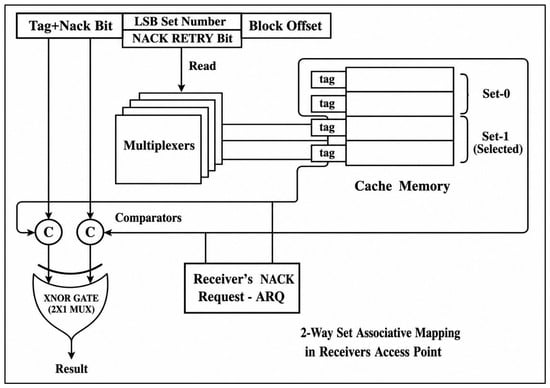
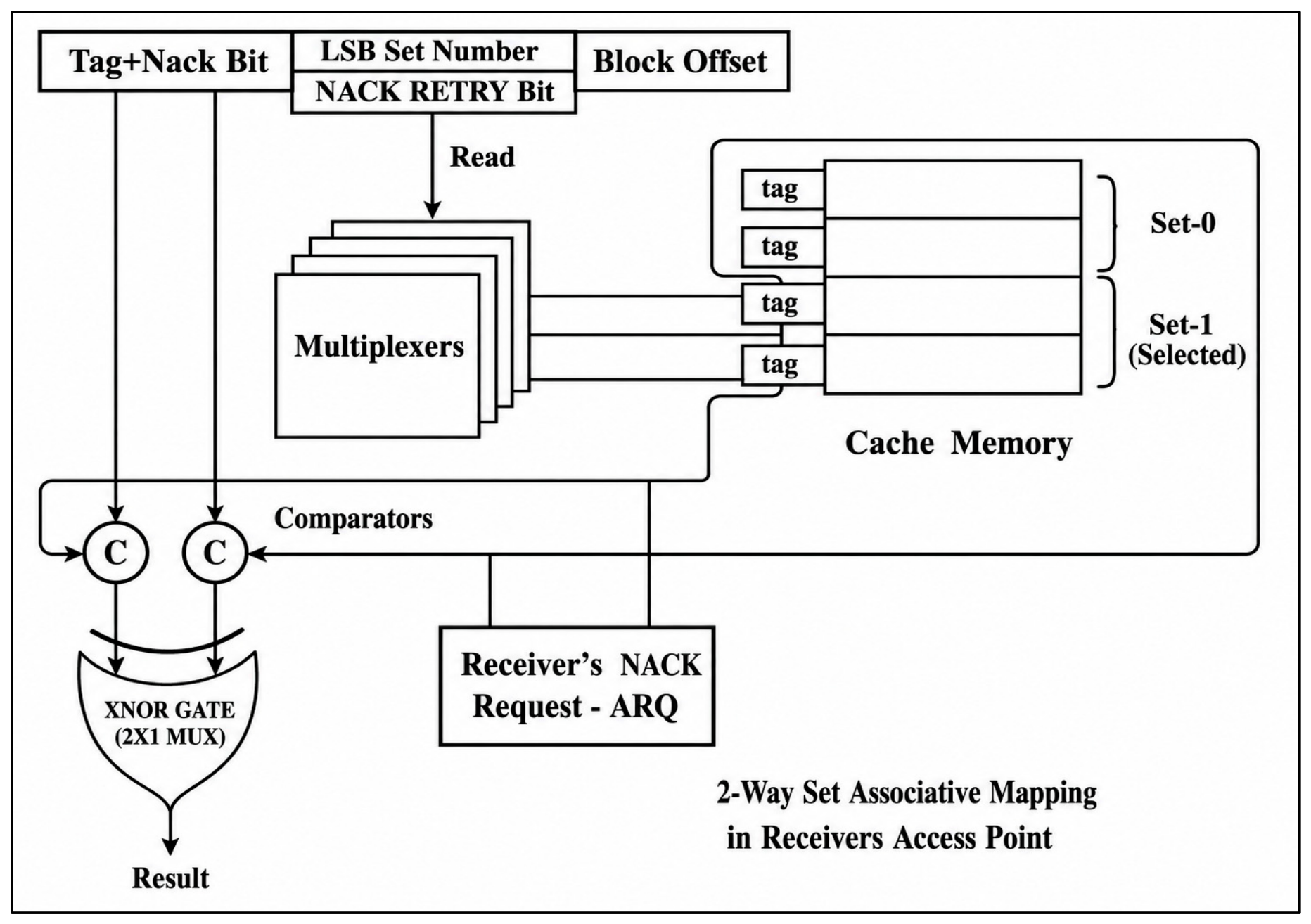
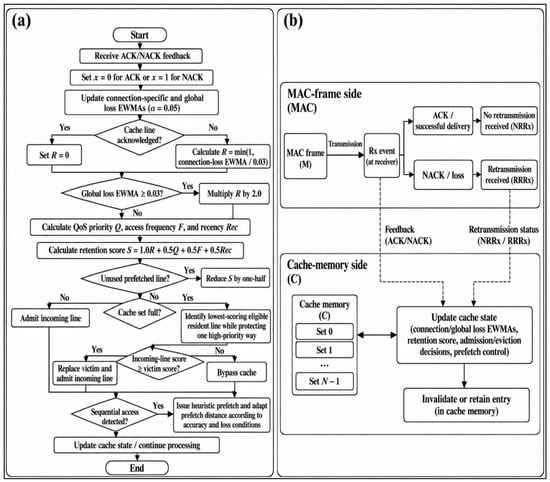
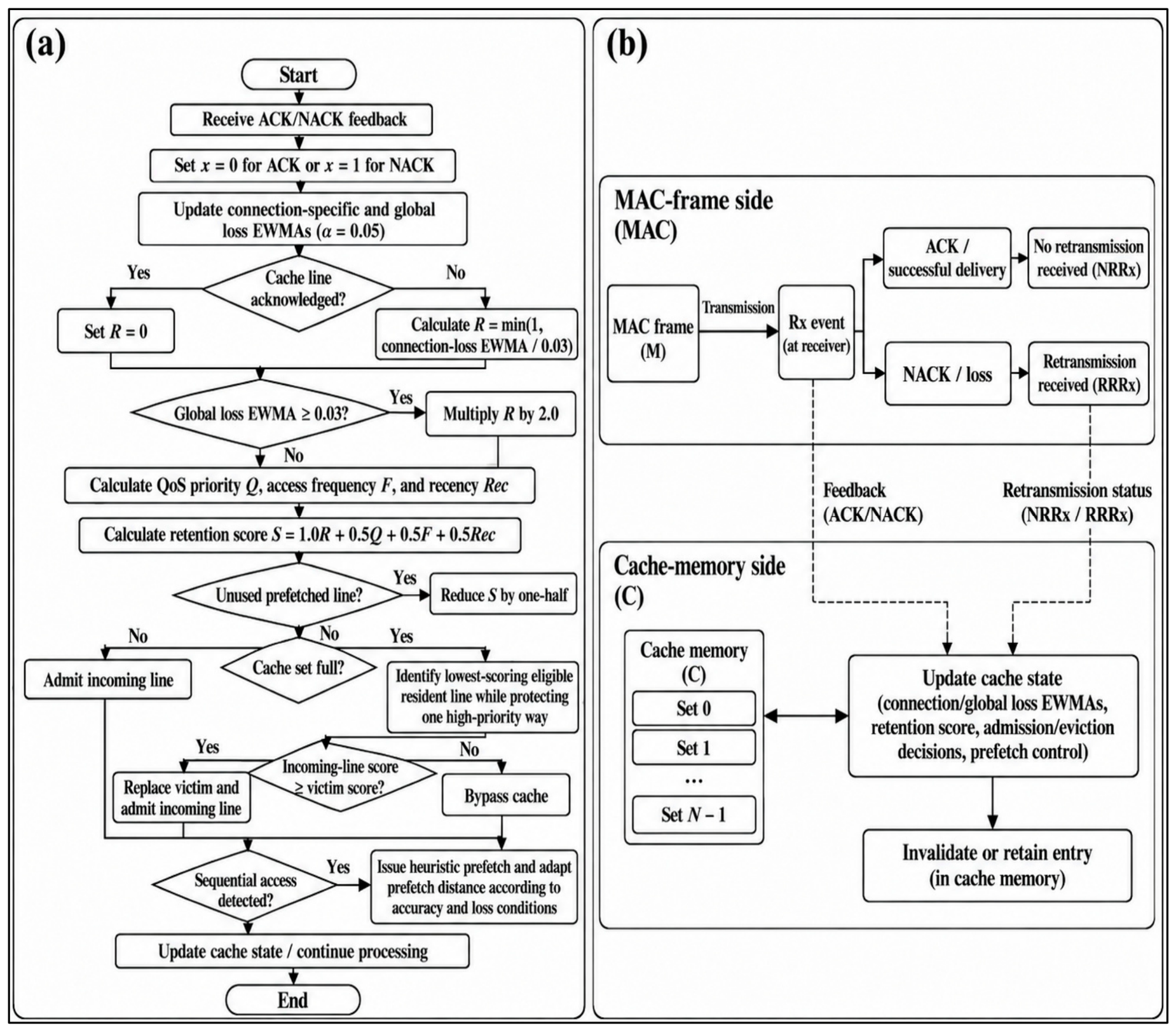
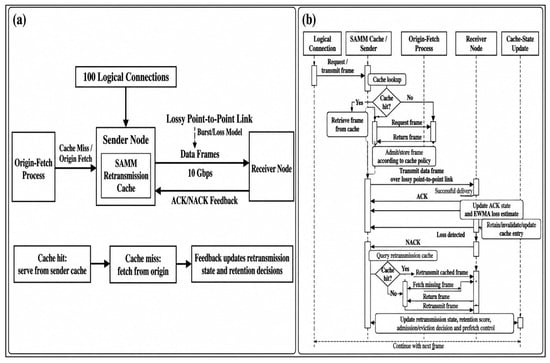
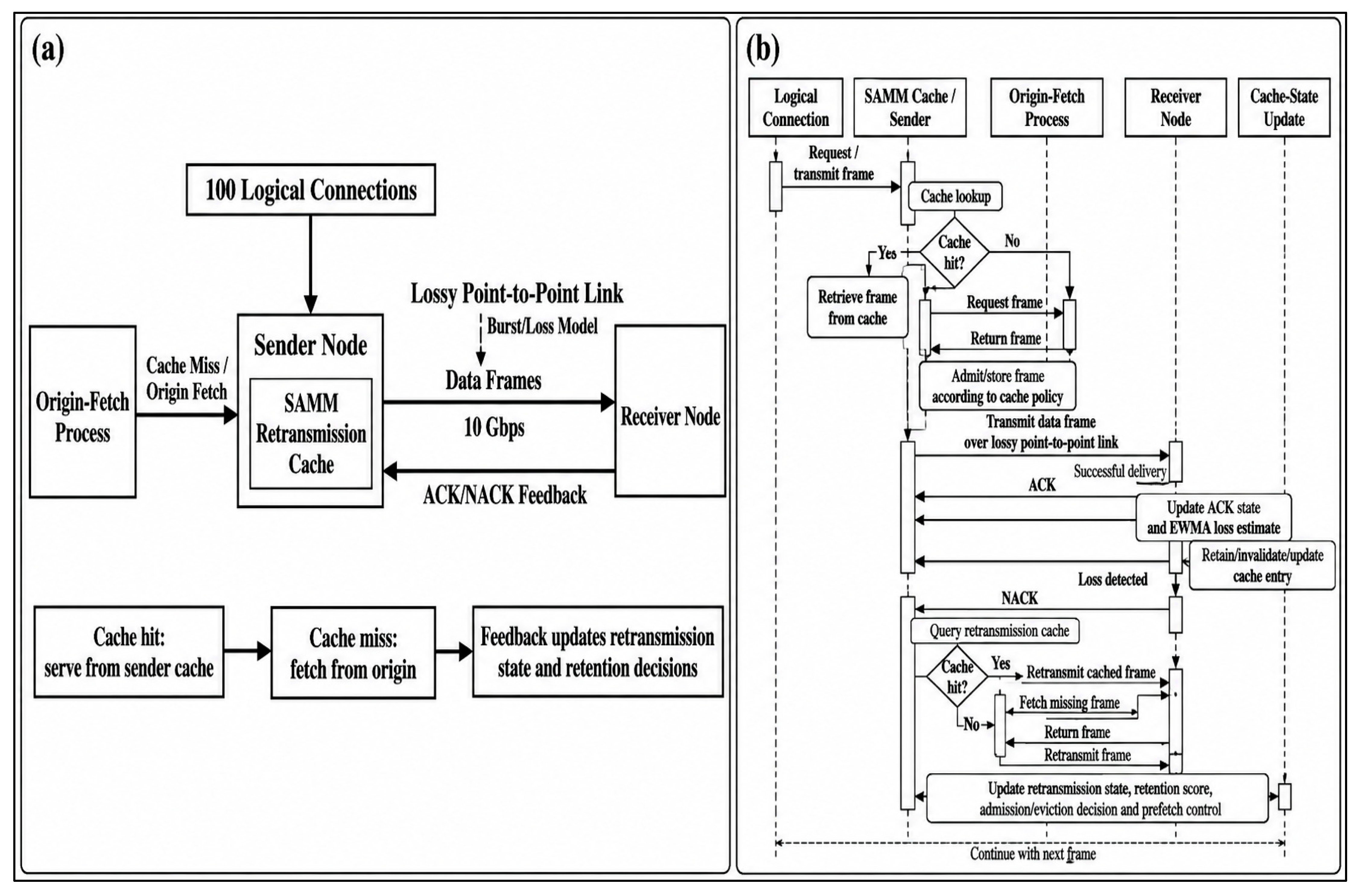
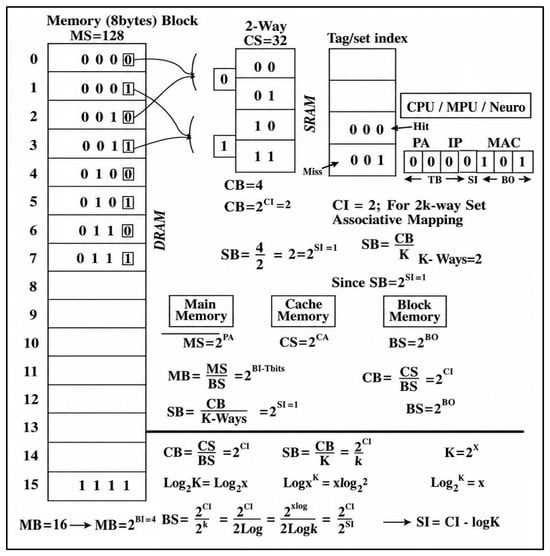
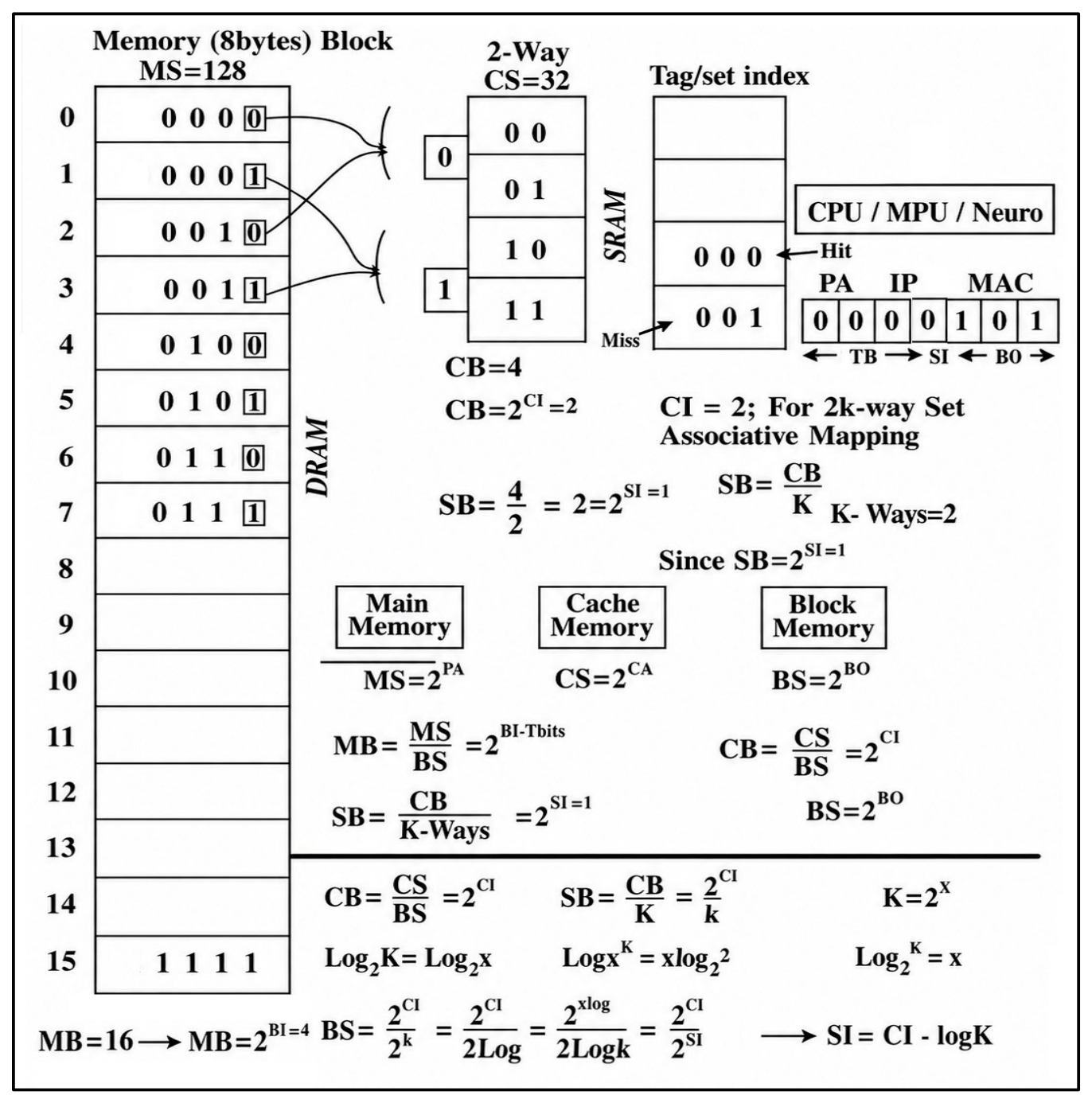
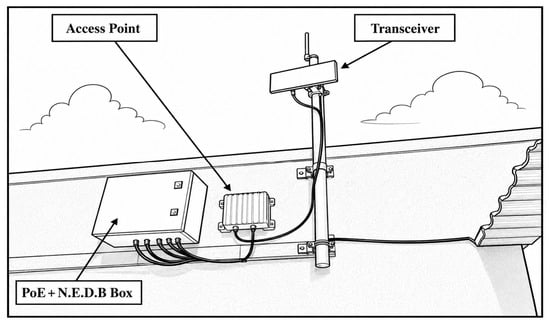
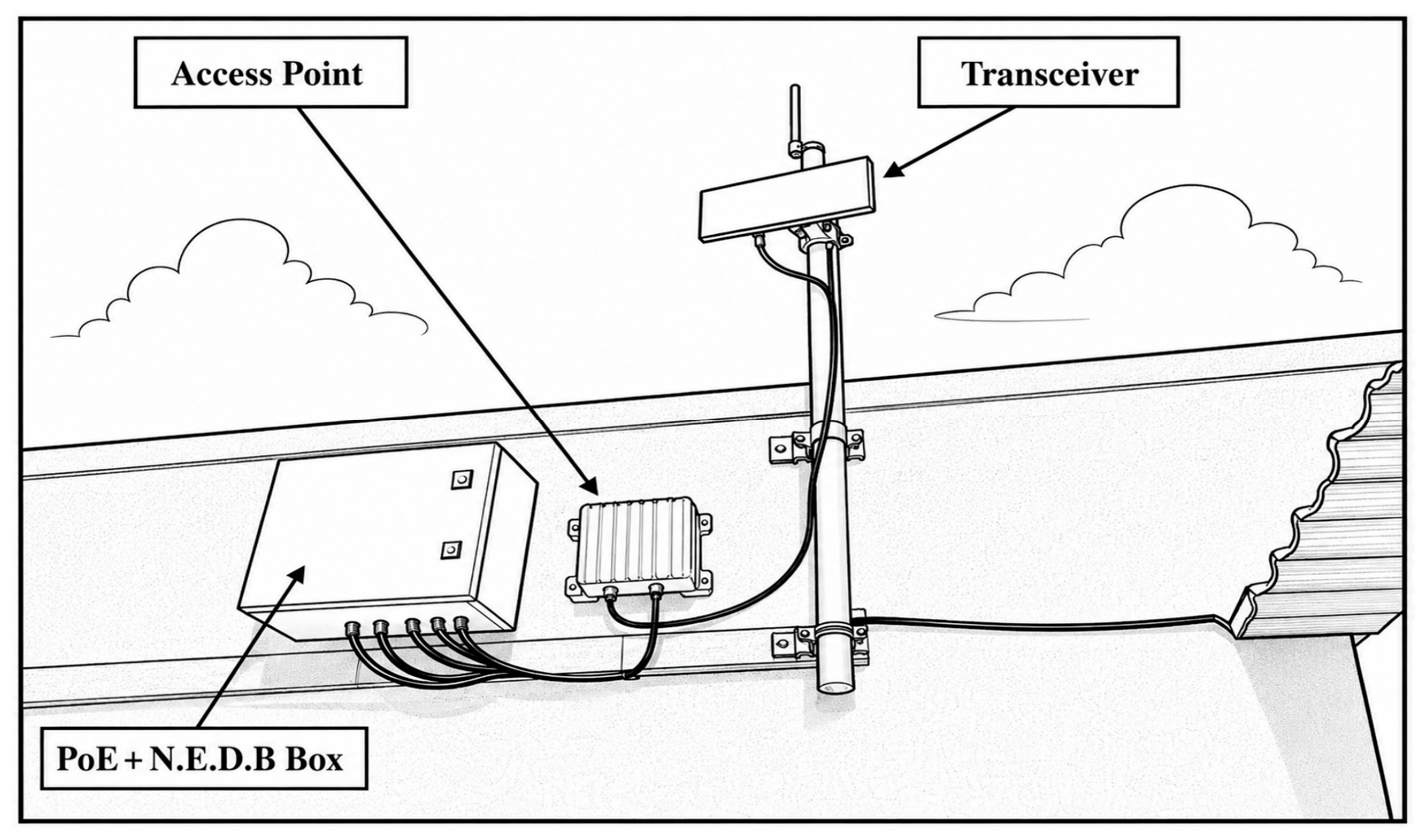
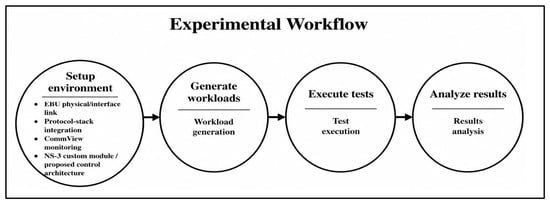
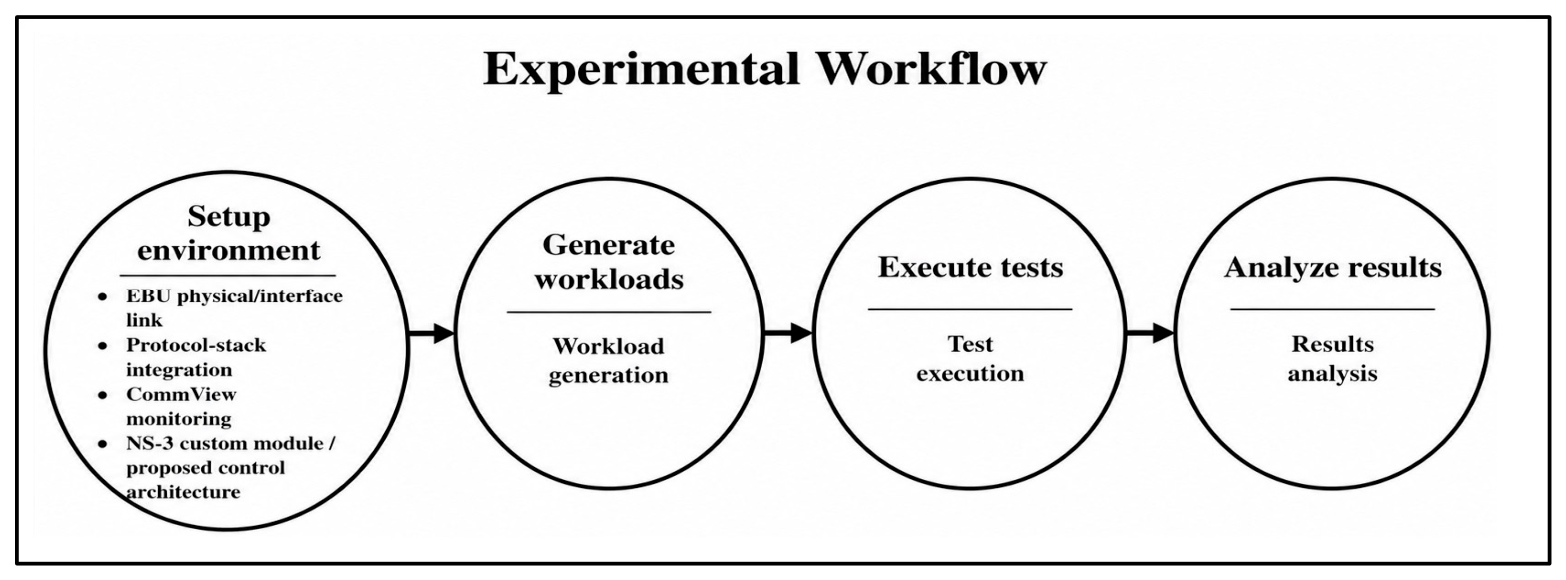
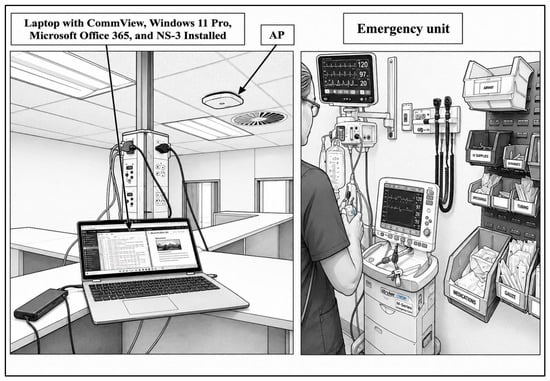
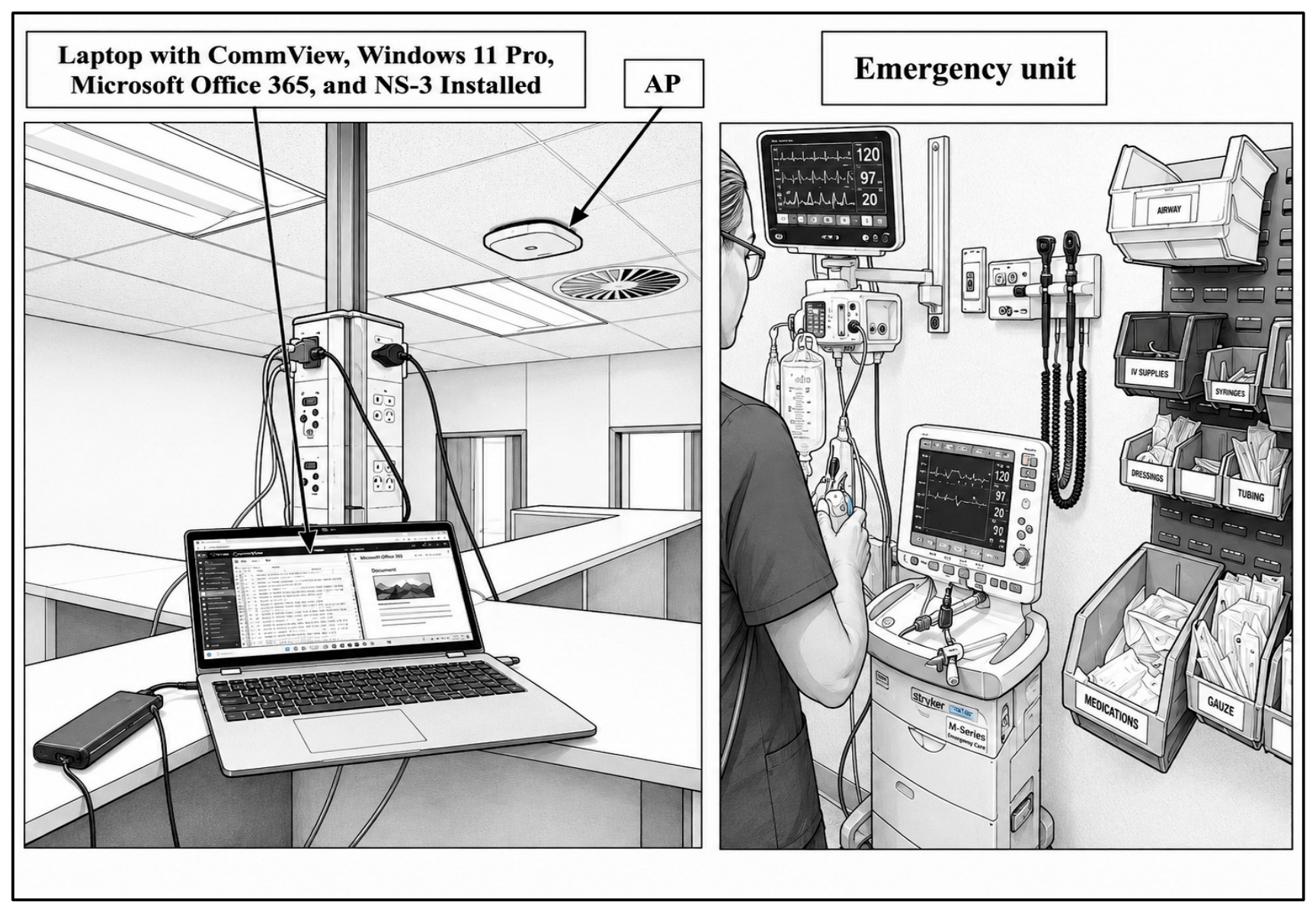
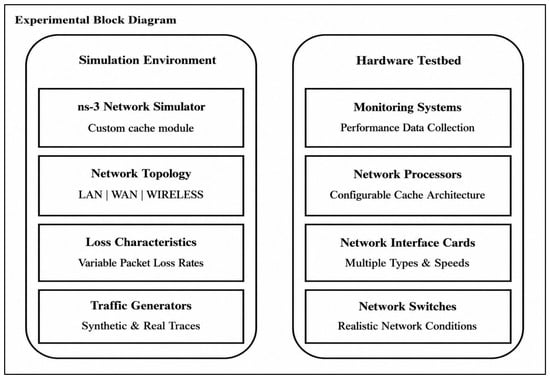
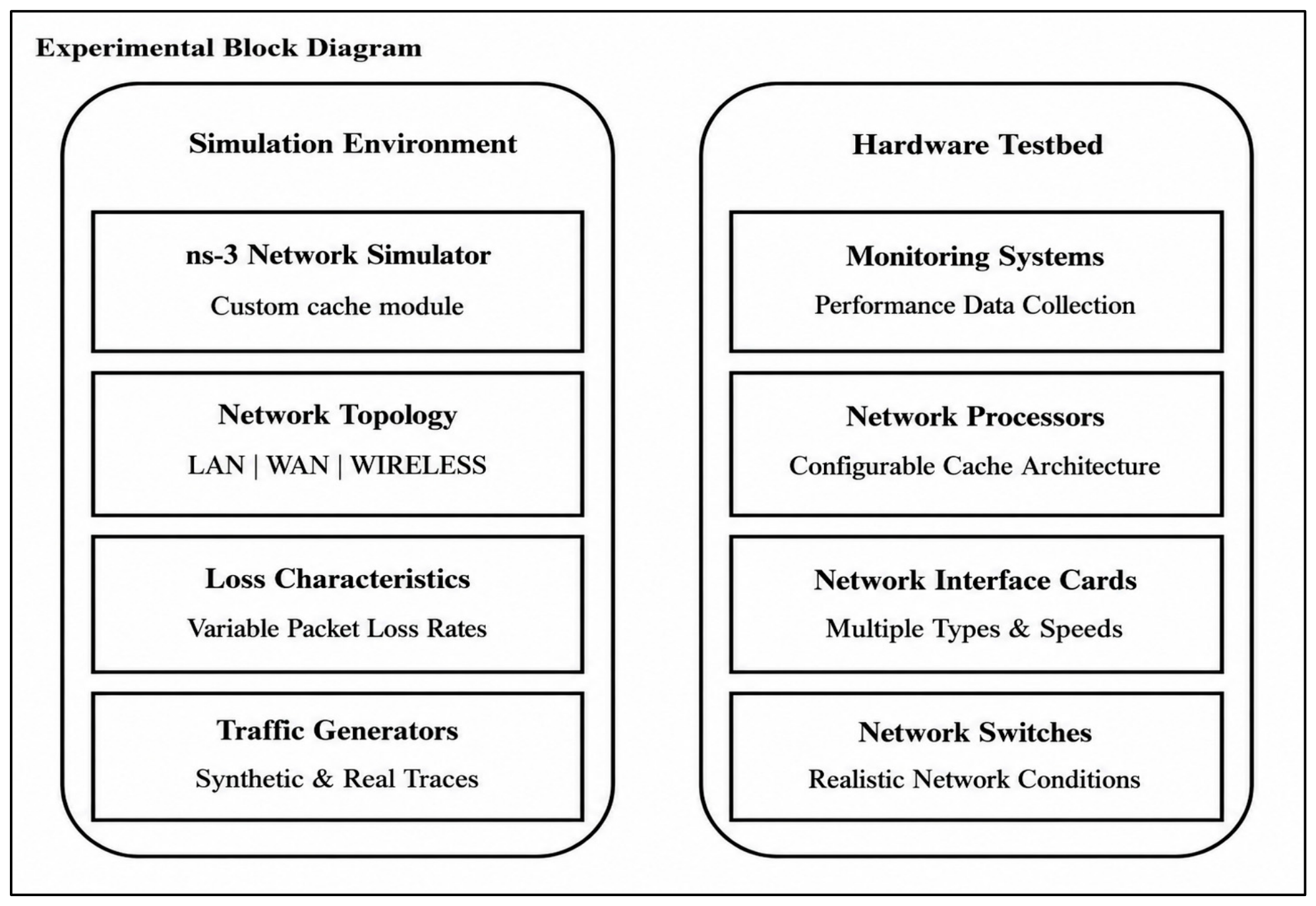
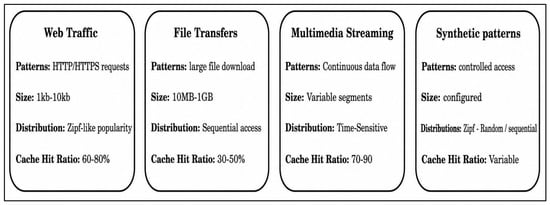
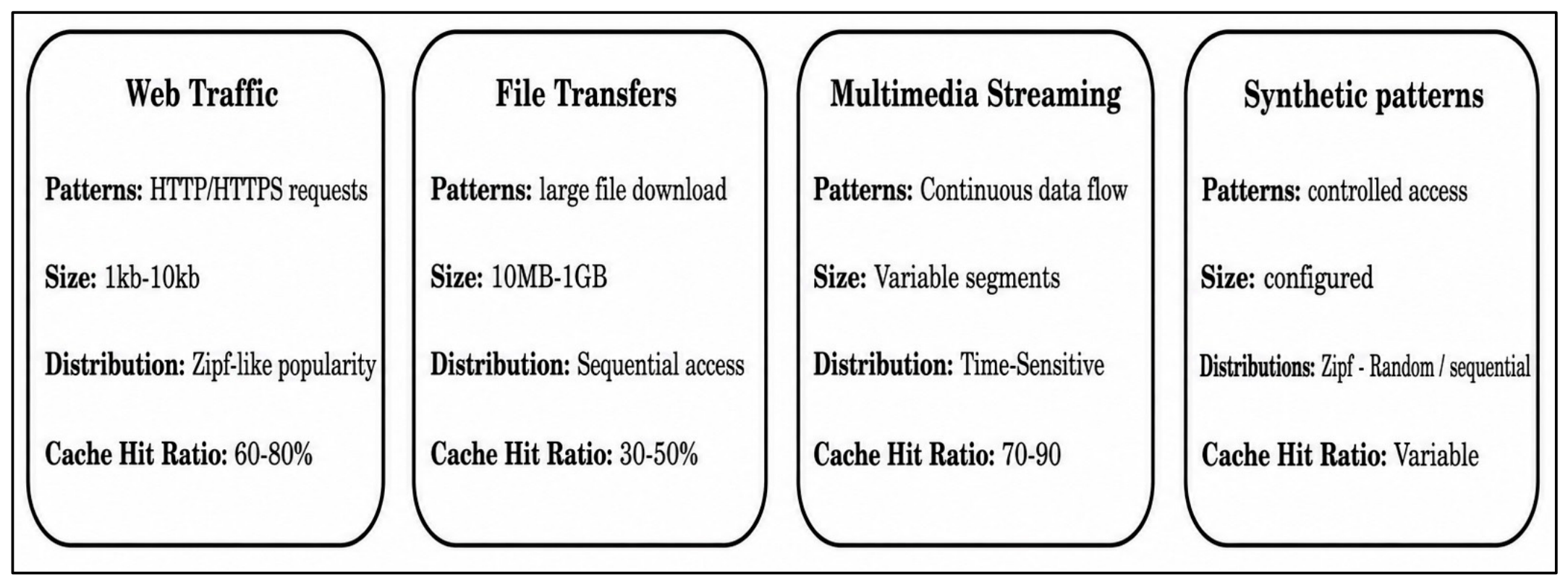

Disclaimer/Publisher’s Note: The statements, opinions and data contained in all publications are solely those of the individual author(s) and contributor(s) and not of MDPI and/or the editor(s). MDPI and/or the editor(s) disclaim responsibility for any injury to people or property resulting from any ideas, methods, instructions or products referred to in the content. |
© 2026 by the authors. Licensee MDPI, Basel, Switzerland. This article is an open access article distributed under the terms and conditions of the Creative Commons Attribution (CC BY) license.