


Simple Summary
Immune checkpoint inhibitors (ICIs) are increasingly used in hepatocellular carcinoma (HCC), including in patients considered for liver transplantation or in those with tumor recurrence after transplantation. However, by activating antitumor immunity, these agents may also disrupt graft tolerance and trigger rejection. In this systematic review, pre-transplant ICI use appeared feasible in selected patients, especially when an adequate washout interval was respected before transplantation. In contrast, post-transplant ICI therapy was associated with a less favourable risk–benefit profile, with early rejection and limited or inconsistent oncologic benefit. These findings support a cautious, multidisciplinary approach and highlight the need for better biomarkers and prospective studies.
Abstract
Background/Objectives: Immune checkpoint inhibitors (ICIs) are increasingly used in hepatocellular carcinoma (HCC), but their application around liver transplantation (LT) remains controversial because checkpoint blockade may enhance antitumor immunity while disrupting graft tolerance. We systematically reviewed the available evidence on ICI exposure before LT and ICI therapy after LT for recurrent HCC. Methods: A PRISMA-guided systematic review with qualitative synthesis was performed. PubMed/MEDLINE, Embase, and Web of Science were searched from inception to 15 March 2026. Studies including adult patients with HCC treated with PD-1-, PD-L1-, and/or CTLA-4-targeting ICIs before LT or after LT for recurrent HCC were eligible. Results: Fifty-one studies were included. In the pre-LT setting, 25 studies reported 576 transplanted patients. Acute allograft rejection occurred in approximately 22% and graft loss in 3.8%, and shorter washout intervals were consistently associated with higher rejection risk. In the post-LT setting, 26 studies reported 117 recipients treated with ICIs; at least 22 rejection episodes (18.8%) were described, usually within 2–4 weeks of treatment initiation, with limited and inconsistent antitumor benefit. Conclusions: Pre-LT ICI use appears feasible in selected patients when adequate washout is respected. Post-LT ICI therapy remains high risk and should be reserved for highly selected cases within a multidisciplinary framework.
1. Introduction
Hepatocellular carcinoma (HCC) is one of the major global health burdens and remains one of the leading causes of cancer-related mortality worldwide. Its incidence continues to rise in parallel with chronic liver diseases such as viral hepatitis, alcohol-related liver disease, and metabolic dysfunction-associated steatotic liver disease [1,2]. Of curative therapy, liver transplantation (LT) has a unique capacity; it not only eliminates the tumour but also targets the cirrhotic substrate in which HCC occurs. Yet even after meticulous selection of the patients and various down-staging techniques, recurrence occurs in as much as 20% of patients [3,4].
In the last decade, immune checkpoint inhibitors (ICIs) have transformed the therapeutic landscape of advanced HCC. Agents targeting the programmed cell death-1 (PD-1) receptor, its ligand (PD-L1), and cytotoxic T-lymphocyte-associated antigen-4 (CTLA-4) have exhibited significant positive changes in survival rate in patients particularly in combination with anti-angiogenic treatment [5]. ICIs have rapidly become a standard systemic treatment option for advanced or unresectable HCC in appropriately selected patients, particularly those with preserved liver function and adequate performance status, although their positioning still varies across regional guidelines and treatment settings. Their use has also extended to broader clinical contexts, including selected patients undergoing locoregional therapies, whereas the most recent data in the adjuvant setting suggest caution regarding efficacy [6]. Aa a result, an increasing number of patients who are potential transplant candidates are now exposed to immunotherapy either intentionally (for downstaging or bridging) or incidentally as part of routine oncologic care.
The increasing use of ICIs has resulted in an immunological paradox with regard to liver transplantation. The liver is a highly tolerogenic organ with specific immune-regulatory pathways that facilitate peripheral tolerance to protect against excessive immune activation. The PD-1/PD-L1 pathway, which suppresses effector T-cell effects and is key to long-term graft acceptance, is central to this balance. Immune checkpoint blockade, by design, disrupts these inhibitory signals to restore antitumor immunity. In transplant recipients, however, the same mechanism may lower the threshold for alloimmune activation, culminating in acute and potentially irreversible graft rejection [7]. This dual properties—therapeutic benefit in cancer control versus immune-mediated graft injury—renders LT recipients uniquely vulnerable to ICI-related toxicity.
Two distinct and increasingly relevant scenarios may therefore occur. In the pre-transplant setting, ICIs have been explored as bridging or downstaging therapies in patients with tumor burden exceeding conventional transplant criteria with restoration of transplant eligibility. In the post-transplant setting, ICIs have been administered to treat recurrent HCC, a condition associated with poor prognosis and limited therapeutic options.
While both strategies are relevant and potentially lifesaving, they are associated with markedly different risk profiles. Reports of severe, early graft rejection following ICI exposure—particularly after transplantation—have raised substantial concern and led many transplant programs to regard ICIs as contraindicated in LT recipients [7].
The available evidence, however, is scarce and heterogeneous. Published data range from isolated case reports describing catastrophic graft failure to multicentre cohorts suggesting that transplantation after ICI exposure may be feasible under carefully controlled conditions. Key clinical questions remain unresolved, including the optimal timing of transplantation after ICI therapy, the relevance of washout intervals, the role of immunosuppression strategies, and the balance between oncologic benefit and graft-related risk. Importantly, no randomized trials address these issues, and guidance from international societies remains cautious and largely non-prescriptive.
In this context, there is an urgent need for an organized synthesis of the mounting clinical and mechanistic evidence surrounding immunotherapy use around LT in HCC. Specifically, a comparison between pre- and post-transplant ICI exposure-related adverse events might contribute to separating modifiable from non-modifiable risk factors and clarify whether a safe therapeutic window exists. The combination of such clinical observations with recent knowledge of the immune tolerance of the liver and of checkpoint biology may be conducive to making intelligent decisions in this population at elevated risk. We summarize the evidence reviewed for ICI exposure in HCC patients undergoing liver transplantation, based on pre- and post-transplant data. We contrast rejection incidence, timing, severity, and oncologic outcomes in these two scenarios, delineate parameters associated with safety and efficacy, and summarize important gaps in our understanding. This systematic revision aims to complement clinical impact with immunobiological knowledge to support an evidence-based framework for judicious and cautious use of immunotherapy in the liver transplant setting.
2. Materials and Methods
2.1. Study Design
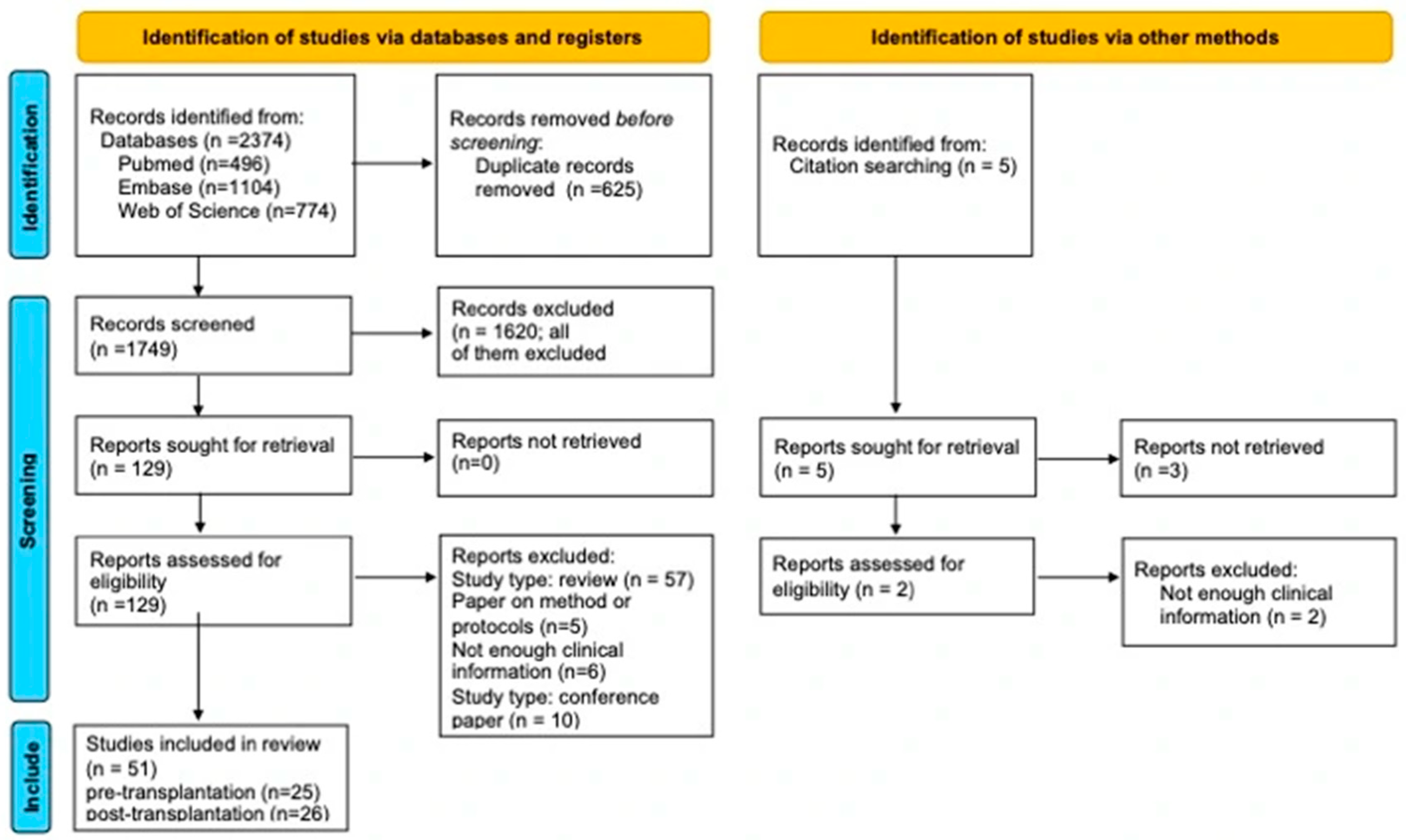
This work was conducted as a systematic review with qualitative synthesis, following the Preferred Reporting Items for Systematic Reviews and Meta-Analyses (PRISMA) guidelines. The PRISMA checklists are provided as Supplementary Table S1. The study selection process is shown in Figure 1. The review protocol was registered in PROSPERO (CRD420261350175). Given the heterogeneity of study designs, patient populations, ICI regimens, timing of exposure relative to LT, outcome definitions, and reporting completeness, and for the possibility of partial overlap between some multicentre cohorts and earlier single-centre reports, a formal quantitative meta-analysis was not planned. Even within apparently similar subsets, pooling was considered likely to generate estimates with misleading precision; therefore, where numerical summaries are presented, they should be interpreted as descriptive and hypothesis-generating rather than causal.
Figure 1.
PRISMA flow diagram of study selection—identification of studies via databases and registers. The diagram illustrates the identification, screening, eligibility assessment, and inclusion of studies evaluating immune checkpoint inhibitor exposure in patients with hepatocellular carcinoma undergoing liver transplantation, in accordance with the PRISMA 2020 guidelines.
2.2. Literature Search Strategy
A systematic literature search was performed in PubMed/MEDLINE, Embase, and Web of Science for studies published from database inception to 15 March 2026. The search strategy combined controlled vocabulary and free-text terms related to hepatocellular carcinoma, liver transplantation, and immune checkpoint inhibitors. The full database-specific search strategy is provided in Supplementary Table S2. Reference lists of relevant articles and reviews were also screened manually to identify additional eligible studies. Because this is a rapidly evolving field, the search end date was prespecified to ensure transparency and reproducibility.
2.3. Eligibility Criteria
Studies were eligible if they included adult patients with hepatocellular carcinoma treated with PD-1-, PD-L1-, and/or CTLA-4-targeting immune checkpoint inhibitors, either before LT (bridging or downstaging setting) or after LT for recurrent HCC. Case reports, case series, and retrospective or prospective observational studies were included, provided that they reported at least one relevant outcome, including allograft rejection, graft loss, tumor response, recurrence, or survival. Studies focusing on non-HCC malignancies, non-checkpoint-based immunotherapies, preclinical or animal models, conference abstracts without full text, or non-English publications were excluded.
2.4. Study Selection and Data Extraction
Two reviewers independently screened titles and abstracts for eligibility. Full texts of potentially relevant studies were then assessed for inclusion. Disagreements were resolved by consensus.
Data were independently extracted by two reviewers using a standardized form. Extracted variables included study characteristics, number of patients, timing of ICI exposure relative to transplantation, immunotherapy regimen, washout interval (for pre-LT exposure), immunosuppressive therapy, rejection events, graft loss, survival, and oncologic outcomes. Missing or incompletely reported data were recorded as not reported (NR). Potential overlap across multicentre cohorts and earlier single-centre reports was specifically assessed during full-text review and data extraction by comparing institution, recruitment period, clinical setting, and cohort composition; where overlap was suspected, the most comprehensive dataset was prioritized for quantitative counting, whereas smaller reports were retained only when they appeared non-overlapping or provided unique mechanistic or pathologic information. The study selection process is illustrated in the PRISMA flow diagram (Figure 1).
2.5. Assessment of Study Quality
Given that most included studies were case reports, case series, or small observational cohorts, no formal risk-of-bias tool was applied, as instruments such as ROBINS-I or Newcastle–Ottawa are not readily applicable in a consistent manner across predominantly descriptive evidence. Study quality was instead assessed qualitatively based on the clarity of patient selection, temporal relationship between ICI exposure and transplantation, completeness of outcome reporting, and availability of histologic confirmation of rejection. These considerations were considered during data synthesis and interpretation, and greater interpretive weight was assigned to studies with clearer patient selection, more complete outcome reporting, and biopsy-confirmed rejection. No formal certainty-of-evidence framework was applied. Confidence in the body of evidence was instead evaluated qualitatively, given the predominance of case reports, case series, and small retrospective cohorts, as well as the substantial clinical and methodological heterogeneity across studies.
2.6. Data Synthesis
Because of substantial clinical and methodological heterogeneity, the results were synthesized qualitatively. Studies were grouped according to the timing of ICI exposure relative to transplantation (pre-LT vs. post-LT), and outcomes were summarized descriptively in tabular and narrative form. No formal assessment of reporting bias or certainty of evidence was undertaken; instead, these issues were considered qualitatively in light of the predominance of retrospective and descriptive reports, the likely publication bias toward severe or unusual events, and the inconsistent reporting of key transplant-related variables. Regimen-specific differences were summarized narratively, but no formal subgroup analysis by ICI class was attempted because treatment type was strongly confounded by timing of exposure, indication, combination therapy, and transplant context.
2.7. Ethics Statement
This study was based exclusively on published studies and did not involve primary data collection. Therefore, ethical approval was not required.
3. Results
The process described in the Preferred Reporting Items for Systematic Reviews and Meta-Analyses (PRISMA) framework and the following flowchart are presented (Figure 1). The search and screen identified studies reporting immune checkpoint inhibitor (ICI) exposure in patients with HCC undergoing LT, either before transplantation or after transplantation for recurrent disease. The systematic search identified 2374 records through database searching (PubMed/MEDLINE, n = 496; Embase, n = 1104; Web of Science, n = 774). After removal of 625 duplicate records, 1749 records remained for title and abstract screening. Of these, 1720 were excluded. The remaining 129 reports were assessed in full text for eligibility, of which 77 were excluded (57 reviews, 5 methodological/protocol papers, 6 reports with insufficient clinical information, and 10 conference papers). Ultimately, 51 studies were included in the qualitative synthesis (25 before transplantation; 26 after transplantation). The final dataset consisted of case reports, case series, and observational cohort studies, as no randomized controlled trials have been reported in this clinical context.
Because of heterogeneity in study design, immunotherapy regimens, timing of exposure relative to LT, and outcome reporting, results were synthesized qualitatively, as specified in the Methods Section. Results are presented based on ICI exposure relative to transplantation. Outcomes associated with pre-LT ICI exposure are reported first, emphasizing transplant feasibility, washout periods, incidence and timing of rejection. Results from post-LT ICI therapy in recurrent HCC are then summarized, particularly focusing on graft-related outcomes and antitumor efficacy.
3.1. Immune Checkpoint Inhibitor Exposure Before Liver Transplantation
A total of 25 studies reporting pre-LT exposure to ICIs in patients with HCC were included, encompassing 576 transplanted patients treated with ICIs prior to LT (Table 1) [8,9,10,11,12,13,14,15,16,17,18,19,20,21,22,23,24,25,26,27,28,29,30,31]. Study designs included case reports, single-centre series, and large multicentre retrospective cohorts.
Table 1.
Immune checkpoint inhibitor exposure before liver transplantation in patients with hepatocellular carcinoma: detailed extraction of immunosuppression, rejection phenotype, and timing.
Pre-LT ICI therapy was administered primarily with bridging or downstaging intent in patients with tumor burden exceeding conventional transplant criteria or at high risk of wait-list dropout. Most patients received anti-PD-1 or anti-PD-L1 monotherapy, although combination regimens, including atezolizumab plus bevacizumab and PD-1 plus CTLA-4 blockade, were reported in more recent series. The number of ICI cycles and integration with locoregional therapies varied widely across studies, reflecting the absence of standardized neoadjuvant protocols.
Across the studies included in Table 1, acute allograft rejection after LT occurred in approximately 22% of transplanted patients following pre-LT ICI exposure. Graft loss attributable to rejection was uncommon, occurring in 11 patients (3.8%). Reported washout intervals ranged from 7 to 229 days, with consistently higher rejection rates observed when transplantation occurred within 30 days of the last ICI dose. When biopsy-confirmed, rejection was predominantly T-cell-mediated, consistent with rapid reactivation of alloimmune responses following checkpoint blockade.
Importantly, rejection risk appeared strongly influenced by the interval between the last ICI dose and transplantation. In a large multicentre cohort, Guo et al. [14] demonstrated that a washout interval exceeding 30 days was associated with a significantly lower risk of allograft rejection, a finding subsequently confirmed in a large international cohort reported by Moeckli et al. [9]. In the latter study, the overall rejection rate ranged from 20% to 28% but declined to <10% when the washout interval exceeded approximately 50 days. By contrast, ultra-short washout intervals (<2 weeks) were associated with severe early graft injury or rejection, including fatal outcomes in early case reports [30]. We therefore interpreted the available evidence as indicating a time-dependent reduction in risk rather than a universally safe threshold; despite heterogeneity in reported washout durations, intervals between 30 and 50 days repeatedly identified a lower-risk, but not risk-free, window across studies.
Although rejection was relatively frequent, irreversible graft failure remained uncommon. At least 4 deaths and 4 retransplantations were explicitly reported; in addition, 6 further graft losses were reported in the largest cohort but were not disaggregated into death versus retransplantation. These severe outcomes were predominantly associated with very short washout intervals or highly immunogenic PD-1 monotherapy exposure.
Immunosuppressive regimens, both for induction and maintenance, were heterogeneous across studies. In reports providing protocol-level detail, maintenance therapy most often consisted of calcineurin inhibitor-based regimens, frequently combined with mycophenolate mofetil and corticosteroids. Basiliximab or anti-thymocyte globulin induction were reported less often. No specific immunosuppressive strategy consistently mitigated rejection risk in patients transplanted shortly after ICI exposure, underscoring the dominant role of pre-existing immune activation. At the same time, these observations must be interpreted cautiously because the apparent effect of immunosuppressive regimen is confounded by baseline disease severity, urgency of transplantation, center-specific practice, and the timing of ICI discontinuation.
3.1.1. Pathological and Biomarker Assessment
Systematic assessment of PD-1/PD-L1 expression in graft tissue was largely absent. In at least one large cohort, such analyses were explicitly not performed, precluding correlations between intragraft immune phenotype and rejection risk. This paucity of biomarker-driven stratification substantially limits translational interpretation and highlights the need for studies integrating graft tissue profiling with clinical outcome data.
3.1.2. Oncologic Outcomes
The oncologic outcomes of transplanted patients were generally favourable, with high rates of successful downstaging to transplant eligibility and low early post-LT recurrence rates during short- to mid-term follow-up. Importantly, extended washout intervals were not associated with increased post-LT recurrence, suggesting that delaying transplantation to reduce rejection risk does not appear to compromise oncologic control [8,10].
Overall, ICI exposure in HCC before LT was associated with feasible transplantation in carefully selected patients, with a moderate descriptive risk of rejection and a low risk of graft loss. In the current evidence base, “selected” refers pragmatically to patients managed in experienced multidisciplinary transplant programs, with a meaningful oncologic indication for bridging or downstaging, disease control under ICI-based therapy, no uncontrolled extrahepatic disease or severe immune-related toxicity, and the possibility of observing an adequate washout interval before transplantation. More than the immunosuppressive regimen itself, the ICI washout interval emerged as the most consistent observable determinant of rejection, although this association remains vulnerable to confounding. Collectively, these findings indicate that successful transplantation after ICI exposure is achievable, provided that an adequate washout period is observed. Recent systematic reviews and individual patient–level meta-analyses published in 2024–2025 substantiate the conclusions of the present review [33,34]. Across independent cohorts, rejection risk after pre-LT ICI exposure consistently correlates with shorter washout intervals, while no consistent signal has emerged implicating a specific checkpoint inhibitor or maintenance immunosuppressive strategy. These pooled analyses further suggest that deferring transplantation to allow adequate immune reset does not adversely impact oncologic outcomes, reinforcing the feasibility of a time-adapted approach. Together, emerging aggregated data provide converging evidence that pre-LT ICI therapy can be integrated into transplant pathways under carefully controlled temporal conditions, whereas post-LT use remains considerably less predictable. In this respect, the recent expert consensus from the Italian Association for the Study of the Liver (AISF) aligns with the available evidence, emphasizing that although pre-LT ICI exposure is associated with a meaningful risk of acute rejection, the likelihood of irreversible graft failure remains comparatively low and appears to be strongly modulated by adequate treatment discontinuation before transplantation [35].
3.2. Immune Checkpoint Inhibitor Therapy After Liver Transplantation for Recurrent HCC
A total of 26 studies reporting post-LT exposure to ICIs were included (Table 2) [7,36,37,38,39,40,41,42,43,44,45,46,47,48,49,50,51,52,53,54,55,56,57,58,59,60]. Most reports concerned recurrent HCC, although some more recent cohorts also included de novo malignancies or mixed recurrent primary liver tumours. Overall, 117 LT recipients were treated with ICIs after transplantation. The evidence base remained dominated by case reports and small series, but more recent data also included a multicenter retrospective cohort of 52 recipients and a prospective pilot cohort of 18 recipients. Anti-PD-1-based therapy predominated, whereas atezolizumab plus bevacizumab represented the most frequently reported PD-L1-based regimen in recent series.
Table 2.
Immune checkpoint inhibitor exposure after liver transplantation in patients with recurrent hepatocellular carcinoma.
The interval between LT and ICI initiation was highly variable, ranging from 9.5 months to more than 11 years. Across the studies included in Table 2, at least 22 allograft rejection episodes were reported among 117 treated recipients (18.8%), although precise pooling remains limited by heterogeneous populations and incomplete event reporting in a minority of studies. When reported, rejection was predominantly acute T-cell-mediated and usually occurred early, most often within the first 2–4 weeks after ICI initiation.
In the largest cohort [35], rejection occurred in 7/52 recipients (13%) at a median of 27 days and was histologically confirmed in 6/7 cases; in addition, early severe cellular rejection with graft failure was documented in several case reports [53]. Although the prominence of early severe events may partly reflect publication bias, the temporal pattern of rejection within days to a few weeks was also observed in larger cohorts and therefore appears biologically plausible rather than being confined to isolated reports.
Importantly, the accumulating evidence no longer supports the assumption that atezolizumab-based regimens are uniformly rejection-free. Although no rejection was reported in individual cases or small series [38,39,40,42,44,46,47,50,54,57], rejection events were also described in newer atezolizumab-containing retrospective cohorts, indicating that PD-L1-based strategies may attenuate but do not eliminate alloimmune risk. Available data further suggest that proactive intensification of immunosuppression and continued calcineurin inhibitor exposure at ICI initiation may mitigate rejection risk, whereas shorter time from LT and recent immunosuppression minimization may increase vulnerability. Although mTOR-based regimens were associated with an apparent lower incidence of rejection in isolated reports [39,40], the number of cases is very limited and, importantly, these patients were typically very late after transplantation (≥9 years), a context inherently associated with lower alloimmune risk during immune checkpoint inhibitor therapy. Overall, available post-LT evidence remains insufficient to implicate any specific maintenance immunosuppression regimen as a consistent determinant of ICI-related rejection. Similarly, no reliable subgroup analysis by ICI class was possible, because PD-1-, PD-L1-, and CTLA-4-based regimens were used in small and clinically non-comparable populations, often in combination with anti-angiogenic agents or other systemic therapies. Collectively, these data indicate that time from transplantation and the underlying immunologic context outweigh immunosuppression type or ICI class as observable determinants of rejection risk.
3.2.1. Histologic Picture
Pre-treatment liver graft biopsies with immune profiling before immune checkpoint inhibitor therapy remain rarely reported in post-transplant hepatocellular carcinoma. In a prospective pilot study restricted here to the 18 HCC cases, biopsy-proven rejection occurred in 3 patients (16.7%) despite uniformly negative baseline graft PD-L1 staining [36]. Earlier case-level reports likewise suggested that graft tissue assessment is feasible, but such observations remain isolated. By contrast, in most published reports, liver biopsies were obtained only after graft dysfunction to document rejection, limiting the discovery of predictive histologic or immunophenotypic biomarkers. These data support further evaluation of protocolized pre-ICI graft biopsy integrated with transcriptomic and peripheral immune profiling to identify alloimmune risk states and guide biologically informed patient selection.
3.2.2. Antitumor Activity and Survival Outcomes
Antitumor efficacy was heterogeneous and generally limited. Most case reports described stable disease or progression, whereas cohort-level data suggested only modest survival benefit in selected subgroups. The absence of uniform response criteria, short follow-up in many reports, and the scarce number of consistent cohorts preclude firm conclusions on this issue. Importantly, the overall clinical value of post-LT ICI therapy is constrained not only by graft-related risk, but also by the generally poor and inconsistent oncologic payoff observed across studies.
Overall, post-transplant ICI therapy remains a high-risk strategy, characterized by a meaningful early risk of predominantly T-cell-mediated rejection, limited and inconsistent oncologic benefit, and the absence of validated biomarkers to guide patient selection. It should therefore be considered exceptional and reserved for highly selected patients after careful multidisciplinary discussion of graft-related risks, expected oncologic benefit, time from transplantation, and baseline immunologic context.
4. Conclusions
ICIs have reshaped the therapeutic landscape of hepatocellular carcinoma, yet their integration into the LT setting remains inherently complex and high risk.
Current evidence supports a conditional and time-dependent role for ICIs before transplantation, where carefully selected patients may benefit from bridging or downstaging strategies provided that an adequate washout interval is respected to mitigate rejection risk. In practical terms, such patients are presently those managed in experienced multidisciplinary centers, with controlled tumor burden under therapy, no uncontrolled extrahepatic disease or severe immune-related toxicity, and the possibility of delaying LT long enough to allow a lower-risk washout interval. In contrast, post-transplant ICI therapy for recurrent HCC is associated with unpredictable and potentially life-threatening allograft rejection, limited and inconsistent antitumor efficacy, and a lack of validated biomarkers to guide patient selection.
Notably, combination regimens incorporating anti-angiogenic agents may modulate immune activation and have shown signals of improved disease control in small post-transplant series, but their impact on graft tolerance remains insufficiently defined. Across settings, timing relative to transplantation and the underlying immunologic context emerge as more influential determinants of outcome than the specific immunosuppressive regimen or ICI agent. Current evidence supports a time-dependent reduction in pre-LT rejection risk with longer washout, but not a universally safe minimum threshold; transplantation within <30 days of the last ICI dose appears higher risk and should be avoided whenever possible, whereas longer intervals, particularly beyond approximately 50 days in the largest cohorts, appear associated with lower risk. Until prospective data and biologically informed risk stratification tools become available, the use of ICIs in liver transplant recipients should remain exceptional, confined to highly selected cases within a multidisciplinary framework and accompanied by transparent discussion of graft-related risks.
Supplementary Materials
The following supporting information can be downloaded at: https://www.mdpi.com/article/10.3390/cancers18081282/s1, Table S1. presents the full electronic search strategies used for this systematic review. Table S2. PRISMA 2020 Checklist [61].
Author Contributions
Conceptualization: E.V., F.D.; Formal analysis: L.C., M.M., G.C.; Data curation: F.D., L.C., M.M., G.C.; Methodology: E.V., G.C., F.D.; Investigation: E.V., L.C., F.D.; Software: L.C., M.M.; Writing—original draft: E.V., F.D.; Writing—review and editing: E.V., and all authors; Funding acquisition: E.V.; Supervision: E.V. All authors have read and agreed to the published version of the manuscript.
Funding
(1) Fondazione Italiana per la Ricerca sul Cancro (AIRC), Grant no. IG 2020-ID, 24858 to Erica Villa; (2) Ministero della Salute, Ricerca Corrente 2026 to Francesco Dituri.
Institutional Review Board Statement
This study was based exclusively on published studies and did not involve primary data collection. Therefore, ethical approval was not required.
Informed Consent Statement
Not applicable.
Data Availability Statement
No new data were created or analysed in this study.
Conflicts of Interest
No other conflicts of interest were disclosed.
References
- Hwang, S.Y.; Danpanichkul, P.; Agopian, V.; Mehta, N.; Parikh, N.D.; Abou-Alfa, G.K.; Singal, A.G.; Yang, J.D. Hepatocellular carcinoma: Updates on epidemiology, etiology, and disease burden. Clin. Mol. Hepatol. 2024, 30, 15–35. [Google Scholar] [CrossRef] [Scilit]
- Singh, P.; Madke, T.; Chand, P. Global epidemiology of hepatocellular carcinoma. J. Clin. Exp. Hepatol. 2025, 15, 102446. [Google Scholar] [CrossRef] [Scilit]
- Lasagni, S.; Leonardi, F.; Pivetti, A.; Di Marco, L.; Ravaioli, F.; Serenari, M.; Gitto, S.; Critelli, R.M.; Milosa, F.; Romanzi, A.; et al. Endothelial angiopoietin-2 overexpression in explanted livers identifies subjects at higher risk of recurrence of hepatocellular carcinoma after liver transplantation. Front. Oncol. 2022, 12, 960808. [Google Scholar] [CrossRef] [Scilit]
- Dixon, W.; Chandna, S.; Sack, J.S.; Gray, M.; Brown, C.N.; Poreddy, S.; Ha, K.; Schoech, M.R.; Zucker, S.D. Screening for hepatocellular carcinoma recurrence after liver transplantation: Prospective validation of binary criteria. Cancer Med. 2025, 14, e71428. [Google Scholar] [CrossRef] [Scilit]
- Galle, P.R.; Finn, R.S.; Qin, S.; Ikeda, M.; Zhu, A.X.; Kim, T.Y.; Kudo, M.; Breder, V.; Merle, P.; Kaseb, A.; et al. Patient-reported outcomes with atezolizumab plus bevacizumab versus sorafenib in patients with unresectable hepatocellular carcinoma (IMbrave150): An open-label, randomised, phase 3 trial. Lancet Oncol. 2021, 22, 991–1001. [Google Scholar] [CrossRef] [Scilit]
- Yopp, A.; Chen, M.; Cheng, A.L.; Kaseb, A.; Kudo, M.; Lee, H.C.; Cha, E.; Hack, S.P.; Lian, Q.; Spahn, J.; et al. Updated data from IMbrave050: Adjuvant atezolizumab plus bevacizumab for high-risk hepatocellular carcinoma. J. Hepatol. 2026, in press. [Google Scholar] [CrossRef] [Scilit]
- Di Marco, L.; Pivetti, A.; Foschi, F.G.; D’Amico, R.; Schepis, F.; Caporali, C.; Casari, F.; Lasagni, S.; Critelli, R.M.; Milosa, F.; et al. Feasibility, safety, and outcome of second-line nivolumab/bevacizumab in liver transplant patients with recurrent hepatocellular carcinoma. Liver Transpl. 2023, 29, 559–563. [Google Scholar] [CrossRef] [Scilit]
- Bhoori, S.; Rivoltini, L.; Pinato, D.J.; Bellia, V.; Maspero, M.; Bongini, M.; de Cristofaro, J.; Vaiani, M.; Dosi, M.; Vergani, E.; et al. Efficacy of liver transplantation after response to atezolizumab-bevacizumab downstaging of intermediate and advanced hepatocellular carcinoma (ImmunoXXL). J. Hepatol. 2026, in press. [Google Scholar] [CrossRef] [Scilit]
- Moeckli, B.; Wassmer, C.H.; El Hajji, S.; Kumar, R.; Rodrigues Ribeiro, J.; Tabrizian, P.; Feng, H.; Schnickel, G.; Kulkarni, A.V.; Allaire, M.; et al. Determining safe washout period for immune checkpoint inhibitors prior to liver transplantation: An international retrospective cohort study. Hepatology 2025, 82, 1122–1137. [Google Scholar] [CrossRef] [Scilit]
- Tabrizian, P.; Marino, R.; Bhoori, S.; Zeitlhoefler, M.; Mehta, N.; Banz, V.; Gruttadauria, S.; Iavarone, M.; Mazzarelli, C.; Simonotti, N.; et al. Neoadjuvant atezolizumab plus bevacizumab prior liver transplantation for hepatocellular carcinoma. JHEP Rep. 2024, 7, 101246. [Google Scholar] [CrossRef] [Scilit]
- Zhang, S.; Zhang, S. Successful liver transplantation after achieving complete clinical remission of hepatocellular carcinoma with combination therapy of immune checkpoint inhibitors and targeted agents: A case report. Transplant. Proc. 2025, 57, 580–584. [Google Scholar] [CrossRef] [Scilit] [PubMed]
- Xu, Y.; Yan, Y.; Liu, D.; Tang, J.; Zhang, H.; Liu, X.; Wu, Y.; Cui, X. Risk of transplant rejection associated with ICIs prior to liver transplantation in HCC: A multicenter retrospective study. Int. Immunopharmacol. 2024, 143, 113400. [Google Scholar] [CrossRef] [Scilit] [PubMed]
- Lv, Z.; Xiang, X.; Yong, J.-K.; Zhou, Y.; Wu, Y.; Li, L.; Wang, Y.; Zhang, Z.; Xia, Q.; Feng, H. Pembrolizumab in combination with lenvatinib in participants with hepatocellular carcinoma before liver transplant as neoadjuvant therapy—PLENTY pilot study. Int. J. Surg. 2024, 110, 6647–6657. [Google Scholar] [CrossRef] [Scilit] [PubMed]
- Guo, Z.; Liu, Y.; Ling, Q.; Xu, L.; Wang, T.; Zhu, J.; Lin, Y.; Lu, X.; Qu, W.; Zhang, F.; et al. Pretransplant use of immune checkpoint inhibitors for hepatocellular carcinoma: A multicenter, retrospective cohort study. Am. J. Transplant. 2024, 24, 1837–1856. [Google Scholar] [CrossRef] [Scilit]
- Kulkarni, A.V.; Kumaraswamy, P.; Menon, B.; Sekaran, A.; Rambhatla, A.; Iyengar, S.; Alla, M.; Venishetty, S.; Ramachandra, S.K.; Premkumar, G.V.; et al. Downstaging with atezolizumab-bevacizumab: A case series. J. Liver Cancer 2024, 24, 224–233. [Google Scholar] [CrossRef] [Scilit]
- Abdelrahim, M.; Esmail, A.; Divatia, M.K.; Xu, J.; Kodali, S.; Victor, D.W.; Brombosz, E.; Connor, A.A.; Saharia, A.; Elaileh, A.; et al. Utilization of immunotherapy as a neoadjuvant therapy for liver transplant recipients with hepatocellular carcinoma. J. Clin. Med. 2024, 13, 3068. [Google Scholar] [CrossRef] [Scilit]
- Lu, X.; Zhu, Q.; Cai, J.; Yang, Z.; Gu, G.; Pang, L.; Su, M.; Zhang, F.; Lin, H.; Wu, W.; et al. Pretransplant immunotherapy increases acute rejection yet improves survival outcome of HCC patients with MVI post-liver transplantation. Cancer Immunol. Immunother. 2025, 74, 18. [Google Scholar] [CrossRef] [Scilit]
- Fang, J.; Zhong, S.; Wang, T.; He, K.; Mu, A.; Ong, M.; Lin, Y.; Zhu, Z.; Wang, N.; Wu, J.; et al. Immune-related adverse events are a potent predictor of post-transplant rejection in HCC: A multicentre retrospective cohort study. Gut 2025, in press. [Google Scholar] [CrossRef] [Scilit]
- Wang, T.; Chen, Z.; Liu, Y.; Jia, Y.; Ju, W.; Chen, M.; Zhao, Q.; Wang, D.; Guo, Z.; Tang, Y.; et al. Neoadjuvant programmed cell death 1 inhibitor before liver transplantation for HCC is not associated with increased graft loss. Liver Transpl. 2023, 29, 598–606. [Google Scholar] [CrossRef] [Scilit]
- Ohm, H.; Khwaja, R.; Karachiwala, H. Immunotherapy before liver transplant in unresectable hepatocellular carcinoma: A case report. J. Gastrointest. Oncol. 2023, 14, 2644–2649. [Google Scholar] [CrossRef] [Scilit]
- Chouik, Y.; Erard, D.; Demian, H.; Schulz, T.; Mazard, T.; Hartig-Lavie, K.; Antonini TMabrut, J.Y.; Mohkam, K.; Rode, A.; Merle, P. Case Report: Successful liver transplantation after achieving complete clinical remission of advanced HCC with Atezolizumab plus Bevacizumab combination therapy. Front Immunol. 2023, 14, 1205997. [Google Scholar] [CrossRef] [Scilit]
- Aby, E.S.; Lake, J.R. Immune Checkpoint Inhibitor Therapy Before Liver Transplantation-Case and Literature Review. Transpl. Direct. 2022, 4, e1304. [Google Scholar] [CrossRef] [Scilit]
- Schnickel, G.T.; Fabbri, K.; Hosseini, M.; Misel, M.; Berumen, J.; Parekh, J.; Mekeel, K.; Dehghan, Y.; Kono, Y.; Ajmera, V. Liver transplantation for hepatocellular carcinoma following checkpoint inhibitor therapy with nivolumab. Am. J. Transplant. 2022, 22, 1699–1704. [Google Scholar] [CrossRef] [Scilit] [PubMed]
- Kang, E.; Martinez, M.; Moisander-Joyce, H.; Saenger, Y.M.; Griesemer, A.D.; Kato, T.; Yamashiro, D.J.; Remotti, H.; Gartrell, R.D. Stable liver graft post anti-PD1 therapy as a bridge to transplantation in an adolescent with hepatocellular carcinoma. Pediatr. Transplant. 2022, 26, e14209. [Google Scholar] [CrossRef] [Scilit]
- Dave, S.; Yang, K.; Schnickel, G.T.; Kono, Y.; Delebecque, F.; Arellano, D.; Liu, A.; Zhang, X.; Tu, X.M.; Ajmera, V. The impact of treatment of hepatocellular carcinoma with immune checkpoint inhibitors on pre- and post-liver transplant outcomes. Transplantation 2022, 106, e308–e309. [Google Scholar] [CrossRef] [Scilit] [PubMed]
- Qiao, Z.Y.; Zhang, Z.J.; Lv, Z.C.; Tong, H.; Xi, Z.F.; Wu, H.X.; Chen, X.S.; Xia, L.; Feng, H.; Zhang, J.J.; et al. Neoadjuvant programmed cell death 1 (PD-1) inhibitor treatment in patients with hepatocellular carcinoma before liver transplant: A cohort study and literature review. Front. Immunol. 2021, 12, 653437. [Google Scholar] [CrossRef] [Scilit] [PubMed]
- Dehghan, Y.; Schnickel, G.T.; Hosseini, M.; Burgoyne, A.M.; Ajmera, V.H.; Morris, G.P.; Mendler, M.H.; Parekh, J.R.; Abushamat, F.; Vodkin, I.; et al. Rescue liver re-transplantation after graft loss due to severe rejection in the setting of pre-transplant nivolumab therapy. Clin. J. Gastroenterol. 2021, 14, 1718–1724. [Google Scholar] [CrossRef] [Scilit]
- Lizaola-Mayo, B.C.; Mathur, A.K.; Borad, M.J.; Jadlowiec, C.C.; Lam-Himlin, D.M.; Corey, R.L.; Iqbal, S.; Okubo, K.; Byrne, T.J.; Moss, A.A.; et al. Immunotherapy as a downstaging tool for liver transplantation in hepatocellular carcinoma. Am. J. Gastroenterol. 2021, 116, 2478–2480. [Google Scholar] [CrossRef] [Scilit]
- Sogbe, M.; López-Guerra, D.; Blanco-Fernández, G.; Sangro, B.; Narváez-Rodriguez, I. Durvalumab as a successful downstaging therapy for liver transplantation in hepatocellular carcinoma: The importance of a washout period. Transplantation 2021, 105, e398–e400. [Google Scholar] [CrossRef] [Scilit]
- Chen, G.H.; Wang, G.B.; Huang, F.; Qin, R.; Yu, X.J.; Wu, R.L.; Hou, L.J.; Ye, Z.H.; Zhang, X.H.; Zhao, H.C. Pretransplant use of toripalimab for hepatocellular carcinoma resulting in fatal acute hepatic necrosis in the immediate postoperative period. Transpl. Immunol. 2021, 66, 101386. [Google Scholar] [CrossRef] [Scilit]
- Nordness, M.F.; Hamel, S.; Godfrey, C.M.; Shi, C.; Johnson, D.B.; Goff, L.W.; O’Dell, H.; Perri, R.E.; Alexopoulos, S.P. Fatal hepatic necrosis after nivolumab as a bridge to liver transplantation for hepatocellular carcinoma. Am. J. Transplant. 2020, 20, 284–288. [Google Scholar] [CrossRef] [Scilit] [PubMed]
- Schwacha-Eipper, B.; Minciuna, I.; Banz, V.; Dufour, J.F. Immunotherapy as a downstaging therapy for liver transplantation. Hepatology 2020, 72, 1488–1490. [Google Scholar] [CrossRef] [Scilit]
- Rezaee-Zavareh, M.S.; Yeo, Y.H.; Wang, T.; Guo, Z.; Tabrizian, P.; Ward, S.C.; Barakat, F.; Hassanein, T.I.; Dave, S.; Ajmera, V.; et al. Impact of pre-transplant immune checkpoint inhibitor use on post-transplant outcomes in HCC: A systematic review and individual patient data meta-analysis. J. Hepatol. 2025, 82, 107–119. [Google Scholar] [CrossRef] [Scilit]
- Marzi, L.; Mega, A.; Turri, C.; Gitto, S.; Ferro, F.; Spizzo, G. Immune checkpoint inhibitors in the pre-transplant hepatocellular carcinoma setting: A glimpse beyond the liver. Int. J. Mol. Sci. 2024, 25, 11676. [Google Scholar] [CrossRef] [Scilit]
- Ponziani, F.R.; Giannelli, V.; Marrone, G.; Martini, S.; Morelli, M.C.; Pagano, D.; Baroni, G.S.; Germani, G.; Burra, P.; Toniutto, P.; et al. Expert consensus on the use of immune checkpoint inhibitors in the liver transplant setting: Guidance from the Liver Transplant Committee of the Italian Association for the Study of the Liver (AISF). Am. J. Transplant. 2026, in press. [Google Scholar] [CrossRef] [Scilit]
- Yao, R.R.; Zhang, Q.B.; Ge, M.X.; Li, L.; Li, J.; Zhou, X.L.; Wang, Z.X.; Liang, X.H. The safety and efficacy of atezolizumab for recurrent primary liver cancer after liver transplantation. Discov. Oncol. 2025, 16, 553. [Google Scholar] [CrossRef] [Scilit]
- De Martin, E.; Antonini, T.M.; Uguen, T.; Allaire, M.; Hilleret, M.N.; Del Bello, A.; Ningarhari, M.; Amaddeo, G.; Faure, S.; Besch, C.; et al. Immune checkpoint inhibitors after liver transplantation: The role of immunosuppressive management. Am. J. Transplant. 2026, in press. [Google Scholar] [CrossRef] [Scilit] [PubMed]
- He, Y.; Huang, X.; Huang, X.; Yang, G.; Sun, Q.; Xiao, Y.; Wang, Z.; Ding, Z.; Shi, G.; Shi, Y.; et al. Graft PD-L1 as a predictive marker for rejection in PD-1 inhibitor therapy for recurrent liver tumors after transplant: A prospective pilot trial. Liver Transpl. 2026, 32, 135–143. [Google Scholar] [CrossRef] [Scilit] [PubMed]
- Giudicelli, H.; Conti, F.; Scatton, O.; Thabut, D.; Allaire, M. Standardized immunosuppressive protocol to prevent rejection under immunotherapy for post liver transplantation HCC recurrence: A French center’s experience. J. Liver Transpl. 2025, 17, 100252. [Google Scholar] [CrossRef] [Scilit]
- Zhou, J.J.; Eder, D.; Weber, F.; Heumann, P.; Kronenberg, K.; Werner, J.M.; Geissler, E.K.; Schlitt, H.J.; Hutchinson, J.A.; Bitterer, F. Case report: Predictability of clinical response and rejection risk after immune checkpoint inhibition in liver transplantation. Front. Transplant. 2023, 2, 1211916. [Google Scholar] [CrossRef] [Scilit]
- Rudolph, M.; Shah, S.A.; Quillin, R.; Lemon, K.; Olowokure, O.; Latif, T.; Sohal, D. Immune checkpoint inhibitors in liver transplant: A case series. J. Gastrointest. Oncol. 2023, 14, 1141–1148. [Google Scholar] [CrossRef] [Scilit]
- Yang, Z.; Sun, J.; Zhuang, L.; Mou, H.; Zheng, S. Preliminary evaluation of atezolizumab plus bevacizumab as salvage treatment for recurrent hepatocellular carcinoma after liver transplant. Liver Transpl. 2022, 28, 895–896. [Google Scholar] [CrossRef] [Scilit]
- Jin, X.; Zhang, K.; Fang, T.; Zeng, X.; Yan, X.; Tang, J.; Liang, Z.; Xie, L.; Zhao, D. Low-dose PD-1 inhibitor combined with lenvatinib for preemptive treatment of recurrence after liver transplantation for hepatocellular carcinoma: Case report and literature review. Front. Oncol. 2022, 12, 951303. [Google Scholar] [CrossRef] [Scilit] [PubMed]
- Dai, T.; Yang, Q.; Zhang, Y.; Ye, L.; Li, H.; Yi, S.; Liu, W.; Yang, Y.; Wang, G. Camrelizumab (SHR-1210) treatment for recurrent hepatocellular carcinoma after liver transplant: A report of two cases. Liver Res. 2021, 6, 111–115. [Google Scholar] [CrossRef] [Scilit] [PubMed]
- Shi, G.M.; Wang, J.; Huang, X.W.; Huang, X.Y.; He, Y.F.; Ji, Y.; Chen, Y.; Wu, D.; Li, J.C.; Sun, Q.M.; et al. Graft programmed death ligand 1 expression as a marker for transplant rejection following anti-programmed death 1 immunotherapy for recurrent liver tumors. Liver Transpl. 2021, 27, 444–449. [Google Scholar] [CrossRef] [Scilit]
- Ben Khaled, N.; Roessler, D.; Reiter, F.P.; Seidensticker, M.; Guba, M.; De Toni, E.N. Extending the use of atezolizumab and bevacizumab to a liver transplant recipient: Need for a posttransplant registry. Liver Transpl. 2021, 27, 928–929. [Google Scholar] [CrossRef] [Scilit]
- Al Jarroudi, O.; Ulusakarya, A.; Almohamad, W.; Afqir, S.; Morere, J.F. Anti-programmed cell death protein 1 (PD-1) immunotherapy for metastatic hepatocellular carcinoma after liver transplantation: A report of three cases. Cureus 2020, 12, e11150. [Google Scholar] [CrossRef] [Scilit]
- Qiu, J.; Tang, W.; Du, C. Immune checkpoint inhibitors in patients with recurrent hepatocellular carcinoma after liver transplantation: One case report and literature review. Curr. Cancer Drug Targets 2020, 20, 720–727. [Google Scholar] [CrossRef] [Scilit]
- Amjad, W.; Kotiah, S.; Gupta, A.; Morris, M.; Liu, L.; Thuluvath, P.J. Successful treatment of disseminated hepatocellular carcinoma after liver transplantation with nivolumab. J. Clin. Exp. Hepatol. 2020, 10, 185–187. [Google Scholar] [CrossRef] [Scilit]
- Anugwom, C.; Leventhal, T. Nivolumab-induced autoimmune-like cholestatic hepatitis in a liver transplant recipient. ACG Case Rep. J. 2020, 7, e00416. [Google Scholar] [CrossRef] [Scilit]
- Zhuang, L.; Mou, H.B.; Yu, L.F.; Zhu, H.K.; Yang, Z.; Liao, Q.; Zheng, S.S. Immune checkpoint inhibitor for hepatocellular carcinoma recurrence after liver transplantation. Hepatobiliary Pancreat. Dis. Int. 2020, 19, 91–93. [Google Scholar] [CrossRef] [Scilit]
- Pandey, A.; Cohen, D.J. Ipilimumab for hepatocellular cancer in a liver transplant recipient, with durable response, tolerance and without allograft rejection. Immunotherapy 2020, 12, 287–292. [Google Scholar] [CrossRef] [Scilit]
- Rammohan, A.; Reddy, M.S.; Farouk, M.; Vargese, J.; Rela, M. Pembrolizumab for metastatic hepatocellular carcinoma following live donor liver transplantation: The silver bullet? Hepatology 2018, 67, 1166–1168. [Google Scholar] [CrossRef] [Scilit]
- Gassmann, D.; Weiler, S.; Mertens, J.C.; Reiner, C.S.; Vrugt, B.; Nägeli, M.; Mangana, J.; Müllhaupt, B.; Jenni, F.; Misselwitz, B.; et al. Liver allograft failure after nivolumab treatment—A case report with systematic literature research. Transplantation 2018, 102, e15–e19. [Google Scholar] [CrossRef] [Scilit]
- DeLeon, T.T.; Salomao, M.A.; Aqel, B.A.; Sonbol, M.B.; Yokoda, R.T.; Ali, A.H.; Moss, A.A.; Mathur, A.K.; Chascsa, D.M.; Rakela, J.; et al. Pilot evaluation of PD-1 inhibition in metastatic cancer patients with a history of liver transplantation. J. Immunother. Cancer 2018, 6, 73. [Google Scholar] [CrossRef] [Scilit]
- Tio, M.; Rai, R.; Ezeoke, O.M.; McQuade, J.L.; Zimmer, L.; Khoo, C.; Park, J.J.; Spain, L.; Turajlic, S.; Ardolino, L.; et al. Anti-PD-1/PD-L1 immunotherapy in patients with solid organ transplant, HIV or hepatitis B/C infection. Eur. J. Cancer 2018, 104, 137–144. [Google Scholar] [CrossRef] [Scilit]
- Friend, B.D.; Venick, R.S.; McDiarmid, S.V.; Zhou, X.; Naini, B.; Wang, H.; Farmer, D.G.; Busuttil, R.W.; Federman, N. Fatal orthotopic liver transplant organ rejection induced by a checkpoint inhibitor in two patients with refractory, metastatic hepatocellular carcinoma. Pediatr. Blood Cancer 2017, 64, e26682. [Google Scholar] [CrossRef] [Scilit]
- De Toni, E.N.; Gerbes, A.L. Tapering of immunosuppression and sustained treatment with nivolumab in a liver transplant recipient. Gastroenterology 2017, 152, 1631–1633. [Google Scholar] [CrossRef] [Scilit]
- Varkaris, A.; Lewis, D.W.; Nugent, F.W. Preserved liver transplant after PD-1 pathway inhibitor for hepatocellular carcinoma. Am. J. Gastroenterol. 2017, 112, 1895–1896. [Google Scholar] [CrossRef] [Scilit]
- Gomez, P.; Naim, A.; Zucker, K.; Wong, M. A case of hepatocellular carcinoma (HCC) immunotherapy inducing liver transplant rejection. Am. J. Gastroenterol. 2018, 113, S1347. [Google Scholar] [CrossRef] [Scilit]
- Page, M.J.; McKenzie, J.E.; Bossuyt, P.M.; Boutron, I.; Hoffmann, T.C.; Mulrow, C.D.; Shamseer, L.; Tetzlaff, J.M.; Akl, E.A.; Brennan, S.E.; et al. The PRISMA 2020 statement: An updated guideline for reporting systematic reviews. BMJ 2021, 372, n71. [Google Scholar] [CrossRef] [Scilit]

Disclaimer/Publisher’s Note: The statements, opinions and data contained in all publications are solely those of the individual author(s) and contributor(s) and not of MDPI and/or the editor(s). MDPI and/or the editor(s) disclaim responsibility for any injury to people or property resulting from any ideas, methods, instructions or products referred to in the content. |
© 2026 by the authors. Licensee MDPI, Basel, Switzerland. This article is an open access article distributed under the terms and conditions of the Creative Commons Attribution (CC BY) license.