


Simple Summary
Pelvic cancers and their treatments can severely reduce fertility in women of reproductive age, making fertility preservation (FP) an essential part of modern cancer care. This systematic review evaluated studies published between 2013 and 2025 on fertility-sparing surgery and cryopreservation in women with pelvic malignancies. Fourteen eligible articles, including systematic reviews, cohort studies, and clinical guidelines, were analyzed in this review. The results show that fertility-sparing approaches are oncologically safe, with five-year survival rates exceeding 90%. Cryopreservation preserved ovarian function in more than 60% of patients and achieved live birth rates of up to 40%. Thematic analysis identified five key issues: oncological safety, FP method selection, psychosocial benefits, barriers to access, and the need for standardized protocols. Overall, fertility preservation can safely complement cancer treatment when tailored to tumor characteristics and patient preferences. However, improved reporting, long-term follow-up, and equitable access remain crucial.
Abstract
Background/Objectives: Oncologic surgery to the pelvis and post-surgery adjuvant therapy are dangerous to the reproductive potential of childbearing-aged women. Clinical practices in fertility preservation (FP) have become an essential aspect of multidisciplinary cancer care; however, uniform practices remain inconsistent among the different varieties of cancer and/or areas. To systematically compare the fertility preservation procedures employed in women who have undergone pelvic oncologic surgery and to measure their reproductive and oncologic stages. This review focuses primarily on gynecologic pelvic malignancies and addresses fertility preservation strategies within the context of multimodal oncologic care, including surgery, chemotherapy, radiotherapy, and multidisciplinary decision-making. Methods: A systematic review was performed using PRISMA 2020 to investigate publications from to 2013–2025 in PubMed, Embase, Scopus, Cochrane Library, and Web of Science. The inclusion criteria were women of childbearing age with pelvic malignancies who underwent either fertility-sparing or cryopreservation procedures. PICO-based data mining was performed, and AMSTAR 2, NOS, and AGREE II methodological quality evaluation instruments were used. Mixed inductive–deductive thematic analysis was used to synthesize the findings of the study. Results: A range of articles, including systematic reviews, cohort studies, and clinical guidelines, were included. Fertility-sparing surgery and cryopreservation were found to be as safe and oncologically effective as traditional therapy, with a five-year survival rate of more than 90. Cryopreservation maintained the functioning of the ovary in over 60 percent of the patients and recorded live delivery rates of up to 40 percent. Thematic analysis revealed five main spheres: oncologic safety, creation of FP approaches, psychosocial benefits, limiting access, and the necessity of standardized procedures. Conclusions: Fertility preservation can securely supplement oncologic treatment courses, favoring tumor traits and individual preferences. Unified reporting, extended follow-up, and equitable access are pertinent in maximizing results and reproductive self-corrective action among female cancer endocrine survivors. Fertility preservation should be considered as an integral component of multidisciplinary oncologic management in women with gynecologic pelvic cancers, extending beyond surgical approaches to include coordinated medical, reproductive, and supportive care.
1. Introduction
The presence of pelvic malignancies, such as cervical, ovarian, and endometrial cancers, still poses significant problems in reproductive healthcare for women of childbearing age worldwide. Such cancers usually necessitate radical oncologic surgeries, such as hysterectomy and oophorectomy, and postoperative adjuvant treatments, including chemotherapy and radiotherapy. All these therapies may cause long-term fertility and hormonal imbalances, which make reproductive and endocrine issues permanent [1].
Pelvic oncologic surgery presents a unique clinical challenge in reproductive-age women because the same intervention required for an oncologic cure may jeopardize future fertility. Traditionally, fertility preservation has been discussed from a surgical and reproductive endocrinology standpoint, emphasizing the selection of appropriate candidates and fertility-preserving procedures, such as oocyte or embryo cryopreservation, ovarian tissue cryopreservation, or ovarian transposition, prior to pelvic radiotherapy [2,3]. However, the success of these strategies relies heavily on the biochemical and molecular determinants of ovarian viability that influence follicular survival, steroidogenic activity, and postoperative recovery [4].
Fundamental biochemical processes, such as ischemia–reperfusion injury, oxidative stress, mitochondrial dysfunction, and apoptotic signaling, drive follicular loss during and after pelvic surgery [5,6,7]. Similarly, the effectiveness of cryopreservation depends on the physicochemical behavior of cryoprotectants (CPA), osmotic balance across cell membranes, and protection against intracellular ice formation [8]. Quantifying the ovarian reserve using biochemical biomarkers (Anti-Müllerian Hormone [AMH], Follicle-Stimulating Hormone [FSH], inhibin-B, and estradiol) is essential for preoperative decision-making and postoperative prognosis [9,10,11]. This section provides an integrated biochemical and molecular perspective to enhance the clinical understanding of fertility preservation strategies in women undergoing pelvic oncological surgery.
Recent studies have shown that pelvic cancers are becoming more common among younger women. This increase is partly due to earlier diagnosis and changing epidemiological trends, including the rise of colorectal cancer in women of reproductive age.
As survival rates continue to improve, the quality of life of patients has become a more important issue. Among the numerous issues related to survivorship, fertility has become one of the most crucial. Consequently, fertility preservation (FP) is no longer viewed as an adjunctive treatment but as a vital part of multidisciplinary cancer treatment [12].
Oncofertility has become a unique interdisciplinary field that integrates oncology and reproductive medicine to provide evidence-based solutions for maintaining fertility and protecting oncologic safety. The main FP modalities include fertility-sparing surgery (FSS), oocyte and embryo cryopreservation, ovarian tissue cryopreservation (OTC), and ovarian transposition [13]. Indicatively, a number of systematic reviews have confirmed the efficacy of ovarian transposition as an effective surgical procedure that preserves the functionality of the ovaries by moving them out of the radiation field and, therefore, reducing the adverse effects of radiotherapy. However, maintaining uterine functionality after pelvic radiotherapy is extremely difficult; uterine transposition has been suggested as a possible solution, but it is still under investigation [14].
Recent cohort studies also support the oncologic safety and reproductive benefits of FP techniques. In a large prospective study of young women with early-stage cervical cancer, approximately one-third underwent FSS, with equally good survival rates compared to women who underwent traditional radical surgery [15]. In addition, FSS was applied differently according to histological subtype and age group, highlighting the need to implement specific FP strategies. OTC has also been proven to be effective in the restoration of ovarian function, with both vitrification and slow-freezing regimens showing high follicular survival and live birth rates [16]. The rates of live births were between 30 and 40 percent, and the majority of recipients recovered endocrine competence after transplantation [16].
Biochemical Foundations of Ovarian Reserve
The ovarian reserve represents the pool of primordial and developing follicles available for recruitment, and its overall functionality depends on the structural integrity and biochemical competence of the follicular microenvironment [17]. Granulosa cells play a central role in secreting AMH and synthesizing estradiol, whereas theca cells produce androgens, such as testosterone and androstenedione, which serve as essential precursors for estrogen biosynthesis [18]. In parallel, oocyte mitochondria sustain adequate ATP production, providing the energy required for follicular growth, maturation, and successful fertilization [19].
Along with these encouraging trends, several important issues remain regarding the regular and fair use of FP modalities. There is also a high level of variability in clinical guidelines in terms of their recommendations on the timing and administration of FP; the 2023 American Society of Clinical Oncology (ASCO) guidelines support the idea of early referral and counseling and admit that there is limited information on the safety and effectiveness of some methods, including ovarian suppression and uterine transposition [20]. Moreover, the availability of FP services is not evenly spread across the globe, as most low- and middle-income nations do not have sufficient resources and are deficient in assisted reproductive technologies [21].
The lack of psychosocial studies on fertility loss, the emotional decision-making process, and post-treatment quality of life is also a problem. According to recent longitudinal studies, more than three-quarters of young women who received FP eventually conceived after cancer therapy, indicating the clinical significance of these procedures over time [22]. Nevertheless, the heterogeneity of study designs, differences in the definition of reproductive success, short follow-up periods, and single-center data do not allow for solid comparisons and conclusive results. As a result, there is a significant demand for standardized reporting systems and multicenter studies of high volume that can routinely evaluate reproductive and oncologic outcomes. Second, patient preferences and consideration of psychosocial factors in clinical decision-making will enable the individualization and optimization of FP strategies.
Therefore, the current environment of fertility preservation in women undergoing pelvic oncological surgery shows promising progress in both surgical and cryopreservation methods. However, these advances are limited by inconsistent guidelines and unequal access to healthcare. The current study aimed to review and synthesize recent evidence on FP techniques used for pelvic cancers, address existing gaps, and evaluate their safety and efficacy. Furthermore, this synthesis will help clinicians improve fertility outcomes while maintaining oncologic safety, thereby supporting reproductive autonomy and enhancing the quality of life of female cancer survivors.
2. Materials and Methods
2.1. Study Design and Protocol
This study was based on the rules of the Preferred Reporting Items for Systematic Reviews and Meta-Analyses (PRISMA 2020). Before the review, a systematic protocol was defined to ensure methodological consistency and transparency. The review was developed using a PICO framework (Population, Intervention, Comparator and Outcome) to develop eligibility, data extraction, and syntax. The population was reproductive-aged women with pelvic malignancy; the intervention was fertility preservation strategies in combination with oncologic therapy; the comparators were control strategies (usually non-fertility-sparing) or attention to a population control; and the outcome measures included reproductive and oncologic outcomes of pregnancy, live birth, preservation of ovarian functioning, disease-free survival, and recurrence.
2.2. Eligibility Criteria
The inclusion criteria were studies that reported clinical outcomes of fertility preservation interventions in women who had undergone pelvic oncologic surgery. The inclusion criteria were studies published between January 2013 and October 2025 that used fertility preservation interventions, such as fertility-saving surgery, ovarian transposition, hormonal therapy, and cryopreservation, in women of childbearing age who were diagnosed with cervical, ovarian, endometrial, or other pelvic cancers. The studies had to report one or more live birth rates, clinical pregnancy rates, ovarian functional recuperation, recurrence rates or total survival. The designs that met the eligibility criteria were systematic reviews, meta-analyses, randomized trials, cohort studies, and clinical practice guidelines. Studies were excluded based on non-human studies, case reports that did not have outcomes, and editorial and narrative reviews to keep the research methodologically sound and ensure data comparison.
2.3. Information Sources
An extensive literature search was conducted on PubMed, Embase, Cochrane Library, Scopus, and Web of Science, along with exhaustive manual screening of references and a grey literature search. Only peer-reviewed articles in English were considered. The search was conducted between 2013 and 2025, which is the recent development of fertility preservation behavior and discretion within oncologic care.
2.4. Search Strategy
A search plan was created as a Boolean-based search strategy composed of a combination of controlled vocabulary (MeSH terms) and free-text keywords (fertility preservation and pelvic cancers). The keywords used in the search were fertility preservation, oncofertility, cryopreservation, fertility-sparing surgery, ovarian transposition, and pelvic malignancy. The results were filtered by human studies and a specified time span. The syntax of the searches was performed according to each database to maximize sensitivity and specificity. The detailed search strategy can be provided upon request.
2.5. Study Selection
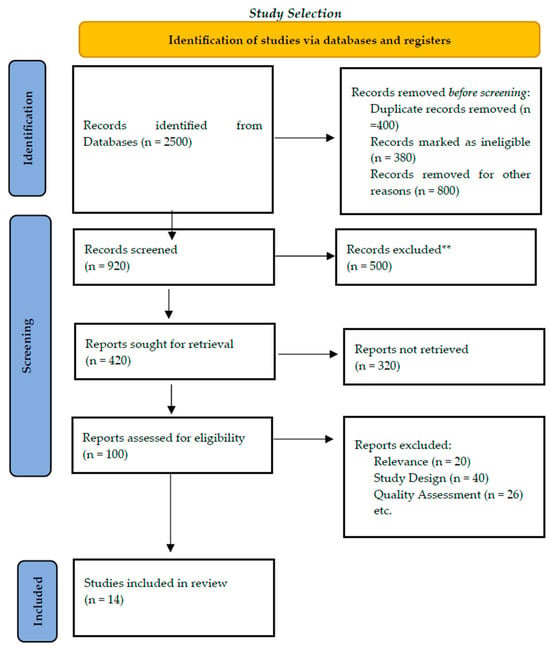
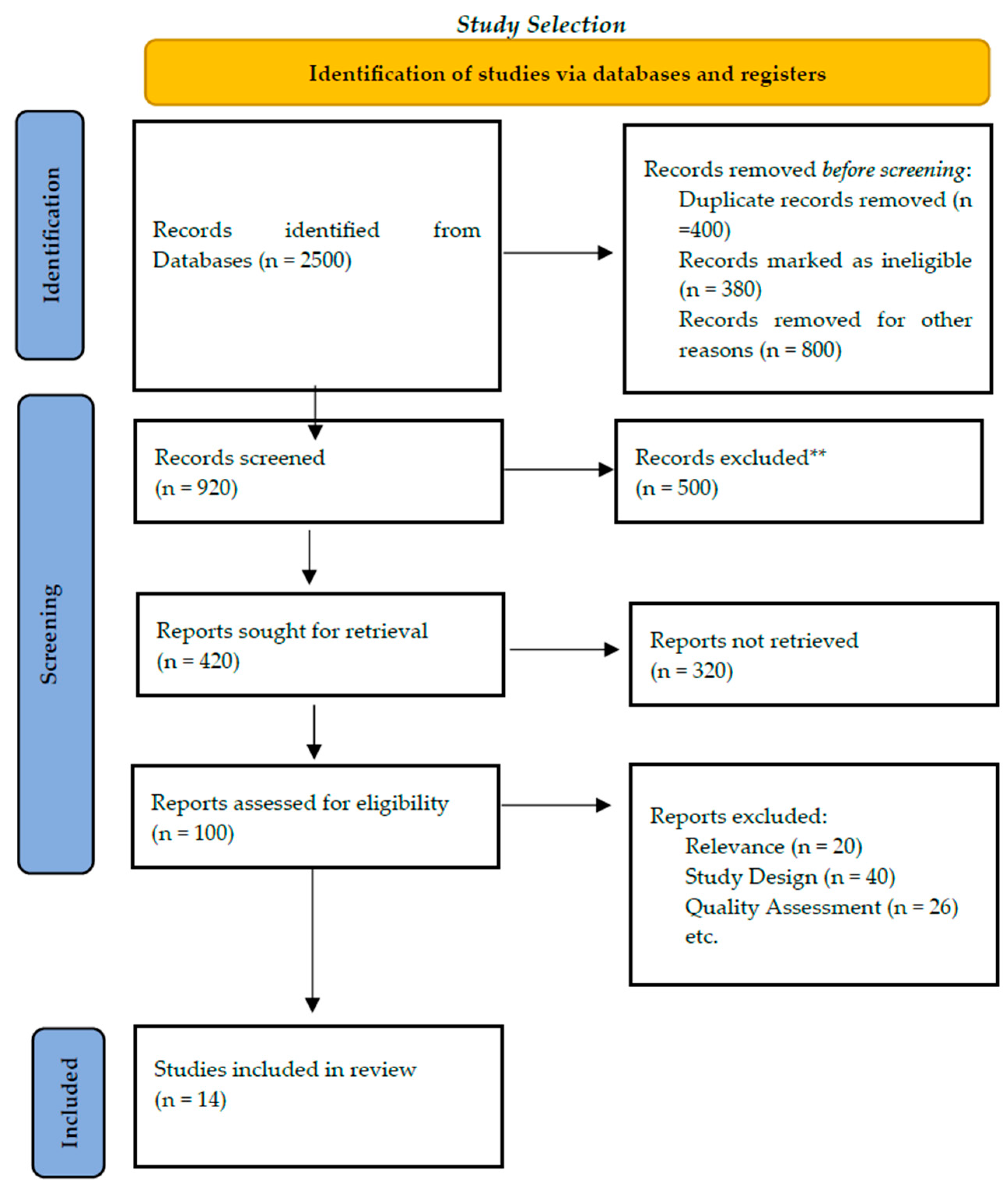
All retrieved records were copied into reference management software, and duplicates were eliminated. The titles and abstracts were screened by two reviewers based on the eligibility criteria, and the assessment of potentially relevant articles was performed on the full text. Conflicts were resolved by agreement or by seeking the opinion of a third reviewer, if necessary. The number of studies identified, screened, excluded, and included in the final synthesis was recorded according to PRISMA 2020, and a flow diagram was used to illustrate the selection process (Figure 1).
Figure 1.
PRISMA flow diagram of the study selection process. ** records excluded after title and abstract screening.
2.6. Data Extraction
Data extraction was performed using a dedicated template designed to capture the key characteristics of a study and clinical outcomes. They were analyzed in terms of author, year of publication, country, research design, population size, cancer type and stage, type and timing of fertility preservation intervention, duration of follow-up, and important reproductive and oncologic outcomes. Other areas that were documented included complications, methodological restrictions, and quality appraisals. Two reviewers performed the extraction and cross-examined them to determine that no errors or omissions existed.
2.7. Quality Appraisal
Validated tools were used to determine methodological quality and risk of bias depending on the study type. Cohort and observational studies were assessed using the Newcastle–Ottawa Scale (NOS), and systematic reviews and meta-analyses were evaluated using the AMSTAR 2 instrument. The AGREE II was used to evaluate clinical practice guidelines. All tools were assessed in critical methodological areas, such as the sufficiency of search, control of duplicate data, evaluation of bias, clarity of reporting, and applicability.
3. Results
3.1. Study Characteristics
The inclusion criteria were 14 studies that encompassed systematic reviews, meta-analyses, multicenter cohorts, and clinical guidelines on fertility preservation among women who had undergone pelvic oncologic surgery. The studies used were representative samples of different kinds of cancers, which include cervical, ovarian, and endometrial, and a wide variety of procedures used in fertility preservation, which include cryopreservation (embryo, oocyte, and ovarian tissue), ovarian transposition, and fertility. The main characteristics of the included studies, including study design, population, cancer type, fertility preservation strategy, and key outcomes, are summarized in Table 1.
3.2. Quality Assessment
Systematic Reviews and Meta-Analyses (AMSTAR 2)
The methodological quality of six systematic reviews and meta-analyses was evaluated using AMSTAR 2. Each domain was rated “Yes” (1 point), “Partial Yes” (0.5 points), or “No” (0 points) [21]. Reviews fulfilling ≥ 80% of items (≥12.8/16) were graded High-, 60–79% as Moderate-, and ≤59% as Low-quality. Two reviewers performed the assessment independently, resolving discrepancies by consensus. The methodological quality assessment of the included systematic reviews and meta-analyses based on the AMSTAR 2 tool is presented in Table 2.
All reviews demonstrated comprehensive literature searches and adequate handling of bias, with minor heterogeneity and funding-source limitations noted in [23,24].
Cohort and Observational Studies (Newcastle–Ottawa Scale)
Five cohort studies were appraised using the Newcastle–Ottawa Scale (NOS) across three domains: Selection (4 stars), Comparability (2 stars), and Outcome (3 stars). Scores ≥ 8 denoted High-, 6–7 Moderate-, and ≤5 Low-quality [25]. The quality appraisal of cohort and observational studies using the Newcastle–Ottawa Scale is shown in Table 3.
Table 1.
Summary of included studies evaluating fertility preservation strategies (2013–2025).
Table 2.
AMSTAR 2 assessment of included systematic reviews and meta-analyses.
Table 3.
NOS assessment of included cohort studies.
Overall, observational evidence was of moderate-to-high quality, limited primarily by sample size and retrospective data heterogeneity. (★ indicates one point awarded within the Newcastle–Ottawa Scale)
Clinical Practice Guidelines (AGREE II)
Two clinical practice guidelines were evaluated using AGREE II. Each domain was rated 1–7 (1 = strongly disagree; 7 = strongly agree). Mean domain scores ≥ 5.5 (≈60%) were considered High-quality [35]. The quality evaluation of clinical practice guidelines based on the AGREE II instrument is summarized in Table 4.
Table 4.
AGREE II assessment of included clinical practice guidelines.
Both guidelines scored highly across all domains, supporting their suitability for clinical application.
Across the 14 included studies, methodological rigor was consistently high. All systematic reviews and meta-analyses achieved high AMSTAR 2 scores, reflecting robust literature searches and transparent bias handling. Observational cohorts ranged from moderate-to-high quality, with main limitations including sample size and retrospective design. The two clinical practice guidelines demonstrated excellent methodological and editorial standards under AGREE II evaluation. The overall evidence base supporting fertility preservation strategies in gynecologic and systemic cancers is of high methodological quality, with only minor variability in cohort-level design strength and reporting completeness. Our findings are consistent with recent studies reporting that fertility preservation methods enhance reproductive potential and are oncologically safe. In particular, Xu et al. (2023) [33] demonstrated that embryo and oocyte cryopreservation in women with cancer results in live birth rates ranging between 32 and 41% and does not adversely affect cancer prognosis. These results support the safe use of fertility preservation in appropriately selected patients [33].
3.3. Application of the PICO Framework
As summarized in Table 5, most studies demonstrated comparable oncologic safety between FP and standard treatments, while reporting favorable reproductive outcomes such as clinical pregnancy rates (CPR) up to 67% and live birth rates (LBR) exceeding 40% in selected patients.
Table 5.
Summary of included studies according to the PICO framework (population, intervention, comparison, outcomes).
3.4. Distribution of Included Studies
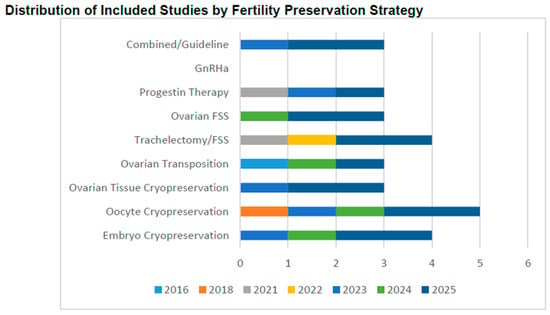
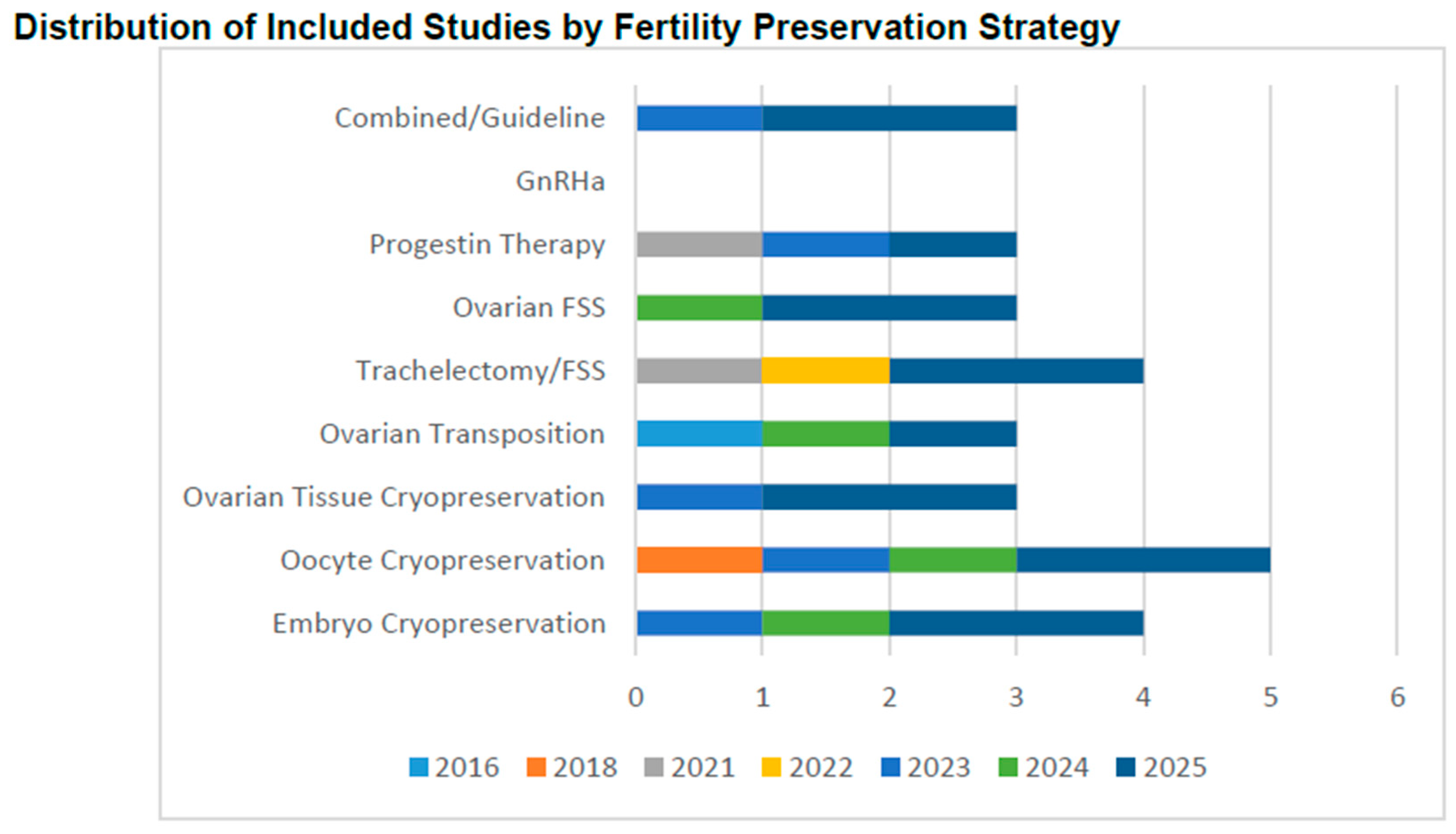
As illustrated in Figure 2, fertility preservation research between 2016 and 2025 demonstrated a marked emphasis on cryopreservation-based and surgical fertility-sparing interventions. The predominance of oocyte cryopreservation and trachelectomy/FSS reflects their growing clinical validation and integration into standard oncofertility care. Emerging modalities such as ovarian tissue cryopreservation and endocrine-sparing approaches have gained traction in recent years, particularly after 2022, indicating expanding feasibility across diverse pelvic cancer types. The temporal distribution highlights progressive diversification of fertility preservation strategies, underlining sustained global research interest and methodological advancement in the field. The distribution of included studies by fertility preservation strategy and publication year is illustrated in Figure 2.
Figure 2.
Distribution of included studies by fertility preservation strategy and publication year (2016–2025).
3.5. Frequency Distribution of Fertility Preservation Strategies
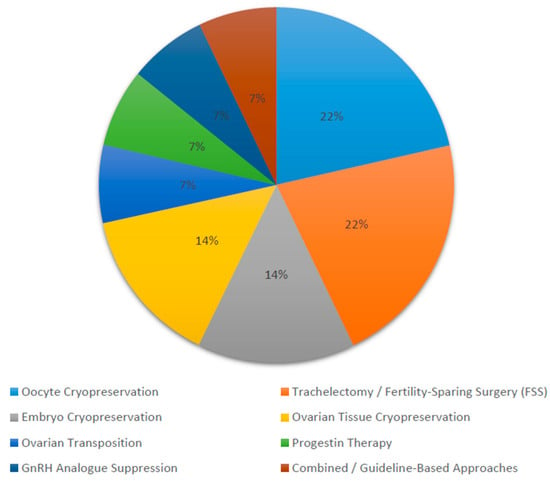
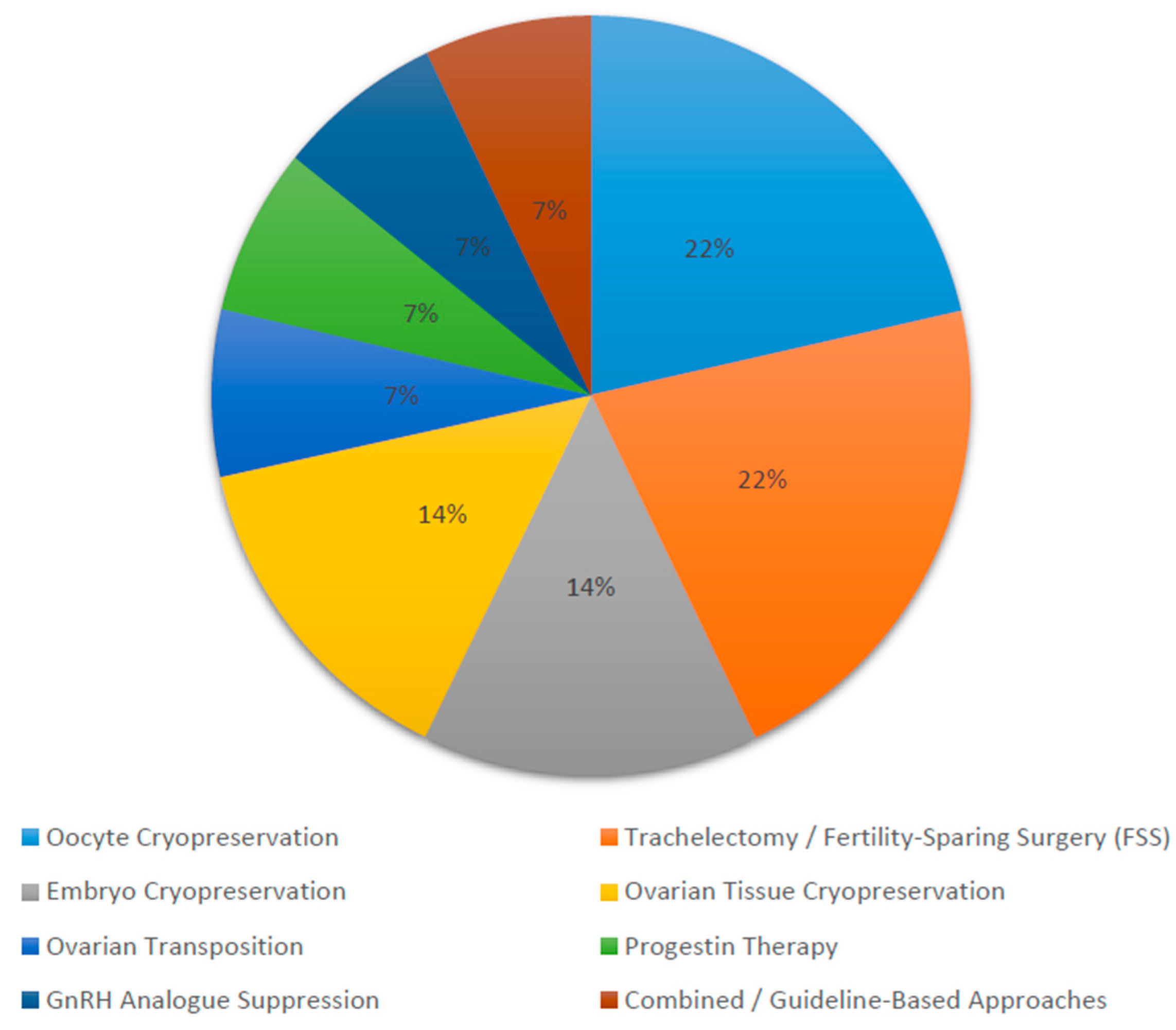
A total of 14 studies (2016–2025) were categorized based on their primary fertility preservation modality. The most frequently assessed strategies were oocyte cryopreservation and trachelectomy/fertility-sparing surgery (FSS) (each representing 21.4% of included studies), followed by embryo cryopreservation and ovarian tissue cryopreservation (14.3% each). Fewer studies focused on ovarian transposition, progestin therapy, and GnRH analog use. Combined or guideline-based multimodal approaches accounted for 7.1% of the total.
Figure 3 shows that cryopreservation and surgical preservation techniques dominate the literature, collectively accounting for over 70% of published evidence on fertility preservation in pelvic cancers.
Figure 3.
Frequency of included studies by fertility preservation strategy (2016–2025).
3.6. Average Follow-Up Duration Across Studies
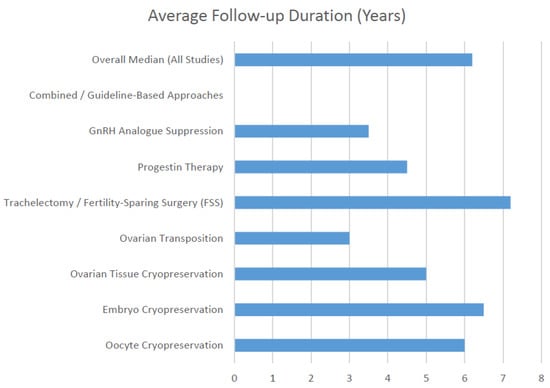
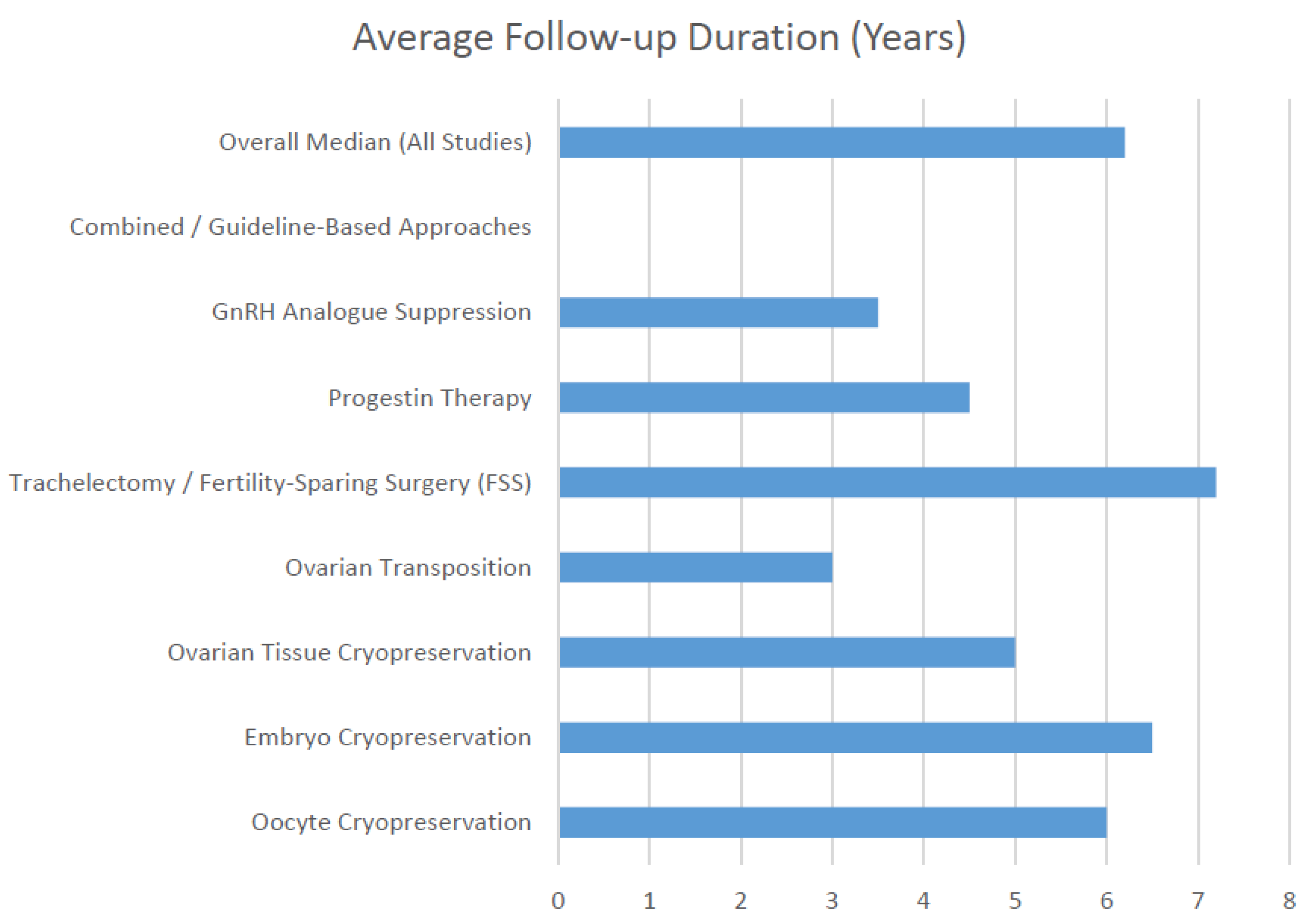
Follow-up periods ranged from 24 months to 10 years, with the median follow-up duration being 6.2 years across all studies. Longer follow-ups were characteristic of cryopreservation-based interventions and multicenter cohorts, while hormonal and transposition-based studies generally reported shorter surveillance durations.
Figure 4 shows that surgical fertility-sparing procedures and cryopreservation modalities demonstrate the longest follow-up durations, suggesting sustained oncologic monitoring and reproductive outcome assessment in these populations.
Figure 4.
Average follow-up duration by fertility preservation strategy.
3.7. Thematic Synthesis Findings
Thematic coding revealed eight recurring concepts (Table 6). Across the reviewed studies, oncologic safety (C1, C7) and reproductive feasibility (C2) emerged as dominant codes, reported in over half of the included studies. Consistent evidence supports that fertility-sparing procedures and cryopreservation methods maintain survival outcomes comparable to conventional oncologic management.
Table 6.
Thematic coding of findings from included studies.
However, variability in hormonal treatment regimens (C3) and limited access in resource-constrained settings (C6) remain persistent challenges. Furthermore, psychosocial and multidisciplinary factors (C4–C5) were highlighted as key determinants of patient satisfaction and FP uptake. The thematic coding derived from the included studies is detailed in Table 6.
The final synthesized themes and their interpretive summaries are presented in Table 7.
Table 7.
Final themes and interpretive summaries.
4. Discussion
The issue of fertility preservation has now emerged as the major focus in treating women of reproductive age in the context of cancer treatment of the pelvis [25]. Oncologic surgery, chemotherapy, and radiotherapy have enhanced the survival rates to a great extent because the same forms can kill the reproductive capability due to the permanent gonadotoxic or anatomical harm. In the last 20 years, oncofertility—a discipline at the intersection of oncology and reproductive medicine—has been increasingly integrated, allowing clinicians to provide individualized fertility preservation approaches without compromising oncologic safety. Nevertheless, despite the significant advances, not all settings and types of cancer are equally adopting and standardizing fertility preservation methods.
The current study evaluated 14 eligible articles in which the quantitative evidence showed that FP procedures, including FSS and cryopreservation, are oncologically safe and reproductively effective. Five-year OS was reported to be more than 90% in most studies with recurrence rates being less than 5%. In addition, ovarian functionality was maintained in 60–95% of women who had gone through cryopreservation and LBR were between 30 and 40; highest CPR was up to 67% in individuals who had attempted conception following treatment.
Moreover, endometrial carcinoma hormonal therapy had CR rates of 66 to 91% and pregnancy rates of approximately 39%. Endocrine functioning could be preserved in over 60% of patients undergoing procedures like ovarian transposition. None of the FP procedures showed any significant recurrence or metastasis increase when staged and selected properly. These results indicate that FP can be safely combined with oncologic care, thus preserving the reproductive and disease-control goals.
4.1. Gonadotoxicity of Chemotherapy and Radiotherapy
Chemotherapy
Alkylating agents such as cyclophosphamide and busulfan are considered the most potent gonadotoxic chemotherapeutic agents due to their direct effects on ovarian cellular integrity [36,37]. Alkylating agents such as cyclophosphamide and busulfan exert profound ovotoxicity primarily through the induction of DNA adducts and inter-/intrastrand cross-links within both oocytes and surrounding granulosa cells. These genotoxic lesions activate the DNA damage response (DDR) cascade—particularly the ATM-CHK2-p53 signaling axis—leading to transcriptional up-regulation of pro-apoptotic mediators such as PUMA and NOXA and culminating in programmed cell death of the follicular units. Simultaneously, activation of the PTEN-PI3K-AKT-mTOR-FOXO3 pathway promotes premature follicular growth, a “burn-out” phenomenon that further accelerates depletion of the primordial follicle pool. Mitochondrial dysfunction, oxidative stress, and granulosa-cell apoptosis collectively amplify this process, resulting in a significant reduction in the ovarian reserve and an increased risk of premature ovarian insufficiency [38].
Moreover, thematic synthesis was also used to interpret the findings and identified five key areas, namely oncologic safety, changing FP methods, reproductive and psychosocial outcomes, access barriers, and the necessity of standardization and long-term follow-up.
4.2. Oncologic Safety of Fertility Preservation Procedures
It is the most important issue in fertility-sparing management to consider whether reproductive preservation undermines oncologic outcome. In the systematic reviews and cohort studies, fertility-sparing surgery (FSS) showed an equivalent recurrence and survival rate to standard radical surgery in highly selected patients [15,23,28]. In early-stage ovarian and cervical cancer, 5-year overall survival was often more than 90% and recurrence was less than 5% [27].
The oncologic equivalent of various trachelectomy techniques was further demonstrated in meta-analyses by assuming the tumors were 2 cm and the margins were negative [24,31]. Equally, even while adjuvant therapy was taken, no evidence of extended metastasis or recurrence with cryopreservation and ovarian transposition procedures existed [30]. These results support the assertion that fertility-preservation interventions are safe to go in concert with the oncologic treatment objectives provided there is proper staging and histologic selection. However, follow-up is critical as oncologic safety is determined by tumor biology, stage, and adherence to therapy.
4.3. Anti-Müllerian Hormone (AMH)
AMH, secreted by granulosa cells of preantral and small antral follicles, directly reflects the size of the functional follicular pool and serves as a reliable biochemical marker of ovarian reserve [39]. Its diagnostic utility arises from several key attributes, including cycle-independent stability, high predictive accuracy for ovarian response, and the availability of standardized automated immunoassays such as electrochemiluminescence (ECLIA) and enzyme-linked immunosorbent assay (ELISA) for precise quantification [40,41].
Ovarian reserve may diminish following certain medical interventions such as pelvic surgery, chemotherapy, or radiotherapy. These treatments can damage ovarian follicles, leading to a progressive reduction in serum AMH levels. In some cases—particularly in older women, in those whose AMH levels were already low before treatment, or when the gonadotoxic intensity of therapy is high—the loss of ovarian function can be profound. This decline may progress to premature ovarian insufficiency (POI), where AMH becomes extremely low or even undetectable and ovarian activity does not return during follow-up [42]. AMH has emerged as the most reliable biochemical marker for assessing ovarian reserve and monitoring reproductive potential. Unlike gonadotropins or estradiol, AMH demonstrates minimal intra- and intercycle variability, reflecting the number of small antral and preantral follicles that remain functional. Its stability makes it particularly valuable for evaluating ovarian function before and after pelvic surgery, chemotherapy, or radiotherapy. Monitoring AMH levels allows clinicians to estimate the degree of gonadotoxic damage, predict the likelihood of ovarian recovery, and guide fertility-preserving interventions in women at risk of premature ovarian insufficiency [43].
4.4. FSH, Estradiol (E2), and Inhibin-B
FSH stimulates granulosa aromatase activity, converting theca-derived androgens into estradiol. Estradiol levels rise as follicular size increases. Inhibin-B, also produced by granulosa cells, exerts negative feedback on FSH [44]. Elevated FSH and reduced inhibin-B indicate diminished follicular function and correlate with accelerated loss of ovarian reserve [45]. Several studies have reported favorable outcomes with ovarian transposition performed prior to pelvic chemoradiotherapy, indicating that this procedure can effectively mitigate treatment-related ovarian damage. Follow-up assessments have shown that most premenopausal women maintain endocrine function, as evidenced by the preservation of normal gonadotropin profiles, particularly FSH and luteinizing hormone (LH), along with stable sex steroid concentrations. Collectively, both hormonal and clinical observations reinforce the protective role of ovarian transposition in maintaining ovarian endocrine activity following pelvic cancer therapy [30].
4.5. Developing Techniques and Multimodality Integration
The past ten years have been characterized by an increase in the armamentarium of the fertility preservation methods. In addition to the old modalities of oocyte and embryo cryopreservation, there has also been the emergence of newer modalities, including ovarian tissue cryopreservation (OTC), uterine transposition and laparoscopic trachelectomy as an option. Research by Cobo et al. [34] has established that ovarian function is preserved in 60–95 percent of women undergoing cryopreservation and that the live birth rates are up to 40 percent, which is similar to naturally conceived age groups [34].
The assisted reproductive technologies have also been integrated with surgical technology to enhance the outcomes. An example of this is observed with ovarian transposition in combination with in vitro fertilization (IVF) in which the functions of the endocrine system can be preserved as well as fertility could be restored following cancer remission. On the same note, intraprocedural morbidity has been minimized with minimum invasiveness being achieved through trachelectomies that retains reproductive capacity. All these multimodal solutions help secure a paradigm shift in thinking a single use of fertility protection towards full reproductive rehabilitation, which requires the cooperation of oncologists, reproductive specialists, and surgeons.
4.6. Long-Term Reproductive and Psychosocial Outcomes
Over the past few years, more focus has been paid to the psychological and social impact of FP. Researchers found that women who received FP had a higher emotional well-being, autonomy, and life satisfaction [3,26].The possibility of having a biological child was often linked to less treatment-related regret, even in non-conceived women.
However, there is a lack of data on post-treatment obstetric outcomes. The data on the safety of pregnancy after chemotherapy or radiotherapy is not complete, and there is a lack of evidence on the health of the children born after FP assistance. Therefore, extensive and longitudinal research is needed to assess maternal outcomes, child health, and intergenerational impacts. FP protocols should also include psychosocial assessment to achieve a patient-centered approach in clinical practice.
4.7. Barriers to Access and Utilization
Although the results are promising, FP services are not equally distributed across the globe. The uptake of FP was low, with a range of 6% to 18% among the eligible patients [3,12]. The main barriers are the lack of awareness, high prices, and the lack of multidisciplinary FP centers. These are particularly acute in low- and middle-income countries where resources and expertise are limited.
Increased access can be achieved by incorporating insurance of FP into health policies, creating regional oncofertility networks, and making fertility counseling a routine procedure in cancer treatment. Moreover, the oncology teams are to be trained in FP counselling, and patients are to be referred to reproductive specialists before the gonadotoxic therapy is started.
4.8. Need for Standardized Protocols and Follow-Up
One of the key issues that were found in the present research is the absence of standardized FP protocols. There is a great deal of difference in the duration of hormonal therapy, time of cryopreservation and definition of outcome. The treatment schedules were inconsistent, and the definitions of complete response and recurrence were not consistent [29,32]. Unified nomenclature and reporting systems, e.g., defining LBR per initiated FP cycle, are thus needed.
Moreover, there was inconsistency in long-term monitoring in studies. Although surgical and cryopreservation studies had more than six years of follow-up, hormone-therapy and transposition studies used shorter follow-up. The creation of a global registry that connects oncologic and reproductive data would increase the consistency and reliability of evidence.
4.9. Comparative Analysis
This investigation complements earlier systematic reviews by combining empirical data on five overall themes, oncologic safety, technological improvements, psychosocial benefits, accessibility barriers, and the necessity of standardization and therefore provides a comprehensive evaluation of the fertility preservation (FP) that goes beyond the independent outcomes effect. The use of several quality-assessment tools also contributes to the strength of the methodology of the synthesis. Although minor differences are present, including the relatively lower live birth rate (LBR) in (Fraison et al. 2023) [26], which is linked to demographic differences and the differences in the rate of FP utilization, the general findings are congruent across research (Fraison et al. 2023) [26]. One scientific deficiency that has been frequently identified among all of the reviews is the lack of longitudinal obstetric and offspring-level data, alongside discrepant reports of outcomes. The current research adds to the field because it supports the use of standardization models and the importance of integrating patient-focused, effective care paradigms to bridge the gap between the results of quantitative research and real-life scenarios of clinical use.
4.10. Clinical Implications
The current study proves that FP interventions are safe and effective in women with pelvic oncologic surgery. Quantitative evidence shows strong oncologic safety and positive reproductive results, and thematic results underline the significance of multidisciplinary collaboration, accessibility, and psychosocial support. Nevertheless, the issues of fluctuating access, non-standardization, and inadequate long-term data remain. Future research ought to focus on multicenter prospective studies that have a single endpoint and long-term follow-up to assess obstetric and offspring outcomes. Enhancement of global cooperation and policy advocacy may turn FP into a universal and fair part of cancer treatment in women of reproductive age.
4.11. Clinical Utility and Decision Pathway for Fertility Preservation
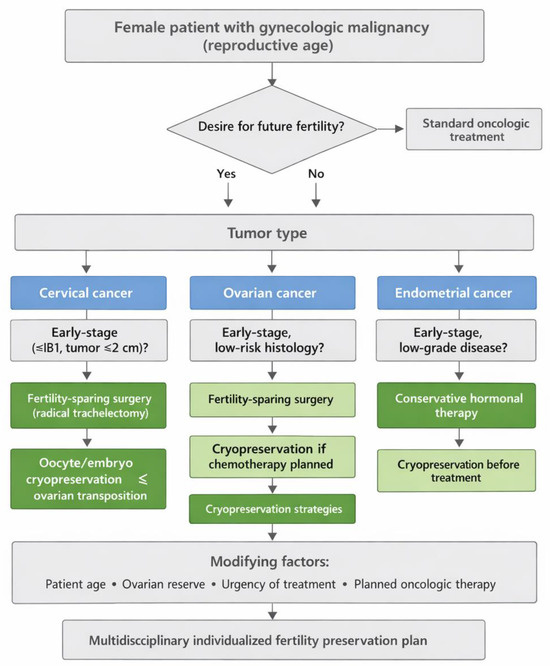
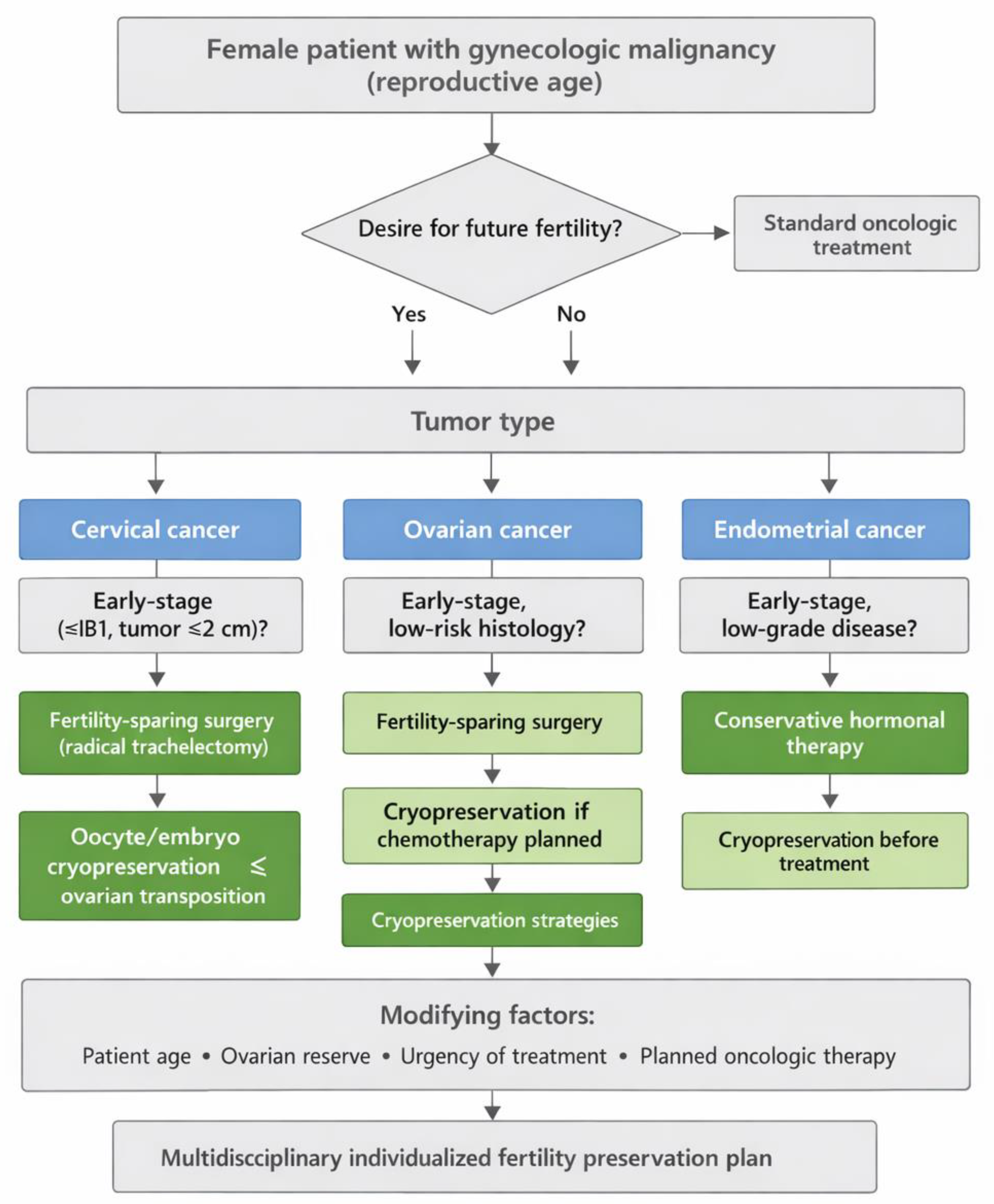
To improve clinical applicability, fertility preservation in women with gynecologic malignancies should follow a structured decision-making process integrating tumor type, disease stage, and planned oncologic treatment. Based on the current evidence, we propose a practical clinical decision pathway to support individualized counseling and management.
In early-stage cervical cancer, fertility-sparing surgery may be considered in carefully selected patients, whereas cryopreservation strategies and ovarian transposition should be discussed when gonadotoxic therapy is planned. In early-stage ovarian cancer, fertility-sparing surgery may be appropriate for selected low-risk cases, while cryopreservation options are recommended when adjuvant chemotherapy is required. Patients with advanced-stage disease or high-risk histology should be primarily counseled toward cryopreservation approaches. In early-stage endometrial cancer, conservative hormonal management may be considered in eligible patients, with fertility preservation strategies discussed prior to treatment initiation.
Across all tumor types, decision-making is influenced by patient age, ovarian reserve, and urgency of cancer treatment. A summary of this evidence-based approach is provided in Figure 5, which presents a visual clinical flowchart outlining fertility preservation options according to clinical scenario and treatment plan.
Figure 5.
Clinical decision pathway for fertility preservation in women with gynecologic malignancies.
4.12. Emerging Technologies and Future Directions
Recent advances in reproductive medicine and oncofertility have significantly broadened the landscape of fertility preservation beyond traditional surgical and cryopreservation approaches. Ovarian tissue cryopreservation (OTC) has transitioned from an experimental technique to an increasingly utilized option, particularly for patients who cannot delay gonadotoxic cancer therapy or those in prepubertal age groups. Recent narrative reviews emphasize that OTC not only preserves fertility potential but also holds promise for restoring endocrine function, with emerging data on optimal cryopreservation and transplantation protocols that incorporate both slow-freezing and vitrification methods [46,47].
While OTC has shown encouraging clinical results, challenges persist with respect to long-term graft function, ischemia-related follicular loss, and the standardization of transplantation protocols. Continued refinement of surgical and laboratory techniques—including efforts to enhance vascularization and reduce apoptotic follicle loss—remains a priority in ongoing research [46].
Uterus transplantation (UTx) represents another frontier in fertility restoration for women affected by absolute uterine factor infertility. UTx has now evolved into a viable reproductive option, with a growing number of successful live births reported in recent years. Despite these advances, UTx continues to present complex clinical and ethical challenges, including the inherent morbidity associated with donor and recipient surgery, the need for prolonged immunosuppression, and considerations related to equitable access and resource allocation. These realities necessitate multidisciplinary care models that integrate transplant surgeons, reproductive endocrinologists, ethicists, and psychosocial support specialists to optimize patient outcomes and ensure responsible clinical implementation [48].
From a health policy perspective, the integration of emerging fertility preservation technologies into routine oncologic care requires not only robust clinical evidence but also standardized guidelines, cost-effectiveness analyses, and equitable care frameworks. Addressing disparities in access and ensuring informed, patient-centered decision-making will be critical to translating scientific advances into broad clinical benefit. This systematic review was conducted according to the PRISMA 2020 guidelines. Detailed data are available in Supplementary Materials [49].
5. Conclusions
Fertility preservation represents a critical component in safeguarding the reproductive potential of women undergoing pelvic oncologic surgery, while supporting reproductive autonomy without compromising oncologic outcomes. The present paper clarifies that FP methods do not only protect ovarian activity and reproductive potential but that they also present significant psychosocial advantages as they scrub not only the emotional but also the mental state of the patients. Surgery and cryopreservation modalities have proven to preserve oncologic safety so far without increasing the likelihood of recurrence hence enhancing reproductive autonomy without the need to sacrifice survival.
Fertility preservation following pelvic oncologic surgery requires careful consideration of factors influencing postoperative ovarian function in order to optimize reproductive outcomes.
Integrating predictive biomarkers into clinical decision-making may support more individualized fertility preservation planning and improved survivorship outcomes.
Overall, these findings indicate that fertility preservation strategies empower women to maintain reproductive potential while emphasizing the importance of multidisciplinary approaches within contemporary oncologic care.
6. Strengths and Limitations
This review integrates FP interventions of women experiencing surgery in cancer of the pelvis, and the strengths of this work include its multidisciplinary background of including surgical, reproductive, and oncologic viewpoints, which provide clinically relevant information that can be used in practical oncologic practice. The given analysis covers various research designs, such as systematic reviews, meta-analyses, and population-based cohorts, which ensure the finding of high robustness and generalizability. The review provides practical understanding on how to make surgical decisions and counsel patients by aligning the FP modalities with the contributory reproductive risk factors, namely, organ resections, radiation-induced gonadotoxicity, and chemotherapy-related ovarian failure. It also offers a logical conceptual framework that strikes a balance between oncologic safety, technological advancements and patient outcome. Nevertheless, though inherent to studies, the management of bias in this review is achieved by performing extensive appraisal processes, and an open-software synthesis model, concluding with the solutions based on the best of evidence and not determined by single methodological limitations.
This research received no specific grant from any funding agency in the public, commercial, or not-for-profit sectors.
Supplementary Materials
The following supporting information can be downloaded at: https://www.mdpi.com/article/10.3390/cancers18071142/s1, PRISMA 2020 Checklist [49].
Author Contributions
Conceptualization, Y.D., G.O. and E.K.; methodology, Y.D., G.O. and D.A.; software, Y.D., G.O., D.A. and E.B.; validation, Y.D., G.O. and E.K.; formal analysis, Y.D., G.O. and D.A.; investigation, E.K., H.N.D., E.B. and N.T.S.; G.O. and E.K.; data curation, N.T.S. and B.K.; writing—original draft preparation—review and editing, Y.D., G.O., E.K. and D.A.; visualization, H.N.D., N.T.S. and B.K.; supervision, Y.D., G.O. and E.K.; project administration, Y.D., G.O. and E.K.; All authors have read and agreed to the published version of the manuscript.
Funding
This research received no specific grant from any funding agency in the public, commercial, or not-for-profit sectors.
Institutional Review Board Statement
Not applicable.
Informed Consent Statement
Not applicable.
Data Availability Statement
As this is a systematic review and meta-analysis, no new primary data were generated during this study. All data analyzed in this review were extracted from previously published studies, which are cited in the References section. The data supporting the findings of this systematic review are available in the published articles referenced in the manuscript and in the Supplementary Materials (PRISMA 2020 Checklist).
Conflicts of Interest
The authors declare no conflicts of interest.
Abbreviations
The following abbreviations are used in this manuscript:
| FP | Fertility Preservation |
| FSS | Fertility-Sparing Surgery |
| OTC | Ovarian Tissue Cryopreservation |
| RT | Radiotherapy |
| CPR | Clinical Pregnancy Rate |
| LBR | Live Birth Rate |
| OS | Overall Survival |
| DFS | Disease-Free Survival |
| PRISMA | Preferred Reporting Items for Systematic Reviews and Meta-Analyses |
| PICO | Population, Intervention, Comparator, Outcome |
| NOS | Newcastle–Ottawa Scale |
| AMSTAR 2 | A Measurement Tool to Assess Systematic Reviews 2 |
| ASCO | American Society of Clinical Oncology |
| ESGO | European Society of Gynaecological Oncology |
| ESHRE | European Society of Human Reproduction and Embryology |
| ESGE | European Society for Gynaecological Endoscopy |
| IVF | In Vitro Fertilization |
| OT | Ovarian Transposition |
| CR | Complete Response |
| LMICs | Low- and Middle-Income Countries |
| QoL | Quality of Life |
References
- Genovese, F.; Zambrotta, E.; Incognito, G.G.; Gulino, F.A.; Di Guardo, F.; Genovese, D.; Di Gregorio, L.M.; Benvenuto, D.; Ciancio, F.F.; Leanza, V. Techniques and endocrine–reproductive outcomes of ovarian transposition prior to pelvic radiotherapy in gynecologic and non-gynecologic cancers: A systematic review and meta-analysis. Int. J. Gynecol. Obstet. 2024, 165, 948–958. [Google Scholar] [CrossRef] [Scilit]
- Bewtra, C.; Acharya, N. Preservation of fertility in cancer patients: A narrative review. Cureus 2023, 15, e47910. [Google Scholar] [CrossRef] [Scilit] [PubMed]
- Gică, N.; Vișoiu, I.; Mocanu, I.C.; Năstac, A.; Sima, R.M.; Panaitescu, A.M.; Mehedințu, C. Fertility preservation strategies in female cancer patients: Current approaches and future directions. Medicina 2025, 61, 1794. [Google Scholar] [CrossRef] [Scilit]
- Donnez, J.; Dolmans, M.-M. Fertility preservation in women. N. Engl. J. Med. 2017, 377, 1657–1665. [Google Scholar] [CrossRef] [Scilit]
- Kaltsas, A.; Zikopoulos, A.; Moustakli, E.; Zachariou, A.; Tsirka, G.; Tsiampali, C.; Palapela, N.; Sofikitis, N.; Dimitriadis, F. The silent threat to women’s fertility: Oxidative stress effects. Antioxidants 2023, 12, 1490. [Google Scholar] [CrossRef] [Scilit]
- Roness, H.; Meirow, D. Follicle reserve loss in ovarian tissue transplantation. Reproduction 2019, 158, F35–F44. [Google Scholar] [CrossRef] [Scilit]
- Yan, F.; Zhao, Q.; Li, Y.; Zheng, Z.; Kong, X.; Shu, C.; Liu, Y.; Shi, Y. Oxidative stress in ovarian aging. J. Ovarian Res. 2022, 15, 100. [Google Scholar] [CrossRef] [Scilit]
- Murray, K.A.; Gibson, M.I. Chemical approaches to cryopreservation. Nat. Rev. Chem. 2022, 6, 579–593. [Google Scholar] [CrossRef] [Scilit] [PubMed]
- Broer, S.L.; Broekmans, F.J.M.; Laven, J.S.E.; Fauser, B.C.J.M. Anti-Müllerian hormone: Ovarian reserve testing and clinical implications. Hum. Reprod. Update 2014, 20, 688–701. [Google Scholar] [CrossRef] [Scilit] [PubMed]
- Nelson, S.M. Biomarkers of ovarian response: Current and future applications. Fertil. Steril. 2013, 99, 963–969. [Google Scholar] [CrossRef] [Scilit]
- Younis, J.S.; Shapso, N.; Ben-Sira, Y.; Nelson, S.M.; Izhaki, I. Endometrioma surgery and ovarian reserve. Am. J. Obstet. Gynecol. 2022, 226, 33–51.e7. [Google Scholar] [CrossRef] [Scilit] [PubMed]
- Su, H.I.; Lacchetti, C.; Letourneau, J.; Partridge, A.H.; Qamar, R.; Quinn, G.P.; Reinecke, J.; Smith, J.F.; Tesch, M.; Wallace, W.H.; et al. Fertility preservation in people with cancer: ASCO guideline update. J. Clin. Oncol. 2025, 43, 1488–1515. [Google Scholar] [CrossRef] [Scilit]
- Roopnarinesingh, R.; Tulandi, T. Fertility preservation in female cancer patients: Surgical procedures. Int. J. Gynecol. Obstet. 2025, 169, 872–875. [Google Scholar] [CrossRef] [Scilit]
- Ribeiro, R.; Baiocchi, G.; Obermair, A.; Costa, C.N.; Leitao, M. Uterine transposition for fertility preservation in pelvic cancers. Int. J. Gynecol. Cancer 2024, 34, 403–408. [Google Scholar] [CrossRef] [Scilit]
- Ning, Y.; Gao, X.; Kong, Y.; Wang, Y.; Tian, T.; Chen, Y.; Yang, Y.; Lei, K.; Cui, Z. Fertility-sparing surgery in early-stage cervical cancer. Front. Surg. 2024, 11, 1456376. [Google Scholar] [CrossRef] [Scilit]
- Karimizadeh, Z.; Saltanatpour, Z.; Tarafdari, A.; Rezaeinejad, M.; Hamidieh, A.A. Ovarian tissue cryopreservation: Techniques and clinical outcomes. Ther. Adv. Reprod. Health 2025, 19, 26334941251340517. [Google Scholar] [CrossRef] [Scilit]
- Monniaux, D.; Clément, F.; Dalbiès-Tran, R.; Estienne, A.; Fabre, S.; Mansanet, C.; Monget, P. Ovarian reserve dynamics. Biol. Reprod. 2014, 90, 85. [Google Scholar] [CrossRef] [Scilit] [PubMed]
- Franks, S.; Hardy, K. Androgen action in the ovary. Front. Endocrinol. 2018, 9, 452. [Google Scholar] [CrossRef] [Scilit]
- Kirillova, A.; Smitz, J.E.J.; Sukhikh, G.T.; Mazunin, I. Role of mitochondria in oocyte maturation. Cells 2021, 10, 2484. [Google Scholar] [CrossRef] [Scilit] [PubMed]
- Gupta, D.; Singh, S.; Shukla, S.; Shrivastava, S. Oncofertility: Treatment options from bench to bedside. Cancer Pathog. Ther. 2023, 1, 284–289. [Google Scholar] [CrossRef] [Scilit] [PubMed]
- Varlas, V.N.; Borș, R.G.; Crețoiu, R.; Bălescu, I.; Bacalbașa, N.; Cîrstoiu, M. Fertility-sparing surgery in young women with cancer. J. Med. Life 2023, 16, 974–980. [Google Scholar] [CrossRef] [Scilit]
- Sharon-Weiner, M.; Kauffman, A.; Yee, S.; Good, H.; Glass, K. Beyond the cancer: Twenty-year analysis of fertility preservation outcomes. Hum. Reprod. 2025, 40, i27. [Google Scholar] [CrossRef] [Scilit]
- Nezhat, C.; Roman, R.A.; Rambhatla, A.; Nezhat, F. Reproductive and oncologic outcomes after fertility-sparing surgery for early-stage cervical cancer. Fertil. Steril. 2020, 113, 685–703. [Google Scholar] [CrossRef] [Scilit] [PubMed]
- Morice, P.; Maulard, A.; Scherier, S.; Sanson, C.; Zarokian, J.; Zaccarini, F.; Espenel, S.; Pautier, P.; Leary, A.; Genestie, C.; et al. Oncologic results of fertility-sparing surgery of cervical cancer. Gynecol. Oncol. 2022, 165, 169–183. [Google Scholar] [CrossRef] [Scilit]
- Carra, M.C.; Romandini, P.; Romandini, M. Risk of bias evaluation of cross-sectional studies: Adaptation of the Newcastle–Ottawa Scale. J. Periodontal Res. 2025, 60, 1–10. [Google Scholar] [CrossRef] [Scilit] [PubMed]
- Fraison, E.; Huberlant, S.; Labrune, E.; Cavalieri, M.; Montagut, M.; Brugnon, F.; Courbiere, B. Live birth rate after female fertility preservation. Hum. Reprod. 2023, 38, 489–502. [Google Scholar] [CrossRef] [Scilit] [PubMed]
- Li, J.; Qiao, H.; Liu, Y.; Huang, C.; Cheng, A.; Lin, Z.; Wang, L.; Lu, H. Fertility-sparing surgery in stage I epithelial ovarian cancer. Eur. J. Surg. Oncol. 2024, 50, 107276. [Google Scholar] [CrossRef] [Scilit]
- Liu, Y.; Zhang, X.; Xin, W.; Ding, Y.; Zhang, Y.; Zhang, N.; Hua, K. Long-term outcomes after radical trachelectomy. Front. Oncol. 2025, 15, 1591923. [Google Scholar] [CrossRef] [Scilit]
- Rodolakis, A.; Scambia, G.; Planchamp, F.; Acien, M.; Di Spiezio Sardo, A.; Farrugia, M.; Grynberg, M.; Pakiz, M.; Pavlakis, K.; Vermeulen, N.; et al. ESGO/ESHRE/ESGE guidelines for fertility-sparing treatment of endometrial carcinoma. Int. J. Gynecol. Cancer 2023, 33, 208–222. [Google Scholar] [CrossRef] [Scilit]
- Moawad, N.S.; Santamaria, E.; Rhoton-Vlasak, A.; Lightsey, J.L. Laparoscopic ovarian transposition before pelvic cancer treatment: Ovarian function and fertility preservation. J. Minim. Invasive Gynecol. 2017, 24, 28–35. [Google Scholar] [CrossRef] [Scilit]
- Guo, J.; Zhang, Y.; Chen, X.; Sun, L.; Chen, K.; Sheng, X. Radical abdominal trachelectomy versus hysterectomy. J. Minim. Invasive Gynecol. 2019, 26, 484–491. [Google Scholar] [CrossRef] [Scilit]
- Park, J.Y.; Kim, D.Y.; Kim, J.H.; Kim, Y.M.; Kim, K.R.; Kim, Y.T.; Seong, S.J.; Kim, T.J.; Kim, J.W.; Kim, S.M.; et al. Long-term oncologic outcomes after fertility-sparing progestin therapy. Eur. J. Cancer 2013, 49, 868–874. [Google Scholar] [CrossRef] [Scilit]
- Xu, Z.; Ibrahim, S.; Burdett, S.; Rydzewska, L.; Al Wattar, B.H.; Davies, M.C. Long-term pregnancy outcomes after fertility preservation. Eur. J. Obstet. Gynecol. Reprod. Biol. 2023, 281, 41–48. [Google Scholar] [CrossRef] [Scilit]
- Cobo, A.; García-Velasco, J.A.; Coello, A.; Domingo, J.; Pellicer, A.; Remohí, J. Oocyte vitrification for fertility preservation. Fertil. Steril. 2016, 105, 755–764.e8. [Google Scholar] [CrossRef] [Scilit]
- Moolhuijsen, L.M.E.; Visser, J.A. Anti-Müllerian hormone and ovarian reserve: Update on assessing ovarian function. J. Clin. Endocrinol. Metab. 2020, 105, 3361–3373. [Google Scholar]
- Del Castillo, L.M.; Buigues, A.; Rossi, V.; Soriano, M.J.; Martinez, J.; De Felici, M.; Lamsira, H.K.; Di Rella, F.; Klinger, F.G.; Pellicer, A.; et al. Cytoprotective effects of LH during alkylating-agent exposure. Hum. Reprod. 2021, 36, 2514–2528. [Google Scholar] [CrossRef] [Scilit]
- Thomas-Teinturier, C.; Allodji, R.S.; Svetlova, E.; Frey, M.-A.; Oberlin, O.; Millischer, A.-E.; Epelboin, S.; Decanter, C.; Pacquement, H.; Tabone, M.-D.; et al. Ovarian reserve after childhood exposure to alkylating agents. Hum. Reprod. 2015, 30, 1437–1446. [Google Scholar] [CrossRef] [Scilit]
- Gonfloni, S.; Jodice, C.; Gustavino, B.; Valentini, E. DNA damage stress response and follicle activation. Int. J. Mol. Sci. 2022, 23, 14379. [Google Scholar] [CrossRef] [Scilit]
- Moolhuijsen, L.M.E.; Visser, J.A. Anti-Müllerian hormone and ovarian reserve. J. Clin. Endocrinol. Metab. 2020, 105, 3361–3373. [Google Scholar] [CrossRef] [Scilit]
- Li, H.W.R.; Robertson, D.M.; Burns, C.; Ledger, W.L. Challenges in measuring anti-Müllerian hormone. Front. Endocrinol. 2021, 12, 691432. [Google Scholar] [CrossRef] [Scilit]
- Wen, C.J.; Ahmad, M.F.; Abu, M.A.; Johari, N.S.; Badaruddin, I.A.; Azhar, S.S.; Abdul Karim, A.K. Performance characteristics of AMH assay methods. Life 2025, 15, 383. [Google Scholar] [CrossRef] [Scilit]
- Wong, Q.H.Y.; Anderson, R.A. Anti-Müllerian hormone in ovarian damage assessment. Curr. Opin. Endocrinol. Diabetes Obes. 2018, 25, 391–398. [Google Scholar] [CrossRef] [Scilit]
- Swift, B.E.; Leung, E.; Vicus, D.; Covens, A. Laparoscopic ovarian transposition prior to pelvic radiation. Gynecol. Oncol. Rep. 2018, 24, 78–82. [Google Scholar] [CrossRef] [Scilit]
- Andersen, C.Y. FSH isoforms, androgens and inhibin-B in follicular development. Reprod. Biol. Endocrinol. 2025, 23, 130. [Google Scholar] [CrossRef] [Scilit]
- Amanvermez, R.; Tosun, M. Ovarian aging and ovarian reserve tests. Int. J. Fertil. Steril. 2016, 9, 411–415. [Google Scholar] [CrossRef] [Scilit]
- Gadek, L.M.; Joswiak, C.; Laronda, M.M. Thawing fertility: A view of ovarian tissue cryopreservation processes and review of ovarian transplant research. Fertil. Steril. 2024, 122, 574–585. [Google Scholar] [CrossRef] [Scilit] [PubMed]
- Ramirez, T.; Pavone, M. Exploring the frontiers of ovarian tissue cryopreservation: A review. J. Clin. Med. 2024, 13, 4513. [Google Scholar] [CrossRef] [Scilit] [PubMed]
- Pereira, A.; Ribeiro, F.; Soares, S.; Ferreira, H. Uterine transplantation: Advances, challenges, and future perspectives. Diseases 2025, 13, 152. [Google Scholar] [CrossRef] [Scilit]
- Page, M.J.; McKenzie, J.E.; Bossuyt, P.M.; Boutron, I.; Hoffmann, T.C.; Mulrow, C.D.; Tetzlaff, J.M.; Akl, E.A.; Brennan, S.E.; Chou, R.; et al. The PRISMA 2020 statement: An updated guideline for reporting systematic reviews. BMJ 2021, 372, n71. [Google Scholar] [CrossRef] [Scilit]

Disclaimer/Publisher’s Note: The statements, opinions and data contained in all publications are solely those of the individual author(s) and contributor(s) and not of MDPI and/or the editor(s). MDPI and/or the editor(s) disclaim responsibility for any injury to people or property resulting from any ideas, methods, instructions or products referred to in the content. |
© 2026 by the authors. Licensee MDPI, Basel, Switzerland. This article is an open access article distributed under the terms and conditions of the Creative Commons Attribution (CC BY) license.