The Association between Energy Balance-Related Behavior and Burn-Out in Adults: A Systematic Review

 ,
,
Abstract
1. Introduction
2. Materials and Methods
2.1. PICO Statement
2.2. Databases and Key Words
2.3. Eligibility Criteria
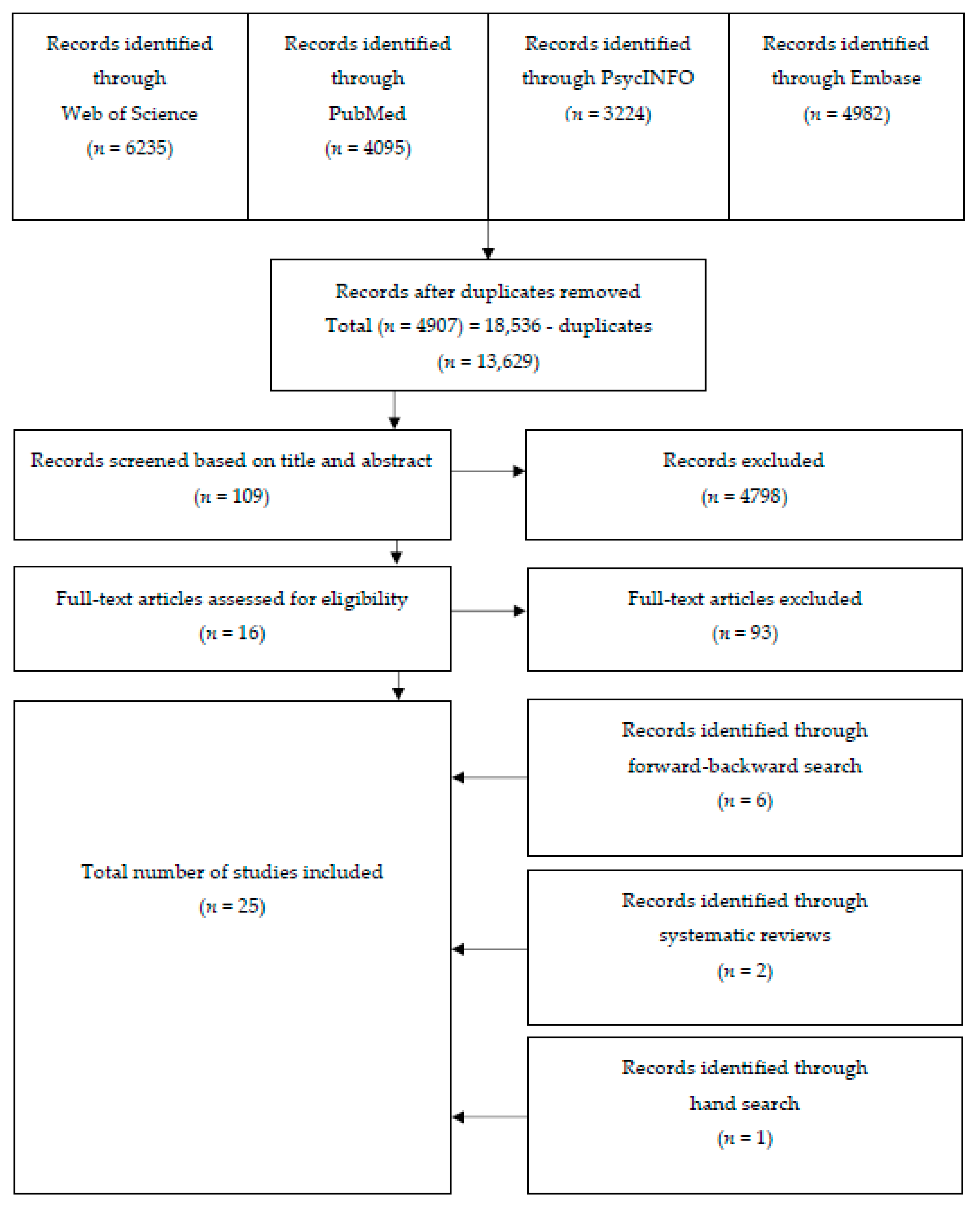
2.4. Selection of Studies
2.5. Quality Assessment
3. Results
3.1. Physical Activity
3.2. Sedentary Behavior
3.3. Dietary Behavior
3.4. Quality Assessment of the Included Studies
4. Discussion
5. Conclusions
Author Contributions
Funding
Acknowledgments
Conflicts of Interest
References
- Naczenski, L.M.; De Vries, J.D.; Van Hooff, M.L.M.; Kompier, M.A.J. Systematic review of the association between physical activity and burnout. J. Occup. Heal. 2017, 59, 477–494. [Google Scholar] [CrossRef] [PubMed]
- Leka, S.; Jain, A.; World Health Organization. Health Impact of Psychosocial Hazards at Work: An Overview; World Health Organization: Geneva, Switzerland, 2010. [Google Scholar]
- Ferreira, A.I.; Martinez, L.F. Presenteeism and burnout among teachers in public and private Portuguese elementary schools. Int. J. Hum. Resour. Manag. 2012, 23, 4380–4390. [Google Scholar] [CrossRef]
- Harvey, E.; Burns, J. Staff burnout and absenteeism through service transition: From hospital to hostel. Ment. Handicap Res. 1994, 7, 328–337. [Google Scholar] [CrossRef]
- Wallace, J.E.; Lemaire, J.B.; Ghali, W.A. Physician wellness: A missing quality indicator. Lancet 2009, 374, 1714–1721. [Google Scholar] [CrossRef]
- Ochentel, O.; Humphrey, C.; Pfeifer, K. Efficacy of Exercise Therapy in Persons with Burnout. A Systematic Review and Meta-Analysis. J. Sports Sci. Med. 2018, 17, 475–484. [Google Scholar]
- Rowe, D.S. The Stress Burden: Strategies for Management. Available online: https://www.thefreelibrary.com/The+stress+burden%3a+strategies+for+management.-a0288874874 (accessed on 4 October 2019).
- EU-OSHA. Calculating the Cost of Work-Related Stress and Psychosocial Risks; Publications Office of the European Union: Luxembourg, 2014.
- Maslach, C.; Schaufeli, W.B.; Leiter, M.P. Job Burnout. Annu. Rev. Psychol. 2001, 52, 397–422. [Google Scholar] [CrossRef]
- Schaufeli, W.B.; Leiter, M.P.; Maslach, C. Burnout: 35 years of research and practice. Career Dev. Int. 2009, 14, 204–220. [Google Scholar] [CrossRef]
- Guan, S.; Xiaerfuding, X.; Ning, L.; Lian, Y.; Jiang, Y.; Liu, J.; Ng, T.B. Effect of Job Strain on Job Burnout, Mental Fatigue and Chronic Diseases among Civil Servants in the Xinjiang Uygur Autonomous Region of China. Int. J. Environ. Res. Public Heal. 2017, 14, 872. [Google Scholar] [CrossRef]
- Awa, W.L.; Plaumann, M.; Walter, U. Burnout prevention: A review of intervention programs. Patient Educ. Couns. 2010, 78, 184–190. [Google Scholar] [CrossRef]
- Melnyk, B.M.; Jacobson, D.; Kelly, S.; O’Haver, J.; Small, L.; Mays, M.Z. Improving the Mental Health, Healthy Lifestyle Choices, and Physical Health of Hispanic Adolescents: A Randomized Controlled Pilot Study. J. Sch. Heal. 2009, 79, 575–584. [Google Scholar] [CrossRef]
- Jacka, F.N.; Mykletun, A.; Berk, M. Moving towards a population health approach to the primary prevention of common mental disorders. BMC Med. 2012, 10, 149. [Google Scholar] [CrossRef]
- Lucas, M.; Mekary, R.; Pan, A.; Mirzaei, F.; O’Reilly, É.J.; Willett, W.C.; Koenen, K.; Okereke, O.I.; Ascherio, A. Relation Between Clinical Depression Risk and Physical Activity and Time Spent Watching Television in Older Women: A 10-Year Prospective Follow-up Study. Am. J. Epidemiol. 2011, 174, 1017–1027. [Google Scholar] [CrossRef] [PubMed]
- WHO. Global Recommendations on Physical Activity for Health; World Health Organization: Geneva, Switzerland, 2010; Volume 60, pp. 1–58. [Google Scholar]
- Ainslie, P.N.; Cotter, J.D.; George, K.P.; Lucas, S.; Murrell, C.; Shave, R.; Thomas, K.N.; Williams, M.J.A.; Atkinson, G. Elevation in cerebral blood flow velocity with aerobic fitness throughout healthy human ageing. J. Physiol. 2008, 586, 4005–4010. [Google Scholar] [CrossRef]
- Colcombe, S.J.; Kramer, A.F.; Erickson, K.I.; Scalf, P.; McAuley, E.; Cohen, N.J.; Webb, A.; Jerome, G.J.; Marquez, D.X.; Elavsky, S. Cardiovascular fitness, cortical plasticity, and aging. Proc. Natl. Acad. Sci. USA 2004, 101, 3316–3321. [Google Scholar] [CrossRef]
- Erickson, K.I.; Voss, M.W.; Prakash, R.S.; Basak, C.; Szabo, A.; Chaddock, L.; Kim, J.S.; Heo, S.; Alves, H.; White, S.M.; et al. Exercise training increases size of hippocampus and improves memory. Proc. Natl. Acad. Sci. USA 2011, 108, 3017–3022. [Google Scholar] [CrossRef]
- Sonnentag, S. Psychological Detachment from Work During Leisure Time: The Benefits of Mentally Disengaging from Work; Psychological Science: Mannheim, Germany, 2012; Volume 21, pp. 114, 118. [Google Scholar]
- Toker, S.; Biron, M. Job burnout and depression: Unraveling their temporal relationship and considering the role of physical activity. J. Appl. Psychol. 2012, 97, 699–710. [Google Scholar] [CrossRef]
- He, S.; Zhang, Y.; Zhan, J.; Wang, C.; Du, X.; Yin, G.; Cao, B.; Ning, Y.; Soares, J.; Zhang, X. Burnout and cognitive impairment: Associated with serum BDNF in a Chinese Han population. Psychoneuroendocrinology 2017, 77, 236–243. [Google Scholar] [CrossRef]
- Schwarzer, R.; Hallum, S. Perceived Teacher Self-Efficacy as a Predictor of Job Stress and Burnout: Mediation Analyses. Appl. Psychol. 2008, 57, 152–171. [Google Scholar] [CrossRef]
- Westman, M.; Etzion, D. The impact of vacation and job stress on burnout and absenteeism. Psychol. Heal. 2001, 16, 595–606. [Google Scholar] [CrossRef]
- Barnes, J.; Behrens, T.K.; Benden, M.E.; Biddle, S.; Bond, D.; Brassard, P. Letter to the editor: Standardized use of the terms “sedentary” and “sedentary behaviours”. Appl. Physiol. Nutr. Metab. 2012, 37, 540–542. [Google Scholar] [CrossRef]
- Mansoubi, M.; Pearson, N.; Biddle, S.J.; Clemes, S. The relationship between sedentary behaviour and physical activity in adults: A systematic review. Prev. Med. 2014, 69, 28–35. [Google Scholar] [CrossRef] [PubMed]
- van der Ploeg, H.P.; Hillsdon, M. Is sedentary behaviour just physical inactivity by another name? Int. J. Behav. Nutr. Phys. Act. 2017, 14, 142. [Google Scholar] [CrossRef] [PubMed]
- Panahi, S.; Tremblay, A. Sedentariness and Health: Is Sedentary Behavior More Than Just Physical Inactivity? Front. Public Health 2018, 6, 258. [Google Scholar] [CrossRef] [PubMed]
- De Rezende, L.F.M.; Lopes, M.R.; Rey-Lopez, J.P.; Matsudo, V.K.R.; Luiz, O.D.C. Sedentary Behavior and Health Outcomes: An Overview of Systematic Reviews. PLoS ONE 2014, 9, e105620. [Google Scholar] [CrossRef] [PubMed]
- Hoang, T.D.; Reis, J.; Zhu, N.; Jacobs, D.R.; Launer, L.J.; Whitmer, R.A.; Sidney, S.; Yaffe, K. Effect of Early Adult Patterns of Physical Activity and Television Viewing on Midlife Cognitive Function. JAMA Psychiatry 2016, 73, 73–79. [Google Scholar] [CrossRef] [PubMed]
- Kesse-Guyot, E.; Charreire, H.; Andreeva, V.A.; Touvier, M.; Hercberg, S.; Galan, P.; Oppert, J.M. Cross-sectional and longitudinal associations of different sedentary behaviors with cognitive performance in older adults. PLoS ONE 2012, 7. [Google Scholar] [CrossRef]
- Engeroff, T.; Fuzeki, E.; Vogt, L.; Fleckenstein, J.; Schwarz, S.; Matura, S.; Pilatus, U.; Deichmann, R.; Hellweg, R.; Pantel, J.; et al. Is Objectively Assessed Sedentary Behavior, Physical Activity and Cardiorespiratory Fitness Linked to Brain Plasticity Outcomes in Old Age? Neuroscience 2018, 388, 384–392. [Google Scholar] [CrossRef]
- Teychenne, M.; Ball, K.; Salmon, J. Sedentary Behavior and Depression Among Adults: A Review. Int. J. Behav. Med. 2010, 17, 246–254. [Google Scholar] [CrossRef]
- Endrighi, R.; Steptoe, A.; Hamer, M. The effect of experimentally induced sedentariness on mood and psychobiological responses to mental stress. Br. J. Psychiatry 2016, 208, 245–251. [Google Scholar] [CrossRef]
- Tops, M.; Boksem, M.A.; Wijers, A.A.; van Duinen, H.; Den Boer, J.A.; Meijman, T.F.; Korf, J. The psychobiology of burnout: Are there two different syndromes? Neuropsychobiology 2007, 55, 143–150. [Google Scholar] [CrossRef]
- Yao, Y.; Zhao, S.; Zhang, Y.; Tang, L.; An, Z.; Lu, L.; Yao, S. Job-related burnout is associated with brain neurotransmitter levels in Chinese medical workers: A cross-sectional study. J. Int. Med. Res. 2018, 46, 3226–3235. [Google Scholar] [CrossRef] [PubMed]
- Marriott, B.M. (Ed.) Food Components to Enhance Performance: An Evaluation of Potential Performance-Enhancing Food Components for Operational Rations; National Academic Press: Washington, DC, USA, 1994. [Google Scholar]
- Dye, L.; Lluch, A.; Blundell, J.E. Macronutrients and mental performance. Nutrition 2000, 16, 1021–1034. [Google Scholar] [CrossRef]
- Kaplan, R.J.; Greenwood, C.E.; Winocur, G.; Wolever, T.M. Cognitive performance is associated with glucose regulation in healthy elderly persons and can be enhanced with glucose and dietary carbohydrates. Am. J. Clin. Nutr. 2000, 72, 825–836. [Google Scholar] [CrossRef] [PubMed]
- Kennedy, D.O.; Scholey, A. Glucose administration, heart rate and cognitive performance: Effects of increasing mental effort. Psychopharmacology 2000, 149, 63–71. [Google Scholar] [CrossRef] [PubMed]
- Chung, Y.C.; Park, C.H.; Kwon, H.K.; Park, Y.M.; Kim, Y.S.; Doo, J.K.; Shin, D.H.; Jung, E.S.; Oh, M.R.; Chae, S.W. Improved cognitive performance following supplementation with a mixed-grain diet in high school students: A randomized controlled trial. Nutrition 2012, 28, 165–172. [Google Scholar] [CrossRef] [PubMed]
- Fontani, G.; Corradeschi, F.; Felici, A.; Alfatti, F.; Bugarini, R.; Fiaschi, A.I.; Cerretani, D.; Montorfano, G.; Rizzo, A.M.; Berra, B. Blood profiles, body fat and mood state in healthy subjects on different diets supplemented with Omega-3 polyunsaturated fatty acids. Eur. J. Clin. Investig. 2005, 35, 499–507. [Google Scholar] [CrossRef] [PubMed]
- Moher, D.; Liberati, A.; Tetzlaff, J.; Altman, D.G.; PRISMA Group. Preferred Reporting Items for Systematic Reviews and Meta-Analyses: The PRISMA Statement. Ann. Intern. Med. 2009, 151, 264–269. [Google Scholar] [CrossRef]
- da Costa Santos, C.M.; de Mattos Pimenta, C.A.; Nobre, M.R. The PICO strategy for the research question construction and evidence search. Rev. Latino-Americana de Enferm. 2017, 15, 508–511. [Google Scholar] [CrossRef]
- Kmet, L.M.; Cook, L.S.; Lee, R.C. Standard Quality Assessment Criteria for Evaluating Primary Research Papers from a Variety of Fields. HTA Initiative 2004, 2, 1–31. [Google Scholar]
- Alexandrova-Karamanova, A.; Todorova, I.; Montgomery, A.; Panagopoulou, E.; Costa, P.; Băban, A.; Davas, A.; Milošević, M.; Mijakoski, D. Burnout and health behaviors in health professionals from seven European countries. Int. Arch. Occup. Environ. Heal. 2016, 89, 1059–1075. [Google Scholar] [CrossRef]
- De Vries, J.D.; Van Hooff, M.L.; Guerts, S.A.; Kompier, M.A.; Jd, D.V.; Mlm, V.H.; Sae, G.; Maj, K. Exercise to reduce work-related fatigue among employees: A randomized controlled trial. Scand. J. Work. Environ. Heal. 2017, 43, 337–349. [Google Scholar] [CrossRef]
- Dreyer, S.; Dreyer, L.; Rankin, D. Effects of a 10-week High-Intensity Exercise Intervention on College Staff with Psychological Burnout and Multiple Risk Facts. J. Res. 2012, 7, 27–33. [Google Scholar]
- Eskilsson, T.; Järvholm, L.S.; Gavelin, H.M.; Neely, A.S.; Boraxbekk, C.-J. Aerobic training for improved memory in patients with stress-related exhaustion: A randomized controlled trial. BMC Psychiatry 2017, 17, 322. [Google Scholar] [CrossRef]
- Freitas, A.R.; Carneseca, E.C.; Paiva, C.E.; Paiva, B.S.R. Impact of a physical activity program on the anxiety, depression, occupational stress and burnout syndrome of nursing professionals1. Rev. Latino-Americana de Enferm. 2014, 22, 332–336. [Google Scholar] [CrossRef]
- Gerber, M.; Brand, S.; Elliot, C.; Holsboer-Trachsler, E.; Pühse, U.; Beck, J. Aerobic exercise training and burnout: A pilot study with male participants suffering from burnout. BMC Res. Notes 2013, 6, 78. [Google Scholar] [CrossRef]
- Heiden, M.; Lyskov, E.; Nakata, M.; Sahlin, K.; Sahlin, T.; Barnekow-Bergkvist, M. Evaluation of cognitive behavioural training and physical activity for patients with stress-related illnesses: A randomized controlled study. Acta Derm. Venereol. 2007, 39, 366–373. [Google Scholar] [CrossRef][Green Version]
- Lindegård, A.; Jonsdottir, I.H.; Börjesson, M.; Lindwall, M.; Gerber, M. Changes in mental health in compliers and non-compliers with physical activity recommendations in patients with stress-related exhaustion. BMC Psychiatry 2015, 15, 272. [Google Scholar] [CrossRef]
- Stenlund, T.; Birgander, L.S.; Lindahl, B.; Nilsson, L.; Ahlgren, C. Effects of Qigong in patients with burnout: A randomized controlled trial. J. Rehabil. Med. 2009, 41, 761–767. [Google Scholar] [CrossRef]
- Tsai, H.H.; Yeh, C.Y.; Su, C.T.; Chen, C.J.; Peng, S.M.; Chen, R.Y. The effects of exercise program on burnout and metabolic syndrome components in banking and insurance workers. Ind. Heal. 2013, 51, 336–346. [Google Scholar] [CrossRef]
- Van Rhenen, W.; Blonk, R.W.B.; Van Der Klink, J.J.L.; Van Dijk, F.J.H.; Schaufeli, W.B. The effect of a cognitive and a physical stress-reducing programme on psychological complaints. Int. Arch. Occup. Environ. Heal. 2005, 78, 139–148. [Google Scholar] [CrossRef]
- Ahola, K.; Pulkki-Raback, L.; Kouvonen, A.; Rossi, H.; Aromaa, A.; Lonnqvist, J. Burnout and behavior-related health risk factors: Results from the population-based Finnish Health 2000 study. J. Occup. Environ. Med. 2012, 54, 17–22. [Google Scholar] [CrossRef]
- Bernaards, C.M.; Jans, M.P.; van den Heuvel, S.G.; Hendriksen, I.J.; Houtman, I.L.; Bongers, P.M. Can strenuous leisure time physical activity prevent psychological complaints in a working population? Occup. Environ. Med. 2006, 63, 10–16. [Google Scholar] [CrossRef]
- Carson, R.L.; Baumgartner, J.J.; Matthews, R.A.; Tsouloupas, C.N. Emotional exhaustion, absenteeism, and turnover intentions in childcare teachers: Examining the impact of physical activity behaviors. J. Health Psychol. 2010, 15, 905–914. [Google Scholar] [CrossRef]
- de Vries, J.D.; Claessens, B.J.C.; van Hooff, M.L.M.; Geurts, S.A.E.; van den Bossche, S.N.J.; Kompier, M.A.J. Disentangling longitudinal relations between physical activity, work-related fatigue, and task demands. Int. Arch. Occup. Environ. Health 2016, 89, 89–101. [Google Scholar] [CrossRef]
- Liang, H.-L.; Kao, Y.-T.; Lin, C.-C. Moderating effect of regulatory focus on burnout and exercise behavior. Percept. Mot. Skills 2013, 117, 696–708. [Google Scholar] [CrossRef]
- Lindwall, M.; Gerber, M.; Jonsdottir, I.H.; Börjesson, M.; Ahlborg, G., Jr. The relationships of change in physical activity with change in depression, anxiety, and burnout: A longitudinal study of Swedish healthcare workers. Health Psychol. 2014, 33, 1309–1318. [Google Scholar] [CrossRef]
- Moueleu Ngalagou, P.T.; Assomo-Ndemba, P.B.; Owona Manga, L.J.; Owoundi Ebolo, H.; Ayina Ayina, C.N.; Lobe Tanga, M.Y.; Guessogo, W.R.; Mekoulou Ndongo, J.; Temfemo, A.; Mandengue, S.H. Burnout syndrome and associated factors among university teaching staff in Cameroon: Effect of the practice of sport and physical activities and leisures. Encephale 2018. [Google Scholar] [CrossRef]
- Hu, N.-C.; Chen, J.-D.; Cheng, T.-J. The associations between long working hours, physical inactivity, and burnout. J. Occup. Environ. Med. 2016, 58, 514–518. [Google Scholar] [CrossRef]
- Peterson, U.; Demerouti, E.; Bergstrom, G.; Samuelsson, M.; Asberg, M.; Nygren, A. Burnout and physical and mental health among Swedish healthcare workers. J. Adv. Nurs. 2008, 62, 84–95. [Google Scholar] [CrossRef]
- Sane, M.A.; Devin, H.F.; Jafari, R.; Zohoorian, Z. Relationship between physical activity and it’s components with burnout in academic members of Daregaz Universities. In 4th World Conference on Educational Sciences; Baskan, G.A., Ozdamli, F., Kanbul, S., Ozcan, D., Eds.; Procedia—Social and Behavioral Sciences: Mashhad, Iran, 2012; Volume 46, pp. 4291–4294. [Google Scholar]
- Jonsdottir, I.H.; Rödjer, L.; Hadzibajramovic, E.; Börjesson, M.; Ahlborg, G., Jr. A prospective study of leisure-time physical activity and mental health in Swedish health care workers and social insurance officers. Prev. Med. 2010, 51, 373–377. [Google Scholar] [CrossRef]
- Lindwall, M.; Ljung, T.; Hadžibajramović, E.; Jonsdottir, I.H. Self-reported physical activity and aerobic fitness are differently related to mental health. Ment. Health Phys. Act. 2012, 5, 28–34. [Google Scholar] [CrossRef]
- Gorter, R.C.; Eijkman, M.A.J.; Hoogstraten, J. Burnout and health among Dutch dentists. Eur. J. Oral Sci. 2000, 108, 261–267. [Google Scholar] [CrossRef]
- Carson, N.E.; Blake, C.E.; Saunders, R. Perceptions and dietary intake of self-described healthy and unhealthy eaters with severe mental illness. Community Ment. Health J. 2015, 51, 281–288. [Google Scholar] [CrossRef]
- Ekelund, U.; Steene-Johannessen, J.; Brown, W.J.; Fagerland, M.W.; Owen, N.; Powell, K.E.; Bauman, A.; Lee, I.M. Does physical activity attenuate, or even eliminate, the detrimental association of sitting time with mortality? A harmonised meta-analysis of data from more than 1 million men and women. Lancet 2016, 388, 1302–1310. [Google Scholar] [CrossRef]
- Ciccone, J.; Woodruff, S.J.; Fryer, K.; Campbell, T.; Cole, M. Associations among evening snacking, screen time, weight status, and overall diet quality in young adolescents. Appl. Physiol. Nutr. Metab. 2013, 38, 789–794. [Google Scholar] [CrossRef]
- Niermann, C.Y.N.; Spengler, S.; Gubbels, J.S. Physical Activity, Screen Time, and Dietary Intake in Families: A Cluster-Analysis with Mother-Father-Child Triads. Front. Pub. Health 2018, 6. [Google Scholar] [CrossRef]
- Hall, K.D.; Heymsfield, S.B.; Kemnitz, J.W.; Klein, S.; Schoeller, D.A.; Speakman, J.R. Energy balance and its components: Implications for body weight regulation. Am. J. Clin. Nutr. 2012, 95, 989–994. [Google Scholar] [CrossRef]
- Hill, J.O.; Wyatt, H.R.; Melanson, E.L. Genetic and environmental contributions to obesity. Med Clin. North Am. 2000, 84, 333–346. [Google Scholar] [CrossRef]
- Armon, G.; Shirom, A.; Berliner, S.; Shapira, I.; Melamed, S. A prospective study of the association between obesity and burnout among apparently healthy men and women. J. Occup. Heal. Psychol. 2008, 13, 43–57. [Google Scholar] [CrossRef]
- Piercy, K.L.; Troiano, R.P.; Ballard, R.M.; Carlson, S.A.; Fulton, J.E.; Galuska, D.A.; George, S.M.; Olson, R.D. The Physical Activity Guidelines for AmericansPhysical Activity Guidelines for AmericansPhysical Activity Guidelines for Americans. JAMA 2018, 320, 2020–2028. [Google Scholar] [CrossRef]
- Cook, C.E.; George, S.Z.; Keefe, F. Different interventions, same outcomes? Here are four good reasons. Br. J. Sports Med. 2018, 52, 951–952. [Google Scholar] [CrossRef]
- Grimby, G.; Borjesson, M.; Jonsdottir, I.H.; Schnohr, P.; Thelle, D.S.; Saltin, B. The “Saltin-Grimby Physical Activity Level Scale” and its application to health research. Scand. J. Med. Sci. Sports 2015, 25 (Suppl. 4), 119–125. [Google Scholar] [CrossRef]
- Tolkien, K.; Bradburn, S.; Murgatroyd, C. An anti-inflammatory diet as a potential intervention for depressive disorders: A systematic review and meta-analysis. Clin. Nutr. 2018. [Google Scholar] [CrossRef]
- Hagstromer, M.; Oja, P.; Sjostrom, M. The International Physical Activity Questionnaire (IPAQ): A study of concurrent and construct validity. Public Health Nutr. 2006, 9, 755–762. [Google Scholar] [CrossRef]
- Maslach, C.; Jackson, S.; Leiter, M. The Maslach Burnout Inventory Manual; Consulting Psychologists Press: Palo Alto, CA, USA, 1997; Volume 3, pp. 191–218. [Google Scholar]
- Chastin, S.F.M.; Schwarz, U.; Skelton, D.A. Development of a Consensus Taxonomy of Sedentary Behaviors (SIT): Report of Delphi Round 1. PLoS ONE 2013, 8. [Google Scholar] [CrossRef]
- Kim, H.K.; Kim, M.J.; Park, C.G.; Kim, H.O. Gender differences in physical activity and its determinants in rural adults in Korea. J. Clin. Nurs. 2010, 19, 876–883. [Google Scholar] [CrossRef]
- Azevedo, M.R.; Araújo, C.L.P.; Reichert, F.F.; Siqueira, F.V.; da Silva, M.C.; Hallal, P.C. Gender differences in leisure-time physical activity. Int. J. Pub. health 2007, 52, 8–15. [Google Scholar] [CrossRef]
- Jones, F.; Harris, P.; Waller, H.; Coggins, A. Adherence to an exercise prescription scheme: The role of expectations, self-efficacy, stage of change and psychological well-being. Br. J. Health Psychol. 2005, 10, 359–378. [Google Scholar] [CrossRef]
- Beer-Borst, S.; Hercberg, S.; Morabia, A.; Bernstein, M.S.; Galan, P.; Galasso, R.; Giampaoli, S.; McCrum, E.; Panico, S.; Preziosi, P.; et al. Dietary patterns in six european populations: Results from EURALIM, a collaborative European data harmonization and information campaign. Eur. J. Clin. Nutr. 2000, 54, 253–262. [Google Scholar] [CrossRef]
- Wardle, J.; Haase, A.M.; Steptoe, A.; Nillapun, M.; Jonwutiwes, K.; Bellisle, F. Gender differences in food choice: The contribution of health beliefs and dieting. Ann. Behav. Med. 2004, 27, 107–116. [Google Scholar] [CrossRef]
- Li, R.; Serdula, M.; Bland, S.; Mokdad, A.; Bowman, B.; Nelson, D. Trends in fruit and vegetable consumption among adults in 16 US states: Behavioral Risk Factor Surveillance System, 1990-1996. Am. J. Public Health 2000, 90, 777–781. [Google Scholar] [CrossRef]
- Purvanova, R.; Muros, J. Gender differences in burnout: A meta-analysis. J. Vocat. Behav. 2010, 77, 168–185. [Google Scholar] [CrossRef]


| Author (year) and Country | Design | Participants and Setting | Intervention | Timing of Measurements | Outcome Measure and Measurement Tool | Conclusion |
|---|---|---|---|---|---|---|
| Physical activity | ||||||
| De Vries et al. [47] The Netherlands | RCT | 96 employees with high levels of work-related fatigue:
| Exercise intervention: 1 h low-intensity running sessions three times a week for 6 consecutive weeks. Wait-list control: participants were offered the opportunity to follow the intervention after the 6 weeks training of the IG. | IG: pre-intervention and post-intervention, 6 and 12 weeks after intervention period. CG: pre-intervention and post-intervention. | Work-related fatigue: five-item ‘exhaustion’-subscale of the Dutch version of the MBI. | Exercise is effective to reduce emotional exhaustion (T0-T1: cohen’s d = −0.62; −21.6%; p = 0.04). Small improvements in emotional exhaustion 6 weeks after the end of the intervention. These were maintained at 12 weeks (T0-T2: cohen’s d = −1.03; −33.8%; p < 0.01; T0-T3: cohen’s d = −1.06; −32.6%; p < 0.01; T1-T2: cohen’s d = −0.3, −15.6%, p < 0.05). No significant difference between T1 and T3 and between T2 and T3. |
| Dreyer et al. [48] New Zealand | RCT | 81 staff members at a college:
| The exercise intervention lasted for 10 weeks (4–5 days per week). The exercise intervention: a combination of aerobic exercise (cycling, stair climber, treadmill running) and resistance exercise. Aerobic exercise: participants started at 40–50% of age-adjusted maximum heart rate with 40-min sessions for the first 2 weeks, followed by 50–60% with 30-min sessions during the next 3 weeks, and 70% or higher with 20-min sessions for the last 4 weeks. Resistance exercise: 4–5 sets of 4 exercises with a 30-second recovery interval between sets. The entire circuit had to be completed within 40 min. CG: no intervention. | Pre, post (week immediately after the intervention). | Emotional exhaustion: Psychological Burn-out Questionnaire. | Emotional exhaustion improved significantly after the 10-week exercise intervention (−10%). |
| Eskilsson et al. [49] weden | RCT | 56 patients with exhaustion disorder. All patients were on sick leave:
| Multimodal rehabilitation program containing components of group-based or individual cognitive behavioral therapy, physical activities and work training coordinated by an interdisciplinary team. 12-week intervention: Aerobic training was performed as group indoor cycling (spinning), 40 min, 3 times per week. Intensity: 70–85% of their maximum age-adjusted heart rate. CG: Multimodal rehabilitation program with no additional training. | Baseline, week 12, week 24. | Burn-out: SMBQ. | No additional improvement in burn-out in the aerobic group compared to controls. Levels of burn-out improved equally in both groups (aerobic training group: T1-T2: −17.5%, no p-value mentioned). |
| Freitas et al. [50] razil | Pre-experiment | 21 nursing professionals (from the Barretos Cancer Hospital):
| The compensatory workplace PA was conducted 5 days/week, lasting 10 min, during 3 consecutive months. No CG. | Pre, post | Burn-out: MBI | No significant difference in the three dimensions of burn-out between pre- and post-intervention. |
| Gerber et al. [51] wiss | Pre-experiment | Employees with high levels of work-related burn-out:
| 12-week exercise-training program, 2–3 times a week, 60 min: aerobic exercise program based on the exercise prescription guidelines of the American College of Sports Medicine. 60–75% of their maximum heart rate. No CG. | Pre, post (3 days after the 12-week intervention). | Burn-out: German version of the MBI. | Burn-out symptoms were significantly reduced after the 12-week aerobic exercise program. Emotional exhaustion and depersonalization were reduced. No significant changes were found for personal accomplishment (Emotional exhaustion: T1-T2: cohen’s d = 1.84; −33.4%; p < 0.001; depersonalization: T1-T2: cohen’s d = 1.35; −33.5%: p < 0.001; personal accomplishment: T1-T2: no significant difference). |
| Heiden et al. [52] Sweden | RCT | 75 patients being on sick leave for at least 50% of the time for 1 month to 2 years due to stress-related illnesses:
| PA programme: 2 exercise sessions per week for 10 weeks. Session 1: a rehabilitation program with low-intensity exercises in a warm water pool. Session 2: the participants chose an exercise (e.g., strength training, swimming, aerobics or walking). During the intervention, each participant kept a diary of their physical exercise. The cognitive behavioral training programme focused on cognitive restructuring to improve self-care behavior and social support. CG: usual care provided by the Swedish social insurance system during the course of the study. Participants were promised treatment after the study was completed. | Pre, post, at 6 and at 12 months after the intervention. | Burn-out: SMBQ. | Participants rated lower levels of burn-out after the intervention period (F=10.0; p = 0.002). At the 6-month follow up assessment, patients’ ratings of burn-out continued to improve. At 12 months after the intervention, similar results were found. Little difference in the effect of cognitive behavioral training and PA, compared with usual care, was found (PA intervention: pre-post: −12.1%; cognitive behavioral training: pre-post: −12.9%; usual care pre-post: +2.9%, no p-values mentioned) |
| Lindegard et al. [53] Sweden | Pre-experiment | 69 patients with exhaustion disorder on sick leave for less than 6 months:
| Multimodel treatment for 12 months and a special focus was placed on PA counselling: an 8-week group stress management program. All patients were given background information on the causes and consequences of chronic stress during a 2-h lecture. They were visiting every 4–6 weeks a physician and the program consisted of a 2 h lecture about stress-related mental disorders and the consequences on the individual and organisational level. The participants were also given comprehensive information of the effects of regular PA on stress-related exhaustion, opportunity to self-select their participation in an 18-week coached group exercise-program. Exercise program: Nordic walking for 1 h and a light strength-training program performed at the clinic once a week. No CG. | Pre, at 6 months, at 12 months, at 18 months. | Burn-out: SMBQ. PA activity: at baseline: with the SGPALS, at follow-up: “How often did you exercise during the last 3 months?” and “How hard did you normally exercise during the last 3 months?” and “How many minutes did you engage in activity?” | Mild and strong compliers reported significantly lower burn-out at the 18-month follow-up than the non-complying group (pre-18 months: non-compliers: −27.7%; mild-compliers: −47.8%; strong compliers: −41.3%; p < 0.017). |
| Stenlund et al. [54] Sweden | RCT | 82 patients with burn-out:
| IG: Qigong twice a week (1-h sessions) for 12 weeks. The Qigong program: warm-up movements, basic movements to affect body awareness, balance and coordination, breathing and muscular tension, and relaxation and mindfulness meditation. The IG also took part in basic care at the Stress Clinic. The CG took part in basic care at the Stress Clinic. | Pre, at week 4 and week 8 of the intervention and after the intervention. | Burn-out: SMBQ. | Both groups improved significantly with reduced levels of burn-out. No additional effects of Qigong on recovery in burn-out patients compared to basic care for patients with burn-out (IG: pre- post: −6.9%; p < 0.001; CG: pre-post: −17.4%; p < 0.001). |
| Tsai et al. [55] China | Quasi-experiment | 89 banking and insurance workers:
| 12-week exercise program: gymnastics (15 min); aerobic exercise (30 min) and stretching (15 min). Low-intensity group: participants were assigned to attend 1 exercise session per week. High-intensity group: participants were assigned to attend 2 exercise sessions per week. Participants planned and carried out exercise regimes on their own. | Pre, post | Work-related burn-out: CBI. | The exercise program improved work-related burn-out. (High-intensity exercise: pre- post: −8.1%; low-intensity exercise: pre-post: −8.2%; no p-values mentioned). |
| Van Rhenen et al. [56] The Netherlands | Randomised clinical trial | 75 employees working in a telecommunications company:
| Condition 1: Physical intervention: to provide awareness and introduction of physical and relaxation exercises in daily work activities. The level and intensity of the exercises were modified in such a way that it met the physical capability of each individual. The sessions took place during working hrs. Four sessions, each lasting for 1 h, were given over a period of 8 weeks. Every session consisted of 4 main parts: introduction, warming-up and physical exercise, relaxation exercise and an assignment. Condition 2: Stressed cognitive intervention: to restructure irrational beliefs. Participants were randomly assigned to 1 of the 2 conditions. No CG. | Pre, 10 weeks and 6 months after the training period. | Burn-out: UBOS, the Dutch version of the MBI-General Survey. | Both interventions had a positive effect on exhaustion and cynicism in both the short and long term (physical intervention: exhaustion: pre-post: −10%; p = 0.04; cynicism: pre-post: −4%; p = 0.04: cognitive intervention: exhaustion: pre-post: −4%: p = 0.04; cynicism: pre-post: −9.3%; p = 0.04). |
| Author (year) and Country | Design | Participants and Setting | Outcome Measure and Measurement Tools | Conclusion |
|---|---|---|---|---|
| Physical activity | ||||
| Ahola et al. [57] Finland | Cross-sectional | 3264 participants:
| Burn-out: MBI - General Survey. Leisure-time PA: questionnaire. Participants who reported spending at least 4 h of their weekly leisure-time in physical activities = “active”, and those who reported spending most of their leisure-time in non-physical activities = “passive”. | Burn-out syndrome was related to low PA: OR, 1.21; 95% CI, 1.12–1.30). Exhaustion (OR, 1.23; 95% CI, 1.12–1.32), cynicism (OR, 1.10; 95% CI, 1.01–1.19) and a lack of professional efficacy (OR, 1.13; 95% CI, 1.06–1.22) were associated with low PA levels. |
| Bernaards et al. [58] The Netherlands | Longitudinal with 4 time points: baseline measurements between 1994 and 1995, and follow-up measurements in 1996, 1997 and 1998. | 1747 workers from 34 companies (blue-and white-collar jobs and caring professions)
| Emotional exhaustion: it was assessed with one of the three subscales from an adapted Dutch version of the MBI. Strenuous PA: “How often within the past four months did you participate in strenuous sports activities or strenuous physical activities that lasted long enough to become sweaty?” The amount of sedentary work: participants reporting sitting during the largest part of the working day = workers with a sedentary job, participants not reporting sitting during the largest part of the working day = worker with a non-sedentary job. | All workers who engaged in strenuous PA at a frequency of one to twice a week were at a significant lower risk of emotional exhaustion than workers who engaged in strenuous PA less than once a month. This association was stronger in workers with a sedentary job. PA at a frequency of once to twice a week was significantly associated with a reduced risk of future emotional exhaustion, this was not the case for PA at a higher frequency. (1–2x per week: non-sedentary job: OR, 0.70; 95% CI, 0.51–0.97; sedentary job: OR, 0.48; 95% CI, 0.30–0.76) |
| Carson et al. [59] USA | Cross-sectional | 189 full-time childcare teachers (African, American, Caucasian-American):
| Emotional exhaustion: the nine-item emotional exhaustion subscale from the MBI-Educators Survey. Self-reported PA behavior: Baecke’s Habitual Physical Activity Questionnaire: 16 items delineated into 3 distinct indices: work index, sport-related index and leisure-time index. | Work related PA (r = −0.3, p < 0.01) and leisure-time PA (r = −0.19, p < 0.05) were negatively correlated with emotional exhaustion. |
| de Vries et al. [60] The Netherlands | Longitudinal with 2 time points: measurements in 2008 and 2009. | 2275 full-time employees:
| Work-related fatigue: five-item ‘exhaustion’-subscale of the Dutch version of the MBI. PA: questionnaire based on international standards for PA: “On how many days a week are you normally physically active during at least 30 min a day during your work and free time together (only count PA that is equally demanding as brisk walking or biking. Activities shorter than 10 min do not count)?” | It was found that an increase in PA is associated with a decrease in work-related fatigue over time (β = −0.05, p <0.05). Cross-sectionally, work-related fatigue is negatively correlated with PA at T1 and T2 (T1: r = −0.08, p < 0.01; T2: r = −0.08, p < 0.001) |
| Liang et al. [61] Taiwan | Longitudinal | 197 full-time employees in five manufacturing industries:
| Burn-out: CBI. Exercise behavior: 5 questions on a 5-point scale: 1 = never and 5 = many times in a week. Example questions: “How many times in a week do you take part in sports that include aerobic exercise (e.g., basketball and running)?” and “How many times in a week do you engage in aerobic exercise for at least 30 min?” | Work-related burn-out was negatively correlated with exercise behavior (r = −0.22, p < 0.01). |
| Lindwall et al. [62] Sweden | Longitudinal with 5 time points: baseline, in 2004, in 2006, in 2008 and in 2010. | 3717 health care workers:
| Burn-out: SMBQ. PA: adapted version of the 4-level Saltin Grimby Physical Activity Level Scale (reporting PA in the last 3 months). This scale makes a distinction between participants who are mostly sedentary, who engage in light PA for at least 2 h a week, who report at least 2 h per week of moderate PA or who engage in vigorous activity at least 5 h per week on several occasions. | More PA is associated with fewer symptoms of burn-out at a cross-sectional level at baseline (r = −0.4, p < 0.01). Individuals who became more active compared to others across the 6 years also showed a larger decrease in symptoms of burn-out (r = −0.79, p < 0.01). |
| Moueleu Ngalagou et al. [63] Cameroon | Cross-sectional | 303 teaching staff members (lecturers, senior lecturers, professors):
| Burn-out: MBI. PA and sport practice: Ricci-Gagnon Questionnaire was used to assess the level of physical activities and sport practice. | Individuals reporting LPA or MVPA were significantly less likely to be classified as having elevated scores on burn-out compared to those who were inactive (LPA: OR, 0.13; 95% CI, 0.12–0.73); MVPA: OR, 0.14: 95% CI, 0.05–0.35). |
| Hu et al. [64] Taiwan | Cross-sectional | 1560 full-time employees:
| Burn-out: CBI. It was not mentioned how physical inactivity was measured. | A positive correlation between physical inactivity and being in the upper tertile (range 37.5 to 100) of burn-out was found (lower tertile: 37.8% physically inactive, middle tertile: 38.4% physically inactive, upper tertile: 57.6% physically inactive; p < 0.01) (Upper vs. lower tertile: OR, 1.78; 95% CI, 1.33–2.37; p < 0.01). |
| Peterson et al. [65] Sweden | Cross-sectional | 3719 employees (physicians, nurses, nursing assistants, social workers, occupational therapists, physiotherapists, psychologists, dental nurses, hygienists, dentists, administrators, teachers and technicians) in a Swedish Country Council:
| Burn-out: OBI measuring 2 dimensions: exhaustion and disengagement. PA: frequency of physical exercise was assessed on a five-point scale scoring from ‘never’ to ‘3 times per week or more’. Exercising 2 times per week or more was classified as high, and ‘never’ and ‘irregularly’ was categorized as low PA. | Physical exercise played a minor role in discriminating between burn-out and non-burn-out groups: Emotional exhaustion and exercise: r = 0.12 (no p-value mentioned). Disengagement and exercise: r = 0.04 (no p-value mentioned). |
| Sane et al. [66] Iran | Cross-sectional | 81 teachers of Danegaz University. | Burn-out: MBI. PA: Baecke’s physical activity questionnaire | There is an inverse correlation between PA and burn-out (r = −0.4, p = 0.001). |
| Toker et al. [21] Israel | Longitudinal with 3 time points between 2003 and 2009. | 1632 employees (working in high and low technology, teaching or academia, administration, sales and services, blue collar, health care):
| Burn-out: SMBQ. PA: based on patients’ self-reports. Consistent with the American College of Sports Medicine and the American Heart Association guidelines, they were asked how many days per week and how many minutes each session they engaged over the past month in strenuous PA (activity that increases the heart rate and brings on a sweat) during their leisure time. | PA and burn-out are negatively correlated (job burn-out – PA T1: r = −0.10, p < 0.01; T2: r = −0.11, p < 0.01). |
| Physical activity and sedentary behavior | ||||
| Jonsdottir et al. [67] Sweden | Longitudinal with 2 year follow-up (data was collected in 2004 and 2006) | 3114 participants (health care workers and workers at the social insurance offices):
| Burn-out: SMBQ PA and sedentary behavior: adapted version of the 4-level Saltin Grimby Physical Activity Level Scale (reporting PA in the last 3 months). This scale makes a distinction between participants who are mostly sedentary, who engage in light PA for at least 2 h a week, who report at least 2 h per week of moderate PA or who engage in vigorous activity at least 5 h per week on several occasions. | Participation in LPA or MVPA was associated with lower reports of high burn-out levels (LPA: Prevalence Ratio, 0.61; 95% CI, 0.51–0.74; MVPA: Prevalence Ratio, 0.40; 95% CI 0.32–0.50). Individuals reporting LPA and MVPA at baseline were less likely to report burn-out at the follow-up compared to those reporting sedentary activity (LPA: PR, 0.59; 95% CI, 0.41–0.85; MVPA: PR, 0.43; 95% CI, 0.28–0.64). |
| Lindwall et al. [68] Sweden | Cross-sectional | 177 employees (health care workers and workers at the social insurance offices):
| Burn-out: SMBQ. PA: adapted version of the 4-level Saltin Grimby Physical Activity Level Scale (reporting PA in the last 3 months). This scale makes a distinction between participants who are mostly sedentary, who engage in light PA for at least 2 h a week, who report at least 2 h per week of moderate PA or who engage in vigorous activity at least 5 h per week on several occasions. | Individuals reporting LPA and MVPA were less likely to be classified as having elevated scores on burn-out compared to those who were sedentary (LPA: OR, 0.30; 95% CI, 0.12–0.73; MVPA: OR, 0.14; 95% CI, 0.05–0.35). No differences were found between the LPA and MVPA groups in terms of burn-out. |
| Physical activity and dietary behavior | ||||
| Alexandrova-Karamanova [46] Greece, Portugal, Bulgaria, Romania, Turkey, Croatia and Macedonia | Cross-sectional | 2623 health professionals working in university hospitals in Greece, Portugal, Bulgaria, Romania, Turkey, Croatia and Macedonia:
| Burn-out: MBI-Human services survey PA and dietary behavior: Health Behaviors Questionnaire: PA and healthy eating were both assessed through a single item: “How many times do you exercise per week?” and “How many times in a week do you eat fast food?” | More frequent fast food consumption was significantly associated with higher emotional exhaustion and higher depersonalization (emotional exhaustion: β=0.14; p < 0.001; depersonalization: β=0.16; p < 0.001) and less frequent exercise (emotional exhaustion: β=−0.17; p < 0.001; depersonalization: β=−0.12; p < 0.001. |
| Gorter et al. [69] The Netherlands | Cross-sectional | 709 dentists:
| Burn-out: Dutch version of the MBI. PA and dietary behavior: Health behavior: measured by 7 self-constructed items. An example of an item is: “To your opinion, do you eat healthy during work days?” | The high-risk group has a more unhealthy lifestyle, meaning that they perform less physical exercise and they consume less healthy diets during work days compared to the low-risk group (sporting/physical exercise: high-risk group: 28% several times a week; p < 0.005; Healthy diet at working days: high-risk group: 29% every day; p < 0.005). |
| Research Question | Study Design | Method | Subject | Allocation | Blinding of Investigators | Blinding of Subjects | Outcome | Sample Size | Analytic Methods | Estimate of Variance | Confounding | Results | Conclusions | Summary Score (/1) | |
|---|---|---|---|---|---|---|---|---|---|---|---|---|---|---|---|
| Experiment studies | |||||||||||||||
| Physical activity | |||||||||||||||
| de Vries et al. [47] | 2 | 2 | 1 | 2 | 2 | 0 | 0 | 2 | 2 | 2 | 2 | 2 | 2 | 2 | 0.82 |
| Dreyer et al. [48] | 2 | 1 | 1 | 2 | 1 | 0 | 0 | 1 | 1 | 2 | 2 | 0 | 2 | 2 | 0.61 |
| Eskilsson et al. [49] | 2 | 2 | 1 | 2 | 1 | 0 | N/A | 2 | 1 | 2 | 2 | 2 | 2 | 2 | 0.81 |
| Freitas et al. [50] | 2 | 1 | 1 | 2 | N/A | 0 | N/A | 1 | 0 | 2 | 2 | 0 | 2 | 2 | 0.63 |
| Gerber et al. [51] | 1 | 1 | 1 | 2 | N/A | 0 | N/A | 2 | 2 | 2 | 2 | 2 | 2 | 2 | 0.79 |
| Heiden et al. [52] | 1 | 2 | 1 | 2 | 1 | 0 | 0 | 1 | 1 | 2 | 2 | 2 | 2 | 2 | 0.68 |
| Lindegard et al. [53] | 2 | 1 | 1 | 2 | N/A | 0 | N/A | 2 | 1 | 2 | 2 | 2 | 2 | 2 | 0.79 |
| Stenlund et al. [54] | 2 | 2 | 1 | 2 | 2 | 0 | 0 | 2 | 1 | 2 | 2 | 2 | 2 | 2 | 0.79 |
| Tsai et al. [55] | 2 | 2 | 1 | 2 | 0 | 0 | 0 | 2 | 2 | 2 | 2 | 2 | 2 | 2 | 0.75 |
| Van Rhenen et al. [56] | 1 | 2 | 1 | 2 | 1 | 0 | 0 | 2 | 1 | 2 | 2 | 2 | 2 | 2 | 0.71 |
| Observational studies | |||||||||||||||
| Physical activity | |||||||||||||||
| Ahola et al. [57] | 2 | 1 | 1 | 2 | N/A | N/A | N/A | 2 | 2 | 2 | 2 | N/A | 2 | 2 | 0.90 |
| Bernaards et al. [58] | 2 | 2 | 1 | 1 | N/A | N/A | N/A | 2 | 1 | 2 | 2 | 2 | 2 | 2 | 0.86 |
| Carson et al. [59] | 2 | 1 | 1 | 2 | N/A | N/A | N/A | 2 | 2 | 1 | 2 | N/A | 2 | 2 | 0.85 |
| de Vries et al. [60] | 2 | 2 | 1 | 2 | N/A | N/A | N/A | 2 | 2 | 2 | 2 | 2 | 2 | 2 | 0.95 |
| Hu et al. [64] | 2 | 2 | 1 | 2 | N/A | N/A | N/A | 1 | 1 | 2 | 2 | N/A | 2 | 2 | 0.85 |
| Liang et al. [61] | 2 | 1 | 1 | 2 | N/A | N/A | N/A | 2 | 1 | 2 | 2 | 1 | 2 | 2 | 0.82 |
| Lindwall et al. [62] | 1 | 2 | 1 | 2 | N/A | N/A | N/A | 2 | 1 | 2 | 2 | 2 | 2 | 2 | 0.86 |
| Moueleu Ngalagou et al. [63] | 2 | 2 | 1 | 2 | N/A | N/A | N/A | 2 | 2 | 2 | 2 | N/A | 2 | 2 | 0.95 |
| Peterson et al. [65] | 2 | 2 | 1 | 1 | N/A | N/A | N/A | 2 | 2 | 2 | 2 | N/A | 2 | 2 | 0.9 |
| Sane et al. [66] | 1 | 1 | 1 | 0 | N/A | N/A | N/A | 1 | 1 | 2 | 2 | N/A | 2 | 2 | 0.65 |
| Toker et al. [21] | 2 | 2 | 1 | 2 | N/A | N/A | N/A | 2 | 1 | 2 | 2 | 2 | 2 | 2 | 0.91 |
| Physical activity and sedentary behavior | |||||||||||||||
| Jonsdottir et al. [67] | 2 | 2 | 1 | 2 | N/A | N/A | N/A | 2 | 2 | 2 | 2 | 2 | 2 | 2 | 0.95 |
| Lindwall et al. [68] | 2 | 2 | 1 | 2 | N/A | N/A | N/A | 2 | 1 | 2 | 2 | 2 | 2 | 2 | 0.91 |
| Physical activity and dietary behavior | |||||||||||||||
| Alexandrova- Karamanova et al. [46] | 2 | 2 | 1 | 2 | N/A | N/A | N/A | 1 | 2 | 2 | 2 | 2 | 2 | 2 | 0.91 |
| Gorter et al. [69] | 1 | 1 | 1 | 1 | N/A | N/A | N/A | 2 | 2 | 2 | 2 | N/A | 2 | 2 | 0.80 |
© 2020 by the authors. Licensee MDPI, Basel, Switzerland. This article is an open access article distributed under the terms and conditions of the Creative Commons Attribution (CC BY) license (http://creativecommons.org/licenses/by/4.0/).
Share and Cite
Verhavert, Y.; De Martelaer, K.; Van Hoof, E.; Van Der Linden, E.; Zinzen, E.; Deliens, T. The Association between Energy Balance-Related Behavior and Burn-Out in Adults: A Systematic Review. Nutrients 2020, 12, 397. https://doi.org/10.3390/nu12020397
Verhavert Y, De Martelaer K, Van Hoof E, Van Der Linden E, Zinzen E, Deliens T. The Association between Energy Balance-Related Behavior and Burn-Out in Adults: A Systematic Review. Nutrients. 2020; 12(2):397. https://doi.org/10.3390/nu12020397
Chicago/Turabian StyleVerhavert, Yanni, Kristine De Martelaer, Elke Van Hoof, Eline Van Der Linden, Evert Zinzen, and Tom Deliens. 2020. "The Association between Energy Balance-Related Behavior and Burn-Out in Adults: A Systematic Review" Nutrients 12, no. 2: 397. https://doi.org/10.3390/nu12020397
APA StyleVerhavert, Y., De Martelaer, K., Van Hoof, E., Van Der Linden, E., Zinzen, E., & Deliens, T. (2020). The Association between Energy Balance-Related Behavior and Burn-Out in Adults: A Systematic Review. Nutrients, 12(2), 397. https://doi.org/10.3390/nu12020397