


Highlights
What are the main findings?
- We propose an SLC-domain, post-focusing RFI mitigation framework, within which an alternating-projection algorithm is developed with sliding-window local tensorization and energy-guided tensor CUR projection as its core components.
- In semi-synthetic tests at SIR = −10/−20/−30, ETCUR-RSB_LTM achieves PCC = 0.9102/0.9066/0.9057 and zoom-in RRMSE (dB) = −26.5146/−25.1164/−24.9106, outperforming the comparison methods (RBSF and FIMD) with best-case gains of ΔPCC = +0.0207/+0.0394/+0.0376 and ΔRRMSE (dB)= 3.0028/3.2865/2.2265.
What is the implication of the main finding?
- On real RFI-contaminated SLC data, ETCUR-RSB_LTM attains the lowest SBR = 0.1834 and the highest PhaseR = 0.9589 among the compared methods.
- The method is directly applicable to large-scale SLC post-processing, while CUR sampling under a fixed budget reduces the cost of low-rank estimation.
Abstract
Synthetic aperture radar (SAR) imaging is highly vulnerable to radio-frequency interference (RFI) in complex electromagnetic environments, which can introduce structured artifacts and obscure targets in single-look complex (SLC) products. Most existing suppression methods rely on separability along a single dimension or require interference-specific parameter tuning, limiting robustness under multidimensional coupling and strong scatterers. We propose a range-domain sliding-window local tensorization that rearranges SLC data into localized range–azimuth–block-index tensors to better expose multi-mode correlations. On this representation, an energy-guided tensor CUR low-rank projector is embedded into an alternating-projection scheme that alternates complex-valued soft-thresholding for the sparse scene-plus-noise term and CUR-based projection for the structured RFI term. The cleaned SLC image is obtained by de-tensorizing the estimated RFI component and subtracting it from the input SLC. Experiments on semi-synthetic data, where controlled RFI is superimposed on real SLC scenes, and on real Sentinel-1 SLC data containing RFI demonstrate improved Pearson correlation coefficient (PCC) and perceptual image quality while preserving target signatures and scene textures, particularly under strong interference and strong coupling. The proposed approach provides a practical SLC-domain RFI mitigation tool for post-focusing SAR products without requiring explicit interference parameterization.
1. Introduction
Synthetic Aperture Radar (SAR) is a high-resolution imaging radar system that leverages pulse compression and aperture synthesis techniques. As an active sensor, SAR operates independently of weather and lighting conditions, rendering it particularly suitable for applications such as topographic mapping, military surveillance, and precision agriculture. With the increasing demand for high-resolution Earth observation, SAR systems have been advancing toward wide-swath imaging, multi-channel architectures, and miniaturized distributed networks.
However, the growing number of radio-frequency-emitting devices has led to increasingly congested electromagnetic environments. During SAR imaging, signals from other systems operating within the same frequency band may be unintentionally captured, resulting in RFI. Such interference can cause image defocusing, loss of target information, and severe degradation in image quality. According to its spectral characteristics, RFI is commonly classified into narrowband, wideband, and composite interference. In recent years, the diversity, modality, and intensity of interference sources have increased significantly, prompting extensive research efforts into effective RFI suppression techniques specifically designed for SAR systems.
1.1. Narrowband Interference Suppression
Narrowband Interference (NBI), often originating from radio communication or radar systems, is characterized by a limited set of discrete frequency components and typically appears in SAR imagery as bright electromagnetic spots or stripe-like artifacts. Early suppression techniques primarily employed frequency-domain filtering and subspace-based approaches, including eigen-subspace filtering [1] and sub-band notch elimination [2], which were effective for stationary, single-frequency interference. For instance, the MIAA-based notch filtering method proposed [3] significantly reduced ghosting effects caused by abnormal sidelobes and was validated using airborne L-band SAR data. However, these methods largely depend on energy or amplitude thresholds and often fail to preserve useful signal components. To address the non-stationary and structurally diverse nature of modern NBI, adaptive decomposition techniques such as Complex Empirical Mode Decomposition (CEMD) [4] and Variational Mode Decomposition (VMD) [5] have been adopted, which improve adaptability and spectral resolution. More recently, semi-parametric models based on sparse and low-rank signal representations have gained prominence. In [6], SAR echoes were modeled as a combination of sparse useful returns and low-rank interference by leveraging the intrinsic low-rank structure of NBI. Blind source separation methods such as Independent Component Analysis (ICA) [7] and Independent Subspace Analysis (ISA) [8] have also shown promising results in scenarios where the statistical characteristics of the signal and interference differ significantly. Furthermore, Bayesian and structured sparse modeling approaches—including block sparse Bayesian learning [9] and sparse segmented search [10]—have improved suppression performance, particularly for low-SNR or interference with complex spatial structures. Architecture-aware strategies [11] have also emerged, including beamforming-assisted multichannel sparse recovery and image-domain regularized low-rank reconstruction [12] tailored for high-resolution SAR. These techniques substantially improve imaging fidelity and the effectiveness of RFI suppression. Nevertheless, many of these methods require hyperparameter tuning and involve computationally intensive procedures, such as iterative optimization and matrix inversion, thereby making them more suitable for offline processing scenarios.
1.2. Wideband Interference Suppression
Similar to NBI, Wideband Interference (WBI) is commonly modeled using linear frequency-modulated (LFM) or sinusoidal frequency-modulated signals [13]. A variety of studies have proposed time-frequency analysis and sparse recovery-based techniques for suppressing WBI in SAR systems. For instance, suppression algorithms based on time-frequency transforms exploit the time-frequency characteristics of the interference to efficiently identify and remove interference components. In [14], a time-frequency transform-based WBI suppression method was proposed, in which a CFAR-based filter is designed by analyzing the time-frequency signatures of interference. Algorithms based on synchroextracting transform (SET) [15] and second-order multisynchrosqueezing transform (MSST2) [16] further improve the precision and resolution of feature extraction, significantly enhancing WBI suppression performance. Recently, Generative Adversarial Network (GAN) approaches [17] have been incorporated into deep learning frameworks, enabling data-driven adaptive modeling and suppression of WBI with powerful capabilities in nonlinear feature extraction. The method based on instantaneous frequency estimation and regularized time-frequency filtering [18] combines statistical priors and physical modeling for effective WBI suppression. Variational Bayesian inference methods [19,20], grounded in probabilistic modeling of interference distributions, improve the accuracy and generalizability of suppression techniques. For high-resolution airborne SAR data, [21] approximates WBI using a series of instantaneous spectral NBI models, striking a balance between computational efficiency and imaging performance.
Additionally, time-varying filtering combined with sparse recovery [22], iterative adaptive methods [23], and sparse representation techniques [24] have been employed to improve WBI suppression from multiple perspectives, while maintaining algorithmic stability and real-time applicability. The SSC-SCDA method [25] enhances practical performance by being specifically designed for WBI removal in SLC SAR imagery.
1.3. Hybrid Interference Suppression
In real-world complex electromagnetic environments, SAR images contaminated by RFI frequently contain both NBI and WBI components, which imposes significant challenges on existing suppression methods. Due to the diversity of interference types in real scenarios, earlier studies applied ambiguity function-based iterative decomposition to extract interference structures in the delay-Doppler domain, which facilitated the preliminary separation and removal of multiple interference sources and laid the foundation for joint modeling [26]. These methods were subsequently extended to dynamic interference scenarios, significantly improving adaptability to non-stationary interference [27]. In the frequency domain, spectral extrapolation techniques leverage prior knowledge from uncontaminated regions to reconstruct the affected spectrum, achieving effective recovery in cases involving mixed NBI and localized WBI [28]. Complementary to this, joint time-frequency distribution-based synthesis methods enable robust modeling of strong, non-stationary interference, demonstrating improved reconstruction accuracy and generalizability across diverse scenarios [29]. Building on this, ref. [30] introduced a unified suppression framework that exploits time-frequency sparsity, effectively mitigating both NBI and WBI while preserving signal fidelity. More recent approaches integrate sparse and low-rank decomposition to jointly exploit the multidimensional structural characteristics of SAR data, enabling simultaneous modeling and suppression of mixed interference components. Furthermore, joint time-frequency-pulse decomposition methods have been proposed [31,32], enhancing interference identification and filtering capabilities by leveraging features across multiple domains.
To capture the multidimensional nature of SAR data, Huang et al. developed a three-dimensional (3D) range–azimuth–space tensor model, along with a corresponding tensor-based suppression method [33] and its improved variant [34]. These approaches facilitate simultaneous suppression of both NBI and WBI while enabling multiscale interference decoupling and representation. This evolution reflects a broader trend in SAR RFI suppression research—shifting from static processing in frequency or time-frequency domains to approaches grounded in signal structure modeling, data-driven optimization, and multidimensional information fusion, ultimately providing more systematic and effective suppression in complex electromagnetic environments. Moreover, due to the wider accessibility of image-domain data compared to raw SAR data, increasing attention has been directed toward image-domain RFI suppression techniques. For example, Yang et al. proposed a Block Subspace Filter (BSF) approach [35] exploiting the low-rank nature of the RFI subspace for suppression in Single Look Complex (SLC) images. However, its performance degrades in the presence of strong scatterers, motivating the development of the Robust BSF (RBSF) method [36] as a complementary enhancement. Additional efforts, such as range–azimuth joint filtering [37], have also been introduced to further improve RFI suppression in the image domain.
Over the past two years, SAR RFI mitigation has increasingly shifted from stand-alone suppression to an integrated detection–localization–mitigation pipeline, with growing emphasis on preserving geometric phase in the complex-valued SLC domain. On the one hand, adaptive artifact detection continues to advance. For instance, the -1 detector leverages local block statistics and abnormal dominant-eigenvalue behaviors to robustly identify and localize interference artifacts under complex backgrounds and strong scatterers, thereby providing informative priors for subsequent mitigation [38]. On the other hand, the interpretable subspace/low-rank modeling line remains actively evolving. As reviewed above, RBSF [36] removes RFI artifacts efficiently via block-level subspace filtering while maintaining improved robustness in the presence of strong scatterers. Building upon this foundation, ASSC-RBSF [39] explicitly addresses two key limitations of conventional RBSF—the lack of artifact detection and insufficiently adaptive subband-wise RFI estimation—by coupling detection with joint adaptive subband spectral cancellation, which enhances mitigation reliability under complex and mixed interference conditions. Meanwhile, lightweight learning-based solutions have also been explored for SAR amplitude images. By incorporating matrix representation and decomposition modules, these networks enable end-to-end visual restoration; however, they typically rely on supervised data and require additional mechanisms to ensure phase fidelity when extended to complex-valued processing [40].
Regarding evaluation data, massive observations from spaceborne SAR missions (e.g., Sentinel-1) continue to reveal increasingly diverse and complicated interference phenomena, which has also motivated the release of benchmark datasets curated from large-scale Sentinel-1 archives. For example, the SIDS dataset (SAR-IIDSEN) [41] provides representative interference-contaminated SLC samples with broad interference-type coverage and high sample diversity, offering a valuable and more comparable testbed for mechanism analysis, algorithm validation, and objective performance evaluation of RFI detection and suppression methods.
1.4. Proposed Method and Contributions
Existing SAR RFI suppression methods are often designed for specific interference types and may degrade in complex electromagnetic environments where RFI is nonstationary and exhibits mixed (compound) characteristics. In addition, many tensor-based approaches typically unfold tensors along predefined modes into matrices, apply matrix decompositions, and then refold the outputs, which may fail to fully exploit intrinsic multi-dimensional coupling and incur substantial computational cost, thereby limiting scalability to large-scale SLC products.
In this work, we address post-focusing RFI mitigation in complex-valued SAR SLC images. The upstream focusing/imaging chain is assumed fixed and is therefore outside the scope of this paper. The proposed method combines local tensorization of SLC data with an energy-guided tensor CUR strategy to suppress RFI while preserving radiometric fidelity and structural integrity of targets and scene textures.
To further clarify why the proposed ETCUR-RSB_LTM can address the above challenges, its design rationale can be summarized as local multi-mode modeling plus efficient low-rank approximation. Specifically, RSB_LTM performs range-domain sliding-window local tensorization to explicitly expose the local range–azimuth coupling structure, under which structured RFI tends to concentrate into a dominant correlation subspace (approximately low-rank), thereby improving interference–scene separability. Meanwhile, the suppression is carried out directly in the complex-valued SLC domain and produces a clean SLC output; phase-consistency metrics such as PhaseR are further adopted to validate geometric-phase preservation in real-data cases where an ideal clean reference is unavailable. To avoid the high computational and memory burden induced by unfold/refold operations and full tensor decompositions, ETCUR employs energy-guided mode-wise sampling and tensor CUR projection to approximate the dominant subspace under a fixed sampling budget, thus maintaining key structural information while improving scalability and engineering usability. The main contributions are summarized as follows:
(1) Local range–space–block tensorization for SLC-domain RFI separation. We propose a range-domain sliding-window tensorization that maps complex-valued SLC data into localized range–azimuth–block tensors, where the third mode indexes overlapping local patches. By exploiting local multi-dimensional correlations, the proposed representation improves interference–scene separability and enables fine-grained characterization of spatially varying, nonstationary RFI.
(2) Energy-guided tensor CUR projection for efficient low-rank approximation. We develop an energy-guided, mode-wise tensor CUR low-rank projection that selects representative fibers/slices according to energy-based sampling probabilities under a fixed sampling budget. This design prioritizes high-energy structured components and reduces the computational burden compared with full tensor decompositions while maintaining effective interference suppression.
(3) Prior-free suppression pipeline validated on semi-synthetic and real SLC data. Without requiring explicit interference parameters or a predefined parametric RFI model, the proposed pipeline is evaluated on (i) semi-synthetic experiments that superimpose controlled RFI on real SLC data and (ii) real Sentinel-1 SLC scenes with evident RFI contamination. Both quantitative metrics and visual assessments demonstrate consistent RFI attenuation while preserving dominant scatterers and scene textures across diverse interference conditions.
1.5. Organization
The remainder of this paper is organized as follows. Section 2 introduces the SLC signal model and formulates the proposed range–space–block local tensor representation. Section 3 details the energy-guided tensor CUR-based alternating optimization procedure and implementation considerations. Section 4 presents experimental results on (i) semi-synthetic settings with simulated RFI superimposed on real SLC data and (ii) Sentinel-1 SLC data containing real RFI, including both qualitative comparisons and quantitative evaluations. Section 5 discusses the strengths, limitations, and parameter sensitivity of the proposed method. Section 6 concludes this paper.
For clarity, Table 1 summarizes the key notations; other variables are defined where they first appear.
Table 1.
Notation and variable definitions (variables only, including Experiments 1–2).
2. Signal Model
2.1. Echo and SLC Image Signal Model
SAR transmits electromagnetic waves toward the Earth’s surface, and the echoes from ground scatterers are received by the SAR sensor to form high-resolution images. Figure 1a illustrates the geometric relationship between the SAR platform and the interference source: The interference source is located within/near the imaged scene and continuously emits RFI toward the SAR receiver, thereby contaminating the received echoes at each pulse repetition interval (PRI). Figure 1b presents a schematic of the two-dimensional storage structure of SAR echo data, where fast-time (range) samples are stacked across slow-time (azimuth) snapshots to form a 2-D complex echo matrix. Under RFI contamination, the interference may manifest as localized high-energy clusters or stripe-like artifacts in the echo/SLC domain, motivating explicit interference modeling and suppression.
Figure 1.
Schematic diagram illustrating SAR system geometry and data structure under RFI. (a) Geometry between SAR platform and interference source. (b) Two-dimensional storage structure of SAR echoes.
If the echo signal is contaminated by RFI within one PRI, the sampled fast-time echo can be written as
where denotes fast time, is the desired echo component, is the RFI component, and denotes additive noise.
Let denote slow time (azimuth time). Stacking all PRIs over the synthetic aperture time forms a 2-D complex echo matrix:
where denote the received echo matrix over one synthetic aperture, which is composed of the desired echo , the RFI component , and additive noise .
Sparse scene-plus-noise component. For notational convenience, we group the desired echo and noise as a sparse (or compressible) scene component
so that (2) can be rewritten as
This paper adopts the modeling hypothesis that, within local range–azimuth blocks (and/or after common radiometric normalization), the scene return is dominated by a limited number of strong scatterers while the remaining background is weak, and thermal noise has small magnitude; hence the combined component can be treated as sparse/compressible in the echo/SLC domain, whereas RFI tends to exhibit structured low-rank correlations.
This paper focuses on non-deceptive RFI. According to the ratio between the interference bandwidth and the receiver bandwidth, RFI is mainly categorized into narrowband interference (NBI) [5,6,7] and wideband interference (WBI) [13,16]. A commonly used NBI model is a superposition of multiple complex sinusoids:
where is the number of NBI components, is the (possibly time-varying) amplitude envelope, is the (center) frequency of the ℓ-th component, and is its phase term.
Compared to NBI, WBI typically exhibits larger bandwidth and more complex waveforms. WBI is often modeled as linear frequency modulation (LFM), sinusoidal frequency modulation (SFM), or their mixtures [42]. A representative composite WBI model can be written as
where , , and are the amplitude, center frequency, and chirp rate of the ℓ-th LFM component; , , , and are the amplitude, modulation frequency, modulation index, and phase of the m-th SFM component.
SLC-domain linear model. Applying a SAR focusing (imaging) algorithm to the raw echo data yields a complex single-look image (single-look complex, SLC). SAR imaging can be abstracted as a two-dimensional matched-filtering (correlation) process. Let denote the focusing kernel corresponding to location . The focused SLC is modeled as
where denotes complex conjugation. Since focusing is a linear operator and (7) is additive, the SLC-domain representation is
where , , and denote the focused counterparts of the three terms in (7). In the following, we use the same decomposition principle in the SLC domain and focus on suppressing the structured RFI term while preserving .
2.2. 3D Tensor-Based Signal Modeling
Traditional low-dimensional (2-D) modeling may be insufficient to represent the multi-dimensional coupling structures induced by complex RFI. By contrast, tensor representations preserve multi-mode correlations and naturally support higher-order low-rank modeling. In our setting, embedding the SAR SLC data into a range–azimuth–block tensor enables the algorithm to simultaneously exploit structural dependencies in the range–azimuth plane and the cross-block consistency along the third mode.
More specifically, structured RFI often exhibits coupled patterns across multiple dimensions: It may manifest as stripe-like or sub-band structures in the range–azimuth domain, while also maintaining coherence or statistical stability across neighboring blocks (e.g., slowly varying amplitude/phase behaviors or quasi-repetitive patterns). After tensorization, such cross-mode redundancies are reflected consistently in different mode unfoldings, which makes the RFI component well captured by a higher-order low-rank model (e.g., Tucker-type low rank). In contrast, the underlying scene echoes within local windows are typically dominated by a limited number of strong scatterers over a speckled background, and are thus more amenable to sparse or compressible representations. Therefore, a tensor-based sparse–low-rank decomposition can better separate structured RFI from scene returns by leveraging the multi-mode correlation of interference and the sparsity/compressibility of the scene.
By stacking the extracted sliding-window blocks along the third mode (block index), we obtain a third-order tensor model:
where , , and denote the observed echo tensor, sparse scene tensor, and low-rank RFI tensor, respectively. As shown in Figure 2.
Figure 2.
Traditional model for matrix-to-tensor transformation.
In a low-dimensional echo matrix, the interference component typically exhibits a low-rank structure, whereas the useful signal follows a sparse distribution. Similarly, in a three-dimensional tensor representation, the interference tensor and the useful-signal tensor retain analogous properties. Exploiting a sparse–low-rank model, we separate a low-rank RFI tensor and a sparse useful-signal tensor from the 3-D echo tensor. This approach is also referred to as tensor robust principal component analysis (TRPCA). In this way, the challenging SAR interference suppression problem is reformulated as a tensor low-rank approximation problem.
where returns the Tucker-rank tuple. Equation (11) defines a non-convex optimization problem. By relaxing the above expression, the optimization problem for the SAR 3D tensor data can be expressed as follows
where denotes the prescribed Tucker-rank upper bounds along the n modes, and represents the sparsity level of the tensor.
In practice, we adopt an alternating-projection strategy: (i) a soft-thresholding step to update the sparse component, and (ii) a structured low-rank projection to update , detailed in Section 3.2.
2.3. Fundamental Mathematical Concepts Utilized in This Paper
Inner Product: The tensor inner product is a mathematical operation that reduces a tensor along specified dimensions or multiple dimensions. Let be two N-dimensional tensors, and their inner product is usually written as . It is defined as follows
Outer Product: The outer product is an operation that expands a tensor along its dimensions. Suppose there are n vectors, , and their outer product results in a tensor, denoted as , defined as follows
Hadamard Product: Let and be matrices in . The Hadamard product of matrices and is the element-wise multiplication of their corresponding elements, resulting in a matrix of the same dimensions, , which can be expressed as
Kronecker Product: Let and be matrices. The Kronecker product of and is denoted as , resulting in a matrix of dimensions .
where and are the column vectors of matrices and , respectively.
Khatri–Rao Product: If matrices and have the same number of columns, the Khatri–Rao product of and results in a matrix of size , where the j-th column is the Kronecker product of the j-th columns of and . This operation is denoted as .
Tensor Frobenius Norm: Also known as the Euclidean norm, it is defined as the square root of the sum of the squares of the tensor’s elements. For an N-th order tensor , its Frobenius norm is expressed as follows
Theorem 1
([43]). Tensor unfolding: Also known as tensor matricization, refers to the operation where a tensor is unfolded along the mode-k dimension, denoted as . denotes the unfolding operator along mode-k.
Theorem 2
([44]). Mode-k Product: Given a tensor and a matrix , their mode-k product is denoted as , and the resulting dimensions are . Each element is given by
It can be observed that the mode-k product is a combined operation between the tensor and the matrix along the mode-k dimension. Furthermore, can be written as . If there are multiple tensor-matrix products along different modes, they can be abbreviated as , which denotes .
Theorem 3
([44]). Tensor Tucker Decomposition: It is a method of representing a tensor as the product of a core tensor and factor matrices. Given a three-dimensional tensor , its Tucker decomposition is expressed as
where denotes the core tensor, while , , and represent the factor matrices corresponding to the different modes of the decomposition.
3. Proposed Algorithm
Existing tensor-based SAR RFI suppression methods often unfold tensors into matrices [33,34], which may destroy multi-dimensional couplings. This paper proposes a range–space–block local tensor model and an energy-guided tensor CUR projection framework for efficient low-rank approximation and robust RFI suppression in complex electromagnetic environments.
3.1. Range–Space–Block Local Tensor Model
We construct a Range–Space–Block Local Tensor Model (RSB_LTM) via a range-domain sliding-window tensorization. Specifically, each local block has size , and the window slides along the range dimension with step size S () to introduce overlap and enhance locality. Along the azimuth dimension, a step of L (non-overlapping) is adopted to reduce computational burden. The block size L determines the locality of tensorization: A larger L captures richer intra-block structures at the expense of higher computational cost and potentially weaker local-stationarity, whereas a smaller L improves locality but may provide limited structural context. In practice, L is chosen as a moderate local patch size that is much smaller than both the range and azimuth dimensions of the SLC matrix (i.e., and ), so that each block can be regarded as locally stationary while still retaining sufficient structural context. To balance locality enhancement and computational efficiency, we fix the range-direction overlap ratio to and set the range step as (thus ). Along the azimuth direction, we use a stride of L to avoid excessive redundancy and to keep the overall complexity manageable. Within such a reasonable local-patch regime, the method performance is typically stable in practice; we therefore provide this recommended setting to facilitate reproducibility and deployment.
By stacking the extracted local range–azimuth blocks along the third mode (block index), the input SLC matrix is mapped into a third-order tensor representation that preserves local multi-dimensional correlations for subsequent sparse–low-rank separation.
Let and denote the range and azimuth sizes of the echo matrix . To avoid confusion with range/azimuth chirp rates, we denote the numbers of windows along range and azimuth as
The total number of windows is . For the k-th window, define
where , , and .
We then extract each local block to form a third-order tensor :
The proposed Range–Space–Block Local Tensor Model achieves efficient rank reduction with relatively low computational complexity, while effectively preserving the sparse characteristics of the data and avoiding excessive information loss during tensorization/rearrangement. In addition, by flexibly adjusting the sliding-window width, the model can adapt to the requirements of different application scenarios. A schematic illustration of this model is shown in Figure 3.
Figure 3.
Schematic diagram of the range–space–block local tensor model (RSB_LTM).
Remark (inverse tensorization). The tensor is constructed by stacking overlapping local blocks extracted from the input SLC matrix .
Accordingly, after processing in the tensor domain, the result can be mapped back to the SLC domain by placing each processed block to its original location and averaging the overlapped samples (i.e., an overlap-add reconstruction with normalization by the coverage count). This inverse operation yields a 2-D SLC matrix with the same size as the input, which is used for visualization and quantitative evaluation.
3.2. Energy-Guided Tensor CUR Algorithm
We propose an Energy-guided Tensor CUR Algorithm (ETCUR). Each iteration alternates between (i) sparse update via soft-thresholding and (ii) low-rank update via an energy-guided tensor CUR projector. The goal is to separate the observation tensor into a sparse scene tensor and a structured low-rank interference tensor :
We rewrite the iterative subproblems as
where denotes a mode-wise CUR-based low-rank projection operator defined below.
3.2.1. Energy-Intensity-Based Fiber Sampling Strategy
Let . We compute energy-based sampling probabilities for the three modes:
We sample indices from , , to obtain index sets
with , , and . Here, denotes the sampling size (budget) along the n-th mode. In practice, we draw indices without replacement from the discrete distributions in (26)–(28) to form . To ensure a stable cross-approximation, we adopt an oversampling rule tied to the prescribed Tucker-rank upper bounds , i.e., , , and .
3.2.2. Low-Rank Tensor Update (Tensor-CUR Projector)
Given , the low-rank update is
Indexmapping (resolving symbol ambiguity). Let denote the mode-n unfolding of . We set the sampled row indices of as . The sampled column indices are induced by the Cartesian product of the other two mode index sets:
where the pair indices in are mapped to column indices of using a fixed lexicographic order.
For clarity, consider the mode-1 unfolding . With the fixed lexicographic convention that j varies fastest within each fixed k, each pair is mapped to a unique column index by
This mapping makes the column sampling fully explicit. With the above definition, all sampling sets used in the CUR construction are uniquely specified by the mode-wise index sets .
Example (applying the lexicographic mapping). Assume with and choose , , . Then . Using the mapping in (32), we obtain
and thus
Define the CUR factors on each unfolding:
We compute a truncated RSVD on :
and select the effective rank by an energy accumulation threshold :
where are singular values in descending order, and .
Using the truncated RSVD, we form a stable pseudoinverse approximation
Finally, we construct a mode-wise CUR-driven Tucker-style projection (a low-rank projector rather than a unique exact factorization):
where the sampled core tensor is
3.2.3. Update the Sparse Tensor and Termination Condition
The sparse update in (25) admits a closed-form solution via element-wise soft-thresholding:
where is the complex-valued tensor soft-thresholding operator
with for and , and all operations in (40) are element-wise. To enhance reproducibility and reduce manual tuning, we adopt a decaying threshold schedule for : initialize (where denotes the complex magnitude and takes the maximum over all entries), and update with a fixed decay factor after each iteration. This schedule releases the threshold from coarse to fine, suppressing prominent sparse outliers in early iterations while refining the residual sparse component in later iterations.
We stop the iteration when the residual satisfies
To help readers better understand the effectiveness of the proposed ETCUR-RSB_LTM under nonstationary mixed RFI, we briefly summarize its underlying mechanism here. The range–space–block local tensorization converts the SLC matrix into overlapping localized range–azimuth patches stacked along the block mode, which exposes local range–azimuth coupling and reduces apparent nonstationarity within each local tensor; consequently, structured stripe-/block-like RFI becomes more coherent across blocks and is more likely to concentrate into a dominant correlation subspace, improving interference–scene separability. The energy-guided tensor CUR projection approximates this dominant subspace using representative fibers/slices selected under a fixed sampling budget, avoiding an unfold/refold plus full-decomposition pipeline and thus alleviating computational and memory burden while retaining key structural information. Finally, the suppression is performed directly in the complex SLC domain to preserve phase-sensitive information, and in real-data cases without an ideal reference, phase-consistency validation provides an explicit check on geometric-phase preservation. The pseudocode of the proposed method is provided in Algorithm 1, detailing the inputs/outputs and the main iterative updates, while Figure 4 presents the overall processing pipeline for clarity and reproducibility.
| Algorithm 1 Proposed ETCUR-RSB_LTM framework. |
|
Figure 4.
Overall processing pipeline of the proposed ETCUR-RSB_LTM method. Step 1 tensorizes the input complex SLC data and builds an energy-based sampling strategy. Step 2 iteratively separates scene and interference in the tensor domain via sparse update and low-rank approximation. Step 3 inverse-tensorizes the results to reconstruct the clean SLC output and the estimated interference component. Blue and yellow blocks denote scene and interference entries, respectively.
3.2.4. Computational Complexity Analysis
Let for simplicity. Computing all mode-wise energies in (26)–(28) costs . The element-wise soft-thresholding in (40) costs . The sampled core extraction (38) costs . For each mode, RSVD on (with ) costs approximately . Therefore, the per-iteration cost is dominated by plus the CUR/RSVD overhead on the sampled core.
4. Numerical Experiments
This section integrates two data sources: (i) real airborne SLC data superimposed with a simulated complex-interference model and (ii) measured spaceborne SAR data containing real interference, thereby forming a dual-validation framework. This framework is designed to comprehensively evaluate the suppression capability and signal-recovery performance of interference mitigation algorithms under complex electromagnetic environments. Specifically, the following two subsections provide quantitative evaluations and comparative analyses using (a) airborne data with simulated interference overlays and (b) real spaceborne interference cases, to further verify the practicality and robustness of the proposed method in challenging scenarios.
Implementation details and runtime evaluation. To provide an efficiency reference independent of the quantitative quality metrics, we report the runtime before presenting the experimental results. All methods were evaluated on the same computing platform: Windows 11 with an Intel i9-14900HX CPU and 64 GB RAM. For the proposed RSB_LTM tensorization, the local patch size and the range-direction sliding step are set to in Exp. 1 and in Exp. 2 (with an azimuth stride fixed to L), corresponding to an approximately overlap along the range dimension. Runtime is reported as the average end-to-end wall-clock time per SLC frame, measured from the input SLC entering the algorithm to the final suppressed SLC output, including tensorization, iterative suppression, and inverse reconstruction. To reduce incidental timing fluctuations, each method was executed multiple times and the runtime was averaged; disk I/O (data loading/saving) was excluded from timing. Table 2 reports the end-to-end runtime of all methods in both experiments under the same timing protocol.
Table 2.
End-to-end runtime comparison under a unified timing protocol (s/SLC image). Exp. 1: real airborne SLC with simulated interference overlay; Exp. 2: measured spaceborne SAR data with real interference.
4.1. Overlay of Real Airborne Data with Simulated Interference
In the experiments of this section, we use real airborne SAR SLC data [45,46,47]. After the ground interference and radar echoes are superposed within the receiver and mixed, a beat-frequency component is introduced, which elevates the noise floor. As a result, weak targets become difficult to detect and imaging information is lost [48]. Table 3 lists a subset of the payload parameters. This scene contains abundant targets, and the three trihedral corner reflectors deployed in the area exhibit stable strong-scattering characteristics in both the range and azimuth directions. They therefore provide a reliable reference for assessing the capability of suppression algorithms to preserve target scattering energy and geometric morphology. Figure 5 illustrates the data acquisition scenario: (a) a schematic of the geographic information and coverage of the observed area, (b) the SLC image formed from the measured data, and (c) the electromagnetic reflection model of the trihedral corner reflector and the corresponding imaging characteristics of the induced strong-scattering points.
Table 3.
Ku-SAR payload parameters.
Figure 5.
Schematicillustration of airborne SAR data collection scene. (a) observed-area geography and coverage; (b) measured-data SLC image; (c) trihedral corner-reflector reflection model and the resulting strong-scattering imaging characteristics.
This section constructs simulation scenarios of complex electromagnetic environments involving three representative radiation sources: (1) a Ku-band millimeter-wave radar employing sinusoidal modulation, (2) a high-resolution weather radar adopting a LFM waveform, and (3) a satellite communication terminal with QPSK modulation. The above interference signals are superimposed onto the airborne SAR SLC data to form a compound interference scenario that simultaneously contains narrowband and wideband components, thereby emulating real-world complex electromagnetic interference conditions. Table 4 summarizes the parameter settings of the three interference signals.
Table 4.
Simulation parameters for interference signals.
To assess the robustness and applicability boundary of the proposed algorithm under extremely strong interference, we first analyze, from a data-structural perspective, the intrinsic impact induced by RFI. To this end, Figure 6 presents the singular value decomposition (SVD) spectral characteristics of the data before and after interference injection under different SIR conditions, together with the corresponding normalized results. This figure provides an intuitive view of energy redistribution and subspace concentration trends in the presence of strong RFI, and thus serves as a key basis for designing subsequent multi-SIR comparative experiments. As observed in Figure 6, compared with the interference-free case, the singular-value spectrum decays more steeply after RFI is added, with energy becoming more concentrated in a few dominant singular components. This indicates that the data exhibit a more pronounced low-rank or approximately low-rank structure in their subspace representation. Such an observation structurally validates the modeling assumptions and decomposition strategy adopted in this work, and further suggests that the RFI strength (i.e., SIR) directly affects the spectral structure and separation difficulty. Therefore, guided by the spectral variation patterns revealed in Figure 6, we further construct representative complex electromagnetic scenarios at different SIR levels and conduct systematic comparative experiments to comprehensively examine the suppression stability of the proposed method as the interference progressively intensifies.
Figure 6.
Comparisonof normalized singular-value energy spectra before and after RFI injection under different SIR conditions.
To evaluate the image-recovery capability of the proposed method in complex electromagnetic environments, as well as its robustness under extremely low signal-to-interference ratio (SIR) conditions, Figure 7 presents the suppression results of different algorithms in three strong-interference scenarios with SIR = dB, dB, and dB. The first row shows the RFI-contaminated SLC images under different SIR levels. Pronounced stripe-/band-like interference structures appear along the range direction, while the background-texture energy is globally elevated with increased spatial nonuniformity, indicating that strong RFI has severely degraded radiometric consistency and scene structure. The second and third rows show the results of the comparative methods RBSF [36] and FIMD [42], respectively. The fourth row presents the suppression results of the proposed ETCUR method, and the fifth row corresponds to the results obtained by the proposed framework, denoted as ETCUR-RSB_LTM. All images are visualized using an identical display range for fair comparison.
Figure 7.
Suppression results of different algorithms under extremely low SIR conditions. Columns correspond to three strong-interference scenarios with dB, dB, and dB, respectively. Row 1: RFI-contaminated SLC images (a–c); Row 2: RBSF [36] results (d–f); Row 3: FIMD [42] results (g–i); Row 4: proposed ETCUR results (j–l); Row 5: proposed ETCUR-RSB_LTM results (m–o).
From the perspectives of overall suppression effectiveness and target fidelity, ETCUR-RSB_LTM achieves the best and most stable interference mitigation performance across all three SIR conditions. At SIR = dB, the stripe-like interference is largely reduced to an imperceptible level, while the dominant scene structures (e.g., terrain textures, boundary contours, and responses of strong scatterers) remain clear with natural grayscale contrast relationships. When the SIR is further reduced to dB and dB, ETCUR-RSB_LTM still effectively suppresses RFI without exhibiting pronounced oversmoothing or large-area radiometric distortion, demonstrating a superior trade-off between strong suppression and high fidelity under severe interference.
Meanwhile, the proposed ETCUR method also shows favorable suppression capability and structural preservation, with an overall performance that is markedly better than RBSF and FIMD. This indicates that the core algorithm already provides strong RFI mitigation while protecting target responses. Building upon this foundation, incorporating the RSB_LTM framework further improves suppression stability and recovery consistency, with the advantages becoming more evident in lower-SIR scenarios. In contrast, the comparative methods exhibit varying degrees of performance degradation under different SIR levels, typically manifested as visible residual stripe/band interference, loss of local texture details due to smoothing, and reduced contrast. These issues become more severe at lower SIR, suggesting limited capability in separating and suppressing strong RFI and indicating that the suppression process may also cause damage to target information.
To further validate the RFI mitigation performance of the proposed method in complex electromagnetic environments, quantitative metrics are introduced in addition to the aforementioned qualitative comparisons to assess the performance of all methods. The Pearson correlation coefficient (PCC) [49,50] is employed to provide a global quantitative analysis of the RFI-suppressed images. This metric effectively reflects the grayscale consistency and structural similarity between the recovered image and the ideal interference-free reference, and is thus suitable for overall image-quality evaluation.
Moreover, considering the influence of strong scattering points on the interference-suppression process, global evaluation alone may not sufficiently reveal local recovery details and residual interference. Therefore, we further perform a zoom-in analysis on the green rectangular region and introduce the relative root-mean-square error (RRMSE) as a complementary metric to evaluate the reconstruction quality from a local-accuracy perspective. As a local metric that is sensitive to error magnitude, RRMSE more directly characterizes the discrepancy between residual interference and the useful signal within the target region, and is particularly effective for assessing recovery performance in high-contrast regions of SAR images. The mathematical formulations of the two metrics are given below.
Let the interference-free reference SLC matrix be denoted as , and let the recovered SLC matrix after suppression be denoted as . To quantify the amplitude/energy deviation of the recovery result relative to the clean reference, the relative root-mean-square error (RRMSE) is defined as
Here, denotes the Frobenius norm. RRMSE characterizes the overall residual level of the suppression result with respect to the reference, jointly reflecting residual interference and signal loss. Smaller RRMSE indicates lower recovery error and higher detail fidelity.
On the other hand, to evaluate the global structural consistency between the recovered result and the clean reference, the matrices are vectorized in lexicographic order as and . The Pearson correlation coefficient (PCC) is defined as
where is the size of the SLC matrix, and and are the means of and , respectively. PCC measures the linear correlation between the recovery result and the clean reference; values closer to 1 indicate stronger consistency in recovered texture and structure. Table 5 reports the PCC results under different SIR conditions.
Table 5.
PCC results (overall image).
As shown in Table 5, ETCUR-RSB_LTM achieves the highest PCC in all three SIR scenarios, reaching 0.9102 (SIR = dB), 0.9066 (SIR = dB), and 0.9057 (SIR = dB). These results indicate that the proposed framework can more effectively maintain global structural integrity and overall amplitude-trend consistency even under strong interference, demonstrating the best global fidelity and robustness. ETCUR also performs competitively across the three SIR settings (0.9023/0.8939/0.8828), consistently outperforming the comparative methods, which suggests that the core algorithm already provides strong global structure-preservation capability. Building upon this basis, integrating the RSB_LTM framework further improves PCC, with the advantage becoming more pronounced at lower SIR (i.e., stronger interference). In contrast, RBSF and FIMD yield overall lower PCC values (e.g., 0.8681 and 0.8401 at SIR = dB), indicating a non-negligible loss of global structural consistency after suppression in severe-interference conditions.
To further substantiate the above conclusions and to more intuitively assess the capability of each method to preserve local details and protect strong-scatterer responses, Figure 8 presents zoom-in comparisons for the corresponding region. Based on these results, a more fine-grained structural analysis and discussion are conducted.
Figure 8.
Zoomed-in SLC image comparison for residual-RFI suppression and strong-scatterer preservation. Columns correspond to dB, dB, and dB (from left to right). Rows correspond to different methods: RBSF (a–c), FIMD (d–f), proposed ETCUR (g–i), and proposed ETCUR-RSB_LTM (j–l).
This figure shows a zoomed-in view of the local SLC magnitude image corresponding to the green box in Figure 7. It is used to more carefully compare different methods in terms of residual-RFI suppression under strong-interference backgrounds and the preservation of response morphology for strong scatterers (point targets). It can be observed that, across all three SIR conditions, the proposed ETCUR-RSB_LTM achieves the most stable and best overall performance in the local region: the background texture is more uniform, stripe-/band-like residual interference is effectively suppressed, and the local amplitude levels remain continuous and visually natural. Meanwhile, the structures of the two strong scattering points in the figure are better preserved, without evident energy spreading or morphological distortion. These observations indicate that the proposed framework can reduce interference energy while more effectively maintaining the radiometric characteristics and local structural consistency of point targets.
In comparison, the proposed ETCUR method can also markedly alleviate residual interference in the local region. Its background suppression performance and point-target preservation are overall superior to those of RBSF and FIMD, indicating that the core algorithm already possesses strong RFI separation and mitigation capability. Building upon this, introducing the RSB_LTM framework further reduces the fluctuation of residual interference across different SIR conditions, enabling higher consistency and robustness even in extremely low-SIR scenarios (i.e., dB and dB).
For the comparative methods, both RBSF and FIMD still exhibit varying degrees of interference leakage or background nonuniformity in the zoomed-in views, accompanied by a certain loss of texture details. Moreover, degradation is more likely to occur in the vicinity of strong scatterers, thereby reducing point-target discriminability and amplitude fidelity. This local comparison further confirms that ETCUR-RSB_LTM yields the best performance, followed by ETCUR, and that both substantially outperform the baselines by achieving more effective suppression while better protecting strong-scatterer responses under severe interference.
The quantitative RRMSE results for the zoomed green rectangular region are reported in Table 6. This metric is used to characterize the reconstruction error level in the local area, where a smaller value (i.e., more negative in dB) indicates lower recovery error and higher fidelity in local details and amplitude distribution. The proposed framework, ETCUR-RSB_LTM, achieves the best performance under all three SIR conditions, yielding (SIR = dB), (SIR = dB), and (SIR = dB). These results demonstrate more accurate detail reconstruction and more stable error control in the key local region. The proposed ETCUR method also performs competitively (//), consistently outperforming the comparative algorithms, which indicates that the core method already provides strong capability in preserving local structures and textures. In contrast, FIMD and RBSF exhibit smaller magnitudes of RRMSE (e.g., and at SIR = dB), suggesting relatively limited local-detail recovery under strong interference. In particular, RBSF yields a notably larger error in this region, reflecting weaker robustness in reconstructing local target features and maintaining amplitude consistency.
Table 6.
RRMSE (dB) results (green zoom-in region).
Based on the above qualitative and quantitative analyses, it can be concluded that, under complex electromagnetic environments, the proposed RFI suppression algorithm exhibits superior performance in both the image domain and the energy-distribution perspective. It can effectively attenuate strong interference while preserving the integrity of scene structures and texture information. Compared with representative existing methods, the proposed approach demonstrates clear advantages in interference-energy suppression, target-detail recovery, and overall image quality, thereby validating its broad adaptability and practical value in complex electromagnetic interference scenarios.
4.2. Real Sentinel-1 Satellite Data Containing Interference
In the following experiments, we use real remote-sensing data acquired by Sentinel-1 on 5 January 2022. The dataset was collected by Sentinel-1 in the IW mode with dual polarization (VV+VH), and its product identifier is S1A_IW_SLC_1SDV_20220105T142503_20220105T142528_041327_04E9C3_694E, as illustrated in Figure 9. Specifically, Figure 9a provides a schematic of the imaging area and its geographic location. Figure 9b shows the SLC image of the second sub-band when contaminated by RFI; the yellow box highlights the region with prominent interference, where localized energy is abnormally elevated and exhibits stripe-/ridge-like structures. Figure 9c presents the range-frequency power spectrum of this sub-band (normalized range frequency versus azimuth index), which is used to characterize the spectral energy concentration of the interference and its nonstationary variation. Figure 9d shows the corresponding 3-D power surface, providing an intuitive visualization of the background lifting and energy fluctuation patterns induced by RFI.
Figure 9.
Sentinel-1 acquired RFI-contaminated remote-sensing data with real interference: (a) imaging area and geographic location; (b) RFI-contaminated SLC image of the second sub-band; (c) range-frequency power spectrum (normalized range frequency versus azimuth index); (d) corresponding 3-D power surface.
Due to the unavailability of interference-free reference data as a theoretical benchmark, it is difficult to perform quantitative comparisons of RFI suppression performance using the metrics adopted in the previous section. Therefore, this section employs the sub-band residual-interference contrast (SBR) and the background phase consistency (PhaseR) metrics to jointly evaluate algorithm performance from two complementary perspectives, i.e., interference attenuation effectiveness and phase preservation.
According to the yellow rectangular sub-band interference region marked in Figure 9b, we construct an interference mask (inside the rectangle) and an adjacent background mask (equal-width stripe regions located on the left and right sides of the interference stripe within the same range-line extent). Since no ideal “clean reference image” is available in this experiment, mask-based energy and phase-consistency metrics are adopted to evaluate suppression performance from two aspects: residual-interference strength and geometric-phase preservation.
To measure the residual-energy dominance of the interference sub-band relative to the neighboring background after suppression, the output power is defined as
The mean output energies over the interference and background regions are respectively defined as
Then, the sub-band residual-contrast metric (SBR) is defined as
A smaller SBR indicates that the residual energy within the interference sub-band becomes closer to the background level, implying weaker residual sub-band RFI and more sufficient suppression.
PhaseR is used to assess the degree of geometric-phase preservation during suppression. Let denote the real RFI-contaminated observed SLC matrix, and denote the clean SLC output after suppression. Considering the phase difference between the recovered and observed SLC samples within the background mask , we define
Here, denotes the phase, and denotes complex conjugation. Then, PhaseR is defined as the mean resultant length (MRL) of over ,
If the suppression algorithm introduces negligible phase rotation and random perturbation, will concentrate around the zero-phase neighborhood and exhibit a sharp peak near zero; accordingly, PhaseR approaches 1. Conversely, if the algorithm causes significant phase discontinuity or coherence loss, the distribution of becomes more dispersed and PhaseR decreases markedly.
The contaminated region indicated by the yellow rectangle in Figure 9b is cropped as a local data block. RFI suppression is then performed using the proposed framework and the comparative methods, and the results are presented in Figure 10. The first row corresponds to RBSF (Figure 10a–d), the second row to FIMD (Figure 10e–h), the third row to the proposed ETCUR (Figure 10i–l), and the fourth row to the proposed ETCUR-RSB_LTM framework (Figure 10m–p). Specifically, (a)/(e)/(i)/(m) show the SLC magnitude images after suppression, while (b)/(f)/(j)/(n) display the interference components removed by the corresponding methods. Panels (c)/(g)/(k)/(o) present the power spectrum of the removed interference components in the “azimuth index–normalized range frequency” domain, which characterizes the concentrated range-frequency intervals of the suppressed energy and their variation with azimuth. Panels (d)/(h)/(l)/(p) provide a three-dimensional visualization of the range–azimuth two-dimensional power.
Figure 10.
RFI suppression comparison for the locally contaminated sub-band cropped from Figure 9b. Rows correspond to different methods: RBSF (a–d), FIMD (e–h), proposed ETCUR (i–l), and proposed ETCUR-RSB_LTM (m–p). Columns show: SLC magnitude after suppression (a,e,i,m); removed interference component in the SLC domain (b,f,j,n); power spectrum of the removed component in the azimuth-index–normalized-range-frequency domain (c,g,k,o); and the corresponding 3-D range–azimuth power visualization (d,h,l,p).
As shown in Figure 10, all four methods can reduce the high-energy stripes in the originally contaminated region to some extent; however, they exhibit noticeable differences in suppression strength and signal fidelity. For RBSF, the modeling accuracy is highly sensitive to the choice of subspace dimension. When the interference is strongly nonstationary or tightly coupled with scene scattering, the removed component may still contain structured energy residues, which manifest as a less concentrated power-spectrum distribution and a nonuniform background. In contrast, FIMD and ETCUR can more effectively consolidate anomalous energy into the removed component, yielding a more homogeneous background after suppression. Among them, ETCUR shows more stable target-structure preservation, with better continuity of sea-surface texture and improved sharpness of target edges.
Furthermore, ETCUR-RSB_LTM demonstrates superior overall performance in both the visual and frequency domains: the suppressed SLC image exhibits more natural weak-scatterer sea textures and more complete target contours; the power-spectrum background is cleaner, with the anomalous energy being more concentrated and having sharper boundaries; and the 3-D power surface becomes smoother with reduced fluctuations. These observations indicate more accurate RFI localization and removal, as well as smaller perturbations to the useful signal. This advantage mainly arises from the following factors. First, the RSB local tensorization exploits local range–azimuth coupling, making nonstationary RFI easier to separate from scene scattering structures in a higher-dimensional representation. Second, the LTM low-rank constraint provides a stable structural prior, mitigating oversuppression and structural blurring. Third, the energy-guided ETCUR prioritizes representative signal components during reconstruction, thereby achieving stronger suppression while reducing the loss of useful signal content.
The probability density functions (PDFs) of the post-suppression phase difference for different algorithms are shown in Figure 11. It can be observed that all four curves are symmetrically distributed around zero, indicating that none of the methods introduces a systematic phase bias. However, noticeable differences exist in the peak magnitude and mainlobe width (the inset in the upper-left corner further highlights the discrepancies near zero). In particular, ETCUR-RSB_LTM exhibits the highest peak and the narrowest mainlobe around zero, suggesting that its phase errors are more concentrated with shorter tails, i.e., it induces the smallest phase perturbation and achieves the best phase fidelity. By contrast, FIMD shows a more broadened distribution with a lower peak near zero, implying that it is more likely to introduce additional phase disturbances in weak-scatterer regions during interference separation/reconstruction. RBSF and ETCUR fall between the above two cases: although they can suppress interference, a certain level of residual phase dispersion remains.
Figure 11.
Comparison of the probability density functions (PDFs) of phase difference for different algorithms.
After completing the qualitative comparison of suppression performance, we further conduct a quantitative evaluation of RFI attenuation strength and phase-fidelity preservation using the SBR and PhaseR metrics introduced in this section. The numerical results are summarized in Table 7. In terms of SBR, ETCUR-RSB_LTM achieves the lowest value (0.1834), outperforming ETCUR (0.2078), FIMD (0.2372), and RBSF (0.5055). This indicates that the proposed framework can more effectively suppress residual interference and background lifting within the locally contaminated region, resulting in a cleaner energy background. Meanwhile, the PhaseR results show that ETCUR-RSB_LTM attains the highest value (0.9589), further improving over ETCUR (0.9476) and FIMD (0.9365), and markedly surpassing RBSF (0.9243). This demonstrates that it introduces the smallest perturbation to the SLC geometric phase during interference removal and best preserves phase consistency. Taken together, these two metrics confirm that ETCUR-RSB_LTM achieves a more favorable trade-off between suppression strength and signal fidelity, thereby validating the robustness and effectiveness of the proposed framework in complex RFI scenarios.
Table 7.
Numerical evaluation results of different algorithms under a real RFI scenario.
5. Discussion
In complex electromagnetic environments, SAR SLC products are frequently corrupted by strong, nonstationary, and structurally coupled RFI, making it difficult to simultaneously suppress interference and preserve scene structures. Conventional approaches often break down under strong scatterers and textured backgrounds because (i) separability is implicitly assumed along a single dimension, and/or (ii) tensor unfolding reduces multi-mode coupling to matrix form, which may weaken structural coherence and induce detail loss. By contrast, the proposed framework performs local tensorization to explicitly retain range–space–block correlations and then applies an energy-guided tensor CUR low-rank projection to extract structured RFI components, thereby better matching the interference morphology and statistics in the SLC domain.
The experimental results consistently indicate that ETCUR-RSB_LTM achieves a better attenuation–fidelity trade-off than representative baselines (e.g., RBSF and FIMD) across multiple interference strengths. On semi-synthetic data, the method maintains high structural similarity to the clean reference while reducing local reconstruction error in target-dominant regions, suggesting that the proposed local tensorization improves scene–interference separability at the block level. On real SLC data containing RFI, the results further confirm reduced residual artifacts and improved phase consistency, supporting the applicability of the proposed SLC-domain pipeline under nonstationary and strongly coupled interference conditions.
A remaining limitation is the sensitivity of the energy-weighting mechanism in early iterations: if the initial estimate is biased, weights may over-concentrate on local high-energy regions, potentially amplifying noise or residual interference and degrading convergence stability. Future work may therefore explore (i) adaptive/non-uniform windowing to mitigate structural fragmentation caused by fixed windows, (ii) lightweight spatiotemporal consistency constraints to reduce signal leakage during alternating updates, and (iii) stage-wise weight scheduling that maintains balanced weights in early iterations and strengthens energy discrimination after stabilization, thereby improving robustness without sacrificing separation performance.
6. Conclusions
This paper presents an SLC-domain RFI mitigation approach that combines range-domain sliding-window local tensorization with an energy-guided tensor CUR projector in an alternating-projection framework, where complex soft-thresholding updates the sparse scene-plus-noise component and the CUR-based projector estimates the structured RFI component. The cleaned SLC image is obtained by de-tensorizing the estimated RFI term and subtracting it from the input.
On semi-synthetic data (clean reference versus suppression output), the proposed method yields consistent gains at with and (zoom-in region, dB). On real SLC data containing RFI, it achieves and , demonstrating reduced residual interference and improved phase consistency. These results support the method’s practicality for post-focusing SLC-domain RFI mitigation under strong interference and pronounced signal–interference coupling.
Author Contributions
Conceptualization, Q.G. and Y.T.; Methodology, Y.T. and S.S.; Software, Y.T., S.H. and L.Q.; Validation, Y.T. and S.H.; Formal analysis, Y.T., S.H., L.Q. and S.S.; Investigation, Q.G. and Y.T.; Resources, Y.T.; Data curation, Y.T. and L.Q.; Writing—original draft preparation, Y.T.; Writing—review and editing, Y.T., S.H. and S.S.; Visualization, Q.G. and Y.T.; Supervision, Y.T.; Project administration, Q.G., Y.T. and L.Q.; Funding acquisition, Q.G., Y.T. and L.Q. All authors have read and agreed to the published version of the manuscript.
Funding
This research was supported by the Harbin Engineering University Characteristic Discipline Basic Research Stable Support Special Project (KYWZ120240805).
Institutional Review Board Statement
Not applicable.
Informed Consent Statement
Not applicable.
Data Availability Statement
Sentinel-1 SLC data are available from the Copernicus Open Access Hub. The semi-synthetic datasets generated by superimposing controlled RFI on real SLC scenes, as well as the implementation code, are available from the corresponding author upon reasonable request.
Acknowledgments
The authors gratefully acknowledge the Copernicus Sentinel-1 data provided by the European Union’s Copernicus Programme and the European Space Agency (ESA), accessed via the Copernicus Data Space Ecosystem. The authors also acknowledge the publicly available dataset provided by the Chinese Academy of Sciences (CAS) and thank the anonymous reviewers for their valuable comments and constructive suggestions.
Conflicts of Interest
The authors declare no conflicts of interest. The funders had no role in the design of the study; in the collection, analyses, or interpretation of data; in the writing of the manuscript; or in the decision to publish the results.
References
- Zhou, F.; Wu, R.; Xing, M.; Bao, Z. Eigensubspace-based filtering with application in narrow-band interference suppression for SAR. IEEE Geosci. Remote Sens. Lett. 2007, 4, 75–79. [Google Scholar] [CrossRef] [Scilit]
- Feng, J.; Zheng, H.; Deng, Y.; Gao, D. Application of Subband Spectral Cancellation for SAR Narrow-Band Interference Suppression. IEEE Geosci. Remote Sens. Lett. 2012, 9, 190–193. [Google Scholar] [CrossRef] [Scilit]
- Yang, H.; He, Y.; Du, Y.; Zhang, T.; Yin, J.; Yang, J. Two-Dimensional Spectral Analysis Filter for Removal of LFM Radar Interference in Spaceborne SAR Imagery. IEEE Trans. Geosci. Remote Sens. 2022, 60, 5219016. [Google Scholar] [CrossRef] [Scilit]
- Zhou, F.; Xing, M.; Bai, X.; Sun, G.; Bao, Z. Narrow-Band Interference Suppression for SAR Based on Complex Empirical Mode Decomposition. IEEE Geosci. Remote Sens. Lett. 2009, 6, 423–427. [Google Scholar] [CrossRef] [Scilit]
- Lu, X.; Su, W.; Yang, J.; Gu, H. Efficient narrowband interference suppression method for synthetic aperture radar-based on variational mode decomposition. J. Appl. Remote Sens. 2017, 11, 045011. [Google Scholar] [CrossRef] [Scilit]
- Huang, Y.; Liao, G.; Li, J.; Xu, J. Narrowband RFI Suppression for SAR System via Fast Implementation of Joint Sparsity and Low-Rank Property. IEEE Trans. Geosci. Remote Sens. 2018, 56, 2748–2761. [Google Scholar] [CrossRef]
- Zhou, F.; Tao, M.; Bai, X.; Liu, J. Narrow-Band Interference Suppression for SAR Based on Independent Component Analysis. IEEE Trans. Geosci. Remote Sens. 2013, 51, 4952–4960. [Google Scholar] [CrossRef] [Scilit]
- Tao, M.; Zhou, F.; Liu, J.; Liu, Y.; Zhang, Z.; Bao, Z. Narrow-Band Interference Mitigation for SAR Using Independent Subspace Analysis. IEEE Trans. Geosci. Remote Sens. 2014, 52, 5289–5301. [Google Scholar] [CrossRef] [Scilit]
- Li, G.; Ye, W.; Lao, G.; Kong, S.; Yan, D. Narrowband Interference Separation for Synthetic Aperture Radar via Sensing Matrix Optimization-Based Block Sparse Bayesian Learning. Electronics 2019, 8, 458. [Google Scholar] [CrossRef] [Scilit]
- Nie, G.; Liao, G.; Zeng, C. NBI Suppression Method for SAR Based on Sparse Segmentation Search. IEEE Geosci. Remote Sens. Lett. 2022, 19, 4510805. [Google Scholar] [CrossRef] [Scilit]
- Lin, X.; Li, X.; Man, X.; Tian, W. Narrow-band interference suppression method in multichannel SAR based on beamforming technique and sparse recovery. Electron. Lett. 2018, 54, 1190–1191. [Google Scholar] [CrossRef] [Scilit]
- Huang, Y.; Wen, C.; Chen, Z.; Chen, J.; Liu, Y.; Li, J.; Hong, W. HRWS SAR Narrowband Interference Mitigation Using Low-Rank Recovery and Image-Domain Sparse Regularization. IEEE Trans. Geosci. Remote Sens. 2022, 60, 5217914. [Google Scholar] [CrossRef] [Scilit]
- Han, W.; Bai, X.; Fan, W.; Wang, L.; Zhou, F. Wideband Interference Suppression for SAR via Instantaneous Frequency Estimation and Regularized Time-Frequency Filtering. IEEE Trans. Geosci. Remote Sens. 2022, 60, 5208612. [Google Scholar] [CrossRef] [Scilit]
- Zhang, S.; Xing, M.; Guo, R.; Zhang, L.; Bao, Z. Interference Suppression Algorithm for SAR Based on Time-Frequency Transform. IEEE Trans. Geosci. Remote Sens. 2011, 49, 3765–3779. [Google Scholar] [CrossRef] [Scilit]
- Han, W.; Zhou, F. Wideband interference suppression for sar based on synchroextracting transform. In Proceedings of the 2022 IEEE International Geoscience and Remote Sensing Symposium (IGARSS 2022), Kuala Lumpur, Malaysia, 17–22 July 2022; pp. 7460–7463. [Google Scholar] [CrossRef] [Scilit]
- Han, W.; Zhou, F. SAR Wideband Interference Suppression Method Using Second-Order Multisynchrosqueezing Transform. IEEE Trans. Geosci. Remote Sens. 2022, 60, 5230215. [Google Scholar] [CrossRef] [Scilit]
- Xu, X.; Fan, W.; Wang, S.; Zhou, F. WBIM-GAN: A Generative Adversarial Network Based Wideband Interference Mitigation Model for Synthetic Aperture Radar. Remote Sens. 2024, 16, 910. [Google Scholar] [CrossRef] [Scilit]
- Tierney, C. Adaptive Waveform Design for SAR in a Crowded Spectrum. Ph.D. Thesis, University of Massachusetts Amherst, Amherst, MA, USA, 2019. [Google Scholar]
- Ding, Y.; Fan, W.; Tao, M.; Zhang, Z.; Wang, L.; Zhou, F.; Lu, B. Wideband interference mitigation for synthetic aperture radar based on the variational Bayesian method. Signal Process. 2022, 198, 108581. [Google Scholar] [CrossRef] [Scilit]
- Ding, Y.; Fan, W.; Zhou, F. Wideband Interference Mitigation for Synthetic Aperture Radar Data Based on Variational Bayesian Inference. In Proceedings of the 2020 XXXIIIrd General Assembly and Scientific Symposium of the International Union of Radio Science, Rome, Italy, 29 August–5 September 2020. [Google Scholar] [CrossRef] [Scilit]
- Tao, M.; Zhou, F.; Zhang, Z. Wideband Interference Mitigation in High-Resolution Airborne Synthetic Aperture Radar Data. IEEE Trans. Geosci. Remote Sens. 2016, 54, 74–87. [Google Scholar] [CrossRef] [Scilit]
- Lu, X.; Yang, J.; Ma, C.; Gu, H.; Su, W. Wide-band interference mitigation algorithm for SAR based on time-varying filtering and sparse recovery. Electron. Lett. 2018, 54, 165–167. [Google Scholar] [CrossRef] [Scilit]
- Yang, Z.; Du, W.; Liu, Z.; Liao, G. WBI Suppression for SAR Using Iterative Adaptive Method. IEEE J. Sel. Top. Appl. Earth Obs. Remote Sens. 2016, 9, 1008–1014. [Google Scholar] [CrossRef] [Scilit]
- Liu, H.; Li, D.; Zhou, Y.; Truong, T.K. Joint Wideband Interference Suppression and SAR Signal Recovery Based on Sparse Representations. IEEE Geosci. Remote Sens. Lett. 2017, 14, 1542–1546. [Google Scholar] [CrossRef] [Scilit]
- Chen, B.; Lv, Z.; Lu, P.; Shu, G.; Huang, Y.; Li, N. Extension and Evaluation of SSC for Removing Wideband RFI in SLC SAR Images. Remote Sens. 2022, 14, 4294. [Google Scholar] [CrossRef] [Scilit]
- Su, J.; Tao, M.; Xie, J.; Wang, L. Interference Suppression for SAR base on Ambiguity Function Iteration Decomposition. In Proceedings of the 38th IEEE International Geoscience and Remote Sensing Symposium (IGARSS), Valencia, Spain, 22–27 July 2018; pp. 1233–1236. [Google Scholar]
- Su, J.; Tao, H.; Tao, M.; Xie, J.; Wang, Y.; Wang, L. Time-Varying SAR Interference Suppression Based on Delay-Doppler Iterative Decomposition Algorithm. Remote Sens. 2018, 10, 1491. [Google Scholar] [CrossRef] [Scilit]
- Xing, W.; Xu, W.; Huang, P.; Tan, W.; Hu, J.; Zhang, M. A Novel Radio Frequency Interference Suppression Method for SAR Based on Spectrum Extrapolation. In Proceedings of the Photonics and Electromagnetics Research Symposium-Fall (PIERS-Fall), Xiamen, China, 17–20 December 2019; pp. 1300–1305. [Google Scholar]
- Su, J.; Tao, M.; Xie, J.; Wen, C.; Zheng, G. Sar Interference Suppression based on Signal Synthesis from Joint Time-Frequency Distribution. In Proceedings of the IEEE International Geoscience and Remote Sensing Symposium (IGARSS), Yokohama, Japan, 28 July–2 August 2019; pp. 2383–2386. [Google Scholar] [CrossRef] [Scilit]
- Liu, H.; Li, D.; Zhou, Y.; Truong, T.K. Simultaneous Radio Frequency and Wideband Interference Suppression in SAR Signals via Sparsity Exploitation in Time-Frequency Domain. IEEE Trans. Geosci. Remote Sens. 2018, 56, 5780–5793. [Google Scholar] [CrossRef] [Scilit]
- Su, J.; Xi, M.; Gong, Y.; Tao, M.; Fan, Y.; Wang, L. Time-Varying Wideband Interference Mitigation for SAR via Time-Frequency-Pulse Joint Decomposition Algorithm. IEEE Trans. Geosci. Remote Sens. 2022, 60, 5118816. [Google Scholar] [CrossRef] [Scilit]
- Su, J.; Li, H.; Tao, M.; Fan, Y.; Wang, L.; Tao, H. Wideband Interference Suppression for Sar by Time-Frequency-Pulse Joint Domain Processing. In Proceedings of the IEEE International Geoscience and Remote Sensing Symposium (IGARSS), ELECTR NETWORK, 26 September–2 October 2020; IEEE: Piscataway, NJ, USA, 2020; pp. 3774–3777. [Google Scholar] [CrossRef] [Scilit]
- Huang, Y.; Zhang, L.; Li, J.; Hong, W.; Nehorai, A. A Novel Tensor Technique for Simultaneous Narrowband and Wideband Interference Suppression on Single-Channel SAR System. IEEE Trans. Geosci. Remote Sens. 2019, 57, 9575–9588. [Google Scholar] [CrossRef] [Scilit]
- Huang, Y.; Zhang, L.; Li, J.; Chen, Z.; Yang, X. Reweighted Tensor Factorization Method for SAR Narrowband and Wideband Interference Mitigation Using Smoothing Multiview Tensor Model. IEEE Trans. Geosci. Remote Sens. 2020, 58, 3298–3313. [Google Scholar] [CrossRef] [Scilit]
- Yang, H.; Li, K.; Li, J.; Du, Y.; Yang, J. BSF: Block Subspace Filter for Removing Narrowband and Wideband Radio Interference Artifacts in Single-Look Complex SAR Images. IEEE Trans. Geosci. Remote Sens. 2022, 60, 5211916. [Google Scholar] [CrossRef] [Scilit]
- Yang, H.; Lang, P.; Lu, X.; Chen, S.; Xi, F.; Liu, Z.; Yang, J. Robust Block Subspace Filtering for Efficient Removal of Radio Interference in Synthetic Aperture Radar Images. IEEE Trans. Geosci. Remote Sens. 2024, 62, 5206812. [Google Scholar] [CrossRef] [Scilit]
- Lv, Z.; Fan, H.; Chen, Z.; Qiu, J.; Ren, M.; Zhang, Z. Mitigate the LFM-PRFI in SAR Data: Joint Down-Range and Cross-Range Filtering. IEEE Trans. Geosci. Remote Sens. 2023, 61, 5205918. [Google Scholar] [CrossRef] [Scilit]
- Yang, H.; Lang, P.; He, Y.; Lu, X.; Liu, Z.; Yang, J. Lambda-1 Detector: Adaptive Interference Detection in Synthetic Aperture Radar Images. IEEE Trans. Geosci. Remote Sens. 2025, 63, 5202613. [Google Scholar] [CrossRef] [Scilit]
- Zhang, Z.; Huang, Y.; Shu, G.; Wu, L.; Li, N. ASSC-RBSF: Enhanced RBSF via Joint Adaptive Subband Spectral Cancellation for RFI Artifact Detection and Mitigation in SLC SAR Images. IEEE Trans. Geosci. Remote Sens. 2025, 63, 5221223. [Google Scholar] [CrossRef] [Scilit]
- Shen, J.; Han, B.; Sun, X.; Pan, Z.; Teh, K.C.; Wan, J.; Wang, X.; Li, G. A Lightweight Network for Radio Frequency Interference Suppression in SAR Amplitude Images Using Matrix Representation and Decomposition. IEEE Trans. Geosci. Remote Sens. 2025, 63, 5216718. [Google Scholar] [CrossRef] [Scilit]
- Yang, H.; Lang, P.; Yin, J.; Lu, X.; Xi, F.; Liu, Z.; Yang, J. SAR images for Interference Detection and Suppression (SAR-IIDSEN) [Dataset]. J. Radars 2025. Available online: https://radars.ac.cn/web/data/getData?dataType=SAR-IIDSEN&pageType=en (accessed on 12 January 2026).
- Guo, Q.; Tian, Y.; Qi, L.; Wang, Y.; Li, D.; Kaliuzhnyi, M. A SAR multiple RFI Suppression Method via Frobenius Norm and Iterative Matrix Decomposition. IEEE J. Sel. Top. Appl. Earth Obs. Remote Sens. 2024, 17, 3927–3939. [Google Scholar] [CrossRef] [Scilit]
- Itai, A.; Yasukawa, H.; Takumi, I.; Hata, M. Global noise estimation based on tensor product expansion with absolute error. IEICE Trans. Fundam. Electron. Commun. Comput. Sci. 2007, E90A, 778–783. [Google Scholar] [CrossRef] [Scilit]
- Kolda, T.G.; Bader, B.W. Tensor Decompositions and Applications. Siam Rev. 2009, 51, 455–500. [Google Scholar] [CrossRef] [Scilit]
- Qiu, X.; Luo, Y.; Song, S.; Peng, L.; Cheng, Y.; Yan, Q.; Shangguan, S.; Jiao, Z.; Zhang, Z.; Ding, C. Microwave Vision Three-Dimensional SAR Experimental System and Full-Polarimetric Data Processing Method. J. Radars 2024, 13, 941–954. [Google Scholar] [CrossRef]
- Qiu, X.; Jiao, Z.; Yang, Z.; Cheng, Y.; Lin, B.; Luo, Y.; Wang, W.; Dong, Y.; Zhou, L.; Ding, C. Key Technology and Preliminary Progress of Microwave Vision 3D SAR Experimental System. J. Radars 2022, 11, 1–19. [Google Scholar] [CrossRef]
- Qiu, X.; Jiao, Z.; Peng, L.; Chen, J.; Guo, J.; Zhou, L.; Chen, L.; Ding, C.; Xu, F.; Dong, Q.; et al. SARMV3D-1.0: Synthetic Aperture Radar Microwave Vision 3D Imaging Dataset. J. Radars 2021, 10, 485–498. [Google Scholar] [CrossRef]
- Zhou, Y.; Cao, R.; Zhang, A.; Li, P. An Interference Mitigation Method for FMCW Radar Based on Time-Frequency Distribution and Dual-Domain Fusion Filtering. Sensors 2024, 24, 3288. [Google Scholar] [CrossRef] [Scilit] [PubMed]
- Zhang, Y.; Cai, W.; Guo, J.; Kong, H.; Huang, Y.; Ding, X. Lightweight SAR Ship Detection via Pearson Correlation and Nonlocal Distillation. IEEE Geosci. Remote Sens. Lett. 2025, 22, 4005705. [Google Scholar] [CrossRef] [Scilit]
- Song, W.; Quan, H.; Chen, Y.; Zhang, P. SAR Image Feature Selection and Change Detection based on Sparse Coefficient Correlation. In Proceedings of the 17th International Conference on Control, Automation, Robotics and Vision (ICARCV), Singapore, 11–13 December 2022; pp. 326–329. [Google Scholar] [CrossRef] [Scilit]
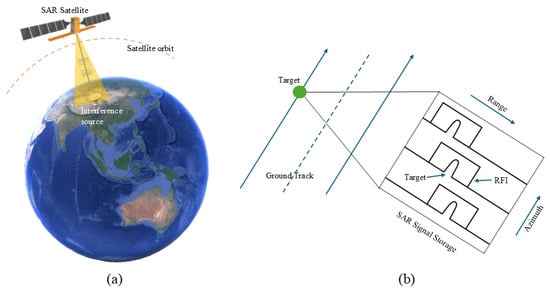
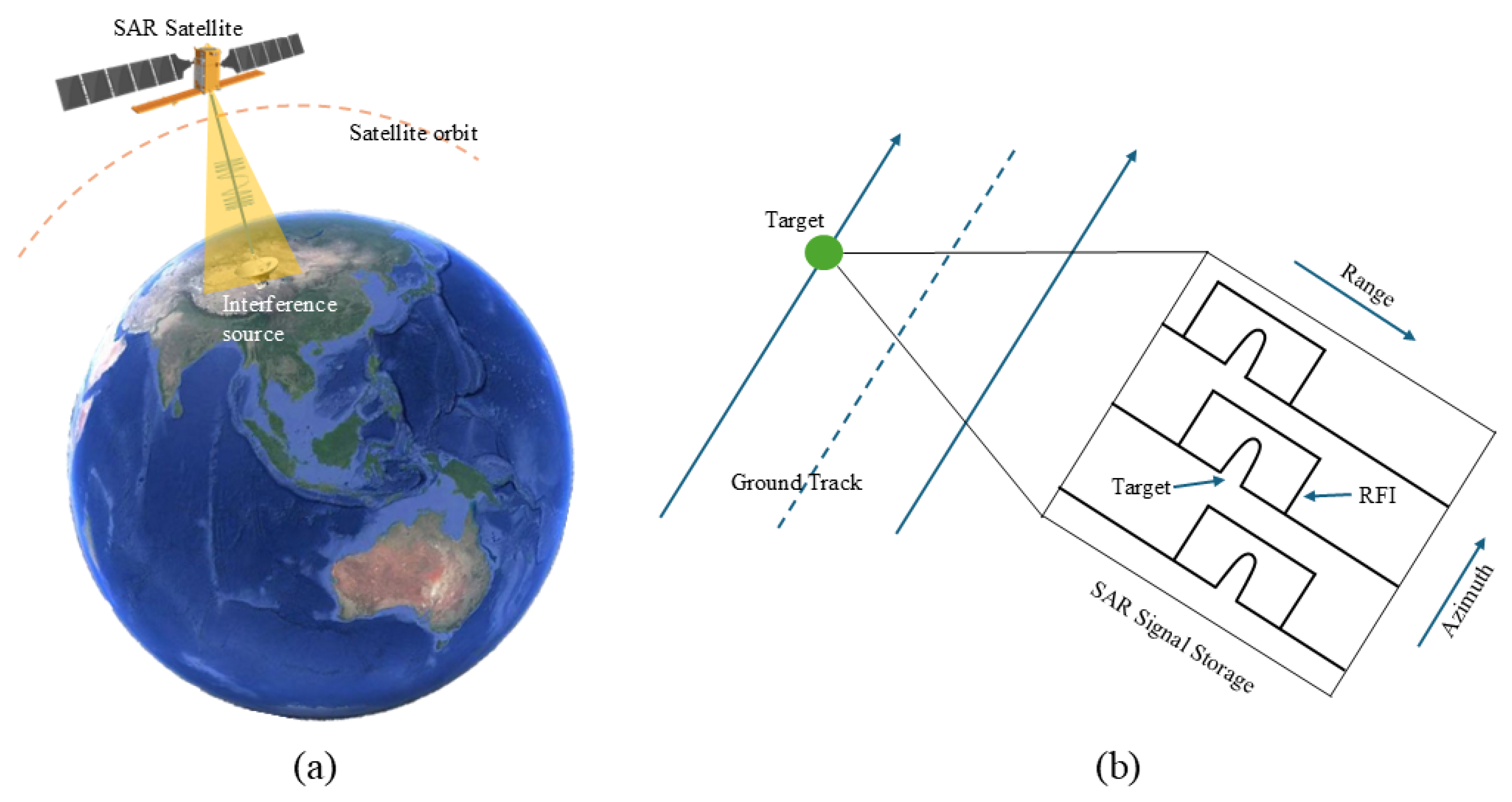
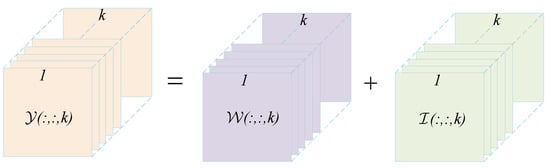
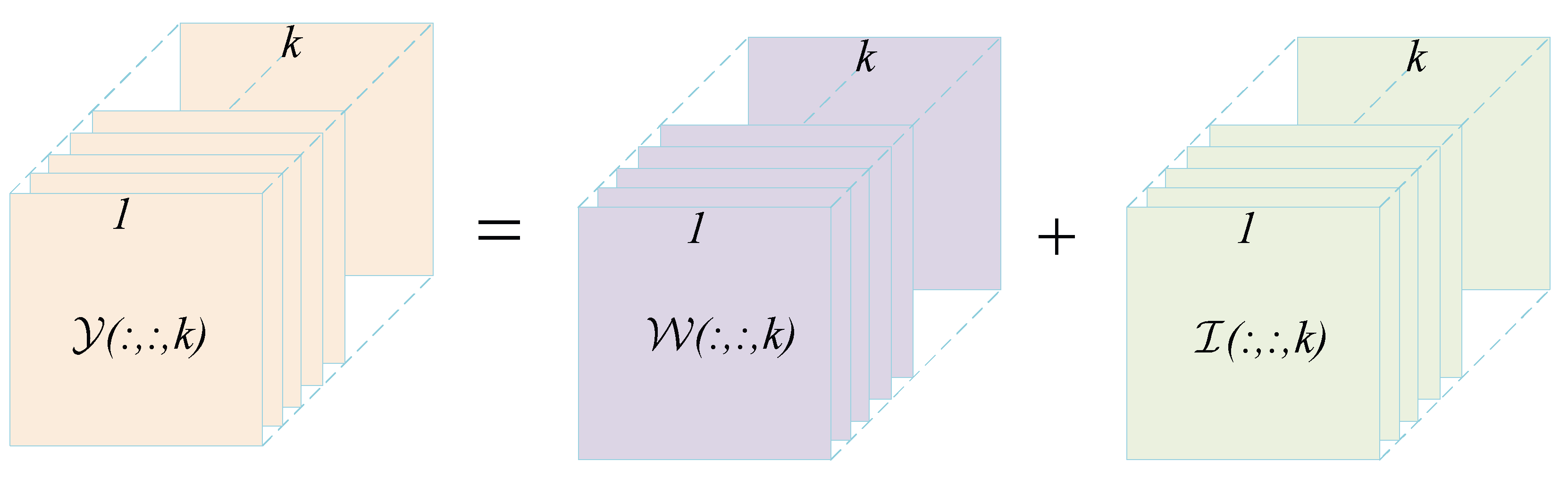
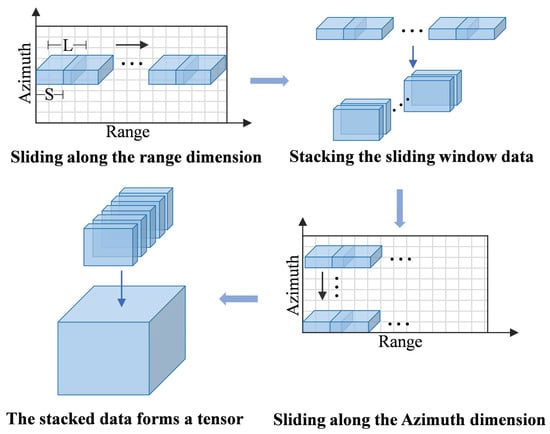
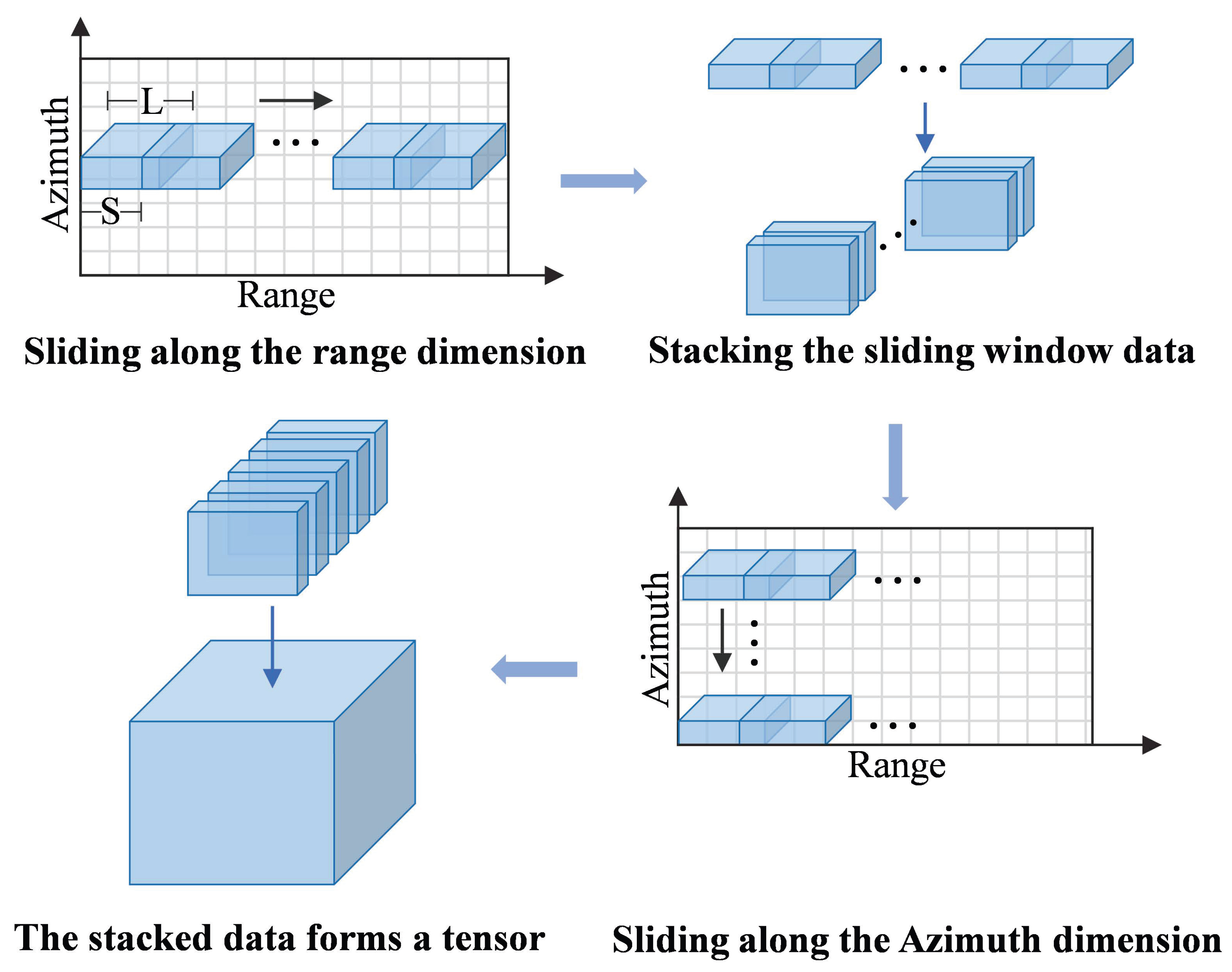
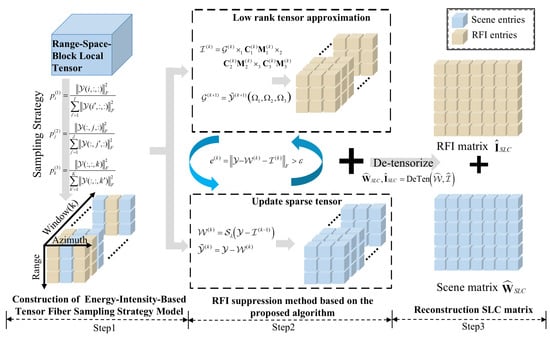
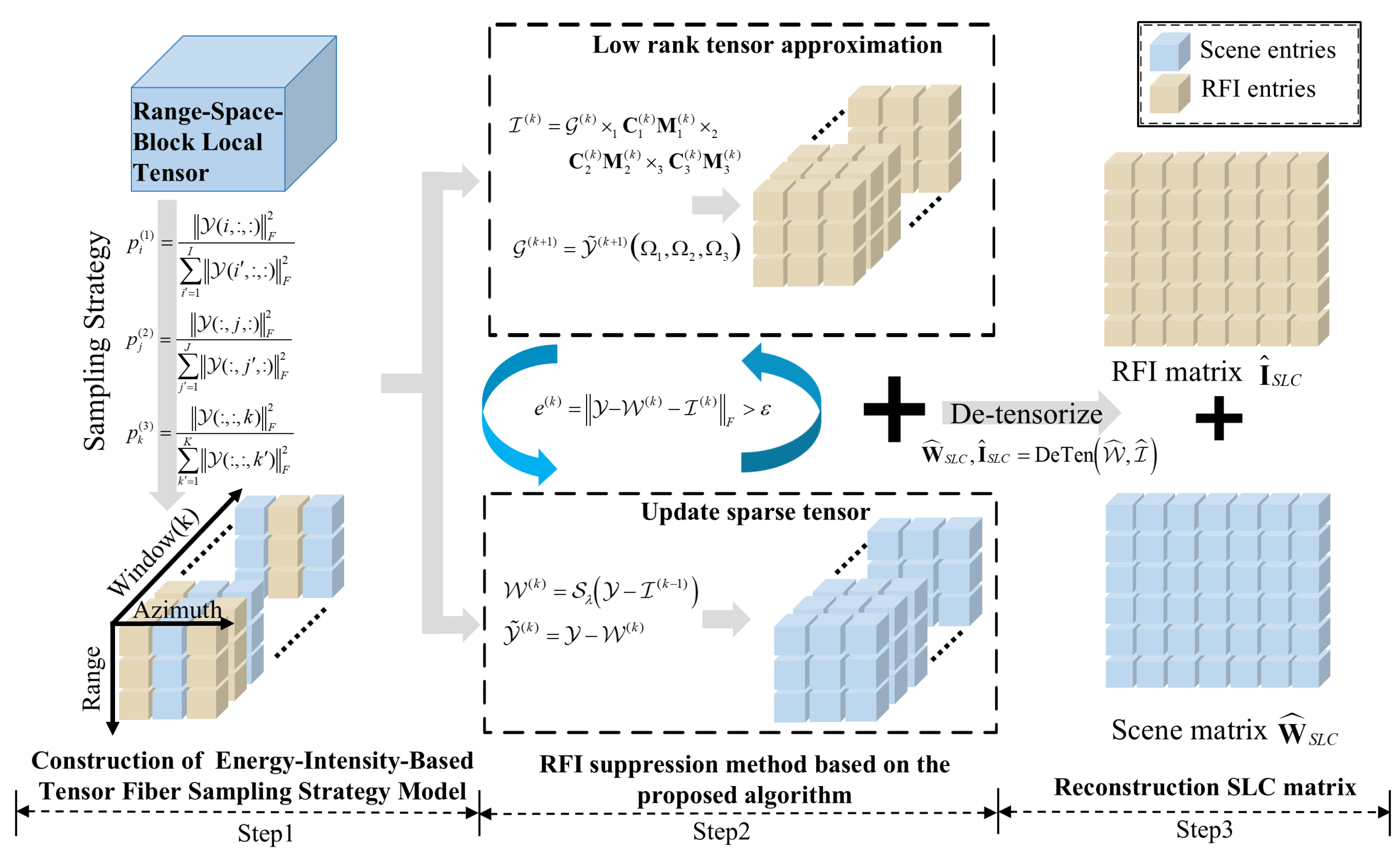
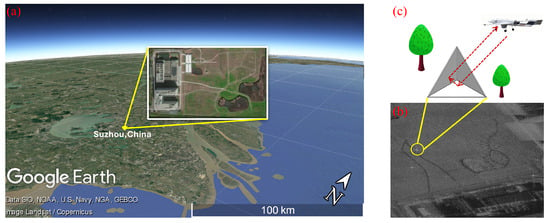
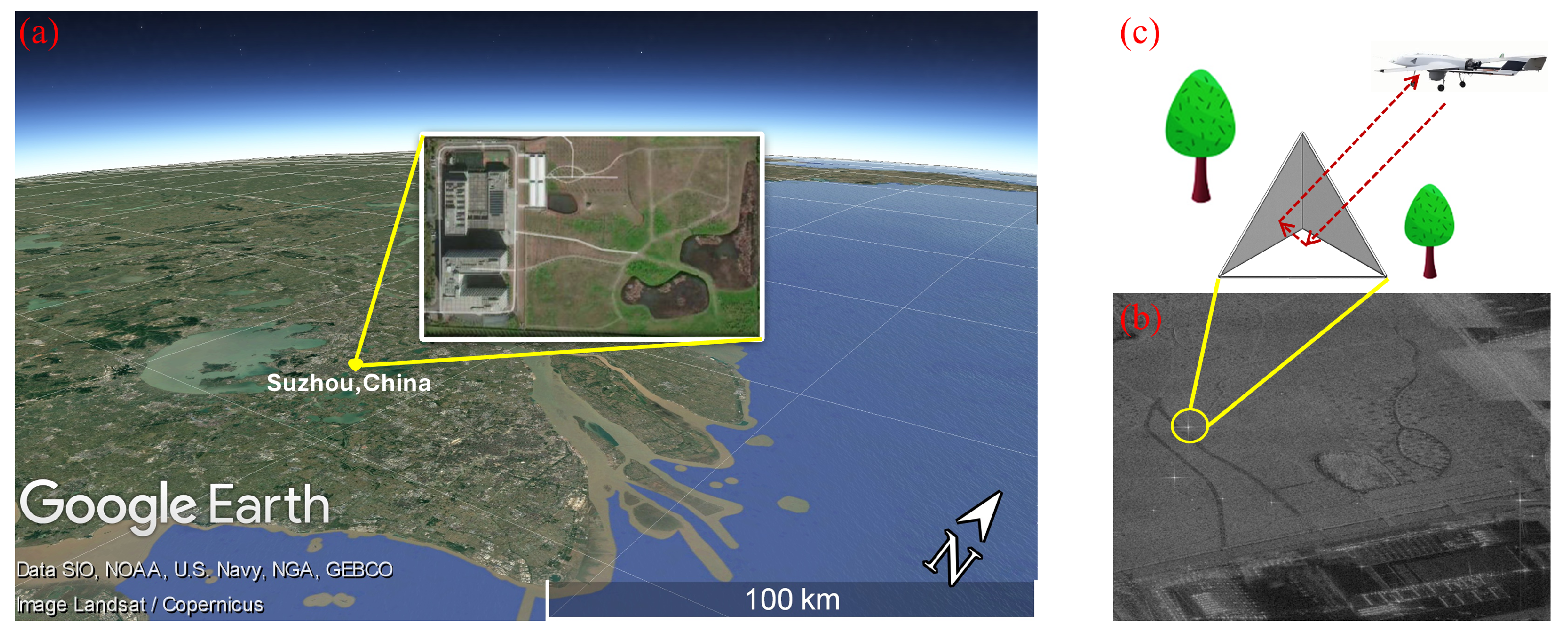
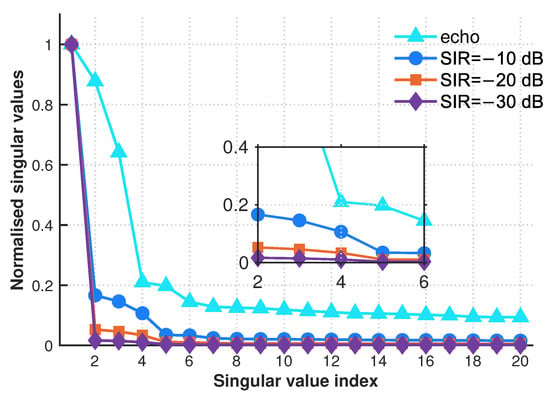
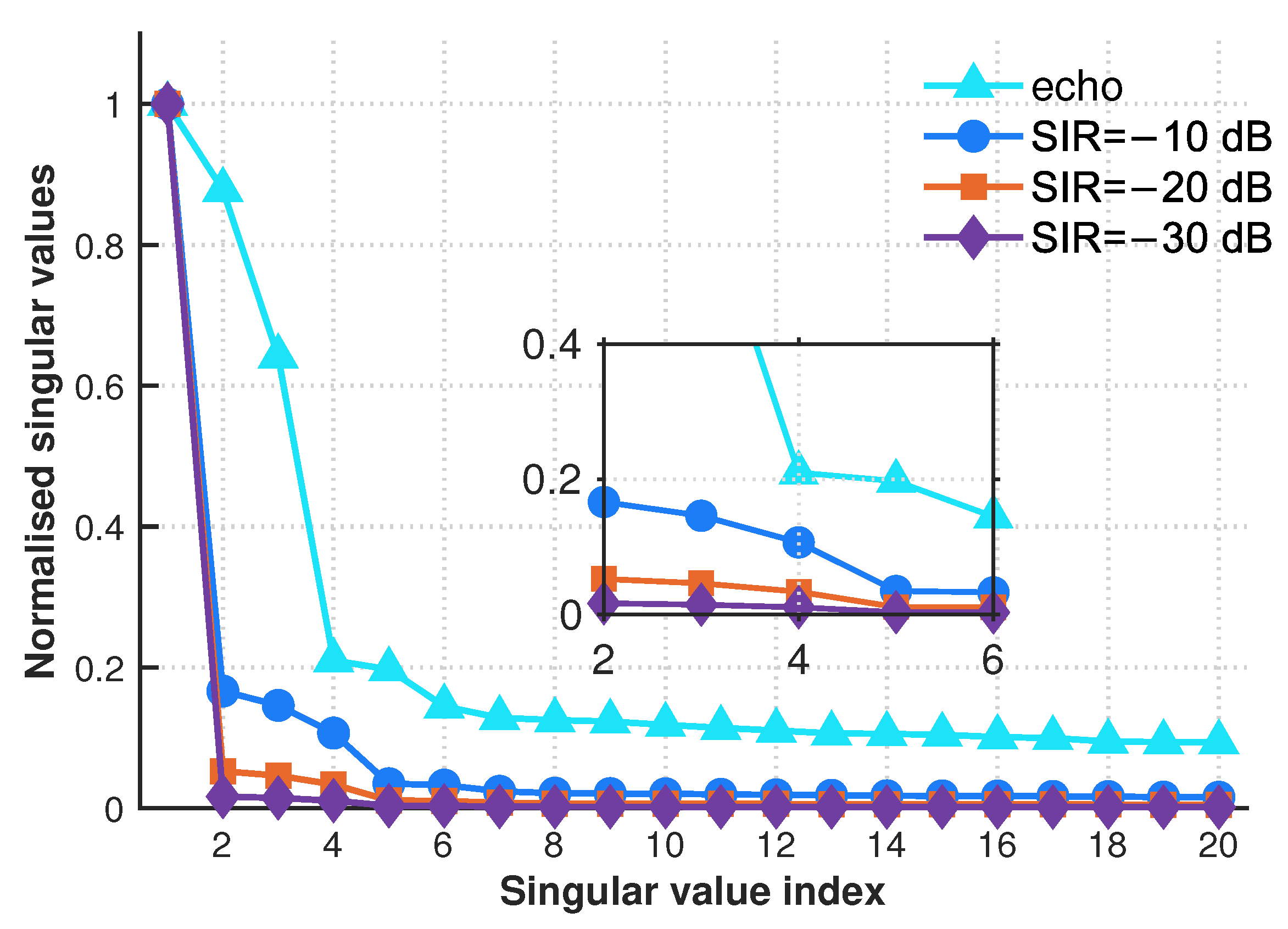
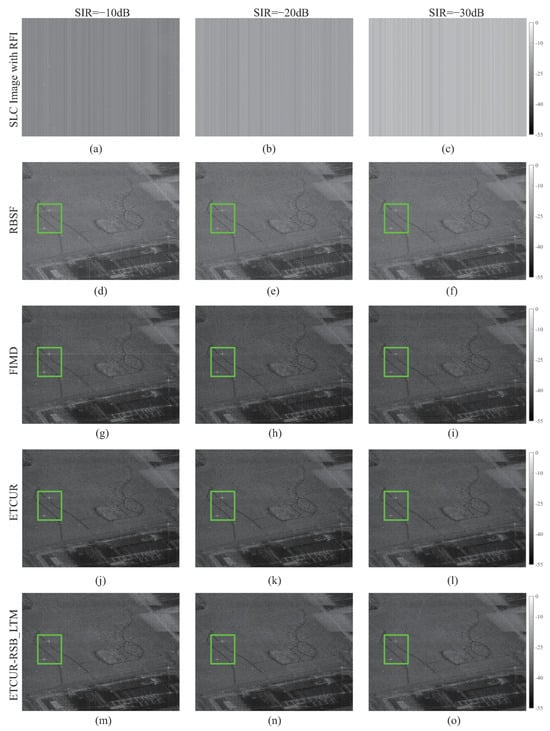
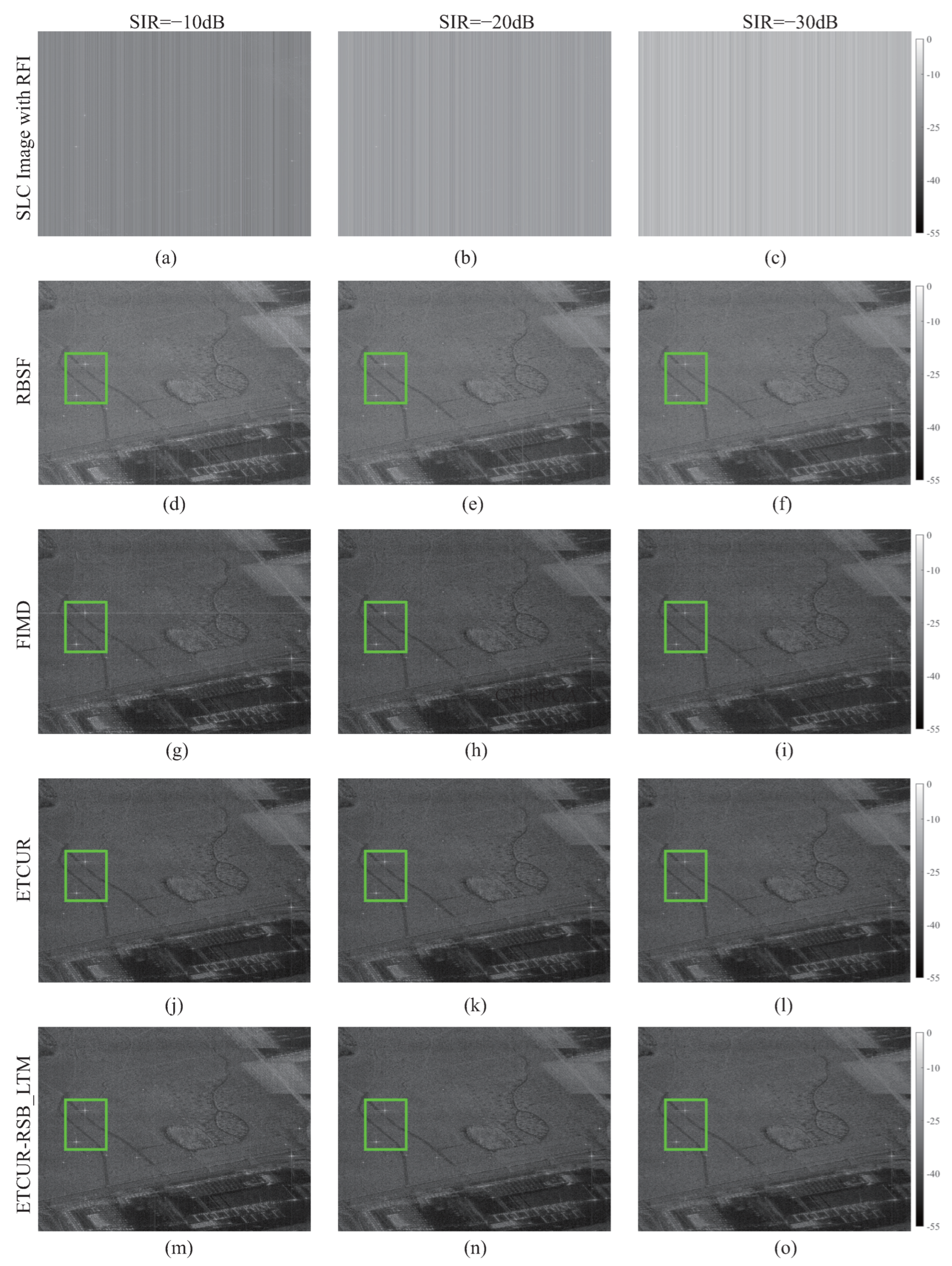
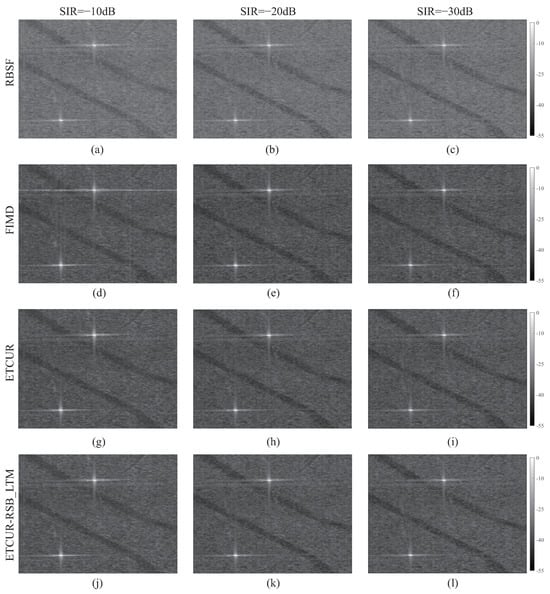
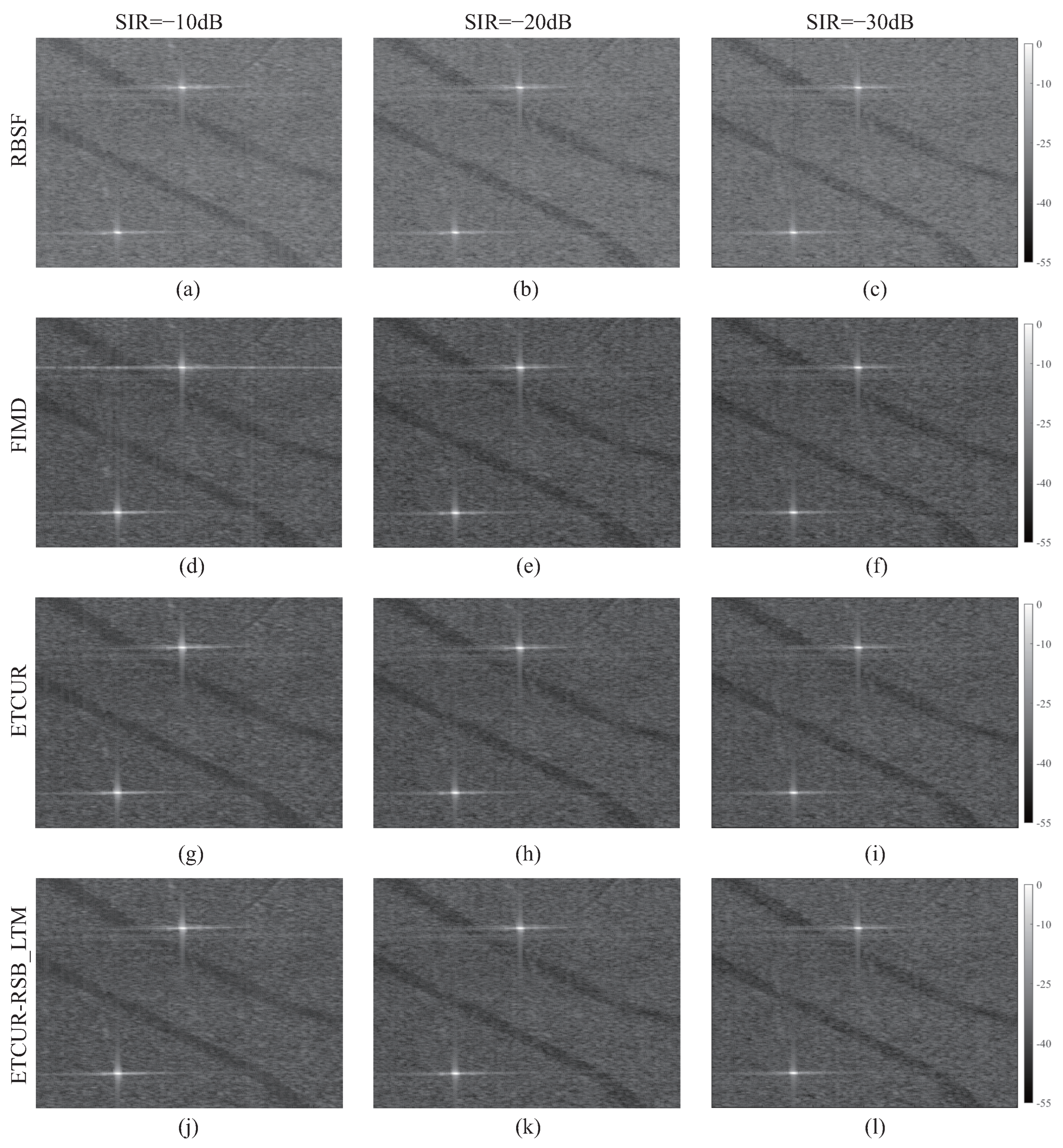
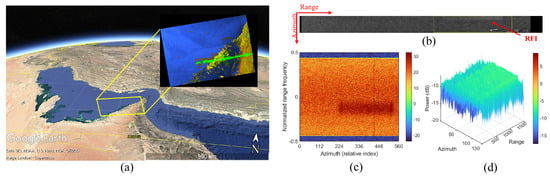
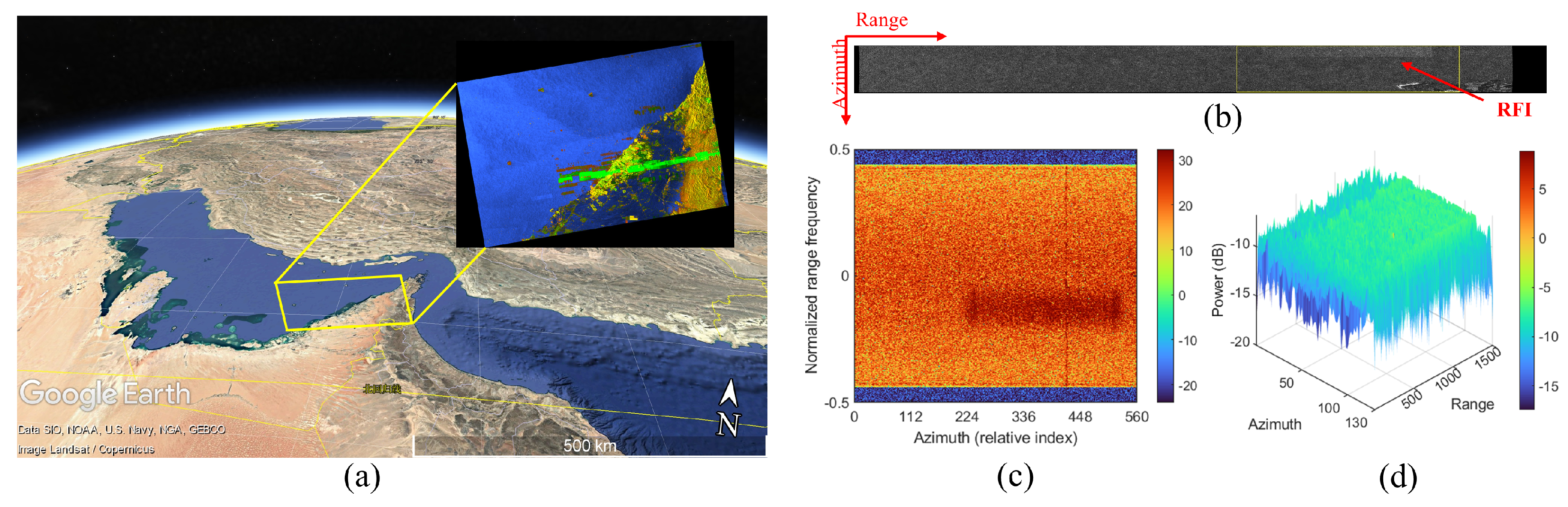
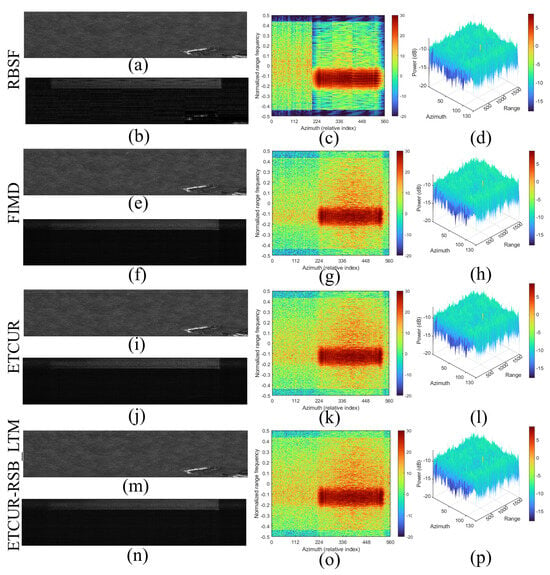
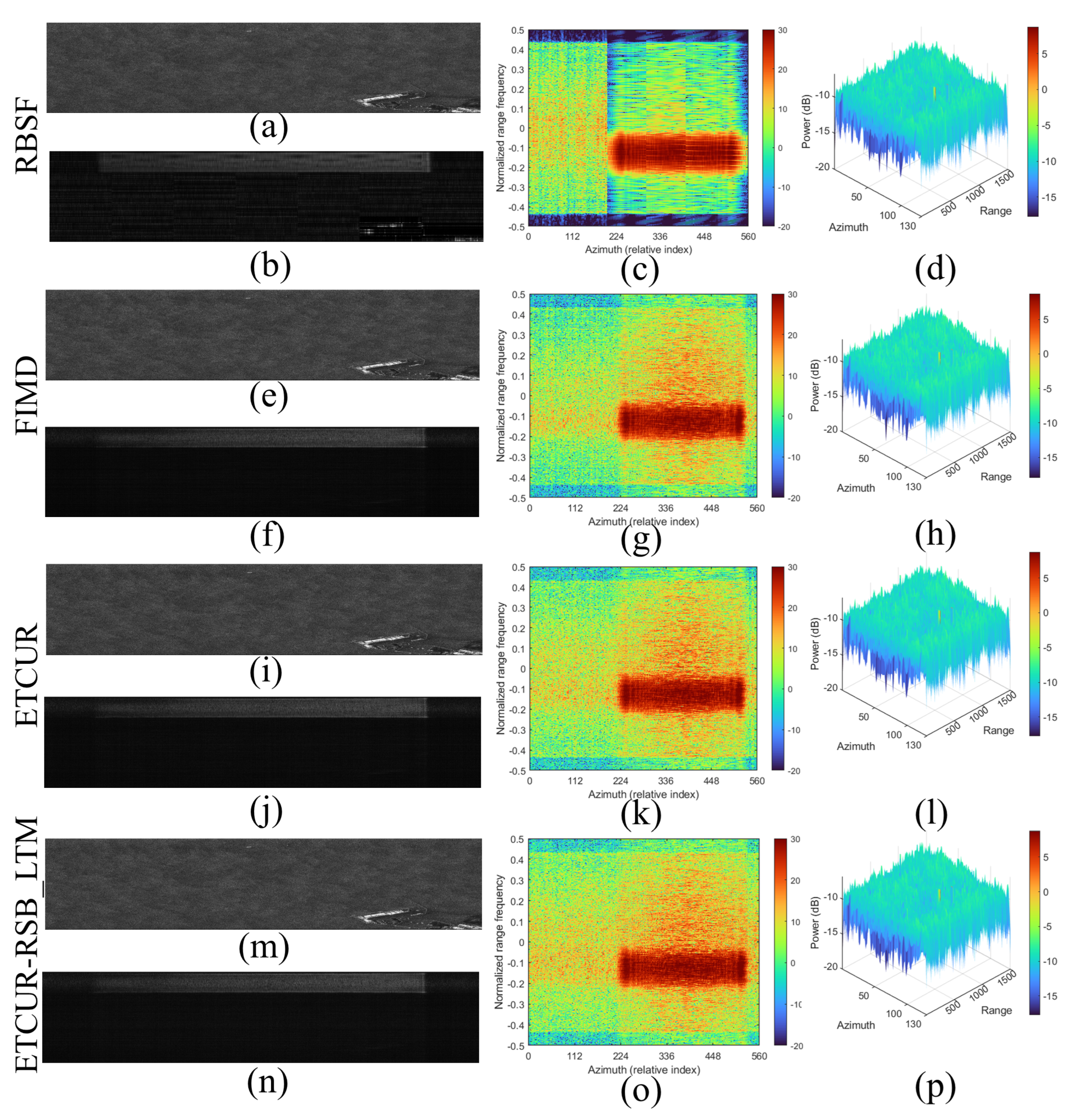
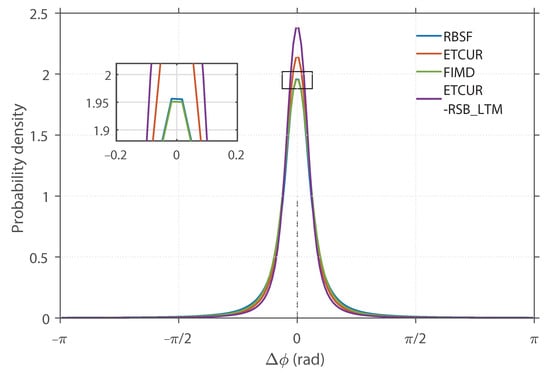
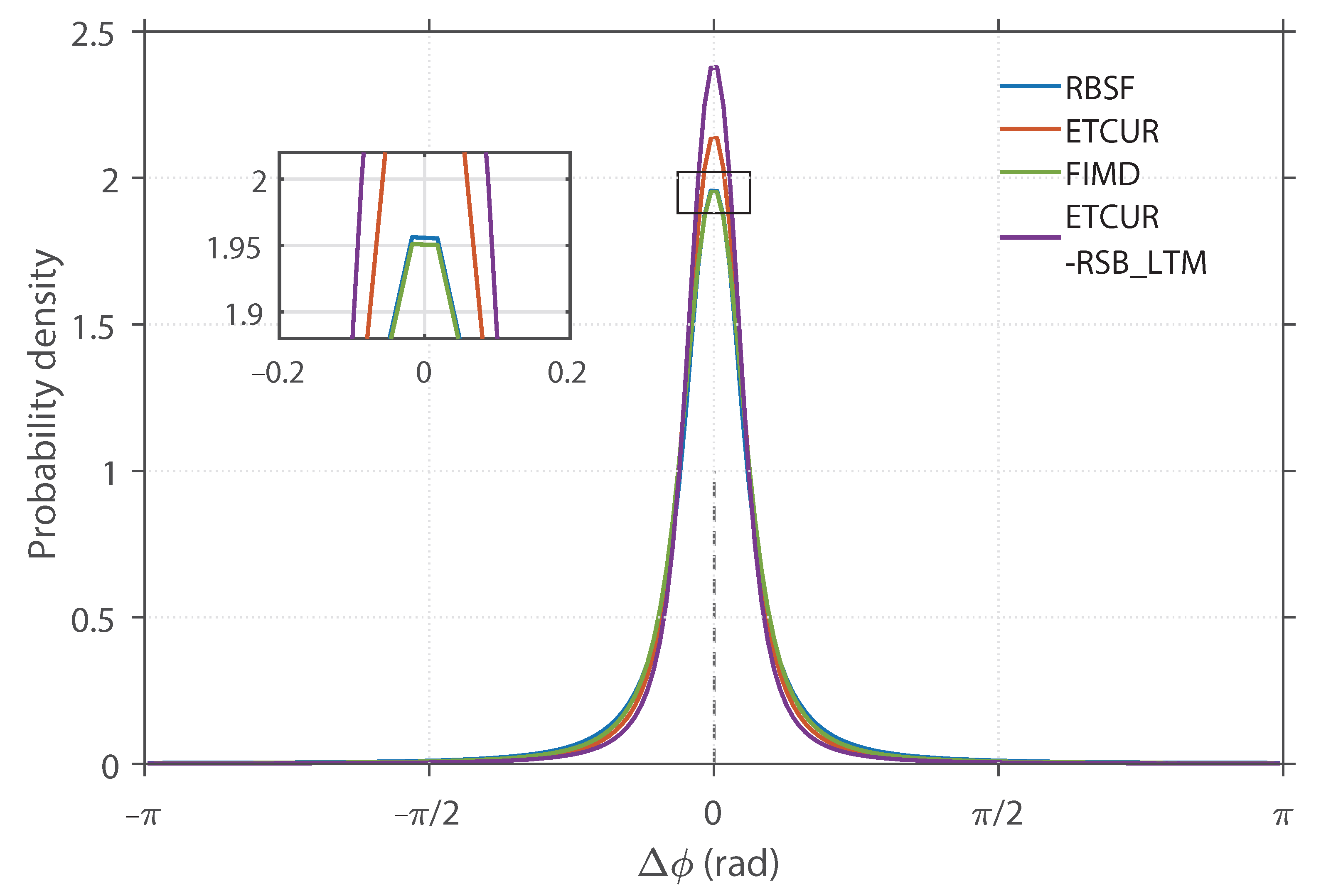

Disclaimer/Publisher’s Note: The statements, opinions and data contained in all publications are solely those of the individual author(s) and contributor(s) and not of MDPI and/or the editor(s). MDPI and/or the editor(s) disclaim responsibility for any injury to people or property resulting from any ideas, methods, instructions or products referred to in the content. |
© 2026 by the authors. Licensee MDPI, Basel, Switzerland. This article is an open access article distributed under the terms and conditions of the Creative Commons Attribution (CC BY) license.