
You are currently viewing a new version of our website. To view the old version click .

Remote Sensing, Volume 11, Issue 10

May-2 2019 - 115 articles

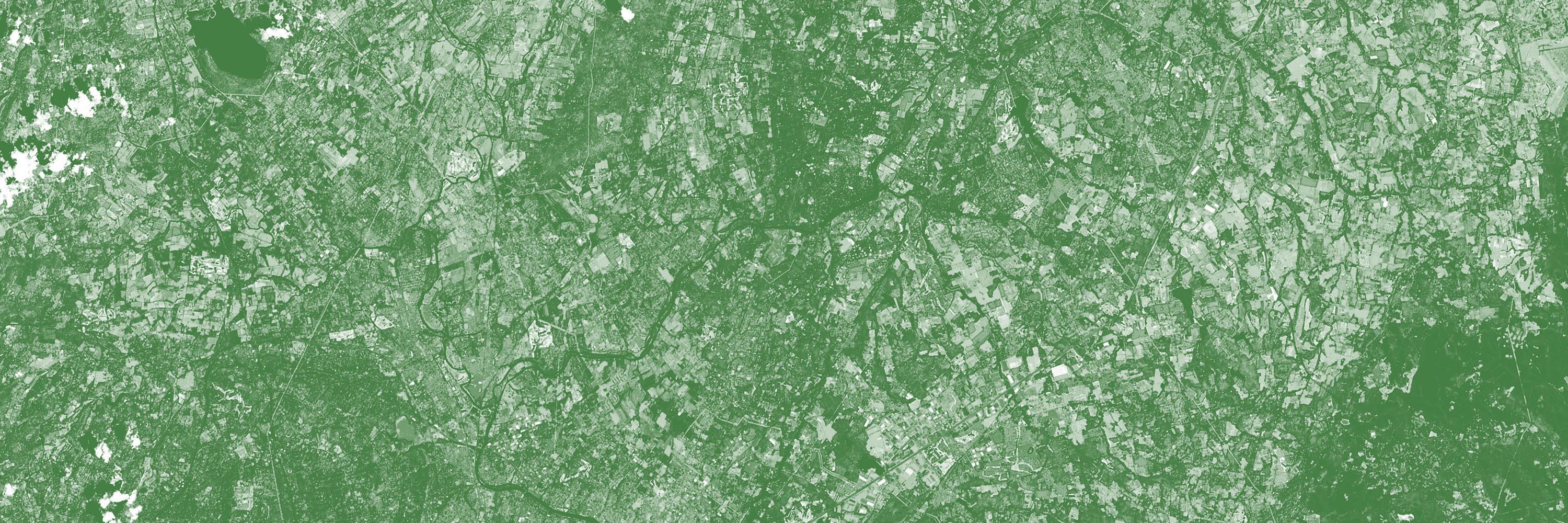
Cover Story: With the launch of the Sentinel-2 mission, new opportunities have arisen for mapping tree species, owing to its spatial, spectral, and temporal resolution. We evaluated the utility of the Sentinel-2 time series for mapping tree species in the complex, mixed forests of the Polish Carpathian Mountains. We used 18 Sentinel-2 images from 2018. Different combinations of Sentinel-2 imagery were selected based on the mean decrease in accuracy and mean decrease in Gini measures, in addition to temporal phonological pattern analysis. Tree species discrimination was performed using the random forest classification algorithm. Our results show that the use of the Sentinel-2 time series instead of single date imagery significantly improved forest tree species mapping, by approximately 5–10% of overall accuracy. In particular, combining images from spring and autumn resulted in better species discrimination. View this paper.
  • Issues are regarded as officially published after their release is announced to the table of contents alert mailing list .
  • You may sign up for email alerts to receive table of contents of newly released issues.
  • PDF is the official format for papers published in both, html and pdf forms. To view the papers in pdf format, click on the "PDF Full-text" link, and use the free Adobe Reader to open them.

Articles (115)

  • Article
  • Open Access
8 Citations
5,727 Views
20 Pages

Analysis of Factors Affecting Asynchronous RTK Positioning with GNSS Signals

  • Bao Shu,
  • Hui Liu,
  • Yanming Feng,
  • Longwei Xu,
  • Chuang Qian and
  • Zhixin Yang

27 May 2019

For short baseline real-time kinematic (RTK) positioning, the atmosphere and broadcast ephemeris errors can be usually eliminated in double-differenced (DD) processing for synchronous observations. However, in the case of possible communication laten...

  • Article
  • Open Access
95 Citations
13,162 Views
26 Pages

Object-Based Time-Constrained Dynamic Time Warping Classification of Crops Using Sentinel-2

  • Ovidiu Csillik,
  • Mariana Belgiu,
  • Gregory P. Asner and
  • Maggi Kelly

27 May 2019

The increasing volume of remote sensing data with improved spatial and temporal resolutions generates unique opportunities for monitoring and mapping of crops. We compared multiple single-band and multi-band object-based time-constrained Dynamic Time...

  • Article
  • Open Access
88 Citations
9,555 Views
25 Pages

UAV and Ground Image-Based Phenotyping: A Proof of Concept with Durum Wheat

  • Adrian Gracia-Romero,
  • Shawn C. Kefauver,
  • Jose A. Fernandez-Gallego,
  • Omar Vergara-Díaz,
  • María Teresa Nieto-Taladriz and
  • José L. Araus

25 May 2019

Climate change is one of the primary culprits behind the restraint in the increase of cereal crop yields. In order to address its effects, effort has been focused on understanding the interaction between genotypic performance and the environment. Rec...

  • Article
  • Open Access
56 Citations
8,979 Views
16 Pages

25 May 2019

The Mesopotamian marshes are a group of water bodies located in southern Iraq, in the shape of a triangle, with the cities Amarah, Nasiriyah, and Basra located at its corners. The marshes are appropriate habitats for a variety of birds and most of th...

  • Article
  • Open Access
11 Citations
3,906 Views
15 Pages

Remote Sensing of Wetland Flooding at a Sub-Pixel Scale Based on Random Forests and Spatial Attraction Models

  • Linyi Li,
  • Yun Chen,
  • Tingbao Xu,
  • Kaifang Shi,
  • Rui Liu,
  • Chang Huang,
  • Binbin Lu and
  • Lingkui Meng

24 May 2019

Wetland flooding is significant for the flora and fauna of wetlands. High temporal resolution remote sensing images are widely used for the timely mapping of wetland flooding but have a limitation of their relatively low spatial resolutions. In this...

  • Article
  • Open Access
13 Citations
5,791 Views
16 Pages

Characterization of Electromagnetic Properties of In Situ Soils for the Design of Landmine Detection Sensors: Application in Donbass, Ukraine

  • Timothy Bechtel,
  • Stanislav Truskavetsky,
  • Gennadiy Pochanin,
  • Lorenzo Capineri,
  • Alexander Sherstyuk,
  • Konstantin Viatkin,
  • Tatyana Byndych,
  • Vadym Ruban,
  • Liudmyla Varyanitza-Roschupkina and
  • Oleksander Orlenko
  • + 5 authors

24 May 2019

To design holographic and impulse ground penetrating radar (GPR) sensors suitable for humanitarian de-mining in the Donbass (Ukraine) conflict zone, we measured critical electromagnetic parameters of typical local soils using simple methods that coul...

  • Article
  • Open Access
70 Citations
8,990 Views
15 Pages

24 May 2019

Tracking cropland change and its spatiotemporal characteristics can provide a scientific basis for assessments of ecological restoration in reclamation areas. In 1998, an ecological restoration project (Converting Farmland to Lake) was launched in Do...

  • Article
  • Open Access
120 Citations
13,316 Views
20 Pages

24 May 2019

The paper presents a comparison of the efficacy of several texture analysis methods as tools for improving land use/cover classification in satellite imagery. The tested methods were: gray level co-occurrence matrix (GLCM) features, Laplace filters a...

  • Article
  • Open Access
36 Citations
10,546 Views
21 Pages

24 May 2019

In many countries, in situ agricultural data is not available and cost-prohibitive to obtain. While remote sensing provides a unique opportunity to map agricultural areas and management characteristics, major efforts are needed to expand our understa...

  • Feature Paper
  • Article
  • Open Access
22 Citations
5,106 Views
16 Pages

24 May 2019

Radiative transfer model (RTM) inversion allows for the quantitative estimation of vegetation biochemical composition from satellite sensor data, but large uncertainties associated with inversion make accurate estimation difficult. The leaf structure...

of 12

Get Alerted

Add your email address to receive forthcoming issues of this journal.

XFacebookLinkedIn
Remote Sens. - ISSN 2072-4292