


Abstract
Design for excellence (DfX) comprises a broad family of product design methodologies aimed at addressing the often-competing requirements of multiple stakeholders throughout the product life cycle. Among the most pressing contemporary challenges in DfX is integrating environmental considerations into product design systematically and comprehensively. The circular economy (CE) is implemented through various R strategies (e.g., 3R: reduce, reuse, recycle), providing a normative framework intended to guide pro-environmental design decisions and life cycle thinking. This study conducts a systematic literature review focused on product development and its alignment with DfX methods in the context of circular economy practices (CEPs) to identify prevailing research trends and structural gaps in this area. Both quantitative and qualitative analyses of the literature are performed and interpreted through the lens of the circular economy butterfly diagram proposed by the Ellen MacArthur Foundation. The results reveal a pronounced asymmetry in the distribution of CE practices within product design research. Recycling and remanufacturing dominate the literature despite being positioned in the CE framework as less desirable than resource-preserving strategies such as reuse, repair, and life extension. This imbalance suggests that current research and design practices remain largely anchored in end-of-life (EoL) and resource-intensive solutions rather than prioritizing strategies that slow material and product flows. These findings highlight a critical need to intensify research on product circularity at the design stage, with greater emphasis on life-extension-oriented strategies and their integration within DfX methodologies and practices. The study provides a structured foundation for future research on circular product design and contributes to ongoing discussions on aligning design practice more closely with the fundamental principles of the circular economy.
1. Introduction
Product design and development (PD) requires multidisciplinary knowledge to create a product that balances the needs of the enterprise and the final customer. The company’s main goal is to deliver a product to market that generates a certain level of profit while minimizing costs [1]. Customers, in turn, expect products whose prices are commensurate with their quality, functionality, personalization, ergonomics, and other features that characterize the product throughout its life cycle [2]. Therefore, the company should design a product that meets the customer’s expectations while seeking solutions that maximize profit across every stage of product development.
With the onset of the second industrial revolution, which saw successive increases in production volumes through the Taylor and Ford assembly line [3], a rationale began to emerge which highlighted the need to take greater account of manufacturing process issues in products’ design [4]. It should be noted that the first works on design for manufacturability appeared as early as the 19th century through Eli Whitney [5]. Over time, they were collected into a broader design for manufacturing (DfM) method and widely described in the literature [6]. The DfM method, in a nutshell, was a set of theoretical and practical guidelines for designers, the inclusion of which optimized product development processes [7].
As product optimization through DfM began to encounter limitations, for example, due to the technologies available at the time or manufacturing methods, people began to look for other areas to include in the design process. This gave rise to dozens more design for X methods such as design for assembly (DfA) [8], design for manufacturing and assembly (DfM&A) [9], design for quality (DfQ) [10], design for logistics (DfL) [11], design for supply chain (DfSC) [12], etc. On this basis, a broader concept, bringing together all such similar methods under the common name design for excellence (DfX), was defined [13].
The common denominator of most DfX methods was the optimization of the product throughout its life cycle, based on the paradigms of the second and then third industrial revolutions—automated and computerized assembly lines [14]. They generated a unidirectional flow of products through forward/forward logistics [15]. That is, a flow of products from the acquisition of raw materials through semi-finished products to the manufacturing, assembly, and use of finished products to the disposal and use of the latter. Thus, the linear economy model of take–make–dispose [16] or take–make–use–throw away was formed [17]. This way of producing and conceiving of the flow of materials has led to a series of negative phenomena over the decades, manifested, among other things, in the following:
- Reduced availability and depletion of raw materials of natural origin;
- Excessive greenhouse gas emissions;
- Excessive and unsustainable consumption—inadequate for the actual needs of buyers;
- Waste of several resources in the process of disposal of used, often still functional, products, and the disposal of these products in landfills.
The aforementioned phenomena are slowly contributing to catastrophic climate change, which will certainly affect life on Earth. It should be noted that 80% of a finished product’s environmental impact stems from design processes [18]. This is why the PD process is so important in the context of product impacts on the environment.
On this basis, a search began for a concept to reverse this unfavorable sequence of events. In 2013, the Ellen MacArthur Foundation [19] refined and adapted the idea of circular economy (CE), well known from the 1960s and 1970s, to current conditions [20]. CE changed the principle of linear economy (take–make–waste [21] or take–consume–throw away) [22] to the principle of circular economy (take–make–use) [23], which should be extended to a take–make–use–second life sequence. Thus, CE fits in with the 17 Sustainable Development Goals (SDGs) announced two years later (in 2015) by the United Nations (UN) [24], which should be achieved by 2030.
The idea of CE was originally based on the 3R model’s three basic principles: reduce, reuse, and recycle. It was then expanded to the 4R, 6R, and 7R models, eventually ending with 10R—(0R–9R)—refuse, rethink, reduce, reuse (resell), repair, refurbish, remanufacture, repurpose, recycle, recover [25]. Often, the 10R principle is supplemented by remediative actions, removing recovery as an action that can harm the environment. However, it should be noted that recovery activities are often more environmentally beneficial than dumping used products in landfills [26].
Thus, the CE concept has created new challenges for the PD process. Moving away from the classic linear economy patterns to circulating and closed loops of used products and, thus, secondary components, it introduced a reverse, circulating flow of goods—reverse logistics [27]. This introduces additional constraints on designers’ work and forces existing models to manage the entire product life cycle. Therefore, conducting a study on current practices used in the PD process that considers CE issues seems reasonable.
Within the circular economy literature, the terms “strategies” and “practices” are often used interchangeably, which may lead to conceptual ambiguity. Therefore, for clarity, this study adopts the following terminology. In this study, the term R-strategies denotes higher-level conceptual categories of the circular economy, such as the 10R model proposed by Potting et al. [25]. In contrast, CE practices (CEPs) refer to concrete, operational actions implemented at the product or process level (e.g., repair, reuse, remanufacturing). For consistency, the term “practices” is used throughout the empirical analysis.
Following changes in the PD process and the entire DfX concept, which CE influences, the following research questions were formulated:
- Which circular economy practices appear most often in scientific articles in the context of the DfX concept?
- What are the possibilities of classifying circular economy practices, and how are they taken into account in the literature in the context of the DfX concept?
- What changes in the product design process are generated by the need to consider transitioning from a linear to a circular economy?
- What are the trends of change in the product design process, considering the circular economy—design for CE?
The article is structured as follows. In the first chapter, a literature review will be presented. The method and results of the study will then be discussed. The next chapter will present a discussion of the topic. The paper will conclude with a summary that indicates limitations and future research directions.
As the introduction indicates, this article addresses two extremely broad areas. Both DfX methods, techniques, and tools, as well as circular economy practices, are evolving; consequently, an increasing number of terms derived from current trends in industry, science, and other fields, and thematically related to these two areas, are appearing in the literature. For this reason, to thoroughly address the subject matter presented, the authors were compelled to undertake a series of tasks to systematize and structure the current state of knowledge regarding both DfX and CEPs.
The first part of the article, which serves as a literature review, therefore attempts to establish a conceptual classification that provides the basis for a systematic review combined with bibliometric mapping. On this basis, the results and reflections presented here highlight current trends in the studied areas and point to the insufficient operationalization of CEPs within the DfX framework.
2. Literature Review
In the literature, attempts have been made to expand DfX methods to environmental aspects; therefore, the literature review was divided into two main areas: design for environment (DfE) and design for the circular economy (DfCE).
In the simplest terms, DfE [28] is often referred to as design for environmental sustainability (DfES) [29]. DfE is often combined with eco-design [30] or green product design [31]. Other authors [32] identify three basic stages of innovative product design within the sustainable development (SD) concept: development of the concept itself, selection of materials, and control of the product life cycle. The SD issue is incorporated in each of the three stages mentioned above, which poses real challenges for the entire concept.
Holzbaur [33] highlights the potential conflict between product design and SD. He states that the old linear economy model is based on limited resources and excessive consumption. To reduce consumption and resource consumption while preventing conflict, several actions should be taken, including education in the field of sustainable development, improving the quality of designed or developed products, sustainable consumption and production, continuous monitoring and analysis of consumer needs and requirements, taking into account the needs of stakeholders adjusted through the lens of SD, and the use of modelling and proper execution of early phases of product design. Subsequent authors have addressed the next context of design for environment, e.g., design for low carbon (DfLC)—product low-carbon design (PLCD) [34]—or design for minimal weight (DfMW) [35].
Benabdellah et al. [36] also addressed the design for the environment issue by slightly modifying their 2019 model in the context of sustainability. They identified three scopes, including the following DfX methods: economy (design for: disassembly, remanufacture, end of life), ecology (design for: reuse, recycle, end of life, reverse logistics), ecosystem (design for: sustainability, environment, chronic risk reduction, energy conservation, material conservation).
As demonstrated by the literature, DfX methods are diverse and multifaceted. Furthermore, reviewing current product development (PD) trends identifies criteria for categorizing these methods. The most popular division is one that considers economic, ecological, and social issues, which is then transformed into one that considers economic, ecological, and ecosystem aspects [36]. A similar division was proposed by Chiu et al., distinguishing the aforementioned scopes of product, system, and ecosystem [37].
Mesa also studied the environmental aspects of DfX [38]. The author presented a combined concept, design for circularity and durability, which included seven basic CE practices (upgrade, repair, reuse, refurbish, remanufacture, repurpose, and recycling) and related them to selected DfX methods: design for assembly/disassembly, durability, extended end of life, emotional durability, maintainability, modularity, reliability, and upgradability.
Considering basic CE practices in product design becomes an important starting point for the rest of the article. However, the authors decided to collect selected issues of product design that broadly support the environment and present them in Table 1, excluding those directly connected to CE-related activities.
Table 1.
Different varieties of DfX methods in the environmental context without circular economy practices.
All the presented designs for contexts (except design for circularity and design for circularity and durability) address environmental issues but primarily adopt a linear approach to the product. These designs highlight the issues of reducing pollution through waste reduction and recycling and through CE’s first three core practices, and they focus on the forward flow processes of production and consumption [60]. Therefore, in the second part of the article, the authors will attempt to expand the concept of circular design and design for CE practices.
The second issue discussed in the literature review concerns DfCE. Based on a review of terms found in the literature, ref. [61] defined the concept of the circular economy as an economic system replacing the classical, last phase of the product life cycle, trash, with activities aimed at reduction, alternatively reusing, recycling, and recovering materials in production/distribution and consumption processes. The CE system aims to achieve the goals of sustainable development at the nano (product), micro (company), mezzo (sectoral), and macro (economy) levels [62], creating well-being and balance in environmental, social, and economic areas for current and future generations. To achieve this, new business models, new product design paradigms, and more responsible consumer behavior are needed.
Circular economy business models can be divided into four main trends.
- (1)
- Cycling (5R—reuse, repair, refurbish, remanufacture, recycle; DfX; modularity, reverse logistics; engaging and encouraging product returns);
- (2)
- Extending (durability, reliability, maintainability, supportability, upgradeability, encouraging long product life);
- (3)
- Intensifying (share, rent, lease, pool, cooperate, commons);
- (4)
- Dematerialization (the domain of services, education, and digitization).
The circular economy focuses on key practices [26] or activities [63]. Since they often refer to the same concepts, they will be referred to as practices in the rest of this article. Originally, key practices of the circular economy referred to the three Rs: reduce, reuse, and recycle [64]. However, the range of R-practices is gradually increasing. The fourth additional R addressed the final disposal of the product (recover) in the formula for energy recovery resulting from its final combustion—incineration [65]—similarly to 5R, which was intended to make the product used biodegradable. The next 5Rs, which involved composting issues, were called rot [66]. In the next step, the 6Rs of CE development, they have been supplemented with 2R (redesign and remanufacture), without addressing the issue of rot [16], to achieve 6R levels. The 7R framework already accounted for rot issues [67]. As can be seen, in various studies, the authors interpreted the subsequent Rs differently, adding, subtracting, or replacing the words used so far.
The next development of CE practices resulted in the 10R framework. Refuse, rethink, repair, refurbish, and repurpose were added, turning redesign into refuse and rethink activities and, once again, excluding the word rot [25]. A study identifying subsequent R practices in CE indicates up to 21 R varieties [68]. It did not yet include the increasingly popular remine strategy in the literature, which refers to extracting secondary components from, e.g., landfills [26]. In another publication, one can find the identification of 60 CE practices (principles) [69].
In the literature, attempts have already been made to organize CE practices. One of the more interesting versions is the circular strategies scanner version 2.0 [62]. Building on their previous version of the scanner, the authors have conceptually and systemically refined the scheme by distinguishing the following areas:
- Paradigm shifts through reinvent;
- Rethink and reconfigure the value generation architecture;
- Reinvent, reduce, and avoid in the areas of material rows and procurement, production, product use, and service;
- Recirculating parts, products, and materials;
- Minimize the intensity of logistics processes and energy use.
These activities aim to extend a product’s existing life cycle or create new product reuse cycles, a trend driving business innovation through closed-loop cycles. Lean operations in the procurement, manufacturing, and use phases refine the potential for circularity by preventing excess consumption [70].
CE also has its development in the design and development processes of products. Ref. [71] proposed 10 key points to consider when implementing DfCE processes, including: design for “system change”; design thinking to revolutionize the world; design for multiple cycles; co-design with different participants in the value chain; design for failure in mind; design for hands-on experience; and others. As can be seen, the authors sought to capture CE practices, adapting them to the designers’ prior activities, and also pointed out the need to change the current way of thinking.
Another study [72] also describes the issues of designing products for the circular economy. It draws attention to three basic resource cycles that occur during the product life cycle: slowing the circulation of raw materials, closing the flow of raw materials, and narrowing (reducing) the consumption flow. Slowing the circulation of raw materials is achieved by extending the product life cycle (e.g., repair). Closing the loop involves using secondary components and recycled materials. Narrowing, on the other hand, involves limiting the use of streams to the minimum necessary, reducing the consumption of materials in the product. Design for circularity, through the use of CE practices, enables the extension of a product’s first life into subsequent lives [73].
Thus, DfCE is the process of designing and developing products, services, and product–service systems, replacing the traditional linear product life cycle ending with an end-of-life phase of disposal with a product life cycle in which closing, slowing, and narrowing the flow of waste product streams, secondary components, and recycled raw materials are the key factors [74]. The DfCE’s task is therefore to achieve sustainability goals for ecological well-being.
In the literature on DfCE, one can find the concepts of design for circularity (DfCir) and circularity product design (CPD). The acronym DfC was previously reserved for design for cost [35].
Designing for circularity first requires considering that the designed product, its parts, and the materials from which it is made must also circulate in the future. This can be achieved through designers educated in the CE area, advanced design processes, collaboration along the value chain, and adding services to the product that support its circularity, such as sharing, lending, take-back, and other models. However, this requires changes in customers’ purchasing behavior while accounting for their needs [75].
Ref. [76], based on the literature review, as part of circular product design, presents six salient research themes, which include:
- Design strategies for circular product design (design for: slowing loop; closing loop; product integrity; long use; extended use; recovery; recycling; bio-based loops; and circular redesign strategy);
- Design tools and techniques for circular products;
- Product circularity requirements;
- Smart technologies in the design of circular products;
- Design for remanufacturing, upgrading, and modularity;
- Design for the competitiveness of circular products and consumer behavior.
According to [77], activities related to remanufacturing, repair, sharing, recycling, virtualization, and upgradability constitute important foundations for CPD activities. In this way, seventy-six CEPS were identified, thereby answering the first research question.
CEPs identified across various fields require clarification and systematization in several respects. One of these concerns the level of detail in the presented topics. Some of the presented practices may be subordinate to one another and fall under a broader conceptual category. For example, “redevelop” is logically linked to “redeploy” and “remodel,” all of which are rooted in “reengineer.” Consequently, it became necessary to systematize, structure, and aggregate all identified CEPs into the smallest possible number of categories to facilitate further research.
To achieve this objective while also addressing the second research question, the authors decided to categorize the various CEPs. For this purpose, many available classifications could have been used, e.g., the classification of processes into slowing/closing/narrowing proposed by Bockena et al. [72] or the classification based on technical and biological cycles proposed by McDonough and Braungart [78]. However, according to the authors, the most appropriate model was Potting’s [25], which identified 10 core CEPs. This is due to the use of a kinship diagram, a method in which a group is named after the single element that best represents it. In this way, each of the 10Rs was assigned a specific name that mapped the idea of a strategic group name. One strategy was assigned to only one group (Table 2).
Table 2.
Assignment of different R practices to Potting’s [25] 10R model (by incidence count).
Based on the literature review presented, the authors decided to systematically review the literature on circular economy design, circularity design, circular product design, and seventy-six CE practices aggregated in 10 categories in Table 2. The results of the research on the relationship between DfX and CE practices will be presented in the next chapter.
3. Methods and Results
To address the research questions, it was decided to conduct a systematic review of the SLR literature using the SALSA method [79], in which three key stages were distinguished:
- Search (identification of article metadata that match search criteria;
- Appraisal;
- Synthetic (bibliometric, quantity, and quality classification);
- Quantitative analysis—Figure 1.Figure 1. Steps of the SALSA process—The search parameter “*” matches any sequence of characters.
The aim of using the SALSA method was to answer the third and fourth research questions.
3.1. Search and Appraisal
The first step was conducted between 13 March 2025, and 14 May 2025, and covered all articles in the databases published up to May 2025. During the identification phase, the databases to be used for the research were selected. It was decided to use the two most popular bibliometric and abstract databases, namely Scopus (Scp) and Web of Science (WoS). The search query was then validated for the following phrases in both databases: “Circular Product Design”; “Design for Circularity”; “Design for Circularity” product; “Design for Circular Economy”; “Design for Circular Economy” and product; “Design for Excellence” and “Circular Economy”; “Design for Circular Product”. All phrases were searched in three primary areas: title or abstract, or keyword, in the Scp database and title or abstract or author keyword in the WoS database. At this stage, the total number of articles on design for a circular economy and related concepts was determined. At this stage, duplicates were also removed, first automatically (using the EndNote (EndNote Online Classic version: https://endnote.com/login/ (accessed on 1 March 2026)) and Mendeley bibliography management programs) and then manually (by sorting the articles by author and title in Mendeley), as shown in Table 3.
Table 3.
Number of publications sorted in ascending order by all without duplicates.
To show the percentage of individual articles, table cells were filled in. The highest number of publications in Table 3 (111) was set to 100%, and the remaining values are illustrated in the specific cells using charts. As you can see, most of the contexts related to design for circular economy refer to circular product design and design for circularity. For the phrase design for circular product, no articles were found.
Using the same method, it was decided to present a quantitative summary of publications on the use of CE practices in the DfX concept. For this purpose, the database search parameters for the specific types of CE practices were defined (Table 4). The notation xxx in Table 4 represents each search parameter that corresponds to a specific strategy type; e.g., design for reduce was searched using the phrase “Design for Reduc*”, where the asterisk in the Reduc* search parameter matched any string of characters.
Table 4.
Number of publications sorted in ascending order by all-without-duplicates—AwD—“Design for xxx”—The search parameter “*” matches any sequence of characters.
As shown in Table 4, the most popular practices within the “Design for xxx” concept are reduction and recycling in both databases. These are known solutions that support the linear economy rather than the CE. The reduction strategy is also important within CE, but it should be noted that it has been used in industry for years to optimize production costs, create added value [80], or reduce energy consumption [81]. The context of reduction related to the rational management of environmental resources appears less frequently. The number of publications generally referring to xxx design and basic 10R practices (other than recycling and reducing) is much smaller and includes reuse, remanufacturing, repair, rethink, and other practices.
In the case of the phrase “Design for xxx” and a product, the dominant practices are recycling and remanufacturing. There are more than twice as many publications in the case of design for recycling contexts beyond products. However, it should be noted that the number of publications on five of the ten basic CE 10R practices (recycle, remanufacture, reuse, reduce, and repair) is the largest. Not far behind, in seventh place, is design for recovery (23 publications), and only one design for reuse publication related to the product was found. The numerical proportion of publications on the basic 10Rs is also interesting. The number of publications on recycling is almost twice that on remanufacture, almost four times that on reuse, more than six times that on reduce, and more than nine times that on repair. This disproportion may reflect certain trends, but it may also reflect research gaps.
Among the CE practices analyzed in the context of DfX, some did not refer to products. In the titles, abstracts, and keywords, data from the DfX method appeared, e.g., design for refurbish, but no word product existed.
It should be noted that in this case, the number of publications that address the core 10Rs of CE practices is marginal. There are only seven publications on design for refurbish, four on design for refuse, and only one on design for rethink. They therefore complement the seven practices from the previous table, but none of these publications were linked in the title, keywords, and abstract with the word product.
The practices that were not used in the context of “Design for xxx” and “Design for xxx” + product are presented in Table 5.
Table 5.
Not used in the context of “Design for xxx” and “Design for xxx” + circular economy practices of the product - The search parameter “*” matches any sequence of characters.
3.2. Bibliometric, Quantity, and Quality Classification
In ref. [25], and analyzing only those R practices that were included in it, a total of 1147 articles were identified that contained the phrase “Design for xxx” (Dfxxx) in the title, abstract, and keywords—where xxx adopted one of the ten practices, and 602 publications contained the phrase “Design for xxx” + product (Dfxxx + P), which makes up more than 52% of publications containing the phrase “Design for xxx” alone—see Figure 2.
Figure 2.
Number of publications referring to one of Potting’s [25] 10R practices and the percentage distribution of publications referring specifically to a given R strategy.
It should be noted that the number of publications related to the four practices, i.e., design for refuse, rethink, refurbish, and repurpose, is marginal (individual cases). Additionally, the number of publications on recycling is more than 40% for Dfxxx and about 50% for Dfxxx + P, which, together with publications related to reuse and remanufacture in both cases (Dfxxx and Dfxxx + P), is over 80% of publications.
Since the study aimed to address all 76 CE practices identified, 55 of which appeared in the literature in the context of Dfxxx or Dfxxx + P (just over 72%), there was a need to organize these papers in a structured manner.
Having already established the specific structure of the 10R group and assigned practices, tables were prepared to illustrate the quantitative parameters of the publications. Based on this, graphs of general and specific research results were created. By analyzing the total number of publications appearing within the 10 groups proposed in the table, the following were identified: a total of 2973 articles were related to the Dfxxx phrase, and 700 articles were related to Dfxxx + P, which represented 23.5% Dfxxx phrase articles—see Figure 3.
Figure 3.
Number of cumulative publications referring to one of Potting’s [25] 10R strategy groups and percentage distribution of publications referring specifically to a particular R strategy.
Figure 3 does not show values less than or equal to 1%, which applies to the refuse and repurpose groups for both types of searches (Dfxxx & Dfxxx + P) and to refurbish and repair in the Dfxxx + P area. Similarly, for publications on the 10R practices themselves, there is a clear dominance of reduce, reuse, remanufacture, and recycle. Although these do not reach the 80% figure as quickly as in the previous case, the distribution is more linear.
Focusing further on design for xxx in the context of the product, it is worth presenting the distribution across the most numerous groups: recycle (29.1%), reduce (19.0%), remanufacture (17.3%), reuse (13.1%), and rethink (8.6%). Five of the ten categories (50%) account for more than 87% of all publications. This means that the second 50% of publications constitutes only slightly over 12% according to Pareto analysis. Among the five groups of practices R 4.5 identified in the Pareto analysis, using the same method, it is possible to identify the practices that occur the most frequently within each group—see Figure 4.
Figure 4.
Distribution of subordinate R practices within the 10R groups.
Regarding the recycling group, only recycling practices were included, so all 295 articles reported recycling (100%), which was not included in Figure 4.
The results of the research presented in the literature reveal a growing number of diverse new CE practices that are not necessarily reflected in the product’s design. When examining publications solely through the 10R model, an asymmetry in the practices used becomes apparent. The fact that the majority of publications address recycling demonstrates a continuing lack of understanding of product circularity. Only a quarter of publications address remanufacturing, and a third address reuse. This means that the current literature is dominated by trends, many of which are based on the oldest model (3R, reduce, reuse, recycle), including remanufacturing.
This disparity may result in designed products that incorporate only selected practices profitable from a business perspective, thereby eliminating others and creating a partial circular model—see Figure 5.
Figure 5.
Technical cycle of the butterfly diagram [19].
From the technical cycle of the butterfly diagram, we can deduce that the most desirable actions are to reuse or extend the product life cycle. This can be achieved by sharing, collaborating on, or preserving products so they remain in the market for as long as possible without wasting additional resources. This does not require additional resources, allowing the product’s life cycle to be extended. Referring to the previously presented research results, the average number of articles addressing these issues constitutes approximately 19.5% of all articles (reuse group—13.1%, repair group—6.2%). The number of articles dedicated to the product (Dfxxx + P) looks even more different—reuse group, 10.7%; repair group, 5.7%, which is less than 17%.
In turn, the CE practices that involve the most resources (recycle, remanufacture, refurbish) discussed in the literature constitute, on average, more than 49% (recycling, 29.1%; remanufacture, 17.3%; refurbish, 2.9%), with the remanufacture group containing the most product design guidelines, as seen in the previous chapter. Analyzing the results of the literature research related to product design (Dfxxx + P), the recycle (42.1%) and remanufacture (25.3%) groups account for over 67% of the number of articles in this query. Therefore, the disproportion between the most recommended technical cycle practices in the circular economy butterfly diagram (share, repair (maintain), prolong, reuse, redistribute) and those that involve more resources and are less recommended (refurbish, remanufacture, recycling) appears significant (at least twofold).
Both the first and second discussed groups are complemented by the issue of using the reduce strategy, which was identified in an average of 19.0% of all publications (9.6% of publications with the query “Design for Reduce” + product). Due to its connotations with the lean manufacturing concept [82], this strategy can generate measurable savings, which, from the perspective of current business models, favor its implementation.
The CE practices presented can be grouped according to the concepts of slowing, closing, and narrowing [72]. Slowing refers to the design of goods with a long service life or goods in which the product life cycle can be extended (share, repair, prolong, maintenance, reuse, redistribute), closing the loop of product, component, and material circulation using the practices of remanufacture, refurbish, recycle, and narrowing (minimizing) resource flow, the equivalent of which may be reduction of resource use (reduce).
From the CE perspective, it is therefore necessary to intensify research on slowing the flow of products and materials by implementing two key elements: design for long-life products and design for extending product life [83]. Design for a long-life product should take into account design for physical longevity (ensuring the functionality of the product for the longest possible time) and design for emotional longevity (ensuring the emotional bond between the user and the product, manifesting itself in trust in the product and a positive perception of it). In turn, design for extending product life consists of design for repair, design for maintenance, design for upgradability, design for adaptability, design for standardization, design for compatibility, design for modularization, design for disassembly, and design for reassembly.
Implementing the principles of the technical butterfly diagram appears complex; therefore, the research results presented here provide another important conclusion. Although circular economy practices and their implementation in product design processes have been the subject of scientific research for years, their scope is largely limited to the simplest 3R (reduce, reuse, recycle) and 4R (reduce, reuse, recycle, recover) models supplemented by the remanufacturing process. This ignores new CE trends and practices that, along with the increasingly dynamic implementation of Industry 4.0 digital technologies [84], may constitute an important element of the circular puzzle.
3.3. Analyses
Following the bibliometric analysis, the next step was to analyze the content of the previously identified articles, which accounted for over 80% of all items in the Pareto analysis (recycling, reduce, remanufacture, reuse, rethink). At this stage, the leading trends in the literature on design for CEPs were identified, and a summary of these trends was presented.
The five groups identified by the Pareto analysis accounted for 3196 articles (out of 3673). After assessing their relevance (i.e., thoroughly reviewing the titles, abstracts, and keywords for their relevance to the research), the number of articles analyzed was reduced to 638.
It should also be noted that, in assessing the accuracy, the authors excluded publications they deemed to be false alarms (publications in which keywords were manipulated—they did not correspond to the subsequent content of the article) and removed publications they considered borderline cases (falling on the borderline between the analyzed DfX and Ceps domains).
All 638 publications were obtained either directly from the Scopus and Web of Science databases or through interlibrary loan. The distribution of the 638 articles across the various categories and subcategories was as follows:
- Recycle, 213 publications;
- Reduce, 139;
- Remanufacture, 127;
- Reuse, 96;
- Rethink, 63.
On this basis, a qualitative analysis of all collected publications was conducted using the Mendeley software tool (ver. 2.144.0), and the results are presented in the following section of the paper.
3.3.1. Design for Recycling
The most common CE practice in the context of DfX is recycling. The first issue discussed relates to DfR. The first publications relating to this issue date back to the late 1970s [85]. In this context, the main issue relates to the following four key approaches:
- How to design a product that will be recyclable: product design for recyclability (DfRca) [86] or design for recycling to enhance product recyclability [87].
- How to design a product from recycled materials [88], integrating product design with DfRc [89].
- How to design recyclability materials [90].
- How to implement recycling processes themselves [91].
Design for recycling supports the circular creation of products that are designed for disassembly and recycling at the end of their life cycle. The essence of DfR therefore lies in four key elements: designing recyclability materials [92], selecting them for the designed product to ensure the highest possible recycling rate at the end of its useful life, and considering the need to separate recycled materials as simply as possible—design for disassembly to easy recycling [87] and the implementation of the recycling processes themselves. Designing a recyclable product (DfR) requires integrating design for disassembly concepts as an important element of DfRca [93,94]. The need to use recycled components stems from the growing importance of critical raw materials and the search for circular substitutes for them, known as circular raw materials [95].
3.3.2. Design for Reduce
The second group discussed in the context of DfX concerns reducing and is included in the reduce and remove practices. In the case of the reduction strategy, design activities are divided into those related to the products themselves and those related to the processes. However, references to processes are much more common than to products.
In terms of the product design context, among the analyzed publications, one could find those that directly referred to designing that takes into account the reduction of energy consumption throughout the product life cycle [96] and eco-design, which designs products to reduce environmental impacts, e.g., greenhouse gas emissions [97]
Process reduction issues generally focus on reducing general process indicators such as time [98], cost [80], and error reduction [99]. Another context of reduction in process design concerns the details of processes and may include, for example, reducing employee errors [100], eliminating incorrect parameters in a given process, e.g., residual stresses [101], or reducing risk [102].
Design for removal issues basically comes down to the concept of design for removal (removability) and mainly covers matters related to prosthetics [103,104], the removal of microorganisms [105,106], or chemical reactions [107]. None of the publications addressed issues related to product design or manufacturing.
3.3.3. Design for Remanufacturing and Renew
Another area discussed is design for remanufacturing and design for renew. The remanufacturing process supports a circular economy and is among the most important activities for end-of-life (EoL) products [108]. The first publications on design for remanufacturing appeared in the early 1990s [109,110]. These publications indicated that the remanufacturing process transforms EoL or end-of-use (EoU) products into new or better-than-new products through a sequence of six basic processes: transportation, disassembly, sorting, cleaning, assessment, and refurbishment [111]. Some authors supplemented these processes with reassembly at the end of the remanufacturing process [112] and testing after reassembly [113].
In turn, Bras & McIntosh [114] highlighted the need to consider remanufacturing across the product, process, and management of remanufacturing organizations. The authors drew attention to the necessity of product recovery management as a concept that allows us to recover the maximum economic and ecological value from used products.
The remanufacturing process allows one to obtain a product that has features and a warranty identical to or even longer than a new product—at least “Original Equipment Manufacturer” (OEM) [115], which distinguishes it from the refurbishment or reconditioning processes, which result in products that are inferior to the originals and have a shorter warranty [116]. The basic features of products subjected to remanufacturing processes include:
- The warranty period is the same as for new products or longer.
- The higher quality level of such products than that of repaired or refurbished (reconditioned) products, which involve more work.
- Loss of product identity—the product after the remanufacturing process becomes a new product.
- Assess the condition of the product components and determine whether they need to be replaced.
- The result of remanufacturing may be a better product than the original [117].
The issue of the components themselves, which will later form secondary components, is discussed by Okumura et al. [118]. The authors draw attention to the durability of elements that will be reused, and other publications present case studies and define specific features that facilitate the implementation of remanufacturing processes (e.g., easy to identify, verify, access, handle, separate, secure, align, and stack and water-resistant [119]).
To generalize the design for remanufacture, it can be stated that this method should focus on the following aspects related to product design:
- Design for disassembly and separation (design for: fasteners, easily accessible, minimal number of parts [120]).
- Design for multiple life cycles (component design practices can be different; i.e., they can be designed in a system design for single or multiple reuse, design for single or multiple remanufacture, design for recycling, design for disposal).
- Design for cleaning (smooth and flat surface, material selection, product geometry [120]);
- Design for assessments (inspection and salvaging—easy: identification, assessment, restorability [120]);
- Design for product reliability;
- Design for durability;
- Design for remediation.
- Modular design and use of standardized parts [121].
- Product support for take-back decisions [122].
- Design for upgrade—platform design, design for optimum life [123].
- Design for reassembly (standardized parts, minimizing redundant parts, maximizing reusable parts, upgradeability [120]).
In the literature on the subject, one can also find three basic principles of design for remanufacturing.
- Design for creating value that is worth recovering (design for quality with integrated value);
- Design for protect and preserve value that is worth recovering (design for durability, viability, and initiative-taking damage prevention through product monitoring);
- Design for easy and cost-efficient recovery value (design for separability, possibility of evaluation, and restorability) [124].
The structured activities of the design for the remanufacturing process, with basic characteristics (product parts, cost, technology, demand, value, potential, reverse channels), are presented as follows.
- Core collection design (should be a well-defined product structure and product description);
- Disassembly design (a well-described disassembly process should include activities that do not damage the disassembled product—this can be achieved, for example, by using non-permanent joins);
- Inspection and sorting design (well-identifiable parts that can be classified into one of three groups: reusable, reusable after refurbishment, and not reusable);
- Cleaning design (the cleaning process should be simple, which can be facilitated by the geometry of the object and its smooth surface; the traceability of the object should be maintained after this process);
- Reprocessing design (the possibility of product failure and wear should be minimized through the durability and reliability of parts);
- Reassembly and testing design (the possibility of adapting the product to emerging new technological solutions should be taken into account while minimizing necessary adjustments) [125].
In order for the remanufacturing process to be carried out properly, specific conditions are necessary, which include: core acquisition and reverse logistics; availability of employees and their skills, competencies, and knowledge; remanufacturing facilities with processes and technologies; design for remanufacturing; information feedback and remanufacturing market knowledge; management of remanufacturing along with the process of its continued improvements [126]. The properties of the product itself are also mentioned, which should meet the following criteria: identifiability, accessibility, modularity, manageability, standardized, separability, longevity, and cleanability [127].
When using the remanufacturing concept, barriers that hinder its implementation are also discussed, including:
- Efficiency in the collection of EoL or EoU products;
- The efficiency of the remanufacture process itself, with particular emphasis on dismantling processes and reverse logistics;
- Conditions for the implementation of the remanufacturing process by both OEMs (remanufacturing original equipment manufacturers—ROEMs [128]) and independent manufacturers;
- The issue of motivating enterprises to implement the remanufacturing process (especially OEM);
- Acceptance of remanufacturing products on the market [129].
The barriers presented can therefore be considered from the perspective of three basic components: business models, design for remanufacturing activities, and the remanufacturing process itself [130].
Chen et al. [131] divided the barriers into those on the OEM side and those on the end user’s side. The barriers to OEMs include design, processes, capabilities, logistics, market cannibalization, and quality assurance. The challenges faced by end users included price sensitivity, uncertainty about quality, information asymmetry, and financing difficulties.
In the context of remanufacturing, the literature on the subject speaks of remanufacturing engineering [132] as part of a broader concept, circularity engineering [133].
In the case of the second CE strategy, related to the remanufacturing (renewal) category, two publications were analyzed, which did not contribute much to the discussion. The first concern is the use of renewable energy sources in the aeration process of a shrimp farm [134]. The second publication is a collection of articles on sustainable design and related to design principles, renewable energy sources (water, wind, biomass, geothermal, and solar), and renewable process design [135].
3.3.4. Design for Reuse
The next group discussed reuse, which was represented by reuse and share practices. The topic of reuse can be considered in the context of design for reuse and design with reuse [136] and, initially, was applied to computer software [137], paying attention, among other things, to intellectual property [138]. The first publications on product aspects of reuse appeared in the late 1990s. It was then noted that sustainable production cannot rely solely on recycling but must also use components from the market. Umeda [139], describing design for inverse remanufacturing, highlighted key design elements, including remanufacturing, reuse, maintenance with upgrading, and life cycle services. According to Umeda, the main barriers to this type of activity are low consumer awareness, additional organizational costs, and the need to prepare socially acceptable infrastructure.
An important issue is the product’s structure for reusing its components [140]. The division of reusable components can be as follows:
- Reusing old components as parts to support maintenance processes (recovery of components from EoL or EoU products or the use of reusable components);
- Reusing old components as parts in other products;
- Reusing old components as parts in other markets [141].
When analyzing the structure of a product for reuse, modularity is also emphasized as an important element supporting reuse [142]. A modified tool supporting the design process is often used for this purpose: the quality function deployment (QFD), also called modular function deployment (MFD) [143]. The QFD method is not only modified for modularity but also to take environmental issues into account—quality function deployment for environment (QFDE) [144].
In addition to modularity, the coherent design of entire product lines is also becoming an important issue, and at least three conditions should be met.
- A central core (infrastructure and components) should be designated and designed to be common to all products from a given product line.
- Determining product variants that meet market needs.
- Defining interfaces that cooperate and are compatible with standardized plug-ins installed in the core to facilitate their integration.
Product variants are achieved by adding or removing specific modules that work with the product line’s core [145].
In general, designing for reuse is much easier for simpler products and product lines where functionality is more important than appearance, e.g., assistive technologies for people with disabilities. Due to the specific nature of the use of such products and their design, the susceptibility to the reuse of specific components is much greater than in other products [146]. The approach supporting reuse is also supported by changing the classic product design approach, which focuses on a single product generation—single-generation product development (SGPD)—in favor of multi-generational product development (MGPD). MGPD implements subsequent iterations of SGPD using design for modularity and design for use in the design processes [147]. It is also worth noting that, in the context of design for reuse, we often talk about reusing product design [148,149].
Several rules and principles characterize design for reuse. The most popular include:
- Simplicity of the product structure (standardization, use of the platform, ease of disassembly, accessibility of disassembled parts, simple product architecture);
- Simplicity of using materials (limiting the consumption of critical materials or designing their easy recovery, simplicity of separating hazardous materials or using substitutes for hazardous materials [150], simplicity of cleaning);
- Simplifying of eco-implementation (upgrades, improvements, repairs);
- Simplifying energy saving (use of energy-efficient components, compatibility of components and materials);
- Simplifying of eco-control (monitoring of energy consumption, quality of used materials and components) [53].
An important element of DfR is deciding whether reuse will involve product disassembly. The energy-based method, which can be integrated with other DfX tools, can be used for this type of decision-making problem [151,152].
Of course, the reuse of products, materials, and secondary components requires attention to the quality, reliability, and durability of the manufactured goods. This is because manufacturing products and parts designed to remain on the market for longer may not always be cost-effective compared to producing fewer durable products that would be incinerated or discarded at the end of their life cycle. However, in some cases, the positive impact of reuse may outweigh the effects of product dematerialization, whereas recycling products that can be reused does not have the same positive impact on the environment, unlike recycling single-use products [153].
In summary, apart from recycling products, design for reuse, the repair of used products, and the adoption of business models based on the concept of product-as-a-service can be key factors influencing the environmental impact of products [154]. The responsibility for such actions lies with both producers and consumers, who should change their mindset from one focused on waste management to one that promotes resource management [155].
3.3.5. Design for Rethink (Reverse, Refine, and Reinforce)
The last of the areas analyzed was concerned with the rethink group, along with three additional practices: reverse, refine, and reinforce. The largest group of publications refers to the words “reinforc*” and “revers*,” particularly in the context of logistics and supply chains. Of the 18 references in the literature related to the word “fine”, only one referred to product design, or more specifically, the field of computer-aided design (CAD) and computer-aided engineering (CAE) [156]. The only publication in the literature in the context of rethinking addressed the issue of a new perspective on city competitiveness [157].
Product design, which primarily focuses on strengthening features or construction, falls under the field of civil engineering. In the literature analyzed, only one reference referred to the broadly understood area of resource management. It concerned technical issues related to strengthening the teaching of agents in Markov decision-making processes [158].
The issue of reverse design is definitely more interesting. This is due to the emergence of numerous publications that treat reverse logistics as a key process for the circular economy. Unfortunately, in this case, many articles do not focus strictly on the products themselves but rather on reverse logistics networks [159] or closed-loop supply chains [160]. In particular, implementing circular economy principles and sustainable development within supply chains poses a significant challenge [161]. Issues related to products themselves in reverse logistics networks were rarely discussed, such as EoL vehicles [162], EoL truck tires [163], EoL batteries [159], and the use of modularity as an element supporting reverse logistics [164]. The literature also includes articles focusing on the design process itself in reverse engineering [165].
When analyzing the collected literature on “Design for Revers*,” attention was drawn to an article on eco-design processes for reverse logistics [150]. In this article, the authors focus on structural product design paths that combine eco-design, reverse logistics, and disassembly design and relate these to business results expressed in terms of profitability and environmental impact. They also pointed out that the very concept of eco-design focuses on design that minimizes material consumption, incorporates CE practices (reuse, recycling, and recovery of materials, components, and parts), and aims to avoid the use of hazardous substances. Unfortunately, their research shows that the financial and environmental benefits of eco-design are negligible, while emphasizing the importance of reverse logistics in the eco-design process. When referring to eco-design itself, there is also talk of green design, and Go et al. [166] pointed out basic practices within product design which minimize their negative environmental impact (green design tools), i.e., design for: environment, disassembly (assembly and reassembly), modularity, recycling (material recovery), reuse, remanufacturing (component recovery), reliability, maintainability, upgrade, and end of life.
Analyzing all articles, a clear picture emerges of product design and improvement that is only partially covered by the CE strategy. Recycling, the dominant strategy, has been discussed for more than 50 years. Various R practices, as early as the 1990s, have been thoroughly analyzed for their integration and concurrency. Product design using recycled materials was widely discussed as early as the 1990s [167]. The same was true for issues related to materials research of recycling processes, which also appeared as early as the 1990s [168]. In the context of recycling, there are also issues related to reuse [169] or remanufacturing [170]. By analyzing recent publications related to this issue, the issues of recycling and other R practices are embedded within the topics of circularity [171] and sustainable development [172].
As evidenced by the research, the scope of circular economy practices addressed in the design process varies, though, objectively speaking, the majority of articles focus on recycling. The next chapter will discuss the research findings.
4. Discussion
The conducted literature review reveals a substantial body of research on the circular economy (CE) within the design for X (DfX) paradigm; however, it also identifies clear, systematic scientific gaps that limit both theoretical advancement and the practical implementation of full product circularity.
First, there is a pronounced asymmetry in CE practices addressed in product design research. Recycling (design for recycling—DfR) has dominated the literature for over five decades and remains the most widely explored strategy. While this has led to well-established guidelines for material selection, disassembly, and recycling, it has also created path dependency that marginalizes other CE practices. Practices aligned with slowing resource flows—such as reuse, repair, maintenance, upgrading, sharing, and life extension—remain significantly underrepresented, despite being prioritized in the Ellen MacArthur Foundation’s technical cycle butterfly diagram [19]. This imbalance suggests that current design research does not adequately support the most resource-efficient CE practices.
It can be assumed that the reason for recycling’s dominant role is that current processes are based on the achievements of the Second Industrial Revolution, namely mass production, which, having been refined over decades and combined with computerization and automation, drives excessive consumption and, consequently, production. In the search for raw materials and resources whose overexploited reserves are dwindling, recycling has been, and continues to be, an invaluable aid; however, from the CEPs’ perspective, it is one of the least effective strategies, as it necessitates the reuse of resources (e.g., energy). In this way, industry has become accustomed to recycling and is less keen to seek out new solutions. The ease of implementing and evaluating recycling processes, compared to reuse, for example, offers significantly greater potential for industry, as it involves the collection of end-of-life (EoL) and end-of-use (EoU) products without the need for any prior assessment. In this way, recycling becomes a reactive measure for products whose design did not need to account for circularity.
Second, although remanufacturing is relatively well developed compared to other non-recycling practices, it is still primarily treated as an end-of-life (EoL) or recovery-oriented activity rather than as an integral design paradigm embedded from early concept development. Existing studies provide extensive guidelines for design for disassembly, durability, modularity, and inspection; however, they often focus on isolated design features or process steps. There is a lack of holistic, integrative design frameworks that concurrently address multiple CE practices (e.g., reuse, repair, remanufacturing, and recycling) across the entire product life cycle. As a result, products are often optimized for a single circular pathway, resulting in partial rather than systemic circularity.
Third, the literature demonstrates a clear disconnect between CE strategy hierarchies and actual design research priorities and practices. Practices that require fewer additional resources (e.g., reuse, repair) prolongation are significantly less studied than resource-intensive practices such as recycling and remanufacturing. This contradiction undermines the foundational CE principle of minimizing resource input and environmental impact. In product-focused studies (DfX + product), more than two-thirds of publications address recycling and remanufacturing, while less than one-fifth focus on reuse and repair. This gap suggests that design knowledge does not sufficiently support business models and user practices aimed at product life extension, such as product-as-a-service, sharing platforms, or modular upgrades.
Fourth, reduce and remove practices are insufficiently conceptualized within product design research. Reduction is predominantly discussed from a process efficiency or lean manufacturing perspective, focusing on time, cost, or error reduction rather than on systematic product-level dematerialization, functional integration, or sufficiency-driven design. Even more critically, design for remove is almost absent from product and manufacturing contexts, being instead confined to unrelated domains such as medicine or microbiology. This indicates a conceptual gap in translating CE “R-strategies” into coherent product design methodologies.
Fifth, rethink, reverse, refine, and reinforce practices are weakly connected to product design. Most publications in these categories address logistics networks, supply chains, or abstract system-level issues, with minimal attention to how product architecture, interfaces, modularity, or embedded information systems can enable these practices. Reverse logistics and closed-loop supply chains are widely discussed, yet design for reverse flows at the product level—including identification, tracking, modular separation, and condition monitoring—remains fragmented and underdeveloped.
Sixth, despite the growing discourse on circularity engineering and Industry 4.0, there is a lack of research integrating digital technologies (e.g., digital twins, product passports, sensor-based monitoring, data feedback loops, additive manufacturing, the Internet of Things, etc.) into DfX-based CE design frameworks. Most existing studies treat CE practices as static design rules rather than as dynamic, data-driven processes that evolve over multiple product generations. This limits the ability to operationalize CE principles in complex, adaptive manufacturing systems.
Seventh, the article also highlights an interesting trend: the growing number of solutions in the fields of DfX methods and CEPs is making it increasingly difficult to integrate and combine them in a structured manner. A good example here is the Fourth Industrial Revolution, where the rapid development of technologies such as additive manufacturing has not yet created global models for production, supply chains, or quality management despite the assumption that it will be based on a linear economic model. Moreover, the terms Industry 5.0 and even 6.0 are appearing en masse in the literature, which further complicates industrial implementation. The circular economy model makes this task significantly more difficult, not only for Industry 4.0 but also for Industry 2.0 and Industry 3.0, as it requires the circularity of products whose designs did not account for it. That is why it is so important to address circularity issues right at the beginning of the product life cycle (BoL).
Finally, the literature lacks a unified design-oriented interpretation of the extended 9R/10R models. While these models are frequently cited conceptually, they are rarely translated into actionable, product-level design guidelines that support concurrent implementation of slowing, narrowing, and closing resource loops. Consequently, CE is often reduced to compliance-oriented recycling solutions rather than being leveraged as a strategic driver of innovation, value creation, and long-term sustainability.
The asymmetry revealed by the research primarily closes the recycling loop (closing—recycle, reuse, remanufacture), while contributing to a much lesser extent to creating more from less (narrowing—reduce) or extending product life cycles (slowing). All these activities should be tied together by “rethink,” but, as the literature on this topic shows, there are few examples that would practically change the way of thinking about product design and the development of new business models.
The discussion of the research findings presented here sends an important signal regarding product design and the implementation of the circular economy. Incorporating certain CEP principles into the product design process is a key element in bringing circular products to market. However, such efforts require in-depth research into issues such as EoU/EoL products, secondary components recoverable from the market, and disassembly processes (design for disassembly). Equally important is the issue of reverse logistics, where key aspects include strategies for collecting EoL/EoU products from the market, the traceability of such products, their suitability for cleaning and refurbishment, and the operational integration of secondary materials and components into the value chains of new products.
In addition, it is also necessary to address the issue of systematizing both the methods and techniques that comprise DfX and the evolving CEP practices. The diversity of approaches, models, frameworks, variants, and the like regarding both issues does not facilitate research in this area. This constitutes another point—one that the authors consider important—regarding the structuring of knowledge concerning the discussed issues. The authors’ proposals presented in the article, though imperfect, should constitute an important contribution to the field under study.
In summary, the key scientific gap lies in the absence of comprehensive, product-centric design frameworks that systematically prioritize life-extension practices, integrate multiple CE practices simultaneously, and leverage digital technologies to support full circularity. Addressing this gap requires shifting the focus from recycling-dominated, end-of-life thinking toward design for long-life products and design for extending product life, embedded early in the product development process and aligned with emerging Industry 4.0 paradigms.
5. Conclusions
This study set out to systematically examine how circular economy (CE) practices are addressed in the scientific literature within the design for excellence (DfX) concept and to identify their implications for contemporary product design. The results clearly demonstrate that despite CE’s growing maturity as a paradigm, its translation into product design research remains uneven and fragmented.
About RQ1 (Which circular economy practices appear most often in scientific articles in the context of the DfX concept?), the analysis shows that the literature is overwhelmingly dominated by practices aimed at closing material loops, particularly recycling and remanufacturing. These practices account for the largest share of publications, both in general CE research and in studies explicitly linked to product design (DfX + product). In contrast, practices that slow resource and product flows—such as reuse, repair, maintenance, upgrading, and life extension—are addressed far less frequently despite being prioritized in normative CE frameworks such as the Ellen MacArthur Foundation’s butterfly diagram. This imbalance highlights a persistent end-of-life orientation in design research.
Addressing RQ2 (What are the possibilities of classifying circular economy practices and how are they taken into account in the literature in the context of the DfX concept?), the reviewed studies confirm that CE practices can be meaningfully classified using extended R-models (e.g., 9R or 10R) and higher-level conceptual groupings such as slowing, closing, and narrowing resource loops. However, the literature rarely operationalizes these classifications coherently or in an integrated manner within DfX. Most studies focus on isolated practices—predominantly recycling or remanufacturing—rather than exploring how multiple CE practices can be combined within a single product design process. As a result, the design-oriented interpretation of extended R-models remains underdeveloped.
In response to RQ3 (What changes in the product design process are driven by the need to transition from a linear to a circular economy?), the findings indicate a fundamental shift in design logic. Circularity requires moving from a predominantly corrective approach—where non-circular products are managed through downstream recovery processes—towards a preventive approach embedded in early design stages. This transition demands life-cycle-oriented thinking that integrates disassembly, modularity, durability, and upgradeability and considers multiple use and recovery cycles. It also expands the design scope beyond the traditional “cradle-to-grave” life cycle towards “cradle-to-cradle” models, raising new challenges related to knowledge management, regulatory alignment, and zero-emission ambitions.
Concerning RQ4 (What are the trends of change in the product design process considering the circular economy—design for CE?), the literature reveals several emerging but still weakly consolidated trends. These include a gradual shift towards design for long-life products, increased attention to modular and platform-based architectures, and the growing relevance of remanufacturing-oriented design guidelines. At the same time, there is a notable lack of research integrating digital technologies associated with Industry 4.0 —such as digital twins, the Internet of Things, artificial intelligence, and human-centric design—as enablers of circular product design. The growing importance of reverse logistics and closed-loop, or circular, supply chains requires technological support from information and communication technology (ICT) to enable the global identification of circulating resources in the form of secondary components. This, in turn, provides crucial information for designers, enabling them to know which secondary resources they can reuse in the design process for new products. Consequently, design for CE is still largely framed through traditional engineering lenses rather than as a dynamic, data-driven, user-centered process.
In summary, it is important to recognize that the dominant role of recycling in product design processes only reinforces the dominance of non-circular products in the market. This, in turn, leads to challenges for other 10R strategies, whose application is severely limited. The lack of a strategic approach to the design for circularity process will have consequences in the coming years and decades, as the life cycles of products currently designed may vary. That is why it is so important to initiate an academic discussion on this issue and join forces to develop new, circular business models.
The study also has several limitations. The analysis was restricted to a limited set of scientific databases and to English-language publications, which may have excluded relevant contributions from other disciplines or regions. The research should be expanded to include databases such as ProQuest, Google Scholar, and PubMed. Furthermore, the search strategy focused on selected CE-related keywords and could be extended by explicitly mapping the full 10R model to product design and development terminology. Furthermore, the most recent article analyzed dates from May 2025, excluding later articles, conference proceedings, and preprints. It would also be very useful to analyze the latest industry reports or best practices, which, when compared with the researchers’ findings, could make an interesting contribution to the subject under discussion.
Future research should therefore prioritize: (i) the integration of Industry 4.0 technologies into circular product design methodologies, which have already been discussed in the literature [173]; (ii) empirical studies on user perception, acceptance, and behavioral engagement with CE-oriented products, particularly those supporting life extension and reuse; (iii) the role of reverse logistics and circular supply chains in informing design decisions related to secondary components; and (iv) a critical reassessment of emerging CE practices and their implications for refining existing R-models from a design perspective. The research findings presented here may have different applications across various industries and sectors. Therefore, this limitation of the research should be highlighted, whilst also pointing out that it may provide avenues for future research.
From a managerial and practical standpoint, this study offers clear implications. It provides designers and decision-makers with structured insights into design principles that foster circularity, such as standardization, modularity, and component interconnectivity. Moreover, it highlights the strategic relevance of DfX-based circular design methods, including design for disassembly and reassembly, design for upgradability, and design for adaptability. Finally, the identified publication trends underline the need for enterprises to rethink their design practices, shifting from compliance-driven recycling solutions to proactive, design-led approaches that genuinely support circular economy objectives.
In this context, it is crucial that those responsible for product design are aware of the issues and that there is a fresh, innovative approach to business models, particularly those in which customers themselves play a role in product circulation. Consistency is also essential, particularly on the part of politicians, in pursuing sustainable development goals and implementing the principles of the circular economy through legislation in global markets.
Author Contributions
Conceptualization, M.B., M.T. and G.Đ.; methodology, M.B.; software, M.B.; validation, G.Đ. and M.T.; formal analysis, M.B.; investigation, M.B.; resources, G.Đ.; data curation, M.T.; writing—original draft preparation, M.B.; writing—review and editing, M.T. and G.Đ.; visualization, M.B.; supervision, G.Đ. All authors have read and agreed to the published version of the manuscript.
Funding
The authors acknowledge the financial support of the Faculty of Mechanical Engineering and Naval Architecture, University of Zagreb, for covering the article processing charge for this open access publication.
Institutional Review Board Statement
Not applicable.
Informed Consent Statement
Not applicable.
Data Availability Statement
No new data were created or analyzed in this study.
Acknowledgments
The authors would like to express their gratitude to Ugur Aytun Ozturk of Ritsumeikan University in Japan for his scientific and editorial support during the preparation of the article.
Conflicts of Interest
The authors declare no conflicts of interest.
References
- Cheng, F.M.; Wang, J.; Chen, C.; Hu, G.R.; Cao, Z.J. Product design improvement method driven by online product reviews. Sci. Rep. 2025, 15, 12345. [Google Scholar] [CrossRef] [Scilit]
- Ramakrishnan, S.; Vijaya Kumar, K.R. Design for Customer Satisfaction—A Proactive Approach to Input Customer Expectations in Design Phase. Int. J. Mech. Eng. Technol. 2019, 10, 534–542. [Google Scholar]
- Wilson, J.M. Henry Ford vs. assembly line balancing. Int. J. Prod. Res. 2014, 52, 757–765. [Google Scholar] [CrossRef] [Scilit]
- Graf, W.A. Design for Manufacturing Automobile Bodies; SAE Technical Papers; SAE International: Warrendale, PA, USA, 1948. [Google Scholar] [CrossRef] [Scilit]
- Bralla, J. Design for eXcellence; McGraw-Hill: New York, NY, USA, 1996; pp. 1–351. [Google Scholar]
- Bralla, J.G. Design for Manufacturability Handbook; McGraw-Hill: New York, NY, USA, 1999. [Google Scholar]
- Herrmann, J.W.; Cooper, J.; Gupta, S.K.; Hayes, C.C.; Ishii, K.; Kazmer, D.; Sandborn, P.A.; Wood, W.H. New directions in Design for manufacturing. In Proceedings of the ASME Design Engineering Technical Conference; American Society of Mechanical Engineers: New York, NY, USA, 2004; pp. 853–861. [Google Scholar] [CrossRef] [Scilit]
- Redford, A.H. Design for assembly. In Methods and Tools for Computer Integrated Manufacturing; Lecture Notes in Computer Science; Springer: Berlin, Heidelberg, 1984; pp. 417–452. [Google Scholar] [CrossRef] [Scilit]
- Boothroyd, G. Product design for manufacture and assembly. Comput.-Aided Des. 1994, 26, 505–520. [Google Scholar] [CrossRef] [Scilit]
- Ferme, W.D. Design for quality. In Proceedings of the IEEE International Engineering Management Conference; IEEE: Piscataway, NJ, USA, 1995; pp. 229–234. [Google Scholar]
- Mather, H. Design for Logistics (DFL)—The Next Challenge for Designer. Prod. Inventory Manag. J. 1992, 33, 7–10. [Google Scholar]
- Lee, H.L. Design for Supply Chain Management: Concepts and Examples. In Perspectives in Operations Management; Springer: Boston, MA, USA, 1993. [Google Scholar]
- Huang, G.Q. (Ed.) Design for X, 1st ed.; Springer-Science + Business Media: Dordrecht, The Netherlands, 1996; Available online: http://www.thomson.com (accessed on 1 March 2026).
- Roberts, B.H. The Third Industrial Revolution: Implications for Planning Cities and Regions. Urban Frontiers Working Paper 1. 2015. Available online: https://www.researchgate.net/publication/278671121 (accessed on 1 March 2026).
- Jayaraman, V.; Guide, V.D.R.; Srivastava, R. A closed-loop logistics model for remanufacturing. J. Oper. Res. Soc. 1999, 50, 497–508. [Google Scholar] [CrossRef] [Scilit]
- Jawahir, I.S.; Bradley, R. Technological Elements of Circular Economy and the Principles of 6R-Based Closed-loop Material Flow in Sustainable Manufacturing. Procedia CIRP 2016, 40, 103–108. [Google Scholar] [CrossRef] [Scilit]
- Niță, D.; Stoicuța, N.; Nițescu, A.; Dobre-Baron, O.; Isac, C. Constructing a quantification tool of the progress towards the green economy: Aggregation perspective. Equilibrium 2024, 19, 1139–1184. [Google Scholar] [CrossRef] [Scilit]
- Dörnbach, A.; Luttmer, J.; Nagarajah, A. Design Guidelines for Repurposing: A Comprehensive Methodological Literature Review. In Proceedings of the ASME Design Engineering Technical Conference; ASME: New York, NY, USA, 2024. [Google Scholar] [CrossRef] [Scilit]
- The Ellen MacArthur Foundation. Towards a Circular Economy: Business for an Accelerated Transition; Report; Ellen MacArthur Foundation: Cowes, UK, 2013. [Google Scholar]
- Winans, K.; Kendall, A.; Deng, H. The history and current applications of the circular economy concept. Renew. Sustain. Energy Rev. 2017, 68, 825–833. [Google Scholar] [CrossRef] [Scilit]
- Amicarelli, V.; Bux, C.; Spinelli, M.P.; Lagioia, G. Life cycle assessment to tackle the take-make-waste paradigm in the textiles production. Waste Manag. 2022, 147, 10–27. [Google Scholar] [CrossRef] [Scilit] [PubMed]
- Pavliashvili, S.; Gubeladze, D. Linear Economy and Circular Economy—Current State Assessment and Future Vision. Int. J. Innov. Technol. Econ. 2020, 5, 79–82. [Google Scholar] [CrossRef] [Scilit]
- Otekenari, D.E. Moving Beyond Take-Make-Dispose to Take-Make-Use for a Sustainable Economy. Int. J. Sci. Res. Educ. 2020, 13, 497–516. Available online: https://www.researchgate.net/publication/349964391 (accessed on 1 March 2026).
- United Nations. Transforming Our World: The 2030 Agenda for Sustainable Development: Resolution adopted by the General Assembly; United Nations: New York, NY, USA, 2015; pp. 1–35. [Google Scholar]
- Potting, J.; Hekkert, M.; Worrell, E.; Hanemaaijer, A. Circular Economy: Measuring Innovation in the Product Chain; Report; PBL Netherlands Environmental Assessment Agency: The Hague, The Netherlands, 2017. [Google Scholar]
- Khaw-Ngern, K.; Peuchthonglang, P.; Klomkul, L.; Khaw-Ngern, C. The 9Rs Strategies for the Circular Economy 3.0. Psychol. Educ. 2021, 58, 1440–1446. [Google Scholar]
- Vilhena Monteiro, M.G.; Batista Martins, V.W.; Iten Chaves, L.; Braga Junior, A.E.; Silva Melo, A.C. Design for reverse logistics guidelines: A literature review. MIX Sustentável 2024, 10, 201–220. [Google Scholar] [CrossRef] [Scilit]
- Sera, F.; Gasparrini, A. Extended two-stage designs for environmental research. Environ. Health 2022, 21, 112. [Google Scholar] [CrossRef] [Scilit]
- Rossi, M.; Cappelletti, F.; Germani, M. Design for environmental sustainability: Collect and use company information to design green products. Procedia CIRP 2022, 105, 823–828. [Google Scholar] [CrossRef] [Scilit]
- Favi, C.; Marconi, M. Product Eco-Design in the Era of the Circular Economy. Sustainability 2025, 17, 213. [Google Scholar] [CrossRef] [Scilit]
- Li, Q.; Guan, X.; Shi, T.; Jiao, W. Green product design with competition and fairness concerns in the circular economy era. Int. J. Prod. Res. 2020, 58, 165–179. [Google Scholar] [CrossRef] [Scilit]
- Xiao, C.; Wang, J. Reflection of Sustainable Development on Innovative Product Design, Applied Mechanics and Materials. Appl. Mech. Mater. 2013, 401, 2262–2265. Available online: https://www.scientific.net/AMM.401-403.2262 (accessed on 1 March 2026).
- Holzbaur, U.D. Sustainable Development and Product Development—Friend or Foe? J. New Gener. Sci. 2010, 8, 61–75. [Google Scholar]
- Ai, X.; Jiang, Z.; Zhang, H.; Wang, Y. Low-carbon product conceptual design from the perspectives of technical system and human use. J. Clean. Prod. 2020, 244, 118819. [Google Scholar] [CrossRef] [Scilit]
- Babu, B.J.C.; Prabhakaran, R.T.D.; Agrawal, V.P. DFX analysis applied to composite products. J. Reinf. Plast. Compos. 2008, 27, 287–312. [Google Scholar] [CrossRef] [Scilit]
- Benabdellah, A.C.; Zekhnini, K.; Cherrafi, A.; Garza-Reyes, J.A.; Kumar, A. Design for the environment: An ontology-based knowledge management model for green product development. Bus. Strategy Environ. 2021, 30, 4037–4053. [Google Scholar] [CrossRef] [Scilit]
- Chiu, M.C.; Okudan Kremer, G.E. Investigation of the applicability of Design for X tools during design concept evolution: A literature review. Int. J. Prod. Dev. 2011, 13, 132–167. [Google Scholar] [CrossRef] [Scilit]
- Mesa, J.A. Design for circularity and durability: An integrated approach from DFX guidelines. Res. Eng. Des. 2023, 34, 443–460. [Google Scholar] [CrossRef] [Scilit]
- Fricke, E.; Schulz, A.P. Design for changeability (DfC): Principles to enable changes in systems throughout their entire lifecycle. Syst. Eng. 2005, 8, 342–359. [Google Scholar] [CrossRef] [Scilit]
- Tsoka, S.; Tsikaloudaki, K. Design for Circularity, Design for Adaptability, Design for Disassembly. In Springer Tracts in Civil Engineering; Springer: Cham, Switzerland, 2025; pp. 257–272. [Google Scholar] [CrossRef] [Scilit]
- Roberston, E. Design for Durability—A Practical Approach; Report; Institute for Research in Construction: Ottawa, ON, Canada, 1999. [Google Scholar]
- Chen, C. Design for the environment: A quality-based model for green product development. Manag. Sci. 2001, 47, 250–263. [Google Scholar] [CrossRef] [Scilit]
- Vezzoli, C.; Manzini, E. Design for Environmental Sustainability; Springer: London, UK, 2008; pp. 1–303. [Google Scholar] [CrossRef] [Scilit]
- Chapman, J. Design for (Emotional) Durability. Des. Issues 2009, 25, 29–35. [Google Scholar] [CrossRef] [Scilit]
- Keivanpour, S. Design for End of Life 4.0. In Approaches, Opportunities, and Challenges for Eco-design 4.0; Springer International Publishing: Cham, Switzerland, 2022; pp. 39–53. [Google Scholar] [CrossRef] [Scilit]
- Cappelletti, F.; Rossi, M.; Germani, M. How de-manufacturing supports circular economy linking Design and EoL—A literature review. J. Manuf. Syst. 2022, 63, 118–133. [Google Scholar] [CrossRef] [Scilit]
- Farsi, M.; Namoano, B.; Sonmez, A.N.; Addepalli, S.; Erkoyuncu, J.A. A Robust Design for Lifecycle Cost with Reliability Analysis Integration. Procedia CIRP 2023, 118, 248–253. [Google Scholar] [CrossRef] [Scilit]
- Carlsson, S.; Mallalieu, A.; Almefelt, L.; Malmqvist, J. Design for longevity—A framework to support the designing of a product’s optimal lifetime. In Proceedings of the Design Society; Cambridge University Press: Cambridge, UK, 2021; pp. 1003–1012. [Google Scholar] [CrossRef] [Scilit]
- Sandborn, P. Design for obsolescence risk management. Procedia CIRP 2013, 11, 15–22. [Google Scholar] [CrossRef] [Scilit]
- Wang, H.; Ma, K.; Blaabjerg, F. Design for reliability of power electronic systems. In IECON 2012—38th Annual Conference of IEEE Industrial Electronics; IEEE: Piscataway, NJ, USA, 2012. [Google Scholar]
- Arnette, A.N.; Brewer, B.L.; Choal, T. Design for sustainability (DFS): The intersection of supply chain and environment. J. Clean. Prod. 2014, 83, 374–390. [Google Scholar] [CrossRef] [Scilit]
- Sharma, S.; Patil, K. Past, present and future of collaborative Design: From user centric to user driven Design. In Research into Design for Communities, Proceedings of ICoRD 2017; Chakrabarti, A., Chakrabarti, B., Eds.; Springer: Singapore, 2017; pp. 1025–1036. [Google Scholar] [CrossRef] [Scilit]
- Gobbo Junior, O.; Borsato, M. A Method to Support Design for Serviceability in the Early Stages of New Product Development. Int. J. Comput. Integr. Manuf. 2021, 34, 41–56. [Google Scholar] [CrossRef] [Scilit]
- Ganter, N.V.; Bode, B.; Gembarski, P.C.; Lachmayer, R. Method for upgrading a component within refurbishment. In Proceedings of the Design Society; Cambridge University Press: Cambridge, UK, 2021; pp. 2057–2065. [Google Scholar] [CrossRef] [Scilit]
- Benabdellah, A.C.; Zekhnini, K. Sustainable product development: The intersection of Design for X, Big Data and Industrial Internet of Things with fuzzy logic theory. In 2021 3rd International Conference on Transportation and Smart Technologies (TST 2021); IEEE: Piscataway, NJ, USA, 2021; pp. 79–84. [Google Scholar] [CrossRef] [Scilit]
- Belli, F.; Quella, F. Ecodesign, Design for Reuse. In A Holistic View of Software and Hardware Reuse; Studies in Systems, Decision and Control; Springer: Cham, Switzerland, 2021; pp. 215–235. [Google Scholar] [CrossRef] [Scilit]
- Glantschnig, W.J. Green Design: An Introduction to Issues And Challenges. IEEE Trans. Compon. Packag. Manuf. Technol. Part A 1994, 17, 508–513. [Google Scholar] [CrossRef]
- Tekyalcin, A.B.; Bogrekci, I.; Demircioglu, P. Sustainable Process Design for Special Welded Profiles via Roll Forming Compression. Eng 2025, 6, 40. [Google Scholar] [CrossRef] [Scilit]
- Hu, J.; Li, X.; Wang, N.; Jiang, B. Green Product Design. In Enterprises’ Green Growth Model and Value Chain Reconstruction; Springer: Singapore, 2022; pp. 155–183. [Google Scholar] [CrossRef] [Scilit]
- Sauvé, S.; Bernard, S.; Sloan, P. Environmental sciences, sustainable development and circular economy: Alternative concepts for trans-disciplinary research. Environ. Dev. 2016, 17, 48–56. [Google Scholar] [CrossRef] [Scilit]
- Kirchherr, J.; Reike, D.; Hekkert, M. Conceptualizing the circular economy: An analysis of 114 definitions. Resour. Conserv. Recycl. 2017, 127, 221–232. [Google Scholar] [CrossRef] [Scilit]
- Blomsma, F.; Pieroni, M.; Kravchenko, M.; Pigosso, D.C.A.; Hildenbrand, J.; Kristinsdottir, A.R.; Kristoffersen, E.; Shahbazi, S.; Nielsen, K.D.; Jönbrink, A.-K.; et al. Developing a circular strategies framework for manufacturing companies to support circular economy-oriented innovation. J. Clean. Prod. 2019, 241, 118271. [Google Scholar] [CrossRef] [Scilit]
- Sutanto, A.; Rio, Y.A. Drivers and Barriers of the Circular Economy Practices by Informal Sectors: A Case Study of Reconditioned Printer. In AIP Conference Proceedings; American Institute of Physics: Melville, NY, USA, 2025. [Google Scholar] [CrossRef] [Scilit]
- Muthu, S.S. (Ed.) Circular Economy in Textiles and Apparel; Elsevier: Amsterdam, The Netherlands, 2019; pp. 1–226. [Google Scholar]
- Abdolmaleki, H.; Ahmadi, Z.; Hashemi, E.; Talebi, S. A review of the circular economy approach to the construction and demolition wood waste: A 4 R principle perspective. Clean. Waste Syst. 2025, 10, 100248. [Google Scholar] [CrossRef] [Scilit]
- Phonthanukitithaworn, C.; Srisathan, W.A.; Naruetharadhol, P. Revolutionizing waste management: Harnessing citizen-driven innovators through open innovation to enhance the 5Rs of circular economy. J. Open Innov. Technol. Mark. Complex. 2024, 10, 100342. [Google Scholar] [CrossRef] [Scilit]
- Borah, S.J.; Kumar, V. Fundamental Principles of Waste Management for a Sustainable Circular Economy. In Integrated Waste Management: A Sustainable Approach from Waste to Wealth; Springer: Singapore, 2024; pp. 1–11. [Google Scholar] [CrossRef] [Scilit]
- Tsironis, G.; Daglis, T.; Tsagarakis, K.P. The 21 most practiced RE-s of circular economy from LinkedIn company profiles on a global scale. Resour. Conserv. Recycl. Adv. 2024, 21, 200202. [Google Scholar] [CrossRef] [Scilit]
- Uvarova, I.; Atstaja, D.; Volkova, T.; Grasis, J.; Ozolina-Ozola, I. The typology of 60R circular economy principles and strategic orientation of their application in business. J. Clean. Prod. 2023, 409, 137189. [Google Scholar] [CrossRef] [Scilit]
- Shahbazi, S.; Jönbrink, A.K. Design guidelines to develop circular products: Action research on nordic industry. Sustainability 2020, 12, 3679. [Google Scholar] [CrossRef] [Scilit]
- Moreno, M.; De los Rios, C.; Rowe, Z.; Charnley, F. A conceptual framework for circular design. Sustainability 2016, 8, 937. [Google Scholar] [CrossRef] [Scilit]
- Bocken, N.M.P.; de Pauw, I.; Bakker, C.; van der Grinten, B. Product design and business model strategies for a circular economy. J. Ind. Prod. Eng. 2016, 33, 308–320. [Google Scholar] [CrossRef] [Scilit]
- Wolf, A.; Nagler, F.; Daubinger, P.; Neef, C.; Mandel, K.; Flegler, A.; Giffin, G.A. Circular battery design: Investing in sustainability and profitability. Energy Environ. Sci. 2024, 17, 8529–8544. [Google Scholar] [CrossRef] [Scilit]
- Rocha, C.S.; Antunes, P.; Partidário, P. Design for Circular Economy in a Strong Sustainability Paradigm. Sustainability 2023, 15, 16866. [Google Scholar] [CrossRef] [Scilit]
- Ries, L.; Wartzack, S.; Zipse, O. Creating Sustainable Products: The Road to Circularity. In Road to Net Zero: Strategic Pathways for Sustainability-Driven Business Transformation; Springer: Cham, Switzerland, 2023; pp. 123–157. [Google Scholar] [CrossRef] [Scilit]
- Shevchenko, T.; Cluzel, F.; Yannou, B.; Shams Esfandabadi, Z.; Ranjbari, M.; Saidani, M.; Danko, Y. Completing the Design for product circularity toolkit with hierarchical computation of circularity maturity diagram and redesign circular strategies. J. Clean. Prod. 2024, 437, 140742. [Google Scholar] [CrossRef] [Scilit]
- Jugend, D.; dos Santos, H.H.; Garrido, S.; Siqueira, R.M.; Mesa, J.A. Circular product design challenges: An exploratory study on critical barriers. Bus. Strategy Environ. 2024, 33, 4825–4842. [Google Scholar] [CrossRef] [Scilit]
- McDonough, W.; Braungart, M. Cradle to Cradle: Remaking the Way We Make Things; North Point Press: New York, NY, USA, 2002. [Google Scholar]
- Booth, A.; Sutton, A.; Papaioannou, D. Systematic Approaches to a Successful Literature Review, 2nd ed.; Sage: London, UK, 2012; pp. 1–329. [Google Scholar]
- McWilliams, R.S.; Phipps, P.J.; Myres, D.J.; Erickson, M.R.; Morrison, D.S. Compact modular manifold Design for reduced cost and added value subsea production systems. In Proceedings of the Annual Offshore Technology Conference, Houston, TX, USA, 30 April–3 May 2018; pp. 644–656. [Google Scholar] [CrossRef] [Scilit]
- Sutherland, J.W.; Skerlos, S.J.; Haapala, K.R.; Cooper, D.; Zhao, F.; Huang, A. Industrial Sustainability: Reviewing the Past and Envisioning the Future. J. Manuf. Sci. Eng. 2020, 142, 110801. [Google Scholar] [CrossRef] [Scilit]
- Smith, A.T. Lean Thinking: An Overview. Ind. Eng. Manag. 2015, 4, 1000159. [Google Scholar] [CrossRef]
- von Freeden, J.; Husemann, A.; Caba, S. Component reuse strategy (CRS) for continuous reinforced thermosets enabling circular economy. J. Remanuf. 2022, 12, 339–355. [Google Scholar] [CrossRef] [Scilit]
- Agrawal, R. Sustainable design guidelines for additive manufacturing applications. Rapid Prototyp. J. 2022, 28, 1221–1240. [Google Scholar] [CrossRef] [Scilit]
- Overby, C. Product design for recyclability and life extension. In ASEE Annual Conference Proceedings [Internet]; ASEE: Washington, DC, USA, 1979; pp. 181–196. Available online: https://www.scopus.com/inward/record.uri?eid=2-s2.0-0018684570&partnerID=40&md5=99b69e84d61b62d8ee0587d26d66d40b (accessed on 1 March 2026).
- Chen, R.W.; Navin-Chandra, D.; Prinz, F.B. Product design for recyclability: A cost benefit analysis model and its application. In Proceedings of the IEEE International Symposium on Electronics and the Environment [Internet]; IEEE: Piscataway, NJ, USA, 1993; pp. 178–183. Available online: https://www.scopus.com/inward/record.uri?eid=2-s2.0-0027308607&partnerID=40&md5=63d3a0facf8d1ae833a69eee5935e198 (accessed on 1 March 2026).
- Wu, X.; Gao, Q.; Li, W. Design for Recycling: A Systematic Review of Approaches for Enhancing Product Recyclability. Sustainability 2025, 17, 1790. [Google Scholar] [CrossRef] [Scilit]
- Chen, C.; Liu, L.Q. Pricing and quality decisions and financial incentives for sustainable product design with recycled material content under price leadership. Int. J. Prod. Econ. 2014, 147, 666–677. [Google Scholar] [CrossRef] [Scilit]
- Kriwet, A.; Zussman, E.; Seliger, G. Systematic integration of design-for-recycling into product design. Int. J. Prod. Econ. 1995, 38, 15–22. [Google Scholar] [CrossRef] [Scilit]
- Pettersen, M.K.; Grovlen, M.S.; Evje, N.; Radusin, T. Recyclable mono materials for packaging of fresh chicken fillets: New Design for recycling in circular economy. Packag. Technol. Sci. 2020, 33, 485–498. [Google Scholar] [CrossRef] [Scilit]
- Staniulis, A.G. Recycled Automotive Plastics; SAE Technical Papers; SAE International: Warrendale, PA, USA, 1994. [Google Scholar] [CrossRef] [Scilit]
- Gonçalves, A.; Henriques, E.; Ribeiro, I. Towards plastics circular economy: Sustainability assessment of mono-material Design for recycling. Procedia CIRP 2024, 122, 401–406. [Google Scholar] [CrossRef] [Scilit]
- Zussman, E.; Kriwet, A.; Seliger, G. Disassembly-Oriented Assessment Methodology to Support Design for Recycling. CIRP Ann. Manuf. Technol. 1994, 43, 9–14. [Google Scholar] [CrossRef] [Scilit]
- Kroll, E.; Beardsley, B.; Parullan, A.; Berners, D. Evaluating ease-of-disassembly for product recycling. In American Society of Mechanical Engineers, Petroleum Division (Publication) PD [Internet]; ASME: New York, NY, USA, 1994; pp. 165–172. Available online: https://www.scopus.com/inward/record.uri?eid=2-s2.0-0027931895&partnerID=40&md5=1cf81f28f3daf89b4f35ae617140390f (accessed on 1 March 2026).
- van Gaalen, J.M.; Chris Slootweg, J. From Critical Raw Materials to Circular Raw Materials. ChemSusChem 2025, 18, e202401170. [Google Scholar] [CrossRef] [Scilit]
- Relich, M.; Gola, A.; Jasiulewicz-Kaczmarek, M. Identifying Improvement Opportunities in Product Design for Reducing Energy Consumption. Energies 2022, 15, 9611. [Google Scholar] [CrossRef] [Scilit]
- Bocken, N.M.P.; Allwood, J.M.; Willey, A.R.; King, J.M.H. Development of an eco-ideation tool to identify stepwise greenhouse gas emissions reduction options for consumer goods. J. Clean. Prod. 2011, 19, 1279–1287. [Google Scholar] [CrossRef] [Scilit]
- Nakao, M.; Yamada, S.; Kuwabara, M.; Otubo, M.; Hatamura, Y. Decision-based process design for shortening the lead time for mold design and production. CIRP Ann. Manuf. Technol. 2002, 51, 127–130. [Google Scholar] [CrossRef] [Scilit]
- Fan, S.K.S.; Fan, C.; Yang, J.H.; Liu, K.F.R. Disassembly and recycling cost analysis of waste notebook and the efficiency improvement by re-design process. J. Clean. Prod. 2013, 39, 209–219. [Google Scholar] [CrossRef] [Scilit]
- Kasner, R.; Duffy, V.G. Human Modeling in Design for Reducing Human Error in Product Lifecycle. In HCI International 2023 – Late Breaking Papers; Lecture Notes in Computer Science; Springer: Cham, Switzerland, 2023; pp. 59–77. [Google Scholar] [CrossRef] [Scilit]
- Jin, K.; Jeong, T.; Kim, T.; Kim, N.; Kim, B. Analysis and Design for reducing residual stress and distortion after ejection of injection molded part with metal-insert. Int. J. Precis. Eng. Manuf. 2014, 15, 2533–2542. [Google Scholar] [CrossRef] [Scilit]
- Petrovic, P.V.; Anastas, P.T. First Do No Harm: A Chemist’s Guide to Molecular Design for Reduced Hazard; CRC Press: Boca Raton, FL, USA, 2023; pp. 1–236. [Google Scholar] [CrossRef] [Scilit]
- Budtz-Jorgensen, E.; Bochet, G. Alternate framework designs for removable partial dentures. J. Prosthet. Dent. 1998, 80, 58–66. [Google Scholar] [CrossRef] [Scilit] [PubMed]
- King, G.E. Dual-path Design for removable partial dentures. J. Prosthet. Dent. 1978, 39, 392–395. [Google Scholar] [CrossRef] [Scilit] [PubMed]
- Gerba, C.P.; Thurston, A.; Falabi, A.; Watt, P.T.; Karpiscak, M.M. Optimization of Artificial Wetland Design for Removal of Indicator Microorganisms and Pathogenic Protozoa. Water Sci. Technol. 1999, 40, 345–352. [Google Scholar] [CrossRef] [Scilit]
- Rippy, M.A. Meeting the criteria: Linking biofilter design to fecal indicator bacteria removal. WIREs Water 2015, 2, 577–592. [Google Scholar] [CrossRef] [Scilit]
- Khodadoust, S.; Ghaedi, M.; Sahraei, R.; Daneshfar, A. Application of experimental Design for removal of sunset yellow by copper sulfide nanoparticles loaded on activated carbon. J. Ind. Eng. Chem. 2014, 20, 2663–2670. [Google Scholar] [CrossRef] [Scilit]
- Fofou, R.F.; Jiang, Z.; Wang, Y. A review on the lifecycle strategies enhancing remanufacturing. Appl. Sci. 2021, 11, 5937. [Google Scholar] [CrossRef] [Scilit]
- Shu, L.; Flowers, W. Structured approach to design for remanufacture. In American Society of Mechanical Engineers, Design Engineering Division (Publication) DE; ASME: New York, NY, USA, 1993; pp. 13–19. [Google Scholar]
- Beretta, J.; Costello, M.; Mallinder, G.; Schinzing, R. Remanufacturing: The Optimum Solution for Life Cycle Planning; SAE Technical Papers; SAE International: Warrendale, PA, USA, 1997. [Google Scholar] [CrossRef] [Scilit]
- Shu, L.H. Reliability modeling in Design for remanufacture. In Proceedings of the ASME Design Engineering Technical Conference; ASME: New York, NY, USA, 1996. [Google Scholar] [CrossRef] [Scilit]
- Mabee, D.G.; Bommer, M.; Keat, W.D. Design charts for remanufacturing assessment. J. Manuf. Syst. 1999, 18, 358–366. [Google Scholar] [CrossRef] [Scilit]
- Ijomah, W.L.; McMahon, C.A.; Hammond, G.P.; Newman, S.T. Development of robust design-for-remanufacturing guidelines to further the aims of sustainable development. Int. J. Prod. Res. 2007, 45, 4513–4536. [Google Scholar] [CrossRef] [Scilit]
- Bras, B.; McIntosh, M.W. Product, process, and organizational Design for remanufacture—An overview of research. Robot. Comput. Integr. Manuf. 1999, 15, 167–178. [Google Scholar] [CrossRef] [Scilit]
- Chiodo, J.D.; Ijomah, W.L. Use of active disassembly technology to improve remanufacturing productivity: Automotive application. Int. J. Comput. Integr. Manuf. 2014, 27, 361–371. [Google Scholar] [CrossRef] [Scilit]
- Ijomah, W.L. Addressing decision making for remanufacturing operations and design-for-remanufacture. Int. J. Sustain. Eng. 2009, 2, 91–102. [Google Scholar] [CrossRef] [Scilit]
- Ijomah, W. A Model-Based Definition of the Generic Remanufacturing Business Process. Ph.D. Thesis, University of Plymouth, Plymouth, UK, 2002. [Google Scholar] [CrossRef]
- Okumura, S.; Morikuni, T.; Okino, N. Life Design for Remanufacturing Durable Products. In Proceedings of the 2001 IEEE International Symposium on Assembly and Task Planning; IEEE: Piscataway, NJ, USA, 2001. [Google Scholar]
- Sundin, E.; Ostlin, J. Case Study Analysis of Three Toner Cartridge Remanufacturers. In Proceedings of the 2005 4th International Symposium on Environmentally Conscious Design and Inverse Manufacturing; IEEE: Piscataway, NJ, USA, 2005; pp. 460–465. [Google Scholar] [CrossRef] [Scilit]
- Chakraborty, K.; Mondal, S.; Mukherjee, K. Analysis of product design characteristics for remanufacturing using Fuzzy AHP and Axiomatic Design. J. Eng. Des. 2017, 28, 338–368. [Google Scholar] [CrossRef] [Scilit]
- Lindkvist, L.; Sundin, E. A Stepwise Method Towards Products Adapted for Remanufacturing. In Proceedings of the 14th International Design Conference (DESIGN 2016), Dubrovnik, Croatia, 16–19 May 2016. [Google Scholar]
- Nasr, N.; Thurston, M. Remanufacturing: A Key Enabler to Sustainable Product Systems. In Proceedings of Life Cycle Engineering 2006; Katholieke Universiteit Leuven: Leuven, Belgium, 2006; pp. 15–18. [Google Scholar]
- Charter, M.; Gray, C. Remanufacturing and product design. Int. J. Prod. Dev. 2008, 6, 375–392. [Google Scholar] [CrossRef] [Scilit]
- Hilton, B.; Thurston, M. Design for remanufacturing. In Remanufacturing in the Circular Economy: Operations, Engineering and Logistics; John Wiley & Sons: Hoboken, NJ, USA, 2019; pp. 137–168. [Google Scholar] [CrossRef] [Scilit]
- Bansal, G.; Anand, A.; Tiwari, S. Role of remanufacturing in product development and related profit estimation. J. Clean. Prod. 2020, 277, 124016. [Google Scholar] [CrossRef] [Scilit]
- Vogt Duberg, J.; Johansson, G.; Sundin, E.; Kurilova-Palisaitiene, J. Prerequisite factors for original equipment manufacturer remanufacturing. J. Clean. Prod. 2020, 270, 122309. [Google Scholar] [CrossRef] [Scilit]
- Paul, M.; Gong, S.Q.C.; Löffler, J.; Reinhart, G. Enhancing product design for remanufacturing: Guidelines and their implementation in integrated remanufacturing systems. Prod. Manuf. Res. 2024, 12, 2396363. [Google Scholar] [CrossRef] [Scilit]
- Akturk, M.S.; Abbey, J.D.; Geismar, H.N. Strategic Design of multiple lifecycle products for remanufacturing operations. IISE Trans. 2017, 49, 967–979. [Google Scholar] [CrossRef] [Scilit]
- Matsumoto, M.; Yang, S.; Martinsen, K.; Kainuma, Y. Trends and research challenges in remanufacturing. Int. J. Precis. Eng. Manuf.-Green Technol. 2016, 3, 129–142. [Google Scholar] [CrossRef] [Scilit]
- Karvonen, I.; Jansson, K.; Behm, K.; Vatanen, S.; Parker, D. Identifying recommendations to promote remanufacturing in Europe. J. Remanuf. 2017, 7, 159–179. [Google Scholar] [CrossRef] [Scilit]
- Chen, W.J.; Lin, R.H.; Chuang, C.L. Remanufacturing Shoemaking Machine: Feasibility Study Using AHP and DEMATEL Approach. Appl. Sci. 2024, 14, 5223. [Google Scholar] [CrossRef] [Scilit]
- Song, S.; Liu, M.; Ke, Q.; Huang, H. Proactive remanufacturing timing determination method based on residual strength. Int. J. Prod. Res. 2015, 53, 5193–5206. [Google Scholar] [CrossRef] [Scilit]
- Geist, H.; Balle, F. Remanufactured products, components, and their materials: A circularity engineering focused empirical status quo analysis. Sustain. Prod. Consum. 2024, 45, 525–537. [Google Scholar] [CrossRef] [Scilit]
- Tien, N.N.; Matsuhashi, R.; Chau, V.T.T.B. A sustainable energy model for shrimp farms in the Mekong delta. Energy Procedia 2019, 157, 926–938. [Google Scholar] [CrossRef] [Scilit]
- Martín, M. Sustainable Design for Renewable Processes: Principles and Case Studies; Elsevier: Amsterdam, The Netherlands, 2021; pp. 1–667. [Google Scholar] [CrossRef] [Scilit]
- Becker, M.; Diaz-Herrera, J.L. Creating domain specific libraries: A methodology and design guidelines. In Software Reuse: Advances in Software Reusability—International Conference; IEEE: Piscataway, NJ, USA, 1994; pp. 158–168. [Google Scholar]
- Henninger, S. Information Access Tools for Software Reuse. J. Syst. Softw. 1995, 30, 231–247. [Google Scholar] [CrossRef] [Scilit]
- Lo, K.C. Design for Reuse. In IEE Colloquium on Systems on a Chip (Ref. No. 1998/439); IET: London, UK, 1998. [Google Scholar] [CrossRef] [Scilit]
- Umeda, Y. Key design elements for the inverse manufacturing. In Proceedings of the 1st International Symposium on Environmentally Conscious Design and Inverse Manufacturing (EcoDesign’99); IEEE: Piscataway, NJ, USA, 1999; pp. 338–343. [Google Scholar] [CrossRef] [Scilit]
- Wu, Y.; Kimura, F. Conceptual Design of Product Structure for Parts Reuse. In Advances in Life Cycle Engineering for Sustainable Manufacturing Businesses; Report; Springer: London, UK, 2007. [Google Scholar]
- Umeda, Y.; Kondoh, S.; Sugino, T. Proposal of marginal reuse rate for evaluating reusability of products. In Proceedings of the International Conference on Engineering Design (ICED 05); The Design Society: Glasgow, UK, 2005. [Google Scholar]
- Osman, K.; Bojčetić, N.; Marjanović, D. Implementation of modular architecture of cooling generators. In Proceedings of DESIGN 2008, the 10th International Design Conference; The Design Society: Glasgow, UK, 2008; pp. 465–474. [Google Scholar]
- Erixon, G. Modular Function Deployment (MFD), Support for Good Product Structure Creation. In Proceedings of the 2nd WDK Workshop on Product Structuring; Delft University of Technology: Delft, The Netherlands, 1996; pp. 1–16. [Google Scholar]
- Masui, K.; Sakao, T.; Inaba, A. Quality function deployment for environment: QFDE (1st report)—A methodology in early stage of DfE. In Proceedings of the Second International Symposium on Environmentally Conscious Design and Inverse Manufacturing; IEEE: Piscataway, NJ, USA, 2001; pp. 852–857. [Google Scholar] [CrossRef] [Scilit]
- Milford, R.; Peña, M. Boeing’s 702 Product Line: System Engineering a Cost Effective Product Portfolio Strategy. In 2014 IEEE Aerospace Conference; IEEE: Piscataway, NJ, USA, 2014. [Google Scholar]
- Walsh, E.; Daems, W.; Steckel, J.; Peremans, H.; Baelus, C. Design for Assistive Technology Applications: Usefulness of Reuse? 2015. Report. Available online: https://www.researchgate.net/publication/281437770 (accessed on 1 March 2026).
- Tyagi, S.; Yang, K. A Qualitative Analysis for Lean Product Architecture. In Proceedings of the 14th Brazilian Conference on Intelligent Systems (BRACIS 2021), Virtual Event, 29 November–3 December 2021. [Google Scholar]
- Smith, J.S.; Duffy, A.H.B. Product Structuring for Design Reuse. In Design for Configuration; Report; Springer: Berlin, Heidelberg, 2001. [Google Scholar]
- Meehan, J.S.; Duffy, A.H.B.; Whitfield, R.I. Supporting “design for reuse” with modular Design. Concurr. Eng. Res. Appl. 2007, 15, 141–155. [Google Scholar] [CrossRef] [Scilit]
- Khor, K.S.; Ramayah, T.; Fouladgaran, H.R.P. Managing eco-design for reverse logistics. Int. J. Environ. Waste Manag. 2020, 26, 125–146. [Google Scholar] [CrossRef] [Scilit]
- De Almeida, S.T.; Borsato, M.; Lie Ugaya, C.M. Application of exergy-based approach for implementing Design for reuse: The case of microwave oven. J. Clean. Prod. 2017, 168, 876–892. [Google Scholar] [CrossRef] [Scilit]
- De Almeida, S.T.; Borsato, M. Extending the RIPEx exergy-based method for selecting End of Life strategy. Resour. Conserv. Recycl. 2020, 152, 104536. [Google Scholar] [CrossRef] [Scilit]
- Gatt, I.J.; Refalo, P. Reusability and recyclability of plastic cosmetic packaging: A life cycle assessment. Resour. Conserv. Recycl. Adv. 2022, 15, 200098. [Google Scholar] [CrossRef] [Scilit]
- Centobelli, P.; Abbate, S.; Nadeem, S.P.; Garza-Reyes, J.A. Slowing the fast fashion industry: An all-round perspective. Curr. Opin. Green Sustain. Chem. 2022, 38, 100684. [Google Scholar] [CrossRef] [Scilit]
- Coggins, C. Waste prevention—An issue of shared responsibility for UK producers and consumers: Policy options and measurement. Resour. Conserv. Recycl. 2001, 32, 181–190. [Google Scholar] [CrossRef] [Scilit]
- Karakitsios, P.; Tsotoulidi, V.; Kolios, P.; Mprellas, G. Modeling and Analysis of Real World and Industry Applications with Geomiso SEA: A New Hybrid CAD/CAE Software for Inelastic Static Isogeometric Shell Analysis and 3D Design with Advanced Spline Techniques. In Proceedings of the 15th World Congress on Computational Mechanics, Yokohama, Japan, 31 July–5 August 2022; Available online: https://www.scipedia.com/sj/wccm-eccomas2020 (accessed on 1 March 2026).
- Lin, L.-C.; Watada, J. Decision Support Systems for Creative City Design: Rethinking Urban Competitiveness. In Proceedings of the 2009 IEEE International Conference on Systems, Man, and Cybernetics; IEEE: Piscataway, NJ, USA, 2009; pp. 2245–2250. [Google Scholar]
- de Freitas Cunha, R.L.; Chaimowicz, L. On the Impact of MDP Design for Reinforcement Learning Agents in Resource Management. In Intelligent Systems. BRACIS 2021; Lecture Notes in Computer Science; Springer: Cham, Switzerland, 2021; pp. 79–93. [Google Scholar] [CrossRef] [Scilit]
- Tadaros, M.; Migdalas, A.; Samuelsson, B.; Segerstedt, A. Location of facilities and network design for reverse logistics of lithium-ion batteries in Sweden. Oper. Res. 2022, 22, 895–915. [Google Scholar] [CrossRef] [Scilit]
- Akçali, E.; Çetinkaya, S.; Üster, H. Network design for reverse and closed-loop supply chains: An annotated bibliography of models and solution approaches. Networks 2009, 53, 231–248. [Google Scholar] [CrossRef] [Scilit]
- Benmamoun, Z.; Khlie, K.; Agarwal, V.; Jebbor, I.; Jha, C.K.; El Kadi, H. A multicriteria risk management model for Agri-food industrial companies. Environ. Dev. Sustain. 2025. [Google Scholar] [CrossRef] [Scilit]
- Dai, H.; Wang, Q. Reverse logistics network design for the collection of end-of-life vehicles. In Proceedings of the ASME Design Engineering Technical Conference; ASME: New York, NY, USA, 2012; pp. 541–548. [Google Scholar] [CrossRef] [Scilit]
- Manoj Kumar, B.; Saravanan, R.A. Network design for reverse logistics—A case of recycling used truck tires. Appl. Mech. Mater. 2014, 592–594, 2677–2688. [Google Scholar] [CrossRef] [Scilit]
- Nowak, T.; Toyasaki, F.; Wakolbinger, T. The road toward a circular economy: The role of modular product designs in supply chains. In Innovative Solutions for Sustainable Supply Chains; Understanding Complex Systems; Springer: Cham, Switzerland, 2018; pp. 111–133. [Google Scholar] [CrossRef] [Scilit]
- Votipka, D.; Rabin, S.M.; Micinski, K.K.; Foster, J.S.; Mazurek, M.L. An observational investigation of reverse engineers’ processes. In Proceedings of the 29th USENIX Security Symposium; USENIX Association: Berkeley, CA, USA, 2020; pp. 1875–1892. [Google Scholar]
- Go, T.F.; Wahab, D.A.; Hishamuddin, H. Multiple generation life-cycles for product sustainability: The way forward. J. Clean. Prod. 2015, 95, 16–29. [Google Scholar] [CrossRef] [Scilit]
- D’Anjou, L.O.; Choi, J.H.; Glantschnig, W.J.; Stefanacci, E.F. Designing with Plastics: Considering Part Recyclability and the Use of Recycled Materials. AT&T Tech. J. 1995, 74, 54–60. [Google Scholar] [CrossRef] [Scilit]
- Monfort-Windels, I.F. Recycling of manufactured products: The mechanical recycling of polymers. Eur. J. Mech. Environ. Eng. 1997, 42, 32–40. [Google Scholar]
- Di Marco, P.; Eubanks, C.F.; Ishii, K. Compatibility analysis of product design for recyclability and reuse. In Proceedings of the ASME Design Engineering Technical Conference [Internet]; ASME: New York, NY, USA, 1994; pp. 105–112. [Google Scholar] [CrossRef] [Scilit]
- Steinhilper, R. Design for recycling and remanufacturing of mechatronic and electronic products: Challenges, solutions and practical examples from the European viewpoint. In Proceedings of the 1994 Design for Manufacturability Conference, Chicago, IL, USA, 14–17 March 1994; pp. 65–76. [Google Scholar]
- Rossi, D.; Lermen, F.H.; Echeveste, M.E. Circular product development strategies for sustainable production and consumption based on waste valorization. Manag. Environ. Qual. 2025, 36, 470–490. [Google Scholar] [CrossRef] [Scilit]
- Paprocki, M. Designing and Developing Sustainable Products. In Design and Assessment of Sustainable Products: A Conceptual and Practical Framework [Internet]; Taylor and Francis: London, UK, 2024; pp. 38–52. Available online: https://www.scopus.com/inward/record.uri?eid=2-s2.0-85214902335&doi=10.4324%2f9781032710693-4&partnerID=40&md5=e7fa7d286d44bb8c9a3b22ef24493f8f (accessed on 1 March 2026).
- Jebbor, I.; Benmamoun, Z.; Hachimi, H. Leveraging Digital Twins and Metaverse Technologies for Sustainable Circular Operations: A Comprehensive Literature Review. Circ. Econ. Sustain. 2025, 5, 5795–5848. [Google Scholar] [CrossRef] [Scilit]
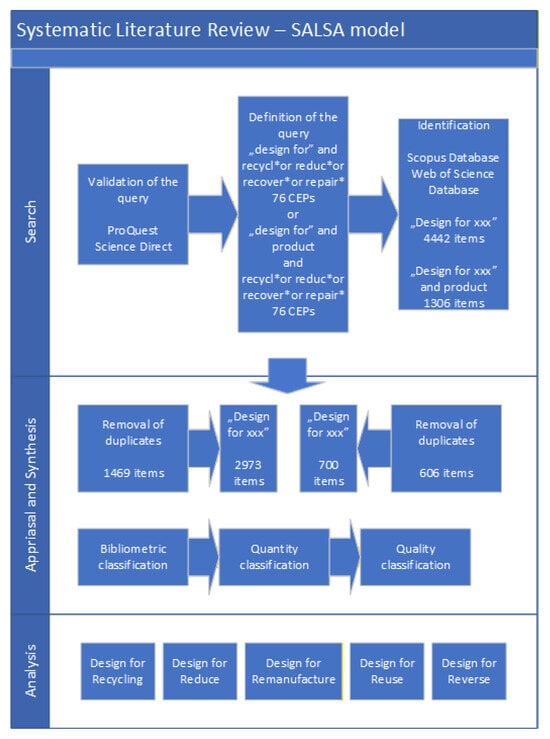
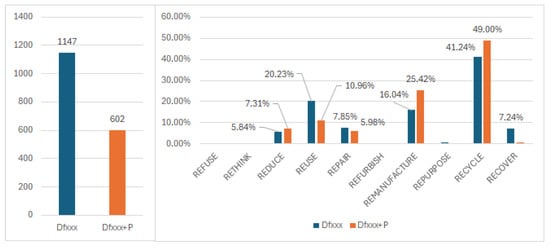
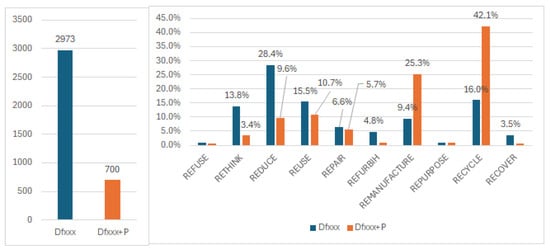
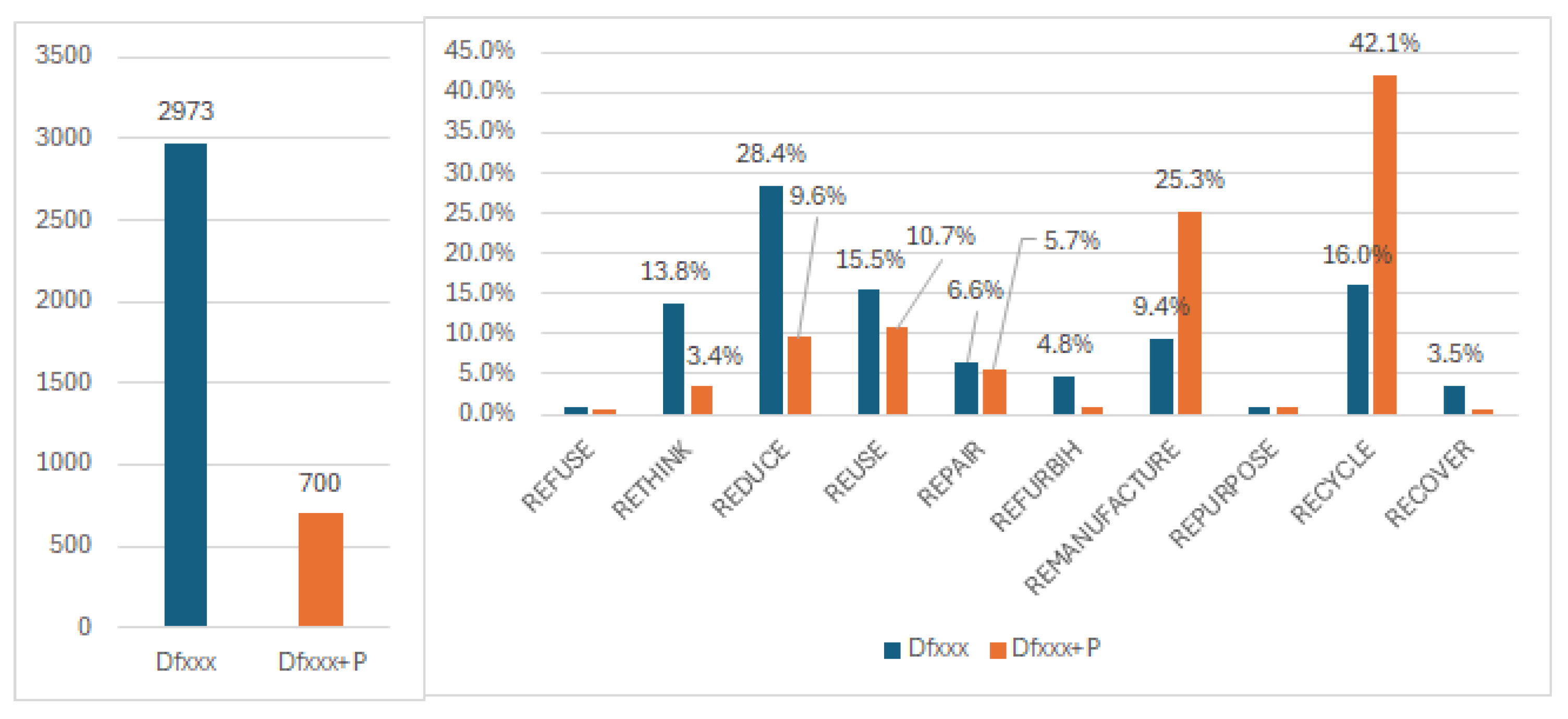
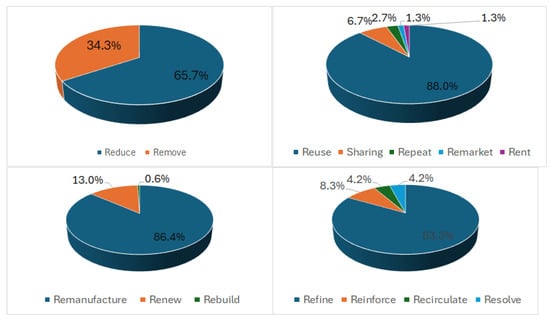
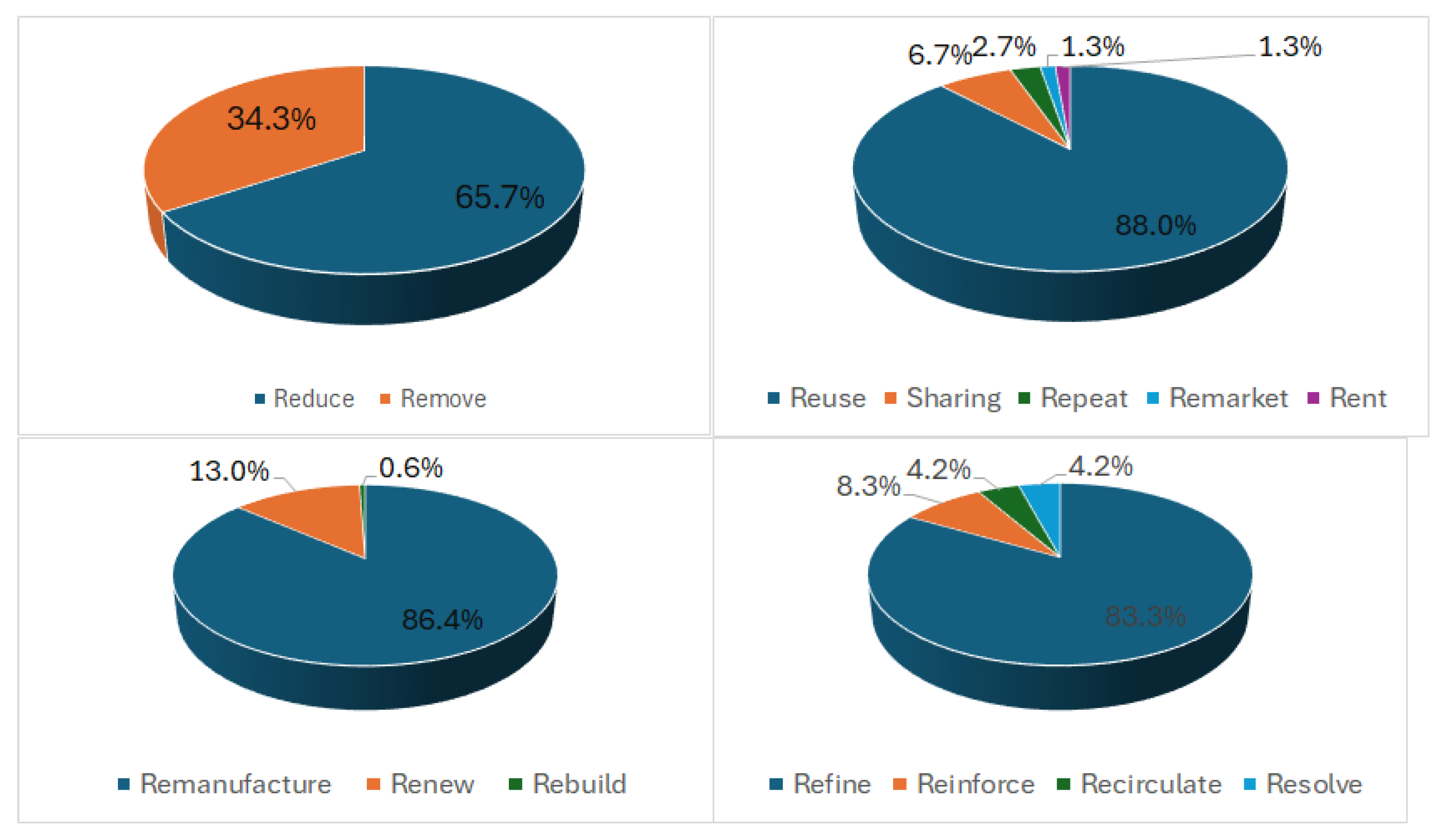
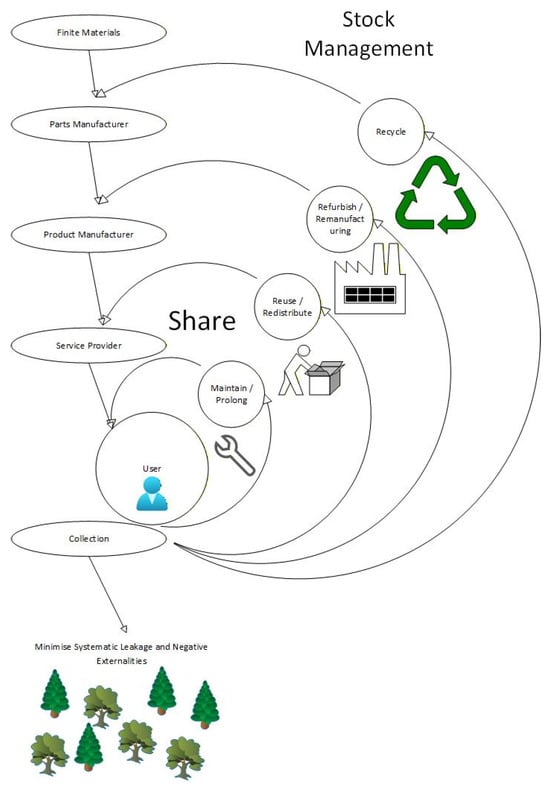
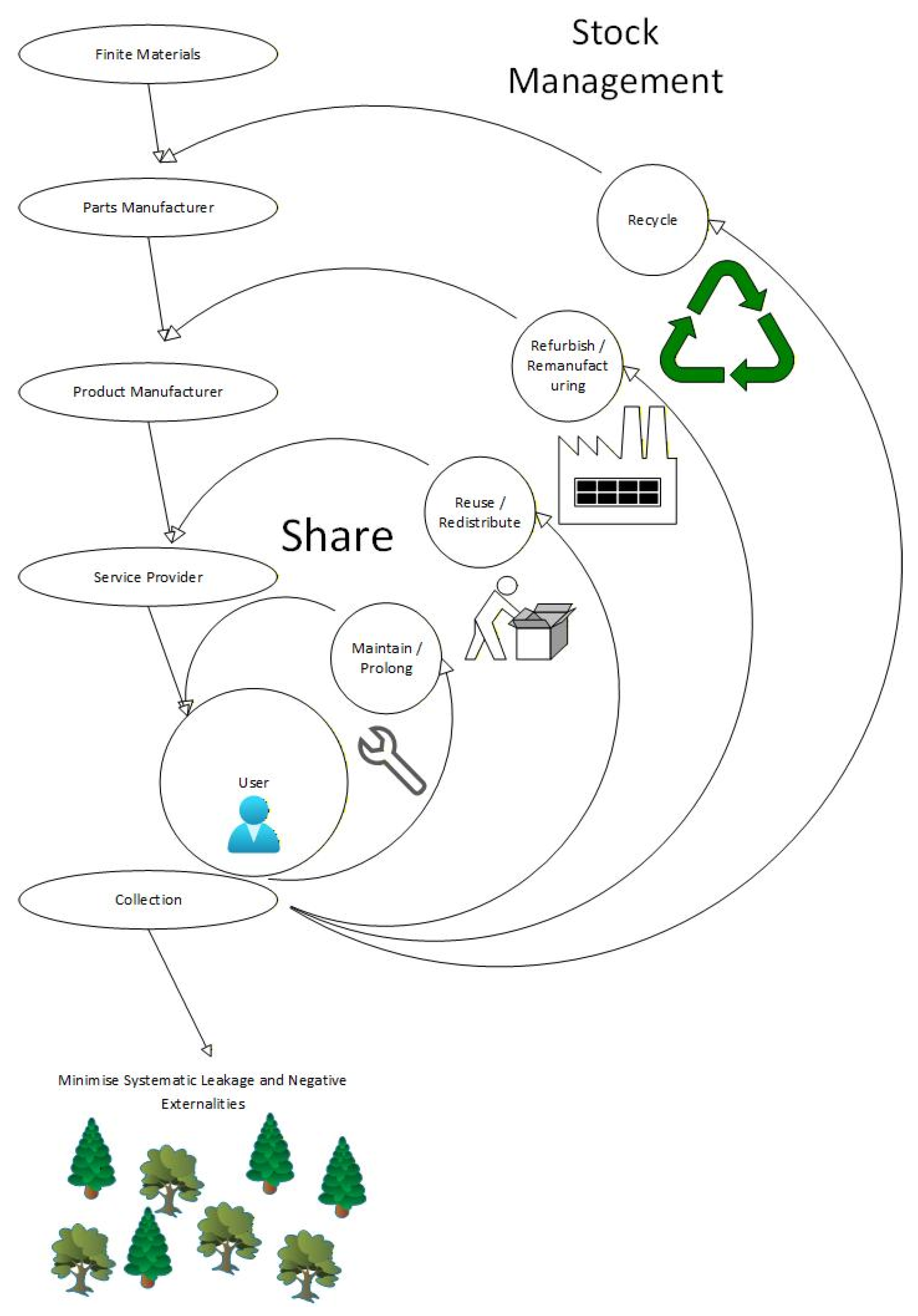

Disclaimer/Publisher’s Note: The statements, opinions and data contained in all publications are solely those of the individual author(s) and contributor(s) and not of MDPI and/or the editor(s). MDPI and/or the editor(s) disclaim responsibility for any injury to people or property resulting from any ideas, methods, instructions or products referred to in the content. |
© 2026 by the authors. Licensee MDPI, Basel, Switzerland. This article is an open access article distributed under the terms and conditions of the Creative Commons Attribution (CC BY) license.