


Abstract
This study examines the impact of sustainability reporting regulations on the accounting profession, with a focus on how accounting professionals are expected to adapt to new reporting requirements in the context of digitalization and sustainability integration. Using a qualitative research design, the study is based on a focus group involving accounting professionals and sustainability experts, aimed at identifying key challenges, opportunities and competency needs related to the effective implementation of sustainability reporting within organizations. The findings indicate that sustainability reporting requirements necessitate the development of a broad set of competencies among accounting professionals, extending beyond technical reporting skills to include sustainability knowledge, digital literacy, and enhanced communication and negotiation abilities. Automation and digitalization of accounting and reporting processes are identified as key enablers for improving efficiency, reducing repetitive tasks and minimizing human error. Moreover, advanced IT solutions, including artificial intelligence, machine learning and natural language processing, are perceived as valuable tools for supporting ESG data collection, integration and analysis. The study is conducted in the Romanian context, providing insights into the specific challenges faced by an emerging EU economy in adapting to sustainability reporting requirements. The study concludes that continuous learning and adaptability are considered important for accounting professionals to effectively respond to evolving sustainability reporting regulations, contributing to the existing literature by highlighting emerging competency requirements in this field. These findings should be interpreted as exploratory and context-specific, reflecting the perspectives of participants from a single focus group conducted in the Romanian accounting context.
1. Introduction
Digital transformation is profoundly reshaping the global economic landscape, with the accounting profession at its core. Next-generation technologies such as artificial intelligence (AI), robotic process automation (RPA), big data analytics, blockchain, and cloud accounting platforms are significantly reshaping the way information is collected, processed, and reported [1].
The concept of digital maturity is not limited to the simple use of new technologies and techniques. In a broader sense, it is an organizational capability through which the enterprise, leveraging the opportunities offered by the technological infrastructure, aligns the workforce, organizational culture, structure, and tasks, both within the organization and beyond its boundaries [2]. Essentially, it is a continuous process of adaptation, in which the ability to respond appropriately to change plays a central role. In this context, digital skills are of crucial importance, as they facilitate the understanding of how organizations can become digitally mature. Maturity, as a qualitative attribute, evolves dynamically over time, as organizations learn to respond effectively to the demands of the digital competitive environment. At the same time, this process requires leaders to have in-depth knowledge of the working methods associated with digital trends, so that the organization can properly integrate into the respective environment and have an adequate capacity for adaptation.
In this context, accounting is no longer perceived only as an activity of accounting recording and reporting, but as a sophisticated IT system for data analysis and integration, with immediate consequences for managerial decisions and corporate governance.
A catalyst for such a transformation is the adoption of the Corporate Sustainability Reporting Directive (CSRD), in accordance with Directive (EU) 2022/2464. The CSRD imposes extensive sustainability reporting obligations on companies, requiring them to provide detailed non-financial (ESG: Environmental, Social and Governance) information, in addition to traditional financial reporting. Compared to previous directives (e.g., NFRD), the CSRD indicates a mandatory, detailed and comparable nature of these reports, forcing the accounting profession to rethink its role and skills.
Digitalization and CSRD cannot be perceived in any way as parallel processes, but rather as complementary and interconnected dimensions: sustainability directives require the collection and validation of large and complex data sets, and digitalization provides the means to comply with these requirements [3]. The literature shows that it would be impossible or would involve disproportionate costs to manage ESG data without technological support [4,5,6]. Therefore, digitalization is a cornerstone for ensuring the traceability, comparability and auditability of reported information.
In this sense, accountants are increasingly required to go beyond traditional technical expertise, but it is increasingly important for them to develop their skills in data analysis, interpretation of ESG indicators and communication with a wide range of stakeholders [7,8]. In this balance of transformations, the role of the accountant evolves from “figure provider” to “strategic consultant and integrated data analyst” [9,10].
The particularity of Romania significantly emphasizes this topic. Recent studies show that the degree of digitalization of companies and the accounting profession is low compared to the European average, both at the level of digital infrastructure and professional training, resulting in an inadequate level of digital readiness [11,12]. However, the obligation to align with European standards generates a favourable context for a structural balance between the imposed constraints and the real potential for implementation. This deficit makes the present research relevant, as it highlights both the areas of adaptation of the accounting profession in Romania and the potential for redesign through the acceleration of digitalization and continuous training. The Romanian context reflects broader patterns in Central and Eastern Europe, where digital transformation and sustainability reporting are progressing more slowly than in Western Europe, due to gaps in digital competencies, infrastructure, and institutional support [11,12,13].
Therefore, the objective of the research is to explore how digitalization, determined and amplified by the CSRD requirements, reconfigures the accounting profession. The goals are to highlight the opportunities opened by new standardizations and to examine the level of emerging skills required of accounting professionals.
2. Literature Review
2.1. Theoretical Framework
With the increasingly visible changes in the accounting profession, two important theories can help to understand how professionals adapt to the new requirements imposed by the Corporate Sustainability Reporting Directive (CSRD). These are the Technology Acceptance Model (TAM) and the Institutional Theory.
The first of a behavioural nature, explains how professionals accept and integrate digital technologies, depending on their perceptions of usefulness and ease of use. The second of a sociological and organizational nature, analyses how institutions and external pressures shape professional behaviours and practices.
The integration of these two perspectives allows for a complex understanding of the transition of the accounting profession: the Technology Acceptance Model highlights individual motivations and psychological barriers in adopting digital technologies, while the Institutional Theory clarifies the compliance mechanisms generated by regulations, norms and professional pressures.
By combining the two, a comprehensive framework is obtained, which allows analysing how Romanian accounting professionals respond simultaneously to institutional pressures (imposed by European legislation and the professional environment) and technological pressures (imposed by digitalization and new reporting requirements). This approach is essential to explain the differences in pace and depth of the adaptation process to European sustainability standards and to identify the factors that favour or limit the digital transition of the profession.
The Technology Acceptance Model (TAM), proposed by [14], provides a solid basis for understanding the process of adopting digital technologies in expertise-based professions, such as accounting. According to this model, the intention to use a technology is determined by the perception of its usefulness (perceived usefulness) and the perception of its ease of use (perceived ease of use). These two dimensions influence the attitude towards technology and, implicitly, the adoption behaviour [15].
The application of TAM in the field of accounting has been significantly expanded, especially in the context of accelerated digital transformation. Recent research [16] shows that individual perceptions are influenced by organizational factors, such as professional culture, institutional support or digital learning climate. In the case of sustainability reporting imposed by the Corporate Sustainability Reporting Directive (CSRD), the perceived usefulness of technology increases considerably, as the processing and reporting of ESG data involves large volumes of non-financial information.
However, perceived ease of use remains a relevant barrier, especially in economies where the digital training of accountants is deficient. From this perspective, TAM provides an appropriate conceptual framework for analyzing the acceptance of digital technologies in relation to new sustainability requirements, highlighting the psychological and behavioural dimension of the transition to digital accounting.
On the other hand, institutional theory, formulated by [17], explains how organizations adopt practices and structures not only for efficiency reasons, but also to gain legitimacy in the institutional environment. It identifies three types of pressures that shape organizational behaviours: coercive (imposed through regulations and public policies), mimetic (imitation of organizations perceived as successful models), and normative (generated by education, professions, and networks of expertise).
In the context of the accounting profession, this theory allows the interpretation of CSRD implementation as a process of institutional compliance. Accounting professionals and organizations adopt sustainability reporting not only for direct economic benefits, but also to respond to institutional pressures and to maintain legitimacy in the eyes of stakeholders [12]. In Romania, the intensity of these pressures is uneven: the coercive dimension is high, through the transposition of the European directive, but the normative and educational pressures remain weak, which explains the slow pace of professional adaptation.
By combining TAM and Institutional Theory, an integrated approach is obtained. The former explains individual intentions regarding technological adoption, while the latter outlines the organizational and institutional context that facilitates or constrains this process. Together, they provide a comprehensive understanding of how the accounting profession responds to the pressures imposed by CSRD.
2.2. Critical Literature Review and Gap Identification
The accounting profession has evolved significantly over time, continuously adapting to economic, technological and legislative requirements [18,19]. With the adoption of the Corporate Sustainability Reporting Directive (CSRD), the accounting profession is in a new stage of transformation, requiring new advanced skills in sustainability reporting, digital technologies and strategic communication and negotiation [1,8], the specialized literature also exploring the impact of these changes on the accounting profession, outlining, on the one hand, challenges and, on the other hand, opportunities arising from the new regulations.
At the same time, the CSRD regulations impose an extensive set of skills on accounting professionals. In addition to the well-known technical skills in financial reporting, they are viewed as relevant to adapt to the new ESG (Environmental, Social and Governance) requirements, which involve not only the collection and analysis of non-financial data, but also a closer collaboration with other departments in the organization [20]. In this context, accounting professionals thus become key actors in the implementation of companies’ sustainability strategies [9], and on the other hand in reporting compliance with regulatory standards [20].
Moreover, a number of studies highlight that ESG regulations are driving fundamental changes in the accounting profession, including expanding responsibilities, digitizing processes, and increasing transparency requirements [20,21], with digital skills being essential for accounting professionals [5,6]. Furthermore, without these skills, accounting professionals, accustomed to traditional reporting methods, would face real challenges [22,23] regarding sustainability reporting. Therefore, accounting professionals should seize the opportunity created to improve their image in society, rethinking the accounting profession in the digital age on the path to sustainability [24]. At the same time, accounting professionals are expected to develop digital skills, data analysis skills, cybersecurity awareness, regulatory adaptability, strong communication, sustainability reporting knowledge, blockchain understanding, and emotional intelligence to remain relevant in the evolving financial landscape [10].
On the other hand, the digitalization of processes has an extraordinarily high impact on the accounting profession, ref. [16] emphasize that the use of digital technologies and process automation, using artificial intelligence and blockchain methods can significantly reduce human errors in sustainability reporting.
In order to achieve digital maturity in an enterprise—which involves, among other things, simultaneously ensuring a high level of customer service, superior product quality and optimal cost efficiency—it is necessary to overcome numerous organizational and strategic obstacles. The most significant of these are the lack of a coherent digital strategy and the existence of competing priorities. The absence of a digital strategy is particularly characteristic of organizations in the early stages of development and does not affect just one organizational unit, but crosses the entire enterprise and all its functions, which is why it fundamentally requires a transversal, cross-functional approach [2]. At the same time, empirical evidence indicates that many organizations that previously showed a high level of maturity have reached a competitive disadvantage in a short period of time due to insufficient development of the digital infrastructure and strategy.
In the initial phase of the maturation process, companies use digital technologies only to a limited extent to solve business problems, while senior management often underestimates the positive long-term impact of digital initiatives, and there is a lack of adequate managerial commitment [2]. As organizations advance along the maturity curve, competing strategic priorities and risks associated with digital security become dominant. In the case of more mature companies, digital technologies are clearly used to achieve strategic objectives, competency deficiencies are not tolerated, and the ability to adapt is remarkable [2]. In parallel, they implement organizational policies and regulatory frameworks that ensure compliance with ethical norms within digital initiatives.
Organizations on a digital maturity trajectory are more likely to have a clearly articulated digital strategy and an organizational culture that encourages risk-taking and innovation, unlike companies in their early stages [2]. From a technological perspective, digitally mature enterprises place a relatively balanced emphasis on the development of social, mobile, analytical and cloud-based technologies. These organizations implement complex innovations, based on digital strategies, in the process of business model transformation, integrating them into efficient internal processes. Automation of processes and human activities, as well as remote monitoring of procedures, take on a central role, which implies a high level of coordination, organizational maturity and significant resource consumption [25]. In addition, mature organizations pay increased attention to targeted continuous training of employees and are willing to invest in the development of their innovative capabilities [26].
Furthermore, ref. [26] emphasize the need to implement rigorous certifications in sustainability reporting to ensure the effective integration of sustainable development in academic education and at the same time in professional practices. Thus, the integration of software as well as rigorous certifications become essential for accounting professionals, thus managing large volumes of data and ensuring transparency and fairness in reports [27,28]. However, the success of digitalization depends primarily on the level of training of accounting professionals and their openness to new technologies [11,29]. Furthermore [30], suggest that the continuous training of accounting professionals is perceived as important for adapting to the changes imposed by CSRD, with training programs and the development of digital skills being necessary.
On the other hand, there is still a need to adapt accounting, from traditional accounting to e-Commerce-based accounting, special AI-based IT systems and new technologies [31,32,33]. More studies [33,34] show that the digitalization of accounting services, and implicitly of information reporting, is a more than necessary condition to increase the accuracy and relevance of accounting information. With the help of modern IT systems, with automated processes, the processing of accounting data becomes much easier, thus reducing human errors and processing time. With these aspects as a basis, accounting is transforming from a function oriented towards analysis, evaluation, decision-making support and value creation, making the integration of advanced information technologies imperative. In order to implement this process and adapt the new function of accounting, it is perceived as an important enabling factor to implement cloud-based accounting systems, which provide access to information and data in real time, greater operational flexibility and reduced costs associated with UT infrastructure. The use of cloud accounting systems improves operational efficiency, automatic compliance with reporting requirements, transparency, and also contributes to competitiveness between accounting companies [35,36]. Moreover, with the development of online transactions, and especially e-Commerce, it is automatically necessary to adapt accounting to information systems that allow rapid processing of data volumes, requiring the automatic integration of these transactions into accounting software [37]. Moreover, artificial intelligence, process automation, big data and blockchain allow the development of intelligent systems that allow the processing of large volumes of data, detect fraud and some human errors, thus providing relevant information for management [33,34]. Thus, the adaptation of accounting and integrated reporting to digitalization, modern and intuitive IT systems, cloud platforms and e-Commerce causes the accounting function to be redefined to maintain its relevance.
At the same time, beyond the technical aspects that accounting professionals need to deal with, the specialized literature highlights the importance of transversal and interdisciplinary aspects for them in the new CSRD and AI era [38,39,40]. Effective communication, negotiation skills, and the ability to collaborate with other departments within organizations are perceived as important skills to ensure compliant and transparent reporting [41,42]. In the context of the new CSRD requirements, ref. [43] as well as [44] suggest that professional accountants need to collaborate with specialists in various fields, such as environment, human resources, or IT.
The role of education in adapting future professional accountants to the new requirements of the profession is also discussed. Refs. [45,46,47,48] have emphasized the need for higher education institutions to include modules on sustainability and its reporting in their curricula to prepare future generations of professionals. Thus, continuing education of accounting professionals plays a critical role in the transition to sustainability-focused accounting [49,50]. Thus, universities should integrate sustainability into core courses through interdisciplinary collaboration, practical case studies, faculty training, and engagement with industry stakeholders to align education with global sustainability standards and ethical responsibilities [12,51,52] suggest that there is a substantial mismatch between labour market requirements and student preparation in the accounting profession, highlighting the urgent need for curricular adjustments, especially in the area of sustainability.
3. Materials and Methods
3.1. Research Objectives and Topics
Most studies treat digitalization and sustainability reporting separately, although CSRD directly links them. Existing research [1,10] is generally normative, focusing on what the profession “should” do, without analysing how this transition is actually made.
Another weakness is the overestimation of the degree of digitalization and the underestimation of regional differences. In Eastern Europe, especially in Romania, research [11,12] shows that digital infrastructure and professional skills remain poorly developed. In addition, university training does not keep pace with the market, and ESG skills are not effectively integrated into academic curricula [53].
There is also a lack of studies that combine TAM with an institutional perspective, capable of analysing how European policies, professional culture and national infrastructure influence individual decisions related to technology.
Thus, the identified research gap consists of the absence of an integrated explanatory framework that simultaneously analyses the institutional and behavioural determinants of the transition of the accounting profession. The proposed research direction aims to explore the convergence between the two dimensions, sustainability and digitalization, in the context of CSRD implementation, with a focus on emerging economies in Eastern Europe. Such an approach contributes to understanding the process through which the accounting profession in Romania can achieve European reporting standards and institutional legitimacy.
The literature analysis reveals several conclusions: there is a consensus on the importance of CSRD in redefining professional skills; digitalization is perceived as an indispensable means of managing requirements; the integration of the two dimensions is inevitable but insufficiently studied.
However, the literature is dominated by normative and descriptive perspectives, with a focus on “what the profession should do”, not on “how it actually manages to make the transition”. Furthermore, comparative research on Eastern Europe is lacking, where digitalization gaps and institutional pressures create a distinct context.
Our view is that addressing CSRD and digitalization simultaneously is not just an emerging research topic, but a practical necessity for the Romanian accounting profession. Unlike the existing literature, which separates the technological from the institutional dimension, the present research integrates both perspectives, anchoring the analysis in the local realities of an economy under the pressure of European convergence.
Therefore, the main purpose of the research is to analyse how the accounting profession is influenced by the new sustainability reporting, in the context of CSRD regulations, identifying how accounting professionals are expected to adapt to the challenges of the new field. This approach aims to analyse the main challenges and opportunities, as well as the new skills that accountants should develop by adapting to new technologies, assessing the changes necessary to implement in their work. To achieve this goal, three main objectives were developed, as follows:
- O1. Analysis of the impact of CSRD on the accounting profession. By developing this objective, we want to evaluate how the new sustainability regulations are expected to contribute to the transformation of the accounting profession, highlighting both the opportunities for growth and specialization, as well as the challenges associated with complying with the new reporting standards. We will analyse the impact on accountants’ responsibility, as well as on the transparency and reporting requirements imposed by the new CSRD regulations. In addition, this objective was transposed into theme 1 of the research, which allowed exploring the participants’ perceptions regarding the transformation of the accounting profession in the context of CSRD.
- O2. Adaptation of accounting professionals to the new reporting requirements. Developing this objective, it is intended to identify the changes necessary in accounting activity to comply with CSRD reporting requirements, including updating processes and procedures for data collection and analysis, including the integration of new technologies and the implementation of good practices for sustainability reporting. Furthermore, it is also intended to track the impact of these changes on the workflow and collaboration between accounting professionals with other departments and organizations. This objective was translated into the second theme of the focus group, namely new skills and specializations for accountants.
- O3. Designing the accounting profession in the context of sustainability regulations. By developing this objective, we want to analyse the participants’ perception of how the accounting profession will evolve in the next 5–10 years under the influence of sustainability reporting and reporting requirements in this new field. This objective is based on research theme 3 on the evolution of the accounting profession in the context of sustainability.
In this sense, the three research themes developed stimulated an active exchange of ideas, opinions and perspectives among participants, as follows:
Theme 1: Transforming the accounting profession in the context of CSRD. This theme focuses on how the new sustainability reporting requirements influence the accounting profession, highlighting both the opportunities for professional and business development as well as the challenges associated with these regulations [54,55]. In fact, accounting professionals need to understand the opportunities that arise for professional development on the one hand, as well as for the development of their businesses on the other.
Theme 2: The general attitude of the participants towards the new competencies and specializations necessary for accounting professionals in order to acquire new skills or certifications to comply with sustainability reporting requirements, by resorting to trainings and courses in the digital environment, emphasizing the importance of adopting new technologies in the process of streamlining the activity [56,57]. On the other hand, the participants emphasized the need to adapt the working methods of accounting professionals in order to be able to meet the reporting requirements, as well as the fact that continuous training of staff is perceived as important and, obviously, the implementation of process digitization, to facilitate the integration of new sustainability standards.
Theme 3: How the accounting profession is seen in the future, both from the perspective of accounting professionals and from the perspective of other professions involved in sustainability reporting, is perceived as important in view of the contribution that these new standards have on the education and transformation of the accounting profession [58]. In fact, the theme will contribute to a deep understanding of the changes and adaptations necessary for the accounting profession to meet the requirements of sustainability and sustainability reporting in the coming years, thus ensuring that professionals in the field are prepared for the future.
As illustrated in Figure 1, the relationships between regulatory pressures, institutional dynamics, and technological adoption are interpreted through the combined lens of TAM and Institutional Theory. While Institutional Theory explains how external pressures, such as regulatory requirements and organizational practices, influence behaviour, TAM provides insights into how individual perceptions, particularly perceived usefulness and perceived ease of use, shape the acceptance of digital technologies.
Figure 1.
Integrated conceptual framework of digital transformation under CSRD.
Together, these two perspectives offer a more comprehensive understanding of how digital transformation unfolds within the accounting profession, especially in the context of CSRD implementation. The figure supports the analytical framework used in the interpretation of the findings.
3.2. Research Design
In order to achieve the research goal, a qualitative study was conducted using a focus group through which accounting professionals, on the one hand, and sustainability experts, on the other hand, from Romania were invited to a discussion on sustainability reporting. Conducting focus group research is considered relevant because it alternates the collection of rich and detailed data through dynamic interactions between participants [59]. On the other hand, it is a useful method to obtain diverse perspectives on a topic, such as sustainability, exploring not only what people think, but also why they have these opinions [60]. Furthermore, focus groups are effective in identifying consensus and disagreement, providing a deeper understanding of both the social and cultural context in which opinions are formulated [61,62].
The focus group, which brought together representatives of accounting professionals, along with sustainability experts, was organized on 6 December 2025. This event was attended by 10 people (details provided in Table 1), considering it to be an appropriate and relevant approach for the proposed methodological purpose [59,63]. The research participants have a work experience between 4 and 26 years, 3 being CEOs of accounting companies, 5 sustainability experts, one business controller and one ESG researcher.
Table 1.
Information about focus group participants.
The selection of participants, including accounting companies’ CEOs and ESG managers, was deliberately undertaken in line with the research objectives. In the Romanian accounting sector, many accounting firms are small and usually have 10–15 employees. In such organizational structures, management-level specialists are not only involved in strategic activities but are also actively engaged in operational activities. As a result, participants constantly interact directly with accounting staff and are indirectly confronted with the practical challenges of sustainability reporting and digital transformation processes. This dual position enables them to provide both a strategic and operational perspective on the transformation of the accounting profession. Furthermore, in the Romanian accounting sector, CEOs are generally responsible for training and educating employees, defining organizational strategies, and overseeing the implementation of new reporting requirements, including the CSRD. As a result, the study enables a comprehensive understanding of the processes and challenges faced at different organizational levels.
The digital maturity in this study is understood as the extent to which an organization effectively integrates digital technologies into its processes, culture and strategic decision making.
During the period 25 November–5 December 2025, discussions were held with various accounting professionals as well as sustainability experts to have inclusion and exclusion criteria in the selection of participants. The inclusion criteria include people with higher education, who have interacted with sustainability reporting or have knowledge about sustainability; experience in the financial accounting and sustainability fields and experience with clients/multinational companies that do such reporting. The selection of participants was also guided by the level of digital maturity of the organizations they represent, with ESG managers being included as representatives of organizations with a relatively high level of digital maturity, given their involvement in advanced data integration, sustainability reporting systems and ESG-related digital tools. In contrast, CEOs of accounting firms were selected to reflect organizations with a moderate level of digital maturity, characteristic of many small and medium-sized accounting firms in Romania. This distinction allowed for the capture of diverse perspectives on digital transformation and the implementation of CSRD-related digital transformation at different levels of digital development. On the other hand, the exclusion criteria include aspects such as the existence of a conflict of interest with the research team, not having participated in similar research in the last 6 months, lack of consent to participate in the research.
The focus group was held via the Google Meet platform, on 6 December 2025, and its duration is 68 min. Participants were informed about the meaning of sustainability reporting in the context of the new CSRD reporting, having previously received an extract from the directive on corporate sustainability reporting. In addition, the agreement to record the focus group was requested in advance, the participants agreeing to the recording of the discussions for the purpose of developing this research.
3.3. Data Analysis
The data collected as a result of the focus group were analysed using thematic analysis, following the approach proposed by [63], this method was chosen due to its ability to identify, analyse, and report the main discussion themes in qualitative data.
The analysis process followed several essential steps. First, to be able to analyse the focus group discussion, it was transcribed in full by two authors, allowing them to become more familiar with the data through repeated reading. Subsequently, the initial codes were generated inductively, highlighting the relevant aspects related to the general objectives of the research. Furthermore, the codes were grouped into categories that were further refined by three researchers into three main themes, which correspond to the study objectives: (1) challenges and opportunities of the accounting profession under the CSRD umbrella (2) necessary skills and competencies and (3) the future evolution of the accounting profession.
In addition, the coding results were compared and discussed by the researchers and any discrepancies were resolved by consensus. This process ensured consistency and reduced subjectivity in data interpretation, thus ensuring that the data were presented in an objective manner. Given the exploratory nature of the study and the depth of the discussion, we consider data saturation to have been reached because no new themes emerged during the analysis.
The study is designed as an exploratory qualitative investigation, aiming to provide in-depth perspectives specific to the analyzed context, rather than obtaining statistically generalizable results.
4. Results
This section presents the main findings of the focus group discussion, structured around the key themes emerging from the analysis.
The results are interpreted through the combined lens of the Technology Acceptance Model and Institutional Theory, enabling a structured and analytical understanding of how digital technologies are adopted and how CSRD-related practices are interpreted and implemented within the accounting profession. The approach captures both individual-level factors, such as accountants’ perceptions and attitudes toward digital technologies, and external influences shaped by institutional pressures, including regulatory requirements, norms and organizational practices.
By integrating these two theoretical perspectives, the analysis provides a more nuanced interpretation of the findings, highlighting the interplay between internal motivations and external constraints in shaping decisions related to the adoption of CSRD-related practices. This approach also enables a more analytical reading of the findings, linking empirical observations directly to established theoretical constructs.
The analysis is organized around three main themes: (1) challenges and opportunities associated with CSRD implementation, (2) the evolving skills and competencies required in the Romanian accounting profession, and (3) the future development of the profession in the context of digital transformation and sustainability reporting.
Theme 1. The adoption of the Corporate Sustainability Reporting Directive generates a series of challenges and opportunities for the accounting profession. Focus group participants highlighted essential elements related to how this regulation will influence the activity of accounting professionals, thus outlining two main directions of analysis regarding the challenges and opportunities that have arisen.
A first challenge identified by the participants refers to the internalization of sustainability information and understanding the requirements imposed by European legislation. At the same time, the adaptation process involves a significant effort for accounting professionals, which is perceived as necessary for familiarization with the new sustainability reporting standards.
“The main challenge will be to internalize the information and understand the information that is sought, due to the rigors required by European legislation.”(Male, 32 years old)
“The main challenge will be to understand the concept of sustainability in the short term, yes, but later we will adapt”(Male, 23 years old)
On the other hand, another major obstacle that accounting professionals face is their resistance to change, perceiving this new reporting as an additional task. In addition, they will need continuous professional training to understand the importance of sustainability reporting and to develop the necessary professional skills.
“Many accountants are reluctant to accept all these reports, considering them as extra work. They will need to participate in training to understand the importance of this process.”(Female, 30 years old)
“The accounting profession will be shaken up, especially for older professionals, who are resistant to change.”(Male, 31 years old)
Another challenge identified is related to the lack of sustainability training of some accounting professionals, which can make the process of implementing the new requirements more difficult. In addition, the dynamic nature of regulations, such as the EU taxonomy, requires a continuous effort to update and adapt to legislative changes.
“It will be a challenge for the accounting profession, because in many companies this responsibility has been taken over by people who have not been specifically trained in the field of sustainability.”(Male, 34 years old)
“A challenge is, for example, the taxonomy, which last year was one way, this year it has changed and next year it is very possible that it will change again.”(Female, 26 years old)
On the other hand, focus group participants highlighted that CSRD can represent a significant opportunity for the accounting profession. One of the major benefits that have been identified is that of increasing the relevance of accounting professionals in organizations by involving them in the provision and verification of ESG information.
“Accountants will play a key role in providing and verifying ESG information, which can increase its relevance and importance in organizations.”(Female, 48 years old)
“Accounting gets to collaborate with teams they would not have collaborated with before and new connections are created within companies”(Female, 26 years old)
Also, adapting to new reporting requirements can be a competitive advantage for accounting firms that invest in sustainability and develop specialized departments. On the other hand, accounting professionals will have the opportunity to support organizations not only in reporting data, but also in optimizing production processes, thus contributing to the efficiency of economic activities.
“Mature companies that understand that sustainability is a business opportunity will invest in creating dedicated departments, in order to remain competitive in the market.”(Male, 32 years old)
“Accounting will have to answer not only the question of what needs to be reported, but also how it can help the company streamline its processes and remain profitable.”(Female, 40 years old)
In addition, the process of adapting to the new regulations is perceived by some participants as an opportunity for professional development and strengthening of sustainability skills.
“Initially, it will take some effort to learn what and how to report, but this process can be seen as an opportunity, as it offers a competitive advantage.”(Female, 31 years old)
At the same time, in order to comply with the new reporting requirements imposed by the CSRD, accounting professionals are perceived as needing to further expand their skills and adopt new ways of working that will streamline the work carried out. Focus group participants identified several essential aspects regarding the changes that will occur in their work. A first aspect is the expansion of skills as accounting professionals will need to become familiar with sustainability reporting, international standards (GRI, ESRS, IFRS S1 and S2) and the methodology for collecting and analysing non-financial data.
“We need to integrate other types of information, such as environmental, social impact and corporate governance, and learn how to intertwine them in our daily work.”(Female, 31 years old)
Moreover, interdisciplinary collaboration of accounting professionals is promoted, as they work closely with other sustainability, legal or IT departments to ensure compliance with reporting.
“Accounting gets to collaborate with teams they would not have collaborated with before, which creates new connections within companies.”(Male, 32 years old)
However, the impact that CSRD has on the accounting profession is complex, highlighting both challenges and opportunities. At the same time, there is a need for accounting professionals to adapt to new reporting requirements, develop new skills and learn to collaborate interdisciplinary, while also adopting advanced technologies to manage the new reporting requirements. Investing in continuous training and adopting a proactive perspective are perceived as important for success in this new context.
Theme 2. Focus group participants identified a series of important skills that accounting professionals need to develop to cope with the new reporting requirements in the context of CSRD. A first direction concerns the analysis and interpretation of ESG data, which involves collecting, verifying and interpreting sustainability indicators according to the new standards.
“Analysis and interpretation of ESG data: the ability to collect, verify and interpret sustainability indicators. Understanding the new sustainability standards.”(Female, 48 years old)
“Understanding sustainability, as thoroughly as possible: Accountants need to understand how ESG impacts influence businesses. It’s no longer just about numbers, but about how emissions or social policies affect the company’s strategy”(Female, 25 years old)
On the other hand, another important aspect is the use of digital technologies, accounting professionals are perceived as needing to become familiar with specialized sustainability reporting software and data analysis and interpretation tools, which will facilitate the compliance process and streamline work.
“Use of digital technologies: accountants must become familiar with ESG reporting software and data analysis tools.”(Male, 33)
“Tools like OpenLCA or carbon accounting software can greatly reduce the workload”(Female, 25)
Furthermore, focus group participants highlighted the importance of complementary skills, where digital expertise needs to be coupled with a deep understanding of ESG principles. On the other hand, sustainability reporting is seen as a compliance exercise, where companies have to justify data based on the “comply or explain” principle.
“That is, digital and ESG-related skills are two complementary skills, that is, they refer to actual content. There will be no need to learn new calculation formulas or tricks, because sustainability reporting is essentially a compliance exercise: you have it or you don’t, and if you do, you present it; if you don’t, you probably don’t present it or justify why you don’t, depending on whether the comply or explain principle applies”(Male, 34 years old)
At the same time, communication and interdisciplinary collaboration were also highlighted as important skills for accounting professionals. Sustainability reporting requires interaction with multiple departments, and accounting professionals are perceived as important to develop effective communication skills to facilitate this process. Moreover, negotiation skills become necessary skills considering that sustainability reporting is perceived as important in ensuring priority within the organizational agenda. Convincing other departments (legal, IT, etc.) to provide sustainability information as well as explaining the importance of this reporting from an accounting point of view is a challenge.
“I would also add communication skills... there has to be communication between several departments so that you can do these reports. And then I think communication skills are also necessary, which, to be honest, a lot of accountants don’t have. That’s if we’re referring strictly to the accounting profession.”(Female, 31 years old)
“Communication and negotiation, so that you can become a priority for the other person on their already busy agenda.”(Male, 32 years old)
Continuing the focus group, another question addressed to the participants was the one regarding the need to introduce specific certifications for sustainability reporting. The opinions expressed by the participants reflect both the need for standardization and the challenges related to the adaptability of certifications to a constantly changing field. A supported point of view is that certifications can be useful, but they need to be flexible, given the rapid changes in the field of ESG regulations.
“Yes, they are definitely very useful. However, I would add a piece of advice: certifications need to be flexible. Regulations and practices change rapidly—we saw this with the 2025 Omnibus package—and a rigid program could be left behind. As a consultant, I recommend that companies invest in courses and training for their teams, such as courses from other ESG consultants and experts, who are up to date with the information in this field.”(Female, 25 years old)
On the other hand, standardizing skills through certifications is perceived as a means of ensuring a uniform level of knowledge, which could contribute to increasing the credibility of sustainability reporting.
“Yes, certifications could be necessary to ensure a standardized level of skills.”(Female, 48 years old)
However, for these certifications to be effective, sustainability reporting needs to follow a clear model, have a clear taxonomy, and be reproducible, just like financial audit processes.
“Certification would only be valid if it is decided that reporting remains in a certain way. Reproducible and repeatable, as is the case with the accounting reporting process or in the case of audit processes. In addition, these certifications should not only target theoretical knowledge, but also the development of skills in using advanced IT systems, different e-commerce platforms or blockchain.”(Male, 34 years old)
Through the analogy made with the accounting and audit reporting processes, participants highlighted that the perceived validity of certifications depends on the existence of clearly defined and standardized procedures that can be consistently replicated, characteristics that are also associated with advanced IT systems. The need to use advanced IT systems clearly indicates a radical paradigm shift, with digitalization being perceived as an important factor for the institutionalization of sustainability reporting. In addition, it is noted that certifications should also focus on developing practical skills in using digital platforms, noting the importance of these skills in the context of e-commerce platforms, where the volume of data is extraordinarily large. Moreover, the mention of blockchain technology suggests its potential to support sustainability reporting, particularly enhancing transparency and accuracy of data.
Furthermore, another point of view supported by focus group participants is that standardizing a profession can bring advantages by clarifying processes and providing a clear guide for accounting professionals, such as financial reporting.
“I believe that standardizing any profession can bring good things. I believe that standardizing professions, having a framework for people to understand how to do that thing, is essential.”(Female, 31 years old)
However, some focus group participants believe that a comprehensive certification on sustainability reporting would be difficult to achieve at all and could limit professional specialization.
“To include all ESG in one certification is very ambitious and I don’t think it will be possible. I don’t know how long it will take to standardize, because there are so many discrepancies between these “pillars””(Male, 23 years old)
“A certification just for ESG is very ambitious, it is very difficult, it would take a lot and it would limit the individual a lot.”(Female, 40 years old)
However, rather than a mandatory certification, some participants believe that it would be more effective for staff responsible for sustainability reporting to benefit from regular training and access to clear procedures for implementing all sustainability reporting requirements.
“I wouldn’t see a certification as a condition, but rather I would see, I don’t know, the people responsible for the sustainability side and so on benefiting from some training, some, I don’t know, procedures. To understand the importance of sustainability.”(Female, 30 years old)
Analysing the opinions offered by the participants, although ESG certifications are considered useful for ensuring a standardized level of skills, they need to be flexible and adaptable to the rapid changes in the field. However, there are divergent opinions regarding the feasibility of a single certification for ESG, and some specialists believe that constant training and access to updated information could represent a more effective approach.
Theme 3. Sustainability regulations are expected to contribute to the transformation of the accounting profession in the next 5–10 years. Accounting professionals will no longer only manage financial data but will also have to integrate non-financial information, such as ESG indicators, into company reporting. However, this change is redefining the role of the accounting professional and the skills required.
“I believe that in the next 5–10 years, the accounting profession will undergo a major transformation due to sustainability regulations. ESG reporting will become an integral part of accounting work, and accountants will no longer only manage financial data, but also non-financial information. Basically, sustainability will have to be integrated into standard financial reporting, which will completely change the way the profession is perceived.”(Female, 26 years old)
At the same time, this change will not only have a direct impact on the way of working but will also generate new specializations or professions. New requirements for hiring accounting professionals are expected to emerge, including specific certifications for sustainability reporting and advanced digital skills.
“Another interesting aspect is the possibility of a global harmonisation of reporting standards. As regulations expand to other jurisdictions, I believe that there will be an attempt to create a common set of standards that will facilitate reporting for multinational companies.”(Male, 23 years old)
An important trend identified is the attraction of new talent in the field, due to the increased interest of the new generations in sustainability.
“At the same time, I believe that this change will also attract new talent to the accounting profession. Many young people are interested in sustainability and will be attracted by the opportunity to contribute to a positive impact through their work.”(Female, 40 years old)
On the other hand, other directions anticipated by the focus group participants include expanding the role of accounting professionals and digitizing accounting processes to another level. Automating reporting will allow accounting professionals to focus more on data analysis and interpretation, compared to the current data entry process. The reduction in repetitive activities and their integration into an advanced information system demonstrates the direct effect that advanced technologies such as process automation, AI and automatic data analysis have on the current activity of accountants. The automation of routine operations allows accountants to perform new roles, that of analysis, interpretation and decision-making support for management. In this context of process automation, the accounting profession is being refined, having a strategic rather than operational role, in which analytical and digital skills are perceived as important, automation transforming the role of the accountant. Therefore, digitalization is perceived as a catalyst for the redefinition of the accounting profession, transforming repetitive actions into automated processes and reducing processing times.
“Expanding the role of accountants: from managing only financial information to integrating non-financial ones. Specializations in ESG reporting: accountants and auditors specialized in sustainability will emerge.”(Female, 48 years old)
“Digitalization and automation: advanced technologies will change reporting processes, reducing repetitive tasks and allowing greater focus on analysis.”(Female, 30 years old)
Moreover, adapting to the new requirements will be a challenge for many accounting professionals, especially for those already accustomed to traditional and conservative working models.
“Basically, accountants will have a rather big challenge in the next 5–10 years, so that they adapt and understand that sustainability, like other reporting, has become mandatory for them and they must implement or internalize it.”(Female, 26)
“It will be harder for older accountants, used to other ways of working. I would see a reluctance in them, they will not leave their comfort zone.”(Male, 33)
“The accounting profession will be shaken by digitalization, especially for older accountants, who are resistant to change.”(Male, 31)
Regarding the impact of digitalization on the accounting profession, participants highlighted that digitalization is expected to contribute to the transformation of the role of the accountant in society, with the emphasis being shifted from operational activities to data analysis and interpretation, or even strategic. At the same time, participants emphasized that the adoption of technologies may present challenges for older accounting professionals, who were perceived as more resistant to change.
However, these structural changes will create a clear demarcation between those who will adapt to new market requirements and those who will have difficulty accepting the transformations imposed by various regulations. Participants emphasized that the adoption of technology is perceived as a competitive advantage in the market, particularly for accounting, tax and audit firms. The ability to deliver reports in a shorter time, while also having a high degree of accuracy and at low costs is directly associated with the use of advanced digital solutions.
“Those who adapt, those who are open to learning and developing their skills, will survive. Those who do not, will probably give up and move on to something else.”(Female, 31 years old)
“Those who understand that sustainability must be integrated into accounting processes, and that the existence of advanced information systems, integrated cloud systems is essential, they will survive.”(Female, 40 years old)
“The difference and the one who will win clients will be the one who will manage to deliver a report quickly, efficiently, with low costs.”(Male, 32 years old)
The participants in the focus group clearly highlight some increasingly clear demarcations within the accounting profession. The ability to continuously learn, the development of digital skills is perceived as important to remain relevant in the accounting services market. The role of sustainability and advanced information systems in this transformation process of reconfiguring the accounting profession was emphasized by participants. The presence of cloud systems indicates that the participants perceive digitalization not only as an operational tool, but also an important infrastructure for maintaining competitiveness in the market. Furthermore, participants emphasized that the integration of sustainability into accounting processes is closely linked to the existence or implementation of a strong IT infrastructure, capable of supporting cloud-based data storage and processing large volumes of data required for reporting.
Moreover, it can be repeatedly seen that a central element in the development and survival of the accounting profession is the digitalization process of accounting firms. Participants emphasized that the high volume of data, the complexity of reporting and the requirements imposed by European legislation make reporting through traditional, manual methods increasingly difficult. The discussions followed the direction of process automation and the need for automatic data processing, which is perceived as a necessity. The use of digital technologies can significantly reduce repetitive tasks, thus reducing the potential for human error associated with manual work with volumes of data.
“Nobody likes to sit and look at 70 tables and make a mistake where to put the comma.”(Male, 32 years old)
In this context, the use of tools based on artificial intelligence, machine learning and natural language processing (NLP) is perceived as a practical and easy solution for extracting and centralizing data on sustainability reporting. In large companies, participants emphasized that such solutions are already used, having departments specialized in analysing and evaluating ESG performance.
“With the help of NLPs and various tools that are now being trained, they seek to simplify and streamline the data collection process.”(Male, 32 years old)
“For many companies, it will not be cost-effective to do reporting in-house.”(Male, 32 years old)
“I think that reporting, with the help of a certain software assisted by AI, will become something relatively standard.”(Male, 33 years old)
However, in this context, the role of technology in supporting small and medium-sized companies, which do not have adequate internal capacities for the development of sustainability reports, was also highlighted. Focus group participants emphasized that, in the case of these entities, the reporting process is likely to be carried out mainly through outsourcing accounting and reporting services to specialized firms, which make use of digital platforms and automated solutions. In addition, participants suggested that technological evolution may lead to the gradual development of integrated IT solutions, similar to those already used for other types of mandatory reporting, which could facilitate companies’ compliance with CSRD requirements.
Overall, participants suggested that digitalization and sustainability are considered important as interconnected factors influencing the evolution of the accounting profession, contributing to a differentiation between professionals who actively develop digital skills and integrate advanced IT systems into their work processes, and those who remain more closely aligned with traditional methods. Furthermore, participants indicated that adapting to advanced information systems (such as cloud solutions and blockchain technologies) is increasingly viewed as an important factor for maintaining competitiveness in the market, rather than solely a modernization initiative.
CSRD requirements are considered important as expanding the skill set required of accounting professionals, extending beyond technical reporting expertise to include ESG knowledge, the use of digital technologies, and communication and negotiation skills. Continuous learning and adaptability are regarded as necessary in the context where sustainability regulations are constantly changing, and accountants are expected to be prepared to quickly cope with new requirements [64]. Moreover, the transformations imposed by sustainability reporting regulations are causing a significant change in the accounting profession, highlighting the need for accountants to adapt quickly and develop new skills. The adoption of sustainability reporting as a standard will radically change the tasks of accountants, requiring new specializations and certifications that have the role of ensuring uniformity and efficiency of reporting processes [65,66].
The evolution of the accounting profession in the context of sustainability reporting regulations will be marked by fundamental changes in the coming period, including the expansion of accounting professionals’ responsibilities, the digitalization of internal processes, as well as the emergence of new specializations and related professions, and the attraction of new talents, who are more flexible and easily adaptable to new requirements [66]. However, this expected transition is expected to come with challenges, especially for those accustomed to traditional reporting methods. On the other hand, the success of the accounting profession in the future is expected to depend on the ability of accounting professionals to adapt quickly and develop the necessary skills to cope with the new requirements imposed by sustainability.
However, a crucial aspect of this transition is the integration of digital technologies into accounting activity, which will allow the management of large volumes of data and the automation of reporting processes [21,67]. On the other hand, the implementation of specialized software for sustainability reporting can reduce effort, as well as human errors, thus contributing to the standardization of reporting practices [68]. Therefore, the success of technologies depends on the level of training of accounting professionals and their openness to adopting new working methods [18]. On the other hand, another element intensely discussed by the focus group participants was about the future of the accounting profession and the acquisition of transversal and interdisciplinary skills, such as communication and negotiation skills, interdisciplinary collaboration being perceived as important for compliant reporting, aspects also identified in the specialized literature, ref. [67,68,69] arguing that effective collaboration on problem solving is the currency that will allow them to understand complex changes and their adaptation in society. However, the standardization and certification of ESG skills are regarded as necessary solutions to ensure a high level of compliance and quality in reporting. However, opinions differ on the optimal form that these qualifications should take. At the same time, there is a need for continuous training to ensure accurate reporting and for accounting professionals to develop important skills to easily adapt to new regulatory requirements.
The results of this study can be better understood from the perspective of TAM and Institutional Theory, providing an integrated framework for interpreting individual and organizational responses to digital transformation and CSRD requirements.
From the perspective of TAM, we observed that the attitudes of the participants of the focus group towards digital technologies were strongly influenced by their perceived usefulness and perceived ease of use. Digital tools to facilitate sustainability reporting, artificial intelligence, and integrated data systems have been deemed extremely useful due to large amounts of non-financial data to be processed and repetitive tasks reduced. However, the perception of ease of use seems to be a major obstacle, especially among older accounting professionals, who are more resistant to change due to their lack of digital skills and knowledge of modern technologies.
More specifically, participants’ emphasis on automation, AI tools, and integrated reporting systems reflects high perceived usefulness, while the difficulties associated with older professionals and digital skills illustrate lower perceived ease of use.
Meanwhile, from the institutional point of view, the adoption of sustainability reporting practices is influenced by various forms of institutional pressure. Firstly, coercive pressure clearly reflects the mandatory implementation of the CSRD, which requires companies to comply with the new reporting standards. Second, companies tend to imitate organizations that adopt more advanced digital technologies and ESG practices.
Thirdly, due to the lack of education and training in digitalization and sustainability, normative pressure remains weak in the Romanian context.
At the same time, the mandatory nature of CSRD reflects coercive pressure, the tendency to follow digitally advanced organizations reflects mimetic pressure, and the limited educational and professional support in Romania illustrate weaker normative pressure.
This suggests that digital transformation in the accounting profession cannot be understood solely as a technological shift, but rather as the result of the interaction between individual perceptions and institutional constraints.
Together, these findings highlight the importance of combining TAM and Institutional Theory in understanding digital transformation in the accounting profession. While TAM explains how individual perceptions, particularly perceived usefulness and perceived ease of use, influence the acceptance of digital technologies, Institutional Theory provides insight into the external pressures that shape organizational behavior.
This integrated perspective suggests that the adoption of digital technologies is driven not only by individual perceptions but also by regulatory requirements and institutional dynamics, particularly in emerging economies such as Romania.
5. Conclusions
The study suggests that CSRD regulations are perceived as having a significant impact on the accounting profession, determining not only the alignment with the new requirements on sustainability reporting, but also a fundamental change in the skills required for accounting professionals. In this context, sustainability reporting is increasingly becoming an important element of accounting practice, requiring the development of new competencies in sustainable development, digital technologies and interdisciplinary cooperation. On the other hand, participants emphasized that continuous learning and adaptability are perceived as important to cope with these changes. Rather than representing universal requirements, these findings clearly reflect the perceptions and experiences of the professionals involved in the study.
Furthermore, the study results indicate that digitalization is perceived as a key factor in managing the complexity of sustainability reporting, especially in the context of processing increasing volumes of data and constantly changing regulatory requirements. However, the adoption of digital technologies depends to a large extent on both individual preparedness and the company’s ability to provide support.
Overall, the study suggests the transition in the accounting profession towards a more strategic and analytical role, although the pace and scope of this change appear to depend on contextual factors.
From a managerial perspective, the paper highlights the role of the accounting professionals in sustainability reporting. By developing new skills in the field of sustainability, accounting professionals become key factors in the success of organizations and can contribute to creating a competitive advantage.
From a theoretical perspective, this paper extends existing research on the future of the accounting profession and the identification of new competencies that accounting professionals should develop. The research results reveal both the opportunities and challenges associated with the adoption of sustainability regulations.
The limitations of the research refer to the fact that the study is limited to participants from Romania, and the analysis identifies only regional aspects. Future research could also include accounting professionals from other regions, such as Eastern Europe, to provide a more diverse regional perspective. In addition, the study was based on a single focus group with 10 participants, which limits the generalizability of the findings; therefore, the findings should be interpreted as indicative. Future studies could compile the results of several focus groups to have a more diverse perspective. Although it was considered that data saturation had been achieved within the scope of the discussion, the relatively short duration of the group (68 min) could limit the depth of understanding compared to multi-session or longitudinal qualitative design. However, given the exploratory nature of the research, the aim was not to achieve statistical generalization by confirming perceptions within a particular context.
The study is limited to a Central and Eastern European context, such as Romania, which is characterized by specific institutional, educational and digital maturity conditions. Therefore, the findings should be interpreted with caution when applied to other geographical or institutional settings. Accordingly, the findings should be interpreted as exploratory and context-dependent, reflecting the perspectives of participants within a specific institutional and regional setting.
This study contributes to the literature in several ways. First, it provides an integrated analysis of CSRD implementation, digital transformation and sustainability reporting an intersection that remains underexplored in the accounting literature. Second, it offers empirical insights from the Romanian context, showing how lower digital maturity and uneven institutional support shape the adaptation of accounting professionals in an emerging-economy setting. Third, the study contributes theoretically by combining TAM and Institutional Theory to explain how individual perceptions and institutional dynamics jointly influence the adoption of digital technologies in sustainability reporting.
Author Contributions
Conceptualization, P.M. and D.-P.B.; methodology, P.M., L.-C.A. and D.-P.B.; software, P.M., L.-C.A. and D.-P.B.; validation, P.M., L.-C.A. and D.-P.B.; formal analysis, P.M., L.-C.A. and D.-P.B.; investigation, P.M. and D.-P.B.; resources, P.M., L.-C.A. and D.-P.B.; data curation, P.M., L.-C.A. and D.-P.B.; writing—original draft preparation, P.M., M.-C.A. and D.-P.B.; writing—review and editing, P.M. and M.-C.A.; visualization P.M., M.-C.A. and D.-P.B.; supervision, L.-C.A.; project administration, P.M.; funding acquisition, P.M., M.-C.A., L.-C.A. and D.-P.B. All authors have read and agreed to the published version of the manuscript.
Funding
This research received no external funding.
Informed Consent Statement
Informed consent was obtained from all subjects involved in the study.
Data Availability Statement
The data underpinning the findings of this study are available from the corresponding author upon reasonable request.
Conflicts of Interest
The authors declare no conflicts of interest.
References
- Moll, J.; Yigitbasioglu, O. The role of internet-related technologies in shaping the work of accountants: New directions for accounting research. Br. Account. Rev. 2019, 51, 100833. [Google Scholar] [CrossRef] [Scilit]
- Kane, G.C.; Phillips, A.; Copulsky, J.; Andrus, G. The Technology Fallacy: How People Are the Real Key to Digital Transformation; MIT Press: Cambridge, MA, USA, 2019. [Google Scholar] [CrossRef] [Scilit]
- Faccia, A.; Petratos, P. Blockchain, enterprise resource planning (ERP) and accounting information systems (AIS): Research on e-procurement and system integration. Appl. Sci. 2021, 11, 6792. [Google Scholar] [CrossRef] [Scilit]
- European Parliament & Council of the European Union. Directive (EU) 2022/2464 of the European Parliament and of the Council of 14 December 2022 Amending Regulation (EU) No 537/2014, Directive 2004/109/EC, Directive 2006/43/EC and Directive 2013/34/EU, as Regards Corporate Sustainability Reporting. 2022. Available online: http://data.europa.eu/eli/dir/2022/2464/oj (accessed on 21 November 2025).
- Juusola, K.; Srouji, R. Challenges associated with sustainability accounting and reporting practices: A legitimacy perspective. Int. J. Law Manag. 2023, 65, 64–87. [Google Scholar] [CrossRef] [Scilit]
- Januszewski, A.; Kujawski, J.; Buchalska-Sugajska, N.; Śpiewak, J. Digital competencies of finance and accounting students. Procedia Comput. Sci. 2024, 246, 4481–4491. [Google Scholar] [CrossRef] [Scilit]
- International Federation of Accountants (IFAC). Professional Accountants Leading Reporting and Assurance on Sustainability. 2021. Available online: https://www.ifac.org/knowledge-gateway/discussion/professional-accountants-leading-reporting-and-assurance-sustainability (accessed on 21 November 2025).
- Jackson, D.; Michelson, G.; Munir, R. New technology and desired skills of early career accountants. Pac. Account. Rev. 2022, 34, 548–568. [Google Scholar] [CrossRef] [Scilit]
- Schaltegger, S.; Zvezdov, D. Gatekeepers of sustainability information: Exploring the roles of accountants. J. Account. Organ. Change 2015, 11, 333–361. [Google Scholar] [CrossRef] [Scilit]
- Cordos, A.; Tiron-Tudor, A. Employability skills for professional accountants in the midst of industry 4.0—A literature review. J. Financ. Stud. 2023, 8, 62–85. [Google Scholar] [CrossRef] [Scilit]
- Coman, D.M.; Ionescu, C.A.; Duică, A.; Coman, M.D.; Uzlau, M.C.; Stanescu, S.G.; State, V. Digitization of accounting: The premise of the paradigm shift of role of the professional accountant. Appl. Sci. 2022, 12, 3359. [Google Scholar] [CrossRef] [Scilit]
- Tiron-Tudor, A.; Labaditis, A.; Deliu, D. Future-ready digital skills in the AI era: Bridging market demands and student expectations in the accounting profession. Technol. Forecast. Soc. Change 2025, 215, 124105. [Google Scholar] [CrossRef] [Scilit]
- Venkatesh, V.; Davis, F.D. A theoretical extension of the technology acceptance model: Four longitudinal field studies. Manag. Sci. 2000, 46, 186–204. [Google Scholar] [CrossRef] [Scilit]
- Petcu, M.A.; Sobolevschi-David, M.I.; Curea, S.C. Integrating digital technologies in sustainability accounting and reporting: Perceptions of professional cloud computing users. Electronics 2024, 13, 2684. [Google Scholar] [CrossRef] [Scilit]
- Davis, F.D. Perceived usefulness, perceived ease of use, and user acceptance of information technology. MIS Q. 1989, 13, 319–340. [Google Scholar] [CrossRef] [Scilit] [PubMed]
- Asif, M.; Searcy, C.; Castka, P. ESG and Industry 5.0: The role of technologies in enhancing ESG disclosure. Technol. Forecast. Soc. Change 2023, 195, 122806. [Google Scholar] [CrossRef] [Scilit]
- DiMaggio, P.J.; Powell, W.W. The iron cage revisited: Institutional isomorphism and collective rationality in organizational fields. Am. Sociol. Rev. 1983, 48, 147–160. [Google Scholar] [CrossRef] [Scilit]
- Kroon, N.; Alves, M.D.C.; Martins, I. The impacts of emerging technologies on accountants’ role and skills: Connecting to open innovation—A systematic literature review. J. Open Innov. Technol. Mark. Complex. 2021, 7, 163. [Google Scholar] [CrossRef] [Scilit]
- Odonkor, B.; Kaggwa, S.; Uwaoma, P.U.; Hassan, A.O.; Farayola, O.A. A review of US management accounting evolution: Investigating shifts in tools and methodologies in light of national business dynamics. World J. Adv. Res. Rev. 2024, 21, 189–204. [Google Scholar] [CrossRef] [Scilit]
- Esch, M.; Schulze, M.; Wald, A. The dynamics of financial information and non-financial environmental, social and governance information in the strategic decision-making process. J. Strat. Manag. 2019, 12, 314–329. [Google Scholar] [CrossRef] [Scilit]
- De Silva, P.; Gunarathne, N.; Kumar, S. Exploring the impact of digital knowledge, integration and performance on sustainable accounting, reporting and assurance. Meditari Account. Res. 2024, 33, 497–552. [Google Scholar] [CrossRef] [Scilit]
- Molinari, M.; Carungu, J.; Di Pietra, R. How management accountants address the challenges of energy and climate change reporting: Evidence from a longitudinal case study. Bus. Strategy Environ. 2025, 34, 8899–8921. [Google Scholar] [CrossRef] [Scilit]
- Christensen, H.B.; Hail, L.; Leuz, C. Mandatory CSR and sustainability reporting: Economic analysis and literature review. Rev. Account. Stud. 2021, 26, 1176–1248. [Google Scholar] [CrossRef] [Scilit]
- Tavares, M.C.; Azevedo, G.; Vale, J.; Bandeira, A.M. The accountant in the new era: Renewing the profession for Society 5.0. In Proceedings of the 2023 18th Iberian Conference on Information Systems and Technologies (CISTI); IEEE: New York, NY, USA, 2023; pp. 1–6. [Google Scholar]
- Fehér, P.; Szabó, Z.; Varga, K. Analysing digital transformation among Hungarian organizations. In Proceedings of the 30th Bled eConference: Digital Transformation—From Connecting Things to Transforming Our Lives, Bled, Slovenia, 18–21 June 2017; pp. 139–150. [Google Scholar] [CrossRef] [Scilit]
- Gomes, S.; Jorge, S.; Eugénio, T. Future accounting professionals—How important is teaching for sustainability? J. Appl. Res. High. Educ. 2026, 18, 189–205. [Google Scholar] [CrossRef] [Scilit]
- Bakarich, K.M.; Castonguay, J.J.; O’Brien, P.E. The use of blockchains to enhance sustainability reporting and assurance. Account. Perspect. 2020, 19, 389–412. [Google Scholar] [CrossRef] [Scilit]
- Taib, A.; Awang, Y.; Shuhidan, S.M.; Rashid, N.; Hasan, M.S. Digitalization in accounting: Technology knowledge and readiness of future accountants. Univers. J. Account. Financ. 2022, 10, 348–357. [Google Scholar] [CrossRef] [Scilit]
- Li, J.; Pan, Z.; Sun, Y.; Zheng, W.; Zhang, Z.; Wang, Z. From compliance to strategy: Paradigm shift in corporate ESG practices. Acad. J. Humanit. Soc. Sci. 2024, 7, 185–193. [Google Scholar] [CrossRef] [Scilit]
- Cao, P. Research on the impact of artificial intelligence-based e-commerce personalization on traditional accounting methods. Int. J. Intell. Netw. 2023, 4, 193–201. [Google Scholar] [CrossRef] [Scilit]
- Chew, J.; Shen, Z.; Hu, K.; Wang, Y.; Wang, Z. Artificial intelligence optimizes the accounting data integration and financial risk assessment model of the e-commerce platform. Int. J. Manag. Sci. Res. 2025, 8, 7–17. [Google Scholar] [CrossRef] [Scilit] [PubMed]
- Yoon, S. A study on the transformation of accounting based on new technologies: Evidence from Korea. Sustainability 2020, 12, 8669. [Google Scholar] [CrossRef] [Scilit]
- Sampaio, C.; Silva, R. Digital transformation in accounting: An assessment of automation and AI integration. Int. J. Financ. Stud. 2025, 13, 206. [Google Scholar] [CrossRef] [Scilit]
- Jaradat, Z.; Al-Hawamleh, A.; Al-Tahat, S.; Mohammed, A. Exploring the impact of cloud computing-based accounting information systems on Sustainable Development Goal 8: Evidence from the industrial sector in Saudi Arabia. Compet. Rev. Int. Bus. J. 2026, 36, 39–60. [Google Scholar] [CrossRef] [Scilit]
- Alshenaifi, Z.; El Sayad, S. Adoption of cloud-based accounting solutions in micro, small and medium-sized enterprises: Insights from the Kingdom of Saudi Arabia. J. Sci. Technol. Policy Manag. 2024, ahead-of-print. [Google Scholar] [CrossRef] [Scilit]
- Shi, W. Research on the influence of accounting computerization and networking on e-commerce. J. Wirel. Com. Netw. 2021, 2021, 148. [Google Scholar] [CrossRef] [Scilit]
- Celis, S.A.Q.; Duque, Y.R.C.; Vera, G.R. Businessmen’s perception of the training of public accounting graduates in a Colombian university. J. Lang. Linguist. Stud. 2022, 18, 555–567. [Google Scholar]
- Ferreira, A.M.A.D.A. The Future of Accountants Emerging Technologies in Accounting. Doctoral Dissertation, Coimbra Business School, Coimbra, Portugal, 2023. [Google Scholar]
- Grandis, V. From Corporate Social Responsibility to Corporate Sustainability: The Evolution and the Future of the Sustainability Professionals. Master’s Thesis, Università Ca’ Foscari Venezia, Venezia, Italy, 2023. [Google Scholar]
- Dwaase, D.A.; Awotwe, E.; Smith, E.O. Skills requirements of the professional accountant in a changing work environment. IOSR J. Humanit. Soc. Sci. 2020, 25, 12–17. [Google Scholar]
- Barišić, I.; Novak, A.; Mališ, S.S. Professional accountants skills expected from accounting employers—Evidence from recent research. In Proceedings of the FEB Zagreb International Odyssey Conference on Economics and Business, Šibenik, Croatia, 9–12 June 2021; University of Zagreb: Zagreb, Croatia, 2021; Volume 3, pp. 14–27. [Google Scholar]
- Salin, A.S.A.P.; Hasan, H.C.; Kamarudin, N.N.A.N.; Mad, S. Formulating a competency framework for accountants on Environment, Social and Governance (ESG) standards and finance digitalization. Inf. Manag. Bus. Rev. 2024, 16, 309–317. [Google Scholar] [CrossRef] [Scilit] [PubMed]
- Sharma, A.; Ray, A.K. Collaborative expertise in sustainability reporting and assurance: Harnessing multidisciplinary synergies for enhanced outcomes. In Navigating Trust in Sustainability Reporting and Assurance; IGI Global Scientific Publishing: Hershey, PA, USA, 2025; pp. 31–62. [Google Scholar]
- Ahmad, A.Y.A.B. The changing role of accountants in the AI era: Evolving skill sets and career pathways. In Proceedings of the 2024 International Conference on Knowledge Engineering and Communication Systems; IEEE: New York, NY, USA, 2024; Volume 1, pp. 1–5. [Google Scholar]
- Alenezi, M.; Alanazi, F. Integrating environmental social and governance values into higher education curriculum. Int. J. Eval. Res. Educ. 2024, 13, 3493–3503. [Google Scholar] [CrossRef] [Scilit]
- Hoque, Z.; Nurunnabi, M.; Diab, A.; Elsayad, S.; Bastida, F.; Bakre, O.M.B.O.M.; Alshanaifi, Z. Reframing accounting education towards ethical, sustainable, and inclusive professional and competence-based curricula. Account. Educ. J. 2024, 34, 147–174. [Google Scholar]
- Cam, O.; Ballantine, J.A. Exploring accounting academics’ views on sustainability: A freirean dialogical pedagogic perspective. Br. Account. Rev. 2025, 58, 101633. [Google Scholar] [CrossRef] [Scilit]
- De Silva, T.A.; Nilipour, A. Is the accounting curricula keeping up with sustainability development? Account. Educ. 2024, 34, 470–498. [Google Scholar] [CrossRef] [Scilit]
- Evans, T.L. Competencies and pedagogies for sustainability education: A roadmap for sustainability studies program development in colleges and universities. Sustainability 2019, 11, 5526. [Google Scholar] [CrossRef] [Scilit]
- Khosa, A.; Pandey, R.; Wilkin, C. Accounting curricula and climate crisis: Evidence from Australia and New Zealand. In Proceedings of the Accounting and Finance Association of Australia and New Zealand (AFAANZ), Carlton, Australia, 2–4 July 2023; University of Tasmania: Tasmania, Australia, 2023; Available online: https://hdl.handle.net/102.100.100/599580 (accessed on 26 April 2026).
- Ahmed, A. Integrating global sustainability elements into accounting programs: UAE University Business Education case study. Bus. Manag. Rev. 2019, 10, 1–11. [Google Scholar]
- Guerreiro, M.S.; Rodrigues, L.L.; Craig, R. Institutional change of accounting systems: The adoption of a regime of adapted International Financial Reporting Standards. Eur. Account. Rev. 2015, 24, 379–409. [Google Scholar] [CrossRef] [Scilit]
- Morais, A.I. Are changes in international accounting standards making them more complex? Account. Forum 2020, 44, 35–63. [Google Scholar] [CrossRef] [Scilit]
- Fota, M.S.; Cristea, N.E.; Ureche, A.; Albu, N. Accountants’ competencies for sustainability reporting: An exploratory study. Account. Manag. Inf. Syst. 2024, 23, 446–460. [Google Scholar] [CrossRef] [Scilit]
- Othman, R.; Ameer, R. Rethinking accounting education for a sustainable future: Charting a course for sustainable development goals 2030. Meditari Account. Res. 2024, 32, 1809–1836. [Google Scholar] [CrossRef] [Scilit]
- Petricică, A.E. The role of accountants and the accounting profession in achieving sustainable development. Proc. Int. Conf. Bus. Excell. 2023, 17, 752–762. [Google Scholar] [CrossRef] [Scilit]
- Nyumba, O.T.; Wilson, K.; Derrick, C.J.; Mukherjee, N. The use of focus group discussion methodology: Insights from two decades of application in conservation. Methods Ecol. Evol. 2018, 9, 20–32. [Google Scholar] [CrossRef] [Scilit]
- Morgan, D.L. Focus groups. Annu. Rev. Sociol. 1996, 22, 129–152. [Google Scholar] [CrossRef] [Scilit]
- Smithson, J. Using and analysing focus groups: Limitations and possibilities. Int. J. Soc. Res. Methodol. 2000, 3, 103–119. [Google Scholar] [CrossRef] [Scilit]
- Acocella, I. The focus groups in social research: Advantages and disadvantages. Qual. Quant. 2012, 46, 1125–1136. [Google Scholar] [CrossRef] [Scilit]
- Gupta, J.; Termeer, C.; Klostermann, J.; Meijerink, S.; Van den Brink, M.; Jong, P.; Nooteboom, S.; Bergsma, E. The adaptive capacity wheel: A method to assess the inherent characteristics of institutions to enable the adaptive capacity of society. Environ. Sci. Policy 2010, 13, 459–471. [Google Scholar] [CrossRef] [Scilit]
- Rabiee, F. Focus-group interview and data analysis. Proc. Nutr. Soc. 2004, 63, 655–660. [Google Scholar] [CrossRef] [Scilit]
- Rezaee, Z. Business sustainability research: A theoretical and integrated perspective. J. Account. Lit. 2016, 36, 48–64. [Google Scholar] [CrossRef] [Scilit]
- Stanekzai, F.; Hodza, T. Building Capacity for Sustainability: The Swedish Auditing Profession’s Response to the CSRD—A Qualitative Study of Big Four Compared to Non-Big Four Companies. Master’s Thesis, Linnaeus University, Växjö, Sweden, 2024. [Google Scholar]
- Anomah, S.; Ayeboafo, B.; Owusu, A.; Aduamoah, M. Adapting to AI: Exploring the implications of AI integration in shaping the accounting and auditing profession for developing economies. EDP Audit. Control. Secur. Newsl. 2024, 69, 28–52. [Google Scholar] [CrossRef] [Scilit]
- Bhimani, A.; Willcocks, L. Digitisation, ‘Big Data’ and the transformation of accounting information. Account. Bus. Res. 2014, 44, 469–490. [Google Scholar] [CrossRef] [Scilit]
- Zaporowska, Z.; Szczepański, M. Exploration of lean management methods used in shared services centers, drivers and barriers to process selection for improvements in the light of risk management and ESG reporting. Sustainability 2022, 14, 4695. [Google Scholar] [CrossRef] [Scilit]
- Whittemore, S.T. Transversal Competencies Essential for Future-Proofing the Workforce; Skillalibrary: Civitanova Marche, Italy, 2018. [Google Scholar]
- Braun, V.; Clarke, V. Reflecting on reflexive thematic analysis. Qual. Res. Sport Exerc. Health 2019, 11, 589–597. [Google Scholar] [CrossRef] [Scilit]
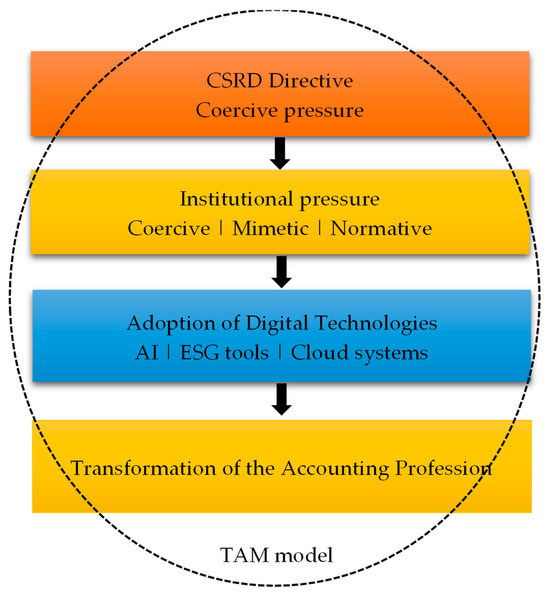
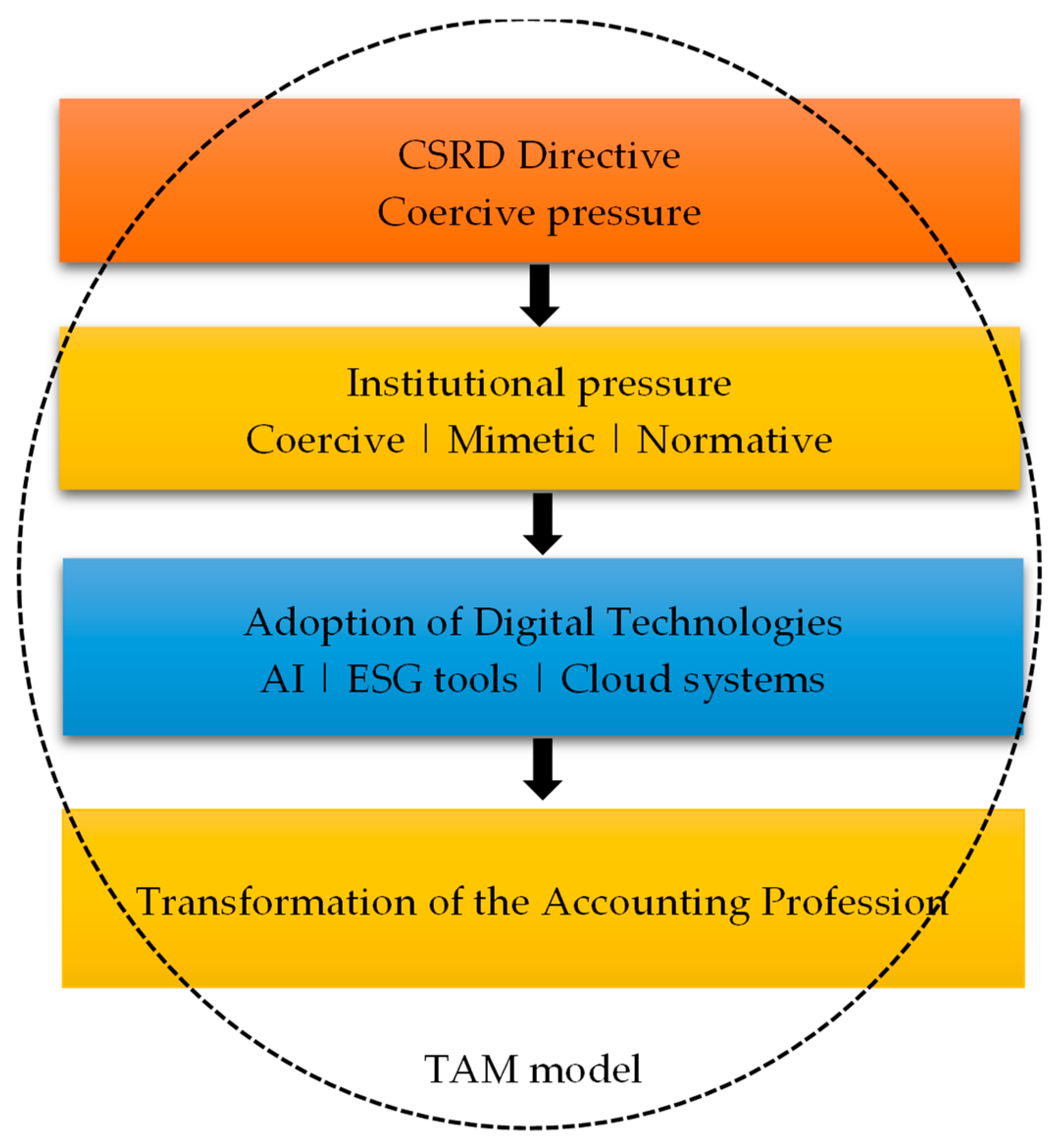

Disclaimer/Publisher’s Note: The statements, opinions and data contained in all publications are solely those of the individual author(s) and contributor(s) and not of MDPI and/or the editor(s). MDPI and/or the editor(s) disclaim responsibility for any injury to people or property resulting from any ideas, methods, instructions or products referred to in the content. |
© 2026 by the authors. Licensee MDPI, Basel, Switzerland. This article is an open access article distributed under the terms and conditions of the Creative Commons Attribution (CC BY) license.