


Abstract
Shadow banking poses a significant challenge to China’s financial sustainability. This study examines how city-level regional financial structure influences shadow banking activities among non-financial firms, with implications for building a more sustainable financial system. Exploiting data of Chinese listed firms from 2012 to 2023 and employing fixed-effects regressions with instrumental variable (IV) and dynamic GMM approaches to address endogeneity, the study finds that bank-dominated financial structures significantly reduce corporate shadow banking financing. This effect weakens among financially constrained firms, revealing shadow banking’s role as a gap-filling mechanism, but strengthens when firms exhibit higher digitalization or market attention through enhanced information transparency. These findings suggest that achieving long-term financial sustainability requires regionally nuanced policy interventions rather than uniform regulatory tightening. Instead, policy interventions should be regionally nuanced: expanding formal credit in inland provinces can mitigate financial exclusion, while fostering corporate digitalization helps bridge the information gap between lenders and firms. Furthermore, enhancing market-based oversight is essential to redirecting capital into more transparent and regulated frameworks.
1. Introduction
The rapid expansion of shadow banking in China has emerged as a major challenge to the sustainability of the country’s financial system, drawing sustained attention from academics and policymakers alike. Shadow banking activities, characterized by opacity, regulatory arbitrage, and hidden risk exposures, undermine financial stability and distort resource allocation, posing systemic risks to sustainable economic development. Since 2011–2012, tightening credit regulations and constraints on local government financing have channeled substantial funds into off-balance-sheet activities [1,2]. The period from 2012 to 2023 represents a complete institutional cycle of China’s shadow banking, transitioning from a phase of explosive, unregulated growth to one of stringent, standardized governance. This timeframe provides a unique ‘natural experiment’ to observe how regional financial structures interact with shifting regulatory landscapes to shape corporate financing behavior. While existing research has extensively examined systemic risks from the perspective of financial institutions [3], far less attention has been paid to the origins of shadow banking participation by non-financial firms. This omission is significant: although systemic risk is typically associated with financial intermediaries, non-financial firms’ decisions to participate in shadow banking represent a fundamental source of opaque credit demand—a component largely overlooked in current stability models. Policies that target only the supply side of shadow credit, without understanding the structural conditions that drive firm-level demand, risk addressing symptoms rather than root causes.
Against this backdrop, this study aims to examine how regional financial structure systematically shapes corporate shadow banking behavior and its implications for financial system sustainability. Specifically, we address three interrelated questions: First, does a bank-dominated financial structure reduce corporate reliance on shadow banking? Second, through what mechanisms—financing constraints, digitalization, or market attention—does financial structure exert its influence? Third, how do these effects vary across different regional and firm characteristics?
To address these questions, we employ a panel dataset of Chinese listed non-financial firms from 2012 to 2023 and construct city-level measures of financial structure. Using fixed-effects regressions with instrumental variable approaches to address endogeneity concerns, we systematically test the substitution effect between formal bank credit and shadow banking finance, while examining three moderating channels and conducting extensive heterogeneity analyses across regions, city sizes, and firm characteristics.
Shadow banking in China serves as an adaptive mechanism for firms to navigate the rigidities and institutional biases of the formal banking system, yet this process carries profound implications for macro-leverage and systemic stability. While leverage is a recognized driver of economic activity, its excessive or rapid accumulation heightens financial fragility and exacerbates volatility [4]. This dynamic is particularly acute in China’s non-financial corporate sector. According to BIS data, Chinese corporate leverage surged from 88.4% of GDP in 2008 to a 2016 peak of 151.8%, consistently remaining above 120% thereafter—a level far exceeding the 50% to 100% range of other major economies. Despite a temporary dip to 122.5% in Q4 2021, leverage rebounded to 142.4% by Q3 2025, substantially exceeding the 97.9% average for emerging markets. Much of this buildup stems from shadow banking, which provides credit intermediation outside the regulated periphery [5]. Recent research suggests that when formal banks face tightening capital requirements, financial activity migrates toward opaque shadow channels where adverse selection frictions can amplify an economy’s effective leverage far beyond traditional credit expansion [6]. This perspective is reinforced by subsequent studies that reinforce this by noting that the fragile liquidity transformation inherent in shadow banking systematically scales up macro-leverage [7].
In the Chinese context, the lending preferences of state-owned banks toward state enterprises leave private and small-to-medium firms chronically underserved [8,9]. When formal credit tightens, this financing demand does not vanish but instead shifts toward entrusted loans, trust products, and other shadow instruments [1]. The resulting credit expansion effectively bypasses the capital and reserve constraints of the regulated system. Because shadow banking represents both an adaptive response to credit exclusion and a multiplier for aggregate leverage, curbing its scale has become essential for managing systemic risk and ensuring long-term financial sustainability.
Chinese non-financial firms engage in shadow banking primarily through entrusted loans, entrusted wealth management, quasi-financial assets, and informal private lending 1 (To aid international readers, we clarify that the measurement of quasi-financial assets and informal private lending belongs to China-specific shadow banking; the definition can be found in the data and variable section.) [10,11,12]. In addition, financing constraints are widely regarded as a central driver of shadow banking behavior. Study shows that rising financing constraints during monetary tightening, combined with regulatory distortions, jointly fuel the expansion of corporate shadow credit [1]. Yet the literature has not fully explored how city-level financial structure shapes corporate shadow banking behavior, nor has it examined how such structural configurations contribute to or hinder the sustainability of regional financial systems.
Financial structure theory further sheds light on the formation of shadow banking. In general, financial structure refers to the relative importance of market-based versus bank-based financing [13]. Bank-based systems rely on relationship lending and tend to extend credit to small and medium enterprises [14]. Such institutional differences may alter the distribution of financing frictions and, in turn, influence corporate reliance on shadow banking. As the Chinese financial system has undergone a policy-driven transition from bank dominance toward market orientation and exhibited marked regional heterogeneity [15,16], it provides an ideal setting for our investigation. City-level financial structure significantly affects both the prevalence and form of shadow credit, suggesting that regional financial structure may systematically shape how firms allocate financing between formal and shadow channels [17].
Drawing on data from Chinese listed firms over 2012–2023 and city-level measures of financial structure, we find that regional financial structure systematically shapes corporate shadow banking behavior, though this mechanism is significantly moderated by financing constraints, information environment, and market attention. Our empirical results show that a more bank-dominated financial structure significantly reduces corporate shadow banking financing, both narrowly and broadly defined, reflecting a substitution effect of formal bank credit for shadow financing. We identify three moderating channels. Financing constraints weaken the dampening effect, revealing that shadow banking serves to fill financing gaps rather than merely facilitate arbitrage. Digital transformation strengthens the substitution effect by reducing information asymmetry, indicating that information technology is reshaping the traditional mechanisms of financial structure. Market attention amplifies the dampening effect by improving the information environment and external monitoring. Heterogeneity analyses further show that the effect of financial structure is more pronounced in coastal regions and small cities, while weaker in inland areas, large cities, and among firms with unstable supply chains or elevated operating risk. These findings provide micro-level evidence for the design of differentiated, regionally tailored policies aimed at building sustainable financial systems and promoting balanced regional economic development.
At a deeper level, our micro-level evidence reveals a “prudence paradox” where regional financial structure reflects the risk appetite of local governments and financial institutions. When a regional banking sector adopts a conservative orientation, formal credit thresholds rise and systematically exclude small-to-medium and private enterprises from regulated financing channels. However, this suppressed demand persists by migrating toward shadow banking activities that operate beyond the perimeter of prudential supervision. This creates a policy paradox because of conservative credit.
Allocation intended to contain risk inadvertently channels financial activity into less transparent and less regulated domains. Such a shift ultimately amplifies systemic risk rather than reducing it. By linking macro-level financial structure to micro-level corporate behavior, this study provides an empirical foundation for understanding this transmission mechanism. It also offers policy insights for building a sustainable financial system that balances risk control with financing inclusiveness.
To clarify the logical relationships among these concepts and guide the subsequent empirical analysis, Figure 1 presents the conceptual framework of this study.
Figure 1.
Concepts logical relationships.
The remainder of this paper proceeds as follows: Section 2 reviews the related literature and develops the research hypotheses. Section 3 describes the institutional background of China’s shadow banking system. Section 4 presents the research design, variable construction, data sources, and baseline regression results. Section 5 reports endogeneity tests and robustness checks. Section 6 examines three transmission mechanisms: digitalization, financing constraints, and market attention. Section 7 conducts heterogeneity analyses across regional and firm characteristics. Section 8 concludes and discusses policy implications.
2. Literature Review and Hypotheses Development
2.1. Financial Structure and Shadow Banking Participation
Financial structure fundamentally shapes corporate financing behavior. From a sustainability perspective, how financial structure channels corporate financing between formal and shadow systems has direct implications for financial stability and the long-term health of regional economies. Financial systems can be distinguished between bank-based and market-based structures [13]. The two systems not only differentiate firms’ access to formal finance but also influence corporate reliance on shadow banking. Specifically, bank-based systems are characterized by relationship lending [14]. Banks accumulate “soft information” about borrowers through repeated interactions, enabling them to extend credit to small and medium-sized enterprises (SMEs) and private firms that lack public disclosures. In theory, this should reduce firms’ need to turn to shadow banking.
The erosion of bank relationships coupled with exclusion from capital markets creates persistent financing gaps; however, shadow banking emerges to fill this void. The expansion of shadow credit in China coincides closely with tightening in formal bank channels [18]. Geographic evidence shows that the phenomenon concentrates in cities where local governments access capital markets for alternative financing—precisely those with stronger market orientation [16]. The underlying logic is straightforward: market-oriented cities experience more thorough reallocation of financial resources, intensifying pressure on excluded firms and amplifying demand for shadow banking.
It merits emphasis that corporate engagement with shadow banking is not purely reactive. Evidence indicates that the rise in shadow banking within non-financial credit expansion stems primarily from the arbitrage incentives of the banking system, specifically as a means to circumvent liquidity regulations [18]. Crucially, such arbitrage is concentrated among SOEs, whereas SMEs and private firms in market-oriented cities turn to shadow banking primarily due to financing constraints [16].
In sum, market-oriented financial reforms, while broadening financing channels for large firms, systematically push SMEs and private firms toward traditional banking activities through intensified competition and elevated disclosure standards [19]. We therefore hypothesize:
H1:
Non-financial firms exhibit lower levels of shadow banking activities when the regional financial structure is more bank-dominated.
2.2. Moderating Role of Financing Constraints
While we have hypothesized a potential relationship between financial structure and shadow banking participation, this relationship might vary with firm characteristics. Financing constraints theory suggests that firms’ access to external capital shapes their financing strategies. Under different financial structures, constrained and unconstrained firms face sharply different financing opportunities [20], potentially explaining differential reliance on shadow banking.
When formal credit is rationed due to information asymmetries [21], firms excluded from bank lending seek alternative financing sources. Shadow banking serves this compensatory role for credit-constrained firms facing systematic discrimination in the formal banking sector. The moderating role of financial constraints on financial structure lies in its simultaneous alteration of both the intensity of firms’ financial needs and their access to financing channels. In a bank-dominated structure, banks tend to lend to clients with long-term relationships and borrowers who can provide collateral [22]. In this context, shadow banking becomes an alternative choice for excluded firms [2,15]. Financially constrained firms bridge their funding gaps through extending accounts payable and participating in informal lending [23]. Under these circumstances, the higher the degree of bank dominance, the stronger the effect of financial constraints in driving shadow banking participation.
This micro-level behavioral pattern generates an important moderating effect at the macro level. When firms face financial constraints, the exclusionary effect of the banking system compels them to turn to shadow banking, thereby offsetting the inhibitory effect of financial structure. In other words, the higher the degree of financial constraints, the stronger firms’ compensatory demand for shadow banking, and the weaker the inhibitory effect of bank-dominated structure. This finding implies that financing constraints constitute a structural barrier to financial sustainability, as they perpetuate firms’ reliance on opaque shadow channels and hinder the transition toward a transparent and inclusive financial system. Accordingly, we propose:
H2a:
Financial constraints positively moderate the effect of bank-dominated financial structure on shadow banking participation.
2.3. Moderating Role of Digitalization
Although H2a reveals how financing constraints moderate the influence of regional financial structure, the financing accessibility arising from improvements in regional financial structure is not equally distributed across all firms. China’s digital transformation offers a distinct perspective—firms may proactively reshape their financing constraints and channel choices through digital investment [24,25]. Digitalization is not merely a technological tool, but rather a strategic resource that enhances information transparency, expands financing channels, and optimizes capital allocation [26]. From a sustainability perspective, digitalization enhances financial system resilience by reducing information asymmetries and channeling credit toward transparent, regulated institutions, thereby mitigating systemic risks and fostering inclusive economic development [27].
Non-financial firms’ participation in shadow banking activities largely stems from the joint effects of financing constraints and regulatory distortions [1], while digital transformation can improve firms’ access to finance [28]. For firms with higher levels of digitalization, their stronger information disclosure capabilities and lower degrees of information asymmetry enable them to more readily satisfy the credit approval requirements of depository financial institutions. Consequently, these firms can more fully capitalize on the financing opportunities arising from regional financial structure optimization, effectively redirecting their financing needs from shadow banking channels to formal channels, thereby amplifying the substitution effect of regional financial structure on shadow banking finance. Conversely, firms with lower levels of digitalization are constrained by informational disadvantages and thus less able to fully benefit from improvements in regional financial structure. As a result, the inhibitory effect of regional financial structure on shadow banking financing is weaker among such firms. Therefore, the inhibitory effect of regional financial structure on shadow banking finance is weaker among firms with low digitalization levels. In this sense, digital transformation serves as a sustainability-enhancing mechanism: by reducing information asymmetry, it facilitates the shift from opaque shadow financing to transparent formal financing, contributing to the long-term resilience of the financial system.
However, we acknowledge that digitalization may also exert a countervailing force. While our hypothesis focuses on the channel through which digitalization strengthens the inhibitory effect of bank-dominated structures on traditional shadow banking via increased information transparency, it may simultaneously catalyze the emergence of new technology-driven shadow banking alternatives. The advent of FinTech has enabled shadow banking activities to digitize through peer-to-peer (P2P) lending channels [29]. The confluence of an unregulated market and substantial credit gaps has led to a proliferation of these novel digital shadow banking forms. P2P platforms differ from traditional banks because they do not assume risk through their own contractual positions but rather utilize decentralized mechanisms to transfer default risk directly to platform users [30]. This mismatch between the risk-bearing entity and risk-screening capabilities can rapidly transform localized default events into a broader confidence crisis for both the platform and the financial market.
Despite the potential rise in such technology-driven shadow banking, we expect the inhibitory effect of digitalization on traditional shadow banking to remain dominant within our research context. From a measurement perspective, the shadow banking indicators defined in this study primarily refer to traditional instruments on corporate balance sheets, such as trust loans and entrusted loans, which differ fundamentally from emerging FinTech platforms in terms of operational mechanisms and regulatory environments. From a mechanistic standpoint, our digitalization data sources focus on how firms enhance their financing capacity in formal financial markets by improving information transparency and credit ratings. This mechanism does not overlap with the logical path of platform-based financing such as P2P lending. Consequently, our hypothesis emphasizes the net substitution effect of digitalization on traditional shadow banking financing under existing institutional settings. Based on the above analysis, we propose the following hypothesis:
H2b:
Digitalization negatively moderates the effect of bank-dominated financial structure on shadow banking participation.
2.4. Moderating Role of Market Attention
Market attention is a scarce cognitive resource. Research has systematically examined how attention shapes individual investors’ trading behavior, showing that when confronted with vast quantities of information, investors can attend to only a fraction of available stocks [31]. Those stocks that capture attention—whether through abnormal trading volume, extreme returns, or news coverage—are more likely to enter investors’ purchase consideration sets. Further evidence documents pronounced heterogeneity in attention patterns: institutional investors attend to information differently than retail investors, and institutional attention dominates the incorporation of earnings news into prices [32]. These findings suggest that market attention governs not only whether information reaches market participants, but also how it is processed, with direct consequences for pricing efficiency. Given that financing fundamentally involves an information game between firms and capital providers, the role of attention in shaping information processing should extend naturally to corporate financing decisions.
Market attention affects firms’ information environment through two pathways: information production and information dissemination. As for information production, analysts serve as important information intermediaries, and the quantity and depth of their research reports contribute substantially to the improvement of firms’ information environment [33]. Regarding information dissemination, business media play a critical information intermediary role in financial markets, with broader media coverage significantly reducing the degree of information asymmetry among investors [34]. These studies imply that firms with higher market attention benefit from more sufficient information production, more extensive information dissemination, and lower degrees of information asymmetry, which lays the foundation for mitigating adverse selection issues in the financing process.
The consequences of market attention for corporate financing are multifaceted. Evidence from brokerage closures and mergers that exogenously reduced analyst coverage shows that such reductions raised debt financing costs [35]. The mechanism operates through information asymmetry: as coverage declines, bondholders demand higher risk premiums to compensate for increased uncertainty. Firms experiencing the sharpest rises in information asymmetry also exhibited the largest cost increases and elevated rates of default, delisting, and bankruptcy. The pecking order framework further predicts that equity issuance is most sensitive to information frictions [36], implying that attention-driven changes in the information environment may differentially affect various financing instruments.
However, prior research has concentrated almost exclusively on capital market financing, leaving shadow banking financing largely unexplored. In emerging economies such as China, shadow banking constitutes a substantial share of external corporate finance [15,16]. Unlike formal bank credit, shadow banking finance is marked by opacity, regulatory arbitrage, and concealed risk exposures. To the extent that heightened market attention reduces information asymmetry, it may diminish firms’ reliance on shadow banking channels. From a sustainability perspective, market attention operates as a market-driven governance force that organically channels corporate financing toward transparency and accountability, complementing top-down regulatory efforts in building a sustainable financial system.
The measurement of market attention is often characterized by empirical complexity. The volume of media coverage typically encompasses both attention-driven factors and information-driven factors [37], which poses a significant challenge for isolating distinct governance or information mechanisms within a single indicator. Research suggests that market attention reflects the aggregate demand for information and exerts a substantial influence on asset pricing and corporate behavior [38]. Although this attention may exhibit heterogeneous moderating effects across different sentiment contexts, this study follows established literature by treating it as a comprehensive proxy for shifts in external pressure and the information environment. Consequently, our analysis focuses on its net effect on corporate shadow banking participation. We therefore propose the following hypothesis:
H2c:
Market attention negatively moderates the effect of bank-dominated financial structure on shadow banking participation.
3. Institutional Background
The evolution of China’s shadow banking system is a product of macroeconomic fluctuations, financial regulatory arbitrage, and the strategic choices of market participants. We focus on the 2012–2023 period as it encapsulates a full cycle from systemic expansion to standardized governance. 2012 is widely regarded as the inaugural year of China’s “Great Asset Management” era, marking a pivotal shift where shadow banking evolved from marginal activities into a systemic phenomenon. Following the relaxation of regulatory constraints and accelerated financial innovation, off-balance-sheet activities—such as wealth management products, trust plans, and entrusted loans—experienced explosive growth. In March 2013, the former China Banking Regulatory Commission (CBRC) issued “Circular 8, 2 (The Circular 8 (Asset Management New Rules) imposed asymmetric constraints on banks: large banks adjusted by reallocating credit portfolios, while smaller banks experienced sharper contractions in shadow banking activities due to capital limitations. These heterogeneous responses reinforced regional differences in bank dominance.)” which formally defined “non-standard credit assets” for the first time, signaling a shift toward systemic oversight. During this expansionary phase, regulatory arbitrage fueled complex cross-sector nesting, filling financing gaps but also driving up macroeconomic leverage.
Starting in 2017, the policy stance shifted toward “financial deleveraging” to mitigate escalating systemic risks. The 2018 “New Asset Management Rules” (Guiding Opinions on Regulating the Asset Management Business of Financial Institutions) served as a landmark regulatory milestone. By unifying supervision standards, breaking “implicit guarantees,” and prohibiting multi-layer nesting, these rules fundamentally restructured the operational logic of shadow banking. By the end of 2021, the transition period for these rules had concluded, with principal-guaranteed wealth management products largely eliminated. By 2023, the governance of shadow banking had entered a phase of normalized, law-based supervision. This 2012–2023 window thus captures the entire trajectory of “explosive growth,” “risk accumulation,” and “regulatory rectification,” providing an ideal context for examining how regional financial structures influence corporate shadow banking activities.
4. Research Design
4.1. Data and Variable Construction
China’s shadow banking sector experienced a rapid takeoff around 2011–2012, when tightened credit regulation and local government financing constraints diverted funds into off-balance-sheet channels [1,39,40]. Guided by the institutional evolution described in Section 3, our study focuses on the period from 2012 to 2023. This timeframe not only covers the complete regulatory cycle of shadow banking but also ensures data consistency. 2012 marks the beginning of standardized disclosure for off-balance-sheet items in Chinese listed firms, while 2023 is the most recent year with comprehensive city-level macroeconomic data. This alignment ensures that our empirical analysis captures the most relevant and high-quality data available for both micro-level corporate behavior and macro-level financial structures. The former marks the onset of China’s shadow banking expansion; the latter is the most recent year for which reliable data are available given reporting lags.
Dependent Variable: Shadow Banking
To measure shadow banking activities for non-financial firms, this study follows established approaches [10,41], classifying shadow banking engagements into four categories: entrusted loans, entrusted wealth management, informal lending, and quasi-financial assets. Based on this framework, we construct two dependent variables. The first variable is “Bank”, which comprises entrusted loans, entrusted wealth management, and quasi-financial assets, primarily capturing shadow banking activities originating from or exhibiting bank-like characteristics within the banking system. The second variable is “Total”, which extends “Bank” by incorporating informal lending proxied by “other receivables,” thereby reflecting the overall scale of corporate shadow banking participation. Both indicators are constructed using equal weights to measure firms’ reliance on shadow banking financing.
In terms of specific identification, entrusted loans are defined according to China’s accounting standards for financial instruments and manually collected from listed companies’ financial statements. Entrusted wealth management is identified from corporate announcements based on the information disclosure requirements of the China Securities Regulatory Commission (CSRC). Quasi-financial assets primarily include bank wealth management products, trust products, and structured deposits, which are typically recorded under “other current assets” and further identified and aggregated based on financial statement notes. For informal lending, we employ “other receivables” as a proxy to capture informal credit activities between firms that lack formal disclosure channels [42].
“Other receivables” is a proxy for informal lending, which remains somewhat controversial in the literature, as this account may also include certain operational transactions. However, under China’s institutional context, informal interfirm lending often lacks independent and standardized disclosure formats and can typically only be approximated through “other receivables.” Therefore, we do not further decompose this item to avoid introducing new measurement biases from subjective adjustments. Meanwhile, by reporting both the “Bank” measure (excluding “other receivables”) and the “Total” measure (including “other receivables”), we can also examine whether our baseline results depend on this more contentious proxy variable.
Independent Variable: Regional Financial Structure
Given data availability, this study aggregates city-level regional financial structure (FS) using listed companies as the sample to reflect the scale of bank system financing relative to the stock market. Specifically, FS is defined as the ratio of total bank loans to total market capitalization for non-financial listed companies in each city.
All variables are constructed by aggregating firm-level data at the city level. A higher value of FS suggests that the regional financial system is more bank-dominated. The underlying rationale for this approach is that China’s bank financing market remains characterized by substantial regional segmentation. Local banks, in particular, rely heavily on local information and networks for their credit relationships, risk assessments, and lending decisions. Consequently, a firm’s headquarters city typically remains its most stable and core location for accessing formal financing. Additionally, while using listed companies as representatives may overlook smaller firms that often face greater financing difficulties, this approach ensures cross-city comparability. It should be noted that FS calculated in this manner may be directly linked to firm size rather than purely reflecting a city’s financing channel preferences.
Control Variables
We include a set of control variables at both the firm and regional levels to mitigate omitted variable bias. At the firm level, we control for company size, measured as the natural logarithm of total assets; operating cash flow, defined as net cash flow from operating activities scaled by year-end total assets; firm age, calculated as the number of years since incorporation; return on equity, computed as net income divided by average shareholders’ equity; leverage, measured as the ratio of total liabilities to total assets; managerial ownership, defined as the proportion of shares held by management; Tobin’s Q, calculated as market value divided by book value of assets; the aggregate shareholding of the ten largest shareholders; and the proportion of shares held by institutional investors. Considering that firms may operate across multiple regions and thus face diverse financial environments, we further control for the degree of cross-regional operations. This is specifically captured by the logarithm of the number of out-of-town subsidiaries (Offsub_num) and the logarithm of out-of-town investment (Offsub_inv), reflecting a firm’s geographic footprint and its exposure to varying financial conditions outside its headquarters.
At the regional level, we control for economic scale, measured as the natural logarithm of annual GDP; government expenditure, defined as the natural logarithm of local general public budget expenditure; the shares of secondary and tertiary industries in GDP; the natural logarithm of above-scale enterprises; and the natural logarithm of newly registered firms to capture regional economic vitality. Table 1 summarizes the definitions of all control variables.
Table 1.
Control Variable.
4.2. Baseline Regression Model
We then develop our baseline regression model as follows:
where denotes the scale of shadow banking financing for firm located in city c and industry j in year ; represents the regional financial structure of city in year ; stands for the control variables at both the firm and city level; and account for firm and industry-year fixed effects, respectively, with the latter capturing industry-specific shocks and heterogeneity; gives the error term.
5. Results
5.1. Baseline Regression Results
Table 2 presents the impact of regional financial structure (FS) on corporate shadow banking scale. The dependent variables are shadow banking originating from the banking system (Bank) and total shadow banking (Total). The former comprises entrusted loans, entrusted wealth management, and quasi-financial assets, while the latter additionally includes private lending.
Table 2.
Baseline Regression Results.
The coefficients of FS are negative and statistically significant across both measures. Specifically, the coefficient is −1.564 for bank-originated shadow banking (significant at the 1% level) and −0.640 for total shadow banking activities (significant at the 5% level). These results indicate that in regions where bank credit constitutes a larger share of the financial structure, corporate shadow banking finance, whether narrowly or broadly defined, is significantly lower.
These results provide support from a financing substitution perspective, suggesting that shadow banking serves to some extent as an alternative channel when bank credit is insufficient. In particular, bank-like activities such as entrusted loans essentially rely on capital reallocation among firms or financial institutions, and their expansion often occurs in environments where formal credit supply is constrained. Therefore, the bank financing constraints reflected by lower FS significantly enhance firms’ reliance on shadow banking financing.
From a financial sustainability perspective, these findings indicate that merely relying on the development of alternative financing channels cannot fundamentally curb shadow banking behavior; the key lies in enhancing the bank system’s capacity and coverage to supply credit to real-economy enterprises. Only when the formal financial system can provide stable and accessible financing support will firms reduce their dependence on informal channels such as shadow banking, thereby rendering the financing structure more regulated and sustainable.
5.2. Endogeneity Tests
While the baseline regressions control for firm and industry-year fixed effects and utilize lagged dependent variables, potential endogeneity concerns may persist. Specifically, reverse causality could exist where firm-level shadow banking activities influence regional financial resource allocation, thereby altering the financial structure. Furthermore, omitted variable bias remains a possibility, as unobserved factors might simultaneously affect both financial structure and corporate shadow banking behavior. To mitigate these endogeneity concerns, we employ two complementary identification strategies: a dynamic panel model and an instrumental variable (IV) approach. The results of the endogeneity tests are reported in Table 3.
Table 3.
Endogeneity Test Results.
5.2.1. Dynamic Panel Approach
Given that corporate shadow banking behavior often exhibits significant dynamic inertia, we introduce lagged terms of the dependent variable to construct a dynamic panel model, estimated using the system GMM method. The regression results, reported in columns (1) and (2) of Table 3, show that the coefficients for the lagged terms are significantly positive, confirming a strong path-dependency in firm-level shadow banking. More importantly, after controlling for these dynamic effects, the coefficients for financial structure (FS) remain significantly negative at −0.973 and −0.438, respectively, and are significant at the 1% and 5% levels. This suggests that our baseline findings are not merely driven by dynamic inertia, and the inhibitory effect of financial structure on shadow banking remains robust.
5.2.2. Instrumental Variable (2SLS) Estimation
We further utilize a two-stage least squares (2SLS) approach to address potential reverse causality and omitted variable bias. Specifically, we construct an instrumental variable (FS_IV) defined as the ratio of total loans to capital market size for all other listed non-financial firms within the same city, excluding the firm in question. This instrument is highly correlated with the overall city-level financial structure, effectively capturing regional financing supply characteristics. Furthermore, by excluding the specific firm’s own financing data, the instrument’s variation is not directly influenced by that firm’s unique demand, thereby alleviating reverse causality concerns.
The first-stage regression results indicate a strong positive correlation between the instrumental variable (FS_IV) and the endogenous regressor (FS), with coefficients of 0.819 and 0.877, both significant at the 1% level. Additionally, the LM statistics reject the null hypothesis of under-identification, while the F-statistics of 913.443 and 2167.703 far exceed conventional thresholds, indicating the absence of a weak instrument problem. In the second stage, the coefficients for financial structure (FS) remain significantly negative. Specifically, when bank-led shadow banking (F.SB_Bank) is the dependent variable, the coefficient is −1.794 (significant at 1%); for total shadow banking (F.SB_Total), the coefficient is −0.702 (significant at 5%).
In summary, across both the dynamic panel framework and the IV identification strategy, financial structure exerts a consistently significant negative impact on corporate shadow banking. These findings provide robust empirical support for our core hypothesis: a bank-dominated financial structure creates a substitution effect for corporate shadow banking by strengthening the supply of formal credit.
5.3. Robustness Checks
As reported in Table A1, the baseline findings remain robust to the exclusion of major financial centers, the use of alternative measures, winsorization, and the adjustment of two-way clustered standard errors (Columns 1–9). The coefficients are consistent with our primary conclusions, indicating that the results are driven by neither endogeneity nor the influence of extreme outliers. Detailed results are reported in Appendix A.
6. Mechanism Tests
To further investigate the underlying transmission mechanisms through which financial structure affects corporate shadow banking activities, we examine three channels: financing constraints, corporate digitalization, and market attention. The regression model is specified as follows:
where denotes the moderating variable for firm in region at time . The interaction term is our primary variable of interest, capturing the moderating effect. The regression results are reported in Table 4 and Table 5.
Table 4.
Mechanism Test 1 (Digitalization Mechanism).
Table 5.
Mechanism Test 2 (Financing Constraints and Market Attention).
6.1. Digitalization Mechanism
A company’s digitalization level may moderate its financing activities. We measure digitalization using the proportion of digital transformation-related intangible assets to total intangible assets, as disclosed in the notes to annual financial statements [25,43]. 3 (This study measures the level of digitalization solely by the proportion of digitalization-related intangible assets disclosed in the notes to annual financial statements relative to total intangible assets. Digital investment does not inherently equate to the substantive presence of digitalization, nor does the absence of such investment imply the contrary; rather, it serves merely as an observable proxy variable.) Specifically, when intangible asset line items contain keywords such as “software” or “network,” along with associated patents, we classify these as digital technology intangible assets. We then aggregate all such items for each firm-year and calculate their share of total intangible assets as the proxy for digitalization.
Columns (1) and (2) of Table 4 report the regression results for the moderating effects of digitalization. Since the core variables are centralized, the interaction term coefficients reflect the marginal moderating effect of digitalization on the role of financial structure. The results show that when total shadow banking (Total) is the dependent variable, the interaction coefficient is significantly negative. This indicates that as a firm’s digitalization level rises, the inhibitory effect of a bank-led financial structure on shadow banking is significantly strengthened. Rather than simply affecting the level of shadow banking, digitalization improves the information environment, making it easier for firms to obtain credit from the formal financial system and thereby reinforcing the substitution effect of the financial structure.
To distinguish the specific mechanisms through which digitalization influences corporate shadow banking, we analyze two potential channels: the mitigation of information asymmetry (the “quality signaling” mechanism) and the reduction in operational costs (the “demand-side” mechanism). Theoretically, digitalization may enhance the quality of information disclosure and data processing, thereby improving the ability of external investors and banks to assess a firm’s operational status. This acts as a “quality signal” that optimizes the financing environment. Alternatively, digitalization might reduce operational costs by streamlining production and management processes, thus decreasing reliance on external financing. Given the fundamental differences in their underlying paths, it is essential to distinguish between these two mechanisms.
We employ stock price synchronicity as an inverse measure of a firm’s information environment. We first regress weekly individual stock returns on market and industry returns to obtain the R-squared value [44], which is then log-transformed to construct the synchronicity index . This index reflects the proportion of individual stock returns explained by market and industry-wide factors. 1Building on this, we adopt an expanded measure (SYN2) by introducing lagged market and industry returns [45]. Compared to the baseline, this dynamic model captures the gradual diffusion of information in the market more comprehensively.
In a similar vein, we characterize debt financing costs using different metrics. We first construct Cost1, defined as the ratio of total financial expenses to total end-of-period liabilities. While this reflects the comprehensive cost of debt, it may include non-interest items such as exchange gains or losses. Consequently, we construct Cost2 as the sum of interest expenses, fees, and other financial charges relative to total end-of-period liabilities. By excluding interest income and non-debt financial items, Cost2 focuses more precisely on the actual financing outlays borne by the firm.
Columns (3) through (6) present the results of the mediation mechanism tests. With centralized variables, our focus is on the coefficient of digitalization (Digit). The results indicate that digitalization has a significant negative impact on synchronicity indicators (SYN1, SYN2), suggesting that digitalization effectively improves the information environment and enhances the availability of firm-specific information to outsiders. By contrast, the impact of digitalization on operational cost indicators (Cost1, Cost2) is either insignificant or non-robust, failing to provide sufficient evidence for the cost-reduction mechanism.
The regression results indicate that digitalization primarily functions as a “quality signal” by mitigating information asymmetry, thereby improving firms’ financing accessibility and reducing their reliance on shadow banking; in contrast, the demand-side mechanism of reducing operating costs does not emerge as the dominant channel. This mechanism identification resonates with findings that ICT skills training exerts a significantly stronger positive effect on firm performance than ICT infrastructure investment [46]. The core mechanism lies in skills enabling firms to transform technology into “external information processing capabilities” rather than merely “internal operational efficiency.” Specifically, in their study, “ICT skills training” corresponds to the capability of converting technology into performance, while “ICT infrastructure investment” represents the technology input itself; in our study, “information transmission quality” corresponds to digitalization’s ability to improve external perception, while “cost reduction” represents digitalization’s impact on internal efficiency. Both studies indicate that resource-based inputs are not the key; rather, the enhancement of capability dimensions constitutes the dominant mechanism. This finding elucidates the operating mechanism of digitalization in financial markets: its core value lies in mitigating the information asymmetry faced by firms, which is precisely the critical factor in alleviating financing constraints for enterprises in bank-dominated financial systems.
Digitalization also enhances banks’ ability to acquire information and identify risks, thereby strengthening their monitoring of enterprises. As a result, some firms that previously had difficulty accessing formal credit due to information opacity can more easily enter formal financing channels, reducing their reliance on shadow banking. Following this rationale, we further supplement our analysis with tests at the prefecture-level city level. The results are presented in Appendix D.
6.2. Financing Constraint Mechanism
The Financing Constraint variable is measured by the KZ index [47] and is calculated as follows:
where CF is the ratio of operating cash flow to total capital, reflecting internal fund generation capacity; Q is Tobin’s Q, capturing investment opportunities and growth potential; Lev is the debt-to-asset ratio, measuring leverage and external debt burden; Div is the ratio of cash dividends to total capital, with higher values indicating greater fund availability; and Cash is the ratio of cash holdings to total capital, representing liquidity reserves. Higher KZ values indicate stronger financing constraints. We interact the KZ index with financial structure (FS KZ) to examine how the effect of financial structure on shadow banking loans varies across different levels of financing constraints.
Columns (1) and (2) report the regression results. The coefficients on FS KZ are positive in both specifications, with the coefficient reaching 0.204 and significant at the 5% level in the total shadow banking model. This indicates that the dampening effect of bank-dominated financial structures on shadow banking weakens substantially among firms facing stronger financing constraints. When firms have limited access to formal financing channels, they tend to rely on shadow banking for funding even in regions with well-developed banking systems.
These results are consistent with our expected financing constraint compensation effect. In bank-dominated regions, credit resources are allocated predominantly to high-quality firms, leaving constrained firms with limited access to bank credit and greater reliance on shadow banking. As financing constraints intensify, the substitutive role of shadow banking in alleviating credit rationing becomes more pronounced, thereby attenuating the overall dampening effect of financial structure on shadow banking activities.
6.3. Market Attention Mechanism
Market attention has been shown to mitigate managerial opportunism such as earnings management through reducing information asymmetry and strengthening reputational constraints [48,49]. Yet its role in curbing shadow banking—a far more opaque financing behavior operating through off-balance-sheet channels and regulatory arbitrage [6,15]—remains underexplored. Our findings extend the governance effects of market attention to this emerging domain, demonstrating its unique value in penetrating financial opacity where traditional internal controls falter.
Market attention (Att) is measured as the natural logarithm of the number of analyst research reports covering the firm in a given year. More reports indicate greater capital market attention and stronger external oversight.
Columns (3) and (4) report the empirical results. The coefficients on FS × Att are negative, with the coefficient significant at −0.198 in the total shadow banking model. This indicates that the dampening effect of financial structure on shadow banking activity is stronger among firms receiving greater market attention.
Higher market attention improves external monitoring and information transparency, reducing moral hazard and adverse selection in shadow banking finance. Banks become more willing to extend formal credit to these firms. Meanwhile, firms with high attention typically enjoy easier access to capital markets and bank credit, reducing their demand for shadow banking. Market attention, therefore, reinforces the negative effect of financial structure on shadow banking loans, reflecting an external governance strengthening mechanism.
Through the mechanism testing, financial structure affects shadow banking activities through three channels: financing constraints, digitalization effects, and market attention. Financing constraints weaken the dampening effect of financial structure, while digitalization and market attention reinforce it. Overall, financial structure optimization, digital empowerment, and improved information environments jointly play a critical role in curbing shadow banking expansion and advancing the sustainability of regional financial systems. 4 (The motivations for firms to engage in shadow banking are characterized by significant heterogeneity. For credit-constrained small and medium-sized enterprises (SMEs), shadow banking primarily functions as a supplementary financing channel, whereas for state-owned enterprises (SOEs) with preferential access to credit, it more often reflects a regulatory arbitrage motive. Despite these divergent motivations, this study contends that both the advancement of digitalization and the strengthening of market attention exert a convergent inhibitory effect on both types of behavior.) These findings suggest that the transition toward financial sustainability is not solely a regulatory endeavor but also depends on firm-level technological upgrading and market-level information infrastructure.
7. Heterogeneity Analysis
To examine how regional and firm characteristics differentially affect shadow banking activities for non-financial firms, we conduct heterogeneity analysis using subsample regressions. For continuous variables, firms are grouped by the median of their sample-period averages. Table 5 and Table 6 report the results of financial structure (FS) on corporate shadow banking activities across different subsamples.
Table 6.
Heterogeneity Analysis 1.
7.1. Geographic Location
Columns (1) to (4) of Table 7 report the sub-sample regression results categorized by regional location. Regarding bank-led shadow banking (Bank), the coefficients for financial structure are −0.918 in coastal regions (significant at the 5% level) and −1.097 in inland regions (significant at the 10% level). These results indicate a distinct substitution effect across different regions, suggesting that as the supply of bank financing improves, firms’ reliance on shadow banking financing decreases. This phenomenon, where formal finance displaces informal channels, is referred to as the “substitution effect.”
Table 7.
Heterogeneity Analysis 2.
In terms of total shadow banking (Total), the coefficient for financial structure remains significant at the 10% level in coastal regions (−0.436) but is statistically insignificant in inland areas. This suggests that while the substitution effect holds in coastal regions, it lacks empirical support in the interior. Such a disparity implies that the impact of bank financing on broad-based shadow banking, which includes private lending, varies significantly across geographic regions.
These regional heterogeneities primarily stem from differences in financial system structures and market environments. Coastal regions possess more developed financial systems characterized by broader bank credit coverage and sophisticated regulatory frameworks, which amplify the substitution effect. By contrast, the banking systems in inland areas often suffer from insufficient coverage, leaving informal financing channels highly active. Consequently, even when bank financing improves, firms can still meet their funding needs through informal outlets, thereby weakening the substitution effect at the aggregate shadow banking level. These findings underscore the critical role of regional financial development in moderating corporate shadow banking behavior and suggest that differentiated policies are necessary to foster a sustainable financial system.
7.2. City Size
Columns (5) to (8) of Table 6 report the sub-sample regression results categorized by city size. Regarding bank-led shadow banking (Bank), the coefficient for financial structure is −0.849 in small cities (significant at the 5% level). In contrast, while the coefficient in large cities is larger in magnitude at −1.208, it fails to reach statistical significance. For total shadow banking (Total), the coefficient is −0.408 in small cities (significant at the 10% level), whereas it remains insignificant in large cities.
These results indicate that the substitution effect is primarily concentrated in small cities and lacks empirical support in large metropolitan areas. This suggests that in small cities, where financing channels are relatively limited, improvements in bank credit supply can effectively curb corporate reliance on shadow banking. Conversely, in large cities, firms enjoy access to more diversified financing outlets, including private lending and sophisticated capital markets. Consequently, the marginal substitution effect of increased bank financing is relatively weak, making it difficult to exert a significant impact on aggregate shadow banking activities. These findings underscore that city size plays a moderating role in how financial structure influences corporate behavior. Given the distinct financing environments across different urban scales, it is necessary to implement differentiated policies based on city-specific characteristics during financial reforms. To provide a visual representation of the financing environment across different city sizes, we compare the distribution of various financial institutions in large and small cities using 2019 as a representative year. Cities are categorized into “large” and “small” based on the median regional GDP, and we calculate the average number of each type of financial institution within these two groups. As illustrated in Figure 2, nearly all types of financial institutions exhibit a significantly higher presence in large cities than in small ones. This concentration is particularly pronounced for market-oriented institutions, such as joint-stock banks, city commercial banks, and foreign banks. Among them, the distributional advantage of joint-stock banks in large cities is especially striking, reflecting their strategic positioning within competitive financial markets. This pattern suggests that large cities not only possess more abundant financial resources but also feature more intense competition among financial intermediaries.
Figure 2.
Number of Financial Outlets by Bank Type in Large versus Small Cities (Year 2019).
These stylized facts provide direct support for our heterogeneity analysis regarding city size. Specifically, the clustering of diverse financial institutions in large cities offers firms more multifaceted financing channels and intensifies competition on the supply side. Consequently, firms in these regions can more easily access diversified and relatively low-cost formal financing.
7.3. Supply Chain Stability
Columns (1–4) of Table 7 report subsample regression results by supply chain stability. For bank-sourced shadow banking, the coefficient on financial structure is −0.072 and insignificant for firms with high supply chain stability, while −1.993 and significant at the 1% level for firms with low supply chain stability. This indicates that the dampening effect of regional financial structure on bank-sourced shadow banking is stronger among firms with less stable supply chains. For total shadow banking, the coefficient on financial structure is −0.221 and insignificant for firms with high supply chain stability. The coefficient for firms with low supply chain stability is −0.628 and significant at the 5% level, indicating that shadow banking activities of supply-chain-unstable firms are more strongly affected by a bank-dominated financial structure.
Supply chain stability reflects firms’ risk tolerance and network strength in production, procurement, and sales. Firms with stable supply chains typically maintain reliable upstream and downstream partnerships and more dependable cash flows. This enables them to obtain funding through internal allocation or alternative channels, even when facing a more bank-dominated financial structure, weakening the effect of financial structure on their shadow banking activities. Firms with unstable supply chains, however, lack solid partnership networks and reliable funding channels, facing higher operational and financing risks. When the regional financial structure is more bank-dominated, these firms face stronger constraints on bank-sourced shadow banking financing, resulting in a significant negative relationship.
From a financing constraint perspective, a more bank-dominated financial structure implies relatively abundant bank funds but lower risk preference, with banks favoring large, reputable firms while adopting cautious strategies toward firms with unstable supply chains and incomplete credit information. This further exacerbates the difficulty for supply-chain-unstable firms to obtain bank-sourced shadow banking financing. For total shadow banking, although non-bank channels such as private lending can partially alleviate financing constraints, these typically involve higher costs and rely on firms’ own relationship networks. Firms with low supply chain stability, therefore, still face substantial financing pressure, resulting in a significant dampening effect of financial structure on total shadow banking activities. From a sustainability perspective, firms with unstable supply chains represent a vulnerable segment whose financing needs are least likely to be met through formal channels, posing challenges to inclusive and sustainable financial development.
7.4. Operation Risk
To further investigate the heterogeneous effect of corporate operating risk on the relationship between regional financial structure and shadow banking financing, we conducted subsample regressions by firm operating risk level. Columns (5–8) report the results. For bank-sourced shadow banking, the coefficient on financial structure is −0.499 and statistically significant for high-risk firms, while −1.553 but insignificant for low-risk firms. For total shadow banking, the coefficient is −0.921 and significant for high-risk firms, while 0.103 and insignificant for low-risk firms. These results indicate that the dampening effect of regional financial structure on shadow banking activities is more pronounced among high-risk firms, particularly for bank-sourced shadow banking. Among low-risk firms, however, this negative relationship is unstable and even shows a weak positive tendency for total shadow banking.
In regions where financial structure is more bank-dominated, the banking system typically places greater emphasis on a firm’s financial soundness and debt repayment capacity. When firms face higher operating risk, banks tend to be more cautious in providing financing through shadow banking channels, leading to a reduction in bank-sourced shadow banking financing. Total shadow banking includes informal sources such as private lending, which can partially alleviate financing constraints. However, high-risk firms face substantial operational uncertainty, limiting their ability to obtain non-bank financing and thus experience a notable decline in overall financing. Some low-risk firms may exploit their access to low-cost bank credit by reallocating these funds into higher-yielding shadow banking products or wealth management instruments, thereby engaging in a form of “arbitrage-like” behavior. In such instances, an increase in bank financing does not necessarily substitute for shadow banking activities but rather may, to some extent, facilitate a firm’s participation in them. This potentially accounts for the weak positive relationship observed among low-risk firms, though a detailed exploration of this specific dynamic lies beyond the scope of this study. These results further support the selective constraining effect of financial structure on corporate financing and suggest that regional financial structure exerts heterogeneous effects on different types of firms in the risk transmission process. These findings imply that building a sustainable financial system requires balancing risk management with financing accessibility, ensuring that heightened prudential standards do not inadvertently push high-risk firms further into opaque shadow channels.
8. Research Conclusions and Policy Implications
8.1. Conclusions
This study examines how regional financial structure shapes the sustainability of the financial system by influencing non-financial firms’ shadow banking financing behavior. The empirical results indicate that regional financial structure significantly affects corporate shadow banking participation, and this effect is substantially moderated by financing constraints, digital transformation, and market attention. Specifically, in regions with higher bank dominance, firms’ shadow banking financing scale decreases significantly, suggesting a substitution effect between formal bank credit and shadow banking financing. However, this suppression effect weakens significantly among firms facing severe financing constraints, revealing shadow banking’s practical function as a “gap-filling mechanism.” Conversely, the suppression effect strengthens significantly among firms with higher digitalization levels or stronger market attention, reflecting the critical role of information technology and external monitoring in reshaping the mechanism through which traditional financial structure operates. Heterogeneity analysis further shows that the impact of financial structure is more pronounced in coastal regions and small-to-medium cities, while being relatively limited in inland regions, large cities, and firms with supply chain instability or higher operational risks, highlighting the profound influence of unbalanced regional financial development on corporate financing behavior.
Our findings complement yet differ from prior China-focused studies. Research emphasizes how monetary tightening and regulatory arbitrage jointly drive shadow banking expansion [1], while we identify a substitution effect from the regional financial structure perspective—when bank-dominated structures provide ample formal credit, shadow banking demand declines. Evidence reveals entrusted loans as “relationship-based financing” [15]; we confirm the bank-shadow substitution but show it varies with financial constraints—constrained firms rely more heavily on shadow banking to fill credit gaps. Critically, China’s financial structure is heavily influenced by local government risk preferences and regional market segmentation rather than purely market forces, making bank dominance reflect top-down institutional constraints. This amplifies the substitution effect in China but may be weaker in financially liberalized emerging markets.
Beyond these empirical findings, this study unveils a “prudence paradox” embedded within regional financial structures and its profound implications for financial sustainability. Our evidence reveals that when a regional banking system exhibits higher FS, stringent bank credit thresholds systematically exclude small-to-medium enterprises and private firms from regulated financing channels. However, the suppressed formal credit demand does not vanish; instead, it migrates toward shadow banking activities that operate beyond the perimeter of prudential supervision. This creates a fundamental policy paradox: conservative credit allocation, originally intended to contain risk by tightening formal lending standards, inadvertently channels financial activity into less transparent and less regulated domains, ultimately amplifying rather than reducing systemic risk. The moderating role of financing constraints corroborates this mechanism. Firms facing severe credit rationing rely more heavily on shadow banking precisely in regions where banks exercise greater caution, offsetting the intended substitution effect of bank-dominated structures. Conversely, digitalization and market attention break this paradox by reducing information asymmetry and enhancing external monitoring, enabling firms originally excluded from formal channels to re-enter regulated financing pathways. These findings suggest that achieving financial sustainability requires moving beyond a singular focus on tightening prudential standards. Policymakers must balance risk control with financing inclusiveness, ensuring that heightened bank prudence does not inadvertently push vulnerable firms further into opaque shadow channels. Only by simultaneously addressing both the supply-side constraints of formal finance and the information frictions that exclude certain firms can regions build truly sustainable financial systems that reconcile stability with inclusive growth.
This paper reveals the dual logic of shadow banking expansion: it serves both as a compensatory mechanism for inadequate formal financial system coverage and as a result driven by regulatory arbitrage and risk preferences. The synergistic effect of financial structure optimization, corporate digital empowerment, and market supervision enhancement constitutes the key pathway to curbing disorderly shadow banking expansion and promoting sustainable financial system development.
8.2. Policy Implications
Based on the aforementioned research findings, this study proposes the following four policy implications from the perspective of sustainable financial system development.
First, differentiated regional financial policies should be implemented to mitigate the spatial mismatch of resources. The empirical results reflect that while dense financial institutions and intense market competition in large cities already provide diversified channels, small and medium-sized cities still face a deficit in supply. Consequently, regulatory authorities should employ incentives such as adjusting loan-to-deposit ratio assessments and providing specialized re-lending quotas to guide national commercial banks to shift their service focus toward smaller cities. Furthermore, it is essential to grant local branches greater autonomy in credit approval while simultaneously promoting regional financial synergy mechanisms. By encouraging banks in large cities to utilize FinTech tools, such as online due diligence and remote credit evaluation, for cross-regional lending, the limitations imposed by geographical distance can be overcome from the supply side, aligning shadow banking governance with coordinated regional development.
Second, digital public service platforms should be established to systematically enhance corporate information transparency. The government should lead the development of regional or industry-specific digital infrastructure, enabling more firms to access digital networks at a lower cost and thus improving the transparency of information during bank credit approval processes. This aligns with suggestions for emerging markets that increasing Information and Communication Technology (ICT) skills training yields better performance outcomes for firms than merely increasing ICT infrastructure investment [46]. Governments can leverage these public service platforms to provide such training, transforming technological inputs into observable credit assets and reducing information friction between lenders and borrowers.
Third, regulatory authorities should construct identification models based on dimensions such as ownership type, financial constraint indices, and credit accessibility to precisely distinguish between “arbitrage-driven” and “demand-driven” activities. For firms motivated by arbitrage, stringent “look-through” monitoring of capital flows must be implemented, with immediate penalties for credit funds illegally diverted into shadow markets. Conversely, for firms with genuine financing difficulties, regulators should simplify bank loan approval processes and allow for the use of movable assets—such as accounts receivable or intellectual property—as collateral. In executing deleveraging targets, the policy pace must remain prudent to ensure that the suppression of financial bubbles does not precipitate a chain reaction of supply chain disruptions.
Finally, proactive measures must be taken to prevent new types of digitalization-driven shadow banking risks. While this study confirms that digitalization significantly inhibits traditional instruments like entrusted loans and trust products, the rise and fall of the P2P industry serves as a reminder that technological innovation can evolve into a new risk carrier if detached from effective supervision. Therefore, the funding sources and risk-bearing mechanisms of FinTech platforms should be fully integrated into a unified regulatory framework. By promoting “regulatory arbitrage equalization” between FinTech and traditional banking, the disorderly flow of capital caused by institutional disparities can be eliminated, thereby maintaining the stability of the financial system amidst the wave of digital transformation.
8.3. Research Limitations and Prospects
This study has three main limitations: data scope, endogeneity, and generalizability. First, the sample is confined to Chinese listed companies due to disclosure constraints, and these firms may not adequately represent the broader universe of small and medium-sized enterprises (SMEs). SMEs typically face tighter financing constraints and depend more on informal channels, so our findings may understate shadow banking’s role across the corporate sector as a whole. Our data draw on the full sample of listed firms, yet the substitution effect of bank-dominated financial structures likely varies by ownership type. State-owned banks in China favor state-owned enterprises (SOEs) and large corporations [8,9]. This “dual discrimination” means that even in bank-dominated regions, private firms and SMEs can still encounter systematic credit rationing, which weakens the aggregate substitution effect we observe. We capture part of this heterogeneity through the financing constraints channel, but a fuller assessment of ownership-based differences would require proprietary loan-level data and finer measures of credit access discrimination.
Second, while we use dynamic panel models and instrumental variables to address endogeneity, we cannot rule out all potential biases. Unobserved regional factors—such as variations in institutional environments, local government interventions, or the development of informal financial networks—may jointly shape financial structures and corporate behavior, leading to omitted variable bias.
Third, our analysis is rooted in China’s institutional setting, so external validity should be interpreted with care. The bank-dominated structure and segmented credit markets give shadow banking in China a distinctive trajectory. Even so, the substitution effect of formal financial supply on shadow banking represents a core mechanism that offers insights for other emerging economies.
Given these limitations, future work can proceed in several directions. One avenue is to examine how digital transformation relates to credit access, especially how digital technologies alter the substitution dynamics between formal and informal finance. Another is to extend the analysis to non-listed firms or SMEs and incorporate ownership structure as a key dimension, which would clarify how shadow banking functions differently across firm types and distinguish necessity-driven from arbitrage-driven motives. Finally, cross-country comparisons can test whether these patterns hold in different institutional contexts, deepening our understanding of the link between financial structure and shadow banking.
Author Contributions
Conceptualization, L.Y.; methodology, L.Y. and Y.X.; software, Y.X.; validation, Y.X., L.Y. and T.L.; formal analysis, L.Y. and Y.X.; investigation, Y.X.; data curation, L.Y.; writing—original draft preparation, L.Y.; writing—review and editing, L.Y. and Y.X.; visualization, L.Y.; supervision, J.Y.C.S.; project administration, L.Y., Y.X., T.L. and J.Y.C.S.; funding acquisition, L.Y. All authors have read and agreed to the published version of the manuscript.
Funding
This research received no external funding.
Institutional Review Board Statement
Not applicable.
Informed Consent Statement
Not applicable.
Data Availability Statement
Restrictions apply to the availability of these data. Data were obtained from [wind] and are available [from the https://www.wind.com.cn/mobile/EDB/zh.html] accessed on 15 April 2026 with the permission of [wind].
Conflicts of Interest
The authors declare no conflicts of interest.
Appendix A. Robustness Checks
Table A1.
Robustness Check Result.
In Table A1 columns (1) and (2), we exclude firms headquartered in China’s four major financial centers—Beijing, Shanghai, Guangzhou, and Shenzhen—where the high concentration of financial resources and diversified financing channels may introduce systematic differences in corporate financing behavior. The coefficients on financial structure remain significantly negative after this exclusion, indicating that our baseline results are not driven by a few dominant financial centers. Columns (3) through (5) employ alternative dependent variable constructions. Column (3) measures shadow banking as the sum of entrusted loans, entrusted wealth management, and private lending, scaled by total assets. Column (4) uses the natural logarithm of one plus the sum of entrusted loans, entrusted wealth management, private lending, and quasi-financial assets. Column (5) calculates the ratio of this broader sum to total assets. The coefficient on financial structure remains negative and significant across all three specifications. In Columns (6) and (7), we winsorize all primary continuous variables at the 1% level to mitigate the influence of extreme values. The resulting coefficients are larger in magnitude than in the baseline regression (−1.355 and −0.629), suggesting that the baseline estimates, if anything, are conservative. Finally, Columns (8) and (9) adopt two-way clustered standard errors at the city and industry levels to address potential within-group correlations across both dimensions. The coefficients remain negative and statistically significant under this more stringent inference approach.
Taken together, these results confirm that the dampening effect of bank-dominated financial structure on corporate shadow banking is robust to variations in sample composition, variable measurement, outlier treatment, and standard error specifications.
Appendix B. Baseline Regression Results Including Control Variables
Regarding control variables, firm size (“size”) is significantly positive for both measures of shadow banking, indicating that larger firms tend to engage more extensively in shadow banking activities. The coefficients for liquidity (“liquid”) and cash flow (“cashflow”) are also significantly positive, suggesting that firms with stronger financial capacity and more abundant internal resources are more likely to allocate funds to shadow banking activities such as entrusted loans and quasi-financial assets. The coefficients for investment opportunities (“tobinq”) and firm age (“firmage”) are both insignificant, indicating their relatively limited explanatory power for shadow banking activities. In terms of profitability, return on equity (“roe”) is significantly positive only for the “bank” measure of shadow banking and insignificant for the “total” measure, suggesting that profitability’s influence is primarily manifested in narrower definitions of shadow banking activities.
Particularly noteworthy is that leverage (“lev”) is significantly negative in both regressions, indicating that firms with higher formal debt burdens actually maintain lower levels of shadow banking engagement. This suggests that shadow banking is not simply driven by highly leveraged firms continuously increasing leverage; rather, firms with higher leverage may face stronger financing and regulatory constraints, making it more difficult for them to further allocate shadow banking assets or engage in related financing activities. This result also enables us to distinguish the effects of firm-level financial structure from the city-level exogenous financial structure.
Table A2.
Baseline Regression Results Including Control Variables.
Appendix C. Alternative Lag Periods
This paper further incorporates F.FS, FS, L.FS, and L2.FS simultaneously into the tests. The results show that, under both types of dependent variables, only the coefficient of FS is significantly negative, while the lead terms and longer lag terms are not significant. This indicates that the impact of regional financial structure on corporate shadow banking behavior is mainly concentrated in adjacent periods, without exhibiting a significant forward effect or long-term lag effect. This also suggests that the one-period misalignment treatment adopted in this paper is reasonable, and that the baseline conclusions are not sensitive to the specification of the lag structure.
Table A3.
Alternative Lag Periods.
Appendix D. City-Level Supplementary Analysis for Digitalization
To further investigate whether digitalization reduces the demand for shadow banking by enhancing bank monitoring capabilities and formal credit supply, we conduct two supplementary tests at the prefecture-level city level. First, we examine whether digital development strengthens the supervision and constraints on bank lending activities. Second, we assess whether digital development promotes the expansion of formal bank credit supply. If both aspects hold, this indicates that digitalization not only improves the information environment but may also further reinforce the substitution effect of formal finance over shadow banking by enhancing banks’ monitoring and credit provision capabilities. Here, we use the “Broadband China” pilot city policy as a proxy for urban digital development to avoid additional endogeneity concerns. The “Broadband China”(“broadbandcity”) strategy is a national-level initiative promulgated by China’s State Council, aimed at accelerating the construction of high-speed, extensive, and secure broadband network infrastructure. The dependent variables include the logarithm of penalty amounts for illegal bank lending (“lnPenaltyAmount”) and the logarithm of the number of penalties for illegal lending (“lnPenaltyFrequency”), which reflect the intensity of supervision and constraints on bank lending activities. Building on this, we use the logarithm of city-level credit balance (“lnloan”) as the dependent variable to characterize the scale of formal bank credit supply.
The results show that the estimated coefficients of broadbandcity on lnPenaltyAmount, lnPenaltyFrequency, and lnloan are 0.173, 0.231, and 0.022, respectively, all statistically significant to varying degrees. This indicates that digital development is accompanied by increases in both penalty amounts and frequencies for illegal bank lending, while also significantly promoting credit balance expansion at the city level. These results suggest that digital development may operate through two channels simultaneously. On one hand, improvements in digital infrastructure help enhance information collection, risk identification, and regulatory penetration capabilities, making illegal bank lending behaviors easier to detect and penalize, reflecting stronger constraints on bank lending activities. On the other hand, digitalization also mitigates information asymmetry and improves banks’ ability to identify and serve firms, thereby driving the expansion of formal credit supply.
Table A4.
City-Level Supplementary Analysis for Digitalization.
References
- Chen, K.; Ren, J.; Zha, T. The Nexus of Monetary Policy and Shadow Banking in China. Am. Econ. Rev. 2018, 108, 3891–3936. [Google Scholar] [CrossRef] [Scilit]
- Acharya, V.V.; Schnabl, P.; Suarez, G. Securitization without Risk Transfer. J. Financ. Econ. 2013, 107, 515–536. [Google Scholar] [CrossRef] [Scilit]
- Gorton, G.; Metrick, A. Securitized Banking and the Run on Repo. J. Financ. Econ. 2012, 104, 425–451. [Google Scholar] [CrossRef] [Scilit]
- Buttiglione, L.; Lane, P.R.; Reichlin, L.; Reinhart, V. Deleveraging? What Deleveraging? CEPR Press: Geneva, Switzerland, 2014. [Google Scholar]
- Pozsar, Z.; Adrian, T.; Ashcraft, A.; Boesky, H. Shadow Banking. Fed. Reserve Bank New York 2010, 458, 3–9. [Google Scholar] [CrossRef]
- Plantin, G. Shadow Banking and Bank Capital Regulation. Rev. Financ. Stud. 2015, 28, 146–175. [Google Scholar] [CrossRef] [Scilit]
- Moreira, A.; Savov, A. The Macroeconomics of Shadow Banking. J. Financ. 2017, 72, 2381–2432. [Google Scholar] [CrossRef] [Scilit]
- Brandt, L.; Li, H. Bank Discrimination in Transition Economies: Ideology, Information, or Incentives? J. Comp. Econ. 2003, 31, 387–413. [Google Scholar] [CrossRef] [Scilit]
- Allen, F.; Qian, J.; Qian, M. Law, Finance, and Economic Growth in China. J. Financ. Econ. 2005, 77, 57–116. [Google Scholar] [CrossRef] [Scilit]
- Dou, W.; Zhang, S.M. Can National Audit Effectively Curb the Shadow Banking Business of Enterprises? Audit. Res. 2022, 1, 51–61. [Google Scholar]
- Han, X.; Yi, Z. Monetary Policy, Shadow Banking of Non-Financial Enterprises and Credit Resource Allocation Efficiency. Financ. Trade Econ. 2023, 44, 116–133. [Google Scholar]
- Li, X.L.; Zong, Y.P.; Si, D.K.; Sun, Y. The Backfiring Effect of Non-Financial Firms’ Shadow Banking Business: Evidence from the Perspective of Corporate Risk-Taking. J. Financ. Econ. 2022, 48, 19–33. [Google Scholar]
- Levine, R. Bank-Based or Market-Based Financial Systems: Which Is Better? J. Financ. Intermediation 2002, 11, 398–428. [Google Scholar] [CrossRef] [Scilit]
- Boot, A.W.A. Relationship Banking: What Do We Know? J. Financ. Intermediation 2000, 9, 7–25. [Google Scholar] [CrossRef] [Scilit]
- Allen, F.; Qian, Y.; Tu, G.; Yu, F. Entrusted Loans: A Close Look at China’s Shadow Banking System. J. Financ. Econ. 2019, 133, 18–41. [Google Scholar] [CrossRef] [Scilit]
- Chen, Z.; He, Z.; Liu, C. The Financing of Local Government in China: Stimulus Loan Wanes and Shadow Banking Waxes. J. Financ. Econ. 2020, 137, 42–71. [Google Scholar] [CrossRef] [Scilit]
- Zhang, R.; Gao, W.; Chen, S.; Zhou, L.; Li, A. Does Digital Transformation Contribute to Improving Financing Efficiency? Evidence and Implications for Energy Enterprises in China. Energy 2024, 300, 131271. [Google Scholar] [CrossRef] [Scilit]
- Hachem, K.; Song, Z. Liquidity Rules and Credit Booms. J. Political Econ. 2021, 129, 2721–2765. [Google Scholar] [CrossRef] [Scilit]
- Langfield, S.; Pagano, M. Bank Bias in Europe: Effects on Systemic Risk and Growth. Econ. Policy 2016, 31, 51–106. [Google Scholar] [CrossRef] [Scilit]
- Hadlock, C.J.; Pierce, J.R. New Evidence on Measuring Financial Constraints: Moving Beyond the KZ Index. Rev. Financ. Stud. 2010, 23, 1909–1940. [Google Scholar] [CrossRef] [Scilit]
- Stiglitz, J.E.; Weiss, A. Credit Rationing in Markets with Imperfect Information. Am. Econ. Rev. 1981, 71, 393–410. [Google Scholar] [CrossRef]
- Berger, A.N.; Udell, G.F. A More Complete Conceptual Framework for SME Finance. J. Bank. Financ. 2006, 30, 2945–2966. [Google Scholar] [CrossRef] [Scilit]
- Murfin, J.; Njoroge, K. The Implicit Costs of Trade Credit Borrowing by Large Firms. Rev. Financ. Stud. 2015, 28, 112–145. [Google Scholar] [CrossRef] [Scilit]
- Goldfarb, A.; Tucker, C. Digital Economics. J. Econ. Lit. 2019, 57, 3–43. [Google Scholar] [CrossRef] [Scilit]
- He, F.; Liu, H.X. Evaluation on the Performance Improvement Effect of Digital Transformation of Real Enterprises from the Perspective of Digital Economy. Reform 2019, 4, 137–148. [Google Scholar]
- Brynjolfsson, E.; McElheran, K. The Rapid Adoption of Data-Driven Decision-Making. Am. Econ. Rev. 2016, 106, 133–139. [Google Scholar] [CrossRef] [Scilit]
- Gomber, P.; Kauffman, R.J.; Parker, C.; Weber, B.W. On the Fintech Revolution: Interpreting the Forces of Innovation, Disruption, and Transformation in Financial Services. J. Manag. Inf. Syst. 2018, 35, 220–265. [Google Scholar] [CrossRef] [Scilit]
- Tian, G.; Li, B.; Cheng, Y. Does Digital Transformation Matter for Corporate Risk-Taking? Financ. Res. Lett. 2022, 49, 103107. [Google Scholar] [CrossRef] [Scilit]
- Barberis, J.; Arner, D.W. FinTech in China: From Shadow Banking to P2P Lending. In Banking Beyond Banks and Money; Tasca, P., Aste, T., Pelizzon, L., Perony, N., Eds.; New Economic Windows; Springer International Publishing: Cham, Switzerland, 2016; pp. 69–96. [Google Scholar]
- Lenz, R. Peer-to-Peer Lending: Opportunities and Risks. Eur. J. Risk Regul. 2016, 7, 688–700. [Google Scholar] [CrossRef] [Scilit]
- Barber, B.M.; Odean, T. All That Glitters: The Effect of Attention and News on the Buying Behavior of Individual and Institutional Investors. Rev. Financ. Stud. 2008, 21, 785–818. [Google Scholar] [CrossRef] [Scilit]
- Ben-Rephael, A.; Da, Z.; Israelsen, R.D. It Depends on Where You Search: Institutional Investor Attention and Underreaction to News. Rev. Financ. Stud. 2017, 30, 3009–3047. [Google Scholar] [CrossRef] [Scilit]
- Merkley, K.; Michaely, R.; Pacelli, J. Does the Scope of the Sell-Side Analyst Industry Matter? An Examination of Bias, Accuracy, and Information Content of Analyst Reports. J. Financ. 2017, 72, 1285–1334. [Google Scholar] [CrossRef] [Scilit]
- Bushee, B.J.; Core, J.E.; Guay, W.; Hamm, S.J.W. The Role of the Business Press as an Information Intermediary. J. Account. Res. 2010, 48, 1–19. [Google Scholar] [CrossRef] [Scilit]
- Derrien, F.; Kecskés, A.; Mansi, S.A. Information Asymmetry, the Cost of Debt, and Credit Events: Evidence from Quasi-Random Analyst Disappearances. J. Corp. Financ. 2016, 39, 295–311. [Google Scholar] [CrossRef] [Scilit]
- Myers, S.C.; Majluf, N.S. Corporate Financing and Investment Decisions When Firms Have Information That Investors Do Not Have. J. Financ. Econ. 1984, 13, 187–221. [Google Scholar] [CrossRef] [Scilit]
- Bushee, B.; Cedergren, M.; Michels, J. Does the Media Help or Hurt Retail Investors during the IPO Quiet Period? J. Account. Econ. 2020, 69, 101261. [Google Scholar] [CrossRef] [Scilit]
- Klemola, A.; Nikkinen, J.; Peltomäki, J. Changes in Investors’ Market Attention and Near-Term Stock Market Returns. J. Behav. Financ. 2016, 17, 18–30. [Google Scholar] [CrossRef] [Scilit]
- Elliott, D.; Kroeber, A.; Qiao, Y. Shadow Banking in China: A Primer. Econ. Stud. Brook. 2015, 3, 1–7. [Google Scholar]
- Acharya, V.V.; Qian, J.; Su, Y.; Yang, Z. In the Shadow of Banks: Wealth Management Products and Issuing Banks’ Risks in China. 2020. CEPR Discussion Paper No. DP14957. Available online: https://ssrn.com/abstract=3638062 (accessed on 20 April 2026).
- Si, D.-K.; Li, X.-L. Shadow Banking Business and Firm Risk-Taking: Evidence from China. Res. Int. Bus. Financ. 2022, 62, 101729. [Google Scholar] [CrossRef] [Scilit]
- Jiang, G.; Lee, C.M.; Yue, H. Tunneling through Intercorporate Loans: The China Experience. J. Financ. Econ. 2010, 98, 1–20. [Google Scholar] [CrossRef] [Scilit]
- Qi, H.; Cao, X.; Liu, Y. The Influence of Digital Economy on Corporate Governance: Analyzed from Information Asymmetry and Irrational Behavior Perspective. Reform 2020, 4, 50–64. [Google Scholar]
- Durnev, A.; Morck, R.; Yeung, B.; Zarowin, P. Does Greater Firm-specific Return Variation Mean More or Less Informed Stock Pricing? J. Account. Res. 2003, 41, 797–836. [Google Scholar] [CrossRef] [Scilit]
- Piotroski, J.D.; Roulstone, D.T. The Influence of Analysts, Institutional Investors, and Insiders on the Incorporation of Market, Industry, and Firm-specific Information into Stock Prices. Account. Rev. 2004, 79, 1119–1151. [Google Scholar] [CrossRef] [Scilit]
- Stoenoiu, C.E.; Jäntschi, L. Connecting the Computer Skills with General Performance of Companies—An Eastern European Study. Sustainability 2024, 16, 10024. [Google Scholar] [CrossRef] [Scilit]
- Kaplan, S.N.; Zingales, L. Do Investment-Cash Flow Sensitivities Provide Useful Measures of Financing Constraints? Q. J. Econ. 1997, 112, 169–215. [Google Scholar] [CrossRef] [Scilit]
- Dyck, A.; Volchkova, N.; Zingales, L. The Corporate Governance Role of the Media: Evidence from Russia. J. Financ. 2008, 63, 1093–1135. [Google Scholar] [CrossRef] [Scilit]
- Yu, F.F. Analyst Coverage and Earnings Management. J. Financ. Econ. 2008, 88, 245–271. [Google Scholar] [CrossRef] [Scilit]
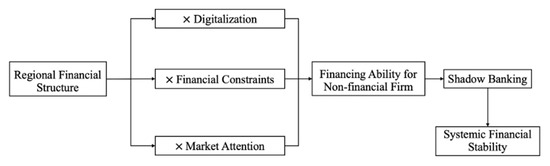
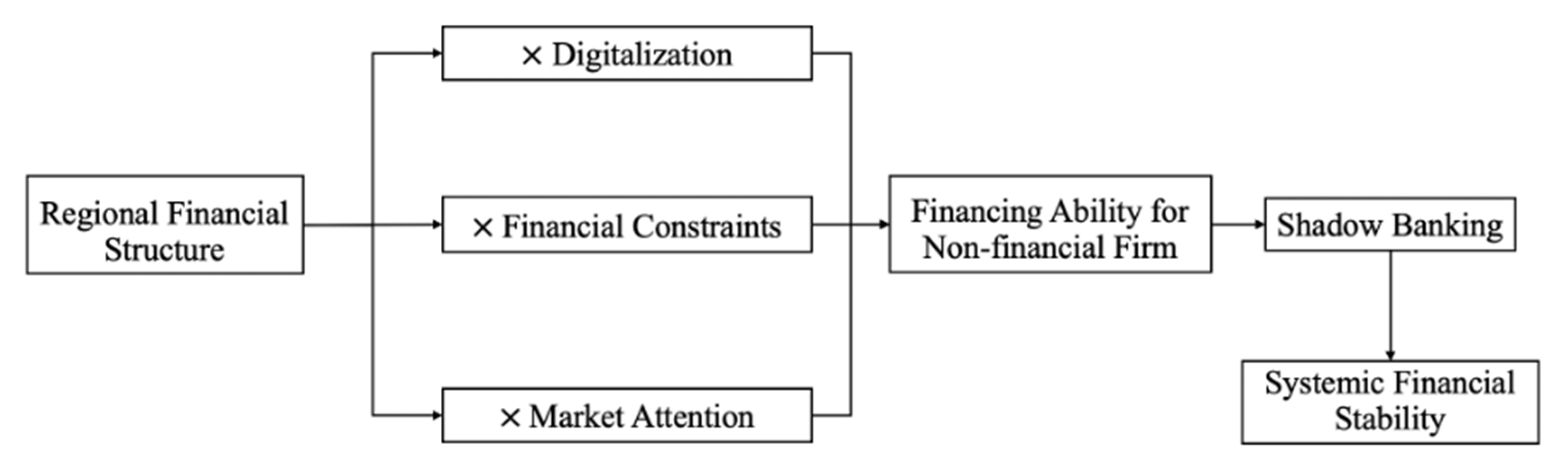
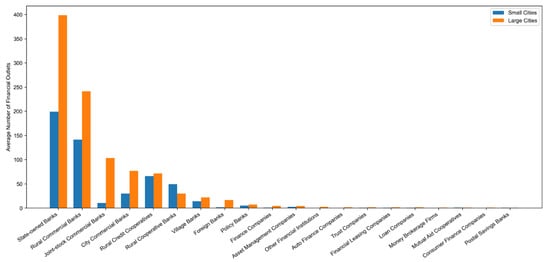
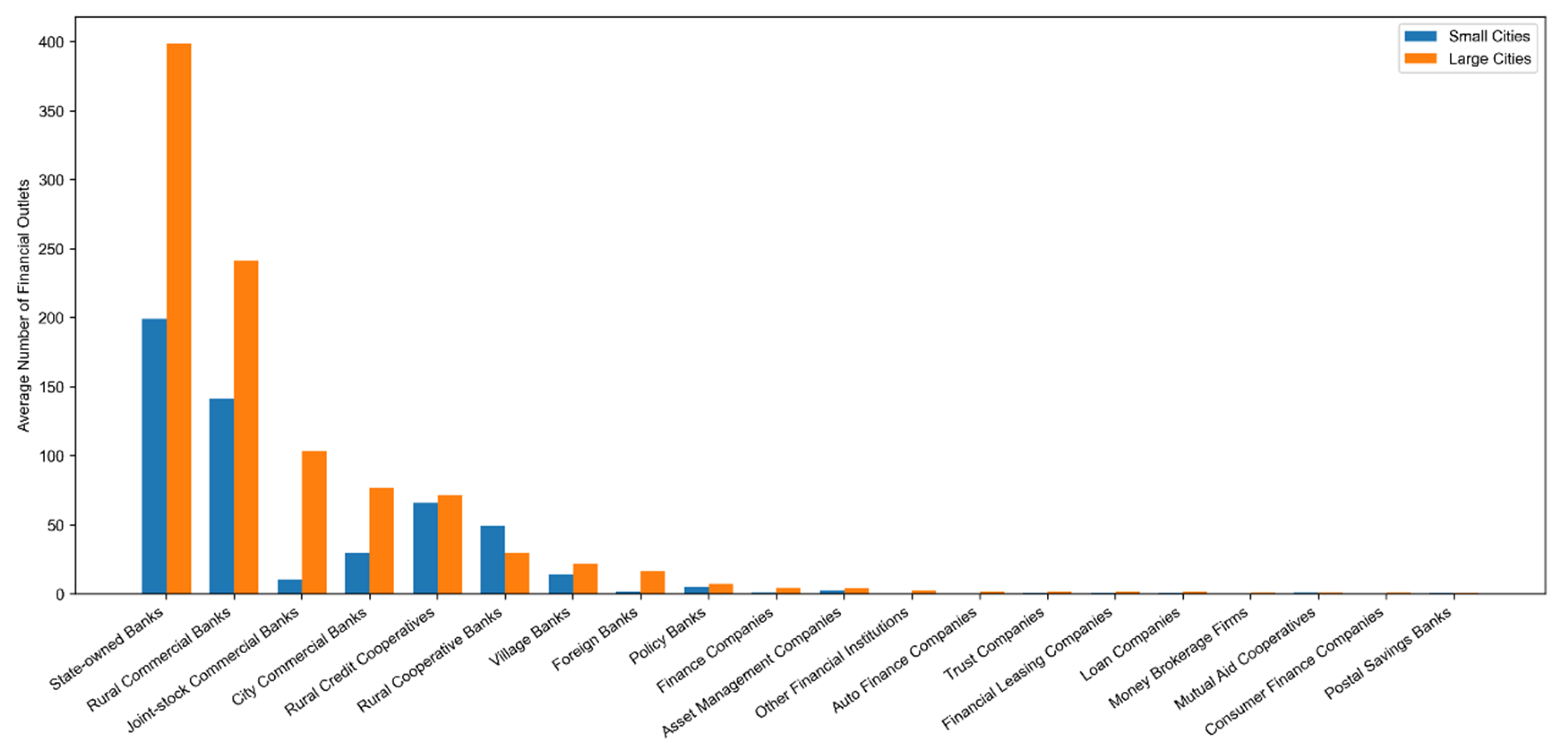

Disclaimer/Publisher’s Note: The statements, opinions and data contained in all publications are solely those of the individual author(s) and contributor(s) and not of MDPI and/or the editor(s). MDPI and/or the editor(s) disclaim responsibility for any injury to people or property resulting from any ideas, methods, instructions or products referred to in the content. |
© 2026 by the authors. Licensee MDPI, Basel, Switzerland. This article is an open access article distributed under the terms and conditions of the Creative Commons Attribution (CC BY) license.