


Abstract
Enhancing urban energy efficiency is central to low-carbon transition and broader urban sustainability. However, whether innovation-oriented urban policy can generate such gains, through which channels it operates, and whether its effects extend beyond pilot cities remain insufficiently understood. Focusing on China’s Innovative City Pilot (ICP) program, this study uses panel data for 274 Chinese cities from 2006 to 2022 and treats the staggered implementation of the program as a quasi-natural experiment. A multi-period difference-in-differences model is employed to examine the impact of the ICP program on urban energy efficiency. The results show that the ICP program significantly improves urban energy efficiency, and this conclusion remains robust across a series of robustness checks. Mechanism analysis further suggests that the policy effect operates through lower per capita carbon emissions and stronger green technological innovation. Heterogeneity analysis shows that the effect is more pronounced in larger cities, economically more developed cities, and cities with stronger pre-existing innovation capacity. Spatial analysis indicates that the program generates not only significant local benefits but also positive spillover effects on neighboring cities. Overall, these findings suggest that innovation-oriented urban policies can promote energy-efficient, low-carbon, and more sustainable urban development, while highlighting the importance of regional coordination and local innovation capacity in shaping policy effectiveness.
1. Introduction
As climate change intensifies the risks of extreme events and global temperatures reached a new record high in 2024, countries are under growing pressure to reconcile economic growth with low-carbon transition under the framework of the Paris Agreement [1,2]. Against this backdrop, energy efficiency has become not merely a technical option but a key lever for jointly advancing emissions mitigation and productivity growth. Cities constitute the core arena of this transition, as they concentrate energy demand, infrastructure investment, and technological diffusion. Accordingly, improvements in urban energy efficiency can scale rapidly and exert far-reaching effects on national mitigation performance. Existing evidence further shows that urbanization substantially shapes energy use and emissions, suggesting that city-level technological progress, governance capacity, and industrial restructuring are central to low-carbon transition [3,4].
Given the need for policy intervention to address the underinvestment in energy efficiency, an important question is whether and through what channels innovation-oriented urban policies can improve urban energy efficiency. Existing research suggests three main pathways. First, such policies may stimulate induced innovation and direct technological change toward energy-saving and cleaner technologies by altering the relative returns to R&D [5,6,7]. Second, they may facilitate the adoption, refinement, and scaling of these technologies through knowledge accumulation, local absorptive capacity, and spillover effects [8,9]. Third, by promoting innovation-led upgrading in production processes and industrial structure, they may improve resource allocation and reduce energy intensity. Since innovation and energy outcomes are often spatially interconnected, these policy effects may also extend beyond the target city through localized spillovers [10].
These mechanisms have broad international relevance. In many countries, innovation-related and place-based urban policies have been adopted to mobilize innovation resources, reduce coordination failures, and support technological upgrading. A growing body of research shows that such policies may contribute to higher energy efficiency by improving technological innovation capability, promoting green total factor productivity, and fostering human-capital accumulation [11,12,13]. Against this broader international background, China’s Innovative City Pilot (ICP) program offers a valuable empirical context for examining how innovation-oriented urban policy affects energy efficiency. China, as the world’s largest energy consumer and carbon emitter, has assumed major responsibilities in global climate governance and set the strategic goals of carbon peaking before 2030 and carbon neutrality before 2060. Meanwhile, its large and highly heterogeneous urban system, together with phased policy rollout and strong national incentives for both innovation and decarbonization, provides favorable conditions for policy evaluation. The staggered implementation of the ICP program therefore creates cross-city policy variation that allows a more credible assessment of its impact on urban energy efficiency.
A growing body of research on China’s ICP policy shows that its effects extend across multiple outcome domains. First, in terms of carbon mitigation, existing studies find that the policy significantly reduces carbon intensity at both the city and firm levels, although the magnitude of this effect varies with local conditions and policy design [14,15,16]. Second, with regard to green innovation and environmental performance, the policy has been shown to promote green technological progress, facilitate the agglomeration of innovation factors, improve ecological efficiency, and support industrial structure upgrading [17,18,19]. Third, in the domain of energy performance, available evidence suggests that the policy can enhance energy productivity and improve urban energy-use efficiency, with heterogeneous effects across cities [20,21]. Despite these important findings, two key gaps remain. First, the existing literature has not yet provided a coherent account of how the ICP policy affects urban energy efficiency through channels such as green innovation, structural upgrading, regulatory pressure, and diffusion capacity. Second, although innovation-oriented urban policies may reshape intercity linkages, factor flows, and demonstration effects, direct evidence on whether the ICP policy generates spatial spillovers in urban energy efficiency remains limited. In particular, the magnitude and direction of such spillovers still require further empirical clarification.
To address these gaps, this paper uses panel data for 274 Chinese cities from 2006 to 2022 and employs a multi-period difference-in-differences framework to examine whether the ICP policy improves urban energy efficiency. This study makes three main contributions that distinguish it from recent studies. First, we focus on two specific and observable channels: per capita carbon emissions and green technological innovation. In contrast to previous studies that tend to aggregate energy efficiency outcomes, we provide a more detailed analysis of these channels to offer a clearer understanding of the underlying mechanisms. Second, we investigate the heterogeneity of the policy effects by examining how the impact of the ICP policy varies across cities of different sizes, development levels, and pre-existing innovation capacities. This analysis clarifies the conditions under which innovation-oriented urban governance is more likely to generate substantial energy efficiency gains, filling a gap in understanding the role of local factors. Third, from a spatial perspective, we explore whether the policy’s effects extend beyond pilot cities through intercity spillover effects. By identifying both local and spillover effects, this study offers new insights into the regional diffusion of innovation-oriented urban policy, contributing to the literature on spatially interconnected urban energy transitions.
The remainder of this paper is organized as follows. Section 2 reviews the literature. Section 3 presents the theoretical framework and research hypotheses. Section 4 describes the research design, including the empirical strategy, variables, and data. Section 5 reports the empirical results. Section 6 concludes the paper.
2. Literature Review
2.1. Environmental Effects of the ICP Policy
Existing studies suggest that the environmental effects of the ICP policy are multidimensional. One strand of research focuses on carbon-related outcomes and finds that innovative city construction can contribute to low-carbon urban development, reduce CO2 emissions, and improve carbon efficiency [22,23,24]. Another strand emphasizes broader environmental and governance effects, showing that the policy can improve urban environmental performance, strengthen environmental governance capacity, and support carbon-neutrality goals through technological progress and more efficient resource allocation [25,26]. In addition, a growing body of literature highlights the role of the ICP policy in promoting green technological innovation by improving the innovation environment and increasing R&D investment [27]. However, whether such environmental gains can be translated into sustained efficiency improvement also depends on implementation capacity, the credibility of policy incentives, and the ability to coordinate innovation and energy governance [28,29]. Taken together, these studies suggest that the policy generates various environmental and innovation-related benefits, but the way these effects translate into improvements in urban energy efficiency remains insufficiently clarified.
2.2. Influencing Factors of Energy Efficiency
Existing studies suggest that urban energy efficiency is shaped by the interaction of policy incentives, technological progress, diffusion capacity, and broader structural conditions. From a policy perspective, stronger environmental regulation and clearer policy signals can improve energy efficiency by changing the relative costs of energy use and encouraging firms and local governments to adopt more efficient production and management practices [30,31]. At the same time, technological innovation plays a central role, as advances in production processes, equipment, and management systems can directly reduce energy waste and increase output per unit of energy input. However, the existence of efficient technologies does not automatically translate into higher energy efficiency, because their diffusion and adoption may still be constrained by barriers related to information, financing, organization, and coordination [32,33].
In addition, energy efficiency is influenced by broader structural and urban conditions. Industrial composition, infrastructure quality, urban form, and resource-allocation patterns can all shape the way energy is produced, distributed, and consumed within cities, thereby affecting both energy-use outcomes and the potential for efficiency improvement [34,35]. Specifically, urban energy efficiency is not determined solely by isolated technological adoption, but also by the broader capacity of cities to coordinate infrastructure systems, integrate cleaner energy sources, and align spatial planning with energy planning during the process of urban energy transition [36,37].
2.3. Methodological Discussion on Policy Evaluation
Recent methodological studies have refined the empirical evaluation of place-based policies. In particular, when treatment is adopted at different points in time, conventional two-way fixed-effects DID estimators may produce biased or difficult-to-interpret estimates in the presence of treatment-effect heterogeneity [38]. Recent advances therefore emphasize the importance of identifying group-time average treatment effects, carefully interpreting event-study coefficients, and testing dynamic pre-trends in staggered-adoption settings [39]. In addition, because place-based innovation policies may generate inter-city spillovers through factor mobility, demonstration effects, and policy competition, the assumption of spatial independence may be overly restrictive. In such cases, spatial econometric approaches provide a useful complement by distinguishing local effects from indirect spillover effects [40]. These methodological advances provide an important basis for evaluating the energy-efficiency effect of the ICP policy in a multi-period and spatially interconnected urban context.
2.4. Research Gaps and Analytical Focus
Although existing literature provides valuable evidence on the environmental effects of the ICP policy and the factors influencing energy efficiency, as well as laying a methodological foundation for further analysis, several gaps remain. First, the relationship between innovation-oriented urban policies and urban energy efficiency has not been fully explored. Specifically, there is insufficient research on how place-based innovation policies can impact energy efficiency through system coordination, integration of cleaner energy, and local implementation capacity.
Second, the mechanisms through which the ICP policy influences urban energy efficiency remain underexplored. While previous studies have mainly focused on environmental outcomes, carbon reduction, and green innovation, there has been less attention on how these factors are connected to the broader restructuring of urban energy systems and governance structures. This highlights the need for a deeper investigation into the underlying mechanisms.
Third, the conditions under which the ICP policy generates varying energy-efficiency gains across different cities are still unclear. While innovation-oriented policies may reshape intercity linkages and factor flows, their spatial impacts on energy efficiency have not been adequately studied. Therefore, it is important to examine not only whether the ICP policy improves energy efficiency, but also how these effects differ across cities and whether spatial spillover effects exist.
3. Theoretical Framework and Hypotheses
3.1. The Direct Impact of ICP Policy on Urban Energy Efficiency
China’s ICP policy is a typical innovation-oriented place-based policy that reshapes local innovation incentives and promotes urban technological upgrading [41]. From a theoretical perspective, innovation-supporting policies can improve energy efficiency by accelerating the replacement of outdated technologies and production modes, encouraging firms and local governments to adopt more energy-saving and resource-efficient practices, and directing technological change toward cleaner production [42,43]. In practice, the ICP policy strengthens urban innovation systems and technology transformation capacity, which helps cities improve production processes, optimize energy management, and facilitate industrial upgrading toward less energy-intensive activities [44]. Through these channels, the policy is expected to reduce energy waste and enhance urban energy efficiency. Based on this analysis, the following hypothesis is proposed:
H1:
The implementation of the ICP Policy significantly improves urban energy efficiency.
3.2. The Mediating Role of Carbon Emission Constraints in the Policy’s Impact on Energy Efficiency
The ICP policy may improve urban energy efficiency indirectly by strengthening carbon-emission constraints. As an innovation-oriented urban policy implemented within China’s broader low-carbon development agenda, the ICP policy not only encourages technological upgrading, but also raises the salience of carbon-related objectives in local governance and enterprise decision-making. Existing studies suggest that the policy can significantly reduce urban and firm-level carbon intensity, indicating that it helps embed low-carbon requirements into local development processes rather than merely promoting innovation in a narrow sense [45,46].
This carbon-emission channel mainly reflects a constraint-induced adjustment mechanism. When carbon-related targets become more binding, local governments and firms face stronger pressure to reduce carbon-intensive and inefficient energy use. In response, they are more likely to optimize production processes, strengthen energy management, substitute cleaner energy sources for traditional fossil inputs, and curb the expansion of high-emission activities [47]. Under this mechanism, improvements in energy efficiency arise primarily from the corresponding adjustment of energy-use behavior, rather than from the immediate generation of new green technologies.
Stronger carbon-emission constraints are closely linked to energy-efficiency improvement. In carbon-intensive urban systems, meeting stricter carbon-related requirements often requires energy-saving retrofits, process optimization, cleaner energy use, and tighter energy management, all of which help reduce energy consumption per unit of output [48]. Therefore, by strengthening carbon-emission constraints, the ICP policy is expected to improve urban energy efficiency. Based on this analysis, the following hypothesis is proposed:
H2:
The ICP Policy may improve urban energy efficiency in part through lower per capita carbon emissions.
3.3. The Mediating Role of Green Technology Innovation in the Policy’s Impact on Energy Efficiency
Another important transmission channel is green technology innovation. As an innovation-oriented urban policy, the ICP policy can improve local innovation conditions, strengthen support for green-oriented technological activities, and encourage the production and application of cleaner technologies. Existing studies show that innovative-city construction can promote green technology progress and significantly increase urban green innovation output [49,50]. In addition, stronger environmental policy signals may further direct local innovation toward cleaner and more energy-saving technologies [51]. Therefore, the ICP policy is expected to promote green technology innovation.
Green technology innovation, in turn, can improve urban energy efficiency. The accumulated stock of green knowledge embodies cleaner production technologies, energy-saving equipment, and more efficient process designs. As these technologies are adopted and diffused, they can reduce energy losses, improve input-use efficiency, and support cleaner production across sectors [52]. Therefore, green technological innovation is expected to be a plausible channel through which the ICP policy is associated with urban energy efficiency. Based on this analysis, the following hypothesis is proposed:
H3:
The ICP Policy may improve urban energy efficiency in part through stronger green technology innovation.
3.4. Heterogeneous Effects by City Characteristics
The effects of place-based innovation policies are unlikely to be homogeneous across cities, because substantial differences in absorptive capacity, stage of economic development, industrial conditions, and innovation endowments shape the extent to which policy support can be translated into actual efficiency gains. Existing studies suggest that different types of cities vary considerably in terms of innovation factor agglomeration, technology diffusion capacity, market size, and policy implementation conditions, implying that the effectiveness of the same policy may differ substantially across cities [53]. Relatively speaking, cities with a larger size, higher levels of economic development, and stronger innovation foundations tend to possess more complete infrastructure, richer high-end factor endowments, and stronger capacities for technology absorption and transformation. As a result, they are more likely to convert innovation-oriented policy incentives into green technological progress, industrial upgrading, and improvements in energy efficiency [54].
Therefore, the impact of the ICP policy on urban energy efficiency is expected to vary across city characteristics, including city size, development level, and initial innovation conditions. Based on this analysis, the following hypothesis is proposed:
H4:
The energy-efficiency effect of the ICP policy is heterogeneous across cities.
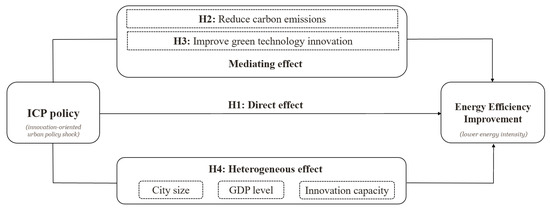
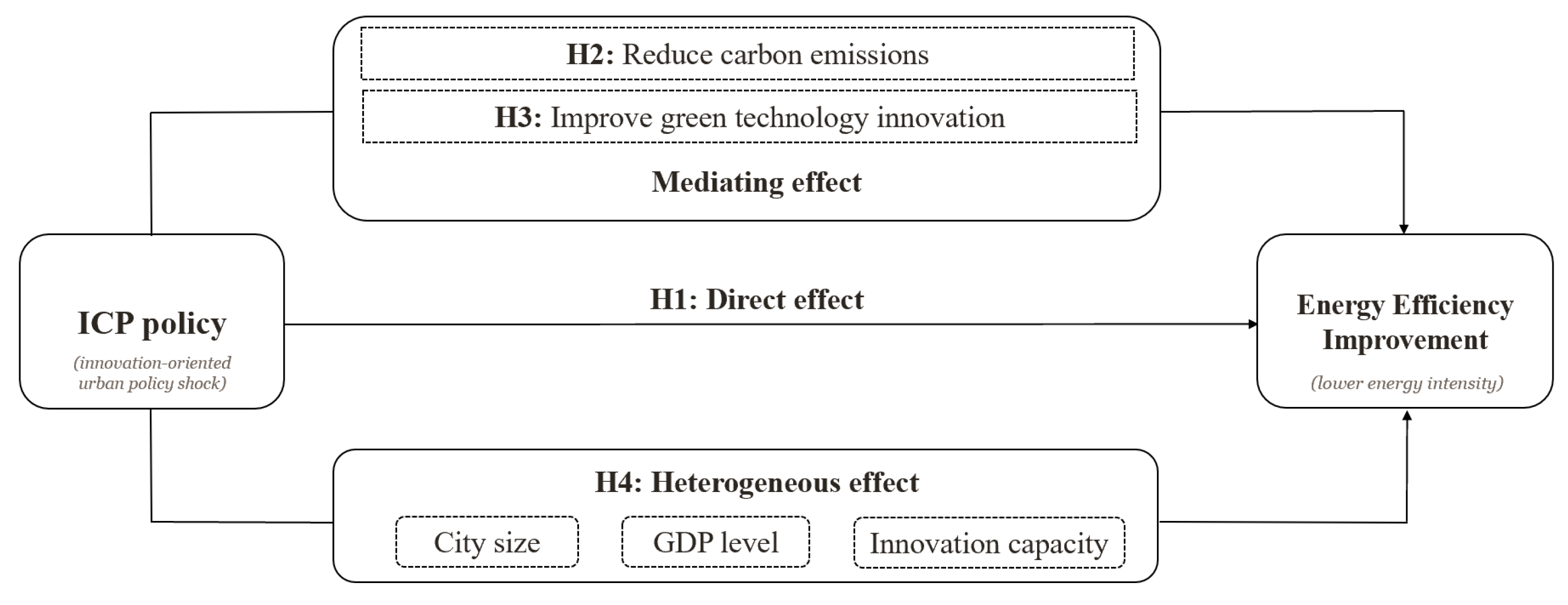
Figure 1 presents the conceptual framework and the hypothesized mechanisms through which the ICP Policy influences urban energy efficiency.
Figure 1.
Conceptual framework.
4. Research Design
4.1. Multi-Period Difference-in-Differences (DID)
To evaluate the causal effect of the ICP policy on energy efficiency, we employ a multi-period difference-in-differences (DID) design. This approach compares the evolution of outcomes in treated cities (those designated as ICP pilots) with that in control cities (non-pilot cities) before and after policy implementation. The DID framework helps isolate the causal impact of the policy on urban energy efficiency from other time-varying confounding factors.
The basic DID model is set up as shown in Equation (1):
where denotes the dependent variable, energy consumption intensity, a core indicator for measuring urban energy efficiency for city i in year t. is the policy treatment indicator, equal to 1 for pilot cities in and after the policy implementation year, and 0 otherwise. represents a set of time-varying city-level control variables. and denote city and year fixed effects, respectively. is the idiosyncratic error term.
4.2. Spatial Correlation Test and Spatial Durbin Model Specification
To identify the spatial dependence characteristics of the measuring indicator (energy consumption intensity) and the spatial spillover effects of the ICP policy on urban energy efficiency, this section first adopts the Moran’s I global spatial autocorrelation coefficient to test the spatial dependence degree of urban energy consumption intensity. Its calculation equation is:
where n = 274 denotes the number of sample cities. is the element of the spatial weight matrix and represent the energy consumption intensity of city i and city j. The value of Moran’s I ranges between −1 and 1: a positive value indicates positive spatial autocorrelation, a negative value indicates negative spatial autocorrelation, and a value close to zero indicates no significant spatial autocorrelation. Spatial dependence is modeled using a row-standardized K-nearest neighbors weight matrix (k = 5) constructed from the geographic coordinates of cities. Subsequently, the city-time two-way fixed effects Spatial Durbin Model (SDM) is employed to examine spatial spillover effects. The model specification is:
where is the intercept term; is the core explanatory variable (ICP policy), and is its estimated coefficient; is the matrix of control variables, and is its estimated coefficient; is the spatial autoregressive coefficient (measuring the spatial correlation between the energy consumption intensity of neighboring cities and that of the local city); is the coefficient of the spatial lag term of the core explanatory variable (reflecting the spillover effect of the pilot policy in neighboring cities on the local energy consumption intensity); is the coefficient of the spatial lag term of control variables; and represent city fixed effect and time fixed effect respectively; is the independently and identically distributed random error term.
4.3. Variable Selection and Definitions
Dependent Variable: The primary outcome of interest is urban energy consumption intensity, measured as total energy consumption per unit of GDP [55]. This metric (energy consumption intensity) serves as a core measure of energy efficiency, directly reflecting the efficiency of energy use in economic production.
Independent Variable: The core independent variable is the ICP policy, measured by the interaction term did = treat × period, which captures the net effect of policy implementation. The list of pilot cities and the timing of policy implementation were obtained from relevant official documents published on the website of the Ministry of Science and Technology.
Control Variables: Fixed Asset Stock and real GDP are included to capture capital intensity and economic scale, respectively. Fixed assets reflect capital formation and may influence long-term energy use, while real GDP is closely associated with energy demand and carbon emissions [56]. The number of employed personnel is included to control for labor input. As a core factor of production, labor force size affects economic output and its environmental impact [57]. Environmental Regulation captures local government commitment to pollution control and is an important factor affecting urban energy consumption intensity [58]. Registered Population is included to control for demographic factors, as population size is a classic source of environmental pressure [59]. R&D Personnel is included to control for human capital, as the concentration of R&D talent supports innovation and may improve environmental performance [60]. To control for the structural characteristics of the urban economy, we include the share of the tertiary industry in GDP as a proxy for industrial upgrading. A higher tertiary share is generally associated with lower energy intensity at the city level [61]. To reduce skewness and improve comparability, FAS, Labor, GDP, Pop, and RD_Person are transformed into logarithmic form.
Mediation Variables: To examine the mechanisms through which the policy may affect energy intensity, we use two mediating variables: per capita city-level CO2 emissions and green innovation. Per capita CO2 emissions (PCE), measured as total city-level CO2 emissions divided by registered population, are used to test whether the policy is associated with lower emissions, which in turn correlate with lower energy intensity [62]. Green technological innovation (GIS) is measured as the cumulative stock of granted green invention patents at the city level and is used to test whether the policy promotes the long-term accumulation of green technological capability that improves energy consumption performance [63].
Table 1 reports the definitions and data sources of the main variables.
Table 1.
Variable Definitions and Descriptions.
4.4. Data Sources and Descriptive Statistics
This study employs panel data for 274 Chinese cities over the period 2006–2022. The data are primarily obtained from the China City Statistical Yearbook and the China Energy Statistical Yearbook. Observations with missing values are excluded to ensure consistency. Information on Innovative Pilot Cities and their designation years is collected from official announcements of the National Development and Reform Commission (NDRC) and the Ministry of Science and Technology (MOST). Cities designated as Innovative Pilot Cities during the sample period are assigned to the treatment group, while the remaining cities constitute the control group. All monetary variables are converted into constant 2010 prices to eliminate the effects of inflation. Table 2 presents the descriptive statistics of the main variables.
Table 2.
Descriptive Statistics of Key Variables.
5. Empirical Results
5.1. Baseline Regression Results
Based on Equation (1), this section reports the baseline regression results. The VIF test results show that the maximum VIF is 8.88, well below the threshold of 10, indicating that multicollinearity is not a concern. As shown in Table 3, the coefficient on the DID term is consistently negative and statistically significant across specifications, indicating that the ICP policy is associated with a reduction in urban energy consumption intensity. This finding provides support for H1 and suggests that the policy contributes to improving urban energy efficiency.
Table 3.
Baseline DID Regression Results.
Column (1) includes all control variables but does not incorporate city or year fixed effects. The estimated coefficient on DID is −1.122 and is significant at the 10% level, indicating a negative association between the policy and urban energy consumption intensity. Column (2) further introduces both city and year fixed effects while retaining the full set of control variables. The estimated DID coefficient of −3.021, significant at the 1% level, suggests that the ICP policy reduces urban energy consumption intensity by 3.021 units on average, with the result being robust to the inclusion of two-way fixed effects. Column (3) includes city and year fixed effects but excludes all control variables. The DID coefficient remains negative and statistically significant (−3.587, significant at the 1% level), further confirming the robustness of the main finding. Compared with Columns (1) and (2), the R-squared in Column (3) declines substantially, implying that the control variables explain an important share of the variation in urban energy consumption intensity.
5.2. Parallel Trend Tests
This section examines the parallel-trends assumption, which is a key identifying condition for the DID approach. Under this assumption, treated and control cities would have followed similar trends in energy consumption intensity in the absence of the ICP policy. The results provide supportive evidence for this assumption, thereby enhancing the credibility of the empirical strategy.
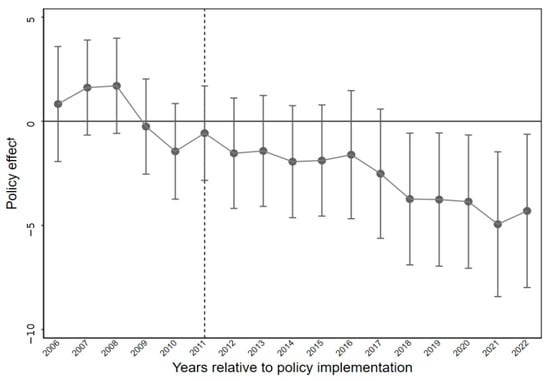
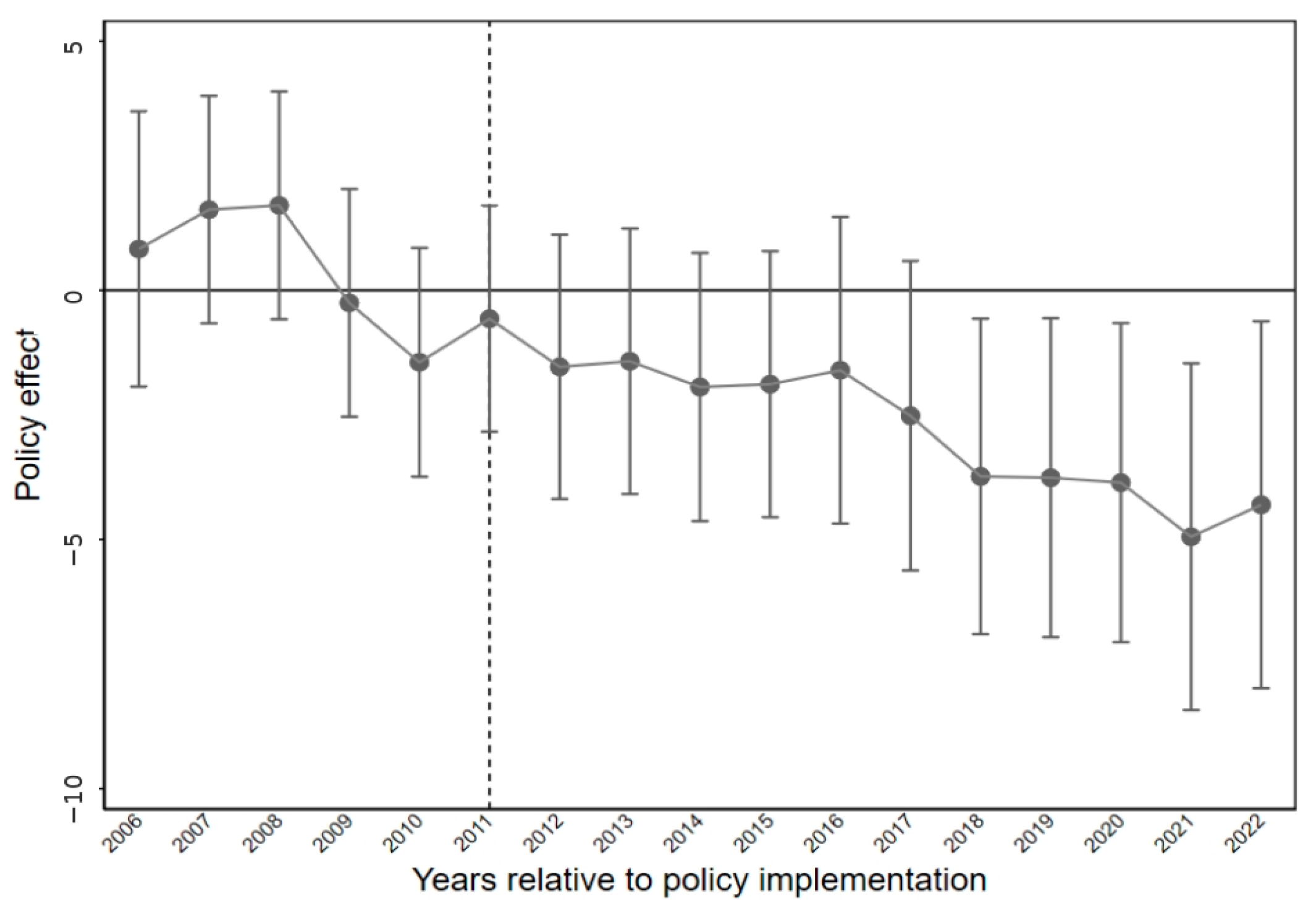
Figure 2 presents the results of the dynamic event-study analysis. The estimated coefficients in the pre-treatment periods are statistically insignificant, and their confidence intervals all include zero, indicating no systematic difference in pre-policy trends between the treatment and control groups. In contrast, the post-treatment coefficients become consistently negative, with several reaching statistical significance, suggesting that the ICP policy reduces urban energy consumption intensity after its implementation. Moreover, the magnitude of the coefficients tends to increase over time, implying that the policy effect strengthens gradually. Overall, these results support the parallel-trends assumption and reinforce the causal interpretation of the baseline DID estimates.
Figure 2.
Parallel Trend Test for Energy Consumption Intensity. The dotted vertical line indicates the policy implementation year (event time = 0).
5.3. Robustness Checks
5.3.1. Placebo Test with Random Policy Timing
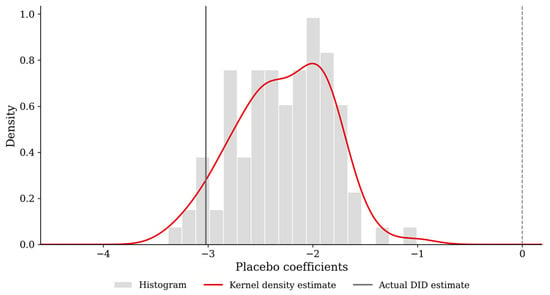
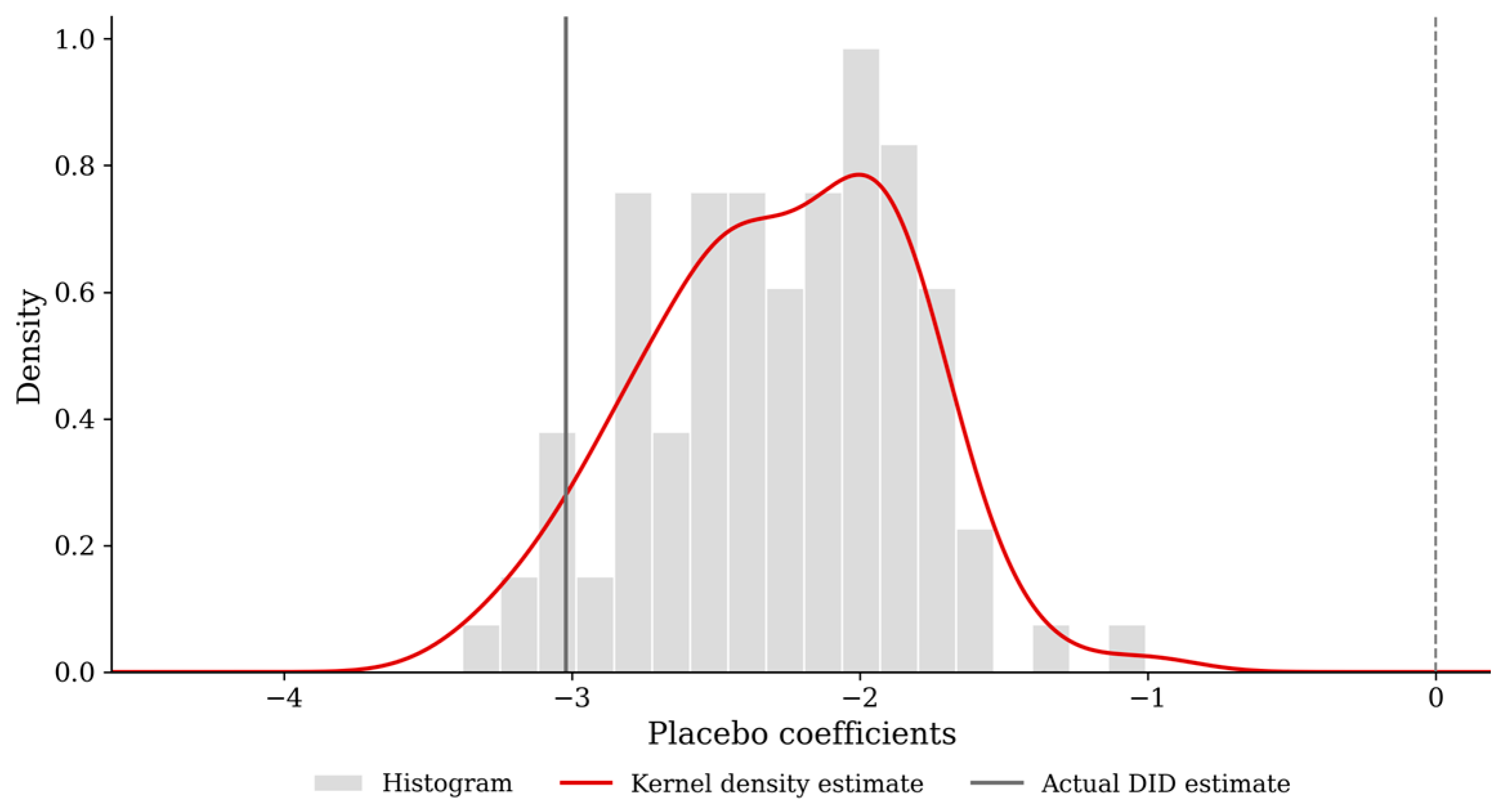
To examine whether the baseline results are driven by chance rather than the ICP policy itself, we conduct a permutation-based placebo test. Specifically, while holding the set of treated cities fixed, we randomly assign a false policy implementation year to each treated city and re-estimate the DID model. This procedure is repeated 500 times to generate the distribution of placebo DID coefficients under the null hypothesis of no treatment effect.
Figure 3 presents the results of the placebo test. The simulated placebo coefficients are largely centered around zero and follow an approximately symmetric distribution. By contrast, the actual baseline DID estimate lies in the left tail of the placebo distribution and is clearly separated from most of the simulated coefficients. This finding suggests that the estimated negative policy effect is unlikely to be generated by random assignment. Therefore, the placebo test provides additional support for the baseline conclusion that the ICP policy significantly reduces urban energy consumption intensity.
Figure 3.
Placebo Test. The dotted vertical line marks the zero-effect benchmark, while the solid vertical line indicates the actual DID estimate.
5.3.2. Instrumental Variable Estimation
To alleviate endogeneity concerns arising from reverse causality and omitted variable bias, we employ a two-stage least squares (2SLS) approach with a Bartik-style instrumental variable. Specifically, the instrument is constructed by interacting each city’s pre-policy science-and-technology fiscal orientation with the annual national expansion shock of the ICP program. The local exposure component is measured as the average ratio of science and technology expenditure to general budget expenditure during 2006–2008, while the aggregate shock is captured by the annual number of newly added ICP cities.
This instrument is likely to be relevant because cities with a stronger pre-existing orientation toward science and technology spending are more likely to be affected when the ICP program expands nationally. It is also plausibly exogenous because the city-level component is predetermined before policy implementation, and the time-varying component reflects national policy expansion rather than city-specific contemporaneous changes in energy intensity.
The 2SLS results are reported in Table 4. Column (1) shows that the excluded instrument is positively and significantly correlated with the endogenous DID term in the first stage. The corresponding first-stage F statistic is 19.64, exceeding the conventional threshold of 10 and suggesting sufficient instrument strength. Column (2) presents the second-stage results, where the coefficient on the instrumented DID term remains significantly negative. In both stages, the full set of controls and two-way fixed effects are included, and standard errors are clustered at the city level. Taken together, the IV estimates provide further evidence that the ICP policy reduces urban energy consumption intensity. However, because the exclusion restriction cannot be directly tested, the IV estimates are better interpreted as complementary rather than definitive evidence.
Table 4.
2SLS Estimates Results.
5.3.3. Robustness Check Using TFEE as Dependent Variable
To further examine whether the estimated policy effect is sensitive to both outcome measurement and policy timing, we replace the contemporaneous policy indicator with its one-period lag (L1.DID) to capture any delayed effects of the ICP policy, while using total factor energy efficiency (TFEE) as the dependent variable. Table 5 reports the corresponding results.
Table 5.
Robustness Check Using TFEE as an Alternative Dependent Variable.
The estimated coefficient on the lagged policy variable is positive across all specifications, indicating that the ICP policy continues to improve urban total factor energy efficiency with a temporal lag. In Column (1), where controls are included but fixed effects are not, the coefficient on L1.DID is 0.017, statistically significant at the 1% level. In Column (2), after adding city and year fixed effects, the coefficient remains significantly positive at 0.009, showing the policy’s lagged effect after controlling for unobserved city-specific factors and common time shocks. Column (3), which includes fixed effects but excludes controls, also shows a positive coefficient of 0.023, significant at the 1% level. Overall, these results support the robustness of the main findings, demonstrating that the policy’s effect on energy efficiency is not only immediate but also persists over time.
5.3.4. PSM-DID Test
To further alleviate potential sample-selection bias, we conduct a PSM-DID test. Based on pre-treatment city characteristics averaged over 2006–2007, pilot and non-pilot cities are first matched and the DID model is then re-estimated on the matched sample. Table 6 reports the results.
Table 6.
Robustness Check Results: PSM-DID.
Column (1) shows that after matching and controlling for the full set of covariates as well as city and year fixed effects, the coefficient on DID remains negative and is marginally significant at the 10% level. This indicates that the ICP policy still reduces urban energy consumption intensity after improving the comparability between treated and control cities. Column (2) excludes the control variables while retaining two-way fixed effects, and the estimated coefficient on DID remains significantly negative at the 5% level. Overall, the PSM-DID results remain directionally consistent with the baseline regression results. Although the statistical significance is somewhat weaker after matching, the estimated policy effect remains negative in the main specifications.
5.4. Mechanism Analysis
To further unpack how the ICP policy affects urban energy efficiency, this section examines two potential transmission channels: per capita carbon emissions (PCE) and green technological innovation (GIS). Following the conventional stepwise approach, we first test whether the ICP policy significantly affects the proposed mediating variables and then examine whether these mediators are significantly associated with urban energy consumption intensity. Table 7 reports the corresponding results. Overall, the evidence suggests that the ICP policy improves urban energy efficiency by reducing carbon-intensive activities and strengthening the accumulation of green technological capability.
Table 7.
Transmission Mechanism Test.
We first examine the carbon-emission channel. As shown in Column (1), the coefficient on DID is significantly negative, indicating that the ICP policy is associated with lower per capita carbon emissions. In Column (2), PCE is positively and significantly associated with urban energy consumption intensity, suggesting that cities with higher carbon emissions also tend to have higher energy intensity. These results imply that the ICP policy may improve urban energy efficiency by reducing per capita carbon emissions, consistent with recent findings on coordinated low-carbon adjustment and urban energy transition [64].
Columns (3) and (4) report the results for the green-innovation channel. In Column (3), the coefficient on DID is significantly positive, indicating that the ICP policy promotes the accumulation of green innovation. In Column (4), the coefficient on GIS is significantly negative, suggesting that stronger green technological capabilities are associated with lower urban energy consumption intensity. Unlike green patent flow, this measure better reflects the cumulative and persistent nature of technological progress. As green technologies accumulate and diffuse, they support cleaner production, improve process efficiency, and reduce energy losses. This is consistent with recent evidence that green innovation enhances urban energy efficiency [65].
5.5. Heterogeneity Analysis
To examine whether the effect of the ICP policy varies across cities with different local characteristics, we further conduct a heterogeneity analysis. Following standard practice in DID studies, the sample is divided according to three pre-policy city-level attributes: city size, economic development level, and innovation capacity. Specifically, cities are grouped by whether their population, real GDP, and number of patent applications are above or below the sample mean prior to policy implementation. Table 8 reports the corresponding estimation results.
Table 8.
Heterogeneous Effects of the ICP Policy.
Heterogeneity by City Size. The results show substantial variation by city size. For smaller cities, defined as those with population below the sample mean, the DID coefficient is positive but statistically insignificant, indicating that the ICP policy does not generate a robust reduction in energy intensity in this subgroup. By contrast, for larger cities, the DID coefficient is −1.543 and significant at the 5% level, suggesting that the policy effect is mainly concentrated in larger urban economies. This pattern may reflect the fact that larger cities generally possess stronger industrial upgrading capacity, more mature innovation platforms, and better supporting infrastructure, which enable them to convert policy support into actual reductions in energy intensity more effectively.
Heterogeneity by Economic Development Level. A similar pattern emerges across cities with different levels of economic development. In the low-GDP subgroup, the DID coefficient is statistically insignificant, suggesting no robust policy effect on energy intensity. In contrast, the coefficient in the high-GDP subgroup is −3.001 and significant at the 10% level, indicating that economically more developed cities benefit more from the ICP policy in terms of reducing energy intensity. This result is consistent with the view that stronger fiscal capacity, more advanced industrial structures, and richer innovation resources help cities translate innovation-oriented policy support into measurable energy-saving outcomes.
Heterogeneity by Pre-existing Innovation Capacity. The results also differ across cities with different innovation foundations. In cities with relatively weak initial innovation capacity, the DID coefficient is positive and statistically insignificant, suggesting that the ICP policy does not produce a stable effect on energy intensity in this subgroup. By contrast, in cities with stronger pre-existing innovation capacity, the DID coefficient is −1.987 and significant at the 5% level. This finding suggests that absorptive capacity is an important complementary condition for policy effectiveness: cities with stronger innovation talent, R&D resources, and knowledge networks are better able to transform policy incentives into green technological progress and lower energy intensity.
Overall, the heterogeneity analysis indicates that the effect of the ICP policy is not uniform across cities. Its impact on reducing energy intensity is more pronounced in cities with stronger economic and innovation foundations, including larger cities, economically more developed cities, and cities with stronger pre-existing innovation capacity. These findings imply that innovation-oriented urban policies require adequate complementary conditions to generate measurable energy-saving effects, and that policy support should be tailored to local conditions.
5.6. Spatial Spillover Effects Analysis
5.6.1. Spatial Correlation Test
We first test the spatial autocorrelation of urban energy consumption intensity for the period 2006–2022 using the Global Moran’s I statistic. Table 9 shows that Moran’s I is positive in all years, and the corresponding statistics are significant at the 1% level in most years. These results indicate the presence of significant spatial clustering in urban energy consumption intensity, supporting the use of spatial econometric models in the subsequent analysis.
Table 9.
Moran’s I Test for Energy Consumption Intensity.
5.6.2. Spatial Model Selection
Table 10 reports the results of the spatial model specification tests. Both the Wald and LR tests reject the null hypothesis that the Spatial Durbin Model (SDM) can be reduced to either the Spatial Autoregressive Model (SAR) or the Spatial Error Model (SEM) at the 5% level, supporting the use of the SDM. The Hausman test further indicates that the two-way fixed effects specification is preferred to models with only individual or time fixed effects. Therefore, a two-way fixed effects SDM is employed in the subsequent analysis.
Table 10.
Spatial Model Specification Tests.
5.6.3. Spatial Durbin Model Results
Table 11 reports the estimation results of the Spatial Durbin Model (SDM). The coefficient on the core explanatory variable, DID, is −2.124 and statistically significant at the 1% level, indicating that the ICP policy significantly reduces local energy consumption intensity. The spatial autoregressive coefficient, ρ, is 0.120 and significant at the 1% level, showing positive spatial dependence in urban energy consumption intensity. These results suggest that a city’s energy consumption is influenced both by its own characteristics and by conditions in neighboring cities.
Table 11.
Spatial Durbin Model Estimation Results.
To further examine the effects of the ICP policy, we decompose the SDM estimates into direct, indirect, and total effects. The direct effect of DID is −2.229 and statistically significant at the 1% level, indicating a robust reduction in energy consumption intensity within pilot cities. The indirect effect is −1.718 and significant at the 5% level, suggesting that the policy generates a spillover effect on neighboring cities. The spatial lag of the policy variable, W × DID, is −1.607 and significant at the 5% level, confirming that implementation in neighboring cities contributes to reductions in local energy intensity. The total effect of DID is −3.947 and statistically significant at the 1% level, indicating that the ICP policy exerts an overall reducing effect on urban energy consumption intensity. Taken together, these results demonstrate that the policy produces both significant local effects and meaningful cross-city spillover effects, highlighting the spatial diffusion of energy efficiency gains from the ICP policy.
5.6.4. Robustness Check Using an Inverse-Distance Spatial Weight Matrix
To further assess the robustness of the spatial regression results to the specification of the spatial weight matrix, we replace the baseline matrix with an inverse-distance weighted spatial matrix and re-estimate the Spatial Durbin Model. The results are reported in Table 12. Under this alternative specification, the coefficient on DID remains significantly negative at the 1% level, with an estimated value of −2.134, indicating that the ICP policy continues to significantly reduce local energy consumption intensity. Meanwhile, the spatial autoregressive coefficient ρ remains significantly positive at 0.077, suggesting that urban energy consumption intensity still exhibits positive spatial dependence. Although the coefficient on the spatial lag term W × DID remains negative at −1.067, it is no longer statistically significant, implying that the direction of the spillover effect is unchanged while its statistical significance is somewhat sensitive to the choice of spatial weighting scheme.
Table 12.
Robustness Check Using an Inverse-Distance Weighted Spatial Matrix.
The decomposition results further support the robustness of the main findings. As shown in Table 12, the direct effect of DID remains significantly negative at −2.140, which is highly consistent with the baseline spatial estimates and confirms the local energy-saving effect of the ICP policy. The indirect effect is estimated at −1.267 and remains weakly significant, suggesting that the spillover effect becomes weaker in statistical strength under the alternative matrix. The total effect is −3.407 and remains significantly negative at the 1% level, indicating that the overall policy effect on urban energy consumption intensity is still robust. Taken together, these results suggest that the main conclusion, namely that the ICP policy reduces urban energy consumption intensity, remains stable under an alternative spatial weighting specification.
6. Conclusions and Policy Implications
6.1. Main Conclusions
This study examines the effect of China’s ICP policy on urban energy consumption intensity using panel data for 274 Chinese cities from 2006 to 2022 and a multi-period difference-in-differences framework. The main conclusions are as follows.
First, the ICP policy significantly reduces urban energy consumption intensity, implying an improvement in urban energy efficiency. This baseline finding remains robust across a series of tests, including the parallel-trend test, placebo test, instrumental-variable estimation, and other robustness checks.
Second, the mechanism analysis suggests that the ICP policy affects urban energy consumption intensity through two main channels: carbon-emission reduction and green innovation. Specifically, the policy is associated with lower per capita carbon emissions and greater green technological innovation, both of which are linked to lower energy intensity.
Third, the effect of the ICP policy is heterogeneous across cities. The estimated policy effect is more pronounced in larger cities, economically more developed cities, and cities with stronger pre-existing innovation capacity, indicating that local economic and innovation conditions shape the effectiveness of the policy.
Fourth, the spatial analysis shows that the ICP policy has both a significant local effect and a beneficial spillover effect. The policy not only reduces energy consumption intensity within pilot cities, but also contributes to lower energy consumption intensity in neighboring cities, indicating that its energy-saving effect can diffuse across cities through spatial linkages.
6.2. Policy Recommendations
Based on the above findings, this study proposes the following policy recommendations.
First, incorporate the ICP policy into a long-term urban green development framework. Since the empirical results show that the ICP policy significantly reduces urban energy consumption intensity, policymakers should move beyond treating it as a short-term pilot arrangement and instead embed its core objectives into a more stable institutional framework. In particular, policy design should continue to emphasize those measures that are closely associated with lower energy intensity, so as to sustain the policy’s energy-saving effects over time.
Second, improve the policy mix around carbon reduction and green innovation. The mechanism analysis suggests that the policy’s energy-saving effect is associated with lower per capita carbon emissions and stronger green innovation. Accordingly, policy implementation should better coordinate short-term carbon-reduction measures with longer-term innovation support. On the one hand, cities should continue to promote cleaner production, energy-saving technological upgrading, and low-carbon transformation. On the other hand, greater support should be provided for green R&D, patent transformation, and technology diffusion, in order to strengthen the accumulation of green technological innovation and thereby support sustained reductions in energy consumption intensity.
Third, adopt differentiated policy arrangements according to local development conditions. Given the heterogeneity in policy effects, local conditions should be taken seriously in policy design and implementation. For small- and medium-sized cities, especially those with relatively weak economic foundations and limited innovation capacity, the policy focus should be placed on strengthening the basic conditions for green transformation. This includes improving basic R&D infrastructure, expanding technical training, supporting technology transfer platforms, and subsidizing energy-saving retrofits and cleaner production equipment. By contrast, for larger metropolitan areas and economically more developed cities with stronger innovation foundations, policy efforts should focus more on frontier green R&D, the commercialization of low-carbon technologies, and the upgrading of industrial chains toward lower energy intensity. Such differentiated arrangements would help reduce capability mismatches and improve policy effectiveness.
Fourth, strengthen regional coordination mechanisms to enhance the diffusion of policy effects. The spatial analysis indicates that the ICP policy not only reduces local energy consumption intensity but also generates beneficial spillover effects on neighboring cities. This suggests that policy implementation should place greater emphasis on regional coordination rather than being confined to isolated pilot-city governance. More specifically, metropolitan areas and urban agglomerations should promote joint innovation platforms, shared technology transfer mechanisms, cross-city demonstration projects, and coordinated low-carbon industrial upgrading. Stronger pilot cities should be encouraged to serve as regional hubs for green technology diffusion, while surrounding cities should improve their access to technology, talent, and policy learning through structured intercity cooperation. This would help transform spatial spillovers into more stable and inclusive regional gains in energy efficiency.
6.3. Research Limitations and Future Prospects
Although this study focuses on China, the findings may have broader relevance beyond the Chinese context. China’s large and heterogeneous urban system, together with its simultaneous pursuit of innovation-driven development and low-carbon transition, makes it a valuable empirical setting for understanding the relationship between innovation-oriented urban policy and energy efficiency.
However, this study has several limitations. First, the empirical analysis is based on prefecture-level cities in China, and the findings are therefore embedded in a specific institutional context. While this setting provides a valuable case for examining the relationship between innovation-oriented urban policy and energy efficiency, the lack of direct cross-national comparison means that the generalizability of the findings to other countries with different governance structures and policy implementation mechanisms remains uncertain. Second, due to data constraints, the analysis is conducted at the city level and cannot directly capture the behavioral responses of micro-level actors such as firms, industrial parks, or other production units, which limits a deeper examination of the underlying adjustment processes. Third, the sample period ends in 2022, which restricts the assessment of the longer-term and dynamic effects of the policy. Fourth, although the green innovation variable helps capture the accumulation of local green technological capability, it may not fully reflect the quality, commercialization, or practical application of green technologies, which may lead to some limitations in interpreting the mechanism effect.
Future research can extend this study in two directions. First, it would be valuable to draw on micro-level data and qualitative evidence to examine how different economic actors respond to the ICP policy and through what specific mechanisms these responses translate into changes in energy efficiency. In particular, greater attention could be paid to how policy implementation quality, local governance capacity, and firm-level adoption barriers may moderate the policy effect. Second, as more recent data become available, future studies can adopt a longer observation window to evaluate the persistence and dynamic evolution of the policy effect, thereby providing a more complete understanding of its long-term implications for urban energy transition.
Author Contributions
Methodology, R.W. and Y.C.; software, R.W. and Y.C.; validation, R.W.; data curation, Z.Z.; writing—original draft preparation, R.W. and Z.Z.; writing—review and editing, R.W., Y.C. and X.W.; visualization, R.W.; supervision, X.W.; project administration, R.W.; funding acquisition, X.W. All authors have read and agreed to the published version of the manuscript.
Funding
This research was supported by the Fundamental Research Funds for the Central Universities (Grant No. N2423011), the Major Program of National Fund of Philosophy and Social Science of China (Grant No. 23&ZD040).
Institutional Review Board Statement
Not applicable.
Informed Consent Statement
Not applicable.
Data Availability Statement
The original contributions presented in this study are included in the article. Further inquiries can be directed to the corresponding author.
Acknowledgments
The authors have reviewed and edited the output and take full responsibility for the content of this publication.
Conflicts of Interest
The authors declare no conflicts of interest.
References
- Rogelj, J.; den Elzen, M.; Höhne, N.; Fransen, T.; Fekete, H.; Winkler, H.; Schaeffer, R.; Sha, F.; Riahi, K.; Meinshausen, M. Paris Agreement climate proposals need a boost to keep warming well below 2 °C. Nature 2016, 534, 631–639. [Google Scholar] [CrossRef] [Scilit]
- Wu, R.; Ma, T.; Schröder, E. The Contribution of Trade to Production-Based Carbon Dioxide Emissions. Struct. Change Econ. Dyn. 2022, 58, 451–461. [Google Scholar] [CrossRef] [Scilit]
- Creutzig, F.; Baiocchi, G.; Bierkandt, R.; Pichler, P.-P.; Seto, K.C. Global typology of urban energy use and potentials for an urbanization mitigation wedge. Proc. Natl. Acad. Sci. USA 2015, 112, 6283–6288. [Google Scholar] [CrossRef] [Scilit]
- Allcott, H.; Greenstone, M. Is There an Energy Efficiency Gap? J. Econ. Perspect. 2012, 26, 3–28. [Google Scholar] [CrossRef] [Scilit]
- Popp, D. Induced Innovation and Energy Prices. Am. Econ. Rev. 2002, 92, 160–180. [Google Scholar] [CrossRef] [Scilit]
- Newell, R.G.; Jaffe, A.B.; Stavins, R.N. The Induced Innovation Hypothesis and Energy Saving Technological Change. Q. J. Econ. 1999, 114, 941–975. [Google Scholar] [CrossRef] [Scilit]
- Acemoglu, D.; Aghion, P.; Bursztyn, L.; Hemous, D. The Environment and Directed Technical Change. Am. Econ. Rev. 2012, 102, 131–166. [Google Scholar] [CrossRef] [Scilit]
- Aghion, P.; Dechezleprêtre, A.; Hemous, D.; Martin, R.; Van Reenen, J. Carbon Taxes, Path Dependency, and Directed Technical Change: Evidence from the Auto Industry. J. Polit. Econ. 2016, 124, 1–51. [Google Scholar] [CrossRef] [Scilit]
- Johnstone, N.; Haščič, I.; Popp, D. Renewable Energy Policies and Technological Innovation: Evidence Based on Patent Counts. Environ. Resour. Econ. 2010, 45, 133–155. [Google Scholar] [CrossRef] [Scilit]
- Jaffe, A.B.; Trajtenberg, M.; Henderson, R. Geographic Localization of Knowledge Spillovers as Evidenced by Patent Citations. Q. J. Econ. 1993, 108, 577–598. [Google Scholar] [CrossRef] [Scilit]
- Caragliu, A.; Del Bo, C.F. Smart innovative cities: The impact of Smart City policies on urban innovation. Technol. Forecast. Soc. Change 2019, 142, 373–383. [Google Scholar] [CrossRef] [Scilit]
- Qin, Z.; Yang, H.; Shi, L.; Ying, O.; Liu, W. Do smart city policies improve energy efficiency? Evidence from China. Chin. J. Popul. Resour. Environ. 2024, 22, 185–193. [Google Scholar] [CrossRef] [Scilit]
- Dong, F.; Li, Y.; Li, K.; Zhu, J.; Zheng, L. Can smart city construction improve urban ecological total factor energy efficiency in China? Fresh evidence from generalized synthetic control method. Energy 2022, 241, 122909. [Google Scholar] [CrossRef] [Scilit]
- Fan, M.; Zhang, Z.; Wei, Y.; Sun, S. Does Innovative City Pilot Policy Improve Carbon Reduction? Quasi-Experimental Evidence from China. Environ. Res. 2024, 262, 119748. [Google Scholar] [CrossRef] [Scilit]
- Yang, Z.; Shi, D. Towards carbon neutrality: The impact of innovative city pilot policy on corporate carbon intensity in China. Clim. Policy 2023, 23, 975–988. [Google Scholar] [CrossRef] [Scilit]
- Di, S.; Han, X.; Zhang, D. Can pilot policies for innovative cities reduce carbon emissions? Evidence from quasi-natural experiments in 269 cities in China. Int. J. Urban Sustain. Dev. 2025, 17, 216–229. [Google Scholar] [CrossRef] [Scilit]
- Zhang, M.; Hong, Y.; Zhu, B. Does national innovative city pilot policy promote green technology progress? Evidence from China. J. Clean. Prod. 2022, 363, 132461. [Google Scholar] [CrossRef] [Scilit]
- Li, Y.; Zhang, J.; Yang, X.; Wang, W.; Wu, H.; Ran, Q.; Luo, R. The impact of innovative city construction on ecological efficiency: A quasi-natural experiment from China. Sustain. Prod. Consum. 2021, 28, 1724–1735. [Google Scholar] [CrossRef] [Scilit]
- Zhao, W.; Toh, M.Y. Impact of Innovative City Pilot Policy on Industrial Structure Upgrading in China. Sustainability 2023, 15, 7377. [Google Scholar] [CrossRef] [Scilit]
- Yu, Y.; Chen, X.; Zhang, N. Innovation and energy productivity: An empirical study of the innovative city pilot policy in China. Technol. Forecast. Soc. Change 2022, 176, 121430. [Google Scholar] [CrossRef] [Scilit]
- Xiao, D.; Sun, S. Does the Innovative City Pilot Policy Promote Urban Energy Use Efficiency? Evidence from China. Sustainability 2024, 16, 7552. [Google Scholar] [CrossRef] [Scilit]
- Jiang, N.; Jiang, W.; Chen, H. Innovative Urban Design for Low-Carbon Sustainable Development: Evidence from China’s Innovative City Pilots. Sustain. Dev. 2023, 31, 698–715. [Google Scholar] [CrossRef] [Scilit]
- Ge, T.; Li, J.; Wang, C. Econometric Analysis of the Impact of Innovative City Pilots on CO2 Emissions in China. Environ. Dev. Sustain. 2023, 25, 9359–9386. [Google Scholar] [CrossRef] [Scilit]
- Liu, L.; Zhang, Y.; Liu, B.; Xiu, P.; Sun, L. How to Achieve Carbon Neutrality: From the Perspective of Innovative City Pilot Policy in China. Int. J. Environ. Res. Public Health 2022, 19, 16539. [Google Scholar] [CrossRef] [Scilit]
- Zhao, F.; Hu, Z.; Zhao, X. Does Innovative City Construction Improve Urban Carbon Unlocking Efficiency? Evidence from China. Sustain. Cities Soc. 2023, 92, 104494. [Google Scholar] [CrossRef] [Scilit]
- Gao, J.; Xu, N.; Zhou, J. Innovative City Construction and Urban Environmental Performance: Empirical Evidence from China. Sustainability 2023, 15, 9336. [Google Scholar] [CrossRef] [Scilit]
- Cui, Z.; Ning, Y.; Song, J.; Yang, J. Impact of National Innovative City Policy on Enterprise Green Technology Innovation—Mediation Role of Innovation Environment and R&D Investment. Sustainability 2024, 16, 1437. [Google Scholar] [CrossRef] [Scilit]
- North, D.C. Institutions. J. Econ. Perspect. 1991, 5, 97–112. [Google Scholar] [CrossRef] [Scilit]
- Rodrik, D. Green Industrial Policy. Oxf. Rev. Econ. Policy 2014, 30, 469–491. [Google Scholar] [CrossRef] [Scilit]
- Bertoldi, P. Policies for Energy Conservation and Sufficiency: Review of Existing Policies and Recommendations for New and Effective Policies in OECD Countries. Energy Build. 2022, 264, 112075. [Google Scholar] [CrossRef] [Scilit]
- Jaffe, A.B.; Newell, R.G.; Stavins, R.N. A Tale of Two Market Failures: Technology and Environmental Policy. Ecol. Econ. 2005, 54, 164–174. [Google Scholar] [CrossRef] [Scilit]
- Rosenow, J.; Kern, F.; Rogge, K. The Need for Comprehensive and Well Targeted Instrument Mixes to Stimulate Energy Transitions: The Case of Energy Efficiency Policy. Energy Res. Soc. Sci. 2017, 33, 95–104. [Google Scholar] [CrossRef] [Scilit]
- Gillingham, K.; Palmer, K. Bridging the Energy Efficiency Gap: Policy Insights from Economic Theory and Empirical Evidence. Rev. Environ. Econ. Policy 2014, 8, 18–38. [Google Scholar] [CrossRef] [Scilit]
- Ewing, R.; Cervero, R. Travel and the Built Environment: A Meta-Analysis. J. Am. Plan. Assoc. 2010, 76, 265–294. [Google Scholar] [CrossRef] [Scilit]
- Fleiter, T.; Worrell, E.; Eichhammer, W. Barriers to Energy Efficiency in Industrial Bottom-Up Energy Demand Models—A Review. Renew. Sustain. Energy Rev. 2011, 15, 3099–3111. [Google Scholar] [CrossRef] [Scilit]
- Esfandi, S.; Tayebi, S.; Byrne, J.; Taminiau, J.; Giyahchi, G.; Alavi, S.A. Smart Cities and Urban Energy Planning: An Advanced Review of Promises and Challenges. Smart Cities 2024, 7, 414–444. [Google Scholar] [CrossRef] [Scilit]
- Vallati, A.; Lo Basso, G.; Muzi, F.; Fiorini, C.V.; Pastore, L.M.; Di Matteo, M. Urban Energy Transition: Sustainable Model Simulation for Social House District. Energy 2024, 308, 132611. [Google Scholar] [CrossRef] [Scilit]
- Sun, L.; Abraham, S. Estimating Dynamic Treatment Effects in Event Studies with Heterogeneous Treatment Effects. J. Econom. 2021, 225, 175–199. [Google Scholar] [CrossRef] [Scilit]
- Callaway, B.; Sant’Anna, P.H.C. Difference-in-Differences with Multiple Time Periods. J. Econom. 2021, 225, 200–230. [Google Scholar] [CrossRef] [Scilit]
- Elhorst, J.P. Applied Spatial Econometrics: Raising the Bar. Spat. Econ. Anal. 2010, 5, 9–28. [Google Scholar] [CrossRef] [Scilit]
- Gao, K.; Yuan, Y. Government intervention, spillover effect and urban innovation performance: Empirical evidence from national innovative city pilot policy in China. Technol. Soc. 2022, 70, 102035. [Google Scholar] [CrossRef] [Scilit]
- Aghion, P.; Howitt, P. A Model of Growth through Creative Destruction. Econometrica 1992, 60, 323–351. [Google Scholar] [CrossRef] [Scilit]
- Gillingham, K.; Newell, R.G.; Pizer, W.A. Modeling endogenous technological change for climate policy analysis. Energy Econ. 2008, 30, 2734–2753. [Google Scholar] [CrossRef] [Scilit]
- Acemoglu, D.; Akcigit, U.; Hanley, D.; Kerr, W.R. Transition to Clean Technology. J. Polit. Econ. 2016, 124, 52–104. [Google Scholar] [CrossRef] [Scilit]
- Zhang, S.; Wang, X. Does innovative city construction improve the industry–university–research knowledge flow in urban China? Technol. Forecast. Soc. Change 2022, 174, 121200. [Google Scholar] [CrossRef] [Scilit]
- Huang, Y.; Zou, C.; Ye, Z. Carbon emission reduction effect of innovative city pilot policies in China: Based on the staggered difference-in-difference model. Environ. Sci. Pollut. Res. 2023, 30, 110812–110825. [Google Scholar] [CrossRef] [Scilit] [PubMed]
- Wang, Z.; Li, G.; Li, H. Can Innovation-Driven Policy Reduce China’s Carbon Emissions? Empirical Analysis Based on National Innovative City Pilot Policy. Sustainability 2023, 15, 4383. [Google Scholar] [CrossRef] [Scilit]
- Wu, R.; Su, S.; Hou, J.; Wang, X. Digital Economy, Green Technology Innovation and Urban Carbon Emissions: Evidence from Chinese Cities. Systems 2026, 14, 291. [Google Scholar] [CrossRef] [Scilit]
- Wang, L.; Shao, J.; Ma, Y. Does China’s low-carbon city pilot policy improve energy efficiency? Energy 2023, 283, 129048. [Google Scholar] [CrossRef] [Scilit]
- Luo, L.; Wang, Y.; Zhang, Y. Do Urban Innovation Policies Reduce Carbon Emission? Evidence from Innovative City Pilot Policy in China. Sustainability 2023, 15, 6739. [Google Scholar] [CrossRef] [Scilit]
- Li, L.; Li, M.; Ma, S.; Zheng, Y.; Pan, C. Does the construction of innovative cities promote urban green innovation? Environ. Manag. 2022, 318, 115605. [Google Scholar] [CrossRef] [Scilit]
- Yan, Z.; Yu, Y.; Du, K.; Zhang, N. How does environmental regulation promote green technology innovation? Evidence from China’s total emission control policy. Ecol. Econ. 2024, 219, 108137. [Google Scholar] [CrossRef] [Scilit]
- Lee, C.-C.; Wang, C.-S.; He, Z.; Xing, W.-W.; Wang, K. How does green finance affect energy efficiency? The role of green technology innovation and energy structure. Renew. Energy 2023, 219, 119417. [Google Scholar] [CrossRef] [Scilit]
- Rodríguez-Pose, A.; Wilkie, C.; Zhang, M. Innovating in “lagging” cities: A comparative exploration of the dynamics of innovation in Chinese cities. Appl. Geogr. 2021, 132, 102475. [Google Scholar] [CrossRef] [Scilit]
- Yang, J.; Xiong, G.; Shi, D. Innovation and sustainable: Can innovative city improve energy efficiency? Sustain. Cities Soc. 2022, 80, 103761. [Google Scholar] [CrossRef] [Scilit]
- Wang, J.; Li, X.; Zhang, H. Coordination or Conflict? The Synergistic Effect and Driving Mechanism of Green Technology Innovation and Tourism Green Development. Sustainability 2025, 17, 1278. [Google Scholar] [CrossRef] [Scilit]
- Goodman-Bacon, A. Difference-in-Differences with Variation in Treatment Timing. J. Econom. 2021, 225, 254–277. [Google Scholar] [CrossRef] [Scilit]
- Harrathi, N.; Almohaimeed, A. Determinants of carbon dioxide emissions: New empirical evidence from MENA countries. Int. J. Energy Econ. Policy 2022, 12, 469–482. [Google Scholar] [CrossRef] [Scilit]
- Chen, D.; Chen, S.; Jin, H.; Lu, Y. The impact of energy regulation on energy intensity and energy structure: Firm-level evidence from China. China Econ. Rev. 2020, 59, 101351. [Google Scholar] [CrossRef] [Scilit]
- Lei, Y.; Yin, Z.; Lu, X.; Zhang, Q.; Gong, J.; Cai, B.; Cai, C.; Chai, Q.; Chen, H.; Chen, R.; et al. The 2022 Report of Synergetic Roadmap on Carbon Neutrality and Clean Air for China: Accelerating Transition in Key Sectors. Environ. Sci. Ecotechnol. 2024, 19, 100335. [Google Scholar] [CrossRef] [Scilit]
- Pu, J.; Xia, F. Exploring the Relationship between City Size and Carbon Emissions: An Integrated Population-Land Framework. Appl. Geogr. 2025, 177, 103571. [Google Scholar] [CrossRef] [Scilit]
- Cappelli, R.; Czarnitzki, D.; Doherr, T.; Montobbio, F. Inventor mobility and productivity in Italian regions. Reg. Stud. 2019, 53, 43–54. [Google Scholar] [CrossRef] [Scilit]
- Muhammad, S.; Pan, Y.; Agha, M.H.; Umar, M.; Chen, S. Industrial Structure, Energy Intensity and Environmental Efficiency Across Developed and Developing Economies: The Intermediary Role of Primary, Secondary and Tertiary Industry. Energy 2022, 247, 123576. [Google Scholar] [CrossRef] [Scilit]
- Liu, X.; Jia, X.; Lyu, K.; Guo, P.; Shen, J. The Impact of Low-Carbon City Pilot Policy on Urban Energy Transition: An Analysis of Multiple Mediating Effects Based on “Government–Enterprise–Resident”. Energy Ecol. Environ. 2024, 9, 419–438. [Google Scholar] [CrossRef] [Scilit]
- Fang, G.; Gao, Z.; Wang, L.; Tian, L. How Does Green Innovation Drive Urban Carbon Emission Efficiency? Evidence from the Yangtze River Economic Belt. J. Clean. Prod. 2022, 375, 134196. [Google Scholar] [CrossRef] [Scilit]

Disclaimer/Publisher’s Note: The statements, opinions and data contained in all publications are solely those of the individual author(s) and contributor(s) and not of MDPI and/or the editor(s). MDPI and/or the editor(s) disclaim responsibility for any injury to people or property resulting from any ideas, methods, instructions or products referred to in the content. |
© 2026 by the authors. Licensee MDPI, Basel, Switzerland. This article is an open access article distributed under the terms and conditions of the Creative Commons Attribution (CC BY) license.