


Abstract
Speedcubing, the competitive practice of fast solving the Rubik’s Cube, has gained global popularity both as a sporting and an educational activity. Aside from its recreational value, speedcubing may contribute to broader social and developmental outcomes. This study aims to examine the potential of speedcubing as a tool for sustainable social development, concentrating on its educational, psychological, and social implications and its relationship to selected United Nations Sustainable Development Goals (SDGs). An anonymous online survey consisting of 26 items (22 used for the main analysis and 4 demographic items) was conducted among 112 participants associated with the speedcubing community, including active competitors, coaches, and parents. The questionnaire addressed accessibility, cognitive and social competencies, and perceived educational and social benefits, as well as user preferences regarding digital tools supporting learning. The results indicate that participation in speedcubing supports the development of analytical thinking, problem-solving skills, perseverance, and self-control. Respondents also emphasized its educational value, accessibility, and role in fostering fair play and social integration. These findings suggest that speedcubing may contribute to several Sustainable Development Goals (SDGs), particularly SDG 3 (Good Health and Well-being), SDG 4 (Quality Education), and SDG 11 and SDG 12 (Sustainable Cities and Communities; Responsible Consumption and Production).
1. Introduction
The concept of sustainable development has become a central paradigm guiding contemporary global policy and research. In recent years, increasing attention has been given to the social dimension of sustainability, including education, health, and social inclusion [1,2].
The adoption of the United Nations Sustainable Development Goals (SDGs) [3] has further strengthened the integration of these dimensions within a comprehensive development framework. SDG 3 (Good Health and Well-being) and SDG 4 (Quality Education) highlight human well-being and learning as key drivers of sustainable societies [4,5]: health improvements generate positive spillovers for education outcomes and social equity [4], while education shapes the human capital and social participation essential to broader development processes [6]. Complementing these, SDG 11 (Sustainable Cities and Communities) and SDG 12 (Responsible Consumption and Production) emphasise the value of inclusive, accessible communities [7,8] and responsible resource use [9,10], together underscoring the relevance of activities that are low-cost and environmentally conscious.
In this context, sport and mind sport activities represent practical domains through which sustainability principles are operationalised [11]. Over recent decades, such activities have gained recognition for simultaneously encompassing environmental, social, and economic dimensions [12]. They can foster pro-environmental behaviours in both sporting and everyday contexts [13], strengthen social cohesion and community engagement [14], and promote shared values alongside physical or cognitive development [15,16]. From a sustainability perspective, this implies minimising negative environmental impacts while maximising long-term benefits for local communities [17].
In recent years, there has been growing interest in activities that engage cognitive processes, such as mind sports and serious games, which involve systematic problem solving, strategic thinking, and pattern recognition. At the same time, games have emerged as effective tools for teaching sustainability, engaging learners through interactive challenges that promote collaboration, decision-making, and awareness of environmental and social impacts [18,19,20,21]. Unlike many traditional sports that primarily emphasize physical performance, cognitive sports place greater emphasis on mental processes such as planning, decision making, and rapid information processing [22].
Research suggests that activities involving complex problem solving and rule-based systems may contribute to the development of key cognitive competencies, including analytical reasoning, working memory, sustained attention, and cognitive flexibility [23]. These skills are widely recognised as crucial for learning and adaptation in knowledge-based societies, requiring persistence, strategic planning, and self-regulation [24]. Mind sports and cognitively demanding games constitute a distinct category of activities in which mental performance plays a dominant role [25], simultaneously supporting intellectual development and psychological resilience while facilitating social interaction [18]. As a result, they are increasingly recognised as potentially valuable tools for fostering perseverance and self-control, particularly among children and adolescents [26].
An example of a mind sport is speedcubing, defined as solving a Rubik’s Cube in the shortest possible time. Originally developed as a tool for enhancing spatial reasoning [27], it has evolved into a structured competitive discipline supported by the World Cube Association (WCA) and global online communities. Due to its low cost, minimal infrastructure requirements, and high accessibility, speedcubing can be practised in diverse settings, making it particularly accessible to children and young people. From a sustainability perspective, these features promote inclusive participation and resource efficiency, thereby contributing to SDGs 3, 4, 12, and 16 [13,15]. At the same time, speedcubing has a strong educational dimension, as learning to solve the cube develops logical thinking, strategic planning, and algorithmic understanding, while also supporting psychological competencies such as concentration, resilience, self-discipline, and long-term motivation.
The process of learning to solve the Rubik’s Cube requires the mastery of problem-solving strategies and the memorisation of algorithmic sequences, supporting the development of analytical thinking, spatial reasoning, and pattern recognition. These features highlight the educational and psychological potential of speedcubing as a tool for cognitive and social development. In line with SDG 4, skills developed in sporting and mind sport contexts can extend beyond the activity itself, supporting learning processes relevant to sustainable development [28].
A growing body of research indicates that participation in sport contributes to both formal and non-formal learning, particularly among children and young people [29,30]. Sport-based activities also create opportunities for lifelong learning through structured training and informal interactions within communities [31,32,33]. In this context, speedcubing supports the development of executive functions such as attention control, planning, and cognitive flexibility, while also fostering motivation, perseverance, and self-regulation.
Moreover, activities involving complex problem solving can enhance competences related to science and technology, potentially increasing interest in STEM fields. At the same time, participation in speedcubing communities promotes social learning, cooperation, and inclusivity across diverse groups. Such competences are essential for enabling individuals to navigate complexity and act responsibly in support of sustainability [34,35].
Despite the growing global popularity of speedcubing and its expanding community of practitioners, academic studies analysing its social and educational significance remain scarce and largely inconclusive. Existing research has mainly focused on the general impact of logic games and cognitive activities on the development of intellectual skills, such as problem-solving, strategic thinking and cognitive control. Speedcubing itself, as a distinct form of cognitive and social activity, is much less frequently the subject of analysis.
Empirical research is particularly lacking in this area, especially in relation to the impact of speedcubing on the development of social, cognitive and psychological skills in younger age groups, who constitute a significant proportion of the speedcubing community. Despite the existence of evidence indicating that activities involving complex problem-solving may facilitate the development of cognitive functions and self-regulation skills, this subject has not yet been the focus of extensive study in the context of speedcubing.
In addition, endeavours to establish a correlation between speedcubing and the overarching concept of sustainable development are seldom observed within the scientific literature. A conspicuous absence of analyses is evident in the extant literature, particularly in relation to the Sustainable Development Goals (SDGs), including quality education, mental well-being, and the reduction of social inequalities. Consequently, there is a clear research gap regarding the potential role of speedcubing as a tool supporting social and educational development within the broader processes of sustainable development.
In response to this identified research gap, the present study aims to analyse the potential of speedcubing as a tool to support sustainable social development. The present study focuses on the assessment of the impact of participation in this activity on the development of participants’ cognitive and social skills, as well as their mental well-being. The analysis also takes into account the broader context of the implementation of selected Sustainable Development Goals (SDGs), particularly those related to quality education, health and well-being, and social inclusion.
The objective of this article is to examine the potential of speedcubing as a tool for promoting sustainable social development by analysing its sporting, educational and psychological implications in the context of the Sustainable Development Goals. The present study aims to determine the extent to which participation in this form of activity can foster the development of cognitive skills, such as analytical thinking and problem-solving, as well as social skills, including cooperation, perseverance and respect for rules.
Based on the literature review and the conceptual framework linking speedcubing with sustainable development, the following research hypotheses were formulated:
Hypothesis 1.
Participation in speedcubing contributes to psychological well-being and the development of individual psychological competencies, including stress reduction, resilience, self-control, and emotional regulation.
Hypothesis 2.
Speedcubing supports the development of cognitive and metacognitive competencies and contributes to educational outcomes related to mathematics, logical reasoning, and STEM learning.
Hypothesis 3.
Participation in speedcubing is associated with socially responsible attitudes, sustainability awareness, and engagement in inclusive community practices.
The structure of the article has been meticulously designed to achieve the aforementioned objective. The initial section proffers the theoretical context pertaining to sustainable development and the role of cognitive activities in the development of social and educational competences. The subsequent presentation of the research methodology is accompanied by a comprehensive description of the research tool utilised, the research procedure, and the characteristics of the sample. The subsequent sections of the article present the research findings and their interpretation in the context of previous research and theoretical assumptions. The article concludes with a discussion of the results and an indication of possible directions for further research into the role of speedcubing in social and educational development.
2. Methodology
2.1. Research Design
To verify the research hypotheses, a structured questionnaire was developed. The study employed an anonymous online survey as the primary data collection method, and the research procedure was conducted in accordance with standard ethical guidelines for social research. The full survey instrument is provided in the Supplementary Materials File S1.
Participants were informed about the general purpose of the study and that their participation was entirely voluntary. They were also informed that they could withdraw from the study at any time without providing a reason and without any negative consequences. Prior to participation, respondents were informed that the survey consisted of 26 questions, including 22 substantive items and four demographic items concerning year of birth, gender, the respondent’s role in the speedcubing community, and their experience in speedcubing.
The questionnaire included items addressing the accessibility of speedcubing, its integrative and educational potential, and its impact on the development of cognitive and social competencies, within the broader context of sport, education, environment, and sustainable development. Most questions were single-choice items measured on a five-point Likert scale, while five questions allowed multiple responses. The estimated time required to complete the survey was approximately 15 min.
Participation in the study was anonymous, and no personally identifiable data were collected. Electronic informed consent was obtained from all participants via a mandatory consent question at the beginning of the online survey, as the study was anonymous, involved minimal risk, and was conducted entirely online. The study protocol and documentation received a positive opinion from the Ethics Committee for Scientific Research of the Lublin University of Technology (No. 2/2024, 19 February 2024).
The questionnaire was developed based on existing literature on cognitive, psychological, and social competencies, as well as education for sustainable development. To ensure its methodological soundness, the instrument was validated through expert review and a pilot study. Content validity was assessed by a panel consisting of a speedcubing coach, an elite competitor, and a researcher, who evaluated each item in terms of clarity, relevance, alignment with the underlying theoretical constructs, and consistency with the SDG framework. Based on their feedback, selected items were reformulated and inter-item consistency was verified.
Subsequently, a pilot study was conducted with 10 participants from the speedcubing community. Participants were asked to complete the questionnaire and report any difficulties encountered. This stage was used to assess the clarity and comprehensibility of the items, identify potential misunderstandings, estimate completion time, and evaluate the appropriateness of the terminology, particularly for younger respondents. The questionnaire was also tested under different administration conditions, including completion during competitions and on mobile devices, reflecting its online distribution format. Finally, the internal consistency of the subscales was assessed using Cronbach’s alpha, calculated separately for each construct and for the SDG-related groupings.
The survey was organised into several thematic sections related to:
- psychological competencies, including stress reduction, resilience, and emotional regulation;
- cognitive and personal competencies, covering problem-solving strategies, skill transfer, and self-regulation;
- educational and sustainability dimensions, relating to STEM learning, motivation, and environmental awareness;
- organisational and instructional support, focusing on the role of coaches in monitoring progress, promoting fair play, and facilitating group activities.
Individual items were subsequently grouped into analytical constructs corresponding to the research hypotheses and linked to selected SDGs. The structure of the questionnaire, the operationalization of the main constructs, and their relationship to the research hypotheses and the SDGs are presented in Table 1.
Table 1.
Structure of the survey questionnaire and its relationship to the hypotheses and the SDGs.
2.2. Participants
The study was conducted among individuals associated with the speedcubing community. Participants included active speedcubers, parents of younger participants, as well as coaches and teachers who conduct Rubik’s Cube solving classes. The inclusion of parents in the sample was motivated by the fact that a significant proportion of the speedcubing community consists of minors; therefore, parents are often involved in the educational and organizational aspects of this activity. In the case of underage speedcubers, the questionnaire was completed either by parents or guardians independently or jointly with the young speedcuber.
Participant recruitment followed a combined purposive and snowball sampling strategy. Initially, the researcher’s personal and professional networks were used to disseminate information about the study. Members of the speedcubing community were encouraged to share the invitation with other potential participants. Additionally, recruitment was conducted during speedcubing competitions, as well as during classes and workshops focused on solving the Rubik’s Cube. Participation in the study was voluntary, and respondents were informed that they could withdraw at any time without any consequences.
In total, 112 participants took part in the study, aged 10 to 38 years (M = 18.1, SD = 5.6). This sample structure made it possible to capture the perspectives of both direct participants in speedcubing activities and individuals supporting their development in this field.
2.3. Data Analysis
The data analysis was carried out in four stages to enable the interpretation of the results in relation to the study’s objectives.
In the first stage, a descriptive analysis of the survey questions was conducted, taking into account their classification into specific thematic sections (Mental Well-being and Social Functioning, Cognitive and Personal Competences, Education and Sustainable Development, Teaching and Organisational Support). For each question, response distributions were calculated, allowing for the identification of patterns within individual research areas.
In the second stage, a comparative statistical analysis was performed with respect to the respondents’ level of experience in speedcubing. The respondents were divided into four groups according to their experience (less than 1 year, 1–3 years, 4–7 years, and over 7 years). Differences between the groups were analysed using statistical methods appropriate to the nature of the data. For ordinal data and Likert-scale responses, non-parametric tests (the Kruskal–Wallis test and multiple comparisons) were applied, and post hoc analyses were conducted where significant differences were identified. This stage enabled an assessment of whether the level of experience differentiates respondents’ perceptions of well-being, learning processes, and social aspects.
In the third stage, the results were analysed in relation to selected Sustainable Development Goals (SDGs), in particular SDG 3 (Good Health and Well-being), SDG 4 (Quality Education), SDG 11 (Sustainable Cities and Communities), and SDG 12 (Responsible Consumption and Production). Questionnaire items were assigned to each SDG according to their conceptual relevance. For each SDGs an aggregated index was calculated as the mean of the corresponding items as well as Cronbach’s alpha was used to assess internal consistency. Due to the relatively small number of items assigned to SDG 11 and SDG 12 and their overlapping thematic scope, it was decided to establish a single common indicator covering both areas.
In the fourth stage, an additional analysis was conducted based on a question assessing the perceived usefulness of selected functionalities of the most common digital tools supporting speedcubing. This stage extended the analysis of SDG 4 and cognitive and educational competencies. Mean scores were calculated to determine the most and least valued features.
3. Results
3.1. Descriptive Analysis of Survey Responses
This section presents the results of the survey regarding hypotheses H1 through H3. The results are presented as percentage distributions, allowing for an assessment of the prevailing trends in respondents’ opinions for each of the hypotheses analyzed.
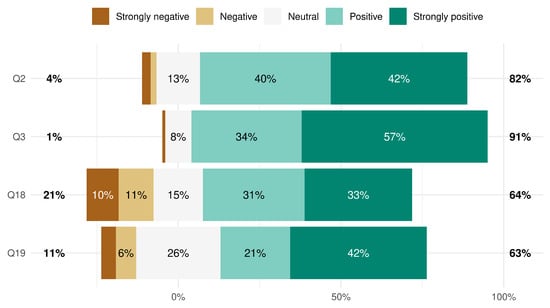
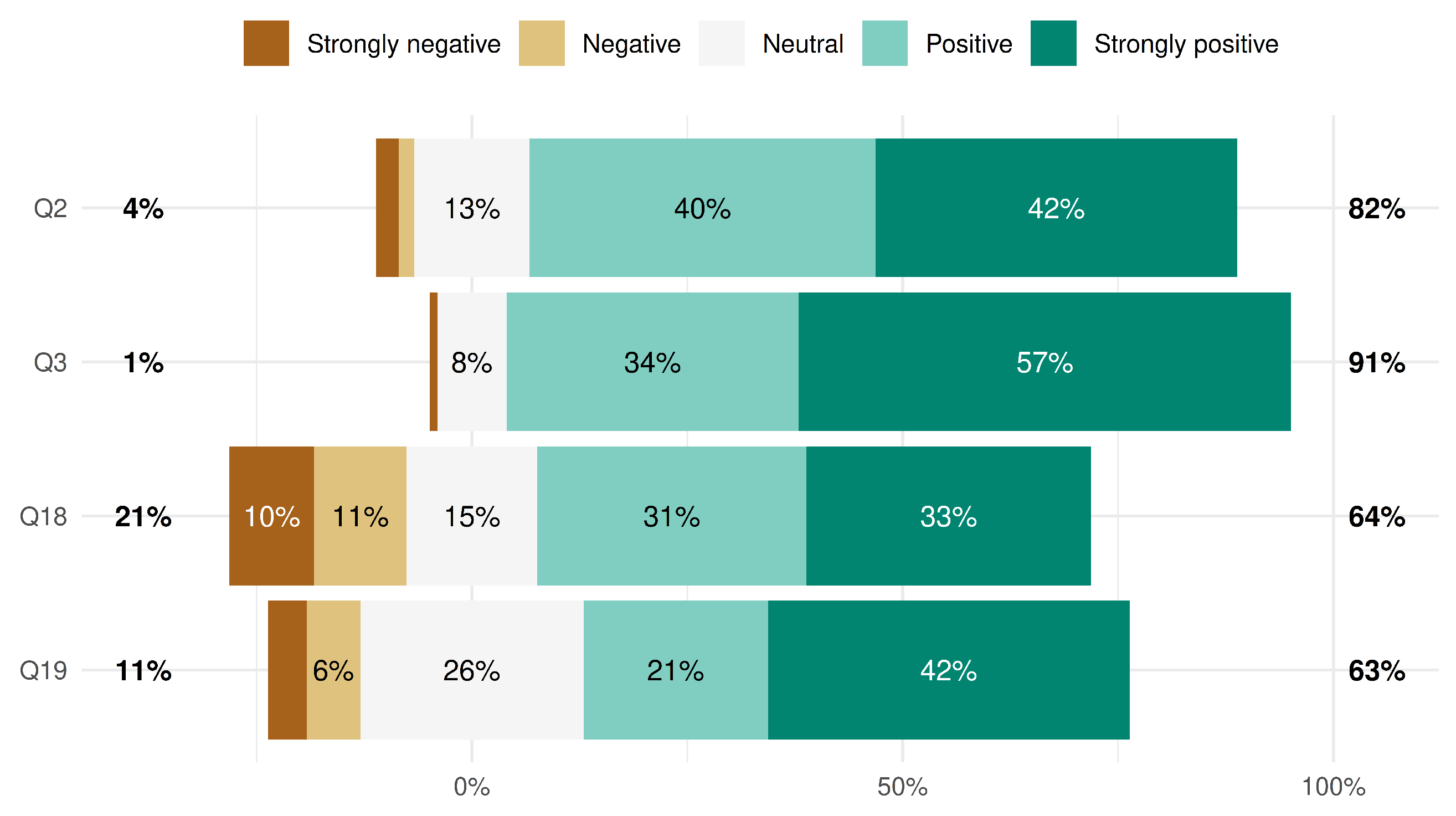
Figure 1 shows the distribution of responses on the Likert scale for questions related to H1. It can be observed that the responses are characterized by a high proportion of positive and strongly positive answers, with a combined share ranging from 63% to 91%, while the share of negative and strongly negative answers ranges from 1% to 21%.
Figure 1.
Distribution of responses to Likert-scale questions related to hypothesis H1.
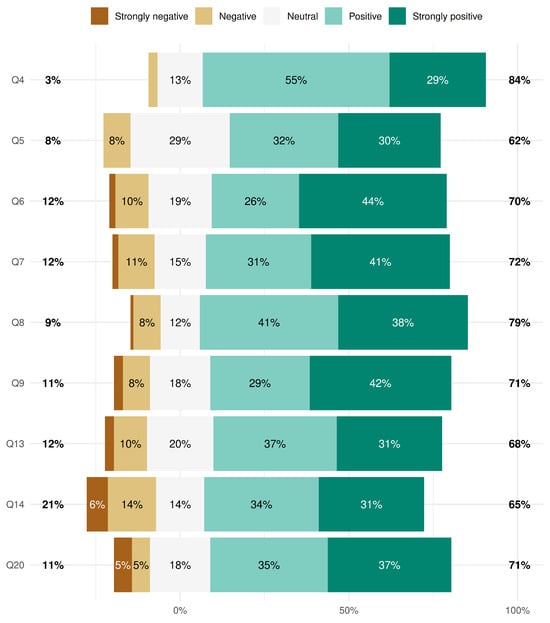
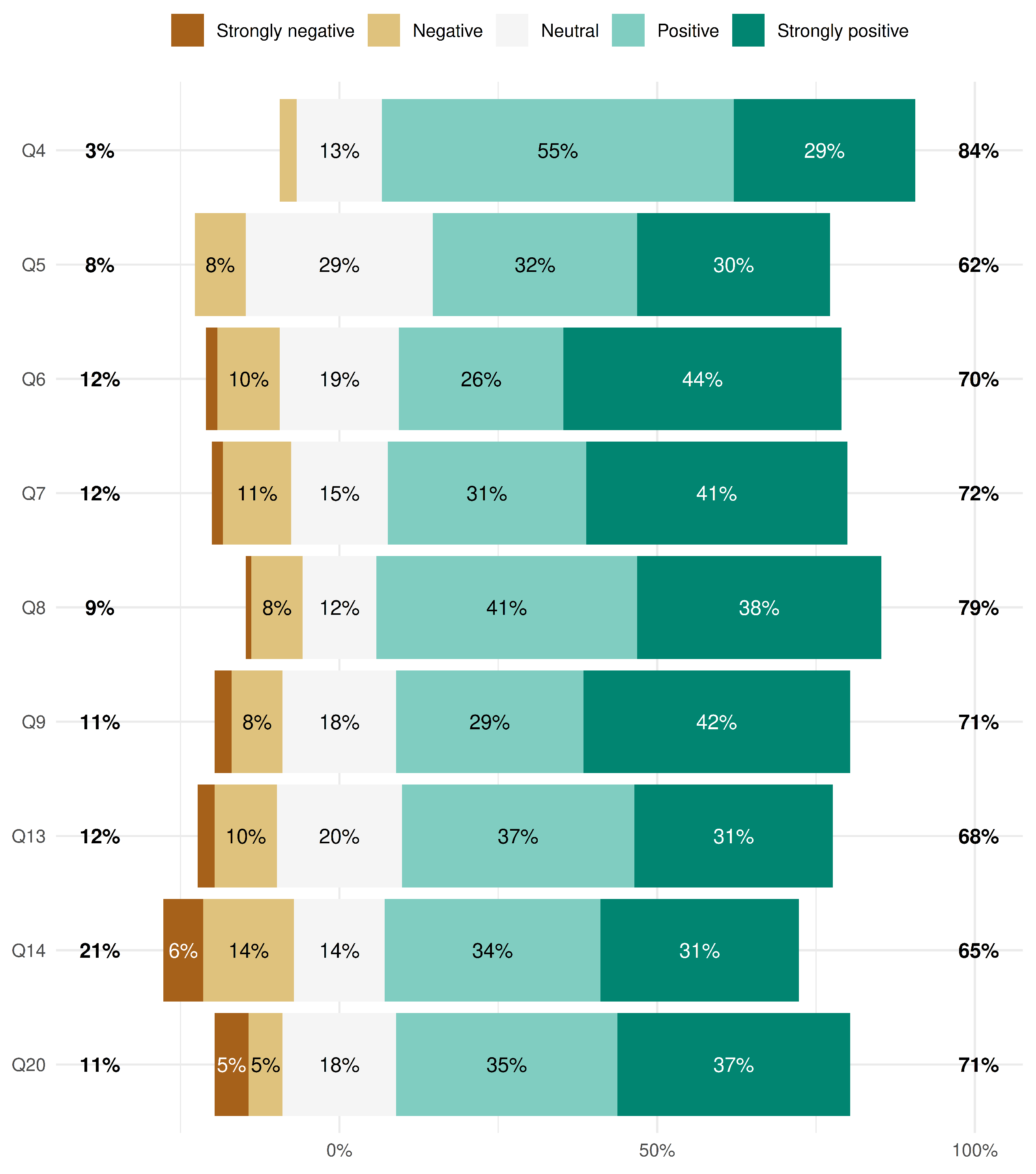
Figure 2 shows the distribution of responses on the Likert scale to questions related to H2. The combined proportion of positive and strongly positive responses ranges from 62% to 84%, with this level reaching at least 70% in most of the cases examined. The share of negative and strongly negative responses does not exceed 21%, while the level of neutral responses is moderate, ranging from 12% to 29%.
Figure 2.
Distribution of responses to Likert-scale questions related to hypothesis H2.
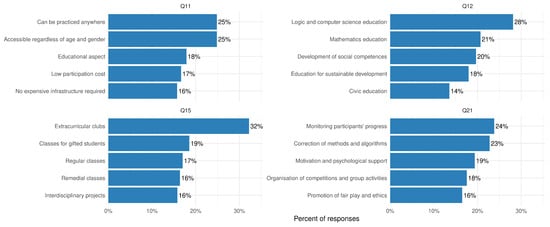
To provide a more complete understanding of the results obtained within the Likert scale and to identify the key aspects that respondents perceived to be the most important in the analyzed areas, Figure 3 presents a summary of the distribution of responses for the multiple-choice survey questions (Q11, Q12, Q15, and Q21).
Figure 3.
Percentage distribution of responses to multiple-choice questions corresponding to hypothesis H2.
For question Q11, respondents identified the importance of practicing speedcubing at any place and its accessibility regardless of age and gender (25% each) as the most significant features. A similar level of importance was observed for the educational aspect (18%), low participation cost (17%), and absence of an expensive infrastructure (16%).
For the question Q12, it was observed that respondents indicated most frequently logic and computer science education (25%), mathematics education (21%), and the development of social competences (20%) as the areas in which speedcubing could be most valuable. Slightly fewer respondents selected education for sustainable development (18%) and civic education (14%).
According to respondents’ answers to the question Q15, extracurricular clubs (32%) offer the greatest potential for speedcubing to be effectively integrated into formal education. For the remaining educational approaches, including classes for gifted students (19%), regular classes (17%), remedial classes (16%), and interdisciplinary projects (16%), the distribution of responses remains fairly even.
The distribution of coach support factors in the hybrid model, as related to question Q21, indicates that respondents view the coach’s role in monitoring progress and improving algorithms as the most important aspects (24% and 23%, respectively). Slightly less importance is given to motivation and psychological support (19%) as well as organizational factors (18%). The promotion of fair play and ethics was mentioned least frequently (16%), though it remains a notable element.
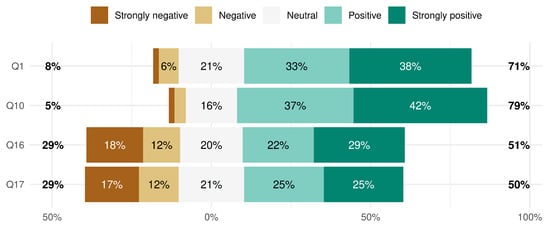
Figure 4 illustrates the distribution of responses on the Likert scale for questions related to H3. Positive and strongly positive responses are relatively varied and account for 50–79% of all responses. It is also worth noting the relatively high proportion of strongly negative and negative responses, ranging from 5% to 29%, which is also rather diverse. Neutral responses account for 16–21% and remain relatively stable.
Figure 4.
Distribution of responses to Likert-scale questions related to hypothesis H3.
Table 2 presents the Cronbach’s alpha values obtained for the individual subscales assigned to particular hypotheses (H1, H2, and H3). The highest value of , 0.82 is observed for H2. For H3 a value of = 0.7 was reached, whereas = 0.6 was obtained for H1. The correlation values after item removal (r.drop) remain within similar ranges for all subscales.
Table 2.
Internal consistency of hypothesis-related subscales (Cronbach’s alpha, confidence intervals, and item-total correlations).
3.2. Statistical Comparative Analysis by Experience Level
As demonstrated in Table 3, the duration of the training programme had a significant impact on the evaluation of the degree of reduction in stress and psychological tension among the athletes. This was evidenced by the result of the H(3;112) = 10.285 at p = 0.016. The highest mean score for this effect was recorded among those who had been training for less than a year (Mx = 4.62; Me = 5), and the lowest in the group with over seven years’ experience (Mx = 4.05; Me = 4). The mean ranks also indicate that the greatest reduction in stress was reported by athletes with the shortest experience (71.923), whilst the lowest ratings were given by those with 4–7 years’ experience (48.257) and over 7 years’ experience (50.375).
Table 3.
Kruskal–Wallis test and multiple comparisons for the cognitive and personal competencies of speedcubing competitors.
Multiple comparisons revealed a statistically significant difference between those who had been training for less than a year and competitors with 4–7 years’ experience (p = 0.029). No significant differences were identified in the remaining comparisons. A significant difference was also noted between the experience groups regarding the application of skills in other areas of life, as evidenced by the test value of H(3;112) = 8.270 with p = 0.041. The highest mean values were achieved by participants with the least experience (less than one year) (Mx = 4.35; Me = 5) and those who had been training for over seven years (Mx = 4.25; Me = 5). The lowest level of this assessment was found in the 1–3 years group (Mx = 3.71; Me = 4). The mean values obtained from the ranking confirm this pattern, with the highest values being recorded for groups with less than one year’s experience (67.308) and over seven years’ experience (65.250), and the lowest for the 1–3 years group (48.613).
Concurrently, multiple comparisons did not reveal statistically significant differences between specific pairs of groups, despite the global test indicating overall variation. However, the differences between pairs are not significant enough to reach statistical significance in the post hoc analysis. The analysis of incorrect decisions with a view to improving future performance yielded a result of H(3;112) = 6.864 at p = 0.076, which also meets the criterion of statistical significance p < 0.1 in the table. The highest mean values were achieved by competitors who had undergone less than a year of training (Mx = 4.31; Me = 5), whilst the lowest mean values were recorded by those with more than seven years’ experience (Mx = 3.40; Me = 3.5). The mean ranks substantiate this trend, as the highest rank was recorded in the beginner group (64.885) and the lowest in the group with the most experience (41.525). Multiple comparisons at p < 0.1 revealed significant differences between those who had been training for less than a year and competitors with over seven years’ experience (p = 0.094).
The data presented in Table 4 indicate that length of service exerts a significant influence on respondents’ attitudes towards selected environmental and organisational aspects of this activity.
Table 4.
Kruskal–Wallis test and multiple comparisons for education and sustainable development of speedcubing competitors.
With regard to the assessment of the importance of making a Rubik’s cube from recycled materials, a significant difference was found between the groups (H(3;112) = 13.066; p = 0.004). The highest mean values were recorded among those with the shortest experience (Mx = 3.96; Me = 4.0), whilst the lowest were in the group with over 7 years’ experience (Mx = 2.45; Me = 2.5). The analysis of rank averages corroborates this trend, demonstrating that the highest values are observed in the beginner group, while the lowest values are exhibited by the most experienced competitors.
Multiple comparisons revealed a significant difference between those who had been training for less than a year and the most experienced competitors (p = 0.004), suggesting that as experience increases, the importance attributed to environmental aspects related to the cube’s materials decreases. A similar trend was observed in the case of the declared tendency to choose a more expensive Rubik’s cube produced in a more sustainable manner, e.g., from recycled materials or with eco-friendly packaging (H(3;112) = 13.739; p = 0.003). The highest mean was obtained by respondents with the shortest experience (Mx = 4.15; Me = 5.0), whilst the lowest was among those who had been practising for over 7 years (Mx = 2.75; Me = 2.5). The mean ranks also indicate a significantly higher level of pro-environmental declarations among beginners. A post hoc analysis revealed significant differences between the group with less than one year’s experience and all other experience categories (p-values: 0.020; 0.047; 0.009).
In the case of assessing the role of the coach in ensuring an effective and sustainable hybrid model combining online and in-person training, significant differences were also found between the groups (H(3;112) = 11.673; p = 0.008). The highest ratings for this role were given by those with the shortest experience (Mx = 4.54; Me = 5.0), whilst lower values were observed in the other groups, particularly among those with 1–3 years’ experience (Mx = 3.65; Me = 4.0). The mean ranks indicate that beginners recognise the importance of the coach’s support in organising the training process to the greatest extent. A multiple comparison analysis revealed a significant difference between the group with less than one year’s experience and the group with 1–3 years’ experience (p = 0.012).
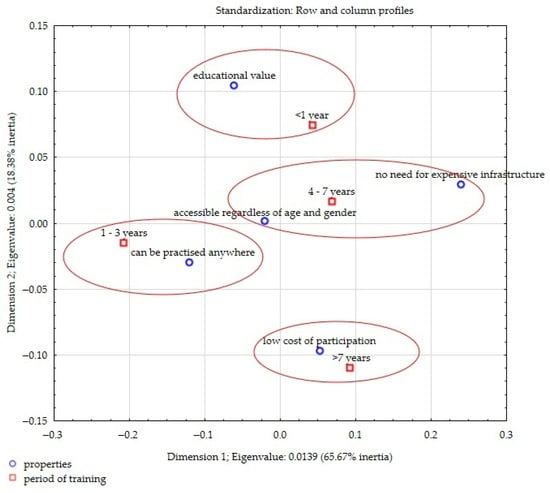
Figure 5 presents the results of a correspondence analysis, illustrating the relationships between the length of time spent practising speedcubing and the perception of the characteristics of this activity that promote responsible and sustainable development. The initial two dimensions collectively account for a substantial proportion of the data variability, with the first dimension explaining 65.67% of the variance and the second dimension accounting for 18.38%. This observation signifies a satisfactory representation of the relationships between the analysed categories. A thorough analysis of the distribution of scores indicates that those with the shortest experience, less than one year, are clearly associated with the educational aspect.
Figure 5.
Analysis of correspondence regarding the aspects of speedcubing that are most conducive to responsible and sustainable development.
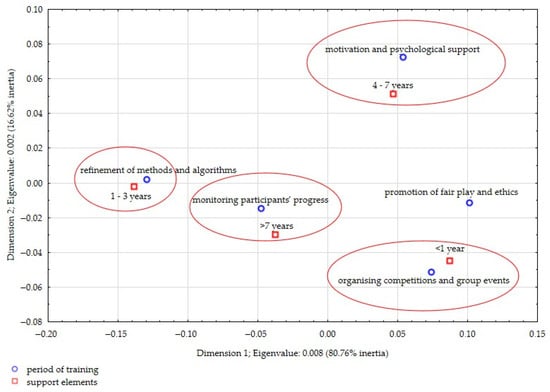
Figure 6 presents the results of a correspondence analysis, illustrating the relationships between the length of time spent practising speedcubing and the perceived most important elements of support provided by the coach. The first two dimensions explain the vast majority of the variance, with the first dimension accounting for 80.76% of the inertia, meaning that it constitutes the main axis of differentiation between the analysed categories, whilst the second dimension (16.62%) serves a supplementary function, enabling a more detailed interpretation of the relationships between the variables. A thorough examination of the distribution of points reveals a robust correlation between individuals with less than one year of experience and elements of support, such as the organisation of competitions and group activities.
Figure 6.
Analysis of correspondence regarding the key elements of support provided by the coach.
3.3. Analysis by Sustainable Development Goals
This subsection presents the results of the data analysis with regard to selected Sustainable Development Goals, including an assessment of the reliability of the selected subscales and the values of the aggregated indicators.
Table 5 presents the Cronbach’s alpha values obtained for the individual subscales assigned to SDGs 3, 4, 11, and 12. The highest value is observed for SDG 4, at = 0.82. For SDG 3, a value of = 0.69 was obtained, which is quite close to the indicator combining the scales assigned to SDGs 11 and 12, reaching = 0.70. The correlation values after item removal (r.drop) remain within similar ranges for all subscales.
Table 5.
Internal consistency of SDG-related subscales (Cronbach’s alpha, confidence intervals, and item-total correlations).
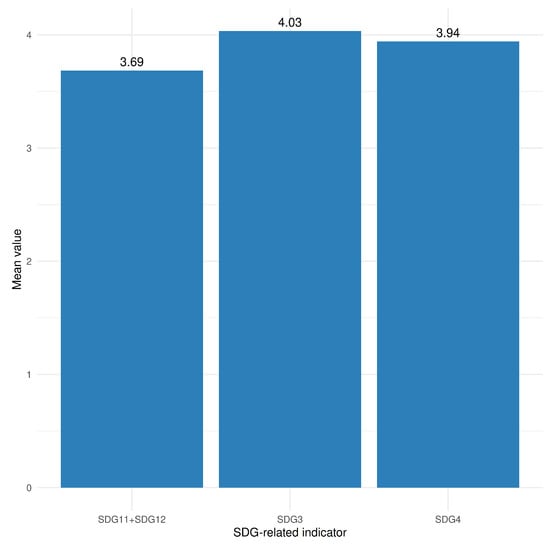
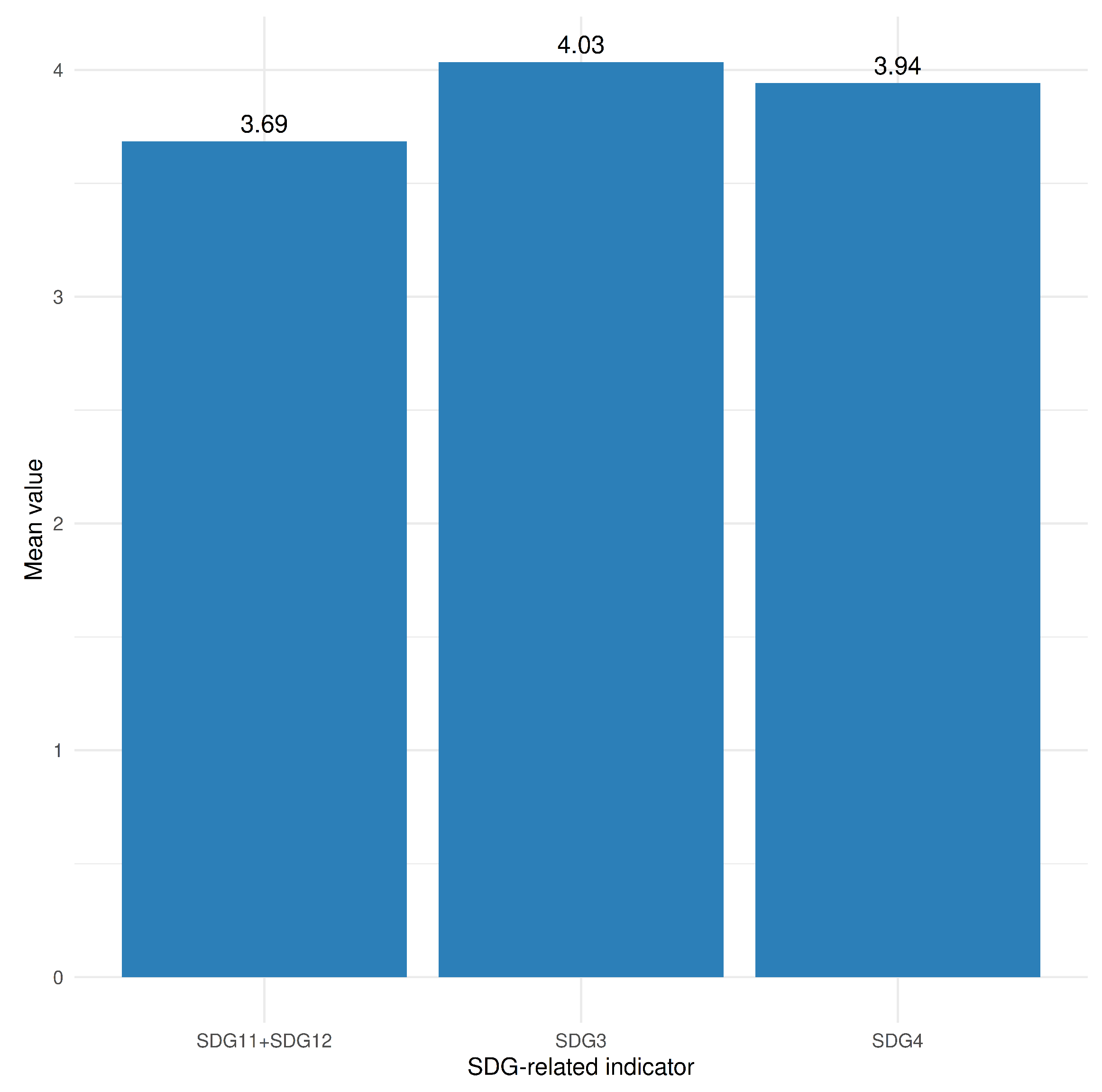
The Figure 7 presents the values of the aggregated indicators corresponding to the average Likert scale responses for the questions assigned to each SDG. The highest average score of 4.03 is recorded for SDG 3, followed by SDG 4 (3.94), while the lowest is for the combined SDG 11 and SDG 12 indicator (3.69).
Figure 7.
Mean values of aggregated indicators for selected Sustainable Development Goals.
3.4. Assessment of Digital Support Tools
In the fourth stage, a supplementary analysis was conducted based on questionnaire items assessing the perceived usefulness of functionalities of digital tools supporting speedcubing. The analysis focused on identifying the most and least valued features rather than specific tools. The results were interpreted in relation to earlier findings on the educational impact of speedcubing and the role of online resources in the learning process.
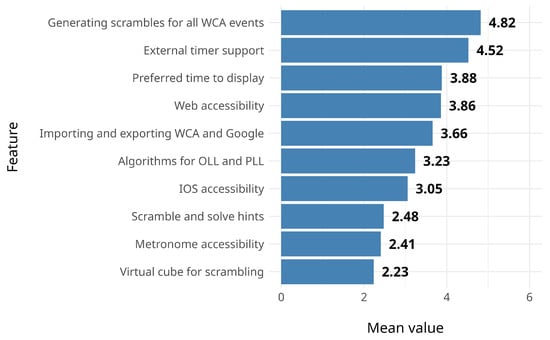
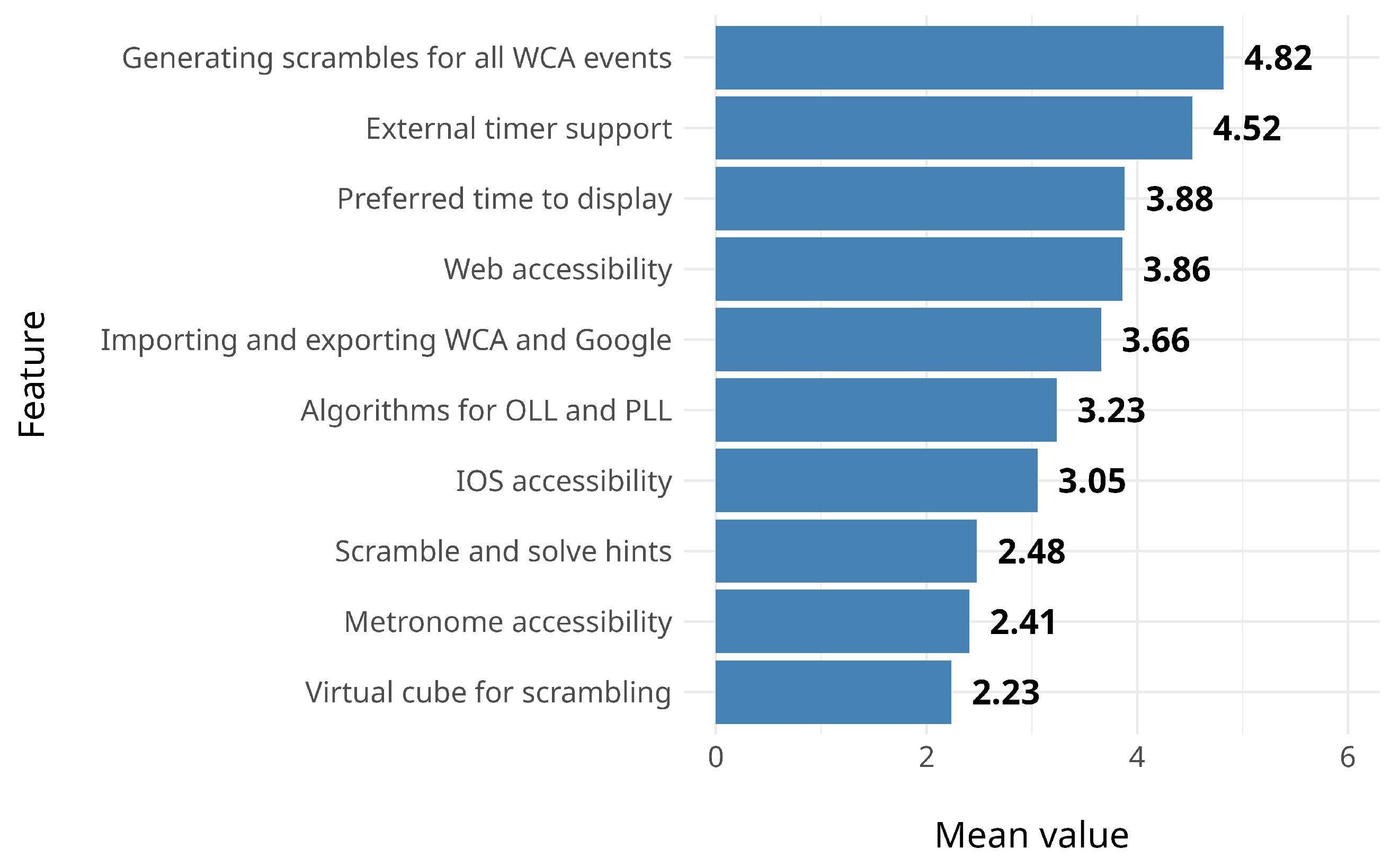
As demonstrated in Figure 8, the highest ratings were attributed to features that directly facilitate sporting practice and preparation for competition. Specifically, the generation of scrambles for official WCA competitions demonstrated the highest average scores (M = 4.82), underscoring the pivotal role of tools in aligning with the formal standards of the speedcubing community. The external support received was also found to be highly rated (M = 4.52).
Figure 8.
Tool functionality graph.
The group of features with relatively high usability also includes elements related to the accessibility and ergonomics of tool use, such as the preferred method of time display (M = 3.88), web accessibility (M = 3.86) and the ability to import and export data, including integration with WCA and Google systems (M = 3.66). Moderate ratings were allocated to features that facilitated the learning process and technical enhancement, including autocomp (M = 3.28) and algorithms for OLL and PLL (M = 3.23). The lowest ratings were allocated to auxiliary features such as iOS availability (M = 3.05), solving hints (M = 2.48), the metronome (M = 2.41) and the virtual cube (M = 2.23).
4. Discussion
This study examines how speedcubing is perceived in the context of sustainable development. The findings suggest that participation in speedcubing is associated with the development of cognitive, psychological, and social competencies, which are relevant to sustainable development frameworks. These observations are consistent with previous research on mind sports and cognitively demanding activities [22].
4.1. Interpretation of Results in the Context of Hypotheses
The findings related to H1 indicate that speedcubing is perceived as supporting psychological competencies, particularly stress reduction, self-control, and perseverance. The stronger perception of stress reduction among less experienced participants may reflect a novelty effect and a sense of rapid initial progress, while its decline with experience may be linked to adaptation and routinisation. This pattern is consistent with research on cognitively demanding activities supporting resilience and self-regulation [25], but differs from findings in chess, where such effects appear more stable across experience levels [36]. This suggests that the psychological impact of speedcubing may be more sensitive to experience-related changes.
The results related to H2 suggest that speedcubing is perceived as supporting cognitive and educational competencies, particularly in the areas of logical reasoning, problem-solving, and skill transfer. These findings are consistent with existing research indicating that complex problem-solving activities contribute to the development of executive functions and STEM-related skills [37]. Similar effects have been observed in chess, suggesting that comparable mechanisms of cognitive engagement may apply to speedcubing [22]. However, unlike many previous studies based on experimental or longitudinal designs, the present findings rely on self-reported perceptions, which limits conclusions regarding actual cognitive development.
The perceived applicability of speedcubing in both extracurricular and formal educational contexts is consistent with research indicating that cognitively demanding and sport-based activities support learning outcomes, particularly among younger participants [29,30]. However, while previous studies have demonstrated such effects using experimental or longitudinal designs [37], the present findings are based on self-reported perceptions, which limits conclusions regarding actual skill development.
In contrast to H1 and H2, perceptions related to social and environmental aspects are more differentiated, suggesting that these dimensions are less consistently recognised among participants. Nevertheless, accessibility, inclusivity, and low cost are perceived as key features of speedcubing, aligning with the principles of SDG 11 and SDG 12. The observed decline in the importance of environmental aspects with increasing experience may indicate a shift towards performance-oriented goals as engagement deepens. This pattern is consistent with research suggesting that pro-social and pro-environmental orientations are more prominent at early stages of participation [13], although it contrasts with findings in traditional sports, where such awareness may increase over time. This divergence may reflect the specific, performance-driven culture of speedcubing.
4.2. The Role of Participants’ Experience Level
An important contribution of the study lies in identifying differences in how speedcubing is perceived across experience levels. The results suggest a shift from a development-oriented perspective among beginners, who emphasise learning, emotional benefits, and external support, towards a more performance-oriented approach among advanced participants, who prioritise efficiency, optimisation, and technical aspects of the activity.
This transition may reflect a broader motivational shift from intrinsic to more extrinsic orientations, consistent with established models of motivation [38,39]. In this context, the decreasing emphasis on social and environmental aspects with increasing experience may indicate a gradual narrowing of focus towards performance outcomes. This observation aligns with arguments that education for sustainable development should actively maintain broader value orientations throughout all stages of engagement [34,35].
A similar pattern is observed in the evaluation of digital tools, where features directly supporting training and competition are prioritised, while auxiliary and educational functionalities are rated lower. This reinforces the interpretation that increasing experience is associated with a stronger performance orientation.
The role of the coach also appears to evolve with experience, shifting from organisational and instructional support at early stages to more specialised functions related to performance monitoring and psychological preparation among advanced participants. At the same time, fair play and ethical conduct are perceived as stable and independent of experience level, suggesting a consistent normative foundation within the speedcubing community.
4.3. Implications for Sustainable Development
The findings indicate that speedcubing is most strongly associated with dimensions related to well-being and education, while its relevance to environmental and community-oriented aspects is perceived as comparatively weaker. This suggests that the activity is primarily understood through individual and developmental lenses rather than broader sustainability frameworks.
In this context, speedcubing may be interpreted as contributing to SDG 4 (Quality Education) through the development of cognitive competencies and engagement in non-formal learning. This interpretation is consistent with research highlighting the role of sport-based and cognitively demanding activities in supporting lifelong learning and the development of skills relevant to complex, knowledge-based societies [31,32,33]. It may also be associated with SDG 3 (Good Health and Well-being), particularly in relation to psychological well-being. In contrast, its contribution to SDG 11 (Sustainable Cities and Communities) and SDG 12 (Responsible Consumption and Production) appears less pronounced, indicating areas that may require more deliberate integration within educational and organisational practices.
The analysis further suggests that the perceived contribution of speedcubing to sustainable development evolves with experience. Less experienced participants tend to emphasise cognitive development and inclusivity, whereas more experienced individuals increasingly recognise economic aspects such as low cost and minimal infrastructural requirements. This shift reflects a transition from a learning- and accessibility-oriented perspective towards a more pragmatic understanding of sustainability, focused on efficiency and resource use.
Overall, these findings highlight that while speedcubing aligns with selected dimensions of sustainable development, particularly in education and well-being, its broader sustainability potential depends on how social and environmental aspects are incorporated into practice. This underscores the importance of integrating sustainability-oriented values into both training and educational contexts.
4.4. The Role of Digital Tools in Supporting Accessibility and Learning
The findings suggest that digital tools play an important role in supporting both the effectiveness and accessibility of speedcubing. Participants tend to prioritise functionalities directly related to training and competition, indicating a strong orientation towards performance and efficiency. At the same time, features related to usability, accessibility, and data management are perceived as secondary, while those explicitly supporting learning processes receive comparatively less emphasis. This pattern reinforces the broader interpretation observed in previous sections, where increasing engagement is associated with a shift towards performance-oriented practices. Despite this tendency, the accessibility of digital tools remains a significant factor. Solutions that combine high functionality with low cost may contribute to widening access to training resources and supporting participation across diverse groups. In this sense, digital tools may be associated with the objectives of SDG 4 (Quality Education) and SDG 11 (Sustainable Cities and Communities), particularly in terms of enhancing access to learning opportunities. Overall, these findings indicate that while digital tools are primarily perceived as instruments for performance optimisation, they also have the potential to support inclusive and accessible forms of engagement, provided that their educational and social functions are deliberately strengthened.
5. Conclusions
This study provides empirical evidence on how speedcubing is perceived within the context of sustainable social development, particularly in educational, psychological, and social dimensions. The findings indicate that participants associate involvement in speedcubing with the development of cognitive skills such as analytical thinking, problem-solving, and learning from mistakes. Similarly, respondents perceive this activity as supporting psychological competencies, including self-control, perseverance, and resilience to stress.
From a social perspective, speedcubing is viewed as an accessible, low-cost, and inclusive activity, which may contribute to the development of cohesive and sustainable communities. At the same time, the results suggest that with increasing experience, the perceived importance of environmental aspects may decline, indicating the need to strengthen these elements within educational and organisational practices.
The findings also suggest that speedcubing may have potential applications in formal and non-formal education, particularly in relation to the development of 21st-century skills. In addition, preferences regarding digital tools indicate that well-designed technological solutions may support training processes and improve access to this activity. However, these observations should be interpreted as reflecting participants’ perceptions rather than directly measured effects.
Several limitations of the study should be acknowledged. First, the cross-sectional design does not allow for causal inference, as the results reflect perceptions at a single point in time rather than actual developmental change. Second, the use of purposive and snowball sampling limits the generalisability of the findings beyond the studied group. Third, the reliance on self-reported data introduces the possibility of subjective bias and social desirability effects. Finally, although the questionnaire was reviewed by experts and tested in a pilot study, it does not constitute a fully standardised and psychometrically validated instrument, which should be addressed in future research.
In conclusion, speedcubing can be considered a potentially useful activity in the context of education and social development; however, its role should be interpreted with caution and understood primarily in terms of perceived rather than demonstrated effects. Future research should employ larger and more diverse samples, as well as research designs that allow for temporal and causal inference.
Supplementary Materials
The following supporting information can be downloaded at: https://www.mdpi.com/article/10.3390/su18094222/s1, File S1: Speedcubing Survey; Table S1: Survey results.
Author Contributions
Conceptualization and Methodology, M.D. and M.P.-W.; Data Acquisition, P.T.; Data Curation, K.Ł. and A.K.M.-K.; Writing—Original Draft Preparation, M.D., M.P.-W., A.K.M.-K., K.Ł. and P.T.; Writing—Review & Editing, M.D., K.R. and T.Z. All authors have read and agreed to the published version of the manuscript.
Funding
This research received no external funding.
Institutional Review Board Statement
The study was conducted in accordance with the Declaration of Helsinki, and the protocol was approved by the Ethics Committee of Lublin University of Technology (No. 2/2024) on 19 February 2024.
Informed Consent Statement
Informed consent was obtained from all subjects involved in the study.
Data Availability Statement
The original contributions presented in this study are included in the article/Supplementary Materials. Further inquiries can be directed to the corresponding author.
Conflicts of Interest
The authors declare no conflict of interest.
References
- Fuso Nerini, F.; Sovacool, B.; Hughes, N.; Cozzi, L.; Cosgrave, E.; Howells, M.; Tavoni, M.; Tomei, J.; Zerriffi, H.; Milligan, B. Connecting climate action with other Sustainable Development Goals. Nat. Sustain. 2019, 2, 674–680. [Google Scholar] [CrossRef] [Scilit]
- Le Blanc, D. Towards integration at last? The sustainable development goals as a network of targets. Sustain. Dev. 2015, 23, 176–187. [Google Scholar] [CrossRef] [Scilit]
- United Nations General Assembly. Transforming Our World: The 2030 Agenda for Sustainable Development; Resolution A/RES/70/1; United Nations: New York, NY, USA, 2015. [Google Scholar]
- Siciliani, L.; Cylus, J. The contribution of health and health systems to other sustainable development goals. Health Policy 2025, 162, 105454. [Google Scholar] [CrossRef] [Scilit]
- Stefanachi, B.; Grecu, S. Governance, education and sustainable development: A comparative analysis in Central and Eastern Europe. Sustainability 2025, 17, 3650. [Google Scholar] [CrossRef] [Scilit]
- Jin, T.; Viana, V. Education for social sustainability: Reappraising conceptualizations and practices in a global context. Br. J. Educ. Stud. 2026, 74, 49–54. [Google Scholar] [CrossRef] [Scilit]
- Almulhim, A.I.; Sharifi, A.; Aina, Y.A.; Ahmad, S.; Mora, L.; Filho, W.L.; Abubakar, I.R. Charting sustainable urban development through a systematic review of SDG11 research. Nat. Cities 2024, 1, 677–685. [Google Scholar] [CrossRef] [Scilit]
- Thomas, R.; Hsu, A.; Weinfurter, A. Sustainable and inclusive–Evaluating urban sustainability indicators’ suitability for measuring progress towards SDG-11. Environ. Plan. B Urban Anal. City Sci. 2021, 48, 2346–2362. [Google Scholar] [CrossRef] [Scilit]
- Opoku, A.; Deng, J.; Elmualim, A.; Ekung, S.; Hussien, A.A.; Abdalla, S.B. Sustainable procurement in construction and the realisation of the sustainable development goal (SDG) 12. J. Clean. Prod. 2022, 376, 134294. [Google Scholar] [CrossRef] [Scilit]
- Beccarello, M.; Di Foggia, G. Sustainable development goals data-driven local policy: Focus on SDG 11 and SDG 12. Adm. Sci. 2022, 12, 167. [Google Scholar] [CrossRef] [Scilit]
- Klaperski-van der Wal, S. Sport and education for sustainable development–“A perfect team”? An exploratory qualitative study of leisure time athletes’ perspectives on promoting sustainable development in sport and exercise settings. Soc. Sci. Humanit. Open 2023, 8, 100733. [Google Scholar] [CrossRef] [Scilit]
- Jiménez-García, M.; Ruiz-Chico, J.; Peña-Sánchez, A.R. A bibliometric analysis of sports tourism and sustainability (2002–2019). Sustainability 2020, 12, 2840. [Google Scholar] [CrossRef] [Scilit]
- Trendafilova, S.; McCullough, B.P. Environmental sustainability scholarship and the efforts of the sport sector: A rapid review of literature. Cogent Soc. Sci. 2018, 4, 1467256. [Google Scholar] [CrossRef] [Scilit]
- Taks, M. Social sustainability of non-mega sport events in a global world. Eur. J. Sport Soc. 2013, 10, 121–141. [Google Scholar] [CrossRef] [Scilit]
- Svensson, P.G. Organizational hybridity: A conceptualization of how sport for development and peace organizations respond to divergent institutional demands. Sport Manag. Rev. 2017, 20, 443–454. [Google Scholar] [CrossRef] [Scilit]
- Hautbois, C.; Desbordes, M. Sustainability in sport: Sport, part of the problem … and of the solution. Sustainability 2023, 15, 11820. [Google Scholar] [CrossRef] [Scilit]
- Fyall, A.; Jago, L. Sustainability in sport and tourism. J. Sport Tour. 2010, 14, 77–81. [Google Scholar] [CrossRef] [Scilit]
- Pineda-Martínez, M.; Llanos-Ruiz, D.; Puente-Torre, P.; García-Delgado, M.Á. Impact of Video Games, Gamification, and Game-Based Learning on Sustainability Education in Higher Education. Sustainability 2023, 15, 13032. [Google Scholar] [CrossRef] [Scilit]
- Bǎrbulescu, R.; Matei, M.-A.; Latea, C.-D. Teaching sustainability in economics through game-based learning: An interdisciplinary approach. Eduviral 2026, 4, 12–20. [Google Scholar] [CrossRef] [Scilit]
- Baritz, M.-I. Using “Serious Game” for Children and Youth Education in Sustainable Energy Field and Environment Protection. In Nearly Zero Energy Communities; Visa, I., Duta, A., Eds.; Springer International Publishing: Cham, Switzerland, 2018; pp. 720–729. [Google Scholar] [CrossRef] [Scilit]
- Kilanioti, I. Teaching a Serious Game for the Sustainable Development Goals in the Scratch Programming Tool. Eur. J. Eng. Technol. Res. 2022, 1–9. [Google Scholar] [CrossRef] [Scilit]
- Burgoyne, A.P.; Sala, G.; Gobet, F.; Macnamara, B.N.; Campitelli, G.; Hambrick, D.Z. The relationship between cognitive ability and chess skill. Intelligence 2016, 59, 72–83. [Google Scholar] [CrossRef] [Scilit]
- Campitelli, G.; Labollita, M.; Bilalić, M. Planning, Cognitive Reflection, Inter-Temporal Choice, and Risky Choice in Chess Players: An Expertise Approach. J. Intell. 2025, 13, 40. [Google Scholar] [CrossRef] [Scilit]
- Ercan, D.; Esmaeiligoujar, S.; Rahimi, S. Improving Pre-K–12 Students’ Executive Functions Using Digital Games: A Systematic Review. In Proceedings of the 19th International Conference of the Learning Sciences (ICLS 2025); International Society of the Learning Sciences: Bloomington, IN, USA, 2025; pp. 826–834. [Google Scholar] [CrossRef] [Scilit]
- Sala, G.; Gobet, F. Cognitive and academic benefits of chess instruction: A meta-analysis. Educ. Res. Rev. 2016, 18, 46–57. [Google Scholar] [CrossRef] [Scilit]
- Quesada-López, A.; Garzón-Hernández, E.M.; Pérez-García, E.; Peñuelas-Calvo, I.; Díez-Maestre, M.; Delgado-Gómez, D. Enhancing Executive Functions in Neurotypical Children with a Four-Week Mobile Serious Games Intervention. Appl. Sci. 2026, 16, 2117. [Google Scholar] [CrossRef] [Scilit]
- Zeng, D.-X.; Li, M.; Wang, J.-J.; Hou, Y.-L.; Lu, W.-J.; Huang, Z. Overview of Rubik’s Cube and Reflections on Its Application in Mechanism. Chin. J. Mech. Eng. 2018, 31, 77. [Google Scholar] [CrossRef] [Scilit]
- Nigg, C.; Nigg, C.R. It’s more than climate change and active transport—physical activity’s role in sustainable behavior. Transl. Behav. Med. 2021, 11, 945–953. [Google Scholar] [CrossRef] [Scilit] [PubMed]
- Baena-Morales, S.; Jerez-Mayorga, D.; Delgado-Floody, P.; Martínez-Martínez, J. Sustainable development goals and physical education: A proposal for practice-based models. Int. J. Environ. Res. Public Health 2021, 18, 2129. [Google Scholar] [CrossRef] [Scilit] [PubMed]
- Fröberg, A.; Lundvall, S. The distinct role of physical education in the context of agenda 2030 and sustainable development goals: An explorative review and suggestions for future work. Sustainability 2021, 13, 11900. [Google Scholar] [CrossRef] [Scilit]
- Dux, W.; Rauschenbach, T. Informelles Lernen im Jugendalter. In Handbuch Informelles Lernen; Rohs, M., Ed.; Springer: Wiesbaden, Germany, 2016; pp. 261–284. [Google Scholar] [CrossRef] [Scilit]
- Lischewski, J.; Seeber, S.; Wuttke, E.; Rosemann, T. What influences participation in non-formal and informal modes of continuous vocational education and training? An analysis of individual and institutional influencing factors. Front. Psychol. 2020, 11, 534485. [Google Scholar] [CrossRef] [Scilit]
- Košmerl, T. The practice of non-formal adult education for sustainable development in Slovenia. Int. Rev. Educ. 2025, 71, 605–629. [Google Scholar] [CrossRef] [Scilit]
- Vare, P.; Scott, W. Learning for a change: Exploring the relationship between education and sustainable development. J. Educ. Sustain. Dev. 2007, 1, 191–198. [Google Scholar] [CrossRef] [Scilit]
- Wals, A.E.J.; Geerling-Eijff, F.; Hubeek, F.; van der Kroon, S.; Vader, J. All mixed up? Instrumental and emancipatory learning toward a more sustainable world: Considerations for EE policymakers. Appl. Environ. Educ. Commun. 2008, 7, 55–65. [Google Scholar] [CrossRef] [Scilit]
- Gobet, F.; Campitelli, G. Educational benefits of chess instruction: A critical review. In Chess and Education: Selected Essays from the Koltanowski Conference; University of Texas Chess Program: Dallas, TX, USA, 2006; pp. 124–143. [Google Scholar]
- Diamond, A.; Ling, D.S. Review of the evidence on, and fundamental questions about, efforts to improve executive functions, including working memory. In Cognitive and Working Memory Training: Perspectives from Psychology, Neuroscience, and Human Development; Oxford University Press: Oxford, UK, 2020; pp. 143–431. [Google Scholar] [CrossRef] [Scilit]
- Ryan, R.M.; Deci, E.L. Intrinsic and extrinsic motivations: Classic definitions and new directions. Contemp. Educ. Psychol. 2000, 25, 54–67. [Google Scholar] [CrossRef] [Scilit] [PubMed]
- Vallerand, R.J. Toward a hierarchical model of intrinsic and extrinsic motivation. Adv. Exp. Soc. Psychol. 1997, 29, 271–360. [Google Scholar] [CrossRef] [Scilit]

Disclaimer/Publisher’s Note: The statements, opinions and data contained in all publications are solely those of the individual author(s) and contributor(s) and not of MDPI and/or the editor(s). MDPI and/or the editor(s) disclaim responsibility for any injury to people or property resulting from any ideas, methods, instructions or products referred to in the content. |
© 2026 by the authors. Licensee MDPI, Basel, Switzerland. This article is an open access article distributed under the terms and conditions of the Creative Commons Attribution (CC BY) license.