


Abstract
The cost of living is rising daily, particularly in rural areas. This is due to a variety of factors, including unemployment and a lack of knowledge about available useful resources. The study meticulously documented the diverse uses of cow dung among community members of the Maungani village of the Limpopo Province, South Africa. The qualitative approach was employed to inventory the uses of cow dung in the Maungani community. The most prevalent use was as a fertilizer for vegetables such as spinach and cabbage, which are commonly cultivated in household backyards. Other significant uses included honey harvesting, paving yards, sprinkling over vegetables to deter herbivores, as a mosquito repellent, in medicinal and cosmetic applications, as a water purifier, and as a fuel source for fire. Furthermore, some respondents emphasized the importance of cow dung in biogas production, which is vital for many communities globally. The study recommended the continued use of cow dung as a fertilizer to mitigate the financial burden of costly inorganic fertilizers on peasant farmers. Further recommendations suggest that the continuous utilization of cow dung in various ways can help rural community members achieve the Sustainable Development Goals (SDGs) 1, 2, and 3.
1. Introduction
The cost of living is increasing daily, and it is impacting the livelihoods of rural communities. This is caused by a variety of factors, including unemployment and a lack of knowledge about the utilization of available resources. Cow dung is one of the organic resources that can be utilized in various ways as a valuable resource. Recent research suggests that in rural areas of India, dried cow dung cakes are commonly used as a primary energy source for cooking, thereby reducing reliance on other energy sources [1]. As attested by Ratminingsih and Jumadi [2], users are motivated to continue using cow dung because it is environmentally friendly and helps purify the air by eliminating surrounding microbes. Additionally, Dandekar [3] alluded to the fact that rural people in India use biogas plants, known as ‘Gobar’ gas plants, to convert cow dung into methane gas through anaerobic respiration. This methane is then used for cooking and electricity generation.
Remarkably, one cow can produce enough manure in a day to generate three kilowatt-hours of electricity, while only 2.4 kilowatt-hours are needed to power a 100-watt light bulb for a day [4]. Simultaneously, biogas can also address the environmental issues by substituting fossil fuels [5]. Moreover, the residual material from biogas production serves as excellent organic manure. In this paper, we documented the utilization of cow dung by the community members of the Maungani village of the Thulamela Municipality. This includes, particularly, drawing a clear understanding of the methods used when applying cow dung. This paper examines the diverse indigenous applications of cow dung among community members in the Maungani village of the Limpopo Province, South Africa, in the context of sustainability.
2. Literature Review
2.1. Structure of the Dung
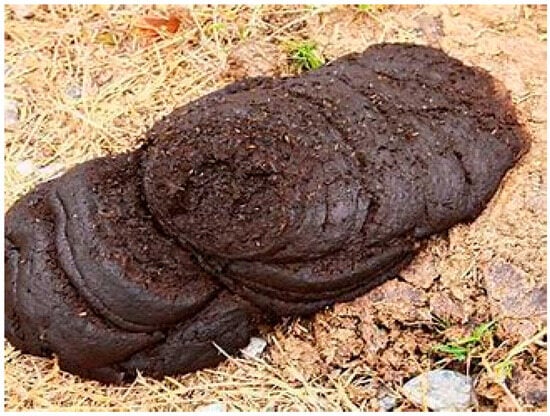
Cow dung, the undigested plant matter residue that has passed through a cow’s digestive system, exhibits a soft texture and is typically deposited in a circular shape, often referred to as cow pies or cow pats (Figure 1). According to Swain and Ray [6], cow dung is a mixture of dung and urine in a ratio of approximately 3:1. This mixture contains crude fibre, crude protein, cellulose, hemicellulose, and various minerals such as nitrogen, potassium, sulphur, and trace elements including phosphorus, iron, cobalt, magnesium, chlorine, and manganese [7]. If not decomposed by soil organisms like earthworms and dung beetles, cow dung can dry out and persist on pastures, rendering those areas unpalatable for grazing livestock.
Figure 1.
Circular shape of the cow dung.
Equally, Dittrich and Helden [8] reveal that cattle inherently avoid grazing near their dung, resulting in the development of taller, ungrazed patches of nutrient-rich swards. These patches serve as beneficial habitats for various grassland arthropods, such as spiders and insects. Subsequently, cow dung plays a crucial role in sustaining biodiversity within intensively grazed pastures.
2.2. The Relation Between Cow Dung and Soil Health
Soil is a crucial abiotic component of ecosystems, serving as the substrate for all plant life. It provides essential ecosystem services, including primary production (agricultural and forestry products), regulation of biogeochemical cycles (impacting climate), water filtration, disease and pest resistance, and regulation of above-ground biodiversity [9]. Mandal et al. [10] support this by demonstrating that integrating inorganic, organic, and biofertilizers can increase yields by 50–92% in Indian gooseberry (Aonla). The depletion of soil fertility is a significant threat to food security, necessitating efforts to combat food insecurity and enhance soil fertility. Typically, soil health is maintained and improved through the addition of chemical fertilizers, which can be prohibitively expensive for local populations.
Fulhage [11] notes that manure contains the three major plant nutrients that are nitrogen, phosphorus, and potassium, as well as essential nutrients like calcium, magnesium, sulphur, zinc, boron, copper, and manganese. Manure not only supplies crucial micronutrients for healthy plants but also improves soil tilth, aeration, and water-holding capacity, and promotes the growth of beneficial soil organisms. The use of cow dung manure increases soil organic matter content, enhancing water infiltration, water-holding capacity, and cation exchange capacity. This leads to improved nutrient cycling and the conversion of ammonium-nitrogen to nitrate-nitrogen, making nitrogen more available to plants.
The biological attributes of soil are vital for determining and maintaining its physical properties, which in turn control the chemical properties and the rate of nutrient release and availability to plants, essential for metabolic processes [12]. Thus, soil biology is fundamental to maintaining soil health.
2.3. Beneficial Attributes and Composition of Cow Dung
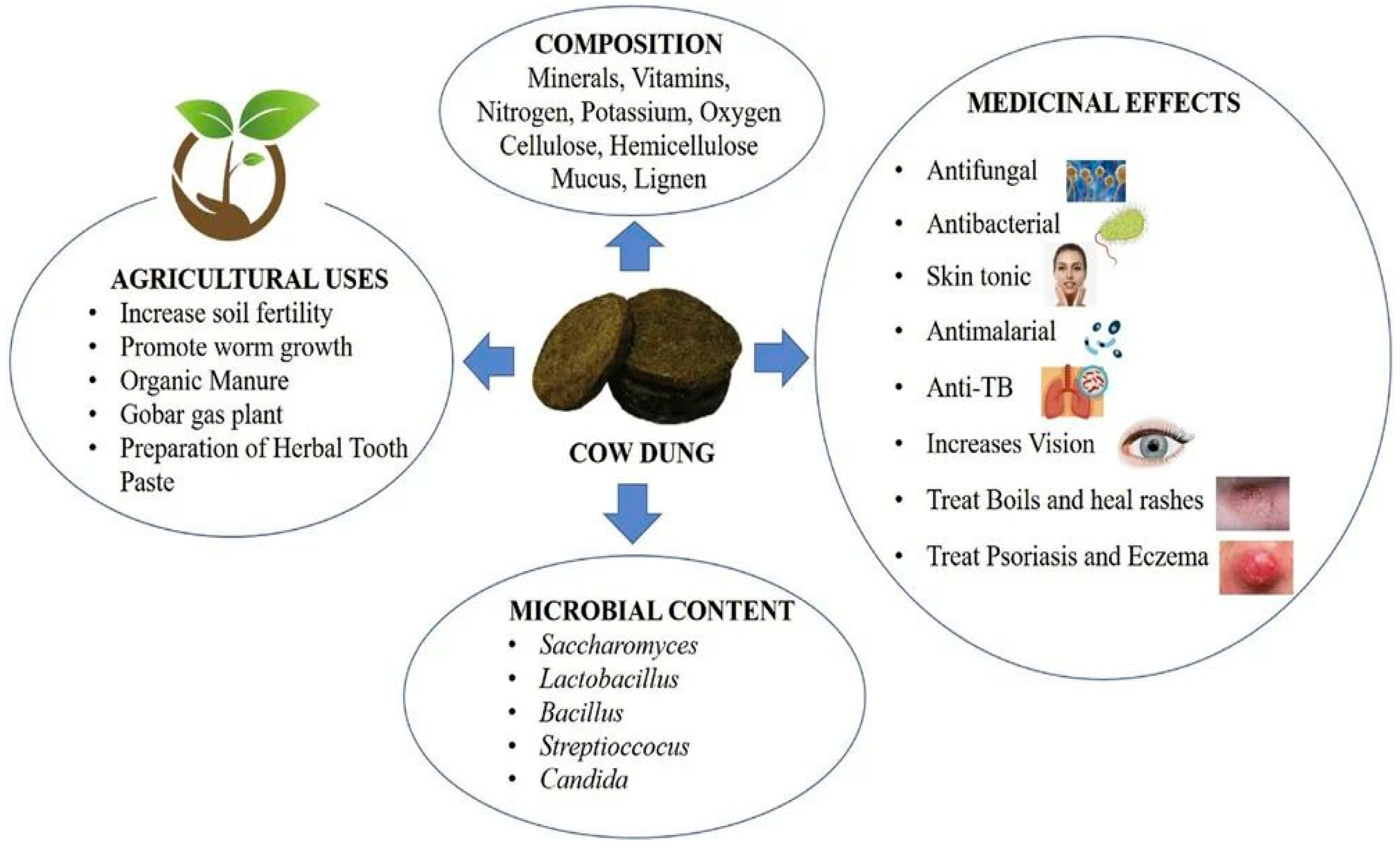
Cow dung has numerous beneficial attributes (Figure 2), as highlighted by various researchers over time. For instance, the study conducted by Bornemissza [13] emphasized the importance of using cow dung to produce biogas, which can generate electricity and heat. This methane-rich gas is a renewable and stable source of energy, particularly in rural areas of India, Pakistan, and other regions. People in rural areas use dry cow dung cake as mosquito repellent [14]. In central Africa, Maasai villagers burn cow dung inside their homes to repel mosquitoes. Additionally, in colder climates, cow dung is used to line the walls of rustic houses as an inexpensive thermal insulator. Millogo et al. [15] noted the use of cow dung as a stabilizing ingredient in the production of mud bricks. Studies by [16,17,18] demonstrated that cow dung ash, compost, and slurry, along with Kochila (Strichnos nuxvomica), can effectively control various insect pests and pathogenic microbes in horticultural crops.
Cow dung is an inexpensive, environmentally friendly, economically viable, and readily available resource in rural India, making it a highly effective material for bioremediation. The natural biodegradation process is enhanced by various microorganisms [19]. Cow dung consists of symbiotic bacteria that act upon the digested remains of herbivorous matter in the rumen, resulting in fecal matter that is nutrient and mineral-rich [20]. Cow dung is reported to contain naturally occurring beneficial microorganisms, including bacteria, yeast, actinomycetes, and other fungi [21]. These microorganisms in the waste are responsible for breaking down organic matter to potential fertilizers [19].
Cow dung is constantly used as manure in areas with a high livestock population, such as Zimbabwe, where small-scale farms can produce cow manure to supply 100 kg of nitrogen in six months [22]. Due to high concentrations of important elements such as carbon, nitrogen, and phosphorus, cow manure signifies an important direct pathway by which nutrients enter soils in pastures [23].
Figure 2.
Beneficial attributes and composition of cow dung [24].
2.4. Use of Cow Dung for the Accomplishment of SDGs 1, 2, and 3
Cow dung plays a crucial role in achieving Sustainable Development Goals (SDGs) 1, 2, and 3. For SDG 1 (No Poverty), cow dung can be used to produce biogas, which provides a cost-effective energy source for rural households, thereby reducing the high cost of electricity purchasing, and on the other hand, a reasonable income could be generated by small-scale farmers through the sale of the cow dung [25]. In terms of SDG 2 (Zero Hunger), cow dung serves as an excellent organic fertilizer, enhancing soil fertility and crop yields, thereby contributing to improved food security and nutrition [14]. Regarding SDG 3 (Good Health and Well-being), cow dung-based bioformulations can be used in sustainable agriculture to reduce the reliance on chemical fertilizers and pesticides, thereby minimizing health risks associated with chemical exposure and promoting overall well-being [26].
Compost made from cow dung serves as a significant nutrient resource in fields of agriculture and decreases environmental load when treated appropriately. However, different pathogenic bacteria, such as coliform bacteria and Salmonella, thrive in such materials [27]. The lower part of the cow’s gut harbours microorganisms that mostly possess probiotic activity, such as Lactobacillus plantarum, Enterococcus diacetylactis, and Bifidobacterium, amongst others [25]. The use of untreated manure at times is responsible for contaminating the soil, irrigation water, crops, vegetables, and plants with bacteria that are pathogenic to human beings, and such bacteria include Salmonella spp., Listeria monocytogenes, Escherichia coli O157:H7, and other verotoxin-producing bacteria [27]. The outbreak of various foodborne bacterial infections is associated with eating fruits and vegetables contaminated by manure [25], which raises great health concerns for human beings in underdeveloped area.
Although cow dung is used as an insect repellent in some households, it causes indoor air pollution, which is a source of various health issues in developing countries. The combustion of cow dung emits pollutants such as particulate matter and gaseous compounds such as nitrogen dioxide, benzene, carbon monoxide, acrolein, and ozone [28]. The same authors in their study found that cow dung contained high levels of carcinogenic benzene.
3. Materials and Methods
3.1. Study Area
The survey was conducted in Maungani village, located in the western part of the Thulamela Local Municipality, near the centre of Thohoyandou town. The area features gentle to very steep slopes and receives average precipitation [29]. The Thulamela Local Municipality is dominated by rural villages with a few formal towns, and most economic activities are centred around Thohoyandou town, where most people are concentrated [30]. The vegetation is classified as VhaVenda Miombo and is significantly affected by grazing, wood collection, and agricultural activities [31]. Miombo woodlands provide essential ecosystem services, including carbon sequestration, maintaining soil fertility, and regulating water. These services are crucial for sustaining agricultural productivity and mitigating the impact of climate change [32]. Additionally, the VhaVenda Miombo vegetation type holds cultural significance for local communities, who rely on it for traditional foods, medicinal plants, and livestock grazing [33]. Most of the Thulamela population relies on traditional wild foods, medicinal plants, and livestock such as cattle and goats for their sustenance [34].
3.2. Sampling Procedure and Data Collection
Households were selected using interval or systematic sampling, where a specific number of houses per street were randomly chosen to ensure comprehensive village coverage. A total of 80 households were selected for interviews. Prior to sampling and conducting the survey, permission was obtained from the village headman. Maungani village was chosen due to the significant number of cattle-farming households. Eighty semi-structured questionnaires (Appendix A) were administered, with one member per household selected for interviewing. The interviews aimed at gathering information on the following questions:
- (1)
- What uses of cow dung are you aware of?
- (2)
- What are the preparation methods?
- (3)
- How is cow dung collected?
- (4)
- Who informed you about the uses of cow dung?
3.3. Ethical Considerations
To safeguard the rights of participants in this research, all individual participants were required to sign an informed consent form prior to participation. which explained the purpose of the research. This document also clearly outlined the purpose, the procedures involved, and any potential risks. Participants were explicitly informed that their involvement in the study was entirely voluntary and that they could withdraw from the study at any time without facing any negative consequences. This process was designed to promote transparency and uphold the autonomy of all participants involved in the research.
3.4. Data Analysis
Descriptive data analysis was employed, considering the percentages and frequencies of the mentioned uses. Additionally, the Relative Frequency of Citation (RFC), as adopted from Madikizela et al. [35], was used to categorize the uses of cow dung by the Indigenous people in the study area. The RFC is calculated using the formula:
where FC is the number of times a use of cow dung is mentioned, and N is the total number of participants. The correlation between the FC and RFC of the cow dung uses was determined by the R statistical application (v0.1.9).
RFC = (FC/N) × 100,
4. Results
4.1. Biographical Characteristics of Participants
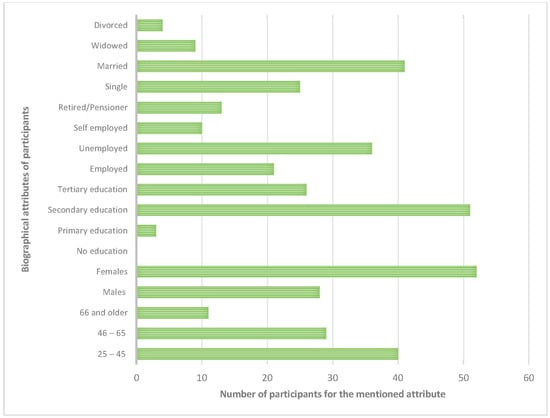
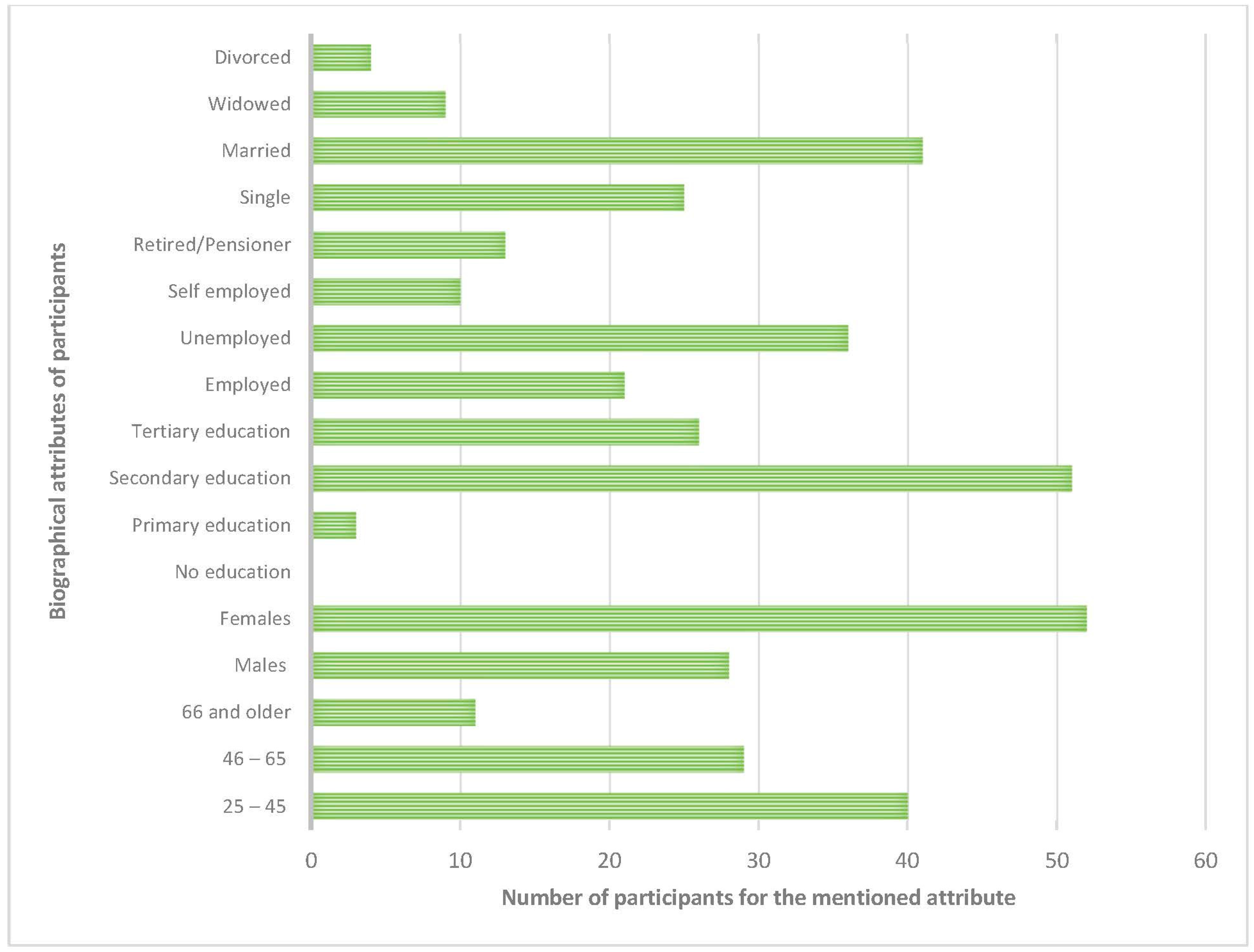
A total of 80 participants, each from the sampled household, shared their knowledge concerning the uses of cow dung. Figure 3 illustrates the demographic characteristics of the 80 participants in this study. The majority were female (n = 52), with males comprising the remainder (n = 28). Most informants were adults, primarily falling into two age categories: 25–45 years (n = 40) and 46–65 years (n = 29). Approximately 64% of the participants had attained secondary education.
Figure 3.
Biographical information of participants.
4.2. Uses of Cow Dung by Members of Maungani Village
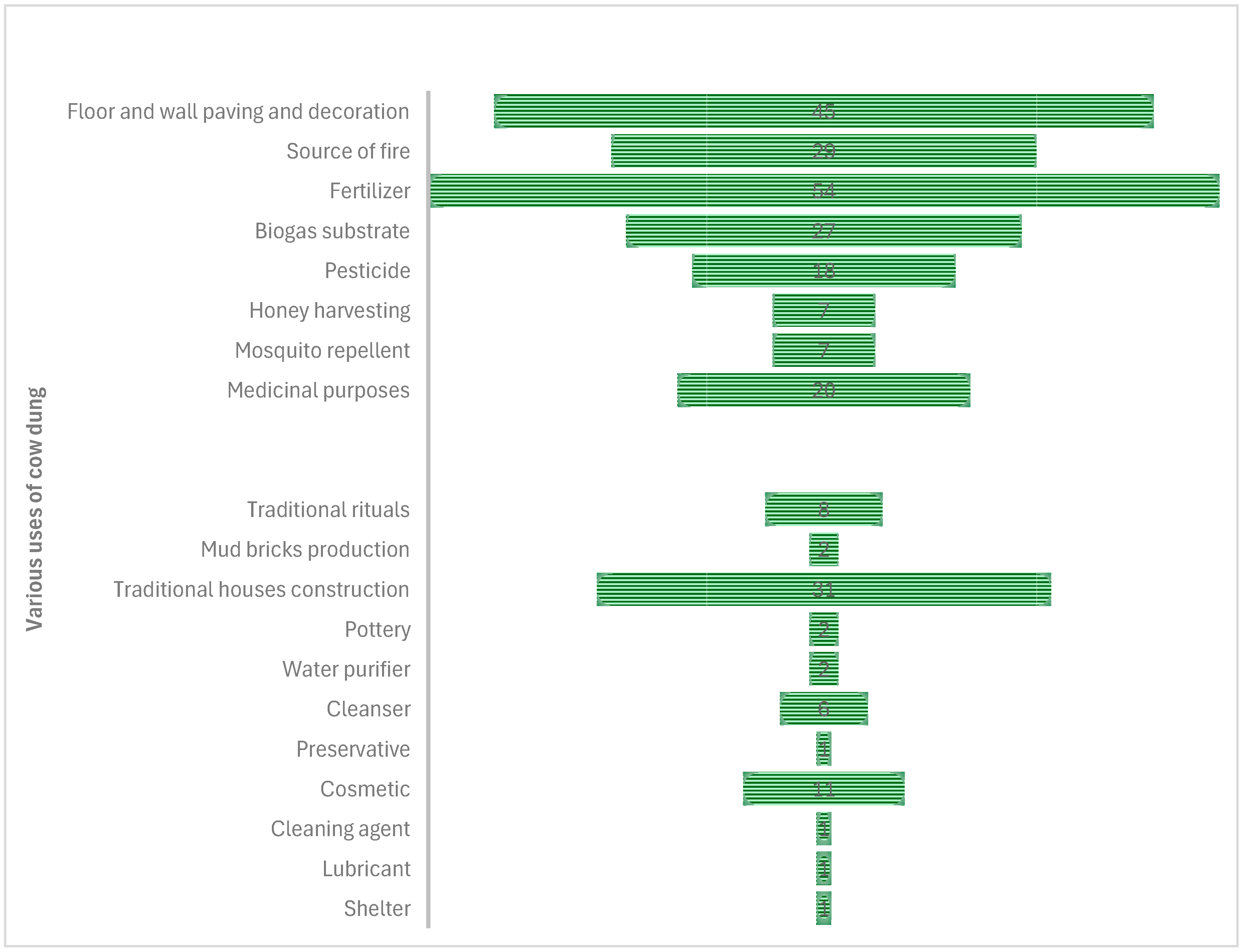
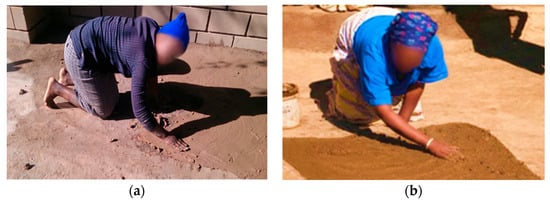
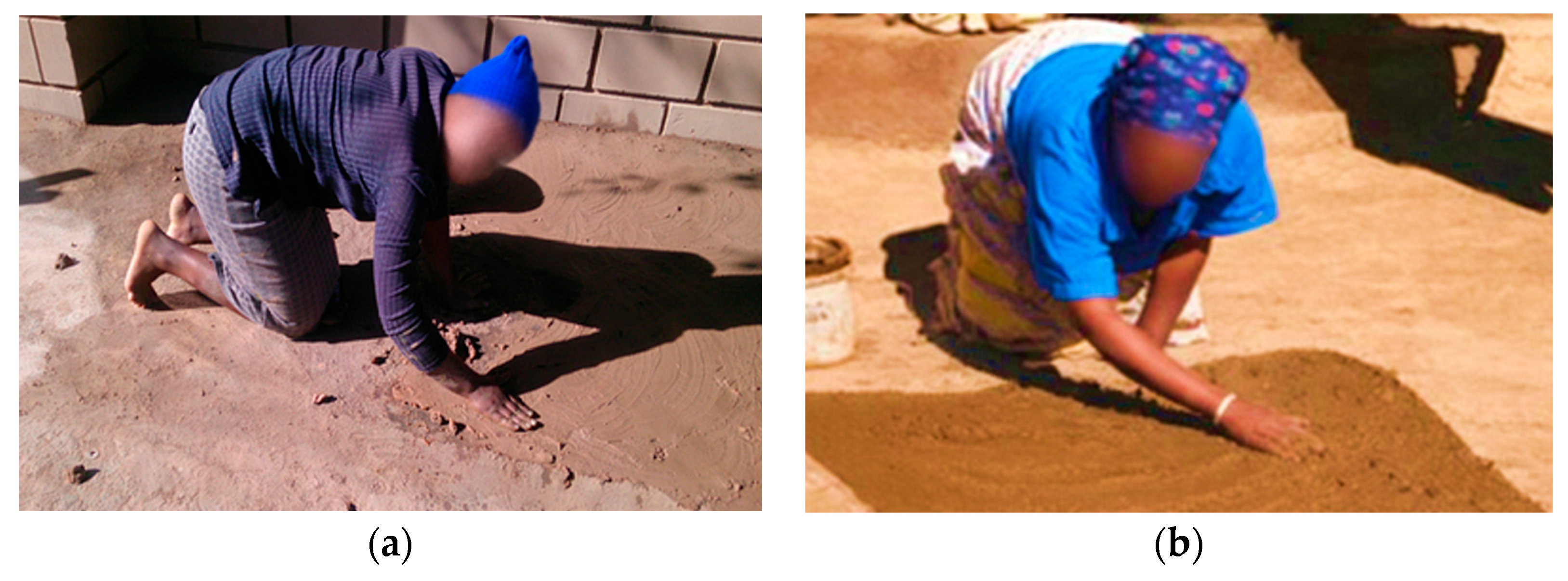
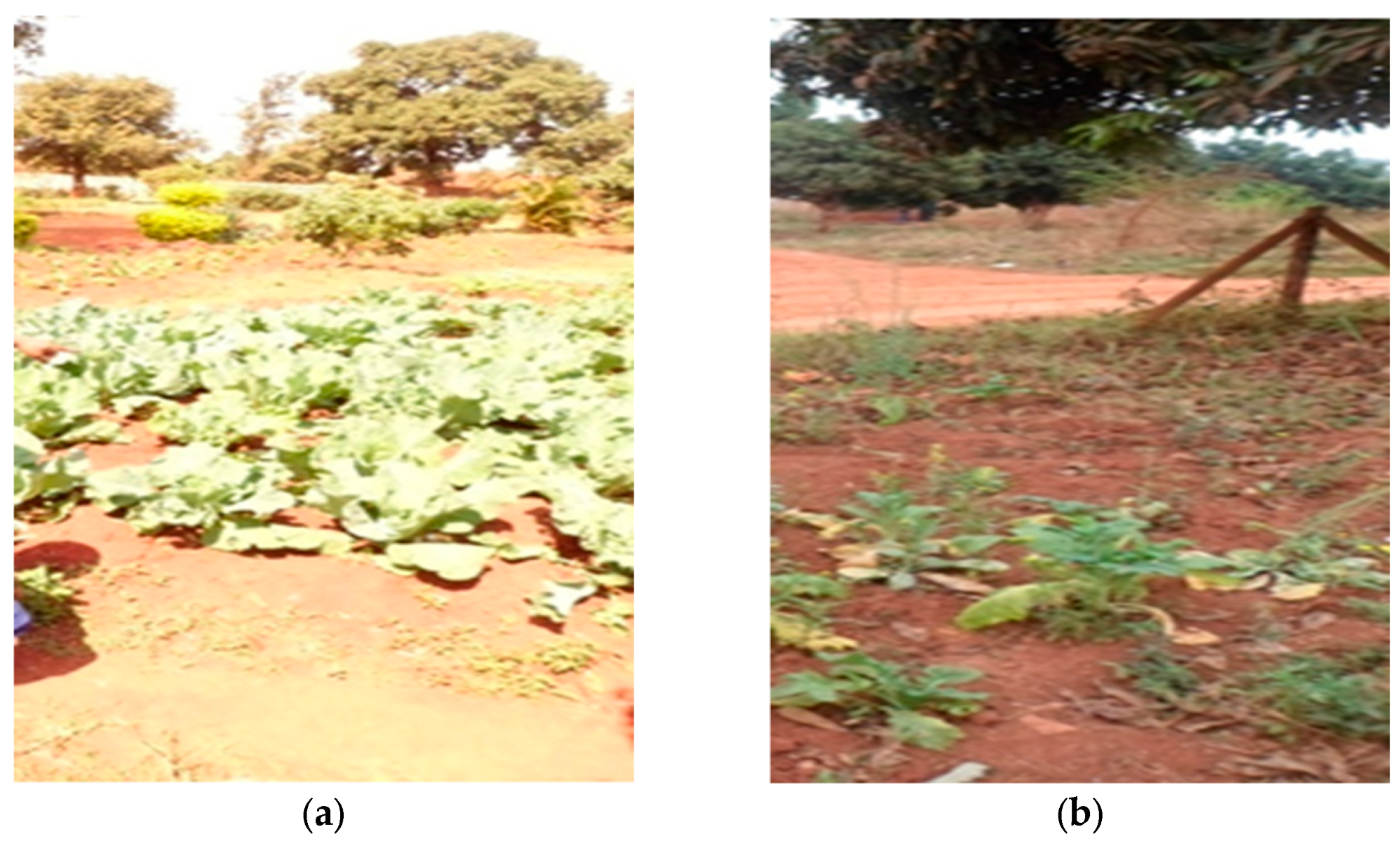
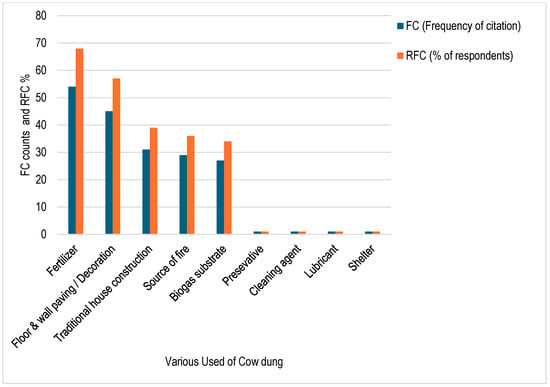
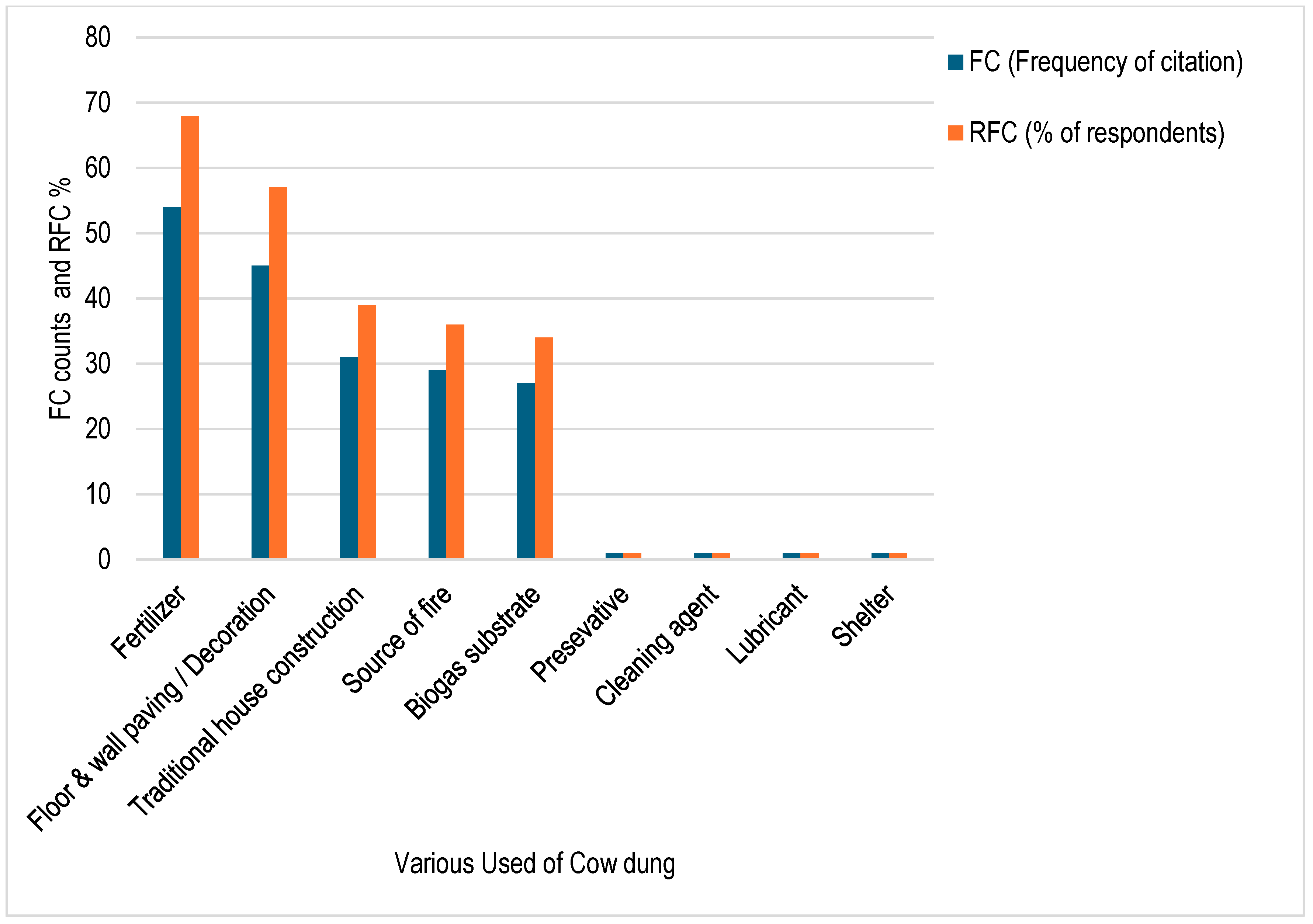
The results of this study revealed that members of the Maungani Community utilize cow dung in various ways (Table 1). It was also apparent that cow dung serves multiple purposes, including being a source of fuel, a mosquito repellent, a fertilizer for vegetables such as spinach (Table 1), a pesticide, an aid in honey harvesting, a material for floor and wall paving and decorations (Figure 4 and Figure 5), and for medicinal purposes. Notably, the use of cow dung as fertilizer exhibited a high Relative Frequency of Citation (RFC) of 67% (Table 1), indicating its effectiveness in local crop production. In the study area, cow dung is primarily used as fuel for cooking, heating, and brick manufacturing. During the survey, most participants (n = 54) (Figure 6) identified cow dung as one of the best natural fertilizers. It was noted that using cow dung for soil enrichment and environmental improvement is an age-old agricultural practice. Seifritz [36] supports the use of organic manures, including cow manure, to enhance environmental conditions. According to Sharma & Mittra [37], organic manures release nutrients more slowly and retain them longer in the soil, promoting better root development.
Table 1.
Uses of cow dung by the community of Maungani Village.
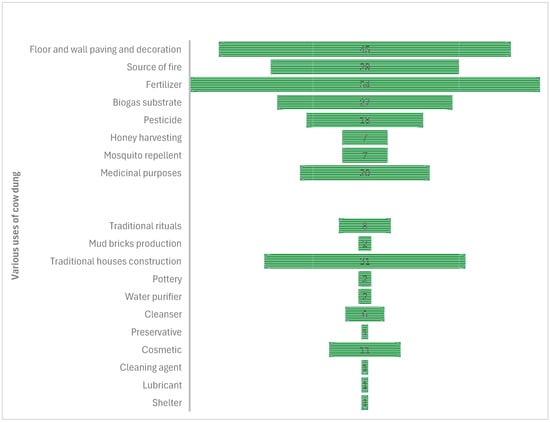
Figure 4.
Frequency of citation of different uses of cow dung.
Figure 5.
Use of cow dung for the purpose of paving (a) and decoration (b).
Figure 6.
Illustration of the benefits of using cow dung for the growth of spinach. The picture indicates spinach with (a) and without (b) cow dung manure, respectively.
Additionally, the long-term presence of nutrients in the soil leads to higher crop yields [38]. The introduction and application of cow dung compost are crucial for achieving Sustainable Development Goal 2 (Zero Hunger). With the increasing demand for chemical-free food and the growing acceptance of organic farming, cow dung plays a vital role in sustainable agriculture. It is also mentioned that cow dung has medicinal properties, including the ability to treat nosebleeds. Regarding cow dung collection, females and herd boys typically gather it from grazing areas and cattle kraals, respectively. Information on the side effects of cow dung use was also collected. Some informants reported allergies to dry products due to dust, but most users experienced no adverse effects. In households with older informants, separate structures called Tshitanga, which serve as cooking areas like modern kitchens, were still paved and decorated with cow dung. These huts are usually rondavel-shaped and stand apart from other houses or rooms. This indicates that cow dung remains in use in Maungani Village. Even in households without visible signs of cow dung usage, informants provided knowledge of its various applications.
4.3. Correlation Between the FC and RFC of the Use of Cow Dung
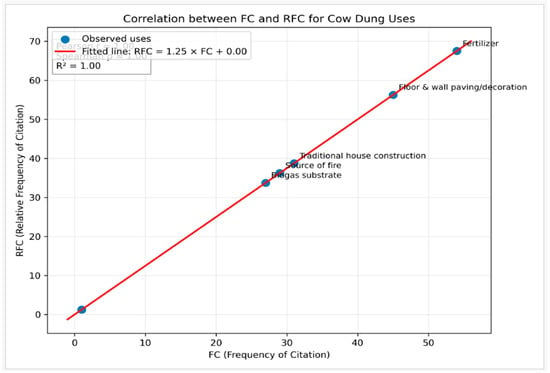
An observation revealed a positive correlation between the Frequency of Citation and the Relative Frequency of Citation of cow dung use in Maungani village (Figure 7). It is not surprising to observe a perfect positive correlation, as the RFC remains a deterministic percentage transformation of FC for a particular fixed number of participants (N) [39,40].
Figure 7.
Correlation between FC and RFC of the cow dung uses.
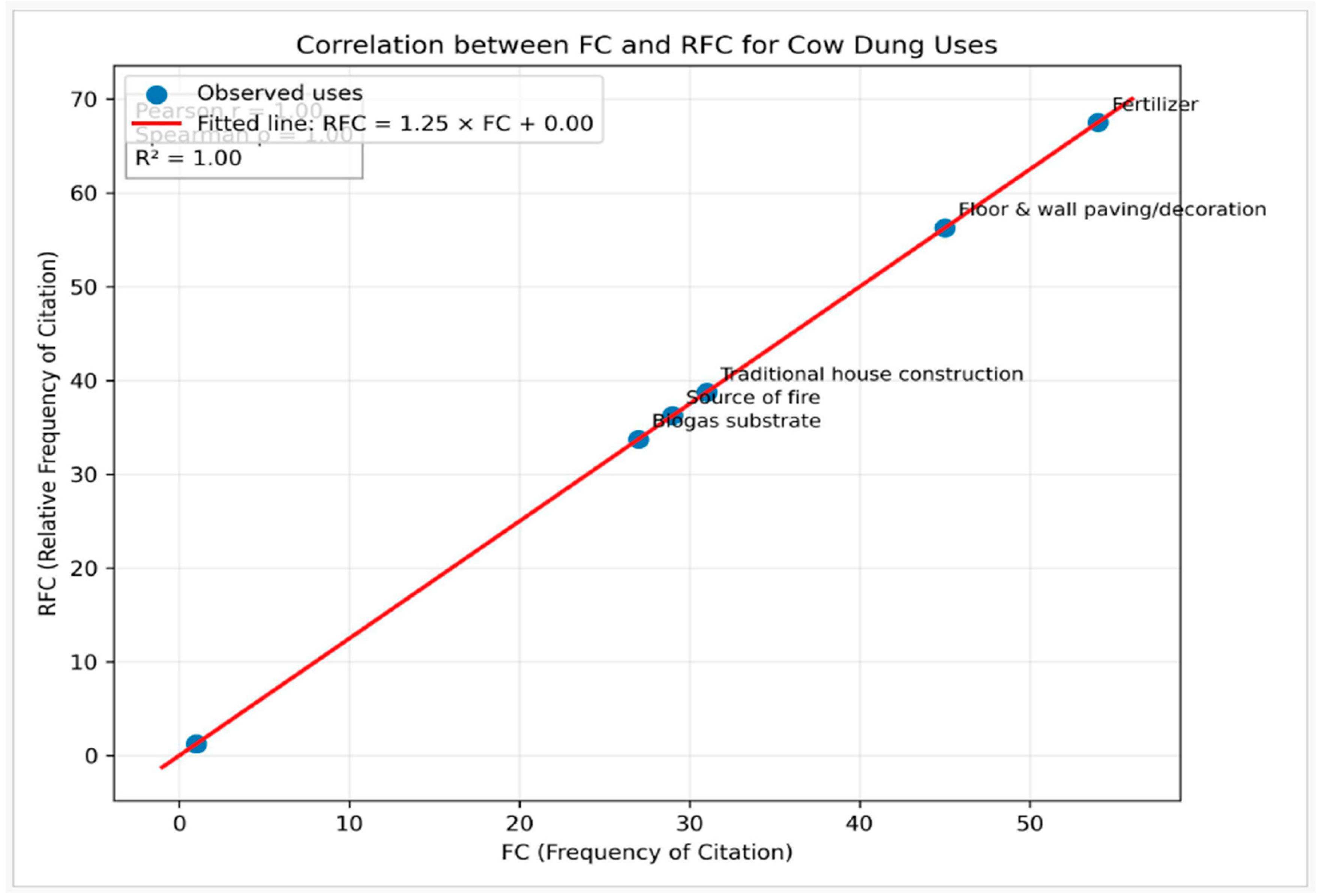
The top five uses, as determined by the FC, are fertilizer, floor and wall paving/decoration, traditional house construction, a source of fire, and lastly biogas substrate. Collectively, these uses account for approximately 68.1% of total citations, indicating a pronounced concentration of the respondents’ attention on their function. A positive correlation was also observed between the FC and RFC of the top five uses (Figure 8). This correlation was observed between FC and RFC (Pearson’s ; Spearman’s The fitted line was
with , consistent with RFC being a deterministic percentage transformation of FC for a fixed [39,40].
Figure 8.
Correlation of the top five cow dung uses in the Maungani village.
5. Discussion
The findings of this study are that cow dung can be used for floor and wall paving and decoration, as a source of fire, fertilizer, biogas substrate, pesticide, as a honey harvesting aid, mosquito repellent, preservative, water purifier, cleansing agent, cleaning agent, lubricant, cosmetic for indigenous people with skin challenges, and shelter for small insects such as ants. Most importantly, cow dung is also used for medicinal purposes, the production of mud bricks, the construction of traditional houses, and the making of pottery. It is also often used to perform traditional rituals.
The fact that cow dung has the capability of repelling the malaria-causing insects that are problematic resonates well with the work done by [17,18]. Their findings demonstrated that cow dung is an effective mosquito repellent, with recent developments highlighting its potential as a natural alternative to synthetic repellents. In addition, the study conducted by Gurav [41] demonstrated the effectiveness of cow dung in killing the malarial parasite and Mycobacterium tuberculosis, as well as its antifungal activity against Coprophilous fungi.
Most people of Maungani are unemployed and thus rely on agricultural food products to boost their food supply chain. This observation resonates with the findings of Chandan et al. [42], which elucidate that establishing a balance between demand and supply of resources, such as food, turn out to be at an affordable cost. Similarly, the present study advocates that the utilization of cow dung appears to be an economic advantage for agricultural farming. Outstandingly, the use of cow dung as fertilizer was mentioned by a total of 54 participants. This is a clear indication that cow dung plays a crucial role in maintaining soil quality. Soil quality has a synergy with the increasing earthworm populations, which recycle the nutrients to benefit plant growth. Notably, some participants mentioned that it serves as a welcoming shelter for insects, which correlates positively with the findings of Basak and Lee [43]. They found that Eisenia andrei species used cow dung as its refuge and functioned positively by enhancing soil fertility and facilitating the nitrification process, which resulted in great crop production. Furthermore, several research findings have also reported that organic manure, such as cow dung, reduces disease incidence caused by a wide range of plant pathogens, including bacteria, fungi, and nematodes [44,45]. Therefore, the proper and sustainable application of cow dung can enhance crop productivity while minimizing the occurrence of diseases.
The application of a mixture of water and cow dung on crops is a common practice amongst people of Maungani. It is a testament to the fact that plants thrive well when sprinkled with this mixture. The work of Basak & Lee [46] argues that cow dung helps control plant fungal diseases caused by fungi such as Fusarium oxysporum Schltdl., Fusarium solani (Mart.). Sacc., and Sclerotinia sclerotiorum (Libert) de Bary. On the other hand, the findings of Das et al. [17] revealed that participants recognized the effectiveness of using cow dung as a natural pesticide. This is a significant relief to indigenous populations that cannot afford commercial pesticides. This attribute of cow dung is a blessing in disguise because [44,45] have revealed that the use of synthetic pesticides and fertilizers in farming poses significant health hazards to humans, leading to severe diseases.
It is also crucial to note that cow dung is traditionally used for smearing the floors of huts. It is mixed with water to create a thin paste, which is applied to floors to keep them clean and reduce dust by binding soil particles and freshening the scent inside the huts [47]. This scenario is not beneficial for decorating purposes, but it can also help repel mosquitoes and save indigenous communities from diseases like malaria.
Remarkably, the healing power of cow dung aligns with curing illnesses such as the flu, nosebleed problems, wounds, or skin scratches. Indeed, the findings of Patil [11] are in concurrence with those of this study, as they suggest that cow dung exhibits antibacterial and antifungal properties. These properties afforded the cow dung the platform to serve as a skin tonic and effectively treat conditions such as psoriasis and eczema [48]. Moreover, the findings of other studies, such as those of Prajapati and Thakur [49], have highlighted that cow dung can be mixed with the leaves of certain plants and used to treat boils and heat rashes. As a medicinal bonus, smoke from burning cow dung can cause eye irritation and tears, which may enhance vision [50].
People in the study area use cow dung as fuel for cooking and heating. Recently, developments have occurred in the village due to the introduction of biogas generation. This practice helps mitigate the emission of greenhouse gases, which are indeed hazardous to humanity. Noteworthy, the heavy reliance on fossil fuels has led to global climate change, environmental degradation, and various human health problems [51]. Additionally, Bekele et al. [52] attest that households use significant amounts of wood for cooking and heating annually, which, of course, results in the emission of gases that disturb the ozone layer. The global warming caused by fossil fuel energy generation has accelerated the adoption of renewable fuels, such as biogas, a renewable and sustainable alternative that significantly reduces greenhouse gas emissions compared to landfill gas emissions [53]. Another implication of rural people using cow dung as fuel is that there is a shortage of firewood, forcing them to use cow dung as an alternative.
The perfect correlation between FC and RFC is practically expected, as RFC is a linear rescaling of FC by [39,40] Consequently, RFC does not add inferential information beyond FC, but it improves interpretability by expressing results as respondent percentages. This approach is routinely adopted in recent ethnobotanical studies [46,54,55].
Essentially, the dominance of a few categories, especially fertilizer, construction-related uses, and energy (as a source of fire/biogas substrate), suggests that respondents prioritize household infrastructure, agricultural productivity, and energy needs. Comparable emphases on high RFC categories are reported in diverse contexts, including Pakistan, India, and Kenya [54,55,56].
6. Conclusions and Recommendations
This study highlights that cow dung is far more than a traditional by-product; it is a strategic bioresource with significant potential to transform rural livelihoods through its agricultural, medicinal, energy, and construction applications. To fully unlock this potential, it is essential to enhance public awareness of cow dung’s multifunctional value, looking at its rich nutrient profile, beneficial microorganisms, and wide-ranging industrial, environmental, and therapeutic uses. The implementation of awareness initiatives through community education could bring about a significant shift in perceptions, moving from “waste” to “resource’’. Promoting cow dung-based entrepreneurship is equally vital, as it offers diverse value-addition pathways, including biogas, organic fertilizers, eco-bricks, and various manufactured goods. Utilization of cow dung in this manner can stimulate rural economic growth, especially when supported by targeted training, seed funding, and incubation programmes for youth and women. Expanding biogas and bio-energy initiatives can further reduce unemployment and energy poverty, given cow dung’s high suitability for anaerobic digestion and the growing global markets for biogas.
Additionally, encouraging the use of cow-dung manure in organic farming can improve soil fertility and crop nutrition while reducing reliance on costly chemical fertilizers. Strengthening public health messaging on cow dung’s antimicrobial and anti-inflammatory attributes, together with its rigorous safety guidelines, can also be conducted. With that said, the importance of its medicinal properties can be supported. On the other hand, eco-friendly construction using cow dung-based bricks represents another sustainable innovation that can lower building costs and reduce carbon emissions. Policymakers should therefore integrate cow dung valorisation into rural development strategies, promoting circular economies through incentives for green technologies and carbon credit opportunities. Finally, strong collaboration between researchers, communities, and industry is needed to advance innovation in areas such as renewable materials, wastewater treatment, and biotechnology. The insights presented collectively underscore the importance of integrating scientific knowledge with traditional practices to promote sustainable rural development, enhance community well-being, and establish cow dung as a fundamental resource for advancing the Sustainable Development Goals (SDGs), which address issues such as hunger, poverty, and health.
Author Contributions
Conceptualization, M.G.M.; Methodology, M.G.M. and M.H.L.-M.; Data collection, M.G.M. and T.A.M.; Data Analysis, M.G.M., T.A.M. and M.H.L.-M.; Writing—Original draft, M.G.M., T.A.M. and M.H.L.-M.; Writing—Review and Editing, M.G.M., T.A.M. and M.H.L.-M. All authors have read and agreed to the published version of the manuscript.
Funding
This research received no external funding.
Institutional Review Board Statement
The study was conducted in accordance with the Declaration of Helsinki, and approved by the University of Venda Research Ethics Committee (FSEA/25/BS/16/0209, 2 September 2025).
Informed Consent Statement
Informed consent was obtained from all subjects involved in the study.
Data Availability Statement
The data that supports the findings of this study is available from the corresponding author (T.A.M.), upon reasonable request.
Acknowledgments
The researchers extend their sincere gratitude to the Maungani Tribal Authority, community members, and the 2024 cohort of students from the University of Venda Science Foundation for their invaluable assistance during the data collection process.
Conflicts of Interest
The authors declare that they have no conflicts of interest.
Appendix A
- Questionnaire for the study entitled ‘Waste or Resource? Indigenous uses of cow dung by members of the Maungani Community, Thohoyandou, Limpopo Province, South Africa.
- Informants’ consent for participation in the study:
- I................................................................... (name of informant) hereby give my full consent and conscious to participate in this study and declare that to the best of my knowledge the information that I have provided is true, accurate and complete.
- Date........................................
- Informants’ details:
- Gender...........................................................................................................................
- Age................................................................................................................................
- Occupation.....................................................................................................................
- Education.......................................................................................................................
- Marital status…………………………………………………………………………………..
| Does the community of Maungani village, in Limpopo, South Africa make use of the cow dung? | Yes (why) No (why) | |
| Which uses of cow dung are you knowledgeable about? List them and say their preparation methods applied before use? | Uses | Preparation methods |
| Where do you collect the cow dung from? | ||
| Who is suitable for the collection of cow dung and why? | ||
| Does the use of cow dung have any side effects? If yes what are they? | ||
References
- Bharsakle, G.R. Cow Dung Cakes as a Sustainable Energy Source: A Comprehensive Review of Environmental Benefits, and Entrepreneurial Opportunities. Int. J. Sci. Eng. Technol. 2025, 13, 148–155. [Google Scholar] [CrossRef] [Scilit]
- Ratminingsih, R.; Jumadi, J. A Study on the Potential of Cow Dung Waste as an Environmentally Friendly Alternative Energy Source. In Proceedings of the 7th International Conference on Research, Implementation, and Education of Mathematics and Sciences (ICRIEMS 2020), Yogyakarta, Indonesia, 25-26 September 2020; Supardi, Nur Aeni Ariyanti, Isti Yunita; Atlantis Press: Yogyakarta, Indonesia, 2021; pp. 2352–5398. [Google Scholar]
- Dandekar, H. Gobar gas plants: How appropriate are they? Econ. Political Wkly. 1980, 15, 887–893. [Google Scholar]
- State Energy Conservation Office. Manure Use for Fertilizer and for Energy: Report to Congress. U.S. Department of Agriculture. 2009. Available online: http://large.stanford.edu/courses/2020/ph240/davis2/docs/usda-jun09.pdf (accessed on 10 February 2025).
- Pereira, F.; Bazzo, E.; de Oliveira, A.M. Biomass co-firing as an alternative technology for a clean coal electric generation in Brazil. In Proceedings of the 20th International Congress of Mechanical Engineering, Gramado, Brazil, 15–20 November 2009; Associação Brasileira de Engenharia e Ciências Mecânicas: Florianópolis, Brazil, 2009. [Google Scholar]
- Swain, M.R.; Ray, R.C. Biocontrol and other beneficial activities of Bacillus subtilis isolated from cow dung microflora. Microbiol. Res. 2009, 164, 121–130. [Google Scholar] [CrossRef] [Scilit] [PubMed]
- Nene, Y.L. Seed health in ancient and medieval history and its relevance to present day agriculture. Asian Agric. Hist. 1999, 3, 157–184. [Google Scholar]
- Dittrich, A.D.K.; Helden, A.J. Experimental sward islets: The effects of dung and fertilization on Hemiptera and Araneae. Insects Conserv. Divers. 2012, 5, 46–56. [Google Scholar] [CrossRef] [Scilit]
- Jhariya, M.K.; Raj, A. Effects of wildfires on flora, fauna and physico-chemical properties of soil-An overview. J. Appl. Nat. Sci. 2014, 6, 887–897. [Google Scholar] [CrossRef] [Scilit]
- Mandal, A.; Rydeen, A.; Anderson, J.; Sorrell, M.R.; Zygmunt, T.; Torres-Vazquez, J.; Waxman, J.S. Transgenic retinoic acid sensor lines in zebrafish indicate regions of available embryonic retinoic acid. Dev. Dyn. 2013, 242, 989–1000. [Google Scholar] [CrossRef] [Scilit]
- Separation Distances for Livestock Manure Management Systems. MU Extension. Available online: https://extension.missouri.edu/publications/eq219 (accessed on 26 November 2025).
- Kumari, B.; Kumar, R.; Kumar, M. PalmPred: An SVM based palmitoylation prediction method using sequence profile information. PLoS ONE 2014, 9, e89246. [Google Scholar] [CrossRef] [Scilit]
- Bornemissza, G.F. The Australian Dung beetle Project 1965–1975. Aust. Meat Res. Comm. Rev. 1976, 30, 1–30. [Google Scholar]
- Sagar, S.; Singh, A.; Bala, J.; Chauhan, R.; Kumar, R.; Bhatia, R.K.; Walia, A. Insights into cow dung-based bioformulations for sustainable plant health and disease management in organic and natural farming system: A review. J. Soil Sci. Plant Nutr. 2024, 24, 30–53. [Google Scholar] [CrossRef] [Scilit]
- Millogo, Y.; Aubert, J.E.; Séré, A.D.; Fabbri, A.; Morel, J.C. Earth blocks stabilized by cow-dung. Mater. Struct. 2016, 49, 4583–4594. [Google Scholar] [CrossRef] [Scilit]
- Kudada, N.; Bara, N. Control of insect pest by spraying starch, animal urine and dusting of cow dung as in vegetable. In Validation of Indigenous Technical Knowledge in Agriculture; ICAR; Division of Agricultural Extension: New Delhi, India, 2003; pp. 168–169. [Google Scholar]
- Das, A.K.; Nayak, N.; Mohapatra, D. Use of kochila (Strichnos nuxvomica) mixed cow dung compost in brinjal for controlling fruit and shoot borer. In Validation of Indigenous Technical Knowledge in Agriculture; ICAR; Division of Agricultural Extension: New Delhi, India, 2003; pp. 175–177. [Google Scholar]
- Koodalingam, K.; Rajamanickam, K.; Karuppuchamy, K. Control of rhinoceros beetle in coconut by using cow dung slurry. In Validation of Indigenous Technical Knowledge in Agriculture; ICAR; Division of Agricultural Extension: New Delhi, India, 2003; pp. 202–206. [Google Scholar]
- Patil, P.M.; Mahamuni, P.P.; Abdel-Daim, M.M.; Aleya, L.; Chougule, R.A.; Shadija, P.G.; Bohara, R.A. Conversion of organic biomedical waste into potential fertilizer using isolated organisms from cow dung for a cleaner environment. Environ. Sci. Pollut. Res. 2019, 26, 27897–27904. [Google Scholar] [CrossRef] [Scilit] [PubMed]
- Godambe, T.; Fulekar, M.H. Cow dung Bacteria offer an Effective Bioremediation for Hydrocarbon-Benzene. Int. J. Biotech Trends Technol. 2016, 6, 13–20. [Google Scholar]
- Radha, T.K.; Rao, D.L.N. Plant growth promoting bacteria from cow dung based biodynamic preparations. Indian J. Microbiol. 2014, 54, 413–418. [Google Scholar] [CrossRef] [Scilit]
- Ewusi-Mensah, N.; Logah, V.; Akrasi, E.J. Impact of different systems of manure management on the quality of cow dung. Commun. Soil Sci. Plant Anal. 2015, 46, 137–147. [Google Scholar] [CrossRef] [Scilit]
- Yoshitake, S.; Soutome, H.; Koizumi, H. Deposition and decomposition of cattle dung and its impact on soil properties and plant growth in a cool-temperate pasture. Ecol. Res. 2014, 29, 673–684. [Google Scholar] [CrossRef] [Scilit]
- Benefits of Cow Dung. Available online: https://villagevoicenews.com/2022/10/23/benefits-of-cow-dung/ (accessed on 7 August 2025).
- Gupta, K.K.; Aneja, K.R.; Rana, D. Current status of cow dung as a bioresource for sustainable development. Bioresour. Bioprocess. 2016, 3, 28. [Google Scholar] [CrossRef] [Scilit]
- Singha, R.; Singha, S. Enhancing Soil Health with Safe and Sustainable Use of Cow Dung and Pig Slurry Manure: Best Practices, Benefits, and Precautions. 2024. Available online: https://ssrn.com/abstract=5020189 (accessed on 26 November 2025).
- Park, D.; Barabad, M.L.; Lee, G.; Kwon, S.B.; Cho, Y.; Lee, D.; Cho, K.; Lee, K. Emission characteristics of particulate matter and volatile organic compounds in cow dung combustion. Environ. Sci. Technol. 2013, 47, 12952–12957. [Google Scholar] [CrossRef] [Scilit]
- Gong, C.M. Microbial safety control of compost material with cow dung by heat treatment. J. Environ. Sci. 2007, 19, 1014–1019. [Google Scholar] [CrossRef] [Scilit]
- Mucina, L.; Rutherford, M.C. The Vegetation of South Africa, Lesotho and Swaziland; Memoirs of the Botanical Survey of South Africa; South African National Biodiversity Institute: Pretoria, South Africa, 2006. [Google Scholar]
- Lidzhegu, Z.; Kabanda, T. Declining land for subsistence and small-scale farming in South Africa: A case study of Thulamela local municipality. Land Use Policy 2022, 119, 106170. [Google Scholar] [CrossRef] [Scilit]
- Semenya, S.S.; Tshisikhawe, M.P.; Potgieter, M.T. Invasive alien plant species: A case study of their use in the Thulamela Local Municipality, Limpopo Province, South Africa. Sci. Res. Essays 2012, 7, 2363–2369. [Google Scholar] [CrossRef] [Scilit]
- Syampungani, S.; Geldenhuys, C.J.; Chirwa, P.W. Regeneration dynamics of miombo woodland in response to different anthropogenic disturbances: Forest characterisation for sustainable management. Agrofor. Syst. 2016, 90, 563–576. [Google Scholar] [CrossRef] [Scilit]
- Saidi, T.A.; Tshipala-Ramatshimbila, T.V. Ecology and Management of a Remnant Brachystegia Spiciformis (miombo) Woodland in North Eastern Soutpansberg, Limpopo Povince. S. Afr. Geogr. J. 2006, 88, 205–212. [Google Scholar] [CrossRef] [Scilit]
- Venter, S.M.; Witkowski, E.T.F. Baobab (Adansonia digitata L.) fruit production in communal and conservation land-use types in southern Africa. For. Ecol. Manag. 2010, 216, 630–639. [Google Scholar] [CrossRef] [Scilit]
- Madikizela, B.; Kambizi, L.; McGaw, L.J. An ethnobotanical survey of plants used traditionally to treat tuberculosis in the eastern region of O.R. Tambo district, South Africa. S. Afr. J. Bot. 2012, 109, 231–236. [Google Scholar] [CrossRef] [Scilit]
- Seifritz, W. Alternative and renewable sources of energy in optimizing yields’, The role of Fertilizers. In Proceedings of the 12th IPI Congress, Goslar, Germany, 21–25 June 1982. [Google Scholar]
- Sharma, A.R.; Mittra, B.N. Effect of different rates of application of organic and nitrogen fertilizers in a rice-based cropping system. J. Agric. Sci. 1991, 117, 313–318. [Google Scholar] [CrossRef] [Scilit]
- Abou-El-Magd, M.M.; Hoda, M.A.; Fawzy, Z.F. Relationships, growth, yield of broccoli with increasing N, P or K ratio in a mixture of NPK fertilizers. Ann. Agric. Sci. 2005, 43, 791–805. [Google Scholar]
- Tardío, J.; Pardo-de-Santayana, M. Cultural importance indices: A comparative analysis based on the useful wild plants of Southern Cantabria (Northern Spain). Econ. Bot. 2008, 62, 24–39. [Google Scholar] [CrossRef] [Scilit]
- Whitney, C. EthnobotanyR: Calculate Quantitative Ethnobotany Indices, R Package v0.1.9; Vignette and Manual; 2022. Available online: https://CRAN.R-project.org/package=ethnobotanyR (accessed on 9 January 2026).
- Gurav, S.S. Panchgavya: A precious gift to humankind. J. Ayurveda Integr. Med. 2022, 9, 165–168. [Google Scholar]
- Chandan, A.; John, M.; Potdar, V. Achieving UN SDGs in food supply chain using blockchain technology. Sustainability 2023, 15, 2109. [Google Scholar] [CrossRef] [Scilit]
- Atiyeh, R.M.; Domínguez, J.; Subler, S.; Edwards, C.A. Changes in biochemical properties of cow manure during processing by earthworms (Eisenia andrei, Bouché) and the effects on seedling growth. Pedobiologia 2000, 44, 709–724. [Google Scholar] [CrossRef] [Scilit]
- Abawi, G.S.; Widmer, T.L. Impact of soil health management practices on soilborne pathogens, nematodes and root diseases of vegetable crops. Appl. Soil Ecol. 2000, 15, 37–47. [Google Scholar] [CrossRef] [Scilit]
- Akhtar, M.; Malik, A. Roles of organic soil amendments and soil organisms in the biological control of plant-parasitic nematodes: A review. Bioresour. Technol. 2000, 74, 35–47. [Google Scholar] [CrossRef] [Scilit]
- Basak, A.B.; Lee, M.W. Comparative efficacy and in vitro activity of cow urine and cow dung for controlling Fusarium wilt of cucumber. Plant Pathol. J. 2001, 17, 363. [Google Scholar]
- The Use of Cow-Dung (Ubulongwe). Ulwazi Programme. Available online: https://www.ulwaziprogramme.org/the-use-of-cow-dung-ubulongwe/ (accessed on 26 November 2025).
- Patil, S. Therapeutic potential of Panchagavya: A review. J. Ayurvedic Herb. Med. 2023, 9, 165–168. [Google Scholar]
- Prajapati, M.; Thakur, S. From Tradition to Science: Exploring the Therapeutic Potential of Cow Dung in Human Health. J. Integr. Health Res. 2024, 1, 22. [Google Scholar] [CrossRef] [Scilit]
- Chandrakar, T.; Kulkarni, P. The potential for increasing antimicrobial activity in cow dung. Spectr. Emerg. Sci. 2024, 4, 17–21. [Google Scholar] [CrossRef] [Scilit]
- Aremu, M.O.; Agarry, S.E. Comparison of biogas production from cow dung and pig dung under mesophilic conditions. Int. Ref. J. Eng. Sci. 2012, 1, 16–21. [Google Scholar]
- Bekele, W.; Melaku, S.; Mekasha, Y. Effect of substitution of concentrate mix with Sesbania sesban on feed intake, digestibility, body weight change, and carcass parameters of Arsi-Bale sheep fed a basal diet of native grass hay. Trop. Anim. Health Prod. 2013, 45, 1677–1685. [Google Scholar] [CrossRef] [Scilit]
- Murphy, J.D.; Korres, N.E.; Singh, A.; Smyth, B.; Nizami, A.S.; Thamsiriroj, T. The Potential for Grass Biomethane as a Biofuel; EPA Climate Change Research Programme 2007–2013; Environmental Protection Agency: Washington, DC, USA, 2011. [Google Scholar]
- Maiyo, Z.C.; Njeru, S.N.; Toroitich, F.J.; Indieka, S.A.; Obonyo, M.A. Ethnobotanical study of medicinal plants used by the people of Mosop, Nandi County in Kenya. Front. Pharmacol. 2024, 14, 1328903. [Google Scholar] [CrossRef] [Scilit]
- Zareef, H.; Gul, M.T.; Qureshi, R.; Aati, H.; Munazir, M. Application of ethnobotanical indices to document the use of plants in traditional medicines in Rawalpindi district, Punjab-Pakistan. Ethnobot. Res. Appl. 2023, 25, 1–29. [Google Scholar]
- Ralte, L.; Sailo, H.; Singh, Y.T. Ethnobotanical study of medicinal plants used by the indigenous community of the western region of Mizoram, India. J. Ethnobiol. Ethnomed. 2024, 20, 2. [Google Scholar] [CrossRef] [Scilit]

Disclaimer/Publisher’s Note: The statements, opinions and data contained in all publications are solely those of the individual author(s) and contributor(s) and not of MDPI and/or the editor(s). MDPI and/or the editor(s) disclaim responsibility for any injury to people or property resulting from any ideas, methods, instructions or products referred to in the content. |
© 2026 by the authors. Licensee MDPI, Basel, Switzerland. This article is an open access article distributed under the terms and conditions of the Creative Commons Attribution (CC BY) license.