


Abstract
The shortage of interdisciplinary talent is a critical bottleneck constraining the development of smart agriculture. Taking Jiangsu Province as a case study, this research constructs and empirically validates an ecosystem model for cultivating interdisciplinary talent oriented toward smart agriculture. In the theoretical construction phase, an initial three-dimensional model covering “core actors,” “supportive environment,” and “resource elements” was proposed based on ecosystem theory and literature review. This model was subsequently refined through in-depth interviews (March–August 2024, 60–120 min each) and thematic analysis with 58 diverse stakeholders across 13 prefecture-level cities in Jiangsu Province, encompassing universities, agribusinesses, government agencies, research institutes, and frontline practitioners. In the empirical testing phase, structural equation modeling was employed to analyze 382 valid questionnaire responses covering six dimensions: policy environment, market environment, university–enterprise collaboration, curriculum resources, platform resources, and talent cultivation effectiveness (20 items in total). The findings indicate that: (1) the ecosystem model demonstrates good fit and strong explanatory power, with a pronounced “university–enterprise” dual-core driving effect; (2) government policy guidance and platform construction play pivotal supportive roles; (3) market demand and industrial policy constitute critical external driving forces; and (4) “industry–education integrated practice platforms” together with “modular interdisciplinary curricula” exert the most direct positive influence on cultivation outcomes. Based on these findings, this study offers systematic recommendations from three perspectives—mechanism coordination, policy optimization, and resource allocation—providing a theoretically grounded and practically referenced solution for cultivating interdisciplinary talent in smart agriculture.
1. Introduction
Global agriculture is undergoing the fourth revolution centered on biotechnology, information technology, and intelligent equipment—Agriculture 4.0 [1]. By integrating cutting-edge technologies such as the Internet of Things, big data, artificial intelligence, and robotics, smart agriculture has achieved a precise, intelligent, and efficient transformation across the entire chain from production to management. This provides a critical pathway to address population growth, resource constraints, and climate change [2]. Vigorously developing smart agriculture has become an important strategic choice to seize the opportunities of the new round of technological and industrial revolution and advance the modernization of agriculture and rural areas. China’s agricultural digital transformation is accelerating. According to data from the Ministry of Agriculture and Rural Affairs, the national agricultural production informatization rate—the proportion of information technology applied in agricultural production, operation, management, and services—rose from 18.6% in 2018 to 27.6% in 2022 [3]. This indicator offers a data-driven and intelligent decision-making solution to the questions of who will farm the land and how to farm it, serving as a key driving force for the transition from traditional agriculture to modern agriculture. Against this backdrop, the National Smart Agriculture Action Plan (2024–2028) further defines the strategic goal of vigorously developing smart agriculture and promoting the in-depth integration of digital technologies across all agricultural sectors.
Jiangsu Province is a major agricultural province in China, where traditional agriculture is dominated by crop farming. According to statistics, the province’s cultivated land area is approximately 4 million hectares, accounting for 40% of the total land area. In the total output value of agriculture, forestry, animal husbandry, and fishery, crop farming accounts for approximately 55%, animal husbandry for about 20%, fishery for about 15%, and forestry for about 2%. Crop farming focuses primarily on grain crops such as rice and wheat, supplemented by cash crops including vegetables and fruit trees, while animal husbandry is mainly based on pig and poultry farming. The rural population of the province is approximately 25 million, representing 30% of the permanent resident population, among which agricultural employees number about 6 million, accounting for 13% of the province’s total employed population [4]. As an important agricultural product supply base in the Yangtze River Delta region, Jiangsu’s traditional agriculture has long faced three major structural challenges: tightening resource constraints, prominent aging of the agricultural labor force, and relatively small scale of operation. This makes the promotion of smart agriculture and the cultivation of interdisciplinary composite talents particularly urgent [5]. Against this backdrop, as a province with advanced economic development and leading agricultural modernization in China, Jiangsu is actively implementing the “Strong Agriculture Province” strategy, accelerating the exploration and practice of smart agriculture, and its development experience provides an important pioneering demonstration for the whole country [6].
In the advancement of smart agriculture, the collaborative participation of multiple stakeholders is of paramount importance. Regarding Jiangsu Province, its agricultural higher education and research resources are relatively abundant, forming a multi-agent pattern comprising universities, research institutes, and enterprises [7]. At the higher education level, institutions in the province offering agricultural or agriculture-related programs include Nanjing Agricultural University, Yangzhou University, Jiangsu University, Nanjing Forestry University, and Jiangsu Vocational College of Agriculture and Forestry, among which Nanjing Agricultural University and Yangzhou University have established smart agriculture-related majors or research directions, while some universities are actively exploring interdisciplinary cultivation models of “agriculture + information technology.” At the research institute level, institutions such as Jiangsu Academy of Agricultural Sciences, Nanjing Institute of Soil Science of the Chinese Academy of Sciences, and Institute of Botany of Jiangsu Province and the Chinese Academy of Sciences have conducted systematic research in areas including agricultural Internet of Things, precision fertilization, intelligent irrigation, and crop modeling. At the enterprise level, a number of agricultural technology companies and large-scale agricultural enterprises, including Jiangsu World Group Agricultural Machinery Co., Ltd. (headquartered in Danyang City, Jiangsu Province, China), Nanjing Guotu Information Industry Co., Ltd. (headquartered in Nanjing City, Jiangsu Province, China), and Jiangsu Subei Flowers Co., Ltd. (headquartered in Shuyang County, Suqian City, Jiangsu Province, China), have carried out practical explorations in fields such as intelligent agricultural machinery, agricultural big data platforms, and smart park management [8]. The aforementioned three categories of actors not only constitute the core force in Jiangsu Province’s smart agriculture development, but also provide important supporting platforms for interdisciplinary talent cultivation.
Unlike industrial automation, which typically faces standardized environments and controllable scenarios, agricultural automation must contend with special conditions including unstructured operation objects, complex and variable environments, and significant biological variability, imposing higher demands on perceptual adaptability, decision-making robustness, and operational flexibility. However, the rapid iteration of technology and industry is sharpening a structural mismatch with talent supply. The essence of smart agriculture lies in the deep convergence of agronomy and information & communication technologies (ICT); its advanced form integrates information sensing, intelligent decision-making, precision operations, and digital management [9]. This means that what the agricultural sector now demands is no longer the traditional agronomist or isolated technical expert, but “Crossover Talent”—interdisciplinary professionals who possess a knowledge base blending agronomy and ICT, command cross-cutting technical skills, and combine industrial vision with innovative thinking, capable of penetrating complex agricultural problems and deploying digital tools to deliver systemic solutions [10]. Nevertheless, China’s current higher education and vocational training systems remain constrained by rigid disciplinary silos, with talent cultivation models decoupled from industrial needs. Consequently, crossover talent for smart agriculture faces a predicament of being “hard to cultivate, hard to retain, and hard to utilize effectively,” creating a conspicuous “talent gap” that constrains sectoral development [11]. According to relevant reports by the China Association for Science and Technology, by 2025, the demand for interdisciplinary talent in China’s smart agriculture sector is projected to reach approximately 1.5 million, while current annual graduates from related majors number less than 100,000, resulting in a supply-demand gap exceeding 1.4 million. Among these, subfields such as agricultural IoT engineering, agricultural data science, and intelligent equipment R&D face particularly acute shortages, with the ratio of relevant positions to qualified applicants at several key agribusinesses exceeding 5:1.
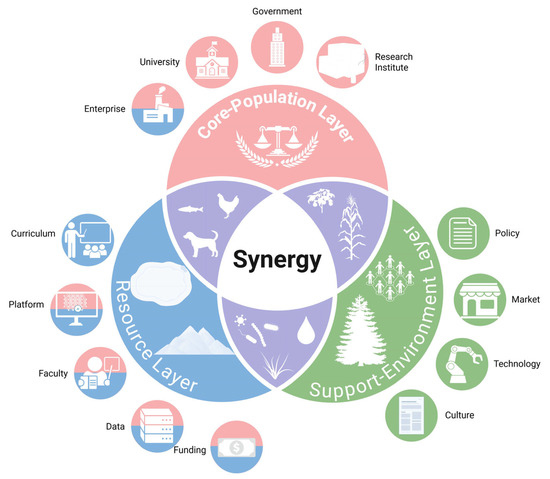
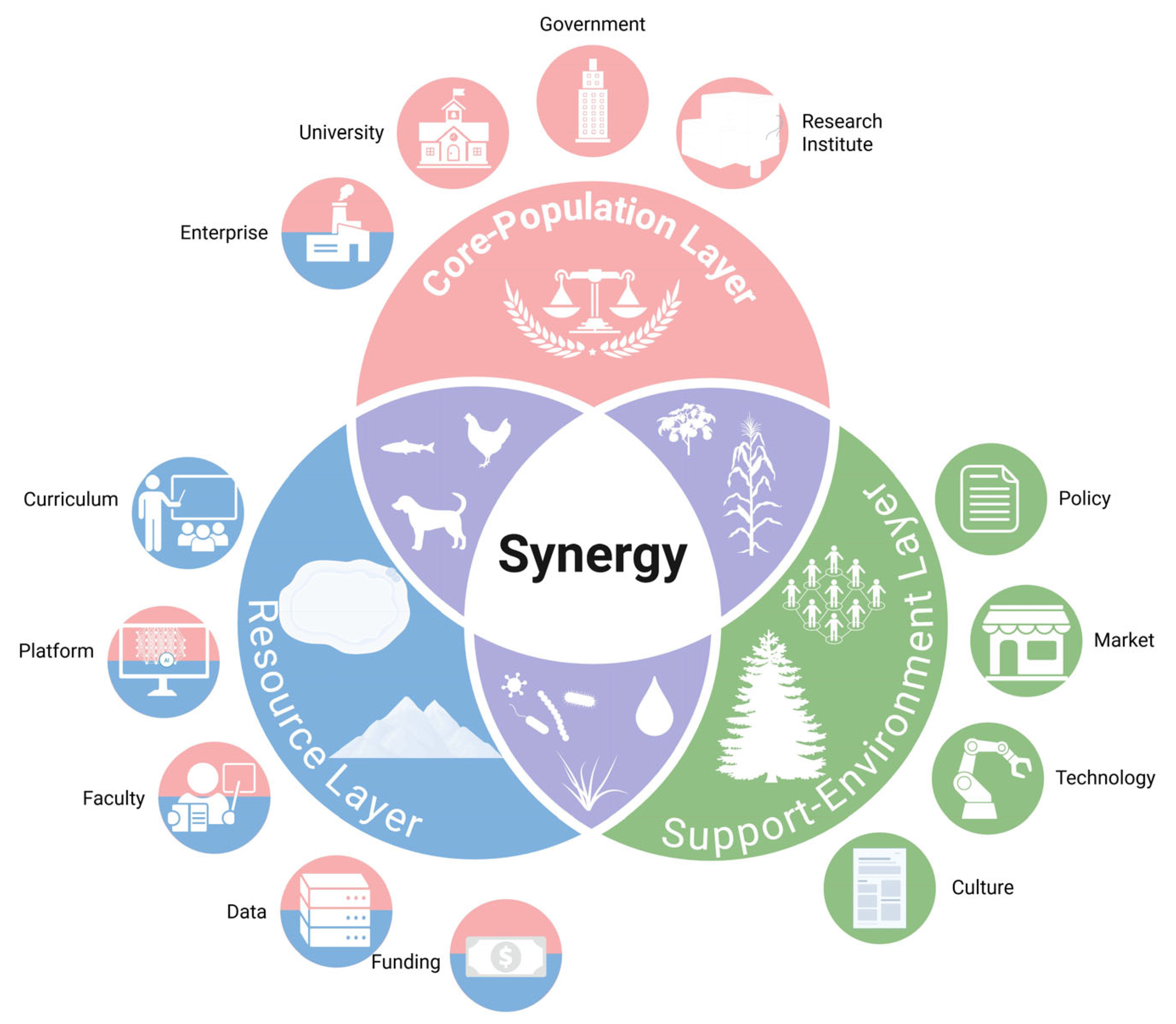
Existing research on agricultural and crossover-talent cultivation has primarily followed three tracks: an educational lens focusing on curricular reform and pedagogical models within universities; an economic-management lens foregrounding firms as the primary actors in talent development; and a policy lens dissecting the state’s macro-steering mechanisms [12]. While these studies offer valuable insights, most concentrate on a single stakeholder or stop at broad prescriptions, resulting in fragmented analyses that lack a systemic view integrating government, industry, universities, research institutes, and other diverse actors within a unified framework [13]. Ecological Systems Theory, originating from ecology, provides a theoretical tool for overcoming this limitation. The theory emphasizes the diversity of multiple agents (akin to keystone species), their mutualistic symbiotic relationships, resource recycling, and dynamic co-evolution, positing that sustained interaction and synergy among actors constitute the key to achieving self-balancing and long-term development of the system. Introducing this theoretical perspective into the talent cultivation domain helps construct a holistic analytical framework that integrates multiple stakeholders and reveals interaction mechanisms, thereby transcending the limitations of single disciplines or single actors, and more comprehensively understanding how stakeholders achieve the continuous evolution and optimization of the talent cultivation system through synergy [14]. Based on this, this study constructed a theoretical model of the interdisciplinary talent cultivation ecosystem for smart agriculture, as shown in Figure 1. This model systematically integrates four core stakeholders: government, universities, research institutes, and enterprises, and clarifies the synergistic roles of key elements including policy, funding, technology, market, culture, and data within the system. Specifically, the government provides policy guidance and financial support; universities and research institutes are responsible for knowledge production and the construction of interdisciplinary curriculum systems; enterprises align with market demands and provide technology translation and application scenarios. Through collaborative platforms, these stakeholders form an interactive network, driving the talent cultivation system to achieve resource circulation and dynamic evolution under the combined effects of technology-driven and market-led forces.
Figure 1.
Construction of a Theoretical Model for the Smart-Agriculture Interdisciplinary Talent Cultivation Ecosystem.
The study’s theoretical contribution lies in systematically applying Ecological Systems Theory to smart-agriculture talent research, constructing and validating an integrative analytical framework that remedies the current fragmentation [15]. Practically, the findings will furnish Jiangsu Province with scientific evidence for crafting targeted talent policies and deepening industry–education integration, while offering a replicable reference for the rest of China.
2. Materials and Methods
To ensure methodological rigor, this study adopts an exploratory–sequential mixed-methods design, following a “theory-building → empirical-testing” progression to systematically address the key constituent elements of an interdisciplinary talent cultivation ecosystem for smart agriculture and their interaction mechanisms. The research was conducted in two phases between March 2024 and December 2025: Phase 1 (March–August 2024) deconstructed the ecosystem’s constituent elements, structural relations, and interaction mechanisms through 58 in-depth interviews, thereby constructing and refining an initial theoretical model; Phase 2 (September 2024–December 2025) conducted empirical testing of the refined model through questionnaire development, large-scale data collection (382 valid responses), and structural equation modeling analysis, validating research hypotheses and revealing key influence paths among variables. In terms of specific implementation, this study achieves triangulation through multi-source data (in-depth interviews, questionnaire surveys, and archival materials), employs established procedures including content validity (expert review), reliability (Cronbach’s α, composite reliability), and construct validity (average variance extracted, confirmatory factor analysis) to ensure measurement quality, analyzes qualitative data through systematic thematic coding, and examines quantitative data using structural equation modeling combined with model fit assessment. These measures collectively ensure that the research conclusions possess both theoretical grounding and empirical robustness.
2.1. Materials and Data Collection
This study employs a multi-source, multi-stage data collection strategy to ensure comprehensiveness and triangulation. To deeply reveal the operational logic and stakeholder perspectives within the smart agriculture interdisciplinary talent cultivation ecosystem, we conducted semi-structured in-depth interviews with 58 key informants selected via purposive sampling from March to August 2024. Participants were drawn from universities, agricultural enterprises, government agencies, research institutes, and frontline practitioners in Jiangsu Province. The composition of the respondents is as follows: 18 university faculty members and administrators from agronomy and information disciplines; 16 senior executives and HR managers from smart agriculture-related enterprises; 12 officials from agricultural and technological administrative departments; 7 researchers from academies of agricultural sciences and IoT research institutions; and 5 frontline farmers and agricultural extension workers. The interviews focused on four major themes: the current status and challenges of interdisciplinary talent cultivation in smart agriculture; the roles and interactions of multiple stakeholders (universities, enterprises, government, and research institutes); key resources required for talent cultivation (curriculum systems, practical platforms, funding, and faculty); and cross-entity collaboration mechanisms and ecosystem sustainability. All interviews were audio-recorded with informed consent and transcribed verbatim, generating approximately 1200 pages of textual data for subsequent thematic analysis.
Based on qualitative insights and established scales, this study developed a five-point Likert questionnaire comprising 20 items to operationalize six core latent variables aligned with the ecosystem model: Policy Environment (3 items), Market Environment (3 items), University–Enterprise Cooperation (4 items), Curriculum Resources (3 items), Platform Resources (3 items), and Talent Cultivation Effectiveness (4 items). Targeting diverse stakeholders in Jiangsu Province’s smart agriculture sector—including faculty, enterprise managers, officials, researchers, and farmers—the survey was distributed via the Jiangsu Provincial Department of Agriculture and Rural Affairs, universities, and industry associations, yielding 382 valid responses. Employing purposive sampling to examine structural relationships rather than infer population characteristics, this sample size satisfies Structural Equation Modeling (SEM) requirements (exceeding the 200-case threshold and the 10:1 ratio of free parameters). Content validity was ensured through expert review and a pilot test (N = 50), while reliability and validity analyses demonstrated robust internal consistency and convergent validity, with Cronbach’s α (0.82–0.91), Composite Reliability (0.83–0.92), and Average Variance Extracted (0.61–0.73) all exceeding recommended thresholds (see Section 3.1). Additionally, industry reports, policy documents, and project archives were integrated to provide contextual evidence for the case analysis.
Additionally, to strengthen the background support and contextual evidence for case analysis, this study integrated multiple types of materials: in terms of policy documents, a total of 12 publicly released plans, action programs, and guidance documents related to smart agriculture and agricultural and rural development from the Central Government, Jiangsu Provincial People’s Government, Jiangsu Provincial Department of Agriculture and Rural Affairs, and Jiangsu Provincial Department of Education between 2020 and 2024 were reviewed to outline the policy orientation and institutional environment for smart agriculture development; regarding industry reports, a total of 8 research reports on smart agriculture and digital village development publicly released by the Department of Market and Information of the Ministry of Agriculture and Rural Affairs, Chinese Academy of Agricultural Sciences, Jiangsu Academy of Agricultural Sciences, and China Academy of Information and Communications Technology between 2021 and 2024 were reviewed to understand the industry status, technological trends, and talent demands of smart agriculture; in terms of project archives and statistical data, annual statistical data and smart agriculture-related project materials publicly released by the Jiangsu Provincial Department of Agriculture and Rural Affairs, Jiangsu Provincial Department of Education, and Jiangsu Provincial Bureau of Statistics were reviewed to obtain specific data on agricultural land, agricultural population, university program settings, and smart agriculture pilot projects. All materials were accessed through public channels to ensure the traceability of sources and the reliability of research conclusions.
2.2. Data Analysis Methods
To ensure the rigor of the findings, this study matched each data type with an appropriate analytic toolkit. Qualitative data were subjected to thematic analysis in NVivo 12 (QSR International Pty Ltd., Melbourne, Australia) through a three-stage coding sequence—open, axial and selective—to distill core categories and iteratively refine the theoretical model. Quantitative data were processed in SPSS 26.0 (IBM Corp., Armonk, NY, USA) for descriptive statistics and reliability–validity tests (Cronbach’s α, composite reliability CR, average variance extracted AVE), followed by structural-equation modeling in AMOS 24.0 (IBM Corp., Armonk, NY, USA). Confirmatory factor analysis and path analysis were used to assess model fit (, RMSEA, CFI, TLI) and test the research hypotheses. Finally, case materials from the Smart Agriculture Demonstration Zone in Changzhou, Jiangsu—supplemented by participant observation and document analysis—were employed for process tracing and mechanism elaboration, thereby deepening and contextualizing the quantitative results.
2.3. Theory Construction, Refinement, and Validation
Grounded in Ecological Systems Theory and a comprehensive literature review, we first proposed a three-layer preliminary model that distinguishes (1) a core-population layer (producers, consumers, decomposers/regulators), (2) a resource-factor layer (curricula, faculty, platforms, data, funding, etc.), and (3) a support-environment layer (policy, market, technology, culture). Qualitative interviews then prompted critical refinements: the university–firm nexus was re-conceptualised as a “dual-core driver” in which firms move from passive “talent users” to active “co-cultivators”; government was specified as both “platform builder” and “trust broker”; a shared university–industry practice platform and modular, project-based course packages were identified as pivotal resources; and environmental constraints such as fragmented market demand, low willingness to pay, and a “heavy-industry, light-agriculture” mindset were explicitly incorporated. These insights yielded a revised model and a set of testable hypotheses. Large-sample quantitative tests confirmed satisfactory reliability and validity for all latent constructs (CR > 0.7, AVE > 0.5), good overall model fit ( = 2.34, RMSEA = 0.062, CFI = 0.937, TLI = 0.928), and path coefficients that underscore the centrality of university–firm collaboration (β = 0.71, p < 0.001), the significant impacts of practice platforms and curricular systems, and the direct and indirect roles of market demand and industrial policy in driving ecosystem effectiveness, thereby validating the theoretical soundness and practical explanatory power of the refined model.
2.4. Ecosystem Construction and Implementation
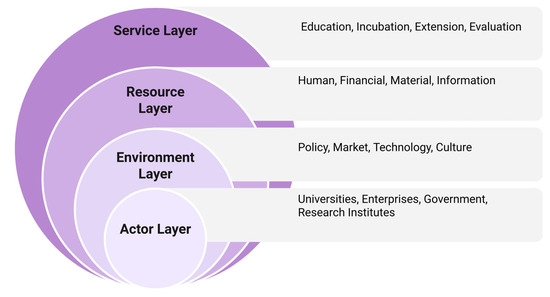
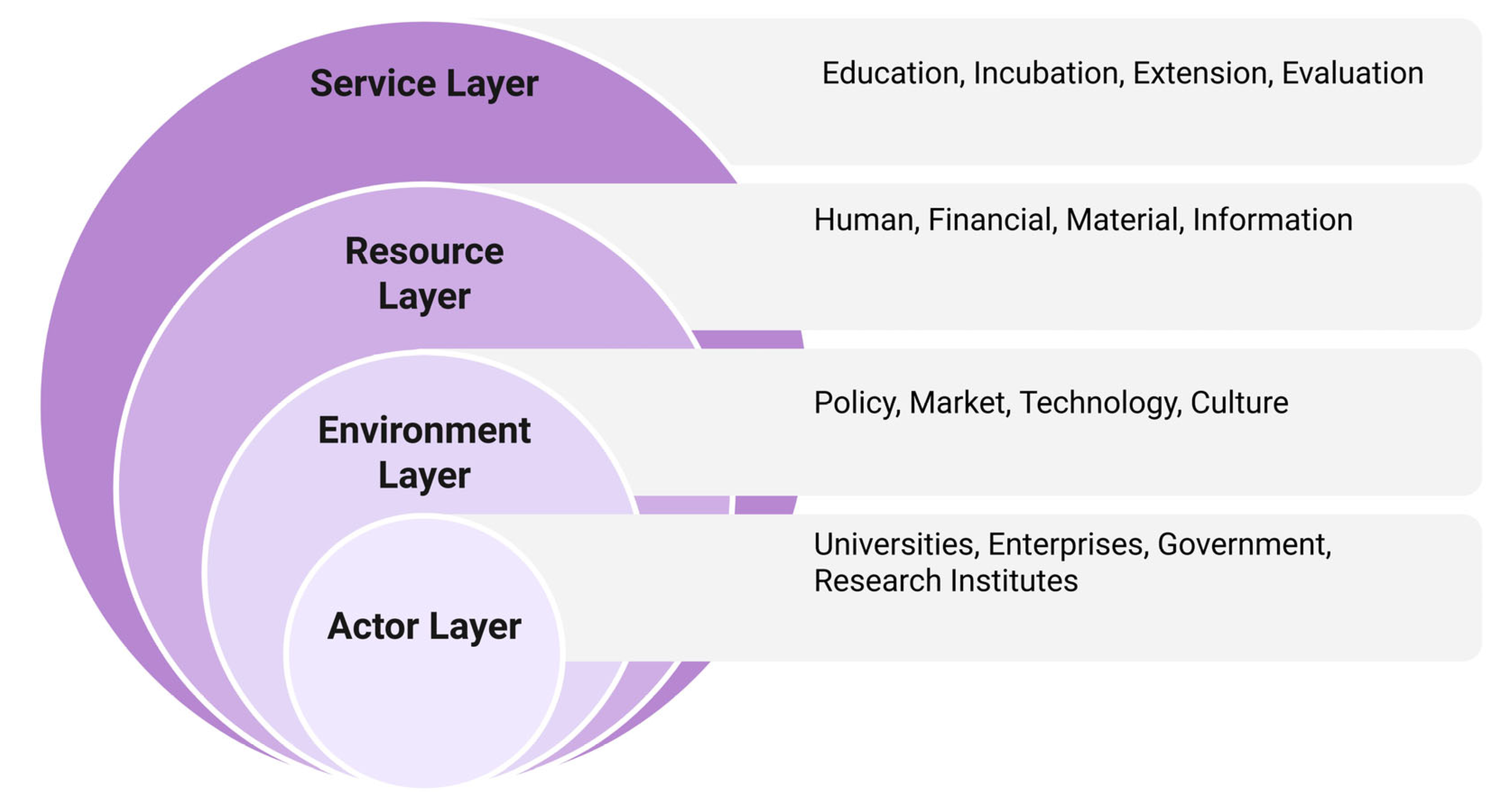
Grounded in the validated theoretical model and tailored to the realities of Jiangsu Province, this study constructs a smart-agriculture interdisciplinary talent-cultivation ecosystem. The system is framed as a dynamic, synergistic network built around four tightly coupled dimensions: an actor layer (universities, enterprises, government, research institutes), an environment layer (policy, technology, market, socio-culture), a resource layer (human, financial, technological and informational capital) and a service layer (education, extension, incubation and evaluation). The hierarchical structure and interaction mechanisms are depicted in Figure 2, which clearly illustrates the resource flows and functional feedback loops among the various actors. To translate this design into concrete action, we propose a four-step integration strategy—diagnose & plan → network building → mechanism design → capacity building”—and specify a phased rollout: short-term foundation-laying and piloting, mid-term scaling-up and resource mobilization, and long-term optimization and iteration. Flagship tasks include developing problem-based learning (PBL) curricula, building the integrated “Su-Nong Cloud” platform, creating shared practice hubs, and introducing aligned incentive policies. Anticipated challenges such as institutional silos, uneven resource distribution, technological gaps and cultural resistance are addressed through counter-measures including a provincial cross-ministry steering mechanism, digital-inclusion and social-cooperation programs, community-based technology extension and training, and targeted communication and public-opinion guidance, thereby ensuring that the ecosystem operates stably and evolves continuously.
Figure 2.
The Four-Layer Structural Model of the Smart-Agriculture Interdisciplinary Talent Cultivation Ecosystem.
3. Results
3.1. Population Characteristics
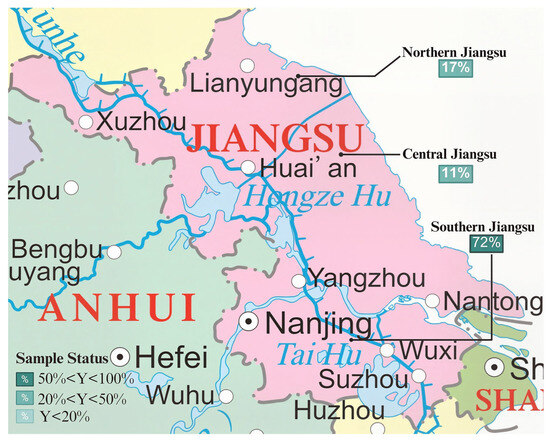
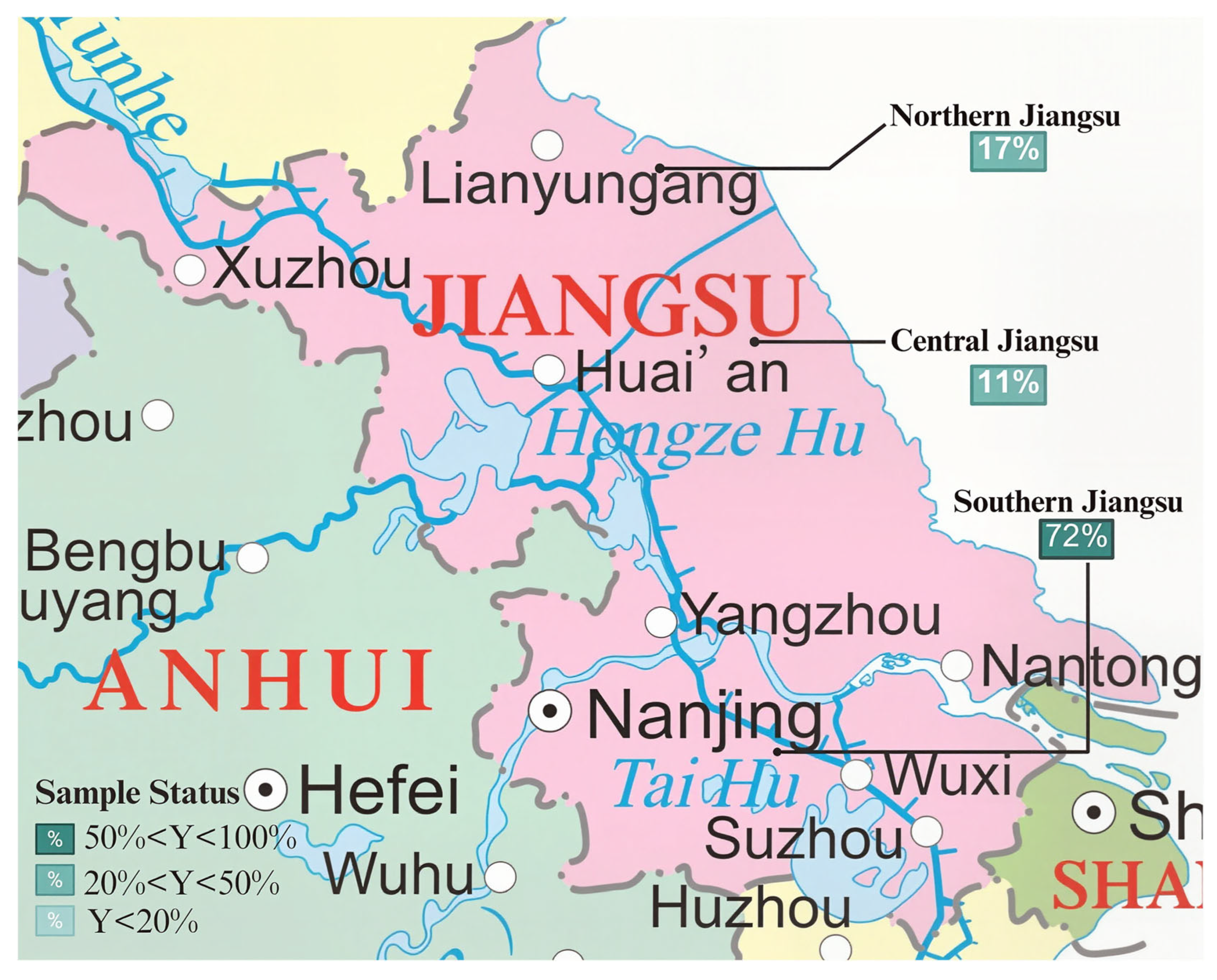
This study employed a mixed sampling strategy combining stratified random and purposive sampling to conduct questionnaire surveys across all 13 prefecture-level cities in Jiangsu Province. A total of 500 questionnaires were distributed, and 382 valid responses were collected, yielding an effective response rate of 76.4%. The sample covered diverse stakeholder groups within the smart-agriculture ecosystem (see Table 1 for details) and systematically included regions at different development levels as well as various core actors to ensure representativeness and analytical comprehensiveness. The regional distribution of the sample is shown in Figure 3: southern Jiangsu accounted for the highest proportion (72%), while central and northern Jiangsu accounted for 11% and 17% respectively. This distribution reflects the gradient pattern of regional development in Jiangsu Province and aligns with the study’s sampling design aimed at covering regions at different development levels. In terms of reliability and validity, the scale demonstrated strong internal consistency and construct validity (see Table 2): Cronbach’s α was 0.851, the KMO value was 0.812, and Bartlett’s test of sphericity was significant (p < 0.001), indicating that the scale is suitable for subsequent factor analysis and model testing.
Table 1.
Composition of Valid Sample (N = 382).
Figure 3.
Regional Distribution of Survey Respondents in Jiangsu Province.
Table 2.
Reliability and validity test results.
The results demonstrate that the questionnaire possesses high internal consistency (Cronbach’s α > 0.8) and adequate construct validity (KMO > 0.8; Bartlett’s test significant), making it suitable for further factor analysis.
3.2. Model Validation Results
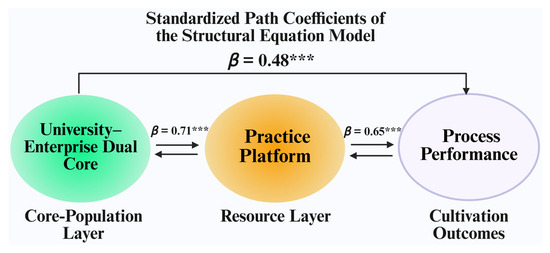
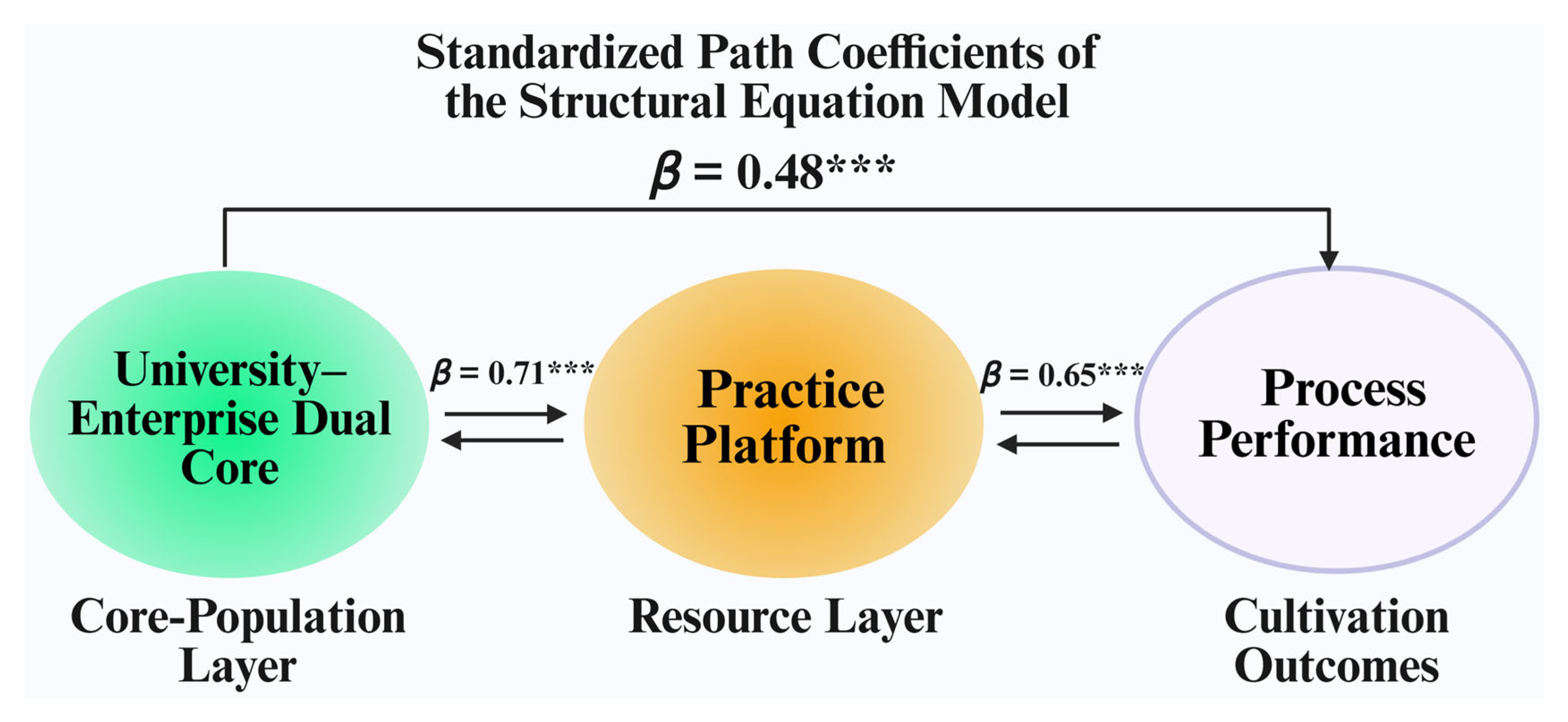
The structural-equation modelling results show that the revised ecosystem model fits the data well ( = 2.34, RMSEA = 0.062, CFI = 0.937, TLI = 0.928). Confirmatory factor analysis indicates that the composite reliability of all latent constructs exceeds 0.8 and the average variance extracted (AVE) is greater than 0.5, demonstrating good reliability and convergent validity. Path analysis further clarifies the internal mechanisms (see Figure 4 for the key paths and coefficients). With respect to stakeholder synergy, the reciprocal path between universities and firms displays the strongest coefficient (β = 0.71, p < 0.001), illustrating its “dual-core engine” function; significant university–government (β = 0.42, p < 0.01) and government–firm (β = 0.39, p < 0.01) paths confirm the government’s role as platform builder and trust broker. Among resource factors, the shared university–industry practice platform exerts the largest direct effect on talent-development outcomes (β = 0.65, p < 0.001), followed by the modular, project-based curriculum (β = 0.48, p < 0.001). In the enabling environment, market demand not only directly improves outcomes (β = 0.33, p < 0.01) but also provides an indirect boost by significantly increasing firms’ willingness to engage (β = 0.58, p < 0.001); moreover, industrial policy shows significant positive effects on both government behaviour and firm participation.
Figure 4.
Path Diagram of the Structural Equation Model for the Smart-Agriculture Interdisciplinary Talent-Cultivation Ecosystem. *** mean p < 0.001.
3.3. Ecosystem Implementation Outcomes
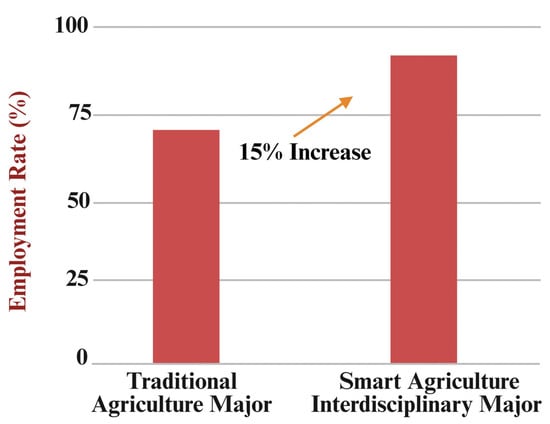
The employment rate referred to in this study denotes the proportion of graduates who have secured employment within six months after graduation, including formal employment, entrepreneurship, and further study in related fields, with data sourced from reports of surveyed universities and enterprises. Quantitative assessment indicates that the ecosystem has achieved preliminary effectiveness: in 2024, the employment rate for smart-agriculture interdisciplinary talent in Jiangsu Province was approximately 15 percentage points higher than that for traditional-agriculture talent (see Figure 5 for details). It should be noted that the relatively high employment rate value of 92% for smart-agriculture talent presented in Figure 5 can be primarily attributed to the fact that survey respondents were predominantly graduates from key agricultural universities in Jiangsu Province—which typically maintain close ties with industry and have established mature employment support mechanisms—and that the sample contained a relatively high proportion of respondents from southern Jiangsu (48.4%), where the smart-agriculture industry is more developed and employment opportunities are more abundant. Descriptive statistics based on 382 questionnaires show that participants’ overall satisfaction with the ecosystem averaged 4.2 on a five-point Likert scale (standard deviation = 0.72), significantly higher than the national average for similar indicators. Further analysis reveals that cooperation intensity is significantly positively correlated with talent performance (r = 0.68, p < 0.01), and policy support explains 30% of the variance in talent performance (β = 0.32, p < 0.05), highlighting the pivotal role of collaborative mechanisms and the policy environment within the system.
Figure 5.
Employment-rate comparison between smart-agriculture interdisciplinary talent and traditional-agriculture talent in Jiangsu Province, 2024.
Based on the comprehensive analysis of the chart and the findings, it is evident that the construction of an interdisciplinary talent cultivation ecosystem for smart agriculture has significantly enhanced the employment competitiveness of graduates. The substantial leap in the employment rate not only indicates that cross-disciplinary talents align with the current wave of agricultural digital transformation but also verifies the effectiveness of the core mechanisms of the system—the “dual-core driving effect” of universities and enterprises and the “industry–education integration practice platform.” Furthermore, the high satisfaction among participants, which shows a significant positive correlation with cooperation intensity, suggests that the synergistic interactions among the various entities within the ecosystem have begun to form a virtuous cycle, laying a solid foundation for the continuous operation of the system. The strong explanatory power of policy support on talent performance further illustrates that maintaining policy continuity and enhancing the precision of incentives will be key levers for driving the ecosystem toward a higher level of optimization in the future. These quantitative research results provide a clear direction and a solid basis for the continuous improvement of the ecosystem.
3.4. Qualitative Findings and Underlying Mechanisms
Qualitative analysis of the interviews uncovers the ecosystem’s underlying mechanisms and real-world challenges, clustered into three overarching themes. First, a “synergy bonus” is pronounced: most respondents report that cross-sector collaboration markedly accelerates technological iteration and application; university–industry co-labs, for instance, shorten R&D cycles by 30–40%. Second, “institutional friction” persists—government and agency staff highlight fragmented policies and cumbersome approval procedures as key barriers to efficient resource allocation. Third, front-line practitioners describe a “cultural adaptation” trajectory from initial resistance to proactive acceptance, underscoring that practice-oriented training is pivotal for technology uptake and mindset shift. Taken together, the findings corroborate the ecosystem model’s validity from both qualitative and quantitative angles, pinpointing the core logic of “dual-core driver, platform support, and environment empowerment,” and furnishing robust empirical grounds for continuous system optimization and policy refinement.
4. Discussion
The findings provide robust empirical evidence for the effectiveness of the constructed crossover-talent cultivation ecosystem [16], not only aligning with the core tenets of ecological systems theory but also extending its application to the specific domain of smart-agriculture talent development [17]. The structural equation modeling results (Section 3.2) corroborate theoretical expectations at three levels: first, the reciprocal path between universities and firms exhibits the strongest coefficient (β = 0.71, p < 0.001), confirming the core mechanism of symbiotic interactions and resource-energy flows among actors; second, both the university–government (β = 0.42, p < 0.01) and government–firm (β = 0.39, p < 0.01) paths are significant, verifying the government’s pivotal function as “platform builder” and “trust broker” and highlighting its central role in sustaining system health and facilitating element exchange; finally, the finding that the shared university–industry practice platform exerts the largest direct effect on talent-development outcomes (β = 0.65, p < 0.001) confirms that institutionalised “nutrient cycling” is essential for keeping the ecosystem vibrant [18].
Unlike previous studies that typically focused on a single actor or remained at the level of macro-policy prescriptions, the model developed in this research explicitly positions the deep integration of information and communication technology as the core driver of the ecosystem [19]. This is vividly illustrated in Jiangsu, where IoT-enabled smart farms function not merely as training venues but as “living laboratories” that catalyse joint technological innovation [20,21], serving as the ecosystem’s “binding agent” that connects diverse actors and directly addressing smart agriculture’s urgent demand for hybrid competences [22]. Meanwhile, the “cultural adaptation” trajectory revealed through qualitative analysis (Section 3.4) resonates with innovation-diffusion theory [23,24], demonstrating that front-line practitioners gradually adopt smart technologies through a social process grounded in hands-on learning and perceived utility—a finding that calls for localised, context-sensitive extension strategies [25]. This study also systematically exposes deep-seated challenges constraining ecosystem optimisation: qualitative findings (Section 3.4) identify “institutional friction”—particularly fragmented policies and cumbersome approval procedures—as a key barrier to efficient resource allocation [26], reflecting a generic governance barrier in multi-actor collaboration and underscoring the urgent need for “whole-of-government” thinking and cross-departmental coordination mechanisms [27]. More notably, the regional performance gap reflected in the sample distribution—where southern Jiangsu accounted for 48.4% of respondents while northern Jiangsu accounted for only 22.3% (Section 3.1, Table 1)—mirrors China’s long-standing urban–rural digital divide, indicating that a healthy ecosystem depends not only on synergy among actors but also on balanced digital infrastructure and equitable resource allocation [28]. Therefore, future policies should integrate talent development with region-wide digital-infrastructure and capacity-building programmes to promote coordinated regional development [29].
In terms of theoretical contribution, this study furnishes the smart-agriculture talent field with an actionable “diagnosis–optimization” framework [30]. The validated ecosystem model not only clarifies the structural relations among elements but, more importantly, reveals the causal chain running from “actor synergy” through “resource activation” to “environmental empowerment” [31]. Taking market demand as an example, the model shows that it directly improves cultivation outcomes (β = 0.33, p < 0.01) while also indirectly boosting firm engagement (β = 0.58, p < 0.001), providing decision-makers with a basis for pinpointing critical bottlenecks and leverage points. When training outcomes falter, the model guides a sequential diagnosis—whether the weak link lies in tepid university–firm collaboration, a shortage of practice platforms, or feeble market-demand signals—so that targeted interventions can be adopted instead of indiscriminately increasing inputs [32].
From a practical perspective, the findings imply that cultivating smart agriculture crossover talent is imperative to shift from “project-based cooperation” to “institutionalized symbiosis” [33]. Currently, although the university–enterprise “dual-core” constitutes the dynamic engine of the system, collaborations remain predominantly short-term and project-driven, failing to generate sustained synergistic effects [34]. To break this deadlock, it is essential to draw on the symbiotic logic of ecosystems by establishing long-term mechanisms characterized by clear property rights, risk-sharing, and benefit-sharing [35,36]. potential measures include establishing independent legal entities co-funded and co-managed by universities and enterprises to operate practice platforms, or designing intellectual property allocation formulas that reflect respective contributions, thereby upgrading sporadic projects into stable strategic symbioses that intrinsically motivate enterprises to engage deeply in talent cultivation. From a broader policy perspective, constructing the smart agriculture crossover talent ecosystem must be closely aligned with the national Rural Revitalization Strategy and the Digital China initiative—a necessity underscored by regression results showing that policy support explains 30% of the variance in talent performance (β = 0.32, p < 0.05) (Section 3.3). Talent cultivation should not be an isolated goal but rather embedded within the holistic process of regional agricultural upgrading and digital transformation. Acting as the irreplaceable “system architect,” the government must leverage top-level design to coordinate talent programs with the construction of smart agriculture parks [36], digital village pilots, and the fostering of new agricultural business entities, forging a virtuous cycle where “industrial demand pulls talent supply, and talent supply drives industrial innovation.” Achieving this requires integrating policies and resources across finance, education, science and technology, and agriculture/rural affairs into regional “policy packages” to ensure synergistic delegation and efficient allocation [37,38].
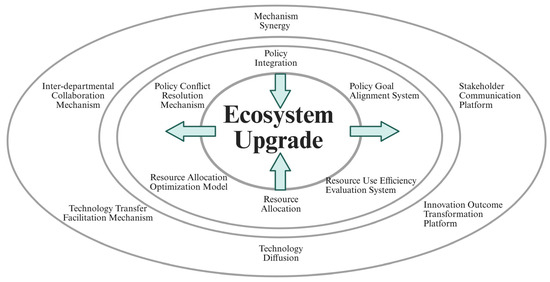
Although this study provides preliminary evidence for ecosystem effectiveness, several limitations remain. First, while the Jiangsu case is fairly representative, whether the findings can be applied to regions with markedly different agricultural structures and levels of economic development still needs further verification. Second, the cross-sectional research design makes it difficult to reveal the dynamic evolutionary process and long-term effects of the ecosystem. In addition, although methods such as triangulation were used to reduce the subjectivity of qualitative data, caution is still required when interpreting the results. The “policy and mechanism synergy” optimization framework proposed in this study (see Figure 6) offers a theoretical reference for understanding the linkage mechanisms among key processes such as policy integration, resource allocation, and technology diffusion within the system, and also provides an operational analytical perspective for conducting comparative studies and dynamic tracking in different regions. Future research can expand to comparative case analyses in various regions, adopt longitudinal designs to examine the system’s evolutionary pathways, and introduce more objective performance indicators to comprehensively assess the ecosystem’s actual impact on agricultural productivity and innovation outcomes.
Figure 6.
Policy and Mechanism Synergy-Based Ecosystem Optimization Framework.
5. Conclusions
This study systematically constructs and empirically validates an ecosystem model for cultivating crossover talent in smart agriculture. Structural equation modeling results (Section 3.2, Figure 4) demonstrate that the model exhibits good fit and explanatory power, clearly revealing a synergistic mechanism in which the “dual-core engine” formed by universities and firms operates at the system’s heart, university–industry practice platforms and modular curricula provide key support, and market demand together with industrial policy constitute the principal external drivers. Evidence from Jiangsu Province further confirms the practical effectiveness of this ecosystem: the employment rate for smart-agriculture interdisciplinary talent was 15 percentage points higher than that for traditional-agriculture talent (Section 3.3, Figure 5), indicating that the model significantly improves both the quality of talent cultivation and graduates’ competitiveness in the labour market. Theoretically, this research extends the application of ecological systems theory to the smart-agriculture talent field, constructing an integrated diagnostic and optimisation framework that incorporates multiple actors, multi-level resources and multi-dimensional environments. Although bounded by geographic scope, the findings nonetheless provide valuable theoretical insights and robust empirical support for advancing systematic, ecosystem-based development of smart-agriculture crossover talent in China, while also establishing a methodological foundation and practical reference for subsequent research.
Author Contributions
Conceptualization, J.S. and Y.F.; Methodology, J.S. and Y.F.; Formal analysis, Y.Q. and J.Z.; Data curation, Y.Q. and J.Z.; Writing—original draft, J.S. and Y.F.; Writing—review & editing, J.S. and Z.C.; Supervision, Z.C.; Project administration, Z.C. All authors have read and agreed to the published version of the manuscript.
Funding
The 2024 Yangzhou University High-Level Talent Research Project (137013501) and the 2023 University Association for Science and Technology Comprehensive Capability Evaluation and Service Capacity Enhancement Program Project (20230418).
Institutional Review Board Statement
The study was conducted in accordance with the Declaration of Helsinki, and approved by the Institutional Review Board of Yangzhou University (protocol code YZU-2024-008, approved on 10 February 2024).
Informed Consent Statement
Informed consent was obtained from all subjects involved in the study.
Data Availability Statement
The datasets used and/or analyzed during the current study are available from the corresponding author upon reasonable request.
Conflicts of Interest
The authors declare no conflicts of interest.
References
- Adli, H.K.; Remli, M.A.; Wan Salihin Wong, K.N.S.; Ismail, N.A.; González-Briones, A.; Corchado, J.M.; Mohamad, M.S. Recent Advancements and Challenges of AIoT Application in Smart Agriculture: A Review. Sensors 2023, 23, 3752. [Google Scholar] [CrossRef] [Scilit]
- Baraskar, P.T.; Khatri, V.; Kolhe, P.; Katyarmal, M.; Khedekar, S. AI-powered automated hydroponic system for smart agriculture. MethodsX 2025, 15, 103579. [Google Scholar] [CrossRef] [Scilit]
- Belli, L.; Davoli, L.; Oddi, G.; Preite, L.; Galaverni, M.; Ganino, T.; Ferrari, G. Smart agriculture dataset in a tomato cultivation under different irrigation regimes. Data Brief 2025, 60, 111521. [Google Scholar] [CrossRef] [Scilit] [PubMed]
- Gong, R.; Zhang, H.; Li, G.; He, J. Edge Computing-Enabled Smart Agriculture: Technical Architectures, Practical Evolution, and Bottleneck Breakthroughs. Sensors 2025, 25, 5302. [Google Scholar] [CrossRef] [Scilit]
- Guevara, I.; Ryan, S.; Singh, A.; Brandon, C.; Margaria, T. Edge IoT Prototyping Using Model-Driven Representations: A Use Case for Smart Agriculture. Sensors 2024, 24, 495. [Google Scholar] [CrossRef] [Scilit]
- Botero-Valencia, J.S.; Mejia-Herrera, M.; Pearce, J.M. Low cost climate station for smart agriculture applications with photovoltaic energy and wireless communication. HardwareX 2022, 11, e00296. [Google Scholar] [CrossRef] [Scilit]
- Ibrahim, A.S.; Mohsen, S.; Selim, I.M.; Alroobaea, R.; Alsafyani, M.; Baqasah, A.M.; Eassa, M. AI-IoT based smart agriculture pivot for plant diseases detection and treatment. Sci. Rep. 2025, 15, 16576. [Google Scholar] [CrossRef] [Scilit]
- Imran, M.A.; Ali, A.; Culas, R.J.; Ashfaq, M.; Baig, I.A.; Nasir, S.; Hashmi, A.H. Sustainability and efficiency analysis w.r.t adoption of climate-smart agriculture (CSA) in Pakistan: A group-wise comparison of adopters and conventional farmers. Environ. Sci. Pollut. Res. Int. 2022, 29, 19337–19351. [Google Scholar] [CrossRef] [Scilit]
- Cai, S.; Sun, C.; Tian, J. Towards smart agriculture: AI-driven prediction of key genes for revolutionizing crop breeding. Planta 2025, 262, 116. [Google Scholar] [CrossRef] [Scilit] [PubMed]
- Das, S.; Chatterjee, S.; Rajbanshi, J. Responses of soil organic carbon to conservation practices including climate-smart agriculture in tropical and subtropical regions: A meta-analysis. Sci. Total Environ. 2022, 805, 150428. [Google Scholar] [CrossRef] [Scilit] [PubMed]
- El Sakka, M.; Ivanovici, M.; Chaari, L.; Mothe, J. A Review of CNN Applications in Smart Agriculture Using Multimodal Data. Sensors 2025, 25, 472. [Google Scholar] [CrossRef] [Scilit] [PubMed]
- Elashmawy, R.; Uysal, I. Precision Agriculture Using Soil Sensor Driven Machine Learning for Smart Strawberry Production. Sensors 2023, 23, 2247. [Google Scholar] [CrossRef] [Scilit]
- Ellis, E.; Paustian, K. Importance of on-farm research for validating process-based models of climate-smart agriculture. Carbon Balance Manag. 2024, 19, 16. [Google Scholar] [CrossRef] [Scilit]
- File, D.J.M.; Nhamo, G. Farmers’ choice for indigenous practices and implications for climate-smart agriculture in northern Ghana. Heliyon 2023, 9, e22162. [Google Scholar] [CrossRef] [Scilit]
- Kalyani, Y.; Collier, R. A Systematic Survey on the Role of Cloud, Fog, and Edge Computing Combination in Smart Agriculture. Sensors 2021, 21, 5922. [Google Scholar] [CrossRef] [Scilit]
- Kim, D.; Zarei, M.; Lee, S.; Lee, H.; Lee, G.; Lee, S.G. Wearable Standalone Sensing Systems for Smart Agriculture. Adv. Sci. 2025, 12, e2414748. [Google Scholar] [CrossRef] [Scilit]
- Rahman, M.B.; Chakma, J.D.; Momin, A.; Islam, S.; Uddin, M.A.; Islam, M.A.; Aryal, S. Smart Crop Cultivation System Using Automated Agriculture Monitoring Environment in the Context of Bangladesh Agriculture. Sensors 2023, 23, 8472. [Google Scholar] [CrossRef] [Scilit] [PubMed]
- Lapidus, D.; Franzen, K.; Milliken, C.; Ovington, T.; Frankel-Reed, J. Informing climate-smart agriculture in low resource settings for practitioners: A review and analysis of interactive tools. Gates Open Res. 2024, 8, 16. [Google Scholar] [CrossRef] [Scilit] [PubMed]
- Rani, S.; Mishra, A.K.; Kataria, A.; Mallik, S.; Qin, H. Machine learning-based optimal crop selection system in smart agriculture. Sci. Rep. 2023, 13, 15997. [Google Scholar] [CrossRef] [Scilit] [PubMed]
- Zhang, C.; Park, D.S.; Yoon, S.; Zhang, S. Editorial: Machine learning and artificial intelligence for smart agriculture. Front. Plant Sci. 2022, 13, 1121468. [Google Scholar] [CrossRef] [Scilit]
- Zhang, S.; Zhang, C.; Park, D.S.; Yoon, S. Editorial: Machine learning and artificial intelligence for smart agriculture, volume II. Front. Plant Sci. 2023, 14, 1166209. [Google Scholar] [CrossRef] [Scilit]
- Ren, Y.; Qu, Y.; Gao, R. Data quality challenges of AIGC application in smart agriculture. Front. Artif. Intell. 2025, 8, 1640805. [Google Scholar] [CrossRef] [Scilit]
- Xu, J.; Li, Y.; Zhang, M.; Zhang, S. Sustainable agriculture in the digital era: Past, present, and future trends by bibliometric analysis. Heliyon 2024, 10, e34612. [Google Scholar] [CrossRef] [Scilit] [PubMed]
- Yang, J.; Guo, X.; Li, Y.; Marinello, F.; Ercisli, S.; Zhang, Z. A survey of few-shot learning in smart agriculture: Developments, applications, and challenges. Plant Methods 2022, 18, 28. [Google Scholar] [CrossRef] [Scilit] [PubMed]
- Luo, B.; Dou, X. Climate change, agricultural transformation and climate smart agriculture development in China. Heliyon 2024, 10, e40008. [Google Scholar] [CrossRef] [Scilit]
- Strong, R.; Wynn, J.T., 2nd; Lindner, J.R.; Palmer, K. Evaluating Brazilian Agriculturalists’ IoT Smart Agriculture Adoption Barriers: Understanding Stakeholder Salience Prior to Launching an Innovation. Sensors 2022, 22, 6833. [Google Scholar] [CrossRef] [Scilit]
- Mori, H.; Kundaliya, J.; Naik, K.; Shah, M. IoT technologies in smart environment: Security issues and future enhancements. Environ. Sci. Pollut. Res. Int. 2022, 29, 47969–47987. [Google Scholar] [CrossRef] [Scilit]
- Nagy, A.; Tumiwa, J.; Arie, F.; László, E.; Alsoud, A.R.; Al-Dalahmeh, M. A meta-analysis of the impact of TOE adoption on smart agriculture SMEs performance. PLoS ONE 2025, 20, e0310105. [Google Scholar] [CrossRef] [Scilit]
- Omer, A. A club model of nature-smart agriculture for biodiversity, climate, and productivity enhancements. Integr. Environ. Assess. Manag. 2023, 19, 412–421. [Google Scholar] [CrossRef] [Scilit]
- Peladarinos, N.; Piromalis, D.; Cheimaras, V.; Tserepas, E.; Munteanu, R.A.; Papageorgas, P. Enhancing Smart Agriculture by Implementing Digital Twins: A Comprehensive Review. Sensors 2023, 23, 7128. [Google Scholar] [CrossRef] [Scilit]
- Žalik, K.R.; Žalik, M. A Review of Federated Learning in Agriculture. Sensors 2023, 23, 9566. [Google Scholar] [CrossRef] [Scilit]
- Pranto, T.H.; Noman, A.A.; Mahmud, A.; Haque, A.B. Blockchain and smart contract for IoT enabled smart agriculture. PeerJ Comput. Sci. 2021, 7, e407. [Google Scholar] [CrossRef] [Scilit] [PubMed]
- Sun, N.; Fan, B.; Ding, Y.; Liu, Y.; Bi, Y.; Seglah, P.A.; Gao, C. Analysis of the Development Status and Prospect of China’s Agricultural Sensor Market under Smart Agriculture. Sensors 2023, 23, 3307. [Google Scholar] [CrossRef] [Scilit] [PubMed]
- Sun, T.; Xiao, L.; Ata-Ul-Karim, S.T.; Ma, Y.; Zhang, W. Editorial: Leveraging phenotyping and crop modeling in smart agriculture. Front. Plant Sci. 2025, 16, 1626622. [Google Scholar] [CrossRef] [Scilit]
- Tian, J.; Li, D.; Jia, X. IoT Smart Agriculture and Agricultural Product Income Insurance Participant Behavior Based on Fuzzy Neural Network. Comput. Intell. Neurosci. 2022, 2022, 4778975. [Google Scholar] [CrossRef] [Scilit] [PubMed]
- Tilahun, G.; Bantider, A.; Yayeh, D. Empirical and methodological foundations on the impact of climate-smart agriculture on food security studies: Review. Heliyon 2025, 11, e41242. [Google Scholar] [CrossRef] [Scilit]
- Yu, P.; Teng, F.; Zhu, W.; Shen, C.; Chen, Z.; Song, J. Cloud-edge-device collaborative computing in smart agriculture: Architectures, applications, and future perspectives. Front. Plant Sci. 2025, 16, 1668545. [Google Scholar] [CrossRef] [Scilit]
- Yuan, F.; Ospina, R.; Perumal, A.B.; Noguchi, N.; He, Y.; Liu, Y. Smart agriculture in Asia. Plant Commun. 2025, 6, 101377. [Google Scholar] [CrossRef] [Scilit]

Disclaimer/Publisher’s Note: The statements, opinions and data contained in all publications are solely those of the individual author(s) and contributor(s) and not of MDPI and/or the editor(s). MDPI and/or the editor(s) disclaim responsibility for any injury to people or property resulting from any ideas, methods, instructions or products referred to in the content. |
© 2026 by the authors. Licensee MDPI, Basel, Switzerland. This article is an open access article distributed under the terms and conditions of the Creative Commons Attribution (CC BY) license.