


Abstract
Urban transformations outpace established urban design paradigm shifts. This acceleration widens the gap between inherited theory and contemporary urban realities This article addresses this condition by introducing epistemic urban design as a conceptual orientation and generative inheritance as its procedural extension within urban conditions described as unprecedented urbanism. Drawing on a critical interpretive synthesis of the literature spanning historical, theoretical, and technological developments, the study examines how urban design knowledge is produced, stabilized, and reinterpreted as urban complexity intensifies. The analysis unfolds in three phases. First, it traces how established paradigms historically structured design practices and how current conditions expose their operational limits. Second, it articulates how epistemic urban design treats design knowledge as an evolving resource, specifying analytical dimensions for interpreting diverse urban conditions. Third, it proposes how generative inheritance operationalizes epistemic urban design by linking inherited design knowledge to context-specific empirical situations. The article contributes to urban design research by supporting epistemic urban design with the procedural logic of generative inheritance. This shift enables theoretical insights to systematically inform design operations under conditions of unprecedented urbanism.
1. Introduction
The theoretical discourse and professional practice of urban design have historically evolved through paradigm shifts that redefined the spatial logic of the city and material construction [1,2,3]. In recent decades, the production and application of urban design knowledge have increasingly been challenged by urban conditions lacking clear historical precedents. These include megacity growth at unprecedented scales [4], synthetic ecologies without established urban metabolic histories [5], planetary urbanization [6], and artificial intelligence (AI)-driven infrastructures without clear 20th-century analogs [7].
Such conditions exemplify what is described here as ‘unprecedented urbanism’, in which historical precedents offer limited guidance and established urban design paradigm shifts provide only partial support for both diagnosis and design. In this article, this shift is employed as an interpretive historical classification tool, serving as a non-operationalized analytical construct and ensuring consistent terminological usage throughout the manuscript.
Central to ‘unprecedented urbanism’ is a growing conceptual misalignment between inherited paradigmatic assumptions and the rapidly evolving realities of contemporary cities. Since the beginning of the twenty-first century, both urban design theory [8,9] and practice [10,11] have increasingly recognized the limits of established urban design paradigm shifts when confronted with emergent forms of urbanization shaped by shifting socio-spatial strategies and technological systems [12]. Cities are evolving into hyper-dense megacities [13], structured by continuous digital connectivity [14], and governed by AI-driven infrastructures that manage mobility, energy, and urban services [15]. These physical and technological transformations are accompanied by changing social behaviors that produce hybrid, transient, and repurposed public spaces [16].
This tension becomes particularly acute in historic conservation, heritage preservation, and urban regeneration [17,18]. In these cases, designers confront environments shaped by inherited form yet facing unprecedented pressures. Disruptions appear across multiple scales, from the reconfiguration of superblock morphologies [19] and city-scale digital integrations in Ubiquitous-Eco-Cities [20], to the transformation of post-industrial districts into internally coherent entertainment environments [21]. Similar challenges arise in territorial-scale waterfront megaprojects [22], and in typological mutations in which utilitarian infrastructures, such as fueling stations, are reimagined as leisure-oriented public spaces [23]. These cases illustrate how contemporary urban form increasingly exceeds the interpretive and operative capacity of established paradigms, reinforcing the need for conceptual tools capable of engaging unprecedented urban conditions.
Building on this diagnosis, it is important to note that since the early twenty-first century, urban design has not evolved through a single dominant paradigm, but through a plurality of paradigmatic orientations reflecting the field’s hybrid and mediating character. Urban design has continuously expanded its conceptual repertoire through exchanges with adjacent disciplines, including urban planning, critical geography, political theory, governance research, and socio-technical studies. However, many influential accounts of contemporary urban transformation, such as splintering urbanism [24] and planetary urbanization [25], emerged primarily as critical interpretations of urbanization processes and were not originally developed as paradigms to guide design action.
A similar limitation characterizes concepts associated with environmental and ecological citizenship [26], smart and digital cities [27,28], and more recent discussions of smart societies that seek to move beyond technological determinism [29]. While these bodies of work offer valuable diagnostic insights, they remain largely external to the operative logic of urban design, providing analytical depth without resolving how design practice can engage conditions defined by instability, acceleration, and the absence of reliable historical precedent.
Urban design has engaged these bodies of work by selectively incorporating their insights into spatial strategies, design narratives, and projective practices, reflecting an ongoing negotiation between external theoretical developments and internal disciplinary concerns. This pattern should not be interpreted as a lack of innovation, but as evidence of urban design’s historically plural, adaptive, and mediating character. Consequently, a substantial body of literature, including the work of Cuthbert [30], Gunder [31], Madanipour [32], and Marshall [33], has called for urban design to reassert itself as an integral and autonomous component of the broader urban development process.
These studies point to a theoretical gap that has remained largely implicit. While adjacent fields have advanced successive innovations, often framed as paradigmatic, including parametric computation [34], shifts from development-led to management-oriented planning [35], and the expansion of planning scales toward planetary concerns [36], much urban design practice continues to operate within established paradigms.
This absence of a guiding paradigm suggests a condition that Jacques Derrida [37] characterizes as “learning to live”, a time without a tutelary present, in which the stable foundational structures of the past no longer exert dominant authority over the present (p. xviii). In the context of ‘unprecedented urbanism,’ the absence of a ‘tutor’ or settled paradigm invites a recalibration of urban design’s epistemic foundations. Designing under twenty-first-century conditions, therefore, requires the discipline to move beyond fixed master models and to adopt adaptive, knowledge-producing practices. This paper aligns with Sustainable Development Goal 11, which calls for making cities and human settlements inclusive, safe, resilient, and sustainable, by exploring how epistemic urban design and generative inheritance can support adaptive urban design responses to unprecedented urban conditions.
Pragmatist philosophy provides an instructive point of departure for engaging such conditions. Pragmatist thinkers emphasize knowledge as an outcome of experience, experimentation, and continuous revision [38,39], highlighting the necessity of adaptive reasoning in situations that resist prediction or stable categorization. In moments of profound socio-spatial transformation, when established modes of understanding lose explanatory coherence, urban design increasingly relies on iterative interpretation of knowledge.
Addressing these challenges reinforces urban design as a practice capable of responding to unprecedented urban conditions. Building on established paradigms, design activity shifts toward a more operational process grounded in principle-driven experimentation, iterative prototyping, and co-creation with diverse stakeholders. This orientation enables a more agile engagement with the volatility of contemporary urbanism, allowing designers to explore multiple potential futures and to generate urban forms without direct historical precedent. Meeting such challenges requires a proactive capacity to conceptualize environments that lack clear historical analogs [40,41,42]. Within this context, generative inheritance connects theoretical reflection and design practice through a continuous process of reinterpretation and transformation [43,44,45,46].
This review article takes rapid global urban transformations, driven by societal necessities and social, cultural, political, economic, environmental, and technological forces, as a conceptual point of departure for analyzing unprecedented urban conditions. These examples raise questions about the explanatory power of established paradigms in addressing urban projects that fall outside historically consolidated patterns of urbanism. Diverse empirical phenomena, including the carbon-neutral urban experiment in developing countries [47], the rapid growth of Shenzhen, characterized by rapid urbanization and ubiquitous computing [20], adaptive informal urbanism in Lagos [48], emerging practices of digital placemaking [49], and South Korea’s smart eco-city developments [50] illustrate urban conditions that place sustained pressure on established paradigms.
This growing disjunction between unprecedented urban conditions and the interpretive capacity of established paradigms raises a fundamental question for the discipline. If contemporary urbanization increasingly exceeds historically consolidated paradigms of understanding, how can urban design reposition itself as an analytically productive and operationally relevant practice under such conditions? To answer this question, the discussion sheds light on existing paradigms, tracing their roots prior to their official emergence in 1956 and their subsequent development to the present. It investigates whether contemporary patterns of urban transformation constitute sui generis conditions necessitating sui generis urban design paradigm(s).
‘Epistemic urban design’ serves here as a theoretical and practical response to the unstable conditions associated with ‘unprecedented urbanism’. While architecture and planning have rapidly adopted new paradigmatic orientations, urban design has sought to sustain historical continuity amid contemporary urban change [51]. Epistemic urban design addresses this systemic gap by distinguishing concrete ‘knowledge’ from ‘epistemic’ activity, the active process of production and interpretation. This orientation reframes urban design through generative inheritance, demonstrating how designers reactivate established paradigms as evolving resources for contextual adaptation. Integrating historical depth with interdisciplinary perspectives illustrates how epistemic urban design enables productive engagement with urban conditions with no historical analogs.
This approach empowers designers to navigate the disjunction between established values and unprecedented realities, transforming theoretical critique into an operative tool for twenty-first-century practice. The objectives are to clarify the theoretical and philosophical foundations of epistemic urban design and to define the dimensions and principles that structure its theoretical and practical orientation and interpretive capacity. It contributes three interrelated advancements to urban design literature. The structural roadmap of the inquiry is illustrated in Figure 1:
Figure 1.
The structural roadmap of this article. Source: The authors.
- First, it introduces ‘unprecedented urbanism’ by defining the conditions under which contemporary urban transformations exceed the interpretive and operational capacities of the established urban design paradigm shifts.
- Second, it identifies the persistent gap between diagnostic analysis of complex urban phenomena and the development of corresponding design methodologies.
- Third, it proposes ‘epistemic urban design’ and ‘generative inheritance’ as a coherent conceptual and procedural response. This shift reframes urban design as continuous knowledge production that recalibrates established paradigms as adaptive resources, while ‘generative inheritance’ operationalizes this orientation through a four-stage methodology that translates theory into practice.
Beyond a general horizon of relevance, this inquiry utilizes urban sustainability as a structured analytical perspective. By synthesizing sustainability-oriented urban research, the study demonstrates how epistemic urban design and generative inheritance support adaptive resilience and long-term systemic performance in built environments where traditional ecological metabolic histories have been disrupted. This contribution bridges the disconnect between theory and practice by translating the concept of epistemic urban design into the multi-stage procedural logic of generative inheritance. This critical interpretive synthesis ensures that theoretical insights concerning adaptive reasoning directly inform design operations in unprecedented urban contexts.
This article proceeds through five interconnected sections that move from diagnostic synthesis to methodological application (see Figure 1). Section 1 frames the inquiry by identifying the practical problem and the epistemic gap, shifting the discussion from reactive historiography toward a proactive epistemological orientation. Section 2 establishes the methodology through a critical interpretive synthesis and the rationale for case selection. Section 3 examines the evolution of urban design paradigm shifts to clarify how the conditions of unprecedented urbanism exceed the interpretive capacity of established theoretical foundations. Section 4 and Section 5 then advance the generative resolution by recalibrating epistemic urban design for these conditions and operationalizing this recalibration through the procedural logic of generative inheritance. The article concludes by outlining its conceptual contributions and demonstrating how integrating ‘epistemic urban design’ and ‘generative inheritance’ supports urban design practice in recent urban contexts where established paradigms reach their interpretive limits.
2. Methodology
This study adopts a critical interpretive synthesis [52] and an integrative review approach [53] informed by established interpretive review traditions. The methodological design was structured to examine instances in which conditions of ‘unprecedented urbanism’ challenge the interpretive capacity of established shifts. The analysis proceeded through two stages, each with three phases, as illustrated in Figure 2.
Figure 2.
Methodology Diagram. Source: The authors.
2.1. Theoretical Conceptualization and Analytical Phases
The theoretical conceptualization stage consisted of a three-phase analytical process designed to establish the conceptual foundations and procedural logic of the study.
- The first phase addressed how urban design paradigm shifts are established and structured interpretive practices, how unprecedented urban conditions reconfigured these structures, and how ‘generative inheritance’ enabled reinterpretation without replication. This phase situated urban design paradigm shifts, unprecedented urbanism, and generative inheritance within the historical evolution of architecture and urban design, explicitly recognizing that these paradigms are not isolated but emerge at the porous intersections of design, digital technology, and socio-ecological systems.
- The second phase articulated ‘epistemic urban design’ as a theoretical and practical orientation addressing the diversity of conditions shaping contemporary urban environments. This phase specified the dimensions and principles of ‘epistemic urban design’, thereby establishing the consistent analytic frame, anchored in specific unprecedented urbanism dimensions, required to evaluate the diverse diagnostic cases presented later in the study. This ensured that the procedural integration of ‘epistemic urban design’ and ‘generative inheritance’ served as a standardized means of operationalizing design reasoning across varied ‘unprecedented urbanism’ conditions.
- The third phase translated conceptual positioning into methodological logic. This phase identified situations in which established a shift in urban design paradigms exhibited limited interpretive and operational reach for certain contemporary urban conditions and structured an analytical response through which epistemic urban design organized the identification, interpretation, and application of design knowledge. Within this logic, generative inheritance functioned as the procedural mechanism through which epistemic urban design could be operationalized in theory and practice. This process can be implemented in unprecedented urbanism, providing a synthetic bridge between abstract theoretical literature and context-specific empirical data extracted from global cases.
2.2. Literature Synthesis and Case Selection
The literature synthesis adopted a context-driven review strategy structured around four predefined scopes of interest: urban design paradigm shifts, unprecedented urbanism, epistemic urban design, and generative inheritance. These scopes functioned as the primary conceptual coordinates guiding reference identification, selection, and classification. To ensure robust boundary logic, this strategy intentionally integrated adjacent disciplinary perspectives—including digital technology studies, ecology, and sociology—recognizing that contemporary urban transformations cannot be fully understood from a siloed urban design perspective. Reference selection was therefore informed by historical positioning, epistemic relevance, and disciplinary influence rather than relying solely on exhaustive tabulation. Following this logic, priority was given to conceptually coherent and historically grounded reference corpora [54,55,56]. The synthesis was carried out in three sequential steps. These steps establish a transparent selection pathway from initial retrieval to the final analytical corpus.
- First, we defined the inquiry across historical, theoretical, and practical dimensions using a targeted Boolean search string: (Urban design theory OR urban design practice) AND (generative OR generative design) AND (paradigm OR paradigm shifts) AND (urbanism OR urbanism approaches) AND (rapid urbanization OR urban growth). Initial searches on Google Scholar were conducted to capture interdisciplinary discussions relevant to paradigm formation and urban transformation, yielding a broad corpus that was manually screened for thematic alignment. The search ended with about 8320 manuscripts.
- Second, to ensure the quality of the retrieved 8320 manuscripts, we selected the indexed ones. For about 1 month, we manually screened all manuscript titles to select relevant sources for urban design discourse. This initial screening ended with 524 manuscripts. Then we refined the corpus through systematic searches of Scopus-indexed peer-reviewed journal articles, books, and book chapters published in English. We included all retrieved manuscripts published from 1920 to January 2026 (the date of the initial screening). The selection rationale prioritized works addressing the relationship between existing urban design theory and contemporary urban transformations. This phase emphasized foundational and high-impact contributions while excluding grey literature, including technical reports and non-indexed online publications, to ensure conceptual rigor and disciplinary reliability. Additional attention was given to manuscripts that discuss the historical development of urban planning and urban design to ensure adequate contextual grounding. This process yielded a final 179 manuscripts. This refined corpus of sources served as the basis for theoretical synthesis.
- Third, the 179 manuscripts were examined to identify empirical contexts illustrating contemporary urban transformations. This analysis revealed six global contexts representing diverse forms of unprecedented urban pressure. These cases ranged from state-led techno-urbanism to conditions of rapid informal urban growth. Figure 3 illustrates the cases retrieved, including Masdar City (United Arab Emirates), Shenzhen (China), Lagos (Nigeria), Kayseri (Turkey), Columbus (United States), and Songdo (South Korea). Each case was analyzed against four dimensions of unprecedented urbanism: (1) rate of transformation, (2) degree of technological mediation, (3) socio-spatial complexity, and (4) ecological stress.
Figure 3.
Geographic distribution of the six global urban contexts (in red) examined in this study. Source: The authors.
3. Theoretical and Pragmatic Foundations
This section foregrounds urban design paradigm shifts, the phenomenon of unprecedented urbanism, and the relevance of generative inheritance. The first subsection traces the evolution of urban design paradigm shifts across three periods: pre-1956, the period from 1956 to the 1990s, and the post-1990 era. The second subsection examines the unprecedented urbanism of contemporary urbanization conditions, including an analysis of smart cities as a pattern shaped by these conditions, drawing on empirical reflections from global contexts and a critical review of disciplinary debates. The third subsection discusses the diagnostic–design gap that emerges when an urban design paradigm shift engages with unprecedented urbanism, focusing on how paradigms relate to the changing conditions identified across the three periods. The fourth subsection introduces generative inheritance as an epistemic orientation through which urban knowledge may be reactivated as a resource for innovation. This section demonstrates how contemporary urban conditions expose a growing diagnostic–design gap, setting the stage for the epistemic reconsideration developed in subsequent sections.
3.1. Paradigm Shifts in Urban Design: From Pre-1956 Modernism to Post-1999 Conditions
Thomas Kuhn’s formulation of paradigm shifts [57], defined as fundamental reorganizations of a discipline’s assumptions, values, and puzzle-solving practices, provides a robust framework for interpreting the evolution of urban design. Unlike incremental theoretical refinement, paradigmatic change entails a redefinition of what constitutes legitimate questions, methods, and evaluative criteria within a field.
In urban design, unprecedented conditions often challenge established spatial thinking, a situation Hannah Arendt [58] associates with moments when meaning and action are rethought in the absence of direct historical precedent. Consequently, scholarship identifies the development of urban design not as a linear progression but as a series of non-linear transformations driven by environmental and social pressures, in which new concepts emerge to tackle evolving modern challenges [59,60,61,62], displacing prior paradigms with new ones.
To fully comprehend the path of urban design thought considering this paradigm, this analysis categorizes paradigm shifts into three distinct temporal phases: the foundational concepts rooted in architecture and planning (pre-1956), the core paradigms of the formally defined ‘urban design’ discipline (1956–1999), and the emerging hybrid paradigms of the contemporary era (post-1999).
The analysis explores paradigm shifts in urban design between 1956 and 1999, positioning urban design as a distinct field of inquiry rather than a mere adjunct of architecture, urban planning, or landscape architecture. While these related disciplines have historically influenced and continue to influence urban design practice and discourse, they possess independent intellectual traditions. They are therefore not addressed here as sources of paradigm change within urban design itself. The year 1956 marks a deliberate starting point. While the term urban design appeared earlier, most notably in Josep Lluís Sert’s 1953 lecture, the first Urban Design Conference at Harvard Graduate School of Design in April 1956 constituted a decisive moment in articulating the field’s scope, responsibilities, and identity [63,64,65].
Accordingly, this section does not address theoretical positions, intellectual traditions, or planning doctrines that predate 1956, even when they continue to influence contemporary urban debates. Such ideas belong to earlier disciplinary formations, primarily architecture and urban planning, and cannot be understood as paradigm shifts within urban design as an autonomous field. Although changes in urban planning theory have undeniably shaped the broader urban discourse [66]. They are considered here only insofar as they intersect with, but do not define, shifts in urban design thinking.
Within this defined temporal and disciplinary scope, the section traces major transformations in how urban design has been conceptualized, practiced, and theorized over five decades:
- The human-centered or socio-spatial paradigm shift of the 1950s and 1960s marked a move from rigid, technocratic planning toward human interaction and everyday life as central design concerns.
- This was followed by a typo-morphological paradigm shift from the 1960s through the 1980s, in which functionalist problem-solving was replaced by typological and classificatory approaches to urban form.
- The behavioral paradigm shift, extending from the 1970s to 2005, further redirected urban design from static visual composition toward dynamic social performance, including the transition from static contextualism to the adaptive recombination of urban elements as a form of open-ended, relational urbanism.
- The ecological paradigm shift of the late 1980s and 1990s redefined the relationship between the built environment and nature, transforming urban design from an exercise in spatial expansion into one of sustainable environmental integration.
- More recently, an emerging techno-social reorientation, a consolidated paradigm shift, has begun to reshape the relationship between smart cities and placemaking. This reflects an ongoing reassessment of techno-centric paradigms of urbanism and signals a potential transformation in how digital technologies are conceptualized within urban design practice and theory.
The analysis identifies and positions the paradigm shifts redefining the field’s core concerns. It frames the scholar’s contributions within urban design thought, distinguishing them from traditional interpretations that view such work merely as extensions of architectural or planning theory. Since its institutional recognition in the mid-1950s, urban design has undergone several major paradigmatic transformations, each involving a fundamental reorganization of the field’s established values, assumptions, and methods, as illustrated in Table 1 and Figure 4.
Table 1.
Chronological evolution of urban design paradigm shifts (pre-1956 to present). Source: The authors.
Figure 4.
Chronological overview of urban design paradigm shifts in three suggested phases. Source: The authors.
Successive paradigm shifts reorganized the core assumptions of urban design in the late twentieth century. However, the early twenty-first century marks a transition toward a condition of paradigmatic diffusion. In this phase, urban design increasingly engages with positions originating in architecture, planning, and landscape architecture, adapting them into spatial strategies, though the development of fully autonomous paradigms remains limited [81,82].
Although the historical timeline (1956–1990) synthesizes established historiography, the post-1990 era, described as a ‘Diagnostic Turn,’ is marked by a disconnect between analytical descriptions and operational design tools. This interpretation illustrates the argument in three periods: Pre-1956 (modernism as a paradigm shift in relation to historicism), four paradigm shifts shaping urban design since 1956, and late-stage techno-social reorientation (from smart city to place-based smartness).
3.1.1. Pre-1956: Modernism as a Paradigm Shift in Relation to Historicism
Modernism constituted a radical transformation within architectural culture, marking a decisive break from the historicist paradigm that had governed pre-modern architecture [83,84]. As Anthony Vidler [85] argues, nineteenth-century historicism operated within a shared “system of representation”, in which architectural meaning was produced through an established lexicon and grammar derived from historical styles such as Classicism, Gothic, or Baroque. Within this regard, architects recomposed known formal elements according to an implicit historical taxonomy. Modernism, by contrast, sought to terminate architectural discourse conducted through historical reference altogether. As Colquhoun [83] notes, the modern avant-garde rejected the symbolic authority of these styles, attempting instead to ground meaning in abstraction, spatial and volumetric order, and typologies of pure form.
This paradigm shift required every age to possess a unique style reflecting its specific ‘zeitgeist’ (spirit of the times) [86]. Modernism argued that because the 20th century was the ‘machine age,’ it required a totally new, abstract aesthetic to be historically accurate [87]. Therefore, rejecting history was, ironically, a historic act; as Peter Collins [68] argues, by aligning with the changed material conditions of production, Modernism offered a way to design the unprecedented modern city without resorting to the ‘inauthentic’ imitation of past styles. The paradigmatic shift between late-nineteenth-century artistic urbanism and early-twentieth-century modernist planning should not be understood as a simple opposition between irregular and orthogonal geometries. Rather, the shift concerns the epistemological foundations through which urban form was conceived and legitimized. As articulated by Camillo Sitte in City Planning According to Artistic Principles (1889), urban space was evaluated through embodied perception, historical continuity, and aesthetic experience. Irregular form emerged as a contingent outcome of these priorities, not as an autonomous formal doctrine [88].
Modernist, exemplified by Le Corbusier’s polemic in The City of Tomorrow [67], redefined the city as a rational, functional system oriented towards efficiency, hygiene, and industrial production. Le Corbusier crystallized this opposition by contrasting ‘The Pack-Donkey’s Way’, representing unplanned pre-industrial caprice, with ‘Man’s Way’, signifying the rational line of scientific planning. In this context, orthogonal geometry functioned not as an innovation in itself, given its long historical precedent but as a symbolic and operative expression of a new disciplinary logic grounded in scientific abstraction and systemic control.
The modernist adoption of terrain dégagé, particularly in the work of Le Corbusier, reflected a fundamental reorientation of urban design away from historically accumulated urban fabric and the epistemic assumptions that sustained it. This shift redefined the aims, methods, and evaluative criteria of urban design by privileging functional order, spatial abstraction, and technical rationality over continuity, memory, and morphological inheritance. Modernism, most explicitly articulated through Le Corbusier’s Radiant City and the discourse of CIAM, particularly the Athens Charter [89], advanced an urban model premised on the clearance of accumulated urban fabric in favor of isolated towers set within open space. This model framed the existing city as obsolete and positioned functional order as the primary basis for future urban development.
3.1.2. Four Paradigm Shifts Shaping Urban Design Since 1956
Since its formal institutionalization in 1956, urban design has been shaped by a series of paradigm shifts that have rearticulated its theoretical orientations and modes of evaluation. These shifts reflect successive recalibrations within the field as it engaged with changing social, cultural, and environmental concerns and represent a continuous process instead of discrete or oppositional moments.
Between the mid-twentieth century and the present, four major paradigm shifts are frequently identified within the literature: a socio-spatial orientation foregrounding human experience, a typo-morphological emphasis on typology and urban morphology, a behavioral focus on the social use of public space, and an ecological redefinition of the relationship between urban form and environmental systems.
First, the human-centered or socio-spatial paradigm shift: A fundamental paradigm shift in the study of urban form occurred with the transition from Functionalist Modernism to Urban Morphology. In the mid-twentieth century, the established approach, shaped by CIAM and The Athens Charter, was rooted in the reductionist maxim ‘form follows function’. This approach conceptualized the city as a ‘machine’, which systematically removed temporal depth from the urban environment, resulting in the neglect of both historical continuity and human-scale experience [89,90].
Following the establishment of urban design as a discipline in 1956, the first significant theoretical divergence to emerge was the socio-cultural paradigm shift. This shift marked a definitive departure from the pre-1956 Functionalist paradigm CIAM (The Athens Charter) toward the structuralist and humanist approaches advocated by Team 10 [91]. While the CIAM paradigm organized the city through rigid functional zoning, a new generation of architect-urbanists, led by Aldo van Eyck and Alison and Peter Smithson, argued that this approach ignored the socio-cultural bonds of community [70,92].
Second, the typo-morphological paradigm: From functionalism to integrated morphology: During the 1960s and 1970s, critics such as Aldo Rossi [71] and Rob Krier [64] argued for the city as a ‘continuous artifact’, redirecting analysis from abstract zoning to Typology (the study of enduring building types) and Morphology (the evolutionary development of urban form), as articulated by M.R.G. Conzen [93]. This shift represented a transformation in values: the city came to be valued not for its functional innovation but for its historical persistence and collective memory. In this regard, Colin Rowe led the theoretical reaction against Modernism. In his seminal work Collage City [72], Rowe proposed treating the city as a ‘collage’, pasting together pieces from different eras to accept history and fragmentation. While Rowe’s influence was primarily pedagogical at Cornell University, his students codified these ideas into Contextualism, a design tool applicable to urban fabric. Alongside this morphological reorientation, strategies also evolved to reconcile modern planning ideals with traditional urban fabrics:
- During the 1960s and early 1970s, Colin Rowe was a legendary professor at Cornell University, where he cultivated what is now known as the Cornell School of thought. Within this intellectual milieu, Rowe famously contrasted the layered, historical texture of ‘Collage City’ against the Modernist ‘Radiant City.’ However, his influence was pedagogical. It was the efforts of Thomas Schumacher [74] and Stuart Cohen [73] that translated the principles of the Cornell School into written theory, effectively codifying Contextualism into a design tool applicable to the urban context.
- Thomas Schumacher [74] is widely credited with officially coining and defining the term in print, providing the morphological definition. His work focused on the physical form of the urban fabric, bridging the gap between the Modernist obsession with standalone objects and the traditional city. Schumacher [74] proposed a ’deformation’ strategy, conceptualizing architecture as a dialogue between ‘Ideal Types’ (perfect geometric forms) and ‘Site Conditions’ (the irregular reality of the city). In this method, a building begins as an ideal form but allows itself to be carved away to respond to the pressures of the street, square, and neighbors. While this established necessary rules for how a building physically ‘fits’ (such as matching cornice vision), Schumacher [74] later critiqued the misuse of his own theory, noting that it often devolved into superficial ‘facadism’ and did not create authentic urban spatial structure.
- Subsequently, Stuart Cohen [73] sought to rescue contextualism from becoming a game of geometry by introducing the semiotic dimension. Cohen argued that the Schumacher/Rowe approach of “physical context” (visual alignment and massing) required further interpretive expansion; a building could fit the street in shape but remain alien in meaning. He posited that true integration requires “Cultural Context”, the symbolic meaning, style, and history understood by local inhabitants. Bridging Contextualism with Post-Modernism, Cohen [73] incorporated Venturi’s [94] ideas of complexity, arguing that contextualism required a “collage” not of forms, but of meanings, allowing architecture to be inclusive of historical styles if the specific culture of the place demanded it.
- By the 1980s, Roger Trancik [95] diagnosed the crisis of Modernism as the emergence of ‘anti-space’s lack of defined exterior voids resulting from functionalist planning. In his influential book, Finding Lost Space [75], he synthesized previously disparate theories to address this crisis, combining Figure-Ground theory (spatial definition), Linkage theory (structural connectivity), and ‘Place’ theory (socio-cultural meaning), thereby setting a new standard for contemporary urban design practice.
- Most recently, Matthew Carmona [9] advances a theory of the urban design process as a “place-shaping continuum”. Drawing on empirical research in London, he conceptualizes the city as shaped by ongoing interactions among contexts, processes, and power relations. In this view, urban space is not a static result but a “journey through time” during which public space is continuously molded. This theory anchors the field of urban design by offering a core for intellectual inquiry that extends beyond physical composition to include the ongoing management and policy required to sustain the urban environment.
Third, the behavioral paradigm shift: A transformative shift in urban design practice emerged in the late twentieth century, marked by a reorientation from form-led public realm composition toward behavior-led spatial structuring. In this new approach, human action, such as perception and social interaction, is transformed from a secondary or assumed outcome into a fundamental design criterion. Crucially, this model operates within the practice of urban design itself: it replaces abstract tools or analytical frameworks, producing a tangible urban form grounded in external knowledge that can be translated into concrete spatial decisions at the street, square, and public façade scales.
This behavioral paradigm represents a fundamental change in values. Success in urban design is no longer measured primarily by visual coherence, typological consistency, or the aesthetic clarity of a master plan, but by the capacity of spatial configurations to support diverse forms of everyday life. Measures such as intensity of use, duration of stay, frequency of social encounter, and the balance between necessary, optional, and social activities become central evaluative tools.
The decisive rupture in urban design practice occurred in the early 1970s, most clearly articulated by Jan Gehl [77]. In Life Between Buildings (originally published in Danish in 1971; English editions followed in 1987), Gehl [77] introduced a design methodology grounded in the systematic observation of human behavior in public space. His work involved counting, mapping, and categorizing how people move, stop, sit, interact, and use space over time, going beyond mere critique. Gehl demonstrated that physical form enables or restricts specific activities; it does not act deterministically.
By correlating spatial characteristics, such as enclosure, edge conditions, scale, and permeability, with observed patterns of use, he reframed public space as an active mediator of social life. This constituted a paradigm shift in the strict sense. Urban design’s evaluative framework was transformed: the quality of a space was judged less by its visual order and more by the richness of the social life it sustained. Gehl’s [77] distinction between necessary, optional, and social activities provided urban designers with a new value system in which Behavioral outcomes defined spatial success, replacing the focus on compositional ideals.
A paradigm shift has emerged that redefines how urban designers engage with the complexity of the contemporary city: the transition from static contextualism to adaptive recombination of urban elements. In the 1970s, Contextualism emerged as a dominant theoretical position in urban design, developed in response to the abstract tendencies of Modernism. Articulated by Thomas Schumacher [74], it proposed a design approach balancing urban ideals with site-specific deformations, while Stuart Cohen [73] extended this position by emphasizing cultural context alongside physical form. While Contextualism successfully revalued the existing urban fabric, it often treated the city as a static composition of continuous solids and voids.
However, David Grahame Shane [96] argued that this formalist paradigm could not address the dynamic flows and fragmented ‘heterotopias’ of the modern metropolis. He proposed Recombinant Urbanism as a new paradigm, where the city is understood not as a fixed image to be completed, but as a dynamic system of ‘armatures’ and ‘enclaves’ that are constantly reshuffled. This shift is supported by Nan Ellin [97,98], who introduced the concepts of porosity and permeable membranes. In this view, the role of the urban designer moves away from composing visual facades toward shaping networks that enable diverse urban elements to coexist. The city is thus understood not as a static artifact to be preserved, but as a dynamic assemblage requiring ongoing management.
Fourth, the ecological paradigm shift: In the late twentieth century, the prevailing paradigm of low-density urban expansion and automobile dependence proved inadequate in addressing environmental constraints. This approach was fundamentally challenged by Peter Calthorpe [79], who introduced the concept of Transit-Oriented Development (TOD) in the late 1980s as the “Pedestrian Pocket.” With the publication of The Next American Metropolis, Calthorpe [79] proposed an operational approach in which urban form is structured around ecological carrying capacity, marking a departure from highway-based planning. This marks a decisive transformation in values, positioning the city not as an engine of consumption but as a driver of ecological resilience.
3.1.3. Late-Stage Techno-Social Reorientation: From Smart City to Place-Based Smartness
An emerging techno-social reorientation in urban design is redefining the relationship between urban form and digital technology, moving away from techno-centric smart city toward place-based, socially embedded, and experientially grounded forms of urban smartness. While the early 21st century of the “Smart City” was dominated by a techno-centric approach that prioritized top-down infrastructure, surveillance, and efficiency [28], recent scholarship increasingly challenges these foundational assumptions, arguing for a shift toward place-based smartness and digital placemaking.
This reorientation engages with critiques of earlier smart city approaches, particularly concerns regarding tendencies toward spatial homogeneity and what Cugurullo [80,99] describes as “Frankenstein Urbanism”, where technological systems are introduced with limited sensitivity to local identity. This tension is exemplified by planned smart cities such as Songdo, South Korea. While Songdo represents an achievement in rapid urbanization and widespread computing, it has been widely criticized for producing a sterile, public environment lacking the social vitality of organic cities [20]. To counter this risk of genericism, Abusaada and Elshater [100] argue that urban design moves beyond the “techno-centric” to integrate placemaking principles. They propose that to overcome resemblance, cities achieve “singularity”. In this reformulation, smart cities are defined by placemaking, city competitiveness, and differentiation, with digital integration enhancing urban identity.
Complementing this strategic view at the scale of everyday life, Wang [49] identifies the emergence of digital placemaking. Unlike the view of smartness as an externally imposed system, this perspective foregrounds the role of ordinary residents. Wang demonstrates that urban smartness can be understood as a lived, context-sensitive quality, produced through bottom-up, place-led practices in which digital interactions help construct the neighborhood’s social meaning.
These perspectives do not yet constitute a fully consolidated paradigm shift, but they signal a reorientation in values and design priorities within urban design practice and discourse. The objective of technology shifts from managerial efficiency toward lived experience and spatial uniqueness. Consequently, the role of urban designers evolves from implementing universal technical standards to facilitating hybrid socio-digital environments in which digital connectivity and physical space co-produce local identity.
3.2. Unprecedented Urbanism: Empirical Manifestations Across Six Global Contexts
Unprecedented urbanism describes the growing tension between the legacies of established urban design paradigm shifts and the complex, digitally driven realities of contemporary cities. This tension is evident in smart city initiatives, which leverage data and digital tools to optimize urban systems [27] yet face a fundamental practical challenge: reconciling high-tech efficiency with the socio-spatial indeterminacy of lived experience. In this sense, smart city initiatives function as a formative stress test for the conceptual and operational limits of these established paradigms.
These projects introduce technologically mediated forms of organization, including renewable energy integration, smart grids, and new modes of governance and civic participation, signaling a shift in urban production. Simultaneously, they raise questions about whether established paradigms possess the conceptual and operational capacity to engage with data-intensive, highly networked, and dynamically evolving environments. This invites a reflection on how urban design might move beyond stable spatial forms toward the management of continuous transformation. The operational implications of this digital mediation are illustrated through three contemporary contexts:
- Early large-scale experiments, such as Masdar City, exemplify initial attempts to respond to environmental imperatives through fully planned carbon-neutral urbanism. Conceived as an integrated system of sustainability, mobility, and technology in a desert context, Masdar required design strategies that extend beyond established typologies and planning logics embedded in an urban design paradigm shift [5].
- Temporal compression became increasingly visible in rapidly transforming hubs. Shenzhen’s evolution from a fishing village to a global megacity in a few decades illustrates an acceleration that challenges the assumptions of gradual growth embedded in traditional urban design thinking [4].
- Systemic informality, as observed in Lagos, reveals the limitations of top-down paradigms. The need for co-productive approaches in Lagos highlights the necessity of operating under conditions of urban complexity and structural indeterminacy, characterized by dynamic social flux [48].
More recently, digitally mediated urbanism has expanded the scope of unprecedented urbanism, affecting not only urban form but also the processes of design reasoning. Digital placemaking, urban analytics, and hybrid spatial decision models demonstrate how designers increasingly operate in “phygital” environments, where algorithmic analysis informs decisions beyond traditional morphological precedents [49,101]. The operational implications of this digital mediation are illustrated through three contemporary contexts:
- Research in Kayseri, Turkey, using hybrid spatial decision models (Fuzzy DEMATEL and GIS) to assess urban renewal revealed a significant gap between economically driven paradigms and the multidimensional requirements of livability, illustrating how digital mediation reshapes the evaluative stages of urban design [102].
- Research in Columbus, Ohio, using longitudinal microdata [103] enables the tracking of gentrification-induced displacement and underscores a critical dimension of social sustainability: the need for urban design to move beyond site-specific interventions toward “destination neighborhoods” that ensure long-term socio-cultural resilience.
- The transition toward environmentally driven smart cities in South Korea reflects an experimental phase in which technological innovation and governance reform converge to produce spatial conditions that surpass traditional urban models [50].
These six cases illustrate a chronological and conceptual escalation of urban transformation, moving from early experimental eco-cities to complex, data-driven infrastructural systems. Table 2 synthesizes this diversity by mapping each case to its corresponding dimension of unprecedented urbanism and to the specific challenges posed to the established urban design paradigm. Collectively, the cases highlight a broader transition toward conditions in which digital infrastructures increasingly converge with physical space, producing urban formations that exceed the capacity of established design paradigms.
Table 2.
Manifestations of unprecedented urbanism across six global contexts.
3.3. Interpreting Unprecedented Urbanism: The Diagnostic–Design Gap in Urban Design Practice
Previous studies have argued that urban design currently faces a critical disciplinary dilemma. While adjacent fields such as architecture, urban planning, and landscape architecture have developed influential approaches and theoretical and practical orientations, urban design as an autonomous field has struggled to articulate a comparable renewal since the 1990s, particularly given the scale, complexity, and diversity of contemporary urbanism. Scholarly debate has long recognized that urban design occupies a distinctive position within the broader constellation of built environment disciplines. This field has developed through engagement with architecture, planning, and landscape architecture, prompting ongoing reflection within urban design literature on how theoretical coherence and disciplinary identity are negotiated over time. This situation crystallizes a diagnostic–design gap, in which analytical insight has advanced faster than the development of operative urban design logics.
Rowley [104] provides an influential discussion that is particularly instructive in this regard. By defining urban design as an inherently interdisciplinary activity situated in the “middle ground” between architecture and town planning, he emphasizes that its core concern lies in shaping environmental quality through the planning process. This characterization does not suggest theoretical weakness, but rather highlights urban design’s relational role, one that requires continuous translation between spatial form, policy, and social intent. Subsequent critical contributions have extended this discussion by examining the implications of such positionality. Cuthbert [30], for example, characterizes urban design as a heteronomous field, shaped by concepts drawn from both architectural practice and social theory. His argument encourages reflection on how epistemological foundations emerge within disciplines that operate through synthesis while affirming the legitimacy of urban design. From this perspective, theoretical metaphor appears as a productive, though demanding, condition for disciplinary development.
Similarly, Sorkin’s [105] provocative reflections on the perceived limits of late twentieth-century urban design practice can be understood as a moment of disciplinary self-critique. His concern with the constraints of prevailing approaches, positioned between traditionalist and post-urban tendencies, foregrounds the difficulty of addressing sustainability, equity, and diversity within increasingly complex urban conditions and underscores the need for renewed procedural imagination. Gunder’s [31] critique of the normative assumptions embedded within movements such as New Urbanism further contributes to this reflective discourse. By interrogating the role of doxa in shaping professional consensus, he highlights the tension between coherence and openness in urban design thinking. These contributions illustrate an ongoing internal dialogue through which urban design continually reassesses its assumptions, tools, and modes of knowledge production.
Within this context, the conditions associated with unprecedented urbanism can be understood not as exceptional disruptions, but as structurally embedded characteristics of contemporary urbanization. These conditions emerge from sustained interactions among socio-cultural, economic, political, environmental, and technological dynamics that reshape urban form and experience over time. They are situated within urban history and belong to an evolving continuum in which assumptions about scale, temporality, and identity are repeatedly reconfigured.
What becomes visible under these conditions is a growing tension between descriptive urban knowledge and the operational capacities of established urban design paradigm shifts. The central issue, therefore, is not the novelty of contemporary transformations, but the opportunity they offer to extend urban design thinking beyond established paradigms. In this sense, unprecedented urbanism functions as a reflective condition that invites the discipline to recalibrate its procedural logics in response to emerging societal and spatial realities, reinforcing urban design’s capacity for adaptation, synthesis, and conceptual renewal.
3.3.1. Structural Limitations of Established Paradigm Shifts (1930s–1990s)
Throughout the 20th century, urban design evolved in close dialogue with architecture and planning, giving rise to a diverse range of theories and practices. As contemporary urbanism moves toward unprecedented conditions, the discipline faces the challenge of translating these established paradigms into operative modes of practice capable of engaging high-volatile urban environments. Historically, established urban design paradigm shifts were often grounded in ideals of stability and structural order. For example, modernist approaches, codified by CIAM and The Athens Charter in 1933, prioritized functional zoning and automobile-oriented planning to respond to the industrial crises of their time [89].
In the late 20th century, a significant wave of counterproposals emerged to challenge the dominance of automobile-dependent urban sprawl. A pivotal development was the conceptualization of Transit-Oriented Development (TOD), initially introduced as ‘pedestrian pockets’ by Kelbaugh [106] and further advanced by Calthorpe [79]. This approach sought to reorder suburban landscapes through mixed-use, walkable clusters around public transport hubs. Parallel movements, such as Everyday Urbanism [107] and New Urbanism [108], successfully reestablished the connection between human scale, place-making, and urban form [109]. While these movements represent foundational shifts in design thinking, their application is often constrained by the systemic volatility and rapid scalar changes characteristic of contemporary global urbanism [110].
This subsection suggests that, while urban design remains rooted in these vital paradigms, the acceleration and unpredictability of today’s urban transformations call for extending them. The scale, speed, and complexity of modern urbanization indicate the need for procedural logics that provide systematic guidance for navigating the unpredictability of contemporary urban conditions.
3.3.2. The Networked City as a Transitional Condition Under Globalization (Mid-1990s)
These limitations became increasingly pronounced as urban conditions evolved toward complex configurations of scale, speed, and programmatic hybridity. Subsequent scholarship expanded the analytical perspective, showing how globalized production and consumption decoupled urban form from local cultural and historical contexts. Beginning in the mid-1990s, accelerated urbanization processes progressively unmoored cities from their traditional spatial reference points, while digital communication and global connectivity reconfigured urban space into relational and networked environments, fundamentally altering how urban spaces are produced, experienced, and governed [111].
In the following decade, theoretical attention shifted toward understanding cities less as stable spatial artifacts and more as dynamic, performative systems shaped by flows, networks, and temporal intensities [112]. This reconceptualization destabilized the for-based assumptions embedded in earlier urban design thinking and foregrounded the temporal and processual dimensions of urban life. More recently, the scale of urbanization has expanded to planetary proportions, blurring traditional distinctions between urban and rural territories [6]. Within this context, informal and adaptive practices have been increasingly recognized as central mechanisms through which urban life responds to volatility, structural instability, and evolving systemic complexity [113].
3.3.3. The Diagnostic Turn (2000s–Present)
Since the turn of the 21st century, the divergence between established design paradigms and dynamic urban realities has been extensively documented by critical geography and sociology. The early 2000s saw the articulation of these conditions through influential diagnoses of infrastructural fragmentation and splintering urbanism [24], alongside analyses of the scale, speed, and informality of global urbanization [114]. These contributions were instrumental in identifying the changing nature of urban environments; however, they remained primarily diagnostic, offering limited guidance on how urban designers might intervene when circumstances exceeded the assumptions of existing urban design paradigm shifts. Following this initial phase of problem identification, urban design literature expanded its analytical and descriptive scope. Research increasingly focused on documenting emerging morphologies, spatial dynamics, and transformational patterns, particularly through morphological and typological approaches that sought to systematize knowledge of changing urban form. While this body of work significantly enriched the understanding of urban transformation, later syntheses demonstrate that its translation into actionable, transferable design strategies has remained limited [115].
Afterward, critical attention has shifted toward the relationship between analytical research and professional practice. Despite the accumulation of morphological knowledge over several decades, integrating this research into applied urban design, architecture, and planning remains necessary [116]. This disjunction reinforces a structural gap between descriptive insight and operational guidance, underscoring the limited capacity to establish urban design paradigm shifts that respond to urban conditions defined by continuous transformation. Recent experimental and participatory approaches have emerged to address these challenges, emphasizing adaptability, iteration, and co-production [18,117].
More recently, the diagnostic orientation has converged with the rapid expansion of digital urban technologies, introducing new mechanisms that mediate the relationship between urban analysis and intervention. The growing use of artificial intelligence, platform-based data infrastructures, and urban digital twins reflects a shift from exclusively human-centered interpretation toward computationally assisted monitoring and simulation of urban processes. Recent scholarship describes this condition as “platform urbanism” [118] and the emerging “artificial intelligence of cities” [119]. Unlike traditional morphological studies that interpret urban form retrospectively, digital twins and generative AI tools enable real-time, multi-scalar simulations that can test scenarios related to a human-centered approach, urban heat exposure, and urban resilience [120,121,122]. In practice, data-driven management systems, including congestion-optimization platforms and algorithmically guided climate-mitigation strategies, increasingly evaluate urban priorities through computational performance metrics, reinforcing the ongoing challenge of translating expanding analytical capacities into actionable urban design paradigms.
While acknowledging the fluidity of contemporary urban conditions, these practices remain fragmented and not yet fully integrated into coherent theoretical syntheses for systematic urban design in the absence of coherent urban design paradigm shifts. Contemporary discourse increasingly views such conditions as intrinsic to modern urbanization, requiring a recalibration of urban design paradigms to engage with them.
3.4. Introducing Generative Inheritance: A Preparatory Foundation for Epistemic Urban Design
Urban conditions increasingly foreground established spatial constraints, prompting renewed attention to how urban design engages with existing contextual conditions. This section introduces generative inheritance as a conceptual approach for understanding how established spatial and sociocultural conditions can be reinterpreted as active resources within contemporary urban design processes. Generative inheritance frames traces, constraints, and latent potentials, including absences, not as residual artifacts of past development, but as elements that can be translated and recombined to produce new urban configurations. Through this insight, generative inheritance establishes a conceptual basis for ‘epistemic urban design,’ linking conditions to generative, context-responsive design practices.
The term generative inheritance appears in fields such as biology, genetics, and artificial intelligence, where it refers to generative traits in biological systems [123], established variation within genetic structures [124], and the transmission of learned parameters within generative computational models [125]. Within design disciplines, however, the concept has received limited explicit theoretical articulation as a philosophical construct. Its use here reframes inheritance not as a static repository, but as an ongoing, generative process through which urban form and meaning evolve. To situate generative inheritance within design discourse, it is useful to clarify how the notion of generation has been understood across computational traditions. In computational design, generation typically emphasizes automation, exploration, and optimization. In this context, generative urban design has been employed as an early-stage planning methodology to explore complex solution spaces and negotiate competing constraints through evolutionary optimization and deep generative models [126].
The concept of generative design, however, predates computation. Christopher Alexander [43,44,45] articulated generation as a living process in which built form emerges through patterns and contextual coherence. In Alexander’s work, urban form emerges from human use and incremental adaptation, guided by lived experience and practical judgment. Subsequent computational approaches reframed this idea as a procedural method for producing multiple optimized alternatives [46], shifting emphasis toward formal exploration and performance-based variation.
Epistemic urban design can be understood as an attempt to synthesize these paths by engaging Alexander’s [43,44] relational understanding of generation while incorporating computational notions of generativity. Within this perspective, generative inheritance operates as an interpretive dimension through which established material and cultural conditions are neither simply preserved nor rejected but translated into generative inputs for contemporary urban design. In this sense, patterns within unprecedented urbanism function as generative rules that guide spatial formation, echoing Alexander et al. [45] emphasis on contextually responsive and relational pattern systems. In this regard, generative inheritance functions less as a procedural technique. It foregrounds synthesis, translation, and reinterpretation as mechanisms through which urban form and knowledge emerge from context.
Generative design occupies an intermediate position between a technical method and a theoretical construct, prompting reflection on the epistemic assumptions that shape contemporary urban design. This article investigates whether epistemic urban design represents a substantive reconfiguration of design thinking or merely reformulates existing pluralistic tendencies in a generative mode. This question organizes the subsequent analysis and frames the discussion of the conceptual implications of the epistemic urban epistemology of urban design for urban design practice.
4. Recalibrating Epistemic Urban Design for Unprecedented Urbanism
This section establishes the structural foundation of epistemic urban design by defining its key dimensions and core principles, then shifts from conceptual positioning to the practical logic that informs its practice. The dimensions and principles of epistemic urban design identify where transformation occurs and articulate the intellectual orientations through which designers engage unprecedented urban conditions. Generative inheritance complements this orientation by providing procedural mechanisms that operationalize epistemic transformation. By translating the principles of epistemic urban design into responsive design practice, generative inheritance enables adaptive action under unprecedented urban conditions. Together, these dimensions, principles, and procedures constitute an integrated system linking theory, methodology, and application in response to the complexity and contextual diversity of contemporary urban environments.
4.1. Conceptual Construction of Epistemic Urban Design
Epistemic urban design is formulated as a theoretical and practical orientation that addresses the increasing diversity of conditions shaping contemporary urban environments. It does not reject historical knowledge but situates it within an epistemic field in which functional, spatio-temporal, typo-morphological, behavioral, perceptual, ecological, and technological dimensions intersect in the ongoing interpretation and production of urban form. Epistemic urban design is conceptualized here as a condition shaped through the interaction of multiple spatio-temporal contexts, contemporary processes, and projected outcomes. From this perspective, design is understood not only as a formal or representational activity, but also as a mode of inquiry through which urban conditions are examined, interpreted, and incrementally reconfigured.
Earlier approaches in urban design, many of which were developed in dialogue with modernist planning traditions, frequently emphasized spatial order, visual coherence, and formal consistency. These approaches often relied on comprehensive planning instruments intended to guide physical form and land-use configuration over extended periods. As noted by Cuthbert [30] and Marshall [65], such positions commonly associate design quality with degrees of spatial control and visual legibility, reflecting assumptions about the relationship between form and urban performance. Lang [127,128] further observes that empirically oriented approaches in urban design have at times drawn selectively on historical environments perceived as successful, including neo-traditional and market-oriented developments such as Battery Park City. These approaches provided analytical and practical contributions while reflecting particular epistemic contexts.
Epistemic urban design does not position itself in opposition to these traditions, but rather shifts the analytical emphasis toward interpretation, adaptability, and ongoing recalibration in response to increasingly varied and context-dependent urban conditions. In this regard, it aligns with critiques articulated by Rittel and Webber [129] regarding the limits of problem definitions based on expert-driven assumptions, a position revisited by Head [130] in discussions of technocratic planning and so-called tame problem approaches.
Historical interpretations of the city have often been informed by historiographic models that emphasized chronological continuity. Influenced by positivist traditions associated with Leopold von Ranke, urban history was frequently approached as a sequence of identifiable stages unfolding over time [131]. Early urban historians and archaeologists examined cities as layered accumulations of successive periods, while classical narratives such as Gibbon’s [132] The History of the Decline and Fall of the Roman Empire framed urban change within structured narrative arcs of emergence and transformation.
Urban theorists, including Patrick Geddes and Lewis Mumford [61], extended these interpretations through evolutionary typologies of urban form, presenting the city as a product of sequential historical development. de Certeau [133] highlighted how everyday practices generate spatial meanings that elude comprehensive historical ordering, while Lefebvre [134] conceptualized urban space as socially produced through uneven and overlapping relations. Massey [135] further emphasized the coexistence of multiple temporal paths within shared spatial contexts and described the city as an open, relational configuration that resists being interpreted as a closed historical sequence. In this vein, Epistemic urban design approaches the contemporary city as a site in which multiple temporal references operate simultaneously, without presuming coherence along a single historical axis.
On this basis, epistemic urban design is grounded in the view that contemporary urban conditions are not fully interpretable through a singular chronological narrative. Instead, the city is approached as an epistemic space structured through the interaction of diverse forms of knowledge, experience, and interpretation [132,136,137]. Epistemic urban design does not seek to establish a new stylistic language or formal canon. Rather, it promotes a critical orientation toward analytical and planning practices, emphasizing reflexivity and interpretive awareness. Within this orientation, the role of the designer is understood to extend beyond formal production to encompass processes of inquiry, mediation, and knowledge [138,139].
From this perspective, situations in which historical reference appears limited or fragmented are not treated as absences, but as conditions that invite alternative modes of interpretation. Historical knowledge is engaged as a critical resource that informs understanding without prescribing fixed static templates, particularly in contexts shaped by rapid transformation or heterogeneous temporal influences [140,141,142].
Epistemic urban design emphasizes context-sensitive approaches that interpret urban environments shaped by historical discontinuity [51], without reliance on singular precedents or idealized paradigms. In the contemporary city, meaning emerges through ongoing interaction and practice, not through the direct retrieval of historical form [143]. From this perspective, epistemic urban design reframes how design engages with the conditions of unprecedented urbanism while established urban design paradigm shifts remain in operation.
4.2. The Dimensions and Core Principles of Epistemic Urban Design
This section establishes the foundation of epistemic urban design by defining its key dimensions and core principles. Building on the theoretical discussion in Section 3.1, it shifts from conceptual reasoning to the operational logic that guides epistemic urban design in practice. While generative inheritance provides procedures for epistemic transformation, epistemic urban design dimensions specify where such transformation occurs, and its principles articulate the intellectual orientations through which designers engage unprecedented urban conditions. These elements form an integrated system linking theory and practice.
4.2.1. Analytical and Operative Dimensions of Epistemic Urban Design
Urban design today confronts conditions that extend beyond historical precedent, characterized by rapid transformation and complex spatio-temporal, socio-cultural, ecological, and technological interactions. While the legacy of established paradigms provides foundational insights, the volatility of contemporary urbanism calls for a logic capable of engaging these emerging complexities.
Epistemic urban design addresses this demand by grounding its approach in pragmatist interpretivism [144], which understands knowledge as a continuous process of engagement with practice and context. Within this epistemic orientation, designers act as researcher–practitioners, adapting tools to the specificities of each site. This dimension reconfigures the relationship between theory and practice into a dialogic process in which each project functions as an intellectual experiment. While foundational work by Relph [145] and Alexander et al. [45] highlighted local patterns and the experiential qualities of place, contemporary environments increasingly involve real-time, AI-assisted forms of adaptation to engage multi-scalar socio-ecological challenges [146,147].
At the applied level, epistemic urban design manifests as flexible and adaptive design practices. These practices prioritize experimentation over predefined templates. They aim to establish integrated and participatory systems. Such systems are designed to accommodate ongoing social and environmental transformations.
At the same time, they seek to maintain structural coherence within the urban environment. Scholarship on open-ended design reinforces the view that design remains an evolving, interpretive process. Björgvinsson [148] conceptualizes open-ended participatory design as a prototypical practice in which meaning and form emerge through ongoing negotiation.
Similarly, Ostuzzi et al. [149] distinguish open-ended design from open design, proposing a paradigm that balances openness and determination to enable contextual re-appropriation. These perspectives frame design as a continuously generative activity, aligning with the epistemic urban design paradigm’s emphasis on adaptability and the co-evolution of ideas and contexts. In this way, design becomes an ongoing dialogue among places, community, designer, and time [150,151].
4.2.2. Core Epistemic Principles Guiding Epistemic Urban Design
Epistemic urban design is not a prescriptive stylistic language, but a disciplined mode of inquiry oriented toward knowledge production amid urban complexity and structural indeterminacy. It rests on the recognition that urban design paradigms are not closed systems, but historically contingent bodies of knowledge capable of reinterpretation and development. Epistemic urban design approaches history as an evolving analytical resource, responsive to social, cultural, and spatial differentiation. In this sense, urban design is understood as a continuous, interpretive practice through which ideas are generated, tested, and recalibrated in relation to changing urban conditions. These orientations coalesce into four interrelated principles: epistemic diversity, critical historiography, contextual epistemology, and continuous inquiry.
The necessity of these principles arises from the interpretive gap produced by unprecedented urbanism, in which rapid, volatile, and multi-scalar urban transformations increasingly exceed the explanatory capacity of established urban design paradigm shifts [93,152]. Epistemic urban design draws on a lineage of open and relational urban thought to address this gap. It builds on Jacobs’ [153] critique of rigid, top-down planning, Lefebvre’s [134] conception of space as socially produced, and Sassen’s emphasis on relational and situated adaptability [154]. Colin McFarlane and Jonathan Silver [155] frame urban adaptability as a relational and situated practice, while McFarlane [156] characterizes contemporary urbanism as fragmentary, marked by partial and contingent interconnections. Relatedly, these insights are further extended through Sennett’s [157] advocacy for openness and incompleteness in urban form and Brenner’s [158] call for analytical approaches capable of engaging fluid, multi-scalar processes.
Within epistemic urban design, openness integrates technical analysis with interpretive judgment. It enables unprecedented urban conditions to be treated as objects of inquiry. Epistemic urban design combines interpretive, speculative, and synthetic practices through which design generates knowledge while engaging complex urban environments. Its tools function as mediating devices that render complexity analytically legible without reducing it to fixed templates. In this sense, epistemic openness supports disciplined engagement with unprecedented conditions grounded in both analysis and interpretation [159,160].
Four core principles that structure epistemic urban design: expanding epistemic diversity, reframing history as innovation and critique, integrating context, and ongoing creative inquiry.
- The first principle, expanding epistemic diversity, assumes that no single mode of knowledge is sufficient to interpret contemporary urban conditions. Epistemic urban design, therefore, accommodates multiple forms of reasoning, empirical, interpretive, speculative, and technical, and treats their combination as contingent on the specific epistemic demands of each urban situation. This plurality is methodological, allowing design inquiry to remain responsive to complexity while maintaining analytical coherence.
- The second principle, reframing history as innovation and critique, positions history as a critical resource for examining how urban concepts are formed, stabilized, and transformed over time [68,161,162]. Within epistemic urban design, historical engagement supports the differentiation between enduring insights and context-bound assumptions, allowing established ideas to be reinterpreted and leveraged as sources of analytical and design innovation [163].
- The third principle, integrating context, recognizes the city as an interwoven field of socio-cultural, political, economic, and environmental relations. Epistemic urban design approaches context not as background information but as an epistemic condition that shapes how urban knowledge is produced and applied [98,164]. Accordingly, epistemic urban design promotes context-responsive approaches that treat each site as a distinct epistemic condition [165,166]. Contextual plurality is treated as a structuring condition of urban meaning, particularly in cities characterized by layered histories and uneven transformations, where local and global forces intersect in complex ways [167,168].
- The fourth principle, ongoing creative inquiry, understands design as a continuous interpretive process grounded in reflection-in-action and situated practice [169,170,171]. Within epistemic urban design, design is framed as a mode of inquiry that evolves through sustained engagement with changing urban conditions. Speculative and critical design approaches extend this orientation by enabling the exploration of alternative possibilities and the interrogation of established assumptions [172,173]. In this view, design functions as a form of knowledge production that regenerates meaning through interaction and practice.
These principles position epistemic urban design as an epistemic orientation suited to engaging urban environments shaped by structural complexity, acceleration, and heterogeneity. Epistemic urban design does not prescribe a stylistic language or a fixed methodology; instead, it clarifies how urban design can function as a knowledge-producing practice when established paradigmatic references provide limited guidance.
The principles of epistemic urban design thus define an open research path. They recognize that future urban conditions are constructed through multiple readings, interpretations, and possibilities rather than derived directly from past paradigms. This orientation demands significant methodological innovation, moving beyond descriptive analysis to cultivate new design cultures capable of navigating an urban century without direct historical precedent. By combining theoretical rigor with practical experimentation, urban design can shape environments that remain responsive to the compounding pressures of AI, data-driven systems, and social volatility. The following section introduces a vision for resolving the unprecedented challenges of urbanism by operationalizing these principles through the procedural logic of generative inheritance.
5. Generative Inheritance: Engagement with Unprecedented Urbanism
This section explores how epistemic urban design addresses unprecedented urbanism by moving from epistemic positioning to procedural organization. The discussion clarifies epistemic urban design as a reconfiguration of how design knowledge is recognized, produced, and operationalized, given that established urban design paradigms have limited capacity to fully address emerging urban complexities. It situates recognition as a prerequisite for epistemic orientation and introduces generative inheritance as the procedural logic that translates epistemic insight into design practice.
5.1. Positioning Epistemic Urban Design Within Unprecedented Urban Conditions
Epistemic urban design is used here as a conceptual and practical orientation in response to conditions in which reliance on historical paradigms alone may not fully capture the complexity of contemporary urban transformations. In the age of unprecedented urban conditions, the key question is not how to preserve continuity or start from zero, but how to rebuild the tools of understanding and design to engage the unknown as part of the urban process itself. From this standpoint, epistemic urban design is not proposed as a set of rules or alternative methods but as a renewed epistemic stance that seeks to generate meaning from within the unprecedented. It encourages designers and researchers to see the city as a living field of interaction between past and future, between the local and the global, and between human and technological experience, where design becomes a creative practice.
While this article focuses on articulating the concept and its theoretical and practical dimensions, advancing the research agenda requires linking epistemic urban design with the broader phenomenon of unprecedented urbanism, paving the way for a new epistemic orientation in twenty-first-century urban design, one that acknowledges that the future is not derived from the past but constructed through the multiplicity of its readings and possibilities. Future research addresses the implications of unprecedented urbanization, a condition exceeding the capacities of existing design and planning paradigms. Addressing this challenge requires a coordinated agenda in which practitioners investigate strategies for managing unprecedented projects, while theorists interrogate whether current epistemic paradigms can be adapted or if entirely new paradigms are necessary. Research should map macro-level trends across socio-cultural, political, technological, environmental, and economic dimensions, using comparative studies to reveal region-specific pressures and opportunities.
This agenda demands methodological innovation, embracing cross-disciplinary approaches and design-based inquiry that can generate knowledge under unprecedented conditions. Key areas of focus include adapting governance structures, understanding the influence of AI and data-driven systems on urban dynamics, and integrating environmental and ecological considerations, while examining how cities can respond to compounding climate pressures and sustain viable urban futures. Figure 5 situates epistemic urban design within the condition of unprecedented urbanism, illustrating how generative inheritance operates as a mediating logic between established urban design paradigm shift and emergent urban conditions.
Figure 5.
Epistemic urban design and generative inheritance under unprecedented urbanism. Source: The authors.
To translate the epistemic orientation and principles of epistemic urban design into responsive design practice under conditions of unprecedented urbanism, generative inheritance provides a structured procedural logic. By linking epistemic urban design intellectual orientations to concrete stages of inquiry, generative inheritance operationalizes the continuous production and reinterpretation of urban knowledge. The following section details how generative inheritance enables researchers and practitioners to navigate unprecedented urban conditions by integrating established paradigms and contextual insights to generate adaptive, knowledge-driven urban forms.
5.2. Generative Inheritance Beyond Paradigm Shifts in Urban Design
Epistemic urban design represents a theoretical reframing of urban design’s role under contemporary conditions of unprecedented urbanism. It reconceives urban design as a productive form of knowledge-making that integrates historical traces and anticipated futures. Within this orientation, the designer seeks to generate contextually appropriate responses, even when contemporary outcomes lack direct historical or societal precedents. This orientation defines urban design as a dialectical act that combines trace with erasure, theory with practice, and current evidence with projected outcomes. Thus, epistemic urban design seeks to move beyond dichotomies that often constrain design thinking, such as modern versus postmodern [174] and mimicry versus innovation [59,175].
This logic restores the process of becoming to the center of design epistemology: knowledge is understood as emergent, produced through dynamic interactions among actors, context, and time [158,176]. While established urban design paradigm shifts sought coherence through various theoretical and practical orientations, ranging from the critique of pure functionalism to the revival of traditional forms [1,101,128,177], epistemic urban design treats these very transformations as generative conditions for the development of responsive urban form.
It enables designers to engage with the forces of transformation as resources for evolving situated ideas, leveraging both established principles and adaptive thinking. This approach avoids both the rigidity of prescriptive doctrines, such as functional zoning or morphological determinism, and the passivity of reactive adaptation. In this vein, epistemic urban design repositions urban design as a space for synthesizing insights and constructing innovative interpretive possibilities, deeply informed by and building upon earlier paradigms. The aim of epistemic urban design is to cultivate a proactive design culture oriented toward purposeful discovery, adaptation, and the continual refinement of context-sensitive urban solutions.
5.3. Epistemic Recognition: Identifying and Engaging the Unprecedented
In the context of unprecedented urbanism, establishing a fixed procedural paradigm is neither possible nor desirable. Each urban design case unfolds as a singular condition shaped by local contingencies, institutional dynamics, and emergent phenomena. Therefore, the first and most crucial step is recognizing that some projects have no historical or societal precedent. This recognition itself constitutes an epistemic act: it reframes how design knowledge is defined, validated, and applied.
Once this acknowledgment is made, the process shifts from method to discernment. The task is not to reproduce an established methodology but to identify the criteria that determine when a project genuinely lacks precedent. These criteria result from collaboration among diverse actors, including urban designers, planners, local authorities, policymakers, and funders, and clarify what distinguishes these projects from those that rely on established paradigms.
This classification stage creates a shared understanding of what constitutes an “unprecedented project”. After this point, the organizational function of planning gives way to the generative phase of design thinking, which cannot be codified or standardized. Each unprecedented project requires its own conceptual vocabulary, tools, and rhythms of engagement, shaped by the designer’s interpretive capacity and contextual insight. The designer’s role thus shifts from following a methodological script to constructing a unique line of inquiry that responds to the project’s singular conditions. Epistemic urban design is fundamentally grounded in an approach that prioritizes open-ended critical inquiry. Despite its generative potential, epistemic urban design is not without boundaries. Its reliance on iterative, interpretive, and adaptive cycles can yield unpredictable, difficult-to-reproduce, or challenging-to-scale outcomes across different urban contexts.
Generative inheritance design may inadvertently privilege participants with greater interpretive skill or decision-making authority. The knowledge character of established paradigms may create tensions between experimental designs and real-world constraints. Recognizing these challenges underscores that epistemic urban design’s effectiveness depends on critical reflection, careful judgment, and iterative evaluation to deliver outcomes responsive to real-world requirements. Grounded in the empirical cases (see Table 2), these observations do not suggest the obsolescence of established paradigms. Rather, they point to the necessity of targeted recalibrations of epistemic and procedural norms.
Figure 6 illustrates how recurring forms of epistemic strain, identified across empirical cases, generate differentiated epistemic and procedural responses. The synthesis demonstrates that epistemic urban design operates through targeted recalibrations that support adaptive, knowledge-sensitive, and relational modes of urban design practice. This reinforces the argument that unprecedented urbanism requires an expanded form of design reasoning capable of operating under conditions of continuous transformation.
Figure 6.
Analytical synthesis of unprecedented urbanism and epistemic recalibrations in epistemic urban design. Source: The authors.
5.4. Procedural Logic: Operationalizing Generative Inheritance in Urban Design Practice
Generative inheritance provides a structured procedural logic for addressing the complex challenges of urban form under unprecedented conditions. Generative inheritance organizes design inquiry into four interrelated phases, each defined by specific analytical objectives, guiding questions, and tangible outputs. These phases support the production of knowledge-driven urban forms that respond to contemporary transformations while maintaining epistemic continuity with established shifts in urban design.
The central contribution of this logic lies in its treatment of history. Whereas established urban design practices often mobilize the past as a formal template for replication, generative inheritance treats historical legacy as analytical material to be interrogated, reinterpreted, and reconfigured for futures that lack direct precedent. These repositioning shifts urban design away from reactive historiography toward a proactive and experimental epistemic practice.
Figure 7 illustrates the four-phase procedural logic of generative inheritance, progressing from genetic extraction, understood as a systematic audit of precedents, through transitional mapping, which evaluates paradigm utility, followed by hybridization and innovation, and culminating in evolutionary synthesis. Each phase is structured around a central guiding question that advances design inquiry from the diagnostic identification of established urban knowledge to the synthesis of urban forms specifically calibrated to conditions of unprecedented volatility.
Figure 7.
Procedural and epistemic logic of generative inheritance, illustrating the transition from diagnostic analysis to adaptive urban protocols through continuous calibration. Source: The authors.
- The first phase, genetic extraction (form and logic analysis), moves from site analysis to critical reassessment. This phase examines site morphology to assess the key question I: Does the current urban challenge possess recognizable historical precedents, or does it constitute an unprecedented condition? Urban forms and approaches are analyzed for their usefulness and relevance in adapting to twenty-first-century instability. This phase establishes whether a project genuinely qualifies as unprecedented by identifying the point at which established paradigms, understood as historical tutors, lose their explanatory capacity. Morphological analysis is therefore employed not as a tool of replication, but as a diagnostic filter through which designers distinguish between spatial resources that remain operative and those that have become obsolete. The outcome of this phase is a decoded inventory of spatial elements, detached from their original doctrinal contexts and prepared for reinterpretation in response to new technological and environmental constraints.
- The second phase, paradigm utility (contextual adaptation), moves from reinterpretation to hybrid operationalization. Once a condition is diagnosed as unprecedented, this phase shifts the design inquiry toward key question II: Which established paradigms or models retain explanatory and practical relevance in this specific context? This phase moves beyond the pursuit of historical continuity to determine which established urban design paradigm shifts retain functional value as structural logic rather than merely as formal style. The novelty of this phase lies in its use of cross-modal translation. An established paradigm is not engaged at the level of form or imagery but translated into a different operational register. For example, a traditional urban grid is no longer treated as a street pattern but operationalized as an intermediate digital environment or as a logic for organizing hybrid infrastructural systems. By disentangling established spatial structures from their original doctrinal contexts, designers can mobilize legacy morphological logic as active tools for structuring twenty-first-century volatility. This process ensures that, even in the absence of a direct formal precedent, design decisions are not speculative improvisations. Instead, they are grounded in the discipline’s cumulative knowledge, selectively re-coded and operationalized to meet the demands of an unprecedented present.
- The third phase, epistemic synthesis (new knowledge production), moves from innovation to the production of new knowledge. In cases where established paradigms demonstrate limited effectiveness in engaging the complexity of an unprecedented site, this phase addresses key question III: What new design orientation should be synthesized to bridge the identified theoretical gap? This phase directly addresses the theoretical gap identified during diagnostic analysis by generating hybrid conceptual orientations that often extend beyond the traditional boundaries of urban design. This generative process produces new epistemic configurations specifically calibrated to conditions that lack a historical tutor. Epistemic synthesis uses insights from ecology, digital systems, and socio-technical theory to enable urban design to generate new knowledge when existing theories are insufficient. The outcome is a context-specific epistemic construct, a bespoke orientation that provides a coherent design logic for unprecedented spatial conditions where no prior interpretive model exists.
- The final phase, evolutionary synthesis, moves from synthesis to adaptive protocol. This phase establishes an adaptive protocol for long-term urban transformation, addressing key question IV: How can the synthesized paradigm(s) be operationalized into an adaptive design framework? This phase formulates an urban form as a living hypothesis, applying Deweyan pragmatism so that the urban fabric functions as a tool for continuous experimentation. Its novelty lies in spatializing inheritance and evolution as dynamic registers instead of rigid zones. Inheritance registers preserve historical legibility and epistemic grounding, while evolution registers operate as open-code spaces, enabling periodic recalibration of urban form in response to emerging technological and environmental conditions. This phase transforms the spatial strategy into a proactive protocol, completing the continuous recalibration and feedback loop that ensures the urban fabric continues to function as a knowledge-producing instrument long after the initial design intervention.
Across these four phases, generative inheritance introduces a transformative epistemic orientation. This logic utilizes paradigms as active analytical material, translating them into operational tools to structure contemporary volatility. To clarify the practical interpretability of the proposed procedural logic, the following discussion illustrates how generative inheritance can be read analytically in relation to real-world sustainability governance cases. The example of Oslo is presented not as evidence that generative inheritance is currently implemented in policy practice, but as an interpretive demonstration of how the proposed logic could be conceptually extended within existing sustainability governance contexts.
Environmental performance targets have increasingly influenced metropolitan decision-making, transforming climate policy from a strategic aspiration into an operational regulatory parameter in urban governance. The 2018 car-free initiative in Oslo illustrates how quantified carbon-reduction objectives can shape mobility management strategies. Administered through the municipality’s climate governance institutions, the policy translated emissions accounting into spatial and infrastructural adjustments [178]. Measures such as street redesign, pedestrian prioritization, and the establishment of segregated cycling corridors served as implementation mechanisms supporting emission-reduction objectives, not as isolated design preferences.
Behavioral research further indicates adaptive route-choice responses under restricted mobility conditions, suggesting that spatial regulation can indirectly influence movement patterns within urban transport systems [179]. Climate governance operates as a pre-structuring condition that shapes the operational space of spatial redesign, influencing design possibilities through regulatory and behavioral constraints.
Building on this empirical context, the procedural and epistemic logic of generative inheritance can be understood as a design-oriented proposition for sustainability-driven urban projects. The concept supports a transition from diagnostic spatial assessment toward adaptive urban protocols through continuous recalibration of spatial interventions. From this perspective, genetic extraction involves identifying inherited morphological and infrastructural resources that can support low-carbon mobility and ecological performance goals.
Paradigm utility can then be understood as the translation of selected spatial precedents into operational sustainability mechanisms. For example, grid-based circulation structures or existing pedestrian corridors may be reconfigured to support hybrid mobility systems integrating active transportation, ecological buffering elements, and climate-resilient public space networks. Epistemic synthesis involves integrating climate adaptation science, behavioral mobility knowledge, and urban systems management principles to generate context-specific conceptual orientations.
Evolutionary synthesis ultimately frames urban design interventions as an adaptive spatial protocol rather than a fixed planning configuration. Under this logic, urban districts may be managed through iterative performance monitoring, enabling incremental modifications to circulation networks, public space distribution, and infrastructure components in response to environmental indicators, user behavior patterns, and technological system evolution. This approach does not imply that the Oslo initiative currently employs generative inheritance; rather, it illustrates how its sustainability governance context could be analytically extended using such procedural logic.
By moving from site analysis to analytical extraction, and from innovation to epistemic production, the procedure enables a continuous feedback loop between theory and form. This approach ensures that urban design remains a proactive, knowledge-generating discipline capable of producing living urban forms for conditions lacking direct historical precedent. This procedural logic represents a distinctive advance in the field, bridging the gap between philosophical inquiry and the technical operationalization of unprecedented urban conditions.
6. Conclusions
Urban design’s evolution since its formal institutionalization in 1956 reveals a discipline shaped by successive paradigm shifts, each responding to the transformative urban conditions of its era. However, the post-1990 diagnostic turn marks a critical juncture, as contemporary transformations, including smart digital infrastructures, planetary urbanization, and AI-mediated spatiality, increasingly exceed the interpretive and operational capacities of established urban design paradigms. This divergence gives rise to an unprecedented condition of urbanism, in which urban processes lack recognizable anchors in historical precedent.
Comparable to the anomalous conditions identified by Thomas Kuhn as pressures on established disciplinary matrices, unprecedented urbanism confronts urban design with realities that resist conventional categorization. In this vein, established paradigms exhibit diminishing explanatory adequacy, not due to obsolescence but rather to a misalignment with the accelerated, hybrid, and digitally mediated dynamics of contemporary urbanization. This transitional condition calls for a systematic recalibration that moves the discipline beyond predominantly product-oriented teleology toward more process-oriented epistemic orientations.
Epistemic urban design responds to this challenge by reframing urban design as a continuous process of knowledge production situated between historical inheritance and emerging urban realities. Central to this approach is generative inheritance, which repositions established urban design paradigm shifts not as fixed paradigms to be replicated, but as mutable resources capable of contextual adaptation. The interrelated logics of generative production, historical inheritance, and sustained evolution enable urban design to shift from project-based practice toward a procedurally agile disciplinary orientation.
Epistemic urban design connects analytical insight with design operation by incorporating computational reasoning and ecological considerations while preserving core spatial and cultural concerns. As an adaptive epistemic orientation for the twenty-first century, epistemic urban design enables the interpretation of unprecedented urban conditions and supports the development of spatial strategies with practical relevance. Unprecedented urbanism designates both a historical condition and a diagnostic concept within urban design theory. It refers to contemporary urban projects that emerge in contexts where recognizable historical precedents or established urban design paradigm shifts no longer reliably structure diagnosis or design, producing forms and practices that resist stable comparison with inherited theory.
Unprecedented urbanism does not imply the disappearance of history but identifies situations in which historical reference becomes epistemically unstable under accelerated, ideologically charged, and digitally mediated urban transformations. Beyond describing this condition, the concept highlights research and practice contexts in which conventional urban design paradigm shifts provide only partial guidance, requiring renewed conceptual and methodological exploration. Deliberately coined and non-retroactive, unprecedented urbanism aligns with, yet departs from, approaches that position history as the primary guide in urban design.
This article is primarily conceptual and relies on a structured literature review. Although the proposed relationship between ‘epistemic urban design’ and ‘generative inheritance’ is informed by the reviewed scholarship, our review article is considered exploratory. Further empirical research is needed to test its applicability in real urban contexts. Future studies may therefore examine how the ‘epistemic urban design’ and ‘generative inheritance’ can be operationalized for unprecedented conditions, and how they can be validated through comparative case studies and applied urban design practices.
Future research should examine the procedural efficacy of generative inheritance across diverse contexts of unprecedented urbanism, including AI-governed smart ecologies and the complex dynamics of informal megacity growth. Formalizing this epistemic recalibration will enable the discipline to reclaim theoretical agency amid a period of paradigmatic diffusion, ensuring that urban design remains analytically rigorous and operationally responsive amid continuous urban transformation. Further inquiry may also examine how the generative inheritance procedure can be scaled to address the challenges posed by the urban form and environmental stressors characteristic of twenty-first-century urbanism. Additionally, future research can further explore how ‘epistemic urban design’, supported by ‘generative inheritance’, can contribute to sustainable urban design when addressing unprecedented urban conditions.
Author Contributions
The authors, H.A. and A.E., declare that their roles in conducting this research were equal; they both conceived and designed the analysis and contributed to the discussion of the data. They also declare that the work presented here is solely theirs. All authors have read and agreed to the published version of the manuscript.
Funding
This research received no funding.
Institutional Review Board Statement
Not applicable.
Informed Consent Statement
Not applicable.
Data Availability Statement
The original contributions presented in this study are included in this article. Further inquiries can be directed to the corresponding author.
Acknowledgments
The authors would like to express their appreciation to the editors and reviewers for their constructive comments.
Conflicts of Interest
The authors of the present study declare that they have no conflicts of interest.
References
- Corsini, J.M.O.; Navarro, L.R.; Larrodé, E.L. Urban design paradigm shifts: The case of Barañain. Plan. Perspect. 2017, 32, 437–450. [Google Scholar] [CrossRef] [Scilit]
- Hu, R. Urban design plans for downtown San Francisco: A paradigm shift? J. Urban Des. 2013, 18, 517–533. [Google Scholar] [CrossRef] [Scilit]
- Fishman, R. The Open and the Enclosed: Shifting paradigms in modern urban design. In Companion to Urban Design; Banerjee, T., Loukaitou-Sideris, A., Eds.; Routledge: London, UK, 2011; pp. 33–39. [Google Scholar]
- Wu, F. Planning for Growth: Urban and Regional Planning in China; Routledge: New York, NY, USA, 2015. [Google Scholar]
- Reiche, D. Energy policies of Gulf Cooperation Council (GCC) countries—Possibilities and limitations of ecological modernization in rentier states. Energy Policy 2010, 38, 2395–2403. [Google Scholar] [CrossRef] [Scilit]
- Brenner, N.; Schmid, C. Planetary Urbanization, in Urban Constellations; Gandy, M., Ed.; Jovis: Berlin, Germany, 2012; pp. 10–13. [Google Scholar]
- Almulhim, A.I. Integrating artificial intelligence into smart infrastructure management for sustainable urban planning. Technologies 2025, 13, 1–32. [Google Scholar] [CrossRef] [Scilit]
- Araabi, H.F. A typology of urban design theories and its application to the shared body of knowledge. Urban Des. Int. 2015, 21, 11–24. [Google Scholar] [CrossRef] [Scilit]
- Carmona, M. The place-shaping continuum: A theory of urban design process. J. Urban Des. 2014, 19, 2–36. [Google Scholar] [CrossRef] [Scilit]
- Loew, S. Urban Design Practice: An International Review; RIBA Publishing: London, UK, 2012. [Google Scholar]
- Robinson, M.O.; Larice, M.A.; Penniman, A.; Haycox, A. (Eds.) The Routledge Handbook of Urban Design Practice; Routledge: London, UK, 2026. [Google Scholar]
- Healey, P. Urban Complexity and Spatial Strategies: Towards A Relational Planning for Our Times; Routledge: London, UK, 2006. [Google Scholar]
- Labbé, D.; Sorensen, A. (Eds.) Handbook of Megacities and Megacity-Regions: Research Handbooks in Urban Studies series; Edward Elgar Publishing Limited: Cheltenham, UK, 2020. [Google Scholar]
- Abeele, M.M.P.V.; Nguyen, M.H. Digital well-being in an age of mobile connectivity: An introduction to the Special Issue. Mob. Media Commun. 2022, 10, 174–189. [Google Scholar] [CrossRef] [Scilit]
- Andrei, N.; Scarlat, C. AI-driven urban mobility solutions: Shaping Bucharest as a smart city. Urban Sci. 2025, 9, 1–19. [Google Scholar] [CrossRef] [Scilit]
- Farliana, N.; Setiaji, K.S.; Rusdarti, R.; Hardianto, H. Behavioral switching model to hybrid learning based on push pull mooring framework. J. Educ. Res. Eval. 2023, 7, 129–139. [Google Scholar] [CrossRef] [Scilit]
- Cheng, S.; Yu, Y.; Li, K. Historic conservation in rapid urbanization: A case study of the Hankow historic concession area. J. Urban Des. 2017, 22, 433–454. [Google Scholar] [CrossRef] [Scilit]
- Dasgupta, S.; Garg, P. The urban development and heritage conundrum: The challenges of heritage conservation in the hill-station of Darjeeling. J. Urban Des. 2021, 26, 184–208. [Google Scholar] [CrossRef] [Scilit]
- Kyriazis, A.; Almehairi, A.; Seri, I.A. The morphology of Abu Dhabi’s superblocks: A modernist vision. Athens J. Archit. 2015, 3, 373–394. [Google Scholar] [CrossRef] [Scilit]
- Mullins, P.D. The Ubiquitous-Eco-City of Songdo: An urban systems perspective on South Korea’s green city approach. Urban Plan. 2017, 2, 4–12. [Google Scholar] [CrossRef] [Scilit]
- Lee, I.; Hwang, S.W. Urban Entertainment Center (UEC) as a redevelopment strategy for large-scale post-industrial sites in Seoul: Between public policy and privatization of planning. Sustainability 2018, 10, 1–17. [Google Scholar] [CrossRef] [Scilit]
- Feng, Y.; Zhang, F.; Wu, F. Waterfront regeneration as a political mission: Megaprojects under state entrepreneurialism. J. Urban Aff. 2025, ahead-of-print. 1–18. [Google Scholar] [CrossRef] [Scilit]
- AboElhassan, M.A.; Ashour, S.S. Filling up on community: Can gas stations become the new third place? Civ. Eng. Archit. 2025, 13, 361–372. [Google Scholar] [CrossRef] [Scilit]
- Graham, S.; Marvin, S. Splintering Urbanism: Networked Infrastructures, Technological Mobilities and the Urban Condition; Routledge: London, UK, 2001. [Google Scholar]
- Brenner, N.J. Implosions/Explosions: Towards a Study of Planetary Urbanization; JOVIS: Berlin, Germany, 2014. [Google Scholar]
- Dobson, A.; Bell, D. (Eds.) Environmental Citizenship; The MIT Press: Cambridge, UK, 2005. [Google Scholar]
- Komninos, N. The Age of Intelligent Cities: Smart Environments and Innovation-for-All Strategies; Routledge: London, UK, 2014. [Google Scholar]
- Willis, K.; Aurigi, A. Digital and Smart Cities; Routledge: London, UK, 2017. [Google Scholar]
- Zaidan, E.; Ibrahim, I.A.; Azar, E. (Eds.) Smart Cities to Smart Societies: Moving Beyond Technology; Routledge: London, UK, 2025. [Google Scholar]
- Cuthbert, A. Urban design: Requiem for an era—Review and critique of the last 50 years. Urban Des. Int. 2007, 12, 177–233. [Google Scholar] [CrossRef] [Scilit]
- Gunder, M. Commentary: Is urban design still urban planning? An exploration and response. J. Plan. Educ. Res. 2011, 31, 184–195. [Google Scholar] [CrossRef] [Scilit]
- Madanipour, A. Roles and challenges of urban design. J. Urban Des. 2006, 11, 173–193. [Google Scholar] [CrossRef] [Scilit]
- Marshall, S. The kind of art urban design is. J. Urban Des. 2016, 21, 399–423. [Google Scholar] [CrossRef] [Scilit]
- Schumacher, P. Parametricism: A new global style for architecture and urban design. Archit. Des. 2009, 79, 14–23. [Google Scholar] [CrossRef] [Scilit]
- Choi, M.J.; Kim, Y.-j. Planning paradigm shift in the era of transition from urban development to management: The case of Korea. In Urban Planning Education: Beginnings, Global Movement and Future Prospects; Frank, A.I., Silver, C., Eds.; Springer: Cham, Switzerland, 2017; pp. 161–174. [Google Scholar]
- Nickayin, S.S. Paradigm shift of scale in landscape architecture—Towards a planetary observation. Sustainability 2022, 14, 1–12. [Google Scholar] [CrossRef] [Scilit]
- Derrida, J. Specters of Marx: The State of the Debt, the Work of Mourning and the New International; Routledge: New York, NY, USA; London, UK, 1994. [Google Scholar]
- Dewey, J. The Essential Dewey: Pragmatism, Education, Democracy, Vol. 1; Hickman, L.A., Alexander, T.M., Eds.; Indiana University Press: Bloomington, IN, USA, 1998. [Google Scholar]
- Hooley, N. Pragmatist Philosophy for Critical Knowledge, Learning and Consciousness: A New Epistemological Framework for Education; Routledge: London, UK, 2023. [Google Scholar]
- Abusaada, H.; Elshater, A.; Ouf, A.M. Proactive urbanism—with or without an urban designer. J. Urban. Int. Res. Placemaking Urban Sustain. 2025, ahead-of-print, 1–5. [Google Scholar] [CrossRef] [Scilit]
- Hall, A. Turning a Town Around: A Proactive Approach to Urban Design; Wiley-Blackwell: Oxford, UK, 2007. [Google Scholar]
- Elshater, A.; Abusaada, H. Proactive insights into place management: Spatiotemporal effects of street food activities in public spaces. J. Place. Manag. Dev. 2024, 17, 442–463. [Google Scholar] [CrossRef] [Scilit]
- Alexander, C. Notes on the Synthesis of Form; Harvard University Press: Cambridge, MA, USA, 1974. [Google Scholar]
- Alexander, C. The Timeless Way of Building; Oxford University Press: New York, NY, USA, 1979. [Google Scholar]
- Alexander, C.W.; Ishikawa, S.; Silverstein, M.; Jacobson, M.; Fiksdahl-King, I.; Angel, S. A Pattern Language: Towns, Buildings, Construction; Oxford University Press: New York, NY, USA, 1977. [Google Scholar]
- Caetano, I.; Santos, L.; Leitão, A. Computational design in architecture: Defining parametric, generative, and algorithmic design. Front. Archit. Res. 2020, 9, 287–300. [Google Scholar] [CrossRef] [Scilit]
- Lu, H.; Fu, Y.; Xia, C.; Lu, C.; Wang, B.; Yang, Q.; Wang, D. Low-carbon urban experiments from vision to reality: A systematic review of the literature from 2005 to 2020. Clim. Policy 2023, 23, 1058–1077. [Google Scholar] [CrossRef] [Scilit]
- Koko, A.F.; Bello, M. Exploring the contemporary challenges of urbanization and the role of sustainable urban development: A study of Lagos City, Nigeria. J. Contemp. Urban Aff. 2023, 7, 175–188. [Google Scholar] [CrossRef] [Scilit]
- Wang, W. Making older urban neighborhoods smart: Digital placemaking of everyday life. Cities 2024, 147, 104814. [Google Scholar] [CrossRef] [Scilit]
- Lee, S.H.; Kim, H.; Han, H. Transforming urban neighborhoods from ‘bed towns’ to eco-friendly smart cities in Korea. Cities 2025, 166, 1–13. [Google Scholar] [CrossRef] [Scilit]
- Abusaada, H.; Elshater, A. The dis/continuity of the chain: The negative dialectic of tabula rasa and palimpsest in urban design. Urban Sci. 2026, 10, 1–32. [Google Scholar] [CrossRef] [Scilit]
- Depraetere, J.; Vandeviver, C.; Keygnaert, I.; Beken, T.V. The critical interpretive synthesis: An assessment of reporting practices. Int. J. Soc. Res. Methodol. 2020, 24, 669–689. [Google Scholar] [CrossRef] [Scilit]
- Van Laar, B.; Greco, A.; Remøy, H.; Gruis, V. What matters when?—An integrative literature review on decision criteria in different stages of the adaptive reuse process. Dev. Built Environ. 2024, 18, 2–31. [Google Scholar] [CrossRef] [Scilit]
- Abusaada, H.; Elshater, A. Beyond keywords: Effective strategies for building consistent reference lists in scientific research. Publication 2024, 12, 1–18. [Google Scholar] [CrossRef] [Scilit]
- Abusaada, H.; Elshater, A. Practical strategies and guidance for contextual literature reviews in urban studies. Societies 2025, 15, 1–23. [Google Scholar] [CrossRef] [Scilit]
- Abusaada, H.; Elshater, A.; Ghalib, H. Designing a historically grounded bibliographic model to enhance reference reliability in planning research. Ain Shams Eng. J. 2026, 17, 1–16. [Google Scholar] [CrossRef] [Scilit]
- Kuhn, T.S. The Structure of Scientific Revolutions, 2nd ed.; University of Chicago Press: Chicago, IL, USA, 1970. [Google Scholar]
- Arendt, H. The Origins of Totalitarianism; Harcourt, Brace, Jovanovich: Boston, MA, USA, 1973. [Google Scholar]
- Garde, A.M. Innovations in urban design and urban form: The making of paradigms and the implications for public policy. J. Plan. Educ. Res. 2016, 28, 61–72. [Google Scholar] [CrossRef] [Scilit]
- Hall, P. A telegram from the queen: The centenary of modern planning. Plan. Hist. 1998, 20, 8–11. [Google Scholar]
- Mumford, L. The Culture of Cities; Harcourt, Brace & Company: Orlando, FL, USA, 1938. [Google Scholar]
- Taylor, N. Urban Planning Theory Since 1945; SAGE Publications Ltd.: London, UK, 1998. [Google Scholar]
- Krieger, A. Where and how does urban design happen? In The Origins and Evolution of Urban Design, 1956-2006; Saunders, W.S., Ed.; Harvard Design Magazine: Cambridge, MA, USA, 2006; pp. 113–130. [Google Scholar]
- Krier, R. Urban Space; Academy Edition: London, UK, 1975. [Google Scholar]
- Marshall, S. Science, Pseudo-science and Urban Design. Urban Des. Int. Urban Des. Int. 2012, 17, 257–271. [Google Scholar] [CrossRef] [Scilit]
- Hall, P. Cities of Tomorrow: An Intellectual History of Urban Planning and Design Since 1880; Wiley-Blackwell: Hoboken, NJ, USA, 2014. [Google Scholar]
- Le Corbusier. The City of Tomorrow; The Architecture Press Ltd.: England, UK, 1929. [Google Scholar]
- Collins, P. Changing Ideals in Modern Architecture, 1750–1950; McGill University Press: Montreal, QC, Canada, 1965. [Google Scholar]
- Arkaraprasertkul, N. Toward modernist urban design: Louis Kahn’s plan for central Philadelphia. J. Urban Des. 2008, 13, 177–194. [Google Scholar] [CrossRef] [Scilit]
- Smithson, A. (Ed.) Team 10 Primer; The MIT Press: Cambridge, UK, 1968. [Google Scholar]
- Rossi, A. The Architecture of the City; The MIT Press: Cambridge, UK, 1966. [Google Scholar]
- Rowe, C.; Koetter, F. Collage City; The MIT Press: Cambridge, UK, 1978. [Google Scholar]
- Cohen, S. Physical context/cultural context: Including it all. Oppositions 1974, 2, 2–39. [Google Scholar]
- Schumacher, T. Contextualism: Urban ideals and deformations. In Theorizing a New Agenda for Architecture: An Anthology of Architectural Theory 1965–1995; Nesbitt, K., Ed.; Princeton Architectural Press: New York, NY, USA, 1996; pp. 294–307. [Google Scholar]
- Trancik, R.L. Finding Lost Space: Theories of Urban Design; John Wiley & Sons, Inc: Hoboken, NJ, USA, 1986. [Google Scholar]
- Whyte, W.H. The Social Life of Small Urban Spaces; Conservation Foundation: New York, NY, USA, 1980. [Google Scholar]
- Gehl, J. Life Between Buildings: Using Public Space; Island Press: Washington, DC, USA, 1971. [Google Scholar]
- Lang, J. Creating Architectural Theory: The Role of the Behavioral Sciences in Environmental Design; Van Nostrand Reinhold: New York, NY, USA, 1979. [Google Scholar]
- Calthorpe, P. The Next American Metropolis: Ecology, Community, and the American Dream; Princeton Architectural Press: New York, NY, USA, 1993. [Google Scholar]
- Cugurullo, F. Frankenstein Urbanism: Eco, Smart and Autonomous Cities, Artificial Intelligence and the End of the City; Routledge: London, UK, 2021. [Google Scholar]
- Çaksın, S.M.; Eryıldız, D.I. Architectural theory’s evolution and response to contemporary world. Int. J. Innov. Sci. Res. Technol. 2024, 9, 265–270. [Google Scholar]
- Palermo, P.C. What ever is happening to urban planning and urban design? Musings on the current gap between theory and practice. City Territ. Archit. 2014, 1, 1–9. [Google Scholar] [CrossRef] [Scilit]
- Colquhoun, A. Modern Architecture; Oxford University Press: Oxford, UK, 2002. [Google Scholar]
- Frampton, K. Modern Architecture: A Critical History; Thames & Hudson: London, UK, 2007. [Google Scholar]
- Vidler, A. Editorial: After Historicism. Oppositions 1979, 17, 1–5. [Google Scholar]
- Pevsner, N. Pioneers of Modern Design: From William Morris to Walter Gropius; Penguin Books: Harmondsworth, UK, 1960. [Google Scholar]
- Banham, R. Theory and Design in the First Machine Age; Praeger: New York, NY, USA, 1960. [Google Scholar]
- Collins, G.R.; Sitte, C.; Collins, C.C. Camillo Sitte: The Birth of Modern City Planning: With a translation of the 1889 Austrian edition of his City Planning According to Artistic Principles; Dover Publications, INC: New York, NY, USA, 1986. [Google Scholar]
- Mumford, E. The CIAM Discourse on Urbanism, 1928-1960; MIT Press: Cambridge, UK, 2002. [Google Scholar]
- Tyrwhitt, J.; Sert, J.L.; Rogers, E.N. (Eds.) CIAM [8]: The Heart of the City: Towards the Humanisation of Urban Life; Pellegrini and Cudahy Publishers: New York, NY, USA, 1952. [Google Scholar]
- Brown, D.S. Team 10, Perspecta 10, and The Present State of Architectural Theory. J. Am. Inst. Plan. 1967, 33, 42–50. [Google Scholar] [CrossRef] [Scilit]
- Risselada, M.; Heuvel, D.V.D. (Eds.) Team 10: 1953–81, in Search of a Utopia of the Present; NAi: Rotterdam, The Netherlands, 2005. [Google Scholar]
- Conzen, M.R.G. Thinking about Urban Form: Papers on Urban Morphology, 1932–1998; Conzen, M.P., Ed.; Peter Lang: Bern, Switzerland, 2004. [Google Scholar]
- Venturi, R. Complexity and Contradiction in Architecture; The Museum of Modern Art: New York, NY, USA, 1966. [Google Scholar]
- Trancik, R. Restructuring Anti-Space: With Applications in Göteborg’s City Core; Chalmers University of Technology: Göteborg, Sweden, 1981. [Google Scholar]
- Shane, D.G. Recombinant Urbanism: Conceptual Modeling in Architecture, Urban Design and City Theory; J. Wiley: Chichester, UK, 2005. [Google Scholar]
- Ellin, N. (Ed.) Architecture of Fear; Princeton Architectural Press, Inc: New York, NY, USA, 1997. [Google Scholar]
- Ellin, N. Integral Urbanism: A Context for Urban Design. In Resilience in Ecology and Urban Design; Pickett, S., Cadenasso, M., McGrath, B., Eds.; Future City; Springer: Cham, Switzerland, 2012; Volume 3, pp. 63–78. [Google Scholar]
- Cugurullo, F. Exposing smart cities and eco-cities: Frankenstein urbanism and the sustainability challenges of the experimental city. Environ. Plan. A: Econ. Space 2017, 50, 73–92. [Google Scholar] [CrossRef] [Scilit]
- Abusaada, H.; Elshater, A. Competitiveness, distinctiveness and singularity in urban design: A systematic review and framework for smart cities. Sustain. Cities Soc. 2021, 68, 1–12. [Google Scholar] [CrossRef] [Scilit]
- Lang, J. The Routledge Companion to Twentieth and Early Twenty-First Century Urban Design: A History of Shifting Mani-Festoes, Paradigms, Generic Solutions, and Specific Designs; Routledge: New York, NY, USA, 2020. [Google Scholar]
- Güngör, M.K.; Bostancı, B.; Bakır, N.Y.; Doğan, U. Investigation of urban design approaches in renewal areas with hybrid decision model. Sustainability 2022, 14, 1–21. [Google Scholar] [CrossRef] [Scilit]
- Khaleel, S.; Hanlon, B. Gentrification-induced displacement, destination neighborhoods, and destination houses for low-income households in Columbus, Ohio. J. Am. Plan. Assoc. 2025, 1–16. [Google Scholar] [CrossRef] [Scilit]
- Rowley, A. Definitions of urban design: The nature and concerns of urban design. Plan. Pract. Res. 1994, 9, 179–197. [Google Scholar] [CrossRef] [Scilit]
- Sorkin, M. The End(s) of Urban Design: From Harvard Design Magazine (2006). In Urban Design; Krieger, A., Ed.; University of Minnesota Press: London, UK, 2009; pp. 155–182. [Google Scholar]
- Kelbaugh, D. The Pedestrian Pocket Book: A New Suburban Design Strategy; Princeton Architectural Press: New York, NY, USA, 1989. [Google Scholar]
- Chase, J.; Kaliski, J.; Crawford, M. (Eds.) Everyday Urbanism; The Monacelli Press: New York, NY, USA, 1999. [Google Scholar]
- Katz, P. The New Urbanism: Toward an Architecture of Community; McGraw-Hill: New York, NY, USA, 1994. [Google Scholar]
- Duany, A.; Plater-Zyberk, E.; Speck, J. Suburban Nation: The Rise of Sprawl and the Decline of the American Dream; North Point Press: New York, NY, USA, 2000. [Google Scholar]
- Kelbaugh, D. Three paradigms: New urbanism, everyday urbanism, post urbanism—An excerpt from the essential COMMON PLACE. Bull. Sci. Technol. Soc. 2000, 20, 285–289. [Google Scholar] [CrossRef] [Scilit]
- Castells, M. The Rise of the Network Society; Wiley-Blackwell: New York, NY, USA, 1996. [Google Scholar]
- Thrift, N. Non-Representational Theory: Space, Politics, Affect; Routledge: London, UK, 2007. [Google Scholar]
- Simone, A. Improvised Lives: Rhythms of Endurance in An Urban South; Polity: Cambridge, UK, 2018. [Google Scholar]
- Davis, M. Planet of Slums; Verso Books: London, UK, 2006. [Google Scholar]
- Racine, F. The influence of urban design theories in the transformation of urban morphology: Montreal from 1956 to 2018. J. Urban Des. 2019, 24, 815–839. [Google Scholar] [CrossRef] [Scilit]
- Oliveira, V. Morphological Research in Planning, Urban Design and Architecture; Springer: Cham, Switzerland, 2021. [Google Scholar]
- Carmona, M.; Magalhães, C.D.; Edwards, M. Stakeholder views on value and urban design. J. Urban Des. 2000, 7, 145–169. [Google Scholar] [CrossRef] [Scilit]
- Barns, S. Platform Urbanism: Negotiating Platform Ecosystems in Connected Cities; Palgrave Macmillan: London, UK, 2020. [Google Scholar]
- Cugurullo, F.; Caprotti, F.; Cook, M.; Karvonen, A.; MᶜGuirk, P.; Marvin, S. The rise of AI urbanism in post-smart cities: A critical commentary on urban artificial intelligence. Urban Stud. 2023, 61, 1168–1182. [Google Scholar] [CrossRef] [Scilit]
- Florentin, K.M.; Onuki, M.; Yarime, M. Facilitating citizen participation in greenfield smart city development: The case of a human-centered approach in Kashiwanoha international campus town. Telemat. Inform. Rep. 2024, 15, 1–12. [Google Scholar] [CrossRef] [Scilit]
- Pan, X.; Mavrokapnidis, D.; Ly, H.T.; Mohammadi, N.; Taylor, J.E. Assessing and forecasting collective urban heat exposure with smart city digital twins. Sci. Rep. 2024, 14, 1–14. [Google Scholar] [CrossRef] [Scilit]
- Therias, A.; Rafiee, A. City digital twins for urban resilience. Int. J. Digit. Earth 2023, 16, 4164–4190. [Google Scholar] [CrossRef] [Scilit]
- Carroll, S.B. Endless Forms Most Beautiful: The New Science of Evo Devo and the Making of the Animal Kingdom; W.W. Norton & Company: New York, NY, USA, 2005. [Google Scholar]
- Jablonka, E.; Lamb, M. Evolution in Four Dimensions: Genetic, Epigenetic, Behavioral and Symbolic Variation in the History of Life; The MIT Press: Cambridge, MA, USA, 2005. [Google Scholar]
- Goodfellow, I.; Pouget-Abadie, J.; Mirza, M.; Xu, B.; Warde-Farley, D.; Ozair, S.; Courville, A.; Bengio, Y. Generative adversarial networks. Commun. ACM 2014, 63, 139–144. [Google Scholar] [CrossRef] [Scilit]
- Jiang, F.; Ma, J.; Webster, C.J.; Chiaradia, A.J.; Zhou, Y.; Zhao, Z.; Zhang, X. Generative urban design: A systematic review on problem formulation, design generation, and decision-making. Prog. Plan. 2024, 108, 100795. [Google Scholar] [CrossRef] [Scilit]
- Lang, J. Programmes and paradigms in urban design. J. Urban Des. 2020a, 25, 20–22. [Google Scholar] [CrossRef] [Scilit]
- Lang, J. Shifting urban design paradigms in the development of two New York projects: Battery Park City and Hudson Yards. Regul. Issue Ekistics New Habitat. 2024, 84, 11–21. [Google Scholar] [CrossRef] [Scilit]
- Rittel, H.W.J.; Webber, M.M. Dilemmas in a general theory of planning. Policy Sci. 1973, 4, 155–169. [Google Scholar] [CrossRef] [Scilit]
- Head, B.W. The Rise of ‘Wicked Problems’—Uncertainty, Complexity and Divergence. In Wicked Problems in Public Policy; Palgrave Macmillan: Cham, Switzerland, 2022; pp. 21–36. [Google Scholar]
- Ashworth, P.A.; Ranke, L.V. History of the Latin and Teutonic Nations from 1494 to 1514; Ranke, L.V., Ed.; Creative Media Partners, LLC: London, UK, 2003. [Google Scholar]
- Gibbon, E. The History of the Decline and Fall of the Roman Empire; Wordsworth Editions of World Literature: Hertfordshire, UK, 1998. [Google Scholar]
- De Certeau, M. The Practice of Everyday Life; University of California Press: London, UK, 1984. [Google Scholar]
- Lefebvre, H. The Production of Space; Blackwell: Malden, MA, USA, 1991. [Google Scholar]
- Massey, D. For Space; SAGE Publications Ltd.: London, UK, 2005. [Google Scholar]
- De Certeau, M. The Writing of History; Columbia University Press: New York, NY, USA, 1992. [Google Scholar]
- von Ranke, L. The Theory and Practice of History, 1st. ed.; Iggers, G.G., Ed.; Routledge: New York, 2010. [Google Scholar]
- Foucault, M. Nietzsche, Genealogy, History. In The Foucault Reader; Rabinow, P., Ed.; Pantheon Books: New York, NY, USA, 1984; pp. 76–100. [Google Scholar]
- Nietzsche, F.W. On the Genealogy of Morality; Ansell-Pearson, K., Ed.; Cambridge University Press: Cambridge, UK, 1994. [Google Scholar]
- Koselleck, R. Futures Past: On the Semantics of Historical Time; Columbia University Press: New York, NY, USA, 2004. [Google Scholar]
- Fabian, L.; Samson, K. Claiming participation—A comparative analysis of DIY urbanism in Denmark. J. Urban. Int. Res. Placemaking Urban Sustain. 2016, 9, 166–184. [Google Scholar] [CrossRef] [Scilit]
- LaCapra, D. History and Criticism; Cornell University Press: Ithaca, NY, USA, 1985. [Google Scholar]
- Hayden, D. The Power of Place: Urban Landscapes as Public History; The MIT Press: Cambridge, MA, USA, 1997. [Google Scholar]
- Ansell, C. Pragmatist Interpretivism. In Routledge Handbook of Interpretive Political Science; Bevir, M., Rhodes, R.A.W., Eds.; Routledge: London, UK, 2015; pp. 13–29. [Google Scholar]
- Relph, E. Place and Placelessness; Pion: London, UK, 1976. [Google Scholar]
- Ratti, C.; Claudel, M. The City of Tomorrow: Sensors, Networks, Hackers, and the Future of Urban Life; Yale University Press: New Haven, CT, USA; London, UK, 2016. [Google Scholar]
- Wajid, M.S.; Terashima-Marín, H.; Zafar, A.; Wajid, M.A.; Bhushan, B. (Eds.) Digital Twins for Smart Cities and Urban Planning: From Virtual to Reality; CRC Press: Boca Raton, FL, USA, 2025. [Google Scholar]
- Björgvinsson, E.B. Open-ended participatory design as prototypical practice. CoDesign Int. J. CoCreation Des. Arts 2008, 4, 85–99. [Google Scholar] [CrossRef] [Scilit]
- Ostuzzi, F.; Couvreur, L.D.; Detand, J.; Saldien, J. From Design for One to Open-ended Design. Experiments on understanding how to open-up contextual design solutions. Des. J. Int. J. All Asp. Des. 2017, 20, S3873–S3883. [Google Scholar] [CrossRef] [Scilit]
- Alioni, M. The axial city: Disjunctioning radical pluralities from an urban galaxy. J. Urban. Int. Res. Placemaking Urban Sustain. 2024, 1–22. [Google Scholar] [CrossRef] [Scilit]
- Banerjee, I. Railopolis: City within A City. J. Urban. Int. Res. Placemaking Urban Sustain. 2024, 17, 443–463. [Google Scholar] [CrossRef] [Scilit]
- Kropf, K. Aspects of urban form. Urban Morphol. 2009, 13, 105–120. [Google Scholar] [CrossRef] [Scilit]
- Jacobs, J. The Death and Life of Great American Cities; Random House: New York, NY, USA, 1961. [Google Scholar]
- Sassen, S. Cities in a World Economy; SAGE Publications, Inc: Thousand Oaks, CA, USA, 2006. [Google Scholar]
- McFarlane, C.; Silver, J. Navigating the city: Dialectics of everyday urbanism. Trans. Inst. Br. Ge-Ographers 2017, 42, 458–471. [Google Scholar] [CrossRef] [Scilit]
- McFarlane, C. Fragment urbanism: Politics at the margins of the city. Environ. Plan. D Soc. Space 2018, 36, 1007–1025. [Google Scholar] [CrossRef] [Scilit]
- Sennett, R. Building and Dwelling: Ethics for the City; Penguin Books: London, UK, 2019. [Google Scholar]
- Brenner, N. New Urban Spaces: Urban Theory and the Scale Question; Oxford University Press: Oxford, UK, 2019. [Google Scholar]
- Oliveira, V.M.A. Urban Morphology: An Introduction to the Study of the Physical Form of Cities; Springer: Cham, Switzerland, 2022. [Google Scholar]
- Oliveira, V.; Porta, S. Quantitative and qualitative analysis in urban morphology: Systematic legacy and latest developments. Proc. Inst. Civ. Eng.-Urban Des. Plan. 2025, 178, 75–87. [Google Scholar] [CrossRef] [Scilit]
- Tafuri, M. Architecture and Utopia Design and Capitalist Development, Cambridge, Massachusetts, and London, England; The MIT Press: Cambridge, MA, USA, 1976. [Google Scholar]
- Tafuri, M. Theories and History of Architecture; Granada: London, UK, 1980. [Google Scholar]
- Choay, F. The Rule and the Model: On the Theory of Architecture and Urbanism; MIT Press: Cambridge, MA, USA, 1997. [Google Scholar]
- Leshchenko, N. Contextuality is a condition for preserving the uniqueness of a historical city. Archit. Civ. Eng. Environ. 2021, 14, 17–25. [Google Scholar] [CrossRef] [Scilit]
- Baper, S.Y.; Ismael, Z.K. The impact of site contexts in increasing the diversity of architectural concepts: Using an interactive architectural approach. Buildings 2024, 14, 1–33. [Google Scholar] [CrossRef] [Scilit]
- Couch, C.; Sykes, O.; Börstinghaus, W. Thirty years of urban regeneration in Britain, Germany and France: The importance of context and path dependency. Prog. Plan. 2011, 75, 1–52. [Google Scholar] [CrossRef] [Scilit]
- Bakshi, A. Urban form and memory discourses: Spatial practices in contested cities. J. Urban Des. 2014, 19, 189–210. [Google Scholar] [CrossRef] [Scilit]
- Neill, W.J.V. Memory, collective identity and urban design: The future of Berlin’s Palast der Republik. J. Urban Des. 1997, 2, 179–192. [Google Scholar] [CrossRef] [Scilit]
- Dourish, P. Where The Action Is: The Foundations of Embodied Interaction; MIT Press: Cambridge, MA, USA, 2003. [Google Scholar]
- Schön, D.A. The Reflective Practitioner: How Professionals Think in Action; Routledge: London, UK, 1992. [Google Scholar]
- Suchman, L.A. Plans and Situated Actions: The Problem of Human-Machine Communication; Cambridge University Press: Cambridge, UK, 1987. [Google Scholar]
- Dunne, A.; Raby, F. Speculative Everything: Design, Fiction, and Social Dreaming; The MIT Press: Cambridge, MA, USA, 2013. [Google Scholar]
- Tharp, B.M.; Tharp, S.M. Discursive Design: Critical, Speculative, and Alternative Things; The MIT Press: Cambridge, MA, USA, 2019. [Google Scholar]
- Hirt, S.A. Premodern, modern, postmodern? Placing new urbanism into a historical perspective. J. Plan. Hist. 2009, 8, 248–273. [Google Scholar] [CrossRef] [Scilit]
- Piazzoni, M.F.; Banerjee, T. Mimicry in design: The urban form of development. J. Urban Des. 2018, 23, 482–498. [Google Scholar] [CrossRef] [Scilit]
- Karabeg, D. Design epistemology. Information 2012, 3, 621–634. [Google Scholar] [CrossRef] [Scilit]
- Lang, J. Urban Design: A Typology of Procedures and Products; Routledge: New York, NY, USA, 2017. [Google Scholar]
- Grandin, J. Rendering the future governable: Navigating temporality and uncertainty in Oslo’s climate transformation. Geoforum 2023, 144, 1–9. [Google Scholar] [CrossRef] [Scilit]
- De Jong, T.; Böcker, L.; Weber, C. Road infrastructures, spatial surroundings, and the demand and route choices for cycling: Evidence from a GPS-based mode detection study from Oslo, Norway. Environ. Plan. B Urban Anal. City Sci. 2022, 50, 2133–2150. [Google Scholar] [CrossRef] [Scilit]
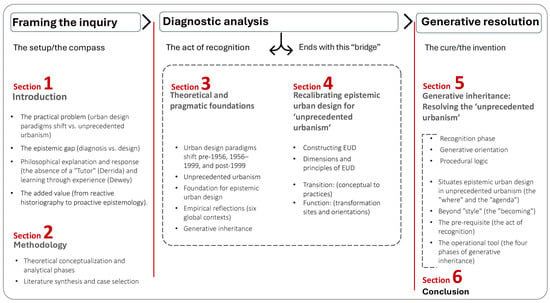
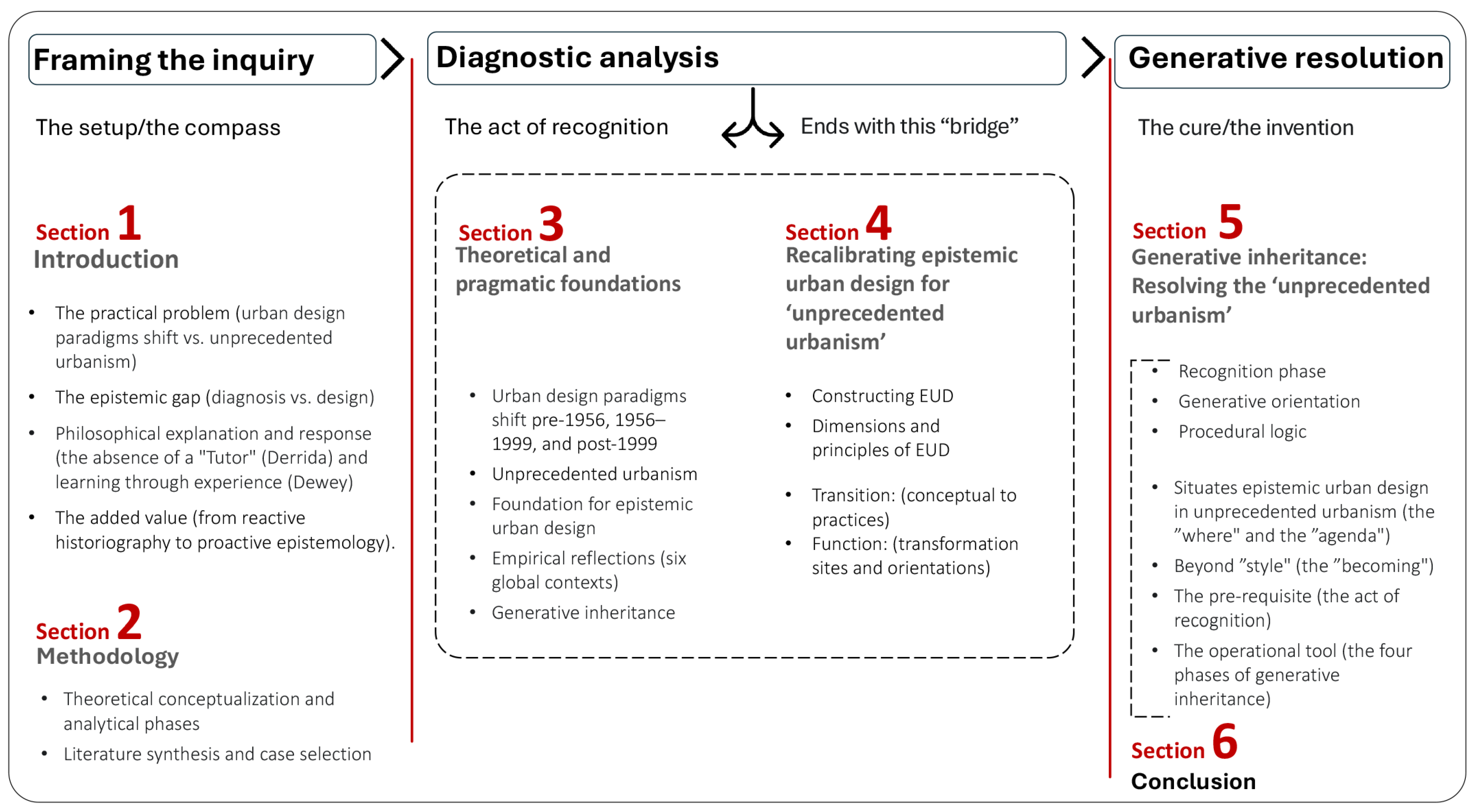
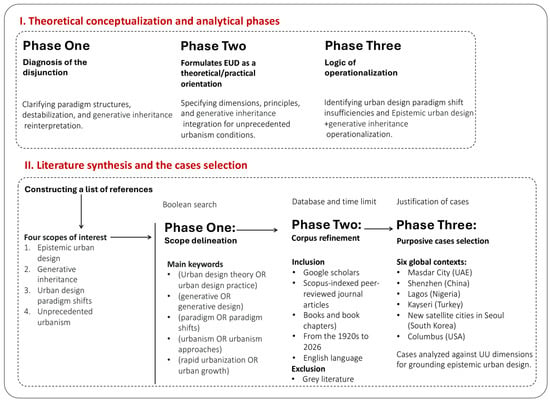
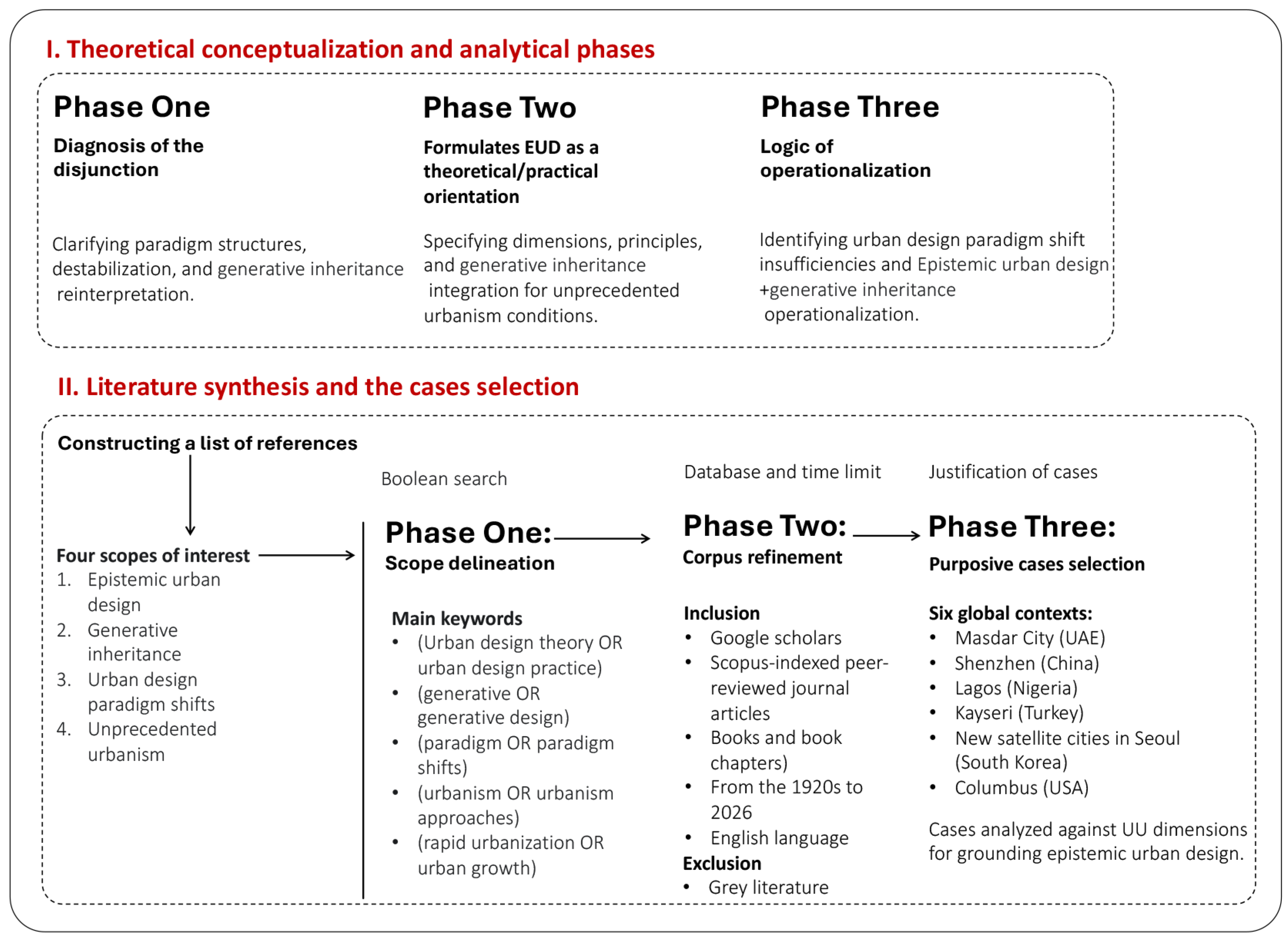
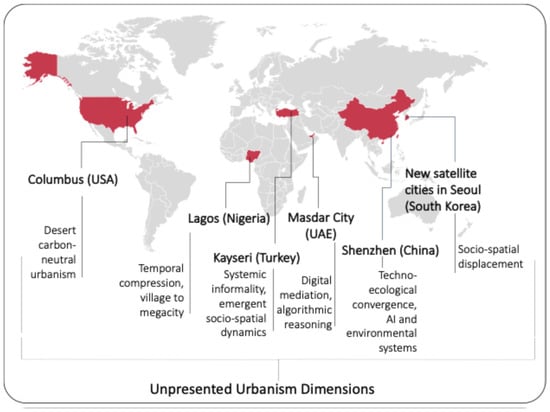
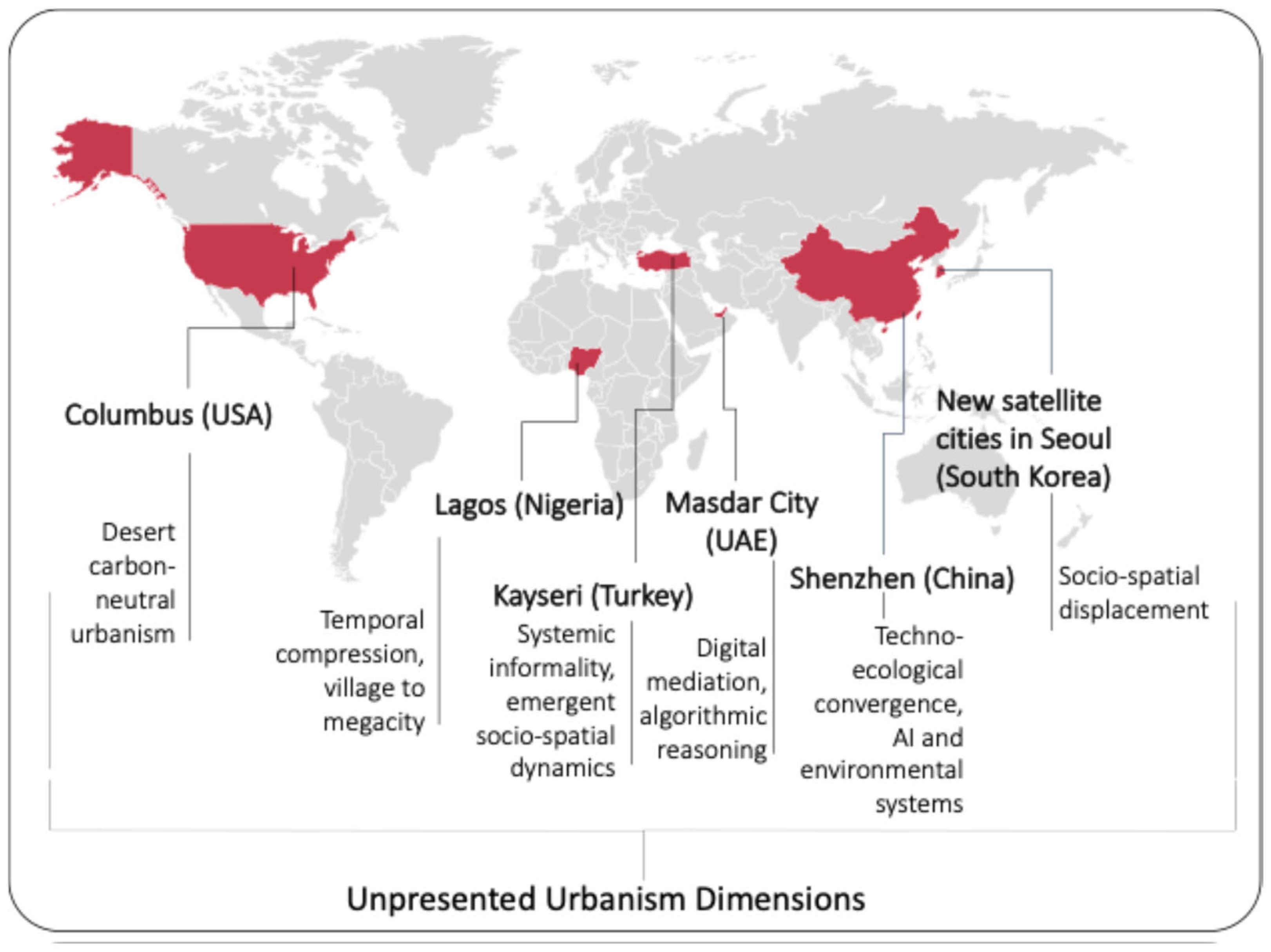
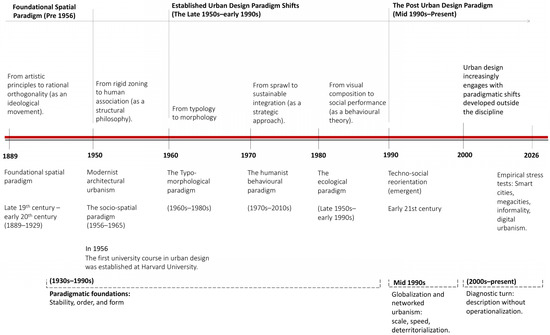
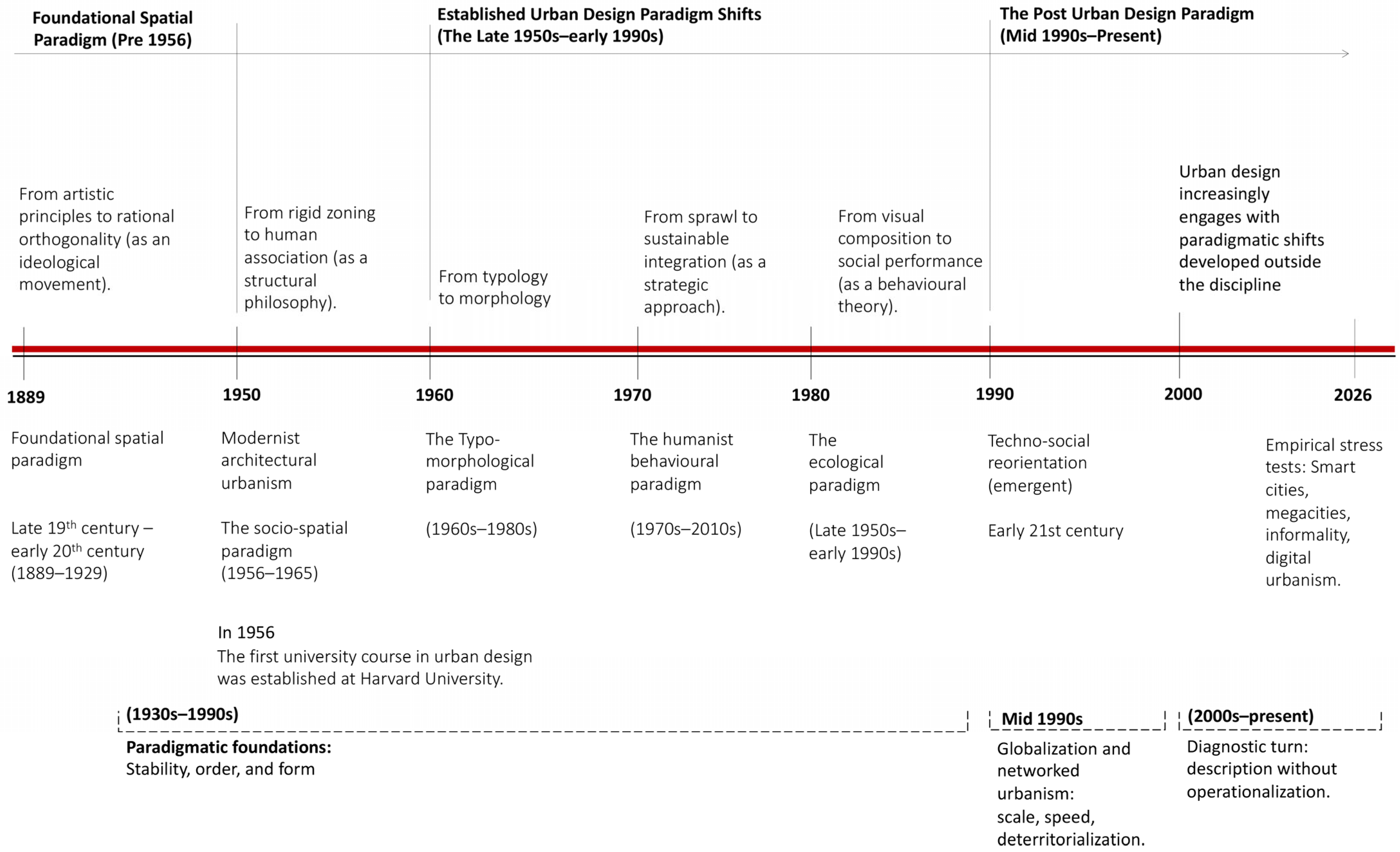
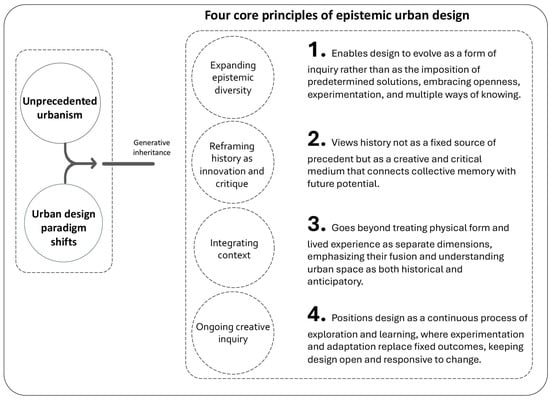
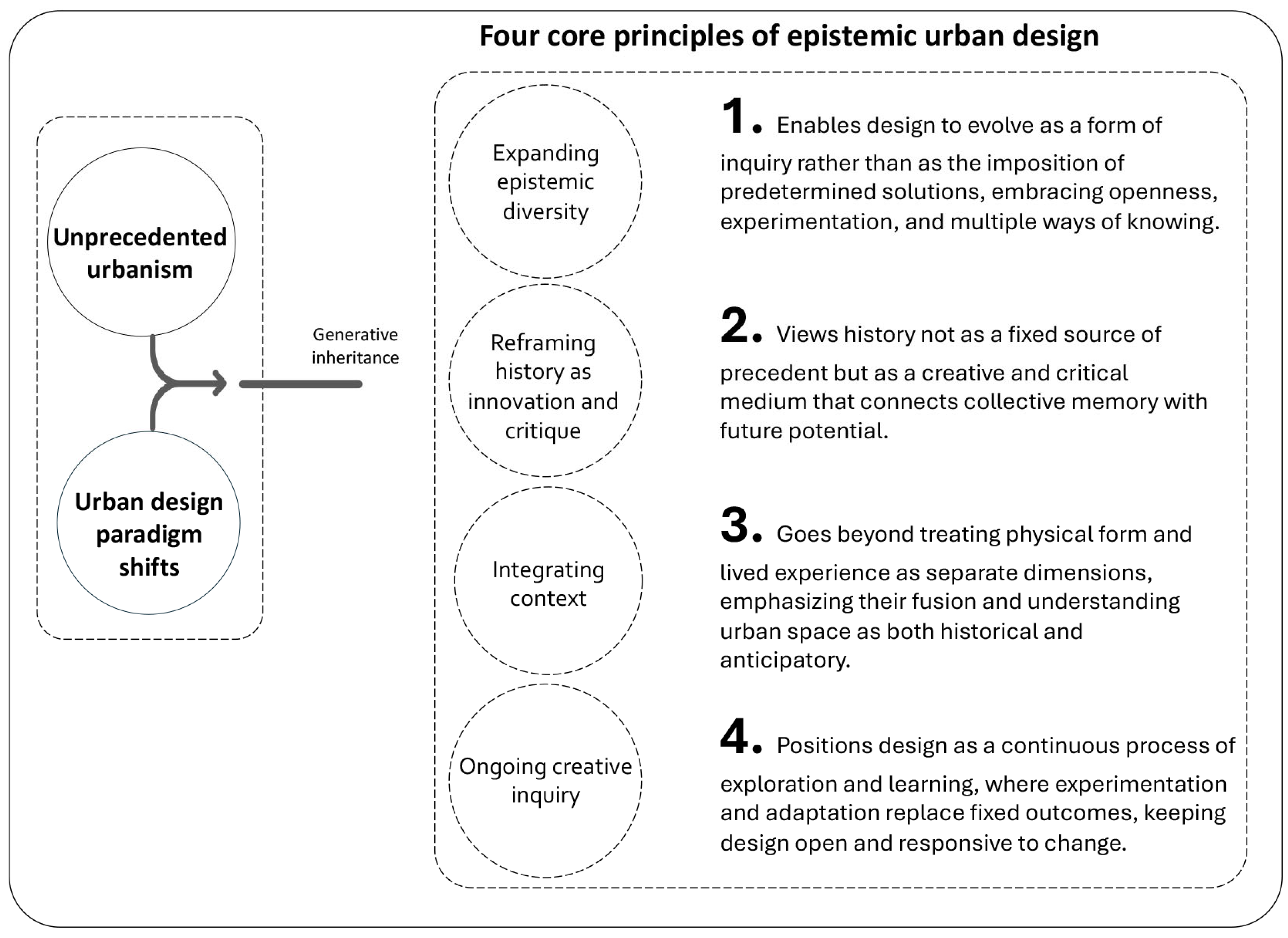
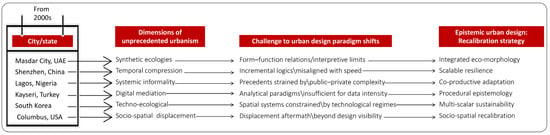
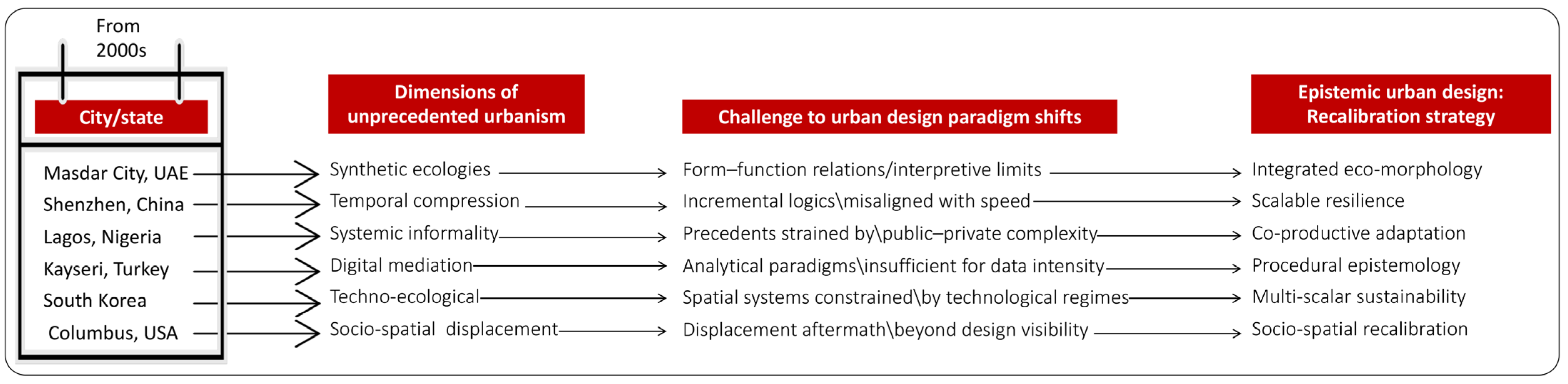
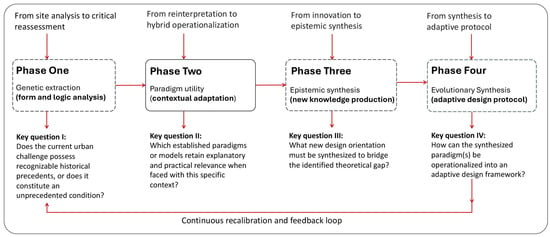
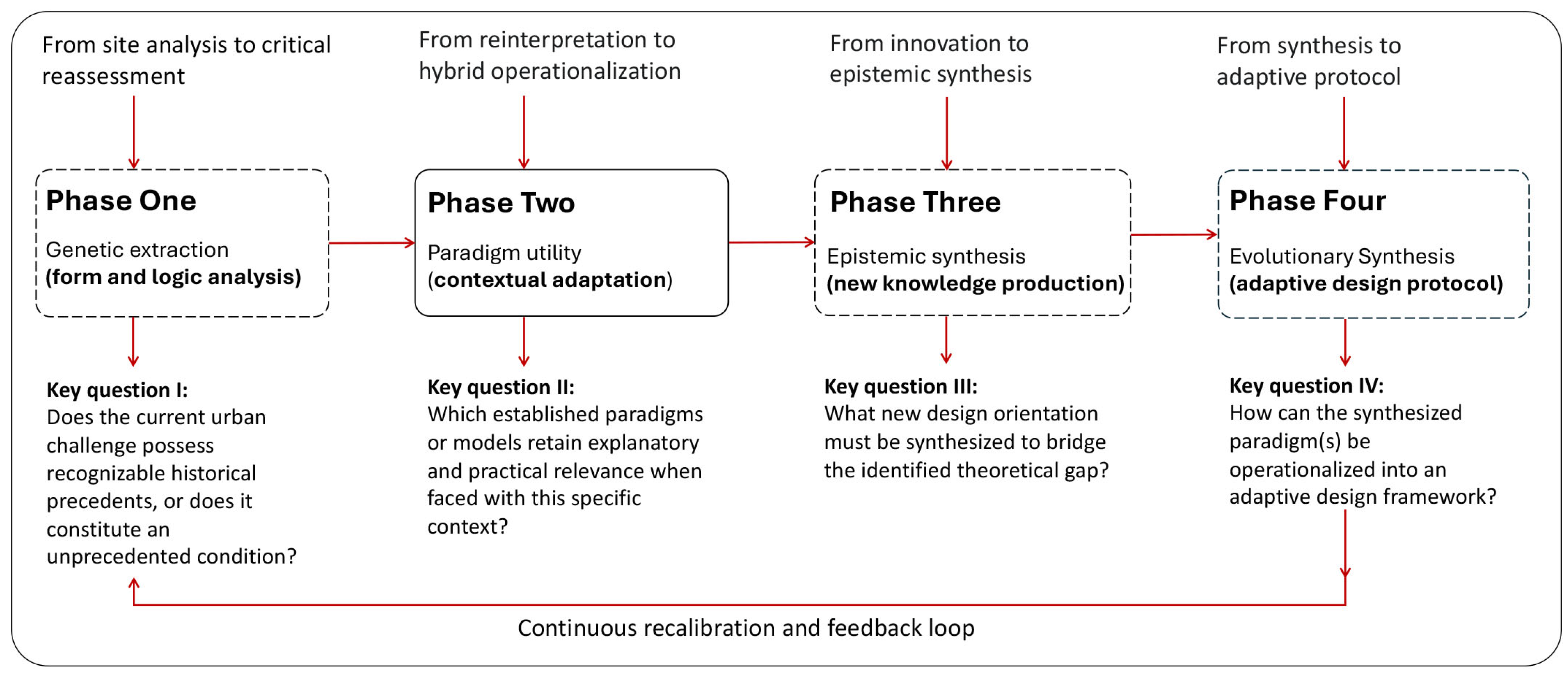

Disclaimer/Publisher’s Note: The statements, opinions and data contained in all publications are solely those of the individual author(s) and contributor(s) and not of MDPI and/or the editor(s). MDPI and/or the editor(s) disclaim responsibility for any injury to people or property resulting from any ideas, methods, instructions or products referred to in the content. |
© 2026 by the authors. Licensee MDPI, Basel, Switzerland. This article is an open access article distributed under the terms and conditions of the Creative Commons Attribution (CC BY) license.