


Abstract
This study examines the influence of corporate social responsibility (CSR) on financial performance of SME suppliers and contractors in the mining industry in Zambia and tests the direct and mediating effects of entrepreneurial leadership on this relationship. Using primary data from 254 SMEs in the Copperbelt Province of Zambia, we conducted a regression analysis to evaluate the effect of CSR on financial performance and the mediating role of entrepreneurial leadership. The results indicate a positive relationship between CSR and financial performance and that this relationship was partially mediated by entrepreneurial leadership. This suggests that SMEs who embrace entrepreneurial leadership along with CSR initiatives are more likely to see improvements in their financial performance. Therefore, the study recommends that owner-managers of SMEs should embrace entrepreneurial leadership and integrate CSR activities to improve their financial performance. This study makes contribution to the literature in the domain of sustainable performance of SMEs. The study also contributes to our knowledge on how CSR practices can improve the financial performance of SMEs in developing countries. In addition, this study is different from others because it introduces entrepreneurial leadership as a mediating factor in the CSR–financial performance relationship.
1. Introduction
Small- and medium-sized businesses (SMEs) are widely recognized as a major engine of economic growth, particularly in developing economies where they contribute significantly to employment creation, poverty reduction, and economic diversification (Zada et al., 2021) [1]. In Zambia, SMEs constitute a substantial fraction of business activity and play a critical role in supporting national development. Yet, despite their economic importance, many SMEs frequently encounter persistent structural challenges, including limited access to funding, scarce resources, budgetary limitations, and restricted access to markets and technologies (World Bank, 2025) [2]. These limitations often hinder their ability to achieve sustained financial performance and long-term competitiveness. In this context, increasing scholarly attention has been directed toward the potential role that corporate social responsibility (CSR) plays in enhancing stakeholder relationships, strengthening organizational reputation and ultimately improving financial outcomes [3]. Although the literature on CSR has expanded considerably over the past decade, much of the existing literature has focused on large corporations, particularly multinational enterprises, where CSR practices are more visible and formally institutionalized [4,5]. Additionally, while the existing studies have contributed key insights on CSR practices and activities in SMEs, less attention has been given to how entrepreneurial leadership mediates the CSR–financial performance relationship. Identifying CSR activities in large organizations is relatively easy due to them being promoted by the organization, but this is not the case for SMEs [5,6]. Research on SMEs’ CSR in developing economies, including Zambia, remains relatively rare. More firms than ever before are making concerted efforts to define and integrate CSR into every facet of their operations [5]. Companies are being held accountable for a constantly evolving collection of CSR issues by an expanding number of shareholders, analysts, regulators, activists, labour unions, employees, and community organizations, as well as the media [3]. Transparency is in high demand, and businesses are expected to track, report, and constantly enhance their economic, social, and environmental performance. Moreover, while prior studies suggest that CSR can generate economic benefits through enhanced stakeholder engagement and improved organizational legitimacy, the internal mechanisms through which these benefits translate into financial performance for the firms remain insufficiently understood.
One organizational capability that may help explain this relationship is entrepreneurial leadership. This is because entrepreneurial leadership integrates opportunity-seeking behavior, uncertainty management, and resource orchestration under limited circumstances. Entrepreneurial leadership is different from other leadership styles in the sense that leadership styles like transformational leadership place more emphasis on vision articulation, inspiration, and follower development, while entrepreneurial leadership is not primarily motivation-driven but rather intrinsically action-oriented and opportunity-driven (Akbari et al., 2021) [7].
Entrepreneurial leaders are forward-thinking, daring, creative, and proactive people who propel their companies to gain long-term competitive advantages [8]. Authors such as Brown and Eistenhard (1998) [9] and Bettis and Hitt (1998) [10] have suggested that improving organizational effectiveness requires an entrepreneurial approach. Additionally, they advocate that entrepreneurial leadership can enhance organizational performance. Therefore, the adoption of entrepreneurial leadership is viewed as a solution to improving organization performance, especially financial performance (Rahim et al., 2015) [11]. Existing studies on entrepreneurial leadership focus on the attributes of entrepreneurial leadership (see Gupta, 2004; Flamholtz, 2011; Harrison et al., 2016; Pashiardis and Savvides, 2011; Ruvio et al., 2010; Surie and Ashley 2008) [12,13,14,15,16,17], organization renewal, creativity, and innovation (Yusof and Jain, 2009; Pihie and Bagheri, 2013; Pihie et al., 2014) [18,19,20], employee job satisfaction, motivation, commitment, and effectiveness (Papalexandris and Galanaki, 2009) [21], and the identification of business opportunities (Currie et al., 2008; Greenberg et al., 2013) [22,23]. However, there is a dearth of research on the mediating effect of entrepreneurial leadership on the CSR–financial performance relationship. In the case of Zambian SMEs, little research has been done on the potential mediating function of entrepreneurial leadership in the relationship between CSR and the financial performance of SME suppliers and contractors in the mining industry in Zambia. Thus, we focus on the following inquiry: Is there a connection between CSR and financial performance, and how can entrepreneurial leadership act as a mediator in this relationship? The purpose of this study is to examine the CSR–financial performance relationship among SMEs who are suppliers and contractors to mining firms and to test the direct and mediating effects of entrepreneurial leadership in this relationship. The remainder of the paper is organized in the following manner: the subsequent section provides a comprehensive examination of the existing literature on CSR and entrepreneurial leadership. It also discusses the relevant theories and the formulation of hypotheses. Following this, the methods employed in the study are described. The paper concludes with an analysis of the results, which is succeeded by a discussion of the findings and a conclusion.
2. Literature Review
2.1. An Overview of CSR
Organizations that voluntarily incorporate social and environmental activities into their business operations and relationships with stakeholders are said to be practicing CSR [5]. Carroll’s CSR pyramid states that there are four primary components to CSR: charitable, legal, ethical, and economic responsibilities [24]. The focus of economic responsibility is on a business’s duty to produce goods and services and turn a profit. The legal obligation places a strong emphasis on following the law and rules [25].
Sponsoring sports and education, providing healthcare, aiding low-income groups, and participating in community events are examples of charitable or society-oriented CSR initiatives [26,27]. According to Turyakira et al. (2012) [26], SMEs primarily engage in CSR initiatives that have an environmental or social focus. Examining the role of CSR in small- and medium-sized enterprises (SMEs) reveals several advantages to implementing CSR policies. First, by aligning their values with those of their target audience, SMEs that adopt CSR can build strong customer loyalty, which will eventually increase retention and promote good referrals. The reason for this is because buyers are growing increasingly aware of how their purchases affect society and the environment [28]. Furthermore, Rawdneam (2025) [29] asserts that entrepreneurial leaders that prioritize CSR activities create a meaningful work environment that inspires and retains talent, which has a positive effect on employee engagement and morale. Additionally, by attracting socially conscious investors that consider environmental, social, and governance (ESG) factors when making investment decisions, CSR can increase the availability of capital [5]. By adopting CSR, SMEs can effectively lower the risks connected to unethical behavior and regulatory non-compliance, ensuring a more sustainable and responsible business model [25]. On the other hand, there are arguments against CSR, particularly regarding SMEs, even though it is commonly promoted as a lucrative business strategy. Critics argue that CSR may not be relevant to contemporary business practices for several reasons. Firstly, it can be costly to implement CSR initiatives, as well as a detraction from crucial business operations and potentially preventing development and survival, especially for SMEs with thin profit margins [30]. Furthermore, the high cost of CSR may make it difficult for SMEs to compete with larger firms that have more substantial resources and specialized CSR teams, resulting in an unequal playing field [5]. Finally, the complex legal and regulatory frameworks that are associated with CSR can be difficult for SMEs to navigate, particularly due to the absence of dedicated legal and compliance departments, which increases administrative burden and operational stress [31].
2.2. Entrepreneurial Leadership
According to McWilliams and Siegel (2017) [6], entrepreneurial leadership is a concept that blends the traits of leadership with entrepreneurship, where people demonstrate entrepreneurial abilities and traits while holding a leadership position. Rawdneam (2025) [29] asserts that being an entrepreneurial leader means being proactive and showing initiative in spotting and seizing chances. It calls on people to use their imaginations, spot market or industry gaps, and come up with unique ways to fill them. They foster experimentation and a culture of learning and resilience by accepting risk [32]. In an entrepreneurial setting, this willingness to take risks is essential because it enables leaders to successfully negotiate unpredictable and unstable situations and seize new opportunities. Strong interpersonal and communication abilities enable entrepreneurial leaders to motivate and inspire their team members [28]. They create an atmosphere that values individuality, creativity, and teamwork so that people can share their special skills and ideas.
Since entrepreneurial leadership entails the capacity to see and grasp chances for social and environmental impact, it is important in CSR. Recognizing that their companies can be a force for good, entrepreneurs who embrace corporate social responsibility (CSR) are motivated by a purpose greater than making money [33]. They develop creative solutions to societal problems and take social and environmental factors into account when making decisions.
By adopting sustainable business practices, interacting with stakeholders, and cultivating a culture of social responsibility, entrepreneurial leaders can incorporate CSR into their companies [34]. They might actively look for chances to have a beneficial influence, including through partnerships with organizations, employee well-being programs, or environmental conservation activities. Entrepreneurial leaders can improve society and the company’s brand, draw in clients, and inspire staff by coordinating their business aims with social and environmental goals.
2.3. Stakeholder Theory and Ethics of Care
According to Freeman (1984) [35], “any group or individual that has the potential to influence or be impacted by the accomplishment of an organization’s goals is considered a stakeholder.” This study is grounded on stakeholder theory, which posits that businesses generate value through effective management of relationships with multiple stakeholders, such as employees, customers, communities and investors. Spence et al. (2001) [36] argues that the stakeholder theory is an alternative to shareholder theory. According to this idea, most businesses, if not all of them, have a sizable and cohesive group of stakeholders [37], to whom they owe duties and responsibilities [36]. Goodpaster (1991) [38] claims that the term “stakeholder” was created as a purposeful pun on the word “shareholder” to indicate that parties other than those with equity positions have a “stake” in the modern corporation’s decision-making process [39]. The conventional wisdom that shareholders have precedence over other stakeholders in a company is contested by stakeholder theory. By contending that shareholders are merely one of many stakeholders with valid claims, it challenges financial theories that only concentrate on increasing shareholder wealth. Instead of putting owners’ interests first, the stakeholder philosophy advocates balancing the interests of all stakeholders, including communities, workers, and customers. According to Kaler (2003) [40], the stakeholder approach aims to modify shareholder theory by encouraging better fairness and broader accountability rather than completely rejecting it. Stakeholder theory is a useful lens for comprehending corporate responsibility in situations like Zambia and other Sub-Saharan African countries, where social issues are substantial and institutional frameworks may be poor. Businesses are frequently ingrained in their communities, with goals that extend beyond making a profit, such as fostering social justice, local development, job creation, and environmental care.
When it comes to the influence of CSR on the financial performance of small- and medium-sized enterprises (SMEs), the shareholder theory suggests that the pursuit of CSR initiatives may not directly contribute to financial performance [41]. Furthermore, Zahra et al. (2019) [5] states that the relationship between CSR and financial performance is not necessarily straightforward. Thus, we argue that entrepreneurial leadership can serve as a mediator in this relationship. This is because entrepreneurial leadership offers a unique viewpoint by stressing opportunity awareness, innovation, and the strategic mobilization of resources in uncertain times, even though other leadership constructs have been studied in connection with firm performance. Moreover, the extent to which stakeholder relationships translate into financial outcomes depends on leadership capabilities. Entrepreneurial leadership facilitates this process by identifying opportunities emerging from stakeholder engagement. For example, to promote innovation and business success, entrepreneurial leaders can identify opportunities and take measured risks. By integrating CSR initiatives into their business strategies, SMEs under entrepreneurial leadership can create value by enhancing their reputation and building trust with various stakeholders, including customers, employees, and the community [42].
It is important to note that despite the study being centered around stakeholder theory, there are several theories that have been used in CSR studies including ethics of care. Ethics of care is a moral theory that places a strong emphasis on the value of caring, empathy, compassion, and interpersonal relationships in moral decision-making. It started out as a reaction against conventional ethical theories that are frequently viewed as being unduly abstract, rule-based, and centered on justice or rights, such as utilitarianism and deontology. Gilligan [43] first proposed this thesis in her seminal work “In a Different Voice” (1982), in which she critiqued the prevalent moral theories’ male-centeredness. According to Gilligan, women typically approach moral issues in a different way—through care, responsibility, and the context of relationships rather than via universal principles of justice. In disciplines like nursing, education, social work, and feminist ethics, the ethics of care has had a significant impact. It has been applied in corporate ethics to support stakeholder-focused strategies and socially conscious actions that prioritize the welfare of people over just profit.
In their study of the effects of various leadership philosophies on the development of fintech start-ups in Zambia, the authors of [44] found that transformational leadership was the most successful. Highlighting executives’ dedication to developing staff members and encouraging inclusive, ethical company practices connects to the ethics of caring in social responsibility. By incorporating the political and societal aspects of care, Tronto (1993) [45] developed the theory further in “Moral Boundaries: A political argument for an ethic of care,” contending that care ought to be viewed as a public value that upholds social fairness and democratic citizenship.
2.4. Conceptual Framework and Hypothesis Development
2.4.1. Conceptual Framework
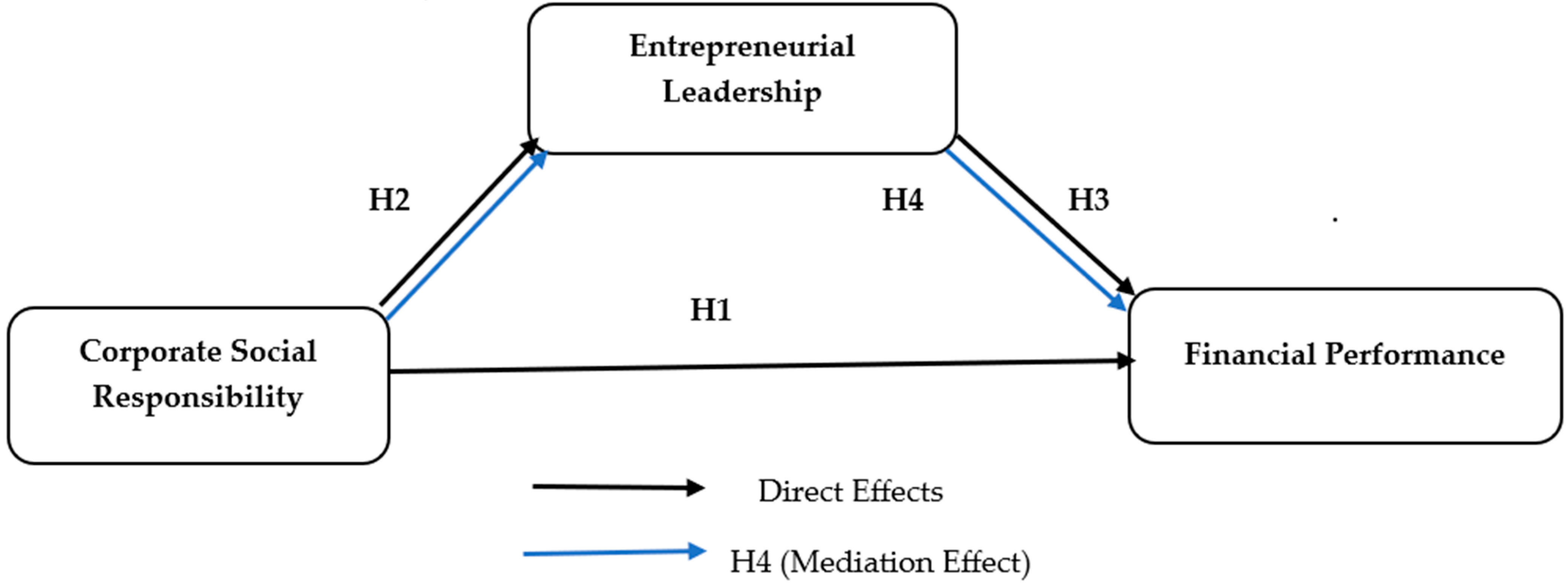
Figure 1 illustrates the conceptual foundation of this study. The framework proposes that corporate social responsibility (CSR) directly influences SME financial performance (H1). Furthermore, CSR has a positive effect on entrepreneurial leadership (H2), which reflects the idea that socially conscious businesses frequently foster leadership philosophies that prioritizes creativity, initiative, and stakeholder responsiveness. Since entrepreneurial leaders are better at spotting possibilities, gathering resources, and turning ethical behavior into a competitive advantage, it is also anticipated that entrepreneurial leadership will have a positive effect on financial performance (H3). Lastly, the theory suggests that entrepreneurial leadership plays a mediating role in the relationship between financial performance and CSR (H4). CSR programs may indirectly boost financial outcomes by cultivating entrepreneurial leadership behaviors that allow SMEs to use socially responsible methods to improve performance. CSR programs may also indirectly boost financial outcomes. Thus, the model takes into account both direct and indirect ways that CSR affects the financial performance of SMEs.
Figure 1.
Conceptual framework.
2.4.2. Hypothesis Development
The Link Between CSR and Financial Performance
The link between CSR and financial performance has been extensively studied in the academic literature. Some studies have found evidence of a positive relationship between CSR activities and financial performance. For instance, a study conducted by Margolis and Walsh (2018) [46] examined 300 companies’ CSR programs and discovered a favorable relationship between CSR and financial performance. According to the authors, businesses that prioritize CSR have a higher chance of drawing in socially conscious clients and investors, which enhances financial results. A meta-analysis of 52 studies was carried out in another study by Orlitzky et al. (2019) [30], which concluded that there is a slight but favorable correlation between CSR and financial performance. According to the authors, corporate social responsibility (CSR) initiatives improve a company’s reputation, which in turn boosts financial performance. Choongo (2017) [47] also found that CSR improves company performance; however, no mediating variable was included in this analysis.
Additionally, McWilliams and Siegel (2017) [6] investigated the connection between Fortune 500 businesses’ financial performance and CSR. Socially conscious businesses typically outperform non-conscious firms financially. Based on the above discussions, it is hypothesized that
H1:
There is a positive relationship between CSR and financial performance.
The Link Between CSR and Entrepreneurial Leadership
The link between CSR and entrepreneurial leadership has been explored in various studies. A proactive and creative mentality, a willingness to take chances, and a strong dedication to generating value for stakeholders and society as a whole are all components of entrepreneurial leadership, as indicated by Khan et al. (2023) [33]. These traits align well with the principles of CSR, which emphasize the integration of social and environmental concerns into business strategies. Moreover, research by Maresch et al. (2016) [48] highlights that entrepreneurial executives are more likely to embrace CSR programs and see them as chances for strategic benefit rather than just compliance. They can spot business prospects that meet societal demands and promote sustainable innovation because of their entrepreneurial approach. Based on the above discussions, it is hypothesized that
H2:
There is a positive relationship between CSR and entrepreneurial leadership.
The Link Between Entrepreneurial Leadership and Financial Performance
Numerous studies have shown a positive correlation between financial performance and entrepreneurial leadership, which has been a focus of research (e.g., [23,32,49,50]). For example, Rauch et al. (2019) [32] conducted a comprehensive examination of 213 SMEs and found a high positive link between financial performance and entrepreneurial leadership. Their research indicates that companies led by entrepreneurs are more likely to see successful financial outcomes. This study demonstrates how, under the guidance of entrepreneurial leadership, innovative thinking and flexible management strategies can accelerate financial success.
In a similar vein, Qasim et al. (2025) [49] examined how Chinese high-tech enterprises performed in relation to entrepreneurial leadership. By showing the positive effect of entrepreneurial leadership on financial performance, their findings provide credence to the notion that these leaders are essential in fostering financial success. The study highlights the significance of entrepreneurial leadership in enhancing corporate success, particularly in the high-tech sector where adaptation and innovation are essential. A different study by Djalil et al. (2023) [50] claims that innovative products and services, fresh concepts, and creative thinking can enhance bank performance. Additionally, a study by Hapsari et al. (2024) [51] found that SMEs’ financial performance is positively impacted by the entrepreneurial approach. Based on the above discussions, it is hypothesized that
H3:
There is a positive relationship between entrepreneurial leadership and financial performance.
Mediation Role of Entrepreneurial Leadership on CSR and Financial Performance
The CSR–firm performance link has received a lot of attention in the literature, with some studies showing that CSR can have a positive effect on a firm’s financial and non-financial performance. Nonetheless, little is known about the part that entrepreneurial leadership plays in this relationship. Innovative methods and strategic vision are hallmarks of entrepreneurial leaders, and they may act as a mediator in the relationship between CSR and firm performance. Oiku et al. (2023) [52] asserts that CSR initiatives can boost staff happiness and customer loyalty, which in turn boosts productivity and sales growth. A study on Brazilian companies found that CSR activities in a number of areas, including community involvement and environmental stewardship, are influenced by financial performance [53]. By increasing the effectiveness of CSR initiatives through strategic vision and innovation, entrepreneurial leadership enhances the benefits of CSR on business performance. Based on the above discussions, it is hypothesized that
H4:
The relationship between CSR and financial performance is mediated by entrepreneurial leadership.
3. Methodology
3.1. Approach, Sample, Data Collection and Analysis
This study takes a quantitative approach using survey data and statistical analysis. It focuses on the relationship between CSR and financial performance of 254 SMEs that are suppliers and contractors to the mining firms in Zambia. SME owners or owner managers who make operational and strategic decisions made up the target population. Owner managers who have an adequate understanding of CSR practices, leadership activities, and company performance within their companies were chosen using a purposive random sampling technique. Industry directories involved in the mining supply chain were used to create the sampling frame. The vital importance that mining plays in Zambia’s economy justifies the selection of the mining sample. Zambia’s main economic activity is mining, which makes a substantial contribution to the stability and expansion of the country’s finances. It makes up about 12% of GDP and 64.7% of all exports from the nation [47]. In 2022, mining accounted for 72% of the total export earnings and 44% of the government revenue. This industry is crucial for creating foreign income, drawing in foreign direct investment, and bringing in a sizable amount of money for the government through mining royalties and corporate taxes. Because of these characteristics, the sample accurately reflects the sector’s total economic influence and significance in forming Zambia’s financial landscape.
3.2. Control of Common Method Bias
Because the study relied on cross-sectional self-reported data, procedural and statistical remedies were used to address the possibility of common method bias. During the questionnaire design and data collecting phases, a number of procedures were put into place in accordance with the suggestions made by Podsakoff et al. (2003) [54]. In order to lessen evaluation anxiety and social desirability bias, the respondents were guaranteed anonymity and confidentiality. In order to minimize the respondents’ ability to deduce causal correlations between variables, items assessing various constructs were divided among different parts of the instrument, and the questionnaire items were carefully designed to improve clarity and eliminate ambiguity. Harman’s Single-Factor Test was used as a statistical diagnostic test to further evaluate the possible existence of common method bias. The first factor explained less than 50% of the total variation, according to the exploratory factor analysis results, indicating that common technique bias does not pose a significant risk to the validity of the findings. Additionally, as explained under Section 4.3, the variance inflation factor (VIF) values were analyzed and discovered to be below 10. This shows that common method bias is unlikely to have an impact on the study’s findings.
3.3. Measurement of Variables
Dependent variable—In CSR studies, financial performance has been measured using a subjective approach. Following Choongo et al. (2017), Sweeney (2009), Man (2011), and Burton and Goldsby (2009) [47,55,56,57], the study adopted the subjective approach of measuring financial performance, which consists of profit growth, sales growth, and leverage. Several studies (e.g., refs. [55,56,58]) have adopted this approach to measure the financial performance of SMEs. Due to the reluctance of SME owners and managers to provide such sensitive information and the fact that most SMEs do not maintain formal financial data, Ref. [56] argues that using scales rather than actual figures is a better way to assess the success of SMEs.
Independent variable—To guarantee content validity and comparability with prior studies, CSR was measured based on the items employed in [55]. Following the position of Sweeney (2009) [55], this study never sought to reinvent the wheel regarding the measurement of CSR; instead, each question within the section relating to these concepts were taken from previous research work. Carroll (1991) [59] cites five major groups that are recognized as priorities by most firms across different industries regardless of the firm size or location: owners (shareholders), employees, customers, local communities, and the society. Hence, our independent variables included CSR–Employee, CSR–Customer, CSR–Community and CSR–Environment.
Mediating variable—Entrepreneurial leadership was measured by adapting the scale developed in [60]. A five-point Likert scale, with 1 denoting “strongly disagree” and 5 denoting “strongly agree”, was used by the respondents to evaluate their firm’s CSR, financial performance and entrepreneurial leadership.
Control variables—Prior to conducting the regression analysis, gender and level of education were entered as control variables to check if the sample could be treated as homogenous or not.
3.4. Analysis
The Sobel test was used to determine the significance of the indirect effect, and a regression-based method based on Baron and Kenny’s (1986) [61] methodology was used to test mediation. Regression-based mediation analysis is still a legitimate and frequently used method in management and entrepreneurship research, especially when sample sizes are sufficient and normality assumptions are met, even though more modern methods like bootstrapping-based indirect effect estimation have gained popularity. The selected approach offers accurate and clear estimates of direct and indirect effects because the sample size of 254 firms is larger than the suggested threshold for regression-based mediation testing.
4. Results
4.1. Factor Analysis and Reliability Test
Exploratory factor analysis was carried out before the main analysis to look at the underlying structure of the measurement items and guarantee construct validity. Factors with adequate factor loadings and eigen values greater than one were kept. Cronbach’s alpha coefficients were used to evaluate the constructs’ reliability. Field (2005) [62] recommends looking at the Kaiser–Meyer–Olkin (KMO) measure of sample adequacy and Bartlett’s test of sphericity. The range of the KMO statistic is 0 to 1. The partial correlations’ sum is large in relation to when the value is 0. The total correlations show diffusion in the correlation pattern; consequently, factor analysis is probably not appropriate. When the value is 1, correlation patterns are comparatively compact; therefore, factor analysis ought to produce accurate and consistent outcomes. Bartlett’s test of sphericity is used to analyze the correlation matrix. Since all variables are assumed to be noncollinear, factor analysis is justified if the value is 0.05 or less. As shown in Table 1 below, all the factor loadings were greater than 0.6 except for one under environmental CSR, which was later deleted, showing that the factor loadings for each factor tested were satisfactory.
Table 1.
Factor analysis and reliability test.
4.2. Analyses of Correlation Among All Variables
Table 2 presents the correlations, means and standard deviations for the responses to the dependent variable (financial performance), mediator variable (entrepreneurial leadership), independent variables (CSR–Environment, CSR–Employee, CSR–Customer and CSR–Community) and control variable (gender).
Table 2.
Correlation among variables.
The correlation coefficient between financial performance and CSR–Environment is r = 0.335 (p < 0.01), with a medium effect size. Thus, the significant positive correlations indicate that a firm with a moderate level of CSR towards the environment is more likely to have high financial performance. The correlation coefficient between financial performance and CSR–Employee is r = 0.420 (p < 0.01), with a medium effect size; similarly, the significant positive correlations indicate that a firm with a moderate level of CSR towards employees will be more likely to have employees that will perform to the satisfaction of the business and hence, the financial performance is expected to be high. Furthermore, the correlation coefficient between financial performance and CSR–Customer is r = 0.372 (p < 0.01), with a medium effect size. In the same way, the significant positive correlations indicate that a firm with a moderate level of CSR towards customers will be more likely to have high financial performance. The correlation coefficient between financial performance and CSR–Community is r = 0.408 (p < 0.01), with a medium effect size; thus, the significant positive correlations indicate that a firm with a moderate level of CSR towards the community in which the firm operates in will be more likely to see their financial performance increase. Finally, the correlation coefficient between financial performance and entrepreneurial leadership is r = 0.343 (p < 0.01), with a medium effect size. Thus, the significant positive correlations indicate that a firm with a moderate level of entrepreneurial leadership in the organization will be more likely to see improved financial performance.
4.3. Regression Analysis
Gender and educational level were entered as control variables prior to the regression analysis, and neither showed a significant impact. Therefore, the sample could be considered homogeneous.
The idea that CSR is multidimensional has been widely acknowledged by researchers [59], who have also integrated the different dimensions used to quantify the concept into a single aggregate measure (Sharfman, 1996) [63]. In accordance with earlier studies, we considered each of the distinct CSR dimensions to be an indicator of CSR [55,64,65], the total of which serves as a measure for CSR. So, when conducting the regression analysis, we calculated a composite score for CSR. This is also supported by (McWilliams and Siegel, 2001; Carroll, 1991) [6,24].
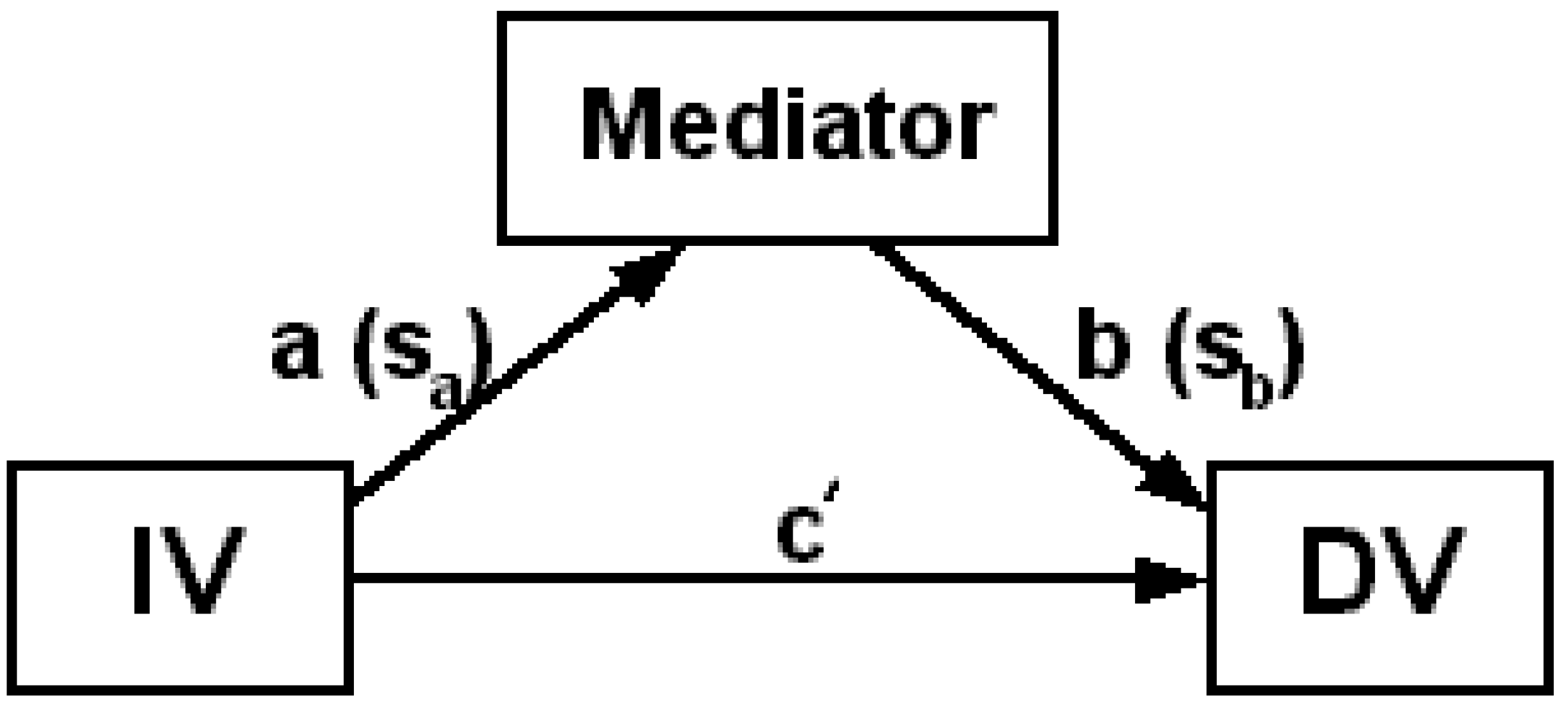
According to Baron and Kenny (1986) [61], full mediation occurs when the direct effect of the independent variable X (i.e., CSR) becomes insignificant (p > 0.05) once the mediating variable M (i.e., entrepreneurial leadership) is introduced. On the other hand, a partial mediation is deemed to have occurred if the relationship between the independent variable X and the dependent variable Y is still significant after controlling for the effects of the mediating variable M (that is, both CSR and entrepreneurial leadership significantly predict financial performance). Furthermore, a variable can be regarded as a mediator if it transfers the impact of a particular independent variable (IV) to a certain dependent variable (DV). Generally, mediation can be said to occur when the IV significantly affects the DV in the absence of the mediator (slope c) (step 1); the IV significantly affects the mediator (slope a) (step 2); the mediator has a significant unique effect on the DV (step 3); and the effect of the IV on the DV (slope c’) decreases upon the introduction of the mediator (slope b) to the model (step 4). These criteria can be used to indicate whether mediation is occurring. In this study, to test the mediation effect of entrepreneurial leadership [48], a four-step regression method (Figure 2) is used plus the Sobel test.
Figure 2.
Illustration of mediation. a, b, and c’ are path coefficients.
The results in Table 3, Table 4, Table 5, Table 6 and Table 7 show a positive linear relationship between entrepreneurial leadership and financial performance as well as a positive relationship between CSR and financial performance and finally between CSR and entrepreneurial leadership. The coefficient table shows that the VIF and the tolerance values are less than 10, indicating no multicollinearity within the data. The collinearity diagnostics results indicate an eigen value of 1.988 and condition index of 1.000 as well, all indicating that the model fits and that there is no collinearity between CSR, entrepreneurial leadership and financial performance. The regression analyses found low VIF (Variance Inflation Factor) values (<10) for all variables. This indicates that the regression models are not prone to the econometric problem of multicollinearity [66].
The model also found a Durban–Watson statistic value of 1.499. The Durbin–Watson statistic ranges from 0 and 4, with a value close to 2 indicating no first-order autocorrelation, values substantially below 2 suggesting positive autocorrelation, and values above 2 indicating negative autocorrelation (Field, 2024) [67]. In this study, the value of 1.499 suggests a mild presence of autocorrelation; however, it remains within the acceptable range for cross-sectional data.
In step 1, as shown in Table 3, CSR yields an R = 40.5% (medium effect size) and R-squared of 16.4%, which are statistically significant. The results indicate a good fit for the model and the adjusted R squared is significantly different from zero. The implication is that 16.4% of the variation in financial performance is explained by CSR. The results in Table 3 show a positive linear relationship between CSR and financial performance.
Table 3.
Step 1: regression analysis with financial performance as the outcome variable (c) and CSR as an independent variable.
In step 2, a simple regression analysis was run for CSR prediction. The results show a positive linear relationship between CSR and entrepreneurial leadership. As shown in Table 4 below, CSR yields an R = 43.1% (medium effect size) and R-squared of 18.6%, which are statistically significant. The results indicate a good fit for the model and the adjusted R squared is significantly different from zero. The implication is that 18.6% of the variation in entrepreneurial leadership is explained by CSR, as shown in Table 4 below.
Table 4.
Step 2: Regression analysis with entrepreneurial leadership as the outcome (a) and CSR as an independent variable.
Table 5.
Step 3: Regression analysis with financial performance as the outcome (b) and entrepreneurial leadership as an independent variable.
In step 3, a simple regression analysis was run to predict the effect of entrepreneurial leadership on financial performance. The results show a positive linear relationship between financial performance and entrepreneurial leadership. Table 5 above shows that entrepreneurial leadership yields an R = 35.5% (medium effect size) and R-squared of 12.6%, which are statistically significant. The results indicate a good fit for the model and the adjusted R squared is significantly different from zero. The implication is that 12.6% of the variation in financial performance is explained by entrepreneurial leadership.
The purpose of steps 1 to 3 was to establish that zero-order relationships among the variables exist. If one or more of these relationships are non-significant, researchers usually conclude that mediation is not possible or likely, although this is not always true. The significant relationships from steps 1 to 3 led to step four being performed. In the model for step 4, there was a need to ascertain if full or partial mediation occurred. According to Baron and Kenny (1986) [61], full mediation occurs if the effect of the mediating variable (entrepreneurial leadership in this context) remains significant after controlling for the independent variable (CSR).
In step 4, two independent variables are introduced (CSR and entrepreneurial leadership), yielding a combined R = 46.9% (medium effect size) and R-squared of 22.0%, which are statistically significant (Table 6). The results indicate a good fit for the model and the adjusted R squared is significantly different from zero. The implication is that 22.0% of the variation in financial performance is explained by the combined effect of CSR and entrepreneurial leadership.
Table 6.
Step 4: Regression analysis with financial performance as the outcome (c’ and b) and CSR and entrepreneurial leadership as independent variables.
To test whether the mediator (entrepreneurial leadership) has an effect on the association between CSR and financial performance, a Sobel test was performed. Using an online program, the critical ratio was calculated as a test of whether the indirect effect of the IV (CSR) on the DV (financial performance) occurs via the mediator (entrepreneurial leadership) (critical ratio is significantly different from zero); the results are shown in Table 7 below.
Table 7.
Sobel test results for statistical mediation.
Sobel Test
The Sobel test was used to investigate the mediating impact. The reported p-values (rounded to 8 decimal places) are drawn from the unit normal distribution under the assumption of a two-tailed z-test of the hypothesis that the mediated effect equals zero in the population. +/− 1.96 are the critical values for the test ratio, which contains the central 95% of the unit normal distribution. This study notes that there are three principal versions of the “Sobel test”—one that adds the third denominator term (Aroian, 1947) [68], which is the version popularized by Baron and Kenny, one that subtracts the third denominator term [69], and one that does not include it at all. The Sobel test equation omits the third term of the variance estimate in the denominator. Thus, this research uses the Aroian version of the Sobel test suggested in Baron and Kenny (1986) [61] because it does not make the unnecessary assumption that the product of Sa and Sb is vanishingly small. The Sobel test findings show that the indirect impact is statistically significant (Z = 2.97, p < 0.01), indicating that the mediator contributes significantly to the transmission of the independent variable’s effect on the dependent variable. The strength of the mediation effect is confirmed by the consistent results of the Aroian (Z = 2.95, p < 0.01) and Goodman (Z = 2.99, p < 0.01) tests. Both the direct effect and the indirect effect (p < 0.01) are still statistically significant, indicating partial mediation. These findings provide strong evidence that the suggested mediating mechanism underlies the link between the independent and dependent variables. In particular, the results suggest that the association between CSR and financial performance is significantly mediated by entrepreneurial leadership, suggesting that CSR initiatives indirectly influence firm performance through this mechanism.
5. Discussion
The question set out at the beginning of the study was, Does CSR influence the financial performance of SMEs, and how can entrepreneurial leadership act as mediating variable in this relationship? The findings indicate a significant and positive relationship between CSR and financial performance in small- and medium-sized enterprises (SMEs). This suggests that CSR activities can serve as an important mechanism through which SMEs enhance organizational legitimacy, strengthen stakeholder relationships, and subsequently improve financial outcomes. Additionally, the study reveals that CSR is significantly and positively linked to entrepreneurial leadership, which serves as a significant and positive mediator in the relationship with financial performance. This demonstrates that leadership capabilities are critical in translating socially responsible practices into tangible organizational benefits. These findings are broadly consistent with prior research that reported a positive relationship between CSR and firm performance. For example, these results on entrepreneurial leadership are consistent with those in [44], which found that good leadership from an entrepreneur leads to improved firm performance. Additionally, our results are in line with those of Licandro et al. (2024) [70] who found a strong and favorable correlation between CSR and financial performance in a sample of SMEs. Likewise, Bahta et al. (2021) [71] reported that CSR practices positively influenced the financial performance of SMEs. However, Brown and Jones’ (2018) [72] study indicated no significant relationship between CSR and financial performance in SMEs. Additionally, Davis and Williams (2021) [73] found that the impact of CSR on financial performance varied across different industries, suggesting that the relationship may be contingent upon contextual factors.
The present study extends the existing knowledge by demonstrating that entrepreneurial leadership may act as an important mechanism through which CSR initiatives influence firm performance [10]. This suggests that CSR alone may not automatically translate into improved financial outcomes unless it is effectively supported by leadership capabilities that enable firms to strategically integrate social responsibility into their business operations. From a contextual perspective, these results are particularly important for SMEs that operate in developing economies like Zambia, where businesses frequently encounter institutional difficulties, resource limitations, and rising stakeholder demands regarding ethical business practices. The sustainability and competitiveness of SMEs could be improved in such circumstances by CSR programs that fortify linkages with local communities, authorities, and commercial partners. Practically, the findings imply that SME managers should see CSR as a strategic instrument that, when backed by good entrepreneurial leadership, may improve organizational performance rather than seeing CSR as just a compliance or charitable endeavor. To assist the long-term performance and growth of SMEs, policymakers and industry stakeholders could also think about encouraging CSR awareness and leadership development programs.
6. Conclusions
The study aimed to examine the effect of CSR on financial performance in small and medium enterprises (SMEs) in Zambia while also exploring the mediating role of entrepreneurial leadership. Based on the analysis of the data collected and the statistical tests conducted, we can conclude that there is a positive relationship between CSR and financial performance in SMEs in Zambia. This suggests that SMEs that engage in CSR activities tend to experience better financial performance. By actively addressing social and environmental concerns, SMEs can enhance their reputation, build customer loyalty, and attract new business opportunities, ultimately leading to improved financial outcomes. We recommend that SMEs should prioritize the integration of CSR into their core business strategies. Additionally, SMEs should share their successful CSR practices and experiences with other SMEs in Zambia. This can be done through industry associations, conferences, or online platforms.
Our study also revealed that entrepreneurial leadership plays a mediating role in the relationship between CSR and financial performance in SMEs. Entrepreneurial leaders who prioritize and promote CSR initiatives within their organizations can positively influence financial performance. Their vision, values, and ability to inspire and mobilize employees towards CSR goals can lead to the effective implementation of CSR practices, which in turn enhance financial performance. It is therefore crucial for SMEs to invest in the development of entrepreneurial leadership skills and competencies among their leaders. The most significant contribution of this study is the introduction of the new variable (entrepreneurial leadership) in understanding the CSR–financial performance relationship.
Finally, this study is not without limitations. Firstly, the data was collected at a single point in time using a cross-sectional research design, which makes it difficult to determine if the results would be consistent if collected again from the same respondents and it also limits the ability to establish causal relationships among variables. In this regard, a similar study but longitudinal in nature may be conducted in the future. Secondly, the constructs in the study were measured through survey questions, which may be subject to social desirability bias, where respondents overestimate their CSR activities; future research can attempt to use objective measures. Thirdly, although this study used regression-based mediation analysis in accordance with established procedures (e.g., Baron and Kenny, 1986), this method has recognized limitations. In particular, it assumes linear relationships and may have less statistical power than more sophisticated methods like bootstrapping or structural equation modeling (SEM), which enable simultaneous measurement and structural model estimation and yield more reliable indirect effect estimates (Hayes, 2022) [74]. As a result, care should be taken while interpreting the mediation results. In order to provide a more reliable evaluation of mediation effects, future research could consider using bootstrapping techniques. Furthermore, while traditional methods like Harman’s Single-Factor Test and procedural remedies were used to evaluate common method bias, these methods have been criticized for their low sensitivity in identifying method variance. Therefore, it is impossible to completely rule out the possibility of residual common method bias. To further allay this worry, future studies are urged to use more rigorous techniques, such as marker variables or longitudinal and multi-source data designs, as suggested by (Podsakoff et al., 2003; Wall et al., 2022) [54,75].
Author Contributions
Conceptualization, P.C. and B.M.S.; methodology, P.C. and B.M.S.; writing—original draft, B.M.S.; writing—review and editing, P.C. and N.T.; supervision, P.C.; project administration, N.T.; funding acquisition, N.T. All authors have read and agreed to the published version of the manuscript.
Funding
This research received no external funding.
Institutional Review Board Statement
The study was conducted in accordance with the Declaration of Helsinki, and approved by the Institutional Review Board of UNILUS-RESEARCH ETHICS COMMITTEE (protocol code: FWA00033228-04507/24; date of approval: 15 July 2024).
Informed Consent Statement
Informed consent was obtained from all subjects involved in the study. Verbal informed consent was obtained from the participants. The participants were informed about the study by the researcher. The purpose of the study was explained and the participants were assured of confidentiality and that participation was voluntary. Verbal consent was obtained rather than written consent because the participants felt uncomfortable signing the consent form in most cases. Written informed consent is only mandatory when collecting data in medical studies or from children, minors, or vulnerable groups such as people living with disabilities or trafficking in persons (TIP). I have attached an example of a consent form for a TIP study that we recently undertook.
Data Availability Statement
The original contributions presented in this study are included in the article. Further inquiries can be directed to the corresponding author.
Conflicts of Interest
The authors declare no conflicts of interest.
References
- Zada, M.; Zada, S.; Ali, M.; Zhang, Y.; Begum, A.; Han, H.; Ariza-Montes, A.; Vega-Muñoz, A. Development of Local Economy through the Strengthening of Small-Medium-Sized Forest Enterprises in KPK, Pakistan. Sustainability 2021, 13, 10502. [Google Scholar] [CrossRef] [Scilit]
- World Bank. SME Finance. 2025. Available online: https://www.worldbank.org/ext/en/topic/competitiveness/small-and-medium-enterprises-smes-finance (accessed on 10 March 2026).
- Sikopo, F.; Muleya, M. Corporate social responsibility and financial performance: Evidence from selected Zambian firms. Int. J. Bus. Manag. 2020, 15, 65–74. [Google Scholar]
- Muthuri, J.N.; Gilbert, V. An institutional analysis of corporate social responsibility in Kenya. J. Bus. Ethics 2011, 98, 467–483. [Google Scholar] [CrossRef] [Scilit]
- Zahra, S.A.; Gedajlovic, E.; Neubaum, D.O.; Shulman, J.M. A typology of social entrepreneurs: Motives, search processes and ethical challenges. J. Bus. Ventur. 2019, 24, 519–532. [Google Scholar] [CrossRef] [Scilit]
- McWilliams, A.; Siegel, D. Corporate social responsibility: A theory of the firm perspective. Acad. Manag. Rev. 2001, 26, 117–127. [Google Scholar] [CrossRef] [Scilit]
- Akbari, M.; Bagheri, A.; Imani, S.; Asadnezhad, M. Does entrepreneurial leadership encourage innovation work behavior? The mediating role of creative self-efficacy and support for innovation. Eur. J. Innov. Manag. 2021, 24, 1–22. [Google Scholar] [CrossRef] [Scilit]
- Sawaean, F.; Ali, K. The impact of entrepreneurial leadership and learning orientation on organizational performance of SMEs: The mediating role of innovation capacity. Manag. Sci. Lett. 2020, 10, 369–380. [Google Scholar] [CrossRef] [Scilit]
- Brown, S.L.; Eisenhardt, K.M. Competing on the Edge: Strategy as Structured Chaos; Harvard Business School Press: Boston, MA, USA, 1998. [Google Scholar]
- Bettis, R.A.; Hitt, M.A. The new competitive landscape. Strateg. Manag. J. 1995, 16, 7–19. [Google Scholar] [CrossRef] [Scilit]
- Rahim, H.L.; Zainal Abidin, Z.; Mohtar, S.; Ramli, A. The effect of entrepreneurial leadership towards organizational performance. Int. Acad. Res. J. Bus. Technol. 2015, 1, 193–200. [Google Scholar]
- Gupta, V.; MacMillan, I.C.; Surie, G. Entrepreneurial leadership: Developing and measuring a cross-cultural construct. J. Bus. Ventur. 2004, 19, 241–260. [Google Scholar] [CrossRef] [Scilit]
- Flamholtz, E.G. The leadership molecule hypothesis: Implications for entrepreneurial organizations. Int. Rev. Entrep. 2011, 9, 1–23. [Google Scholar]
- Harrison, C.; Paul, S.; Burnard, K. Entrepreneurial Leadership: A Systematic Literature Review. Int. Rev. Entrep. 2016, 14, 235–264. [Google Scholar]
- Pashiardis, P.; Savvides, V. The interplay between instructional and entrepreneurial leadership styles in Cyprus rural primary schools. Leadersh. Policy Sch. 2011, 10, 412–427. [Google Scholar] [CrossRef] [Scilit]
- Ruvio, A.; Rosenblatt, Z.; Hertz-Lazarowitz, R. Entrepreneurial leadership vision in nonprofit vs. for-profit organizations. Leadersh. Q. 2010, 21, 144–158. [Google Scholar] [CrossRef] [Scilit]
- Surie, G.; Ashley, A. Integrating pragmatism and ethics in entrepreneurial leadership for sustainable value creation. J. Bus. Ethics 2008, 81, 235–246. [Google Scholar]
- Yusof, M.; Jain, K.K. Entrepreneurial leadership and academic entrepreneurship in Malaysian public research universities. DHARANA-Bhavan’s Int. J. Bus. 2017, 5, 87–100. [Google Scholar]
- Pihie, Z.A.L.; Bagheri, A. The impact of principals entrepreneurial leadership behaviour on school organizational innovativeness. Life Sci. J. 2013, 10, 1033–1041. [Google Scholar]
- Pihie, Z.A.L.; Asuimiran, S.; Bagheri, A. Entrepreneurial leadership practices and school innovativeness. S. Afr. J. Educ. 2014, 34, 1–11. [Google Scholar] [CrossRef] [Scilit]
- Papalexandris, N.; Galanaki, E. Leadership’s impact on employee engagement: Differences among entrepreneurs and professional CEOs. Leadersh. Organ. Dev. J. 2009, 30, 365–385. [Google Scholar] [CrossRef] [Scilit]
- Currie, G.; Humphreys, M.; Ucbasaran, D.; McManus, S. Entrepreneurial leadership in the English public sector: Paradox or possibility? Public Adm. 2008, 86, 987–1008. [Google Scholar] [CrossRef] [Scilit]
- Greenberg, D.; McKone-Sweet, K.; Wilson, H.J. Entrepreneurial leaders: Creating opportunity in an unknowable world. Lead. Lead. 2013, 2013, 56–62. [Google Scholar] [CrossRef] [Scilit]
- Carroll, A.B. Carroll’s pyramid of CSR: Taking another look. Int. J. Corp. Soc. Responsib. 2016, 1, 3. [Google Scholar] [CrossRef] [Scilit]
- Bygrave, W.D.; Hofer, C.W. Theorizing about entrepreneurship. Entrep. Theory Pract. 2019, 16, 13–22. [Google Scholar] [CrossRef] [Scilit]
- Turyakira, P.; Venter, E.; Smith, E. Corporate social responsibility for SMEs: A proposed hypothesised model. Afr. J. Bus. Ethics 2012, 6, 106–119. [Google Scholar] [CrossRef] [Scilit]
- Turyakira, P.; Venter, E.; Smith, E. The impact of corporate social responsibility factors on the competitiveness of small and medium-sized enterprises. S. Afr. J. Econ. Manag. Sci. 2014, 17, 157–172. [Google Scholar] [CrossRef] [Scilit]
- Morris, M.H.; Kuratko, D.F.; Covin, J.G. Corporate Entrepreneurship & Innovation, 4th ed.; South Western Educational Publishing: Mason, OH, USA, 2018. [Google Scholar]
- Rawdneam, P. How Entrepreneurial Leadership Supports Corporate Social Responsibility: A Systematic Review. Int. J. Hum. Resour. Organ. Dev. 2025, 2, 1–29. [Google Scholar]
- Orlitzky, M.; Schmidt, F.L.; Rynes, S.L. Corporate social and financial performance: A meta-analysis. Organ. Stud. 2019, 24, 403–441. [Google Scholar] [CrossRef] [Scilit]
- Hauser, C. Trade-Control Compliance in SMEs: Do Decision-Makers and Supply Chain Position Make a Difference? J. Bus. Ethics 2022, 179, 473–493. [Google Scholar] [CrossRef] [Scilit]
- Rauch, A.; Wiklund, J.; Lumpkin, G.T.; Frese, M. Entrepreneurial orientation and business performance: An assessment of past research and suggestions for the future. Entrep. Theory Pract. 2019, 33, 761–787. [Google Scholar] [CrossRef] [Scilit]
- Khan, N.R.; Ameer, F.; Bouncken, R.B.; Covin, J.G. Corporate sustainability entrepreneurship: The role of green entrepreneurial orientation and organizational resilience capacity for green innovation. J. Bus. Res. 2023, 169, 114296. [Google Scholar] [CrossRef] [Scilit]
- Gallardo-Vázquez, D.; Herrador-Alcaide, T.C.; de la Cruz Sánchez-Domínguez, J. Developing a measurement scale of corporate socially responsible entrepreneurship in sustainable management. Rev. Manag. Sci. 2024, 18, 1377–1426. [Google Scholar] [CrossRef] [Scilit]
- Freeman, R.E. Strategic Management: A Stakeholder Approach; Pitman: Boston, MA, USA, 1984. [Google Scholar]
- Spence, L.; Rutherfoord, R. Social Responsibility, Profit Maximisation and the Small Firm Owner-Manager. J. Small Bus. Enterp. Dev. 2001, 8, 126–139. [Google Scholar] [CrossRef] [Scilit]
- Cochran, P. The Toronto Conference: Reflections of Stakeholder Theory. Bus. Soc. 1994, 33, 95–98. [Google Scholar]
- Goodpaster, K. Business Ethics and Stakeholder Analysis. Bus. Ethics Q. 1991, 1, 53–74. [Google Scholar] [CrossRef]
- Carson, T. Self-Interest and Business Ethics: Some Lessons of the Recent Corporate Scandals. J. Bus. Ethics 2003, 43, 389–394. [Google Scholar] [CrossRef] [Scilit]
- Kaler, J. Differentiating Stakeholder Theories. J. Bus. Ethics 2003, 46, 71–83. [Google Scholar] [CrossRef] [Scilit]
- Cho, S.J.; Chung, C.Y.; Young, J. Study on the relationship between CSR and financial performance. Sustainability 2019, 11, 343. [Google Scholar] [CrossRef] [Scilit]
- Zhao, W.; Zhong, M.; Liao, X.; Ye, C.; Deng, D. Board network and CSR decoupling: Evidence from China. Front. Psychol. 2022, 13, 815341. [Google Scholar] [CrossRef] [Scilit]
- Gilligan, C. In a Different Voice: Psychological Theory and Women’s Development; Harvard University Press: Cambridge, MA, USA, 1982. [Google Scholar]
- Choongo, P.; Chileshe, M.; Lesa, C.N.; Mwiya, B.; Taylor, T.K. The Effect of Leadership Styles on the Growth of Fintech Start-Ups in Zambia. FinTech 2023, 2, 698–717. [Google Scholar] [CrossRef] [Scilit]
- Tronto, J.C. Moral Boundaries: A Political Argument for an Ethic of Care; Routledge: London, UK, 1993. [Google Scholar]
- Margolis, J.D.; Walsh, J.P. Misery loves companies: Rethinking social initiatives by business. Adm. Sci. Q. 2018, 48, 268–305. [Google Scholar] [CrossRef] [Scilit]
- Choongo, P. A longitudinal study of the impact of corporate social responsibility on firm performance in SMEs in Zambia. Sustainability 2017, 9, 1300. [Google Scholar] [CrossRef] [Scilit]
- Maresch, D.; Harms, R.; Kailer, N.; Wimmer-Wurm, B. The impact of entrepreneurial orientation on the corporate social responsibility–performance link. J. Bus. Ethics 2016, 136, 541–559. [Google Scholar]
- Qasim, D.; Shuhaiber, A.; Rawshdeh, Z. The impact of entrepreneurial orientation on innovation performance: The role of knowledge sharing as a mediating factor. J. Innov. Entrep. 2025, 14, 83. [Google Scholar] [CrossRef] [Scilit]
- Djalil, M.A.; Amin, M.; Herjanto, H.; Nourallah, M.; Öhman, P. The importance of entrepreneurial leadership in fostering bank performance. Int. J. Bank Mark. 2023, 41, 926–948. [Google Scholar] [CrossRef] [Scilit]
- Hapsari, P.I.; Wiksuana, I.G.B.; Artini, N.L.G.S.; Dewi, S.K.S. Entrepreneurial orientation and funding decisions on the financial performance of small and medium industries. Indones. J. Multidiscip. Sci. 2024, 3, 1–10. [Google Scholar] [CrossRef] [Scilit]
- Oiku, O.P.; Onyebuchi, O.; Obafemi, O.O. Corporate Social Responsibility and Organizational Performance: A Theoretical Review. Int. J. Soc. Sci. Manag. Res. 2022, 8, 12–21. [Google Scholar]
- Pinheiro, L.B.G.; Pinheiro, B.G.; Paiva, L.E.B. Corporate Social Responsibility and Financial Performance: An Analysis of Companies Listed on B3. Rev. Catarin. Ciênc. Contáb. 2023, 22, e3381. [Google Scholar] [CrossRef] [Scilit]
- Podsakoff, P.M.; MacKenzie, S.B.; Lee, J.Y.; Podsakoff, N.P. Common method biases in behavioral research: A critical review of the literature and recommended remedies. J. Appl. Psychol. 2003, 88, 879–903. [Google Scholar] [CrossRef] [Scilit]
- Sweeney, L. A Study of current Practice of Corporate Social Responsibility (CSR) and an Examination of the Relationship Between CSR and Financial Performance Using Structural Equation. Doctoral Dissertation, Technological University Dublin, Dublin, Ireland, 2009. [Google Scholar]
- Man, T.W.Y. Entrepreneurial Competencies and the Performance of Small and Medium Enterprises in the Hong Kong Services Sector. Ph.D. Thesis, Hong Kong Polytechnic University, Hong Kong, China, 2011. [Google Scholar]
- Burton, B.; Goldsby, M. Corporate social responsibility orientation, goals and behavior: A study of small business owners. Bus. Soc. 2009, 48, 88–104. [Google Scholar] [CrossRef] [Scilit]
- Dawes, J. The relationship between subjective and objective company performance measures in market orientation research: Further empirical evidence. Mark. Bull. Dep. Mark. Massey Univ. 1999, 10, 65–75. [Google Scholar]
- Carroll, A.B. The Pyramid of Corporate Social Responsibility: Toward the Moral Management of Organizational Stakeholders. Bus. Horiz. 1991, 34, 39–48. [Google Scholar] [CrossRef] [Scilit]
- Renko, M.; El Tarabishy, A.; Carsrud, A.L.; Brännback, M. Understanding and measuring entrepreneurial leadership style. J. Small Bus. Manag. 2015, 53, 54–74. [Google Scholar] [CrossRef] [Scilit]
- Baron, R.M.; Kenny, D.A. The moderator–mediator variable distinction in social psychological research: Conceptual, strategic, and statistical considerations. J. Personal. Soc. Psychol. 1986, 51, 1173–1182. [Google Scholar] [CrossRef] [PubMed]
- Field, A. Discovering Statistics Using SPSS, 2nd ed.; Sage Publications: London, UK, 2005. [Google Scholar]
- Sharfman, M. The construct validity of the Kinder, Lydenberg & Domini social performance ratings data. J. Bus. Ethics 1996, 15, 287–296. [Google Scholar]
- Kashmiri, S.; Mahajan, V. What’s in a name? An analysis of the strategic behavior of family firms. Int. J. Res. Mark. 2010, 27, 271–280. [Google Scholar] [CrossRef] [Scilit]
- Bhattacharya, A.; Good, V.; Sardashti, H. Doing good when times are bad: The impact of CSR on brands during recessions. Eur. J. Mark. 2020, 54, 2049–2077. [Google Scholar] [CrossRef] [Scilit]
- Pallant, J. SPSS Survival Manual: A Step-by-Step Guide to Data Analysis Using SPSS; Allen & Unwin: Crow’s Nest, NSW, Australia, 2011. [Google Scholar]
- Field, A. Discovering Statistics Using IBM SPSS Statistics; Sage Publications Ltd.: London, UK, 2024. [Google Scholar]
- Aroian, L.A. The probability function of the product of two normally distributed variables. Ann. Math. Stat. 1947, 18, 265–271. [Google Scholar] [CrossRef] [Scilit]
- Goodman, R.A.; Clark, A.W. The role of the mediator in action research. In Experimenting with Organizational Life: The Action Research Approach; Springer: Boston, MA, USA, 1976; pp. 167–182. [Google Scholar]
- Licandro, O.; Burguete, J.L.V.; Ortigueira-Sánchez, L.C.; Correa, P. Corporate social responsibility and financial performance: A relationship mediated by stakeholder satisfaction. Adm. Sci. 2024, 14, 15. [Google Scholar] [CrossRef] [Scilit]
- Bahta, D.; Yun, J.; Islam, M.R.; Bikanyi, K.J. How does CSR enhance the financial performance of SMEs? The mediating role of firm reputation. Econ. Res. Ekon. Istraž. 2021, 34, 1428–1451. [Google Scholar] [CrossRef] [Scilit]
- Brown, C.; Jones, D. Examining the Relationship between Corporate Social Responsibility and Financial Performance in Small and Medium-sized Enterprises. J. Appl. Bus. Res. 2018, 25, 65–79. [Google Scholar]
- Davis, R.; Williams, M. Contextual Factors and the Impact of Corporate Social Responsibility on Financial Performance: A Cross-Industry Analysis. Strateg. Manag. J. 2021, 38, 1453–1471. [Google Scholar]
- Hayes, A.F. Introduction to Mediation, Moderation, and Conditional Process Analysis—A Regression-Based Approach, 3rd ed.; The Guilford Press: New York, NY, USA, 2022. [Google Scholar]
- Wall, A.; Simmering, M.; Fuller, C.; Waterwall, B. Manipulating common method variance via experimental conditions. Electron. J. Bus. Res. Methods 2022, 20, 41–46. [Google Scholar] [CrossRef] [Scilit]

Disclaimer/Publisher’s Note: The statements, opinions and data contained in all publications are solely those of the individual author(s) and contributor(s) and not of MDPI and/or the editor(s). MDPI and/or the editor(s) disclaim responsibility for any injury to people or property resulting from any ideas, methods, instructions or products referred to in the content. |
© 2026 by the authors. Licensee MDPI, Basel, Switzerland. This article is an open access article distributed under the terms and conditions of the Creative Commons Attribution (CC BY) license.