


Abstract
Root-knot nematodes (Meloidogyne incognita) are among the most destructive pests affecting cucumber production, causing significant reductions in plant growth and yield. This study investigated the efficacy of chitosan-based soil amendments, alone and in combination with hot or cold jojoba (Simmondsia chinensis) leaf extracts and leaf powder, in suppressing nematode infestation and enhancing cucumber vegetative growth under greenhouse conditions. Treatments were evaluated for their impact on nematode reproduction, including egg masses, eggs per egg mass, second-stage juveniles (J2s), female numbers, and gall formation, as well as on plant growth parameters such as height, leaf number, and fresh and dry biomass. Chitosan alone reduced egg masses, eggs per egg mass, and J2s by 43.83%, 56.35%, and 50.63%, respectively, while hot water extract reduced them by 44.10%, 54.18%, and 50.48%. Cold extract was less effective, with reductions of 31.36%, 48.29%, and 40.31%, whereas leaf powder alone caused reductions of 44.20%, 54.60%, and 45.00%. Combined applications exhibited higher efficacy: hot extract + chitosan reduced egg masses, eggs per egg mass, and J2s by 61.64%, 59.45%, and 55.57%, leaf powder + chitosan by 64.38%, 60.70%, and 60.71%, and the triple treatment (leaf powder + chitosan + hot extract) achieved the highest suppression, reducing egg masses, eggs per egg mass, and J2s by 75.90%, 74.66%, and 69.22%, respectively. All treatments significantly enhanced cucumber growth compared with the naturally infested control. The triple treatment increased plant height by 38.5%, leaf number by 42.1%, fresh shoot biomass by 46.3%, and dry shoot biomass by 44.8%. Single treatments also improved growth, though to a lesser extent, reflecting a synergistic effect of chitosan and jojoba-derived amendments. These findings demonstrate that integrating biopolymer-based amendments with plant-derived bioactive compounds can simultaneously suppress root-knot nematode populations and promote cucumber growth. This study provides a solid basis for developing sustainable and eco-friendly integrated pest management strategies that reduce reliance on chemical nematicides.
1. Introduction
Cucumber (Cucumis sativus L.) is one of the most extensively cultivated vegetable crops in greenhouse systems due to its high economic value and consistent market demand. However, cucumber production is severely limited by soil-borne pests, particularly root-knot nematodes (Meloidogyne spp.), which rank among the most destructive plant-parasitic nematodes globally [1,2]. These nematodes infect plant roots and induce gall formation, resulting in impaired water and nutrient uptake, stunted growth, and significant yield losses [3,4].
Greenhouse production systems often exacerbate nematode problems as a consequence of continuous monocropping, favorable temperature and moisture conditions, and limited crop rotation opportunities [5]. Once soil becomes infested, nematode populations can rapidly increase and persist for extended periods, rendering effective management challenging [6].
Although chemical nematicides have been traditionally used for the control of root-knot nematodes, their intensive use has raised serious concerns regarding environmental contamination, human health hazards, and adverse effects on non-target soil organisms [7]. Additionally, regulatory restrictions and the withdrawal of several synthetic nematicides from the market have emphasized the urgent need for safer and sustainable alternatives [8].
In recent years, natural soil amendments derived from biopolymers and plant residues have gained increasing attention as eco-friendly tools for nematode management. Chitosan, a biodegradable natural polymer obtained from the deacetylation of chitin, has been widely investigated for its agricultural applications due to its non-toxicity, biocompatibility, and multifunctional biological properties [9,10], has been widely studied reported that chitosan enhances plant growth, induces systemic resistance, and suppresses a broad spectrum of plant pathogens, including plant-parasitic nematodes [11,12,13,14]. The nematode-suppressive activity of chitosan has been attributed to its ability to stimulate plant defense enzymes, improve soil microbial activity, and create unfavorable conditions for nematode development and reproduction [15,16,17].
Jojoba (Simmondsia chinensis L.) is a perennial shrub cultivated mainly for its oil-rich seeds; however, its leaves represent an abundant agricultural by-product rich in biologically active compounds such as phenolic acids, flavonoids, tannins, and other secondary metabolites [18]. Previous studies have demonstrated that jojoba leaf extracts and powders exhibit antimicrobial, and pesticidal activities, suggesting their potential use in the management of soil-borne pathogens and pests [19]. Plant-based soil amendments prepared from jojoba leaves have been reported to exert nematicidal effects through direct toxicity to nematodes and indirect enhancement of plant defense responses [20,21].
The use of plant-derived amendments in the form of aqueous extracts or powders offers an environmentally safe approach for pest management while simultaneously improving soil health and crop performance [22]. Furthermore, combining plant-based materials with natural polymers such as chitosan may enhance their efficacy through synergistic interactions, leading to improved nematode suppression and increased plant resilience under greenhouse conditions [23,24].
Despite the growing interest in sustainable nematode management strategies, limited information is available regarding the integrated application of aqueous chitosan with jojoba leaf derivatives under naturally infested greenhouse soils, particularly in cucumber production systems. Therefore, further investigation is required to develop effective and environmentally friendly alternatives to chemical nematicides [25].
The present study aimed to evaluate the effectiveness of aqueous chitosan, jojoba leaf hot and cold water extracts, and jojoba leaf powder, applied individually and in combination, as eco-friendly soil amendments for suppressing root-knot nematode (Meloidogyne spp.) infestation and enhancing the growth performance of cucumber plants cultivated under naturally infested greenhouse conditions, as well as to determine whether the combined application of chitosan and jojoba leaf derivatives produces synergistic effects.
2. Materials and Methods
2.1. Preparation of Jojoba Leaf-Derived Soil Amendments
Fresh jojoba (Simmondsia chinensis) leaves were collected, washed thoroughly with tap water followed by distilled water, and air-dried at room temperature until constant weight. The dried leaves were ground into a fine powder using an electric grinder.
2.1.1. Cold Aqueous Extract
Twenty grams of finely powdered jojoba (Simmondsia chinensis) leaves were soaked in 100 mL of distilled water at room temperature (25 ± 2 °C) for 48 h on a shaker at 150 rpm. The mixture was filtered through Whatman No. 1 filter paper (Sigma-Aldrich, St. Louis, MO, USA), and the resulting filtrate was concentrated under reduced pressure. The cold aqueous extract was stored at 4 °C until further use.
2.1.2. Hot Aqueous Extract
Another portion of jojoba leaf powder (20 g) was extracted in distilled water (using a water bath at 60–70 °C) The plant material was suspended in 100 mL of distilled water and heated in a water bath at 60–70 °C for 1 h with continuous stirring. After cooling to room temperature, the extract was filtered through Whatman No. 1 filter paper, concentrated, and stored at 4 °C until analysis.
2.1.3. Qualitative Chemical Characterization
The major bioactive constituents present in the cold and hot aqueous extracts were assessed qualitatively based on previously reported phytochemical profiles of jojoba leaves and waxy plant matrices [26,27]. The relative presence of selected compounds was expressed using a semi-quantitative scale (+, ++, +++), corresponding to low, moderate, and high presence, respectively, as commonly adopted in botanical extract characterization studies, to correlate extract composition with observed nematicidal activity. Reference compounds (SoCs) used for comparison were obtained from the central laboratories of the Faculty of Agriculture, Alexandria University, and were used as standards following the established protocols applied in the laboratory for evaluating bioactive constituents in the cold (F1) and hot (F2) jojoba leaf extracts.
2.2. Preparation of Aqueous Chitosan Solution
High-purity chitosan (≥90% degree of deacetylation; molecular weight 100–150 kDa) was obtained from Top Chemicals, Alexandria, Egypt. All chemicals and reagents used in this study were of analytical grade. Chitosan was dissolved at a concentration of 0.5% (w/v) in 1% (v/v) acetic acid under continuous magnetic stirring at room temperature until a clear and homogeneous solution was formed, according to the previous method [28]. The solution pH was adjusted to approximately 5.5–6.0 to avoid phytotoxic effects, and was then filtered to remove any undissolved residues.
For greenhouse applications, the stock chitosan solution was diluted with distilled water to obtain a final concentration of 2000 ppm, which was applied by soil irrigation around the plant roots according to the previous method [29].
2.3. Greenhouse Experiment
The experiment was conducted in a private greenhouse at Al-Ikhlas Nurseries, Kafr El-Sheikh Governorate, Egypt (31.1333° N, 31.1333° E), on soil naturally and heavily infested with root-knot nematodes (Meloidogyne spp.) prior to the initiation of the study (This controlled environment was chosen to minimize variability from weather, soil heterogeneity, and pest pressures, allowing precise evaluation of treatment effects). Before planting, random soil samples (250 g each) were collected from different locations throughout the greenhouse to assess the initial nematode population density. The average initial nematode population density was approximately 3700 s-stage juveniles (J2s) per 250 g of soil, indicating a high level of natural. Nematode extraction was performed using the modified sieving and Baermann plate technique [30].
Cucumber seeds of the hybrid cultivar B33 F1 were obtained from Apollo Seeds Company® (Modesto, CA, USA). Seeds were sown in seedling trays, and uniform seedlings were transplanted into the greenhouse after three weeks. The loamy soil, amended with approximately 10% sand, was thoroughly prepared, leveled, and arranged into planting lines. Soil moisture was adjusted to field capacity prior to transplanting. Seedlings at the 3–4 true-leaf stage were transplanted into the prepared lines with a spacing of 50 cm between plants.
All agricultural practices, including irrigation, fertilization, and pest management, were carried out in accordance with the recommendations of the Egyptian Ministry of Agriculture for cucumber production. To assess treatment effects, two control groups were included: one in sterilized, nematode-free soil (negative control) representing healthy plants, and another in the naturally infested soil without any treatment (positive control) representing plants under full nematode challenge. The experimental layout followed a randomized complete block design (RCBD) with five replicates per treatment, (each replicate consisted of five plants) and the experiment was repeated twice. Treatments were applied immediately after transplanting and included:
- (1)
- Aqueous chitosan solution at 2000 ppm;
- (2)
- Jojoba leaf hot water extract;
- (3)
- Jojoba leaf cold water extract;
- (4)
- Jojoba leaf powder;
- (5)
- Hot water extract combined with chitosan (2000 ppm);
- (6)
- Cold water extract combined with chitosan (2000 ppm);
- (7)
- Leaf powder combined with chitosan (2000 ppm);
- (8)
- Untreated plants grown in non-amended soil (negative control);
- (9)
- Plants grown in naturally infested soil without treatment (positive control).
2.4. Assessment of Plant Growth and Nematode Parameters
Plant growth parameters were recorded 50 days after transplanting and included plant height, shoot and root length, as well as fresh and dry weights of shoots and roots. For nematode assessment, plants were carefully uprooted and roots were gently washed to remove adhering soil. Root-knot nematode infestation was evaluated by counting the number of galls per plant. Egg masses were visualized by staining the root systems with phloxine B, and the number of egg masses per root system per plant was recorded [31,32].
Soil nematode populations were determined by extracting second-stage juveniles (J2) from 250 g soil samples using the modified sieving and Baermann plate technique. Nematode identification was confirmed based on perineal pattern morphology of mature females following standard taxonomic keys. The percentage reduction in nematode population was calculated using Abbott’s formula [33].
2.5. Statistical Analysis
Data from the two experimental runs were combined. The combined data were subjected to analysis of variance (ANOVA), and treatment means were compared using Duncan’s multiple range test at p ≤ 0.05.
3. Results
3.1. Phytochemical Composition of Jojoba Leaf
The nutrient analysis of both hot and cold jojoba leaf extracts is presented in Table 1 In the hot extract, extractable zinc (Zn) was 2.0 mg/kg, slightly above the optimal range (0.3–1.4 mg/kg), and rated medium, while in the cold extract, Zn was 1.5 mg/kg, also rated medium. Extractable iron (Fe) was 1.9 mg/kg in the hot extract, below the optimal range (2.5–4.5 mg/kg) and considered low, whereas in the cold extract it was 2.5 mg/kg, at the lower limit of the optimal range, and rated medium. Manganese (Mn) levels were low in both extracts (1.0 mg/kg hot, 1.5 mg/kg cold; optimal ≥ 3.0 mg/kg). Extractable copper (Cu) was low in both extracts (0.6 mg/kg hot, 0.1 mg/kg cold; optimal ≥ 0.2 mg/kg). Boron (B) was also below the optimal range in both cases (0.1 mg/kg hot, 0.04 mg/kg cold; optimal 0.1–0.7 mg/kg).
Table 1.
Qualitative evaluation of antinematodal activity of phytochemical compounds identified in cold (F1) and hot (F2) jojoba leaf extracts and SoCs. Activity was expressed as low (+), moderate (++), or high (+++) based on comparative bioassay responses. Data are from the present study.
Regarding macronutrients, nitrogen (N) was 40 mg/kg in the hot extract and 55 mg/kg in the cold extract (optimal range 40–80 mg/kg), both rated medium. Phosphorus (P) was 5 mg/kg in the hot extract (low) and 8 mg/kg in the cold extract (medium). Potassium (K) was 150 mg/kg in the hot extract (low) and 200 mg/kg in the cold extract (medium).
Overall, both hot and cold jojoba leaf extracts provide sufficient levels of major nutrients (N, P, K), while several micronutrients (Fe, Mn, Cu, B) are below optimal levels, particularly in the hot extract compared with cold extract. These differences may influence their nutritional effectiveness when applied as plant supplements or bio-fertilizers.
3.2. Nutrient Composition of Hot and Cold Jojoba Leaf Extract
The nutrient composition of hot and cold jojoba leaf extracts is presented in Table 2. Both extracts showed medium levels of extractable zinc and nitrogen, while manganese, copper, and boron were consistently low regardless of extraction method. The cold extract exhibited relatively higher concentrations of iron, phosphorus, and potassium compared to the hot extract, reaching medium levels, whereas these nutrients were low in the hot extract. Overall, the cold extraction method resulted in improved retention of several macro- and micronutrients, suggesting a higher nutritional value compared with the hot extract.
Table 2.
Extractable macro- and micronutrient contents of cold and hot jojoba leaf aqueous extracts compared with optimal ranges for plant nutrition.
3.3. Synergistic Effects of Chitosan and Jojoba Leaf Applications on Cucumber Growth Performance
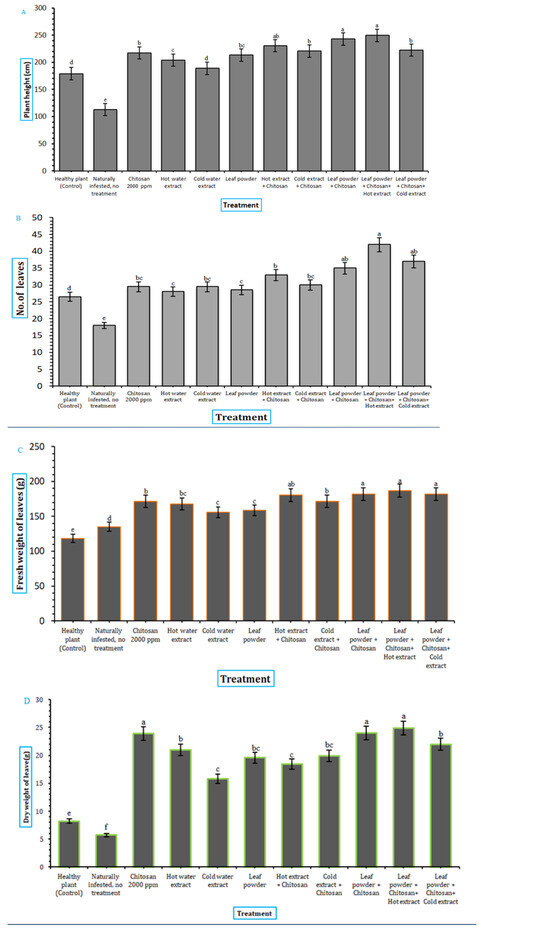
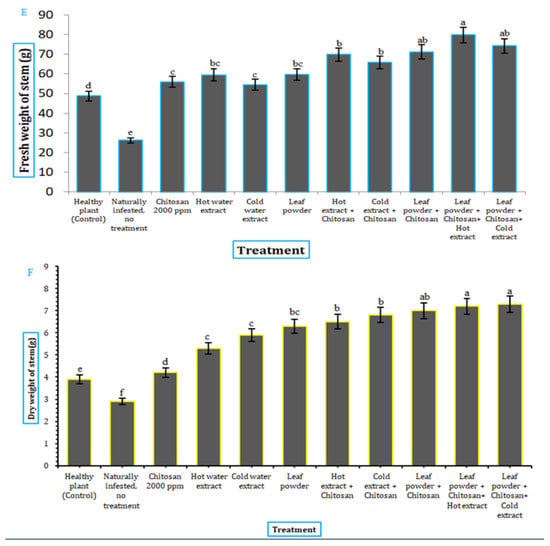
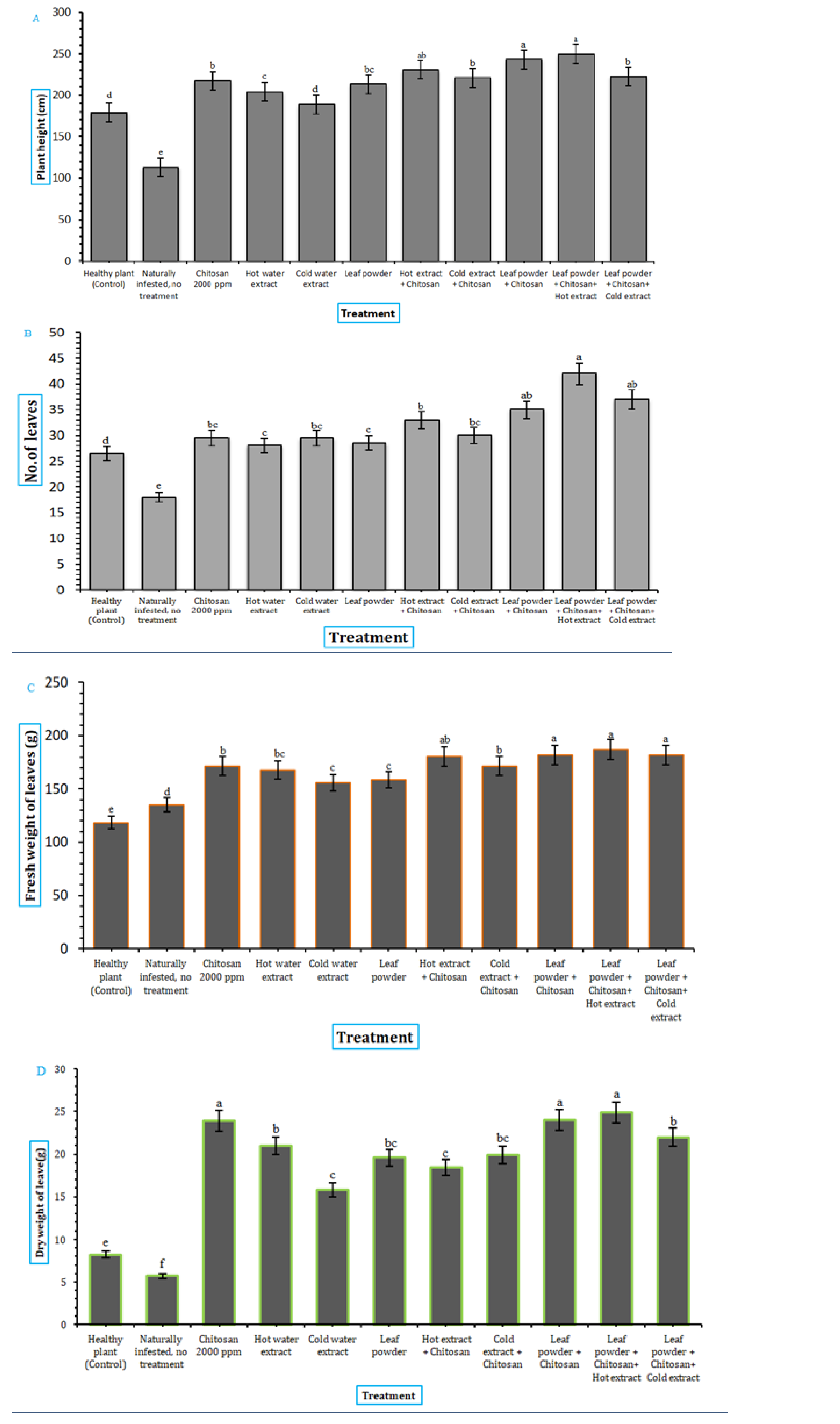
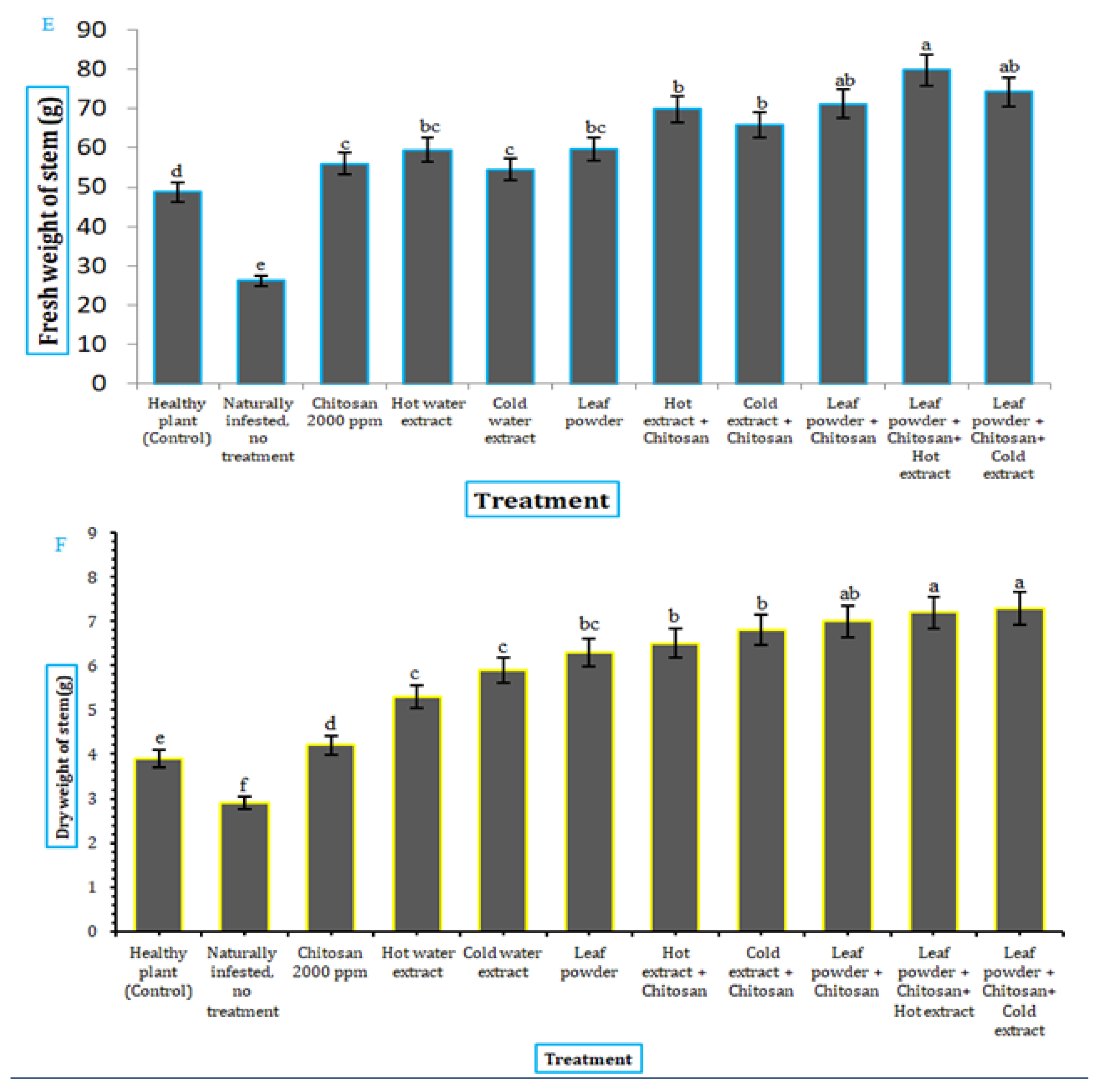
The obtained results presented in Figure 1A–F, clearly demonstrate that all tested treatments positively influenced the vegetative growth of cucumber plants compared with the naturally infested control. M. incognita infestation alone markedly reduced plant height, number of leaves, and overall biomass accumulation, confirming the pronounced suppressive effect of root-knot nematodes on cucumber growth. In contrast, chitosan and jojoba-based treatments substantially alleviated the negative impacts of nematode infestation, with combined applications consistently showing superior performance compared with individual treatments. The integration of chitosan with jojoba leaf preparations resulted in notable enhancements in plant height, leaf production, and both fresh and dry biomass, indicating a synergistic interaction between chitosan and plant-derived amendments. Particularly, treatments involving jojoba leaf powder combined with chitosan, either alone or supplemented with hot or cold extracts, achieved the highest growth responses, reflecting improved physiological performance and biomass development. Moreover, the observed increases in fresh and dry leaf weights suggest enhanced photosynthetic efficiency and more effective biomass allocation toward vegetative tissues.
Figure 1.
(A,B) Plant height and number of leaves; (C,D) Fresh and dry weight of leaves; (E,F) Fresh and dry weight of stems of cucumber plants treated with chitosan, jojoba leaf powder, and jojoba extracts (hot and cold), alone or in combination, under Meloidogyne incognita infection. Different letters indicate significant differences at p < 0.05.
3.4. Synergistic Reduction in Meloidogyne Incognita Reproduction Through Chitosan–Jojoba Combinations
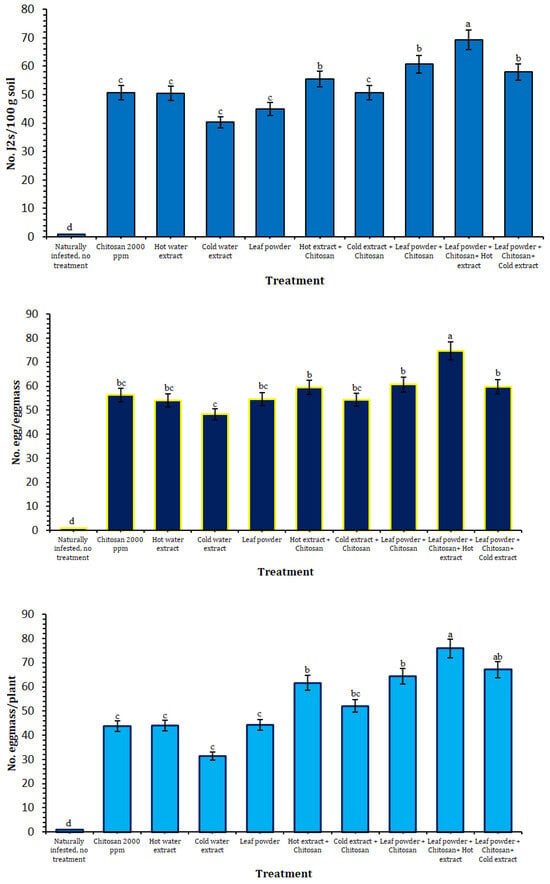
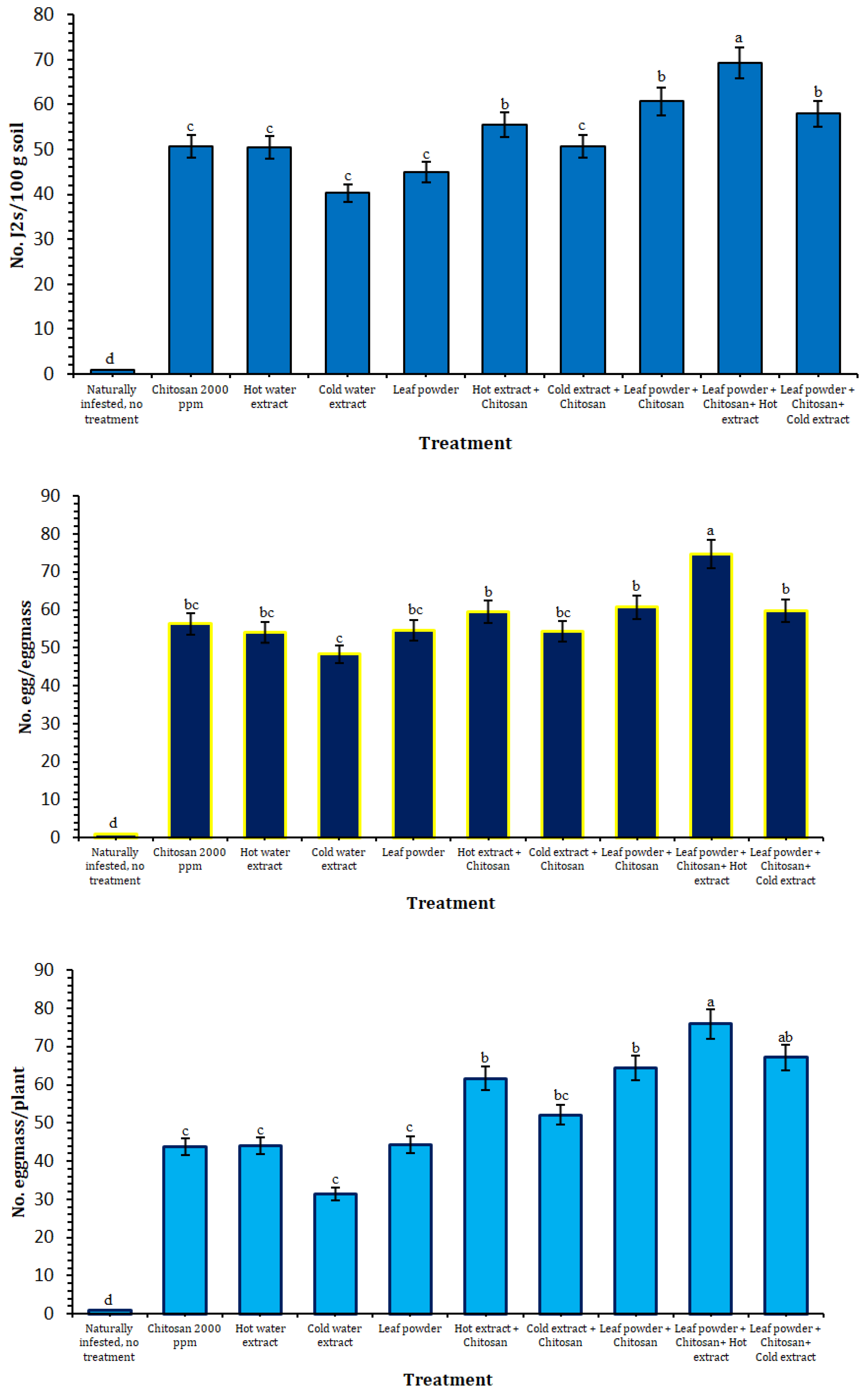
All tested treatments reduced nematode reproduction compared with the naturally infested control (Figure 2). Chitosan (2000 ppm) reduced the number of egg masses, eggs per egg mass, and J2s/100 g soil by 43.83, 56.35, and 50.63%, respectively. Hot water extract showed comparable reductions (44.10, 54.18, and 50.48%), whereas the cold water extract was less effective (31.36, 48.29, and 40.31%). Leaf powder alone caused reductions of 44.20% in egg masses, 54.60% in eggs per egg mass, and 45.00% in J2s. Combined treatments exhibited higher efficacy than individual applications. The combination of hot extract with chitosan reduced egg masses, eggs per egg mass, and J2s by 61.64, 59.45, and 55.57%, respectively, while leaf powder + chitosan resulted in reductions of 64.38, 60.70, and 60.71%. The highest suppression was achieved with the triple treatment (leaf powder + chitosan + hot extract), recording reductions of 75.90% in egg masses, 74.66% in eggs per egg mass, and 69.22% in J2s, followed by leaf powder + chitosan + cold extract (67.12, 59.77, and 57.97%).
Figure 2.
Suppression of Meloidogyne incognita reproduction in cucumber plants treated with chitosan (2000 ppm), jojoba leaf powder, and hot or cold jojoba extracts, alone or in combined applications. Different letters indicate significant differences at p < 0.05.
3.5. Effect of Treatments on Nematode Life Cycle
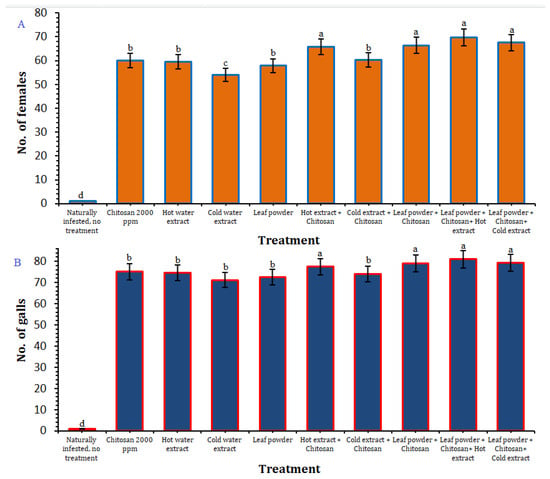
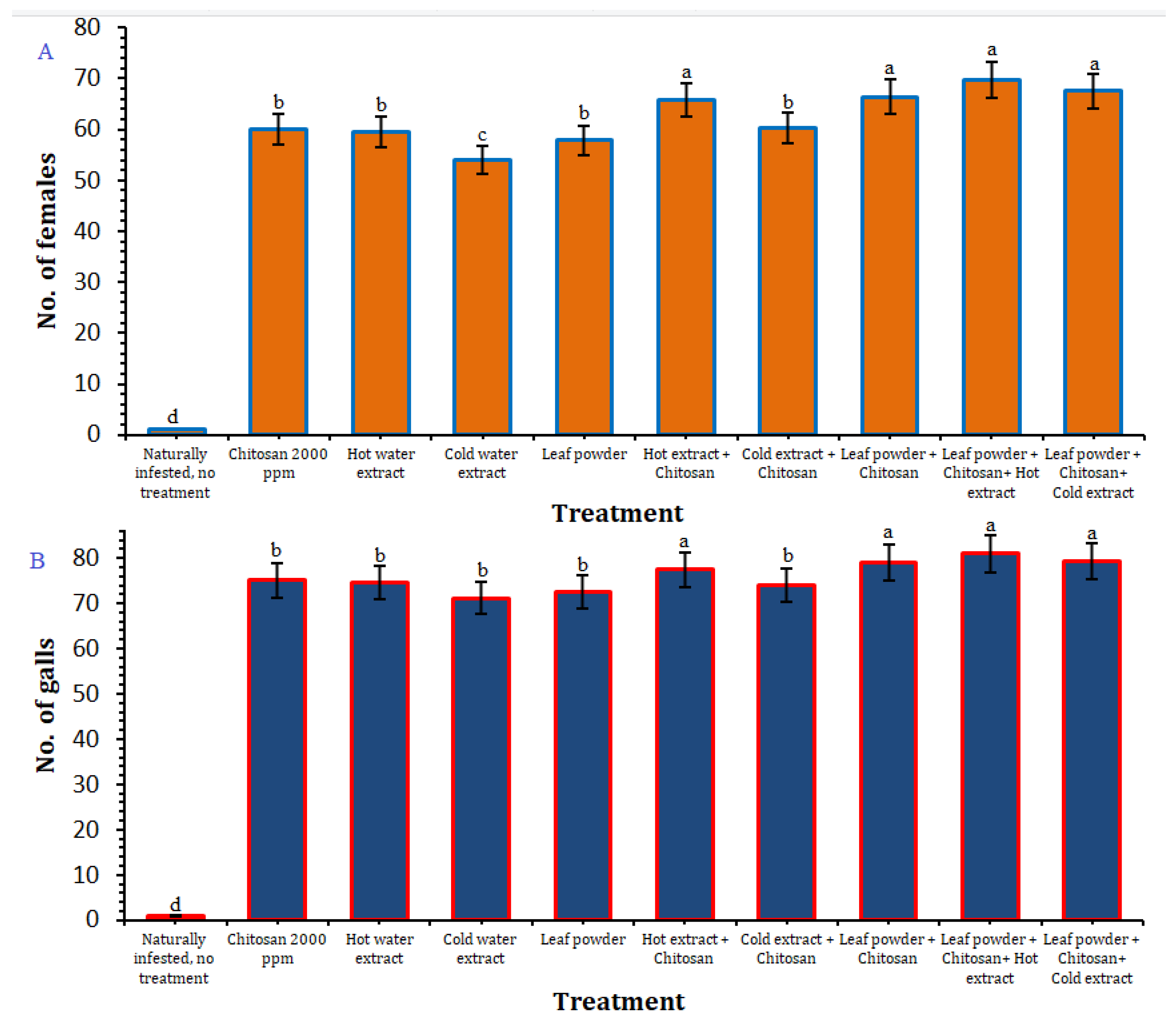
All tested treatments significantly reduced nematode life-cycle parameters, expressed as the number of females and number of galls, compared with the naturally infested untreated control (Figure 3). Chitosan (2000 ppm) reduced the number of females and galls by 60.0 and 75.1%, respectively, while the hot water extract caused comparable reductions (59.6 and 74.6%). The cold water extract was less effective, recording reductions of 54.0% in female number and 71.09% in gall formation. Leaf powder alone resulted in reductions of 57.9% in the number of females and 72.5% in the number of galls. Combined treatments showed greater efficacy than individual applications. The combination of hot extract with chitosan reduced female number and gall formation by 65.7 and 77.4%, respectively, whereas leaf powder + chitosan achieved reductions of 66.4% and 78.9%. The highest suppression of nematode life-cycle parameters was observed with the triple treatment (leaf powder + chitosan + hot extract), which reduced the number of females and galls by 69.78 and 81.0%, respectively. This was followed by leaf powder + chitosan + cold extract, recording reductions of 67.58% in female number and 79.4% in gall formation.
Figure 3.
(A,B). Life cycle of Meloidogyne incognita reproduction in cucumber plants treated with chitosan (2000 ppm), jojoba leaf powder, and hot or cold jojoba extracts, alone or in combined applications. Different letters indicate significant differences at p < 0.05.
4. Discussion
The present study demonstrates that chitosan-based soil amendments loaded with either hot or cold jojoba leaf extracts effectively suppress Meloidogyne incognita in greenhouse-grown cucumber. This antinematodal activity aligns with previous findings showing that chitosan can enhance egg parasitism of M. javanica by nematophagous fungi and increase proteolytic activities associated with nematode control [34]. Chitosan is widely recognized as a natural elicitor that induces systemic resistance in plants against a range of pathogens by activating defense-related physiological and molecular mechanisms [35]. This systemic resistance enhances plant resilience, reducing nematode infection severity through increased production of defense enzymes, strengthening of cell walls, and stimulation of biochemical pathways, consistent with documented increases in defense-related enzyme activities such as chitinase, glucanase, and peroxidase following botanical extract applications in nematode-infested crops [36,37].
The reductions in gall formation, egg mass production, and soil juvenile populations observed in this study are consistent with previous reports showing that plant extracts can directly suppress nematode reproduction and improve plant growth under greenhouse conditions. Several organic plant extracts have been shown to reduce M. incognita galling, lower juvenile soil populations, and enhance growth characteristics in crops such as soybean [38]. Furthermore, botanical amendments supplying moderate levels of essential macronutrients (N, P, K) and micronutrients (Zn, Fe) may improve overall plant vigor, indirectly contributing to nematode resistance by enhancing root development and nutrient uptake [39]. Such dual nutritional and defense benefits have been documented in studies employing nutrient-rich botanical extracts as part of integrated nematode management strategies [40].
In this study, cold jojoba extract retained slightly higher levels of iron, phosphorus, and potassium compared with the hot extract, which may explain its marginally superior performance when incorporated into chitosan formulations. These differences between hot and cold extracts may also be related to the preservation of certain thermolabile bioactive compounds during cold extraction, which may contribute to stronger nematicidal activity. These observations are consistent with broader literature supporting the effectiveness of nutrient-enriched botanical amendments and biodegradable carriers in sustainable nematode management. Overall, chitosan-jojoba soil amendments represent an eco-friendly strategy for reducing nematode pressure while enhancing crop health, aligning with current trends in integrated pest management and green agriculture.
All tested treatments significantly suppressed root-knot nematode reproduction and life-cycle parameters, including egg masses, eggs per egg mass, second-stage juveniles (J2s), number of females, and gall formation, compared with the naturally infested control. This parallel reduction in reproductive indices and life-cycle components indicates that the applied treatments interfered with nematode development, survival, and establishment inside host roots, rather than affecting a single stage of the nematode life cycle [41,42].
Chitosan application alone markedly reduced nematode reproduction and life-cycle parameters, reflected by decreases in egg masses, J2 populations, female numbers, and galling. Similar observations have been reported by several authors, attributing the nematicidal activity of chitosan to its direct toxic effects on nematode eggs and juveniles, as well as its ability to induce systemic resistance in plants through activation of defense-related enzymes and signaling pathways [43]. Plant-based treatments, including hot and cold water extracts and leaf powder, also suppressed nematode reproduction and life-cycle traits, likely due to bioactive secondary metabolites such as phenolics, flavonoids, and terpenoids, which can inhibit egg hatching, reduce juvenile mobility, and impair nematode feeding and development [12].
Combined treatments consistently outperformed single applications in reducing both reproductive and life-cycle parameters. Integration of chitosan with plant extracts or leaf powder resulted in greater reductions in egg production, juvenile density, female numbers, and gall formation, suggesting a synergistic interaction. In this synergistic interaction, plant-derived nematicidal compounds directly affect nematode survival, while chitosan simultaneously enhances plant defense responses, creating an unfavorable environment for nematode development and reproduction [44]. A clear difference was observed among the tested treatments. Combined applications consistently produced stronger suppression of nematode parameters compared with individual treatments, indicating that the integration of chitosan with jojoba-derived materials enhanced the overall nematicidal efficacy. Treatments containing chitosan together with plant extracts reduced gall formation, egg masses, and juvenile populations more effectively than treatments containing either component alone.). The highest suppression was achieved with the triple combination of leaf powder, chitosan, and hot water extract, likely due to the cumulative action of multiple control mechanisms, including direct nematicidal activity, inhibition of egg hatching, suppression of juvenile penetration, and reinforcement of host plant resistance; Furthermore, noticeable differences were detected between the hot and cold extracts. The cold extract showed slightly better performance in some parameters, which may be attributed to the preservation of heat-sensitive bioactive compounds and the higher retention of mineral nutrients such as Fe, P, and K. In addition, treatments containing jojoba leaf powder may provide a gradual release of bioactive compounds in the soil, which could sustain nematode suppression and contribute to improved plant growth compared with extract-based treatments. Similar integrated approaches have been highlighted as promising eco-friendly alternatives to chemical nematicides for greenhouse and field management of root-knot nematodes [45].
The strong correlation between reductions in reproductive parameters and life-cycle components confirms that integrated biological treatments effectively disrupt nematode population build-up and disease progression. These findings support the use of combined botanical and biopolymer-based strategies as reliable components of integrated nematode management programs [46]. The obtained results presented in Figure 3 clearly demonstrate that all tested treatments positively influenced the vegetative growth of cucumber plants compared with the naturally infested control. Nematode infestation alone markedly reduced plant height, number of leaves, and overall biomass accumulation, confirming the pronounced suppressive effect of root-knot nematodes on cucumber growth. This negative impact is attributed to disruption of root structure, impaired water and nutrient absorption, and decreased photosynthetic efficiency, which collectively limit vegetative development [47].
In contrast, chitosan and jojoba-based treatments substantially mitigated these adverse effects, with combined applications consistently showing superior performance compared with individual treatments. The integration of chitosan with jojoba leaf preparations resulted in notable enhancements in plant height, leaf production, and both fresh and dry biomass, indicating a synergistic interaction between chitosan and plant-derived amendments. Chitosan act as a biostimulant nutrient assimilation, stimulating systemic resistance, and promoting root and shoot growth under biotic stress, while jojoba-derived bioactive compounds provide nematicidal activity and improve soil nutrient availability [48].
Particularly, treatments involving jojoba leaf powder combined with chitosan, with or without hot or cold extracts, achieved the highest growth responses, reflecting improved physiological performance, photosynthetic efficiency, and biomass allocation toward vegetative tissues. Such improvements align with reports showing that nutrient-enriched botanical amendments and bioactive plant extracts can stimulate growth and mitigate nematode-induced stress in cucumber and other vegetable crops [49]. The proposed amendments provide a low-cost and environmentally sustainable approach for nematode management. Jojoba leaves are often available as agricultural by-products in fields where the crop is cultivated, making them inexpensive and readily accessible. In addition, chitosan is a naturally derived biodegradable polymer widely used in sustainable crop protection. Although combining amendments requires simple preparation steps, their use could reduce dependence on synthetic nematicides, supporting practical application under greenhouse and field conditions.
5. Conclusions
This study demonstrates that chitosan-based soil amendments combined with hot or cold jojoba leaf extracts or leaf powder effectively control Meloidogyne javanica in cucumber while enhancing vegetative growth, including plant height, leaf number, and biomass accumulation. The observed efficacy is due to the synergistic combination of direct nematicidal activity from jojoba bioactive compounds, induction of systemic resistance by chitosan, and improved nutrient availability in the rhizosphere. Future research should focus on long-term field evaluations, optimization of application rates, potential crop-specific responses, and interactions with soil microbial communities. Practical limitations such as cost, scalability, and applicability under diverse environmental conditions should also be considered. Overall, integrating chitosan and jojoba-based amendments provides a reliable, eco-friendly strategy for sustainable nematode management and improved crop health.
Supplementary Materials
The following supporting information can be downloaded at: https://www.mdpi.com/article/10.3390/su18073192/s1, Figure S1: Schematic representation of the greenhouse experimental setup showing nine treatments (T1–T9) with five replicates (Rep 1–Rep 5) per treatment in a randomized complete block design (RCBD). Treatments include T1, Chitosan 2000 ppm; T2, Jojoba Hot Extract; T3, Jojoba Cold Extract; T4, Leaf Powder; T5, Hot Extract + Chitosan; T6, Cold Extract + Chitosan; T7, Leaf Powder + Chitosan; T8, Negative Control; and T9, Positive Control. The experiment was repeated twice, with 50 cm spacing between rows.
Author Contributions
Conceptualization, R.Y.G.; Methodology, R.Y.G.; Software, R.Y.G.; Validation, R.Y.G.; Formal analysis, R.Y.G.; Investigation, R.Y.G.; Resources, R.Y.G., A.S.S., A.M.G. and H.A.H.I.; Data curation, R.Y.G.; Writing—original draft, R.Y.G. and S.A.; Writing—review & editing, R.Y.G., A.S.S., A.M.G., H.A.H.I. and S.A.; Visualization, R.Y.G.; Supervision, R.Y.G. and S.A.; Project administration, R.Y.G.; Funding acquisition, R.Y.G. All authors have read and agreed to the published version of the manuscript.
Funding
This research received no external funding.
Institutional Review Board Statement
Not applicable.
Informed Consent Statement
Not applicable.
Data Availability Statement
The original contributions presented in this study are included in the article/Supplementary Materials. Further inquiries can be directed to the corresponding author.
Acknowledgments
The authors sincerely thank Shawky Eid for his generous support and for providing access to numerous laboratory instruments at Top Chemical for Pesticides and Specialized Chemicals, which greatly facilitated the completion of this work.
Conflicts of Interest
The authors declare no conflicts of interest.
References
- Kaur, S.; Thakur, S.; Sabharwal, P.; Meru, G. Breeding for Disease Resistance in Cucumber: Current Status, Genetic Insights, and Genomic Resources. Horticulturae 2025, 11, 1440. [Google Scholar] [CrossRef] [Scilit]
- Jones, J.T.; Haegeman, A.; Danchin, E.G.J.; Gaur, H.S.; Helder, J.; Jones, M.G.K.; Kikuchi, T.; Manzanilla-López, R.; Palomares-Rius, J.E.; Wesemael, W.M.L.; et al. Top 10 plant-parasitic nematodes in molecular plant pathology. Mol. Plant Pathol. 2013, 14, 946–961. [Google Scholar] [CrossRef] [Scilit] [PubMed]
- Sikora, R.A.; Coyne, D.; Hallmann, J.; Timper, P. Plant Parasitic Nematodes in Subtropical and Tropical Agriculture; CABI: Oxfordshire, UK, 2018. [Google Scholar]
- Meel, S.; Saharan, B.S. Microbial warfare against nematodes: A review of nematicidal compounds for horticulture, environment, and biotechnology. Microbe 2025, 9, 100557. [Google Scholar] [CrossRef] [Scilit]
- Yan, B.; Deng, T.; Shi, L. Towards Sustainable Productivity of Greenhouse Vegetable Soils: Limiting Factors and Mitigation Strategies. Plants 2023, 13, 2885. [Google Scholar] [CrossRef] [Scilit] [PubMed]
- Dutta, T.K.; Khan, M.R.; Phani, V. Plant-parasitic nematode management via biofumigation using brassica and non-brassica plants: Current status and future prospects. Curr. Plant Biol. 2018, 17, 17–32. [Google Scholar] [CrossRef] [Scilit]
- Abd-Elgawad, M.M. Optimizing safe approaches to manage plant-parasitic nematodes. Plants 2021, 10, 1911. [Google Scholar] [CrossRef] [Scilit]
- Desaeger, J.; Wram, C.; Zasada, I. New reduced-risk agricultural nematicides—Rationale and review. J. Nematol. 2020, 52, e2020-91. [Google Scholar] [CrossRef] [Scilit]
- El Hadrami, A.; Adam, L.R.; El Hadrami, I.; Daayf, F. Chitosan in plant protection. Mar. Drugs 2010, 8, 968–987. [Google Scholar] [CrossRef] [Scilit]
- Oka, Y. Mechanisms of nematode suppression by organic soil amendments. Appl. Soil Ecol. 2010, 44, 101–115. [Google Scholar] [CrossRef] [Scilit]
- Malerba, M.; Cerana, R. Chitosan effects on plant systems. Int. J. Mol. Sci. 2016, 17, 996. [Google Scholar] [CrossRef] [Scilit]
- Khalil, M.S.; Badawy, M.E.I. Nematicidal activity of a biopolymer chitosan at different molecular weights against root-knot nematode, Meloidogyne incognita. Plant Prot. Sci. 2012, 48, 170–178. [Google Scholar] [CrossRef] [Scilit]
- Alfy, H.; Ghareeb, R.Y.; Soltan, E.; Farag, D.A. Impact of chitosan nanoparticles as insecticide and nematicide against Spodoptera littoralis, Locusta migratoria, and Meloidogyne incognita. Plant Cell Biotechnol. Mol. Biol. 2020, 21, 126–140. [Google Scholar]
- Zhang, H.; Shen, L. Chitosan as a potential biocontrol agent of plant pathogens and its multiple acting mechanisms: A review. Int. J. Biol. Macromol. 2025, 334, 148984. [Google Scholar] [CrossRef] [Scilit] [PubMed]
- Mouniga, R.; Anita, B.; Lakshmanan, A.; Shanthi, A.; Karthikeyan, G. Nematicidal Properties of Chitosan Nanoformulation. J. Nematol. 2023, 55, 20230033. [Google Scholar] [CrossRef] [Scilit] [PubMed]
- Ji, H.; Wang, J.; Chen, F.; Fan, N.; Wang, X.; Xiao, Z.; Wang, Z. Meta-analysis of chitosan-mediated effects on plant defense against oxidative stress. Sci. Total Environ. 2022, 851, 158212. [Google Scholar] [CrossRef] [Scilit] [PubMed]
- Ghareeb, R.Y.; Eid, S.M.; Alfy, H.; Elsheikh, M.H. Repercussions of Symbiotic Bacteria Associated with Entomopathogenic Nematodes and Their Biogenic Silver Nanoparticles on Immune Responses at Root-Knot Nematode Suppression. Microorganisms 2026, 14, 92. [Google Scholar] [CrossRef] [Scilit]
- Khairy, T.; Amin, D.H.; Salama, H.M.; Amin Elkholy, I.M.; Elnakib, M.; Gebreel, H.M.; Elnabi Sayed, H.A. Pioneering study of Egyptian Neem and Jojoba extracts with molecular docking combat hospital multidrug resistant bacteria. Braz. J. Microbiol. 2025, 56, 425. [Google Scholar] [CrossRef] [Scilit]
- Wiratno, W.; Taniwiryono, D.; van den Berg, H.; Riksen, J.A.G.; Rietjens, I.; Djiwanti, S.R.; Kammenga, J.E. Nematicidal activity of plant extracts against the root-knot nematode, Meloidogyne incognita. Open Nat. Prod. J. 2009, 2, 10–17. [Google Scholar] [CrossRef] [Scilit]
- Tefu, G.D.; De Waele, H.; Fourie, H.; Daneel, M. Nematode-suppressive and plant growth-enhancing effects of Citrus spp. derivatives against Meloidogyne incognita on tomato. Int. J. Pest Manag. 2024, 72, 67–77. [Google Scholar] [CrossRef] [Scilit]
- Mwamula, A.O.; Kabir, M.F.; Lee, D. A review of the potency of plant extracts and compounds from key families as an alternative to synthetic nematicides: History, efficacy, and current developments. Plant Pathol. J. 2022, 38, 53–66. [Google Scholar] [CrossRef] [Scilit]
- Lahfef, C.; Elimem, M.; Jaouadi, R.; Jalel, C.; Lebdi-Grissa, K.; Rouz, S.; Pizzuti, G.; Primavera, F.; Ruggeri, F.; Riccini, A.; et al. Insecticidal impact of aqueous plant extracts (carob, oleander, Aleppo pine and bitter orange) and basalt flour “Farina di Basalto® XF and XM” as a biological solution to control cereal pests. Fresenius Environ. Bull. 2023, 32, 3087–3098. [Google Scholar]
- Davis, S. Chitosan: Manufacture, Properties, and Usage; Nova Science Publishers: New York, NY, USA, 2011. [Google Scholar]
- Rojas-Pirela, M.; Carillo, P.; Lárez-Velásquez, C.; Romanazzi, G. Effects of chitosan on plant growth under stress conditions: Similarities with plant growth promoting bacteria. Front. Plant Sci. 2024, 15, 1423949. [Google Scholar] [CrossRef] [Scilit] [PubMed]
- Román-Doval, R.; Torres-Arellanes, S.P.; Tenorio-Barajas, A.Y.; Gómez-Sánchez, A.; Valencia-Lazcano, A.A. Chitosan: Properties and its application in agriculture in context of molecular weight. Polymers 2022, 15, 2867. [Google Scholar] [CrossRef] [Scilit] [PubMed]
- Wisniak, J. The chemistry and technology of jojoba oil. J. Am. Oil Chem. Soc. 1987, 64, 499–505. [Google Scholar] [CrossRef] [Scilit]
- Ntalli, N.G.; Caboni, P. Botanical nematicides: A review. J. Agric. Food Chem. 2012, 60, 9929–9940. [Google Scholar] [CrossRef] [Scilit]
- Domard, A.; Rinaudo, M.; Terrassin, C. Adsorption of chitosan and a quaternized derivative on kaolin. J. Appl. Polym. Sci. 1989, 38, 1799–1806. [Google Scholar] [CrossRef] [Scilit]
- Ghareeb, R.Y.; Eid, S.M.; Omran, S.A.; Xiaoyue, W. Drought Stress Reshapes Root-Knot Nematode Severity, Plant Growth, and Stress-Responsive Gene Expression in Tomato. Int. J. Drug Deliv. Technol. 2026, 16, 502–511. [Google Scholar]
- Baermann, G. Eine einfache methode zur auffindung von Ancylostomum (Nematoden) larven in erdproben. Geneeskd. Tijdschr. Ned. Indie. 1917, 57, 131–137. [Google Scholar]
- Taylor, A.L.; Sasser, J.N. Biology, Identification and Control of Root-Knot Nematodes (Meloidogyne spp.); North Carolina State University Graphics: Raleigh, NC, USA, 1978. [Google Scholar]
- Ghareeb, R.Y.; Gomaa, M.A.; Abd El-Latif, H.S.A.; Kandil, E.E. The impact of planting times and cultivars on the excitation of innate-immunity response against populations and severity of plant parasitic nematodes in faba bean (Vicia faba L.) field. BMC Plant Biol. 2025, 25, 1204. [Google Scholar] [CrossRef] [Scilit]
- Abbott, W.S. A method of computing the effectiveness of an insecticide. J. Econ. Entomol. 1925, 18, 265–267. [Google Scholar] [CrossRef] [Scilit]
- Escudero, N.; Ferreira, S.R.; Lopez-Moya, F.; Naranjo-Ortiz, M.A.; Marin-Ortiz, A.I.; Thornton, C.R.; Lopez-Llorca, L.V. Chitosan enhances parasitism of Meloidogyne javanica eggs by the nematophagous fungus Pochonia chlamydosporia. Fungal Biol. 2016, 120, 572–585. [Google Scholar] [CrossRef] [Scilit] [PubMed]
- Kumari, S.; Kumar Annamareddy, S.H.; Abanti, S.; Kumar Rath, P. Physicochemical properties and characterization of chitosan synthesized from fish scales, crab and shrimp shells. Int. J. Biol. Macromol. 2017, 104, 1697–1705. [Google Scholar] [CrossRef] [Scilit]
- Bigirimana, J.; De Meyer, G.; Poppe, J.; Elad, Y.; Hofte, M. Induction of systemic resistance on bean (Phaseolus vulgaris) by Trichoderma harzianum. Meded. Fac. Landbouwkd. Toegep. Biol. Wet. Univ. Gent. 1997, 62, 1001–1007. [Google Scholar]
- Yu, Y.; Gui, Y.; Li, Z.; Jiang, C.; Guo, J.; Niu, D. Induced systemic resistance for improving plant immunity by beneficial microbes. Plants 2022, 11, 386. [Google Scholar] [CrossRef] [Scilit] [PubMed]
- Khan, A.; Tariq, M.; Ahmad, F.; Mennan, S.; Khan, F.; Asif, M.; Nadeem, H.; Ansari, T.; Shariq, M.; Siddiqui, M. Assessment of nematicidal efficacy of chitosan in combination with botanicals against Meloidogyne incognita on carrot. Acta Agric. Scand. B Soil Plant Sci. 2021, 71, 225–236. [Google Scholar] [CrossRef] [Scilit]
- Kumar, R.; Kumar, N.; Rajput, V.D.; Mandzhieva, S.; Minkina, T.; Saharan, B.S.; Kumar, D.; Sadh, P.K.; Duhan, J.S. Advances in biopolymeric nanopesticides: A new eco-friendly/eco-protective perspective in precision agriculture. Nanomaterials 2022, 12, 3964. [Google Scholar] [CrossRef] [Scilit]
- Singh, A.K.; Paschapur, A.U.; Pal, R.S.; Bhat, S.; Verma, G.; Mishra, K.K.; Kant, L. Evaluation of botanicals aqueous extract for root-knot nematode management under protected cultivation in the mid-Indian Himalayan region. J. Phytopathol. 2025, 174, e70236. [Google Scholar] [CrossRef] [Scilit]
- Forghani, F.; Hajihassani, A. Recent advances in the development of environmentally benign treatments to control root-knot nematodes. Front. Plant Sci. 2020, 11, 1125. [Google Scholar] [CrossRef] [Scilit]
- Contreras-Soto, M.B.; Tovar-Pedraza, J.M.; Solano-Báez, A.R.; Bayardo-Rosales, H.; Márquez-Licona, G. Biocontrol strategies against plant-parasitic nematodes using Trichoderma spp.: Mechanisms, applications, and management perspectives. J. Fungi 2025, 11, 517. [Google Scholar] [CrossRef] [Scilit]
- Asif, M.; Tariq, F.A.M.; Khan, A.; Ansari, T.; Khan, F.; Siddiqui, A.M. Potential of chitosan alone and in combination with agricultural wastes against the root-knot nematode, Meloidogyne incognita, infesting eggplant. J. Plant Prot. Res. 2017, 57, 288–295. [Google Scholar] [CrossRef] [Scilit]
- Kisaakye, J.; Beesigamukama, D.; Haukeland, S.; Subramanian, S.; Thiongo, P.; Kelemu, S.; Tanga, C. Chitin-enriched insect frass fertilizer as a biorational alternative for root-knot nematode (Meloidogyne incognita) management. Front. Plant Sci. 2024, 15, 1361739. [Google Scholar] [CrossRef] [Scilit]
- Khan, F.; Asif, M.; Khan, A.; Tariq, M.; Ansari, T.; Shariq, M.; Siddiqui, M.A. Evaluation of the nematicidal potential of some botanicals against root-knot nematode, Meloidogyne incognita, infected carrot: In vitro and greenhouse study. Curr. Plant Biol. 2019, 20, 100115. [Google Scholar] [CrossRef] [Scilit]
- Kumar, S.; Sindhu, S.S.; Kumar, R. Biofertilizers: An ecofriendly technology for nutrient recycling and environmental sustainability. Curr. Res. Microb. Sci. 2021, 3, 100094. [Google Scholar] [CrossRef] [Scilit]
- Abd-Elgawad, M.M. Effects of root-knot nematodes on vegetative growth of cucumbers. J. Nematol. 2019, 51, 1–12. [Google Scholar] [CrossRef] [Scilit]
- Siddiqui, A.B.; Singh, V.P.; Pramanick, A.K.; Ray, M. Amorphous carbon dot and chitosan based composites as fluorescent inks and luminescent films. Mater. Chem. Phys. 2020, 249, 122984. [Google Scholar] [CrossRef] [Scilit]
- Machal, M.; Rana, V.S.; Gowda, A.A.; Kumar, V.; Shakil, N.A.; Pervez, R.; Singh, A.K.; Kumar, R.; Jaiman, M. Effect of botanicals, organic nutrient sources, and bio-control agents on root-knot nematode (Meloidogyne incognita) infecting tomato. Front. Plant Sci. 2025, 16, 1602326. [Google Scholar]

Disclaimer/Publisher’s Note: The statements, opinions and data contained in all publications are solely those of the individual author(s) and contributor(s) and not of MDPI and/or the editor(s). MDPI and/or the editor(s) disclaim responsibility for any injury to people or property resulting from any ideas, methods, instructions or products referred to in the content. |
© 2026 by the authors. Licensee MDPI, Basel, Switzerland. This article is an open access article distributed under the terms and conditions of the Creative Commons Attribution (CC BY) license.