


Abstract
A regenerative economy refers to an economic system that regenerates various forms of capital, including natural resources and social systems, for long-term use. Regenerating these forms of capital enables the sustained improvement of social well-being. This concept differs from a traditional consumption-based economy or a sustainable economy, which primarily aims to secure the satisfaction of future needs. Traditional capitalism has regenerated capital in production but has often consumed natural capital and sometimes degraded social capital. The concept of a regenerative economy provides principles for restoring these forms of capital. This paper discusses how digital transformation (DX) technologies can help realize a regenerative economy, using development projects for DX technologies as case studies. Airport-adjacent districts in three countries—Japan, the Philippines, and Thailand—representing different industrial sectors are examined, and the impacts of these technologies are analyzed based on Fullerton’s concept of a regenerative economy. Based on qualitative assessment, we found that these technologies are expected to contribute to improving some principles of a regenerative economy, but challenges remain in others. As a result, the concept of a regenerative economy can be useful for a conceptual yet holistic assessment of the regeneration of natural and social capital.
1. Introduction
Capitalism has traditionally centered on the accumulation and reproduction of capital within production in a narrow sense. Technological innovation under this scheme has driven explosive economic growth since the late 20th century and improved living standards for a substantial portion of the population [1]. However, this growth has been accompanied by excessive consumption of natural resources and significant environmental impacts, which highlight the limitations of sustainability [2,3]. Additionally, the imbalance and dysfunction in the distribution of returns from capital growth have induced disparities in income and wealth among people, consequently undermining social capital [4].
The Sustainable Development Goals (SDGs) offer a comprehensive framework to achieve development that harmonizes economic, social, and environmental factors, and they are extensively utilized as benchmarks for regional policies. Sustainability essentially aims to fulfill the demands of future generations and does not inherently aspire to enhance the environment and society [5]. To target future improvement, the concept of a regenerative economy has been proposed, which seeks to positively regenerate the environment and society by incorporating principles of natural systems [6]. Sustainability focuses on reducing harm and maintaining the current state, whereas a regenerative economy aims to actively restore and enhance natural, social, and economic systems.
The authors are conducting a project to develop digital transformation (DX) technologies in three countries—Japan, the Philippines, and Thailand—focusing on addressing regional issues in airport-adjacent areas. In this paper, we first review the concept of a regenerative economy and then qualitatively assess the contribution of DX technologies to its realization. Based on this assessment, we aim to examine the applicability of the regenerative economy concept for the holistic evaluation of DX technologies in regional policies from the perspective of regenerating natural and social capital. This research adopts a qualitative and conceptual analytical approach. Country cases are illustrative applications of the regenerative framework rather than empirical performance evaluations.
The structure of this paper is as follows: Section 2 reviews the literature on regenerative economy and summarizes its status and limitations. Section 3 describes the three-country projects and evaluates them based on Fullerton’s principles, addressing the contribution of DX technologies to solving regional issues and identifying remaining challenges. Section 4 presents the conclusion.
2. Concept of Regenerative Economy
Fullerton [6] advocates a regenerative economy to incorporate the principles of natural systems into economic design. Table 1 shows the eight principles that should be compiled in the economic framework. Traditional capitalism seeks unlimited capital growth. Fullerton points out that this goal, under the finite resources of the Earth, is impossible. He insists that a shift toward prosperity, harmony, and regeneration that does not solely rely on economic growth offers a structural solution to global challenges such as climate change and ecosystem collapse.
Table 1.
Eight principles of regenerative economy by Fullerton.
This argument is based on intellectual underpinnings such as The Limits to Growth [7] and the Gaia theory [8,9], while emphasizing the shortcomings of neoclassical economics. It seeks to establish a novel economic paradigm that synthesizes natural sciences, systems thinking, and indigenous knowledge.
On the other hand, the concept of a regenerative economy is criticized due to its ambiguity and reliance on metaphors of nature. In addition, it is mentioned that its practical assessment criterion lacks specificity, making quantitative analysis difficult [10,11]. Moreover, the establishment of a regenerative economy necessitates extensive reforms of social and economic systems; nevertheless, the frameworks and institutions for this transition remain uncoordinated [12,13]. It would be helpful to discuss the strengths and weaknesses of each principle; however, it is fundamentally difficult to generalize them in a way that is applicable across diverse cases. Čegar et al. [14] provide a systematic review of 84 academic papers on regenerative economics. Their findings suggest that although conventional models like the green economy, circular economy, and bioeconomy tackle some elements, they are inadequate for attaining comprehensive regeneration and bolstering long-term resilience. They evaluate that the regenerative economy can augment the deficiencies of current sustainability models. In their analysis, the 84 papers are categorized into seven major clusters: (1) environment and sustainability, (2) climate change and energy, (3) urban and built environments, (4) economic and industrial systems, (5) education and social impacts, (6) technological innovation and system design, and (7) policy, governance, and standards. Analytical approaches for these clusters utilize various academic disciplines, encompassing environmental science, sociology, economics, urban planning, education, and technology. Integrated governance, technological innovation, and inclusive policy design are prominent themes. According to these findings, the regenerative economy is conceptualized as beyond “sustainability,” seeking not just to alleviate harm inflicted by human actions but to actively restore and regenerate diverse resources. Sustainability is considered an outcome, whereas regeneration is considered its prerequisite in their perspective.
Shannon et al. [11] systematically examined the relationship between regenerative economics and planetary health [15,16] based on a literature review. They argue that these two concepts are strongly aligned philosophically, but their practical tools and approaches are different. Both share the common goal of simultaneously promoting human health and the integrity of ecosystems on the Earth, going beyond sustainability to pursue positive regeneration. They also share a systems thinking perspective, highlighting the intricate interactions among society, environment, and economy as complex systems. The application domains of these two concepts differ: planetary health predominantly emphasizes healthcare, public health, and policy, whereas regenerative economics encompasses several fields such as urban planning, agriculture, education, and business. This review indicates that regenerative economics can enhance planetary health by: (1) incorporating natural cycles and regenerative principles into economic and social design; (2) tailoring actions to specific regional and temporal contexts; (3) acknowledging cultural, regional, and community distinctions; (4) grounding policies and practices on local contexts; and (5) shifting the mindset toward value creation through regeneration.
Yunibandhu & Hallinger [17] investigated the theoretical and conceptual foundations of regenerative development through an integrative review method and analyzed its connection to sustainable development. A bibliometric co-word analysis [18] of 1131 publications revealed three primary clusters: “regenerative design and development,” “urban renewal,” and “natural regeneration.” Their review suggests that although interest in regenerative development is increasing, most studies remain conceptual, striving to distinguish it from the sustainability concept and to advocate for holistic thinking, mostly using narrative approaches. Simultaneously, they underscore other obstacles, such as ambiguous definitions, insufficient empirical data, a weak focus on equity, the possible marginalization of indigenous knowledge systems, and a lack of context-specific qualitative instruments and metrics.
Oyefusi et al. [19] developed performance evaluation frameworks for regenerative construction practices, emphasizing the predominance of community-focused outcomes over environmental metrics in implementation priorities. Although the concept of regenerative construction practices is understood, they are rarely implemented due to the absence of tools for evaluating expected outcomes. In this study, the authors applied the Fuzzy Analytical Hierarchical Process to assess the importance of practical regenerative performance criteria, demonstrating that norms related to healthy communities are considered more significant than environmental or economic standards.
Bellato et al. [20] proposed a conceptual framework for regenerative tourism, consisting of five design guidelines and seven practical principles. This framework aims to provide guidance for stakeholders in tourism to collaborate in building a regenerative future. However, these principles are derived from literature review and are not supported by quantitative evidence.
In summary, the regenerative economy has already attracted considerable scholarly attention across diverse fields. It represents a holistic approach that seeks not merely to mitigate present or future damage but to actively restore and regenerate various resources and capital. In this sense, regenerative economics is positioned as a forward-looking paradigm that transcends the sustainability frameworks. However, despite emerging efforts to develop concrete evaluation methods within specific domains, significant challenges persist. These include the need for clearer conceptual definitions, robust and standardized assessment methodologies, empirical evidence to validate theoretical claims, and practical strategies for implementation. Addressing these gaps will be essential for advancing regenerative economics from a predominantly conceptual discourse to an operational framework capable of guiding transformative change. Although addressing these gaps will be necessary in future studies, we apply the principles of the regenerative economy to the DX projects in three countries as a perspective for holistic assessment.
3. Direction of Regenerative Economy at Airport Adjacent Region
The authors are engaged in an international collaborative research project aimed at developing the concept of an Air-front Smart City [21] that integrates airport and urban/regional development with industrial innovation, as well as advancing DX technologies to support its realization. In this project, our research focuses on how technological innovation can enhance regenerative economics in the contexts of startup clusters in Japan, the tourism industry in Thailand, and agriculture in the Philippines. While these cases share a common emphasis on airport-adjacent locations, the nature of the target industries differs significantly. The detailed comparison of the three research are indicated in Table 2 and Table 3. In this section, we first qualitatively assess the three case studies against the eight principles of regenerative economy and subsequently address the common issues to be discussed.
Table 2.
Case Design and Regenerative Framework.
Table 3.
Digital Transformation (DX), KPIs, and Policy Roadmap.
The qualitative assessment in this section is conducted through a systematic discussion by the authors, based on the conceptual mapping of the regenerative economy. We evaluate the DX technologies developed in each country using the principles outlined in Table 1 and perform a cross-review among experts from the three countries. Through this review process, we ensure a reasonable level of reliability in both our assessments and the selection of principles for each region.
The indicators presented in Table 2 and Table 3 are not empirically computed in this study. Rather, they serve as a conceptual evaluative framework derived from the eight principles of regenerative economy. These proposed KPIs intend to guide future quantitative assessment and policy monitoring. The proposed KPIs function as an evaluative structure linking regenerative principles to sector-specific objectives in startup ecosystems (Japan), tourism systems (Thailand), and post-harvest agriculture (Philippines). The table, therefore, provides analytical traceability between theory and application.
A unified set of quantitative indicators would ideally be desirable for comparing the three country cases. However, such generalized indicators may overlook the specific details and nuances of each case. Therefore, we apply separate KPIs as indicated in Table 2.
3.1. Aichi Prefecture, Japan: Smart City Supporting Startup Businesses
Aichi Prefecture is the location of Chubu Centrair International Airport. The prefectural government aims to leverage this location to gather and incubate startup businesses. The prefecture has a strong base of manufacturing industries, particularly the automotive sector represented by TOYOTA motors, making it a region with high potential for startup development through industrial clustering.
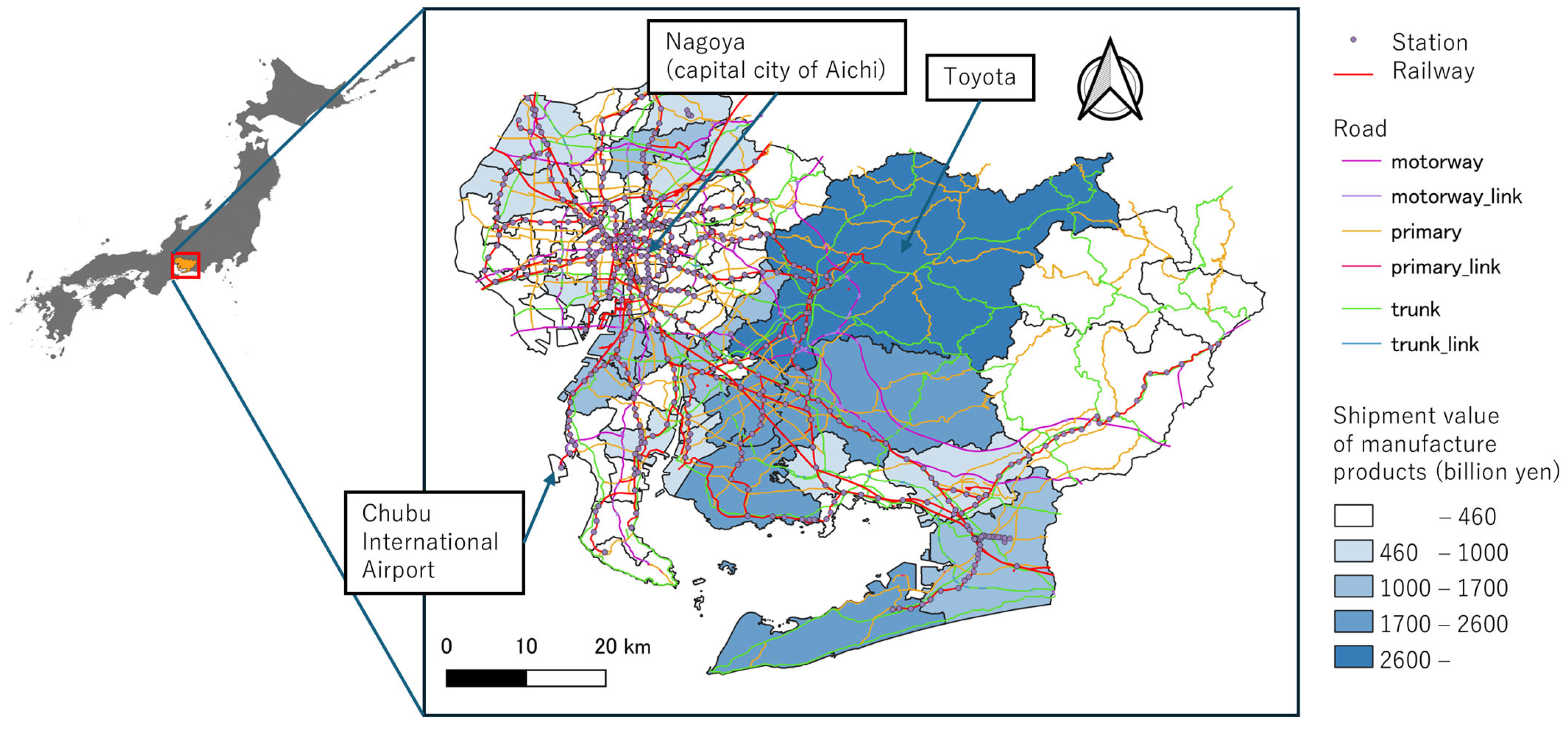
In 2022, Aichi’s shipment value of industrial products reached 52.4 trillion yen, accounting for 14.5% of Japan’s total, which has been the highest prefecture in the country for 40 years. Notably, the region hosts a large-scale manufacturing cluster centered on the automotive industry, supported by a dense network of small and medium-sized component suppliers and highly skilled engineers and technicians. Figure 1 illustrates the shipment value of industrial products by municipality in Aichi Prefecture along with its transportation network.
Figure 1.
Industrial Product Shipment Value and Transportation Network in Aichi Prefecture.
Aichi Prefecture includes Nagoya City, which has an urban population of 6.85 million (2025), which is third-largest metropolitan area in Japan. Toyota City, home to one of the world’s leading automobile manufacturers, forms the core of the manufacturing cluster described above. Compared to other major Japanese cities, Aichi offers relatively affordable housing and a favorable living environment [22]. Situated in the Chubu region of central Japan, the prefecture occupies a strategic geographic position that enables efficient connectivity to both eastern metropolitan areas, such as Tokyo, and western hubs such as Osaka. In particular, the Tokaido Shinkansen (High-Speed Rail) serves as a critical transportation artery linking Nagoya to these major urban centers for easy travel of businesspersons. But also the large-scale transportation of raw materials and industrial goods to and from Aichi’s extensive manufacturing base are supported by Tomei- and Shin-Tomei parallel Expressways along the Tokaido Corridor. Despite its strong industrial profile, Aichi does not exhibit the same degree of congestion and urban density as Tokyo or Osaka. Rather, it sustains a comparatively balanced urban structure in which economic vitality coexists with a moderate population concentration. The presence of globally recognized corporations, such as TOYOTA, many of which locate both their headquarters and principal manufacturing facilities within Aichi prefecture, further reinforces Aichi’s position as one of Japan’s leading industrial centers.
Accordingly, Aichi may be characterized as a prefecture that retains a strong sense of traditional Japanese social and cultural identity while simultaneously incorporating global influences. This combination of local embeddedness and international engagement produces a distinctive socio-economic environment in which industrial competitiveness, cultural continuity, and overall quality of life are maintained in parallel.
In addition, Nagoya hosts open innovation hubs that support business development, providing strong proximity to existing industrial clusters. These conditions can be advantageous for small-scale startups. However, Chubu Centrair International Airport has a limited number of international flight routes, and opportunities for fundraising and talent acquisition remain scarce. This means that the potential of this region is not fully utilized.
When evaluated reflecting the eight principles of regenerative economics, the industries in this region demonstrate global competitiveness, adaptability to environmental conditions, and well-established democratic political and economic systems. Furthermore, the area encompasses diverse regions ranging from urban to rural, has a long history of countermeasures against environmental issues, and possesses a distinctive local culture. Based on these factors, item 3. Innovative, Adaptive, Responsive, 4. Empowered Participation, 5. Edge Effect Abundance, 7. Seeks Balance, and 8. Honors Place is at a reasonably high level.
Conversely, given the high proportion of manufacturing, there remains room for further restructuring of the relationship between humans and nature (principle 1). Additional efforts are also needed to maximize holistic wealth through social, cultural, and ecological values. While the companies and industrial sectors have taken many initiatives to exercise corporate social responsibility. Even though many of these exercises have contributed to some aspects of regenerative economy, greater efforts will be required for the positive regeneration of natural resources (principle 2). Moreover, there are challenges in the circulation of information necessary for securing funding for startups (principle 3). Taken together, these observations suggest that items 1. Right Relationship, 2. Holistic Wealth, and 6. Robust Circulatory Flow remain areas for improvement.
Nagoya hosts a wide range of innovation hubs distributed across the city, including facilities operated by government bodies and those affiliated with universities. In addition, new large-scale hubs such as STATION Ai have recently been established, further strengthening the city’s innovation ecosystem. Another key advantage lies in Aichi Prefecture, which is home not only to several leading universities but also to core industries such as automotive and manufacturing. These industries generate substantial employment opportunities and play a crucial role in driving the regional and urban economy. Nagoya has also engaged in international collaboration to support startup development, including partnerships with countries such as Singapore [23]. In other words, while the local innovation ecosystem demonstrates strong multi-stakeholder collaboration among government, universities, and industry, it remains relatively limited in its connectivity to the global ecosystem. In comparison, international ecosystems such as Singapore and Munich have implemented startup support programs conducted primarily in English, alongside policies that actively attract foreign entrepreneurs through special visa schemes and tax incentives for international investors. Similarly, Manchester, despite being a smaller city, has positioned itself as a DeepTech-focused hub. The city benefits from a high proportion of international flights exceeding 90%, which facilitates the inflow of global talent and contributes to regional economic growth.
By contrast, Chubu Centrair International Airport operates with a smaller number of flights than major hubs such as Singapore, Munich, and Manchester, with international routes accounting for less than 40% of total traffic. This limited international connectivity encourages investors and entrepreneurs interested in Japan to favor alternative metropolitan centers such as Tokyo or Osaka, despite Nagoya’s strong industrial base and advantages in the manufacturing and automotive industries.
To tackle these challenges, efforts will be needed in ecosystem monitoring to deepen understanding of nature, the development of concrete concepts to capture holistic wealth, and improvements in transportation, communication, and human networks to ensure access to information. Of course, increase in direct international flights will alleviate the above challenges, and that would contribute to upgrading the principles 2. Holistic Wealth, and 6. Robust Circulatory Flow. However, additional measures employing DX technologies will enhance these remaining principles.
Within this project, we are working on the development of a chatbot designed to provide regional information to potential startup companies. Although currently at the mock-up stage, the goal is to deliver essential information to entrepreneurs considering locating in the region by leveraging AI and a proprietary database. This initiative contributes to promoting information circulation, which is one of the key challenges identified above, and this technology could serve not only as a tool for providing information to businesses but also as a means for local governments to analyze inquiries and better understand corporate needs for policy making, and for entrepreneurs to be provided with business matching opportunities.
3.2. Phuket: Tourism Smart City
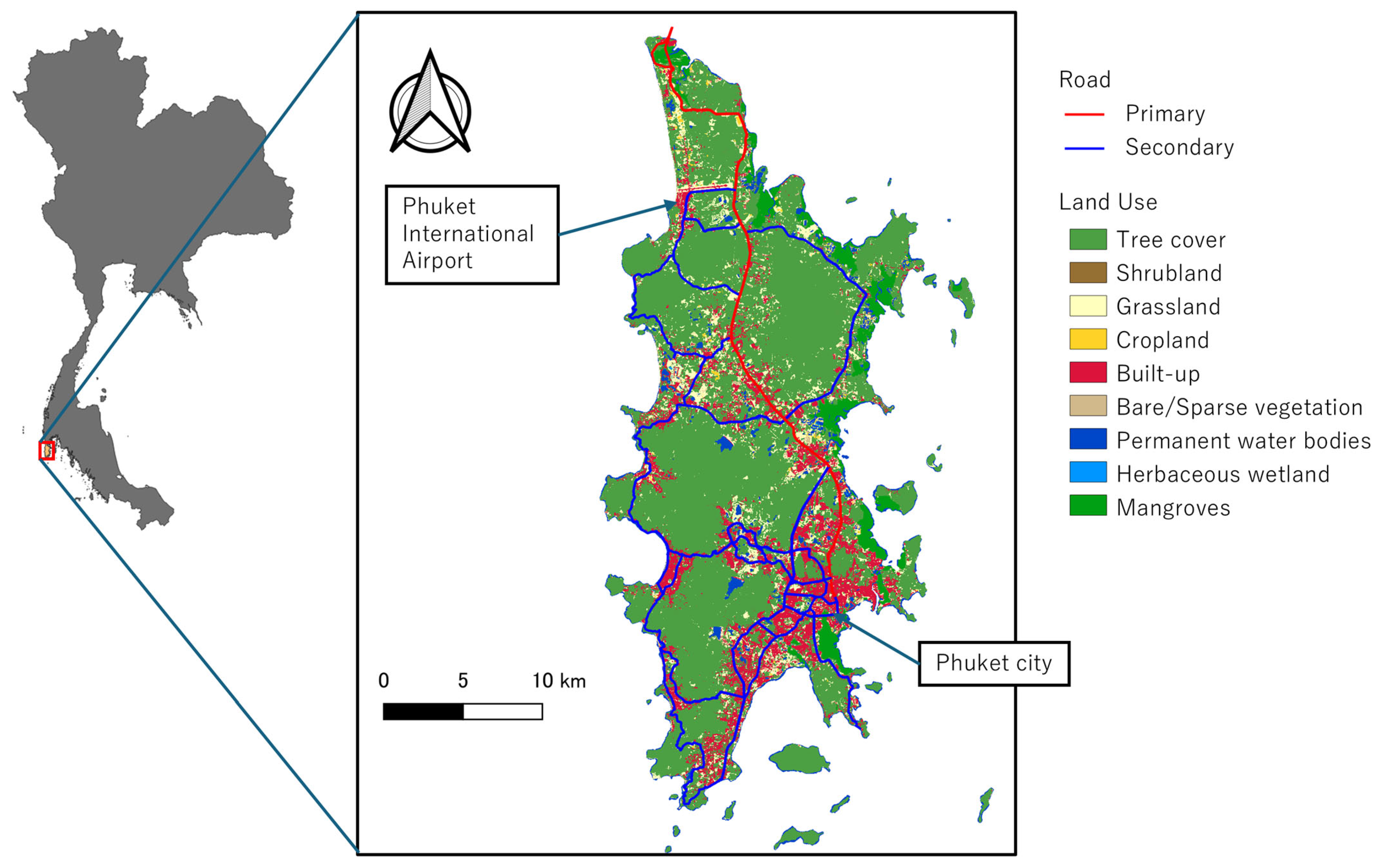
Phuket, located in the southern part of Thailand (Figure 2), with a population of around 400,000, is a major tourist destination in Thailand that attracts more than 15 million visitors annually. It is one of the most congested tourist destinations in the world and faces overtourism problems such as waste management and a shortage of infrastructure.
Figure 2.
Land use and Road Network in Phuket prefecture.
In Phuket, tourism-driven waste accumulation, marine pollution, and persistent traffic congestion arising from high travel demand and limited transport infrastructure have intensified environmental degradation, public health risks, and urban livability challenges. These interconnected pressures highlight the urgent need for integrated urban planning and mobility policies that manage travel demand, improve accessibility, and reduce environmental burdens. Viewed through a regenerative tourism lens, the situation underlines the tourism sector’s strong dependence on natural capital and emphasizes the importance of restoring and conserving coastal and marine ecosystems while reshaping urban development and mobility patterns to support long-term resilience, sustainability, and economic viability. At the same time, the large tourist demand requires collaboration across multiple domains, including infrastructure, natural resource management, and cultural preservation. Furthermore, maintaining the uniqueness of the destination demands honoring its sense of place. Based on these considerations, principle 1. Right Relationship, 5. Edge Effect Abundance, and 8. Honors Place can be regarded as being at a reasonably high level.
On the other hand, mounting pressures from tourism intensity, infrastructure constraints, and mobility inefficiencies have contributed to a decline in residents’ quality of life and weakened the overall functioning of the urban system. These challenges not only affect daily living conditions for local communities (principle 2) but also undermine Phuket’s competitiveness as a tourism and business destination by increasing operational costs, reducing service quality, and diminishing place attractiveness (principle 3). At the governance level, limited integration of residents’ perspectives into planning and policy processes (principle 4), together with weak information flows across institutions (principle 6), constrains effective coordination and adaptive decision-making. As a result, short-term economic priorities tend to dominate, disrupting the balance between environmental integrity, social well-being, and the long-term competitiveness and resilience of the tourism and business ecosystem (principle 7). These observations indicate challenges in principles 2. Holistic Wealth, 3. Innovative, Adaptive, Responsive, 4. Empowered Participation, 6. Robust Circulatory Flow and 7. Seeks Balance. In response to these interrelated challenges, there is a clear need for governance mechanisms that promote holistic value creation and maintain a balanced consideration of environmental, social, and economic objectives. Such mechanisms require an integrated platform capable of aggregating monitoring data and supporting evidence-based and participatory decision-making. Accordingly, this project is developing a comprehensive data platform that integrates transportation, air quality, and CO2 emissions data, together with a travel simulation system built upon this platform. By enabling systematic diagnosis of current urban conditions and scenario-based forecasting of congestion and environmental impacts, the platform is expected to support real-time adjustment of visitor flows and mobility management strategies, thereby contributing to the mitigation of quality of life deterioration, environmental pressures, and competitiveness challenges identified above.
3.3. Benguet Province, Philippines: Agricultural Smart City
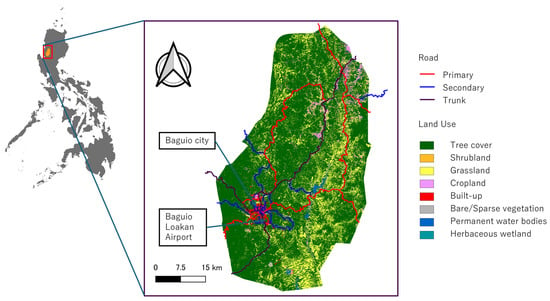
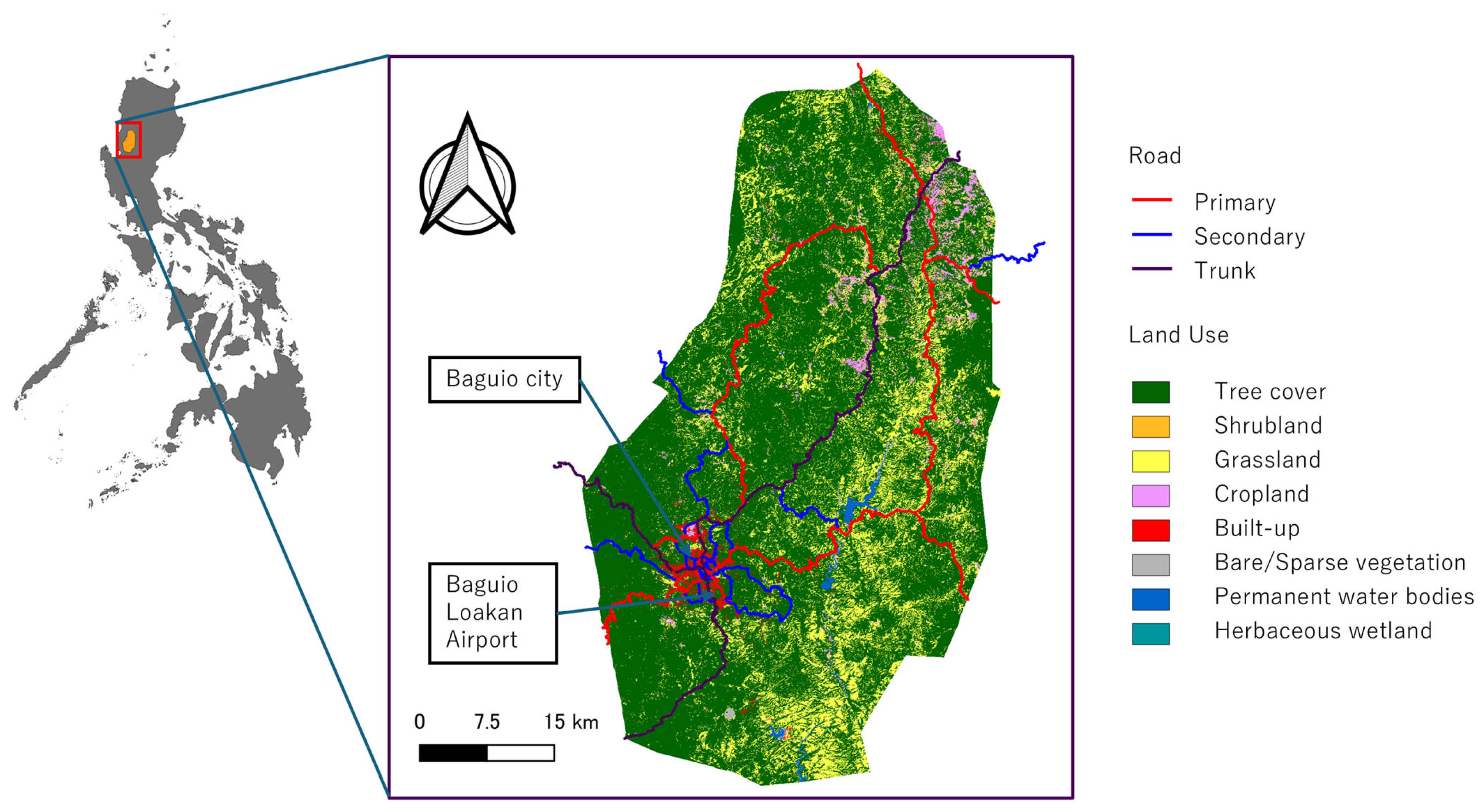
Benguet Province is in the mountainous highlands of northern Luzon Island in the Philippines and is characterized by climatic and topographic conditions that are highly suitable for highland vegetable cultivation (Figure 3). Agriculture is identified as the dominant economic activity in the province, particularly in rural municipalities, where livelihoods are highly dependent on farming and related value-chain activities. Evidence from localized development and climate–agriculture studies indicates that more than half of households in key vegetable-producing areas of Benguet are engaged in agricultural production, underscoring the sector’s central role in employment and income generation [24]. The cool climate and extensive upland farming systems have enabled Benguet to emerge as the leading vegetable-producing province in the country, supplying approximately 80% of the Philippines’ highland vegetables, which serve as a major source of fresh produce for urban markets nationwide [25,26]. As illustrated in Figure 3, agricultural production areas are spatially dispersed across mountainous terrain and are served by a limited and topographically constrained road network, resulting in long transport distances and heavy reliance on a small number of arterial routes linking hinterland farms to aggregation and market centers. This spatial configuration contributes to logistical inefficiencies and significant post-harvest losses, which, together with persistent underpricing by intermediaries, high poverty incidence among small-scale farmers, environmental degradation associated with farmland expansion, and limited transport infrastructure development, continue to constrain the sustainability and equity of the agricultural system in Benguet.
Figure 3.
Land use and Road Network in Benguet Province.
Given these characteristics, the region is characterized by the interaction of distinct domains, including agriculture, natural systems, and distribution, with economic activities strongly rooted in site-specific climatic conditions. In this context, principles 5. Edge Effect Abundance and 8. Honors Place can be at a relatively high level.
In contrast, persistent challenges related to environmental degradation driven by farmland expansion (principle 1), elevated poverty and wealth disparities (principle 2), limited investment in agricultural technological innovation (principle 3), biased price information (principles 4, 6), and imbalances among economic, social, and environmental dimensions (principle 7) indicate deficiencies in several regenerative economy principles. These include principles 1. Right Relationship, 2. Holistic Wealth, 3. Innovative, Adaptive, Responsive, 4. Empowered Participation, 6. Robust Circulatory Flow, and 7. Seeks Balance.
Addressing these challenges requires the strengthening of coordination across production, distribution, and market systems rather than sector-specific improvements alone. In particular, the improvement of the fair distribution of economic value to farmers is dependent on enhanced transparency in transaction-related information, including prices, demand volumes, product quality, and logistics conditions. At present, fragmented and asymmetric information flows are observed to limit farmers’ bargaining power and constrain evidence-based decision-making. Although digital technologies may be employed to improve production efficiency, reduce post-harvest losses, and mitigate environmental impacts, their effectiveness is contingent upon complementary institutional and governance mechanisms that support transparency, monitoring, and participatory decision-making.
In response to the identified challenges, Green CHAIN+ has been developed as an integrated digital transformation framework for post-harvest agricultural distribution in Benguet Province. The system is designed to assess damage and freshness of harvested vegetables during transport using e-nose gas-sensing and vision-based technologies, while simultaneously monitoring traffic conditions and guiding transport routes through GIS- and intelligent transport system (ITS)-based tools. Freshness indicators derived from these sensing technologies are used to generate market value estimates, providing objective information that reflects quality changes associated with logistics conditions. By linking freshness-based value estimation with transport performance and route optimization, information asymmetries along the agricultural value chain are reduced, post-harvest losses are mitigated, and more transparent and efficient farm-to-table distribution is enabled. These contributions of Green CHAIN+ will alleviate deficiencies related to the above negatively assessed principles; 1. Right Relationship, 2. Holistic Wealth, 3. Innovative, Adaptive, Responsive, 4. Empowered Participation, 6. Robust Circulatory Flow, and 7. Seeks Balance. Through its application within a QOL and QOB evaluation framework [21], the system supports improvements in the well-being of farmers and other stakeholders across the agricultural value chain.
3.4. Direction of Regenerative Economy
Taking the cases of three airport-adjacent regions with distinct characteristics, we evaluated their challenges in relation to the principles of the regenerative economy. Common findings indicate Principle 5. Edge Effect Abundance and 8. Honors Place are at a reasonably high level across all three regions. Meanwhile, Principle 2. Holistic Wealth and 6. Robust Circulatory Flow were consistently identified as areas of concern. Additionally, Principles 3. Innovative, Adaptive, Responsive and 4. Empowered Participation presents shared challenges for both Phuket and Benguet.
Although these regions are significantly different in socioeconomic, cultural, and environmental conditions, they have several common structural characteristics. For instance, they all have complex interactions between the urban system and surrounding natural systems, and they involve diverse stakeholders, including public authorities, private entities, and local communities. These conditions are the basis for creativity and diversity; however, they can also be factors of declining systemic regeneration. While each region has its own culture and economy rooted in climate and geography, globalized economic pressures create tensions that weaken local circulatory flows and holistic value creation.
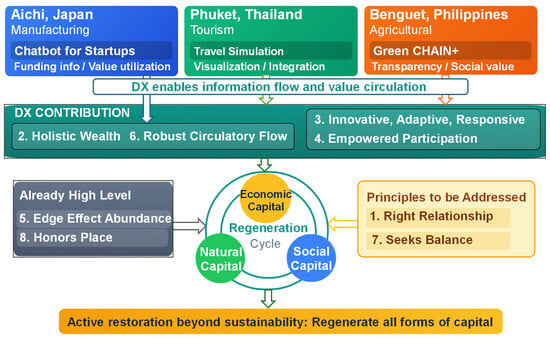
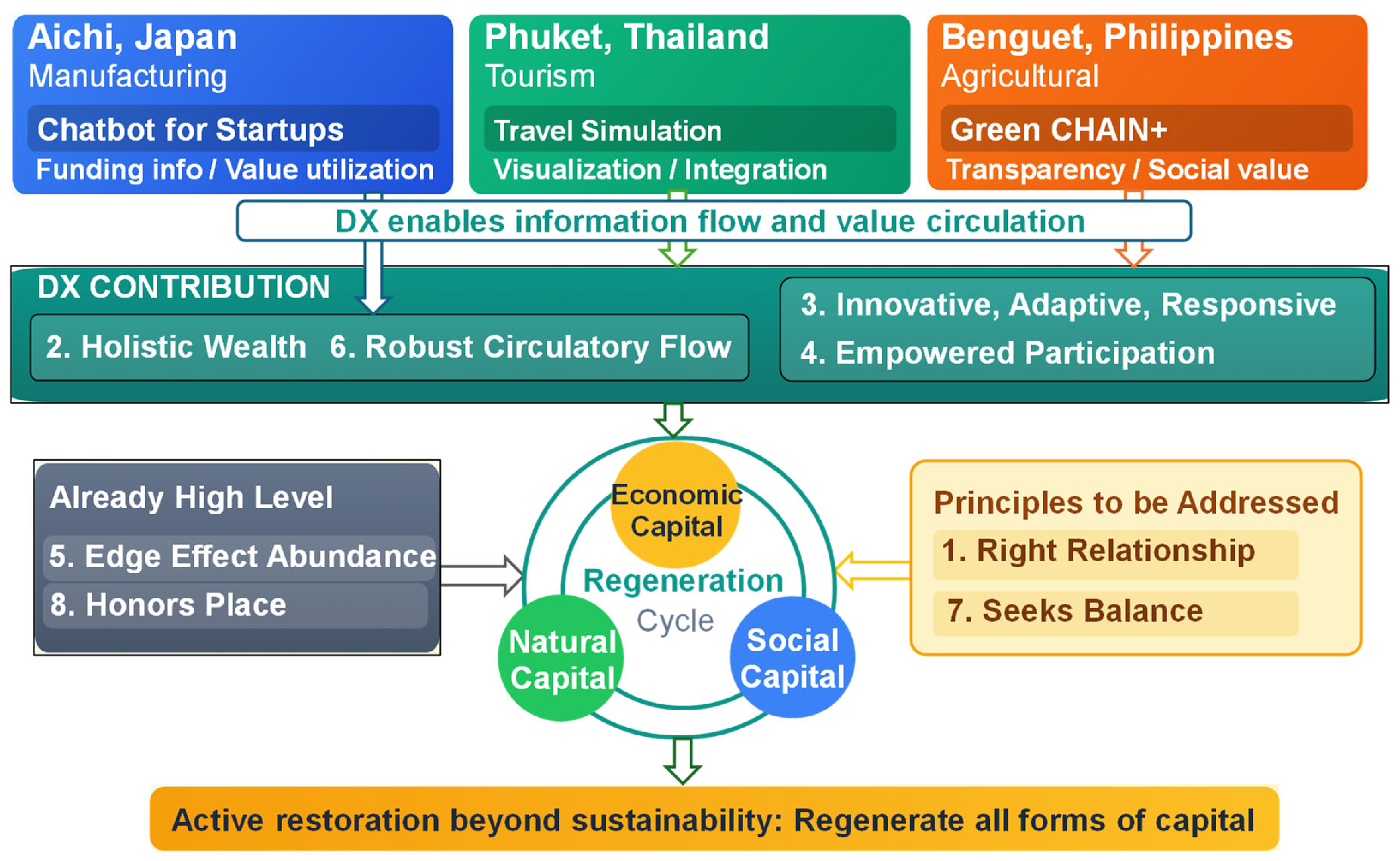
The DX technologies developed in this project can be interventions to address the systemic bottlenecks identified above (Figure 4). As discussed in earlier sections, these technologies differ by region in mechanisms and application domains; however, they share a common function, such as enhancing the circulation, accessibility, and integration of information and value among stakeholders. This function directly relates to the improvement of Principles 2, 3, 4, and 6—principles that were consistently found to be weak across the case regions.
Figure 4.
Contribution of DX technologies in this project to the principles of regenerative economy.
For instance, the chatbot for startups in the Aichi case contributes to disseminating and sharing local information with potential entrepreneurs while strengthening connections with local authorities. Although the current demo application includes only a limited set of datasets, the framework has the potential to facilitate information sharing between entrepreneurs and authorities, as well as with established businesses. In the case of Phuket, the smart city solutions can be directly utilized by local authorities to monitor transportation and environmental conditions. The Green CHAIN+ initiative in Benguet, the Philippines, will help enhance the transparency and social value of the agricultural sector, thereby improving local industrial policies.
Although the technologies are designed with site-specific needs in mind, their underlying conceptual architecture, supporting multi-stakeholder coordination, enabling adaptive decision-making, and visualizing non-monetary values, has broader applicability. While they respond to local contexts, the mechanisms are transferable to other regions facing similar regenerative economic challenges. This circulation of knowledge between concrete technological solutions and generalized conceptual frameworks is essential for understanding and expanding their wider impacts.
At the same time, fundamental mechanisms for assessing non-monetary wealth and enhancing well-being are still underdeveloped, and the circulation of information and value within regional economies remains limited. Although various technological approaches could help address these issues, DX technologies play a particularly critical role by creating shared value frameworks and facilitating information flow among diverse stakeholders.
Despite these contributions, Principles 1. Right Relationship and 7. Seeks Balance remain unresolved challenges across all three regions. These principles involve deeper structural transformations, such as shifts in governance systems, legal frameworks, and behavioral norms, that cannot be fully addressed through technological solutions alone. Complementary technologies may support progress, but achieving substantial improvement in these areas will require parallel advances in social systems, regulatory design, and economic incentives. Addressing these dimensions is an important direction for future research.
4. Conclusions
In this paper, we first reviewed Fullerton’s concept of regenerative economy and then qualitatively evaluated the conditions of three airport-adjacent regions in Asia with different characteristics against the principles of regenerative economy. Furthermore, we discussed concepts for utilizing DX technologies to address the identified challenges in the target regions.
The findings indicate that the principles of regenerative economy are useful for organizing regional issues and identifying common challenges even across regions with different contexts. In particular, the evaluation of non-monetary values, which include social, cultural, and ecological dimensions, and the circulation of information and value within the economy to ensure systemic health and resilience, were recognized as shared challenges among the three cities. Information technology is expected to play a critical role in addressing these challenges.
Although Fullerton directly refers to Western holistic thought, the underlying worldview he draws on is closer to “Eastern or Indigenous animistic perspectives” than to the “mechanistic worldview of Western modernity.” While the concept of the regenerative economy was formulated in the West, it is demonstrated to be applied within Asian contexts in this study. Of course, the nuances of each principle may vary depending on the cultural and regional context in which it is applied. Nevertheless, the regenerative economy retains sufficient flexibility to serve as a comprehensive evaluative framework.
However, this study relies exclusively on qualitative assessment. The concept of regenerative economy is broad and cannot be easily captured through simple quantitative indicators. Moreover, reducing the concept to such limited metrics risks overlooking critical aspects of local contexts. Nevertheless, the incorporation of quantitative measures will be indispensable for achieving more rigorous evaluation and for the practical realization of regenerative economy. It should also be noted that our qualitative assessment is based on internal cross-review. External validation will be necessary, and a quantitative assessment would also be valuable. Additionally, factors influenced by local political shifts, which are not considered in this report, may have a substantial impact on the principles of the regenerative economy. Addressing these issues remains an important direction for future research.
Author Contributions
Conceptualization, Y.H., N.S., M.C.M.-R., P.I. and M.K.; methodology, M.K.; software, M.K.; investigation, M.C.M.-R., P.I., M.M., R.C.II, P.K. and M.K.; resources, Y.H., M.C.M.-R. and P.I.; writing—original draft preparation, M.C.M.-R., P.I. and M.K.; writing—review and editing, Y.H., N.S., M.M., R.C.II and P.K.; visualization, M.K. and M.M.; supervision, Y.H.; project administration, Y.H. and N.S.; funding acquisition, Y.H., M.C.M.-R. and P.I. All authors have read and agreed to the published version of the manuscript.
Funding
This research was supported by the Japan Science and Technology Agency (JST) under the SICORP program [Grant No. JPMJSC22E2]. The authors gratefully acknowledge this support.
Institutional Review Board Statement
Not applicable.
Informed Consent Statement
Not applicable.
Data Availability Statement
The original contributions presented in this study are included in the article. Further inquiries can be directed to the corresponding authors.
Conflicts of Interest
The authors declare no conflict of interest.
References
- Bental, B.; Peled, D. The Accumulation of Wealth and the Cyclical Generation of New Technologies: A Search Theoretic Approach. Int. Econ. Rev. 1996, 37, 687. [Google Scholar] [CrossRef] [Scilit]
- Haberl, H.; Wiedenhofer, D.; Virág, D.; Kalt, G.; Plank, B.; Brockway, P.; Fishman, T.; Hausknost, D.; Krausmann, F.; Leon-Gruchalski, B.; et al. A systematic review of the evidence on decoupling of GDP, resource use and GHG emissions, part II: Synthesizing the insights. Environ. Res. Lett. 2020, 15, 065003. [Google Scholar] [CrossRef] [Scilit]
- Wiedenhofer, D.; Virág, D.; Kalt, G.; Plank, B.; Streeck, J.; Pichler, M.; Mayer, A.; Krausmann, F.; Brockway, P.; Schaffartzik, A.; et al. A systematic review of the evidence on decoupling of GDP, resource use and GHG emissions, part I: Bibliometric and conceptual mapping. Environ. Res. Lett. 2020, 15, 063002. [Google Scholar] [CrossRef] [Scilit]
- Gould, E.D.; Hijzen, A. Growing Apart, Losing Trust? The Impact of Inequality on Social Capital; International Monetary Fund: Washington, DC, USA, 2016. [Google Scholar]
- Vogt, M.; Weber, C. Current challenges to the concept of sustainability. Glob. Sustain. 2019, 2, e4. [Google Scholar] [CrossRef] [Scilit]
- Fullerton, J. Regenerative Capitalism; Capital Institute: Boulder, CO, USA, 2015. [Google Scholar]
- Meadows, D.H.; Meadows, D.L.; Randers, J.; Behrens, W.W. The Limits to Growth: A Report for the Club of Rome’s Project on the Predicament of Mankind; Universe Books: New York, NY, USA, 1972. [Google Scholar]
- Lovelock, J.E. Gaia: A New Look at Life on Earth; Oxford University Press: Oxford, UK, 1979. [Google Scholar]
- Lovelock, J.E. The Ages of Gaia: A Biography of Our Living Earth; W. W. Norton & Company: New York, NY, USA, 1988. [Google Scholar]
- Bellato, L. Regenerative Development Approaches Involving Tourism: Insights Derived from Place. Tour. Plan. Dev. 2024, 22, 960–980. [Google Scholar] [CrossRef] [Scilit]
- Shannon, G.; Issa, R.; Wood, C.; Kelman, I. Regenerative economics for planetary health: A scoping review. Int. Health Trends Perspect. 2022, 2, 81–105. [Google Scholar] [CrossRef] [Scilit]
- Alves, F.M.; Santos, R.; Penha-Lopes, G. Revisiting the Missing Link: An Ecological Theory of Money for a Regenerative Economy. Sustainability 2022, 14, 4309. [Google Scholar] [CrossRef] [Scilit]
- Roggema, R.; Junco, R. Reconciling the Mismatch: Creating a Regenerative Framework for Regional Planning. Land 2024, 13, 867. [Google Scholar] [CrossRef] [Scilit]
- Čegar, S.; Drezgić, S.; Čišić, D. Exploring the regenerative economy: A comprehensive review of literature. J. Regen. Econ. 2024, 1, 1–40. [Google Scholar] [CrossRef] [Scilit]
- Myers, S.S.; Frumkin, H. Planetary Health: Protecting Nature to Protect Ourselves; Island Press: Washington, DC, USA, 2020. [Google Scholar]
- Whitmee, S.; Haines, A.; Beyrer, C.; Boltz, F.; Capon, A.G.; de Souza Dias, B.F.; Yach, D. Safeguarding human health in the Anthropocene epoch: Report of The Rockefeller Foundation–Lancet Commission on planetary health. Lancet 2015, 386, 1973–2028, Erratum in Lancet 2015, 386, 1944. [Google Scholar] [CrossRef] [Scilit] [PubMed]
- Yunibandhu, R.; Hallinger, P. From Sustainability to Regeneration: Mapping the Conceptual Foundations and Future Directions of Regenerative Development. Sustain. Dev. 2025, 33, 8569–8585. [Google Scholar] [CrossRef] [Scilit]
- Hallinger, P.; Kovačević, J. Science mapping the knowledge base in educational leadership and management: A longitudinal bibliometric analysis, 1960 to 2018. Educ. Manag. Adm. Leadersh. 2021, 49, 5–30. [Google Scholar] [CrossRef] [Scilit]
- Oyefusi, O.N.; Enegbuma, W.I.; Brown, A.; Olanrewaju, O.I. Development of a novel performance evaluation framework for implementing regenerative practices in construction. Environ. Impact Assess. Rev. 2024, 107, 107549. [Google Scholar] [CrossRef] [Scilit]
- Bellato, L.; Frantzeskaki, N.; Nygaard, C.A. Regenerative tourism: A conceptual framework leveraging theory and practice. Tour. Geogr. 2022, 25, 1026–1046. [Google Scholar] [CrossRef] [Scilit]
- Mutahari, M.; Sugiki, N.; Mababangloob, G.R.; Concepcion, R., II; Maniquiz-Redillas, M.; Hayashi, Y.; Matsuo, K. A holistic evaluation framework for air-front smart cities: Integrating quality of life and quality of business via accessibility modeling. J. East. Asia Soc. Transp. Stud. 2025, 16, PP3934. [Google Scholar] [CrossRef]
- Kii, M.; Chou, C.-C.; Kono, T.; Otazawa, T. City size distribution and utility of living: Exploring intercity migration in Japanese urban systems. Econ. Anal. Policy 2025, 85, 1238–1257. [Google Scholar] [CrossRef] [Scilit]
- Khemthong, P.; Hayashi, Y. Stimulus environment and regional collaborative strategies for startup ecosystems to dually achieve business growth and sustainable development in Singapore, Munich, Denver and Aichi. Discov. Sustain. 2025, 6, 1029. [Google Scholar] [CrossRef] [Scilit]
- Reyes, C.M.; Domingo, S.N.; Agbon, A.D.; Olaguera, M.D.C. Climate-Sensitive Decisions and Use of Climate Information: Insights from Selected La Trinidad and Atok, Benguet Agricultural Producers; Philippine Institute for Development Studies (PIDS): Quezon City, Philippines, 2017; p. 42. [Google Scholar]
- Department of Agriculture—Special Area for Agricultural Development (DA-SAAD). Phase 2—Benguet. Available online: https://saad.da.gov.ph/phase-2/benguet/ (accessed on 10 January 2026).
- Aquino, L.L.M.; Delos Reyes, J.A.; Catelo, M.A.O. Mapping and Understanding Food Value Chain Networks of Benguet-Sourced Vegetables: The Lens of the Households; Center for Integrative and Development Studies, University of the Philippines: Quezon City, Philippines, 2025; p. 42. [Google Scholar]

Disclaimer/Publisher’s Note: The statements, opinions and data contained in all publications are solely those of the individual author(s) and contributor(s) and not of MDPI and/or the editor(s). MDPI and/or the editor(s) disclaim responsibility for any injury to people or property resulting from any ideas, methods, instructions or products referred to in the content. |
© 2026 by the authors. Licensee MDPI, Basel, Switzerland. This article is an open access article distributed under the terms and conditions of the Creative Commons Attribution (CC BY) license.