


Abstract
In this study, we explore how to balance the preservation of the original appearance of ancient villages with their development within the framework of World Heritage protection. We applied resilience theory and constructed a simple checklist, taking cultural ecosystem services into consideration, and selected the Zuojiang Huashan Rock Art Heritage Area in China for field investigation, as well as conducted in-depth interviews, the distribution of short questionnaires, and two rounds of Delphi surveys. This comprehensive approach enabled us to discover the key cultural ecosystem services that villagers rely on for their livelihoods. Then, we tracked how these services enhanced buffering capacity, helped people self-organize, and promoted adaptive learning. The results show that cultural ecosystem services constitute the core framework of the social–ecological resilience of the villages. The quantity and combination of the services directly determine the resilience score, and the resilience of villages within the heritage area shows significant spatial differentiation. High-resilience villages have diverse and mutually reinforcing cultural ecosystem services and local community rules, while low-resilience villages face service loss, weakened social connections, and single development options. Through this study, we aim to further enrich the cultural connotation of resilience theory, provide a practical assessment tool for practitioners of the method, and offer practical guidance and suggestions for transforming heritage protection from static protection to a dynamic, vibrant system that promotes vitality and resilience in practice.
1. Introduction
1.1. Background
Traditional villages serve as the spatial carriers of cultural achievements and proof that human civilization has long adapted to the natural environment; they are also a treasure trove of culture, filled with stories, rituals, and practical knowledge. However, modernization and the rapid migration to cities have dealt a heavy blow to these places. Although “sustainability” has become a widely discussed topic, in actual practice, the survival and sustainability of traditional villages still face numerous challenges. This pressure is even more intensified within World Heritage Sites [1]. Coordinating the relationship between protection and development—allowing village communities to not only maintain their material form in the changes but also maintain cultural identity, enhance adaptability, and maintain intrinsic vitality—has become the core issue of heritage protection and rural sustainable development [2].
The theoretical basis of this study lies in the fact that the survival crisis of traditional villages is essentially an adaptive crisis of the social–ecological system under external disturbances; in this context, resilience theory provides a dynamic perspective for analyzing “how a system maintains its functions in the face of changes”, emphasizing that the system not only needs to have the buffering capacity to resist shocks, but should also achieve adaptation, and even transformation, through self-organization and learning. In recent years, traditional villages located within cultural landscapes, especially within World Heritage Sites, have generally fallen into a “paradox of protection” [3,4]. The application for World Heritage status has attracted a lot of attention, but it is often accompanied by strict protection regulations, a large influx of tourists, and sudden changes in the lifestyle of residents. Many villages face challenges such as “hollowing out”, aging population, the inability to sustain traditional livelihoods, the breakdown of local knowledge systems, and environmental degradation, and these places have lost the ability to regain vitality [5]. Therefore, we need to view the villages as an organic whole from the perspective of dynamic adaptability and re-examine and enhance the abilities of traditional villages to persist and develop in the face of changes such as climate change, policy adjustments, tourism fluctuations, and cultural shocks.
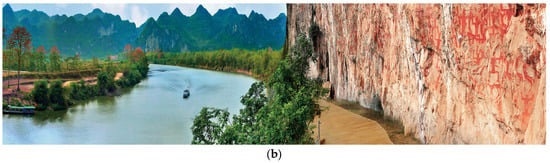
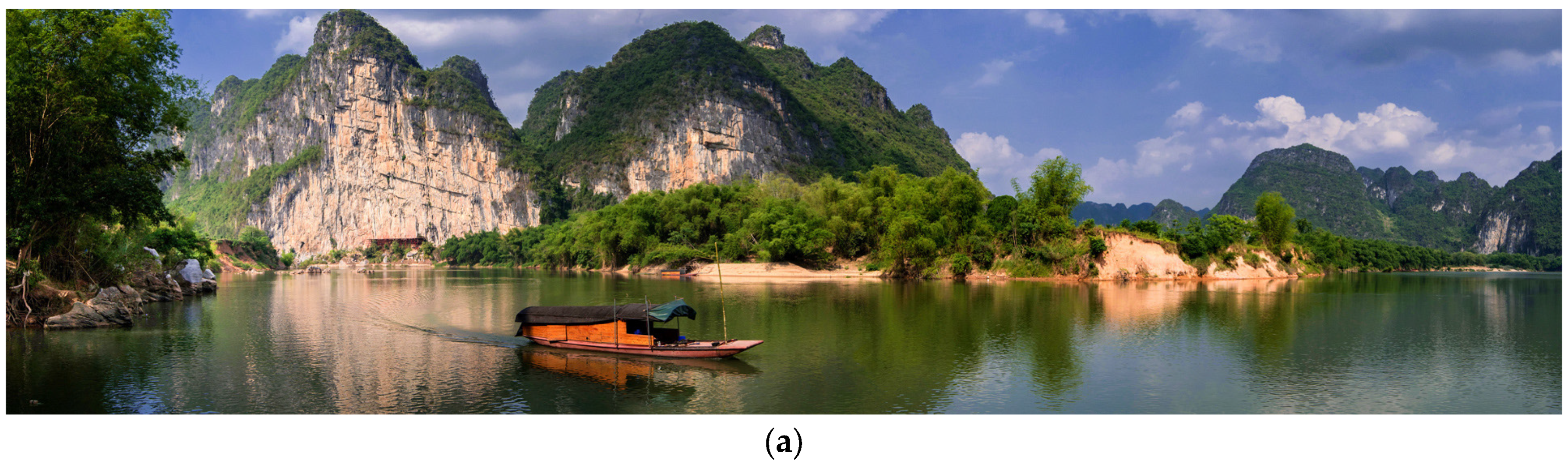
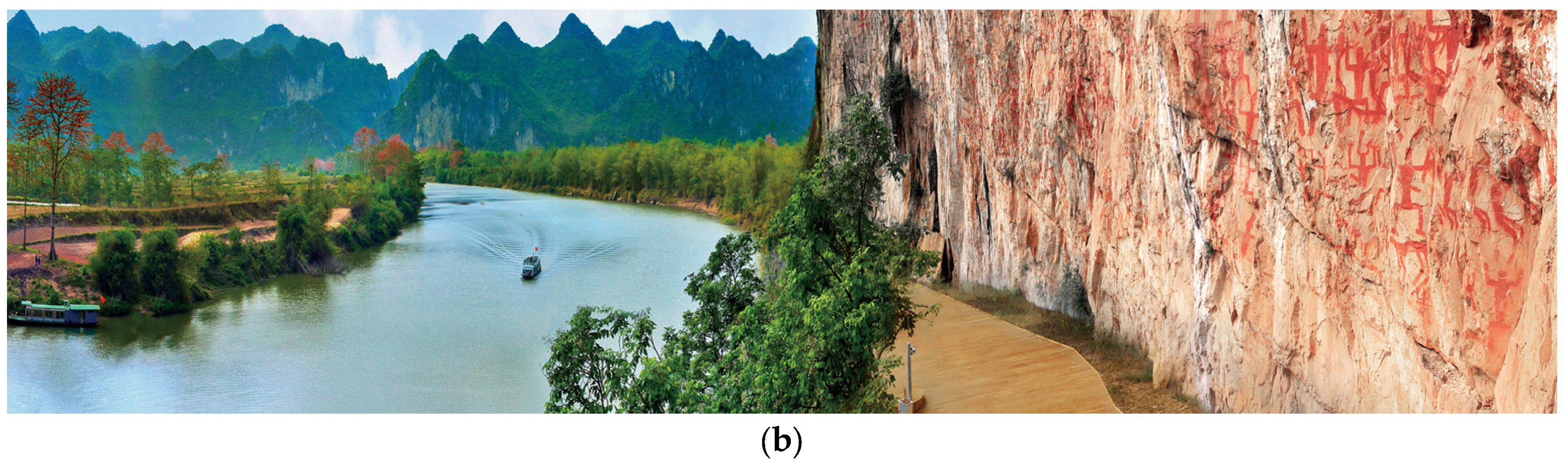
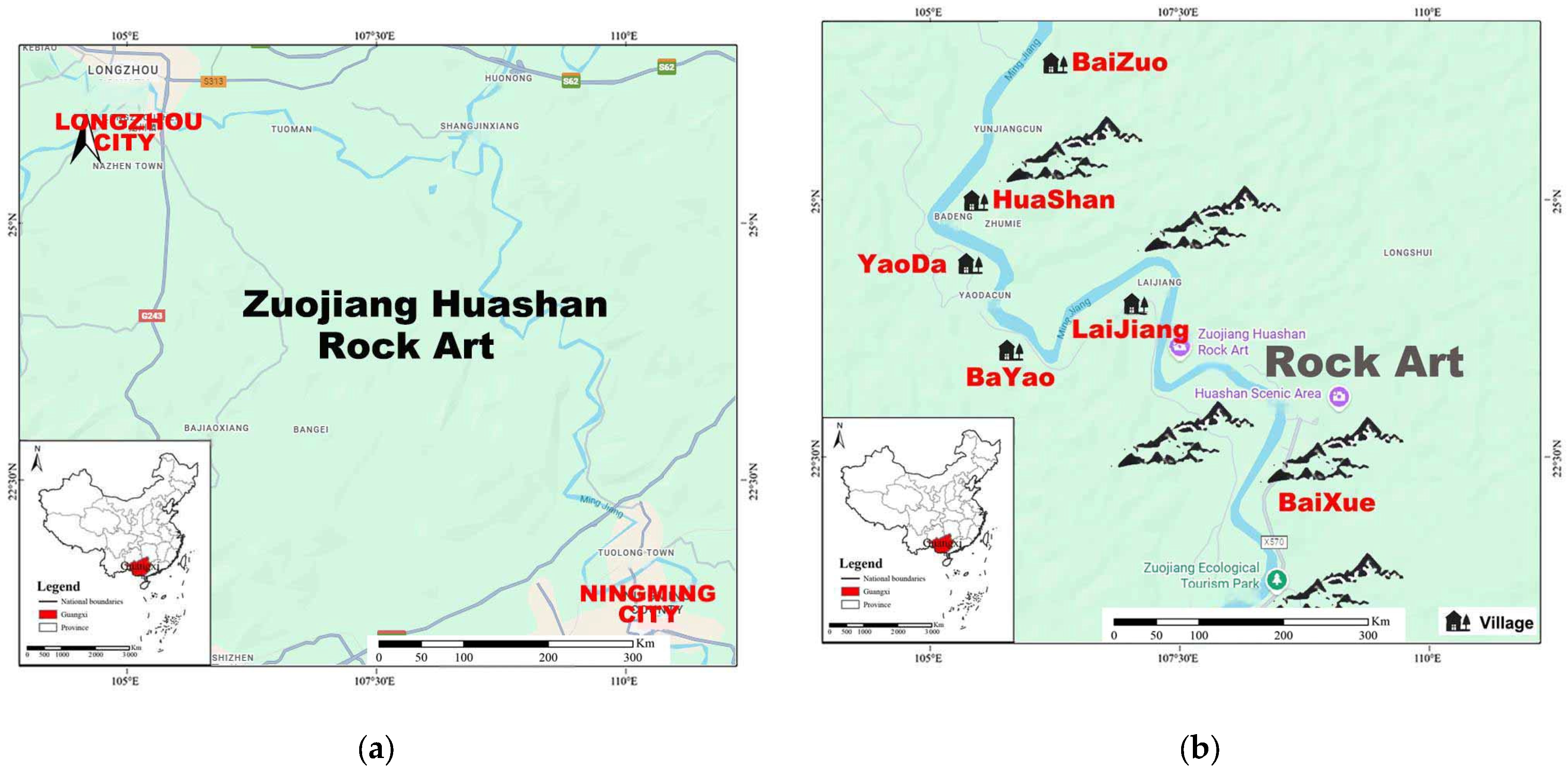
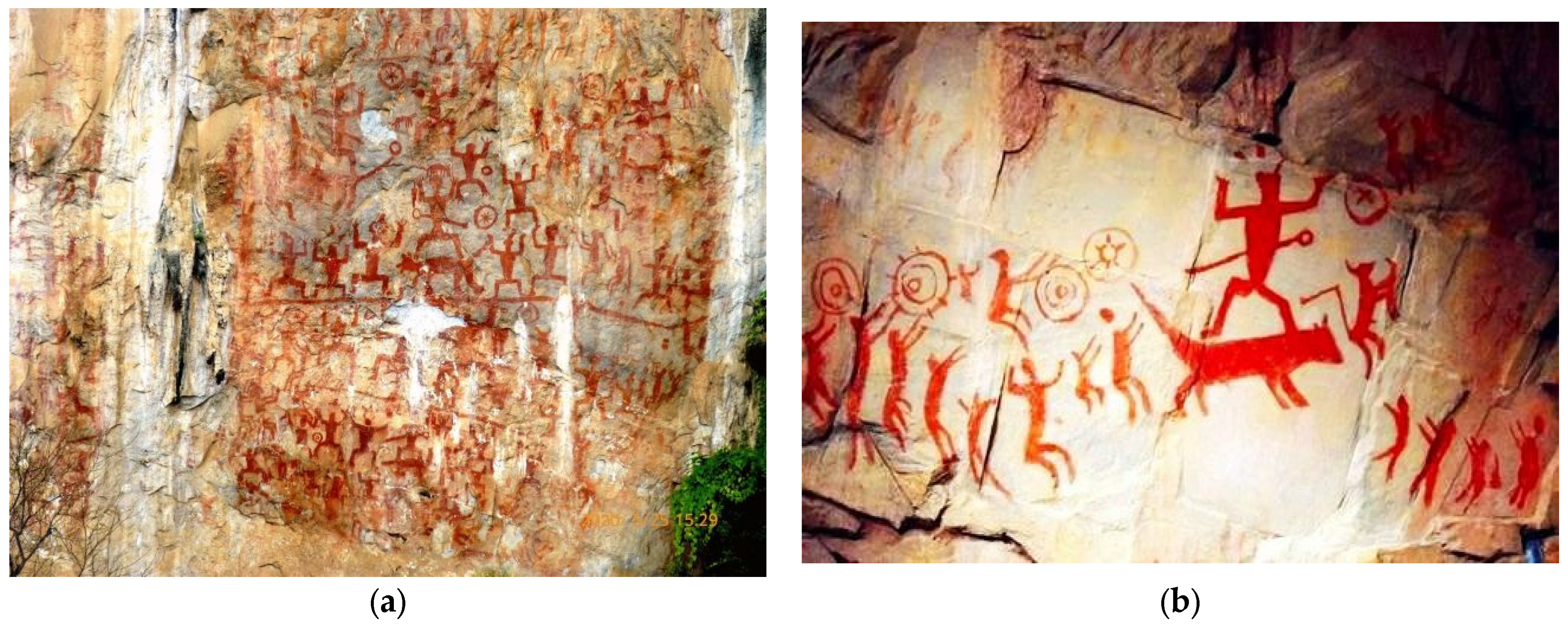
Here, to make up for this deficiency, we introduce the theory of cultural ecosystem services and focus on the World Heritage Site of Huashan Rock Art in Zuojiang, China. In this theory, spiritual beliefs, local identities, traditional skills, and other intangible benefits are regarded as key links between the ecosystem and human well-being [6]; these elements are precisely the most reliable local resources that the villages in the heritage site can rely on when dealing with external changes. More than 2000 years ago, the Luo Yue ancestors painted murals on the cliffs of this area, integrating bold rock paintings with karst river landscapes and the daily life culture of the Zhuang people; the heritage landscape is shown in Figure 1. The Rock Art is scattered on the cliffs of the Zuojiang River Basin and is the remnant of local people’s religious rituals. Their uniqueness lies in the repeated appearance of the same images and landscape elements, which fix the rock painting, drawing art, and ancient sacrificial rituals in people’s memories. Cultural ecosystem services constitute the “capital base” and “functional medium” of a village’s resilience; they are not only the source of meaning for communities to maintain their identity during crises, but also the driving force for stimulating new livelihood exploration and social relationship adjustments [7,8].
Figure 1.
(a) Landscape of the World Heritage Area; (b) Zuojiang Huashan Rock Art. (Source: the map from “http://www.china-asean-media.com/show-138-23130-1.html (accessed on 5 January 2026)”, January 2026, re-edited by the author).
Based on this theory, we conducted this study to construct a “service–capability” coupling analysis framework, aiming to systematically reveal how the villages in the Huashan Rock Art Heritage Area maintain and transform their unique cultural ecosystem services, and form a resilience mechanism to cope with protection regulations and tourism impacts. Our framework not only provides a more explanatory analytical tool for understanding the resilience generation mechanism of the heritage site villages, but also offers a new theoretical entry point for understanding the dynamic inheritance of cultural landscapes. We expect the results of this study to not only provide a scientific basis for the sustainable development of traditional villages in the Zuojiang Huashan Rock Art Heritage Area, but also to provide references and practical paths for the enhancement of village resilience and rural management in similar heritage landscapes around the world.
1.2. Literature Review
The concepts of cultural ecosystem services and resilience theory provide us with the main ideas for understanding the operation mode of ancient village systems; they also help us understand how these mixed social–ecological systems have been sustained. The introduction and development of the concept of cultural ecosystem services indicate the continuous deepening of people’s understanding of the value of ecosystems. The United Nations Millennium Ecosystem Assessment defined it as non-material benefits derived from ecosystems, and subsequent studies have gradually advanced in classifying, pricing, mapping, etc., of these services [9]. For example, many scholars adopt standardized systems such as the “General International Classification of Ecosystem Services” to make the entire system more manageable and countable [10]. Studies have shown that these services are not only key elements of cultural heritage but also important cultural resources for promoting effective governance of rural tourism industries and communities. However, current discussions mostly focus on the identification of services, static value evaluation, and their relationships with well-being; they rarely delve into the internal mechanisms by which communities respond rapidly when villages need to be adjusted or transformed, and the mechanisms of their roles still need to be further explored [11].
Resilience theory initially emerged in the field of ecology; it describes the traits of natural areas in recovering to their initial state or transforming into new forms after being impacted. Subsequently, the concept rapidly expanded to the social–ecological domain. People began to discuss the ability of a system to absorb problems, reorganize its components, and continue moving forward, and focused on the system’s potential to learn, adapt, and even achieve transformation in the face of changes [12]. Recently, as people have realized the dominant role of culture in our coping strategies, the concept of “cultural resilience” has gradually gained attention, which refers to the ability of a group to mitigate shocks, cope with uncertainties, and plan long-term development paths by relying on its unique cultural beliefs, professional knowledge, practice mode, social organization form, and cultural ecosystem services. The connotation of cultural resilience goes beyond traditional supply and regulation services and emphasizes the link function of culture between ecosystem and human well-being [13,14]. These services are regarded as the main benefits provided by ecosystems to us, covering spiritual atmosphere, religious significance, beautiful scenery, interesting travel, sense of belonging, ancient stories, and passed-down skills, intangible elements that shape the way locals interpret natural landscapes and guide their daily contact with rivers, farmlands, and forests. It is worth noting that they also set the tone for joint responses when problems arise. Therefore, assessing the cultural resilience of a village mainly involves examining how it maintains, acquires, and utilizes these cultural ecosystem services [15]. When shocks strike, these services help people maintain their state, draw on past wisdom, create new livelihoods, and adjust social relationships. The above combination provides us with a flexible perspective, allowing us to observe how the system adapts to changes in real time.
Resilience theory typically includes the following four key dimensions: resistance, recovery, adaptation, and transformation. The theory is mainly applied to rural environments and has evolved into the academic concept of “rural resilience”, with its measurement standards constantly being refined, covering multiple aspects such as economic diversity, social capital, institutional resilience, and ecological sustainability [16]. Currently, the academic community generally constructs resilience analysis frameworks from three perspectives—buffering, adaptive, and transformation capacities—and understands resilience as a dynamic evolutionary process. In the context of traditional village research, cultural ecosystem services and resilience theory are highly compatible, with significant complementarity and integration potential [17,18,19]. On the one hand, the former provides a systematic perspective for understanding the intangible cultural heritage value carried by the village; from another perspective, the latter offers a dynamic capability analysis framework for analyzing how the village utilizes these values to cope with internal and external disturbances. Such an integrated perspective can clearly reveal the intangible heritage hidden within houses, songs, and festivals, and also provide a set of tools for villages to guide them on how to utilize these heritages in times of crisis. Specifically, the unique cultural inheritance and spiritual beliefs of the village need to be shared through community cohesion and the establishment of value norms to cope with external cultural shocks and environmental changes [20].
2. Methods
2.1. Research Area
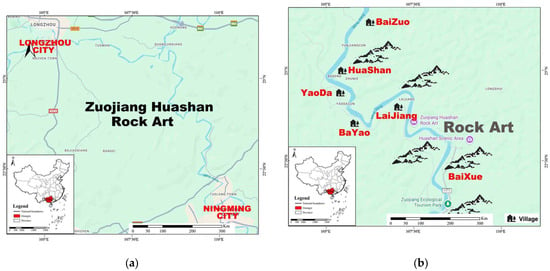
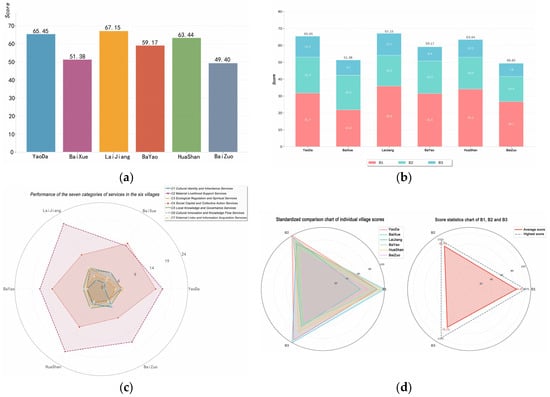
The study area is located in Guangxi Province in southern China, a border province adjacent to Vietnam; this region is in the subtropical zone, with numerous rivers and mountains; the climate is hot, humid, and rainy; and there are diverse ethnic groups and populations. Legally, traditional villages in China are classified into three levels: national, provincial, and municipal. Among them, the national traditional villages are listed at the highest level and are highly representative in terms of traditional architectural layout, village planning, site selection, intangible cultural heritage, etc. Based on full consideration of the differences in selection batches, site selection, heritage types, location and transportation, and spatial form of traditional villages, we selected 6 national-level traditional villages as sample villages for on-site investigation in this study [21]. The basic distribution information about these villages is shown in Figure 2; they are all located in the core and buffer zones of the heritage area, forming a close spatial and cultural connection with the Rock Art heritage and providing an ideal research field for exploring the coupling mechanism between cultural ecosystem services and the resilience of villages.
Figure 2.
(a) Location of the Rock Art in Huashan, Zuojiang; (b) locations of six villages.
2.2. Field Investigation and Data Collection
For this research, we adopted a mixed-methods design, integrating field investigations, in-depth interviews, questionnaire surveys, and multi-source data collection methods to systematically obtain objective and subjective information reflecting the “cultural ecological background” and “multi-dimensional resilience capabilities” of traditional villages. The research team conducted a 9-month-long field survey, from November 2024 to July 2025, following the logical sequence of “from macro to micro, from objective to perception” to carry out data collection work [22].
2.2.1. Field Investigation
To gain a deeper understanding of the social atmosphere and daily life culture of traditional villages within the heritage area, we chose anthropological field investigation as the basic method. The research team conducted long-term on-site observations in six sample villages, obtaining first-hand experiences and intuitive perceptions about the village spaces, livelihood activities, and cultural practices through participatory observation. The specific tasks included the following: (i) taking systematic photos and making records of the village layout, architectural style, public spaces, and the environment related to the heritage; and (ii) through participatory observation, experiencing and documenting the villagers’ daily lives and production activities, as well as various cultural rituals and festivals. The long-term on-site contact helped to build trust with the villagers and laid the foundation for subsequent in-depth interviews.
2.2.2. Qualitative In-Depth Interviews
Qualitative data collection mainly relies on semi-structured interviews and in-depth interviews. According to the principle of theoretical sampling, we selected six key informants as interviewees, including: (a) village committee officials; (b) elders familiar with the village history; (c) inheritors of intangible cultural heritage; (d) primary and secondary school teachers; (e) local business owners; and (f) some foreign tourists. The interview outline was centered around the following core dimensions: the historical and cultural connections between the village and the rock paintings of the Flower Mountains, the current status of the inheritance of various cultural practices, the community’s cognition and attitude towards heritage protection and tourism development, and the main challenges faced by the village and the corresponding coping strategies. All interviews were recorded, and detailed notes were made after obtaining informed consent. Cross-validation and background supplementation were conducted in combination with archival documents from the local government, heritage management institutions, and within the village.
2.2.3. Quantitative Questionnaire Survey
The quantitative data collection was carried out using a combination of stratified random sampling and snowball sampling. Questionnaires were distributed to both villagers and tourists, aiming to understand the villagers’ dependence on cultural ecosystem services, their value perception, and satisfaction. At the same time, basic facts were collected, including families’ livelihood statuses and the specific circumstances of each family member. The questionnaire was divided into three parts: (a) the social demographic characteristics of the respondents, including age, ethnicity, education level, family structure, and main source of income; (b) perception and evaluation of cultural ecosystem services, including villagers’ perceptions of the values of cultural heritage, spiritual nourishment experience, local sense of belonging, and their degree of satisfaction with aesthetic and entertainment needs; (c) perception and evaluation of community resilience, to understand their views on everything related to the community’s recovery ability, covering the three following dimensions: buffering capacity, self-organization ability, and learning and adaptation ability. The questionnaire was distributed to 6 sample villages, with a total of 350 villagers’ questionnaires distributed and 326 valid questionnaires recovered, with an effective recovery rate of 93.1%; 200 tourist questionnaires were distributed, and 173 valid questionnaires were recovered, with an effective recovery rate of 86.5%.
2.2.4. Data Collection
The research group conducted data statistics for a period of four months, divided into the four following stages:
In Stage 1, we mainly collected data on the natural environment of the settlement, the physical space, and the heritage space, aiming to establish a basic spatial framework for the research, mainly using existing data and spatial technologies to assess the macro environment and material carriers of the village’s resilience. Natural environment data for analyzing the ecological base and natural constraints of the village were obtained from departments such as natural resources, meteorology, or public geographic databases; combined with high-resolution remote sensing image interpretation, on-site investigation, and building census, the physical space data of the settlement core area were recorded, including the preservation grade, main materials, and age of the buildings [23]; spatial data, such as precise geographic information, protection scope, and viewing construction facilities provided by the heritage management institution were collected, and the spatial relationship between the village and the heritage entity was clarified.
Stage 2 was conducted to collect socioeconomic and management data; in this stage, we focused on the social and economic structure and organizational capacity of the village, obtaining basic information through the literature and official statistics and assessing the village’s adaptability and transformation basis. Socioeconomic statistics—population, number of households, collective economic income, main sources of residents’ income, tourist reception volume and income, etc.—were collected; policy documents, such as local development plans, were systematically collected to understand the external institutional environment; through on-site investigations and interviews with village cadres, the configuration level, service capacity, and usage status of facilities such as transportation, water supply and drainage, sanitation, communication, medical care, and education were verified and recorded.
Stage 3 was dedicated to the collection of cultural ecosystem service and community perception data; this was the core stage, using a mixed method of qualitative and quantitative approaches to directly obtain data on the supply, utilization, and value perception of cultural services, to measure the cultural functions and social resilience of the village. Through in-depth interviews and participatory observation, cultural supply services were identified, and traditional knowledge, ritual activities, festival customs, artistic skills, local narratives, etc., related to the rock paintings and the village were examined [24,25]; community and tourist perception data were obtained through questionnaires, covering cultural participation, sense of belonging, cognitive level, experience satisfaction, consumption behavior, impressions on the community culture, etc. [26].
Finally, Stage 4 was designated for data integration and index system construction analysis; this stage was the final step of data processing, aiming to convert multi-source data into assessable resilience indicators. The reliability and validity of the questionnaire data were tested and statistically analyzed, and specific data were transformed into detailed assessment indicators, classified as buffering capacity, self-organization capacity, and maintenance capacity, based on the resilience analysis framework.
2.3. Build a Resilience Assessment Index System
2.3.1. Theoretical Basis and Dimensions
In this study, we define “traditional village resilience” as follows: the ability of the village society–ecosystem to maintain the system structure and function, as well as achieve adaptive transformation, by continuously providing and regulating cultural ecosystem services in the face of environmental changes, social transitions, and development disturbances. Based on the classic resilience theory, proposed by Folke et al., and the framework of cultural ecosystem services, combined with the particularity of heritage protection areas [27], we divided traditional village resilience into the three following dimensions: (i) buffering capacity, the ability of the system to absorb disturbances and maintain key functions, manifested as the stability of the ecological foundation, the preservation status of cultural heritage, and the diversity of economic livelihoods; (ii) self-organization capacity, the ability of internal actors in the system to form collective actions, coordinate resource allocation, and respond to external changes, reflected in the effectiveness of community organization, the density of social networks, and the degree of decision-making participation; and (iii) learning and adaptive capacity, the ability of the system to accumulate experience, update knowledge, and adjust strategies to achieve transformation and development, manifested as the flexibility of adopting innovations, obtaining external information, and adjusting development strategies.
2.3.2. Index Screening Process and Methods
For the selection of the indicator system, we comprehensively considered the two core points of “cultural ecosystem services” and “village resilience”, aiming to transform the theoretical characteristics of the traditional village social–ecological system into specific operational and assessable indicators. The selection process follows a technical route, combining “theoretical construction–field verification–expert feedback”, ensuring that the indicators are both scientific and applicable to the local context [28,29]. The specific selection process is as follows:
- (a)
- Construction of the initial indicator pool.
In the Liangjiang Huashan Rock Art Heritage Area, the resilience of the traditional villages is rooted in the unique cultural–natural coupling system; however, this system is facing risks of dispersion and increased vulnerability under the impacts of modernization. The indicator selection needs to simultaneously reflect the protection and inheritance status of the system and its ability to adapt to transformation. At the same time, referring to policy documents such as “Trial Evaluation and Recognition Index System for Traditional Villages” and “Requirements for the Preparation of Protection Plans for Cultural Relics”, and combining the outstanding universal value (OUV) statement of the Liangjiang Huashan Rock Art Heritage Area, a 35-item indicator pool was initially constructed, covering dimensions such as ecological environment, material heritage, intangible culture, social economy, and organizational system [30].
- (b)
- Field verification and absorption of local knowledge.
The initial indicator pool was verified and corrected in the field context. Through interviews with villagers and participatory observations during the period from 2024 to 2025, it was found that “tourism income proportion”, “livelihood diversity”, “cultural creativity”, “external funds introduction”, “elite leadership”, and “energy governance” were specific issues that the community was highly concerned about and that were closely related to resilience capabilities. Local knowledge was absorbed as an important source of indicators, and some indicators that were difficult to measure or had low distinguishability in the actual investigation were merged or deleted.
- (c)
- Expert consultation and indicator optimization.
For this study, we adopted the Delphi method to seek expert opinions. The goal was simply that the new indicator system should be both scientific and authoritative. Thus, 18 experts, including those in cultural heritage protection (5 people), urban and rural planning (3 people), human geography (4 people), ecology (3 people), and history and archaeology (3 people), were invited to conduct two rounds of consultation using the Delphi method. The experts have long worked in universities, government departments, and heritage protection organizations, and have also lived or investigated near the sites. Therefore, the suggestions they provided were both professional and feasible, as well as applicable to the region. The experts rated each indicator on a 5-point scale based on their scientificity, independence, representativeness, and accessibility, and proposed modification suggestions. After the first round of consultation, it was found that the average importance scores of 4 indicators (heritage commercial value, heritage style, living comfort, and protection level) were low, and there were significant differences in expert opinions. Therefore, those 4 indicators were eliminated; in the second round of consultation, the adjusted indicator system was confirmed, and the expert opinions tended to be consistent, ultimately converging to form an evaluation system consisting of 3 criterion layers, 7 element layers, and 31 specific indicators (Table 1), forming the basis for the judgment matrix used for subsequent weight determination.
Table 1.
Resilience assessment scores of 6 traditional villages.
2.3.3. Weighting and Criterion Setting
In terms of determining the weights of the indicators, we employed the Analytic Hierarchy Process (AHP). The specific steps were as follows: Firstly, the relative importance judgments made by experts in the second round of the Delphi method for pairwise comparisons of each level of indicators were summarized and organized. Secondly, the corresponding judgment matrices were constructed using the Yaahp software (Version 12.13.8525), and their characteristic vectors were calculated to obtain the initial weights of each indicator. Finally, consistency tests were conducted on each judgment matrix (requiring the CR value to be less than 0.1) to ensure the logical consistency of the experts’ judgments, and only the weight results that passed the test were ultimately adopted. The above method integrates the empirical judgments of experts with the objective calculation of mathematical models, making the weight allocation more scientific and reasonable. To facilitate comprehensive calculation and comparison, all indicators were standardized in this study, and a unified scoring standard was formulated. Qualitative indicators were assigned a five-level rating method, and the evaluators made grade judgments based on on-site research and data analysis. Finally, the comprehensive index of village resilience was calculated through a weighted summation model, the formula for which is as follows:
where O is the core value of comprehensive evaluation; Xi is the quantitative value of the index; Yi is the weight of index i; and n is the number of items included in the evaluation item. The evaluation index system is shown in Table 1.
3. Results
3.1. Analysis of Index Weight Values
According to the AHP model for evaluating the ecological cultural resilience of traditional villages, the questionnaires were distributed to 18 experts for evaluation, and the weighted scores were determined. The software was used to calculate the final weight values of each indicator in the evaluation system. During this period, 60 villagers were visited; through meetings and questionnaire interviews, the questionnaires determined by the experts were distributed to the villagers for evaluation. From the distribution of weight ratios, the influence of ecological cultural resilience is as follows: buffering capacity > self-organization capacity > learning and adaptation capacity. Comprehensive analysis of the buffer capacity element layer shows that the weights of the material livelihood support service C2 (0.2576) and cultural identity and inheritance service C1 (0.1353) are relatively high, while the ecological regulation and spiritual service C3 (0.0673) has a relatively low weight. In the self-organization capacity element layer, the social capital and collective action service C4 (0.2006) has the highest weight, and the local knowledge and governance service C5 (0.122) has the lowest weight. In the learning and adaptation capacity criterion layer, the cultural innovation and knowledge flow service C6 (0.1152) and the external link and information acquisition service C7 (0.102) have relatively close weights. Combining the actual development situation of traditional villages, it can be seen that the material foundation is always the most important influencing factor in the resilience assessment, which is exactly in line with phenomena such as lagging economic development data, continuous population outflow, and severe rural hollowing out in Guangxi, where there is a complete ecological environment, rural residents value feng shui, and advanced ecological values are maintained, which are well-known throughout the country. Therefore, the pressure of traditional village ecological resilience assessment is usually relatively small.
Based on the weight analysis of the factor levels of the sub-item indicators, the main indicators with significant influence are the vitality of intangible cultural heritage D1.2 (0.0554), the completeness of traditional residential settlement preservation D2.3 (0.1105), the diversity of livelihood index D2.4 (0.0849), the level of community trust D4.4 (0.1105), and the rate of young people returning to start businesses/employment D6.3 (0.0445) (Table 2).
Table 2.
Layer weight value analysis.
3.2. Evaluation Results
Based on the establishment of a resilience assessment framework for traditional villages, and in accordance with the supply, demand, and regulation processes of cultural ecological services, a systematic assessment was conducted on multiple typical villages within the Zuojiang Huashan Rock Art World Heritage Area to reveal their resilience characteristics and formation mechanisms within the social–ecological coupled system. The main findings of the assessment are as follows:
3.2.1. Identification and Spatial Differentiation of Key Cultural Ecological Services
In this study, we identified four main types of core cultural ecological services that are relied upon by the villages in the heritage area:
- (a)
- Spiritual beliefs and identity services
Villages located in the core area of the rock paintings exhibit a clear spatial clustering, providing the most abundant service supply. The shared spiritual beliefs passed down from generation to generation have continuously strengthened cultural identity, mainly manifested in similar rock painting landscapes, sacrificial spaces, and the stories behind them.
- (b)
- Livelihood support and aesthetic services
The layout of farmlands, terraced fields, and farming plots along rivers both provides livelihood security and creates a unique rural atmosphere; this service, based mainly on agricultural landscapes, is also persistent, and its impact degree directly depends on both the maintenance condition of the farmland and the continuation time of traditional farming methods.
- (c)
- Social capital and cohesion services
These are maintained through regular activities such as “frog dance” and “song festival”. Each round of drumming and singing further strengthens the trust network, making neighbors more willing to cooperate.
- (d)
- Local knowledge and educational services
These are hidden in ancestral farming techniques, rock painting stories, and simple ecological common sense. When these elements are considered together, cultural ecological services show a patchy distribution in the heritage area. Villages close to the rock painting center and those located in comfortable river valleys usually provide more abundant and diverse service combinations.
3.2.2. The Correlation Mechanism Between Cultural Ecology and Resilience Capacity
Quantitative and qualitative analyses have revealed the specific impact paths of cultural ecological services on the three types of resilience capabilities of villages, as follows:
- (a)
- Buffering capacity
Spiritual beliefs and social cohesion services work as a buffer, functioning when sudden floods, infectious diseases, etc., strike; they bring people together and make everyone more willing to work together. Another point worth noting is that agricultural livelihood services come in various forms, so the community can rely on more than one source of income, which reduces the risk of relying on a single crop or market.
- (b)
- Adaptive capacity
Farmers still rely on traditional methods, adjusting water-saving irrigation methods gradually according to the slope of the land. Social capital services promote the dissemination of information, allowing people to exchange experiences with each other and draw on effective practices, enabling the community to respond more flexibly to social and economic changes, such as tourism development.
- (c)
- Transformation capacity
Rock painting heritage gives the village a solid cultural identity and brand value; this combination has become the main driving force for them to shift from simple agriculture to eco-tourism. However, the assessment report also raises a warning: If commercial activities develop excessively, those ancient rituals will seem false, and the social cohesion within the village will weaken. Eventually, the place’s recovery ability will decline when facing difficulties.
3.2.3. Comprehensive Assessment of Resilience Levels
Finally, the comprehensive resilience assessment indicates that there are significant hierarchical disparities among the villages within the heritage area. Regions with high resilience typically possess abundant cultural ecological service functions, and these functions operate in synergy. Taking rock paintings as an example, local residents have shown genuine respect for them, thus spontaneously safeguarding the surrounding land; this sacred layout (i.e., the location of the rock paintings) also retains the traditional farming model, without the need for anyone to forcibly change it. At the same time, these village communities have outstanding self-organizing capabilities, and community elites can effectively lead collective actions, actively utilize cultural ecological services to seek new development paths, and promote the intergenerational inheritance and innovative application of local knowledge. In contrast, low-resilience villages generally face the predicament of cultural ecological service loss, manifested as the interruption of traditional rituals, the abandonment of agricultural landscapes, and the breakdown of local knowledge transmission. The outflow of young population further weakens the social foundation for maintaining and innovating traditional industries, leading to a loose community social network and an excessive reliance on a single industry, such as tourism, and the ability to independently respond to internal and external changes becomes significantly insufficient.
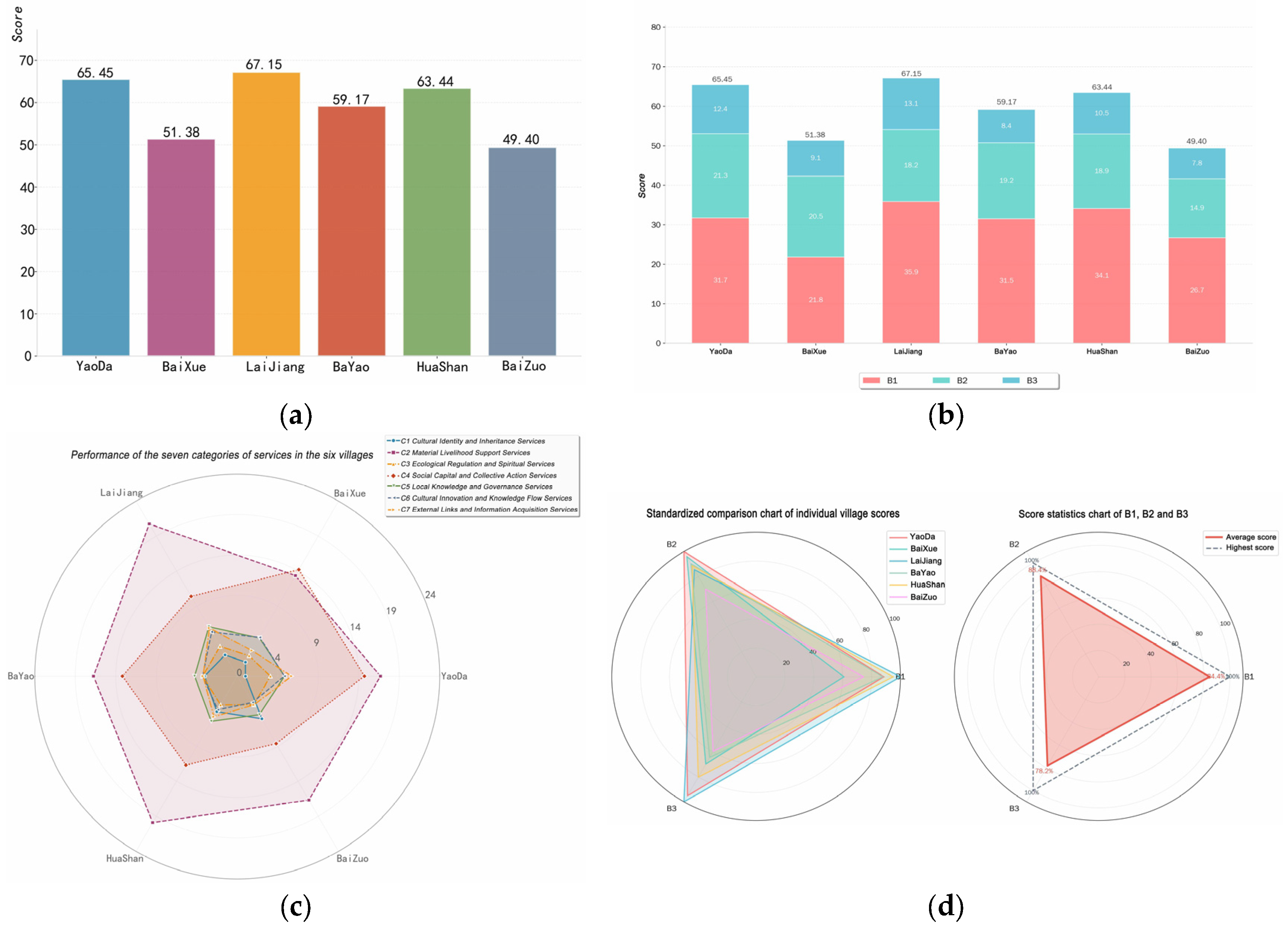
In specific cases, such as Yaoda Village and Huashan Village, due to their geographical advantages, they have obtained relatively high tourism development resources, and their scores in indicators such as learning adaptability, external cooperation, and brand building are relatively high, with strong external connections, promoting the development of cultural and creative derivatives; meanwhile, Bayao Village and Baizuo Village have outstanding performance in preserving the authenticity of culture and community cohesion, with high scores in buffering capacity and self-organizing ability, but, due to their relatively single development paths, their learning adaptability is relatively weak, and they are insufficiently capable of responding to new social and economic challenges. The assessment scores of the six villages are shown in Table 3 and Figure 3.
Table 3.
Resilience assessment scores of 6 traditional villages.
Figure 3.
(a) Total scores for each village; (b) distribution of indicator scores; (c) performance of services among the six villages; and (d) score statistics chart.
4. Empirical Analysis
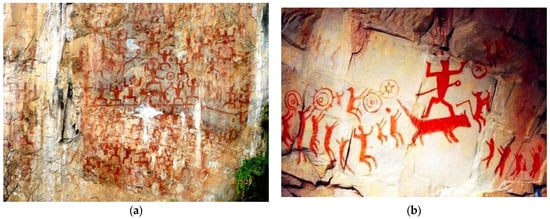
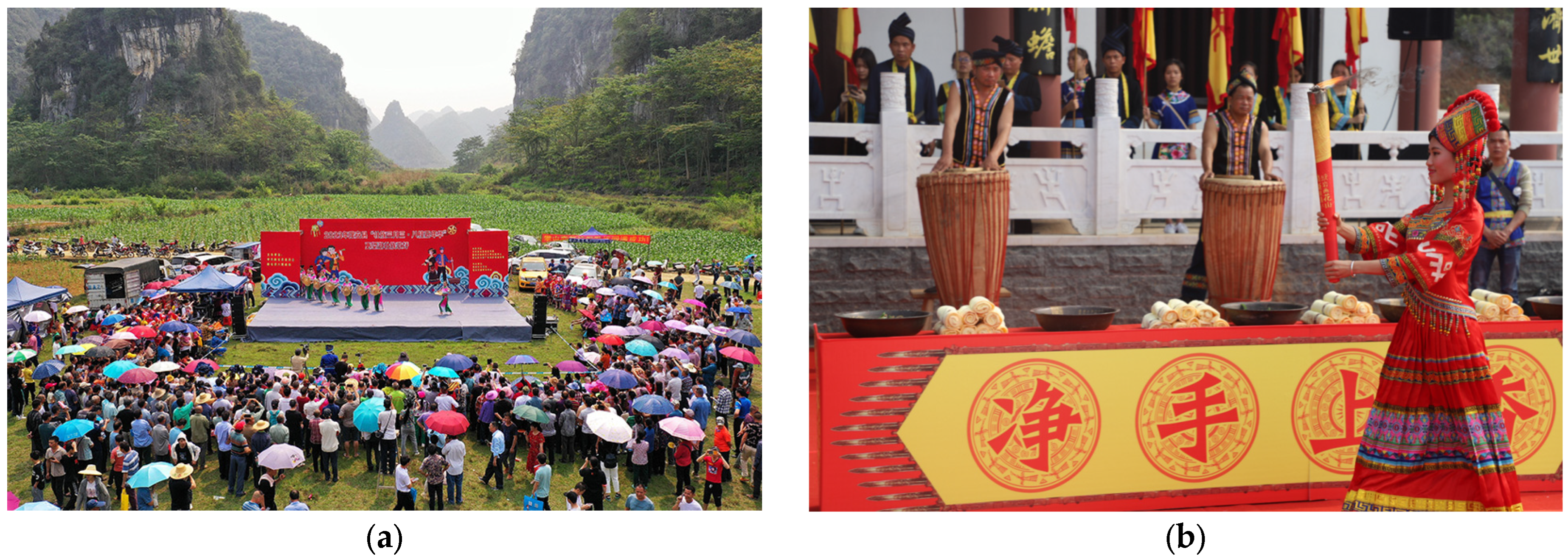
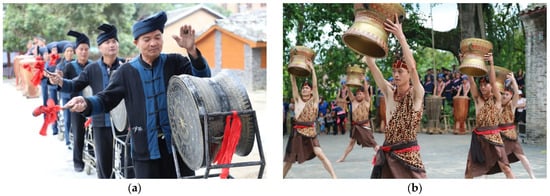
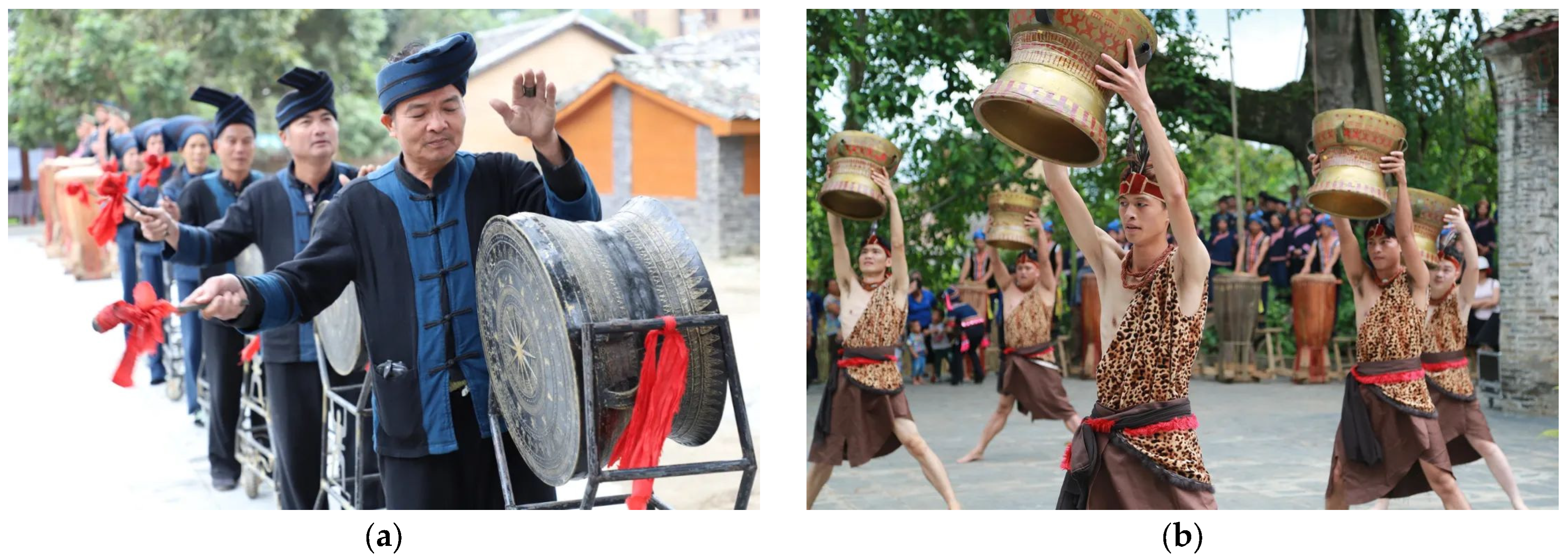
The world heritage value of the Zuojiang Huashan Rock Painting Cultural Landscape is rooted in its overall nature as a continuously evolving “cultural-social-ecosystem” dynamic [31]; this system is centered on the rock paintings created by the Lao Yue ancestors and has evolved over more than 2000 years, forming a highly integrated pattern of “mountain–water–field–settlement–belief”. The relevant Rock Art landscapes, community activities, religious ceremonies, folk activities, and local dances are shown in Figure 4, Figure 5 and Figure 6. The villages’ outstanding universal value lies not only in the rock paintings themselves, but also in the inseparable connection between the rock paintings and the natural environment, as well as the dynamic inheritance of related sacrificial rituals and folk beliefs in the surrounding Zhuang ethnic communities, a characteristic which makes it a highly valuable research sample, allowing scholars to witness the process of cultural transmission and observe how the social ecosystem retains vitality. To deeply analyze the resilience mechanism of this heritage system, especially how the supply status of cultural ecological services affects the ability of villages to cope with changes, we selected case villages based on the following principles: (a) the degree of spatial and cultural association with the core heritage elements; (b) the authenticity of cultural practices and livelihood models; (c) the completeness of the social ecosystem structure; and (d) the typicality of facing challenges in the development path [32]. The selected cases aim to cover different types and intensities of cultural ecological service supply, thereby providing a three-dimensional revelation of the diversity and internal logic of the resilience of the villages in the heritage area.
Figure 4.
(a,b) Rock Art images. (Source: Photo by the Authors; Time: November 2023; Place: Ningming, China).
Figure 5.
(a) Community activities; (b) sacrificial ceremony. (Source: Photo by the Authors; Time: April 2023; Place: Ningming, China).
Figure 6.
(a) Folk activity; (b) native dance. (Source: Photo by Ling, X.N.; Huang, Y.M.; Time: April 2016; Place: Ningming, China).
Firstly, Yaoda Village in Ningming County is a typical example of the core bearing area for spiritual beliefs and social cohesion services; this village faces the core rock painting area across the river, and the villagers are direct practitioners of rock painting protection and traditional sacrificial activities. Here, the worship of rock paintings, ancestral beliefs, and community identity recognition are deeply integrated, enabling the spiritual beliefs and identity services, as well as social capital and cohesion services, to be continuously reproduced through daily practices and periodic rituals. Thus, this case is a key sample for observing how cultural heritage can endogenously enhance the buffering capacity and collective action ability of the community, demonstrating the role of the cultural belief system as the resilience core.
Secondly, BaiXue Village in Longzhou County represents the material space carrier of traditional livelihood support and local knowledge services; its well-preserved boat-shaped settlement, stilt buildings, and farming system facing the mountain and the water directly reflect the traditional livelihood wisdom adapted to the Zuojiang ecological environment. The relatively complete livelihood support system, local knowledge, and educational services of this village provide an “ontological” reference for understanding the historical stability of the relationship between people and the land in the heritage area. Thus, it is the ideal object for analyzing the material basis of system buffering and adaptability, as well as exploring the inheritance and transformation of local knowledge services in the process of modernization.
Furthermore, Laijiang Village and Bayao Village, among others, reveal the complex tensions faced by cultural ecological services and resilience in the context of tourism development; these villages are called “living museums of rock paintings”, and their landscapes and customs have high aesthetic and tourism value. However, in the current heritage tourism model, they are mainly positioned as supporting service areas for the scenic spots, and their unique aspects, such as agricultural landscapes and local knowledge services, have not been systematically explored. Such a “one-sided dependence on rock paintings, neglecting the village’s model, leads to the community’s development being highly dependent on tourist flows, insufficient economic diversity, and the risk of its cultural value being marginalized. Therefore, this case reveals possible problems; the cultural identity services originally designed for tourists have turned the vibrant culture into a mass-produced commodity, a transformation which quietly erodes the community’s inherent adaptability and capacity for change.
Moreover, villages such as Huashan Village, which are extremely closely linked to the rock painting space, highlight the special opportunities and constraints imposed by geographical location. As the best location for viewing the rock paintings, its natural and cultural heritage resources are superior. However, at the same time, its traditional livelihood based on sugarcane cultivation and ancient red sugar production faces transformation pressure under the impact of the tourism economy; this case helps in analyzing whether and how a strong cultural identity can be transformed into sustainable transformation capabilities, and examining how to balance the protection of cultural authenticity with the innovation of livelihoods in a highly tourism-oriented development.
The empirical assessment results show that the resilience levels of villages within the heritage area exhibit an uneven distribution pattern, with the main differences lying in the geographical locations, distribution of heritage resources, social economy, and population structure among different villages. Resilient villages can integrate culture and nature harmoniously; they operate independently, rely on local knowledge, use trust as the medium of communication, and convert beliefs into daily assistance. The people in these areas support each other, forming a stable social–ecological cycle and enabling residents to come up with new solutions when circumstances change. The less resilient ones appear more passive and monotonous; they rely on a few cultural services, have weak community cohesion, and overly depend on external assistance. Once hit by an impact, they retreat and are more prone to collapse, demonstrating vulnerability and sensitivity. The split relationship described here did not form overnight; it is the result of the long-term interaction between the internal transmission of cultural dynamics and external intervention factors, a repetitive process which has shaped the current pattern.
Overall, this framework shifts the concept of heritage value from static protection to dynamic adaptive protection of things; it is also a continuous and progressive research process that is constantly adjusted. Because it is always rooted in the actual situation, it provides residents with practical and feasible methods through which to strengthen the entire heritage area. Another point worth mentioning is that the same measures also provide opportunities for the nearby communities to engage in sustainable development.
5. Discussion
This assessment framework is innovative, as it depicts the spatial differences among the villages within the heritage area and reveals their internal structures. The picture provided here prompts people to think more deeply about how to protect and preserve these ancient settlements. Previous tools mainly focused on the number of bricks or the amount of investment; this tool, however, takes into account non-material factors as well. The rituals of the villages, local skills and knowledge, and the stories that people firmly believe in occupy significant positions, determining how a place can regain vitality, self-repair, and even how it can be re-shaped; this transformation aligns with ongoing academic discussions such as the “cultural center path” and “nature-based solutions” [33].
World heritage sites have unique background stories. Taking the Zuojiang River Flower Mountain heritage site as an example, it meets the standards of outstanding universal value, while still existing as a living cultural landscape. The resilience of the villages here determines whether this value can persist or quietly disappear. We conducted data statistics. Some small villages quickly recovered their economic and social vitality after the shock, while others remained almost unchanged; this difference clearly shows a significant distinction between high and low levels. In-depth research reveals three factors that cause this gap: the scale of cultural ecological services received by the area, the way these services are combined, and the way residents manage affairs [34]. Initially, people thought that only the natural environment determined fate, but subsequent analysis showed that governance and service systems are also equally important. Another point worth mentioning is that this perspective enables us to more clearly understand the entire social–ecological interaction process; it also provides managers with a set of new tools, including practical and specific measures, to maintain ecological balance in similar regions globally.
5.1. Cultural Ecology as a Key Resilience Value
This framework converts services related to cultural ecology into measurable resilience indicators. After verification, villages that possess these advantages and can maintain them have stronger cohesion among their residents and a faster economic recovery rate. It has been proven that cultural ecological services are not merely lofty cultural heritage; they are a buffering mechanism and an incentive factor that enables a village to regain vitality after being hit by natural disasters and facing the negative impact of excessive tourism development.
Thus, cultural ecological services are not only the core value of cultural heritage, but also a deep buffer and source of innovation for villages to resist disturbances and achieve transformation; they can not only enable traditional villages to continuously maintain their authenticity and stability, but also prompt villages to adapt to changes in transformation capabilities while maintaining their buffering capacity, and are the “link” that connects nature and society. For example, communities that combine the worship of the Flower Mountain Rock Paintings with daily festivals and livelihood practices have demonstrated stronger cultural identity and collective action capabilities.
5.2. Resilience Indicators Weigh Multiple Dimensions
However, the resilience function of cultural ecosystem services is dynamic and requires a balance between one’s own strength and external data. If management is not properly handled, it will damage the long-term resilience accumulated by the village. The analysis shows that a village with high infrastructure resilience does not necessarily correspond to high social–ecological resilience. Some individual villages may have improved their physical conditions due to recent construction, but their traditional social networks or ecological management practices have been weakened due to developmental impacts; this confirms that resilience is a multi-dimensional concept with potential internal tensions. Therefore, the selection of assessment indicators requires multi-dimensional integration, which also helps to identify this “resilience imbalance” phenomenon and reminds us that protection policies should avoid single-dimensional strengthening at the expense of other key dimensions, especially those chronic adaptive capabilities rooted in cultural and ecological interaction [35].
5.3. Spatial Differentiation of Disturbance Perception and Response
Villages located closer to the core areas of heritage or tourist hotspots have more direct perception of disturbances, such as climate change and tourism pressure. As a result, some of these villages have developed more targeted response strategies, while remote villages may be more sensitive to chronic disturbances such as globalization and population outflow. Villages with low resilience face issues such as a lack of cultural services, loose community cohesion, and excessive reliance on external environments; their responses to external shocks will also be passive and vulnerable. The aforementioned differentiation pattern is the result of the long-term interaction between the internal cultural inheritance drive and external intervention methods. Our analysis of the correlation between disturbances and capabilities through the assessment framework helps identify the most vulnerable groups and regions, providing a basis for differentiated interventions [36].
5.4. Practical Insights and Policy Recommendations
Based on the assessment results, to enhance the resilience of the Zuojiang Huashan Rock Art World Heritage Area and similar traditional village areas, the following suggestions are proposed:
(a) Divide resilience functions and implement differentiated management strategies: Based on the results of the village resilience assessment and the main disturbance types, separate different management areas, such as the cultural inheritance enhancement area, the ecological restoration priority area, the tourism development collaboration area, and the comprehensive capability improvement area, and implement precise policy support and project interventions.
(b) Strengthen the core position of culture and empower community governance value: Incorporate identification, assessment, and conservation into local development plans and heritage management plans. Support various cultural revival projects led by the community, such as traditional handicrafts, festivals, and ecological agriculture; apply local knowledge systems to natural resource management and disaster risk mitigation; and establish partnerships among the government, community, research institutions, enterprises, and non-governmental organizations, especially empowering the community to have a dominant position in decision-making and benefit sharing.
(c) Strengthen adaptive capacity learning and innovation construction: Address the weak links exposed in the assessment, such as the single economic structure of some villages and insufficient participation of young people, by providing capacity training, small loan support, and encouraging sustainable innovation in cultural heritage. Establish learning and exchange platforms among communities to share successful local practice cases.
6. Conclusions
Our research results will provide insights for future studies. The constructed assessment framework and the systematic evaluation of traditional villages in the Zuojiang Huashan Rock Art Heritage Area not only provide a powerful analytical tool for understanding how traditional villages in a heritage area respond to changes, but also reveal a path that transcends the binary choice of protection versus development. The core findings of this study confirm that the cultural ecosystem services represented by spiritual beliefs, social capital, livelihood aesthetics, and local knowledge constitute the core framework of the social–ecological resilience of traditional villages. These services jointly play three key roles: (1) as “slow variables” of the system, they provide stable value anchors and cultural identity bases for coping with rapid changes; (2) as “dynamic catalysts”, they promote the coordinated transformation and improvement of the three resilience capabilities of buffering, adaptation, and transformation; (3) as social–ecological “ties”, they achieve the integration of natural environmental protection and cultural heritage inheritance. In addition, the assessment of the Zuojiang Huashan Heritage Area further reveals that the resilience of the villages within the area shows a significant “high resilience–low resilience” spectrum differentiation. This differentiation pattern is rooted in the coupling relationship between the supply status of cultural ecological services and the community governance model: high-resilience villages are characterized by “multilateral synergy of cultural ecological services and internal governance”, with well-preserved cultural ecological services, mutual reinforcement, and strong self-organization and learning capabilities of the community; meanwhile, low-resilience villages are trapped in the predicament of “singleization, loss, and reliance on governance” of cultural ecological services, facing problems such as cultural inheritance interruption, loose social networks, and excessive dependence on external factors, with a weak internal ability to cope with disturbances.
At the theoretical level, this study is the first to systematically integrate cultural ecosystem services into a social–ecological resilience analysis framework, clarifying its multiple roles as a core component of resilience, providing a new perspective on the “value–capability” linkage for understanding the dynamic adaptability and sustainability of traditional cultural landscapes, and enriching the cultural dimension of resilience theory. At the methodological level, the study method combines qualitative interpretation of cultural values with quantitative assessment of social–ecological indicators, constructing a set of resilience diagnostic tools applicable to cultural heritage sites and traditional villages, providing an operational analytical path for empirical research in this field. At the practical level, the research conclusion clearly states that, for dynamic cultural landscapes such as the Zuojiang Huashan Rock Art, the core paradigm of protection and management urgently needs to shift from “static preservation” of the heritage itself to the active cultivation and maintenance of the “social–ecological resilience” that supports its existence.
However, this study still has certain limitations. First, the quantification of indicators and data availability is insufficient. The selection of indicators may be subjective, and the quantification of some indicators, such as spiritual feelings and local sense of belonging, still relies heavily on subjective evaluation and alternative data. Future research can combine digital humanities methods for cross-validation of multi-source data. Second, the dynamics and long-term monitoring are insufficient. Resilience is a dynamic process, but in this study, we mainly analyzed the state at a time point, with insufficient revelation of the long-term dynamic interaction and evolution thresholds between cultural ecological services and resilience, making it difficult to reflect the long-term changes in resilience; thus, longitudinal tracking studies need to be carried out. Moreover, the resilience of villages is also influenced by larger regional policies, markets, and ecological processes. Future research needs to strengthen cross-scale analysis, clarify the influence paths of higher-level driving factors on resilience at the village scale, and continuously deepen the understanding of dynamic mechanisms, expand application scenarios, and explore community participatory resilience co-construction models.
Author Contributions
Y.L. and L.H. conceived and designed the experiments; Y.L. analyzed the data and wrote the manuscript; B.T.T. provided editorial advice. All authors have read and agreed to the published version of the manuscript.
Funding
This study was partially funded by (1) The Guangxi Philosophy and Social Sciences Planning Research Project in 2023 (Project No. 23FMZ141), “A study on the pluralistic symbiosis of architectural forms in multi-ethnic settlements in Guangxi”; and (2) The Teacher Research ability cultivation project of Guilin University of Technology (Project No. KYPY202106), “Guangxi Traditional Village Development Model and Construction in the Process of Rapid Urbanization”.
Institutional Review Board Statement
According to the applicable national regulations in the location where this research was conducted (China), the “Ethical Review Measures for Human Life Sciences and Medical Research”, this study does not involve personal privacy, and the collection and publication of research data are all approved by the subjects themselves.
Informed Consent Statement
Informed consent was obtained from all subjects involved in this study.
Data Availability Statement
The original contributions presented in this study are included in the article. Further inquiries can be directed to the corresponding author.
Acknowledgments
The authors appreciate the help of Jinyang Lu and are especially grateful to experts from the Universities of Guangxi and the Local village committee, who kindly provided the relevant data. We sincerely thank the anonymous reviewers for their detailed and valuable suggestions for revision.
Conflicts of Interest
The authors declare no conflict of interest.
References
- Rossler, M. The heritage-scape: UNESCO, world heritage, and tourism. Int. J. Herit. Stud. 2010, 16, 369–370. [Google Scholar] [CrossRef] [Scilit]
- Li, Y.; Fan, P.; Liu, Y. What makes better village development in traditional agricultural areas of China? Evidence from long-term observation of typical villages. Habitat Int. 2019, 83, 111–124. [Google Scholar] [CrossRef] [Scilit]
- Sharifi, A.; Yamagata, Y. Resilience-Oriented Urban Planning; Lecture Notes in Energy; Springer: Berlin/Heidelberg, Germany, 2018; Volume 65. [Google Scholar] [CrossRef] [Scilit]
- Wu, Y.; Jiang, Y.; Wu, Y.; Miao, M. Heritage corridor construction of classical gardens of Suzhou using the minimum cumulative resistance model. npj Herit. Sci. 2025, 13, 530. [Google Scholar] [CrossRef] [Scilit]
- Wang, Y.; Uekita, Y. The hollowing out of rural China at the micro level: A case study of three traditional villages in southern Anhui province. Land Use Policy 2026, 161, 107882. [Google Scholar] [CrossRef] [Scilit]
- Gao, Q. Social Values and Rock Art Tourism: An Ethnographic Study of the Huashan Rock Art Area (China). Conserv. Manag. Archaeol. Sites 2017, 19, 82–95. [Google Scholar] [CrossRef] [Scilit]
- Wilson, G.A.; Hu, Z.; Rahman, S. Community resilience in rural China: The case of Hu village, Sichuan province. J. Rural. Stud. 2018, 60, 130–140. [Google Scholar] [CrossRef] [Scilit]
- Reyes-García, V.; Cámara-Leret, R.; Halpern, B.S.; O’Hara, C.; Renard, D.; Zafra-Calvo, N.; Díaz, S. Biocultural vulnerability exposes threats of culturally important species. Proc. Natl. Acad. Sci. USA 2023, 120, e2217303120. [Google Scholar] [CrossRef] [Scilit]
- Haines-Young, R.; Potschin-Young, M. Revision of the Common International Classification for Ecosystem Services (CICES V5.1): A Policy Brief. One Ecosystem. Ecosyst. Serv. 2018, 3, 103897. [Google Scholar] [CrossRef] [Scilit]
- Ren, S.; Chen, X.; Zhang, H. Emotional landscape analysis of cultural ecosystem services in heritage parks: A deep learning approach using social media data. Urban Ecosyst. 2025, 28, 96. [Google Scholar] [CrossRef] [Scilit]
- Olsson, P.; Galaz, V.; Boonstra, W.J. Sustainability transformations: A resilience perspective. Ecol. Soc. 2014, 19, 1. [Google Scholar] [CrossRef] [Scilit]
- Matarrita-Cascante, D.; Suárez, M. Conceptualizing cultural resilience in community development: A systematic review. Community Dev. 2024, 55, 4–22. [Google Scholar]
- MacLeod, C.J.; Brandt, A.J.; Collins, K.; Moller, H.; Manhire, J. Behavioural insights for improved uptake of agricultural sustainability assessment tools. People Nat. 2022, 4, 428–444. [Google Scholar] [CrossRef] [Scilit]
- Scown, M.W.; Dunn, F.E.; Dekker, S.C.; van Vuuren, D.P.; Karabil, S.; Sutanudjaja, E.H.; Santos, M.J.; Minderhoud, P.S.J.; Garmestani, A.S.; Middelkoop, H. Global change scenarios in coastal river deltas and their sustainable development implications. Glob. Environ. Change 2023, 82, 102736. [Google Scholar] [CrossRef] [Scilit]
- Tang, J.; Dai, Z.; Jiang, W.; Wu, X.; Zhuravkov, M.A.; Xue, Z.; Wang, J. A Comprehensive Review of Theories, Methods, and Techniques for Bottleneck Identification and Management in Manufacturing Systems. Appl. Sci. 2024, 14, 7712. [Google Scholar] [CrossRef] [Scilit]
- Béné, C.; Mehta, L.; McGranahan, G.; Cannon, T.; Gupte, J.; Tanner, T. Resilience as a policy narrative: Potentials and limits in the context of urban planning. Clim. Dev. 2018, 10, 116–133. [Google Scholar] [CrossRef] [Scilit]
- Plieninger, T.; Bieling, C. Linking cultural landscapes and resilience theory: A framework for practice. Landsc. Urban Plan. 2023, 237, 104809. [Google Scholar]
- Liao, K.H.; Chan, J.K. Heritage as a pathway to resilience: Community-led practices in Asian cultural landscapes. Int. J. Herit. Stud. 2023, 29, 240–257. [Google Scholar]
- Qiu, Q. Identifying the role of intangible cultural heritage in distinguishing cities: A social media study of heritage, place, and sense in Guangzhou, China. J. Destin. Mark. Manag. 2023, 27, 100764. [Google Scholar] [CrossRef] [Scilit]
- Lu, Y.; Ahmad, Y. Heritage Protection Perspective of Sustainable Development of Traditional Villages in Guangxi, China. Sustainability 2023, 15, 3387. [Google Scholar] [CrossRef] [Scilit]
- Wang, M.; Zhang, R. From static attributes to dynamic capabilities: A data collection protocol for traditional village resilience research. Land 2023, 12, 1120. [Google Scholar]
- Karahan, A.; Gökçe, O.; Demircan, N.; Özgeriş, M.; Karahan, F. Integrating UAV Photogrammetry and GIS to Assess Terrace Landscapes in Mountainous Northeastern Türkiye for Sustainable Land Management. Sustainability 2025, 17, 5855. [Google Scholar] [CrossRef] [Scilit]
- Li, L.; Liu, W.; Cai, S.; Jiang, W. Assessing Coastal Landscape Vibrancy and Ecological Vulnerability with Multi-Source Big Data: A Framework for Sustainable Planning. Sustainability 2026, 18, 1357. [Google Scholar] [CrossRef] [Scilit]
- Chen, Y.; Xu, J. Identifying and assessing intangible cultural heritage in community-based tourism: A participatory approach in Southwest China. J. Sustain. Tour. 2024, 32, 145–163. [Google Scholar]
- Shi, Q.; Chen, H.; Liang, X.; Liu, D.; Geng, T.; Zhang, H. Combination of participatory mapping and Maxent model to visualize the cultural ecosystem services at county scale. Ecosyst. Serv. 2025, 72, 101710. [Google Scholar] [CrossRef] [Scilit]
- Kumar Sharma, S.; Madhumohan Govindaluri, S. Internet banking adoption in India: Structural equation modeling approach. J. Indian Bus. Res. 2014, 6, 155–169. [Google Scholar] [CrossRef] [Scilit]
- Yang, Y.; Bai, K.; Li, G.; Jarvis, D.I.; Long, C. Assessment of the Resilience in SEPLS (Socio-Ecological Production Landscapes and Seascapes) in Yanuo Village, Xishuangbanna, Southwest China. Sustainability 2020, 12, 3774. [Google Scholar] [CrossRef] [Scilit]
- Zhang, R.; Li, J. Constructing evaluation index systems for traditional village resilience: A review of theoretical bases and policy integration. Habitat Int. 2024, 147, 103048. [Google Scholar]
- Plieninger, T.; Bieling, C. (Eds.) Connecting cultural landscapes to resilience. In Resilience and the Cultural Landscape: Understanding and Managing Change in Human-Shaped Environments; Cambridge University Press: Cambridge, UK, 2012; pp. 3–26. [Google Scholar] [CrossRef] [Scilit]
- UNESCO. Zuojiang Huashan Rock Art Cultural Landscape (China) No 1508; World Heritage Committee: Paris, France, 2016. [Google Scholar]
- Yin, R.K. Case Study Research and Applications: Design and Methods, 6th ed.; Sage Publications: Thousand Oaks, CA, USA, 2018. [Google Scholar]
- Wilson, S.L. Integrating biocultural diversity into urban school grounds through transdisciplinary curriculum design. Urban Ecosyst. 2024, 27, 1695–1705. [Google Scholar] [CrossRef] [Scilit]
- Zoeller, K.C.; Cumming, G.S. Towards an integrated framework for understanding social-ecological interactions: Nature’s contributions to people meet cultural ecosystem services. Ecosyst. People 2024, 20, 2329576. [Google Scholar] [CrossRef] [Scilit]
- Carpenter, S.; Walker, B.; Anderies, J.M.; Abel, N. From metaphor to measurement: Resilience of what to what? Ecosystems 2001, 4, 765–781. [Google Scholar] [CrossRef] [Scilit]
- Turner, B.L., II; Kasperson, R.E.; Matson, P.A.; McCarthy, J.J.; Corell, R.W.; Christensen, L.; Eckley, N.; Kasperson, J.X.; Luers, A.; Martello, M.L.; et al. A framework for vulnerability analysis in sustainability science. Proc. Natl. Acad. Sci. USA 2003, 100, 8074–8079. [Google Scholar] [CrossRef] [Scilit] [PubMed]
- UNESCO. Managing Cultural World Heritage. In World Heritage Resource Manual; UNESCO World Heritage Centre: Paris, France, 2013. [Google Scholar]


Disclaimer/Publisher’s Note: The statements, opinions and data contained in all publications are solely those of the individual author(s) and contributor(s) and not of MDPI and/or the editor(s). MDPI and/or the editor(s) disclaim responsibility for any injury to people or property resulting from any ideas, methods, instructions or products referred to in the content. |
© 2026 by the authors. Licensee MDPI, Basel, Switzerland. This article is an open access article distributed under the terms and conditions of the Creative Commons Attribution (CC BY) license.