


Abstract
The ESG performance of energy-intensive firms is not only related to their long-term investment value and competitiveness but also directly affects national energy security, environmental protection and the sustainable development of the overall economy. This study conducts an empirical analysis based on data from Chinese A-share listed energy-intensive firms from 2014 to 2022 to examine the impact and mechanisms of supply chain digitalization on the ESG performance of energy-intensive firms. The result suggests that supply chain digitalization can improve the corporate ESG performance of energy-intensive firms. Specifically, supply chain digitalization promotes energy-intensive firms’ ESG performance by alleviating financing constraints and mitigating managerial myopia. The positive effect of supply chain digitalization on the ESG performance of energy-intensive firms is more significant in firms with lower supply chain concentration and regions with higher levels of digital inclusive finance development. Furthermore, supply chain digitalization has a promoting effect on energy-intensive firms’ environmental, social, and governance dimensions respectively. This study fills a research gap by directly establishing the link between supply chain digitalization and ESG performance in energy-intensive firms, a sector central to global sustainable development, and deepens the understanding of the underlying transmission mechanisms; it further enriches the research on the influencing factors and implementation paths of corporate ESG performance, expands the research boundary of the intersection between supply chain digitalization and ESG performance, and provides important practical implications for promoting the high-quality and sustainable development of energy-intensive firms under the background of modern supply chain construction.
1. Introduction
Escalating extreme climate risks and frequent natural disasters have cemented sustainability as a core theme of global economic and social development. Energy-intensive enterprises, characterized by high energy consumption in production and substantial energy costs relative to total output value, are also exploring sustainable development pathways. As a vital part of the national economy, these enterprises underpin industrialization, infrastructure construction and raw material supply, with direct implications for national economic growth and energy security. However, they face severe environmental and social challenges, as their high energy consumption and emissions make them a focus of sustainable development efforts. Amid this global trend, the ESG (Environmental, Social, and Governance) concept has seen rapid proliferation and practice. ESG implementation reshapes enterprises’ core values and enhances their sustainable development capacity [1], exerting a pivotal influence on both corporate success and broader economic and social development [2]. Thus, ESG performance has become a key indicator to measure energy-intensive enterprises’ sustainable development progress. Faced with growing environmental challenges and social expectations, these enterprises must address traditional issues such as energy inefficiency and environmental pollution, while pursuing innovative breakthroughs in supply chain management to balance economic returns and sustainability. Against this backdrop, this study explores the impact of supply chain digitalization on energy-intensive enterprises’ ESG performance and its underlying mechanisms, thereby providing a new pathway for their long-term sustainable development.
The modern supply chain, characterized by digitalization and intelligentization, is a crucial driver of global economic development, holding significant importance for achieving high-quality economic development and coordinating development and security. In 2017, China elevated the innovation and application of the supply chain to a national strategy. Driven by objective developmental needs and policy impetus, digital technology has emerged as a driving force in fostering the transformation of corporate supply chain management [3]. The integration of digital technologies such as artificial intelligence (AI), blockchain, cloud computing, big data, and the Internet of Things (IoT) into supply chain management processes has become one of the trends in modern business operations [4]. The traditional supply chain, with linear structures as its main characteristic, has relatively closed segments, fixed processes, and opaque information flows. These characteristics lead to low transparency, resource waste, and significant pressures on inventory and funds in the traditional supply chain [3,5]. For firms, vigorously developing the digital supply chain can enhance transparency, efficiency, and flexibility of supply chains [6], while simultaneously reducing costs and risks of operation, thereby strengthening corporate competitiveness.
As an innovative corporate development strategy, supply chain digital transformation is reflected in corporate behaviors. ESG, a standard for assessing corporate environmental protection, social responsibility and internal governance, is a key indicator of sustainable development capacity; it largely defines corporate environmental and social contributions, governance effectiveness, and reflects sustainable development behaviors and long-term investment value [7]. Objectively, supply chain digitalization and other operational changes affect corporate ESG performance to some extent. However, existing literature has obvious limitations in linking supply chain digitalization to ESG performance. Prior studies show supply chain digitalization impacts corporate financial performance [8,9], reduces operational risks [10], and enhances supply chain resilience via accurate demand forecasting [11,12], but overlook its value in sustainable development. Although a few studies discuss its impact on ESG performance, they do not target energy-intensive enterprises, ignoring their unique dilemmas and sustainable development potential. Additionally, the underlying mechanisms remain unclear. Most of the existing studies explain the influencing paths from the perspectives of corporate governance and supply chain characteristics [13,14,15], but neglect whether they address practical ESG dilemmas of energy-intensive enterprises, such as external funding constraints and internal cognitive limitations. Based on these gaps, we propose two core research questions: Can supply chain digitalization influence energy-intensive enterprises’ ESG performance? Do resolving external resource acquisition dilemmas and internal cognitive biases act as key mechanisms? Answering these questions helps reveal the impact of modern supply chains on energy-intensive enterprises’ sustainable development, providing insights for high-quality, sustainable economic development.
This study aims to explore the relationship and mechanisms between supply chain digitalization and energy-intensive firms’ ESG performance based on the data from energy-intensive firms listed on the A-share market in China from 2014 to 2022. The research findings indicate that supply chain digitalization in firms significantly promotes the ESG performance of energy-intensive firms. This conclusion holds even after a series of endogeneity tests and robustness tests. In terms of the mechanism analyses, based on theories such as information asymmetry theory, upper echelons theory, and time orientation theory, we find that supply chain digitalization can improve the ESG performance of energy-intensive firms by alleviating financing constraints and mitigating managerial myopia. At the firm level, the promotion effect of supply chain digitalization on the ESG performance of energy-intensive firms is more pronounced in firms with lower supply chain concentration. At the regional level, a higher level of digital inclusive financial services facilitates the enhancement effect of supply chain digitalization on the corporate ESG performance of energy-intensive firms. Additionally, we separately examine the impact of supply chain digitalization on environmental protection, social responsibility, and corporate governance performance, finding that supply chain digitalization contributes to improvements in energy-intensive firms’ E, S, and G performance.
The marginal contributions of our study are mainly reflected in the following three aspects. First, in terms of research objects, existing literature has mostly taken general manufacturing enterprises, new energy enterprises or full-industry samples as research subjects [16,17,18] to explore the relationship between supply chain digitalization and ESG performance. However, few studies have conducted special analyses on energy-intensive enterprises as a specific industry group. We focus on the ESG performance of energy-intensive enterprises. These enterprises, as the core entities with high energy consumption and high emissions, are not only the key regulatory targets for global sustainable development, but also represent industries with complex supply chains and urgent demands for digital transformation. We specifically analyze the impact and mechanism of supply chain digitalization on the ESG performance of such enterprises, which makes up for the lack of industry pertinence in existing research on the relationship between supply chain digital transformation and ESG performance of energy-intensive enterprises, and provides precise empirical evidence for the sustainable transformation of key industries.
Second, in terms of research methods, most existing studies have adopted supply chain-related policy shocks as exogenous proxy variables for supply chain digitalization [15,19]. Different from these studies, our study systematically constructs a keyword dictionary for supply chain digitalization based on authoritative policy documents, national standards related to digital supply chains and existing literature. Furthermore, we measure corporate supply chain digitalization by applying text analysis techniques. This method not only avoids the limitation that policy shock variables are difficult to reflect the differences in micro-practices among enterprises, but also improves the comprehensiveness of variable measurement through the design of multi-dimensional keywords, thus providing a reusable operational framework for the measurement of supply chain digitalization.
Third, in terms of research content, although existing studies have initially explored some paths through which supply chain digitalization affects corporate ESG performance, and several studies have mentioned mechanisms such as promoting firm integration and enhancing supply chain resilience [13,20], none of them have constructed a complete causal chain from the perspective of enterprises’ external resource acquisition and internal decision-making logic. We innovatively integrate the information asymmetry theory, upper echelons theory and time orientation theory to reveal the mediating roles of alleviating financing constraint and mitigating managerial myopia in the promotion of ESG performance of energy-intensive enterprises by supply chain digitalization, from the two dimensions of enterprises’ external capital acquisition and internal managerial cognition. Meanwhile, we conduct a heterogeneity analysis based on the supply chain concentration at the firm level and the development level of digital inclusive finance at the regional level, to clarify the boundary conditions of this promotional effect. This study deepens the theoretical explanation of the relationship between supply chain digitalization and corporate ESG performance in existing research and unlocks the “black box” mechanism between them. It not only provides a theoretical reference for further improving research in the interdisciplinary field of digital transformation and sustainable development, but also offers practical guidance for energy-intensive enterprises to formulate strategies for ESG performance improvement.
2. Literature Review and Hypothesis Development
2.1. Literature Review
With the intensification of global climate change and increasingly stringent resource constraints, the sustainable development of energy-intensive firms has emerged as a globally focused research field. Enhancing energy efficiency and regulating carbon emissions are the core priorities for the sustainable development of energy-intensive sectors. Lin and Tan [21] analyze the key factors that influence the CO2 emissions of energy-intensive firms, and also quantify the future emission reduction potential. Furthermore, some scholars have actively explored ways to reduce greenhouse gas emissions [22], and have provided policy recommendations and a management framework for the sustainable development of energy-intensive firms [23], thus providing concrete and feasible strategies and tools for the sustainable development path of energy-intensive firms [24]. Additionally, existing studies have demonstrated that the formulation of policies and regulations plays a pivotal role in promoting the sustainable development of energy-intensive industries [25]. From a technical perspective, the integration of digital and intelligent technologies should be recognized as the key to improving the energy efficiency of energy-intensive firms [26]. Specifically, technologies such as process mining, artificial intelligence (AI), integrated edge computing, and cloud computing help construct efficient data processing systems for firms, which systematically improves energy efficiency, drives the green and intelligent transformation of energy-intensive firms, and further promotes their smart production and sustainable development [27,28].
The digitalization of the supply chain has become a crucial pathway for developing supply chain management. Supply chain digitalization refers to the integration of digital technologies such as artificial intelligence, blockchain, cloud computing, big data, and the Internet of Things into supply chain management processes, aiming to optimize supply chain operations, improve collaboration efficiency, and enhance risk response capabilities [29,30,31]. Under the empowerment of digital technologies, visibility and traceability within the supply chain have been enhanced [32]. Supply chain digitalization also enhances the flexibility of supply chain management and responsiveness to market changes [33]. From the perspective of research content, existing studies mainly focus on the impact of supply chain digitalization on corporate operational and financial performance. On the one hand, supply chain digitalization can break the information island phenomenon in traditional linear supply chains, improve the transparency, traceability, and flexibility of supply chain operations, thereby reducing inventory costs, shortening the cash cycle, and improving operational efficiency [3,5]. For example, digital technologies such as process mining and integrated edge computing can build efficient data processing systems for enterprises, optimize procurement, production, warehousing, and distribution links, and promote the transformation of supply chains towards intelligence [34]. On the other hand, supply chain digitalization helps enterprises enhance risk resistance and resilience. By accurately forecasting market demand, it can curb the bullwhip effect [12]; through full-chain risk tracing and real-time monitoring, it can reduce operational risks such as supplier defaults and logistics disruptions [10]. Meanwhile, some scholars have also explored the impact of supply chain digitalization on non-financial performance of enterprises, such as ESG performance. Zhu and Zhang [35] conducted a natural experiment based on China’s supply chain innovation and application pilot policies and found the positive effect of supply chain digitalization on corporate ESG performance, demonstrating the potential contribution of supply chain digitalization to sustainable development.
ESG focuses on a firm’s environmental, social, and governance performance rather than its financial performance, which reflects the firm’s long-term value and sustainability. The implementation of ESG strategies is conducive to a firm’s long-term development, as well as the high-quality and sustainable development of the economy and society. Existing studies have explored the factors influencing ESG performance in depth. In terms of managerial characteristics, Aabo and Giorici [36] examined gender traits and empirically tested the relationship between CEO gender and ESG performance. Managerial myopia, CEO background, and CEO compensation are also managerial characteristics that exert an impact on ESG performance [37,38,39]. In addition, some scholars have confirmed that the characteristics of the board of directors, investment behavior, and corporate culture are important for firms’ ESG performance [40,41]. From the perspective of the external market and institutional environment, fintech, green finance policies, and tax incentives have significant impacts on ESG performance [42,43,44]. Bin-Feng et al. [45] explored the impact of uncertainty on ESG performance and found that environmental uncertainty reduces firms’ ESG performance. Specifically, as environmental uncertainty intensifies, firms tend to reduce investments in environmental, social, and governance aspects after balancing long-term benefits and short-term costs.
While researchers have conducted preliminary explorations into the relationship between supply chain digitalization and corporate ESG performance, existing studies have overlooked energy-intensive enterprises that are core entities with high energy consumption and emissions, and key targets of sustainable development regulation. Meanwhile, they have failed to thoroughly identify the specific pathways through which supply chain digitalization impacts ESG performance. Therefore, it is of great significance to further investigate the impact of supply chain digitalization on the ESG performance of energy-intensive enterprises and its underlying mechanisms.
2.2. Hypothesis Development
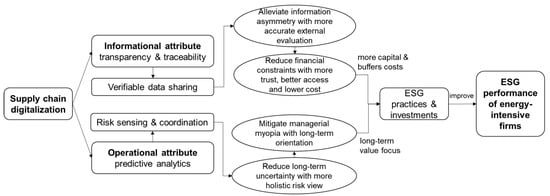
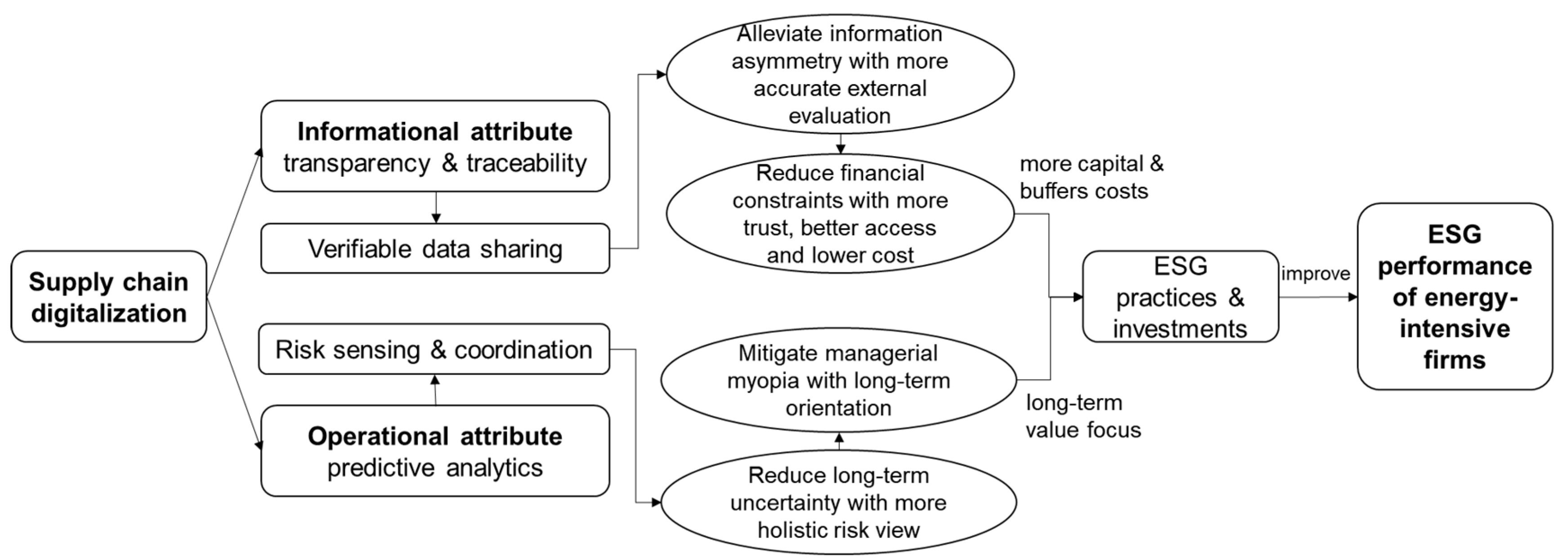
From a theoretical perspective, this study constructs a systematic theoretical framework by synthesizing the information asymmetry theory, upper echelons theory and time orientation theory. This framework clarifies how the core functions of supply chain digitalization act as a key mechanism to alleviate financing constraints and mitigate managerial myopia, thereby ultimately driving the improvement of ESG performance in energy-intensive enterprises (see Figure 1).
Figure 1.
Conceptual diagram. Note: The arrows in the figure indicate the logical transmission relationship.
The implementation of supply chain digitalization, by virtue of its informational attributes of transparency and traceability, effectively eases financing challenges and thus provides financial support for energy-intensive enterprises to conduct ESG practices. In the short term, enterprises need to bear certain financial costs to carry out ESG practices, which will increase short-term costs and affect profitability, and this has become one of the obstacles for enterprises to fulfill their ESG responsibilities [46]. Supply chain digitalization can effectively break this obstacle. On the one hand, digital technologies such as blockchain, big data and the IoT can integrate fragmented information across all links of the supply chain [47], enabling investors and financial institutions to obtain comprehensive data on enterprises’ operational status, resource allocation efficiency and risk distribution. This greatly reduces information asymmetry in the capital market, allowing external stakeholders to accurately evaluate enterprises’ capabilities and thus enhancing trust in their long-term viability. On the other hand, the integration of supply chain data enables full-chain traceability and risk management of supply chain risks [48], such as visualizing information on supplier defaults, logistics disruptions and fluctuations in market demand, which facilitates enterprises to demonstrate their operational stability and risk management capabilities to investors and banks. This boosts external investors’ confidence and trust in enterprises, broadens external financing channels, and thereby alleviates enterprises’ financing constraints.
When financing constraints are alleviated, energy-intensive enterprises can allocate more capital to investments related to environmental sustainability. In terms of the environmental dimension, they can invest in digital monitoring systems for pollutant emissions, the upgrading of energy-efficient equipment, and the research and development of low-carbon technologies, so as to reduce environmental risks and comply with regulatory requirements [49]. In the social dimension, sufficient funding supports employee training, welfare improvement, community public welfare programs and product safety management, thereby strengthening the fulfillment of social responsibilities [50]. In the governance dimension, the eased financing pressure reduces enterprises’ incentive to engage in improper practices such as corruption and tax evasion to address short-term capital shortfalls, and promotes the optimization of shareholder rights protection mechanisms, thus improving the level of corporate governance.
At the same time, supply chain digitalization mitigates managerial myopia through its operational attribute of predictive analytics, guiding managers to focus on long-term ESG value creation and thus improving the ESG performance of energy-intensive enterprises. Managerial myopia refers to managers’ tendency to focus solely on short-term financial performance while neglecting long-term sustainable development [51], a phenomenon that is particularly prominent among energy-intensive enterprises facing the pressures of high energy costs and short-term profit targets. Supply chain digitalization can effectively curb such a short-sighted tendency. First, digital technologies such as big data analytics and artificial intelligence prediction models enable managers to accurately forecast long-term market demand trends, fluctuations in supply chain resources, and potential environmental and social risks [52]. This reduces uncertainty in long-term decision-making, allowing managers to formulate ESG strategies with clear timelines and implementation pathways, rather than prioritizing the maximization of short-term profits. Second, digital supply chain management systems integrate multi-dimensional data, including operational risks, environmental compliance risks and social reputation risks, providing managers with a holistic view of risks [53]. This helps managers recognize that neglecting ESG performance may lead to long-term risks such as regulatory penalties, brand damage and supply chain disruptions, thereby curbing the tendency to sacrifice long-term sustainability for short-term gains.
Based on the upper echelons theory and time orientation theory, managers’ temporal cognitive traits directly influence their strategic choices [54]. When strategic cognition mitigates managers’ myopic behaviors, their decision-making perspective extends to long-term sustainable development [39]. In terms of environmental performance, they will increase investment in green technological innovation and circular economy practices, taking into account the long-term environmental impacts of production activities. In terms of social performance, attention to employee career development, community development and product safety will be enhanced. In terms of governance performance, managers will drive the improvement of corporate governance structures, such as strengthening the independence of the board of directors and optimizing incentive mechanisms linked to ESG performance, to ensure the sustainability of ESG practices.
Therefore, we propose the following hypothesis:
H1:
Supply chain digitalization can promote ESG performance of energy-intensive firms.
3. Research Design
3.1. Data
We select panel data of Chinese A-share listed enterprises in energy-intensive industries from 2014 to 2022 to investigate the impact and underlying mechanisms of internal supply chain digitalization on ESG performance in such firms. According to Statistical Communiqué of the People’s Republic of China on the National Economic and Social Development, China Statistical Yearbook, Industrial Classification for National Economic Activities (GB/T4754-2002) [55], List of energy-intensive firms supplied by State Grid Corporation of China in 2007, and List of energy efficiency “leader” firms in China’s key energy use industries from 2016 to 2022, we compile a catalog of 14 energy-intensive industries, covering the textile industry, papermaking and paper products industry, petroleum processing, coking and nuclear fuel processing industry, manufacturing of chemical raw materials and chemical products, and chemical fiber manufacturing industry, among others. After excluding samples with missing key variables and special treatment (ST, ST*) status, the final sample consists of 1353 A-share listed enterprises, with a total of 9198 firm-year observations. The research data are sourced from the China Stock Market & Accounting Research Database (CSMAR), Wind Database, China Research Data Services Platform (CNRDS), annual reports of Chinese A-share listed enterprises, and the Digital Finance Research Center of Peking University. To mitigate the interference of outliers, we winsorize all continuous variables at the 1st and 99th percentiles.
3.2. Model Setting and Variable Measurement
Referring to Yang and Han [56], we constructed a model of benchmark regression to reveal the impact of supply chain digitalization on energy-intensive firms’ ESG performance. Equation (1) is the following:
where i is the firm and t is the year. , the dependent variable, indicates the ESG performance of firm i in year t, and represents the level of supply chain digitalization of firm i in year t. We concern the β1, if β1 is significantly positive, it indicates that the supply chain digitalization within firms promotes the performance of ESG. is a vector of control variables. is the individual fixed effect, is the year fixed effect, and is the random disturbance term. To control for potential heteroscedasticity issues, we employ cluster-robust standard errors at the firm level.
3.2.1. Independent Variable
The main independent variable is the level of firms’ supply chain digitalization (SCD). We refer to existing mature research paradigms [57] and construct the indicator through a systematic three-step process, with the detailed procedures elaborated as follows. The selection of keywords for developing the supply chain digitalization corpus abides by three core criteria: theoretical consistency, policy alignment, and practical relevance. Theoretically, based on the definition of supply chain digitalization as the integration of digital technologies to optimize supply chain management, enhance operational efficiency, and promote collaborative value creation [6], we identified core technical directions and functional scenarios closely associated with supply chain operations. Policy-wise, we systematically organized authoritative policy documents and national standards—including the Statistical Classification of the Digital Economy and Its Core Industries (2021), Reference Table of Digital Economy Core Industry Classification and International Patent Classification (2023), Guidelines for Digital Supply Chain Management, and Digital Supply Chain Maturity Model—to ensure the selected keywords are in line with national strategic orientations and industrial development norms. Practically, we supplemented digitalization-related keywords from the CSMAR database to fully cover the practical application scenarios of supply chain digitalization in enterprises. On this basis, we further classified the keywords according to the core functional dimensions of supply chain digitalization: drawing on the operational logic of supply chain management, we divided the keywords into four categories, namely logistics efficiency, product and service development, data and information sharing, and capital risk control. Logistics efficiency focuses on digital technologies applied in transportation, warehousing and distribution links; product and service development covers digital tools for production process optimization and product lifecycle management; data and information sharing involves technologies and platforms supporting information integration and collaborative sharing; and capital risk control includes digital solutions for supply chain financial transactions and risk management. After repeated screening and validation to exclude ambiguous or irrelevant terms, the final keyword corpus comprises 80 objective and specific terms (see Appendix A for details).
We collected the annual reports of Chinese A-share listed companies in energy-intensive industries from 2014 to 2022 as the text source, and conducted standardized preprocessing on the text data to ensure the accuracy of word frequency statistics. The standardized preprocessing included converting all text into UTF-8 encoding and performing Chinese word segmentation with the jieba library in Python 3.10.9, among other steps. Then, we conducted word frequency statistics against the supply chain digitalization keyword corpus to obtain the frequency of supply chain digitalization-related terms for each firm. We logarithmically transformed the word frequency and used it as a proxy variable for supply chain digitalization.
3.2.2. Dependent Variable
We use the Sino-Securities ESG rating to measure the ESG performance of energy-intensive firms [58]. The ESG scores are categorized into nine score bands, each corresponding to ESG ratings ranging from C to AAA. We assign these 9 levels in order from C to AAA to values ranging from 1 to 9.
3.2.3. Mechanism Variables
Financing Constraints (FinCon). We adopt the WW index to measure the degree of corporate financing constraints [59], which is widely used in studies on Chinese enterprises’ financing behavior. A higher WW index indicates a more severe degree of financing constraints faced by the firm.
Managerial Myopia (Myopia). Referring to Liu and Zhang [39], we measure managerial myopia using the proportion of short-term vocabulary in the Management Discussion and Analysis (MD&A) section of corporate annual reports. The short-term vocabulary corpus includes terms such as “short-term profit”, “current performance”, and “immediate return”, totaling 32 core short-term words. Then, we count the frequency of these short-term words in the MD&A section and divide it by the total number of words in the MD&A to obtain the proportion of short-term vocabulary, which is used as the proxy variable for managerial myopia.
3.2.4. Control Variables
Following previous studies [58,60,61], we first include several firm-level control variables, which consist of the size of firms (Size), listed years of firms (FirmAge), leverage ratio (Lev), liquidity ratio (Liquid), proportion of fixed assets (Fixed), and accounts receivable ratio (Rec). Second, we control for the corporate governance variables, which comprise board independence (Indep), dual role of the board chairman (Dual), and concentration of shareholding (TOP). We utilize firm fixed effects (Firm) and year fixed effects (Year) to control for potential impacts that may be due to differences in unobserved factors that exist between individual firms and years. The specific definitions of variables are presented in Table 1.
Table 1.
Variable definitions.
3.2.5. Research Framework
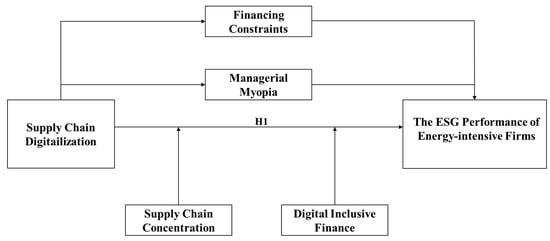
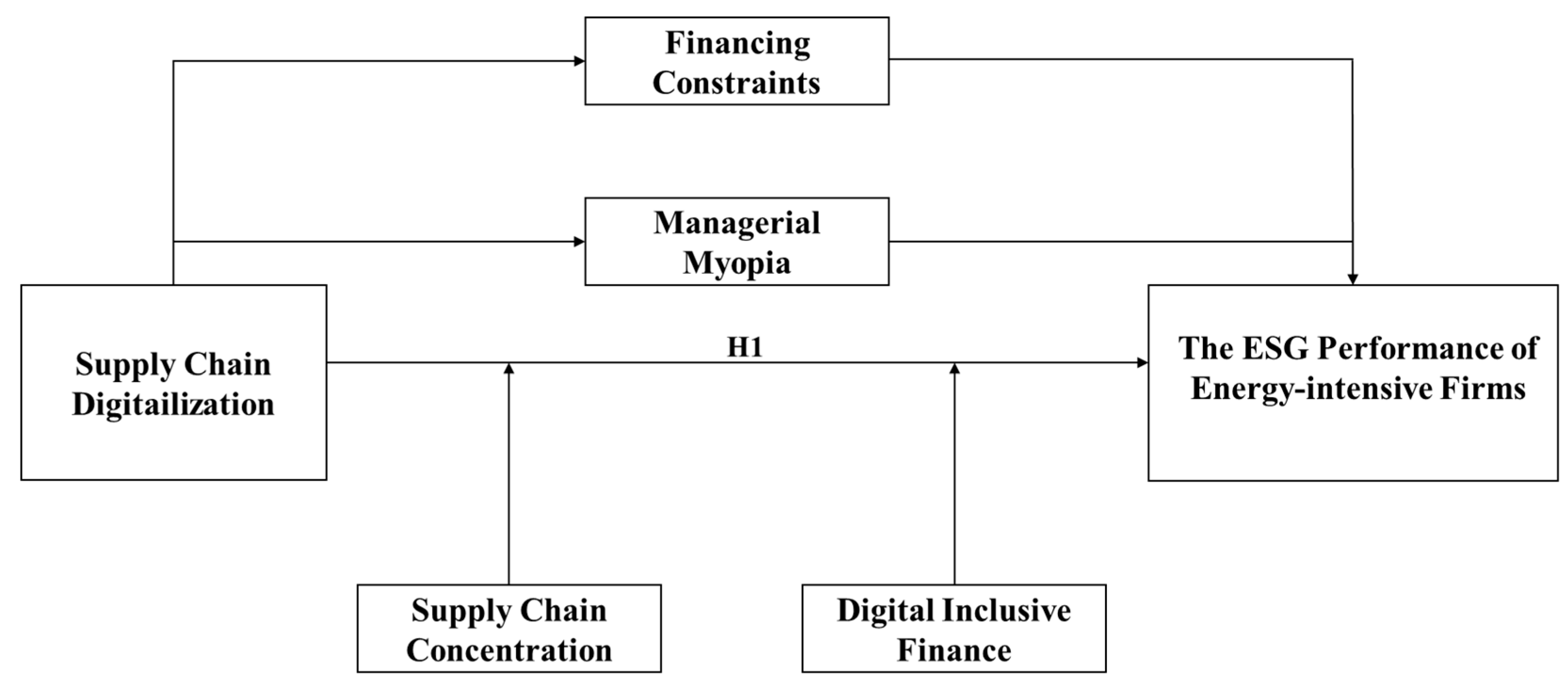
To intuitively present the logical relationship between variables, and the core research steps of this study, we construct a research framework diagram (see Figure 2).
Figure 2.
Research framework. Note: Arrows denote the directional influence between constructs.
3.3. Descriptive Statistics
Table 2 presents the descriptive statistics of the variables. The ESG exhibits a broad range, with the highest value reaching 9.0000, while the lowest being 3.0000. Additionally, a standard deviation of 1.3555 indicates significant heterogeneity in ESG performance among energy-intensive firms. The descriptive statistical results of the remaining variables are within an acceptable range, which lays a solid foundation for our subsequent research.
Table 2.
Descriptive statistical analysis of all variables.
4. Empirical Results
4.1. Baseline Regression Results
Table 3 presents the regression results, which verify the positive effect of supply chain digitalization on the ESG performance of energy-intensive firms. Column (1) reports the baseline regression results without control variables included; Column (2) presents the estimation results with firm-level control variables, firm fixed effects and year fixed effects; Column (3) presents the estimation results adding corporate governance variables based on Column (2). The regression coefficient of SCD is significantly positive at the 1% level, indicating that the digitalization of the supply chain within energy-intensive firms can significantly promote the ESG performance of these firms. The results underscore the importance of integrating digital technologies into supply chain processes, as it not only streamlines operations and enhances efficiency [3], but also facilitates the implementation of ESG-related practices, thereby acting as a core driver for enhancing the sustainable development capacity of energy-intensive firms.
Table 3.
Baseline Regression Results.
4.2. Robustness Tests
4.2.1. Endogeneity Tests
We adopt the following approaches to mitigate endogeneity concerns in this study. First, the Heckman two-step method is employed to conduct endogeneity tests. In the first stage, we take the dummy variable of whether a firm has received an ESG rating (ESG_dum) as the dependent variable and construct a Probit model for estimation. ESG_dum takes the value of 1 if a firm gets the ESG rating for that year, and 0 otherwise. Simultaneously, this model uses the mean ESG rating (ESG_mean) of other firms in the same year and industry as an exclusion restriction variable, keeping the control variables consistent with Equation (1). In the second stage, based on the regression results from the first stage, we construct the Inverse Mills Ratio (IMR) and incorporate it into Equation (1) for regression to correct for the impact of bias. The results of the Heckman two-step model are reported in Column (1)–(2) of Table 4. Column (2) of Table 4 reports the results of the second stage, where the IMR is significantly negative, indicating that there is a certain degree of selection bias. The regression results also show that after controlling for the impact of selection bias, the relationship between supply chain digitalization and the ESG performance of energy-intensive firms remains significantly positive at the 1% level, which verifies the robustness of our findings.
Table 4.
Endogeneity tests results.
Second, to further mitigate endogeneity issues, we adopt the propensity score matching (PSM) method for robustness testing. Specifically, we group corporate supply chain digitalization by year and industry median, dividing the sample into two groups: high supply chain digitalization and low supply chain digitalization. Firms with a high level of supply chain digitalization (High supply chain digitalization = 1) are taken as the treatment group, while those with a low level of supply chain digitalization (Low supply chain digitalization = 0) are taken as the control group. The control variables of baseline regression are selected as covariates. Then, the 1:4 nearest neighbor matching method is used for matching. After matching, the ATT is significant, indicating that the ESG performance of the treatment group was still significantly better than that of the control group after matching the control group with similar characteristics. We then re-estimate the baseline model using the PSM-matched sample, and the results are reported in Column (3) of Table 4. The regression coefficient of SCD remains significantly positive at the 1% level, which is consistent with our baseline findings and confirms that our core conclusions remain valid after addressing endogeneity concerns.
Third, to further mitigate endogeneity issues, drawing on the quasi-natural experiment approach, we treat the Pilot Policy for Supply Chain Innovation and Application as an exogenous event and employ the difference-in-differences (DID) method to conduct an endogeneity test [19]. DID is a dummy variable for the pilot policy, which takes a value of 1 if an enterprise is located in a pilot city for supply chain innovation and application and the year falls in or after the year when the city was selected, and 0 otherwise. The results reported in Column (4) of Table 4 show that the coefficient of DID is significantly positive at the 1% level, which further confirms the robustness of the baseline regression results.
4.2.2. Other Robustness Tests
First, we change the measurement of the dependent variable. We use the ESG ratings of SynTao Green Finance as a proxy for corporate ESG performance, and similarly, we apply an assignment method to handle the ESG ratings of SynTao Green Finance. The regression results (see Column (1), Table 5) show that the impact of supply chain digitalization on the ESG performance of energy-intensive firms remains significantly positive at the 1% level. Therefore, the baseline result is robust.
Table 5.
Robustness test results.
Second, we perform a robustness analysis with a one-stage lag for the independent variable. The results are shown in Column (2) of Table 5, which is consistent with the results of baseline regression. Third, after eliminating the possibility of strategic interpretation, we conduct another regression. Although the index of the degree of corporate supply chain digitalization, constructed based on information disclosed in annual reports, has a certain level of scientific validity, this index might also be influenced by the behavior of corporate strategic information disclosure, such as the extent of supply chain digital transformation disclosed in annual reports being much more advanced than the reality. To avoid strategic information disclosure behavior, we only keep samples of listed firms whose information disclosure evaluation results of Shenzhen Stock Exchange are excellent or good. These firms are less likely to engage in strategic information disclosure, making the data they provide more authentic and reliable. On this basis, we carry out a robustness test, and the regression results are presented in Column (3) of Table 5.
Furthermore, we control the macro policy environment factors and reduce the influence of external factors of the macro system on the results by adding province × year fixed effects. The results are reported in Column (4) of Table 5.
In addition, to reduce the error impact of missing variables on model estimation, we add control variables such as female director ratio (Female), return on assets (ROA) and regional economic development level (GDP), and then re-estimated Equation (1). The results are in Column (5) of Table 5. The robustness results show that the positive impact of supply chain digitalization on energy-intensive firms’ ESG performance remains robust, confirming the reliability of our findings.
5. Further Analysis
5.1. Mechanism Analysis
5.1.1. Financing Constraints
To test the mechanism of financing constraints between supply chain digitalization and the ESG performance of energy-intensive firms, we use the WW index to measure the financing constraints (FinCon) of firms. As shown in Column (1) of Table 6, the impact of corporate supply chain digitalization on financing constraints is significantly negative at the 5% level. This result indicates that supply chain digitalization plays a positive role in alleviating financing constraints for firms, thus encouraging energy-intensive firms to engage in ESG practices and enhancing their ESG performance.
Table 6.
Mechanism tests results.
5.1.2. Managerial Myopia
We consider mitigating managerial myopia as a mechanism of the impact of the supply chain digitalization on the ESG performance of energy-intensive firms. According to Liu and Zhang [39], we adopt the managerial myopia index to measure the level of managerial myopia (Myopia). This index utilizes the share of short-term level vocabulary frequency in the Management Discussion and Analysis (MD&A) section of annual reports to gauge the characteristics of managerial myopia. The results from Column (2) of Table 6 show that the regression coefficient for ESG is significantly negative, suggesting that supply chain digitalization can mitigate managerial myopia. In other words, supply chain digitalization can promote energy-intensive firms’ ESG performance by mitigating managerial myopia.
5.2. Heterogeneity Analysis
5.2.1. Supply Chain Concentration
We measure supply chain concentration using the percentage of purchases by a firm’s largest supplier to total purchases [62], and divide the sample into two groups for grouping regression using the median as the grouping criterion. Table 7 shows that in firms with low supply chain concentration, supply chain digitalization has a positive effect on the ESG performance of energy-intensive firms at the 1% level. However, there is no relationship between supply chain digitalization and ESG performance in energy-intensive firms with high supply chain concentration. In other words, supply chain digitalization exerts a more pronounced positive effect on the ESG performance of energy-intensive firms when supply chain concentration is lower.
Table 7.
Heterogeneity analysis results—supply chain concentration.
These heterogeneous results can be attributed to the following mechanisms. While low supply chain concentration means firms work with a larger number of suppliers and operate within more complex supply chain networks, it is exactly in this context that supply chain digital technologies can exert their value more fully. Through supply chain digitalization, firms can achieve monitoring and management of the entire complex supply chain network, enhancing visibility and transparency across various suppliers [63,64]. As a result, firms are better able to identify and manage ESG risks within the supply chain. Furthermore, supply chain digitalization helps firms with low concentration build more efficient inter-organizational communication channels, facilitating collaboration and information sharing with diverse suppliers [65]. Such improvements further promote the adoption of sustainable supply chain practices, ultimately driving the enhancement of corporate ESG performance. Hence, supply chain digitalization generates a more substantial positive effect on the ESG performance of energy-intensive firms in the context of low supply chain concentration.
5.2.2. Digital Inclusive Finance
In regions with a higher development level of digital inclusive finance, the positive impact of supply chain digitalization on the ESG performance of energy-intensive firms is more pronounced. This is because the improvement of digital inclusive financial services can provide firms with more financial support and services, making it easier for them to access funds and resources [66,67], thereby promoting better ESG practices within firms [68]. On one hand, high-level digital inclusive financial services can reduce the financing costs for firms [69], increasing the flexibility of their investments and actions towards sustainable development. On the other hand, digital inclusive financial services offer higher levels of financial technology support, enabling firms to better track and manage the flow of funds within the supply chain. This allows firms to monitor transactions and fund usage in real time, preventing the misuse of funds while ensuring that the flow of capital aligns with ESG requirements. Consequently, supply chain digitalization exerts a more substantial promotional effect on the ESG performance of energy-intensive firms in regions with a higher development level of digital inclusive finance.
We use the China Urban Digital Inclusive Finance Development Index compiled by Peking University as a proxy variable for digital inclusion finance [70,71]. Following the same approach as the previous method, the samples are divided into two groups for grouped regression analysis, and the regression results are presented in Table 8. The findings in Table 8 show that for the high digital inclusive finance subgroup, the regression coefficient of SCD is significantly positive at the 1% level, which is consistent with our theoretical predictions.
Table 8.
Heterogeneity analysis results—digital inclusive finance.
5.3. Different Dimensions of ESG
Corporate ESG performance mainly encompasses three dimensions: environmental, social, and governance. The Sino-Securities rating system assesses “E”, “S”, and “G” scores. Based on this, we further examine the impact of corporate supply chain digitalization on the performance of the environmental, social, and governance dimensions. We assign values to the three sub-categories of ESG ratings from high to low, ranging from 9 to 1. Furthermore, we replace the dependent variable (ESG) in Equation (1) with environmental (Escore), social (Sscore), and governance (Gscore), respectively, to investigate the extent to which supply chain digitalization contributes to the improvement of each sub-dimension of the ESG performance of energy-intensive firms.
The regression results are presented in Table 9. The results show that, in columns (1) and (2), the coefficients for SCD are significantly positive at the 5% level. In column (3), the coefficient of SCD is significantly positive at the 10% level. These indicate that corporate supply chain digitalization has a positive effect on enhancing energy-intensive firms’ performance in environmental protection, social responsibility, and corporate governance.
Table 9.
The effect of each dimension in ESG.
6. Conclusions
6.1. Research Conclusions
Exploring whether supply chain digitalization can boost the ESG performance of energy-intensive firms is of pivotal importance for enhancing such firms’ adaptability and competitiveness amid the challenges posed by global energy transition and sustainable development imperatives. Based on data from A-share listed firms in energy-intensive industries in China from 2014 to 2022, we studied the impact of corporate supply chain digitalization on the ESG performance of energy-intensive firms. Our research findings indicate a significant positive effect of supply chain digitalization on the ESG performance of energy-intensive firms, which remains robust after conducting a series of endogeneity and robustness tests. Mitigating financing constraints and curbing managerial myopia are two potential pathways through which supply chain digitalization promotes energy-intensive firms’ ESG performance. Furthermore, we observed that the positive impact of supply chain digitalization on the ESG performance of energy-intensive firms is more pronounced in firms with lower supply chain concentration and regions with higher levels of digital inclusive finance development. From different dimensions of ESG, corporate supply chain digitalization positively enhances energy-intensive firms’ performance in environmental protection, social responsibility, and corporate governance.
6.2. Theoretical Contributions
Our study has certain theoretical contributions. First, it enriches the research stream on the nexus between supply chain digitalization and sustainable development performance, with a focused and in-depth exploration of energy-intensive industries, a research context that has been overlooked in extant literature. Most existing studies confine their analyses to the generalized whole industry or the new energy sector [16,17,18,72], whereas this research takes energy-intensive enterprises as the core research object. Based on empirical analysis, we verify that supply chain digitalization exerts a significantly positive effect on enterprises’ comprehensive ESG performance as well as its three sub-dimensions in the context of energy-intensive industries. This finding not only enriches the academic research on the economic and social outcomes of supply chain digitalization, but also expands the boundary of research on the driving factors of ESG performance in energy-intensive enterprises. More importantly, it provides novel empirical evidence for revealing the sustainable value of supply chain digital transformation in energy-intensive enterprises.
Second, this study expands the application scope of the information asymmetry theory, upper echelons theory and time orientation theory in the field of supply chain digital transformation and sustainable development. It reveals how supply chain digitalization reduces information asymmetry between enterprises and external stakeholders through transparency and traceability, thereby alleviating financing constraints and improving ESG performance. As for the upper echelons theory and time orientation theory, this study demonstrates how the predictive analytical capability of supply chain digitalization reshapes managers’ temporal cognitive tendencies, mitigates their myopic behaviors, and facilitates long-term ESG value creation. This expansion enriches the explanatory scope of these classic theories and offers new theoretical perspectives for understanding the interaction between digital technologies and corporate non-financial decisions.
Third, this study systematically reveals the influence mechanism of supply chain digitalization on ESG performance, unlocking the “black box” of their relationship. While existing studies have preliminarily explored some pathways of supply chain digitalization’s impact on corporate ESG performance and mentioned mechanisms such as enhanced firm integration, corporate governance and supply chain resilience [13,20,73], none have established a complete causal transmission chain from the perspectives of enterprises’ external resource acquisition and internal decision-making logic. Specifically, we verify that supply chain digitalization alleviates both financial constraints and managerial myopia faced by energy-intensive enterprises in ESG practices, thereby promoting their ESG performance. This mechanistic analysis clarifies the causal chain between supply chain digitalization and corporate ESG performance, and deepens the understanding of the inherent logic between digital transformation and sustainable development.
6.3. Practical Implications
The findings of this study carry certain policy implications. First, the application of digital technologies in corporate supply chains should be further advanced to drive sustainable development through digital transformation. On the one hand, differentiated support policies should be clearly formulated: tax credits for R&D and application of core supply chain digitalization technologies should be prioritized, purchase subsidies provided to enterprises for IoT sensors, blockchain traceability devices and other hardware, and special fund support allocated to enterprises undertaking supply chain digital transformation to incentivize in-depth integration of digital technologies with all supply chain links. On the other hand, the development of digital platforms should be standardized to realize coordinated advancement of interoperability, data security and ESG data sharing. Competent industry authorities, in collaboration with standardization institutions, should formulate unified technical standards and data interface specifications for supply chain digital platforms, and define security requirements for data collection, storage and transmission. In addition, a pilot ESG data section can be established on such platforms, requiring enterprises to upload standardized data, including environmental emissions and social responsibility performance across all supply chain links. A data sharing review mechanism should also be set up to enable orderly ESG data sharing for government supervision, financial institution evaluation and corporate collaboration. Enterprises should be encouraged to leverage standardized digital platforms for real-time supply chain data sharing and synchronization, thereby improving collaboration efficiency and supporting the achievement of sustainable development goals.
Second, enterprises should accelerate their low-carbon transformation, take ESG principles as the guide, and clarify their ESG responsibilities and implementation paths. As major energy consumers, enterprises need to integrate ESG management into the entire business development process, with energy-intensive industry enterprises playing a demonstrative and leading role. On the one hand, enterprises should further advance the application of digital technologies in production and operation, energy consumption management and supply chain collaboration. For example, IoT technologies can be used for real-time energy consumption monitoring, big data analysis for production process optimization and carbon emission reduction, and digital platforms for full-process traceability of supply chain carbon footprints, thus enhancing the efficiency of low-carbon transformation. On the other hand, enterprises should strengthen the cultivation of managers’ long-term development awareness. Regular training sessions should be organized for managers to elaborate on the long-term value and industry cases of supply chain digitalization, low-carbon transformation and ESG management, so as to foster their global vision and sustainable development awareness. Meanwhile, enterprises should be urged to establish long-term incentive mechanisms that link managers’ performance appraisal with the enterprise’s long-term sustainable development goals and ESG performance.
6.4. Research Limitations
This study has certain limitations. First, regarding the measurement of supply chain digitalization as the independent variable, our measurement may be affected by enterprises’ strategic disclosure behaviors and may fail to reflect the depth of digital technology application. However, due to the inconsistency and low reliability of relevant data in the current quantitative measurement of supply chain digitalization, this study cannot adopt multiple alternative indicators for cross-validation. With the improvement of data availability and the refinement of statistical standards in future research, researchers can attempt to use a variety of measurement methods to comprehensively evaluate the level of supply chain digitalization. For example, the technological innovation capability in the digital field can be measured by counting the number of patents in core technology fields related to supply chain management; alternatively, qualitative and quantitative data on the depth and effect of digital implementation can be obtained by combining questionnaire surveys and case studies, thereby improving the reliability and validity of research conclusions. Second, this study only analyzes Chinese A-share listed companies in energy-intensive industries, and the research conclusions may not be fully applicable to unlisted companies and enterprises in other industries. Future research can expand the sample scope to include unlisted companies of different scales and ownership types, and explore the heterogeneous impacts of supply chain digitalization on corporate ESG performance in different industrial contexts. Finally, this study reveals the mediating roles of financing constraints and managerial myopia, yet the relationship between supply chain digitalization and ESG performance may also be affected by factors such as the intensity of industrial policies. Future research can further expand the theoretical framework and explore the boundary conditions of the research conclusions.
Author Contributions
Conceptualization, H.P. and Y.P.; methodology, H.P.; software, Y.P.; validation, Y.P.; formal analysis, H.P.; investigation, H.P.; resources, H.P.; data curation, Y.P.; writing—original draft preparation, Y.P.; writing—review and editing, H.P.; visualization, H.P.; supervision, Y.P.; project administration, H.P.; funding acquisition, H.P. All authors have read and agreed to the published version of the manuscript.
Funding
This research received no external funding.
Institutional Review Board Statement
Not applicable.
Informed Consent Statement
Not applicable.
Data Availability Statement
The raw data supporting the conclusions of this article will be made available by the authors on request.
Conflicts of Interest
The authors declare no conflicts of interest.
Abbreviations
The following abbreviations are used in this manuscript:
| ESG | Environmental, Social, and Governance |
| AI | Artificial Intelligence |
| IoT | Internet of Things |
| CEO | Chief Executive Officer |
| CSMAR | China Stock Market & Accounting Research Database |
| CNRDS | Chinese Research Data Services Platform |
| MD&A | Management Discussion and Analysis |
Appendix A. The Lexicon of Supply Chain Digitalization
| Logistics Efficiency (22 Words) | Product and Service Development (14 Words) | Data and Information Sharing (24 Words) | Financial Risk Control (11 Words) | Other Related Feature Words (9 Words) |
| Internet of Things/IoT, Intelligent Transportation, Intelligent Logistics, Digital Supply Chain, Omni-channel, Intelligent Warehousing, Intelligent Storage, Unmanned Retail, Unmanned Delivery, Online and Offline, O2O, B2B, B2C, C2B, Smart Port, Digital Channel, Smart Storage, Smart Distribution, Internet of Vehicles, AGV/Automated Guided Vehicle, TMS/Transportation Management System, WMS/Warehouse Management System | Industrial Internet, Industrial Cloud, Connected Factory, Industrial Internet, Integrated System, Life Cycle Management, MES/Manufacturing Execution System, Analog Simulation, Numerical Control Machine Tool, Automatic Warehouse, Diversified Supplier Selection and Procurement, Flexible Production Management, Automation for Production Management, Industrial Supermarket | Digital Marketing, Network Retail, E-retailing, Cloud Computing, Data Visualization, Data Mining, Information Integration, IaaS/Infrastructure as a Service, SaaS/Software as a Service, PaaS/Platform as a Service, Relational Database, Heterogeneous Data, Dataserver, Supply Chain Management Services, Cyber Security, CRM/Customer Relationship Management, Supply Chain Knowledge Base, ERP/Enterprise Resource Planning, GIS/Geographic Information System, SRM/Supplier Relationship Management, Cloud IT, Cloud Security, Information Tracing, Supply Chain Model Base | Mobile Payment, Third-Party Payment, NFC Payment, Electronic Transactions, Data Delivery, Data Trading, Online Transactions, Smart Contract, Internet Payment, Online Trading Platform, Electronic Contract | Blockchain, Digital Twin, SCP/Supply Chain Planning, Supply Chain Optimization, Order to Delivery, Supply Chain Enabling Technology, Identifier Resolution, Supply Chain Modeling, Digital Management of Supply Chain |
References
- Hsu, B.-X.; Chen, Y.-M. Does corporate social responsibility influence performance persistence? A signal extraction approach with evidence from Fortune 500 companies. Technol. Forecast. Soc. Chang. 2024, 200, 123154. [Google Scholar] [CrossRef] [Scilit]
- Wang, J.; Yu, J.; Zhong, R. Country environmental, social and governance performance and economic growth: The international evidence. Account. Financ. 2023, 63, 3911–3941. [Google Scholar] [CrossRef] [Scilit]
- Büyüközkan, G.; Göçer, F. Digital Supply Chain: Literature review and a proposed framework for future research. Comput. Ind. 2018, 97, 157–177. [Google Scholar] [CrossRef] [Scilit]
- Ali, S.B. Industrial Revolution 4.0 and Supply Chain Digitization. South Asian J. Soc. Rev. 2022, 1, 21–41. [Google Scholar] [CrossRef] [Scilit]
- Simchi-Levi, D.; Wang, H.; Wei, Y. Increasing Supply Chain Robustness through Process Flexibility and Inventory. Prod. Oper. Manag. 2018, 27, 1476–1491. [Google Scholar] [CrossRef] [Scilit]
- Annosi, M.C.; Brunetta, F.; Bimbo, F.; Kostoula, M. Digitalization within food supply chains to prevent food waste. Drivers, barriers and collaboration practices. Ind. Mark. Manag. 2021, 93, 208–220. [Google Scholar] [CrossRef] [Scilit]
- Zhong, X.; Qiu, J.; Ren, T. Research on the Impact Mechanism of ESG Performance on Enterprise New Quality Productivity Forces—Based on the Perspective of Government Subsidies. Sustainability 2025, 17, 11338. [Google Scholar] [CrossRef] [Scilit]
- Yu, W.; Chavez, R.; Liu, Q.; Cadden, T. Examining the Effects of Digital Supply Chain Practices on Supply Chain Viability and Operational Performance: A Practice-Based View. IEEE Trans. Eng. Manag. 2023, 71, 10413–10426. [Google Scholar] [CrossRef] [Scilit]
- Wu, Y.; Wang, J.; Xia, S.; He, Q.; Zhang, Q. The Impact of Supply Chain Digitalization on Firms’ Performance: An Empirical Test of How Resource Specificity Explains the Digitalization Paradox. J. Bus. Logist. 2025, 46, e70023. [Google Scholar] [CrossRef] [Scilit]
- Ali, I.; Govindan, K. Extenuating operational risks through digital transformation of agri-food supply chains. Prod. Plan. Control 2023, 34, 1165–1177. [Google Scholar] [CrossRef] [Scilit]
- Zhao, N.; Hong, J.; Lau, K.H. Impact of supply chain digitalization on supply chain resilience and performance: A multi-mediation model. Int. J. Prod. Econ. 2023, 259, 108817. [Google Scholar] [CrossRef] [Scilit]
- Gao, J.; Gao, Y.; Guan, T.; Liu, S.; Ma, T. Inhibitory influence of supply chain digital transformation on bullwhip effect feedback difference. Bus. Process Manag. J. 2024, 30, 135–157. [Google Scholar] [CrossRef] [Scilit]
- Zhang, M.; Huang, Z. The Impact of Digital Transformation on ESG Performance: The Role of Supply Chain Resilience. Sustainability 2024, 16, 7621. [Google Scholar] [CrossRef] [Scilit]
- Liu, Y.; Huang, H.; Mbanyele, W.; Li, X.; Balezentis, T. Harnessing supply chain digital innovation for enhanced corporate environmental practices and sustainable growth. Energy Econ. 2025, 142, 108161. [Google Scholar] [CrossRef] [Scilit]
- Zhong, T.; Duan, Y.; Du, D.; Wu, D. How Does Digital Supply Chain Innovation Affect Corporate ESG Performance?—Empirical Evidence Based on Supply Chain Innovation and Application Pilot in China. Emerg. Mark. Financ. Trade 2025, 1–30. [Google Scholar] [CrossRef] [Scilit]
- Shi, X.; Liu, H. How does digital supply chain transformation enhance sustainable performance of renewable energy enterprises? Int. Rev. Econ. Financ. 2025, 103, 104460. [Google Scholar] [CrossRef] [Scilit]
- Gao, D.; Tan, L.; Chen, Y. Smarter is greener: Can intelligent manufacturing improve enterprises’ ESG performance? Humanit. Soc. Sci. Commun. 2025, 12, 529. [Google Scholar] [CrossRef] [Scilit]
- Tian, L.; Tian, W.; Guo, M. Can supply chain digitalization open the way to sustainable development? Evidence from corporate ESG performance. Corp. Soc. Responsib. Environ. Manag. 2025, 32, 2332–2346. [Google Scholar] [CrossRef] [Scilit]
- Xu, B.; Guo, Q.; Chen, L. The influence of supply chain digitalization on enterprise ESG performance: A quasi-natural experiment based on pilot policies for supply chain innovation and application. Econ. Anal. Policy 2025, 87, 1058–1072. [Google Scholar] [CrossRef] [Scilit]
- Wang, S.; Zhang, H. How does digital supply chain transformation determine environmental, social, and governance (ESG) performance? Mediating role of firm integration and moderating effect of organizational digital culture. Oper. Manag. Res. 2025, 18, 960–986. [Google Scholar] [CrossRef] [Scilit]
- Lin, B.; Tan, R. Sustainable development of China’s energy intensive industries: From the aspect of carbon dioxide emissions reduction. Renew. Sustain. Energy Rev. 2017, 77, 386–394. [Google Scholar] [CrossRef] [Scilit]
- Eslamipoor, R. An integrated approach for three-layer location-allocation in a green supply chain. Int. J. Logist. Syst. Manag. 2025, 52, 308–322. [Google Scholar] [CrossRef] [Scilit]
- Sueyoshi, T.; Mo, F.; Wang, D.D. Sustainable development of countries all over the world and the impact of renewable energy. Renew. Energy 2022, 184, 320–331. [Google Scholar] [CrossRef] [Scilit]
- Xu, B. A spatial analysis of an effective path for low-carbon development of energy-intensive industries. Sustain. Prod. Consum. 2023, 37, 227–241. [Google Scholar] [CrossRef] [Scilit]
- Lee, C.-C.; Zhong, Q.; Wen, H.; Song, Q. Blessing or curse: How does sustainable development policy affect total factor productivity of energy-intensive enterprises? Socio-Econ. Plan. Sci. 2023, 89, 101709. [Google Scholar] [CrossRef] [Scilit]
- Ma, S.; Ding, W.; Liu, Y.; Zhang, Y.; Ren, S.; Kong, X.; Leng, J. Industry 4.0 and cleaner production: A comprehensive review of sustainable and intelligent manufacturing for energy-intensive manufacturing industries. J. Clean. Prod. 2024, 467, 142879. [Google Scholar] [CrossRef] [Scilit]
- Kaniappan Chinnathai, M.; Alkan, B. A digital life-cycle management framework for sustainable smart manufacturing in energy intensive industries. J. Clean. Prod. 2023, 419, 138259. [Google Scholar] [CrossRef] [Scilit]
- Ma, S.; Huang, Y.; Liu, Y.; Kong, X.; Yin, L.; Chen, G. Edge-cloud cooperation-driven smart and sustainable production for energy-intensive manufacturing industries. Appl. Energy 2023, 337, 120843. [Google Scholar] [CrossRef] [Scilit]
- Ageron, B.; Bentahar, O.; Gunasekaran, A. Digital supply chain: Challenges and future directions. Supply Chain Forum Int. J. 2020, 21, 133–138. [Google Scholar] [CrossRef] [Scilit]
- Agrawal, P.; Narain, R. Digital supply chain management: An Overview. IOP Conf. Ser. Mater. Sci. Eng. 2018, 455, 012074. [Google Scholar] [CrossRef] [Scilit]
- Zhang, H.; Lv, Y.; Zhang, S.; Liu, Y.D. Digital Supply Chain Management: A Review and Bibliometric Analysis. J. Glob. Inf. Manag. 2024, 32, 1–20. [Google Scholar] [CrossRef] [Scilit]
- Zhou, H.; Wang, Q.; Li, L.; Teo, T.S.H.; Yang, S. Supply chain digitalization and performance improvement: A moderated mediation model. Supply Chain Manag. Int. J. 2023, 28, 993–1008. [Google Scholar] [CrossRef] [Scilit]
- Ye, F.; Liu, K.; Li, L.; Lai, K.-H.; Zhan, Y.; Kumar, A. Digital supply chain management in the COVID-19 crisis: An asset orchestration perspective. Int. J. Prod. Econ. 2022, 245, 108396. [Google Scholar] [CrossRef] [Scilit]
- Huang, K.; Wang, K.; Lee, P.K.C.; Yeung, A.C.L. The impact of industry 4.0 on supply chain capability and supply chain resilience: A dynamic resource-based view. Int. J. Prod. Econ. 2023, 262, 108913. [Google Scholar] [CrossRef] [Scilit]
- Zhu, Y.; Zhang, Z. Supply chain digitalization and corporate ESG performance: Evidence from supply chain innovation and application pilot policy. Financ. Res. Lett. 2024, 67, 105818. [Google Scholar] [CrossRef] [Scilit]
- Aabo, T.; Giorici, I.C. Do female CEOs matter for ESG scores? Glob. Financ. J. 2023, 56, 100722. [Google Scholar] [CrossRef] [Scilit]
- Chen, L.; He, G.; Krishnan, G.V. Does CEO debt-like compensation mitigate corporate social irresponsibility? Account. Forum 2024, 48, 594–634. [Google Scholar] [CrossRef] [Scilit]
- Li, J.; Zhu, Y.; Ma, T. The Impact of the CEO’s Green Experience on Corporate ESG Performance: Based on the Upper Echelons Theory Perspective. Sustainability 2025, 17, 6859. [Google Scholar] [CrossRef] [Scilit]
- Liu, H.; Zhang, Z. The impact of managerial myopia on environmental, social and governance (ESG) engagement: Evidence from Chinese firms. Energy Econ. 2023, 122, 106705. [Google Scholar] [CrossRef] [Scilit]
- Bai, F.; Shang, M.; Huang, Y. Corporate culture and ESG performance: Empirical evidence from China. J. Clean. Prod. 2024, 437, 140732. [Google Scholar] [CrossRef] [Scilit]
- Yang, B.; Guo, C.; Fan, Y. Institutional Investor Networks and ESG Performance: Evidence from China. Emerg. Mark. Financ. Trade 2024, 60, 113–137. [Google Scholar] [CrossRef] [Scilit]
- Ding, J.; Li, L.; Zhao, J. How does fintech prompt corporations toward ESG sustainable development? Evidence from China. Energy Econ. 2024, 131, 107387. [Google Scholar] [CrossRef] [Scilit]
- Huang, C.; Zhou, H.; Norhayati, W.A.; Saad, R.A.J.; Zhang, X. Tax incentives, common institutional ownership, and corporate ESG performance. Manag. Decis. Econ. 2024, 45, 2516–2528. [Google Scholar] [CrossRef] [Scilit]
- Lei, X.; Yu, J. Striving for sustainable development: Green financial policy, institutional investors, and corporate ESG performance. Corp. Soc. Responsib. Environ. Manag. 2024, 31, 1177–1202. [Google Scholar] [CrossRef] [Scilit]
- Bin-Feng, C.; Mirza, S.S.; Ahsan, T.; Qureshi, M.A. How uncertainty can determine corporate ESG performance? Corp. Soc. Responsib. Environ. Manag. 2023, 31, 2290–2310. [Google Scholar] [CrossRef] [Scilit]
- Cui, M.; Li, D. The ESG premium in China’s a-share market: A time horizon perspective. Appl. Econ. 2024, 56, 7437–7453. [Google Scholar] [CrossRef] [Scilit]
- Pratap, S.; Jauhar, S.K.; Gunasekaran, A.; Kamble, S.S. Optimizing the IoT and big data embedded smart supply chains for sustainable performance. Comput. Ind. Eng. 2024, 187, 109828. [Google Scholar] [CrossRef] [Scilit]
- Rauniyar, K.; Wu, X.; Gupta, S.; Modgil, S.; Lopes De Sousa Jabbour, A.B. Risk management of supply chains in the digital transformation era: Contribution and challenges of blockchain technology. Ind. Manag. Data Syst. 2023, 123, 253–277. [Google Scholar] [CrossRef] [Scilit]
- Xu, J.; Yin, J. Digital transformation and ESG performance: The chain mediating role of technological innovation and financing constraints. Financ. Res. Lett. 2025, 71, 106387. [Google Scholar] [CrossRef] [Scilit]
- Xu, J.; Luo, Q. Controlling shareholder equity pledging, financing constraints, and corporate social responsibility. Financ. Res. Lett. 2025, 76, 106996. [Google Scholar] [CrossRef] [Scilit]
- Stein, J.C. Takeover Threats and Managerial Myopia. J. Political Econ. 1988, 96, 61–80. [Google Scholar] [CrossRef] [Scilit]
- Weisz, E.; Herold, D.M.; Kummer, S. Revisiting the bullwhip effect: How can AI smoothen the bullwhip phenomenon? Int. J. Logist. Manag. 2023, 34, 98–120. [Google Scholar] [CrossRef] [Scilit]
- Sharma, J.; Tyagi, M.; Kazançoğlu, Y. Impact of digital technologies on the risk assessment in food supply chain: A wake towards digitalisation. Int. J. Food Sci. Technol. 2024, 59, 3491–3504. [Google Scholar] [CrossRef] [Scilit]
- Hambrick, D.C.; Mason, P.A. Upper Echelons: The Organization as a Reflection of Its Top Managers. Acad. Manag. Rev. 1984, 9, 193. [Google Scholar] [CrossRef] [Scilit]
- GB/T 4754-2002; Industrial Classification for National Economic Activities. General Administration of Quality Supervision, Inspection and Quarantine of the People’s Republic of China & Standardization Administration of the People’s Republic of China: Beijing, China, 2002.
- Yang, Y.; Han, J. Digital transformation, financing constraints, and corporate environmental, social, and governance performance. Corp. Soc. Responsib. Environ. Manag. 2023, 30, 3189–3202. [Google Scholar] [CrossRef] [Scilit]
- Wang, K.; Peng, Y.; Zhou, T. The Impact of Supply Chain Innovation and Application Policies on Supply Chain Digitalization. Emerg. Mark. Financ. Trade 2025, 61, 3308–3331. [Google Scholar] [CrossRef] [Scilit]
- Lu, Y.; Xu, C.; Zhu, B.; Sun, Y. Digitalization transformation and ESG performance: Evidence from China. Bus. Strategy Environ. 2023, 33, 352–368. [Google Scholar] [CrossRef] [Scilit]
- Whited, T.M.; Wu, G. Financial Constraints Risk. Rev. Financ. Stud. 2006, 19, 531–559. [Google Scholar] [CrossRef] [Scilit]
- Huang, Q.; Fang, J.; Xue, X.; Gao, H. Does digital innovation cause better ESG performance? An empirical test of a-listed firms in China. Res. Int. Bus. Financ. 2023, 66, 102049. [Google Scholar] [CrossRef] [Scilit]
- Wang, K.; Chen, X.; Wang, C. The impact of sustainable development planning in resource-based cities on corporate ESG–Evidence from China. Energy Econ. 2023, 127, 107087. [Google Scholar] [CrossRef] [Scilit]
- Li, C.; Wang, Y.; Zhou, Z.; Wang, Z.; Mardani, A. Digital finance and enterprise financing constraints: Structural characteristics and mechanism identification. J. Bus. Res. 2023, 165, 114074. [Google Scholar] [CrossRef] [Scilit]
- He, W.; Zhang, Y.; Wang, M. Fintech, supply chain concentration and enterprise digitization: Evidence from chinese manufacturing listed companies. Financ. Res. Lett. 2024, 59, 104702. [Google Scholar] [CrossRef] [Scilit]
- Dolgui, A.; Ivanov, D. 5G in digital supply chain and operations management: Fostering flexibility, end-to-end connectivity and real-time visibility through internet-of-everything. Int. J. Prod. Res. 2022, 60, 442–451. [Google Scholar] [CrossRef] [Scilit]
- Ivanov, D.; Dolgui, A.; Sokolov, B. Cloud supply chain: Integrating Industry 4.0 and digital platforms in the “Supply Chain-as-a-Service”. Transp. Res. Part E Logist. Transp. Rev. 2022, 160, 102676. [Google Scholar] [CrossRef] [Scilit]
- Lee, C.-C.; Tang, M.; Lee, C.-C. Reaping digital dividends: Digital inclusive finance and high-quality development of enterprises in China. Telecommun. Policy 2023, 47, 102484. [Google Scholar] [CrossRef] [Scilit]
- Bu, Y.; Du, X.; Wang, Y.; Liu, S.; Tang, M.; Li, H. Digital inclusive finance: A lever for SME financing? Int. Rev. Financ. Anal. 2024, 93, 103115. [Google Scholar] [CrossRef] [Scilit]
- Guo, L.; Ma, L.; Hou, L.; Zhang, T. Does digital inclusive finance policy promote ESG: Evidence from China. Int. Rev. Econ. Financ. 2025, 103, 104534. [Google Scholar] [CrossRef] [Scilit]
- Li, J.; Liao, K.; Dai, W. Does digital inclusive finance promote credit accessibility for small and medium-sized enterprises in emerging markets?–Evidence from China. Appl. Econ. Lett. 2026, 1–6. [Google Scholar] [CrossRef] [Scilit]
- Zhang, W.; Chen, F.; Liu, E.; Zhang, Y.; Li, F. How does digital inclusive finance promote the financial performance of Chinese cultural enterprises? Pac.-Basin Financ. J. 2023, 82, 102146. [Google Scholar] [CrossRef] [Scilit]
- Liao, H.; Zhang, J.; Gong, R.; Zhang, W. The mitigating effect of digital inclusive finance development on urban environmental pollution: Insights from innovation capacity and financing constraints. Int. Rev. Financ. Anal. 2025, 97, 103815. [Google Scholar] [CrossRef] [Scilit]
- Hongbin, Y.; Fei, W.; Khurshid, A.; Cifuentes-Faura, J. How Do Supply Chain Digitalization, Media Attention, and Innovativeness Affect Corporate ESG Performance? A Novel Empirical Approach. Bus. Strategy Environ. 2026, 1–13. [Google Scholar] [CrossRef] [Scilit]
- Shen, Y.; Ma, J.; Wang, W. Supply chain digitization and enterprise ESG performance: A quasi-natural experiment in China. Int. J. Logist. Res. Appl. 2025, 28, 1956–1978. [Google Scholar] [CrossRef] [Scilit]

Disclaimer/Publisher’s Note: The statements, opinions and data contained in all publications are solely those of the individual author(s) and contributor(s) and not of MDPI and/or the editor(s). MDPI and/or the editor(s) disclaim responsibility for any injury to people or property resulting from any ideas, methods, instructions or products referred to in the content. |
© 2026 by the authors. Licensee MDPI, Basel, Switzerland. This article is an open access article distributed under the terms and conditions of the Creative Commons Attribution (CC BY) license.